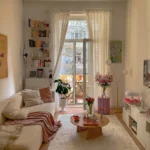
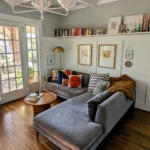
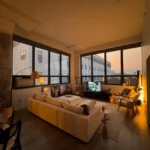
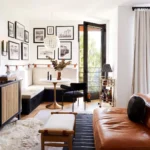
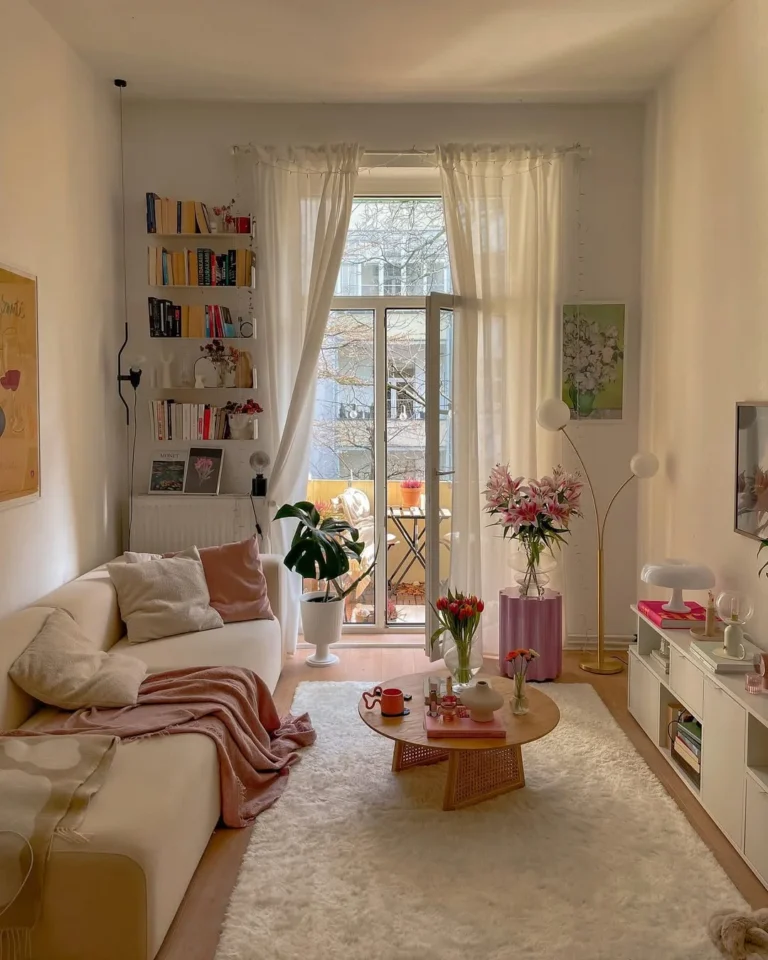
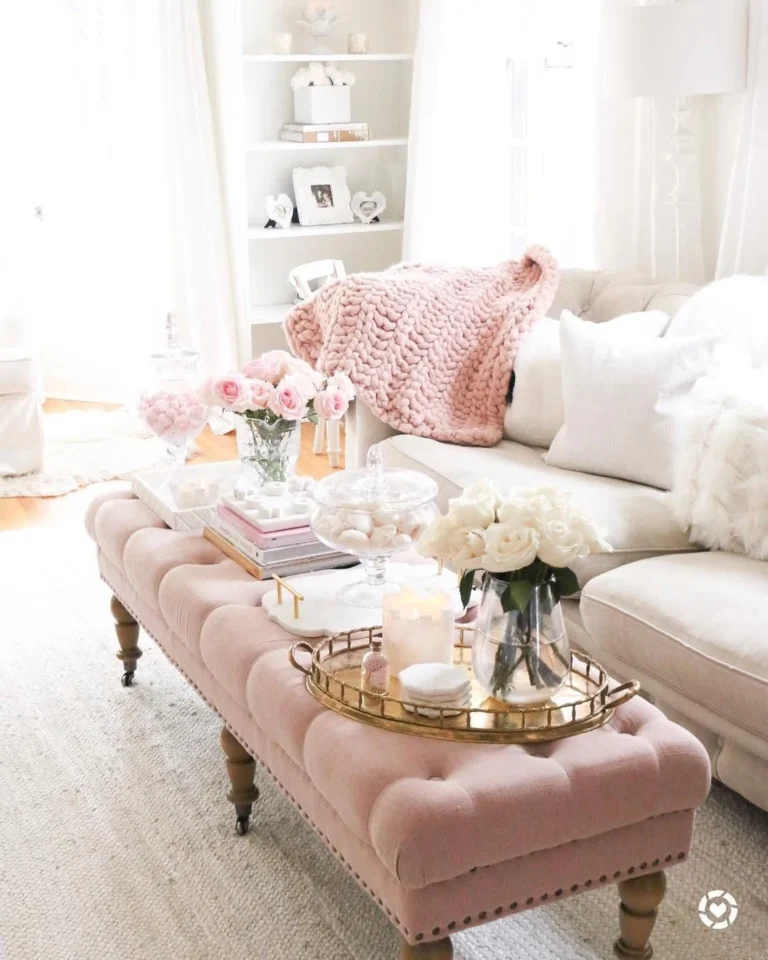
The sofa is the single piece of furniture most likely to make a small apartment feel half its size or twice as big, and it almost never comes down to the colour. It comes down to depth, leg height, arm profile, and whether the silhouette eats into the floor plan or plays nicely with it. These twenty sofas cover every style and most price points, organised around the real decisions renters and first-time buyers are actually making, not just a photo gallery of options to scroll past.
Loveseats and Two-Seaters That Own Their Size
The mistake most people make with a compact sofa is buying the biggest thing that technically fits and calling it a win. The sofas here take the opposite approach: they commit to a smaller footprint and make it feel deliberate rather than apologetic.
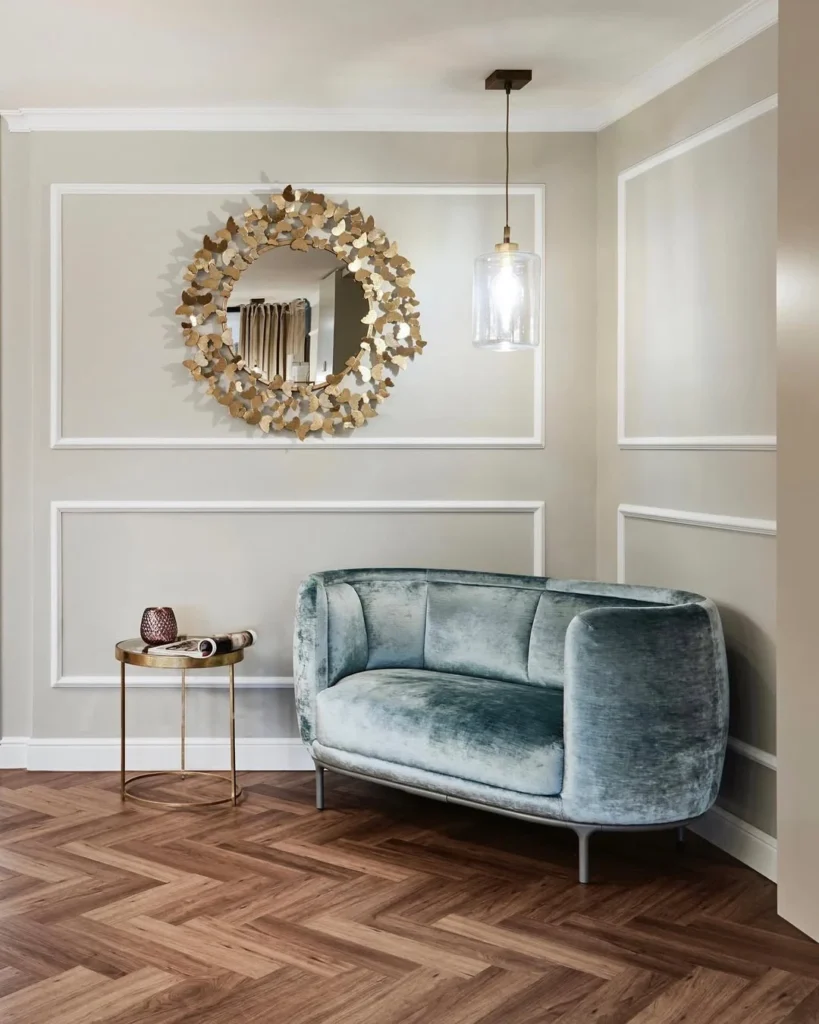
A barrel-backed love seat in crushed teal velvet sits naturally in a corner without pushing into the room, and the curved silhouette means there are no sharp right-angle corners eating into the visual field. Art Deco-adjacent pieces like this work hardest in rooms with existing architectural detail, such as picture rails, cornicing, or herringbone floors, because the sofa reads as intentional rather than small.
Designer Advice: A bold fabric on a small sofa is almost always the better decision than a plain fabric on the same piece. The colour becomes the feature, not the size.
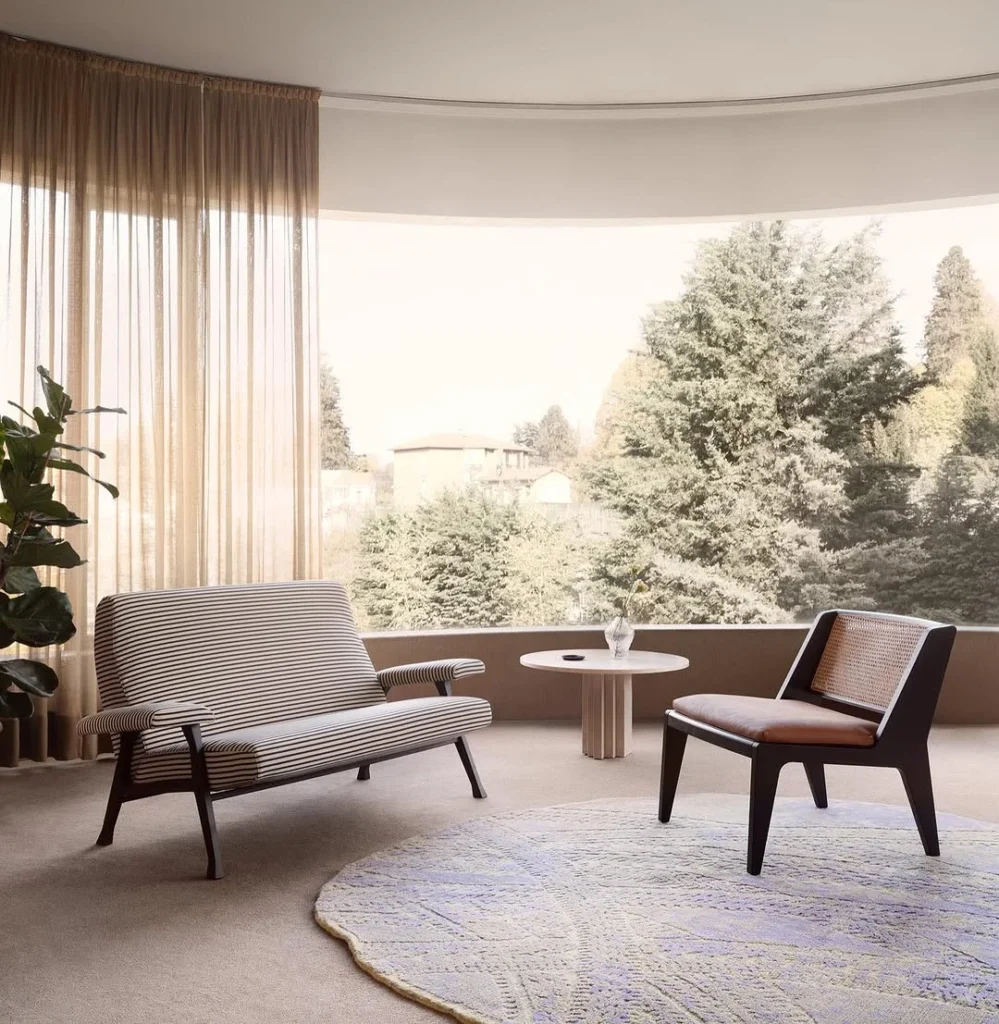
A narrow black-and-white striped settee on a dark ebonised frame has the proportions of a mid-century daybed and leaves the floor visibly clear around and beneath it. The exposed leg structure is what keeps it from reading as heavy even though the seat back is reasonably tall; visual weight sits in the frame rather than in mass.
Pro Move: Pair a stripe-upholstered settee with a round rug rather than a rectangular one. The geometric contrast avoids the space feeling overly linear.
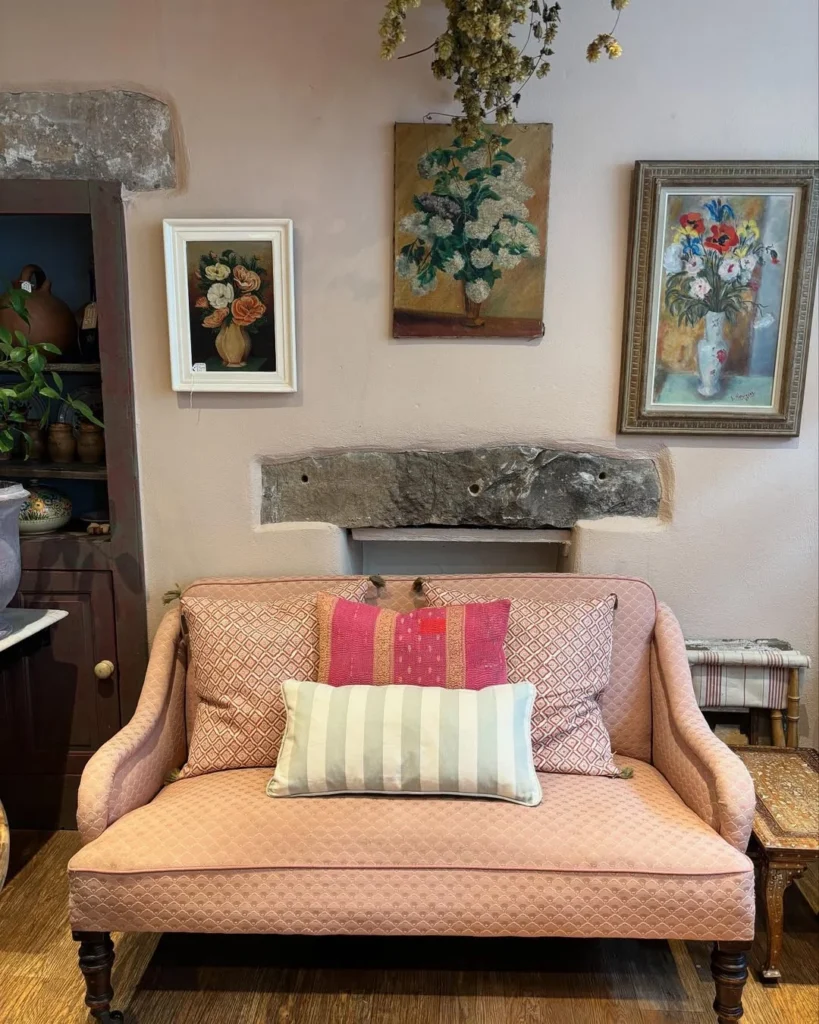
A small-scale antique loveseat in quilted dusty pink with turned wooden legs brings a scale and proportion that most modern sofas have abandoned, since nineteenth-century furniture was sized for rooms without central heating and much tighter footprints. Sourcing vintage is the only reliable way to find a piece this small without it looking like it belongs in a showroom for children’s furniture.
Quick Tip: An antique settee with turned legs never needs a coffee table directly in front of it. A small side table at one arm keeps the floor open and the look authentic.
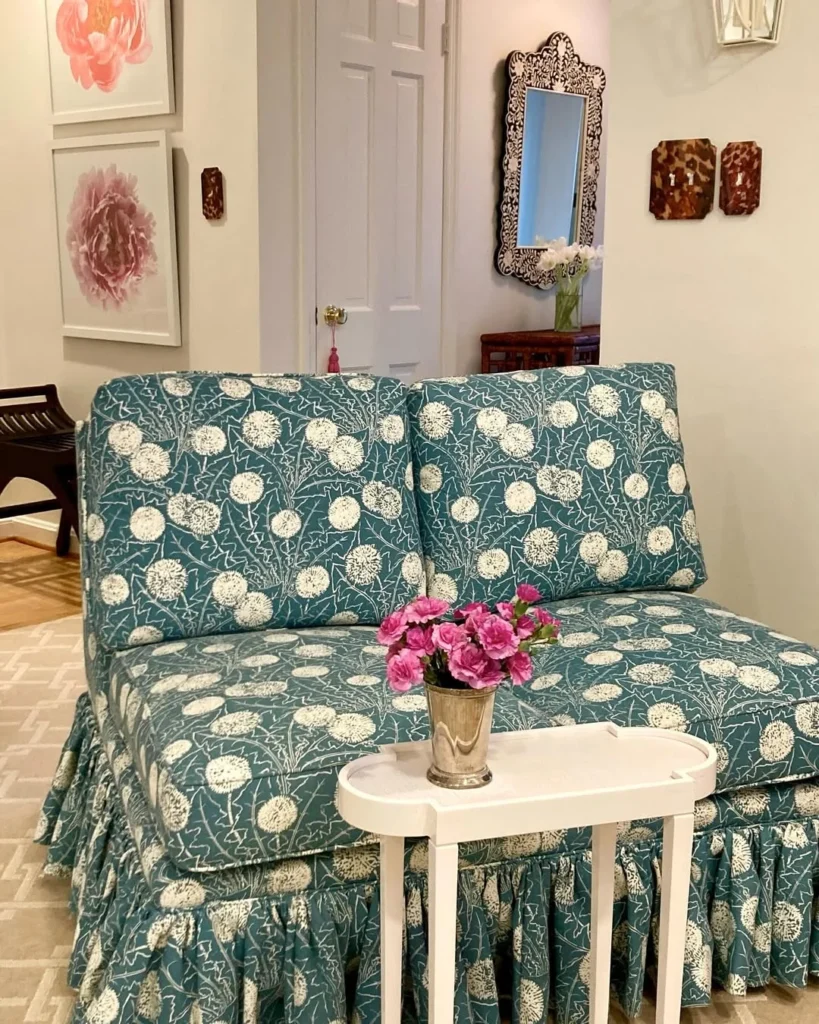
A skirted loveseat in a block-print teal slipcover is an unusual choice because the skirt hides the leg entirely, yet it works in small rooms where the pattern does the spatial work that a neutral would leave to size alone. The two-cushion back keeps the piece from reading as a loveseat doing its best to look like a sofa.
Reality Check: A fully skirted sofa collects more dust than a legged one and is harder to vacuum under. Worth it for the aesthetic, but worth knowing before ordering.
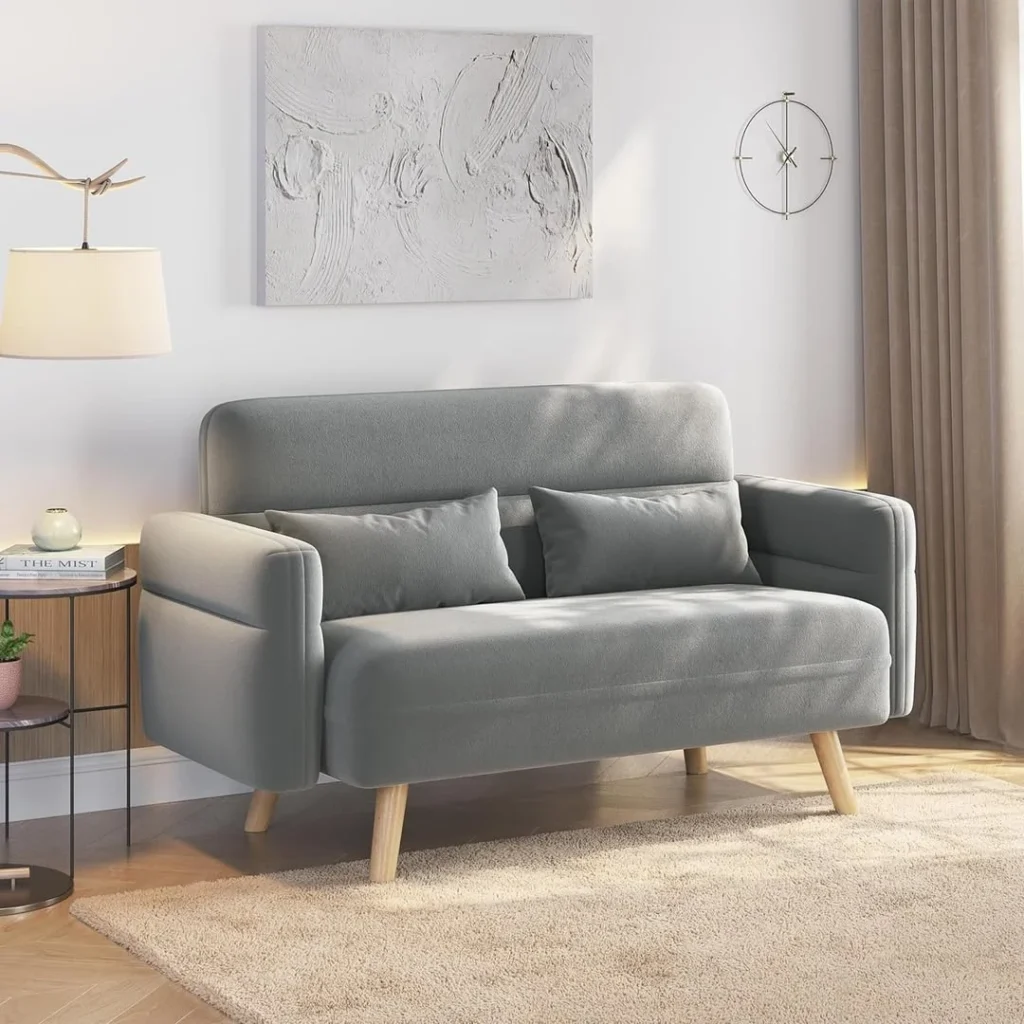
A compact two-seat sofa with a continuous cushion back, tight rolled arms, and blonde tapered legs is the most reliably space-efficient silhouette available at an entry price point. The proportions keep seat depth around 50 to 55 cm, shallow enough to keep floor space legible without sacrificing sitting comfort for most adults.
Budget Note: This profile is the most widely replicated in affordable ranges. The main thing to check is cushion density; budget versions often use low-resilience foam that flattens within a year.
Three-Seaters That Stay Visually Light
A three-seat sofa is not automatically wrong in a small apartment. The problem is a three-seater with a high back, deep seat, heavy rolled arms, and a skirt to the floor. Each feature adds perceived mass without adding function. These ten sofas are full three-seaters that manage at least one of those variables deliberately.
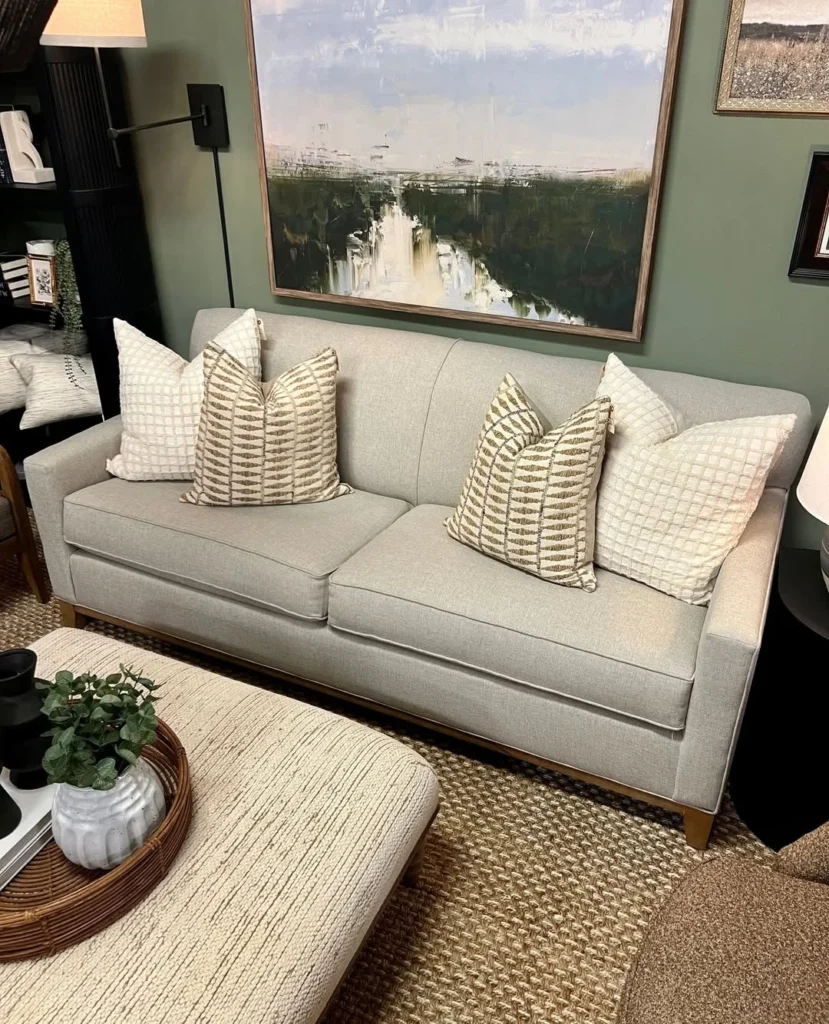
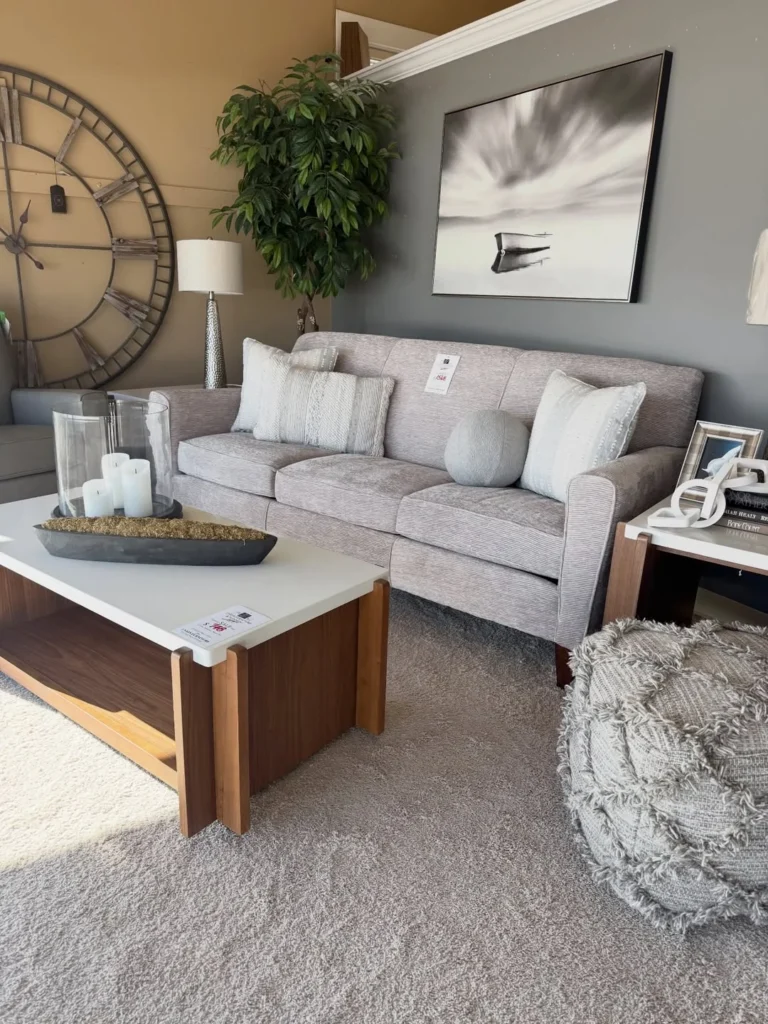
A two-cushion grey sofa on a low exposed wood plinth keeps visual weight at the bottom of the piece rather than in the arms or back, so the room reads around it rather than stopping at it. The squared arm profile also avoids the problem where the arm is too narrow to use comfortably, which is a frequent compromise in compact sofas.
Designer Advice: A sofa on a plinth base needs a rug that extends well beyond its sides so the base does not look like it is floating on bare floor with nowhere to belong.
A three-seat sofa in muted slate blue linen with slim track arms and a low back keeps sightlines clear across the room and the wall behind it visible. That is the single most effective way to prevent a sofa from shrinking the space it sits in. Blue works in small rooms because the eye reads it as receding rather than advancing.
Quick Tip: Track arms are the right call in tight rooms. Rolled arms add 10 to 15 cm on each side, which is meaningful floor space in a small apartment.
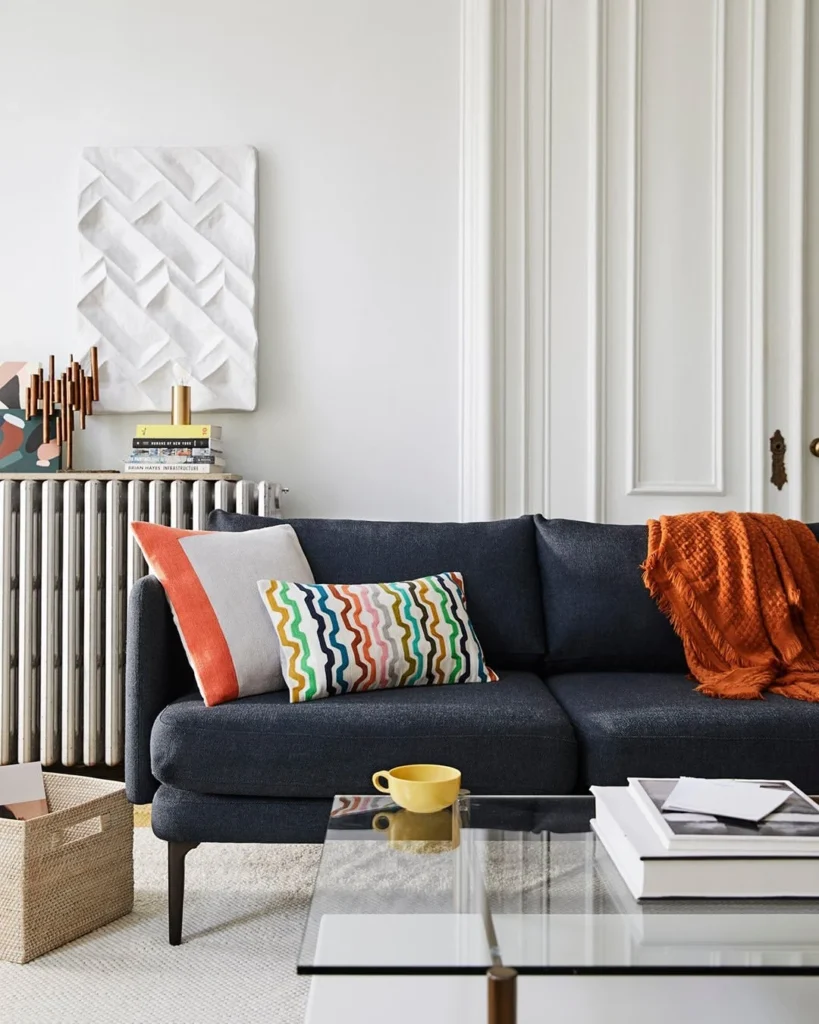
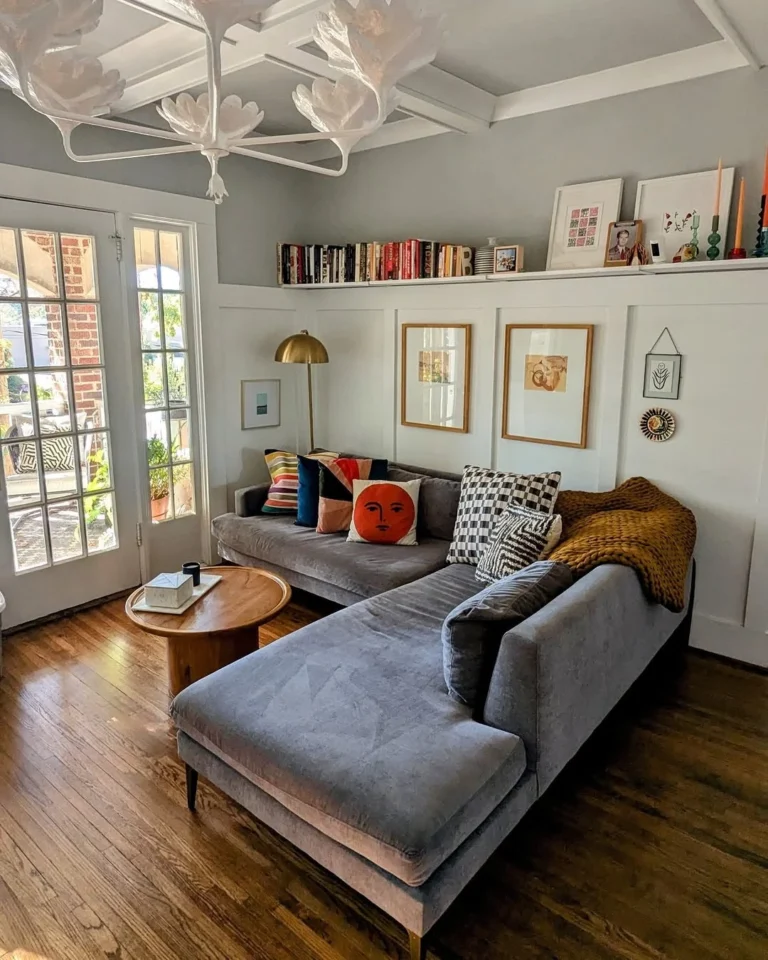
A dark navy L-shape on slim tapered black legs reads as significantly lighter than the same sofa on a wide plinth base because the floor remains visible and the piece does not read as sitting solid on the ground. The key constraint with a sectional in a small apartment is measuring the entry path before falling in love with it online; many sectionals do not separate at the junction and will not turn a typical apartment hallway.
Heads Up: Always check whether a sectional detaches into separate pieces for delivery. If it does not, measure the longest dimension against every doorway turn on the route to the room.
A three-seat sofa in heathered grey chenille with a modest scroll arm and wood legs sits at the familiar end of the range, but heathered fabric reads as less bulky than solid upholstery from across the room, which is a quiet advantage. The 15 cm leg height keeps floor visible and avoids the heavy, skirt-to-floor look that makes small rooms feel smaller.
Budget Note: Chenille is one of the most durable and cleanable upholstery fabrics at a mid-range price. It pills less than velvet and forgives spills better than linen.
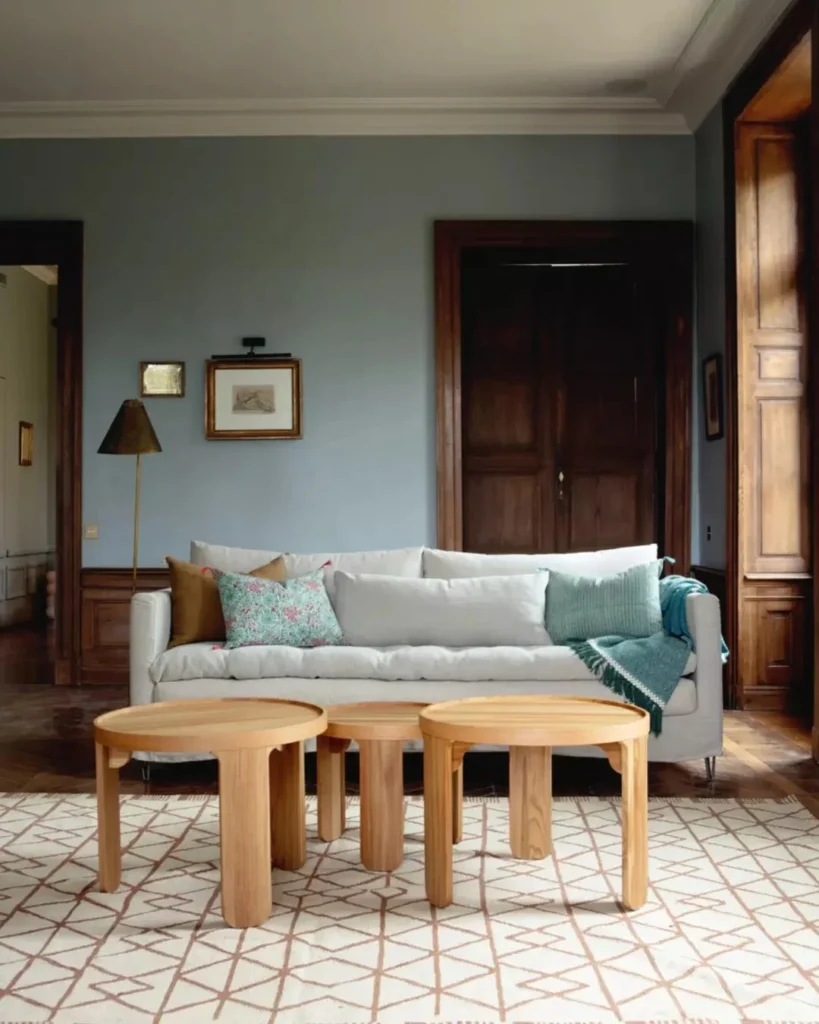
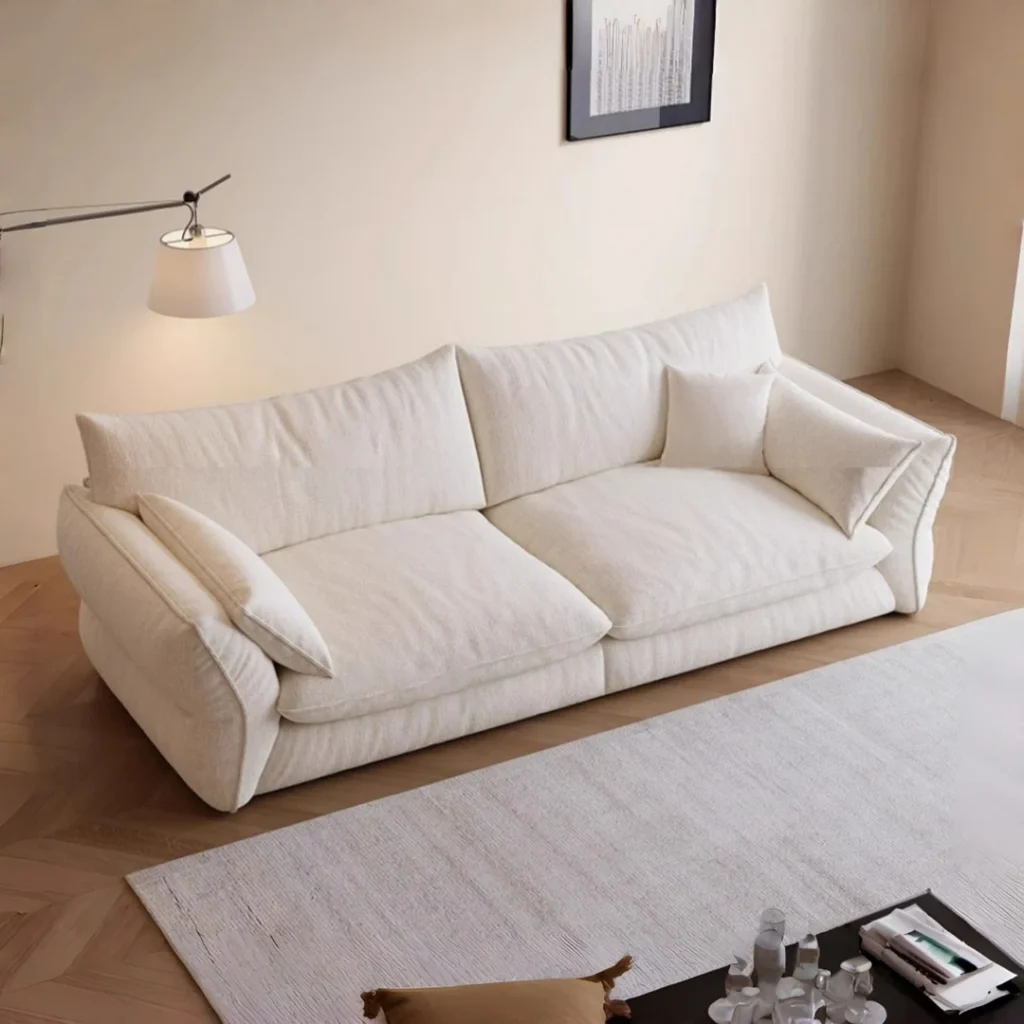
A feather-and-fibre-filled cream sofa is the version of the cloud sofa trend that works in small apartments because the cushion slump is aesthetic rather than a sign of wear. Slim arms and a square profile keep the footprint honest while the depth looks generous from most angles. The honest caveat is that cream upholstery in a small living room demands either a slipcover or a strict no-shoes, no-red-wine household.
Reality Check: Feather-filled sofas need cushion plumping after every use to maintain the deliberately relaxed look. A foam-filled version in the same profile needs far less attention.
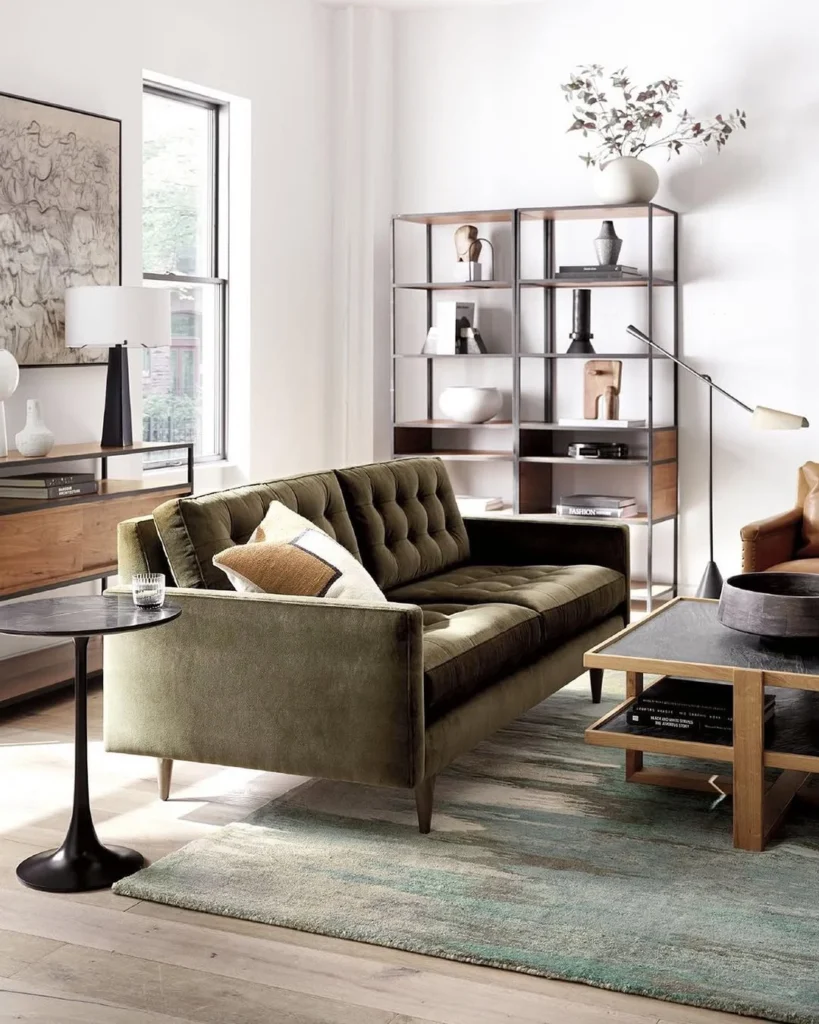
A button-tufted sofa in deep moss green velvet on tapered walnut legs is one of the most space-honest options here because the tufting visually compresses the seat and back into a tighter profile than a loose-cushion sofa of the same dimensions. Mid-century proportions, seat depth around 55 cm and arms at seat height or just above, are almost always the right call for apartments under 50 square metres.
Designer Advice: Dark velvet on a mid-century frame reads as expensive at any price point, making it one of the highest-value visual upgrades available to a small room.
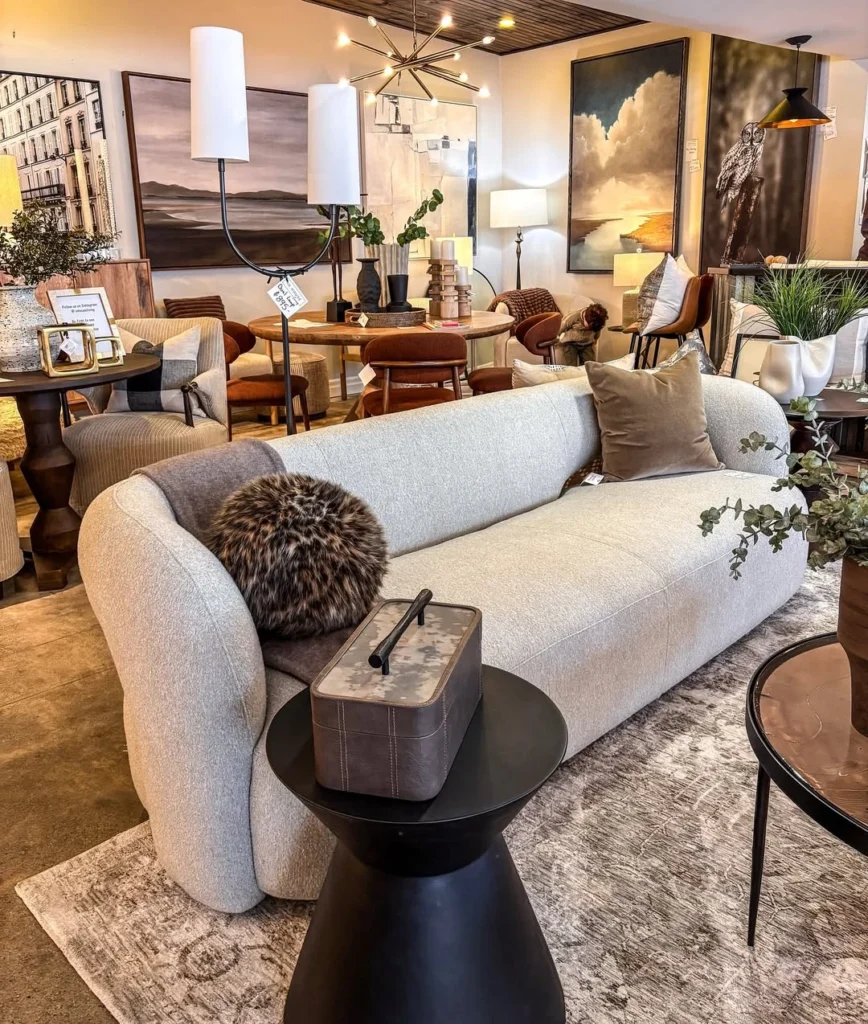
A wide curved sofa with a continuous curved back in warm grey bouclé is space-smart when the seat depth is controlled, because bouclé reads as soft and quiet rather than advancing. The curved back also eliminates the sharp corner problem that catches people’s hips in tight living rooms. In practice this look comes together best when nothing else in the room competes for texture.
Quick Tip: Always sit at the end of a curved sofa before buying, not just the middle. The curve changes the sitting angle at each end, and it is not always comfortable for people who habitually sit at one side.
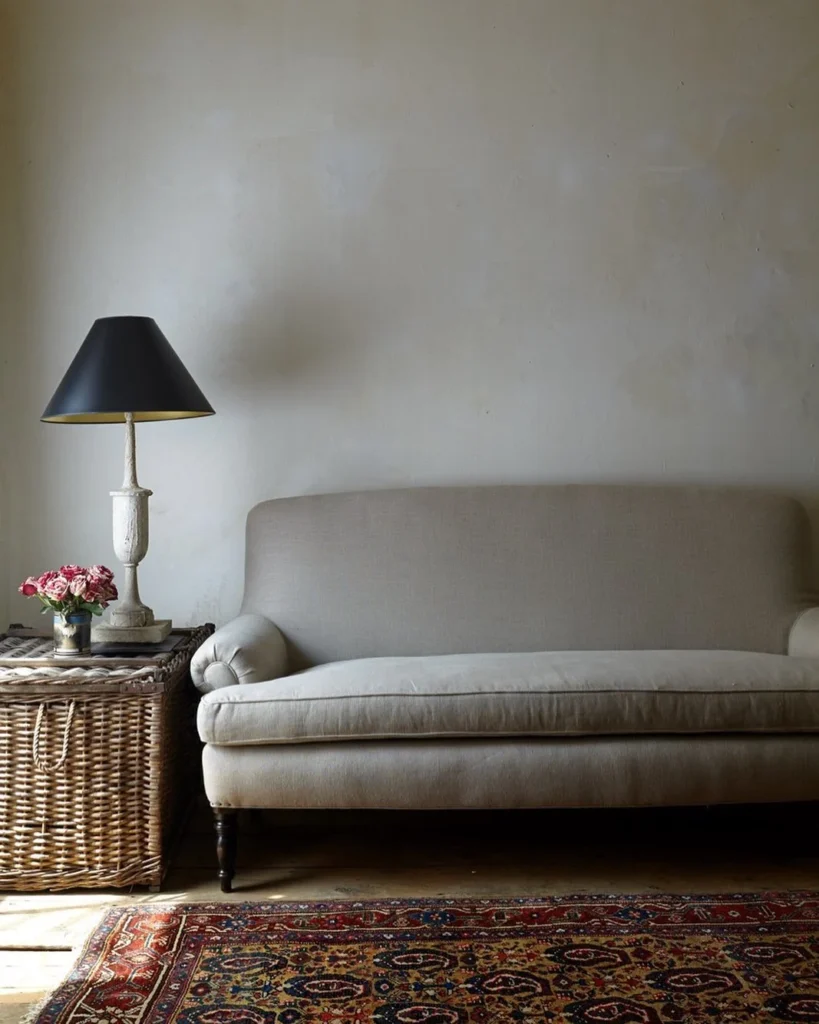
An English roll arm sofa in raw slubby linen creates a continuous visual profile where the gently scrolled arm sits at the same height as the back, so the eye reads the whole piece as one connected shape rather than three separate elements. In small rooms that single-profile effect keeps the eye moving around the sofa rather than stopping at it. Raw linen also ages well, hiding slight fading far better than flat-woven upholstery.
Pro Move: An English roll arm sofa looks best with one continuous T-cushion rather than two or three separate pads. The clean seat line emphasises the silhouette rather than the cushion seams.
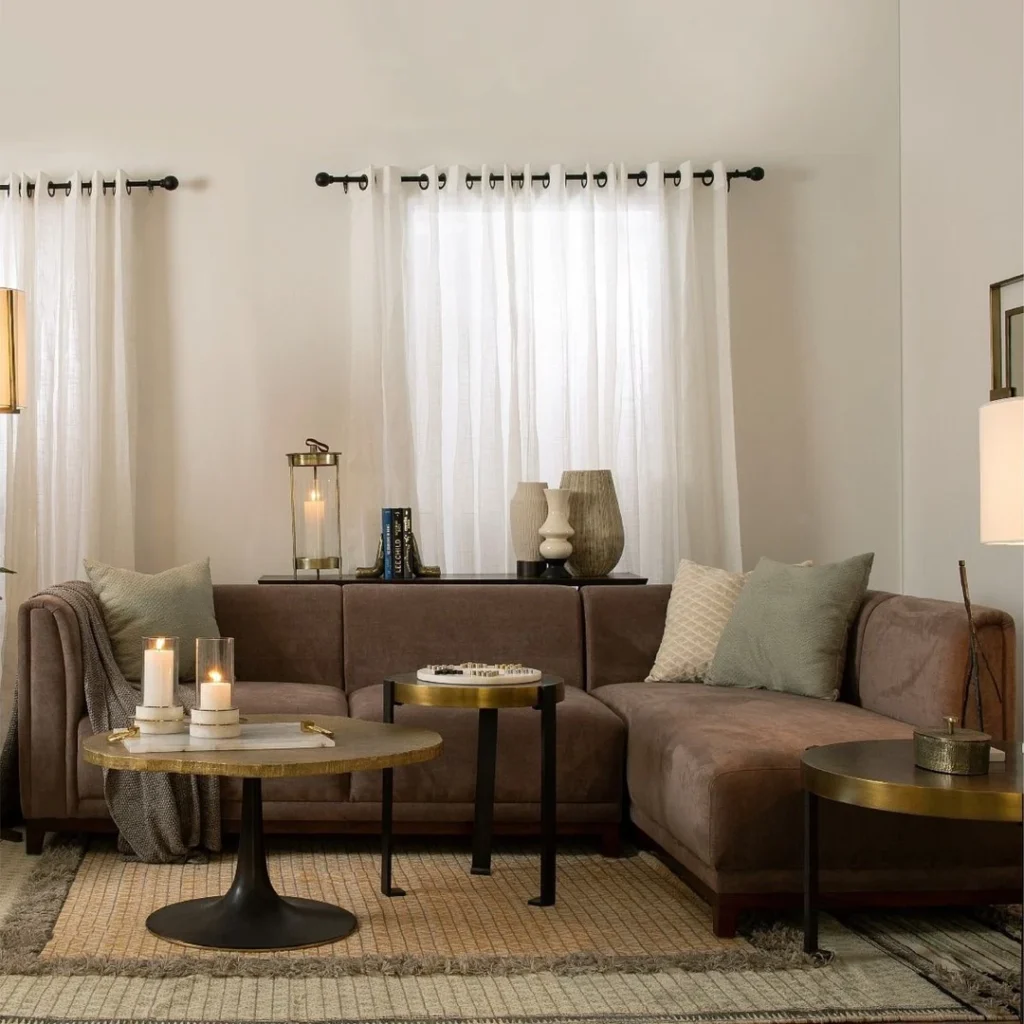
A warm chocolate brown L-shaped sectional with tight arms and visible legs works in a small apartment because the brown reads as grounded rather than heavy, and the paired brass side tables stop the sofa from reading as a piece that is taking over. The low profile keeps wall art visible above it, which is the first thing to check when a sofa has significant height.
Heads Up: A warm brown sofa reads very differently under different light temperatures. Check a fabric sample under the room’s actual lighting before committing to the full piece.
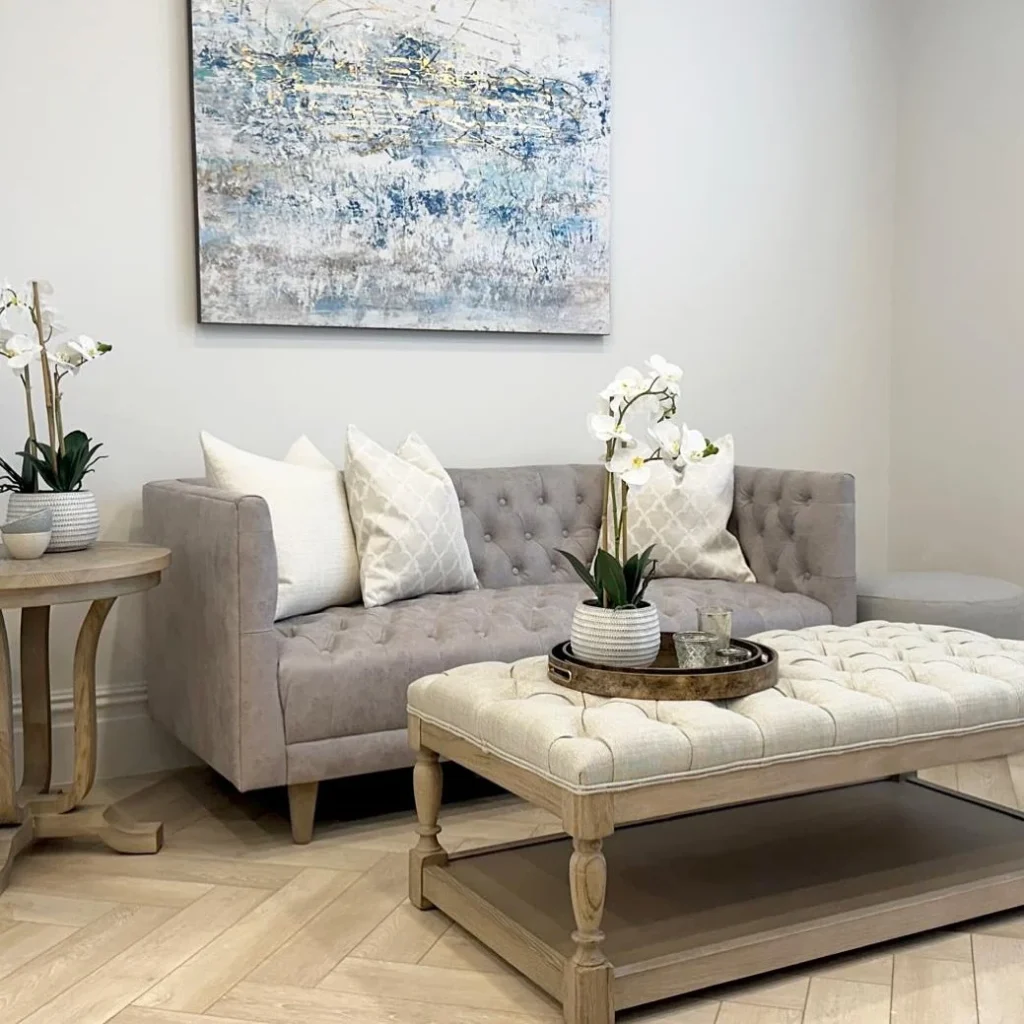
A small-format Chesterfield in light grey velvet is an exception to the rule that heavily detailed sofas make small rooms busier. The tufting compresses the visual mass of back and arms into a tighter surface, and the Chesterfield’s equal-height arm and back create the same continuous profile as a roll arm. Paired with a tufted bench ottoman rather than a large coffee table, it avoids the scale problem entirely.
Budget Note: A Chesterfield in light grey velvet is one of the most versatile options here: it reads as both traditional and contemporary depending entirely on the surrounding pieces.
Before You Order: The Small Apartment Sofa Checklist
✓
Measure the room and mark the sofa’s footprint with masking tape on the floor
✓
Measure every doorway, hallway turn, and lift opening on the delivery path
✓
Check whether a sectional’s pieces detach for delivery
✓
Confirm the seat depth (under 60 cm for most small apartments)
✓
Check the back height against any wall art or window you want to remain visible
✓
Request a fabric sample and view it under the room’s actual lighting
✓
Ask whether legs are removable (helps with tight hallway turns)
✓
Confirm the sofa’s reclining clearance if it includes a mechanism
The One Style That Eats the Room
This section is about a combination of features that appear across every price point and every aesthetic and that consistently shrinks a small apartment regardless of how good the individual sofa looks on its own. Knowing what to avoid is more useful than any single recommendation.
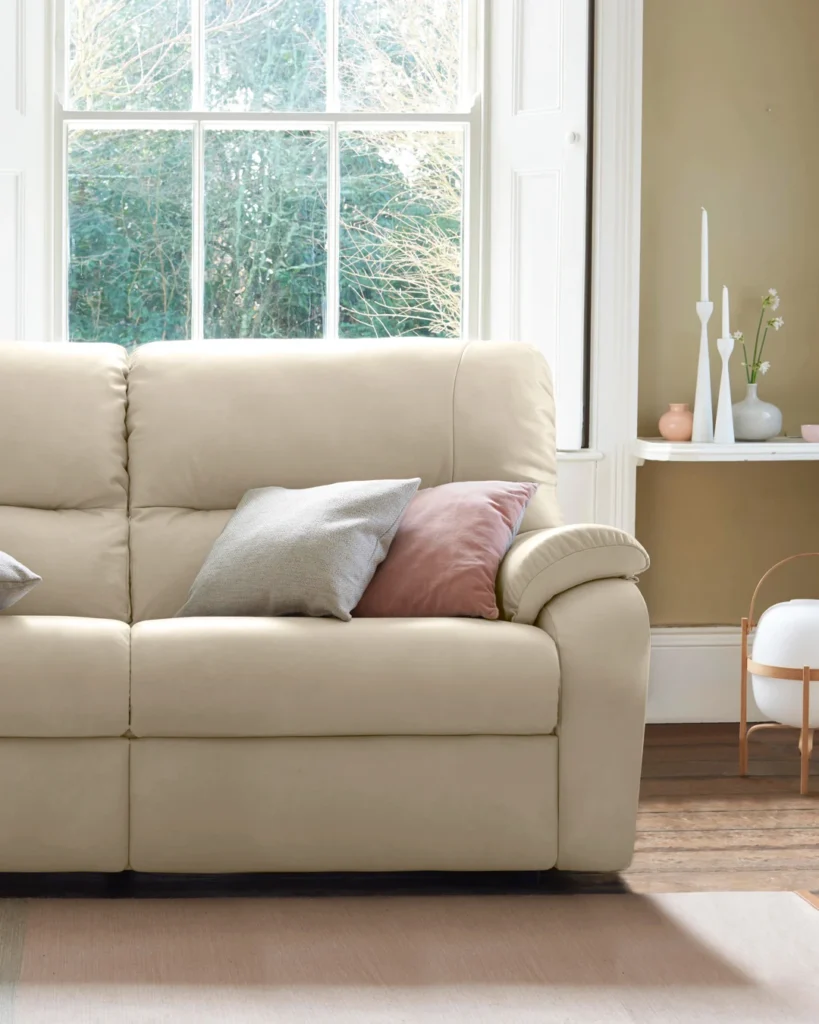
Textured Oat Recliner Sofa — Good Comfort, Problematic Proportions
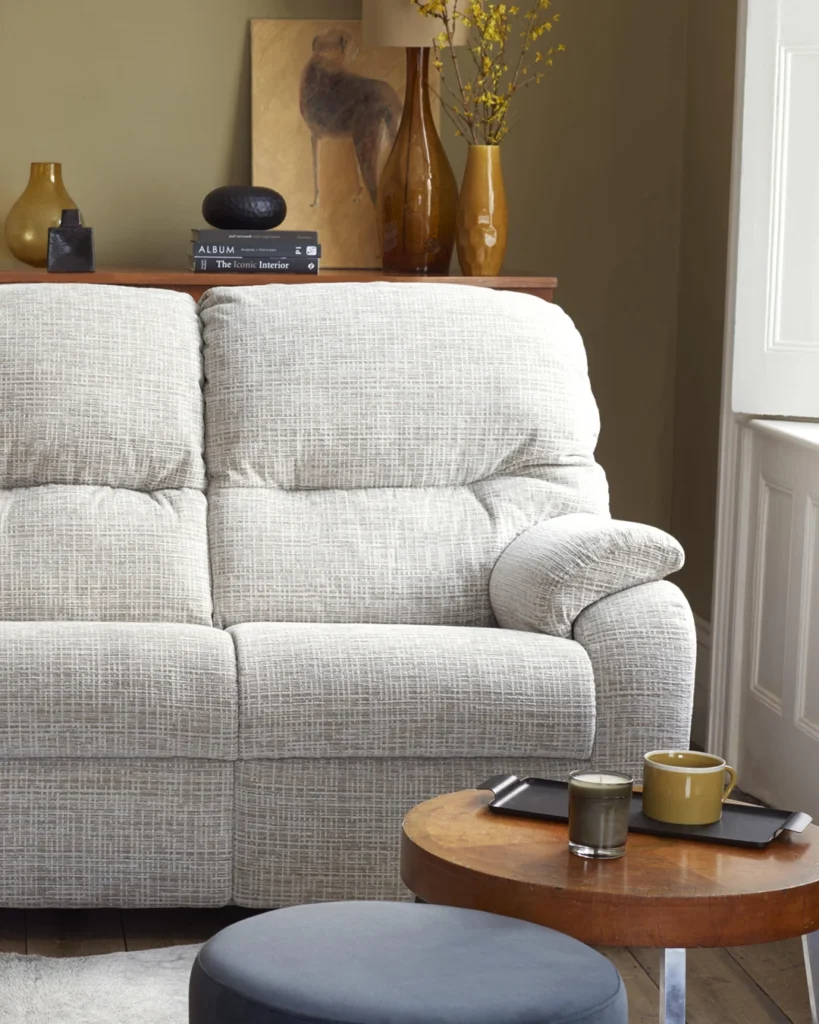
A deeply cushioned recliner sofa in a crosshatch-textured oat fabric is genuinely comfortable in a way few sofas match, but the high back, full-depth seat, barrel arms, and reclining mechanism together add 20 to 30 cm of required clearance behind the sofa when the mechanism extends. In a small room, that rear clearance requirement alone can eliminate a wall as a placement option entirely.
Reality Check: A recliner sofa in a room under 25 square metres almost always forces a floor plan where the sofa faces away from the main window, affecting natural light and the mood of the room for the whole day.
Cream Leather Three-Seater — Material Choice, Not Silhouette
A cream leather three-seater is not a bad sofa, but cream leather in a small apartment is a material decision that fights the room. Leather reflects light at an angle that draws the eye directly to the surface, making the sofa the visual anchor of everything regardless of where it sits. In a large room that works. In a small room, the sofa becomes all you see.
Heads Up: If the leather look matters, a matte or waxed finish is far more space-friendly than semi-gloss or high-shine hide, because it absorbs rather than bounces light.
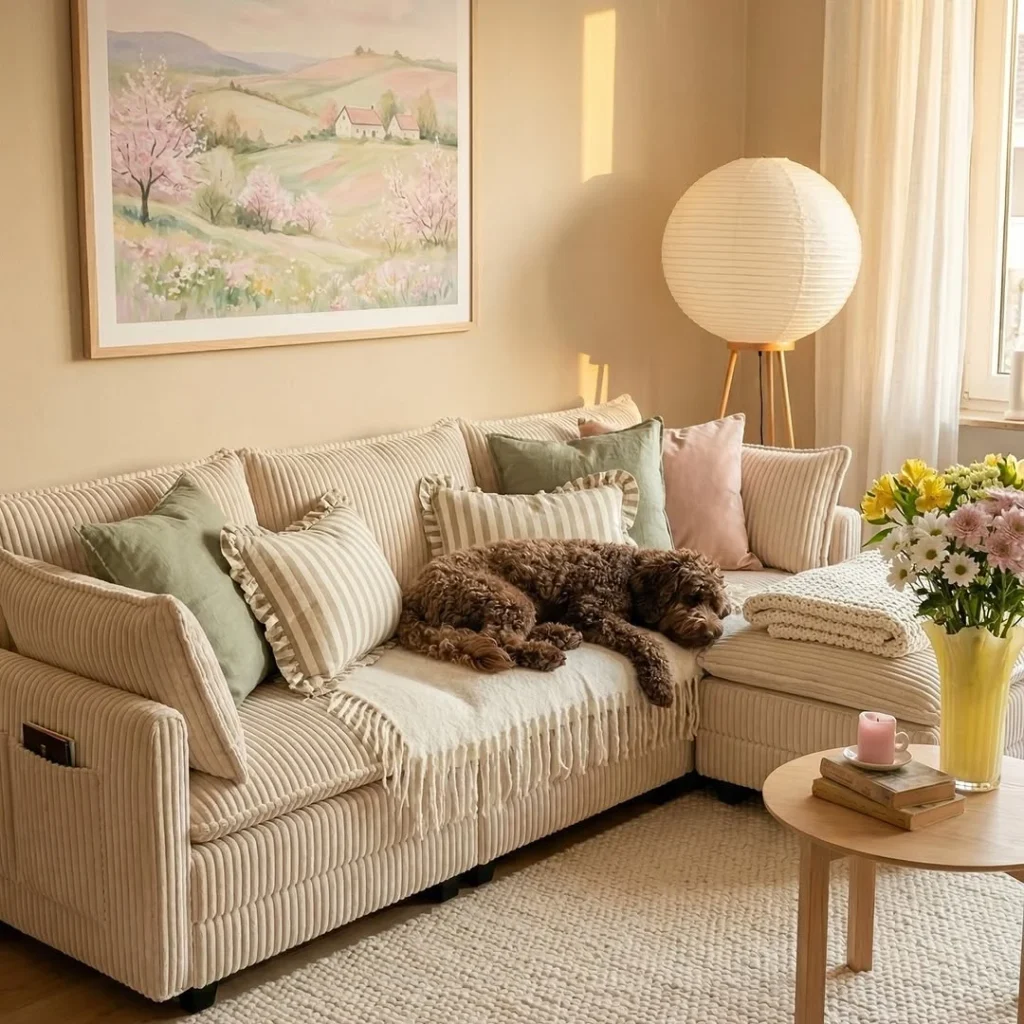
Cream Corduroy Corner Sofa — When Cosy Becomes Crowded
A wide corduroy corner sofa in cream with deep cushions and a full-length chaise is the combination that comes up most in sofa-regret posts. It photographs beautifully, it is genuinely comfortable, and it fills a small room wall to wall before you realise that filling it was the problem. The chaise leaves no floor space for secondary seating and movement through the room feels tight from day one.
Designer Advice: If a sectional is the goal in a small room, choose one with a chaise shorter than the main sofa unit. A full-length chaise almost always ends up blocking a walkway or a doorway.
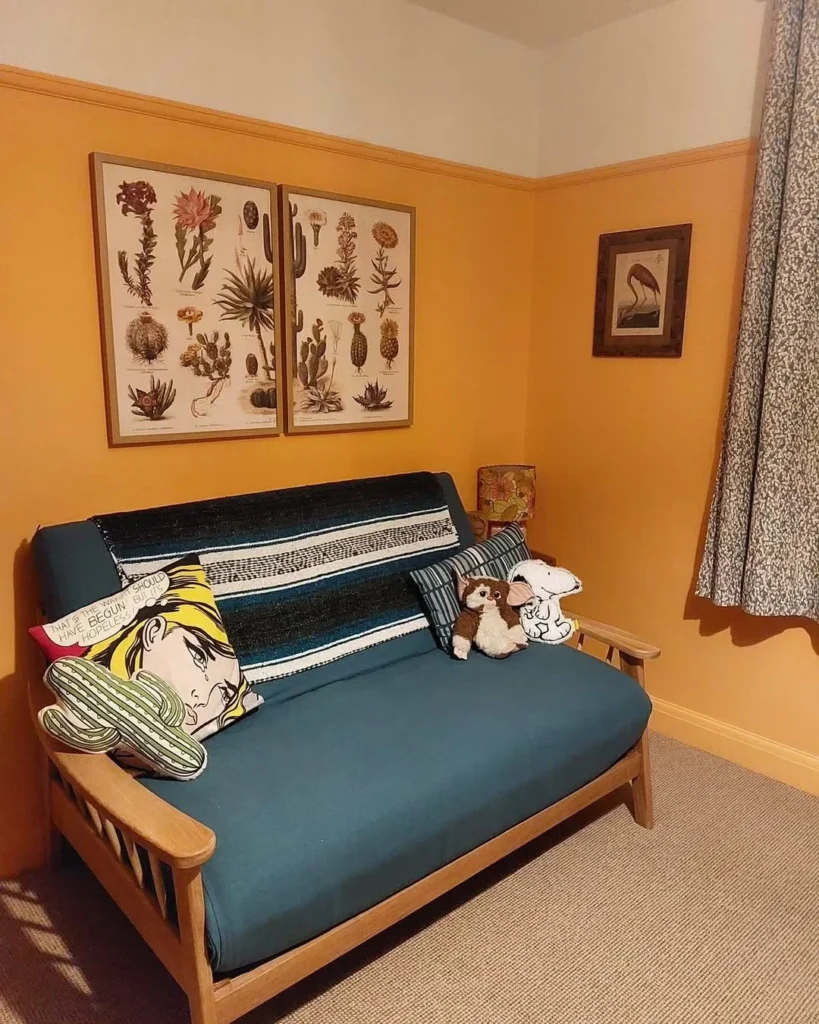
Teal Futon on Oak Frame — Budget Flexibility With Real Trade-Offs
A futon on a solid oak frame in a coloured mattress is the most budget-accessible option here and the most honest about what it is: a convertible piece that prioritises function over form. As a sofa it sits slightly higher and firmer than most upholstered options. As a guest bed it is genuinely useful. The caveat is that futon mattresses compress unevenly unless flipped and rotated, and the frame takes the same floor space in sofa and bed positions.
Budget Note: A futon in a room with strong personality in the walls and art works well; isolated in a plain room it reads as a placeholder rather than a choice.
One More Worth Knowing About
One image in the set does not fit neatly into any of the categories above because it represents a different kind of spatial lesson entirely.
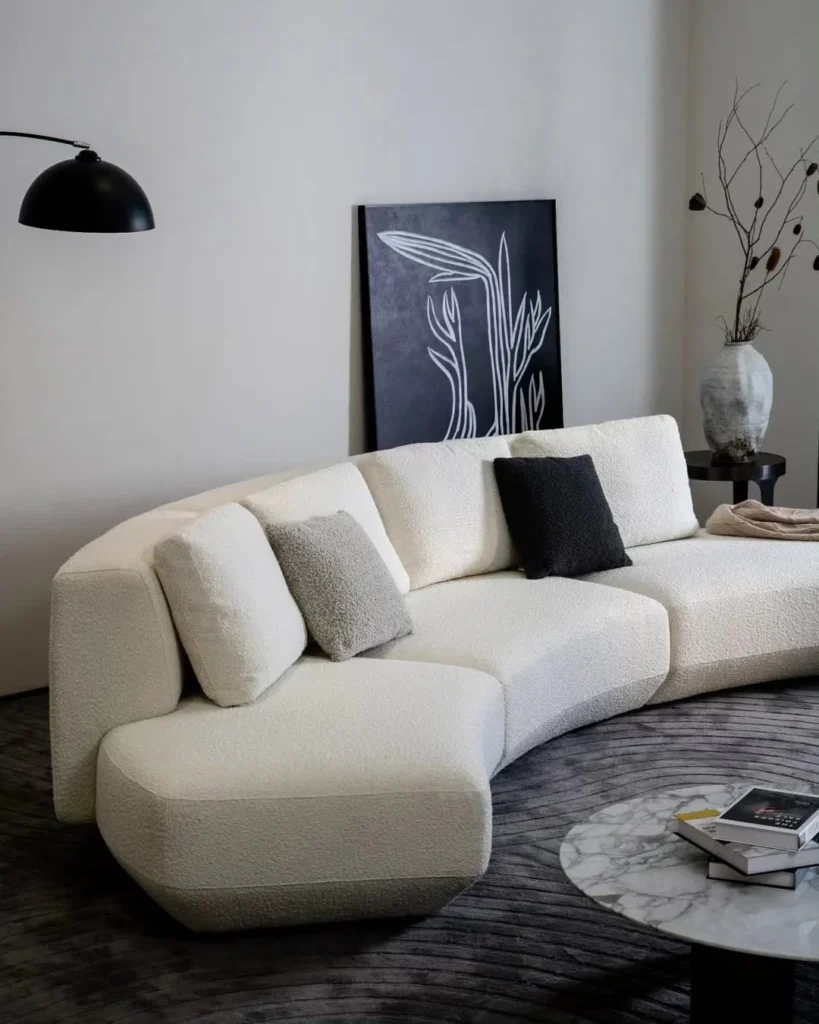
Curved Bouclé Sectional — The Exception That Proves the Rule
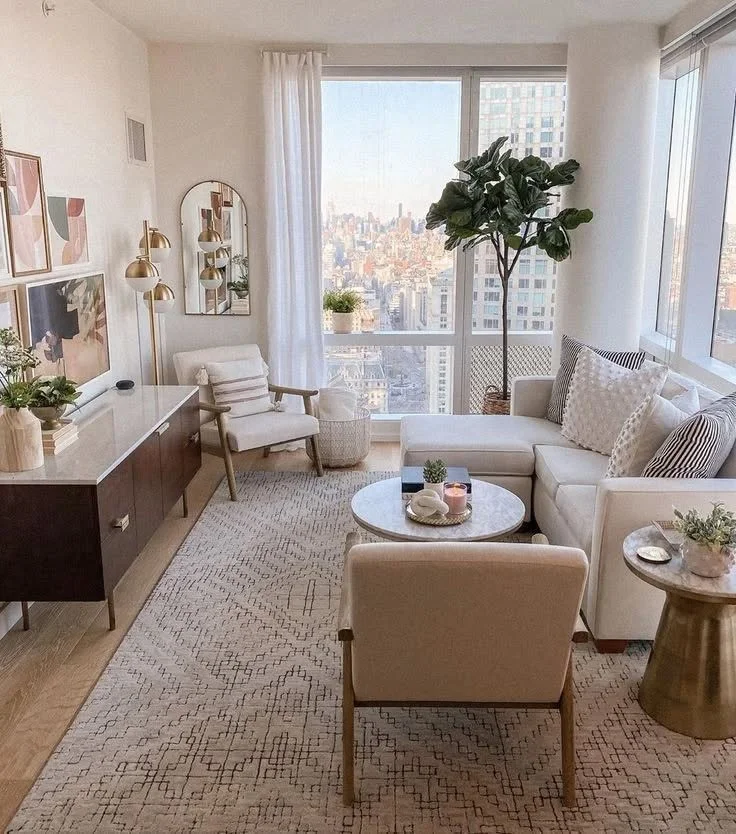
A low-slung curved bouclé sectional in off-white with no cushion seam break on the back is the one case where a larger piece earns its place in a small room: the curve means the eye travels around it rather than stopping at a straight edge. The lack of visible cushion seams on the continuous back also keeps the read clean from every angle. A marble-topped side table at the curve’s end resolves the scale problem that a large coffee table would create.
Pro Move: If the room allows a curved sectional, position the concave side facing the room’s entry point. It makes the space feel welcoming rather than enclosed.
The Bottom Line
The pattern across these twenty sofas is consistent: the ones that work in small apartments are the ones where at least one decision, leg height, arm profile, seat depth, back height, or fabric texture, was made with the room in mind rather than with the sofa in isolation. The ones that eat the room are the ones where every variable was chosen for comfort or looks without a thought for what the floor plan would have to give up. Measure your space, measure your entry path, and pick the sofa that fits both before you pick the one that photographs best.