Black bedrooms go wrong when they are bought in the wrong order: black bedding thrown on a white room, or black paint asked to do all the work alone.
These 24 bedrooms are built the way the good ones actually get built, layer by layer, the walls first, then the bed and headboard, then the bedding, and finally the furniture and soft finishing layers, because each layer decides how much black the next one needs.
Matte black board and batten walls climb into a vaulted white ceiling in this master bedroom, a brass chandelier hanging at the peak. The white ceiling is the safety valve: the walls can go fully black because the largest surface overhead stays light and lifts the whole room. Board and batten earns its keep in black rooms because the shadow lines give the darkness a pattern, so walls read as architecture instead of a paint accident. If your room has any ceiling height worth showing, this is the template.
Ceiling rule:Black walls plus a white ceiling is a high room’s best friend. The contrast reads as height; black on black reads as a lid.
2. Matte Black Walls, White Bedding, Leather Channel Headboard
A design studio’s master pairs matte black walls with crisp white bedding, a charcoal throw and a tall black leather channel headboard. Notice the division of labor: the walls and headboard carry the black, the bedding carries the light, and the throw mediates between them. White bedding in a black room is not the safe option, it is the dramatic one, since nothing else makes black walls look blacker. Choose this split if you love the idea of black walls but still want the bed to feel fresh every morning.
The 60-40 split:In the calmest black bedrooms, black takes the walls and furniture while white and cream take the bed itself. Sleep happens on the light layer, mood on the dark one.
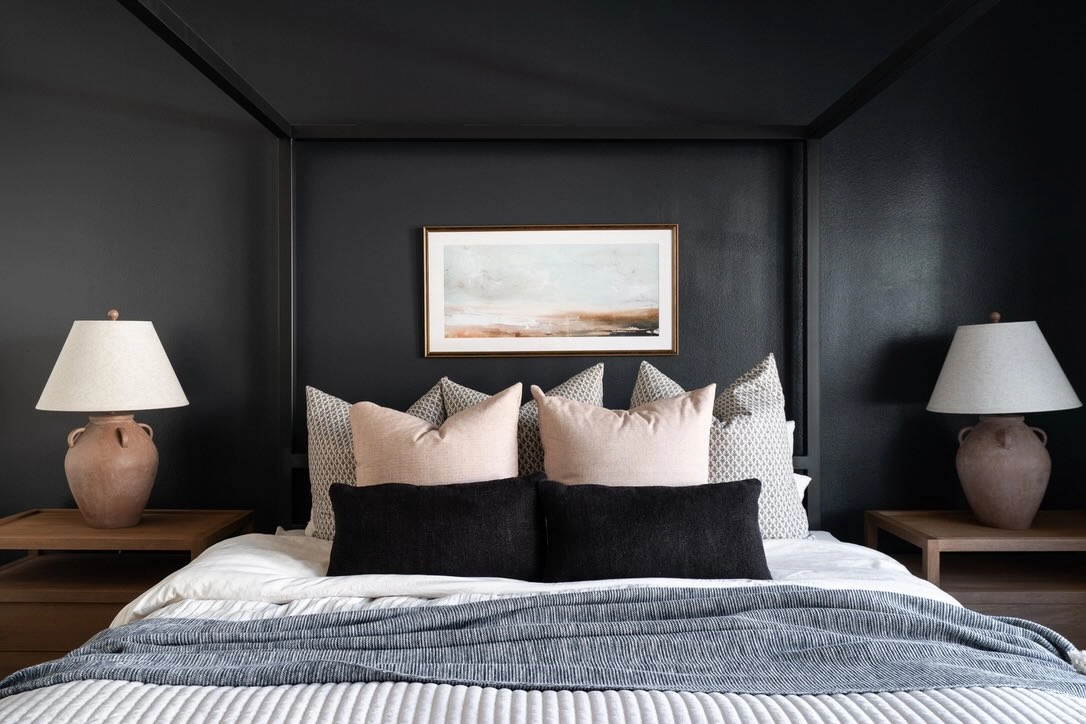
All four walls and the trim are black in this bedroom, softened by white and grey bedding, blush cushions and two generous table lamps. The lamps are structural here, not decorative: in an all black room, light sources become the architecture your eyes navigate by, so they need to be big, warm and at pillow height. Blush and pale grey are the classic softeners because they keep a pink or silver warmth that pure white can lose against black. This is the fullest commitment in the walls layer, and it works because every other layer was chosen to pay for it.
Lamp math:All black walls need light at three heights: ceiling, lamp and low glow. Two of the three is the minimum; one leaves the room theatrical instead of restful.
Black panelling wraps this bedroom and climbs into a coffered ceiling with recessed lights and a crystal chandelier, a tufted black leather bed below. This is black as joinery rather than color: every surface has shadow lines, mouldings and depth, so the darkness feels crafted instead of painted on. It is the most expensive wall treatment in the article and the least reversible, which is why it belongs in a main bedroom you plan to keep. The patterned rug matters more than it seems; black rooms need one busy surface to rest the eye on.
One busy surface:In a fully panelled black room, give the eye one patterned thing, usually the rug or the bedding. Pattern nowhere reads as a showroom; pattern everywhere reads as noise.
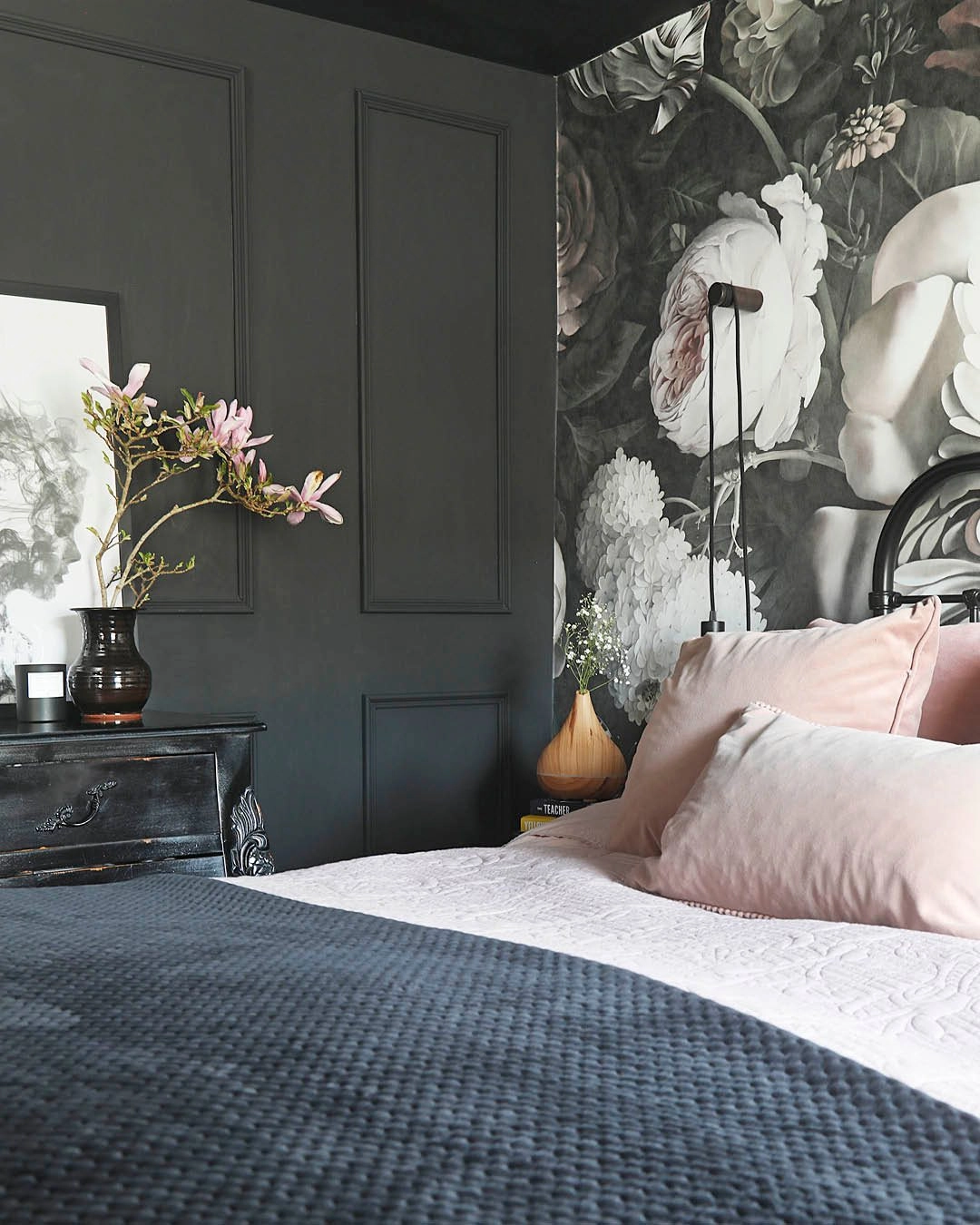
Oversized white and grey flowers bloom across the wall behind this bed, the side wall in black panelling and the bedding kept white with blush cushions. A mural is the friendliest way into the black aesthetic for anyone who finds flat black severe: the flowers give the darkness a subject, and guests talk about the roses instead of the boldness. Keep the mural to the bed wall only; a print this large on two walls would start to feel like sleeping inside a bouquet. Blush cushions repeat the mural’s softness at pillow scale.
Scale check:A mural’s flowers should be bigger than your head. Smaller than that, a dark floral reads as busy wallpaper rather than art.
A single black wall behind the bed, cream bedding, a taupe throw and three framed prints: this is the entry level of the aesthetic, and it is genuinely enough. One wall costs one tin of paint and an afternoon, and because the other walls stay light, the room keeps its daytime friendliness. The three prints hung in a row are doing quiet work, breaking the black into a gallery rhythm so the wall feels decorated rather than merely dark. If you are renting or testing your nerve, start exactly here.
Renter’s version:One wall, washable paint, prints hung with strips. The whole experiment costs less than a duvet set and reverses in a day.
Floor to ceiling channel tufted velvet forms the headboard wall of this hideaway bedroom, white sheets and a dark throw against it. An upholstered wall is the softest possible black surface: it absorbs sound, light and impact, which is why rooms like this feel hushed the moment you enter. It is also the headboard as insulation, a real comfort in cold rooms and against exterior walls. Velvet needs a lint roller in its life and a gentle vacuum brush monthly; in return it makes every other texture in the room look better.
Sound bonus:An upholstered headboard wall measurably quiets a bedroom. Street side rooms and thin walled apartments gain the most.
A black bedroom, honestly weighed:
For: it hides the visual clutter of a real bedroom better than any pale scheme; chargers, books and laundry piles all quieten down.
For: it makes screens, candles and lamplight feel cinematic, and most people fall asleep faster in a genuinely dark room.
Against: dust and lint show on black bedding and gloss furniture; textured and matte finishes are the workaround, not a cure.
Against: getting dressed and finding navy versus black needs one good bright light, ideally near the wardrobe, not the bed.
Against: in a north facing room with one small window, all black walls can feel heavy by day; the one accent wall version exists for exactly that room.
8. The Gold Four Poster With a Black Tufted Headboard
A polished gold four poster canopy frames a tall black tufted headboard in this glamorous room, mirrored panels and white bedding around it. The gold frame is a picture frame for the bed: it draws a bright rectangle in the air and makes the black headboard inside it read as the artwork. Canopy frames suit rooms with ceiling height and punish low rooms, so measure before you fall in love. White bedding keeps the metal and black from turning the bed into a cave, and the gold pillows tie the two together.
Height check:A four poster needs the ceiling at least 40 centimeters above the frame’s top rail, or the room feels like the bed is wearing the ceiling as a hat.
Dark beams, black walls and a low platform bed with a tufted leather headboard fill this attic loft, a leather sofa watching from the foreground. Attics and lofts are natural black bedrooms because their angles already feel like a hideout; black simply agrees with the architecture. The low bed is the right furniture for sloped ceilings, since a tall headboard would fight every angle. Leather brings the one warm, worn texture that stops dark rustic rooms from feeling like a barn, and it improves with age instead of dating.
Slope logic:Under sloping ceilings, keep the bed low and the headboard lower than the slope’s start. The room’s angles are the decoration; furniture should not argue with them.
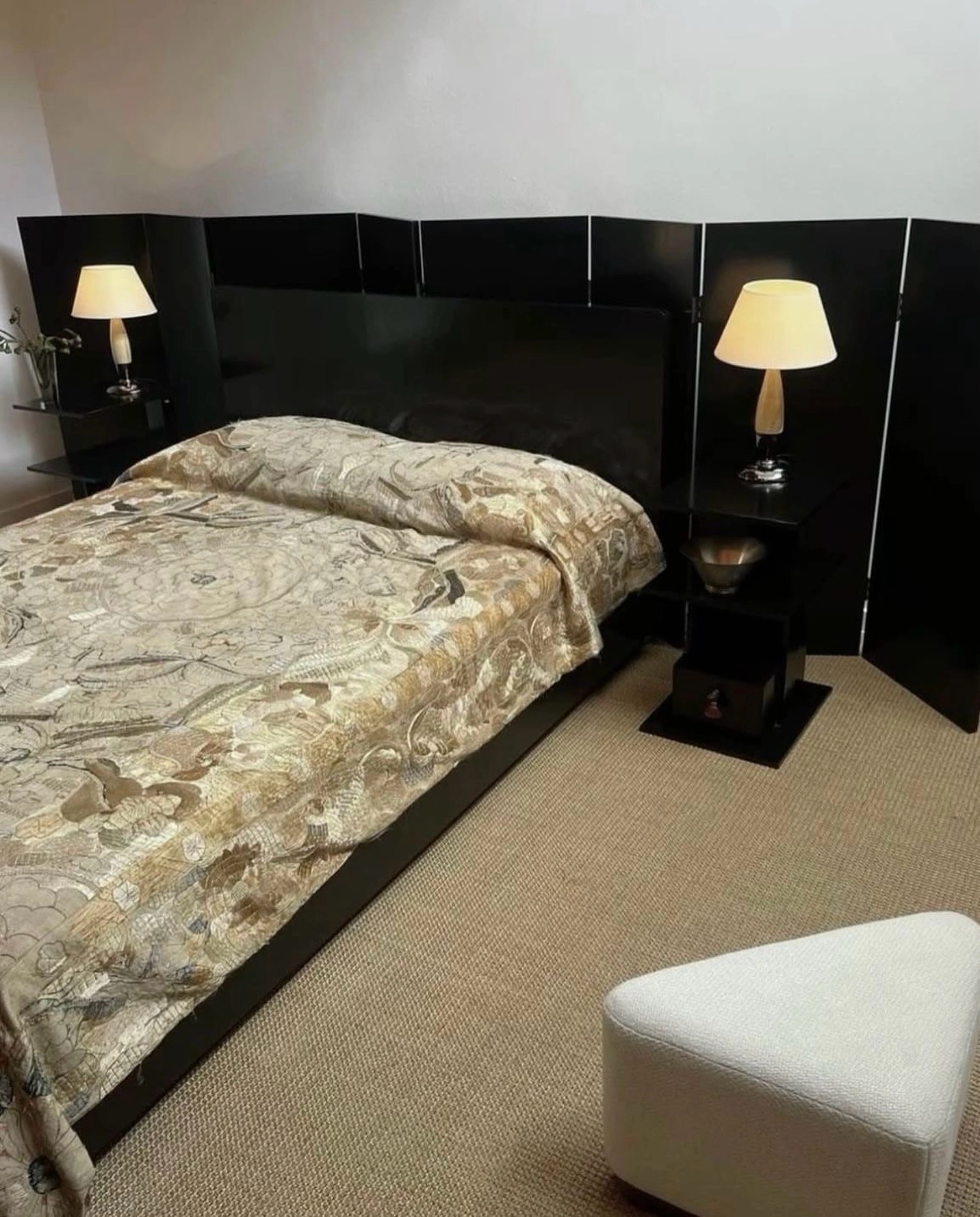
Glossy black lacquer panels form a wide headboard wall in this retro styled room, gold bedding and matching lamps completing the period mood. Lacquer is the opposite pole from matte: it reflects lamplight in soft pools and reads as furniture rather than paint, which suits bedrooms that lean vintage or hotel. Gloss shows dust sooner than matte, the honest trade for the glow, so this headboard belongs to people who enjoy a weekly wipe rather than resent it. Gold bedding is the natural partner, since lacquer and metallics share the same evening light.
Dust honesty:Gloss black needs a weekly microfiber pass; matte black needs almost none. Choose your headboard finish by your cleaning temperament, not the showroom photo.
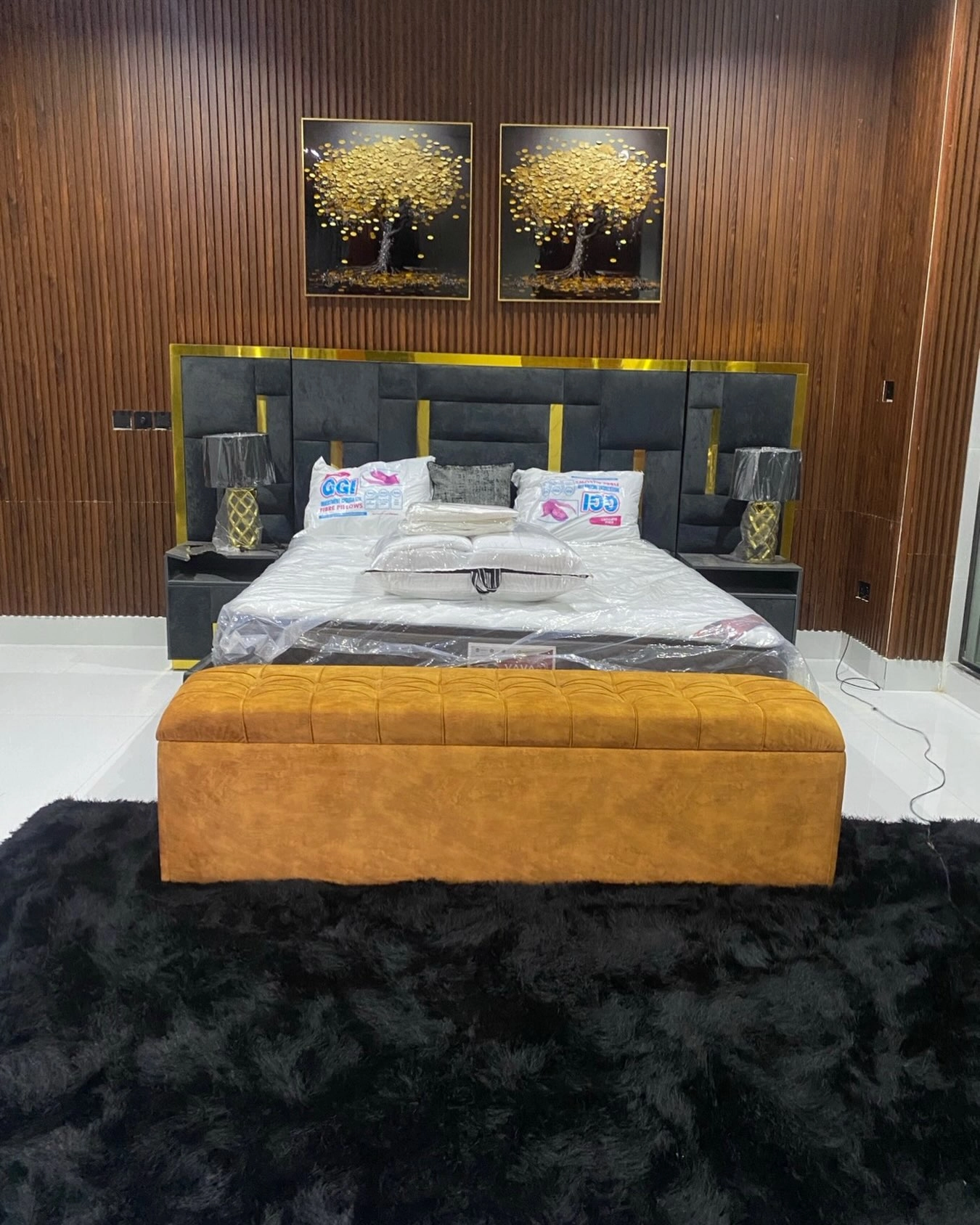
A dark wood slat wall rises behind a broad black panelled headboard with gold trim in this rich, warm room, white bedding laid across it. Two headboard ideas are stacked here, the slatted wall and the panelled board, and the layering works because their rhythms differ: fine vertical lines behind, wide panels in front. Slat walls also tame echoes and hide a multitude of wall sins behind their battens. If you build one layer only, build the headboard; the slats are the upgrade for a second season.
Rhythm rule:Fine lines behind, wide shapes in front. Two similar rhythms stacked together blur into visual static.
12. Black Accent Wall, Cream Channel Headboard, Backlit
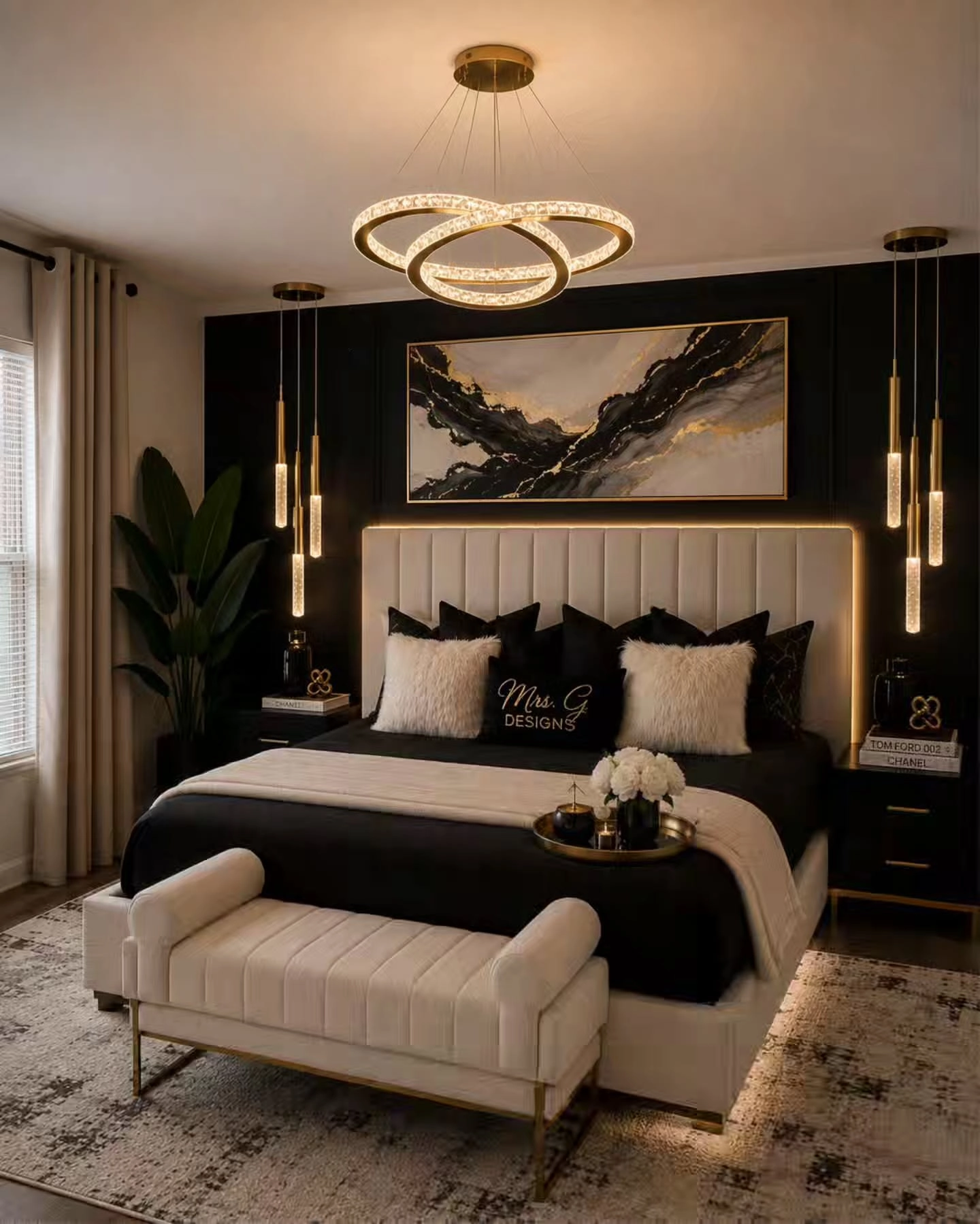
A black accent wall and black bedding meet a tall cream channel tufted headboard with warm light glowing behind it in this second room from the same designer as our featured image. The backlit headboard is a trick worth stealing: a hidden warm strip turns the headboard into a lamp, outlining it against the black wall and giving the room its evening glow without any visible fixture. Cream against black is softer than white against black, and at night, under warm light, it reads almost golden. This is the hotel formula, and it is copyable at almost any budget.
Backlight trick:A warm LED strip behind an upholstered headboard replaces bedside lamps and flatters everything. Choose 2700K and put it on a dimmer.
Layer Three: The Bedding
13. Black Embroidered Bedding Against Panelled Walls
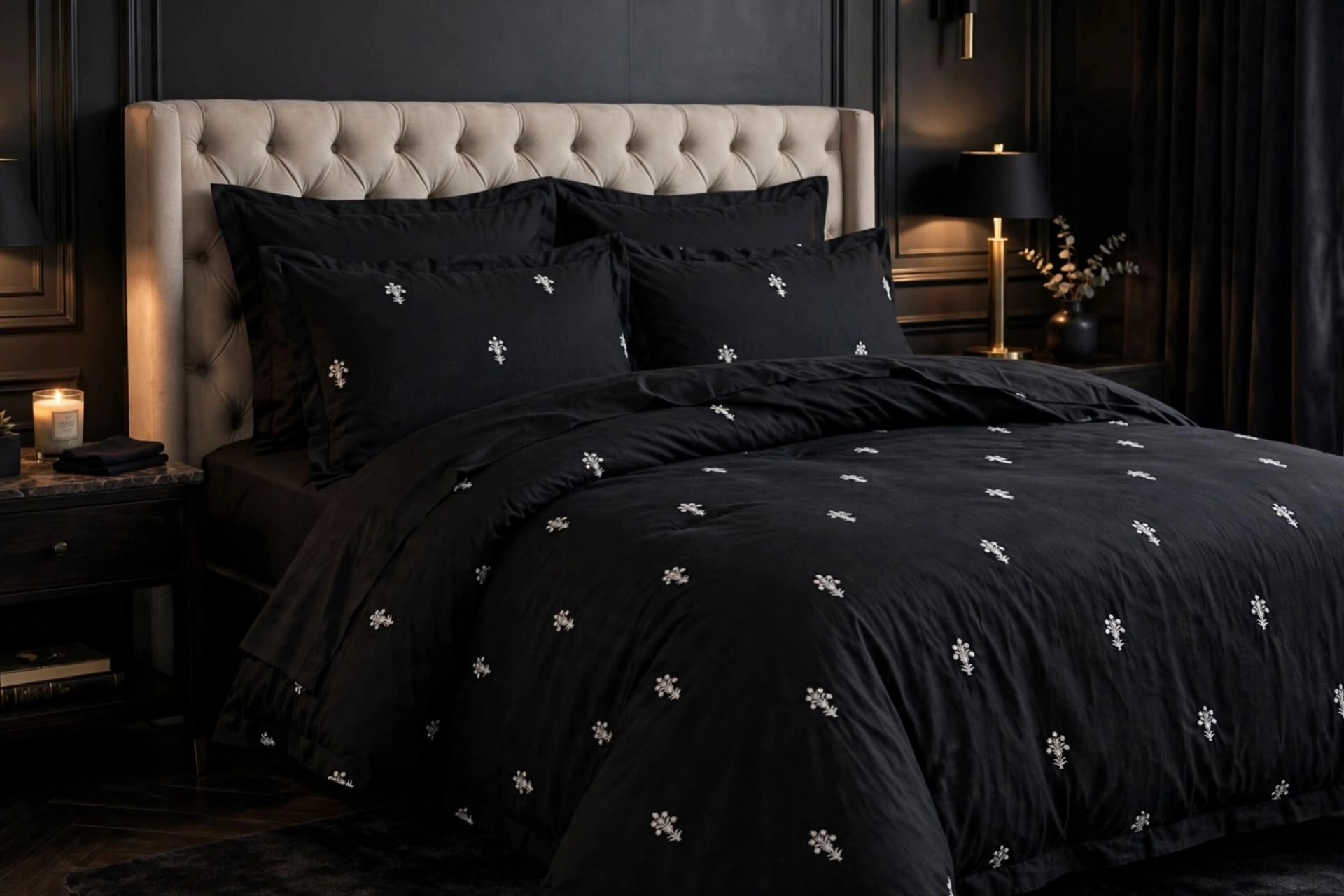
Black bedding scattered with small white embroidered motifs covers this bed, black panelled walls and a cream tufted headboard behind it. A small light motif is the kindest pattern for black bedding: from across the room it reads as texture, up close as detail, and it hides the lint and pet hair that plain black bedding advertises. Embroidered and jacquard motifs outlast printed ones in the wash. This room also shows the classic sandwich: black walls, cream headboard, black bed, each layer alternating so none of them blur together.
Lint logic:Plain black bedding shows every pale fiber. A small motif, a texture or a weave pattern is camouflage; budget five minutes a week less with the lint roller.
14. Fluffy Black Bedding, Cream Headboard, Bright Room
A plush, fluffy black comforter and shaggy pillows fill this bed against a cream nailhead headboard, the room itself bright and beige. This is bedding doing the entire aesthetic alone, which makes it the most reversible idea in the article: one bedding set, no paint, no furniture changes. Fluffy textures photograph beautifully and sleep warm, so they suit cold sleepers and cold rooms best. The cream headboard and beige walls keep the black cloud of a bed looking deliberate, the way a black sofa works in a pale living room.
One layer test:Before painting anything, sleep one month with black bedding in your current room. If you still want more black after that, the walls have earned it.
Order
Layer
What it decides
Rough budget share
1
Walls
The room’s base mood and how much light survives
Paint: small. Panelling: the biggest share
2
Bed and headboard
The focal point and the black-to-light balance
Medium to large; the piece you keep longest
3
Bedding
The daily look and the easiest seasonal change
Small to medium; two sets beat one expensive set
4
Furniture and soft finish
Storage that disappears or earns its place, warmth, glow
Whatever is left; lamps before art, always
15. Black Ruffled Bedding Under Ivy and Moon Mirrors
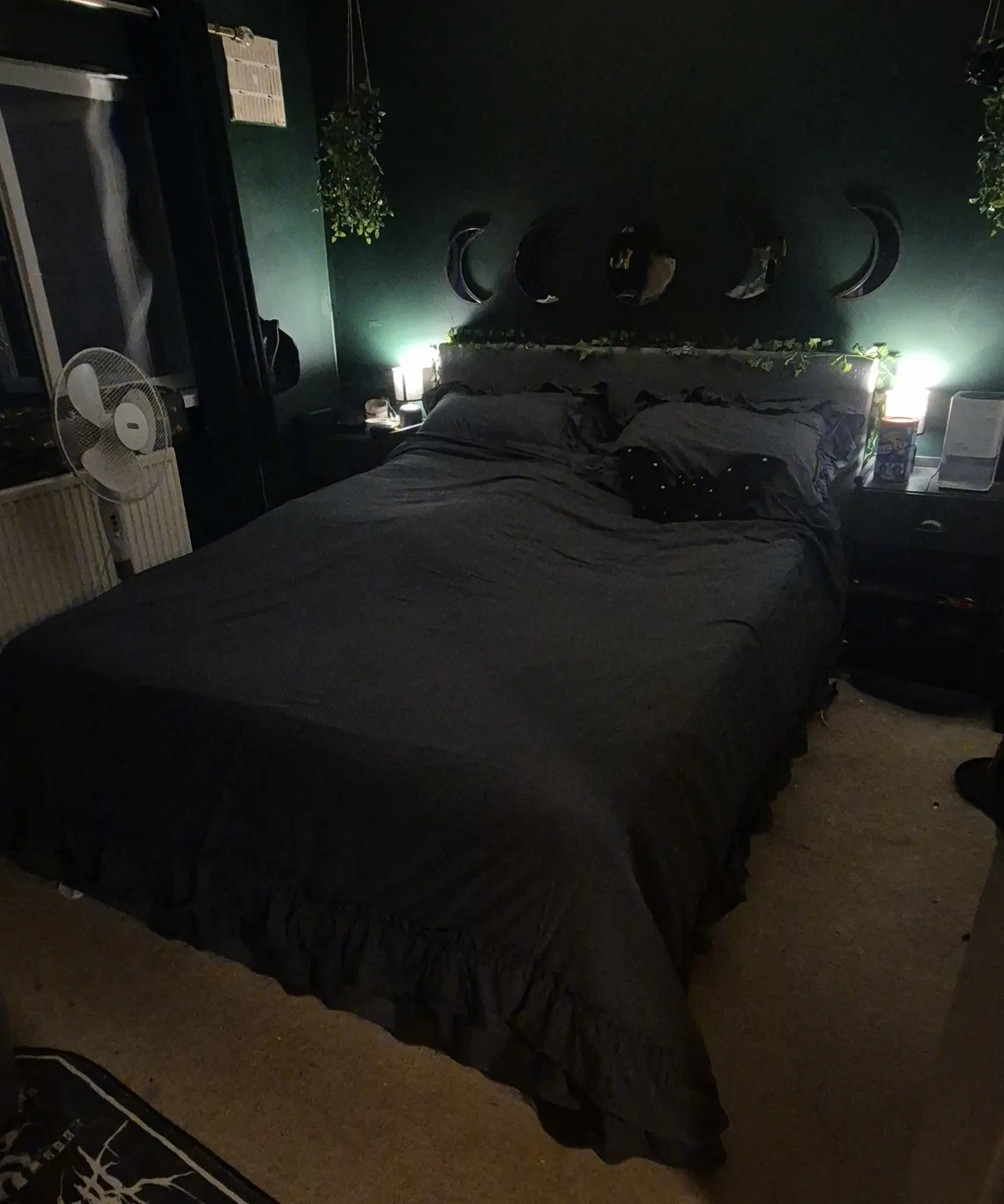
Black ruffled bedding piles onto a low bed beneath dark green black walls, trailing ivy and moon shaped mirrors in this small, witchy room. Ruffles are texture at maximum volume: they turn a plain black duvet into something sculptural and hide every wrinkle by being all wrinkle. Small dark rooms like this one succeed by committing to a mood rather than apologizing for size; the ivy and moons give the darkness a story. If your taste runs romantic or gothic, ruffles and plants will get you further than any paint choice.
Mood over size:A tiny black bedroom should lean into its mood with plants, mirrors and texture. Trying to make it look bigger wastes the one thing it is naturally good at: atmosphere.
A bedding set printed with oversized black roses covers this bed, the roses shading from charcoal to deep black. Print scale is the whole game with dark florals: blooms this large read as moody and modern, while small dark prints read as dated. A printed set is also the cheapest ticket in this section, one purchase that changes the bed completely, and it pairs with almost any wall color you already have. Wash dark prints inside out in cold water and they keep their depth far longer.
Print care:Dark bedding fades from the fold lines first. Cold wash, inside out, and shade drying keep the black black for years instead of months.
Black quilted bedding piped with gold covers this bed, a tall black channel headboard behind and backlit marble effect panels glowing at the sides. Quilting gives black bedding a tailored, hotel structure that flat duvets lack, and the gold piping draws the bed’s outline the way tailoring draws a suit’s. Backlit panels are the grown up version of fairy lights: even, warm and architectural. Together they make a bed that looks dressed rather than simply made, which is the difference between a black bedroom and a black bed in a room.
Outline trick:Piping, trim or a contrasting throw along the foot gives a black bed its silhouette back. Without an outline, black bedding melts into black shadows.
18. All Black Quilted Bedding, Pale Wood Headboard
Solid black quilted bedding dresses this bed against cream walls and a pale wood headboard with hidden backlighting. Pale wood is black bedding’s best friend: the warm grain stops the bed from reading as a black hole and echoes the Scandi habit of pairing black with oak. The backlit headboard returns here in wood form, proving the trick works in pale rooms too. If your walls must stay light for a landlord or a partner, this exact recipe, black bed, pale wood, cream walls, delivers most of the aesthetic with none of the arguments.
Landlord formula:Cream walls, pale wood, black bedding. Ninety percent of the mood, zero deposit risk.
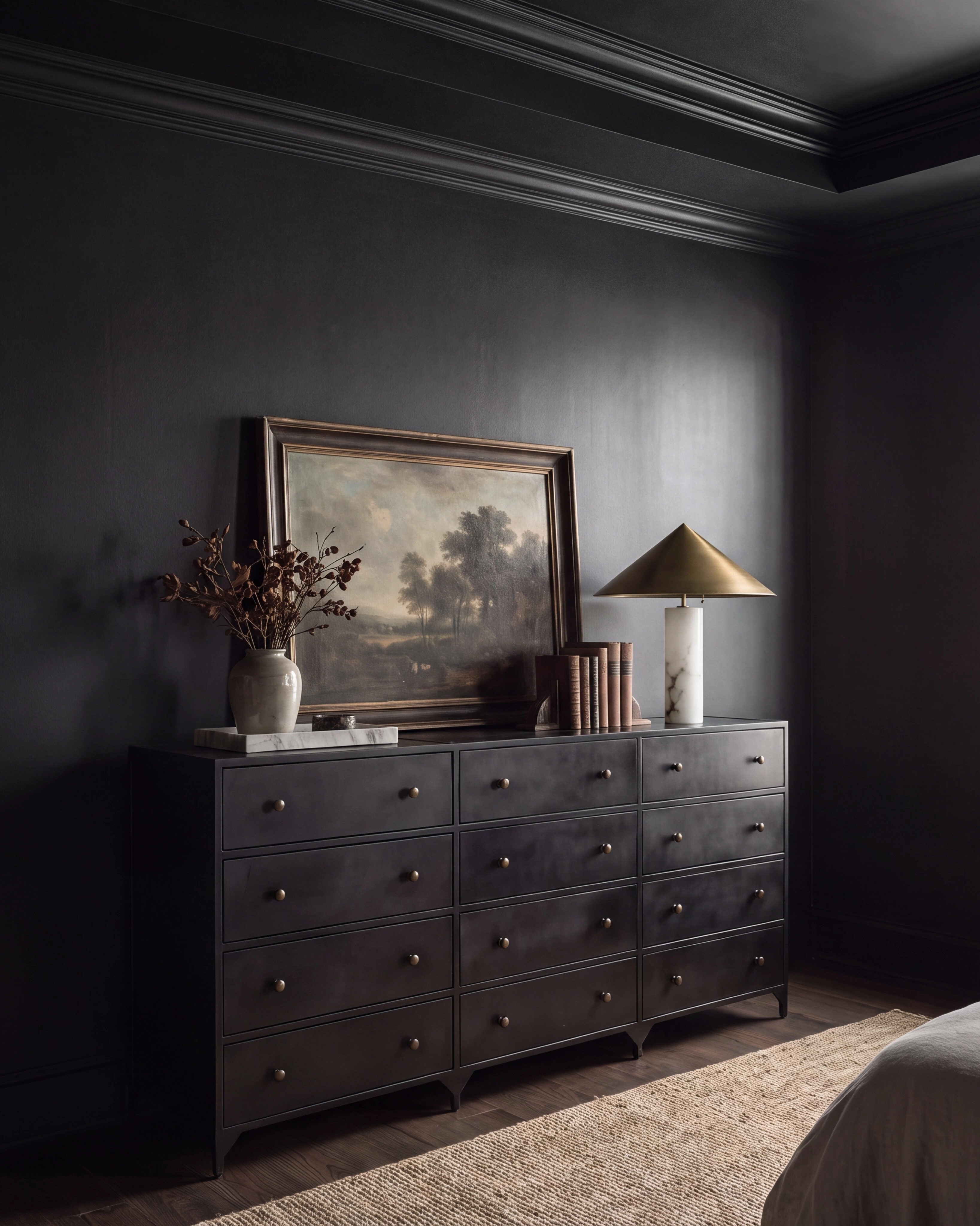
A twelve drawer black dresser stands against black moulded walls in this traditional room, a framed landscape painting leaning on top. Black furniture on black walls sounds like a mistake and works like a shadow: the dresser reads as depth rather than object, and the room feels larger because its biggest storage piece visually disappears. The painting and lamp on top become the display, floating at exactly the height the eye wants. This is the storage answer for small black bedrooms, where pale furniture would chop the walls into pieces.
Disappearing storage:Match big storage to the wall color and it stops eating the room. Works with any dark color, best with black on black.
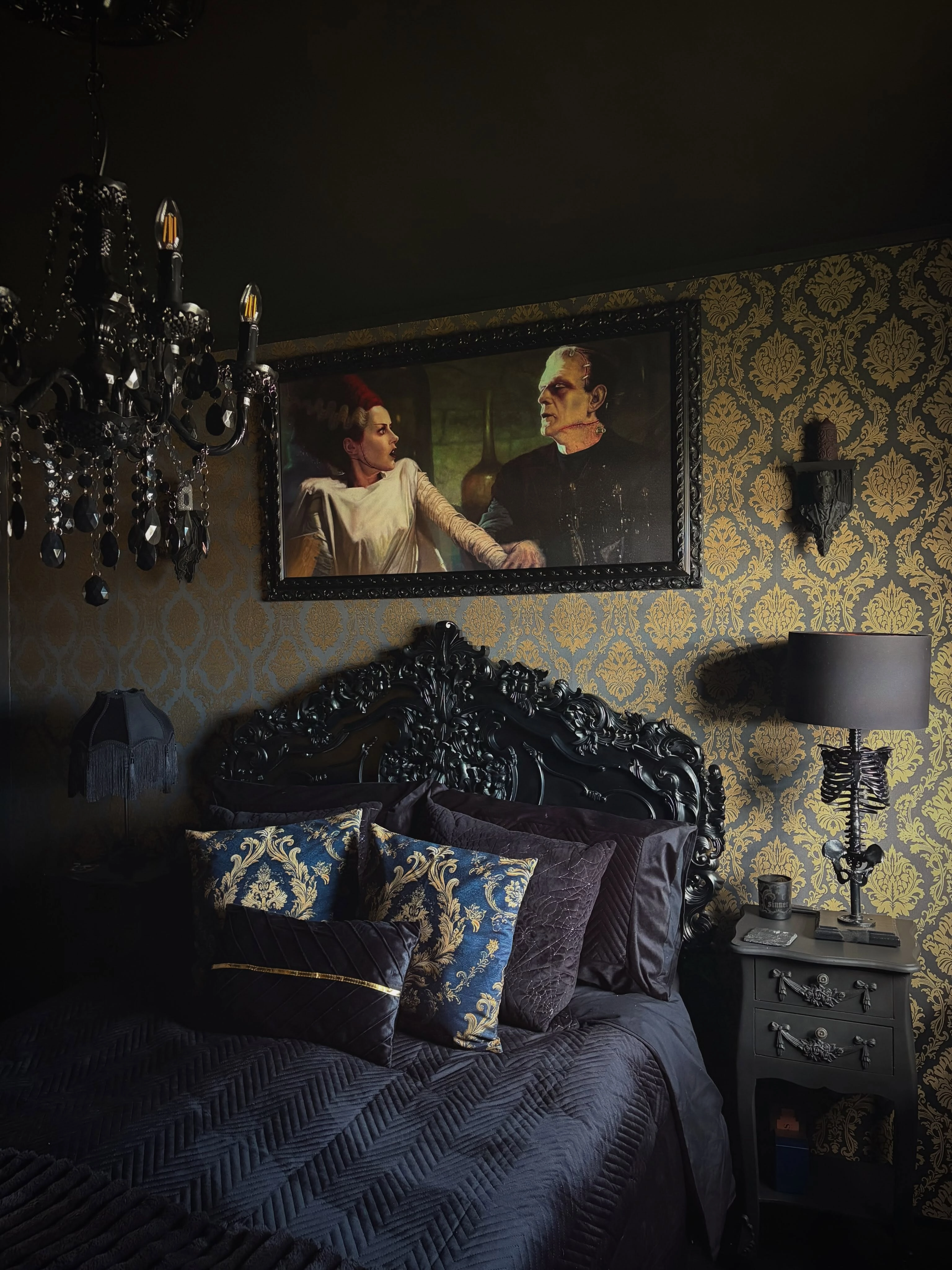
Black and gold damask wallpaper, an ornate carved black headboard and damask cushions fill this real gothic bedroom, shared by its owner rather than a studio. Pattern on pattern is allowed when the palette refuses to budge: everything here is black, gold or ivory, so damask on damask reads as richness instead of chaos. Real homes like this one are the proof that the aesthetic is livable, not just photographable. If you go gothic, commit to the palette discipline and let texture do the varying.
Palette discipline:Gothic rooms can mix endless patterns if the colors never change. Black, gold, ivory: pick three and let nothing else in.
A low wooden platform bed with navy bedding sits under a charcoal wall in this small Japanese inspired room, a paper lantern glowing overhead and a projector painting the wall. Small rooms and low furniture are natural partners: the platform bed leaves headroom that makes the charcoal walls feel like a cinema rather than a closet. The paper lantern is the light lesson of the article in one object, large, soft and warm, floating where a ceiling light would glare. Navy bedding counts as black’s closest neighbor and softens the scheme by a degree.
Lantern light:One large paper lantern beats three small lamps in a small dark room. Bigger shades mean softer shadows, and softer shadows mean the black reads as calm.
A tall black padded headboard anchors this bedroom, white bedding printed with small black bats and witch hats across it, pale walls around. It is the playful proof that the aesthetic has a sense of humor, and it shows the headboard carrying the entire black layer while everything else stays light. A statement headboard is the one piece of bedroom furniture that can be as bold as it likes, because bedding and walls around it can stay calm. Seasonal or novelty bedding over a serious black base is a sustainable way to keep the room feeling new.
Serious base, silly layers:Keep walls and headboard classic and let bedding be the changeable, playful layer. Novelty reads as charm against a serious base and as chaos against a novelty one.
Deep green quilted bedding lies on a bed with a tall black channel headboard trimmed in gold, a zebra rug underneath, in this unapologetically glamorous room. Green is black’s richest partner color, the one jewel tone that deepens it instead of fighting it, and the gold trim stitches the two together. A patterned rug under a plain bed is the same one busy surface rule from the walls layer, applied at floor level. If black alone feels severe, one jewel tone, green first, burgundy second, is the release valve.
Jewel release:One jewel tone against black adds luxury without lightening anything. Emerald leads, burgundy follows, navy whispers.
The article ends in a real small bedroom: black satin bedding, dark walls, heavy red curtains and a black dog asleep on the bed. No staging, no stylist, and the room still delivers the aesthetic completely, which is the most encouraging photo here. Satin is black at its glossiest, catching window light in long highlights, and it shows every crease and paw print as part of its lived in shine. Black bedrooms are for sleeping in, not just photographing, and a dog on the bed is the certificate of authenticity.
Reality check:If the room still looks good unmade, with the dog on it, the layers are right. Staging can hide weak layers; daily life cannot.
The warm light rule: black rooms are made or ruined by bulb temperature. Stay between 2200K and 2700K everywhere in a black bedroom; that is candlelight to warm domestic glow. At 3000K the room starts to feel like a shop, and at 4000K black paint turns blue grey and every warm layer in this article goes cold. Buy bulbs in matched pairs from the same batch, put the bedside pair on dimmers, and test one bulb at night before replacing the whole room.
Final Thoughts
Build a black bedroom in order and it builds itself: walls for the mood, a headboard with presence, bedding that alternates light and dark, and furniture that either disappears into the walls or earns its place with warmth. Start with the cheapest layer you are missing, live with it, and add the next when the room asks for it. The 24 rooms here range from one painted wall to full panelling, and every one of them is just layers, added in the right order.