Curtains are the fastest way to make a balcony feel like a room instead of a slab. One afternoon, one rod, a few panels of outdoor fabric, and suddenly you have privacy, shade, and softness where there was concrete and wind. The mistake most people make is shopping by color. Fabric matters more than color out here, because cheap indoor curtains fade, mildew, and shred within a season. Shop the fabric first, the hardware second, and the color last. These 26 ideas follow exactly that order.
Sheers That Let the Light In
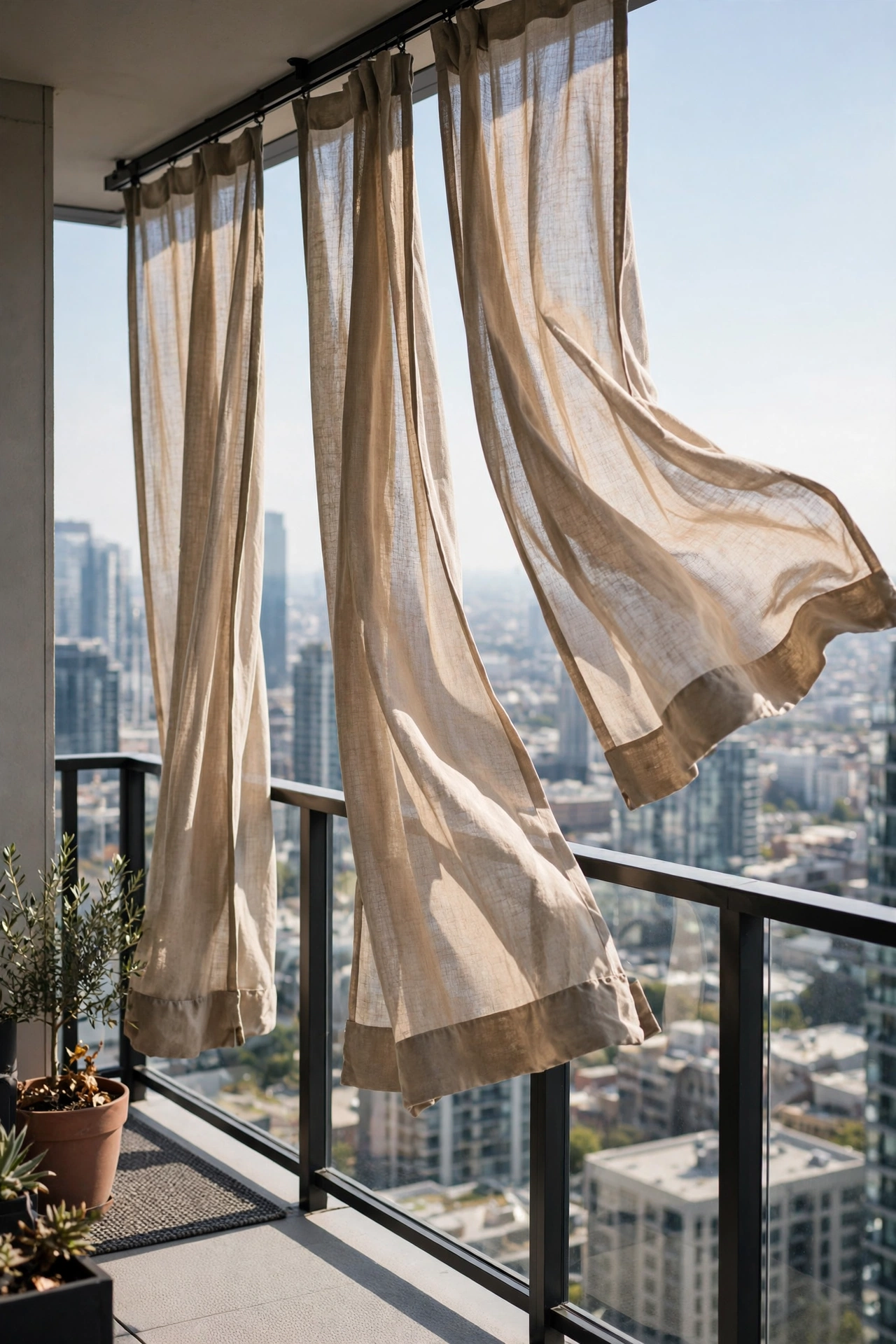
Start with the lightest option. Sheer curtains do not give you full privacy, but they blur the view, cut glare, and move beautifully in a breeze. They are the right call when you like your neighbors but do not need them watching breakfast.
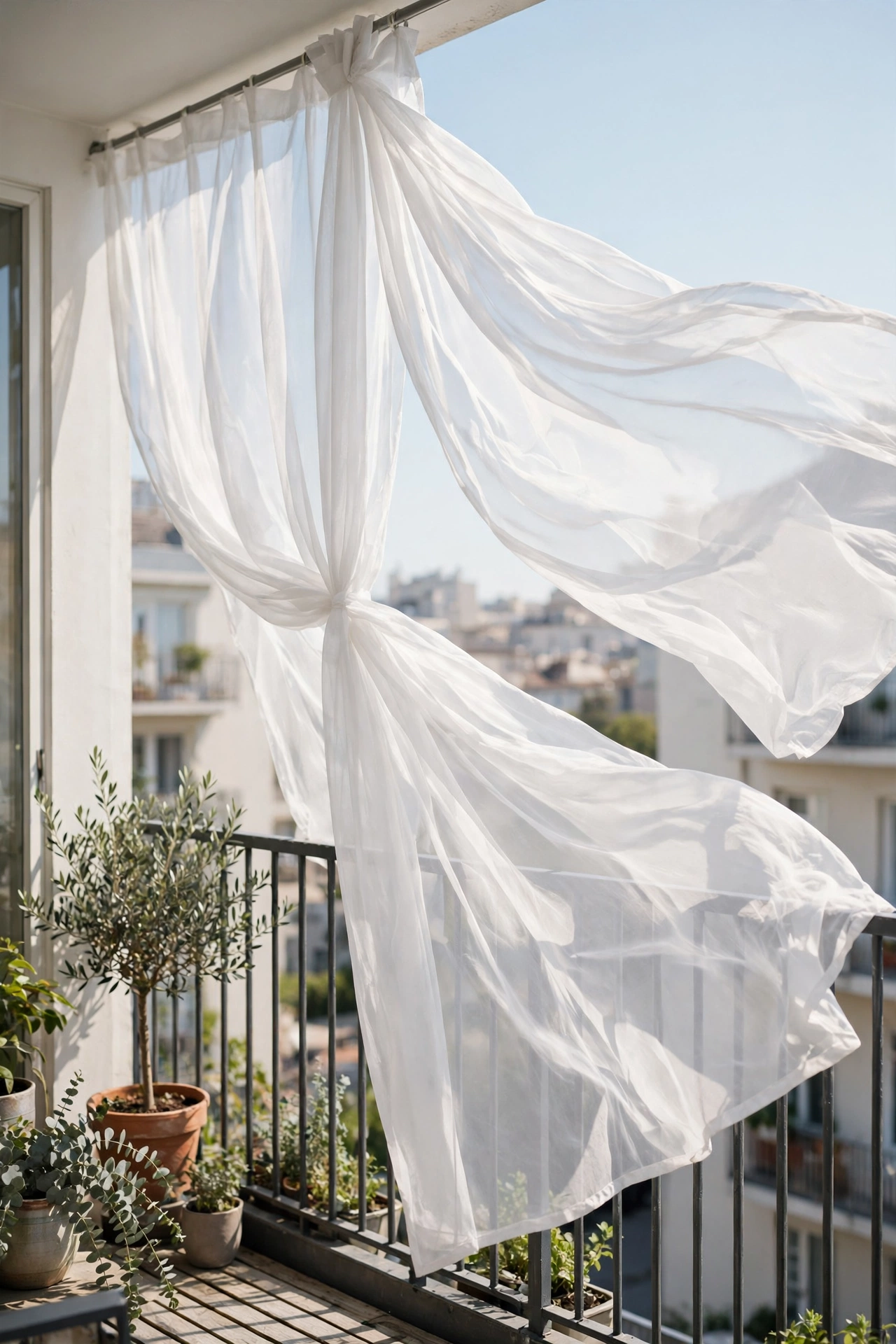
White sheer outdoor panels are the balcony equivalent of a clean white shirt. They go with everything, brighten a dark north-facing slab, and filter harsh sun into something soft. Choose polyester voile rated for outdoor use, not indoor sheers, which yellow and tear. Hang two panels per side so they gather full instead of stretching thin. The result reads breezy, not bare.
Quick Tip: White shows city grime fast. Machine wash monthly and they will stay bright for years.
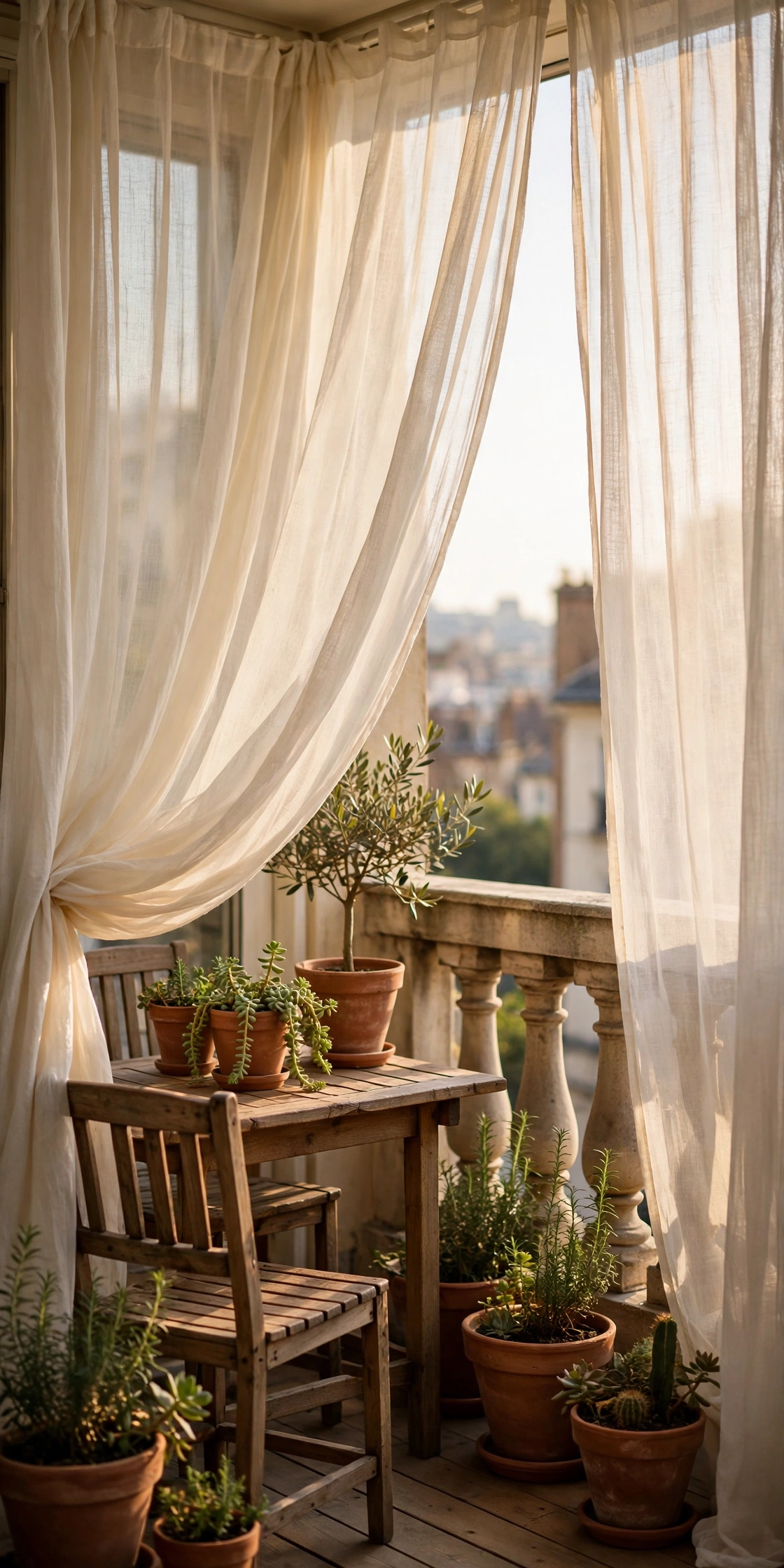
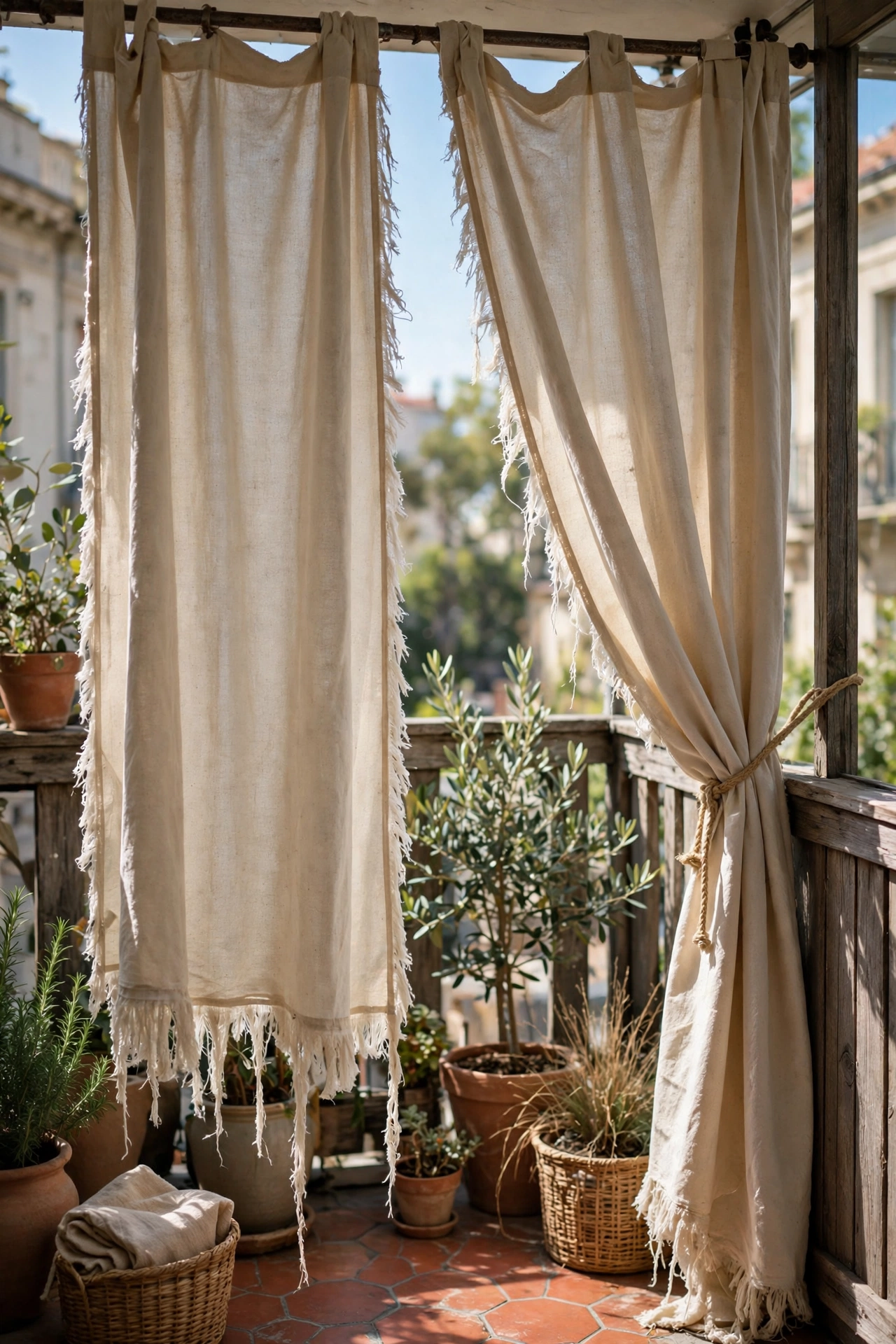
Cream or ivory sheers do everything white sheers do, with a warmer glow that flatters wood furniture and terracotta pots. On west-facing balconies they turn harsh afternoon sun into golden light. The color hides dust better than pure white, which matters on a city street. Pair with brass or black hardware for contrast. This is the coziest sheer in the lineup.
Good to Know: Cream reads yellowish against gray concrete. Test one panel before committing to the whole run.
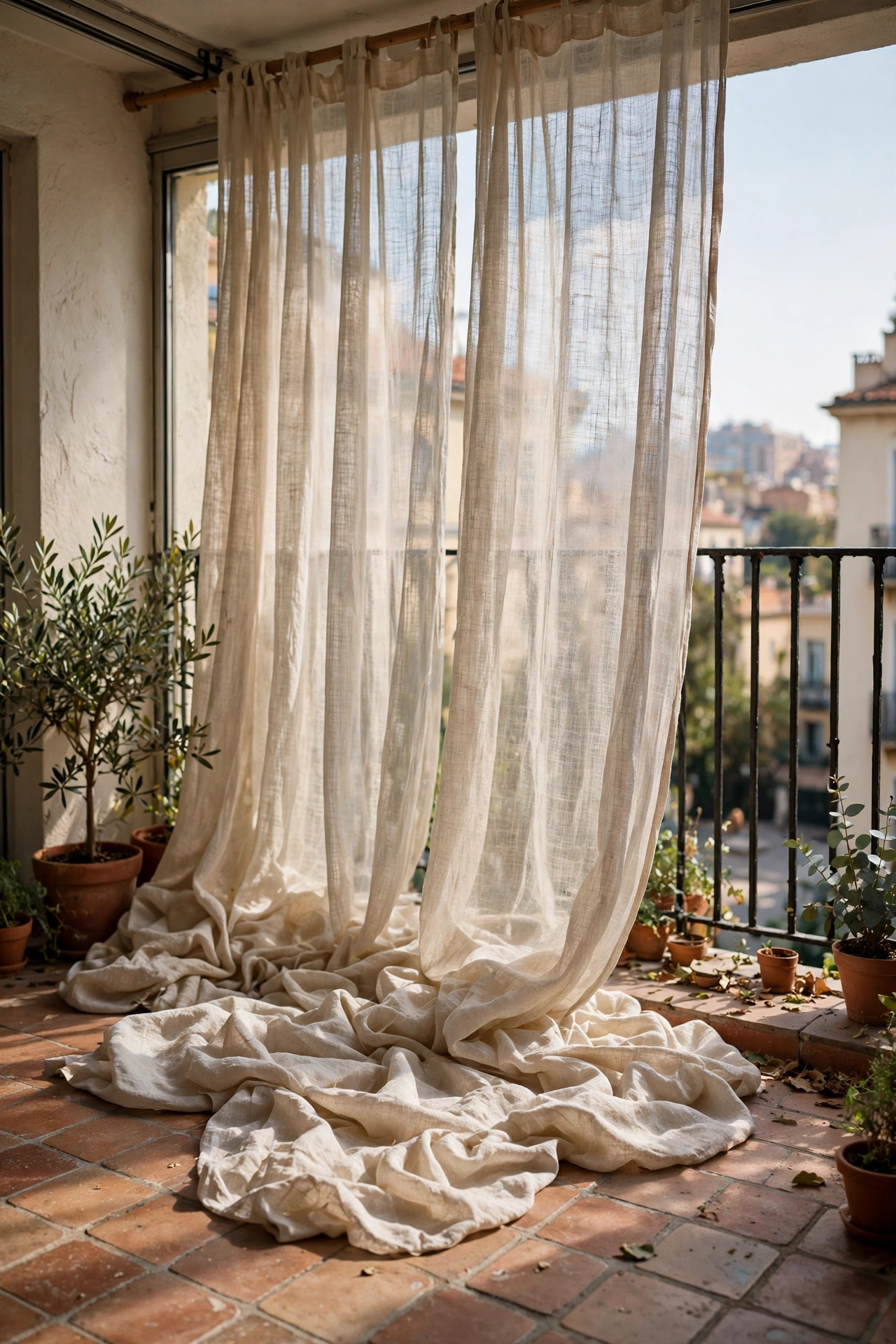
Linen-look polyester gives you the relaxed slub texture of Belgian linen with none of the rotting. Real linen outdoors is a mildew invitation, but the look is worth faking. The texture catches light and shadow in a way flat sheers never do. It dresses up basic apartment railings and makes a folding chair look intentional. Hang them slightly puddled for a soft, lived-in feel.
Designer Trick: Texture photographs better than color. If you pin balcony photos, linen-look wins every time.
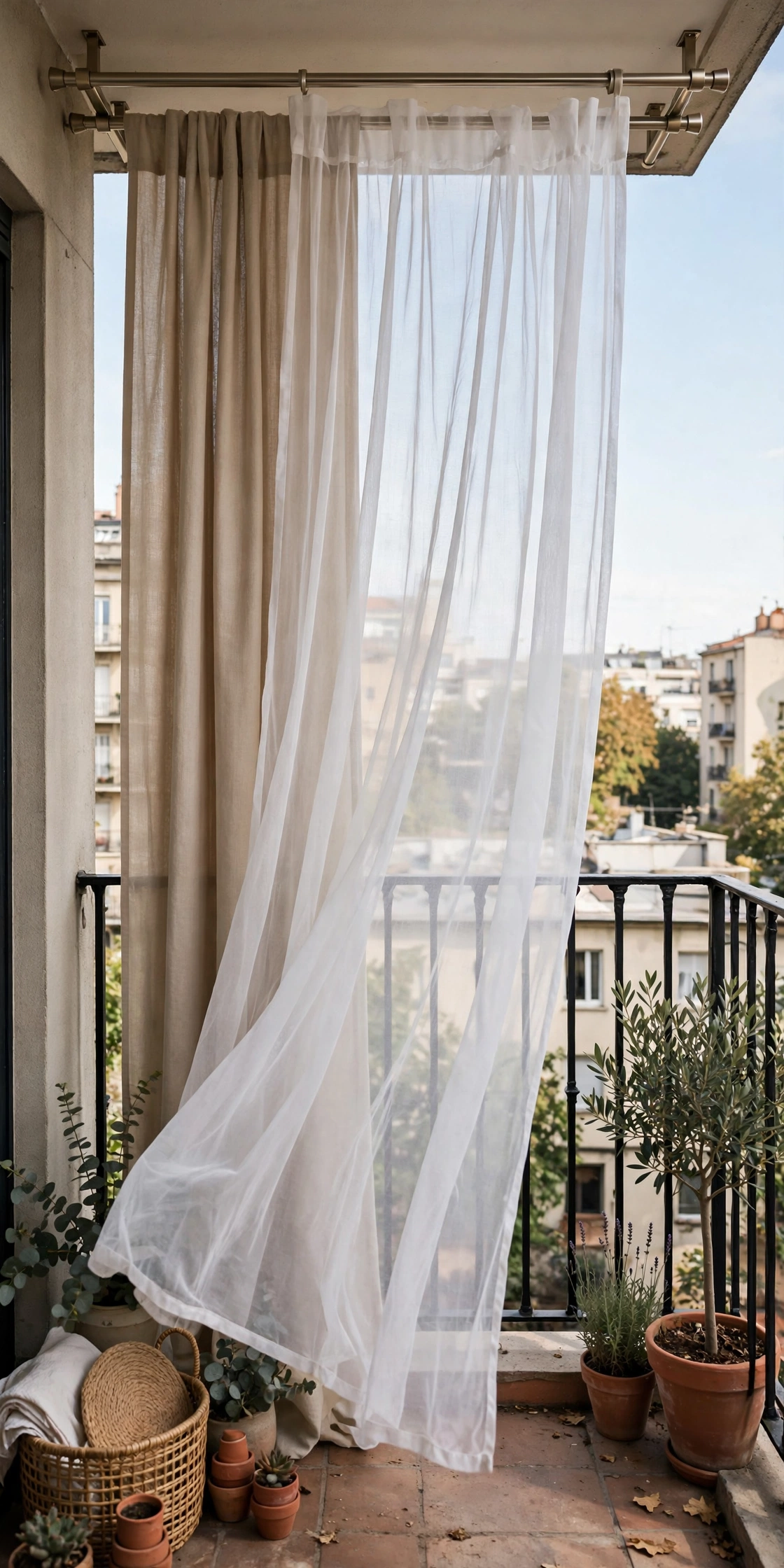
The designer move is two layers: a sheer panel in front, a solid behind. Daytime, you open the solid and keep the sheer for filtered light and soft privacy. Evening, you draw both and the balcony becomes a lantern. One rod will not do it, you need a double rod or two wire runs. The layered look reads custom and expensive, even with budget panels.
Worth the Effort: This is the only setup here that handles day and night equally well. Buy the second rod.
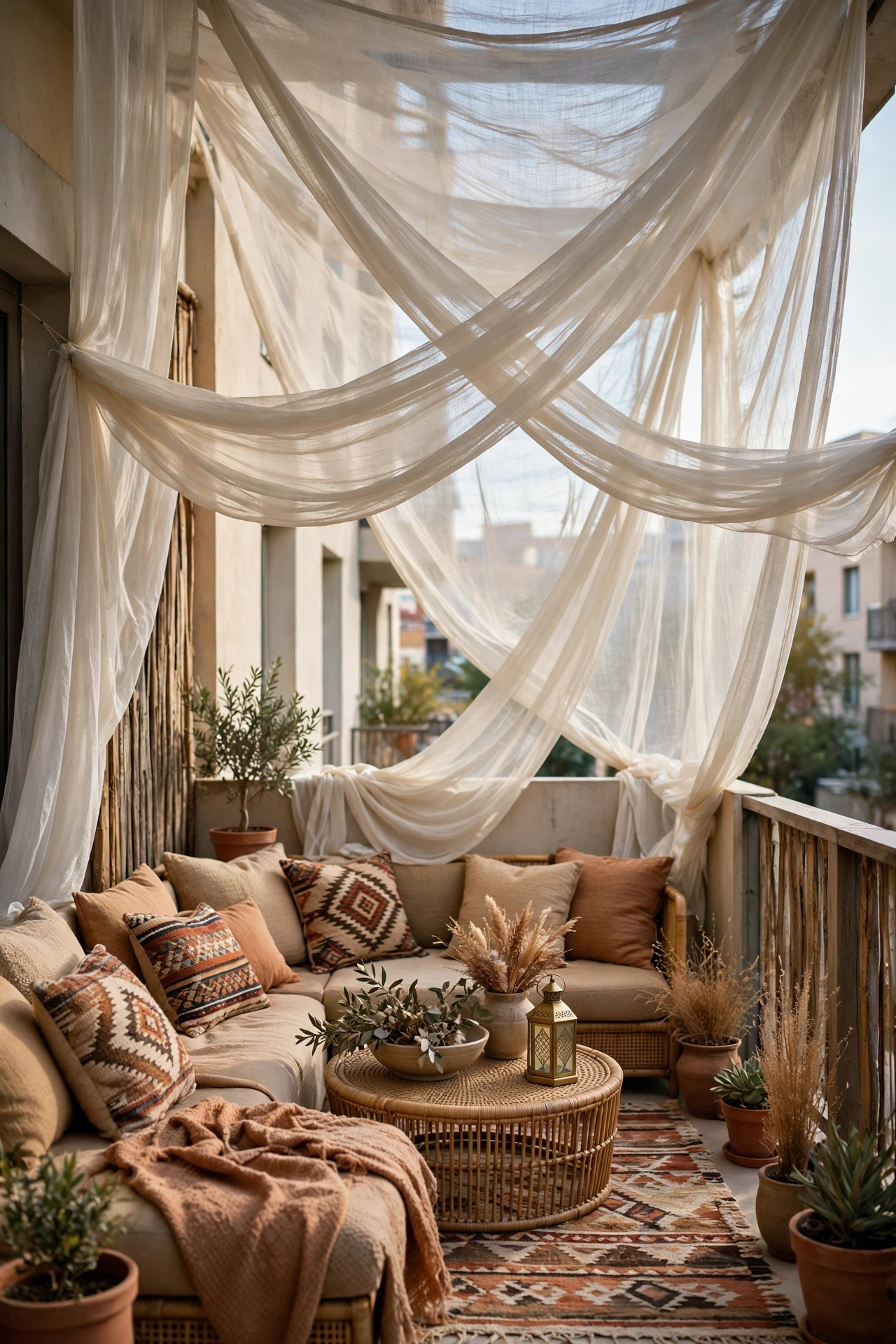
Instead of hanging sheers on the sides, drape them overhead as a canopy. Swag fabric from the ceiling across the seating zone and you get dappled shade with zero side coverage. It feels like a bedouin tent and photographs like a dream. Use lightweight panels clipped to wires or hooks. This is shade, not privacy, so pair it with a side screen if neighbors are close.
Heads Up: Overhead fabric collects rain. Take it down before storms or pitch it with a slight slope.
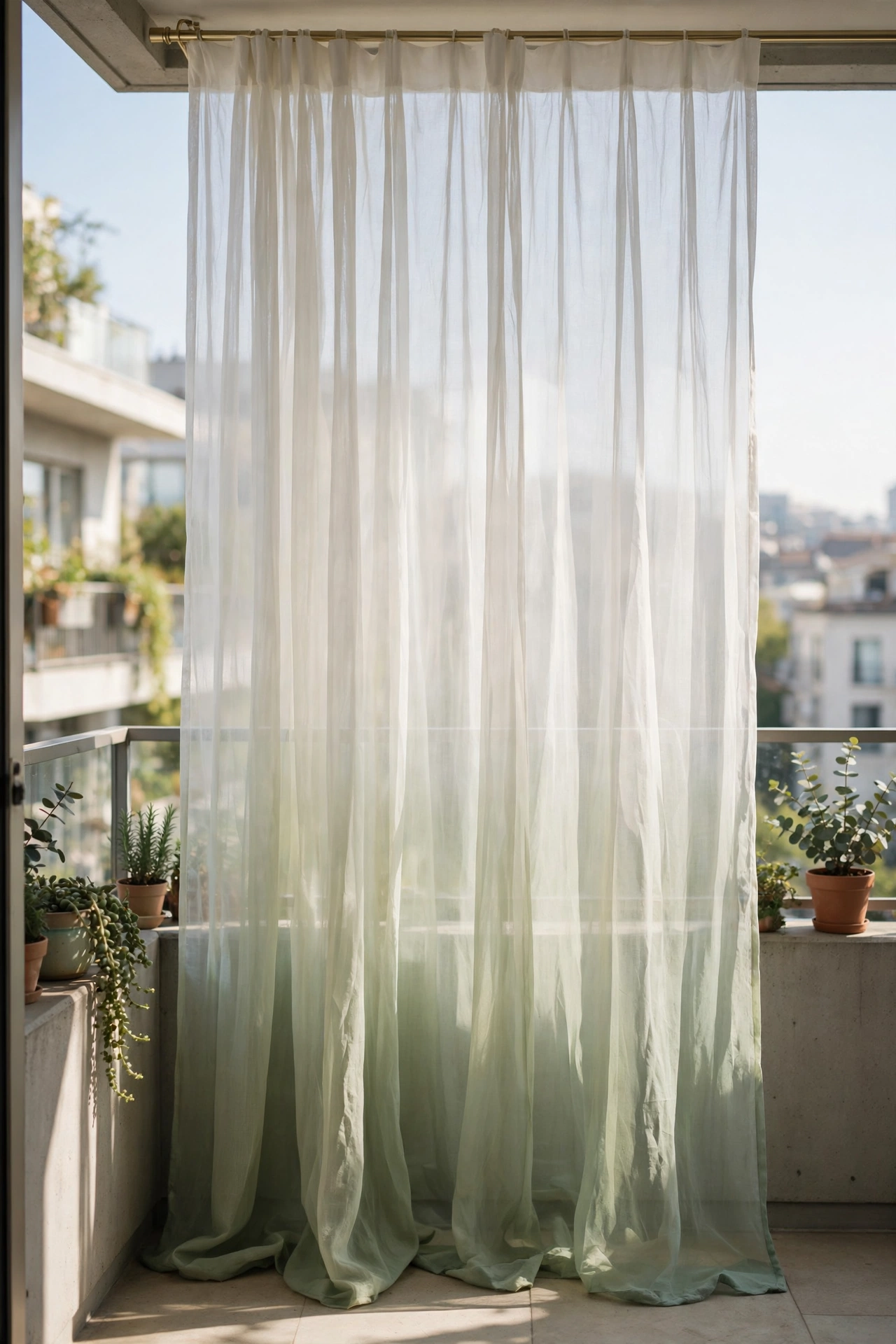
Ombre sheers fade from white at the top to a soft color, sage, clay, sky blue, at the bottom. The gradient adds visual interest without a loud pattern, and the colored hem grounds the panels so they do not float away visually. They look handmade even when store-bought. On a plain balcony, this one detail can carry the whole design. Keep furniture neutral and let the fade do the talking.
Style Note: Match the bottom color to one accent, a pot, a cushion, a lantern, and the whole balcony ties together.
Fabric Cheat Sheet
Fabric
Privacy
Weather handling
Cost band
Outdoor sheer polyester
Low, blurs view
Good, dries fast
Low
Solution-dyed acrylic
High
Excellent, fade-proof
Medium to high
Polyester canvas
High
Good, needs hem weights
Low to medium
Waterproof polyester
High
Excellent, rain-proof
Low
Cotton macramé
Low, decorative
Fair, bring in when wet
Medium
Solids That Mean Privacy
When the goal is to actually block the view, sheers will not cut it. Solid outdoor fabrics give you real coverage, real shade, and a backdrop that makes furniture look better. These are the workhorses.
Solution-dyed acrylic, the Sunbrella-type fabric, is the gold standard for outdoor curtains. The color goes all the way through the fiber, so it will not fade even in brutal south sun. It resists mildew, repels water, and feels like real drapery instead of plastic. It costs more than polyester, roughly double, but it lasts five-plus seasons. If you buy one quality thing for your balcony, make it this fabric.
The Math: Two seasons of replacing cheap panels costs more than one set of acrylic. Buy once.
Plain canvas drop cloths from the hardware store make surprisingly great balcony curtains. They are cheap, heavy enough to hang straight in wind, and the natural cotton color suits every style. Hem the raw edges or leave them frayed for a rustic look. Treat with a fabric waterproofing spray and they handle rain fine. This is the budget idea that looks intentional instead of cheap.
Quick Tip: Wash drop cloths first. They shrink, and the washed texture looks much better.
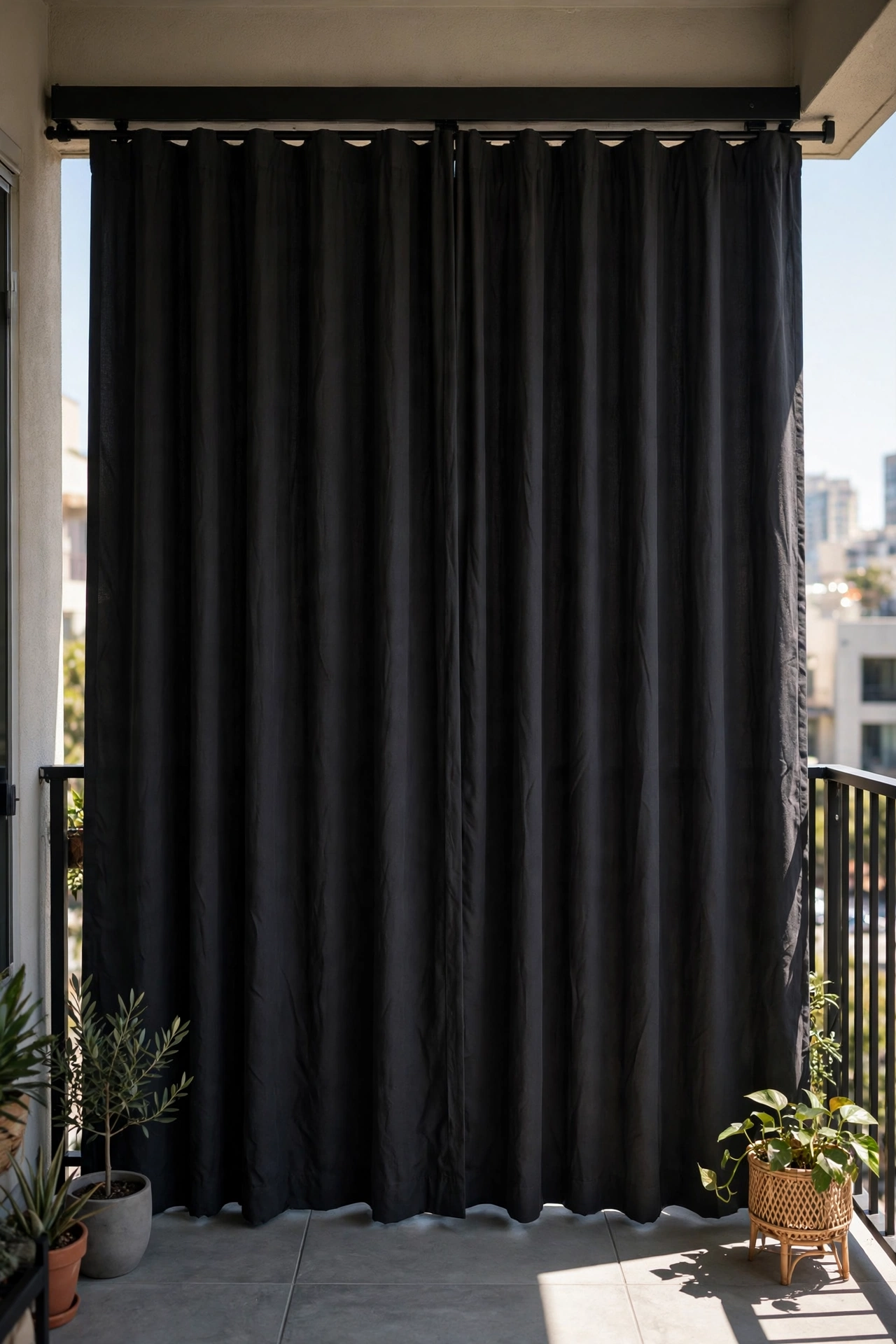
Outdoor blackout curtains give you the maximum privacy any fabric can offer. They also block the most heat, which matters if your balcony bakes in afternoon sun. Use them on the sunniest side and keep sheers elsewhere, so the balcony does not feel like a cave. The coated backing also makes them the most waterproof option here. For ground-floor balconies facing the street, nothing beats them.
Reality Check: Blackout panels are heavy. Your rod and mounts must be rated for the weight, especially outdoors.
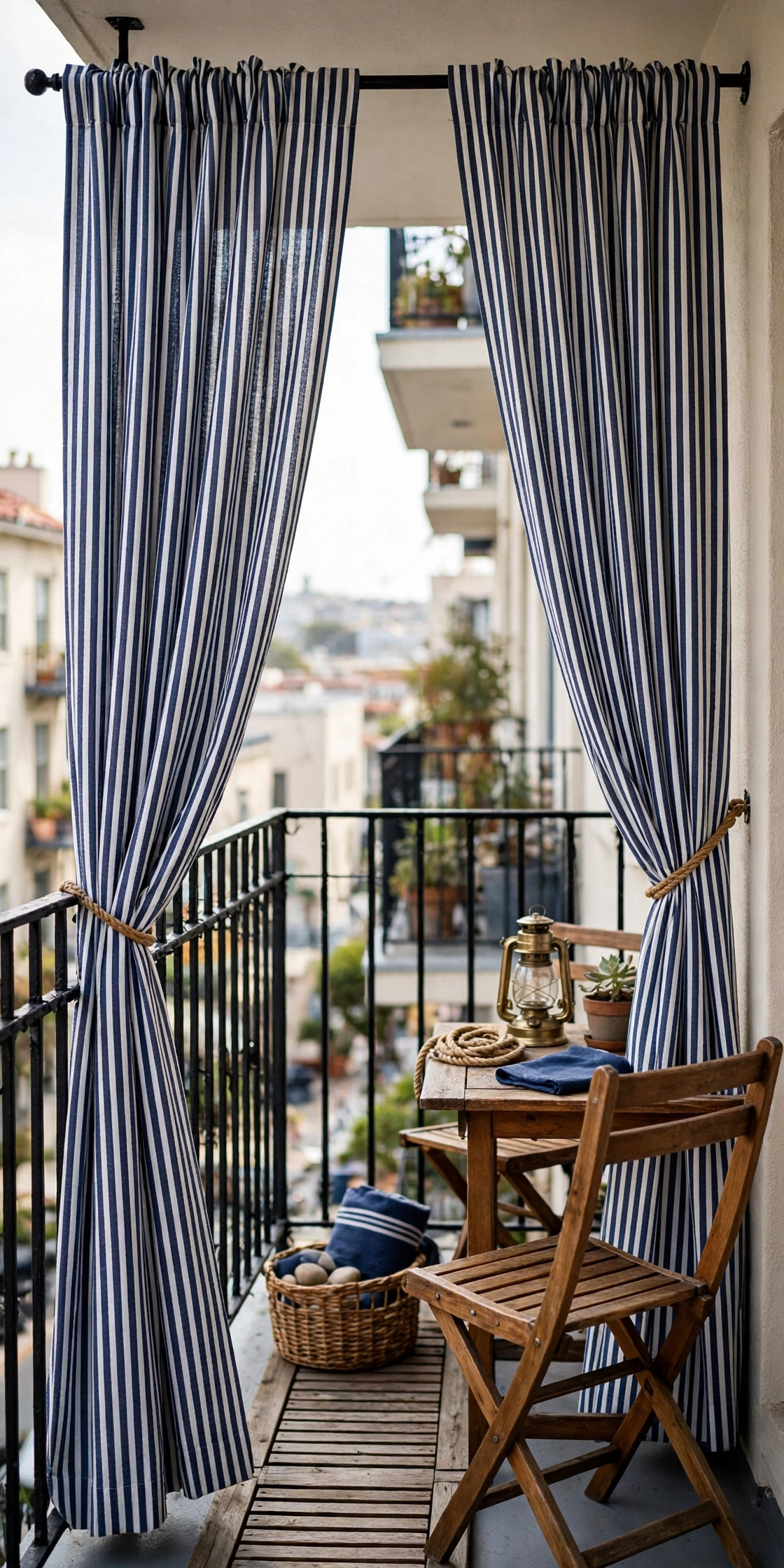
Classic ticking stripes in navy, charcoal, or olive give a tailored, almost nautical feel. Stripes visually lengthen a short balcony and hide wrinkles and dirt better than solids. Outdoor ticking in solution-dyed fabric keeps the stripes crisp for years. They pair beautifully with wood furniture and white railings. This is the preppiest curtain in the article, in the best way.
Style Note: Keep stripes vertical. Horizontal stripes chop a small balcony into visual bands.
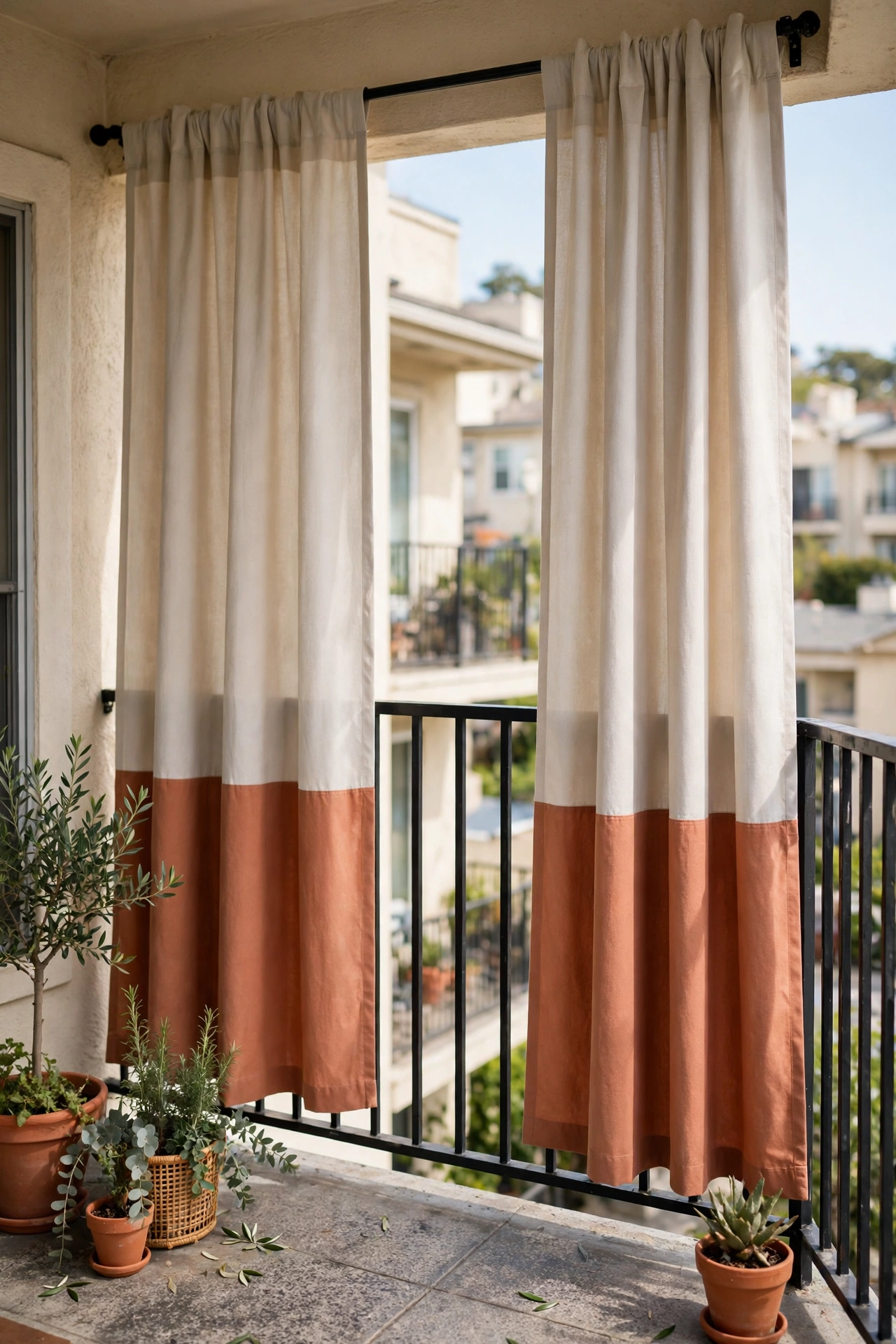
Color-blocked panels, solid on top, a bold band of color at the bottom, give you custom-drapery looks without custom prices. Sew two fabrics together or buy them ready-made. The bottom band anchors the panels visually and hides the dirt line that white curtains develop. Pick the accent from your cushions or pots. It is a small sewing project with outsized impact.
DIY Level: Straight seams only. If you can sew a pillowcase, you can color-block a curtain.
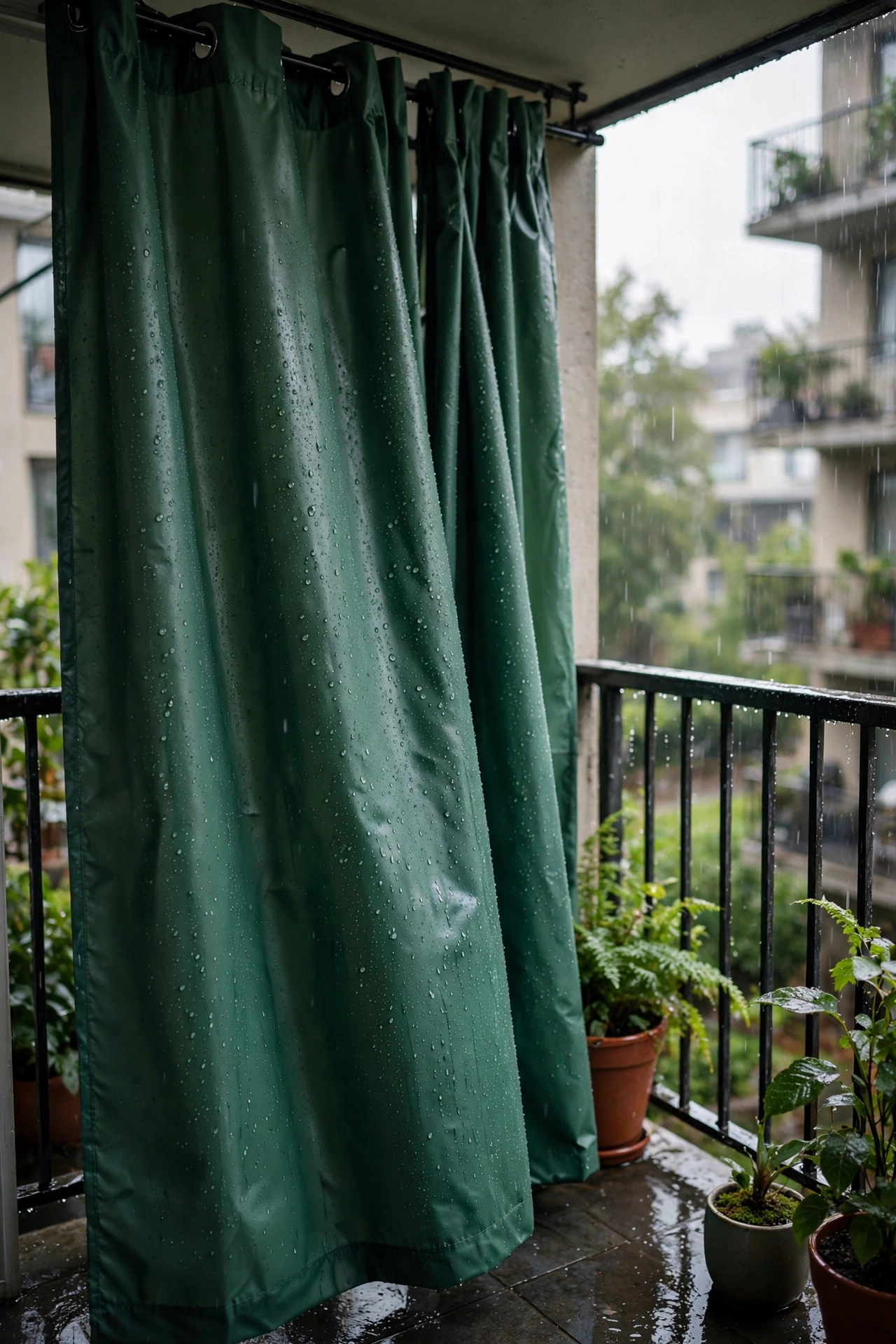
Coated waterproof polyester panels are the practical pick for rainy climates. Rain beads off instead of soaking in, and they dry in minutes. They come in every color, cost very little, and survive seasons of abuse. The trade-off is feel: they are crinklier and less drapey than acrylic. On a balcony where function beats romance, they are the smart money.
Good to Know: The coating can make panels stick together when wet. Separate and air them after heavy rain.
Why Cheap Indoor Curtains Fail Outside
Indoor fabric is dyed on the surface, so UV breaks the color down within weeks. It also lacks mildew inhibitors, and once mildew sets into cotton fibers, no amount of washing fully removes the smell. Outdoor-rated fabrics are solution-dyed, meaning pigment is mixed into the melted fiber before it is spun, and they carry UV and mildew treatments from the factory. The price gap looks big in the store and tiny after one ruined season.
Personality Prints
Once the fabric question is settled, have some fun. Patterned curtains are the fastest way to give a rental balcony a point of view, and they are easier to swap than furniture when your taste changes.
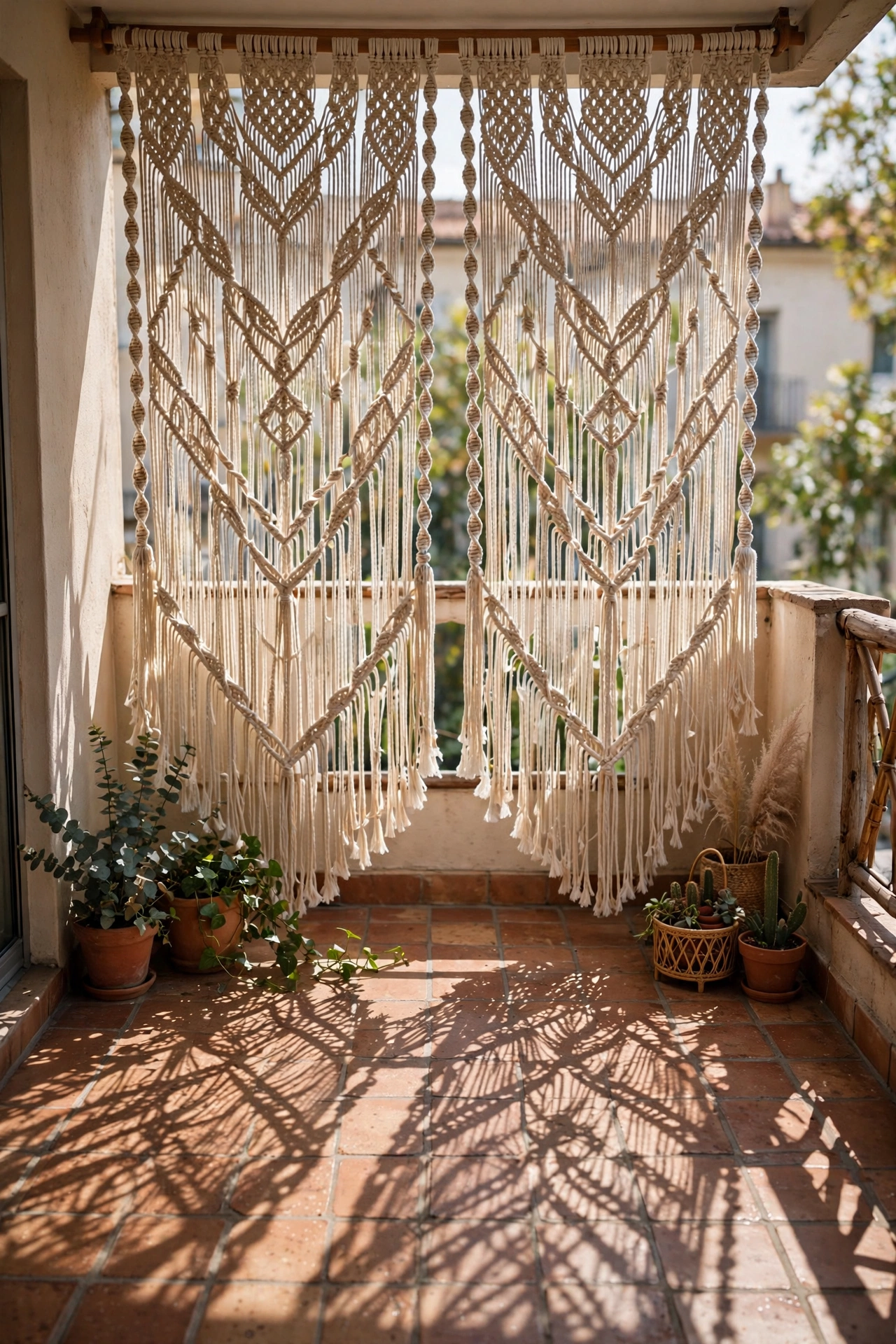
Macramé curtains are not really curtains, they are knotted cotton art that happens to hang in a doorway. They cast the most beautiful shadows when sun hits them, turning your balcony floor into a pattern. They offer almost no privacy or shade, so treat them as decor layered over a functional panel. Bring them inside during rain, because wet cotton rope takes forever to dry. For the boho balcony, they are non-negotiable.
Honest Take: Buy handmade from a small maker. Machine macramé looks flat and the knots loosen.
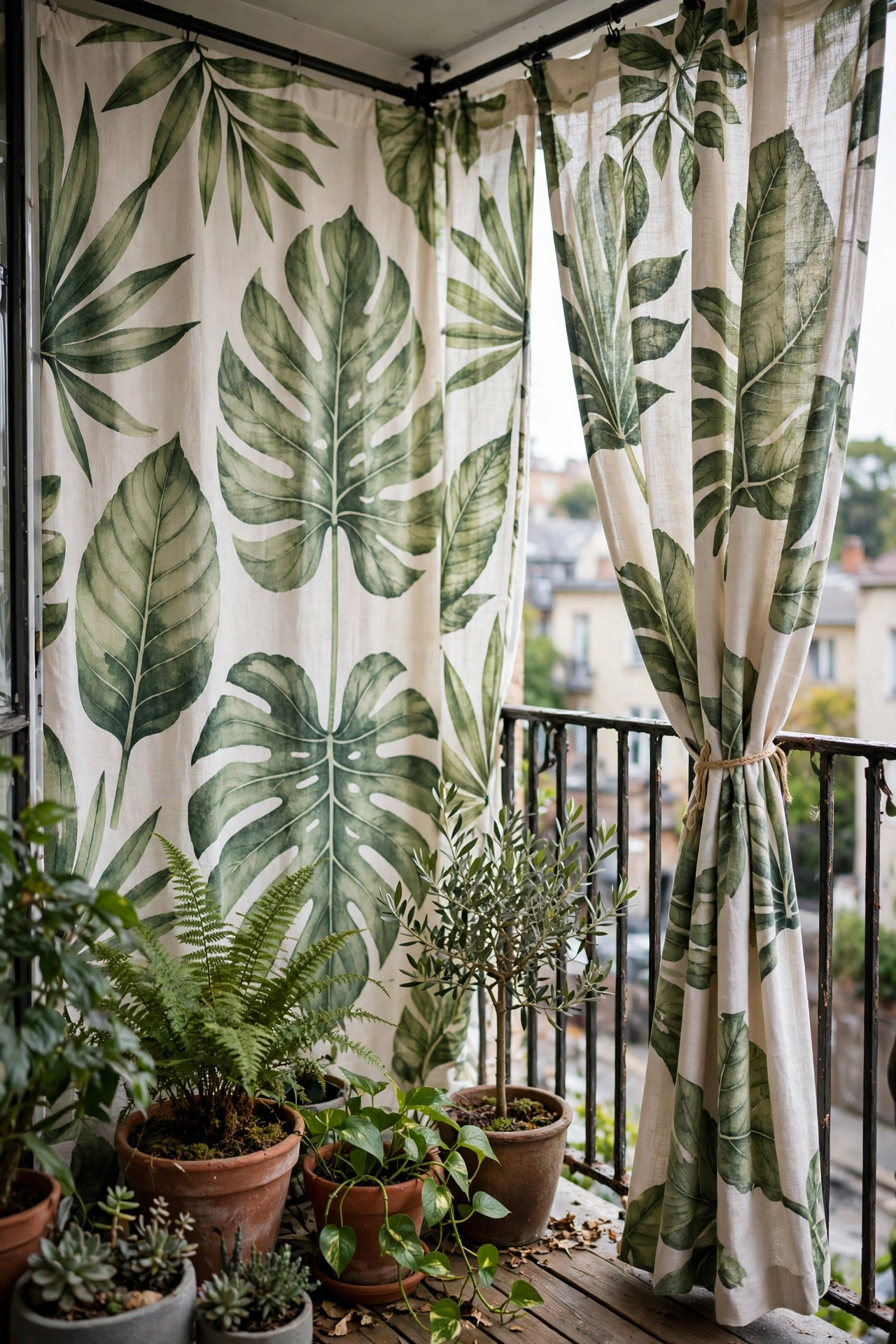
Large-scale leaf and botanical prints turn a concrete balcony into a conservatory. The pattern does visual work that real plants would need years to do. Choose prints with a light background so they do not darken the space. Outdoor canvas prints hold color well and wipe clean. Pair with real plants in front of the panels for a layered jungle effect that fools the eye.
Designer Trick: One botanical panel plus three real plants reads as a garden. The print multiplies your greenery.
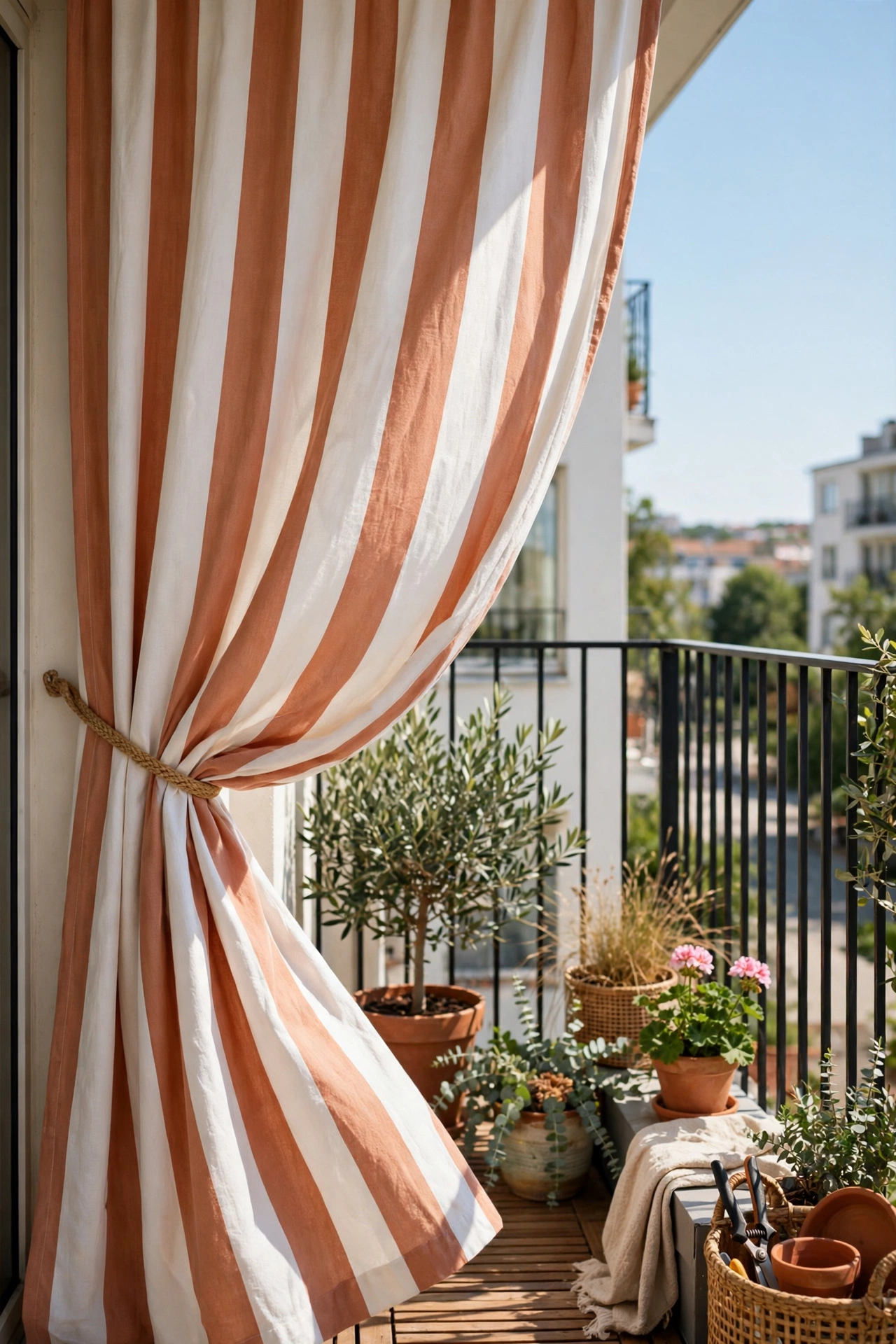
Wide cabana stripes in white and a single color, terracotta, cornflower, sage, scream summer. They are cheerful without being childish, and they make even a gray apartment block feel like a beach club. The bold pattern also disguises wrinkles completely. Use them on one side only and keep the rest solid, or the balcony starts to feel like an umbrella. Joyful, but edited.
Style Note: Cabana stripes love white furniture and natural textures. Rattan, jute, light wood.
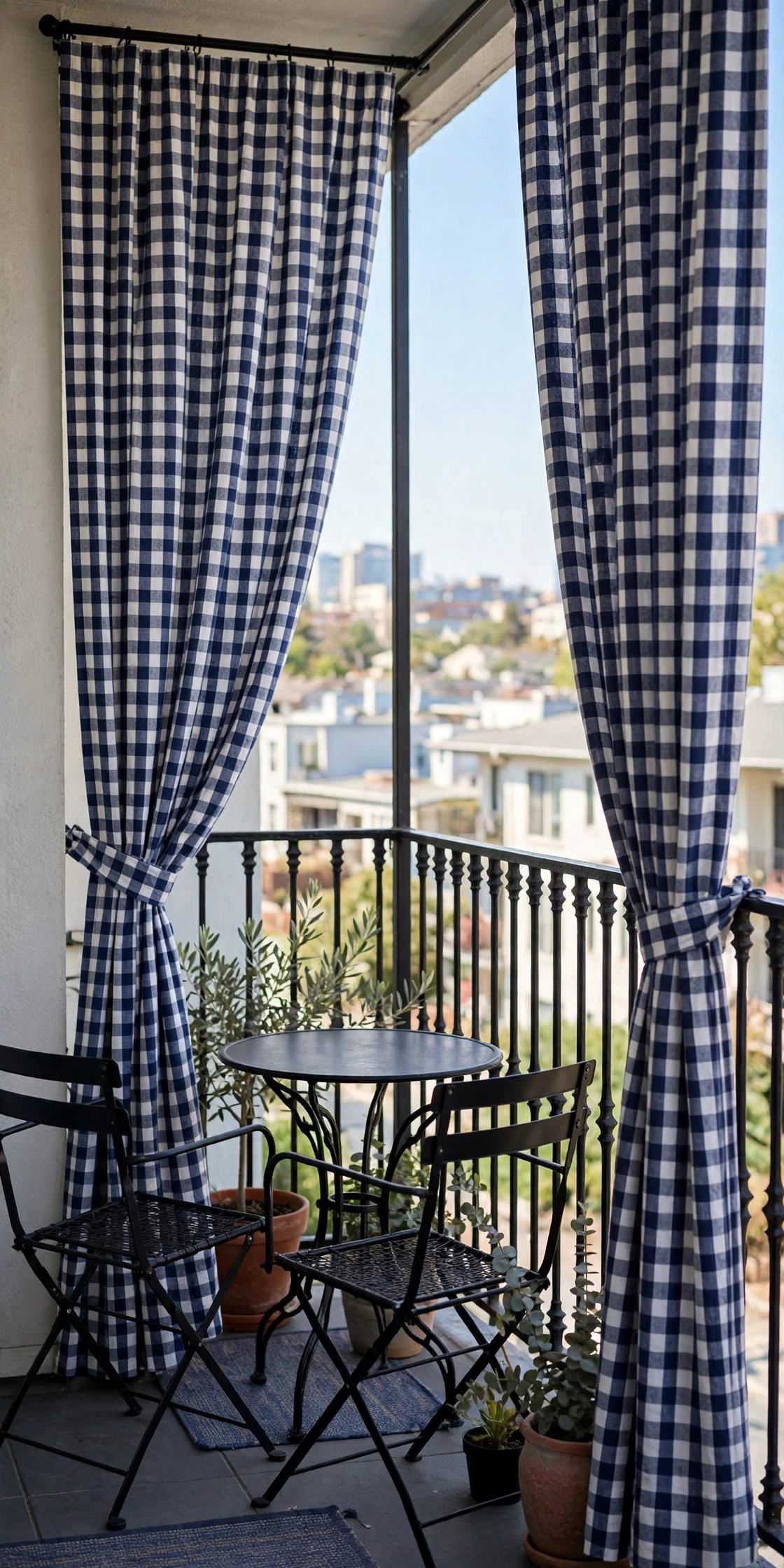
Gingham is the friendliest pattern in home decor, and on a balcony it reads picnic, not precious. Small checks in classic colors work on modern balconies too, especially with black metal furniture. Outdoor gingham in solution-dyed fabric keeps its crispness for seasons. It is nostalgic without being kitschy, which is a hard line to walk. Gingham walks it.
Quick Tip: Small checks for small balconies. Large checks overwhelm tight spaces.
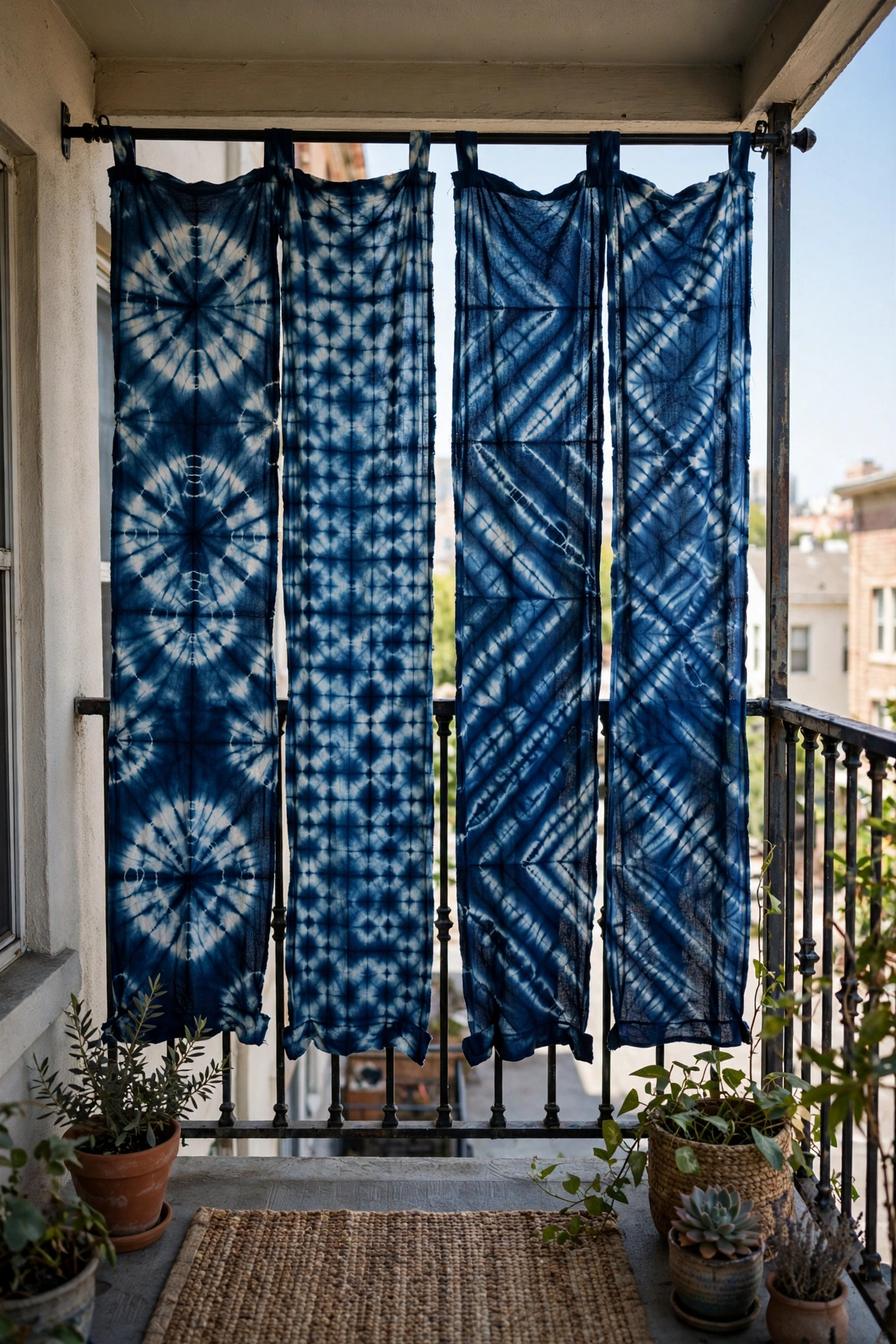
Buy cheap white outdoor canvas panels and tie-dye them yourself for curtains nobody else has. Indigo shibori patterns look genuinely high-end when done well, and the DIY story is half the charm. Use fiber-reactive dye and set it properly so the color survives sun and rain. This is a weekend project that costs less than one store-bought panel. Imperfection is the point, so relax.
Reality Check: Dye everything at once. Matching a second batch to the first is nearly impossible.
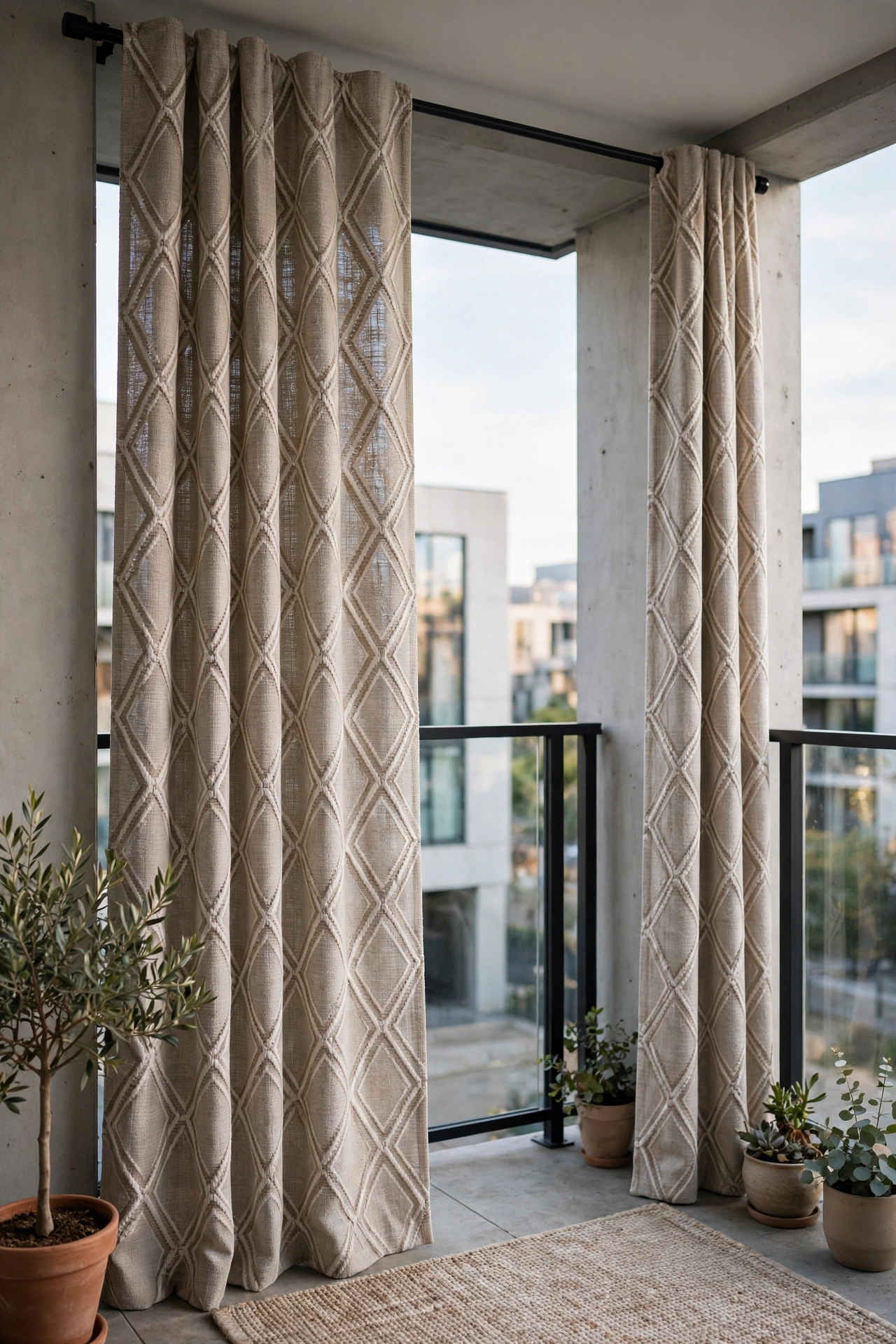
Woven geometric patterns, tone-on-tone diamonds or chevrons, add interest without shouting. From a distance they read as texture; up close they reveal the pattern. This is the right print for people who find stripes boring and florals too much. They work in modern, mid-century, and Scandinavian balcony schemes. The pattern also hides stains better than any solid. Quietly the hardest-working print here.
Good to Know: Tone-on-tone patterns age the best. High-contrast prints date faster.
Hardware That Makes It Work
The best fabric in the world fails on bad hardware. Balcony curtains live in wind, so mounting matters more than it does indoors. Every option below is renter-friendly, no drilling into concrete required.
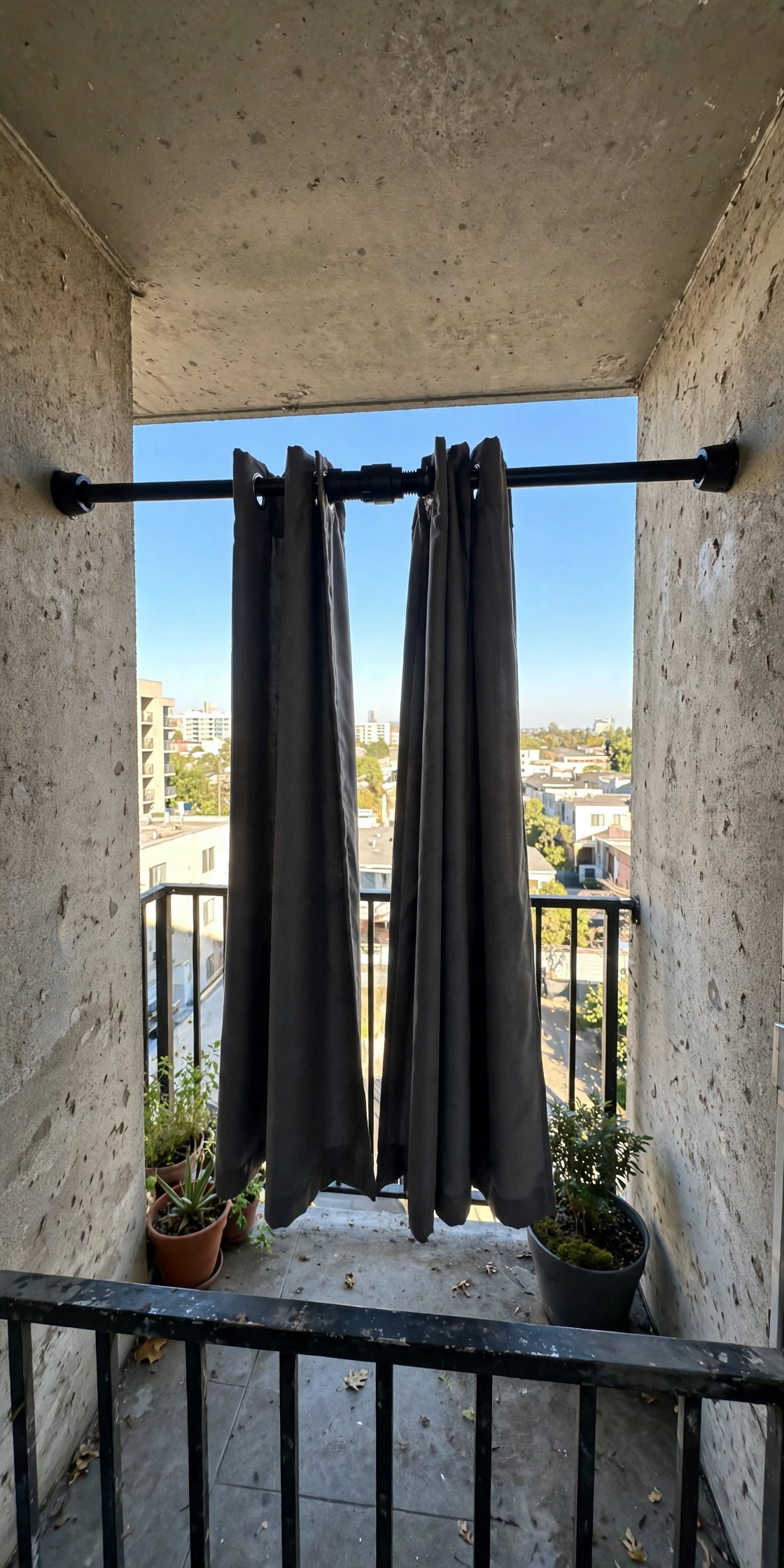
Extra-long tension rods, the kind rated for outdoor patios, wedge between your balcony walls with zero drilling. Modern ones hold up to 45 pounds and resist rust, which cheap indoor rods do not. They install in minutes and remove without a mark. The catch: you need two facing walls, so they suit recessed balconies best. For renters, this is the first hardware to try.
Quick Tip: Measure twice and buy the size that fits your span at its middle extension, not its maximum.
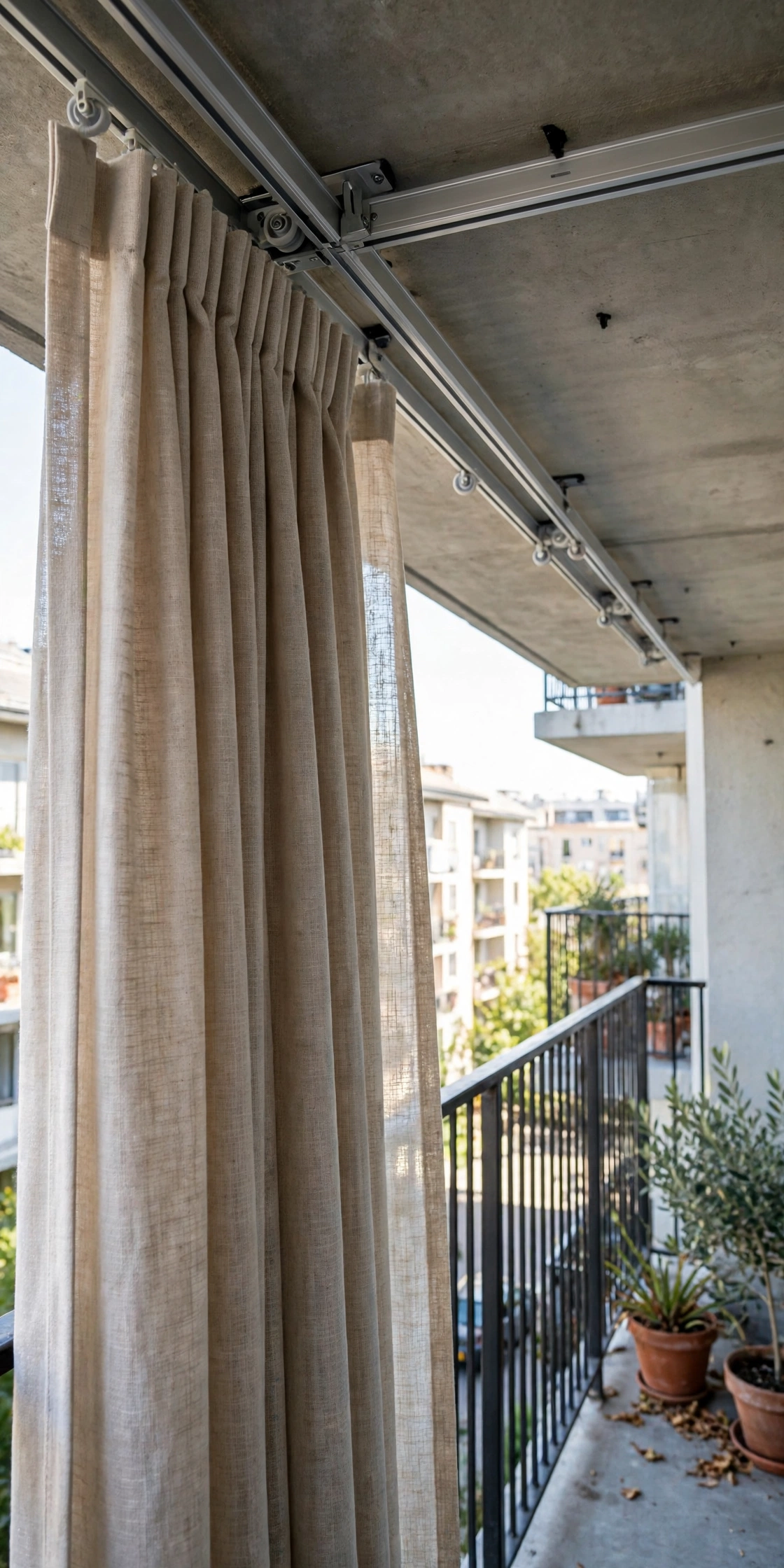
Ceiling tracks with rolling gliders let curtains sweep open and closed like proper drapery. Aluminum tracks handle outdoor humidity and hold heavier panels than rods. Mount with removable adhesive ceiling hooks or clamp to the overhang beam if drilling is banned. The smooth glide makes you actually use the curtains daily instead of leaving them bunched. This is the most functional hanging system here.
Worth Knowing: Tracks look best mounted wall-to-wall. Short tracks with gaps at the ends look unfinished.
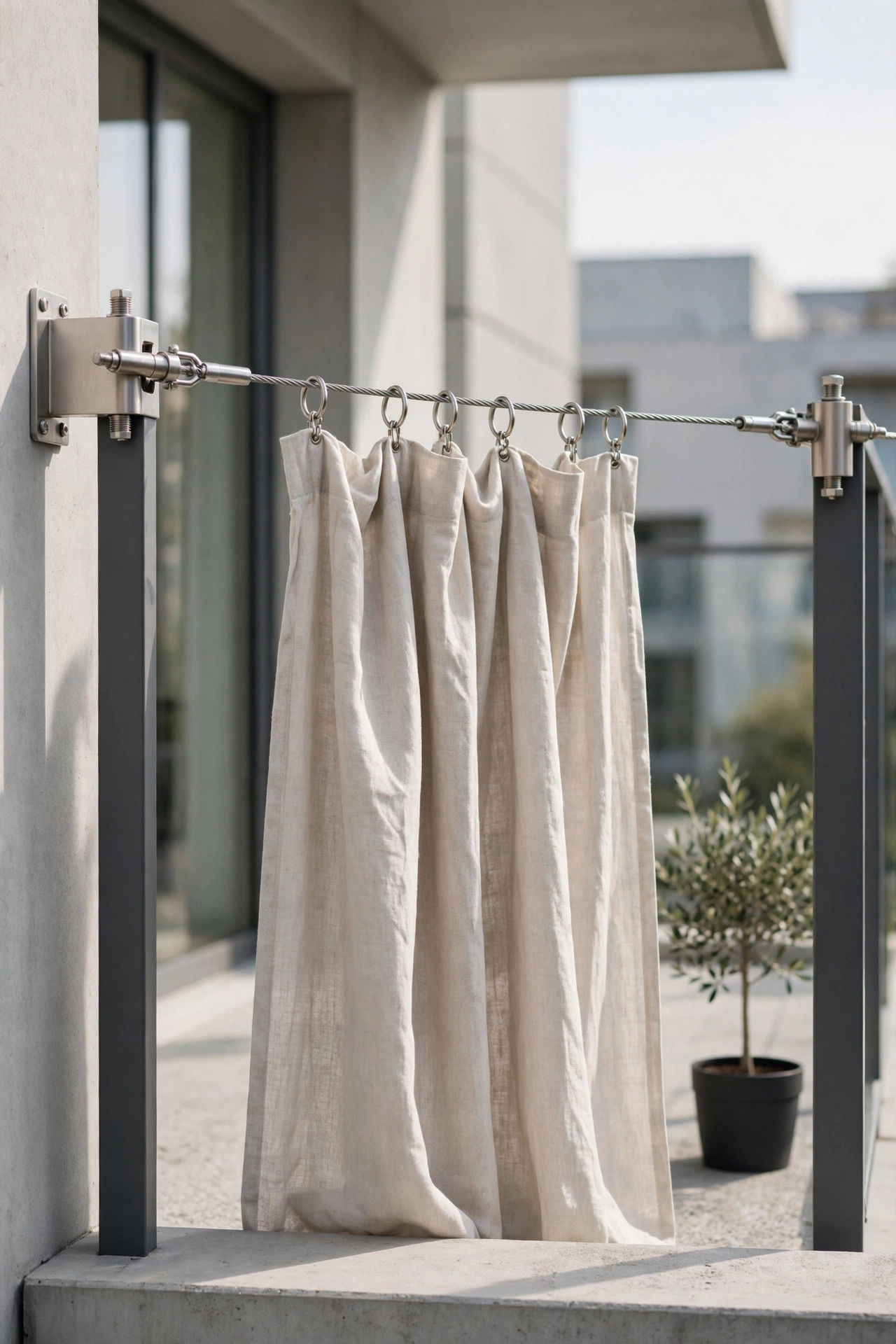
Stainless steel wire cables strung between turnbuckles give a minimal, almost invisible hanging line. Curtains on clip rings slide along the wire smoothly. The whole system costs little and suits modern balconies where chunky rods look wrong. Use marine-grade wire and hardware so nothing rusts. It is the lightest visual option, the hardware practically disappears.
Heads Up: Wire stretches over time. Retighten the turnbuckles each spring.
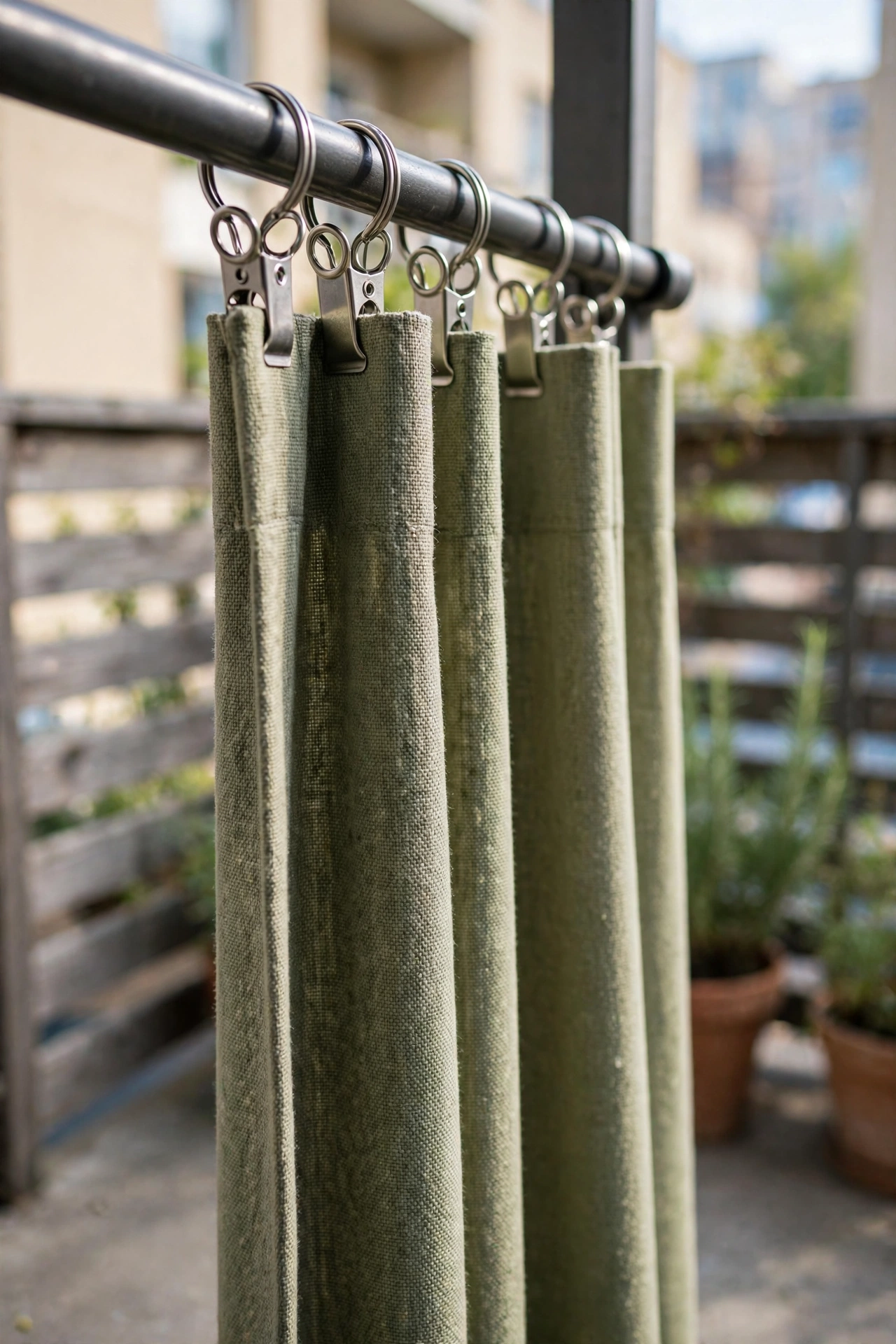
Clip rings grip the top of the panel instead of threading through a pocket, which means you can change curtains in minutes without taking the rod down. They also let panels slide more freely. Use rust-proof metal or heavy-duty plastic clips rated for outdoor weight. This is the hardware that makes seasonal swaps actually happen. Summer sheers, winter solids, two minutes each way.
Good to Know: Clips show the panel top, so finish the hem neatly or fold it over for a clean edge.
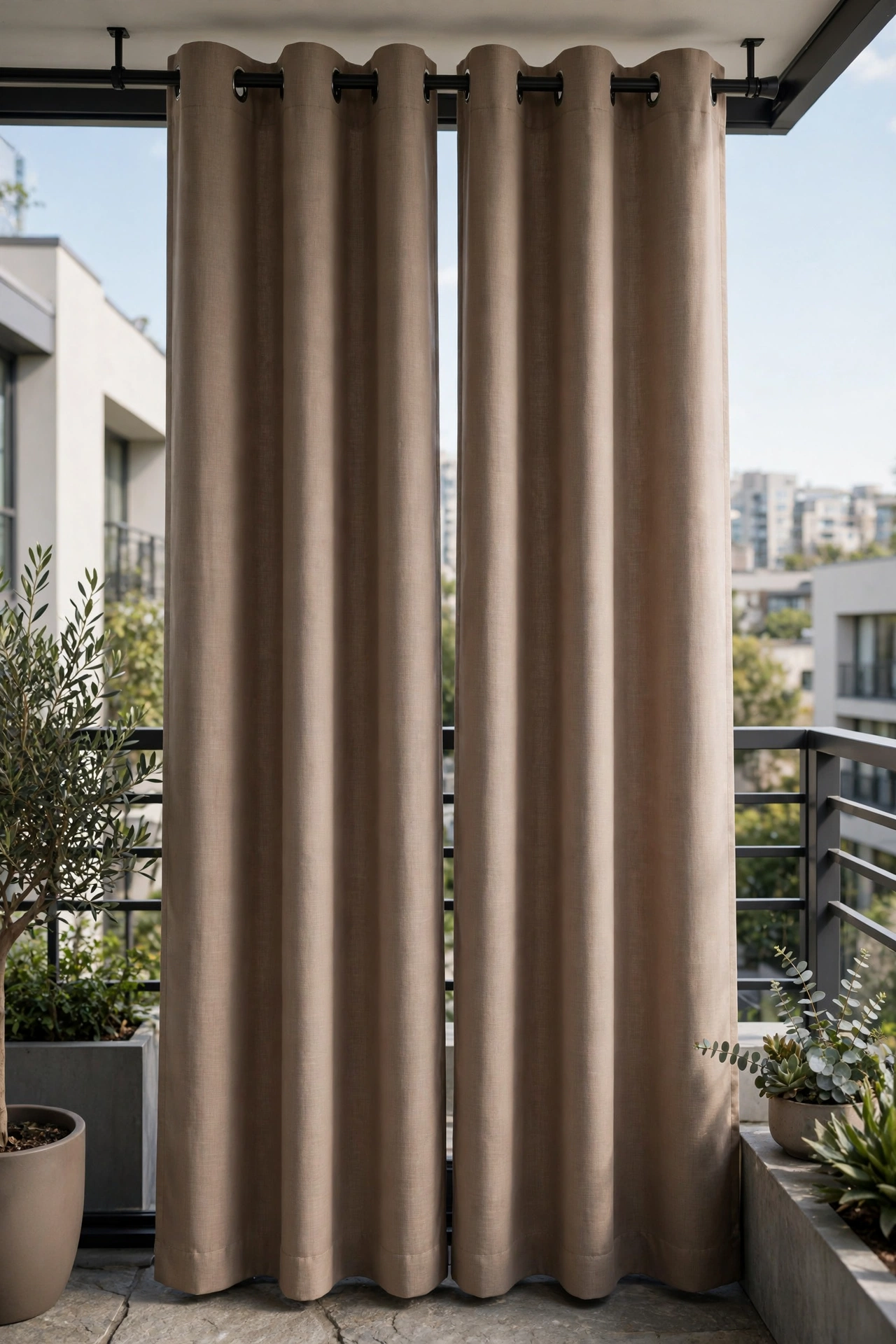
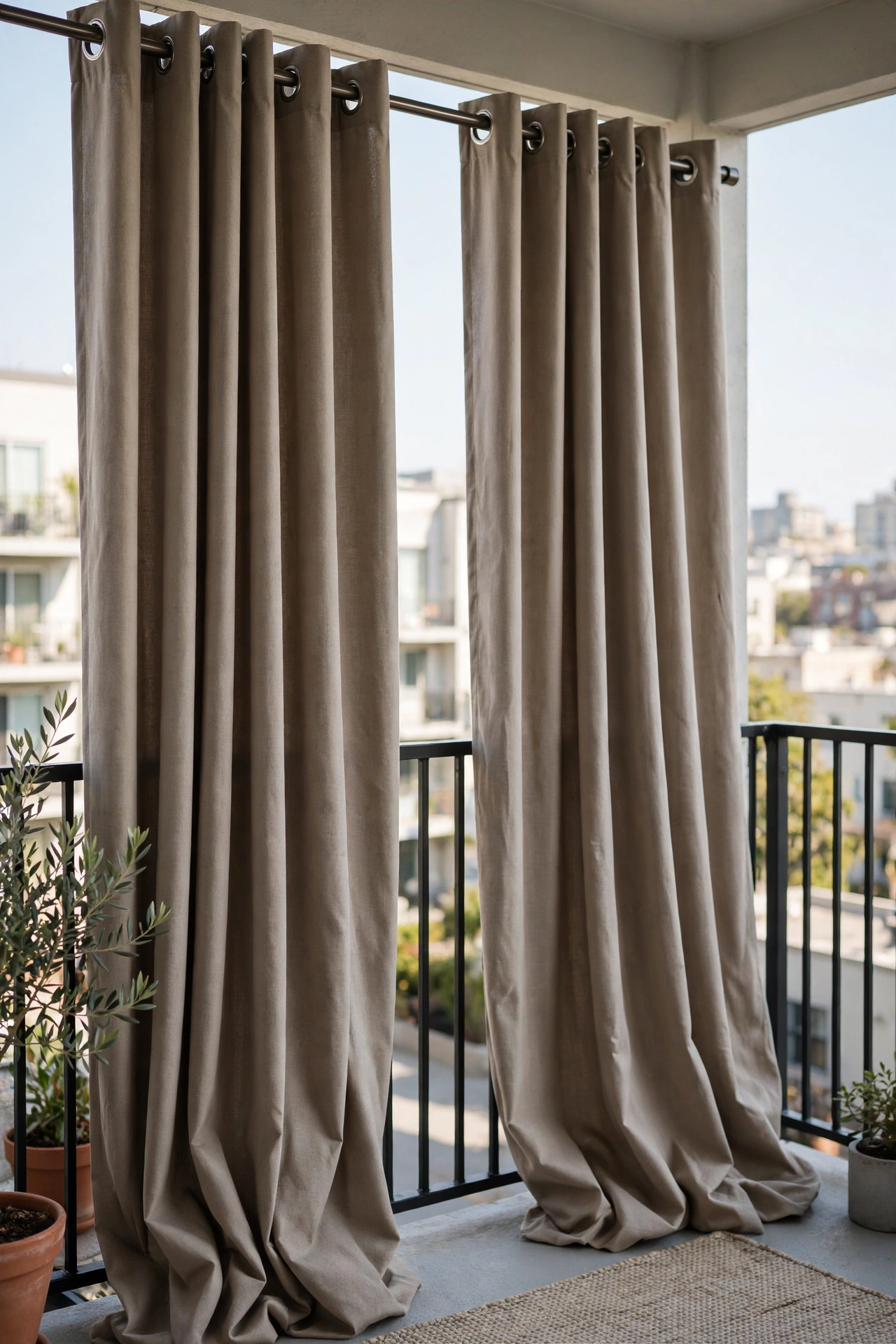
Grommet-top panels have metal rings punched through the header, and they slide along a rod with almost no friction. The deep, even folds look tailored and expensive. Outdoor grommets should be stainless or brass; cheap plated rings rust and stain the fabric. Grommets also distribute wind load better than pockets, so panels last longer. If you buy ready-made, grommet tops are the best default.
Quick Tip: Count your grommets. Even numbers fold symmetrically; odd numbers always look slightly off.
The number one reason balcony curtains annoy people is wind. Sewn-in hem weights, small flat discs or a chain in the bottom hem, keep panels hanging straight instead of flapping into your face. Many outdoor panels come with them; for DIY panels, drapery weights cost little and sew in fast. This single detail separates curtains you love from curtains you fight. Do not skip it on any balcony above the third floor.
Reality Check: In real wind, weights help but do not cure. Tie panels back when storms come through.
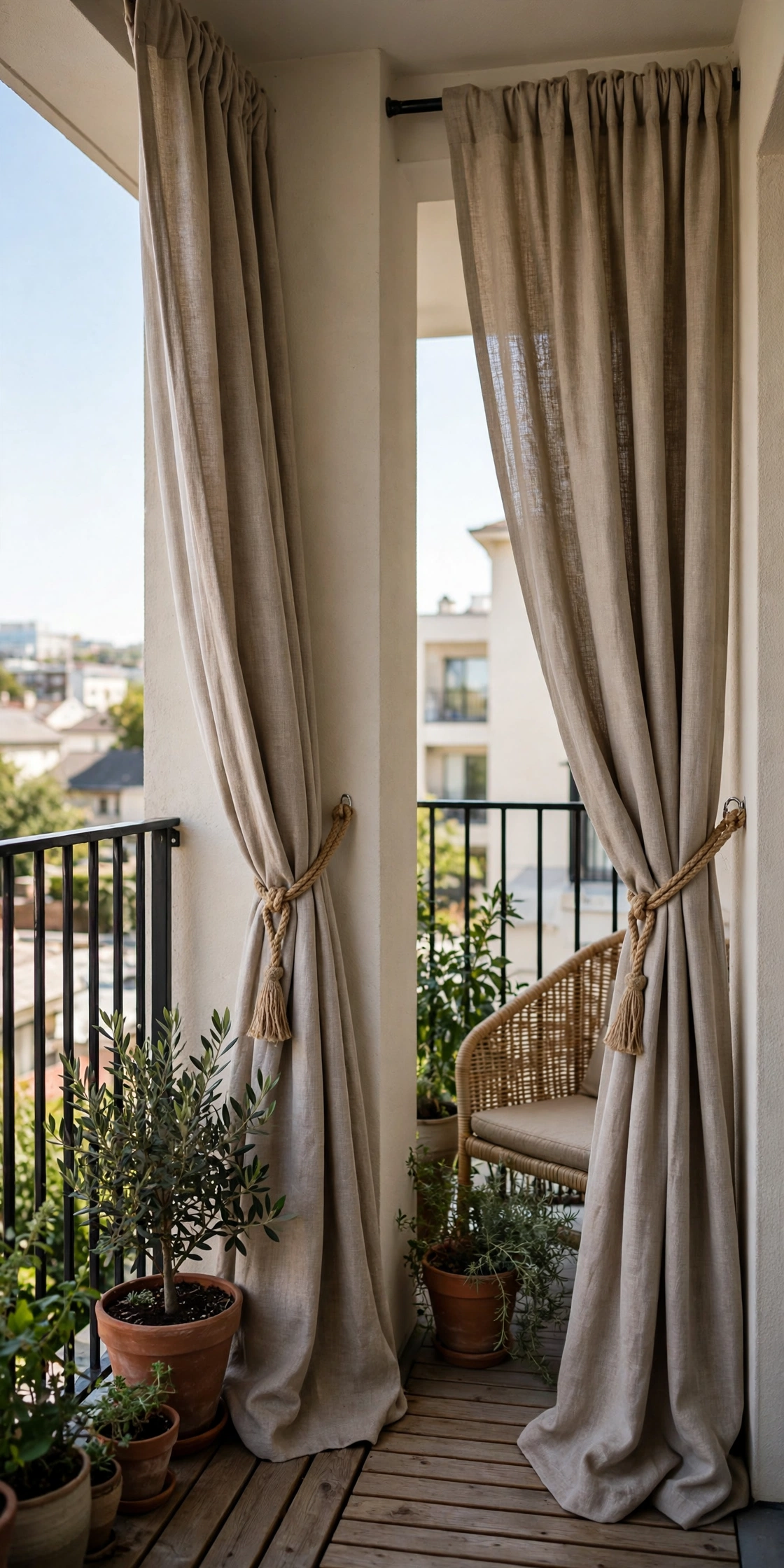
Tie-backs are how curtains look good open, which is most of the day. Rope, leather, or fabric ties gather panels to the sides in soft folds. Adhesive or clamp-on holdbacks give you a fixed anchor point without drilling. Match the tie-back to your hardware finish for a pulled-together look. Open curtains that are just shoved aside look messy; tied-back curtains look designed.
Style Note: Tie panels at two-thirds height, not the middle. It is a more flattering proportion.
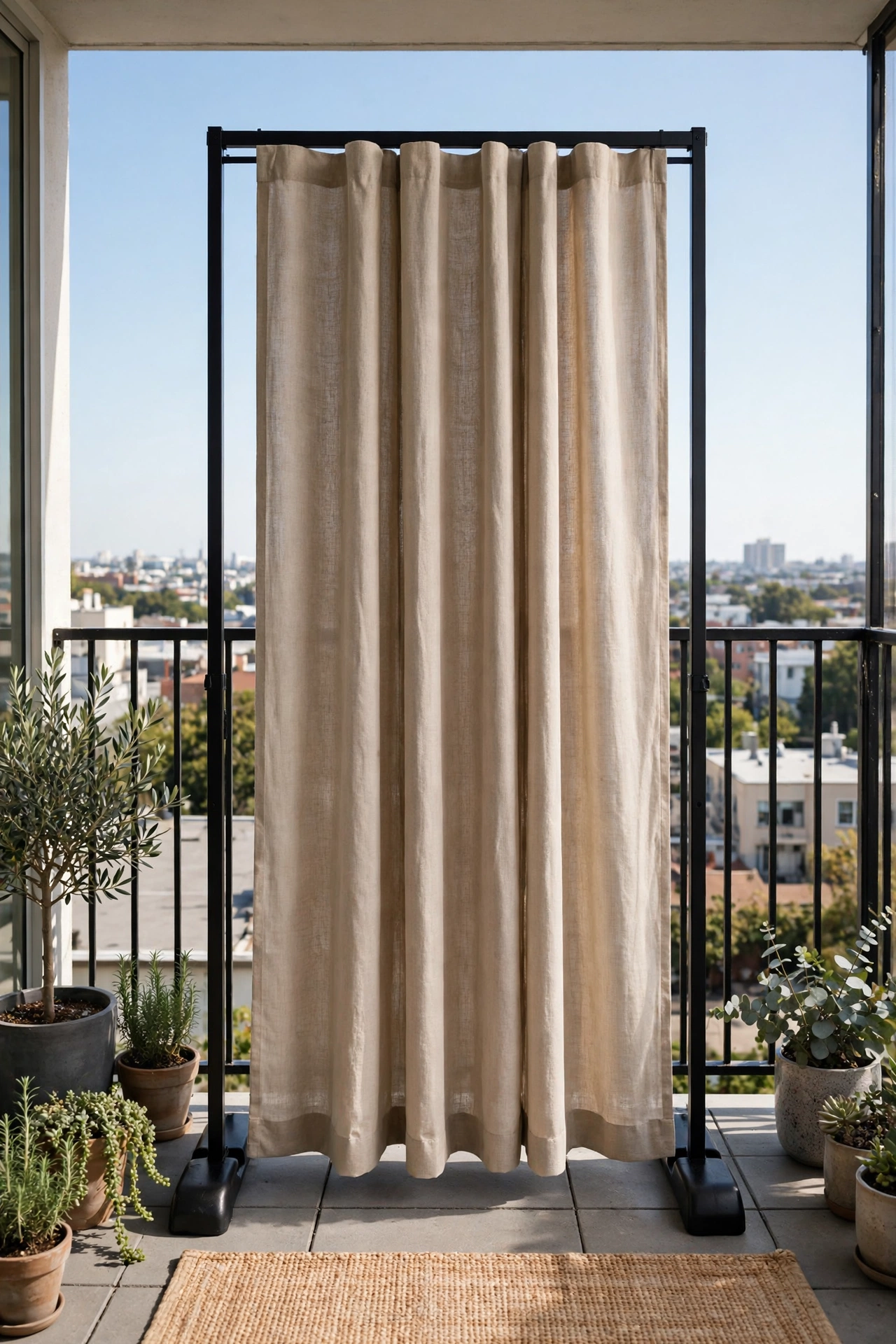
When you have no walls, no ceiling, and no permission, a freestanding curtain frame stands on the balcony floor and holds your panels. Weighted bases keep it stable, and you can move it wherever the sun or the neighbors are. It doubles as a room divider for open-plan balconies. This is the last-resort hardware that turns out to be genuinely useful. No mounting surface required at all.
Worth Knowing: Fill the base weights with sand, not water. Water sloshes and tips in gusts.
No-Drill Hanging Checklist
Confirm two facing walls for a tension rod, or a solid overhang for a track.
Weigh your panels wet, not dry. Rain doubles fabric weight.
Add hem weights before the first windy day, not after.
Leave panels tied open during storms. No hardware survives a gale with full sails up.
Check building rules before anything visible from the street goes up.
Curtains Are the Cheapest Renovation
No other balcony upgrade does this much for this little. Paint is banned, flooring is expensive, and furniture adds up fast, but fabric changes the light, the privacy, and the mood in a single afternoon. Start with the fabric that matches your weather and your patience, hang it on hardware that respects your lease, and stop overthinking the color. A balcony with curtains is a room. A balcony without them is just outside. Hang the curtains.