Most people shop for a dining room chandelier the wrong way round. They fall for a fixture, bring it home, and only then discover it hangs too low, shines too cold, or looks lost over their table. Lighting designers will tell you the table comes first: its shape, its width, and how you actually eat at it. That is the method behind every idea below. Find your table, then find its chandelier. The room will thank you every single evening, whether that evening is a dinner party or takeout on a Tuesday.
For Round Tables
A round table wants a round fixture. Centering a circular chandelier over a circular table creates a calm symmetry that rectangular fixtures just cannot match. Keep the diameter to about half the table width and you cannot go far wrong.
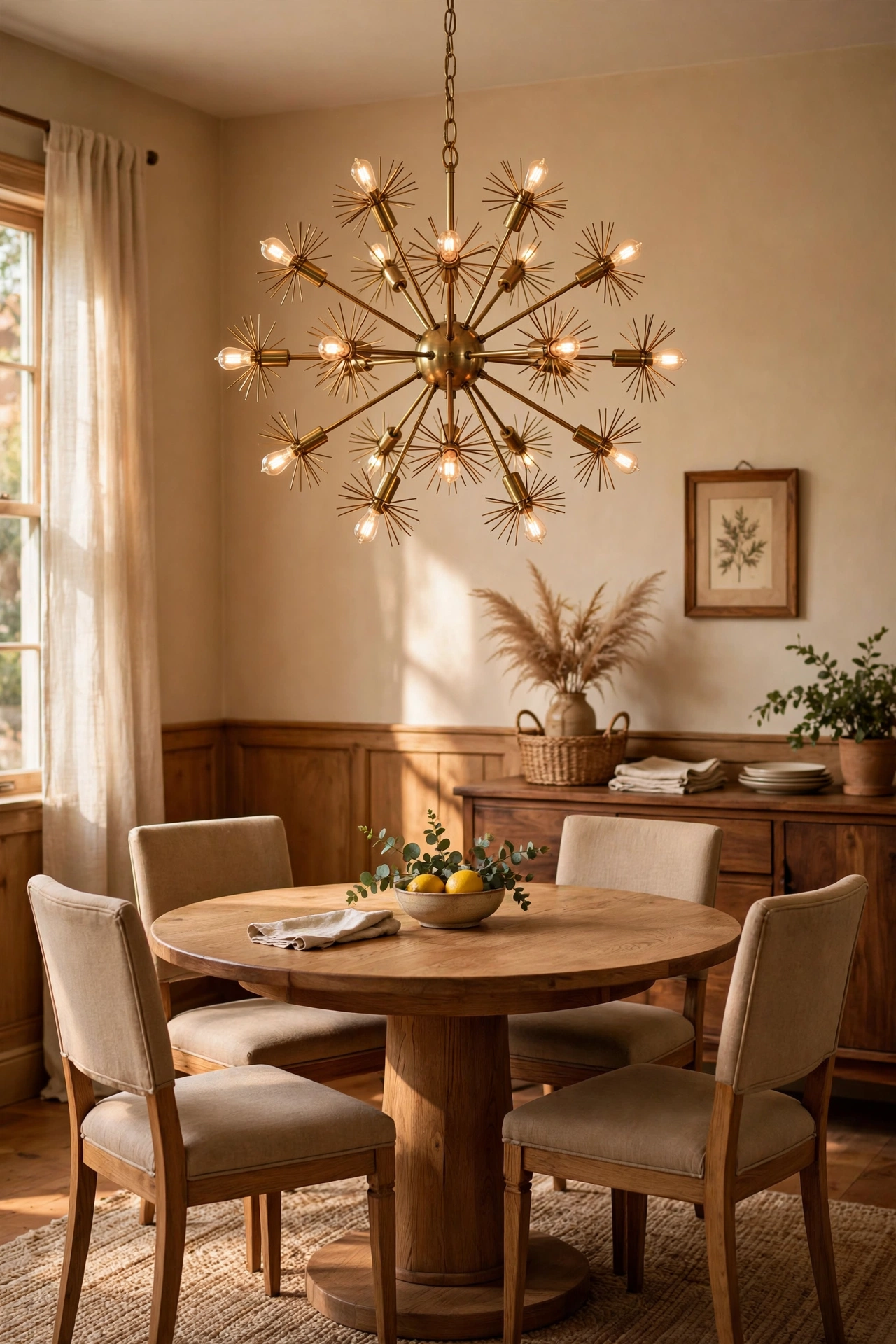
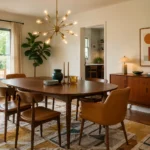
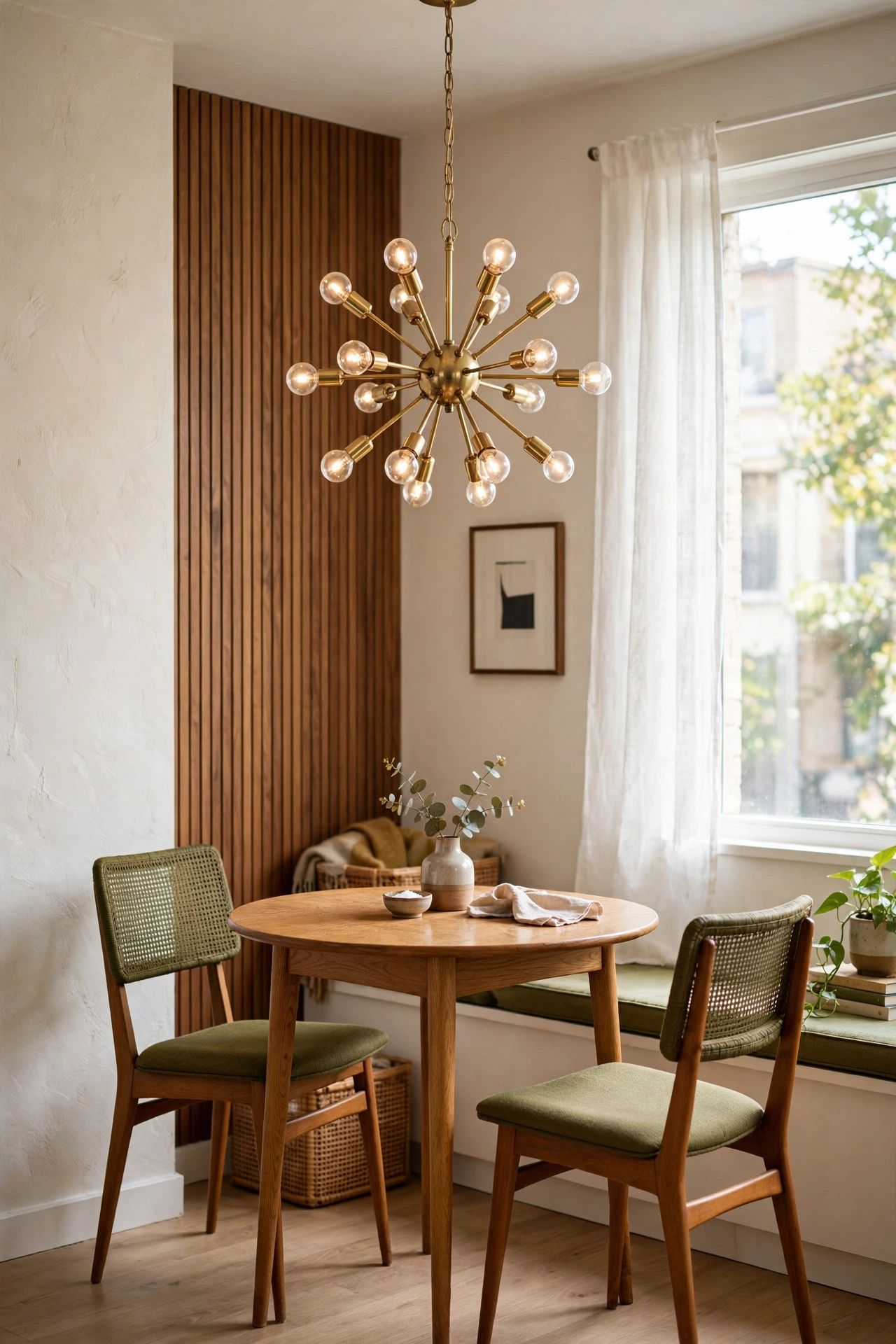
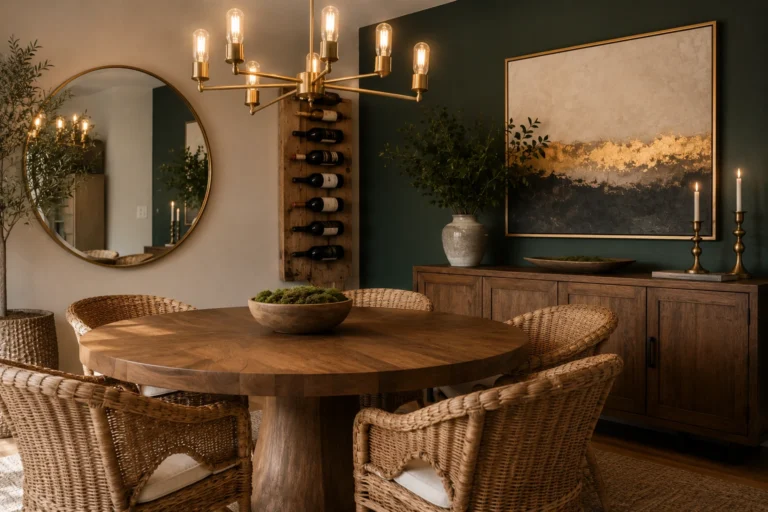
The sputnik is the hardest-working shape for a round table. Its starburst arms throw light in every direction, so nobody at the table sits in a shadow, and the brass finish warms up wood tones beautifully. One thing that works really well here is choosing a sputnik with a dimmer, because full brightness feels like an interrogation and twenty percent feels like a restaurant. Hang it 30 to 36 inches above the table, measured from the tabletop to the bottom of the fixture. This is the 2026 default for a reason: it suits mid-century, modern, and eclectic rooms alike.
Quick Tip: Count the arms before you buy. Twelve arms suit a 48-inch table; go smaller for cafe-size rounds.
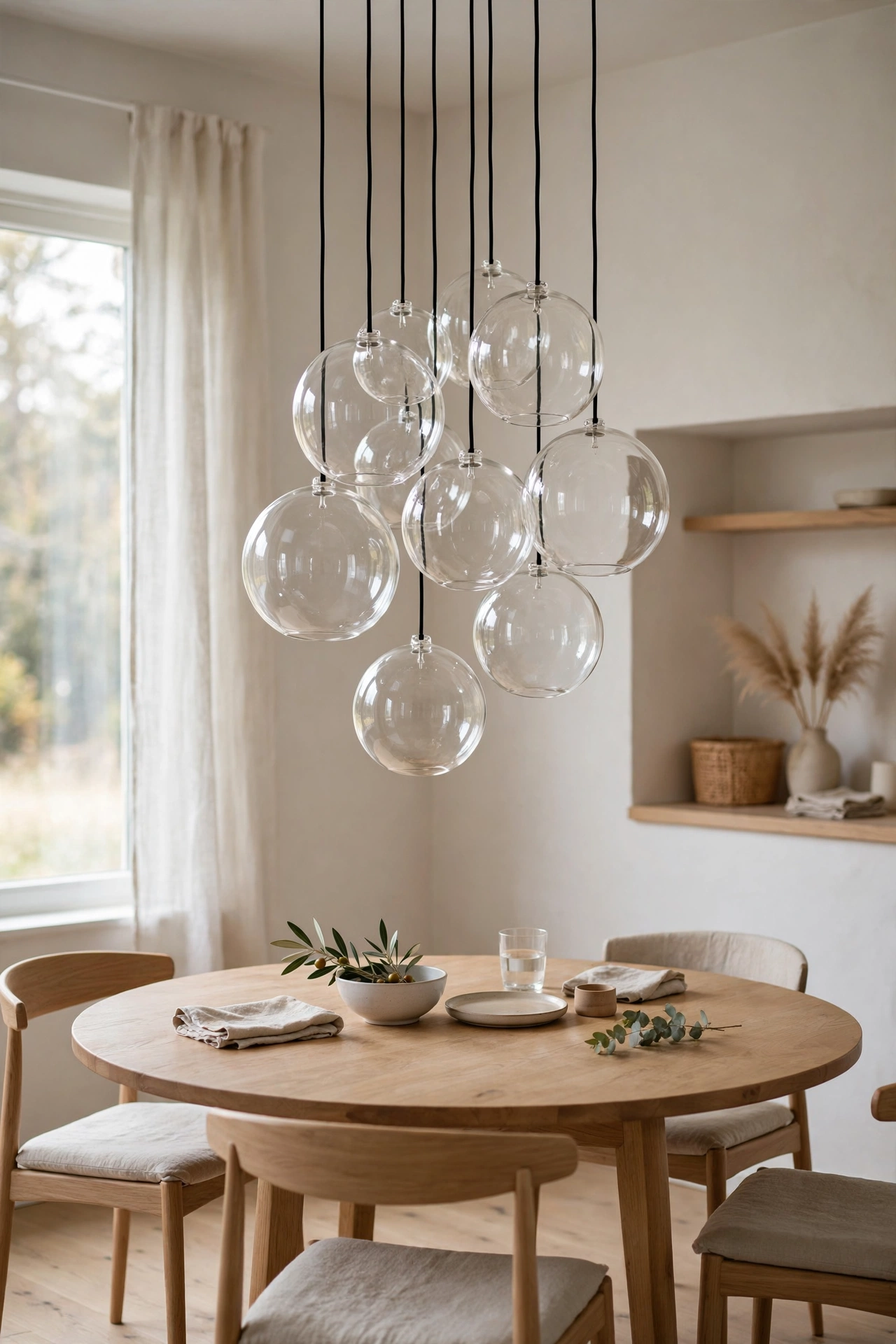
A bubble chandelier, several glass globes clustered at different heights, gives a round table a sculptural centerpiece without any visual weight. The diffused light flatters faces, which is exactly what you want over dinner. This style shines in Scandinavian and minimalist dining rooms where an ornate fixture would feel overdressed. Keep the globes clear or frosted rather than colored, since tinted glass can cast strange tones on food. Budget note: convincing versions exist at a fraction of designer prices now.
Designer Advice: Hang the lowest globe no lower than 30 inches above the table so sightlines stay open across it.
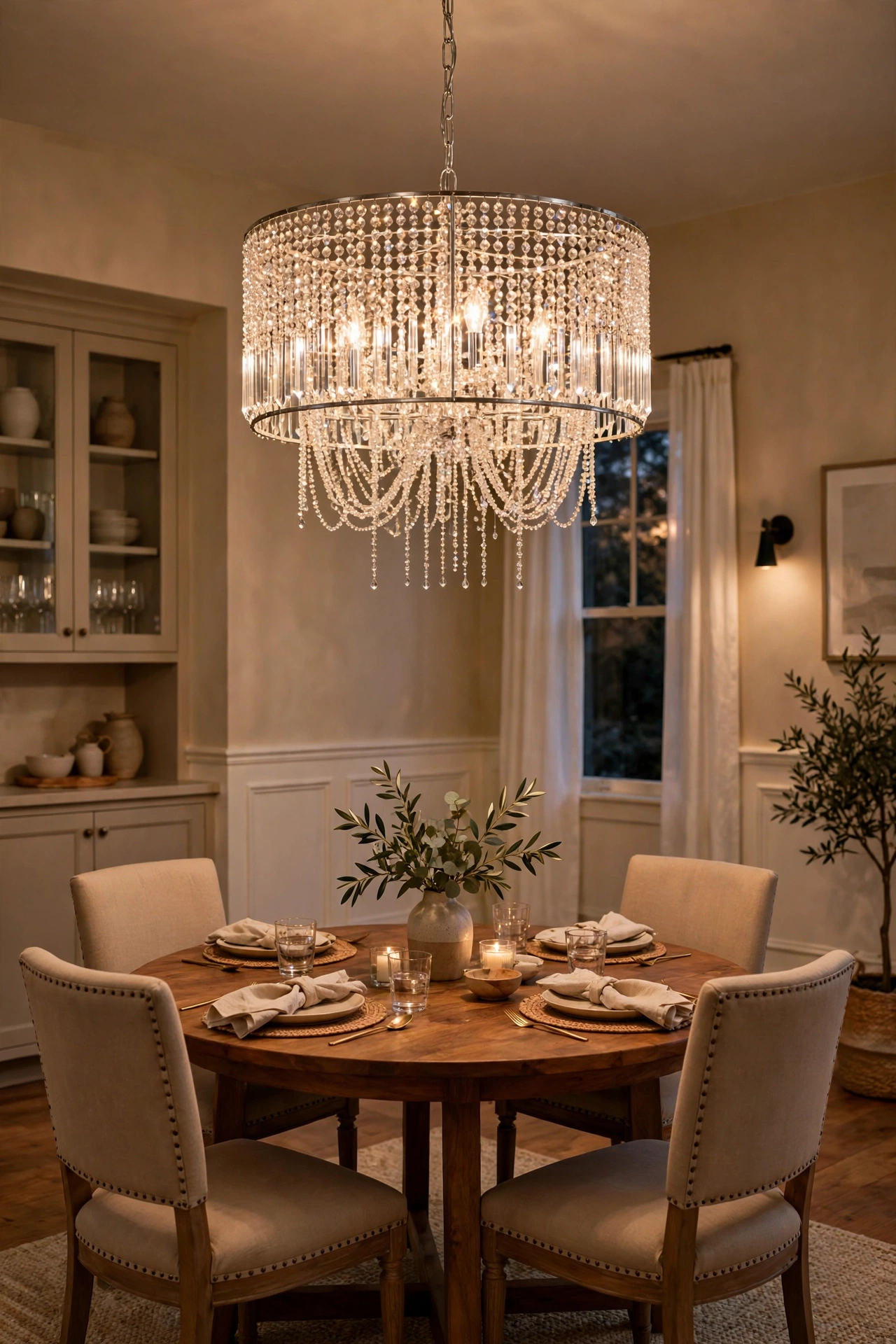
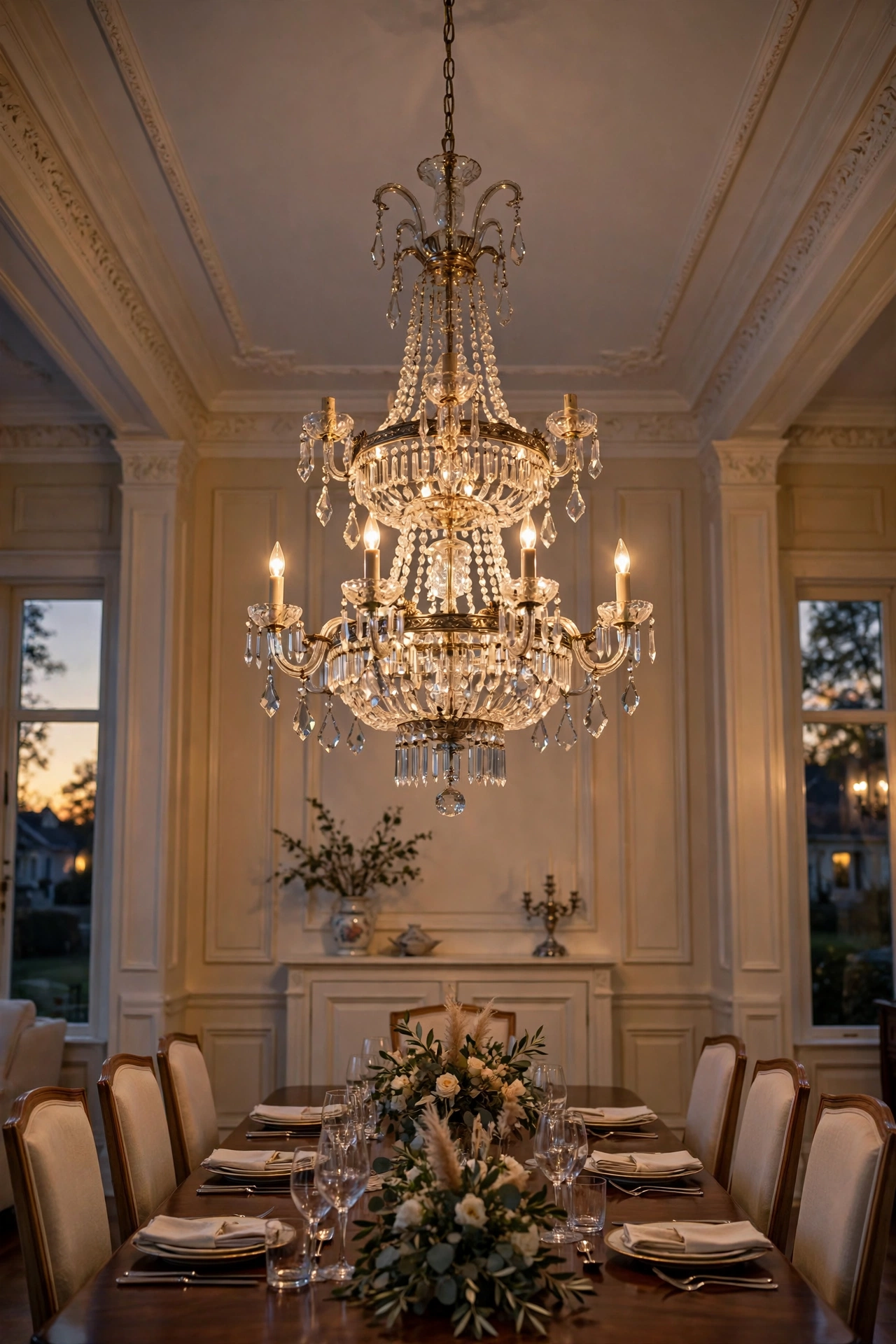
A drum shade wrapped in crystal or glass beads splits the difference between formal and relaxed. The shade directs light up and down instead of scattering it, which keeps the glow focused on the table where it belongs. This is the right call for a traditional dining room that feels a touch stiff; the drum shape reads current while the sparkle keeps the formality. Choose warm white bulbs, because cool light through crystal looks icy rather than festive. Dust it twice a year and it will look new for a decade.
Good to Know: A drum wider than 24 inches needs a sturdy junction box. Check the ceiling support before ordering.
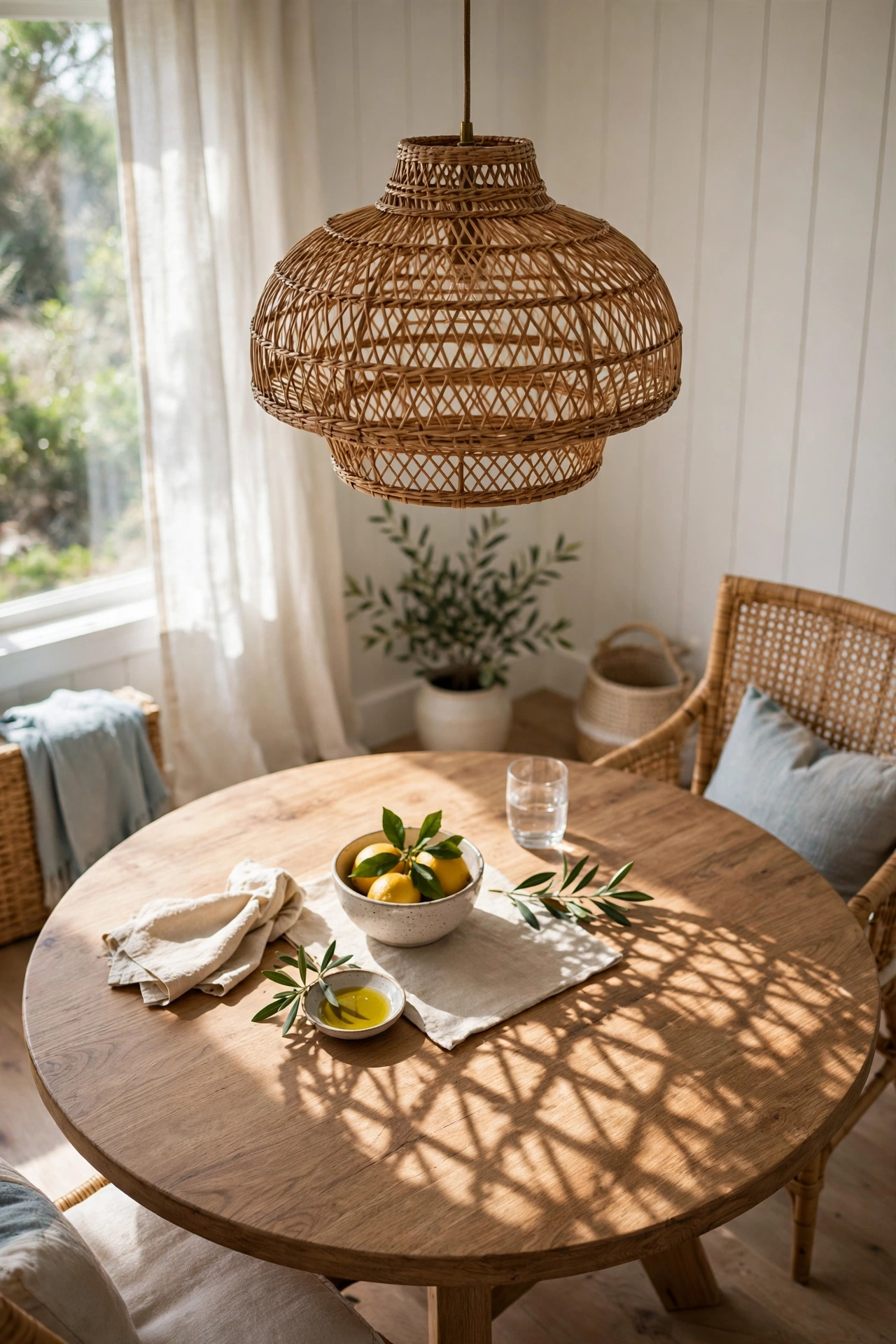
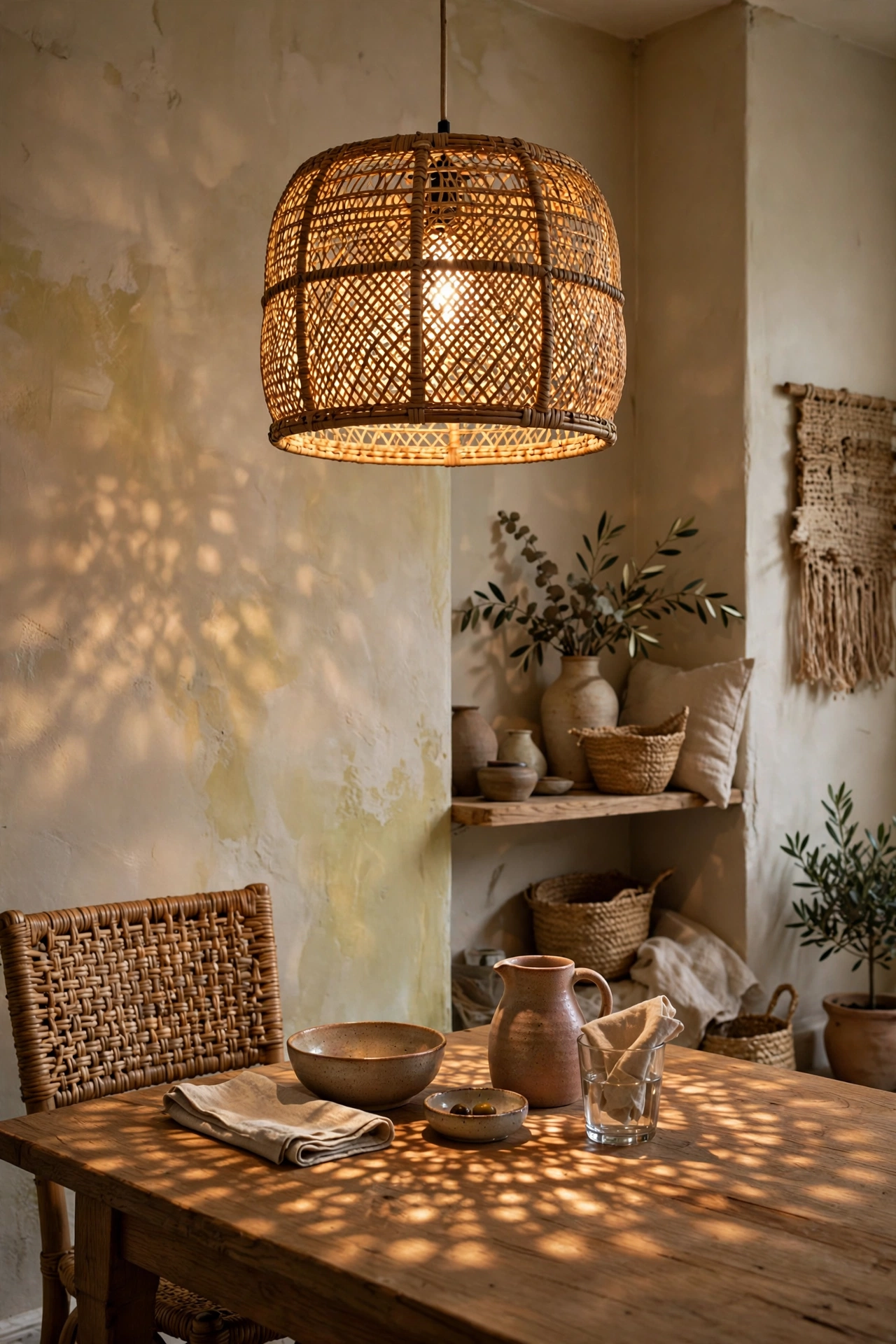
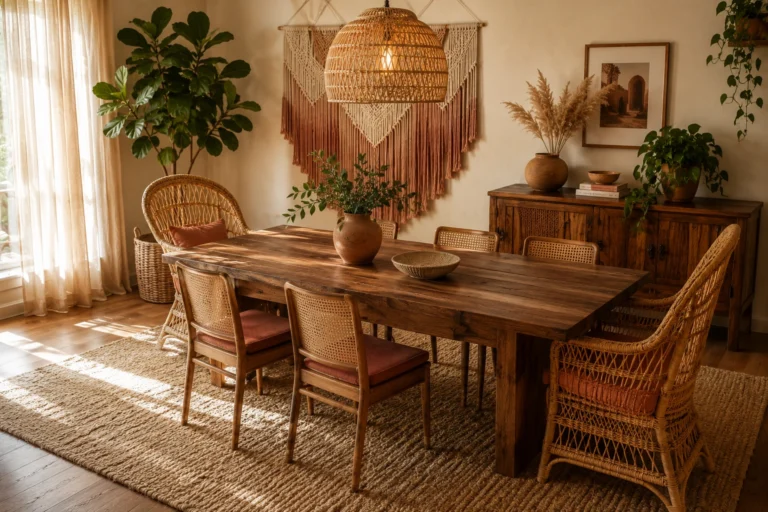
Rattan brings a relaxed, hand-made quality that instantly loosens up a dining room. Over a round wood table, a woven pendant feels like a beach house in the best way, even in a city apartment. The open weave casts patterned shadows on the ceiling, which adds a second layer of interest after dark. Honest limitation: rattan gives mostly ambient light, so pair it with a sideboard lamp if you do puzzles or homework at the table. It is also one of the most affordable statement options.
Reality Check: Woven shades and open flames do not mix. Keep candles on the table low and stable underneath one.
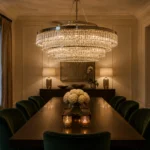
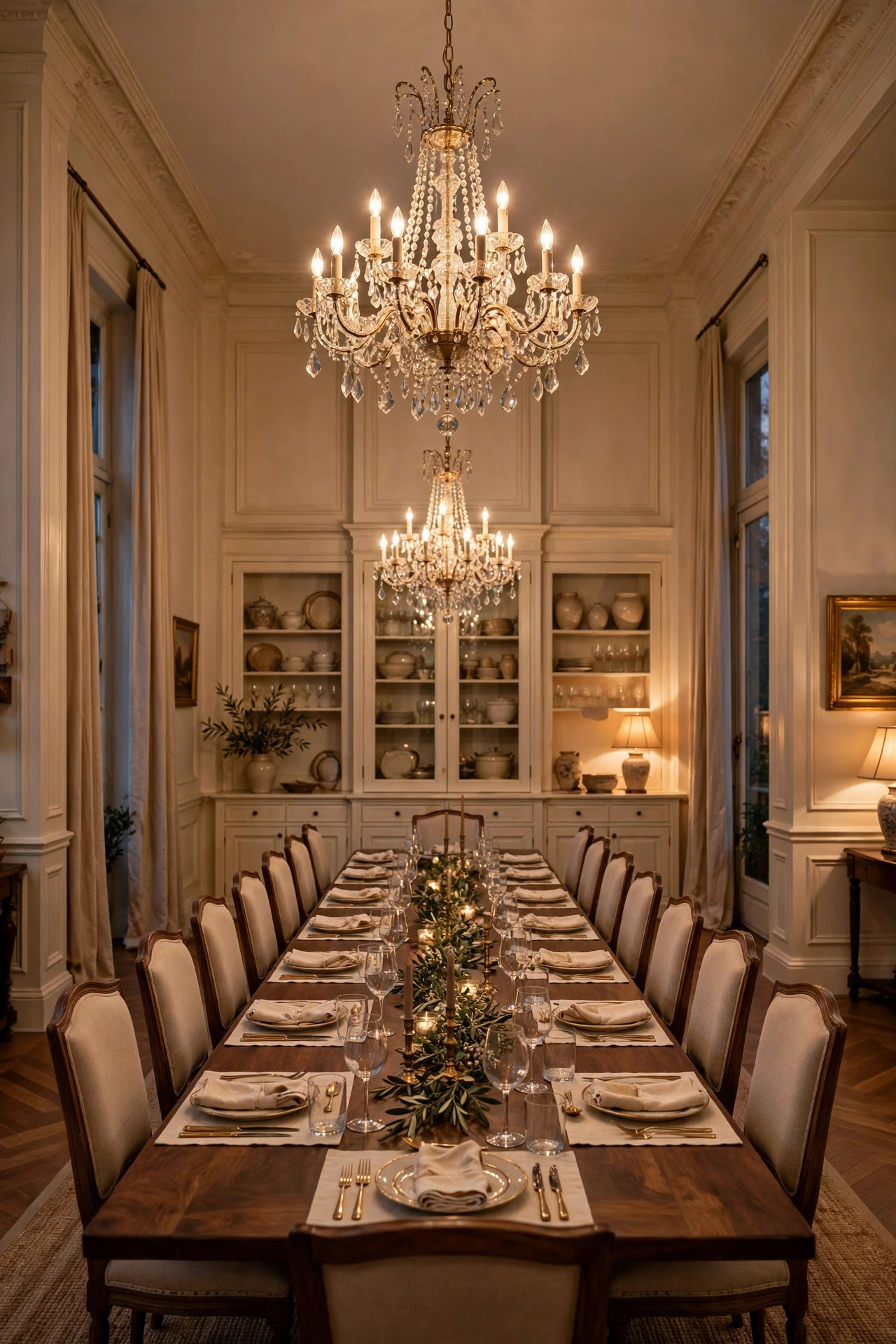
If your dining room has the ceiling height and the moldings for it, a tiered crystal chandelier is still unmatched for drama. The trick to keeping it current is restraint everywhere else: simple chairs, a plain rug, quiet walls. Let the fixture be the one ornate thing in the room. Modern tiered designs are slimmer than the old brass-and-crystal monsters, so they suit 9-foot ceilings, not just ballrooms. This is a buy-it-once piece; a good one outlives three sofa replacements.
Heads Up: Crystals multiply the light, so install a dimmer on day one or you will be blinded at every dinner.
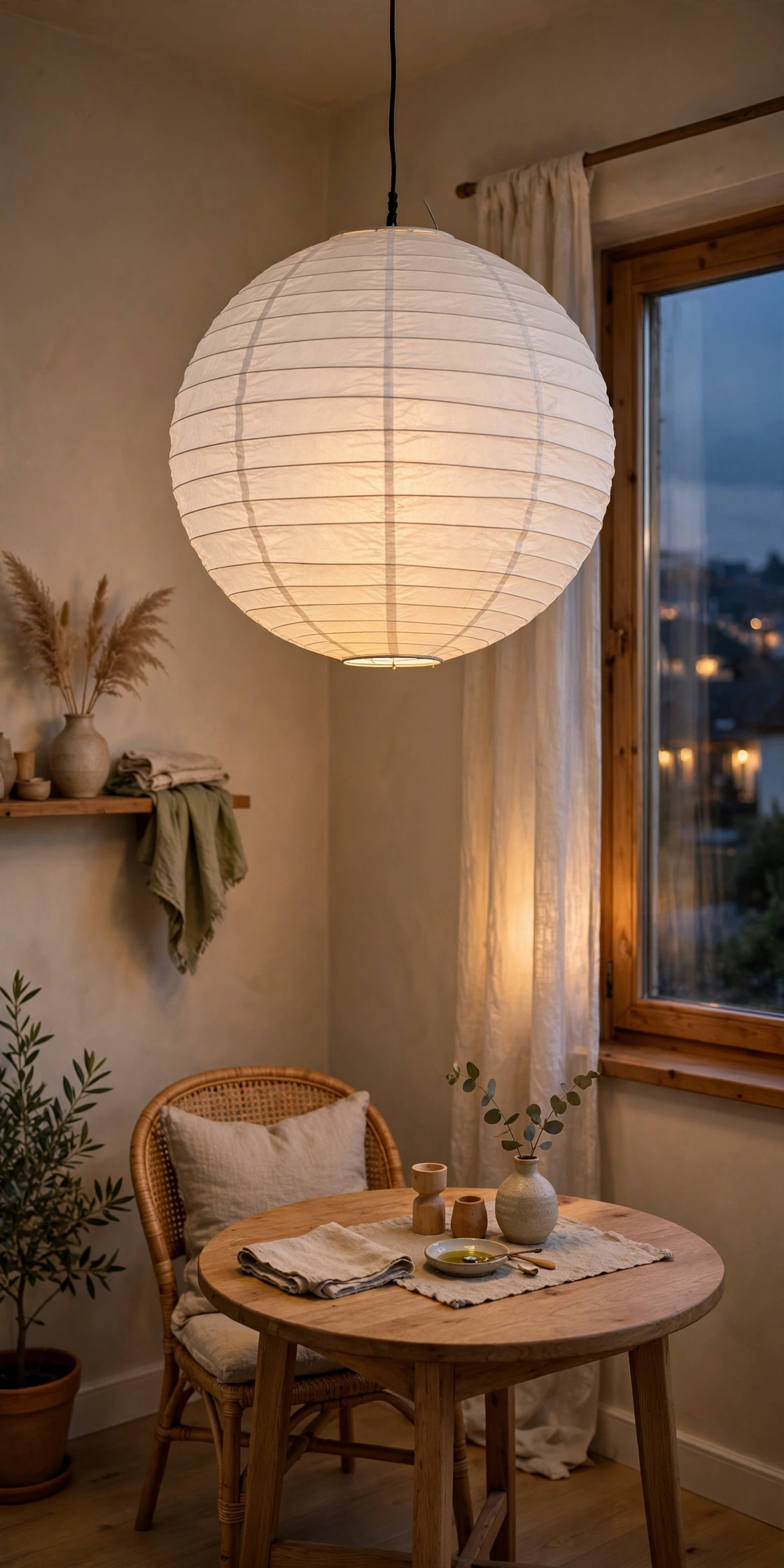
For a small round table in a tight corner, one big paper lantern beats a fussy multi-arm fixture. It gives a huge soft glow from a featherweight shade, and the round-on-round geometry is deeply satisfying. Rice paper diffuses light so evenly that it flatters everyone at the table. This is also the cheapest idea in the article and the easiest to swap when tastes change. Keep it away from steamy kitchens, since humidity yellows the paper over time.
Budget Note: Under fifty dollars gets you a great one. Spend the savings on a quality dimmer switch.
For Long Rectangular Tables
Long tables are where most chandelier mistakes happen. One small centered fixture leaves the ends of the table in the dark. Think in terms of length, not just width: linear fixtures, rows of pendants, or two matching chandeliers.
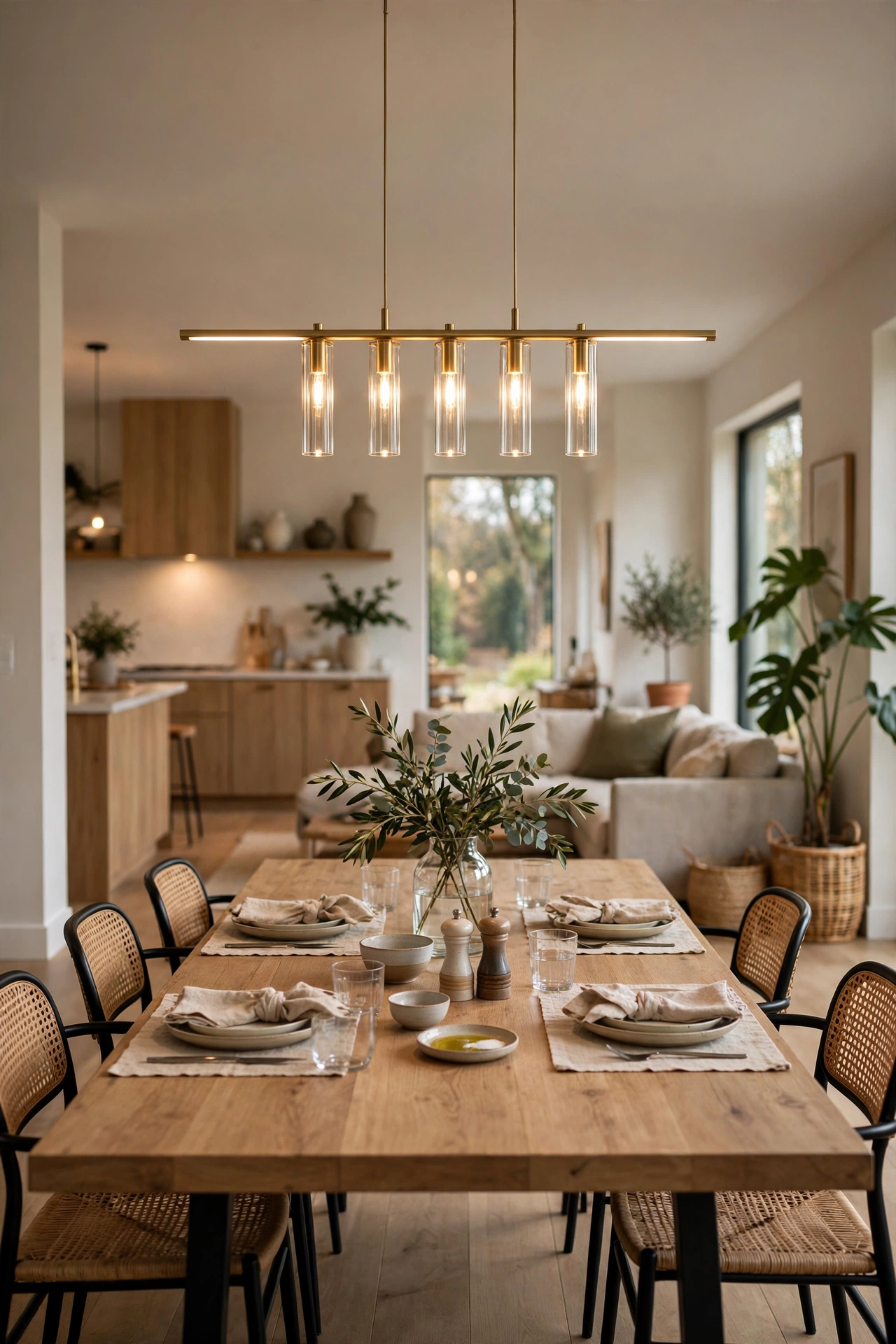
A linear chandelier is purpose-built for rectangular tables. Its elongated form spreads light evenly from end to end, so the whole table glows instead of just the middle. Brass keeps it warm and current, and the slim profile never blocks sightlines across the table. Size it to about two-thirds of the table length. In my experience, this is the single most foolproof choice for anyone who finds chandelier shopping overwhelming.
Pro Move: Center the fixture on the table, not the room. Tables rarely sit dead center, and guests notice.
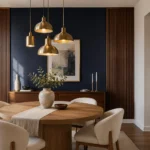
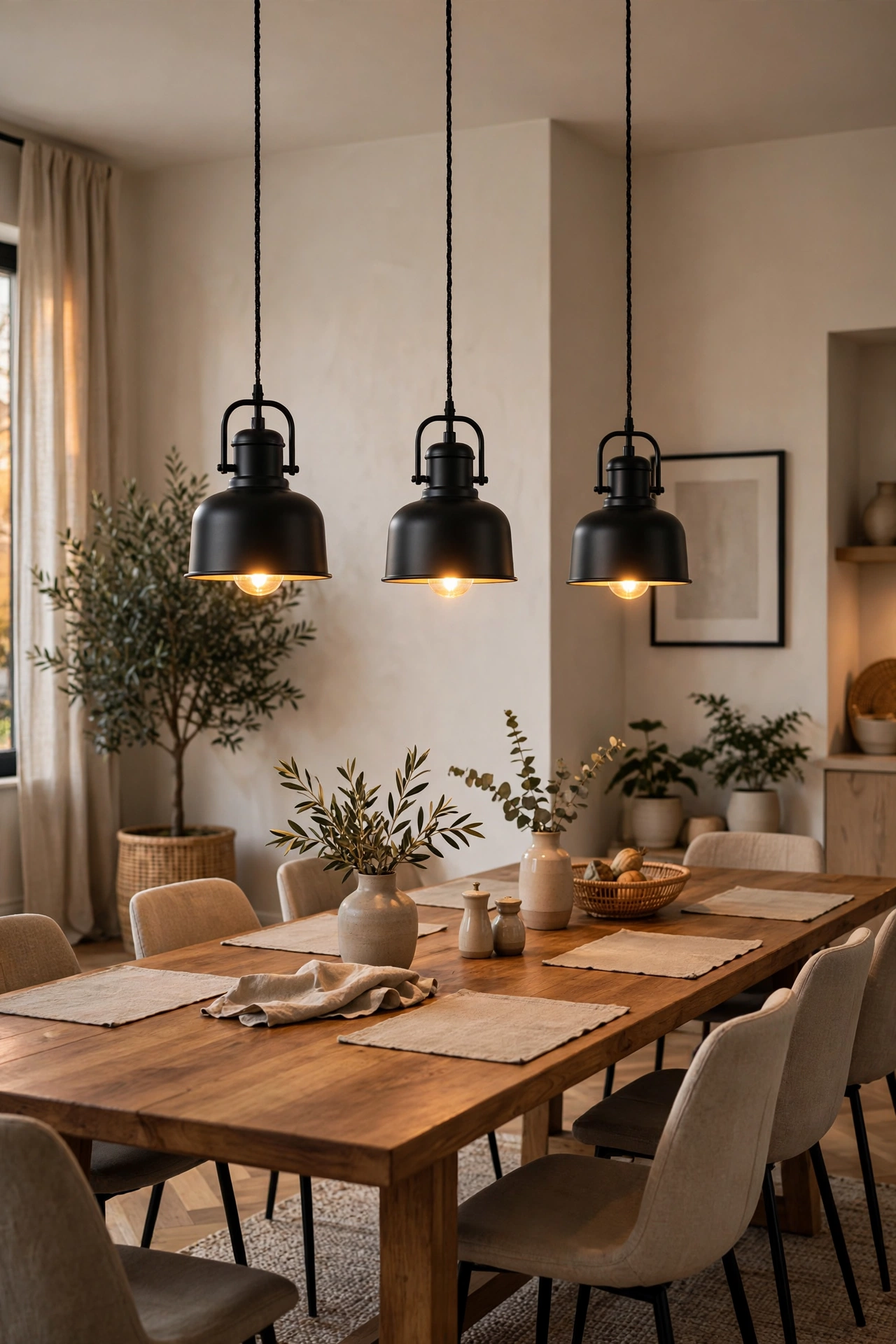
Three pendants in a row give you the coverage of a linear fixture with more personality. This works beautifully with glass, metal, or fabric shades, and you can vary the drop heights slightly for a collected feel. The rule is simple: space them evenly and keep each one about a third of the table width in diameter. This approach also lets you replace one shade down the road without starting over. Just make sure all three hang at exactly the same height unless you are deliberately staggering them.
Try This: Use a laser level or a taut string line when installing. Eyeballing three pendants never ends well.
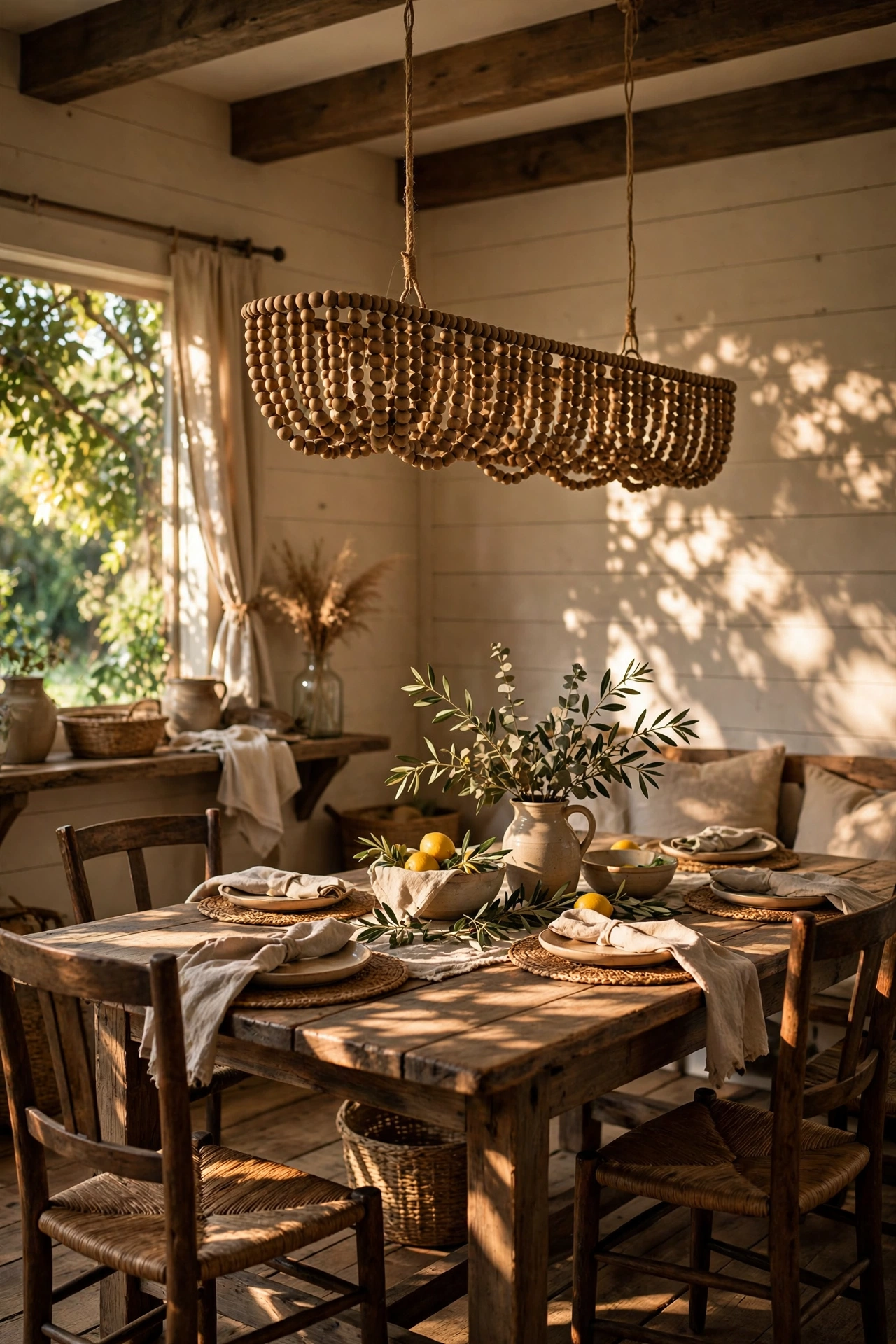
A wood-bead chandelier brings warmth and craft to a long table without any metal coldness. The beads diffuse the bulbs into a soft, dappled glow that makes wood tables look richer. This style bridges farmhouse, coastal, and bohemian rooms, which makes it one of the most versatile picks here. It is lightweight for its size, so installation is simpler than it looks. Dust the beads with a dry cloth; wet cleaning swells the wood.
Worth Knowing: Natural wood beads darken slightly with age and sunlight. Consider it patina, not damage.
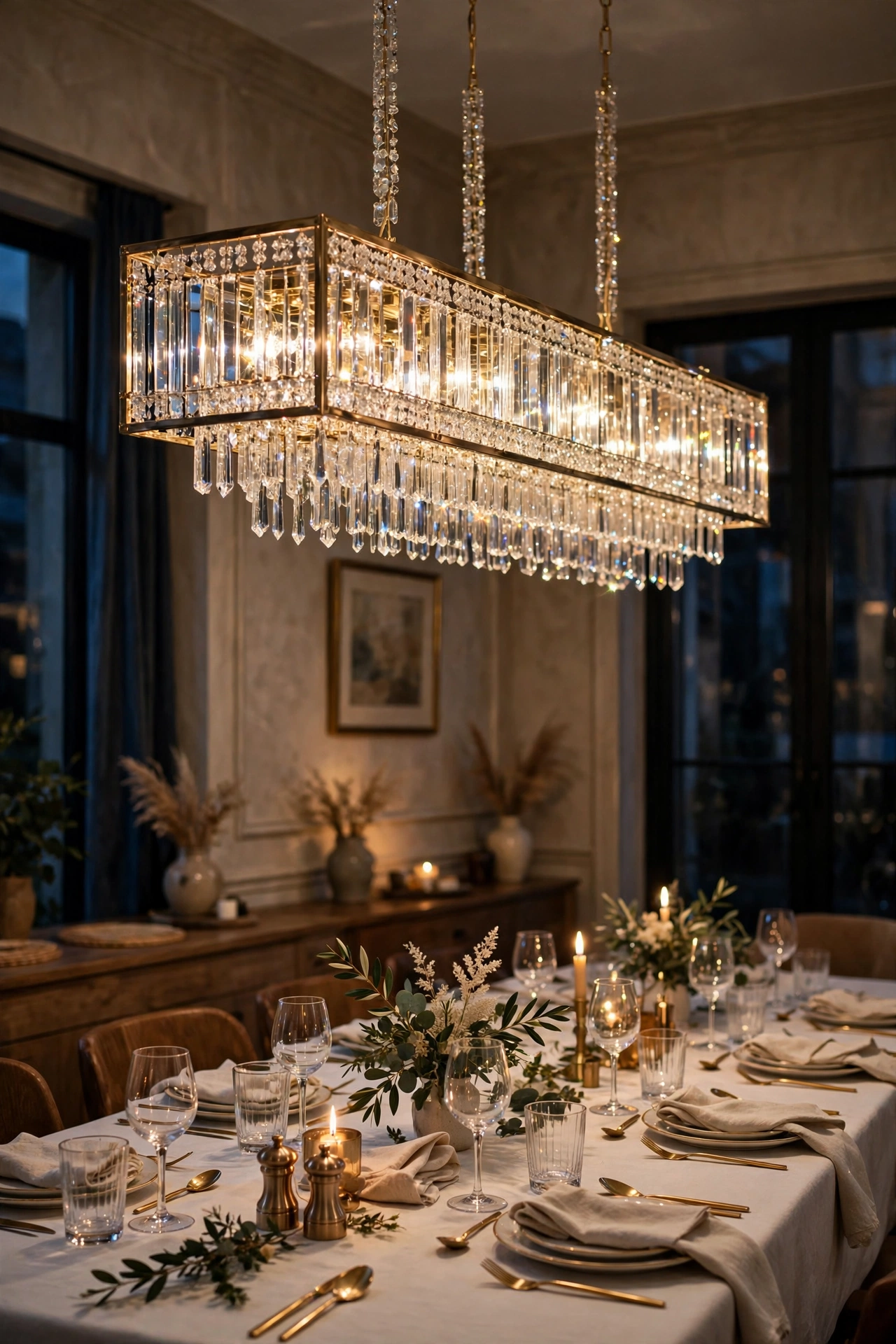
Long formal tables deserve a fixture with presence, and a rectangular crystal chandelier delivers it. The elongated crystal body throws sparkle the full length of the table, which makes holiday dinners feel genuinely grand. Keep the rest of the room quiet so the fixture can carry the formality on its own. This is an investment piece, so check the crystal quality in person if you can; good crystal refracts rainbow edges, cheap glass just glares. A dimmer is mandatory, not optional.
Designer Advice: In rooms with mirrors, a crystal fixture doubles its impact. Place accordingly.
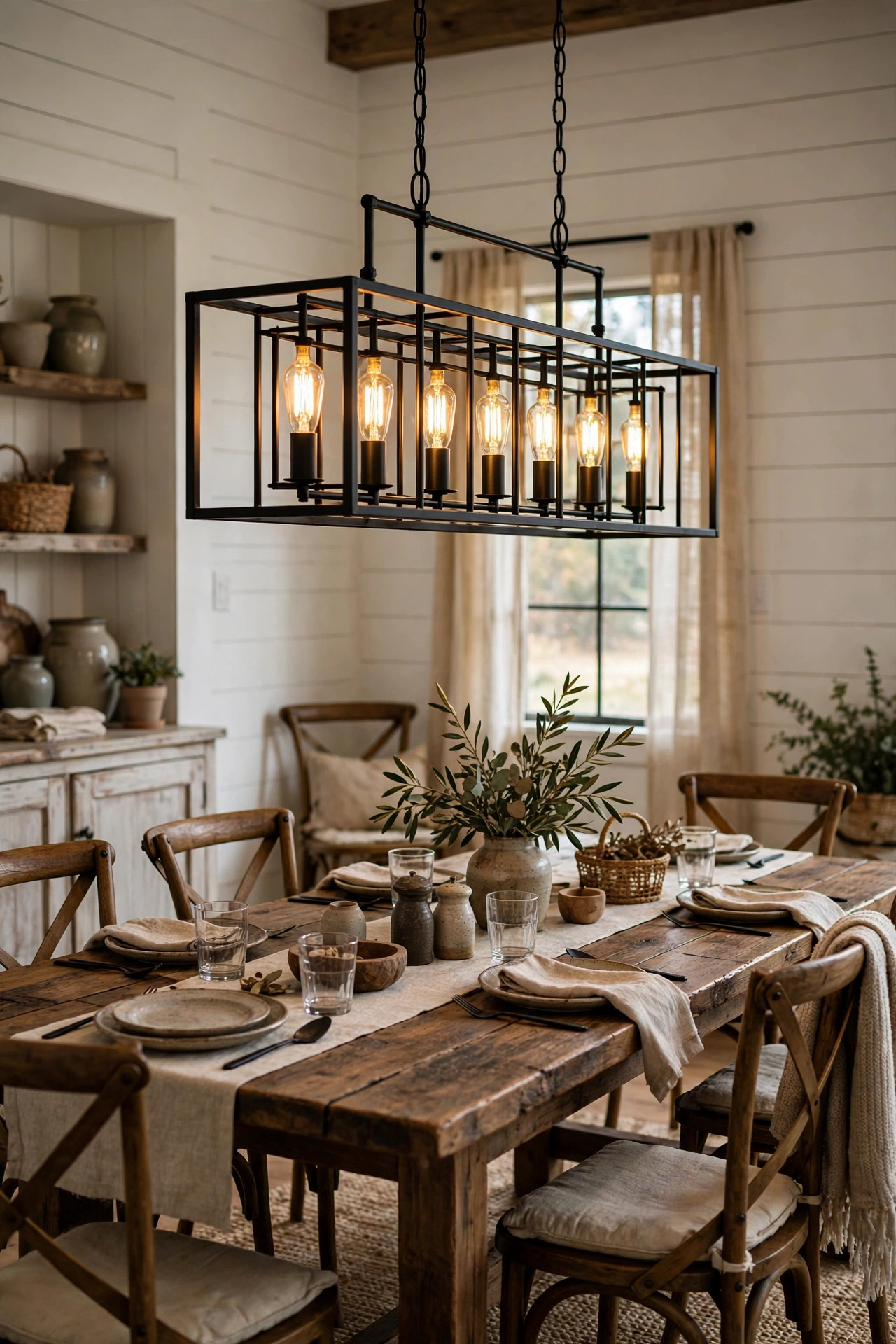
Black metal cage fixtures with exposed bulbs suit farmhouse and industrial dining rooms the way nothing else does. The open frame keeps the fixture visually light despite its length, and Edison-style bulbs add amber warmth. One practical advantage: blackened metal hides dust far better than any other finish, which matters for a fixture you clean twice a year. Pair it with a wood table and the combination feels settled and honest. This is a workhorse, not a showpiece, and that is its charm.
Heads Up: Exposed bulbs glare at eye level. Choose bulbs with a frosted or amber coating to soften them.
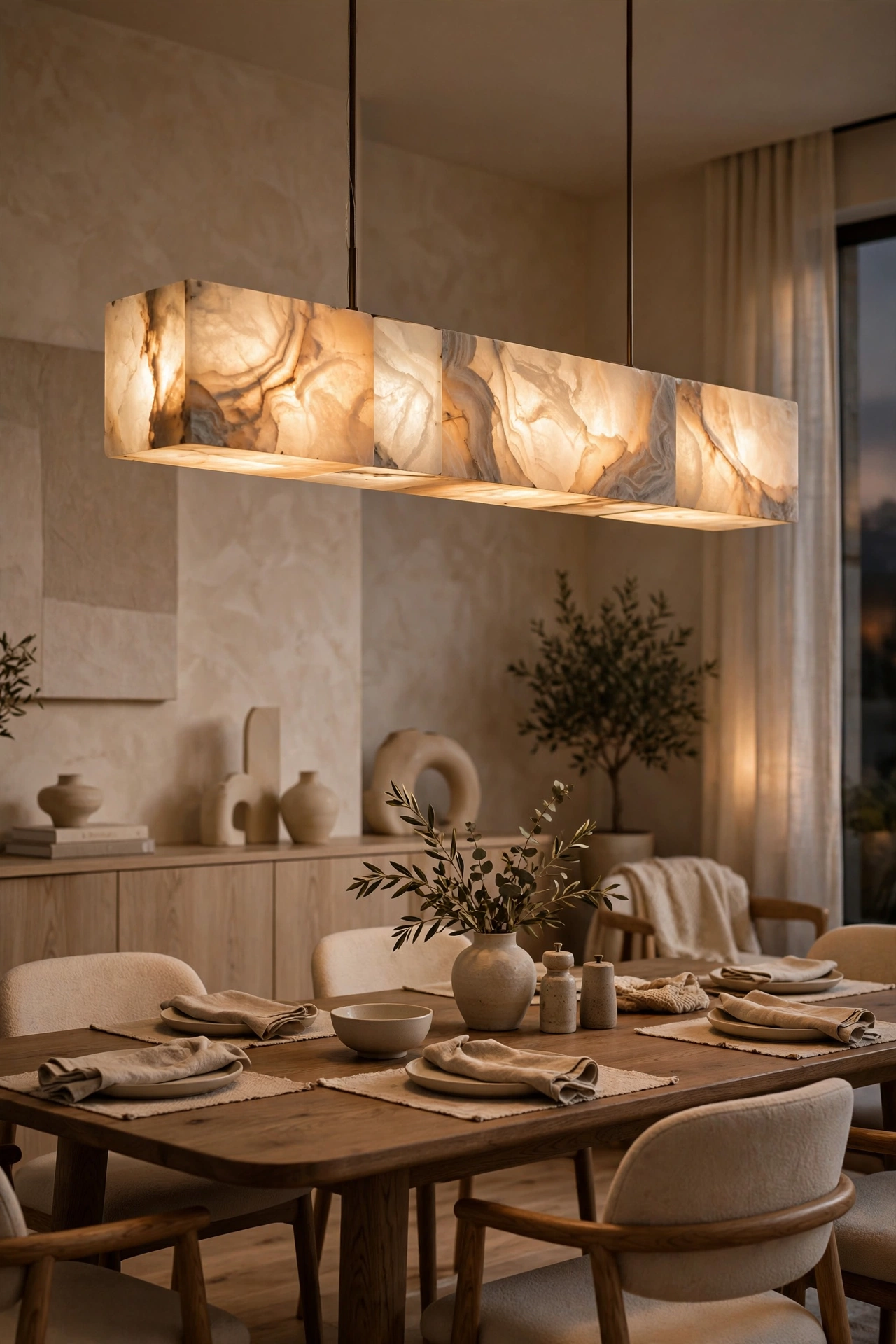
Alabaster is having a moment, and for good reason. The stone glows from within when lit, giving a long table the softest possible light with a genuinely luxurious material. Each piece of alabaster has unique veining, so no two fixtures are identical. It suits modern organic and transitional rooms beautifully. Honest limitation: alabaster is heavy and expensive, and it needs professional installation. But as a forever fixture over a table you love, it is hard to beat.
Good to Know: Alabaster is a natural stone, so expect gentle color variation. That is the point.
Chandelier Sizing Cheat Sheet
Table shape
Fixture rule
Hang height
Round
Diameter about half the table width
30 to 36 inches above table
Rectangular
Length about two-thirds the table
30 to 36 inches above table
Square
Half to two-thirds the table width
30 to 36 inches above table
Extra long (8 ft plus)
Two fixtures, each a third of the table
Add 3 inches per foot of ceiling over 8 ft
For Small Dining Corners
Small dining spaces punish big fixtures and reward clever ones. Low ceilings, tight corners, and rental restrictions all have answers. The goal is presence without bulk.
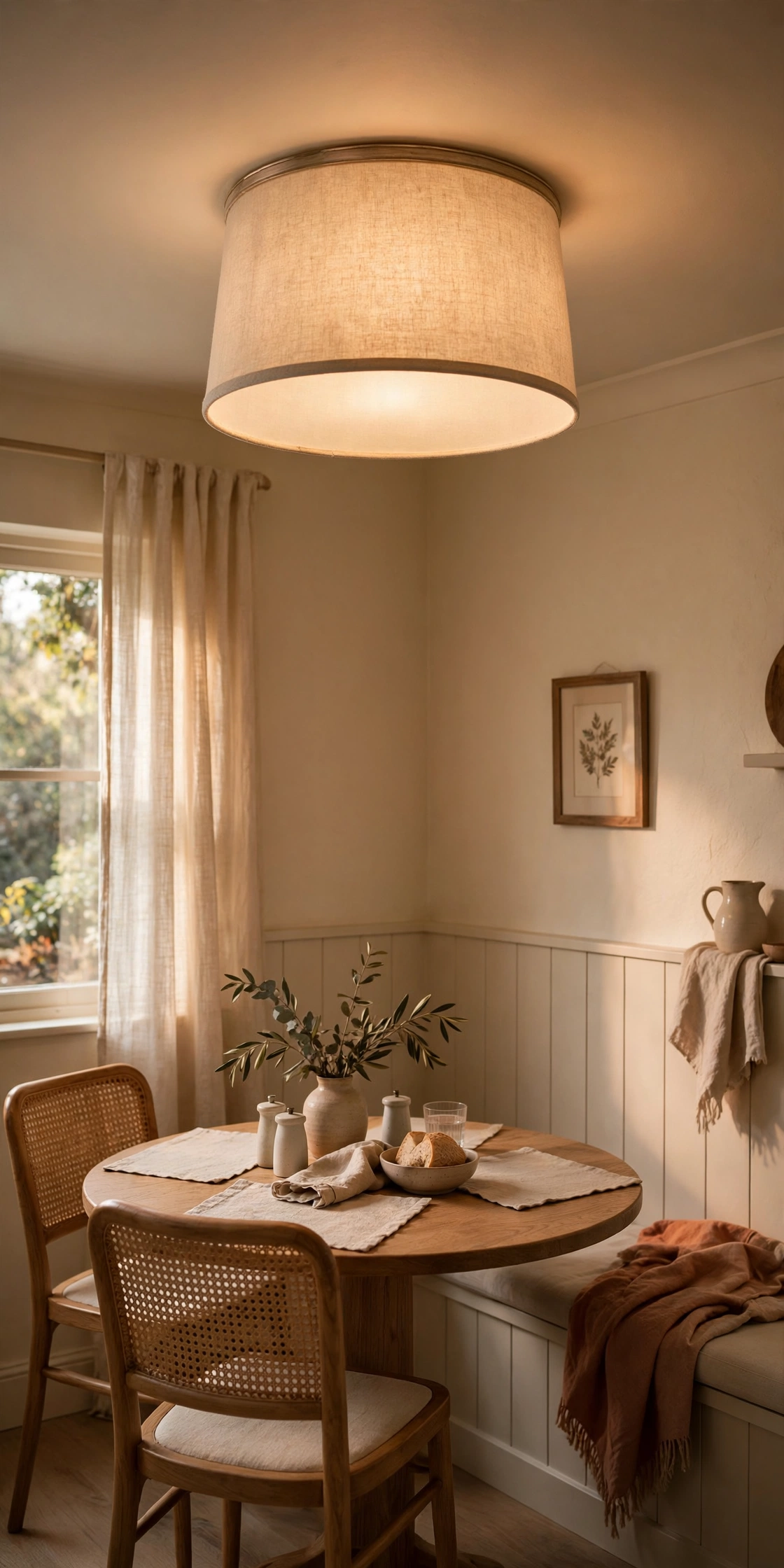
When the ceiling is 8 feet or lower, a semi-flush drum gives you chandelier style without the drop. It hugs the ceiling while still throwing light up and down, which keeps a small dining corner from feeling cave-like. Fabric drums soften the light beautifully; metal ones read more modern. This is the right answer for basement dining areas and apartments where a hanging fixture would bonk foreheads. Measure twice, because flush mounts cannot be adjusted after the fact.
Quick Tip: A 16 to 20 inch drum suits most small dining corners. Bigger overwhelms the space.
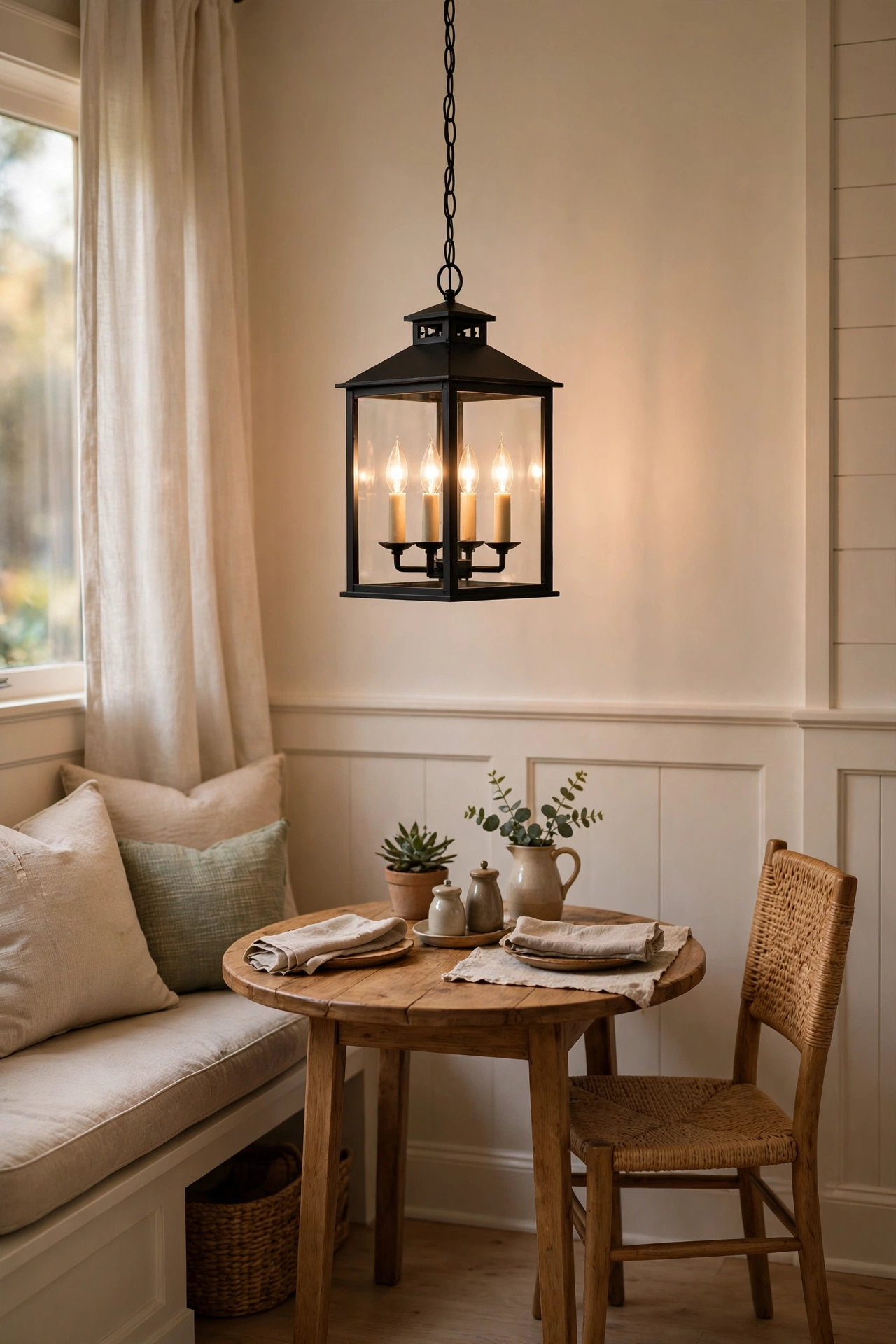
A compact black lantern with candle-style bulbs brings farmhouse charm to a dining nook without eating visual space. The open frame lets the eye pass through, so the fixture reads lighter than its size. Candle sleeves in warm white keep it cozy rather than stark. This is a forgiving style that gets along with almost any chair you already own. Hang it a touch lower than the standard rule, around 30 inches, since small rooms benefit from the intimacy.
Reality Check: Small lantern plus big table equals a lost fixture. Match the scale to the table, not the room.
Apartment dining nooks deserve good lighting too, and a mini sputnik delivers mid-century style in a compact package. The starburst shape draws the eye up, which makes a small corner feel taller than it is. Brass or black finishes both work; brass warms, black defines. Because these are lightweight, most renters can install one with landlord permission and a basic mounting bracket. It photographs beautifully, which matters more than it should.
Budget Note: Mini sputniks are widely available under a hundred dollars. An easy first upgrade.
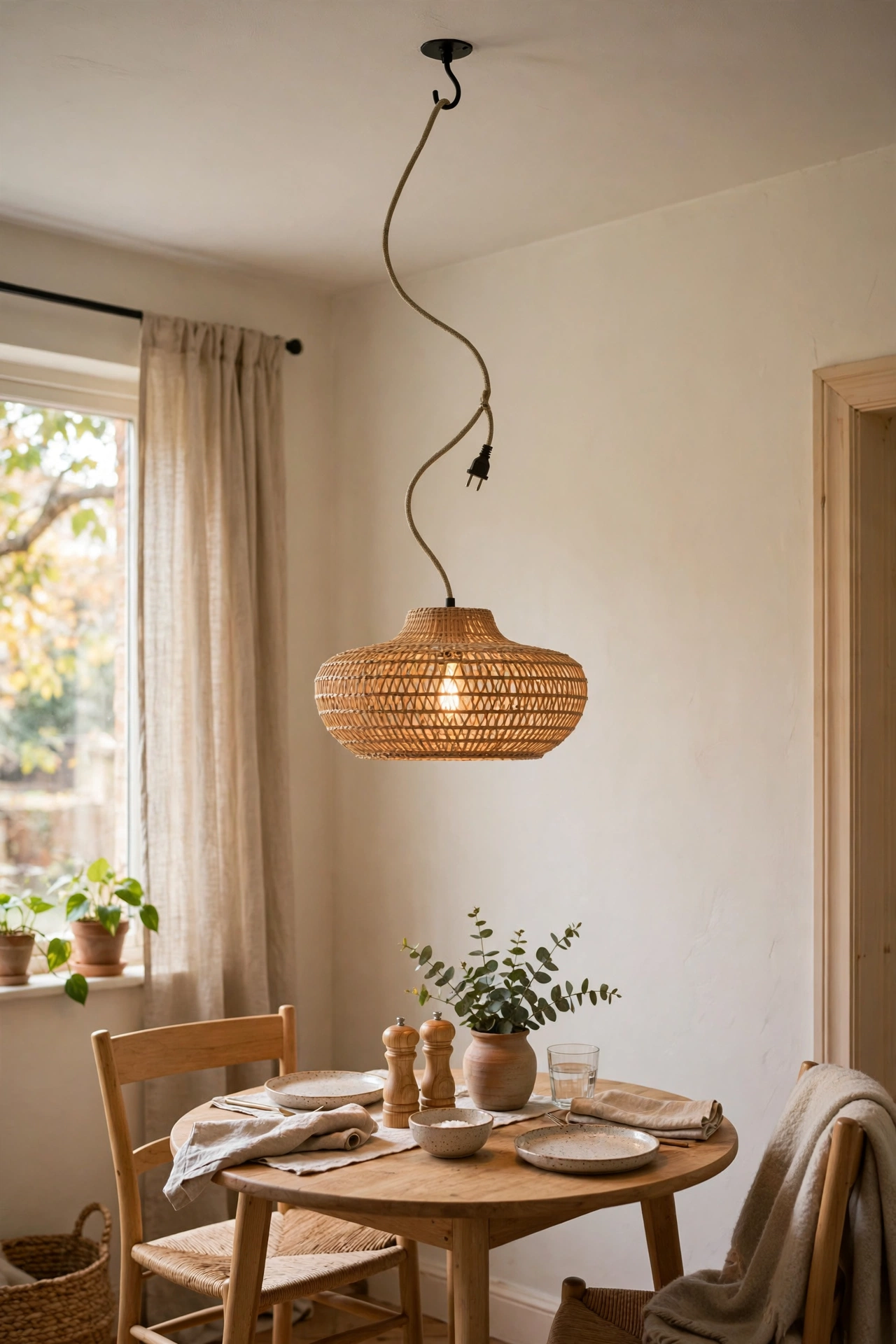
Renters, this one is for you. A plug-in pendant with a long cord can be swagged from a hook in the ceiling and plugged into a wall outlet, no electrician required. Drape the cord in a gentle curve for a deliberate look rather than a drooping afterthought. This is also the answer when the existing junction box sits in the wrong spot; a swag kit lets you center the light on the table instead of the room. Choose a lightweight shade, since ceiling hooks have limits. Take it with you when you move.
Pro Move: Use a cord cover that matches your ceiling color and the whole setup looks built-in.
A cane or rattan drum shade filters light into a warm, dappled pattern that makes a small dining corner feel like a getaway. The natural texture adds the one thing small white-walled rentals usually lack: material interest. It hangs light and airy, so it never crowds a tight space. Pair it with a wood table and the combination feels effortlessly collected. Keep it dusted, since textured shades show buildup faster than smooth ones.
Small Detail: Cane shades glow amber when lit. Love that or skip this style, there is no in-between.
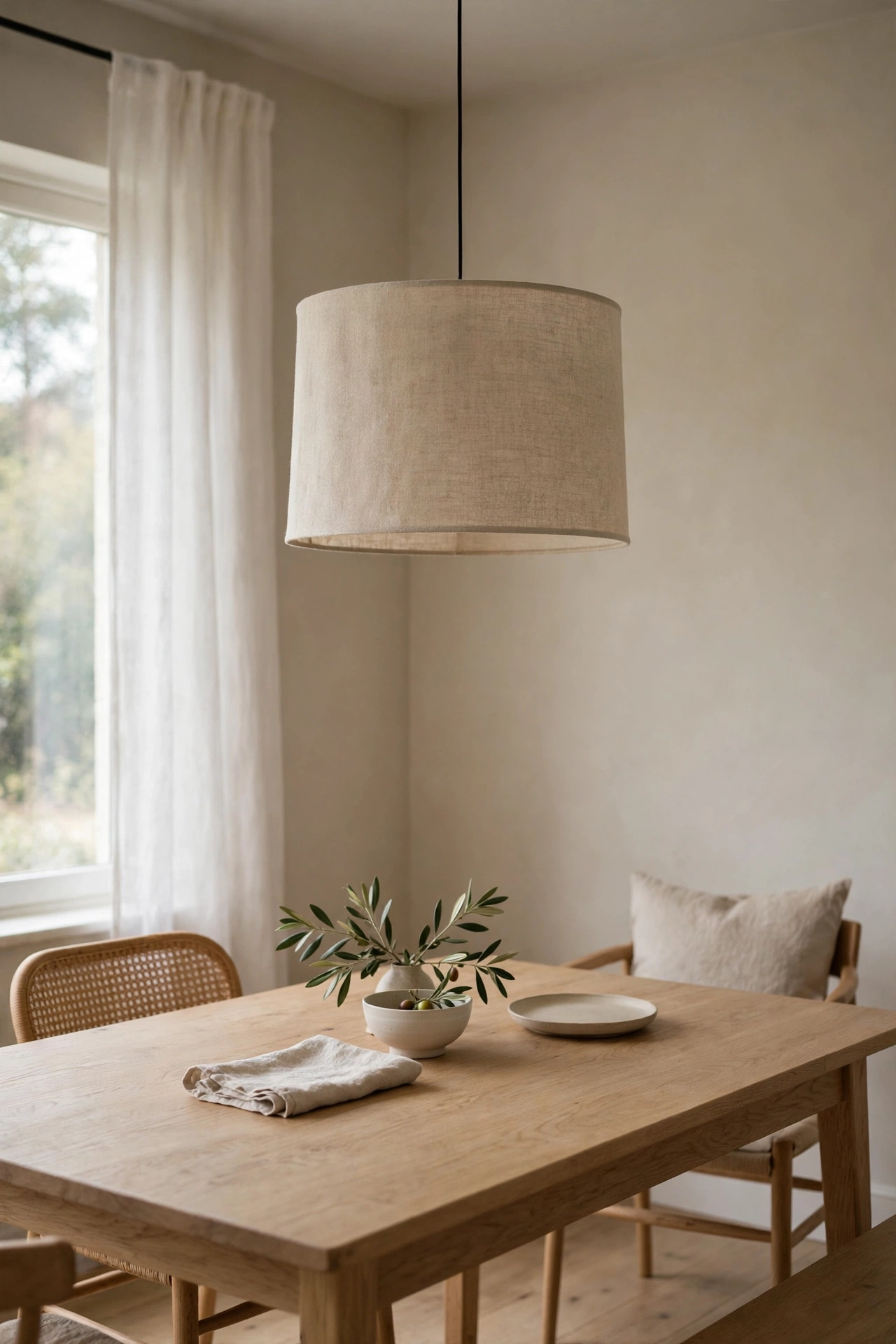
Sometimes the right chandelier is barely a chandelier at all. A simple linen drum pendant gives clean, even light and disappears into the room in the best way. This is the choice for dining corners where the art, the view, or the table itself should be the star. Linen diffuses beautifully and never goes out of style, which makes it the safest pick in this entire article. When everything else feels like too much fixture, this is your answer.
Honest Take: Boring is underrated in lighting. A quiet fixture lets everything else in the room speak.
Before You Buy Checklist
Measure the table width and length, then apply the sizing rules above
Measure ceiling height and confirm the fixture drop is adjustable
Check the junction box position; plan a swag kit if it is off-center from the table
Confirm every bulb is dimmable and buy them from the same batch
Choose 2700K to 3000K bulbs, never cooler, for flattering dinner light
Verify the ceiling box is rated for the fixture weight, especially crystal and stone
For High-Drama Rooms
Tall ceilings, grand tables, and rooms built for entertaining can take fixtures that would swallow a normal room. This is where lighting becomes the jewelry of the house. Go big, but go deliberate.
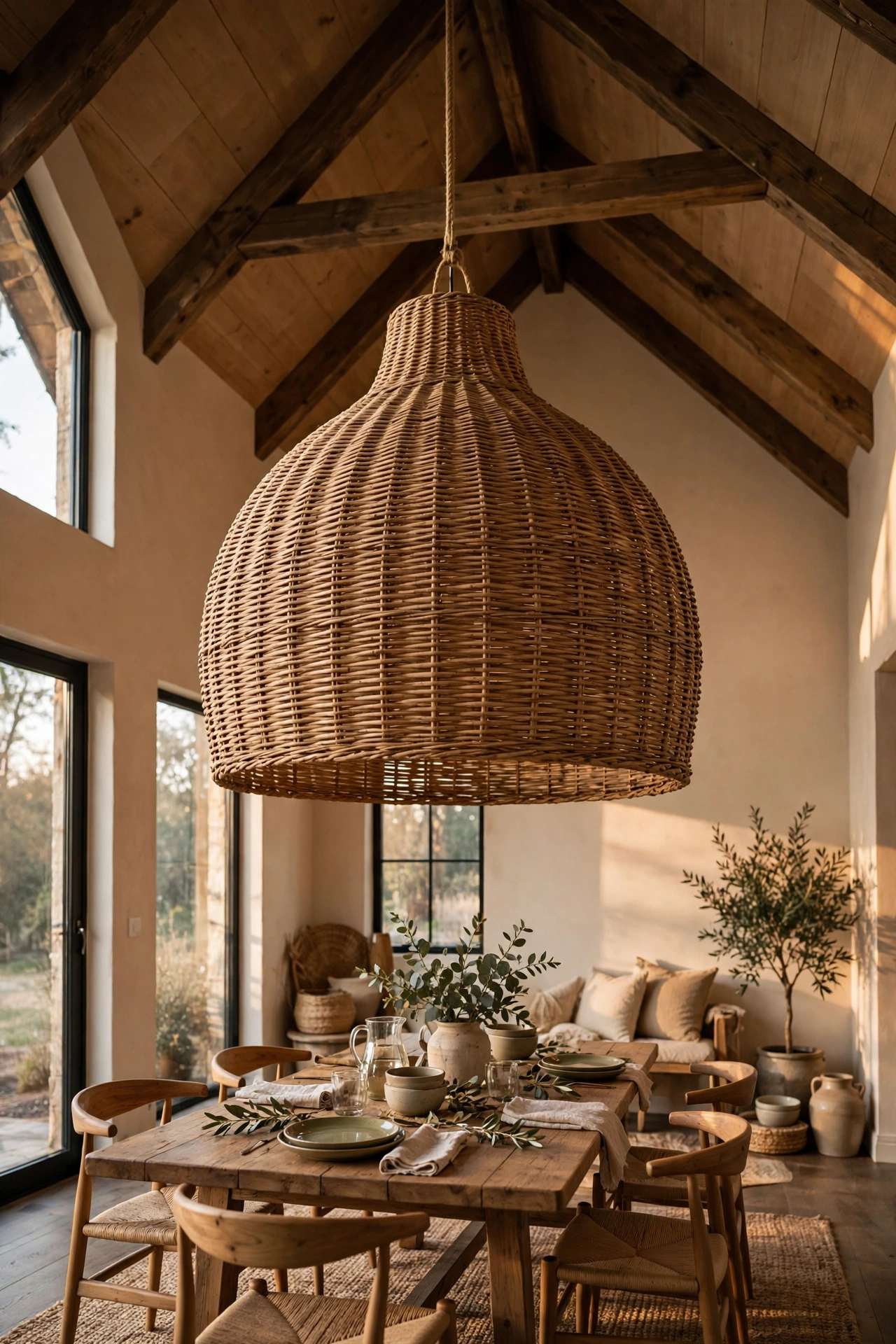
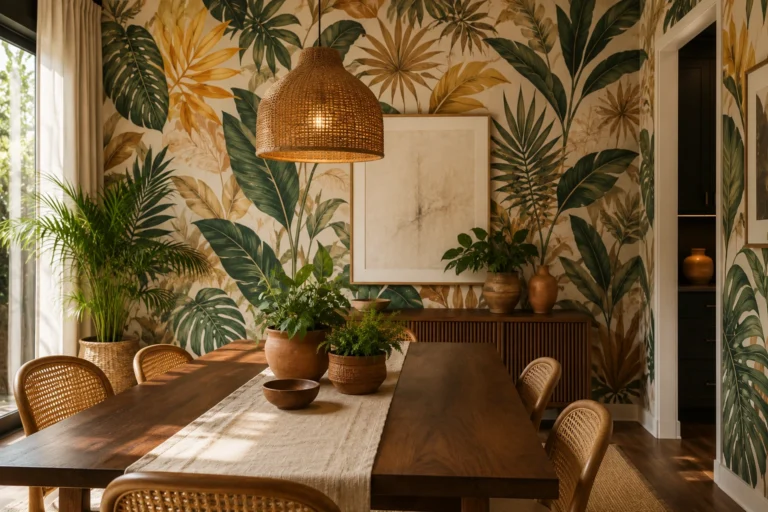
In a room with a vaulted or double-height ceiling, an oversized woven pendant fills the vertical space that small fixtures leave empty. The basket shape draws the eye upward and makes the whole room feel intentional. Natural fibers keep the drama warm rather than cold, which matters in big rooms that can feel echoey. Scale is everything here: when in doubt, go one size larger than feels safe. A too-small fixture in a tall room looks like a mistake; a too-big one looks like a decision.
Designer Advice: In tall rooms, hang the fixture lower than the math suggests. Connection to the table matters more than clearance.
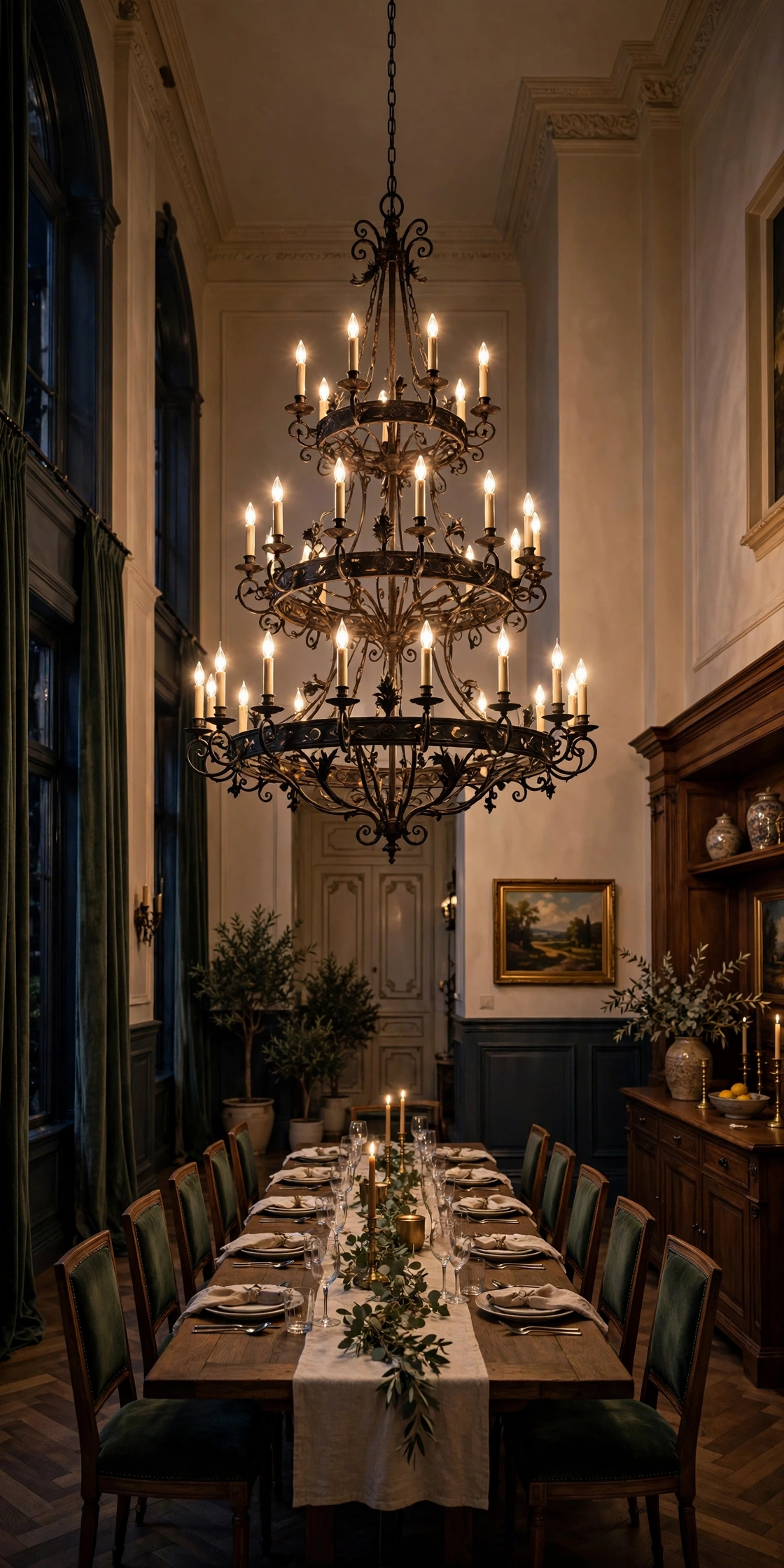
A multi-tier wrought iron chandelier gives a grand dining room the architectural weight it needs. The dark metal reads as almost blacksmith-made, which grounds rooms with lots of glass or pale finishes. Candle-style bulbs keep it romantic rather than medieval. This is a fixture that needs a dimmer more than any other, since a dozen exposed bulbs at full power is genuinely uncomfortable. Professional installation is worth it at this scale and weight.
Heads Up: Wrought iron fixtures are heavy. Confirm ceiling reinforcement before you fall in love.
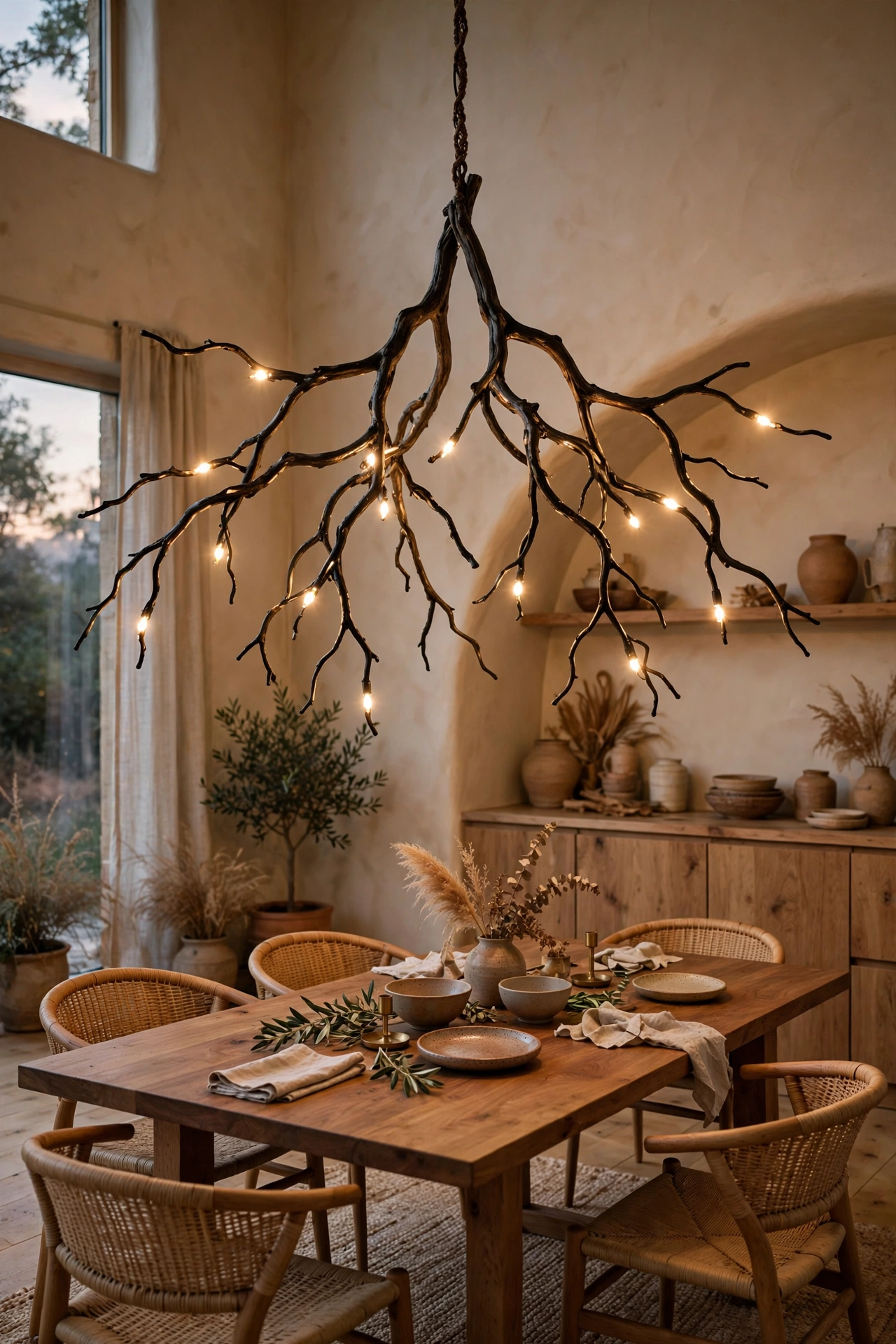
Branch-form chandeliers, with arms that split like limbs, bring an organic sculptural quality that no geometric fixture can match. They suit modern organic and transitional dining rooms, especially ones with wood tables that echo the branching lines. The irregular form means it looks good from every angle, which matters in open-plan spaces. This is a conversation piece first and a light source second, so layer it with recessed or wall lighting for actual illumination. Choose warm metals to keep it inviting.
Worth Knowing: Organic shapes are forgiving of imperfect symmetry. If your table sits slightly off-center, nobody will ever know.
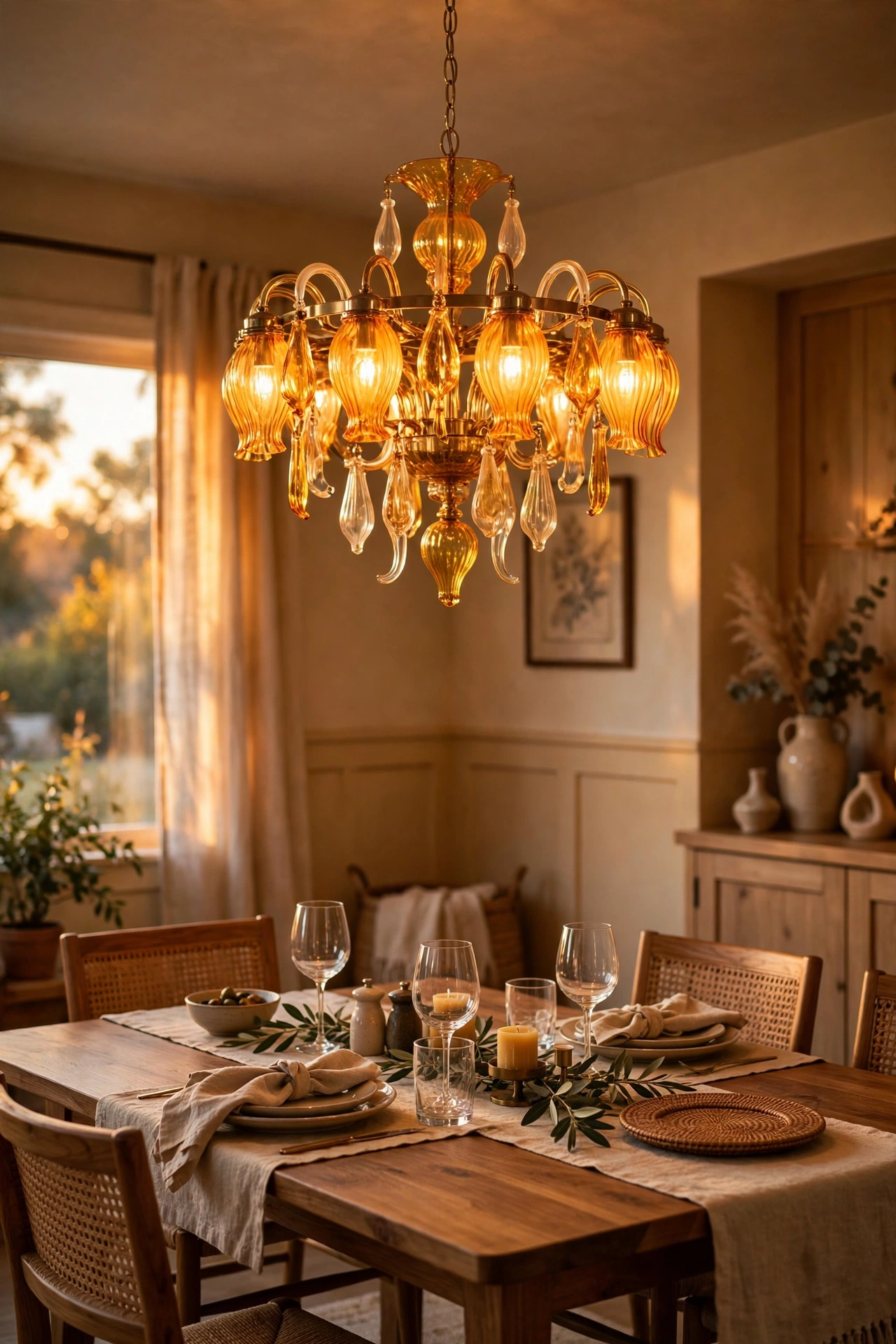
Amber, smoked, or opal glass chandeliers tint the light itself, wrapping the table in a warm haze that clear glass cannot produce. Amber is the most flattering; it makes everyone look like they are dining at golden hour. Smoked glass reads moodier and suits modern rooms. This is the choice for people who find crystal too formal and metal too hard. One caution: colored glass reduces total light output, so check the lumen rating if this is your only fixture.
Try This: View colored glass lit and unlit before buying. Some shades look muddy in daylight.
Tables over eight feet long need two fixtures, full stop. A single chandelier, no matter how grand, leaves the ends dim and the middle harsh. Two matching chandeliers, each centered over half the table, give even light and a pleasing rhythm. They do not have to be huge; two medium fixtures beat one oversized one every time. Keep them identical for formality or fraternal twins for a collected feel. Wire them to the same dimmer so they always act as one.
Pro Move: Space the two fixtures so the gap between them roughly equals their distance from the table ends.
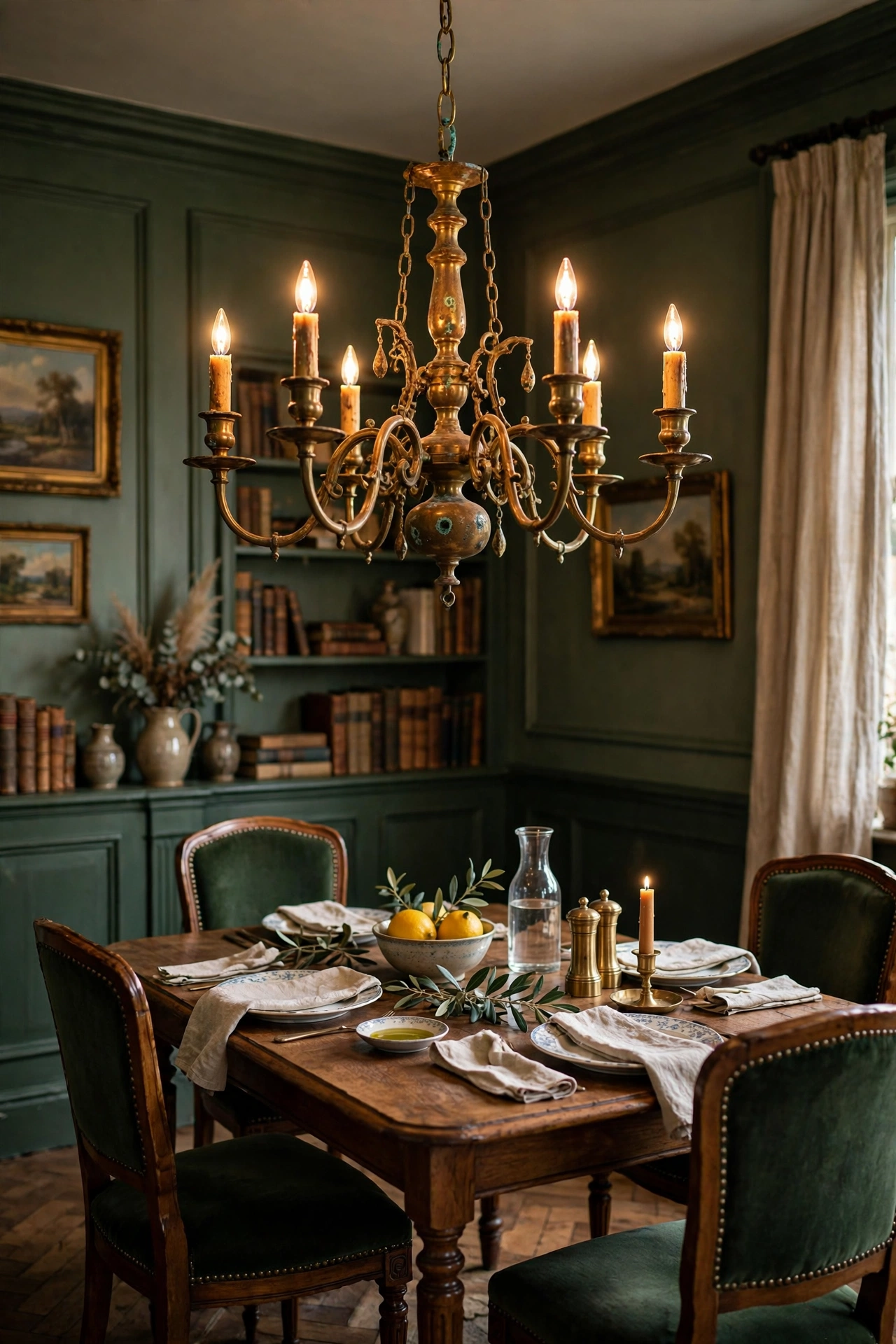
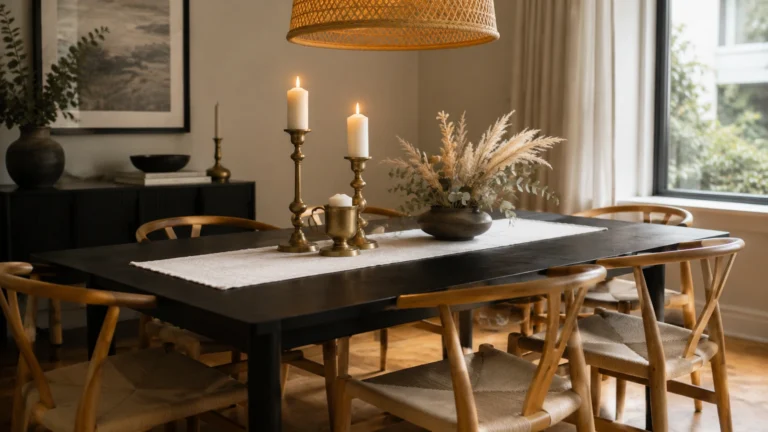
A genuine vintage brass candelabra, professionally rewired, brings a patina that no new fixture can fake. Flea markets and estate sales are full of them, often for less than a mass-market reproduction. Rewiring by an electrician makes it safe and lets you add a dimmer, which the original never had. The aged brass glows rather than shines, which suits traditional and collected dining rooms perfectly. This is slow decorating at its best: a fixture with a past over a table with a future.
Small Detail: Never skip the rewiring. Old cloth wiring is a fire risk, not a charming original feature.
The 2700K Rule for Dining Rooms
Bulbs rated 4000K and above make food look flat and skin look tired. Warm white between 2700K and 3000K renders food accurately and flatters every face at the table. It is a functional choice, not just a mood: this is the color temperature restaurants use for a reason. Check the box before you buy, because daylight bulbs sneak into carts all the time.
The Last Word on Dining Light
A chandelier is the one fixture guests remember, because it hangs at eye level in the room where everyone gathers. But the best choice is never the most dramatic one in the catalog. It is the one that fits your table, flatters your food, and dims down to a glow when dinner runs long. Measure first, buy second, and always put it on a dimmer. Do that, and whatever style you choose will look like it was made for the room. Because it was.