There is something quietly magnetic about a Japandi dining room. It does not try to impress you the moment you walk in. Instead, it pulls you toward the table slowly, with warm wood grain and the kind of soft light that makes you want to sit down, pour something to drink, and stay a while. That is the whole point of this design philosophy, a meeting place between Japanese restraint and Scandinavian warmth, where every chair, every candle, and every grain in the tabletop feels chosen with genuine care.
This collection of ideas covers a wide range of directions. You will find everything from bold dark-and-light contrasts to earthy minimalism, from open shelf styling to bench seating that brings a whole new energy to family dinners. Each idea gives you something specific to work with, a color, a material, a lighting choice, a small detail that makes a real difference. Read through, find what feels right for your space, and start from there.
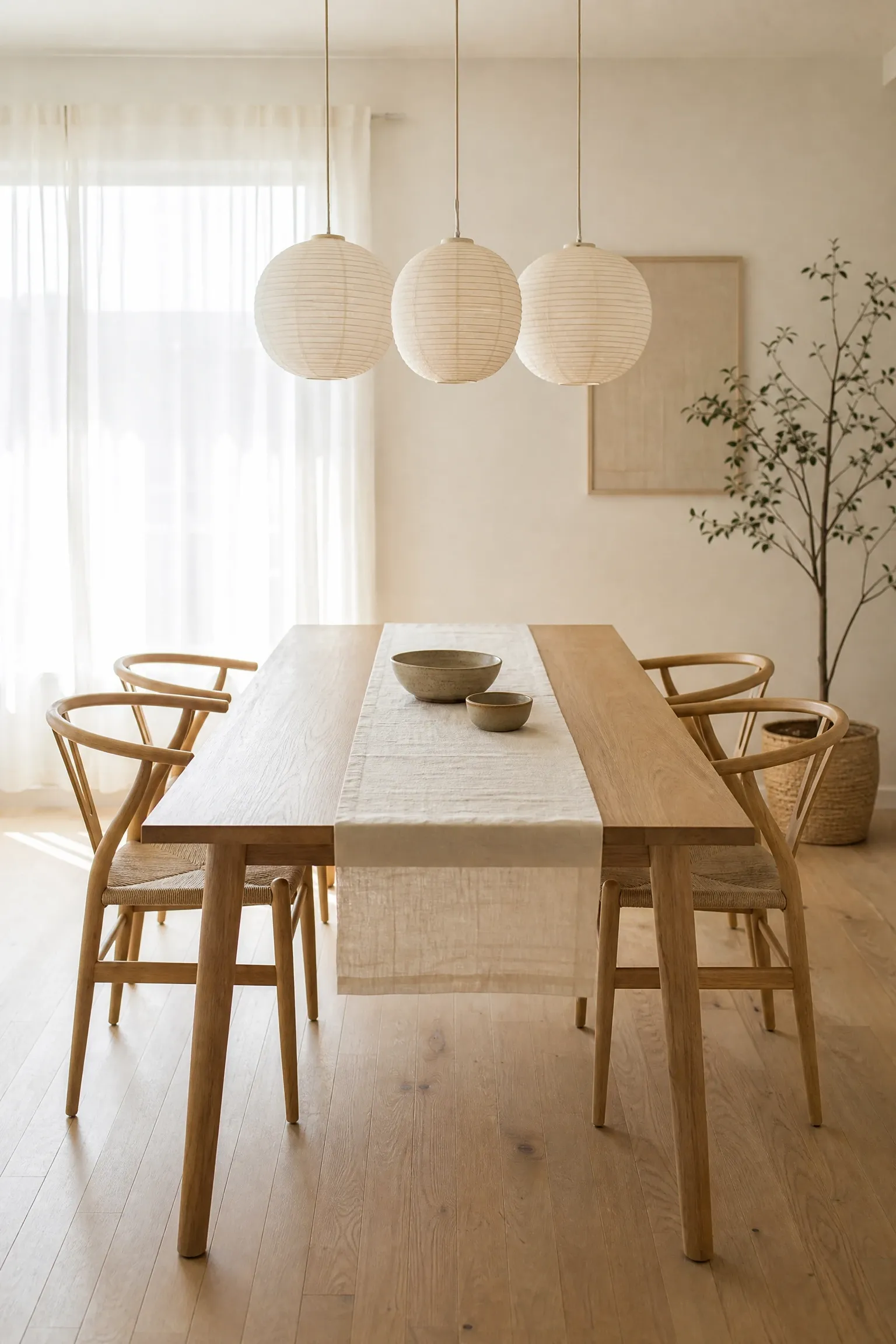
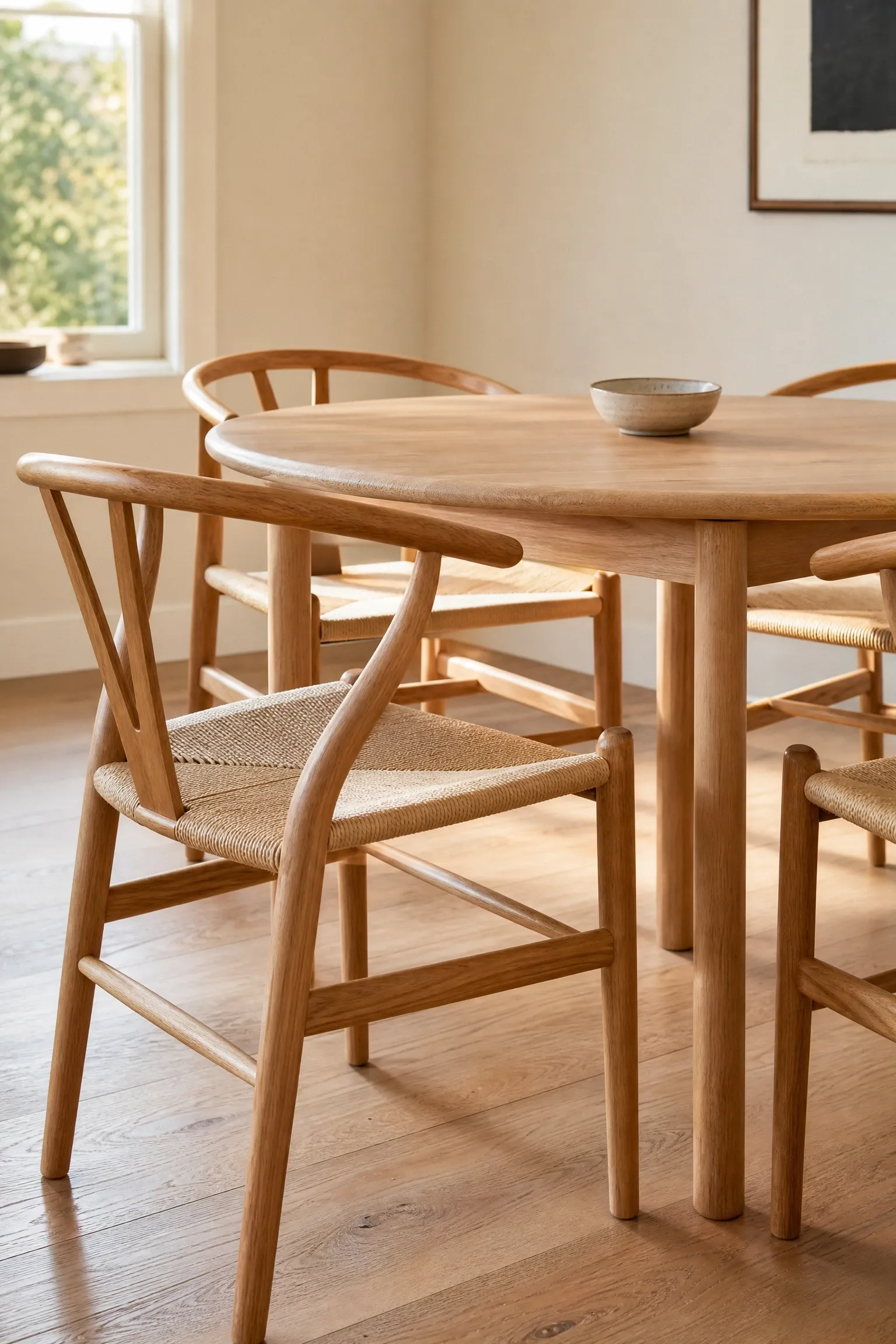
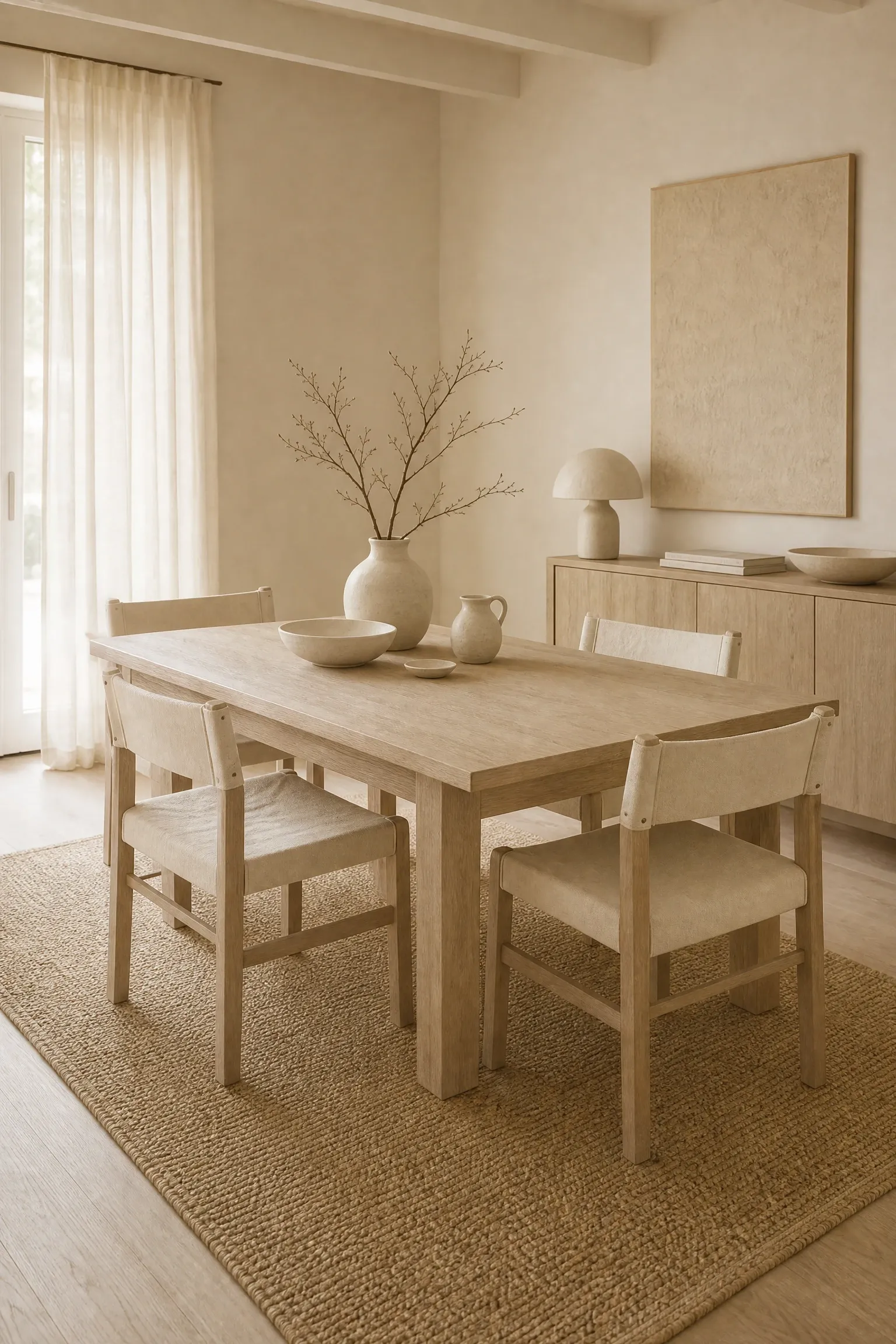
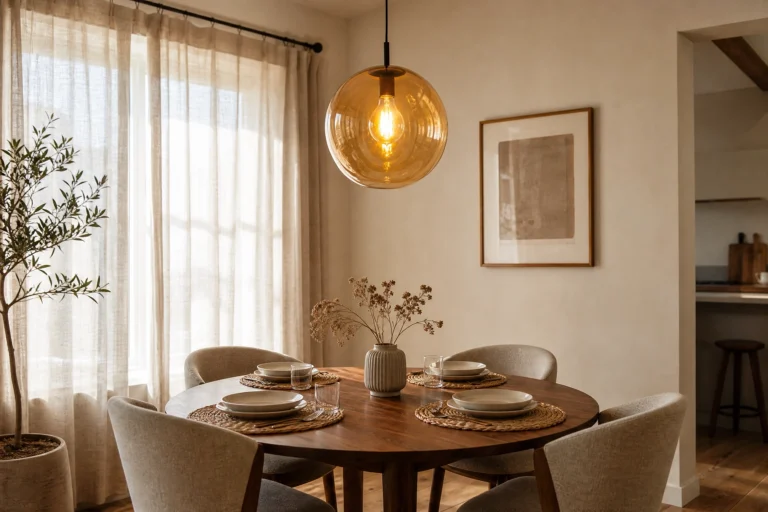
A white oak dining table is probably the most honest starting point for a Japandi dining room, and for good reason. The wood is light without being pale, warm without being yellow, and it holds the natural grain pattern that gives Japandi spaces so much of their soul. Pair it with chairs in matching or slightly contrasting light wood, or mix in woven rush seats for a layer of organic texture that keeps things from feeling too polished. The walls should sit in warm off-white or a very pale greige, something close to Benjamin Moore White Dove or Sherwin-Williams Accessible Beige. Add a simple linen runner down the center of the table, a small ceramic bowl or two as the only decor, and a cluster of warm-toned pendants above. Keep the floor bare hardwood or covered with a flat-weave natural fiber rug in cream or oat. The whole room should feel like it exhaled.
Designer Note: White oak reads warm in natural light and slightly cooler under artificial light. Test your pendant bulb temperature against your table before committing. A 2700K bulb keeps everything golden and welcoming.
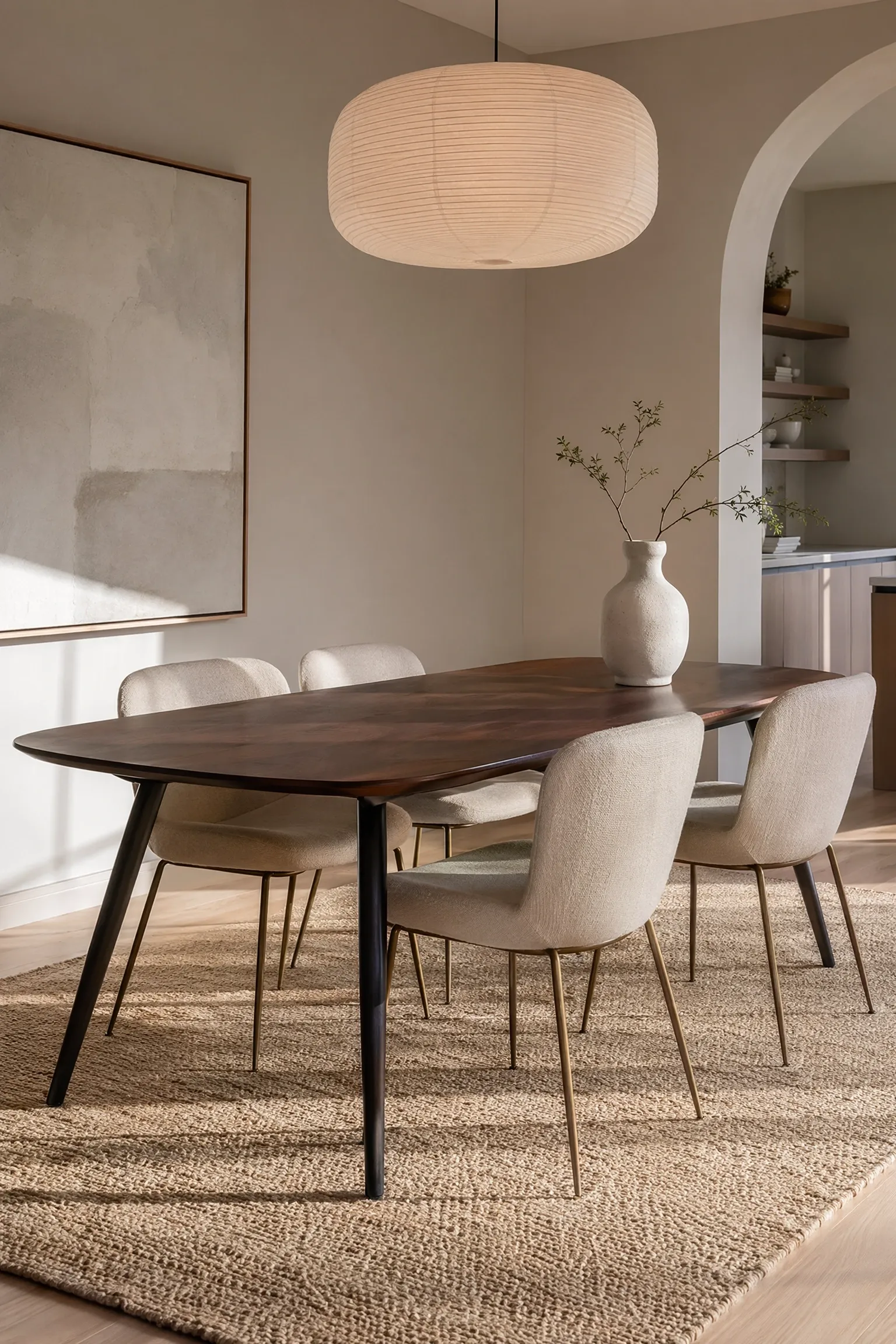
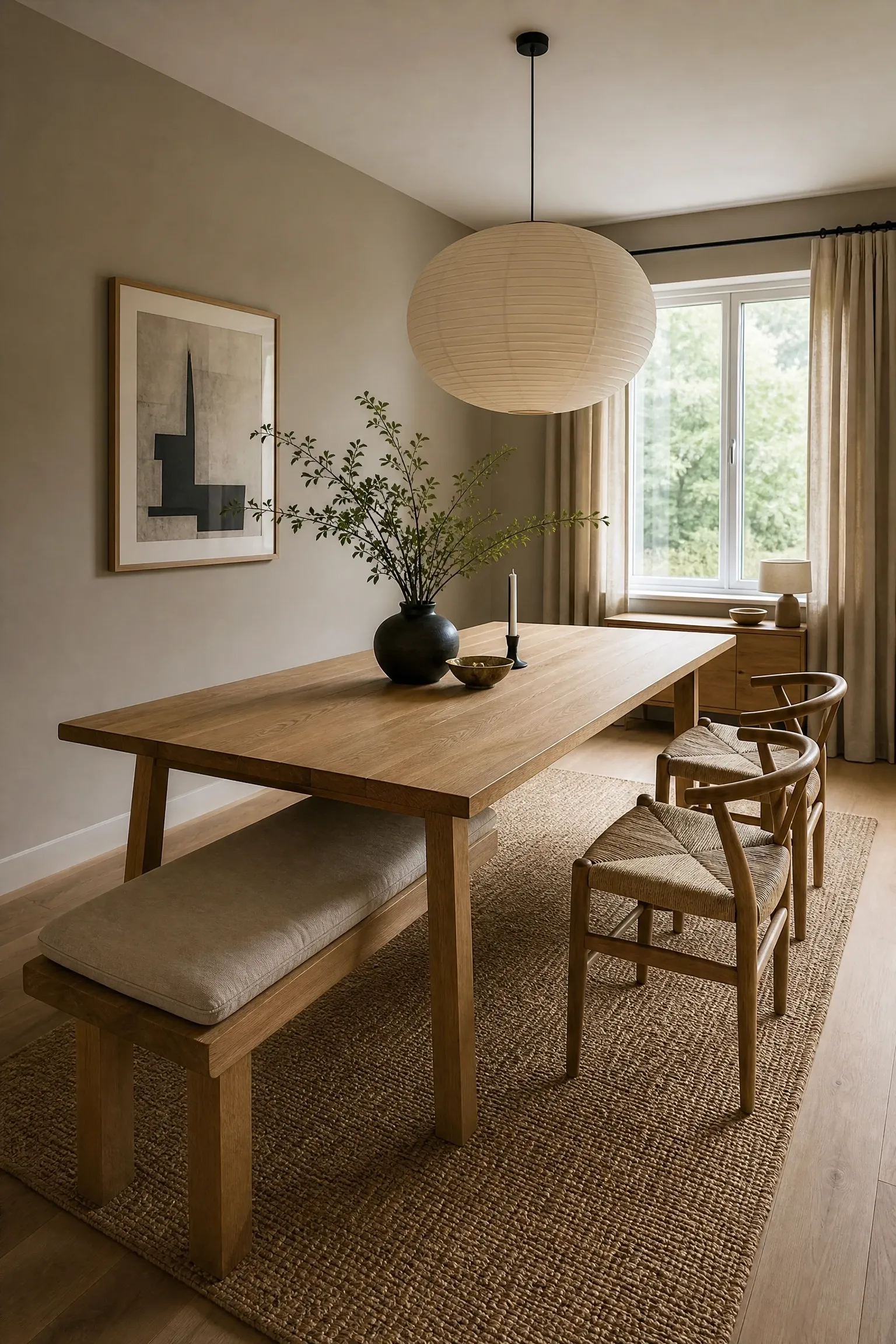
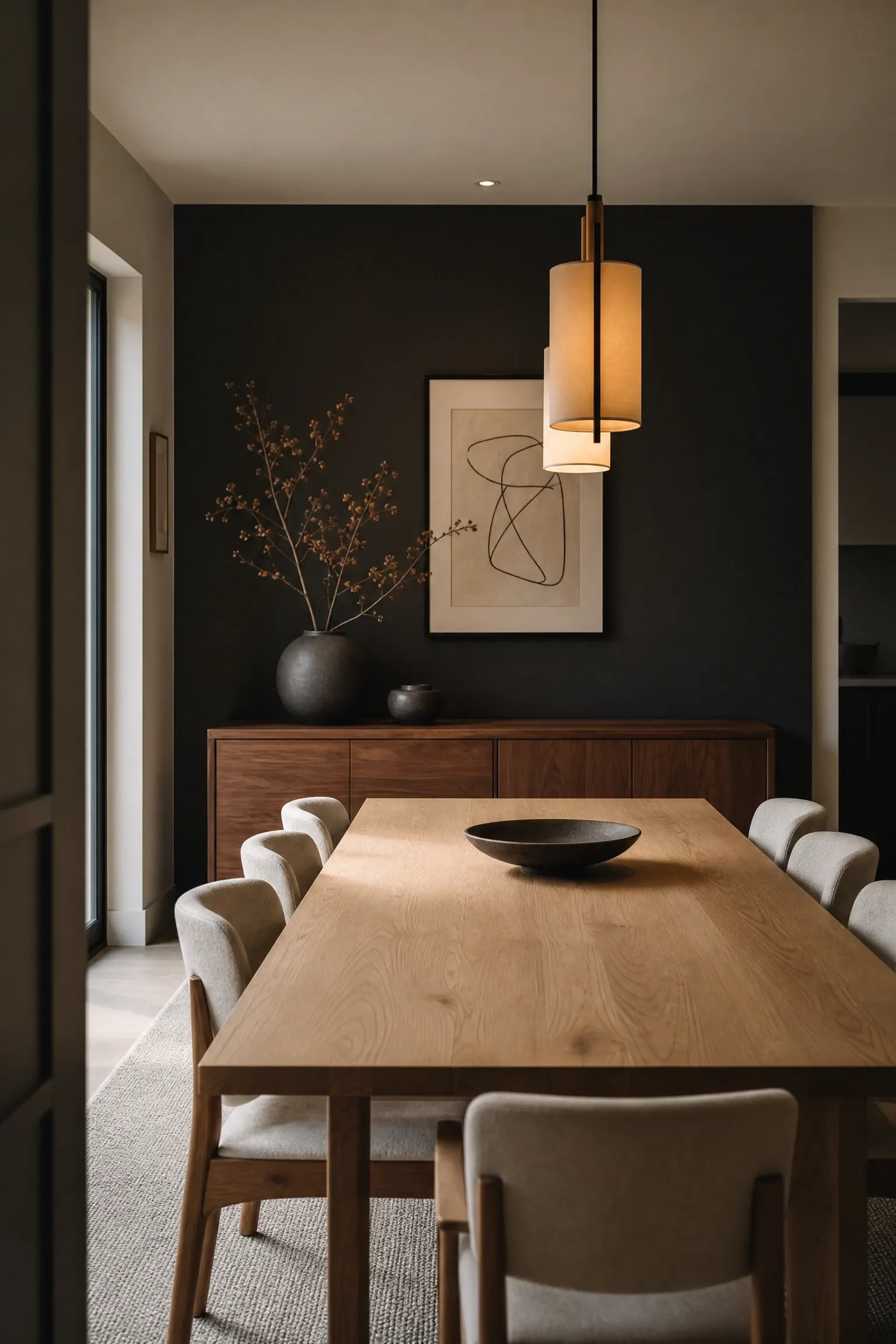
If you want your dining room to have more weight and presence, dark walnut is the move. A solid walnut dining table with clean, tapered legs brings a richness that reads formal without being stiff, especially when you pair it with lighter surroundings. Keep the walls in pale warm grey or soft white so the wood does not feel heavy. Chairs in natural linen or oatmeal fabric with thin black or dark brass legs hold the contrast beautifully. A rice paper pendant or a simple drum shade in washi paper softens the overall look while still letting the table be the star. Add a single sculptural ceramic vase at one end, keep the rest of the table clear, and let a jute rug anchor the seating zone. The contrast between the dark table and lighter room elements is what gives this setup its personality.
Designer Note: Walnut and off-white walls are a classic Japandi pairing. To keep it from looking too expected, add one unexpected texture, a rough linen curtain, a matte black candle holder, a hand-thrown bowl in a muted terracotta.
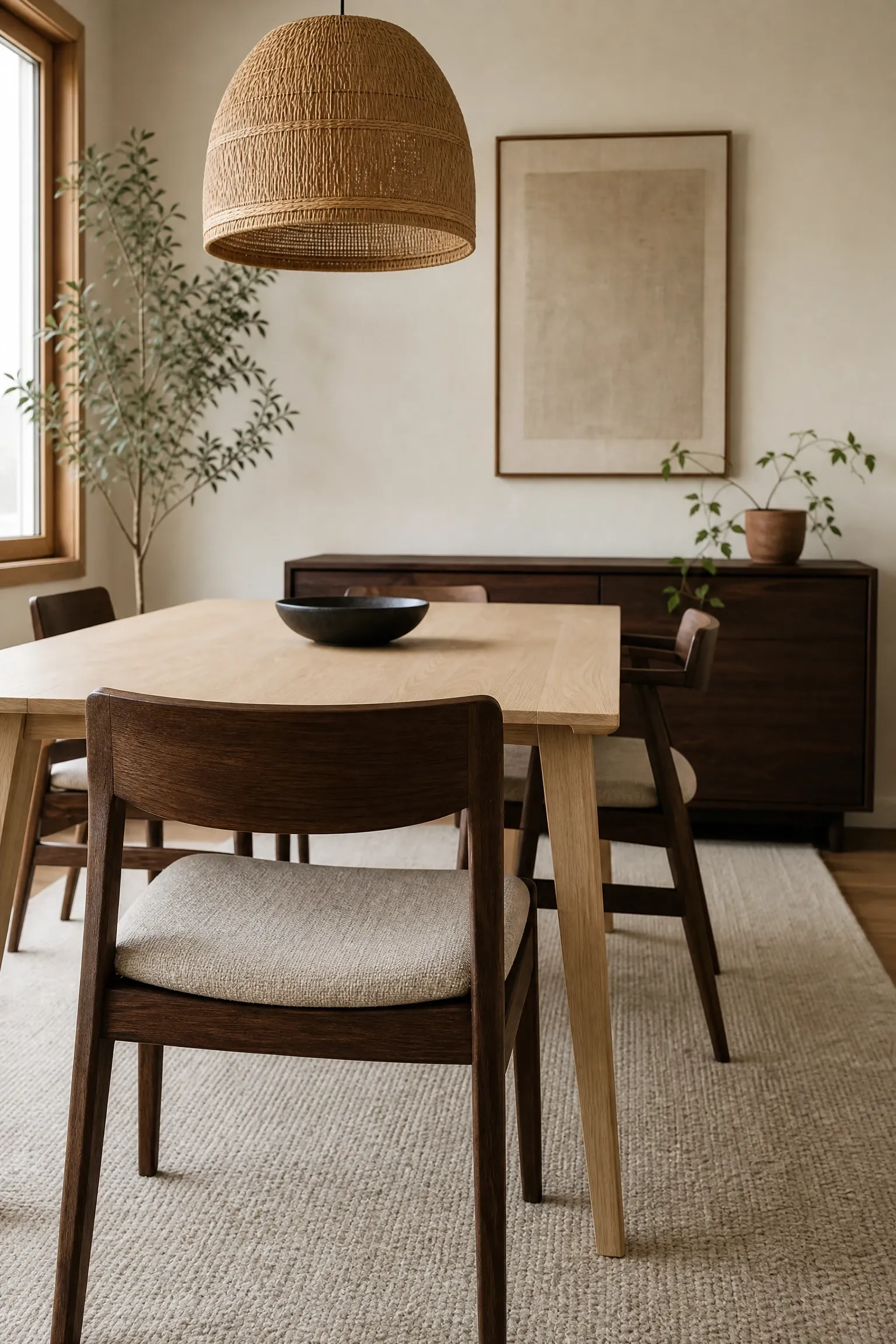
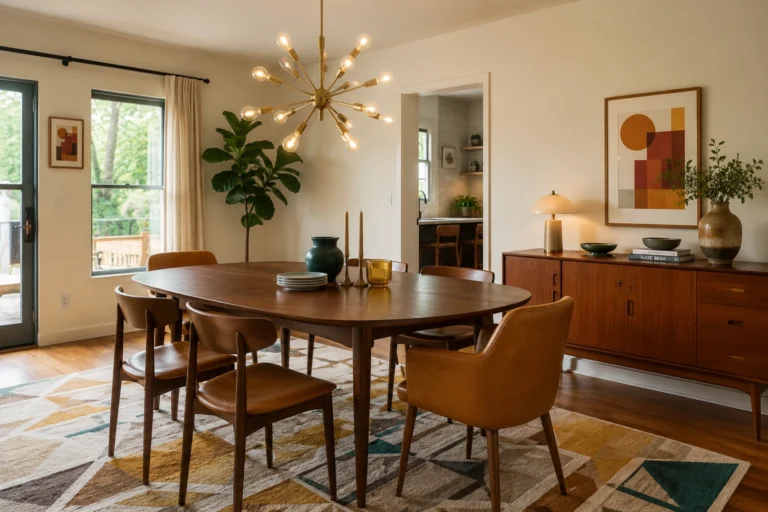
One of the most common questions people ask about Japandi interiors is whether you can mix light and dark wood in the same space. You absolutely can, and it often looks better than matching everything. The key is to give one tone the dominant role and let the other play a supporting part. A light ash table can sit alongside darker walnut chairs, or vice versa. The trick is to echo each tone at least once more in the room. If you have walnut chairs, add a walnut-toned credenza or a small dark wood accent shelf. If your table is pale, let the floor carry some warmth. Use a neutral palette on the walls, soft linen window panels, and simple ceramic accessories to tie the whole room together without fuss.
Designer Note: Stick to two wood tones maximum. Three or more starts to read as mismatched rather than intentional. Use texture, like a rattan pendant or a woven seat, to bridge the gap between tones visually.
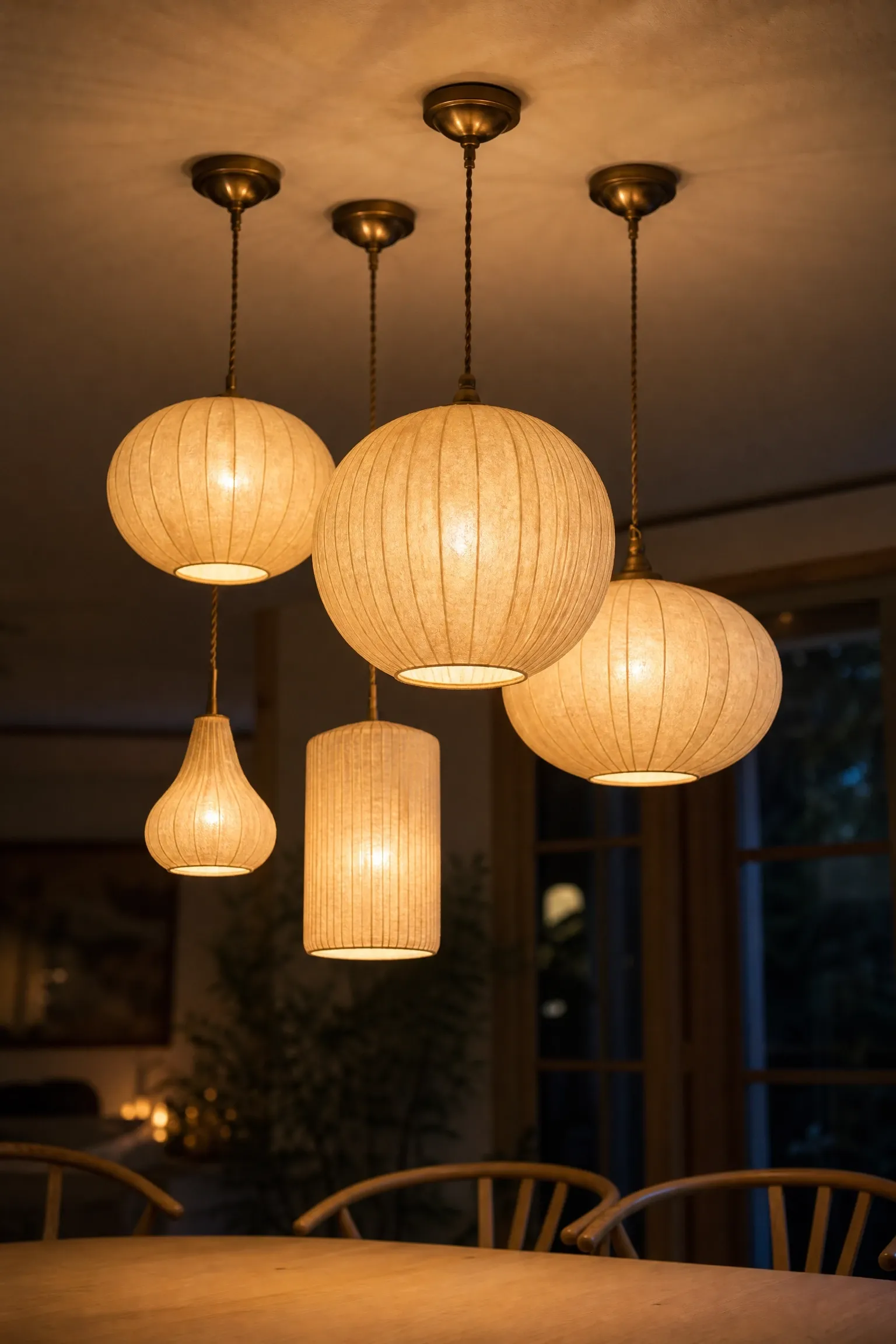
Lighting in a Japandi dining room is not just functional, it is part of the whole mood. Washi paper pendants are a genuine standout choice here because they produce the softest, most diffused glow of almost any pendant style. The light that comes through handmade washi paper has a warmth and slight irregularity that no glass or metal shade can replicate. Hang three or five at varying heights over a long table, using black or aged brass hardware for the fixtures. The asymmetry of different cord lengths adds visual interest without effort. Keep the rest of the room lighting minimal so the pendants do the heavy lifting at dinner time. A few candles on the table will layer beautifully with the warm overhead glow.
Designer Note: Group an odd number of pendants for a more organic, less corporate look. Three over a round table or five over a rectangular one feels especially right. Make sure they hang no lower than 30 inches above the tabletop.
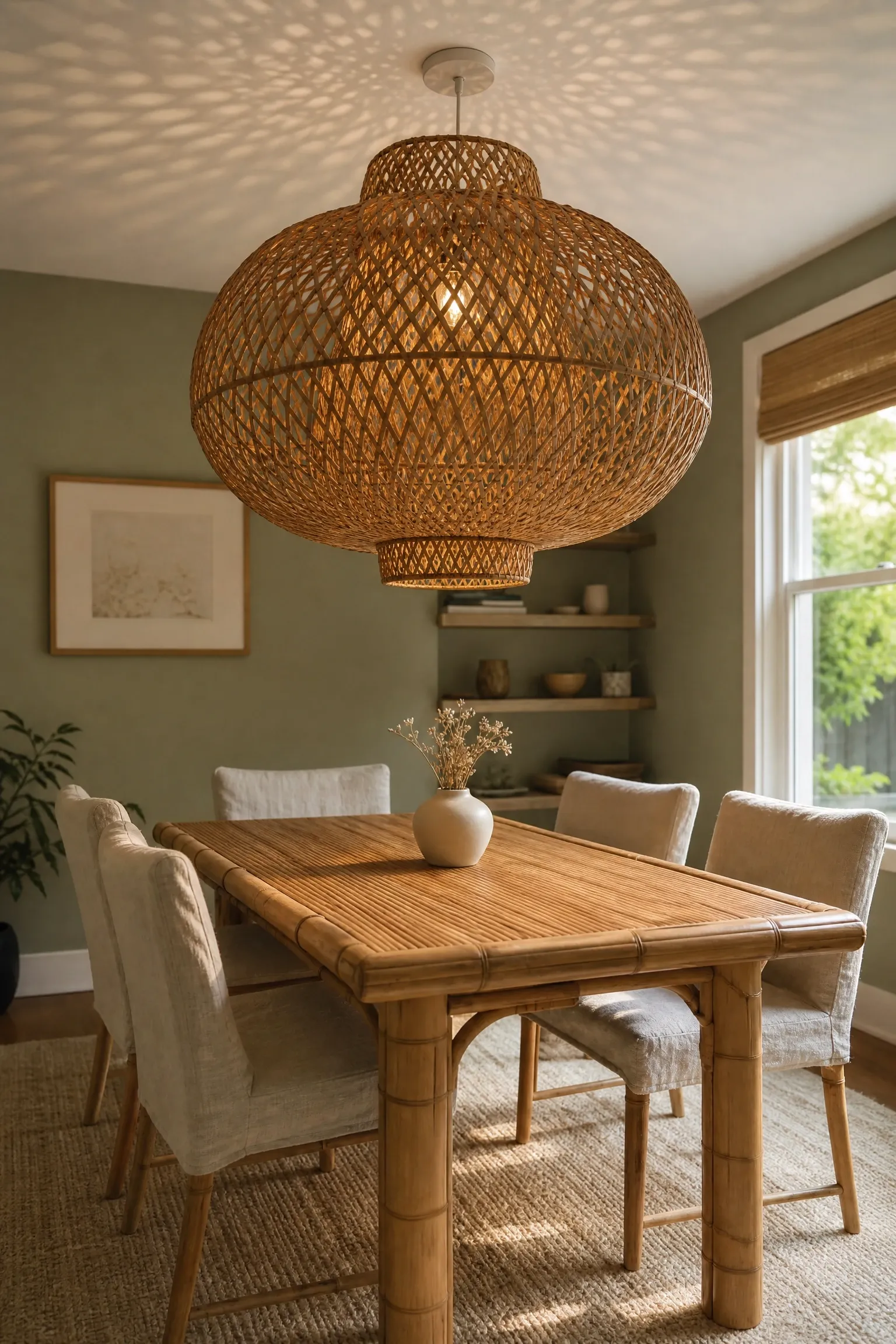
Sometimes one well-chosen light fixture does more for a dining room than any amount of furniture rearranging. A large woven rattan pendant, not the tight basket weave kind but the open, more sculptural style with visible gaps in the weave, casts beautiful dappled shadow patterns on the ceiling and walls when lit. This is especially effective in rooms with a lower ceiling, since the organic shape draws the eye up and adds height perception. Pair it with a simple timber table in warm oak or bamboo, natural linen dining chairs, and a cream-colored flat-weave rug. Wall color should stay very quiet, a warm white or soft sage, so the pendant can be the visual centerpiece. The light from inside the rattan shade should be a warm Edison-style bulb kept at around 2700K.
Designer Note: Size matters here. A rattan pendant that is too small over a large table looks timid. Go at least 24 inches in diameter for a standard 6-person table, or larger if you can find it.
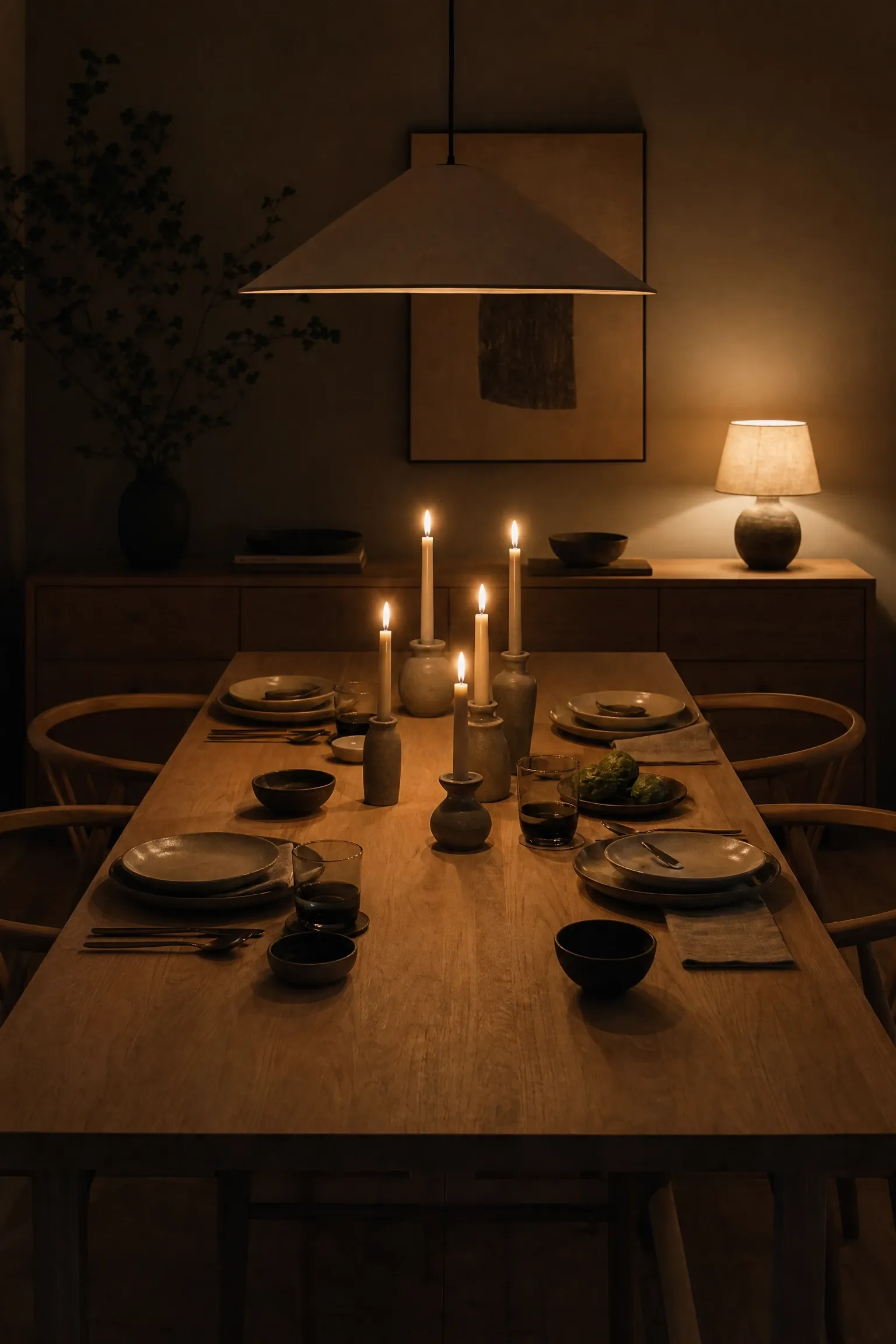
Japandi dining rooms work especially well with layered lighting rather than one overhead source. Consider adding a sideboard or credenza along one wall and placing one or two small table lamps on it with linen or paper shades. These create a second lighting layer that makes the room feel much warmer during evening meals. Pair this with an assortment of taper candles in matte ceramic holders arranged casually down the center of the table. The candles do not need to match in height or color, slightly different shades of cream, white, and warm grey look better together. A dimmer switch on your overhead pendant ties everything together, letting you control the whole mood with a single adjustment.
Designer Note: The Japanese concept of ma, or intentional empty space, applies to lighting too. Not every corner needs light. Let some areas of the room sit in gentle shadow to create atmosphere.
Hans Wegner’s CH24 Wishbone chair is probably the most recognized piece of Scandinavian furniture ever made, and it fits Japandi dining rooms so naturally it almost feels like it was designed for this exact aesthetic. The Y-shaped back, the solid wood frame, and the woven paper cord seat all come together in a design that is both visually light and genuinely comfortable for long dinners. In a Japandi dining room, a set of four or six Wishbone chairs in natural oak or smoked oak around a simple table creates a look that feels intentional without being precious. The paper cord seat can be kept as-is or replaced with natural rush for a slightly warmer, more artisan feel. These chairs age beautifully and only get better with use.
Designer Note: Original Wishbone chairs from Carl Hansen and Son are an investment, but several well-made alternatives exist at lower price points. Look for solid wood construction and hand-woven cord seats rather than pressed wood or plastic cord.
Adding a bench along one side of the dining table is a simple change that completely shifts how a dining room feels. Functionally, a bench seats more people in less space. Visually, it creates a long horizontal line that grounds the room and makes it feel more intentional and less furniture-showroom. In a Japandi dining room, a solid oak or bamboo bench with clean straight legs and no upholstery works best, keeping the look honest and natural. You can add a simple linen cushion for comfort if you want softness, in off-white, warm grey, or sage. Pair the bench with individual chairs on the opposite side for visual variety. A bench also invites a more communal, relaxed way of dining, which is very much in the spirit of both Japanese and Scandinavian table culture.
Designer Note: Keep the bench legs the same finish as your table legs for a cohesive, purposeful look. If you add a cushion, choose a removable cover in a washable fabric since dining room cushions take a beating.
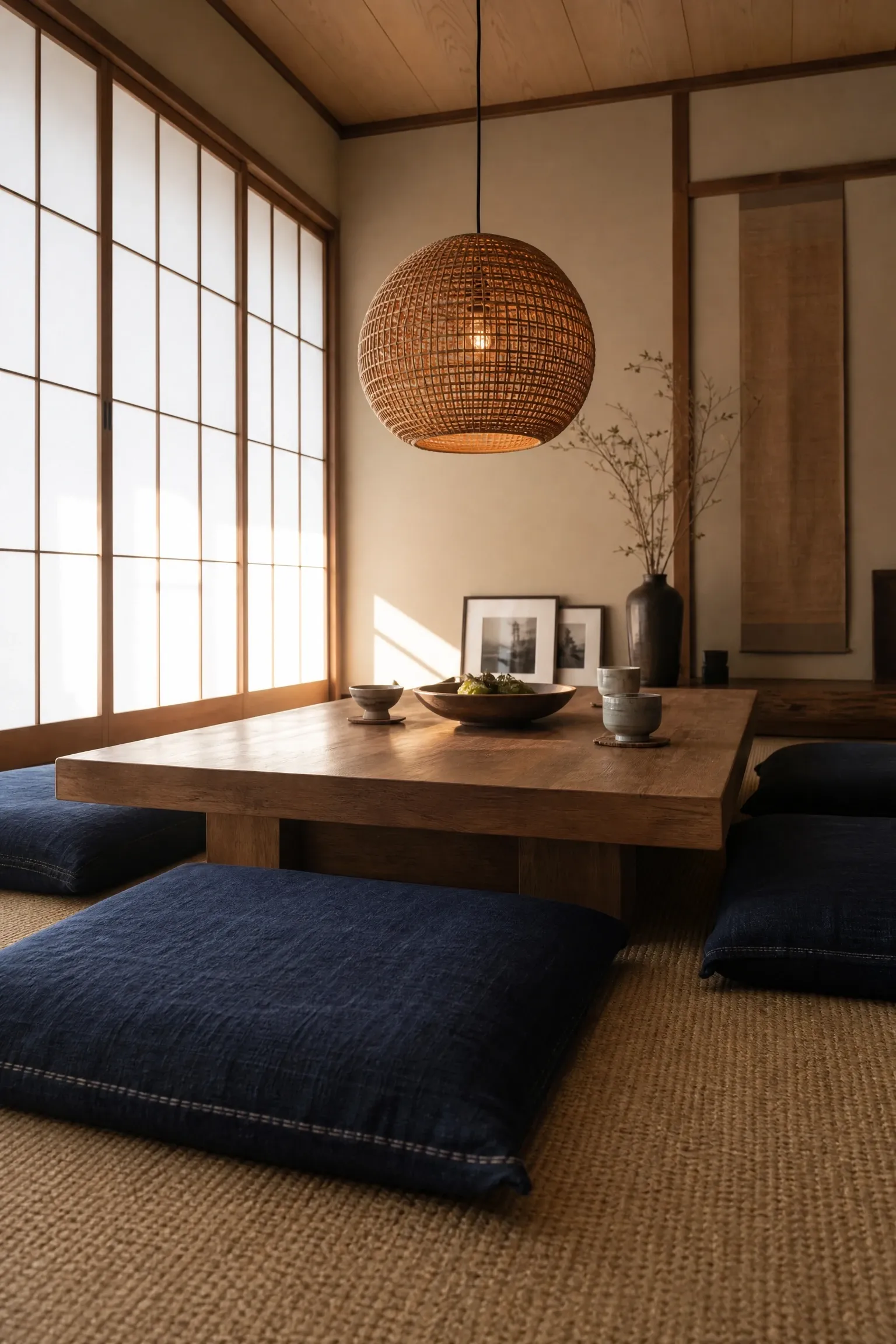
For a dining space that leans more strongly into the Japanese side of Japandi, consider a low dining setup with a platform table and floor cushions instead of chairs. This works best in a dedicated dining room rather than an open-plan space, since the low height creates its own visual world that needs a bit of room to feel intentional rather than improvised. Use a solid wood low table in dark walnut or natural teak with legs no more than twelve inches high. Floor cushions in dark indigo linen, charcoal, or deep moss green add color without disrupting the calm. A tatami-style rug underneath ties the whole arrangement together. This setup is genuinely beautiful for intimate dinner parties and removes the visual bulk of tall chairs and table legs from the room entirely.
Designer Note: If you go this route, make sure your flooring can handle the low vantage point. Tatami mats, natural fiber rugs in flat weaves, or wide-plank hardwood all look especially good from this eye level.
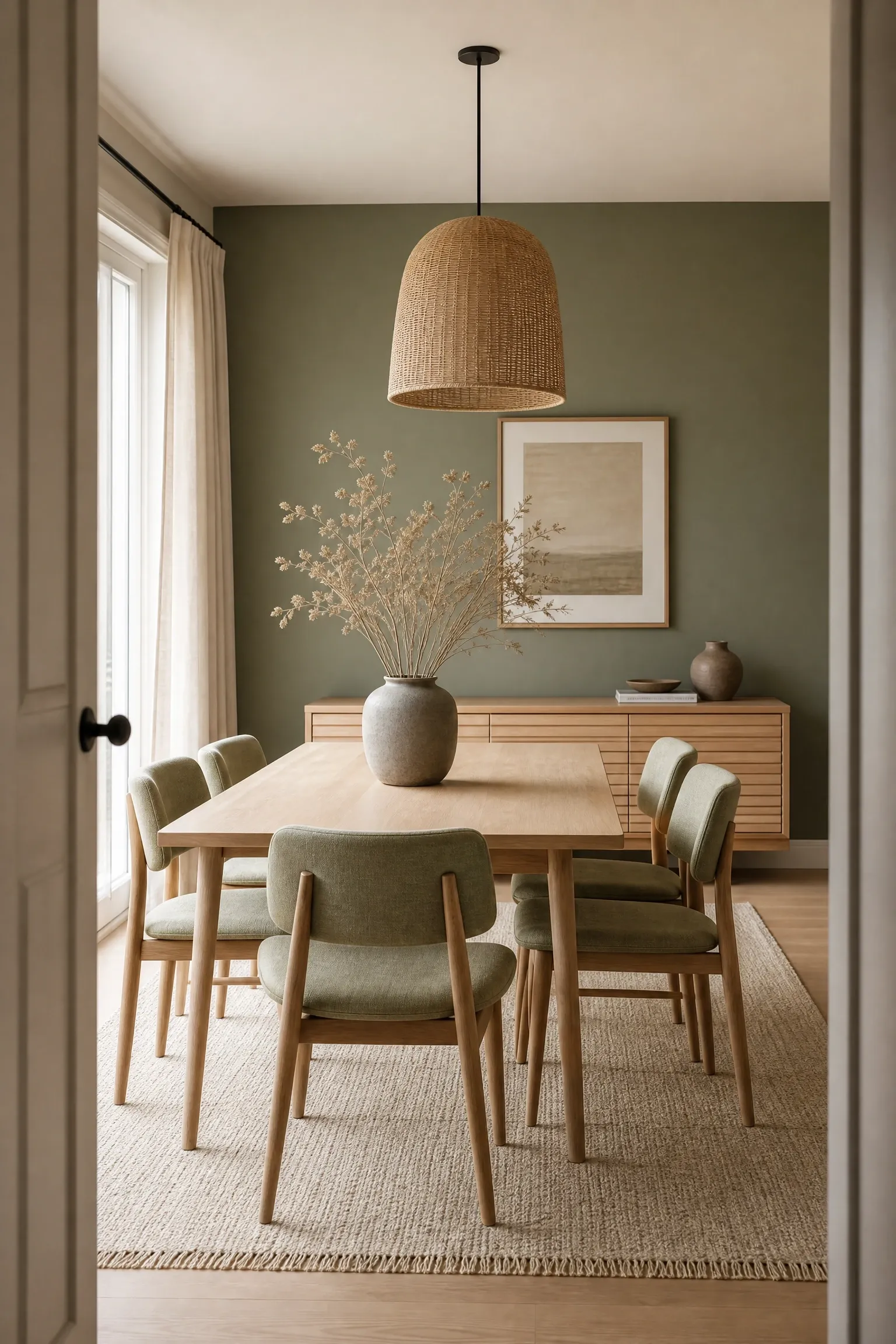
The Japandi color palette is built on warmth and quiet, never on stark white or popular right now bold colors. A warm greige on the walls, something like Farrow and Ball Elephant’s Breath or Dulux Pebble Shore, paired with pale sage accents is one of the most livable combinations you can choose for a dining room. Sage works beautifully as a chair cushion color, a textile choice, or even as a paint accent on a single wall behind a sideboard. Keep your furniture in light oak or natural timber, your textiles in cream and warm off-white, and let the sage be the one note of color in an otherwise restrained room. A few dried botanicals in a matte grey ceramic vase complete the look without adding any visual clutter.
Designer Note: Sage green shifts dramatically under different lighting. Test your paint swatch at night under your dining room pendants as well as during the day. Some sage tones read almost grey in warm artificial light, which can be beautiful.
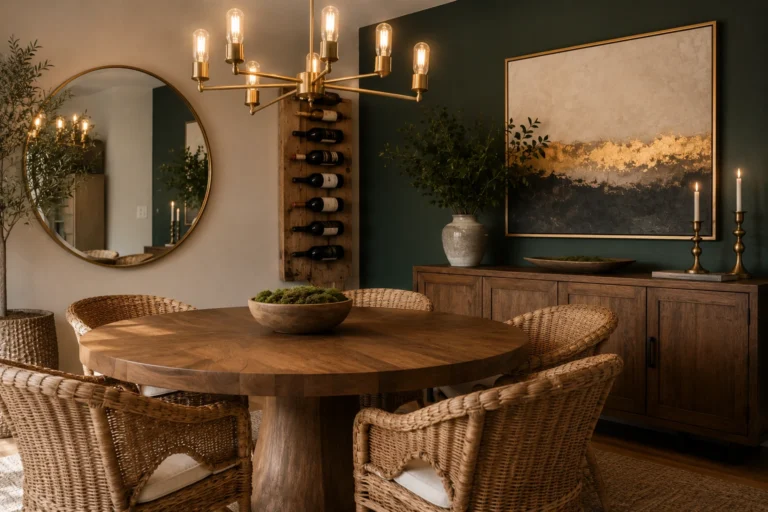
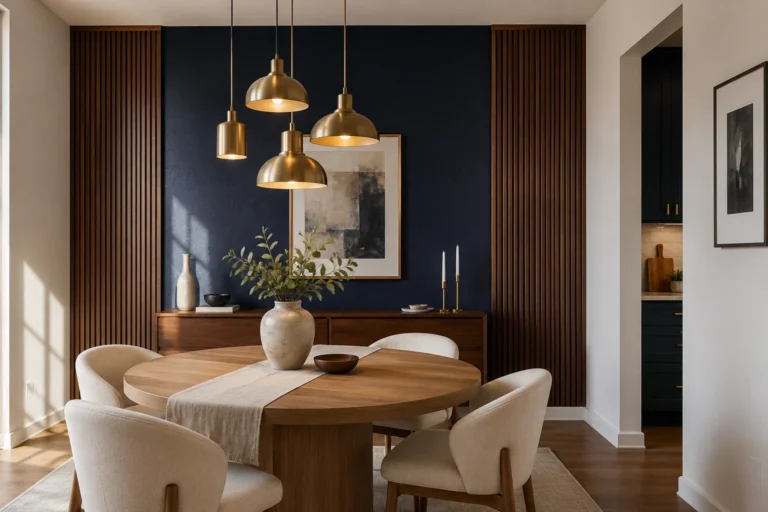
A dark accent wall behind a sideboard or buffet is one of the most impactful changes you can make in a Japandi dining room, especially if the rest of the space is kept very light. Choose a deep charcoal, soft black, or very dark indigo rather than a pure jet black, which can read harsh. Farrow and Ball Railings or Studio Green both work well here. The dark wall makes light-toned wood furniture pop and gives the room an unexpected sense of depth. Float a few simple ceramic pieces or a single piece of abstract line art in dark frames against this wall. Keep the remaining walls in a warm off-white so the accent reads as intentional rather than overwhelming. This setup photographs beautifully and creates a much more defined, dramatic dining experience.
Designer Note: If a full accent wall feels too bold, try painting just the wall behind a built-in sideboard or a floating shelf. Even a two-foot-wide painted panel behind a narrow console creates this anchoring effect.
There is a version of Japandi dining room design that uses almost no contrast at all, building instead on layers of the same warm sand and clay tones throughout the whole space. Walls in warm linen white, a table in light ash, chairs in unbleached fabric, a rug in natural undyed jute, and accessories in matte cream or pale terracotta. The result is a room that feels extraordinarily calm, almost meditative, where your eye has nowhere to snag and nothing to process except the warmth of the materials themselves. This works best when you have genuine natural light coming into the space, since the whole palette depends on sunlight to bring out its warmth. Add depth through texture only, rough linen vs smooth wood, woven rattan vs matte ceramic, raw cotton vs polished timber.
Designer Note: When working in a monochrome palette, texture becomes your main design tool. Aim for at least four different material textures in the room so it reads as layered rather than flat.
Storage, Styling, and the Details That Make It Real
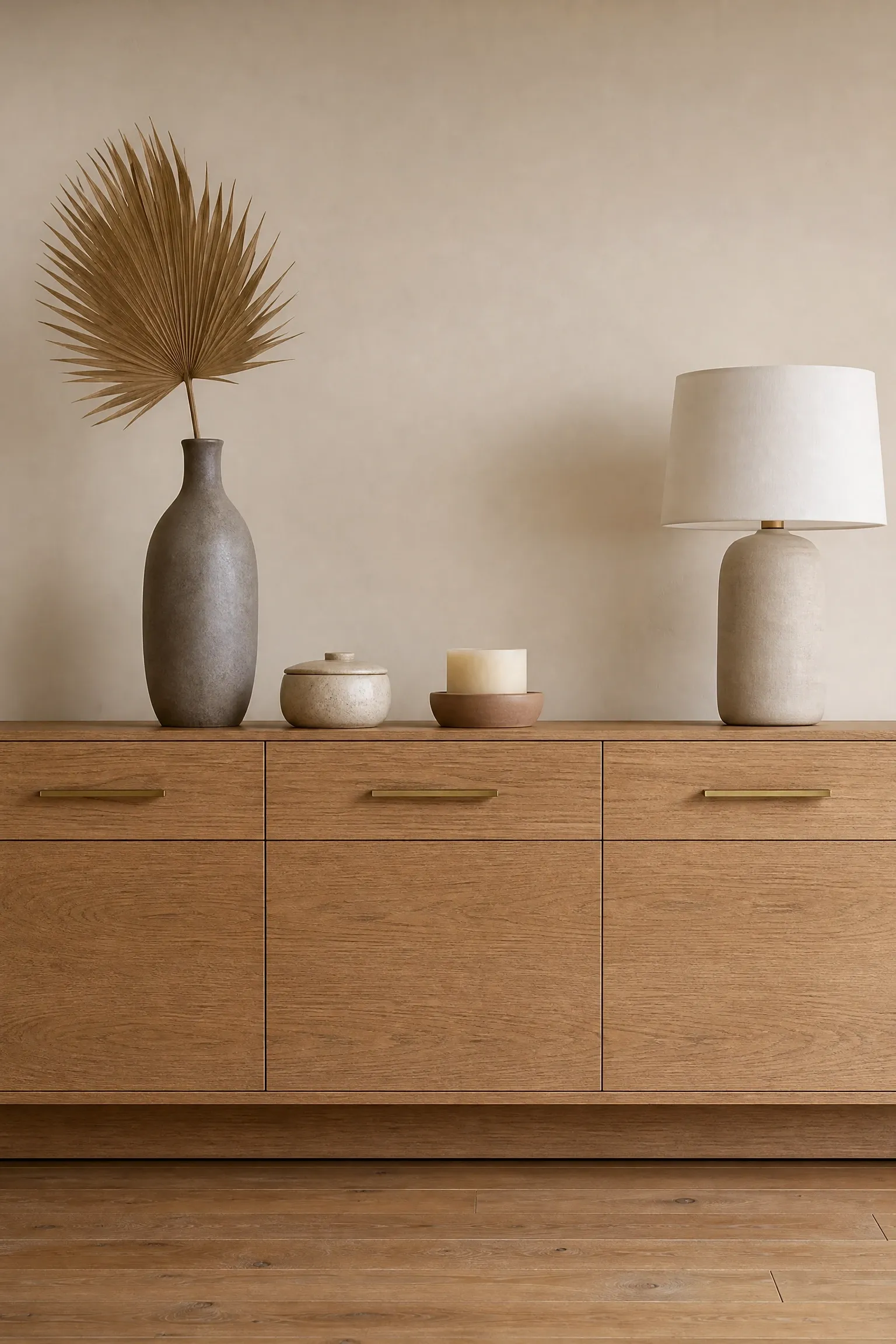
A low sideboard, sometimes called a credenza, is one of the most useful pieces of furniture you can add to a Japandi dining room. It stores serving dishes, extra linens, and anything else you need nearby during meals, while also giving you a surface to style. In a Japandi room, the top of the sideboard should be treated with restraint. One or two ceramic pieces, a single vase with a dried branch or simple botanical stem, and maybe a small lamp or candle. The furniture itself should be in solid wood, either light oak with clean lines or dark walnut with simple brass hardware. Avoid pieces with decorative carvings or ornate legs. The simpler the silhouette, the more it contributes to the overall calm of the room.
Designer Note: The rule of three applies on a sideboard surface. Group items in odd numbers, vary the heights between pieces, and leave plenty of negative space around each object so nothing feels crowded.
14. Open Floating Shelves with intentional Display
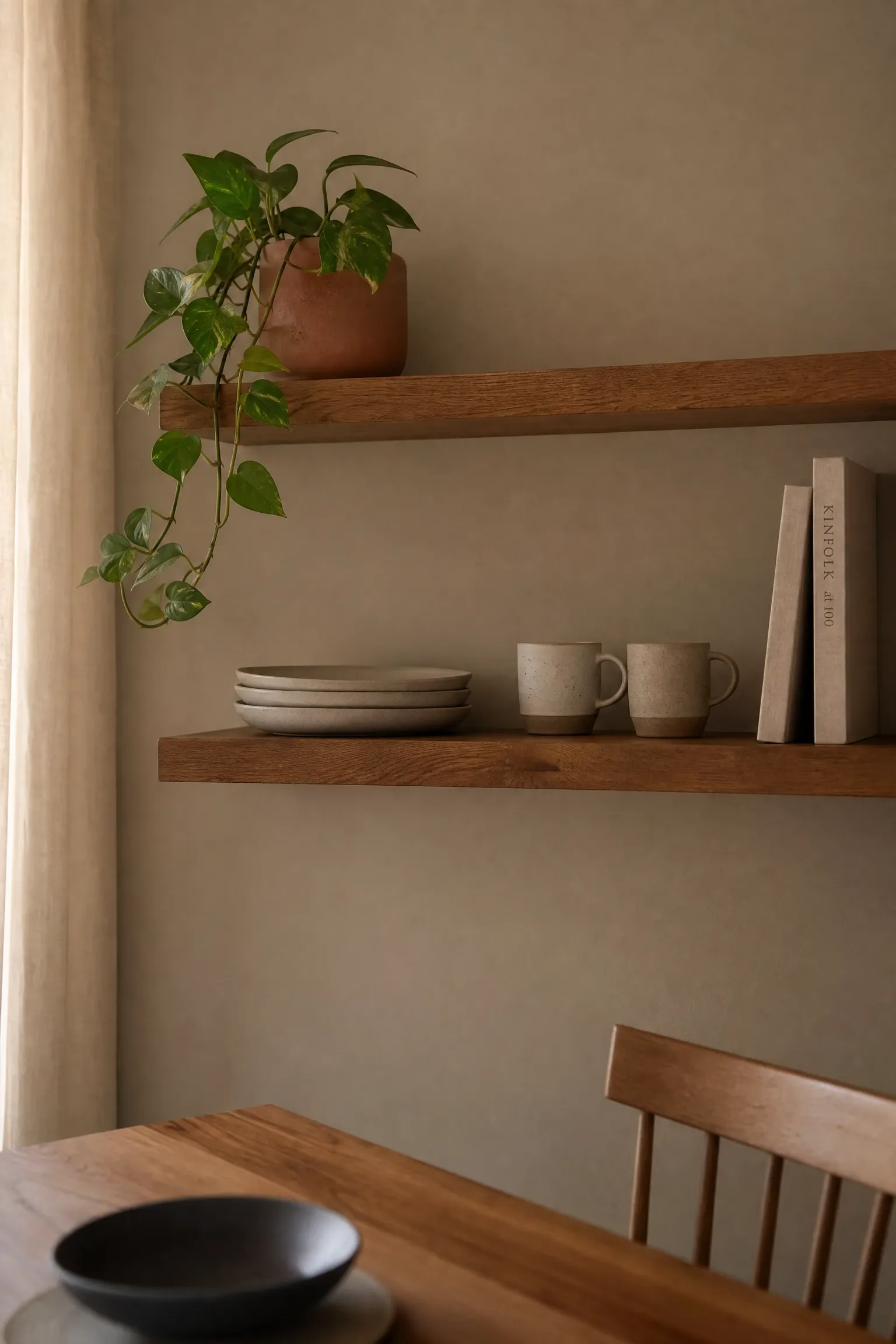
Rather than upper cabinets or a large hutch, open floating shelves in a Japandi dining room give you a place to display ceramics, serve ware, and a small plant or two without adding visual weight to the walls. The shelves themselves should be solid timber in the same wood tone as your table, mounted with minimal visible hardware. Style them simply, a stack of matte stoneware bowls, a few handmade cups, a small trailing plant in a simple pot, and one or two books with plain spines. The display should look like someone actually uses these things rather than a perfectly staged showroom. Resist the urge to fill every inch of shelf space. Half empty is often exactly right in a Japandi room.
Designer Note: Floating shelves in a dining room look best at approximately chest height, starting around 60 inches from the floor. Lower than that and they read as a ledge; higher and they lose connection to the rest of the room.
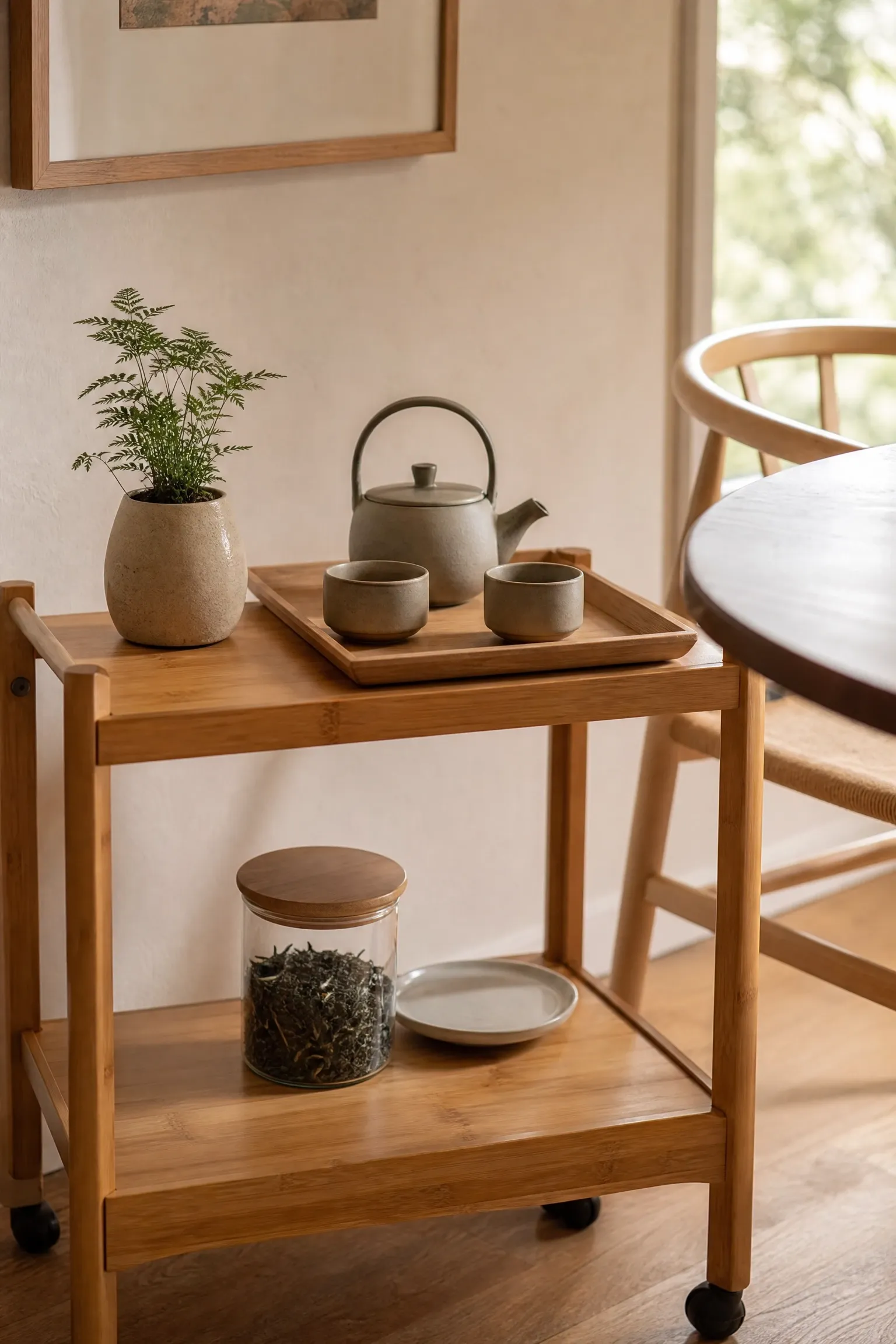
A small wooden bar cart or a dedicated tea station tucked into one corner of the dining room adds both function and personality without requiring any wall space. In a Japandi dining room, a simple two-tier cart in light oak or bamboo works beautifully. Style the top tier with a ceramic tea set or a small collection of matte glassware, and the lower tier with a small tray holding a kettle, a canister of loose leaf tea, or a simple pour-over coffee setup. The whole arrangement should feel deliberate and slightly ritualistic, which is very much in the spirit of Japanese tea culture. Keep the colors muted, no branded packaging visible, and opt for ceramic or glass containers over anything plastic or commercial-looking.
Designer Note: A tea or coffee station in the dining room actually changes how you use the space. People tend to linger longer when the means to make another cup is right there. That lingering is exactly the spirit of Japandi living.
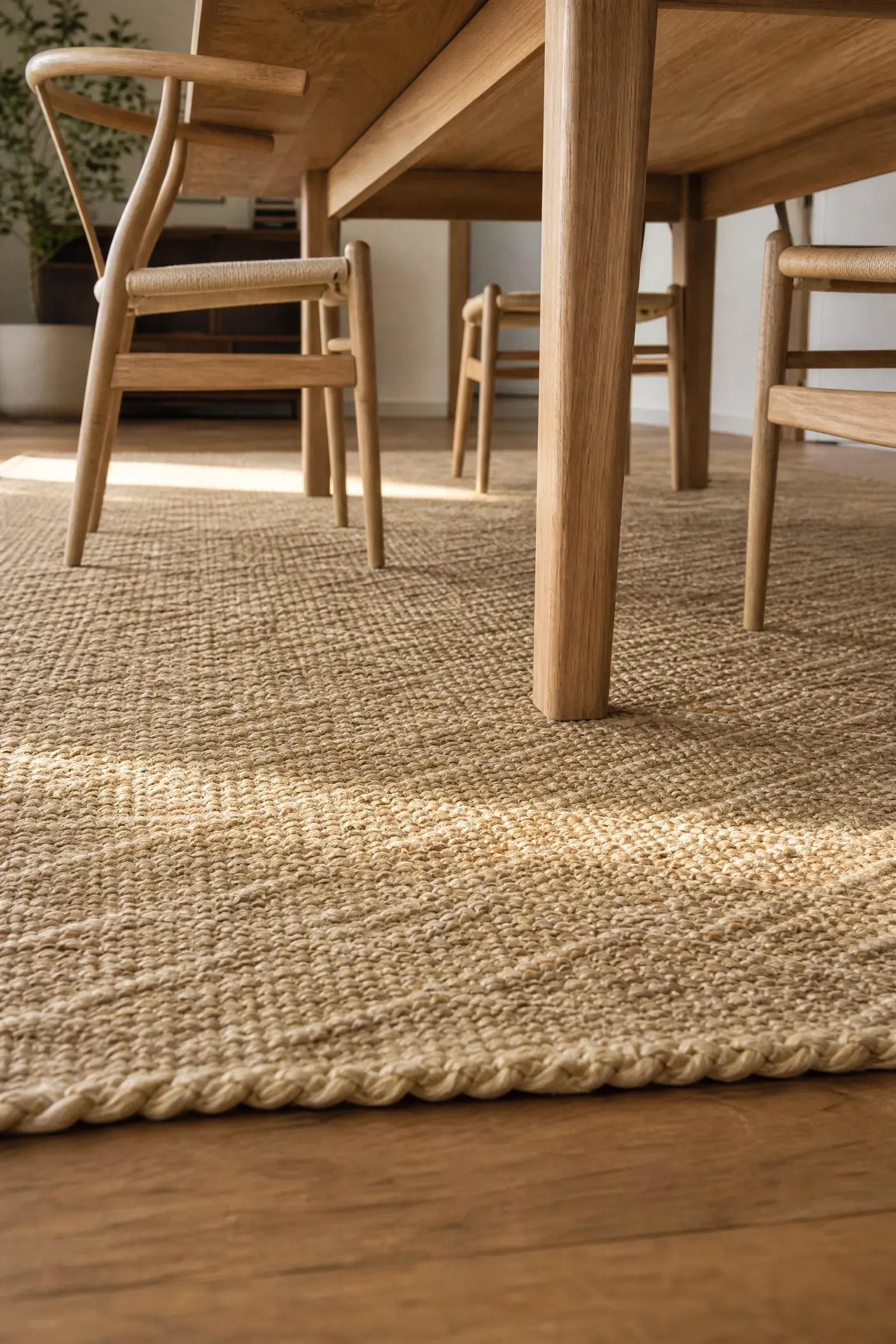
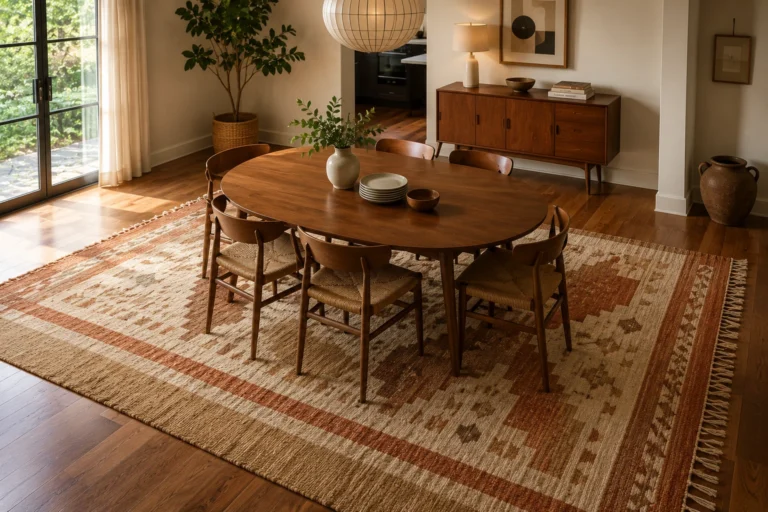
A rug under a dining table does three things at once: it defines the dining zone, adds warmth and sound absorption, and introduces a natural texture that makes the whole room feel more grounded. In a Japandi dining room, the best rug choices are flat-weave natural fibers, jute, sisal, seagrass, or a hand-woven wool in undyed or very muted tones. Avoid thick pile rugs under dining tables since they make chairs difficult to pull in and out. A simple geometric pattern in neutral tones, or no pattern at all, suits the Japandi aesthetic best. Make sure the rug is large enough that all four chair legs sit on it fully when pulled out from the table. A rug that is too small makes the furniture look like it is floating rather than grounded.
Designer Note: The minimum rug size for a dining table is determined by adding 24 inches on each side of the table dimensions. For a 36 x 72 inch table, your rug should be at least 84 x 120 inches.
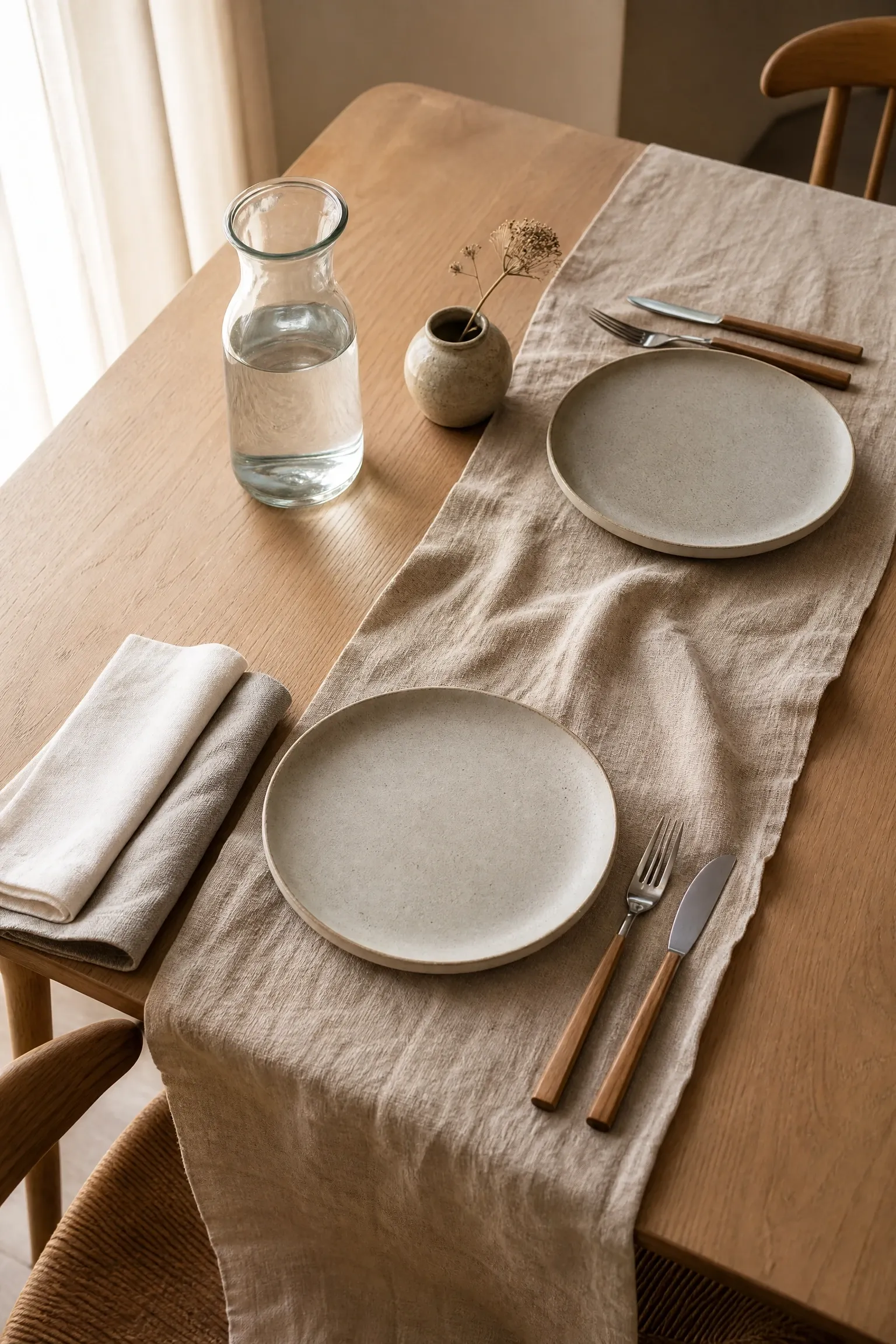
Swapping out paper napkins for cloth linen ones is such a small change, but it is the kind of detail that shifts the feel of a meal almost immediately. In a Japandi dining room, simple stonewashed linen napkins in off-white, pale grey, or warm oat add texture to the table without any effort. Fold them loosely and place them under the fork rather than in elaborate origami folds, which would be completely out of character for this style. A linen table runner down the center of the table in the same tone family adds another layer of warmth. Avoid matching sets in perfect matching tones since slight variations between pieces look more natural and collected over time. The whole table should feel lived-in, not magazine-ready.
Designer Note: Stonewashed or pre-washed linen has a relaxed, already-loved texture that works much better in a Japandi dining room than crisp pressed linen, which reads too formal.
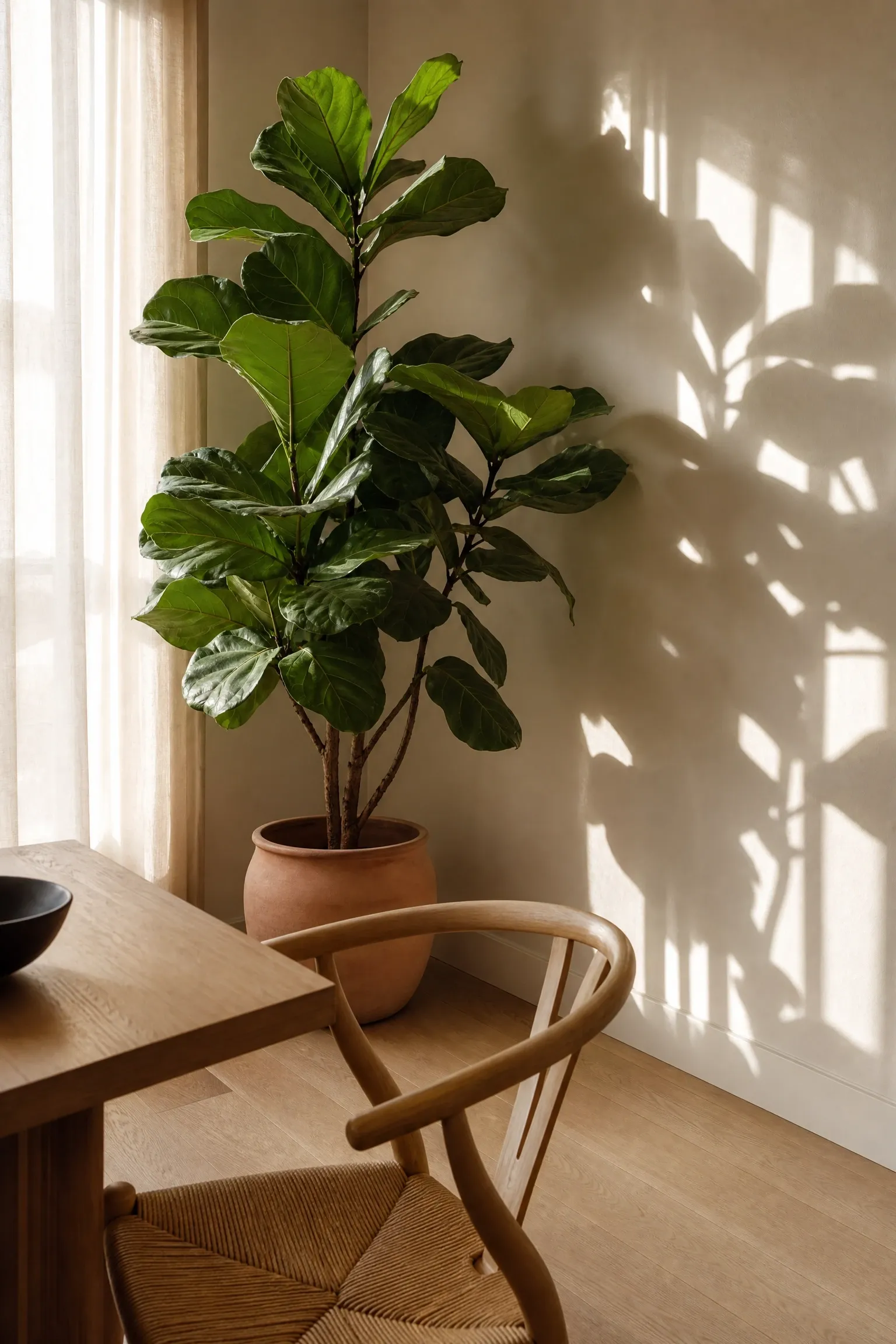
Plants in a Japandi dining room should feel like they grew there, not like they were placed there for a photo. The best choices for a dining space are plants that tolerate lower light and do not drop leaves constantly, since you will be eating nearby. A fiddle leaf fig in a simple terracotta pot, a collection of small bonsai on a windowsill, or a trailing pothos in a hanging planter near the window all work well. The pots should be matte ceramic, unglazed terracotta, or simple wood-framed planters, nothing plastic or shiny. Avoid plants with very large glossy leaves if your overall palette is muted and light, since they can read as intrusive rather than complementary. A single branch of dried eucalyptus in a tall ceramic vase requires zero maintenance and adds organic warmth for months.
Designer Note: In Japanese design, negative space around a plant is as important as the plant itself. Do not cluster too many plants together. One or two placed deliberately will always read better than a crowded arrangement.
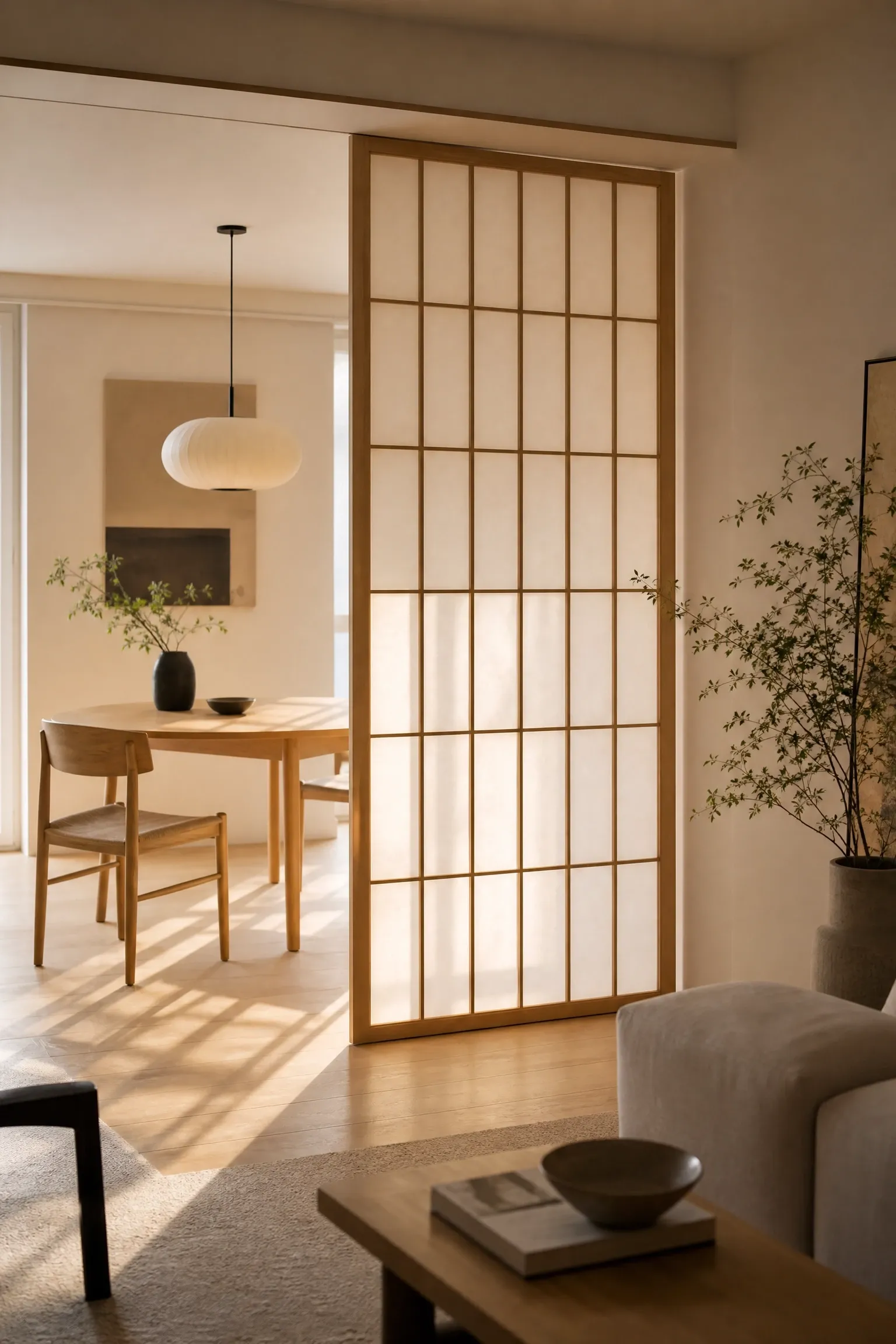
If your dining room is part of a larger open-plan space, a shoji-inspired screen can define the dining zone beautifully without requiring any construction. Traditional shoji screens use thin wood lattice with translucent washi paper panels that let light pass through while creating a visual boundary. Modern versions in natural wood with frosted glass or paper inserts work equally well. Place the screen along one side of the dining area, angled slightly to create a sense of enclosure without fully closing off the space. The screen itself becomes a design element, casting beautiful filtered light shadows when backlit, and adding a genuine Japanese reference point to an otherwise Scandinavian-leaning room.
Designer Note: A shoji screen does not need to be a full-height room divider to be effective. A screen that reaches to about six feet creates the sense of enclosure without making the dining area feel boxed in.
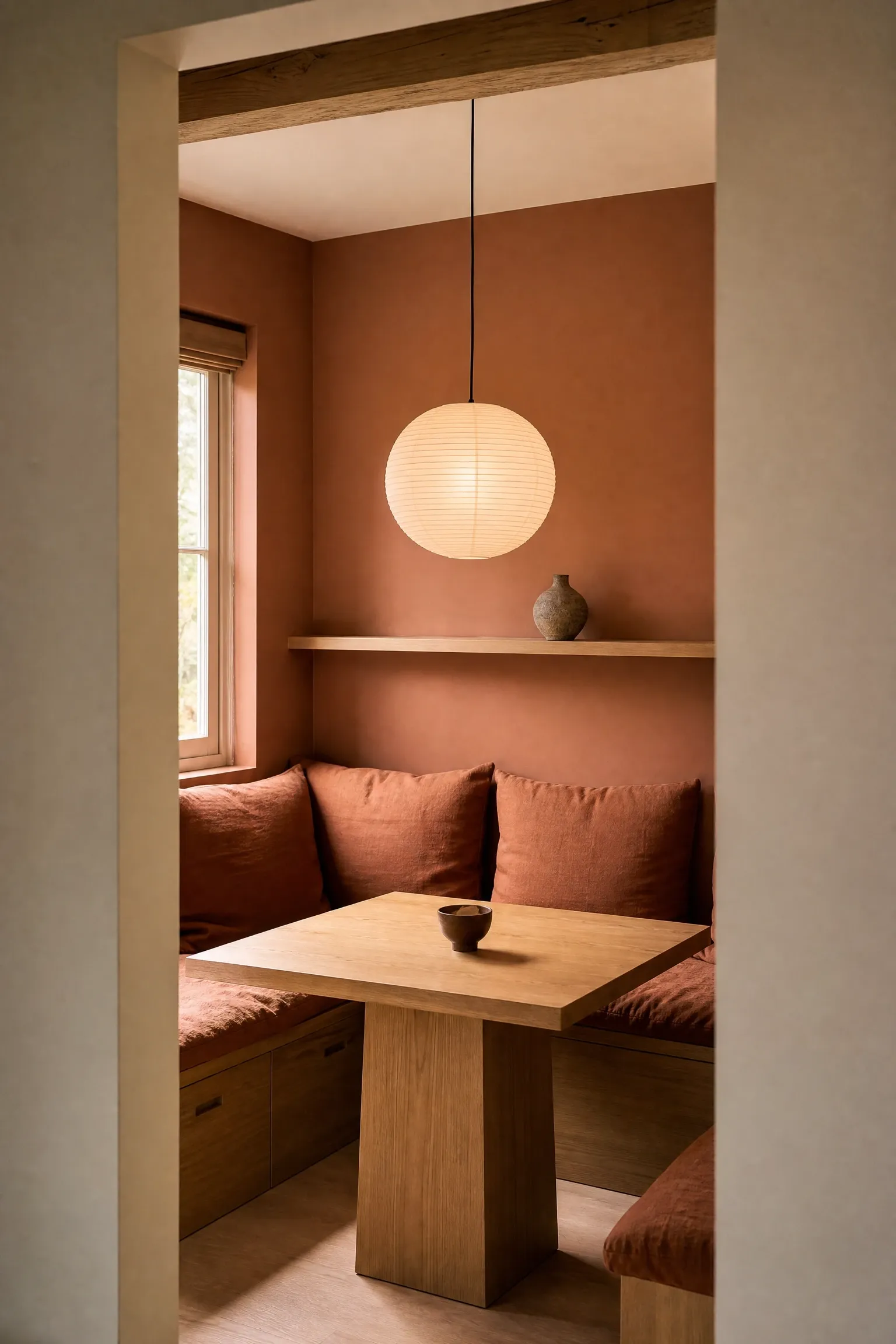
A small dining nook is actually a natural fit for Japandi design, since the philosophy already leans toward intimate, purposeful spaces over grand formal rooms. In a compact nook, built-in bench seating along two walls with a small square table makes the most of the space and looks completely intentional rather than cramped. Paint the nook in a warm deep tone, something like soft clay or a very muted dusty green, to differentiate it from the rest of the open plan area and give it its own personality. Add a single pendant directly overhead in washi paper or rattan, use cushions in natural linen on the bench seats, and keep the table surface clear except for one small plant or a ceramic candle holder. A built-in shelf or two above the bench can hold ceramics or books, making the nook feel like a fully thought-through space.
Designer Note: In a built-in nook, the cushion fabric is one of the most visible elements in the whole space. Invest in quality linen or cotton canvas in a color you genuinely love, since you will see it every day.
21. Open Plan Japandi Dining in a Combined Kitchen-Dining Space
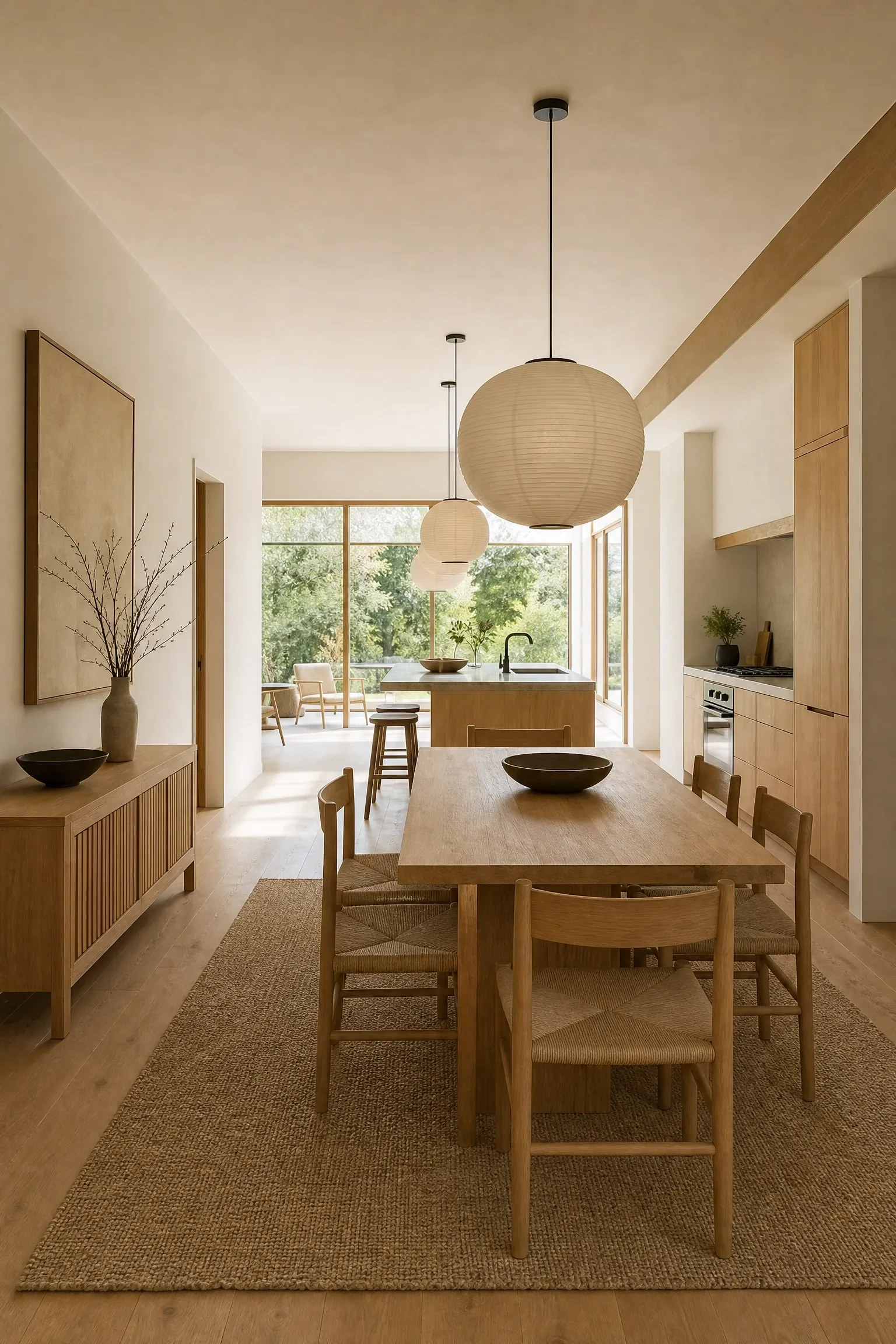
When your dining area shares a room with your kitchen, continuity between the two spaces matters a lot. In a Japandi open-plan kitchen and dining room, the key is to use the same wood tone across both spaces, matching or closely echoing the cabinet fronts in the table and seating. Keep your countertops in natural stone or matte concrete rather than anything shiny or highly veined, which can feel at odds with Japandi restraint. Pendant lights above both the kitchen island and the dining table should be in the same family, whether that is washi paper, rattan, or simple matte metal. A large flat-weave rug under the dining table creates a visual separation between the two zones without any wall or barrier.
Designer Note: In open-plan Japandi spaces, resist the urge to mix too many design styles across zones. Keep a single wood tone, a single lighting language, and a consistent palette running through both the kitchen and dining area.
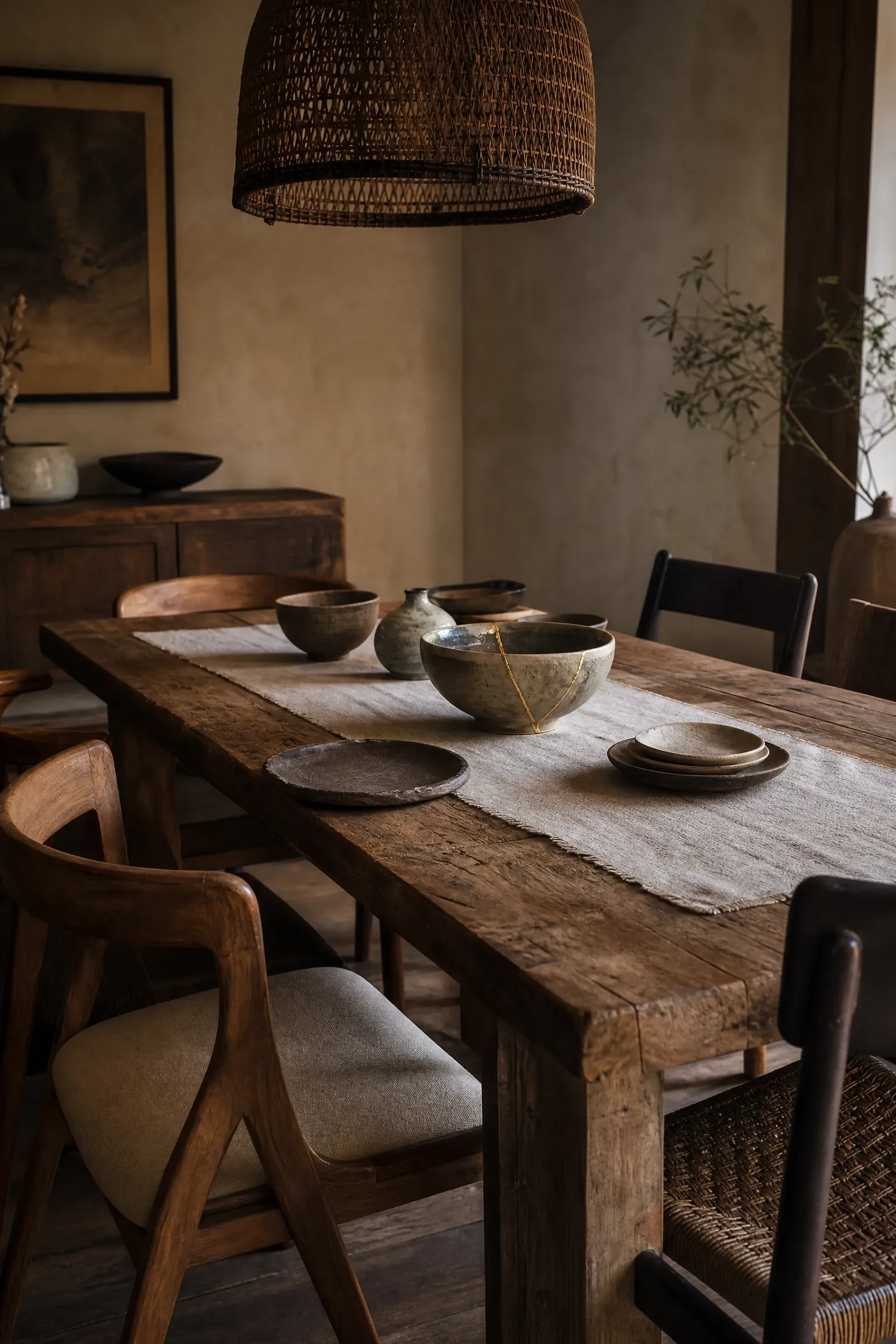
Wabi-sabi is the Japanese philosophy of finding beauty in imperfection and impermanence, and it is one of the most important foundations of Japandi design. A wabi-sabi dining room takes the pressure off perfection entirely. The table might have a small crack that has been repaired with gold lacquer in the kintsugi tradition. The ceramics will be hand-thrown and slightly uneven. The linen napkins will have a wrinkle or two. The wood will show its grain and character rather than being sanded to perfect smoothness. In this style, aged teak, reclaimed wood furniture, and vintage ceramic pieces from local markets are not compromises but genuine assets. The room should look like it was assembled with care over time, not purchased all at once from a single furniture retailer.
Designer Note: Kintsugi-inspired pieces, ceramics with intentional gold crack repairs, are widely available now and make genuinely beautiful accessories in a wabi-sabi Japandi dining room. A single kintsugi bowl on the table is a perfect conversation starter.
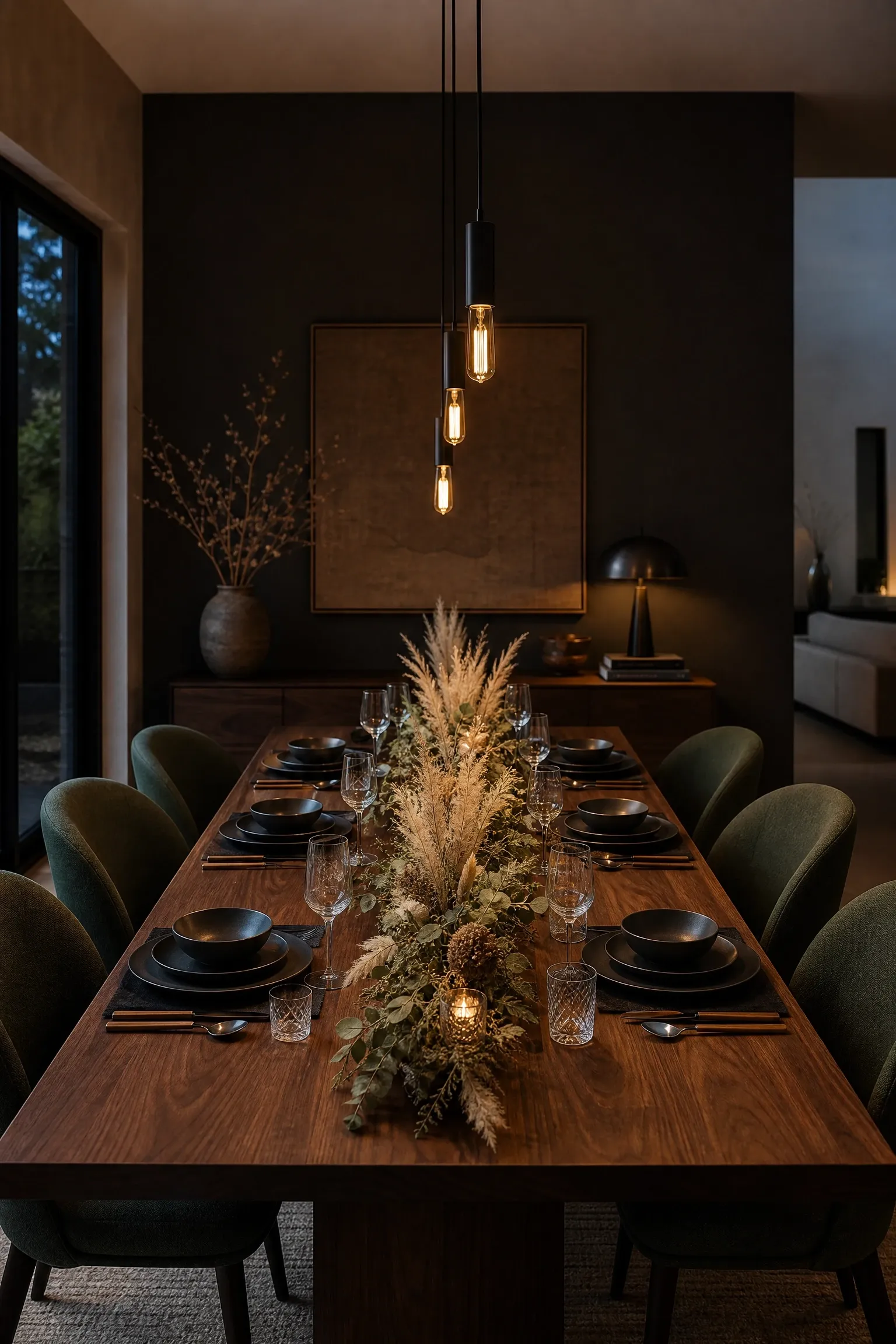
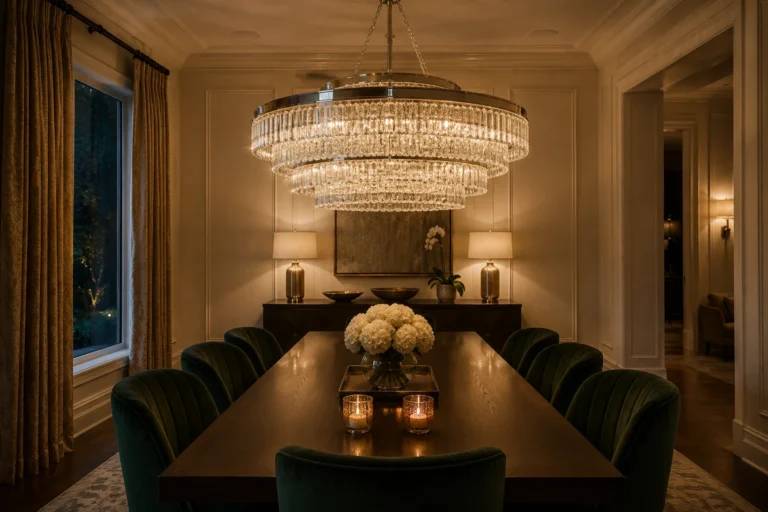
Japandi does not have to mean casual. A more formal version of this aesthetic uses the same core principles, natural materials, clean lines, warm neutral palette, but lifts the details significantly. A long solid walnut table with matching upholstered dining chairs in dark charcoal or deep forest green linen immediately reads as grown-up and considered. Overhead, a series of slim black pendant lights with Edison bulbs at staggered heights create drama without loudness. The table is set with matte black or dark stoneware plates, wooden-handled cutlery, and simple crystal glassware. A single long, low floral arrangement in muted dried botanicals or seasonal greenery runs down the center. The result is a dining room that feels special every single night, not just when guests arrive.
Designer Note: Dark upholstered dining chairs are harder to keep clean than their natural wood counterparts. Choose a tight-weave fabric with some synthetic content for durability, or consider slipcovers in linen that can be removed and washed.
Bringing It All Together
What makes a Japandi dining room genuinely work is not any single element. It is the combination of restraint and warmth, of materials chosen for how they feel as much as how they look, and of empty space treated as a design choice rather than a failure to fill something in. You do not need to do all 23 of these ideas at once. In fact, doing too much at once is probably the thing most at odds with what Japandi actually stands for.
Start with your table, since it is the anchor of everything else. Choose your wood tone with care, and build outward from there with your lighting, seating, and textiles. Give each addition time to settle before you add the next thing. A Japandi dining room is not a room you finish in a weekend; it is a room you edit slowly until it feels exactly right. And when it does, you will know, because walking into it will feel like putting your shoulders down after a long day. That is the whole idea. That is what all of this is for.
Frequently Asked Questions
What are the key elements of a Japandi dining room?
A Japandi dining room is built on natural materials, particularly wood, linen, ceramic, and rattan. The color palette stays warm and neutral, ranging from off-white and warm greige to muted sage, charcoal, and soft clay. Lighting should be warm and layered, furniture should have clean lines without decorative detail, and the overall space should feel uncluttered. Every item in the room should have a reason to be there, either functional or genuinely beautiful.
What wood tones work best in a Japandi dining room?
Light woods like white oak, ash, and bamboo are the most common choices, as they reflect natural light and keep the space feeling open. Darker tones like walnut and teak also work beautifully and bring more weight and drama to the room. Mixing two tones is acceptable and often looks more interesting than matching everything, but stick to a maximum of two wood tones and make sure each one appears at least twice in the space for cohesion.
Can a Japandi dining room work in a small space?
Yes, and arguably it works even better in a small space. Japandi design naturally embraces compact, purposeful rooms. In a small dining area, opt for a round table rather than rectangular to improve traffic flow, use a bench along one wall instead of chairs on all sides, keep the walls light, and choose a single well-scaled pendant rather than a cluster. The restraint built into Japandi design means small spaces rarely feel overcrowded when the principles are applied properly.
How do I add warmth to a Japandi dining room without making it feel cluttered?
Warmth in a Japandi room comes primarily from materials and lighting rather than from added accessories. A warm-toned wood table, linen napkins, a natural fiber rug, and warm-temperature pendant bulbs all add significant warmth without any visual clutter. Candles on the table during evening meals are one of the easiest warmth-adders available. If you want to add decor accessories, keep them to groups of one to three pieces, vary their heights, and leave generous space around each item.
What lighting should I use in a Japandi dining room?
Pendant lighting centered over the dining table is the most important light source in the room. Choose pendants in washi paper, rattan, or simple matte metal in warm tones. Bulb temperature should be between 2700K and 3000K for a warm, welcoming glow. Layer the lighting with candles on the table and a small lamp or two on a sideboard if you have one. Install a dimmer on your main pendant so you can shift the mood from bright and practical for everyday meals to softer and more intimate for dinner parties.
Is Japandi dining room design expensive to achieve?
Japandi does not have to be expensive, though it can be if you invest in high-quality solid wood furniture and original designer pieces. The principles of the style work just as well with thoughtfully chosen budget pieces. The most important investment is in your main dining table, which should be solid wood rather than veneer if at all possible. Chairs can be found second hand and given new cushion covers in linen fabric. Ceramics from local potters or thrift stores often fit the aesthetic better than new mass-market pieces. Lighting can be sourced affordably in rattan or paper styles, and natural fiber rugs are widely available at reasonable prices.