Bottled Water Storage Ideas That Keep Things Tidy
Buying water bottles in bulk saves money but creates a storage headache. Cases of water take up counter space, crowd the pantry floor, and end up stacked in random spots around the house. The trick is finding a storage method that keeps bottles accessible, organized, and out of the way. Here are 14 ideas that work for everything from a few bottles in the kitchen to a garage full of bulk water.
1. Stackable Water Bottle Storage Bins
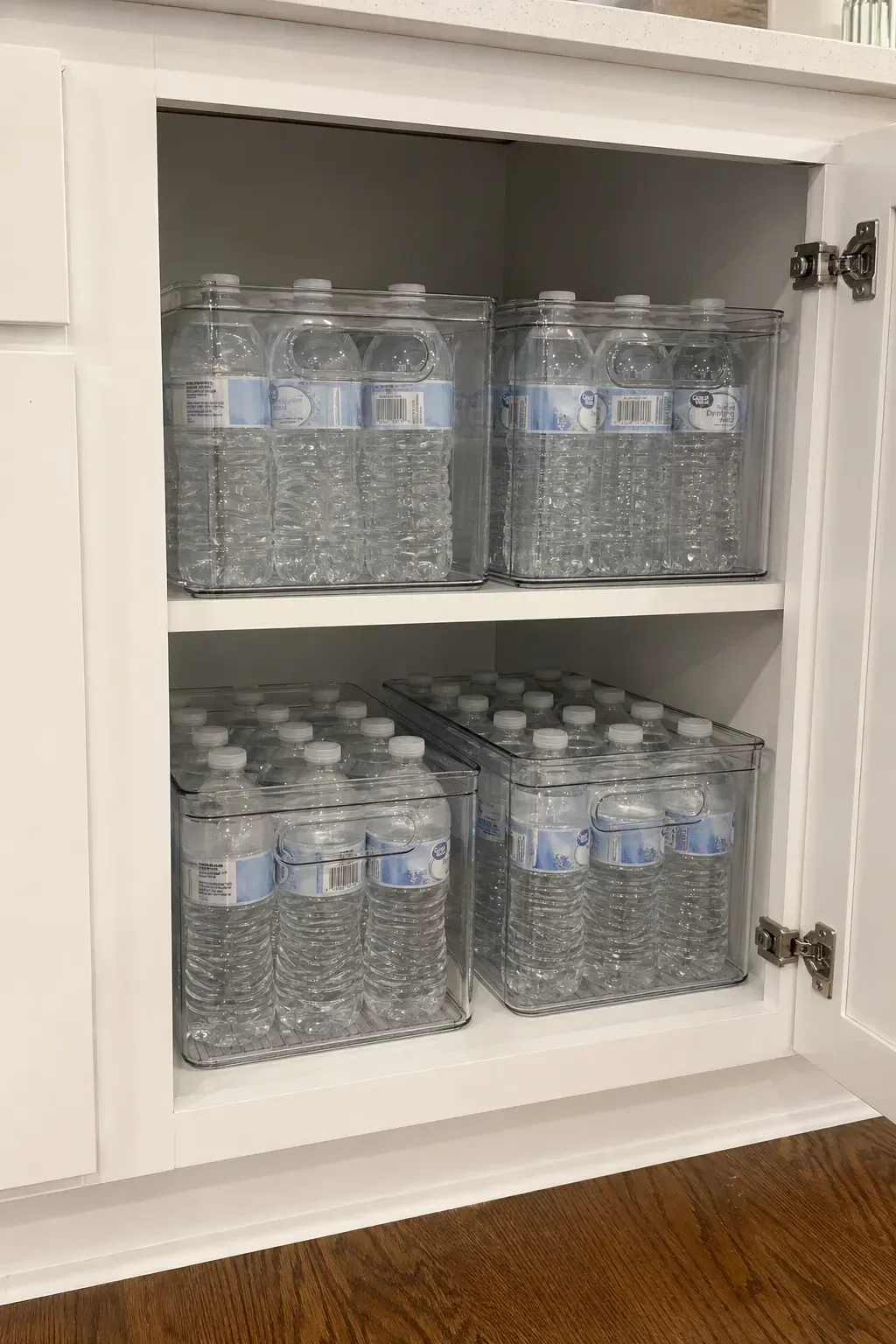
Stackable bins designed for bottles cradle them on their sides so they do not roll around. The bins stack on top of each other like building blocks, so you go vertical instead of spreading across the shelf. Each bin holds several bottles and the open front lets you grab one without disturbing the rest. These are the most straightforward solution for pantry or fridge storage.
Designer Tip: Stack no more than three bins high to keep the column stable. Taller stacks become top-heavy and can topple when you pull a bottle from the bottom bin. Three high is the sweet spot for stability and easy reaching.
2. Adjustable Water Bottle Racks
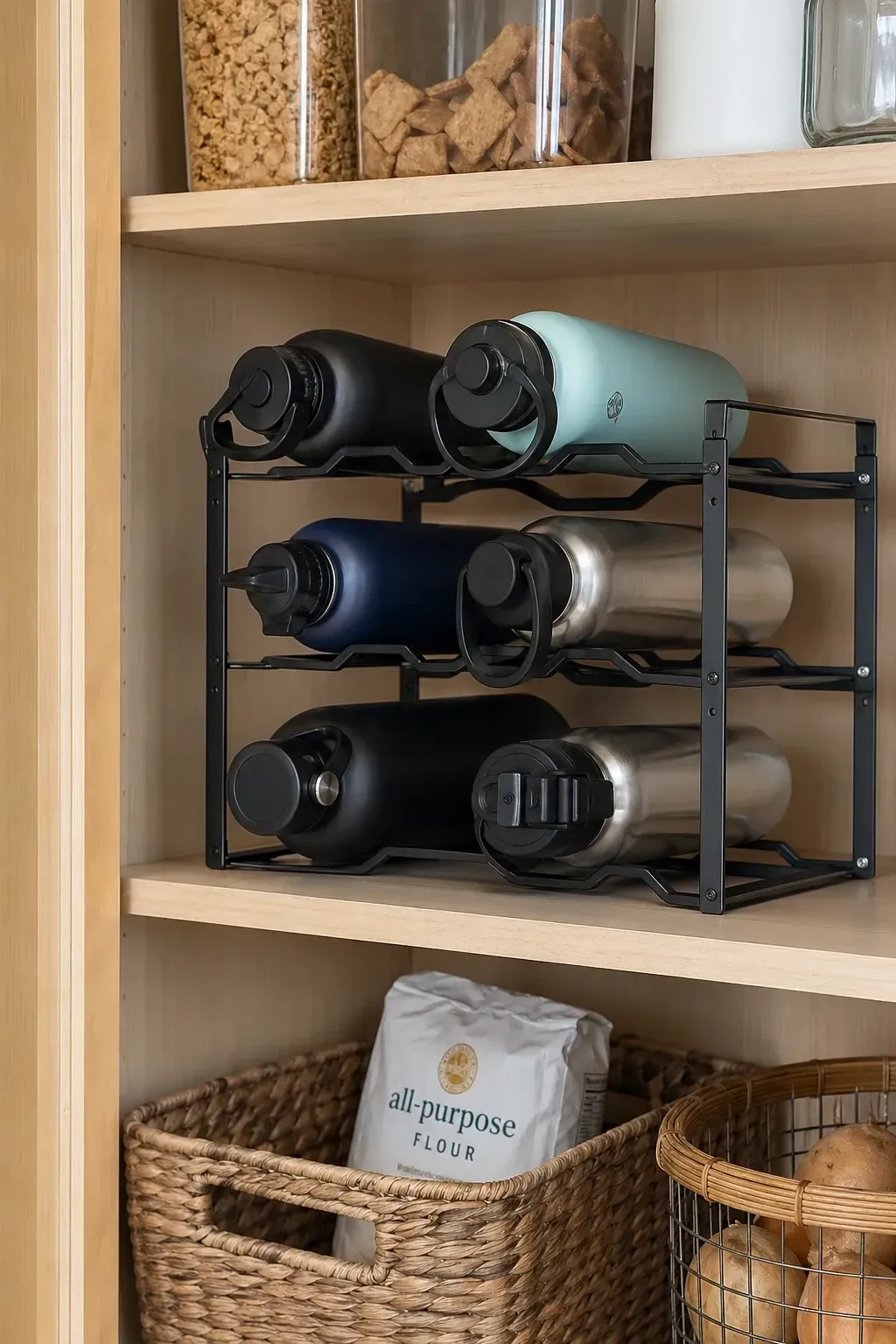
A rack with adjustable dividers or shelves adapts to different bottle sizes. Standard water bottles, large jugs, and slim cans all fit when you can customize the shelf spacing. These racks work inside a pantry, on a countertop, or in the garage. The adjustability means the rack stays useful even when you switch between different bottle brands or sizes.
Designer Tip: Set the shelf heights before loading bottles. Adjusting dividers with bottles already in place is frustrating and usually results in everything rolling out. Start empty, set the spacing, then load.
3. Over-the-Door Storage Organizer
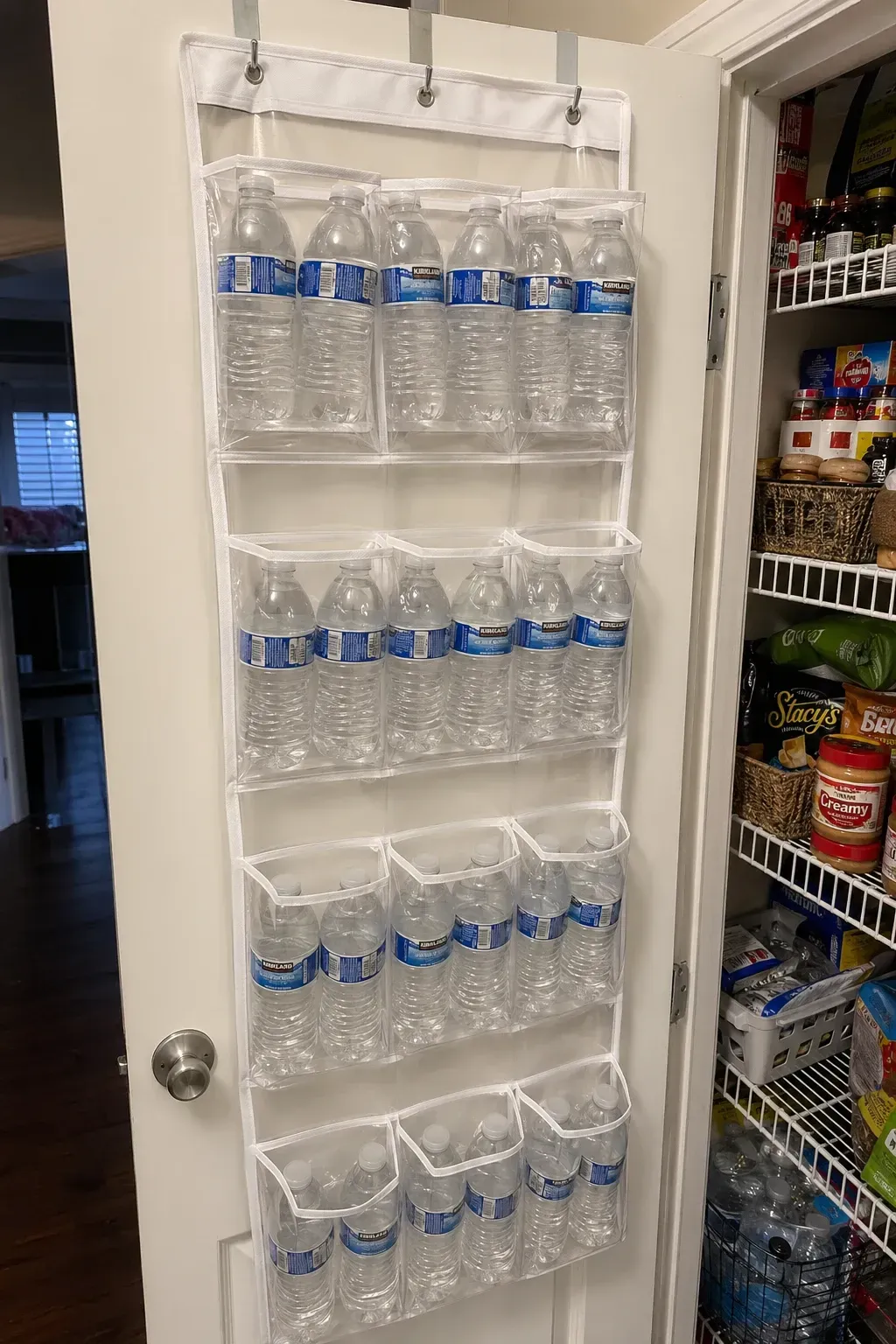
An over-the-door organizer hung on the inside of a pantry door holds bottles in individual pockets or wire slots. This uses completely dead space and keeps bottles off the shelves and floor. Each bottle has its own slot, so you see your supply at a glance and grabbing one is quick. This works best for standard-size bottles rather than large jugs.
Designer Tip: Check the weight rating before loading it up. Water is heavy and a full over-the-door organizer can put a lot of strain on the door and the hooks. Reinforce with over-the-door brackets if you are storing more than a dozen bottles.
4. Rolling Storage Cart
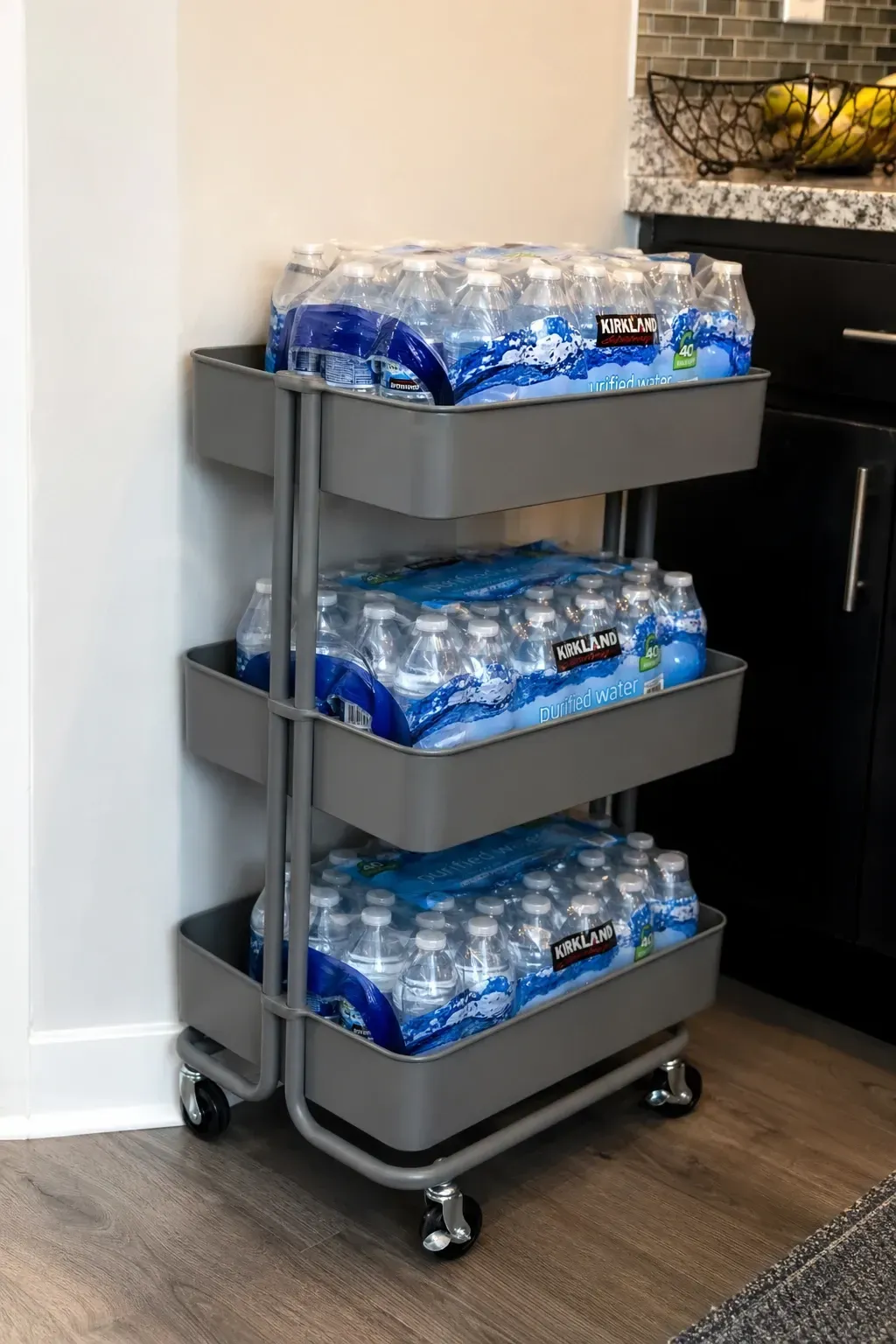
A slim rolling cart with two or three tiers holds bottles and rolls into the gap between the fridge and the wall or between cabinets. Pull it out when you need a bottle, push it back when you are done. The wheels make it easy to restock from the garage or move the cart to a party or outdoor gathering. Rolling carts are especially useful when the water storage spot is not where you actually drink the water.
Designer Tip: Get a cart with locking wheels so it stays put when parked. Without locks, the cart slowly rolls out of its spot every time you bump it while cooking or walking by. Locking casters are a small feature that makes a big difference.
5. Repurposed Wine Rack
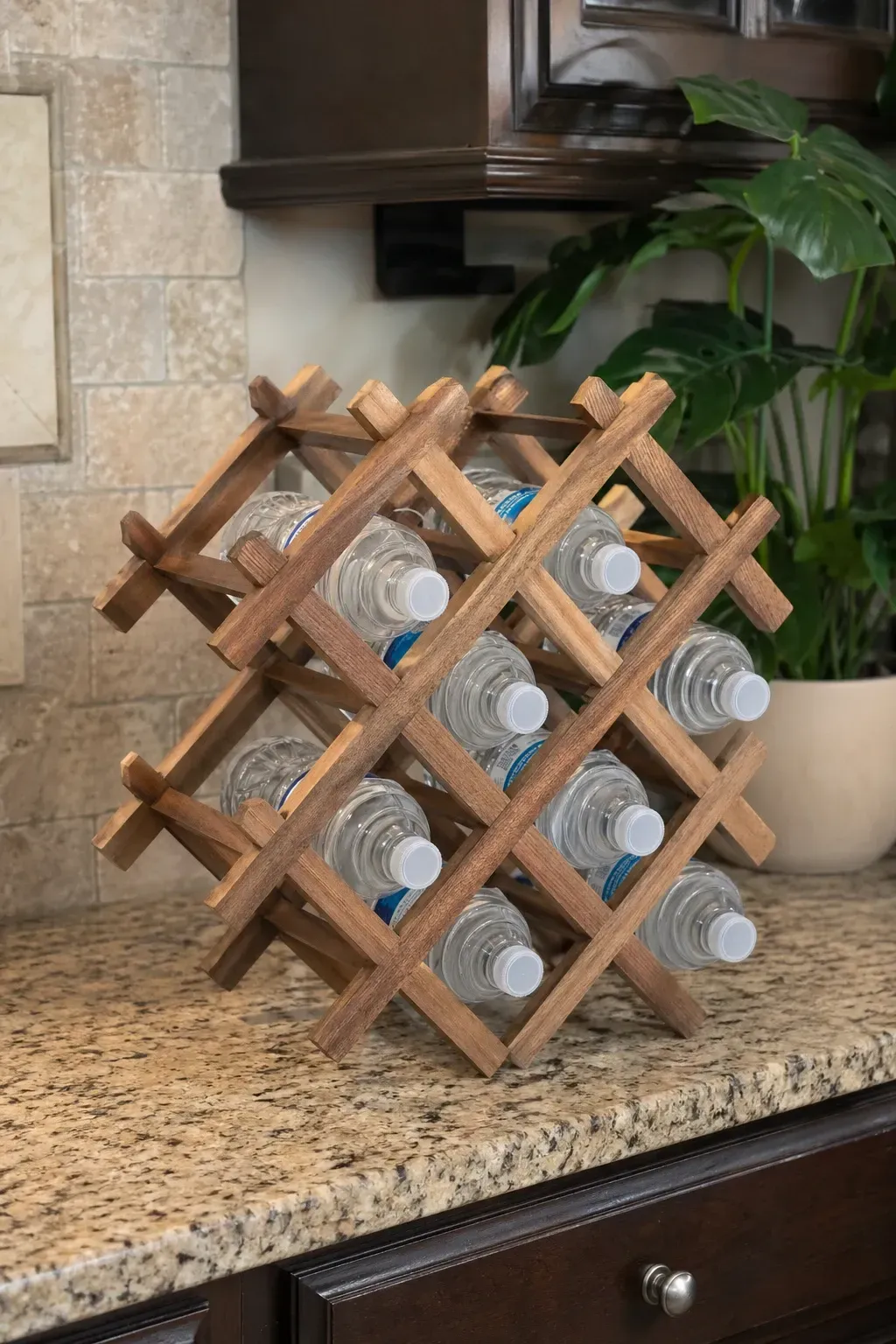
A wine rack holds water bottles just as well as wine bottles. The individual slots keep each bottle separated and the rack stores them on their sides, which saves shelf space. Countertop wine racks, wall-mounted racks, and floor-standing racks all work. Using a wine rack for water storage gives the pantry or kitchen a more polished look than just stacking cases on the floor.
Designer Tip: Make sure the wine rack slot size fits your water bottles. Standard wine bottles and standard water bottles have similar diameters, but slim water bottles may rattle in wine-sized slots. Test one bottle before committing to the rack.
6. Under-Cabinet Storage Shelf
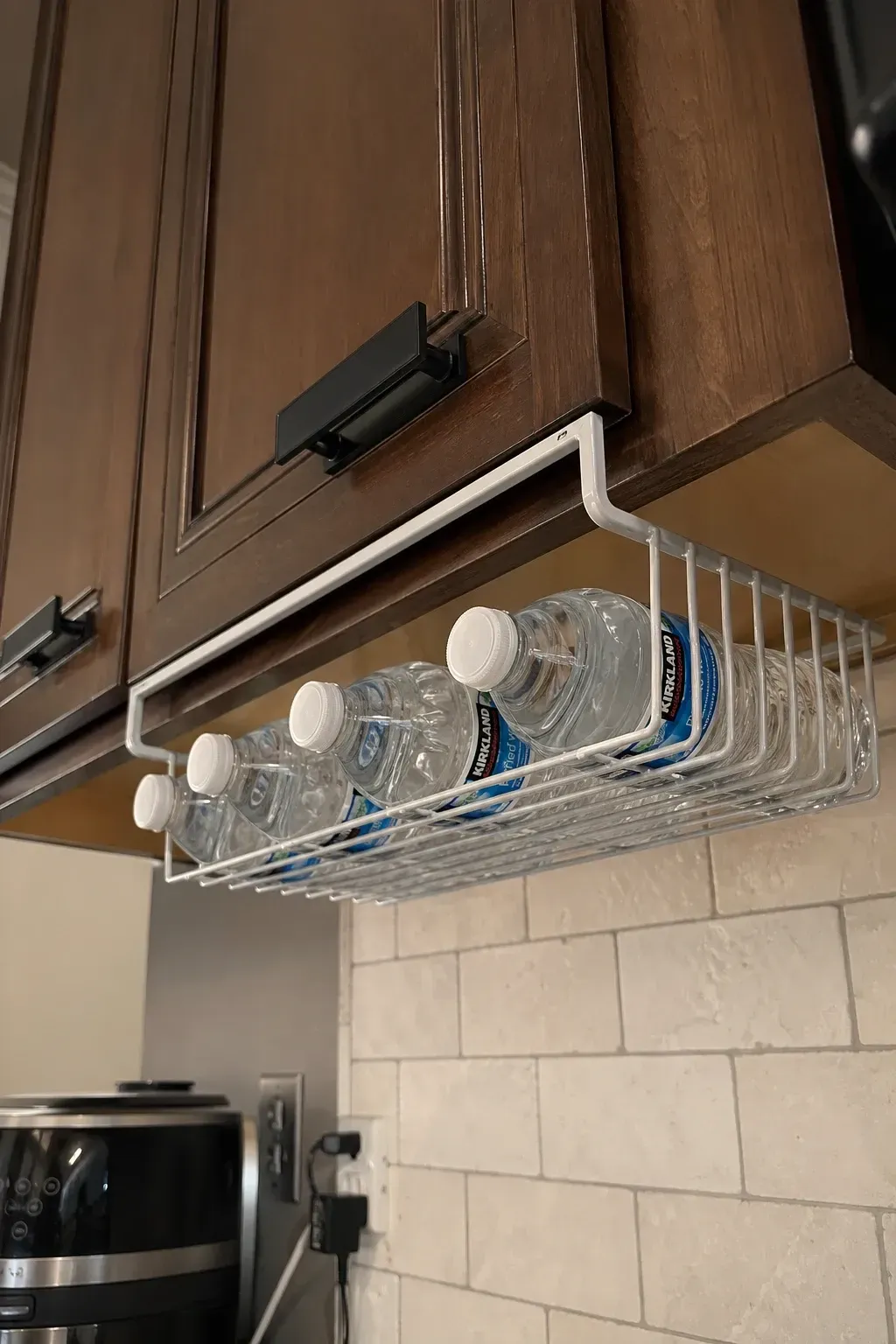
A small shelf or rack mounted under a kitchen cabinet uses the airspace between the counter and the cabinet bottom. Bottles sit in a row or stack on the shelf, staying accessible while keeping the counter clear. This is a great solution for the kitchen because the bottles are right where you use them without taking up prep space. Under-cabinet racks are also inexpensive and easy to install.
More Looks You'll Want to Steal:
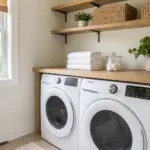
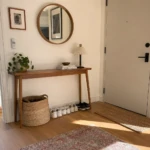
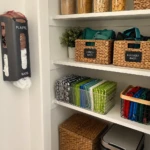
Designer Tip: Measure the clearance between the counter and the cabinet bottom before buying. Some kitchens have more space than others. You need enough room for the rack plus the bottles without making the counter feel cramped.
7. Clear Plastic Bins
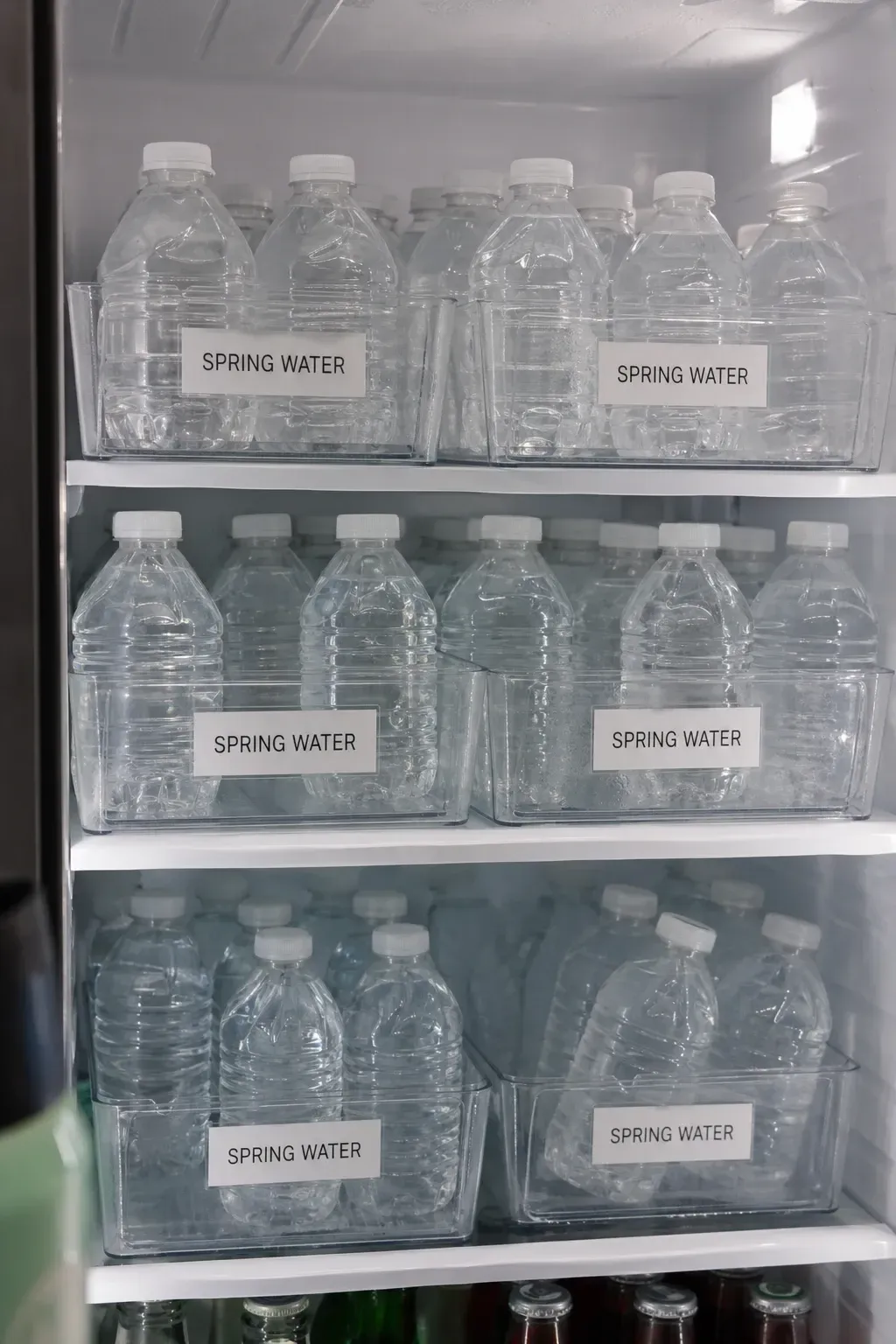
Clear plastic bins in the fridge or pantry keep bottles contained and visible. You can see exactly how many bottles are left without opening anything or digging through the shelf. The bins slide in and out like drawers, making restocking simple. Group cold bottles in a fridge bin and room-temperature bottles in a pantry bin so you always have both options ready.
Designer Tip: Label the bins if you have multiple types of water or drinks stored in different bins. A simple label on the front of each bin eliminates the guessing game and keeps the system organized when multiple people use it.
8. Pull-Out Pantry Shelves
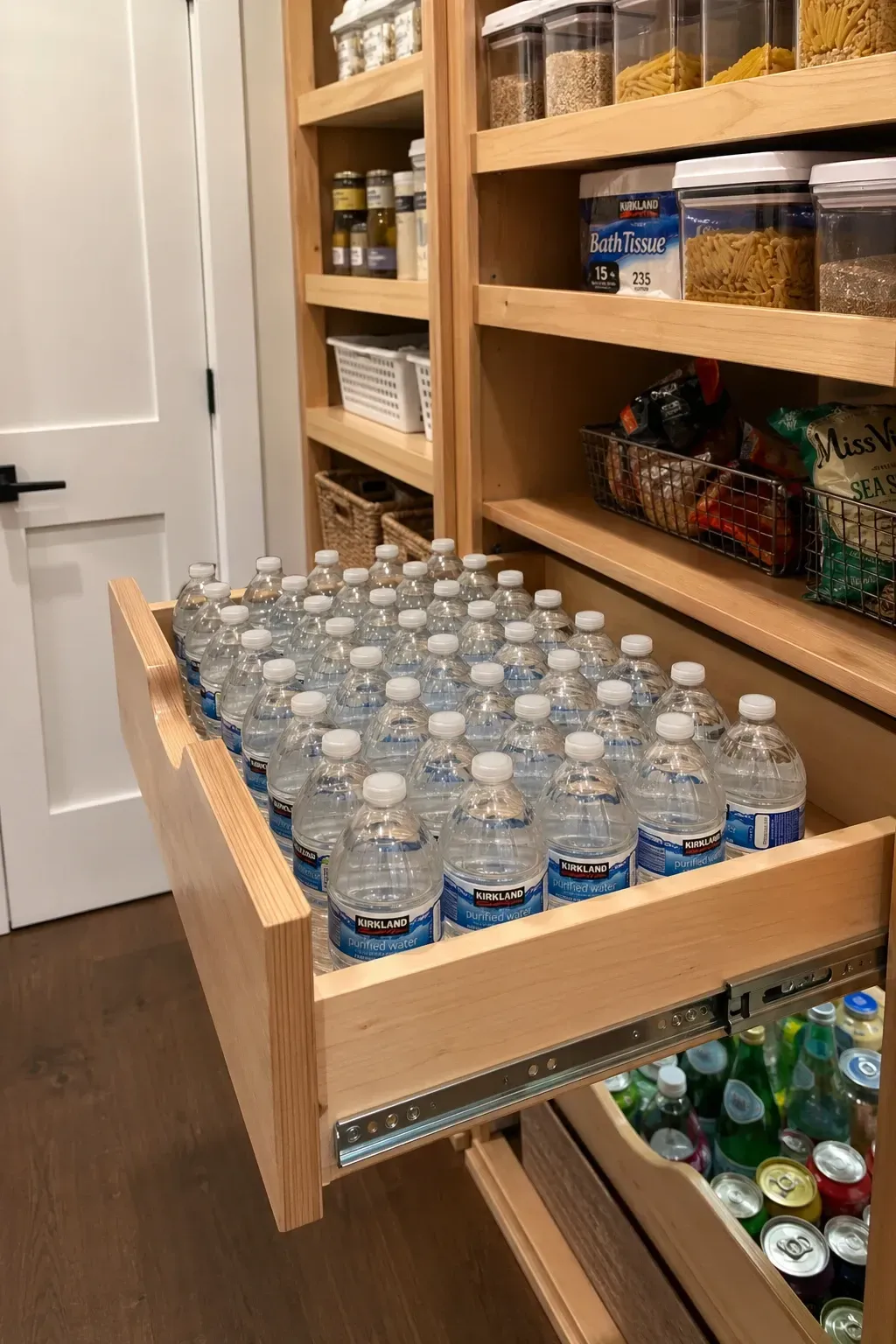
Pull-out shelves installed in the pantry glide out on rails so you can reach bottles at the back without moving everything in front. Standard pantry shelves force you to reach over and around items. Pull-outs bring the back row to you. This is a worthwhile upgrade for deep pantries where bottles get lost behind other food items and you end up buying more before finishing what you already have.
Designer Tip: Install pull-out shelves at a height where the weight of full water bottles is comfortable to slide. A pull-out shelf loaded with 20 bottles at shoulder height is heavy and awkward to manage. Waist height or lower is ideal for heavy items.
9. Decorative Storage Baskets
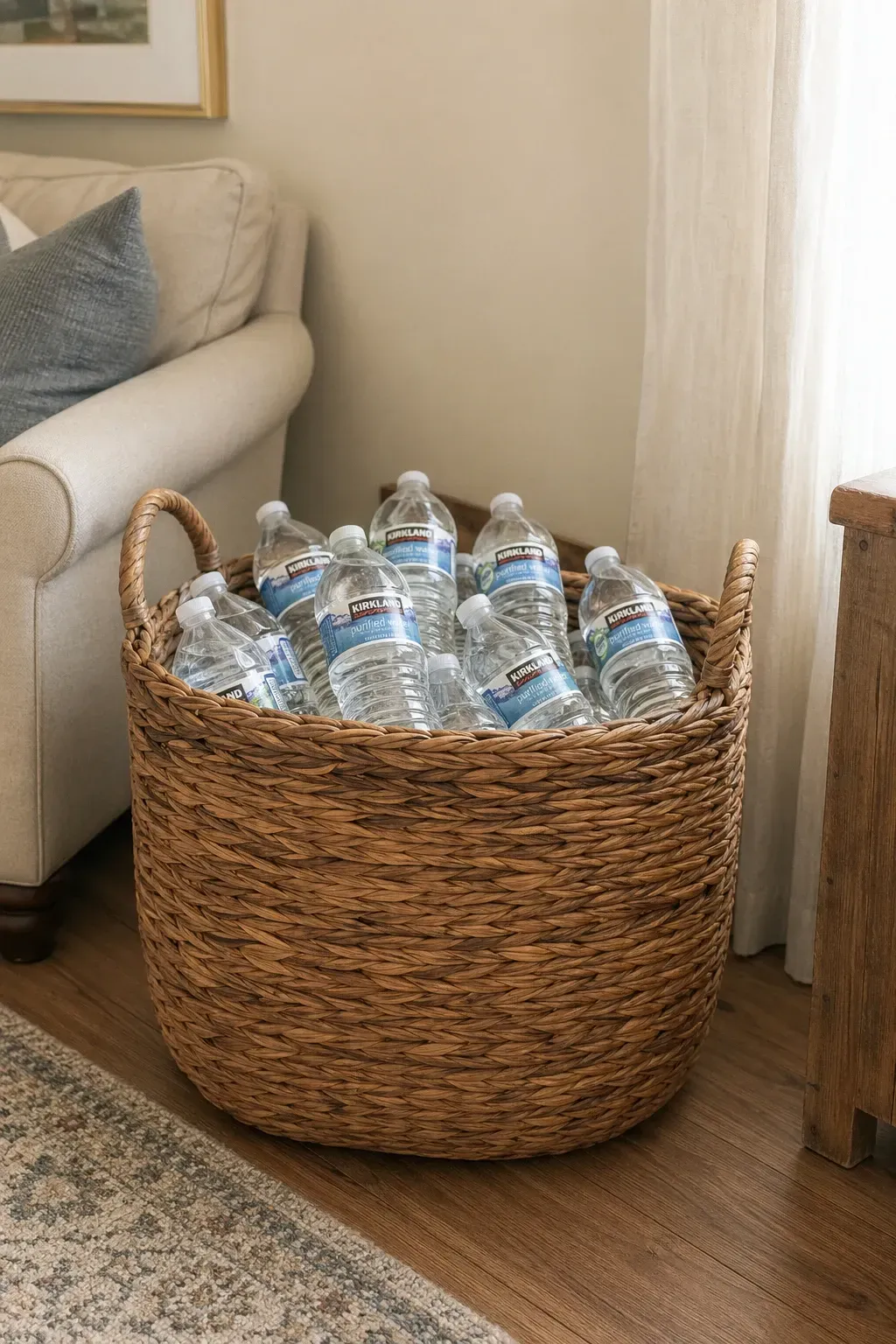
A large woven or fabric basket on the counter, floor, or a shelf holds water bottles in a container that looks like a home accessory rather than a storage solution. This is the easiest approach for people who want bottles accessible without an elaborate system. Drop bottles in the basket, pull them out when needed. The basket adds texture to the room and hides the commercial branding on the bottles.
Designer Tip: Choose a basket that is wide enough for bottles to lie flat rather than standing up. Standing bottles in a basket tip over constantly and the basket looks messy. Bottles lying on their sides in a wide basket stay put and stack neatly.
10. Drawer Dividers for Smaller Bottles
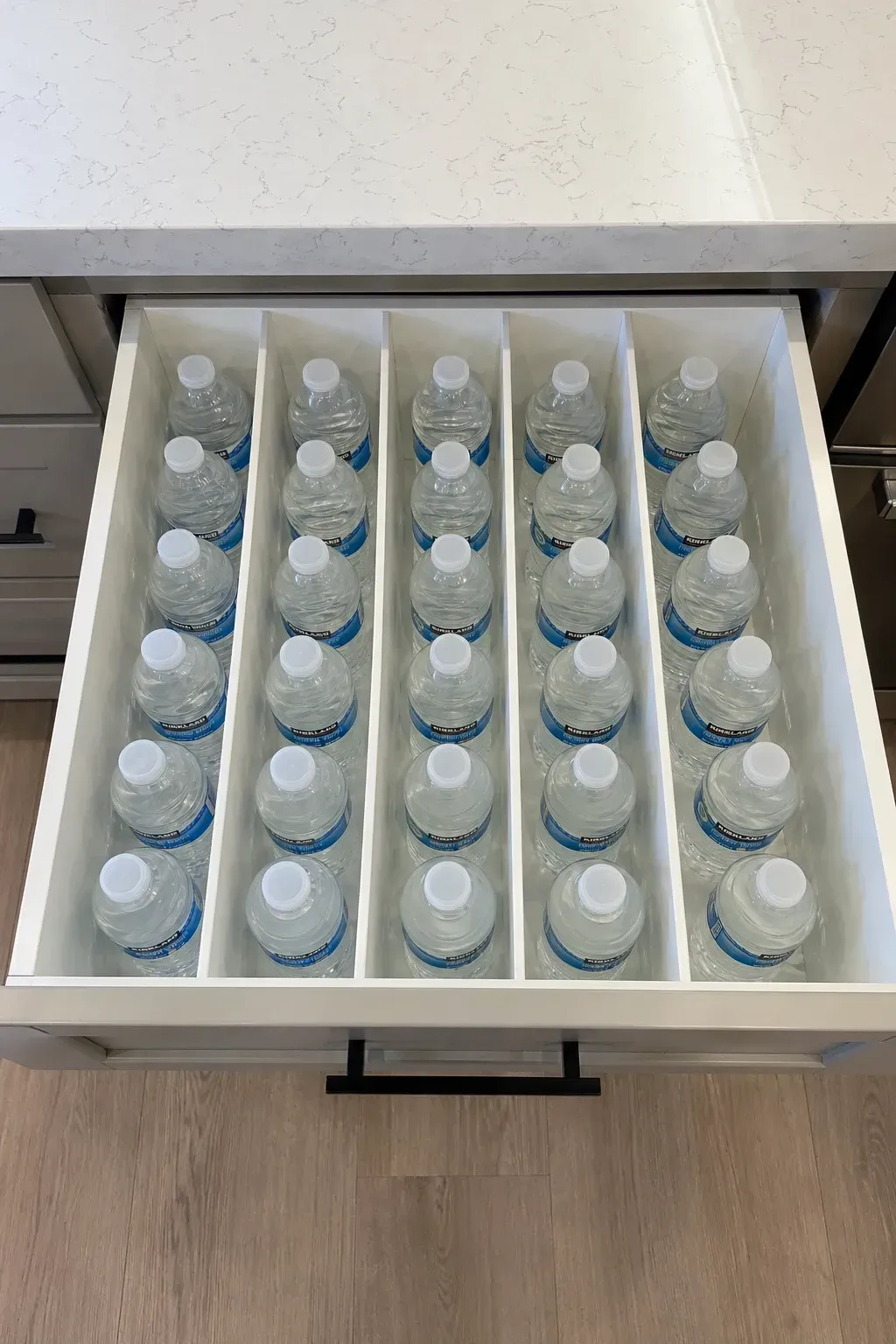
For smaller water bottles and individual drink bottles, drawer dividers in a deep kitchen drawer keep them organized in rows. Each divider channel holds a line of bottles that rolls toward the front as you take one out, like a vending machine. This works well for lunchbox-size bottles or flavored water that the family grabs throughout the day. Everything stays sorted by type and the drawer slides shut to hide it all.
Designer Tip: Line the drawer bottom with a non-slip mat so bottles do not slide and clank when you open and close the drawer. The mat also protects the drawer surface from scratches and condensation marks.
11. Under-Stairs Storage
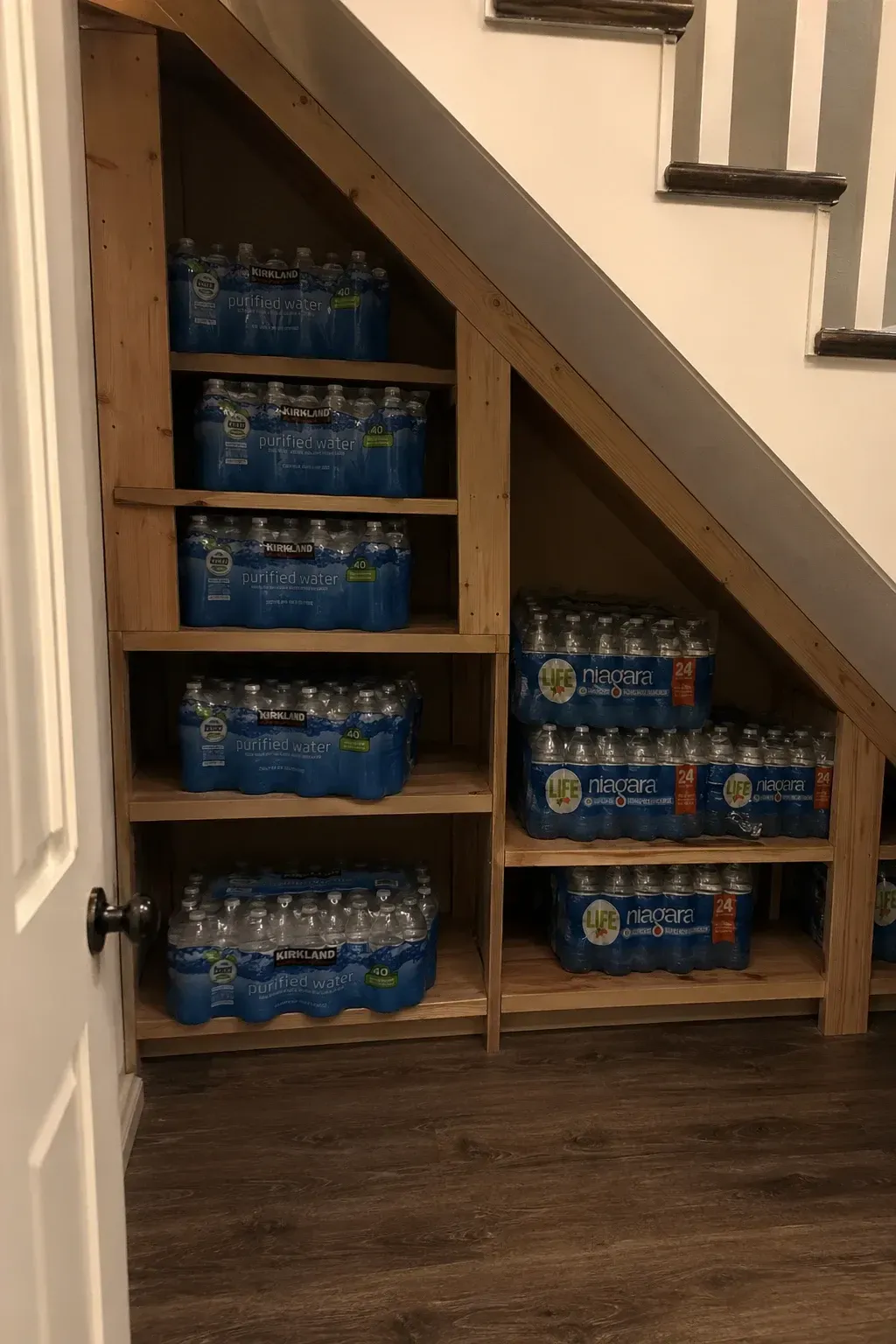
The space under a staircase is often wasted or used as a dumping ground. Converting it to water storage with shelves or pull-out bins creates a dedicated supply closet. The varying ceiling height under stairs naturally accommodates different storage heights. Stack cases in the tall section and use the shorter section for individual bottles or smaller packs. Add a small door or curtain to keep it looking tidy.
Designer Tip: Paint the inside of the under-stair space white to brighten it up and make it easier to see what you have in stock. Dark under-stair spaces make it hard to tell how many bottles are left without pulling everything out.
12. Garage Shelving Units
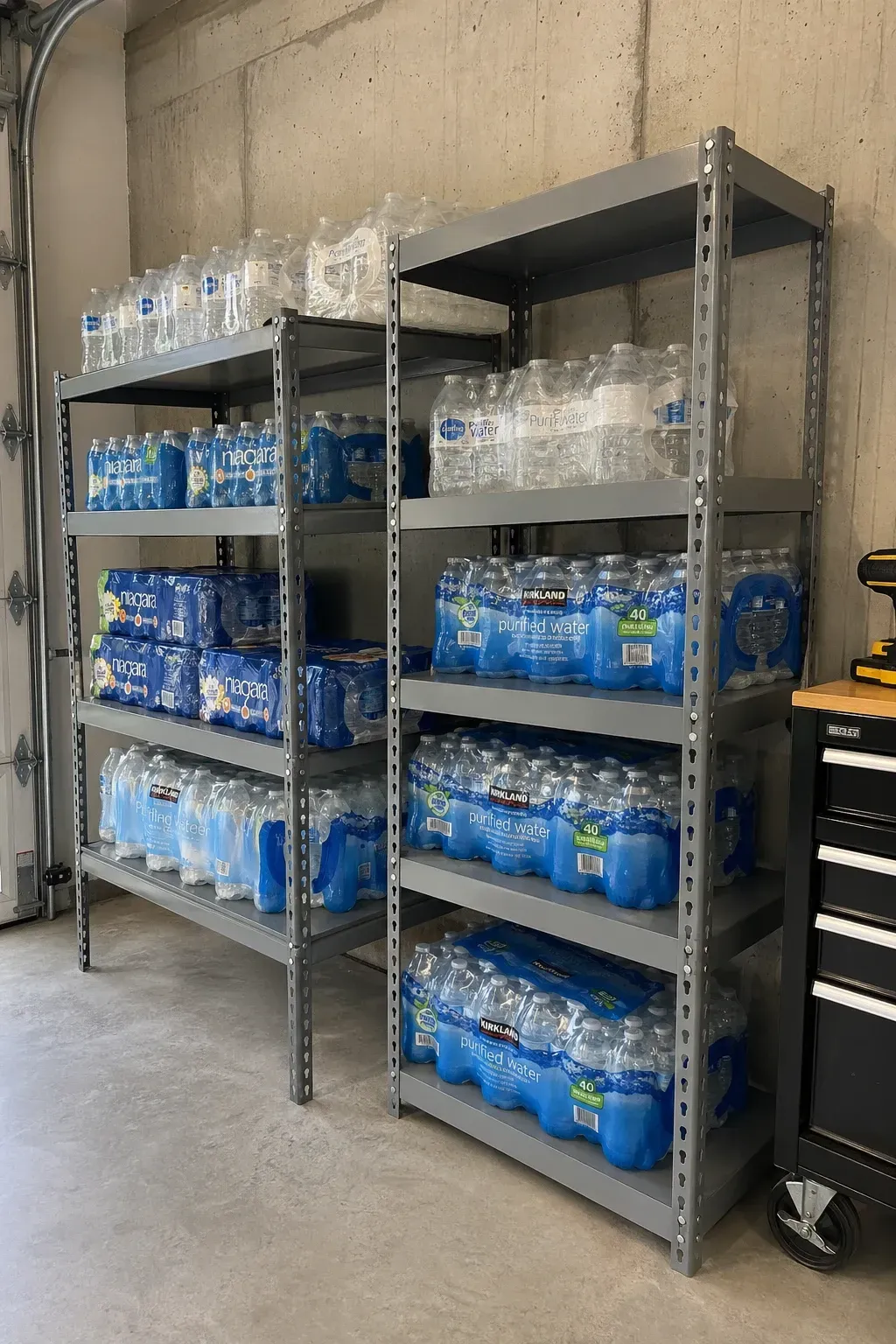
Heavy-duty metal shelving in the garage handles bulk water storage that would overwhelm the kitchen. Stack cases directly on the shelves and keep a small supply in the kitchen that you refill from the garage stock. This is the best approach for families who buy water at warehouse stores in large quantities. The garage shelves keep the bulk out of the living space while maintaining easy access.
Designer Tip: Keep water off the garage floor, even in cases. Floor-level storage exposes bottles to temperature swings, pests, and water from rain or car drips. The bottom shelf of a shelving unit keeps cases liftd and protected.
13. Outdoor Storage Cabinet
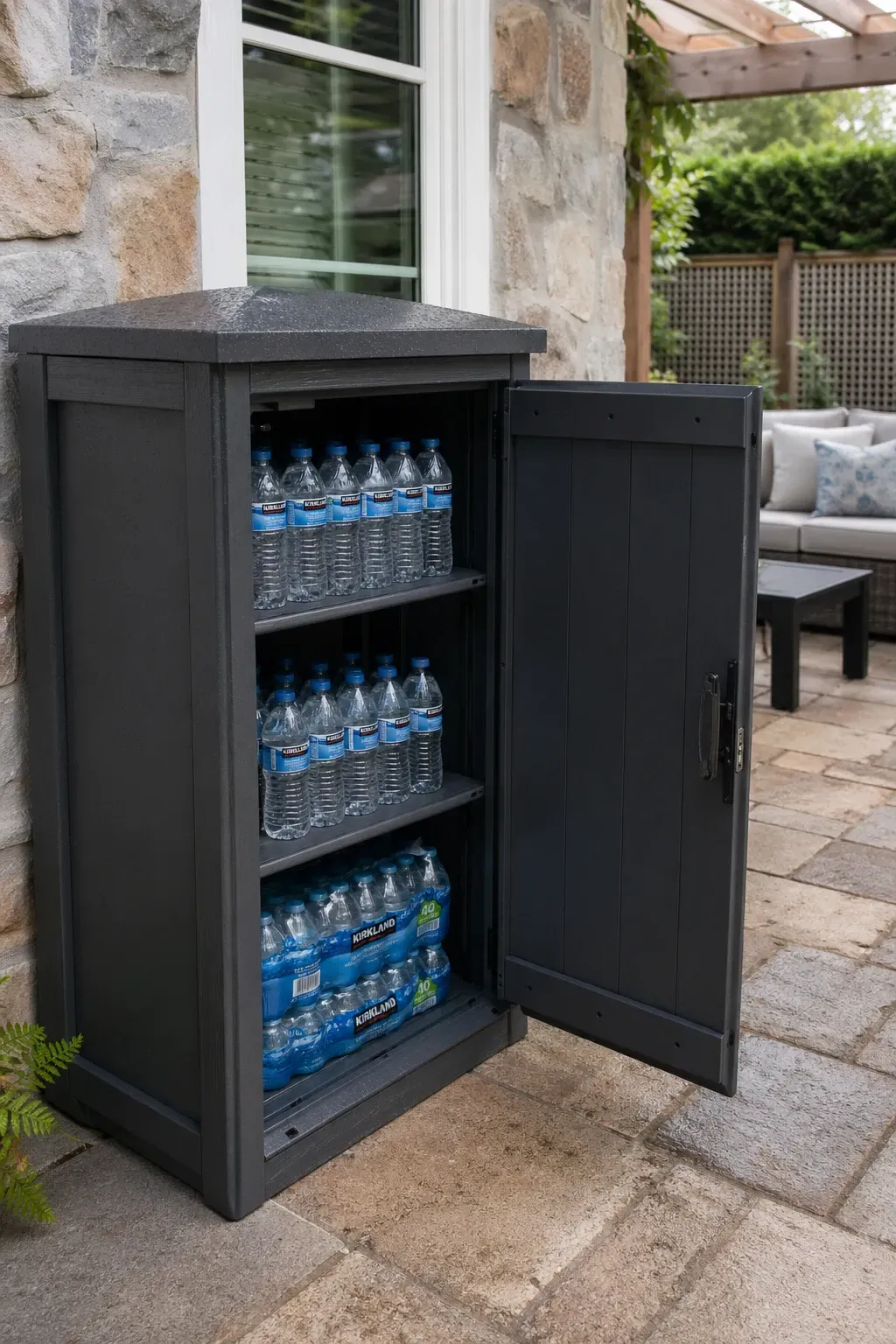
A weather-resistant cabinet on the patio, deck, or near the pool keeps water bottles accessible for outdoor activities without running inside. Stock it with cold bottles from the fridge before a gathering and guests help themselves. Resin or treated wood cabinets handle sun, rain, and humidity without warping or rusting. This is especially practical if you spend a lot of time outdoors and want hydration within arm is reach.
Designer Tip: Place the outdoor cabinet in a shaded area if possible. Direct sunlight heats bottles quickly and prolonged heat exposure can affect the plastic. A shaded spot keeps water cooler and the cabinet lasts longer without sun damage.
14. Repurposed Bookshelf
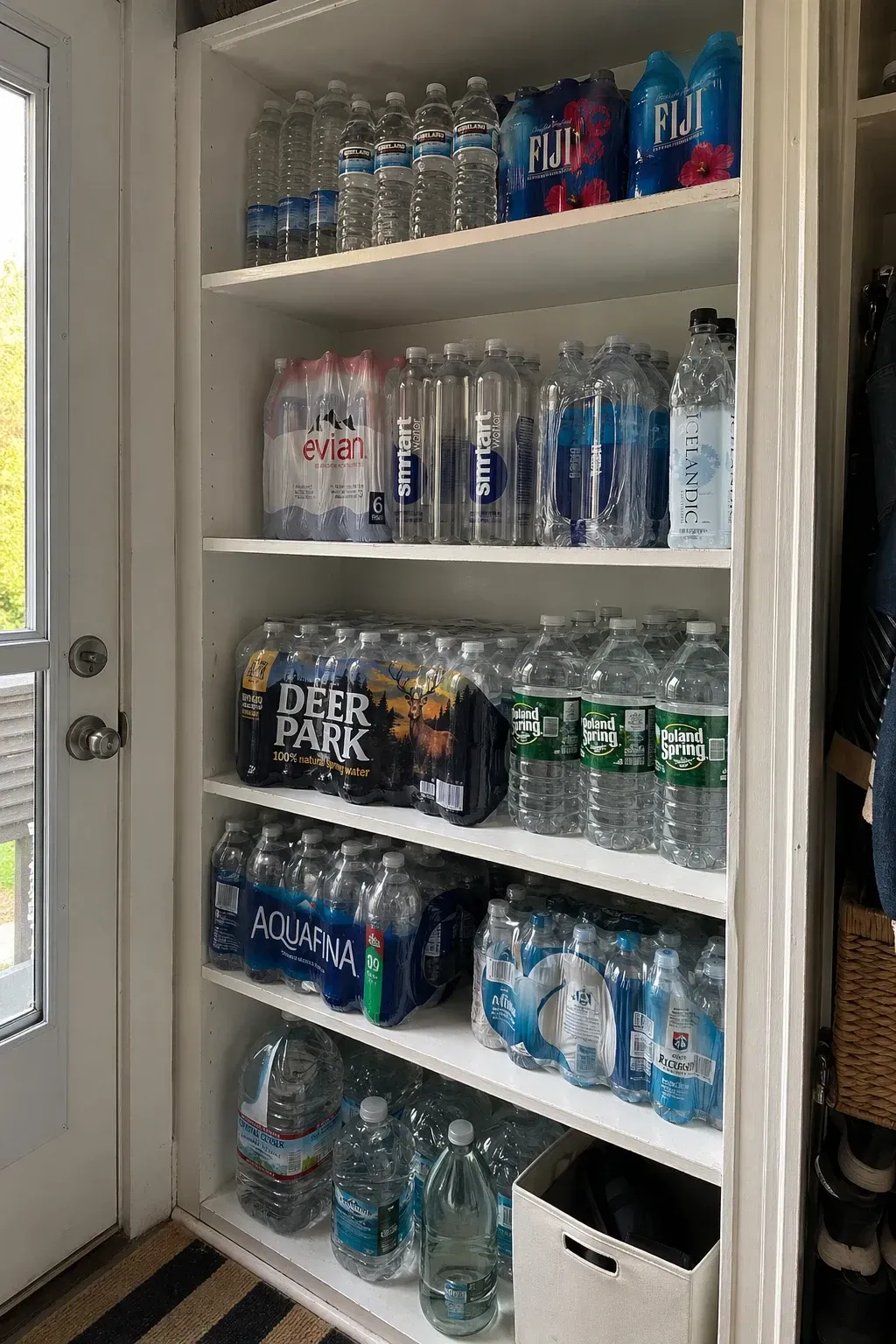
A small bookshelf in the pantry, mudroom, or garage becomes a water station when you dedicate its shelves to bottles. Adjustable shelves accommodate different bottle heights, and the open front makes grabbing bottles fast. A bookshelf with a cabinet door or curtain hides the bottles when you want a cleaner look. This is a great way to reuse furniture you already own rather than buying specialized storage.
Designer Tip: Reinforce the shelves if they are particle board. Water is heavier than books per square foot and particle board shelves sag under the weight over time. Add a center support or replace with solid wood or plywood shelves.
Water bottle storage comes down to matching the solution to your buying habits and your space. If you buy a case a week, a pantry bin or wine rack handles it. If you buy in bulk every month, garage shelving is the way to go. The goal is to get bottles off the floor and into a system that makes them easy to find and easy to restock.
Frequently Asked Questions
How should I store water bottles long term?
Keep them in a cool, dark place away from direct sunlight and heat sources. A pantry, basement, or interior closet works well. Avoid storing water in the garage during extreme heat as high temperatures can cause chemicals from plastic to leach into the water. Rotate your stock by using older bottles first and placing new purchases in the back.
How many water bottles should I keep on hand?
For daily use, keep enough for about two weeks of your household is regular consumption. For emergency preparedness, aim for one gallon per person per day for at least three days, with a two-week supply being ideal. A family of four should have at minimum 12 gallons stored for emergencies, plus the daily drinking supply.
Is it safe to store water bottles in the garage?
It depends on the temperature. If your garage stays below 80 degrees Fahrenheit year-round, it is fine. In garages that get very hot during summer, the heat can cause plastic bottles to degrade and potentially leach chemicals. If your garage gets hot, store water inside the house or in an insulated section of the garage away from the hot exterior walls.
How do I prevent water bottles from rolling around on shelves?
Use stackable bins with rounded cradles, place non-slip liner on flat shelves, or lay bottles in rows with a small lip or rail at the front of the shelf. Wine rack style storage with individual slots also prevents rolling. The cheapest fix is a strip of adhesive rubber shelf liner cut to the shelf width. The texture grips the bottles and keeps them from sliding.