Spice storage is one of those kitchen problems that gets worse slowly until one day you are digging through a cabinet of mismatched jars trying to find the cumin while dinner burns on the stove. A good spice system means you can find what you need in seconds and put it back without knocking over six other jars. Here are 17 spice storage ideas that actually work in real kitchens.
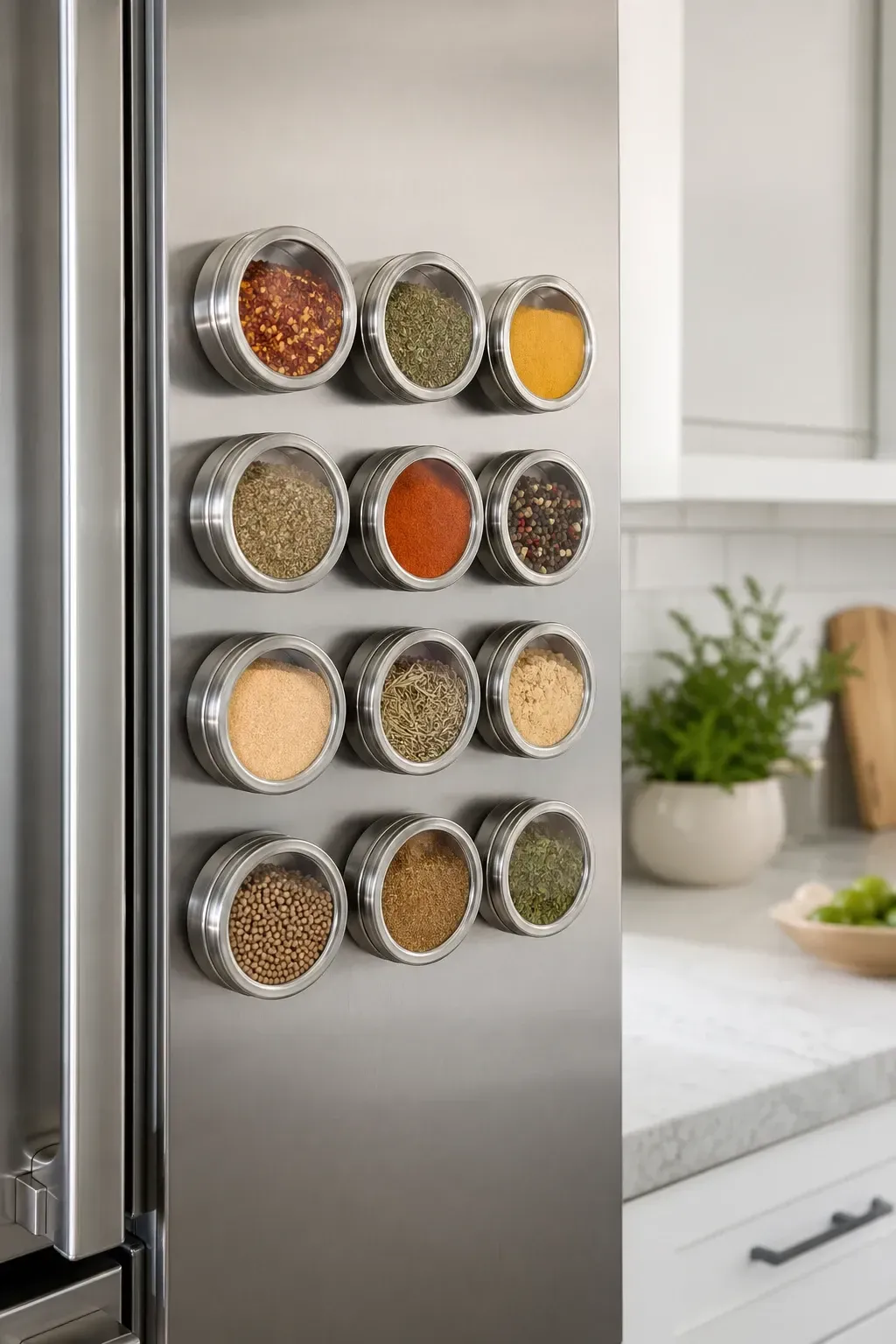
Small jars with magnetic lids or magnetic strips on the back stick directly to the side of the fridge. Every spice is visible and within arm is reach while you cook. The fridge side is usually dead space in the kitchen, so this adds storage without taking up counter or cabinet room. Magnetic jars work best for spices you use daily so they are always right there when you need them.
Designer Tip: Use uniform jars with matching labels for a clean look. Random jars in different sizes with handwritten tape labels look cluttered on the fridge. A matching set of 10 to 15 jars with printed labels looks intentional and polished.
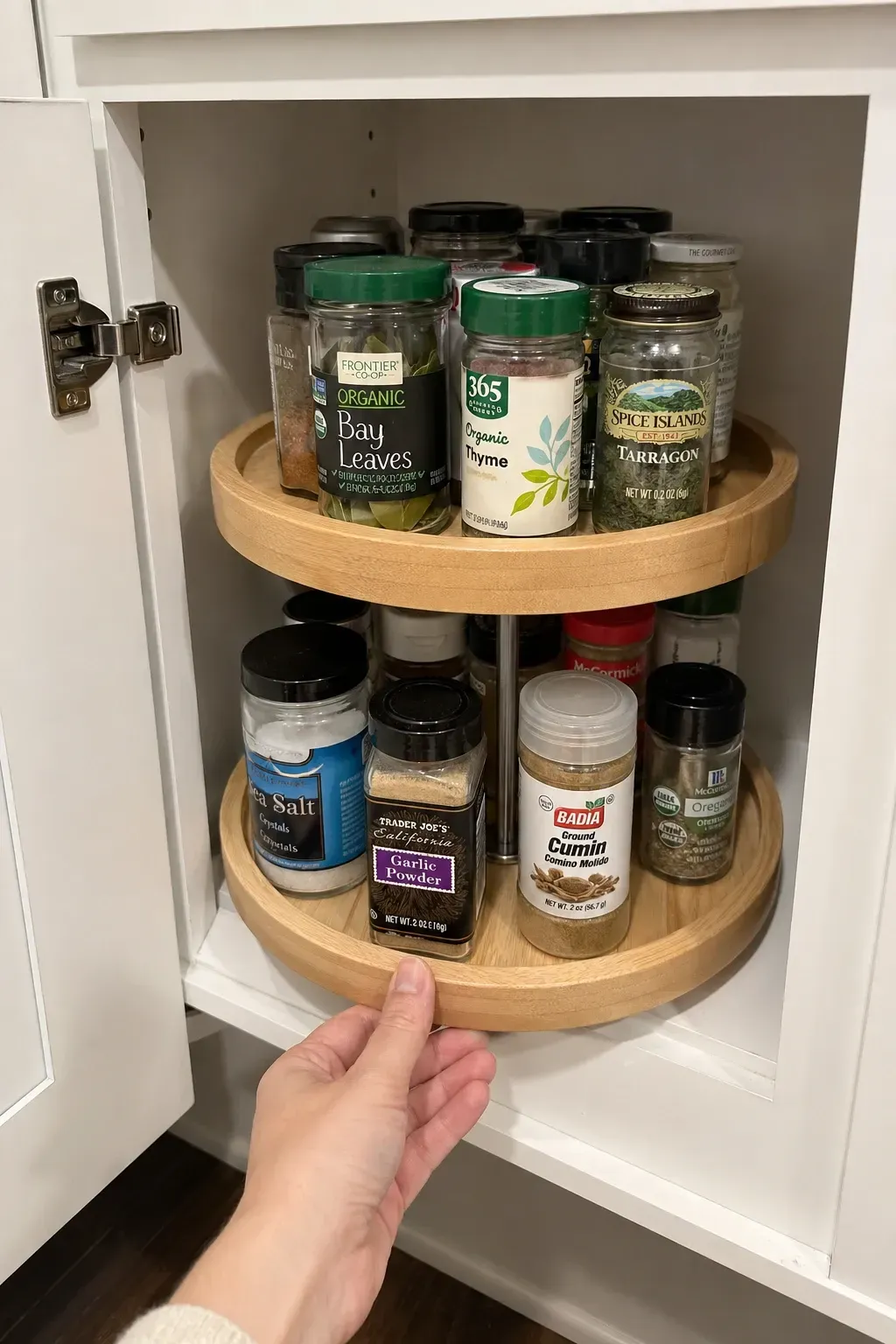
A turntable inside a cabinet brings back-row spices to the front with a simple spin. No more reaching behind 15 jars to find the one you need. The circular design uses the full depth of the cabinet including the corners that normally go to waste. A two-tier lazy Susan doubles the capacity and keeps spices on two levels so you can see more at once.
Designer Tip: Get a lazy Susan with a raised edge or lip to prevent jars from sliding off when you spin it. Flat turntables send jars flying off the edge, especially smaller ones. The lip keeps everything contained during rotation.
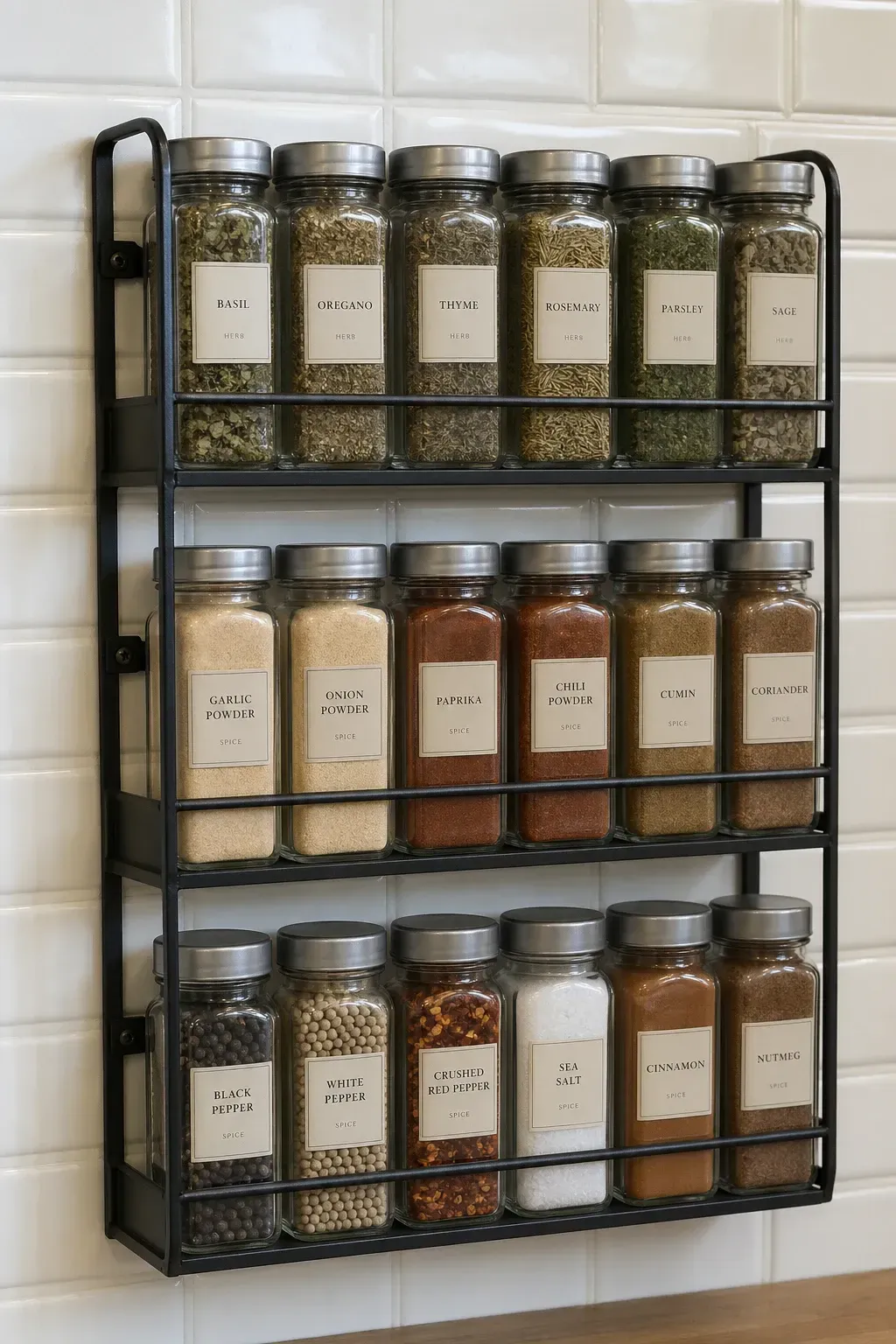
A rack mounted on the wall near the stove puts spices at eye level and within arm is reach while cooking. Wall racks come in single-tier, multi-tier, and ledge styles. They free up cabinet and drawer space and turn your spice collection into a display. This is one of the most popular options for people who cook often and want speed over concealment.
Designer Tip: Mount the rack on a wall that does not get direct steam or grease splatter from the stove. Spices near heat and moisture lose flavor faster. A wall to the side of the stove rather than directly behind it is the best placement.
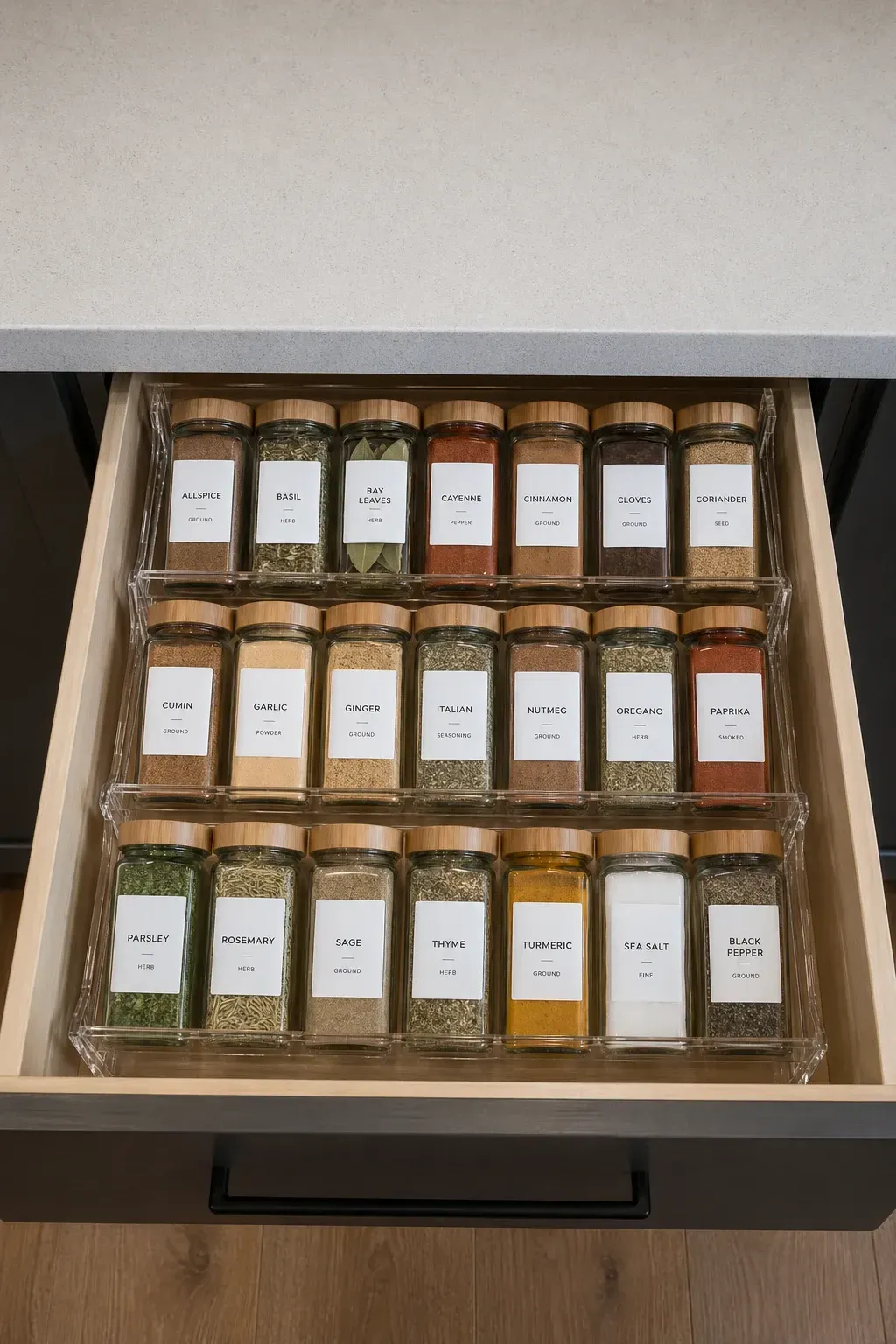
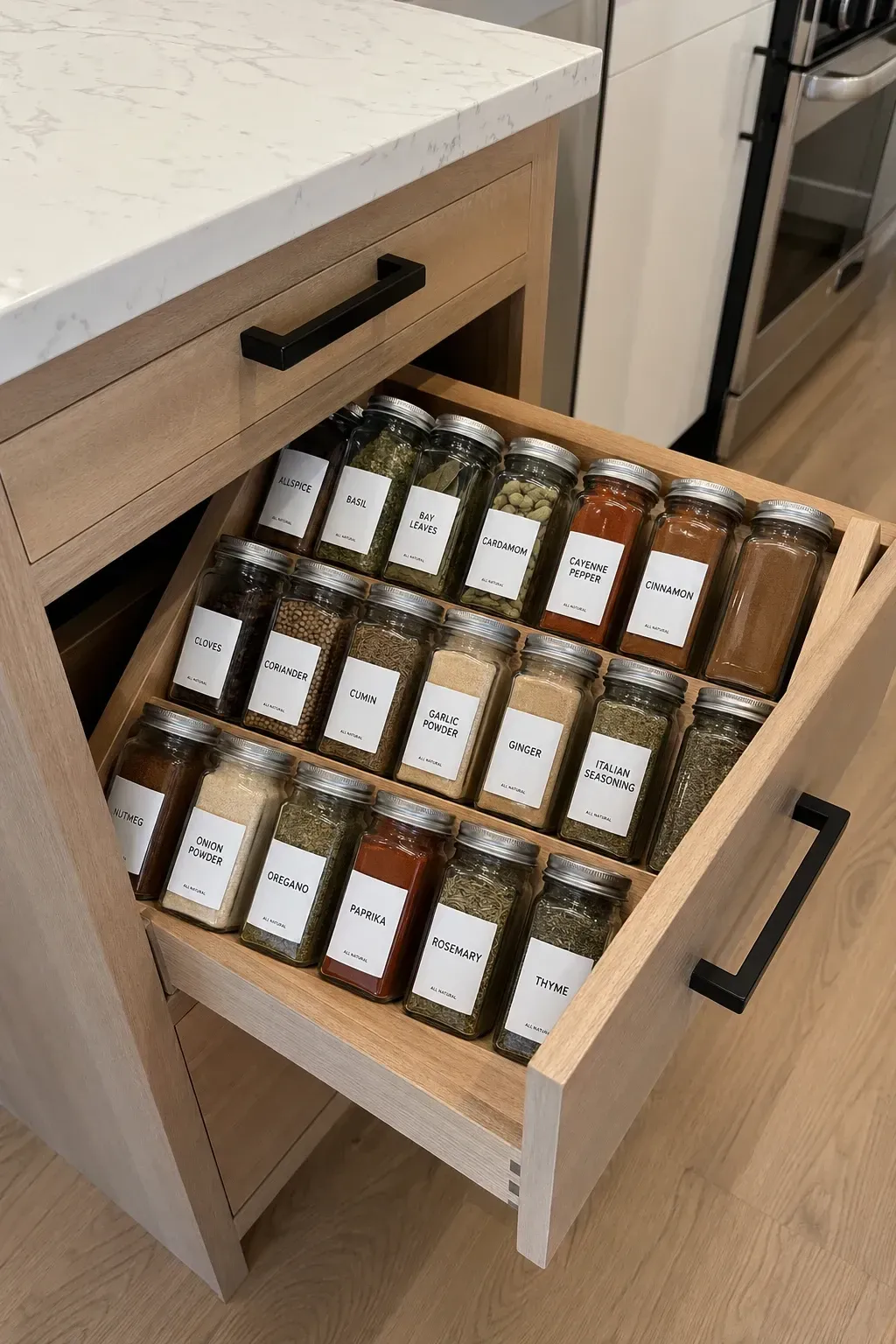
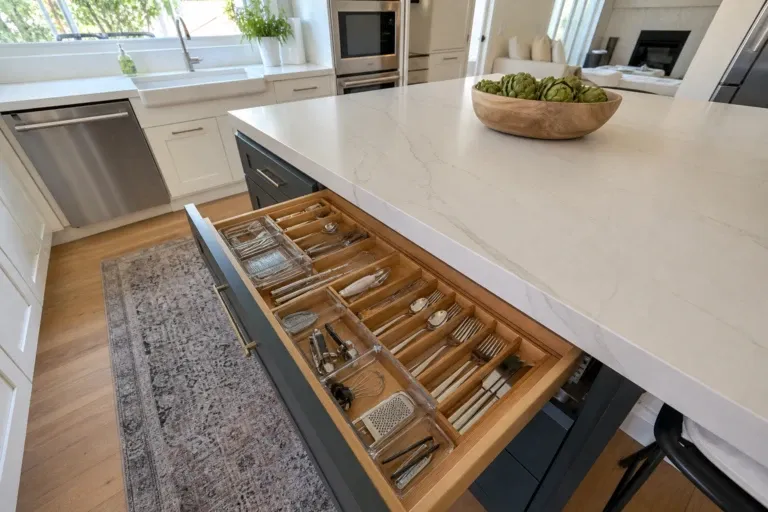
A dedicated spice drawer with angled or tiered inserts lays jars on their sides with labels facing up. You open the drawer and see every spice at once without moving anything. Tiered inserts angle the back rows higher than the front so labels in the back are still visible. This is the gold standard for spice organization if you have a drawer to spare near the stove.
Designer Tip: Label the tops of your spice jars, not just the sides. In a drawer system you are looking down at the jars, so top labels are what you actually read. Side labels are invisible when jars lay flat.
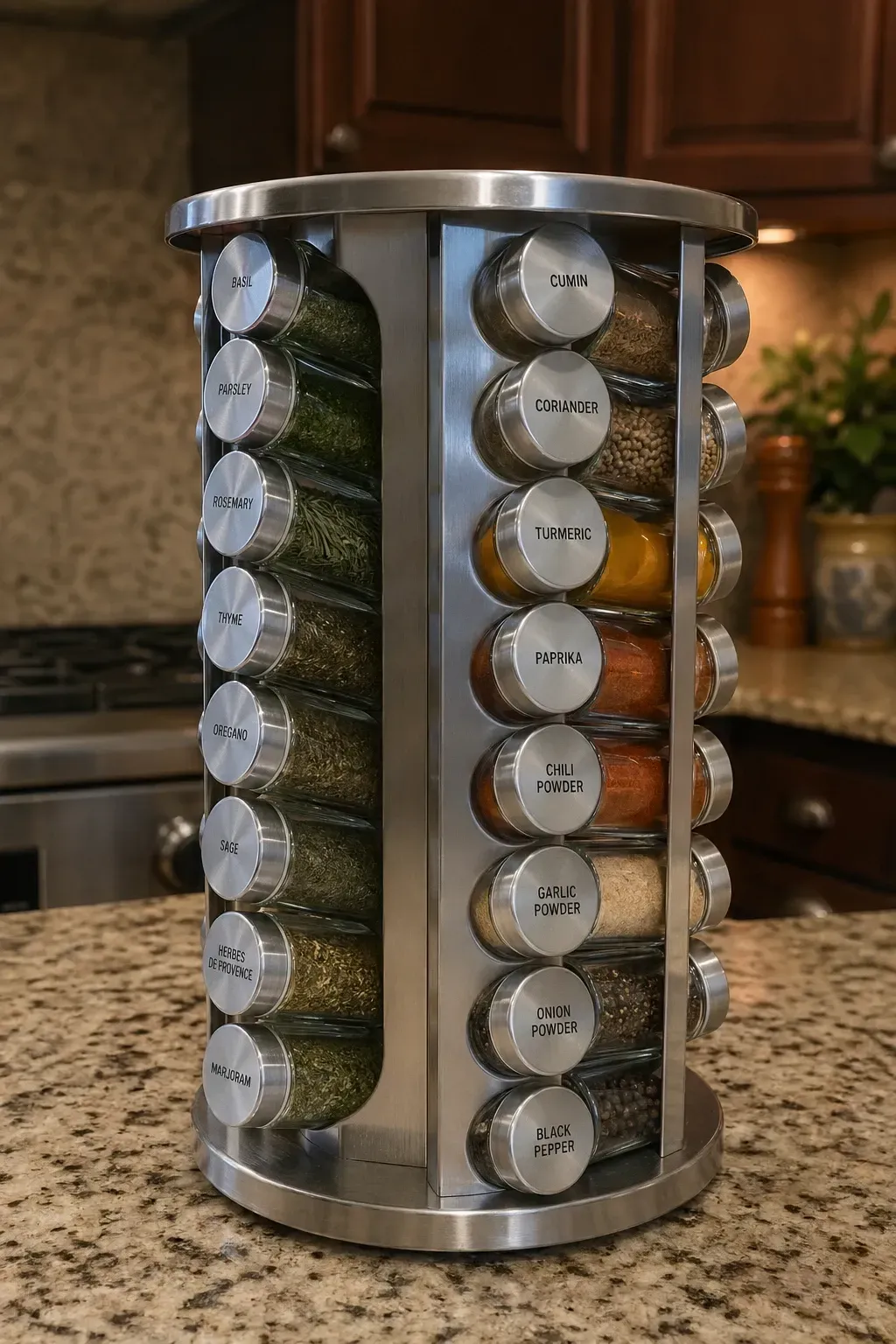
A countertop carousel holds spice jars in a circular rack that spins. It keeps frequently used spices accessible on the counter in a compact footprint. Carousels typically hold 12 to 20 jars and the spinning base means every jar is reachable without moving others. This works well for people who keep their most-used spices on the counter and store the rest in the pantry.
Designer Tip: Do not overfill the carousel. If jars are crammed in so tightly that it cannot spin freely, the whole system fails. Leave a little breathing room between jars so the rack spins smoothly and you can actually read the labels.
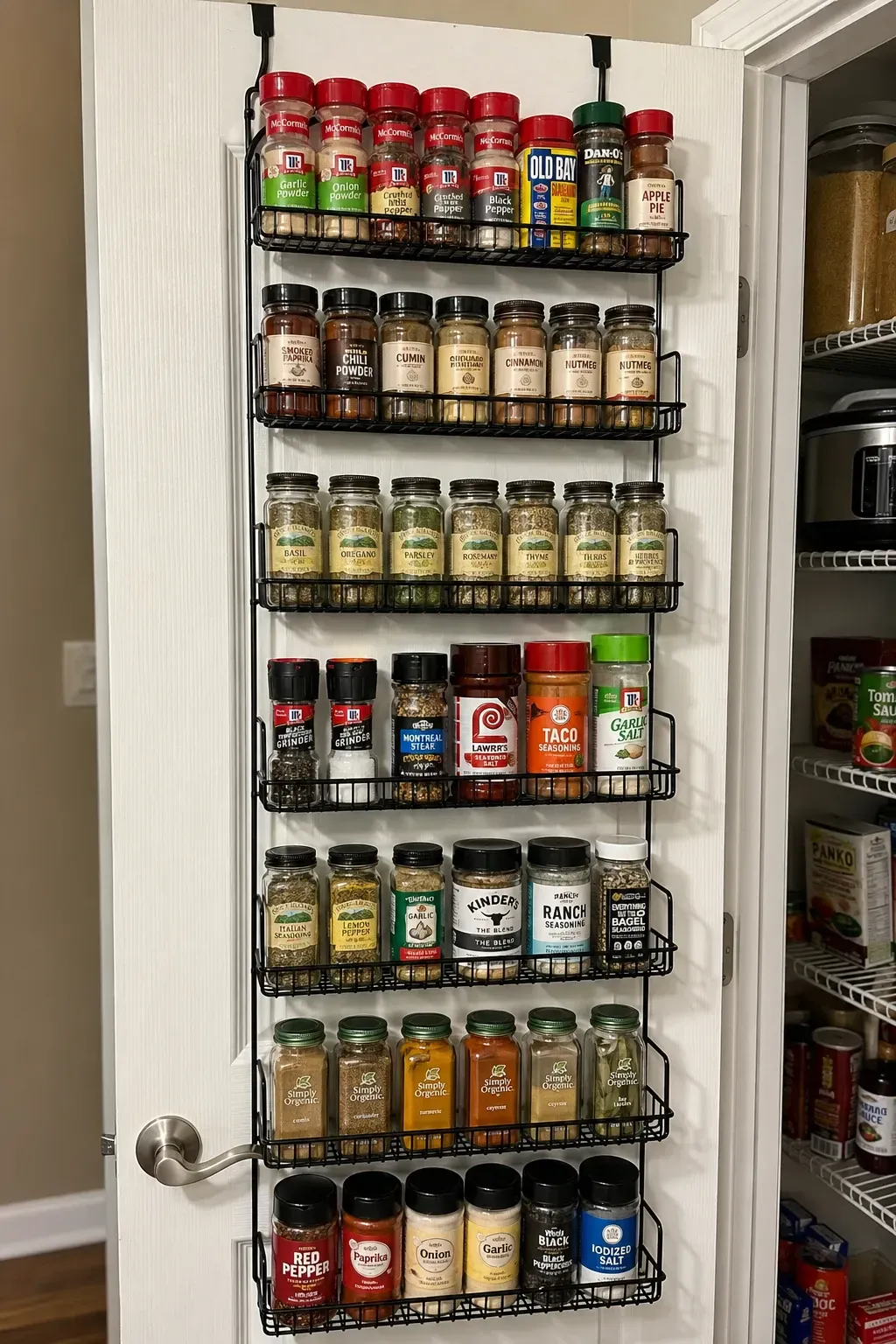
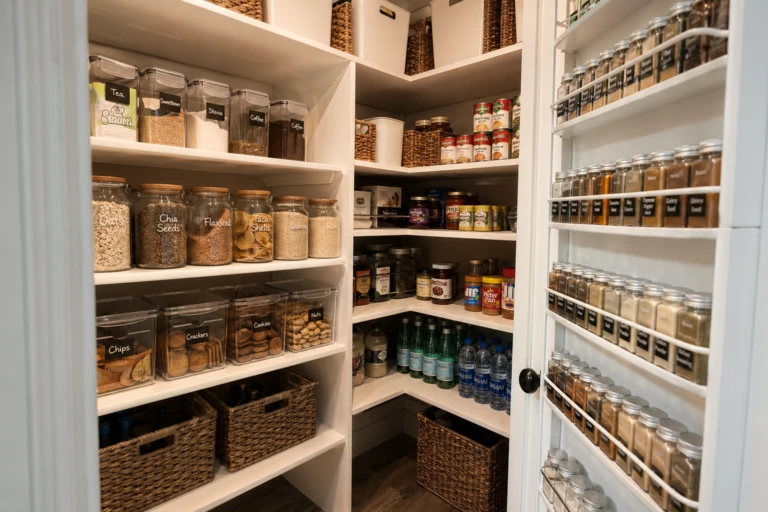
A rack that hooks over the inside of the pantry door holds spice jars in rows on the back of a door that was doing nothing. Open the pantry, see all your spices, grab what you need, and close the door. The spices are hidden when the door is shut and fully visible when it is open. This is great for kitchens with limited wall and cabinet space.
Designer Tip: Make sure the rack does not interfere with shelves inside the pantry when the door closes. Measure the clearance between the door and the nearest shelf. A rack that hits the shelves every time you close the door will drive you crazy.
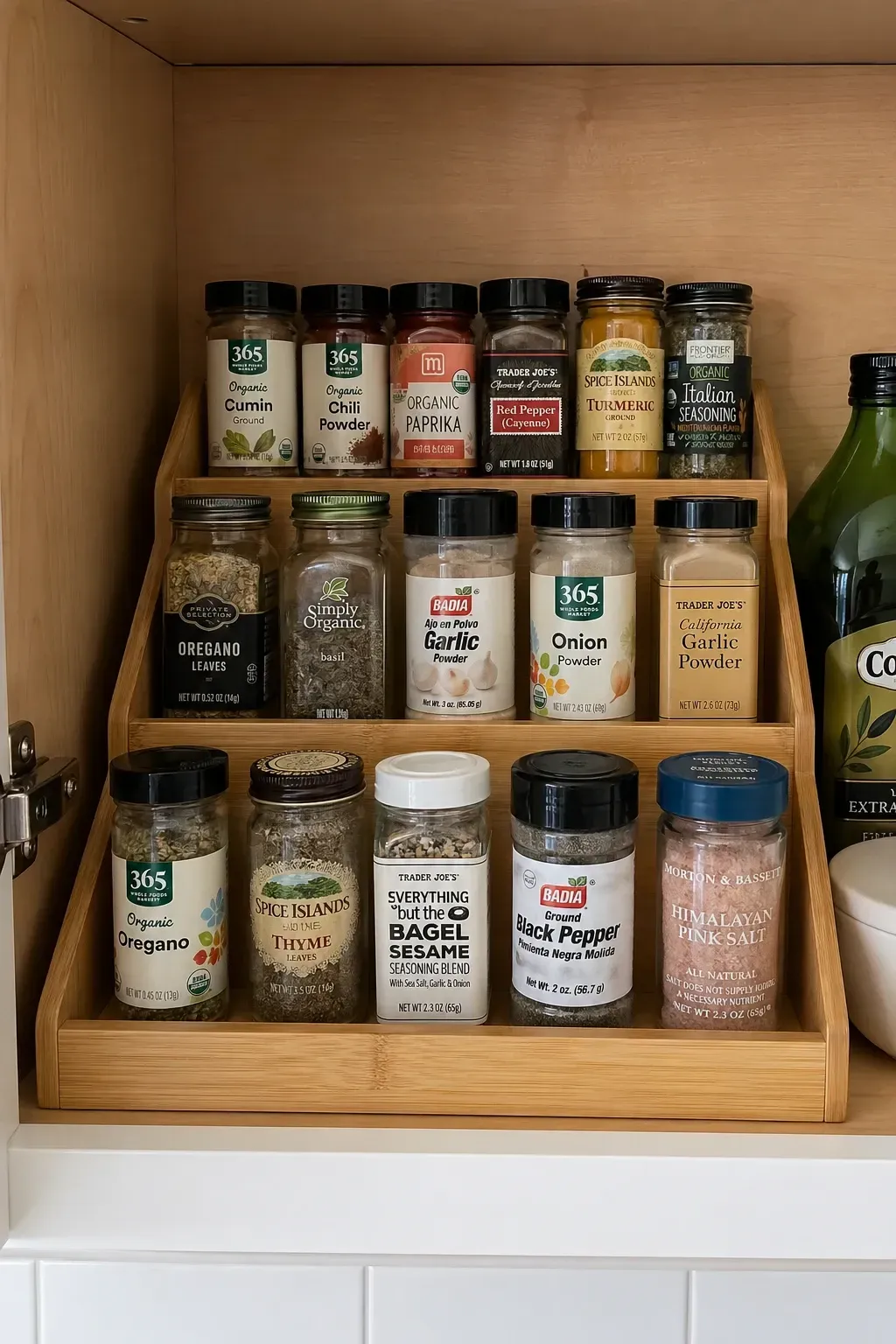
A stepped shelf insert inside a cabinet raises the back rows higher than the front. You see every jar without moving the ones in front. These inserts are cheap, usually around five to ten dollars, and make a huge difference in cabinet organization. They work like stadium seating for your spices. Every jar gets a front-row view and nothing gets buried in the back.
Designer Tip: Get an expandable tiered organizer that adjusts to your cabinet width. Fixed-width organizers leave awkward gaps on the sides. An expandable one fills the full shelf and maximizes the number of jars you can fit.
An angled insert in a deep drawer tilts jars at a slight angle so labels face upward and forward. The angle makes it easier to read labels and pull jars out. Unlike flat drawer inserts, the angle prevents jars from rolling when you slide the drawer open. This is a refinement of the standard spice drawer that adds a little extra convenience for people who cook frequently.
Designer Tip: Organize spices alphabetically or by cuisine type in the drawer. Alphabetical order makes finding a specific spice fast. Organizing by cuisine (Italian spices together, baking spices together) makes grabbing a group of related spices faster for specific recipes.
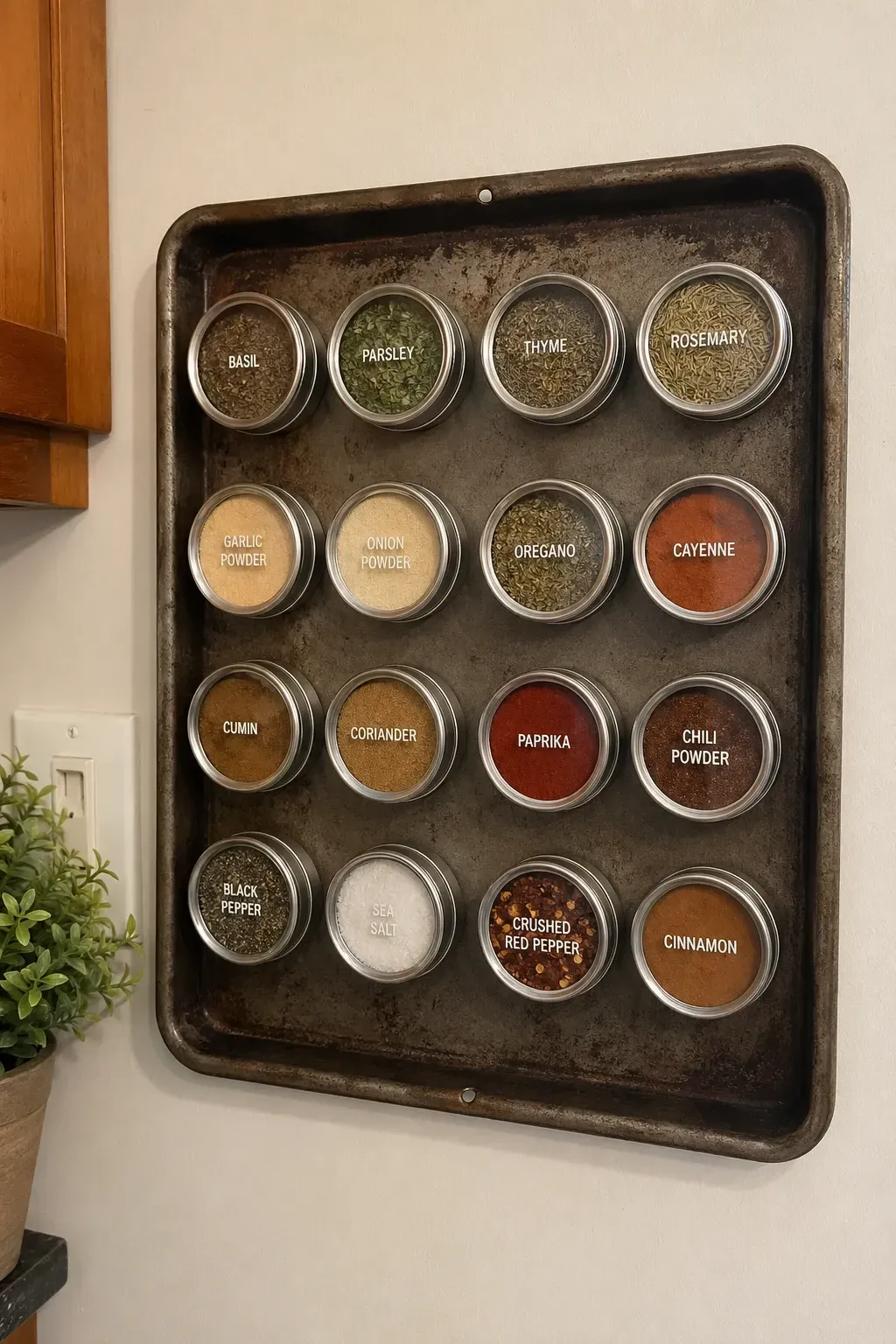
A metal baking pan or cookie sheet mounted on the wall becomes a magnetic board for spice jars with magnetic lids. It is a budget-friendly version of a magnetic spice wall. The pan gives you a defined area to keep spice jars and the metal surface means you can rearrange jars any time. Paint the pan to match your kitchen colors and it looks like a custom installation.
Designer Tip: Use a rimmed baking sheet rather than a flat cookie sheet. The rim creates a frame around the jars that makes the display look intentional and prevents jars at the edges from sliding off if the magnets are not strong enough.
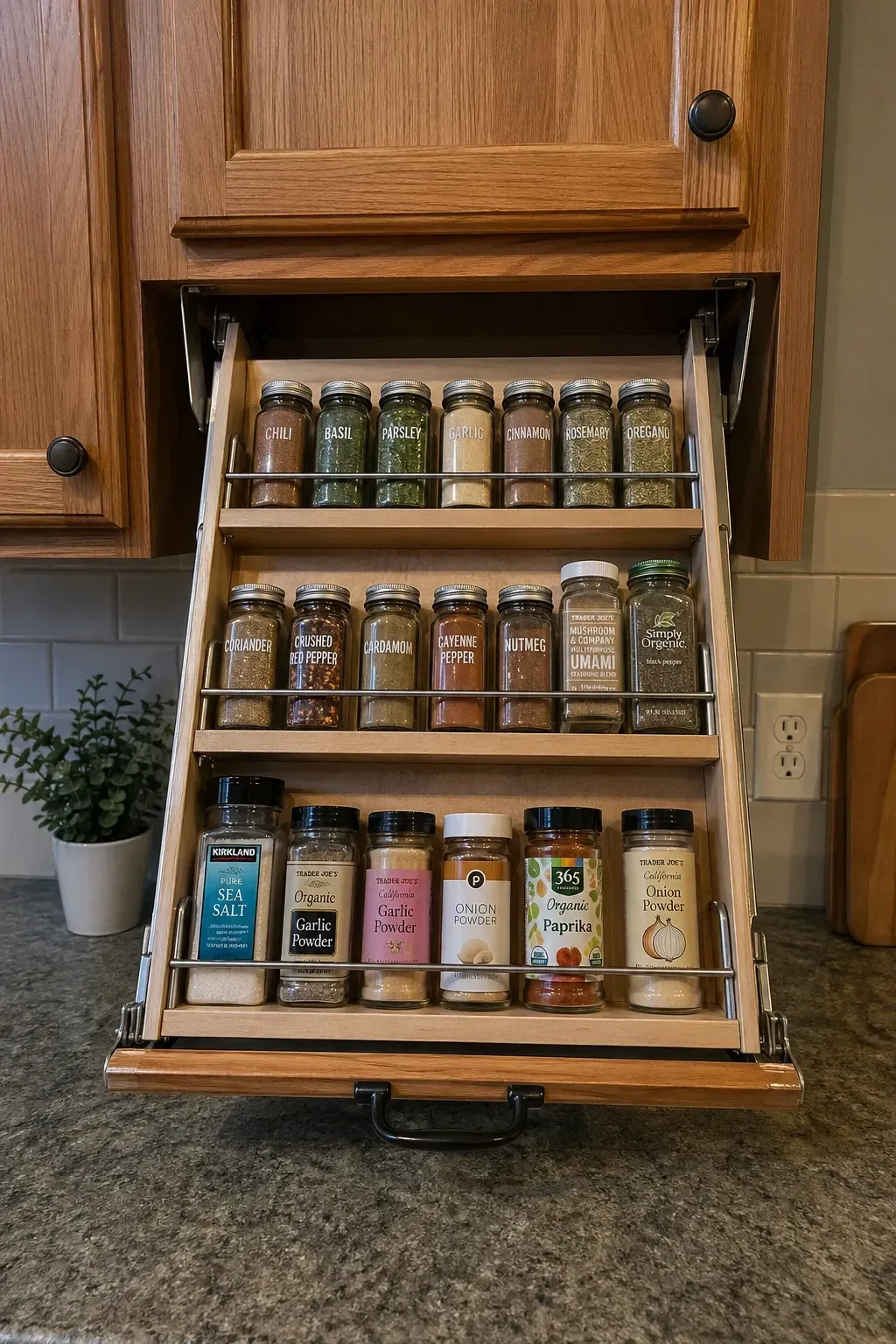
A rack mounted under the upper cabinet that swings or pulls down to eye level is a clever way to keep spices hidden but accessible. Push the rack up and it tucks under the cabinet out of sight. Pull it down and the jars are right in front of you at a comfortable height. This mechanical solution works well in kitchens where counter space is limited and you do not want spices on display.
Designer Tip: Test the pull-down mechanism before committing to one. Cheap versions with flimsy hinges feel wobbly and do not stay in the down position. A smooth, sturdy mechanism with a locking position at the bottom is worth the extra cost.
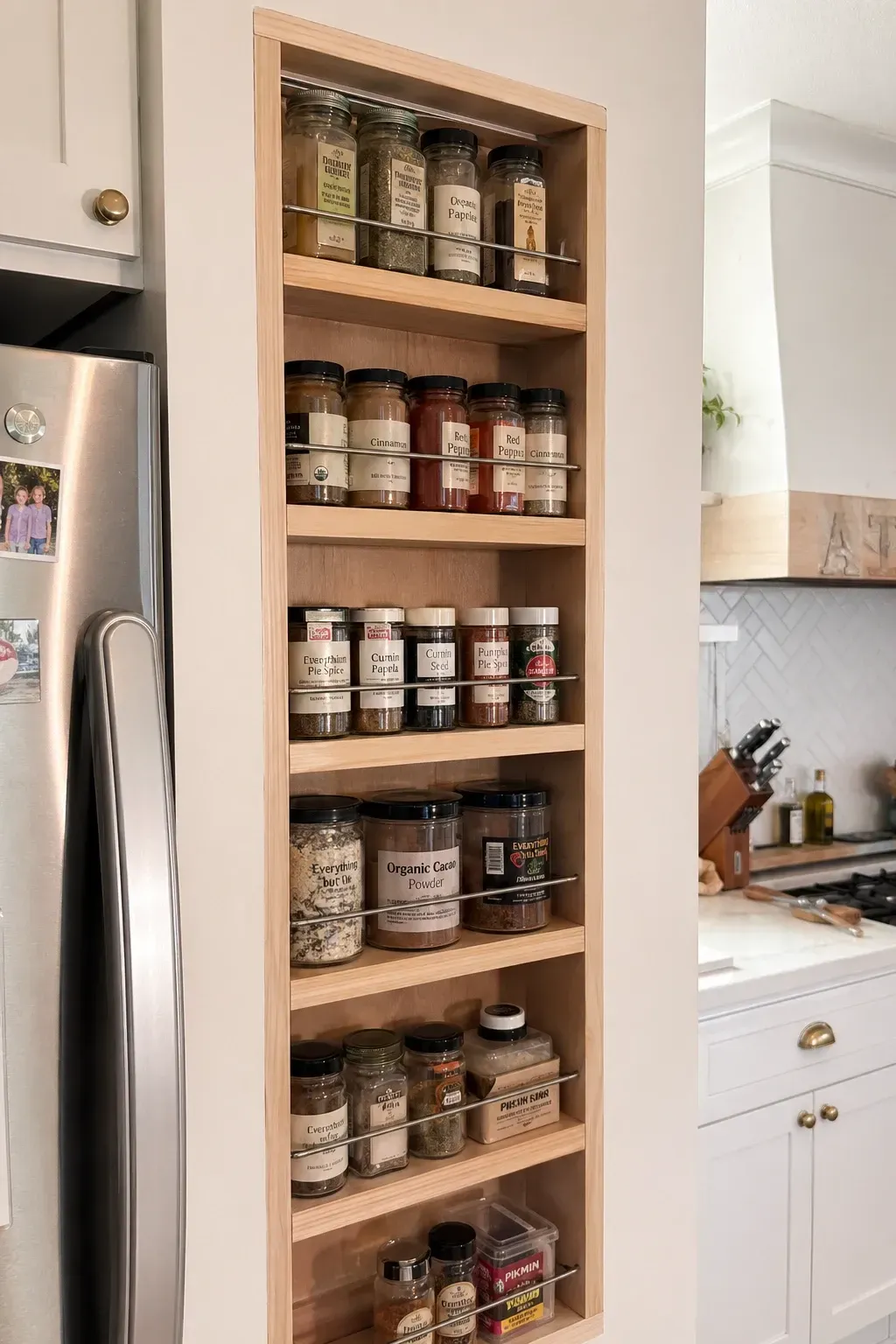
Recessed shelves built into the wall between studs create a spice niche that sits flush with the wall. The shelves are shallow, just deep enough for spice jars, and they do not protrude into the room. This is the cleanest looking option because the entire rack is built into the wall architecture. It requires construction work, so it is best done during a kitchen renovation.
Designer Tip: Frame the recessed niche with trim that matches your kitchen cabinet trim. This makes the spice niche look like it was part of the original kitchen design rather than something added later.
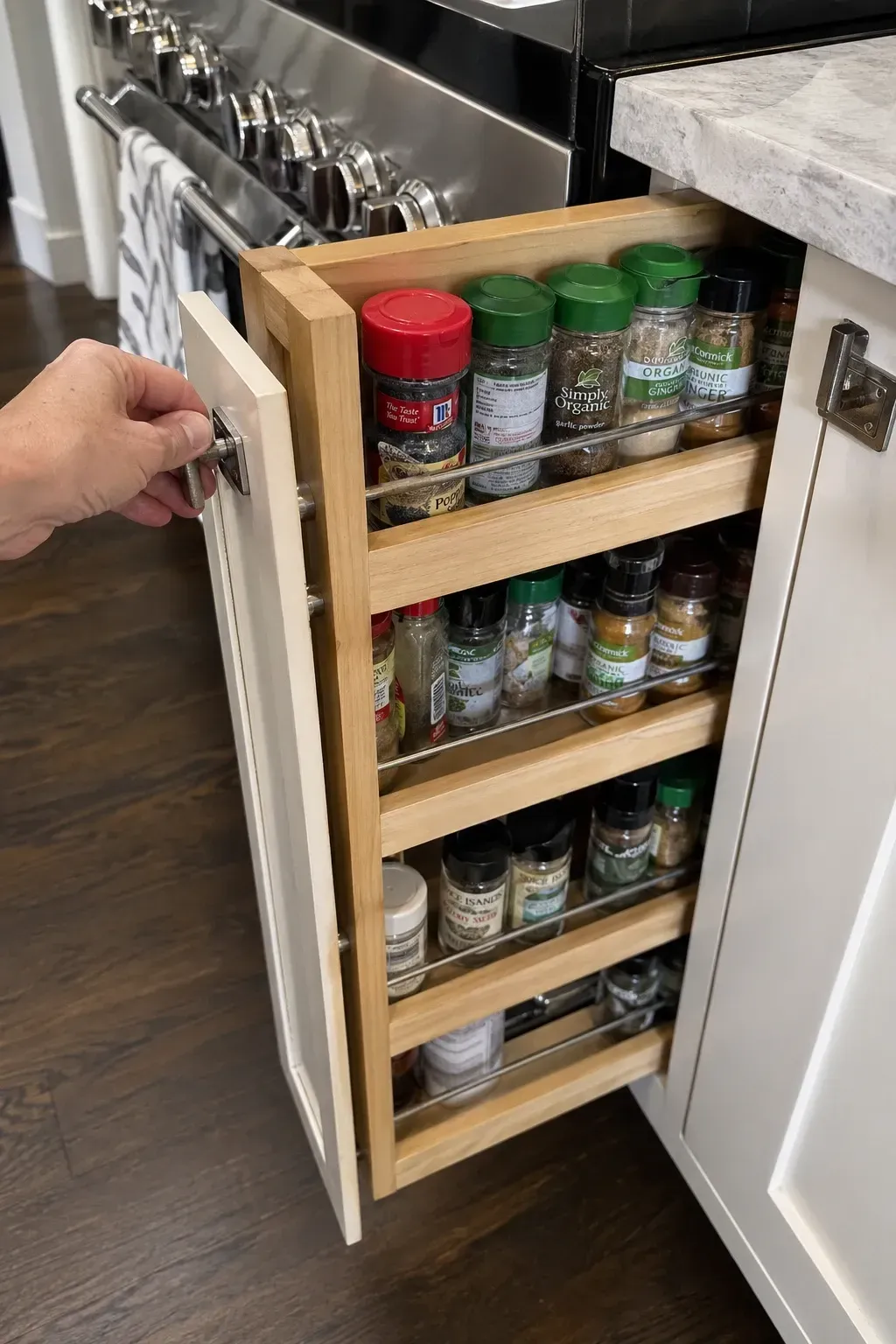
A slim pull-out rack that fits in a narrow cabinet opening, sometimes as narrow as 3 to 6 inches, holds spice jars on multiple tiers. Pull the rack out and all the jars are visible from the side. Push it back in and everything disappears behind the cabinet face. These are perfect for the awkward narrow cabinet that many kitchens have next to the stove or refrigerator.
Designer Tip: Install soft-close drawer slides on the pull-out. Slamming a rack full of glass jars back into the cabinet is loud and risks breaking jars. Soft-close slides cushion the closing motion and protect the jars.
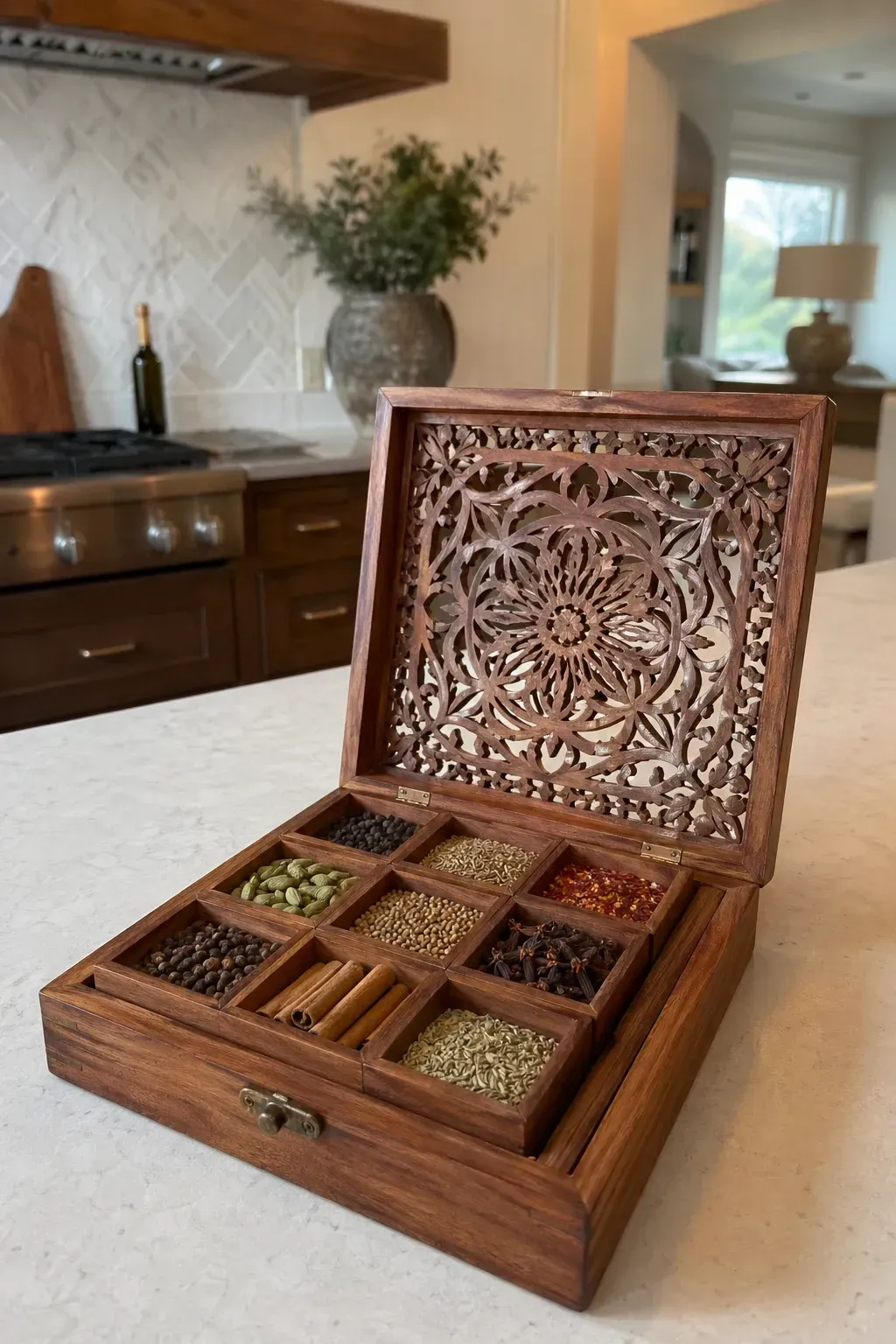
A wooden or decorative box on the counter holds your most-used spices in one portable container. You can carry the whole box to the stove, the table, or the grill. Traditional Indian spice boxes with multiple small compartments are the classic version of this idea. A countertop box keeps daily spices within reach and adds a warm, handcrafted feel to the kitchen.
Designer Tip: Keep only 6 to 8 everyday spices in the box. A countertop box is meant for quick access, not full collection storage. Too many spices crammed into the box makes it hard to find anything and defeats the purpose.
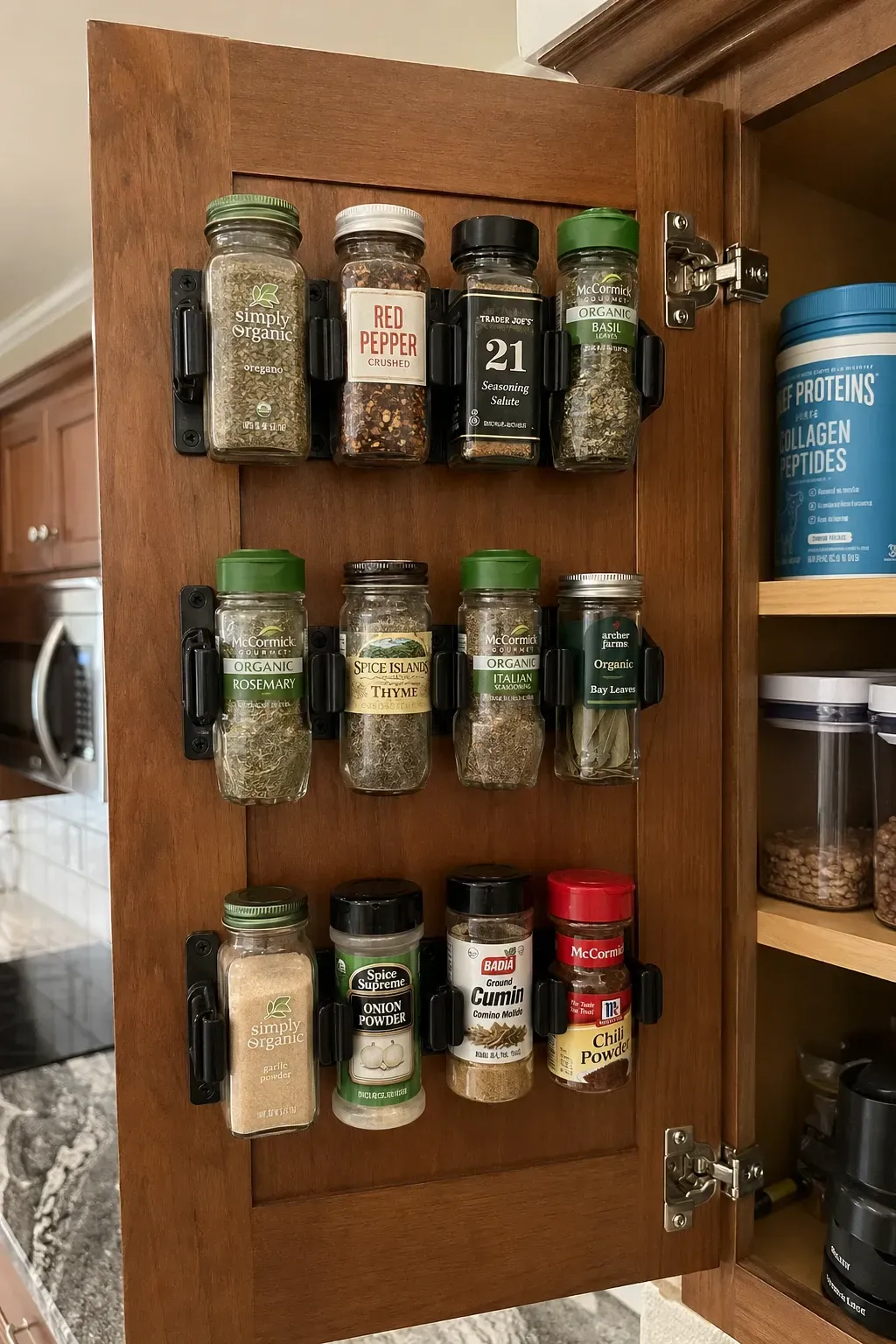
Adhesive or screw-mounted clips on the inside of a cabinet door grip individual spice jars. Each jar snaps into a clip and hangs on the door. Open the cabinet and all your spices are lined up on the door while the shelves behind remain free for other items. This doubles the usable space inside the cabinet without adding bulk.
Designer Tip: Check that the cabinet door can close fully with the jars attached. If the jars are too deep and hit the shelf inside when the door closes, the clips will break and jars will fall. Measure the clearance first.
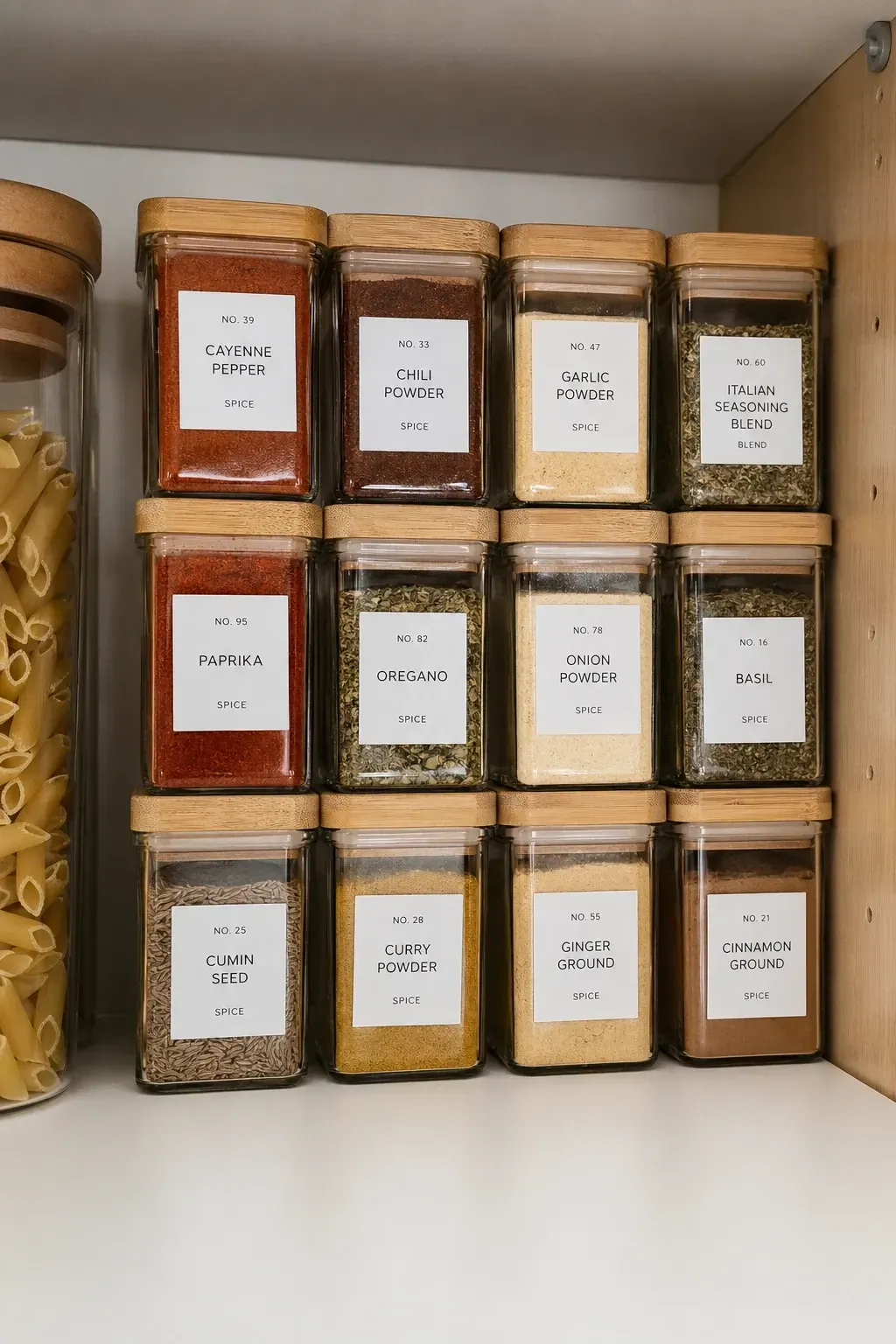
Containers designed to lock together when stacked create a stable tower of spices that does not topple. Unlike round jars that roll and shift, stackable containers have flat sides and interlocking features that keep the stack solid. You build the tower on a shelf or counter and pull individual containers out from any level without collapsing the stack. This is a space-efficient system for small kitchens with limited shelf room.
Designer Tip: Stick with one brand of stackable containers so every piece interlocks properly. Mixing brands with different locking mechanisms results in an unstable stack that defeats the whole purpose of interlocking design.
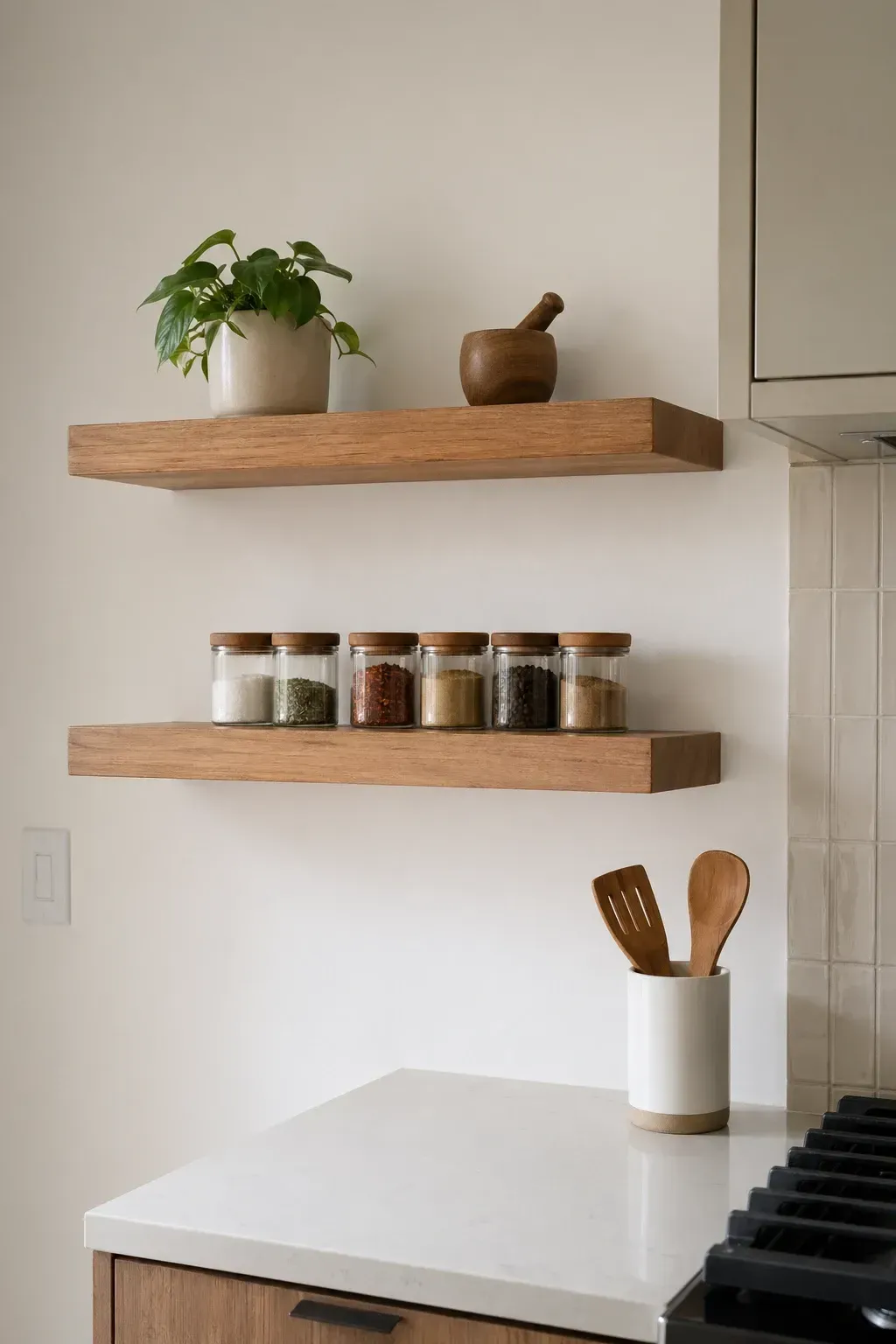
Narrow floating shelves on the wall hold spice jars in a single row that looks like a display. The hidden brackets keep the look minimal and modern. Two or three shelves stacked vertically create enough room for a full spice collection. Floating shelves work on empty wall space near the stove, above the counter, or on the side of a cabinet where there is a gap.
Designer Tip: Add a thin lip or rail on the front edge of each shelf to prevent jars from sliding off. A 1-inch rail is barely visible but stops jars from falling if they get bumped. This is especially important in busy kitchens where people move quickly past the shelves.
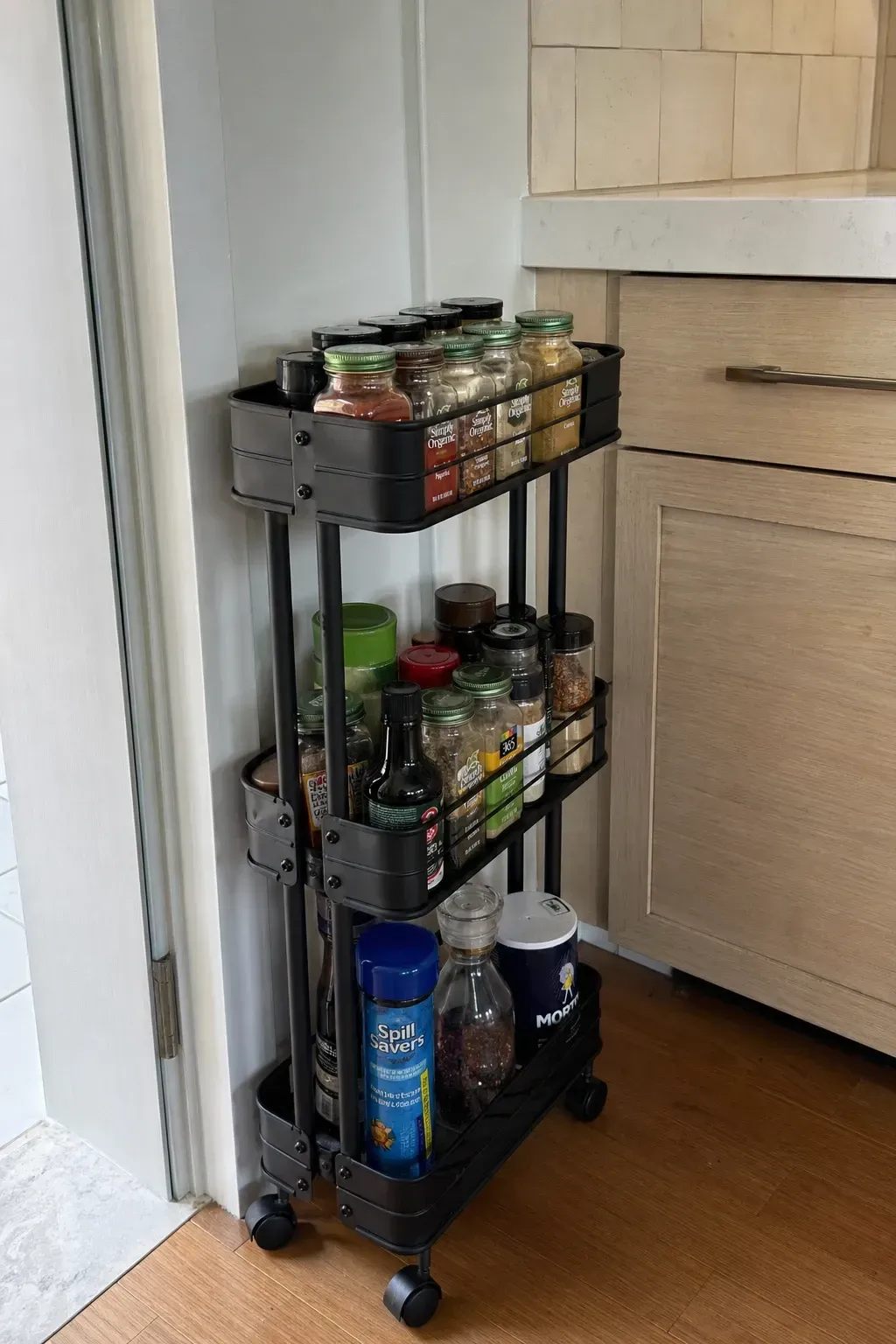
A small rolling cart dedicated to spices keeps your entire collection portable. Roll it next to the stove when cooking and tuck it into a gap or closet when you are done. A three-tier cart holds a surprising number of jars and the wheels make it easy to move even when fully loaded. This is a flexible option for kitchens that lack permanent wall or cabinet space for spices.
Designer Tip: Use small bins or dividers on each cart tier to keep jars from sliding around when the cart moves. Without dividers, every roll of the cart sends jars crashing into each other. Small containment keeps the cart organized in motion.
The best spice storage system is the one that matches how you cook. If you use the same five spices every day, a countertop solution is all you need. If you have a big collection, a drawer system or wall rack gives you the visibility to find things fast. Whatever you choose, the biggest improvement comes from being able to see all your spices at once. No more guessing, no more digging, no more buying duplicates of spices you already have hiding in the back of the cabinet.
Frequently Asked Questions
How long do spices last?
Ground spices stay potent for about one to two years. Whole spices last three to four years. Dried herbs lose flavor faster, usually within one year. If a spice has lost its smell when you open the jar, it has lost most of its flavor and it is time to replace it. Writing the purchase date on the bottom of each jar helps you track freshness.
Should I store spices near the stove?
Close to the stove is convenient for cooking but direct heat, steam, and humidity shorten the life of spices. The best spot is near the stove but not directly above or beside it. A wall rack a few feet away or a drawer near the stove gives you quick access without exposing spices to constant heat and moisture.
Are matching spice jars worth the effort?
Yes, if you want a clean and organized look. Matching jars with uniform labels make any storage system look better and make it easier to find spices quickly. The upfront effort of transferring spices into matching jars pays off every time you cook. It also forces you to audit your collection and toss expired spices during the transfer.
What is the best way to organize spices?
Alphabetical order is the simplest system and works for most people. If you cook specific cuisines often, grouping by cuisine (Mexican, Italian, Indian, baking) can be more practical. The key is picking one system and sticking with it. Any organization method beats no method as long as everyone in the household follows the same rule for putting spices back.