Kitchen windows are tricky because the curtains need to handle grease, steam, cooking smells, and frequent washing. I went through three sets of kitchen curtains before finding what actually works in a room where things get messy. These are the kitchen window curtain ideas that look good and hold up to real kitchen life.
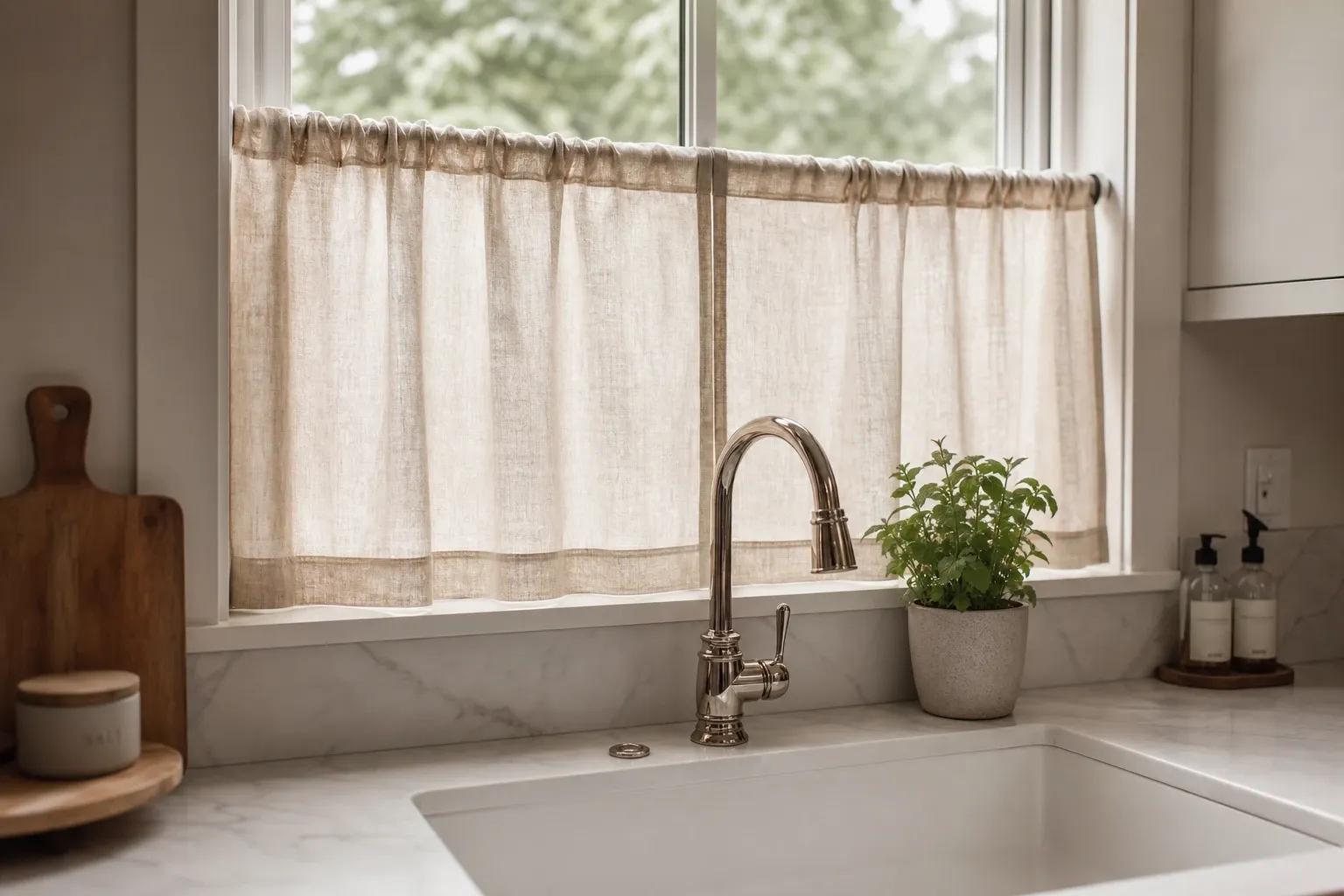
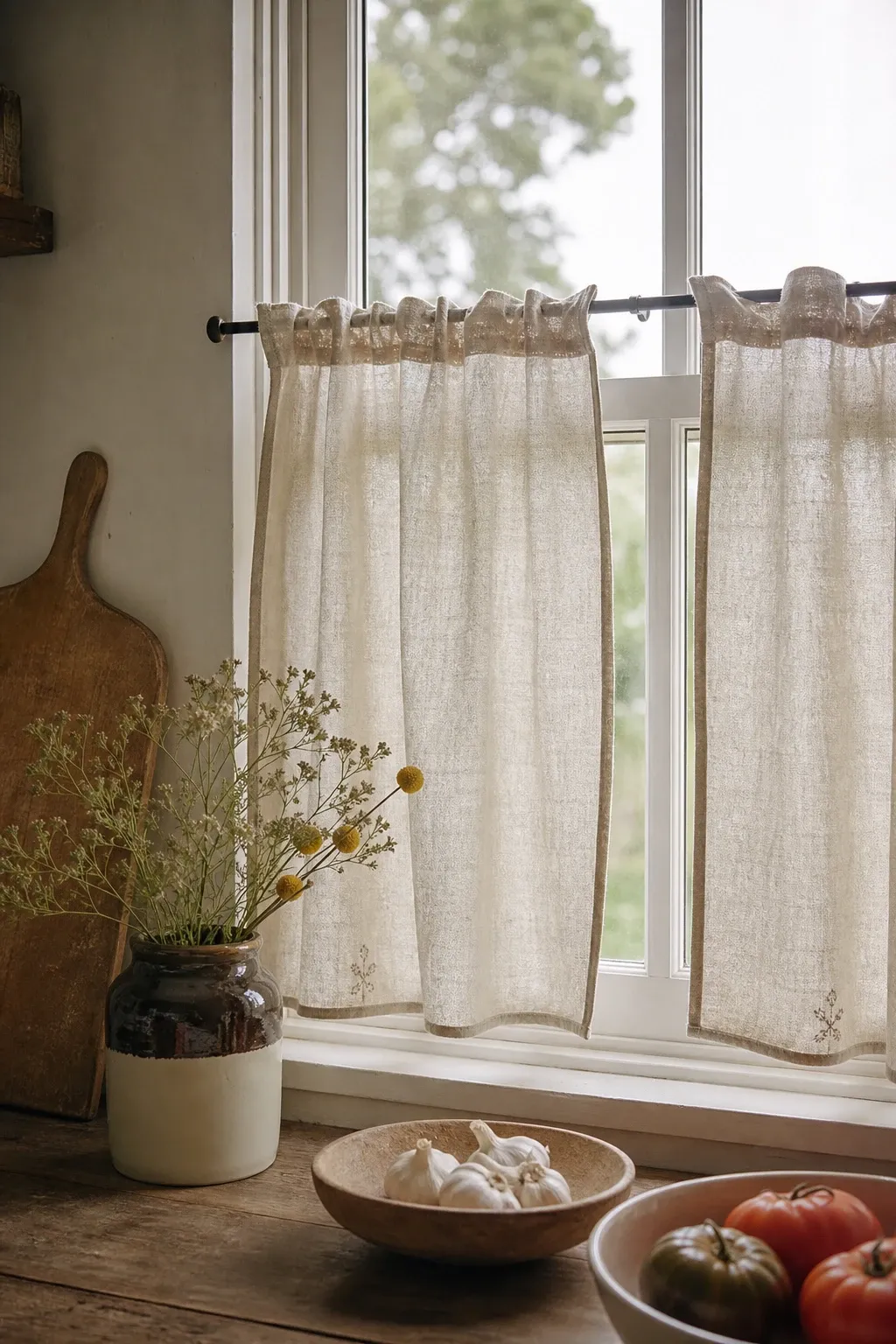
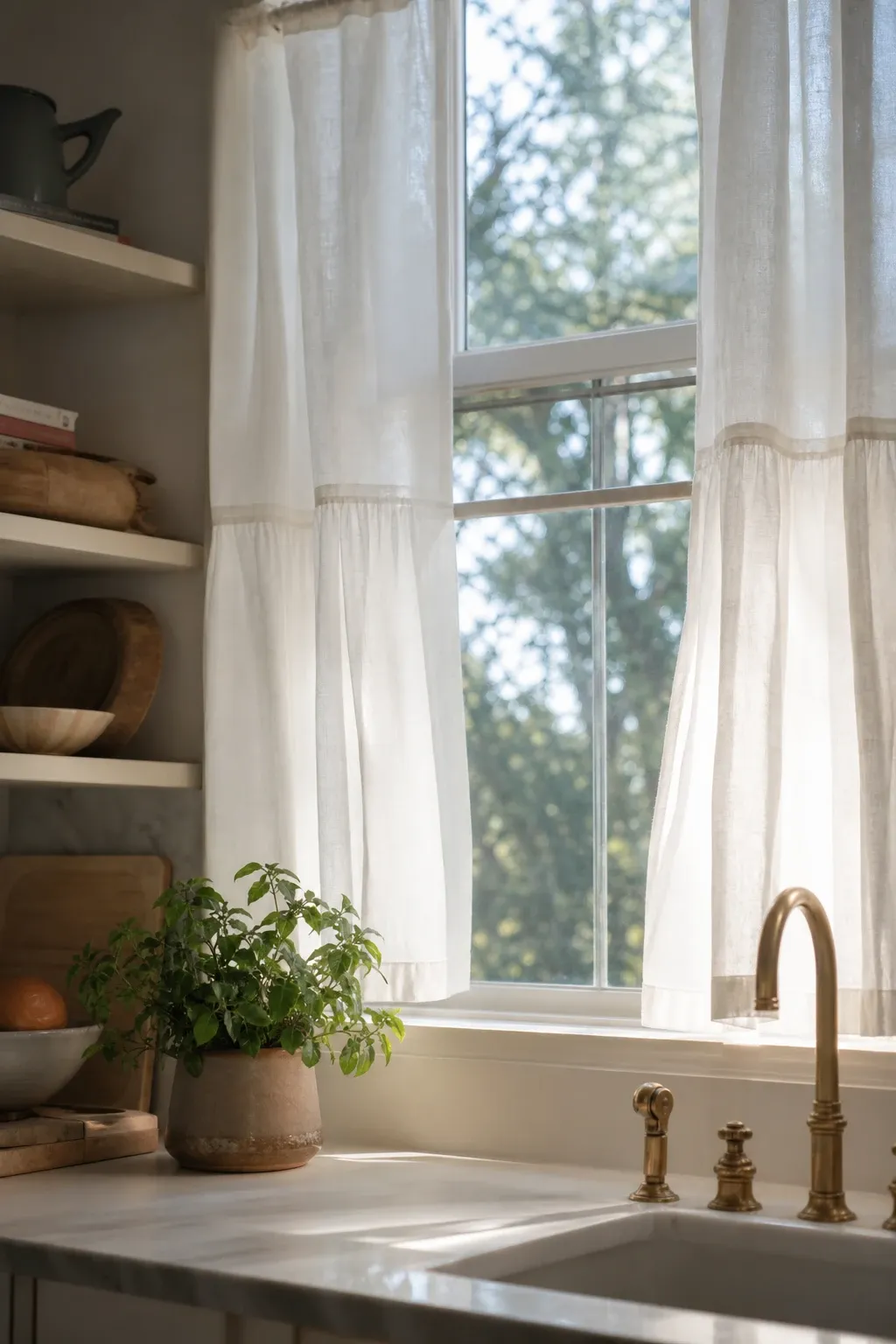
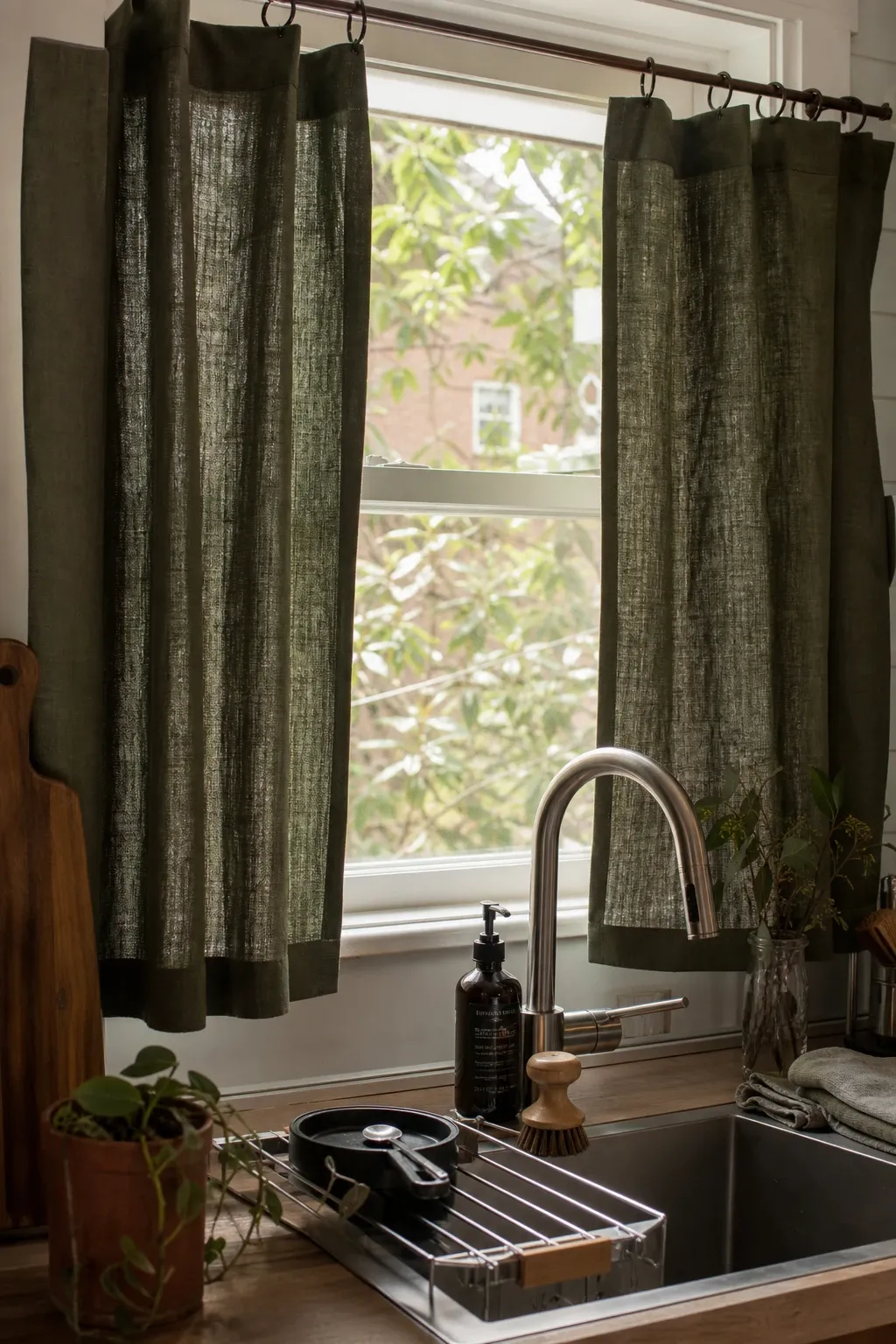
Linen cafe curtains cover the bottom half of the kitchen window for privacy while the top stays open for light. The half-height design keeps fabric away from the stove and sink where it could get splashed. Linen is machine washable and actually gets softer with every wash, which matters in a kitchen where curtains need frequent cleaning. Natural linen tones work with almost any kitchen color scheme.
Designer Tip: Use clip rings instead of a rod pocket for cafe curtains. Clip rings make it easy to remove the curtains for washing without taking down the rod. They also create neat, even pleats that a rod pocket cannot match on short curtain panels.
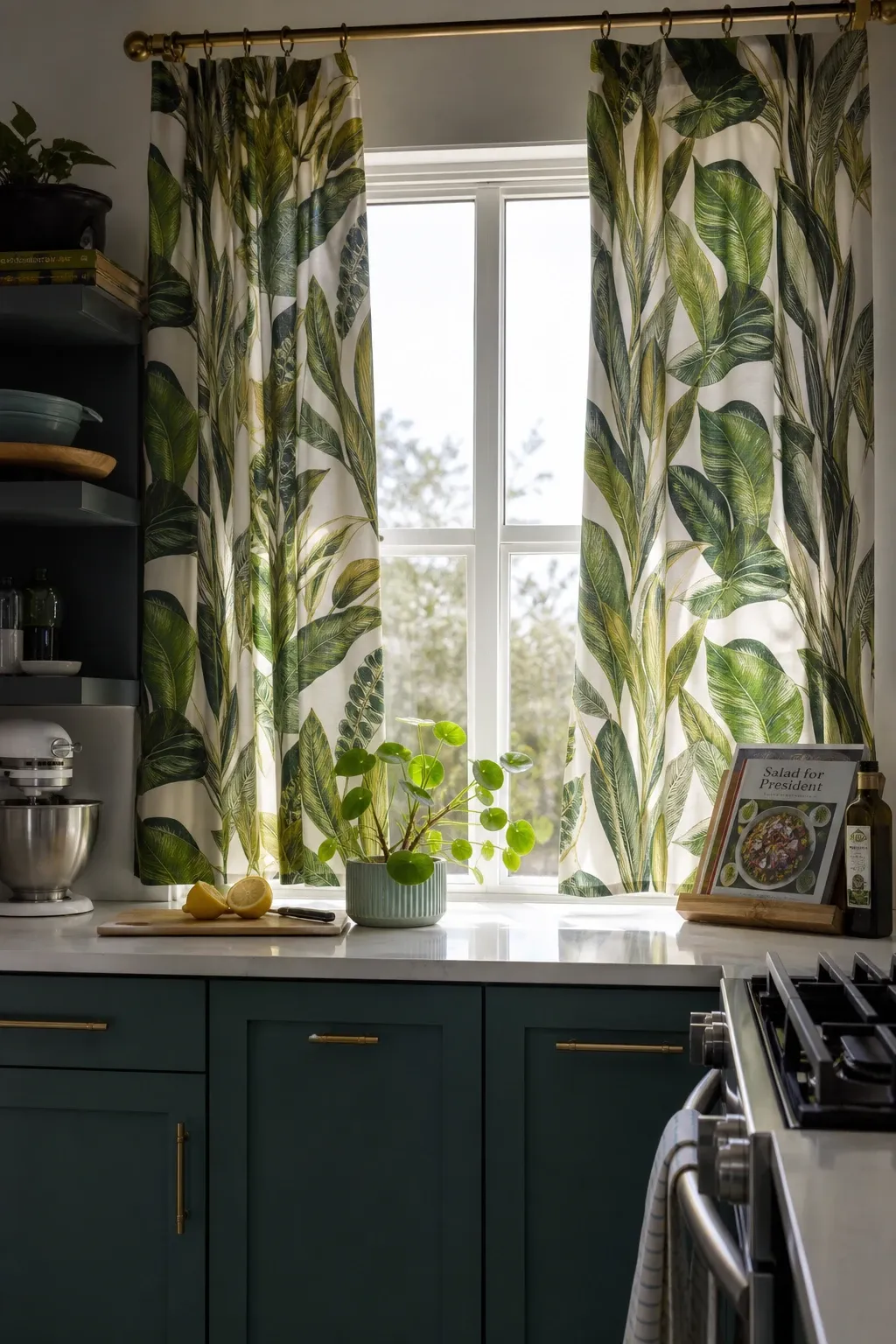
Curtains with leaf, herb, or floral prints bring color and life to the kitchen window. Botanical patterns feel natural in a kitchen because plants and food are already associated with the space. Green herb prints, citrus patterns, or loose watercolor florals all work. Choose a print on a light background so the kitchen stays bright and the pattern does not feel heavy.
Designer Tip: Pick a botanical print that includes at least one color already present in your kitchen. A curtain that shares a color with your backsplash, cabinet hardware, or countertop accessories looks like it belongs rather than like an afterthought.
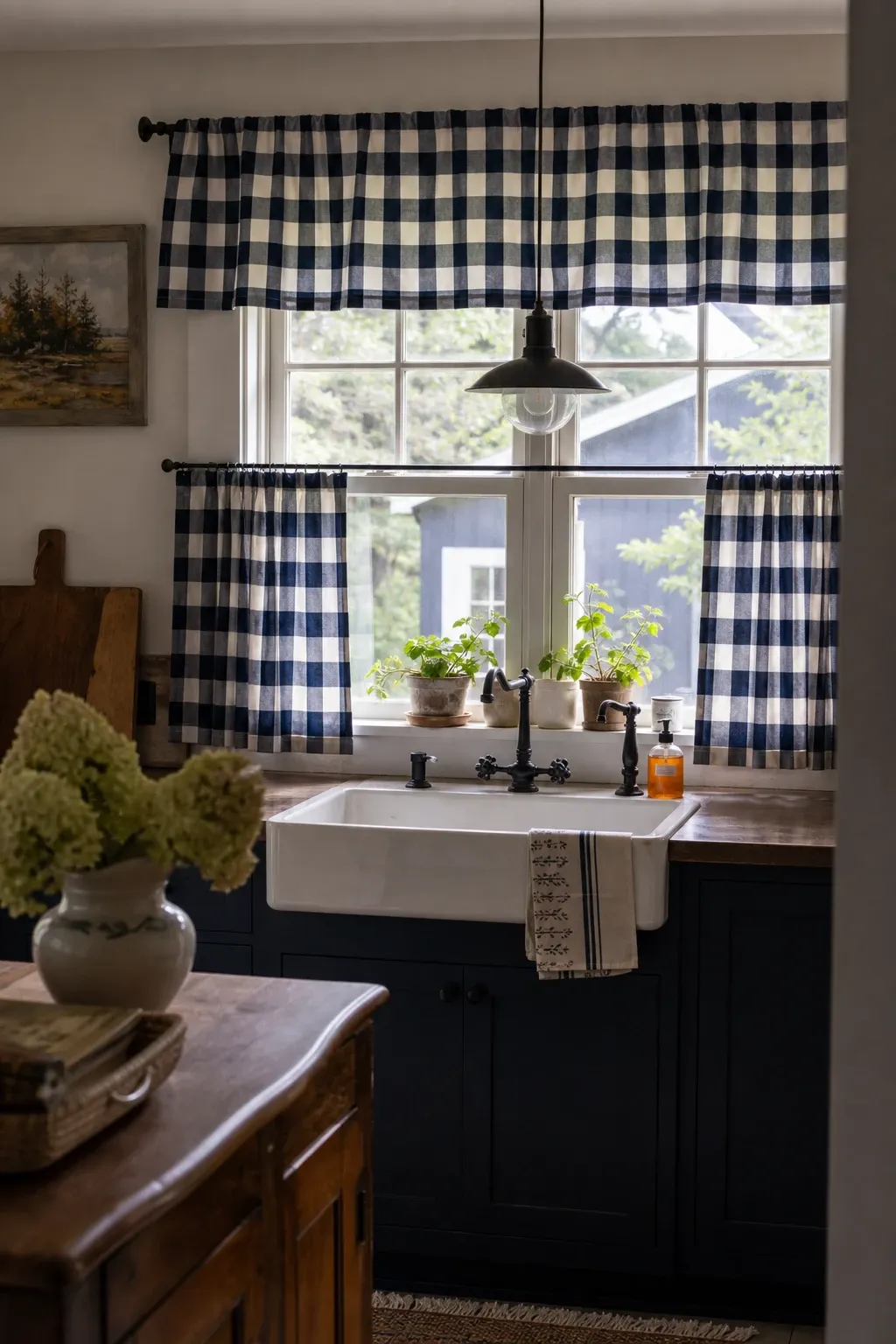
Buffalo check curtains in black and white, red and white, or navy and white give the kitchen a farmhouse look that never goes out of style. The bold check pattern is graphic enough to make a statement but simple enough to work with other patterns in the room. Buffalo check pairs well with striped dish towels, solid-colored canisters, and just about any kitchen decor style from rustic to modern farmhouse.
Designer Tip: Use the same buffalo check fabric for curtains and a matching table runner or chair cushion to tie the kitchen together. One pattern used in two places creates a coordinated look without being overwhelming.
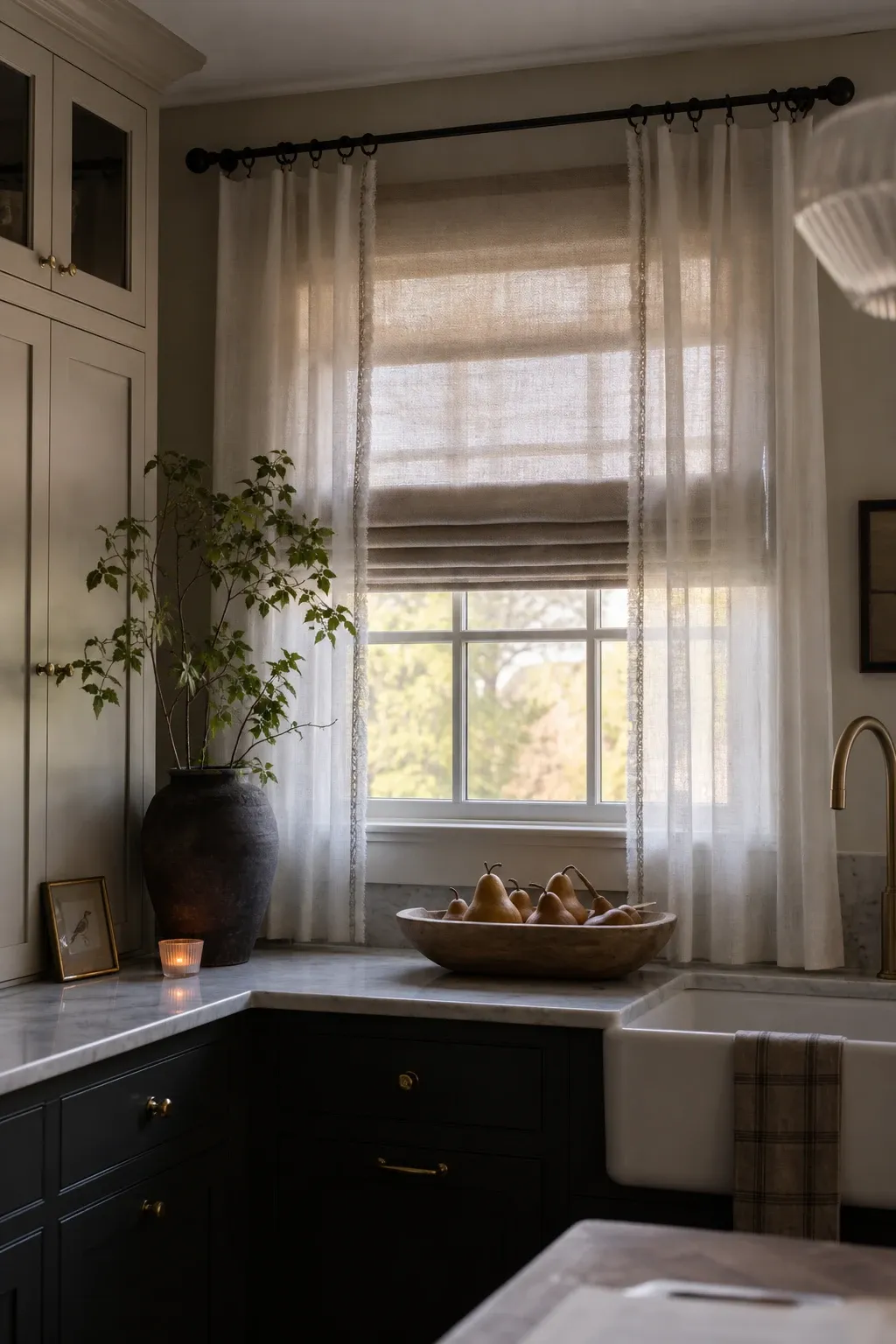
Simple sheer white curtains let maximum light through while softening the window frame. They are the most versatile kitchen curtain because they work with every color, style, and layout. Sheers add a finished look to the window without blocking any light, which is important in kitchens that rely on natural light for food prep. They are also the easiest curtains to wash and bleach back to white.
Designer Tip: Buy polyester sheers for the kitchen instead of cotton. Polyester does not absorb cooking odors the way cotton does, dries faster, and resists yellowing from cooking grease. Cotton sheers near the kitchen stove turn yellow within a few months.
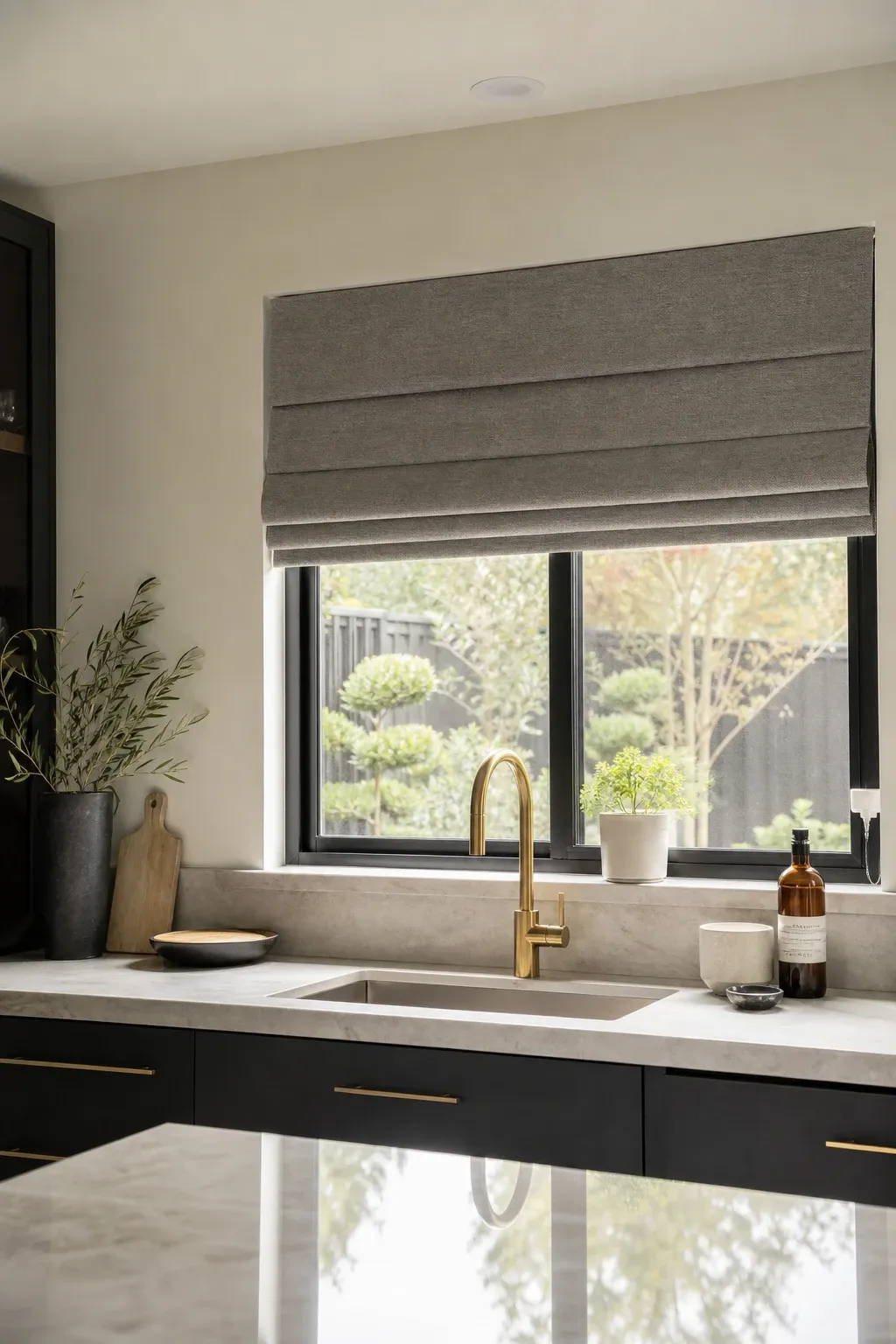
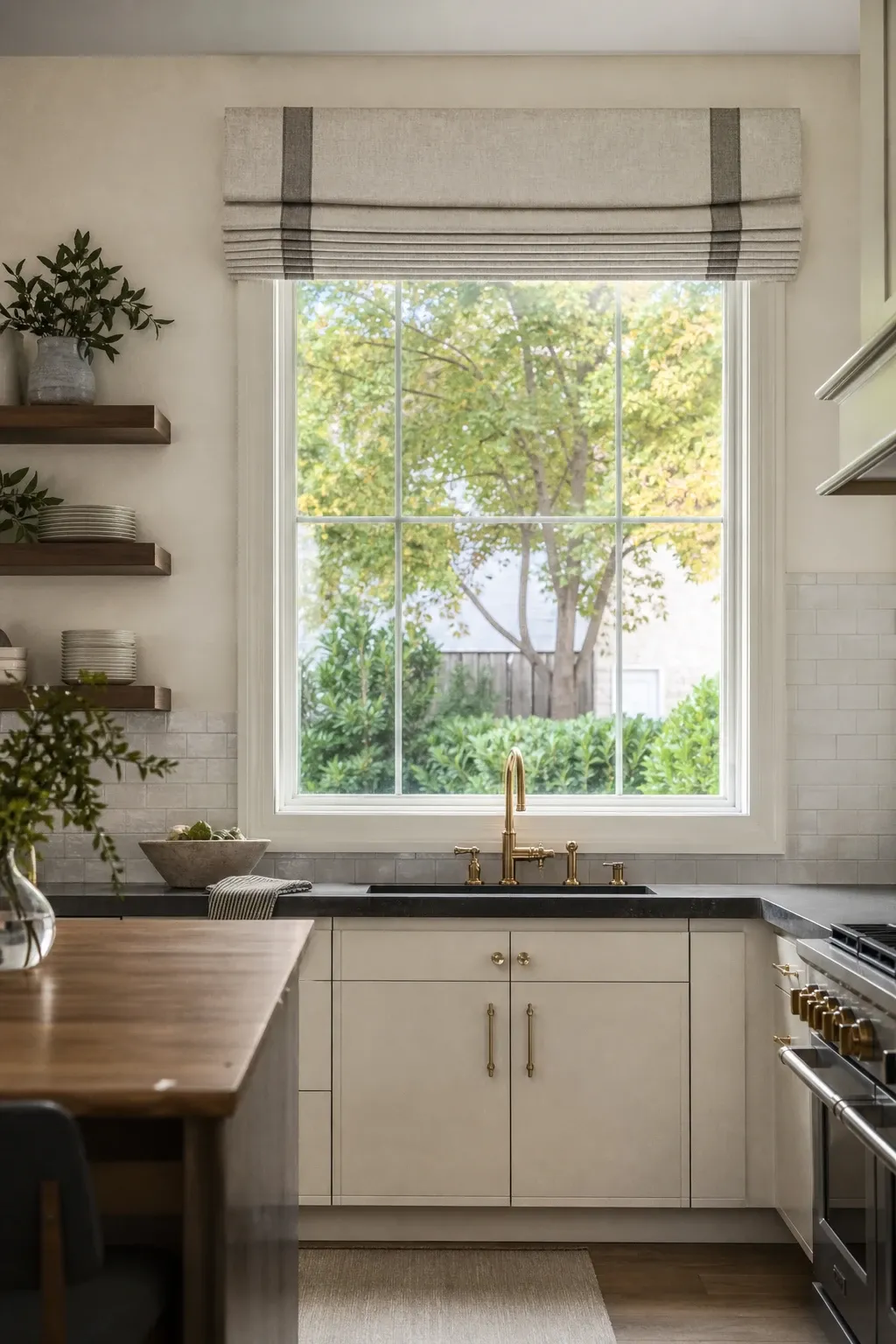
A flat roman shade in a solid color or subtle pattern gives the kitchen window a clean, tailored look. When raised, the shade stacks neatly at the top of the window and stays out of the way. When lowered, it lies flat against the glass for a smooth appearance. Roman shades are ideal for kitchen windows above the sink where hanging curtain panels would dip into the water.
Designer Tip: Mount an inside-mount roman shade for a sleek, built-in look that shows off the window trim. Outside-mount shades work too but they cover the trim and look bulkier. Inside-mount is the cleaner choice in kitchens where visual simplicity matters.
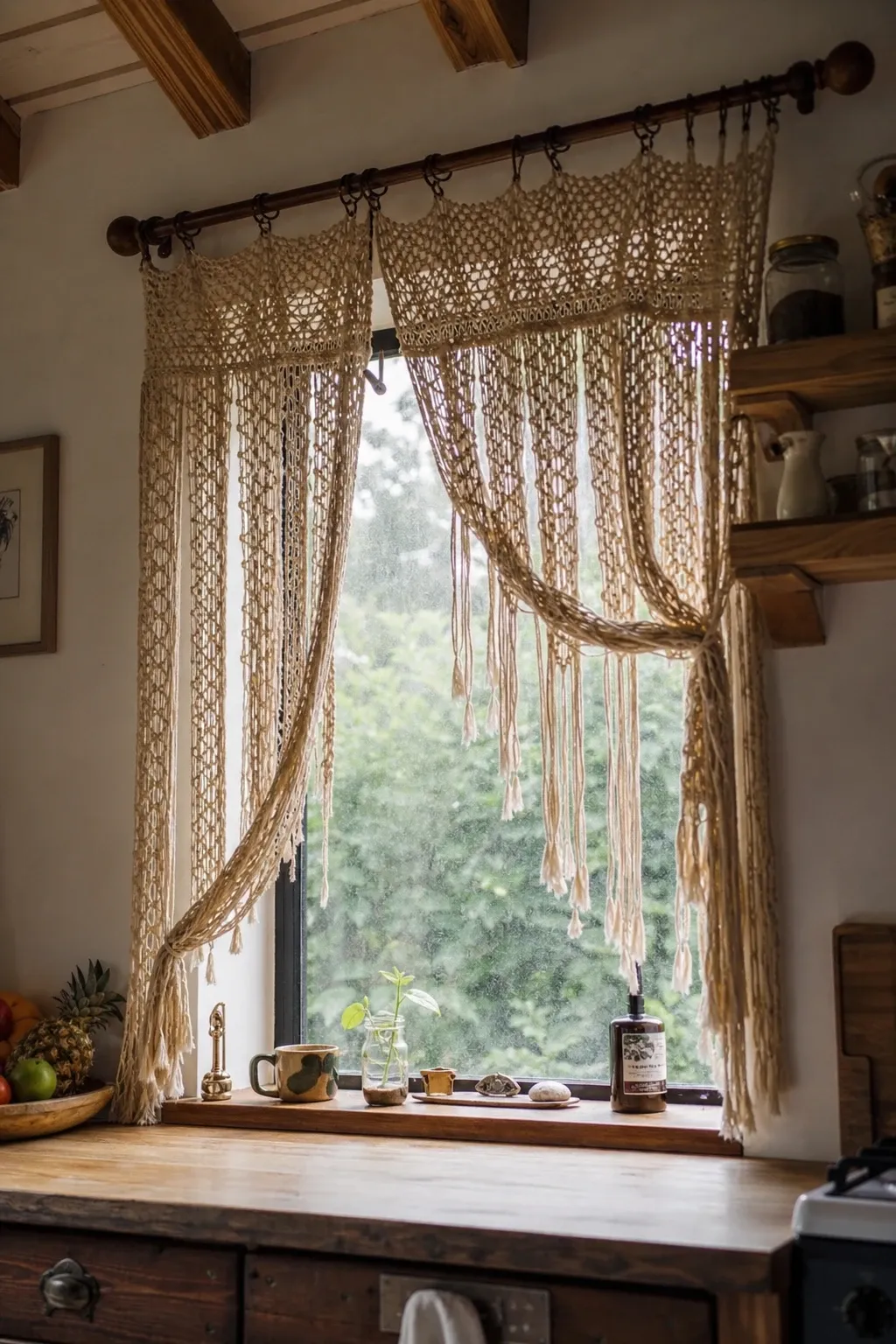
A short macrame valance across the top of the kitchen window adds handmade texture without blocking light. The knotted cotton hangs just a few inches down from the rod, framing the top of the window while leaving the rest open. This works well in boho and eclectic kitchens where you want texture and character without heavy fabric. Macrame valances are also easy to dust and do not need washing as often as fabric curtains.
Designer Tip: Pair a macrame valance with a simple roller shade behind it for times when you need full coverage. The macrame stays decorative on top while the shade handles the practical light-blocking job when needed.
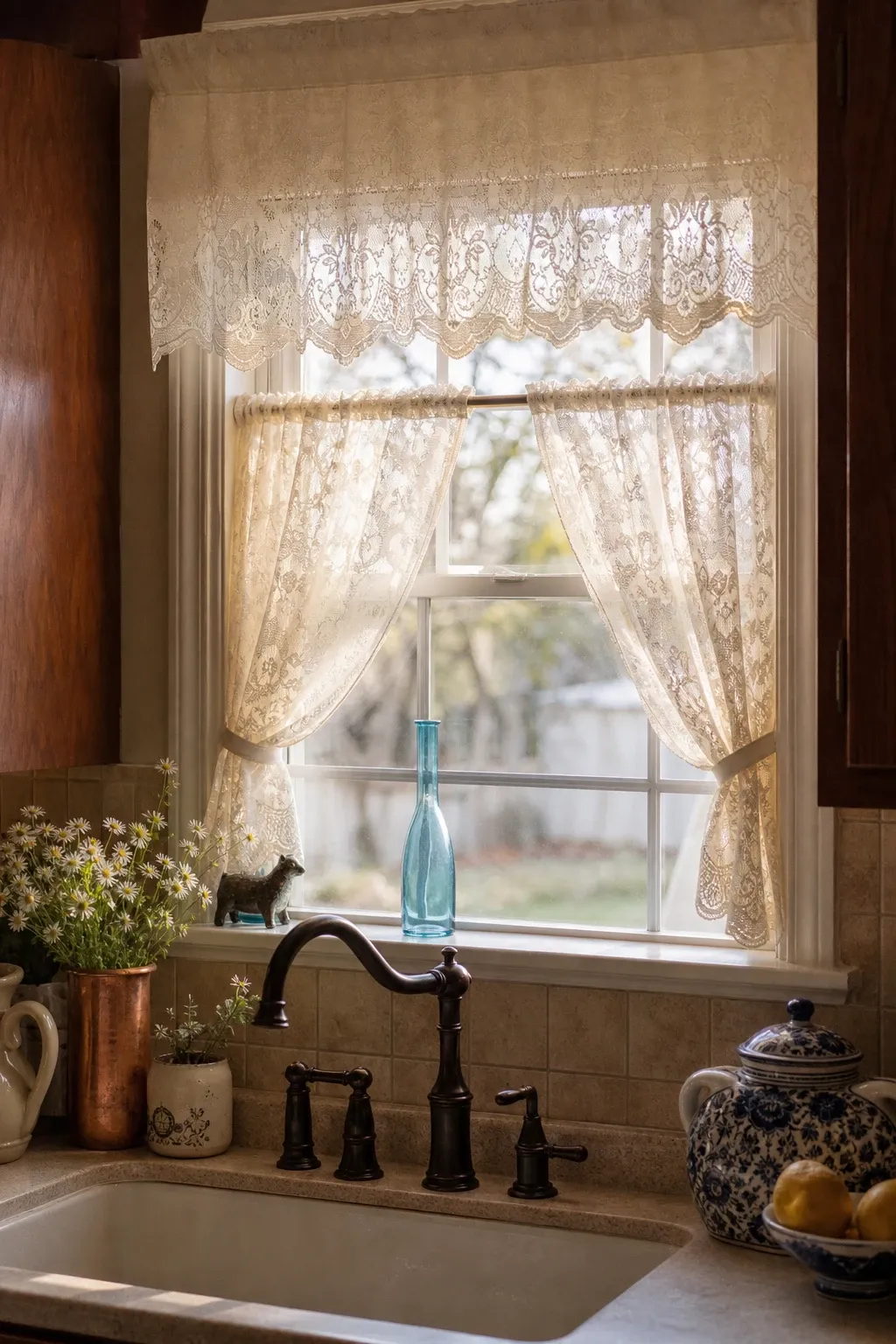
Lace curtains in the kitchen feel nostalgic and charming, especially in older homes and cottage-style kitchens. The openwork in lace filters light beautifully and creates delicate shadow patterns on the walls and floor. White or cream lace against a bright window looks timeless. Lace is lightweight and airy, which keeps the kitchen feeling open even with curtains covering the full window.
Designer Tip: Wash vintage lace curtains by hand in cool water with gentle detergent. Machine washing can tear the delicate patterns and distort the shape. If using new lace, machine wash on a delicate cycle inside a mesh laundry bag to protect the fabric.
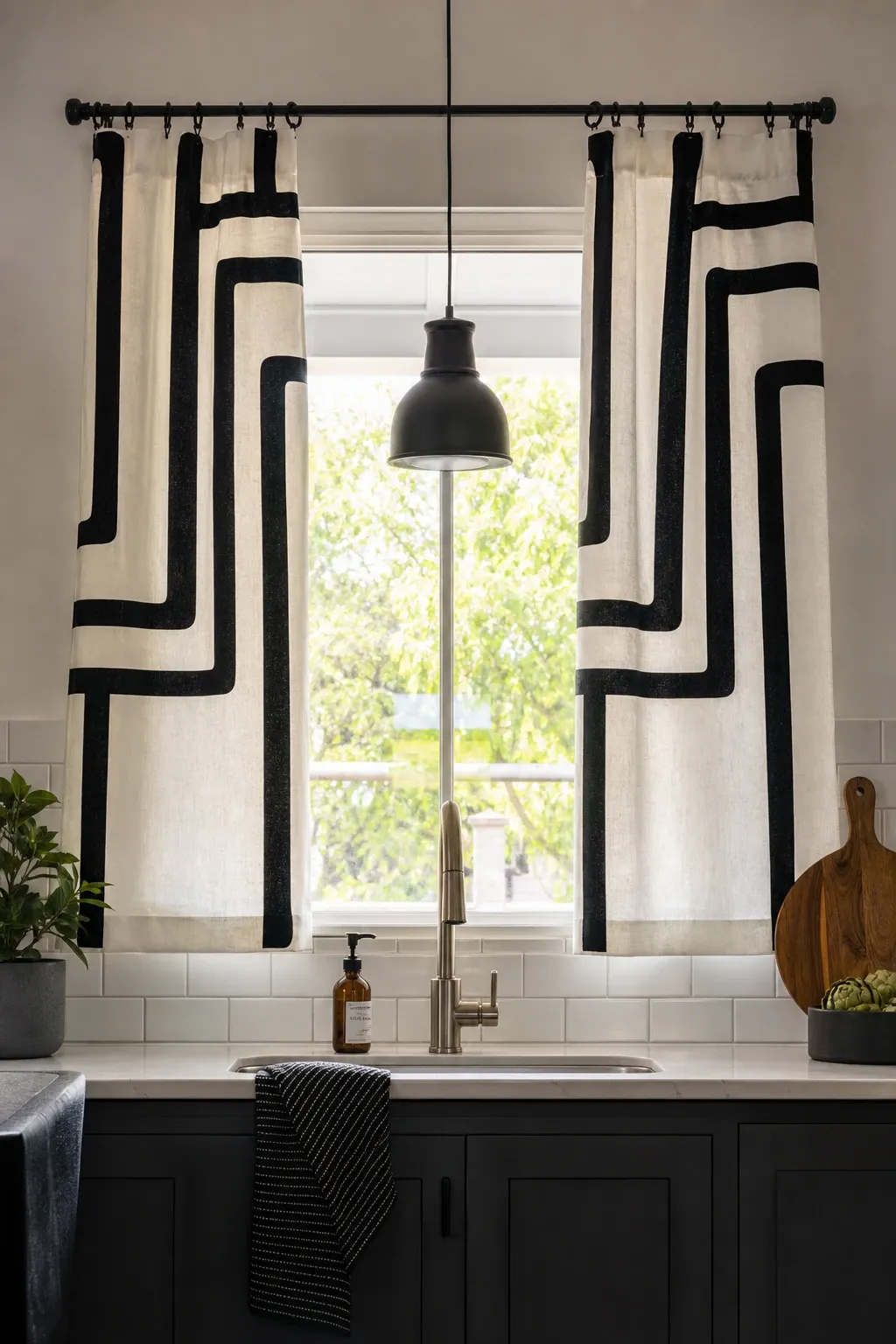
Geometric patterns like trellis, lattice, or Moroccan tile prints give the kitchen a modern edge. The structured patterns look graphic and intentional rather than fussy. Black and white geometrics are the most popular but softer combinations like gray and white or blue and cream work too. Geometric curtains pair well with solid-colored walls and simple kitchen decor because they bring the pattern to the room without competing with other busy elements.
Designer Tip: Scale the pattern to the window size. A bold, large-scale geometric on a small kitchen window looks crowded. A small, tight pattern on a large window disappears. Medium-scale patterns are the safest bet for standard kitchen windows.
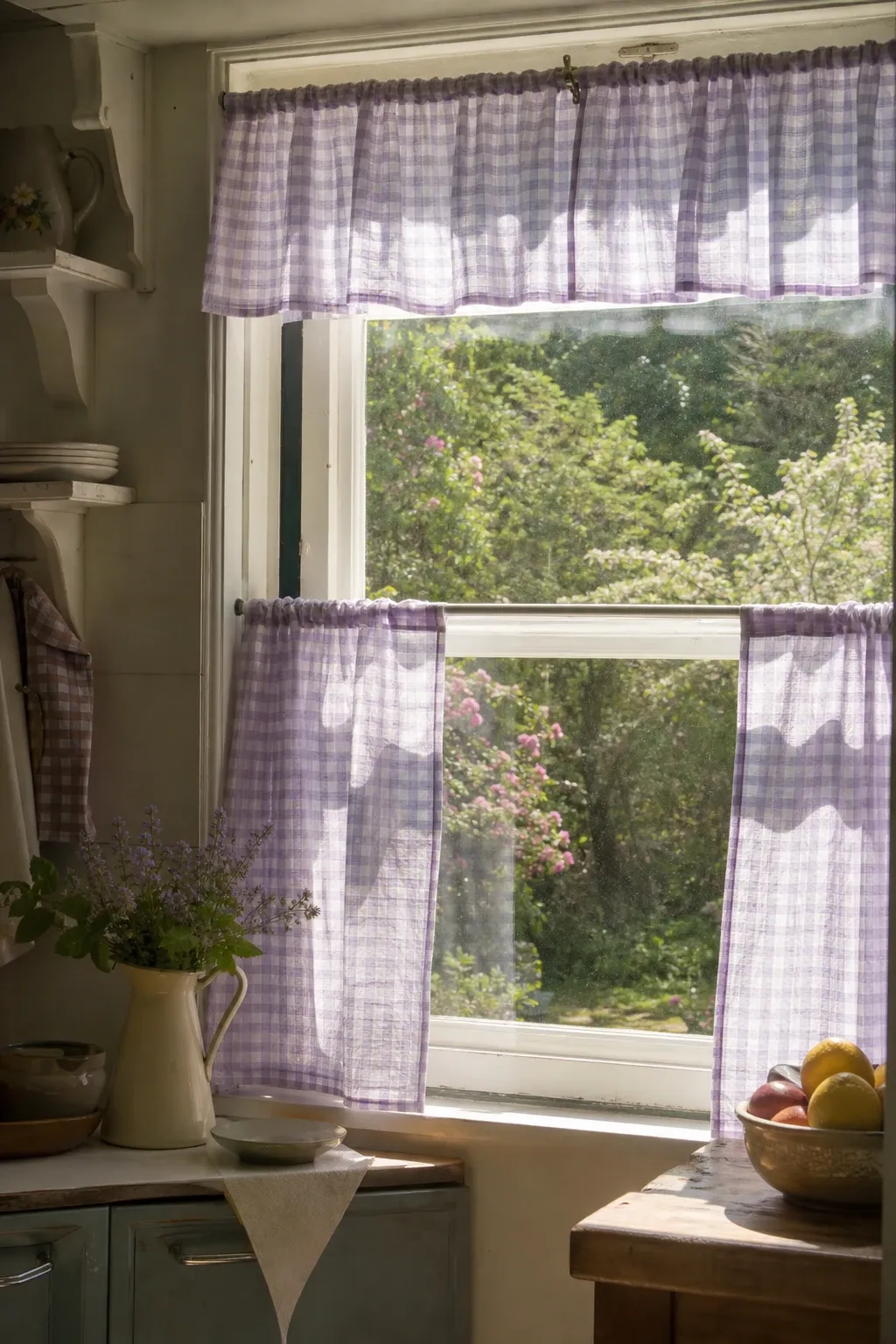
Gingham check curtains in red, blue, yellow, or green bring cheerful, countryside charm to the kitchen. The smaller check pattern is lighter and more playful than buffalo check. Gingham feels classic and comfortable, like a kitchen in a home that has been loved for decades. As cafe curtains, gingham is the most traditional choice and still looks right in kitchens today.
Designer Tip: Match the gingham color to one accent in the kitchen and keep everything else neutral. Red gingham curtains with a red kettle on the counter, surrounded by white cabinets and neutral walls, creates a classic kitchen look that is cheerful without being busy.
Vertical striped curtains add height to the kitchen and bring a tailored, preppy feel. Ticking stripe in blue and white or navy and cream is a classic that works in coastal, farmhouse, and traditional kitchens. The vertical lines draw the eye up, which is helpful in kitchens with low ceilings. Horizontal stripes on a valance create a different look that feels more casual and wide.
Designer Tip: Stick to two-color stripes for the kitchen. Multi-color stripes compete with the natural visual complexity of a kitchen full of appliances, food, and accessories. Two-color stripes keep the window feeling clean.
A roller shade with a printed pattern combines the easy operation of a shade with the decorative impact of curtains. Pull it down and you get pattern and privacy. Roll it up and the window is completely clear. This is a good option for kitchens where curtain panels would hang in the way of the sink, stove, or a pass-through window. Modern roller shades come in hundreds of patterns and print quality has improved a lot.
Designer Tip: Choose a roller shade with a wipe-clean surface for the kitchen. Fabric roller shades absorb kitchen grease and odors the same way curtains do. Vinyl-coated or PVC shades wipe clean with a damp cloth, which saves a lot of maintenance in a cooking space.
A tie-up curtain is a single panel that rolls or folds up from the bottom and ties at the desired height with fabric ties or ribbon. This adjustable style lets you control how much of the window is covered. Fully down for evening privacy, tied halfway up during the day, or rolled all the way up for maximum light. The fabric ties add a charming, handmade detail that suits cottage and country kitchens.
Designer Tip: Iron the fabric ties before tying them. Wrinkled ties look messy and draw negative attention. Crisp, flat ties form neat bows or knots that look intentional and polished against the rolled fabric.
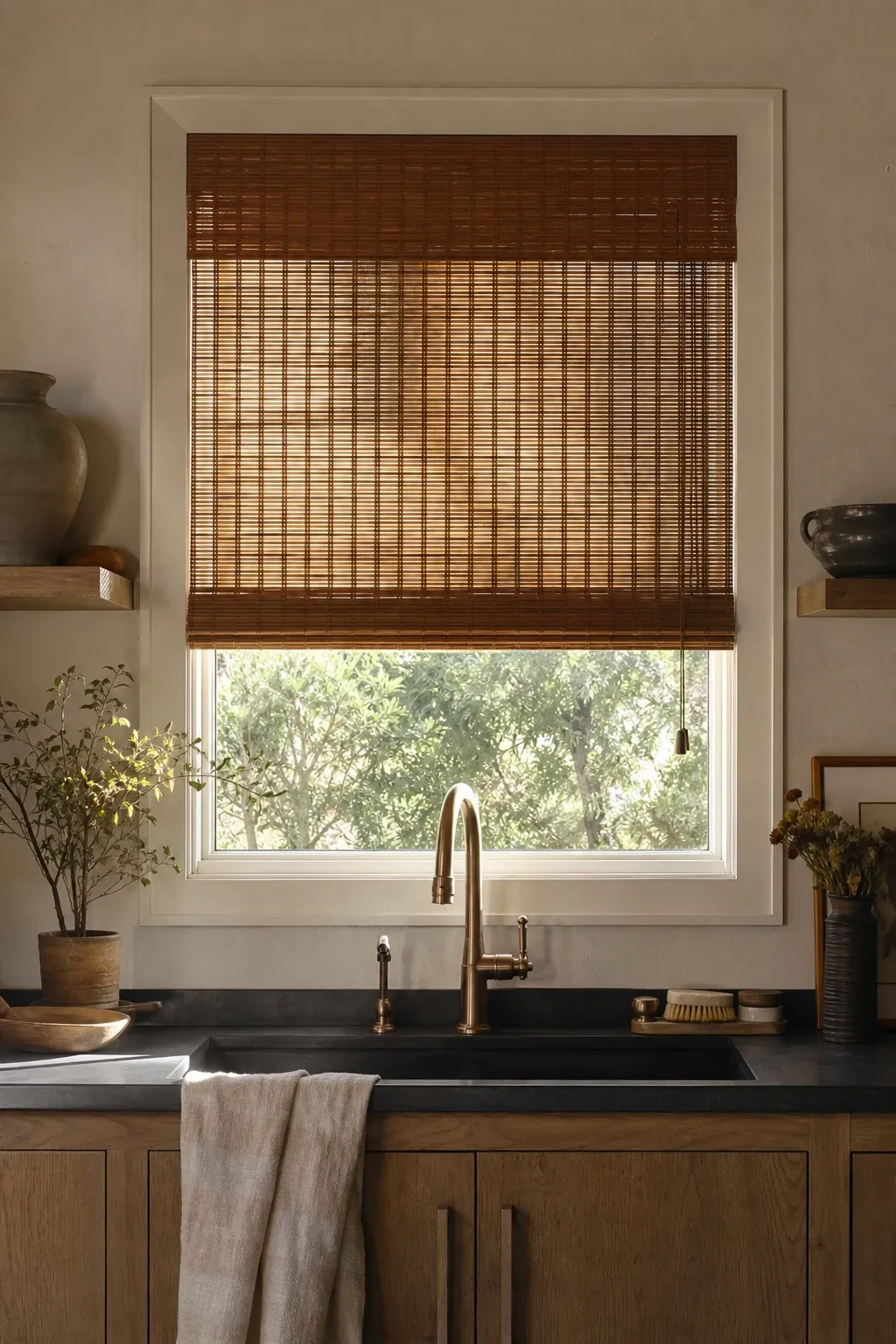
A bamboo or woven wood shade brings natural warmth and texture to the kitchen. The material filters light into a warm, golden glow that makes the kitchen feel inviting. Bamboo shades work in modern, boho, coastal, and farmhouse kitchens because the neutral, organic material adapts to most styles. They do not absorb cooking smells the way fabric does, which is a practical advantage in the kitchen.
Designer Tip: Dust bamboo shades regularly with a dry cloth or vacuum attachment. Kitchen grease settles on bamboo slats and attracts dust. Monthly dusting prevents buildup that is harder to clean later and keeps the shade looking fresh.
Pretty dish towels hung from clip rings on a tension rod make instant cafe curtains with zero sewing. This is the fastest and cheapest kitchen curtain idea that still looks intentional. Choose towels with a pattern or color that matches your kitchen decor. The towels are easy to swap out seasonally and can go right into the washing machine because that is exactly what they were designed for.
Designer Tip: Use towels that are the same length and width for a uniform look. Mismatched towel sizes create an uneven hemline that looks messy rather than charming. Two or three identical towels in a row look intentional and clean.
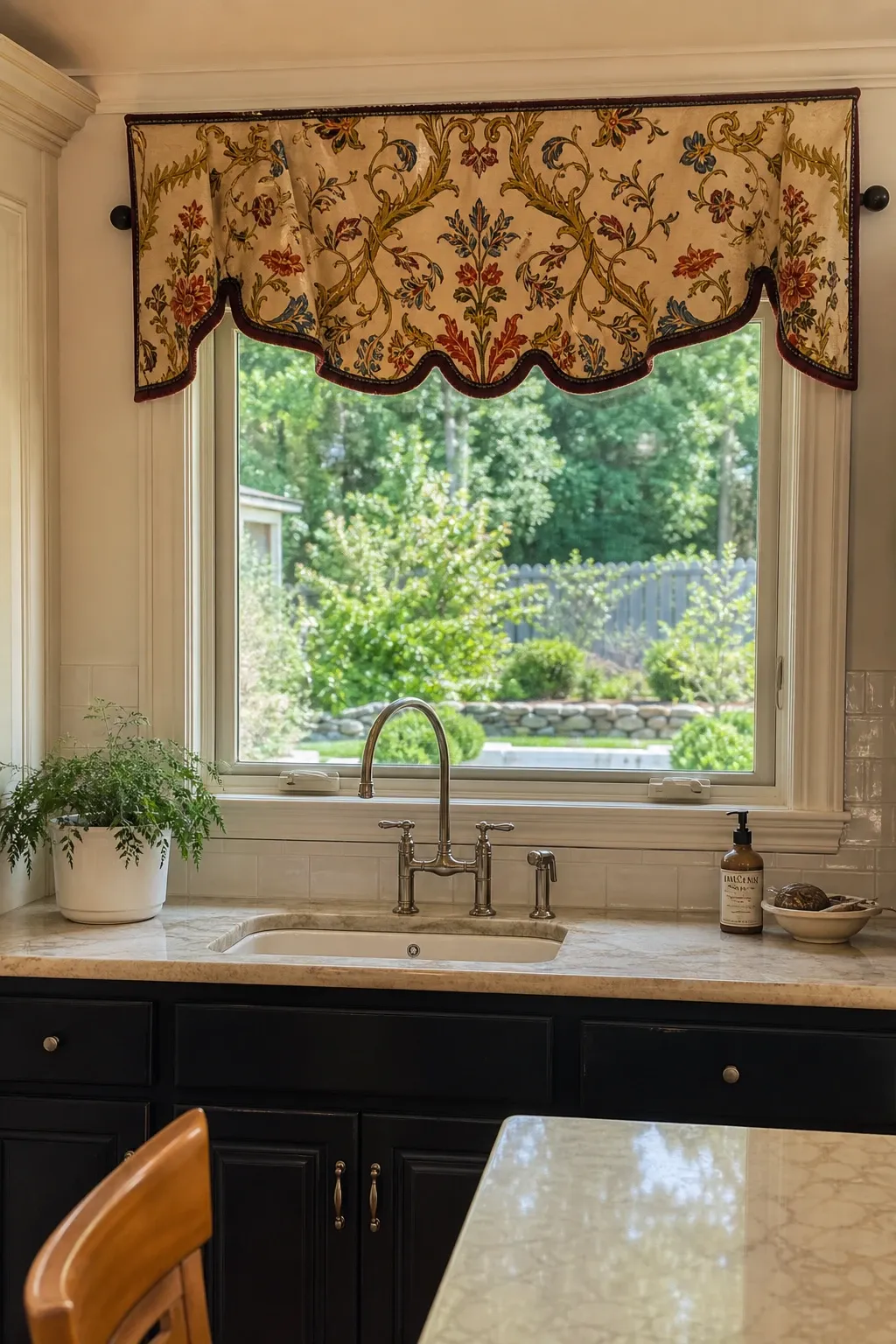
A fabric valance over a roller or roman shade combines decoration on top with practical light control below. The valance adds softness and color while the shade handles privacy and light. This layered approach gives the kitchen window a polished, finished look that a shade alone cannot achieve. The valance hides the shade hardware and creates the appearance of a more expensive, custom window treatment.
Designer Tip: Use contrasting fabrics for the valance and shade to create visual interest. A patterned valance over a solid shade, or a solid valance over a patterned shade, adds depth. Matching fabrics on both looks fine but the contrast makes the window more dynamic.
Kitchen curtains need to be practical first and pretty second. Whatever you choose, make sure it is washable, does not hang near open flames, and lets enough light in for food prep. Start with the window above the sink since that is the most visible kitchen window, and work from there. One good set of kitchen curtains can change the whole feel of the room.
Frequently Asked Questions
What is the best fabric for kitchen curtains?
Cotton and polyester blends are the best all-around choice. They are machine washable, resist wrinkles, and hold up to frequent laundering. Pure cotton works too but wrinkles more. Avoid silk, wool, and delicate fabrics in the kitchen because they absorb odors and cannot handle the washing frequency a kitchen demands.
How often should I wash kitchen curtains?
Every one to two months for curtains near the stove or sink. Quarterly for curtains on windows away from cooking areas. Kitchen curtains absorb grease, steam, and food odors faster than curtains in any other room. Regular washing prevents yellowing and keeps the fabric smelling fresh.
Are curtains or blinds better for kitchen windows?
It depends on the window location. Curtains add warmth and softness. Blinds are easier to clean and better for windows directly above the sink or stove where fabric might get wet or greasy. Many kitchens use a combination, with blinds on the cooking side and curtains on windows away from the mess.
Can I use full-length curtains in the kitchen?
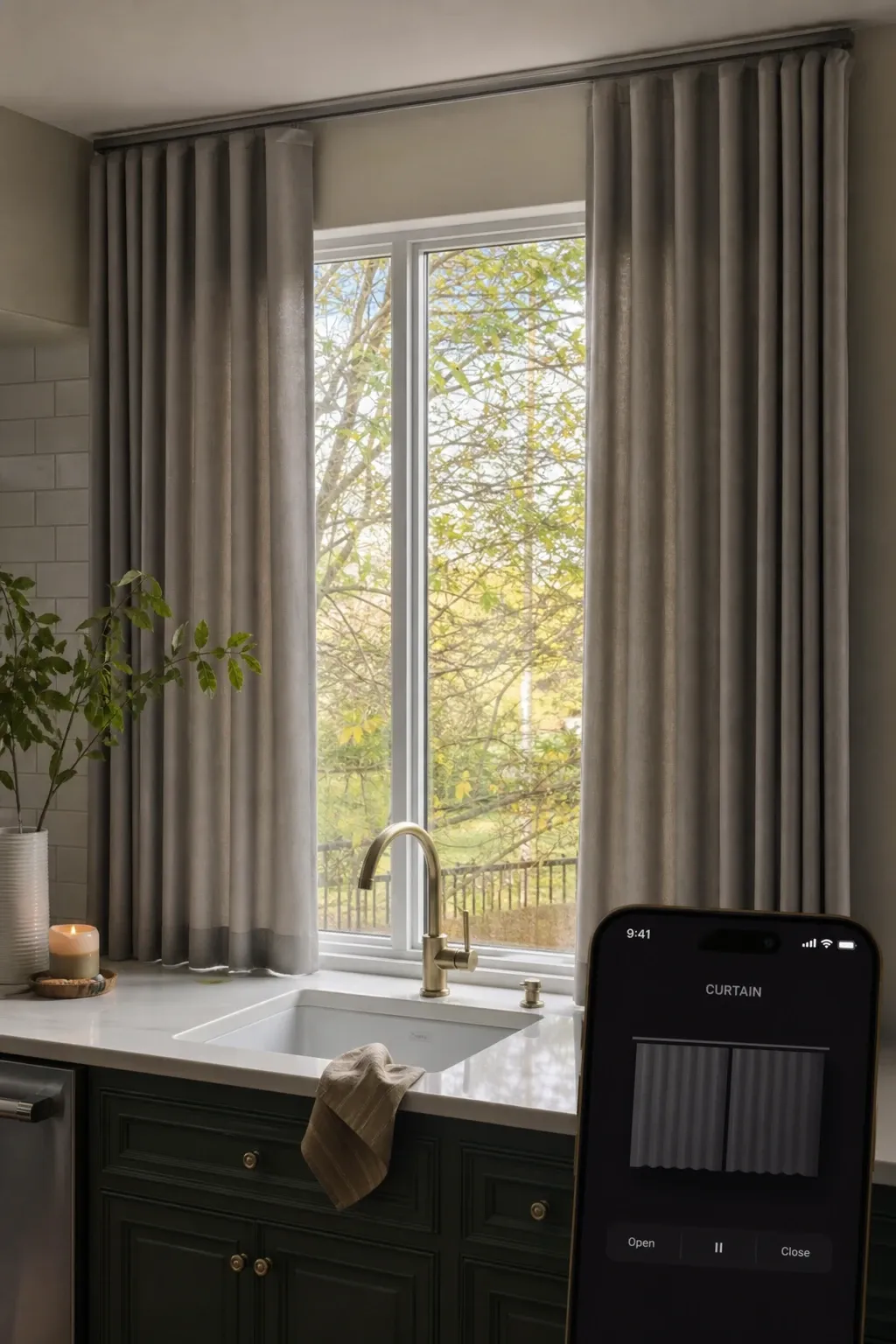
Full-length curtains work on kitchen windows that are away from the stove, sink, and high-traffic areas. A floor-length panel on a window by the breakfast table or in an eat-in kitchen area looks great. Avoid floor-length curtains near the cooking zone where they could catch on appliances, absorb grease, or become a fire hazard.