Window treatments are the one decorating decision that affects every room simultaneously, yet most people get them wrong in the same three ways: hanging them too low, buying panels too narrow, and treating the window covering as an afterthought rather than an anchor. These 25 ideas are organized around the decisions and outcomes that actually matter, so you can solve the real problem rather than just choose a style.
1. Hang the Rod Closer to the Ceiling Than You Think
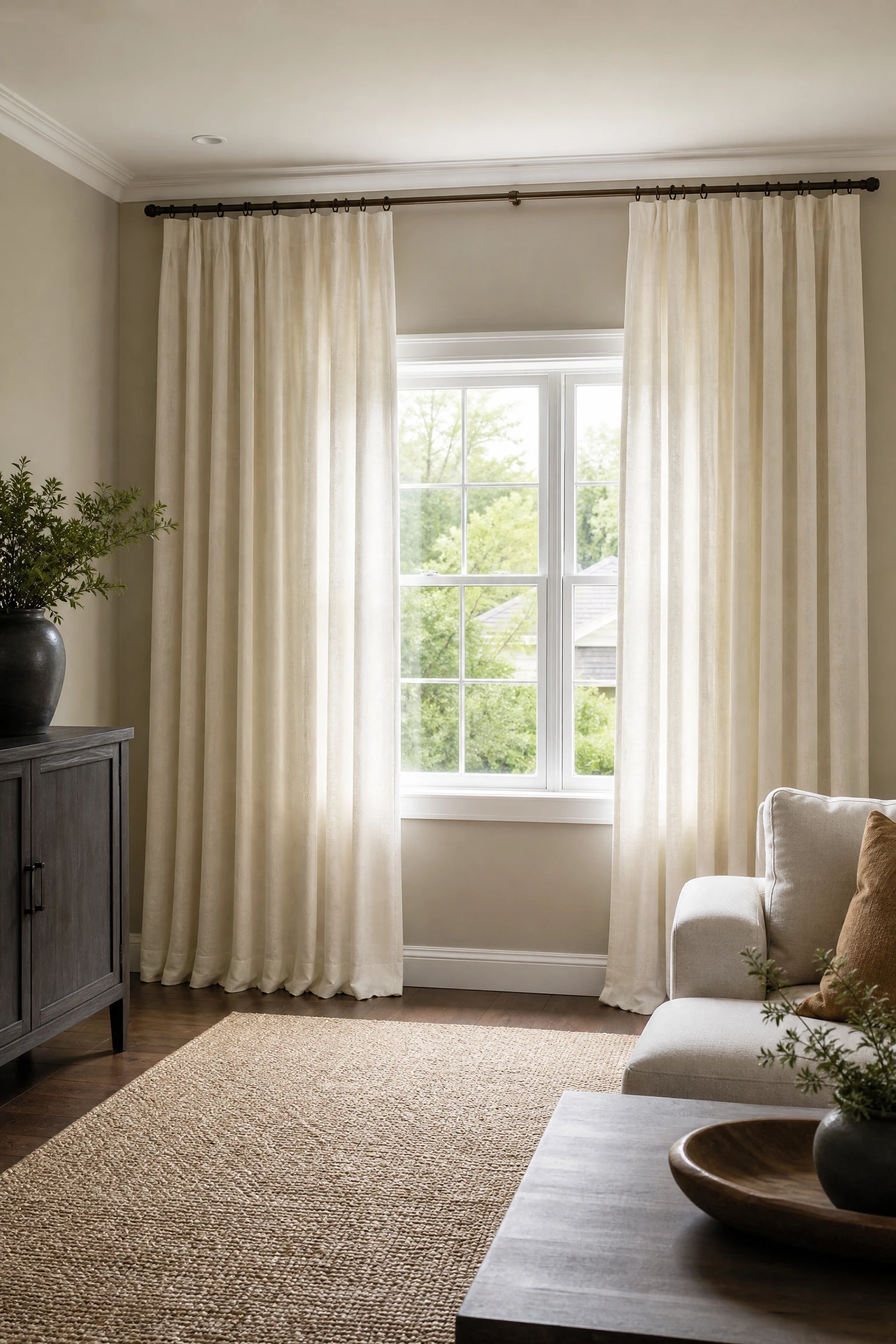
Mounting a curtain rod 4 to 6 inches below the ceiling rather than just above the window frame makes the ceiling feel taller, the window feel larger, and the entire room feel more considered, which is why this single installation decision has more visual impact than any fabric or color choice you make afterward. In rooms with 9-foot ceilings or higher, mounting at 8 to 8.5 feet creates a near-floor-to-ceiling effect that looks custom even when the curtains are from a big-box retailer.
Reality Check: Most people hang the rod 2 to 3 inches above the window frame because that is where the wall anchor goes in without thinking. Measure up deliberately before drilling a single hole.
Curtain panels should total two to two-and-a-half times the width of the window they cover, which means a 60-inch wide window needs 120 to 150 inches of fabric across all panels combined, and buying one panel per side from a standard ready-made set almost always results in a flat, sheety look that no amount of expensive hardware can fix. When closed, under-width curtains look like someone hung a bath towel; when open, they should stack in full, generous folds on each side.
Pro Move: Buy three panels per side for large windows rather than two. The extra fullness costs less than custom drapery and the visual difference is significant enough that most guests assume the curtains are made-to-order.
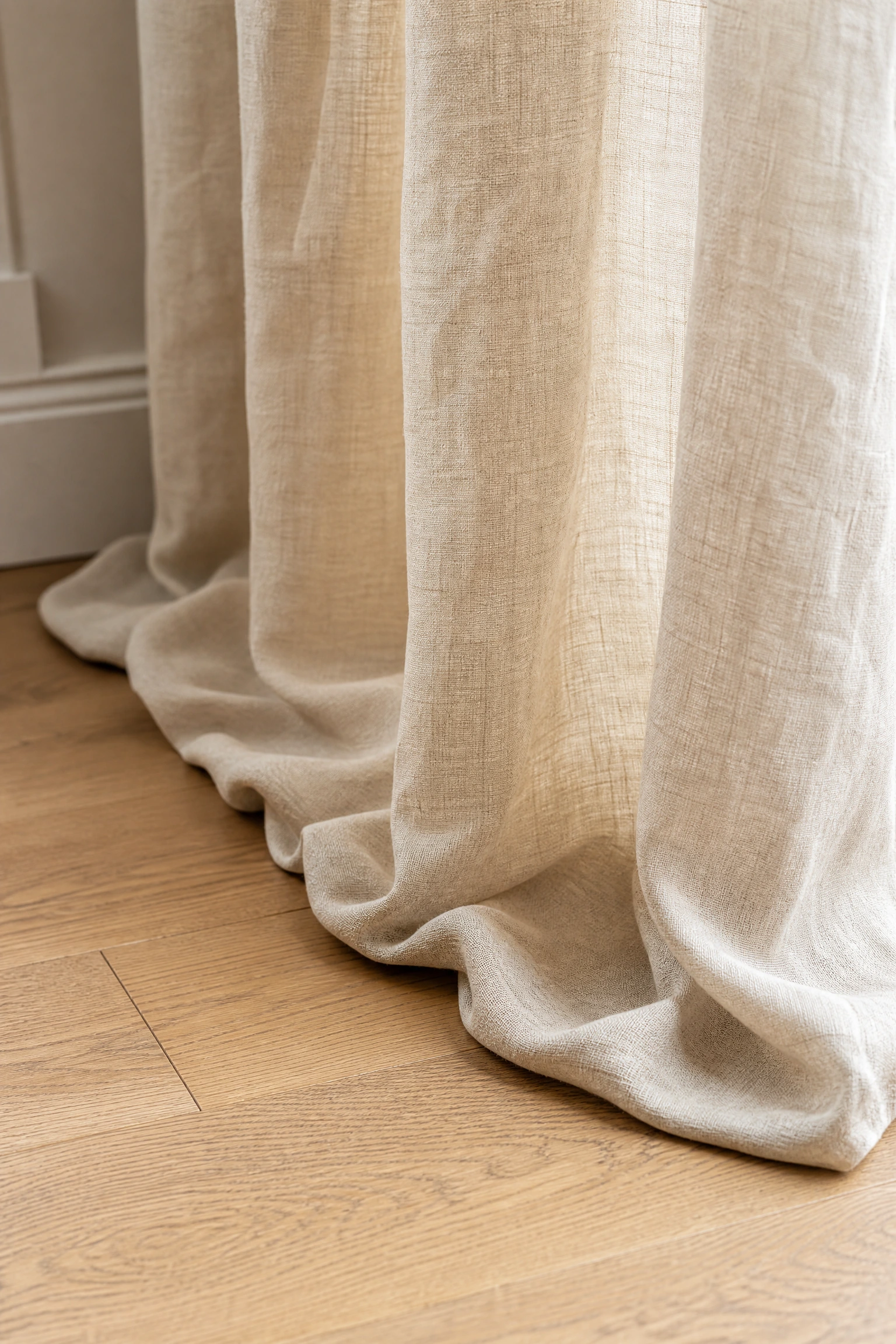
A curtain hem that just grazes the floor reads as precise and correct, but one that puddles 1 to 2 inches creates a softness and elegance that is harder to achieve with any other styling choice, particularly in living rooms, dining rooms, and bedrooms where the extra fabric reads as intentional luxury rather than a measuring error. For linen, velvet, and cotton curtains this approach works especially well because the natural weight of these fabrics creates beautiful folds rather than bunching awkwardly.
Heads Up: Puddle hems work in rooms that are not high traffic. In a kitchen, a playroom, or anywhere the floor gets genuinely dirty, keep the hem at floor level or a half inch above to avoid the fabric becoming a mop.
Mounting the curtain rod 8 to 12 inches beyond the window frame on each side allows the panels to stack fully off the glass when open, which lets in maximum natural light and makes the window look significantly wider than it actually is, a trick that works especially well in narrow rooms or on small windows that need to carry more visual weight. The wider the rod extends, the more architectural and intentional the window treatment reads from across the room.
Designer Advice: If your window sits close to a wall corner and you cannot extend the rod equally on both sides, extend further on the open side and use a single panel on the wall side. The asymmetry reads as a design choice rather than a limitation.
5. Use Linen for a Fabric That Gets Better Over Time
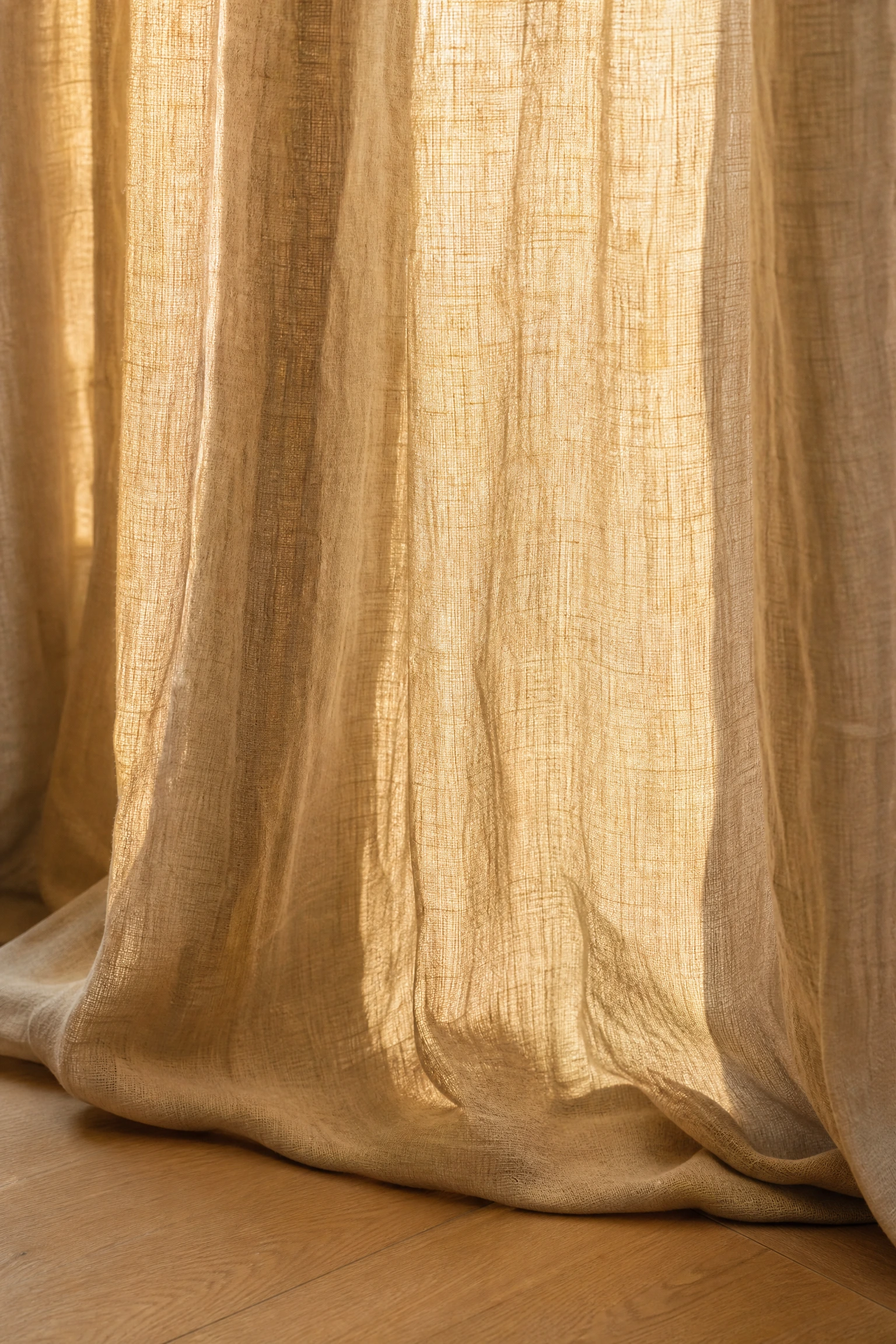
Linen curtains are the most versatile and forgiving fabric for window treatments because they filter light beautifully without being sheer, drape with a natural relaxed weight that polyester panels can never replicate, and soften and improve in texture with each wash rather than pilling or dulling over time. They work in every room from the kitchen to the bedroom, come in a wide natural color range, and hold up to years of daily use better than most decorator fabrics at twice the price.
Reality Check: Linen wrinkles. If you want it to look relaxed and lived-in, that is a feature. If you need it pressed flat, steam it while hanging rather than ironing it off the rod, which causes uneven creases along the folds.
6. Layer Sheer Panels Behind Heavier Drapes for Light Control
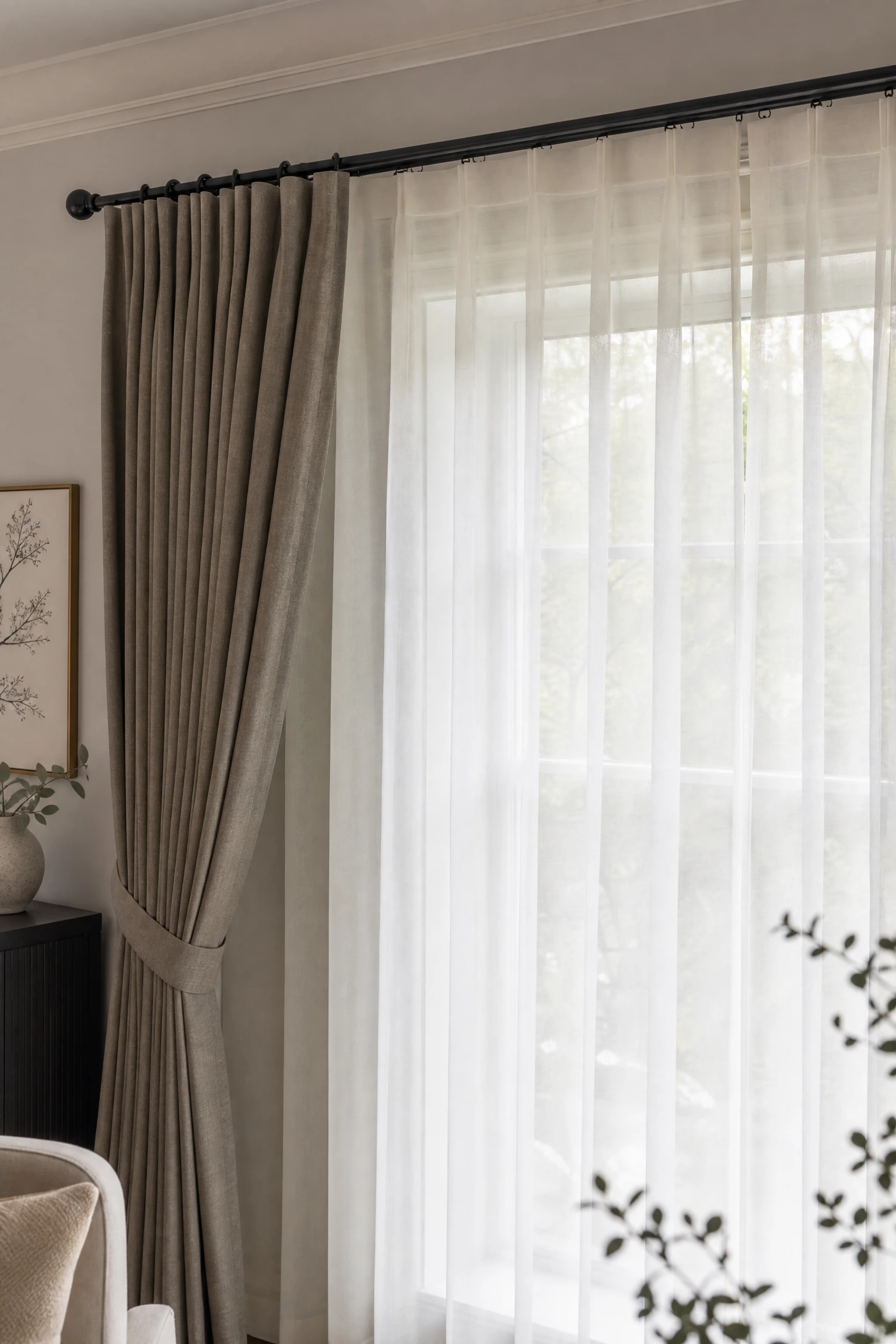
A sheer or semi-sheer panel mounted on a separate rod inside the frame, paired with a heavier drapery panel on an outer rod, gives you four distinct light settings in one window: sheers only for soft diffused privacy, sheers plus closed drapes for full light block, drapes open and sheers pulled for filtered daylight, and both fully open for maximum light. This layered approach is what designers use in high-end residential projects and it costs far less than motorized shade systems while achieving similar flexibility.
Pro Move: Mount the sheer on an inside-mount tension rod so it disappears into the frame visually. The outer drapery then reads as the only treatment when open, with the sheer quietly doing its job behind the scenes.
7. Try Roman Shades for a Clean Architectural Look
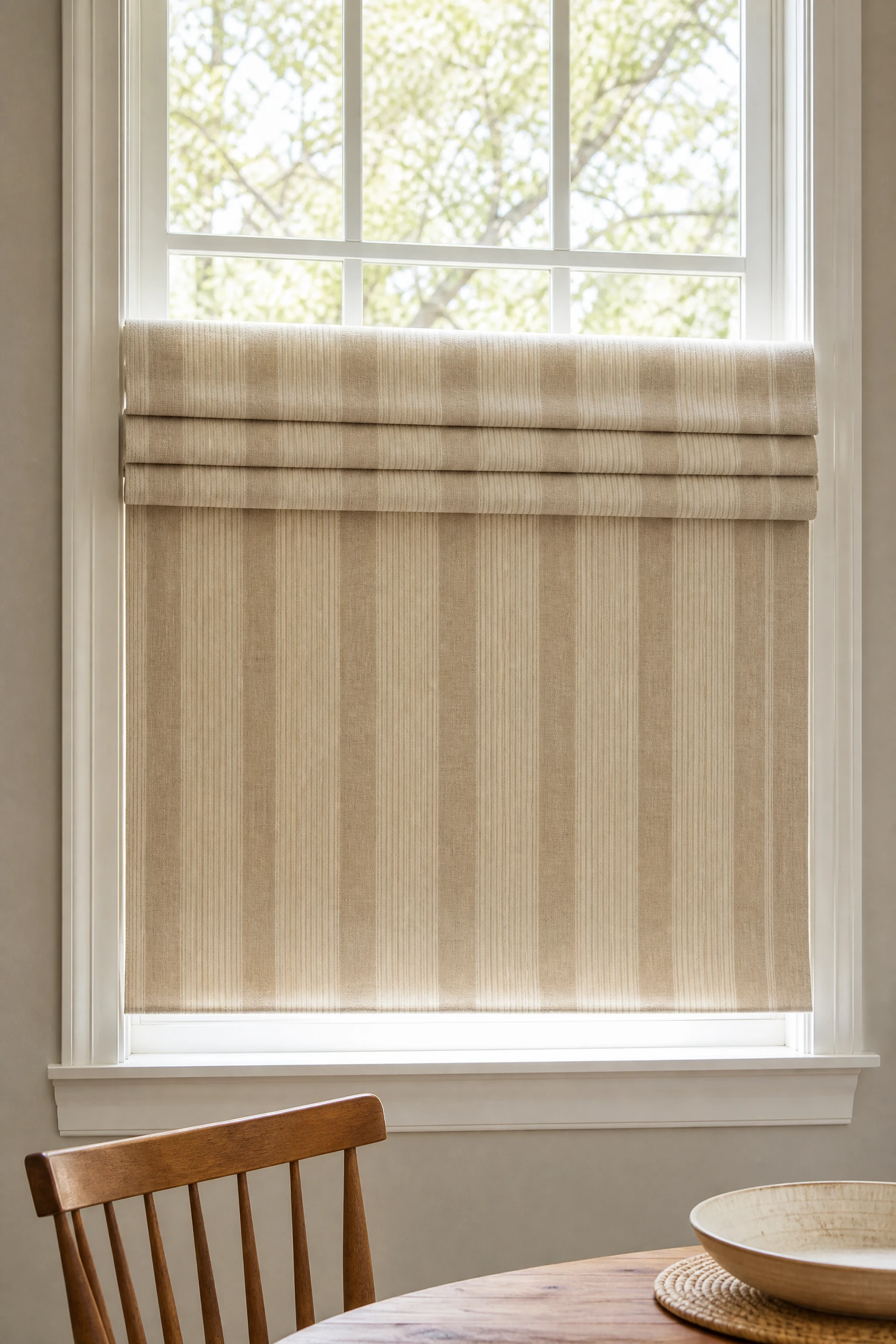
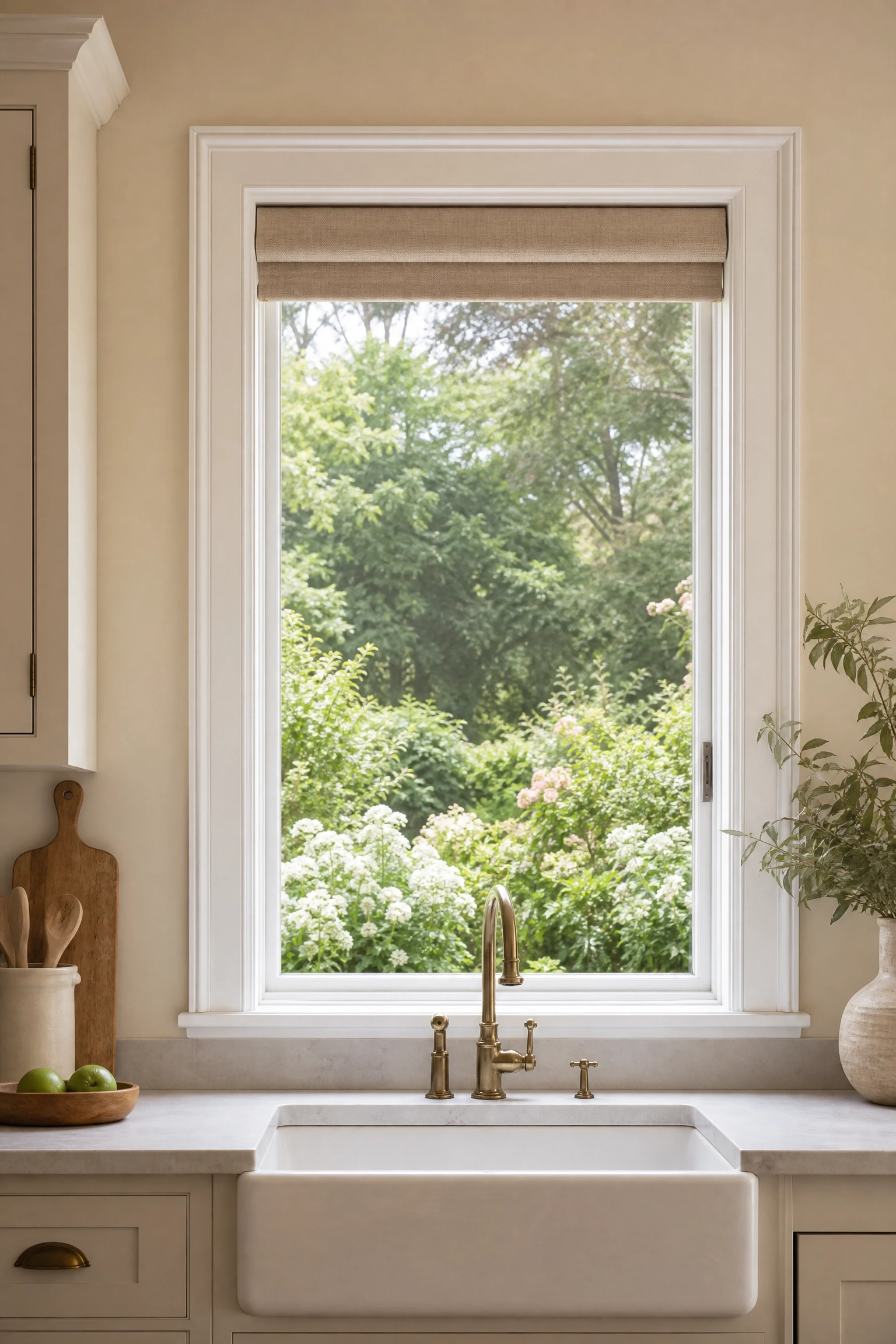
A well-made Roman shade in a flat fold or hobbled style gives a window a clean, structured look that neither curtains nor blinds can match, because it sits flat against the glass when lowered and stacks in neat horizontal folds when raised rather than bunching to the side or rolling into a cylinder. Choose a medium-weight fabric with some body, a cotton-linen blend, a woven texture, or a light canvas, so the shade holds its fold lines cleanly rather than collapsing softly when raised.
Heads Up: Cheap Roman shades use a visible plastic dowel system on the back that shows through light-colored fabrics. Look for shades with a proper lining so the mechanism stays hidden and the fabric hangs cleanly from the front.
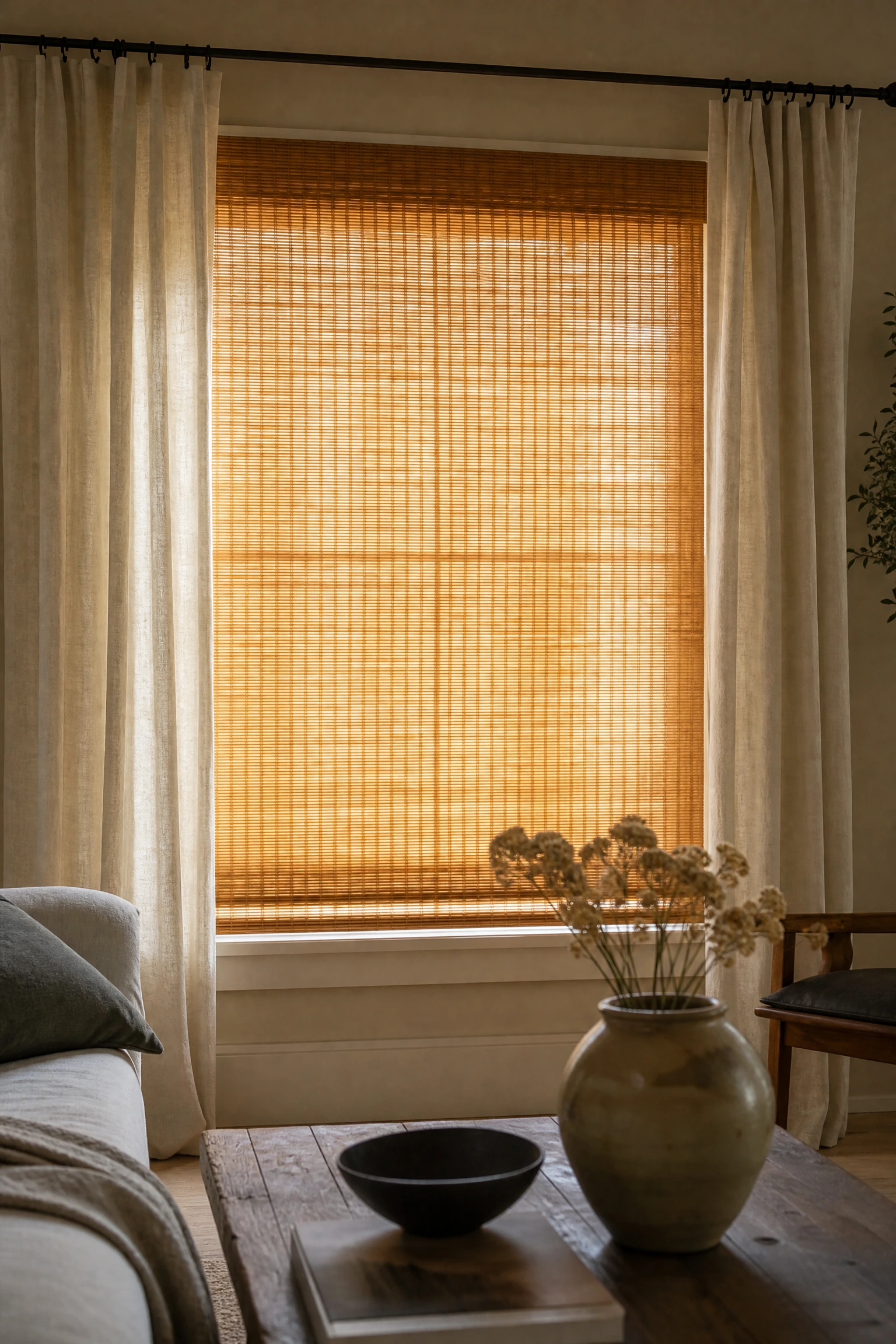
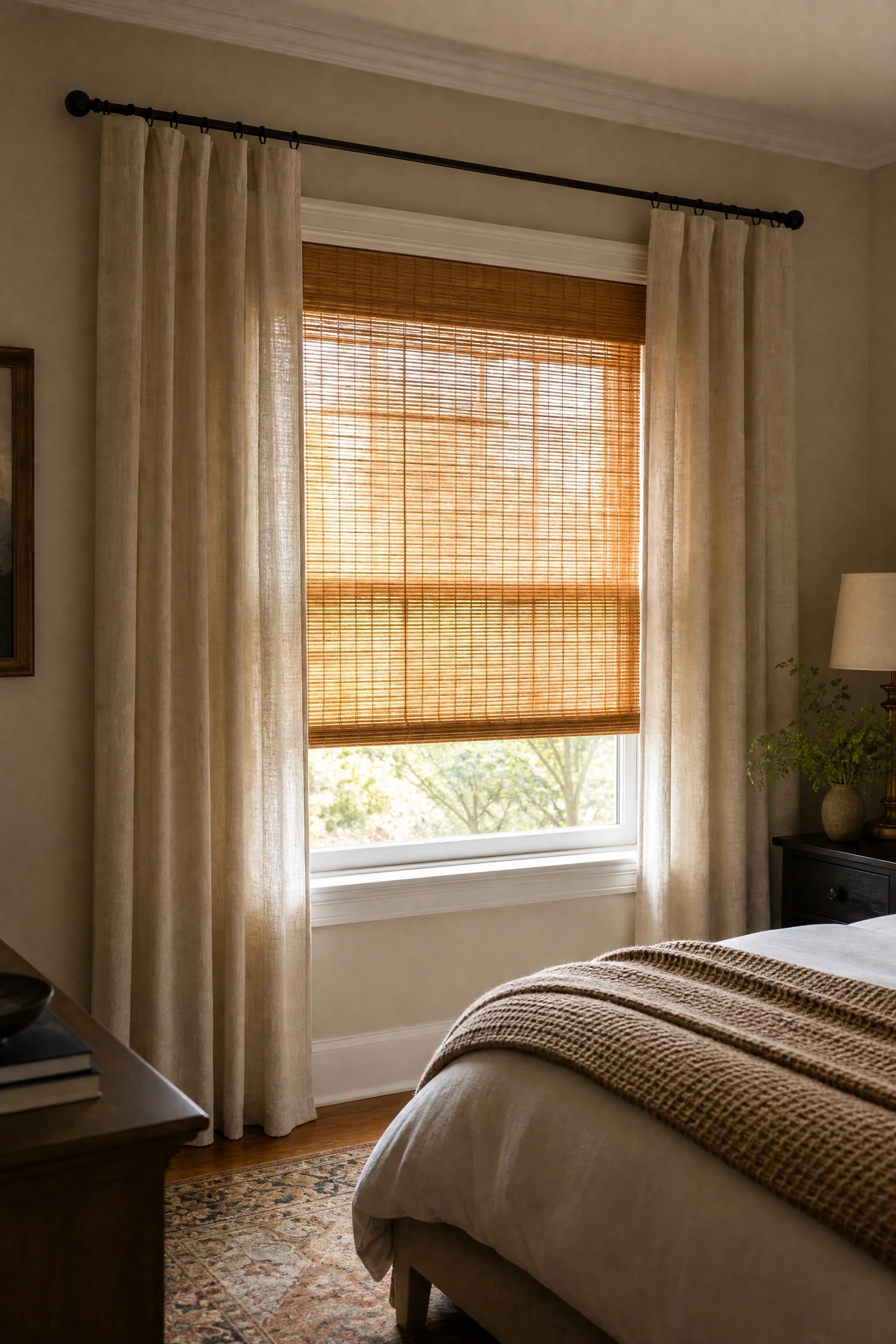
Woven wood shades in bamboo, jute, or rattan bring an organic warmth and texture to a window that no fabric treatment can replicate, filtering light in a way that varies beautifully throughout the day as the sun moves, and they work in almost every decorating style from coastal to farmhouse to warm modern because natural materials belong in most palettes. They are also one of the most affordable window treatments when purchased from quality retailers, and inside-mounted woven shades in a warm honey or tobacco tone can pull an entire room together without any additional drapery needed.
Designer Advice: Add a simple linen side panel on each side of the woven shade even if you never close them. The panels frame the window, add softness alongside the texture of the woven shade, and make the treatment look intentionally designed rather than simply functional.
Treatment Type
Best Room
Light Control
Best For
Linen curtains
Living room, bedroom
Filtered to moderate
Warmth, elegance, versatile style
Sheer panels
Living room, dining room
Light filtering only
Privacy with maximum daylight
Roman shades
Kitchen, office, dining
Moderate to full block
Clean lines, architectural look
Woven wood shades
Living room, bedroom
Light filtering
Natural texture, organic warmth
Cellular shades
Any room
Full block available
Energy efficiency, clean minimalism
Velvet drapes
Bedroom, living room
Full to blackout
Drama, luxury, noise reduction
Interior shutters
Any room
Adjustable
Permanence, classic architecture
Roller shades
Kitchen, bathroom, office
Full block available
Minimal look, easy operation
9. Choose Velvet Drapes for Maximum Drama and Noise Reduction
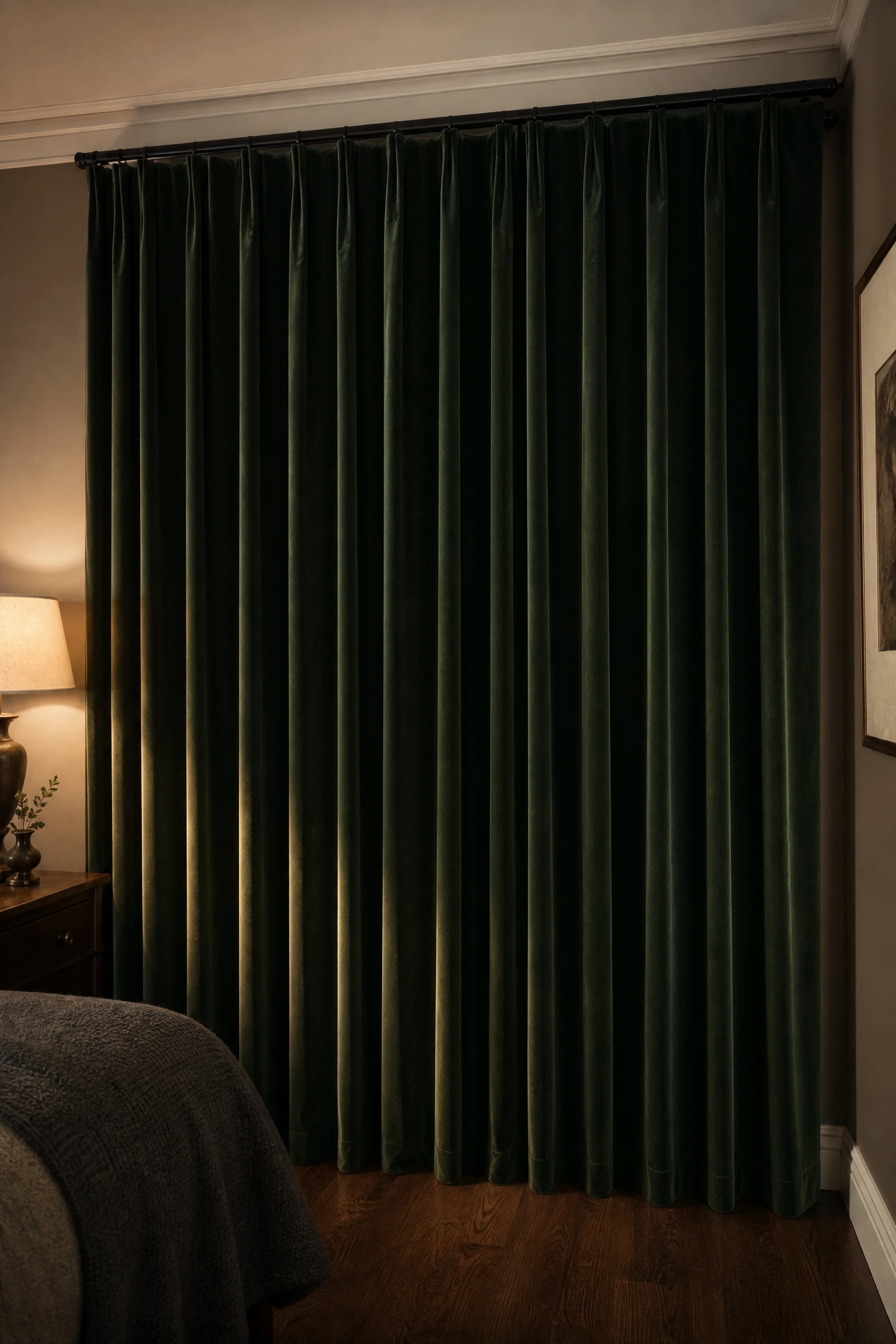
Velvet curtains in deep jewel tones, forest green, dusty plum, navy, or rust add a level of richness and visual weight to a room that few other decorating decisions can match at the same price point, and the dense pile of the fabric also absorbs sound noticeably in rooms with hard floors and surfaces where echo is a problem. Modern velvet curtains are typically made from polyester velvet rather than silk velvet, which makes them machine washable, fade-resistant, and far more affordable while retaining the signature soft sheen and hand of the fabric.
Reality Check: Velvet drapes in a bright sunny room will fade within a few years if the fabric faces direct south or west light daily. Line them with a UV-filtering interlining if the window gets significant direct sun exposure.
10. Install Interior Shutters for a Permanent Architectural Statement
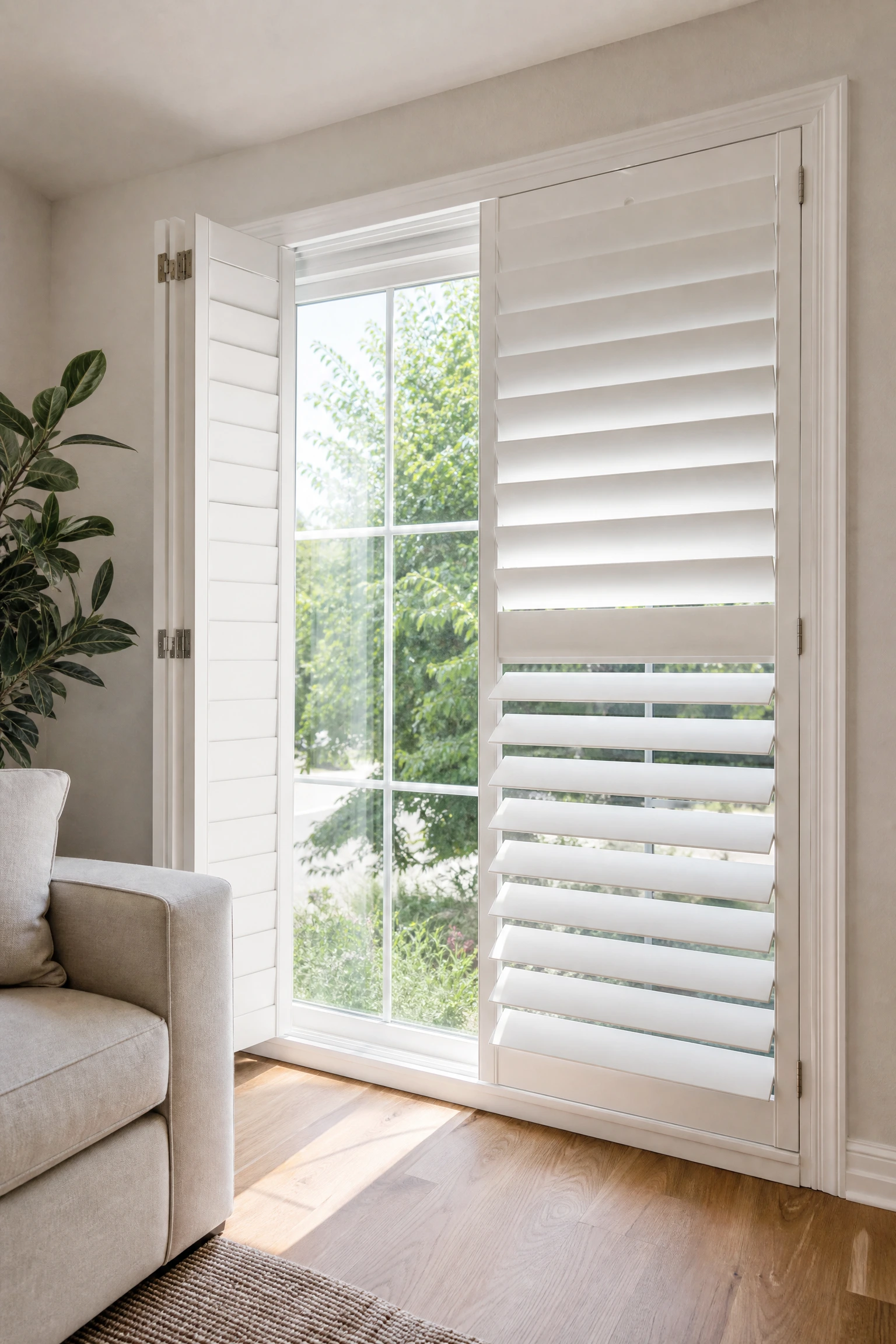
Plantation shutters in a painted finish or solid wood stain are the one window treatment that adds genuine value to a home rather than simply decorating it, because they are considered a permanent architectural feature that real estate listings highlight and buyers factor into their offers. They also offer the most precise light and privacy control of any window covering since the louver angle can be adjusted in real time, and they never need replacing or dry cleaning, which makes them genuinely cost-effective over a 10-to-15-year horizon even at a high upfront cost.
Designer Advice: Choose a louver width of 3.5 to 4.5 inches for most residential windows. Smaller louvers look dated and block more light when open; larger louvers read as more contemporary and let in significantly more light when the slats are fully open.
11. Use Roller Shades for the Cleanest Minimal Look
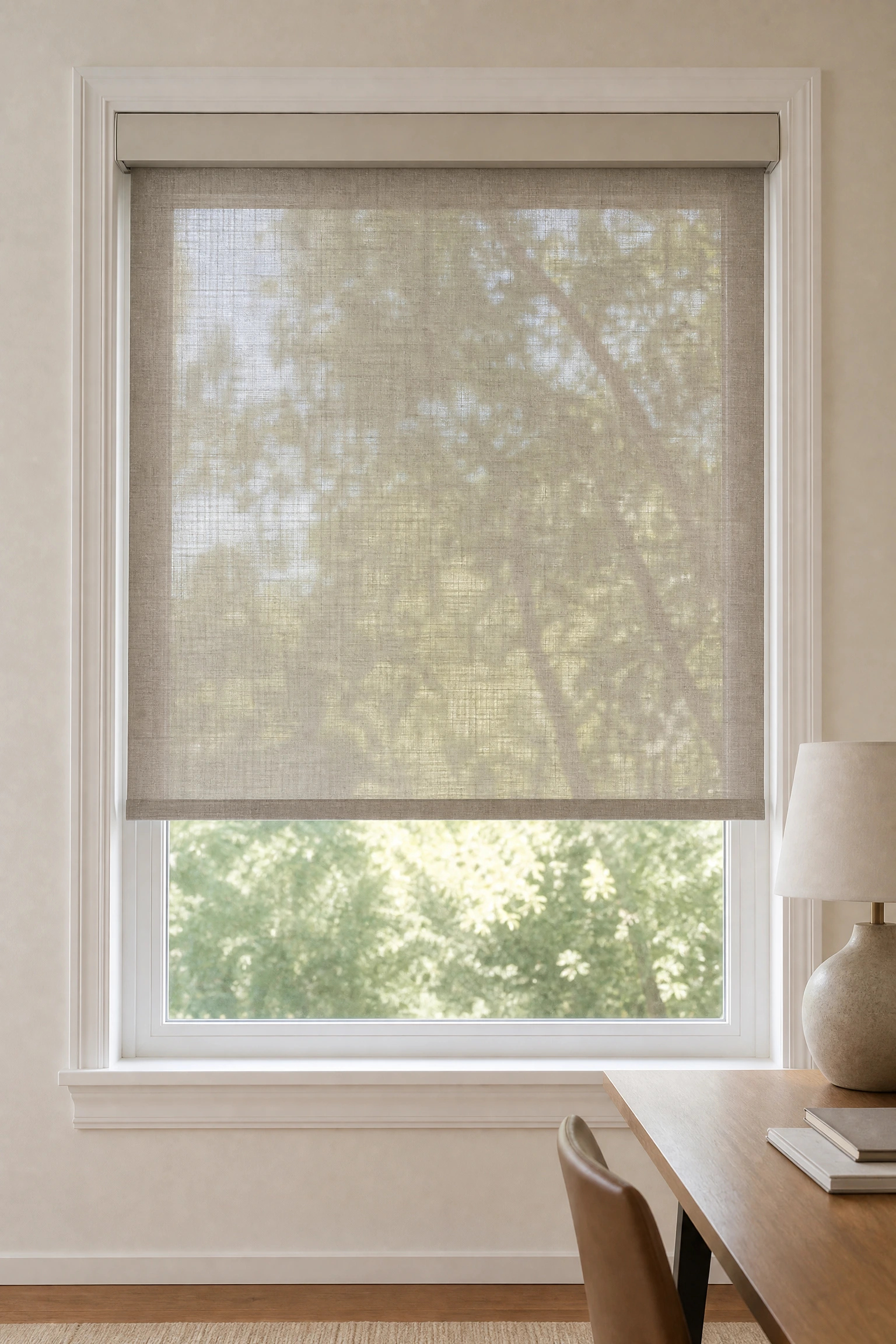
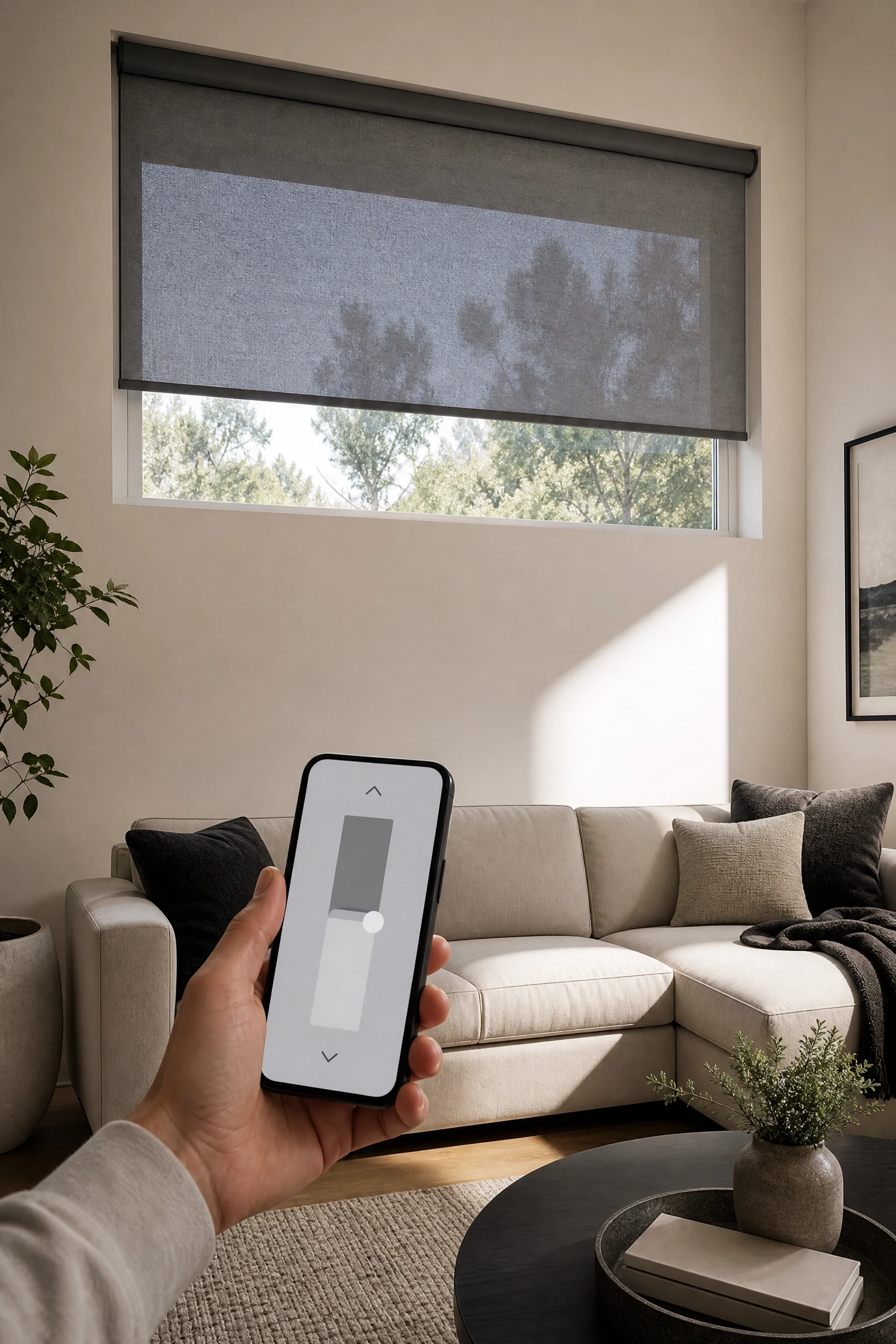
A quality roller shade in a solar fabric or a light-filtering woven material mounted inside the frame is the most minimal and architecturally clean window treatment available, disappearing almost entirely when rolled up and sitting flat and tidy against the glass when lowered, which is exactly what kitchen, bathroom, and home office windows usually need where curtains feel fussy and shutters feel heavy. Choose a cassette housing that conceals the roll mechanism rather than an exposed tube, and the difference in how finished the treatment looks from across the room is immediately apparent.
Pro Move: Motorize roller shades in rooms where the window is difficult to reach, above a sofa or behind a dining table, so you can adjust them without climbing over furniture. Battery-powered motor upgrades are now available for most shade brands for under 100 dollars per shade.
12. Go Ceiling to Floor in the Bedroom for a Hotel Suite Effect
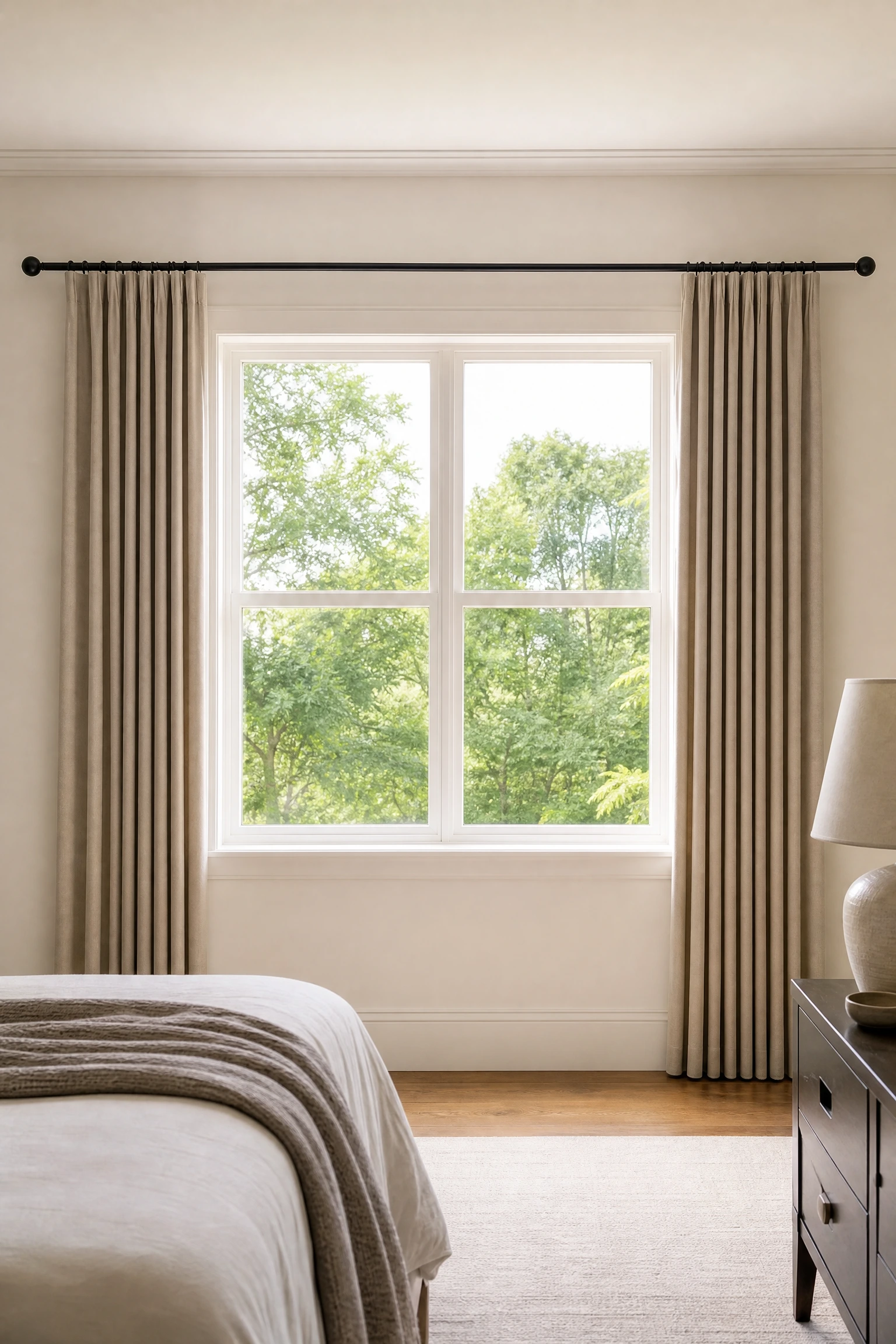
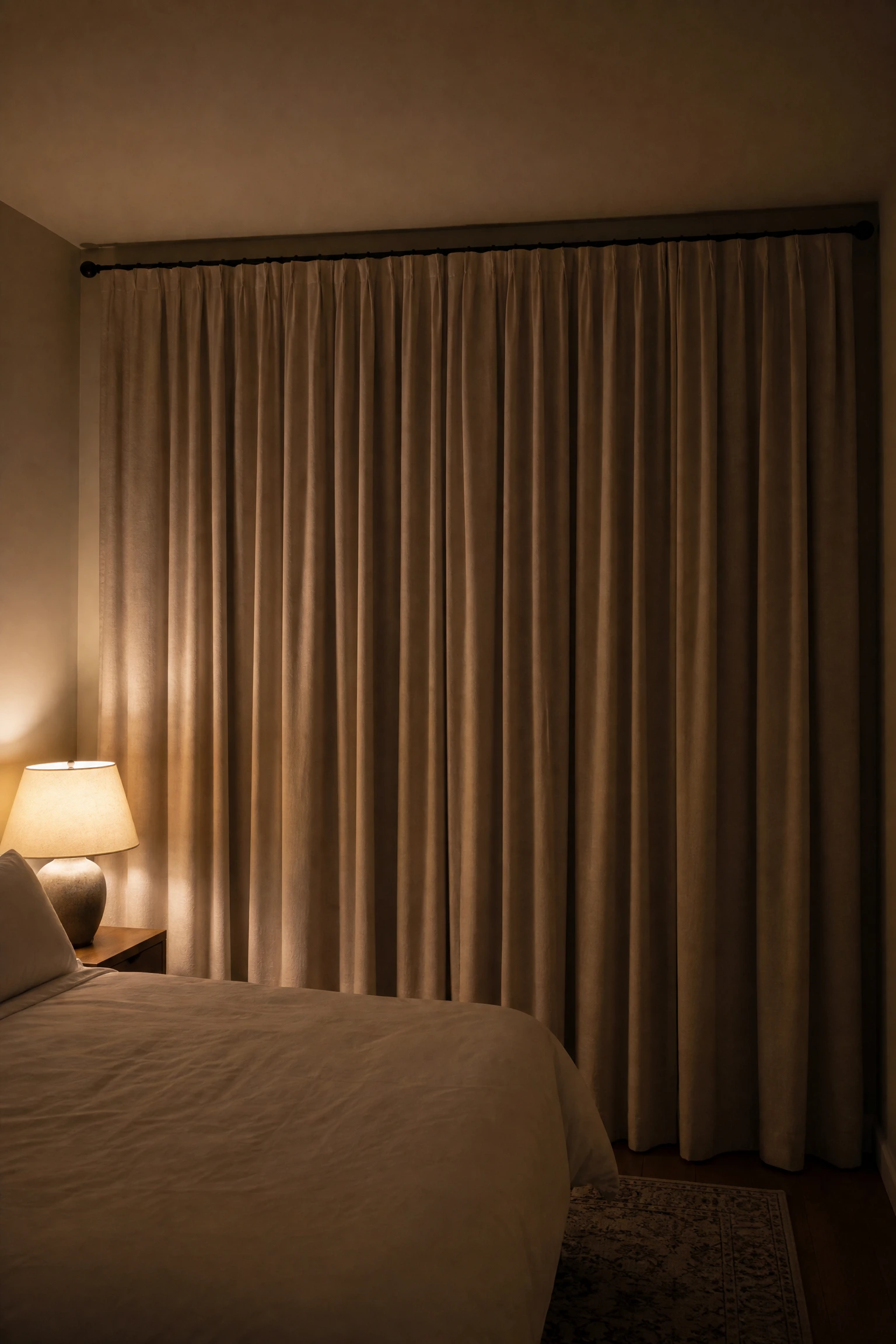
Floor-to-ceiling curtains in a bedroom, mounted as close to the ceiling as possible and hung in generous fullness, transform an ordinary bedroom window into a full wall of soft fabric that reads like a boutique hotel suite, and when the panels are closed the room becomes a genuinely cocooning dark space that improves sleep quality in a way that a single blackout shade panel cannot replicate. Use a blackout or thermal-lined fabric in a neutral tone, warm white, oatmeal, soft grey, or dusty sage, so the panels serve both the decorative and functional purpose simultaneously.
Heads Up: Buy curtains labeled blackout or room-darkening and test them in your actual window before hanging them all. True blackout varies significantly by brand and even two panels from the same product line can have different opacity levels.
13. Match Curtain Color to Wall Color for a Seamless Look
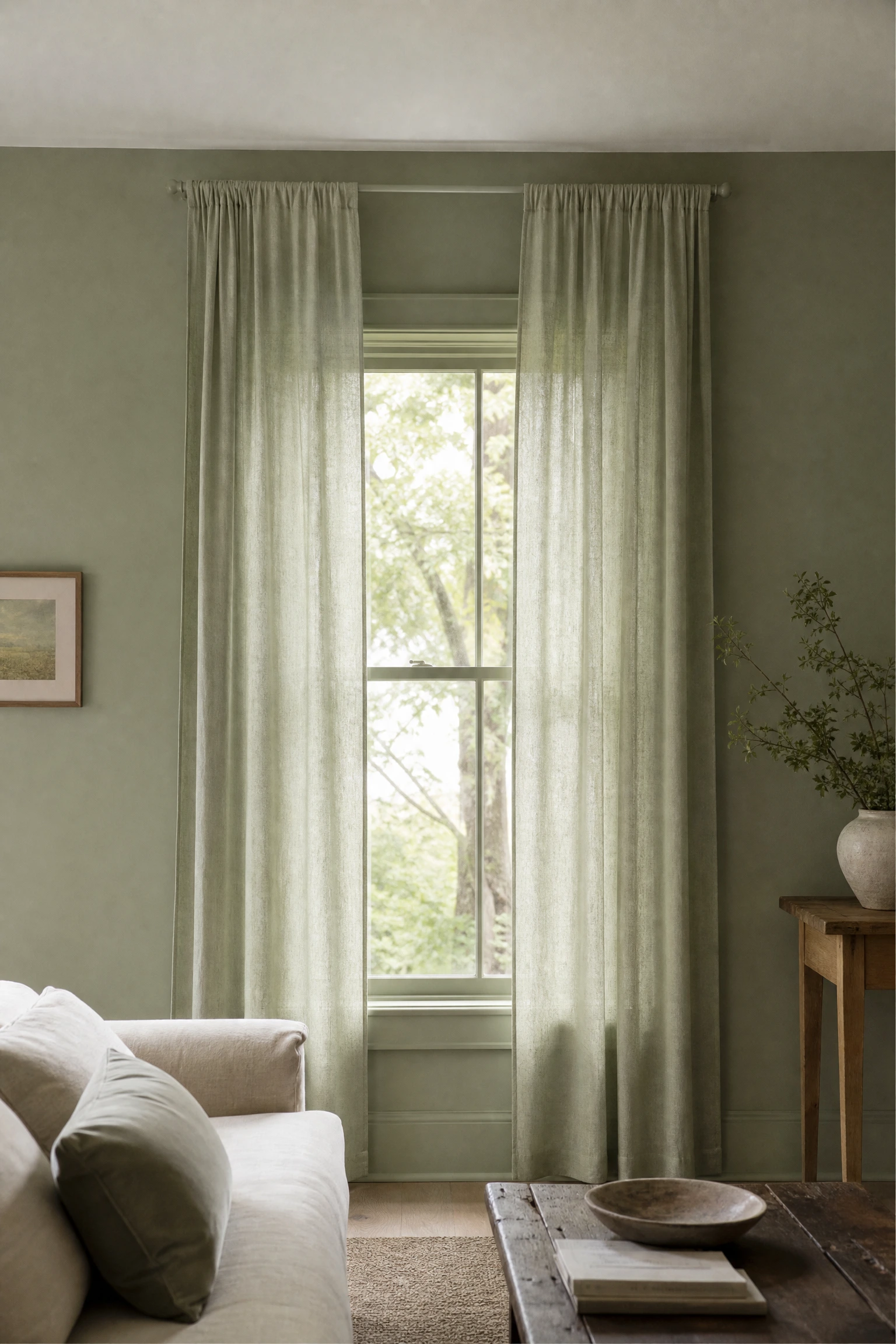
Choosing curtain panels in the same color family as the wall, even a tone or two lighter or darker, makes the window treatment disappear into the room rather than interrupting it, which lengthens the wall visually and makes the space feel larger and more cohesive without any of the decision-making stress that comes with trying to coordinate a contrasting color. This approach is particularly effective in small rooms, rooms with many windows, and spaces where the furniture and art are already doing enough visual work without the curtains joining the competition.
Designer Advice: Go slightly lighter than the wall for curtains rather than an exact match. A perfect color match in different fabrics often reads as a near-miss rather than intentional; a clear tone-on-tone step reads as a deliberate and sophisticated choice.
14. Use Pinch Pleat Headers for an Instantly Polished Look
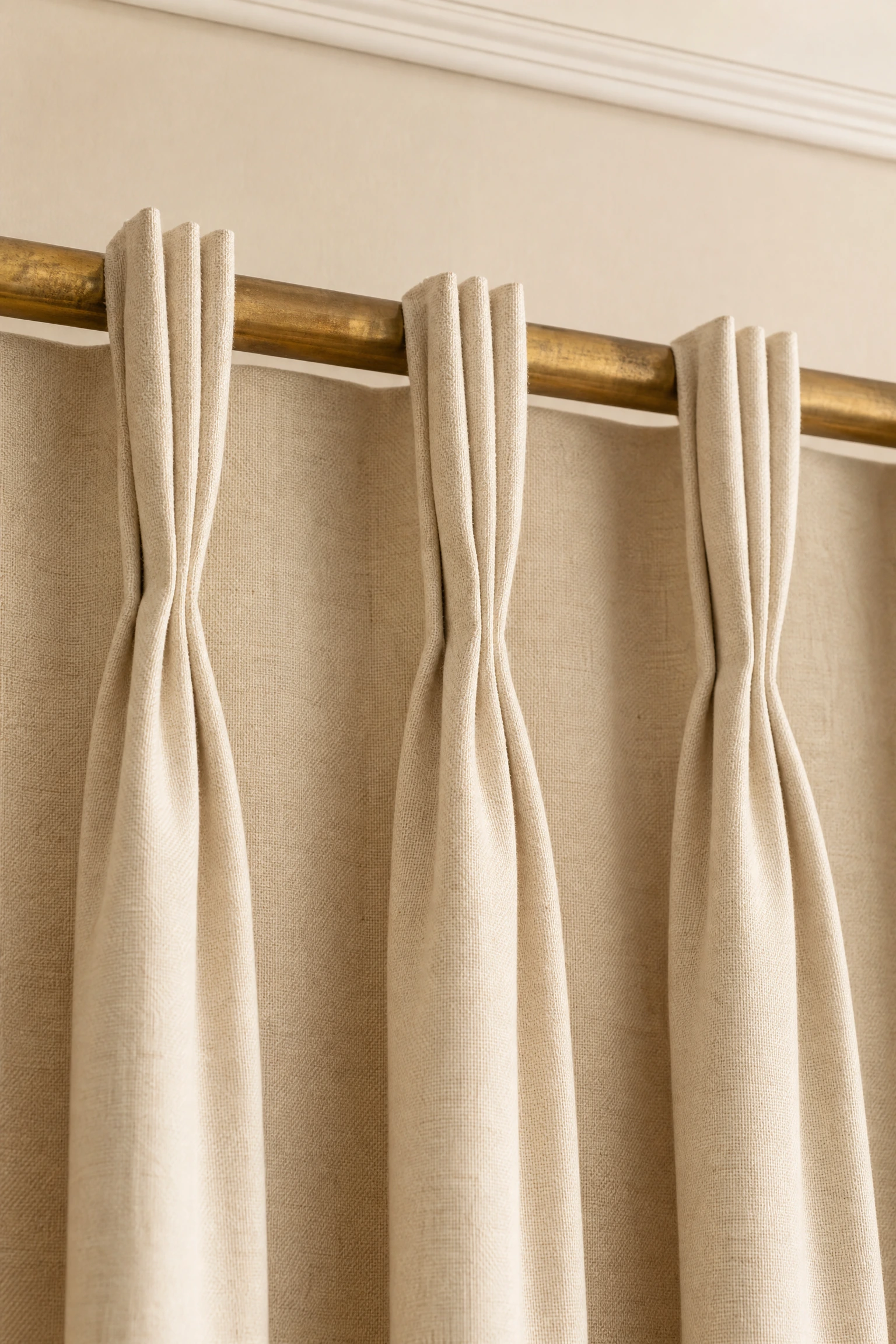
The header style, the way the fabric is gathered at the top of the panel, has more impact on how expensive a curtain looks than the fabric itself, and a pinch pleat header in a two-finger or three-finger style creates precise, evenly spaced folds that fall into beautiful columns all the way to the floor, giving even a mid-range fabric the look of a custom drape. Rod pocket and tab-top headers are the default for most ready-made curtains and the reason that ready-made curtains so often look flat and unsophisticated even when the fabric itself is nice.
Pro Move: If you have rod pocket panels you love but want a better look, thread them onto a rod using clip rings instead of the pocket. The rings create a small gather at the top that reads much closer to a pleat than a rod pocket alone.
15. Add a Valance or Cornice Board to Finish the Top of the Window
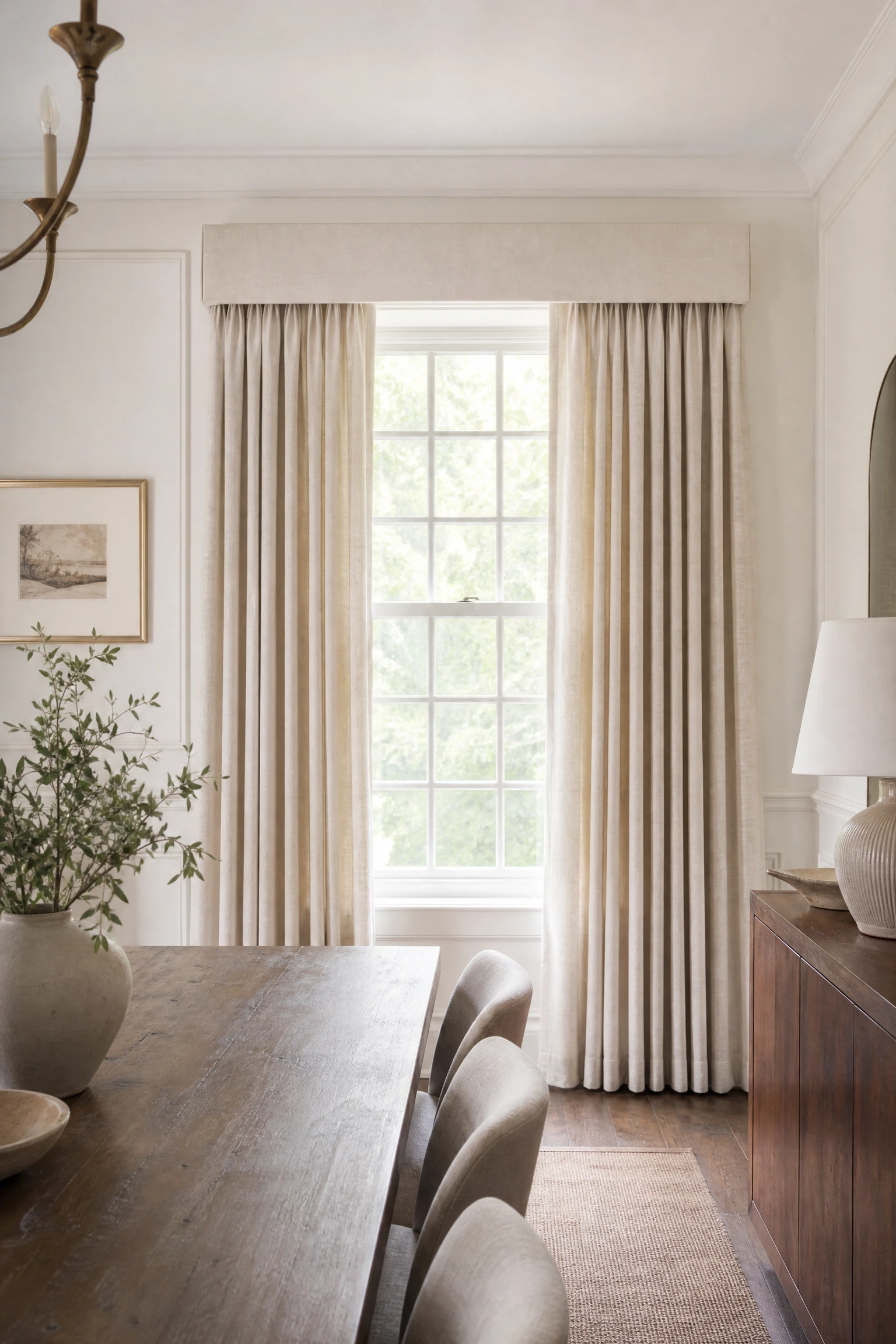
A fabric valance or an upholstered cornice board mounted at the top of the window conceals the curtain hardware, adds a deliberate finished edge to the treatment, and gives the window an architectural frame that bare rods alone cannot provide, particularly in rooms where the rod is mounted high and the gap between the rod and ceiling becomes visually awkward without something filling it. A simple flat cornice board wrapped in the same fabric as the drapery panels is one of the most cost-effective custom-looking details in window treatment design.
Reality Check: Valances work in rooms with high ceilings where the window has room to breathe above and below. In a room with 8-foot ceilings, a valance shortens an already low ceiling further. Skip it and mount the rod as high as possible instead.
16. Treat Sliding Glass Doors with Vertical Drapery Panels
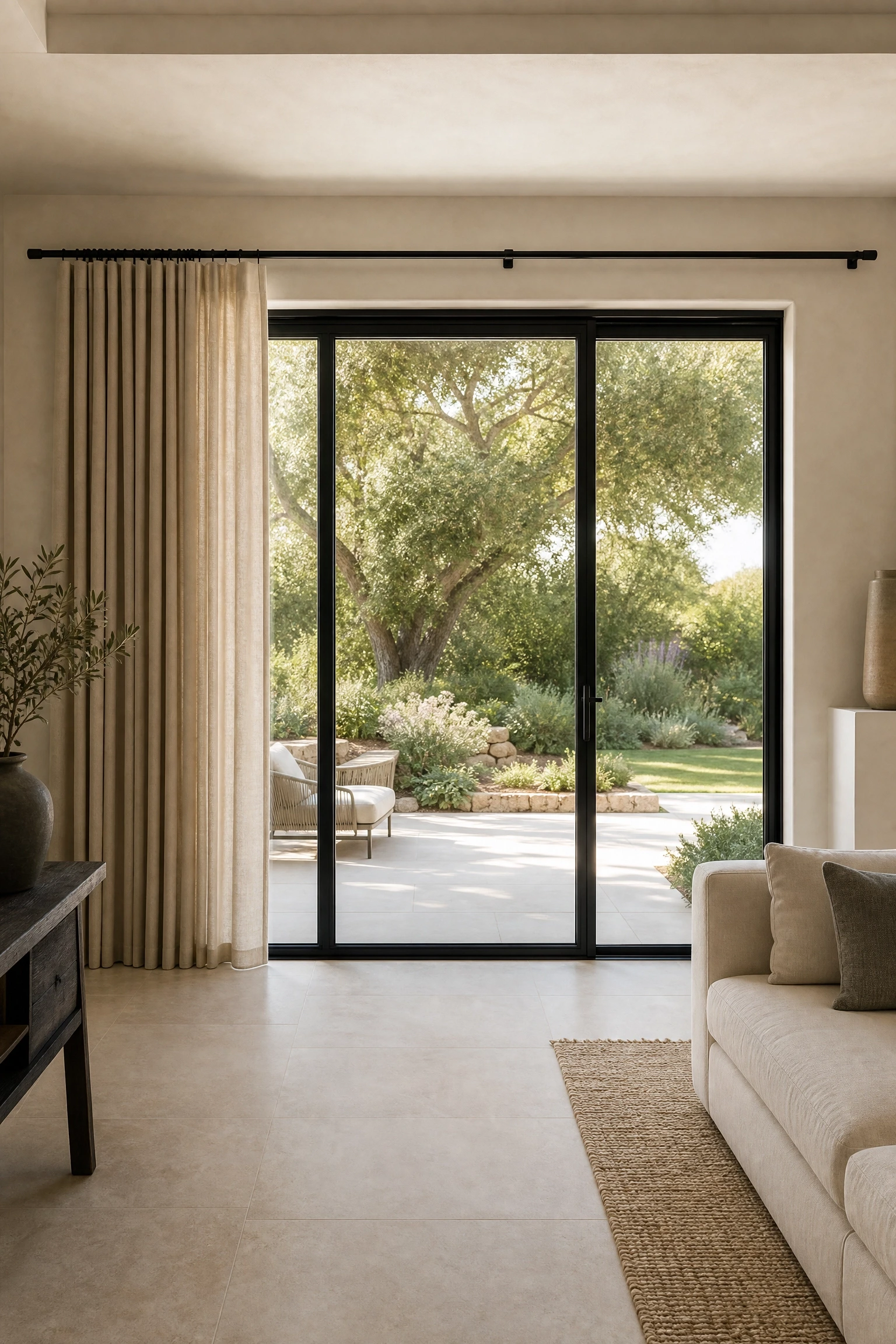
Sliding glass doors are the window treatment problem that most people solve with vertical blinds, which are the single most universally regretted window covering choice according to multiple designer surveys, and the far better solution is two or three wide drapery panels hung from a long rod that extends 12 inches beyond each side of the door frame, allowing the panels to stack completely clear of the glass when open and providing a full, elegant curtained wall when closed. Use a traversing rod with carriers if you need to open and close the panels from across the room without touching the fabric.
Heads Up: Vertical blinds for sliding doors look cheap, break easily, and are noisy in any draft. Even an inexpensive set of cotton or linen panel pairs hung correctly will look dramatically better and last significantly longer.
17. Use Cafe Curtains in the Kitchen for Privacy with Light
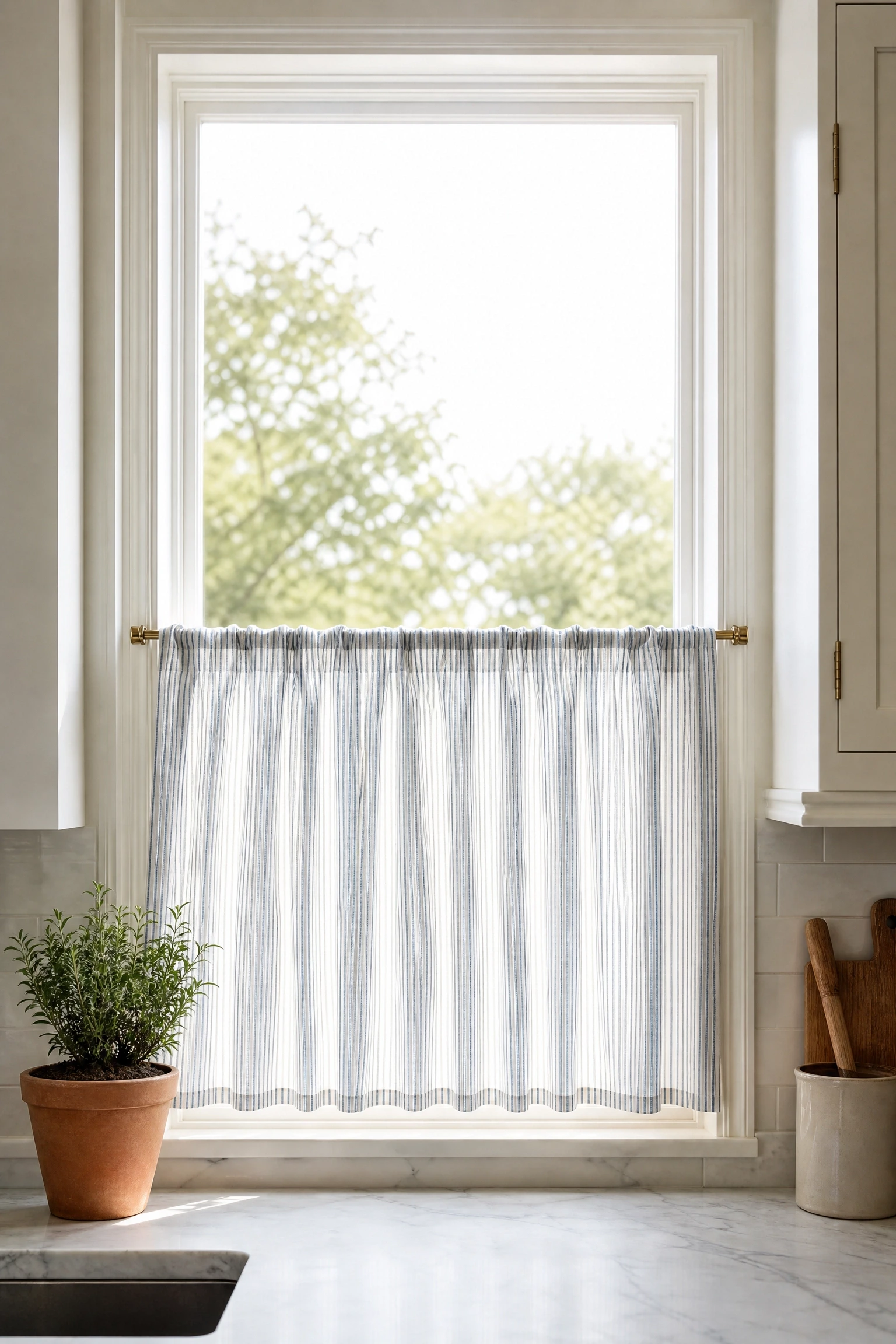
A cafe curtain covering only the lower half of a kitchen window gives you privacy at eye level from outside while keeping the upper portion of the window completely open to light and sky, which is exactly the balance most kitchen windows need since they are typically at counter height and face directly into neighboring yards or streets. Mount a tension rod or a simple brass rod inside the lower half of the frame and use a lightweight cotton or linen panel in a simple stripe, check, or solid that can be removed and washed regularly without any special care.
Designer Advice: Choose a cafe curtain in a pattern that references the kitchen palette rather than matching it exactly. A soft blue check in a white kitchen, or a muted ochre stripe in a warm cream kitchen, adds the right amount of character without competing with the cabinetry.
18. Hang Sheer Curtains in a Bedroom to Soften Morning Light
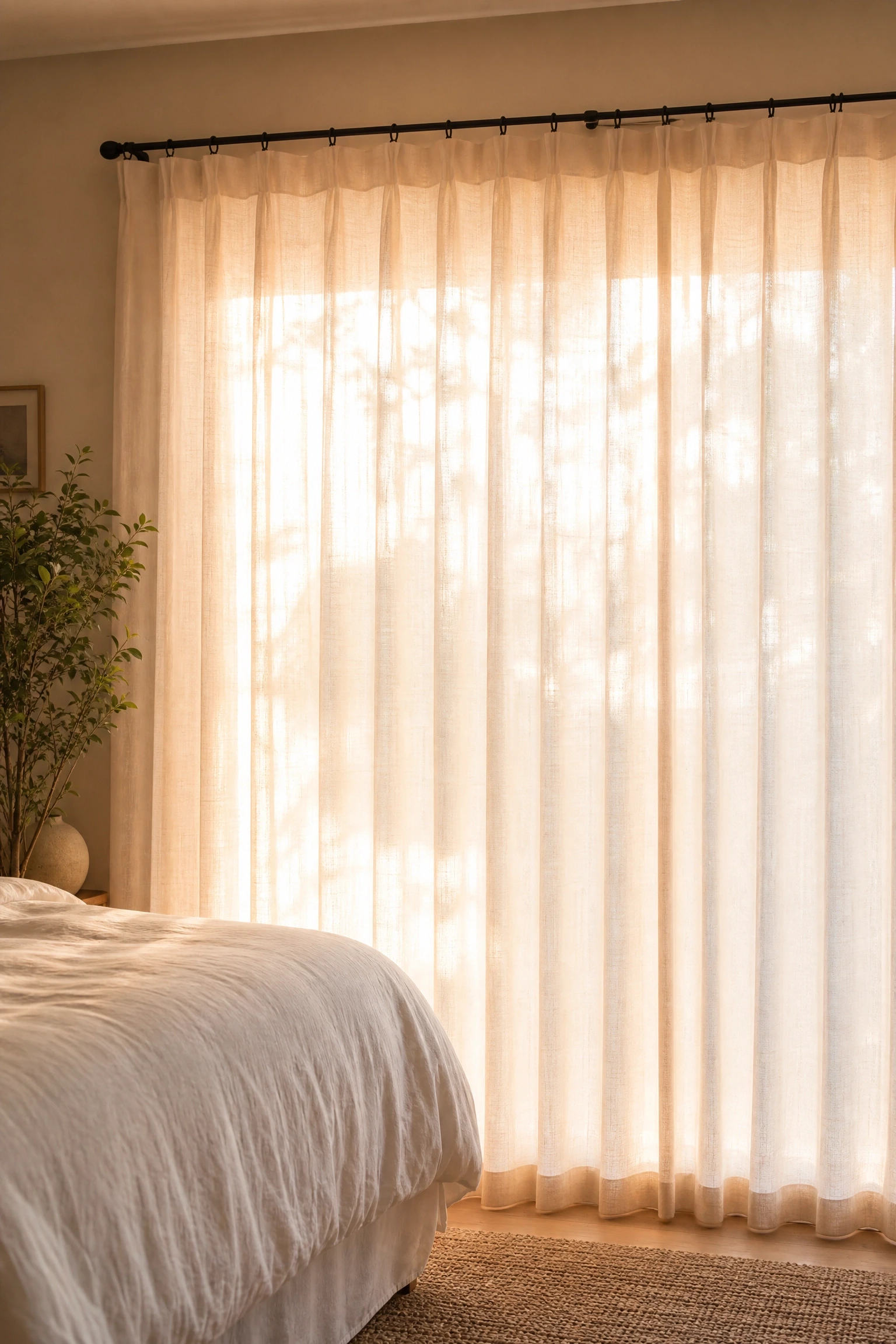
Sheer or semi-sheer curtains in a bedroom behind a blackout shade give you control over the morning light that a shade alone cannot provide, because you can raise the shade while keeping the sheers closed to get soft, diffused daylight without the full brightness that wakes most people earlier than they want. Belgian linen sheers, cotton voile, or a simple white muslin panel all diffuse light in slightly different ways, with linen reading warmest and muslin reading brightest, so match the choice to how much warmth or clarity you want in the morning light.
Pro Move: Choose sheers in the palest blush, cream, or warm white rather than pure white. Pure white sheers read cold and clinical in morning light; warm-toned sheers make the light that comes through them feel like sunshine rather than a fluorescent tube.
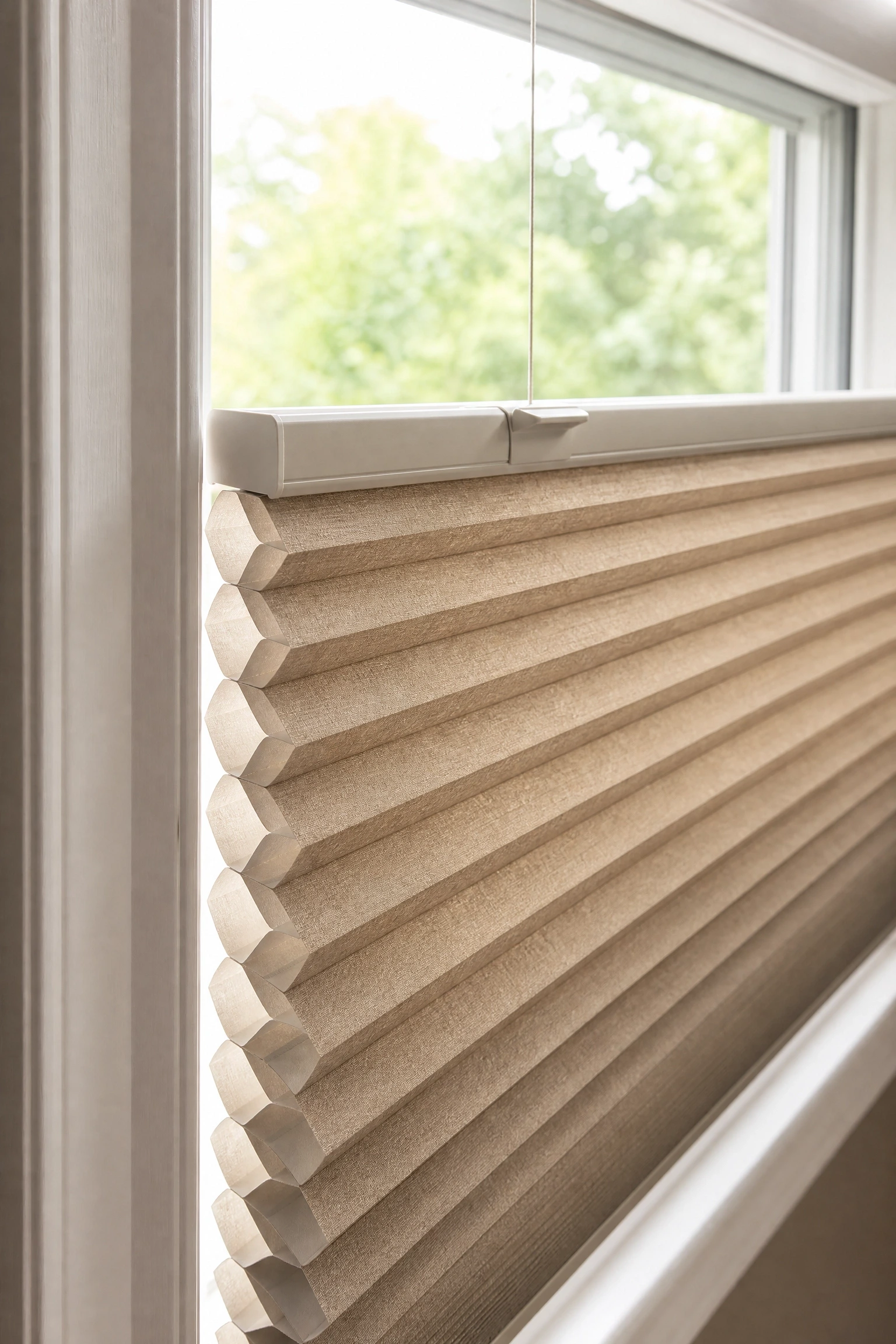
Honeycomb or cellular shades trap a layer of air in their cells between the window glass and the room, acting as insulation that keeps warm rooms cooler in summer and cold rooms warmer in winter, and the energy saving impact is measurable enough that they are one of the few window treatment choices that pays back their cost over time through reduced heating and cooling bills. Choose a double-cell or triple-cell construction for maximum insulation and a top-down bottom-up operating style that lets you lower the shade from the top while keeping privacy coverage at the bottom.
Reality Check: Cellular shades in standard white or off-white are genuinely the most energy-efficient option but also the least decorative. If you want efficiency with more character, use cellular shades in a warm linen tone or camel and pair them with simple side panels in a natural fabric.
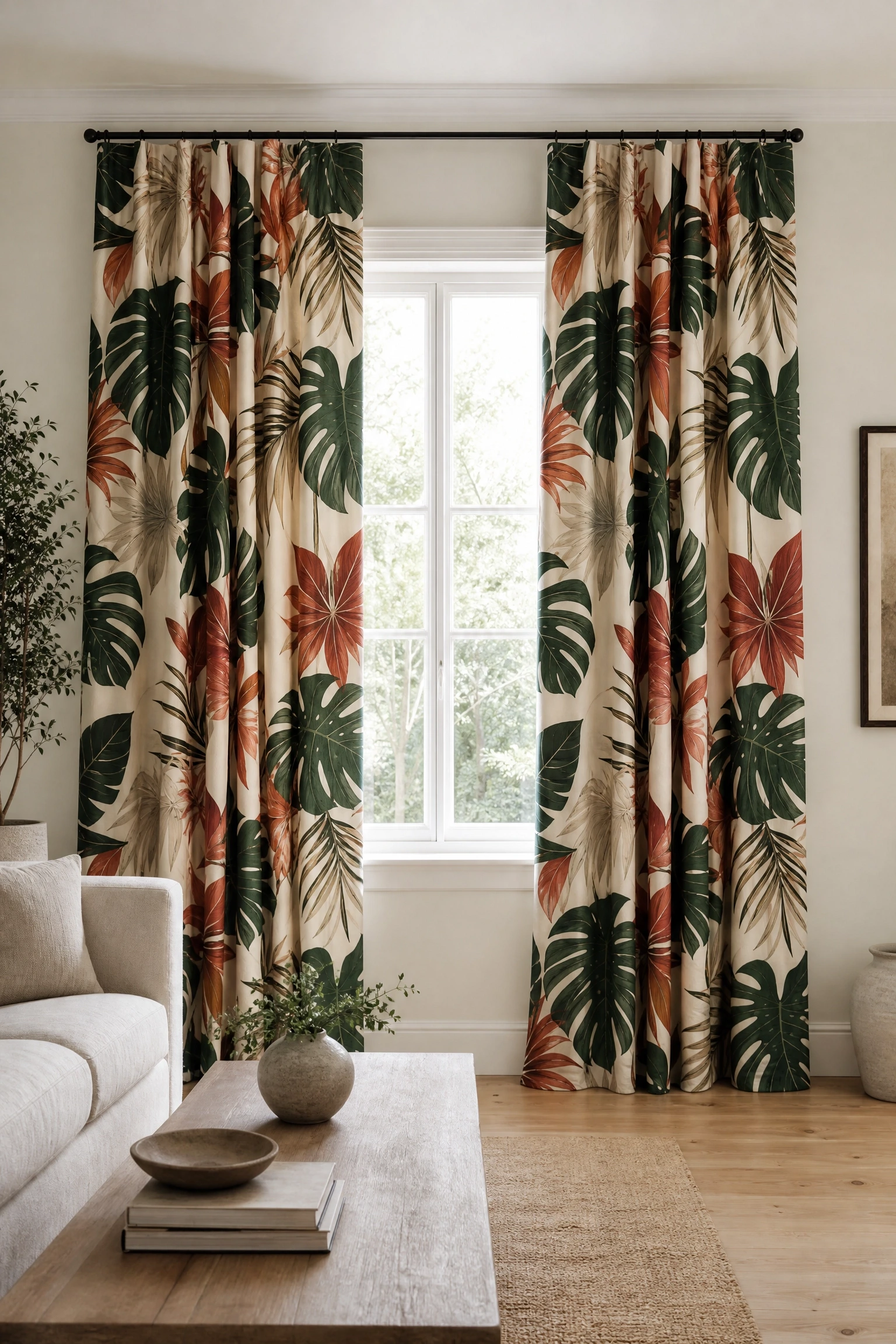
A large-scale botanical print, a geometric repeat, or a bold stripe in drapery fabric turns the window into the focal point of the room rather than a background element, and in a space where the furniture and walls are deliberately simple and neutral, one window dressed in a statement fabric does more to give the room personality than any gallery wall or styling accessory. Keep everything else in the room in solid tones pulled from the curtain pattern so the print feels anchored rather than competing with multiple other strong visual elements.
Designer Advice: Order a fabric sample and hold it against the window in the actual room before committing to a bold pattern. Natural light changes pattern scale and color dramatically, and a sample that looks bold in a showroom can read quite differently at home.
21. Use Inside-Mount Treatments to Make Small Windows Look Cleaner
Mounting a shade or blind inside the window frame rather than outside it keeps the window treatment contained and neat, shows off the window trim as an architectural detail, and is particularly effective in rooms with multiple windows where you want visual consistency without the bulk of outside-mounted treatments overlapping trim and wall space. Inside-mount shades work best on windows with at least 2 inches of depth inside the frame so the mechanism fits fully without protruding.
Heads Up: Inside mounts reduce the effective coverage of the shade because the shade cannot extend beyond the frame. If the window has a light gap issue, the inside mount will not solve it. In that case, outside mount the shade and extend it 2 to 3 inches beyond the frame on all sides.
22. Use Motorized Shades in Hard-to-Reach or High Windows
Motorized window treatments controlled by a smartphone, a voice assistant, or a simple wall switch are no longer a luxury-only feature and are now available from mid-range brands at prices that make sense for high windows, windows behind furniture, and skylights where manual operation is genuinely awkward or requires a ladder. Beyond the convenience, motorized shades can be programmed to close at the same time each afternoon to protect furniture and art from UV fading, which is a quiet but significant long-term benefit that manual shades cannot offer.
Pro Move: Battery-powered motorized shades require no hardwiring and can be installed in a weekend. Charge the battery once every 6 to 12 months depending on use frequency. It is the easiest upgrade for windows where a standard shade feels frustrating to operate.
23. Frame a View with Curtains That Stay Open Permanently
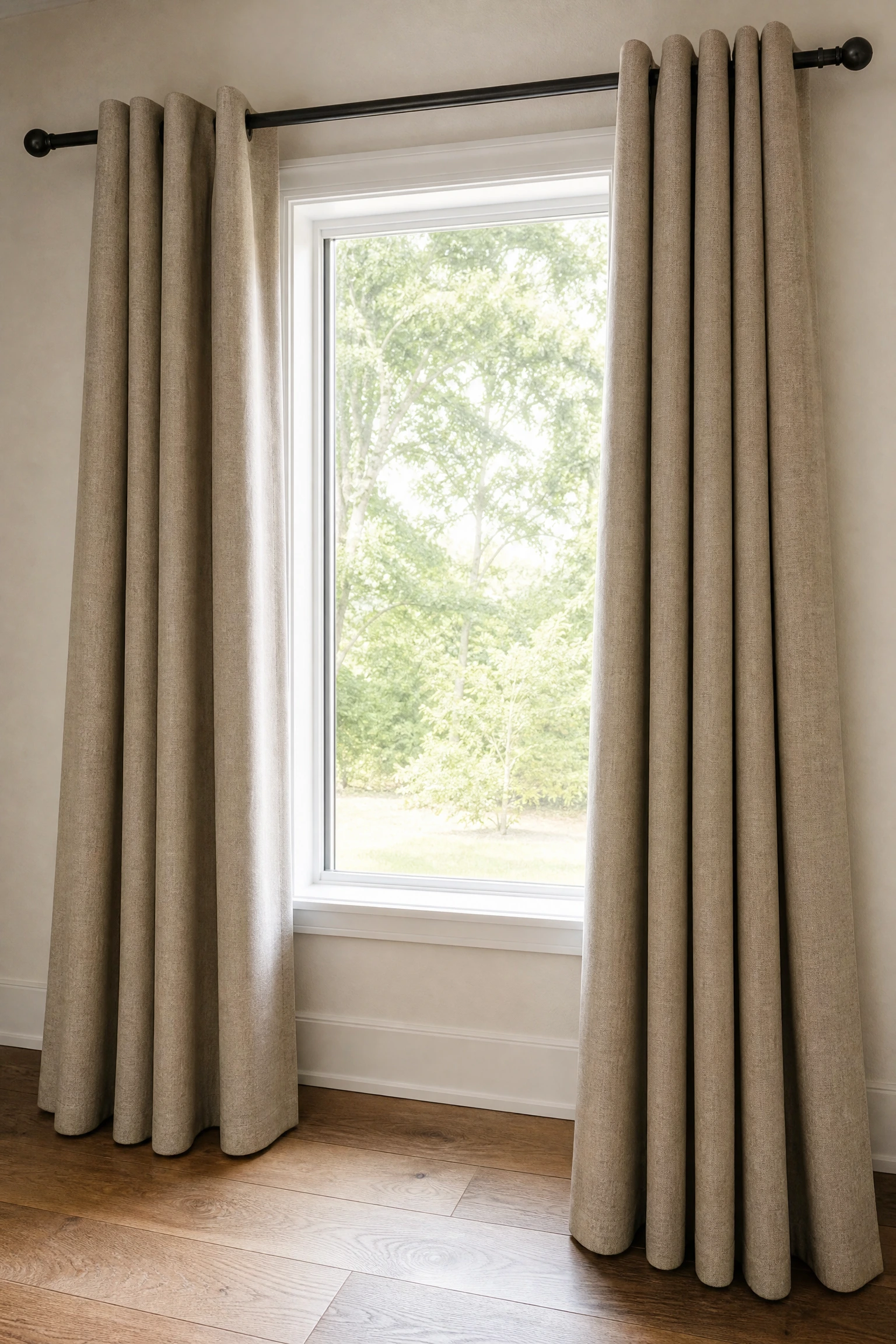
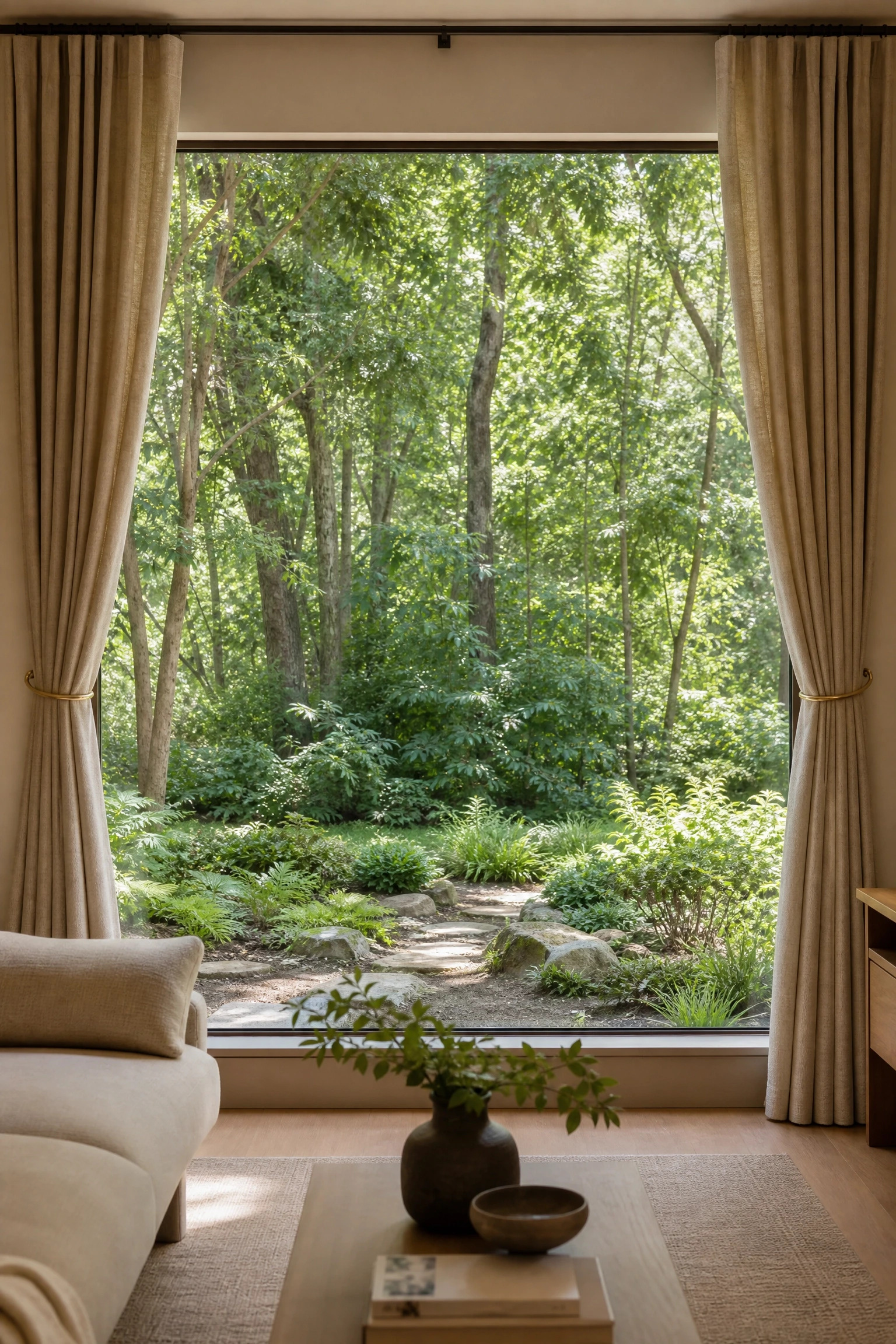
Not every window needs a treatment that opens and closes. A window with a beautiful view, a garden, a tree line, or a cityscape, is best served by two fixed drapery panels mounted on either side as a permanent frame that draws the eye toward the glass rather than covering it, giving the window a finished architectural look without interrupting the view that makes the window worth looking at. Use a fabric with enough weight to hang in clean columns and a neutral or muted tone so the curtains frame rather than compete with what is outside.
Designer Advice: Tie-back or hold-back hardware in a complementary metal finish adds a deliberate detail that confirms the panels are meant to be stationary. Unlacquered brass or aged iron holdbacks both read as intentional design rather than forgotten curtains.
Pairing a woven bamboo or jute flat blind mounted inside the frame with loose linen side panels hanging on an outside-mounted rod is the combination that most closely resembles what you see in high-end interior design photography, because the two layers together provide texture contrast, light control flexibility, and the visual depth that a single treatment alone never achieves. Lower the blind to filter afternoon glare, keep the linen panels open to soften the edges, and the window looks considered and layered at every time of day.
Reality Check: This layered approach uses two separate mounting systems, an inside rod for the blind and an outside rod for the panels. Measure both carefully before ordering anything, and confirm your window frame has enough depth to accommodate both without the outer rod brackets hitting the inner rod.
25. Add Window Film to a Window That Needs Both Privacy and Light
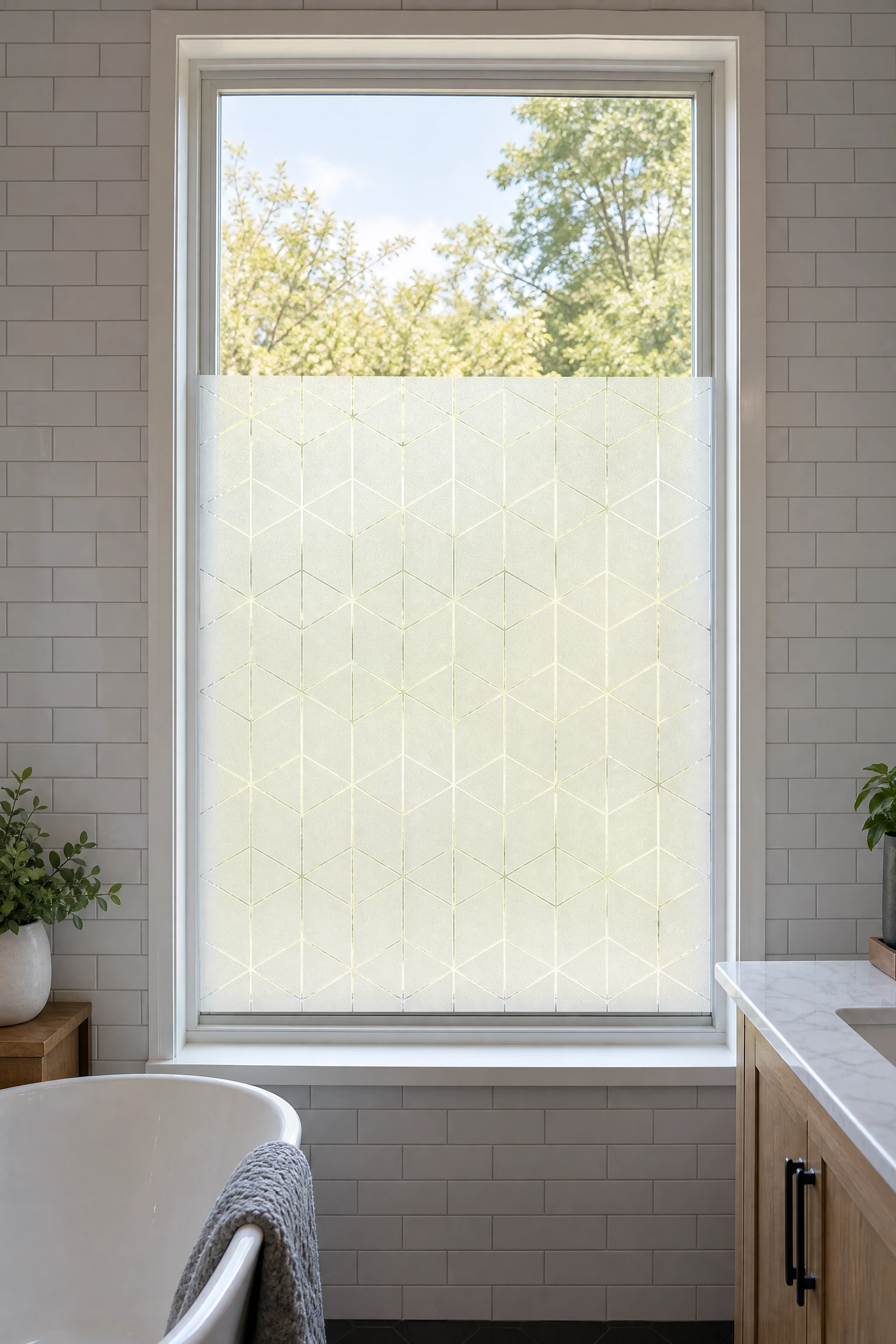
Frosted or patterned window film applied directly to the glass provides privacy during the day without blocking light in bathroom, kitchen, or street-facing windows where curtains or blinds would feel heavy or intrusive, and modern window films now come in a wide range of patterns from simple frosted opacity to decorative geometric, botanical, and stained-glass designs that add genuine visual interest to the glass surface itself. Film is removable without damage in most cases, making it the right choice for rental apartments or any window where a permanent structural treatment is not possible.
Pro Move: Apply window film to a clean, slightly damp glass surface using a squeegee to remove all air bubbles. A film applied with even one large air pocket looks worse than a bare window, so take the time to do it properly or it will need to be removed and reapplied.
The best window treatment is the one that solves the actual problem your window has, whether that is too much light, not enough privacy, or a room that feels unfinished and small. Start with the installation decisions, get the height and width right first, and every other choice becomes easier from there.