Laundry rooms collect clutter faster than any other room in the house. Detergent bottles, stain removers, dryer sheets, lint rollers, spare hangers, and half-folded piles of clothes all fight for space in a room that is usually one of the smallest in the house. Good storage fixes that. When everything has a place, the laundry room stops being a disaster zone and starts being a room that actually works. Here are 16 storage ideas that keep it organized.
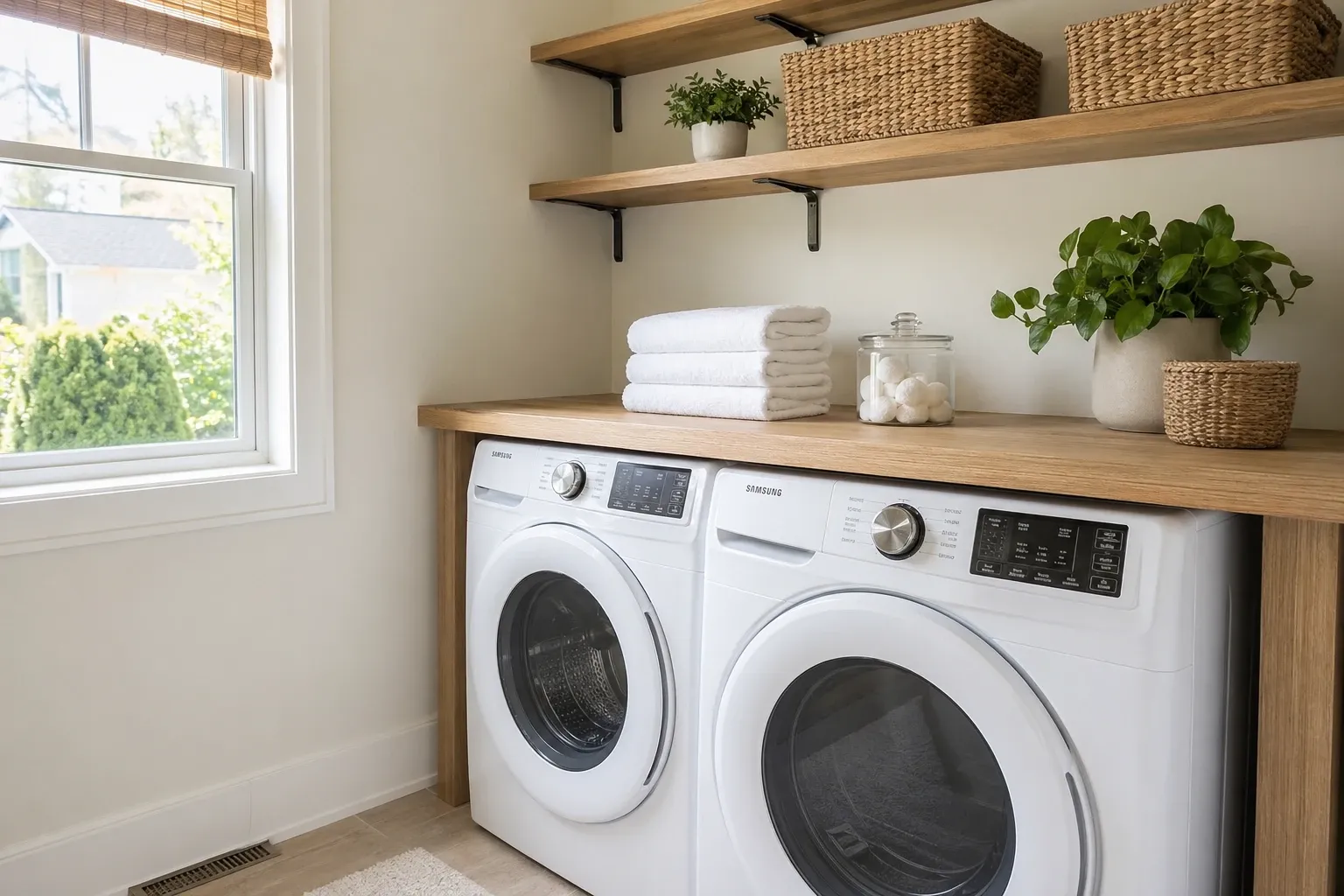
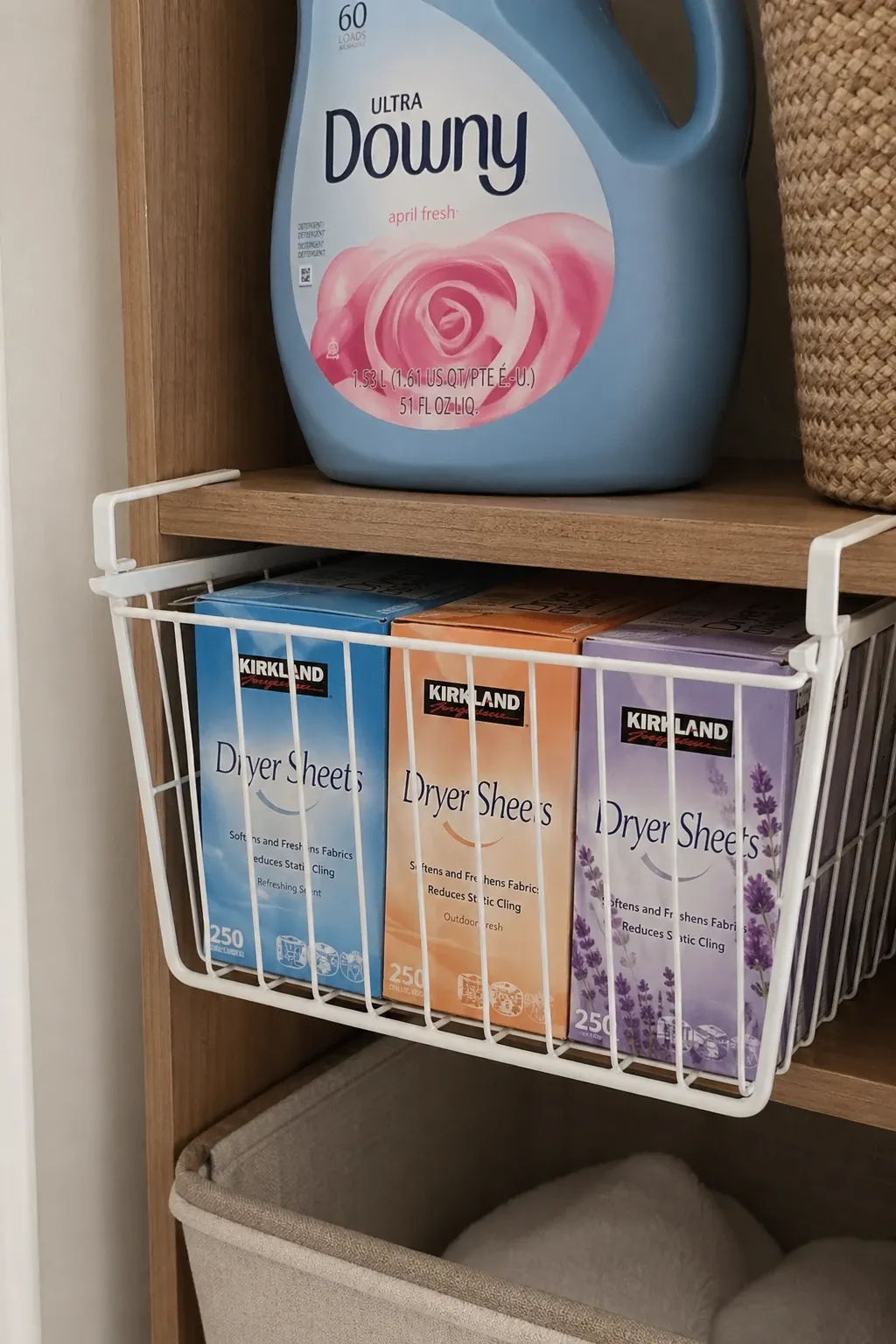
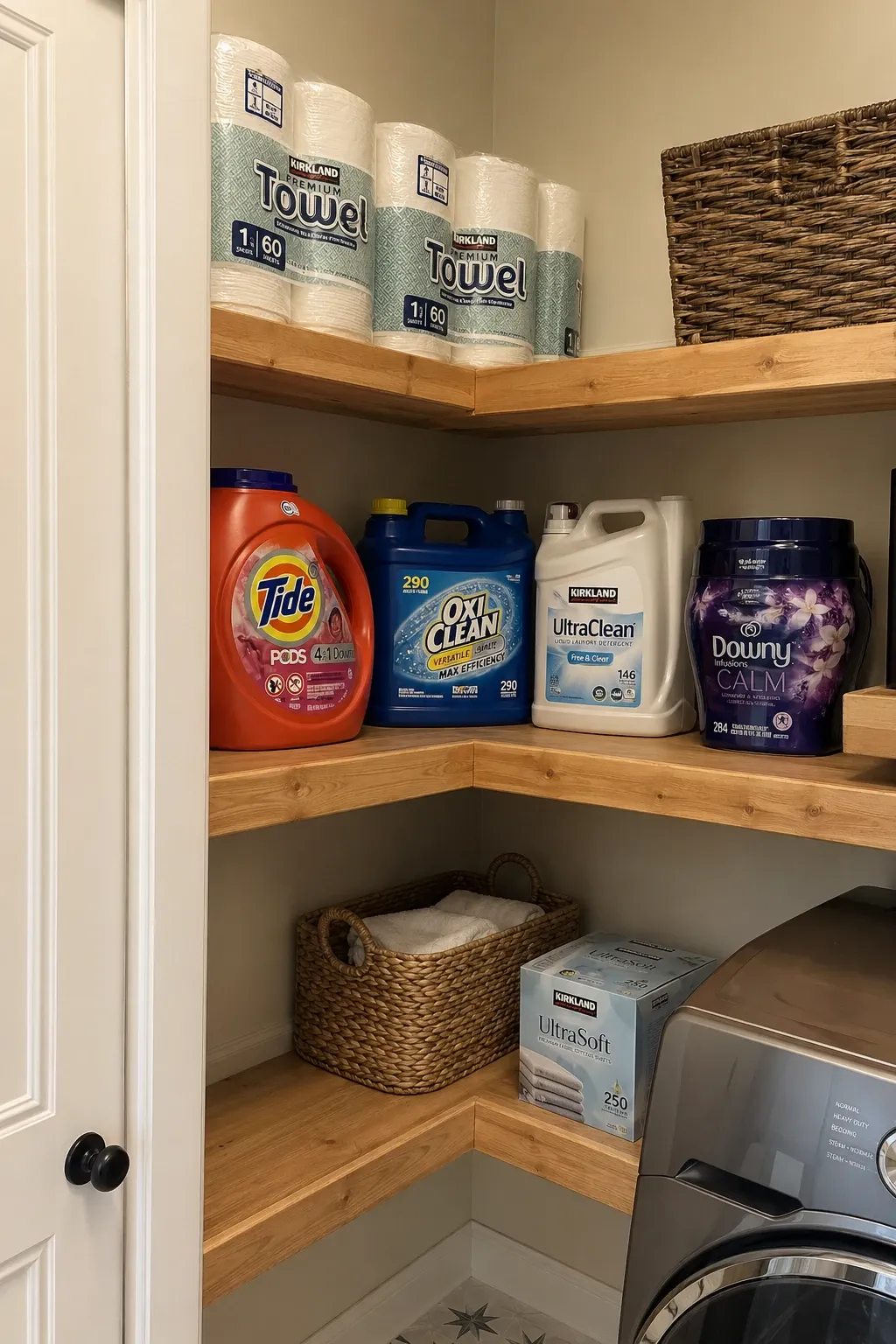
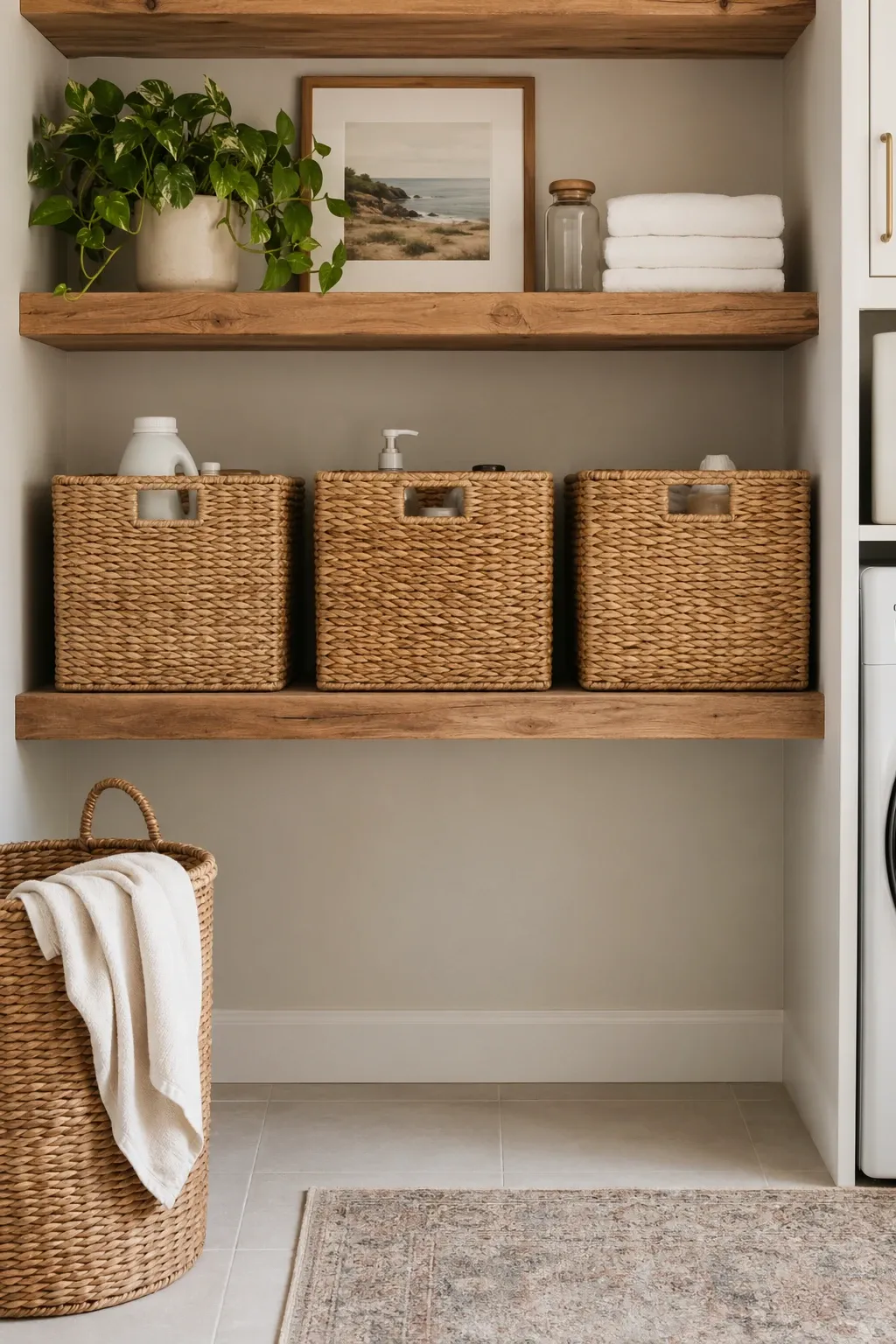
The wall space above the washer and dryer is prime storage territory that most people leave completely empty. Two or three floating shelves installed above the machines give you a place for detergent, fabric softener, stain remover, and dryer sheets where they are within arm is reach during a load. Matching containers or baskets on the shelves keep everything looking neat instead of having a row of random bottles on display.
Designer Tip: Install the lowest shelf at least 18 inches above the top of the machines so you have room to open the lids on top-loading washers. Too low and you will hit the shelf every time you load a wash.
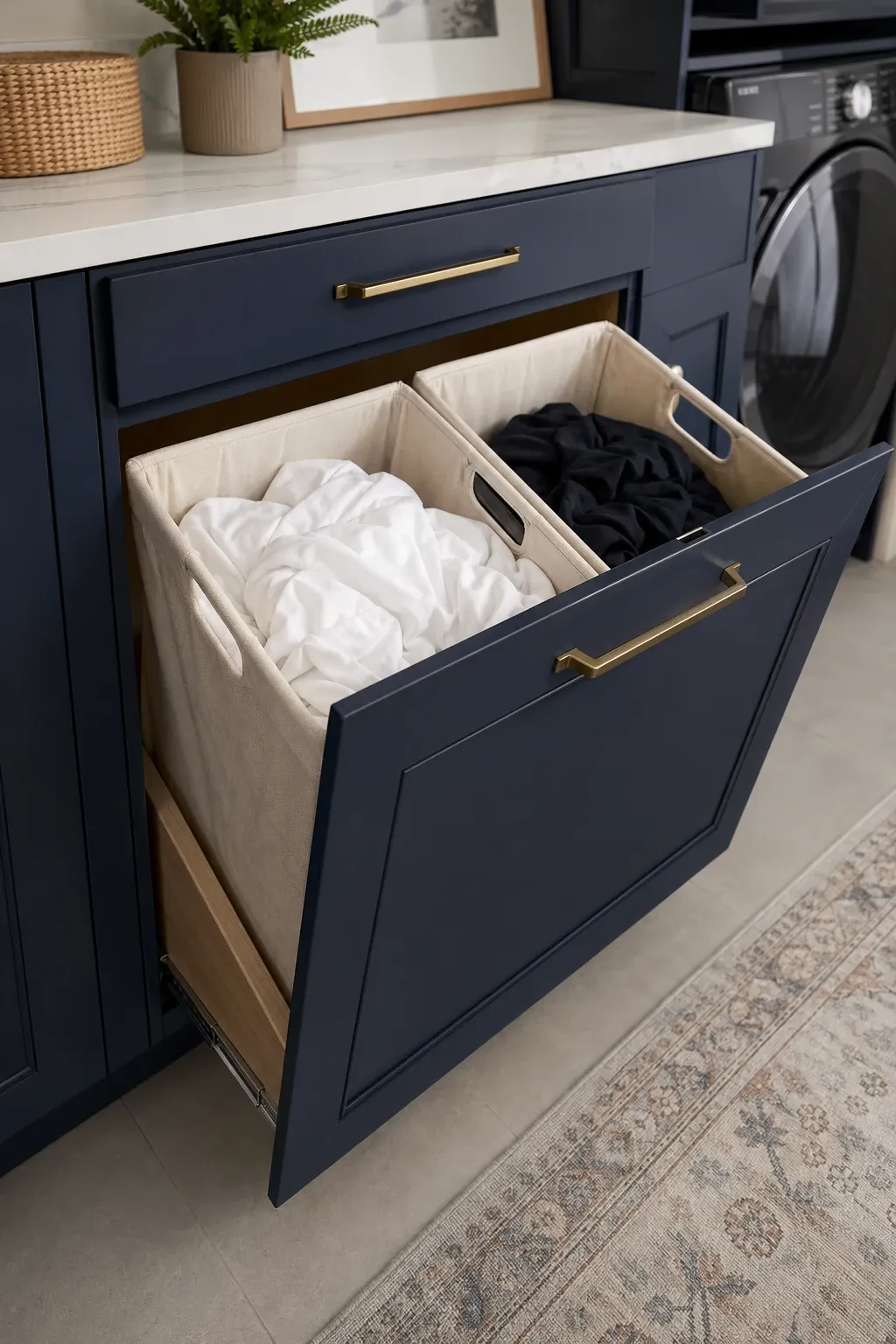
A cabinet with a pull-out hamper hides dirty laundry behind a closed door. When the door is shut, you see a clean cabinet face instead of an overflowing basket. Pull the door open and the hamper slides out on rails for easy loading. Some versions have two or three hamper bins inside for pre-sorting lights, darks, and delicates, which saves time on laundry day because the sorting is already done.
Designer Tip: Choose a pull-out hamper with a removable bag inside the frame. When it is time to do laundry, lift the bag out and carry it to the machine. This is much easier than dragging the whole cabinet across the floor.
The back of the laundry room door is free storage space. An over-the-door organizer with pockets or hooks holds supplies like stain sticks, dryer balls, sewing kits, lint rollers, and other small items that get lost in drawers. Everything is visible and accessible without opening a cabinet or digging through a bin. It takes zero floor or wall space and installs in seconds with no tools.
Designer Tip: Use a clear-pocket organizer so you can see each item at a glance. Fabric-pocket organizers look nicer but you end up rummaging through every pocket to find what you need. For a utility room like the laundry, function beats looks.
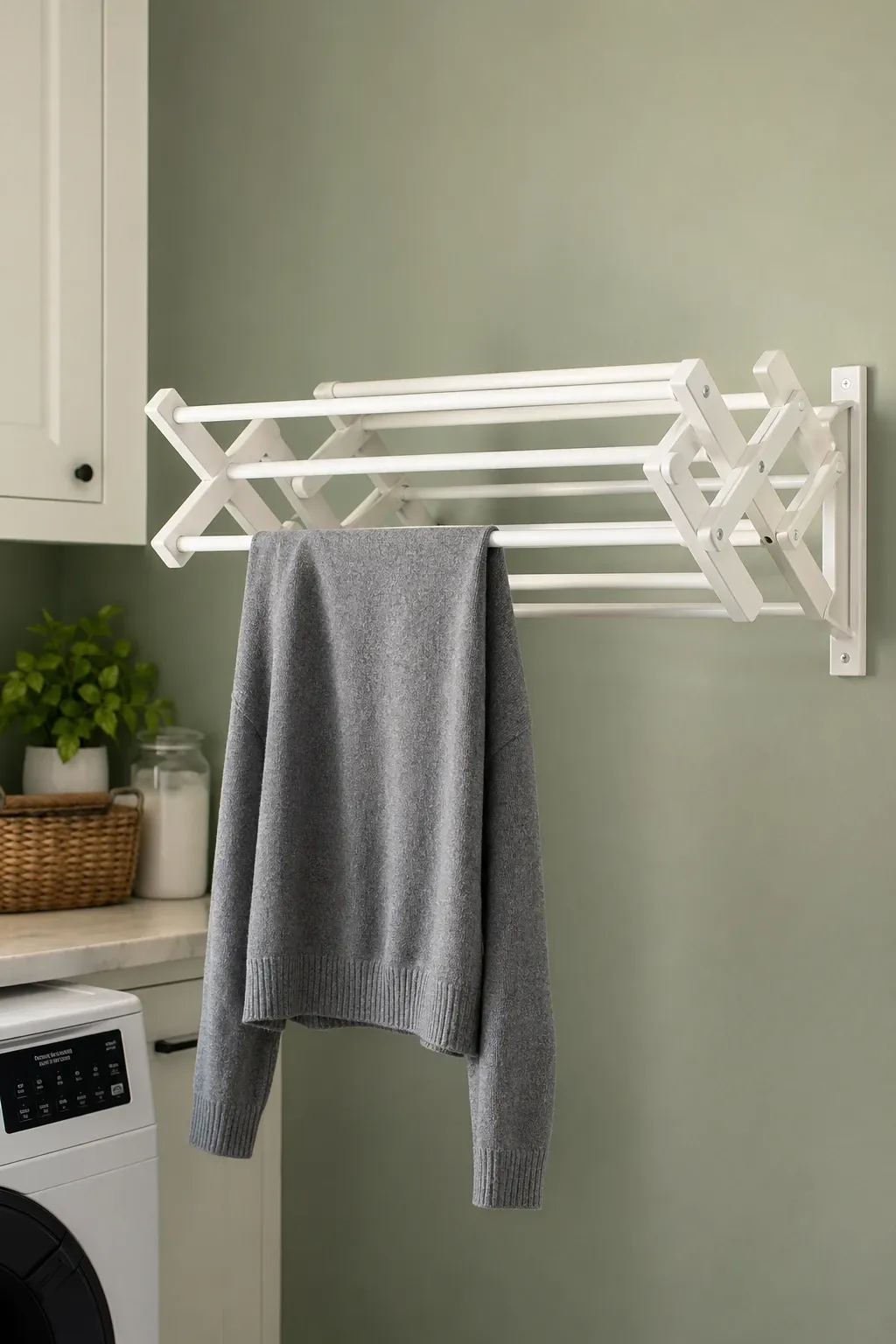
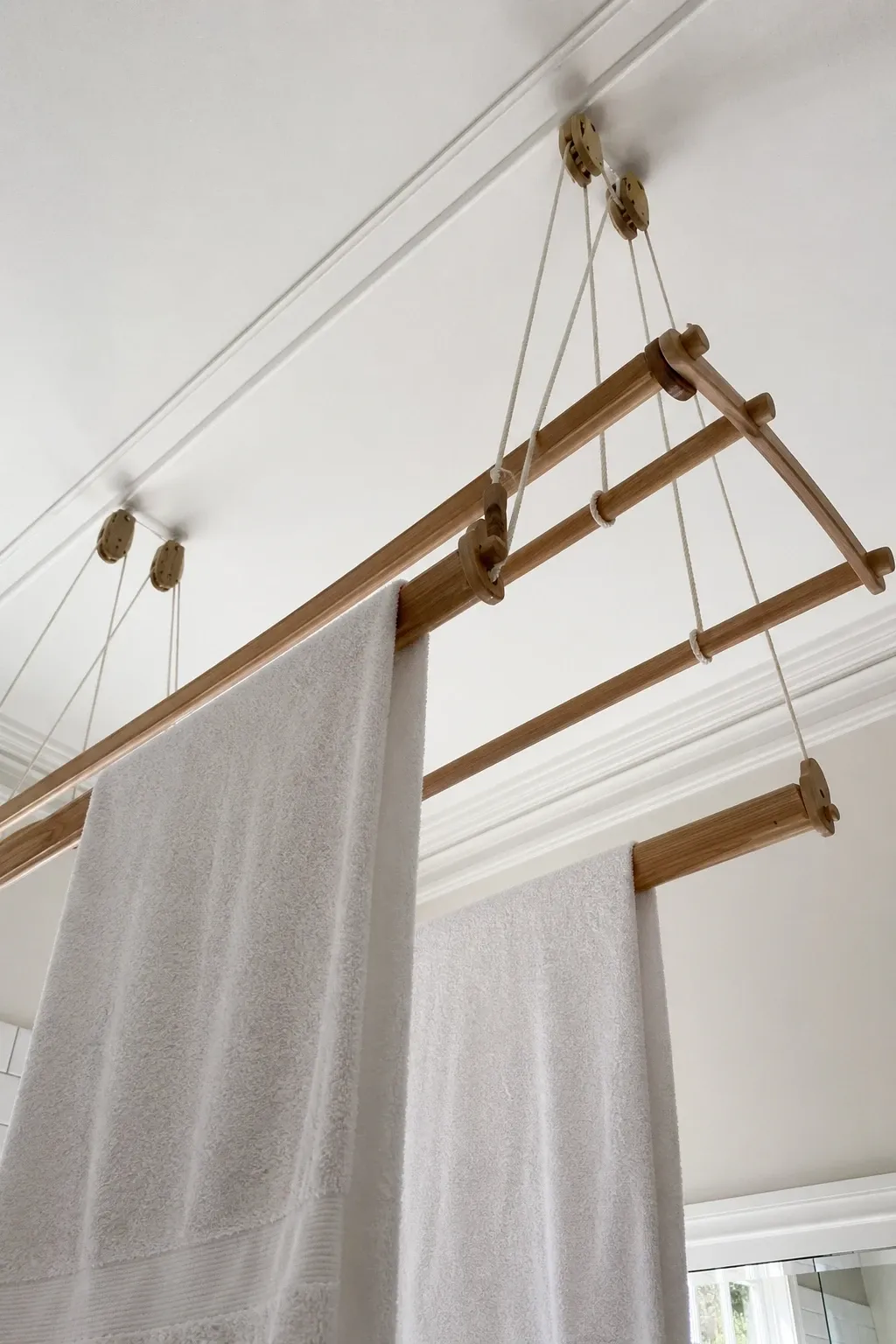
A wall-mounted drying rack folds flat against the wall when not in use and swings open when you need to air dry delicates, sweaters, or hand-wash items. It takes up no floor space when folded, which is critical in a small laundry room. Accordion-style racks and fold-down shelf racks are the two main styles. Both work well. The accordion type gives you more drying bars. The shelf type gives you a flat surface for folding when it is up.
Designer Tip: Mount the drying rack on the wall opposite the machines so wet items do not drip on the washer or dryer controls. Position it at a height where the bottom bar is about waist height so you are not bending down to hang things.
Pouring laundry detergent, fabric softener, and stain remover into matching glass jars or dispensers instantly makes the laundry room look cleaner and more organized. Mismatched plastic bottles with peeling labels look messy no matter how neatly you arrange them. Uniform jars with handwritten or printed labels give the room a pulled-together look that makes you want to keep it tidy. It is a small effort that changes the entire visual feel of the space.
Designer Tip: Use jars with pour spouts or pump tops so dispensing is easy and mess-free. A jar that you have to unscrew and tip every time creates more mess than the original bottle. The container should be prettier and just as functional.
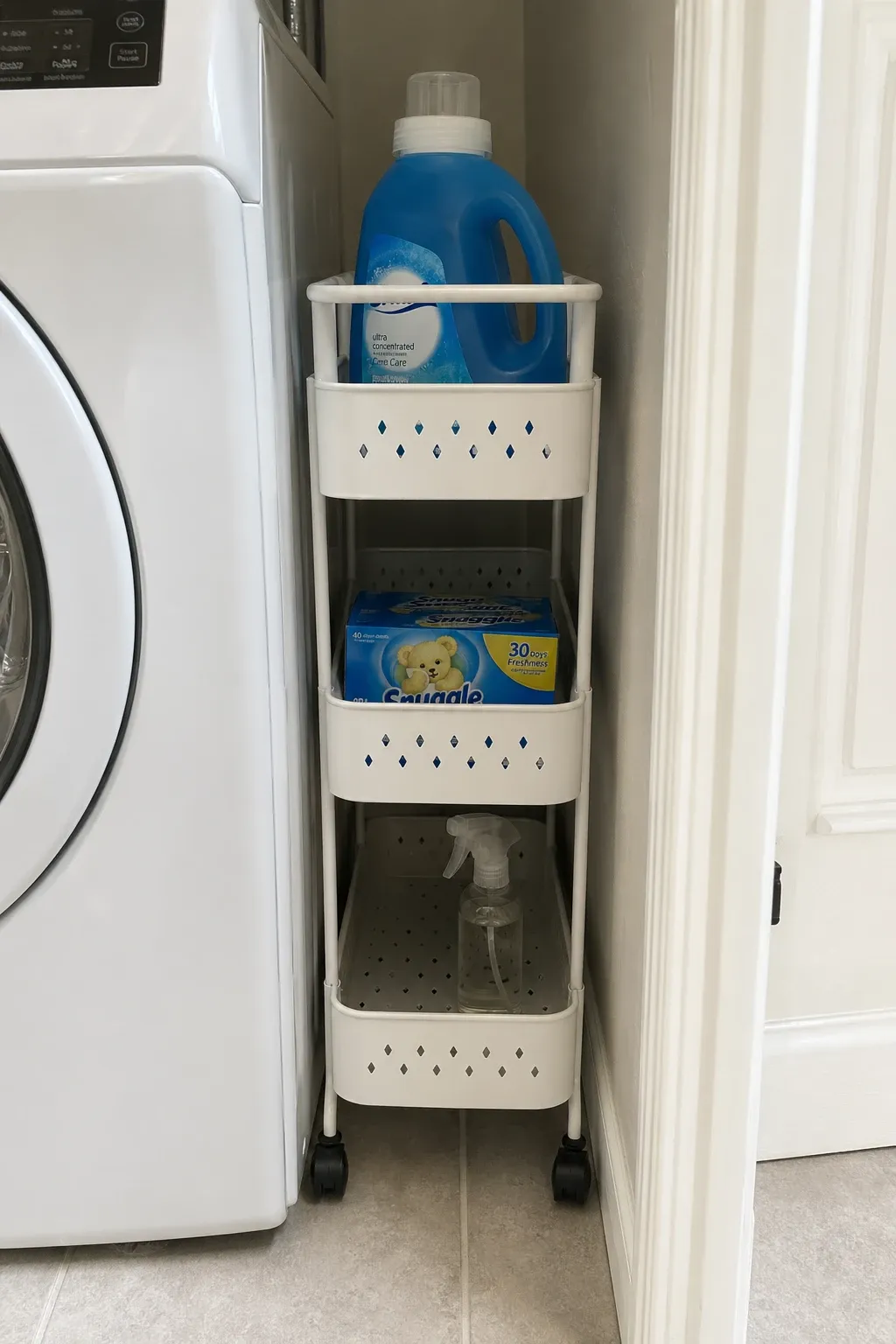
If there is a gap between your washer and dryer, a slim rolling cart fills it with usable storage instead of letting it collect lint and lost socks. These carts are typically about 5 to 7 inches wide and have three or four shelves that hold detergent, dryer sheets, and cleaning supplies. Roll it out to access everything, push it back when done. It uses space that would otherwise be wasted and puts supplies right where you need them.
Designer Tip: Measure the gap before ordering. These carts come in different widths and a cart that is even half an inch too wide will not fit. Leave about a quarter inch of clearance on each side so it rolls in and out smoothly without scraping the machines.
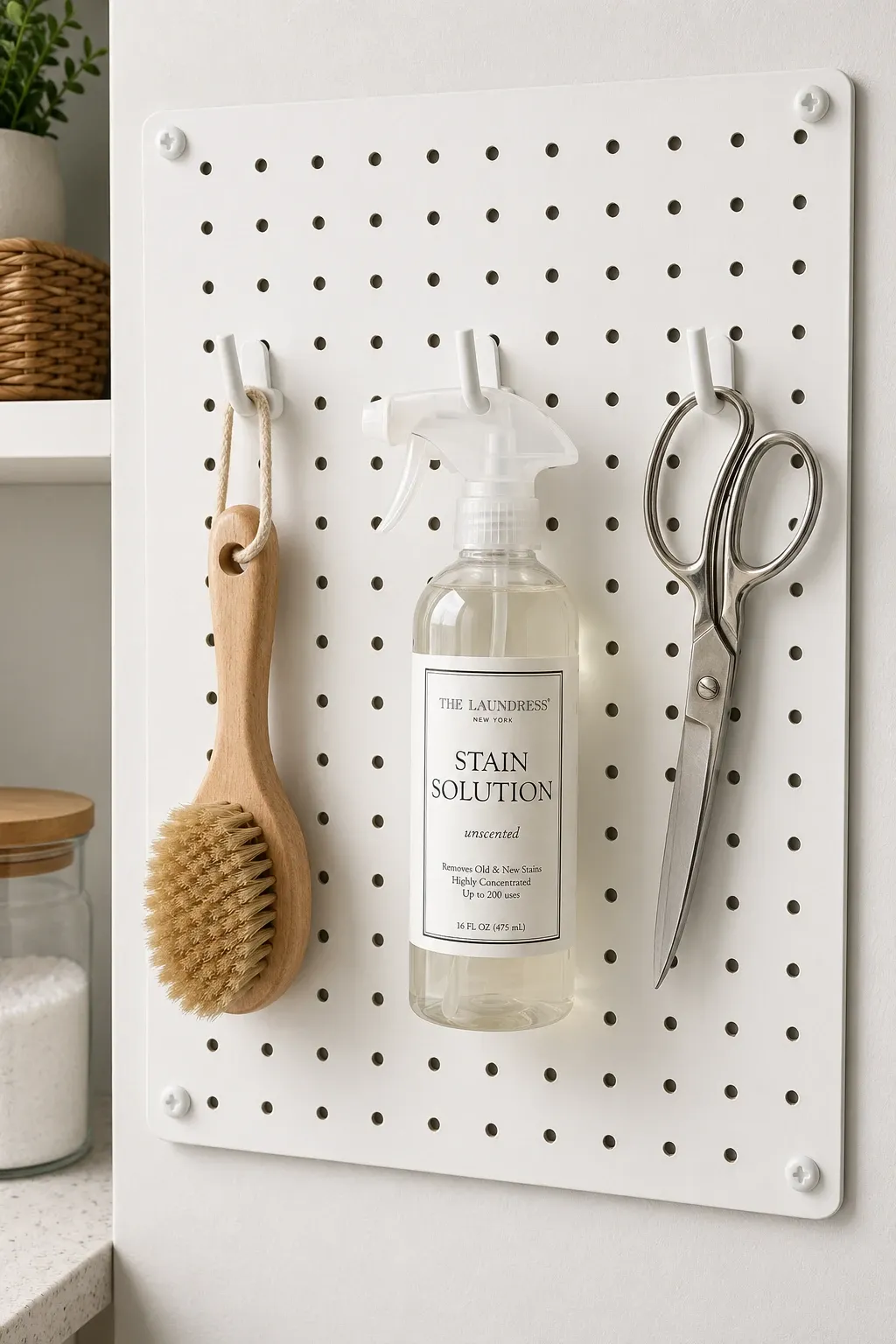
A pegboard mounted on the wall gives you endlessly customizable storage. Hooks, baskets, shelves, and bins all attach to the pegboard and can be rearranged whenever your storage needs change. Hang a dustpan and brush, a lint roller, a small ironing board, or a spray bottle. The pegboard keeps everything visible and off the counter. Paint it to match your wall color and it becomes a design feature rather than just a utility grid.
Designer Tip: Paint the pegboard before installing it. A white pegboard on a white wall looks clean and modern. A natural wood pegboard adds warmth to a utilitarian room. An unpainted brown pegboard looks like a garage workshop.
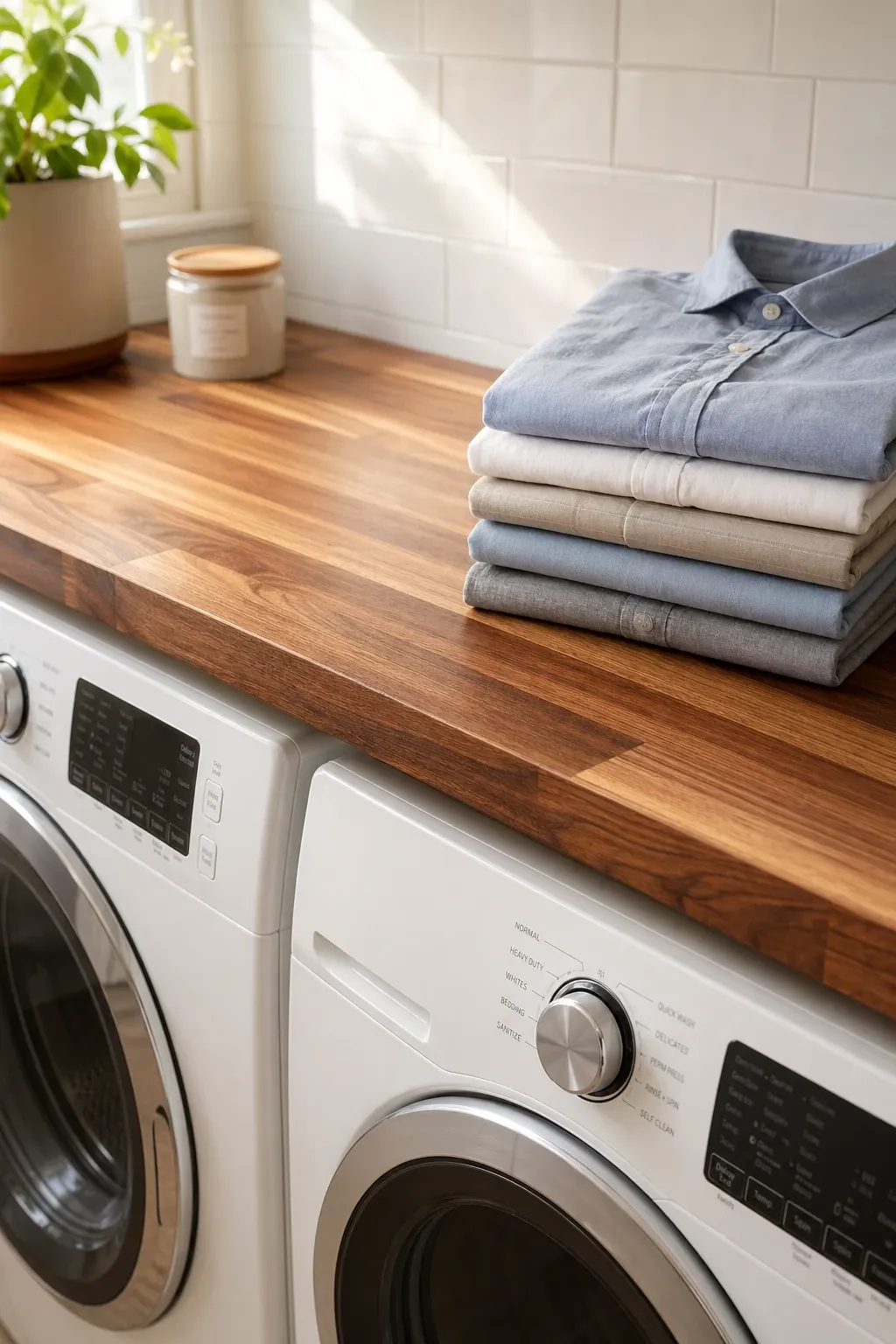
A solid countertop installed across the top of the washer and dryer gives you a flat folding surface and prevents items from falling behind or between the machines. Butcher block, laminate, or a simple plywood top with a finished edge all work. The countertop turns the tops of the machines into usable workspace and stops the vibration from shaking bottles and items off the edge during the spin cycle.
Designer Tip: Leave a small gap of about half an inch between the countertop and the machines so vibrations do not transfer to the counter and rattle everything on top. Use anti-vibration pads under the machines for even less noise and movement.
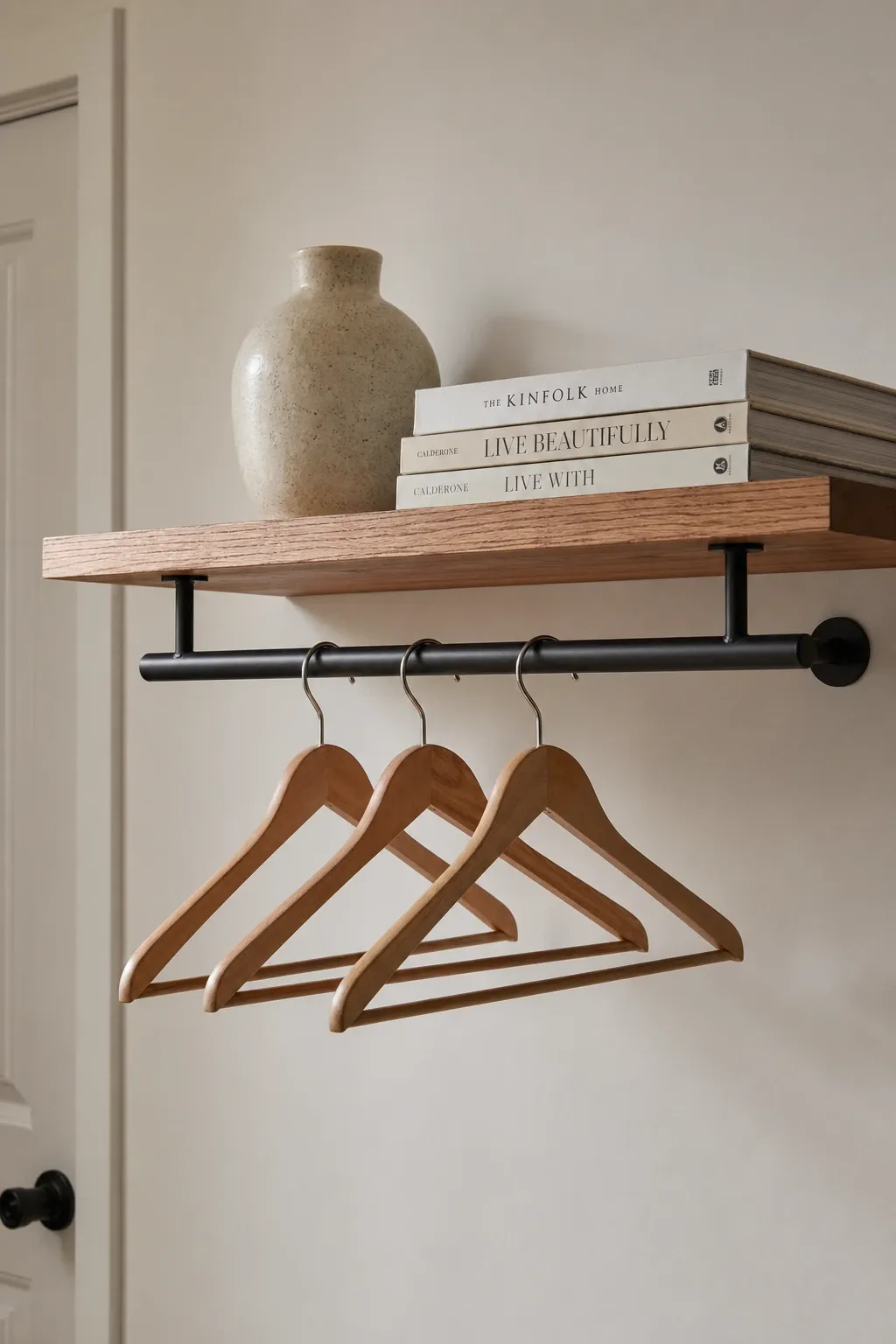
A tension rod mounted between two walls or inside a cabinet gives you a spot to hang clothes straight out of the dryer before wrinkles set in. It is especially useful for dress shirts, blouses, and anything that needs to be hung immediately. A tension rod costs a few dollars, installs in minutes without any hardware, and can be removed without leaving holes in the wall. Mount it above the machines or between cabinets for easy access.
Designer Tip: Get a tension rod that matches the metal finish in your laundry room. A chrome rod in a room with brushed nickel hardware looks off. It is a small detail but in a small room, everything is a small detail and they all add up.
Upper cabinets mounted above the washer and dryer hide all your laundry supplies behind closed doors. When the cabinets are shut, the room looks clean even if the inside is packed. Cabinets are better than open shelves if you prefer a tidy, minimal look or if you have kids who should not be reaching for cleaning products. Stock standard kitchen cabinets work perfectly and are often cheaper than custom laundry cabinetry.
Designer Tip: Install cabinets that go all the way to the ceiling to maximize storage and eliminate the dust-collecting gap on top. If full-height cabinets are too expensive, add a decorative trim board across the top to close the gap and give the cabinets a built-in look.
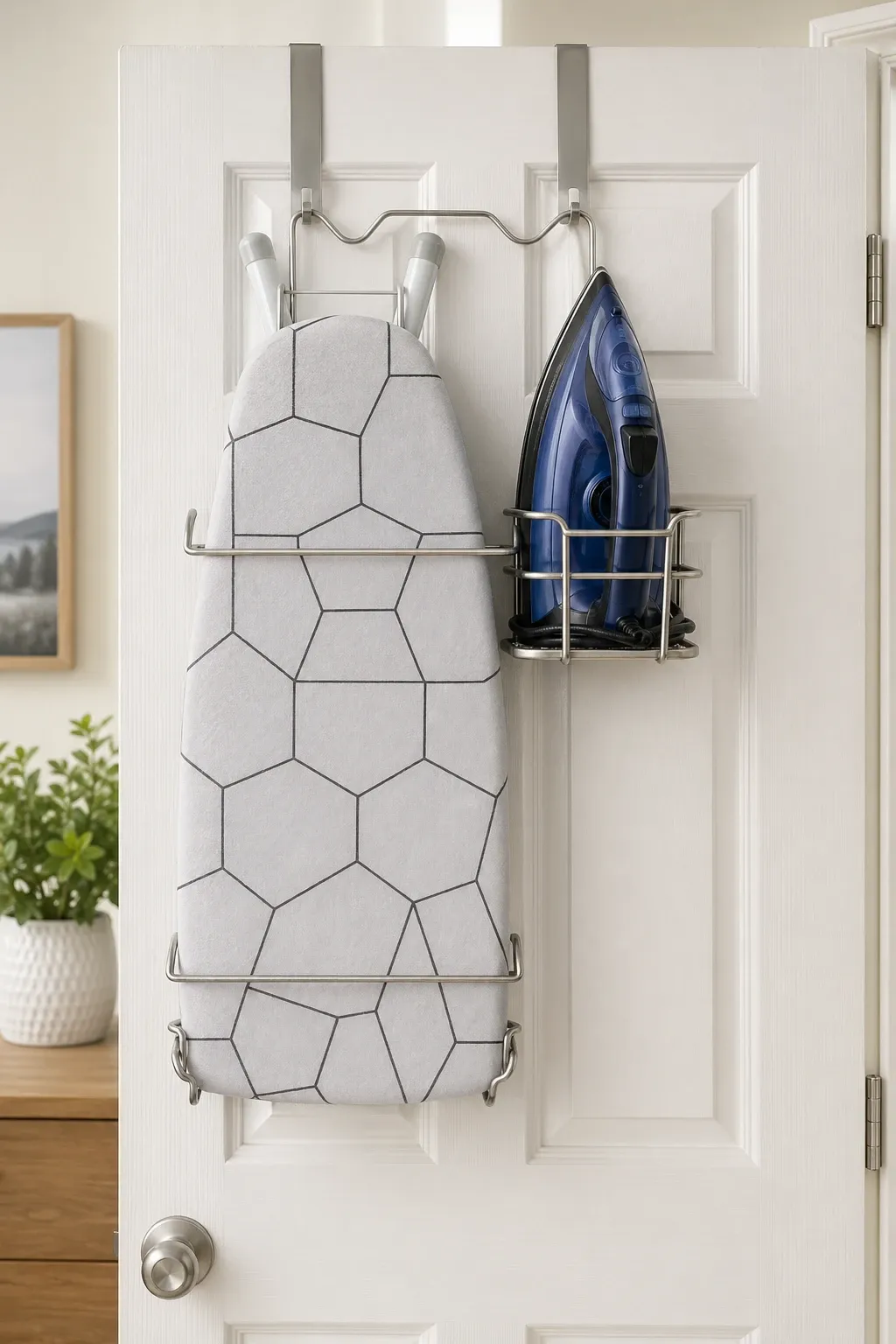
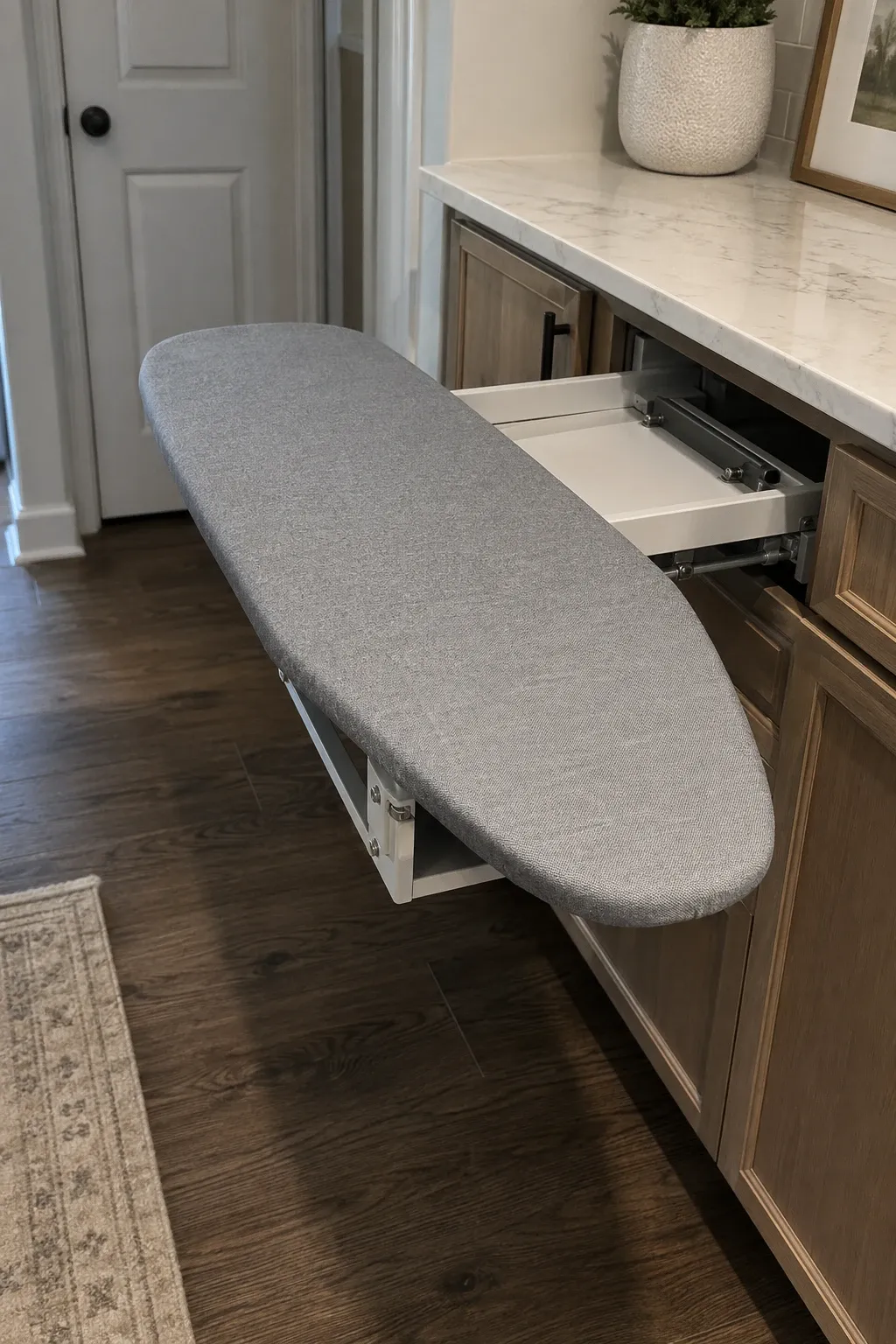
A wall-mounted ironing board folds down when you need it and folds flat against the wall when you do not. A full-size ironing board leaning in the corner of a small laundry room takes up valuable floor space and falls over constantly. The wall mount solves both problems. Some models fold into a recessed cabinet so the ironing board is completely hidden when not in use, which gives the room an even cleaner look.
Designer Tip: Mount the ironing board at a height that is comfortable for you without adjusting. Most fold-down boards are fixed height, so get the mounting height right the first time. Too low and you are hunching over. Too high and you are reaching up. About 36 inches from the floor works for most people.
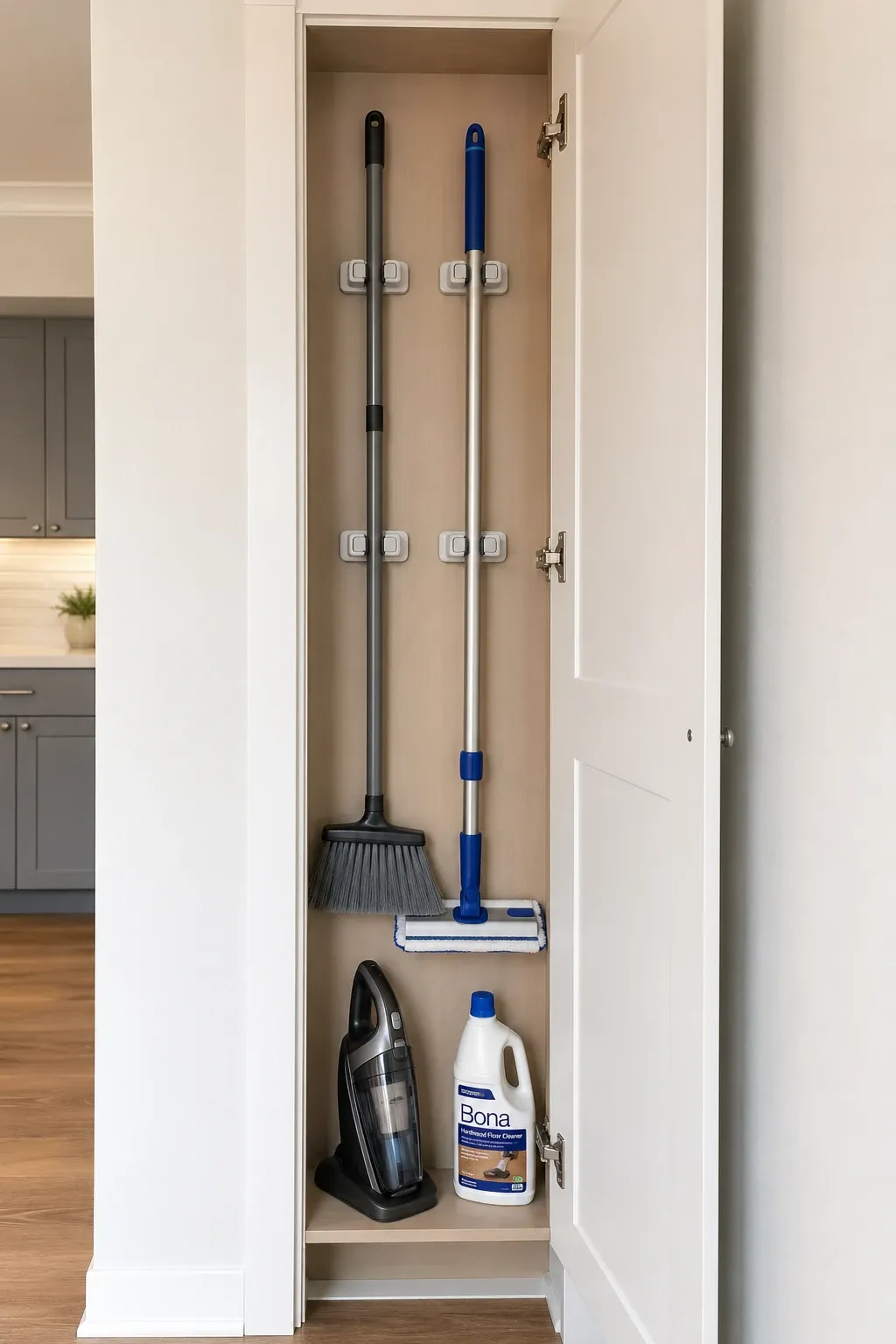
A wire shelving system that runs along one wall of the laundry room gives you adjustable, ventilated storage from floor to ceiling. Wire shelves are cheap, easy to install, and the open design lets air circulate so damp items dry faster. You can adjust the shelf heights as your storage needs change, and add hooks to the sides for hanging brooms, mops, or spray bottles. It is the most versatile and affordable way to max out wall storage.
Designer Tip: Add fabric or paper liners to wire shelves if you are storing small items that might fall through the gaps. Without liners, things like dryer sheets and small bottles tip over and fall through the wire grid.
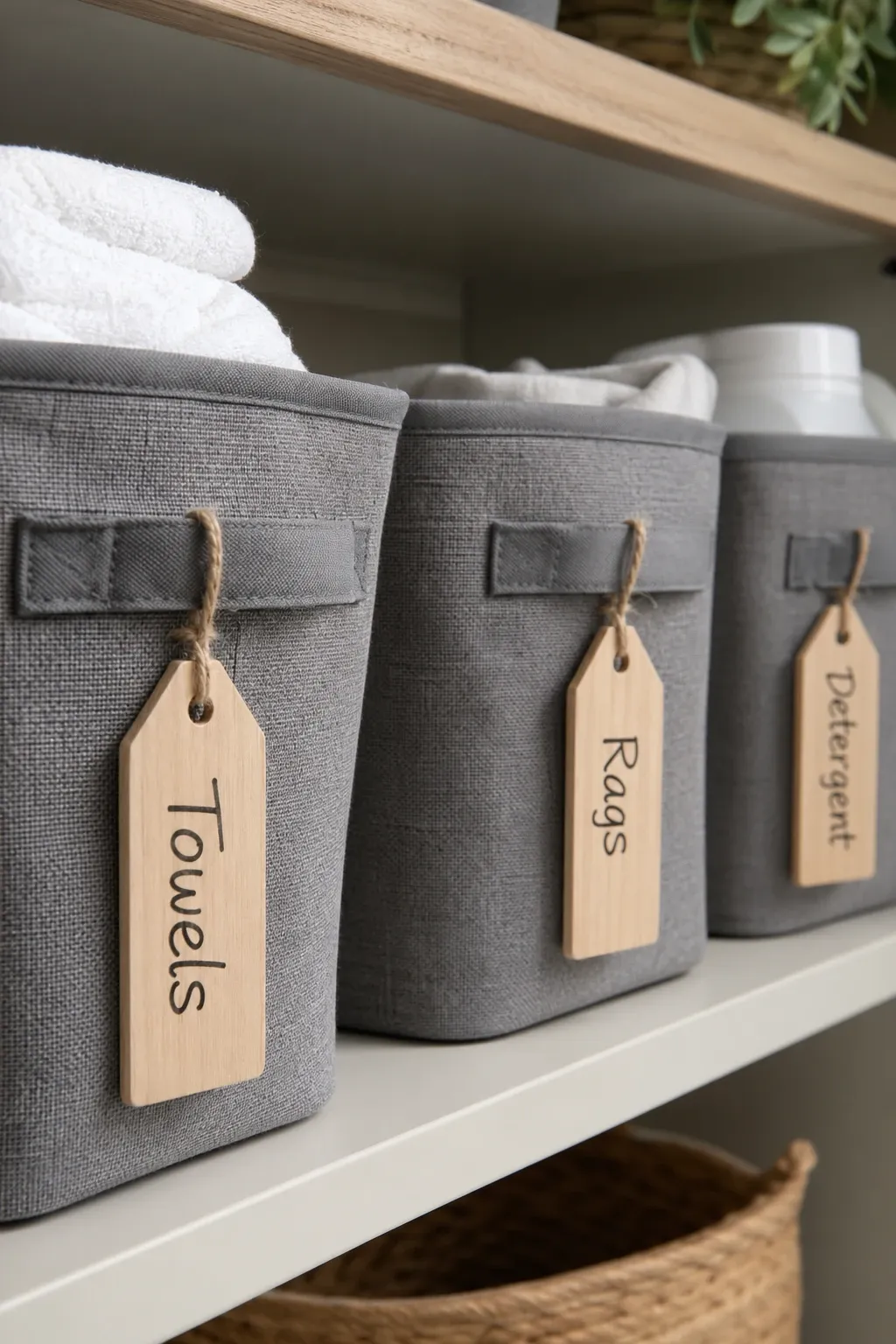
Three labeled bins for lights, darks, and delicates make laundry day faster because the sorting happens throughout the week instead of all at once. Each family member throws their clothes in the right bin, and when one bin is full, that is the next load. No more standing in front of a giant pile separating colors on laundry day. Simple canvas bins on a frame or stacked wire baskets both work well for this.
Designer Tip: Put the bins where people actually drop their clothes, not tucked in a corner where nobody will bother walking to. If the bins are inconvenient, everyone will just throw clothes on the floor next to them, which defeats the purpose.
A retractable clothesline mounts on one wall and pulls across to a hook on the opposite wall. When you need to air dry items, pull the line out and clip clothes to it. When you are done, release the line and it retracts back into its housing. It takes up no space when not in use and costs less than ten dollars. For small laundry rooms where a drying rack is too bulky, this is the perfect alternative.
Designer Tip: Mount the line at head height or above so you do not walk into wet clothes every time you enter the room. Running the line from the wall above the machines to the opposite wall keeps it out of the way while maximizing drying space.
A wall-mounted drop-down table gives you a dedicated folding surface that disappears when you do not need it. Folding laundry on top of the dryer works but is not comfortable because the surface is too high and vibrates during a cycle. A fold-down table at counter height is the right ergonomic position for folding and can be flipped up against the wall to clear the floor space when you are done.
Designer Tip: Install the table at about 34 to 36 inches from the floor, which is standard counter height. Use a piano hinge for the fold-down mechanism because it distributes weight evenly along the entire edge and is stronger than a pair of small hinges at the corners.
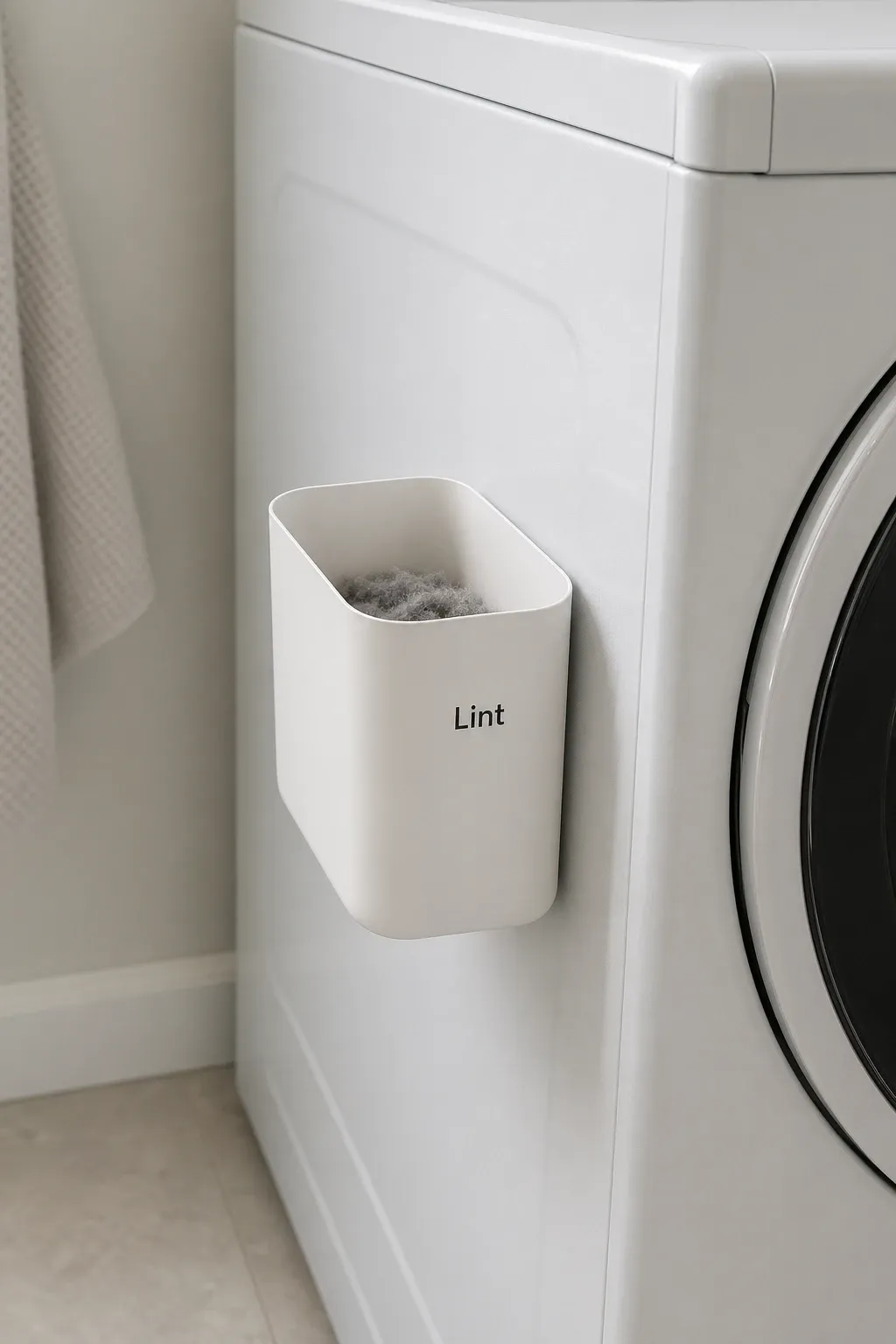
A small bin or container mounted right next to the dryer gives you a dedicated spot for lint. Most people clean the lint trap and then look around for somewhere to put the lint, eventually dropping it on top of the dryer or in the trash across the room. A small open bin or jar right next to the machine means the lint goes straight from the trap to the bin in one motion. It keeps the dryer top clean and makes lint disposal a habit instead of a chore.
Designer Tip: Use a small ceramic crock or a decorative container instead of a plastic bin. Something that looks nice will stay on display permanently. Something ugly will get shoved behind the machines within a week.
A well-organized laundry room makes laundry less of a chore because everything is where it should be. You do not need all 16 of these ideas. Pick the three or four that solve your biggest problems, install them over a weekend, and your laundry room will go from a room you avoid to a room that runs smoothly.
Frequently Asked Questions
What is the best way to organize a small laundry room?
Go vertical. Use wall-mounted shelves, cabinets, and hooks to keep the floor clear. A countertop over the machines gives you folding space, and a slim rolling cart fills the gap between the washer and dryer. Small laundry rooms need to use every inch of wall and vertical space because the floor area is too limited.
How do I keep my laundry room from getting cluttered?
Give every item a specific home. Detergent goes in one spot, hangers in another, cleaning supplies on a specific shelf. When things do not have a designated place, they end up on top of the dryer or on the floor. Labels help everyone in the household put things back where they belong.
Should I use open shelves or cabinets in a laundry room?
It depends on how tidy you keep things. Open shelves are great if you use matching containers and keep them organized. Cabinets are better if you want to hide the mess behind closed doors. A combination of both works well too, open shelves for things that look nice and cabinets for everything else.
What should I store in my laundry room besides detergent?
Cleaning supplies, light bulbs, batteries, paper towels, trash bags, and other household items that need a home. The laundry room is a natural utility hub. If you have the space, it makes sense to store household supplies there alongside laundry products.