Kitchen cabinets start organized and slowly descend into chaos. You buy a new organizer, it works for a week, and then everything piles up again because the system was not built for how you actually use the kitchen. Real cabinet organization is about matching the organizer to the problem. A spice rack does not fix a pot lid situation. Here are 14 cabinet organizers that solve specific problems and actually stay organized over time.
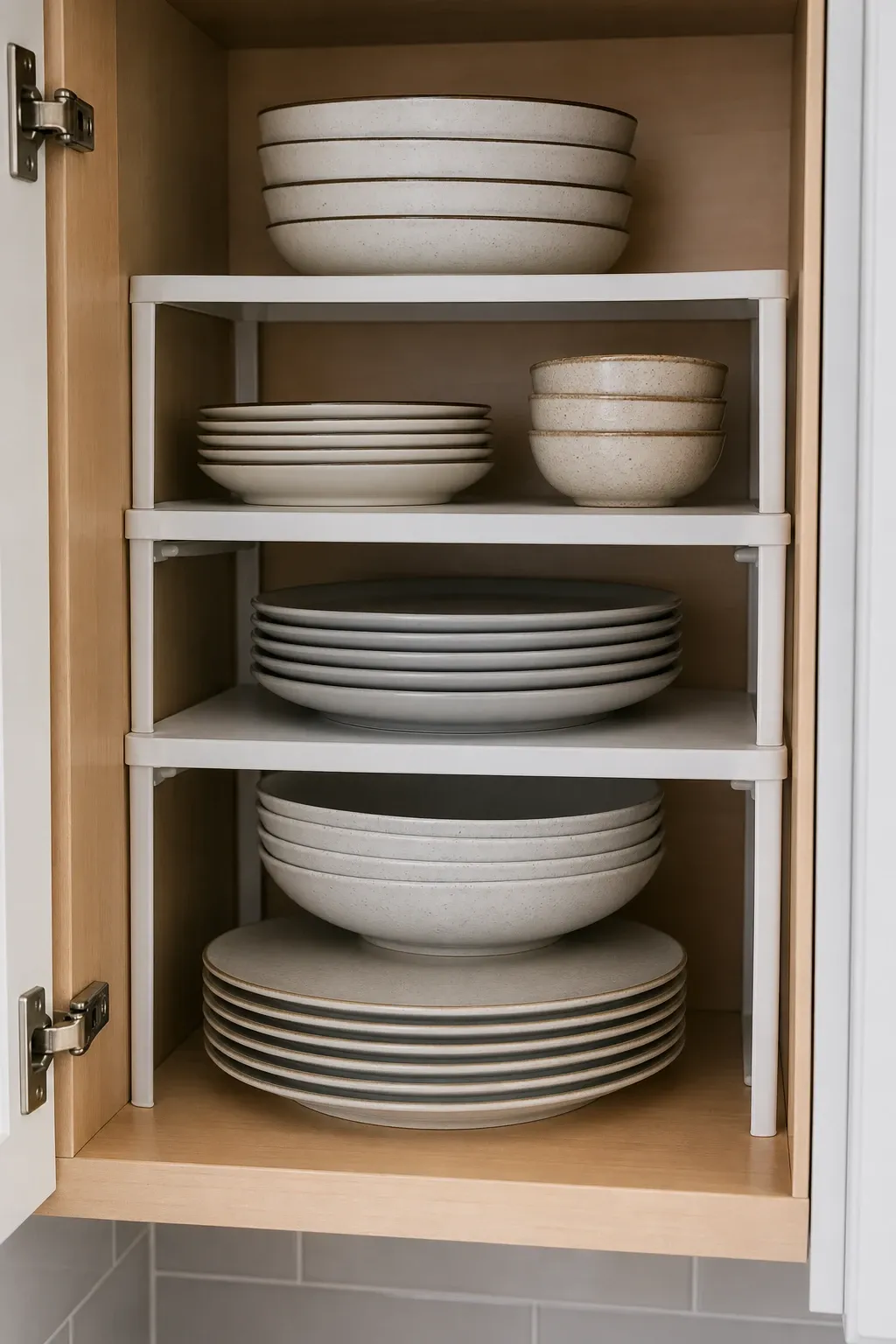
Shelf risers double the usable space inside a cabinet by creating a second level. Plates go on the bottom, bowls go on the riser above. Or stack mugs on top and glasses underneath. Without a riser, you are stacking items on top of each other and digging through the pile every time you need the thing at the bottom. Risers are the simplest, cheapest cabinet upgrade and they make the biggest immediate difference.
Designer Tip: Get risers with non-slip feet or rubberized edges. Metal or plastic risers on a smooth shelf surface slide around every time you pull something out, which eventually pushes everything into a mess. Non-slip feet keep the riser and everything on it in place.
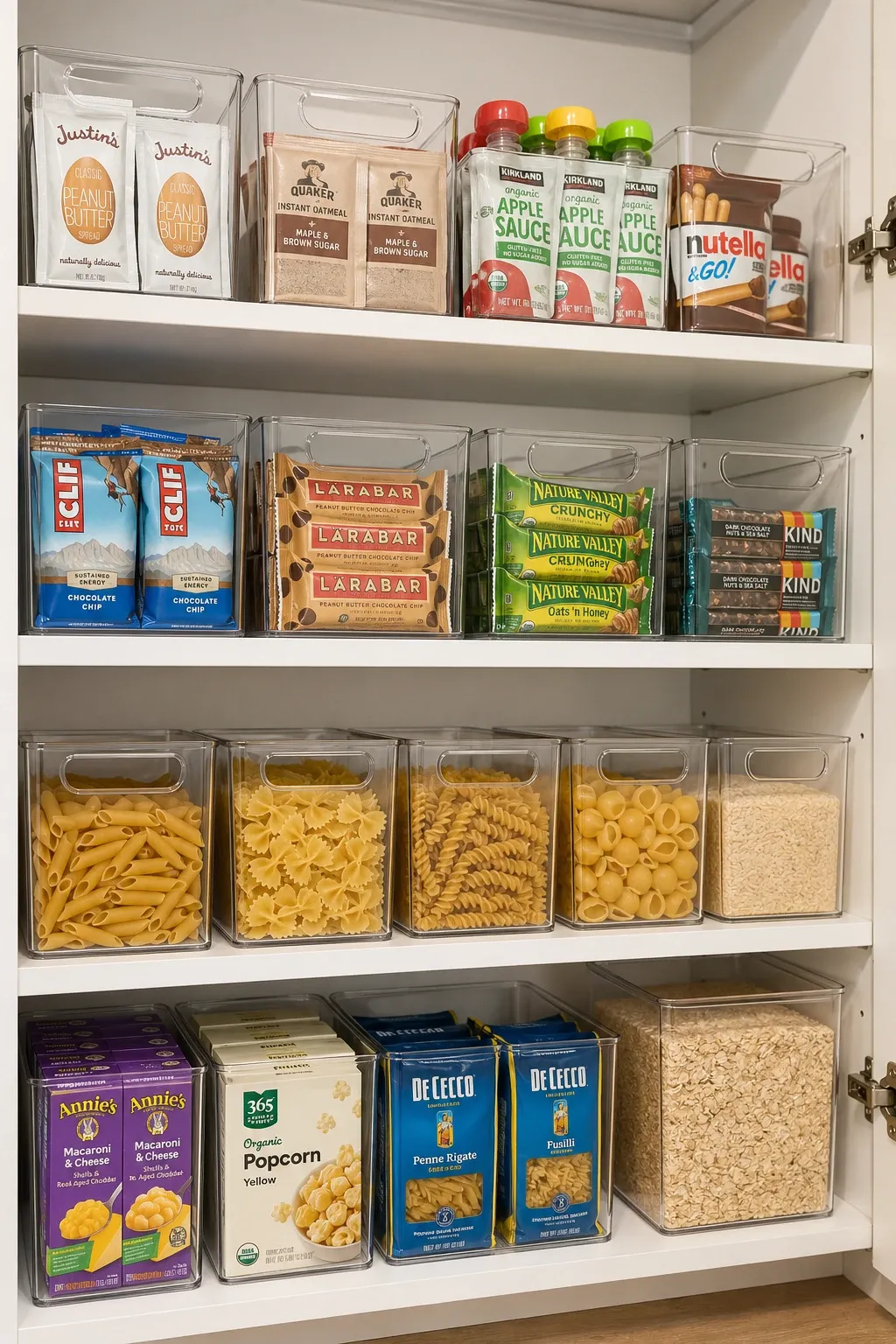
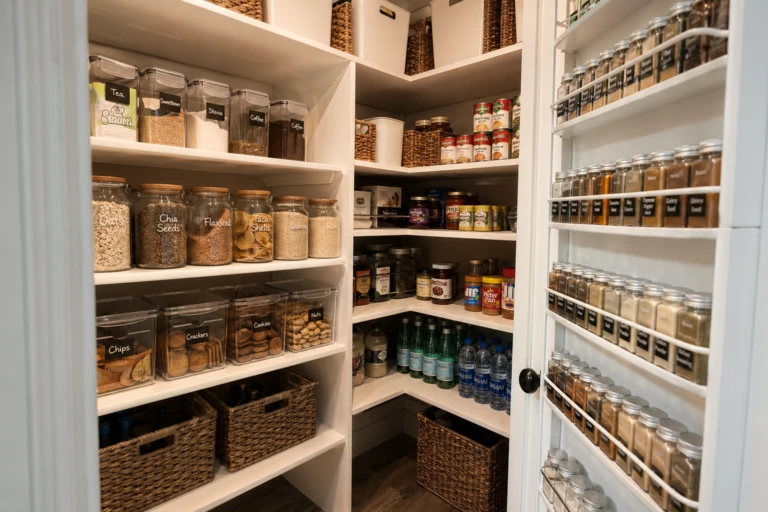
Clear bins group similar items together and let you see exactly what is inside without pulling anything out. One bin for snacks, one for baking supplies, one for canned goods. When you need something, pull the whole bin out like a drawer, grab what you need, and slide it back. No more reaching into the dark back corner of a deep cabinet and guessing what is back there. The clear material means you can see when you are running low on something.
Designer Tip: Buy all your bins from the same brand so the sizes are consistent and they line up neatly on the shelf. Mixing brands means mixing dimensions, which creates gaps and wasted space. A uniform set of bins looks clean and uses every inch of shelf space.
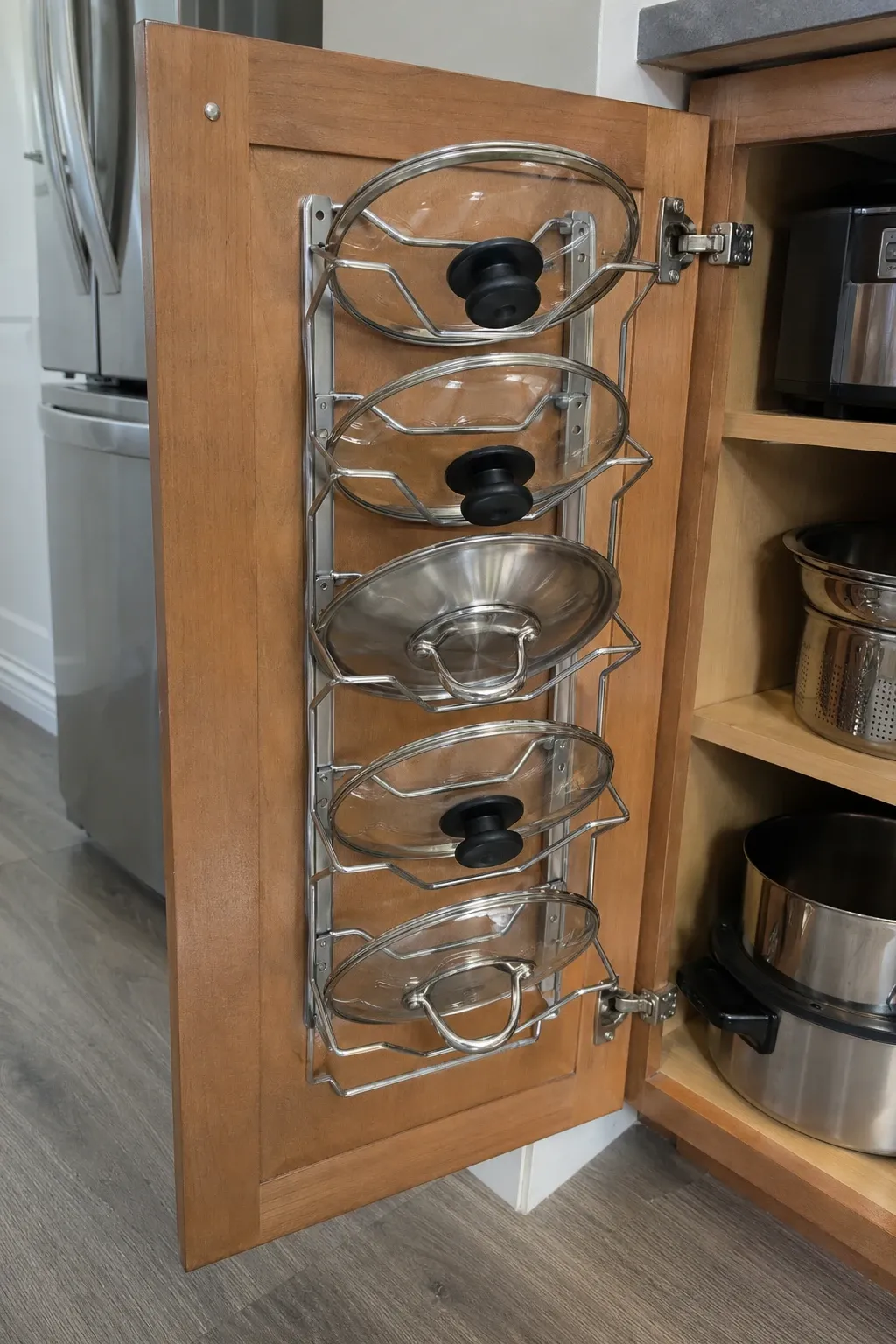
Pot lids are the most annoying things to store in any kitchen. They do not stack, they slide, and they crash every time you open the cabinet. A vertical lid organizer holds each lid upright in its own slot, like records in a crate. You can see every lid, grab the one you need without disturbing the others, and put it back in the same slot when you are done. It turns the noisiest cabinet in the kitchen into the most organized one.
Designer Tip: Mount the organizer on the inside of a cabinet door if your shelves are full. Door-mounted lid holders keep the lids accessible and free up shelf space for the pots and pans themselves.
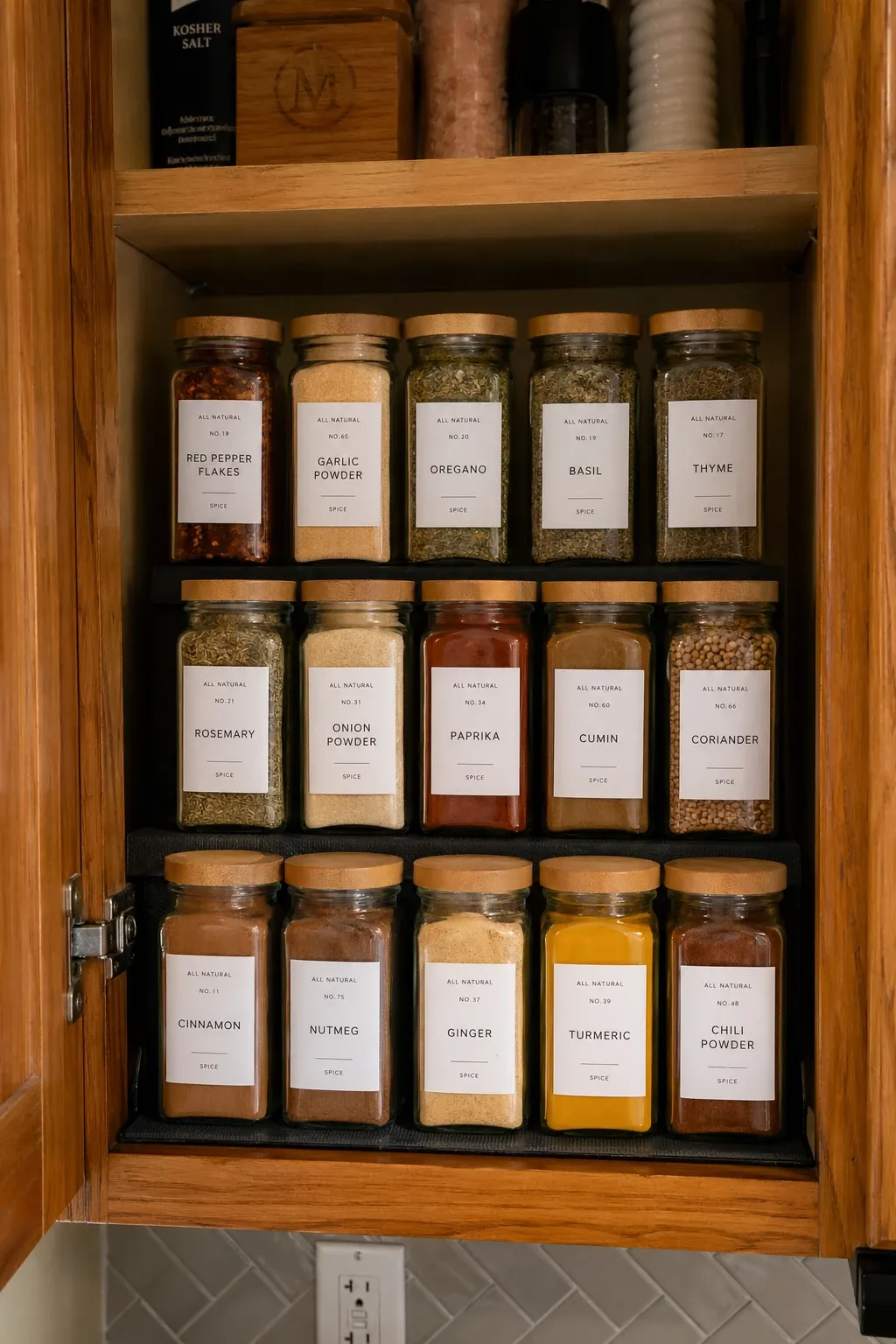
Tiered spice steps arrange your spice jars on ascending levels so you can see every label without moving anything. Without a step, spices get shoved to the back and forgotten. You buy duplicates of things you already have because you cannot see what is there. A three-tier step with non-skid surfaces holds about 15 to 20 standard spice jars and turns a disorganized spice cabinet into something you can actually navigate while cooking.
Designer Tip: Alphabetize your spices after putting them on the steps. It takes five minutes and saves you years of searching. You will reach for the cumin without thinking because you know exactly where it is between the cinnamon and the dill.
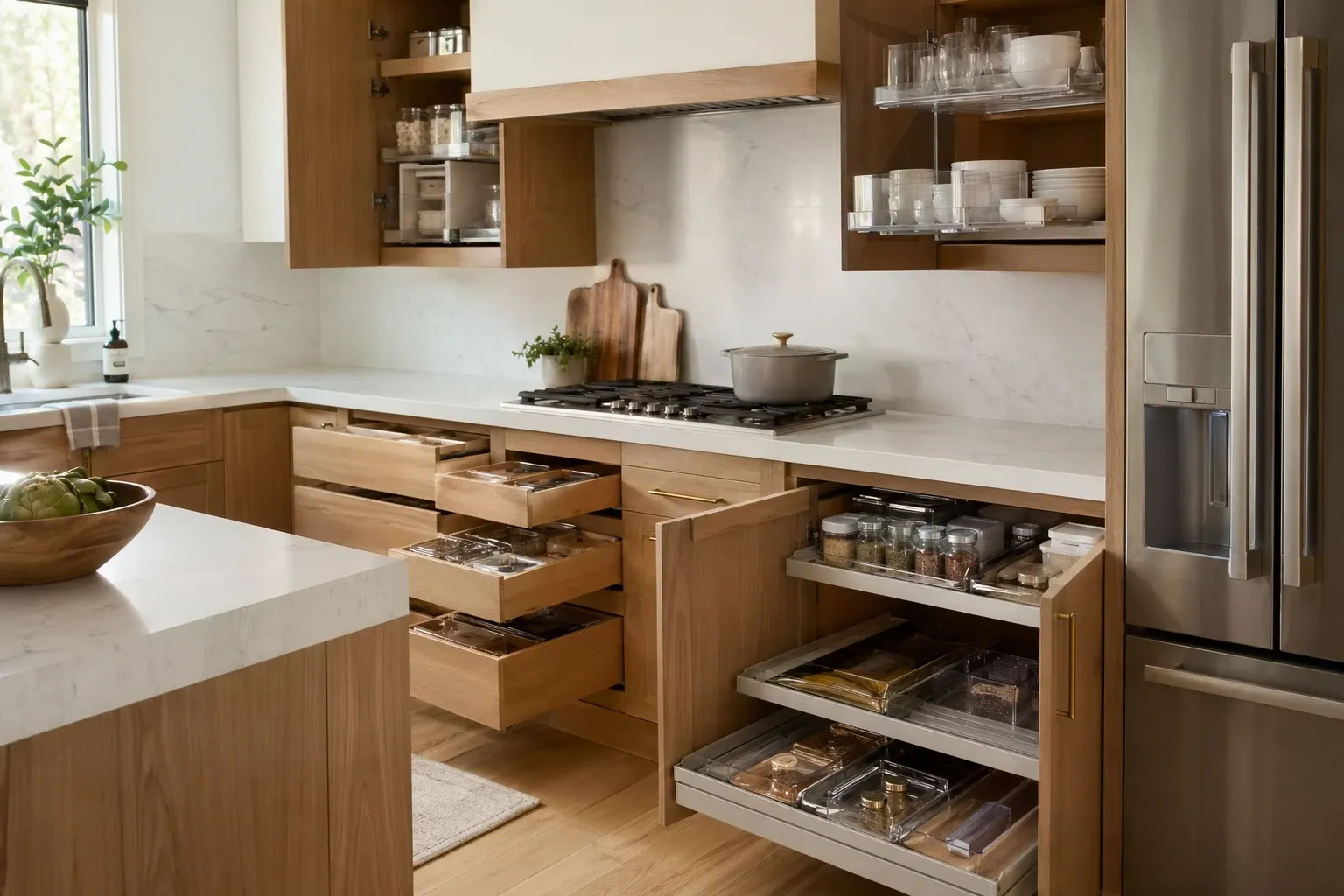
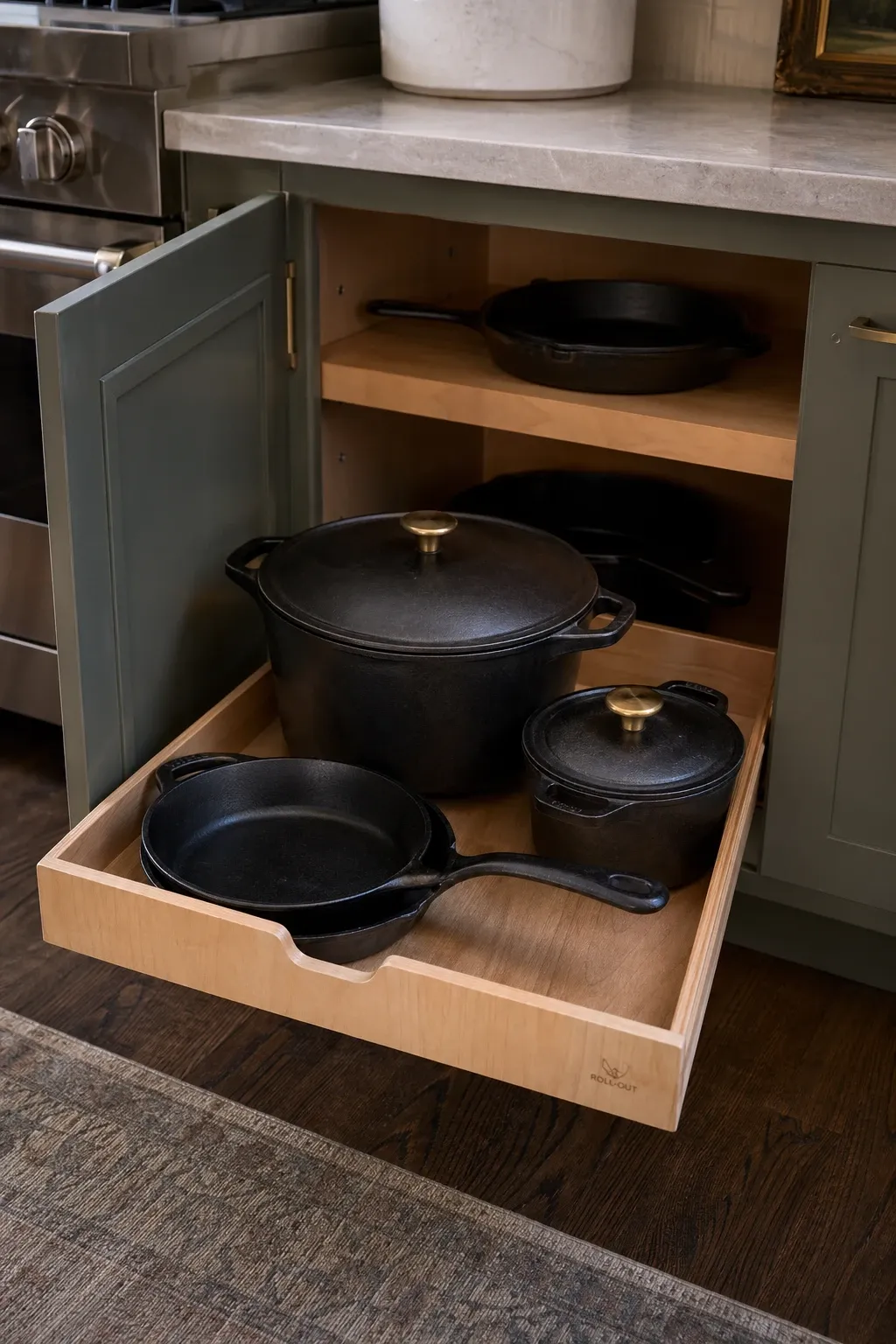
Pull-out drawers installed inside lower cabinets turn deep, hard-to-reach cabinets into accessible storage. Instead of getting on your knees and reaching into the back of a dark cabinet, you pull the drawer out and everything slides toward you. Heavy items like stand mixers, Dutch ovens, and slow cookers are especially easier to access on pull-out slides. It is a retrofit that costs more than a basic organizer but is worth every dollar.
Designer Tip: Choose pull-out drawers with full-extension slides so the drawer comes all the way out of the cabinet. Partial-extension slides only come out about three-quarters of the way, which still leaves items in the back hard to reach.
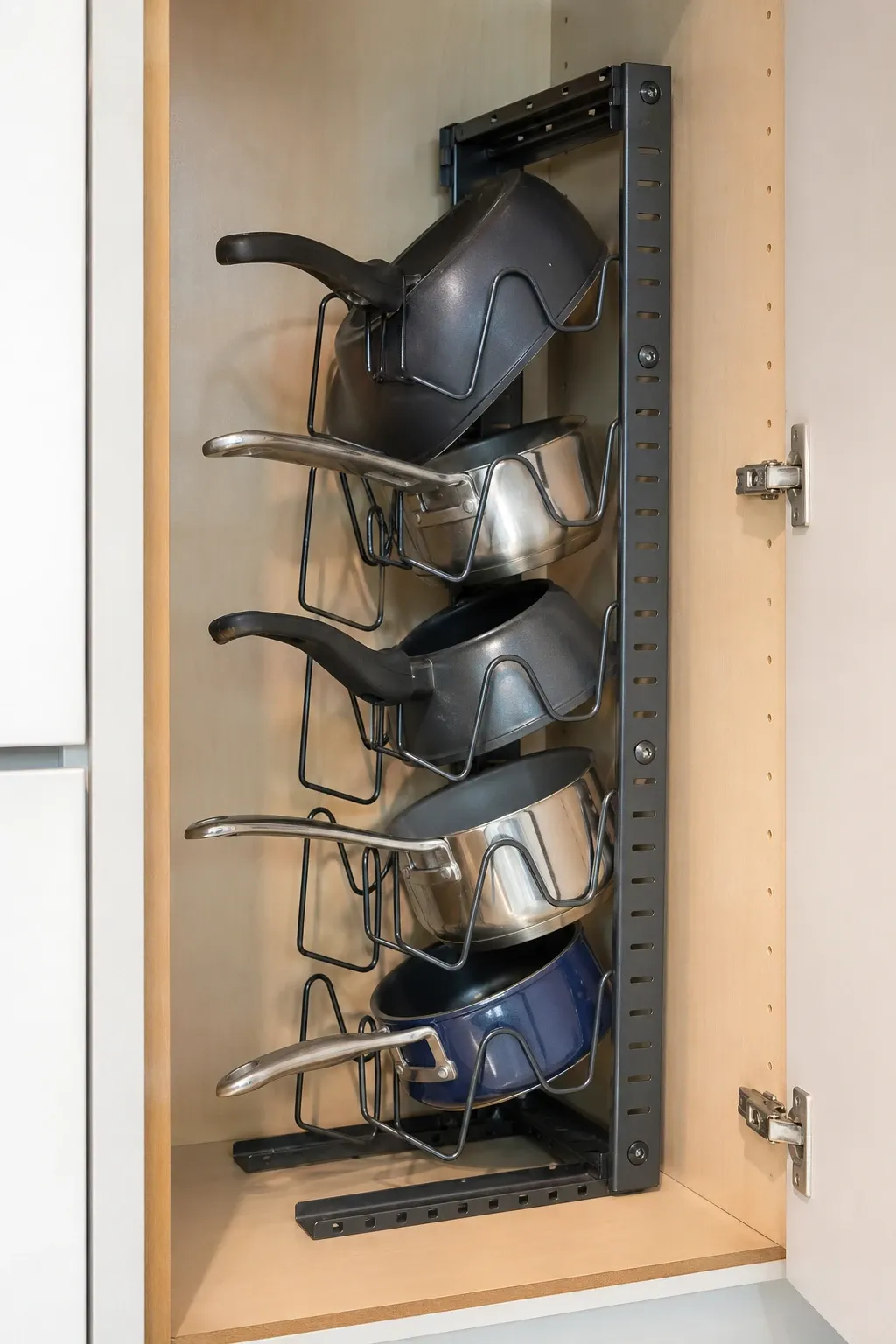
An adjustable rack with movable pegs or dividers inside a cabinet keeps pots and pans upright and separated instead of stacked in a teetering pile. You can customize the spacing for your specific cookware so each piece has its own slot. Pull out one pan without having to unstack the three on top of it. The adjustable pegs move to accommodate pans of different sizes, which means the organizer grows and changes with your cookware collection.
Designer Tip: Place the most-used pans in the front slots and the occasional-use pieces in the back. When your daily skillet is always in the front position, cooking is faster because you are not rearranging cookware every evening.
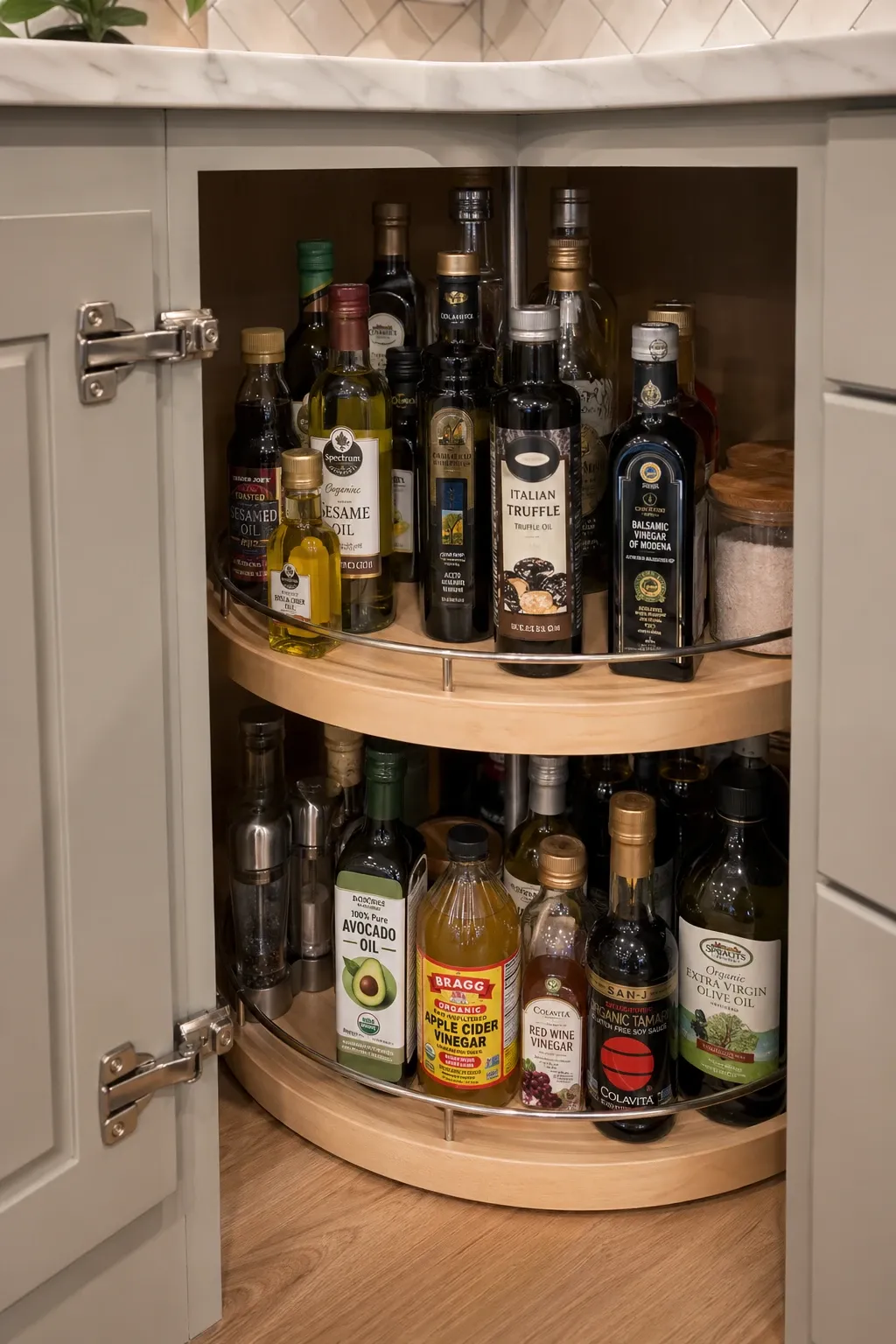
A lazy Susan in a corner cabinet or a deep shelf brings the back items to the front with a simple spin. Corner cabinets are notorious for swallowing items into the dark back corners where they sit untouched for months. A turntable puts everything within reach. Use one for oils and vinegars, another for canned goods, and another for baking supplies. One spin and you can see everything.
Designer Tip: Get a lazy Susan with a raised lip around the edge. Without a lip, items slide off the turntable when you spin it, especially tall bottles that are top-heavy. The lip keeps everything contained during the spin.
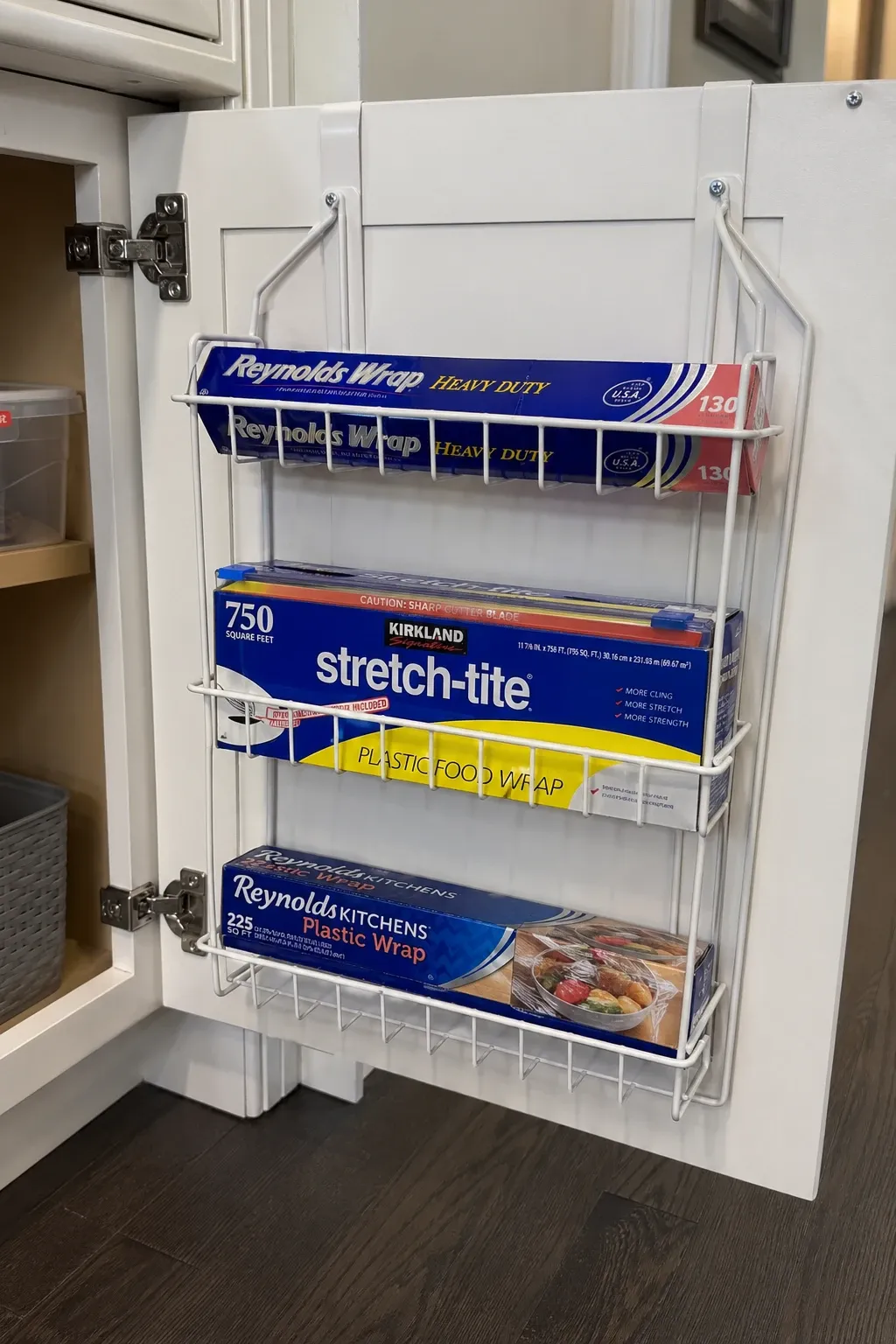
The inside of a cabinet door is wasted space in most kitchens. An over-the-door rack or set of hooks turns it into storage for cutting boards, pot lids, measuring cups, or cleaning supplies. You see the items every time you open the cabinet, which keeps them accessible and top of mind. Door-mounted organizers are especially useful under the kitchen sink where they can hold sponges, scrub brushes, and garbage bags.
Designer Tip: Make sure the door-mounted organizer does not interfere with the items on the shelf when the door closes. Test the clearance before loading it up. An organizer that prevents the cabinet door from closing is worse than no organizer at all.
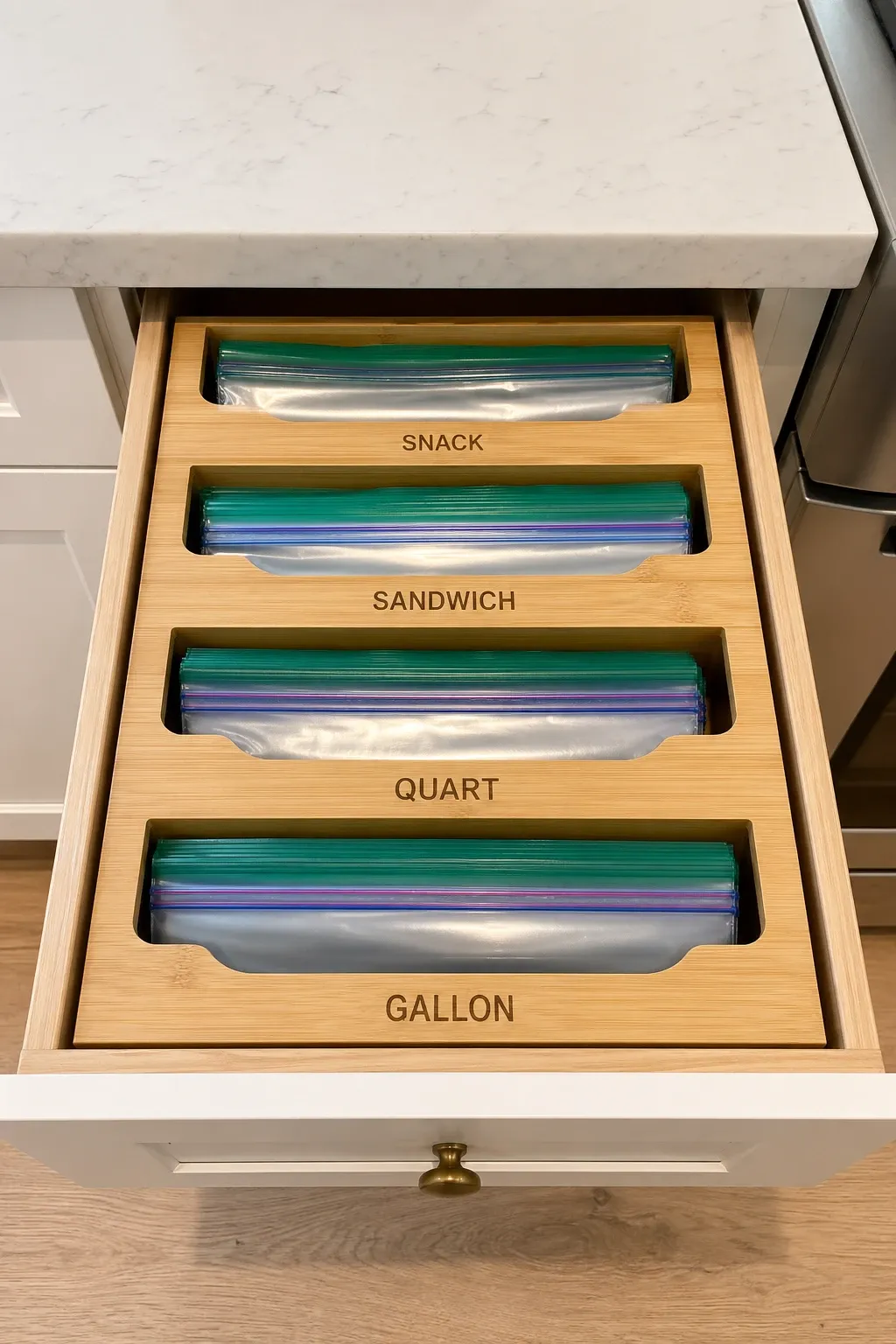
Boxes of aluminum foil, plastic wrap, parchment paper, and ziplock bags take up a surprising amount of drawer and shelf space. A mounted dispenser on the inside of a cabinet door or on the underside of a shelf keeps them organized and easy to tear off one-handed. The boxes stay in place instead of sliding around in a drawer every time you open it. It is a small organizer that solves one of the most common kitchen annoyances.
Designer Tip: Mount the dispenser at a height where you can pull and tear with one hand while the other hand holds the food. Under a cabinet at about chest height is usually the most ergonomic position.
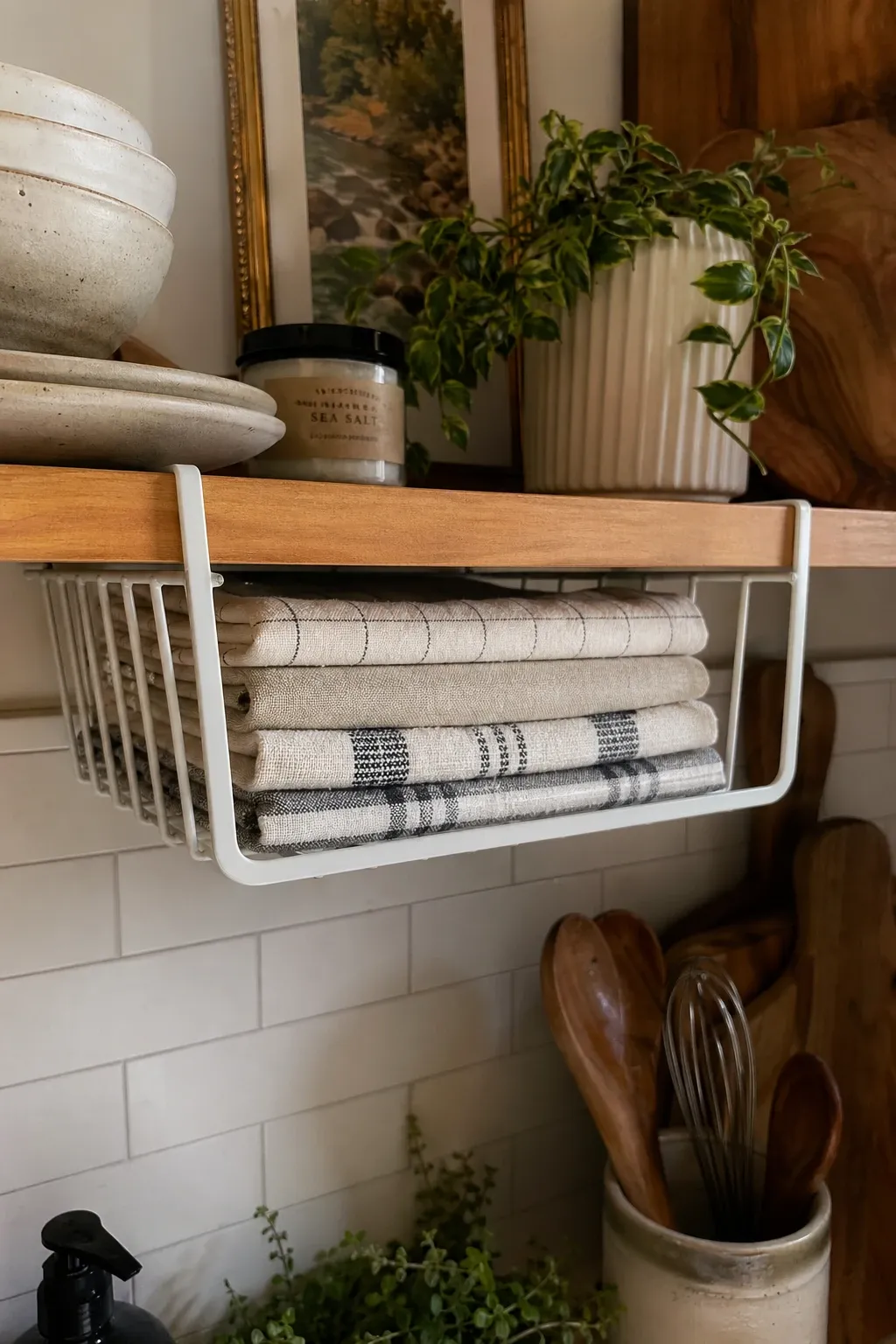
Wire baskets that hook onto the underside of a shelf create a new storage layer without taking any shelf space. They hang from the shelf above and hold flat items like napkins, dish towels, or snack bars. The space between two shelves is usually taller than necessary for the items on the lower shelf, so the hanging basket uses the dead air in between. It is free storage that was there all along.
Designer Tip: Use shallow baskets, about two to three inches deep, so they do not hang down too far and crowd the items on the shelf below. A deep basket defeats the purpose by eating into the space you need for taller items.
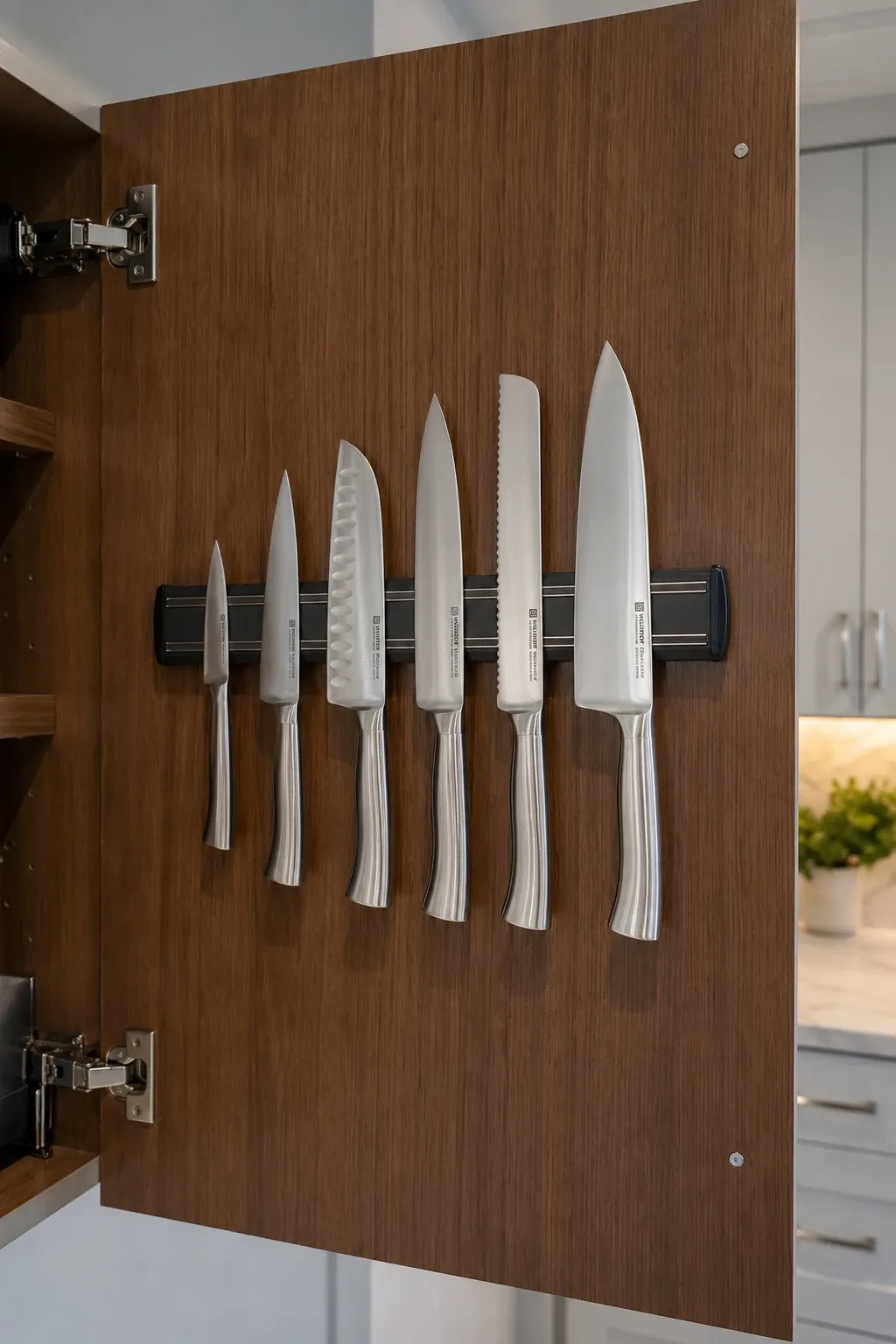
Mounting a magnetic knife strip inside a cabinet door keeps knives organized, accessible, and hidden from view. A knife block on the counter takes up valuable workspace and collects crumbs inside the slots. A magnetic strip inside the cabinet holds knives flat against the door with the blades safely contained. Open the door, grab the knife, close the door. It is cleaner, safer, and frees up counter space.
Designer Tip: Mount the strip high enough inside the door that the knife handles do not hit the shelves when the door closes. Test with your longest knife before screwing the strip in permanently.
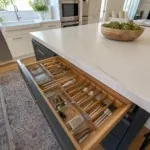
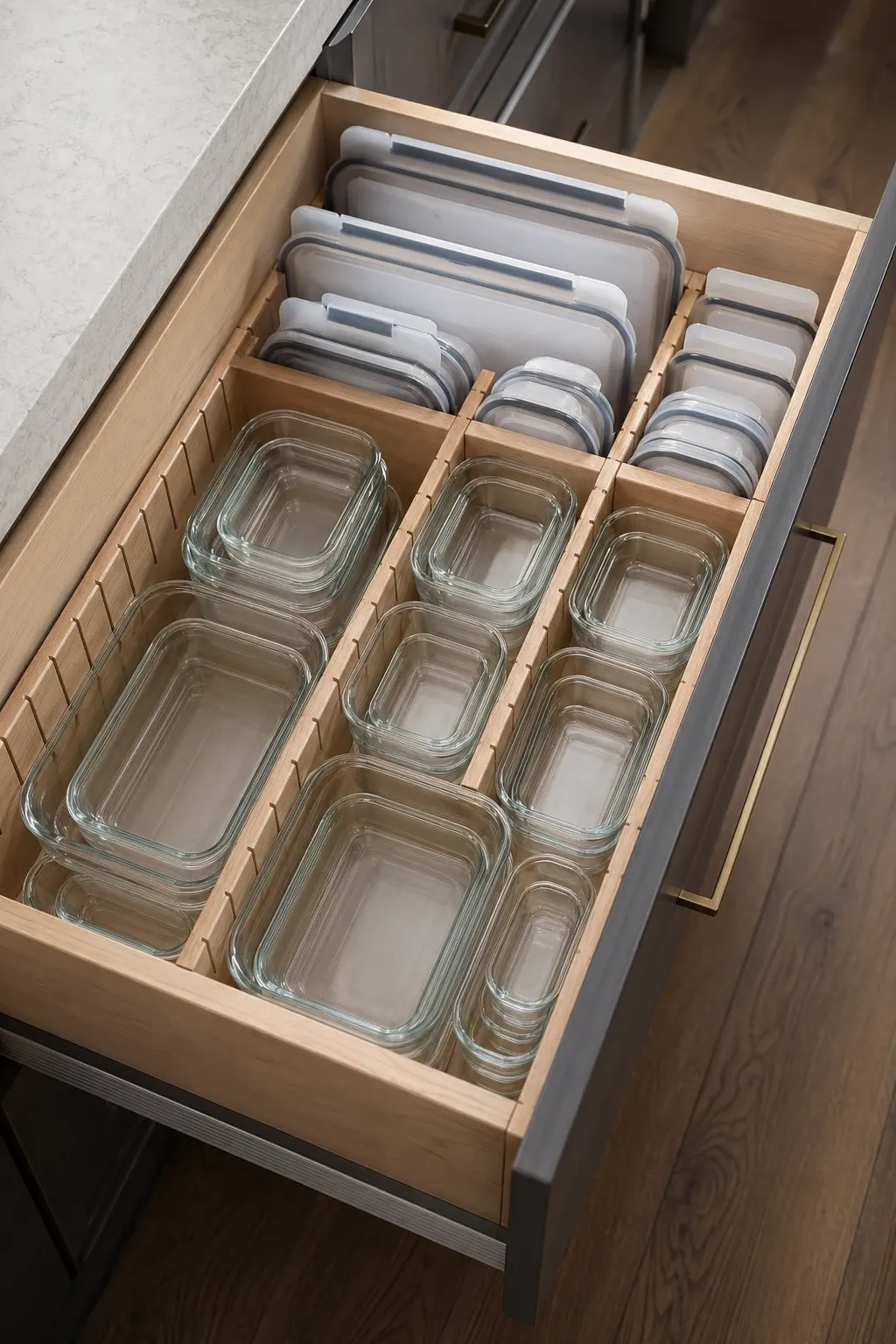
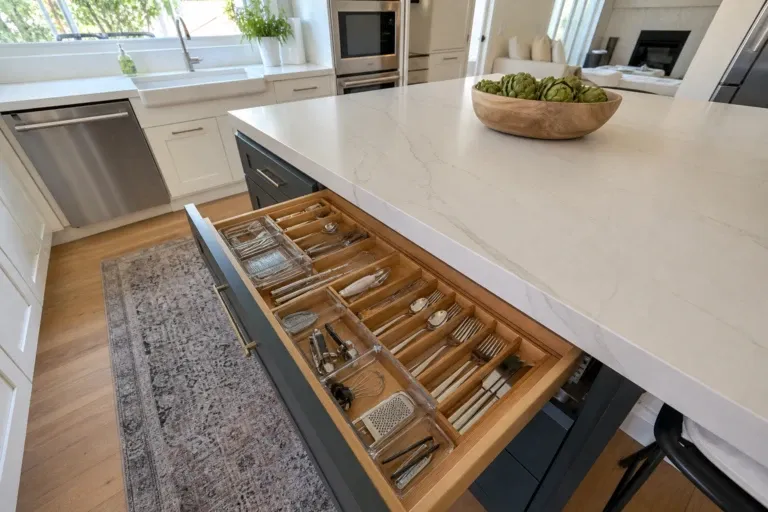
Deep kitchen drawers without dividers become a jumble of utensils, gadgets, and random items within days. Adjustable dividers create custom compartments for different categories: spatulas in one section, whisks in another, measuring tools in a third. Spring-loaded dividers that press against the drawer walls are the easiest to install and adjust. They stay put without screws or adhesive and can be repositioned any time your storage needs change.
Designer Tip: Divide by use, not by type. Put all your breakfast-making tools in one section and all your baking tools in another. This way, when you are making pancakes, everything you need is in one spot instead of spread across five sections.
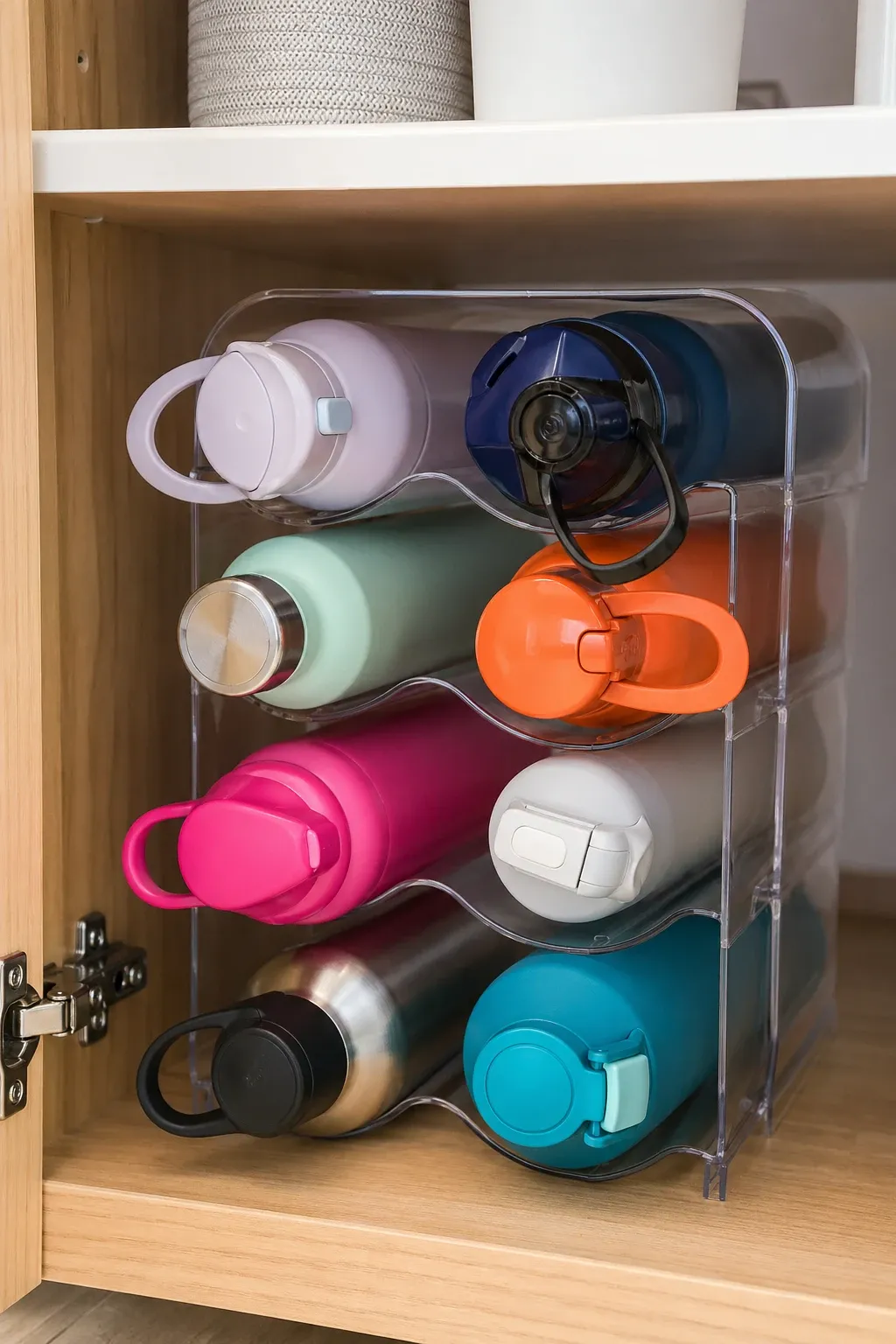
Water bottles, travel mugs, and tumblers are some of the hardest items to organize because they are tall, they fall over, and the lids never stay with the bottles. A stacking rack designed for water bottles holds them on their sides like wine bottles, with a separate section for lids. No more opening the cabinet and having three bottles roll out at you. The rack keeps them corralled and makes it easy to grab one with the matching lid.
Designer Tip: Store the bottles upside down so any residual water drains out rather than sitting in the bottom and getting stale. A rack that holds bottles at a slight downward angle is even better for drainage.
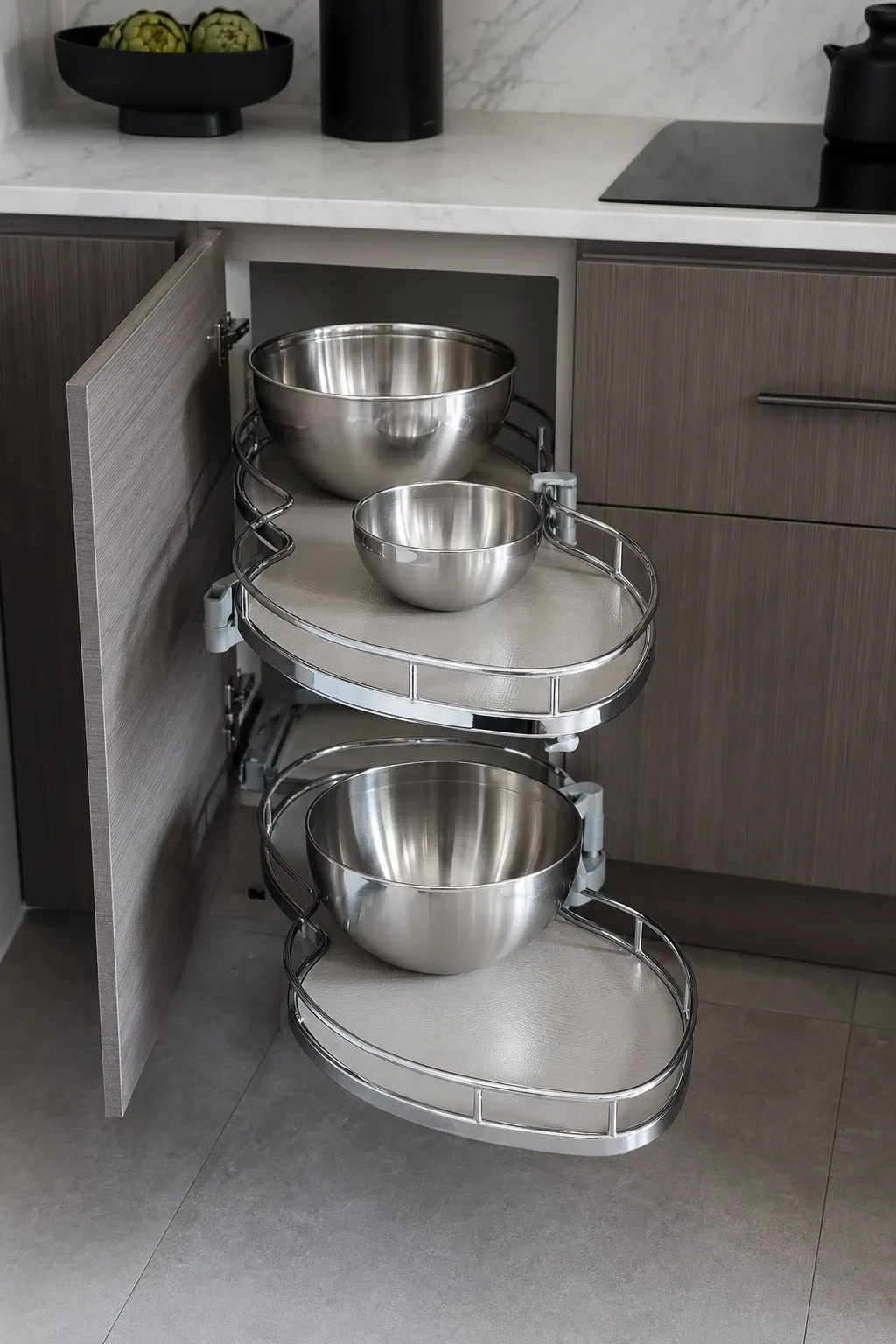
The blind corner cabinet, where two runs of cabinets meet at a right angle, is the most wasted space in most kitchens. Items go in and disappear into the back corner forever. A blind corner pull-out has shelves on a swinging arm that pulls the back contents out and around the corner so you can reach everything. It is the most expensive organizer on this list but it rescues the single largest area of dead space in the kitchen.
Designer Tip: Before investing in a blind corner pull-out, empty the cabinet completely and measure the interior dimensions. These pull-outs come in specific sizes and need precise measurements to function properly. A unit that does not fit the cabinet will jam, scrape, and become the most expensive piece of junk in your kitchen.
Kitchen cabinet organization is not about buying every organizer on the market. It is about identifying which cabinets frustrate you the most and fixing those first. Start with the cabinet you open most often, add the right organizer, and work outward from there. A kitchen where you can find what you need without digging makes cooking faster and more enjoyable.
Frequently Asked Questions
What is the most useful kitchen cabinet organizer?
Pull-out drawers for lower cabinets are the single most useful upgrade because they make the entire depth of the cabinet accessible. Most people only use the front half of deep lower cabinets because reaching the back is too difficult. Pull-outs solve that completely.
How do I organize kitchen cabinets on a budget?
Start with shelf risers and clear bins, which cost just a few dollars each. An over-the-door organizer and a lazy Susan are also inexpensive and make a big difference. You do not need to buy everything at once. Fix the most annoying cabinet first and add organizers gradually.
How often should I reorganize my kitchen cabinets?
Do a full cleanout and reorganization once or twice a year. Check expiration dates, get rid of duplicates, and reassess whether your current system still works. Your cooking habits and food preferences change over time, and your cabinet organization should change with them.
Should I organize by item type or by meal?
Both approaches work depending on how you cook. Organizing by item type, all spices together and all baking supplies together, is the most common. But grouping by meal or task, all breakfast items in one cabinet, can speed up daily routines. Try whichever approach matches how you actually use the kitchen.