A walk-in closet that is organized on day one and a mess by week three is not actually organized. Real closet organization sticks because it works with how you get dressed every morning, not against it. The best walk-in closet systems give everything a specific home so putting things away takes the same effort as throwing them on a chair. Here are 15 organization ideas that hold up over time.
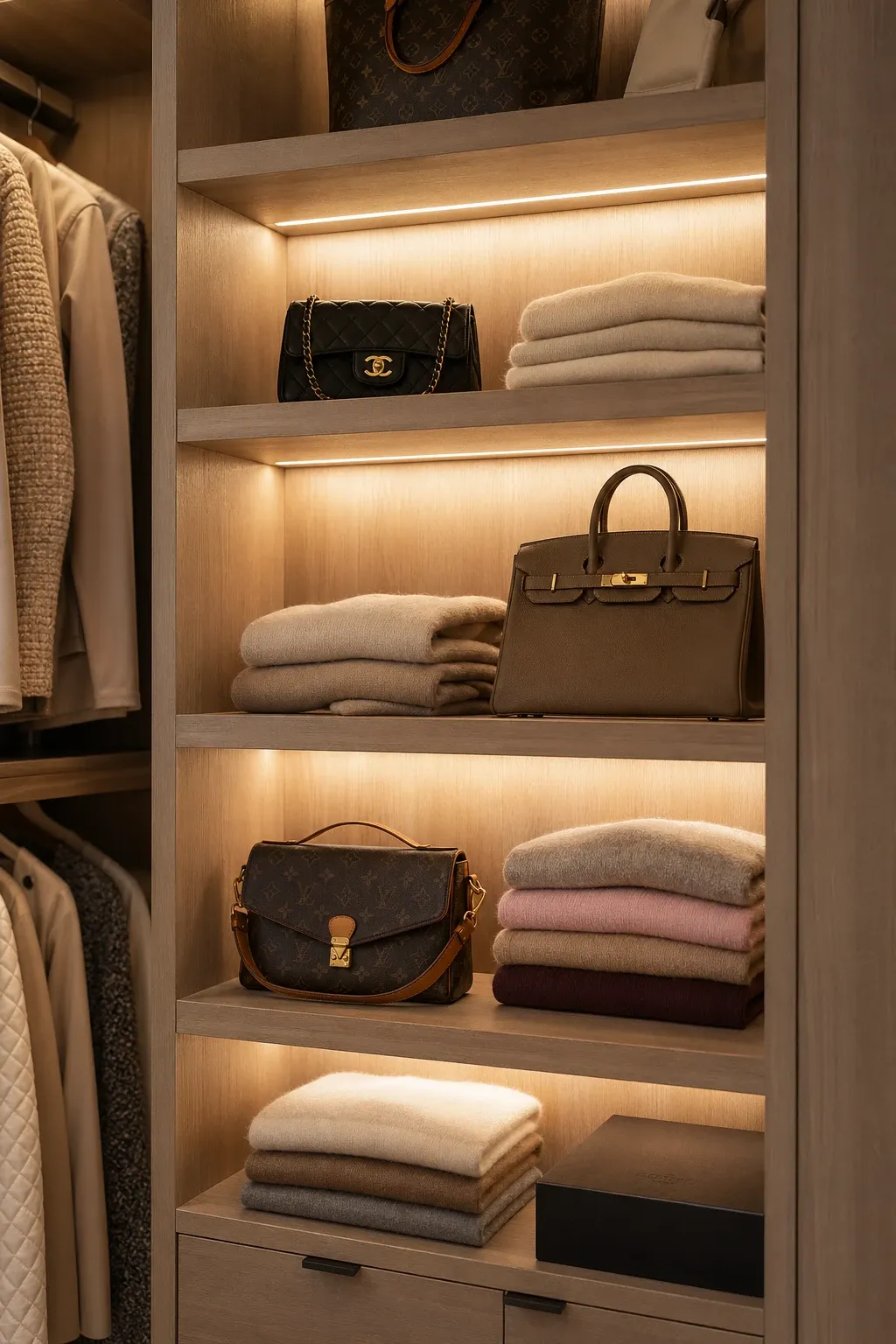
Open shelves with strip LED lighting underneath let you see every folded item without digging. The light eliminates the shadow that forms on lower shelves and makes the closet feel like a boutique rather than a storage room. Open shelving works best for items you use daily, like jeans, t-shirts, and sweaters, because there is no door or drawer between you and the clothes. The lack of doors also keeps you honest about keeping things neat.
Designer Tip: Use warm white LED strips, around 2700K to 3000K, rather than cool white. Warm light makes clothes look their true colors and creates a pleasant atmosphere. Cool white LEDs make everything look sterile and slightly blue.
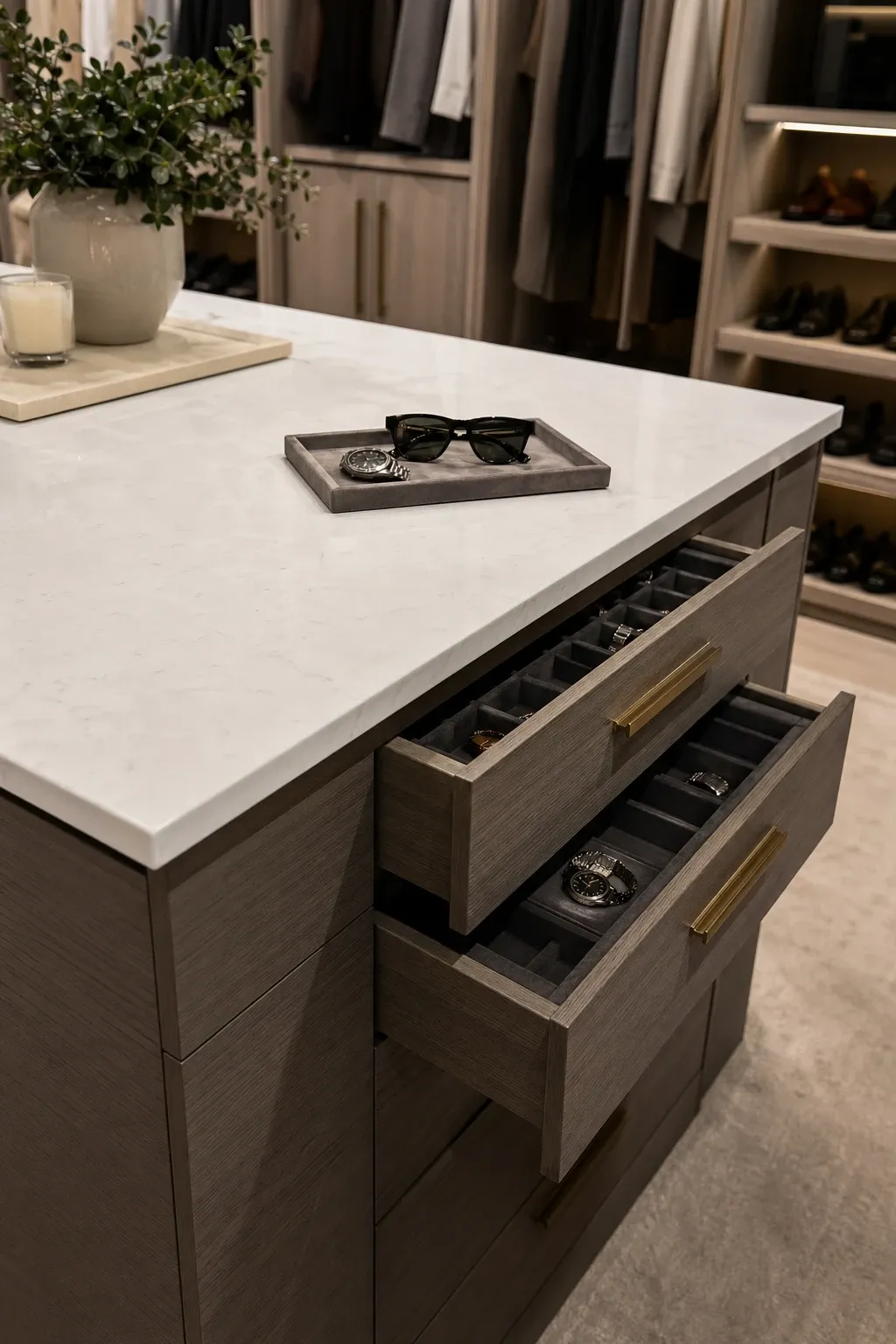
If your walk-in closet is large enough, a center island with drawers adds a huge amount of storage and a flat surface for folding, packing, or laying out outfits. The top of the island becomes a staging area where you can plan an outfit without hanging things on door handles. The drawers inside hold items that benefit from being tucked away, like underwear, socks, jewelry, and accessories. It is the most functional single piece you can add to a large closet.
Designer Tip: Leave at least 36 inches of walking space on all sides of the island. Less than that and the island feels cramped and you will bump into it while getting dressed. If 36 inches is not possible on all sides, the closet is too small for an island.
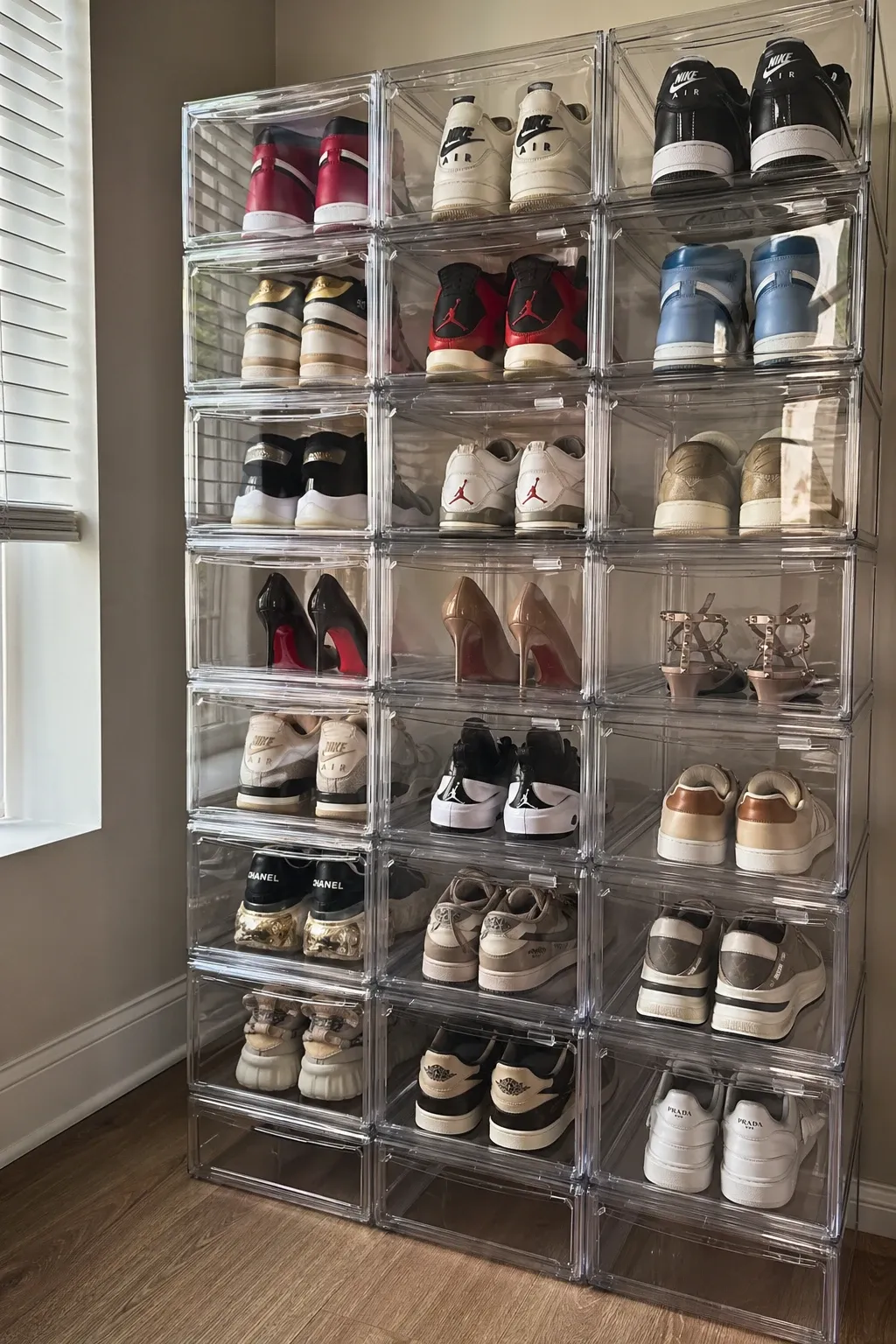
Clear acrylic shoe boxes stacked on shelves or along the floor keep shoes visible, dust-free, and easy to grab. You can see every pair without opening anything. The uniform boxes stack neatly and turn a messy shoe pile into a clean wall of organized footwear. They also protect shoes from scuffing each other, which matters for leather and suede pairs. A wall of clear shoe boxes in a walk-in closet looks impressive and is extremely functional.
Designer Tip: Take a photo of each pair and tape it to the end of the box if you stack them with the ends facing out. This way you can identify shoes by the photo without pulling boxes off the shelf.
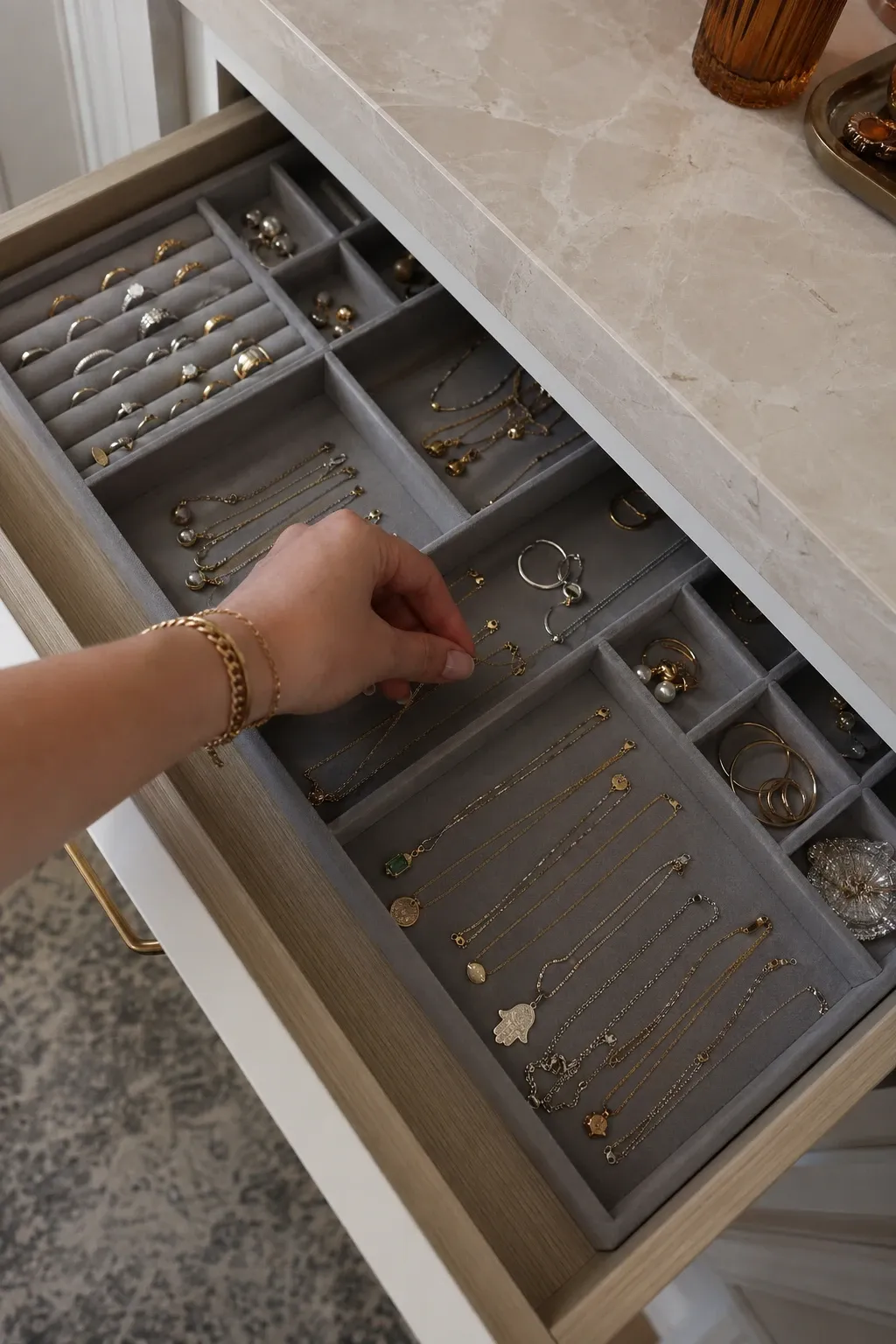
Shallow drawers lined with velvet and divided into compartments keep jewelry untangled, visible, and protected. Necklaces get their own long channels, rings sit in padded slots, and earrings have individual holes or cushioned sections. The velvet prevents pieces from sliding around when you open and close the drawer. Having all your jewelry laid out in one drawer means you can see your entire collection at a glance when choosing accessories for an outfit.
Designer Tip: Install the jewelry drawer at waist height so you can look down into it comfortably. A jewelry drawer that is too high or too low forces you to crane your neck, which makes it harder to see small pieces and more likely you will just grab the same few items every day.
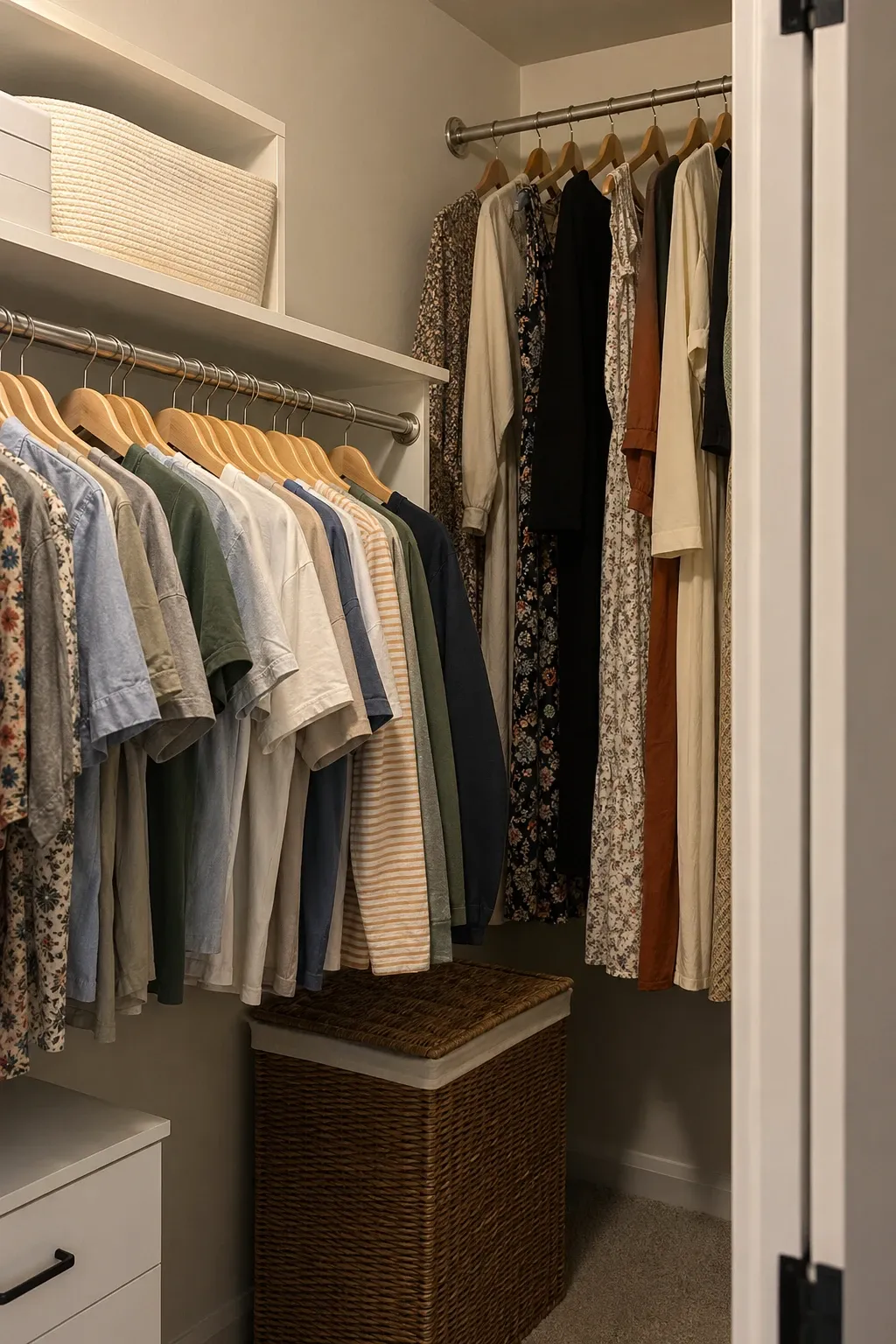
Installing a second hanging rod below the first one doubles the hanging space for shorter items like shirts, blouses, jackets, and folded pants. The top rod sits at the standard height and the lower rod hangs about 40 inches from the floor. This only works for items that do not need full-length hanging, so keep one section of the closet with a single high rod for dresses, coats, and long items. Double rods are the fastest way to add capacity without changing the closet footprint.
Designer Tip: Use matching slim velvet hangers on both rods. Slim hangers save about an inch per item compared to thick plastic hangers, which adds up to significant extra hanging space across the full rod. The velvet grip also prevents clothes from slipping off.
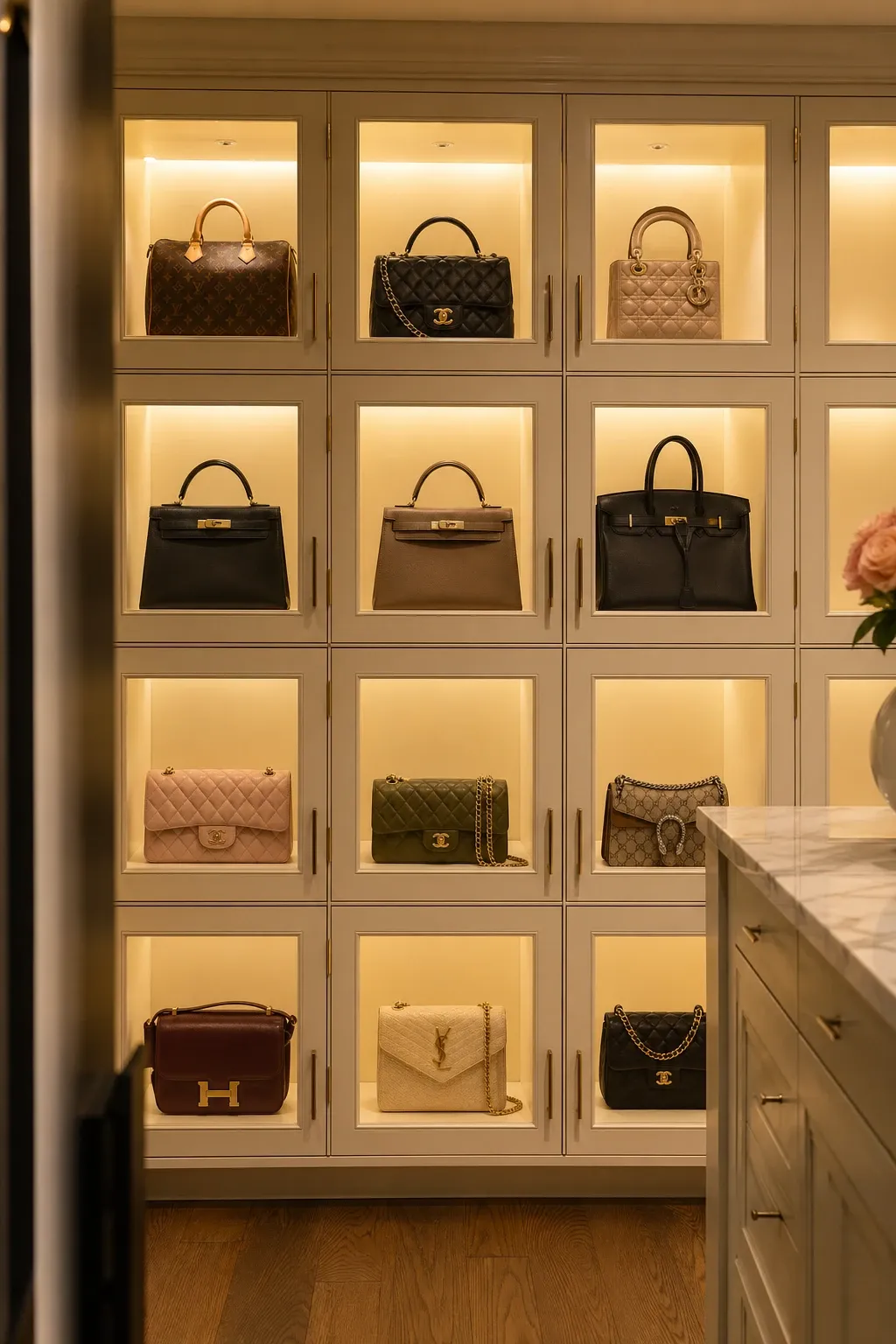
Individual cubbies sized for handbags keep bags upright, visible, and easy to grab without pulling three others off a shelf in the process. Each bag gets its own space, which prevents the leather from getting scratched or crushed by the bag next to it. Cubbies also keep bags from falling over and losing their shape. Place the bags you use most at eye level and store occasion bags on higher shelves.
Designer Tip: Stuff handbags with tissue paper or a bag pillow when they are stored to help them keep their shape. An empty structured bag will eventually sag and crease if left unsupported for weeks or months. The stuffing takes ten seconds and saves the bag.
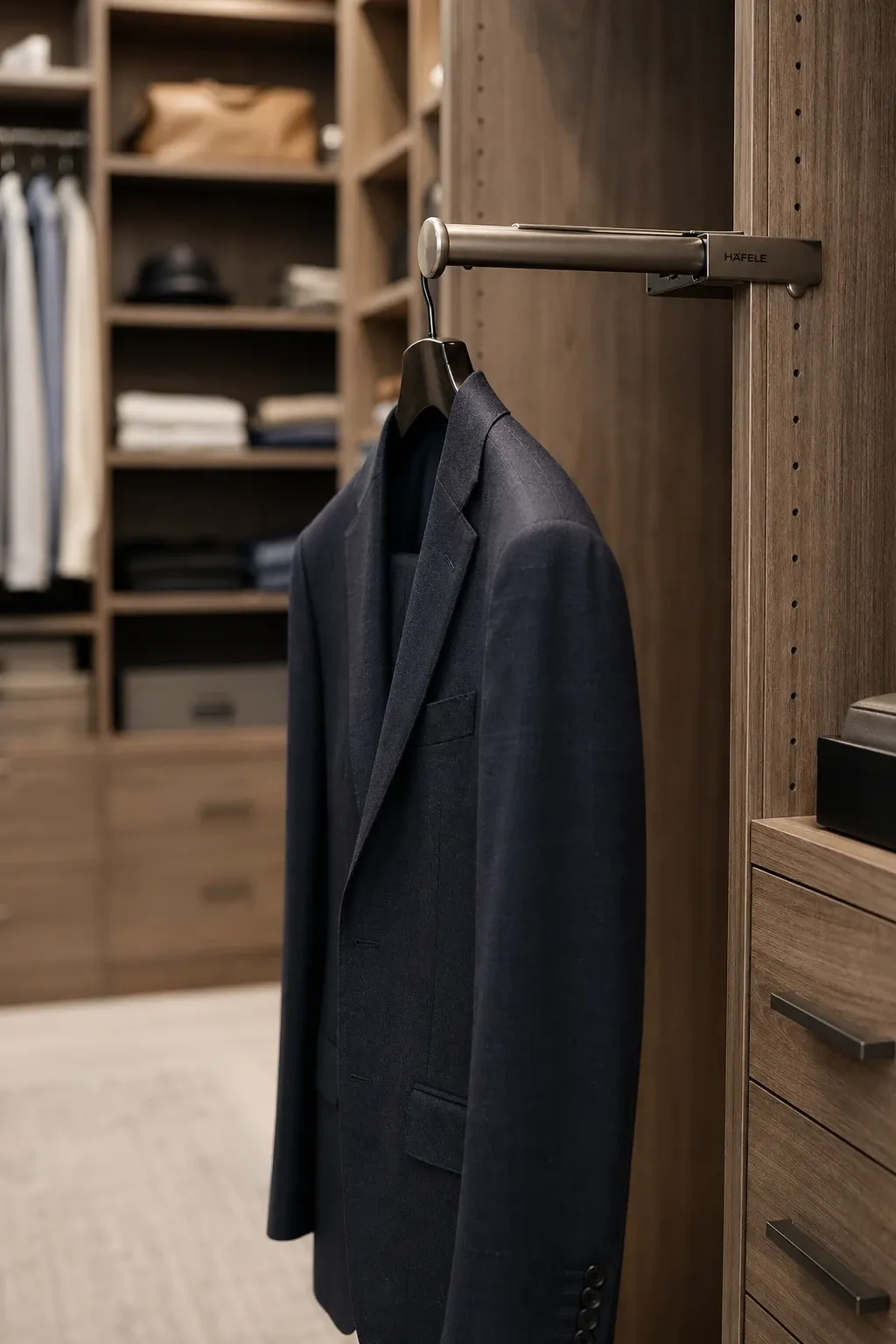
A valet rod is a small pull-out bar that slides out from the closet system and gives you a temporary hanging spot for planning outfits or hanging clothes that just came from the dry cleaner. Pull it out, hang a few pieces, decide what you are wearing, and push it back in. Without a valet rod, outfit planning happens on the bed, a door handle, or draped over a chair, which creates mess elsewhere in the house.
Designer Tip: Install the valet rod near the mirror if you have one in the closet. This puts the outfit you are considering right next to where you will try it on, which speeds up the getting-dressed process.
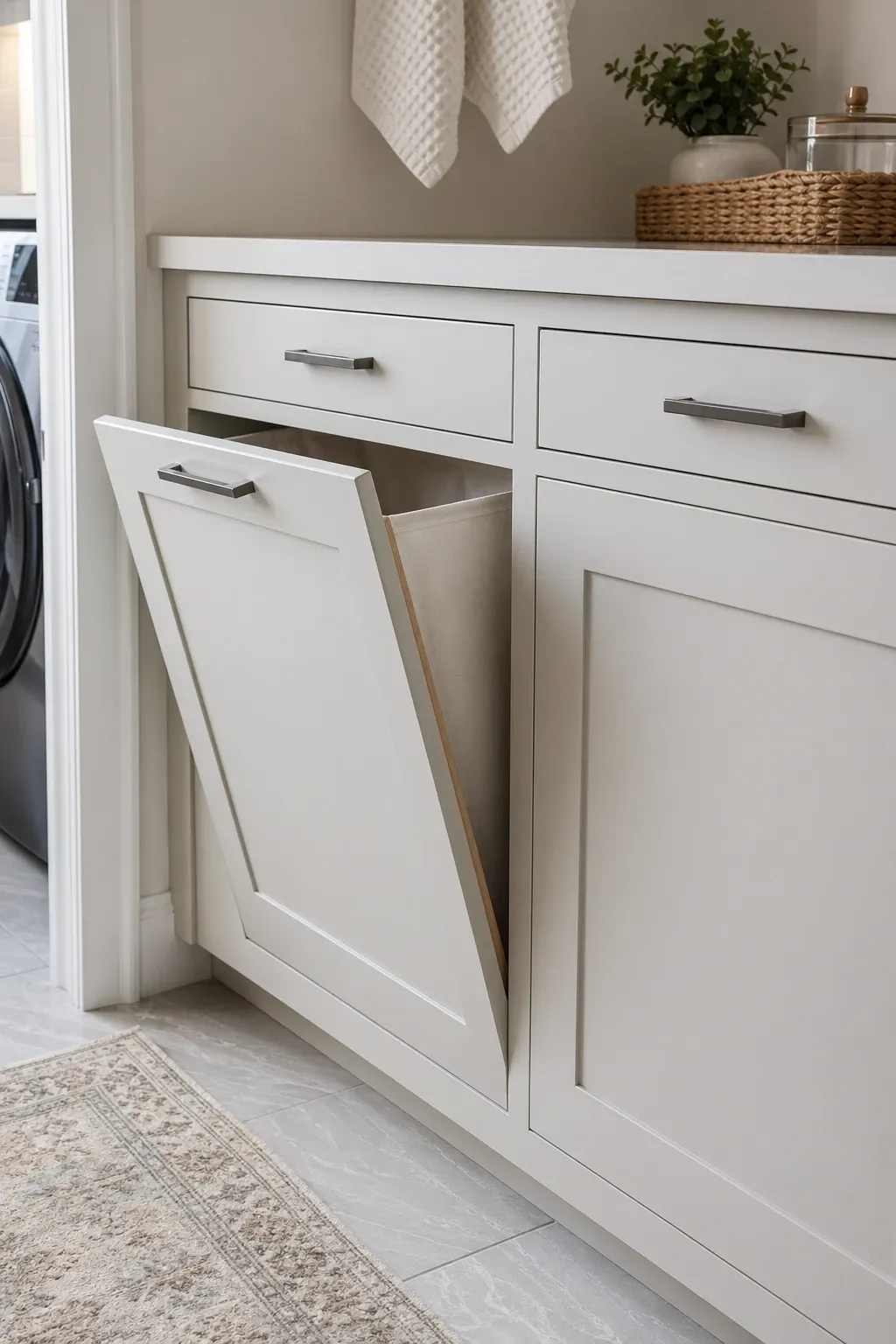
A pull-out hamper built into the closet cabinetry hides dirty clothes behind a cabinet front. Open the door, drop the clothes in, close the door. No more overflowing laundry basket sitting in the corner of the closet or bedroom. A divided hamper with two or three sections lets you pre-sort lights, darks, and delicates as you undress, which saves sorting time on laundry day.
Designer Tip: Use a hamper with a removable canvas or mesh bag inside the frame. When it is laundry time, lift the bag straight out and carry it to the machine. No dumping, no spilling, no extra handling.
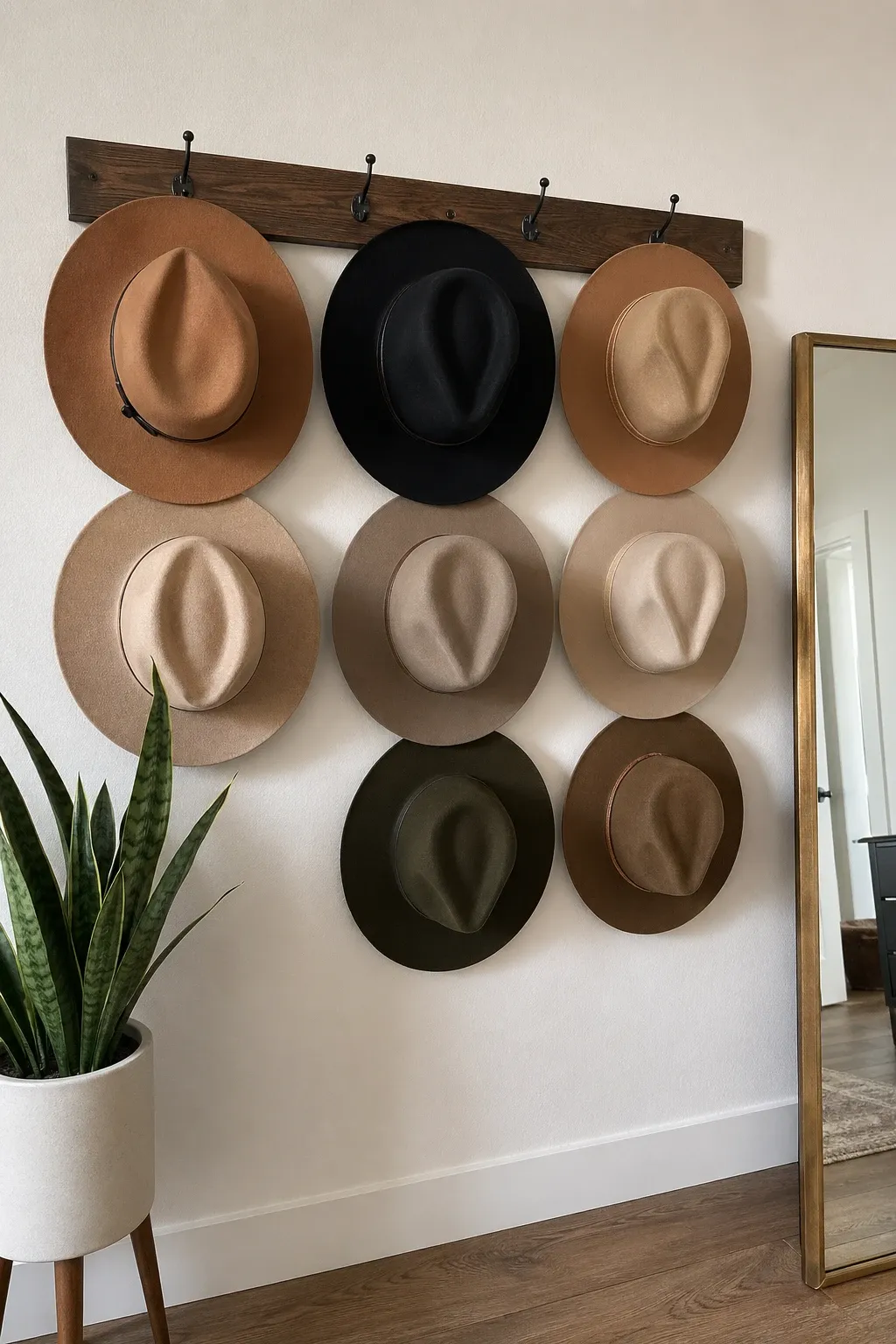
Hats get crushed, bent, and lost when they are thrown on a shelf with other items. A dedicated hat section with hooks, pegs, or individual cubbies keeps each hat in its own space and visible. Wall-mounted hooks work for baseball caps. Shelf cubbies work for structured hats and fedoras. A hat rack with multiple arms works for everything. Having a specific spot for hats means you will actually wear them instead of forgetting which shelf you threw them on.
Designer Tip: Store structured hats crown-side up on a flat shelf or in a cubby to maintain their shape. Hanging them from a hook by the brim can bend and distort the brim over time, especially for straw and felt hats.
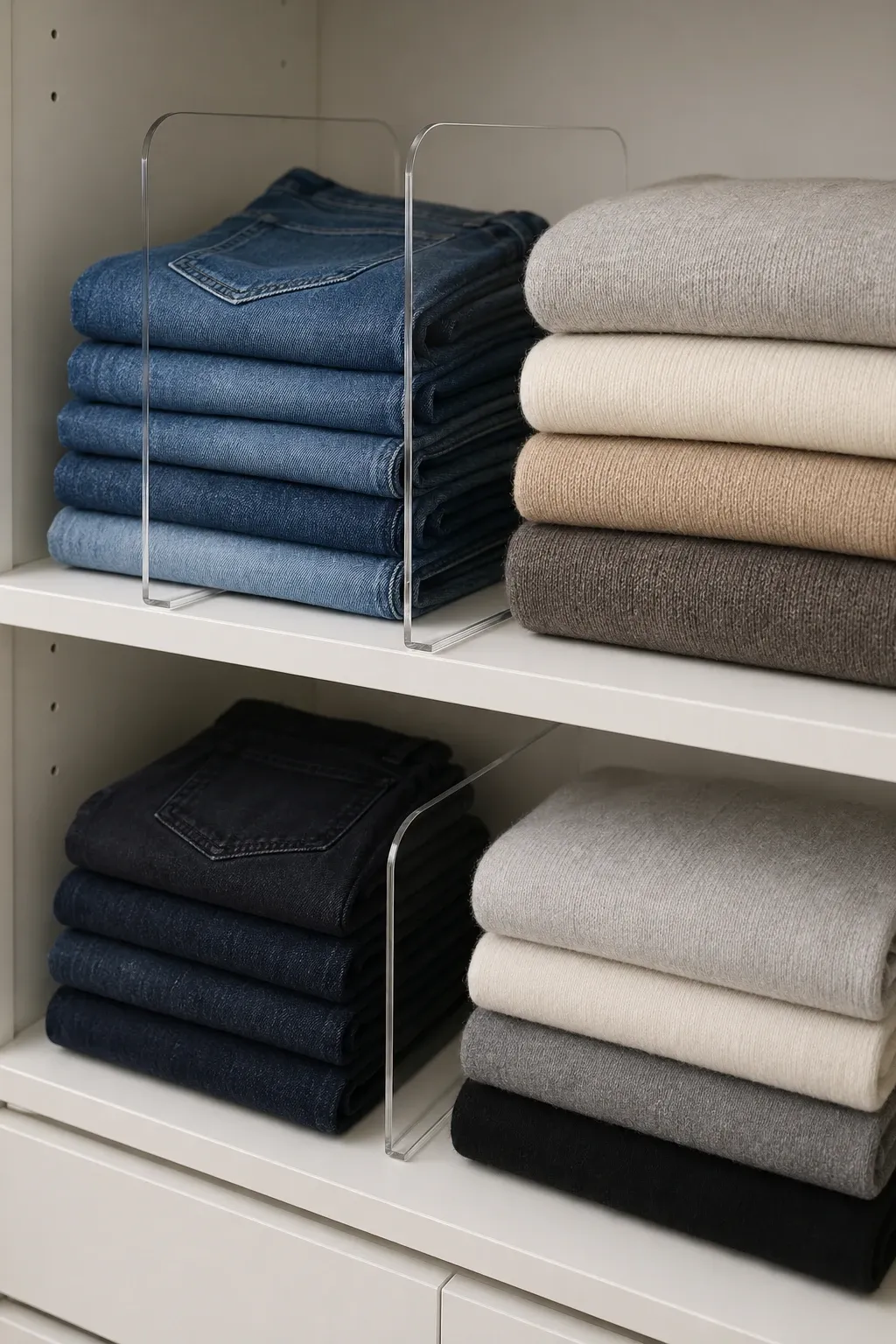
Vertical shelf dividers turn a long open shelf into organized sections. Without dividers, stacks of sweaters, jeans, and t-shirts lean into each other and topple. Dividers keep each stack contained in its own lane. Acrylic dividers clip onto the shelf and are nearly invisible, so they organize without adding visual clutter. They are cheap, easy to install, and make a dramatic difference on shelves that currently look like a pile of folded laundry that gave up.
Designer Tip: Space the dividers based on how many items you actually stack in each section. Too close together and you cannot fit enough items. Too far apart and the stacks lean and fall. About 10 to 12 inches between dividers works for most folded clothing.
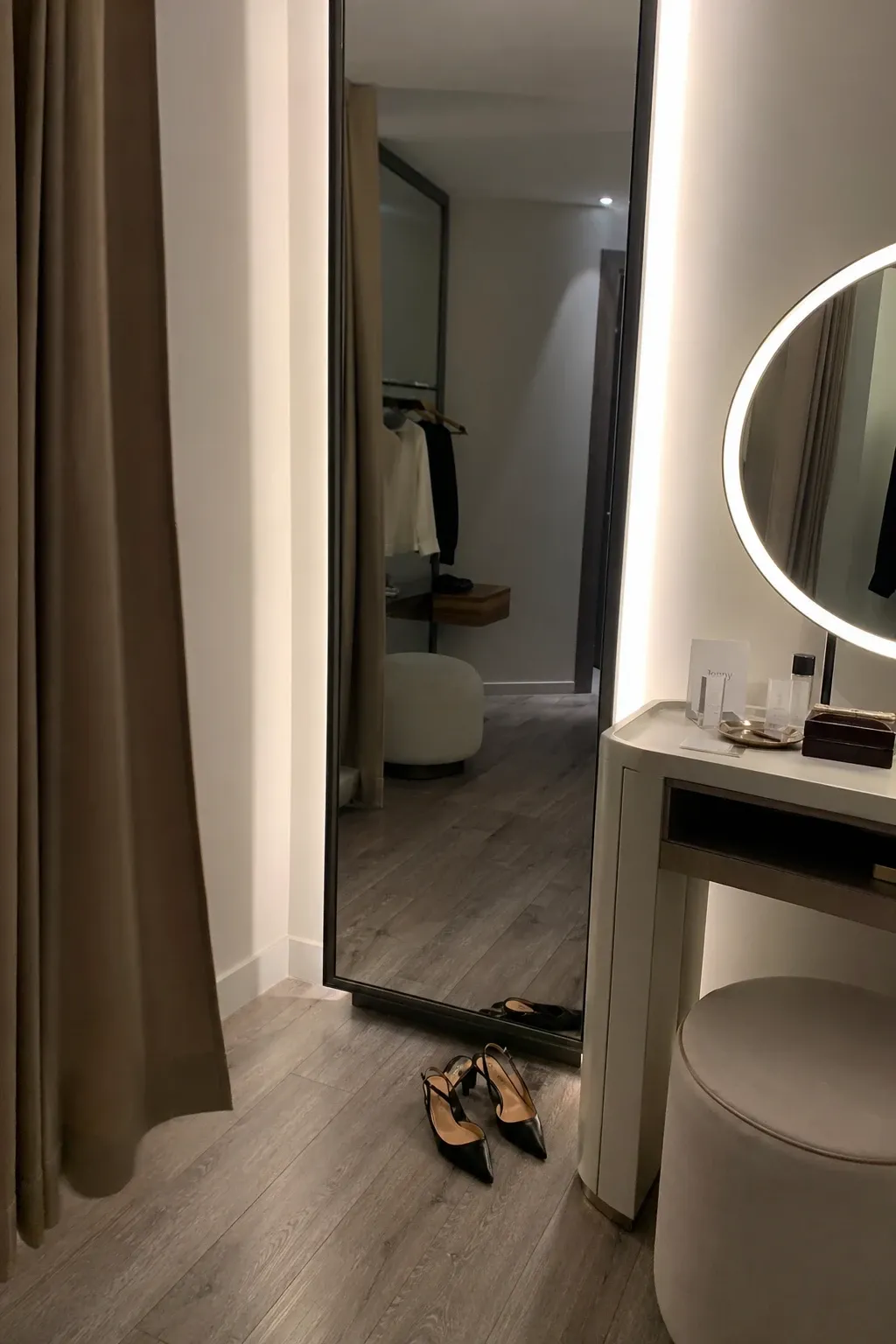
A full-length mirror at the end of the closet or on a cabinet door lets you check your outfit from head to toe without leaving the closet. Add a small bench or ottoman nearby and you have a complete getting-dressed station. The mirror also reflects light and makes the closet feel more spacious. If the mirror is on a cabinet door, the space behind it becomes hidden storage, giving you function on both sides.
Designer Tip: Position the mirror where it catches the most light, either near the closet entrance or across from the light source. A mirror in a dark corner reflects darkness. A mirror opposite a window or light fixture doubles the brightness in the space.
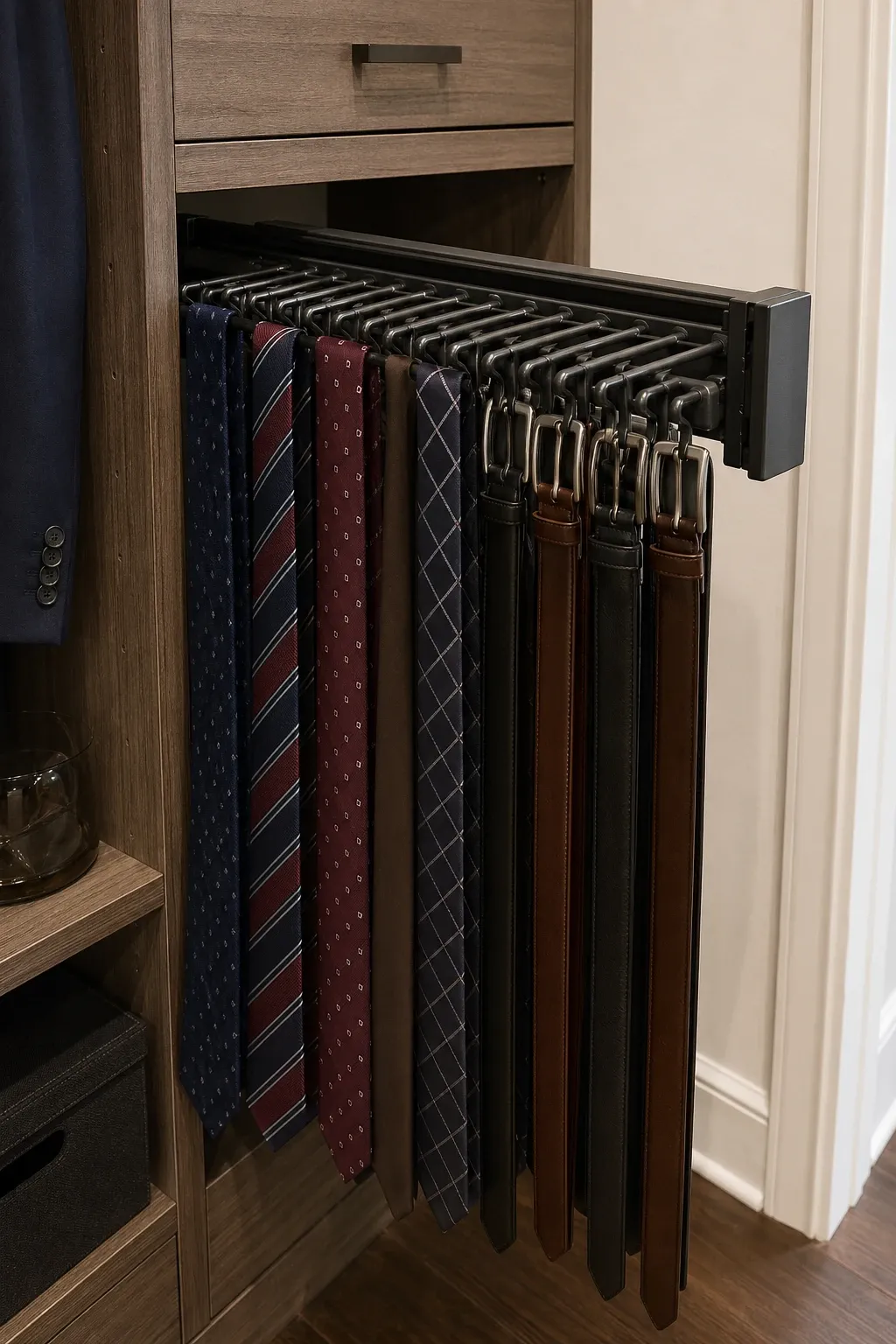
Pull-out tie and belt racks slide out of the closet system and display each piece on individual hooks. No more tangled belts in a drawer or ties bunched up on a single hook. You can see every option, pick one, and slide the rack back in. These racks take up very little space because they are slim and mount inside a cabinet or between shelves. They keep accessories organized and accessible without dedicating a full drawer to them.
Designer Tip: Organize ties by color from light to dark so you can quickly find the right shade when matching to a shirt. Belts should be organized by width and formality, with dress belts in one section and casual belts in another.
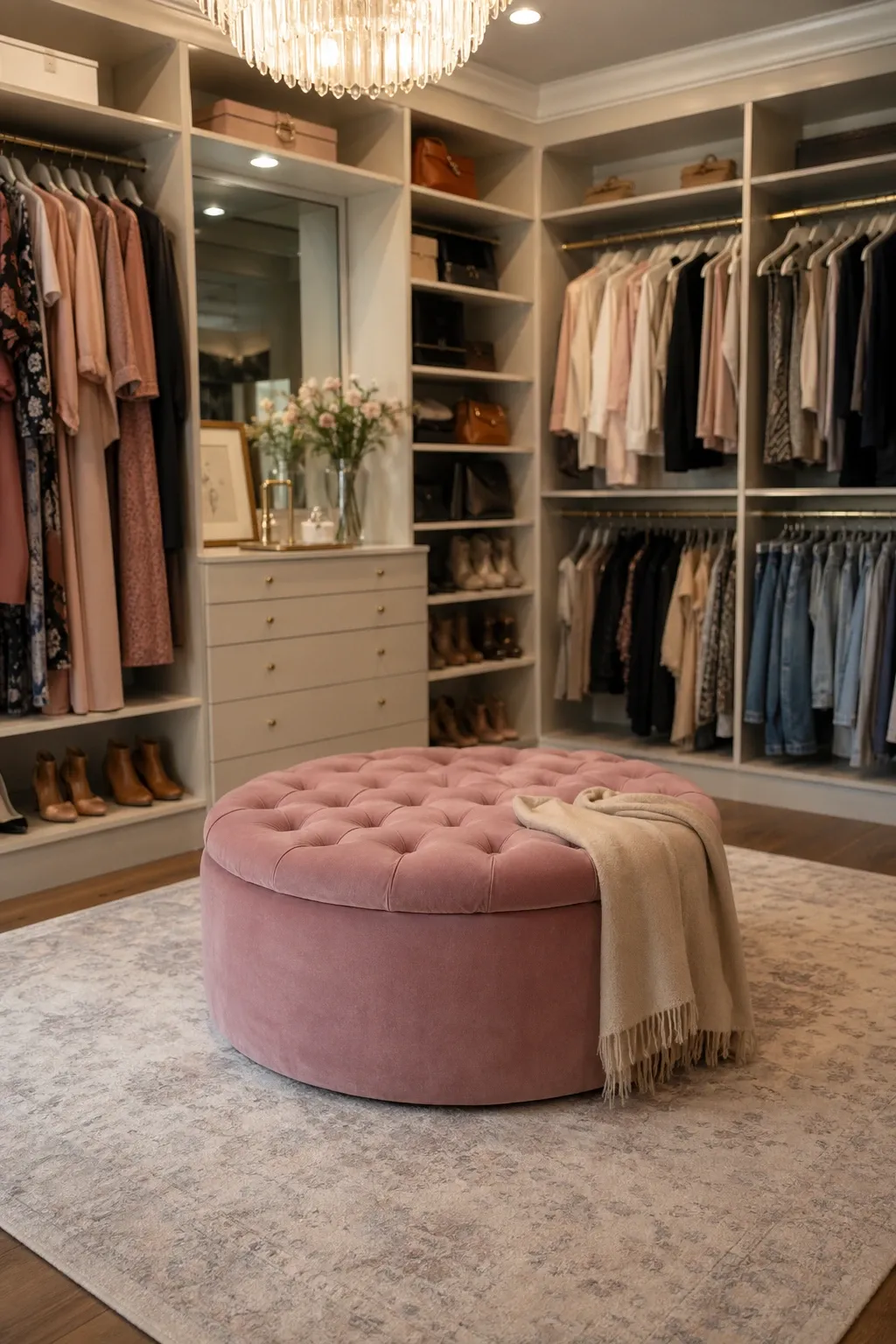
A small ottoman, bench, or upholstered stool inside the closet gives you a place to sit while putting on shoes, pulling on boots, or just taking a minute to think about what to wear. Without seating, these activities happen on the edge of the bed or standing on one foot in the hallway. Seating with storage inside, like a lift-top ottoman, doubles as a place to stash out-of-season scarves or extra blankets.
Designer Tip: Choose a round or backless stool rather than a chair with arms. In a closet, you need to be able to move around the seating easily. Arms and a high back block movement and take up too much floor space in a room that is already tight.
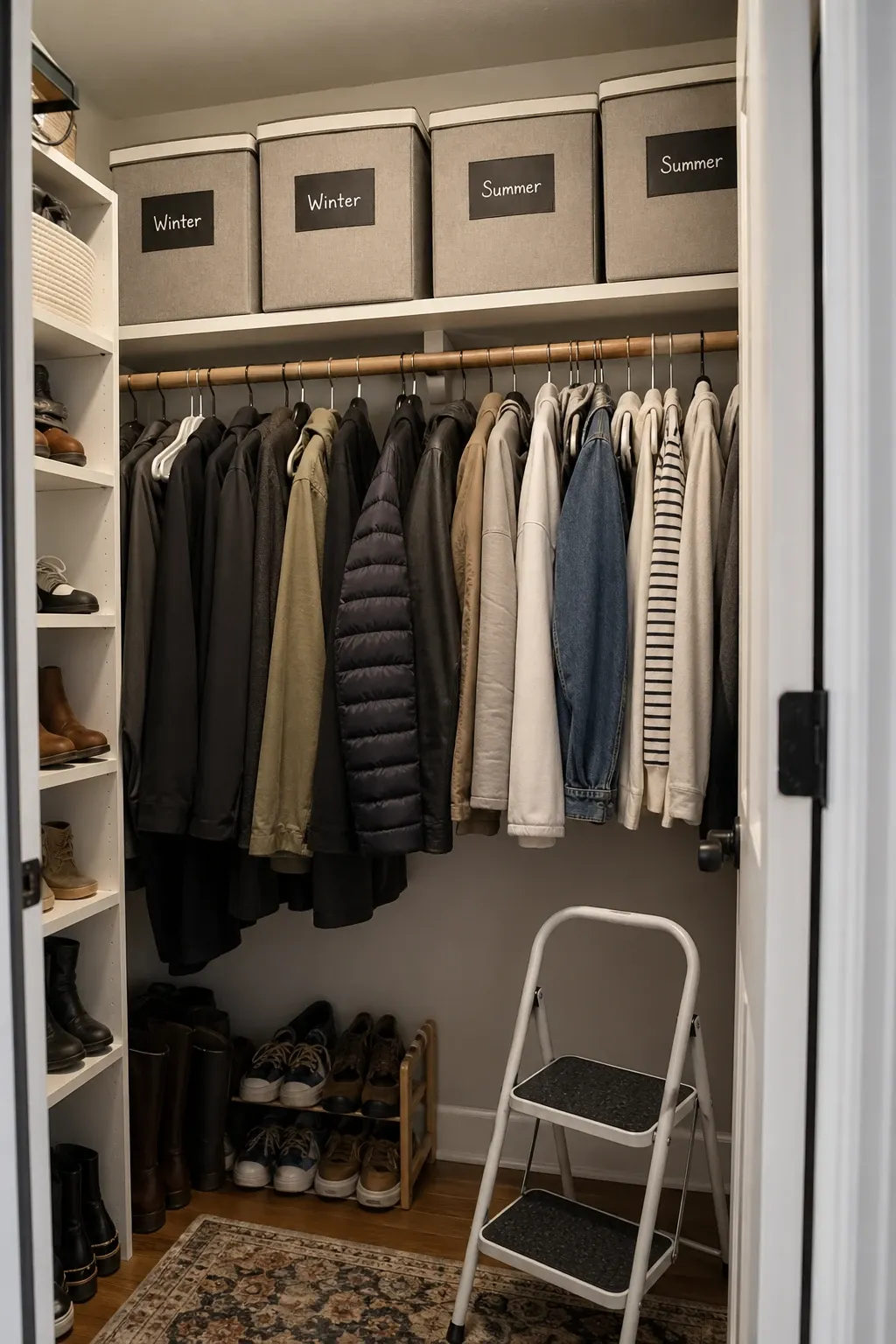
The highest shelves in a walk-in closet are perfect for items you only use once or twice a year. Labeled bins or baskets on the top shelf hold winter coats in summer, beach gear in winter, holiday outfits, and formal wear that only comes out for special occasions. These items do not need to be within easy reach because you are not accessing them daily. The high shelf keeps them out of the way and frees up prime closet space for everyday clothes.
Designer Tip: Use matching bins or baskets on the top shelf so it looks organized even from below. Mismatched bags and boxes up high look messy and make the closet feel chaotic. Uniform containers with clear labels create a clean visual line across the top of the closet.
Motion-sensor lights that turn on automatically when you walk into the closet are a practical luxury that makes the space feel high-end. Battery-operated LED motion sensors can be stuck inside cabinets, under shelves, or at the closet entrance. They light up when you approach and turn off when you leave, which means you never have to fumble for a light switch with an armful of clothes. It is a small upgrade that makes every visit to the closet feel effortless.
Designer Tip: Place motion sensors inside drawers and cabinets, not just at the entrance. A sensor inside a jewelry drawer that lights up when you open it makes finding pieces easier and adds a luxury feel that makes the closet feel special.
The best walk-in closet organization is the one that matches how you actually get dressed. Start by noticing which parts of your closet frustrate you every morning, then pick the solutions that fix those specific problems. A closet that works with your habits will stay organized. One that fights them will not, no matter how pretty it looks on day one.
Frequently Asked Questions
How do I start organizing a messy walk-in closet?
Empty everything out first. Sort into keep, donate, and toss piles. Then organize the keep pile by category: hanging clothes, folded clothes, shoes, accessories. Put the most-used items at eye level and arm is reach. Less-used items go high or low. Then add organizers to fit how you sorted things.
What is the best closet organizer system?
It depends on your budget and closet size. Modular systems from companies like Elfa, ClosetMaid, and IKEA PAX are customizable and affordable. Custom built-ins from a local carpenter or closet company cost more but use every inch of space perfectly. For most people, a modular system with adjustable components is the best balance of cost and function.
How do I keep my closet from getting messy again?
Make putting things away as easy as wearing them. If hanging a shirt back up requires moving three other things, you will throw it on the chair instead. Every item needs a home that takes one motion to access. Do a quick five-minute tidy every evening and a full reset once a season.
How much does it cost to organize a walk-in closet?
A DIY approach with shelf risers, bins, and basic organizers can cost under 200 dollars. A modular system like IKEA PAX runs 500 to 1500 dollars depending on size. A fully custom closet system from a professional installer typically costs 2000 to 5000 dollars or more. Start with what you can afford and add to it over time.