A small closet pantry can feel like a lost cause. Everything gets shoved in, nothing has a spot, and you end up buying duplicates because you cannot see what you already have behind the wall of stuff. But a small pantry just needs smarter organization, not more space. These 14 ideas turn a cramped closet pantry into a system where you can find everything in seconds.
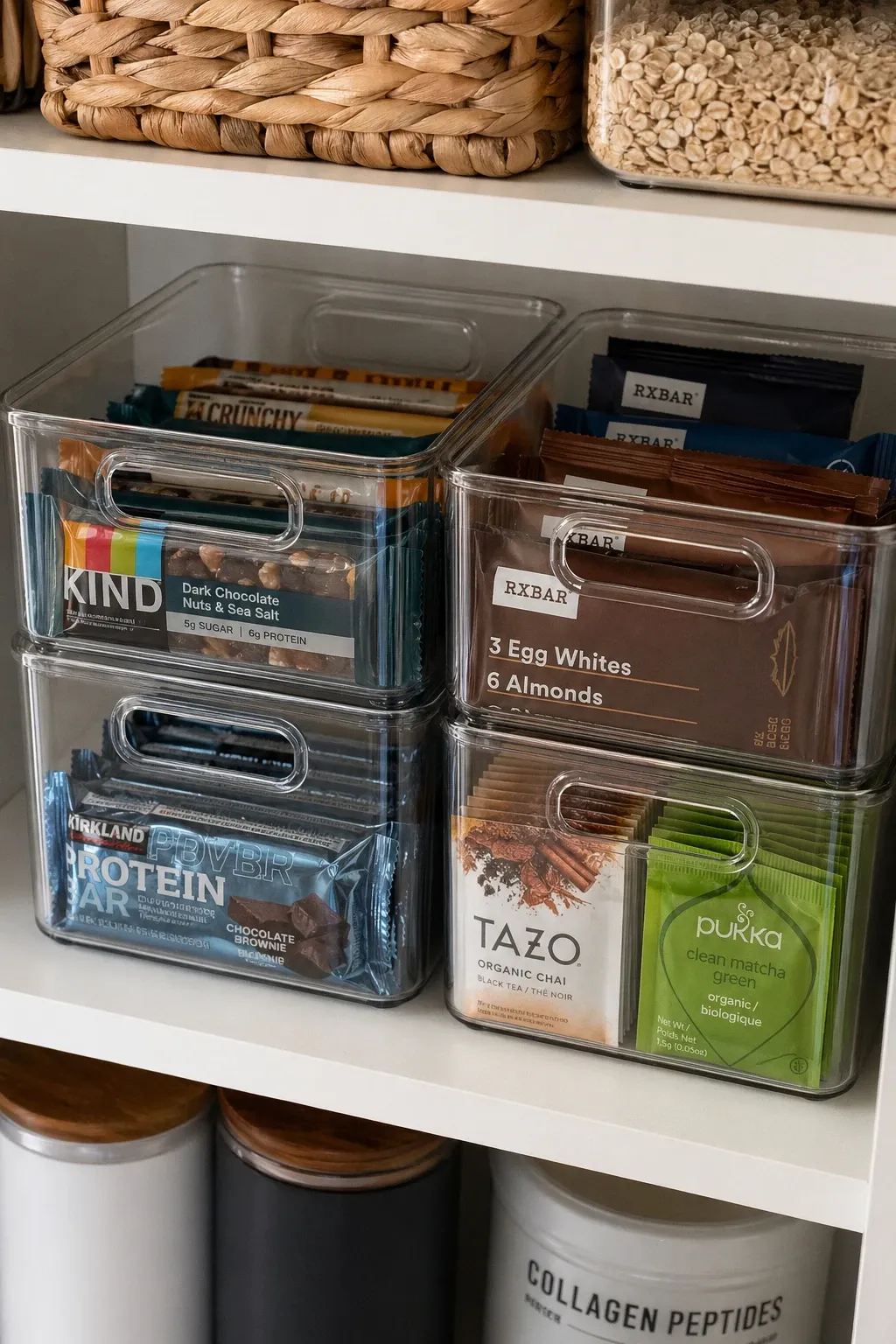
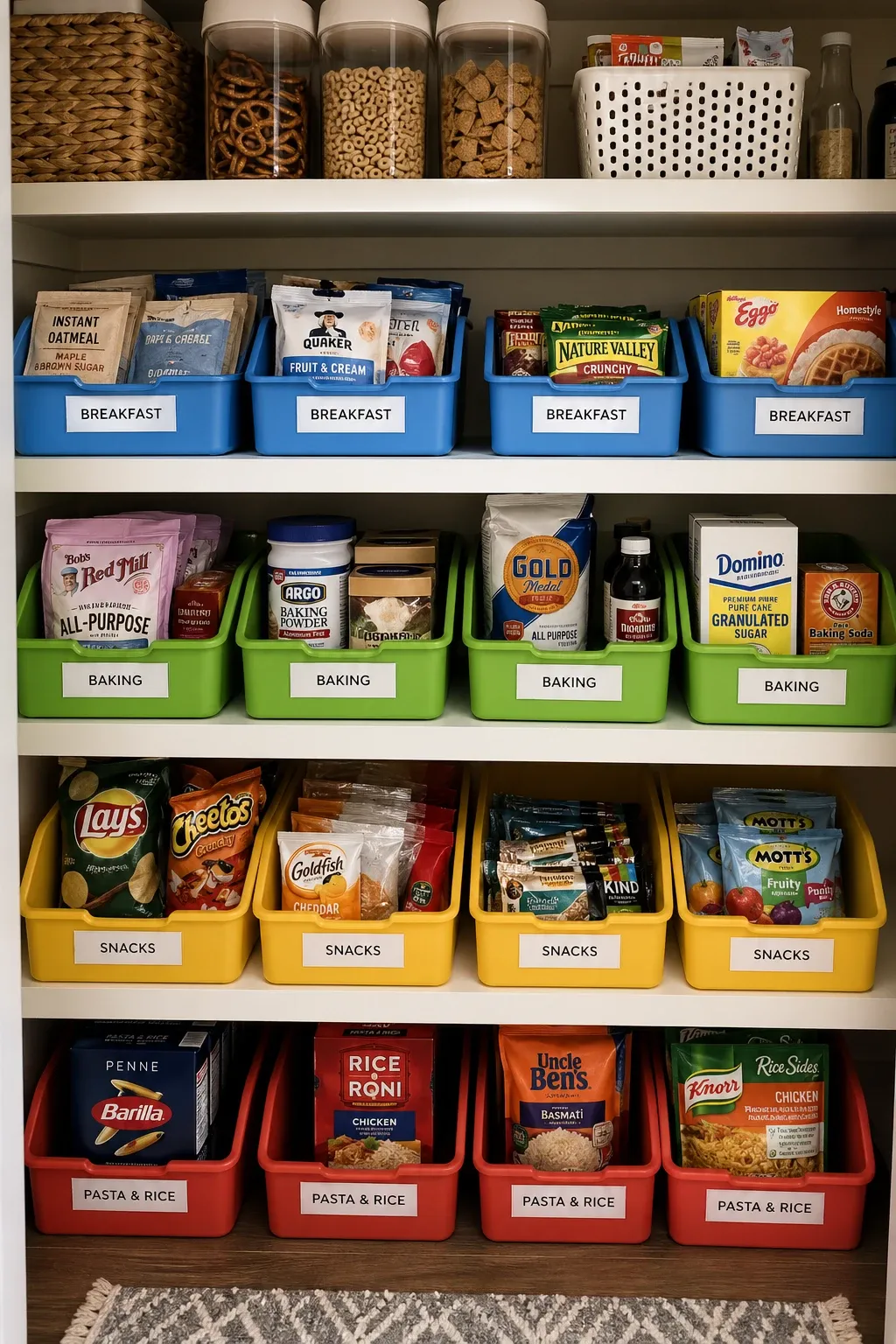
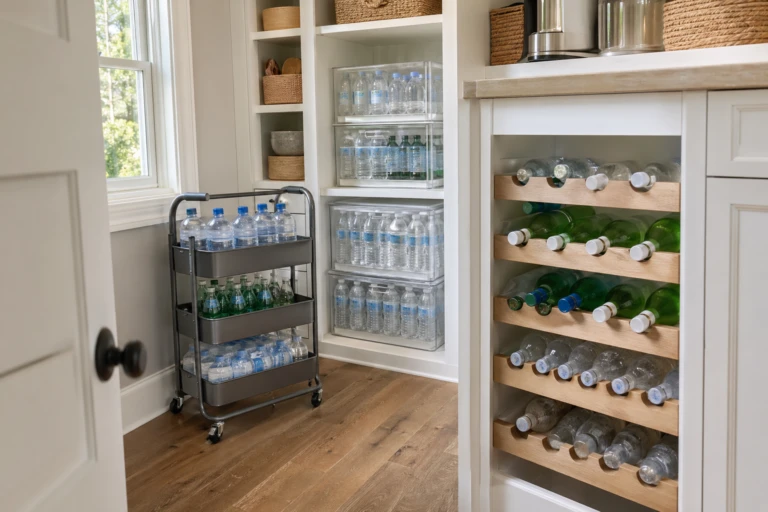
Clear bins on pantry shelves group similar items together and let you see everything inside without pulling anything out. Stack them or line them up side by side. One bin for snacks, one for baking supplies, one for canned goods. Pull the whole bin out to browse its contents, then slide it back. Clear bins turn a messy shelf into an organized grid where nothing gets lost behind something else.
Designer Tip: Use bins that are all the same brand and size so they line up neatly on the shelf. Mismatched bins leave gaps and create an uneven look. Uniform bins create a clean grid that maximizes every inch of shelf space.
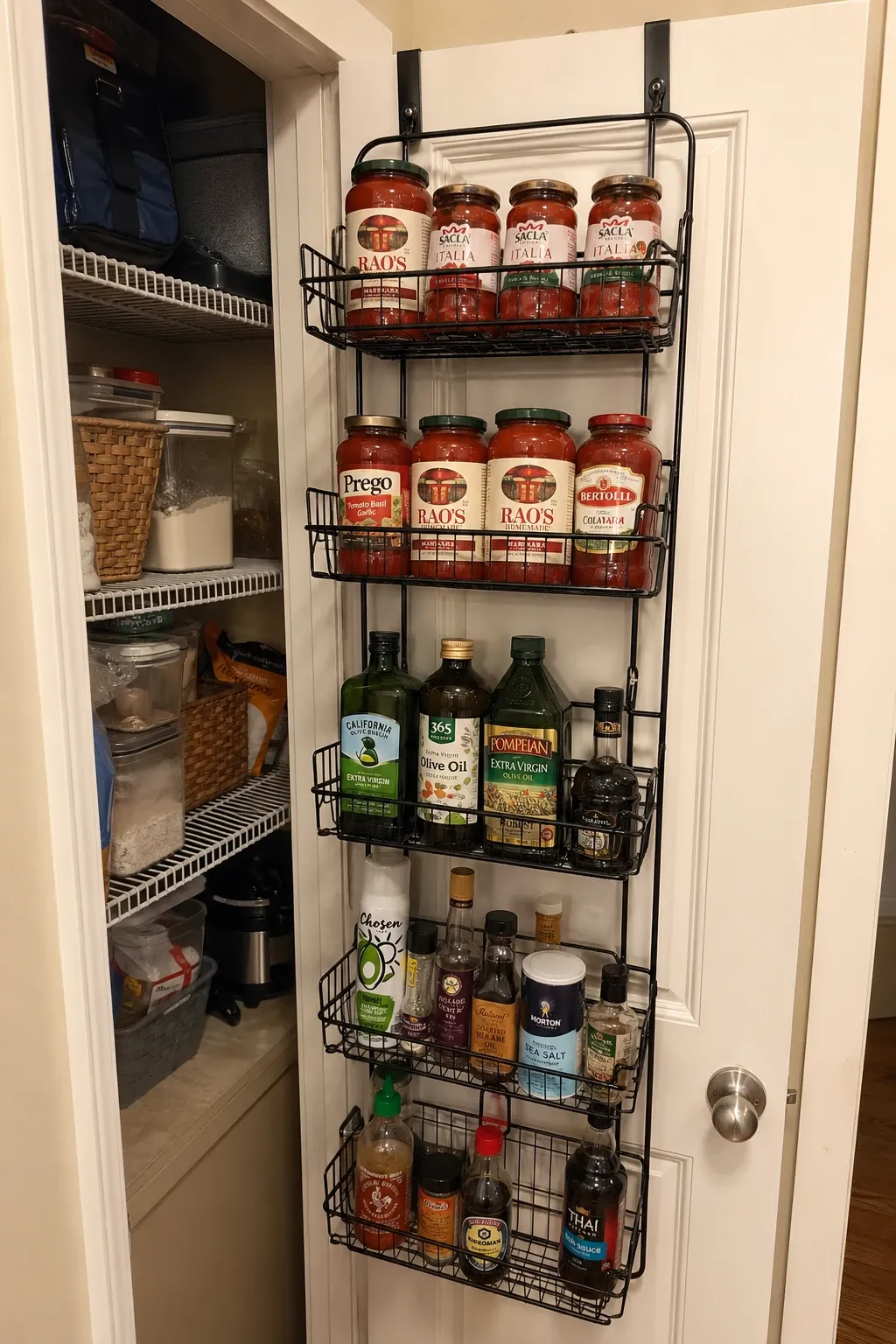
The back of the pantry door is free storage that most people ignore. An over-the-door rack with wire baskets or a mounted organizer with shelves holds spices, snack packets, condiments, and small items. When you open the pantry door, everything on the back is visible and within reach. This is one of the easiest upgrades for a small pantry because it adds storage without reducing shelf space inside.
Designer Tip: Make sure the door organizer does not hit the shelves inside when the door closes. Measure the gap between the closed door and the front edge of the nearest shelf. Even an inch of interference means the door will not close properly.
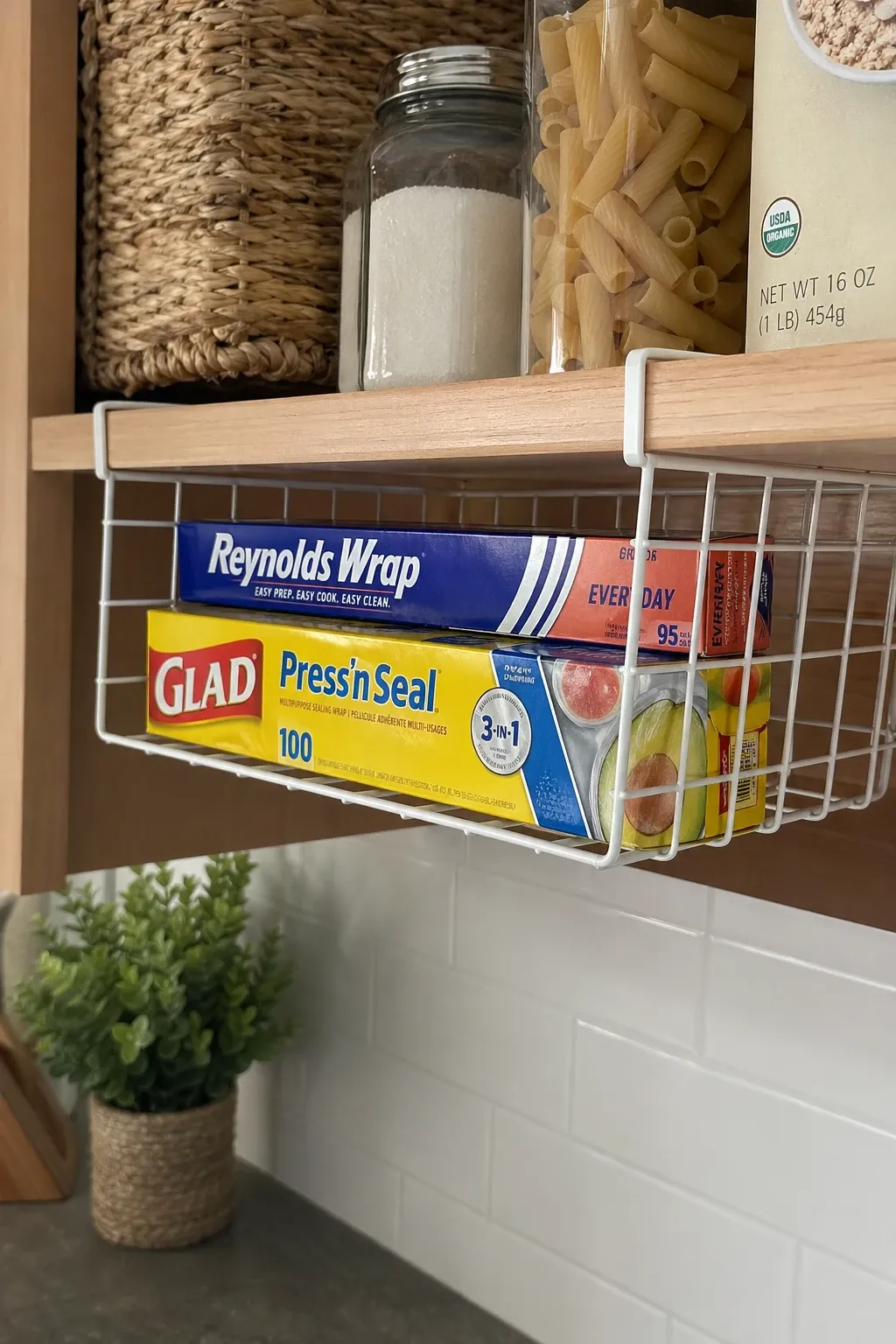
Wire baskets that hook onto the underside of a shelf create an extra storage layer in the dead space between the shelf and the items below. They slide on and off without tools. Use them for flat items like granola bars, tea packets, and napkins. This doubles the usable space on each shelf without adding another shelf. In a small pantry where shelves are limited, this is a big win.
Designer Tip: Do not hang under-shelf baskets too low. Leave enough room above the items on the shelf below so you can still see and reach them. A basket that is too deep or hung too low blocks access to the shelf beneath it.
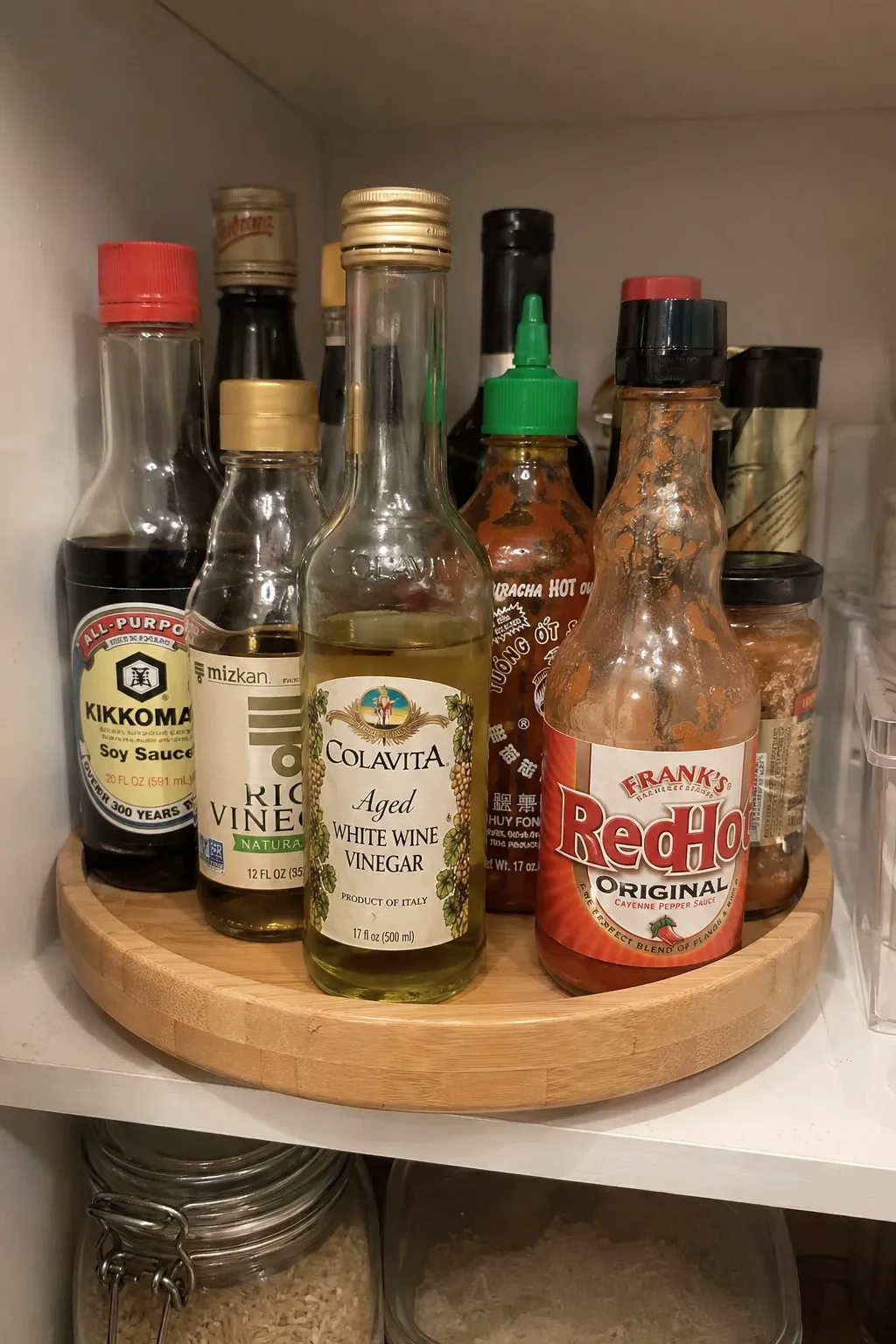
A turntable on a shelf brings the back-row items to the front with a spin. This is especially useful for oils, vinegars, sauces, and condiments that tend to get pushed to the back of deep shelves. One spin and every item on the turntable is accessible. In a small pantry where shelves are deep relative to their width, a lazy Susan eliminates the reaching and digging that wastes time every meal.
Designer Tip: Use a lazy Susan with a raised lip to keep bottles from sliding off when you spin it. Smooth turntables without a lip send tall, narrow bottles flying off the edge. The lip contains everything during rotation.
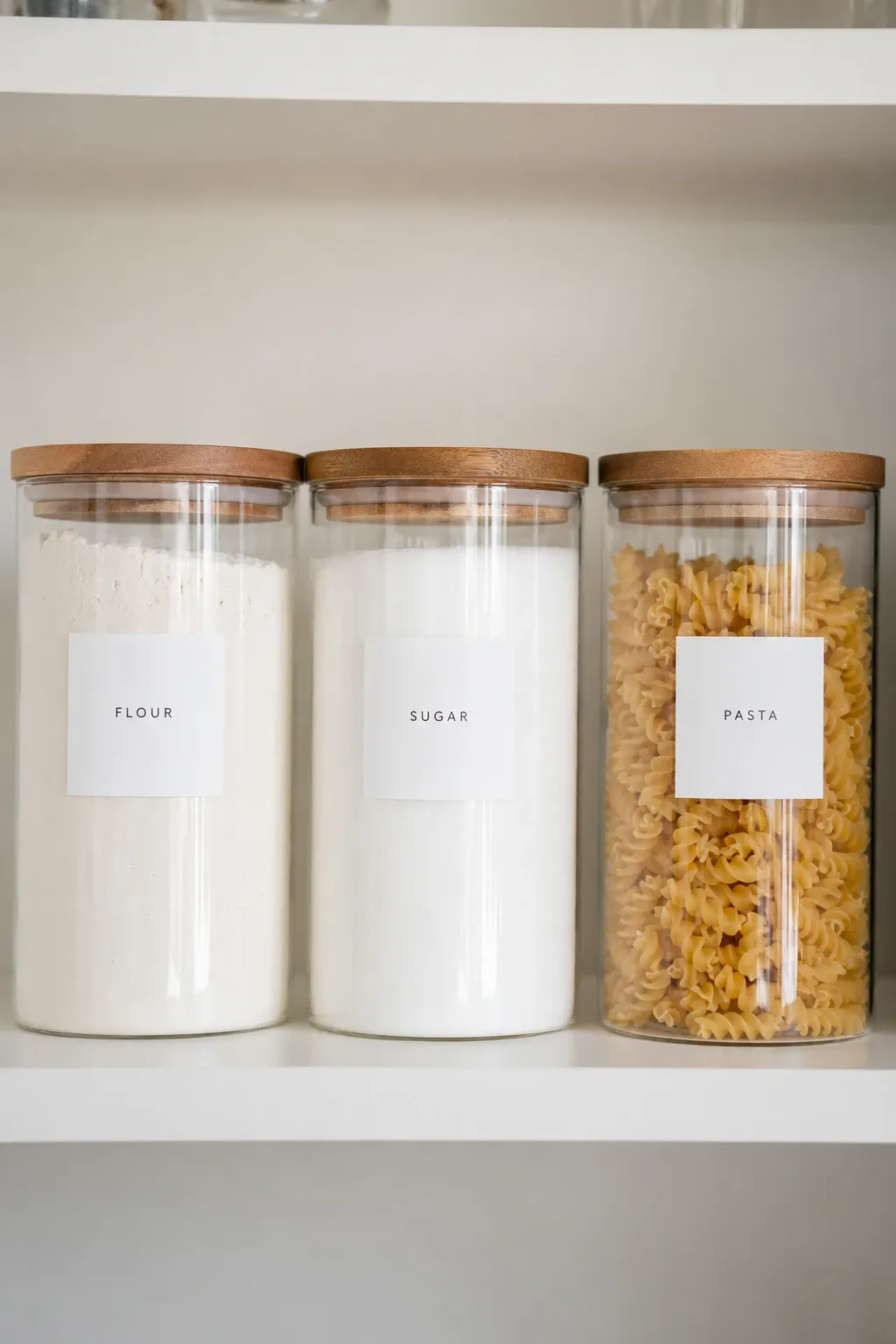
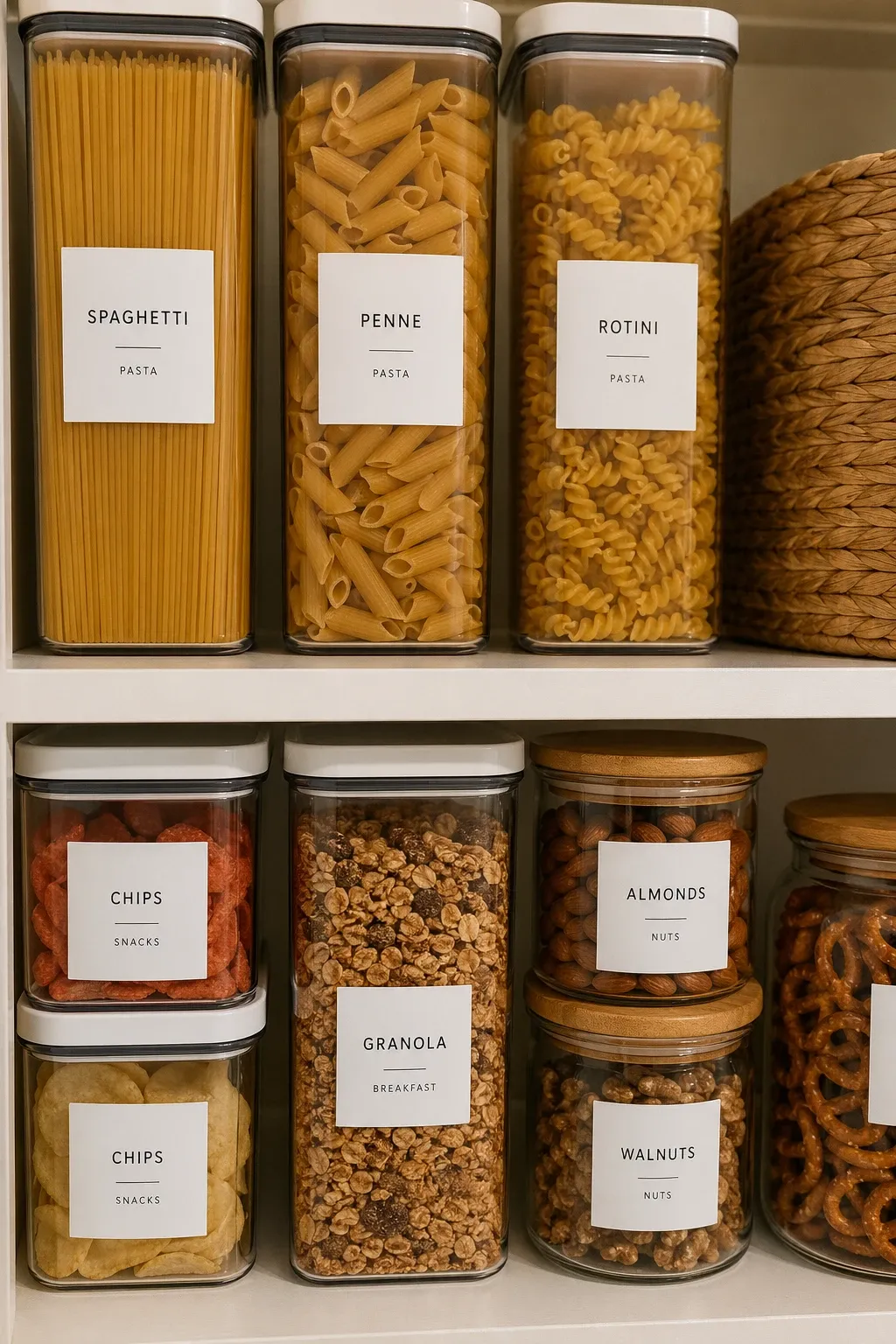
Transferring flour, sugar, rice, pasta, and cereal from their bags into matching airtight containers saves space and keeps food fresher. Bags are floppy, different shapes, and hard to stack. Containers are uniform, stackable, and seal tight to keep out moisture and pests. A shelf of matching containers looks clean and uses space more efficiently than a shelf of half-open bags leaning against each other.
Designer Tip: Label every container even if the contents are visible. Some dry goods look similar through plastic, and a label removes all guessing. Chalkboard labels or printed labels on the front keep the look consistent across the set.
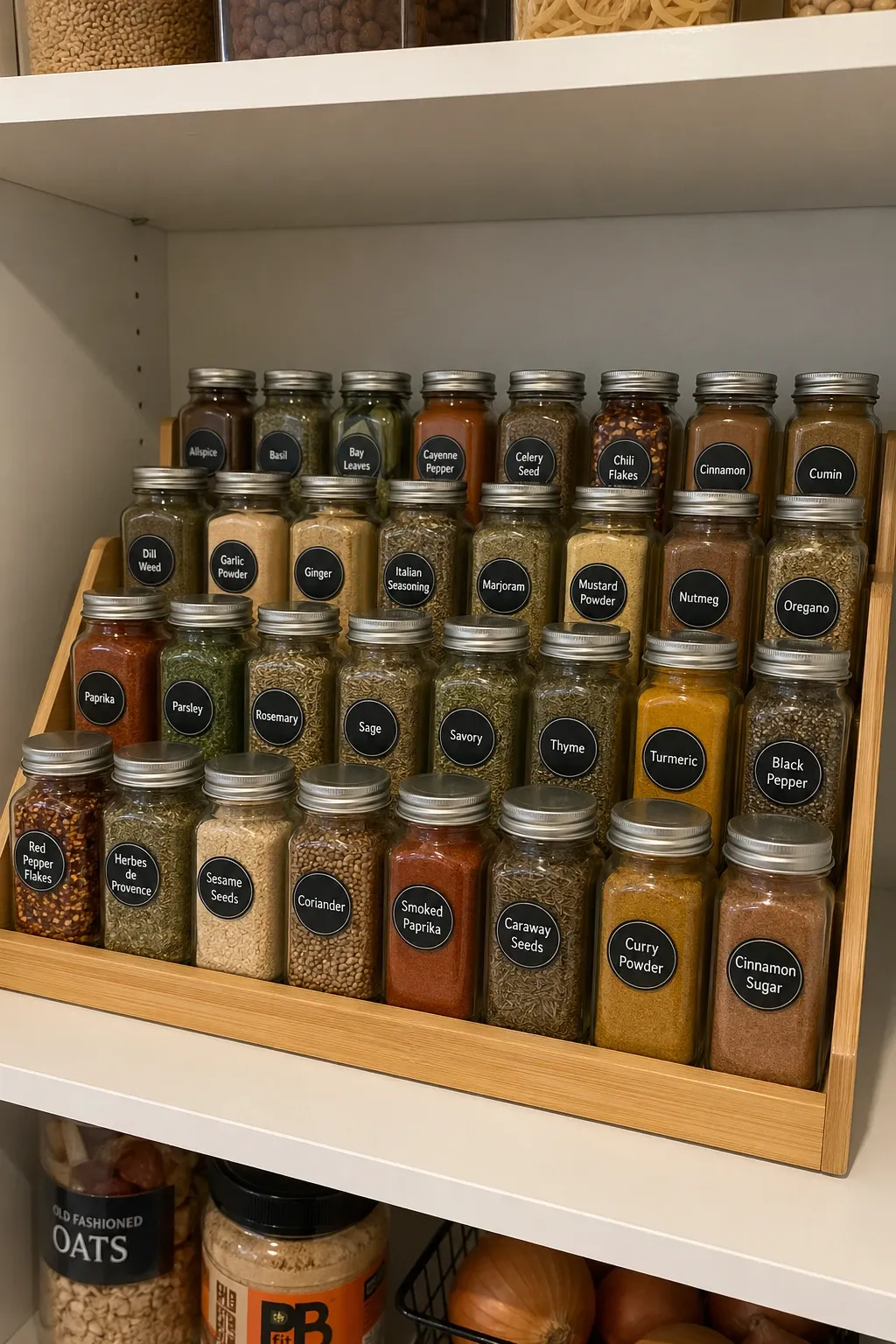
A stepped shelf insert raises the back rows of spice jars higher than the front, creating a stadium seating effect where every jar label is visible. Without a tiered organizer, the spices in the back are invisible behind the front row and you end up with three jars of cumin because you could not see the ones you already had. The organizer costs under ten dollars and makes a huge difference in a small pantry.
Designer Tip: Get an expandable tiered organizer that adjusts to your shelf width. Fixed-width organizers leave gaps on the sides that waste space. An expandable one fills the shelf edge to edge.
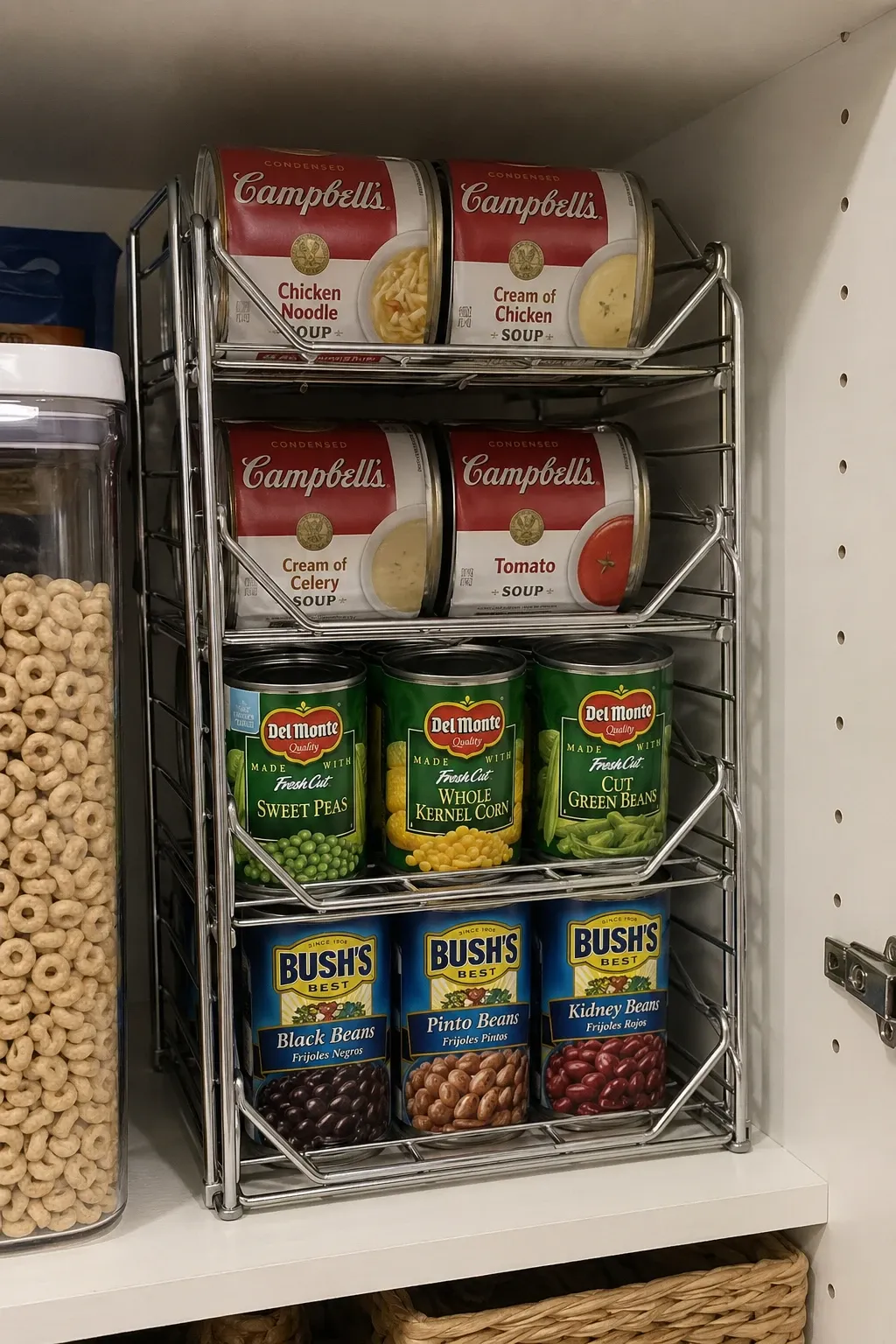
A gravity-fed can dispenser loads from the top and dispenses from the bottom. Put new cans in the back or top and they roll forward as you take cans from the front. This automatically rotates your stock so the oldest cans get used first. It also keeps cans in a compact, organized column instead of scattered across the shelf in random stacks that topple when you pull one from the middle.
Designer Tip: Measure your can sizes before buying a dispenser. Standard soup cans, taller vegetable cans, and wide tuna cans all have different dimensions. Get dispensers sized for the cans you actually buy in bulk.
Replacing fixed shelves with an adjustable track system lets you set each shelf at the exact height you need. Fixed shelves waste space because the gap above items is dead air. Adjustable shelves can sit just an inch or two above the tallest item on the shelf below, which frees up space for an extra shelf or two in the same closet. In a small pantry, one extra shelf makes a noticeable difference in capacity.
Designer Tip: Start by measuring your tallest pantry items and set shelf heights accordingly. Cereal boxes, oil bottles, and appliances need more clearance than canned goods and spice jars. Custom heights for each shelf type maximizes the closet.
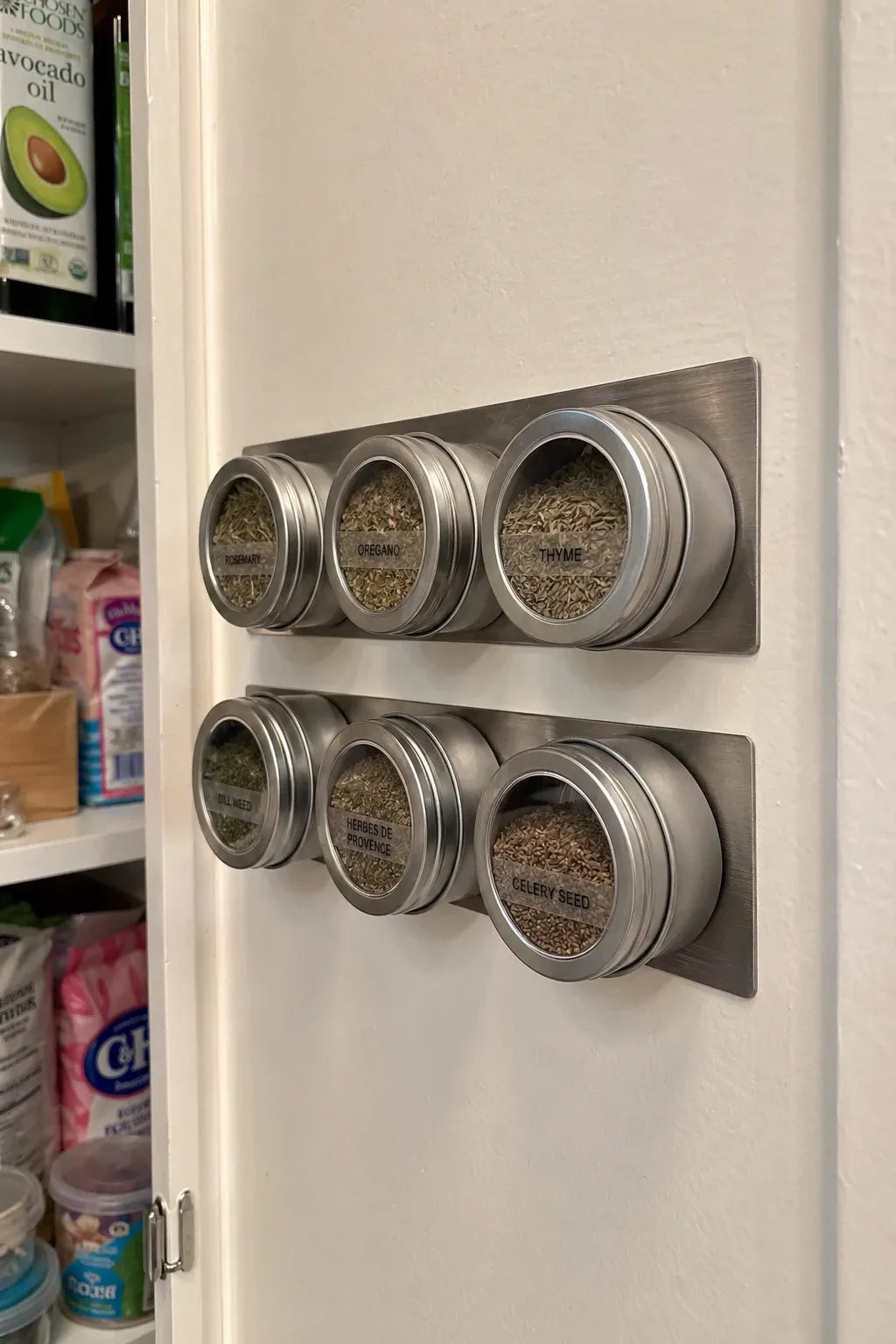
Magnetic strips mounted on the side walls of the pantry closet hold spice tins, small metal containers, or any item in a magnetic jar. The side walls are usually bare in a closet pantry because shelves run front to back and leave the walls exposed. Magnetic strips use this otherwise wasted surface and keep frequently used items visible and accessible without taking up any shelf space.
Designer Tip: Mount the magnetic strip at eye level for items you use daily. Lower placements require bending down, which is inconvenient and means you will stop using the strip. Eye-level placement keeps it practical.
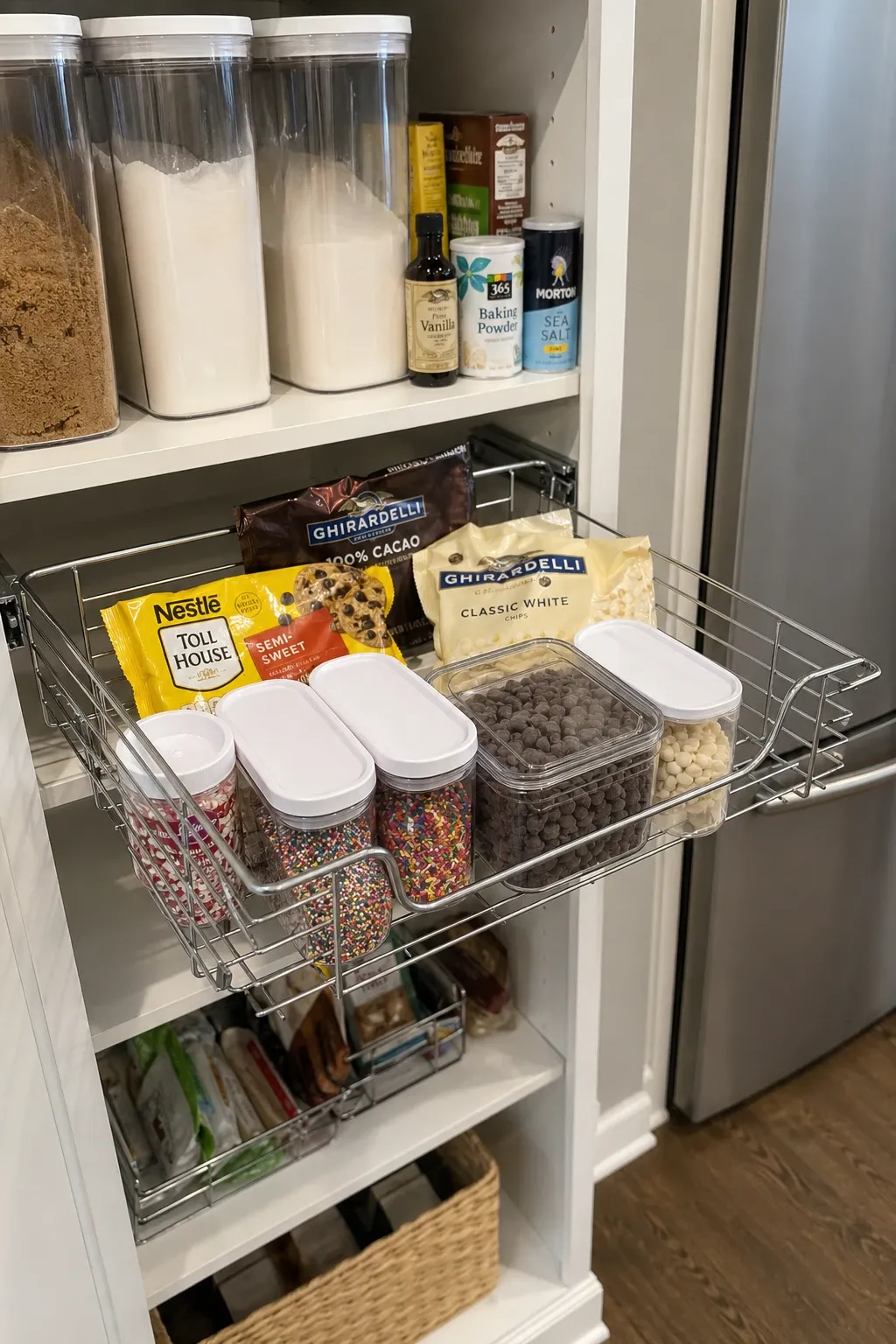
Pull-out drawer inserts on existing shelves bring the back of deep shelves to the front. Instead of reaching into the dark back corner, you pull the drawer out and everything is right there. This is a game changer for small closet pantries where shelves are often deeper than they are wide. Items that used to get lost in the back are now front and center every time you open the pantry.
Designer Tip: Install pull-out drawers on the lower shelves where reaching to the back is the most awkward. Upper shelves are easier to see into from above, but bending down and reaching deep into a bottom shelf is where items really get lost.
Labels on every bin, container, and shelf make the pantry system usable for everyone in the household. Without labels, only the person who organized the pantry knows where things go. With labels, anyone can find what they need and put things back in the right spot. A consistent labeling style also makes the pantry look polished and intentional rather than randomly assembled.
Designer Tip: Use the same label style throughout the entire pantry. Matching labels on every container and bin create a cohesive look. A mix of handwritten labels, printed labels, and tape labels looks disorganized even if the contents are perfectly sorted.
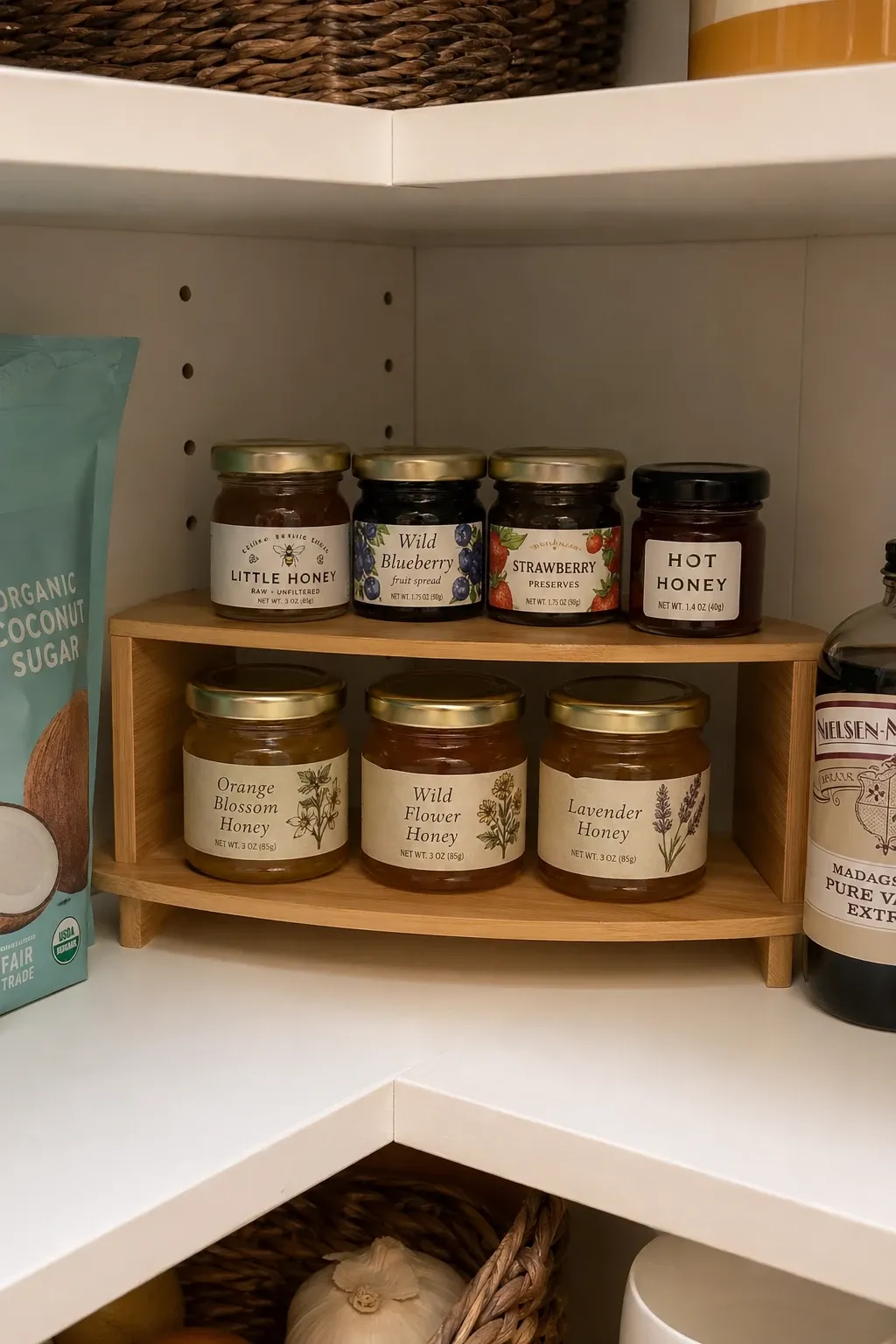
Small shelf risers placed in the corners of pantry shelves create two levels on a single shelf. Short items go on the bottom level and taller items stand on the riser above. This uses the vertical space that is normally wasted above short items like canned goods. Risers are inexpensive and stackable, and they instantly increase the visible inventory on each shelf.
Designer Tip: Place risers in the back of the shelf and shorter items in the front. This creates that stadium seating effect where everything is visible from the front. Risers in the front block the view of what is behind them.
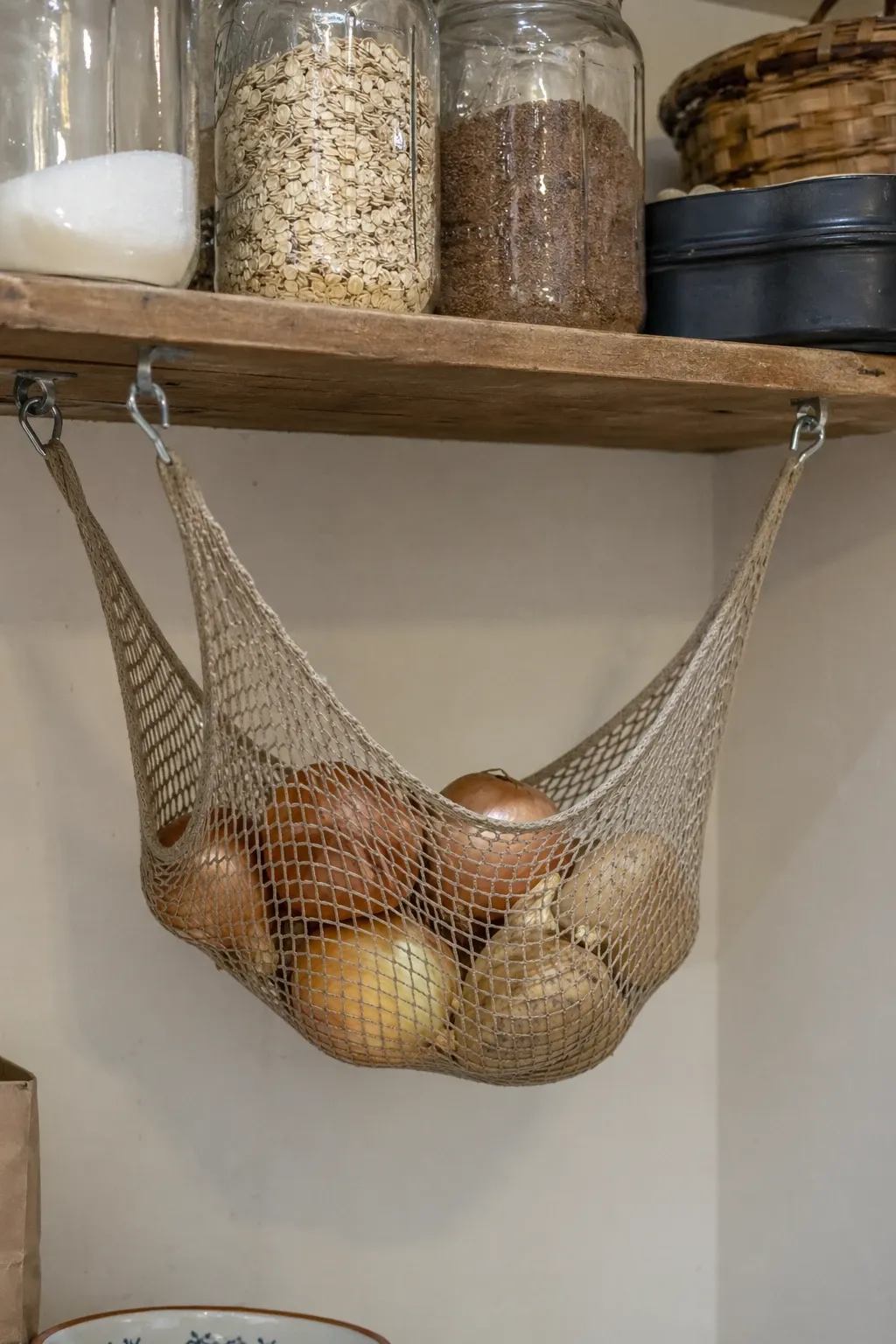
A fabric or macrame hammock hung inside the pantry holds produce like onions, garlic, potatoes, and bananas off the shelf. The hammock uses vertical airspace and keeps produce ventilated so it lasts longer. Hanging produce frees up shelf space for items that need a flat surface. This is an especially useful trick in small pantries where shelf space is tight and every surface needs to be used for something that cannot hang.
Designer Tip: Hang the hammock at a height where you can see and reach into it easily. A hammock hung too high becomes an out-of-sight, out-of-mind spot where produce goes to rot. Keep it at or just below eye level.
Assigning each food category a bin color creates a visual zone system. All baking supplies go in white bins, snacks in green, breakfast items in blue, and so on. You do not even need to read labels to find the right zone. Your brain learns the color associations quickly and grabbing the right bin becomes automatic. This is a helpful system for families where multiple people use the pantry daily.
Designer Tip: Limit the color scheme to three or four colors maximum. Too many colors defeat the purpose because you cannot remember which color means what. A simple three-color system is easier to learn and maintain.
A small closet pantry works well when everything has a specific place and you can see all of it at once. The biggest mistakes in small pantry organization are deep shelves where items get buried and bags that waste space. Fix those two problems with clear bins, pull-out drawers, and matching containers, and the rest falls into place. Start with the idea that addresses your biggest frustration and build the system from there.
Frequently Asked Questions
How do I organize a pantry with deep shelves?
Use pull-out drawers, clear bins you can slide in and out, or lazy Susans that rotate back-row items to the front. The goal is to eliminate the dead zone at the back of deep shelves where food hides and expires. Any system that brings the back to the front solves the problem.
What should go on each pantry shelf?
Put heavy items like canned goods and bottles on lower shelves. Daily essentials like snacks, cereal, and bread go at eye level where they are fastest to grab. Baking supplies, specialty items, and less frequently used things go on the top shelf. This arrangement keeps the most-used items in the most accessible spots.
How often should I reorganize a small pantry?
Do a quick check every week when you make your grocery list. A deeper clean and reorganization every one to two months handles expired items, restocking, and adjustments to the system. The weekly check takes two minutes and prevents the pantry from sliding back into chaos between deep cleans.
Are matching containers worth the investment?
Yes, if you are serious about maximizing space in a small pantry. Matching containers stack and line up perfectly, which eliminates the wasted space that different-shaped bags and boxes create. The upfront cost of a container set pays off in space savings and reduced food waste from items expiring unseen in the back.