Curtains do more for a bedroom than most people realize. They control light, muffle noise, add color, and set the entire mood of the room. I have changed the feel of a bedroom completely just by swapping the curtains, no painting or furniture shopping required. The right curtains can make a small room feel taller, a cold room feel cozy, or a plain room feel finished. Here are 17 bedroom curtain ideas that actually change how the room feels when you walk in.
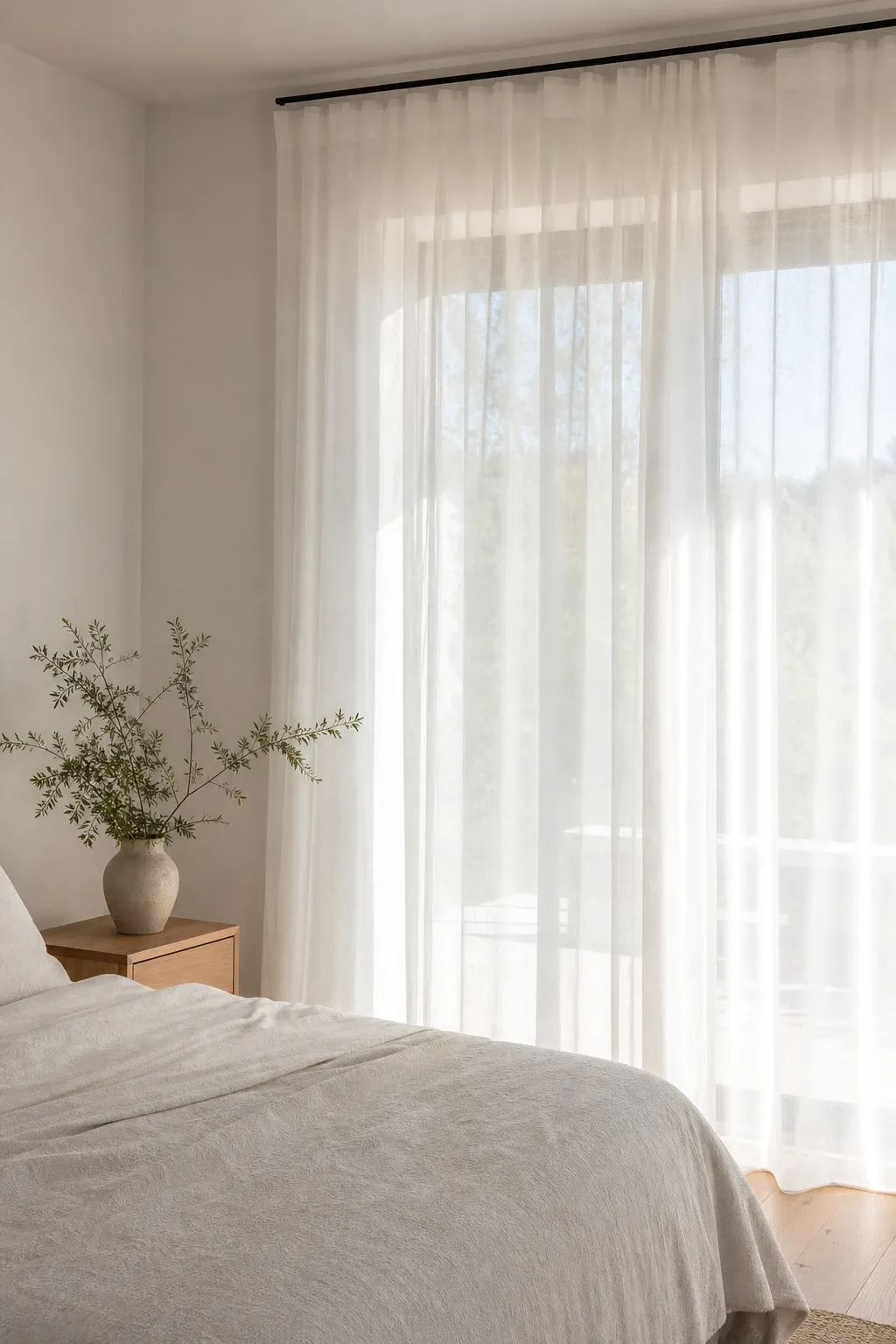
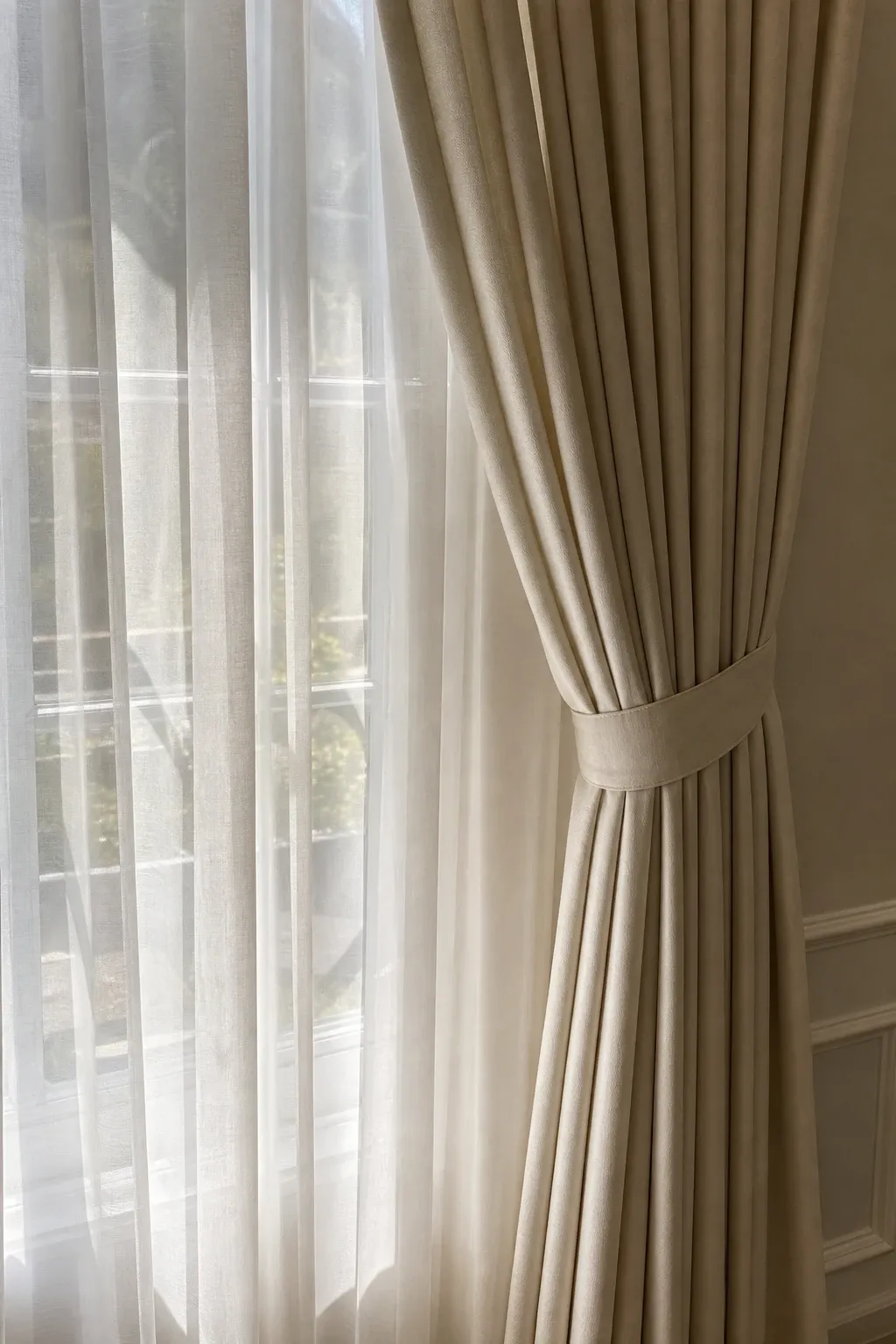
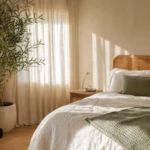
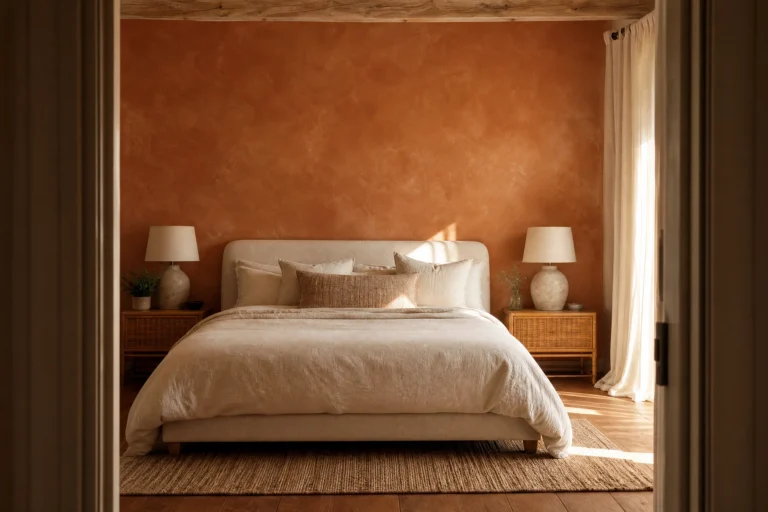
Sheer white curtains let light flow in while softening the view outside. They create a gentle, airy feeling that works in almost any bedroom style. The room stays bright during the day without the harshness of uncovered windows. Sheer panels are especially good in bedrooms that face a neighbor because they offer privacy without blocking light.
Designer Tip: Hang sheer panels from ceiling height, not from the window frame. The extra length draws the eye up and makes the ceiling feel higher. Let the panels puddle slightly on the floor for a relaxed, romantic look.
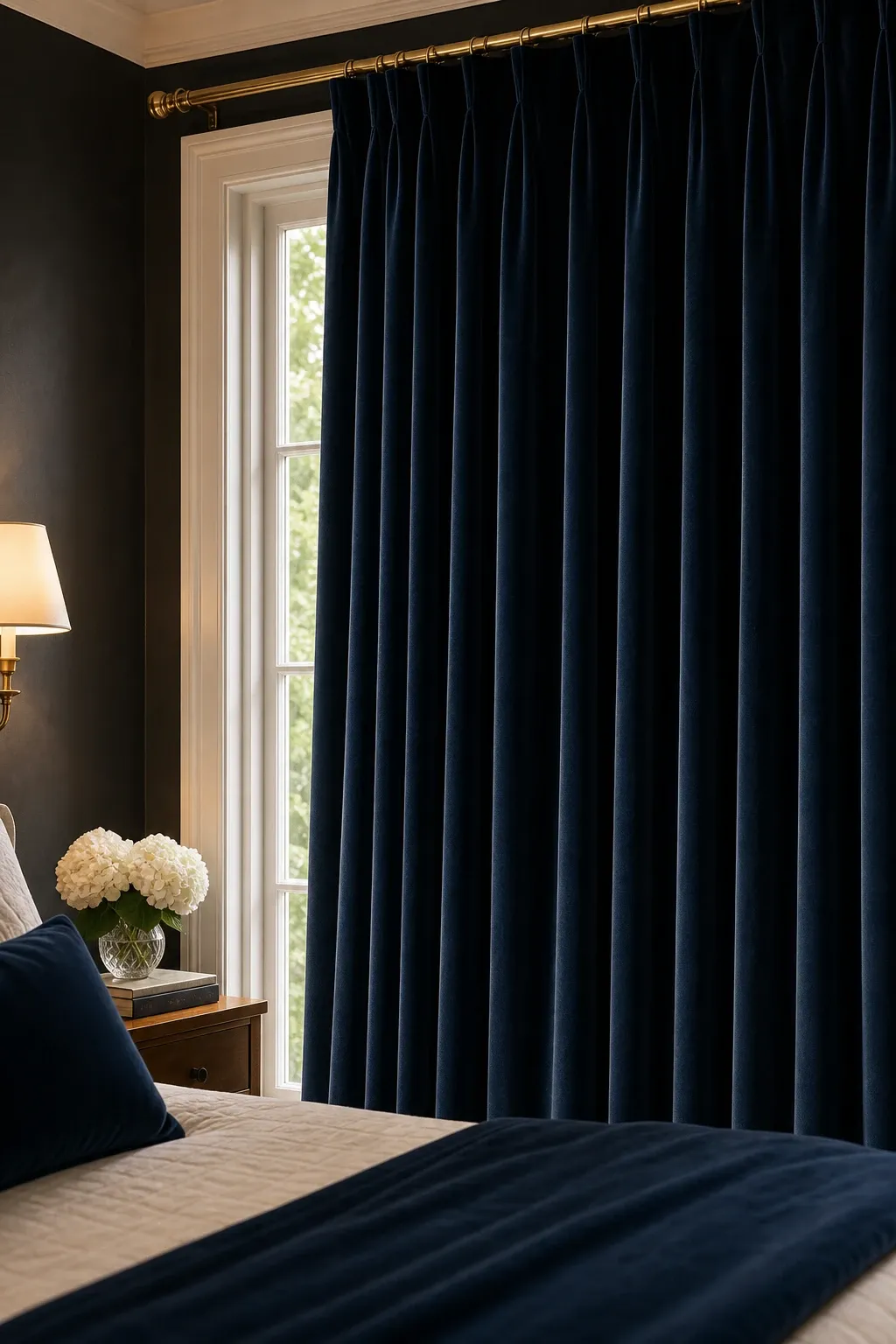
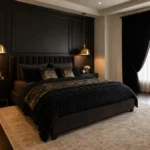
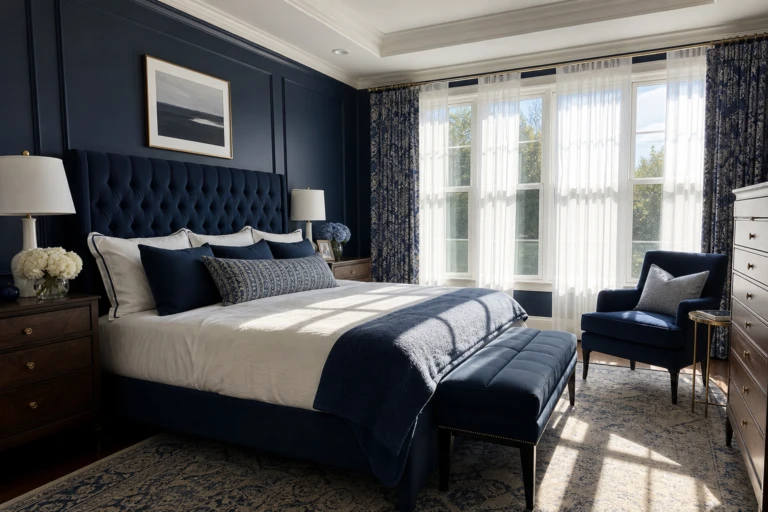
Navy velvet curtains make a bedroom feel like a cocoon. The heavy fabric blocks light, absorbs sound, and adds a richness that lightweight curtains cannot match. Navy is dark enough to create that cozy cave feeling for sleep but not so dark that the room feels gloomy during the day. Velvet catches light and has a subtle sheen that changes throughout the day.
Designer Tip: Velvet curtains are heavy, so use sturdy curtain rods rated for the weight. A thin tension rod will sag or fall. Use a metal rod with wall-anchored brackets and hang the panels with ring clips for easy opening and closing.
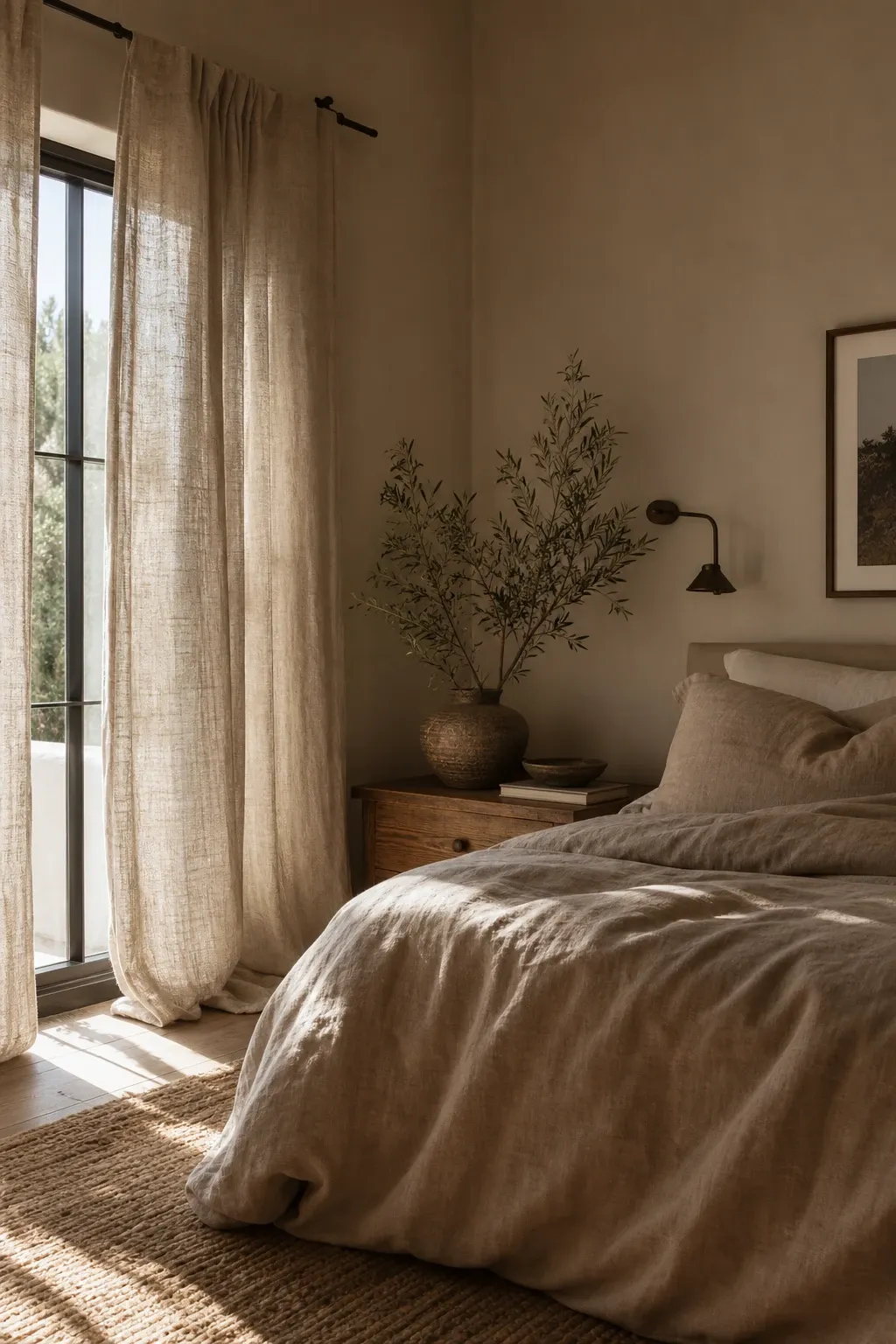
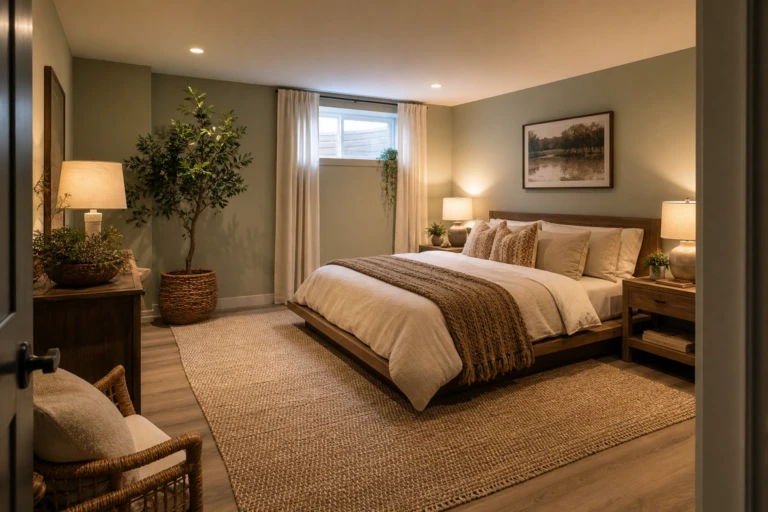
Linen drapes in a natural oatmeal or flax color bring a relaxed, earthy quality to the bedroom. The texture of linen is visible from across the room and adds visual interest without pattern or color. Linen wrinkles naturally, which is part of its charm. These drapes work in minimalist, Scandinavian, and coastal bedrooms because the neutral color and organic texture blend with all three styles.
Designer Tip: Do not iron linen curtains flat. The relaxed wrinkles are the whole point. If the creases bother you, steam them lightly to soften the sharpest folds, but leave the gentle rumpling that gives linen its character.
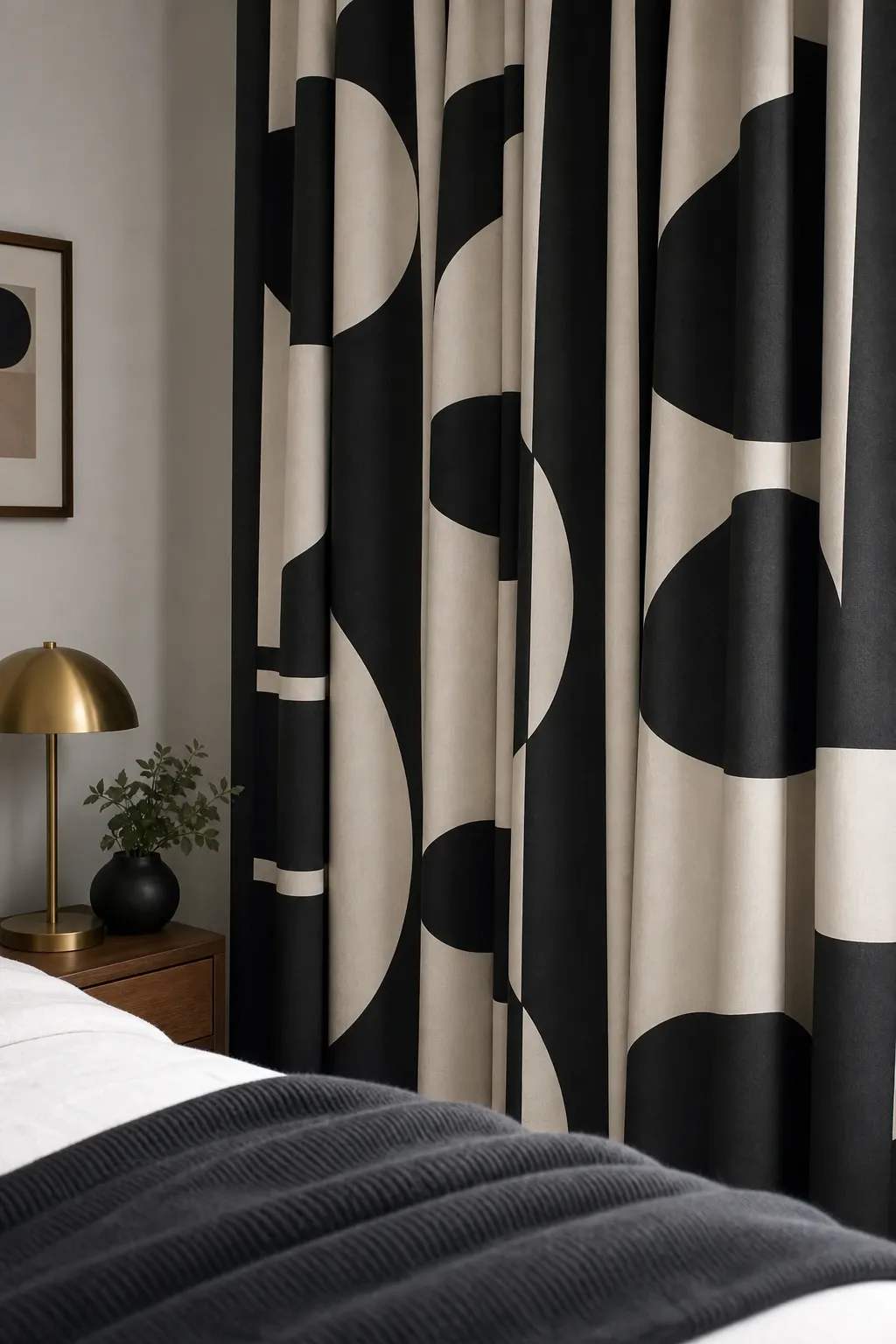
Geometric patterned curtains add a modern, graphic punch to a bedroom that needs personality. Triangles, hexagons, chevrons, or abstract shapes in contrasting colors make the windows a focal point. This is a good option when the rest of the room is neutral because the curtains do all the heavy lifting for visual interest without needing to change furniture or paint.
Designer Tip: Pick up one color from the geometric pattern and use it as an accent elsewhere in the room, like throw pillows, a lamp, or a small rug. This makes the bold curtains feel connected to the room rather than randomly placed.
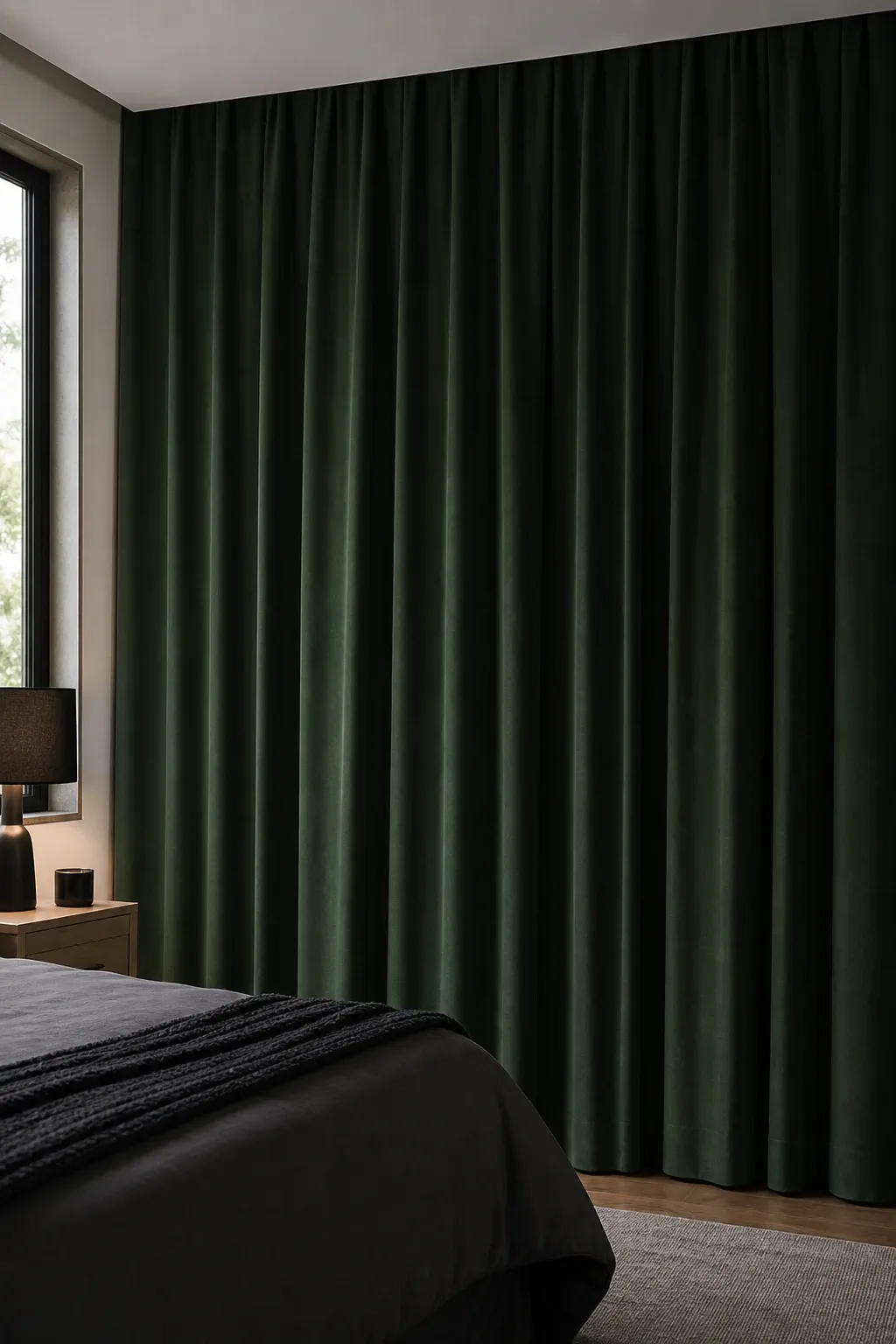
Dark green blackout curtains serve two purposes at once. They block all outside light for better sleep, and the deep green color adds a moody, sophisticated atmosphere to the bedroom. Green is calming and works with warm wood furniture, brass accents, and white bedding. If you are a light sleeper or work night shifts, blackout curtains in a rich color are the practical and beautiful answer.
Designer Tip: Make sure blackout curtains overlap the window frame by at least 3 inches on each side. Light leaks around the edges defeat the purpose. Hang them wide and let them stack beyond the window frame when open so they block light completely when closed.
Two layers of curtains, a sheer panel behind a heavier opaque panel, give you full control over light and privacy. During the day, close just the sheers for soft filtered light. At night, close both for total darkness. The layered look also adds depth and dimension to the window. This is the most versatile curtain setup because it adapts to every situation.
Designer Tip: Use a double curtain rod to keep both layers separate and easy to operate. Single rods with both panels bunched together look messy and are hard to adjust. The double rod keeps sheers on the inner track and the heavy curtains on the outer track.
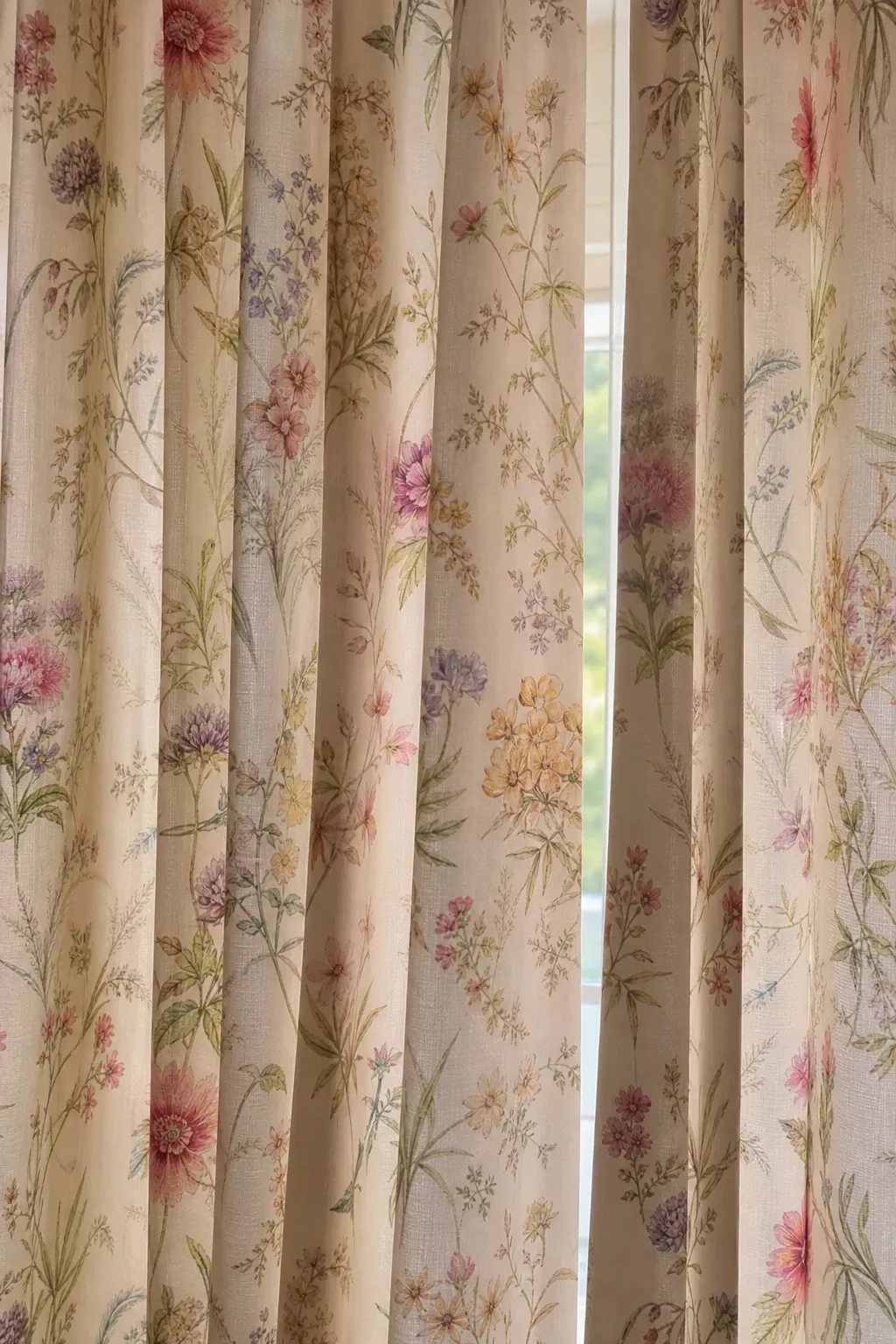
Floral curtains in a soft cottagecore style bring a romantic, lived-in warmth to the bedroom. Small-scale florals feel vintage and cozy, while large-scale florals make a bolder statement. The floral pattern works with iron bed frames, quilted bedspreads, and antique furniture. This is a style that invites layering, so do not be afraid to mix the floral curtains with a different pattern on the bedding.
Designer Tip: Mix floral curtains with stripes or checks on other textiles for a collected, English-cottage look. The key is keeping the color palette consistent. If the curtain florals are pink and green, the stripes on your pillows should use the same pink or green.
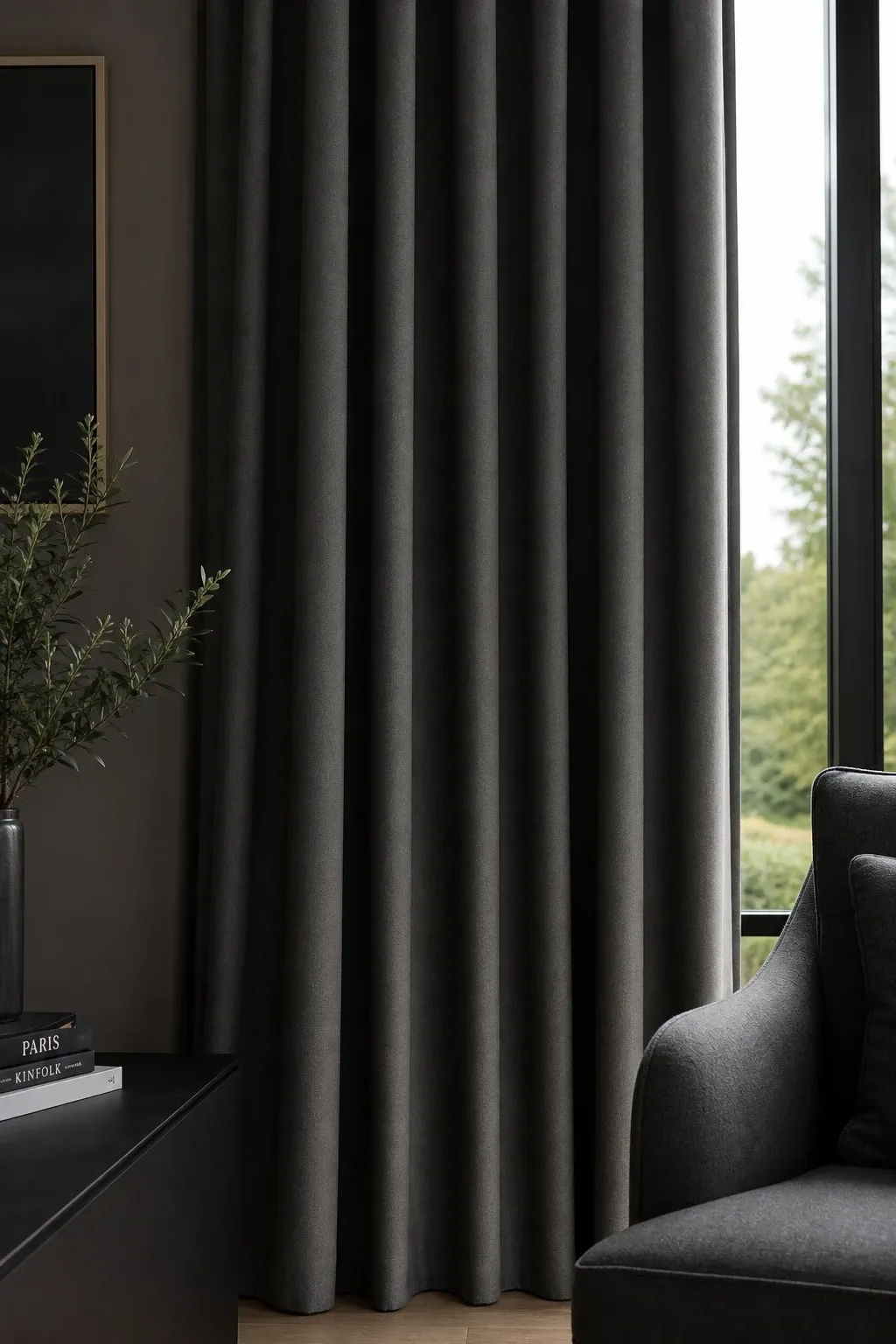
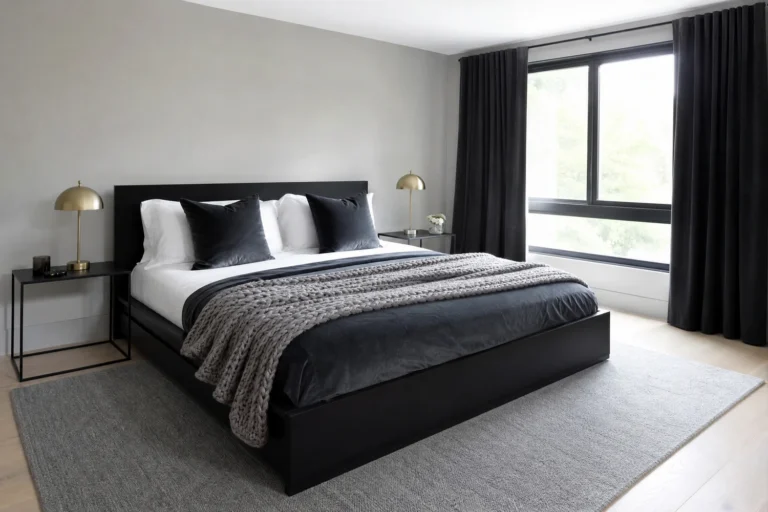
Charcoal gray curtains in a simple, flat-panel style suit minimalist and modern bedrooms. Gray does not compete with other elements in the room and frames the window without drawing attention to itself. The dark tone provides decent light blocking without the total darkness of blackout fabric. Charcoal gray is one of the most practical curtain colors because it hides dust and pet hair better than lighter options.
Designer Tip: Pair charcoal curtains with a matte black curtain rod for a seamless, monochrome look. Avoid shiny silver or gold rods with charcoal fabric because the metallic contrast can look disjointed in a minimalist room where consistency is the goal.
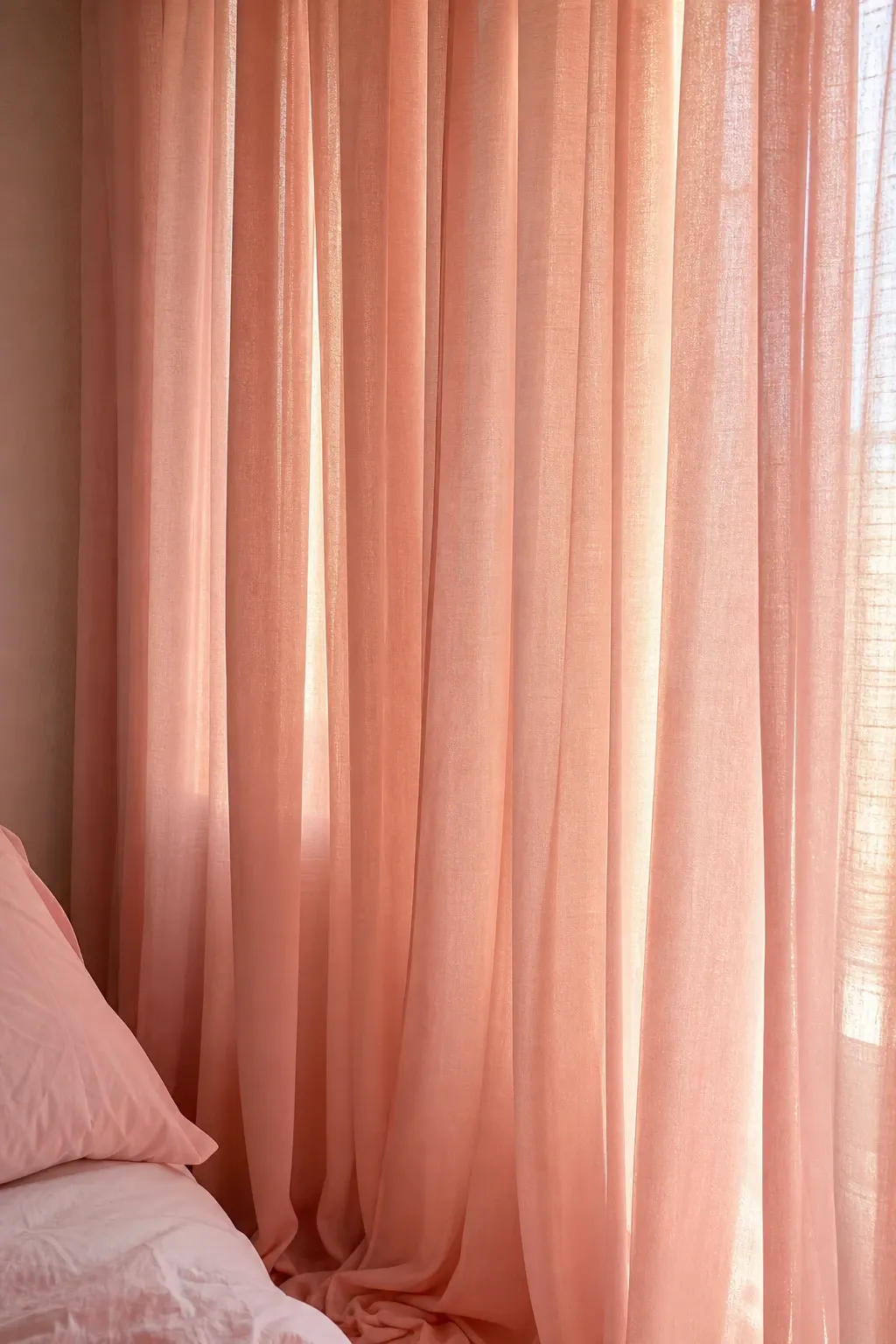
Blush pink curtains add a soft, warm glow to the bedroom that feels romantic without being childish. The pale pink works as a neutral when paired with white, cream, gray, or gold accents. Blush curtains look particularly good in bedrooms with lots of natural light because the sun shining through them casts a warm pink tint across the room in the morning.
Designer Tip: Choose a blush with a dusty, muted tone rather than a bright bubblegum pink. Dusty blush reads as sophisticated and works in adult bedrooms. Bright pink reads as juvenile. Hold the fabric swatch against your wall color before buying to check the undertones together.
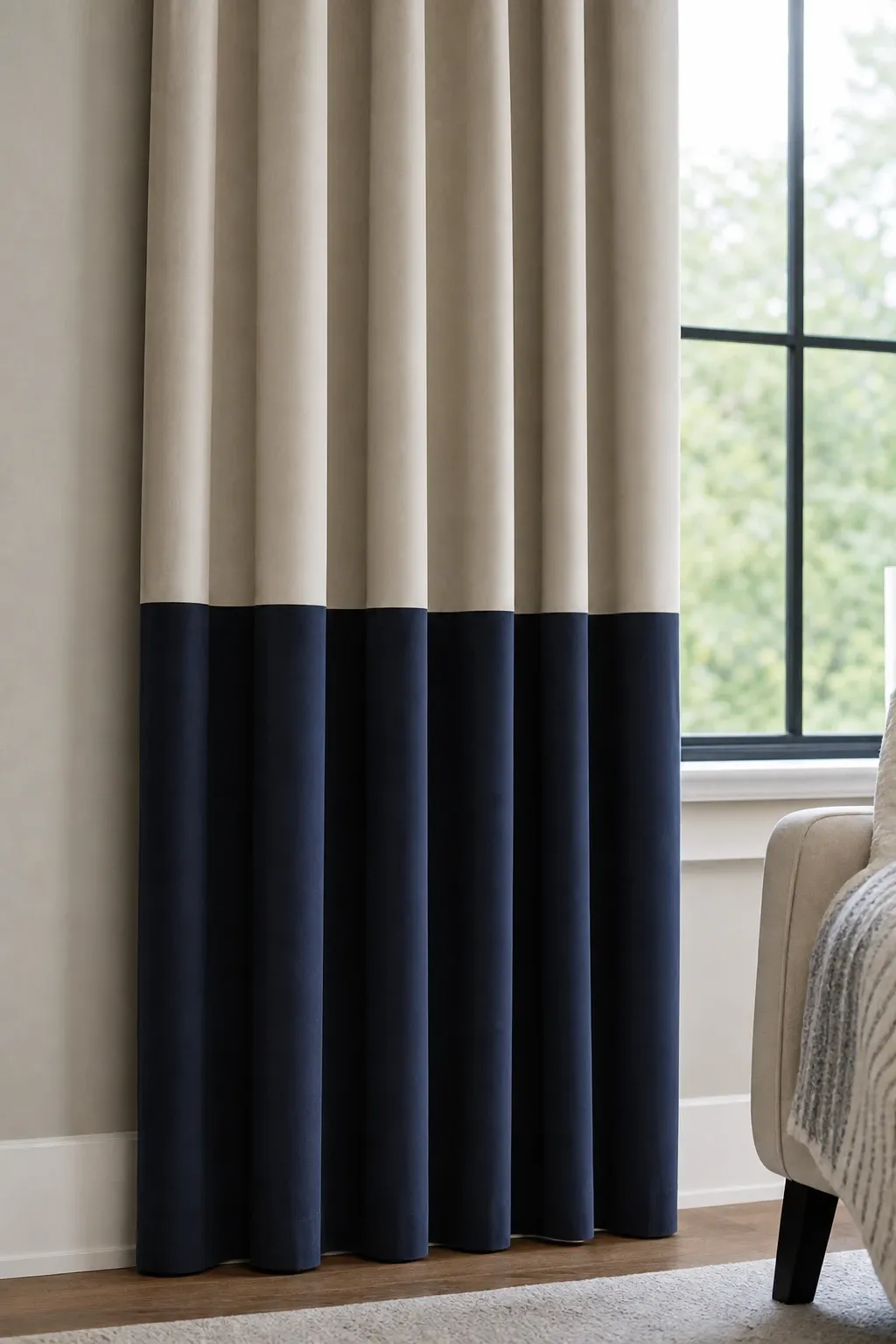
Color block curtains with two distinct colors, like white on top and navy on the bottom, add a modern graphic element to the bedroom. The horizontal division creates visual interest and makes the windows look wider. This style works well in contemporary and mid-century modern bedrooms. The contrast between the two colors gives the curtains a designed, intentional look that solid panels lack.
Designer Tip: Place the darker color on the bottom third and the lighter color on the top two-thirds. This grounds the curtain visually and mimics the natural way we see the world, with darker earth tones below and lighter sky tones above.
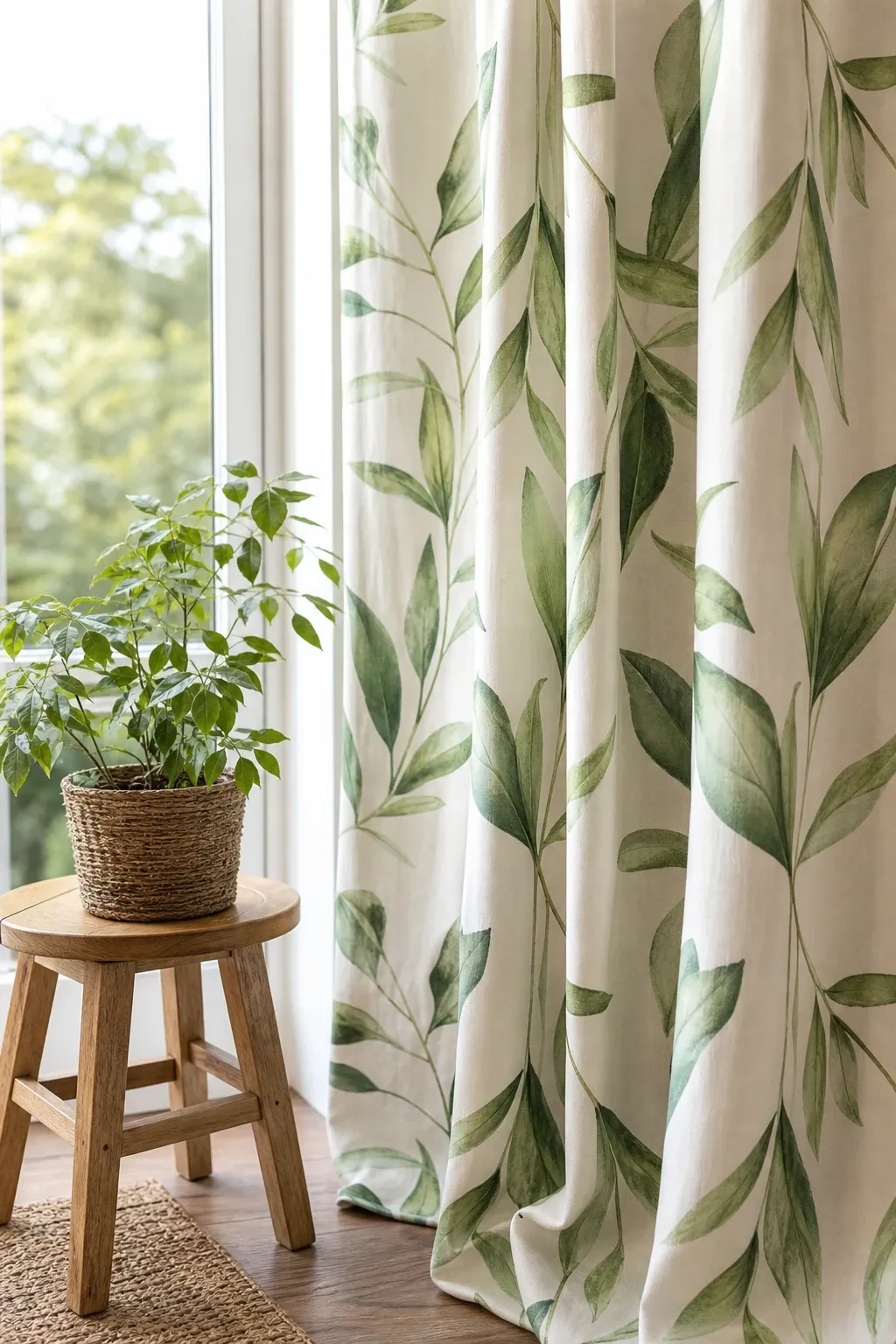
Curtains with leaf or botanical prints bring the outdoors into the bedroom. Green leaf patterns on a white or light background feel fresh and calming. The organic shapes soften the hard lines of windows and walls. Botanical curtains pair well with natural materials like rattan, wood, and woven textiles. They work in bedrooms that do not have a view of nature by creating that connection through the fabric.
Designer Tip: Scale the leaf pattern to the room size. Large banana leaf prints work in spacious bedrooms with tall windows. Small fern or eucalyptus prints work better in compact rooms where an oversized pattern would overwhelm the space.
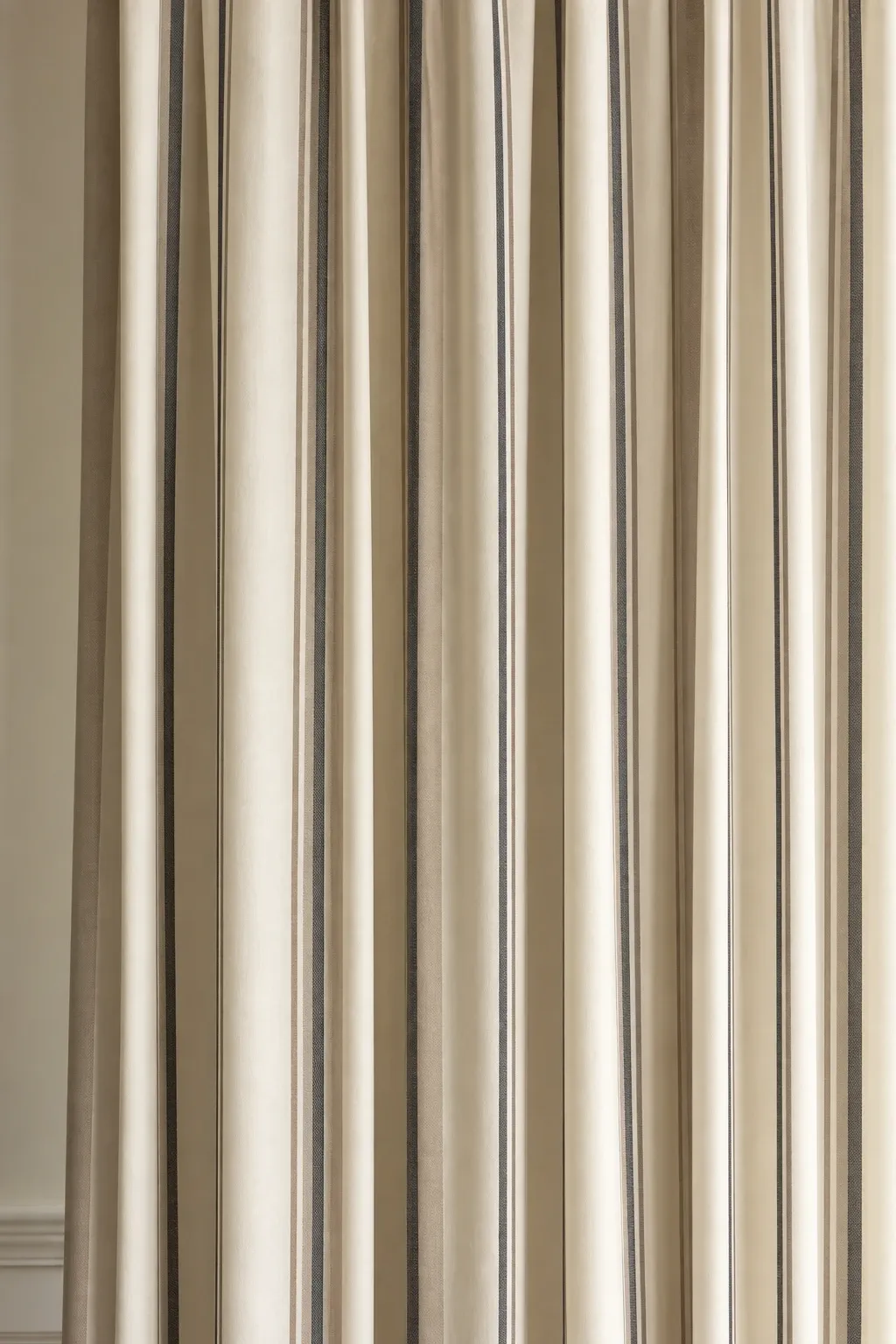
Vertical striped curtains make the ceiling feel taller and the room feel more formal. Thin stripes in neutral tones like navy and white or gray and cream are classic and never go out of style. The vertical lines draw the eye upward and elongate the window. This pattern works in traditional, coastal, and transitional bedrooms where a touch of structure and formality is welcome.
Designer Tip: Match the stripe width to the room formality. Thin pinstripes feel dressy and tailored. Wide cabana stripes feel casual and beachy. Pick the stripe that matches the mood of the rest of the room.
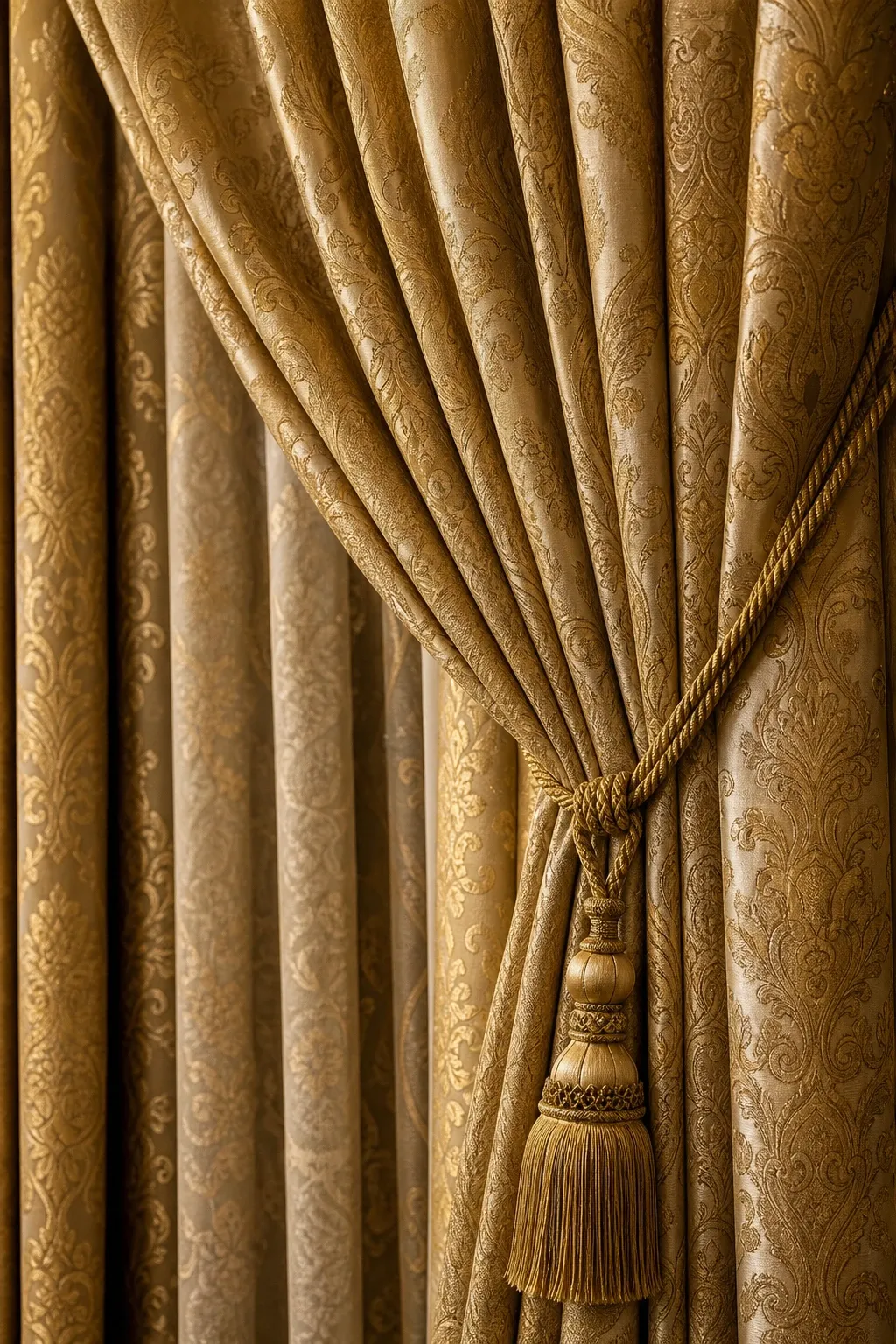
Golden brocade curtains with a woven pattern bring a regal, traditional feel to the bedroom. The metallic threads catch light and create a warm glow. Brocade is a heavy fabric that hangs beautifully and blocks light well. This style suits formal bedrooms with upholstered headboards, dark wood furniture, and layered bedding. It is a maximalist choice that makes the bedroom feel like a luxury hotel.
Designer Tip: Balance heavy brocade curtains with simpler elements elsewhere. If the curtains are ornate, keep the bedding solid and the walls plain. The curtains need breathing room to look intentional rather than overwhelming.
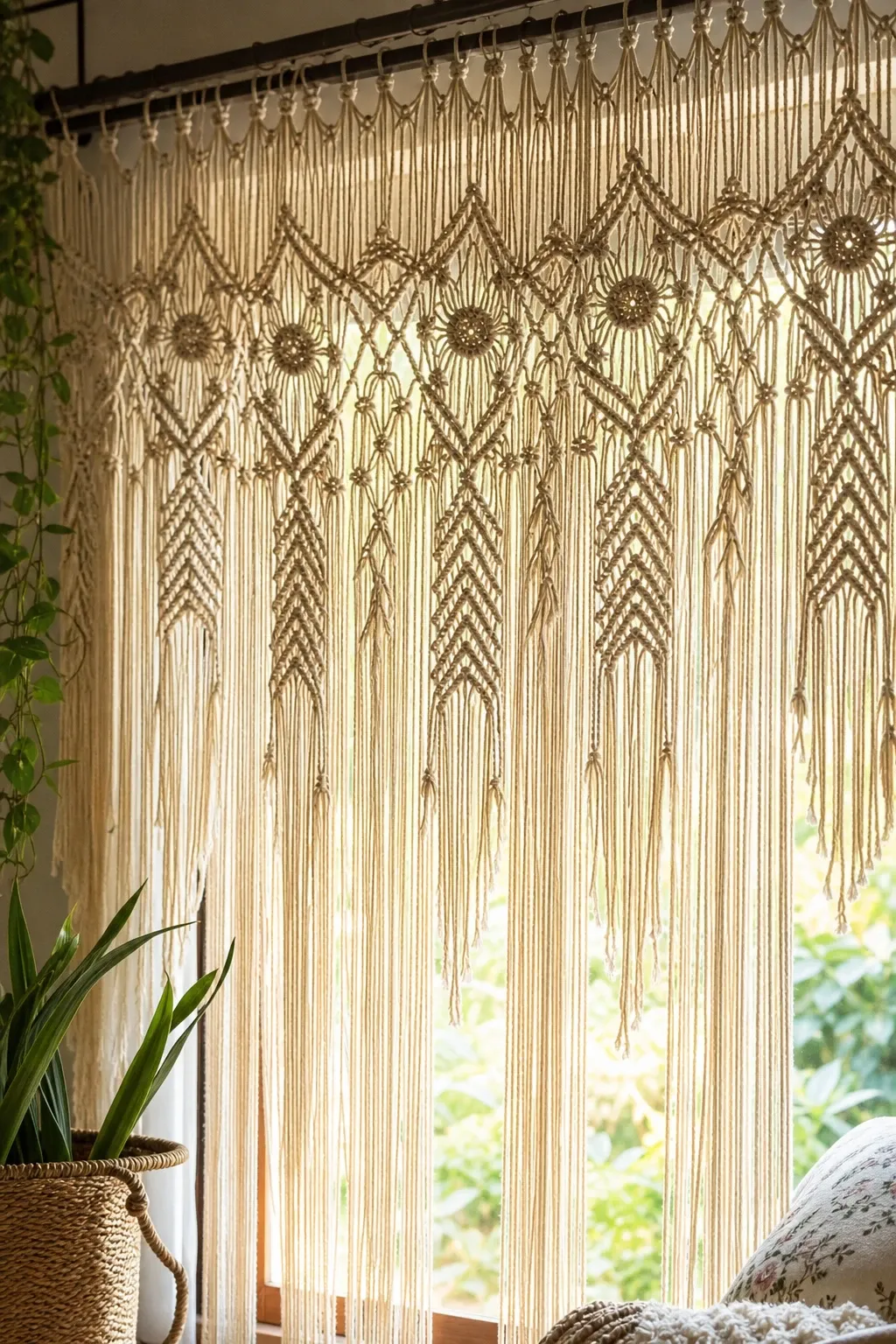
Macrame curtain panels or macrame tiebacks add a bohemian, handcrafted feel to bedroom windows. The knotted cotton creates interesting shadows when light passes through and adds tactile texture to the room. Macrame works as a standalone curtain for decorative windows or as an accent layer over a functional curtain. The boho look suits bedrooms with lots of plants, layered textiles, and a relaxed vibe.
Designer Tip: Macrame alone does not block light or provide privacy. Use it as a decorative layer over a roller shade or paired with a functional curtain behind it. The shade handles the practical job while the macrame handles the style.
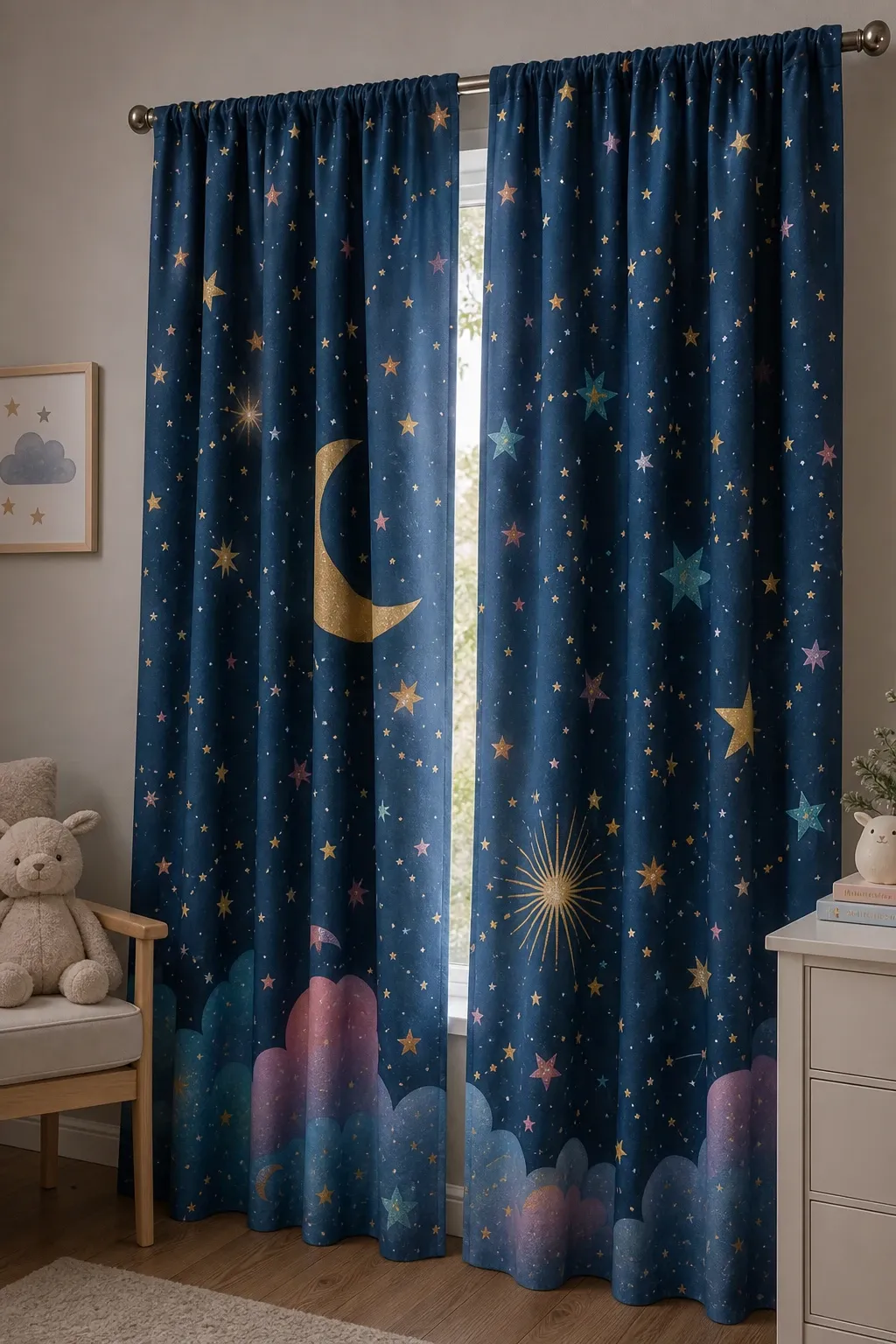
Star-patterned curtains in a kids bedroom or guest room add whimsy and fun without looking babyish. Gold or silver stars on a navy or white background work for a wide age range, from toddlers to teens. The pattern is simple enough to grow with the child and pairs easily with different bedding themes as tastes change over the years.
Designer Tip: Choose blackout star curtains for kids rooms. Children sleep better in dark rooms, and the star pattern on the blackout fabric makes the practical choice feel like a fun design decision rather than a functional one. Win-win.
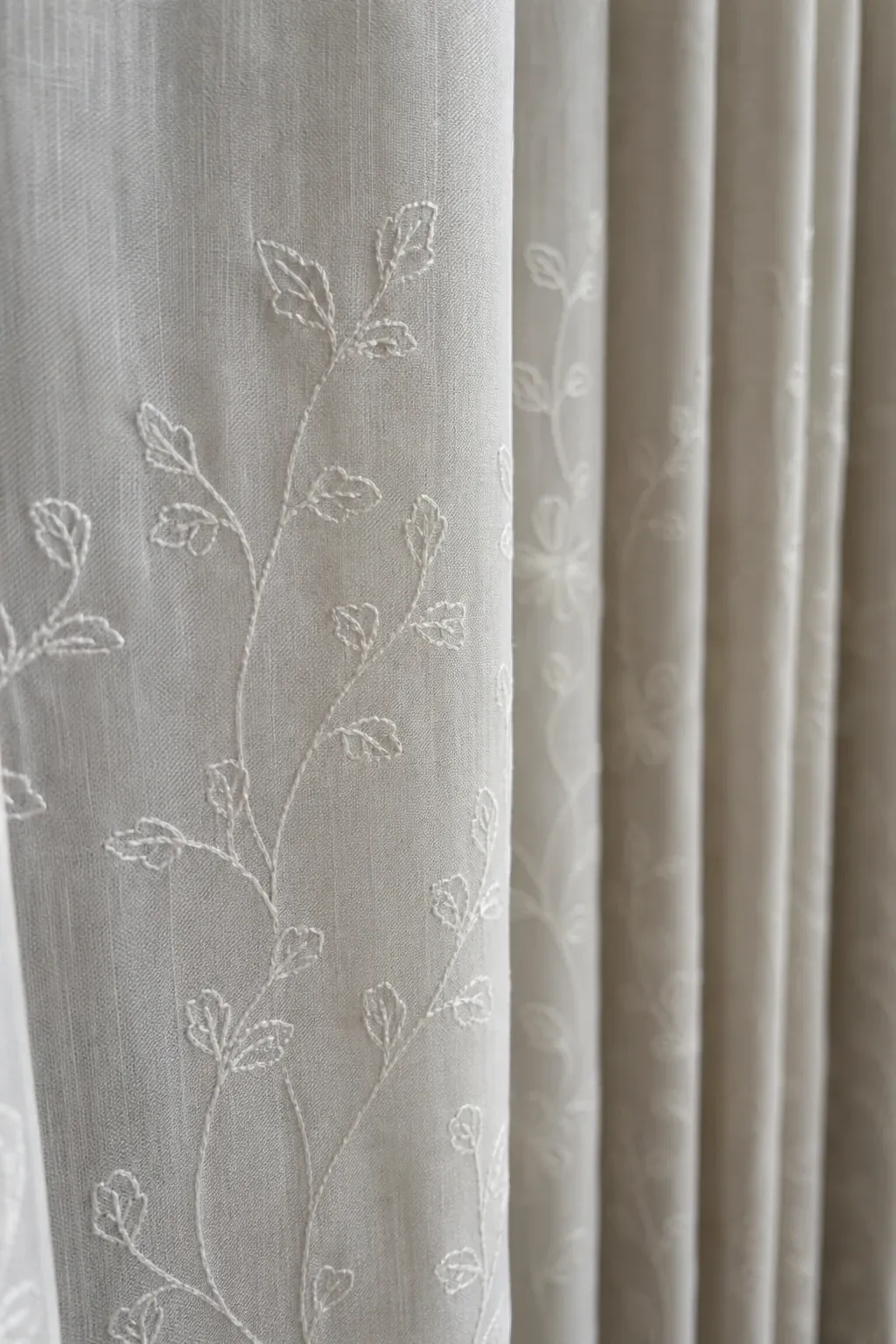
Curtains with subtle embroidered details along the hem or border add a handcrafted quality that printed curtains do not have. The raised texture of embroidery catches light differently and creates a level of detail you notice up close. Embroidered curtains work in bedrooms where you want something special without a bold pattern or color. They are the quiet statement piece that rewards a closer look.
Designer Tip: Embroidered curtains are an investment, so pick a neutral base color and a classic embroidery pattern that you will not tire of. A white curtain with tone-on-tone white embroidery is timeless and works with any future room changes.
Ombre curtains that fade from dark at the top to light at the bottom, or the reverse, create a calming gradient effect in the bedroom. The gradual color transition feels artistic and soothing. Blue ombre looks like the ocean meeting the sky. Gray ombre feels moody and modern. This style adds color and visual interest without the busyness of a pattern. It is a great choice for people who want something beyond solid but are not ready for a full pattern.
Designer Tip: Hang ombre curtains at the same height and check that the gradient aligns across both panels. If one panel hangs lower than the other, the color bands will not match and the ombre effect looks uneven. Measure twice before drilling the brackets.
Changing curtains is one of the fastest ways to change a bedroom. Unlike painting or buying new furniture, you can swap curtains in ten minutes and see an immediate difference. Start with the feeling you want, whether that is cozy, airy, dramatic, or calm, and pick the curtain style that matches. The windows are waiting.
Frequently Asked Questions
How long should bedroom curtains be?
Bedroom curtains should reach the floor or hover about half an inch above it. Curtains that stop at the windowsill or mid-wall look unfinished and make the room feel shorter. Floor-length curtains create a polished, intentional look regardless of the fabric or pattern you choose.
Should bedroom curtains match the bedding?
They do not need to match exactly, but they should coordinate. Pick curtains that share at least one color with the bedding or that complement the overall room palette. A room where the curtains and bedding have nothing in common looks disconnected. Coordination, not matching, is the goal.
Are blackout curtains worth it for a bedroom?
Yes, especially for light sleepers, shift workers, or rooms that face east and get early morning sun. Blackout curtains block nearly all outside light and reduce noise slightly. They also insulate the window, which helps with both heating and cooling costs. The sleep quality improvement alone makes them worth the higher price.
How wide should curtain panels be?
Each curtain panel should be 1.5 to 2 times the width of the window it covers. This gives the fabric enough fullness to look rich and gathered when closed. Panels that are the exact width of the window look flat and skimpy. The extra fabric is what makes curtains look luxurious versus cheap.