Basement laundry rooms get a bad reputation. They are often dark, unfinished, and treated like the room nobody talks about. But with a few smart changes, a basement laundry room can be a space you actually like walking into. I have seen basements go from bare concrete and exposed pipes to finished rooms that look like they belong in a magazine. The key is working with what the basement gives you, not fighting it. Here are 15 basement laundry room ideas that prove a below-grade utility room can look really good.
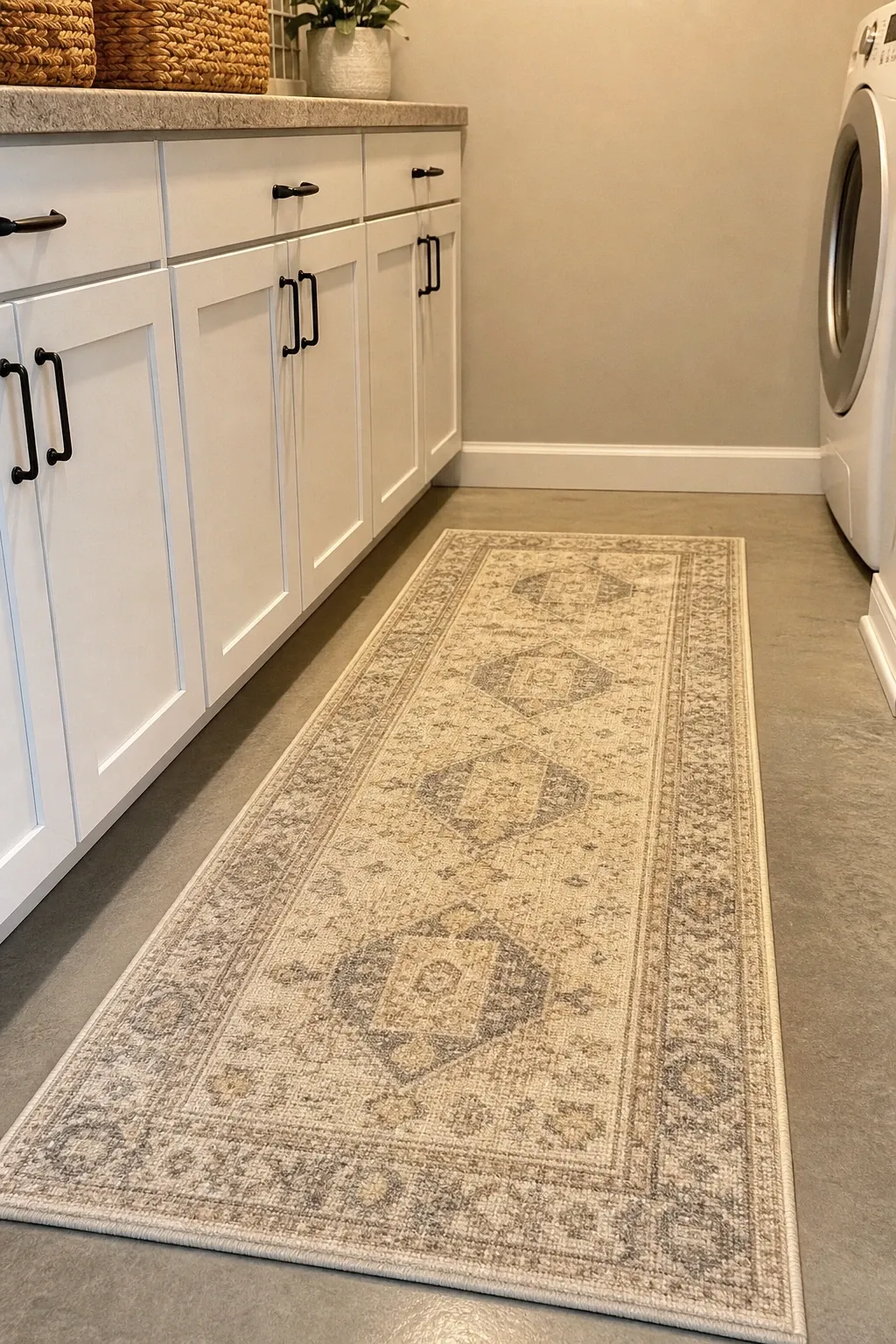
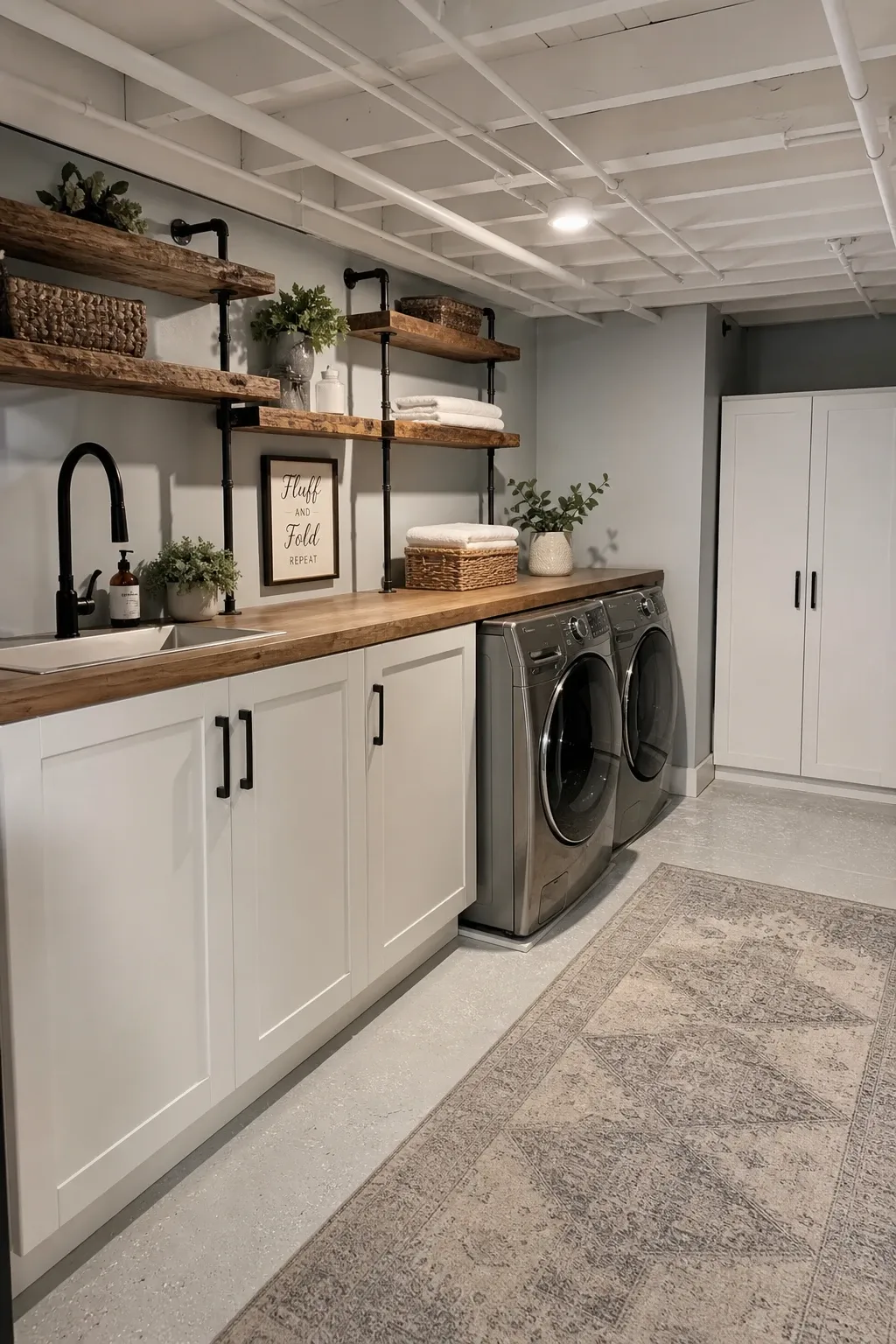
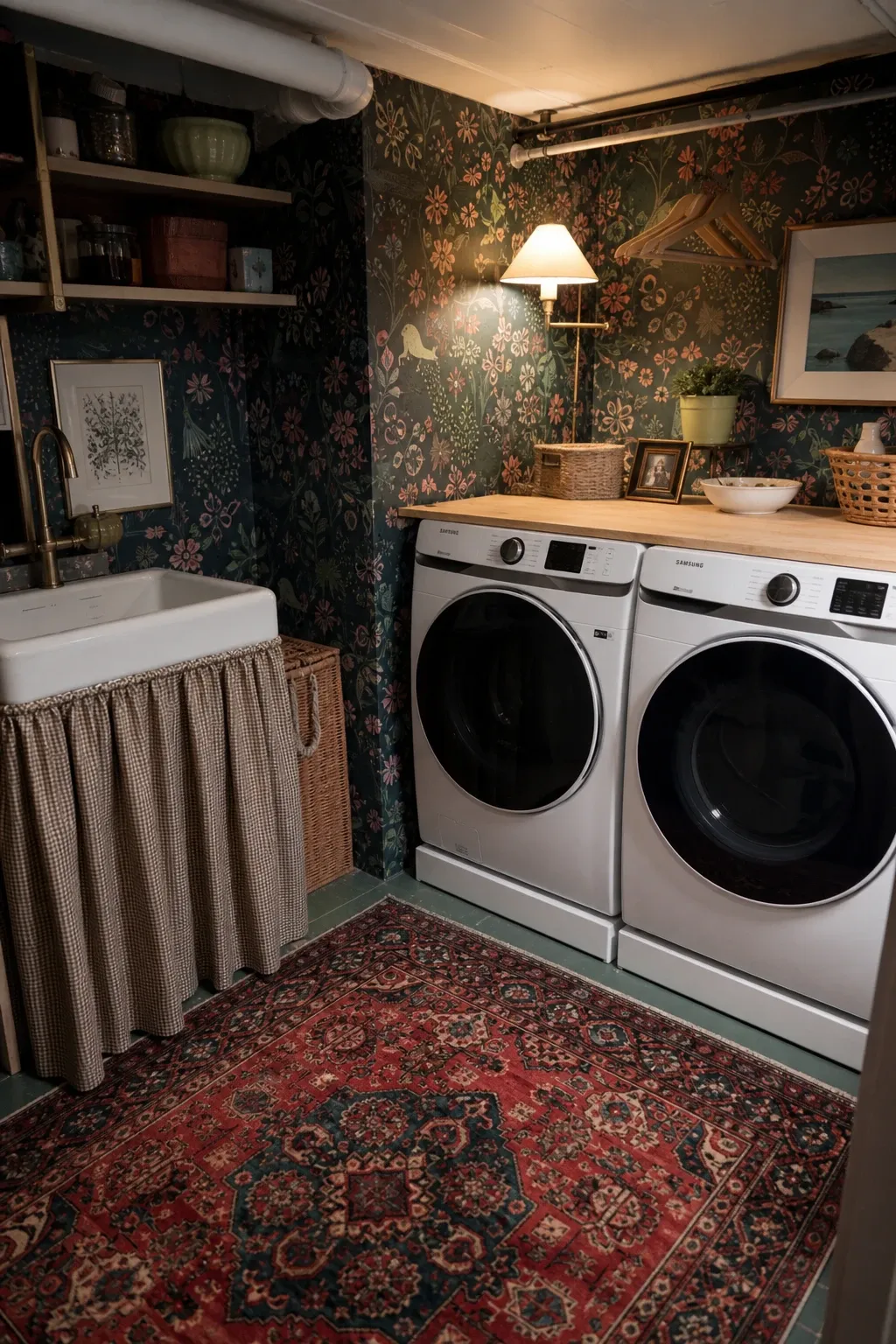
A runner rug on the floor between machines and a folding area makes a basement laundry room feel less like a utility space and more like a real room. The rug adds color, softens the hard floor, and makes standing during folding sessions more comfortable. Choose a washable rug because laundry rooms get splashes and drips. A patterned runner hides stains better than a solid color.
Designer Tip: Pick a runner that is at least 2 feet wide and long enough to span the area where you stand most. Secure it with rug tape or a non-slip pad underneath so it does not bunch up when you walk across it carrying a full basket.
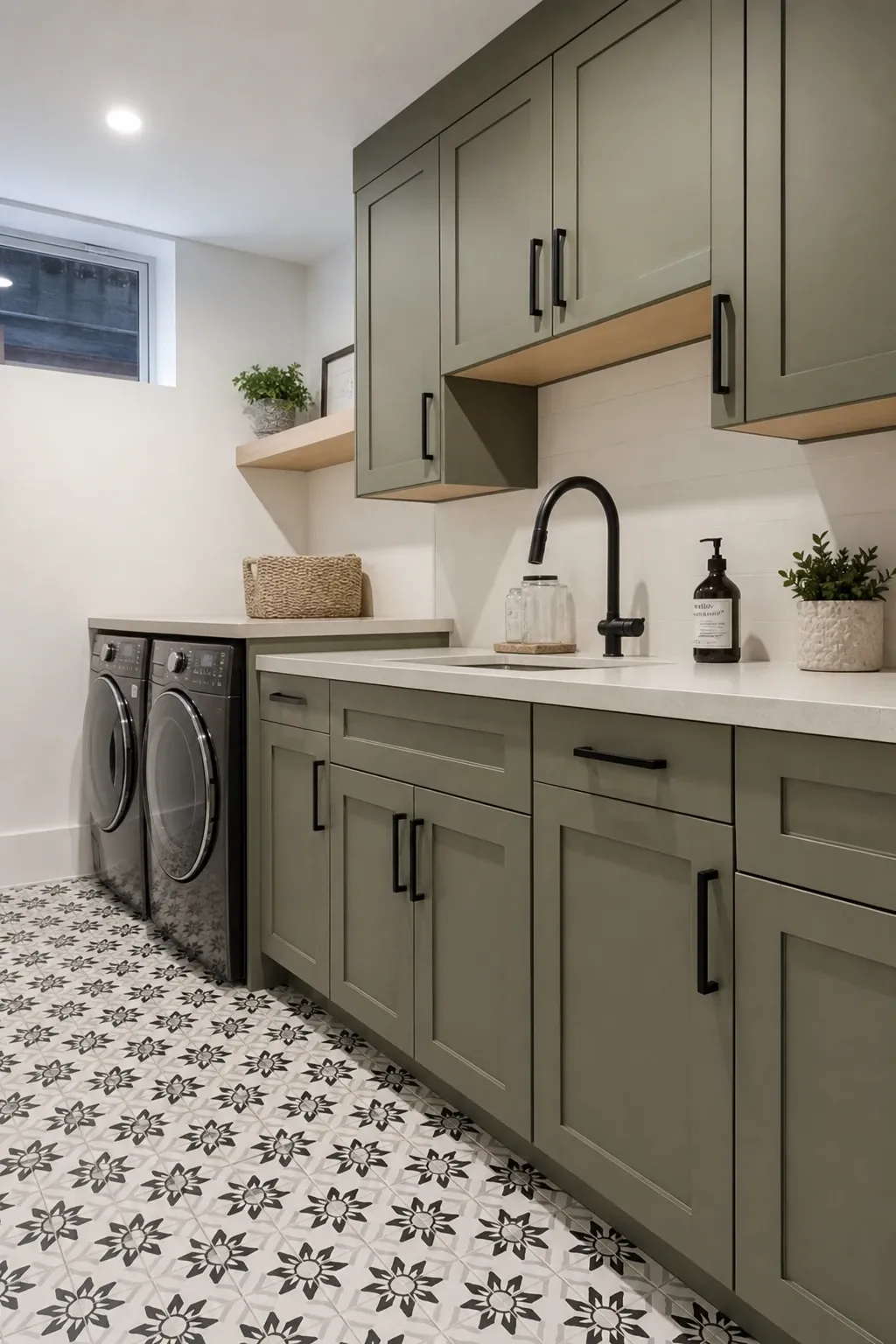
2. Go Bold With Green Cabinets and Patterned Flooring
Green cabinets paired with a patterned tile floor turn a boring basement room into a space with serious personality. The green brings life to a room that often has no natural light, and the patterned floor gives your eyes something interesting to land on. This combination works especially well in basements because the bold choices distract from low ceilings and small windows.
Designer Tip: Keep countertops and walls neutral when cabinets and floors are bold. White countertops and light walls let the green and pattern be the stars. Too many competing statements in a small basement room makes it feel chaotic rather than intentional.
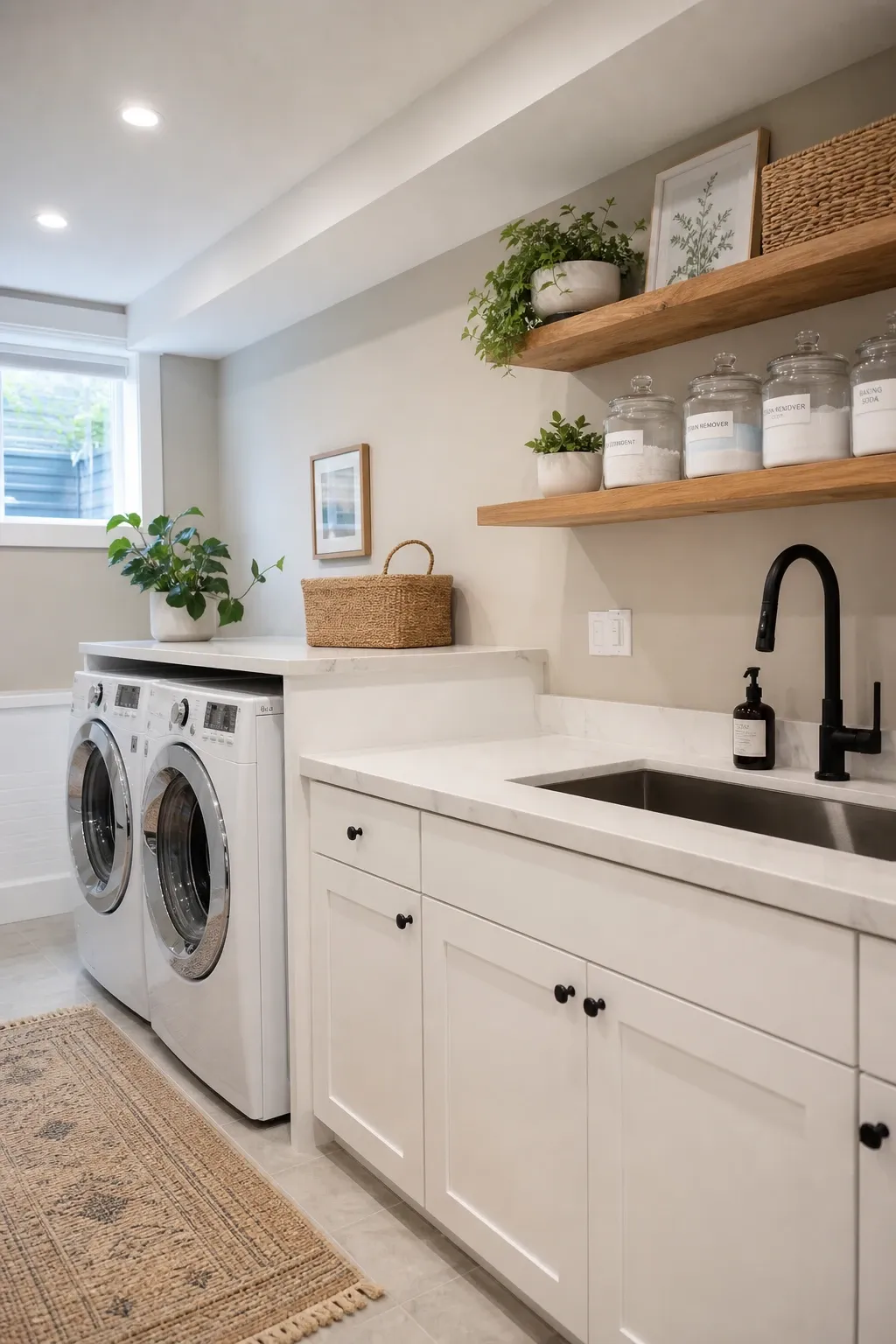
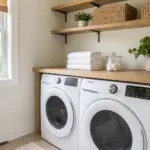
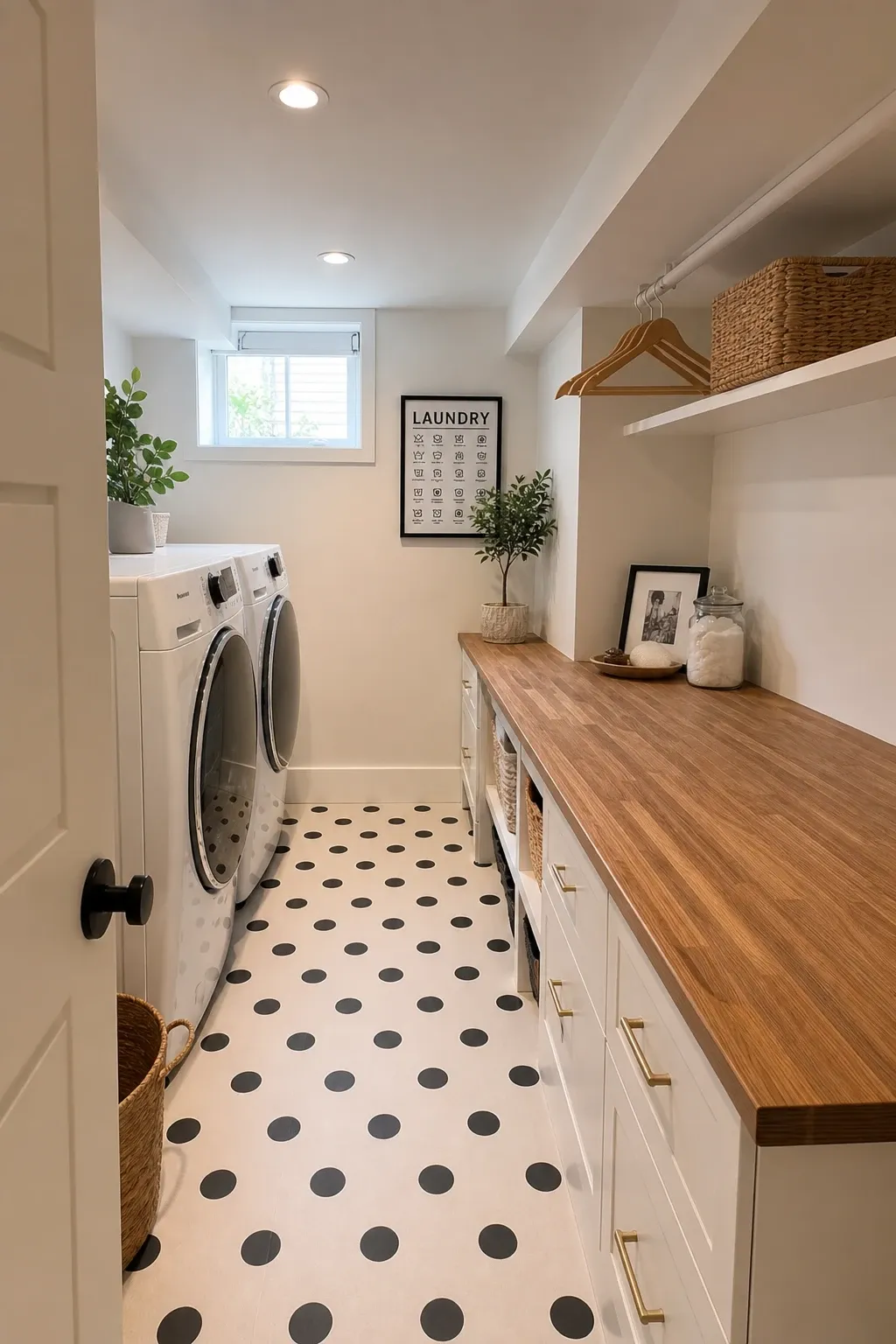
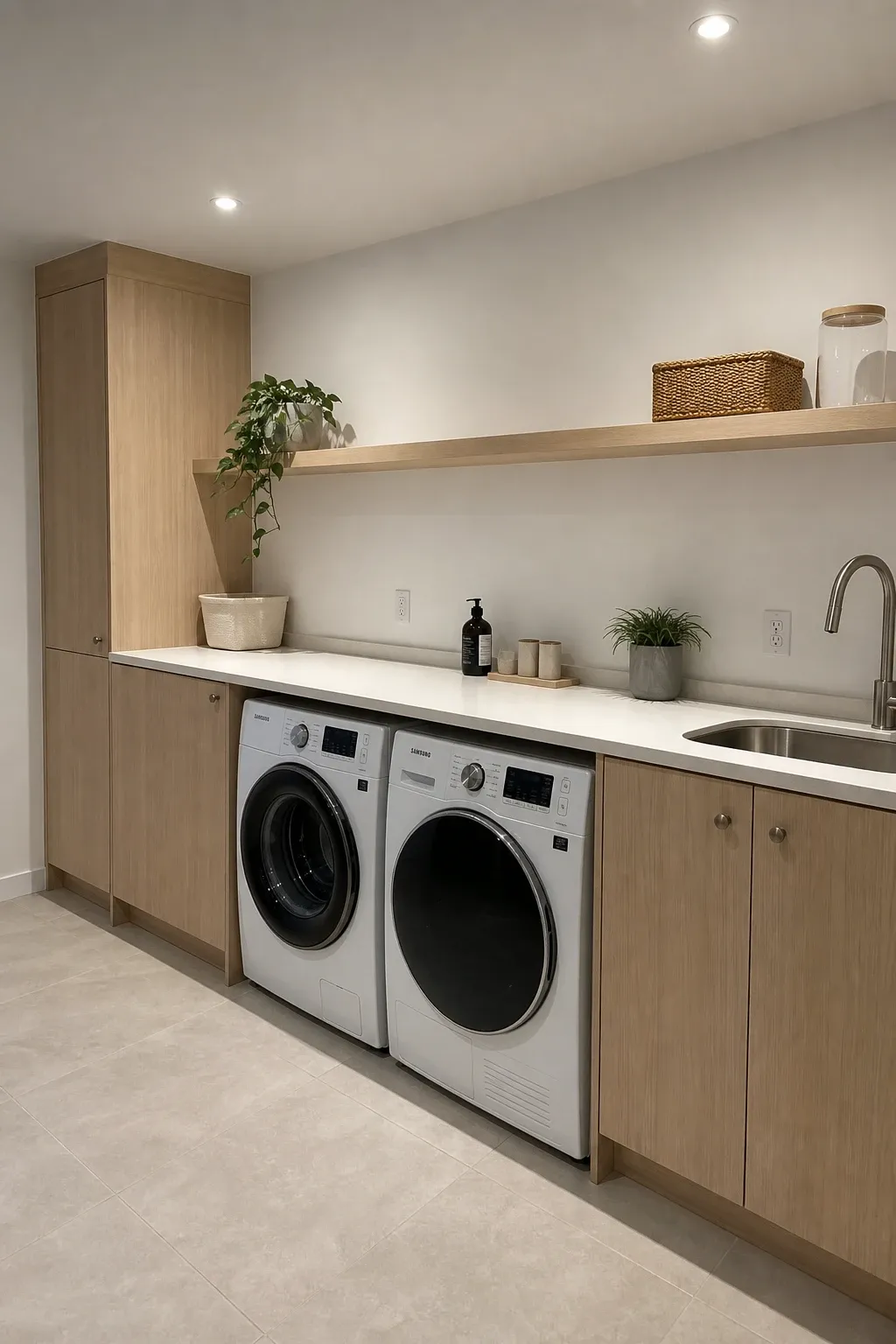
White walls and cabinets combined with natural wood shelving or countertops create a clean, warm basement laundry room. The white reflects light and makes the basement feel brighter, while the wood prevents the room from feeling sterile. This is one of the most forgiving color combinations for basements because it works under any lighting condition and pairs with any accent color you add later.
Designer Tip: Use open wood shelving instead of upper cabinets to keep the room feeling airy. Closed upper cabinets in a low-ceiling basement can make the room feel cramped. Open shelves with neatly stacked towels and labeled containers look great and keep supplies within reach.
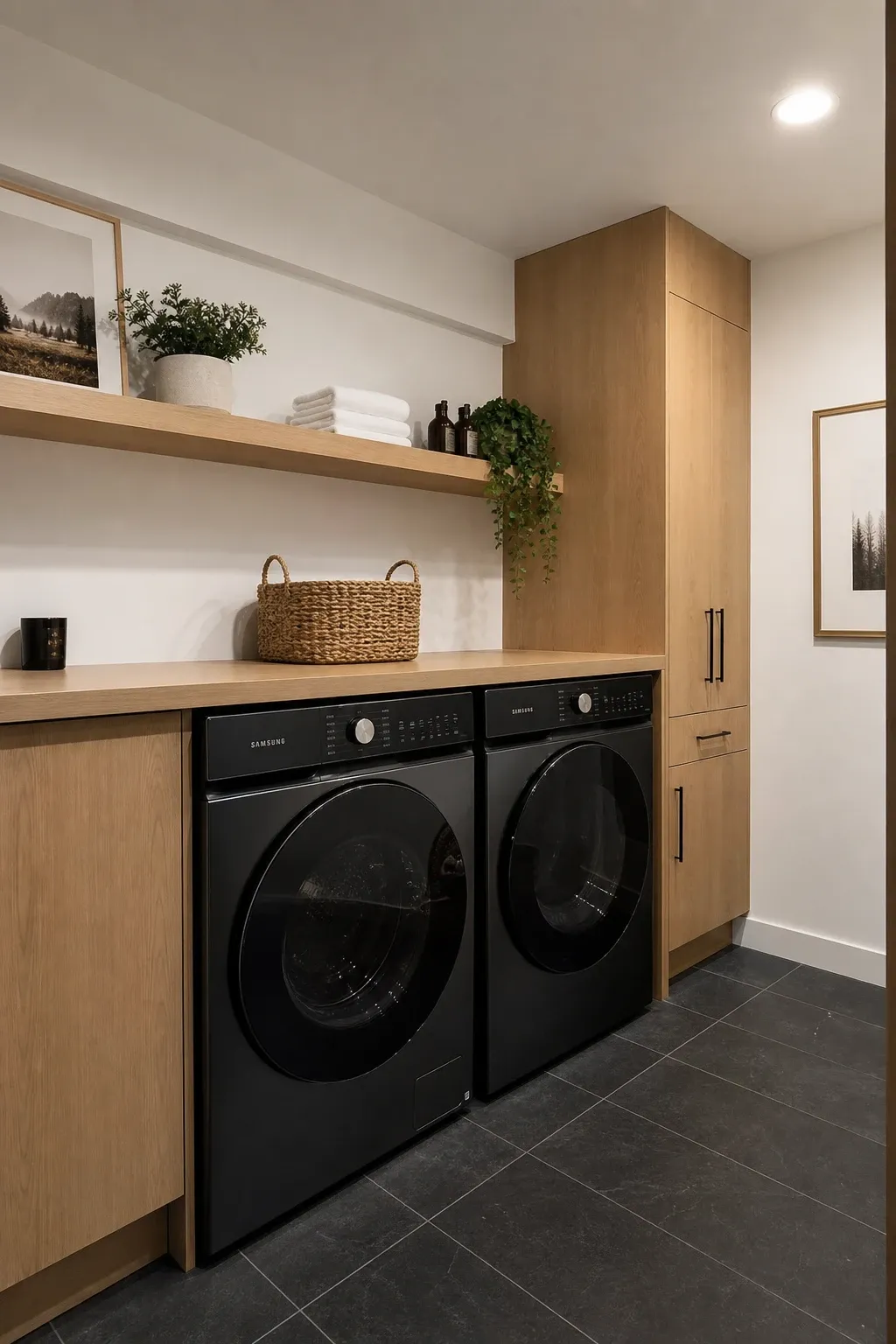
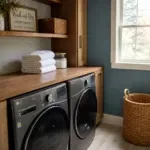
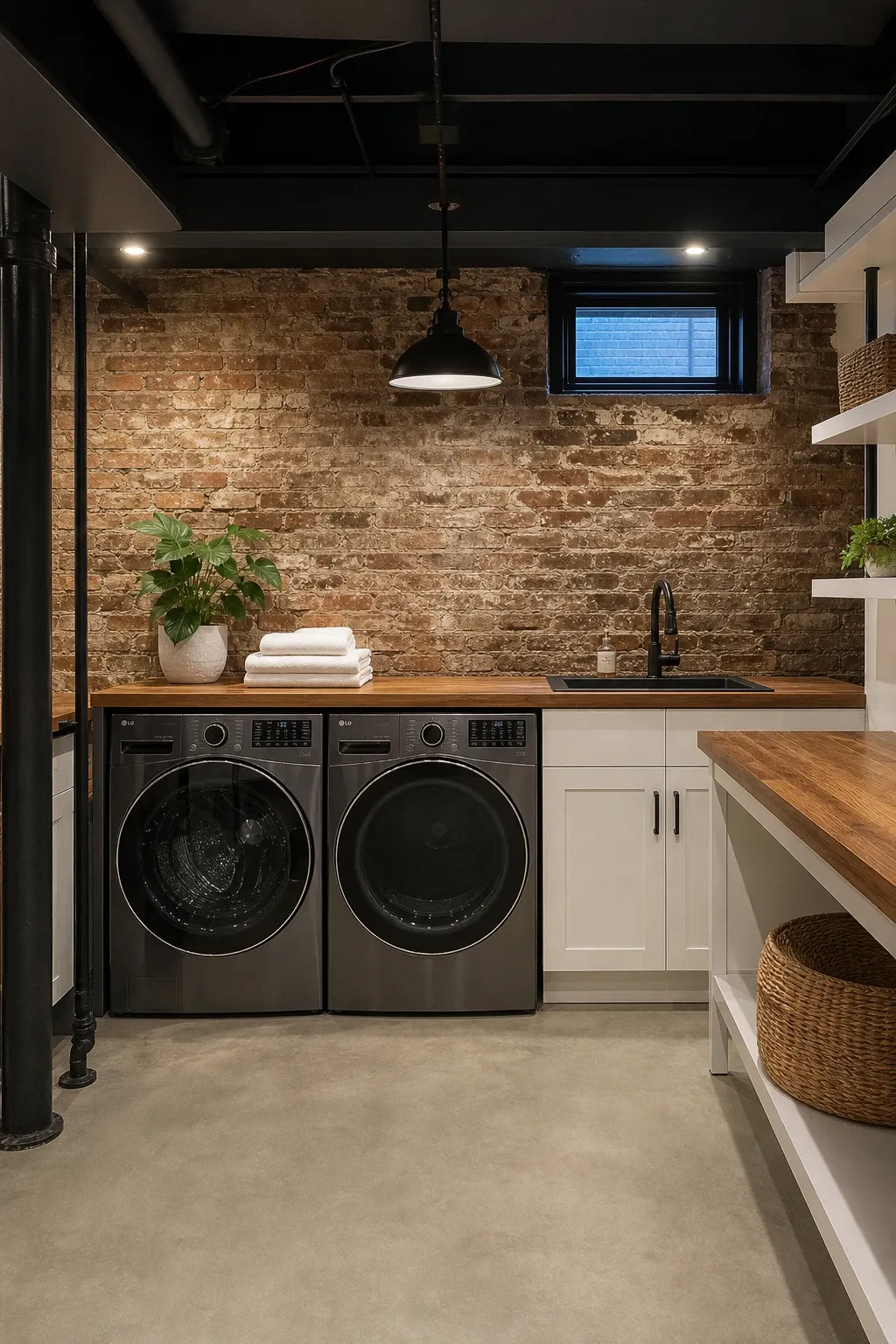
Dark-colored appliances like graphite or black stainless steel paired with warm wood accents give the basement laundry room a modern, intentional look. The dark machines anchor the room visually while the wood softens the edges and adds warmth. This approach works well in basements that have concrete or gray walls because the dark appliances complement the existing tones instead of fighting them.
Designer Tip: Add a wood countertop above the machines for folding. It ties the wood accents together and gives you a functional surface at the same time. Seal the wood with a water-resistant finish because laundry rooms are damp environments.
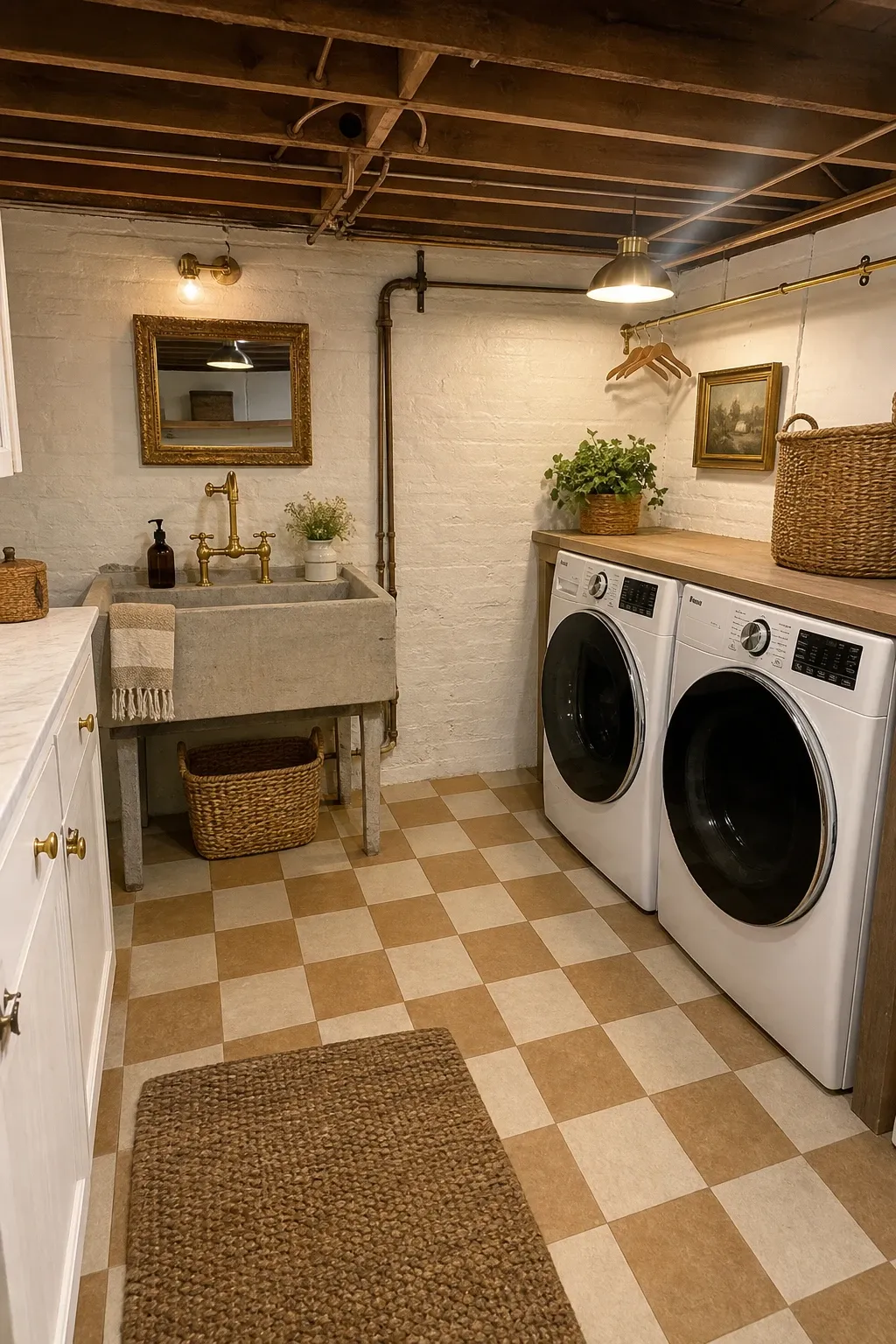
Exposed wood beams on the ceiling and gold hardware on cabinets bring rustic warmth to a basement laundry room. Many basements already have exposed joists or beams that can be cleaned up, stained, and turned into a design feature instead of something to hide. Gold or brass pulls, faucets, and light fixtures add a polished touch that lifts the rustic look from cabin to refined.
Designer Tip: If the exposed ceiling beams have wiring or pipes running through them, paint all the mechanical elements matte black. The black blends into the shadows between beams and becomes nearly invisible while the stained wood beams remain the focal point.
6. Industrial Meets Clean Lines With Exposed Ceilings
Leaving the basement ceiling exposed and painting it all one color, usually black or dark gray, creates an industrial look that actually works well in laundry rooms. The exposed ceiling saves money on finishing and adds height that a dropped ceiling takes away. Pair the industrial ceiling with clean white walls and modern cabinets for a contrast between raw and polished that looks intentional.
Designer Tip: Paint everything on the ceiling the same color, including pipes, ductwork, joists, and wires. The uniform color makes the mess disappear and the ceiling reads as a single dark plane rather than a tangle of mechanical systems.
A playful polka dot or patterned floor tile brings energy and personality to a basement laundry room. When you pair a fun floor with all-white walls and simple cabinets, the floor becomes the conversation piece. This approach works perfectly in basements because it draws the eye down to the floor rather than up to the low ceiling. The pattern also hides dirt and scuffs better than a plain floor.
Designer Tip: Use peel-and-stick tiles for a budget-friendly version of this look. Good quality peel-and-stick tiles are waterproof, easy to install over concrete, and can be replaced individually if one gets damaged. Test adhesion on your specific concrete surface first.
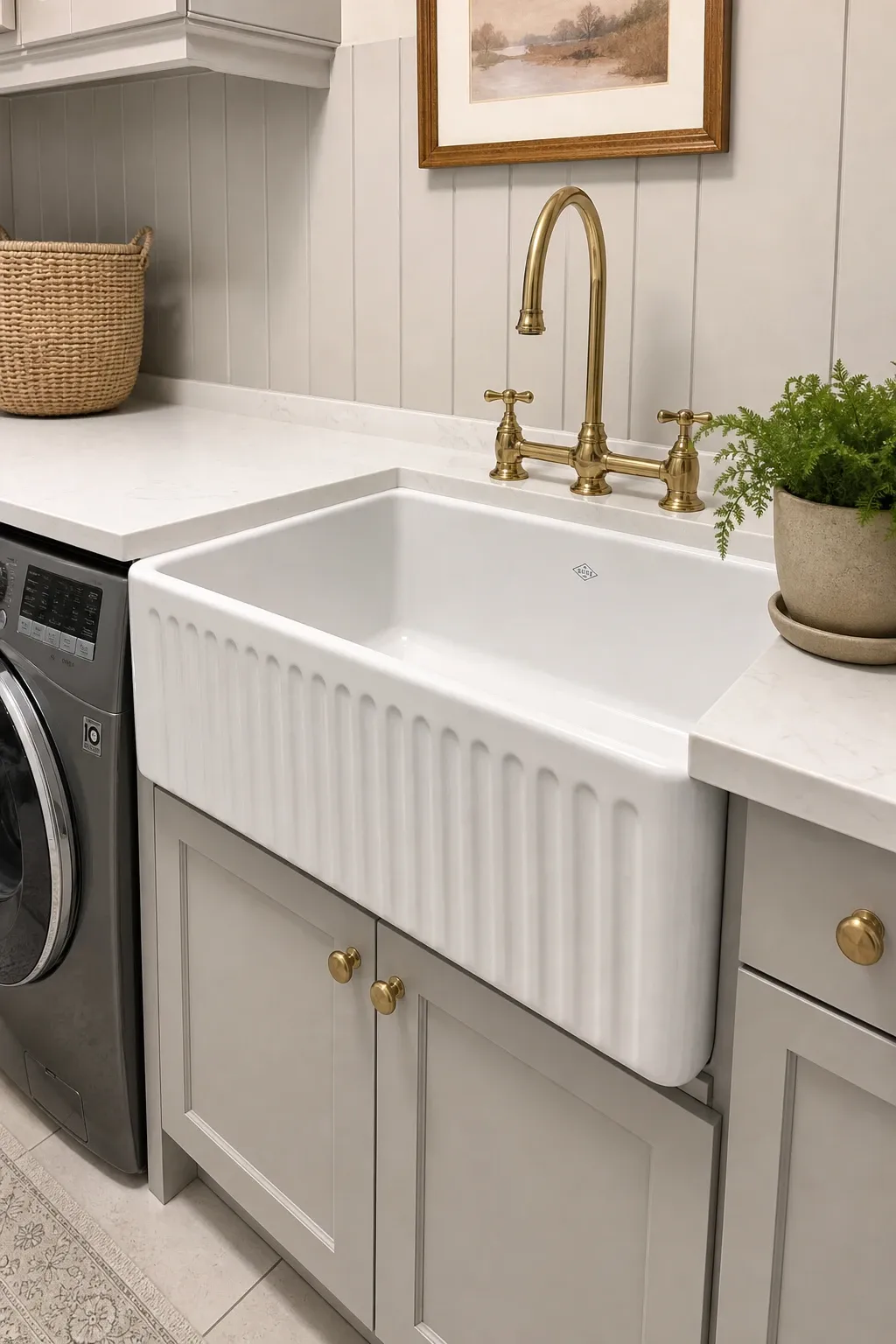
A large farmhouse sink in the basement laundry room is one of the most useful upgrades you can make. The deep basin handles hand-washing delicates, soaking stained clothes, and filling mop buckets. Surrounded by clean white walls and minimal decor, the farmhouse sink becomes both a design feature and a workhorse. Mount it next to the machines with a simple countertop connecting everything into one efficient line.
Designer Tip: Install a wall-mounted faucet above the farmhouse sink to keep the countertop clear and easy to clean. A gooseneck faucet gives you clearance for tall items like vases or buckets. Choose a finish that matches your cabinet hardware for a pulled-together look.
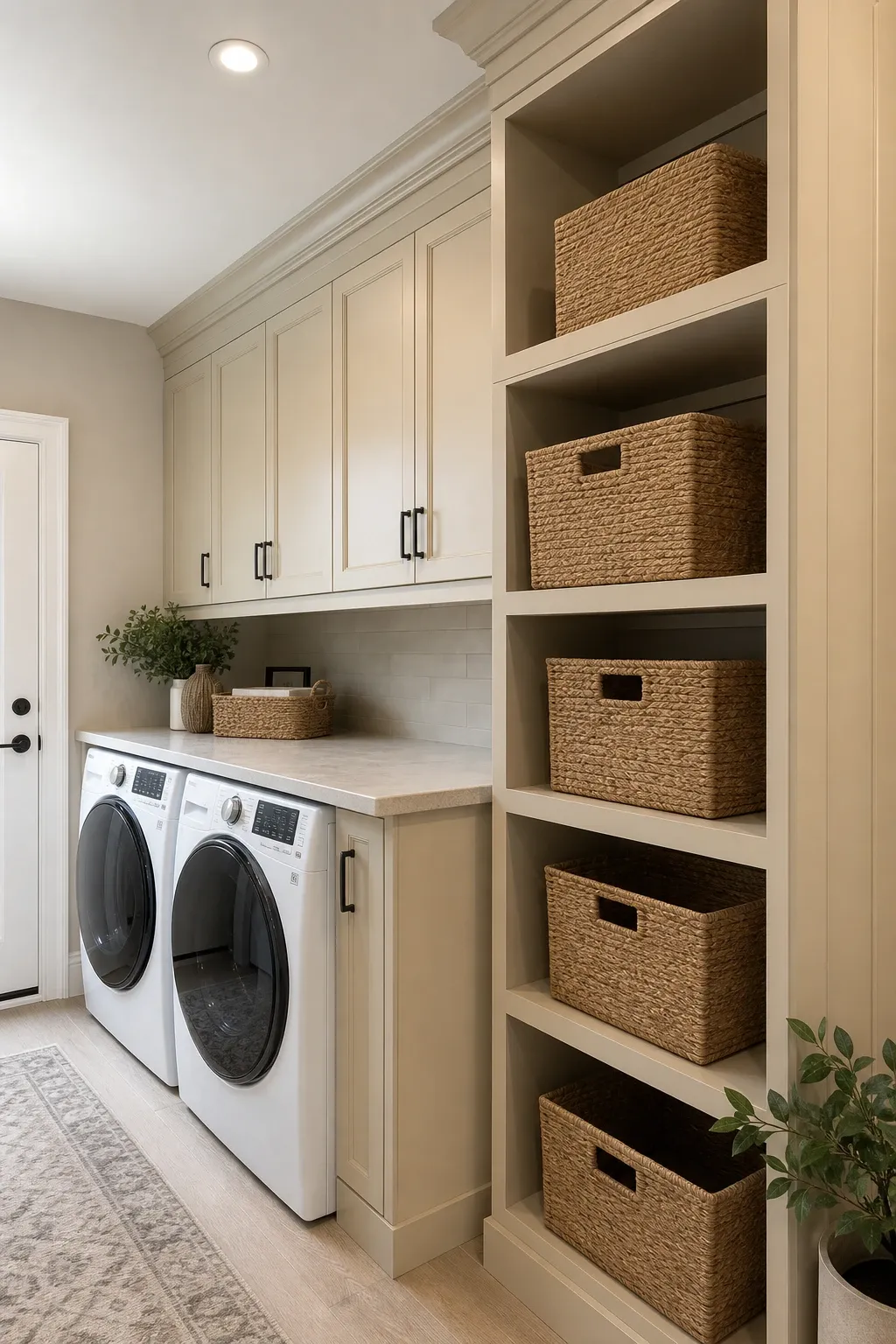
Custom built-in cabinets and shelving around the washer and dryer turn wasted wall space into organized storage. Everything from detergent to hangers gets a dedicated spot, and the built-ins make the basement laundry room look finished and intentional. Floor-to-ceiling cabinetry is especially effective in basements because it hides the mechanical elements that are often exposed in below-grade spaces.
Designer Tip: Include a pull-out hamper drawer or two in the built-ins. Hampers on the floor take up space and look messy. Built-in hamper drawers keep dirty laundry hidden and sorted, and they slide back in when company comes over.
10. Vintage Charm With Floral Skirting and Rustic Decor
A fabric skirt under a utility sink or counter adds vintage charm and hides the mess underneath at the same time. Floral or ticking-stripe fabric in a gathered skirt, paired with rustic wood shelves and antique finds, gives the basement laundry room a cottage feel. This is a low-cost approach that uses fabric, curtain clips, and a tension rod to hide plumbing and cleaning supplies behind a pretty facade.
Designer Tip: Use a machine-washable fabric for the skirt so you can throw it in the wash when it gets dirty. Laundry rooms are dusty and splashy. A skirt made from dry-clean-only fabric in a laundry room is impractical. Cotton or cotton-blend fabrics work best.
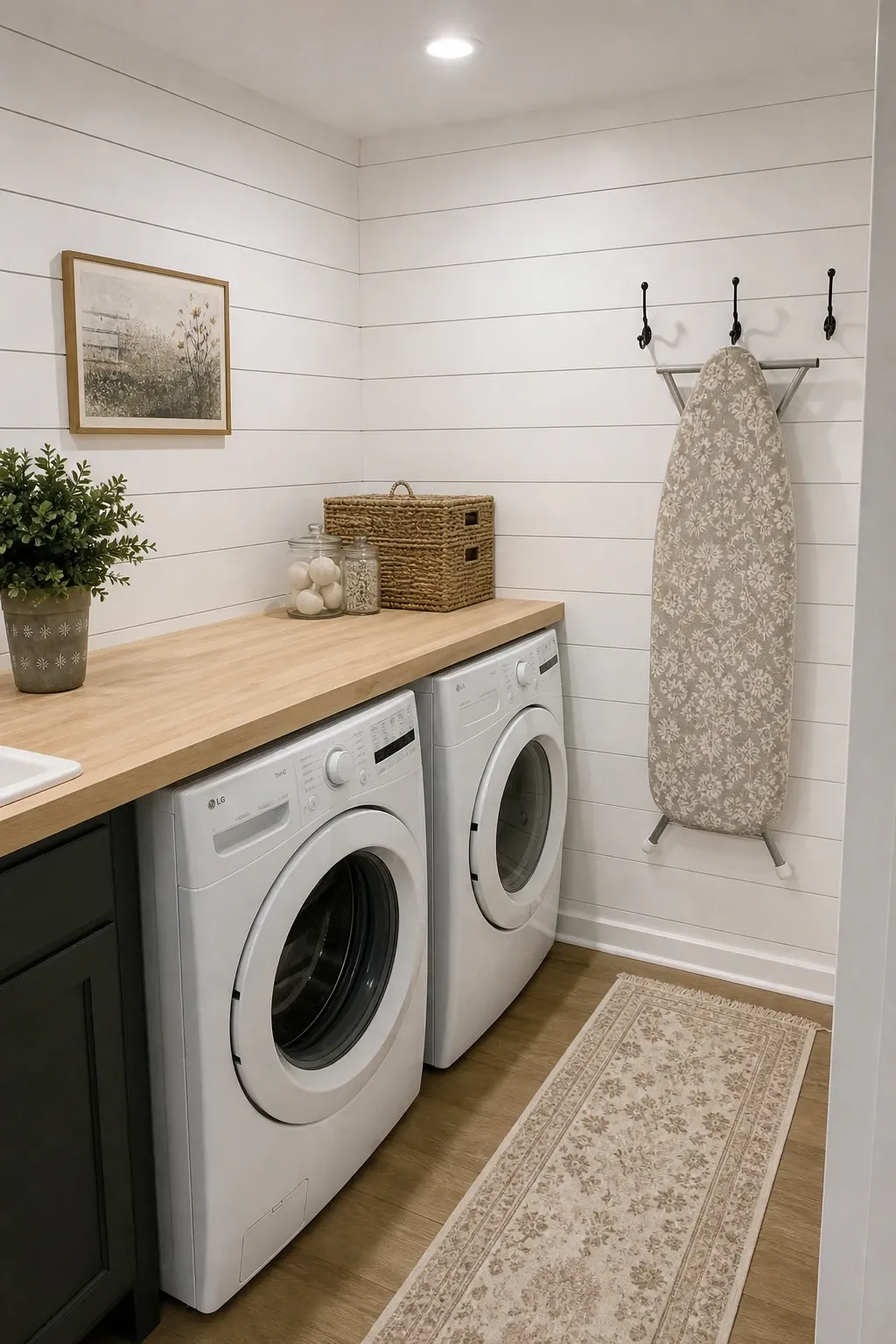
White shiplap on the walls gives the basement laundry room texture and character without adding color. The horizontal lines make the room feel wider, and the white reflects every bit of available light. Shiplap is also practical in basements because the individual boards can be removed and replaced if one gets damaged from moisture. The farmhouse look is classic and works with almost any style of cabinets and machines.
Designer Tip: Use PVC or composite shiplap in the basement instead of real wood. Basements are humid, and real wood shiplap can warp, swell, and grow mold over time. PVC shiplap looks the same, costs about the same, and is completely waterproof.
12. Scandinavian Style With Light Wood and Black Accents
Light wood tones, white walls, and black hardware and light fixtures create a Scandinavian-inspired basement laundry room that feels calm and organized. The light palette brightens the basement while the black accents add definition and contrast. Scandinavian design is ideal for basements because it prioritizes function, natural materials, and simplicity, all things that work well in a utility space.
Designer Tip: Add one or two simple plants in white pots to complete the Scandinavian look. A snake plant or pothos does well in low-light basement conditions and adds a living element that softens the clean lines.
13. Whimsical Touches With Patterned Wallpaper and Persian Rug
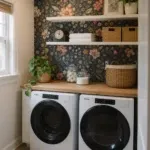
Patterned wallpaper on one wall and a vintage Persian-style rug on the floor make a basement laundry room feel like a room you actually decorated rather than finished as an afterthought. The patterns add visual richness that distracts from the utilitarian function. This is the opposite of the typical bare-bones basement approach and proves that a laundry room can be both hard-working and beautiful.
Designer Tip: Use peel-and-stick wallpaper in the basement. Traditional wallpaper adhesive can fail in humid below-grade environments. Peel-and-stick is easier to install, easier to remove if you change your mind, and handles humidity better than paste-applied paper.
If your basement has brick walls, expose them and seal them instead of covering them with drywall. Exposed brick adds character and warmth that no paint or wallpaper can match. Pair the brick with modern white machines, sleek hardware, and simple shelving for a mix of old and new. The contrast between the rough brick and the clean appliances creates a look that is both interesting and functional.
Designer Tip: Seal exposed brick with a clear masonry sealer to prevent dust, moisture, and mortar crumbling. Unsealed brick in a basement sheds fine red dust that gets on everything. One coat of sealer locks the surface and makes the brick easy to wipe down.
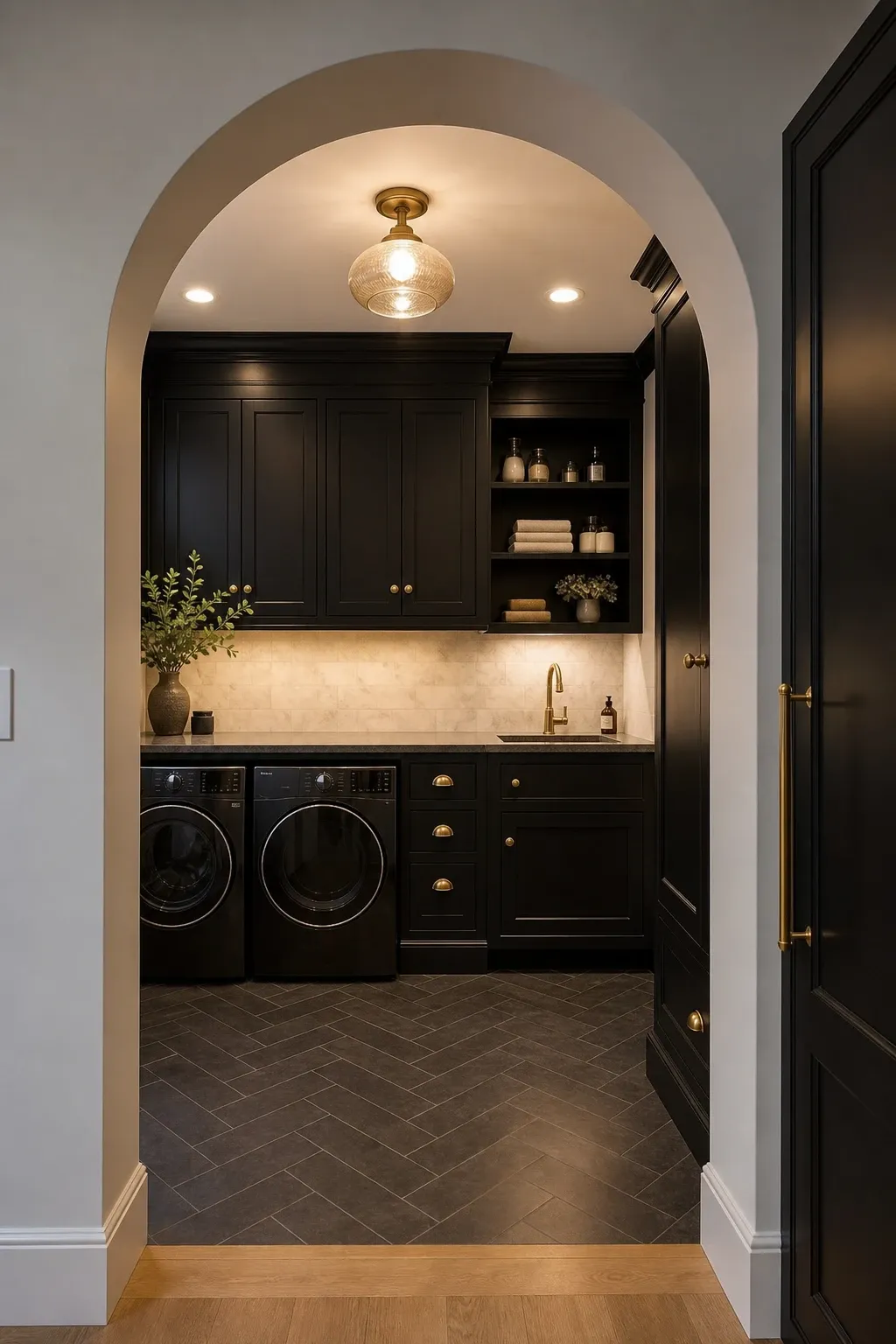
Arched niches built around the washer and dryer, combined with black and gold hardware and fixtures, bring an elegant, high-end feel to a basement laundry room. The arch is a simple drywall detail that adds architectural interest to what is usually a flat, featureless room. Black and gold together look expensive and sophisticated. This approach turns the laundry room into a space that feels like it belongs in the upstairs of the house.
Designer Tip: Build the arch with a plywood template and flexible drywall. It is not as hard as it looks. The arch only needs to be on the front face of the niche, so it takes one sheet of drywall and a couple hours. The visual impact is much bigger than the effort required.
A basement laundry room does not have to stay unfinished and forgettable. Any of these ideas can be done in a weekend or two, and most do not require a contractor. Start with the change that bothers you the most about the current room, whether that is the floor, the walls, or the lack of storage, and work from there. Small changes add up fast in a small room.
Frequently Asked Questions
How do I deal with moisture in a basement laundry room?
Run a dehumidifier whenever the machines are in use, and leave it running during humid months. Make sure the dryer vents to the outside, not into the basement. Use moisture-resistant materials like PVC trim, porcelain tile, and semi-gloss paint. Fix any foundation leaks before investing in finishes because water problems ruin nice materials fast.
What is the best flooring for a basement laundry room?
Luxury vinyl plank or tile is the best overall choice. It is waterproof, comfortable underfoot, affordable, and available in patterns that look like wood or stone. Porcelain tile is also a good option but feels cold without radiant heat. Avoid carpet and real hardwood because both are damaged by the moisture and spills that are common in laundry rooms.
How can I brighten a dark basement laundry room?
Paint the walls and ceiling white or a very light color. Install bright LED overhead lighting rated at 4000K or higher for a daylight effect. Add under-cabinet LED strips if you have upper cabinets. Use mirrors or reflective surfaces to bounce light around the room. Avoid warm, dim bulbs because they make basements feel cave-like.
Is it worth finishing a basement laundry room?
Yes. A finished basement laundry room adds to the overall feel and function of the house, and the cost is usually modest because the room is small. Even basic finishing like paint, flooring, and shelving makes a big difference. You spend real time in the laundry room every week, so making it a pleasant space is worth the investment for daily quality of life.