The chandelier above your dining table does more work than you might give it credit for. It sets the mood before anyone sits down, it frames the table as the center of the room, and it tells guests something about your taste before the food even arrives. And yet, so many dining rooms end up with fixtures that feel like an afterthought, something picked quickly because the space needed a light. This article is about doing the opposite of that.
The right fixture exists for every ceiling height and table size. Start with the scale guidelines above and narrow from there. The ideas below are organized by style category so you can start with what already matches your room and explore from there. Each one covers the fixture itself, the materials and finishes to look for, the lighting quality it produces, and how to style the table and walls around it for a complete, pulled-together look.
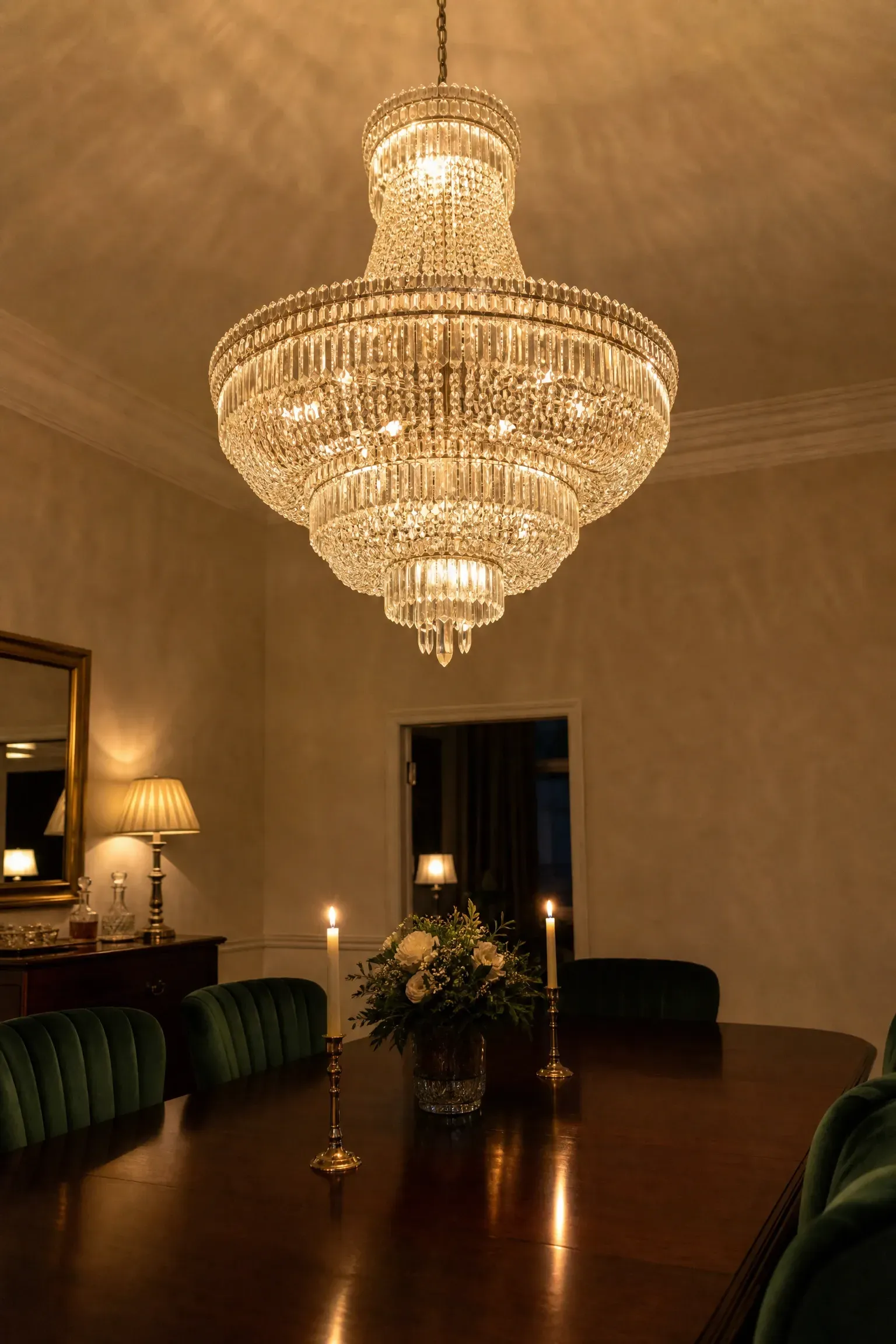
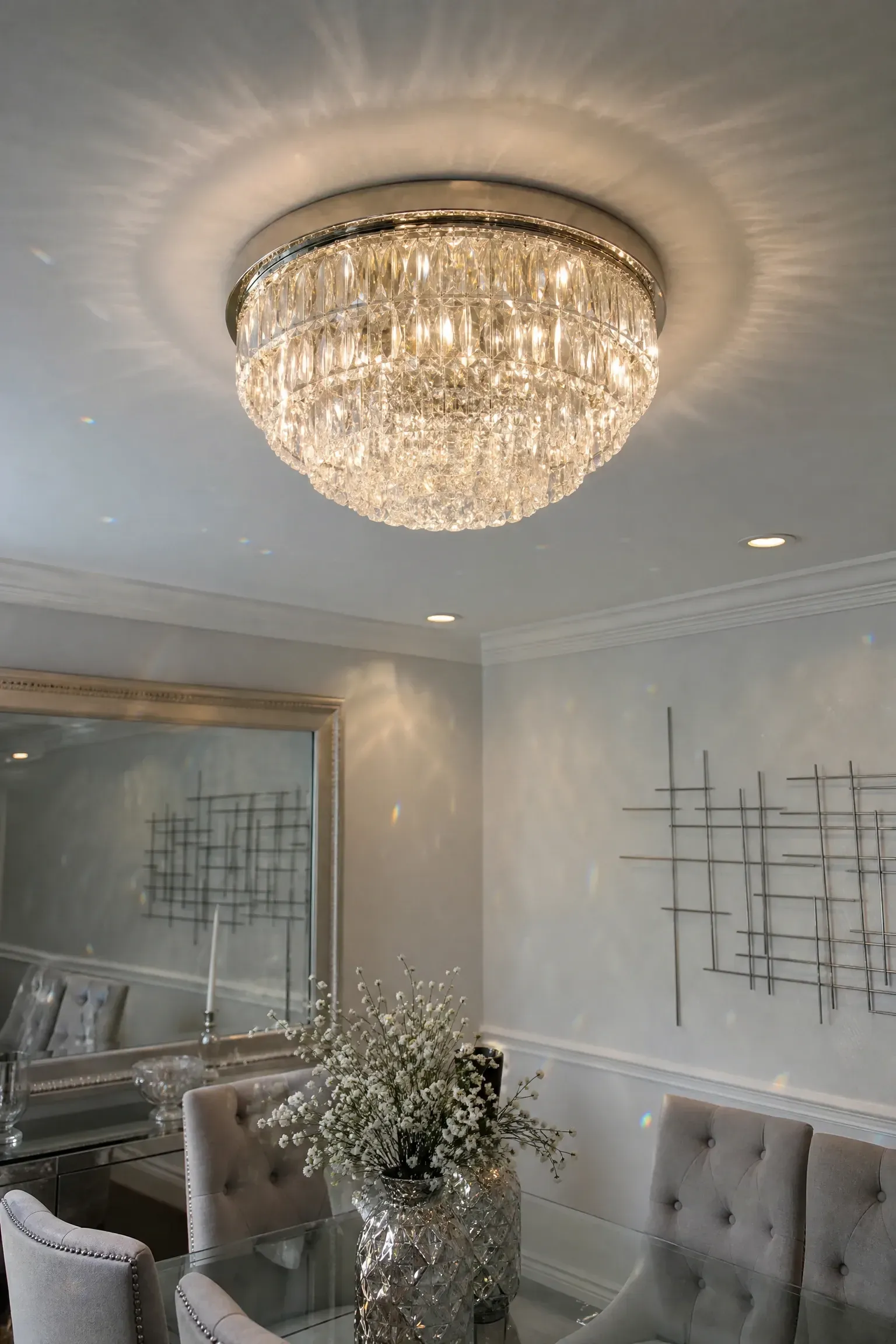
If your dining room has ceilings above ten feet, a large crystal chandelier is one of the most satisfying choices you can make. The light that bounces off cut crystal creates a warm, layered glow across the room, which is completely different from the flat overhead brightness of a regular fixture. Look for a tiered design in a chrome or polished nickel finish, and make sure the chandelier diameter is at least half the width of your table. Pair it with a dark wood table, upholstered chairs in deep jewel tones like navy or forest green, and floor-length curtains in a heavy fabric. Keep wall decor minimal since the chandelier is the visual centerpiece.
Designer Note: Put this on a dimmer switch. Crystal chandeliers at full brightness can feel harsh; at 60 to 70 percent they feel genuinely luxurious.
2. Candle-Style Iron Chandelier for Traditional Spaces
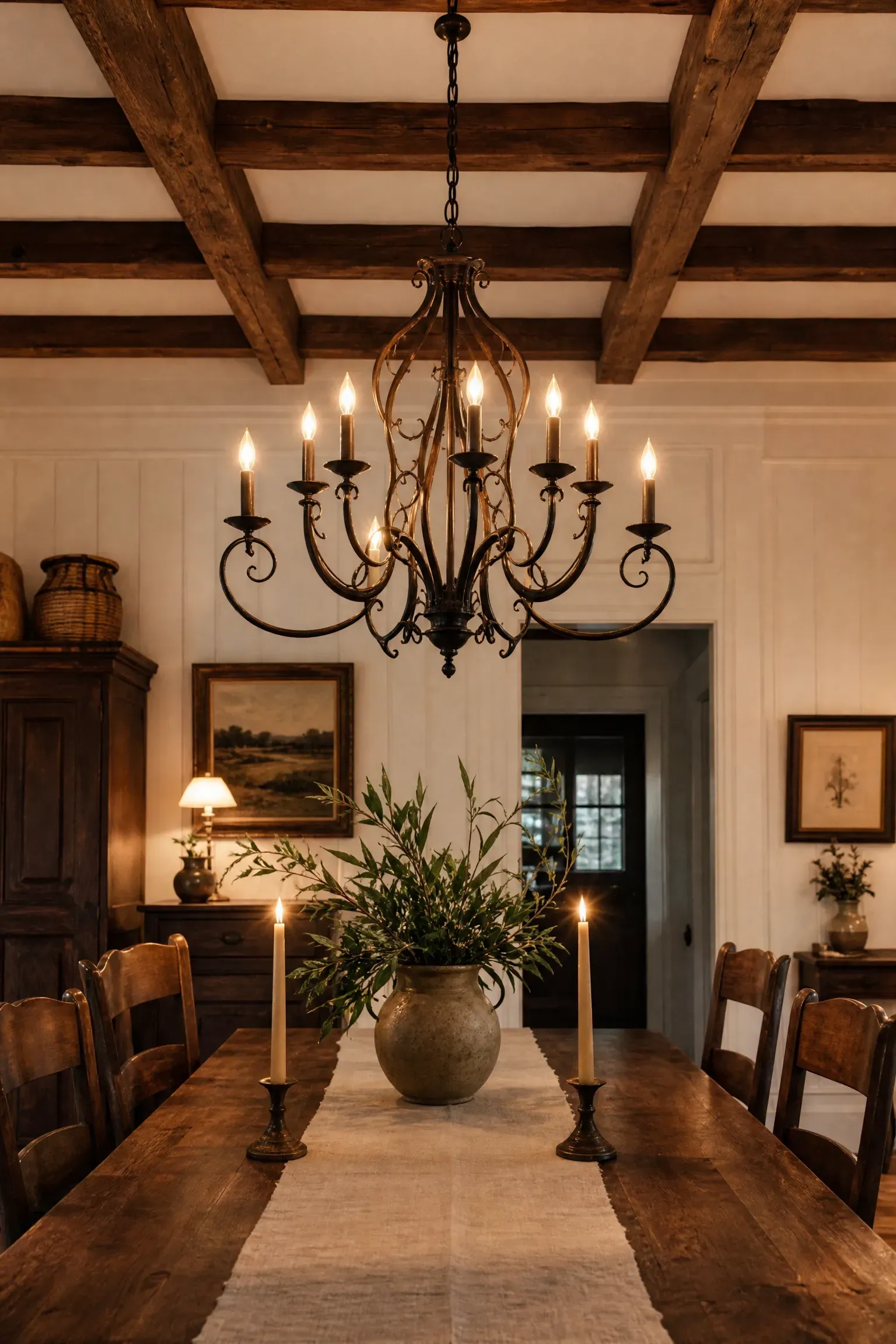
This is the style that has been trusted in formal dining rooms for centuries, and there is a reason it keeps coming back. A wrought iron chandelier with candle-style bulbs works especially well in rooms with exposed wood beams, wainscoting, or traditional millwork. The key is choosing one with real visual presence, something with multiple arms and good height, not a flat or sparse version. Finish options include matte black, oil-rubbed bronze, and antique iron, all of which pair well with cream or warm white walls. Use Edison-style bulbs with a warm color temperature around 2700K to get a soft, flame-like glow. Style the table with linen napkins, tapered candles in bronze holders, and simple ceramic dinnerware for a look that feels both historic and livable.
Designer Note: The height you hang it matters enormously. The bottom of the chandelier should sit 30 to 34 inches above the tabletop for a standard 8-foot ceiling, and a bit higher as ceilings get taller.
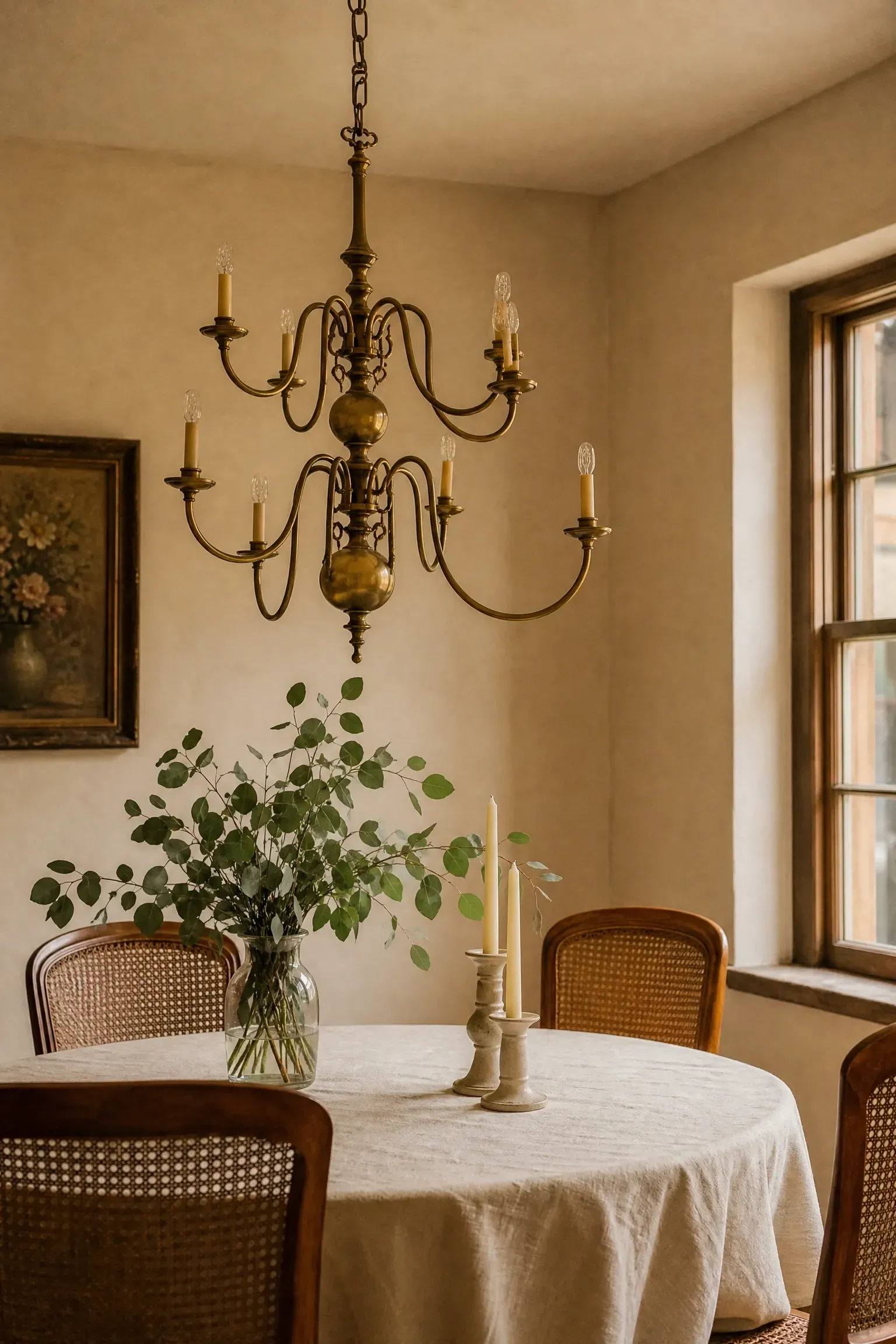
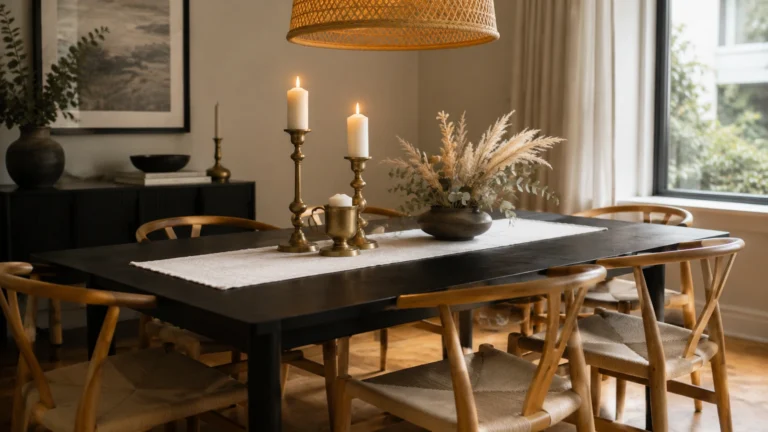
Polished or antique brass is having a real moment in dining rooms, and the candelabra style brings it into traditional territory with a lot of elegance. Look for a design with layered arms at different heights, which adds depth and visual interest that a single-tier fixture just does not have. Antique brass has a muted, slightly aged look that works beautifully with cream walls, soft terracotta accents, and rattan furniture. Polished brass is brighter and works better with high-contrast rooms featuring dark walls or bold art. Either way, choose a fixture with a good spread because a narrow candelabra in a wide dining room looks a little lost. Complete the look with a linen or cotton tablecloth, ceramic candleholders, and simple greenery as a centerpiece.
Designer Note: Brass oxidizes slightly over time, which actually makes it look better. Avoid over-polishing it if you want that warm, lived-in look.
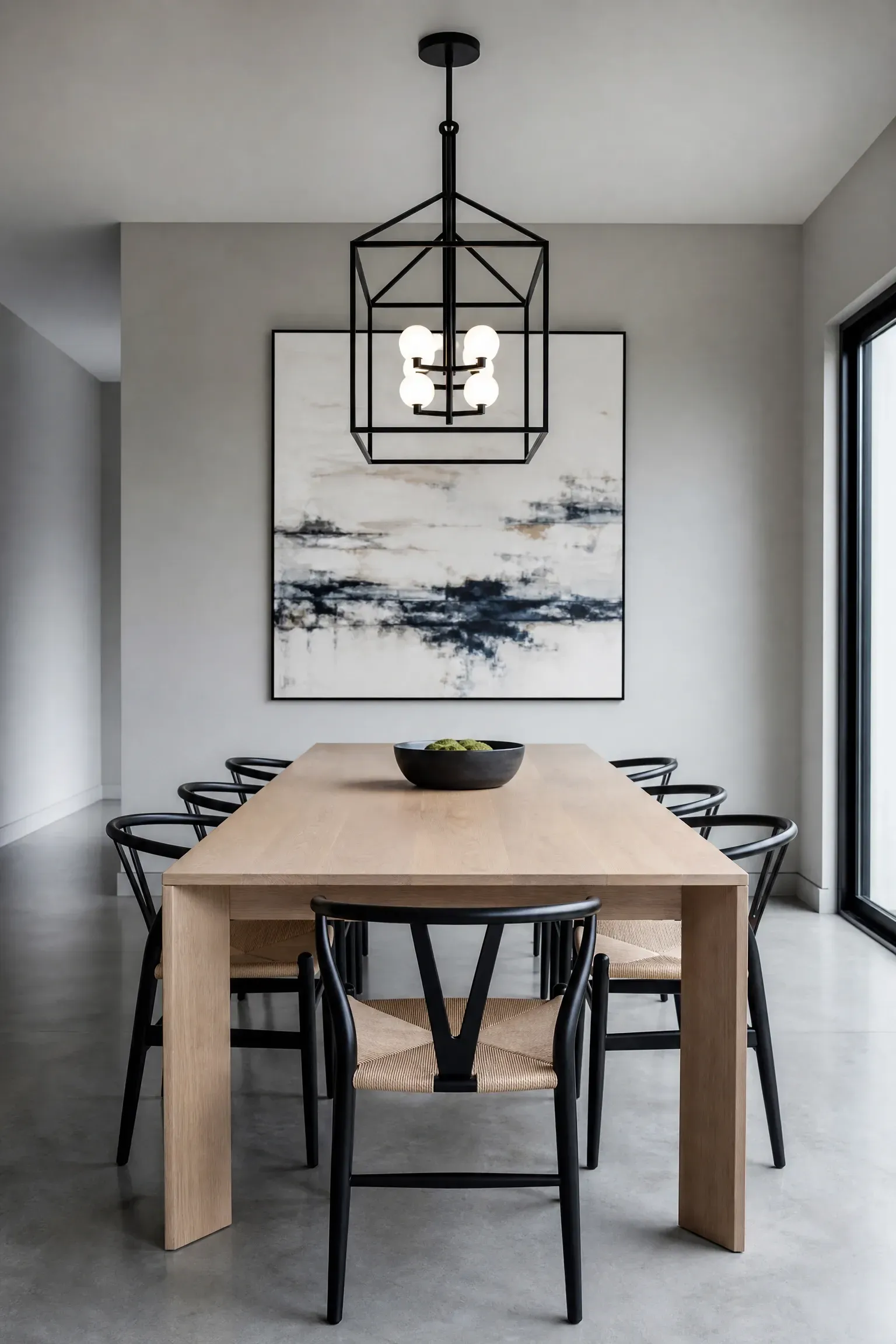
A geometric metal chandelier with an open frame and exposed bulbs is one of the cleanest, most confident choices for a modern dining room. The angular lines give it a sense of structure without heaviness, and the black finish grounds the ceiling and creates a strong visual anchor. This style works best in rooms with light walls, concrete or light wood floors, and furniture that leans simple and functional. A rectangular version is ideal over a long dining table, while a square or hexagonal shape works well over a round or square table. Use globe-style LED bulbs for a contemporary look. On the walls, go minimal, one or two pieces of abstract art and nothing else. The table itself can be kept very simple since the fixture already does the decorating.
Designer Note: Black metal chandeliers photograph beautifully, which makes them very popular on design platforms, but they work even better in person. The negative space inside the frame catches light in a way that feels architectural.
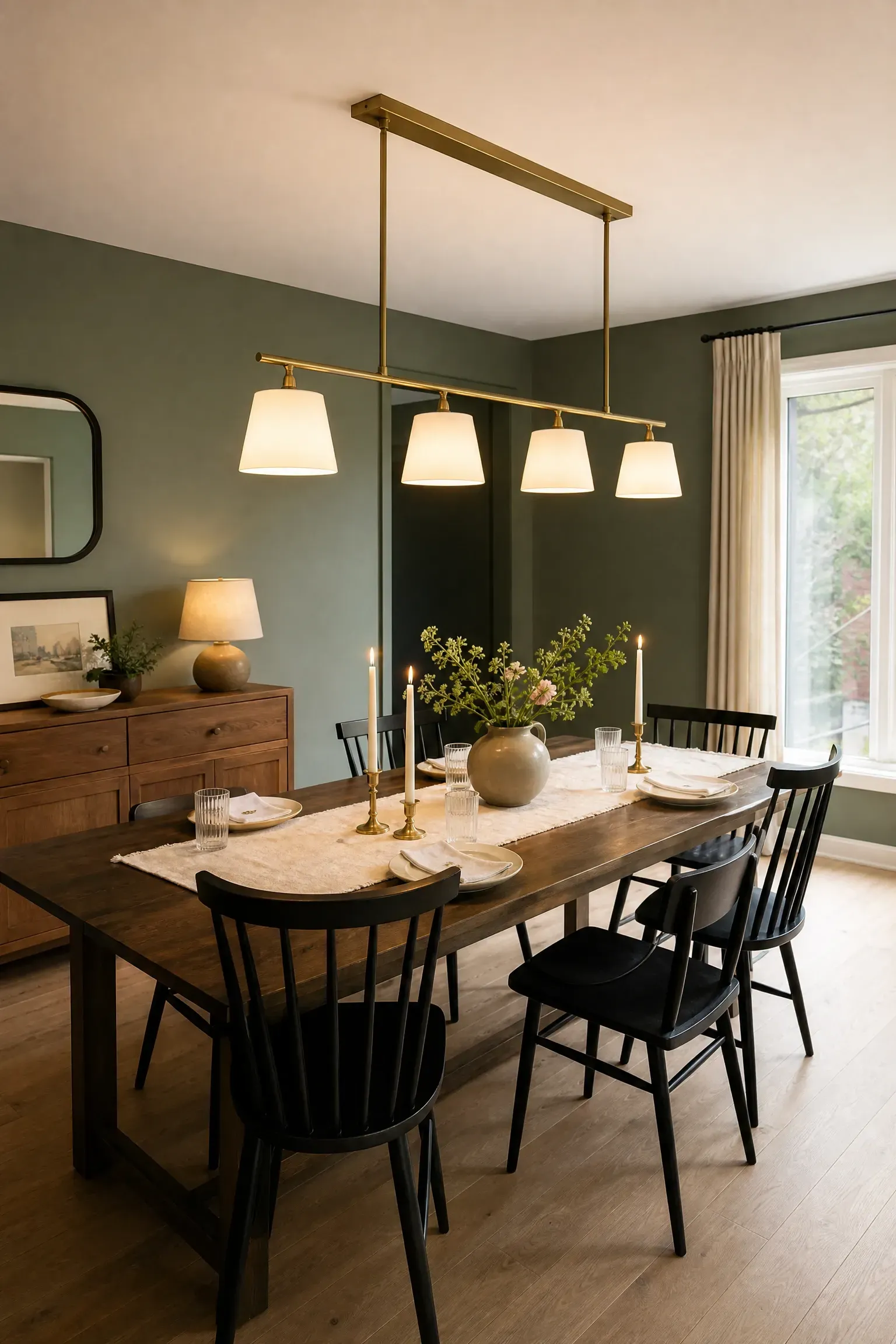
A linear chandelier, essentially a horizontal bar with multiple light points, is one of the most practical and visually satisfying choices for a rectangular dining table. It provides even light distribution across the full length of the table and looks proportional in a way that a single round fixture over a long table never quite does. Materials range from brushed nickel with glass shades to warm brass with bare bulbs, and both work depending on the overall palette of the room. If your room is mostly neutral and light, a black or dark bronze linear fixture adds contrast without overwhelming the space. Style the table with a runner rather than a full tablecloth, and use matching or coordinating table lamps on a sideboard to bring the light level of the whole room up evenly.
Designer Note: For a table that seats six, look for a linear chandelier between 36 and 48 inches long. For eight or more, go up to 54 or 60 inches.
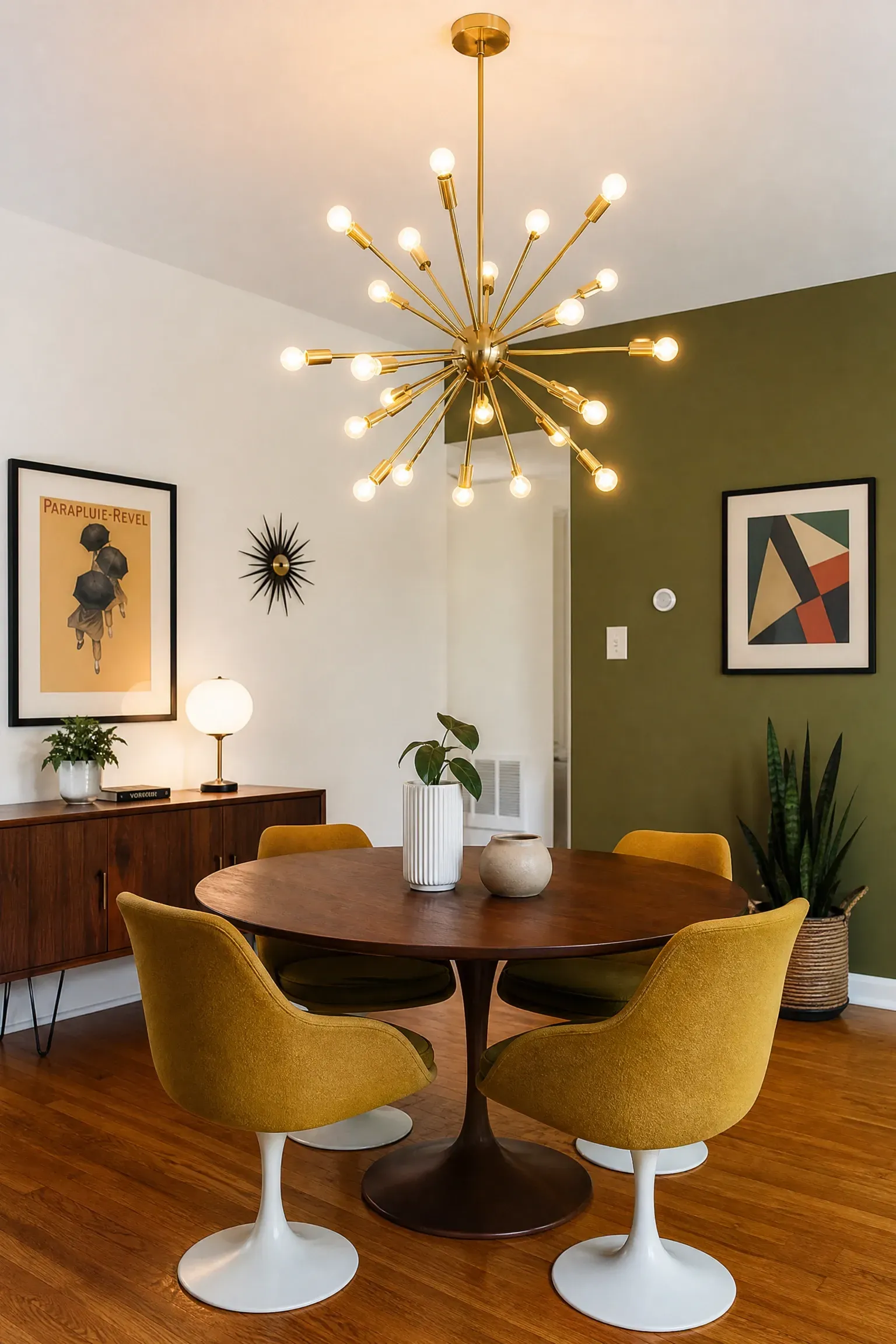
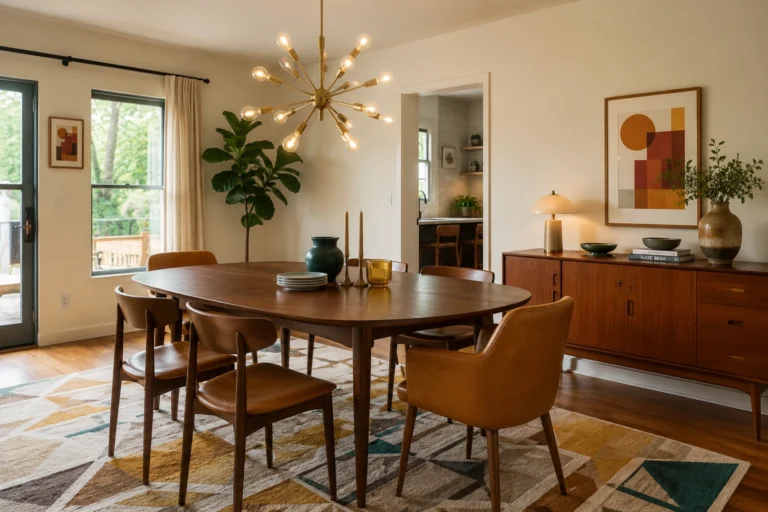
The Sputnik chandelier, with its starburst of arms radiating out from a central sphere, became popular in the mid-century modern era and has stayed relevant ever since because it works so well in contemporary rooms too. In a dining room, it adds a sculptural, almost playful quality that is hard to get from other fixture styles. Brass and gold versions are the most popular right now, pairing well with walnut furniture, olive green or mustard accents, and warm cream walls. Chrome versions are sharper and better suited to rooms with cool grays and whites. The Sputnik works best in rooms with enough ceiling height to show it off, at least eight to nine feet, and over a round table where its circular form is echoed below.
Designer Note: Use small Edison bulbs or clear globe bulbs with this fixture. The bulbs are part of the design, so going bare and warm is the right call.
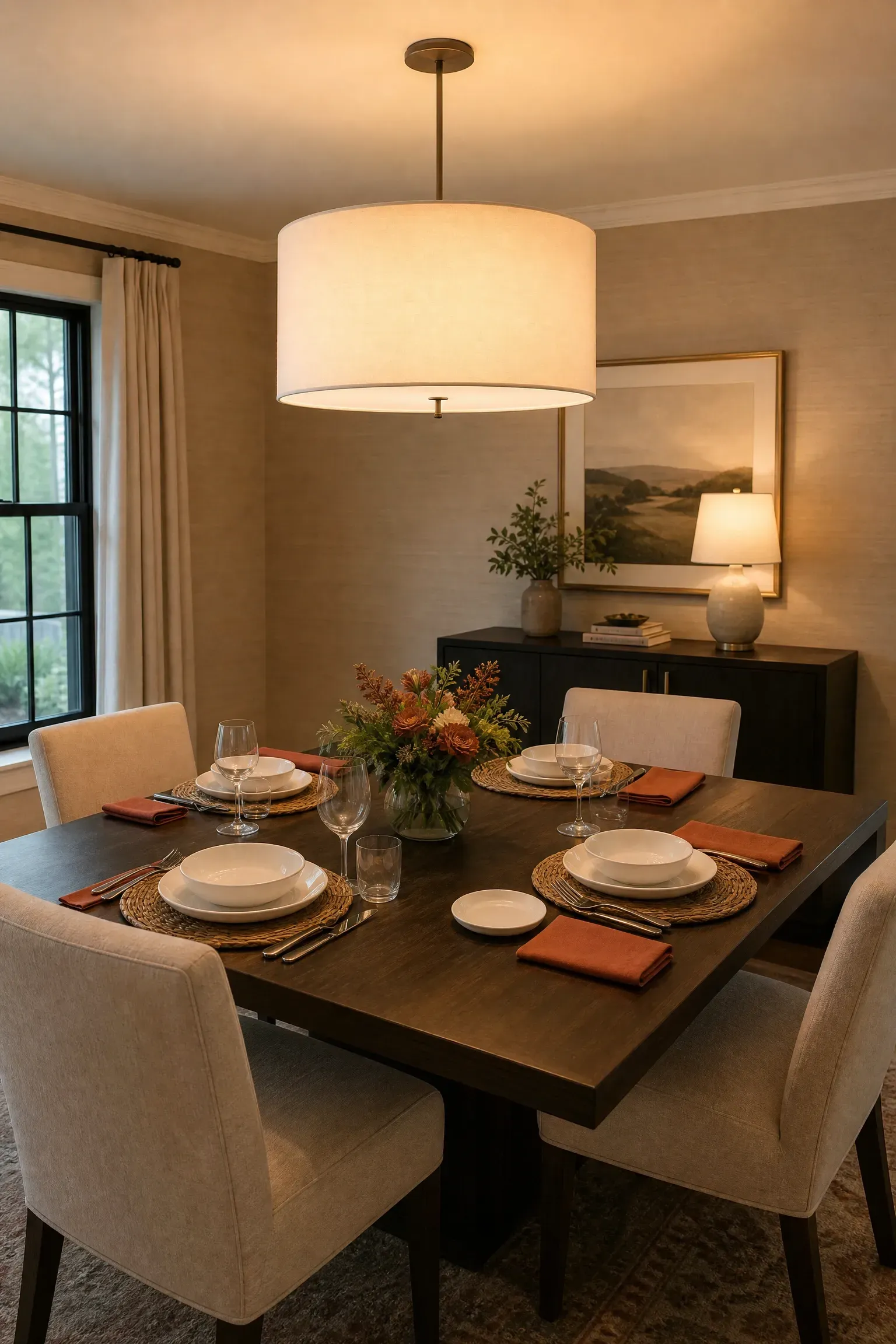
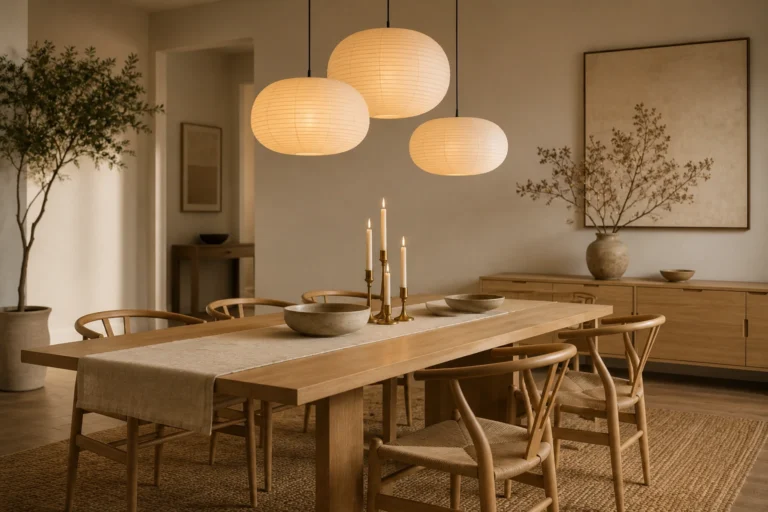
If you want overhead lighting that feels more like ambient glow than direct overhead brightness, a drum shade chandelier is one of the best options. The fabric or linen shade wraps the light source completely, which softens the light significantly and creates a warm, even quality that is very flattering for dinner settings. White and off-white shades are the most versatile, working in both casual and formal rooms. Dark shades in charcoal or navy create more drama and contrast and are better for rooms with lighter furniture and walls. The hardware inside the drum can add a design detail too, look for brass or nickel fittings that are partially visible below the shade. Pair this style with textured wall treatments like grasscloth or limewash paint for a room that feels layered and considered.
Designer Note: A drum shade chandelier hides its bulbs, so you can use standard LED bulbs without worrying about the look of the bulb itself. This makes it a practical and cost-effective choice.
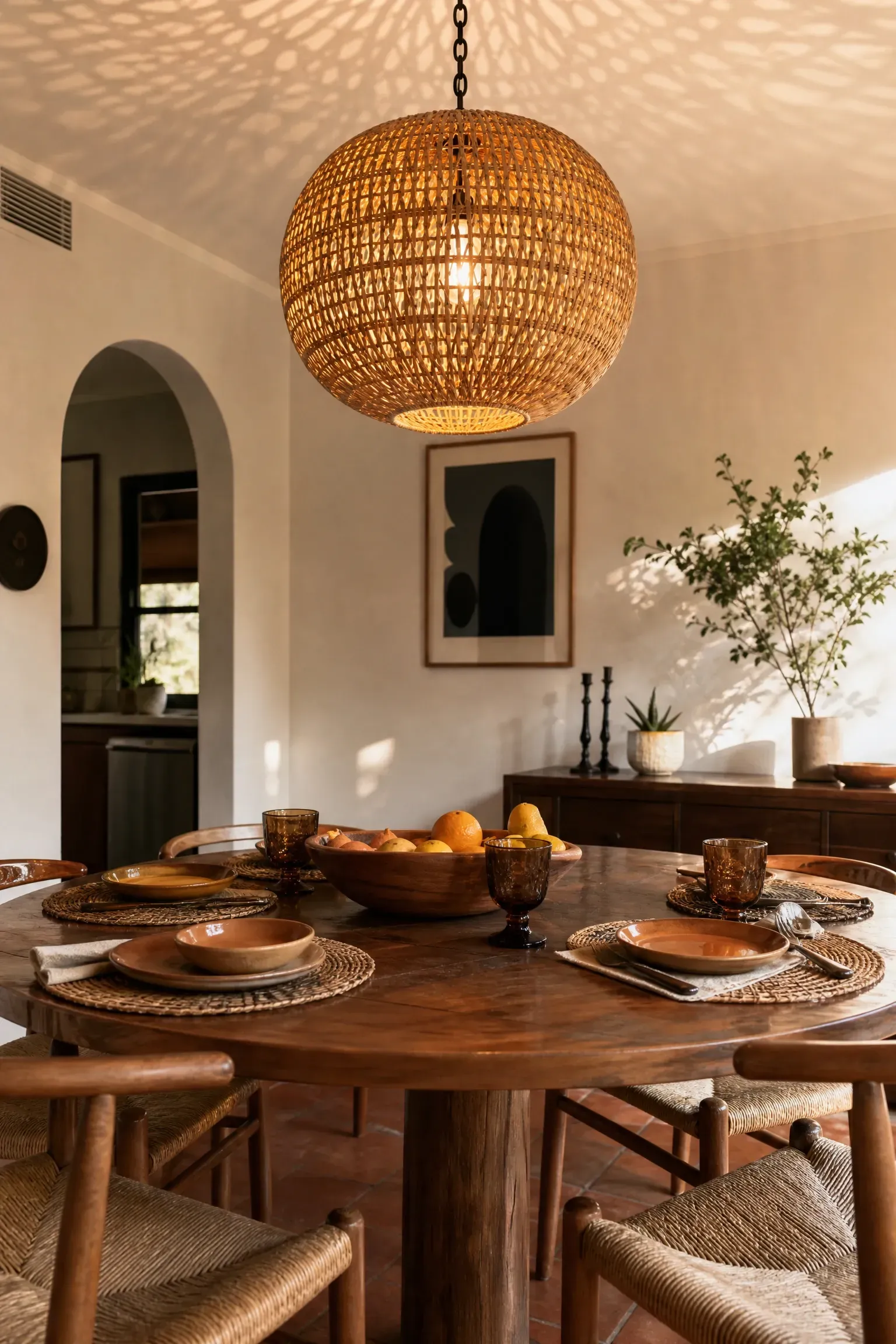
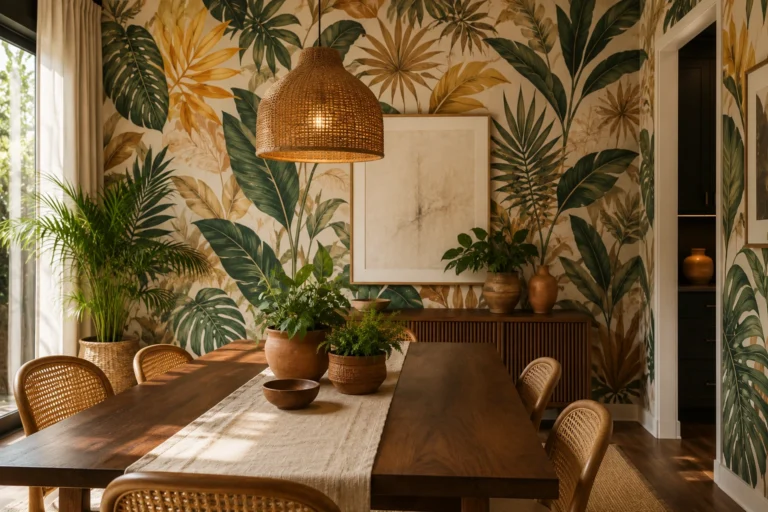
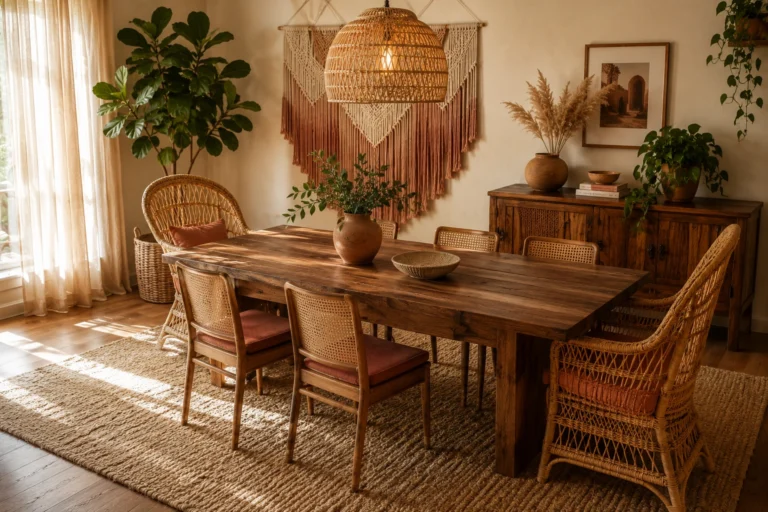
Rattan chandeliers have moved well beyond coastal or bohemian rooms and now show up in farmhouse, transitional, and even modern spaces. The material is warm, textural, and genuinely interesting to look at, especially when light filters through the weave and casts patterns on the ceiling and walls. Natural rattan in a honey or tan tone works in rooms with warm wood furniture and earthy accents like terracotta, rust, and olive. Bleached or white rattan is better for lighter, airier rooms. These chandeliers tend to be lower in visual weight than metal fixtures, which makes them ideal for rooms where you want a cozy, relaxed atmosphere rather than a formal one. Style the table with ceramic dishes, woven placemats, and a simple plant centerpiece.
Designer Note: Rattan chandeliers are usually among the most affordable options without looking cheap. They are a great pick if you want high-impact style on a reasonable budget.
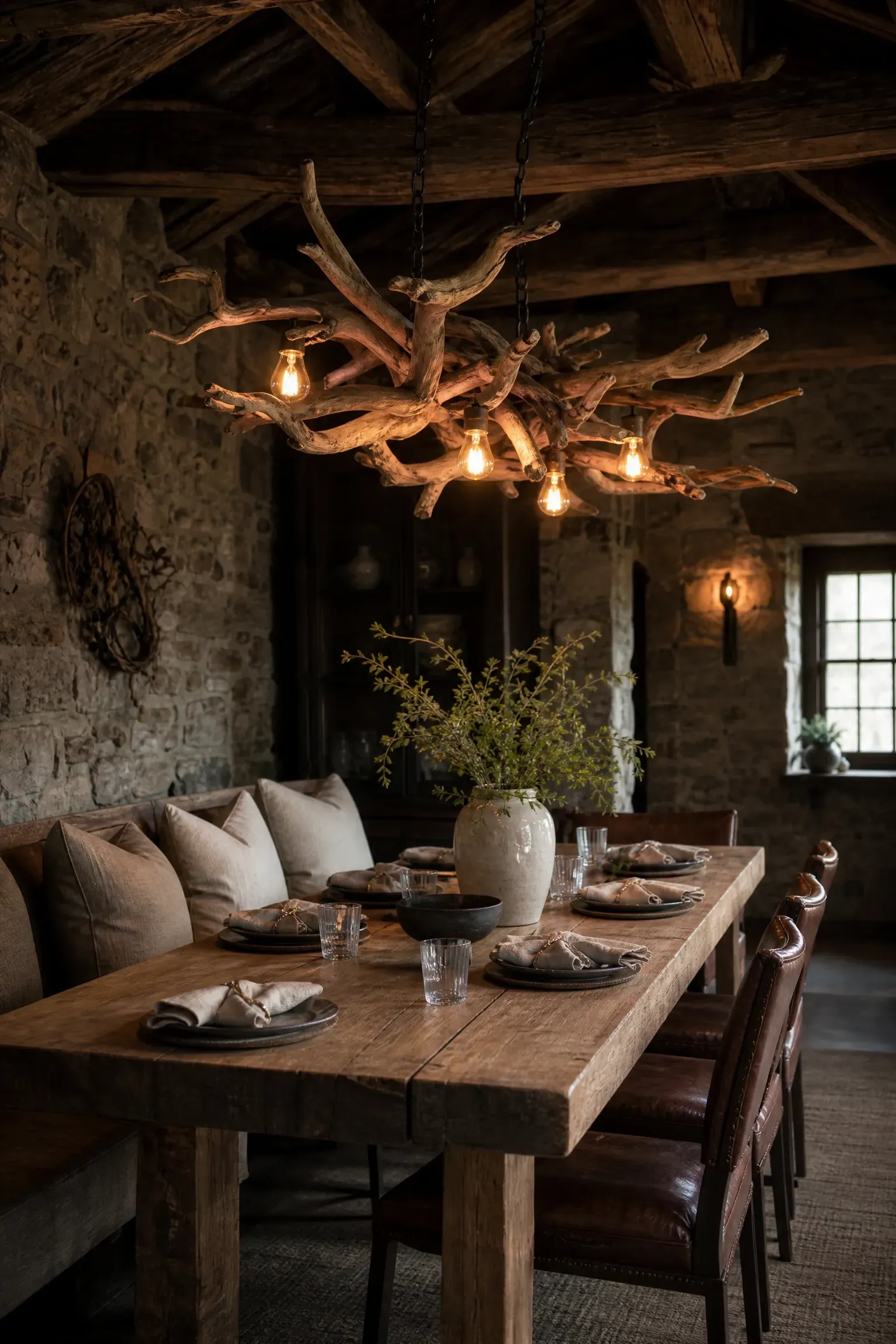
A chandelier made from driftwood, reclaimed wood branches, or raw timber pieces is one of the most distinctive choices you can make for a dining room. These fixtures are essentially hanging sculptures, and no two look exactly the same, which gives a room a one-of-a-kind quality that manufactured fixtures simply cannot match. They work beautifully in rooms with exposed brick, stone walls, or heavy timber beams, where the raw material of the fixture connects visually with the architecture. Keep the furniture grounded and simple, a solid wood table with clean lines and bench seating or leather chairs, so the chandelier can be the moment. Warm Edison bulbs are the right pairing here, providing a soft glow that suits the organic material.
Designer Note: These fixtures can be sourced from artisan makers on handmade goods platforms. The variety is enormous and prices range widely, but even budget options tend to look genuinely impressive in person.
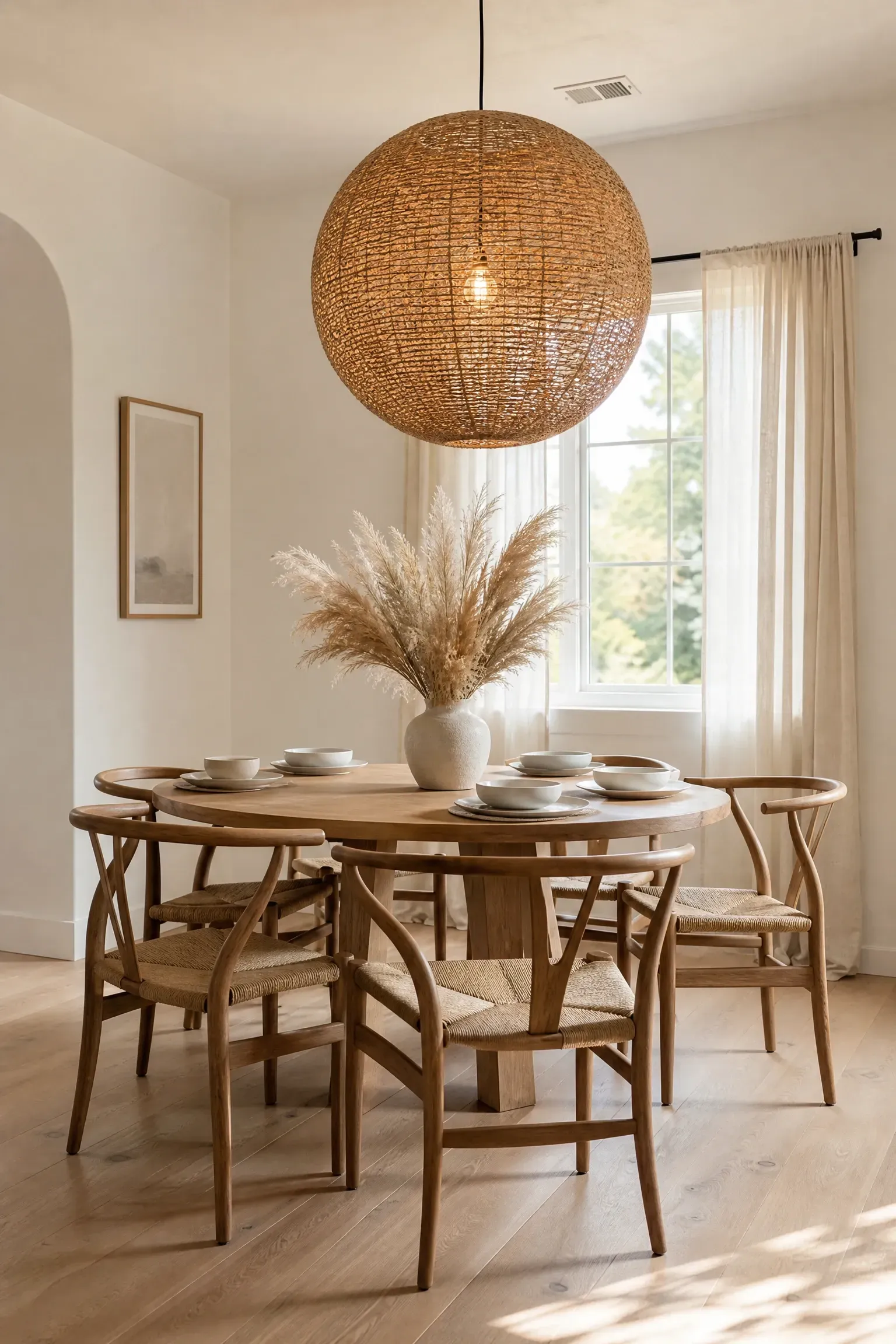
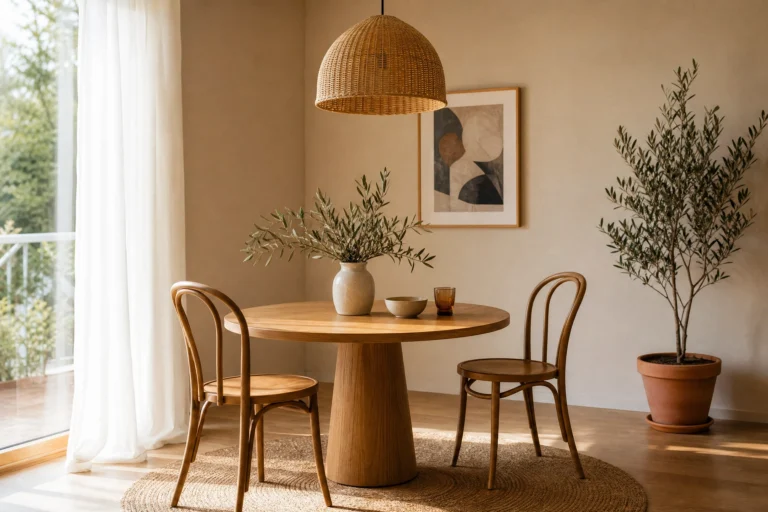
A globe-shaped chandelier wrapped in seagrass or jute is a softer, rounder take on the natural material trend. It gives a dining room a very specific feeling, casual, warm, and a little coastal without going overboard on any of those themes. The globe shape is particularly good over a round dining table since the shapes echo each other and create visual harmony. Natural fiber globes come in various sizes, so choose one that genuinely fills the space above the table rather than a small version that disappears into the room. Wall color matters a lot here: warm whites, sage greens, and soft taupes all support this look well. Add a simple low centerpiece, a wooden bowl of fruit or a small arrangement of dried pampas grass, and the room will feel complete with very little effort.
Designer Note: Check the interior of the globe before buying. Some have a solid diffuser inside that creates even light, while others are fully open, which can create more visible hotspots. Both can work, but know what you are getting.
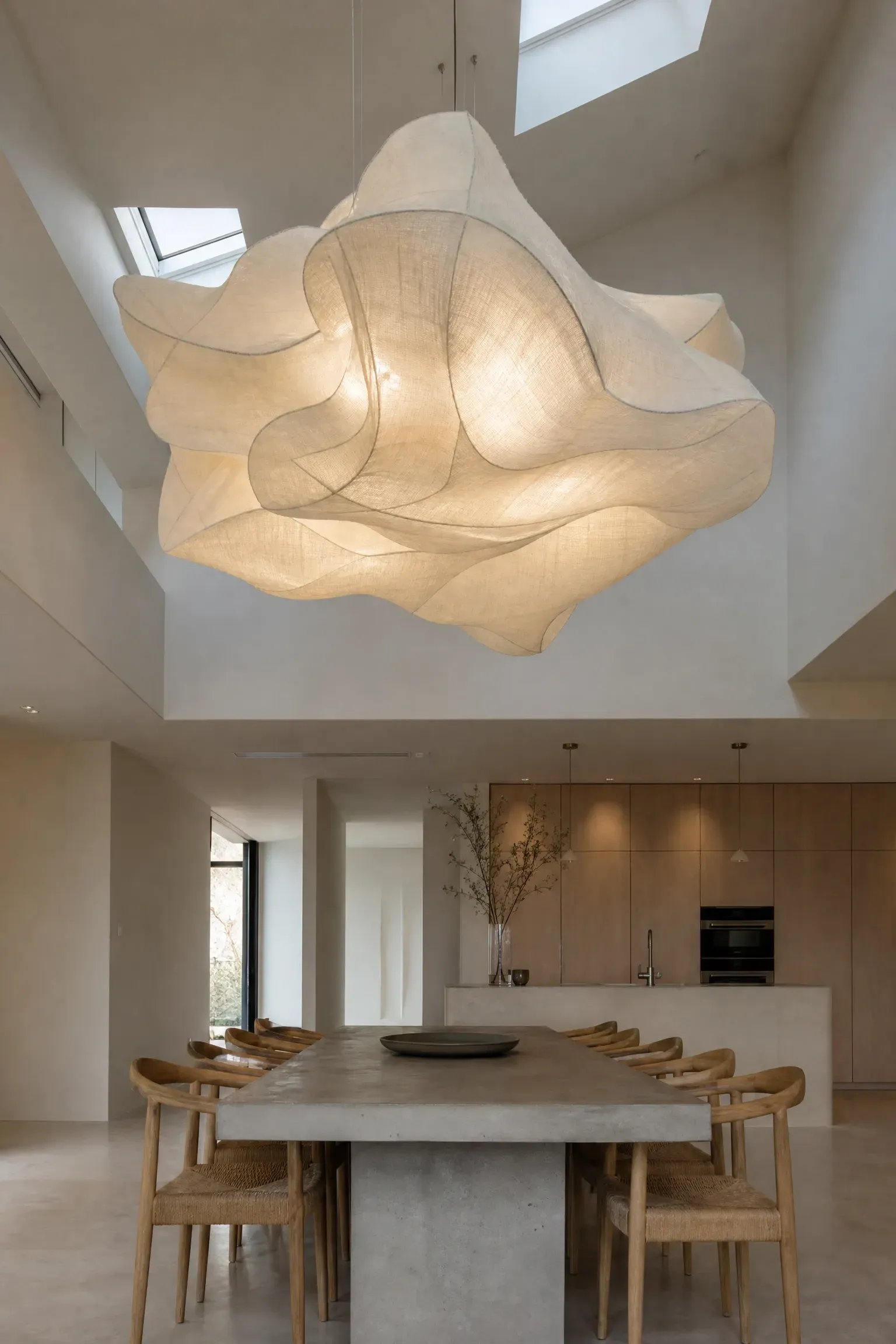
When you want the chandelier to be the undeniable focal point of the room, an oversized sculptural fixture is the way to go. These are pieces that blur the line between lighting and art, featuring abstract shapes, mixed materials, or unexpected forms. Cloud-like forms made from fabric or mesh, asymmetric metal branches, and large-scale glass bubble clusters all fall into this category. The room around this kind of fixture needs to stay relatively calm. Neutral walls, simple furniture, and very little wall art let the chandelier do its job. A sculptural chandelier works best in rooms with good ceiling height and generous square footage, where it has room to breathe and be seen from multiple angles.
Designer Note: If the fixture is the art, treat it like art. Consider how it looks when the lights are off during the day, not just when lit. The best sculptural chandeliers look interesting in both states.
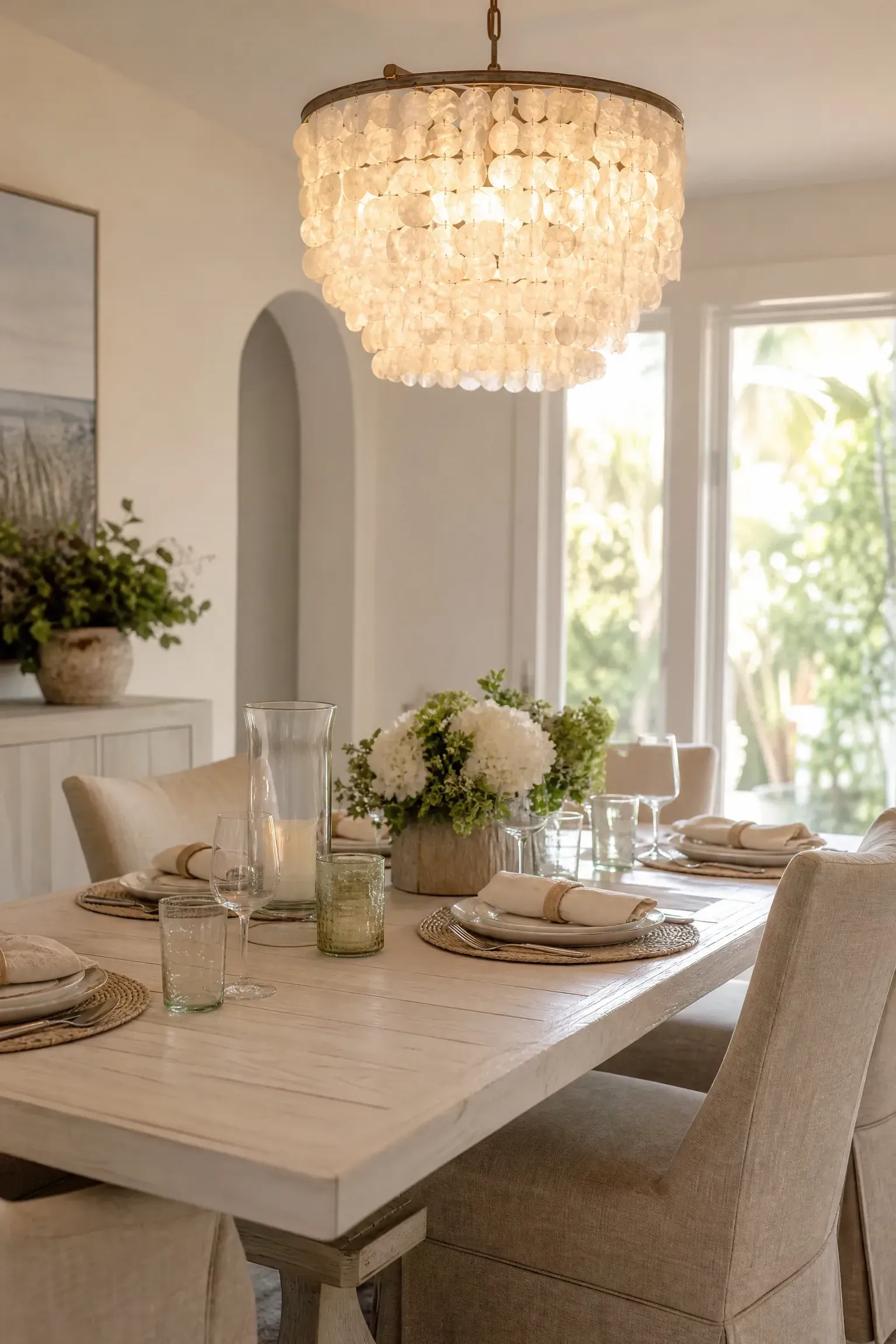
12. Capiz Shell Chandelier for a Coastal Dining Room
Capiz shells have a translucency that no manufactured material quite replicates. When light passes through them, it creates a warm, pearl-like glow that fills a dining room with a very specific quality of light, soft, natural, and beautiful. Capiz chandeliers work in coastal rooms, obviously, but they also fit well in any space with a light, airy palette. White walls, natural linen upholstery, whitewashed wood furniture, and sisal rugs all support this look. The shimmer of the shells adds visual richness without adding color, so you can keep the room palette very restrained and still have plenty of visual interest. These fixtures are delicate and look best in rooms that are also a little understated.
Designer Note: Capiz shell chandeliers can be surprisingly affordable, especially in smaller sizes. Look for ones with individually hung shells rather than glued panels for the most authentic light effect.
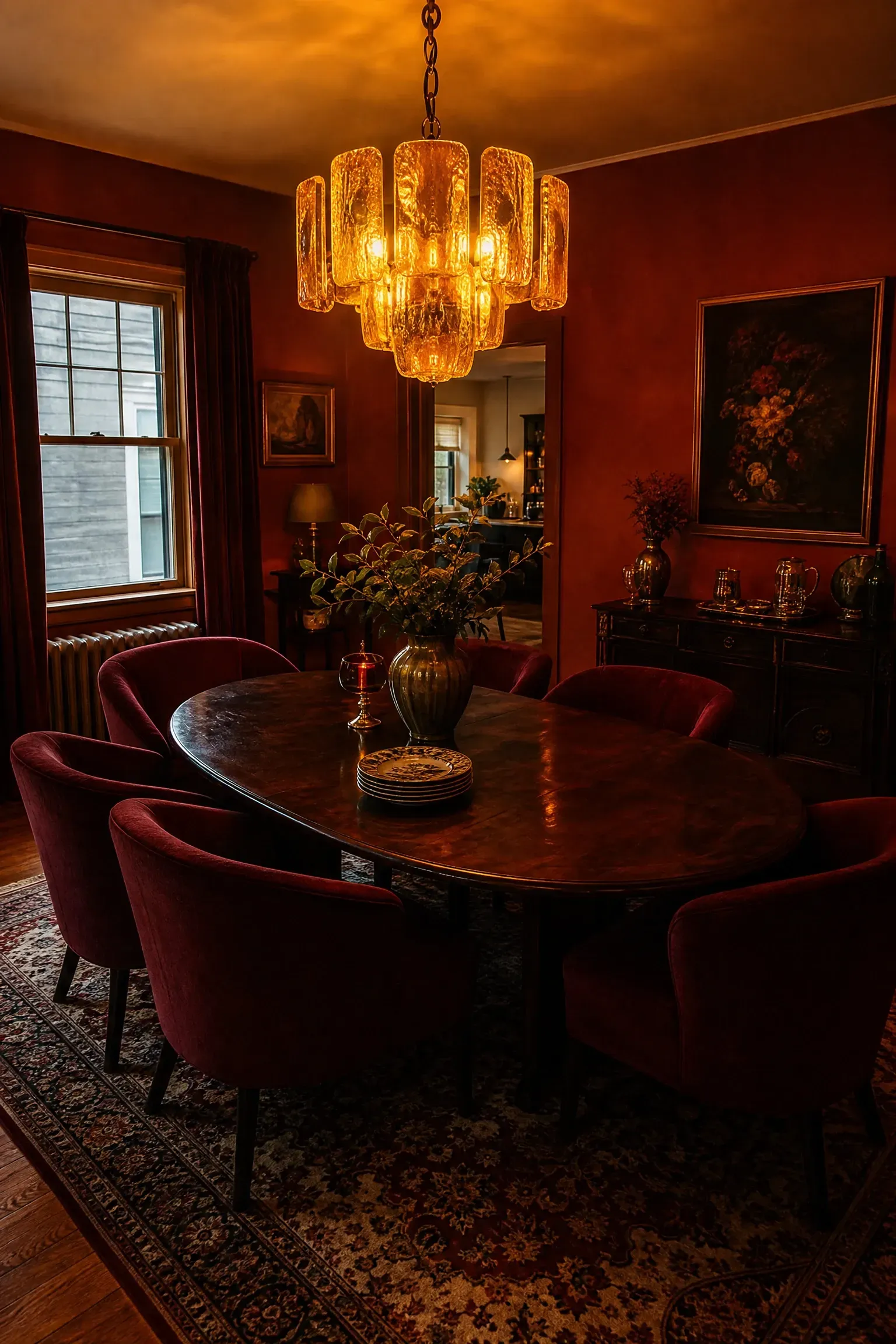
A chandelier with colored glass elements brings something almost no other fixture can: color in the light itself. Amber glass fills a room with a golden, honeyed warmth. Blue or green glass creates a cooler, more atmospheric quality. Stained glass panels add pattern and color together in a way that can completely define the personality of a room. This is not a subtle choice, and that is the point. A colored glass chandelier works best in a room that can handle some visual boldness. Deep wall colors, patterned wallpaper, or highly textured surfaces are all good partners. Keep the furniture itself relatively simple so the fixture and walls do the expressive work without the room becoming chaotic.
Designer Note: Colored glass changes the apparent color of surfaces in the room. Amber light, for example, warms up cool gray walls significantly. Test the effect before committing to a full wall color.
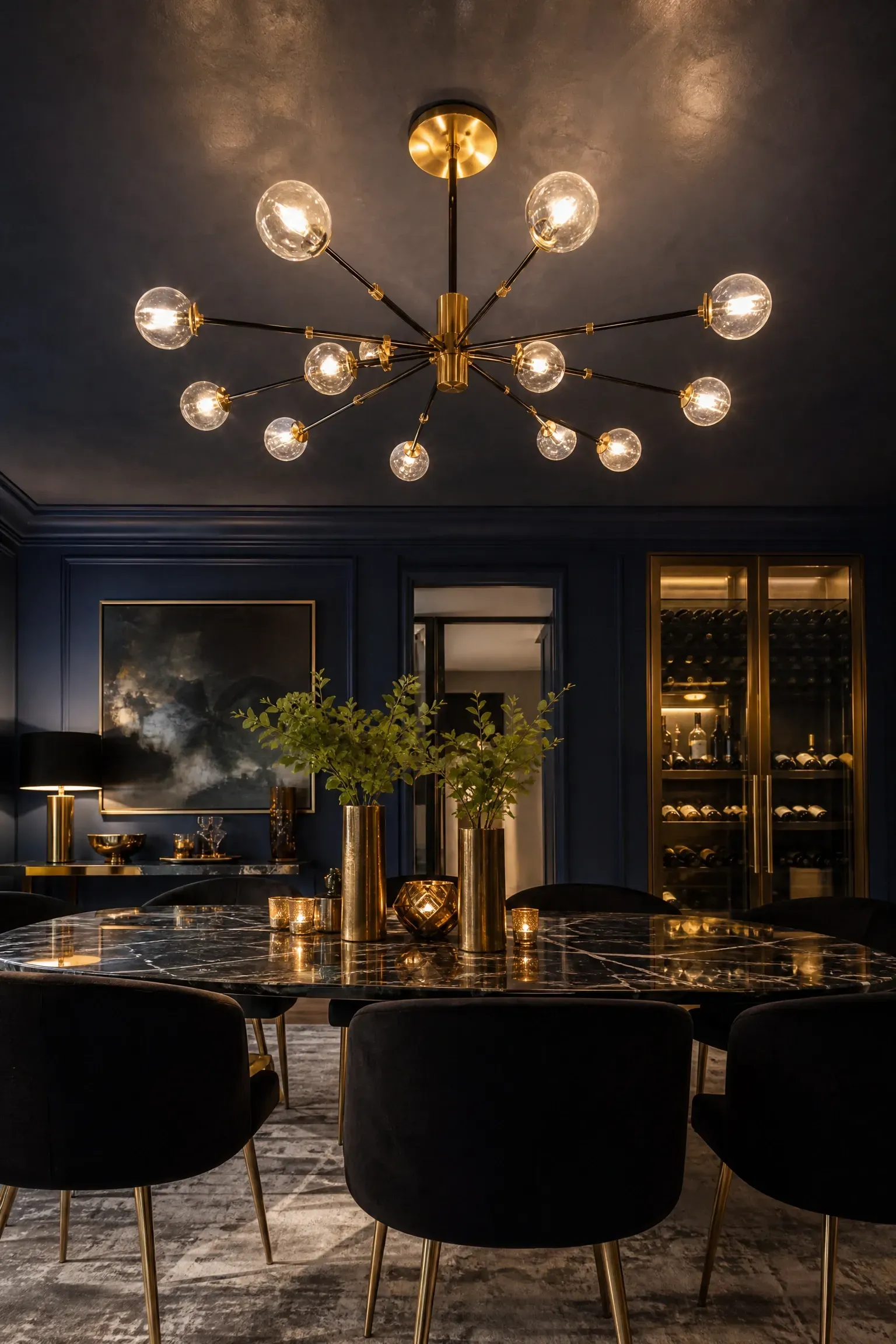
The combination of matte black and brushed gold has been one of the most consistent trends in dining room lighting for the past few years, and it works because it manages to feel both bold and refined at the same time. The black grounds the fixture and keeps it from looking too precious, while the gold adds warmth and a touch of luxury. This two-tone approach fits into modern, glam, and transitional dining rooms with equal ease. It pairs well with a wide range of wall colors including deep navy, warm white, blush, and charcoal. Furniture in dark walnut, natural oak, or painted finishes all work. The fixture does not need to be expensive to look good since the color combination itself carries a lot of the visual weight.
Designer Note: Match the hardware on your dining chairs or cabinet pulls to either the black or the gold in the chandelier. This small detail makes the room feel intentionally designed rather than assembled piece by piece.
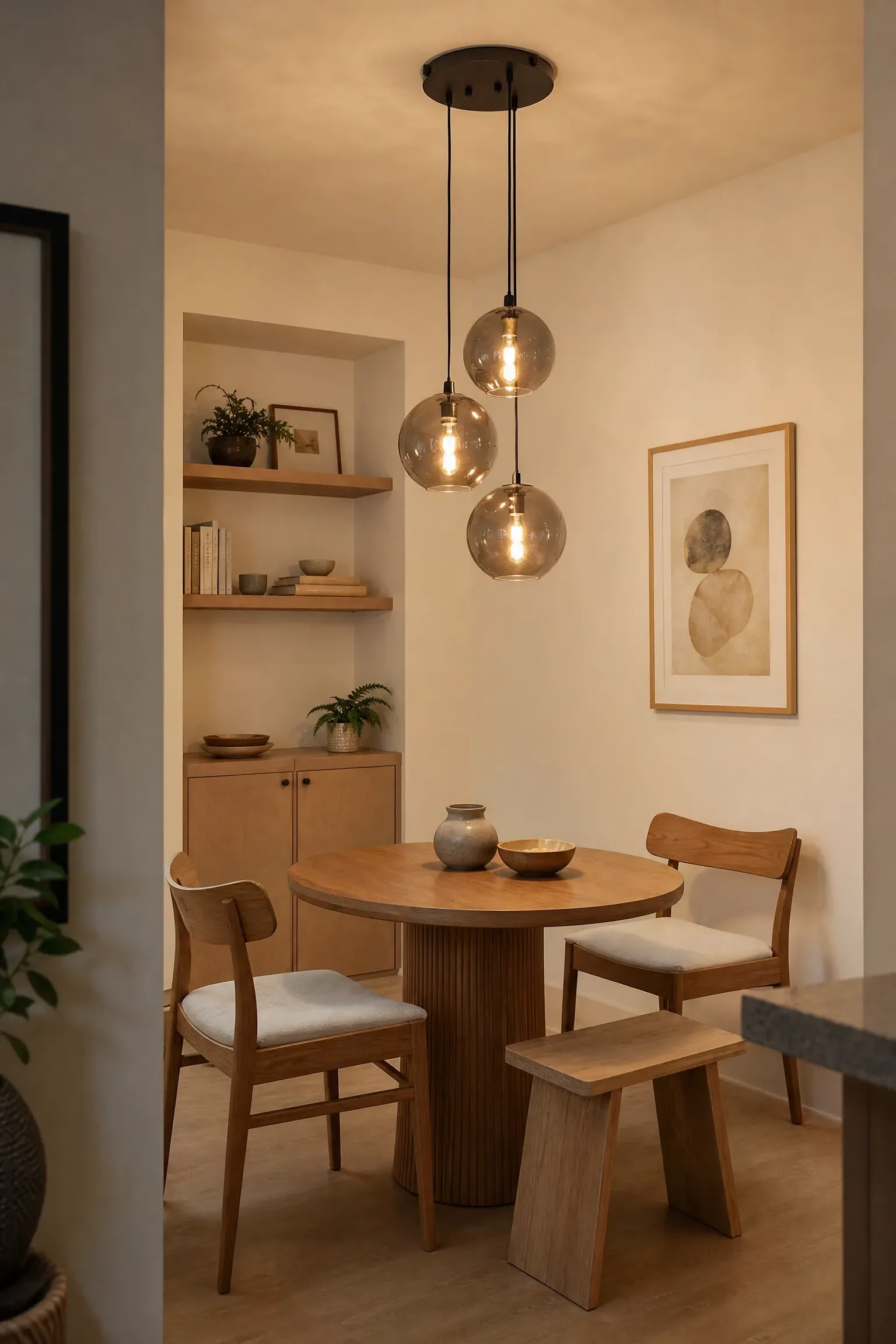
15. Mini Chandelier Cluster for Small Dining Spaces
If your dining room is compact, one large chandelier can feel heavy and out of scale. A better approach is a cluster of smaller pendants or mini chandeliers hung at slightly varying heights from a shared canopy. This gives you the visual richness of a statement light fixture without the bulk, and it scales naturally with a smaller table. Glass globe clusters in smoked or amber glass are especially good because they add warmth and depth without a lot of visual weight. Keep the rest of the room very light, walls in soft white or warm cream, furniture that does not crowd the space, and minimal accessories. The cluster becomes the jewel of the room without competing with everything else.
Designer Note: Clustering three pendant lights of different heights is a budget-friendly alternative to a purpose-built chandelier cluster. You can often mix and match from the same product line for a cohesive look at a lower cost.
Not every dining room has the ceiling height to accommodate a hanging chandelier, and the flush-mount category has genuinely improved in the past few years to address this. Modern flush-mount chandeliers feature crystal accents, metal detailing, and layered designs that give them real presence despite sitting close to the ceiling. For a low-ceiling dining room, choose a fixture that is wide enough to cover a good portion of the space above the table, which makes it feel intentional rather than compromised. A crystal flush-mount in a small-to-medium dining room adds a formal, special quality that is usually reserved for rooms with higher ceilings. Keep the walls light and use mirrors strategically to make the room feel more expansive.
Designer Note: Avoid very deep fixtures in low-ceiling rooms. Look for ones with a profile of four inches or less to maintain adequate headroom and proportion.
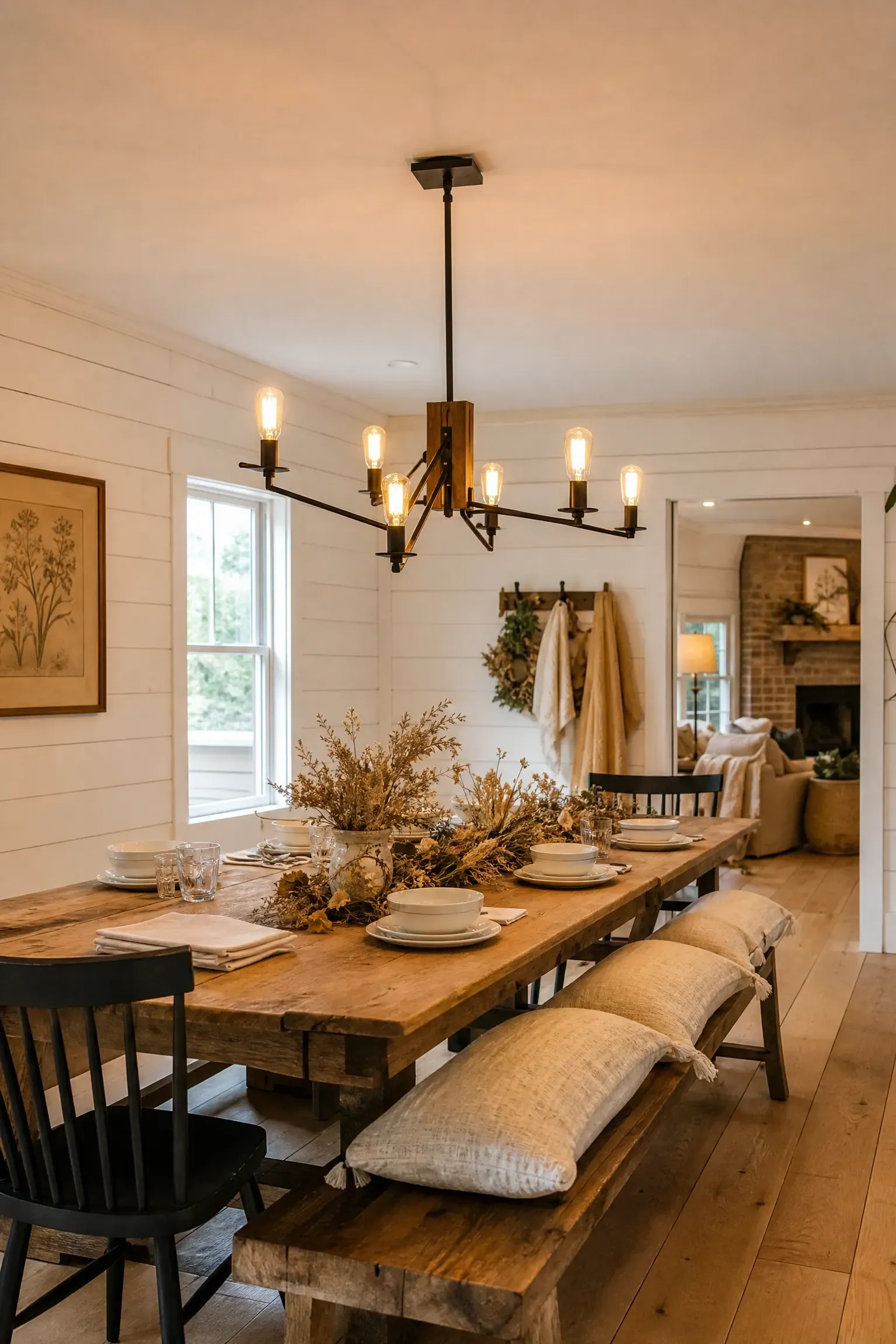
17. Farmhouse Chandelier with Wood and Metal Details
The refined farmhouse chandelier, combining matte black metal frames with wood accents and soft LED bulbs, sits in a comfortable space between rustic and modern that works in a huge range of dining rooms. This style feels approachable and warm without being overly country or theme-heavy, which is exactly why it has remained popular. Look for a fixture with a rectangular or linear form if your table is long, or a round version with multiple arms for a round table. Wood tones should coordinate with the table and flooring rather than match exactly. Walls in warm white, sage green, or warm gray all support this look well. Add cotton or linen textiles, simple ceramic dishware, and a low centerpiece of fresh or dried botanicals.
Designer Note: Farmhouse chandeliers tend to be some of the most widely available and competitively priced styles. You can find very solid options from home improvement stores that look far more expensive than they are.
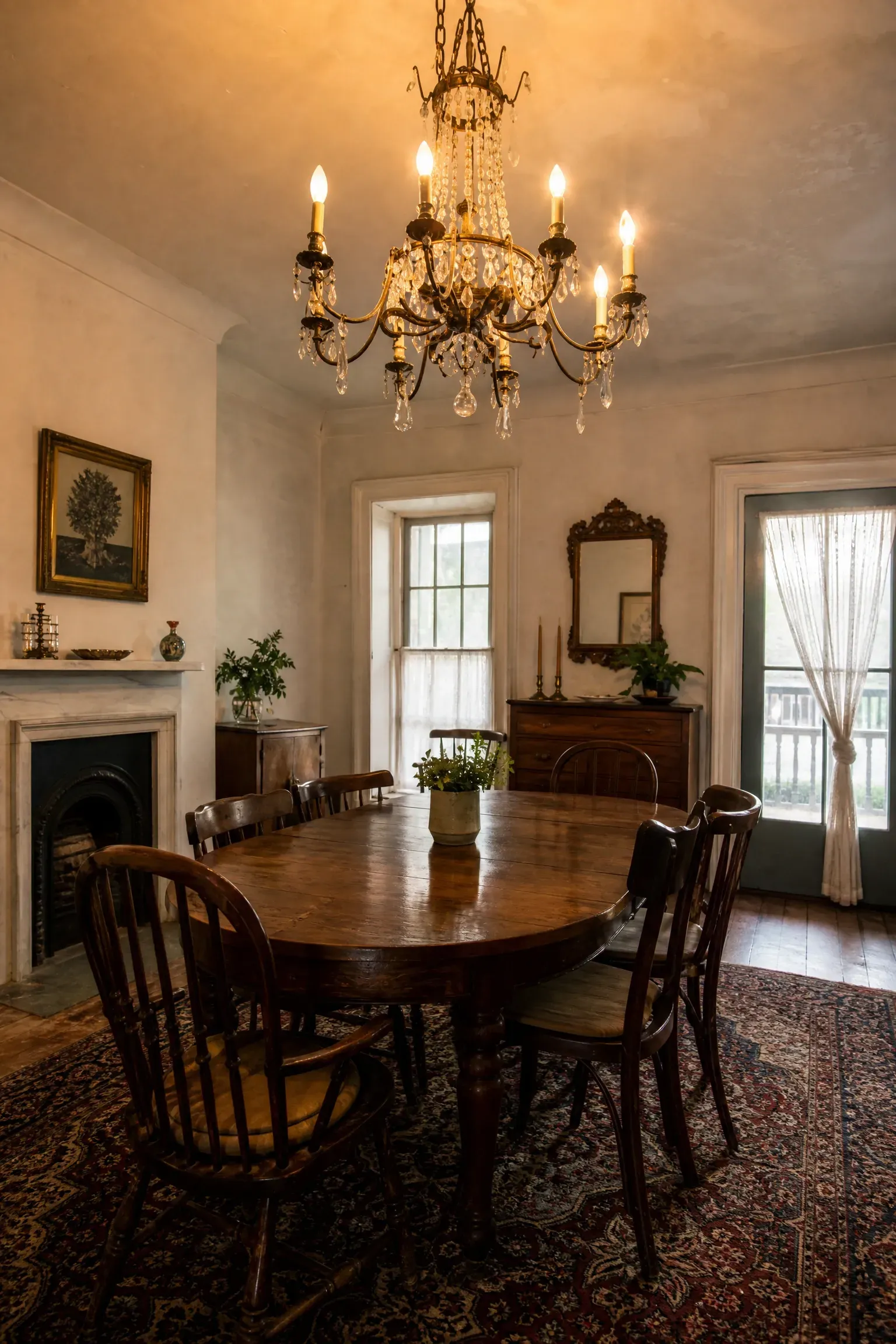
18. Vintage or Antique Chandelier Restored and Rehung
A genuine vintage or antique chandelier, sourced from an estate sale, an architectural salvage shop, or an online vintage marketplace, brings something to a dining room that no new fixture can offer: actual history. Older chandeliers, particularly from the mid-20th century and earlier, were often made with heavier materials and more intricate details than comparable options today. Rewiring a vintage chandelier by a licensed electrician is straightforward and usually not expensive, and the result is a fixture that looks like nothing else in your neighborhood. These work beautifully in rooms with character, old homes with original millwork, rooms with textured plaster walls, or spaces filled with other antique or vintage furniture. The imperfections in an old chandelier, a slightly uneven arm, a replaced crystal, a patinated finish, add to the charm rather than detracting from it.
Designer Note: When buying vintage, always have the chandelier inspected and rewired before hanging. Most electricians charge a flat rate for rewiring a single fixture, and it is always worth doing for safety and longevity.
Bringing It All Together
Choosing the right chandelier for your dining room is really about understanding the room you already have and deciding how much you want the fixture to lead versus support. In some rooms, a sculptural or oversized chandelier is the design decision that makes everything else fall into place. In others, the chandelier plays a quieter role, adding warmth and quality without dominating. Both approaches are completely valid.
The most important things to keep in mind as you shop are scale, hang height, and light quality. A fixture that is too small for the room looks hesitant. One hung too high loses its connection to the table. And a chandelier that produces harsh, flat light undermines all the beauty of the fixture itself. Get those three things right and the style, whether crystal or rattan, brass or black metal, almost takes care of itself.
If you are working with a tighter budget, the farmhouse, drum shade, and rattan categories offer the most room to find something genuinely good without spending a lot. If the budget is more flexible, the sculptural and vintage categories are where you will find the most rewarding results. Whatever direction you choose, give yourself permission to pick something that genuinely excites you. The dining room is one of the most used and most gathered-in spaces in a home. It deserves a chandelier that makes people look up.
Frequently Asked Questions
How do I know what size chandelier to buy for my dining room?
A good starting point is to add the length and width of your dining room in feet, then convert that number to inches. That gives you a rough chandelier diameter. For over the table specifically, the chandelier should be roughly half to two-thirds the width of the table. So if your table is 48 inches wide, look for a chandelier between 24 and 32 inches in diameter.
How high should a chandelier hang above a dining table?
The standard recommendation is 30 to 34 inches between the bottom of the chandelier and the top of the dining table for standard 8-foot ceilings. For every additional foot of ceiling height, you can raise the chandelier by about 3 inches. The goal is for the fixture to feel connected to the table without obstructing sightlines across it.
Can I put a chandelier in a small dining room?
Absolutely. The key is choosing the right scale. A mini chandelier cluster, a flush-mount with crystal detailing, or a smaller drum shade chandelier can all work beautifully in a compact dining room. Avoid anything too wide or with long drop arms that will crowd the space. A good rule is to leave at least 24 inches between the edge of the chandelier and the nearest wall.
What kind of bulbs should I use in a dining room chandelier?
Warm white LED bulbs with a color temperature between 2700K and 3000K are the best choice for most dining rooms. They produce a flattering, comfortable light that suits the social nature of the space. If the bulbs will be visible, such as in an open geometric or candelabra fixture, use globe or Edison-style LEDs that look good as part of the design. Always use dimmable bulbs so you can adjust the light level for different occasions.
Should my chandelier match other light fixtures in my home?
They do not need to match exactly, but they should feel related. The most common approach is to coordinate finishes: if your kitchen has brushed nickel fixtures, choose a chandelier in brushed nickel or a finish that is close to it. Mixing metals intentionally, like pairing brass with matte black, is also a popular and valid design choice as long as it is done with some consistency throughout the room.
Is it expensive to install a chandelier?
If you are replacing an existing light fixture and the wiring is already in place, installation is typically straightforward and costs between 100 and 300 dollars depending on the complexity of the fixture and your location. If a new electrical box or wiring run is required, costs will be higher. Always hire a licensed electrician for chandelier installation, especially for heavier or larger fixtures that need a rated ceiling box.