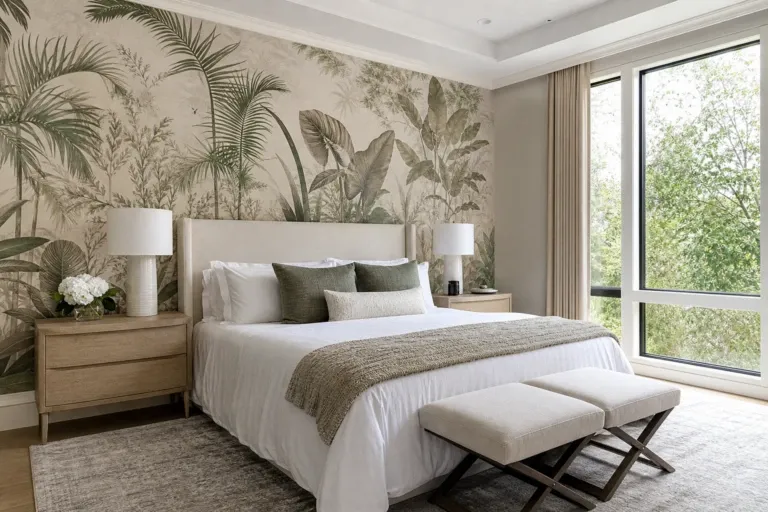
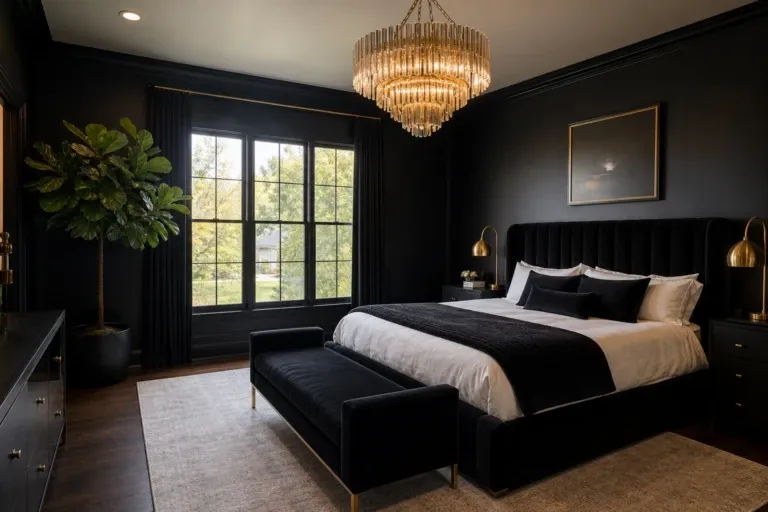
There is something about a farmhouse bedroom that just makes you want to stay in it a little longer. It is not about perfection or perfectly matched sets. It is about the kind of room that feels like it has been put together over time, with pieces that each have a story. The best farmhouse bedrooms I have seen in real homes have a mix of rough and soft, old and new, natural and layered. They feel warm without trying too hard, and that is the whole point. If you have been looking for ideas that go beyond the standard shiplap-and-barn-door formula, you are in the right place.
This article covers 20 farmhouse bedroom ideas organized by theme, so you can dip into whatever area you want to work on first. Every idea here comes with real detail about color, furniture, materials, lighting, and the small choices that actually make a difference. Some of these ideas are very affordable. Some are more of an investment. All of them are practical, and I will be honest with you about what works and what does not.
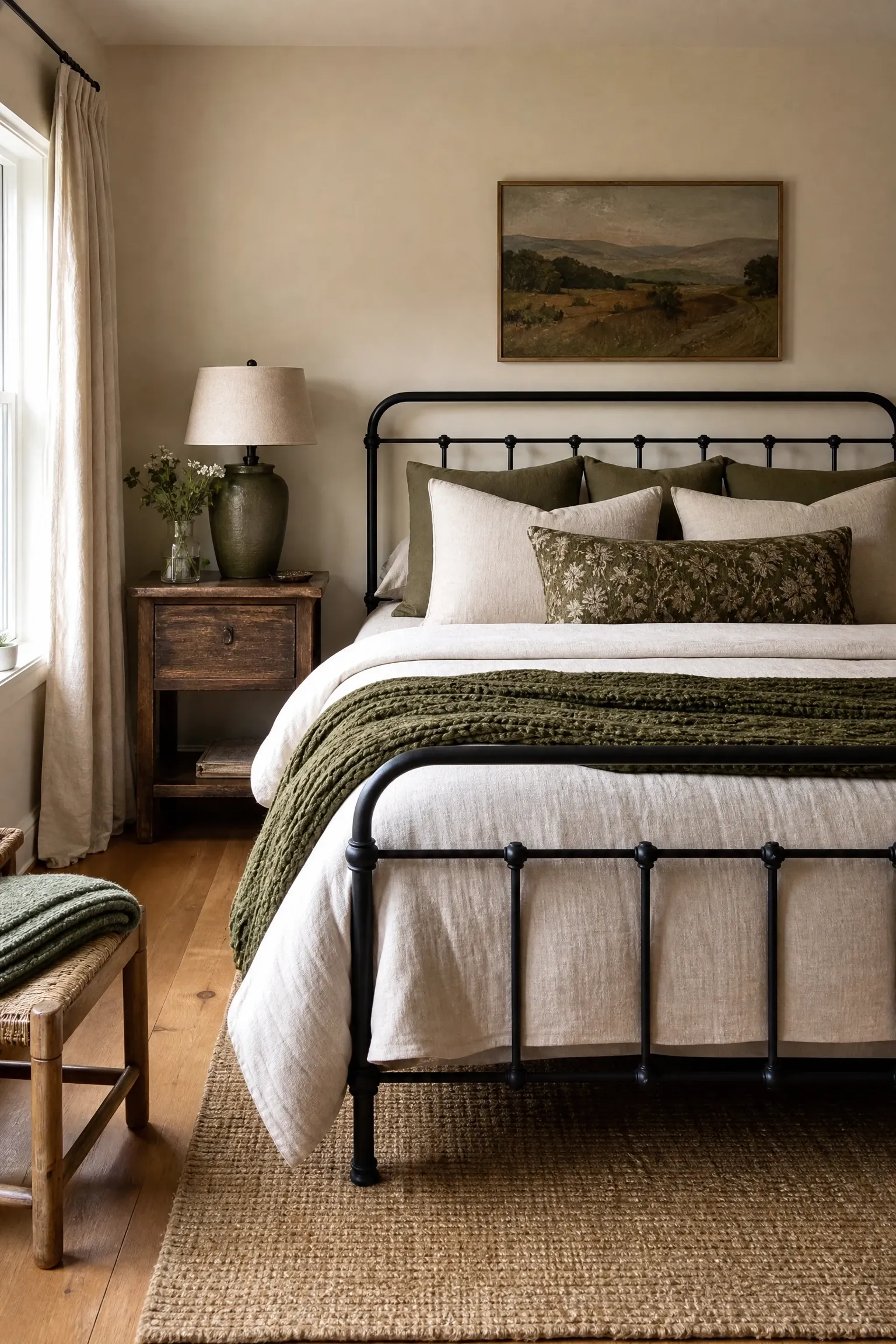
Warm cream walls are a classic farmhouse starting point, but pairing them with deep olive green accents is what takes this look from basic to genuinely interesting. Paint the walls in a soft, warm white such as Benjamin Moore’s White Dove or Sherwin-Williams Antique White, then bring in olive through linen throw pillows, a chunky knit blanket, and a ceramic table lamp with a matte finish. A wrought iron bed frame in a matte black finish adds visual weight and keeps the room from feeling too soft or undefined. For flooring, wide-plank hardwood in a warm honey tone ties the whole palette together. Layer a jute rug under the bed for texture without adding color. This combination works especially well in north-facing rooms where natural light runs cool, because the warm cream walls counteract any chilliness. Budget note: paint and textiles can achieve this look for under $300 if you shop secondhand for the larger furniture pieces.
Designer Note: Olive and cream together hit a color temperature sweet spot. The green reads as earthy and grounded, while the cream keeps things bright and airy.
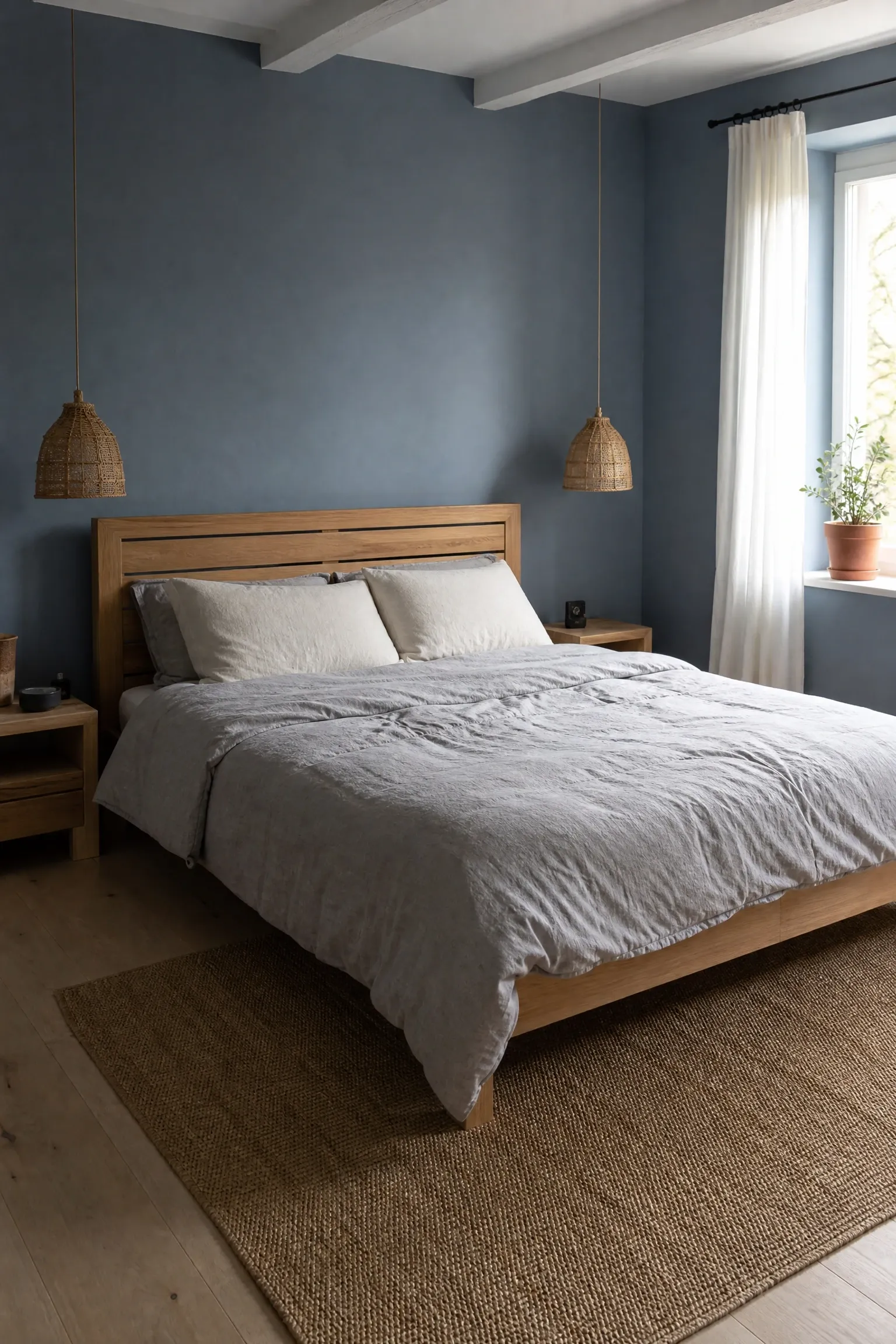
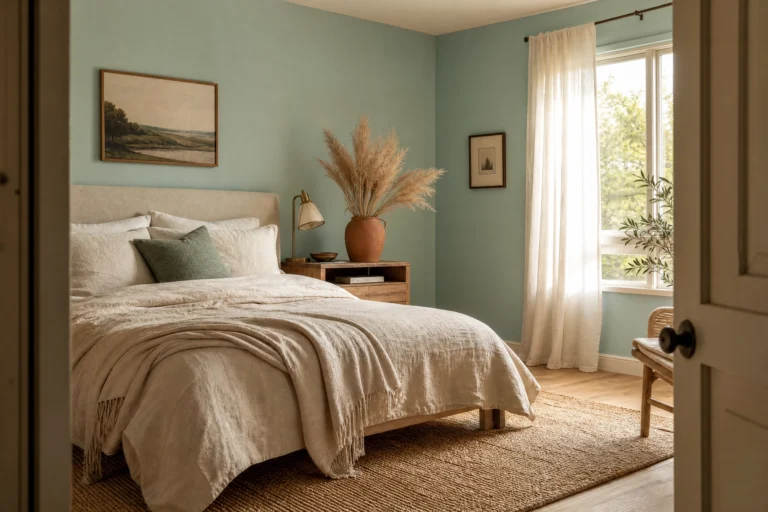
Slate blue is having a real moment in farmhouse interiors right now, and for good reason. It reads as calm, cool, and slightly nostalgic, which fits the farmhouse mood perfectly. A wall color like Farrow and Ball’s Oval Room Blue or Sherwin-Williams Rainstorm works beautifully when paired with a white oak bed frame. White oak has a pale, blonde tone that softens the contrast and stops the room from feeling too heavy. Keep the bedding in off-white or stone gray linen. Add rattan pendant lights above the bedside tables for warmth and a natural material that bridges the gap between the cool blue walls and the pale wood. This palette works best in bedrooms with good natural light. In a very dark room, consider using slate blue only on one feature wall behind the bed and keeping the other walls in a softer neutral.
Designer Note: White oak furniture is pricier than pine but worth it here. The grain is tighter and the tone is more sophisticated, which lifts the whole room.
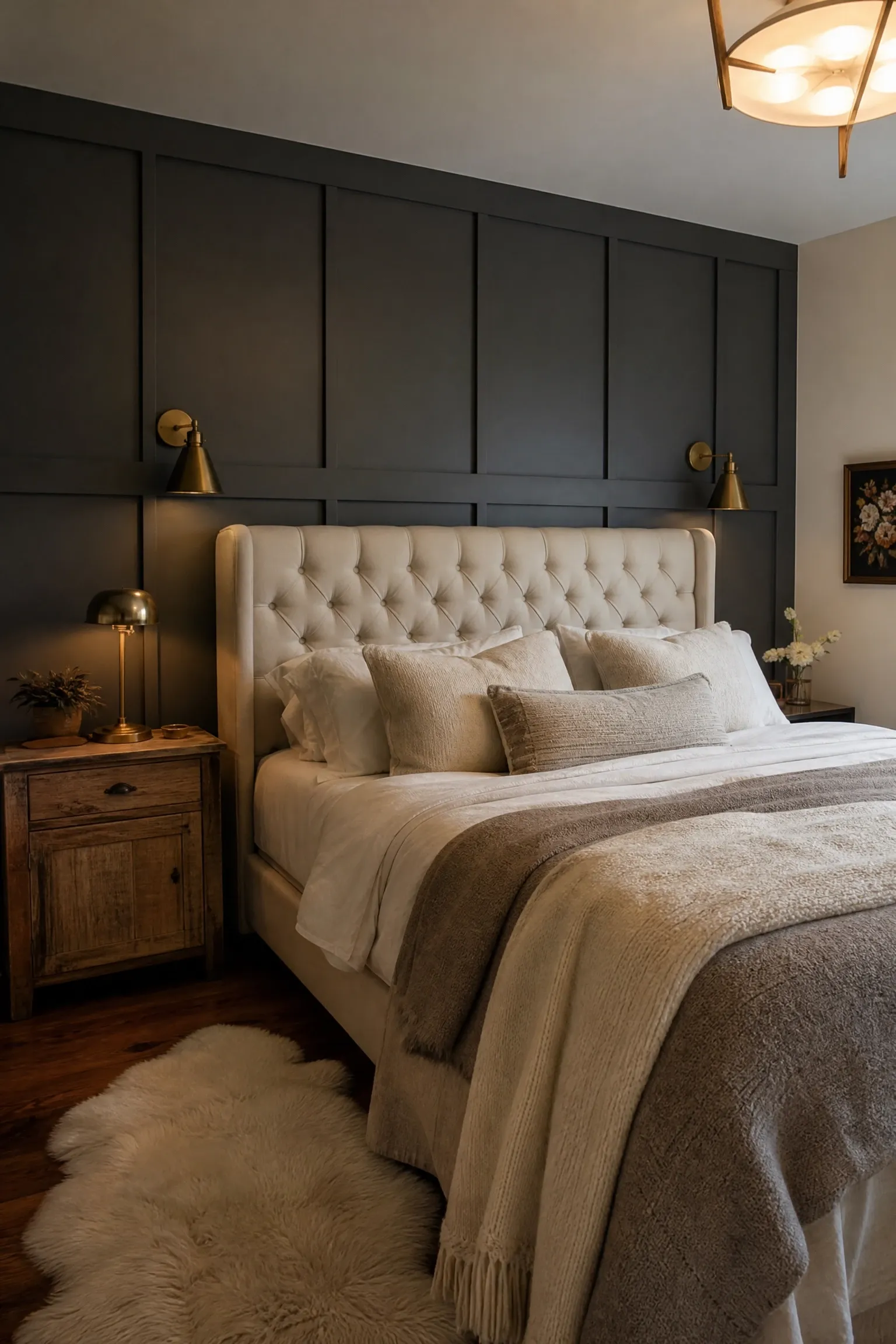
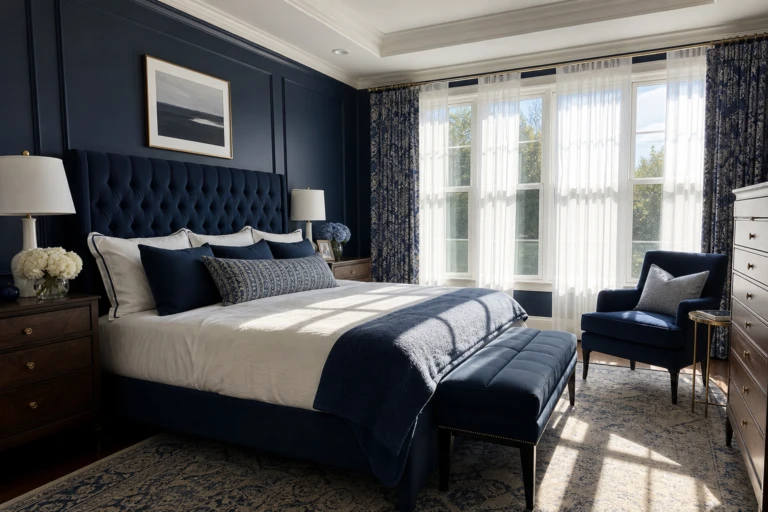
For a farmhouse bedroom that leans darker and more dramatic without losing its warmth, charcoal gray paired with warm off-white is a strong combination. Use charcoal on a single paneled accent wall behind the bed, and keep the other three walls in a warm off-white like Sherwin-Williams Alabaster. A tufted linen headboard in warm ivory or dusty beige anchors the bed and softens the strong wall. Add brass or aged gold hardware on bedside tables and light fixtures for a subtle warmth. Layered wool blankets in cream and oat tones, a sheepskin rug on one side of the bed, and a reclaimed wood nightstand bring in the texture needed to keep this from feeling cold. Honest note: this palette works best in medium to large bedrooms. In a very small room, charcoal walls can feel closing-in even with good lighting.
Designer Note: The trick with dark accent walls is to not stop at the paint. Layered textiles in warm tones are non-negotiable if you want the room to feel cozy rather than stark.
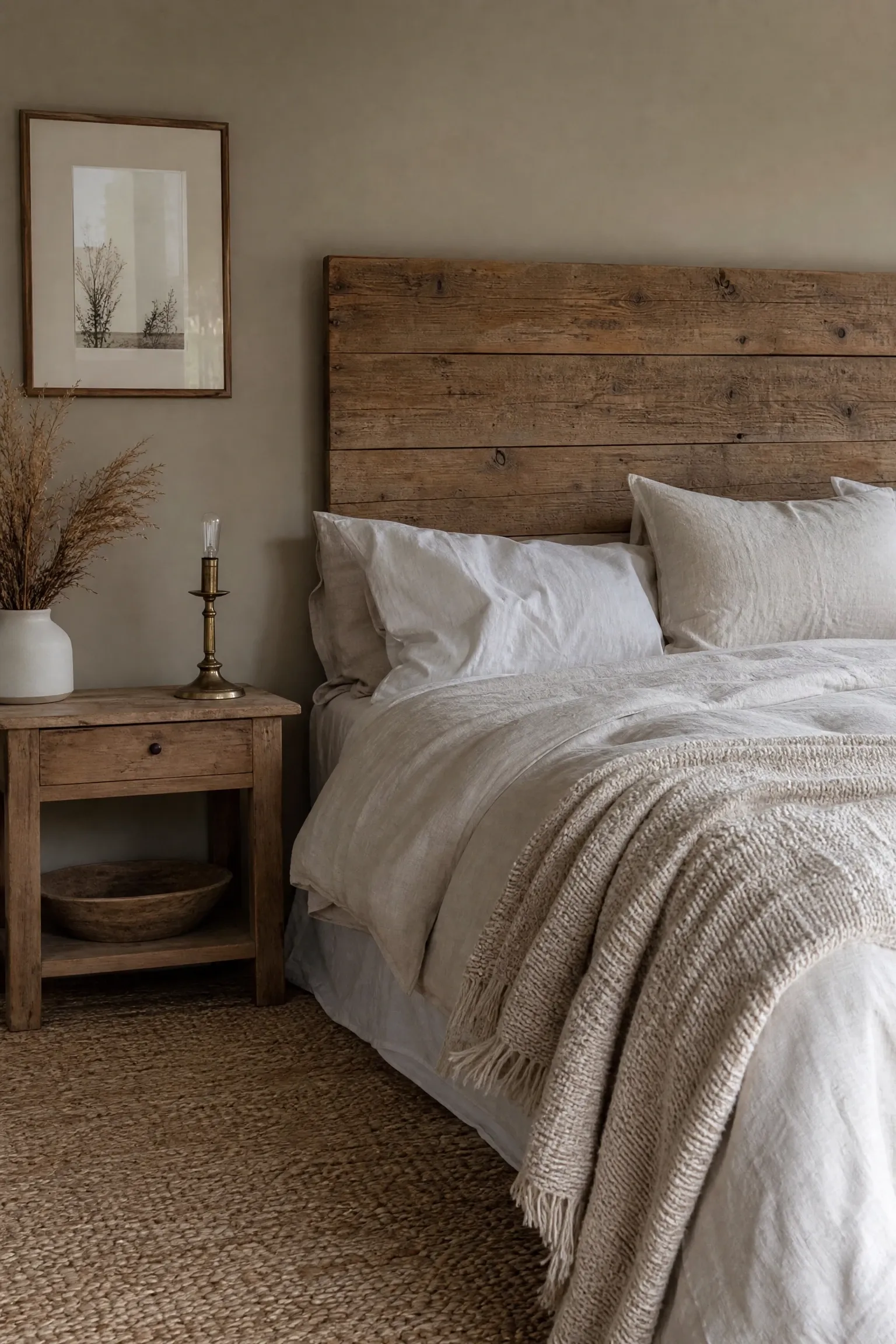
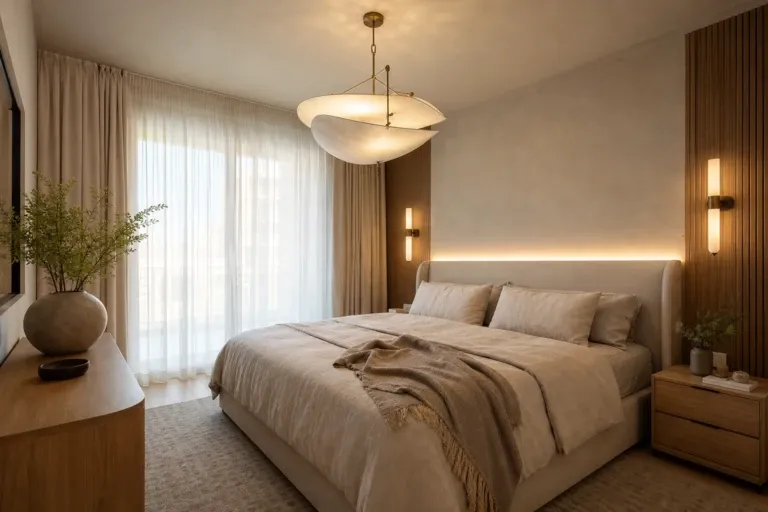
This palette is about restraint. No strong color at all. Walls in a soft warm greige, furniture in raw or lightly stained wood, and every textile in natural linen or undyed cotton. The visual interest here comes entirely from texture and tone variation, which is a much more sophisticated approach than it sounds. A reclaimed wood headboard with visible grain, a hand-woven throw at the foot of the bed, linen shams with raw edges, and a simple sisal rug all work together because they share the same earthy, unfinished quality. For lighting, a simple exposed-bulb pendant or a small candlestick-style lamp in aged brass adds warmth. This look is deeply calming and feels genuinely organic. It does demand quality materials though, because cheap linen substitutes look synthetic and ruin the effect entirely. Mid-range to investment level, but long-lasting.
Designer Note: This is a Japandi-adjacent approach applied to farmhouse style. The principle of wabi-sabi, finding beauty in imperfection and natural materials, is doing all the work here.
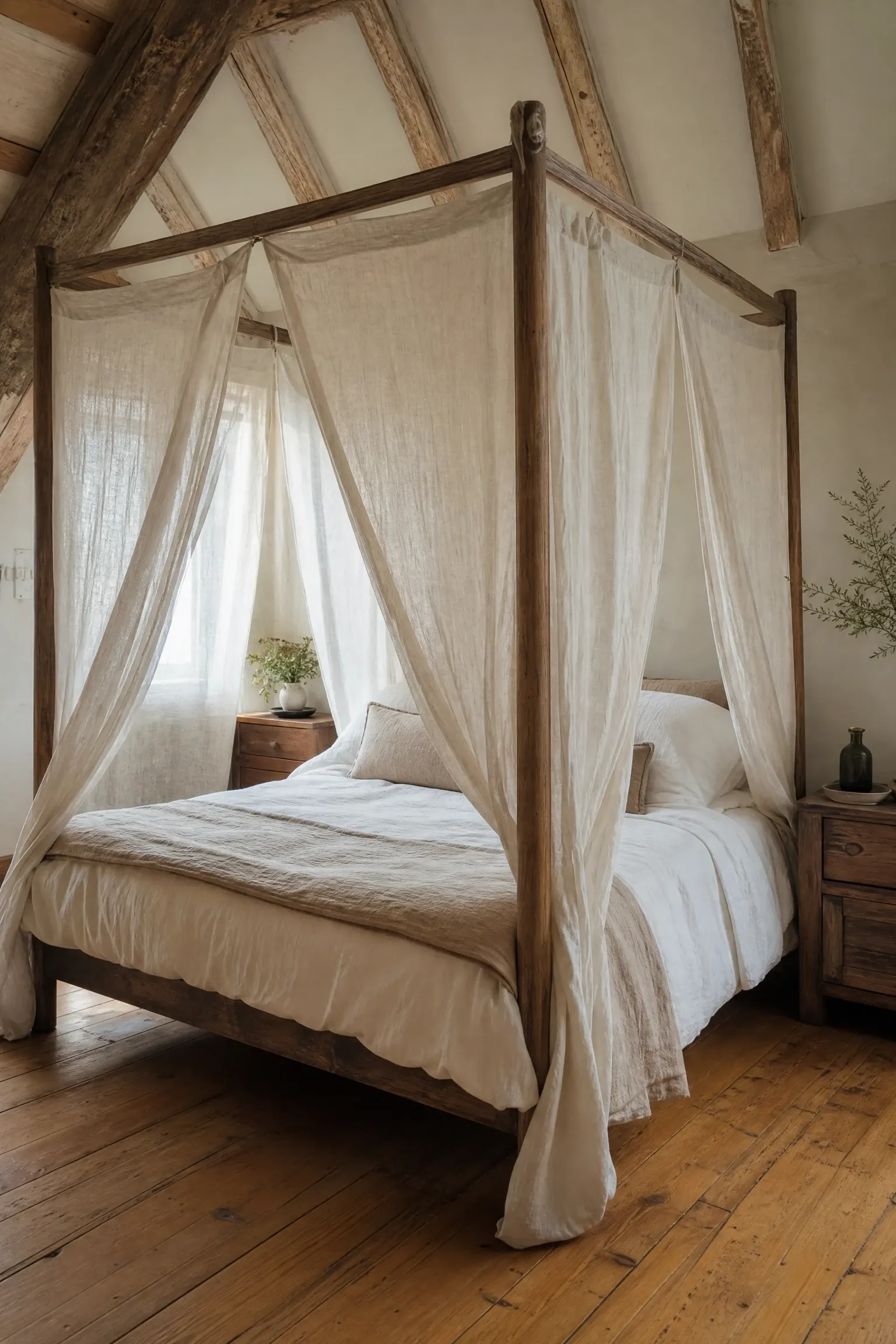
A canopy bed in a farmhouse bedroom sounds like a lot, but when you strip it down to a simple four-poster frame in natural wood or matte black metal and hang lightweight linen panels from the top, it becomes one of the most atmospheric things you can do to a room. The curtains do not need to close. They just need to frame the bed and create that sense of enclosure that makes sleep feel like a retreat from the world. Keep the bedding simple, a white or oat linen duvet with a single textured throw, so the frame and the drapes are the feature. This works in rooms with at least nine-foot ceilings. In rooms with eight-foot ceilings, the proportions get tight and the canopy can feel oppressive rather than cozy.
Designer Note: Go sheer or semi-sheer for the linen panels. Heavy drapes on a canopy make the bed feel like it is closing in on you. Light fabric moves in the breeze and adds a softness that is hard to replicate with anything else.
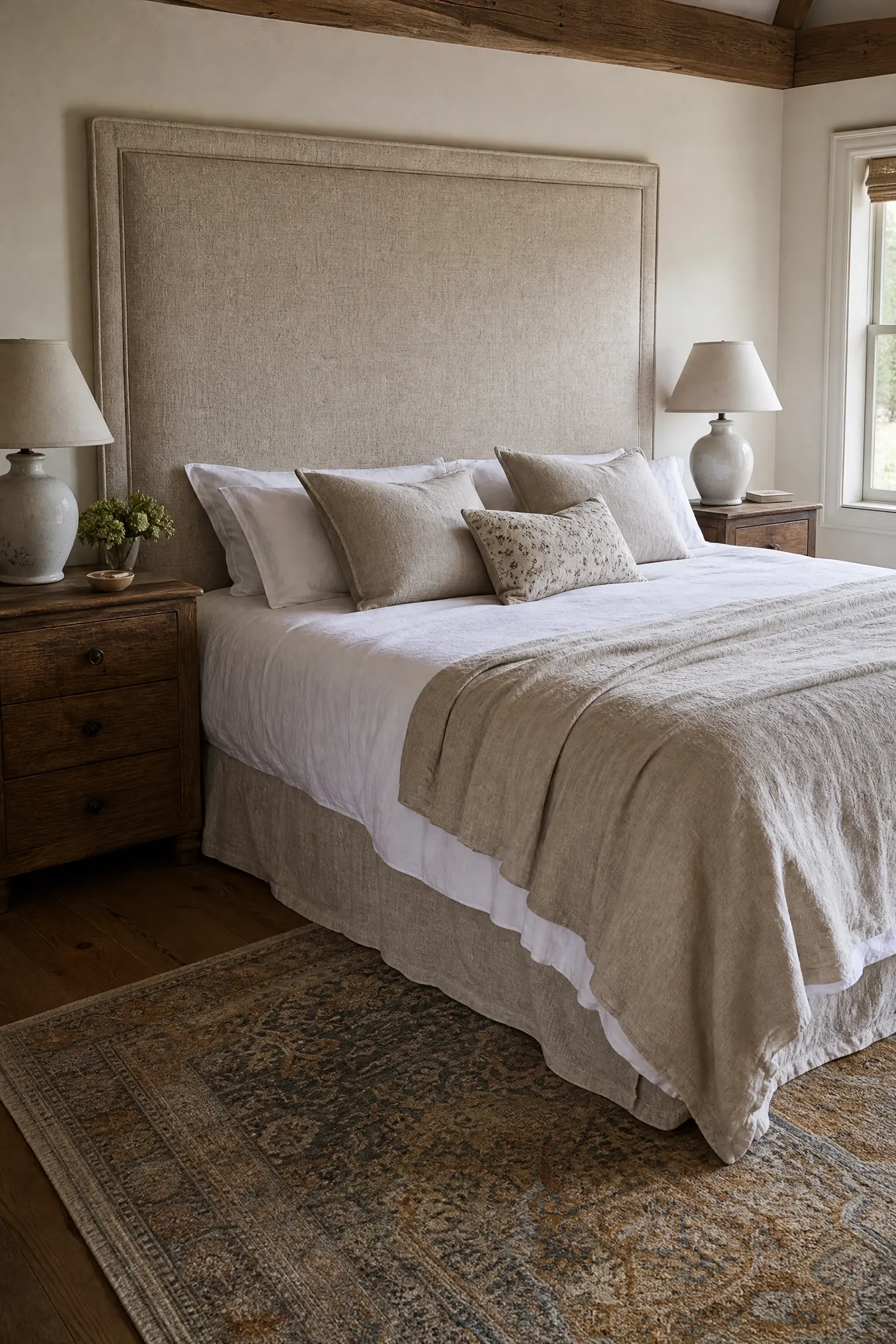
Most farmhouse rooms skip the upholstered headboard in favor of wood or metal, but that is a missed opportunity. A generously sized upholstered headboard in a coarse linen, cotton canvas, or even a nubby boucle fabric brings softness and acoustic warmth to a room in a way that a wood board simply cannot. Keep the color in the neutral range, think oatmeal, warm gray, or dusty sage, and skip the button tufting for a more relaxed farmhouse look. Flange trim or a simple French seam finish at the edges looks clean without being too polished. Pair it with bedside tables in reclaimed or distressed wood to bring the rustic element back in. This idea works across bedroom sizes and is a genuinely useful addition if you like reading in bed.
Designer Note: The headboard height matters a lot here. In a room with tall ceilings, a headboard that reaches at least 48 inches gives the bed the visual weight it needs to anchor the space.
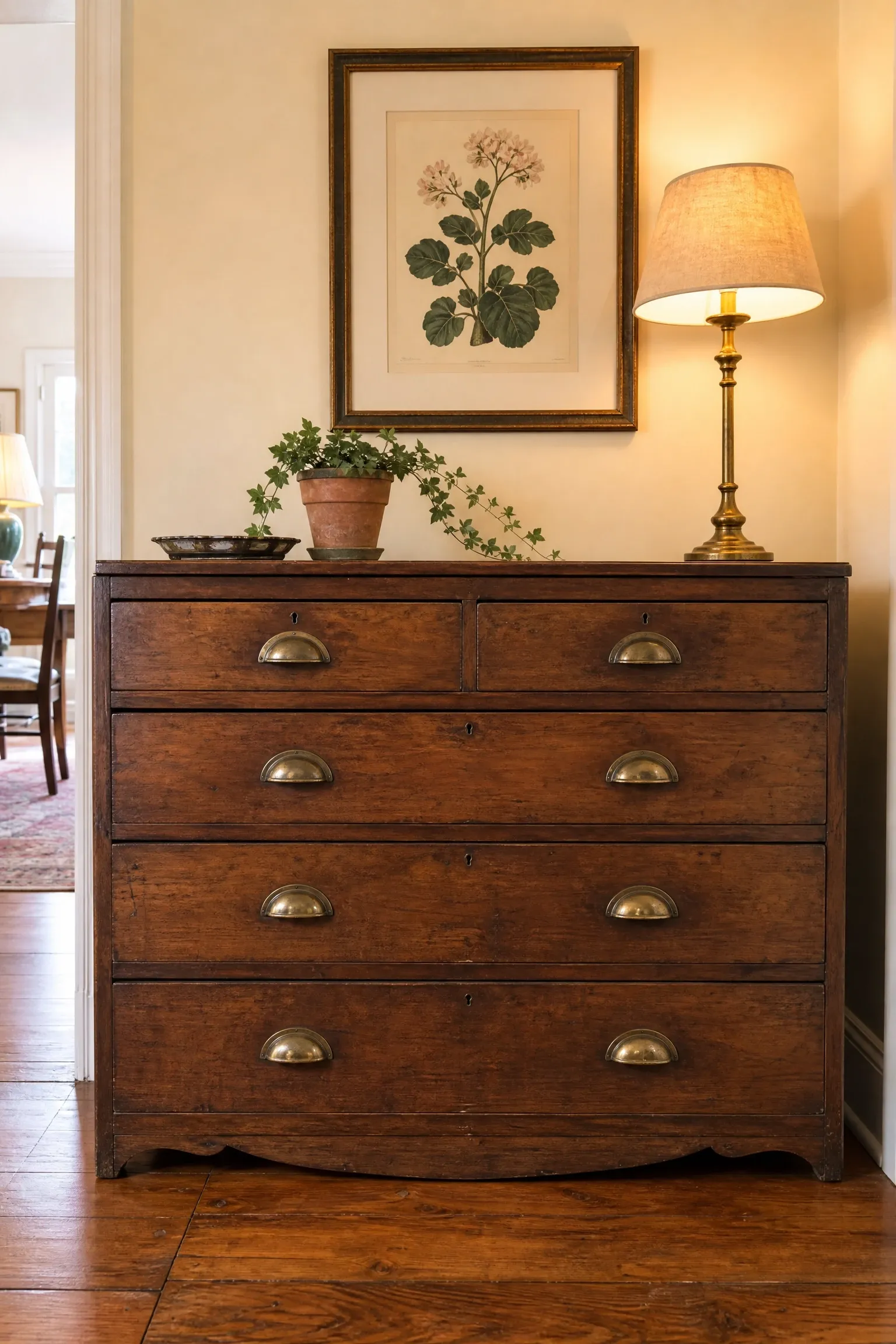
One piece of genuinely old furniture can do more for a farmhouse bedroom than an entire set of new matching pieces. A vintage dresser, the kind with dovetail joints, original hardware, and slight variations in the finish from decades of use, brings an authenticity that no new piece replicates. Find one at an estate sale or a consignment shop, clean it up, and let it be the focal point of one wall. Style the top simply with a small tray, a single plant, and one lamp. The patina and character of the piece provide all the visual interest you need. If the hardware is dated, swap it for simple bin pulls in aged brass or black iron. Honest note: vintage dressers can be heavy and awkward to move, and drawer alignment may need adjustment. Factor in a bit of time and a furniture mover.
Designer Note: Resist the urge to refinish a vintage dresser. The original finish, even if worn, is what makes it look real and not like a new piece distressed at a factory.
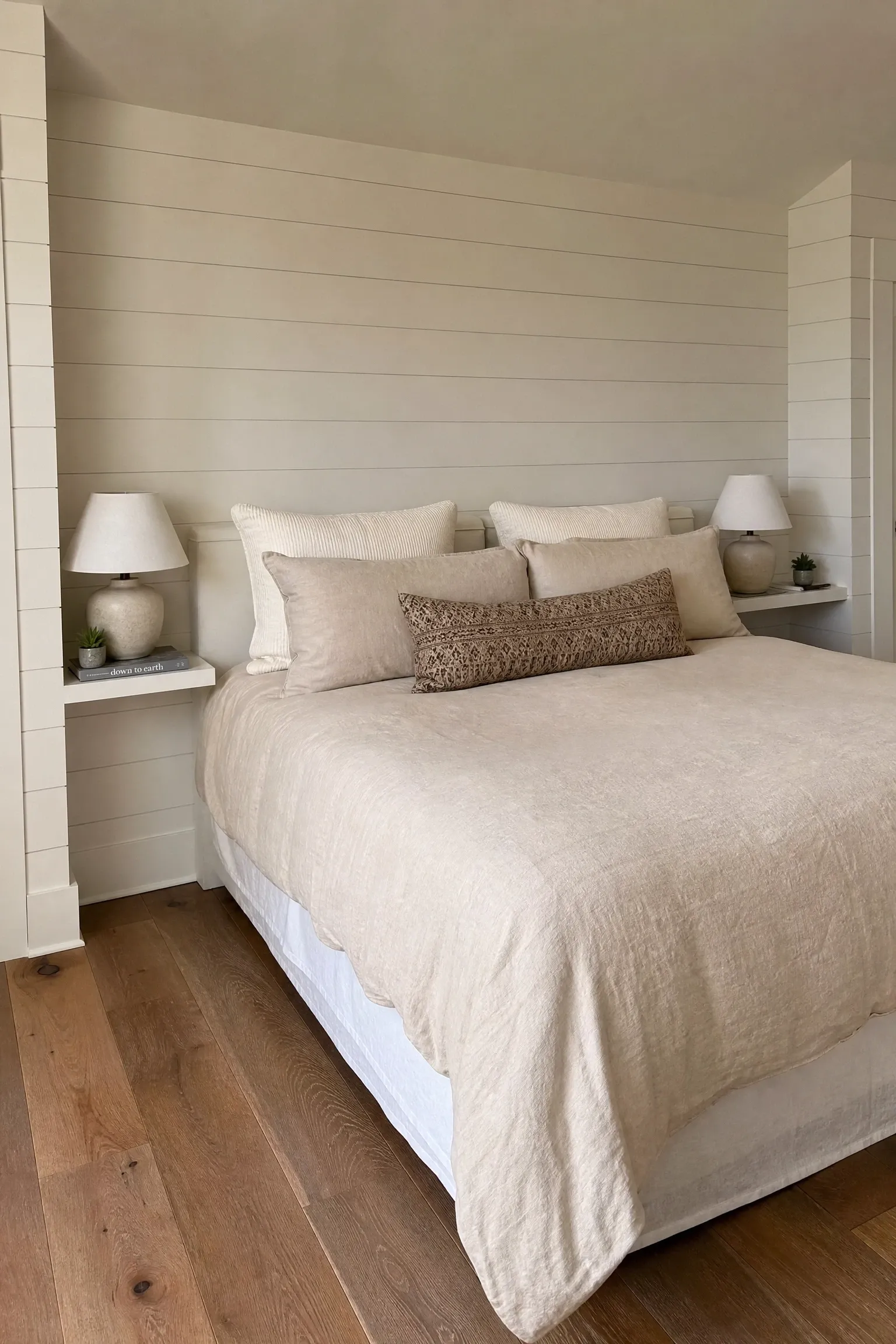
Rather than putting shiplap on every wall as a background texture, use it specifically to build low, built-in shelving flanking either side of the bed. This creates a nook-like feel around the headboard and gives you practical bedside storage without floating nightstands that can look disconnected. Paint the shiplap the same color as the walls for a smooth, architectural look rather than a feature wall vibe. Add a small shelf at lamp height on each side. Keep styling minimal: one lamp, one book, one small plant per side. This approach works especially well in smaller bedrooms where wall space is tight, because it uses the vertical wall area above the mattress rather than floor space. This is a moderate DIY project or a few hours of work for a carpenter.
Designer Note: Painting the shiplap the same color as the walls is the move. Contrasting white shiplap on colored walls is a much more predictable choice and dates more quickly.
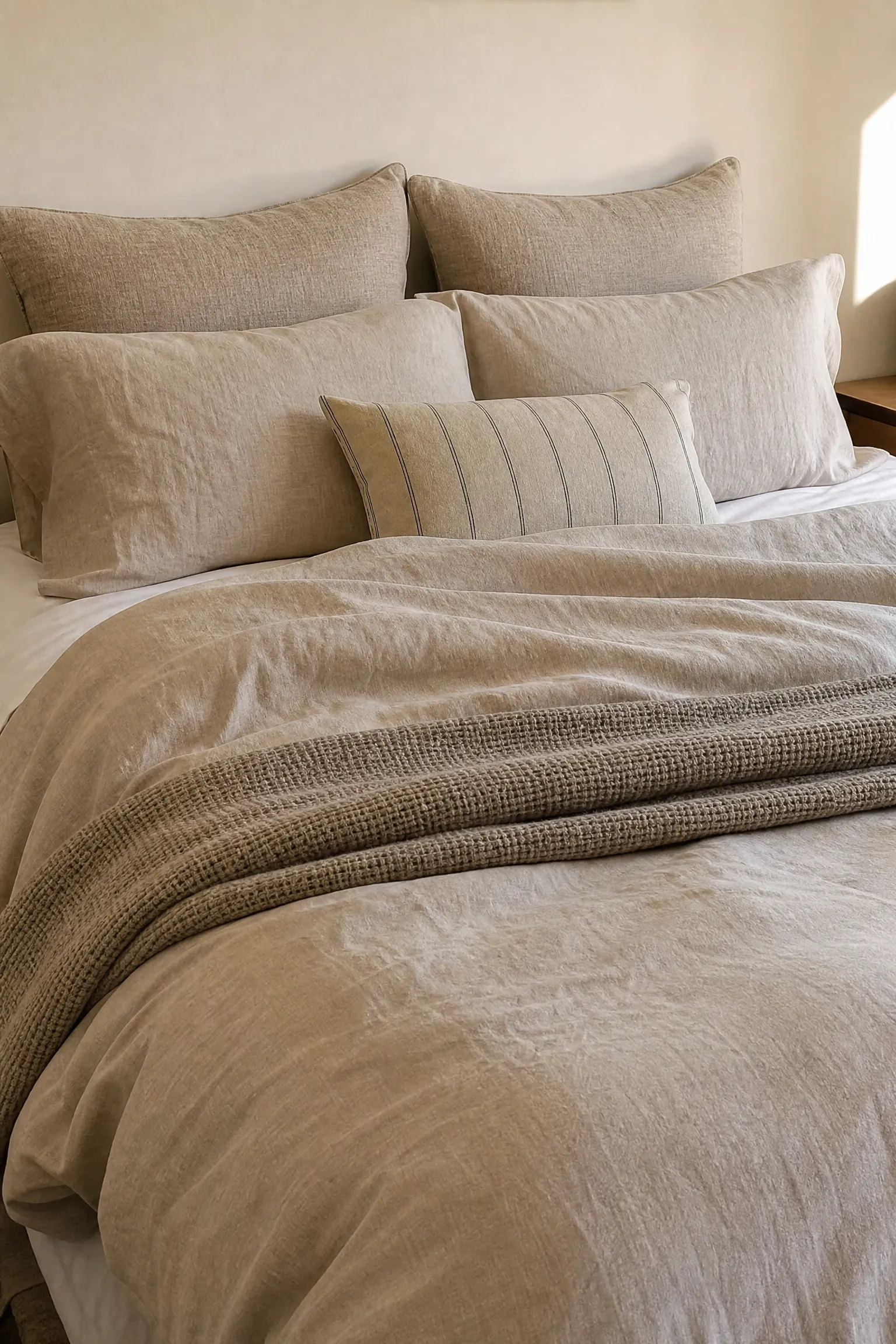
Linen bedding is a farmhouse staple, but most people do not layer it in a way that looks intentional. The key is working in three distinct tones within the same color family. Start with a fitted sheet in warm white, add a duvet cover in natural oat or stone, then layer a textured throw blanket in a slightly darker tone, like warm taupe or pale bark brown, folded across the lower third of the bed. Add four to five pillows total: two euro shams at the back in a slightly rough-textured fabric, two standard shams in the same linen as the duvet, and one accent pillow in a simple stripe or solid in a contrasting tone. This gives the bed the full, layered look you see in editorial photos without being over-styled. Linen wrinkles, and that is not a problem. In a farmhouse bedroom, the wrinkles are part of the look.
Designer Note: Avoid perfectly matched linen sets. The slight variation in tone between different pieces from different sources is what makes the layering look natural and lived-in.
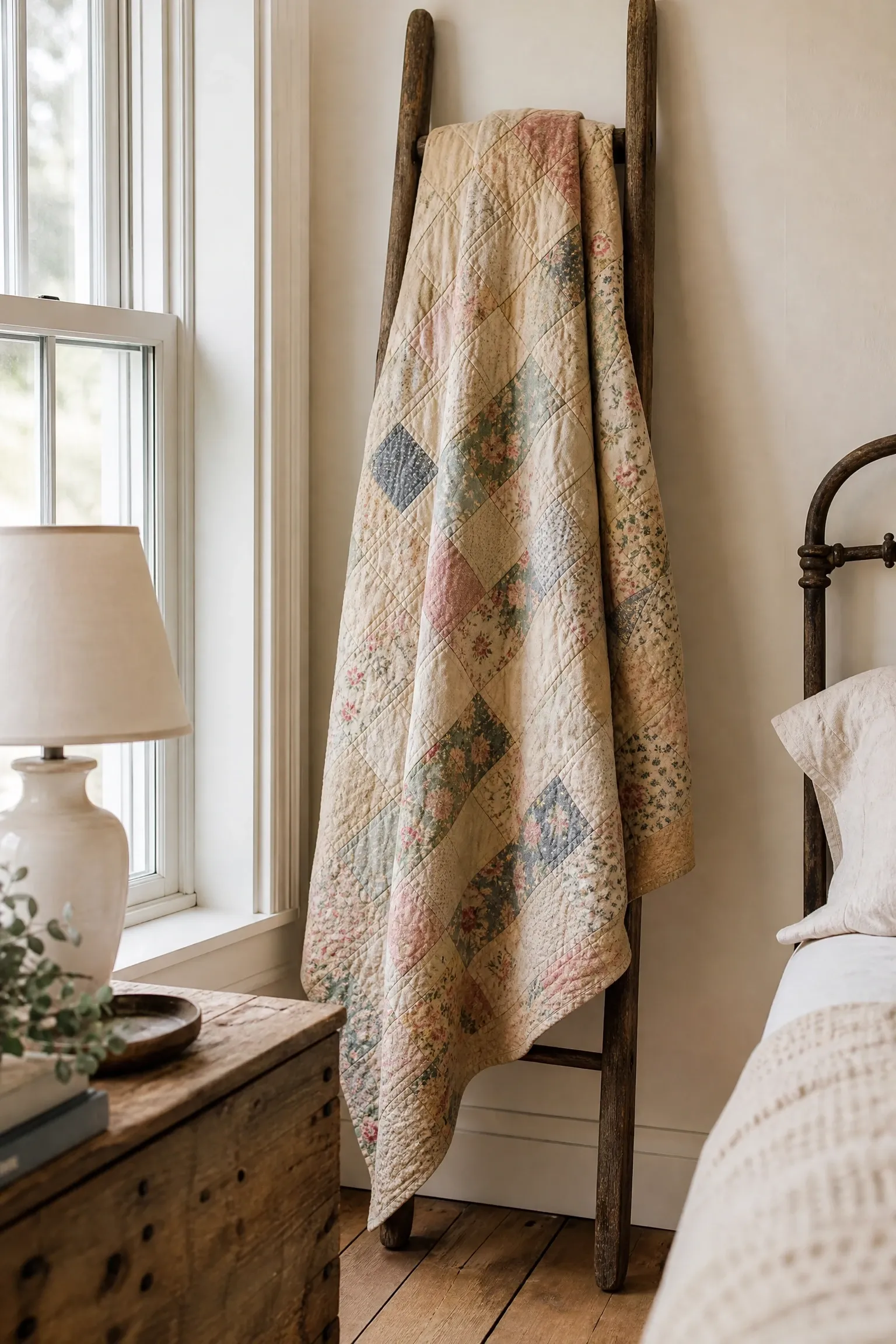
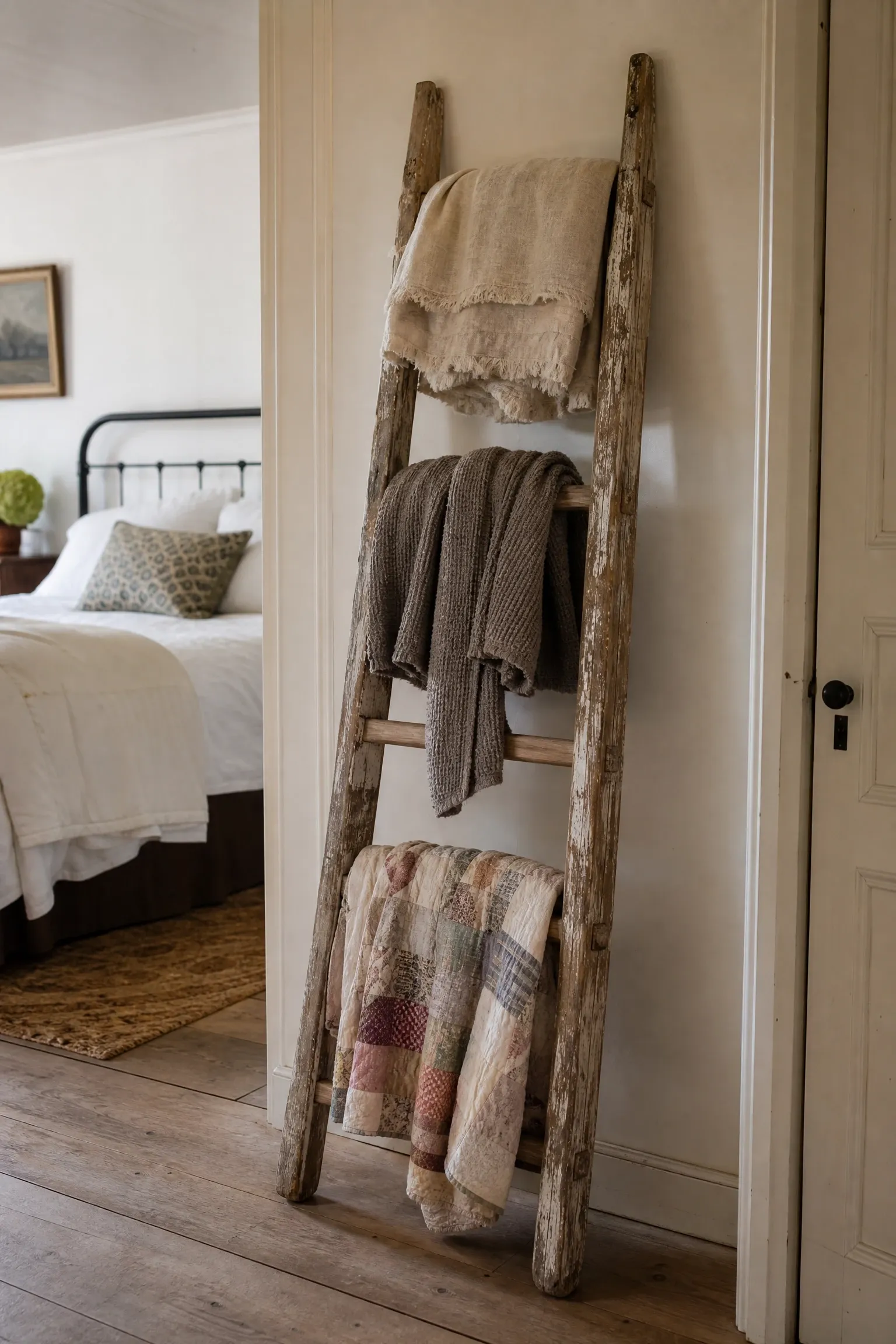
A vintage quilt folded at the foot of the bed or hung on a wooden ladder leaning against the wall is one of the most authentic farmhouse details you can add to a room. Old patchwork quilts, especially those with faded fabric and visible wear, carry a warmth and history that cannot be manufactured. Look for them at antique markets, estate sales, or online vintage shops. They work especially well in bedrooms that otherwise lean toward a minimal aesthetic, because the quilt brings in pattern and color in a way that feels collected rather than decorated. A single vintage quilt can be the most interesting thing in a room. Be aware that some antique quilts are fragile and should not be washed frequently. Use them as display pieces rather than active bedding if they are particularly old.
Designer Note: Quilts from the 1940s through the 1970s tend to have the best color combinations for modern farmhouse rooms. The faded pastels and muted prints sit beautifully with natural linens and warm wood tones.
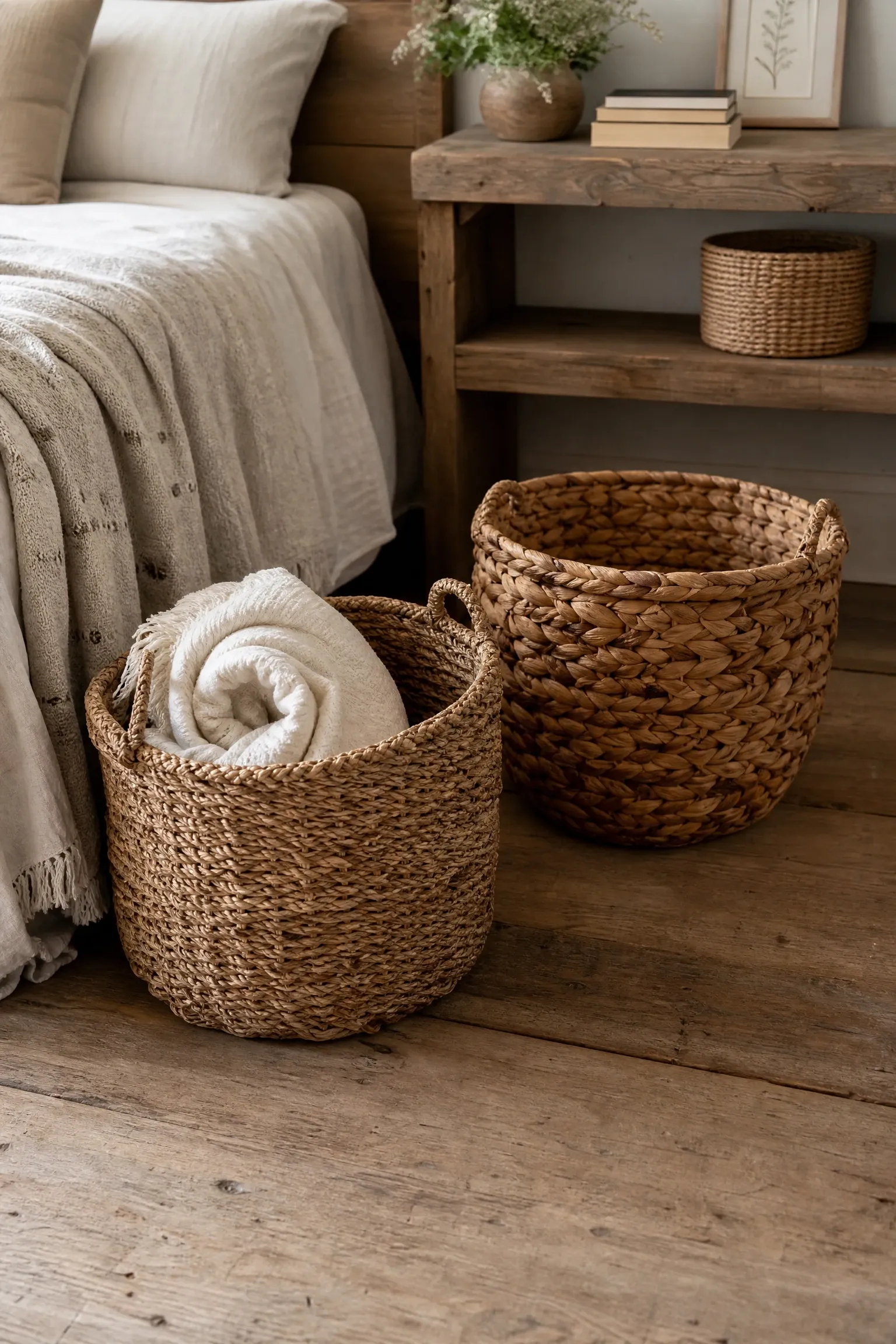
Woven baskets serve a dual purpose in a farmhouse bedroom. They are practical storage and they add texture in a way that feels organic rather than decorated. Use a large seagrass basket under the bed or beside a chair for throws and extra blankets. Add smaller woven baskets on open shelving for smaller items. A tall basket beside the door for throw pillows you remove at night is both functional and visually warm. The key is to vary the weave style slightly across the baskets rather than buying a matching set. A tight seagrass weave beside a looser rattan weave beside a thicker water hyacinth basket gives you visual variety while keeping everything in the same material family. This is one of the most affordable ways to add significant texture to a room.
Designer Note: Do not stack baskets inside each other when not in use. Keep them out and in use. A basket only reads as decor when it is doing something.
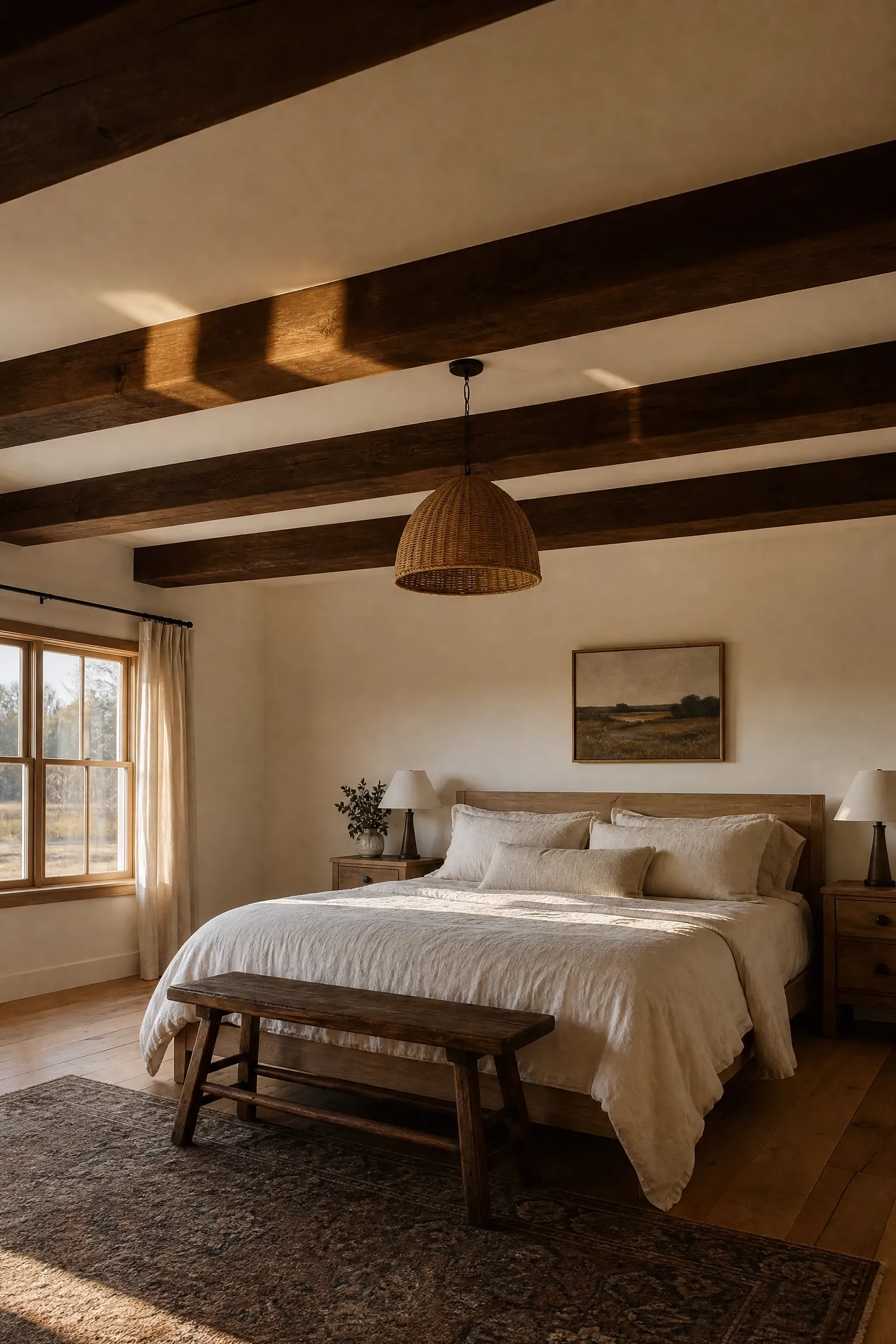
If your bedroom has the structural possibility of exposed wood beams, staining or painting them in a warm walnut or dark oak tone immediately grounds the space and gives it genuine architectural character. In rooms without structural beams, lightweight faux wood beams made from polyurethane are a surprisingly convincing alternative and much easier to install. Space them evenly across the ceiling and run them perpendicular to the longest wall of the room. Keep the ceiling itself in a warm white so the beams stand out without making the room feel lower. This works best in rooms where the ceiling is at least nine feet high. Below nine feet, beams can compress the visual height of the space and make the room feel smaller. This is an investment-level project but one that permanently changes the character of a room.
Designer Note: Paint ceiling beams the same tone as the floor if you want a cohesive, pulled-together look. It creates a visual envelope around the room that feels intentional and architectural.
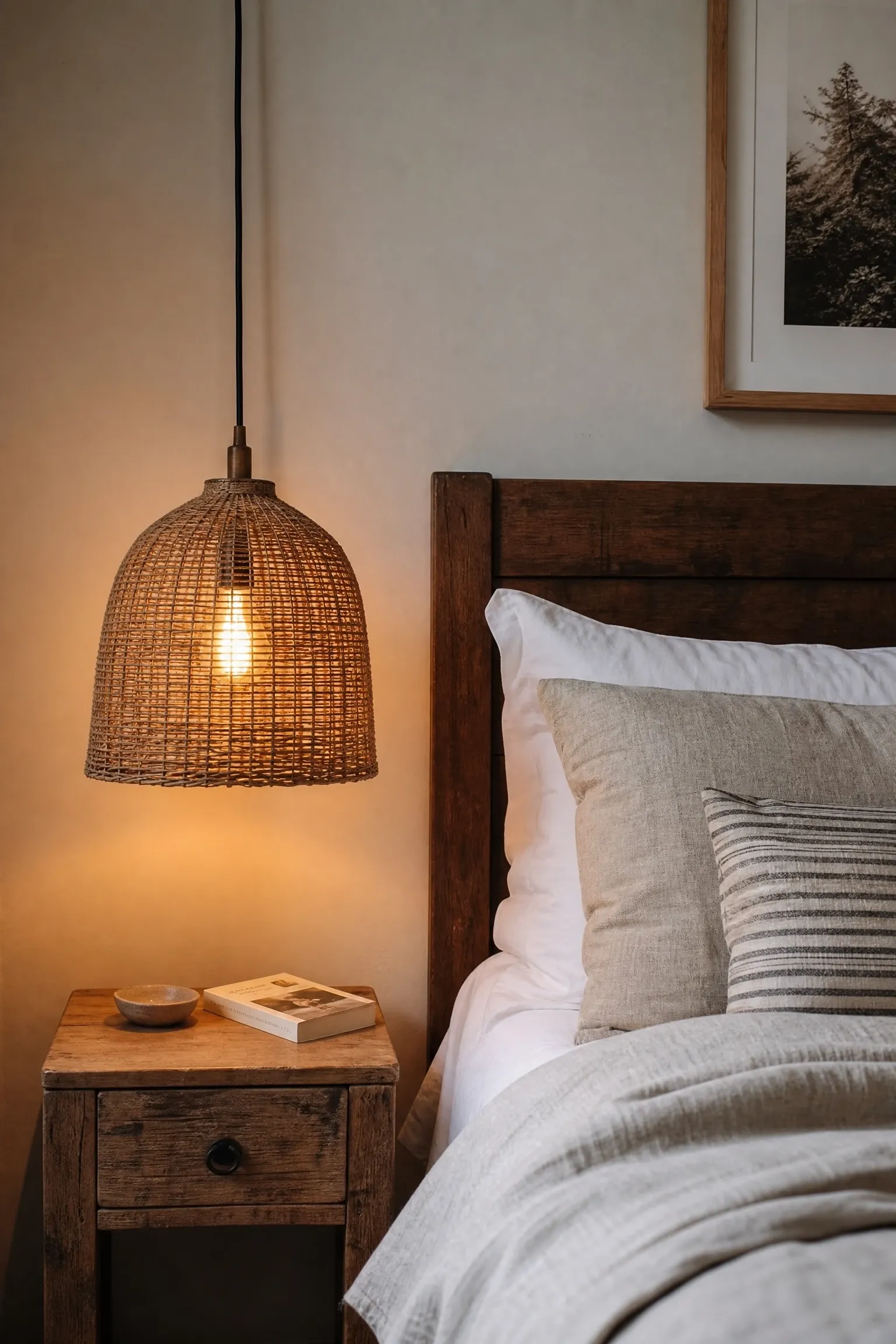
Swapping out bedside table lamps for hanging pendants is one of the highest-impact changes you can make to a farmhouse bedroom, and it frees up the entire surface of your nightstand. Choose pendants in rattan, aged metal, or ceramic with a simple Edison-style bulb, and hang them so the bottom of the pendant sits roughly at pillow height when you are sitting up in bed. This puts the light exactly where you need it for reading and creates a much more layered, atmospheric feel than a standard lamp. Run the cords up the wall and use cord covers in white or wood to keep things tidy if hardwiring is not an option. Honest note: renting means you may not be able to hardwire pendant lights. Plug-in pendants with cord covers are a clean alternative that requires no electrical work.
Designer Note: The scale of the pendant matters. In a large bedroom, go at least 8 to 10 inches in diameter. Tiny pendants beside a king bed look like earrings on a very large canvas.
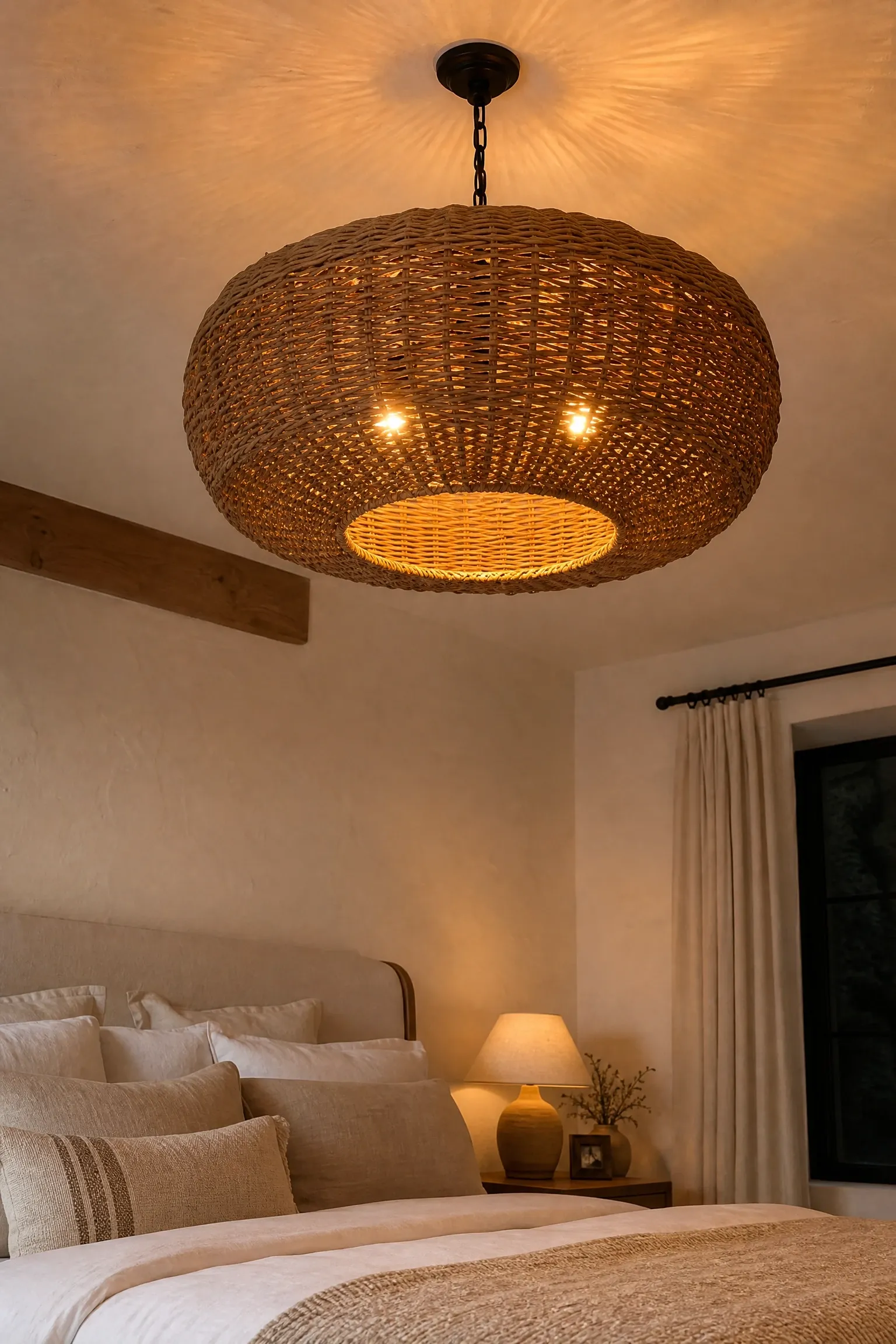
A chandelier in a farmhouse bedroom does not need to be ornate. In fact, the best ones are often the simplest. A large woven rattan or seagrass chandelier hung from the center of the ceiling creates an immediate focal point and fills the upper visual field in a way that ground-level decor cannot. Look for chandeliers with a diameter of at least 24 to 30 inches for a standard-sized bedroom, and choose bulbs with a warm color temperature, around 2700K, to avoid the room feeling clinical. Pair this with lower-level lamps on nightstands so you have lighting at multiple heights. A single overhead light source with no supplementary lighting makes a room look like a hotel corridor. Multiple light sources at different heights is what creates depth and warmth. This is a mid-range to investment purchase.
Designer Note: Woven rattan chandeliers can collect dust in the gaps between the weave. Choose a style with a tighter weave if you prefer lower maintenance.
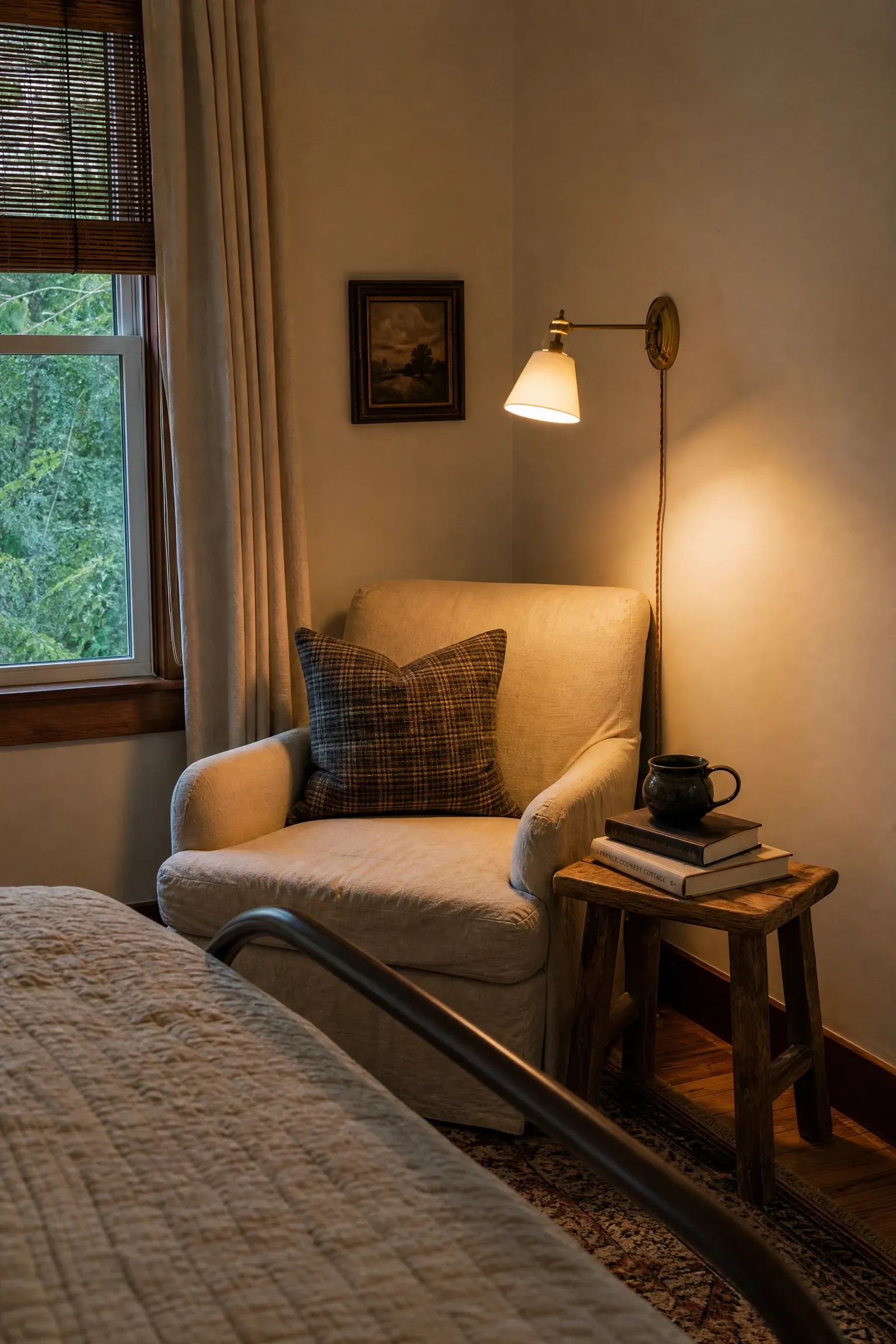
A reading corner in a farmhouse bedroom does not need to be elaborate. A single armchair in a worn leather or linen upholstery, a small side table, and a plug-in wall sconce is all you need. The sconce does the heavy lifting here because it puts the light source exactly at reading height without occupying floor or table space. Choose a sconce in a simple arm style with an aged brass or matte black finish and a small fabric shade in white or cream. Plug the cord into an outlet behind the chair and use a fabric cord cover to keep it neat against the wall. This setup works in bedrooms as small as 10 by 10 feet if you keep the armchair compact. A reading nook with dedicated lighting signals to your brain that this corner is for winding down, which genuinely helps with sleep quality.
Designer Note: The shade color makes a significant difference. A white shade gives clean, bright reading light. A cream or amber shade gives warmer, softer light that is easier on the eyes in the evening.
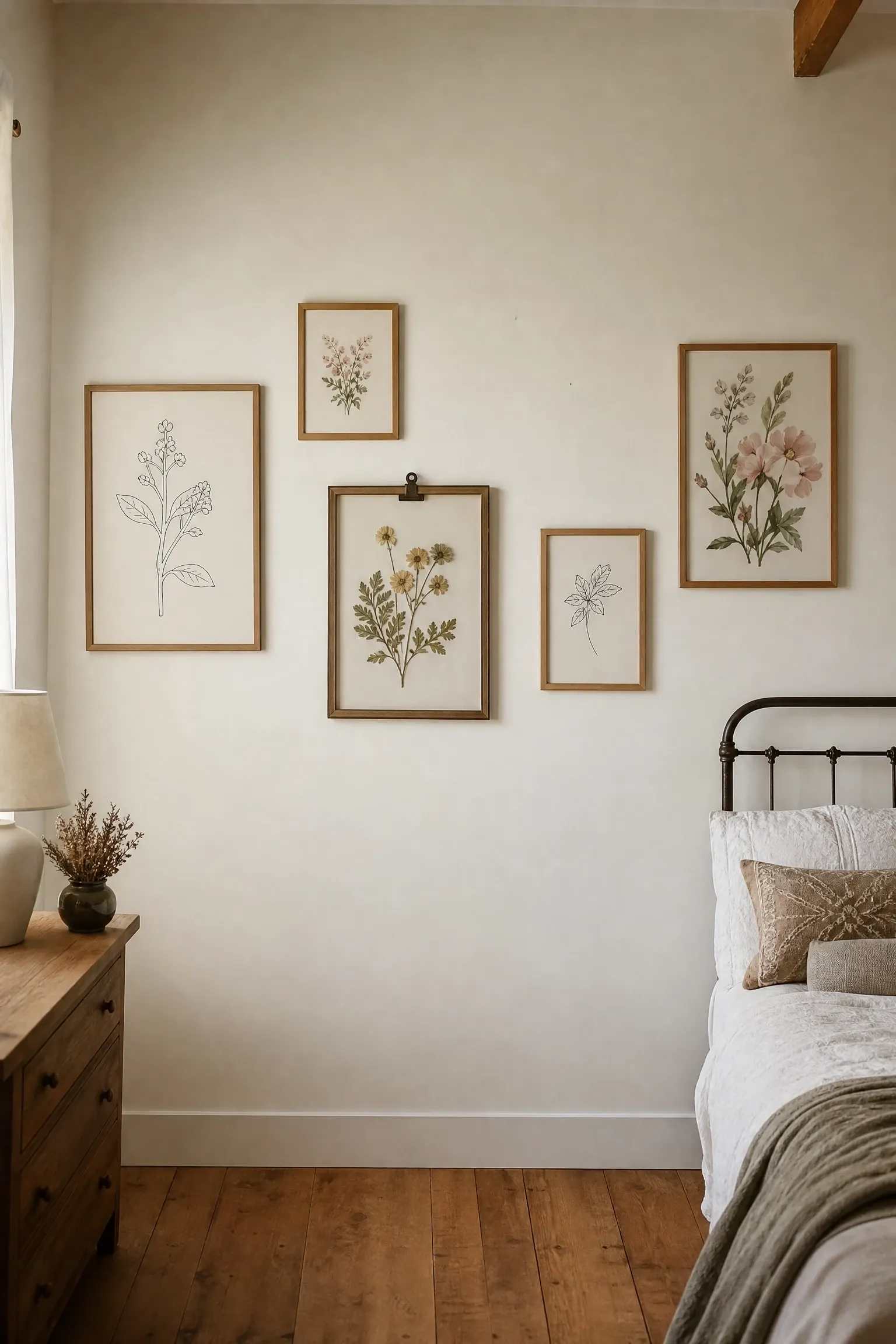
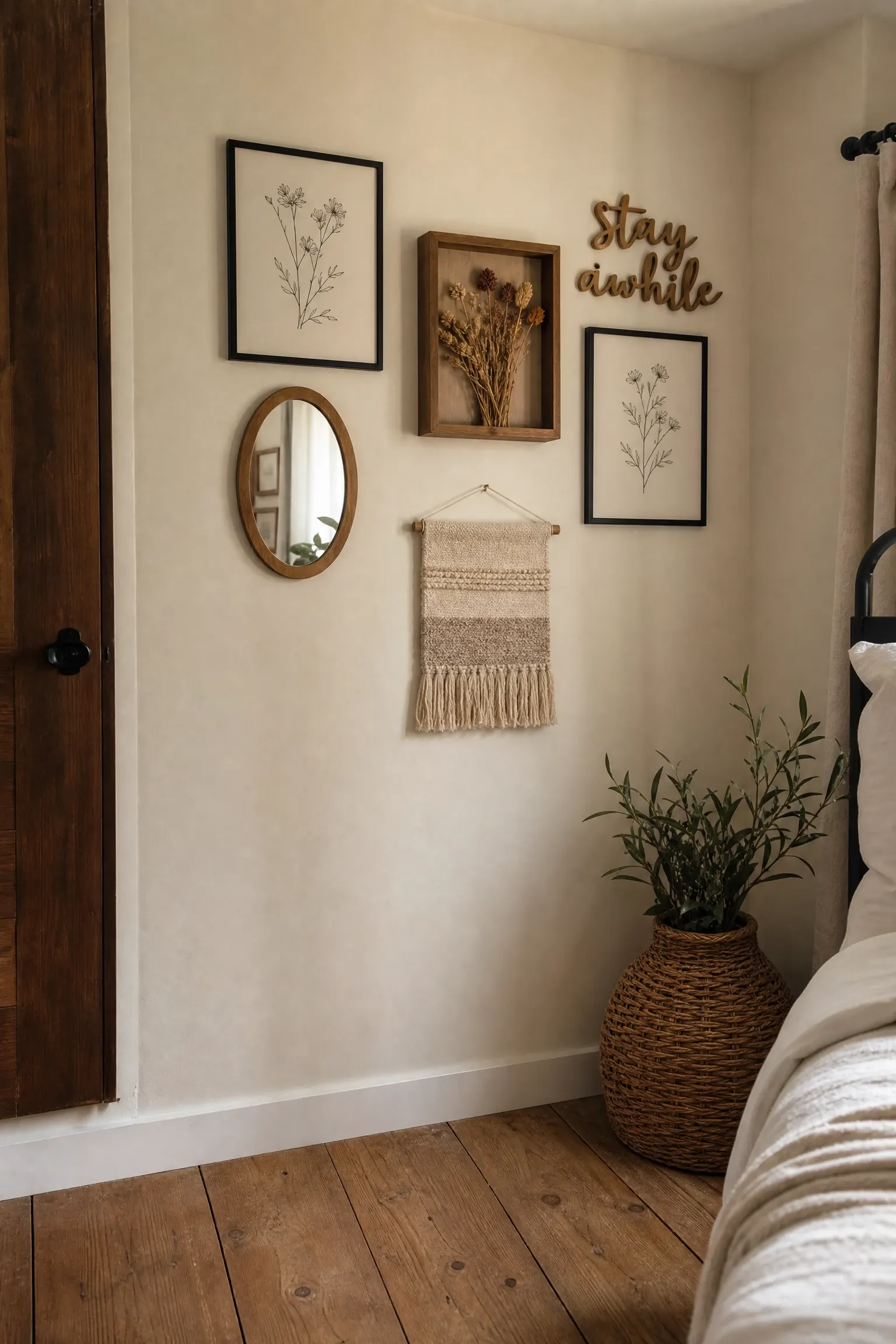
Simple botanical prints in plain wood or thin black frames are one of the most cost-effective ways to add visual interest to a farmhouse bedroom wall. A grouping of three to five prints in varying sizes, all using the same frame style, looks cohesive and intentional without requiring a large artwork budget. Choose prints that feature simple line drawings or muted watercolor botanicals rather than bright, saturated colors. Pressed flower art in clip frames or floating frames brings in an additional natural material and works particularly well above a dresser or on a small wall beside a window. Both options are available affordably from independent artists on platforms like Etsy, and supporting independent makers feels right in a style that celebrates the handmade and personal.
Designer Note: When hanging a grouping of prints, cut paper templates in the exact size of each frame and use painter’s tape to plan the arrangement on the wall before hammering a single nail.
A simple wooden ladder, either a genuine old farm ladder or a new one with a rough, unfinished look, leaning against a bedroom wall is one of those farmhouse cliches that still works because it is genuinely useful. Use it to drape quilts, throw blankets, and extra scarves or robes. It keeps textiles accessible and visible, which adds texture and warmth to the wall without requiring any fixing or installation. Choose a ladder in a weathered or lightly distressed wood rather than a bright, shiny finish. The imperfection is the point. Position it in a corner or beside the wardrobe where it does not block traffic flow. If you have a baby or young children in the household, secure it lightly to the wall with a single hook to prevent tipping.
Designer Note: Vary the textiles you hang on the ladder seasonally. A linen throw in summer and a wool blanket in winter makes the display feel considered and keeps the room feeling fresh without buying anything new.
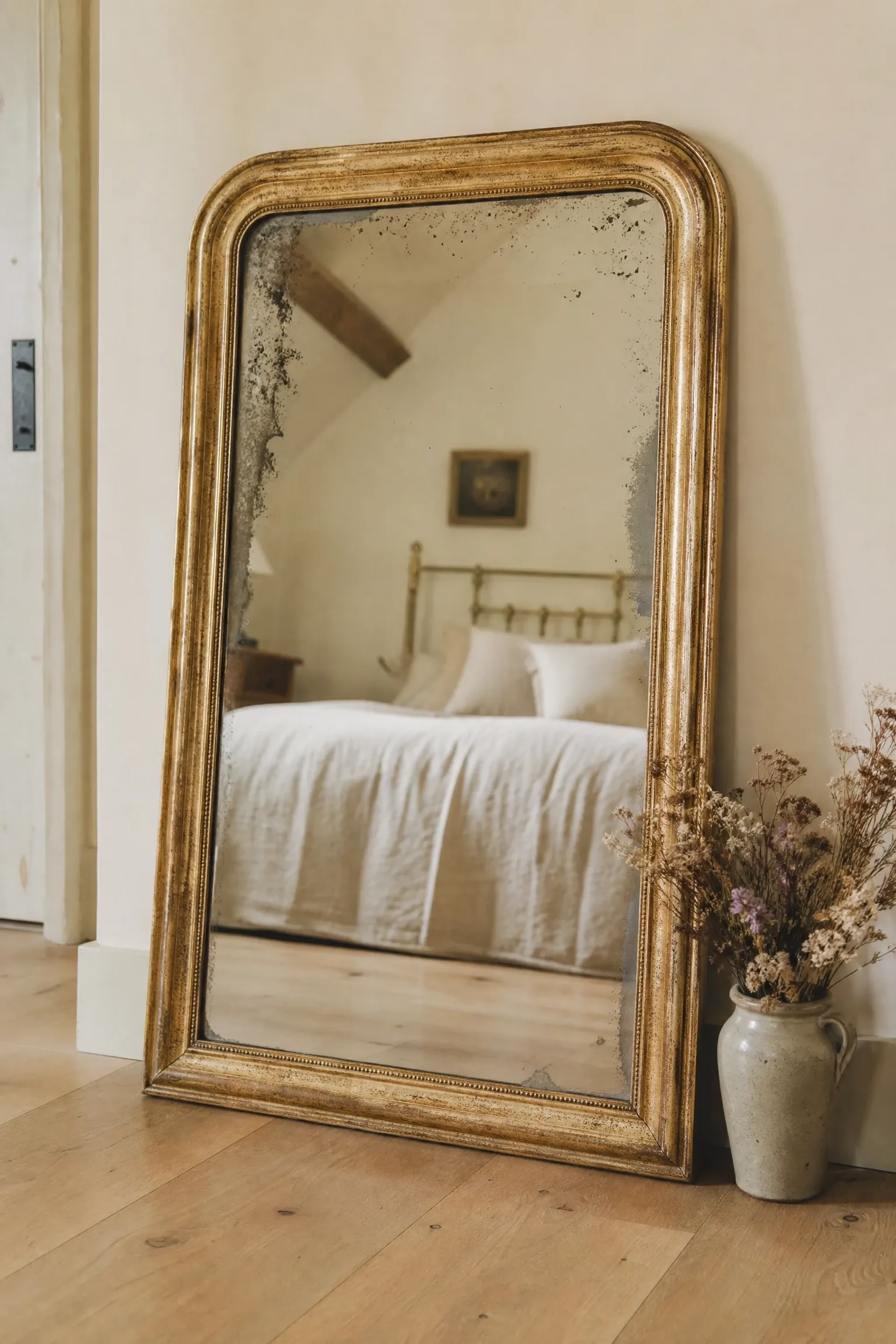
A large vintage mirror with an imperfect, worn frame, whether it is cracked gilt, chipped paint, or simple oxidized wood, brings light, depth, and a sense of history to a farmhouse bedroom. Position it above a dresser or lean it against the wall on the floor for a more relaxed look. Floor mirrors in a farmhouse bedroom feel especially right because they are practical, they do not require installation, and the slightly informal lean echoes the unlabored quality that defines the whole aesthetic. Look for genuine vintage mirrors rather than new mirrors made to look distressed. The real imperfections in an old mirror, slight foxing in the glass, uneven silvering around the edges, are qualities that modern reproductions have a hard time capturing convincingly.
Designer Note: The frame material should echo something else in the room. If you have a reclaimed wood headboard, a wood-framed mirror ties the two pieces together. If you have matte black metal light fixtures, a thin black metal mirror frame works well.
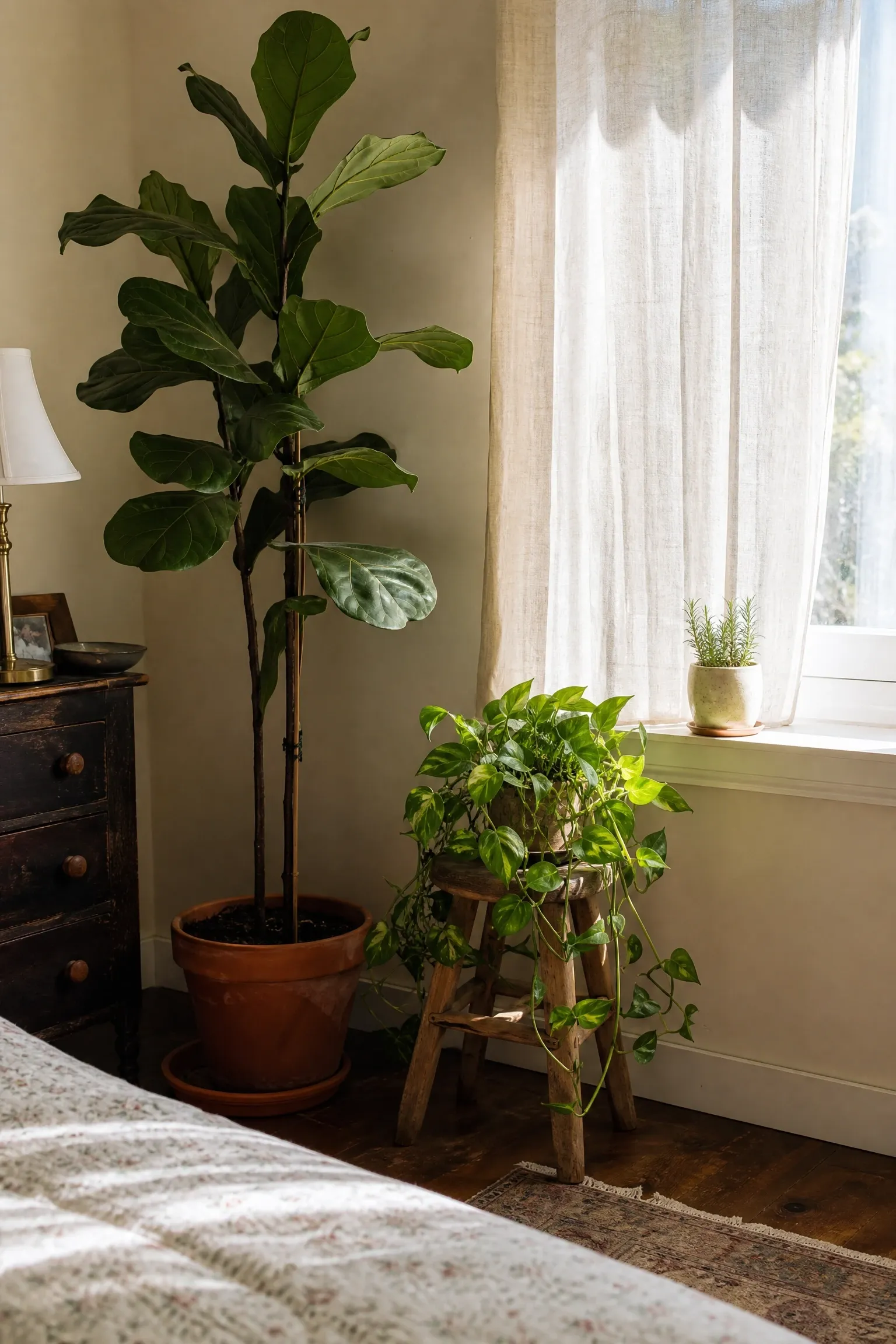
Plants in a farmhouse bedroom should feel like they belong rather than like they were placed there to fill a corner. A large fiddle-leaf fig or a monstera in a simple terracotta or stone-finish pot beside a window makes a strong visual statement and fills vertical space in a way that furniture cannot. For bedside surfaces, a small trailing pothos or a rosemary cutting in a small white ceramic pot adds life without taking up too much room. Dried grasses or dried flowers in a simple ceramic vase are an alternative if low-maintenance is a priority, and they fit the farmhouse aesthetic just as well as live plants. Honest note: plants in bedrooms do require a window with reasonable light. Most common houseplants will survive in lower light, but they will not thrive, and a struggling plant does not add to the atmosphere of a room.
Designer Note: Group plants in odd numbers and vary the heights. One tall plant, one medium plant on a stool, and one small plant on the windowsill gives you a layered look that feels like it grew naturally rather than being arranged.
A gallery wall in a farmhouse bedroom works best when it is smaller and more intentional than the full-wall arrangements popular on social media. Choose a wall with limited furniture in front of it, such as a narrow wall beside a window or the space beside the wardrobe, and limit the arrangement to five to seven pieces. Mix simple framed botanical prints, a small mirror, a wooden sign with a meaningful word or phrase, and perhaps a small woven piece or a dried flower arrangement in a shadow box frame. Keep all frames in the same two finishes, such as natural wood and thin black metal, for a cohesive look. Leave generous space between pieces rather than packing them tightly. A gallery wall with breathing room looks considered. One crammed edge to edge looks busy and restless, which is the opposite of what a farmhouse bedroom should feel like.
Designer Note: Before committing to a gallery wall, live with the individual pieces arranged on a shelf or dresser for a week. You will learn which pieces you genuinely love and which ones were just filling space.
Bringing It All Together
A farmhouse bedroom is less about following rules and more about choosing things you actually like and letting them tell a consistent story. The ideas in this article all share a few things: natural materials, warm color temperatures, layers of texture, and a preference for things that look used and loved rather than new and pristine. You do not need to implement all 20 ideas at once. In practice, the best approach is to start with one or two changes, see how they feel in the actual light of your room, and build from there.
The most common mistake people make with farmhouse style is buying too many decorative accessories at once and ending up with a room that looks busy and themed rather than personal and warm. Restraint is your friend here. A room with five carefully chosen pieces will always feel more authentic than one packed with farmhouse-branded decor from a single shopping trip. Focus on quality materials, honest imperfections, and things that actually have a function. That is the approach that produces a farmhouse bedroom that still looks right five years from now, not just on the day you finish decorating.
The ideas here give you a clear direction at any budget level. Start with paint and textiles, which offer the most impact for the least cost, and move toward furniture and lighting as your budget allows. Most importantly, let the room feel like yours.
Frequently Asked Questions
What colors work best in a farmhouse bedroom?
Warm neutrals are the foundation of any farmhouse bedroom palette. Think soft whites, warm creams, warm greiges, and muted earth tones like clay, sage green, and dusty blue. The key word is warm. Cool grays and stark white can feel clinical in a farmhouse room. If you want to add a stronger color, use it as an accent through textiles rather than on the walls, at least until you are confident about the direction you are going.
Do I need shiplap to get a farmhouse look?
No. Shiplap has become so associated with farmhouse style that it can feel like a requirement, but it is just one tool among many. Layered textiles, natural wood furniture, warm lighting, and organic materials like rattan, linen, and jute can all create a full farmhouse aesthetic without a single board of shiplap. If you want the look of shiplap without the installation, peel-and-stick shiplap wallpaper or a limewash paint treatment on one wall can give you a similar textured effect.
Can farmhouse style work in a small bedroom?
Yes, and in some ways it works better in smaller rooms because the warm tones and layered textures make a small space feel cozy rather than cramped. The main adjustment for a small farmhouse bedroom is to keep furniture scaled appropriately and to resist the urge to add too many decorative accessories. A small room with five well-chosen pieces feels more spacious than one filled with collections and layers of decor. Light colors on the walls, mirrors to reflect light, and furniture with legs rather than pieces that sit directly on the floor all help a small farmhouse bedroom feel open.
What kind of lighting works best in a farmhouse bedroom?
Layered lighting is the answer. A farmhouse bedroom with only one overhead light source will always feel flat. You want at least three light sources at different heights: a ceiling fixture for general ambient light, bedside lamps or pendant lights for reading, and perhaps a small lamp on a dresser or in a reading corner for atmosphere. For bulb choice, warm white bulbs at around 2700K give the soft, amber glow that defines the farmhouse mood. Avoid cool daylight bulbs, which can make even the warmest room feel slightly cold at night.
How do I make a farmhouse bedroom feel personal rather than like a show home?
The fastest way to make any styled room feel personal is to include things that are actually yours. Display a quilt that belonged to a family member, frame a piece of your children’s art, or keep a book you are genuinely reading on the nightstand rather than a staged prop. Farmhouse style works best when it looks collected over time rather than purchased in one afternoon. Buying a mix of vintage and new, rather than an entire matching set from a single retailer, automatically gives a room more personality and depth.
What is the difference between farmhouse and modern farmhouse style?
Traditional farmhouse style leans heavily into rustic elements: rough-hewn wood, antique furniture, vintage textiles, and a slightly worn, imperfect look throughout. Modern farmhouse takes the same warm, natural palette and materials but combines them with cleaner lines, more restrained decor, and contemporary lighting or hardware. A modern farmhouse bedroom might have a simple platform bed in white oak rather than a chunky reclaimed wood frame, but both styles share the same commitment to natural materials, warm tones, and a room that feels welcoming rather than formal. Most successful farmhouse bedrooms today sit somewhere in between the two.