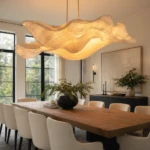
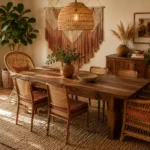
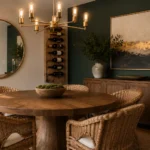
There is something quietly confident about a black dining table. It does not shout for attention, but it gets it anyway. Black anchors the room no matter what surrounds it, and that is exactly what makes it so forgiving to style around. The challenge most people run into is figuring out how to decorate around it without the whole room feeling heavy, cold, or like it belongs in a furniture catalog rather than a real home.
The good news is that a black dining table is one of the most versatile pieces of furniture you can own. It pairs beautifully with warm wood tones, plays well with soft linens, holds its own against marble, and gives metallic accents something worth reflecting. Pick the approach that fits your current setup and go from there.
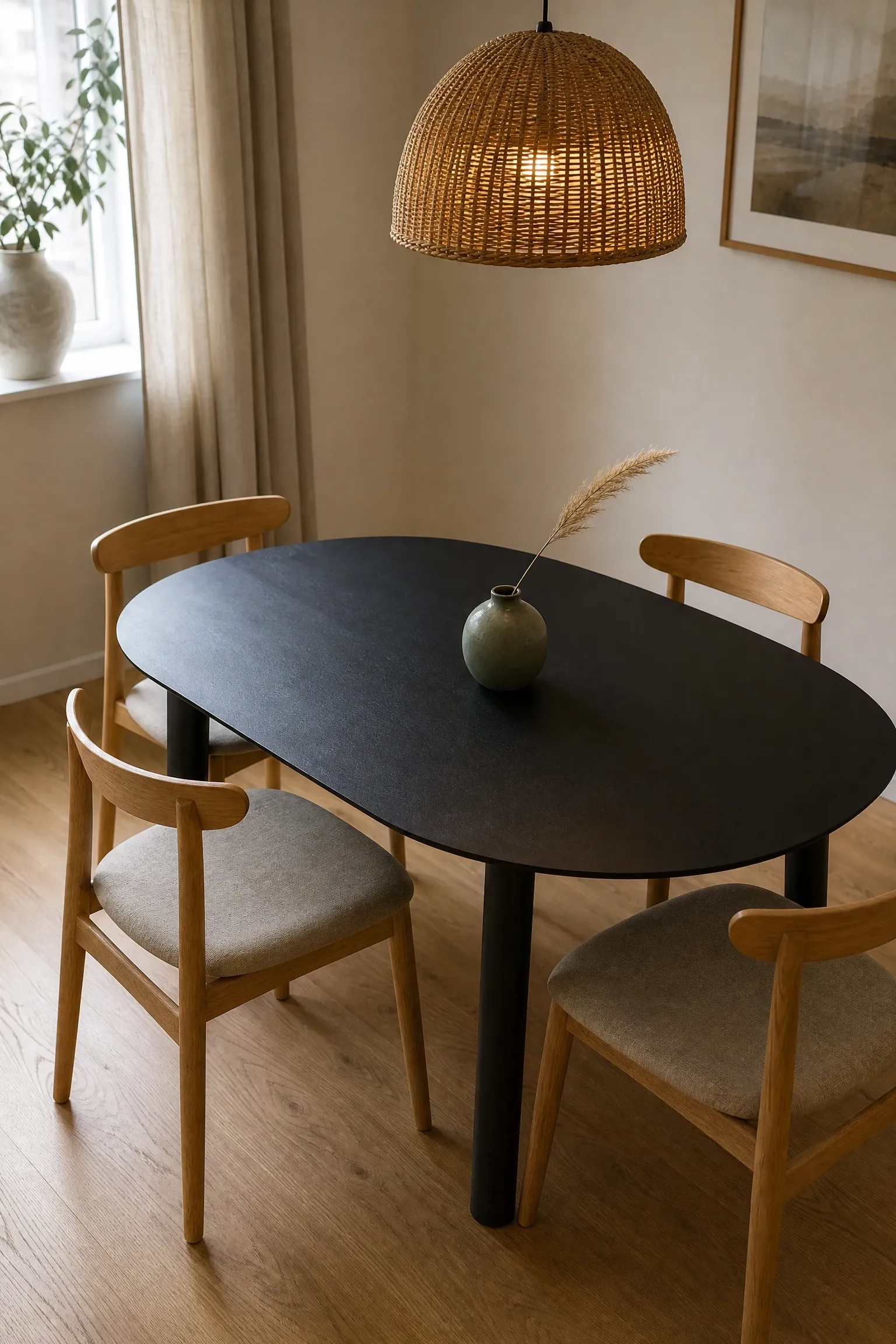
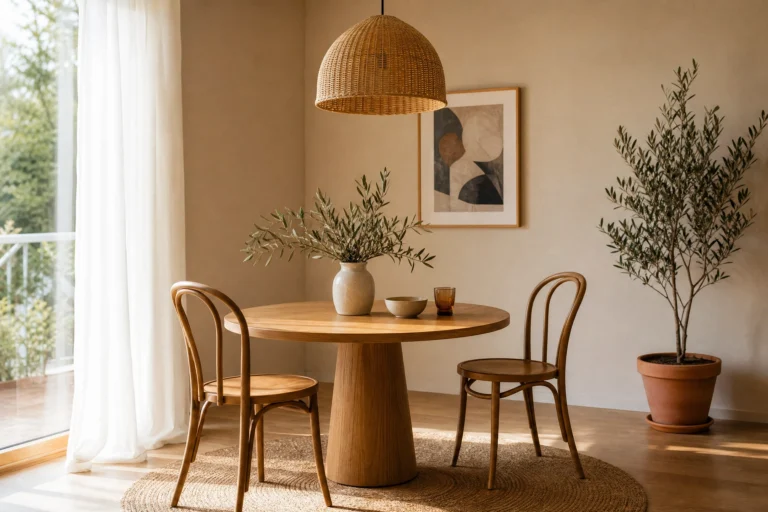
You have just moved into a new place and the dining room feels a little stark. The black table looks sharp on its own, but the room needs warmth and you are not sure what kind of chairs to pair with it. One of the most reliable combinations in practice is pairing a matte black table with natural wood dining chairs in a light oak or walnut finish. The contrast between the dark table and the warm timber creates visual balance without either one overpowering the other. Choose chairs with a slightly curved back for softness, and consider adding a seat cushion in a dusty linen or sage green fabric to bring in texture. For lighting, a rattan or bamboo pendant overhead ties the organic wood tones together and softens the whole look considerably. This combination works especially well in apartments or smaller dining rooms where you want warmth without adding visual clutter.
Designer Note: In a room with a matte black table, wood chairs in a lighter finish do more work than you would expect. They stop the table from reading as a dark void and give the space a grounded, collected feel. Keep the wood grain visible rather than painting or staining the chairs.
2. White Linen Table Runner With Sculptural Candle Holders
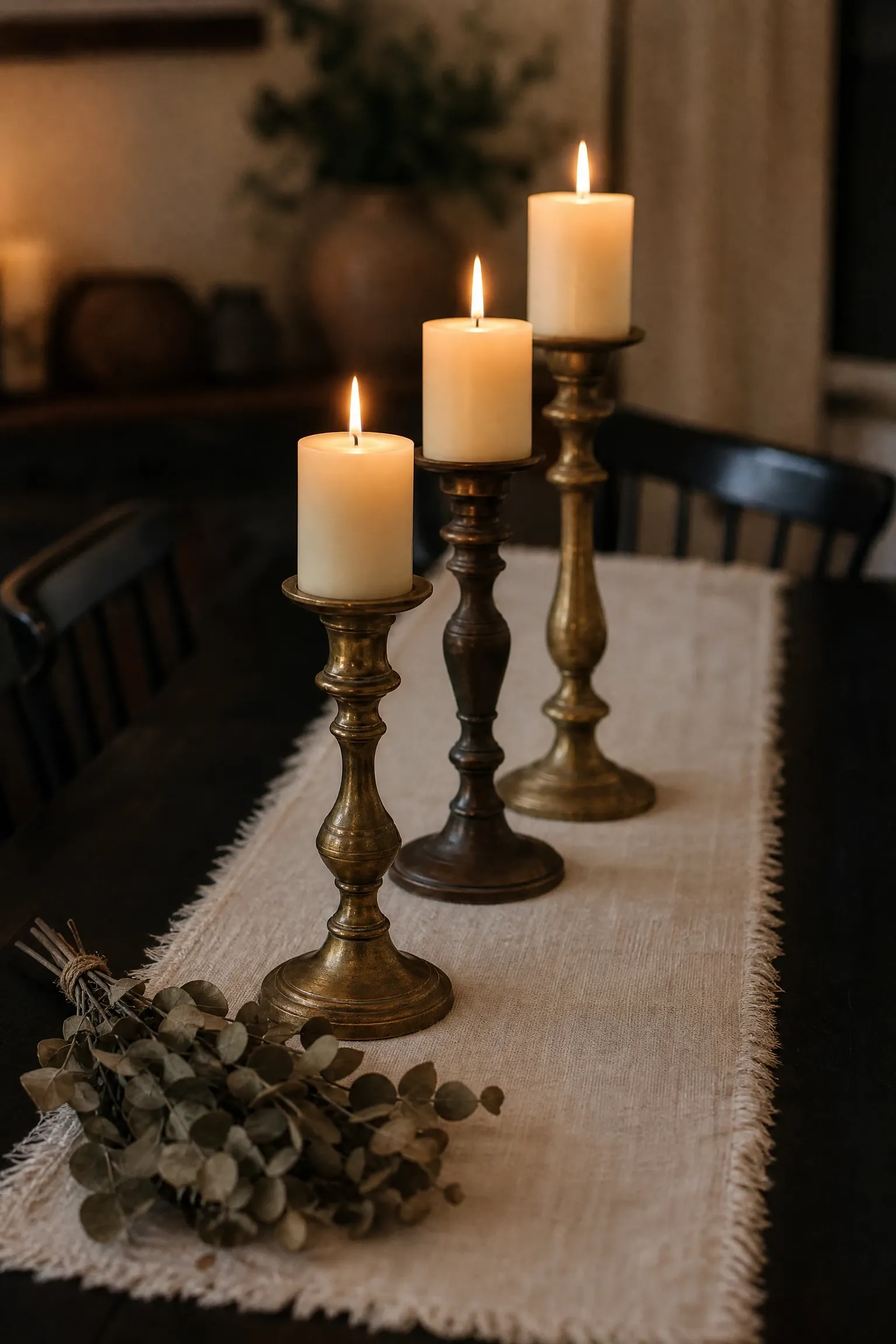
Imagine sitting down to a dinner where the table actually looks like something out of a design magazine but the setup cost less than a takeout order for four. A simple white or off-white linen table runner laid across the center of a black dining table does something remarkable: it gives the eye a resting point and breaks up the dark surface so the room breathes. Layer two or three candle holders of varying heights down the center of the runner, ideally in brushed brass or aged bronze, and the table becomes genuinely beautiful with very little effort. The warm flicker of candlelight on a black surface creates a depth that overhead lighting simply cannot. Go for unscented pillar candles in cream or terracotta, and add a small low arrangement of eucalyptus or dried pampas grass to one end. This is one of those setups that looks intentional and high-effort but takes about ten minutes to put together.
Designer Note: Linen is the right fabric for this because it has a natural texture that softens the hardness of a dark table. Avoid bright white polyester runners, which can look clinical. Look for washed linen or stonewashed cotton for the best result.
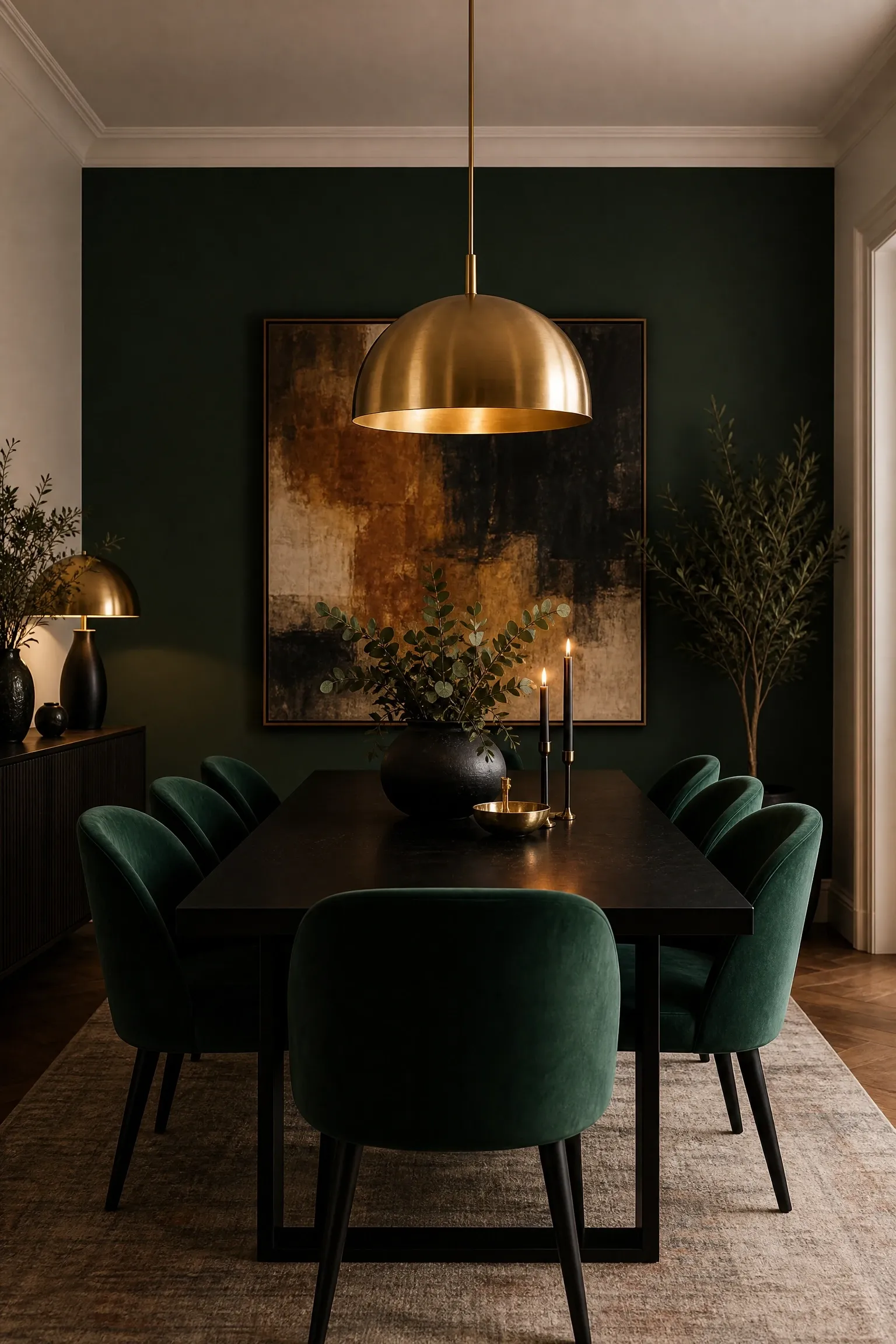
Most people who go full dark in a dining room end up regretting it, but that is usually because they painted every wall black and forgot to balance the room with lighter elements. The version that actually works is this: a black dining table surrounded by chairs in a deep complementary color, paired with a single accent wall in forest green, navy, or terracotta, and the remaining walls left in white or a warm off-white. In practice, this creates a moody, layered look that feels sophisticated without being overwhelming. Hang a large-format artwork or an oversized mirror on the accent wall to add depth, and bring in a statement pendant light in brushed gold or antique brass to anchor the table below. Velvet dining chairs in a deep emerald or dusty rose finish this look with a sense of luxury that punches well above its price point.
Designer Note: One dark wall is the rule. Going darker on all four walls with a black table often makes the room feel smaller and harder to light effectively. The single accent wall approach gives you all the drama with far less risk.
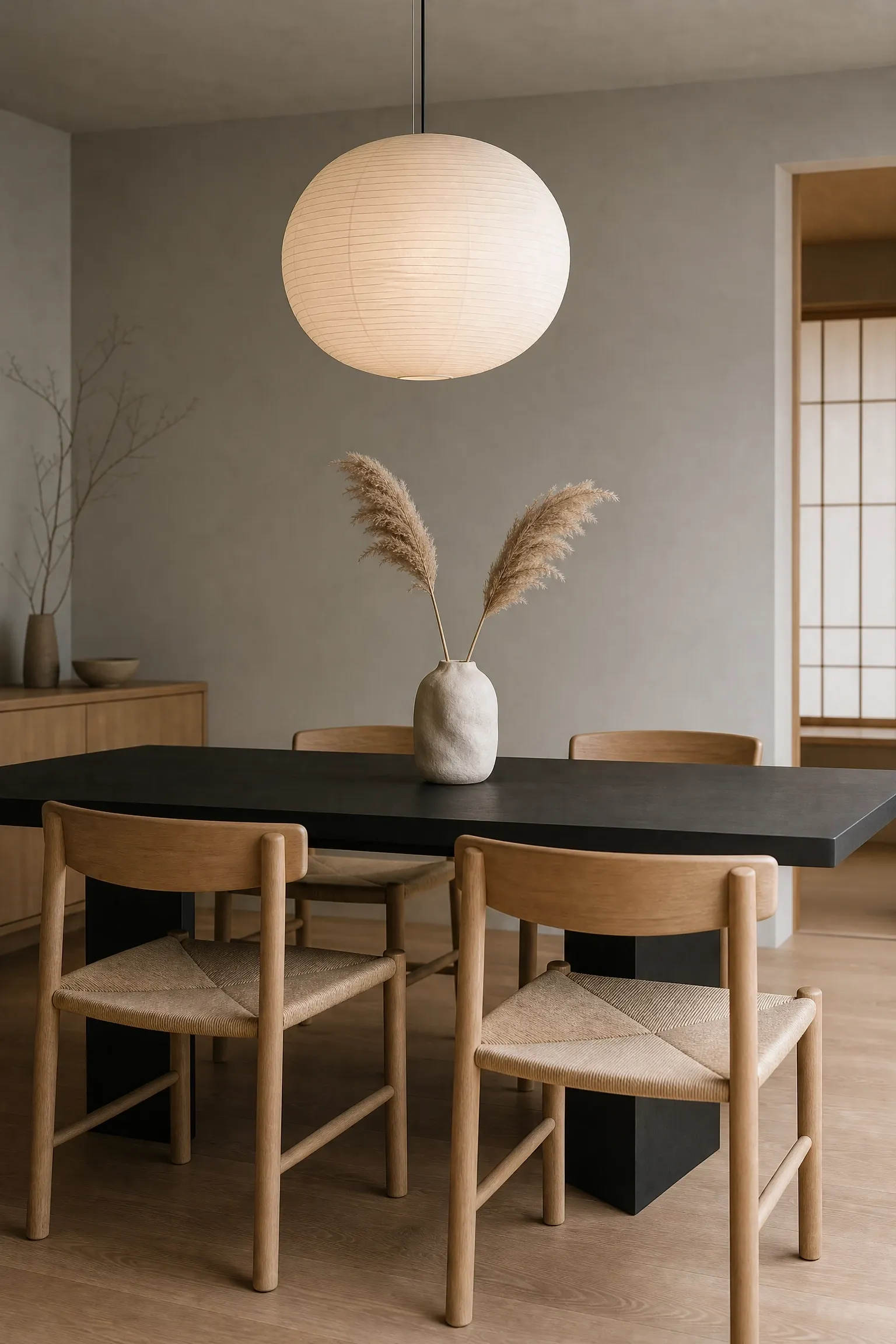
You have been drawn to those quiet, understated dining rooms you keep seeing online, the ones where everything feels still and intentional. That is Japandi, a blend of Japanese minimalism and Scandinavian simplicity, and a black dining table fits right into it. Keep the chairs low-profile in a light natural ash or whitewashed oak, and resist the urge to add too much to the table surface. A single ceramic vase in an organic irregular shape sits in the center with a few stems of dried grasses or a single branch of cherry blossom. The color palette here is deliberately restrained: warm whites, pale greys, natural wood tones, and matte black. Layered lighting matters more in this style than any other. A low-hanging Japanese-style paper lantern pendant casts a soft diffuse glow that flatters the table beautifully. The wabi-sabi philosophy embraces imperfection, so a slightly worn table or mismatched ceramic bowls are features here, not flaws.
Designer Note: Japandi is one of the few styles where you genuinely need to edit down rather than add up. The black table works as the anchor, but the rest of the table and room should be intentionally sparse. If in doubt, remove one more thing.
5. Industrial Look With Exposed Metal and Edison Bulbs
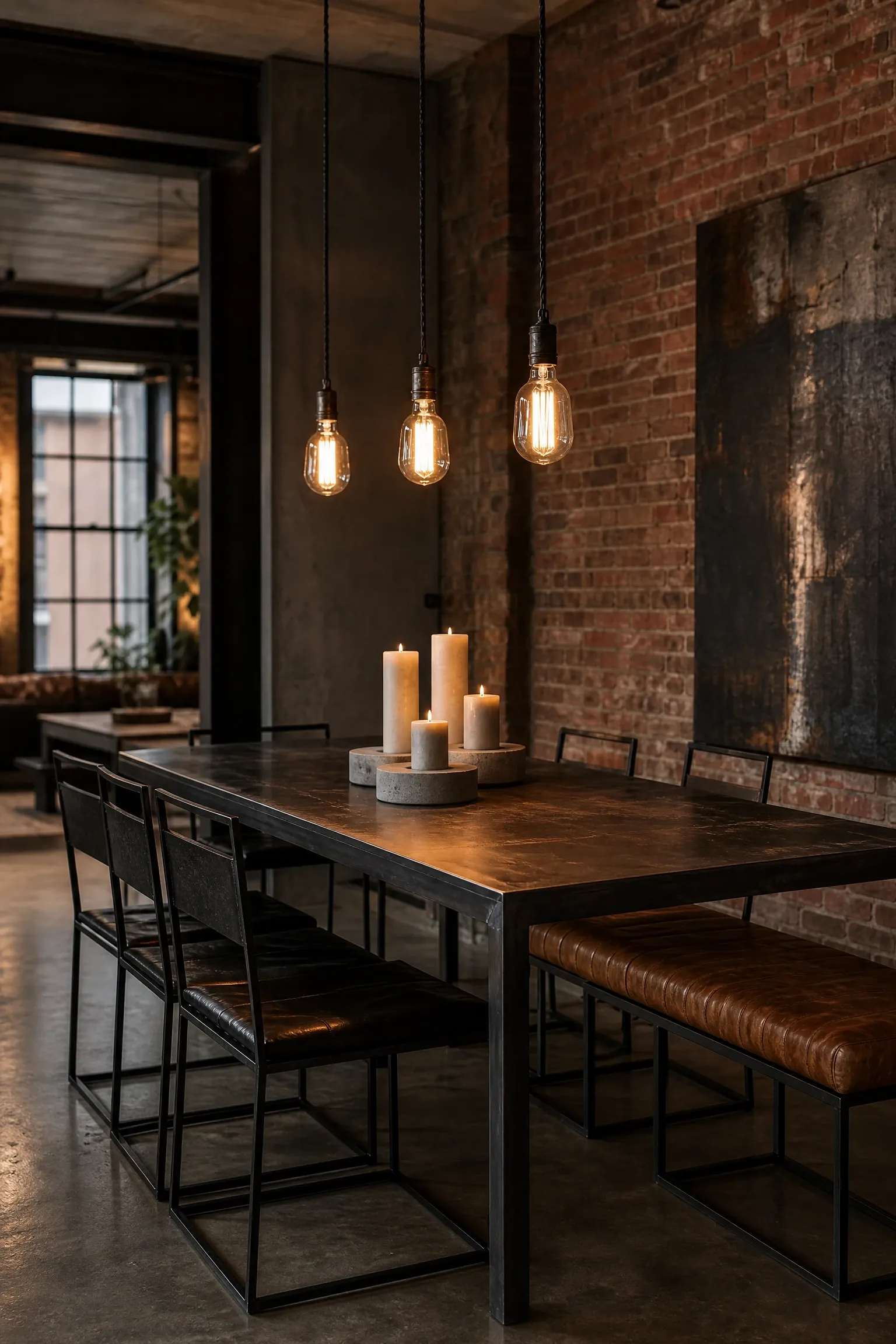
Picture a loft-style apartment with concrete floors, high ceilings, and large windows. A raw black metal dining table with a slightly distressed finish is practically made for this kind of space. Pair it with metal frame dining chairs in a matching black or a dark gunmetal finish, and add bench seating along one side upholstered in worn leather or faux suede for a mix of hard and soft. The lighting is everything in an industrial dining room: a cluster of Edison bulb pendants on exposed cord or a long linear pipe-style chandelier sets the tone immediately. Decorating the table itself should feel raw and unfussy: a few chunky pillar candles grouped on a concrete or raw stone plate, a cluster of small succulents in terracotta pots, or a single industrial-style lantern in the center. This look suits open-plan spaces and people who genuinely like a darker, more atmospheric dining experience.
Designer Note: The mistake most people make with industrial dining rooms is going too matchy. If the table is black metal, not every other surface needs to match. One or two warm wood elements, like a floating shelf or a sideboard, stop the room from feeling like a hardware store.
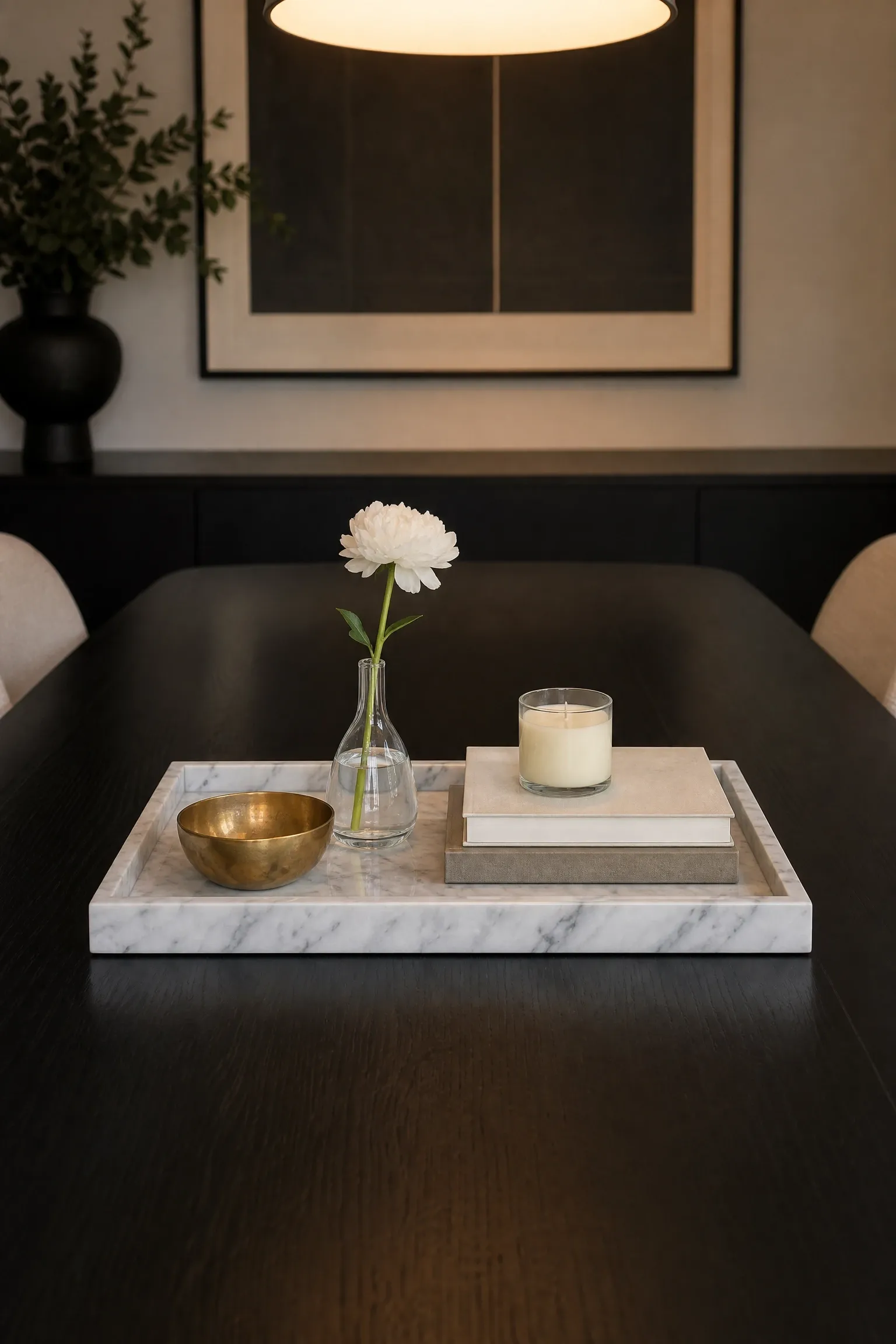
You do not want to restyle your dining table every day but you also do not want it looking bare between meals. A marble tray or slab placed in the center of a black dining table is one of the most practical and visually satisfying solutions available. The contrast between the cool, veined surface of white or grey marble and the dark table creates a focal point that works for both everyday meals and entertaining. Group a few carefully chosen objects on the tray: a glass bud vase with a single stem, a small brass bowl, a low candle, and perhaps a small stack of design books. The tray keeps things contained and intentional, so it never looks messy. This approach is mid-range in terms of budget, a good marble tray typically costs between $40 and $120, and it is the kind of piece that will still look right regardless of how your other decor changes.
Designer Note: The tray is doing double duty here. It acts as a visual anchor and also makes it easy to clear the table fast: just lift the whole tray off and set it on a sideboard or console. That practicality is often what sells this idea to people who were on the fence.
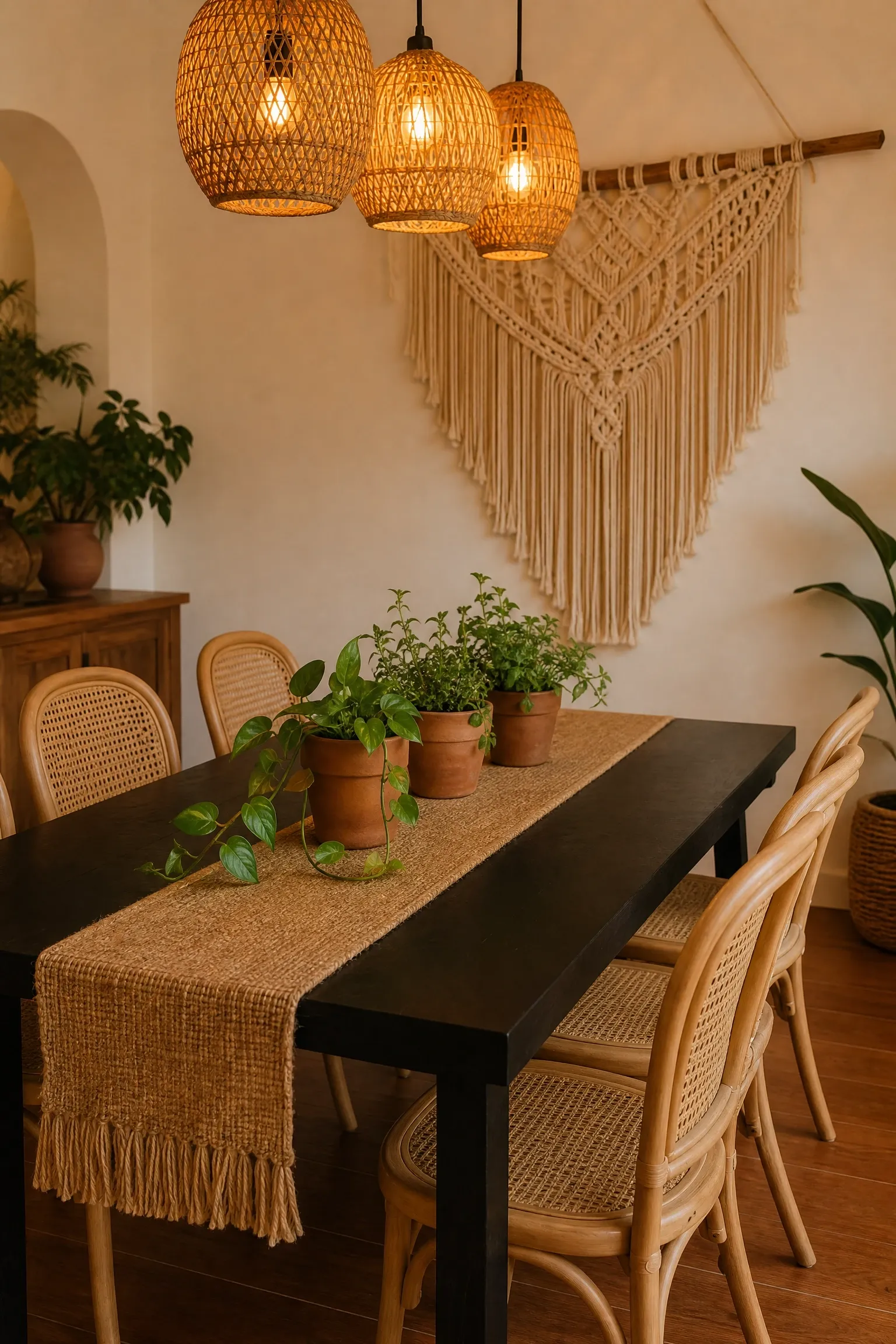
7. Earthy Boho Look With Rattan, Terracotta, and Macrame
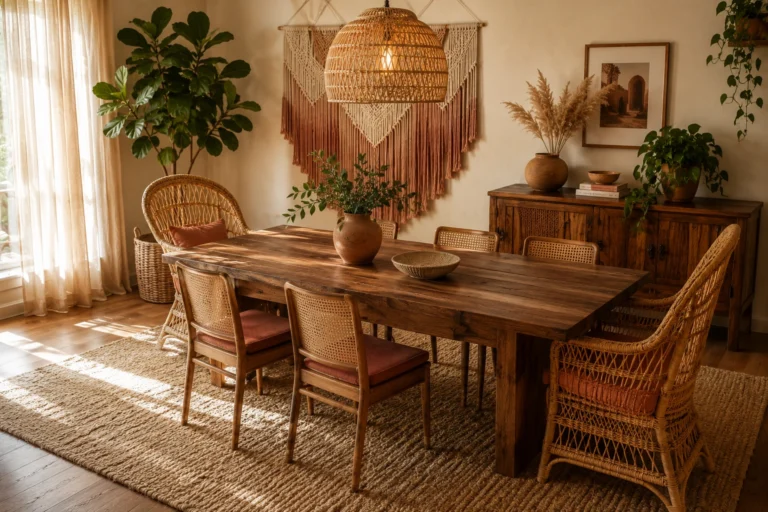
Not every black dining table needs to live in a modern or minimalist space. Paired with the right accessories, a black table can anchor a warm, boho-influenced dining room beautifully. The key is to go earthy rather than dark: choose rattan or cane-back dining chairs in a natural finish, and layer a jute or cotton rag table runner across the center. For the centerpiece, group terracotta pots of varying sizes with trailing pothos or small herbs, and add a macrame wall hanging on the wall directly behind the table to bring in that layered textile quality. Warm amber pendant lighting overhead completes the look. The contrast between the natural organic textures of rattan and jute and the structured black table creates that intentional, collected feel that is harder to achieve when everything in a room matches. This works especially well in dining rooms with wooden floors and plenty of natural light.
Designer Note: The boho look can tip into clutter quickly around a black table if you are not careful. Keep the table surface itself relatively restrained and let the wall treatments and chairs carry the texture. Two or three objects on the table is enough.
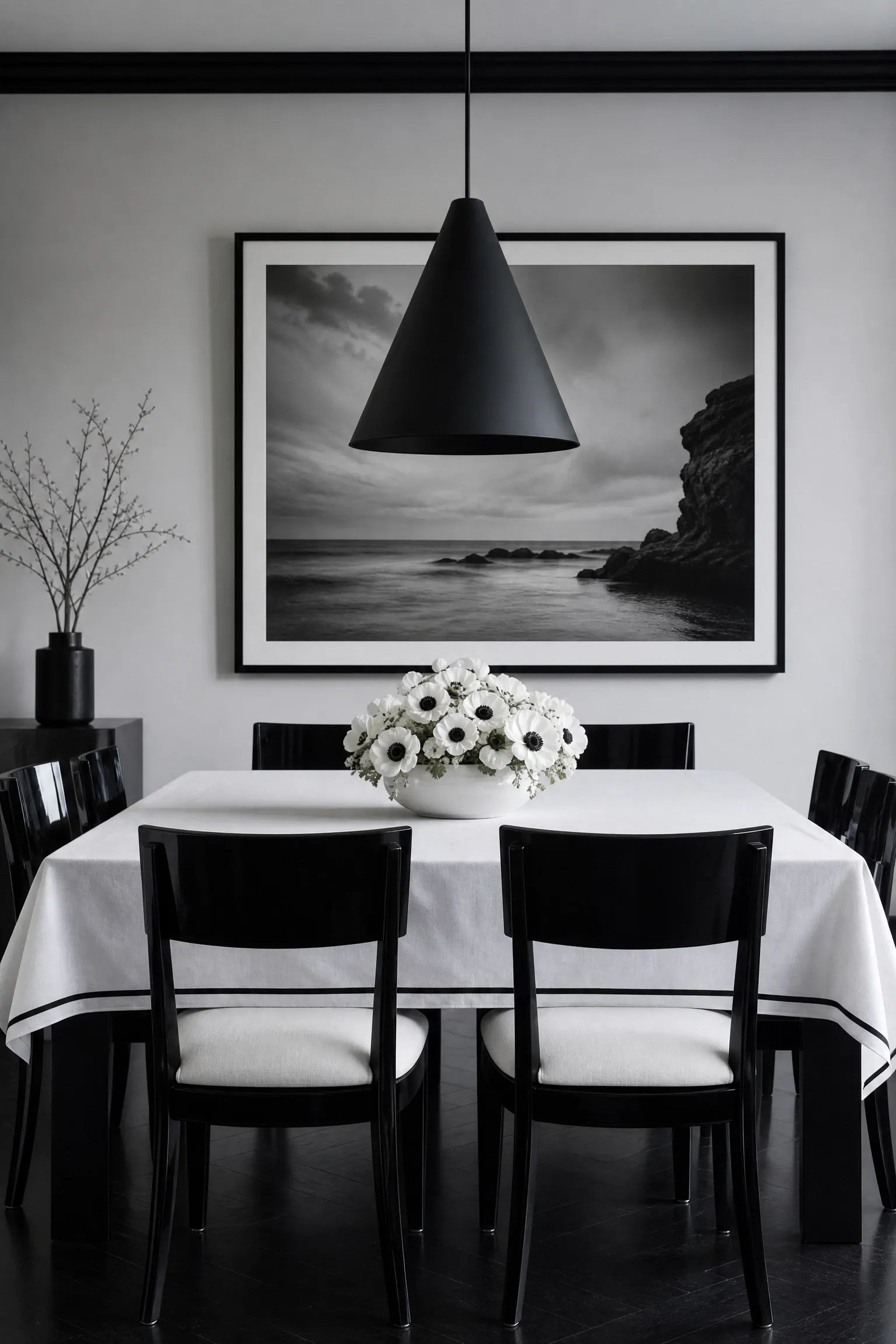
Some people lean into the drama of a black table rather than trying to soften it, and the monochrome black and white dining room rewards that confidence. Start with white walls and black dining chairs, then layer in contrast through textiles: a crisp white cotton tablecloth or a black and white geometric table runner, white ceramic dinnerware, and clear glassware that picks up the light. For the wall directly behind or adjacent to the table, a large graphic black and white print or a collection of monochrome photography creates a gallery-like quality that feels intentional and modern. A matte black pendant or linear chandelier directly above the table ties the hardware to the furniture, and a single low arrangement of white flowers, think anemones or white ranunculus, on the table adds the one organic note that stops the room from feeling clinical. This look is particularly striking in narrow or galley-style dining areas where the bold contrast reads well from a distance.
Designer Note: The risk with a true monochrome room is that it can feel cold. Add one warm element, usually through lighting. A filament bulb in an exposed pendant casts a warm amber tone that softens the contrast considerably without breaking the palette.
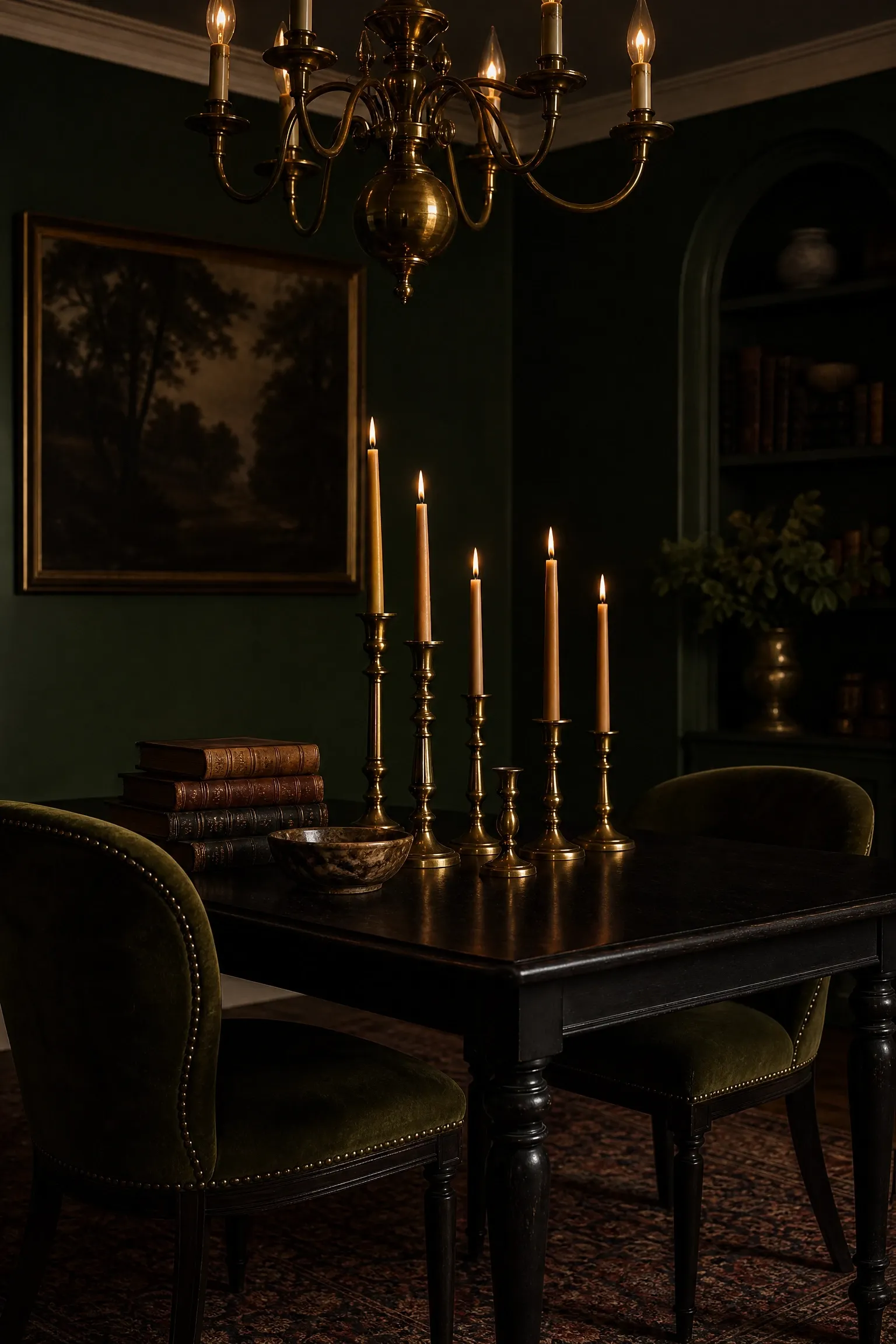
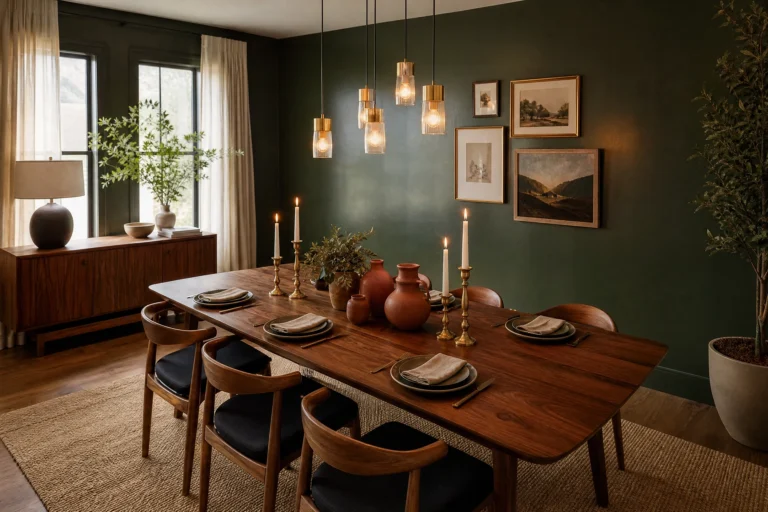
Think of those richly layered dining rooms you see in period dramas: dark walls, leather chairs, warm candlelight, and a sense that books might be stacked nearby. That dark academia aesthetic is having a genuine moment in interior design right now, and a black dining table is the ideal centerpiece for it. Paint the walls in a deep forest green, navy, or warm charcoal, and choose velvet or leather dining chairs in a complementary dark tone. Brass candlestick holders of different heights running down the center of the table create the essential warm metallic note. Add a few stacked art books, a ceramic or brass bowl, and a small framed botanical print as a table accent. A vintage-style chandelier with amber bulbs overhead gives the room its characteristic warm glow. This style works best in dining rooms with enough natural light during the day to balance the dark walls at night.
Designer Note: Dark academia decor is one of the few styles where more really can mean more, but there is still a line. Keep the objects on the table intentional and meaningful. The goal is ‘studied library dinner party,’ not theatrical prop room.
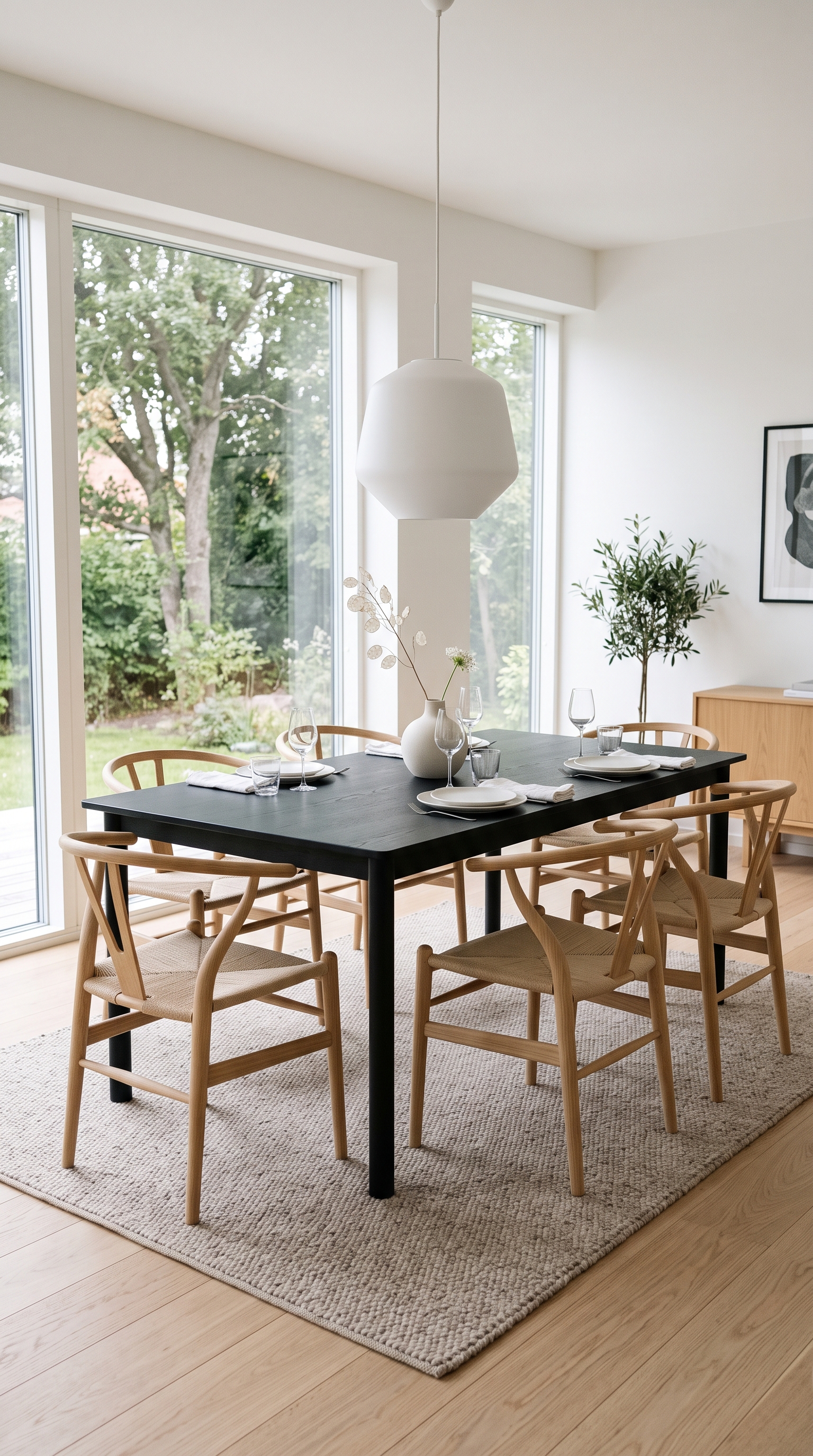
10. Minimalist Scandi Look With White and Blonde Wood
You want the dining room to feel calm, uncluttered, and genuinely easy to maintain. The Scandinavian minimalist approach to styling a black table is almost the opposite of dark academia: it uses the table as a strong graphic anchor against a light, clean background. White walls, blonde wood floors, and dining chairs in a pale birch or natural ash with a simple silhouette. On the table itself, keep decoration to almost nothing: a single ceramic bud vase in a muted tone, white linen napkins folded simply, and clear glassware. The result is a room that feels like it has been breathed out rather than designed. A Scandinavian-style pendant in concrete, matte white, or brushed nickel hangs overhead, and a low-pile wool rug in a natural oatmeal tone beneath the table adds warmth underfoot. This is the most budget-friendly approach on this list because it relies on restraint rather than quantity of accessories.
Designer Note: The success of Scandi minimalism around a black table depends on the chair choice more than almost anything else. Heavy or upholstered chairs in a dark fabric will make the table feel oppressive. Light, simple frames in a natural finish are essential.
11. Mixed Metal Accents in Gold, Brass, and Copper
There is a common decorating rule that says you should never mix metals, but experienced designers break it regularly and to great effect. Around a black dining table, mixing warm metallics such as brushed gold, aged brass, and copper creates a richly layered centerpiece that feels collected rather than bought all at once. Group a brass vase, a copper tealight holder, and a gold-rimmed ceramic bowl in the center of the table, and let the slight variations in tone play off each other. The black table surface is a perfect backdrop for this because it makes metallic finishes pop in a way that a light wood table does not. Chair hardware in a complementary mixed metal finish, such as black chairs with gold leg caps, ties the look together. For overhead lighting, a statement chandelier with mixed metal elements in the same warm family finishes the look without making it feel too intentional.
Designer Note: The key to mixing metals successfully is keeping them all in the same temperature family. Warm metals together (gold, brass, copper, bronze) work. Mixing warm and cool metals (brass and chrome, for example) is harder to pull off and often looks accidental rather than considered.
12. Greenery-Forward Look With Trailing Plants and Herbs
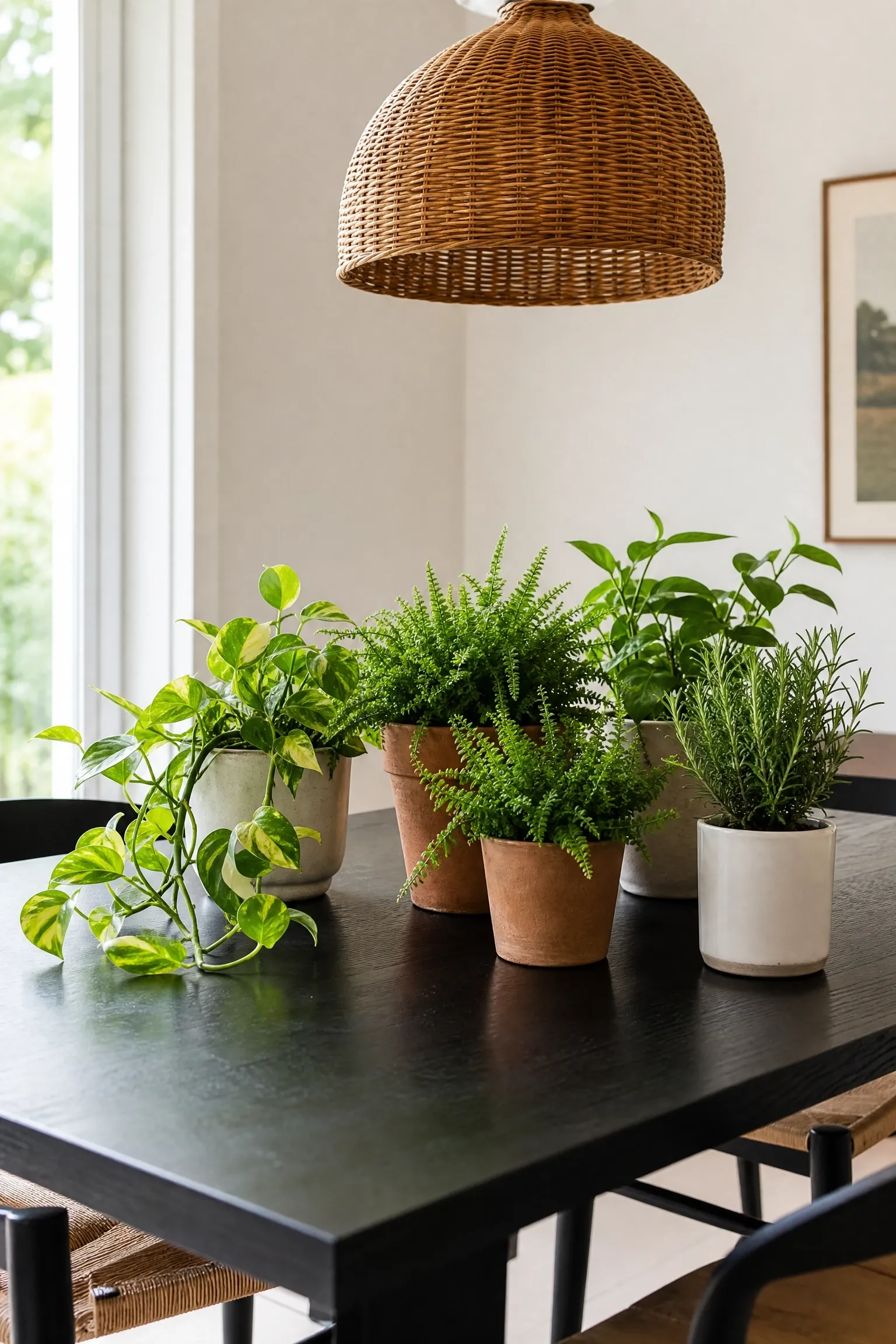
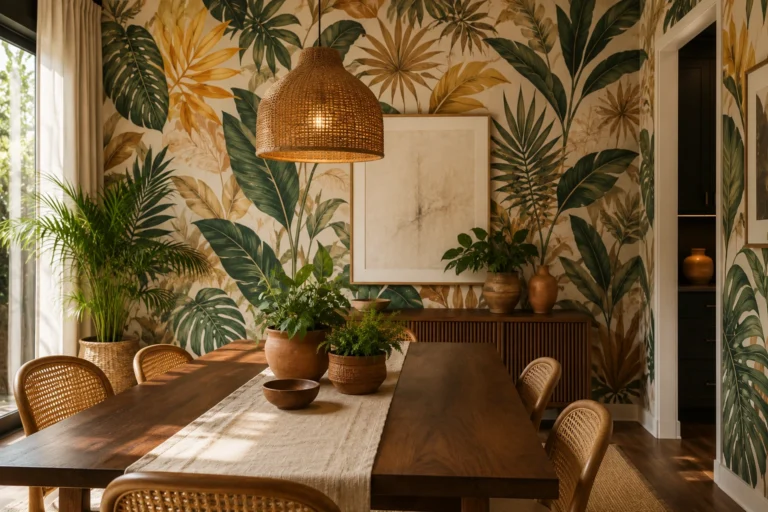
One of the most effective ways to stop a black dining table from reading as heavy is to introduce the freshness of living plants. A cluster of small potted plants in the center of the table, arranged at slightly different heights, creates a natural, organic focal point that brings the room to life. In practice, this works best with low-maintenance plants that do not block sightlines: succulents, small ferns, trailing pothos in ceramic pots, or a collection of fresh herbs like rosemary and thyme if the dining room gets decent light. The contrast between the deep black surface and the vivid green of living plants is visually striking in a way that is completely different from any other decor approach. Pair this with warm white walls and natural wood elements to keep the room feeling light and fresh. A simple rattan or woven pendant above the table reinforces the organic, natural quality of the look.
Designer Note: Real plants are always better than faux ones around a black table because the light-catching quality of a living leaf reads completely differently on a dark surface. If you genuinely cannot keep plants alive, choose high-quality faux plants with texture rather than perfectly smooth artificial leaves.
13. Luxe Black Marble Table With a Statement Chandelier
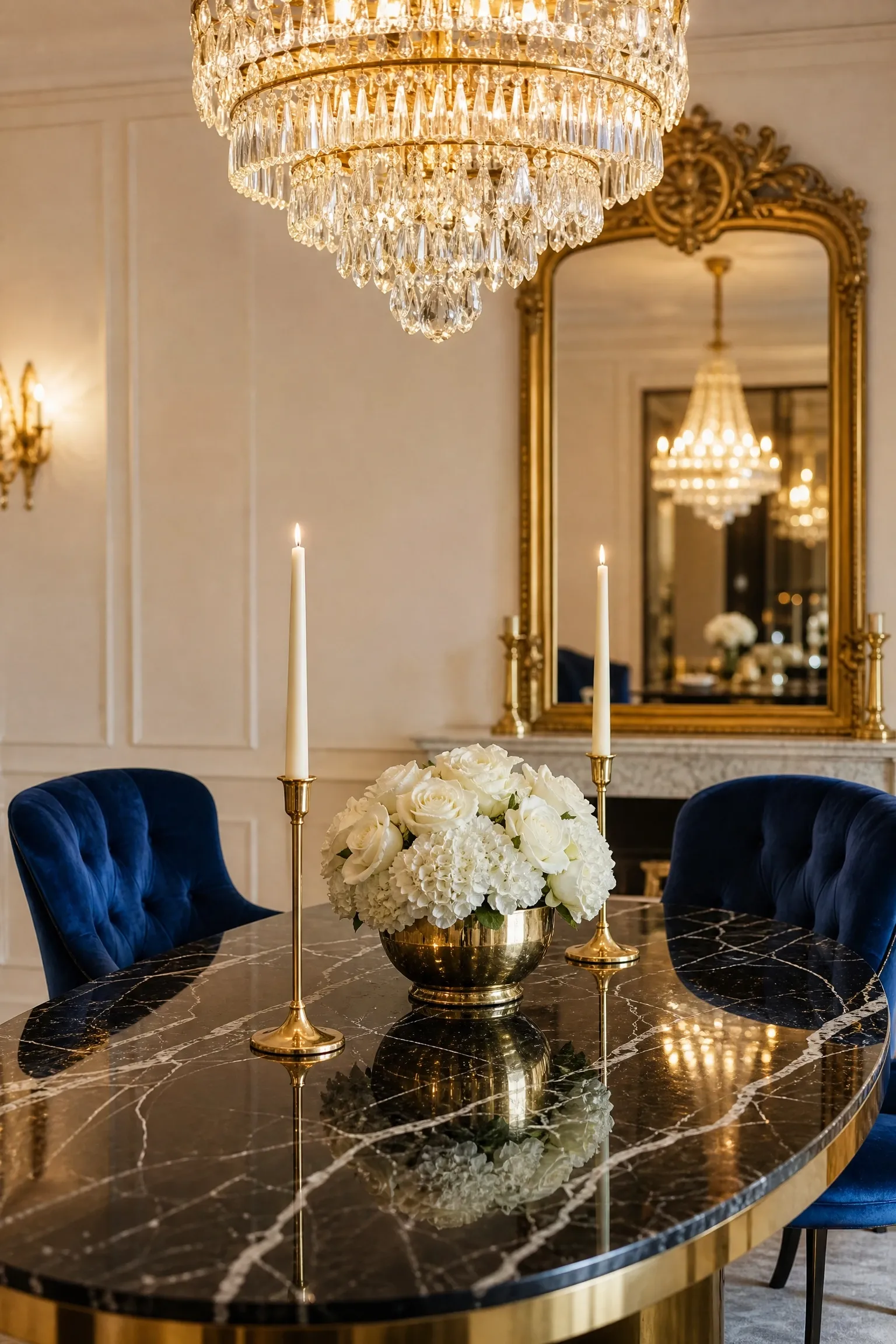
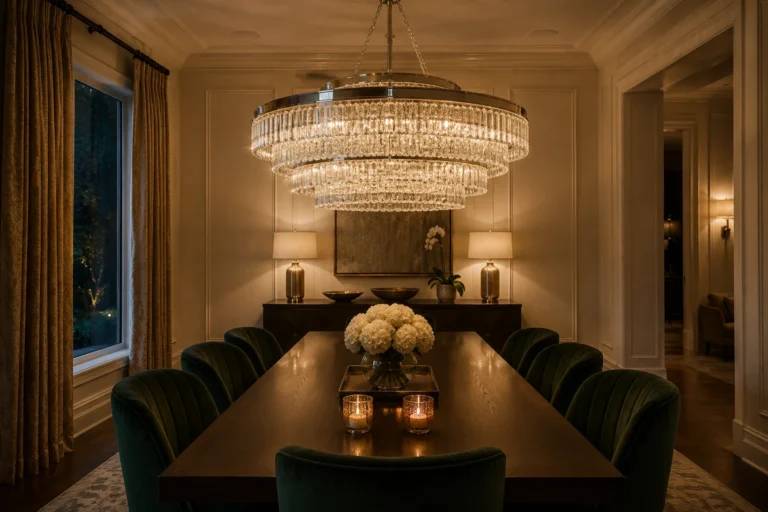
If your black dining table has a marble or marble-effect top, the room needs to rise to meet it. A black marble dining table is a genuinely high-impact piece of furniture, and the decor around it should reflect that investment. Go bold with the overhead lighting: a large crystal or glass chandelier in a warm gold finish creates a visual pairing that reads as genuinely luxurious. Keep the chairs clean and upholstered, either in a velvet in a jewel tone like deep sapphire or emerald, or in a pale cream fabric that contrasts the dark table. On the table itself, less is more: a single low arrangement of white flowers, a few tall tapered candles in sleek holders, and beautiful glassware are all you need. Mirror panels or a large gilded mirror on the wall behind the table doubles the light and amplifies the sense of space. This is clearly an investment-level room, but the visual payoff is proportional.
Designer Note: A marble-top black table requires more maintenance than a painted or lacquered surface. Seal it on arrival and use trivets and placemats consistently. The finish can etch from acidic foods and liquids, which is worth knowing before you invest.
14. Coastal or Mediterranean Feel With Blue and White
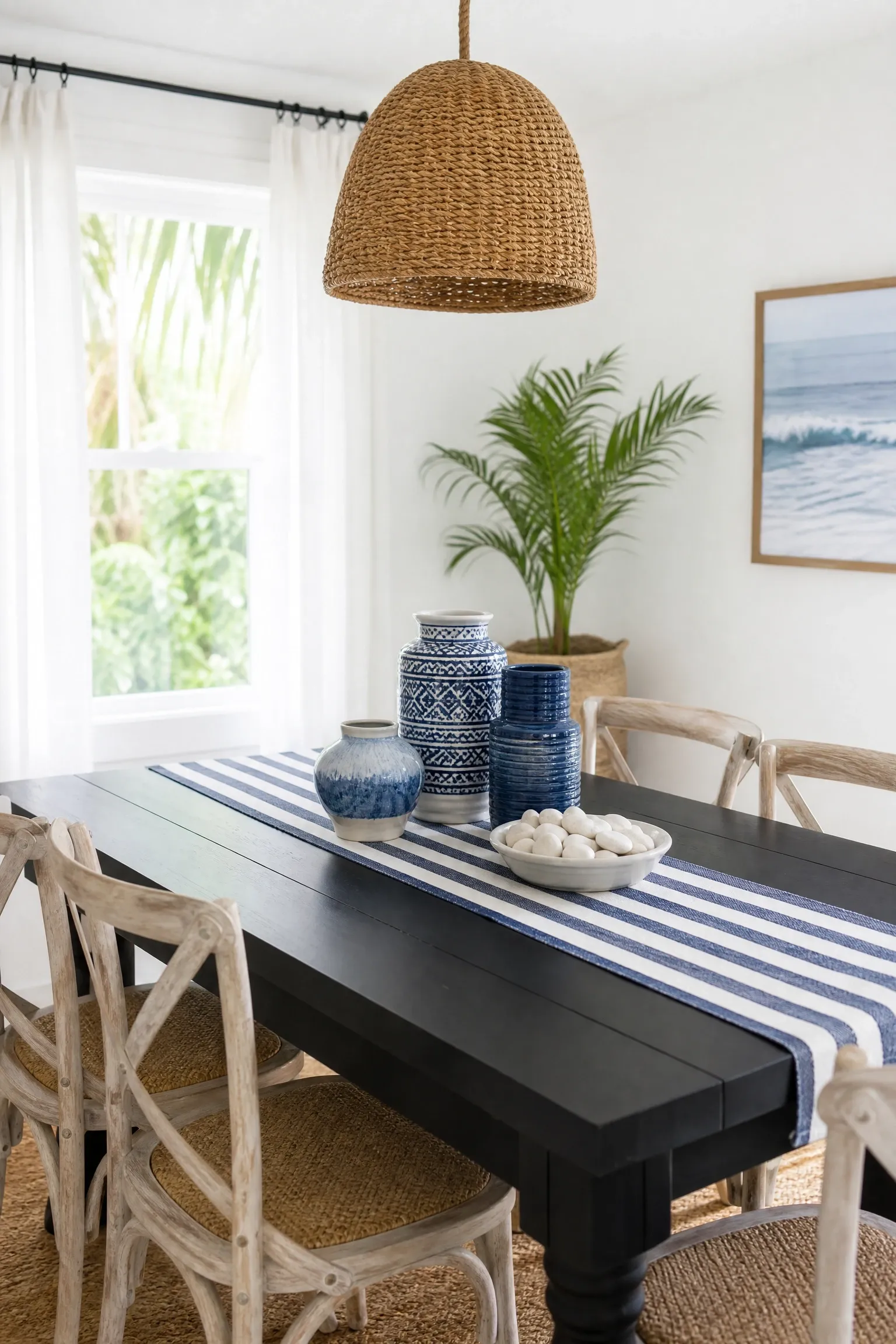
Not everyone pictures the Mediterranean when they think of a black dining table, but the combination of deep black with coastal blues and crisp whites is surprisingly fresh and works well in homes with good natural light. Think white walls, blue and white ceramic dinnerware, a table runner with a simple stripe or geometric pattern in navy and white, and dining chairs in a whitewashed or weathered driftwood finish. Rattan or wicker chair backs reinforce the coastal reference without being too literal. On the table, a cluster of blue and white pottery in varying heights makes a casual, relaxed centerpiece. Sea glass, smooth pebbles in a shallow bowl, or a vase of dried coastal botanicals carry the theme without tipping into kitsch. This look works particularly well in homes near the coast or in bright rooms with large windows, where the light can do some of the heavy lifting in stopping the table from feeling dark.
Designer Note: The blue and white coastal palette is one that can easily become cliche. The black table actually improves it by grounding the lighter palette and giving it a modern edge. Avoid too many literal sea references and keep the palette tight.
15. Art Deco Glamour With Geometric Accents and Black and Gold
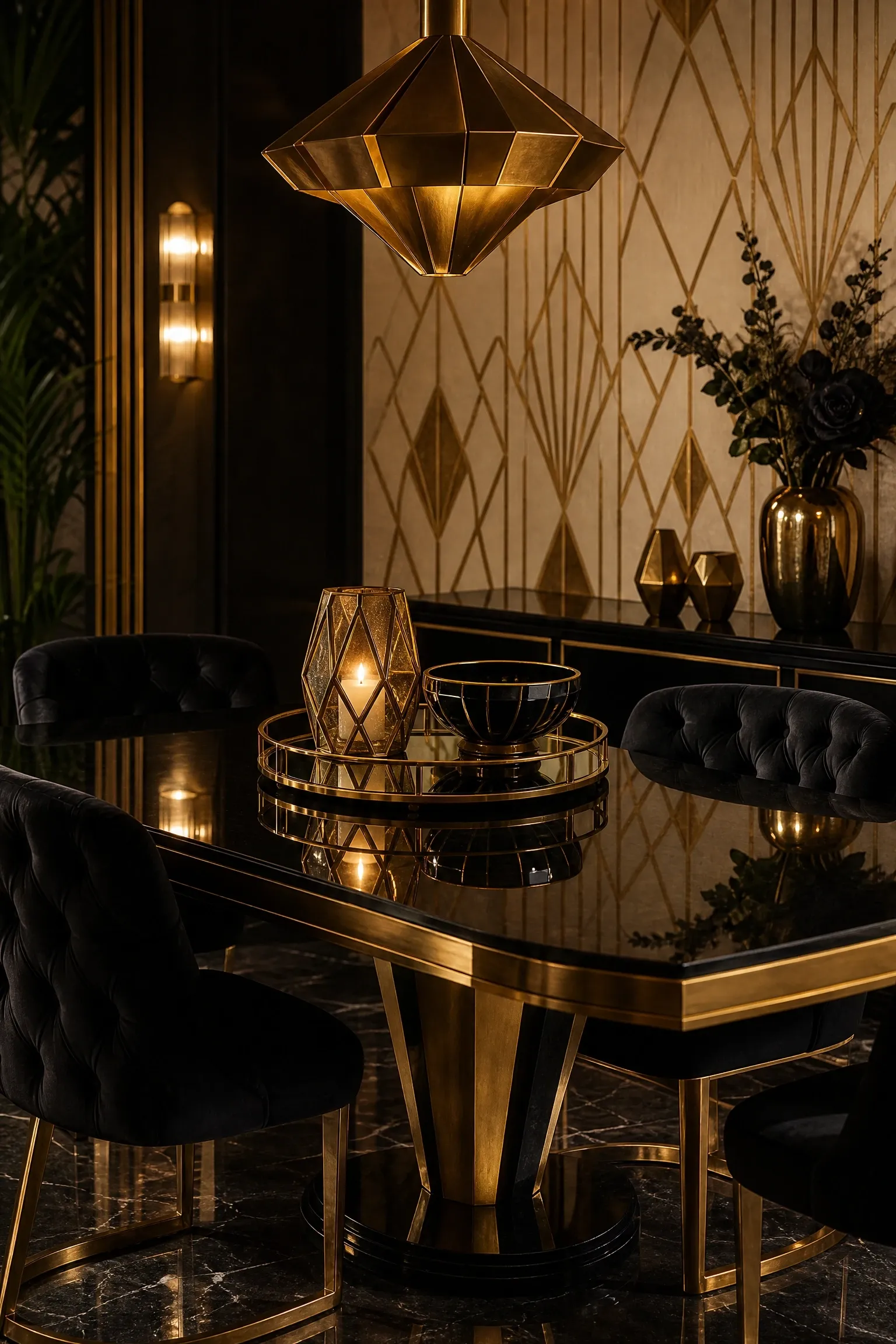
Art Deco as a design movement understood the power of black and gold before anyone else did, and a black dining table is a natural fit for it. Chairs in a tufted velvet, ideally in black, deep burgundy, or champagne, set the tone immediately. On the table, geometric candleholders in polished gold, a mirrored tray, and black and gold ceramic serving bowls form a centerpiece that feels genuinely glamorous. The walls in an Art Deco dining room benefit from wallpaper with a geometric or fan pattern in gold and cream, or from a large piece of abstract art in gold, black, and white. Overhead, a statement pendant with angular lines in brass or polished gold is exactly right for this style. Ensure the tablecloth or runner, if you use one, is kept simple to let the decorative accessories do the talking. Art Deco does not require a big budget, geometric gold accessories are widely available at accessible price points.
Designer Note: Art Deco can cross into ostentatious if you layer too many shiny surfaces together. The rule of thumb is: one reflective surface per line of sight. A mirrored tray on the table is enough. Add a glossy wall treatment and you may have gone one step too far.
16. Farmhouse Style With Shiplap, Linen, and Candlelight
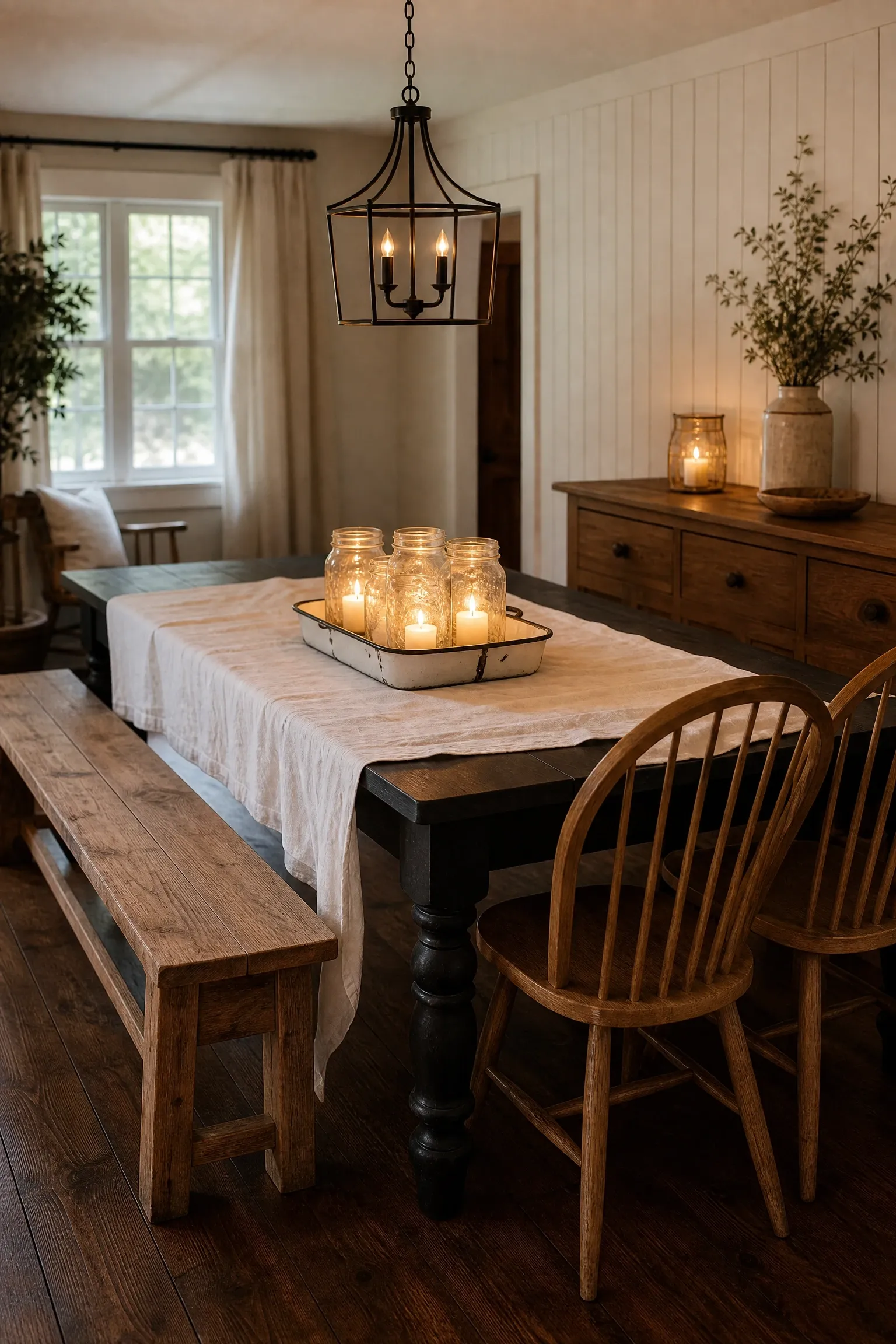
The farmhouse dining room might seem like an unlikely partner for a black table, since most people picture white-washed wood and neutral tones, but it works when approached thoughtfully. A black dining table in a farmhouse setting creates a modern farmhouse look that feels more current than the traditional all-white version. Pair it with bench seating in a natural pine or reclaimed wood finish on one side and Windsor-style chairs on the other. A simple white or natural linen tablecloth adds softness, and a cluster of mason jar candle holders or short pillar candles in an enamel tray on the center creates that warm, lived-in glow. Shiplap on one wall or a reclaimed wood feature adds the farmhouse texture, and a wrought iron or matte black pendant ties the hardware to the table. Fresh wildflowers or a simple bunch of herbs in a plain white jug completes the look with very little effort and almost no cost.
Designer Note: The black table in a farmhouse dining room works because it reads as reclaimed or industrial rather than formal. Keep the rest of the room intentionally casual and unpolished. Linen napkins, slightly mismatched chairs, and real candles all reinforce the relaxed quality that makes this look work.
17. Mid-Century Modern With Walnut Tones and Cone Pendants
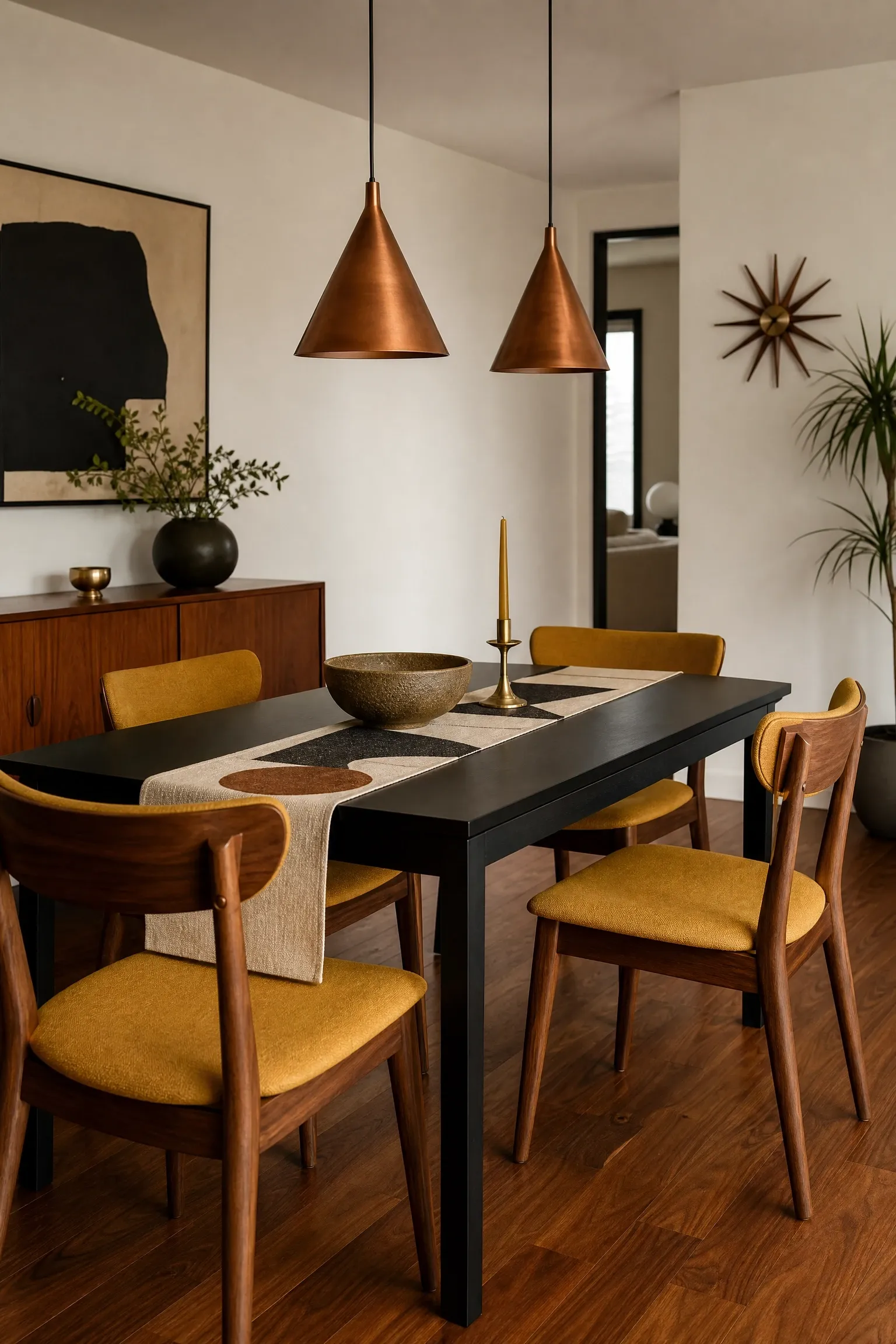
Mid-century modern is one of the most durable design movements of the 20th century, and its clean lines, warm wood tones, and functional approach to furniture pair exceptionally well with a black dining table. Choose dining chairs with tapered legs in a walnut or teak finish, either fully upholstered in a mustard, burnt orange, or olive green fabric, or with a simple molded form in the Eames tradition. The color palette for a mid-century modern dining room complements a black table particularly well: warm whites, muted earth tones, and rich wood grains create depth without darkness. Overhead, a cone-shaped pendant in a matte finish or a Sputnik-style chandelier in brushed brass is the defining light fixture of this style. On the table itself, a low ceramic bowl in a textured earth tone, a single taper candle in a brass holder, and a geometric printed runner are all the decoration you need. This is a genuinely accessible look since mid-century modern furniture and accessories are widely reproduced at every price point.
Designer Note: The mid-century modern look is one where chair leg detail matters enormously. Tapered legs in walnut or teak lift the furniture visually and stop the room from feeling bottom-heavy around a dark table. Avoid chunky legs or chairs that sit too low to the ground.
Bringing It All Together
A black dining table is one of those rare pieces of furniture that asks very little of you and gives back a lot. It is dark enough to be dramatic and neutral enough to work with almost any color palette, material, or design style you care to put beside it. The ideas above cover everything from quiet minimalism to full-on Art Deco glamour, which is exactly the point: there is no single right way to decorate around a black table.
What most of the ideas above have in common is this: balance. The table is already doing the heavy visual lifting, so the decor around it works best when it introduces lightness, warmth, or contrast rather than doubling down on the darkness. Warm metallics, natural wood, linen textiles, living plants, and candlelight are the tools that make black tables feel inviting rather than austere.
Start with what you are drawn to and add from there. Whether it is one marble tray, a set of rattan chairs, or a full dark academia room treatment, you do not need to do everything at once. The table is already a strong foundation. Everything else is just the conversation happening around it.
Frequently Asked Questions
What colors work best with a black dining table?
Warm neutrals like cream, off-white, and warm grey are the easiest starting points because they create contrast without clashing. Beyond neutrals, forest green, deep navy, terracotta, and dusty rose all work beautifully with black. Warm metallics in gold, brass, and copper are particularly effective as accent colors. The main thing to avoid is pairing cold, blue-toned greys or silvers with a matte black table because the combination can feel clinical rather than inviting.
How do I stop a black dining table from making the room feel dark?
The most effective approach is layered lighting combined with lighter elements in the rest of the room. Keep the walls in a lighter tone or limit dark paint to a single accent wall. Use warm-toned light bulbs rather than cool white ones, and position a pendant directly above the table so the surface is well-lit. Adding a large mirror nearby reflects light back into the room. Linen table runners, light-colored chairs, and living plants also help counterbalance the weight of the dark table.
What type of chairs look best with a black dining table?
This depends on the style you are going for, but as a general rule, chairs that introduce either contrast or warmth tend to work best. Natural wood chairs in oak, walnut, or ash add warmth and organic texture. Upholstered chairs in a muted jewel tone like emerald, dusty rose, or navy add color and softness. White or cream chairs create a classic contrast. The one combination that tends to be less successful is all-black chairs around a black table, which can make the furniture disappear into itself unless the room is very deliberately styled.
What should I put in the center of a black dining table?
A marble tray with a few intentional objects on it is one of the most practical and visually satisfying options for everyday use. Beyond that, a simple arrangement of candle holders at varying heights, a ceramic vase with a single stem or dried grasses, or a cluster of small potted plants all work well. The key is to keep the centerpiece low enough that people can see each other across the table, and to limit yourself to three to five objects so it does not feel cluttered. A table runner underneath the centerpiece pulls everything together and adds a layer of texture.
Is a black dining table hard to keep clean?
It depends on the finish. Matte black surfaces tend to show dust and fingerprints more readily than a gloss finish, so they benefit from a quick wipe with a slightly damp microfiber cloth every few days. Glossy black finishes can show water marks and smudges, which means they need more frequent attention. Marble-top black tables require sealing on arrival and careful maintenance to avoid etching from acidic foods. For families with young children, a lacquered or powder-coated finish is generally the most durable and easiest to maintain over time.
Can a black dining table work in a small dining room?
Yes, but scale matters. In a small dining room, a round or oval black table tends to work better than a large rectangular one because it takes up less visual space and has no hard corners that interrupt the flow of the room. Pair it with chairs that have a light visual weight, such as slim metal frames or Lucite ghost chairs, to keep the room feeling open. Avoid heavy upholstered chairs that add bulk, and use a large mirror on one wall to make the space read as larger. Good lighting positioned directly above the table also draws the eye upward and makes the ceiling feel higher.