If you have ever stood in the doorway of a rental bedroom trying to figure out where a queen bed, a dresser, and a nightstand are all supposed to go, you already know most apartment bedrooms were not designed with real furniture in mind. Builders carve out a rectangle, add a closet that is really just a slit in the wall, and call it done. The room looks fine empty and starts fighting you the moment you move in. The fix is rarely about buying less stuff. It is almost always about rethinking where things go, what they are made of, and how the light hits them.
This list is organized by the problem it solves rather than one long scroll of pretty pictures. We will cover layout and furniture placement first, then color and light, then storage for closets the size of a phone booth, then materials worth spending on, and finally the personal touches that make a place feel like yours. Some ideas cost nothing but an afternoon of rearranging. Others are a real investment, and I will tell you which is which, because advice that ignores your budget is not actually useful.
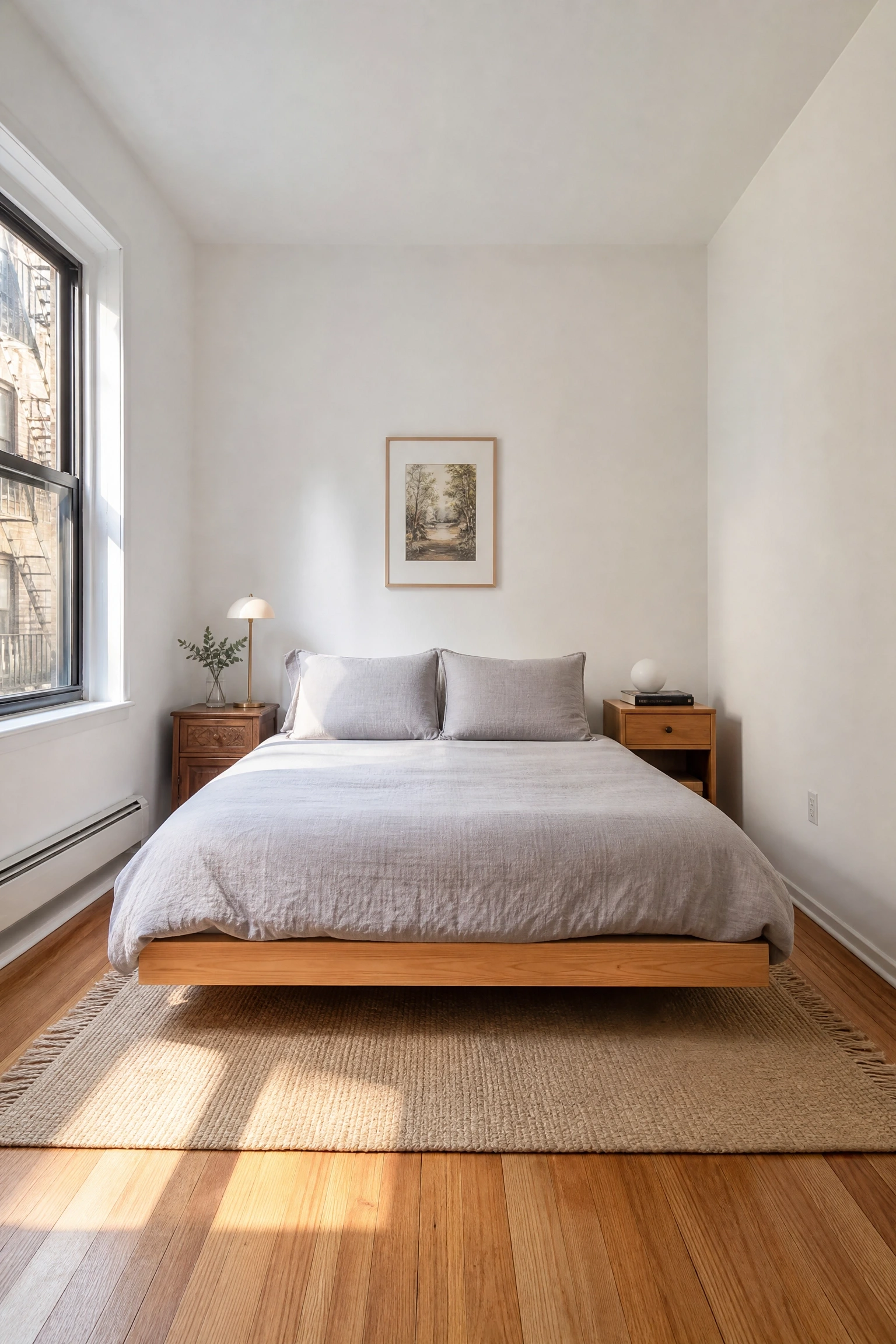
The instinct in a small bedroom is to push the bed against the wall to open up floor space, but that usually backfires because it leaves you climbing over a partner to reach the far side. Pulling the bed a foot or two off the wall and centering it creates breathing room around a focal point, and reads as intentional rather than cramped. Add a slim console or two stacked nightstands on the exposed side, and keep bedding light so the wall does not visually swallow the bed. This works best in rooms at least ten feet wide; narrower than that and the bed belongs on the long wall.
Quick Tip: Leave at least 24 inches of clearance on each side before committing, or the layout will feel tight instead of open.
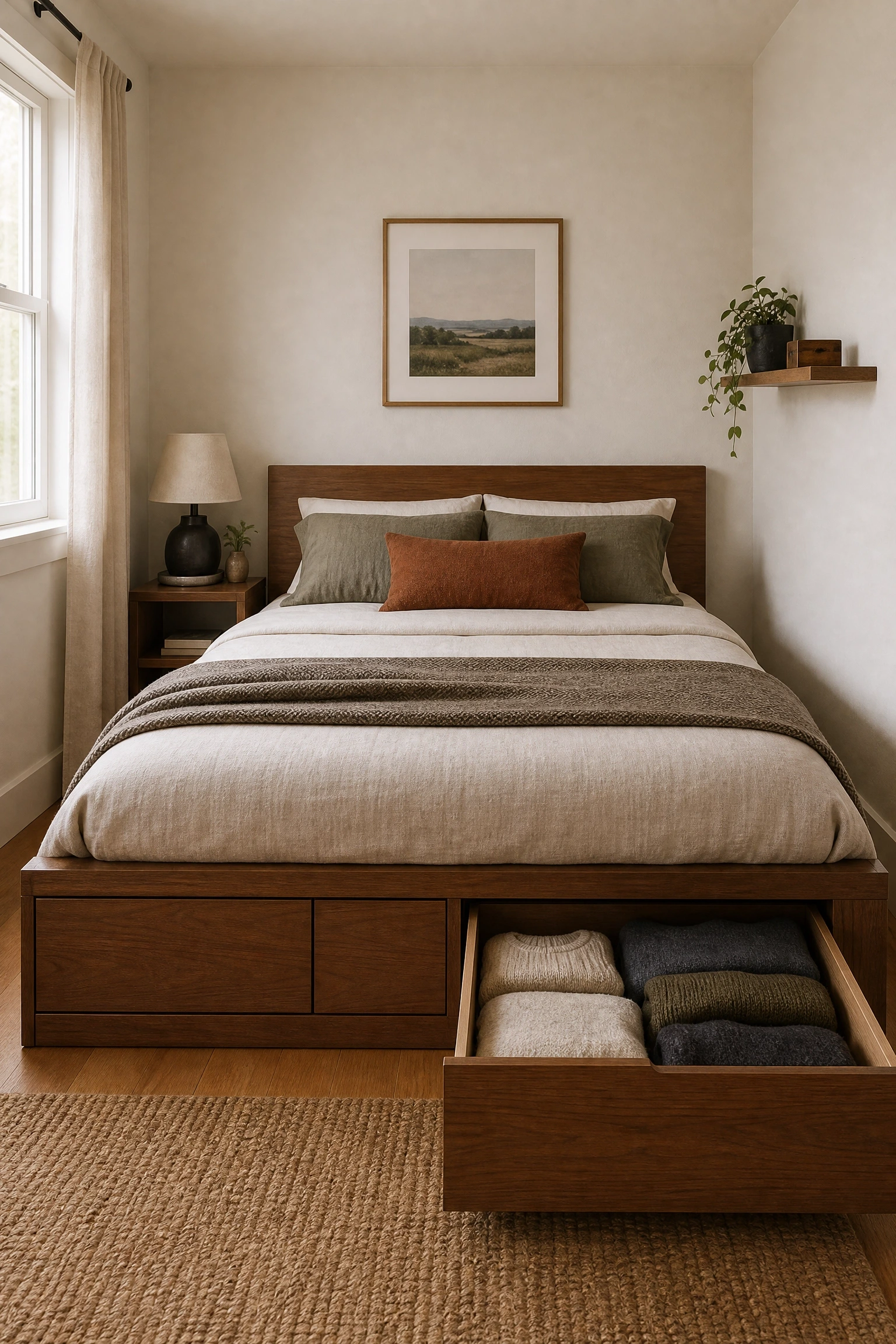
If your closet is basically decorative, the bed needs to start pulling weight as storage, and a platform frame with drawers or a hydraulic lift base does that without looking like a dorm room. These frames run four hundred to twelve hundred dollars, a mid-range investment rather than a cheap fix, but it genuinely replaces a dresser where a dresser will not fit. Keep the room quiet around it, a simple headboard, neutral walls, so the bed is not the only thing doing visual work. Load the drawers with off-season items only, since lift beds are heavier to open than you would expect.
Heads Up: If you rent short term, choose side drawers rather than a full lift mechanism, since drawers are far easier to move and reassemble.
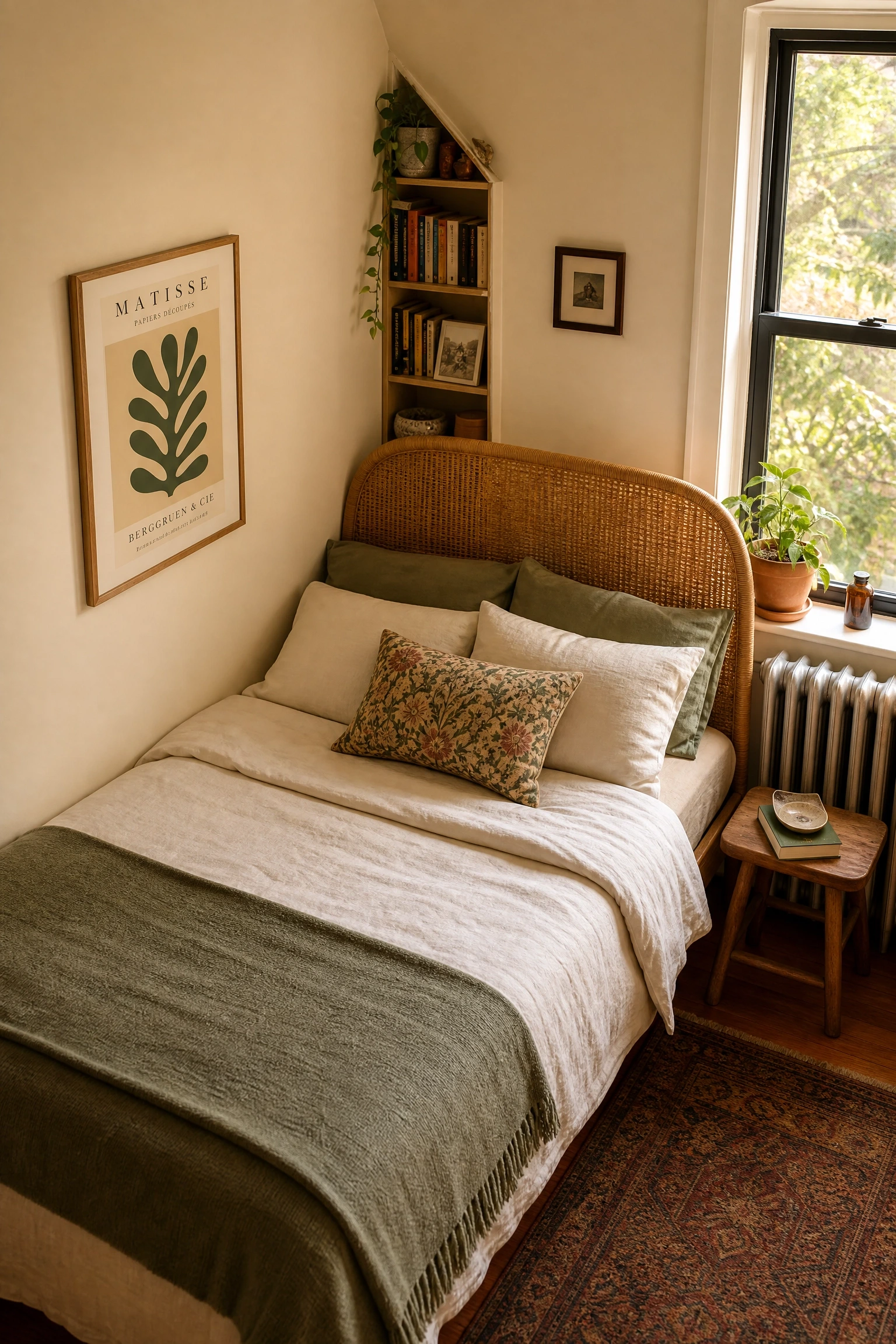
In an oddly shaped room, angling the bed diagonally into a corner can free up more usable floor space than a straight arrangement, and it softens a boxy room by breaking the grid of right angles. This works especially well with an awkward alcove or a radiator jutting out, since the triangle behind the headboard becomes a spot for a narrow bookshelf that would not fit elsewhere. Keep the corner textured with a woven hanging or framed art, and choose a headboard with some visual weight. The downside is it eats more square footage than a straight placement in a truly rectangular room, so measure first.
Designer Advice: Angle the bed at roughly 30 to 45 degrees, not a sharp diagonal, or the room reads like the furniture is sliding.
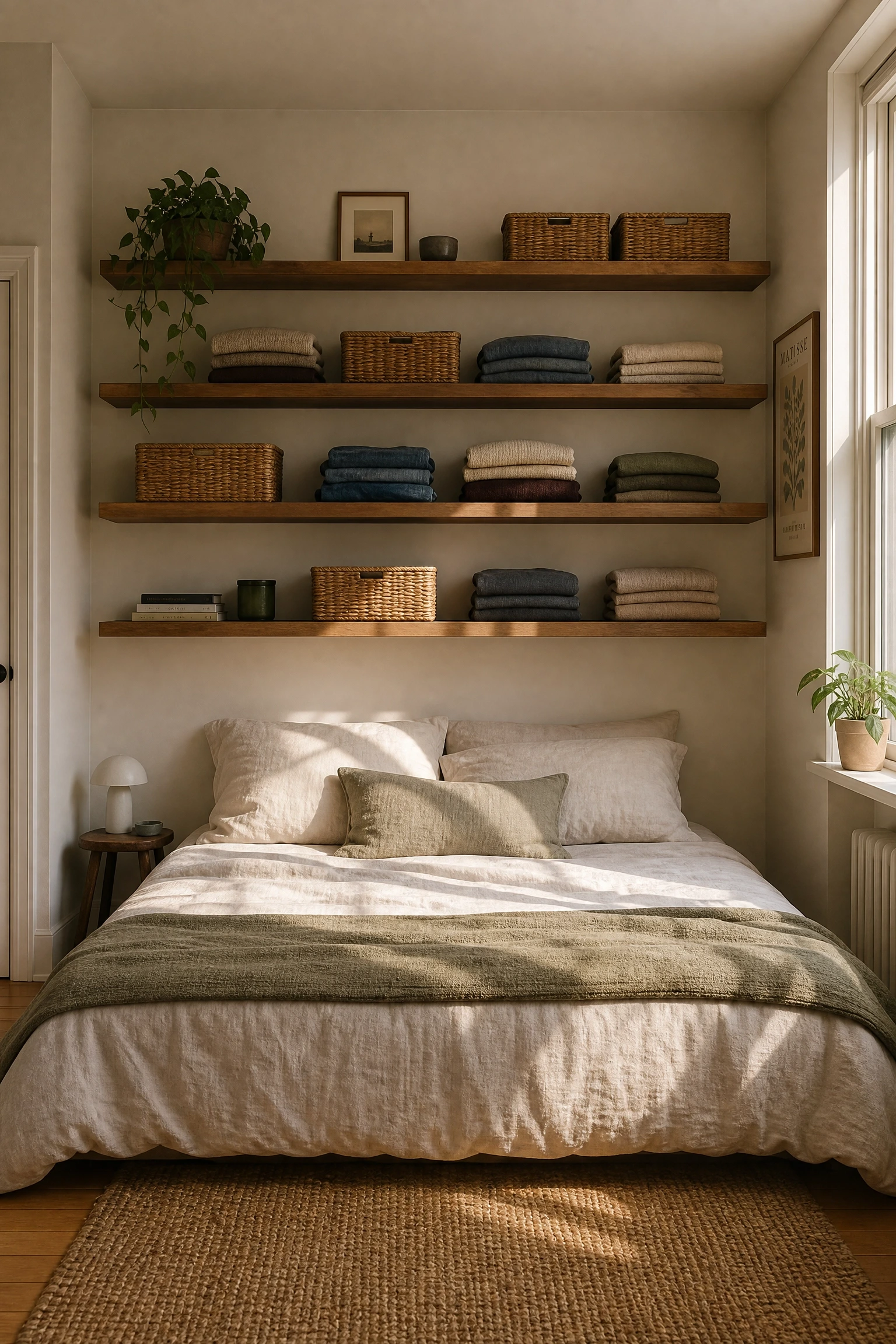
A standard six-drawer dresser eats close to fifteen square feet once you account for clearance, often the difference between a small bedroom that breathes and one that does not. Floating shelves at varying heights, paired with woven baskets for folded clothes, hold nearly as much while keeping the floor visually open. Go with solid wood or a good laminate rather than thin particleboard, since these shelves take real weight and cheap brackets sag within a year. This is budget-friendly, a set of three shelves and brackets runs under 150 dollars, but it means giving up drawer privacy.
Reality Check: This only works if you are consistent about folding and containing items in baskets, otherwise open shelving turns into visible clutter fast.
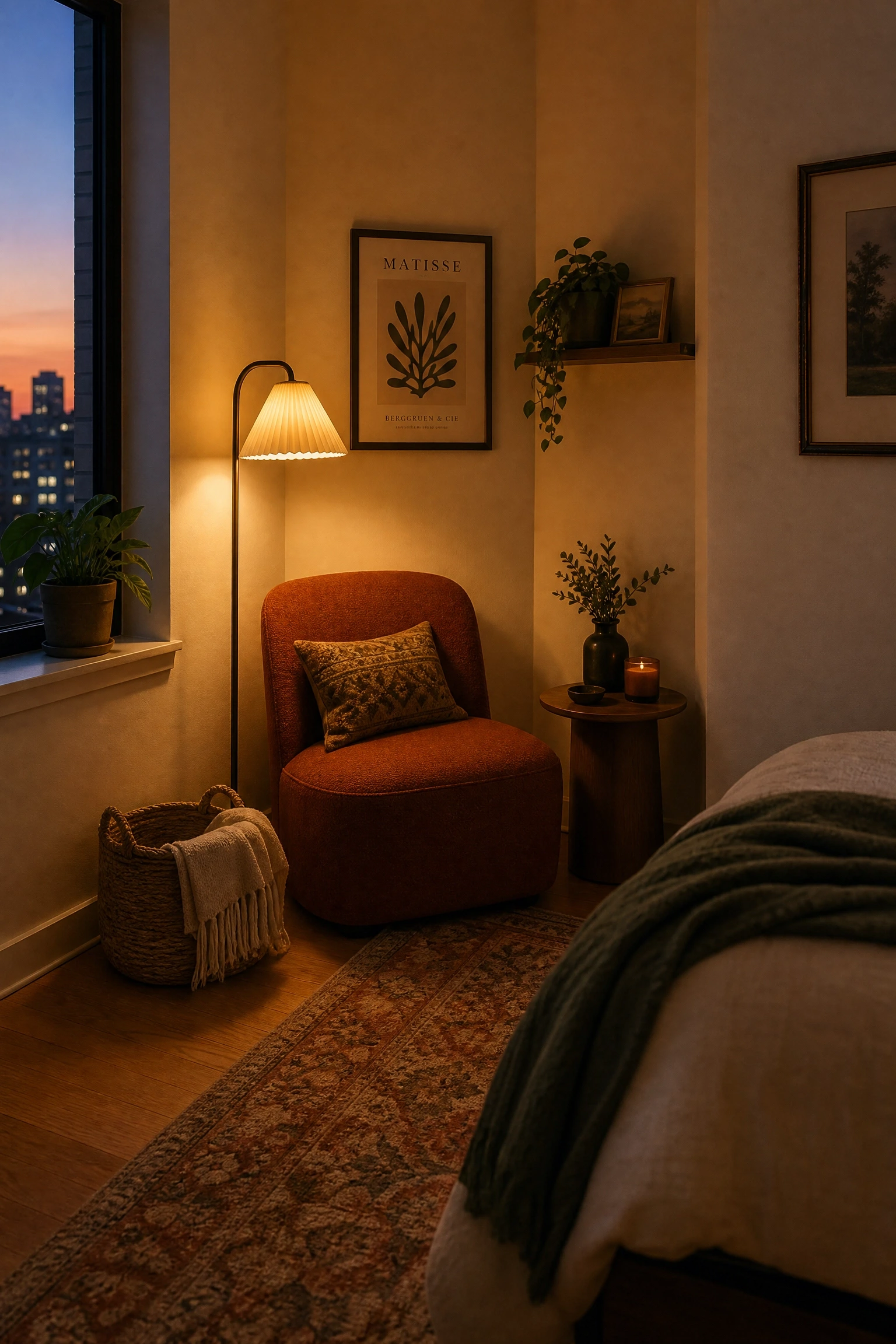
Nearly every apartment bedroom has one corner that never quite works, too small for a dresser, too awkward for a desk. A slim slipper chair, a round side table, and a floor lamp with a warm bulb can turn eighteen square feet of dead space into the spot you actually want to sit in. This works best when the chair fabric contrasts gently with the bedding rather than matching it exactly, so the nook reads as its own moment. It needs at least a four by four foot corner; anything smaller and the chair blocks the door swing.
Pro Move: Choose a chair with exposed wood or metal legs instead of a skirted base so the nook still feels light.
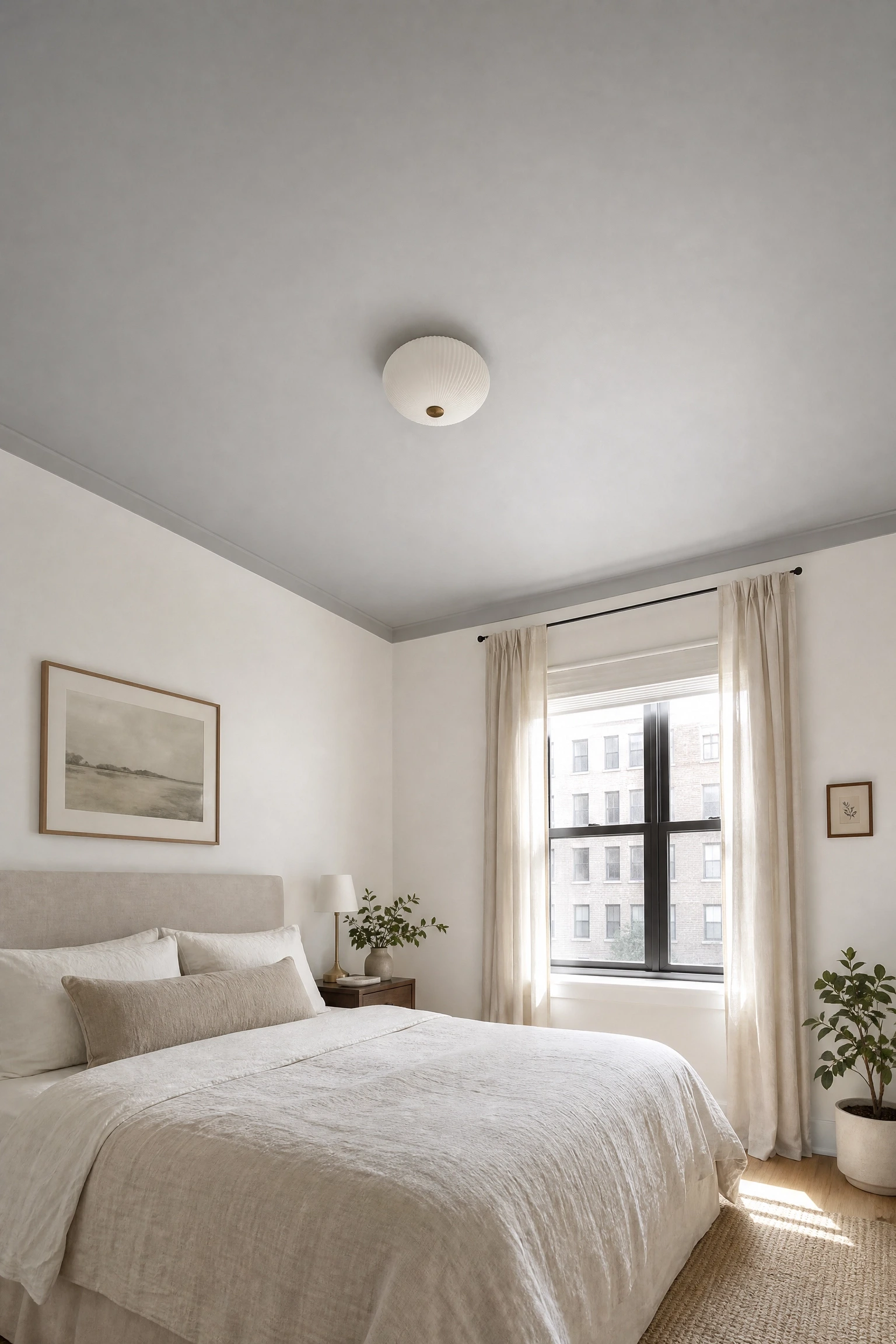
Most people paint a bedroom ceiling flat white without a second thought, but a pale color on the fifth wall, a shade or two lighter than the walls, tricks the eye into reading the ceiling as receding rather than boxing the room in. This solves a real problem in apartments with low eight-foot ceilings, where stark white paired with white trim can flatten the sense of height. It looks best when the color stays genuinely subtle, so test a sample patch under your actual lighting first. A gallon of ceiling paint runs 30 to 50 dollars, one of the cheapest changes on this list.
Quick Tip: Use a matte or eggshell finish on the ceiling, never satin or gloss, since sheen up there highlights every roller mark.
Layer Three Light Sources Instead of One Overhead Fixture
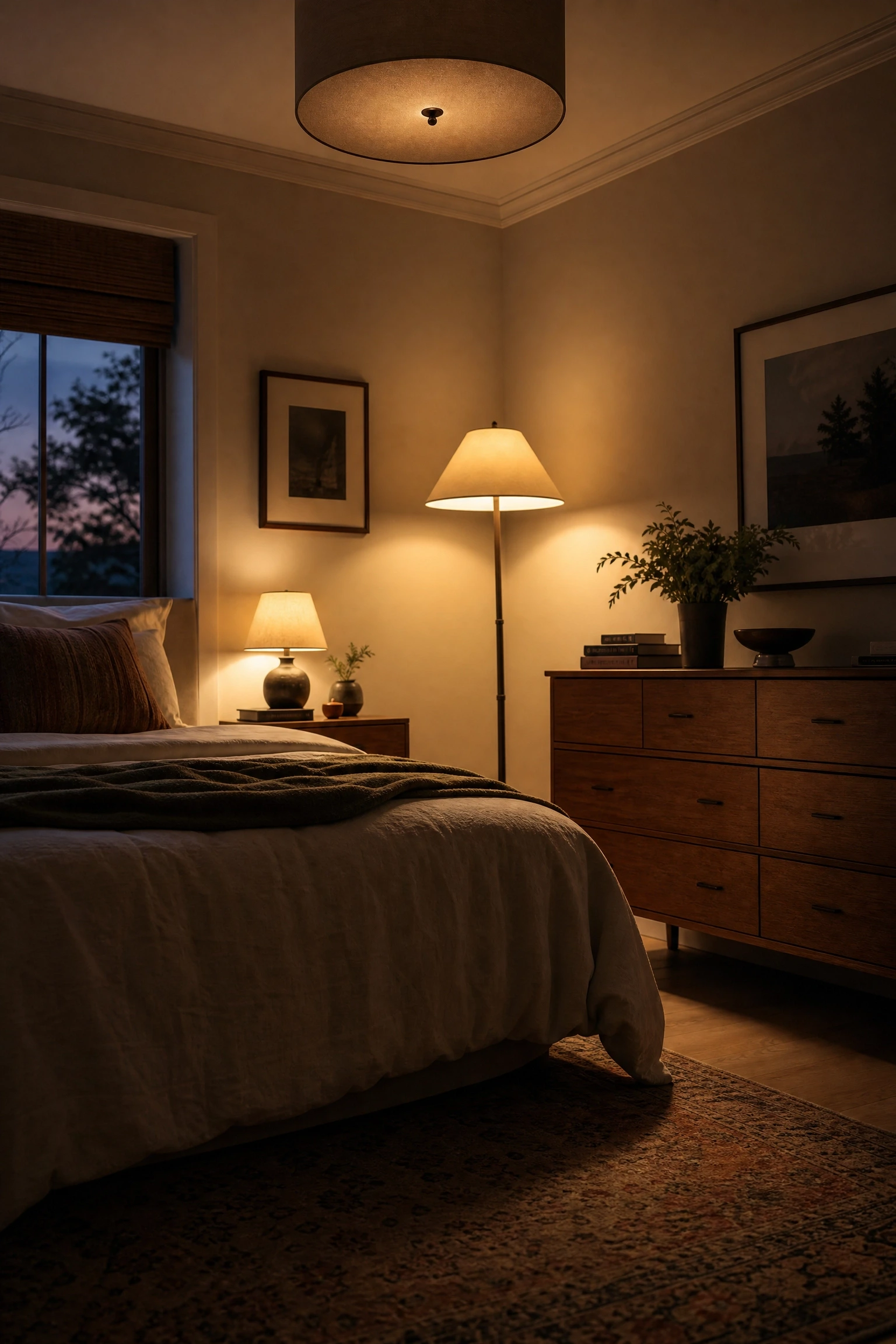
A single ceiling fixture creates flat, even light that makes a room feel more like an office than a bedroom, a common mistake simply because the overhead light is already wired in. Layered lighting, an overhead fixture on a dimmer plus a table lamp and a wall sconce at a different height, creates pools of light that add depth even when the square footage does not change. Choose warm 2700K to 3000K bulbs at eye level or below, since cooler light feels clinical in a room meant for rest. A plug-in dimmer costs under 20 dollars and turns any lamp dimmable with no electrical work.
Designer Advice: Put your reading lamp on a separate switch from the overhead fixture so you can kill the harsh top light without sitting in the dark.
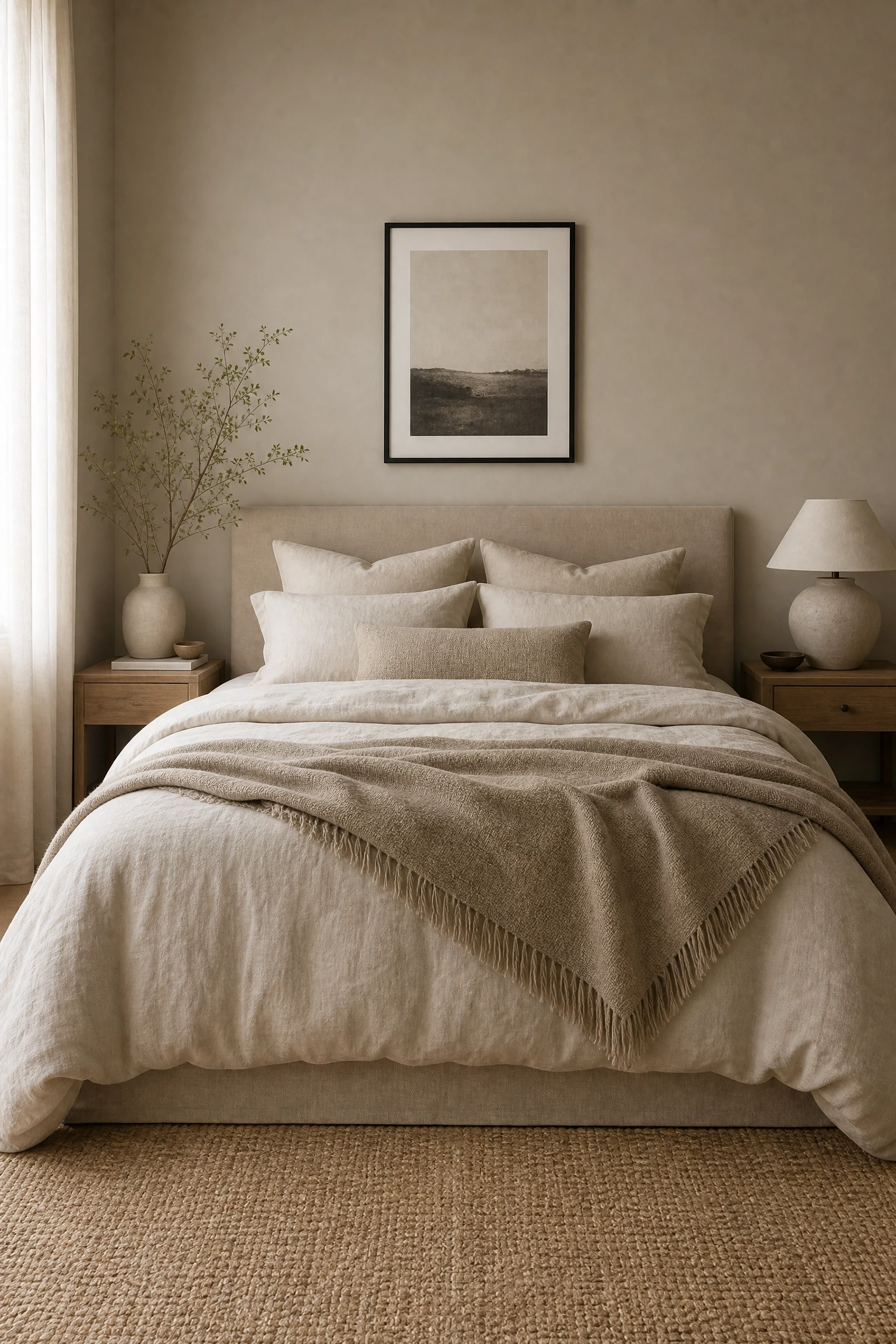
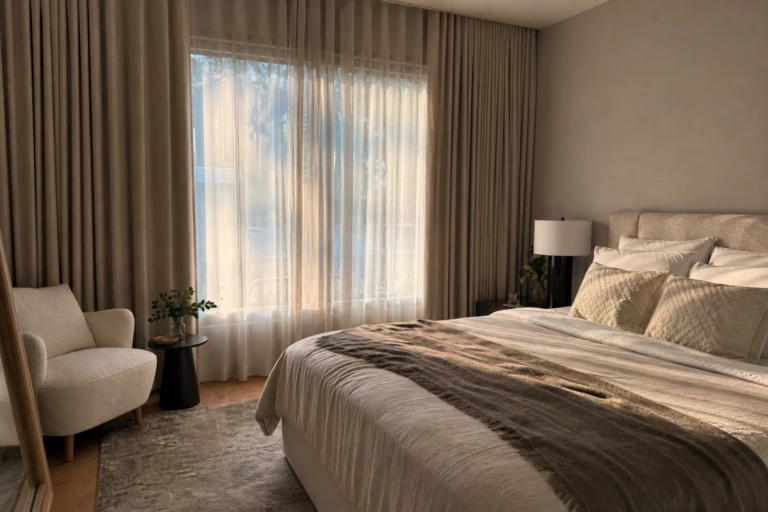
A tonal bedroom, where the walls, bedding, and rug sit in the same color family but in different materials, reads as calm and put together in a way a room with five competing colors rarely does. Try a warm greige wall paired with a nubby wool throw, a linen duvet a shade lighter, and a woven jute rug, all within about two shades of each other. Without one piece of art or a plant to break it up, a fully tonal room can read flat rather than serene. It is budget-flexible too, since you can build it from what you already own by regrouping items by color.
Heads Up: Stick to two, at most three, materials in the same tone or the room starts to look like a furniture showroom.
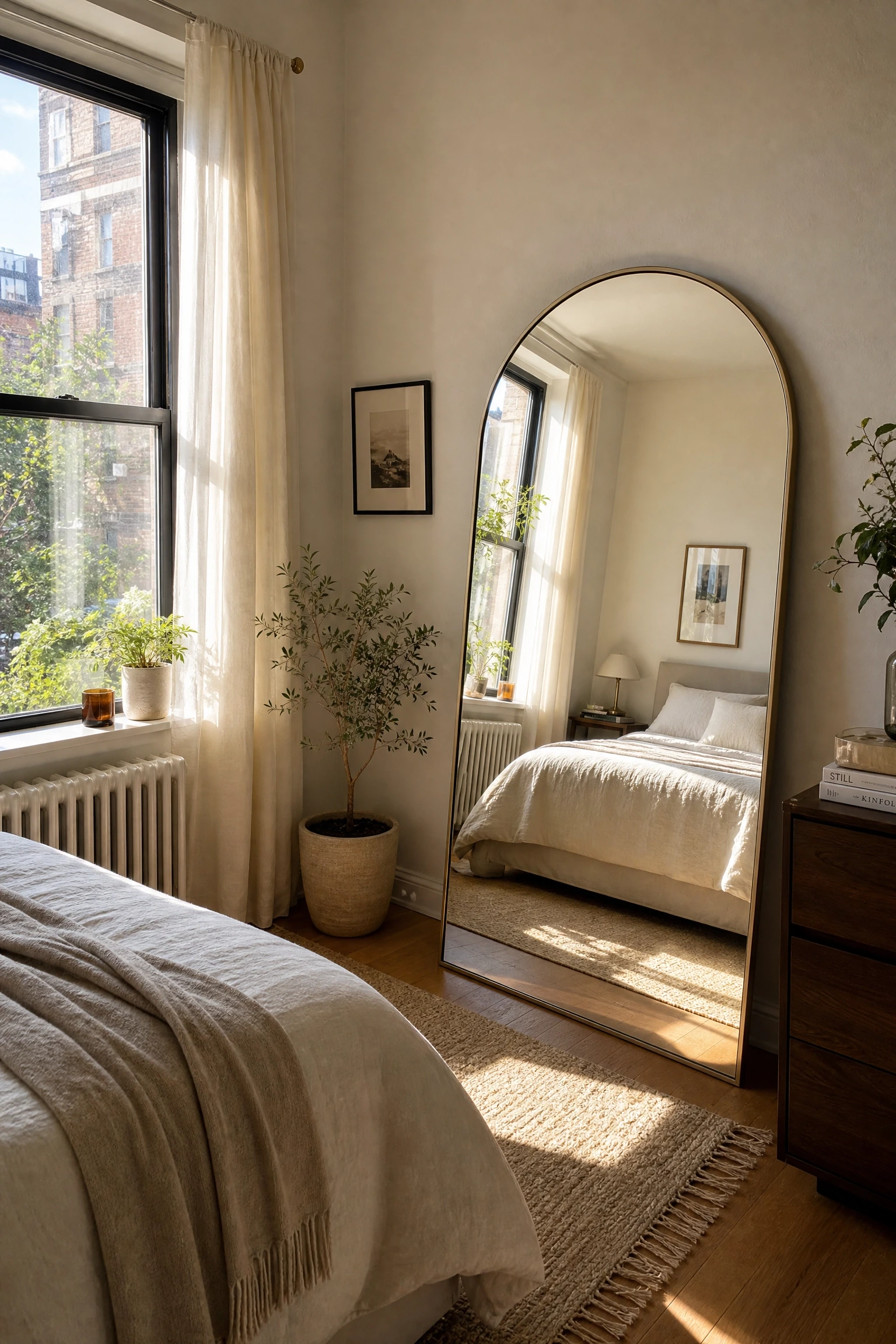
This is one of the oldest tricks in small-space design, based on physics rather than a trend, a large mirror directly across from a window bounces daylight back and effectively doubles the sense of openness during the day. Look for a mirror at least 30 by 40 inches, and lean it against the wall rather than hanging it if your lease does not allow drilling. Avoid placing it where it reflects the bed straight on if that feels unsettling at night. A quality floor mirror runs from 80 dollars for a basic frame to several hundred for solid wood.
Reality Check: A mirror reflecting a cluttered closet will amplify the mess just as much as it amplifies the light.
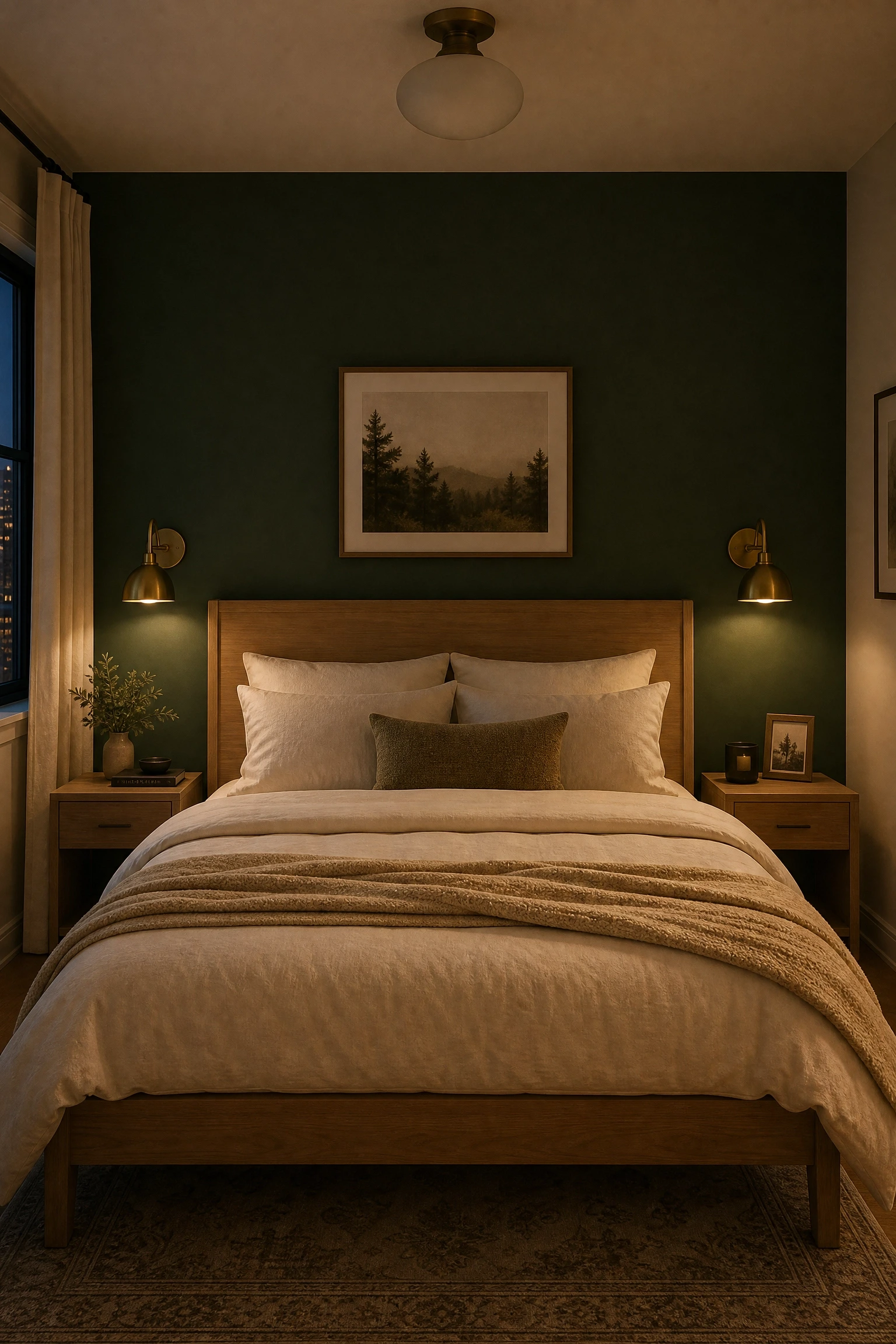
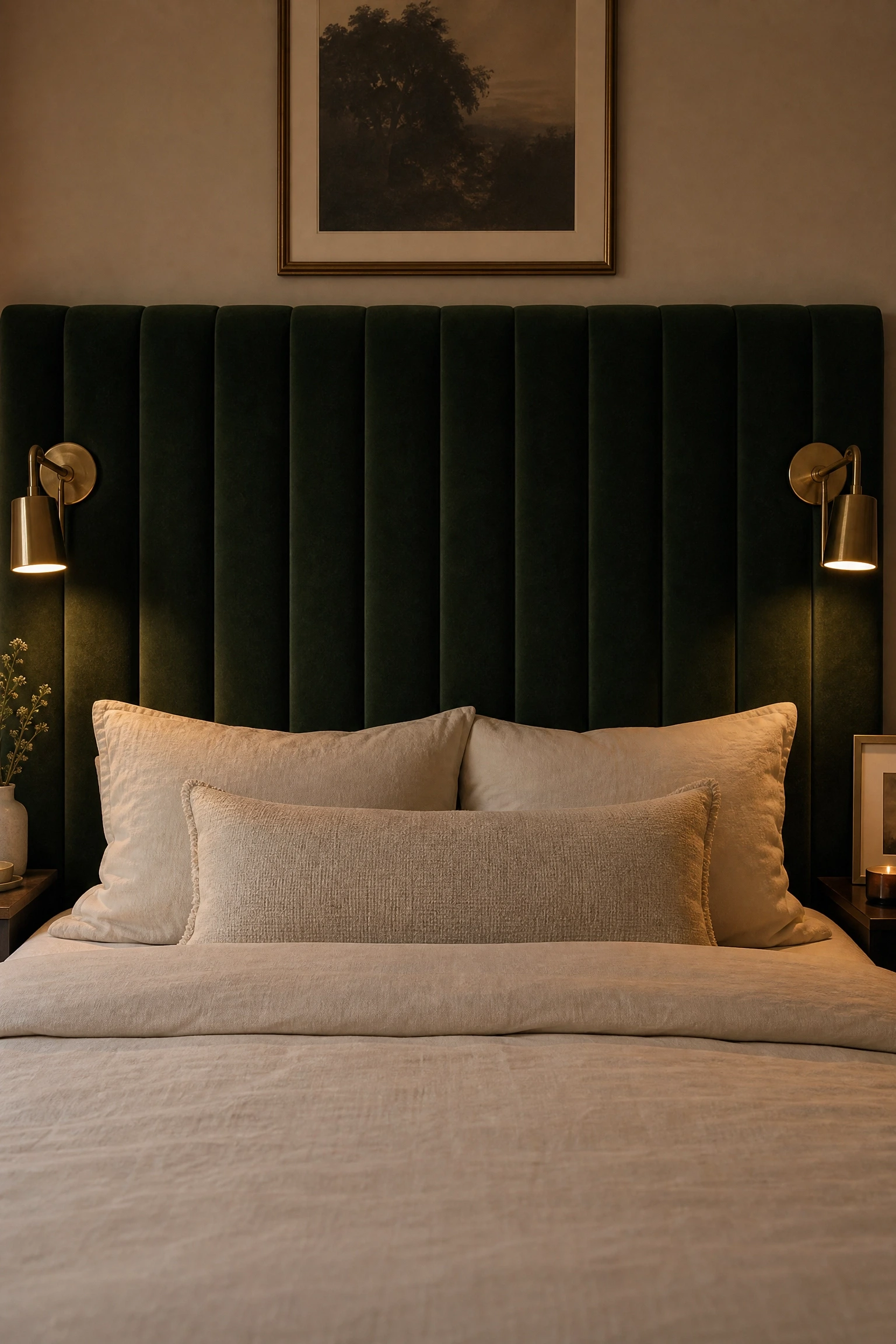
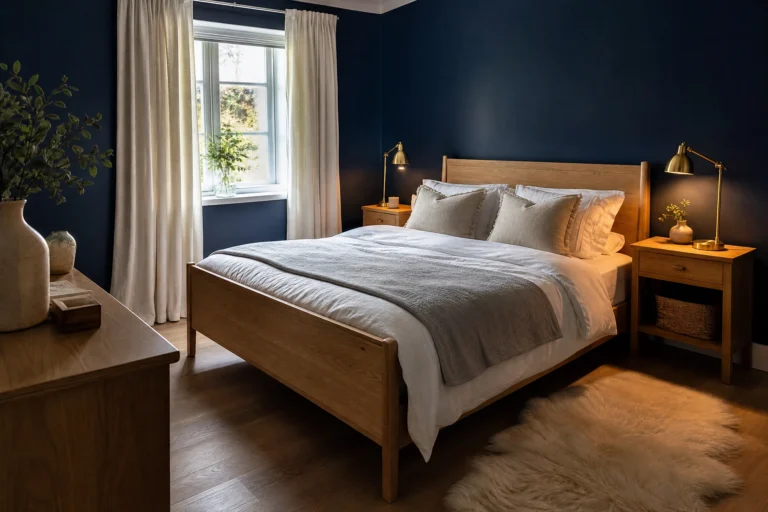
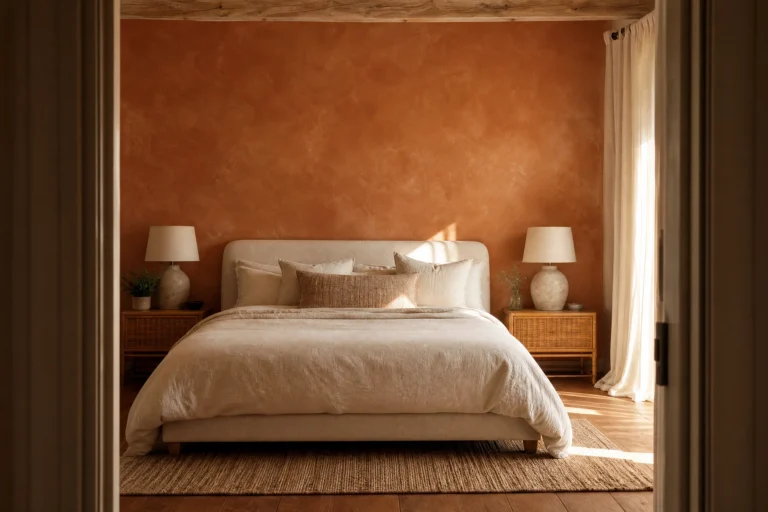
Painting just the wall behind the headboard in a deep color, forest green, ink navy, or warm charcoal, creates a focal point without closing the room in the way a fully dark box would. This works because the eye reads the lighter walls as the room’s true boundary while the dark wall recedes into a frame. It pairs well with warm metal hardware and a light wood headboard, since the contrast keeps the corner from feeling heavy. This is a weekend project, though dark colors shift under warm versus cool bulbs, so test a swatch first.
Pro Move: Extend the dark paint a foot or two onto the ceiling above the headboard for a soft canopy effect without the cost of an actual canopy.
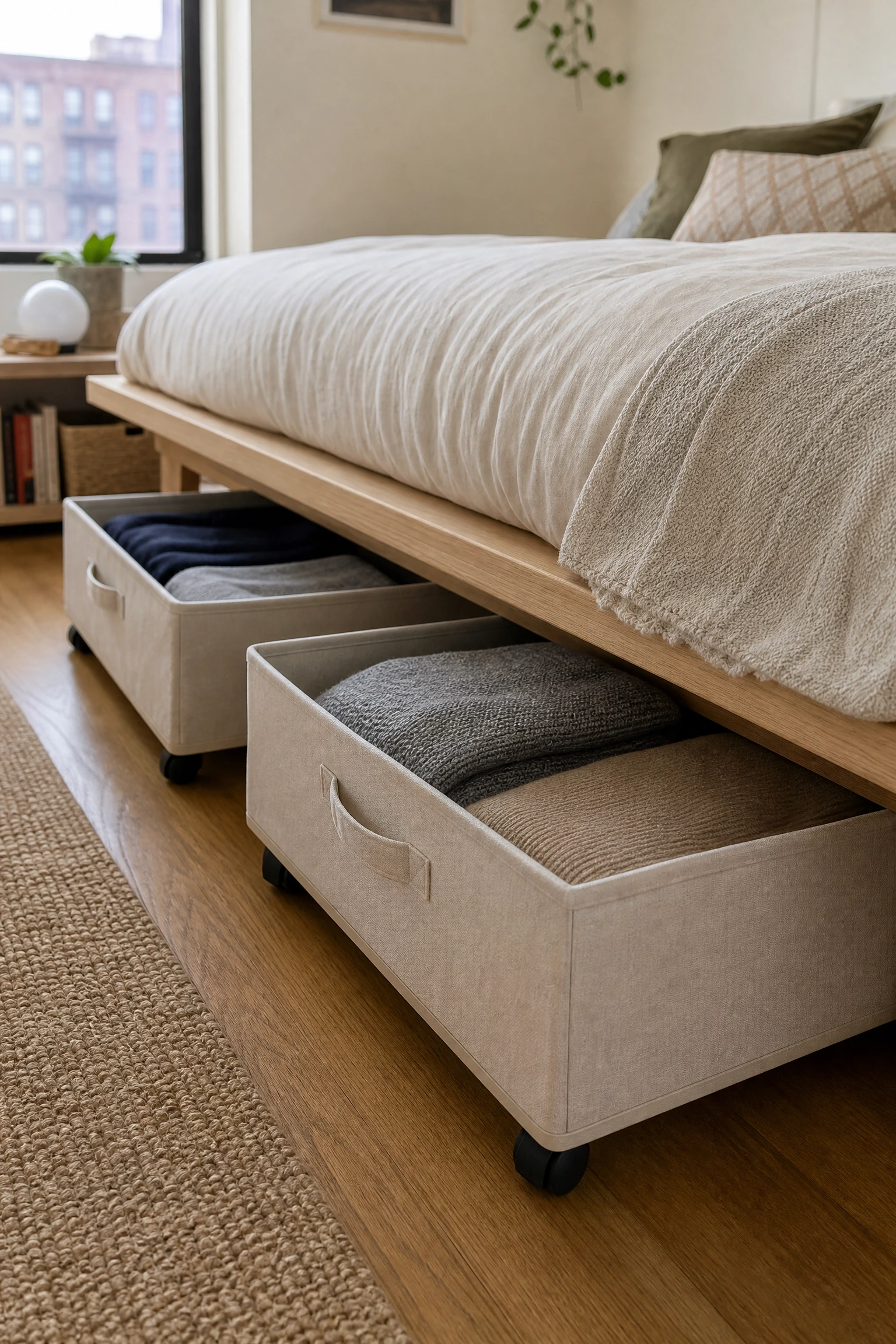
The space under a standard bed frame is often the single most wasted square footage in an apartment bedroom, and low-profile bins on wheels let you use it without lifting the mattress every time. Fabric bins in canvas or linen look far less like storage than clear plastic totes, which read as utilitarian even when tidy. This works best for items you access every few weeks, extra bedding, off-season clothes, since it is not a task you want to do every morning. A set typically runs 25 to 40 dollars, but it only works if your frame clears the floor by six inches.
Quick Tip: Measure the clearance under your bed frame before buying bins, since many low platform beds leave less than four inches of usable space.
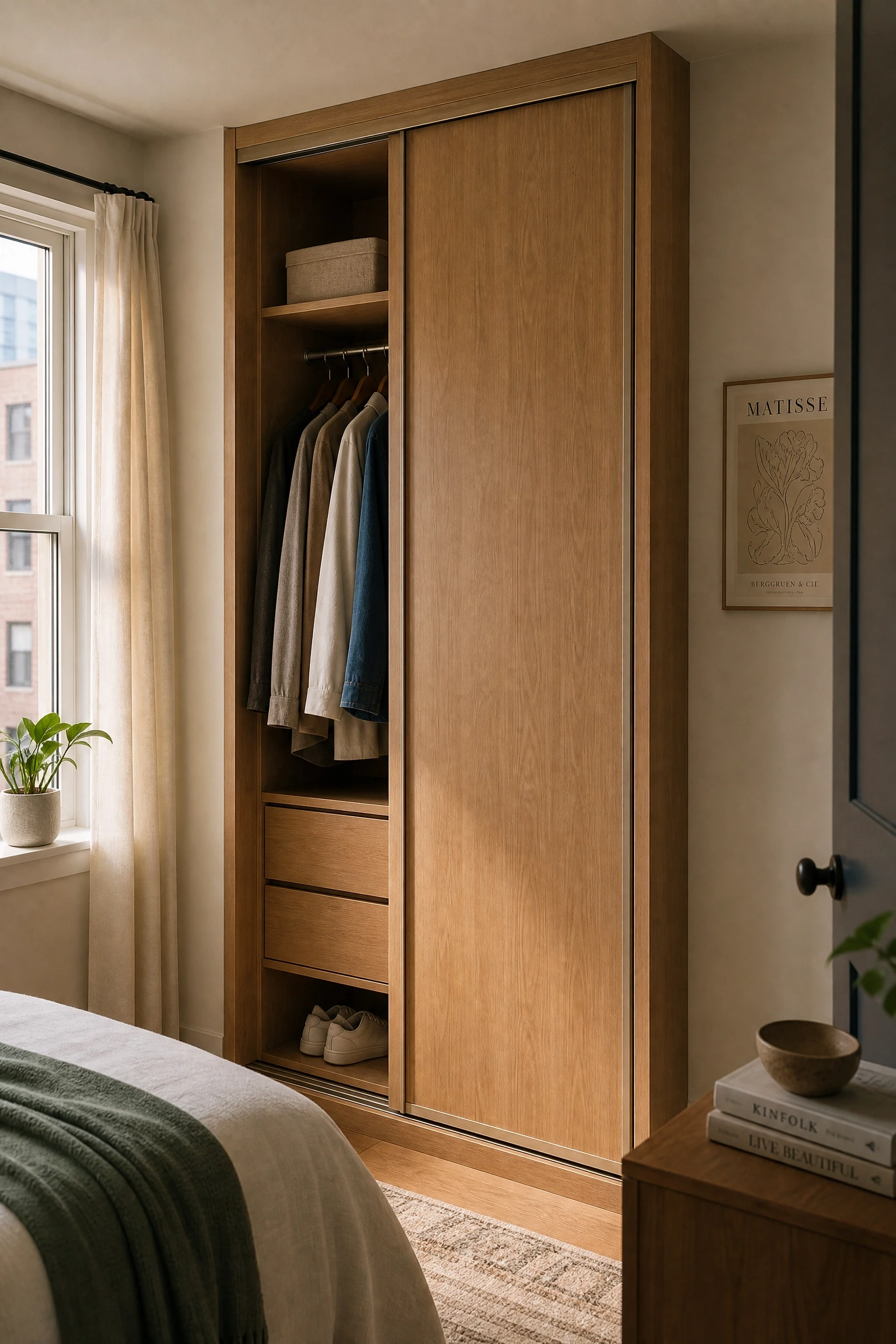
Freestanding wardrobes get a bad reputation for looking bulky, but a narrow model with sliding rather than swing doors can fit into a surprising number of small bedrooms and replace a full closet in older apartments. Sliding doors matter because a hinged door needs clearance to swing open, which a sliding version eliminates, making it usable even wedged into a tight corner. Look for a light oak or painted finish that matches your furniture, since a wardrobe that blends in visually disappears more than one that stands out. This is a mid-range investment, generally 300 to 700 dollars, and flat-pack versions have real durability limits after a move.
Heads Up: If you plan to move again soon, check whether the wardrobe disassembles cleanly, since some sliding-door models are effectively built once and stay put.
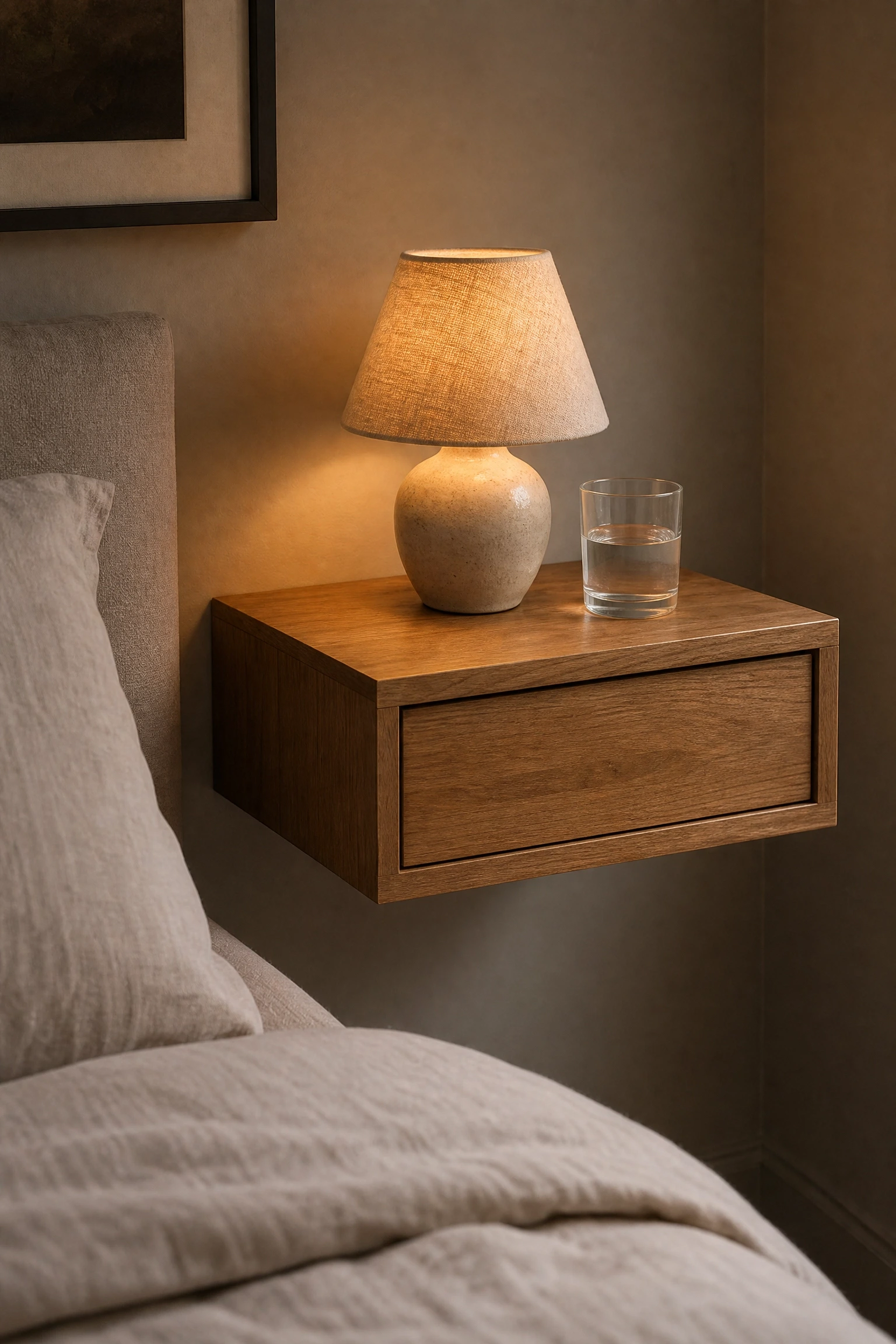
A traditional nightstand with legs and a drawer takes up floor space a wall-mounted floating shelf does not, and in a bedroom under a hundred square feet that difference is noticeable. Floating nightstands, mounted level with the top of your mattress, make the floor beneath the bed visible, which reads as more open even though storage capacity stays roughly the same. This requires drilling, so it is not ideal for every rental, though many leases allow small anchors as long as holes are patched at move-out. Pair it with a small lamp, since the shelf alone will look bare without light at that height.
Designer Advice: Mount floating nightstands two to four inches below the mattress top so you are not reaching up to grab your phone every morning.
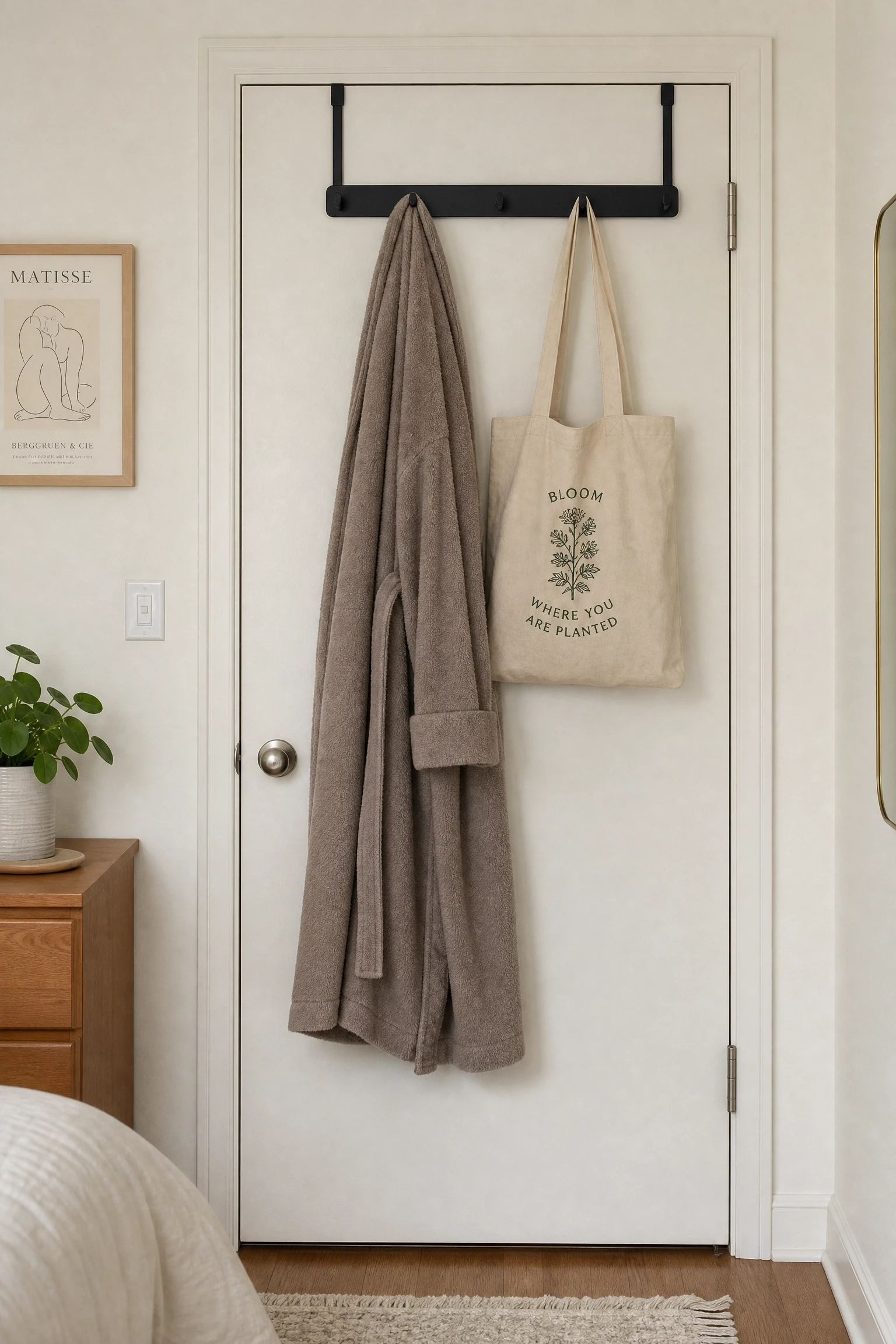
The back of a bedroom door is genuinely underused storage, and a row of hooks or a slim over-the-door rack can hold bags, robes, and next-day outfits without taking up floor space. This solves a real daily friction point, the pile of clothes that ends up on a chair, without any drilling if you choose an over-the-door style rather than screw-in hooks. Choose a matte black or brass finish rather than plain chrome, since it is visible every time the door is open. Most racks run under 25 dollars and are fully reversible for a rental.
Reality Check: This helps with daily clutter but will not solve a genuine lack of storage, it is a supplement to a real closet, not a replacement.
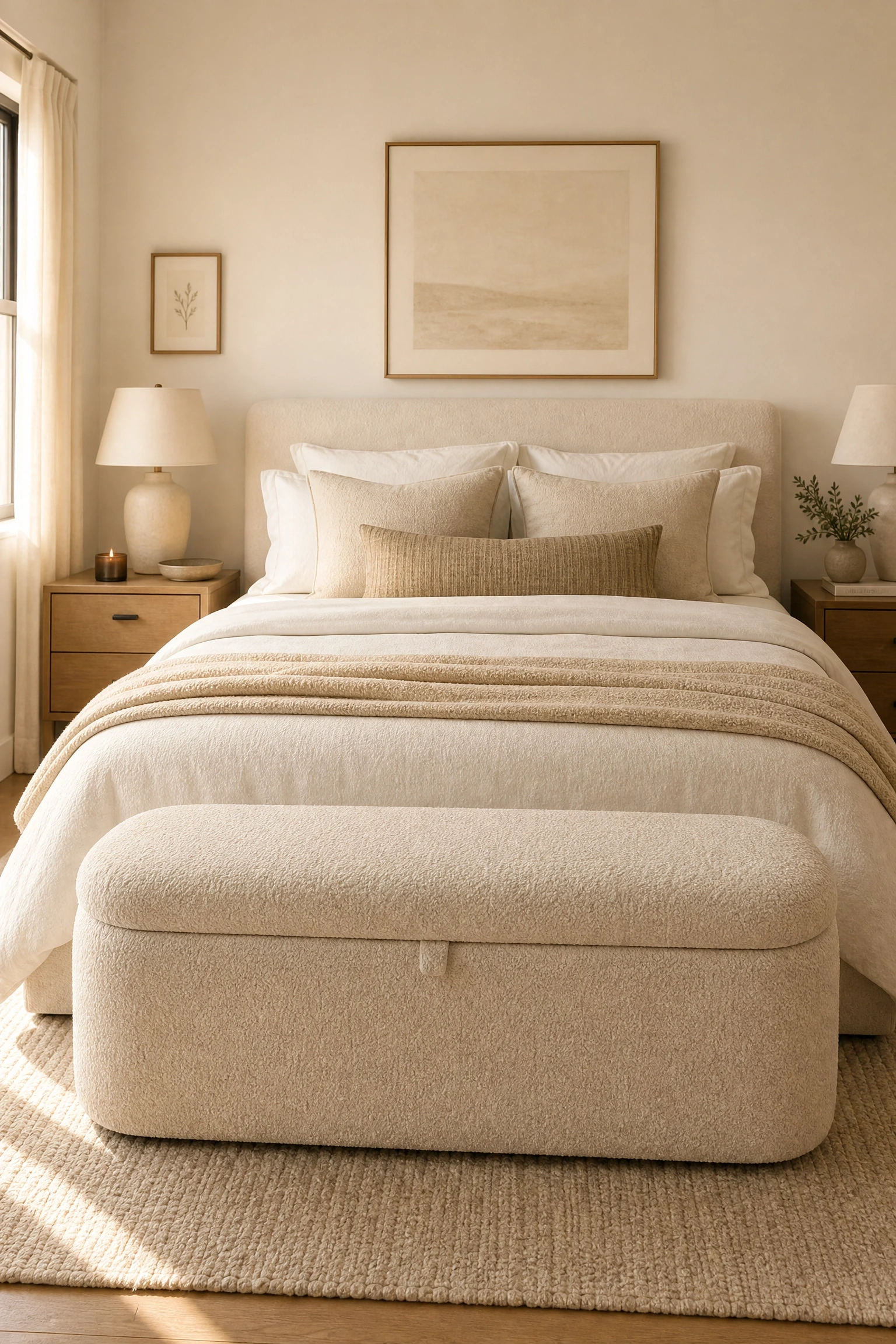
A bench with a lift-top or built-in bins at the foot of the bed doubles as a spot to sit while putting on shoes and a place to stash extra blankets. Upholstered benches in boucle add soft textural contrast to a wood frame, while a woven rattan bench leans more relaxed, depending on the rest of the room’s materials. This only makes sense with at least two feet of clearance at the foot of the bed, otherwise it becomes an obstacle. A simple upholstered version starts around 150 dollars, a solid wood lift-top can run 400 or more.
Pro Move: Choose a bench a few inches narrower than the bed rather than matching it exactly, since matching width can look like leftover furniture.
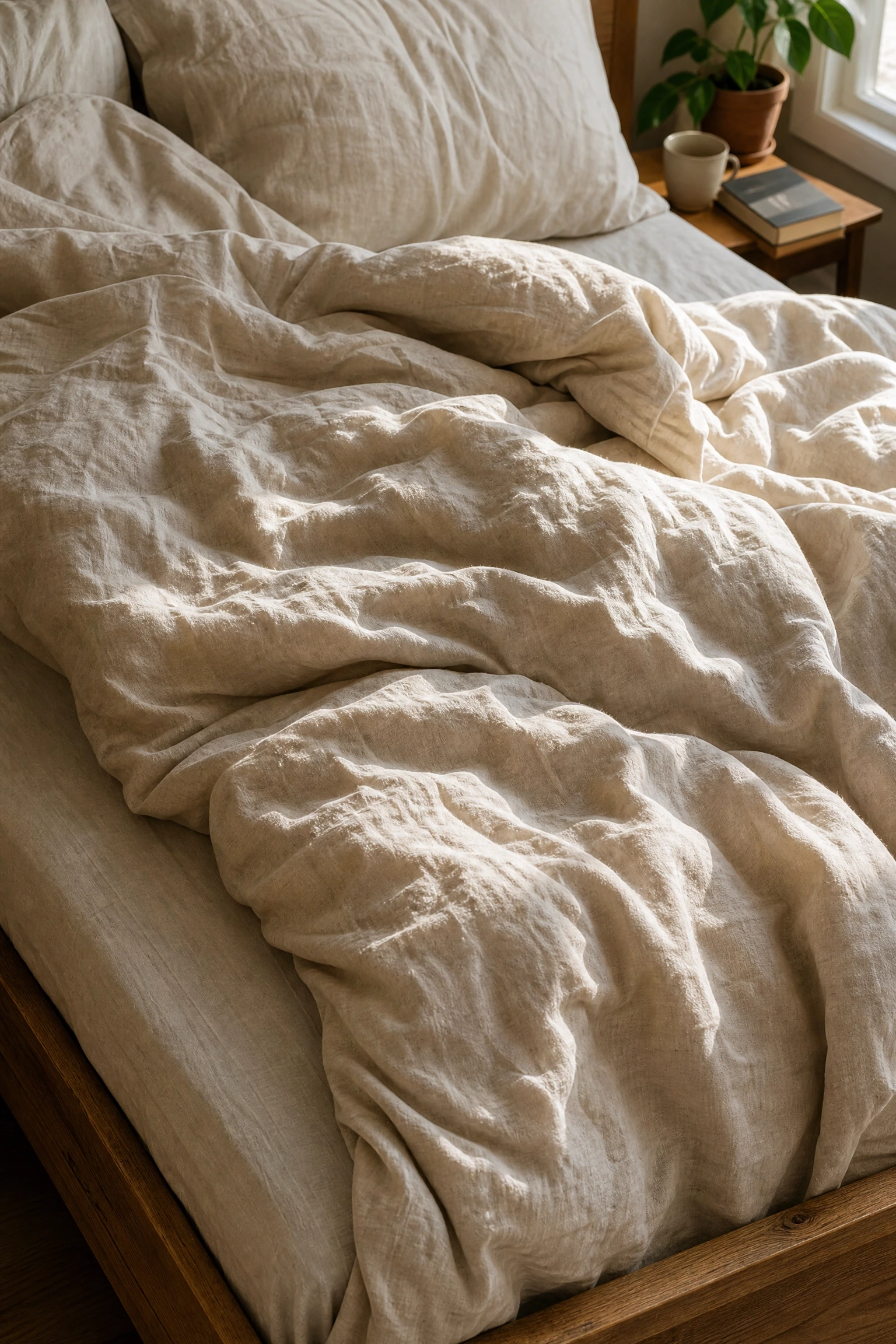
Linen has become the default recommendation in a lot of bedroom coverage lately, and it earns that reputation because it wrinkles in a way that reads as relaxed rather than sloppy, and breathes better in warmer months than cotton sateen. A slightly rumpled linen duvet actually looks better unmade than a crisp cotton one, which takes real pressure off making a hospital-corner bed every morning. Budget linen-blend sets start around 80 dollars while full French or Belgian linen can run 300 or more. One honest limitation is that pure linen wrinkles by design, and some find that look messy rather than relaxed.
Quick Tip: Wash linen in cold water and skip the dryer sheets, fabric softener actually breaks down linen fibers faster over time.
A Jute or Wool Rug Layered Over Wall-to-Wall Carpet
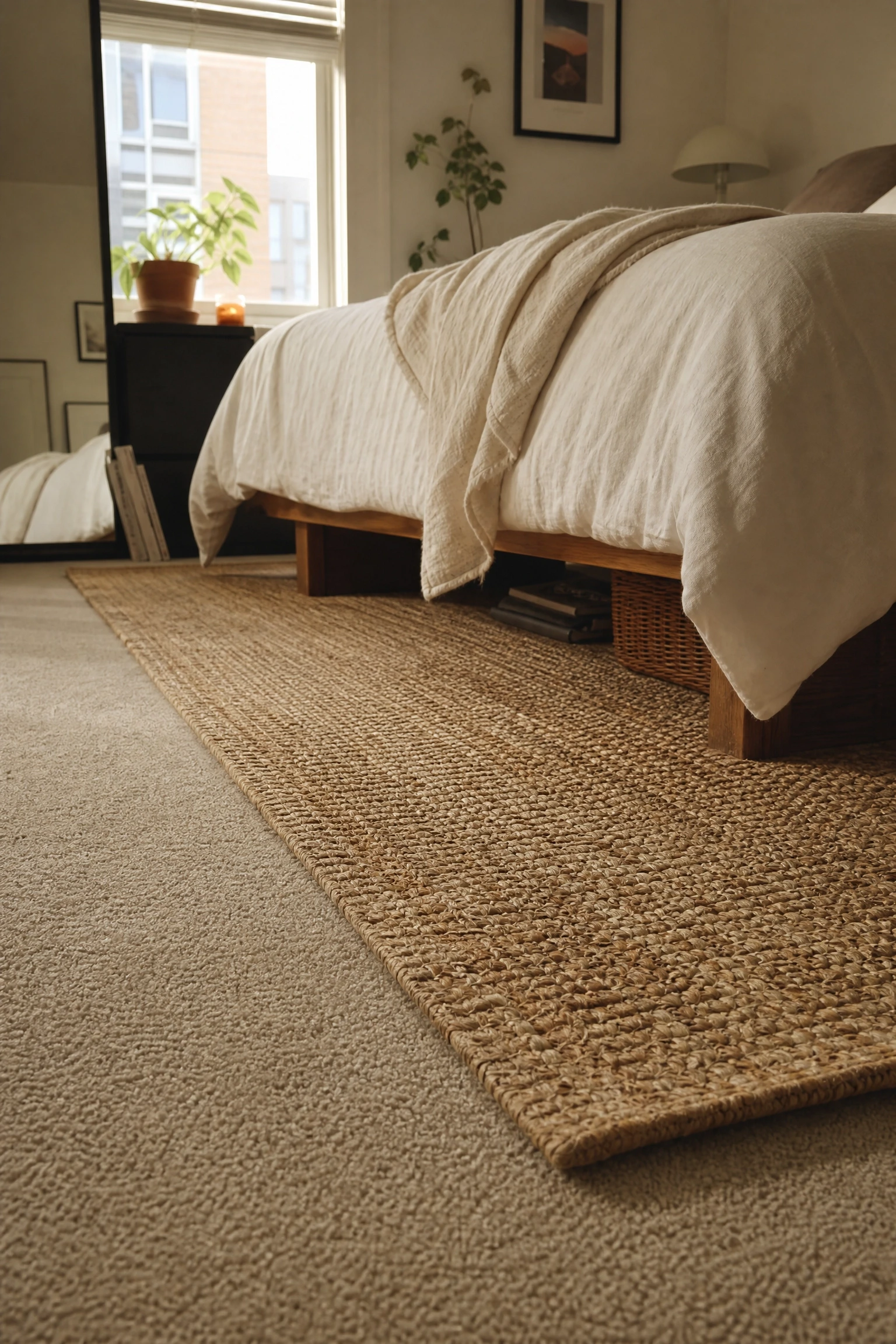
A lot of apartments come with builder-grade carpet in a color you would never choose, and layering a jute or wool rug on top adds a defined zone under the bed without needing landlord permission to remove flooring. Jute brings a rougher, natural texture that grounds a room heavy on soft linens, while wool in a simple geometric pattern adds warmth underfoot. A rug pad underneath, worth the extra 20 to 30 dollars, keeps a natural fiber rug from sliding at the edges. A five by seven rug in jute typically runs 100 to 200 dollars, wool considerably more, but jute stains easily and is genuinely hard to clean.
Heads Up: If you have allergies, wool traps dust more than a synthetic rug does, so vacuum it weekly rather than monthly.
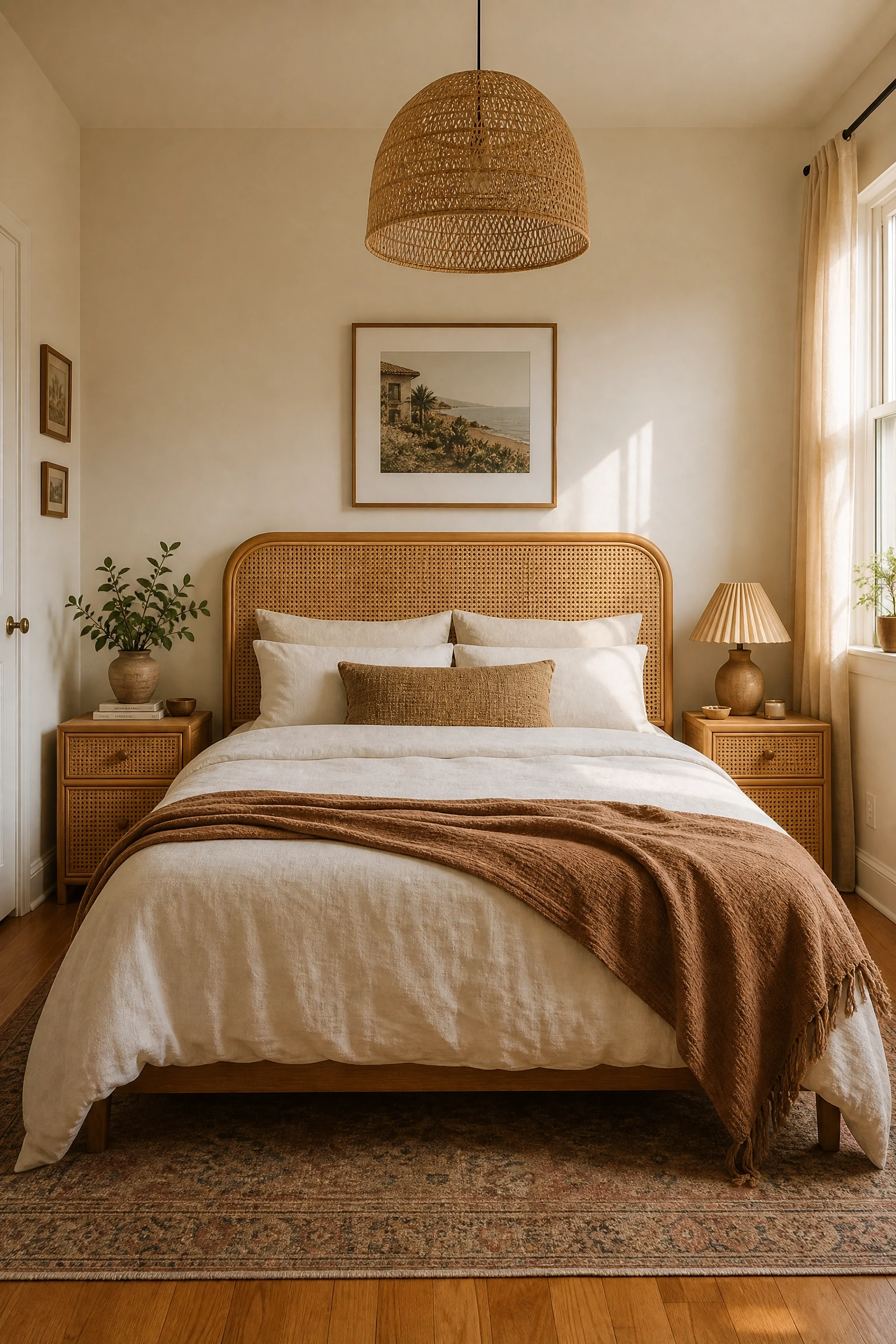
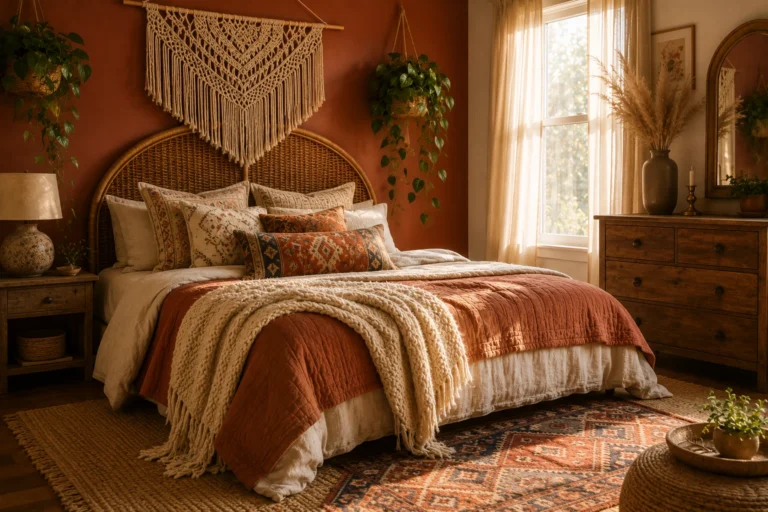
Rattan furniture had a strong moment a few years back, and rather than fading out it has settled into being genuinely useful in apartment bedrooms because it is lightweight and adds texture without adding visual weight. A rattan headboard, a cane-front nightstand, or a rattan pendant brings warmth to a room otherwise built around cooler materials like linen and matte black metal. This works best as an accent, one or two pieces reads as intentional while five or six starts to feel like a themed rental. It is easy to move, a real advantage if you relocate often, though it is less durable than solid wood.
Designer Advice: Mix rattan with at least one heavier material like a marble lamp base or a leather bench, or the room can feel visually thin.
If there is one piece worth spending real money on, a lot of designers point to the headboard, since it sits at eye level and functions almost like art on the wall behind the bed. A channel-tufted velvet or nubby boucle headboard in a deep color adds texture and visual weight in a room that might otherwise be all soft neutrals, and reads as more expensive than the rest of the room. It is also comfortable to lean against while reading or working from bed, which in a small apartment is often where daily life actually happens. This is genuinely an investment, running 200 dollars for a basic panel to 600 or more for a substantial style.
Reality Check: Light-colored velvet looks incredible in photos but shows every mark within a few months of regular use.
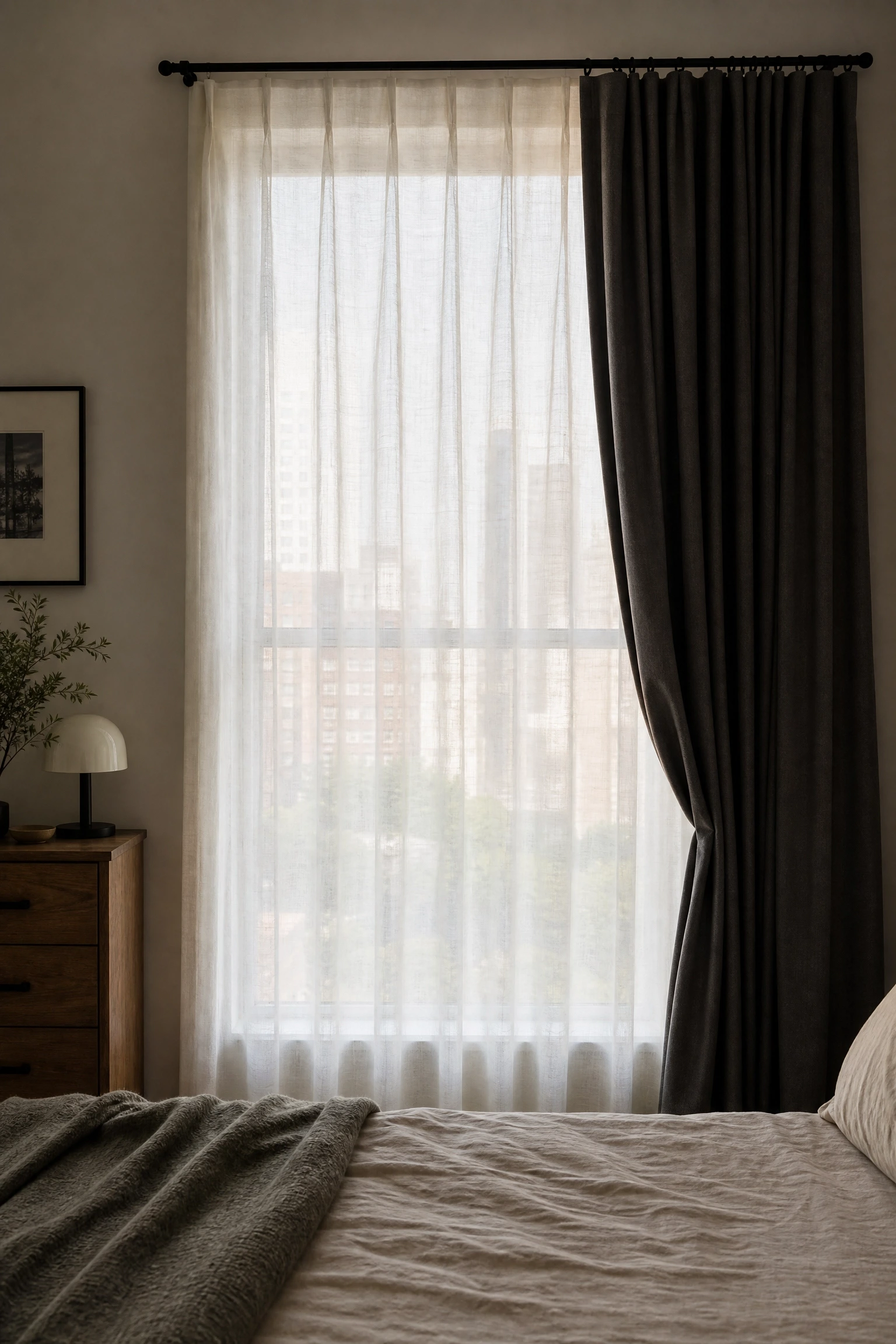
A single blackout curtain blocks light but often looks heavy and flat on its own, while layering a sheer linen panel underneath on a double rod gives you function and a softer daytime look, since you can push the blackout panel aside and let the sheer layer filter light. This is borrowed pretty directly from hotel design, and it solves two problems, morning light and nighttime privacy, without two separate systems. Mounting the rod close to the ceiling makes the window look larger. A double rod costs about 25 dollars beyond a single one, though renter-friendly tension rods do not hold up as well under two fabric layers.
Pro Move: Choose a sheer panel in the same warm white as your trim rather than stark white, since mismatched white reads as slightly dingy.
Personal Touches That Make a Rental Feel Like Yours
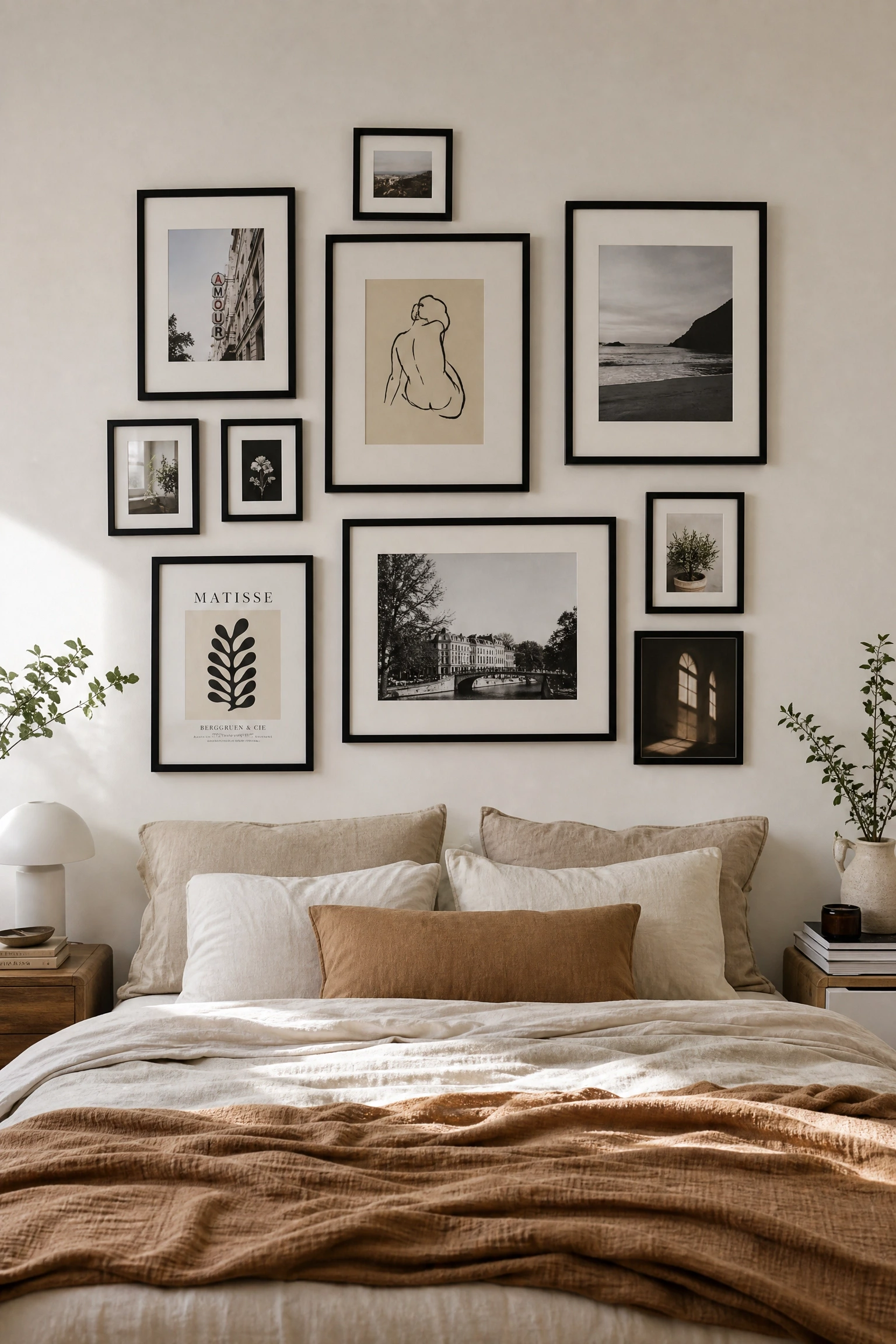
A gallery wall gets treated like an advanced design move, but it is actually one of the more forgiving things you can do to a rental bedroom, since slightly mismatched frame sizes and a mix of prints looks more collected than a perfectly matched set. The trick that keeps it from looking chaotic is sticking to one consistent element, either all black frames or all the same mat width. Lay the arrangement out on the floor first, or tape paper templates to the wall, since spacing is the most common thing people redo. This is cheap if you use art you already own, though framing does add up at 10 to 25 dollars each.
Quick Tip: Keep the bottom row roughly 8 to 10 inches above the headboard, not the mattress, so the arrangement reads as intentional.
Greenery at Varied Heights Instead of One Big Plant
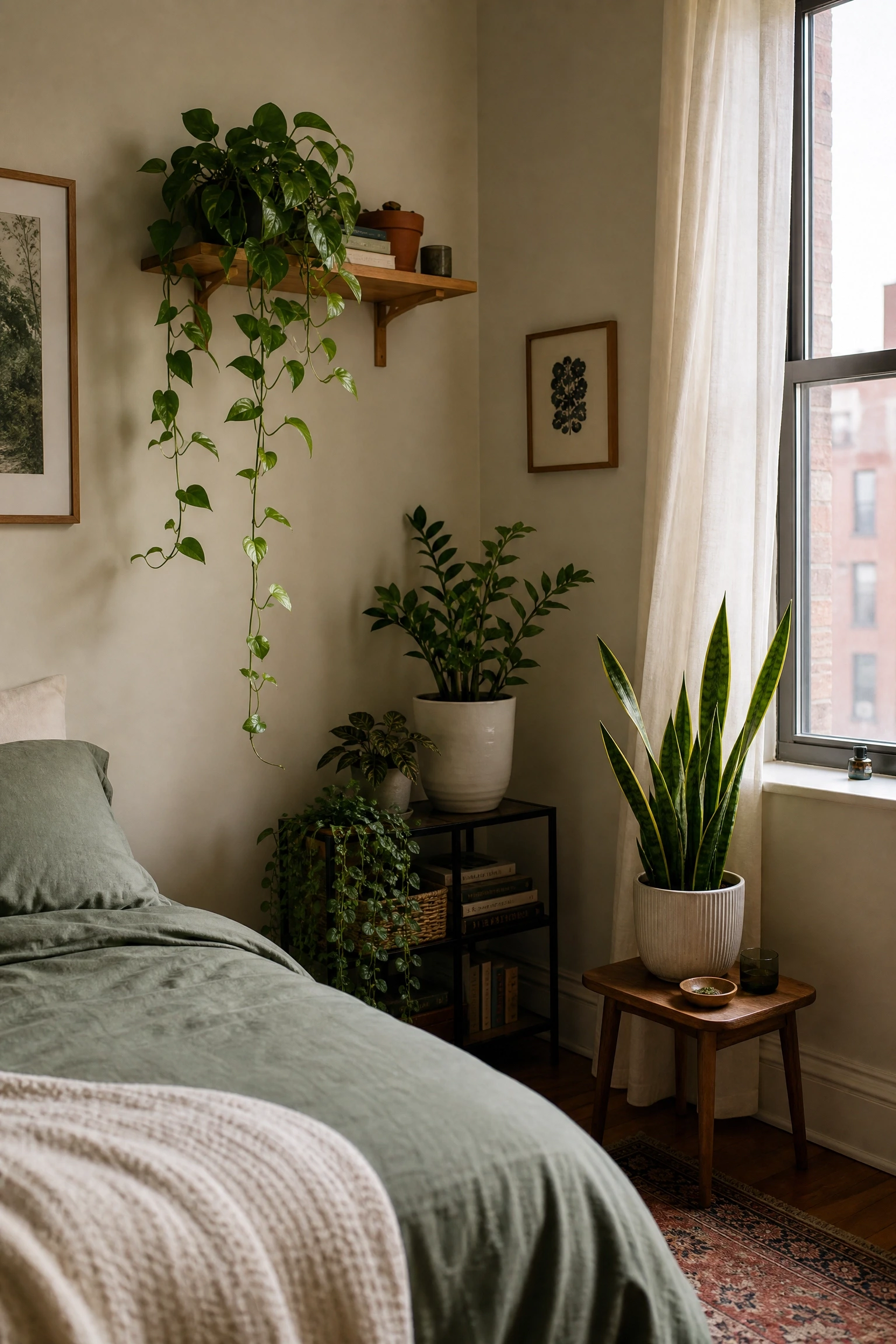
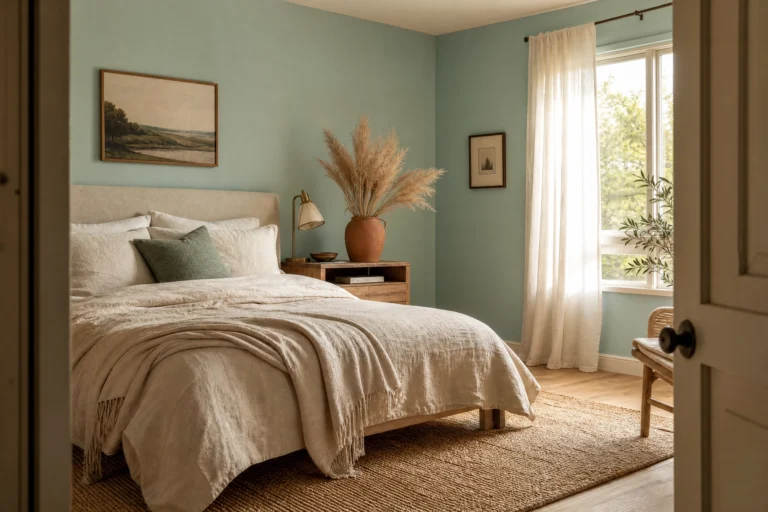
One large plant in the corner is a nice enough default, but a few smaller plants at different heights, a trailing pothos on a high shelf, a snake plant on the nightstand, does more to make a room feel lived in since it fills vertical space a single plant cannot. Most apartment bedrooms are genuinely low light, and snake plants, ZZ plants, or pothos do better there than anything needing direct sun. Faux versions have gotten noticeably better and are a reasonable choice for low light or frequent travel. Small plants and pots typically run 10 to 30 dollars each.
Heads Up: If your window faces north or is shaded by another building, skip anything needing bright light and go with a snake plant or a good faux version instead.
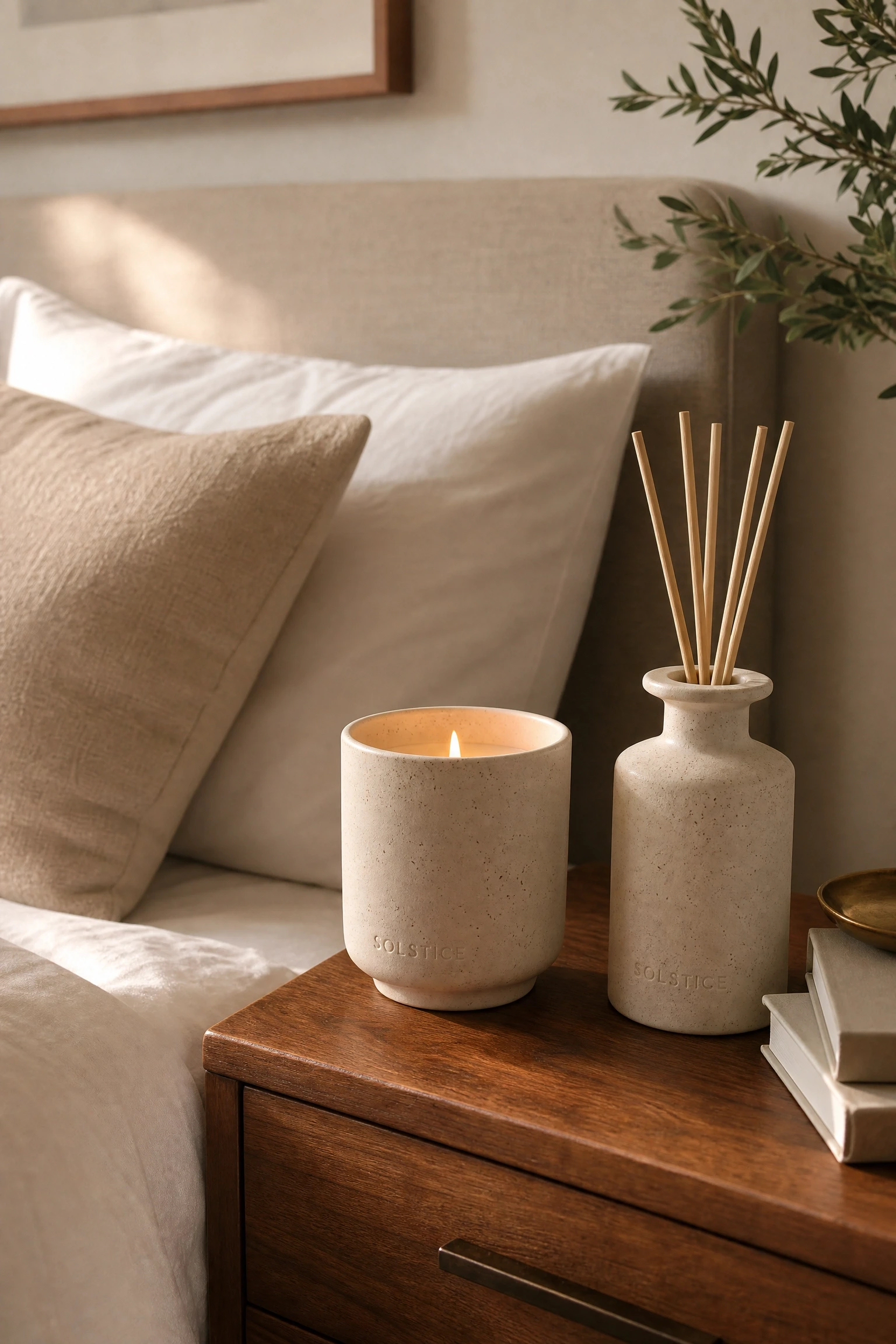
Scent rarely gets mentioned in design advice even though it is one of the fastest ways to make a room feel specifically yours, and a candle or reed diffuser chosen deliberately functions almost like an invisible layer of decor. This works best when the scent stays consistent rather than rotating through several candles, since a signature scent becomes associated with the room over time. Keep the vessel in mind too, a plain glass jar disappears into a nightstand while a ceramic vessel in a matching color earns its spot. Candles and diffusers generally run 20 to 40 dollars.
Designer Advice: If you are wary of an open flame near bedding, a reed diffuser gives a similar scent layer with no fire risk at all.
Style One Small Vignette From Things You Already Own
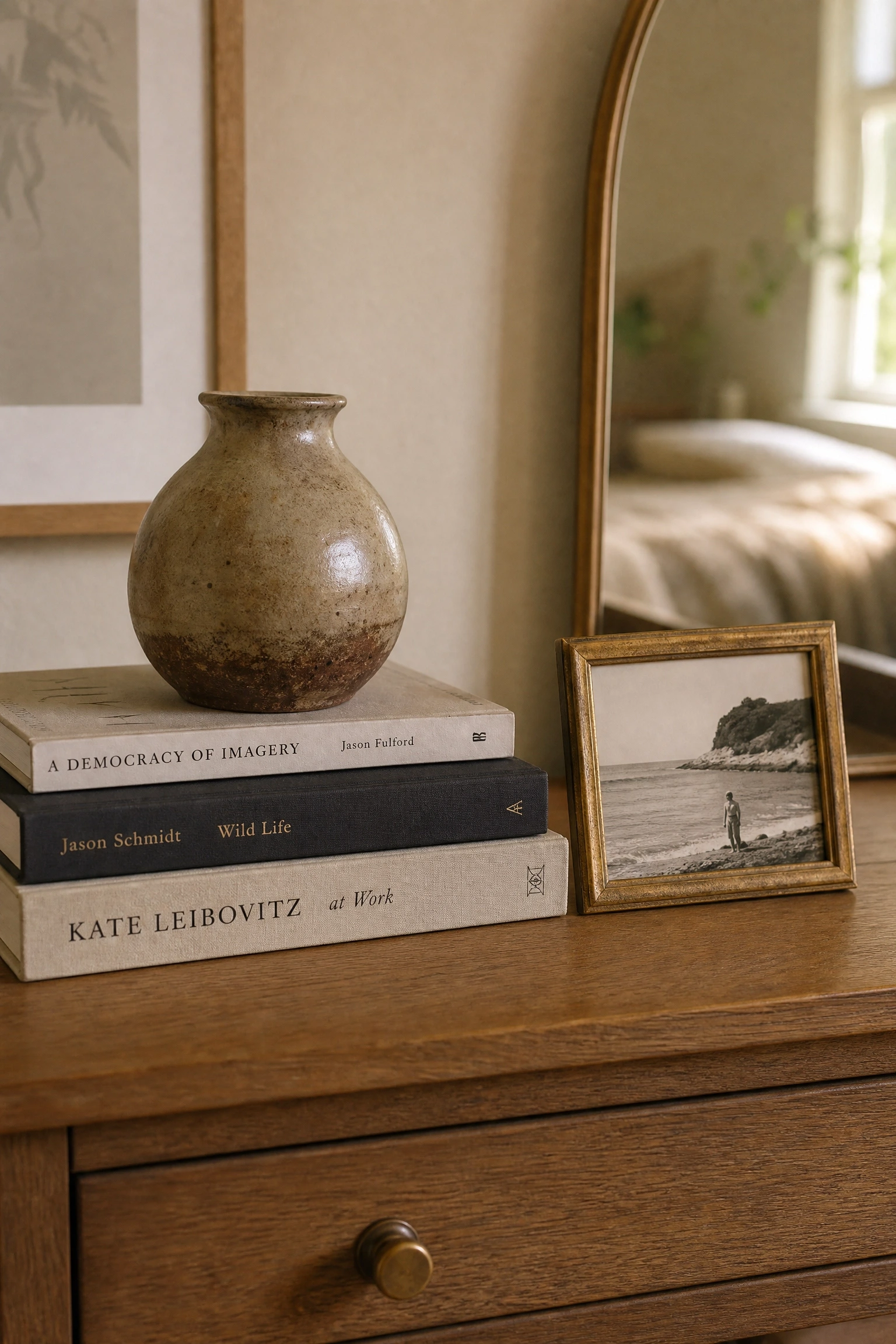
Rather than treating decor as a shopping list, one habit worth picking up is pulling together a small vignette, three or four objects grouped on a dresser, from things you already own. A stack of books, a small object with some personal history, and one plant or candle at varying heights reads as considered in a way a single object alone rarely does. Odd numbers of objects, three or five rather than two or four, tend to look more balanced, a small trick borrowed from how stylists set up shoots. This costs nothing if you are working from what you already have.
Reality Check: If you cannot explain why each object is in the grouping, it is probably clutter rather than a styled vignette, and worth editing down.
Putting an apartment bedroom together is really about solving a handful of specific problems rather than chasing one overall look, and the ideas that hold up tend to be the ones that fit your actual room rather than a photo you saved somewhere. A floating bed only works if the room is wide enough, a dark accent wall only works if you have tested it under your real lighting, and a velvet headboard only makes sense if you are honest about how it will hold up in daily use. Start with whatever problem is bothering you most right now, not enough storage, flat light, a room that still feels like the last tenant’s, and pick one or two ideas from that section rather than trying to do all of this at once. Most of these changes, the paint, the lighting layers, the textile swaps, are fully reversible, which matters if you are renting and might be moving again soon. The goal is a room that actually works for how you sleep, get dressed, and unwind at the end of a day, and that is a much lower bar than most design content makes it seem.
Frequently Asked Questions
What is the best bed size for a small apartment bedroom?
A queen bed fits comfortably in most rooms at least ten feet by ten feet, but a full size bed gives back two to three feet of clearance without feeling like a major downgrade for one person or a couple who do not need the extra width.
Is it worth painting an apartment bedroom if I am renting?
In most cases yes, since many landlords allow paint as long as you repaint it back to a neutral shade before moving out. It is one of the highest-impact, lowest-cost changes you can make. Always check your lease first.
How do I make a small bedroom feel bigger without spending much?
Layered lighting, a mirror across from the window, and a lighter ceiling color make the biggest difference for the least money, generally under 100 dollars combined, and none require permanent changes to the apartment.
What is the biggest mistake people make in small apartment bedrooms?
Buying furniture sized for a bigger room and trying to make it fit. A dresser or bed frame that is technically too large will always feel cramped no matter how well you decorate around it, so measuring before buying matters more than any styling trick.
Do dark accent walls actually make a small room feel smaller?
Not necessarily. A single dark wall behind the bed tends to read as a focal point rather than a boundary, and often makes a room feel more intentional as long as the surrounding walls stay lighter.
How many plants should I put in a small bedroom?
Two or three small plants at different heights generally look better and are easier to care for than one large plant, especially with limited natural light, where a snake plant or pothos will fare better than anything needing direct sun.