If you’ve been staring at your dining room wondering why it feels a little off, you’re not alone. It’s one of those rooms that gets overlooked mostly because people eat there and move on. But a dining room that actually works, one where the light hits right and the furniture feels considered, makes every single meal feel like more of an occasion. Contemporary design is the sweet spot right now because it doesn’t mean cold or sterile. It means clean, intentional, and flexible enough to feel personal.
The ideas below are drawn from real interior design trends that professional designers are working with right now, and each one is different enough that you’ll find something for almost any space, budget, or preference. Start with the piece that bothers you most about your current setup and fix that first. The rest tends to follow. Let’s get into it.
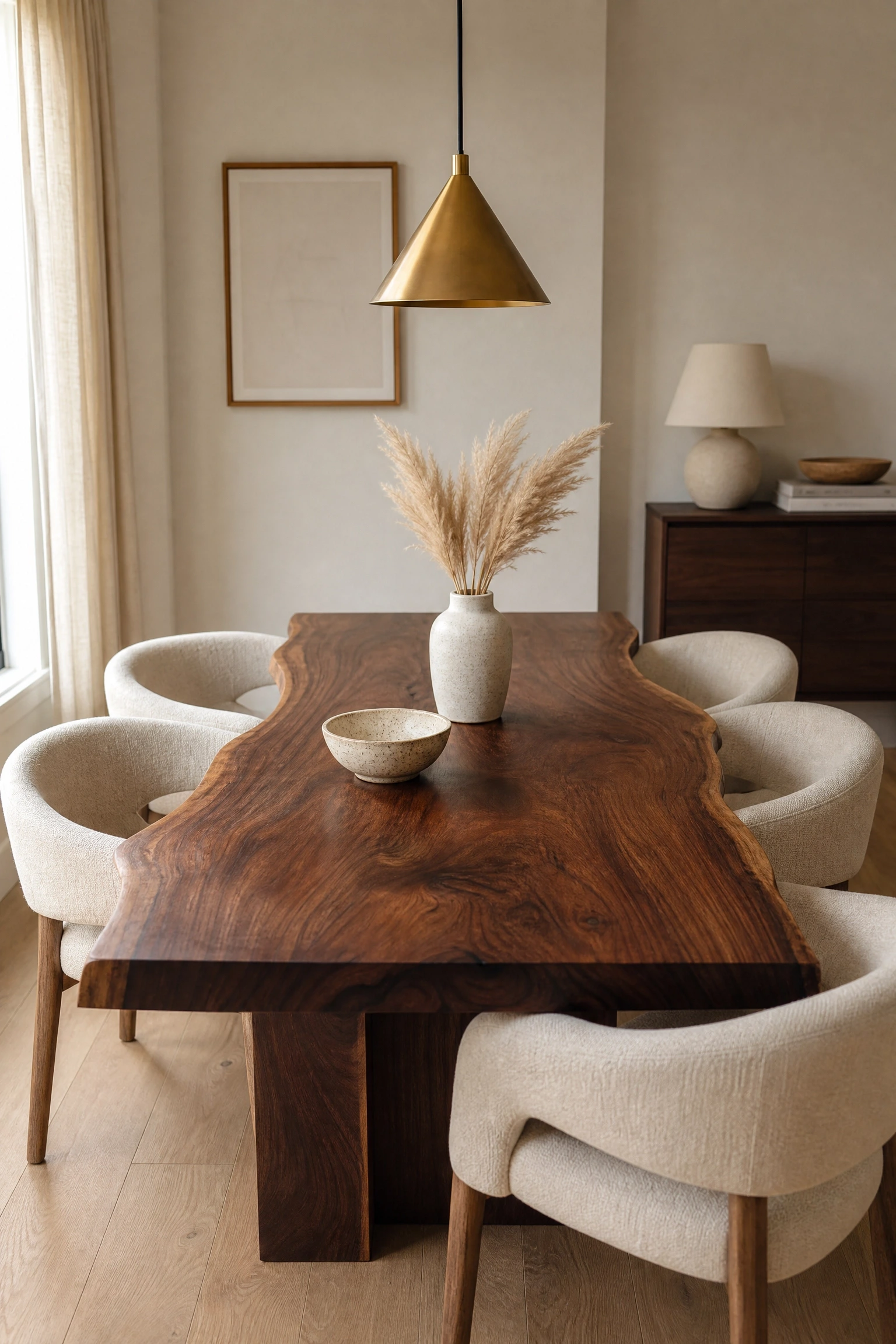
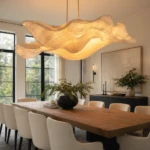
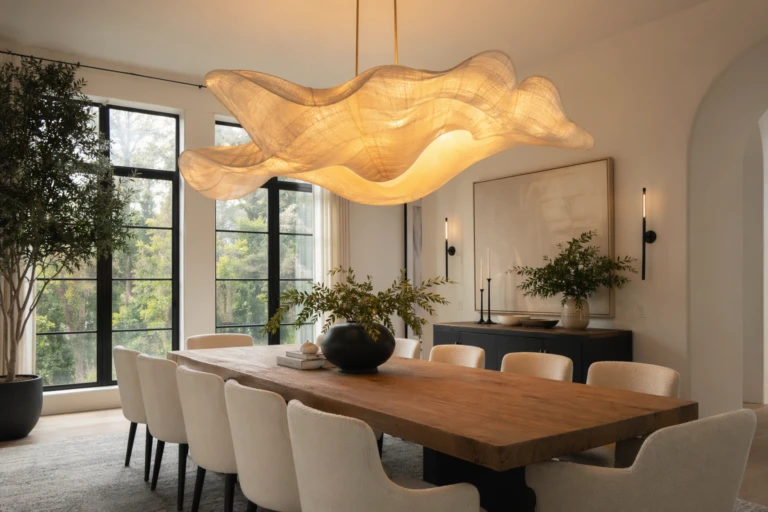
Warm minimalism is having a real moment in contemporary interiors, and the dining room is where it makes the most sense to try it. The idea is simple: strip the room back to almost nothing, then let one standout material do all the talking. A live-edge or solid wood-slab dining table in walnut, oak, or white oak becomes the entire focal point, and everything else exists to support it rather than compete. Pair it with chairs in a matte linen or boucle fabric in warm cream or oat tones, and keep the lighting to a single sculptural pendant in brass or aged bronze centered directly above the table. Walls work best in soft warm whites like Benjamin Moore’s White Dove or Sherwin-Williams Alabaster, which read as neutral without going stark or clinical. The flooring should be light to mid-tone hardwood or engineered wood to keep the warmth flowing from ground to ceiling. In practice, this look is very forgiving because the quality of the table carries the whole room, so it’s worth spending more there and less on decor accessories. A simple ceramic bowl or a single low vase with dried pampas or eucalyptus on the table is all you need.
Quick Tip: If a real wood slab is out of budget, look for a wood-effect porcelain-top table with a solid wood base. You get the warmth and weight of the look at a fraction of the cost.
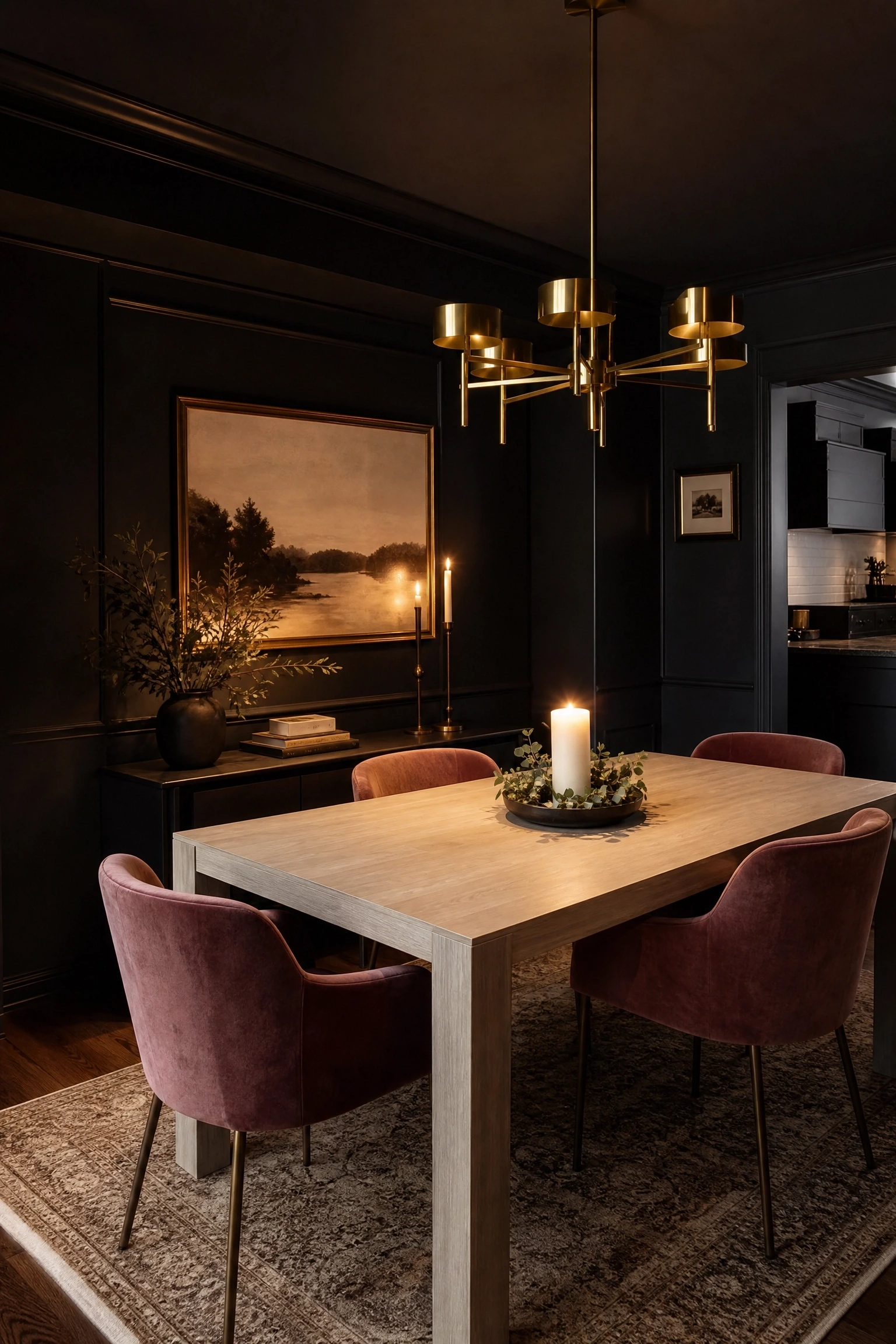
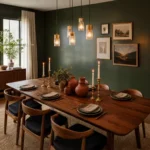
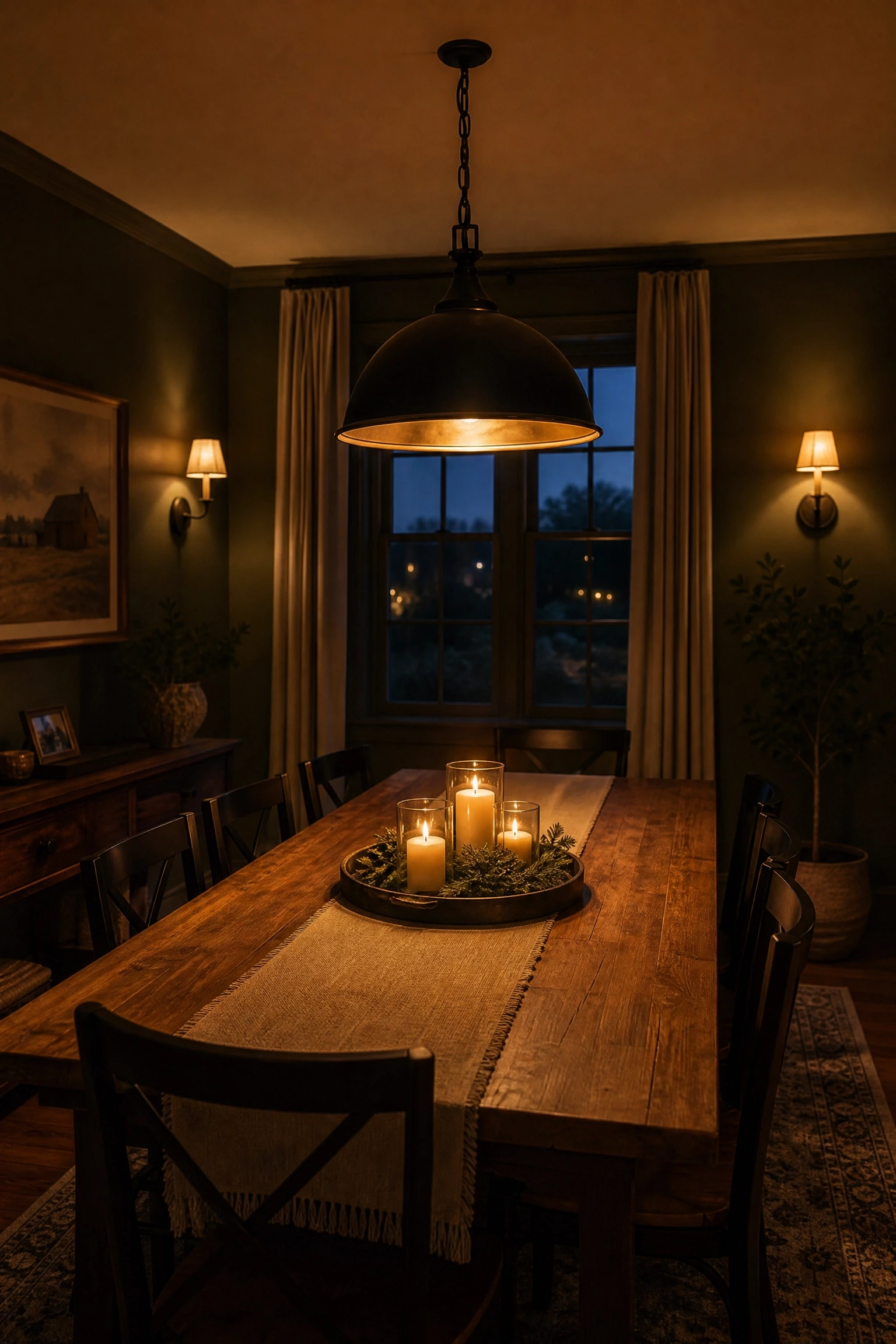
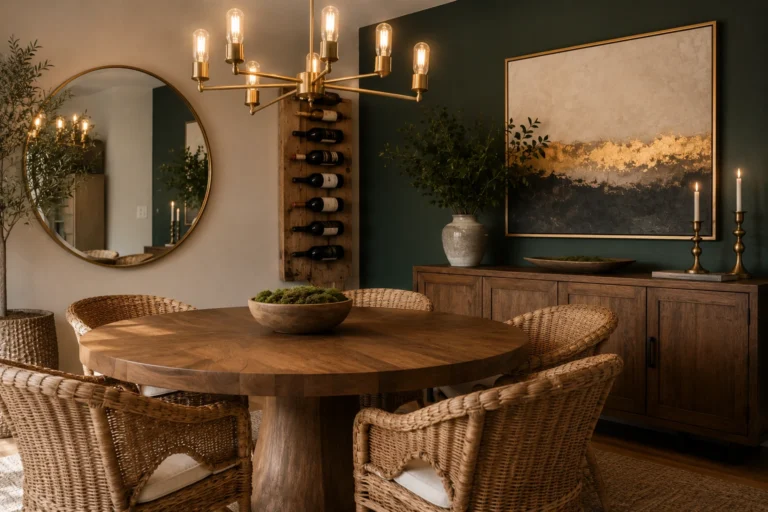
Dark walls in a dining room feel genuinely sophisticated in a way that no other room can quite pull off, and contemporary design has fully leaned into this. Deep charcoal, navy, forest green, and even blackened plum are all working right now, particularly when paired with contrast seating to stop the room from feeling heavy. The key is to paint not just the walls but also the ceiling in the same dark tone, which creates that cocooning effect that makes people want to sit longer at the table. Choose dining chairs in a cream, dusty rose, or warm caramel leather or boucle to pop against the darkness without feeling jarring. A brass or antique gold pendant light overhead adds warmth and prevents the space from reading as gothic or gloomy. Keep the dining table itself lighter, either a light marble top or pale ash wood, so there’s a clear visual contrast between the table surface and the room’s dark surround. One real-world caution: dark rooms require significantly more light to function well for actual meals, so layer your lighting with wall sconces on a dimmer in addition to the pendant above the table.
Designer Advice: Paint the ceiling the same dark color as the walls. It sounds counterintuitive but it actually makes the room feel grander and more intentional, not smaller.
3. Rounded Furniture for a Softer Contemporary Feel
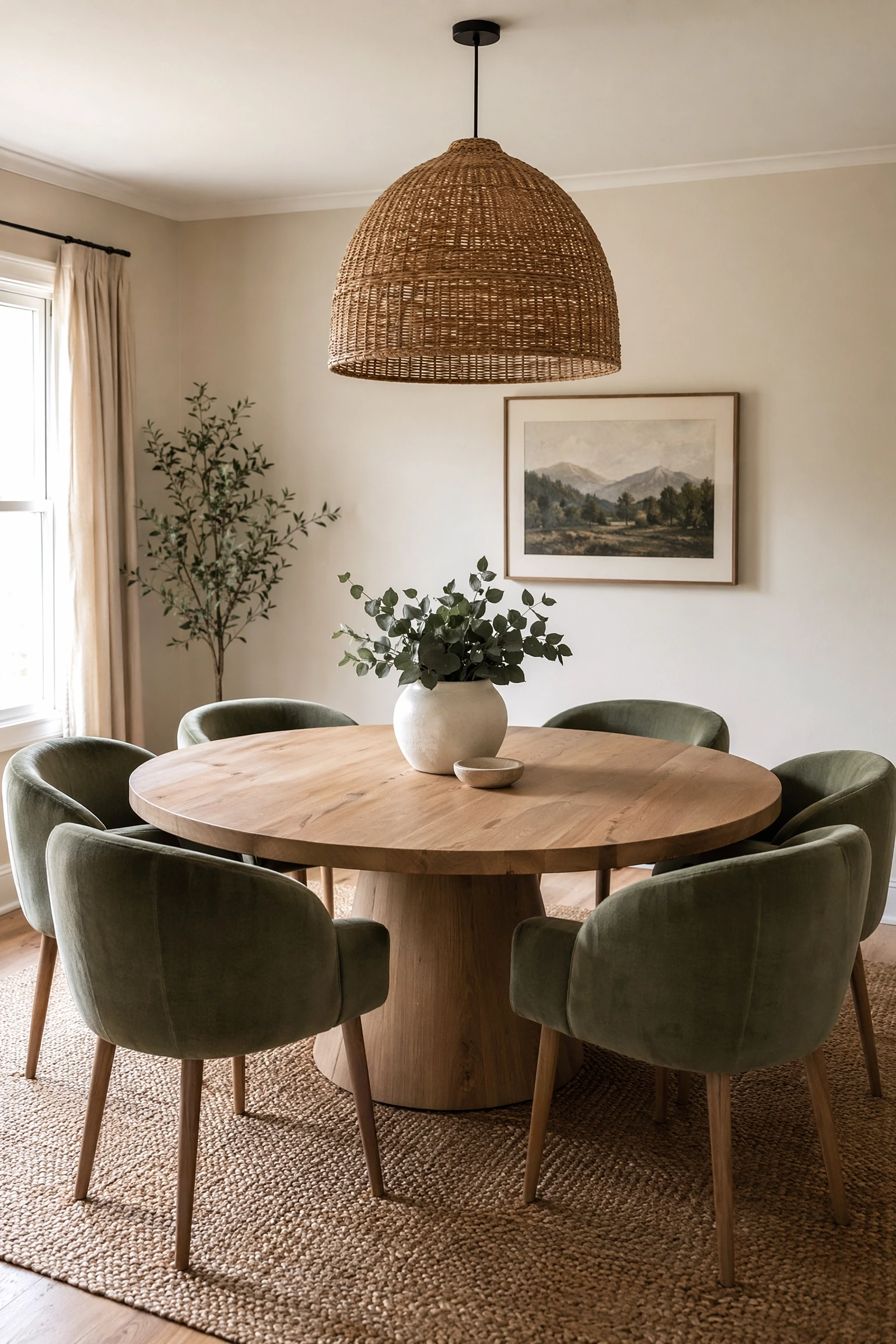
One of the strongest contemporary design signals right now is the shift away from angular furniture toward softer, more curved silhouettes, and nowhere does this read better than in the dining room. A round dining table is leading this trend because it naturally encourages conversation, removes the hierarchy of who sits at the head, and fits better in smaller square rooms than a rectangular table does. Pair it with curved-back dining chairs in velvet or textured fabric, ideally without arms to keep the profile sleek. Sage green, warm terracotta, and dusty mushroom are the color directions designers are reaching for here, with a natural oak or cane table base tying the organic feel together. Lighting is critical with this look: avoid anything too geometric or angular overhead. Instead, opt for a woven rattan pendant, a fabric drum shade, or a sculptural plaster pendant that echoes the softness of the furniture below it. A jute or wool area rug in a warm neutral anchors the seating area and adds another layer of tactility. This is a mid-range budget approach because curved chairs can run higher than standard dining chairs, but the round table itself is often more affordable than a large rectangular one.
Pro Move: Size your round table so there’s at least 90cm of clearance between the table edge and the wall on all sides. Less than that and the chairs become impossible to pull out comfortably.
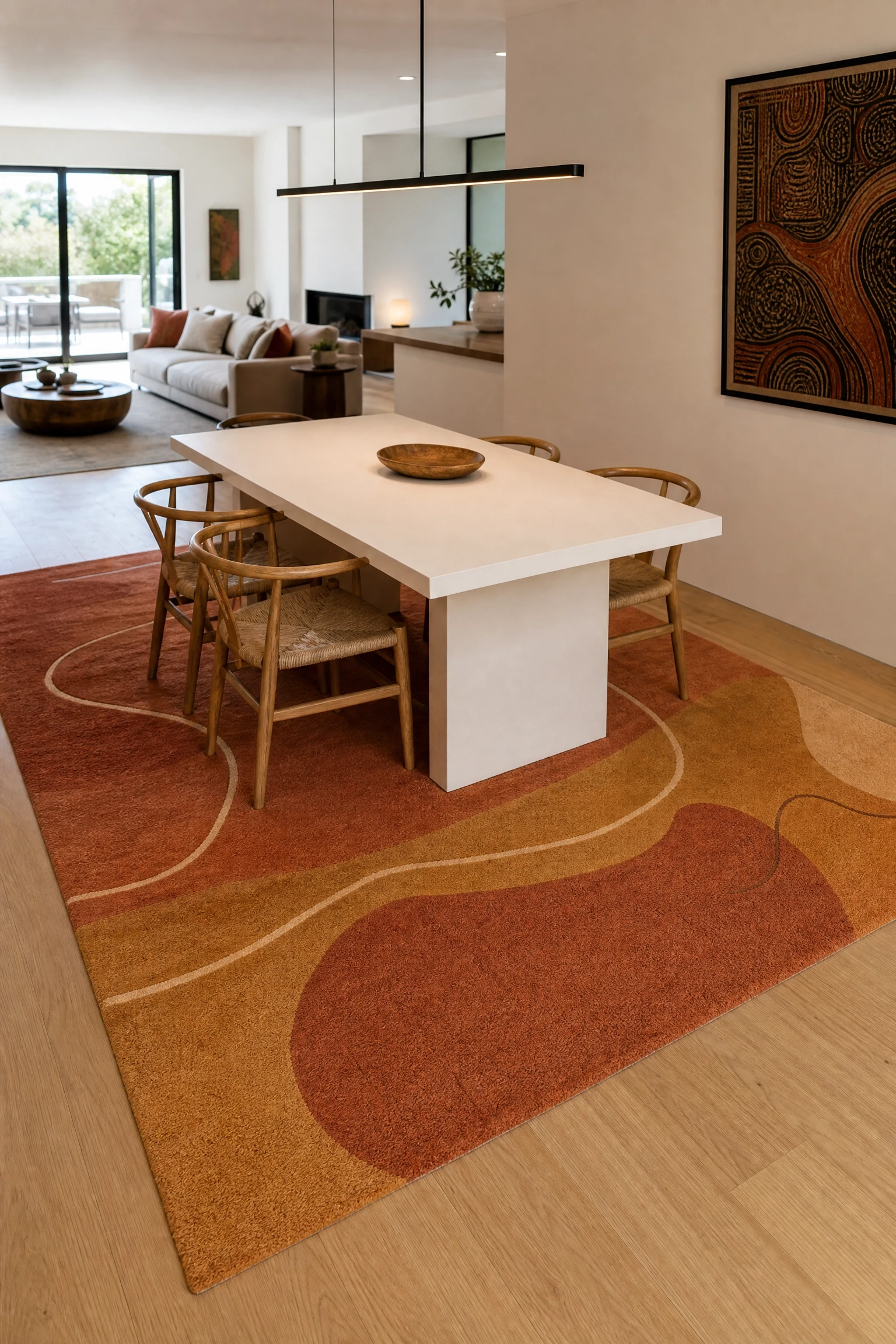
Open-plan living has been the default for over a decade, but contemporary designers in 2025 and 2026 are rethinking how the dining zone within an open space actually gets defined. The smartest and most budget-friendly method is a statement area rug placed directly under the dining table and chairs, which creates a visual room-within-a-room without walls or partitions. The rug needs to be large enough that all four chair legs sit on it even when the chairs are pulled out for sitting, which typically means a minimum of 240x300cm for a six-seater table. In terms of material, a low-pile wool blend or polypropylene rug works best under dining furniture because it’s easy to clean and doesn’t catch chair legs. For pattern, contemporary interiors are leaning toward abstract or organic shapes in warm earth tones, deep olive, rust, or terracotta, rather than traditional medallion or geometric prints. The rug color should pull from at least one element already in the space, whether it’s the wall color, a chair fabric, or a piece of artwork, so it anchors rather than interrupts the space. This approach is honest: a rug alone won’t make an open-plan space feel like a separate room, but it creates enough visual boundary to give the dining area a proper identity.
Heads Up: Always buy a rug pad underneath a dining rug. It prevents slipping when chairs are moved and extends the rug’s life significantly, especially on hardwood floors.
5. Japandi Dining: Where Japanese and Scandinavian Design Meet
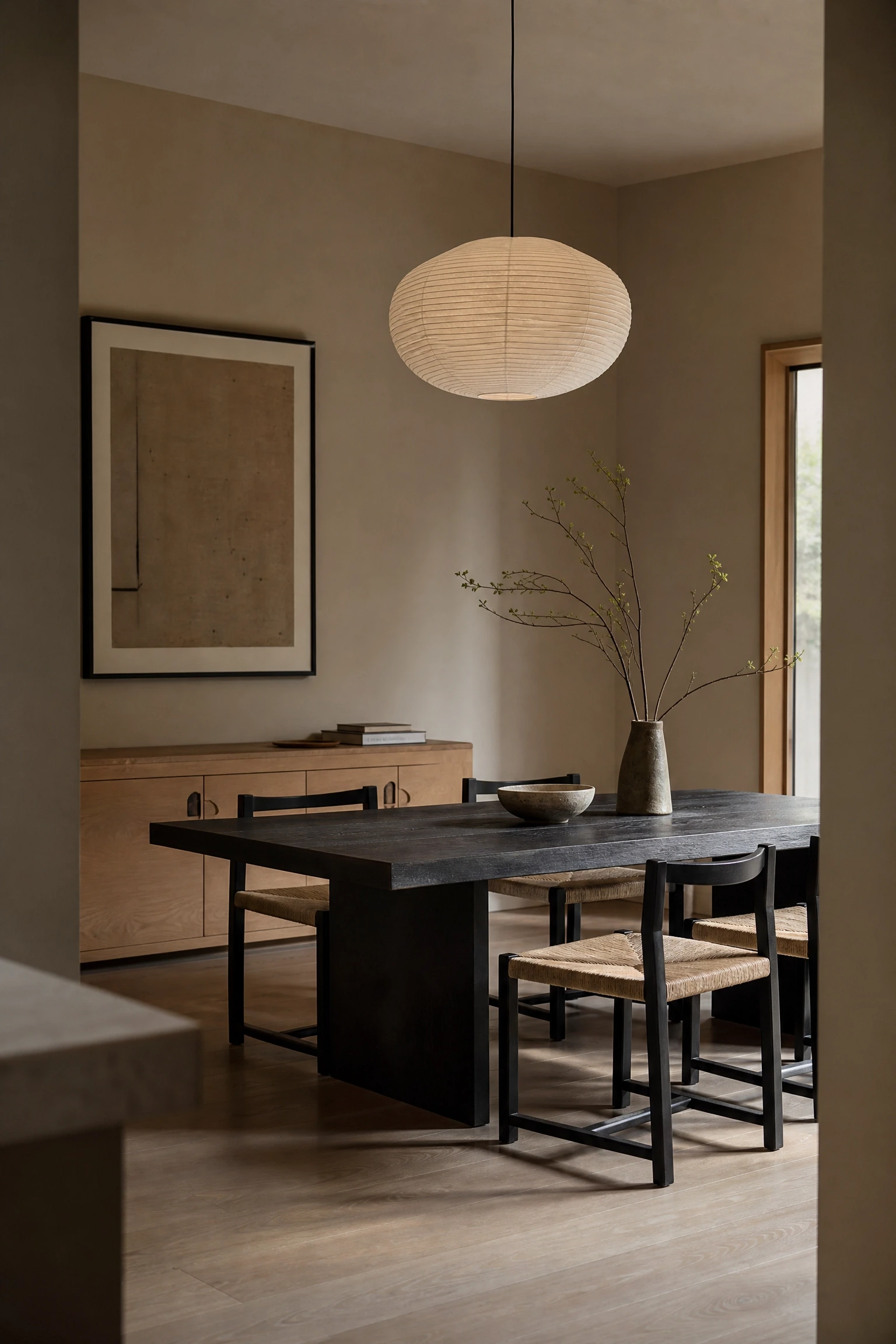
Japandi is not a new term in interior design circles, but it’s reaching mainstream dining rooms in a way that feels very much of this moment, and the results are genuinely beautiful. The style merges Japanese wabi-sabi principles, which honor imperfection and natural materials, with Scandinavian functionality and restraint. In a dining room, this means a low-profile dining table in blackened or oiled oak with clean horizontal lines, paired with simple wooden or woven rush-seat chairs that have no unnecessary ornamentation. The color palette is built from charcoal, warm white, soft beige, and earthy clay, never more than three tones in the space at once. Walls in a warm greige or light putty work particularly well, and a paper or washi pendant light above the table is far more fitting than anything metallic or fussy. In terms of decor, less is genuinely more here: a single piece of handmade pottery, a low wooden bowl, or a branch arrangement in a narrow-necked vase is all the table styling this look can carry before it starts to feel cluttered. One honest limitation of Japandi is that it can feel too spare for people who love color and texture, so if you need warmth, bring it in through a chunky textured table runner or a handwoven seat cushion on each chair.
Reality Check: Japandi looks effortless in photos but requires genuine editing. Before decorating, remove 30% more from the room than you think you should. Then see how it feels.
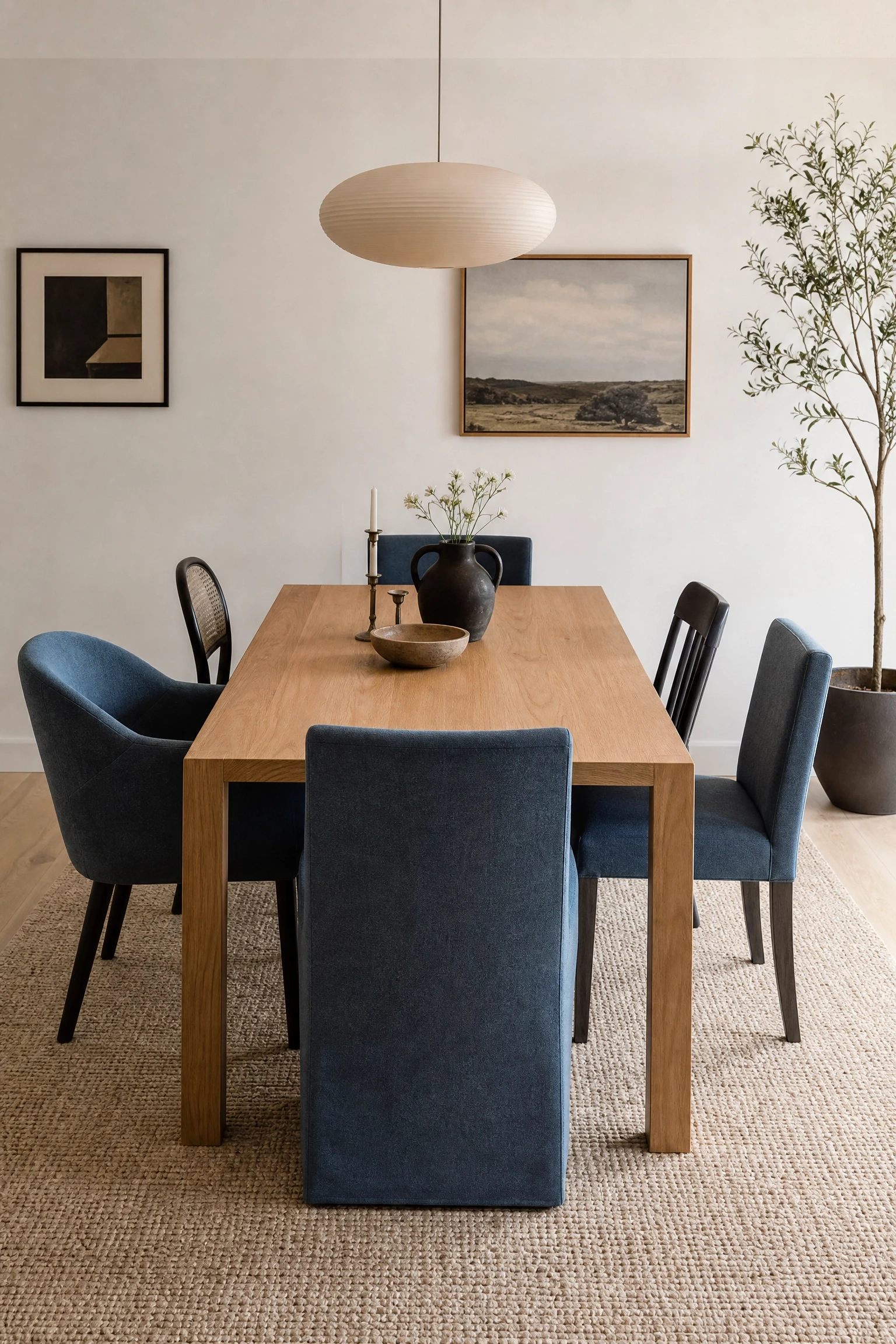
Professional designers have been mixing dining chair styles for years, and now it’s crossed into mainstream contemporary dining rooms in a way that feels fresh rather than indecisive. The key difference between intentional eclectic seating and a just-grabbed-whatever-was-available look is a clear unifying element across all the chairs. That unifying factor can be a shared color (all chairs in the same fabric even if the silhouettes differ), a shared material (all wood frames even if the shapes and upholstery vary), or a shared scale (all chairs at the same seat height and visual weight). A popular contemporary approach is to pair two matching chairs at the head and foot of a rectangular table with four different chairs along the sides, or to use bench seating on one long side with traditional chairs opposite. For this to work well, the dining table itself should be calm and relatively simple because the seating is already doing a lot of visual work. Keep the table in a neutral tone, natural wood or matte white, so it doesn’t add to the complexity. This is a fantastic budget option because it means you can mix vintage finds with new pieces rather than buying a full matching set.
Designer Advice: When mixing chairs, stick to a maximum of three different silhouettes at one table. More than three and the room starts to feel like a waiting room rather than a considered design choice.
7. Banquette Seating for a Restaurant-Style Dining Nook
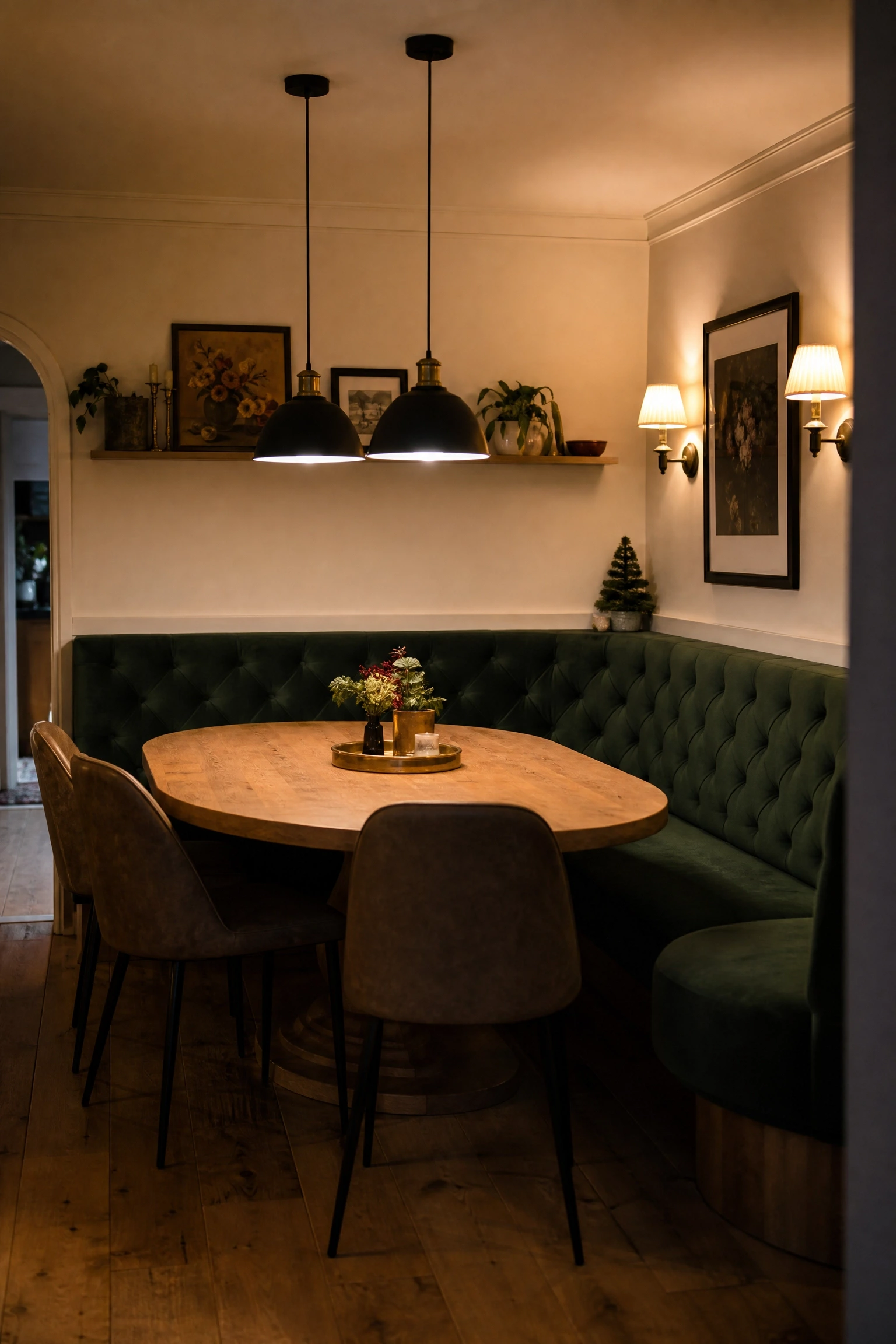
Built-in banquette seating is one of the most requested contemporary dining features among interior designers right now, and it makes sense because it turns an otherwise ordinary corner into the most inviting spot in the house. A U-shaped or L-shaped upholstered banquette fitted into a corner or alcove makes the room feel purposeful and custom in a way that freestanding furniture rarely does, and it also maximizes seating capacity because people can slide along the bench rather than needing a chair pulled out behind them. The upholstery choice matters enormously here: go for a performance fabric like a bouclé or a velvet-look microfibre in a deep teal, forest green, warm burgundy, or caramel, and add contrast piping or button tufting for a polished finish. The table in front of the banquette should be a fixed pedestal or trestle style with no legs at the corners, which makes sliding in and out far easier. Overhead, a cluster of small pendant lights or a linear chandelier scaled to the table length adds the restaurant-like atmosphere. From an E-E-A-T perspective, this is an investment-level project that typically involves a joiner or custom furniture maker, so budget accordingly, but the long-term value it adds to a home is consistently high.
Pro Move: Have the banquette seat cushion made with a removable cover and zip. You’ll thank yourself the first time someone spills red wine on it.
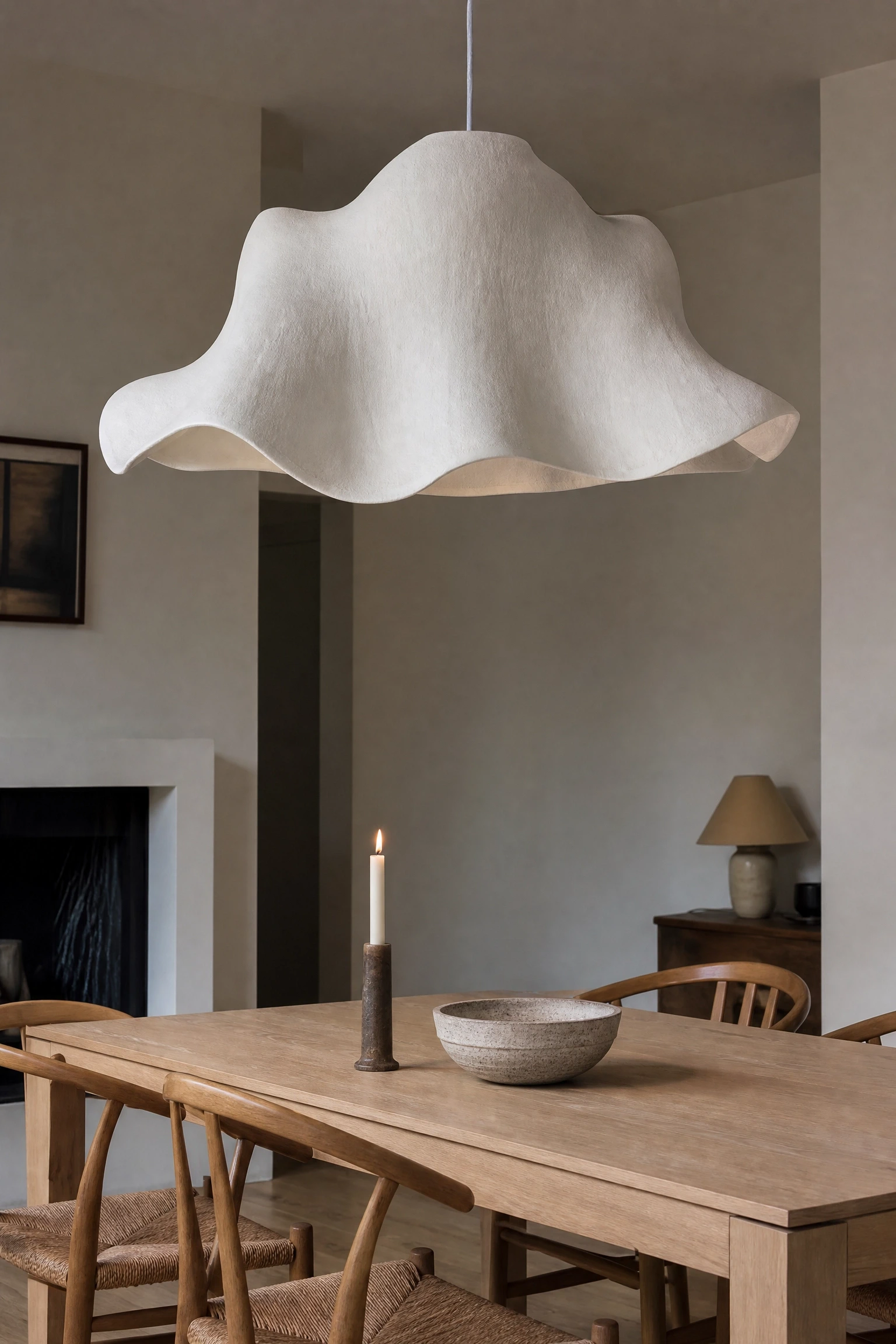
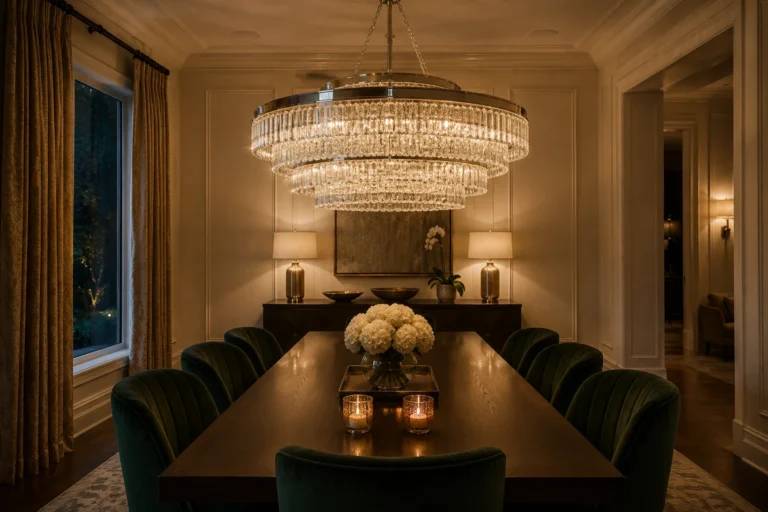
Contemporary dining room design in 2025 and 2026 is leaning harder than ever into pendant lighting as the single most expressive element in the room, treating the fixture above the table the same way a painter treats a focal piece. The rest of the room can be relatively restrained as long as the light above the table is interesting enough to carry it. Oversized woven rattan pendants work in organic and coastal-contemporary rooms, sculptural plaster or ceramic pendants work in minimalist or Japandi-adjacent spaces, and clustered glass globes at varying heights add drama and depth in rooms with high ceilings. The sizing rule most designers follow is that the pendant’s diameter should be roughly half the width of the dining table, and it should hang so the bottom of the fixture is about 75 to 80cm above the tabletop. Putting the pendant on a dimmer is non-negotiable: the quality of light during a dinner party versus breakfast should be completely different, and only a dimmer gives you that range. From experience, the single most common mistake people make with dining room lighting is hanging the pendant too high, which disconnects it visually from the table and makes the whole setup look unfinished.
Quick Tip: Always put your dining room pendant on a dimmer switch before you do anything else in the room. It costs very little and changes the atmosphere more than any piece of furniture will.
9. Textured Walls: Limewash, Plaster, and Grasscloth
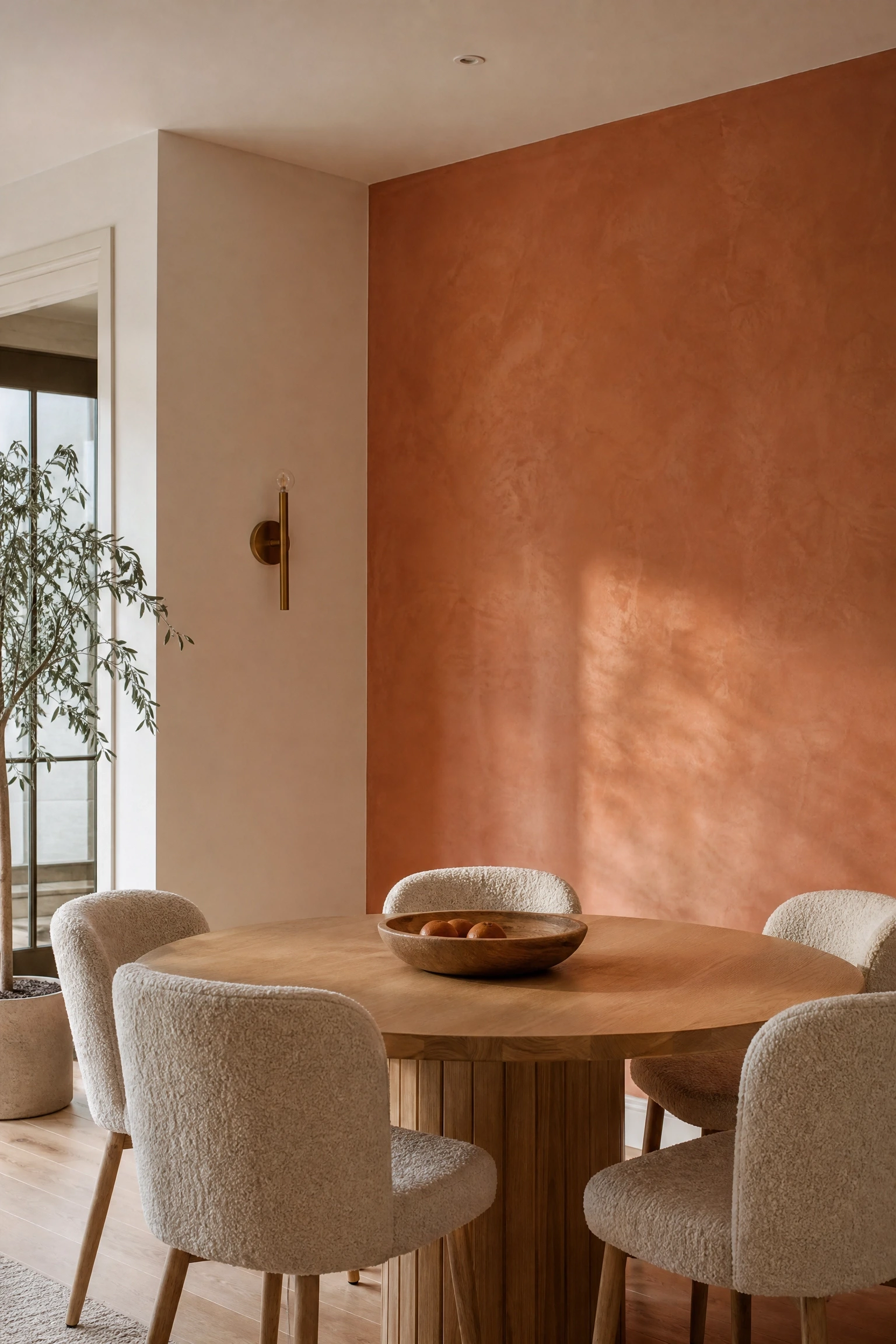
Flat painted walls are the default, but contemporary dining rooms are increasingly using textured wall treatments to add depth and visual interest without relying on art or color alone. Three finishes are particularly popular right now: limewash paint, which creates a soft, cloudy, aged-plaster effect in earthy tones; Venetian or microcement plaster, which produces a smooth but clearly handcrafted surface with subtle tonal variation; and grasscloth wallpaper, which brings a natural woven texture that photographs beautifully and adds warmth to the room. All three of these finishes work best on a single feature wall, typically the one the dining table sits against or the one most visible from the entrance to the room. Limewash is the most DIY-friendly of the three and the most budget-accessible, available in ready-to-apply formulas from brands like Portola Paints and Annie Sloan. Venetian plaster is more expensive and typically requires a professional applicator to get right. Grasscloth falls in the mid-range, though keep in mind it marks and stains more easily than paint, which is something to weigh carefully in a room where food is being served. All three finishes respond beautifully to raking light from a nearby window or a directed wall sconce.
Heads Up: Grasscloth wallpaper is not washable. In a dining room with young children or regular dinner parties, a limewash paint finish will hold up far better over time.
10. An Art-Driven Dining Room Built Around a Single Piece
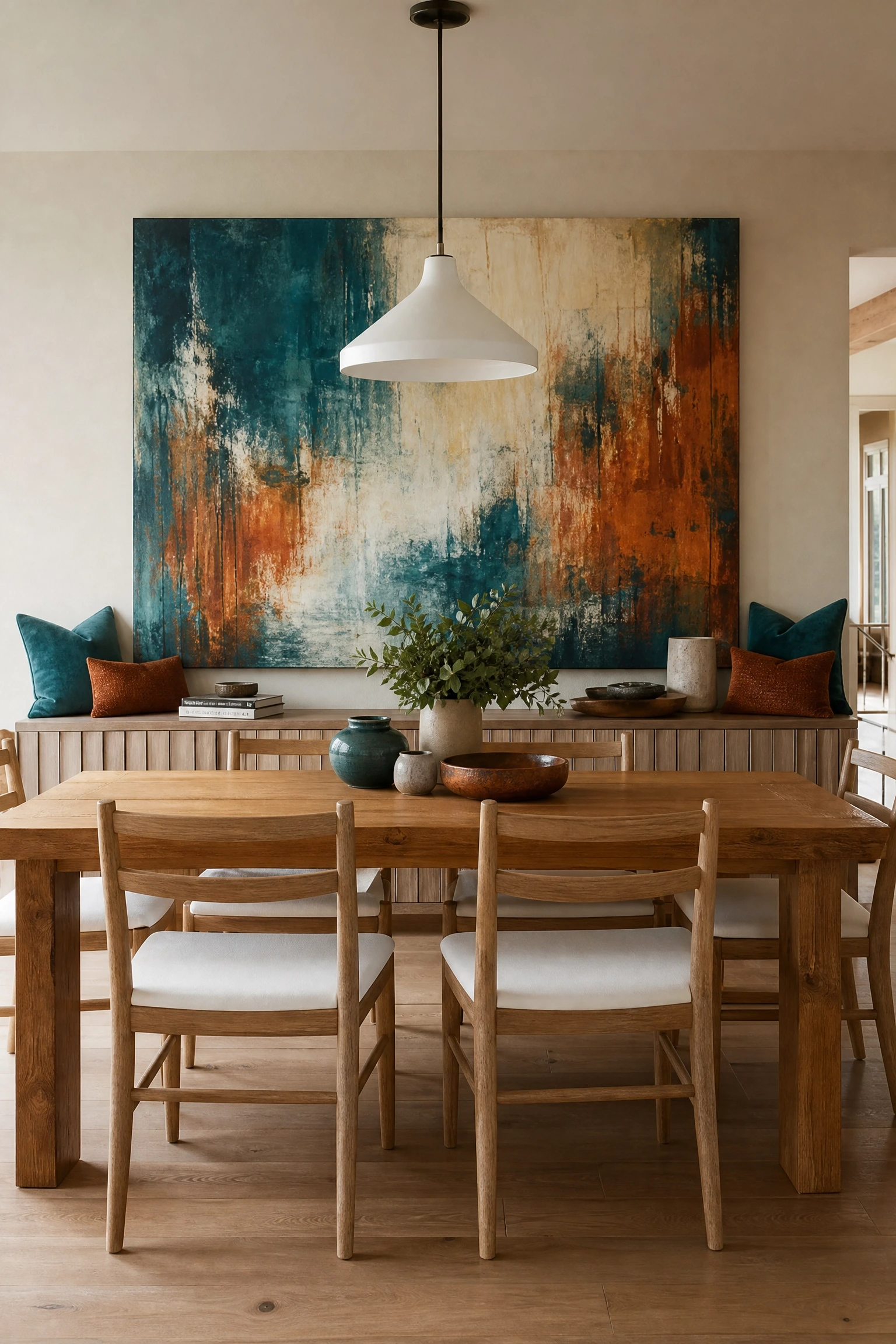
One of the most authoritatively designer-approved approaches to a contemporary dining room is to choose a single large piece of artwork first and build the entire room around it, the same way a set designer would anchor a scene. The painting or print goes on the wall the dining table faces or the largest unbroken wall in the room, and it should be large enough to fill roughly two-thirds of the wall’s width. Once the artwork is chosen, pull the room’s color palette directly from it: if the piece has deep teal, rust, and cream in it, those become the chair upholstery color, the table accessory color, and the wall color respectively. This approach guarantees the room feels cohesive without requiring any professional design training because the art does all the work of making the color decisions for you. Large abstract canvases, oversized botanical prints, and gestural landscapes are all appearing in contemporary dining rooms right now, usually in frame-free or simple natural wood frames to keep the look from feeling too traditional. Budget note: original art is wonderful but not necessary. Large print-on-demand services and brands like Desenio, Artifact Uprising, and Society6 offer oversized prints at very accessible price points.
Reality Check: The art needs to be genuinely large to work as a focal point. Most people undersize their dining room artwork. When in doubt, go one size bigger than your instinct tells you.
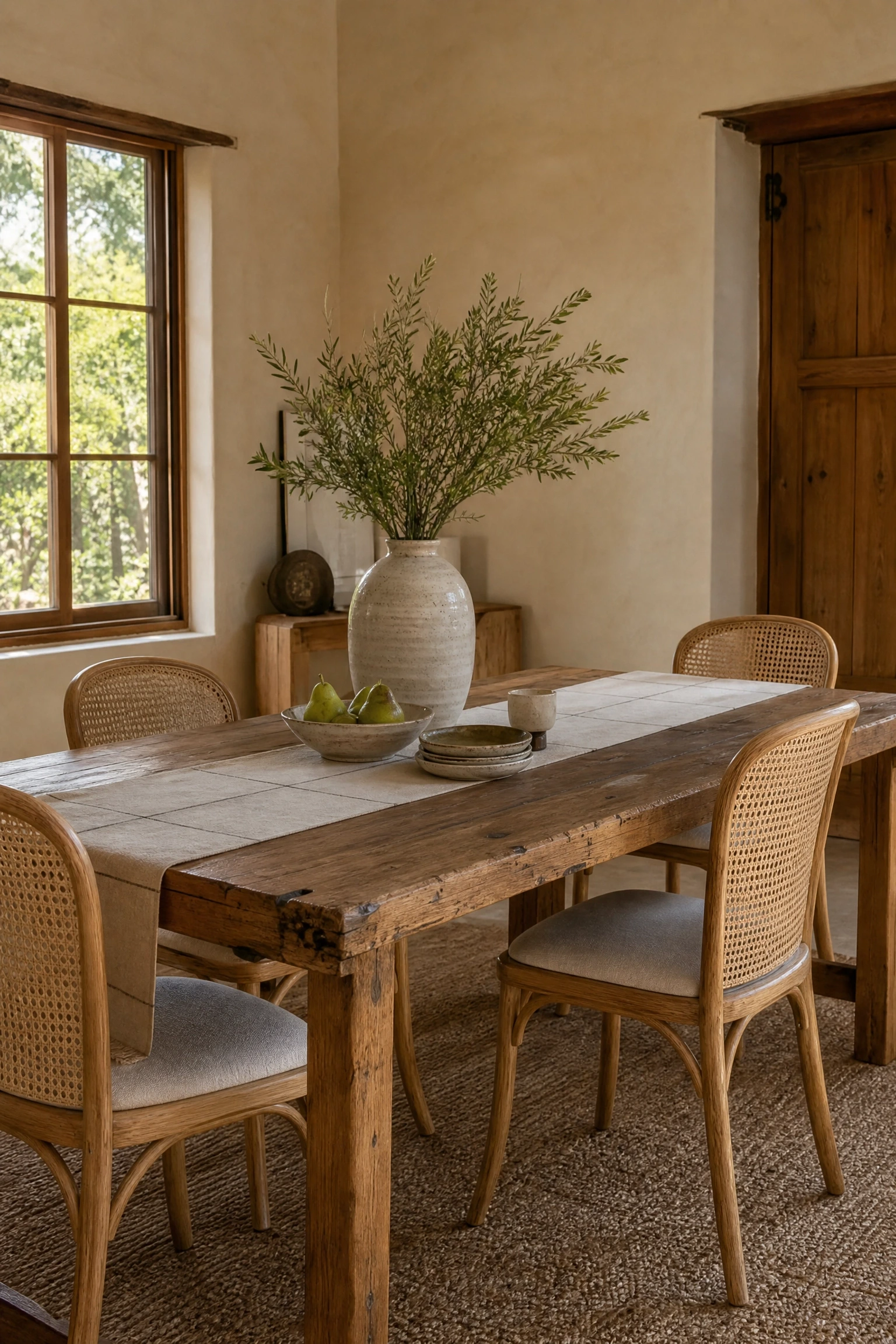
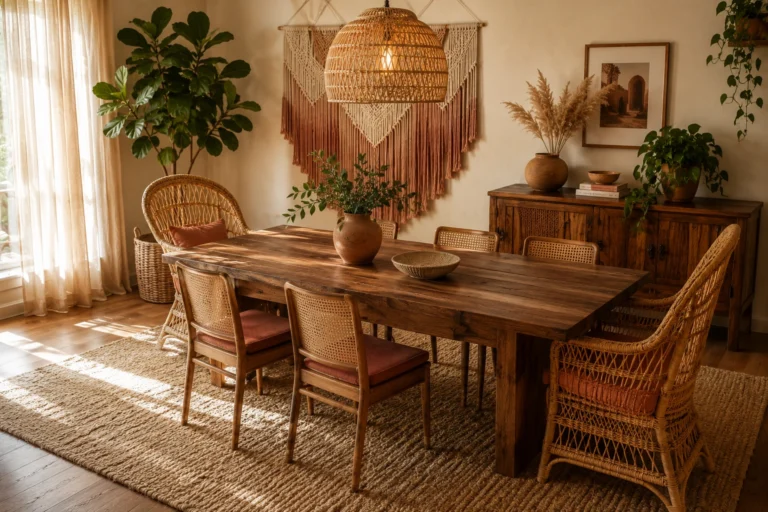
Sustainability is shaping contemporary interior design in a meaningful way, and in the dining room it translates to a preference for reclaimed wood, rattan, cane, bamboo, natural stone, and recycled metal rather than synthetic materials or fast-furniture finishes. A reclaimed oak or elm dining table has an organic warmth and character that no new mass-produced table can replicate, and the variation in grain and tone that some buyers see as imperfect is exactly what designers call wabi-sabi, the beauty of natural imperfection. Rattan and cane chairs are having a significant moment right now, largely because they’re lightweight, biodegradable, and add texture and warmth to a room without visual weight. Complement with a jute or sisal area rug, a linen or cotton table runner, and ceramic or stoneware table accessories rather than glass or chrome. Wall treatments in this direction lean toward unpainted plaster, limewash, or natural clay-based paints from brands like Earthborn or Auro. From a budget perspective, sustainable materials can run higher than conventional alternatives, though shopping secondhand or reclaimed pieces brings the cost down considerably and actually produces more interesting results. One limitation to be honest about: some natural materials like cane and rattan require more maintenance in humid environments and may not last as long in very damp climates.
Pro Move: Reclaimed furniture markets, estate sales, and architectural salvage yards are where the best sustainable dining room pieces actually live. The hunt takes time but the results are genuinely unique.
12. Color-Blocked Dining Room With a Bold Accent Wall
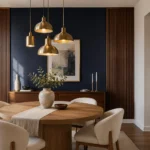
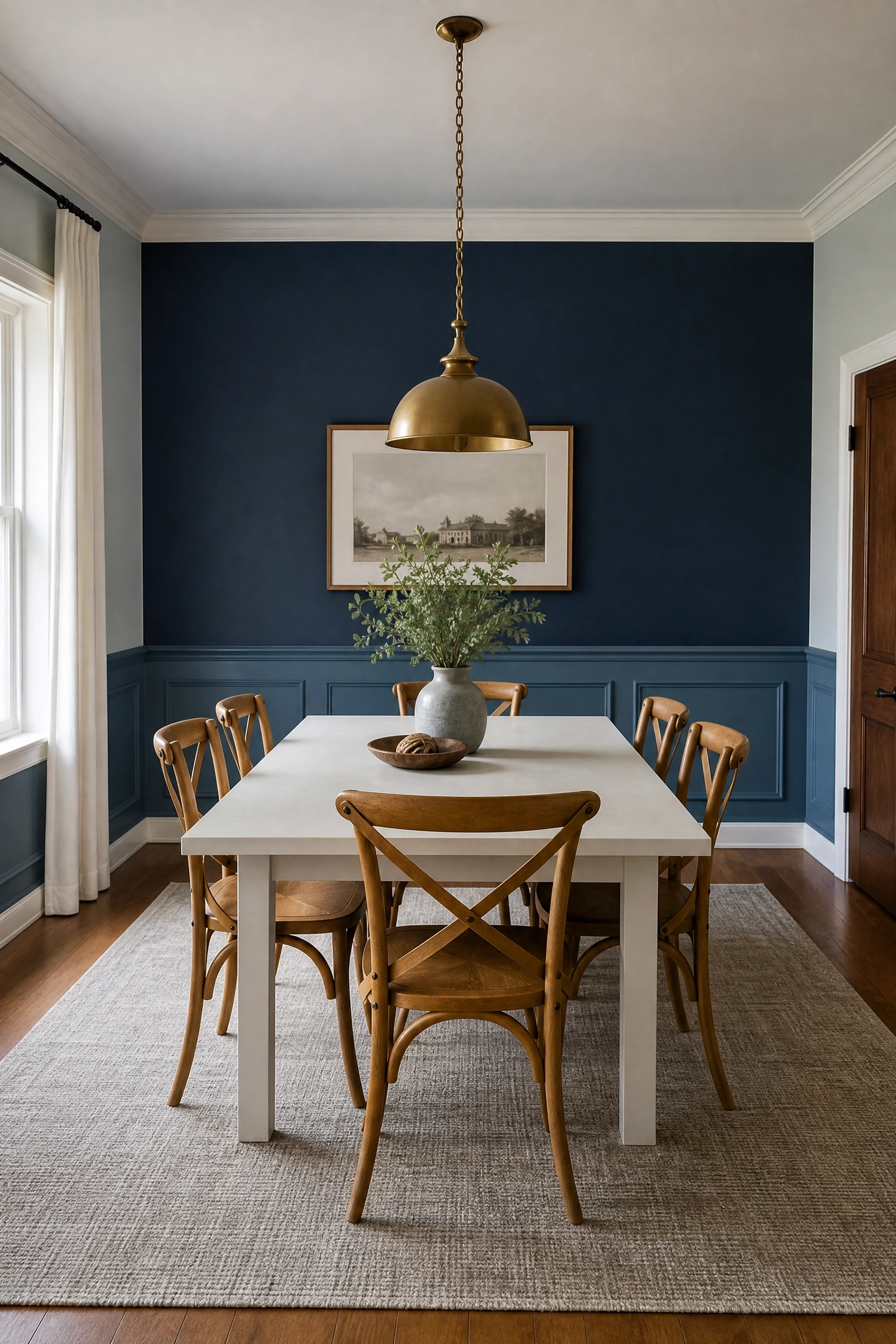
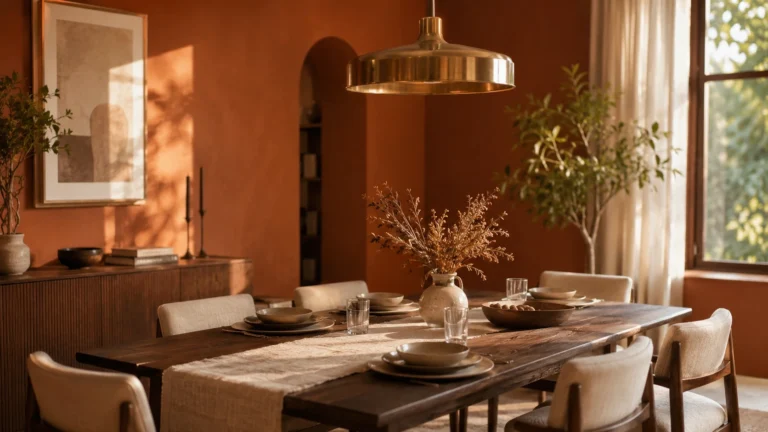
Color blocking is back in contemporary interiors, and the dining room is one of the best places to try it because the space is used for shorter periods than a bedroom or living room, which makes bold color choices feel more liveable and less overwhelming. The approach being used by designers right now is painting three tones in the room rather than one: a lighter tone on the ceiling, a mid-tone on the upper walls, and a deeper richer version of the same hue on the lower portion of the wall or on a single accent wall behind the dining table. Benjamin Moore has been calling this approach color capping, and it creates a layered, architectural effect that makes the room feel considered and grounded. Deep dusty blue, warm terracotta, olive green, and rich ochre are all working particularly well in this format right now. The furniture palette should stay calm to let the wall treatment lead: natural wood chairs, a simple white or stone table, and metallic accents in antique brass or copper pull the warmth through without fighting the wall. This is one of the most affordable contemporary dining room updates available because paint costs very little relative to the visual impact it delivers.
Designer Advice: When color blocking, keep all three tones within the same color family and use a tonal card from the paint manufacturer to choose the three shades. Mixing different color families in a tri-tone wall almost never works without professional guidance.
13. Glass and Metal for an Industrial-Contemporary Hybrid
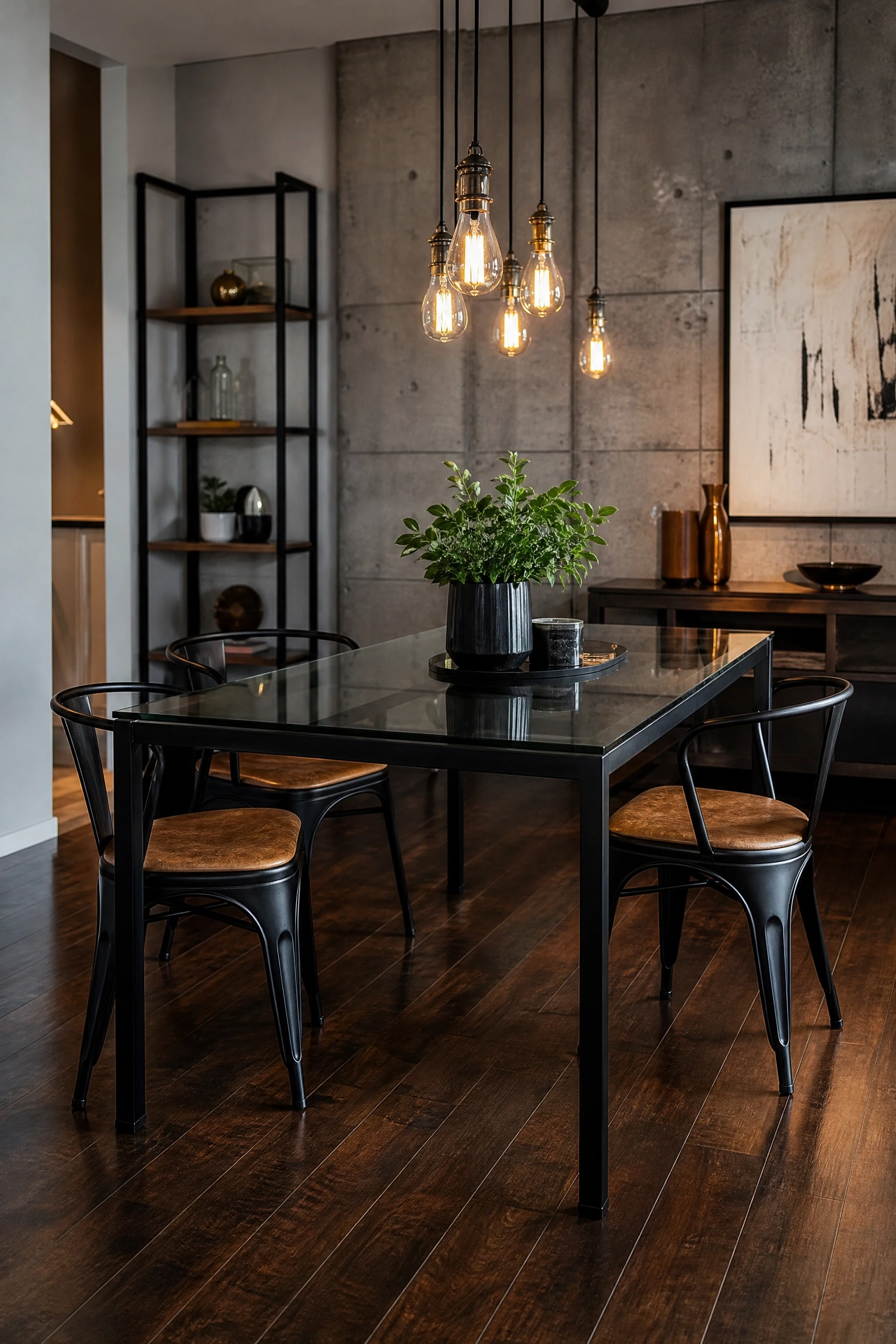
Industrial and contemporary design have been overlapping for years, but the version appearing in dining rooms right now is more refined than the raw exposed-brick loft aesthetic of the early 2010s. The current hybrid uses glass, matte black steel, and warm wood together in a way that feels sophisticated rather than unfinished. A glass-top dining table on a matte black or dark walnut steel-frame base is the anchor piece, and it’s genuinely versatile because it reads as light and open in smaller rooms while still having an edge and presence in larger spaces. Paired with black metal dining chairs upholstered in a warm fabric, like caramel leather, dusty olive, or rust velvet, the contrast between the hard frame and the soft seat keeps the room from feeling austere. A cage-style or exposed-bulb industrial pendant light overhead completes the look, but keep the bulbs warm white (2700K) rather than cool white because cool light in an industrial-style dining room tips the balance too far toward office territory. Concrete-effect floor tiles or dark stained hardwood both work well underfoot. This is a mid-to-high budget direction because quality glass-top tables and steel-frame chairs carry a premium, though good alternatives exist in the IKEA VITTSJÖ and FÖRNYAD ranges.
Heads Up: Glass dining tables look incredible but show every fingerprint, water ring, and crumb. Factor in regular cleaning before committing, especially if you have young children.
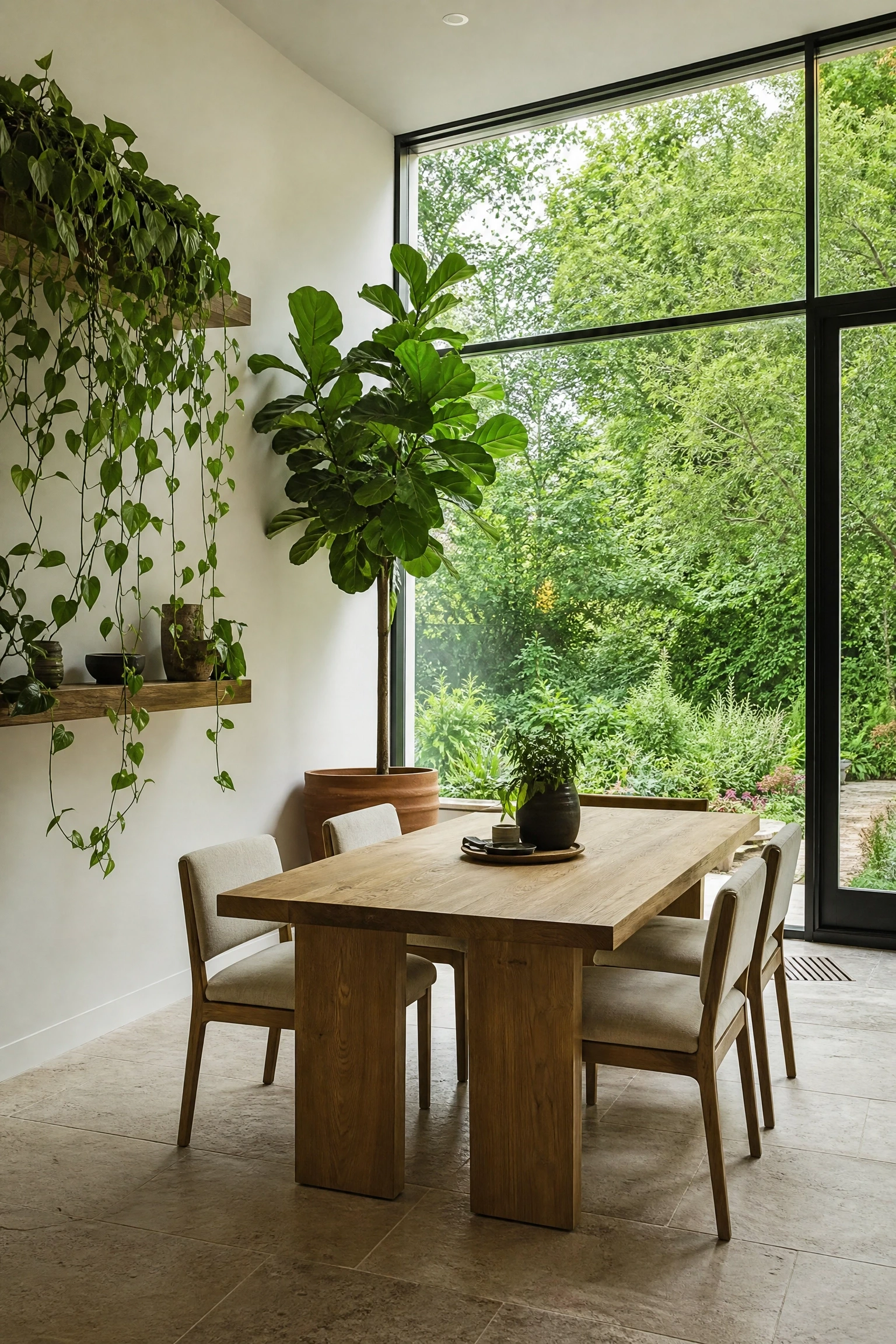
Biophilic design, the practice of incorporating natural elements into interior spaces to support wellbeing, is well established in interior design literature and being applied to dining rooms in increasingly layered and interesting ways. This goes well beyond placing a plant on the table. A fully biophilic contemporary dining room might include a living plant wall or a deep window ledge lined with low-maintenance trailing plants like pothos or string-of-pearls, a dining table positioned to face a garden or courtyard view, natural stone or slate floor tiles, and materials like raw linen, unfinished wood, and wicker that feel directly drawn from the natural world. Lighting should mirror natural rhythms where possible: a smart lighting system that shifts from a bright daylight-temperature white at lunchtime to a warm amber at dinner creates a biological cue that supports appetite and relaxation. Color palettes in biophilic dining rooms lean toward forest floor tones: deep moss, warm stone, bark brown, and soft clay. In practice, the biggest challenge of this approach is maintenance, because living plants in a room that may not get consistent natural light require genuine attention. Choose low-light-tolerant species like ZZ plants, peace lilies, or snake plants if your dining room doesn’t have large windows.
Quick Tip: Position one large-leaf plant like a monstera or fiddle-leaf fig in a floor pot in the corner nearest the window. A single well-chosen plant has far more visual impact than multiple small ones scattered around the room.
15. Scandi-Inspired White and Wood With Pops of Color
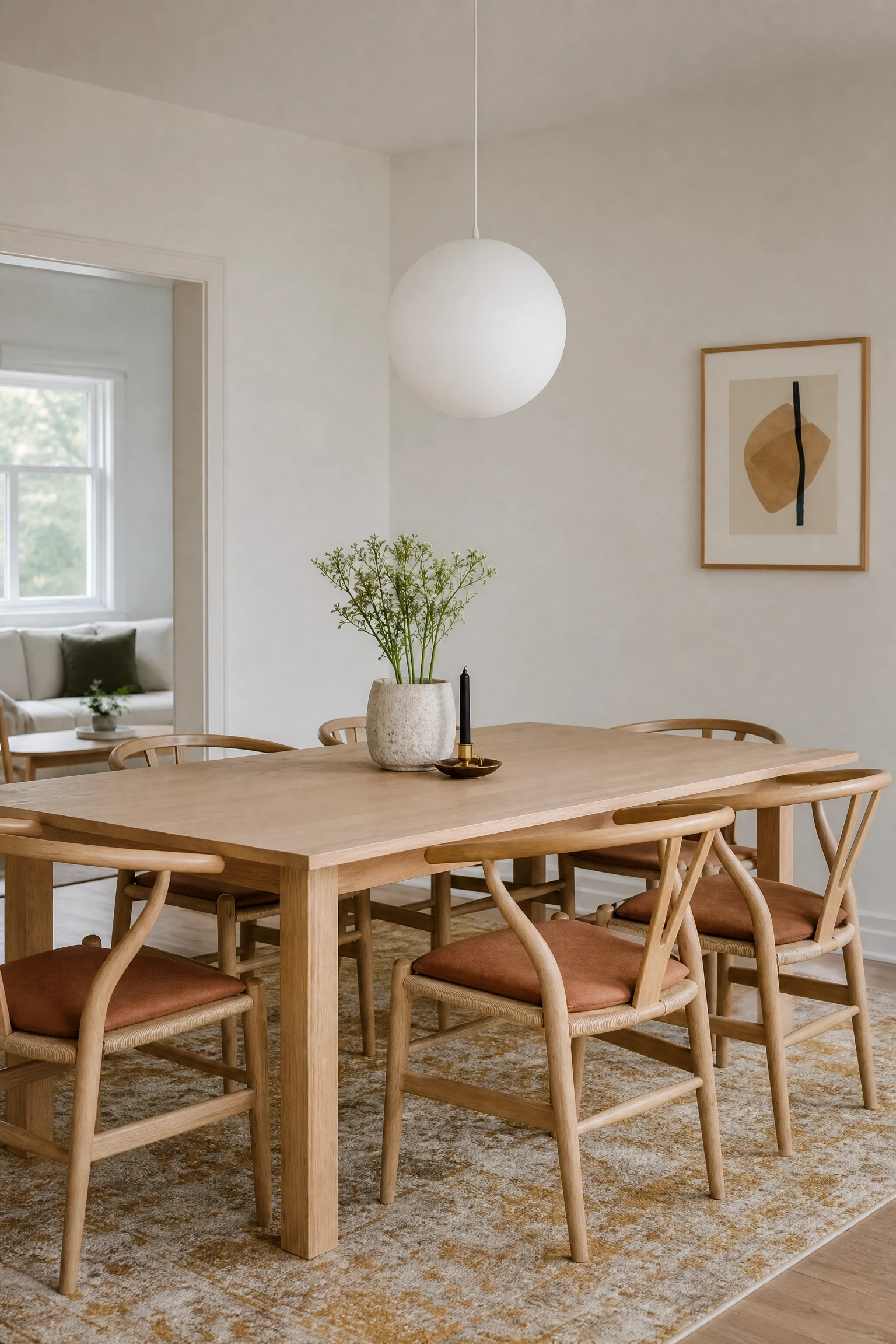
Scandinavian-inspired dining rooms have been popular for years, but the contemporary take on this aesthetic is less spare and more warmly layered than the stark white-and-grey versions that dominated design blogs through the mid-2010s. The current reading of Scandi dining leans into warm whites and creamy off-whites on the walls, light blonde or ash wood for the furniture, and then introduces genuine color through chair upholstery, a statement rug, or a piece of artwork rather than keeping everything neutral. Dusty sage, warm terracotta, soft cobalt, and faded mustard are the accent shades appearing most frequently in Scandinavian design publications and Scandinavian-influenced rooms globally right now. A Hans Wegner-style Y-chair or a simple tulip-leg dining chair with a colorful cushion pad is a very accessible entry point if you’re not ready to commit to a fully upholstered dining chair. Lighting in this direction works best with simple clean-lined pendants in matte white, brass, or smoked glass, hung low enough over the table to create a sense of intimacy. This is a genuinely budget-friendly approach because Scandi-influenced furniture is widely produced at accessible price points, and the emphasis on restraint means you need fewer pieces to make it work.
Reality Check: True Scandinavian design restraint is harder than it looks. The instinct to add more is always there. If the room starts to feel busy, remove one thing rather than adding something else to balance it.
16. A Two-Tone Dining Table and Chair Color Pairing
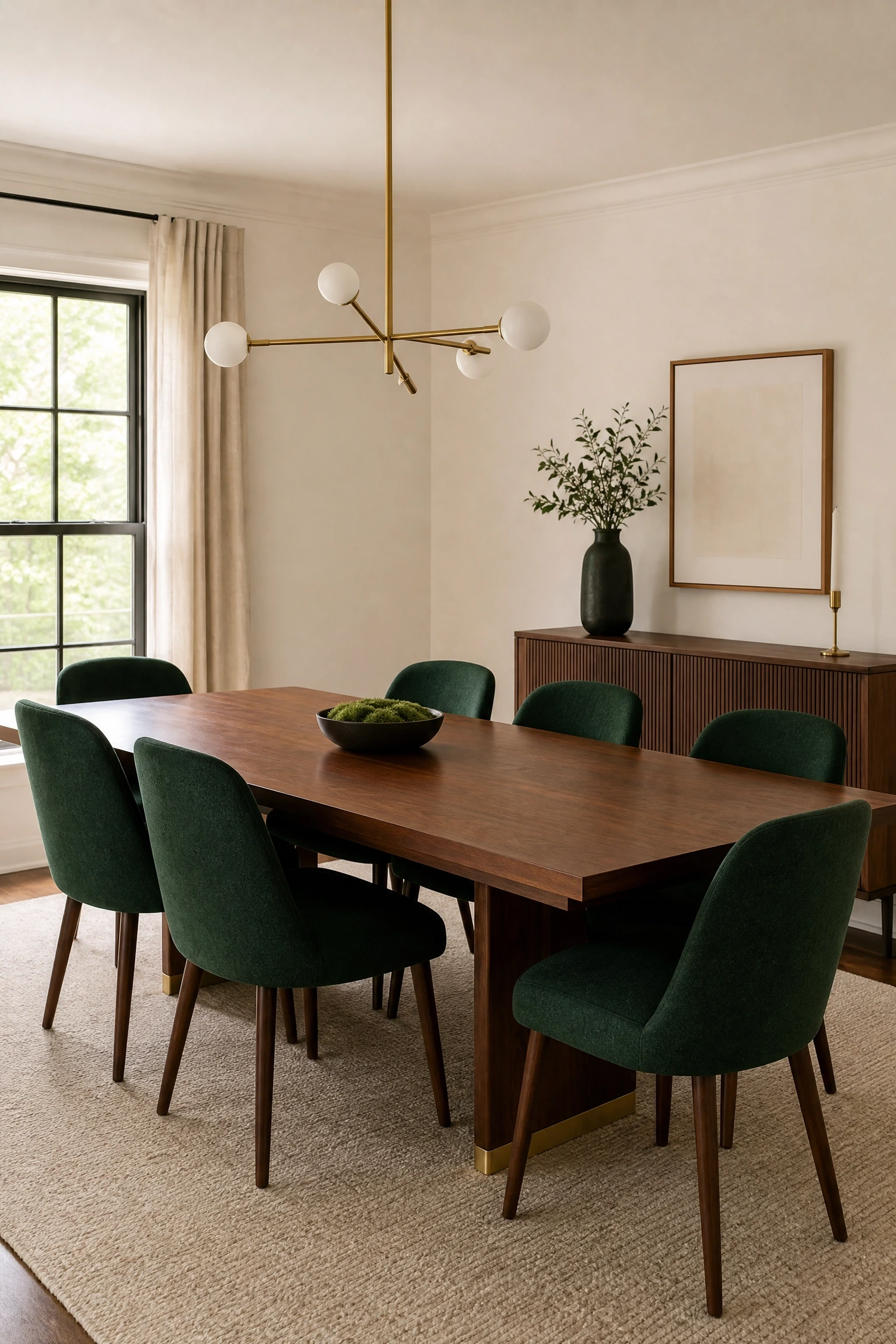
One of the more underused approaches in contemporary dining room design is treating the table and chairs as two deliberately contrasting elements rather than a matching set, and then building the room’s color story around that pairing. This two-tone strategy gives the dining room a designed, art-directed quality that a matching set almost never achieves. A classic pairing that designers are reaching for right now is a warm walnut or mid-oak table with chairs in a painted or upholstered finish in a contrasting cool tone, like sage green, slate blue, or mushroom grey. Alternatively, a white or light stone-top table with dark charcoal or forest green chairs creates a graphic, high-contrast look that reads as bold without requiring dramatic wall colors. The key is that the two tones should complement rather than fight: warm against cool, light against dark, or neutral against saturated. Metallic accents in the pendant light, table legs, or chair frames can act as a bridge between the two tones. This is an accessible approach because it means you can buy an affordable dining table in one tone and invest slightly more in statement chairs rather than spending the full budget on a premium matched set.
Pro Move: Before committing to a two-tone pairing, bring physical samples of both chair fabric and table material into the room at the same time and look at them together in both natural and artificial light. Colors that look right on screen can shift dramatically in real rooms.
17. A Dedicated Bar or Drinks Area Within the Dining Room
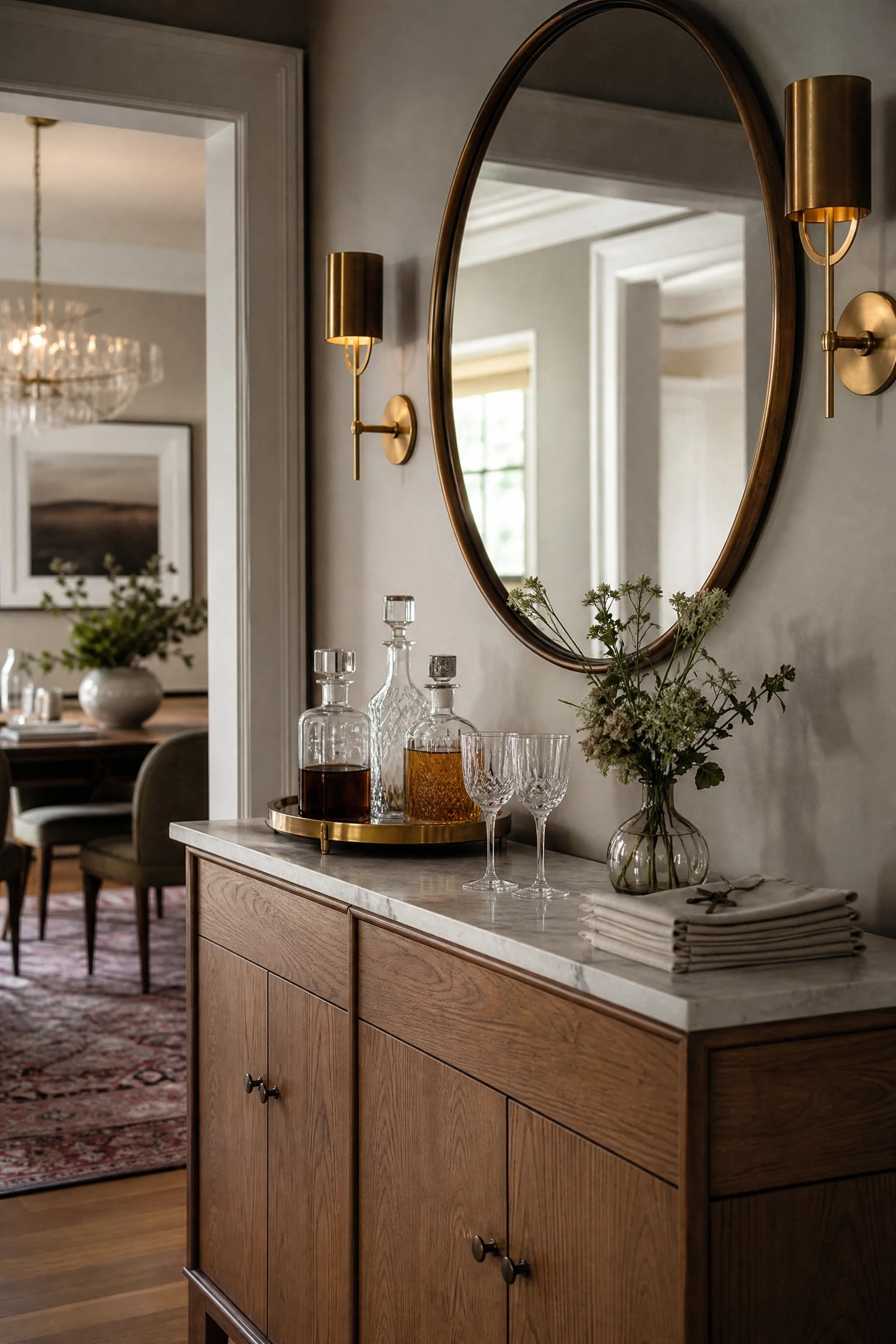
Contemporary entertaining has influenced how dining rooms are designed, and one of the most practical and visually interesting additions to a dining room right now is a dedicated bar or drinks station built into or alongside the space. This doesn’t require a full built-in bar with plumbing. A stylish drinks trolley in brass or matte black, a floating shelf system styled with glassware and decanters, or a sideboard with a marble top and a collected arrangement of bottles and bar accessories all deliver the same result: a functional, beautiful moment in the room that signals intentionality and generosity. Position it on the wall perpendicular or opposite to the dining table so it’s visible and accessible during a meal without interfering with the flow of seating. In terms of styling, the drinks area should feel edited: a few quality pieces of glassware in varying heights, a statement decanter, a small vase of fresh or dried botanicals, and perhaps a single piece of art or a mirror above it. Lighting this zone with a small wall sconce or a puck light inside an open cabinet makes it feel warm and inviting in the evening. This addition works across almost any budget: a secondhand sideboard with new hardware can achieve the same effect as a custom built-in.
Designer Advice: A mirror above the bar cart or drinks sideboard serves two purposes: it makes the area feel intentional and designed, and it reflects the light from the dining table pendant back into the room.
18. Layered Lighting: Ambient, Task, and Accent in One Room
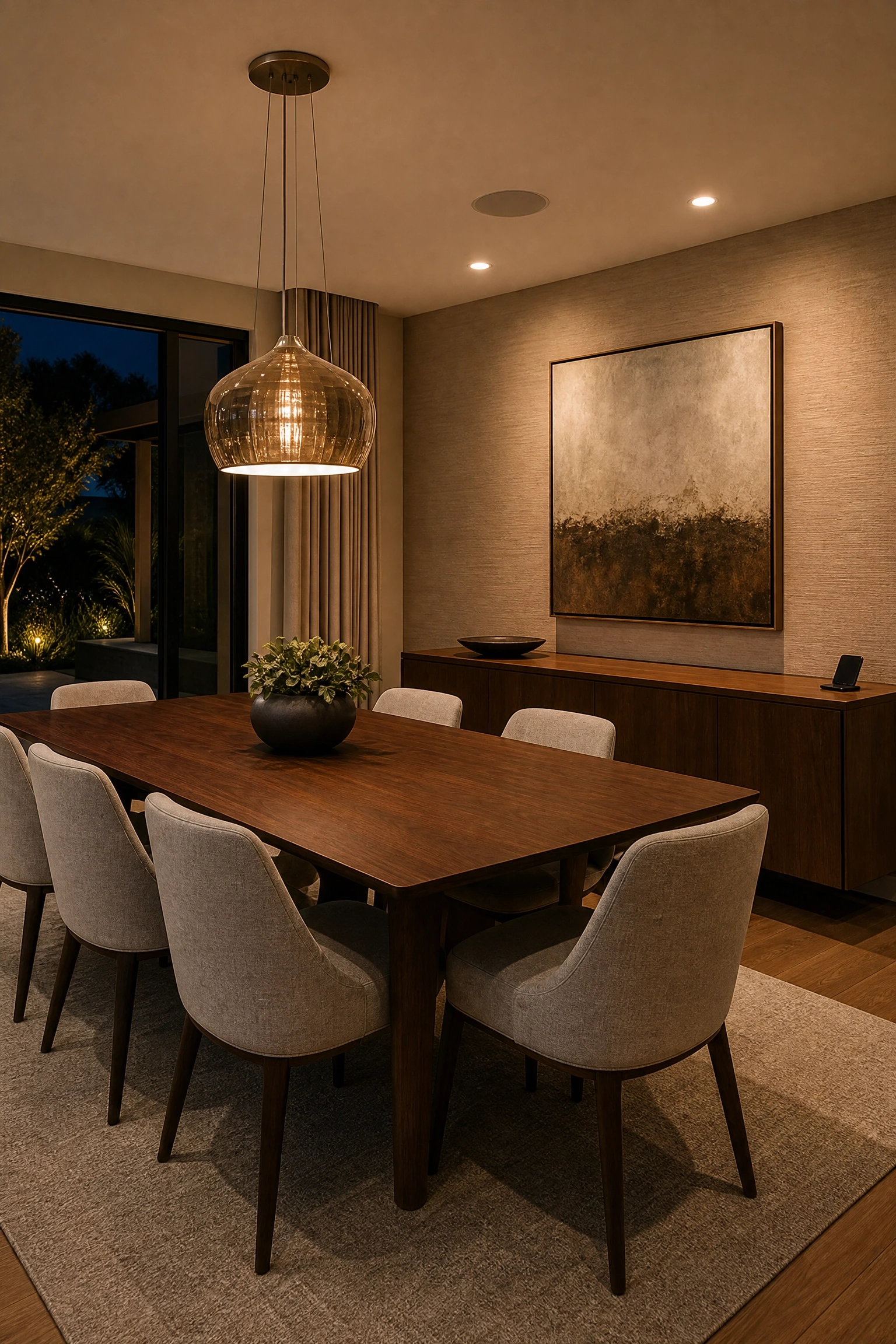
Most dining rooms rely entirely on a single pendant above the table and nothing else, which is one of the most common reasons a dining room feels flat or uncomfortable at different times of day. Professional lighting designers use a three-layer approach: ambient lighting for general illumination, task lighting focused on the table surface, and accent lighting to create depth and highlight specific features of the room. In a dining room, the pendant above the table handles the task layer. Ambient light comes from a secondary source, either recessed ceiling lights on a separate circuit, a floor lamp in the corner, or wall sconces flanking a sideboard or artwork. Accent lighting might be picture lights above artwork, candles on the table (always the most effective and affordable option), or subtle puck lights inside a display cabinet. All layers should be on dimmers or separate switches so you can control the balance depending on whether it’s a working lunch, a family dinner, or a dinner party. In practice, adding a single wall sconce on a dimmer to a dining room that previously had only a ceiling pendant creates an almost immediate improvement in the room’s warmth and atmosphere.
Heads Up: Don’t underestimate candles as accent lighting. A set of pillar candles on the table or a cluster of taper candles in a simple brass holder adds warmth and texture that no electric light quite replicates.
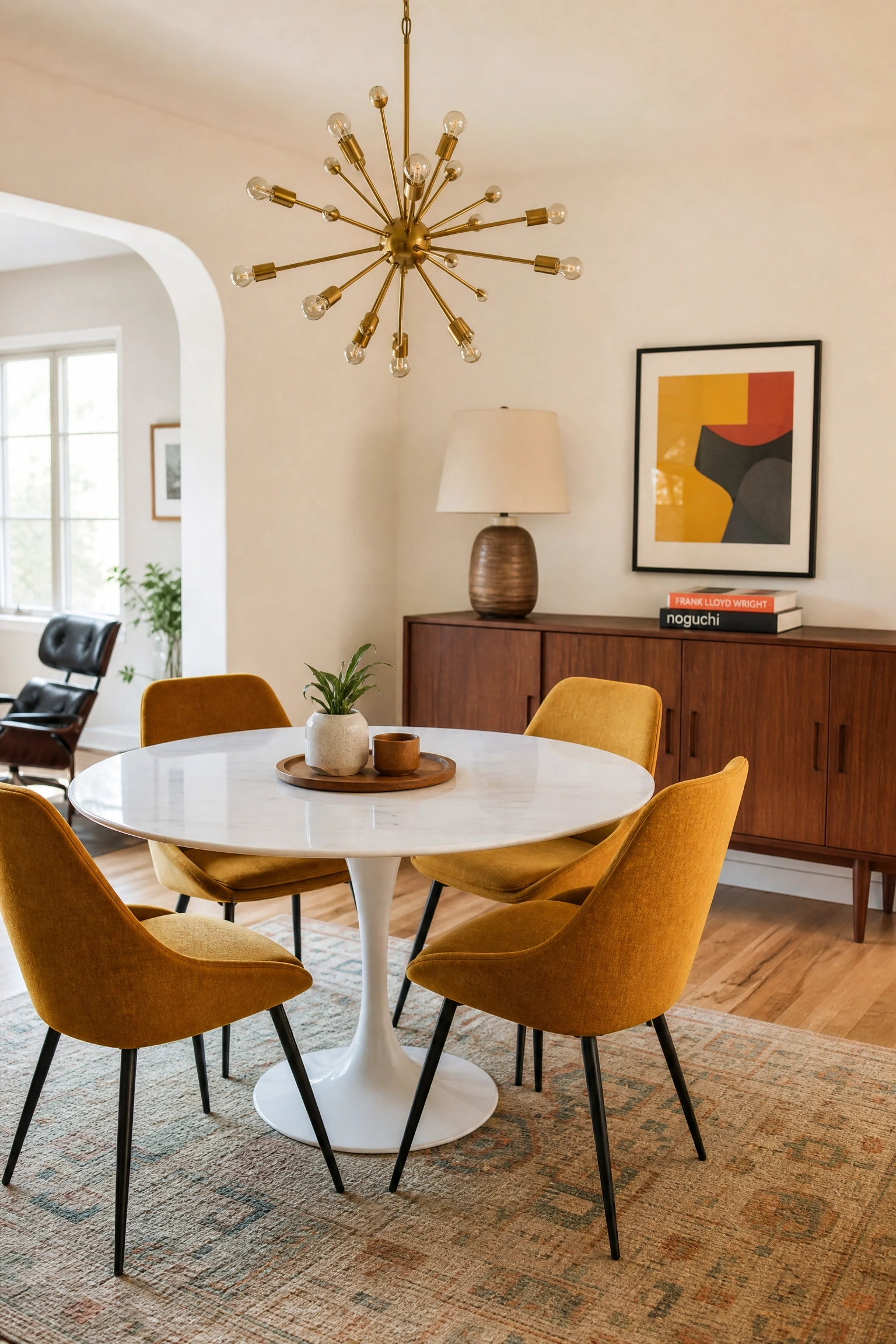
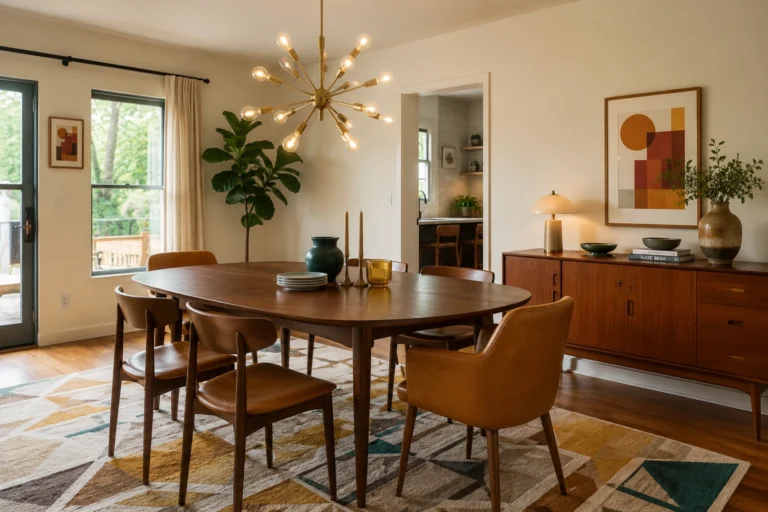
Mid-century modern (MCM) is one of the most enduring furniture movements in interior design history, and its current iteration in contemporary dining rooms feels more relaxed and less intentional than the precious, museum-quality version that was popular a decade ago. Today’s take on MCM dining pairs genuine vintage pieces, like a tulip table or a walnut credenza, with more casual and accessible elements: a set of affordable wishbone-style chairs in a fun color, a shaggy abstract rug, or a contemporary abstract artwork that references the graphic design language of the 1950s without copying it directly. The color palette for contemporary MCM dining leans into mustard, burnt orange, warm walnut, and olive green with warm white walls, which is warmer and more inviting than the stark white-on-walnut version. Lighting in this direction benefits from a Sputnik chandelier or a globe pendant with a visible warm filament bulb, both of which are available at accessible price points. One honest note: genuine vintage MCM furniture, while desirable, requires care. Walnut veneer on older pieces can be fragile, and original upholstery may need reupholstering before the piece is dining-room-functional. Factor that into budget planning.
Quick Tip: A vintage walnut credenza found at an estate sale or on Facebook Marketplace, refinished and styled with tabletop objects, becomes the most talked-about piece in the room at a fraction of the cost of buying it new.
20. Compact Contemporary: Dining Well in a Small Space
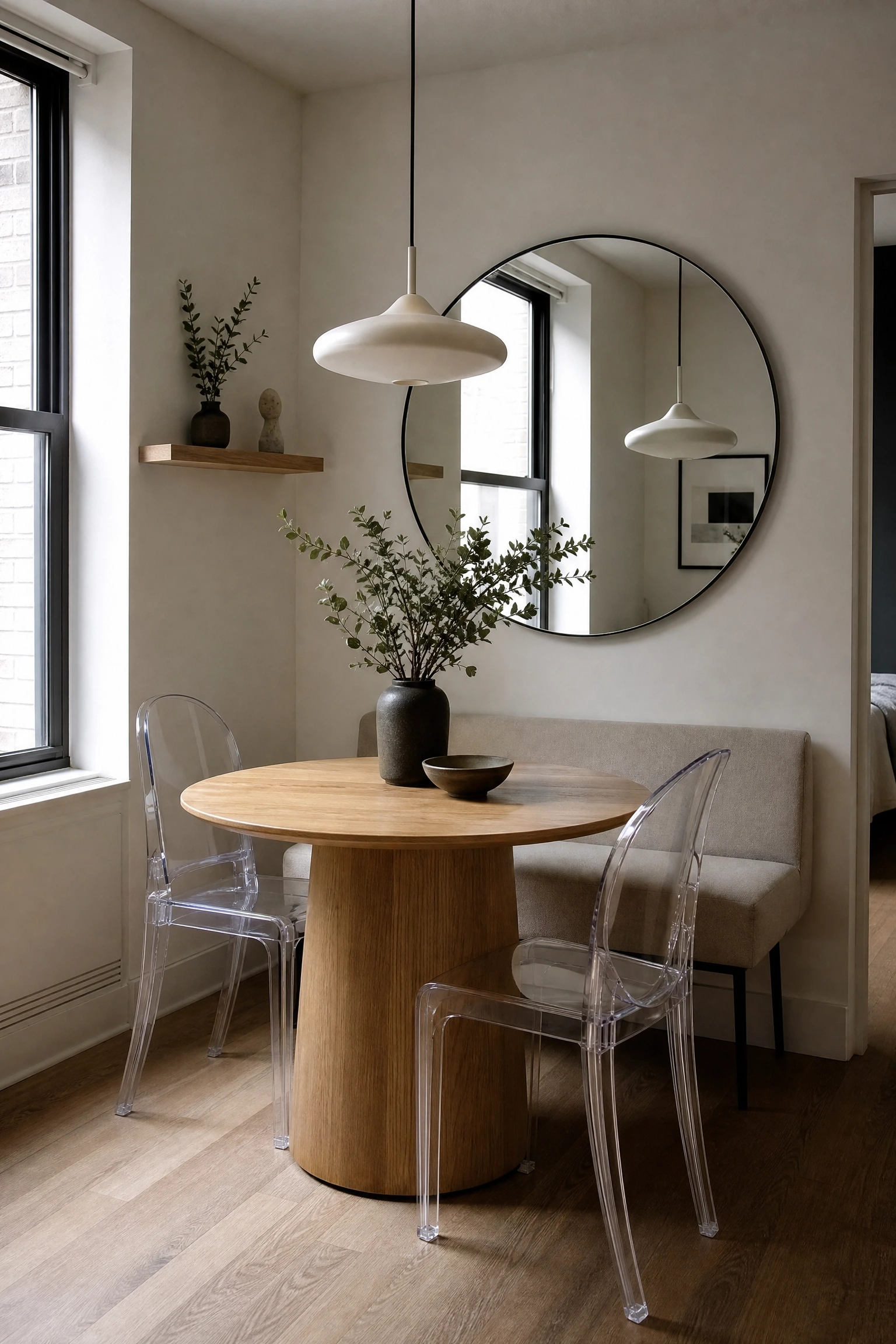
Small dining spaces are often treated as a design problem to apologize for, but contemporary design has developed a genuinely compelling toolkit for making a compact dining area feel both functional and considered. The most effective approach is to choose furniture that is proportionally scaled to the room rather than buying a full-sized dining table and hoping it fits: a round table with a 90 or 100cm diameter seats four people comfortably and leaves room to move without feeling cramped. Folding or extendable tables deserve serious consideration here because a good quality version from brands like Calligaris or Heal’s can live as a compact two-seater on a regular day and expand to seat six or eight for a dinner party. Chairs without arms take up less visual and physical space, and ghost-style acrylic chairs are a legitimate contemporary design tool for small dining rooms because they disappear visually while still providing substantial seating. A wall-hung mirror on the wall opposite the dining area doubles the perceived space, and a narrow floating shelf styled with a few objects keeps the walls contributing to the design without adding any floor footprint. Keep the pendant light scaled to the table, not the room, which is a distinction that often gets overlooked in small spaces.
Reality Check: A beautiful compact dining room works with 10 things, not 30. Edit aggressively. Every single item on the floor or wall should earn its place.
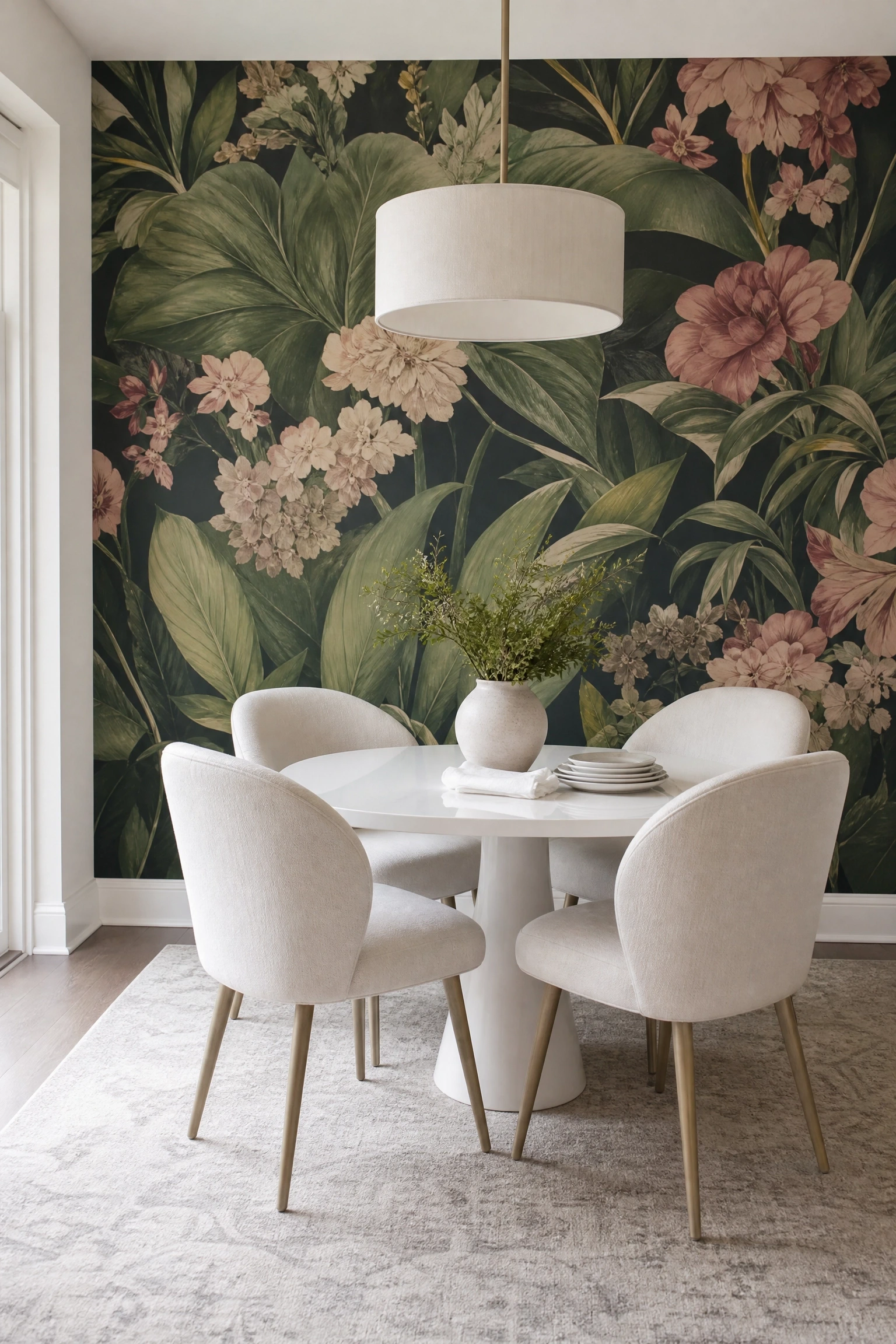
Dining rooms are widely regarded as one of the best places in the house to use bold or pattern-heavy wallpaper precisely because the room is used for shorter periods, which makes a strong visual choice more liveable than it would be in a bedroom or living room you spend hours in every day. Contemporary wallpaper in dining rooms is skewing toward large-scale botanical prints, abstract painterly patterns, grasscloth-effect textures, and architectural trompe-l’oeil designs that make the room feel larger or more dramatic than it actually is. Brands like Cole and Son, Harlequin, and Schumacher produce some of the most frequently referenced dining room wallpapers among professional designers, though more affordable alternatives from IKEA and Graham and Brown have closed the gap significantly. The key rule with bold wallpaper is to keep the furniture and textiles very calm in response: a loud floral or graphic wallpaper paired with equally busy upholstery creates chaos rather than personality. Let the wallpaper lead and make the table, chairs, and lighting serve it. A single accent wall, typically the one behind the dining table or the one facing the main viewpoint of the room, is often enough to make the statement without it feeling overwhelming in a smaller space.
Pro Move: Before committing to wallpaper, order a minimum of three A4 sample sheets and tape them to the wall in different spots. Look at them at multiple times of day before making a final decision.
22. Smart Dining: Technology Woven Into the Design
Technology integration in dining rooms has moved well beyond novelty into genuine functional territory, and the contemporary homes that do it best are the ones where the technology is invisible until you need it. Smart lighting systems from brands like Philips Hue, Lutron, and LIFX allow you to shift the color temperature and brightness of your dining room lighting from a bright, focused white for daytime use to a warm, low amber for an evening dinner with no manual adjustment at a switch. Some systems can be programmed to change automatically based on the time of day, which removes the decision entirely. Wireless charging pads built into or under a sideboard surface keep phones and devices charged without cables cluttering the space. A concealed Bluetooth speaker system in the ceiling or wall provides ambient sound during meals without a visible speaker interrupting the room’s aesthetic. For families who use the dining room as a secondary workspace or homework area, a monitor arm mounted on a nearby wall and designed to fold away when not in use keeps the table clear during meals. The important design principle here is that every piece of technology should disappear when it’s not in use, because the moment tech hardware becomes a visible focal point, it competes with the design of the room rather than supporting it.
Designer Advice: Spend the extra money on wall plates, switches, and outlets that match your room’s hardware finish. A brass or matte black outlet in a room with matching fixtures is invisible. A mismatched white plastic plate stands out every single time.
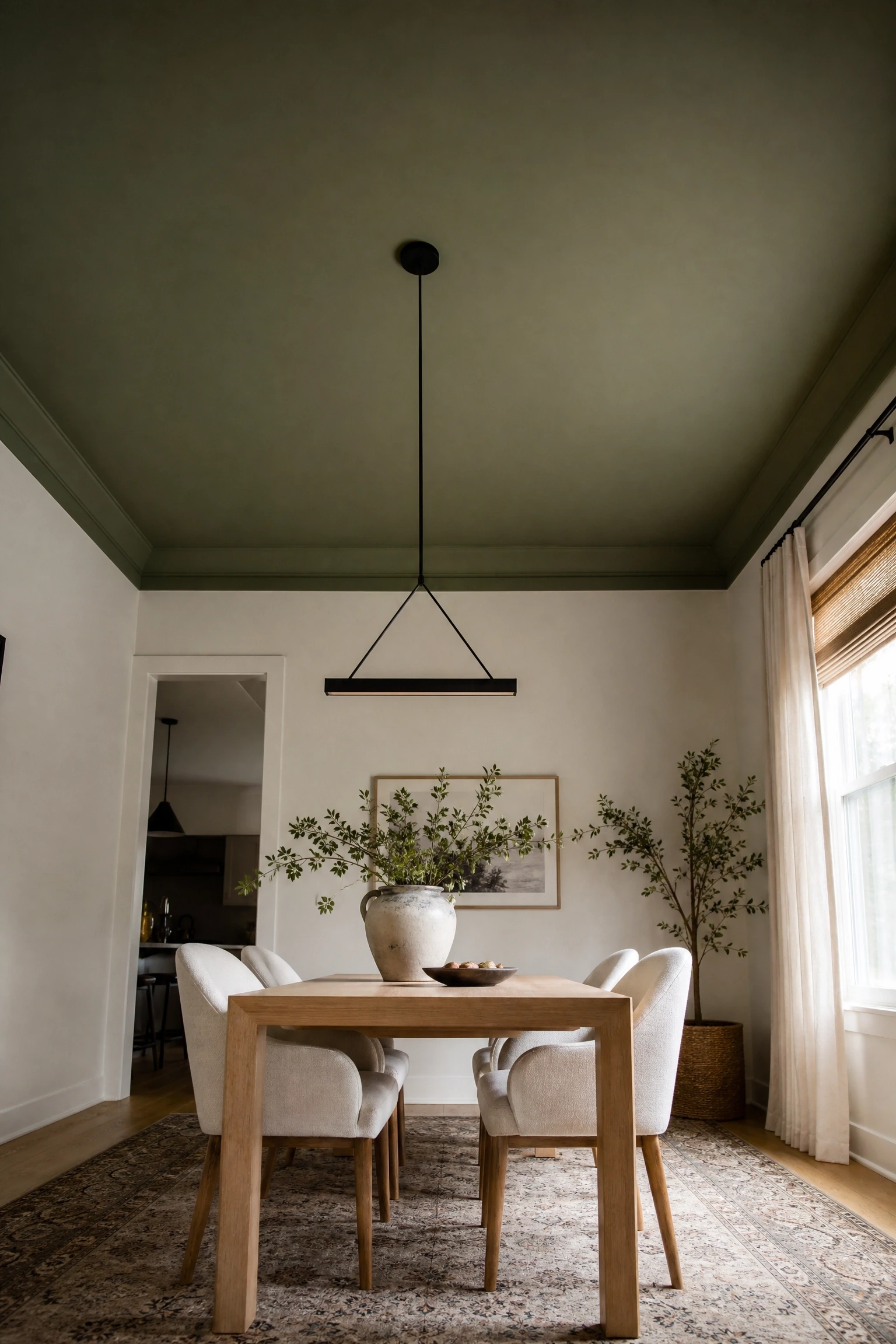
The ceiling is the most underused surface in the dining room, and contemporary interiors are making a strong case for treating it as a fifth wall rather than a blank afterthought. Ceiling treatments that are appearing in design-forward dining rooms right now include painted ceilings in a tone pulled from the room’s palette, often slightly darker than the walls to create that enveloping, cocooning quality; coffered or paneled ceilings that add architectural depth and a sense of formality; exposed timber beams, either original or box-beam style, which add warmth and character particularly in farmhouse-contemporary spaces; and wallpapered ceilings using the same paper as an accent wall below, which creates a fully immersive effect. Even a painted ceiling in a single contrasting color, like a warm dusty blue or deep sage over white walls, completely changes the atmosphere of a dining room in a way that a wall color change alone cannot. From a cost perspective, a painted ceiling is the most affordable ceiling treatment available, requiring nothing more than paint, a roller, and an afternoon. Coffered ceilings and timber beams are investment-level projects that typically require a carpenter. One important practical note: always use a paint with a flat or matte finish on ceilings because any sheen will catch and highlight every imperfection in the surface.
Quick Tip: Paint your dining room ceiling two shades deeper than your wall color. It sounds dramatic but in practice it adds warmth and makes the whole room feel more intimate and intentional without requiring any new furniture.
A contemporary dining room doesn’t need to look like it came out of a design magazine to feel genuinely good to be in. What it does need is intentionality: a clear sense of what you want the room to do, how you want it to feel, and which materials and finishes will get you there without fighting each other. The 23 ideas above cover a wide enough range of styles, budgets, and approaches that most people will find at least two or three directions worth exploring, and often the best rooms come from combining elements across multiple ideas rather than copying any single look wholesale.
Start with the element that excites you most, whether it’s a bold wall treatment, a beautiful pendant light, or a statement piece of furniture, and build outward from there. Contemporary design rewards considered choices made one at a time over impulsive room-wide overhauls. Get the lighting right first. Choose your materials with honesty about how you actually live. And edit more than you think you need to. The rooms that look best in real life are almost always the ones where someone had the confidence to remove the extra thing rather than add another one.
Frequently Asked Questions
What makes a dining room contemporary rather than just modern?
Modern design refers specifically to the mid-century modern movement of the mid-20th century, which has defined characteristics like tapered legs, organic shapes, and walnut wood. Contemporary design refers to what’s current right now, meaning it pulls from multiple influences and evolves with time. A contemporary dining room might include mid-century pieces alongside Japandi elements or industrial finishes, as long as the overall result feels intentional and of-the-moment.
How do I make a small dining room feel bigger?
Scale your furniture appropriately, which usually means a round table rather than rectangular, armless chairs to reduce visual bulk, and a wall-hung mirror opposite the dining area to double the perceived depth. Keep the color palette light or mid-tone, choose transparent or ghost-style chairs if the space is particularly tight, and avoid clutter on every surface. Good lighting also makes a significant difference: a well-placed pendant that draws the eye upward makes ceilings feel higher.
What’s the best dining room color for 2025 and 2026?
Deep, saturated tones are leading the contemporary dining room palette right now. Forest green, deep charcoal, warm navy, dusty terracotta, and rich burgundy are all being used in design-forward rooms. The shift is toward colors that create a cocooning, atmospheric quality during evening meals rather than the stark neutrals that dominated the previous decade. That said, warm whites and greiges are still entirely contemporary, particularly in Japandi or warm minimalist approaches.
How high should a dining room pendant hang above the table?
The general guideline followed by most interior designers is that the bottom of the pendant should hang approximately 75 to 80 centimetres above the tabletop. This is close enough to create intimacy and direct the light onto the table without being so low it blocks sightlines across the table. In rooms with very high ceilings, you may want to add a longer cord or chain to bring it down rather than letting it hover too high, which disconnects it visually from the table.
Is a round or rectangular dining table better for a contemporary room?
Both work, and the choice depends more on room shape and how you use the space than on style. Round tables work best in square rooms and for groups that want equal conversation flow with no hierarchy of position. Rectangular tables work better in long narrow rooms and for larger gatherings because they can seat more people and are easier to extend. Oval tables are a good middle ground that offers the conversational quality of a round table with the seating capacity of a rectangular one.
How do I add personality to a contemporary dining room without making it feel cluttered?
Choose one or two things to make genuinely expressive, whether it’s a bold pendant light, a statement artwork, or an unusual chair color, and keep everything else calm. Personality in contemporary interiors comes from restraint combined with a single confident choice, not from accumulating many decorative items. A beautifully chosen piece of pottery, a considered table runner, or a distinctive wall treatment will always read as more personal than a room full of small decorative objects competing for attention.