Our living room went through a phase where everything was too new and too matching. It looked like a store display, not a place where anyone actually lived. Once I started mixing in older pieces, natural textures, and things with a little history, the whole room relaxed. That is what rustic farmhouse style does best. It makes a room feel comfortable and real. Here are the decor ideas that pull it off.
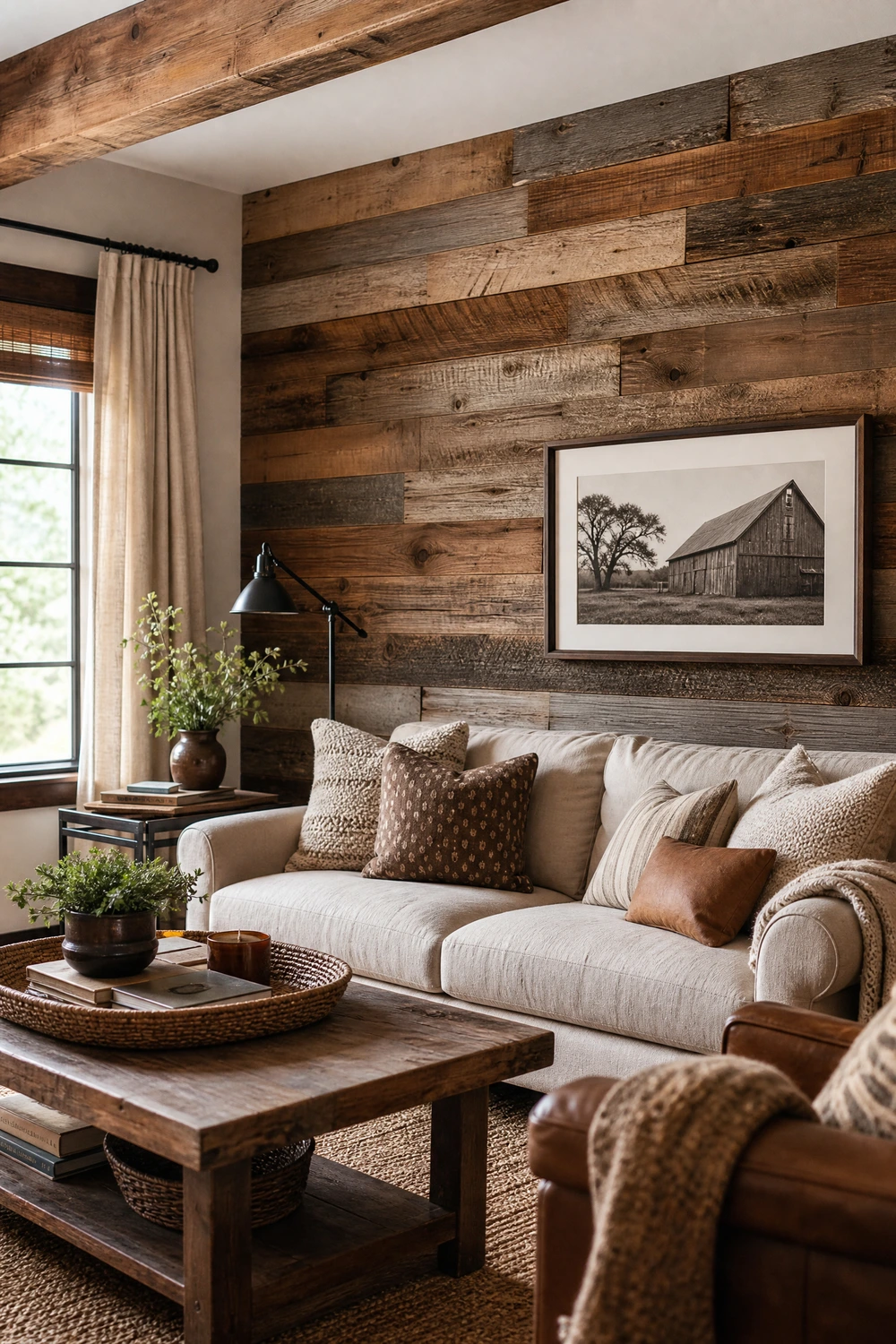
A wall covered in reclaimed wood planks instantly gives a living room that rustic farmhouse feel. The variation in wood tones, textures, and grain patterns creates visual depth that paint cannot match. Use this behind the sofa or around the fireplace as a focal point. You can find reclaimed wood from salvage yards, old fences, or pallet wood if you are on a tight budget.
Designer Tip: Sand any rough spots and seal reclaimed wood with a matte clear coat before installing. This prevents splinters and makes it safe for a room where people lean against the wall.
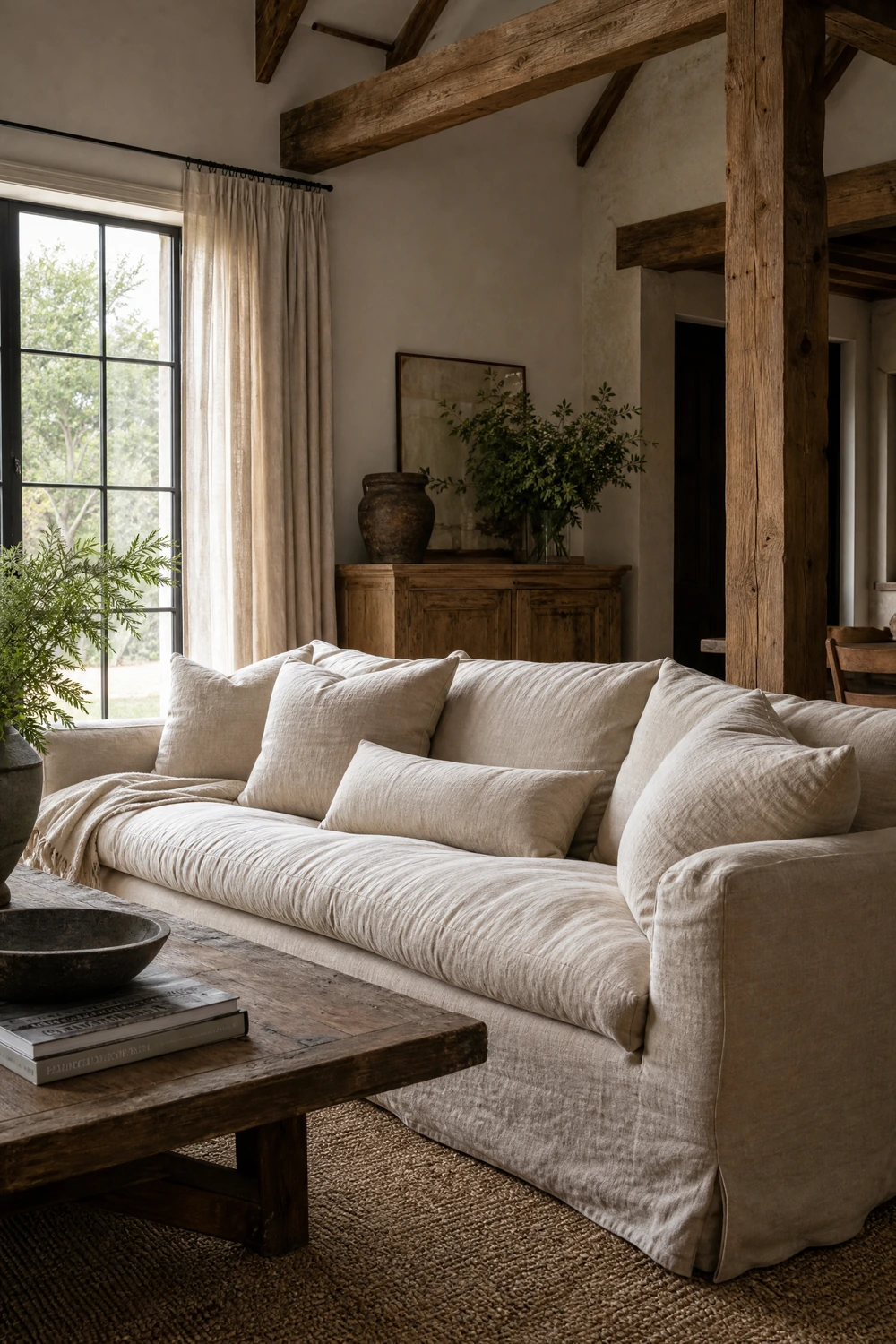
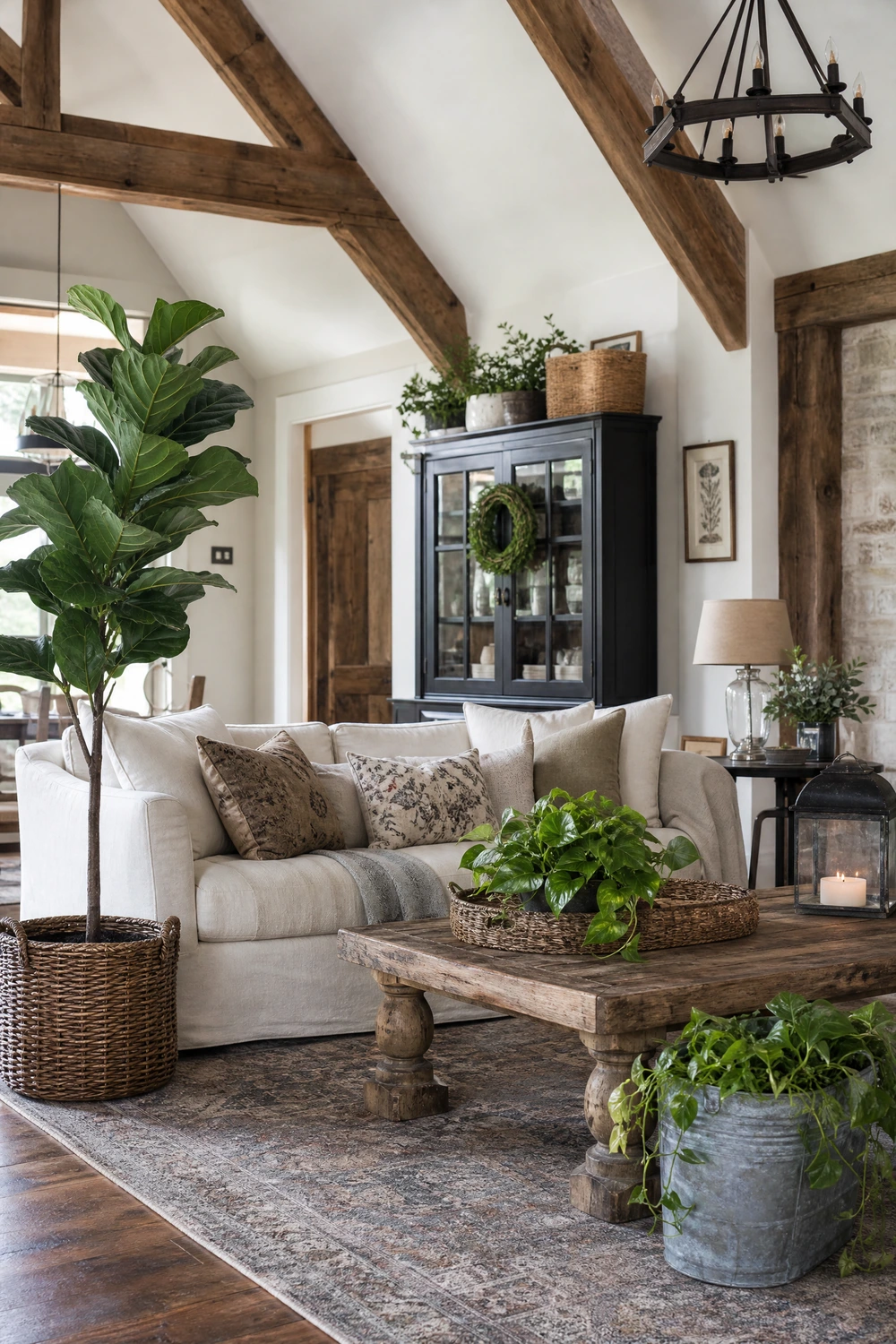
A big, deep sofa in natural linen or a slipcover fabric is the foundation of a rustic farmhouse living room. It should look like the kind of sofa you actually sink into after a long day. Neutral tones like oatmeal, flax, or soft gray work best. Slipcovers are practical because you can wash them, and the slightly relaxed fit adds to the casual, lived-in look.
Designer Tip: Order extra slipcover fabric or a spare cover when you buy. Having a backup means you can toss the dirty one in the wash without the sofa sitting bare.
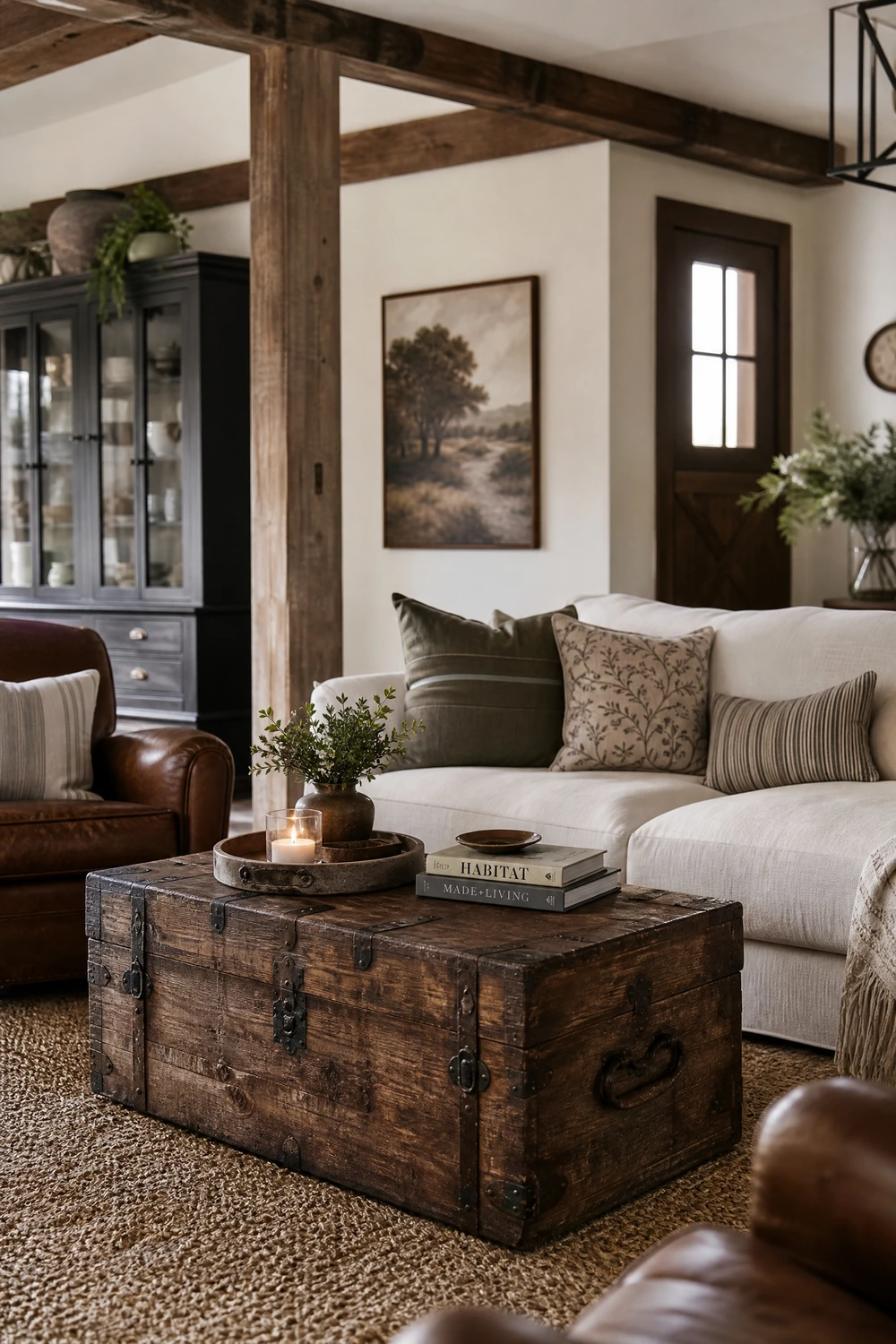
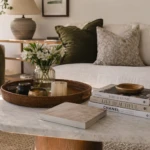
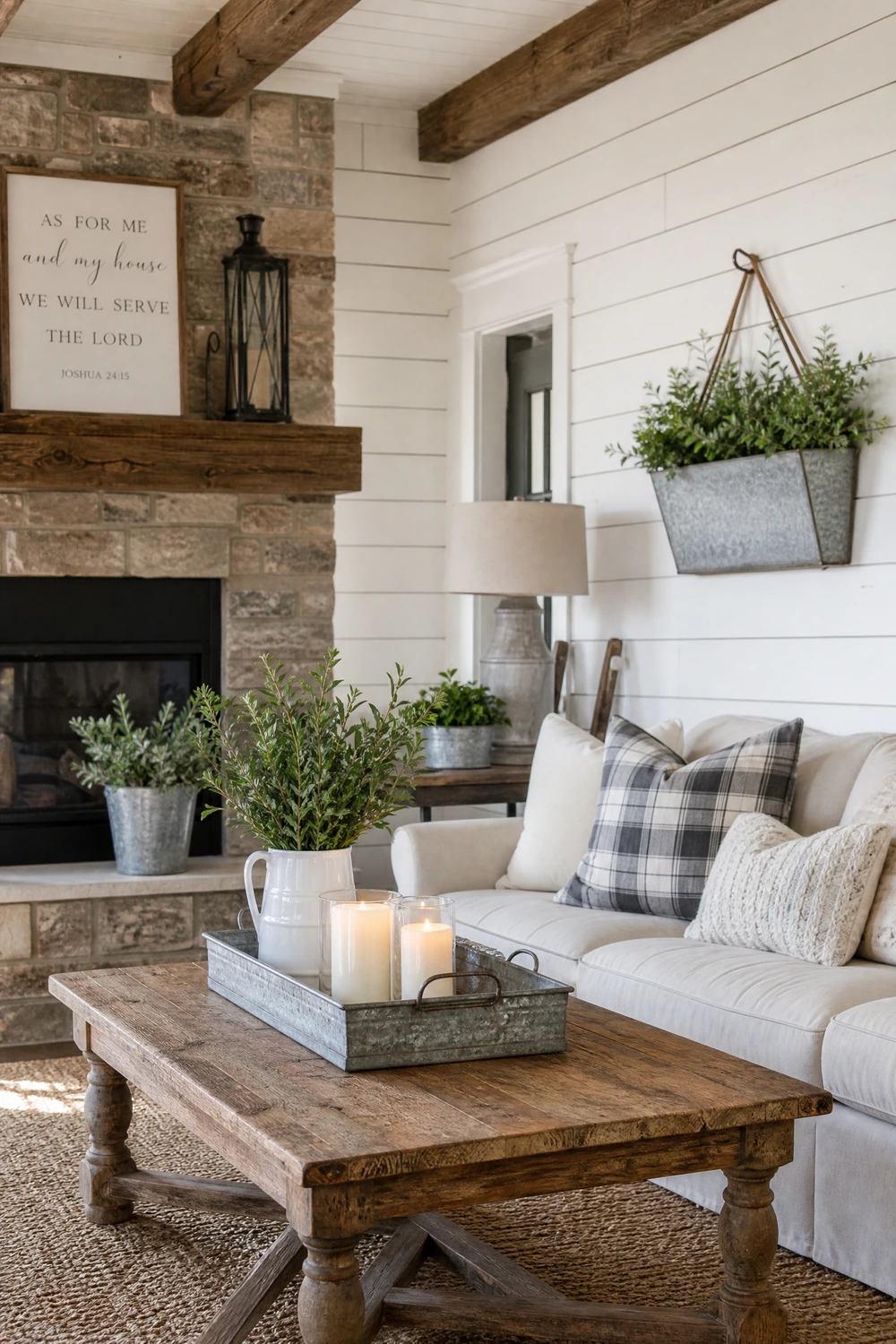
A coffee table with some age and character anchors the seating area. An old trunk, a repurposed factory cart, or a chunky wood slab on iron legs all fit the rustic farmhouse look. The table should have enough wear to tell a story but be sturdy enough to handle daily use. Stack a few books, add a tray for candles or a small plant, and let the table itself be part of the decor.
Designer Tip: If you find a great vintage piece that wobbles, add adjustable furniture pads to the legs. A wobbly coffee table ruins the charm no matter how good it looks.
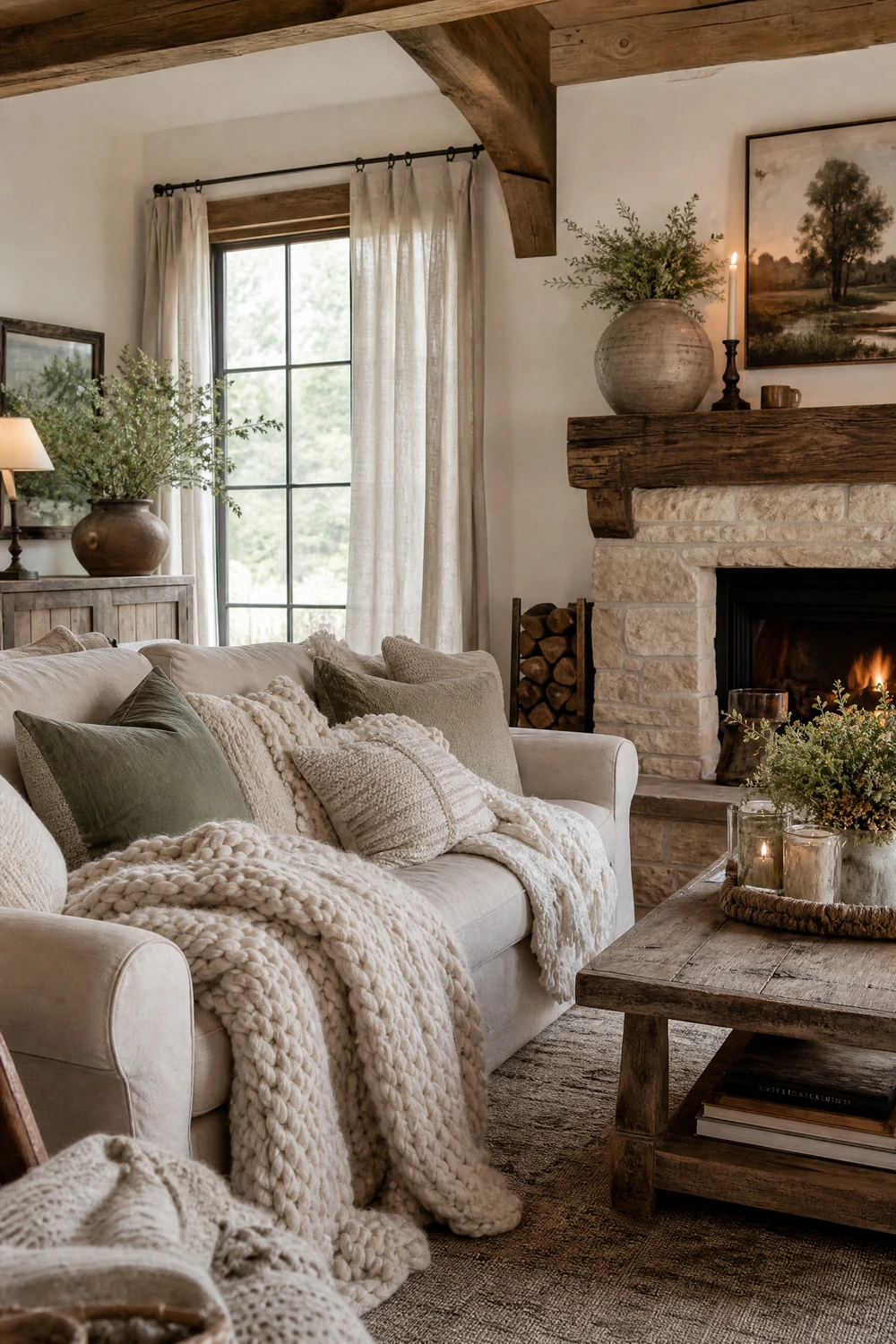
Layering different fabrics throughout the living room is what gives rustic farmhouse style its cozy, inviting feel. Chunky knit throws draped over the sofa, woven blankets on a ladder, and textured pillows in linen, wool, and cotton all add warmth. Stick to a neutral color palette with occasional muted tones like dusty blue, sage, or rust. The layers should look casual, like they were used and set down rather than arranged.
Designer Tip: Mix at least three different textures in your throw pillows. A smooth linen, a chunky knit, and a woven or tasseled pillow together prevent the arrangement from looking flat.
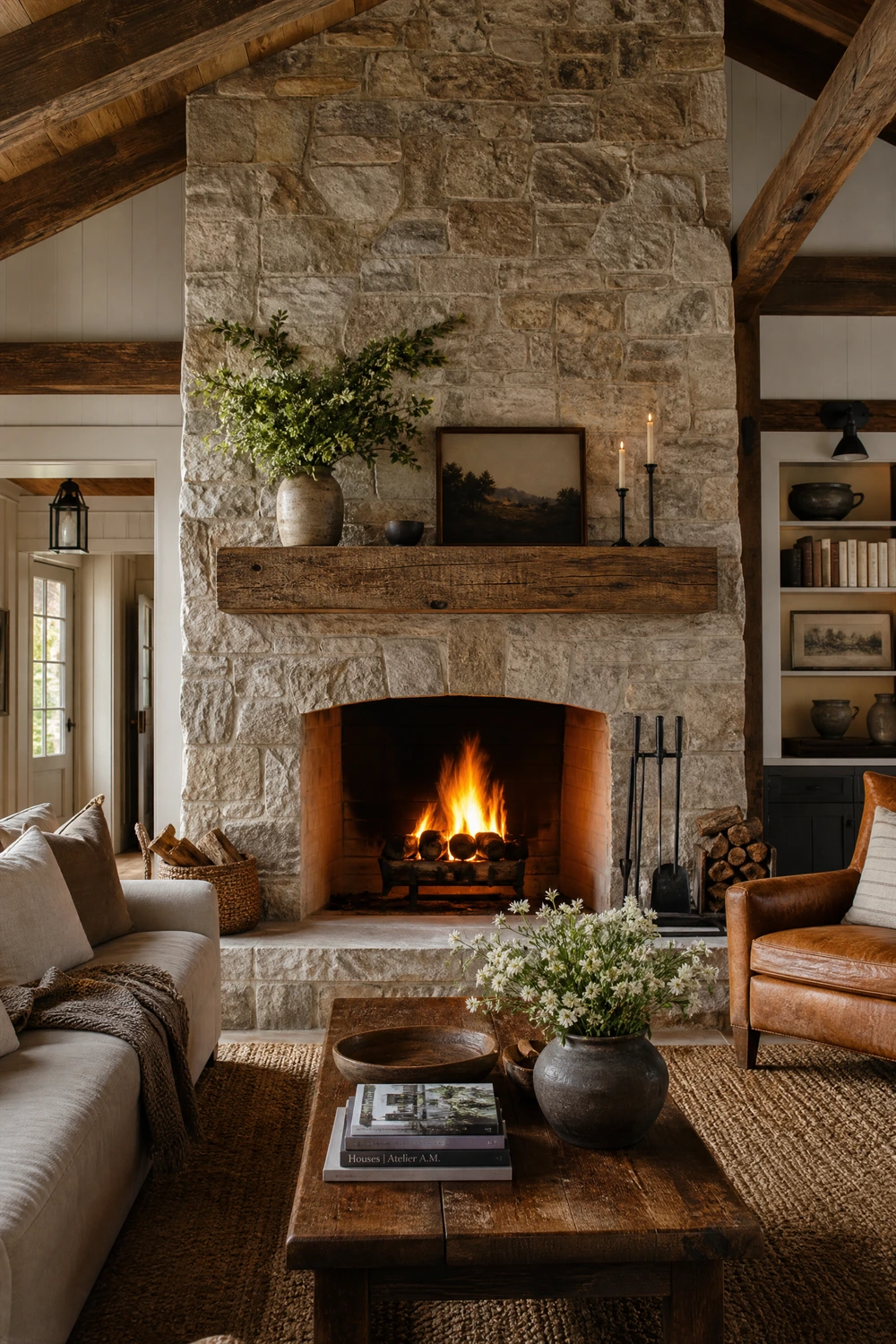
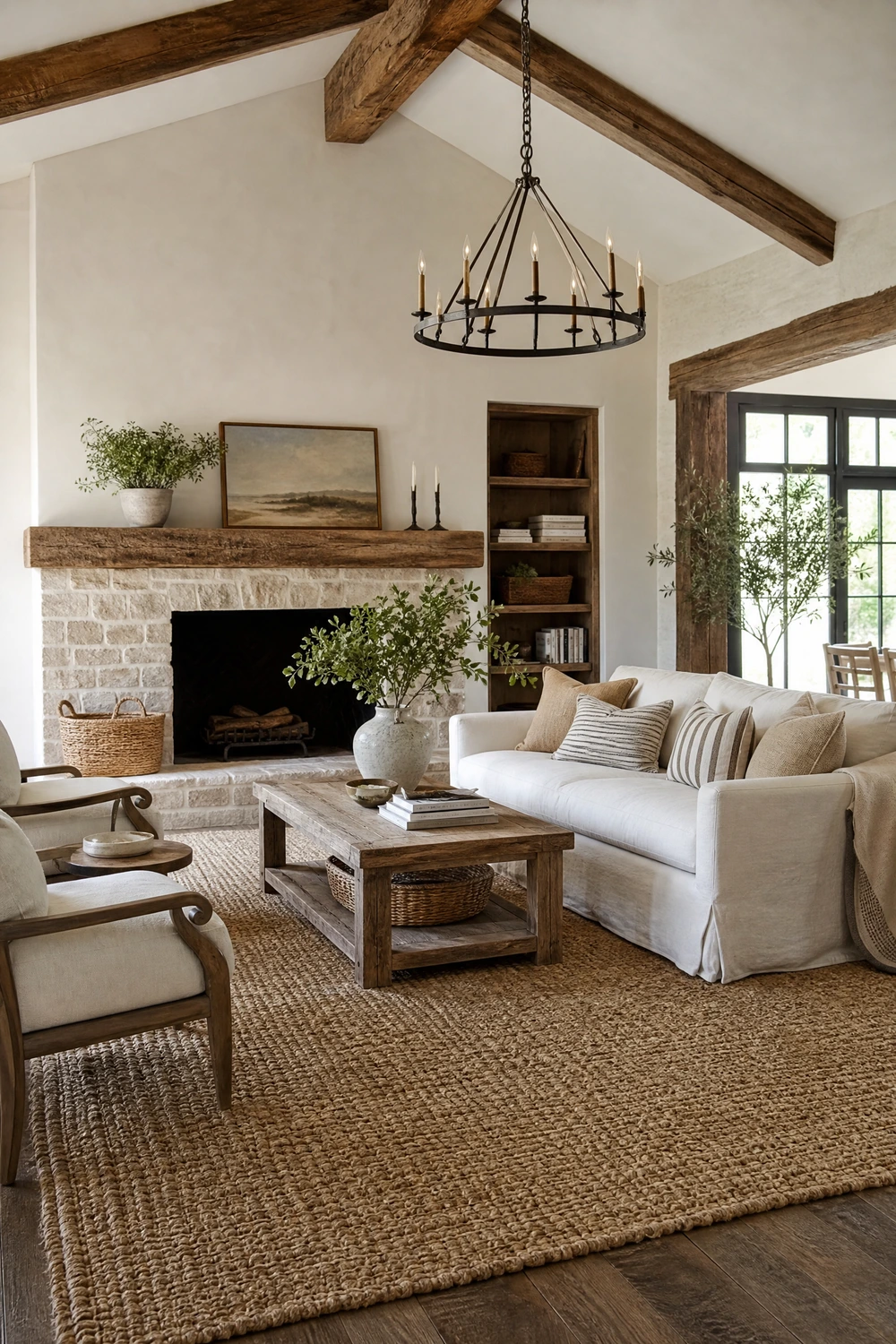
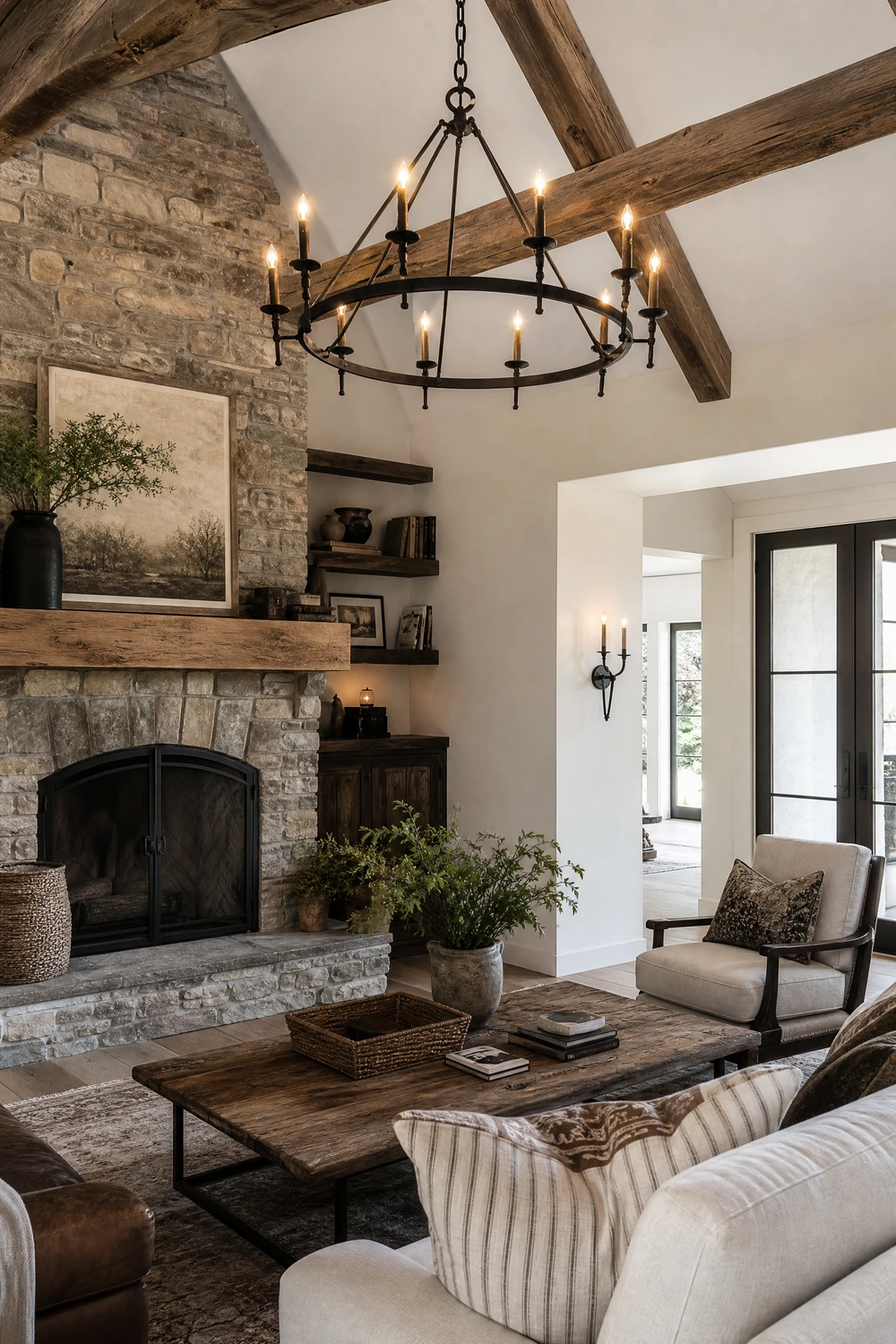
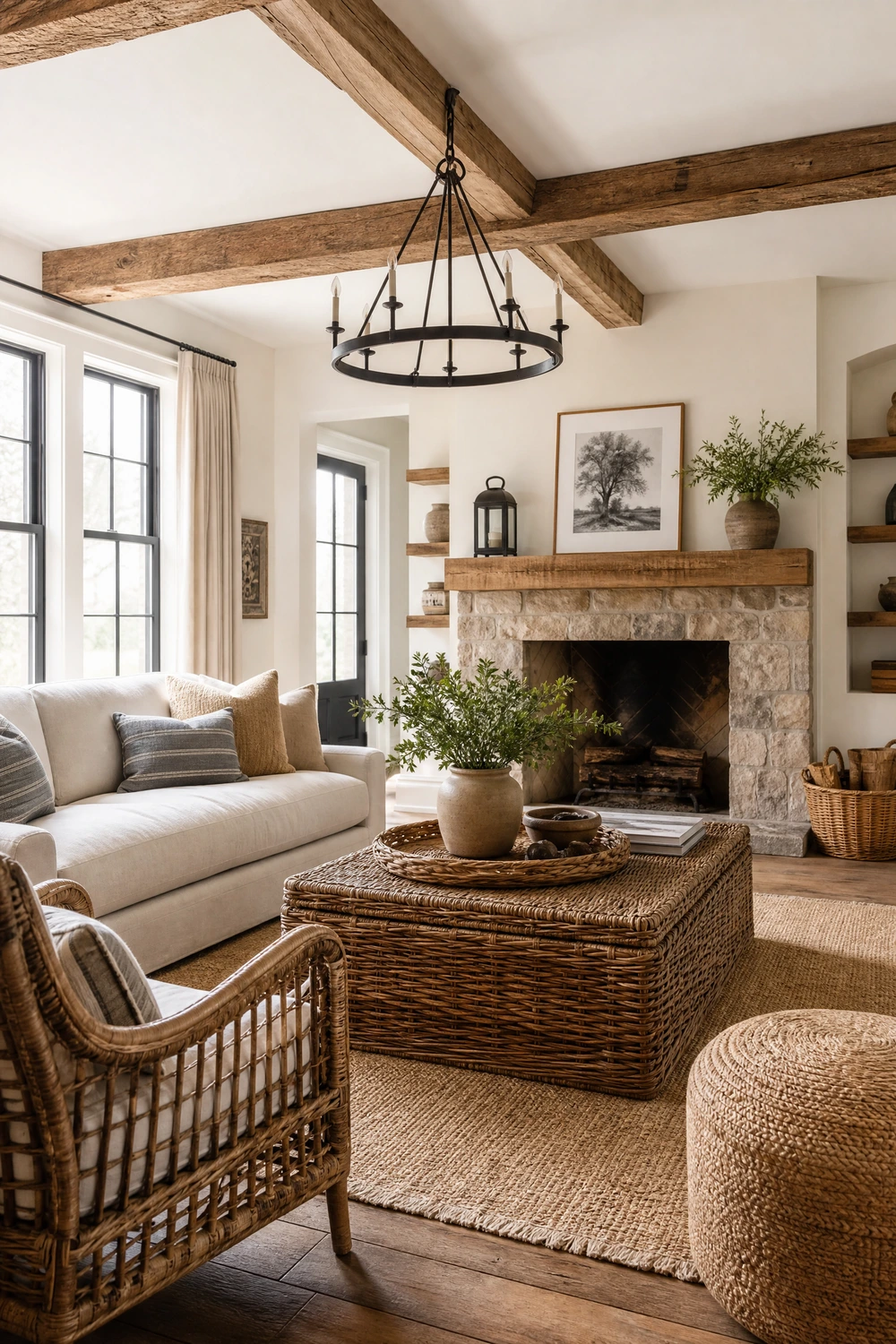
A fireplace in natural stone or exposed brick is the ultimate rustic farmhouse feature. If you already have one, let it shine by keeping the mantel simple and the surround visible. If your fireplace has a dated tile or marble surround, consider a stone veneer overlay for a more rustic look. Even a faux fireplace mantel with candles inside the opening adds warmth and a focal point to the room.
Designer Tip: Keep mantel decor asymmetrical for a more natural, collected look. A tall item on one end, a few medium items in the middle, and something low on the other end creates an easy, balanced arrangement.
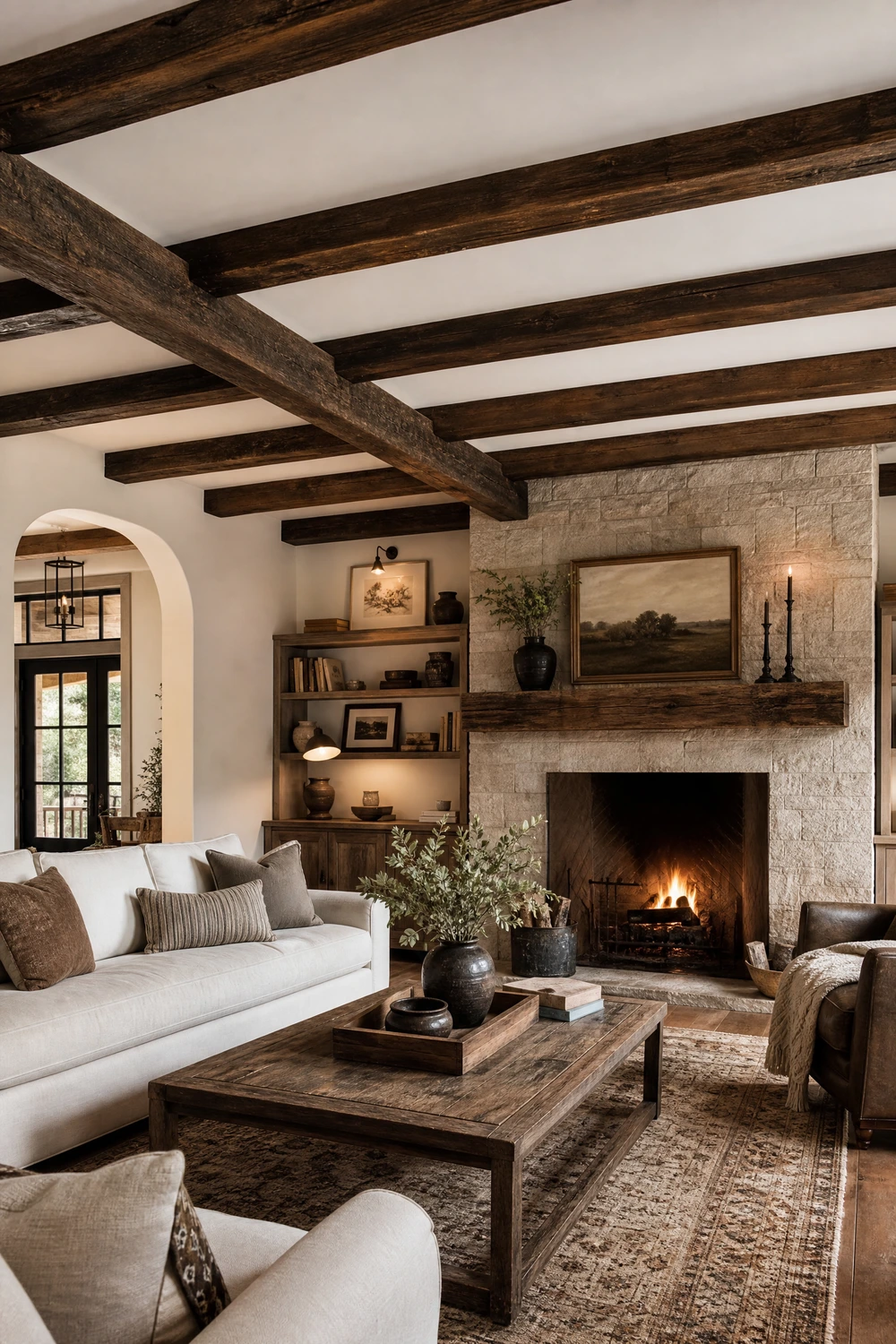
Exposed wood beams on the ceiling add architectural interest and a sense of history to any living room. Real structural beams are the dream, but faux beams made from lightweight polyurethane or hollow wood boxes are a realistic alternative that look convincing from below. Dark stained beams against a white ceiling create dramatic contrast, while natural or whitewashed beams keep things lighter and airier.
Designer Tip: Space faux beams evenly across the ceiling and run them parallel to the longest wall. This makes the room feel longer and draws the eye through the space.
A large jute or sisal rug grounds the living room seating area and adds that earthy, natural texture rustic farmhouse rooms need. These rugs are durable, hide dirt well, and their neutral tone works with anything. Layer a smaller patterned rug on top if you want more visual interest. Make sure the rug is large enough that all front legs of your furniture sit on it to pull the seating area together.
Designer Tip: Use a rug pad under jute rugs on hard floors. Without one, jute can slide and the rough underside can scratch wood or tile over time.
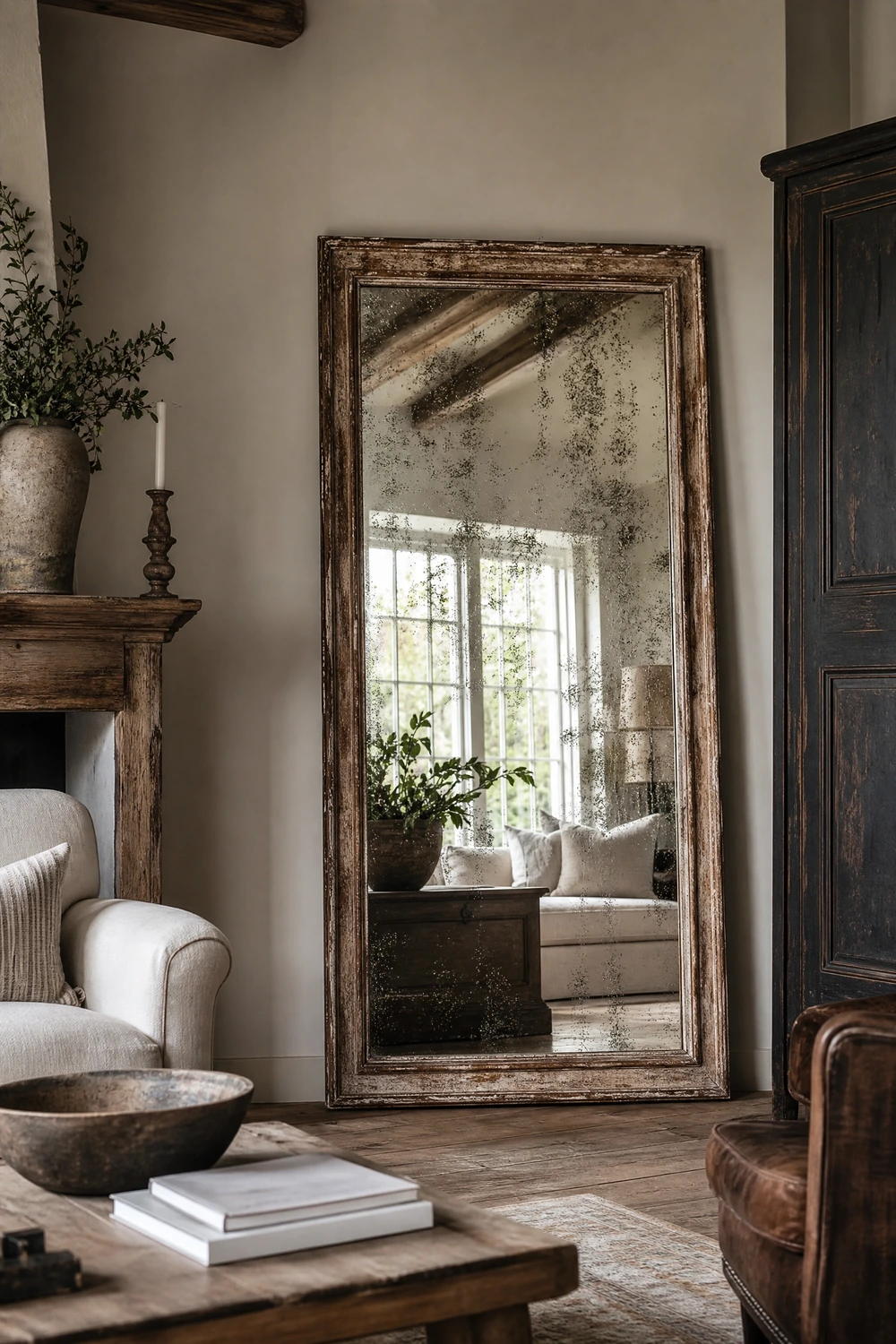
A large mirror with a distressed wood frame or an antique mirror with foxed glass adds instant character to a living room wall. Lean it against the wall behind a console table or hang it above the fireplace. The imperfections in the frame or glass are what make it look authentic and interesting. Mirrors also bounce light around the room, which helps in darker spaces.
Designer Tip: Leaning a mirror on the floor against a wall makes it feel more casual and relaxed than hanging it. Secure it to the wall with an anchor strap for safety, especially in homes with kids or pets.
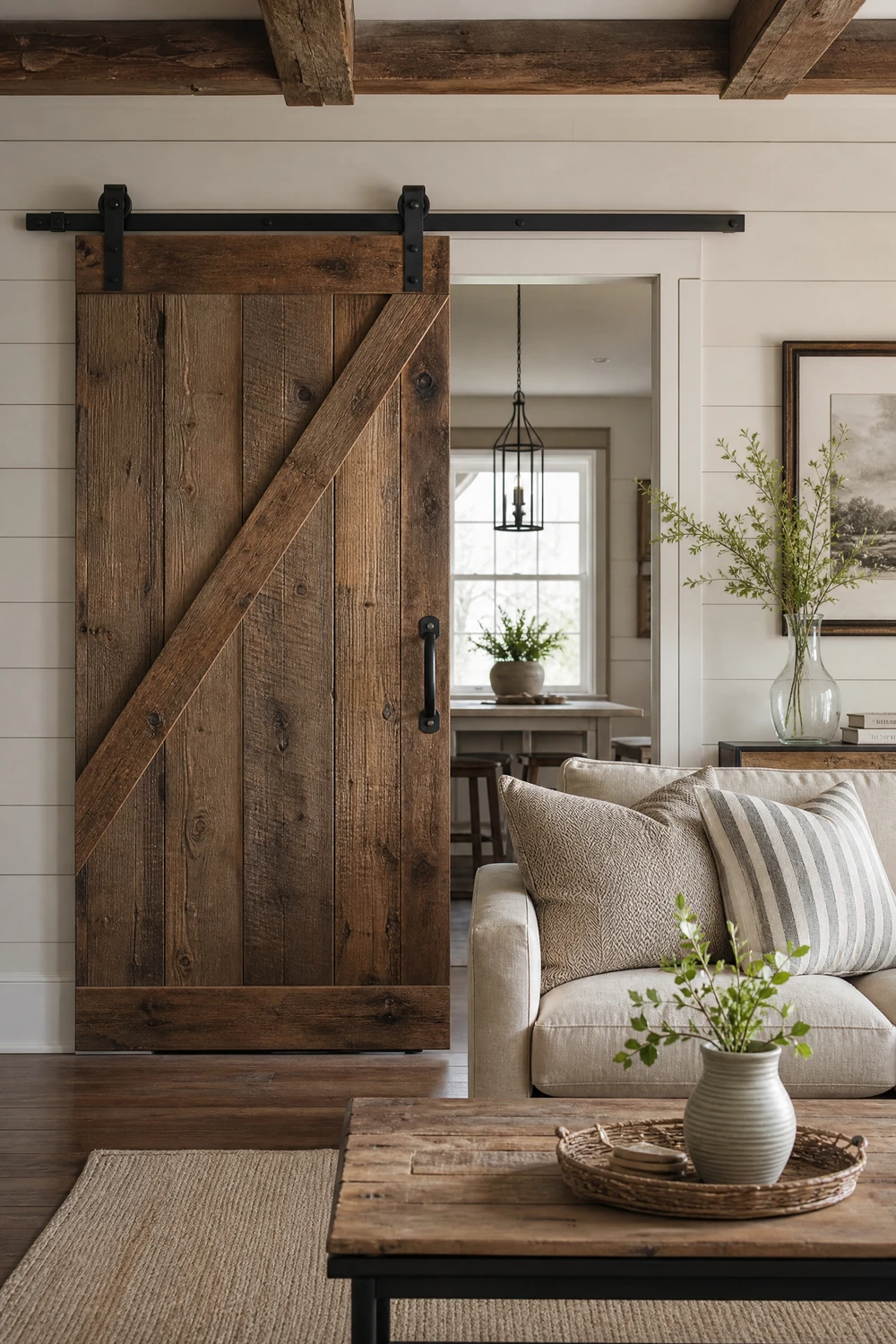
A sliding barn door in the living room adds rustic style and saves space compared to a traditional hinged door. Use it to close off a hallway, pantry, or home office nook. A door made from reclaimed wood with black iron hardware is the classic choice. You can also use a barn door as a decorative wall piece behind the sofa if there is no opening to cover.
Designer Tip: Leave at least 6 inches of wall space on the open side of a barn door so it can slide fully clear of the doorway. A door that only opens halfway defeats the purpose.
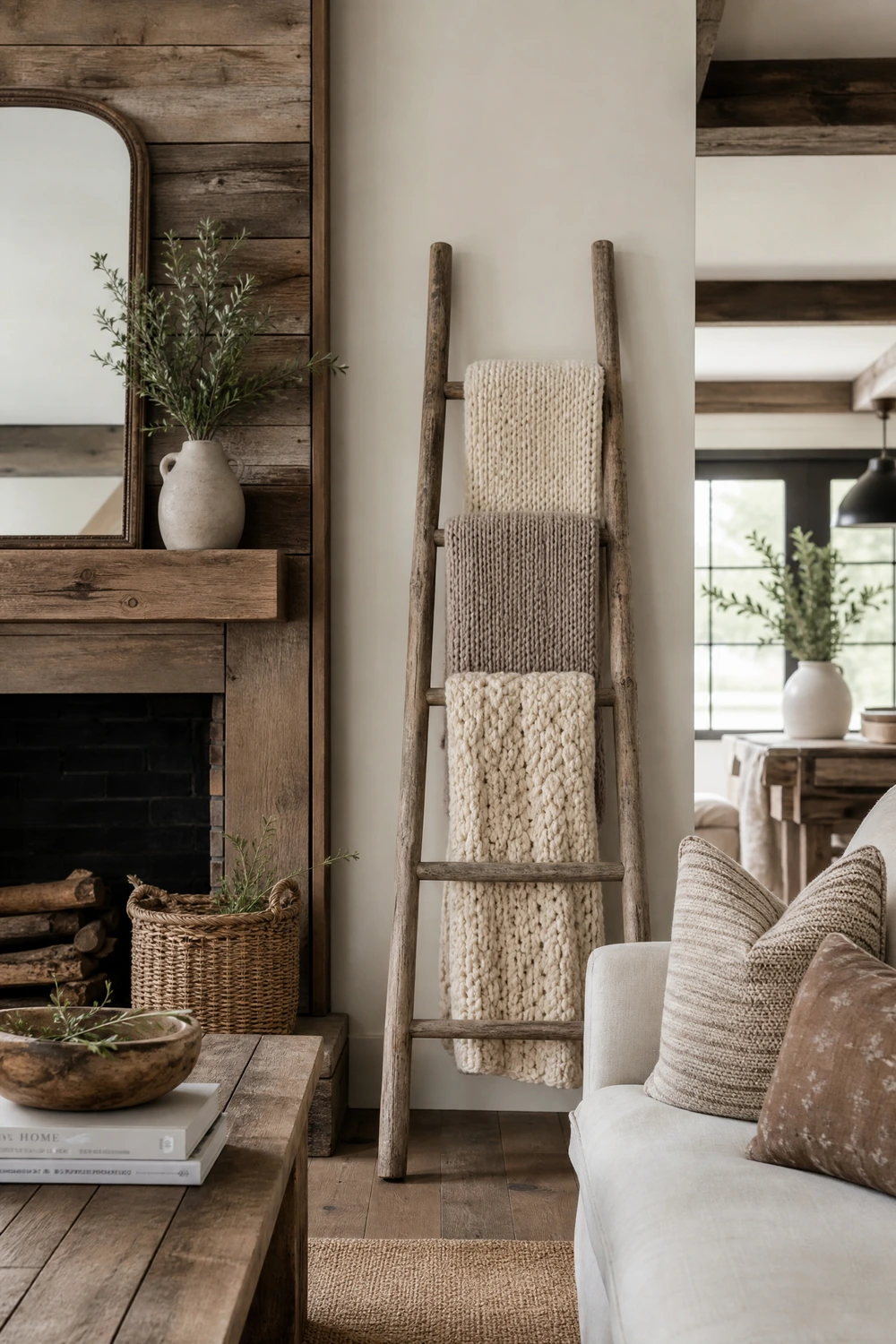
A vintage wooden ladder leaned against the wall is one of the simplest and most effective rustic farmhouse accessories. Drape a few blankets and throws over the rungs for an easy display that is also functional. You grab a blanket when you need one and toss it back when you are done. An old orchard ladder or a new one with a distressed finish both work well. Place it next to the sofa or in a corner that needs something.
Designer Tip: Secure the top of a leaning ladder to the wall with a small L-bracket hidden behind the top rung. This keeps it from sliding or tipping, especially on hard floors.
Galvanized metal brings a touch of farmhouse utility to the living room. Trays, buckets, wall planters, and decorative containers in galvanized steel add a cool, matte texture that contrasts nicely with warm wood tones. Use a galvanized tray on the coffee table to corral candles and remotes, or hang a galvanized wall pocket for dried flowers. The key is using it as an accent rather than overdoing it.
Designer Tip: Mix galvanized metal with wood and woven textures for the best effect. Metal on its own feels cold and industrial, but paired with natural materials it reads as farmhouse.
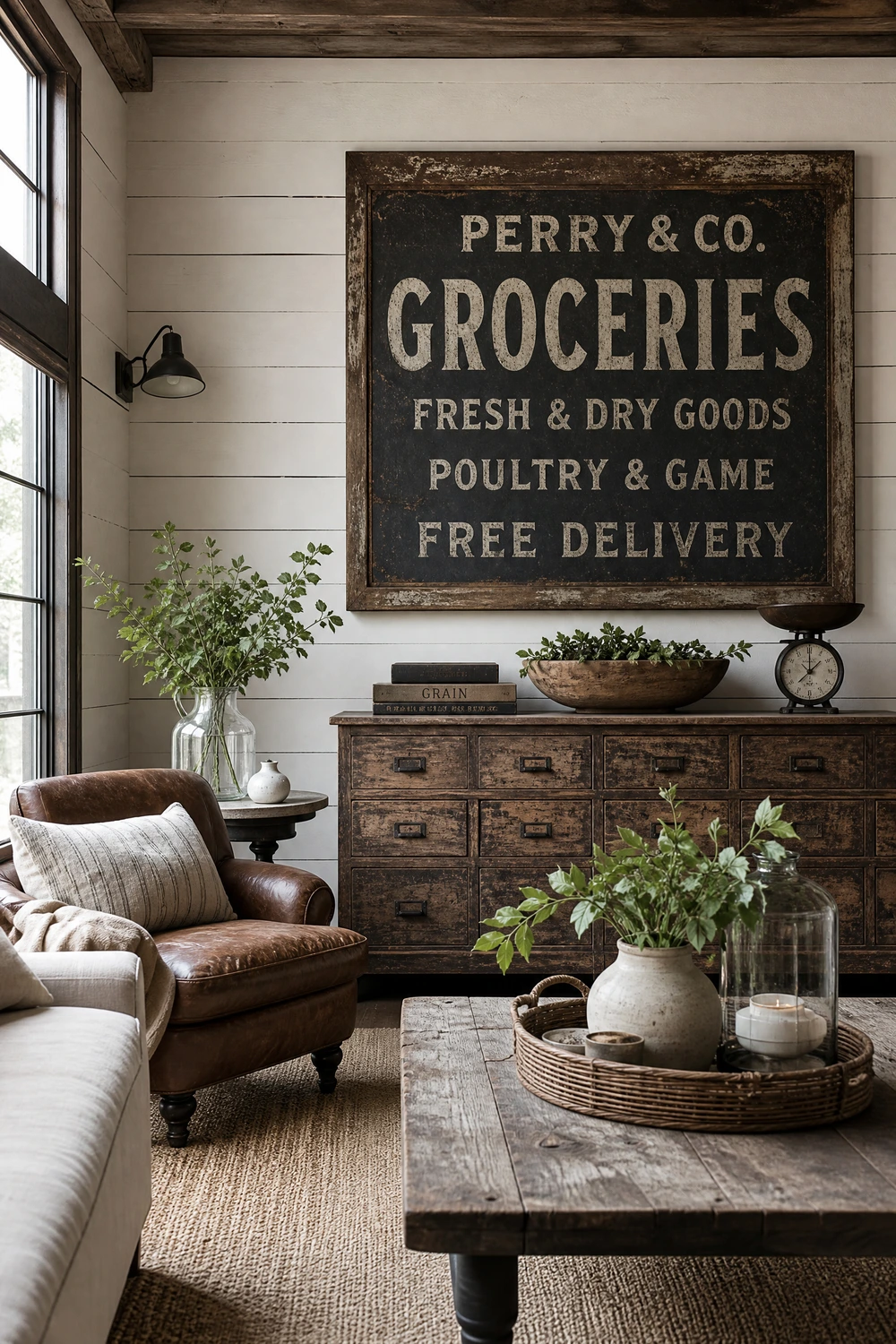
Old signs, typography art, and vintage lettering add personality and a sense of nostalgia. A faded general store sign, a hand-painted market board, or metal letters spelling out a family name all give the room a collected-over-time feel. Place them above a doorway, on a mantel, or leaned against a shelf. The worn paint and aged materials are what make them feel authentic rather than decorative.
Designer Tip: Limit typography to one or two pieces per room. Too many signs with words compete for attention and the room starts to feel like a gift shop rather than a home.
Wrought iron chandeliers, sconces, and floor lamps tie the rustic farmhouse look together. The dark metal provides contrast against lighter walls and natural wood furniture. A simple iron chandelier or a pair of wall sconces flanking the fireplace adds structure and old-world charm. The forged, slightly rough texture of wrought iron is what sets it apart from polished or brushed metals.
Designer Tip: Use warm-tone bulbs in wrought iron fixtures. Cool white light combined with black metal can make a room feel stark. Warm light softens the metal and keeps the room cozy.
Plants bring life and color to a rustic farmhouse living room, and the containers you put them in matter as much as the plants themselves. Woven baskets, galvanized buckets, wooden crates, and terra cotta pots all work with the aesthetic. Fiddle leaf figs, snake plants, trailing pothos, and eucalyptus branches are popular choices. Group plants of different heights in a corner or place a few on shelves and windowsills throughout the room.
Designer Tip: Put a plastic nursery pot inside your decorative container rather than planting directly in it. This makes watering easier, prevents rot in non-draining containers, and lets you swap plants without disturbing the arrangement.
A wicker chair, rattan side table, or woven ottoman adds a lighter, more relaxed texture to balance the heavier wood and metal in a rustic farmhouse room. These pieces keep the natural material theme going while softening the overall look. A rattan accent chair in a corner or a woven basket used as an end table adds warmth without visual weight. Natural wicker patinas beautifully over time and fits the lived-in farmhouse feel perfectly.
Designer Tip: Mix no more than two woven pieces in a single room. Too much wicker or rattan starts to feel like a sunroom rather than a living room.
Rustic farmhouse style works because it is not trying to be perfect. The worn finishes, natural materials, and collected-over-time look are what make these rooms feel genuinely comfortable. Start with a few key pieces and build from there. The room should feel like it grew into its style naturally, not like it was decorated all at once.
Frequently Asked Questions
How do I keep rustic farmhouse decor from looking too country?
Avoid themed items like roosters, cow prints, and novelty signs. Stick to natural materials, simple shapes, and muted colors. Mix in a few clean-lined modern pieces to keep the look grounded and current rather than kitschy.
What wall colors work best for a rustic farmhouse living room?
Warm whites, soft greiges, and muted earthy tones are the safest choices. Colors like Benjamin Moore White Dove, Sherwin-Williams Accessible Beige, or a soft sage green let the natural materials and textures stand out without competing with the walls.
Where do I find affordable rustic farmhouse furniture?
Estate sales, flea markets, Facebook Marketplace, and thrift stores are the best sources for authentic pieces at low prices. For new furniture with a rustic look, stores like World Market, Wayfair, and local craftspeople on Etsy offer solid options without the premium price tag of specialty boutiques.
Can I do rustic farmhouse style in a modern house?
Yes. The contrast between modern architecture and rustic decor actually creates a great look. A clean-lined room with reclaimed wood accents, natural textiles, and a few vintage pieces feels fresh and interesting. The key is not fighting the architecture but layering farmhouse elements into the existing space.