Bare living room walls are one of those things you stop noticing after a while, until someone points it out or you see a photo of the room and realize how empty it looks. I lived with blank walls for over a year after moving in because I could not decide what to put up. Turns out, the key is just starting somewhere. Here are wall decor ideas that work in real living rooms and do not require a design degree to pull off.
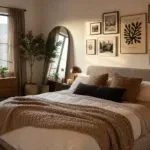
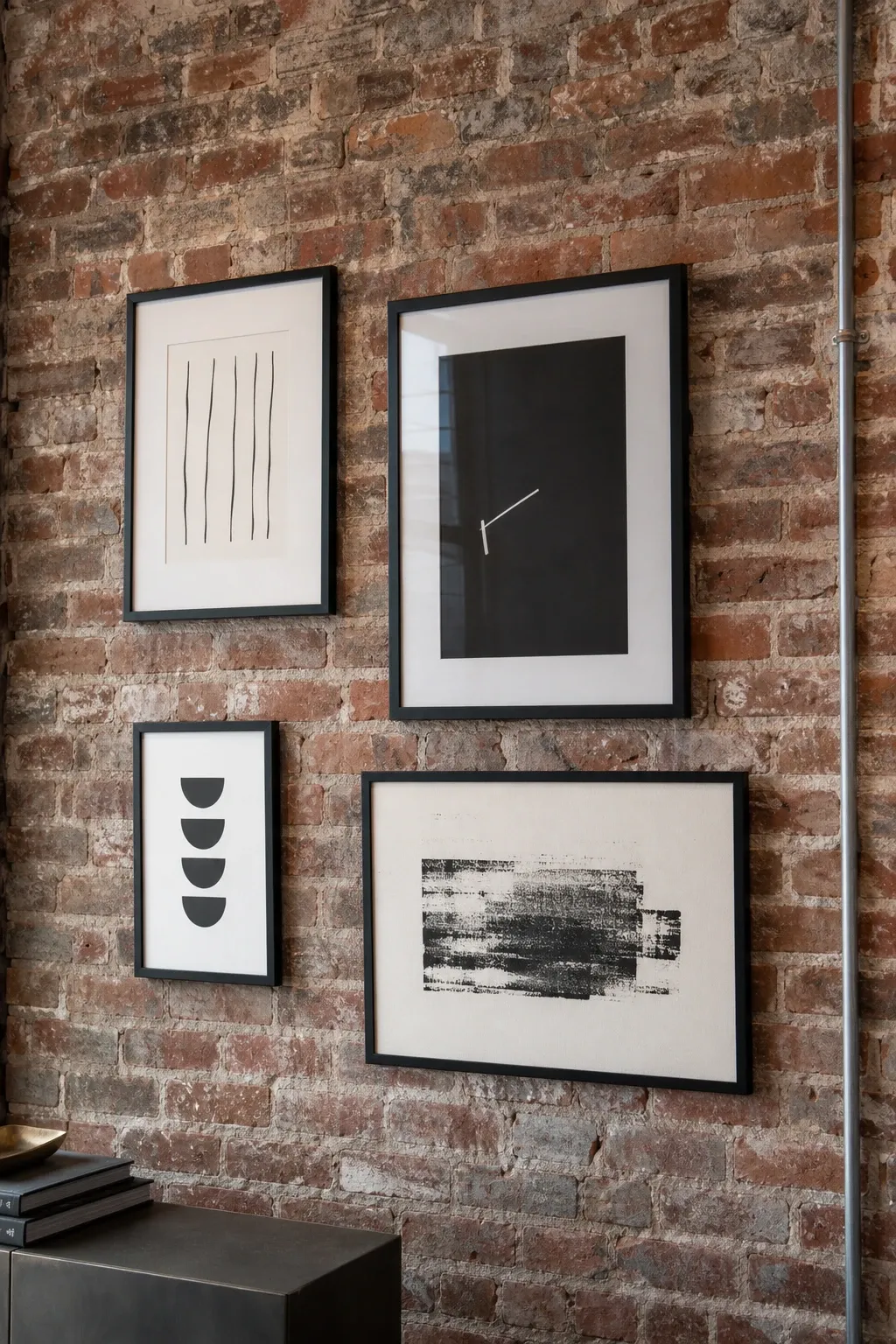
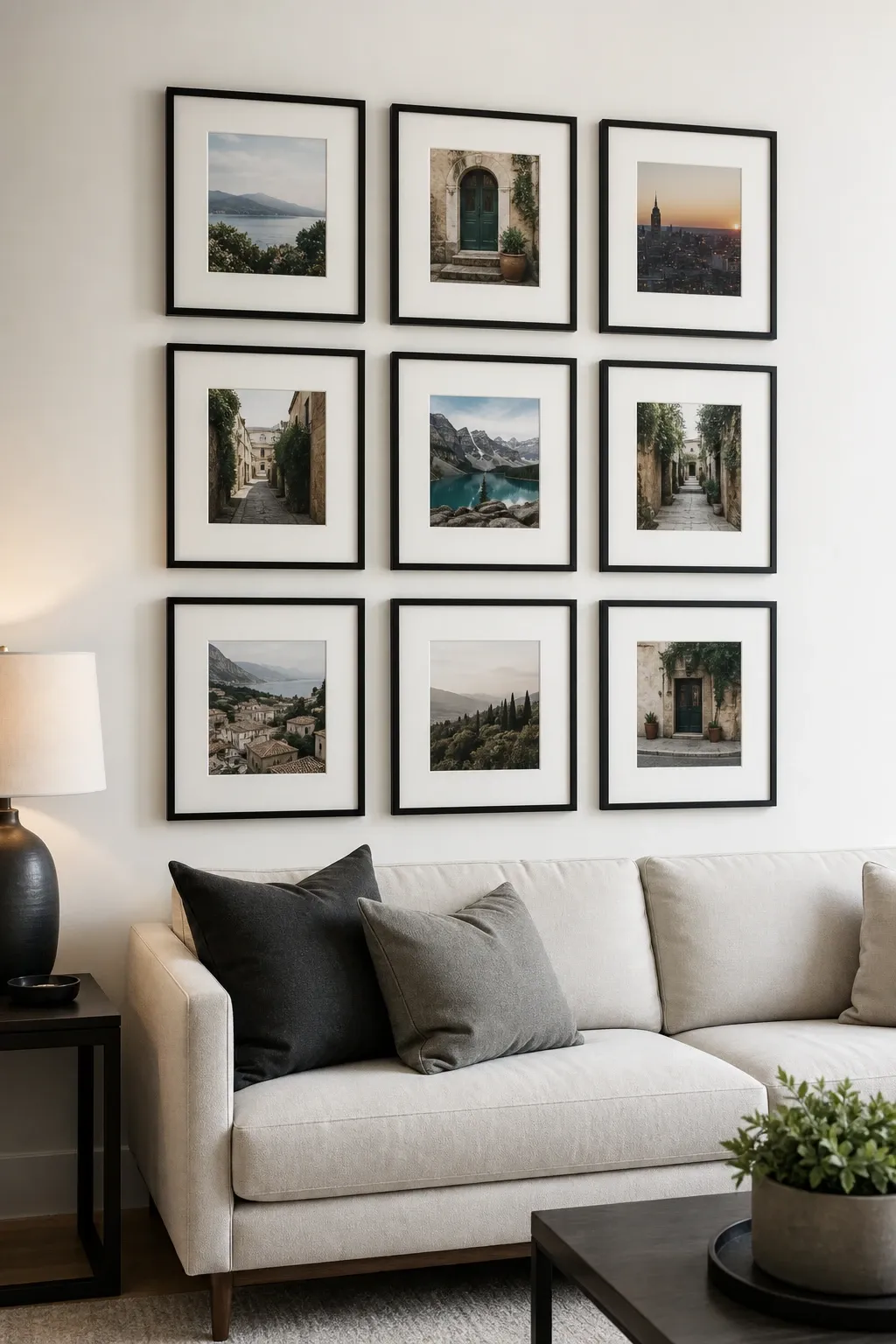
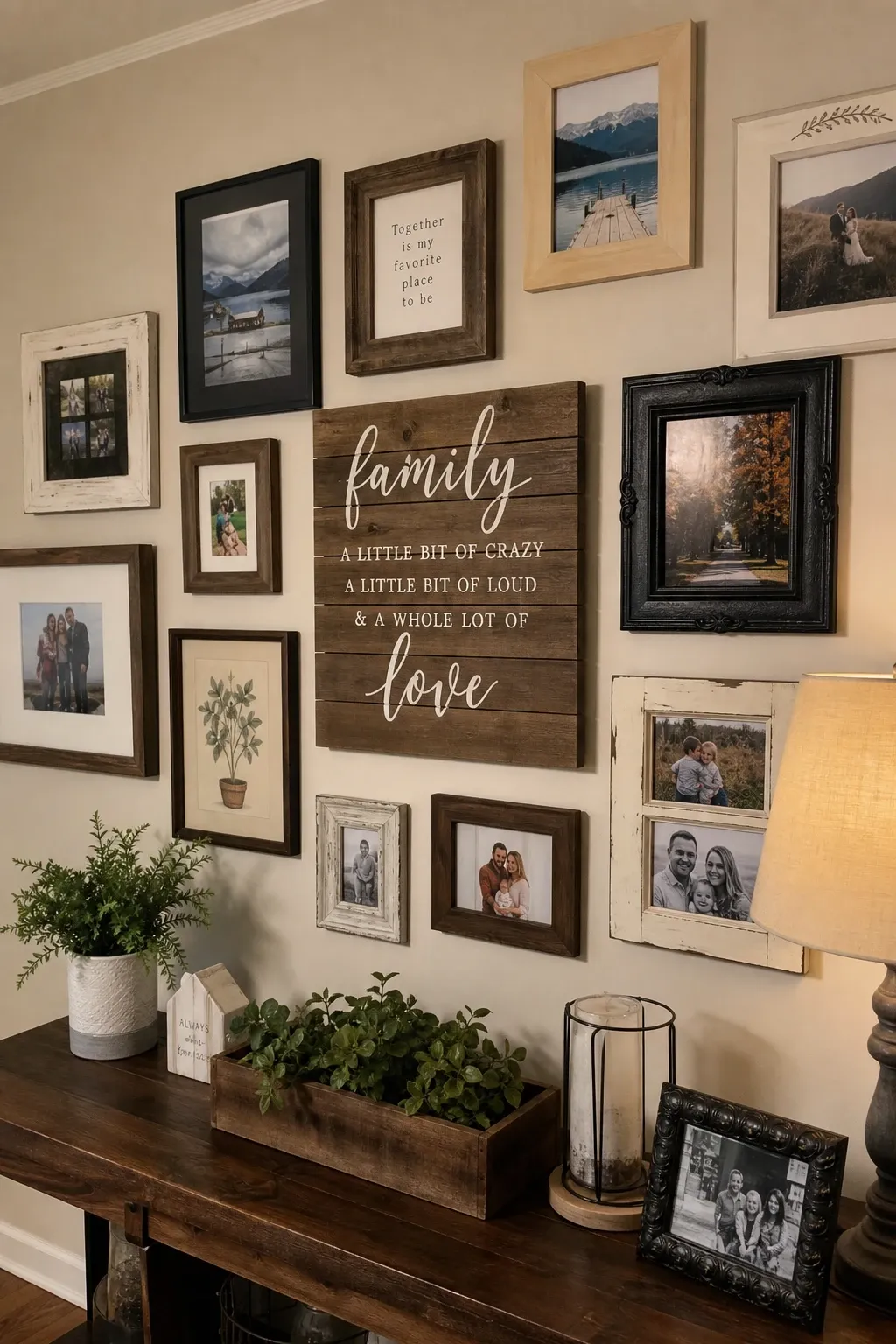
A gallery wall of framed family photos, travel snapshots, and meaningful prints turns a blank wall into something personal. Mix frame sizes and styles for a collected look, or keep frames uniform for something cleaner. The trick is to keep spacing consistent, about 2 to 3 inches between frames, so the grouping reads as one cohesive piece rather than random pictures scattered on the wall.
Designer Tip: Lay your arrangement on the floor first and take a photo from above. This lets you move things around without putting extra holes in the wall.
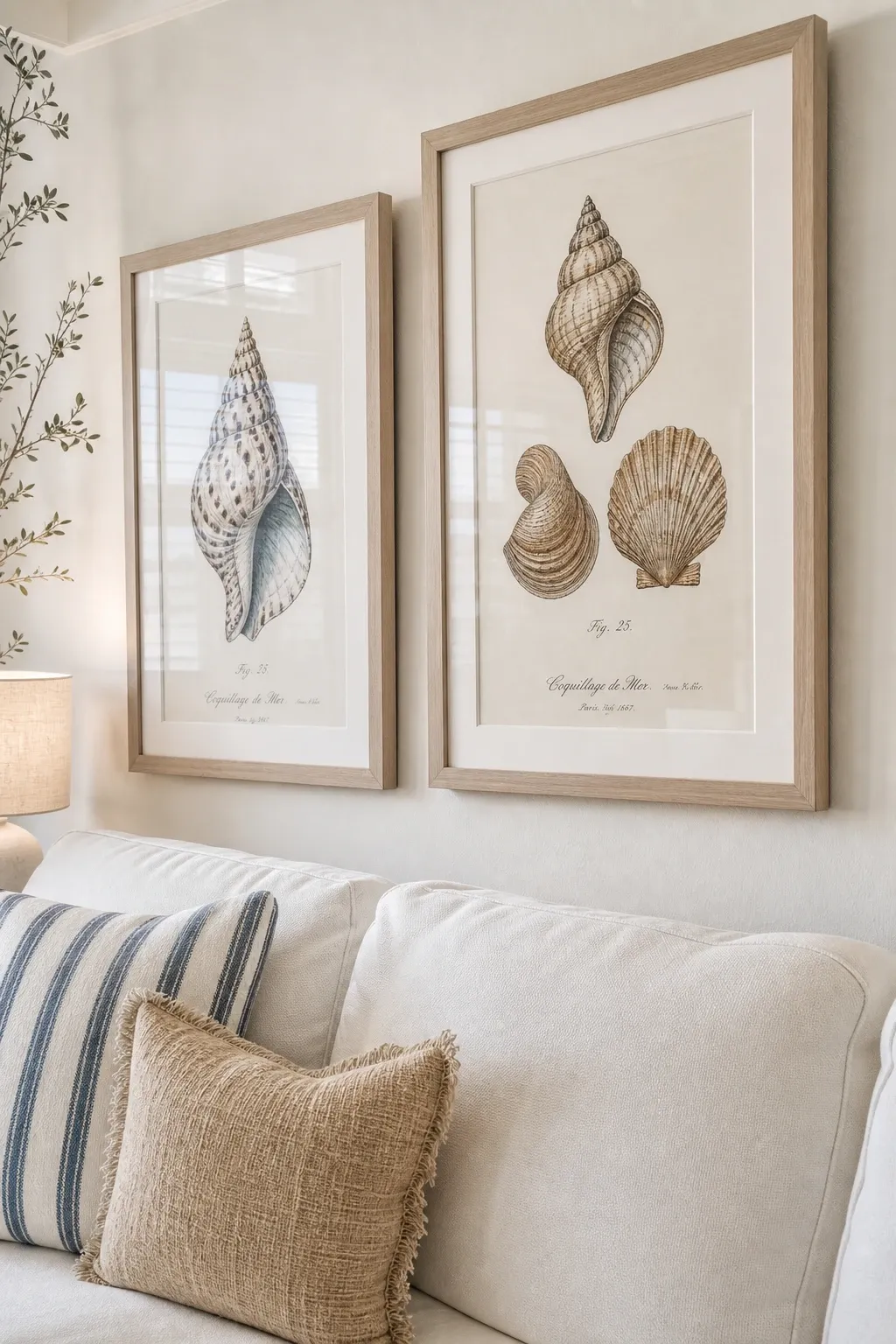
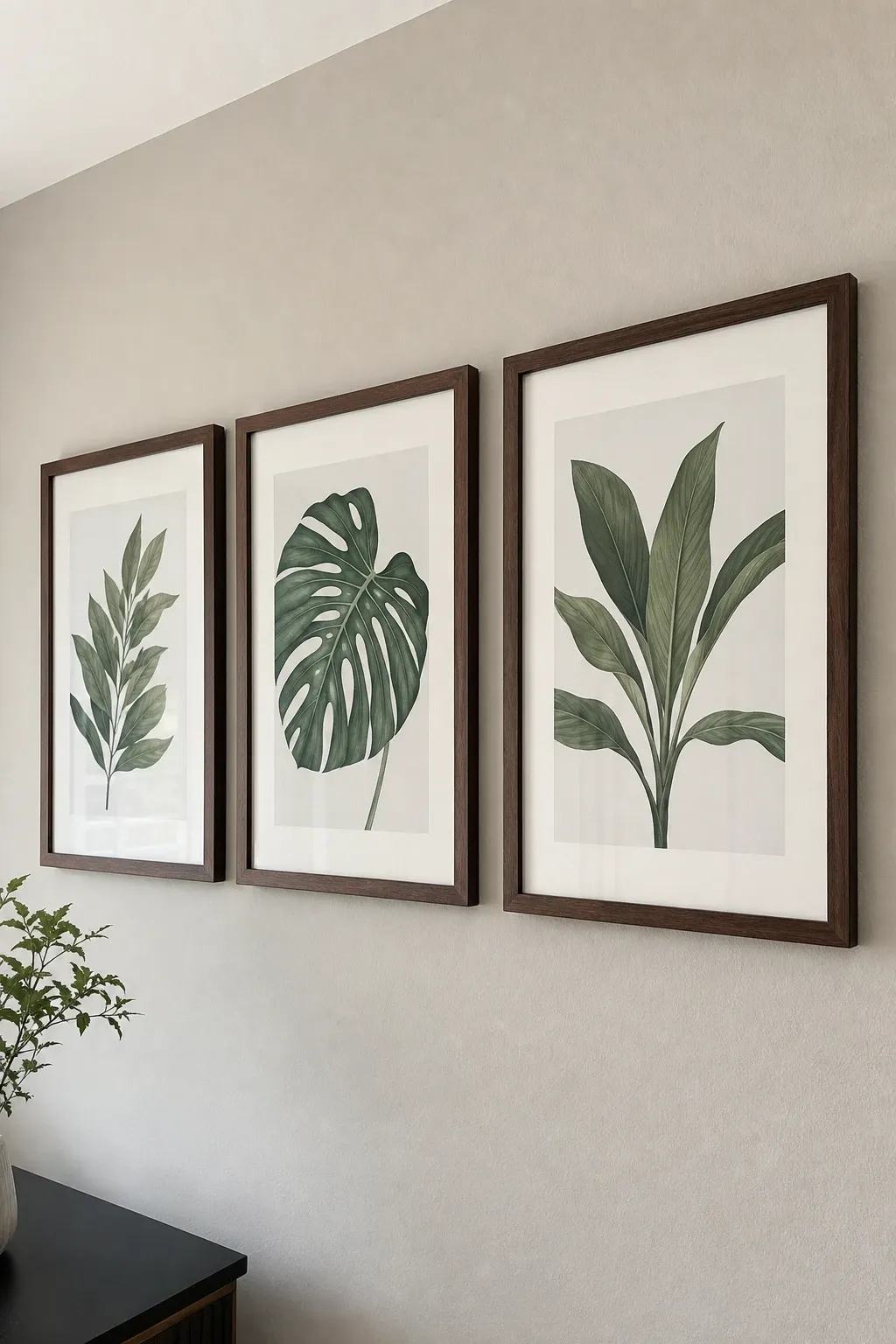
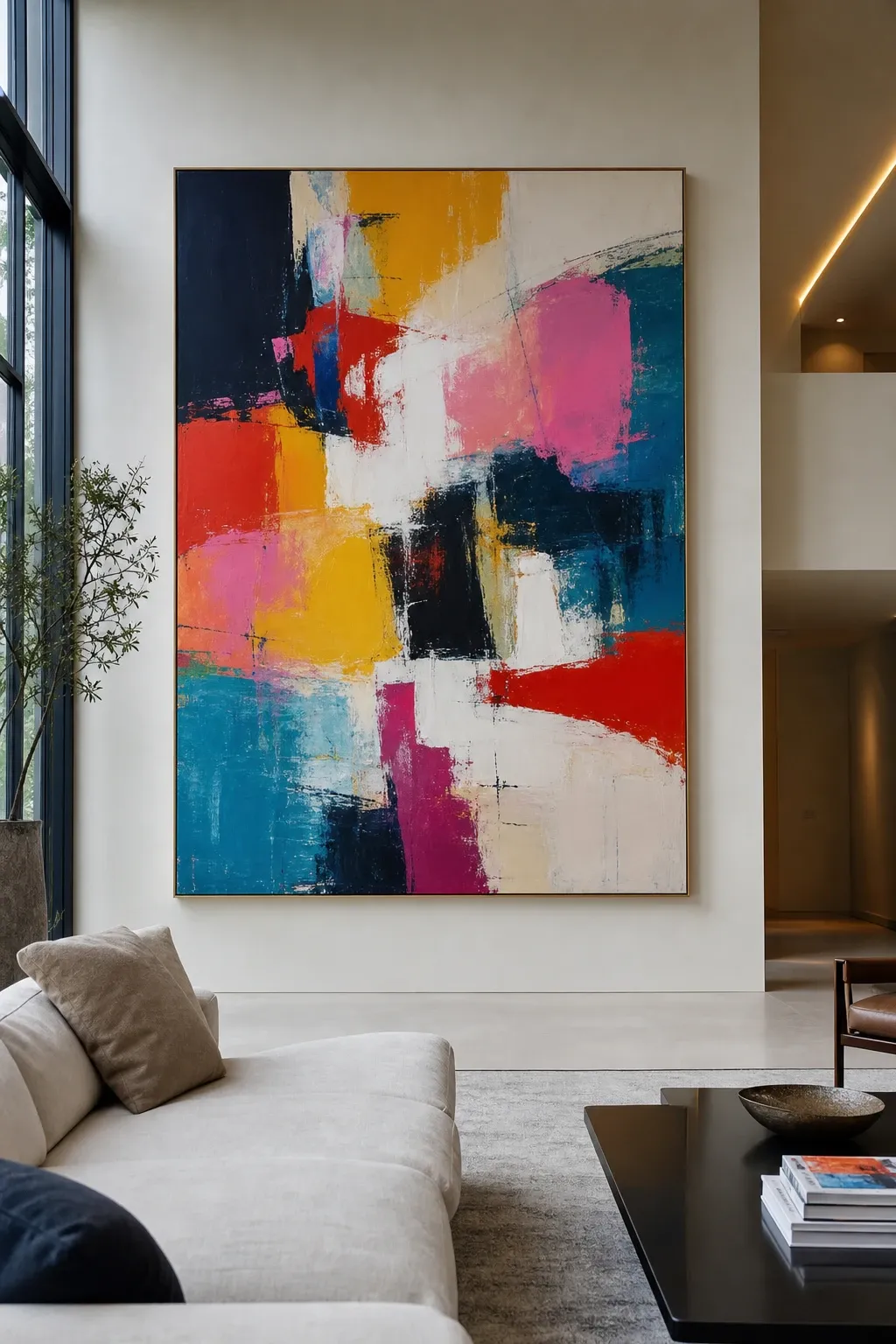
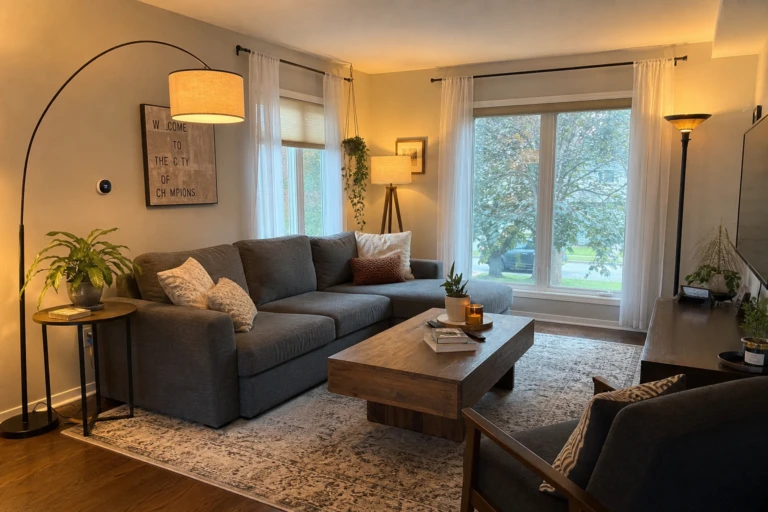
One oversized piece of art above the sofa or on the main wall makes a bold impact with minimal effort. A large canvas, framed print, or even a textile hanging fills the space and gives the room a focal point. Choose something with colors that work with your existing furniture and keep the rest of the wall clean. This approach works especially well in minimalist or modern rooms where less is more.
Designer Tip: The art should be about two-thirds the width of the furniture below it. A piece that is too small above a large sofa looks lost and unfinished.
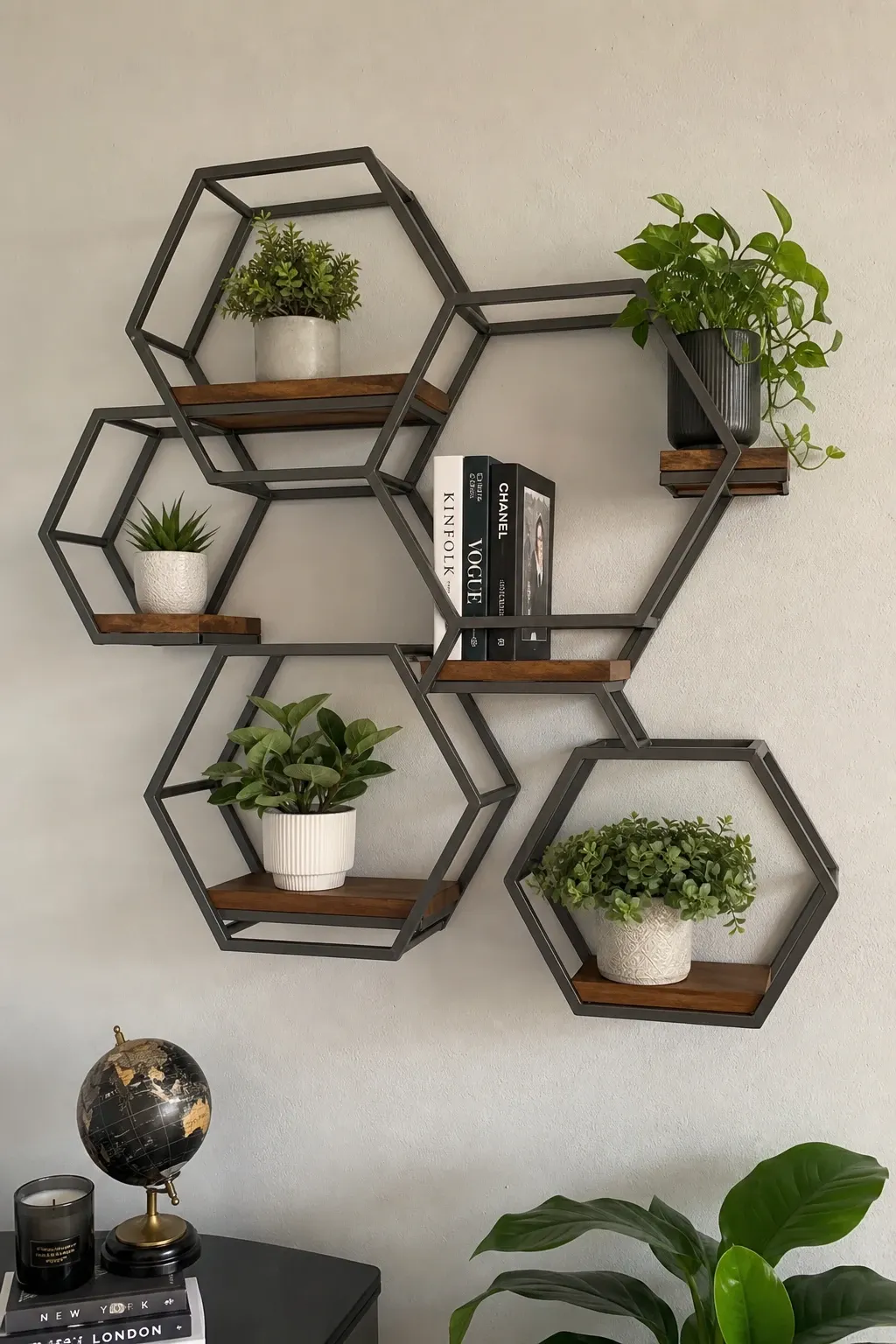
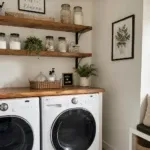
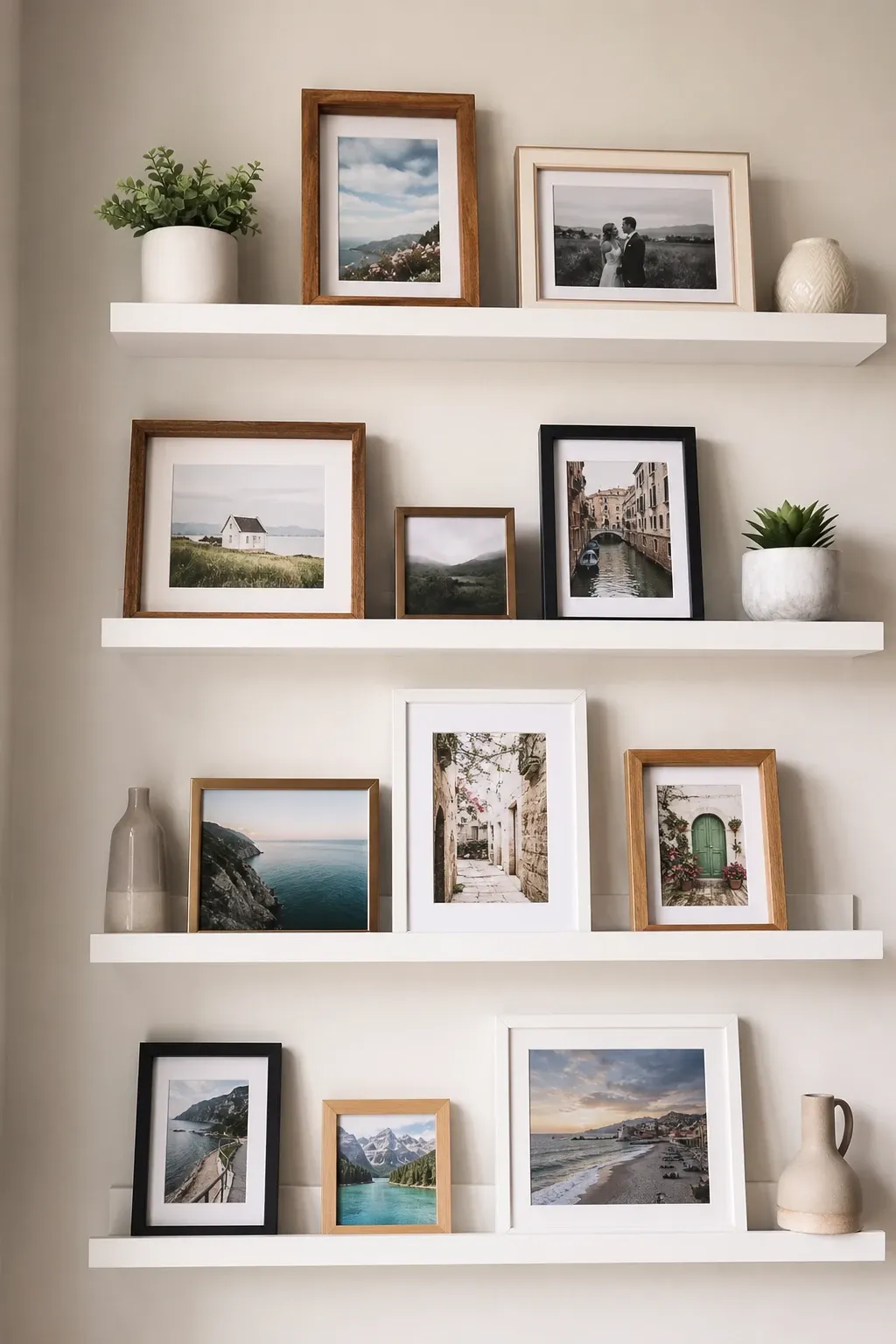
Floating shelves give you a spot to display books, plants, candles, and small art pieces while keeping the wall interesting. Install two or three shelves stacked vertically or staggered at different heights. The benefit over a gallery wall is that you can swap items out whenever you want without touching the wall. Keep each shelf about 70 percent full so it looks collected rather than crowded.
Designer Tip: Vary the height of objects on each shelf. A tall plant next to a short stack of books next to a medium candle creates rhythm that makes the display look thought out.
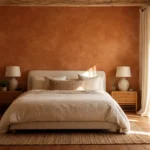
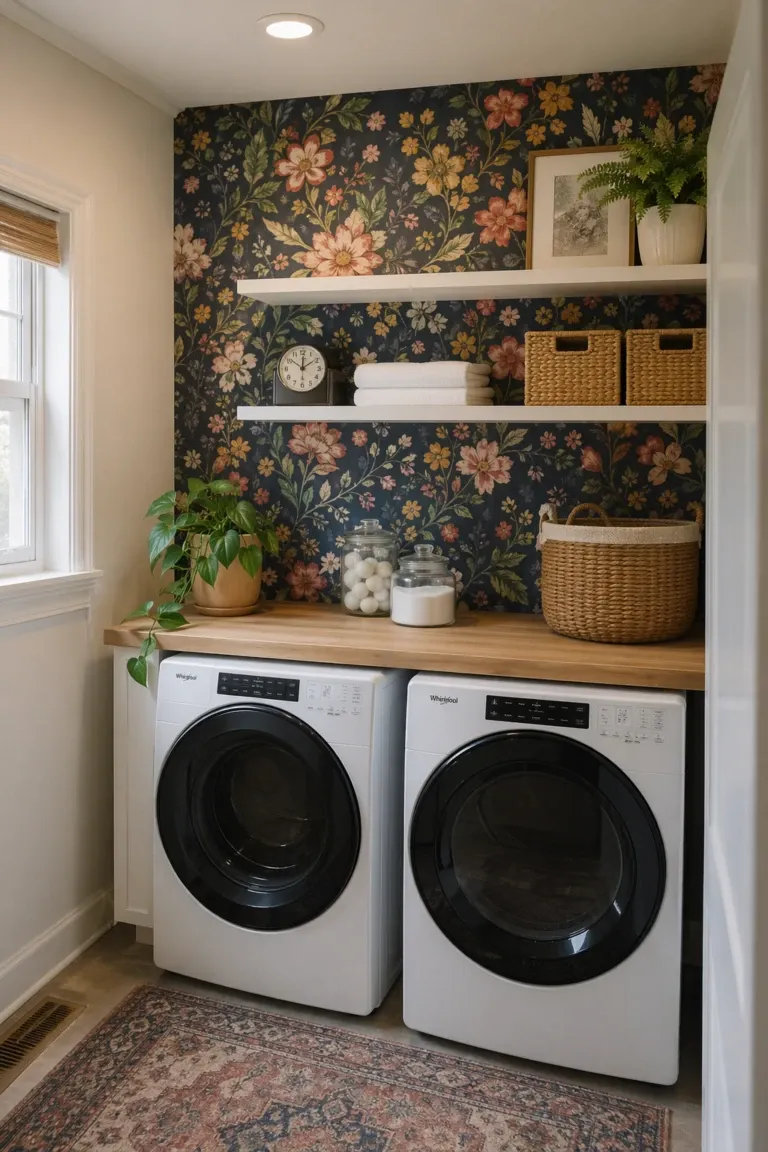
Painting one wall a deeper color or covering it with wallpaper adds dimension to the room without overwhelming it. Dark greens, navy, charcoal, or warm terracotta all make great accent wall colors. Peel and stick wallpaper in a botanical or geometric pattern is an easy option if you rent or change your mind often. The accent wall should be the one your eye naturally goes to when you enter the room, usually where the sofa sits or the wall opposite the entrance.
Designer Tip: Pull one of the secondary colors from your wallpaper or accent paint into your throw pillows or rug. This connects the wall to the rest of the room so it does not feel disconnected.
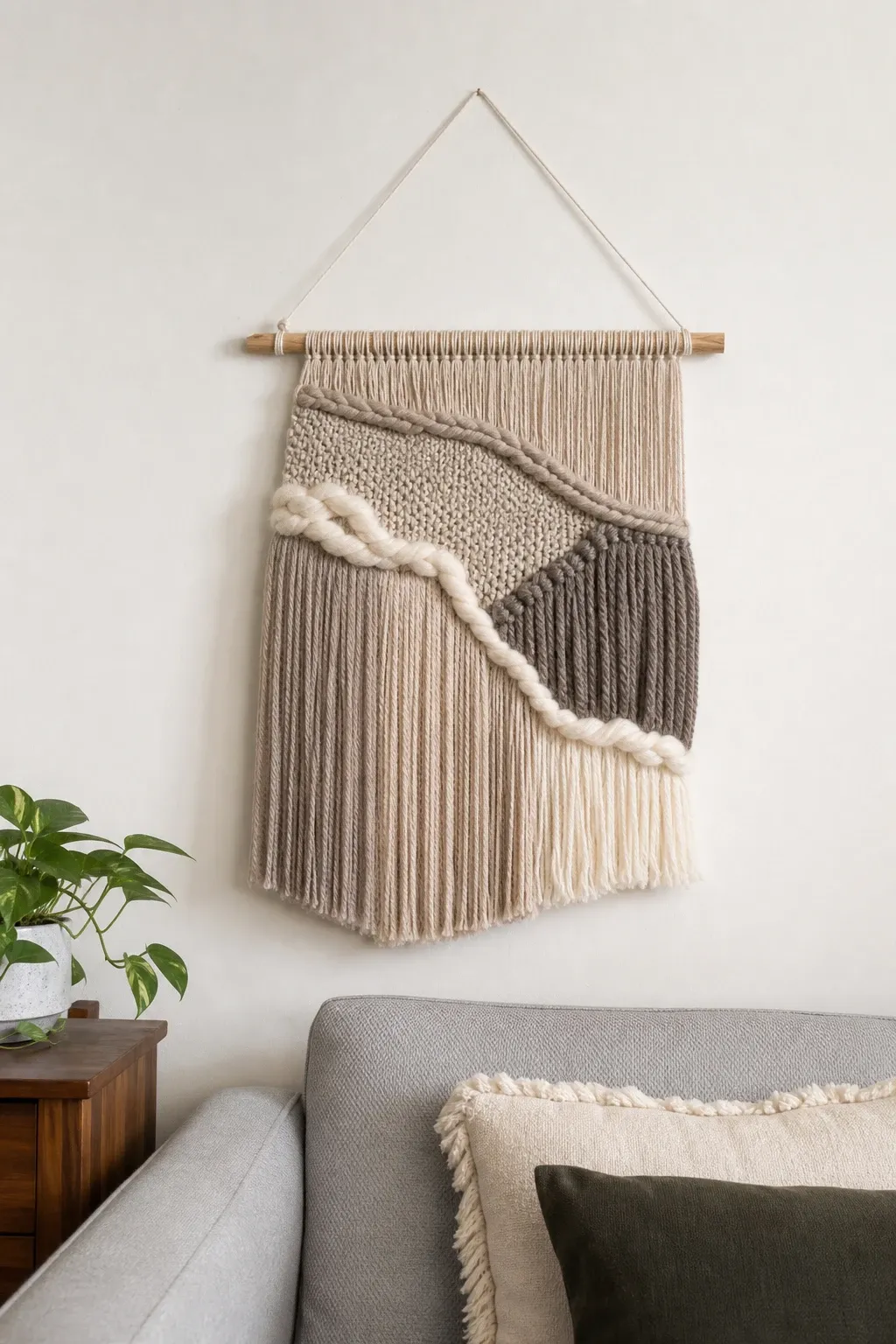
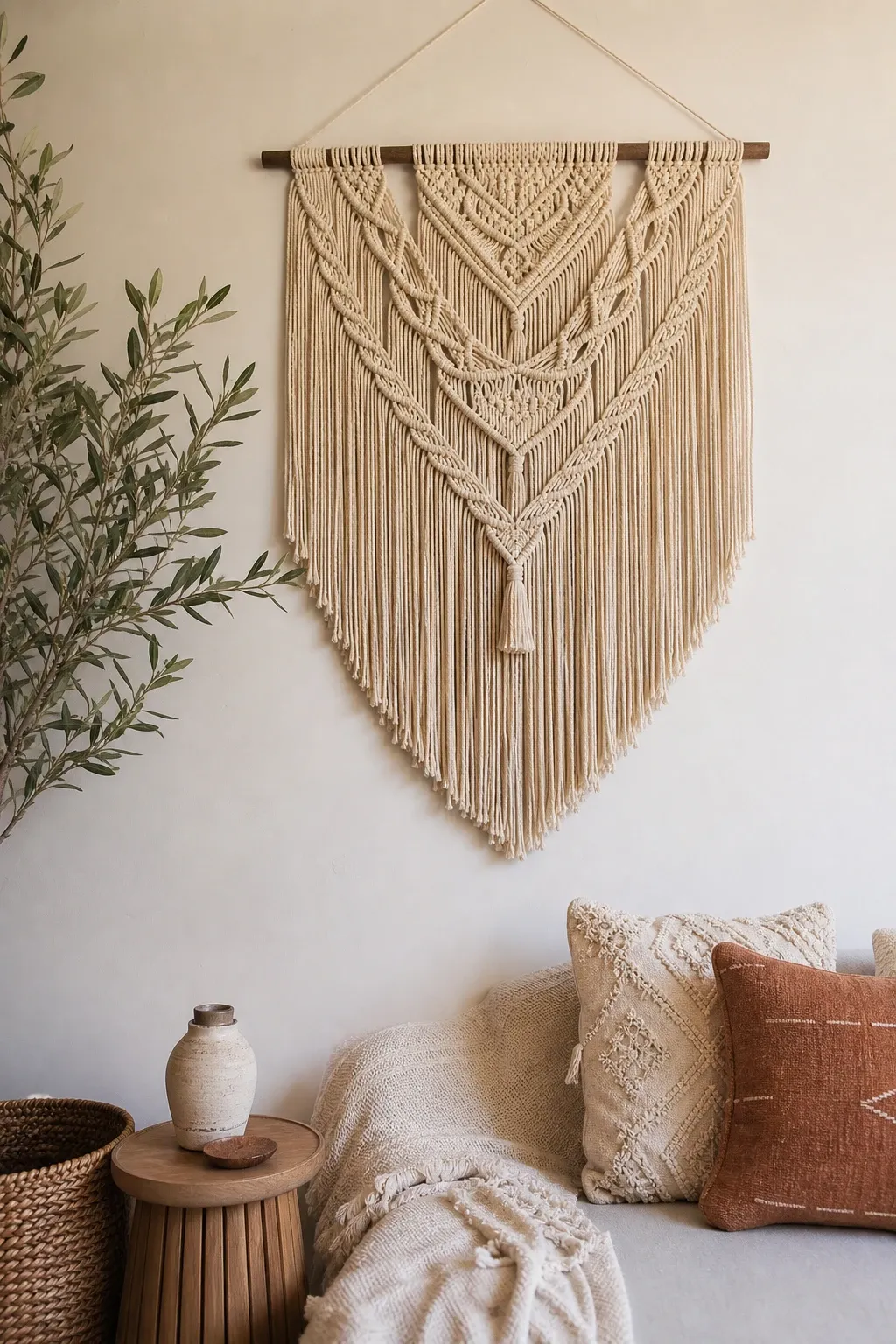
Macrame, woven mixes, and textile wall hangings add texture and warmth that flat art cannot. A large woven piece above the sofa or in a corner softens the room and brings in a handmade quality. Neutral tones in cream, beige, and tan work with almost any color scheme. These pieces also absorb sound, which is a practical bonus in rooms with hard floors and minimal soft furnishings.
Designer Tip: Hang woven pieces from a natural wood dowel or driftwood branch for a finished, intentional look rather than tacking them directly to the wall.
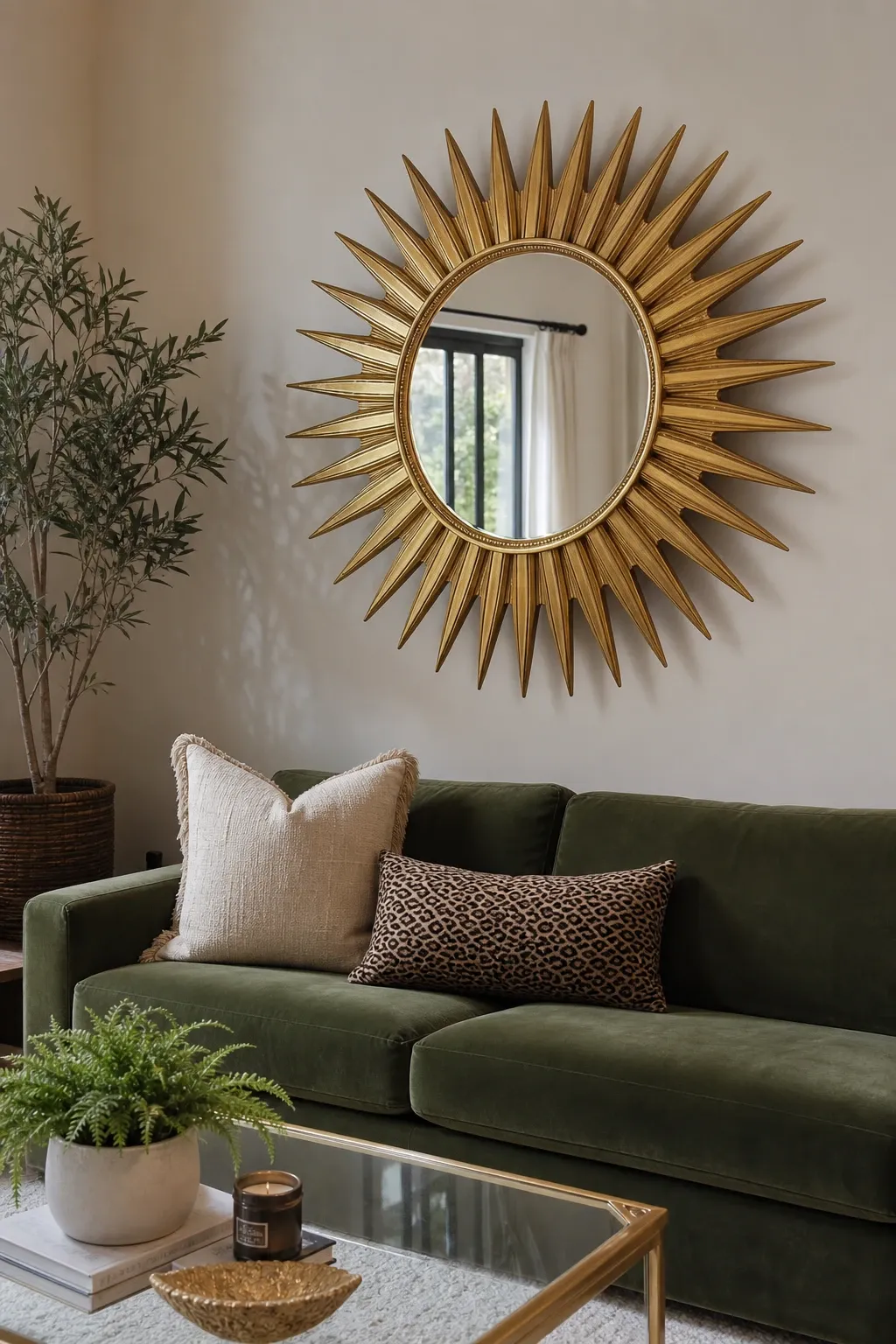
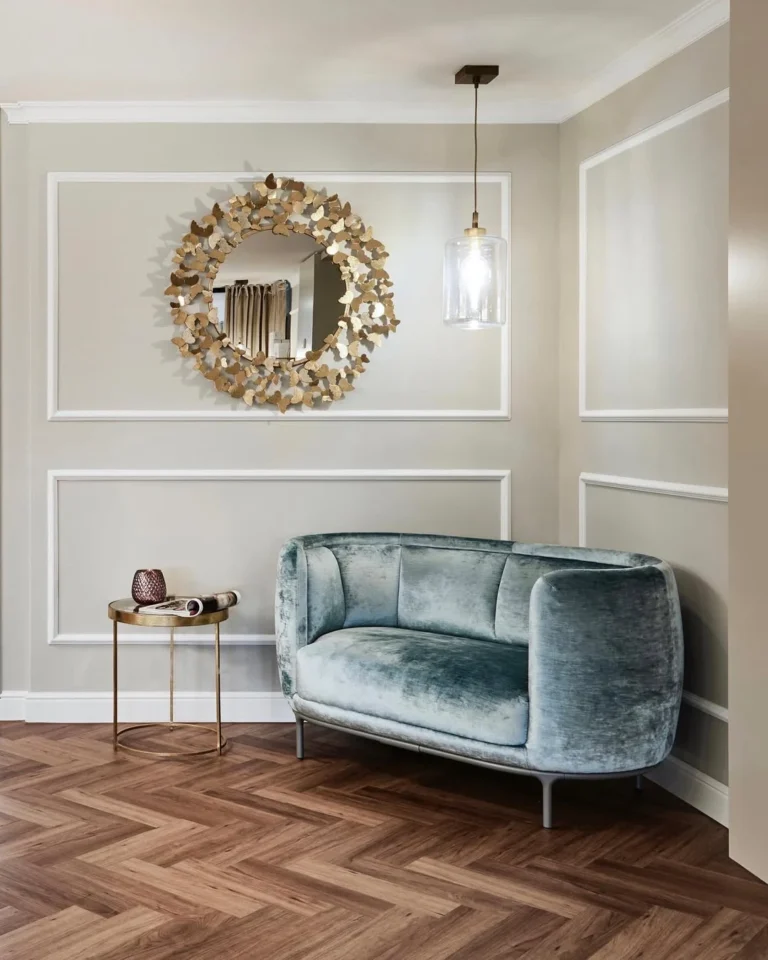
Mirrors on a living room wall serve double duty. They reflect light to make the room brighter and feel bigger, and they act as decorative pieces in their own right. One large mirror with an interesting frame works as a statement piece. A group of smaller mirrors in different shapes creates a more eclectic display. Place mirrors across from windows whenever possible to maximize the light they bounce around the room.
Designer Tip: Clean your mirrors before deciding on placement. A dusty mirror reflects less light and the impact is noticeably weaker than a clean one.
Wall sconces add both light and decoration. A pair flanking a piece of art, a mirror, or the TV creates a polished look while providing soft ambient lighting for evenings. Plug-in sconces are easy to install without an electrician. Battery-operated options work too and give you full placement freedom. Choose a style that matches your room, whether that is industrial metal, brass, or a clean white shade.
Designer Tip: Install sconces at about 60 to 66 inches from the floor to the center of the fixture. This height works well from both standing and seated positions.
A picture ledge lets you lean framed prints, photos, and postcards against the wall without hanging anything. You can rearrange, add, or swap pieces whenever you want. Install one long ledge or stack two at different heights. Layer frames in front of each other for depth. This is a low-commitment option that works great for people who like to change their decor with the seasons or their mood.
Designer Tip: Keep an odd number of items on each ledge and vary the frame sizes. Three to five pieces per ledge looks intentional; two or six tends to look either sparse or crowded.
Adding architectural detail to the lower or upper half of a wall brings texture and dimension that paint alone misses. Board and batten runs vertical strips up the wall while wainscoting uses recessed panels. Both add a finished, custom look to a living room. Paint them the same color as the rest of the wall for a subtle effect, or use a contrasting color to define the feature.
Designer Tip: Standard board and batten height is one-third of the wall. In a room with 9-foot ceilings, that means about 36 inches from the floor to the top of the treatment.
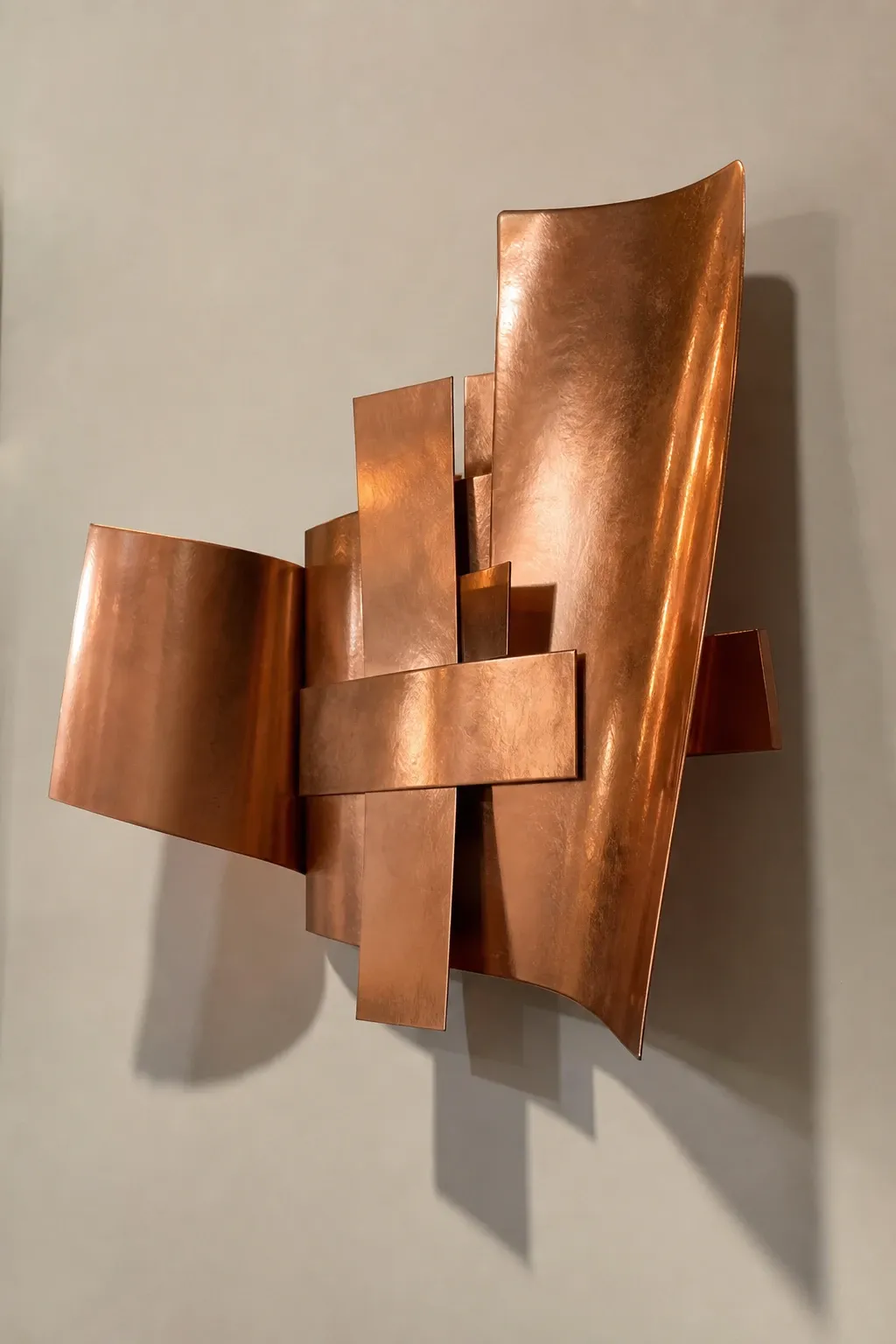
Metal wall art adds dimension and an industrial or modern edge to a living room. Geometric shapes, abstract sculptures, or botanical metal cutouts all create visual interest with shadow and depth that flat prints do not offer. Black metal works on light walls for contrast. Brass or gold-toned metal adds warmth. These pieces are durable and low maintenance, which makes them practical for high-traffic rooms.
Designer Tip: Hang metal art on a wall that gets some direct or angled light. The shadows cast by three-dimensional metal pieces change throughout the day and add a dynamic quality to the room.
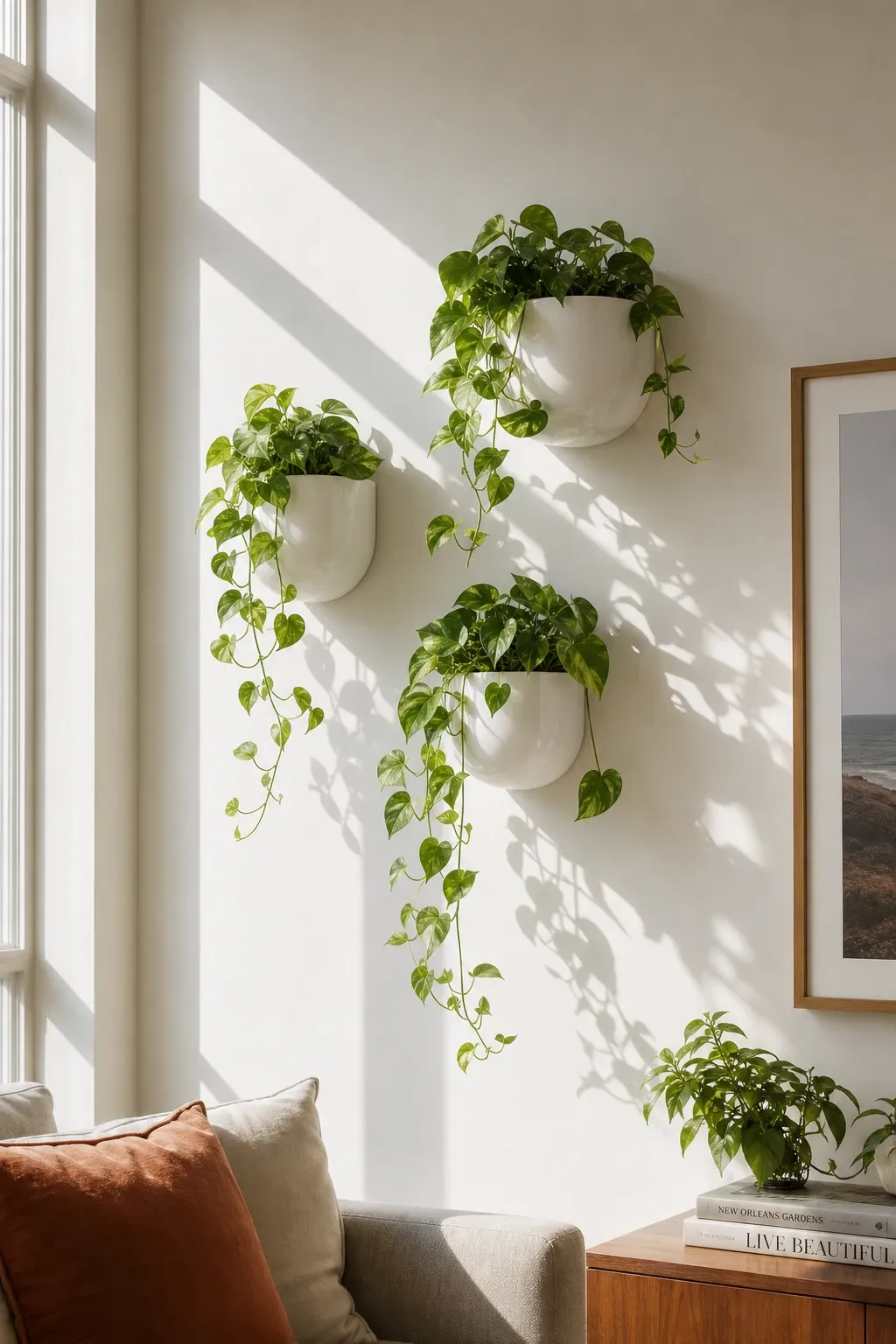
Hanging plants or wall-mounted planters bring life and color to a living room wall. Trailing plants like pothos or string of pearls look stunning cascading from a high shelf or wall-mounted pot. A set of small wall planters in a vertical arrangement creates a living art display. If natural light is limited, high-quality faux plants work well and need zero maintenance.
Designer Tip: Group wall planters in an odd number and stagger them rather than lining them up perfectly. A 3- or 5-planter arrangement with varied spacing looks organic and natural.
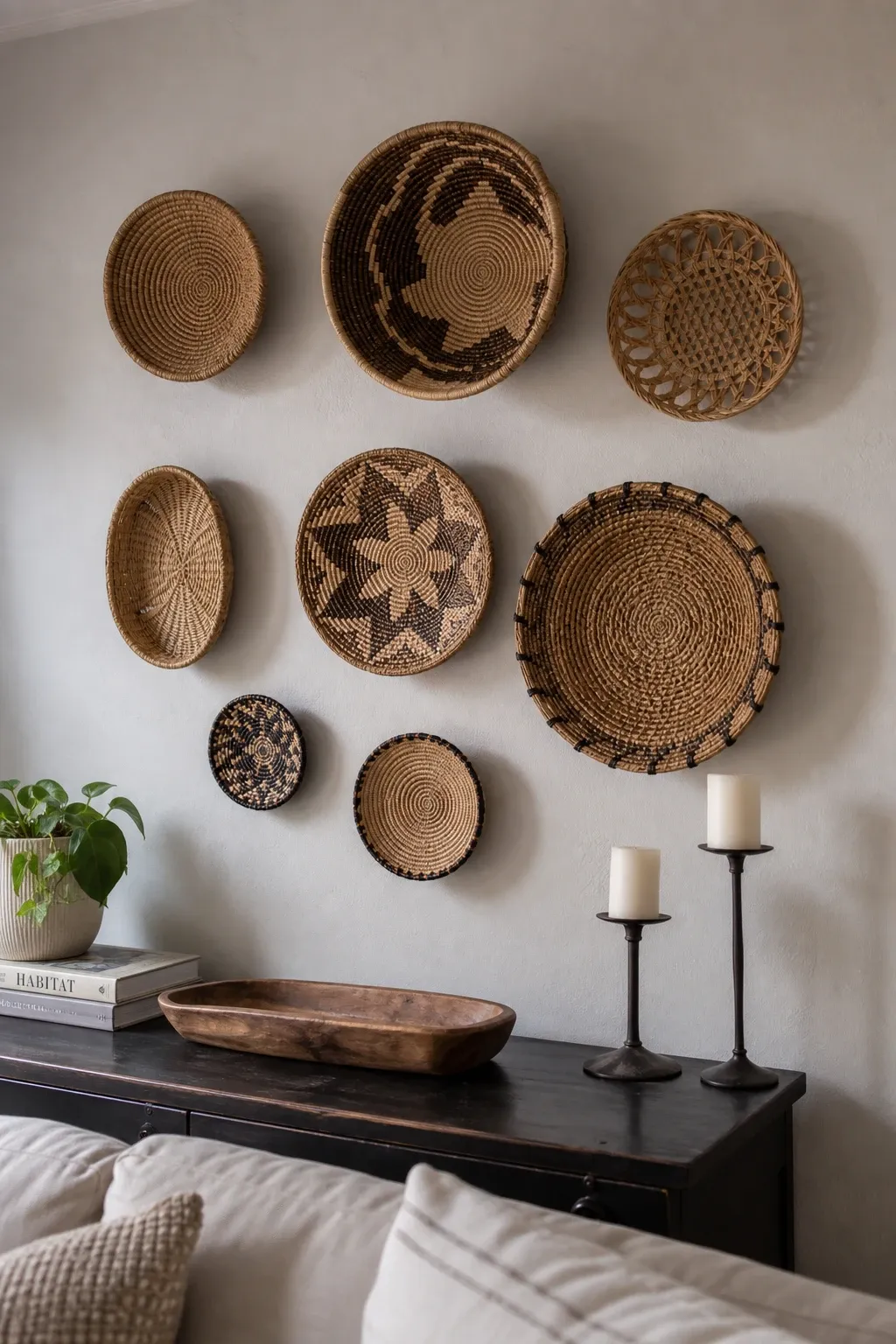
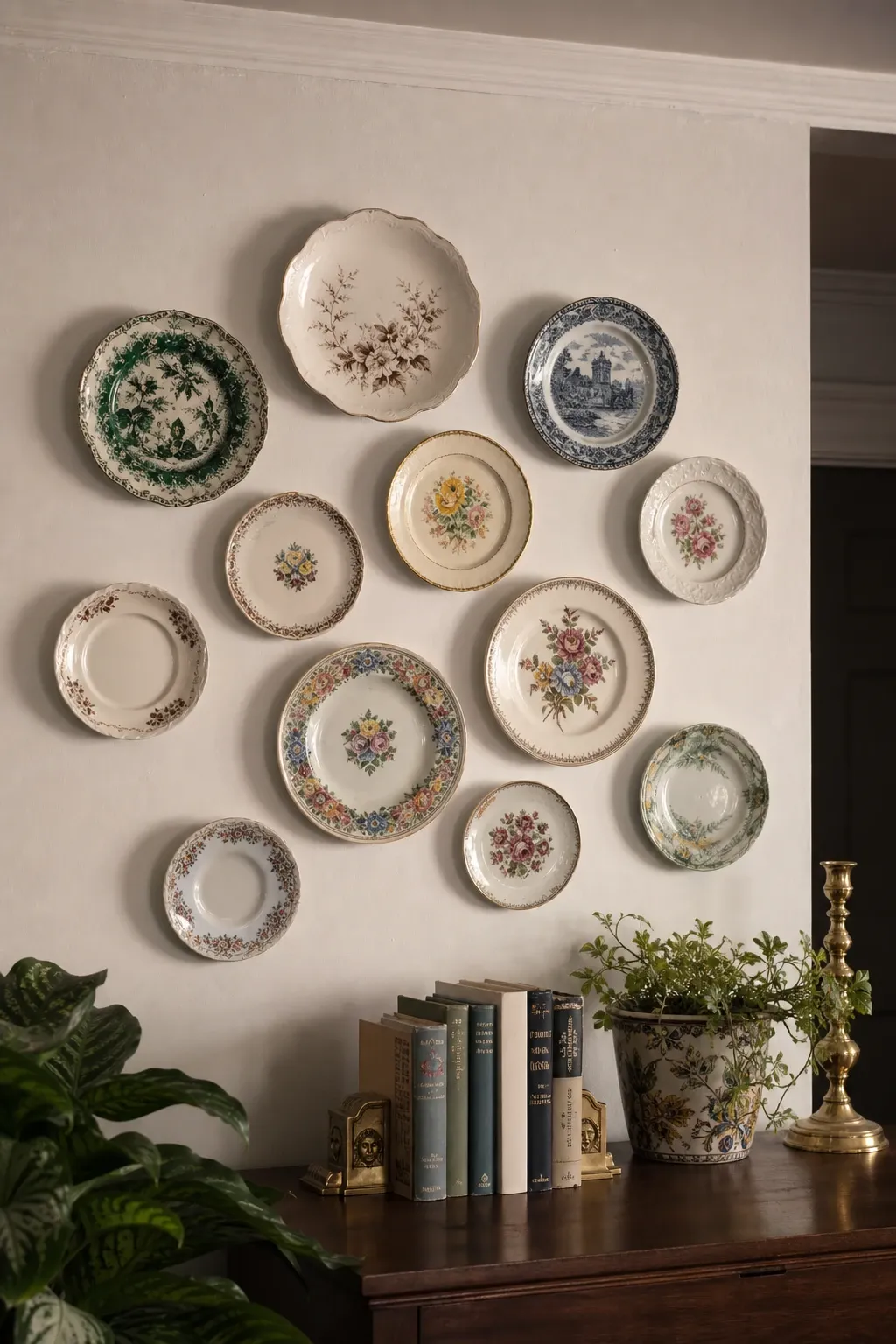
A collection of decorative plates hung on the wall adds color, pattern, and a collected vintage feel. Mix sizes, patterns, and colors within a loose color family for a look that feels collected. Blue and white, earth tones, or all-white plates in different shapes all work. Plate walls are especially effective in traditional, eclectic, and farmhouse style living rooms where a bit of old-world charm fits right in.
Designer Tip: Use spring-loaded plate hangers rather than adhesive discs. They grip more securely and you can reposition plates without residue.
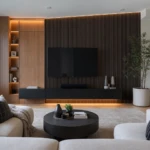
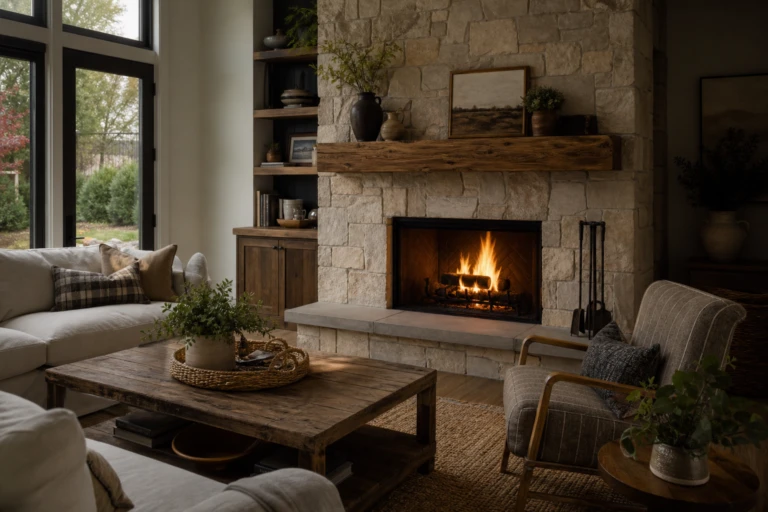
A wall of bookshelves doubles as storage and decor. Floor-to-ceiling shelving filled with books, art, plants, and objects turns an entire wall into a feature. You do not need built-ins to get this look. Two or three matching bookcases placed side by side create the same effect. Style the shelves with a mix of vertical and horizontal book stacks, framed photos, and a few decorative items to break up the rows of spines.
Designer Tip: Anchor tall freestanding bookcases to the wall with furniture straps. Safety aside, strapped bookcases sit flush against the wall and look more built-in.
A large mix or fabric art piece covers a big wall area at a fraction of the cost of a similarly sized canvas. Vintage mixes, modern printed fabrics, or a kilim rug mounted on a rod all work. The fabric adds warmth, absorbs sound, and introduces pattern and color on a scale that is hard to achieve with framed art. This is an especially good option for renters since most fabric hangings need just one or two nails.
Designer Tip: Iron or steam your fabric before hanging. Wrinkles and fold lines from packaging are obvious on a wall and make even an expensive piece look cheap.
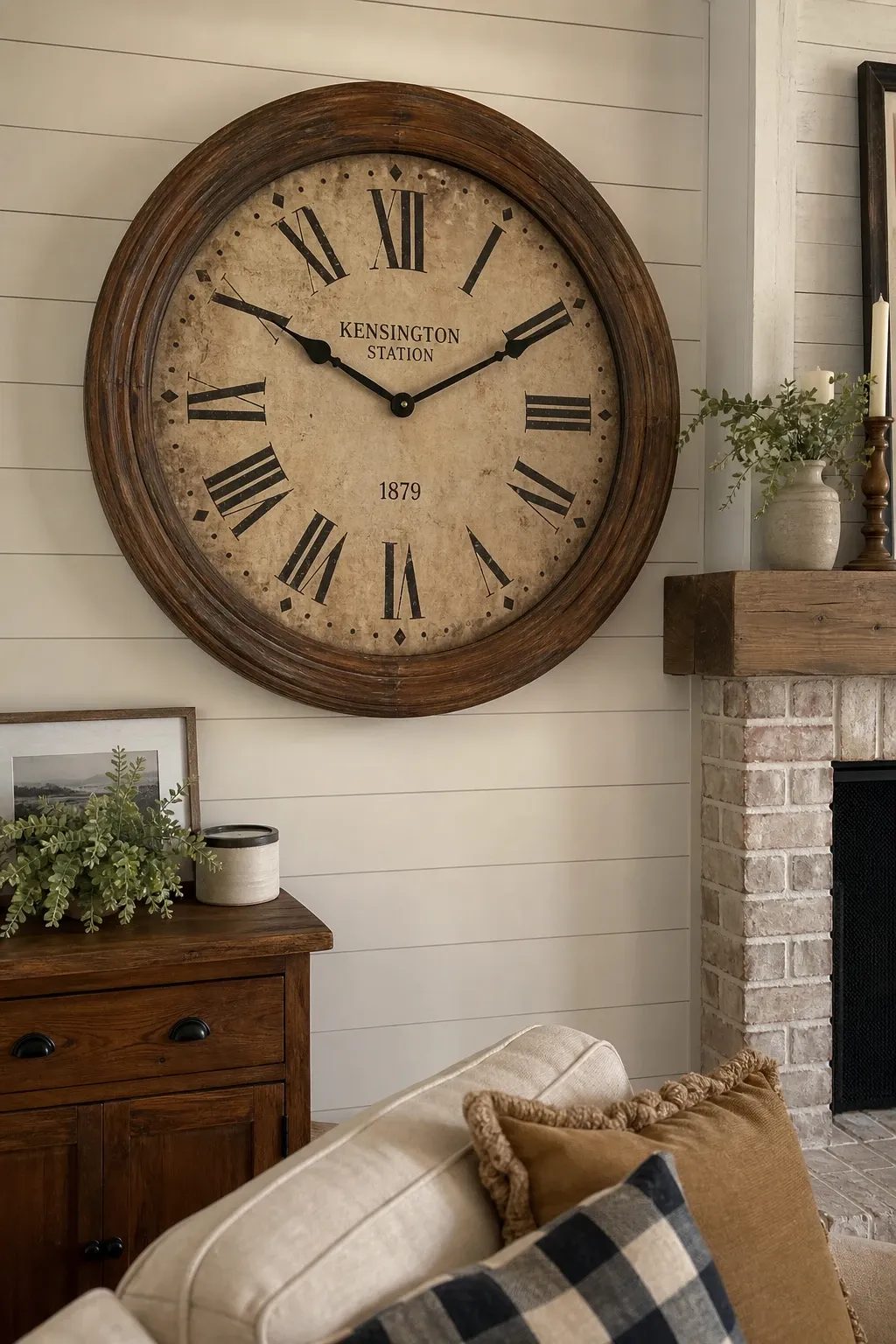
An oversized wall clock serves as both a functional item and a decorative focal point. A clock with a diameter of 24 inches or more fills wall space the way a piece of art would. Farmhouse clocks with distressed wood faces, modern clocks with clean metal frames, and vintage-inspired Roman numeral designs all bring character to the room. Hang it above a console table, fireplace, or on an otherwise empty wall section.
Designer Tip: If using a clock as your main wall feature, skip other small items on the same wall. A statement clock surrounded by tiny frames looks cluttered rather than intentional.
The best wall decor is whatever makes you stop and appreciate the room rather than just walking through it. Pick one or two ideas from this list that match your style and commit to them. You do not need to fill every wall. Sometimes one well-chosen piece or arrangement does more for a room than covering every available surface.
Frequently Asked Questions
How high should I hang wall decor in my living room?
The center of your art or arrangement should be at about 57 to 60 inches from the floor, which is average eye level. When hanging above furniture like a sofa or console, keep the bottom of the piece 6 to 8 inches above the top of the furniture so they relate to each other visually.
How do I choose wall decor that matches my living room?
Pull colors from your existing furniture, rug, or throw pillows into your wall decor. If your room is mostly neutral, wall decor is a great place to introduce a pop of color. Match the style too. Modern rooms suit clean-lined art and metal pieces, while traditional rooms work better with framed prints and woven textures.
What do I put on a large empty wall?
One oversized piece of art, a gallery wall arrangement, a set of floating shelves, or a full bookshelf wall all fill a large empty wall well. The key is scaling your decor to the wall size. Small items on a big wall look like an afterthought. Go big or group smaller items into a tight arrangement that reads as one large display.
How many pieces of wall decor should a living room have?
There is no fixed number, but a good guideline is one main feature wall with a focal point and one or two secondary walls with smaller accents. Leave at least one wall mostly bare to give the eye a place to rest. Overdoing wall decor makes a room feel busy and cluttered instead of decorated.