A nice handbag crammed into a pile of other bags on a closet shelf is not being stored. It is being damaged. Leather creases, straps get bent, hardware scratches against other bags, and structured bags lose their shape. If you spent good money on your purses, you owe it to yourself to store them in a way that keeps them looking the way they did when you bought them. Here are 16 storage ideas that protect your bags while keeping them organized and accessible.
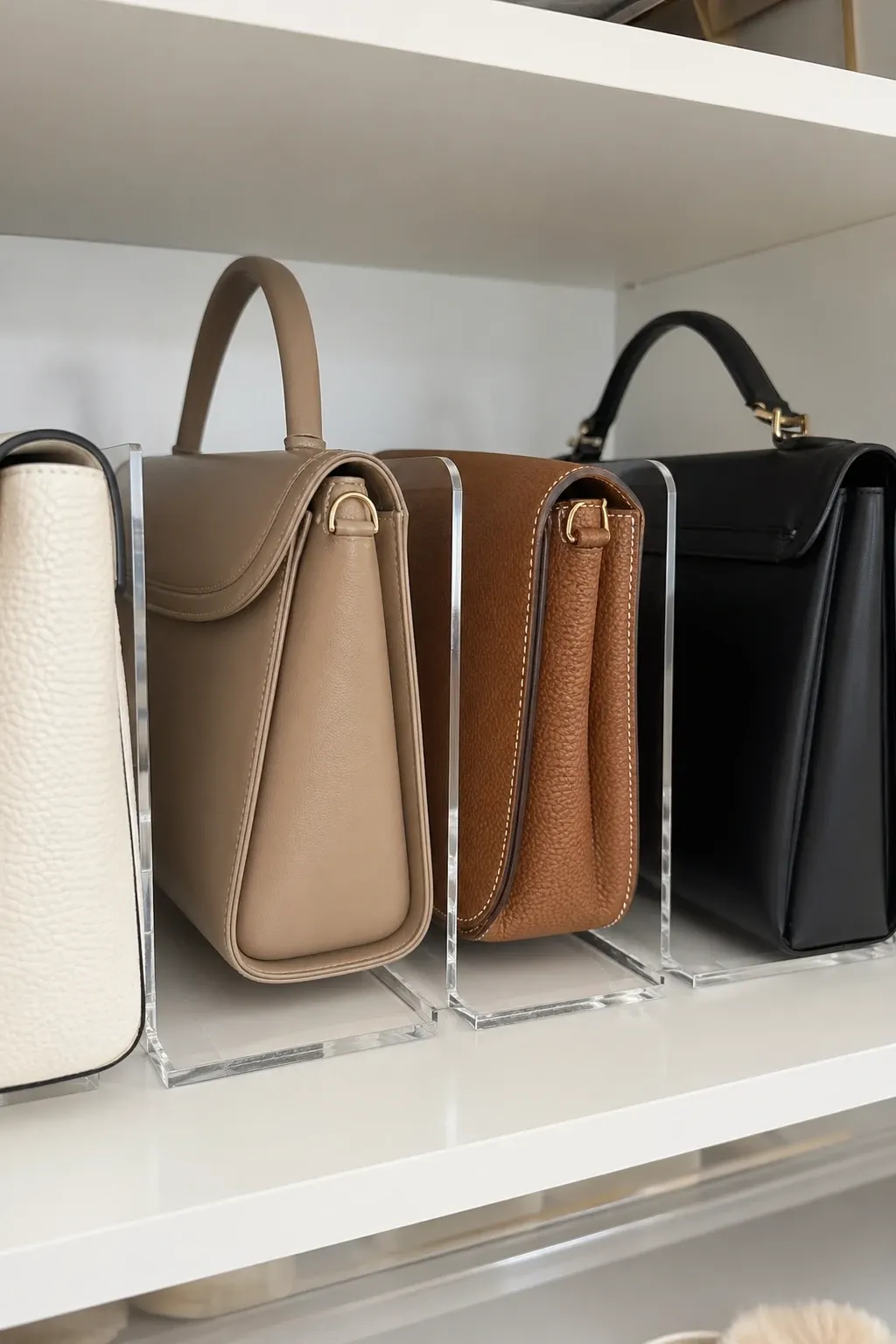
Acrylic dividers clipped onto closet shelves create individual compartments for each bag. Every purse gets its own section so bags do not lean on, scratch, or crush each other. The clear material is nearly invisible, so the focus stays on the bags themselves. It looks like a boutique display and functions like one too. The dividers are cheap, clip on without tools, and can be repositioned as your collection changes.
Designer Tip: Space the dividers based on the width of your largest bags plus about two inches of breathing room on each side. Bags squeezed too tightly between dividers get the same pressure creases as bags piled on top of each other.
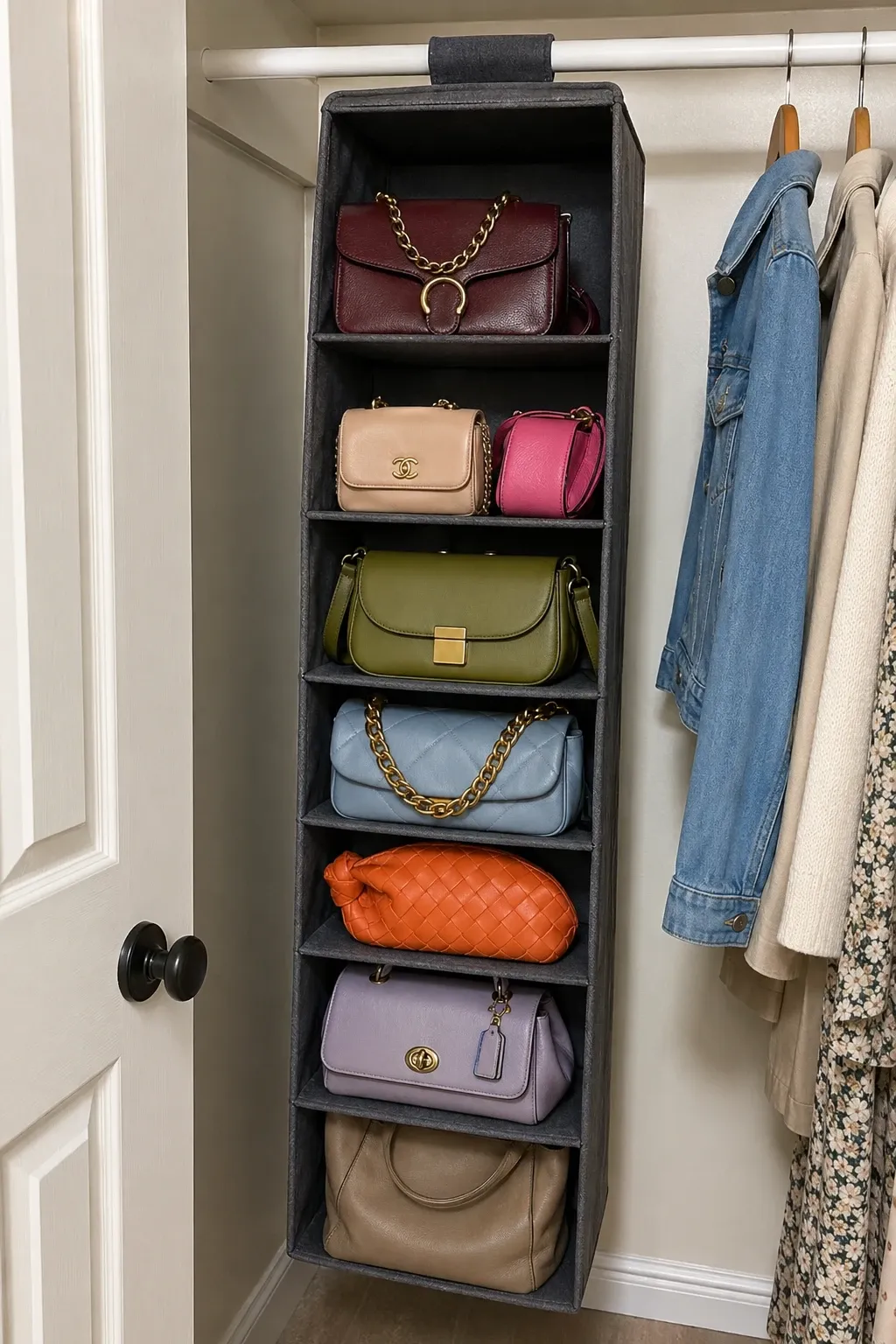
A hanging organizer that hooks over the closet rod and has multiple shelves or pockets gives each bag its own cubby in a vertical stack. It uses the vertical space in the closet that normally goes to waste above or below hanging clothes. Most versions have six to ten shelves, which is enough for a solid collection. The fabric is breathable, which is better for leather than plastic, and the whole thing folds flat when not in use.
Designer Tip: Choose an organizer with reinforced shelves that do not sag under the weight of the bags. Cheap versions have flimsy shelves that bow in the middle, causing bags to lean toward each other. Look for organizers with cardboard or plastic inserts in each shelf for rigidity.
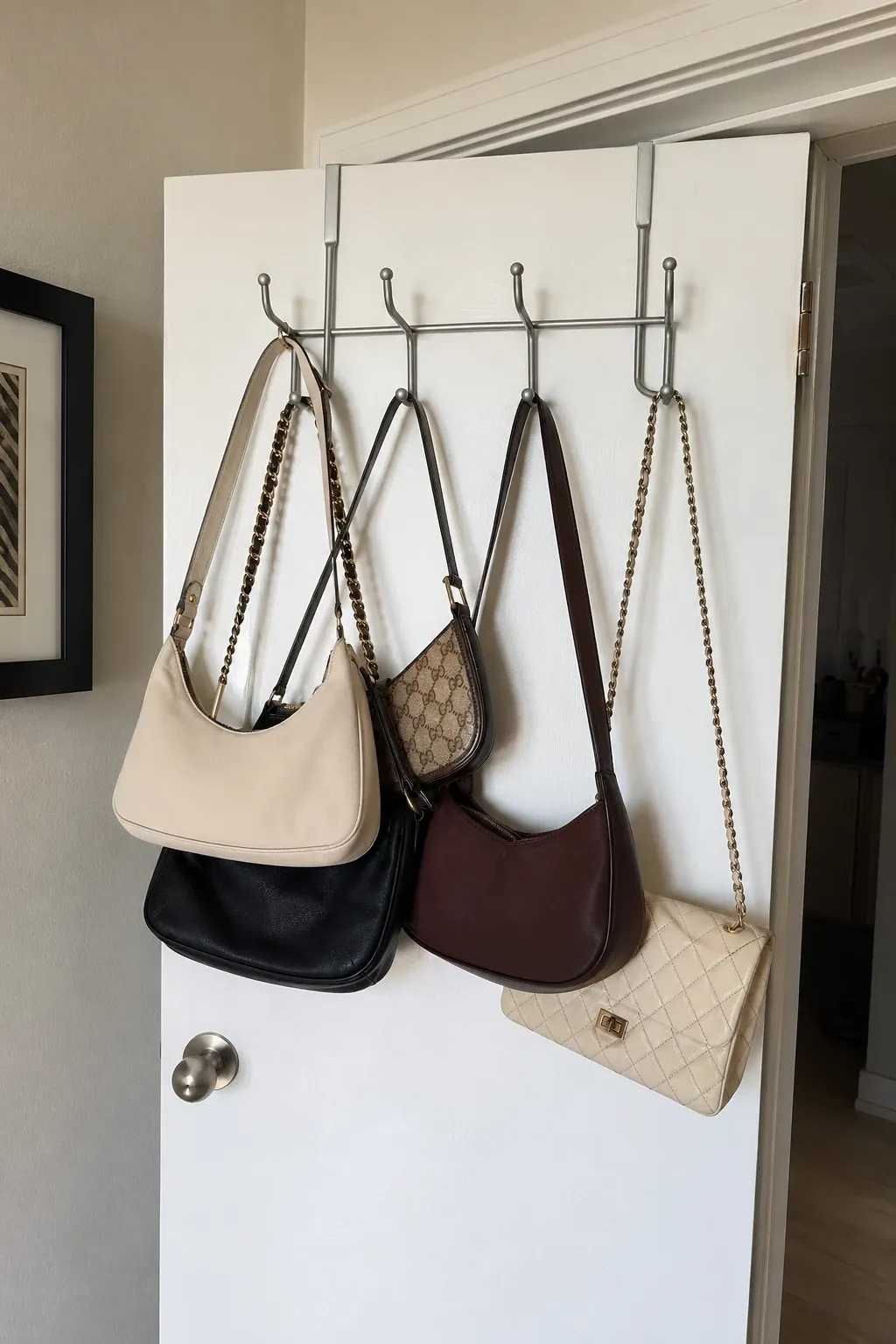
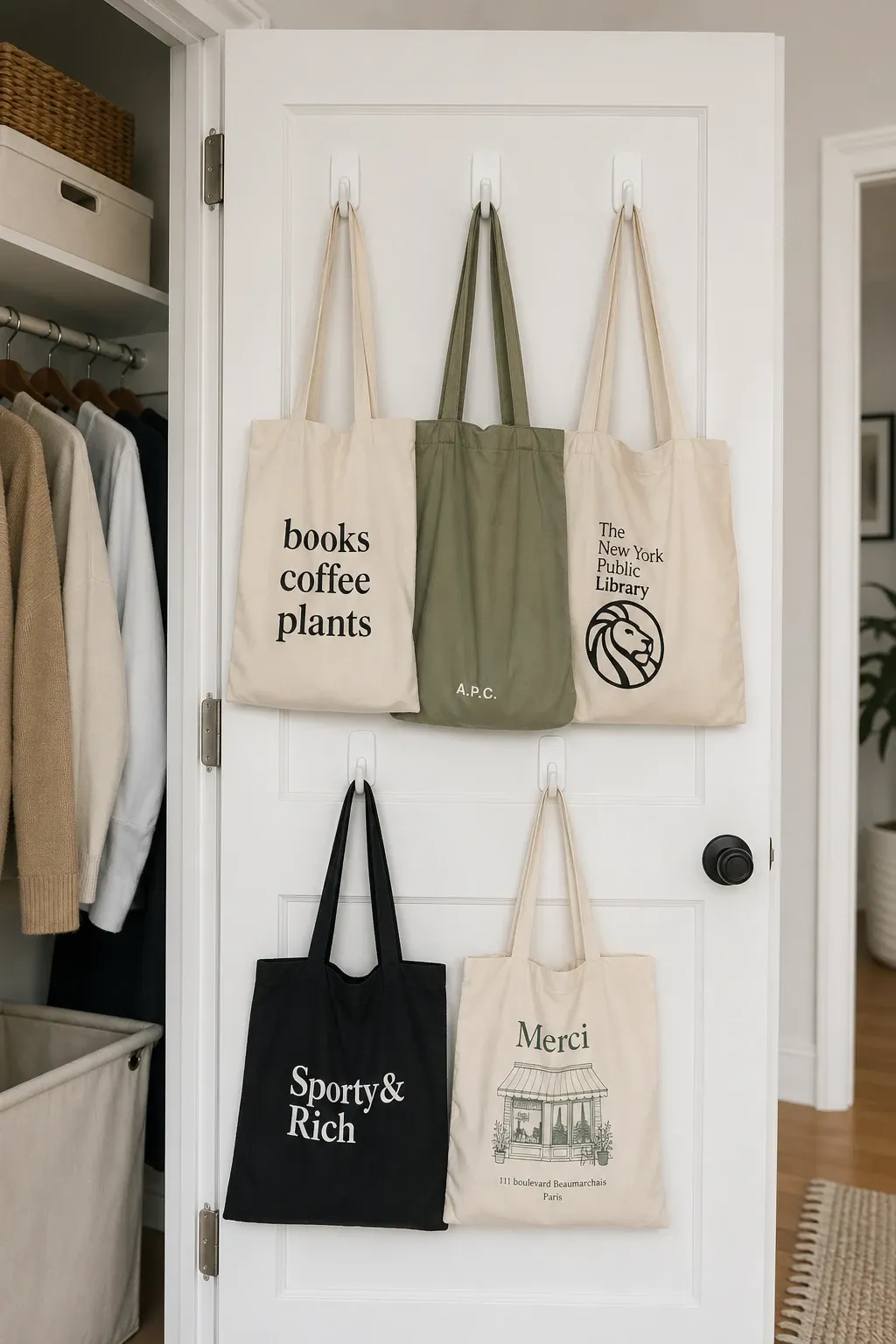
Hooks mounted over a door hold bags by their straps and keep them visible and accessible. The back of a closet door, bedroom door, or bathroom door all work. Each bag hangs individually so there is no stacking or piling. You can see your entire collection at a glance and grab the one you need without moving anything else. This is the simplest and cheapest purse storage option and it works well for everyday bags that you rotate frequently.
Designer Tip: Use padded or curved hooks rather than thin metal ones. A thin hook can crease or stretch the strap over time, especially on leather bags. A wide, padded hook distributes the weight across a broader area and protects the strap from damage.
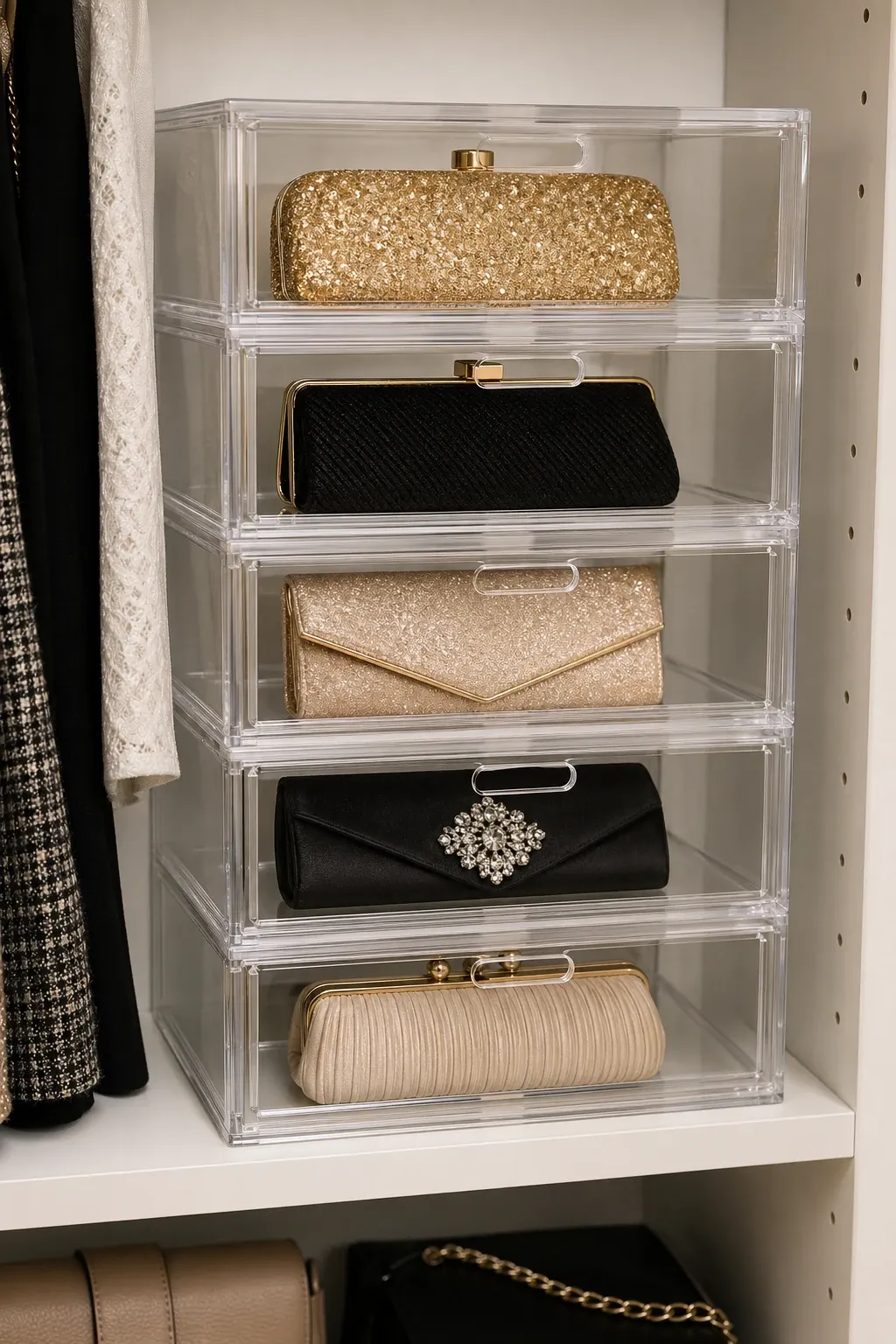
Individual acrylic boxes with lids or open fronts protect each bag from dust while keeping it visible. Stack the boxes on a closet shelf or in a dedicated bag area and each purse sits in its own dust-free display case. This is the best option for designer bags or bags you want to keep in pristine condition. The acrylic is clear so you can see every bag, and the enclosed space prevents dust accumulation that happens on open shelves.
Designer Tip: Get boxes with open fronts rather than full lids if you access your bags daily. Removing a lid every morning to grab a bag gets tedious fast. An open-front box keeps dust out from above while allowing easy grab-and-go access from the front.
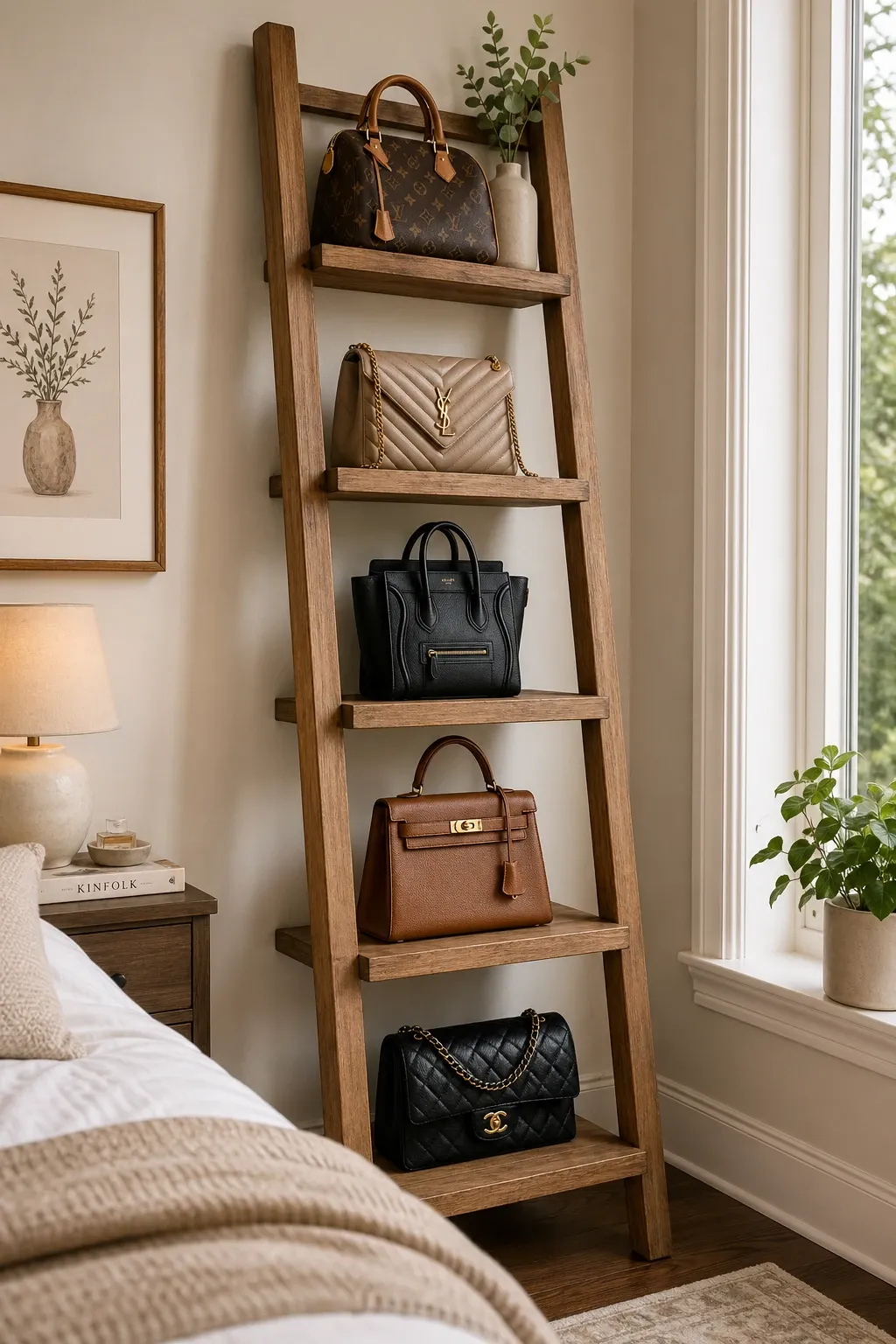
A leaning ladder shelf placed in a closet or bedroom corner displays bags on multiple levels while adding a decorative element to the room. The shelves get narrower as they go up, which naturally organizes bags by size: large totes on the bottom, medium bags in the middle, small clutches on top. The ladder takes up minimal floor space and does not need to be mounted to the wall. It is both functional storage and a visual display piece.
Designer Tip: Anchor the ladder to the wall with a small L-bracket at the top even though it leans on its own. A loaded ladder with heavy bags can tip forward if someone bumps it. The bracket is invisible from the front and prevents the whole thing from falling.
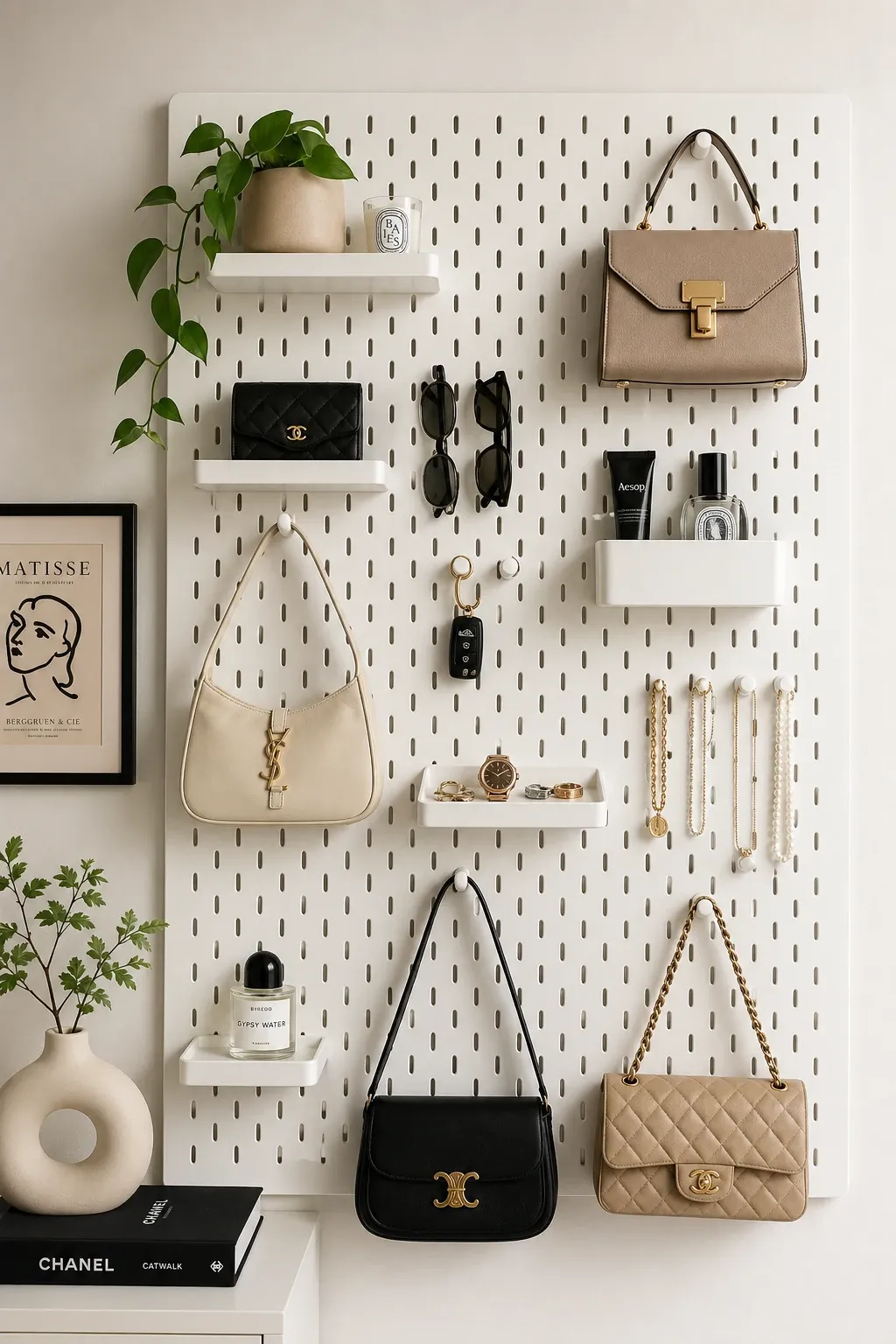
A painted pegboard on the wall inside a walk-in closet holds bags on hooks in a fully customizable layout. Move the hooks any time, add more as your collection grows, and rearrange the display whenever you feel like it. The pegboard turns a plain wall into functional, flexible storage. Paint it to match the closet walls and it looks clean and intentional. Add a few small shelves for clutches and smaller bags that do not hang well on hooks.
Designer Tip: Use L-shaped hooks rather than straight pegs for hanging bags. An L-hook has a curved end that prevents the bag strap from sliding off when you reach for the bag next to it. Straight pegs let bags slip off too easily.
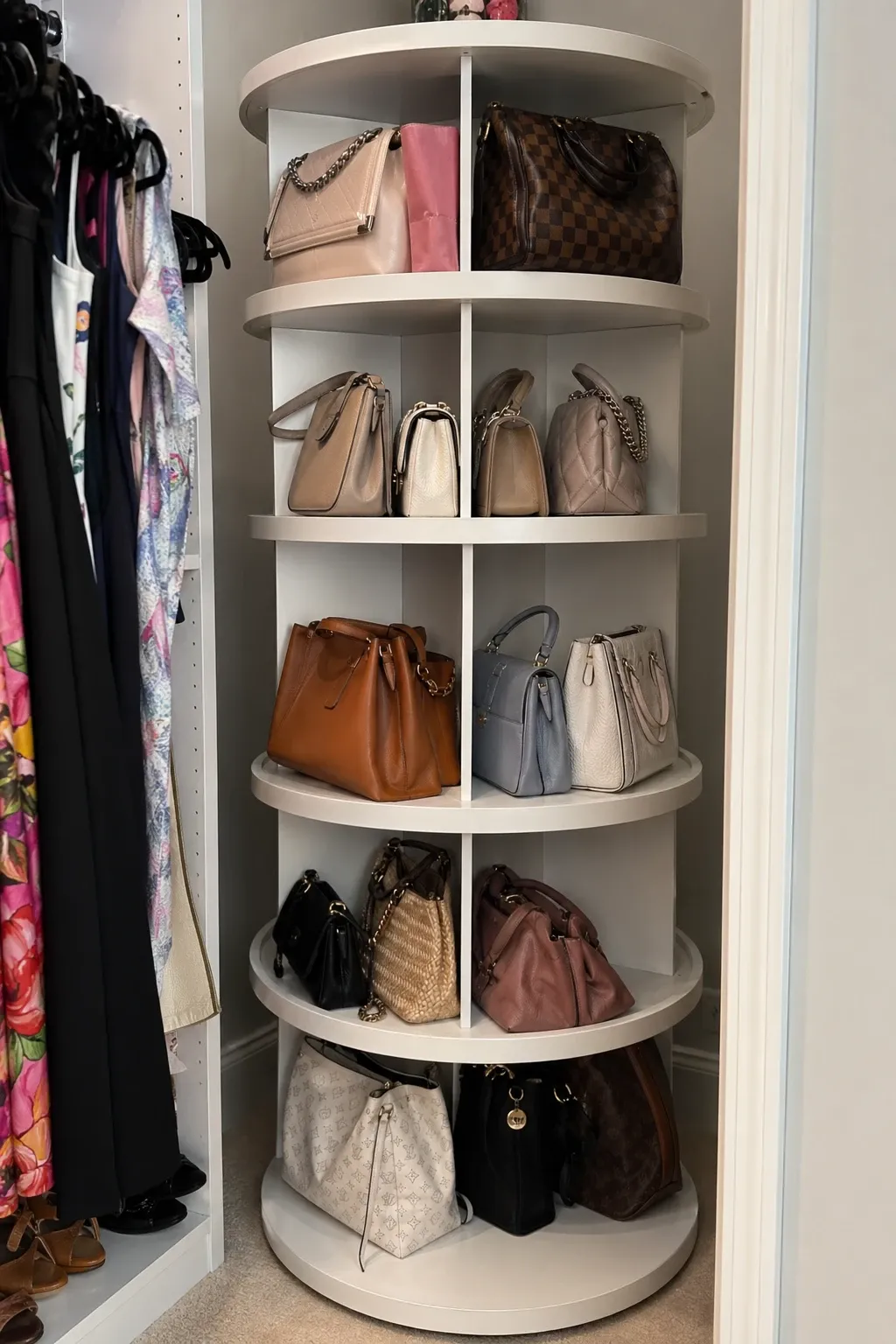
A rotating stand with multiple levels spins so you can access bags on all sides without reaching behind or moving other items. It is like a lazy Susan for handbags. Place it on a closet shelf or the floor of a walk-in closet and spin to find the bag you want. This is the best option for large collections stored in a closet because every bag is accessible from one standing position. No digging, no moving, no shuffling.
Designer Tip: Do not overload the stand. Leave enough space between bags for them to rotate freely without bumping into each other. A crowded carousel defeats the purpose because the bags get jammed together and you end up pulling several off to reach the one you want.
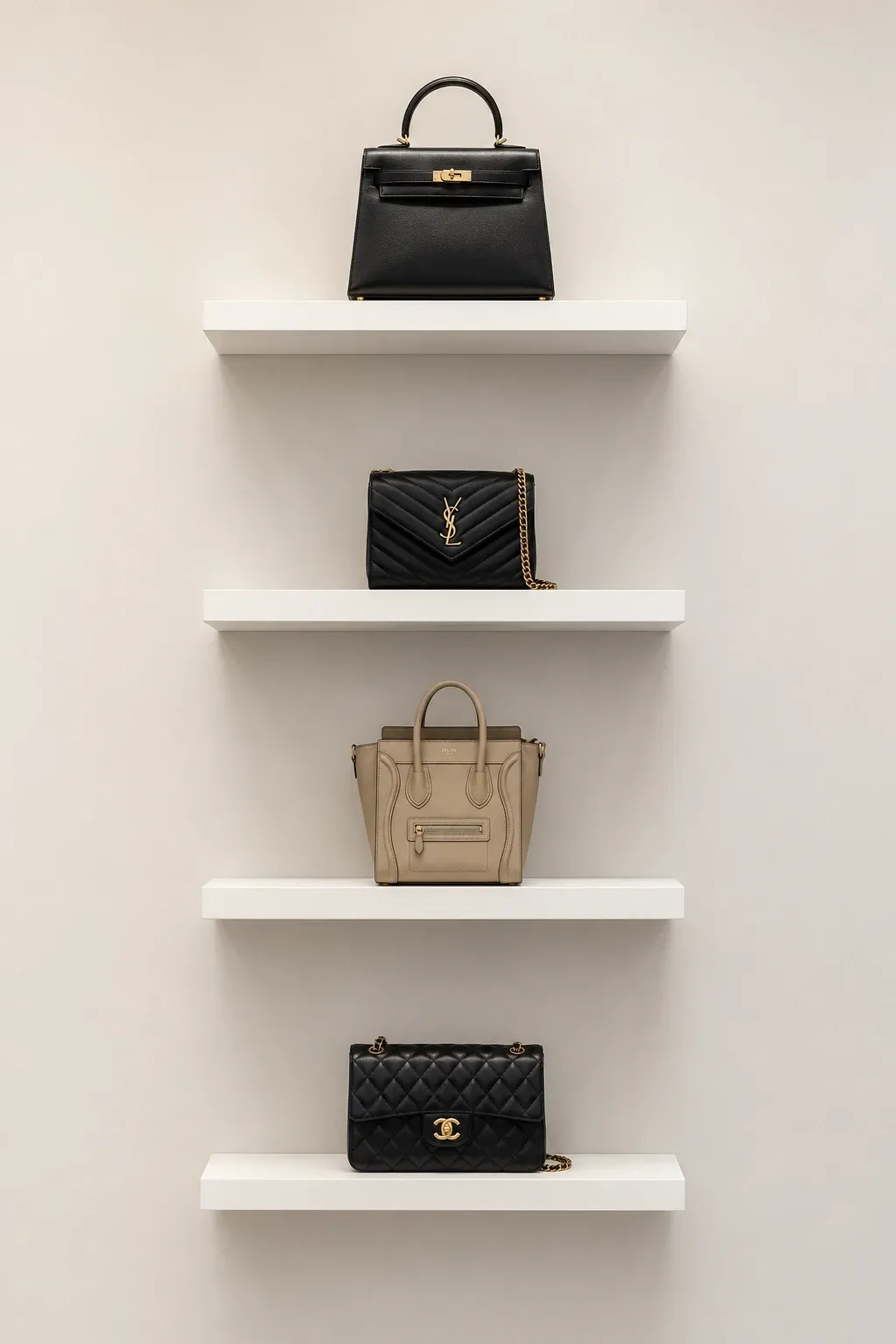
Floating shelves on the closet or bedroom wall display bags like art. Each bag sits on its own shelf or shares with one other bag. The wall-mounted shelves keep bags off the floor and away from dust while showing off the collection. This works best for bags that look good on display, like designer pieces or bags in beautiful colors. Arrange by color, size, or frequency of use for a display that is both organized and attractive.
Designer Tip: Install the shelves deep enough for the bags to sit fully on the surface without hanging over the edge. A shelf that is too shallow makes the bag look like it is about to fall off. Most medium bags need a shelf that is at least 10 to 12 inches deep.
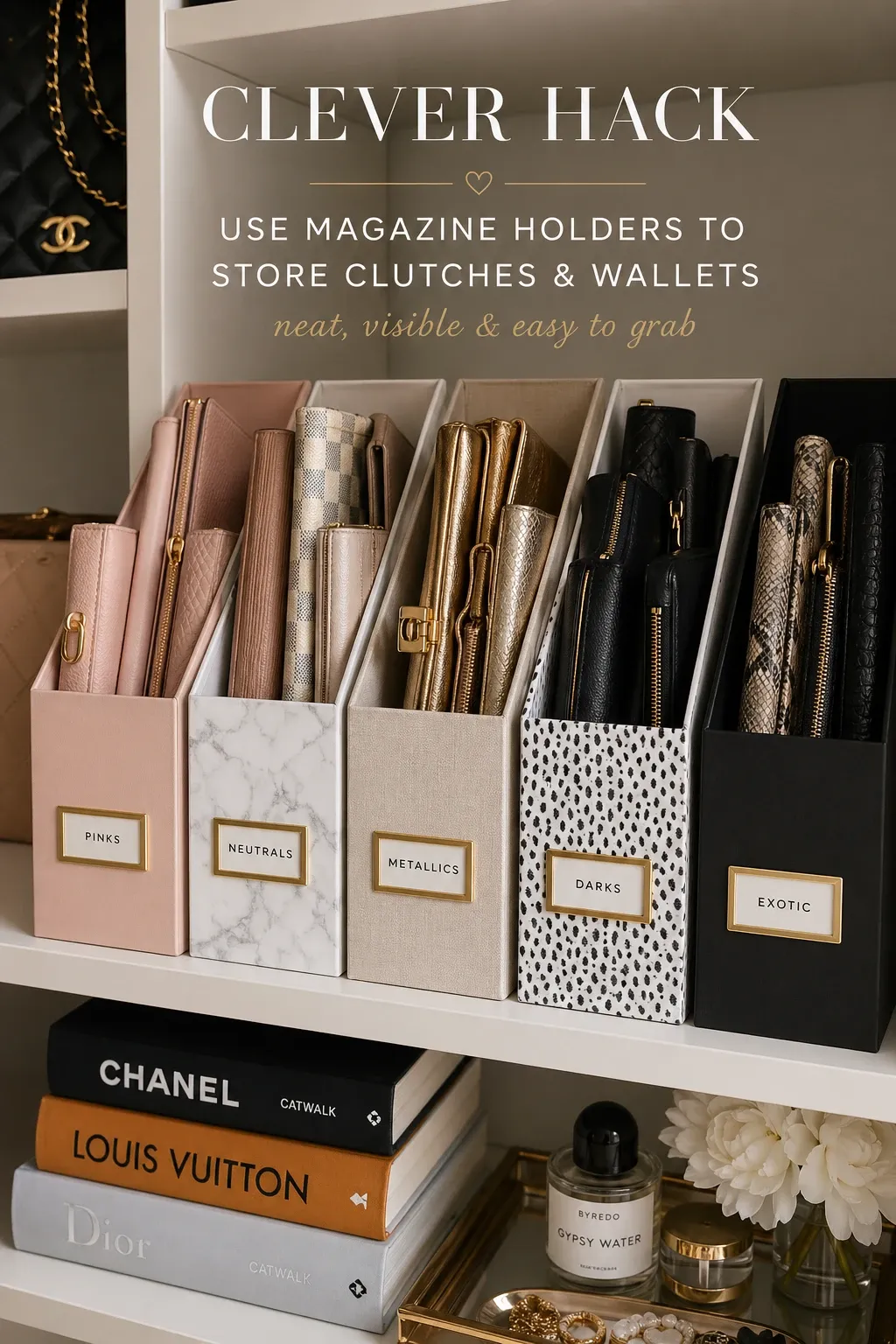
Slim clutches and evening bags fit perfectly in magazine holders standing upright on a shelf. Each holder keeps two or three clutches standing side by side like files in a cabinet. You can flip through them to find the one you want without laying them flat in a stack where the bottom ones get crushed. Magazine holders are cheap, available everywhere, and come in materials from acrylic to bamboo to fabric-covered cardboard.
Designer Tip: Use matching magazine holders for a clean, uniform look on the shelf. A set of three matching holders in white, clear, or a metallic finish looks organized and deliberate. Random mismatched holders look like a recycling bin.
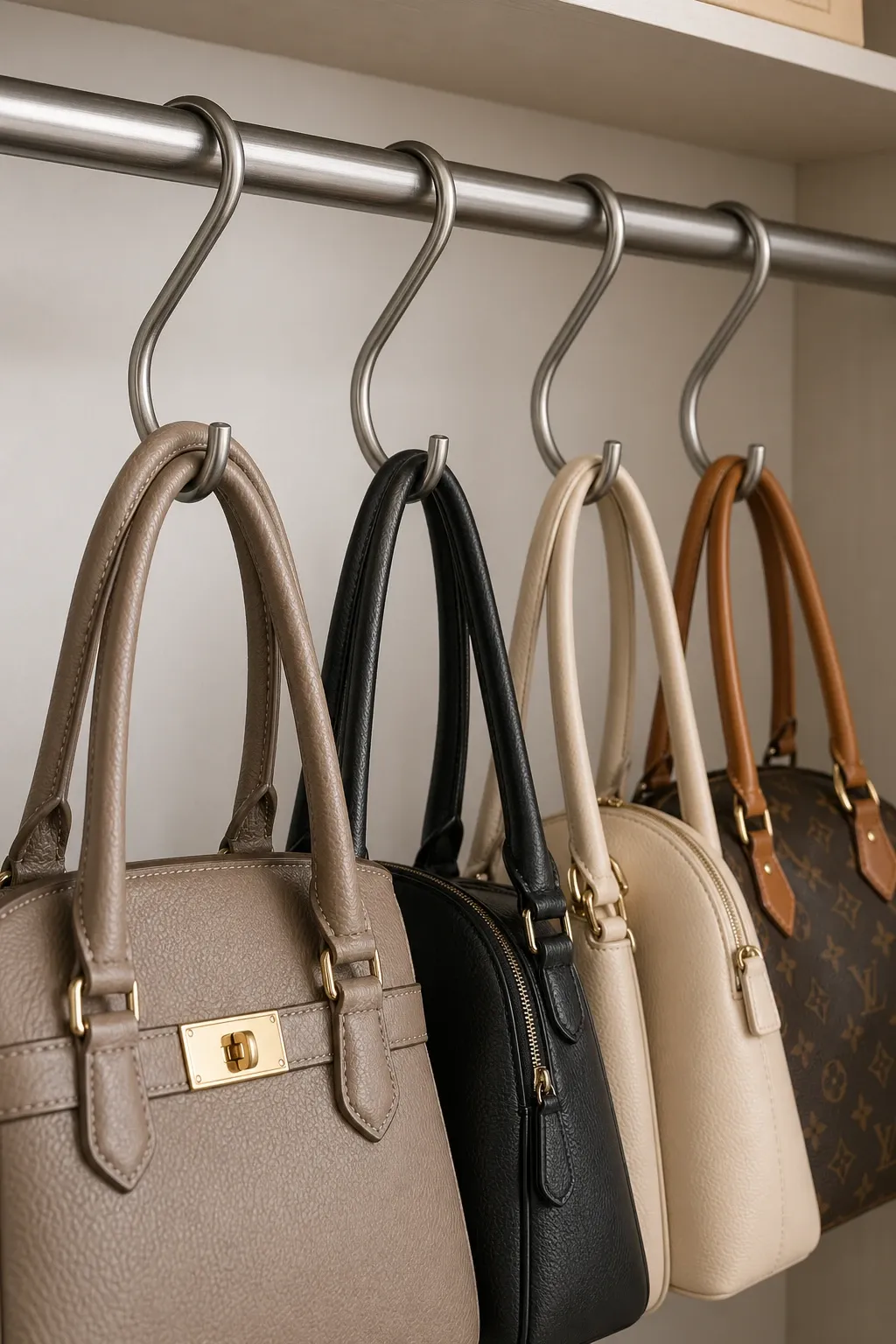
S-hooks hung on the closet rod let you hang bags right alongside your clothes. Each bag hangs from its own hook and slides along the rod so you can push bags aside like clothes hangers. This is the fastest way to add bag storage without buying any new furniture or shelving. The bags hang at the same level as your clothes, making it easy to pair a bag with an outfit while getting dressed.
Designer Tip: Use large S-hooks with a rubberized coating. The rubber prevents the hook from sliding on the rod and scratching the bag strap. Small S-hooks do not open wide enough for thick closet rods, so check the hook size before buying.
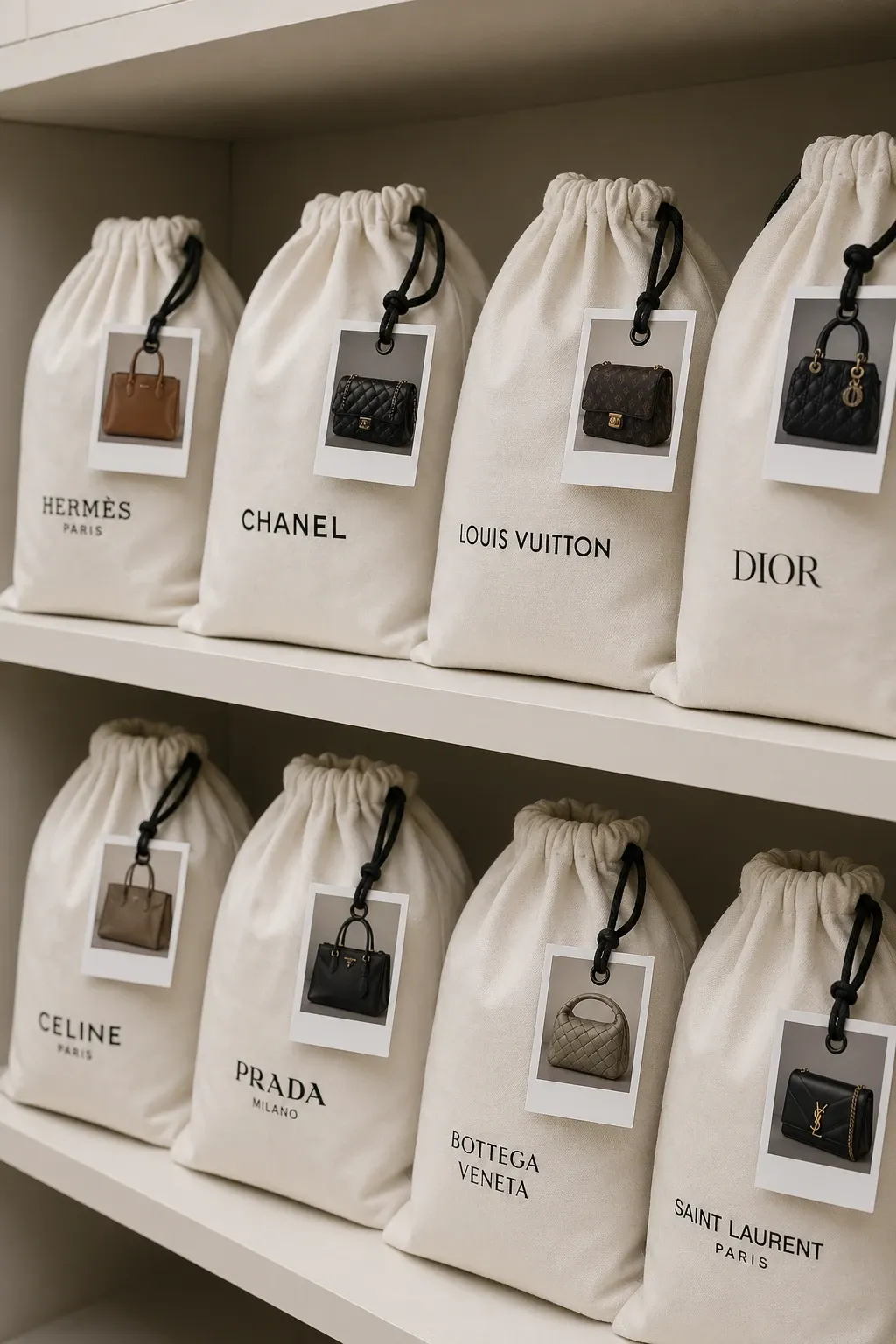
Storing each bag in its own breathable dust bag protects it from dust, light, and contact with other bags. Most designer bags come with a dust bag, but you can buy them separately for bags that did not. Cotton or muslin bags are the best material because they breathe while still blocking dust. Label each dust bag with the name or a photo of the bag inside so you do not have to open every bag to find the one you want.
Designer Tip: Never store leather bags in plastic. Plastic traps moisture and can cause mold, mildew, and discoloration on leather surfaces. Always use breathable fabric bags. If you do not have a dust bag, a clean cotton pillowcase works as a substitute.
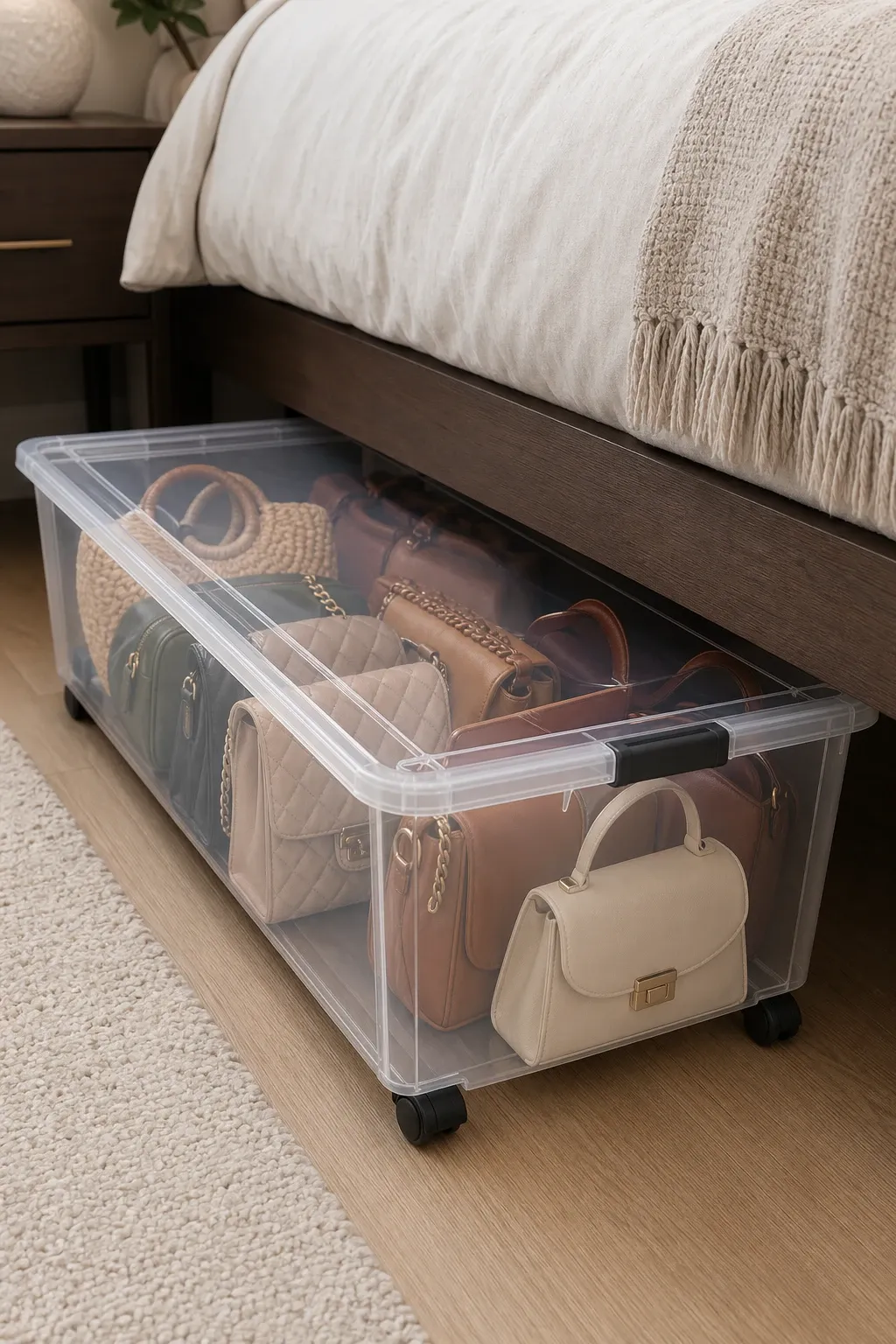
Flat storage bins that slide under the bed are ideal for bags you use seasonally. Summer bags in the winter, winter bags in the summer. Each bag goes in its own dust bag inside the bin, with dividers or tissue paper between them to prevent contact. Under-bed bins use space that would otherwise be wasted and keep off-season bags protected and out of the way. Pull the bin out when the season changes and swap your daily rotation.
Designer Tip: Use bins with ventilation holes or a fabric lid rather than a sealed plastic lid. Sealed bins trap humidity, which can damage leather. A vented bin protects from dust while allowing air to circulate around the bags.
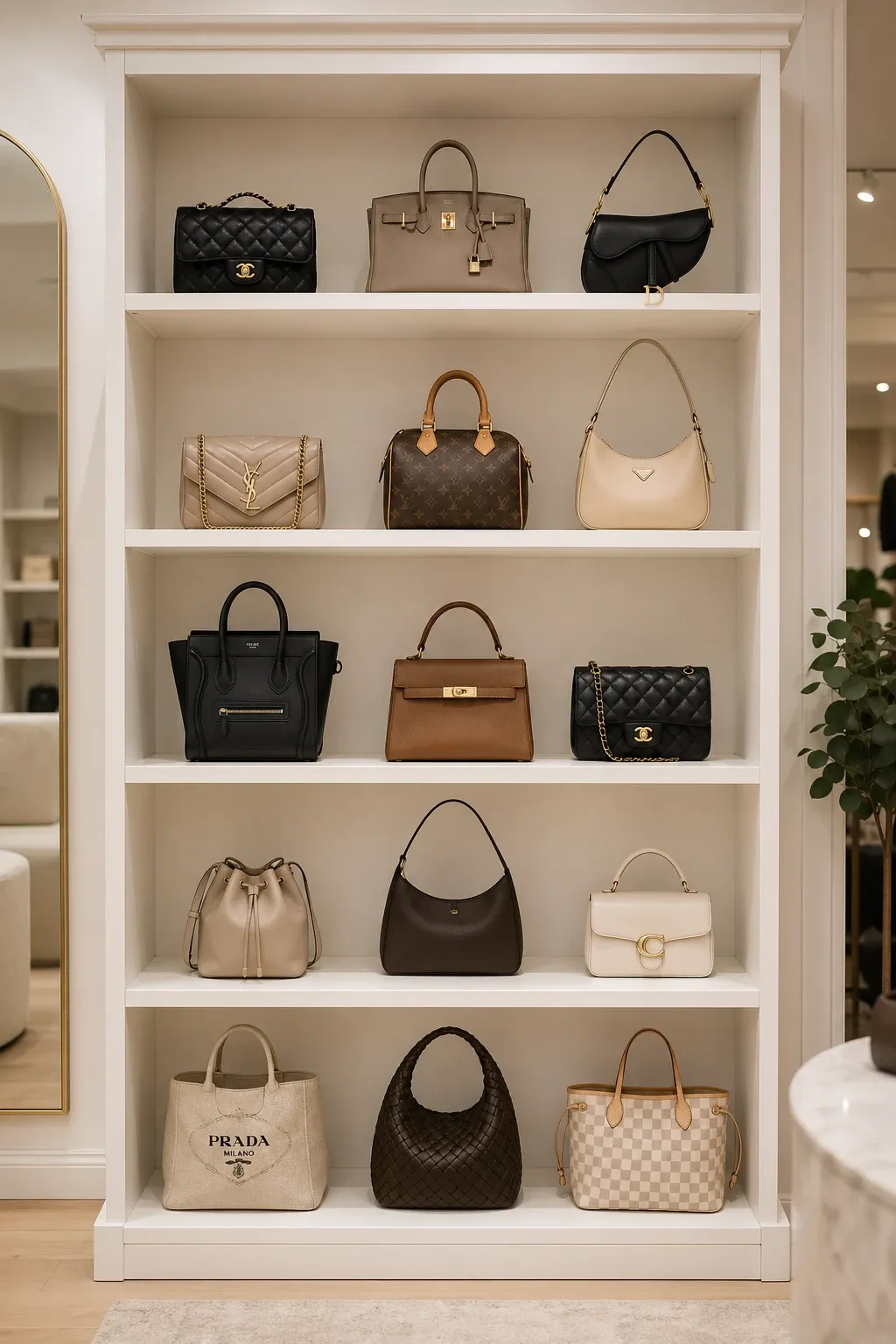
A bookshelf, either a standalone piece or a built-in, works as a bag display when each shelf holds one or two bags arranged like items in a boutique. Adjust the shelf heights to match the sizes of your bags. Tall bags on a tall shelf, clutches on a short shelf. Add a small plant or decorative object between bags to make it look styled rather than like storage. A bookshelf full of beautiful bags in a walk-in closet is a statement that also happens to be functional.
Designer Tip: Leave at least 30 percent of each shelf empty. A fully packed shelf looks like storage. A shelf that is two-thirds full with a few decorative accents looks like a collected display. The empty space is what makes it look expensive.
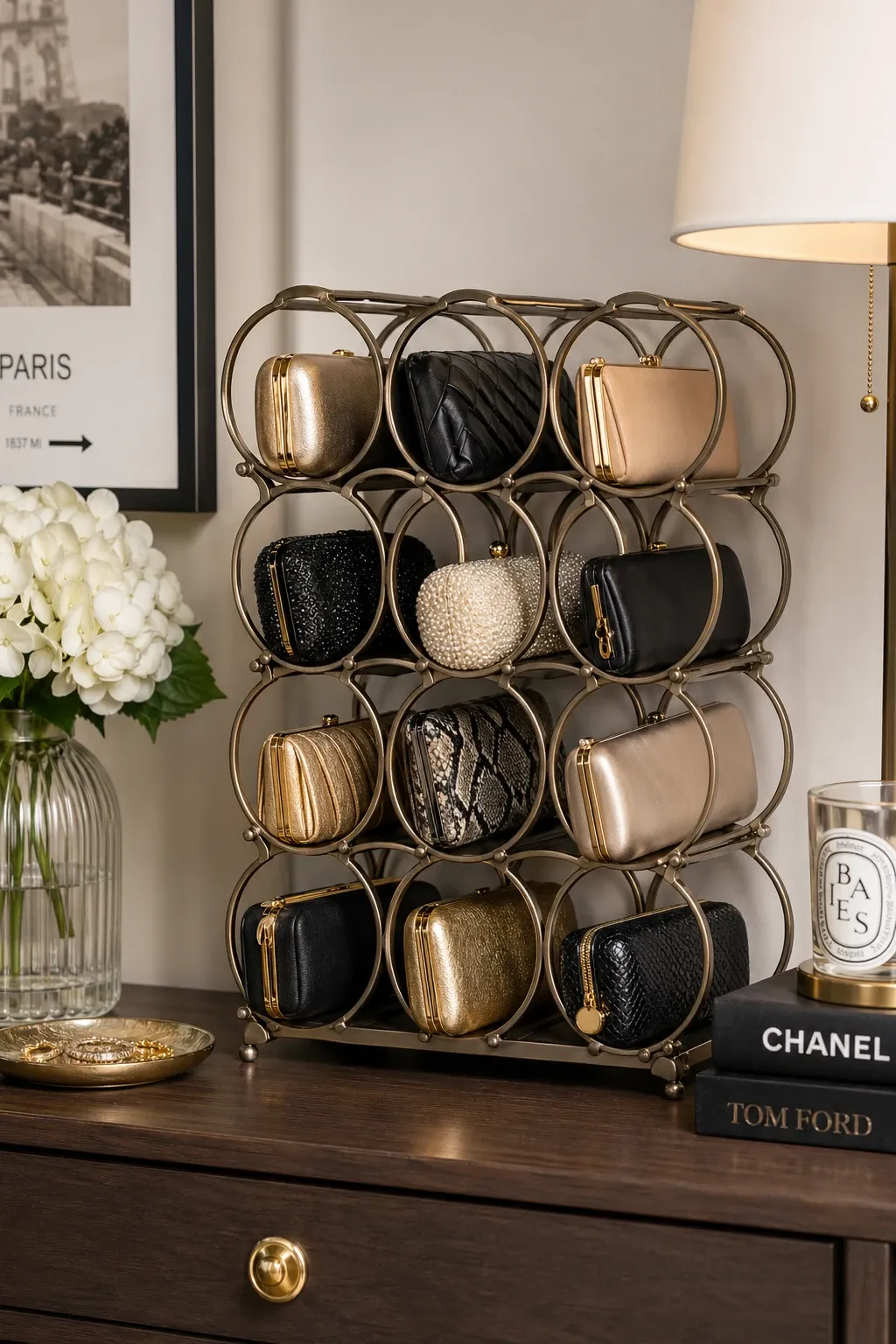
A tabletop wine rack with individual slots is the perfect shape and size for rolled or folded clutches and small evening bags. Each slot holds one clutch, visible and accessible. The round openings cradle the clutch and keep it from unrolling or sliding. It is a creative repurpose that solves the specific problem of clutch storage, which is that clutches are too small for regular shelf cubbies and too easily lost in drawers.
Designer Tip: Line the inside of each wine rack slot with a piece of felt to prevent the metal or wood from scratching delicate clutch materials like satin, silk, or beaded fabric. A small felt insert protects the bag and keeps it from sliding out of the slot.
Adhesive hooks stuck inside a cabinet or closet door hold bags out of sight behind a closed door. Open the door and your bags are hanging neatly on individual hooks. Close the door and they are completely hidden. This is ideal for people who want a clean, uncluttered bedroom or closet where bags are not part of the visible decor. The hooks are damage-free and removable, so they work in rentals and owned homes alike.
Designer Tip: Check that the bags hanging on the door do not interfere with the shelves or rod inside the closet when the door closes. Bags that are too bulky for the clearance will get crushed every time you shut the door. Test the clearance with your largest bag before installing all the hooks.
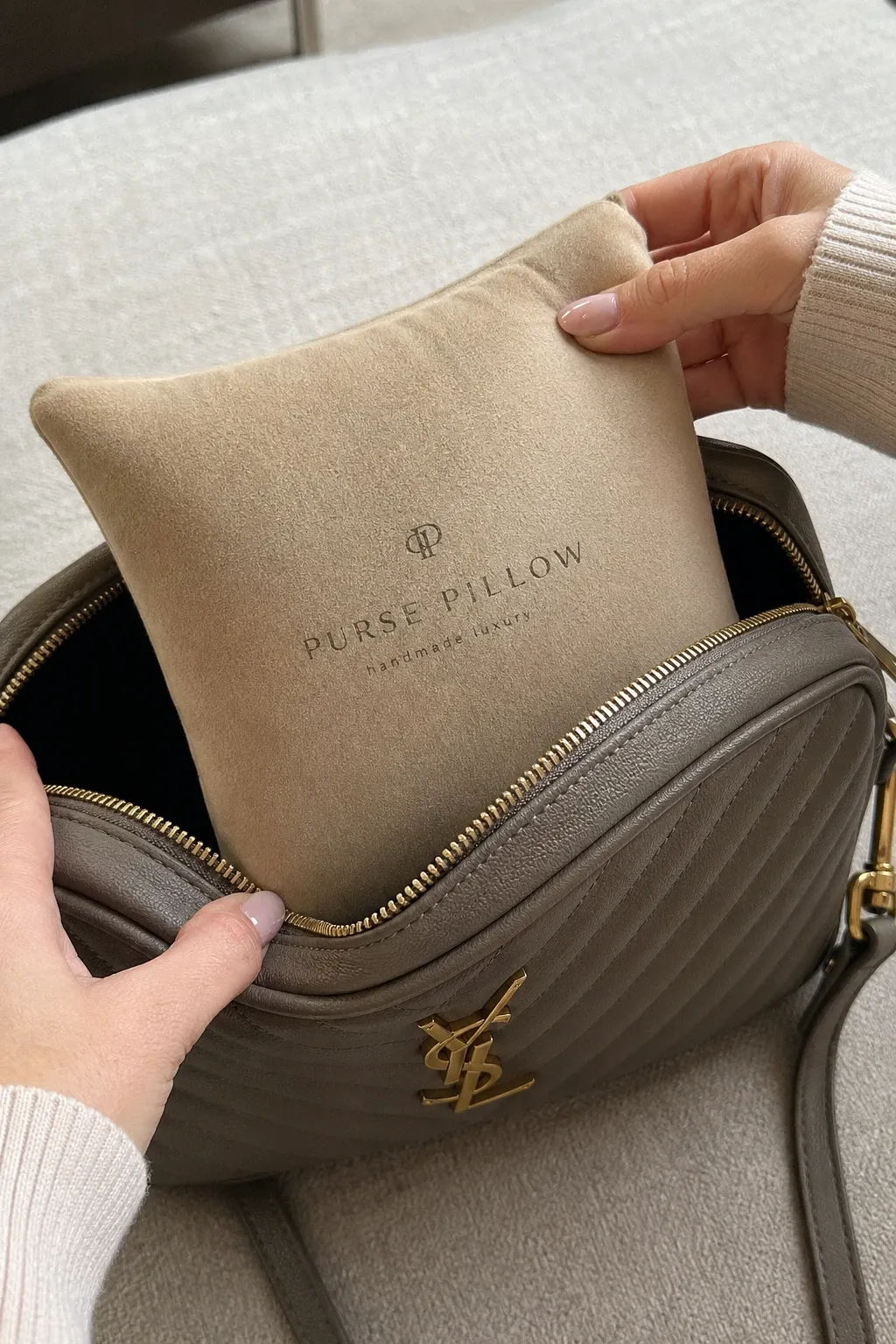
Bag stuffers, either dedicated pillow inserts or simply tissue paper, keep structured bags from collapsing and creasing during storage. A structured bag stored empty will sag over time and develop permanent creases. Stuffing it with acid-free tissue paper or a custom-shaped insert maintains the original form. This is not a storage location idea, but it is the single most important storage practice for protecting the shape and value of any structured handbag.
Designer Tip: Use acid-free tissue paper, not newspaper or regular tissue. Newspaper ink transfers to fabric and leather. Regular tissue paper can contain acids that discolor materials over time. Acid-free tissue is a few dollars more and protects bags for years without staining.
How you store your bags determines how long they look good. A well-stored bag keeps its shape, color, and hardware for decades. A poorly stored one looks worn out in a season. Pick the storage method that fits your space and collection size, stuff your bags, and keep them off the floor. Your future self will appreciate the effort.
Frequently Asked Questions
Should I hang purses or store them on shelves?
It depends on the bag. Lightweight bags with sturdy straps can hang without problems. Heavy bags or bags with delicate straps should sit on shelves because the weight can stretch and distort the straps over time. When in doubt, shelf storage is safer for the bag.
How do I prevent purses from getting dusty in storage?
Store each bag in a breathable dust bag or cotton pillowcase. For open-shelf storage, use acrylic display boxes with open fronts that block dust from above while allowing access. Avoid plastic bags or sealed containers because they trap moisture and can cause mold on leather.
How should I store leather purses long term?
Stuff them with acid-free tissue paper, place them in breathable dust bags, and store them on shelves in a cool, dry area away from direct sunlight. Condition the leather with a leather conditioner before long-term storage to prevent drying and cracking. Avoid stacking bags on top of each other.
What is the best way to store a large purse collection?
Combine methods. Use shelf dividers or cubbies for daily bags, hooks for bags you rotate frequently, dust bags and under-bed bins for seasonal storage, and acrylic boxes for designer pieces you want to protect. Splitting the collection by frequency of use keeps everyday bags accessible and occasional bags safely stored.