Stuffed Animal Storage Ideas Kids Will Actually Use
Every parent knows the stuffed animal problem. Kids collect them relentlessly, get attached to every single one, and then leave them scattered across every surface in the house. You cannot throw them away without a scene, and shoving them in a bin means the favorites get buried and the rest just sit there taking up space. The solution is storage that kids can actually use themselves, that keeps the animals visible and accessible, and that does not make the room look like a toy store exploded. Here are 16 ideas that work.
1. Corner Hammock
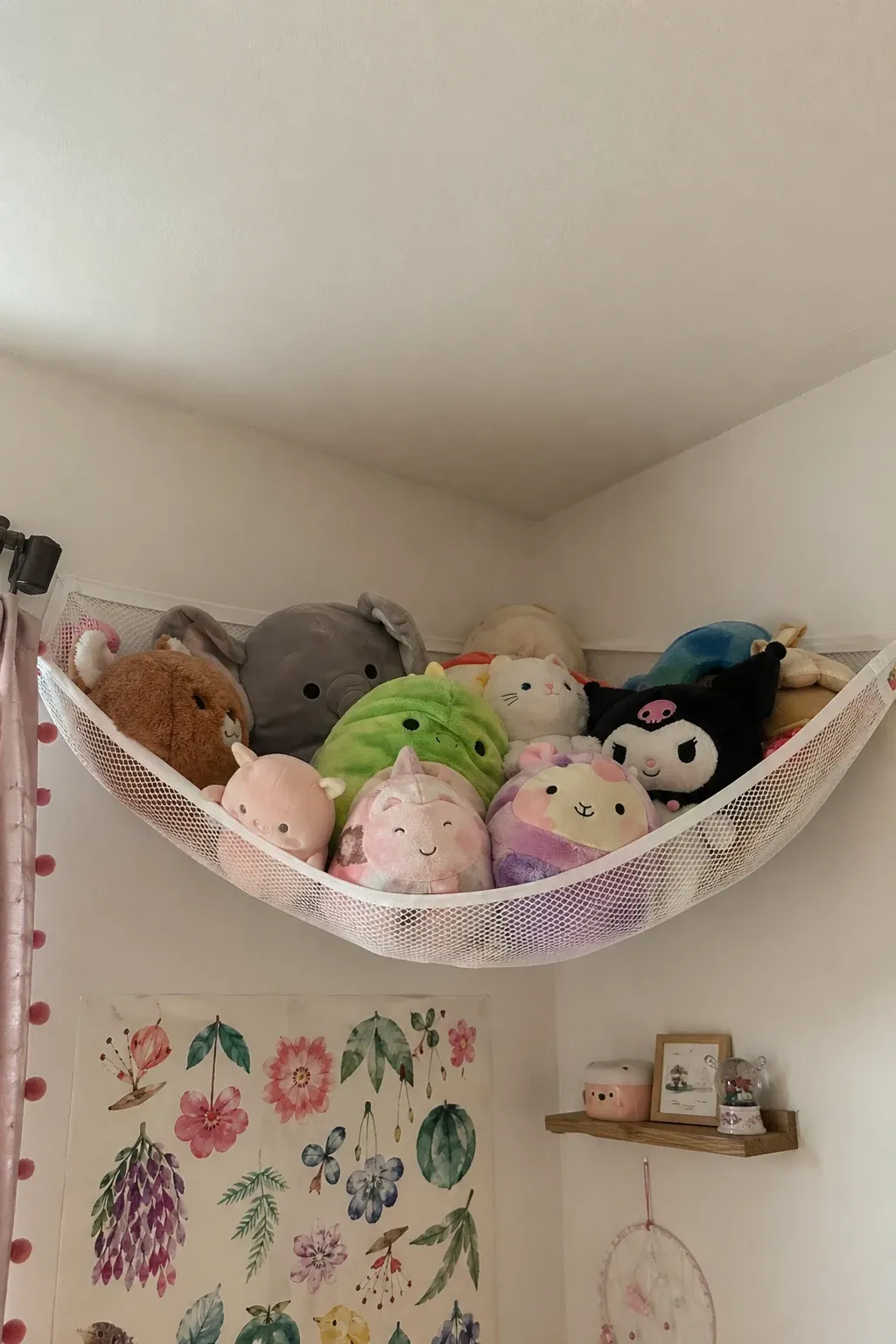
A mesh or fabric hammock strung across a corner of the room holds a pile of stuffed animals up off the floor and out of the way while keeping them visible. Kids can see their collection and grab a favorite without dumping everything out. The hammock uses wall space that is otherwise completely wasted and works in any room with two walls meeting at a right angle. It is the most popular stuffed animal storage solution for a reason: it is cheap, easy to install, and holds a lot.
Designer Tip: Install the hammock low enough that your child can reach the bottom edge without climbing on furniture. A hammock that is too high becomes parent-only storage, which means animals go in but never come back out. Waist height for the child is about right.
2. Over-the-Door Clear Organizer
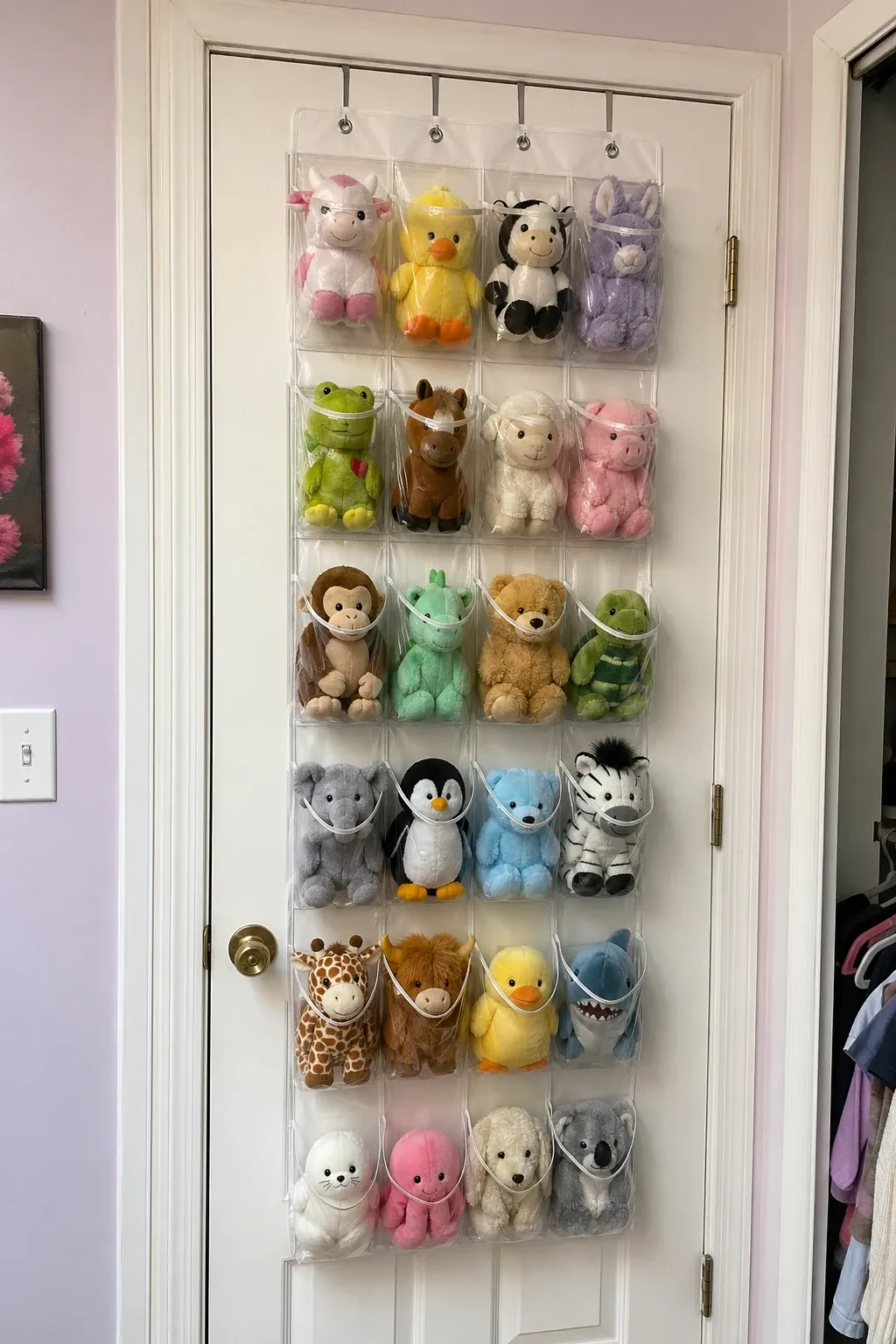
A clear over-the-door shoe organizer with large pockets holds small and medium stuffed animals in individual see-through compartments. Each animal gets its own pocket, which makes it easy for kids to find the one they want. The clear pockets let them see every option without pulling things out. Hang it on the back of the bedroom or closet door and it takes zero floor or wall space. When the door is closed, the whole collection is hidden.
Designer Tip: Choose an organizer with pockets that are at least 8 inches wide and deep. Standard shoe organizer pockets are too small for most stuffed animals. Look for the jumbo or extra-large pocket versions made for toys or accessories.
3. Stuffed Animal Zoo
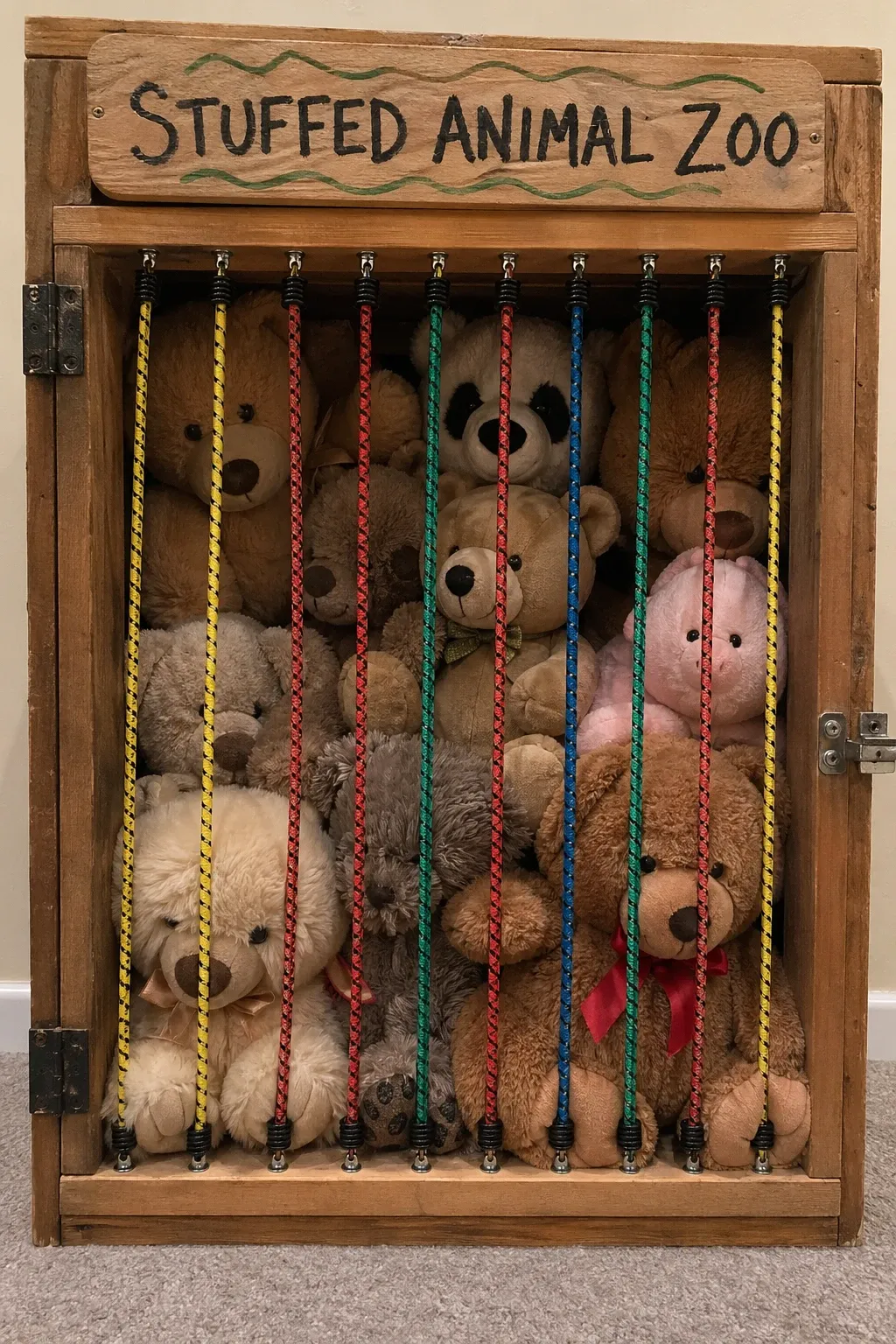
A stuffed animal zoo is a simple wooden or dowel cage where animals are visible through the bars and kids can pull them out through a gap at the top or between the dowels. It looks like a playful cage and kids love the concept of their animals being “in the zoo.” The zoo keeps animals corralled in one spot and the open design means the collection is always on display. Building one from a few wood planks and dowel rods is a straightforward weekend DIY project.
Designer Tip: Space the dowels or bars about 3 inches apart so kids can squeeze animals in and out without difficulty. Too close together and it is a struggle for small hands. Too far apart and the smaller animals fall through the gaps.
4. Storage Bean Bag
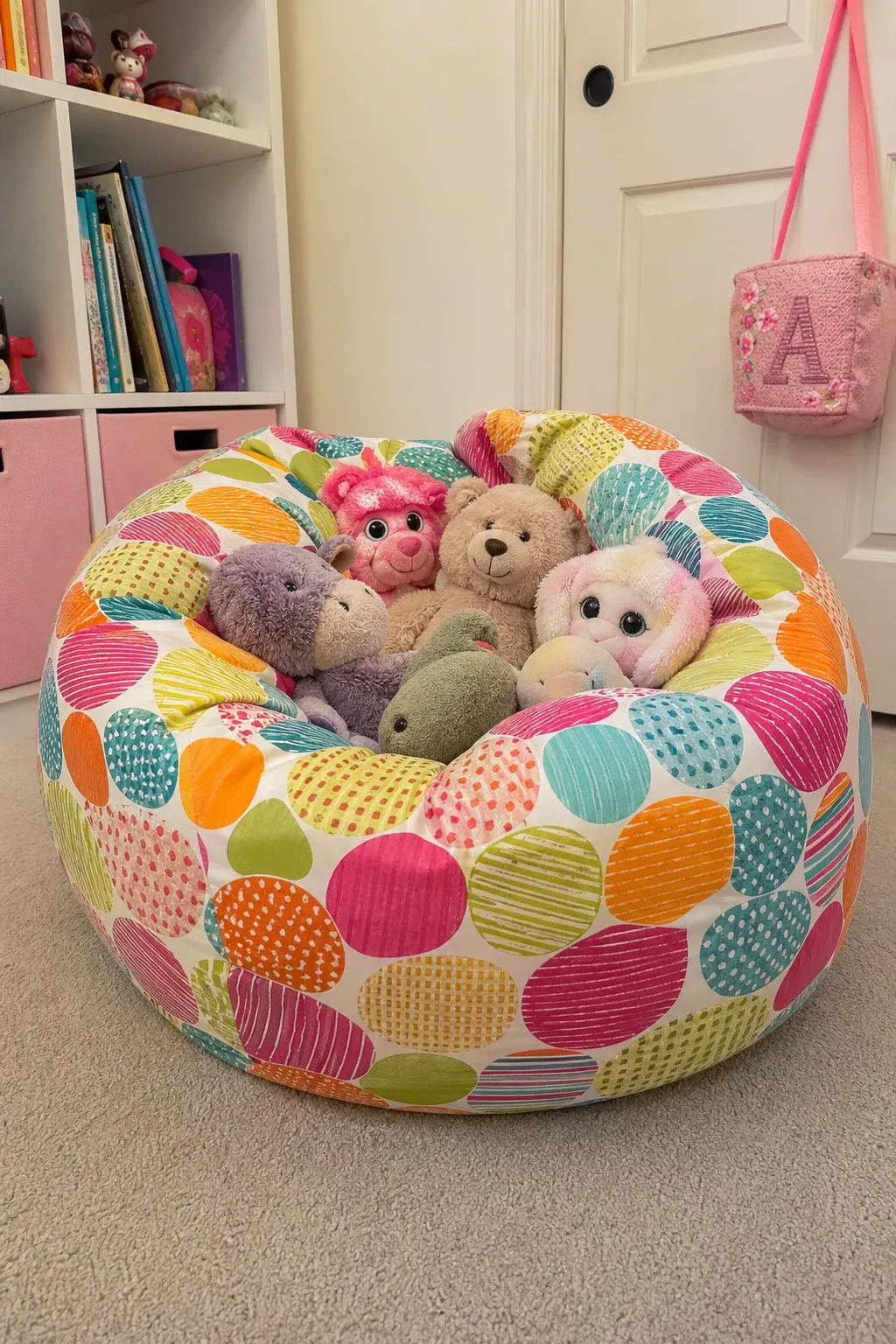
A stuffable bean bag cover turns the entire stuffed animal collection into functional seating. Stuff the animals inside the cover, zip it shut, and the kid has a comfortable bean bag chair that is actually filled with their toys. The animals are not visible, which keeps the room clean, but they are all in one contained spot and easy to access by opening the zipper. It solves the storage problem and adds a piece of furniture at the same time.
Designer Tip: Get a cover that is machine washable because it will be sitting on the floor and getting jumped on daily. Also choose a cover with a child-safe zipper that kids cannot open easily on their own, or the animals will end up back on the floor within an hour.
5. Macrame Hanging Nets
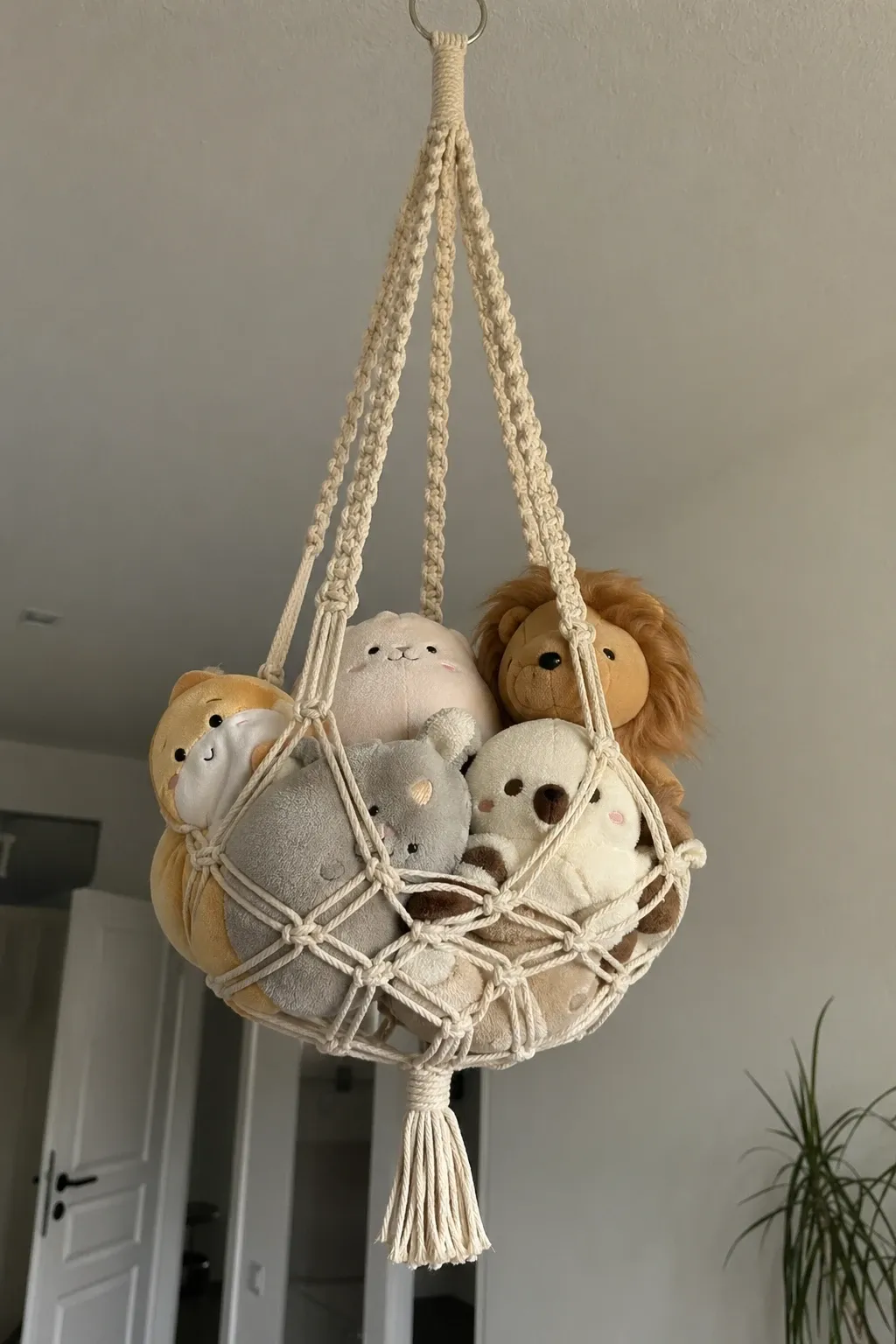
Macrame hanging nets or baskets suspended from the ceiling or a wall hook hold stuffed animals in a boho-style display that looks like decor rather than storage. The knotted rope has texture and visual interest that adds to the room is design instead of detracting from it. They work especially well in rooms with a natural, bohemian, or earthy theme. Multiple nets hung at different heights create a layered display that is both functional and decorative.
Designer Tip: Make sure the ceiling hook or wall anchor is rated for the weight of a full net of stuffed animals. A net packed with 20 plush toys is heavier than you expect. Use a proper toggle bolt or ceiling anchor, not just a screw in drywall.
6. Wall-Mounted Wire Baskets
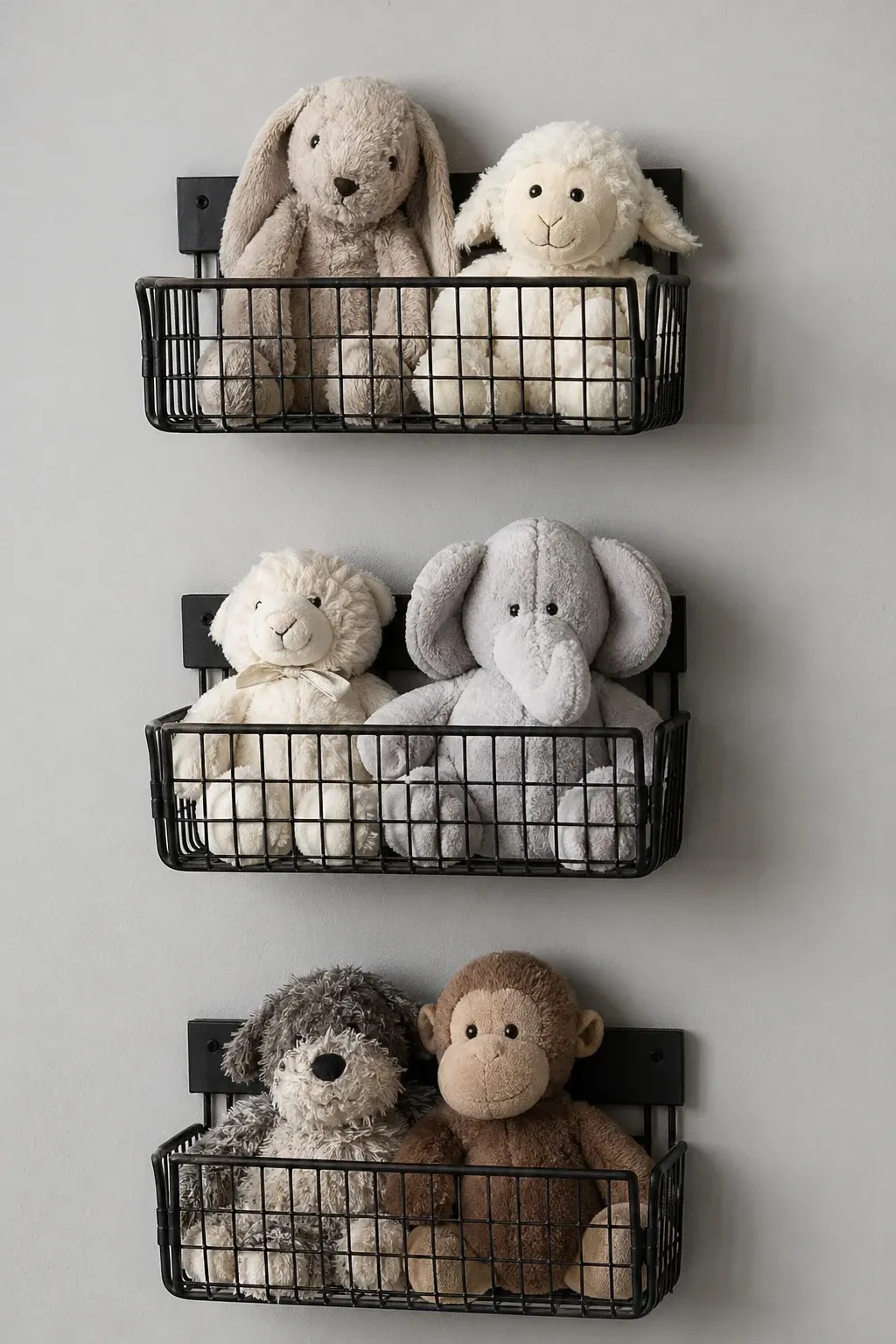
Large wire baskets screwed to the wall hold stuffed animals in an open, visible display. The wire lets you see everything inside without the animals falling out, and the wall mounting keeps them off the floor. A row of three baskets at different heights looks like a deliberate design choice and gives you room to sort animals by size or by the child is preference. Wire baskets also let air circulate, which prevents that musty smell stuffed animals can develop in closed containers.
More Looks You'll Want to Steal:
Designer Tip: Spray paint the wire baskets to match the room is color scheme. Silver or black wire baskets look industrial. White or pastel baskets blend with most kids room decor. A quick coat of spray paint turns a basic hardware store basket into a room-specific storage piece.
7. Hanging Fruit Baskets
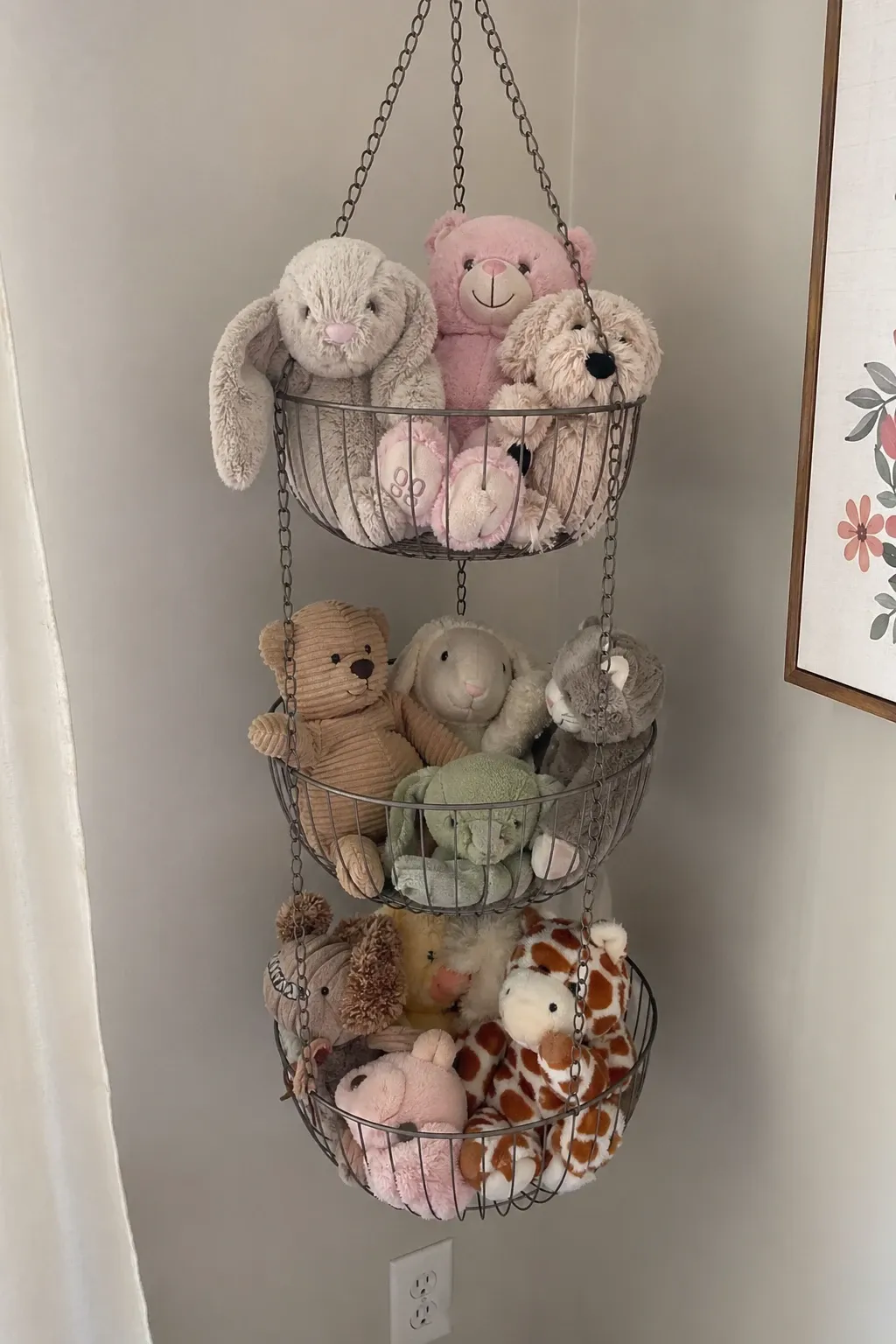
A three-tier hanging fruit basket, the kind you would normally hang in a kitchen, works perfectly for small and medium stuffed animals. Hang it from the ceiling or a plant hook and fill each tier with a few animals. The tiered design creates a vertical display that takes zero floor space and keeps the animals at different heights where kids can see them all. It is an inexpensive and creative repurpose of a kitchen item.
Designer Tip: Put the heaviest animals in the bottom tier and the lightest on top. This keeps the basket balanced and prevents it from swinging or tipping. If the basket spins, add a small piece of fishing line from the bottom tier to a discreet wall hook to keep it stable.
8. Under-Bed Rolling Trays
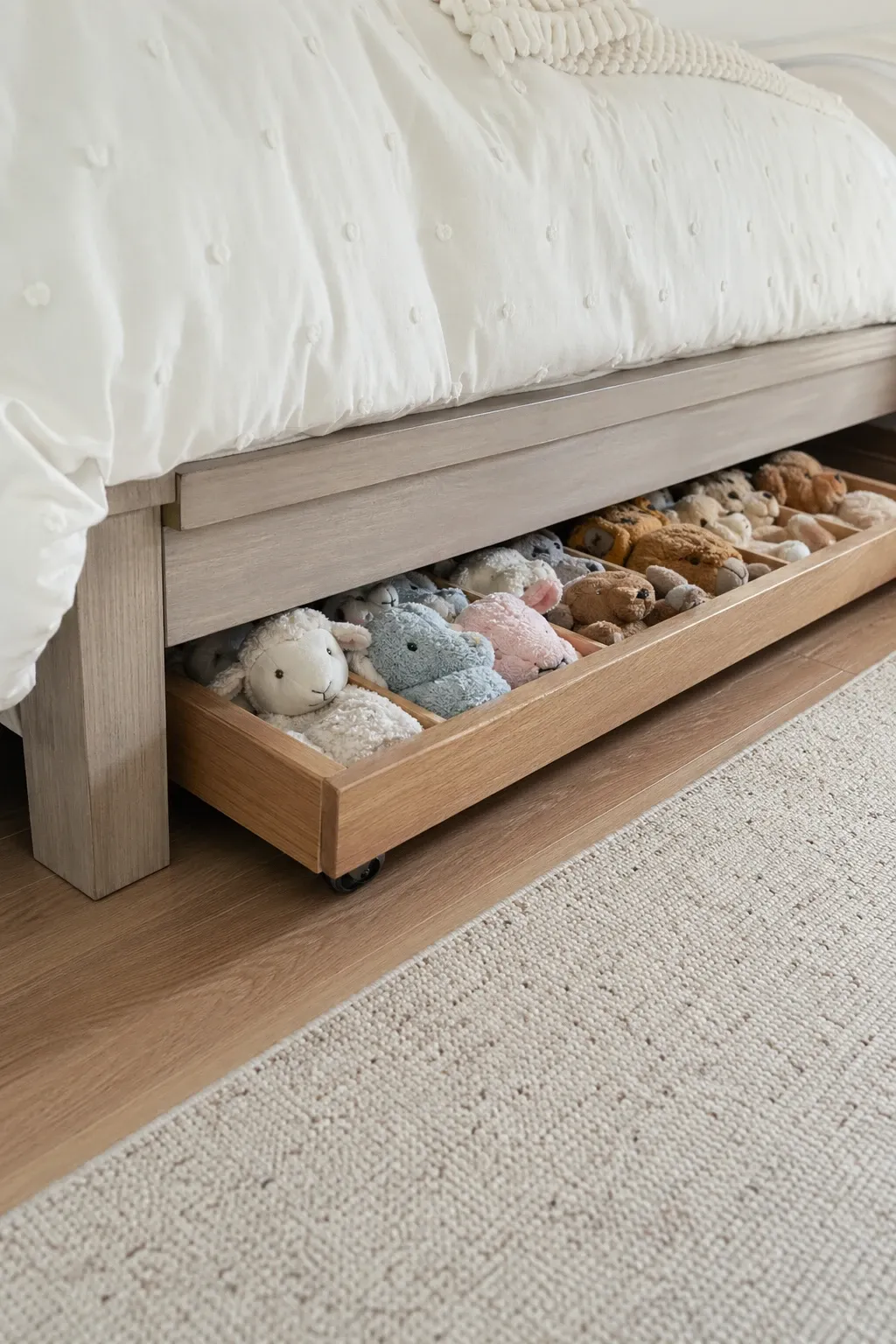
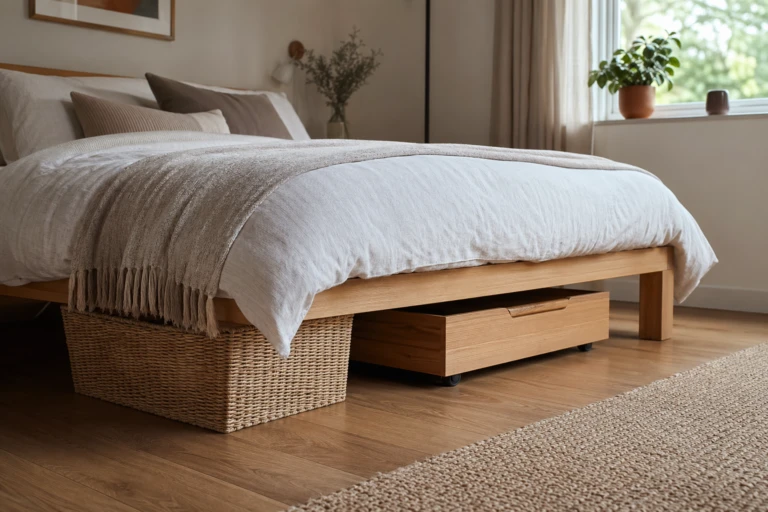
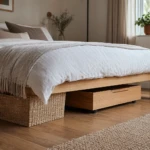
A low rolling tray that slides under the bed holds stuffed animals completely out of sight during the day. Pull it out at bedtime for the child to choose a sleeping buddy, then slide it back in the morning. This is ideal for kids who have too many animals for visible storage but are not ready to get rid of any. The rolling wheels make it easy enough for a child to pull out independently, which encourages them to manage their own toy storage.
Designer Tip: Use a tray with a low lip around the edge so animals stay on the tray when it rolls in and out. Without a lip, animals fall off the edges under the bed and end up in the dust bunny zone where nobody can reach them.
9. Repurposed Shoe Chain
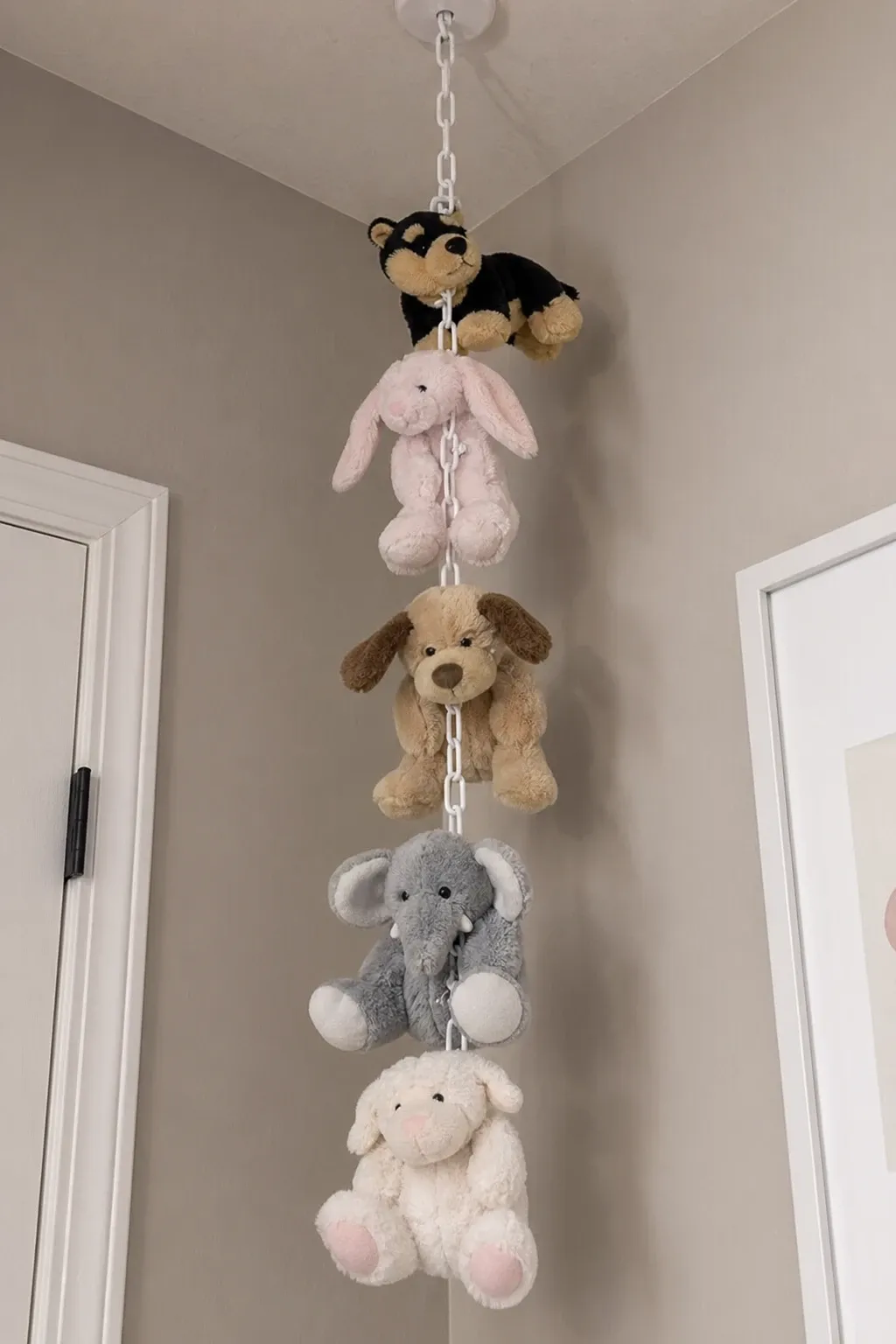
A vertical chain or rope with clips attached at intervals hangs from the ceiling or a closet rod and holds stuffed animals one above the other in a vertical line. Each animal clips on at its own height, creating a totem-pole display that takes up almost no floor space. This works well for large collections because you can hang multiple chains side by side. Closet rod chains designed for shoes work perfectly when repurposed for stuffed animals.
Designer Tip: Use clips that are strong enough to hold the animal but gentle enough not to leave marks on the fabric. Binder clips or clothespins work for light animals. For heavier ones, use padded clamp-style clips that grip without crushing.
10. Floating Shelves with Bungee Cords
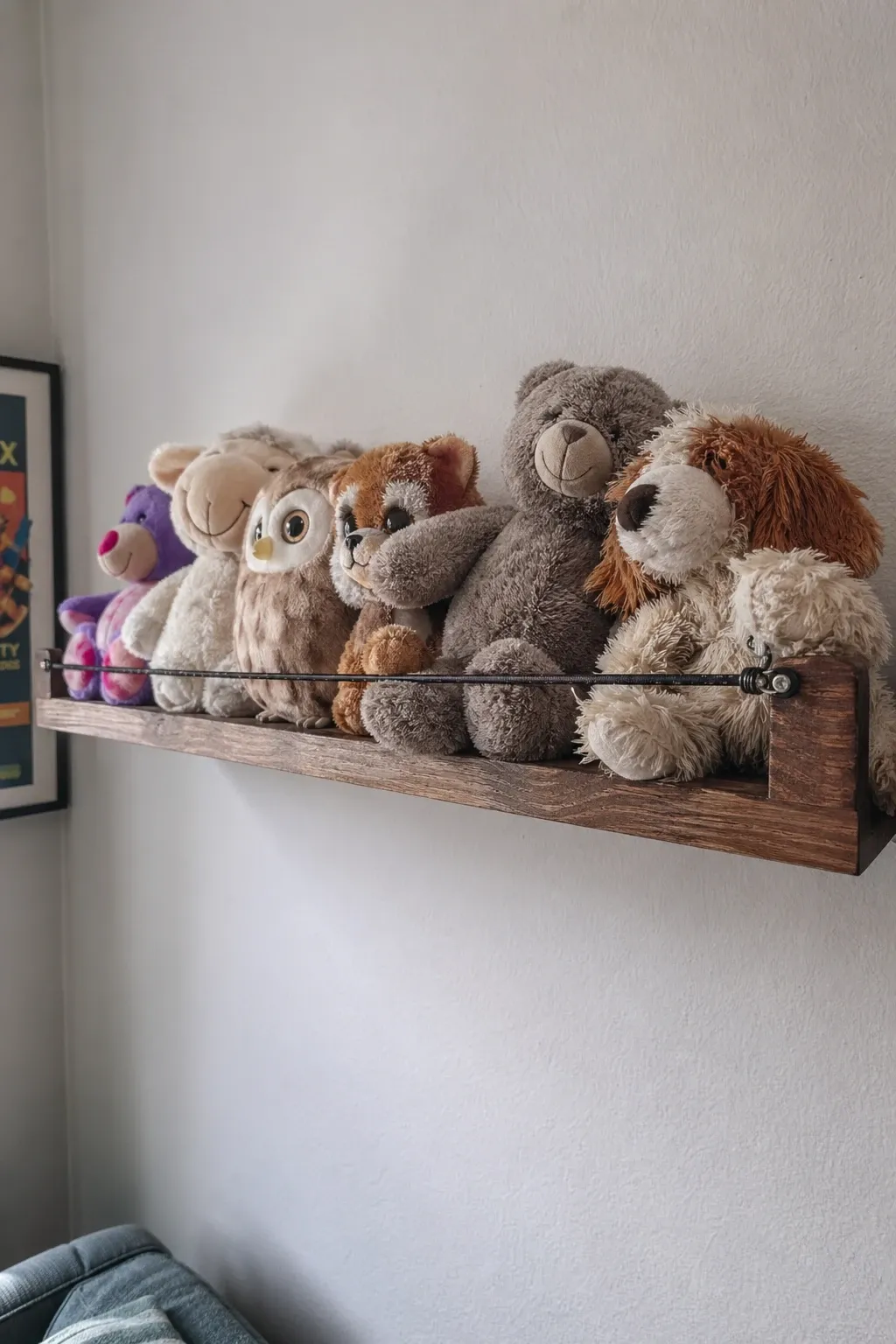
Floating shelves with a bungee cord or elastic strap across the front act like little seats with seatbelts for stuffed animals. The animals sit on the shelf and the cord keeps them from falling off. Kids can stretch the cord aside to grab an animal and the cord snaps back into place. It is a fun, visual display that treats each animal like it is sitting on a little bench watching the room. Multiple shelves at different heights create a wall of seated stuffed animals that looks playful and organized.
Designer Tip: Use colored bungee cord or ribbon that matches the room. A bright red or blue cord on white shelves looks intentional and fun. A random beige bungee cord looks like a DIY afterthought. The cord color is a small detail that makes the whole thing look designed.
11. Woven Seagrass Baskets
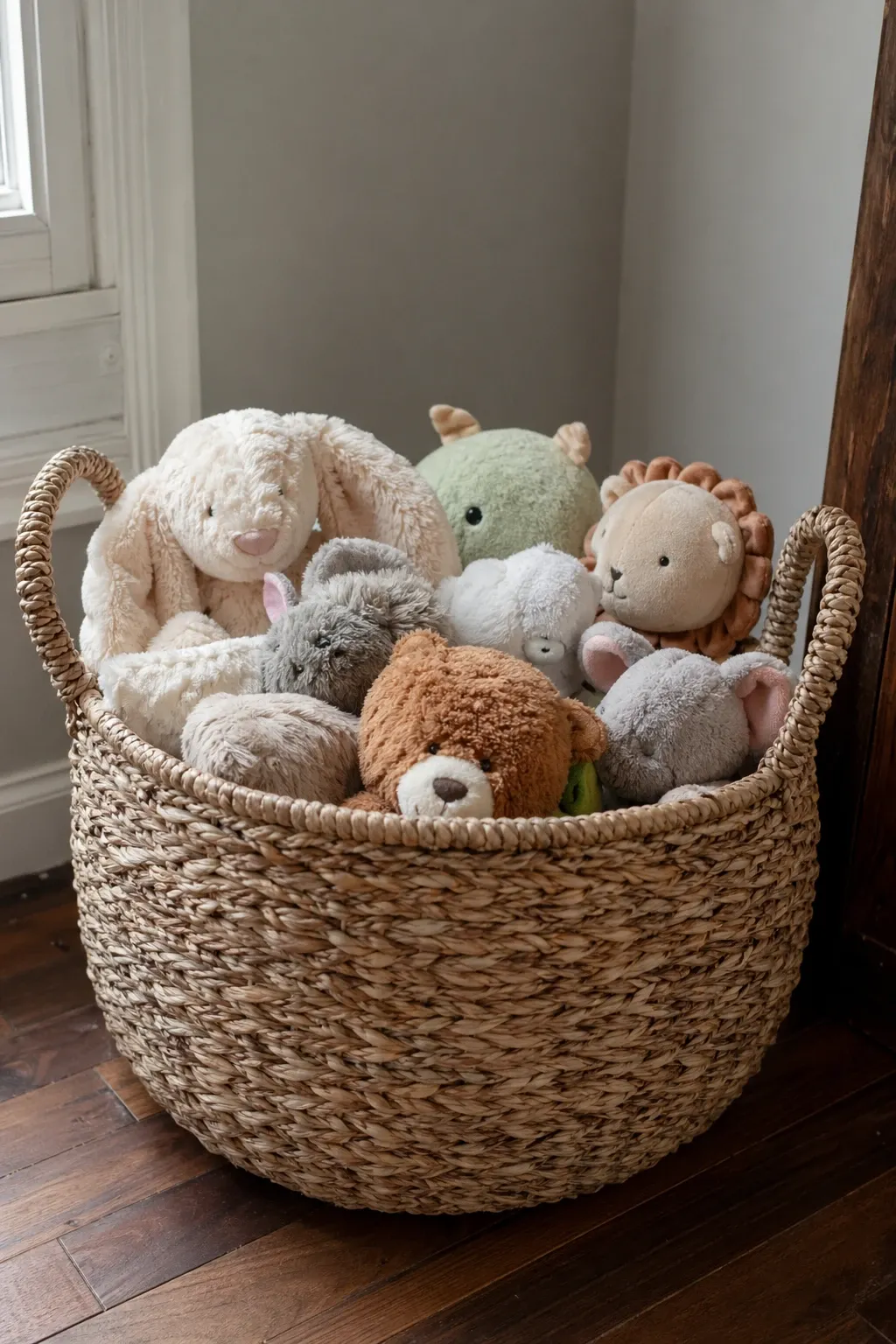
Large woven seagrass or rattan baskets on the floor are the simplest storage solution. Drop the animals in, done. The natural texture of the woven material adds warmth to the room and the baskets look like decor rather than toy storage. A tall basket with an open top is the easiest for kids to use because there is no lid, no zipper, and no mechanism. Just toss the animal in. The lack of complexity is exactly why kids will actually use it.
Designer Tip: Choose a basket that is wider than it is tall so animals do not pile up too deep and the ones at the bottom become impossible to reach. A wide, shallow basket keeps more animals visible and accessible than a tall, narrow one.
12. Toy Swing
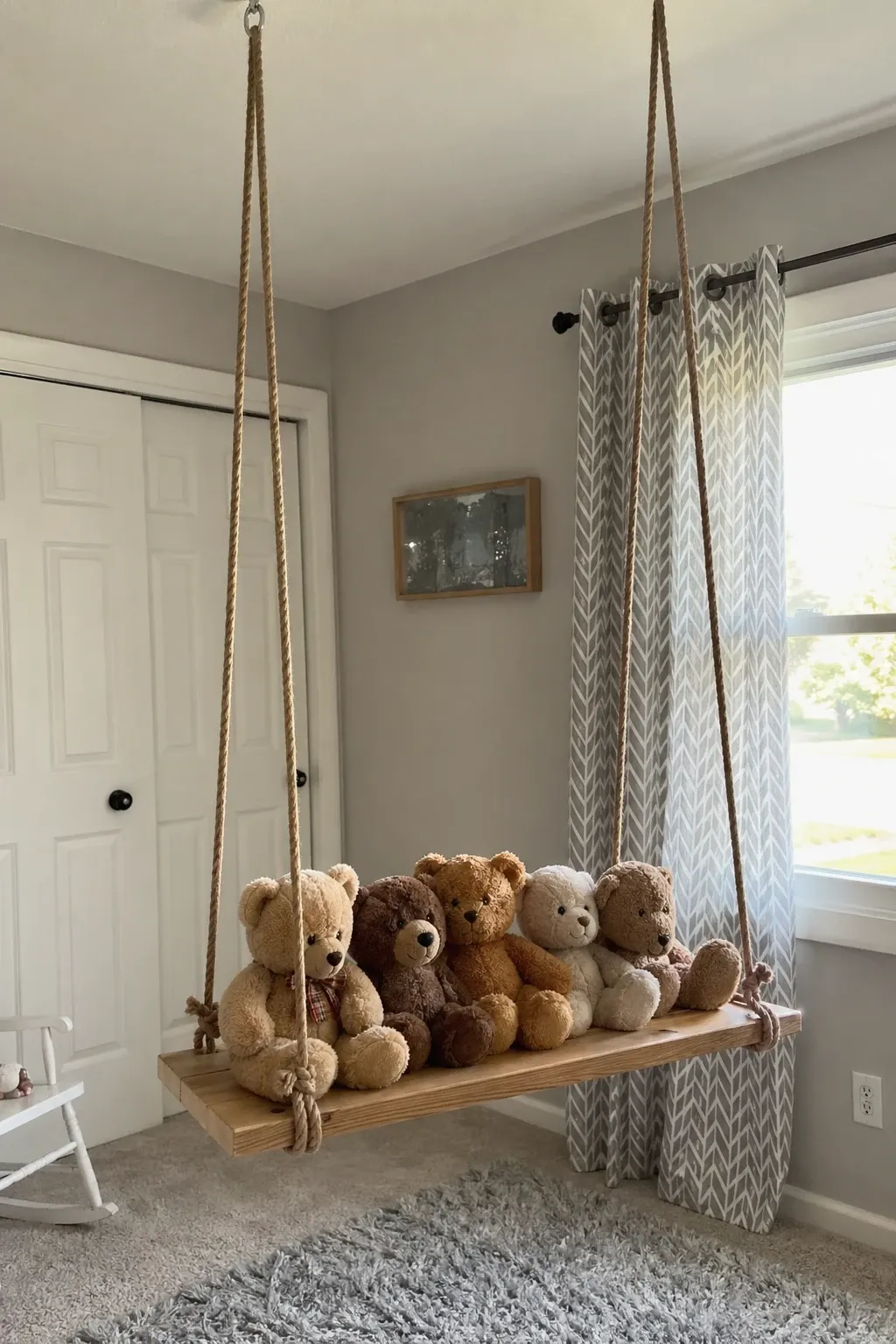
A small wooden or fabric swing hung from the ceiling or a wall bracket holds one or two favorite stuffed animals in a playful, whimsical display. The animal sits on the swing like it is at the playground. Kids love this because it makes the animal look like it is having fun even when no one is playing with it. Use a swing for the current favorite and rotate new favorites onto it as preferences change.
Designer Tip: Hang the swing at the child is eye level so they see their favorite animal first thing when they walk into the room. The swing works best as a single spotlight piece for one special animal, not as bulk storage for the whole collection.
13. Pegboard Display Wall
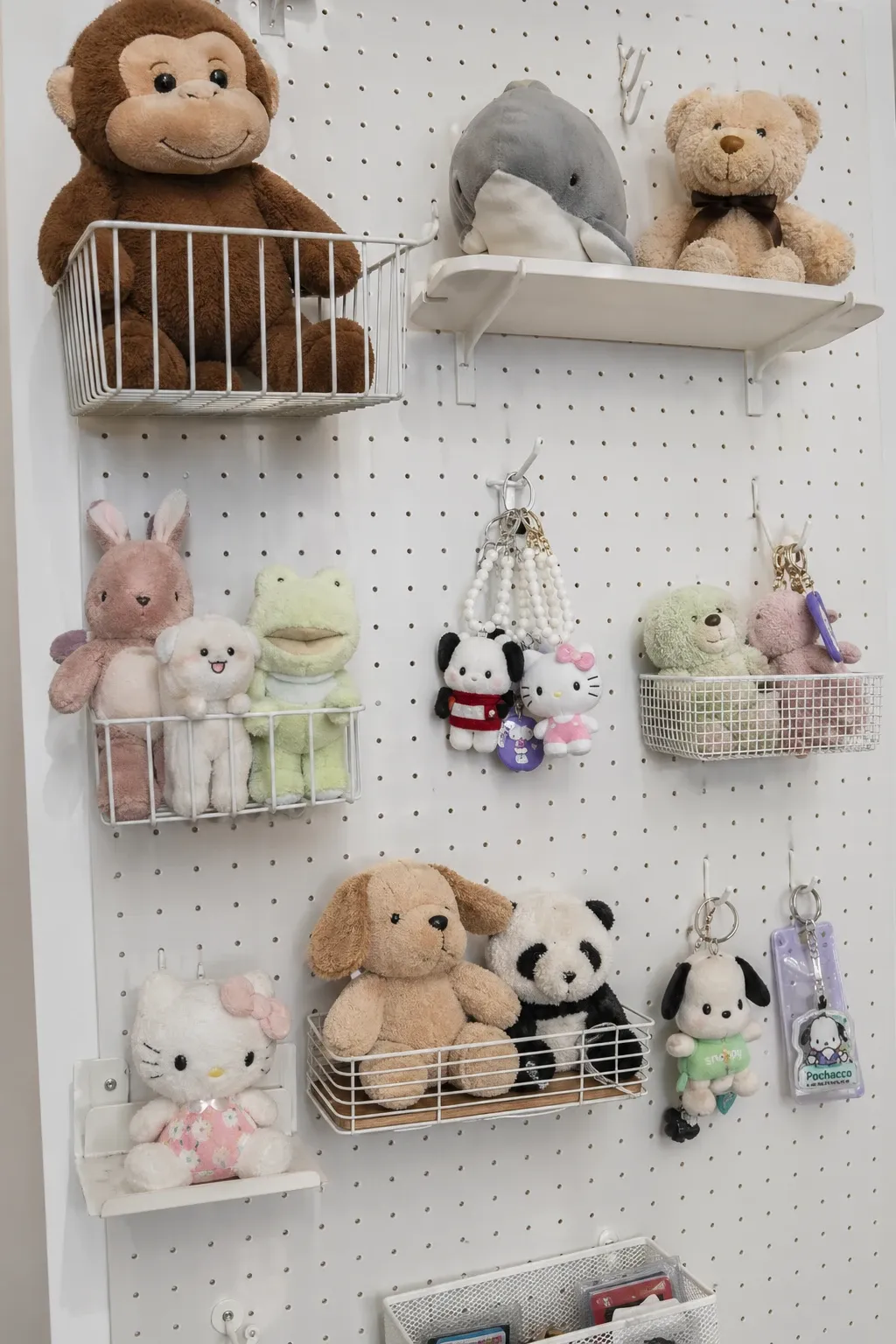
A pegboard with hooks and small shelves attached lets you hang and display stuffed animals on the wall in a customizable arrangement. Each animal can hang from a hook or sit on a small shelf peg. The layout is completely adjustable, so you can rearrange it whenever the collection changes. Paint the pegboard a fun color and it becomes a feature wall that doubles as functional storage. Kids enjoy rearranging the animals on the board as a play activity.
Designer Tip: Leave some empty hooks and shelves on the pegboard so there is room to add new animals without reorganizing everything. A completely full pegboard looks crowded and makes it hard to add or remove individual pieces.
14. Clear Stackable Bins
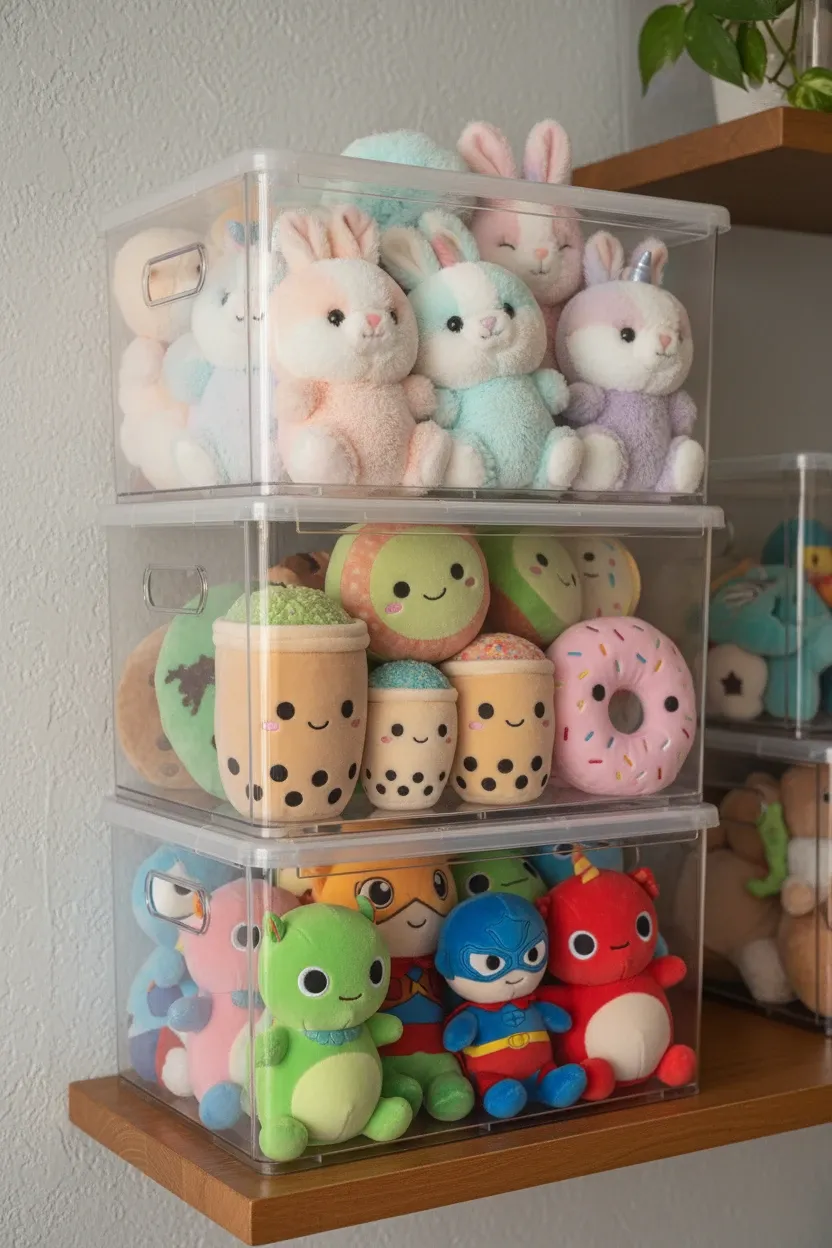
Clear stackable bins let kids see exactly which animals are inside without opening anything. Stack two or three bins in a closet or along a wall and the animals are contained, visible, and dust-free. The clear material means kids point to the animal they want and you pull the right bin. It removes the frustration of digging through an opaque bin looking for a specific bear that the child insists on sleeping with tonight.
Designer Tip: Use bins with front-opening doors rather than top-opening lids when stacking. Front-opening bins let kids access any level without unstacking the whole tower. Top-opening bins require removing every bin above to get to the one on the bottom.
15. Canvas Cubes in Cubby Units
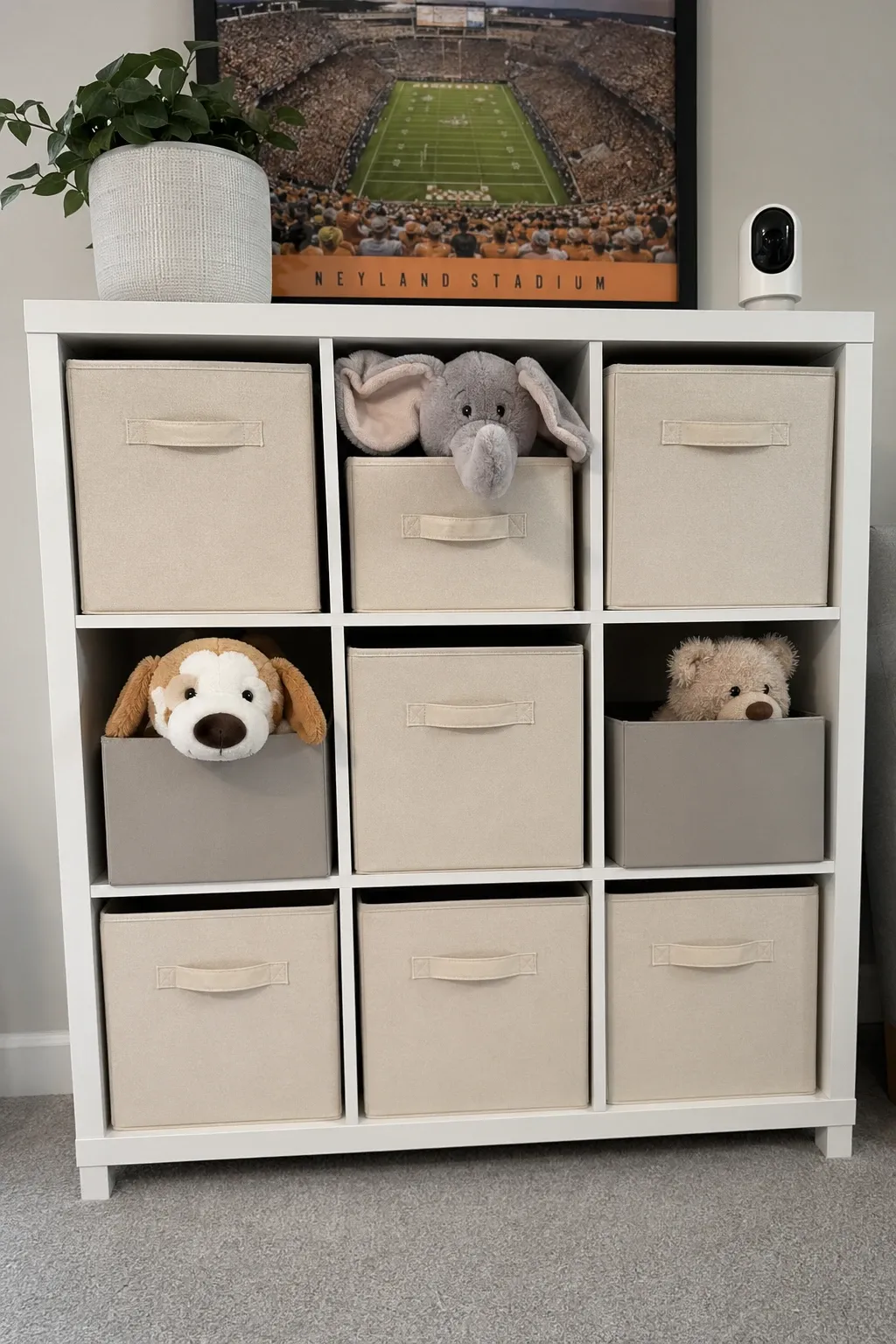
Canvas cube bins that slide into cubby shelving units like Kallax keep stuffed animals organized by category or by child. Each cube holds a handful of animals and slides in and out of the shelf unit like a drawer. Label each cube, one for bears, one for dogs, one for bedtime favorites, and the system stays organized because there is a clear spot for everything. The cubes also make it easy for kids to carry a group of animals to another room for play.
Designer Tip: Choose canvas cubes that are slightly smaller than the cubby opening so they slide in and out smoothly. Cubes that are too tight jam in the cubby and frustrate kids. A half-inch gap on each side is enough for smooth operation.
16. Repurposed Garden Planters
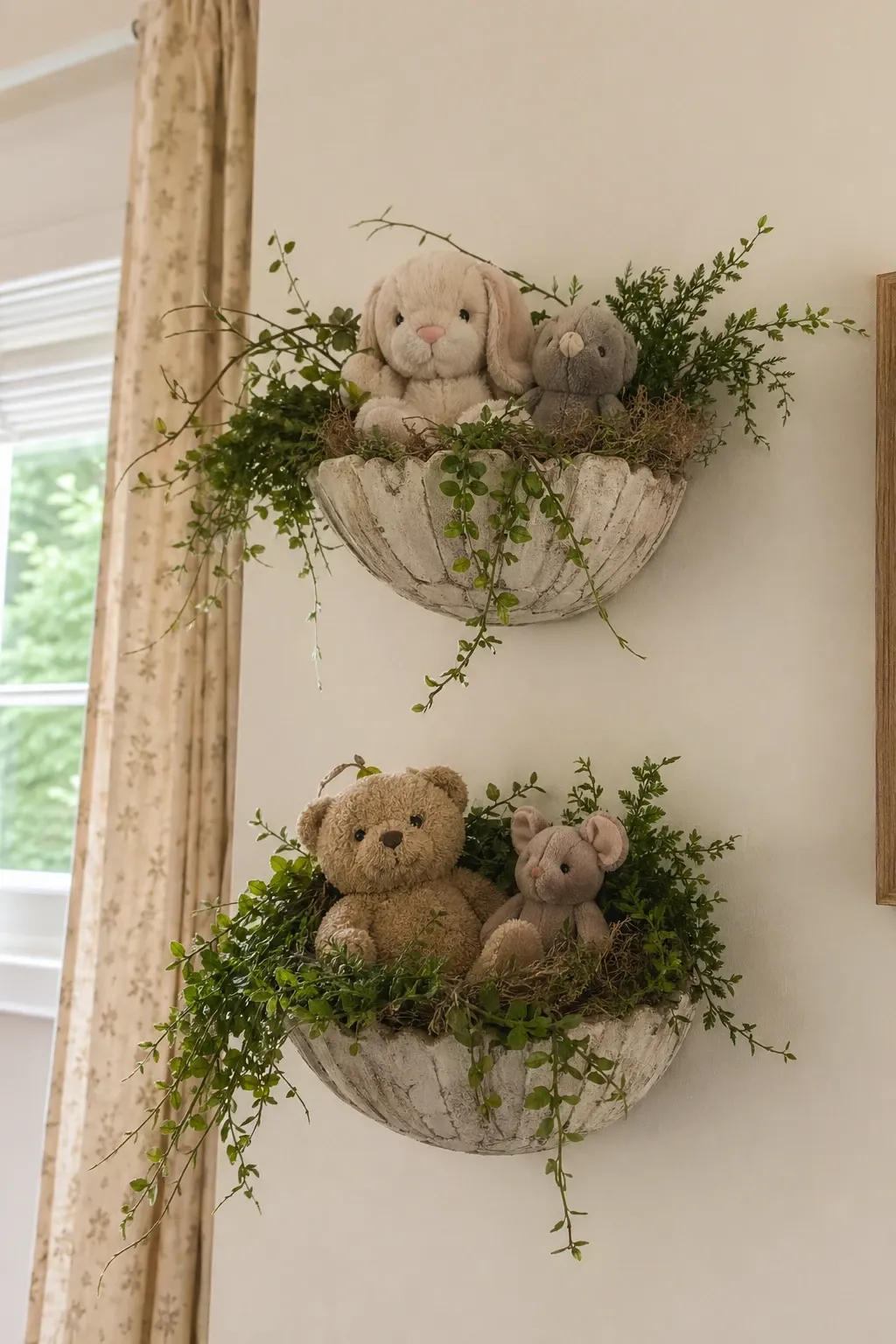
Large garden planters or tall ceramic pots repurposed as stuffed animal containers add an unexpected, playful touch to a kids room. The animals peek out over the top of the planter like they are growing in a garden. It is a fun visual that makes the storage feel like part of the room is theme rather than just a practical solution. Lightweight resin or plastic planters are best because ceramic is heavy and breakable in a kids room.
Designer Tip: Choose a planter that is wide at the top and narrow at the bottom so animals are easy to drop in and pull out. A planter with a narrow opening makes it hard for small hands to grab the animal they want without dumping everything out.
The best stuffed animal storage is the one your kid will actually use. If it is complicated, requires adult help, or hides the animals completely, kids will ignore it and the animals will end up back on the floor. Pick something visible, simple, and within their reach, and the storage will actually work.
Frequently Asked Questions
How do I store a lot of stuffed animals without taking up too much space?
Go vertical. Wall-mounted baskets, corner hammocks, hanging nets, and pegboard displays all use wall and ceiling space instead of floor space. A stuffable bean bag cover is also effective because it turns the animals into furniture, so the storage is the seating.
How do I get my child to put stuffed animals away?
Make the storage fun and easy. If putting an animal away requires one simple motion, like tossing it into a basket or clipping it on a swing, kids will do it. If it requires opening a lid, sorting by category, and stacking neatly, they will not. Match the storage to the child is age and ability.
How do I clean stuffed animals that have been in storage?
Most stuffed animals can go in the washing machine on a gentle cycle inside a pillowcase or mesh laundry bag. Air dry them or tumble dry on low heat. For delicate or battery-operated animals, spot clean with a damp cloth and mild soap. Give stored animals a wash at least once or twice a year.
When should I get rid of stuffed animals my child no longer plays with?
Let the child help decide. Do a seasonal sort where they pick their favorites to keep accessible and move the rest to high-shelf or under-bed storage. If an animal stays in storage untouched for six months to a year, suggest donating it. Forcing kids to part with animals usually backfires, so let them lead the process.