Small entryways have a shoe problem. There is barely room to open the front door, let alone line up shoes for every family member. But the entryway is where shoes naturally land, so you need a system that works in a tight space without making it feel tighter. Here are 14 shoe storage ideas designed for entryways where every inch counts.
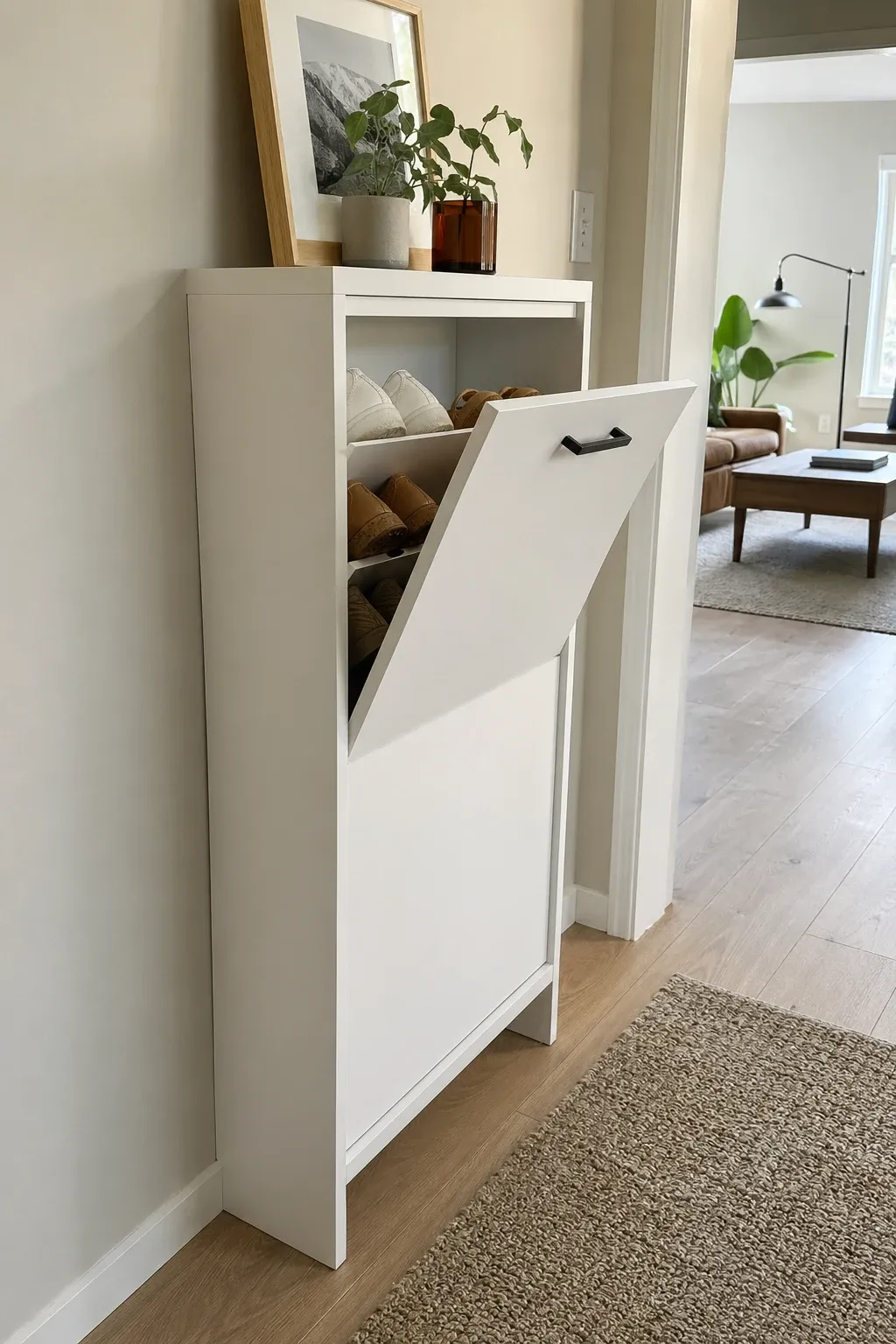
A tilt-out cabinet is only about 7 to 9 inches deep when closed. The front looks like a regular narrow cabinet. Open the tilt-out drawers and shoes are stored at an angle inside, fitting more pairs than the slim profile suggests. When closed, nobody sees shoes. The entryway looks clean and the cabinet doubles as a surface for keys and mail on top.
Designer Tip: Pick a cabinet color that matches or blends with the wall. A cabinet that blends in visually disappears and makes the entryway feel bigger. A contrasting color cabinet draws attention and makes the small space feel more crowded.
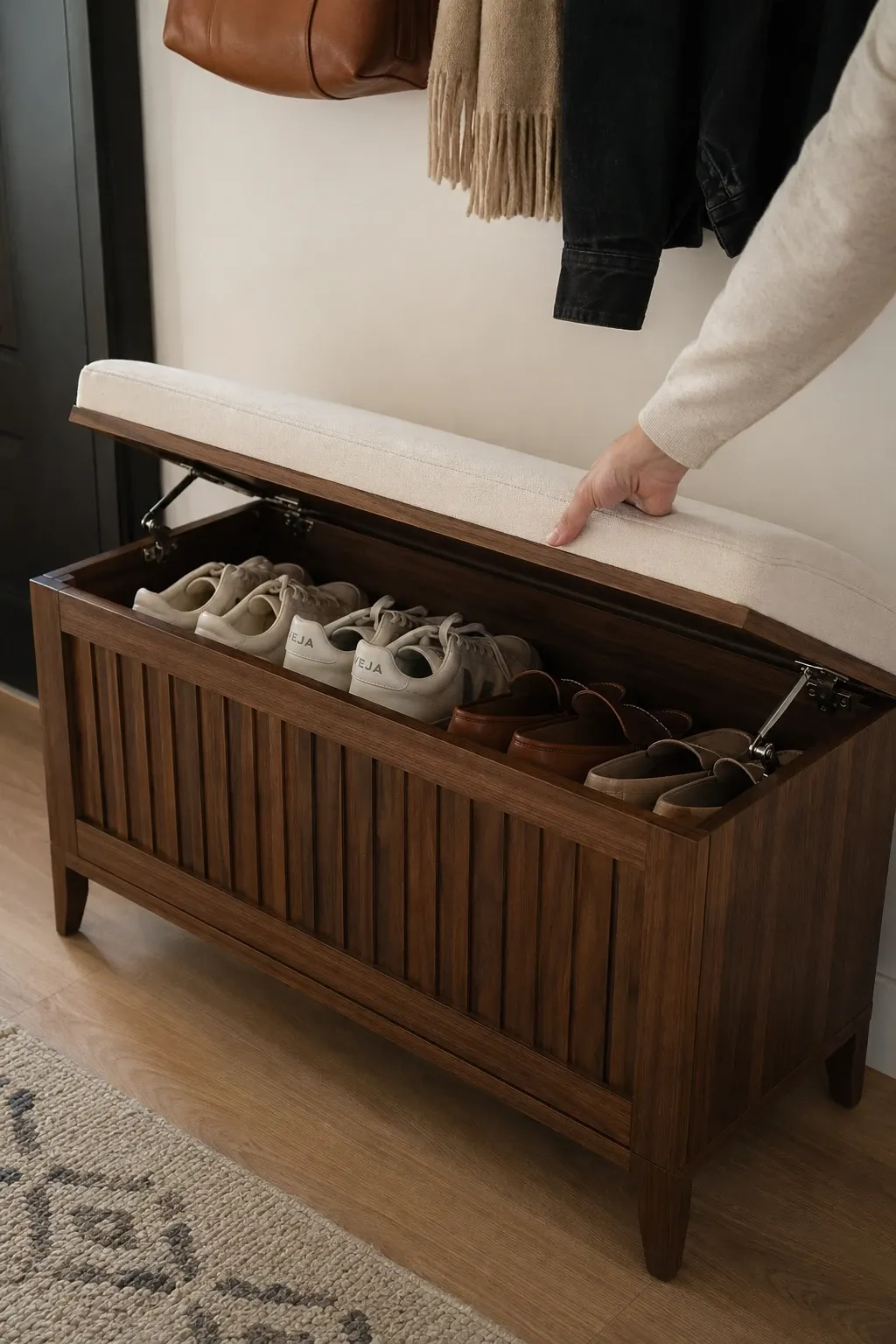
A bench with cubbies or a lift-top compartment gives you a place to sit while putting on shoes and a place to store them underneath. In a small entryway, furniture needs to do more than one job. A storage bench handles seating, shoe storage, and sometimes bag storage on a shelf below, all in one piece. Guests sit down, kids sit down, and shoes stay organized below the seat.
Designer Tip: Choose a bench that is proportional to the space. A bench that is too large dominates the entryway and makes it hard to walk past. Measure the wall where the bench will go and leave at least 30 inches of clear walkway beside it.
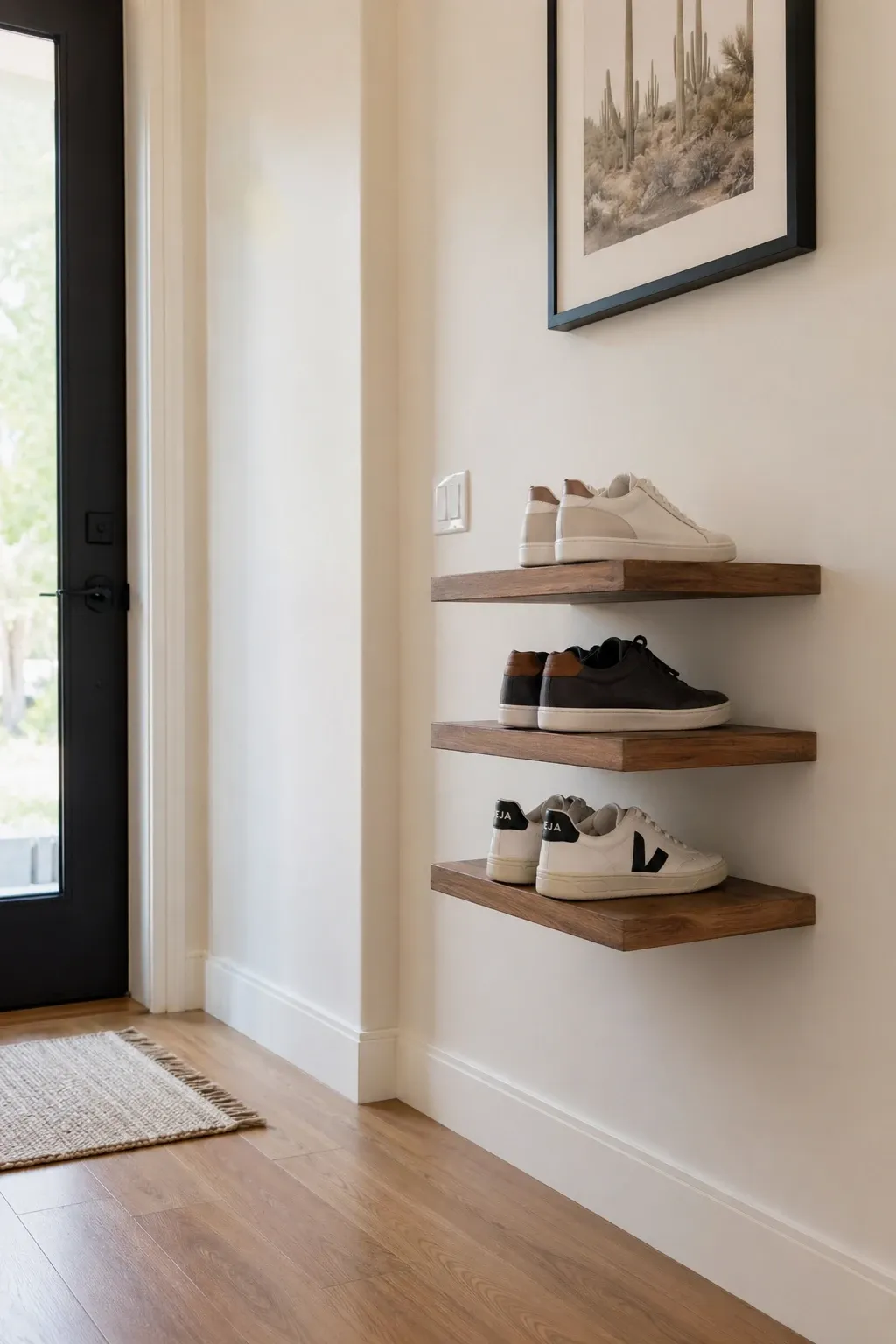
Narrow floating shelves mounted low on the wall hold a few pairs of daily shoes without taking up any floor space. The shoes sit on the shelves and the floor below stays completely clear for mopping and vacuuming. Two or three shelves stacked vertically hold six to nine pairs in about 3 feet of wall space. This keeps the most-worn shoes accessible right by the door.
Designer Tip: Mount shelves no deeper than 10 inches so they do not stick out into the walkway. In a narrow entryway, deep shelves become a hip-bumping hazard. Shallow shelves hold shoes and stay out of the traffic path.
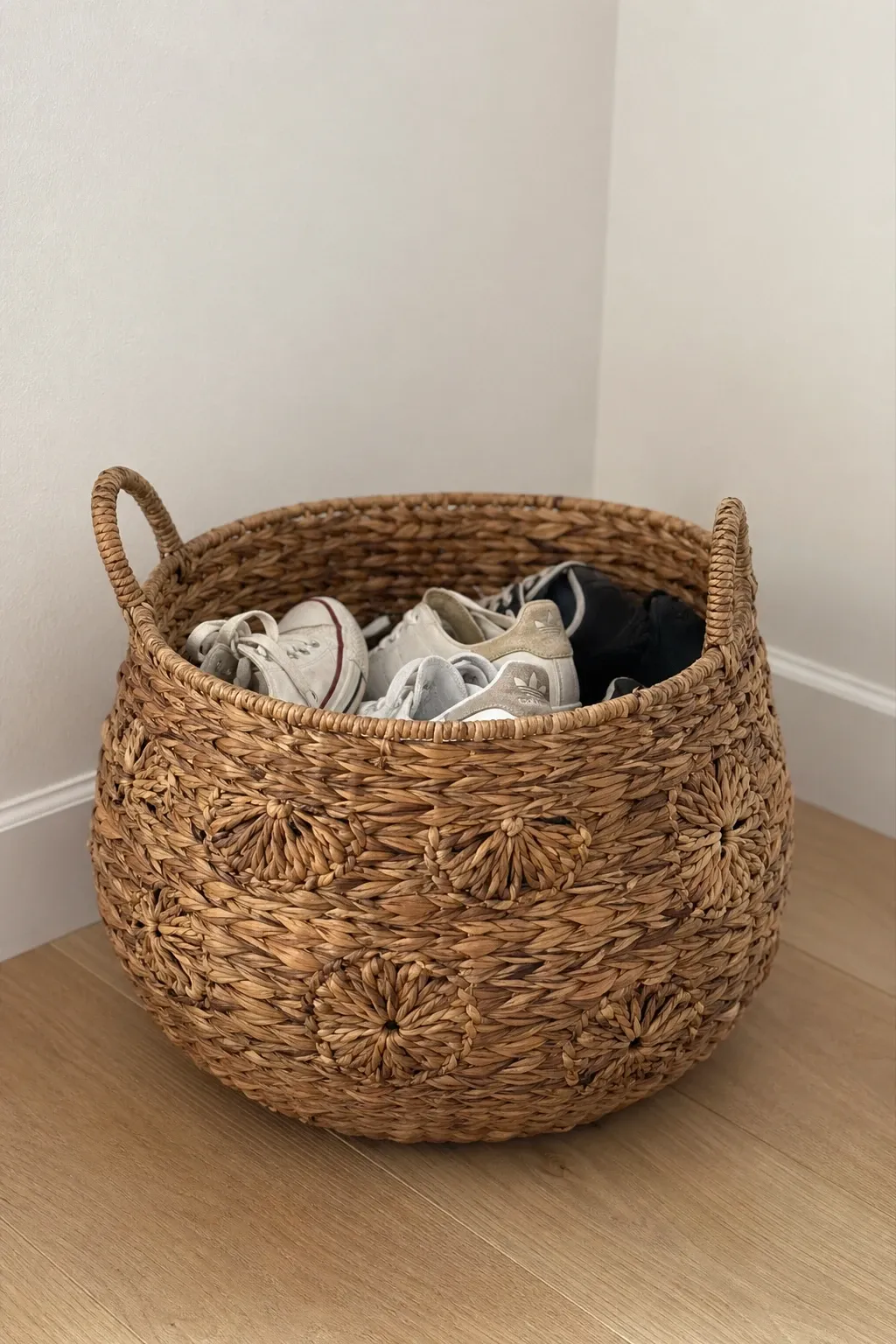
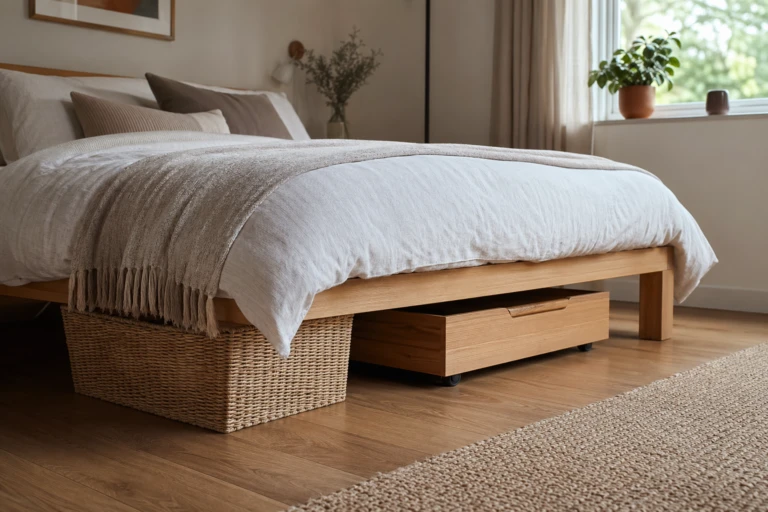
A couple of woven baskets on the floor near the door give you a toss-and-go shoe solution. No folding, no organizing, just drop shoes in the basket when you walk in. The baskets look like decor while hiding the shoe mess inside. This is the lowest-effort system for households that will never fold or organize shoes neatly. The basket contains the chaos and makes it look intentional.
Designer Tip: Use one basket per person or one for adults and one for kids. A single basket for the whole family overflows fast and becomes a pile with walls. Two baskets split the load and keep things findable.
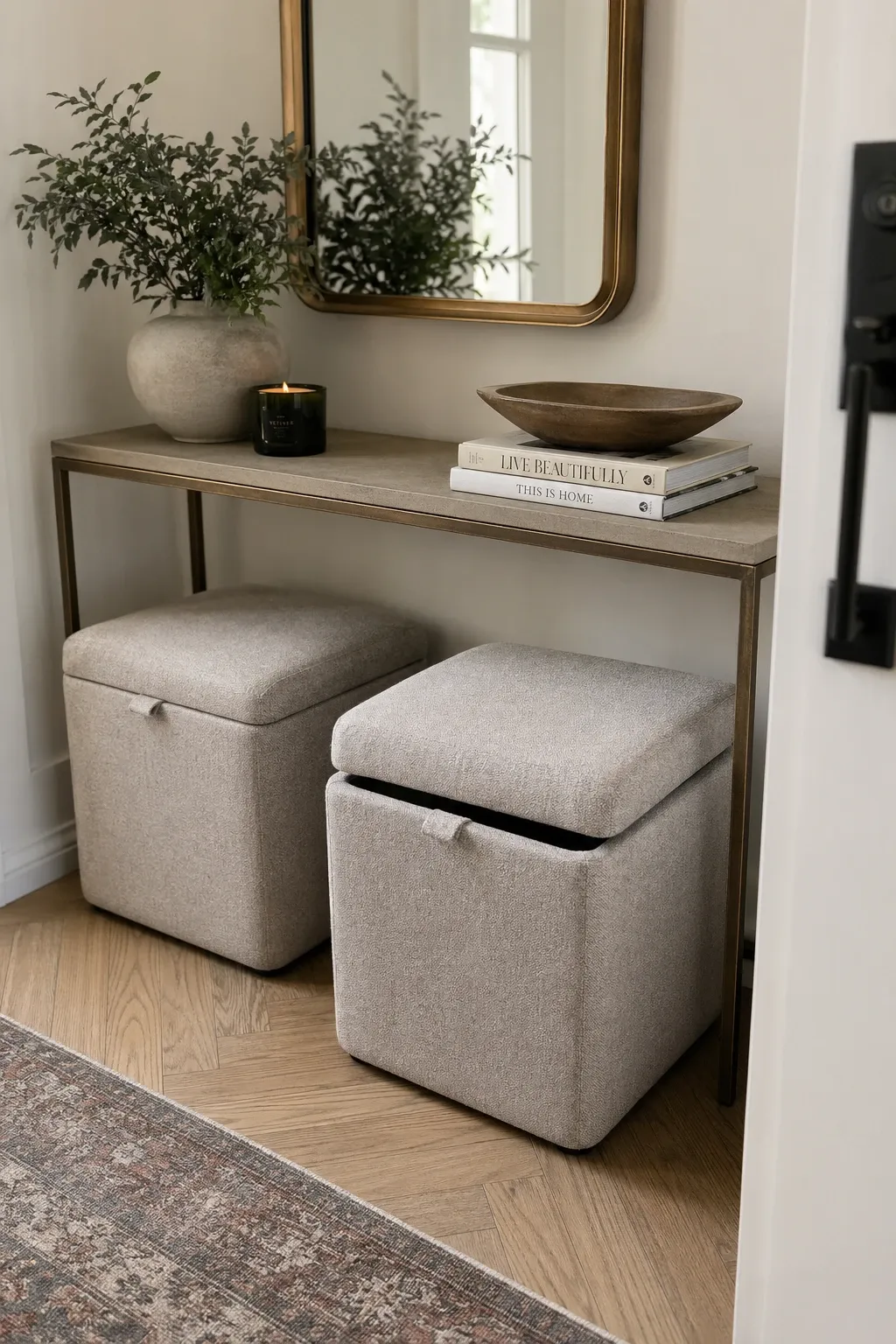
A storage ottoman tucked under a console table hides shoes inside a piece of furniture that looks like it belongs in the entryway. Lift the lid, drop in shoes, close the lid. When guests arrive, they see a styled console table with an ottoman underneath, not a shoe rack. This setup works well in entryways that double as a first impression of the home.
Designer Tip: Make sure the ottoman slides in and out from under the console easily. If it is a tight fit, you will stop using it because pulling it out every time is annoying. A couple of inches of clearance on each side makes it smooth.
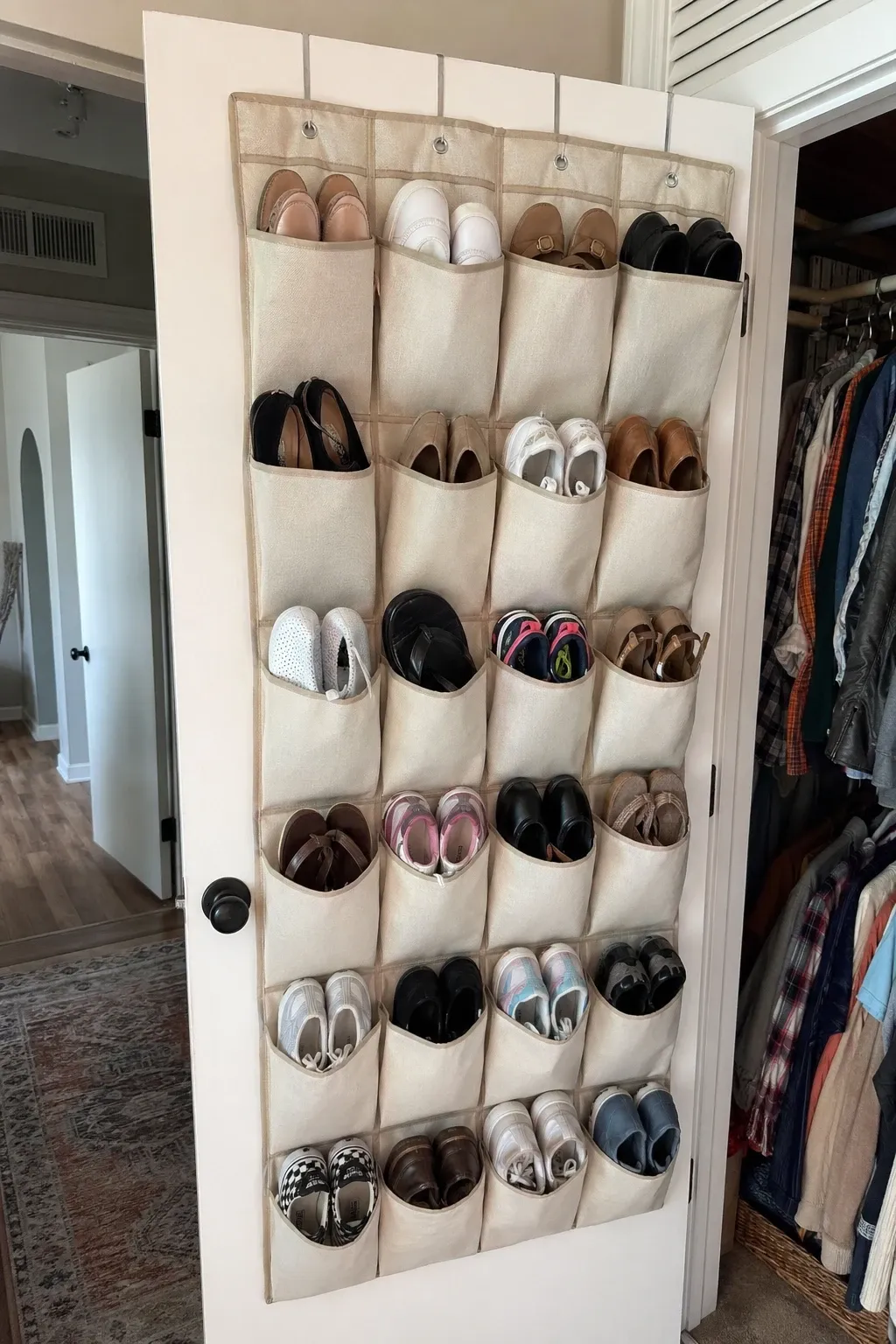
If the entryway has a closet door, an over-the-door organizer with clear pockets holds shoes on the back of the door. Zero floor space, zero wall space, zero visible clutter. Open the door, grab your shoes, close the door, and all the shoes disappear. This is the ultimate hidden storage for small entryways because it uses a surface that is normally completely wasted.
Designer Tip: Put frequently worn shoes at eye level for quick access. Seasonal or rarely worn shoes go in the top and bottom pockets. Eye-level placement speeds up the morning routine.
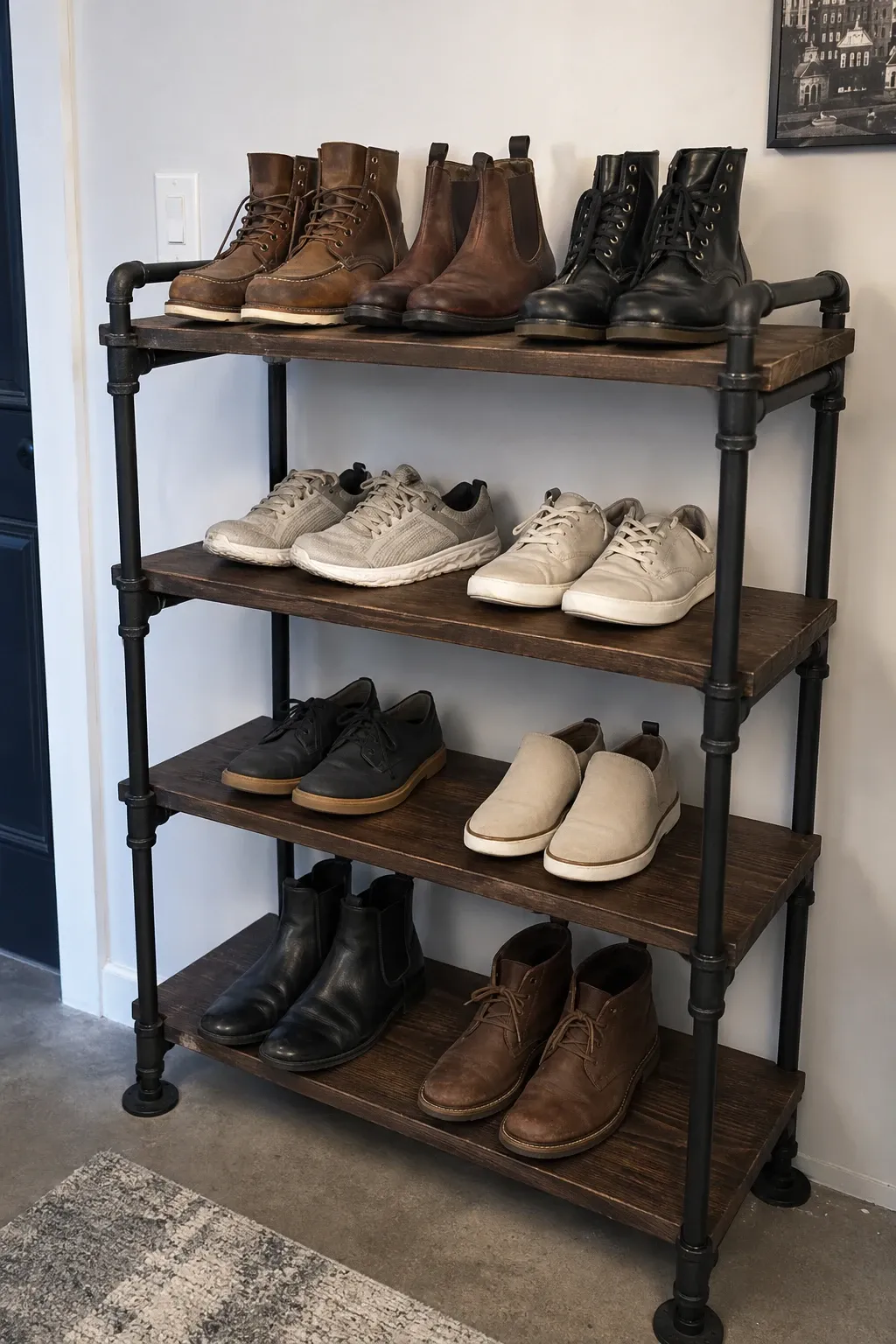
A small shoe rack made from black iron pipe fittings mounted low on the wall holds shoes on pipe rails. The industrial style works in modern and loft-style homes and the open design allows air circulation so shoes dry faster. Two horizontal pipes, one above the other, create a simple two-tier rack that holds four to six pairs in a compact wall section.
Designer Tip: Keep the rack small and proportional to the entryway. A massive industrial pipe rack in a tiny entryway looks like a plumbing accident. A small, clean two-tier setup looks intentional and stylish.
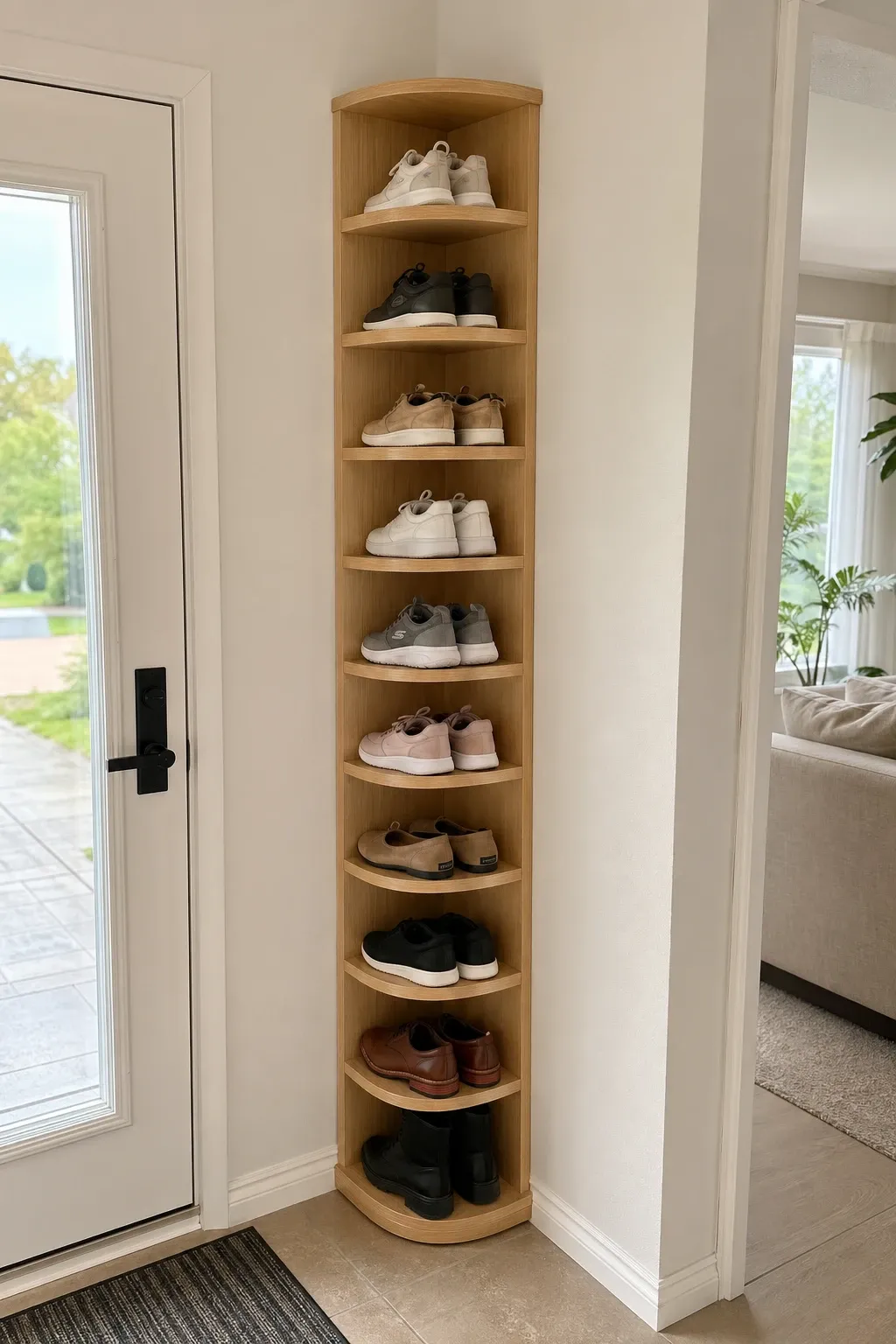
A tall narrow tower that fits in the corner of the entryway stacks shoes vertically in a footprint no bigger than one pair of shoes on the floor. Towers use the height of the room rather than the width, which is exactly what small entryways need. Some towers have open shelves while others have pull-out trays. Either way, you get a lot of pairs stored in very little floor area.
Designer Tip: Anchor tall towers to the wall with a bracket. A top-heavy shoe tower in a high-traffic entryway is a tipping risk, especially if kids pull shoes from the bottom shelf. A wall anchor keeps it stable.
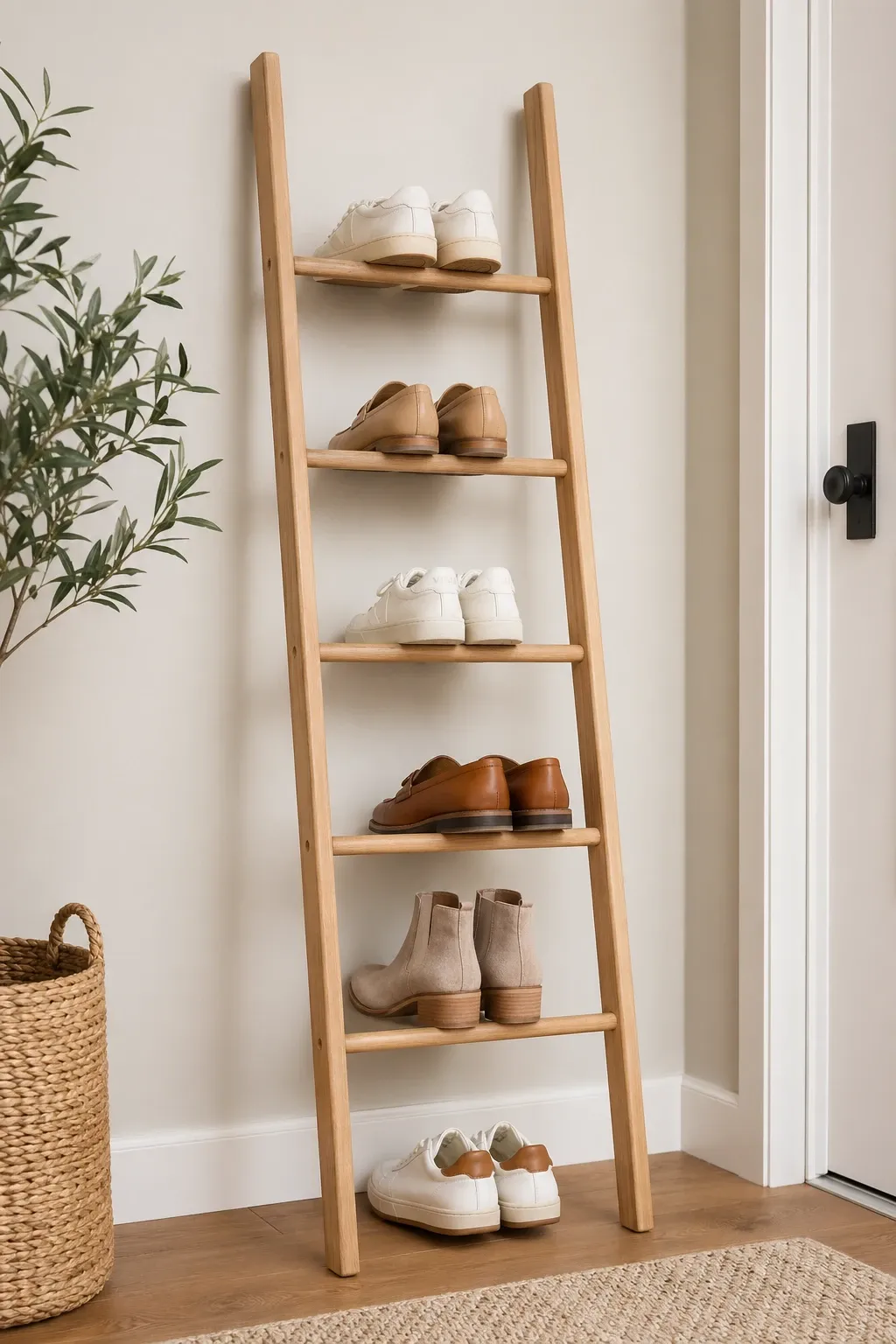
A leaning ladder rack with angled shelves rests against the wall and holds shoes on each tier. The lean gives it a casual, modern look and the angled profile takes up less floor space than a straight bookshelf. Ladder racks are lightweight and easy to move for cleaning. They add a decorative element to the entryway while holding five to eight pairs on three or four tiers.
Designer Tip: Place non-slip pads on the feet so the ladder does not slide away from the wall on hard floors. A sliding ladder with shoes on it is a mess waiting to happen, especially on tile or hardwood entryway floors.
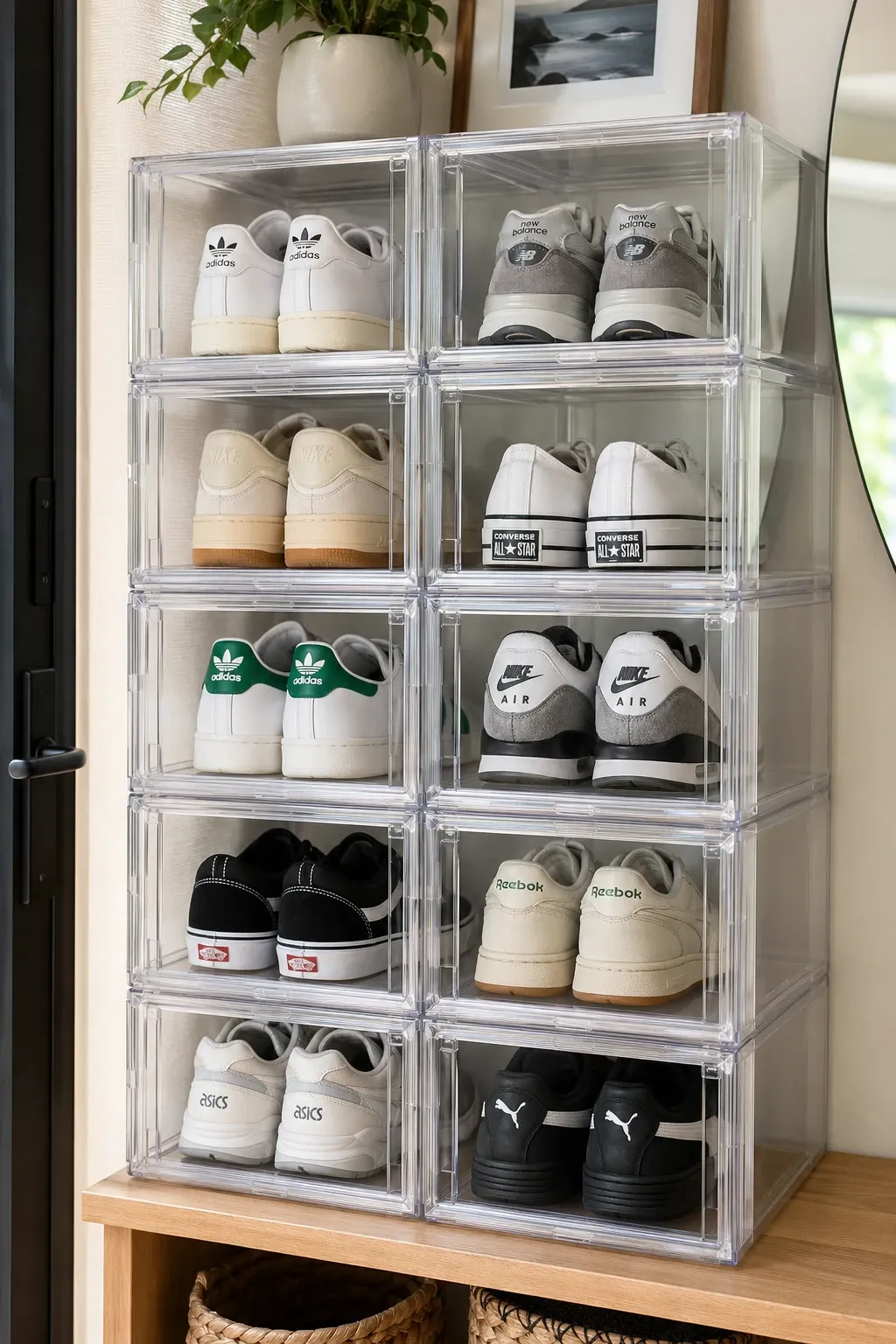
Clear shoe boxes stacked in a column against the wall hold one pair each and let you see every shoe without opening any box. The stack takes up minimal floor space and the clear walls make selecting shoes fast. This system looks neat and organized, which matters in an entryway that guests see first. Dust and dirt stay outside the boxes, keeping shoes cleaner than open storage would.
Designer Tip: Stack boxes no more than five or six high in the entryway. A towering column of shoe boxes looks like you are moving in. A shorter stack looks like organized decor rather than storage overflow.
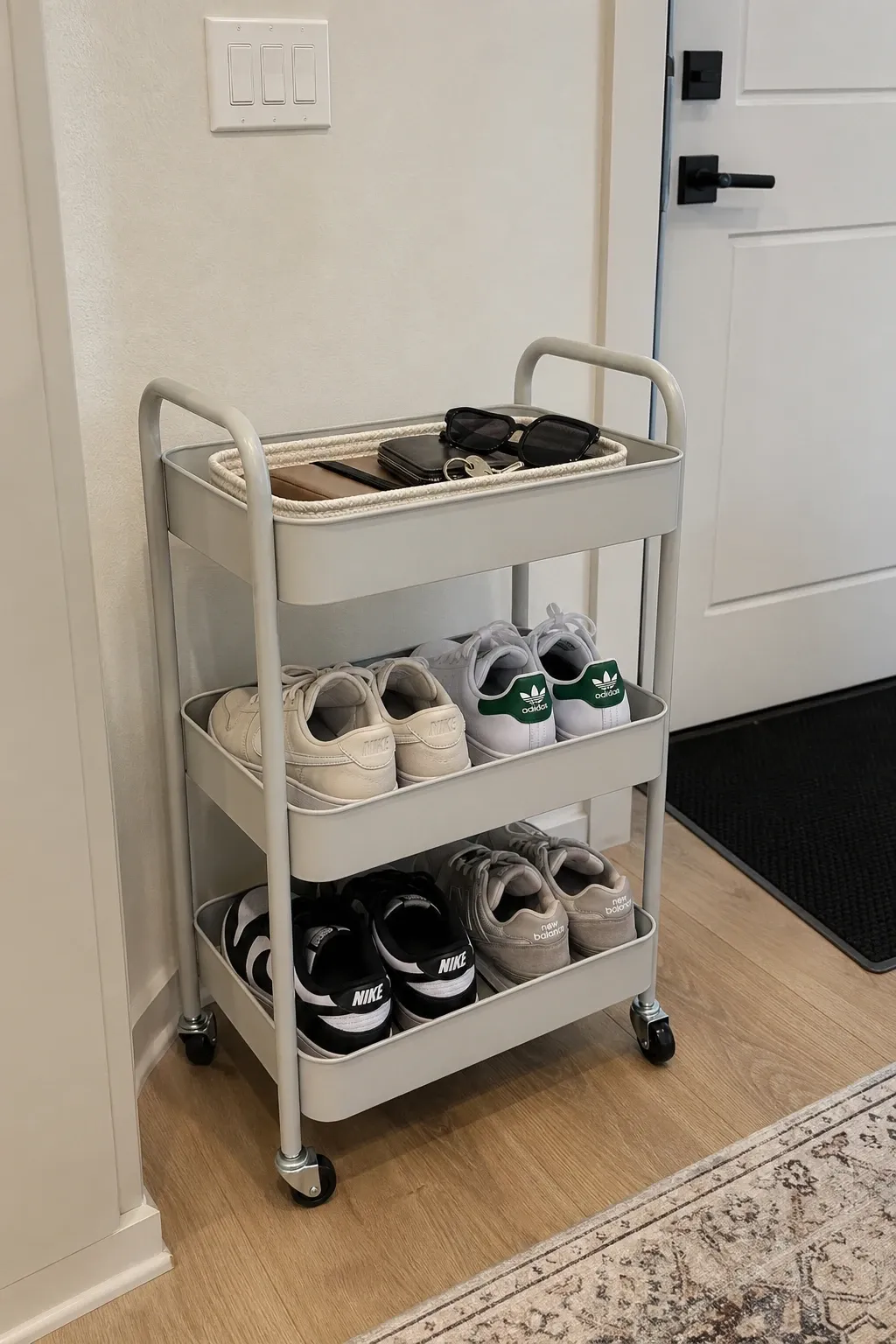
A slim three-tier rolling cart fits between furniture pieces or in a narrow gap and holds shoes on each tier. When you need it, roll it out. When you want it out of sight, roll it into a closet or behind a door. The mobility is the main advantage. In a small entryway where you rearrange for guests or deliveries, being able to move the shoe storage out of the way in two seconds is valuable.
Designer Tip: Get a cart with a solid or mesh bottom on each tier to prevent shoes from sliding off the sides. Open wire tiers without side rails let shoes fall out when the cart rolls, especially smaller shoes and sandals.
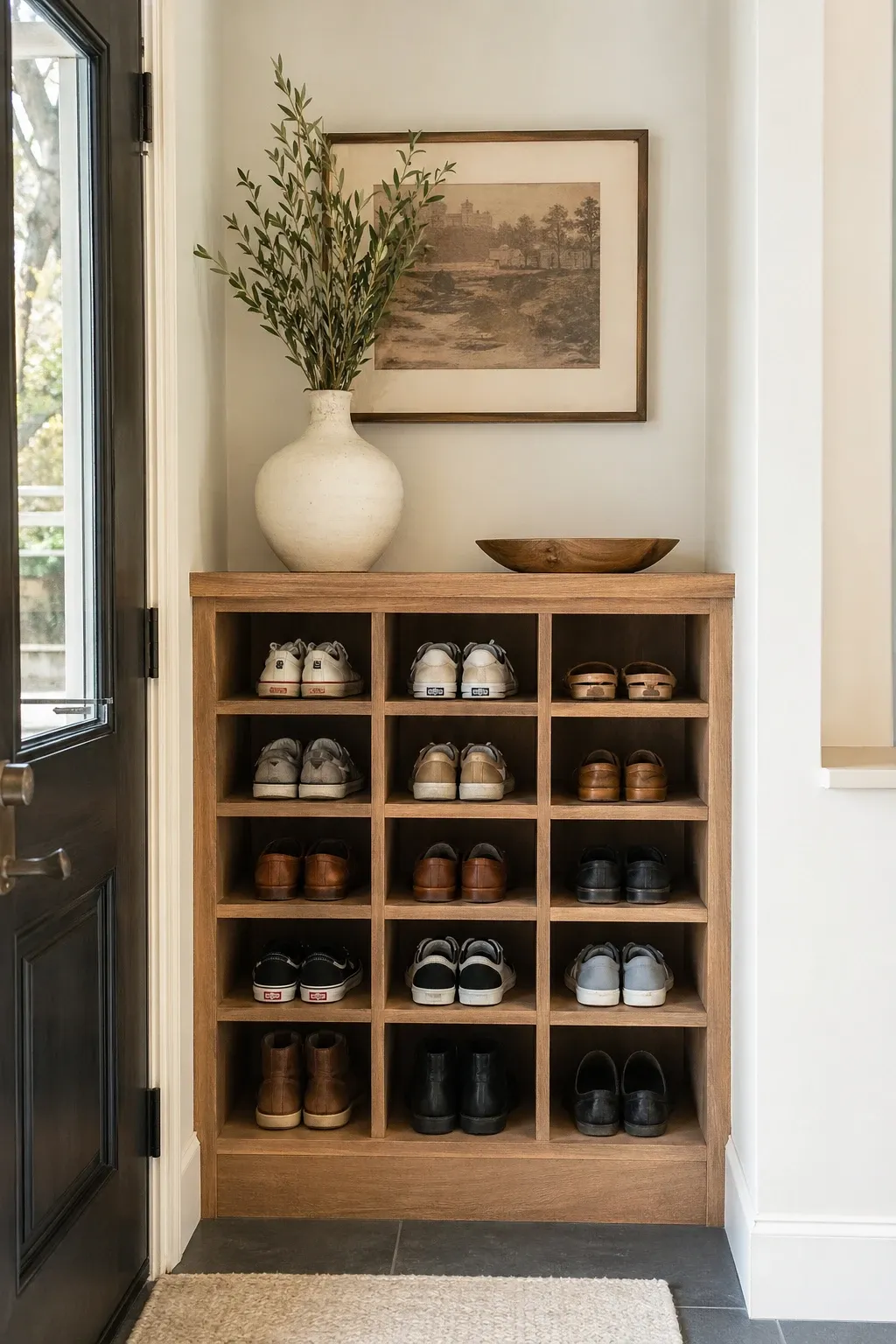
If your entryway has a nook, alcove, or recessed area, building cubbies into that space creates permanent shoe storage that looks custom and uses space that would otherwise be decorative dead weight. Each cubby holds one or two pairs and the whole setup sits flush with the wall. Built-in cubbies are the most polished looking option and add value to the home.
Designer Tip: Match the cubby trim and paint to the surrounding wall trim. Built-ins look best when they appear to be original architectural features rather than aftermarket additions. Consistent trim detail sells the look.
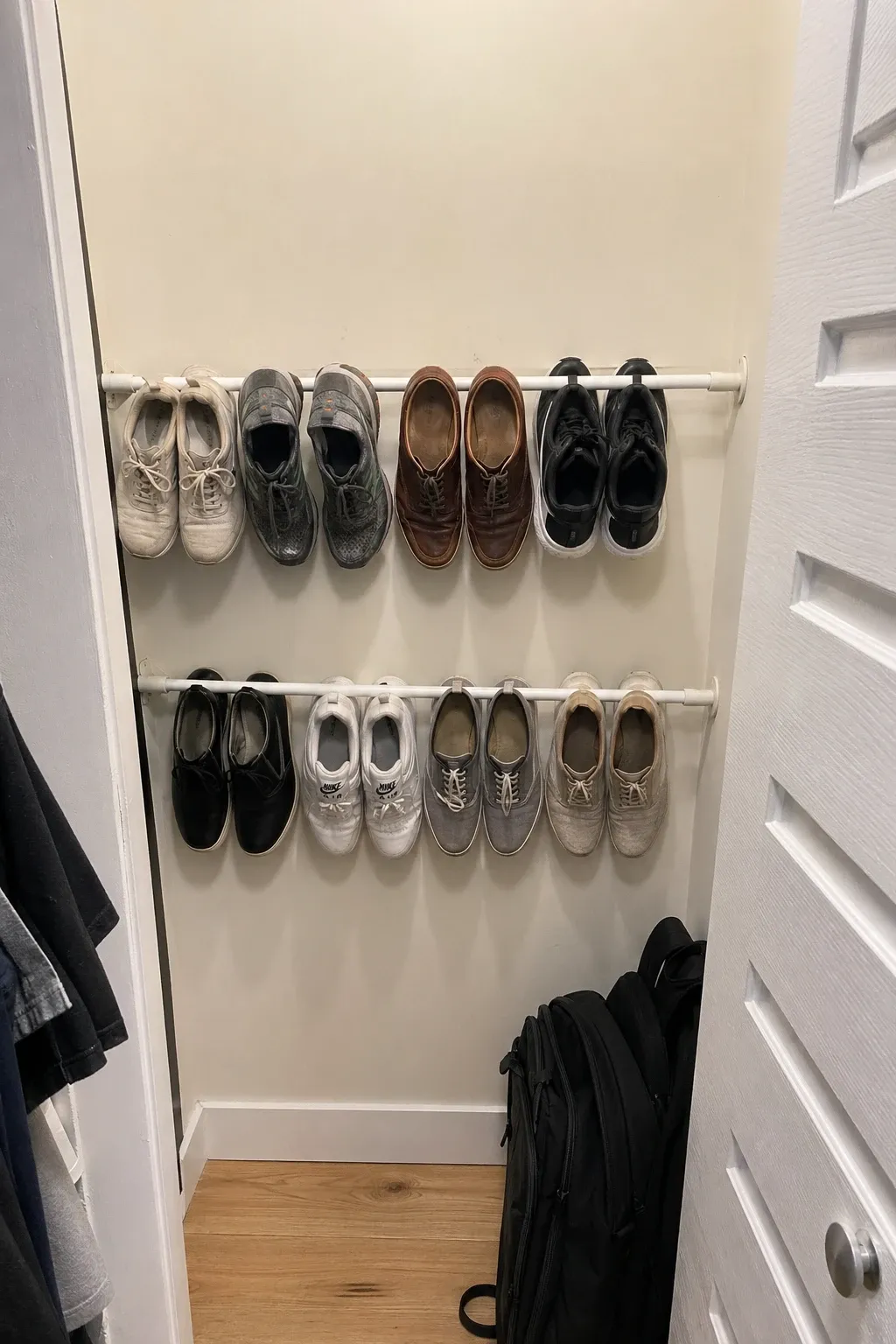
Tension rods installed horizontally inside a closet or between two walls create a DIY shoe rack for almost no cost. Set two rods parallel to each other a few inches apart and lay shoes across them with the heel hooking over the back rod. It is a quick hack that works in closets, under benches, or in any spot where two walls are close enough for a tension rod to span the gap.
Designer Tip: Use two rods per tier rather than one. A single rod does not support shoes evenly and they tilt and fall. Two parallel rods create a stable platform that holds shoes flat. Space the rods about the width of a shoe apart.
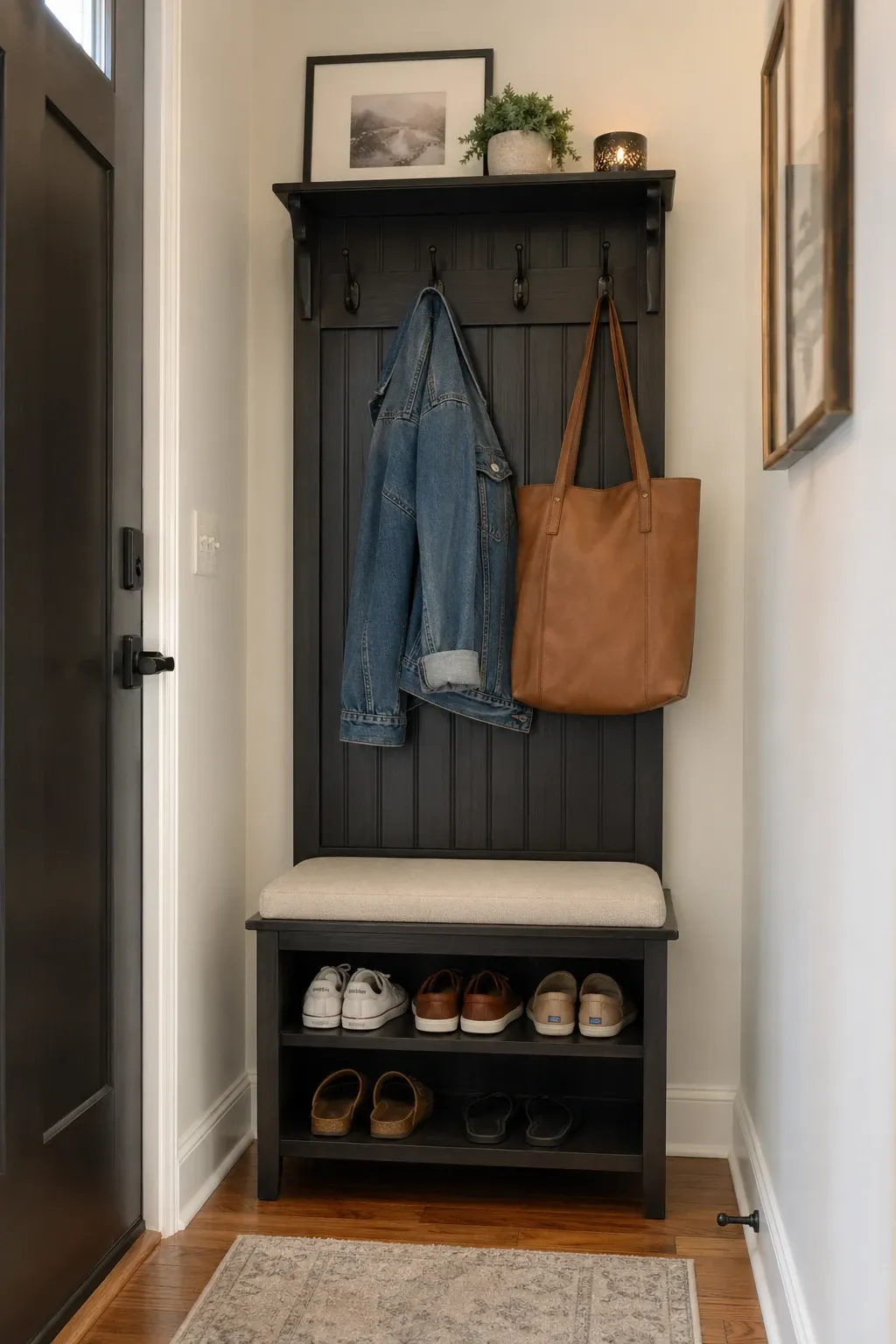
A hall tree combines coat hooks, a bench, and shoe cubbies or a shelf below in one vertical piece. It handles coats, bags, and shoes in a single footprint rather than needing three separate pieces of furniture. For a small entryway, this all-in-one approach is efficient because you need fewer pieces to get organized. Everything you grab on the way out the door is in one spot.
Designer Tip: Choose a hall tree that is narrow enough for your entryway. Many hall trees are designed for larger mudrooms and are too wide for a small foyer. Measure the available width and look for compact or apartment-sized models that stay under 36 inches wide.
Small entryways need shoe storage that stays slim, uses vertical space, and does not block the walkway. Wall-mounted solutions and slim cabinets are the safest bets because they add storage without eating floor space. Whatever you choose, keep the daily shoes in it and move seasonal shoes elsewhere. A small entryway system works only when it holds a small number of shoes.
Frequently Asked Questions
How many shoes should I keep in a small entryway?
Keep only the shoes you wear in the current week in the entryway, usually two to three pairs per person. Anything you have not worn in a week goes back to the closet or bedroom. Rotating a small number of shoes in and out keeps the entryway from getting overwhelmed.
What is the best shoe storage for renters?
Over-the-door organizers, freestanding shoe towers, and storage benches all work without drilling holes or modifying the space. These options are fully removable when you move out. Adhesive hooks and tension rods are other renter-friendly options that leave no marks behind.
How do I handle wet or muddy shoes in the entryway?
Use a boot tray or a waterproof mat under the shoe storage to catch drips and mud. Let wet shoes air dry on the tray before putting them in cubbies or bins. This keeps the moisture contained to one easy-to-clean spot rather than spreading across the floor or into furniture.
Should shoe storage be open or closed in an entryway?
Closed storage like cabinets and ottomans looks cleaner and hides shoes from view, which matters if the entryway is the first thing guests see. Open storage like racks and shelves gives faster access and better air circulation. If keeping up appearances matters, go closed. If speed and convenience matter more, go open.