The front door wreath is the first thing anyone sees when they arrive at your home, which means it does more decorating work per square inch than almost anything else you put out for fall. The problem is that most people default to the same grapevine ring with orange leaves and plastic berries that has been on every door in the neighbourhood for twenty years, and it blends in rather than standing out.
These ideas cover the full range of fall wreath styles, from effortlessly minimal to maximally bold, from completely free to foraged to crafted from scratch, so whatever your door, your budget, or your personality, there is a wreath here that actually fits.
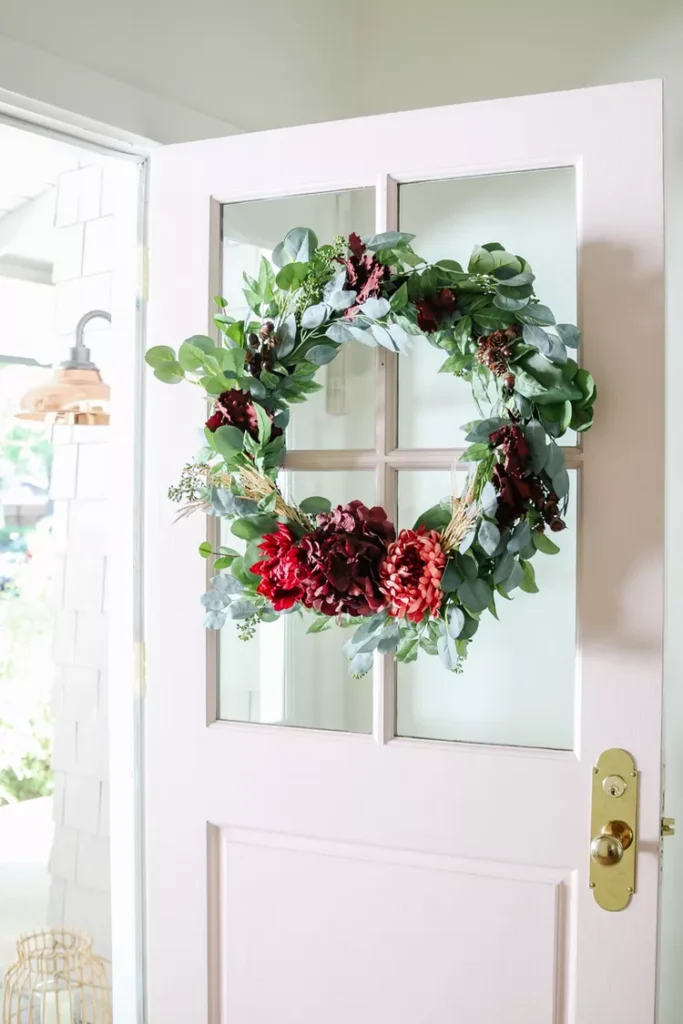
1. Build a Eucalyptus and Burgundy Bloom Wreath on a Grapevine Base
A grapevine wreath base layered with faux silver-dollar eucalyptus, deep burgundy peonies or dahlias, dried wheat stems, and small pine cones is the kind of fall wreath that looks like it came from a high-end florist shop but costs around thirty to forty dollars to make at home with stems from a craft store.
The key to making this look professional is starting with the eucalyptus as a full base layer before adding the blooms, so the flowers appear to nestle into the greenery rather than sitting on top of it; this gives the wreath visual depth that flat arrangements lack.
Pro Move: Hot-glue the eucalyptus stems in two directions around the ring so the wreath looks full from any angle, then tuck the larger blooms in clusters of three rather than evenly spaced to avoid a too-symmetrical look.
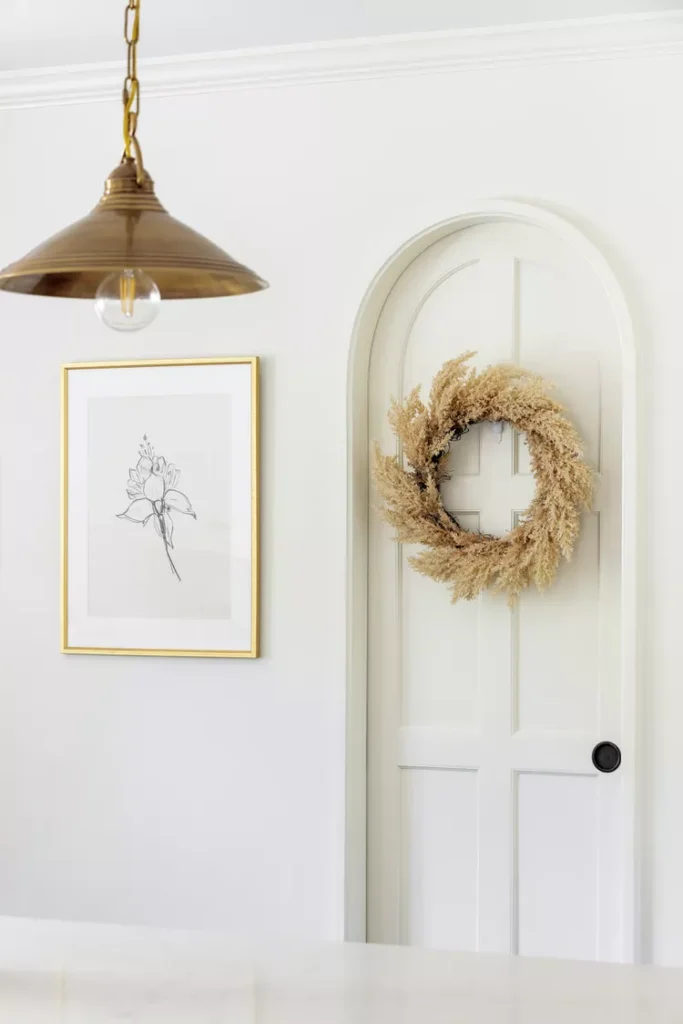
2. Hang a Pampas Grass Wreath for a Minimal, Modern Look
A wreath made entirely of dried pampas grass or bleached broom corn on a simple straw or grapevine ring is one of the most quietly sophisticated fall door options available: the soft, feathery texture catches light differently throughout the day and the neutral oat-to-gold colour works with any door colour from white to navy to deep green.
This wreath works particularly well on arched interior doors as well as front doors because the fine texture reads as decorative without being seasonal-heavy, which means it can stay up from early September through to December without looking out of place.
Designer Advice: Hang a pampas wreath with a wide velvet ribbon in caramel or deep rust rather than a metal hook; the ribbon softens the transition between the wreath and the door and adds a colour note the wreath itself does not have.
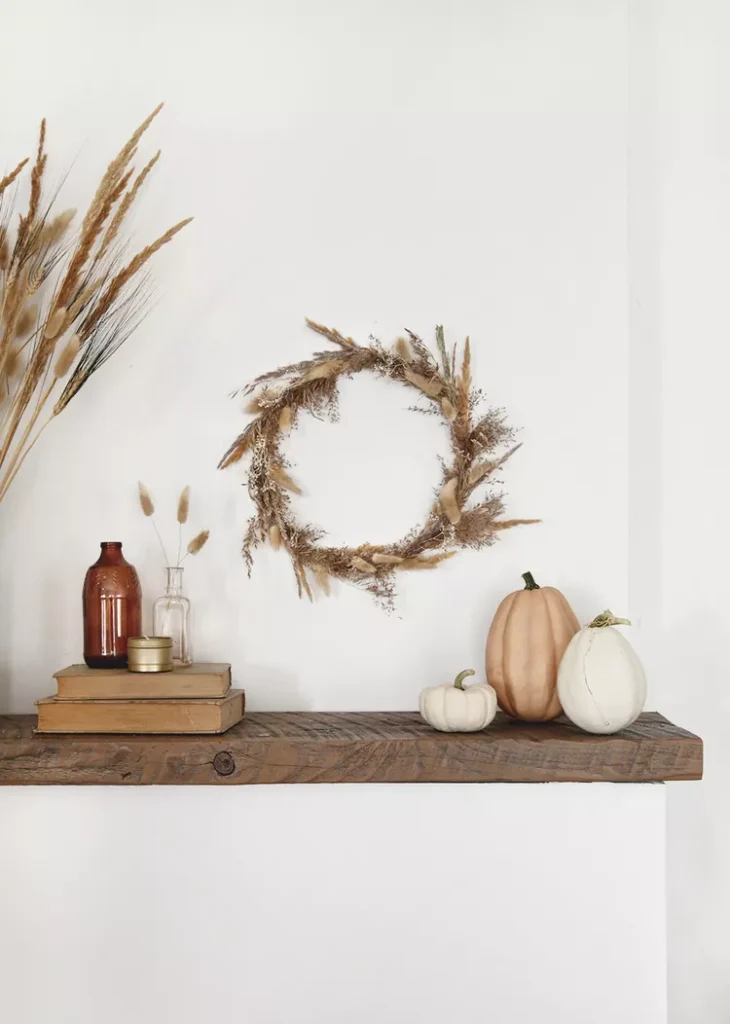
A wreath built from dried ornamental grasses, bunny tail grass, and pampas stems wrapped around a wire or straw ring creates a light, airy, boho-inspired fall wreath that looks particularly beautiful hung above a mantel or on an interior wall, where it can be displayed against a light background that lets the feathery texture show.
What makes this style work is the imperfect, slightly wild silhouette: unlike a tightly packed floral wreath, the dried grass stems point in different directions and give the wreath a loose, natural outline that reads as gathered rather than manufactured.
Quick Tip: Dried ornamental grasses keep their shape and colour for a full season indoors; outside in rain and wind they deteriorate faster, so this wreath is better suited to a covered porch or an interior display.
Before choosing your wreath base, here is a quick guide to the most common options and what each one works best with:
Wreath Base
Best Material
Lasts How Long
Approx. Cost
Grapevine ring
Faux or dried stems
Full season+
$8 to $20
Wire hoop
Fresh or faux blooms
Full season
$3 to $10
Foam ring
Faux pumpkins, berries
Several seasons
$5 to $15
Straw/hay ring
Dried naturals
Full season
$5 to $12
No base (bundled)
Dried wheat, grasses
Full season
$10 to $30
Twig/branch bundle
Foraged naturals
Full season
Free to $10
4. Use a Preserved Maple Leaf Wreath With a Velvet Ribbon
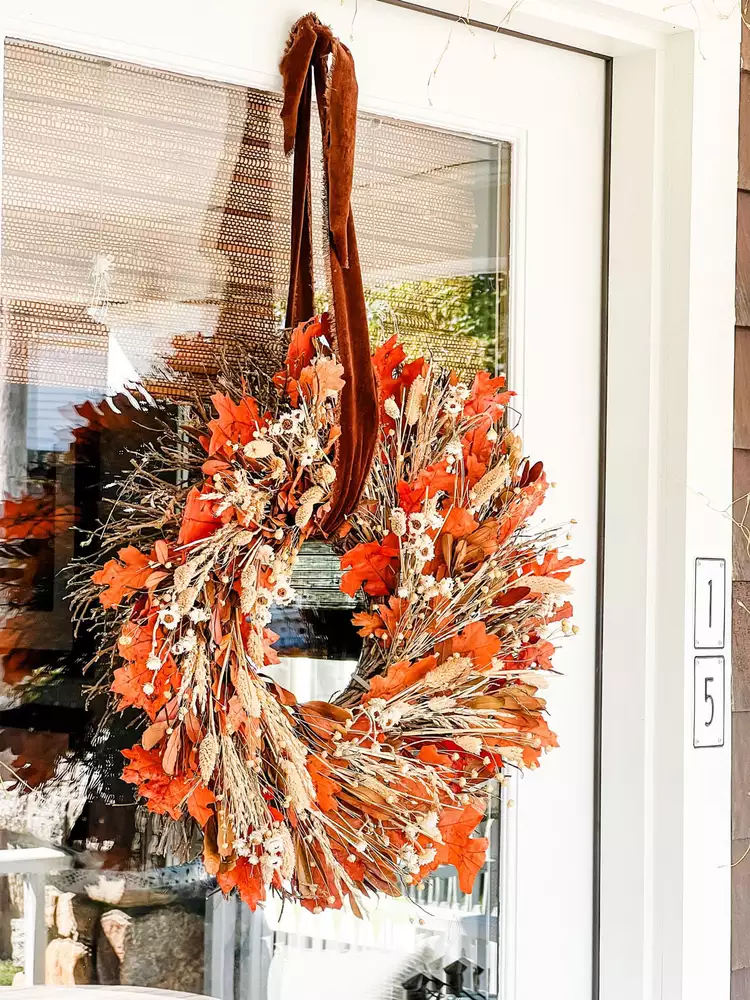
A full, dense wreath built from preserved or high-quality faux maple leaves in deep orange and rust, hung with a wide velvet ribbon in cognac or terracotta, is one of the most traditional fall wreath looks but executed here with the kind of material quality and ribbon detail that lifts it well above the standard craft-store version.
The velvet ribbon does significant design work in this wreath: it adds a tactile softness that contrasts with the crisp leaf shapes, gives the eye a place to rest at the top of the arrangement, and signals a considered, styled approach rather than a quickly assembled seasonal decoration.
Heads Up: Preserved real leaves last beautifully indoors but deteriorate in direct rain and sun; if your porch is exposed, opt for high-quality silk or polyester maple leaves, which hold their colour and shape through the full season outdoors.
5. Forage Sweetgum Balls and Make a Wreath for Free
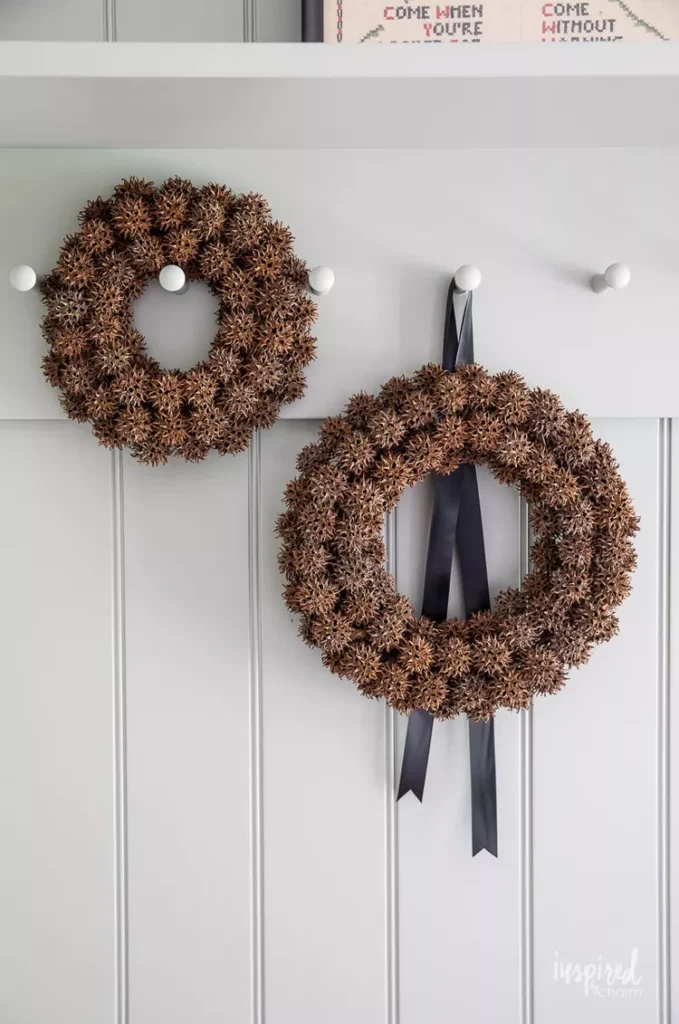
Sweetgum balls, the spiky brown seed pods that fall from sweetgum trees in autumn, can be collected for free, spray-painted if desired, and hot-glued onto a foam or wire wreath ring to create a completely foraged fall wreath that costs nothing but time and looks genuinely architectural in its texture and pattern.
A navy or dark satin ribbon at the top finishes the look and creates a strong colour contrast that makes the warm brown tones of the pods read as intentional rather than accidental; the result is a wreath that looks like a designer object made from materials most people walk past without noticing.
Pro Move: Spray the sweetgum balls lightly with a matte sealant after gluing to lock in any paint and protect the natural pods from moisture, which can cause them to open up further and lose their compact round shape.
6. String Acorns Into a Wreath for an Understated Indoor Display
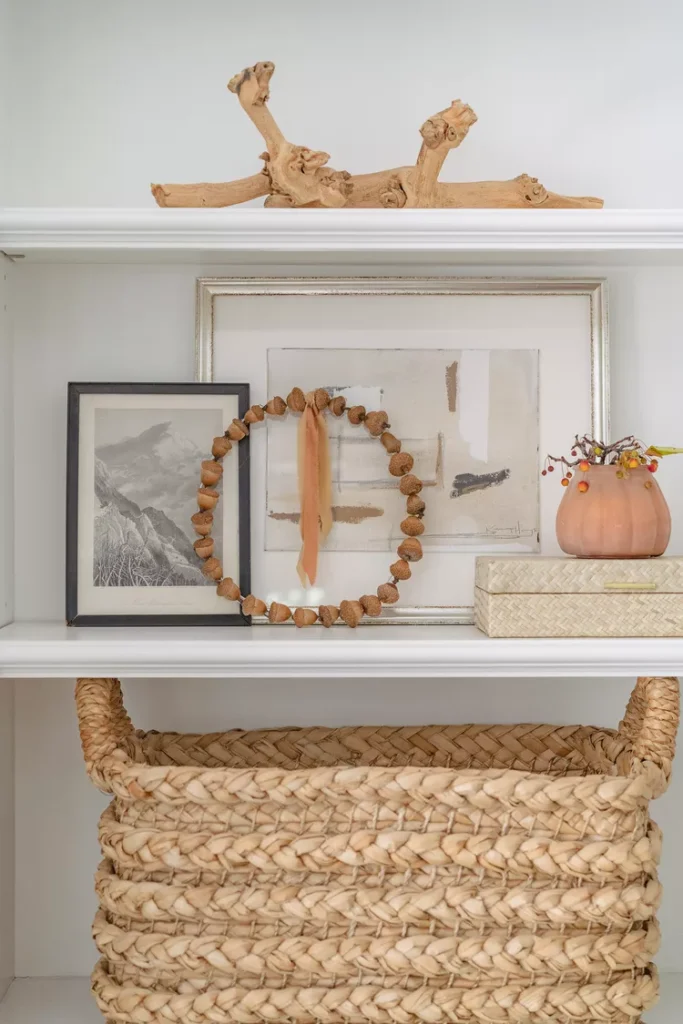
A wreath made by stringing real acorn caps and bodies onto a wire ring and finishing with a loose gauze ribbon in peach or warm white is one of the most charming and unusual fall wreath ideas for indoor display, particularly on a bookshelf, propped against a framed print, or hung on an interior wall as part of a seasonal vignette.
In practice, acorns can be collected for free in any neighbourhood with oak trees in September and October; the caps and bodies are drilled with a small bit and threaded onto wire or strong cord, and the result is a wreath that looks genuinely handmade in the most considered sense of the word.
Designer Advice: Seal real acorns with matte varnish before stringing to prevent mould and to keep the natural tan colour from fading; unseal acorns kept indoors in a warm room can develop mould within a few weeks.
7. Combine Eucalyptus, Berries and Apples for a Garden-to-Door Wreath
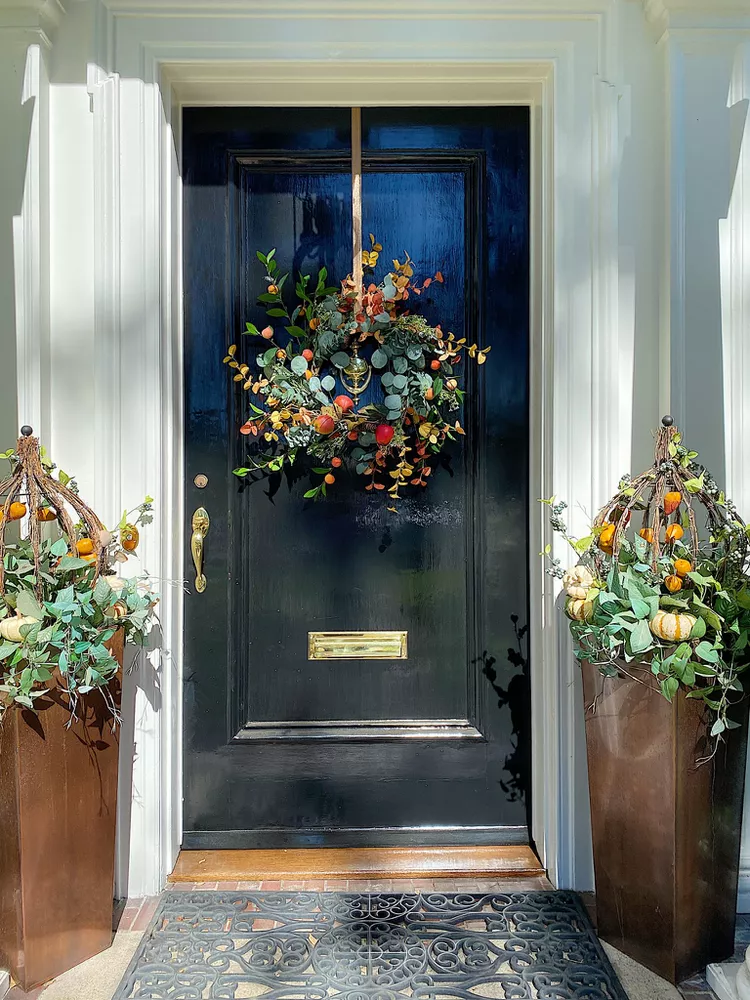
A wreath that mixes eucalyptus, bittersweet berries, small crab apples or faux red apples, and orange cotoneaster berries on a grapevine base creates a harvest-abundance look that feels more like something gathered from a real garden than assembled from a craft store, and on a black lacquered door the jewel-toned berry colours against the dark background are particularly striking.
This style of wreath is popular with professional wreath makers because the combination of green foliage, orange berries, and red fruit touches all three of the visual weight categories that make a wreath look full: leaf texture, round forms, and trailing or branching elements.
Reality Check: Fresh apple and crab apple elements last about one to two weeks on a door before softening; use faux versions for a wreath that will stay up for the full season without maintenance.
8. Build a Foraged Grapevine Wreath With Real Garden Cuttings
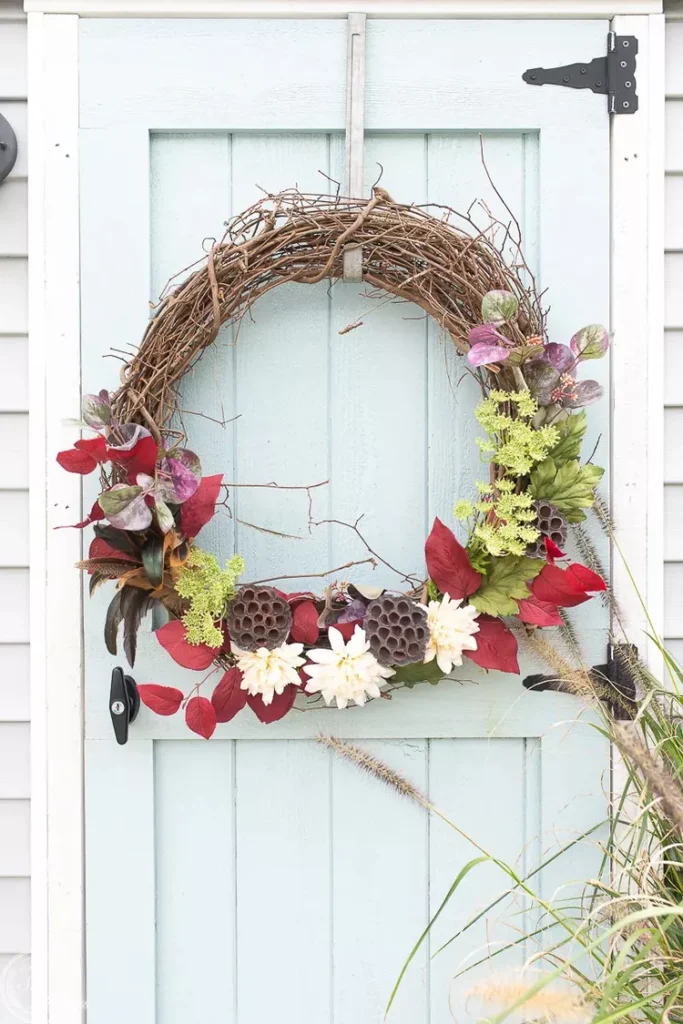
A grapevine ring decorated with real garden cuttings, including coleus leaves, sedum heads, lotus pods, cream chrysanthemums, and ornamental grass plumes, gives a fall wreath the kind of irregular, genuinely organic quality that no faux material can replicate, because each element is slightly different in size, colour, and texture.
The design principle at work here is that the wreath ring is left partially bare, which means the decorated section reads as a deliberate cluster rather than a uniform ring, and the open grapevine shows through in a way that creates contrast and visual interest that a fully packed wreath does not.
Heads Up: Fresh garden cuttings last one to two weeks before drying and dropping; condition cut stems in water overnight before attaching them to the wreath ring and mist lightly every couple of days to extend the display.
9. Pack a Wreath Ring Full of Silk Peonies and Mums in Fall Tones
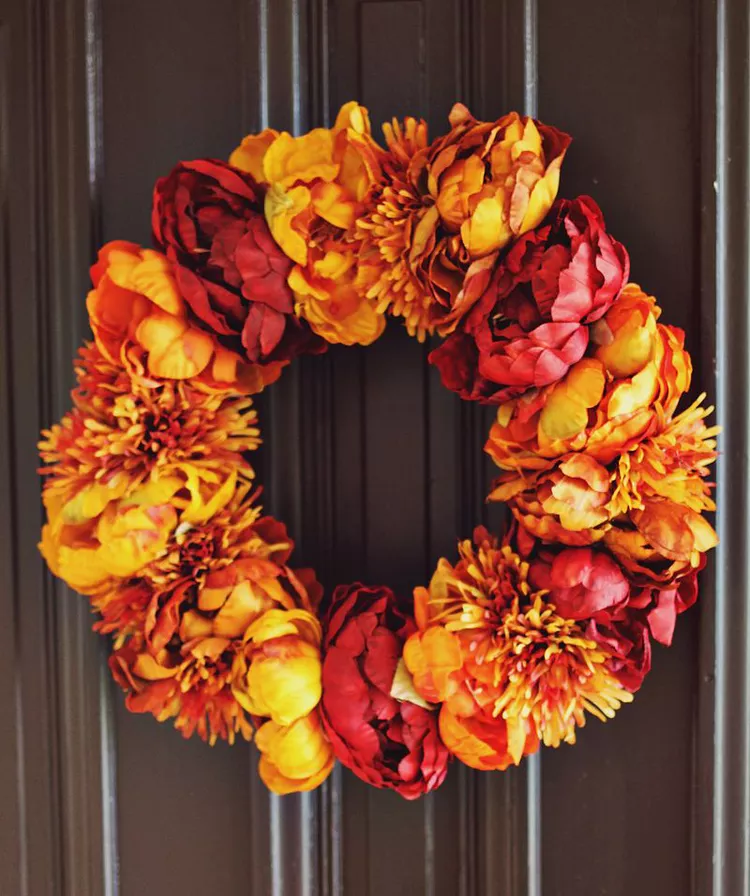
A foam ring covered entirely in silk peonies, garden roses, and chrysanthemums in deep red, burnt orange, and amber creates a lush, maximalist fall wreath that makes an immediate and confident statement on any door colour, with the dark background of a charcoal or black door making the warm flower tones glow particularly strongly.
This is one of the few fall wreath styles where the foam base is the right choice over grapevine or wire, because the foam allows the flower stems to be pushed directly into the base without gluing, which means individual blooms can be rearranged and refreshed even after the wreath is assembled.
Quick Tip: Buy silk flowers by the bunch rather than individually from craft stores and strip the stems to use each head separately; a single five-dollar bunch typically yields eight to twelve usable flower heads for a wreath.
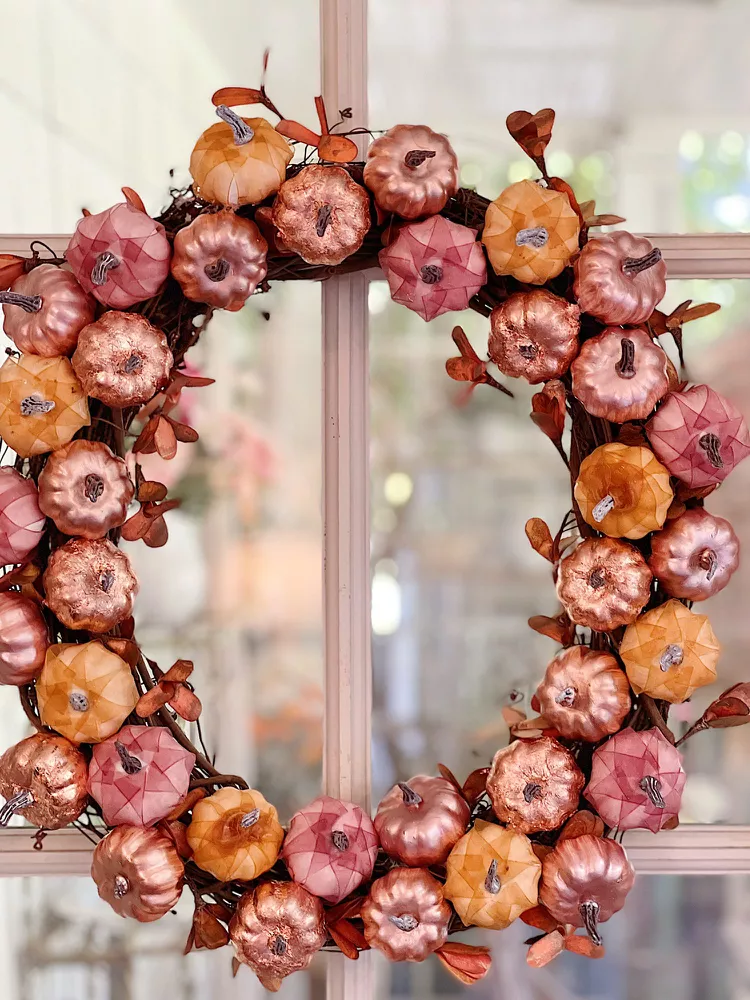
10. Make a Metallic Mini Pumpkin Wreath in Rose Gold and Blush
Mini foam or plastic pumpkins spray-painted in rose gold, blush pink, and dusty peach and attached to a grapevine ring with small sprigs of dried berry stems between them creates a fall wreath that completely sidesteps the traditional orange palette in favour of something softer and more distinctly contemporary.
This wreath photographs beautifully and works particularly well on white, pale grey, or blush-painted doors where the metallic tones catch light from outside and the door colour complements rather than competes with the wreath; it is a particularly good option for anyone whose home exterior is already in a warm neutral palette.
Pro Move: Two coats of metallic spray paint followed by a light coat of clear matte topcoat gives the pumpkins a finish that reads as polished and intentional rather than just painted; skip the topcoat and the metallic can look plasticky in direct sunlight.
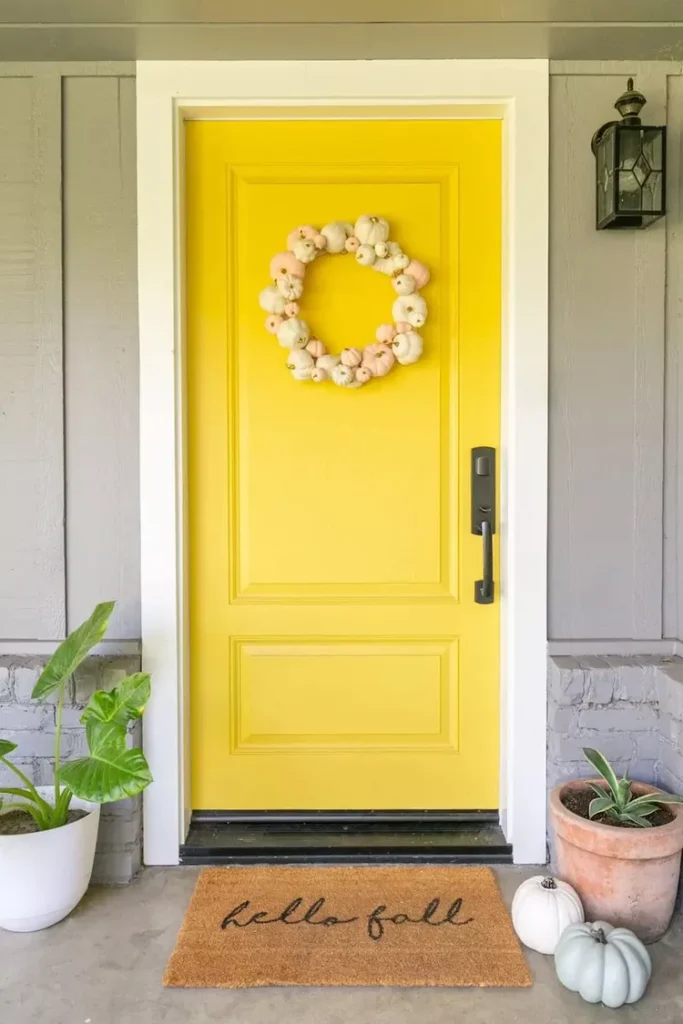
11. Glue Mini White and Blush Pumpkins to a Ring for a Tonal Wreath
A ring covered entirely in small white, cream, and blush faux pumpkins in slightly varied sizes creates a wreath that is unmistakably fall in its form but completely neutral in its palette, which means it works on almost any door colour and suits home exteriors where a colourful wreath would compete with existing planting or architecture.
On a bright yellow or deeply coloured front door, this white and blush pumpkin wreath provides the perfect contrast: the neutral wreath allows the door colour to remain the dominant element while the wreath shape and pumpkin forms do the seasonal signalling.
Designer Advice: Vary the pumpkin size across the ring rather than using all the same size; mixing two or three sizes gives the wreath a natural, garden-gathered quality rather than a manufactured one.
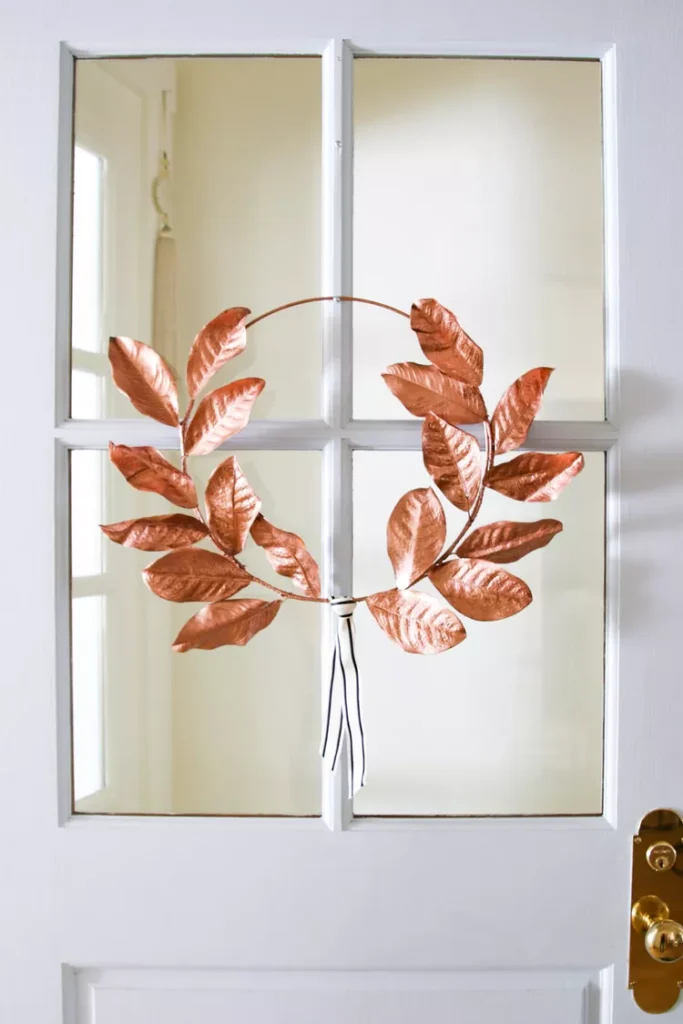
12. Spray Paint Magnolia Leaves Copper for a Modern Hoop Wreath
Real or faux magnolia leaves spray-painted in rose gold or copper and attached to a brass or gold metal hoop in an asymmetric cluster, finished with a small black-and-white ribbon at the base of the hoop, is one of the most modern and minimal fall wreath ideas available, and it is the kind of thing that earns comments from everyone who sees it because it looks nothing like a standard seasonal wreath.
The copper leaf tone references autumn without using a single traditional fall colour, which is what makes this wreath work for people who want a seasonal front door that does not sacrifice their overall aesthetic for the sake of orange and plaid.
Quick Tip: Copper and rose gold spray paints oxidise quickly on real leaves; faux magnolia leaves from a craft store take the paint better and hold the metallic finish for the full season without cracking or peeling.
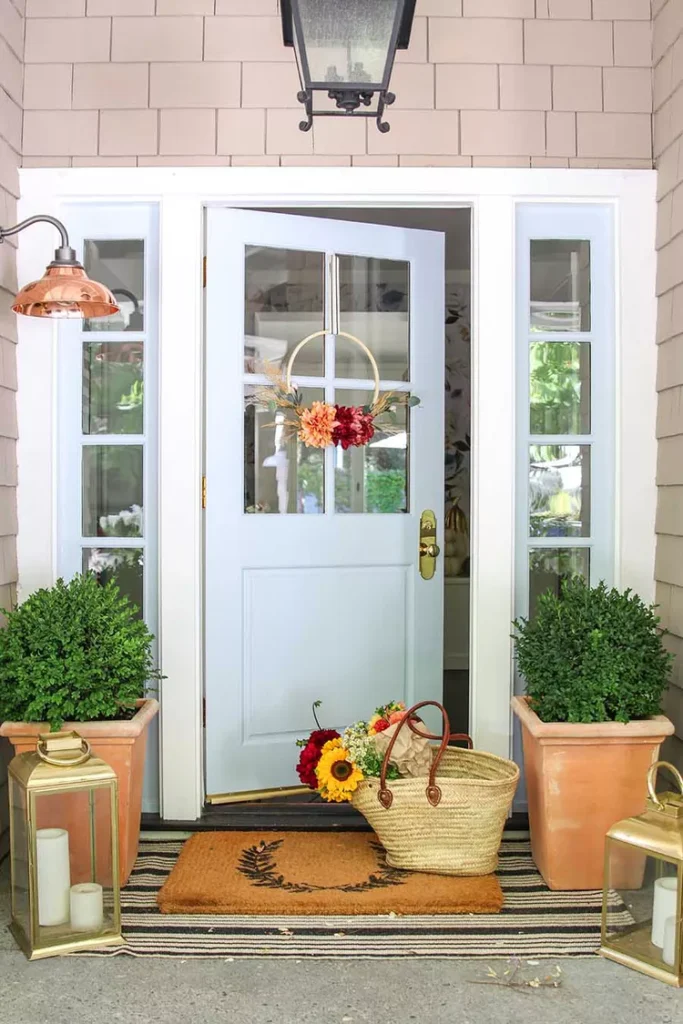
13. Make a Fall Hoop Wreath With a Cluster of Blooms at the Bottom
A simple brass or gold embroidery hoop or metal ring with a small, intentional cluster of fall blooms, pampas grass, and dried stems attached at the base creates a wreath that is dramatically different from the full-ring style and works particularly well on doors with glass panels, because the open ring allows the view through the glass to remain visible.
The cluster-at-bottom hoop style is popular in contemporary interior design because it treats the wreath as a design object rather than a seasonal decoration; the open negative space of the ring is as important as the botanical cluster, and the overall effect is restrained and architectural rather than decorative.
Heads Up: Metal hoops in sizes from 10 to 30 centimetres are sold in craft stores for under three dollars; the larger 30-centimetre size reads best on a standard front door, while smaller hoops suit interior doors and windows.
14. Build a Dried Wildflower Wreath in Unexpected Pinks and Blues
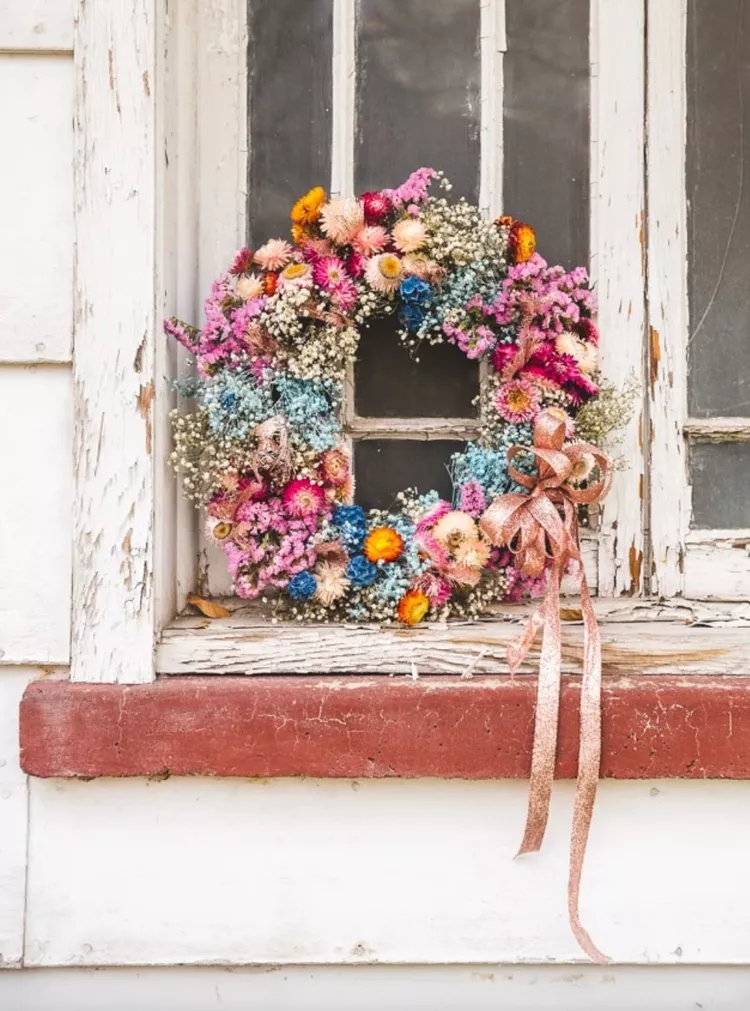
A wreath packed with dried strawflowers, statice, baby’s breath, and globe amaranth in pink, blue, cream, and orange on a grapevine ring with a rose-gold sparkle ribbon finish is the kind of fall wreath that makes people stop and ask where you bought it, because the colour combination is unexpected and the dried flowers give it a texture and dimension that faux materials cannot replicate.
Dried flower wreaths are also one of the most durable options available: kept out of direct rain, they last a full season and beyond, and the colours of dried strawflowers and statice remain vivid for months without fading to the degree that fresh or fresh-preserved botanicals do.
Reality Check: Dried wildflower wreaths are fragile and shed petals if knocked or handled; hang them on a covered porch or an interior door rather than an exposed exterior location where wind and moisture will deteriorate them quickly.
15. Craft a Crepe Paper Corn Husk Wreath With Candy Corn Colours
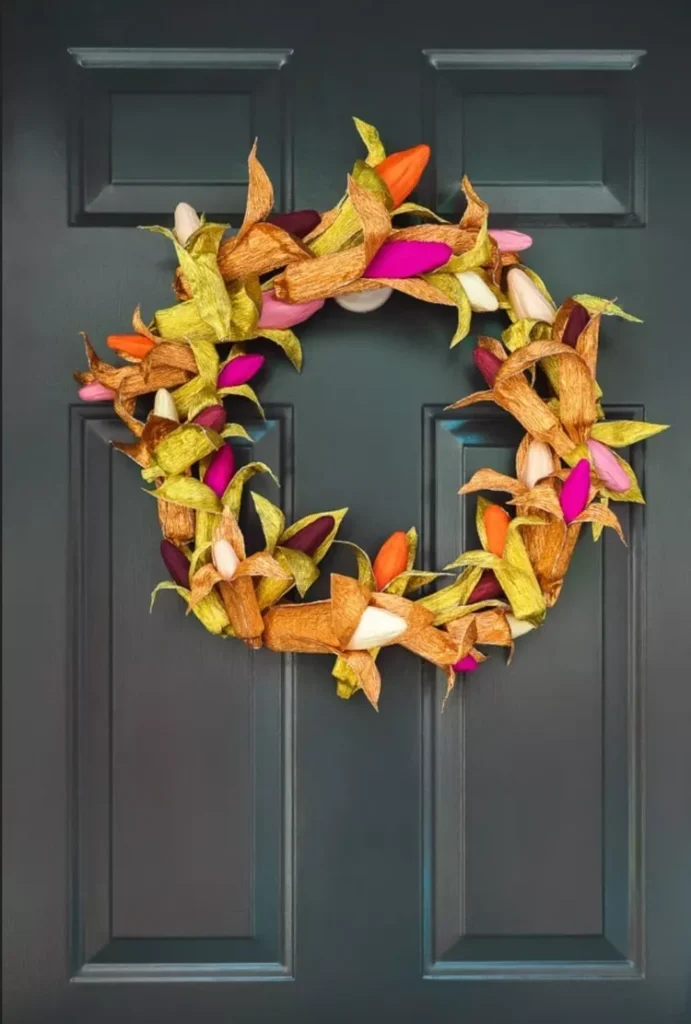
Crepe paper cut and shaped into corn husk forms in lime green and burnt orange, with small candy-corn-shaped pieces in white, orange, and pink attached around the ring, creates a fall wreath that is completely handmade from paper and is one of the most joyful and unexpected door decorations for the season, working particularly well on dark or navy doors where the colours pop dramatically.
Crepe paper wreaths are a genuinely budget-friendly option because a few rolls of paper cost two to four dollars each and provide enough material for a full-size wreath, with the making process itself being straightforward enough for anyone comfortable with basic paper crafts.
Pro Move: Crinkle each crepe paper corn husk piece lengthwise before attaching it to the wire ring to add dimension; flat paper pieces sit too flush against the base and the wreath looks two-dimensional from the street.
16. Cut Book Page Leaves and Build a Wreath From Recycled Paper
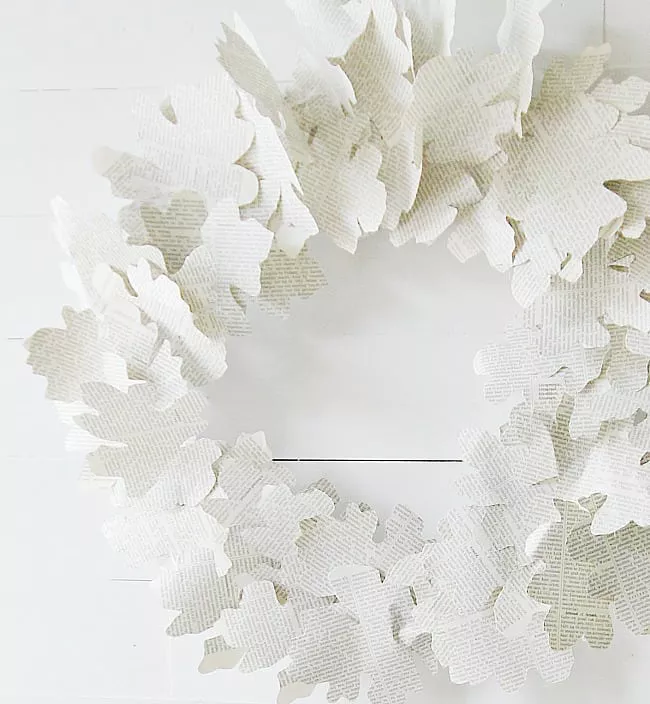
Oak leaf shapes cut from the pages of old books or sheet music, folded slightly for dimension, and hot-glued in overlapping layers around a foam or wire ring create a fall wreath that is entirely white and cream in palette, deeply textural, and completely free to make from materials most homes already have; the result is a quiet, literary fall decoration that suits minimal and Scandi-influenced homes particularly well.
The key to making the book-page wreath look intentional rather than DIY is the layering: each leaf should overlap the previous one by roughly half its length, and the direction should alternate slightly as you work around the ring so the wreath has movement and texture rather than a flat, uniform surface.
Designer Advice: Use a leaf punch or a simple cardstock template to cut consistent leaf shapes; hand-cut leaves with scissors vary too much in size and the wreath looks inconsistent rather than considered.
17. Make a Paper Feather Wreath With a Faux Deer Head Mount
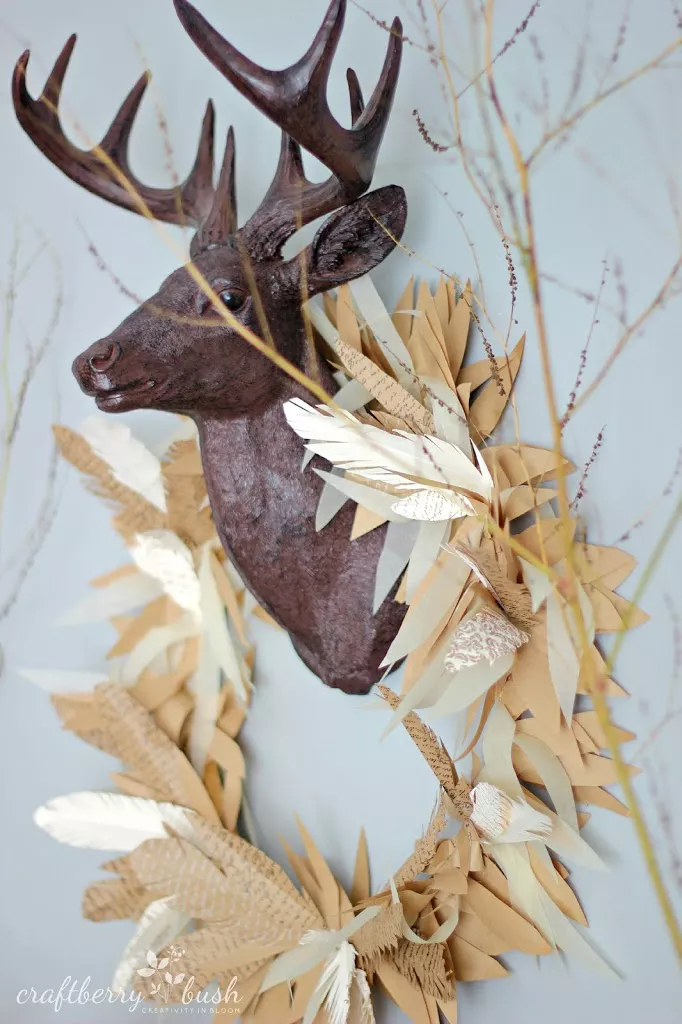
A wreath of paper feathers, leaves, and burlap elements layered around a ring and positioned beneath a faux deer head mount on a grey or blue-grey wall creates a dramatic, nature-inspired fall installation that goes well beyond a standard door wreath into genuine wall art territory, making it one of the most bold and memorable fall decor ideas for an entryway or living room wall.
The paper feathers are made by cutting feather shapes from kraft paper, cream card, and script-printed paper, folding them slightly down the centre vein for dimension, and layering them in the same direction to create the impression of overlapping plumage.
Reality Check: This installation works best on an interior wall rather than outdoors; paper elements deteriorate quickly in moisture, and the faux mount needs a secure fixing point that most door surfaces cannot provide.
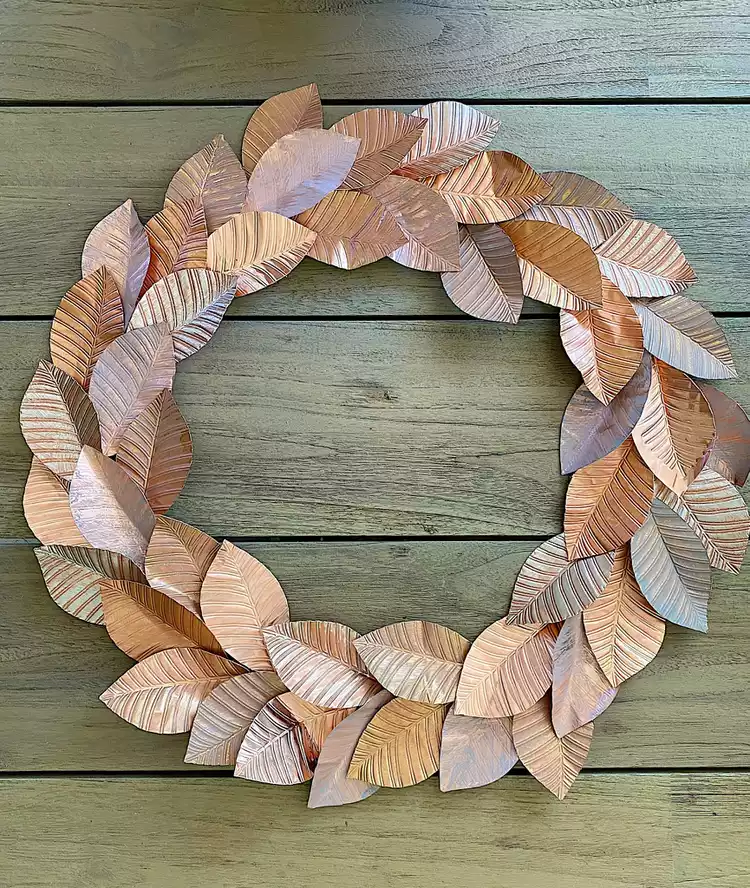
18. Use a Cricut to Cut Copper Leaf Shapes for a Perfect DIY Wreath
A Cricut or similar cutting machine loaded with copper or metallic card stock cuts perfectly sized and shaped leaf forms that can be layered around a foam or wire ring to create a wreath that looks machine-made in the best possible sense: every leaf is identical in shape, the layering is consistent all the way around, and the metallic surface catches light in a way that a painted version simply cannot.
This is one of the few fall wreath ideas where having a cutting machine genuinely changes the outcome rather than just the speed: the consistency of machine-cut leaves is what gives the wreath its elevated, almost product-designed quality that distinguishes it immediately from hand-cut versions.
Quick Tip: Score a light line down the centre of each cut leaf before folding it slightly; the fold creates a central vein that adds dimension and makes each leaf read as three-dimensional rather than flat when attached to the ring.
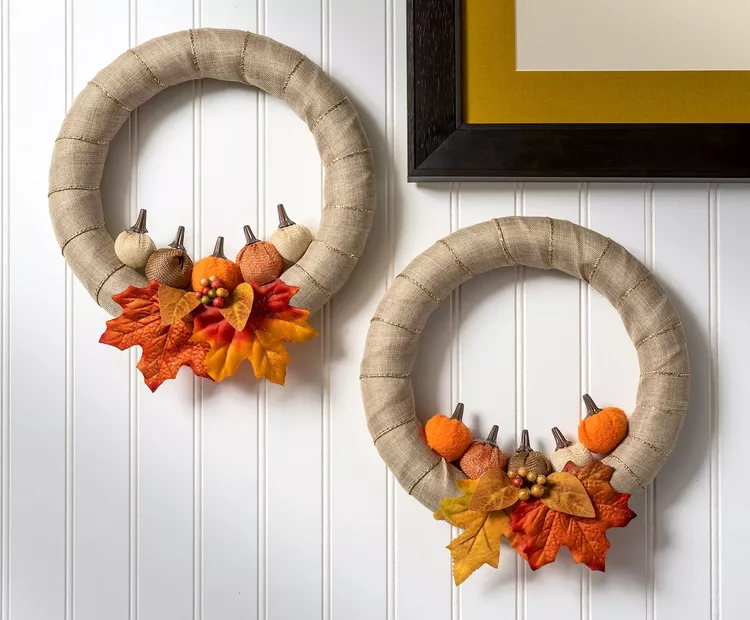
19. Wrap a Ring in Burlap and Add Mini Pumpkins for a Budget Wreath
A foam ring wrapped tightly in natural burlap ribbon and finished with a cluster of mini faux pumpkins, autumn leaves, and small berries at one side is a genuinely budget-friendly fall wreath that requires no special tools and can be assembled in under an hour with materials from a dollar store or craft store, keeping the total cost well under fifteen dollars.
Making two at slightly different sizes and hanging them as a pair on a gallery wall or either side of an entryway is a particularly effective use of this simple design; the repetition reads as intentional styling rather than a single craft project.
Heads Up: Cut the burlap ribbon at a bias angle at each end before wrapping to prevent fraying; a small dot of hot glue at the start and finish holds it securely without visible stitching or stapling.
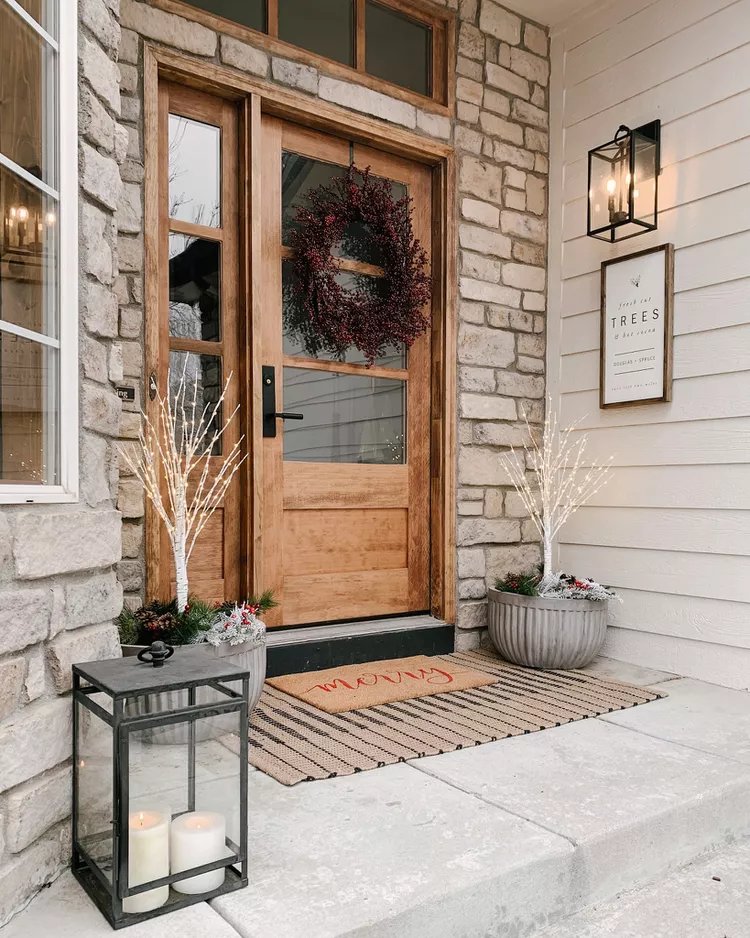
20. Hang a Deep Red Berry Wreath on a Wood-Framed Door
A compact wreath made entirely of deep red bittersweet or berry stems, hung on a natural wood or walnut-stained door with a simple hook, creates a graphic, sophisticated fall front door that relies on a single material rather than a complex arrangement, and the result is powerful precisely because of its restraint.
The deep red berry tone against natural wood grain is one of the strongest colour combinations in fall decorating because it references the season through colour temperature rather than through explicit seasonal motifs like pumpkins or leaves, which gives the front door a more permanent, architectural quality.
Pro Move: Faux bittersweet berry stems are sold in bunches of four to six stems for around eight to twelve dollars at craft stores; wiring ten to twelve stems together around a small wire ring takes about twenty minutes and the result lasts multiple seasons.
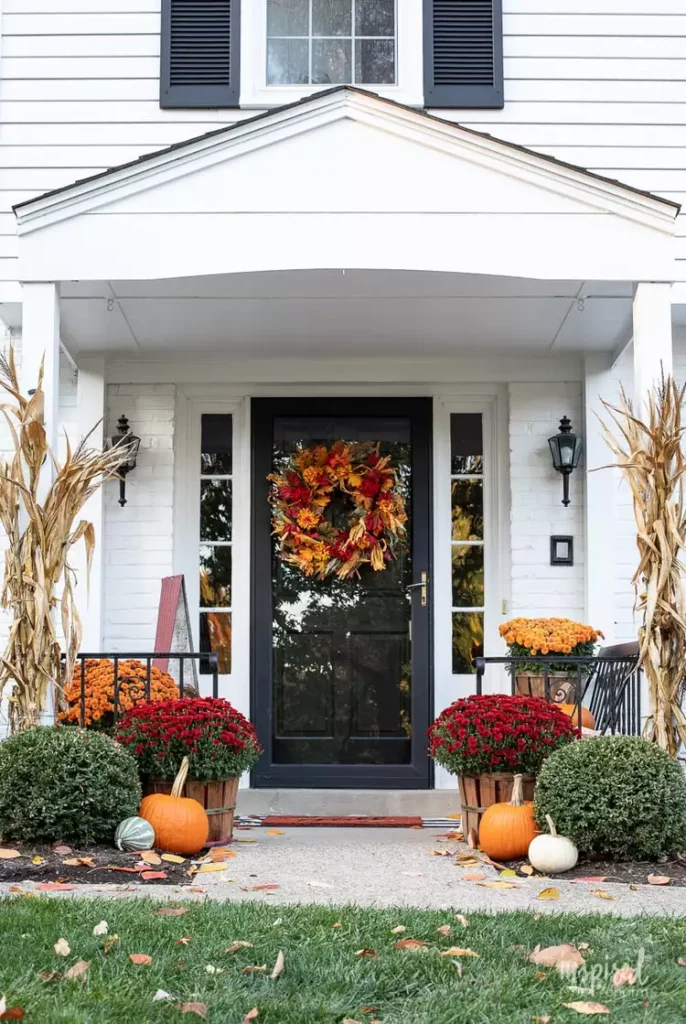
21. Layer a Traditional Fall Wreath on a Classic Black Front Door
A traditional fall wreath packed with orange mums, red maple leaves, corn husks, and dried seed heads reads at its very best against a black front door: the dark background makes every warm colour in the wreath appear more saturated and vivid, and the combination of a bold wreath with the classic formality of a black door is one that consistently photographs well and impresses in person.
For a traditional wreath to read as elevated rather than generic, the key is scale: the wreath should be large enough to fill at least half the visual width of the door, and the arrangement should include elements at three distinct heights, tall seed heads at the top, mid-height blooms in the centre, and trailing or flat leaf elements at the base.
Designer Advice: Professional wreath designers recommend a 24 to 30-inch diameter wreath for a standard 32-inch front door; anything smaller reads as an afterthought rather than an intentional door decoration.
22. Build a Dusty Sage and Purple Wreath for an Unusual Fall Palette
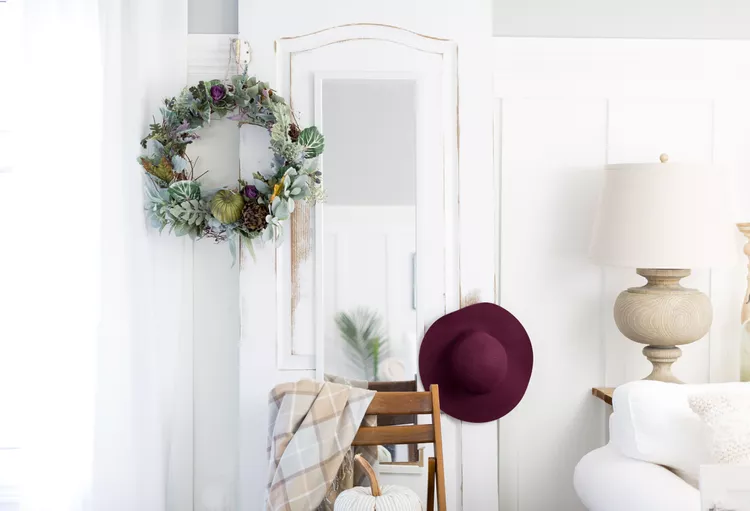
A fall wreath using dusty sage lamb’s ear, purple kale or ornamental cabbage, teal eucalyptus, and muted green succulents with a few small orange pumpkins tucked in for seasonal reference creates a wreath in a palette that is completely distinct from the standard fall colour range while still feeling unambiguously autumnal because of the texture and forms involved.
This wreath works particularly well on lighter-coloured doors where the muted blue-green and purple tones read clearly, and it suits homes with natural, wabi-sabi, or Japandi aesthetics where the traditional orange-and-rust fall palette would feel jarring.
Reality Check: Fresh lamb’s ear and ornamental kale last one to two weeks before wilting; for a longer-lasting version, use high-quality silk lamb’s ear and faux cabbage, which capture the same dusty, textured quality in a material that holds up outdoors.
23. Make a Halloween Wreath With White Florals and Subtle Spider Details
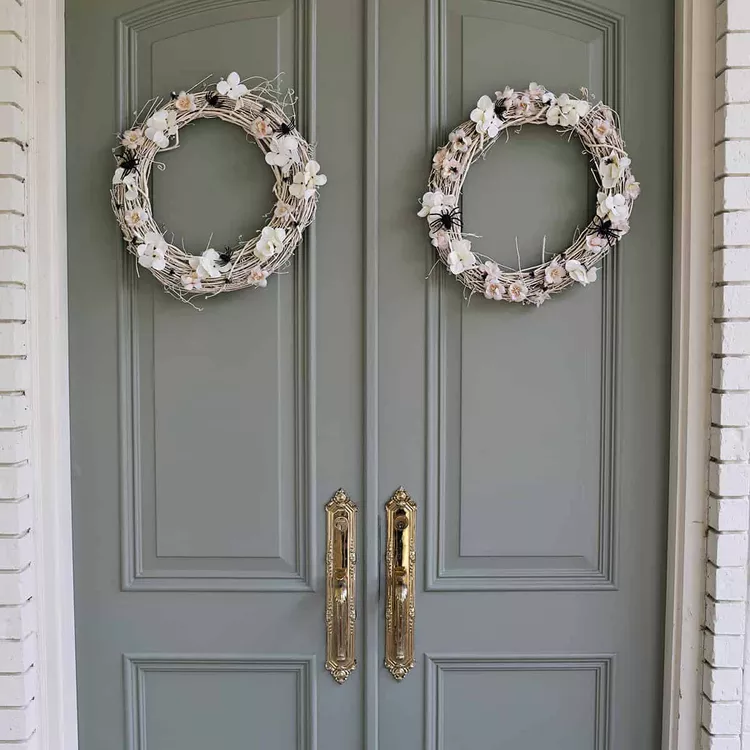
Two matching grapevine rings decorated with white and blush hydrangeas, cream dried flowers, and small black plastic spiders tucked discreetly between the blooms create a Halloween wreath that is spooky in the most refined possible way: the spiders are noticeable only on closer inspection, which gives the wreath a wit and subtlety that the typical black-and-orange Halloween door decoration entirely lacks.
Hanging a matching pair of wreaths on double doors or either side of an entryway is a particularly effective use of this design, because the repetition gives the display a considered, designed quality that a single wreath does not achieve.
Quick Tip: Small plastic spiders cost under two dollars for a bag of fifty at Halloween stores or online; place them at different depths within the floral arrangement, some on the surface and some partially hidden, so the discovery feels genuinely surprising.
24. Make a Fresh Mandarin Wreath With Cedar and Eucalyptus for Early Fall
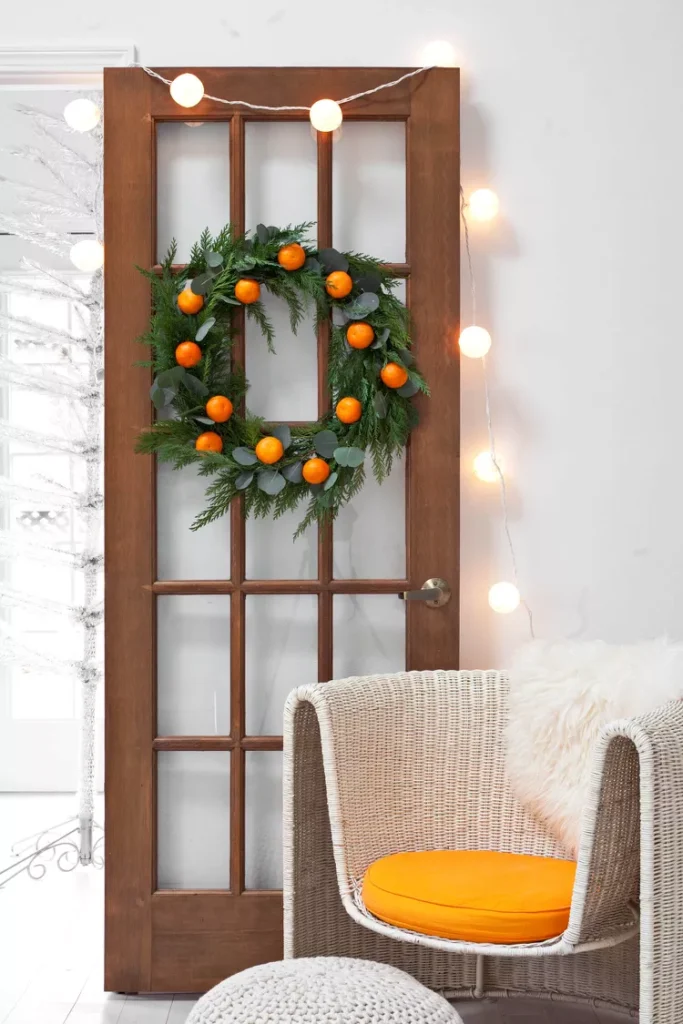
A wreath base of fresh cedar and eucalyptus with real mandarin oranges wired or hot-glued at intervals around the ring creates a fall wreath that smells as good as it looks: the combination of cedar pine, eucalyptus oils, and fresh citrus fills the entry with a natural, warm scent that is completely different from any artificial fragrance, and the bright orange fruit against deep green foliage is one of the most striking colour combinations possible on a door.
This wreath is best made in early to mid-fall when mandarins are firm and fragrant; the fruit will last one to three weeks on the wreath before softening, at which point the cedar and eucalyptus base continues to look good with the fruit removed.
Heads Up: Wire the mandarins rather than gluing them for easier replacement; push a short length of floral wire through the base of each mandarin and twist it around the wreath ring so individual fruits can be swapped out as needed.
Finding Your Wreath
The best fall wreath is the one that suits your door, your home’s exterior palette, and your own honest sense of style rather than what is trending on a mood board. If you are drawn to the minimal, a pampas ring or a copper hoop wreath will serve you better than a packed grapevine loaded with faux leaves. If you love the traditional harvest look, a large mum-and-maple-leaf wreath on a black door is hard to improve upon. Start with what genuinely appeals to you, choose a base that works for your level of crafting comfort, and remember that the wreath does not need to be complicated to be effective: some of the most admired fall doors have just one material, done really well.