Room dividers are one of those things that either look intentional or look like you are hiding something. The difference is in the divider itself and how you use it. I have seen beautiful open-concept rooms ruined by a cheap folding screen from a discount store, and I have seen small studio apartments feel twice the size because a well-chosen divider created two distinct zones. The right divider adds structure, privacy, and style all at once. Here are 17 room divider ideas that look like a design choice, not a compromise.
A three or four-panel folding screen is the original room divider and it still works. Choose one with a fabric, rattan, or wood finish that matches your room and it blends right in. The beauty of a folding screen is that you can angle it, move it, or fold it flat and store it when you do not need it. It is the most flexible option on this list.
Designer Tip: Position a folding screen slightly angled rather than in a straight line. The zigzag shape is more stable, looks more natural, and creates an interesting shadow pattern when light hits it. A straight line looks like a wall trying to be something it is not.
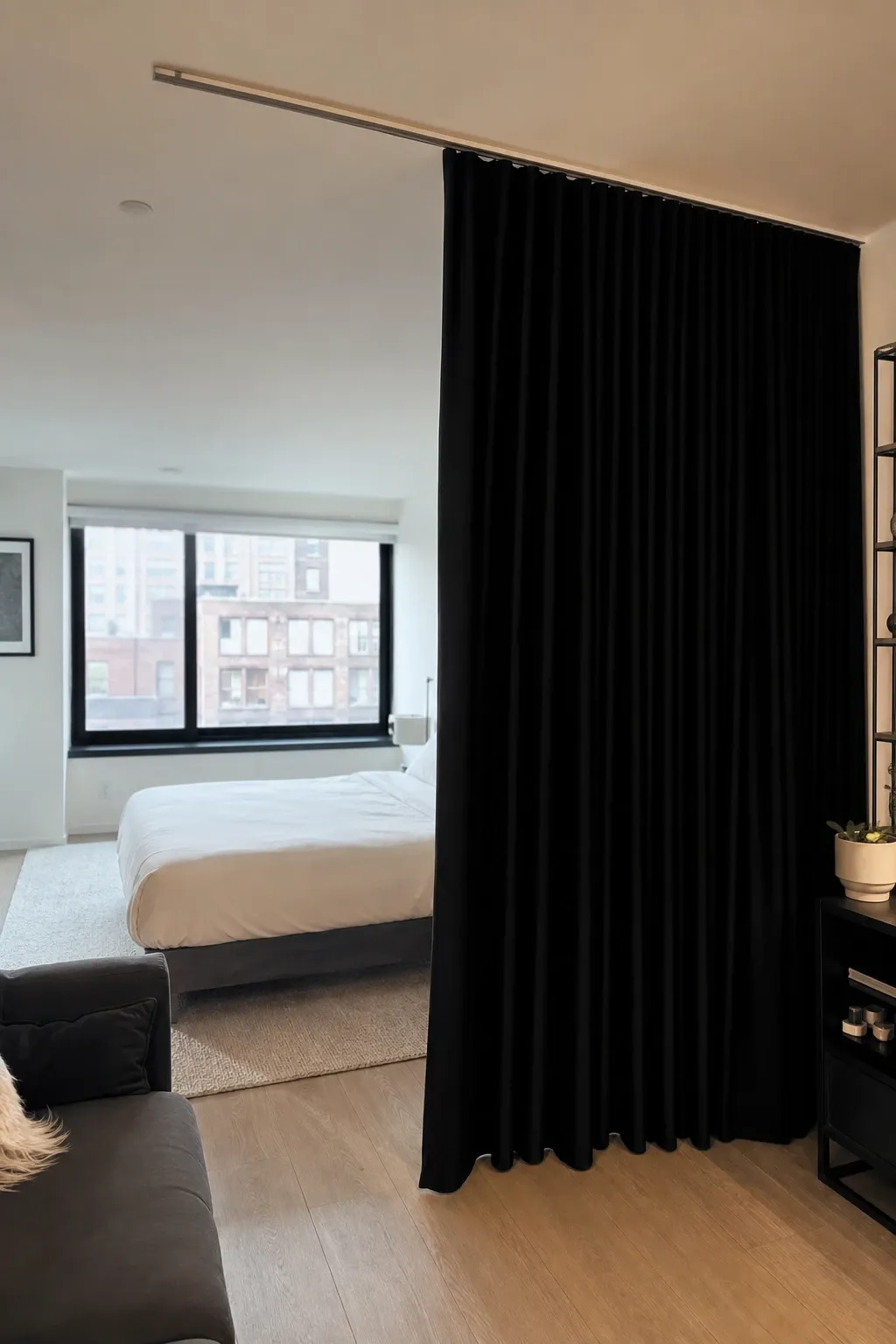
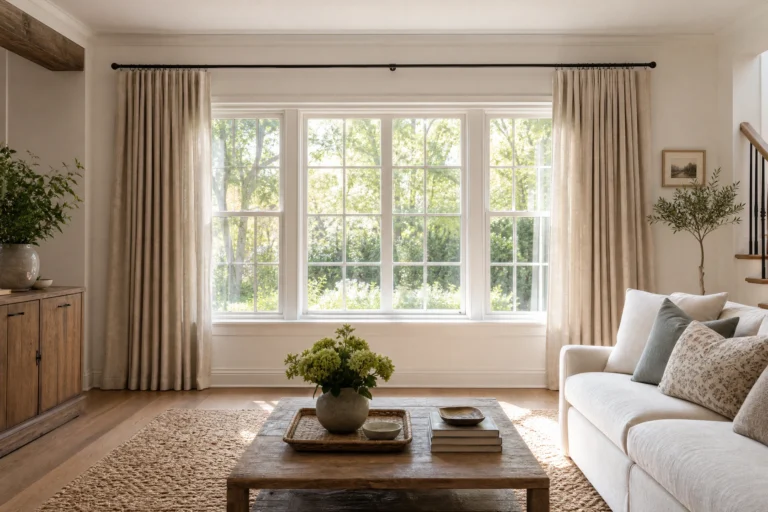
A ceiling-mounted curtain track with blackout curtains is one of the best studio apartment dividers. Pull the curtain closed for total privacy between sleeping and living areas, or push it open for the full open-concept feel. Blackout curtains also block light, which is useful if one person is sleeping while the other is still up. The soft drape of curtains adds warmth that hard dividers cannot match.
Designer Tip: Use a ceiling-mounted track rather than a tension rod. The track looks built-in and holds the heavy blackout fabric without sagging. A curved track lets the curtain wrap around a corner for even more flexible separation.
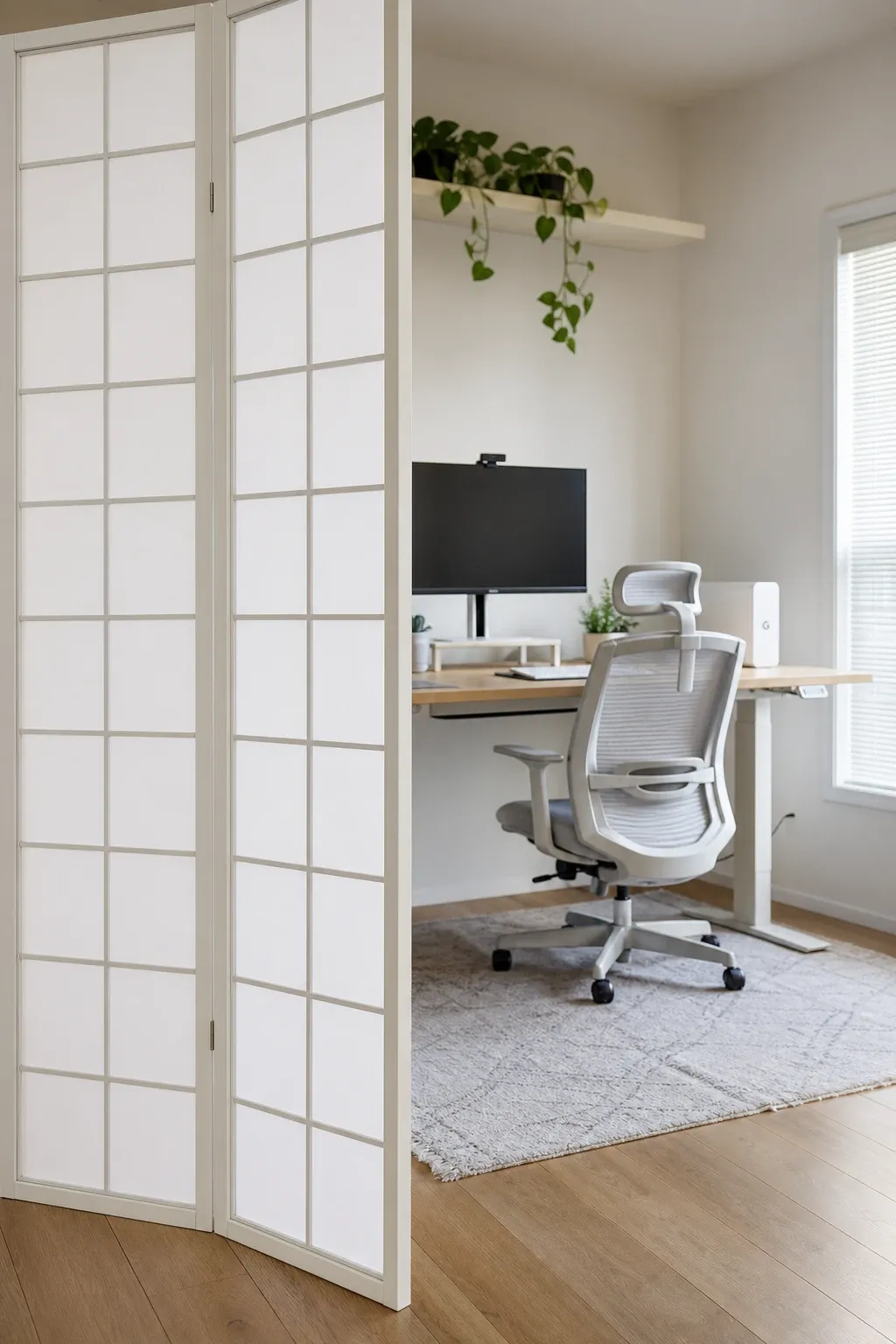
A white grid divider separates a space without blocking light or sightlines. The open grid creates a visual boundary while keeping the room feeling connected and airy. This works well in rooms where you want to define zones, like separating a dining area from a living area, without making either side feel smaller. The white color keeps it neutral and the geometric lines add a modern touch.
Designer Tip: Hang trailing plants from the grid openings to add softness and color. The grid becomes a vertical garden that doubles as a room divider. Pothos and ivy look great draping through the grid squares and growing down toward the floor.
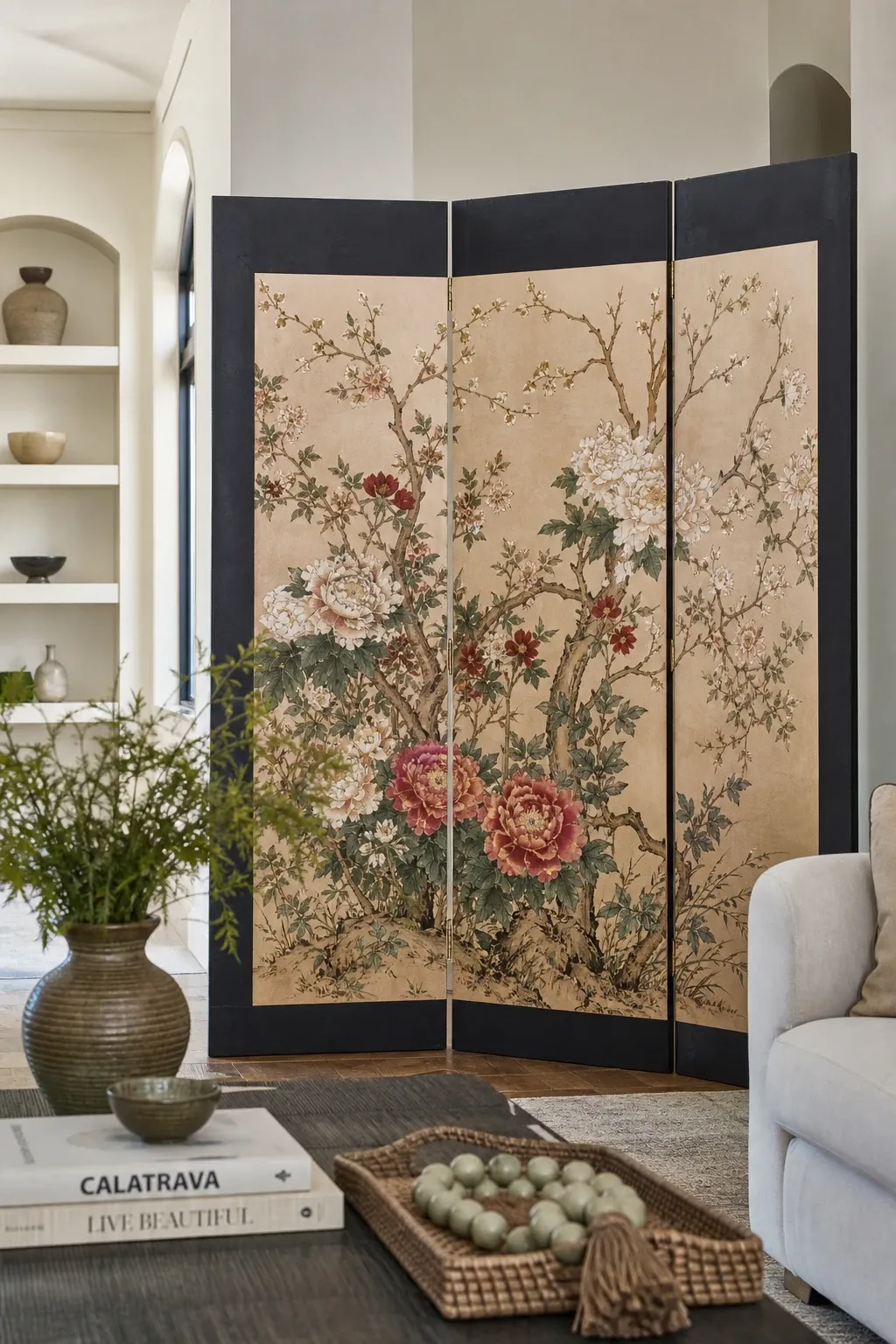
A folding screen with a printed scene, hand-painted design, or photographic image serves as both a room divider and a piece of art. The screen becomes a focal point in the room rather than just a functional object. Vintage Asian screens, mid-century abstract prints, and botanical illustrations are all popular choices. This is the option for people who want the divider to be noticed and admired.
Designer Tip: Match the art on the screen to the style of the room. A Japanese painted screen works in a minimalist or traditional room. A pop art screen works in a modern or eclectic space. The screen should feel like it belongs with the rest of the decor, not like it wandered in from another room.
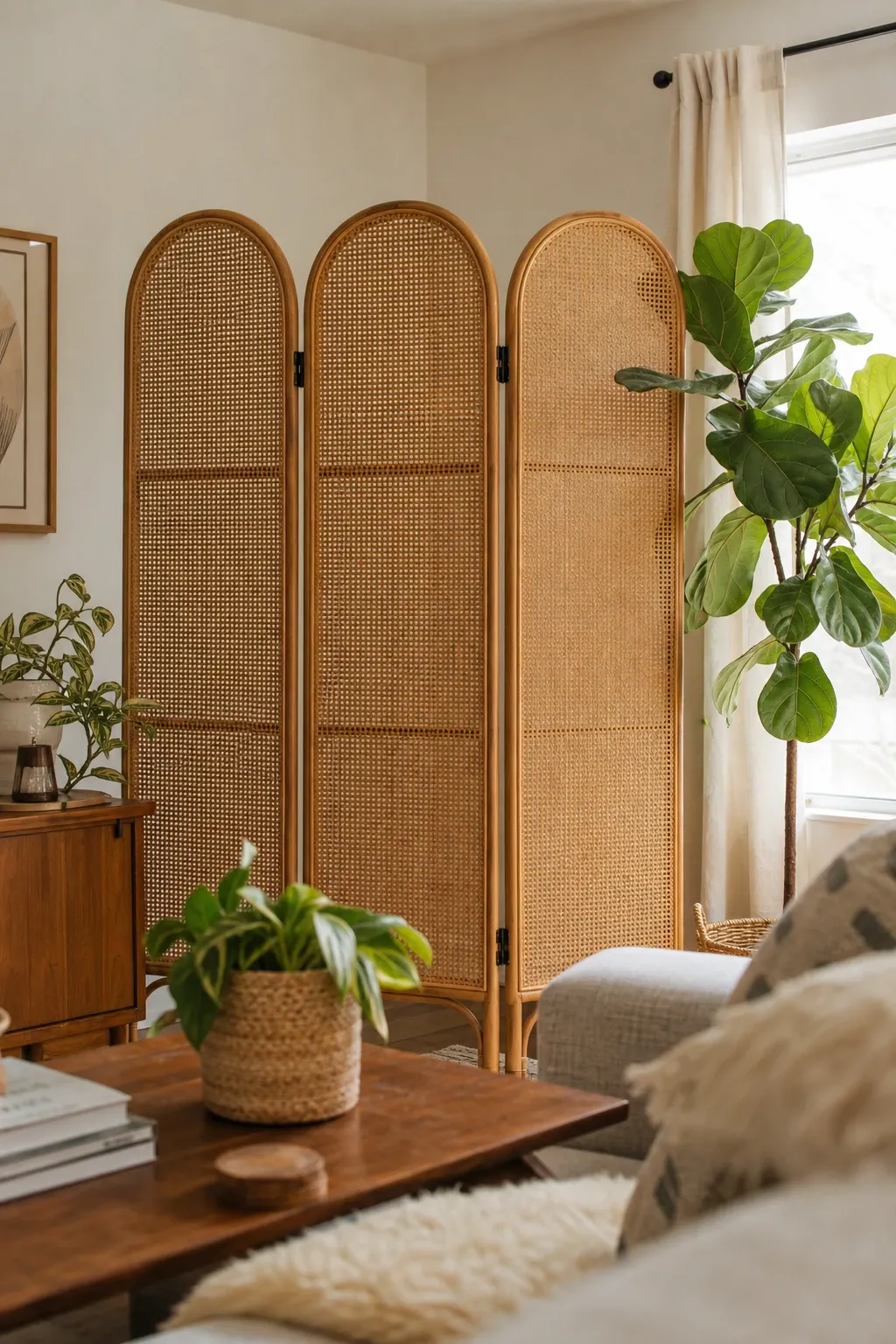
A woven rattan, seagrass, or bamboo screen adds natural texture and warmth that immediately reads as boho or coastal. The woven material filters light beautifully and creates interesting shadow patterns on the floor and walls. These screens are lightweight and easy to move. They pair well with rooms that already have natural materials like wood furniture, jute rugs, and linen upholstery.
Designer Tip: Place a floor lamp behind a woven screen to create a glowing backlit effect in the evening. The light shines through the weave and casts a warm, patterned glow that adds atmosphere to the room.
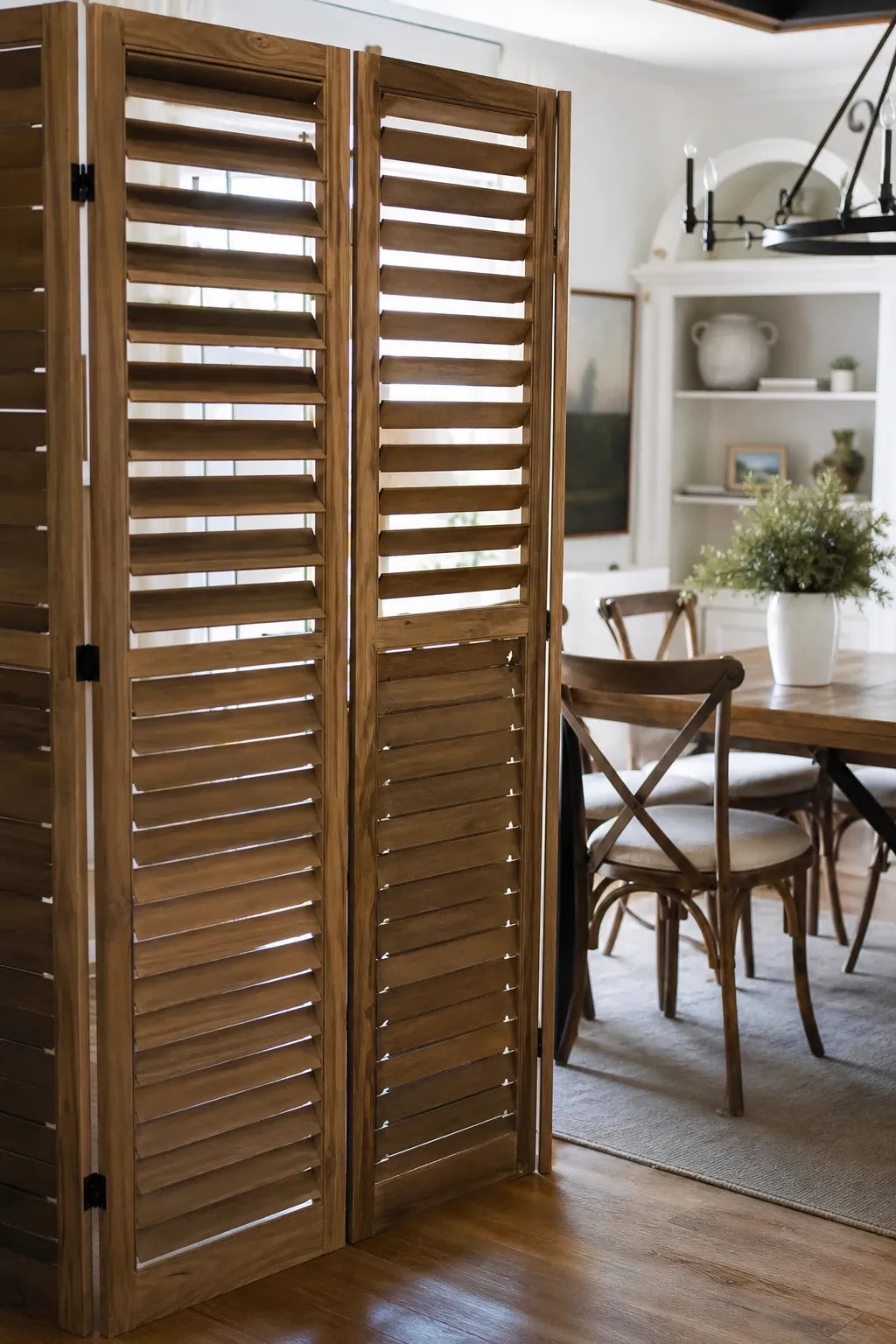
A divider with adjustable louvers like a plantation shutter lets you control light and visibility by tilting the slats. Open the louvers for light and airflow, close them for privacy. The shutter style brings a classic, architectural quality to the divider that plain panels lack. This works well in bedrooms, home offices, and any space where sometimes you want separation and sometimes you do not.
Designer Tip: Stain or paint the wood shutters to match the trim or door color in the room. Matching the existing woodwork makes the divider look like part of the original architecture rather than an addition.
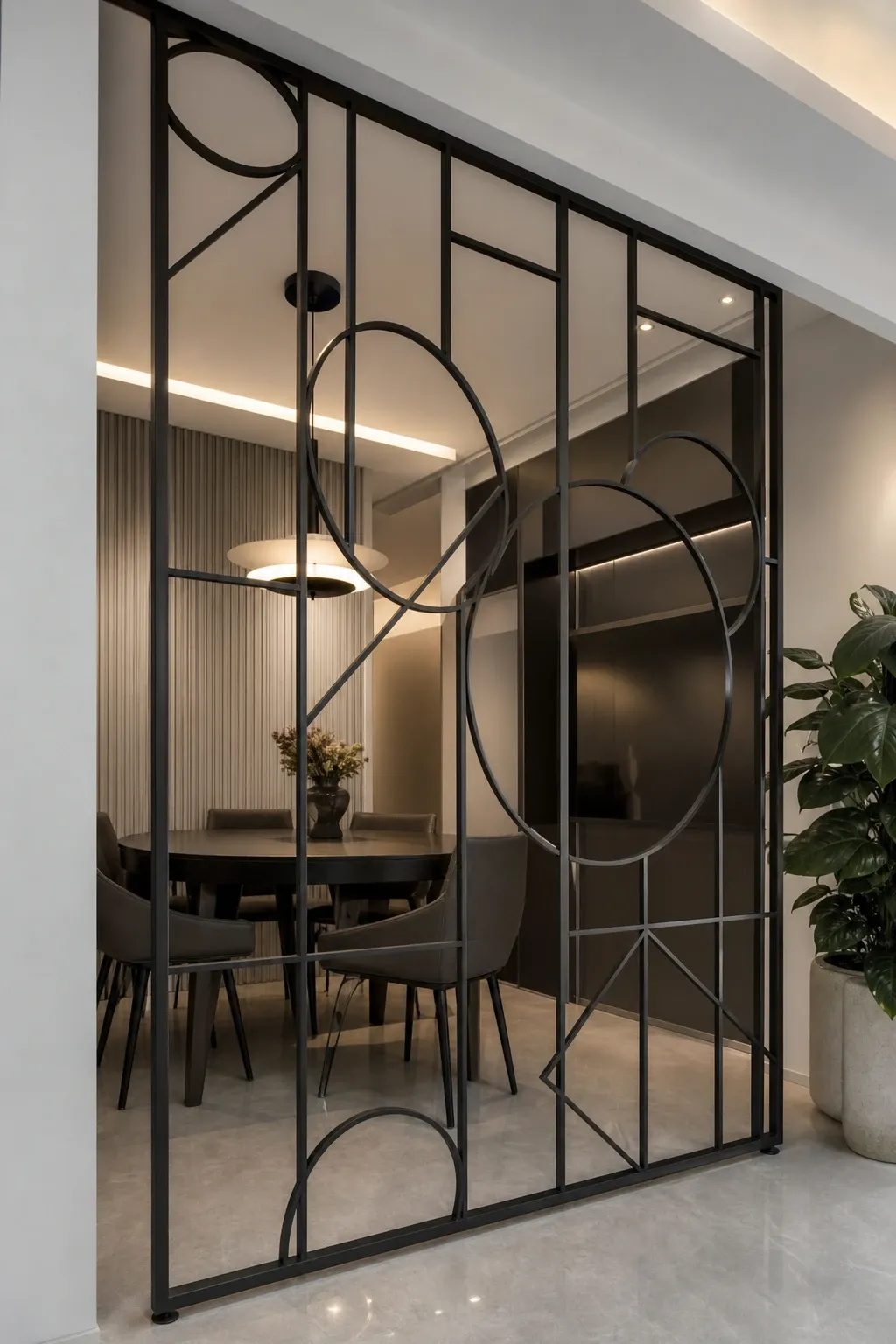
A black or brass metal divider with geometric patterns adds a modern, sculptural element to the room. The open metalwork creates separation without blocking light. The geometric shapes cast interesting shadows throughout the day as the light shifts. Metal dividers work in contemporary, industrial, and mid-century modern spaces where the clean lines and angular patterns complement the existing aesthetic.
Designer Tip: Anchor a freestanding metal divider to the floor or wall if it is tall and narrow. Metal dividers can be top-heavy and tip over when bumped. A small L-bracket at the base keeps it stable without being visible.
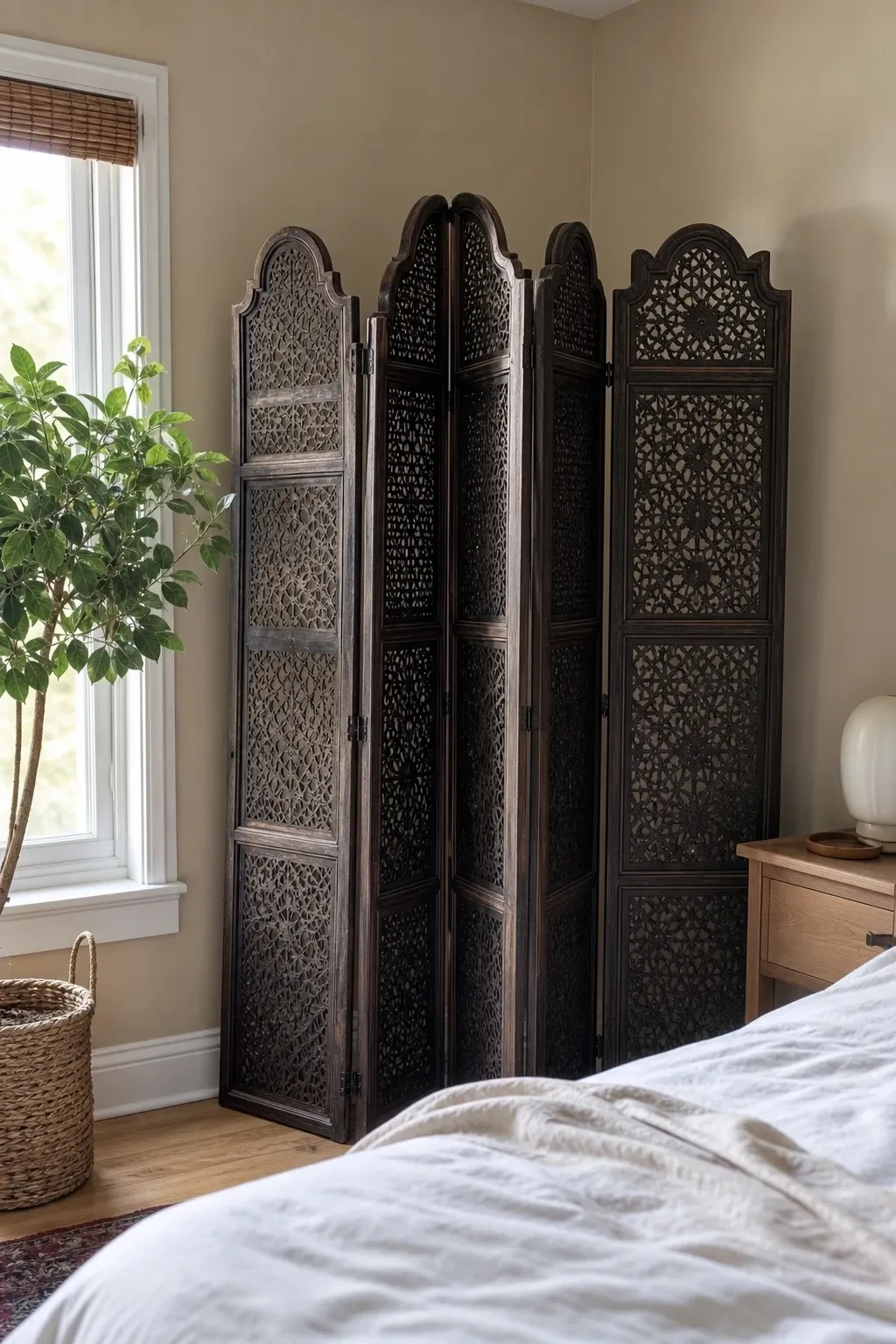
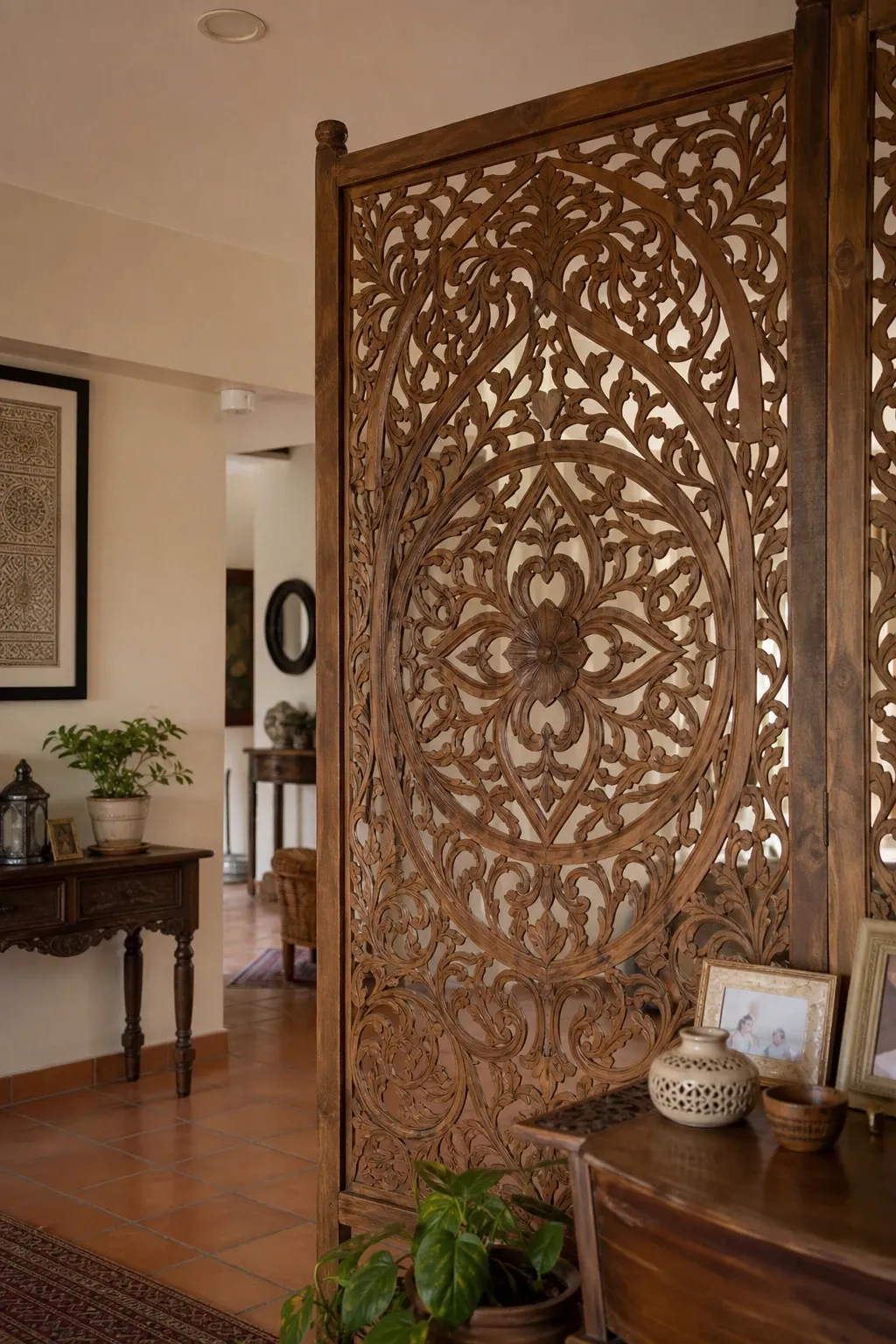
An intricately carved wooden divider brings artistry and cultural richness to a room. Indian, Moroccan, and Indonesian carved panels are popular choices with detailed floral, geometric, or lattice patterns. The carving creates a lace-like effect when light passes through. These dividers double as wall art when positioned flat against a wall or as a headboard behind a bed.
Designer Tip: Whitewash or limewash a dark carved divider to lighten it up for a modern room. The wash settles into the carved grooves and highlights the pattern while brightening the overall piece. It bridges the gap between traditional craftsmanship and modern decor.
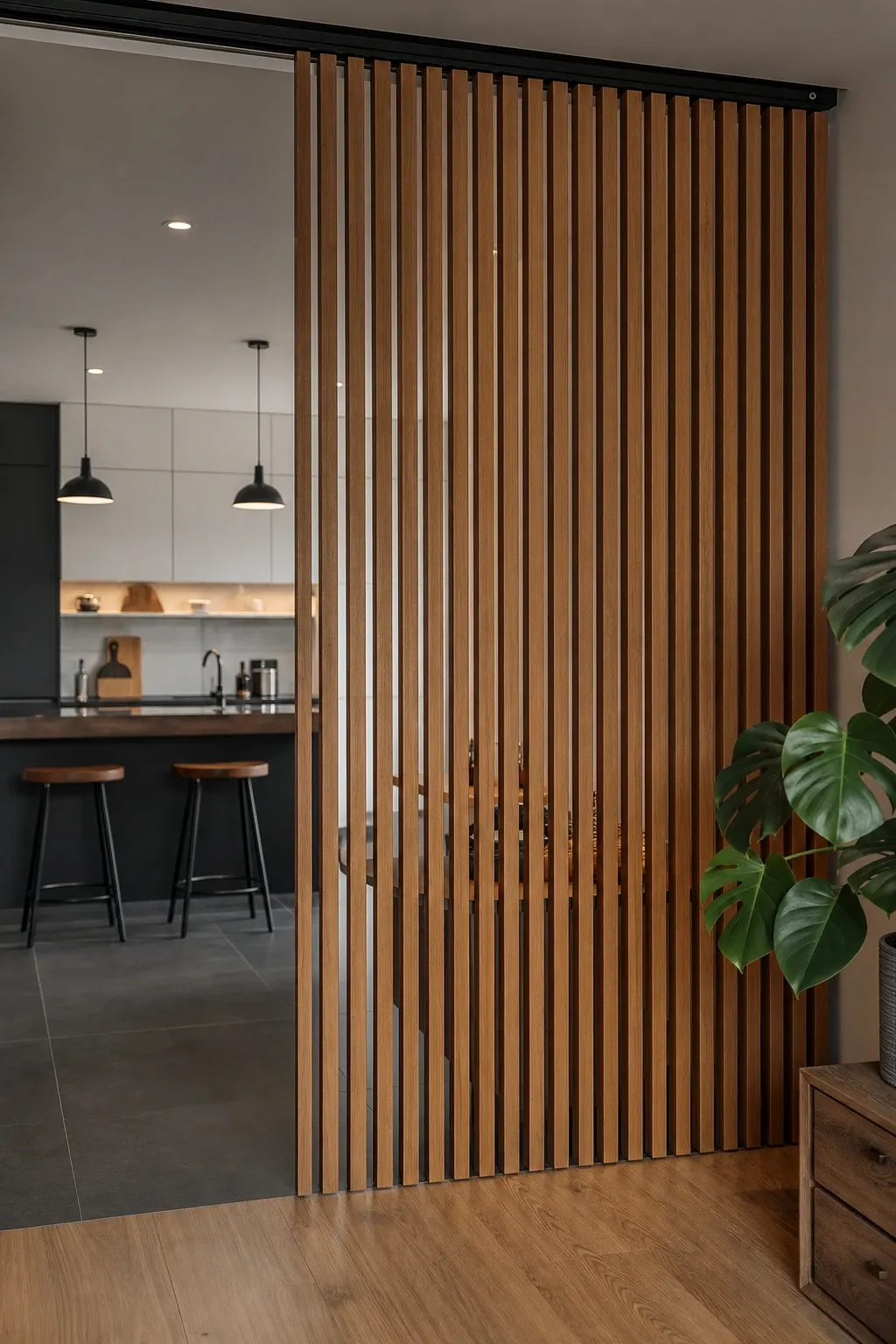
A sliding divider on a ceiling or floor track moves out of the way when you want an open room and slides closed when you need separation. Wooden slats in the divider allow light and air to pass through while still creating a visual barrier. The sliding mechanism saves floor space because the panel stacks flat against the wall when open. This is a clean, architectural solution that looks built into the home.
Designer Tip: Install the track so the divider slides behind a piece of furniture or into a wall pocket when open. Hiding the parked panel keeps the room looking clean and avoids the divider just standing open against a wall taking up space.
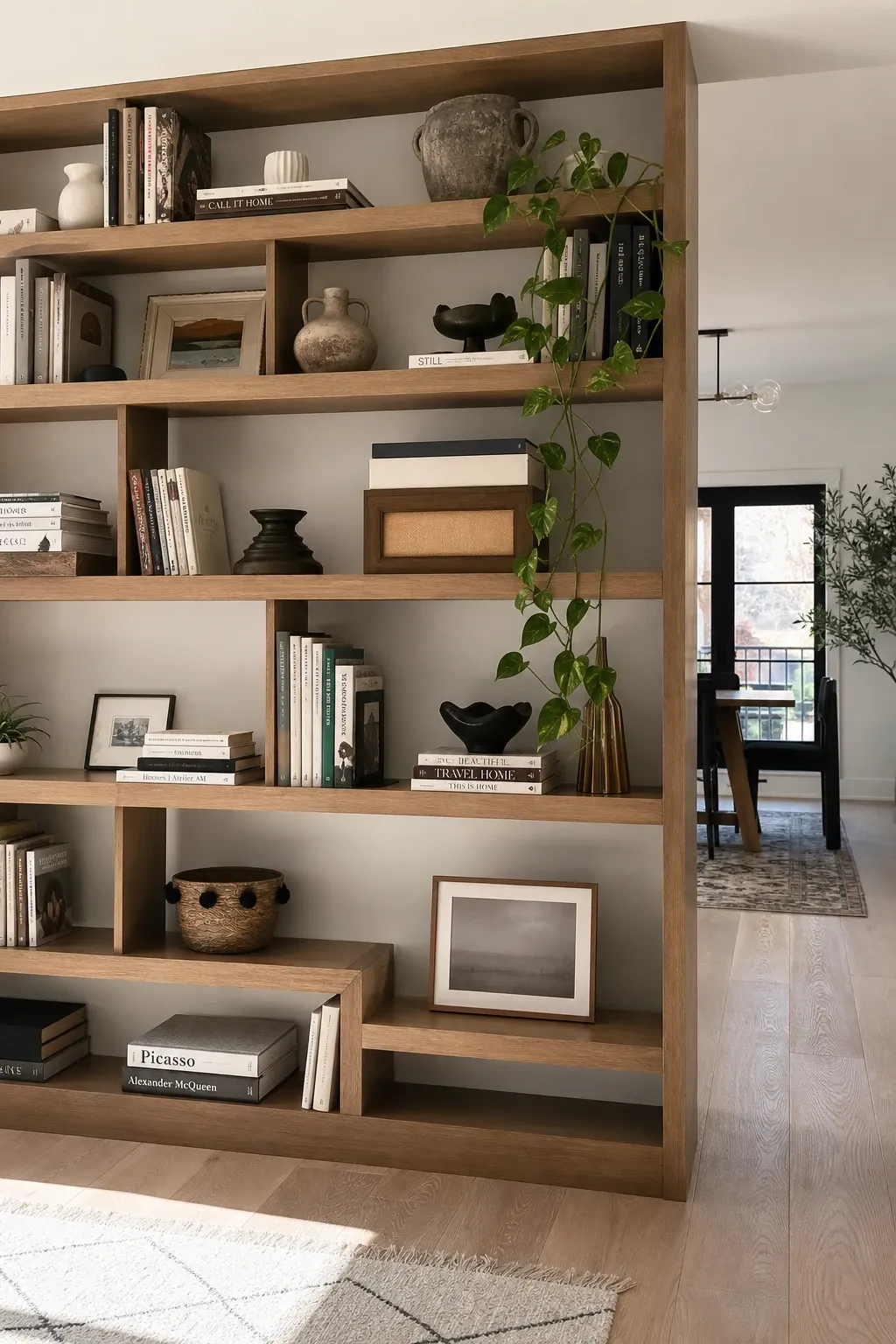
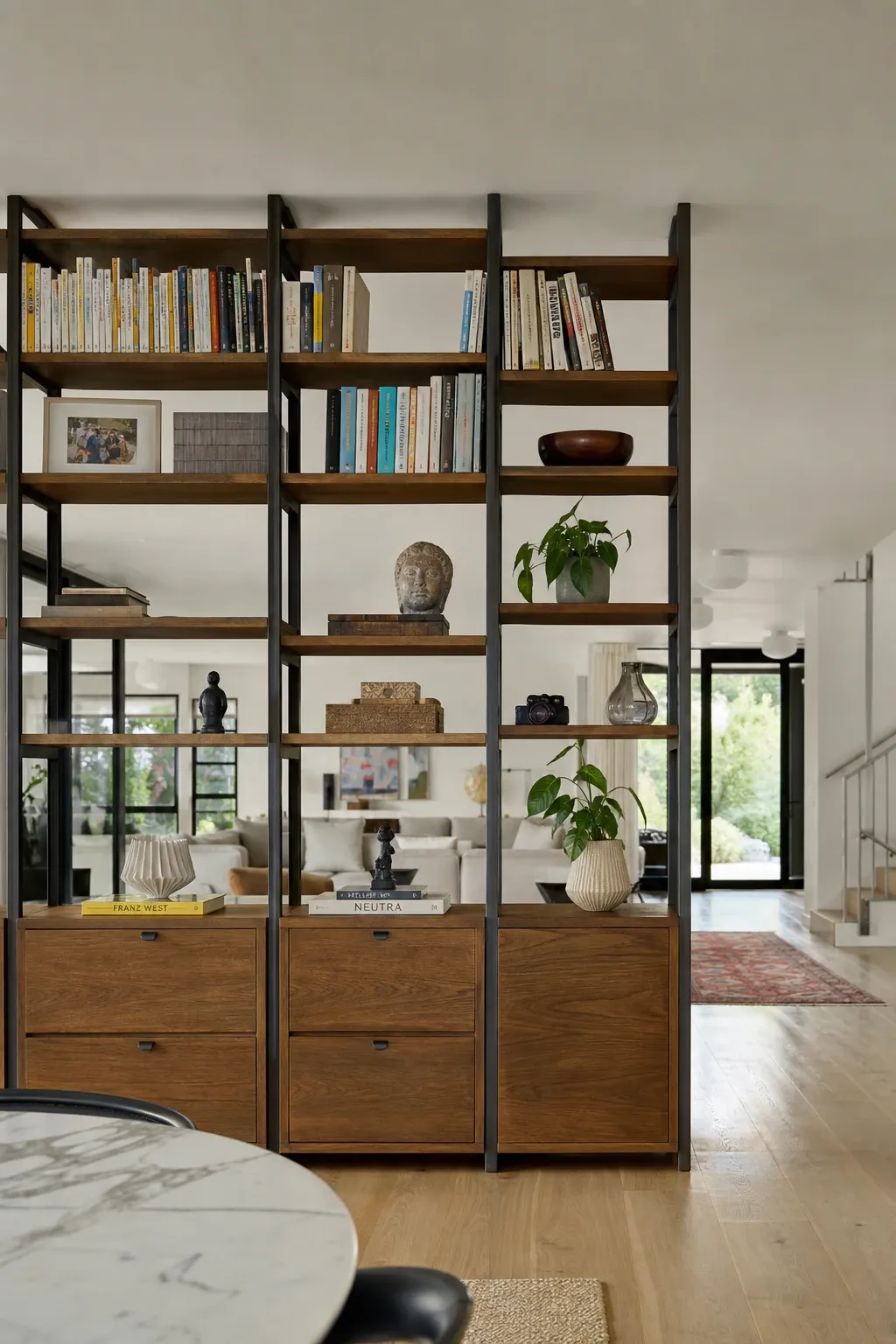
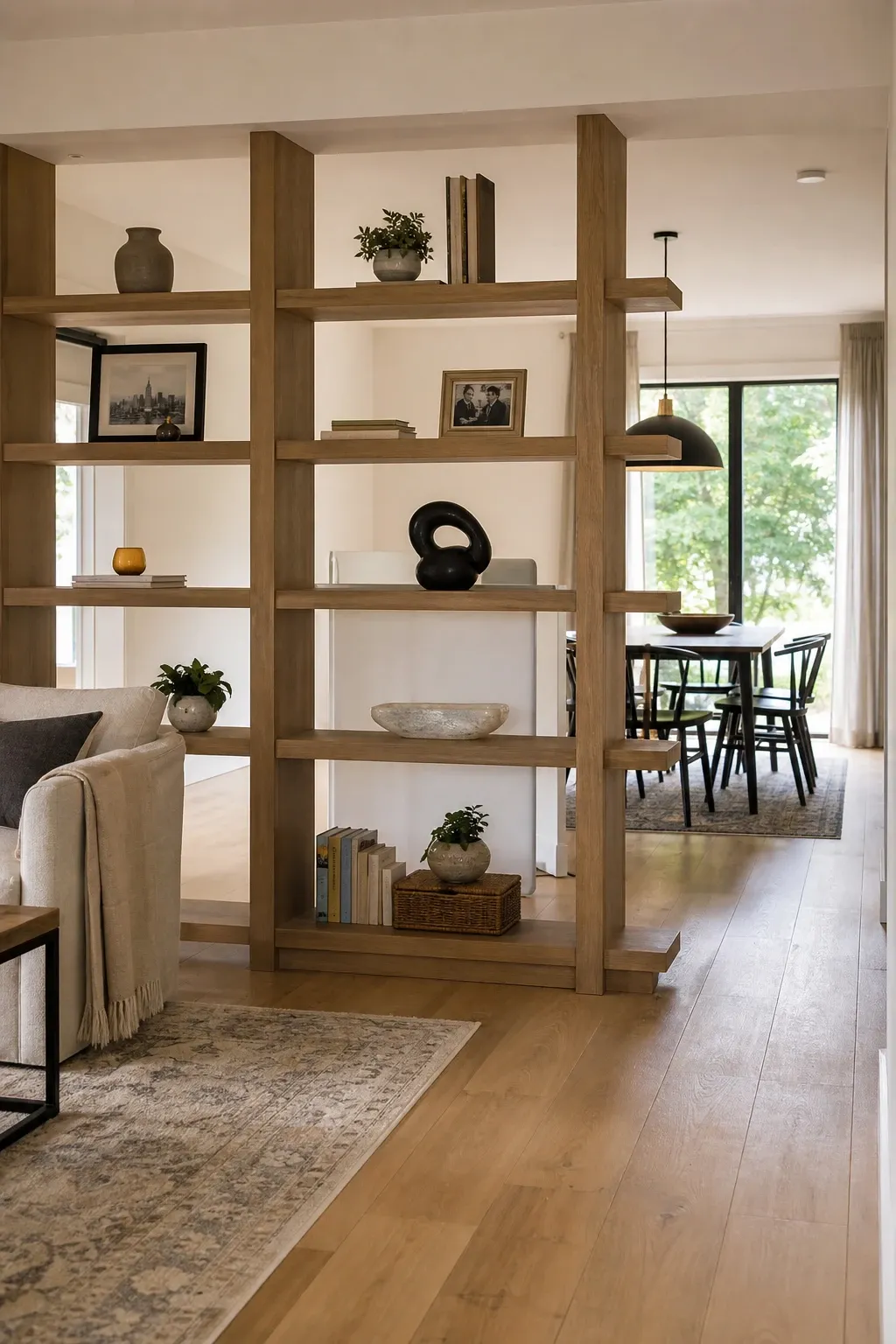
An open bookshelf placed perpendicular to the wall divides a room while adding storage on both sides. Books, plants, and decorative objects fill the shelves and create a screen that is both functional and beautiful. The open-back design lets light pass through and keeps both sides of the room connected. This is one of the most practical divider options because it solves two problems at once: separation and storage.
Designer Tip: Do not fill every shelf. Leave some openings empty or with just one small object. The negative space between items lets you see through the shelf to the other side and prevents the bookshelf from reading as a solid wall.
Floor-to-ceiling glass panels with black or brass frames create a sophisticated division that blocks noise without blocking light. The glass maintains the open feel of the room while providing real separation. This is the go-to option for home offices in shared living spaces where you need quiet but do not want to feel walled off. The metal frame adds structure and the glass keeps everything transparent.
Designer Tip: Use tempered or laminated safety glass for any freestanding glass divider. Standard glass shatters into dangerous shards if bumped hard. Safety glass is required by code for many applications and is worth the extra cost for peace of mind in a living space.
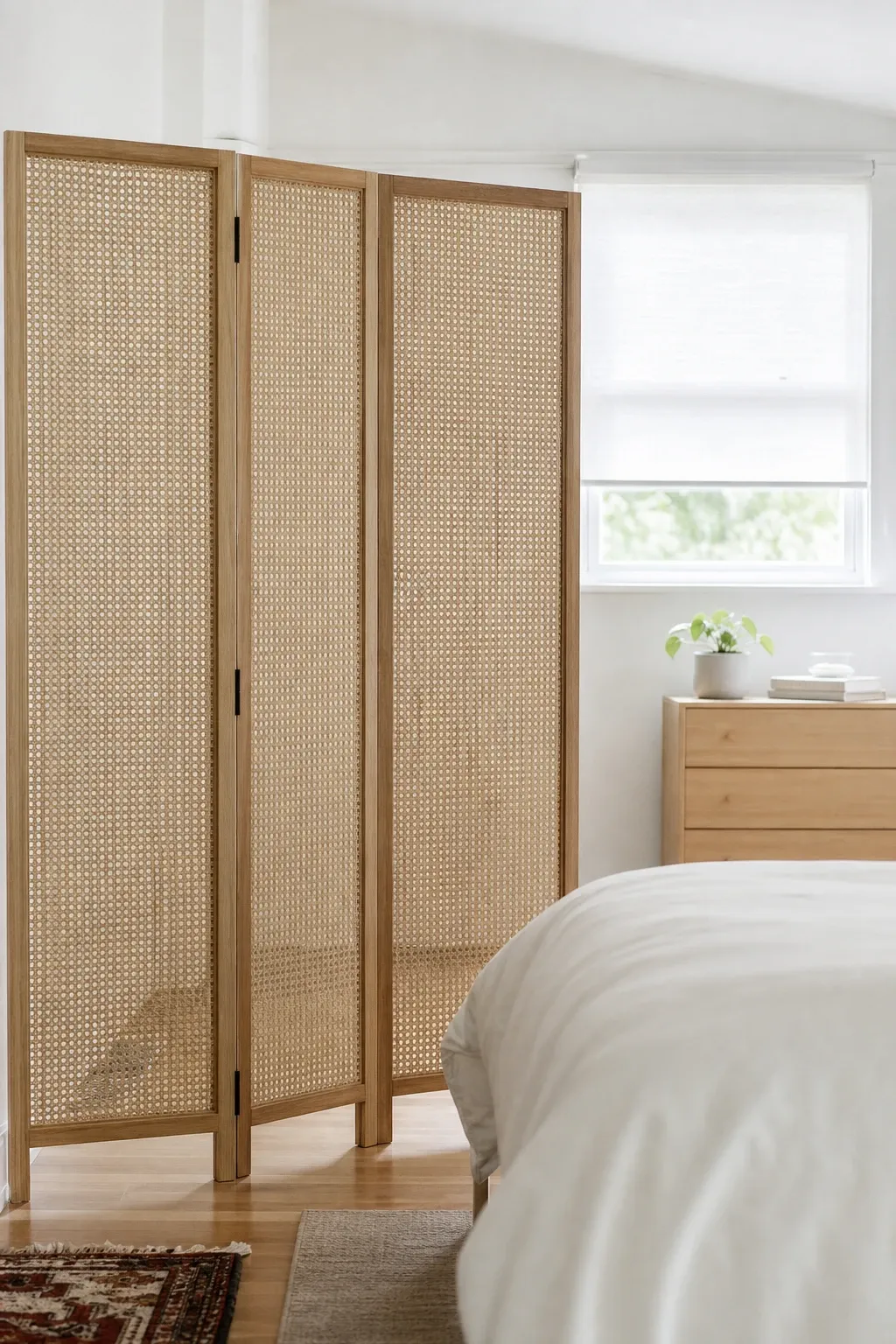
Cane webbing in a wood frame creates a lightweight, elegant divider that filters light beautifully. The natural cane material has a warmth and organic quality that works in mid-century, boho, and Scandinavian rooms. Cane dividers are lighter than solid wood and easier to move around. The woven pattern provides partial privacy while still allowing air circulation between zones.
Designer Tip: Keep cane dividers away from direct sunlight and high humidity. Cane dries out and cracks in prolonged sun and warps in moisture. Position the divider in a spot with indirect light and stable conditions. A light coat of furniture oil once a year keeps the cane supple.
Modular cube or grid shelving systems can be configured into any shape and size to divide a room. The modular approach lets you adjust the divider height and width as your needs change. Start with a few cubes and add more over time, or rearrange them when you move furniture. This flexibility makes modular shelving one of the smartest long-term divider investments.
Designer Tip: Alternate between open cubes and cubes with storage bins or doors for visual variety. A solid wall of identical open cubes looks monotonous. Mixing open and closed storage breaks up the grid and adds visual interest on both sides.
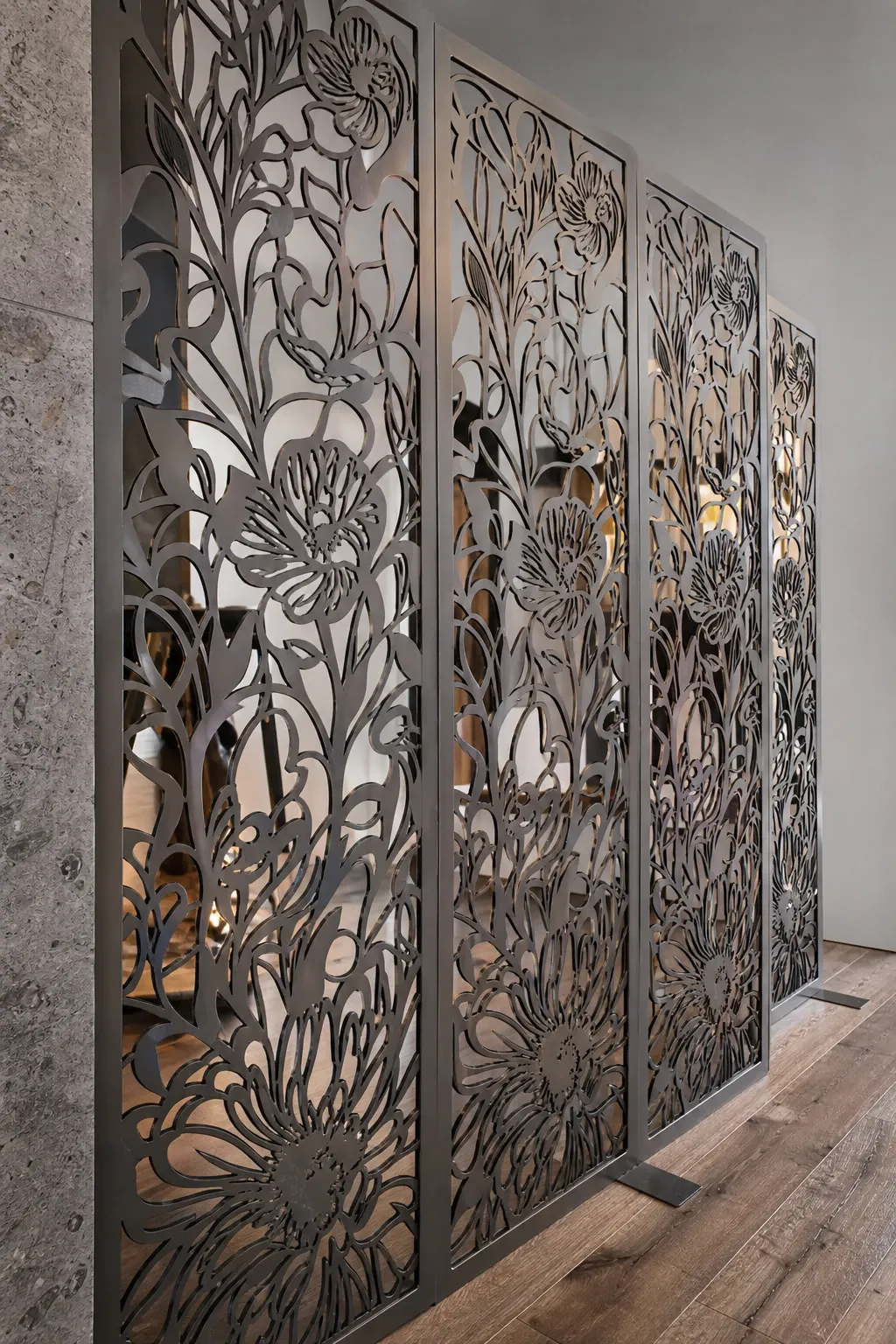
A laser-cut or hand-forged metal panel with an artistic pattern serves as a sculptural room divider. The intricate cutouts create beautiful shadow patterns on the floor and walls as light passes through. Metal panels in matte black, brass, or copper make a bold statement. This is less of a practical divider and more of a large-scale art piece that also happens to separate spaces.
Designer Tip: Light an artistic metal divider from one side with a floor spotlight for dramatic shadow effects at night. The cutout pattern projects onto the opposite wall like a piece of shadow art. This turns the divider into a lighting feature after dark.
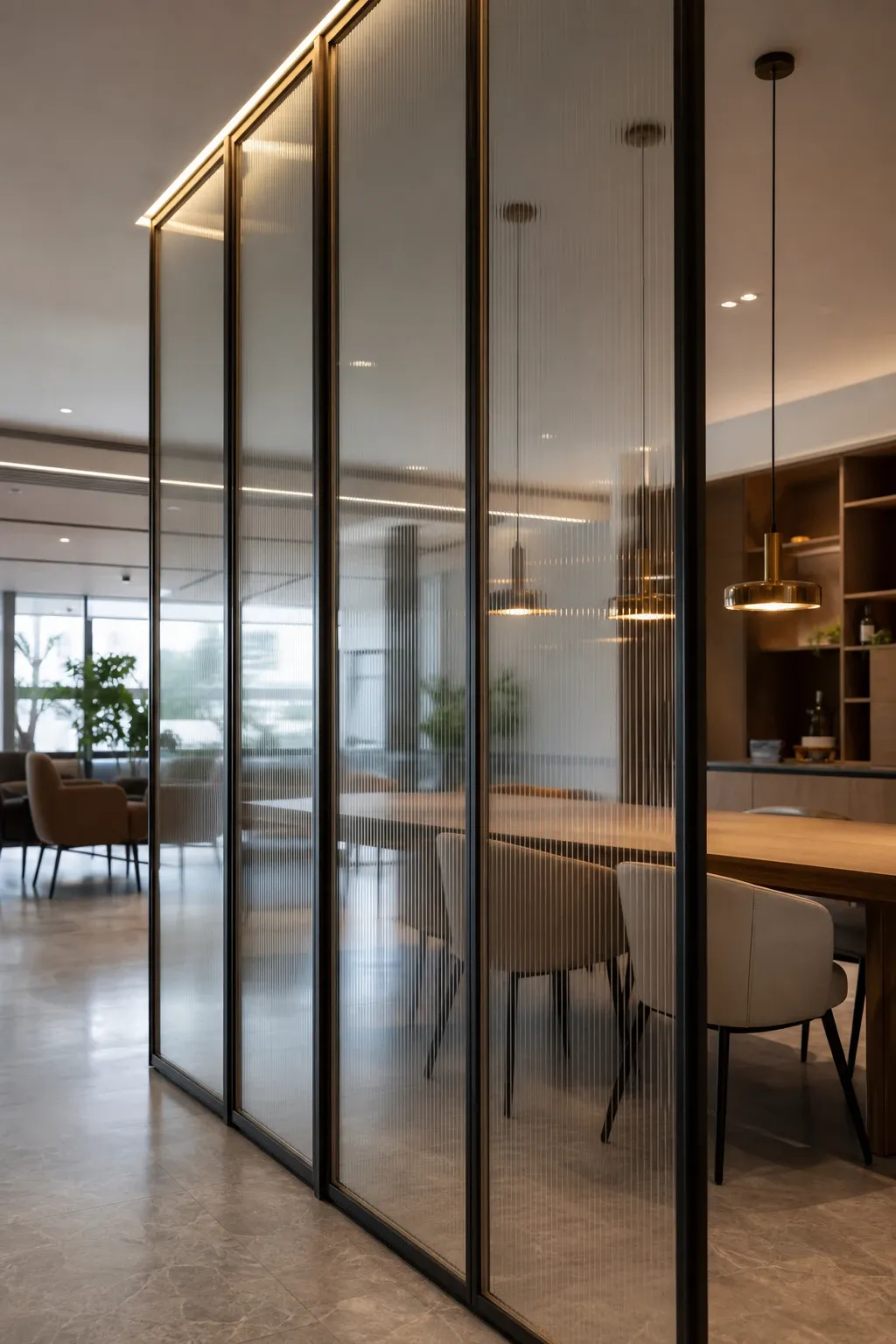
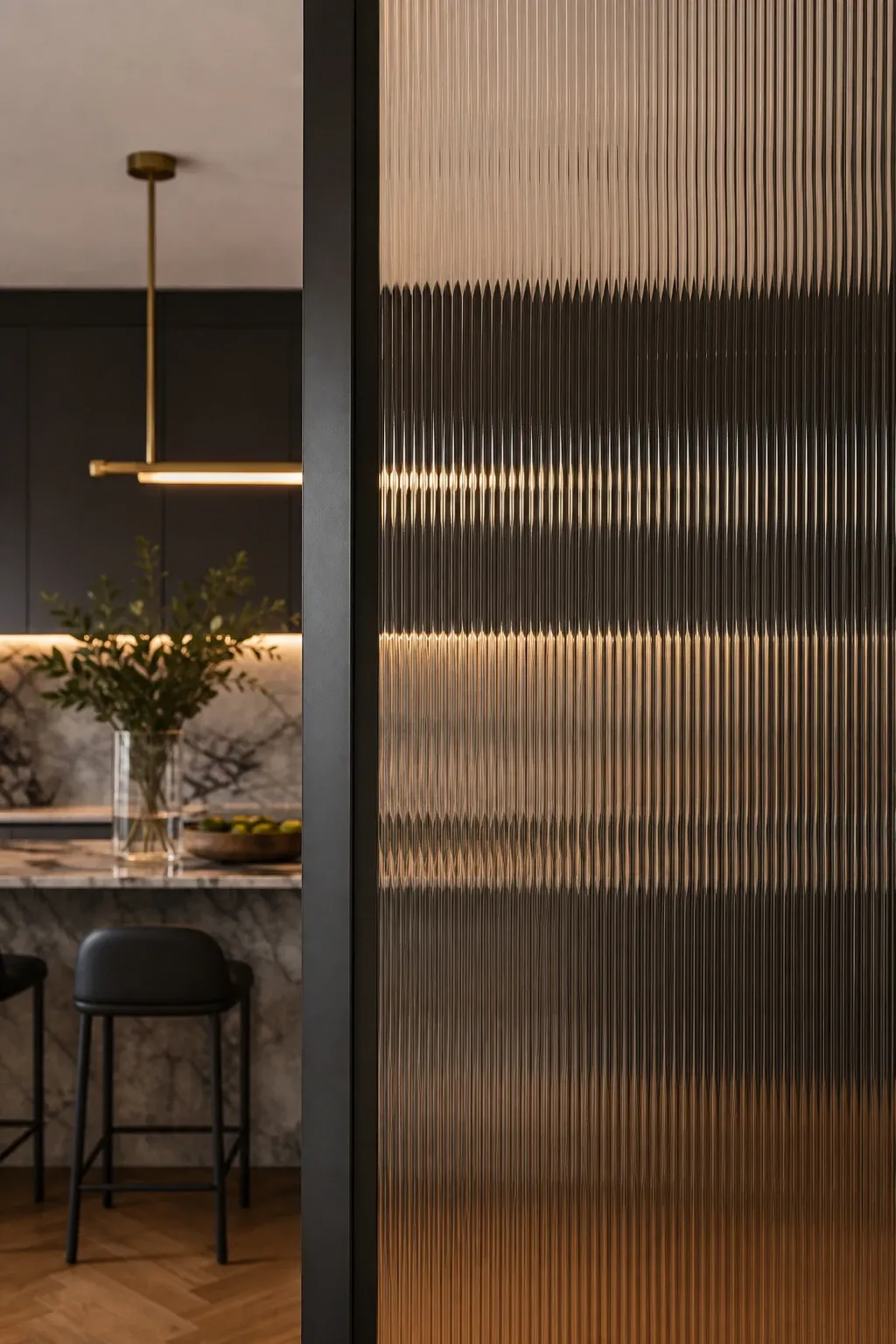
Fluted, reeded, or frosted glass partitions let light through while obscuring the view. The textured glass creates privacy without the heaviness of a solid wall. Reeded glass is especially popular right now and adds a retro, art deco feel. This works well in open-plan apartments where you want to separate the bedroom from the living area while keeping the space feeling light and open.
Designer Tip: Frame textured glass in black metal for the sharpest, most modern look. The dark frame contrasts with the translucent glass and gives the partition a clean architectural edge. Frameless textured glass looks softer but less defined.
A closed-back bookshelf that looks finished on both sides works as a solid divider that gives each zone its own usable storage wall. Unlike an open bookshelf, the closed back creates real visual separation and sound dampening between spaces. Each side of the shelf faces its own zone, so you can style them differently. One side might be a living room display wall and the other a home office storage wall.
Designer Tip: Secure a tall closed-back bookshelf to the wall or ceiling with anti-tip brackets. A loaded bookshelf that is freestanding in the middle of a room is a tipping hazard, especially in homes with children or pets. Safety brackets are invisible and essential.
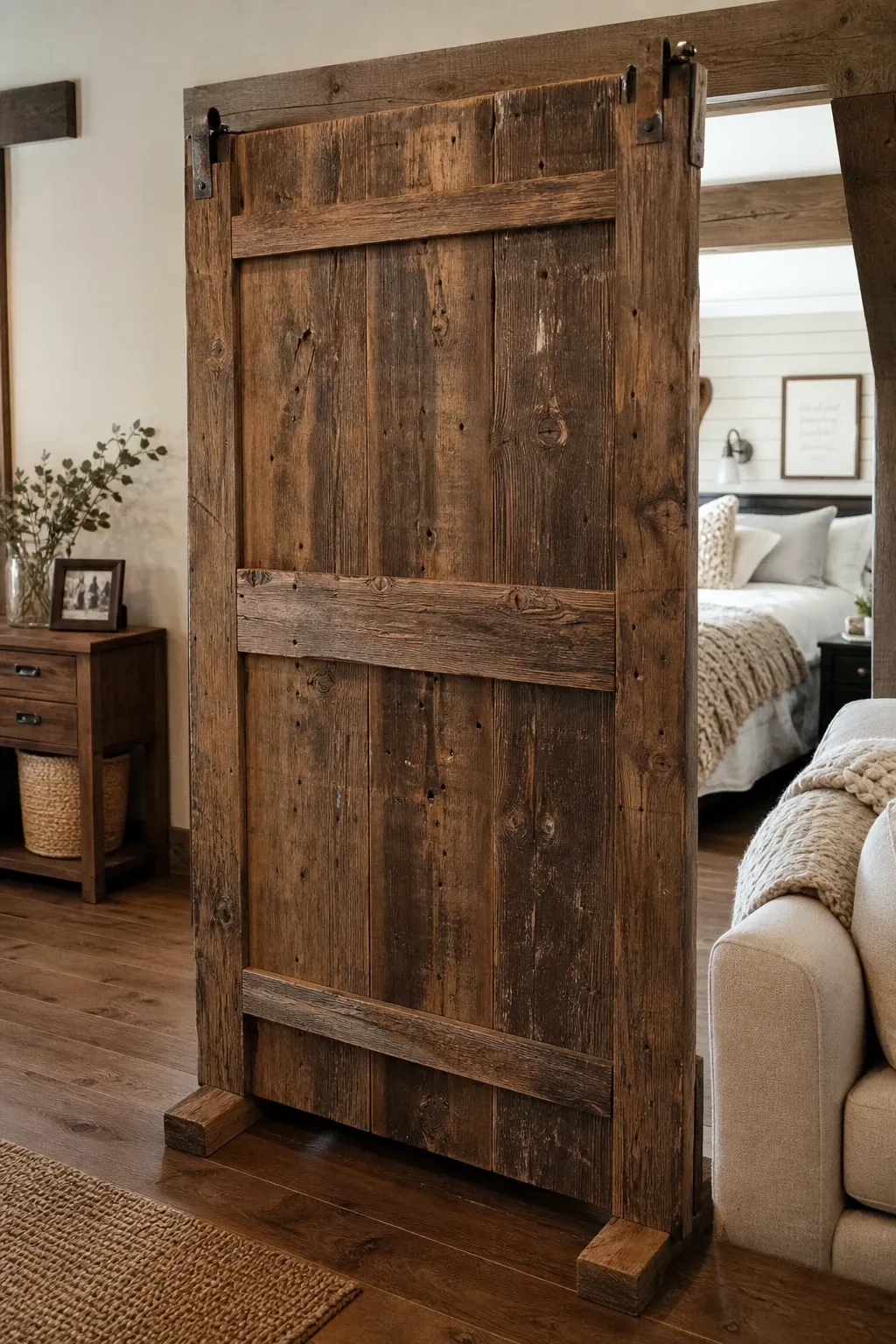
A sliding barn door on an exposed track is a bold divider that brings farmhouse or industrial character to a room. The heavy wood door slides along the wall and can separate bedrooms, home offices, or closets. The exposed hardware and raw wood are part of the design statement. Barn doors are heavier and more substantial than screens or curtains, making them feel more permanent and architectural.
Designer Tip: Install soft-close hardware on the barn door track so the door does not slam into the end stops. Barn doors are heavy and noisy without soft-close dampers. The smooth, quiet close also makes the door feel higher quality.
A room divider should solve a problem while looking like you chose it on purpose. Whether you need to carve out a home office in the living room, separate a sleeping area in a studio, or just add visual interest to a large open space, there is a divider on this list that does the job without looking like an afterthought.
Frequently Asked Questions
How tall should a room divider be?
For visual separation, a divider that is 5 to 6 feet tall is usually sufficient. It creates a clear boundary without reaching the ceiling. For privacy and sound blocking, a floor-to-ceiling divider is better. The right height depends on depending on how much separation you want between the zones.
Can a room divider block sound?
Solid dividers like closed-back bookshelves, heavy curtains, and glass panels block some sound. Open screens, woven panels, and grid dividers do not block sound at all. For real noise reduction, choose a divider with mass and density. Adding soft materials like a heavy curtain behind a hard divider improves sound absorption further.
What is the best room divider for a studio apartment?
A ceiling-mounted curtain or a bookshelf divider tends to work best in studios. The curtain provides complete visual privacy when closed and disappears when open. The bookshelf adds storage, which studios always need. Both options are practical solutions that address the two biggest studio apartment problems: lack of privacy and lack of storage.
Do room dividers work in small rooms?
Yes, if you choose a divider that lets light through. Glass panels, open shelving, sheer curtains, and grid screens divide a small room without making it feel smaller. Avoid solid, opaque dividers in small rooms because they create two cramped spaces instead of one small but open space. Transparency and light are key in tight quarters.