There is something about a bedroom with real history in it that a brand-new showroom simply cannot replicate. It might be the warm amber glow of an old brass lamp, the satisfying weight of a hand-stitched quilt, or the particular patina of a walnut dresser that has clearly been in somebody’s family for a long time. Vintage bedrooms work because they feel collected rather than purchased all at once, and that quality is something you can actually build deliberately, no matter where your room is right now. The ideas in this article cover a wide range of vintage styles, from the clean lines of mid-century modern to the layered romance of Victorian cottage, so there is genuinely something here for every kind of sleeper.
One thing worth saying upfront: decorating in a vintage style does not mean turning your bedroom into a museum. The best vintage rooms feel lived-in and personal, not preserved. The goal is to mix pieces with real character alongside modern comfort, so you get the warmth and visual interest of older design without sacrificing the things that make a bedroom actually restful. Budget-wise, many of these ideas are surprisingly affordable since thrift stores, estate sales, and online secondhand marketplaces are genuinely excellent sources for the exact kinds of pieces that make vintage interiors sing. Let’s get into it.
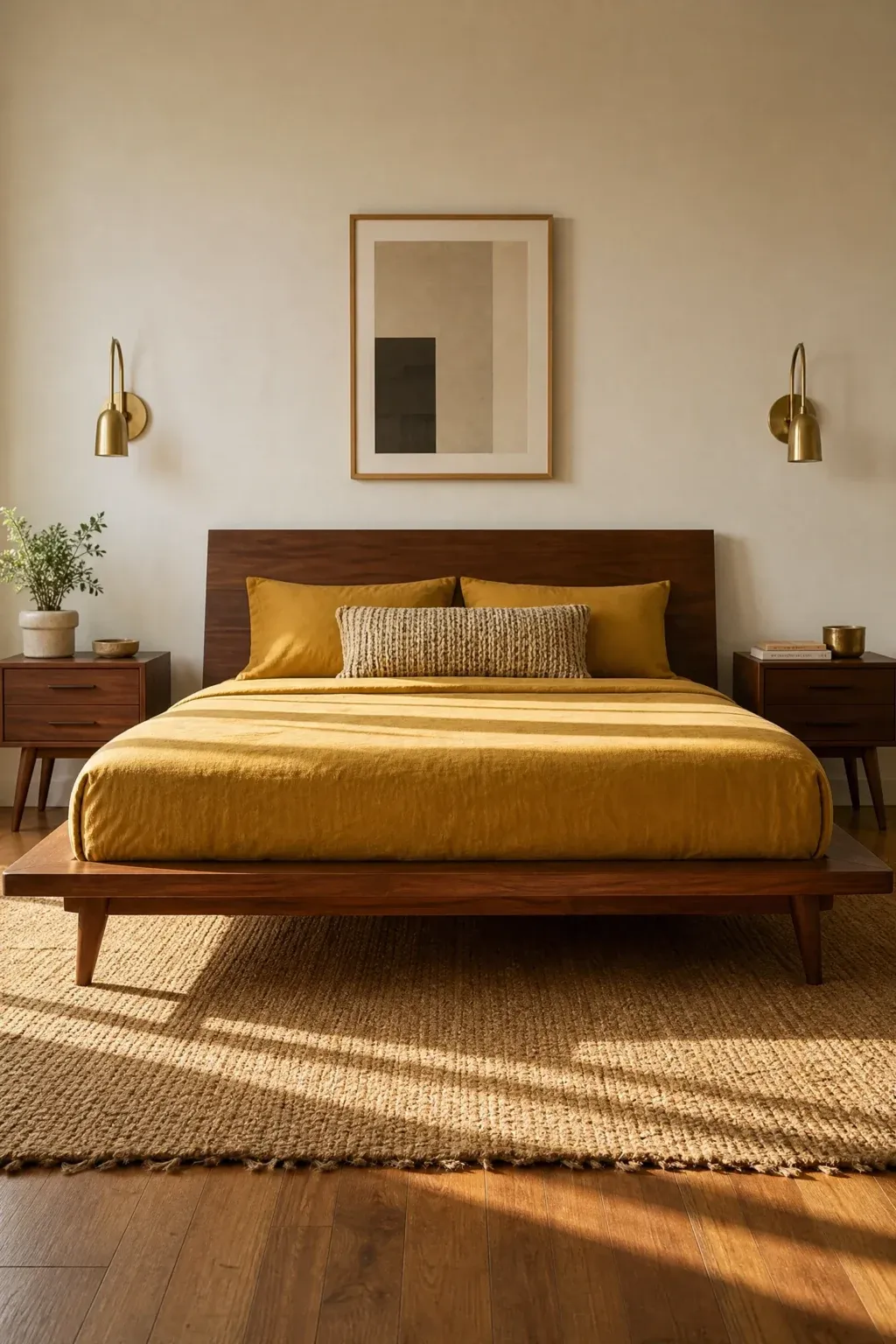
You know that feeling when you walk into a room and everything just sits at the right height? That is the quiet genius of mid-century modern proportions, and a walnut-and-mustard bedroom captures it beautifully. Start with a low-profile platform bed in solid walnut or walnut veneer, ideally with a simple, unornamented headboard that lets the grain of the wood do the talking. Dress the walls in a warm off-white or soft greige to keep the color temperature inviting, then bring in mustard yellow through bedding, a throw pillow or two, and a bedside lamp with a fabric shade in the same family. A Saarinen-style tulip side table or a tapered-leg nightstand keeps the furniture vocabulary consistent. For lighting, a articulated wall sconce in brushed brass or black matte on each side of the bed is both functional and deeply period-appropriate. One honest note: true mid-century walnut pieces can be pricey, but solid replicas and vintage finds from the 1960s and 1970s are widely available at estate sales for a fraction of the cost, and they are often genuinely well-made.
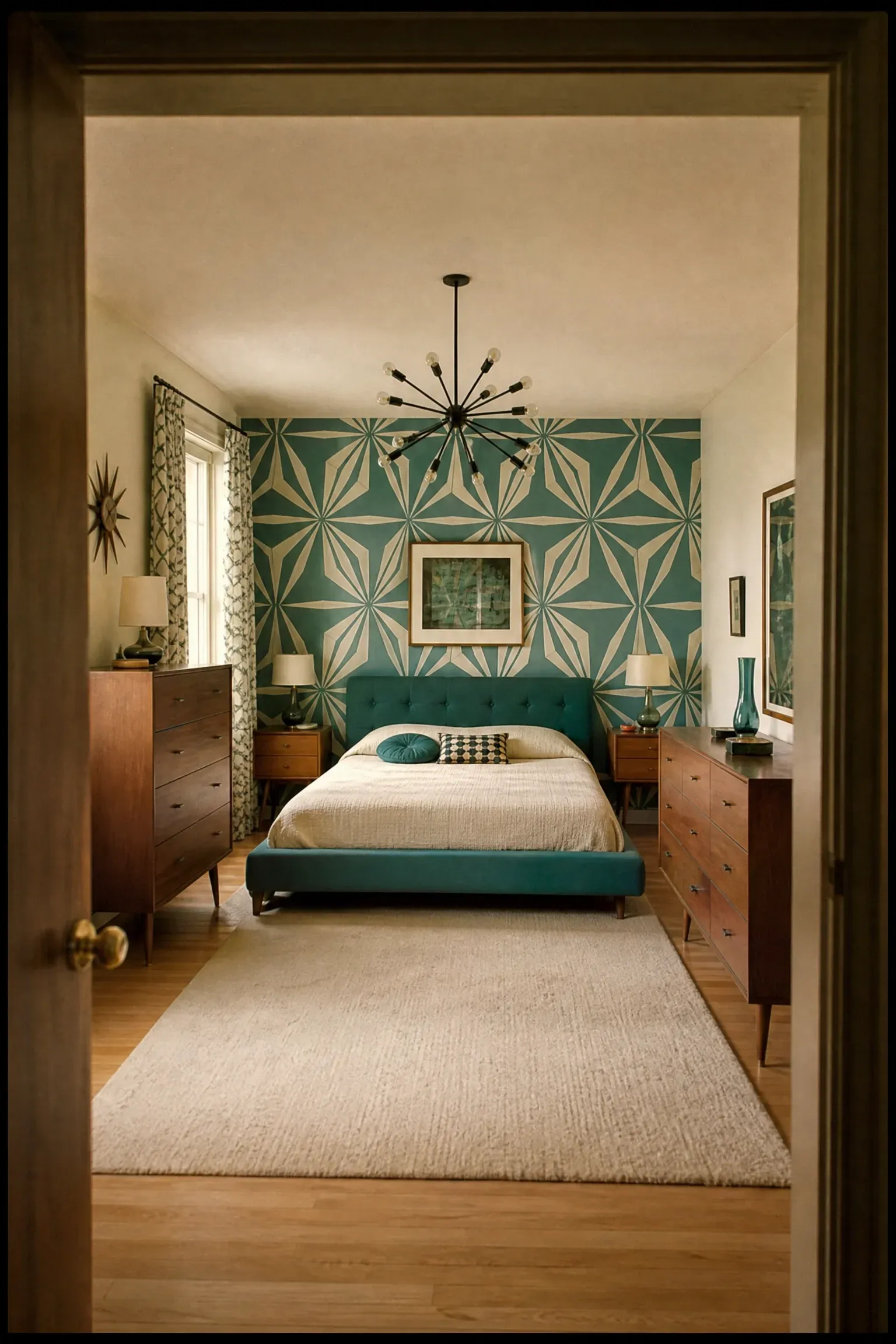
If mid-century modern usually skews quiet, the Atomic Age branch of that era is where things get a little playful. Think of those 1950s and 1960s graphic prints, the starbursts, the abstract boomerang shapes, the geometric patterns that felt genuinely futuristic at the time. A bedroom built around this look starts with a bold patterned wallpaper on a single accent wall behind the bed, something with a retro geometric print in teal, coral, or olive on a cream background. Keep the furniture simple: a low bed with a tufted headboard in a solid complementary color, a pair of tapered-leg dressers, and an iconic mid-century accent chair in the corner if space allows. Overhead, a Sputnik chandelier or a starburst ceiling light is almost mandatory and is far more affordable than it looks, with good reproductions available well under $200. Stick to hard flooring or a simple loop-pile rug in a neutral tone so the walls remain the clear focal point. This look works best in rooms with decent ceiling height since the bold patterns need a bit of visual breathing room.
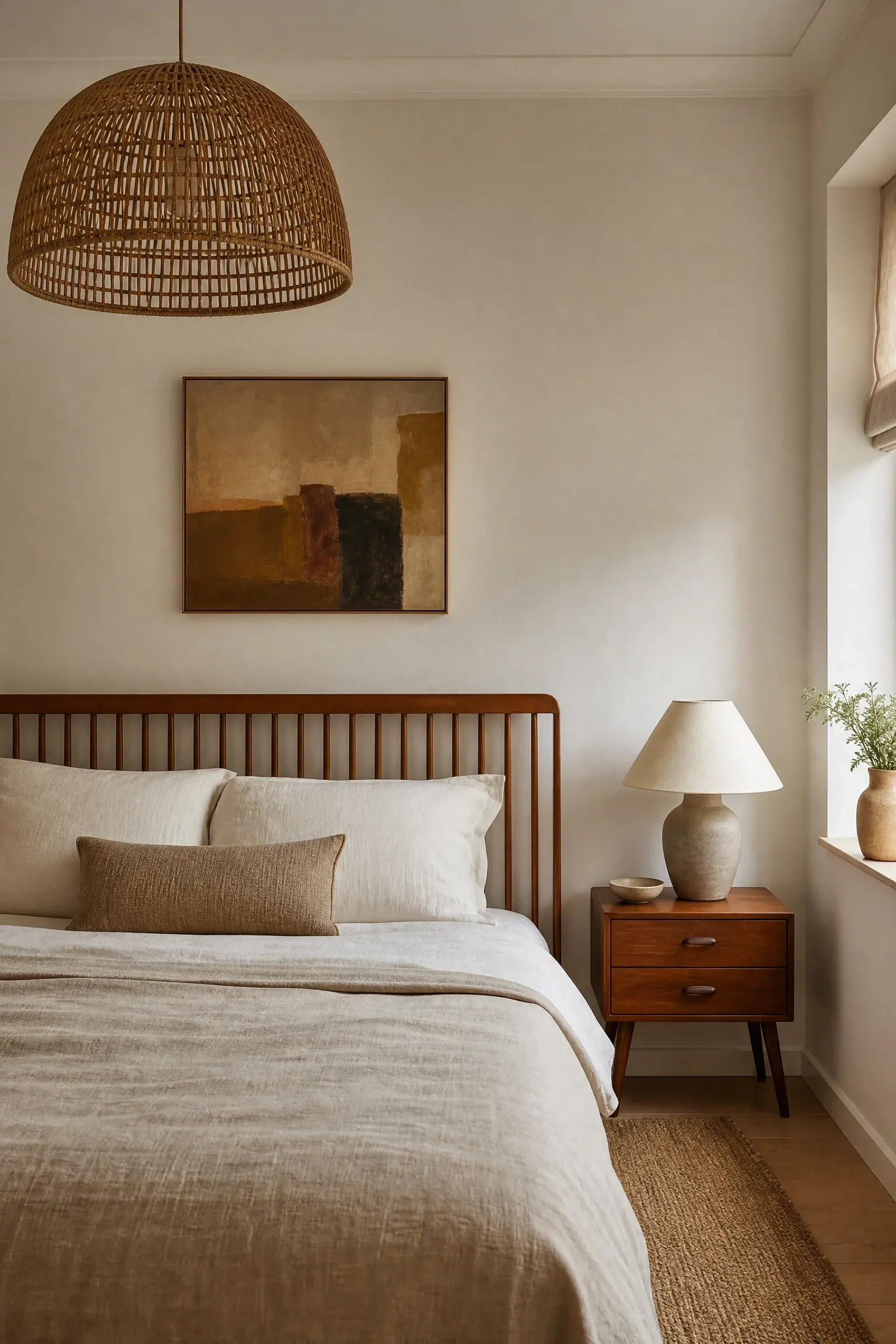
Danish modern design from the 1950s and 1960s is arguably the most wearable of all vintage aesthetics because it is already so close to what many contemporary designers are doing now. The hallmarks are beautifully crafted wood furniture with tapered legs and organic forms, neutral color palettes, and a general sense of calm that makes a bedroom feel genuinely restful. Build this look around a teak or beech platform bed with a slatted headboard, and add a pair of matching bedside tables with drawer storage. The palette runs along warm neutrals: off-white, light grey, natural linen, and the honey tones of the wood itself. Layered lighting matters here more than in most vintage styles: a floor lamp in a corner for ambient glow, small ceramic table lamps on the nightstands, and ideally a pendant in woven natural material hanging from the ceiling. One thing that really lifts a Danish modern bedroom is adding one or two pieces of genuine vintage ceramics or a small abstract oil painting in earthy tones to give the room some soul alongside its clean lines. This style is accessible at almost any budget since Danish-influenced furniture is widely produced today.
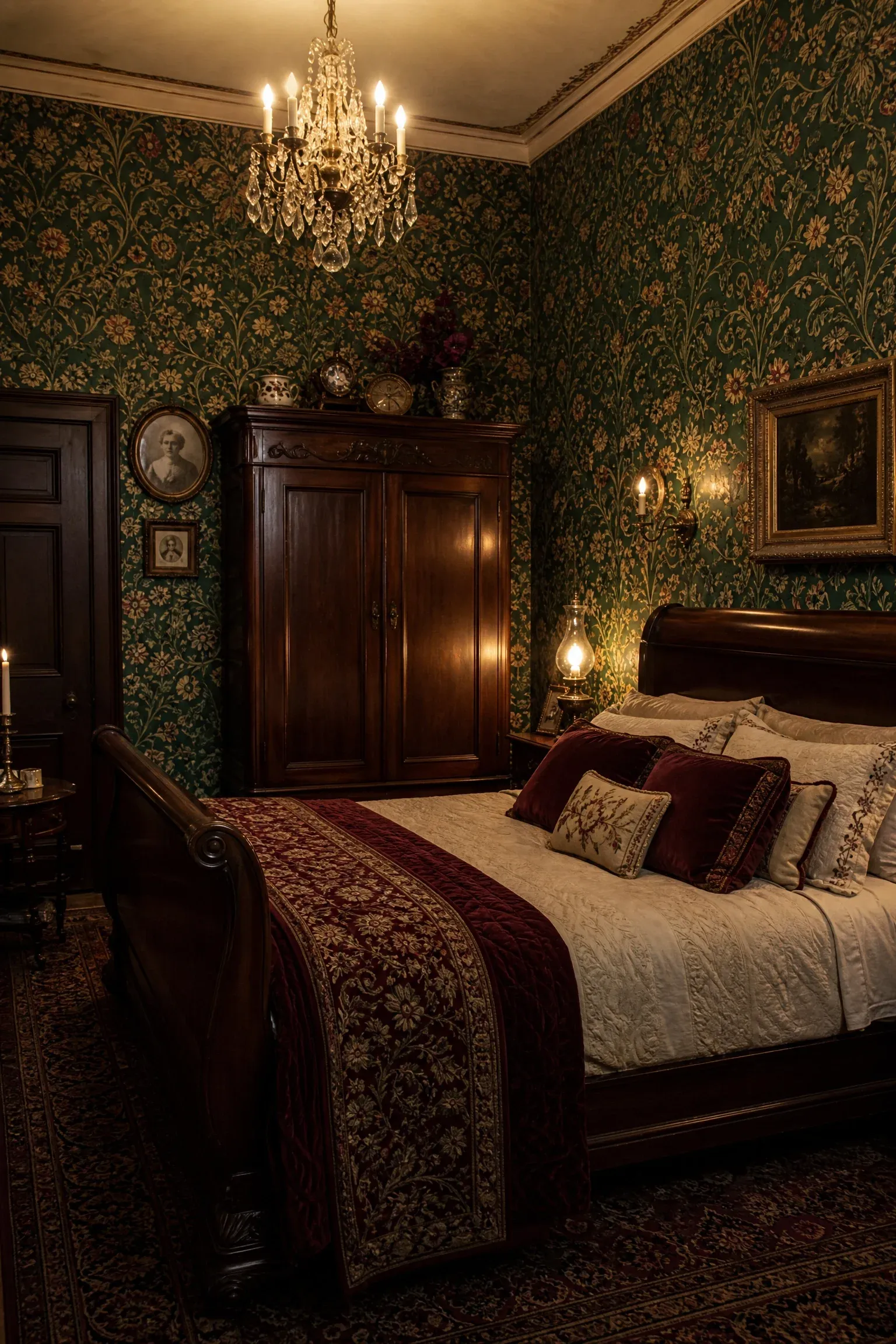
Picture a February evening, rain on the windows, candles lit, and a bedroom that feels like it has been wrapped in a garden at dusk. That is the promise of a dark floral Victorian scheme, and it delivers completely when done with a steady hand. Start with a deep botanical wallpaper in forest green, midnight blue, or rich burgundy with a large-scale floral or William Morris-style pattern covering all four walls or just the chimney breast if you want something less committed. The bed should be substantial: a cast iron or wooden sleigh bed with real visual weight, dressed in layered bedding that mixes velvet, embroidered cotton, and a heavy quilted coverlet. A tall antique wardrobe in dark mahogany or walnut anchors one wall beautifully. Lighting should be warm and low: a chandelier with candle-style bulbs overhead and a pair of small crystal or porcelain table lamps either side of the bed. One honest caveat here is that this look is full-on and not easy to live with if you are a light sleeper who needs an airy room, but for those who love the cocoon feeling it is genuinely spectacular. Budget tip: vintage William Morris-style wallpapers are available at mid-range prices from several UK and US retailers, and they look just as good as originals.
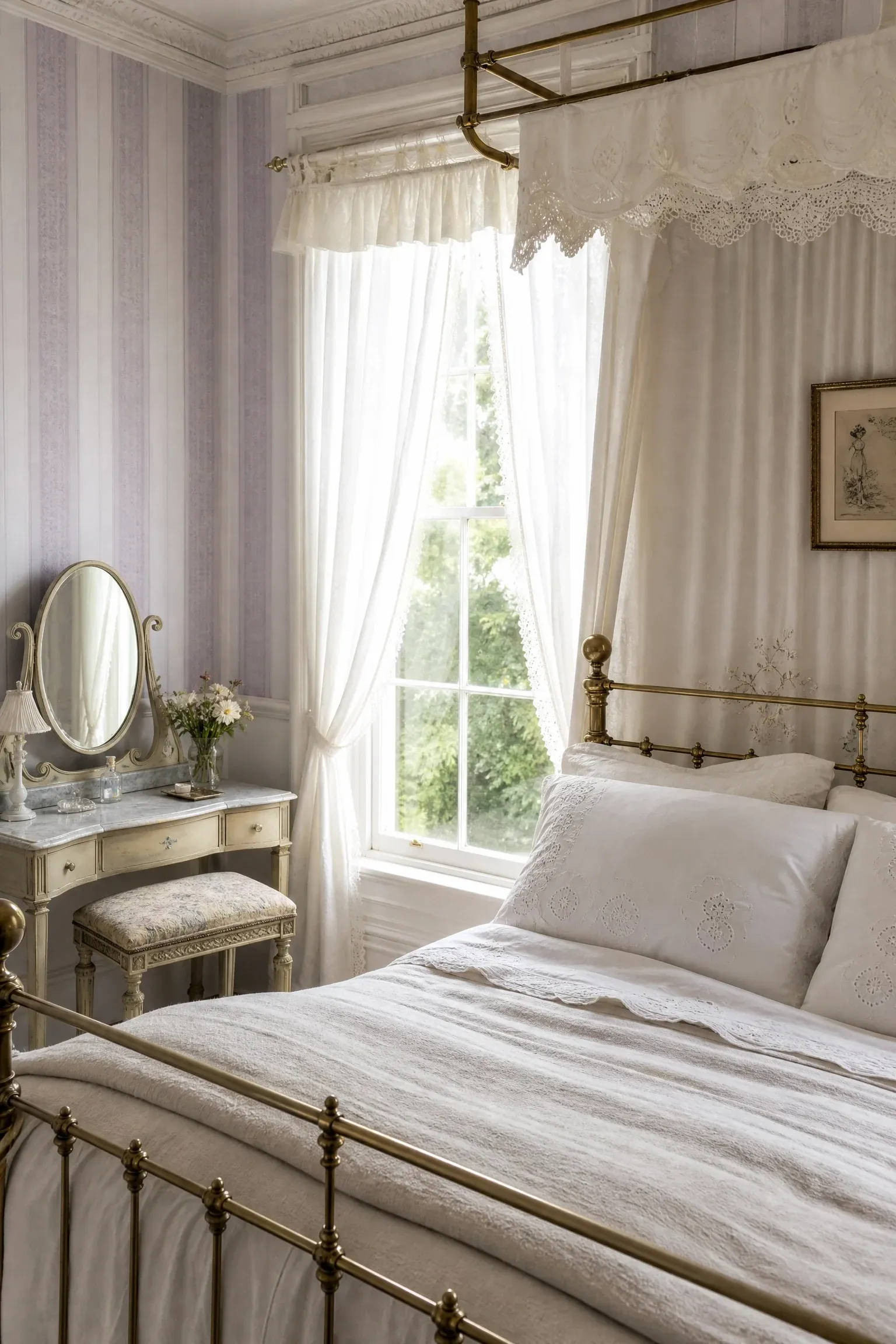
The Edwardian era softened considerably from the heaviness of High Victorian style, and that lightness translates into a bedroom aesthetic that is both romantic and genuinely airy. Walls in dusty rose, soft sage, or pale lavender work beautifully here, either in a delicate stripe or a muted botanical print that feels antique without being dark. The bed is ideally a brass or iron half-tester or a simple upholstered frame in a muted floral fabric, dressed with white cotton pillowcases trimmed in broderie anglaise, a linen duvet, and one or two embroidered throw pillows. A marble-topped dressing table with an oval mirror and a small upholstered stool is one of the most useful and charming pieces you can add since it serves real practical purpose while contributing enormously to the period atmosphere. A delicate pendant light in frosted glass or a soft fabric shade keeps the overhead lighting from being too harsh. In practice, this look comes together best when you resist the urge to add too much: the beauty is in the restraint and the quality of the individual pieces rather than the quantity. Genuine Edwardian furniture pieces appear regularly at antique fairs and are often more affordable than their Victorian counterparts.
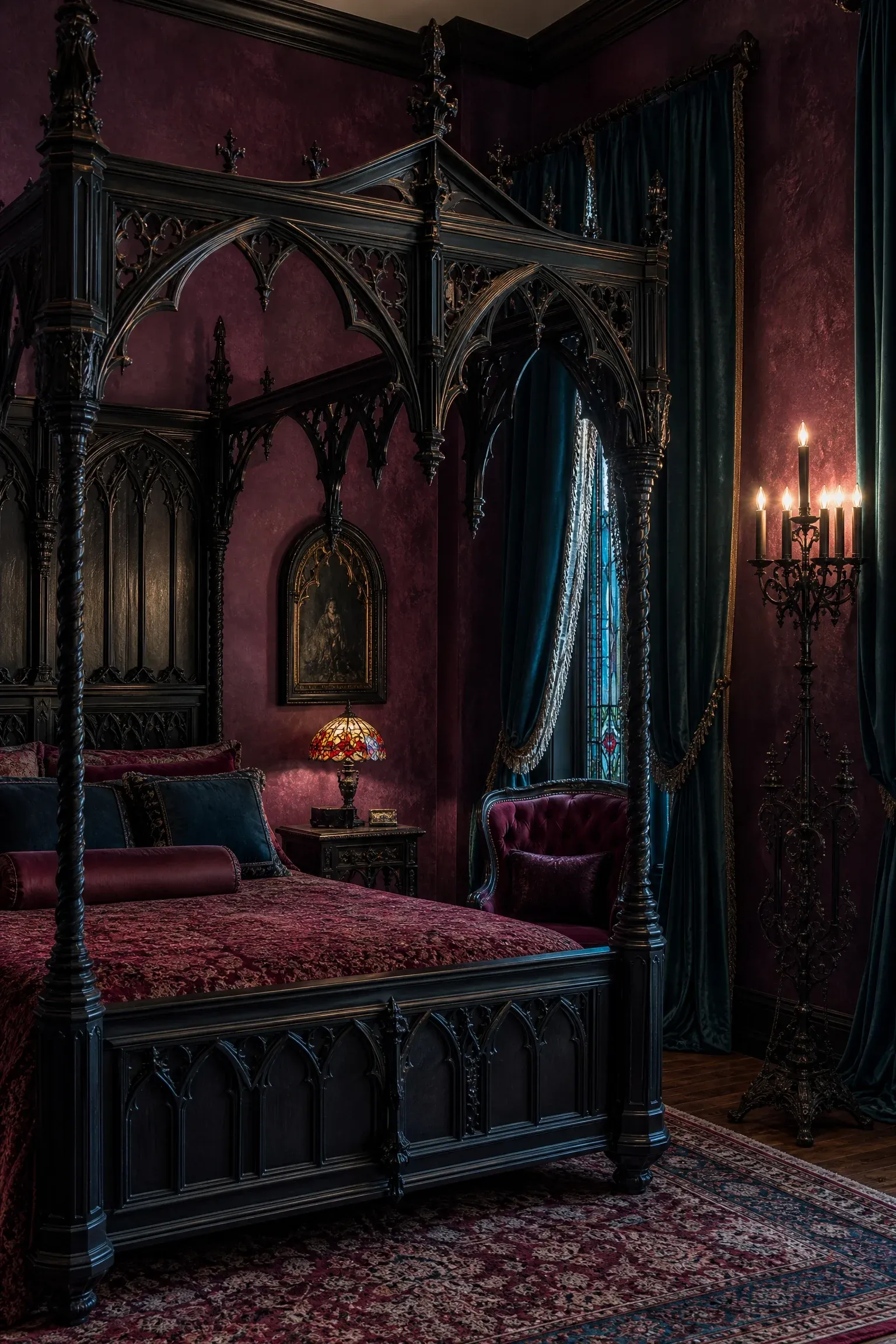
Gothic Revival is one of those styles that sounds extreme but is surprisingly livable when approached with some care. The core vocabulary includes pointed arches, dark carved wood, rich jewel tones, and decorative ironwork, and you can translate all of that into a bedroom without it feeling theatrical. A four-poster bed in dark oak or ebonized wood with arched detailing at the headboard is the obvious starting point, and it immediately establishes the atmosphere. Walls in deep plum, ink blue, or charcoal with subtle texture work well, and stained glass-effect window film adds a genuinely striking detail without permanent commitment. Velvet is the fabric of choice here: curtains in deep teal or burgundy velvet, a velvet throw across the foot of the bed, and at least one velvet-upholstered accent chair. For lighting, iron candlestick-style floor lamps and small stained glass table lamps keep things moody and warm. The caveat with this look is that it absorbs natural light, so it works best in rooms with reasonable window size or in climates where bright light is not particularly welcome. It is also worth noting that much Gothic Revival furniture is reproduced well and widely available, so genuine antiques are not required to achieve this look.
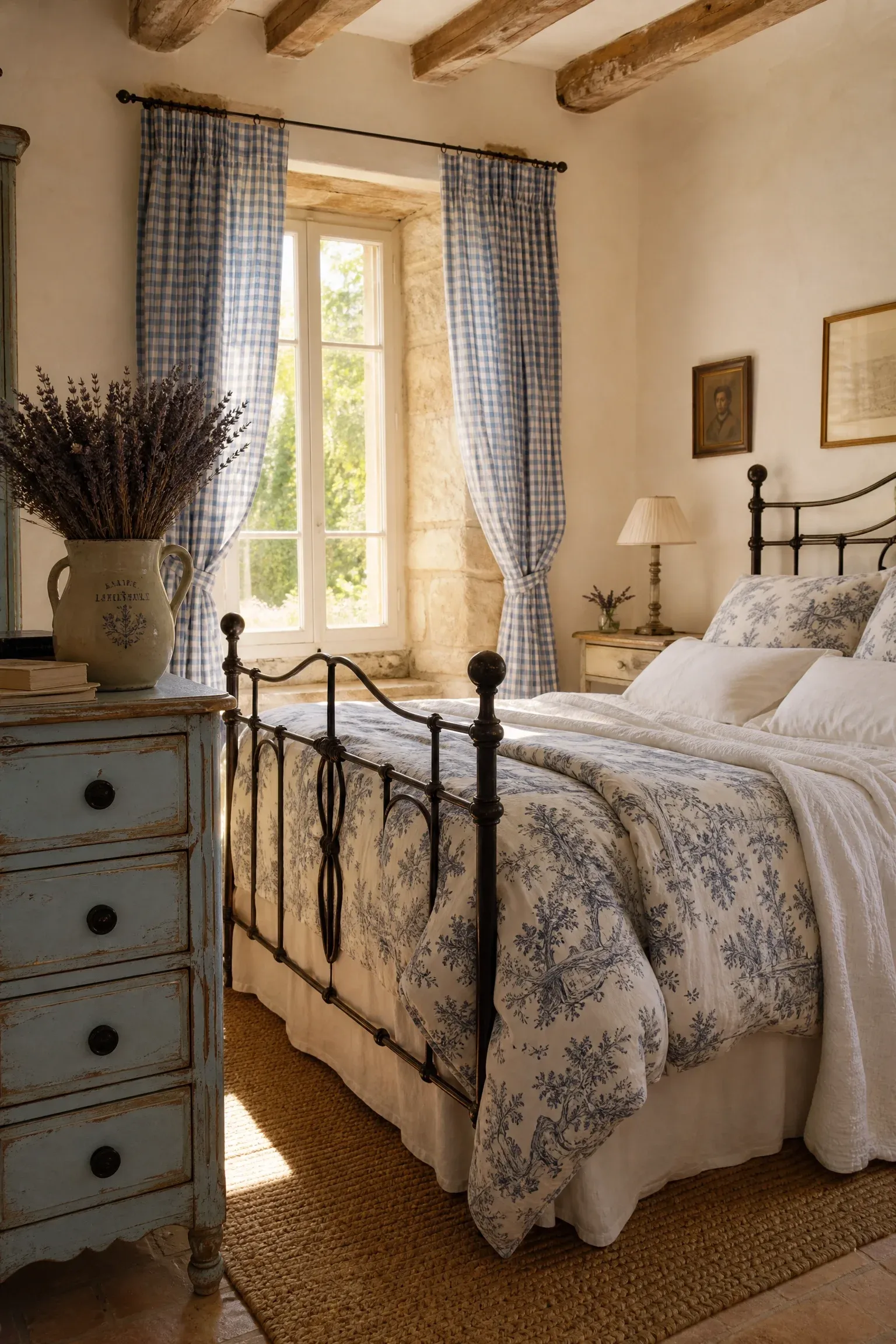
French country style is one of the most forgiving vintage aesthetics to work with because it actively welcomes imperfection and mix-and-match pieces. The palette runs in soft, sun-bleached tones: cream, butter yellow, soft blue, lavender, and faded terracotta, often layered together without too much concern for exact coordination. A wrought iron or painted wooden bed frame, ideally slightly distressed or at least not pristine, sits at the center, dressed in layers of white linen, a vintage-style toile duvet cover, and a loosely arranged pile of pillows. Furniture tends to be painted in chalky whites or muted greys and blues, with some deliberate wearing at the edges to reveal the wood beneath, a technique known as distressing that is very easy to achieve yourself with fine sandpaper on any painted piece. Checked or striped cotton curtains in blue and white are a genuine staple of this look and are extremely easy to find at budget prices. One detail that works particularly well in practice is adding a small arrangement of dried lavender or a bunch of dried hydrangeas in a ceramic jug on the dresser, which costs almost nothing and contributes enormously to the atmosphere.
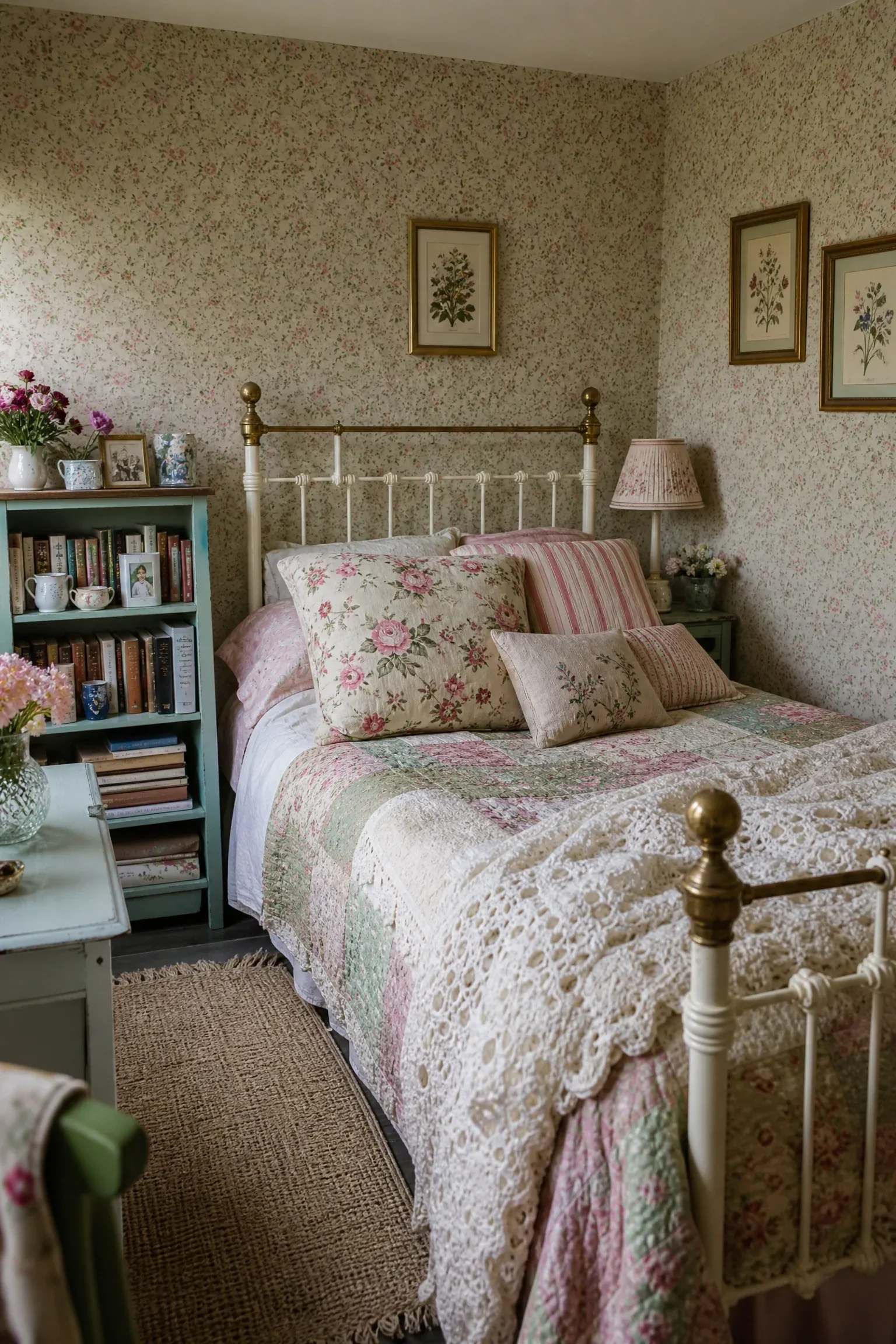
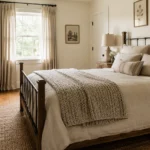
The English cottage bedroom is for people who love the feeling of a room that has been decorated slowly over many years, where nothing quite matches but everything somehow works together. The key ingredients are patterned textiles in clashing florals and stripes, painted furniture in faded heritage colors like sage green or stone, and a general sense of cheerful coziness that professional designers sometimes call ‘collected.’ Start with a simple painted iron or wooden bed and then layer the bedding without overthinking it: a vintage-look quilt, mismatched vintage-style pillowcases, a crocheted or knitted throw, and a draped patchwork blanket at the foot. The walls benefit from a small-scale floral or botanical print wallpaper, something in the spirit of Cath Kidston or Laura Ashley, and the woodwork should be painted in a contrasting white or cream. A small painted bookcase or shelving unit loaded with actual books, a few framed botanical prints, and a collection of mismatched ceramic pieces on the dresser completes the look. This is genuinely one of the most budget-friendly vintage styles because thrift stores and charity shops are full of exactly the kind of slightly worn, characterful pieces it needs.
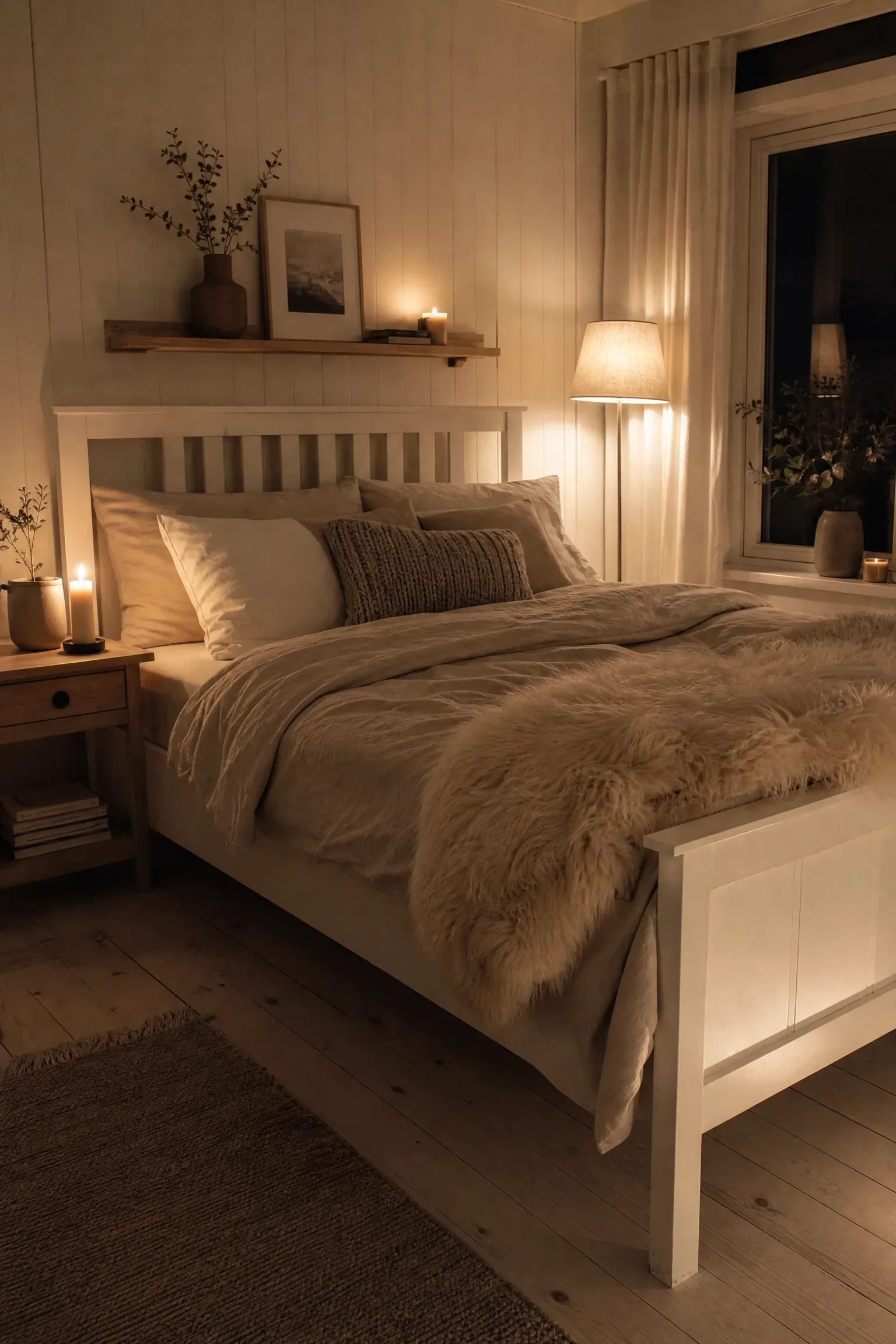
Scandinavian farmhouse style, sometimes called Nordic rustic or hygge-inspired vintage, is built around the idea of warmth through simplicity. The color palette is almost exclusively whites, creams, soft greys, and the natural tones of untreated or lightly oiled wood, with occasional deep accents in navy or forest green. A painted wooden bed frame in white or light grey, or a solid pine bed with a simple unfussy headboard, anchors the room. The bedding approach is layered and tactile: heavyweight linen duvet covers, waffle-weave cotton blankets, sheepskin or faux sheepskin throws, and a chunky knitted cushion or two. Rough-hewn wooden accessories like a simple stool, a driftwood-style mirror frame, or a carved wooden tray add organic texture without visual weight. Lighting matters enormously in Scandinavian design because of the long dark winters the style was developed for: multiple candles in simple holders, a floor lamp with a linen shade, and warm-temperature bulbs throughout are all non-negotiable. One thing that works really well here is adding a small ceramic wood-burning-effect candle lantern on the bedside table, which gives the most extraordinarily cozy glow on a winter evening.
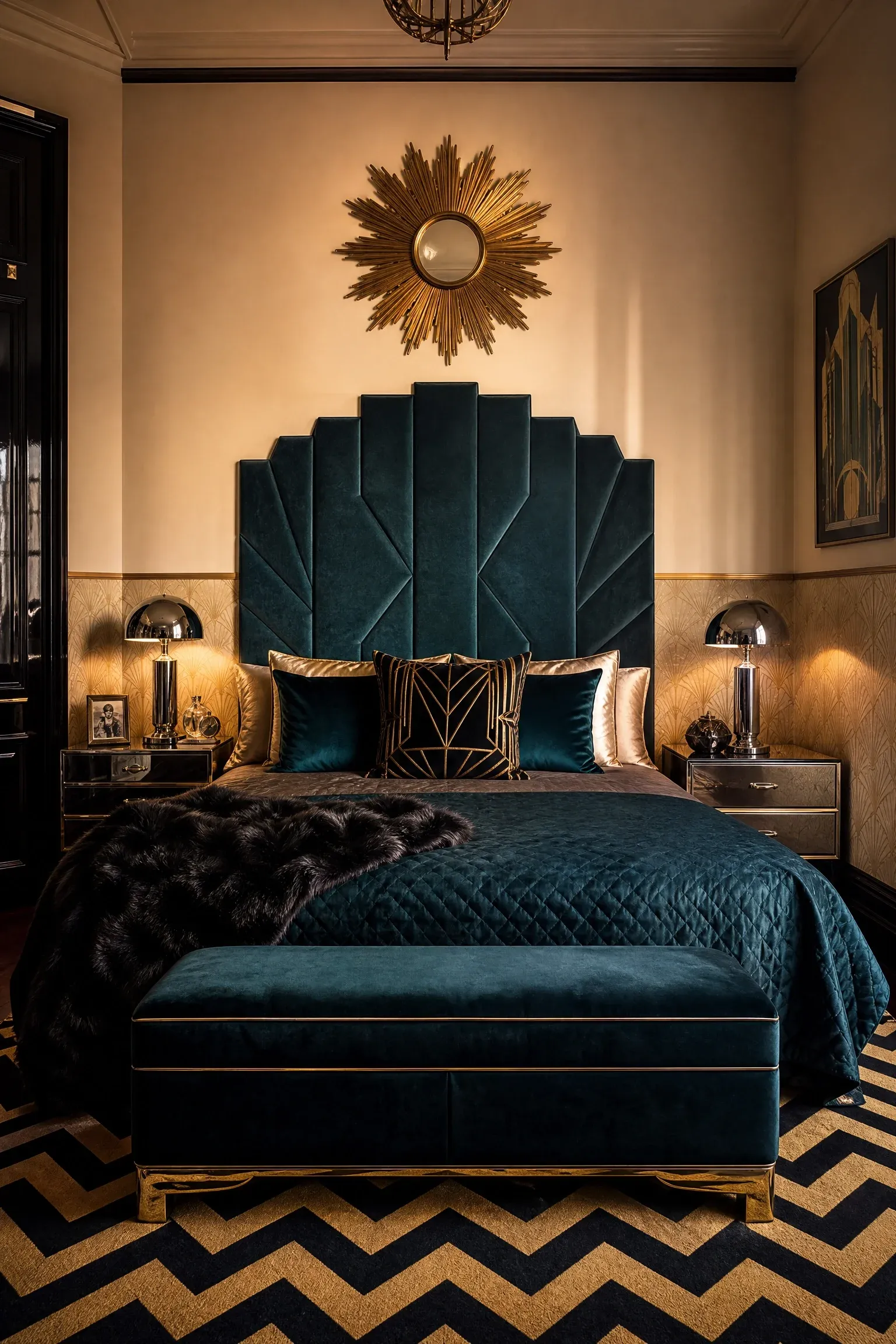
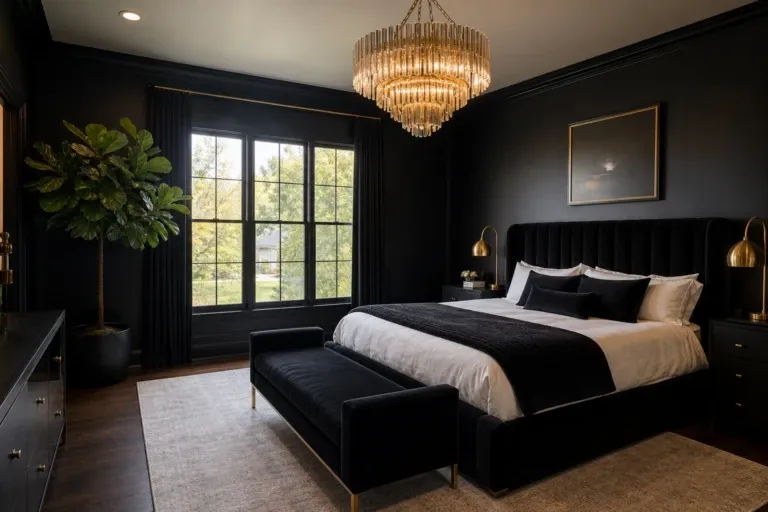
Art Deco is one of those styles that photographs extraordinarily well and also, somewhat unusually for a design movement this bold, genuinely feels wonderful to sleep in. The geometry is the defining element: chevrons, fan shapes, sunbursts, and stepped forms appear everywhere from headboard silhouettes to rug patterns to mirror frames. Build the room around a strong upholstered headboard with geometric tufting in a jewel tone, black, or ivory, and pair it with bedside tables that have that characteristic stepped or fan-shaped profile. The palette for a true Art Deco bedroom runs toward black, gold, ivory, deep teal, and rich burgundy, and the materials include lacquered surfaces, mirrored furniture, velvet, and chrome accents. A large sunburst mirror above the headboard or on the wall opposite the bed is one of the single most impactful things you can add to this look, and good reproductions are available at very reasonable prices. Layered lighting is critical: a statement ceiling pendant in brass or chrome with geometric detailing, matching table lamps with angular bases, and ideally some form of indirect lighting behind or beneath the headboard if your budget allows. In practice, the easiest way to pull an Art Deco bedroom together quickly is to start with the headboard and the mirror and then build outward.
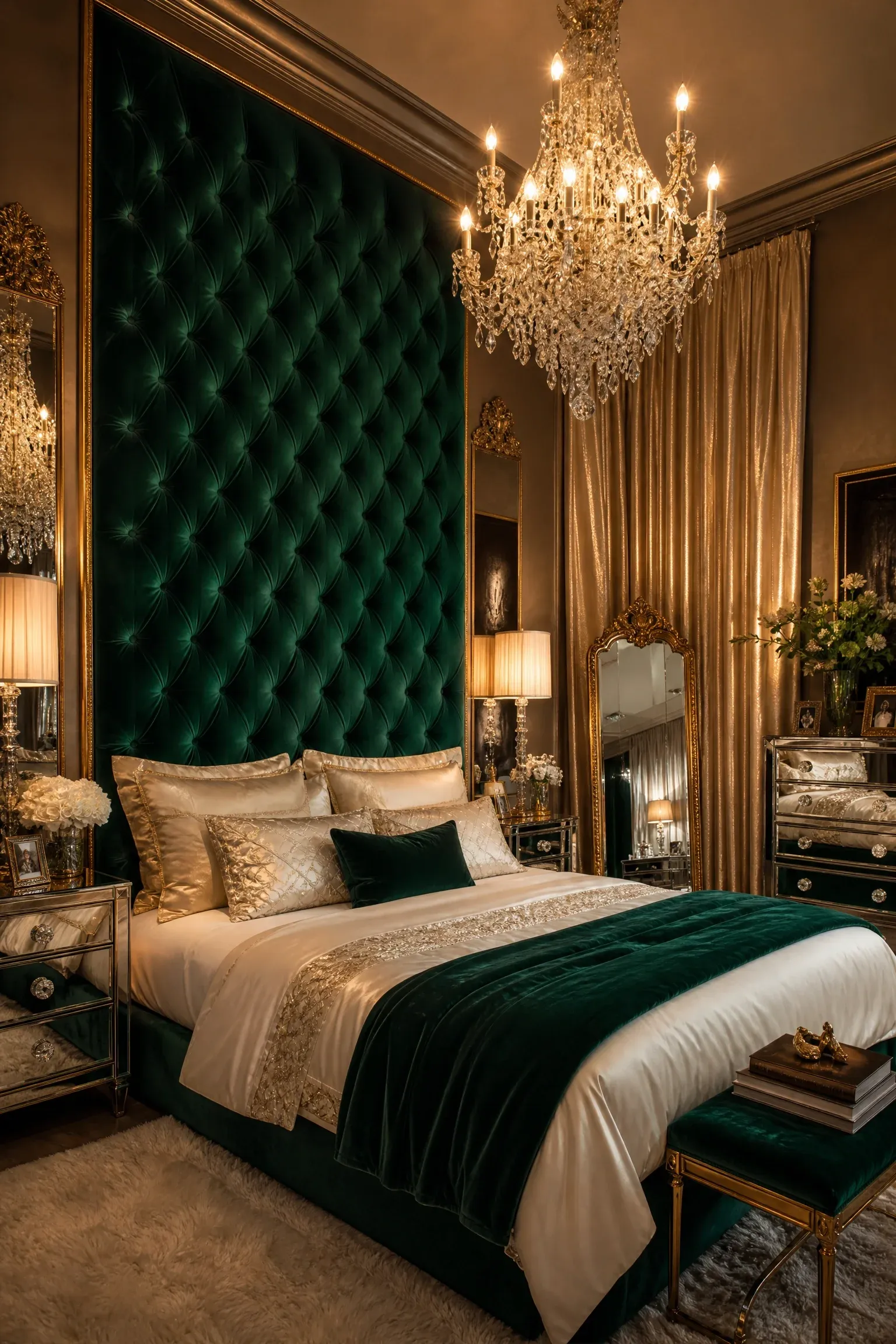
Hollywood Regency is Art Deco’s more extravagant cousin, the style of 1930s and 1940s California bedrooms that appeared in films starring people like Carole Lombard and Cary Grant. It is unashamedly luxurious and involves more mirrors, more velvet, more gold, and more drama than almost any other vintage bedroom style. The foundation is a seriously upholstered bed, ideally tufted in ivory, champagne, or a deep jewel tone like emerald or sapphire, with a headboard that extends almost to the ceiling if the room allows. Mirrored furniture is central to this look: a mirrored dressing table, a mirrored chest of drawers, and ideally a large floor mirror in a gilded or chrome frame. The color palette alternates between bold and neutral: ivory and gold with one deep accent, or blush and champagne with black lacquer accents. Layered silk or velvet curtains hanging from ceiling to floor create that cinematic effect that defines this aesthetic. One honest note: this look is difficult to live with if you do not enjoy a high-maintenance room since mirrored furniture shows every fingerprint and velvet shows every impression. For rooms where the occupant loves a bit of daily ritual involving polishing and primping, it is absolutely perfect.
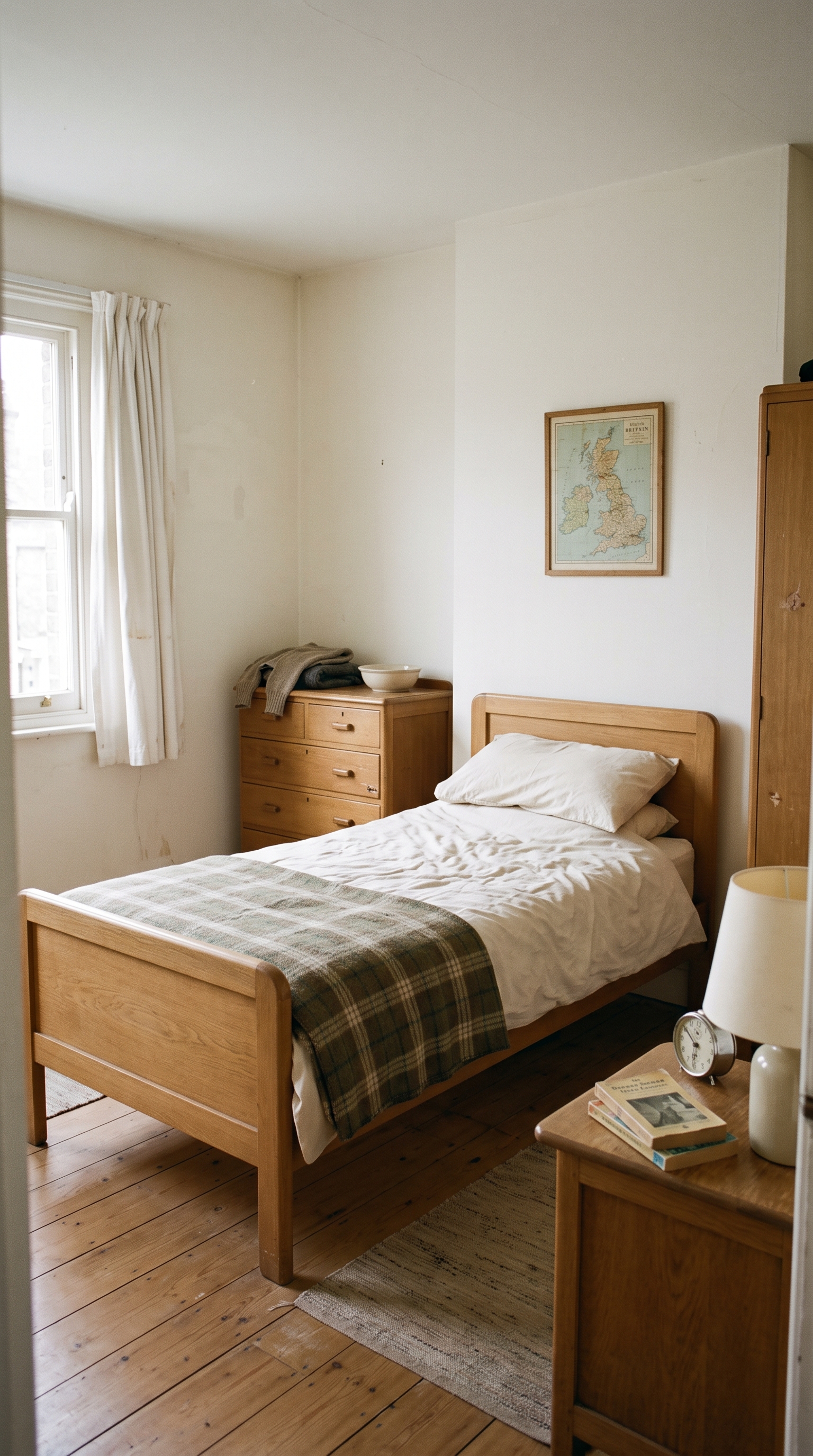
Utility style from the 1940s is one of the most underrated vintage aesthetics precisely because it is the antithesis of excess. Developed under wartime material restrictions in Britain, Utility furniture was designed to be functional, well-made, and simple, and those qualities have aged beautifully. The furniture is typically light oak or pale walnut in very clean, slightly boxy forms without ornamentation, and original pieces appear regularly in antique shops at extremely reasonable prices because they have not yet been fully rediscovered by the mainstream market. Walls in warm whites, soft sage, or pale blue complement the light wood tones perfectly. The bedding approach should reflect the honest simplicity of the style: good quality white cotton sheets, a wool blanket in a muted check or plain color, and a single plump pillow. A simple wooden wardrobe with clean lines, a small chest of drawers, and a bedside table with a practical ceramic lamp complete the picture. One of the things that works really well in a Utility bedroom is adding a small framed map or a wartime-era advertising print to the wall, both of which are extremely affordable and immediately anchor the room in a specific period. This is genuinely the most budget-friendly of all the glamour-era styles.
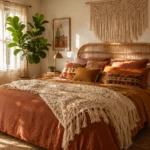
The 1970s are having a serious moment in interior design right now, and not the orange-and-brown version that gets mocked but the genuinely warm, earthy, plant-filled version that professional designers are increasingly referencing. The palette is all terracotta, rust, burnt sienna, warm chocolate brown, olive green, and cream, and it works because these are fundamentally natural, soil-derived tones that feel inherently restful. A bed with a rattan or wicker headboard, or alternatively a simple upholstered frame in a warm caramel fabric, sits at the center. Layer textured bedding in cotton and linen in earthy tones, add a macrame wall hanging above the headboard or to one side of the bed, and hang a few trailing plants from the ceiling or a wooden pole bracket. Furniture should feel collected rather than matched: a vintage rattan chest of drawers, a small carved wooden stool, and a ceramic table lamp in a sculptural organic form. A shag rug or a flat-weave kilim-style rug on the floor pulls the earthy color palette down to the ground and ties everything together. One thing to watch with this look is the balance between cozy and cluttered since it can tip toward the latter quickly if you add too many textile elements.
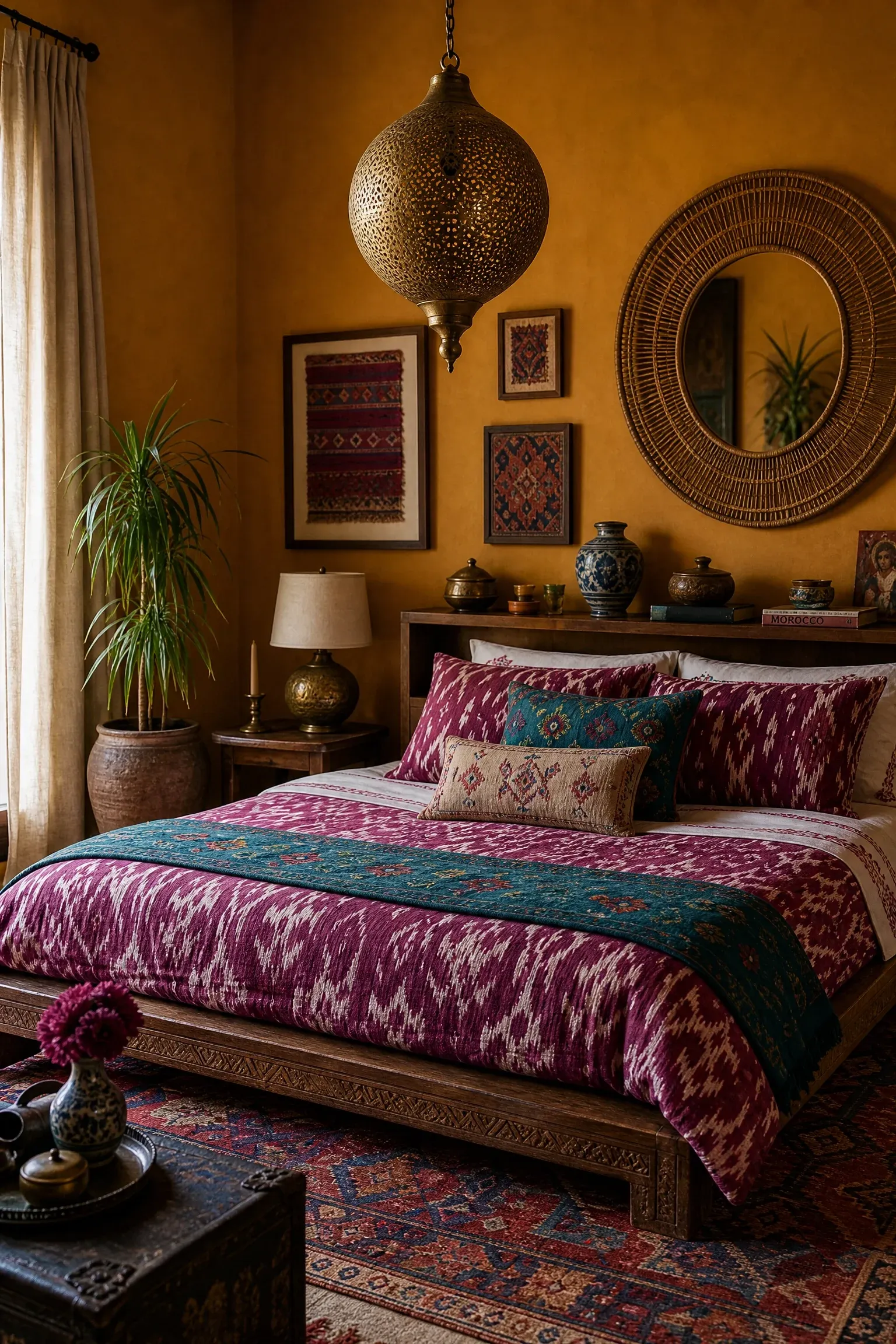
A global eclectic vintage bedroom is the one that looks like it was assembled by someone who has traveled extensively and brought back pieces they genuinely loved rather than things bought specifically to decorate a room. The key to making this work rather than just looking chaotic is choosing a unifying color palette and sticking to it regardless of where each piece came from. Warm jewel tones, deep neutrals, and rich earth tones all work well as the organizing principle. A carved wooden bed from a Moroccan or Indian style, or alternatively a low daybed or platform bed with a carved wooden base, is a natural starting point. Layer bedding that mixes ikat-printed cotton, embroidered linen, and block-printed cotton in colors that share the same warm family. A Turkish or Persian kilim rug, a few pieces of hand-thrown ceramics, a rattan mirror from a Southeast Asian market, and a collection of framed textile fragments on the wall all contribute to that genuinely well-traveled atmosphere. Lighting should be warm and low: a Moroccan pendant in pierced metal, small brass candlestick lamps, and a floor lamp in a natural material. In practice this look requires a confident eye and the willingness to trust your own taste over any single style guide.
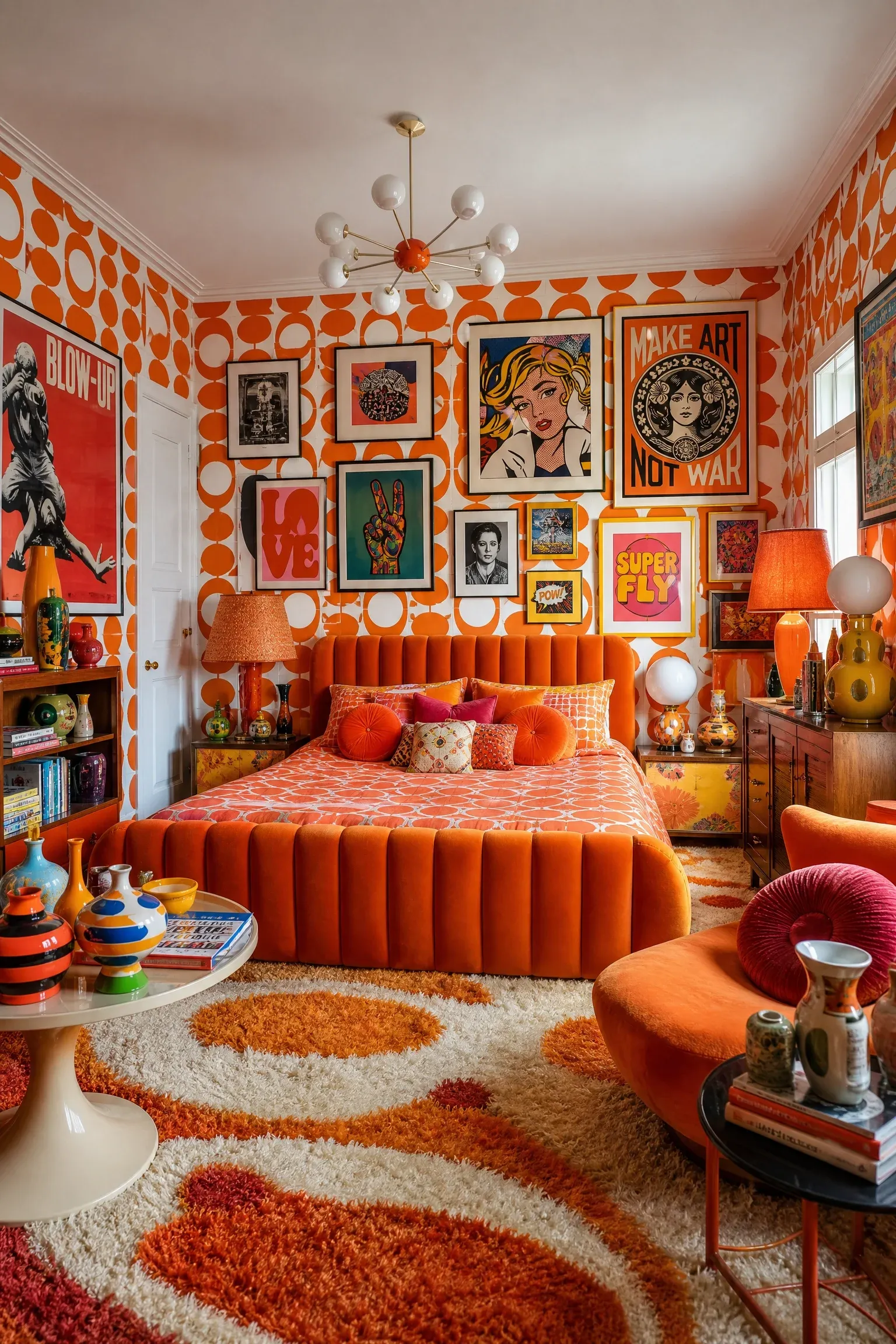
Maximalism gets misunderstood as meaning ‘lots of stuff,’ but the real principle is ‘lots of intentional, intentional stuff,’ and when applied to a vintage bedroom it produces something genuinely spectacular. The approach here is to choose one decade or broad era as the organizing principle and then pile it on: colors, patterns, objects, art, textiles, all in abundance but all from the same stylistic family. A 1960s maximalist bedroom, for example, might combine a graphic geometric wallpaper, a velvet upholstered bed in a contrasting bold color, a shag rug, vintage pop art prints in clashing frames, and a collection of groovy ceramic lamps and vases on every surface. The rule that keeps this from collapsing into chaos is the color story: choose three or four colors and let everything, regardless of pattern or scale, belong to those same colors. Scale matters too since mixing large-scale and small-scale patterns together is far more interesting than repeating the same scale throughout. Budget is genuinely not a barrier here because vintage and secondhand sources are exactly where this kind of piece is found most abundantly and at the lowest prices.
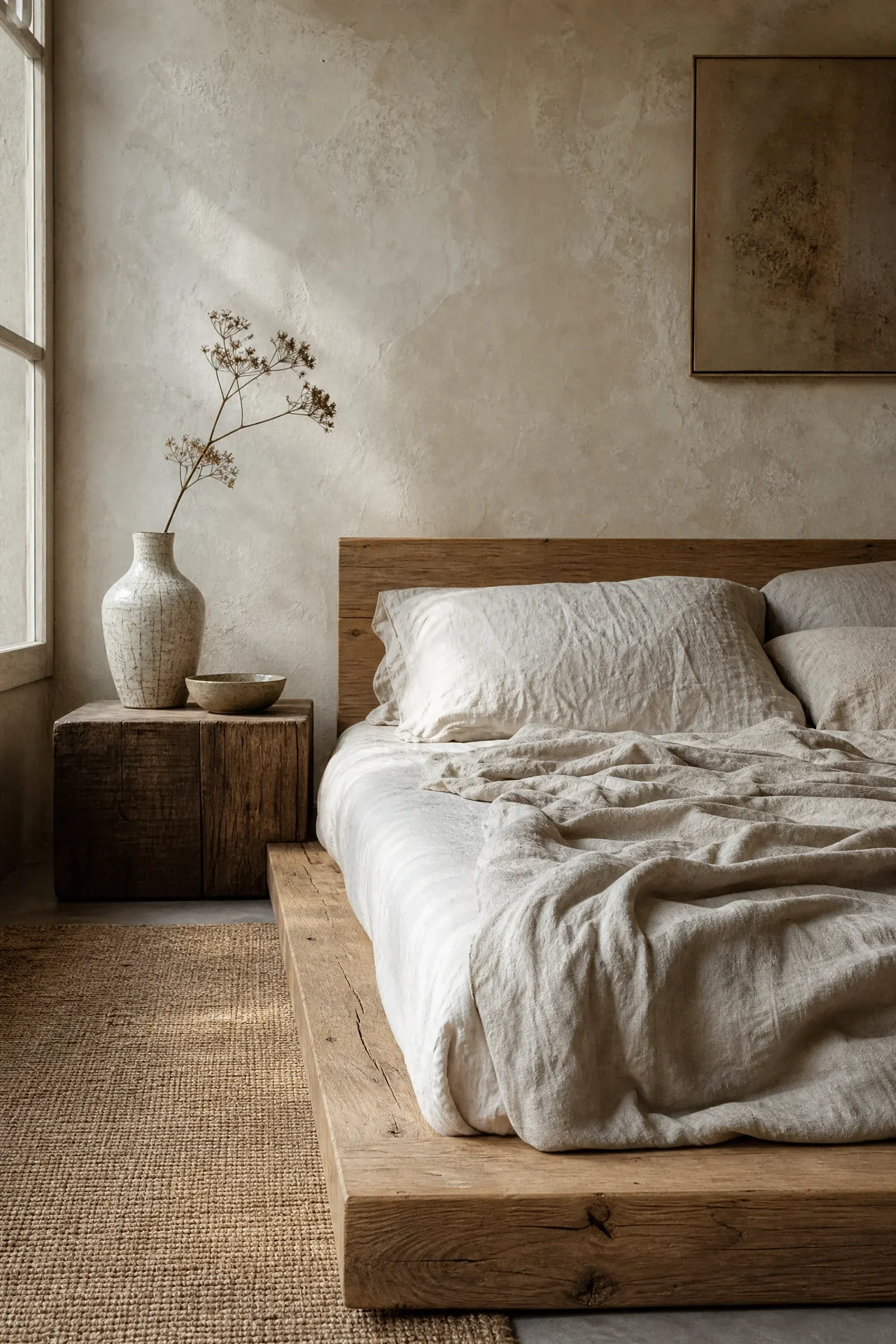
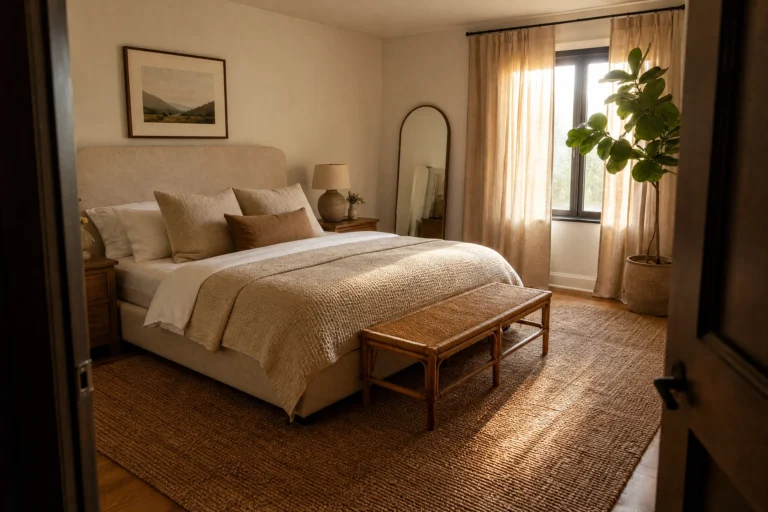
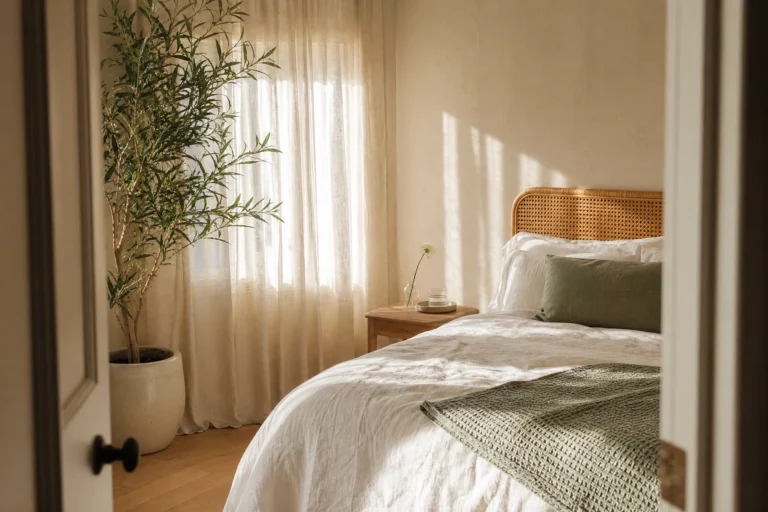
Wabi-sabi is a Japanese aesthetic philosophy that finds beauty in imperfection, impermanence, and the natural passage of time, and it maps beautifully onto a vintage bedroom sensibility because aged, worn, and slightly imperfect things are precisely what this approach celebrates. The palette is all raw, organic neutrals: unbleached linen, aged plaster, pale clay, natural timber, and soft stone grey. A simple low bed in untreated or lightly oiled oak, perhaps with a slightly irregular grain or visible natural markings in the wood, is the ideal starting point. The bedding should be in heavy, slightly wrinkled natural linen rather than crisp cotton since that relaxed, lived-in quality is deliberate and valued. One or two handmade ceramic pieces on the bedside table, a rough-edged stone or clay bowl, a single dried stem in a crackle-glaze vase, and a woven floor mat or a natural-fiber rug complete the picture with great economy. Avoid anything too polished or perfectly symmetrical since those qualities work against the wabi-sabi spirit. This is genuinely one of the most affordable vintage aesthetics to achieve because the value is in texture and restraint rather than in expensive pieces, and intentionally imperfect pottery and natural linens are widely available at every price point.
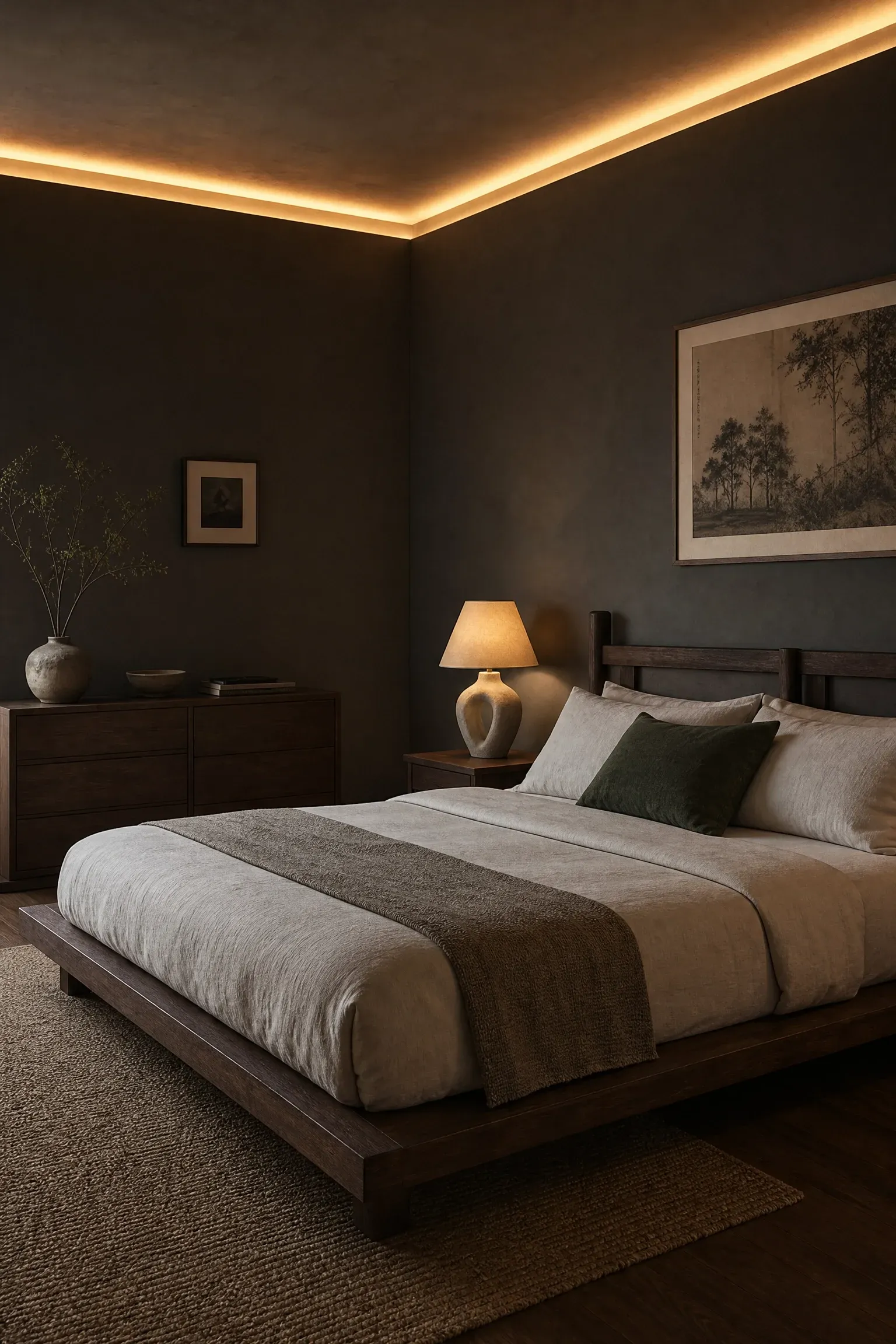
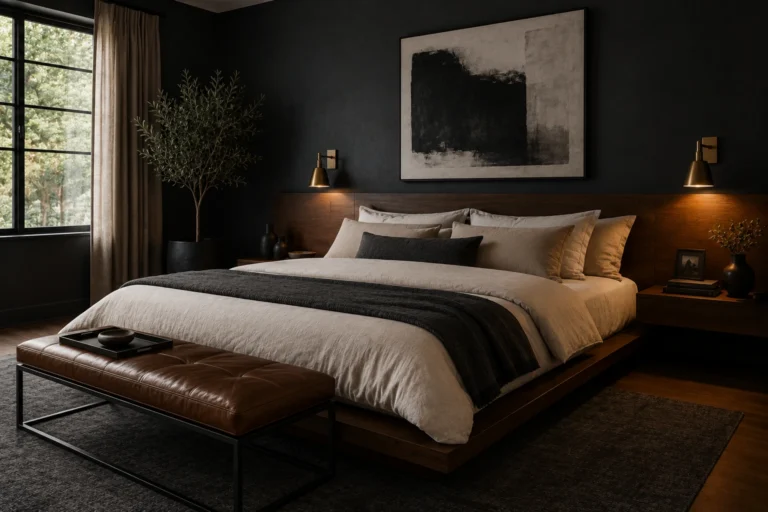
Japandi is the design hybrid of Japanese minimalism and Scandinavian simplicity that has become one of the most consistently popular interior styles of the last several years, and it has a strong vintage dimension when approached through the lens of quality craftsmanship and aged natural materials. The palette is darker and more intentional than pure Scandinavian: charcoal, deep forest green, aged walnut, and warm off-white, with the emphasis always on the quality of the materials rather than decorative detail. A low platform bed in aged walnut or dark oak with a simple, structural headboard that looks like it might have been made by hand sits at the heart of this bedroom. Bedding runs in natural undyed linens and cotton in stone, warm white, and the occasional deep accent like charcoal or forest green. Furniture is sparse but chosen with great care: a single low chest of drawers in the same dark wood as the bed, perhaps one small ceramic table lamp in a simple organic form, and nothing else on the surfaces. Soft lighting from concealed sources or a pendant in washi paper or woven natural material keeps the atmosphere contemplative. In practice, the Japandi approach requires real discipline in editing out pieces that do not earn their place, which makes it one of the harder styles to sustain but one of the most rewarding to live in long-term.
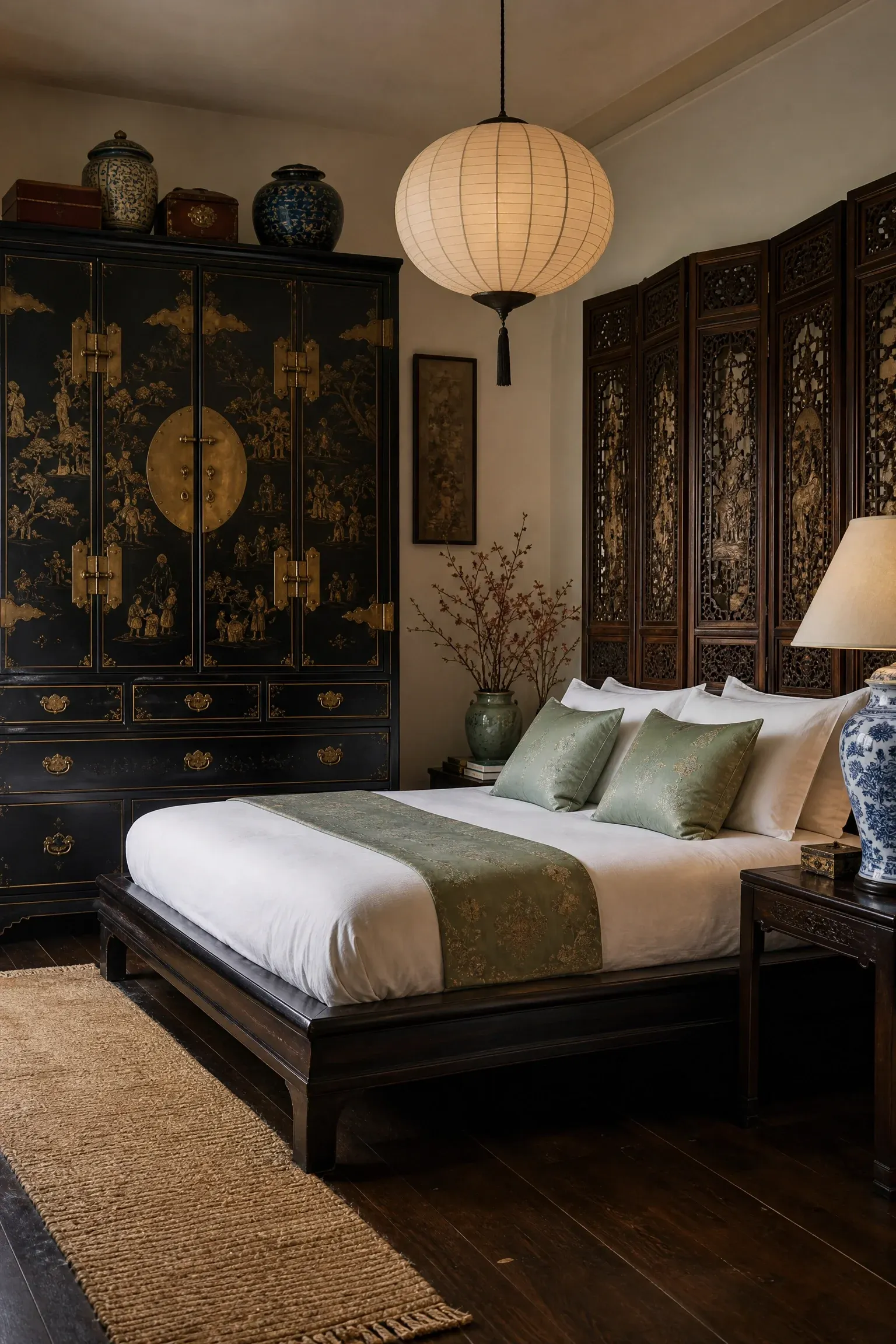
An antique Asian-inspired bedroom draws from the rich tradition of Chinese and Japanese furniture design from the seventeenth through nineteenth centuries, characterized by rich lacquered finishes, carved details, and a sophisticated palette of deep red, black, and gold. An antique or reproduction Chinese wedding cabinet in black lacquer with brass hardware, placed against a wall in a relatively simple room, makes an immediate and authoritative statement. The bed frame in this kind of room should be relatively simple to let the cabinet lead: a low platform in dark wood or a simple iron frame with a good mattress and clean white bedding. A screen made of carved wood or lacquered panels can divide the room or sit behind the bed as an alternative headboard. Silk or silk-look cushions in deep red, jade green, or gold add color at the bedding level without overwhelming the room. Lighting should come from paper lantern-style pendants in white or natural bamboo and from low table lamps with ceramic bases in traditional blue-and-white porcelain. This is an investment-level look if you are sourcing genuine antique pieces, but very good reproductions of Chinese furniture are available at mid-range prices and they are generally well-made.
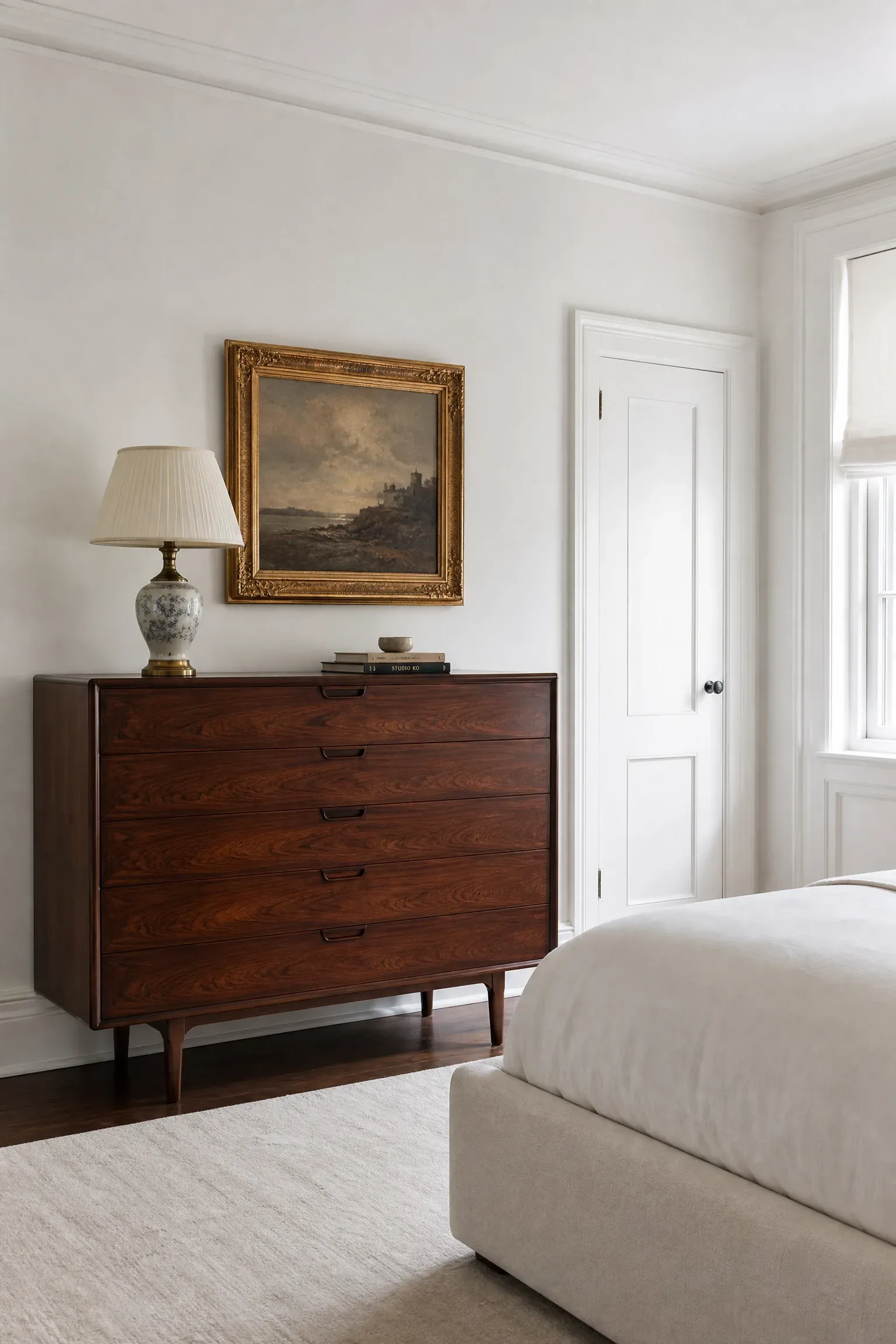
One of the most persuasive arguments for vintage decorating is that truly well-made older pieces look absolutely at home in a contemporary minimal room, often more at home than their modern equivalents because the quality of the craftsmanship reads clearly even at a distance. This approach takes a clean, modern bedroom in white or pale grey with good architectural bones and introduces two or three genuinely significant vintage pieces to anchor it. A substantial 1960s or 1970s chest of drawers in rosewood or teak, a single antique oil painting in a good frame, and a vintage ceramic lamp base are often all it takes. The contrast between the clean contemporary backdrop and the richly patinated vintage pieces creates a visual tension that is immediately compelling. The rest of the room can remain deliberately spare: white or light grey walls, simple modern bedding in white linen, and minimal accessories. Getting the scale right is the main challenge with this approach since a vintage piece that is too small for the wall it is placed against will look incidental rather than intentional.
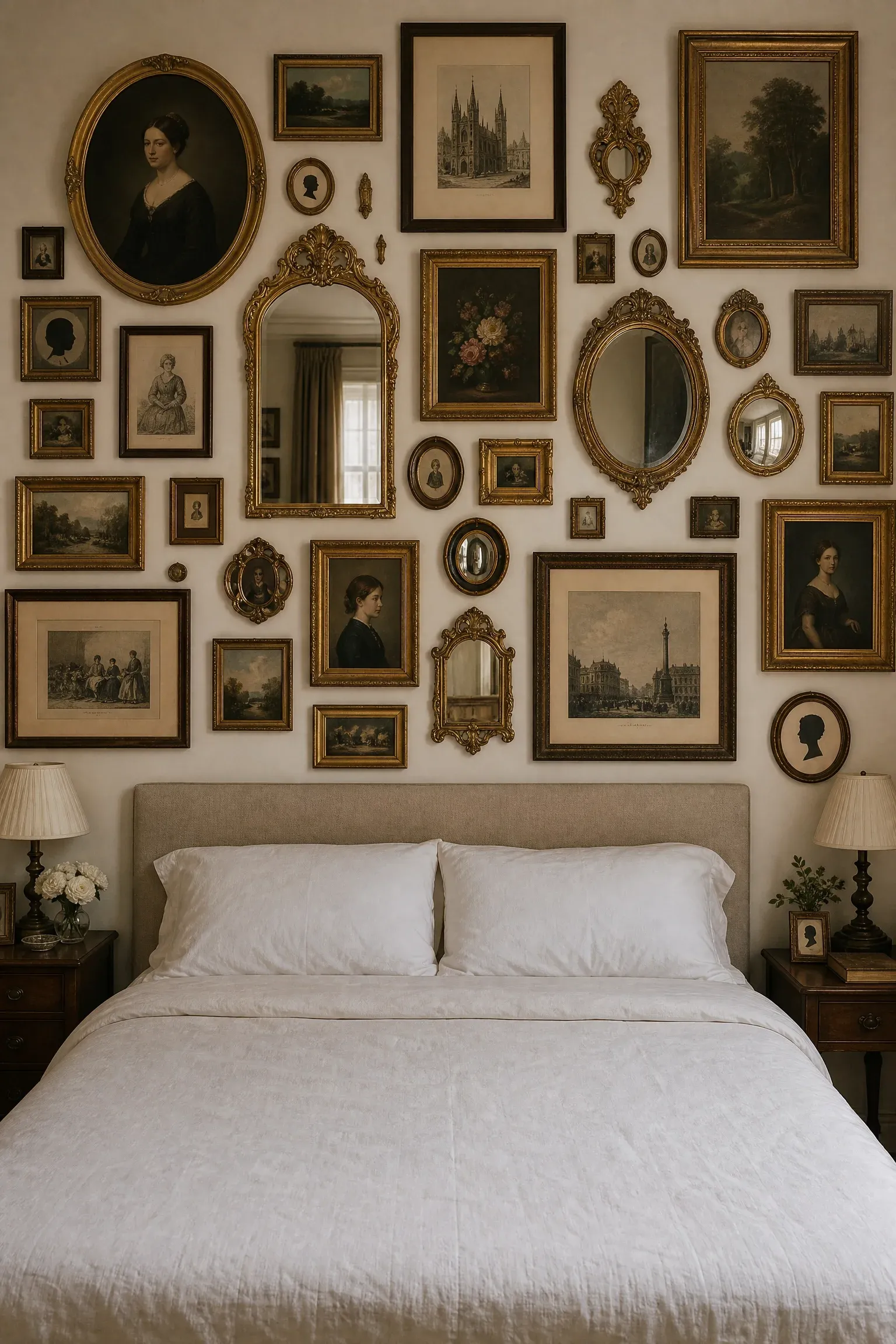
A bedroom built around a gallery wall of vintage artwork and mirrors is one of the most personal and genuinely rewarding decorating projects you can undertake because the wall itself tells a story that belongs specifically to you. The key to making a gallery wall work in a bedroom rather than just look busy is giving it a unifying principle: all black frames with varied content, for example, or all ornate gilded frames with consistent black-and-white photography, or all watercolor botanical prints in mismatched frames within a narrow size range. Sourcing the pieces is part of the pleasure: estate sales, antique fairs, thrift stores, and online marketplaces are all rich with framed prints, small oil paintings, Victorian silhouettes, and antique mirrors at completely affordable prices. The rest of the bedroom should be relatively restrained so the wall is clearly the main event: a simple upholstered bed in a neutral tone, plain bedding, and one or two bedside lamps with good quality light. For the wall itself, allow the arrangement to feel organic rather than rigidly symmetrical since a slightly uneven composition is more interesting and also more forgiving if you add pieces over time.
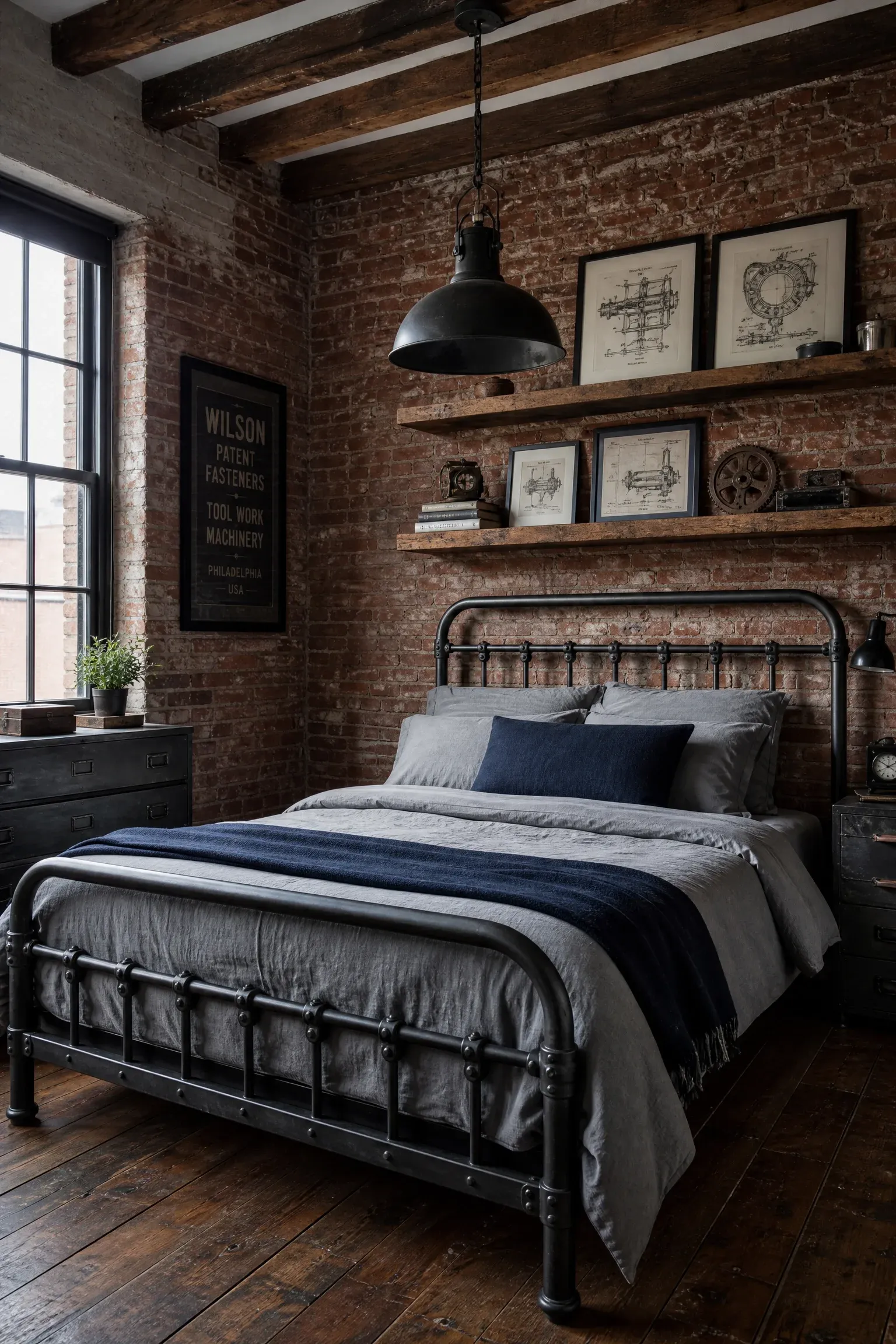
Industrial vintage borrows from the aesthetic of early twentieth century factories and warehouses and translates it into a bedroom that feels raw, characterful, and effortlessly cool without being cold. The palette is built around exposed materials: bare brick or brick-effect wallpaper, raw timber, aged steel, and concrete-look surfaces in warm grey and brown. A metal bed frame, ideally in black or antiqued bronze with visible bolts and a slightly utilitarian silhouette, is the obvious anchor piece. Reclaimed wood shelving, a vintage factory-style pendant light with a metal shade, and a leather or aged canvas chair add to the atmosphere. Bedding should be substantial and textured: heavy cotton in grey, navy, or khaki, a wool blanket, and simple white pillows. An unexpected element that works brilliantly in an industrial bedroom is vintage scientific or engineering prints in simple black frames, or old maps in the same treatment, which add intellectual personality to what could otherwise feel purely decorative. One practical note: this look works best in rooms with some genuine architectural character, whether exposed beams, original floorboards, or high ceilings, since it can feel slightly costumey in a standard suburban bedroom without those bones.
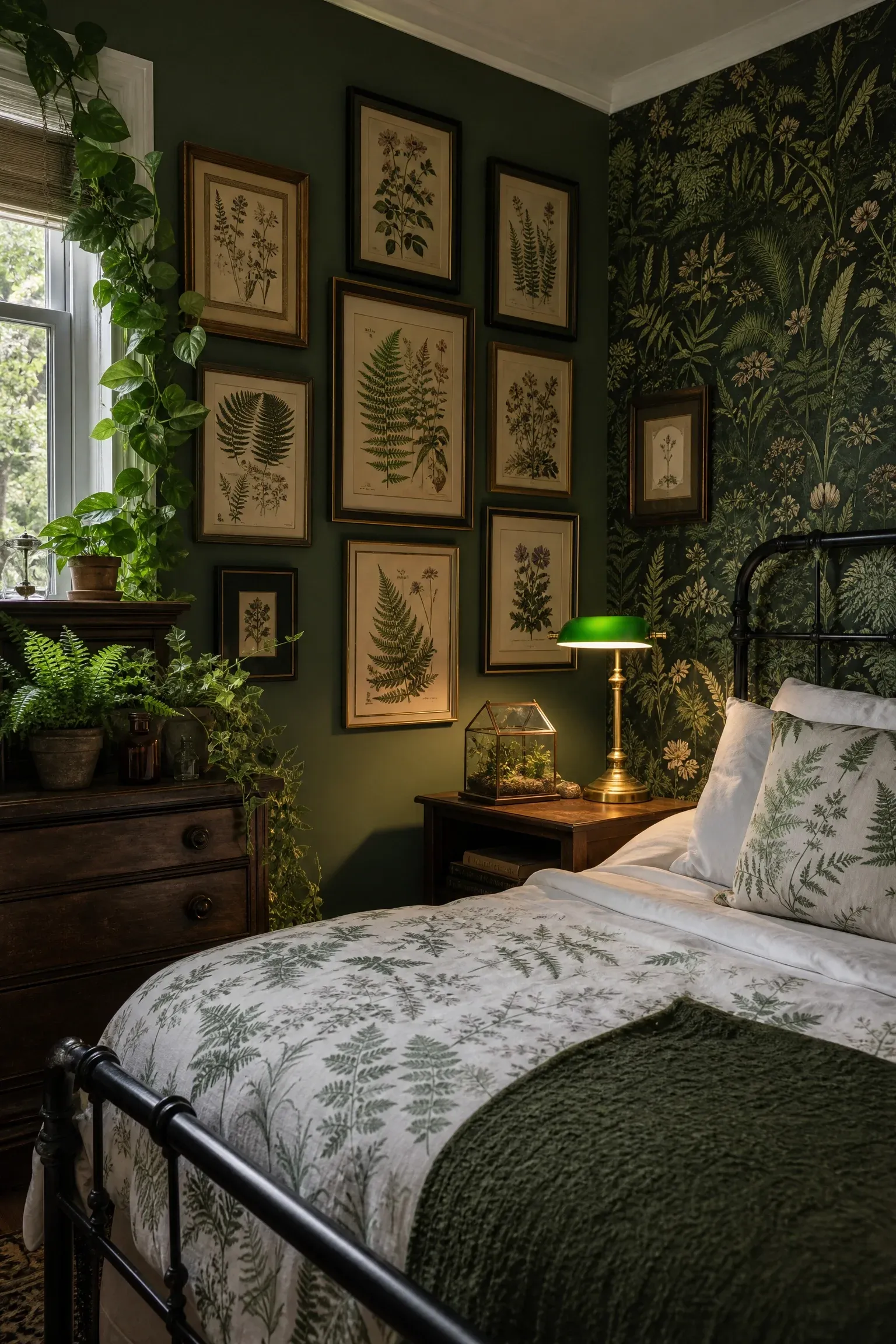
A vintage botanist bedroom is built around a love of the natural world filtered through the aesthetic of Victorian and Edwardian natural history illustration, the kind of beautifully detailed drawings of plants, insects, and specimens that filled the great illustrated journals of the nineteenth century. Start with a palette of forest green, aged paper cream, and dark wood, which immediately suggests the atmosphere of a field naturalist’s study. Walls in a deep botanical green or papered in a dense, illustrated botanical print create the backdrop, and a simple wooden or iron bed dressed in white or cream bedding with a single botanical-print duvet cover or quilt keeps the textiles from competing with the walls. A collection of framed vintage botanical prints, original if budget allows or high-quality reproductions if not, arranged with care on one wall completes the visual story. Living plants are genuinely important here, not as an afterthought but as a deliberate design element: small potted ferns, a trailing philodendron, a modest terrarium on the dresser. A green banker’s lamp or a brass reading lamp with a green glass shade on the bedside table is an affordable and charming period-appropriate lighting choice.
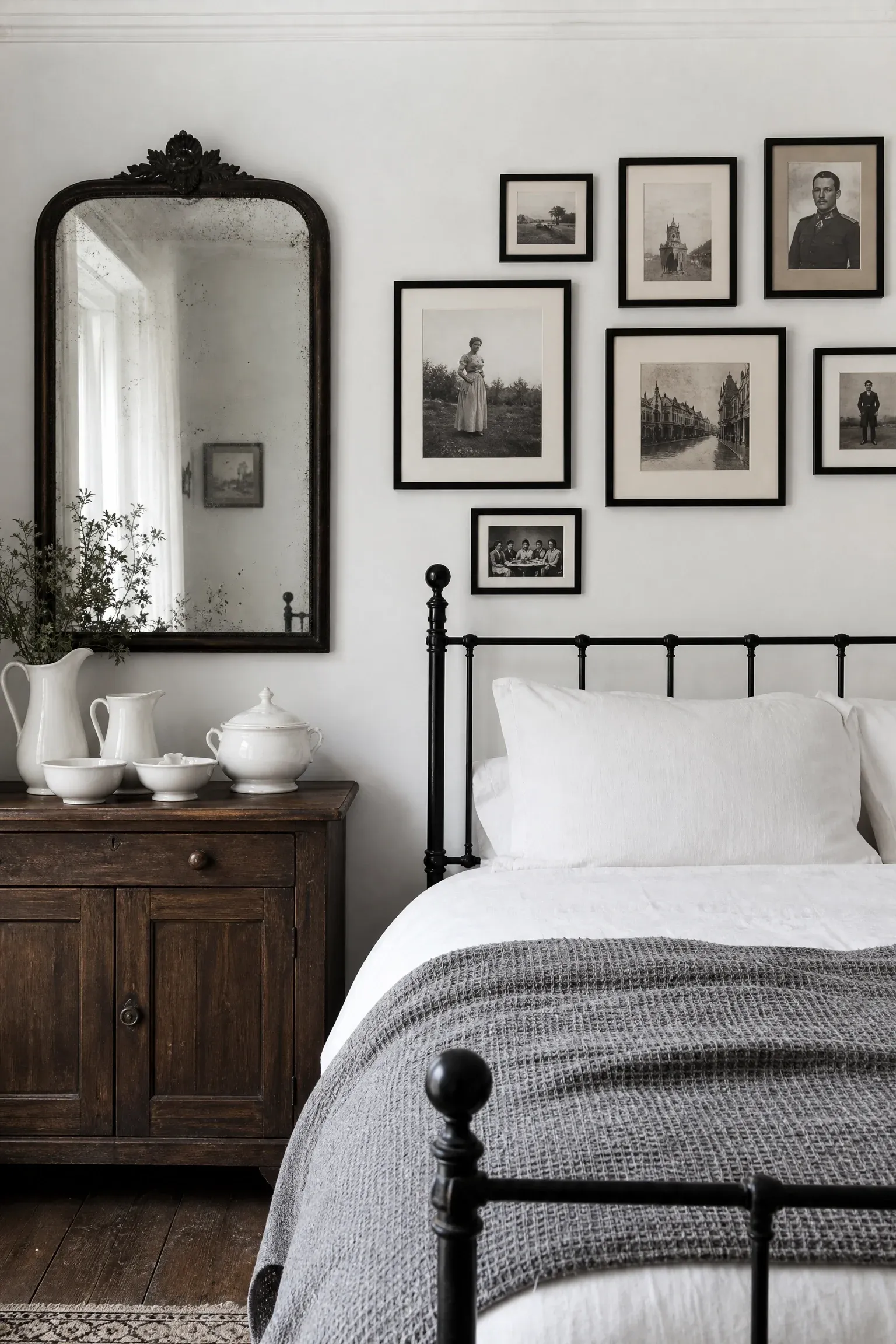
A monochrome vintage bedroom built around black, white, and the full range of warm grey tones in between is one of the most sophisticated and genuinely ageless approaches to the vintage aesthetic because it lets the quality and character of the individual pieces speak entirely without the distraction of color. The key to making monochrome feel warm rather than clinical is material choice: aged linen, heavy cotton, chalky painted surfaces, natural timber in light tones, and rough-textured ceramics all carry warmth even in the absence of color. An iron or metal bed frame in black or aged silver against white walls, dressed in white linen with a single grey waffle-weave blanket and a few white and charcoal pillows, has a beautiful quietness about it. Black and white vintage photography in black frames is a natural choice for the walls, and a collection of white ceramic pieces, perhaps vintage ironstone, on the dresser or shelving adds tactile interest. One vintage piece that works particularly well in a monochrome bedroom is a genuine antique mirror with a slightly aged, spotty silver backing since the imperfection in the reflection adds exactly the kind of character this look needs. Black-out curtains in linen or heavy cotton are worth considering here since they serve the sleep environment as well as the aesthetic.
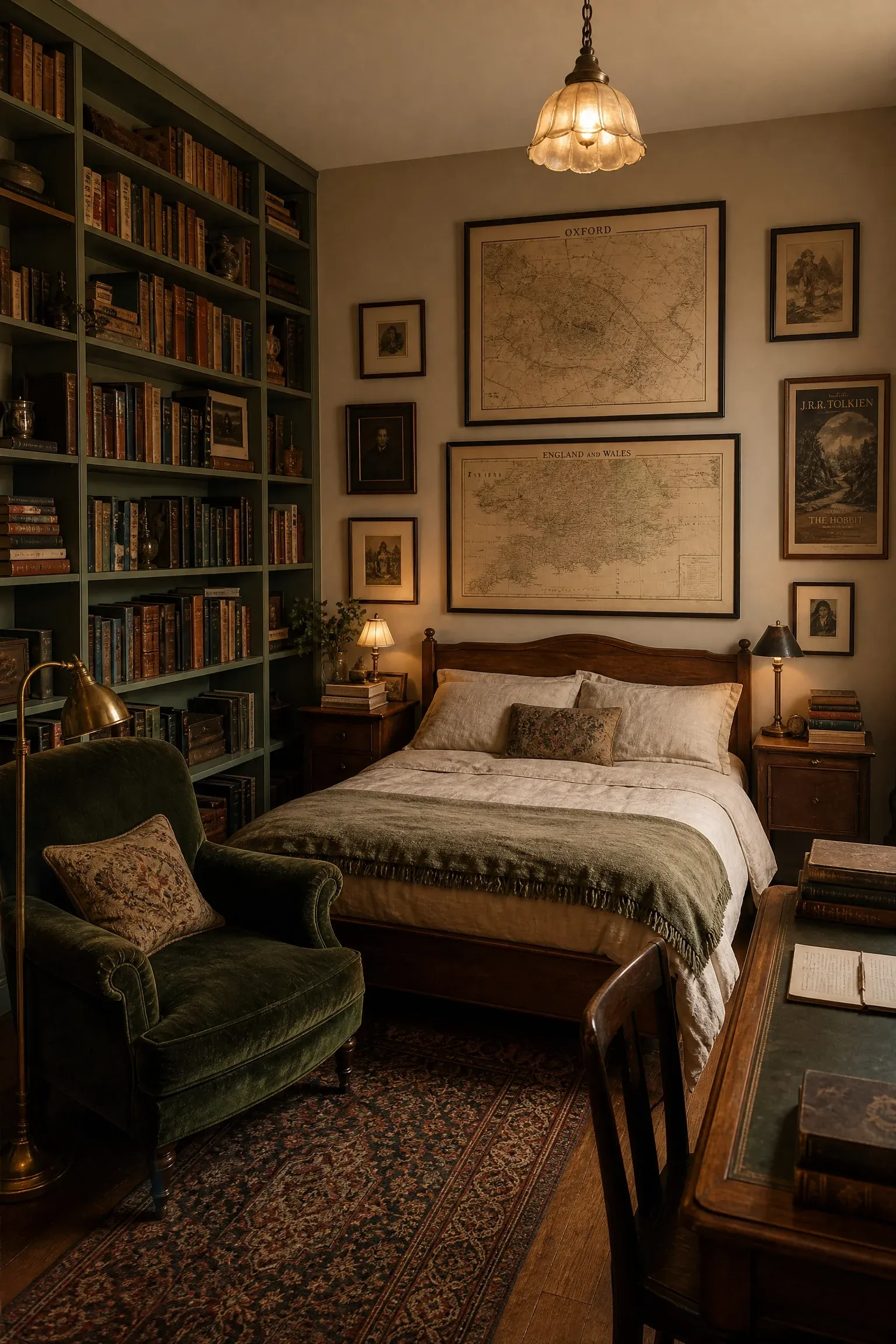
The vintage reader’s retreat bedroom is for people who love books as objects as much as they love books as reading material, and who want their bedroom to reflect that relationship honestly. The library wall is the obvious starting point: floor-to-ceiling open shelving on at least one wall, ideally in painted wood or natural timber, filled with genuinely loved books arranged in whatever way feels most natural to the occupant rather than color-coded for Instagram. A comfortable reading chair or a small chaise longue in a worn velvet or aged leather near a lamp is a near-essential element since the bedroom should support the habit of reading in bed and also in a proper chair. The bed itself should be comfortable above all else: a good quality mattress, layered bedding in natural materials, and a reading light on each side that gives enough actual lumens to read by without disturbing a partner. Small stacks of books on the nightstand, a few framed literary illustrations or maps on whatever wall space remains, and a selection of vintage bookends and desk accessories on the shelf add personality without clutter. One thing that works really well here is a small vintage writing desk in the corner even if you never use it for writing, because it contributes enormously to the atmosphere of scholarly quietude that makes this bedroom feel genuinely different from any other.
The through-line connecting all twenty-four of these ideas is the same simple truth: rooms that feel genuinely personal are almost always rooms that have been built slowly and thoughtfully rather than all at once from a single collection. Vintage decorating is the natural expression of that approach because it requires you to go looking, to make choices, to bring home pieces with real history and integrate them into a space that eventually starts to feel like it belongs to you rather than to a catalog. Start with the one or two ideas in this article that resonated most strongly, find a single piece, a lamp, a mirror, a length of fabric, a framed print, and see how it changes the room. The best vintage bedrooms are never finished, and that is exactly as it should be.
Budget is worth addressing directly: the vast majority of the ideas in this article are achievable at multiple price points, and some of the best vintage bedrooms I have come across were put together almost entirely from thrift store finds, estate sales, and clever repainting of inherited furniture. Genuine antiques carry a premium, but they are far from required. The character comes from the choices and the care you bring to putting things together, not from how much any individual piece cost. Take your time, trust your instincts, and build a bedroom that reflects who you actually are.
Frequently Asked Questions
What is the easiest vintage bedroom style to start with?
Danish modern or English cottage style are both excellent starting points for beginners. Danish modern works well because many contemporary furniture brands produce pieces in that tradition, so you do not need to source everything secondhand. English cottage style is forgiving because it actively encourages mixing and mismatching, so there are no strict rules about what goes together and it is very easy to build up gradually from thrift store finds.
Where is the best place to find vintage furniture and accessories?
Estate sales and house clearance sales are consistently the best source for genuine vintage pieces at reasonable prices. Charity shops and thrift stores are excellent for smaller accessories, textiles, and framed art. Online marketplaces like eBay, Etsy, and specialist vintage platforms offer the widest range but require patience and a willingness to scroll. Antique fairs and markets are worth attending in person because you can assess condition and scale accurately before buying, which is harder to do online.
How do I make a vintage bedroom feel fresh rather than dated?
The key is mixing vintage pieces with a clean, contemporary backdrop rather than layering period details on period details. White or light grey walls, good quality modern bedding in natural materials, and uncluttered surfaces all keep a room feeling current. Introduce vintage pieces as focal points rather than covering every surface: one significant piece of vintage furniture, a collection of framed vintage art, or a single statement lamp is often more effective than filling a room with period objects.
Can I achieve a vintage bedroom look on a tight budget?
Absolutely, and in many cases a tight budget actually produces better vintage rooms than an unlimited one because it forces you to source things carefully and build up over time, which is how the best vintage rooms are created. Thrift stores, charity shops, online secondhand marketplaces, and local estate sales are full of the kinds of pieces vintage style needs. Painting existing furniture in a muted heritage color is free if you already have a brush and costs very little if you do not. A framed vintage print from a charity shop and a good secondhand lamp can change a room significantly for well under $30.
Do vintage bedroom styles work in small rooms?
Most vintage styles work well in small rooms, and some of them, particularly English cottage, wabi-sabi, and Danish modern, are specifically well-suited to smaller spaces. The styles to approach with care in a small room are the most volumetrically demanding ones, like Hollywood Regency or Gothic Revival, which benefit from higher ceilings and more floor area to breathe. In a small room, the principle to follow is choosing fewer, more significant pieces rather than filling every surface, which is good vintage decorating advice regardless of room size.
What vintage bedroom styles work best for couples with different tastes?
The styles that offer the most flexibility for mixed-taste households are those built around a relatively neutral backdrop with vintage pieces as accents rather than as the entire vocabulary of the room. Danish modern, Japandi vintage, and the contemporary minimalist with vintage pieces approach all work particularly well because the base of the room is calm and agreed-upon and the vintage character comes in through specific objects that can be discussed and chosen together. The global eclectic style is also surprisingly good for couples because the organizing principle is personal meaning rather than stylistic purity, which makes it genuinely inclusive of different preferences.