Garages are already tight on space, and shoes make it worse. Work boots by the door, sneakers kicked off by the car, sandals mixed in with garden tools. In a small garage, shoe clutter eats into space you need for parking, storage, and projects. These 16 ideas keep shoes organized in a small garage without stealing floor space you cannot afford to lose.
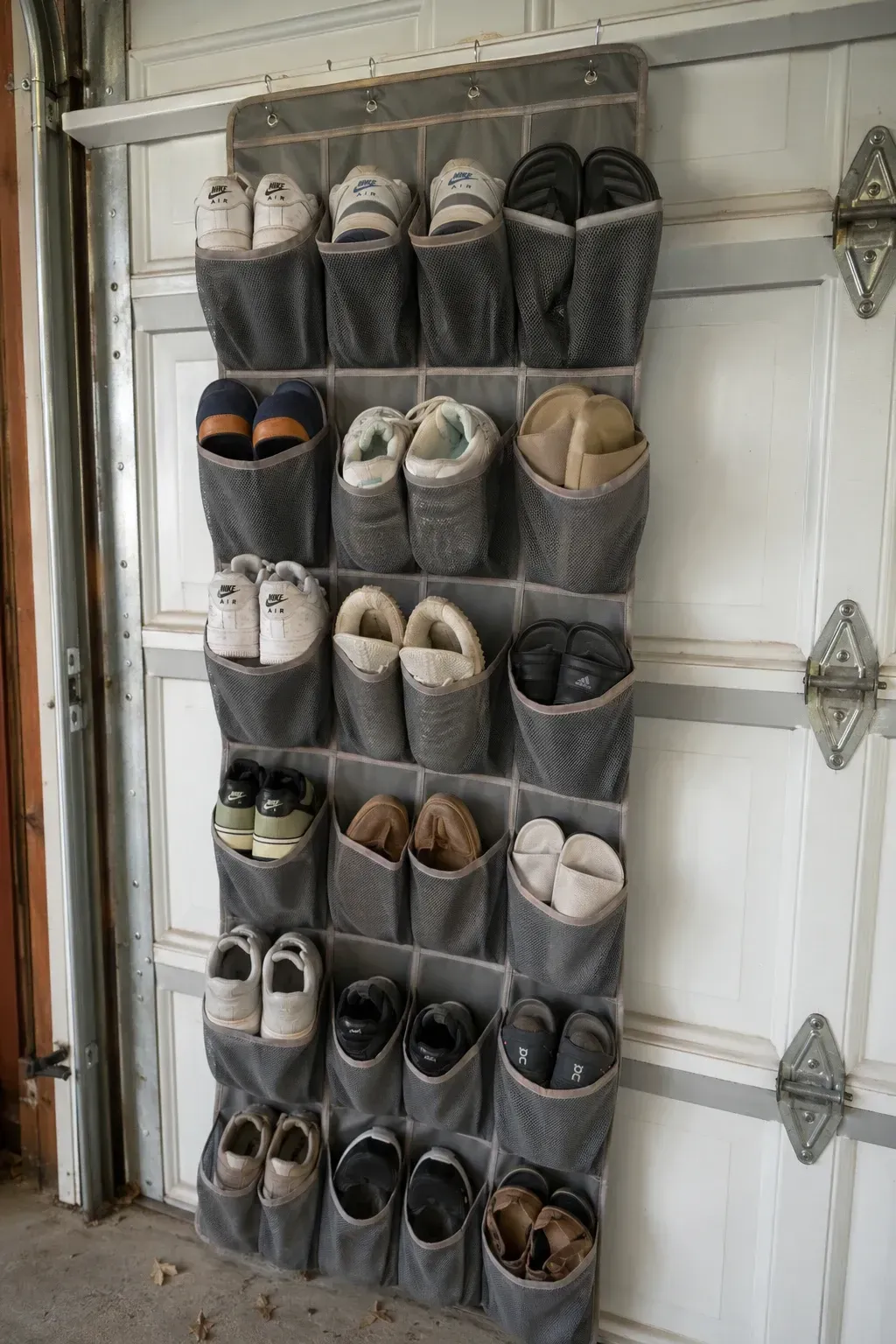
An over-the-door organizer hung on the inside of the garage entry door holds shoes in individual pockets. No floor space used, no installation, and every pair is visible. Hang it up and start dropping shoes in pockets the same day. It works for sneakers, sandals, and lighter shoes. Heavy work boots may be too bulky for the pockets, but everyday shoes fit perfectly.
Designer Tip: Use the bottom pockets for muddy or wet shoes so any drips fall to the garage floor rather than onto clean shoes below. Top pockets stay clean for indoor shoes.
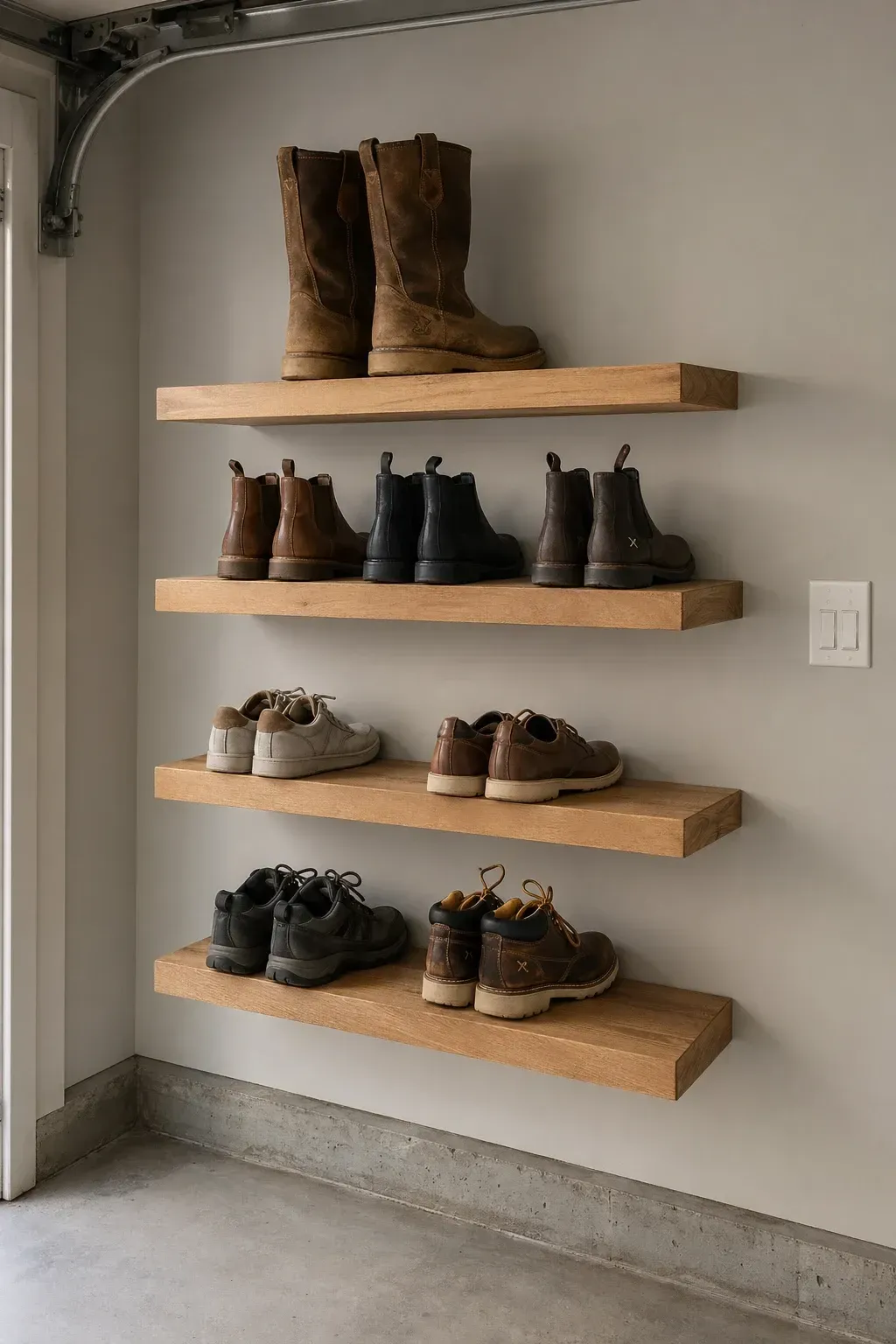
Narrow floating shelves mounted on the garage wall hold shoes off the floor and in a visible line. Mount them near the door at a convenient grabbing height. Each shelf holds two or three pairs side by side. The open design lets dirty shoes dry and air out, which matters in a garage where shoes often come back wet or muddy from outdoor work.
Designer Tip: Mount shelves at least 12 inches apart vertically to fit taller shoes like boots. Shelves spaced too close together only fit flats and low-top sneakers, which limits what you can store.
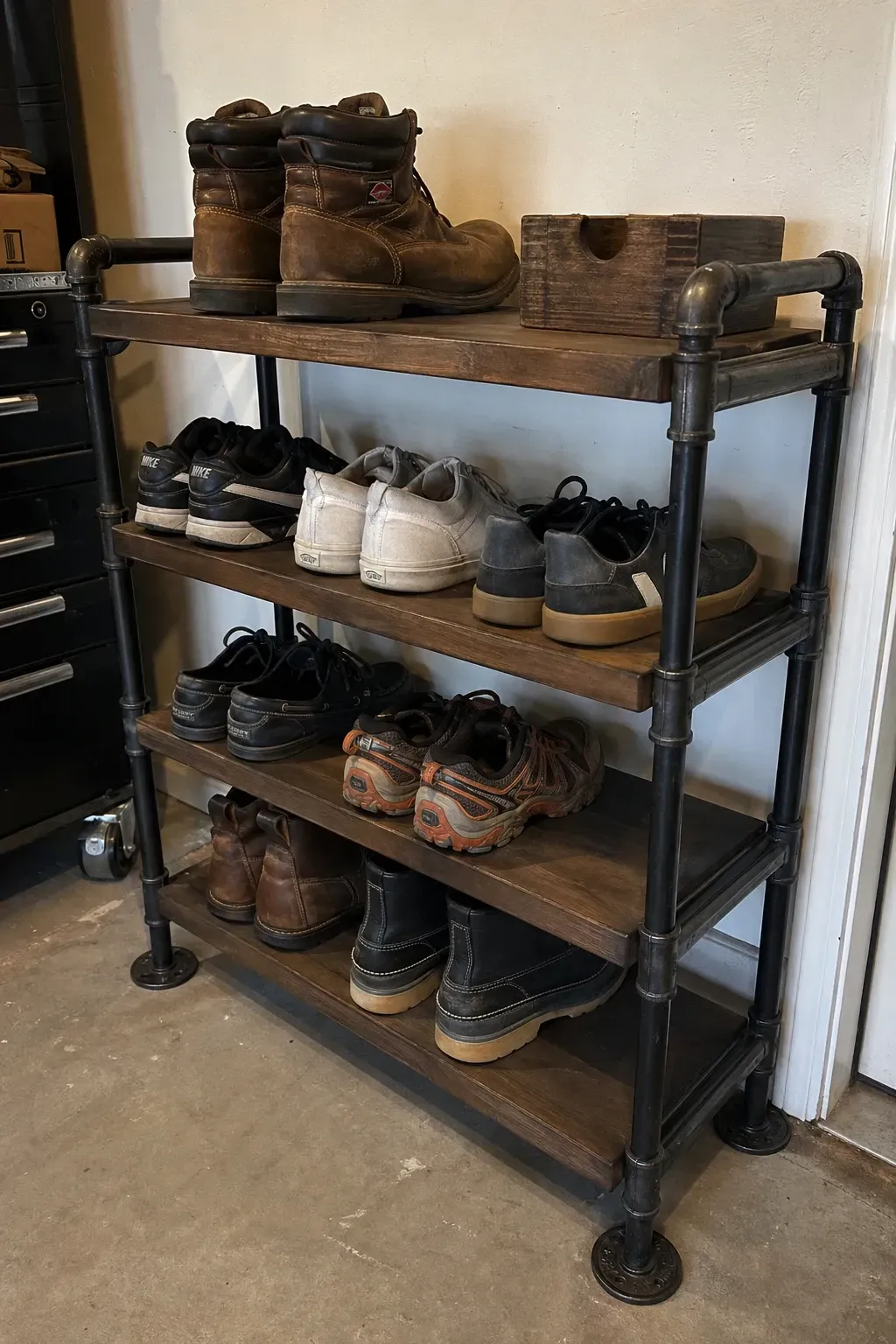
Black iron pipe fittings mounted on the wall create a tough, garage-appropriate shoe rack. The pipes serve as rails that shoes sit on or hang from. This style handles heavy work boots and dirty shoes without looking out of place in a garage environment. The industrial look actually fits the garage aesthetic better than any other room in the house.
Designer Tip: Use floor flanges screwed into wall studs for maximum strength. Pipe racks holding heavy boots need solid mounting. Drywall anchors alone will not hold the weight long term.
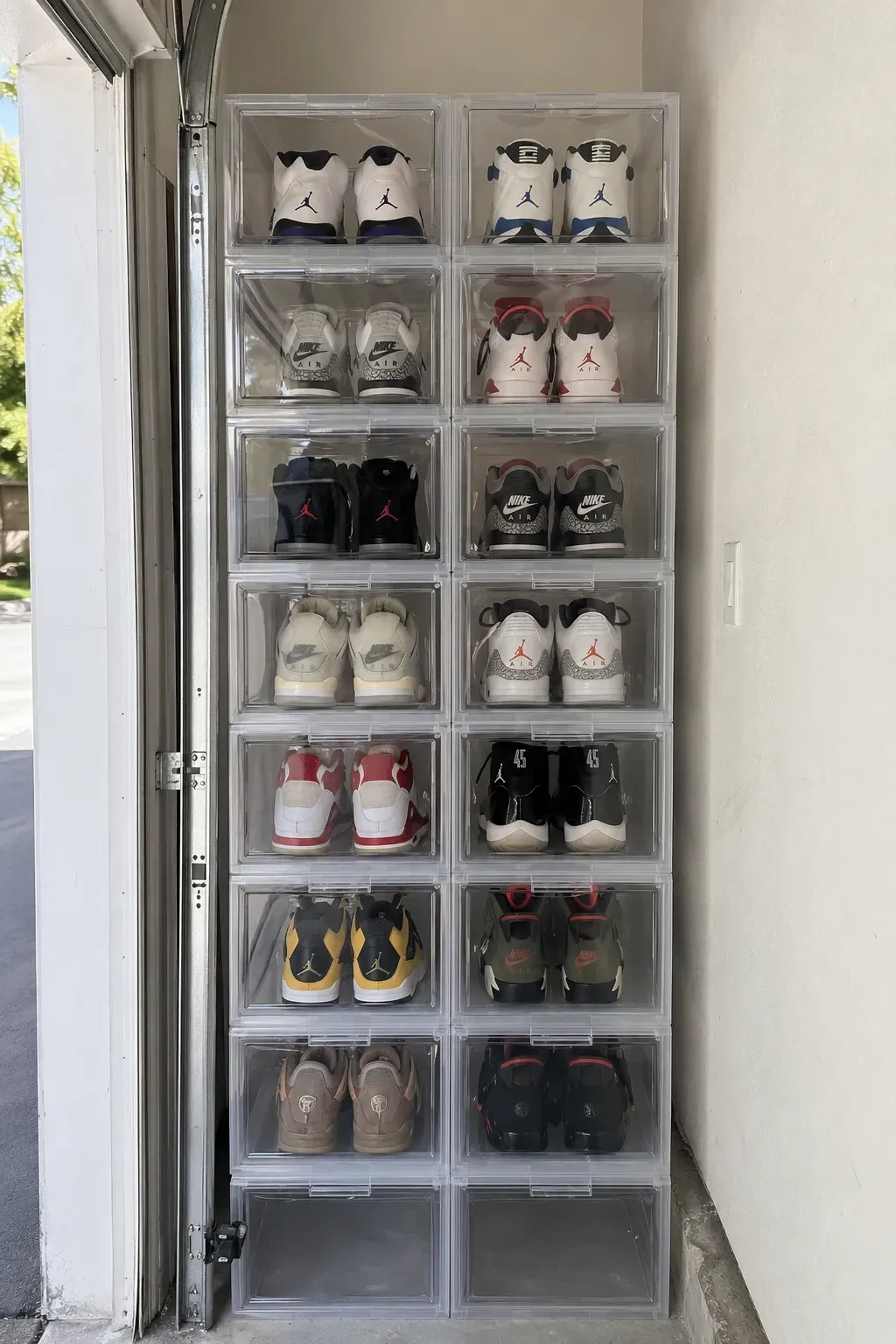
Clear bins that stack on a shelf or against a wall keep shoes visible, dust-free, and organized. Each bin holds one pair so you see every shoe without opening anything. Stack them in a column against the garage wall and they take up about one square foot of floor space while holding 8 to 10 pairs. The clear walls make it fast to find the pair you need.
Designer Tip: Wipe muddy shoes clean before putting them in clear bins. Dirt inside a clear container is very visible and makes the whole system look messy. A quick wipe keeps the bins looking clean.
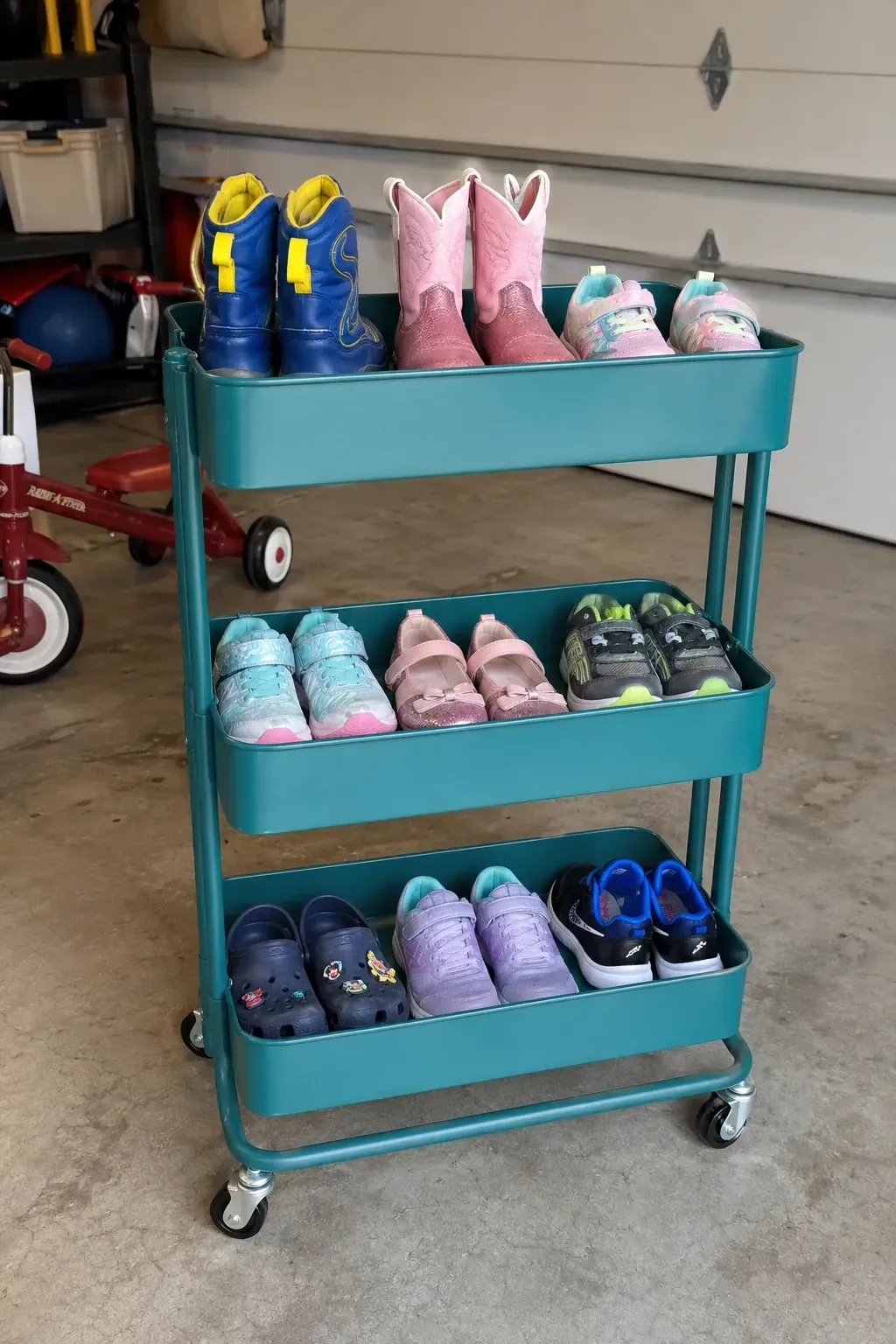
A slim rolling cart with two or three tiers holds shoes and rolls into a narrow gap between the car and the wall or between shelving units. Push it out of the way when you park and pull it out when you need shoes. The mobility is the key advantage in a garage where floor space shifts depending on whether the car is in or out.
Designer Tip: Get a cart with mesh or slatted tiers so dirt and water fall through rather than pooling on a solid shelf. Garage shoes are often dirty, and a solid shelf collects mud that you then have to clean.
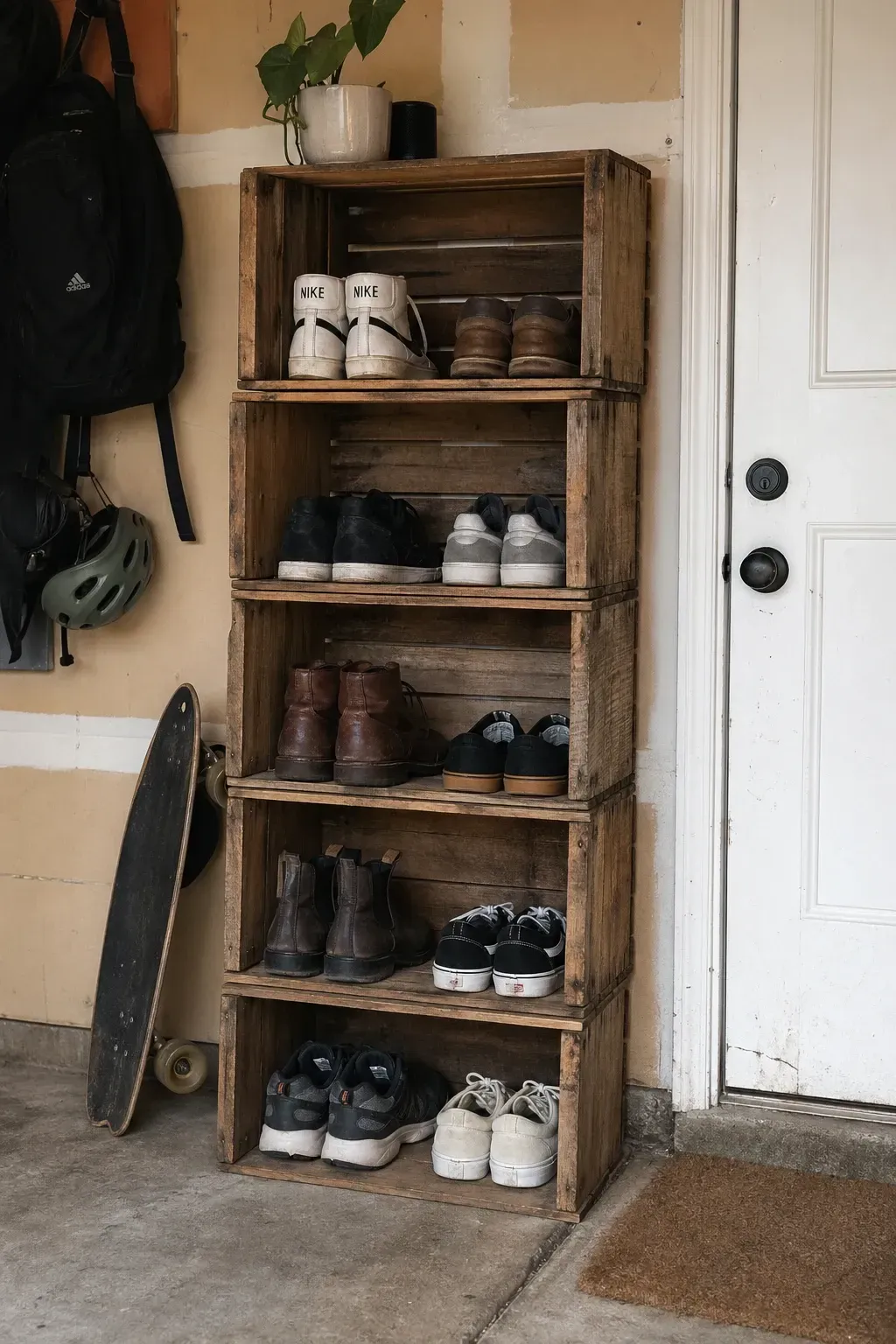
Old wooden crates mounted on the wall or stacked on the floor make rough and ready shoe storage that fits the garage vibe. Each crate holds a few pairs and the open front gives easy access. You can screw crates to the wall in a grid pattern or simply stack them on a shelf. Crates are cheap or free, sturdy, and look at home in a garage setting.
Designer Tip: Sand any rough edges and check for protruding nails before using old crates. Splinters and nails will snag shoe fabric and scratch leather. A quick sanding pass makes the crates safe and smooth.
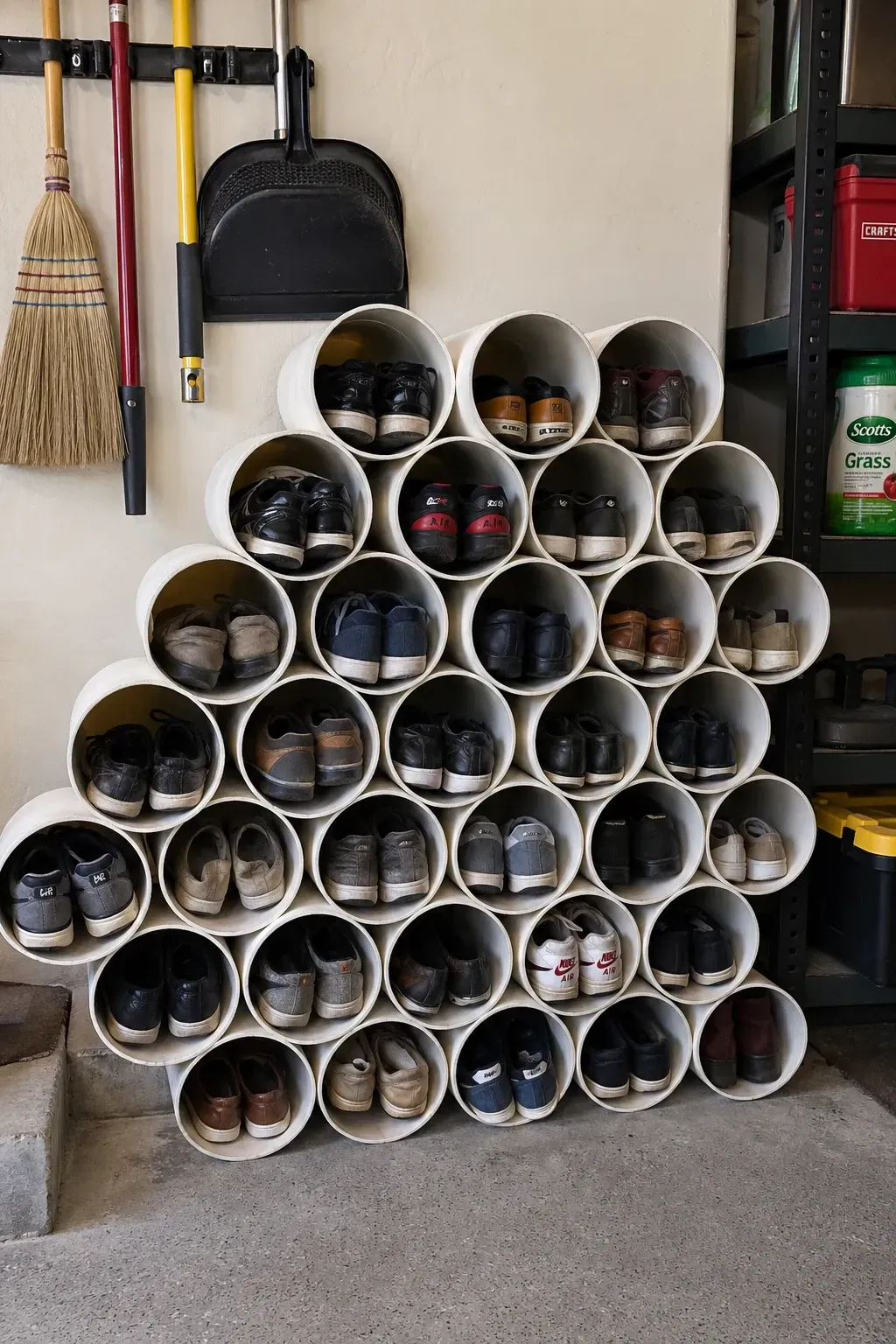
Large PVC pipes cut to shoe-length and bundled together create a honeycomb pattern where each tube holds one pair. Glue or strap the tubes together and mount the bundle on a shelf or the floor. Each shoe slides into its own tube and the honeycomb shape is visually interesting and space-efficient. This is a fun DIY project that costs almost nothing in materials.
Designer Tip: Use 6-inch diameter PVC for most adult shoes. Smaller pipe fits kids shoes and larger pipe fits boots. Spray-paint the pipes to match or choose a bright color to make the rack a visual feature in the garage.
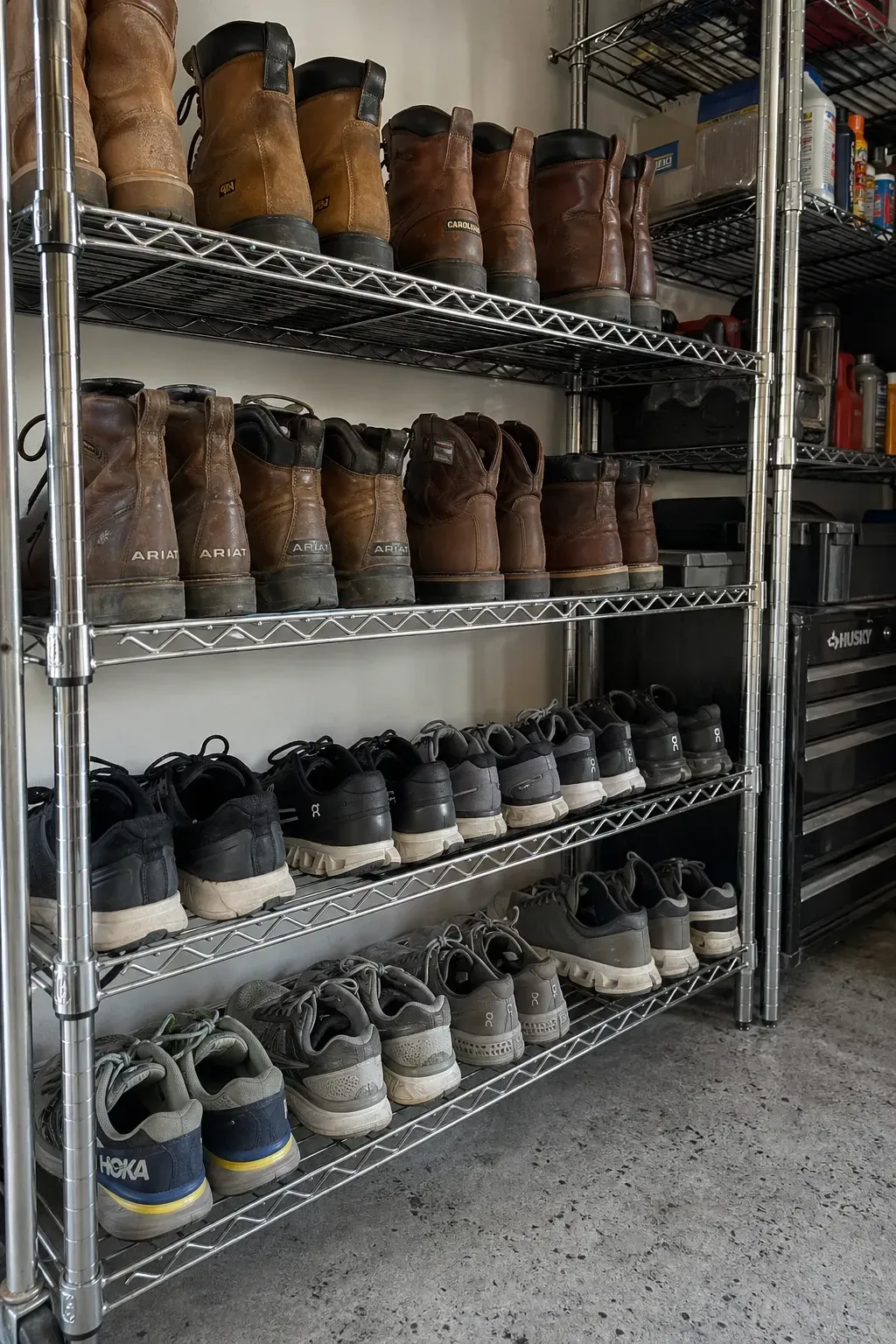
A metal wire shelving unit with multiple tiers holds many pairs and handles the weight of heavy boots and work shoes. Wire shelves allow air to circulate and dirt to fall through rather than sitting on a solid surface. These are the workhorses of garage storage. They are strong, affordable, and adjustable. Set one tier at boot height and another at sneaker height to fit different shoe types.
Designer Tip: Put a drip tray on the bottom shelf during wet seasons. Wire racks let water drip through, which is good for drying shoes but bad for the garage floor underneath. A tray catches the drips and keeps the floor dry.
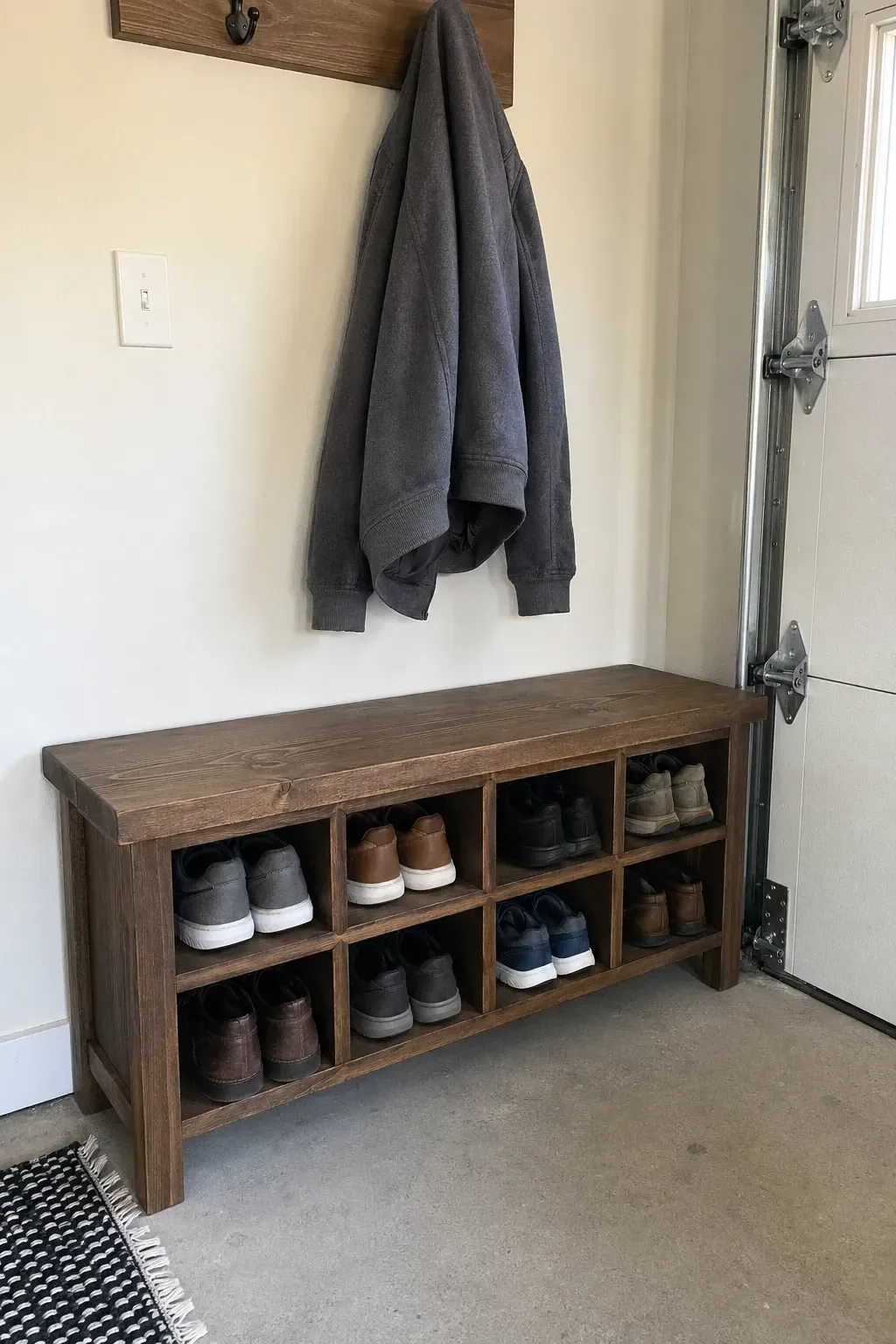
A bench near the garage entry door with shoe cubbies underneath gives you a place to sit while changing shoes and storage for the shoes you swap between. This is practical for homes where you change from outdoor work boots to indoor shoes when coming inside. The bench top holds bags or gear temporarily while you swap footwear, and the cubbies keep shoes sorted and off the floor.
Designer Tip: Choose a bench with a waterproof or sealed finish for the garage environment. Untreated wood in a garage absorbs moisture, oil, and dirt. A poly-coated or painted bench surface wipes clean and lasts longer in garage conditions.
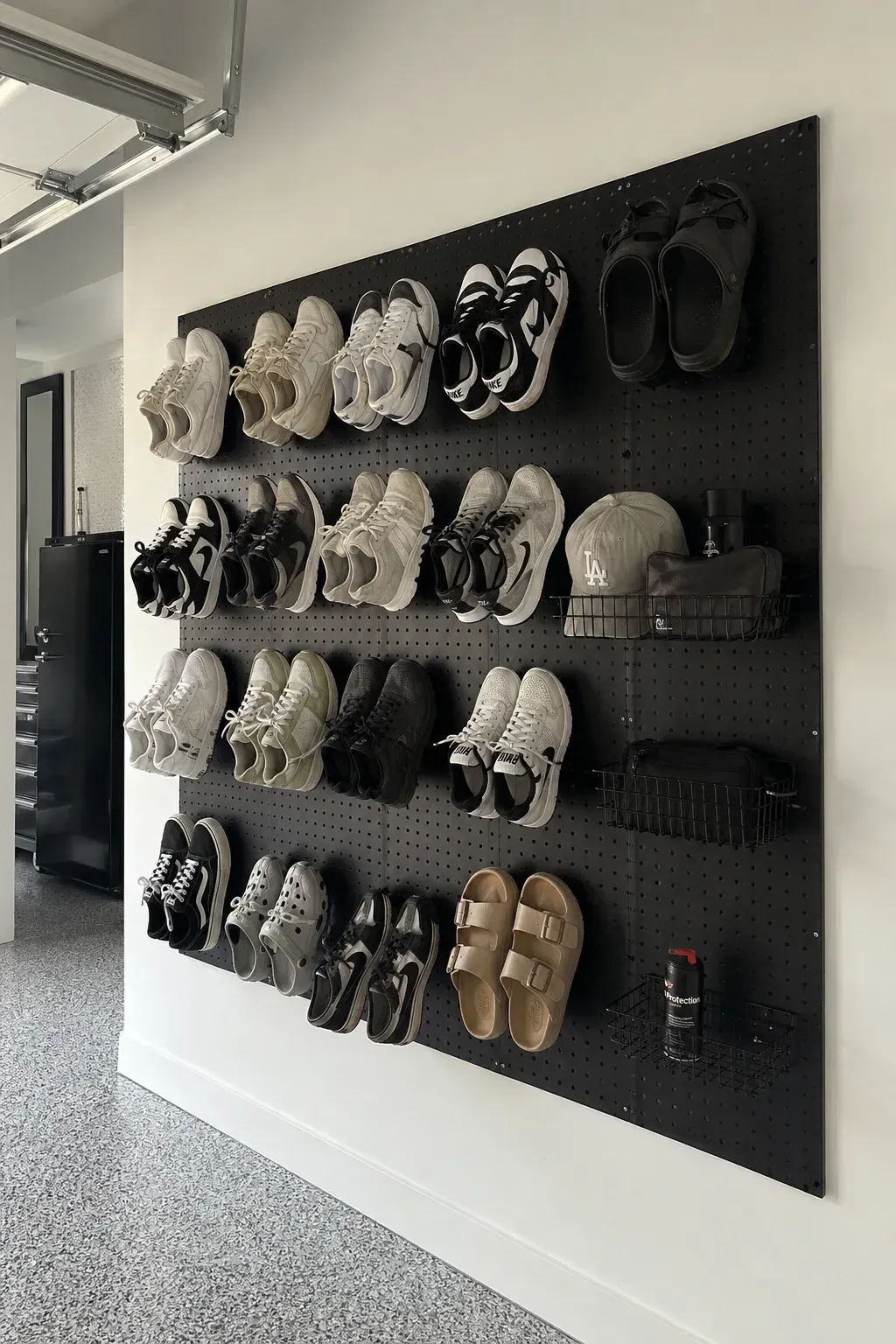
A pegboard panel on the garage wall with hooks for hanging shoes by their heels or laces keeps shoes liftd and organized. The pegboard system is fully customizable. Move hooks around as your collection changes. Add shelf brackets for shoes that cannot hang. Pegboards are already common in garages for tools, so adding a shoe section feels natural and does not require a separate mounting system.
Designer Tip: Dedicate a specific section of the pegboard to shoes and outline it with tape or paint. A defined shoe zone prevents shoes from slowly creeping across the entire pegboard and mixing with tools and other gear.
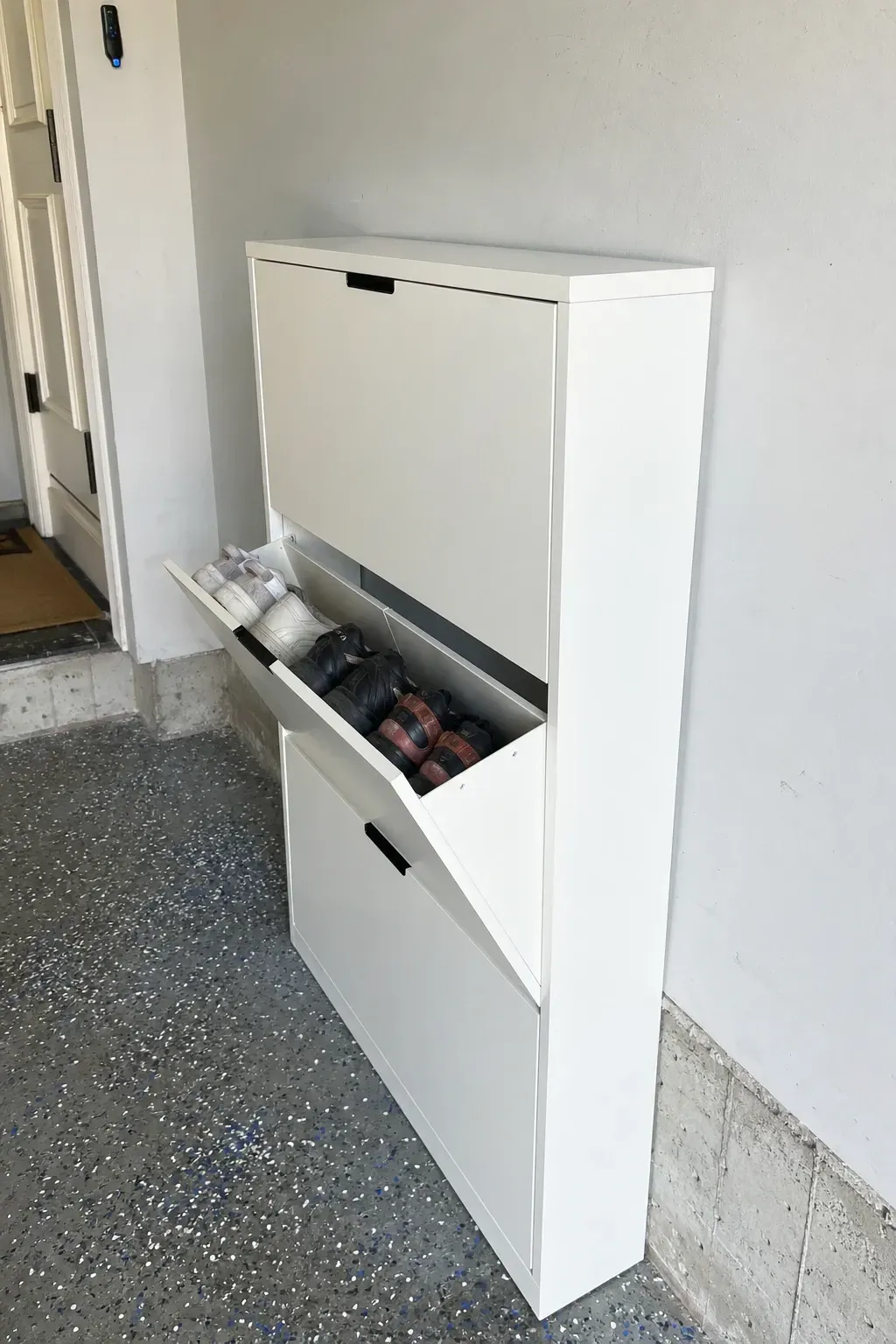
A slim cabinet with tilt-out doors holds shoes in a unit that is only about 8 inches deep when closed. It fits flat against the wall and takes up almost no floor space. The tilt-out doors reveal shoes stored at an angle inside. This is a good option for garages where you want shoes hidden and the garage entry looking clean. The thin profile means it works even in very tight spaces.
Designer Tip: Anchor the cabinet to the wall. Tilt-out cabinets can become top-heavy when all the doors are open at once. A few screws into a stud prevent the cabinet from tipping forward.
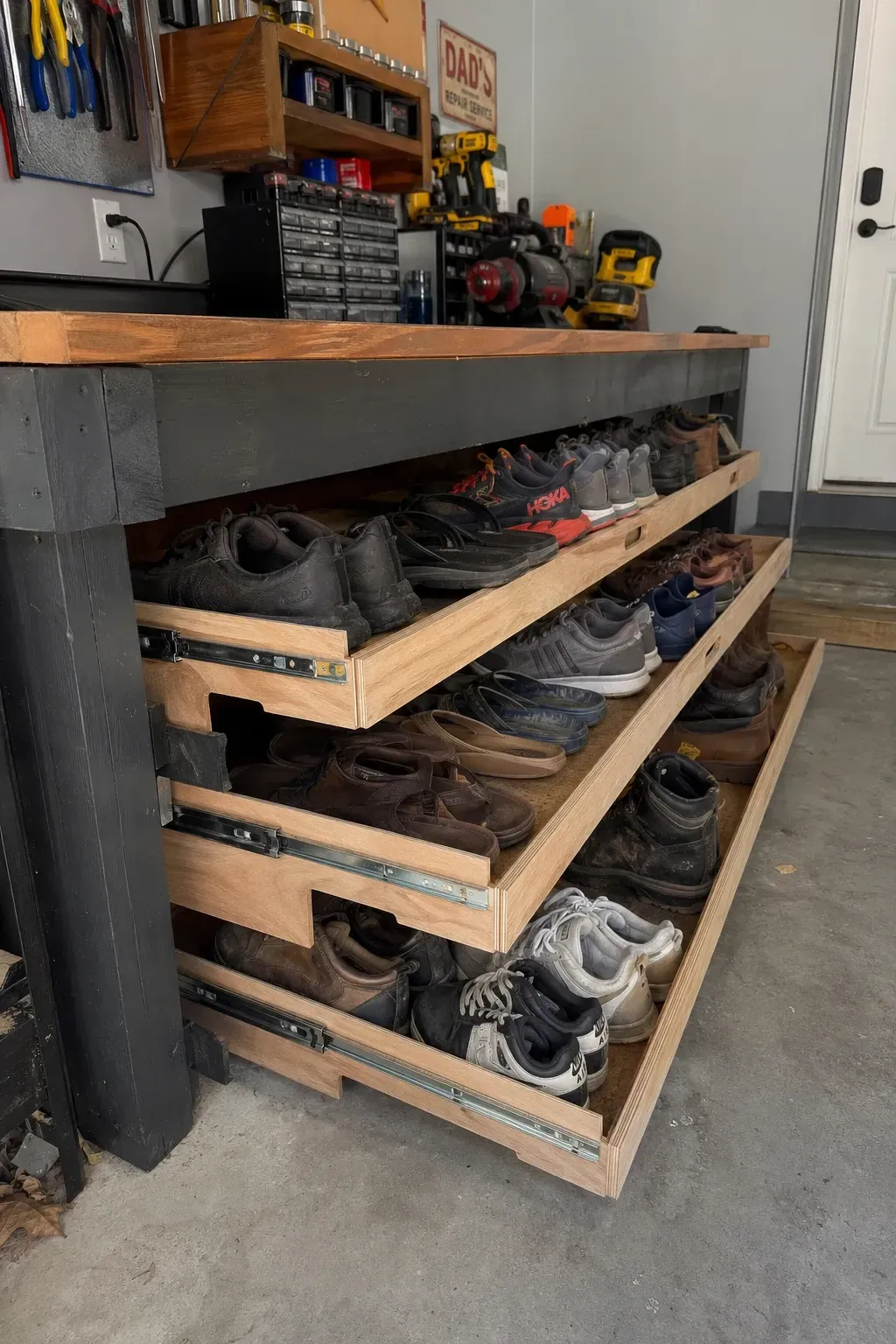
If you have a workbench in the garage, the space underneath is likely wasted or filled with random stuff. Adding slide-out trays on drawer slides gives you hidden shoe storage under the workbench. The shoes are completely out of sight and out of the way. Pull a tray out when you need shoes, slide it back when you do not. The workbench serves double duty without losing any workspace.
Designer Tip: Use full-extension drawer slides rated for at least 50 pounds. Shoe-loaded trays are heavier than they look, and cheap slides will sag and stick within a few months of regular use.
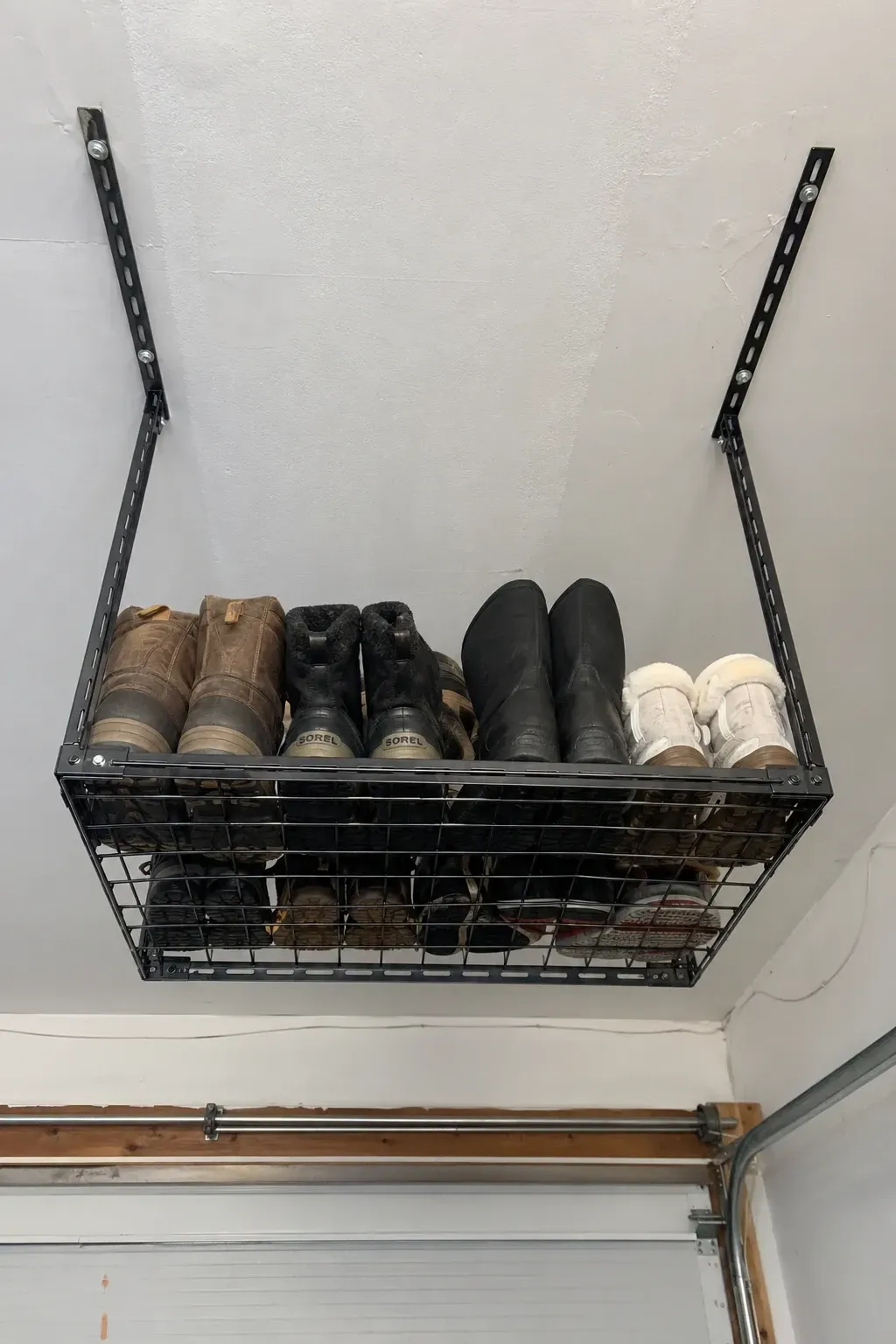
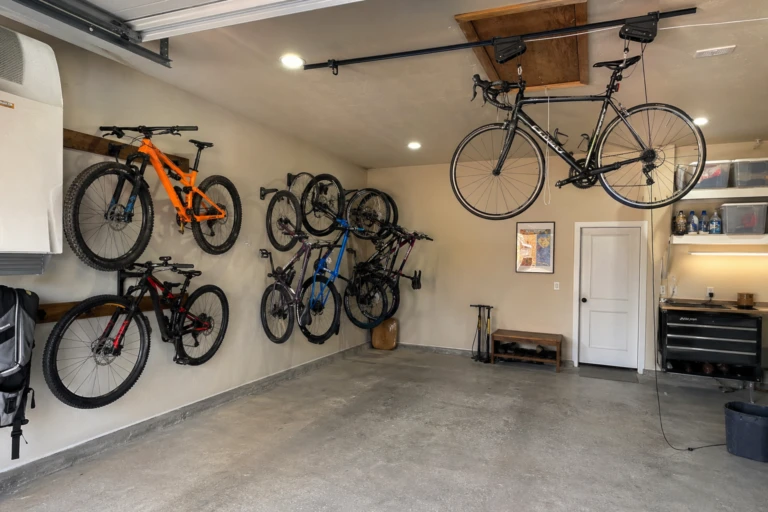
A rack or basket suspended from the garage ceiling holds shoes overhead where they use zero floor and wall space. This is the most aggressive space-saving option for garages where every surface is already in use. Hang the rack above the car hood or in a corner near the door. Pulley systems let you lower the rack to grab shoes and raise it back up out of the way.
Designer Tip: Mount the rack into ceiling joists, not just drywall. A ceiling rack loaded with shoes is heavy and will pull free from drywall anchors. Use lag bolts into the joists for secure mounting.
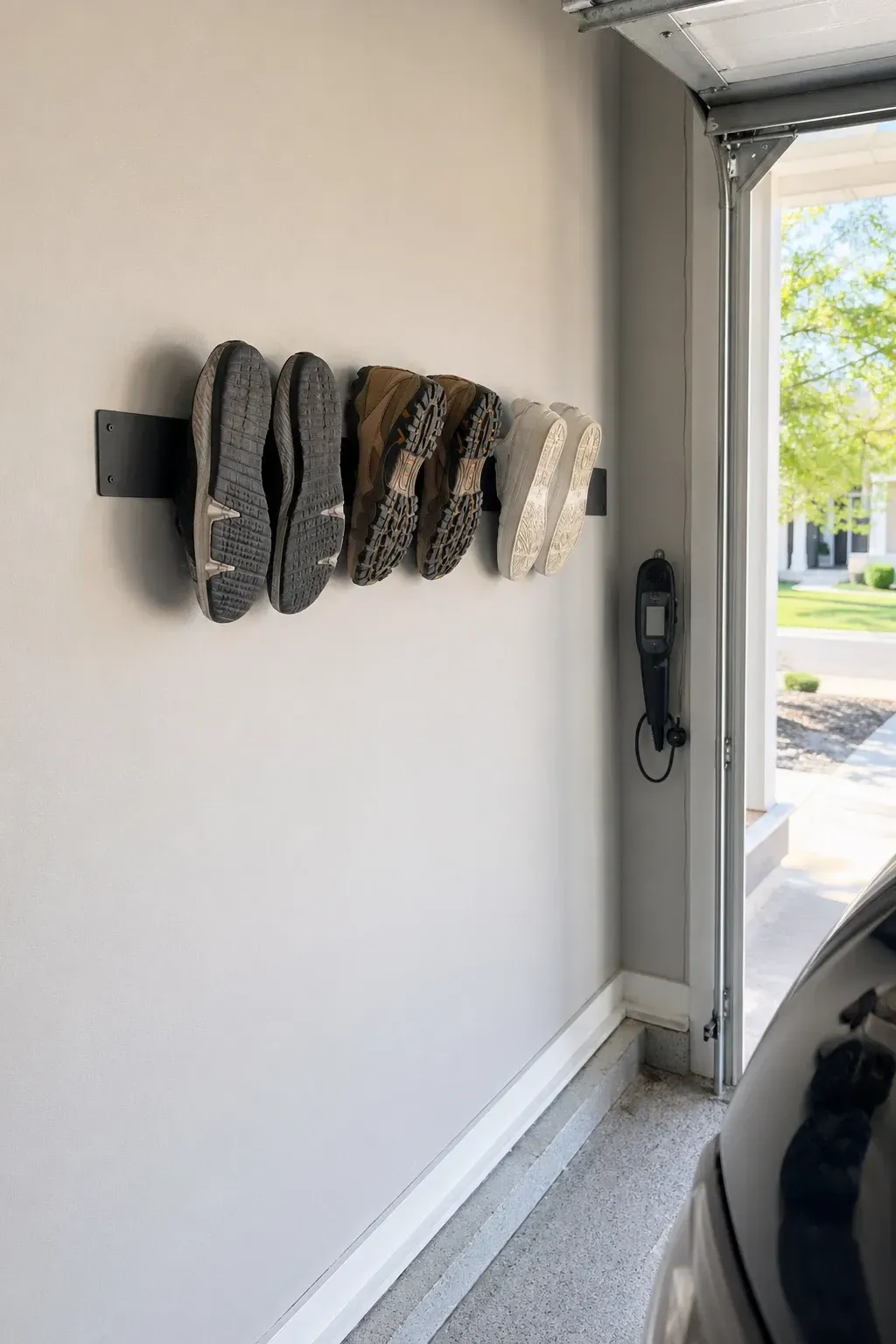
Strong magnetic strips mounted on the wall hold shoes with metal components. You press the shoe against the strip and the magnet grabs it. This works for steel-toe boots and shoes with metal eyelets, buckles, or shanks. It is a unusual storage method that looks impressive and uses wall space efficiently. The shoes hang flat against the wall and take up no shelf or floor space at all.
Designer Tip: Test the magnet strength with your specific shoes before mounting multiple strips. Not all shoe metal parts are strong enough for magnetic holding. Shoes with small or thin metal pieces may not stick firmly enough to stay on the wall.
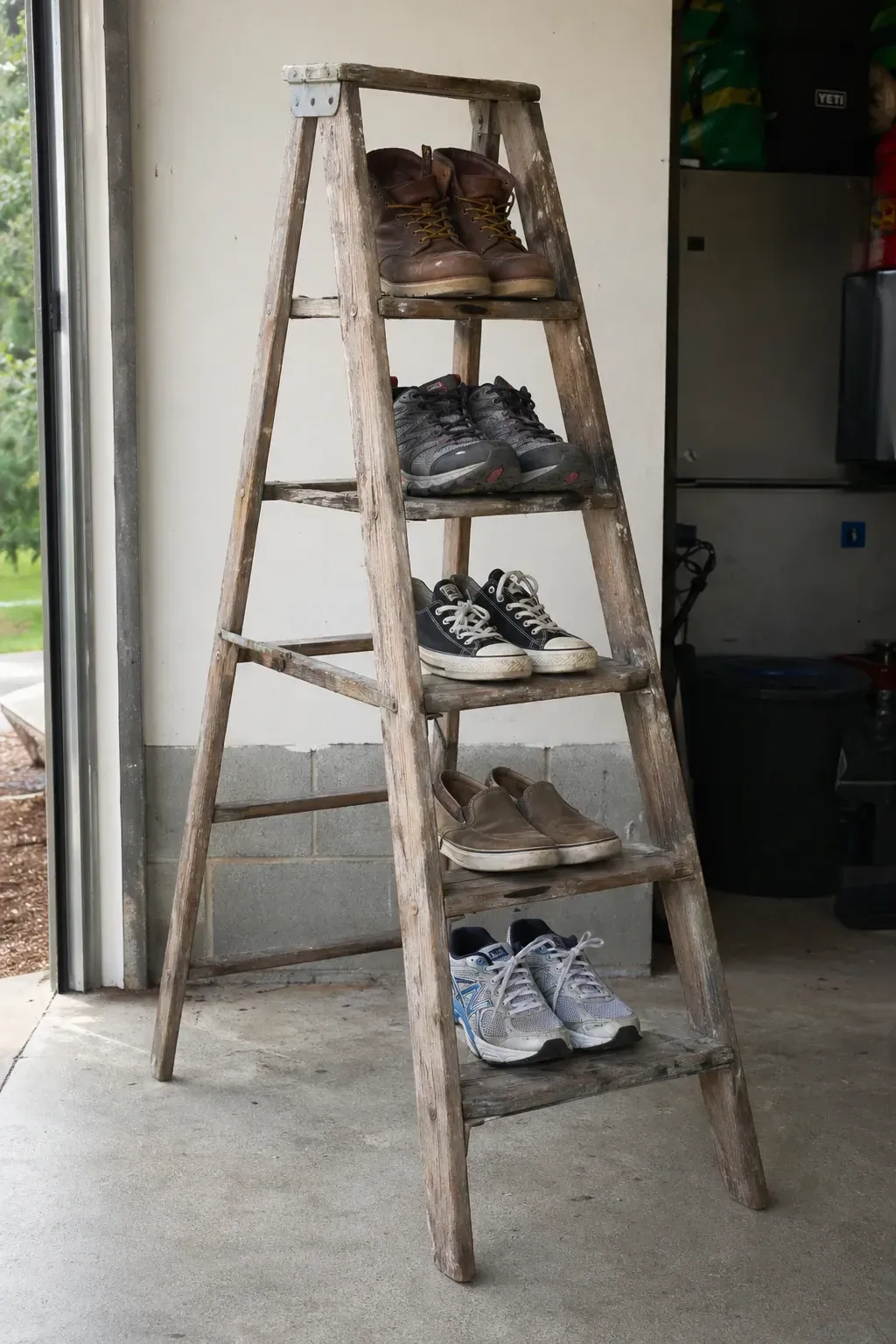
An old A-frame ladder or a new decorative ladder with boards laid across the rungs creates a tiered shoe shelf. The ladder leans against the wall and the rungs or boards hold shoes on each level. This is a rustic, creative solution that reuses something most people already have in the garage. The vertical lean takes up minimal floor space while providing several tiers of storage.
Designer Tip: Secure the boards to the rungs so they do not slide off. A screw or a dab of construction adhesive on each end keeps boards in place. An unsecured board will shift when you grab a shoe and could dump the whole row.
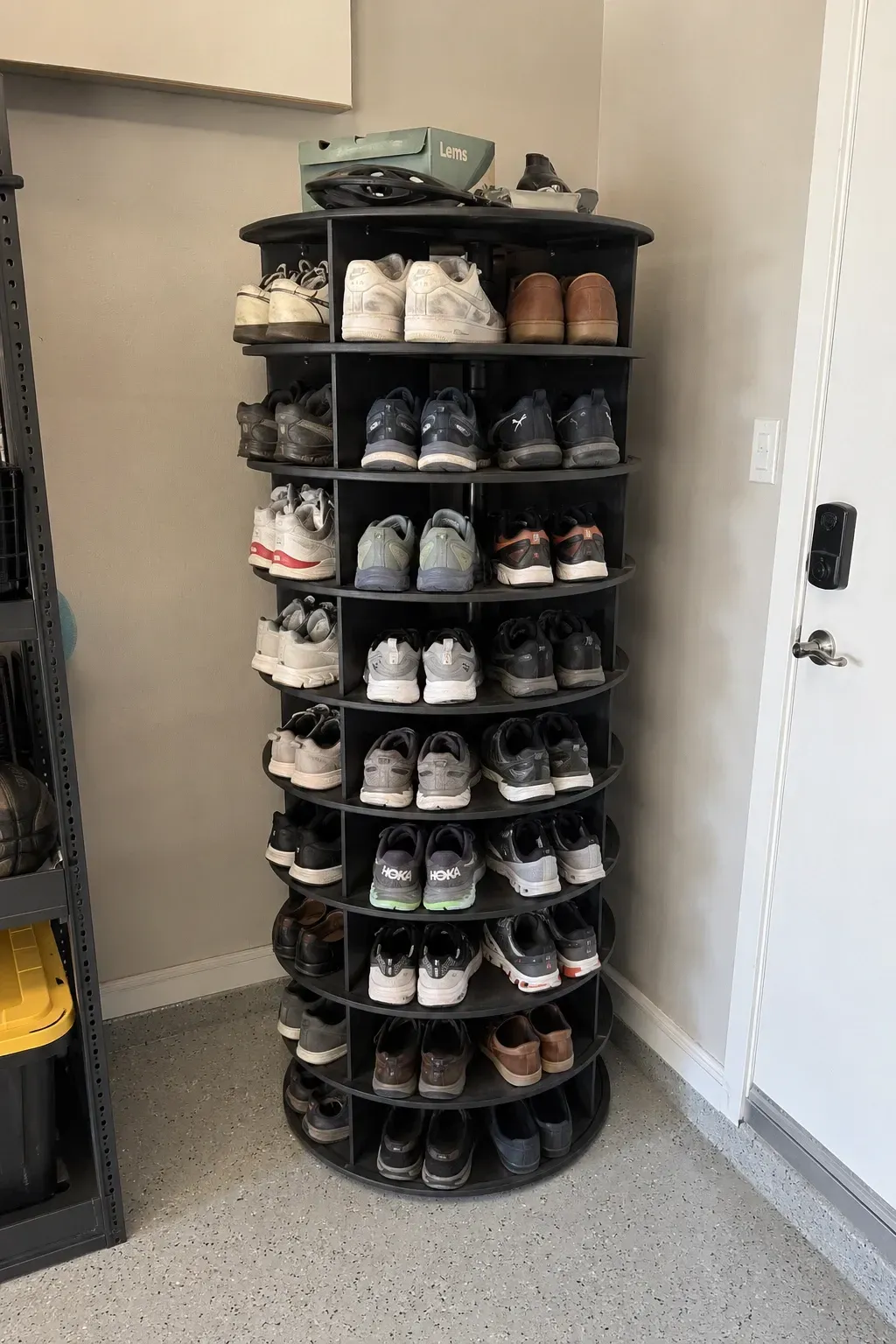
A rotating carousel that fits in a garage corner holds shoes on a spinning tower. The corner location uses space that is usually dead and the rotation means you can access shoes on all sides without moving the unit. Spin it to find the pair you want. This is a good option for corners near the door where floor space is minimal but you want fast access to multiple pairs.
Designer Tip: Place the carousel on a smooth, flat surface for easy spinning. Garage floors are often uneven, which can make a carousel wobble or spin unevenly. A small platform or leveling shims under the base fix the problem.
Garage shoe storage is about working with the space you have. Walls, ceilings, doors, workbenches, and corners are all usable surfaces that can hold shoes without taking away from parking or workspace. Pick the method that matches your garage layout and the types of shoes you store there. A system that takes 30 minutes to set up saves you from tripping over shoes for years.
Frequently Asked Questions
Is it okay to store shoes in a hot garage?
Most everyday shoes handle garage temperatures fine. However, extreme heat can soften adhesives in some shoes, causing soles to separate. Leather dries out and cracks in sustained high heat. Keep expensive or delicate shoes inside and store only durable, everyday shoes in the garage. If your garage gets very hot in summer, a shaded or insulated section is better for shoe storage.
How do I keep garage shoes from getting dusty?
Garages are dusty environments. Covered bins, cabinets with doors, and clear boxes with lids protect shoes from dust. Open racks and shelves are more convenient but shoes will need occasional wiping. If you go with open storage, focus on shoes you wear frequently since they get handled and cleaned naturally through regular use.
How many shoes can I realistically store in a small garage?
Using vertical wall storage and one of these space-saving ideas, most small garages can handle 15 to 25 pairs without losing floor space. The key is going vertical. A wall-mounted solution using 3 feet of wall width and 5 feet of height can hold 12 to 15 pairs. Add an over-the-door organizer and you gain another 10 to 12 pairs on top of that.