Most backyards are underused because they sit in a kind of holding pattern, never quite finished, never quite comfortable. But spring is the one season where a few well-placed changes really do shift how a space feels and how often you use it. Here are ideas that work in real yards, not just on Pinterest.
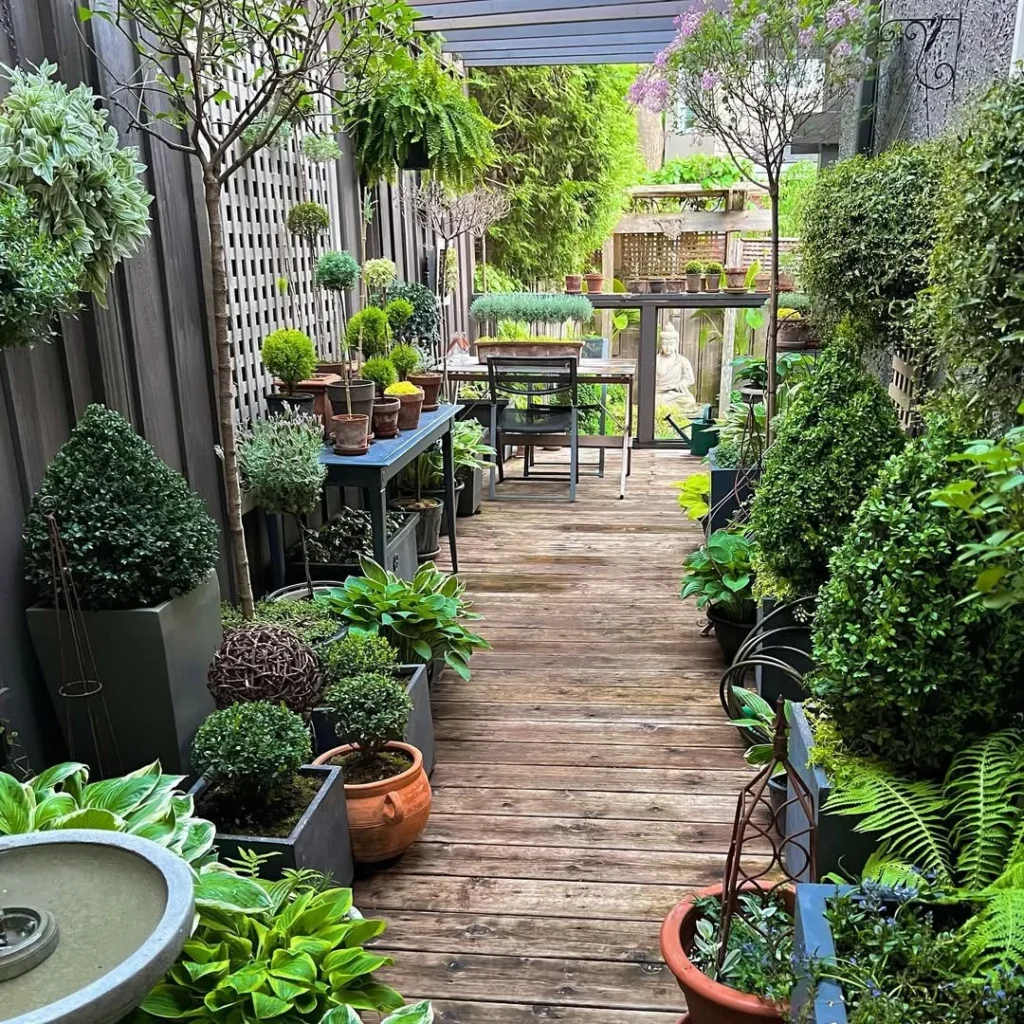
In practice, a row of matching zinc or terracotta planters flanking a timber boardwalk does more for a cramped backyard than any fence treatment. Layer topiary balls, hostas, and trailing herbs at different heights to create visual weight on both sides without crowding the ground plane. This works particularly well in side passages where there is no room to plant directly in the soil, and the containers can be rearranged as plants peak and fade through the season.
Pro Move: Paint all containers one colour, even mismatched shapes, so the pathway reads as a designed space rather than a collection of random pots.
2. Build a Seating Circle in the Middle of the Lawn
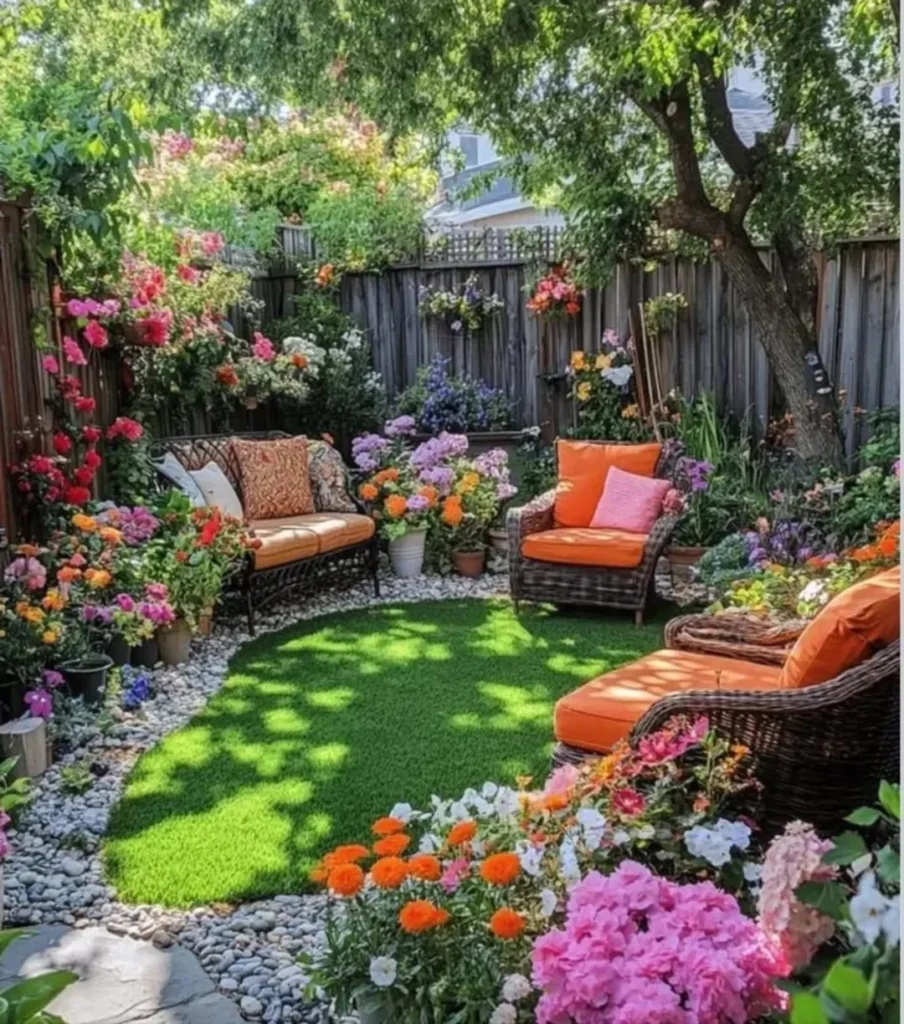
Breaking away from the fence-hugging instinct and placing a circular seating arrangement in the centre of the garden creates an immediate focal point and changes how the whole yard is experienced. Wicker chairs with bold, warm-toned cushions in burnt orange or terracotta surround a central grass area bordered by river pebbles, which gives the space a defined edge without hard landscaping costs. This works best on lawns larger than about 15 feet across, and it draws attention away from boring boundary fences.
Reality Check: The moment you place furniture in the centre rather than the perimeter, guests naturally gravitate outward into the garden rather than sitting with their backs to it.
3. Set Up a Gravel Dining Area Lined with Lavender
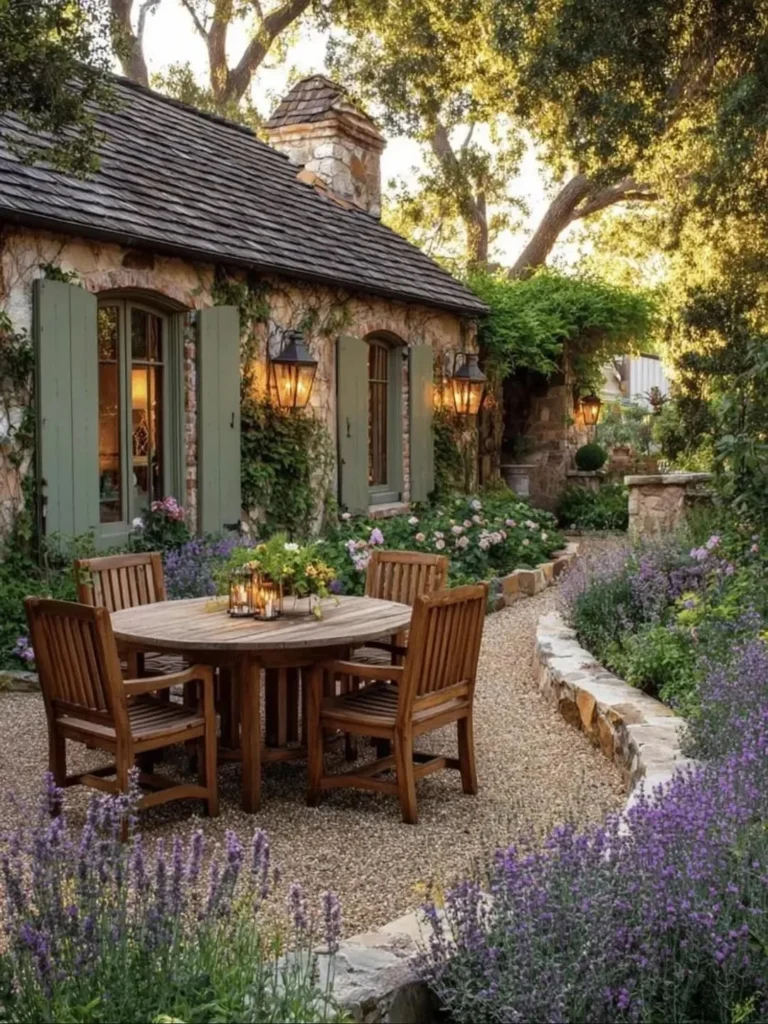
Gravel patios have been popular for a reason: they drain perfectly in spring rain, require no maintenance, and make a round teak or hardwood dining table look deliberately curated rather than just placed. Bordered lavender (Lavandula angustifolia works well in most temperate climates) along the edges adds both scent and purple colour from May through July, and the stone lanterns or wall-mounted pendant lights overhead keep the space usable into the evening. This is an investment-level idea since good quality gravel and teak furniture costs more upfront, but both last for years with minimal upkeep.
Designer Advice: Use angular gravel rather than pea gravel under a dining area so chairs do not sink or wobble when people sit down and push back from the table.
4. Create a Fire Pit Circle with String Lights Above
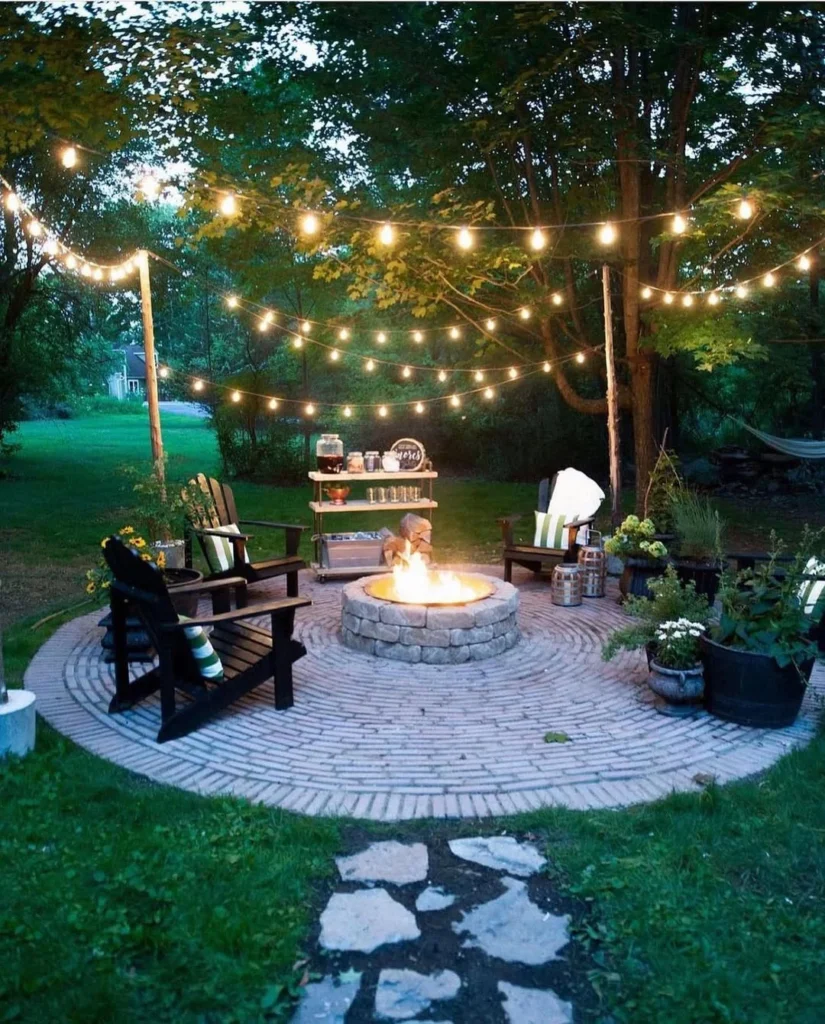
A circular brick fire pit surrounded by Adirondack chairs on a radial paver patio is one of the most consistently loved backyard setups, and it works for good reason: it creates a gathering point that pulls people together naturally. The key detail most people miss is the string lights: suspended on timber poles above the circle rather than attached to the house, they create an enclosed room-like atmosphere overhead that makes the space feel intentional and complete. Budget note: a DIY stone fire pit runs around $200 to $400 in materials, and the difference in evening use is immediate.
Quick Tip: Run three or four lines of Edison bulb string lights from a central tall pole rather than stretched fence-to-fence; the canopy effect is far more immersive.
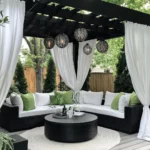
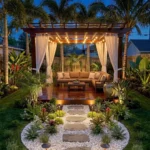
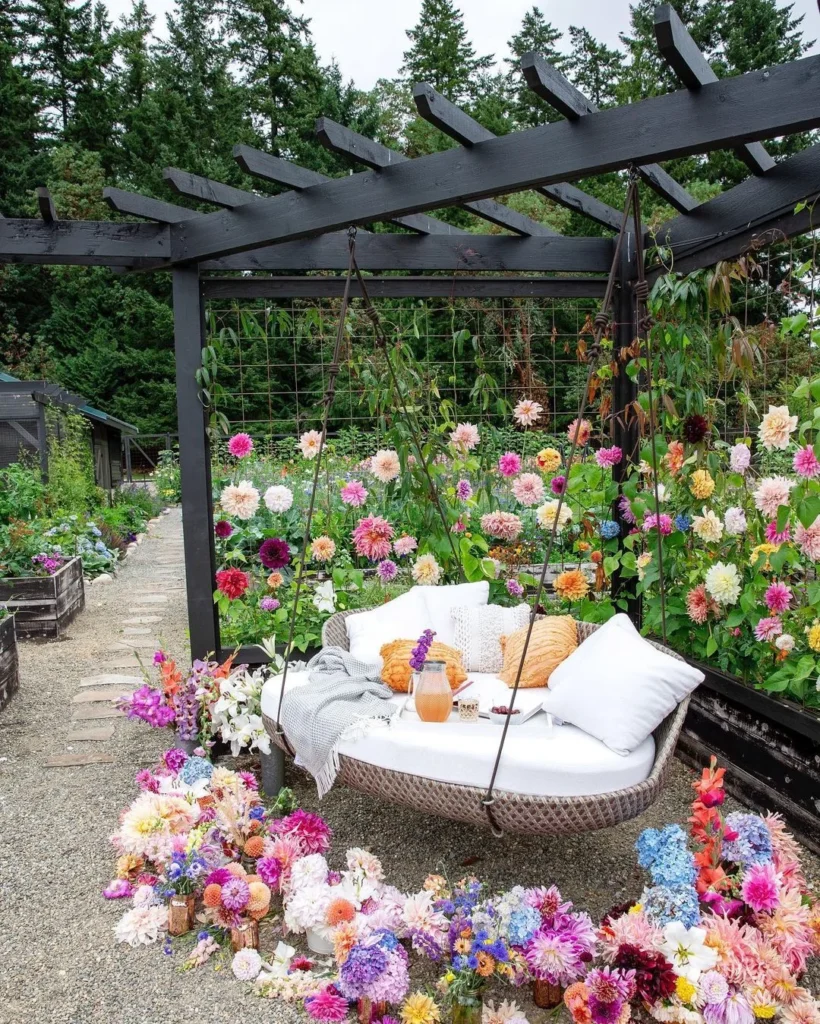
A painted black or charcoal timber pergola becomes a serious design anchor in any backyard, and suspending a round daybed swing from its beams takes it from structure to destination. The visual weight of dark-painted timber reads as deliberate and grounded rather than rustic, and dahlias or clematis climbing the posts add colour contrast that highlights the dark frame beautifully. This is one of the highest-impact ideas in terms of how the garden photographs and how much time you actually spend outdoors, though it does require a sturdy pergola structure and quality chain hardware to be safe.
Heads Up: Dahlias planted at the pergola base need staking by June and regular deadheading, but no other garden plant produces a comparable range of colour and bloom size for this kind of backdrop.
6. Use Solar Lanterns on Shepherd Hooks for Pathway Lighting
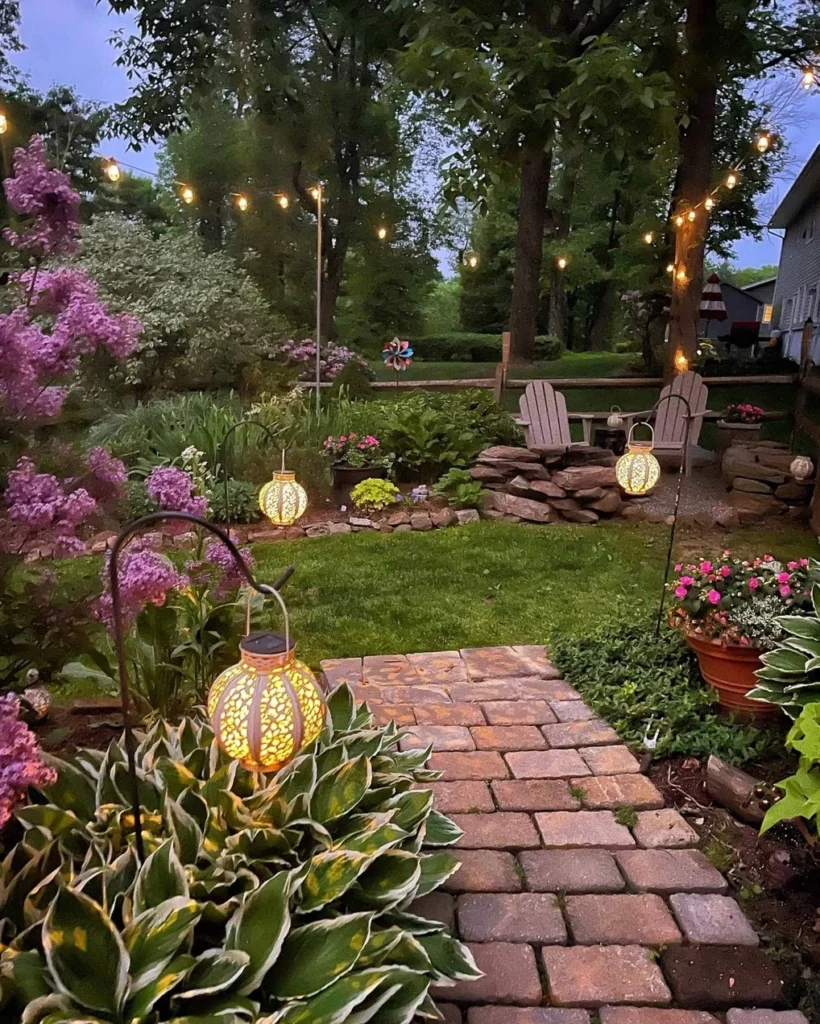
Solar lanterns on arched shepherd hooks placed along a brick path or garden border are one of the most affordable ways to completely change how a backyard looks at dusk. The warm amber glow from lanterns at knee height creates layered lighting that works alongside overhead string lights, and the filigree metalwork casts decorative shadows on paving and foliage as the light fades. Look for lanterns with a warm 2700K colour temperature for the most natural-looking result; the blue-white ones that are cheaper tend to make gardens look cold and municipal rather than welcoming.
Pro Move: Space shepherd hook lanterns about 4 to 5 feet apart along a path rather than closer together so the pools of light read as individual glowing points rather than a continuous strip.
7. Build Mediterranean-Style Built-In Seating with Mosaic Tiles
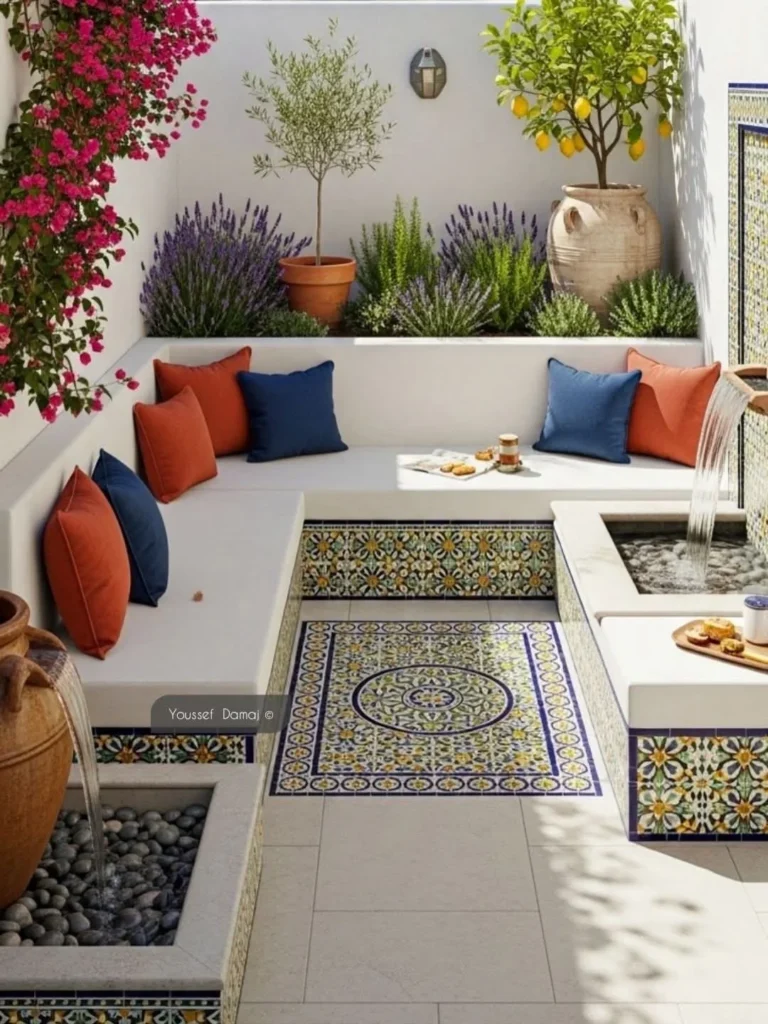
Rendered concrete built-in bench seating arranged in an L or U shape around a tiled courtyard floor is a project that costs real money (expect $2,000 to $5,000 for a professional finish), but it produces an outdoor living room that feels genuinely permanent and considered. The combination of Moroccan or Andalusian ceramic tiles on the seat bases and floor, terracotta urns planted with lavender and lemon trees, and a small water feature or fountain in the corner creates a sensory garden that is calming in the best way. This suits compact courtyard backyards especially well because the built-in seating eliminates the need for freestanding chairs that can make small spaces feel cluttered.
Reality Check: Lemon trees in pots need protection from frost below 28F, so in colder climates this idea works best in a sheltered south-facing courtyard or if you can move the container under cover in winter.
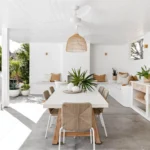
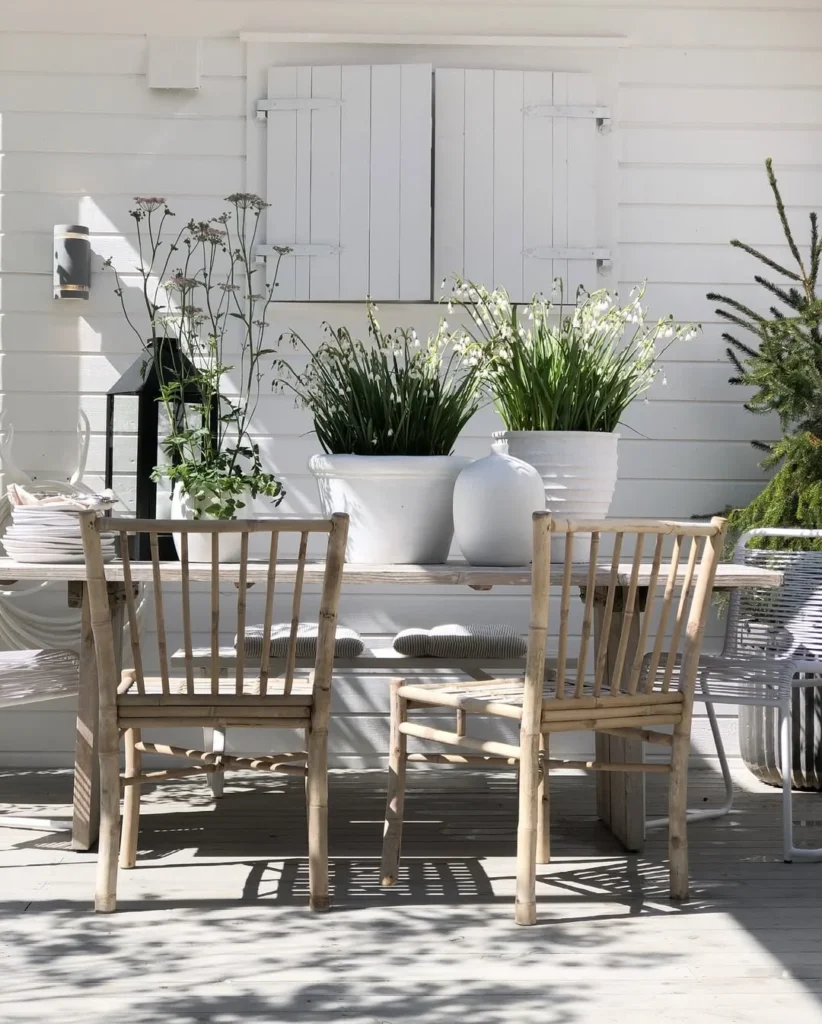
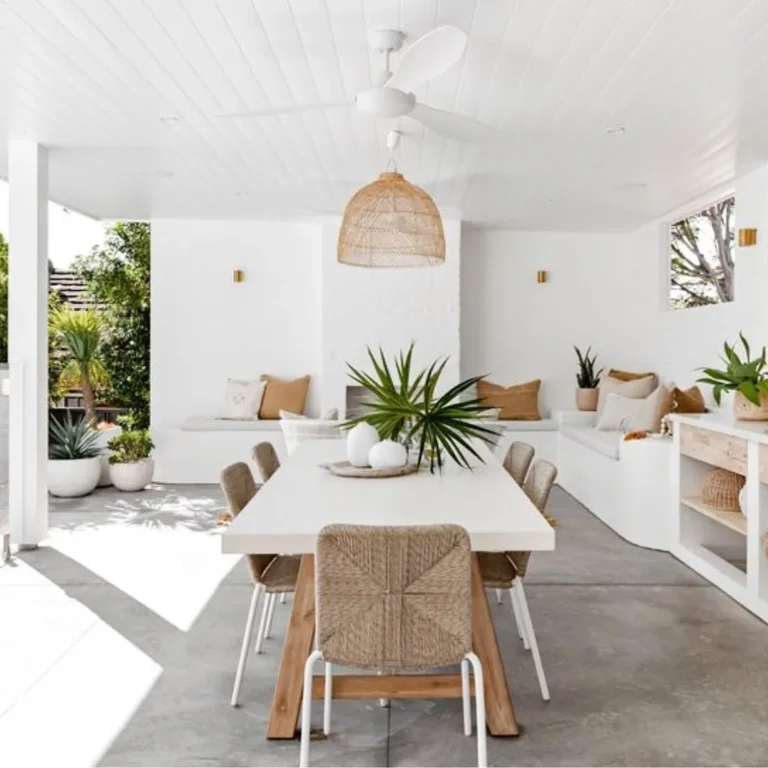
Scandinavian-influenced outdoor dining with white-painted weatherboard walls, bamboo or rattan armchairs, all-white ceramic planters, and a neutral timber table creates a space that feels calm, clean, and genuinely fresh in spring light. The design principle here is negative space: restraint with colour and form makes the planting (snowdrops, white delphiniums, or white cosmos in the planters) stand out as the only visual accent. In practice, white outdoor furniture shows dirt faster than most people expect, so look for pieces in powder-coated aluminium or weather-resistant teak that can be wiped down without fuss.
Designer Advice: A ticking stripe or natural linen cushion on a neutral rattan chair is all the pattern this kind of space needs; resist the urge to add printed outdoor cushions or it loses its quiet editorial quality.
9. Layer Climbing Roses with a Brick Patio and Lavender Borders
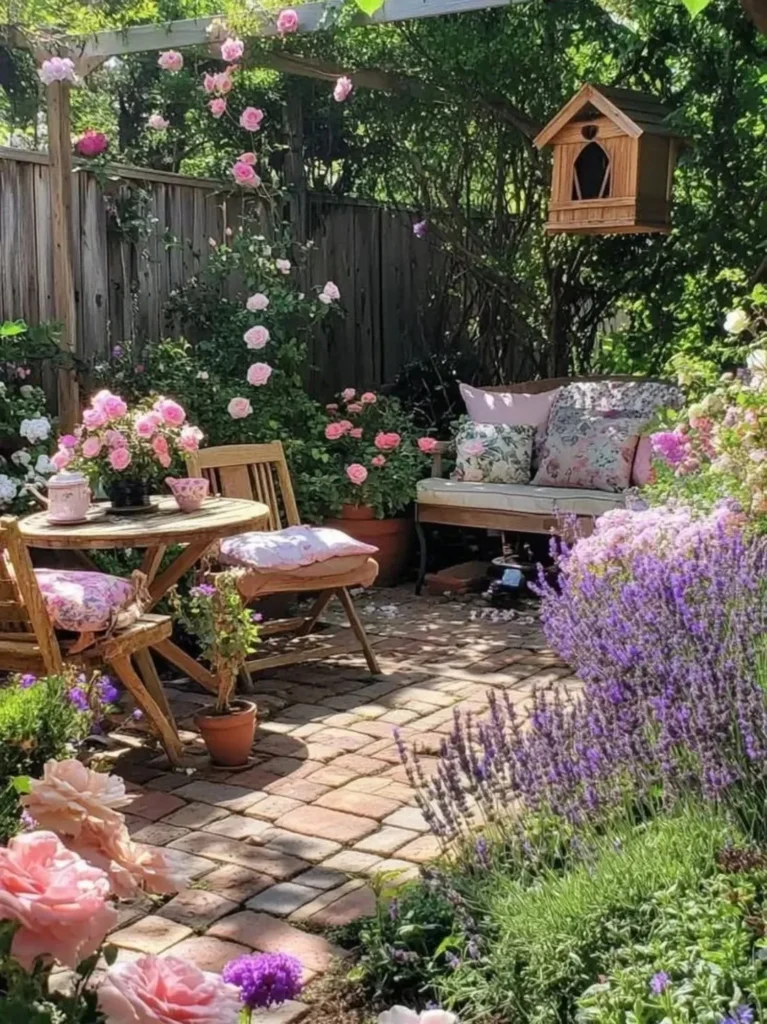
A reclaimed brick patio underfoot, a timber pergola or rose arch with climbing varieties like ‘New Dawn’ or ‘Constance Spry’ trained overhead, a garden bench with floral cushions, and a bird box tucked into the fence is the kind of cottage garden arrangement that looks effortlessly romantic but takes planning. The lavender border alongside the brick gives the space a defined edge and the whole combination, once established, needs very little done to it each spring beyond a light feed and tidy. Climbing roses do take two to three years to fully establish, but once they do, the payoff in terms of bloom coverage and fragrance is significant.
Heads Up: Check your pergola or fence structure can support the weight of a mature climbing rose before planting; a well-established ‘New Dawn’ can reach 20 feet and gets surprisingly heavy.
10. Install a Louvered Bioclimatic Pergola for All-Weather Use
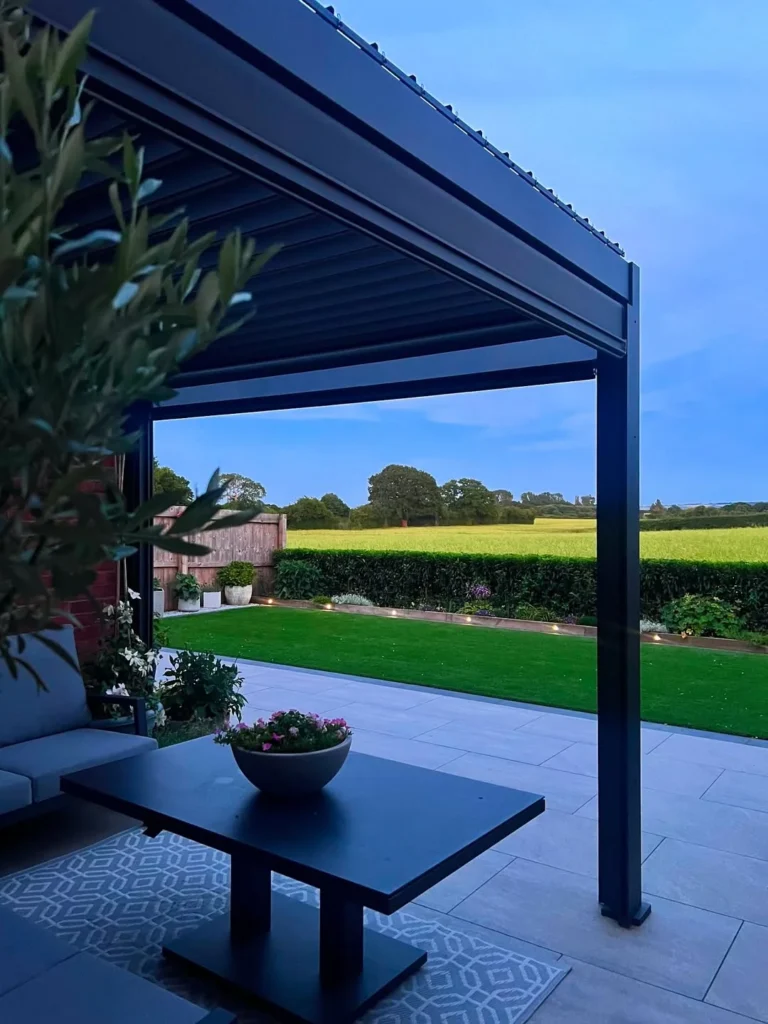
A bioclimatic pergola with adjustable aluminium louvres that open and close mechanically is the version of a covered patio that actually extends your outdoor season into early spring and late autumn, not just summer. The angled blades let you control light, air flow, and rain protection from a remote or app, and when closed in dark anthracite grey, the structure looks architectural and intentional rather than like a temporary shelter. This is very much an investment piece, typically $5,000 to $15,000 installed depending on size, but for households that genuinely want to use the backyard year-round it pays back in lifestyle rather than cost.
Pro Move: Pair the pergola with in-ground uplighting around the lawn edge for a backyard that looks as good at 9pm on a Tuesday as it does on a sunny weekend afternoon.
Quick guide to the most popular backyard shade and shelter options:
Structure
Best For
Approx Cost
Maintenance
Louvered Pergola
All-year outdoor rooms
$5,000 to $15,000
Low, motor service every 2-3 yrs
Timber Pergola
Casual shade + climbing plants
$1,500 to $4,000
Medium, stain or oil every 2 yrs
Garden Cabin
Year-round room use
$3,000 to $12,000
Low if pre-treated timber
Sail Shade
Budget sun cover
$200 to $800
Replace fabric every 3-5 yrs
11. Add a Timber Garden Cabin as a Destination Seating Room
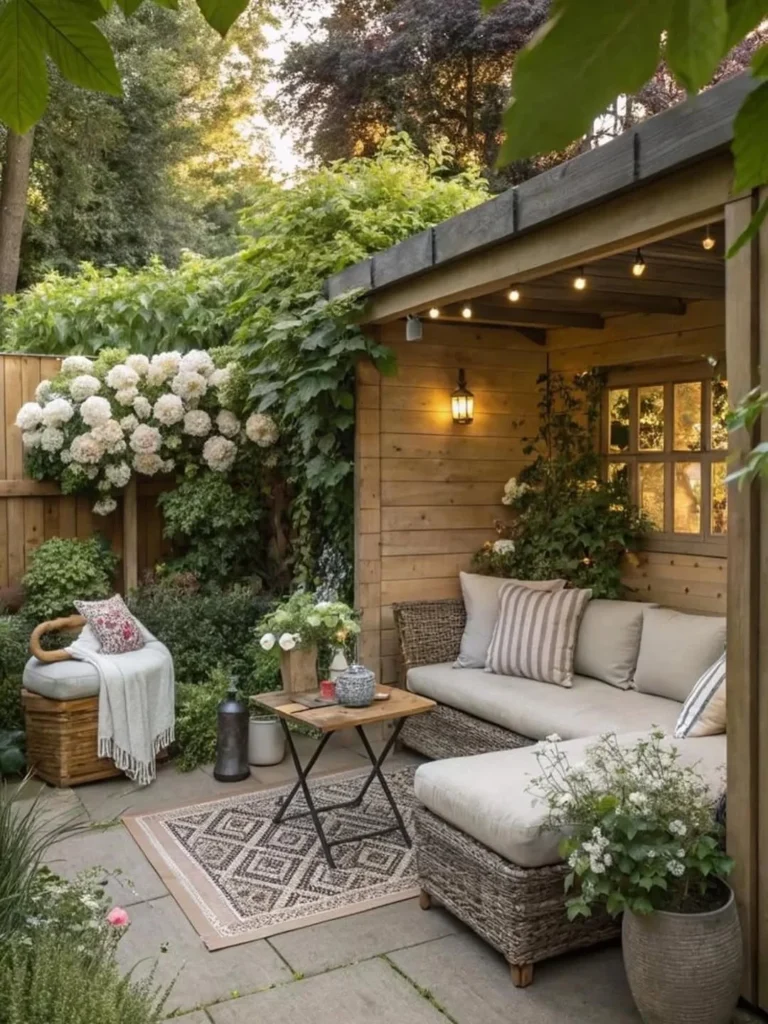
A timber-clad garden room or summerhouse with a windowed front wall, a wicker sectional sofa inside, and string lights overhead creates a genuine room at the bottom of the garden that functions as an extension of the house rather than just a shed with cushions. The key to making it work is treating it exactly like an indoor room: a proper outdoor rug, throw blankets, a side table, a scented candle. Climbing hydrangeas on the exterior walls and a few potted specimens flanking the entrance soften the structure into the garden rather than letting it sit as a box in the corner.
Quick Tip: A battery-powered LED lantern mounted outside the cabin door and a plug-in string light inside cost almost nothing but make the whole structure look inhabited and inviting rather than like storage space.
12. Plant an English Cottage Garden Along the Path to the Door
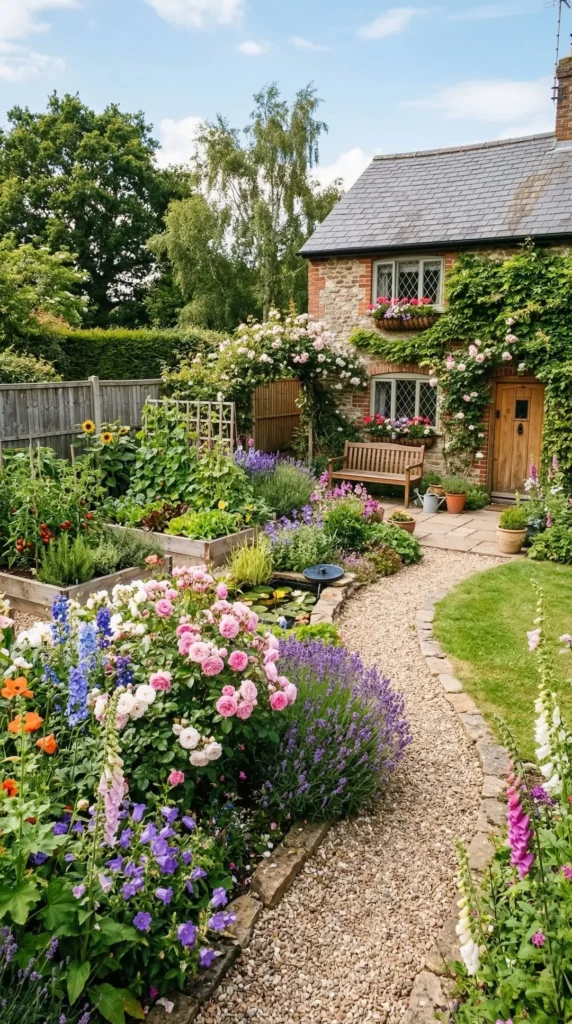
The English cottage garden look, with its intentionally abundant planting of foxgloves, delphiniums, peonies, English roses, and campanula tumbling alongside a gravel or stone path, is one of the most Googled garden styles for a reason: it looks genuinely beautiful from late spring through summer and feels personal rather than designed. The honest reality is that it takes two to three growing seasons to look truly full, and it requires some knowledge of what blooms when and how tall things grow. One practical starting point is to plant in drifts of three or five of the same plant rather than scattering individuals, which creates the lush overlapping effect much faster.
Reality Check: Foxgloves and delphiniums are biennials or short-lived perennials, so budget for replanting a portion of the display every two years if you want the cottage garden to stay fully stocked.
13. Install a Black Steel Greenhouse as a Garden Feature
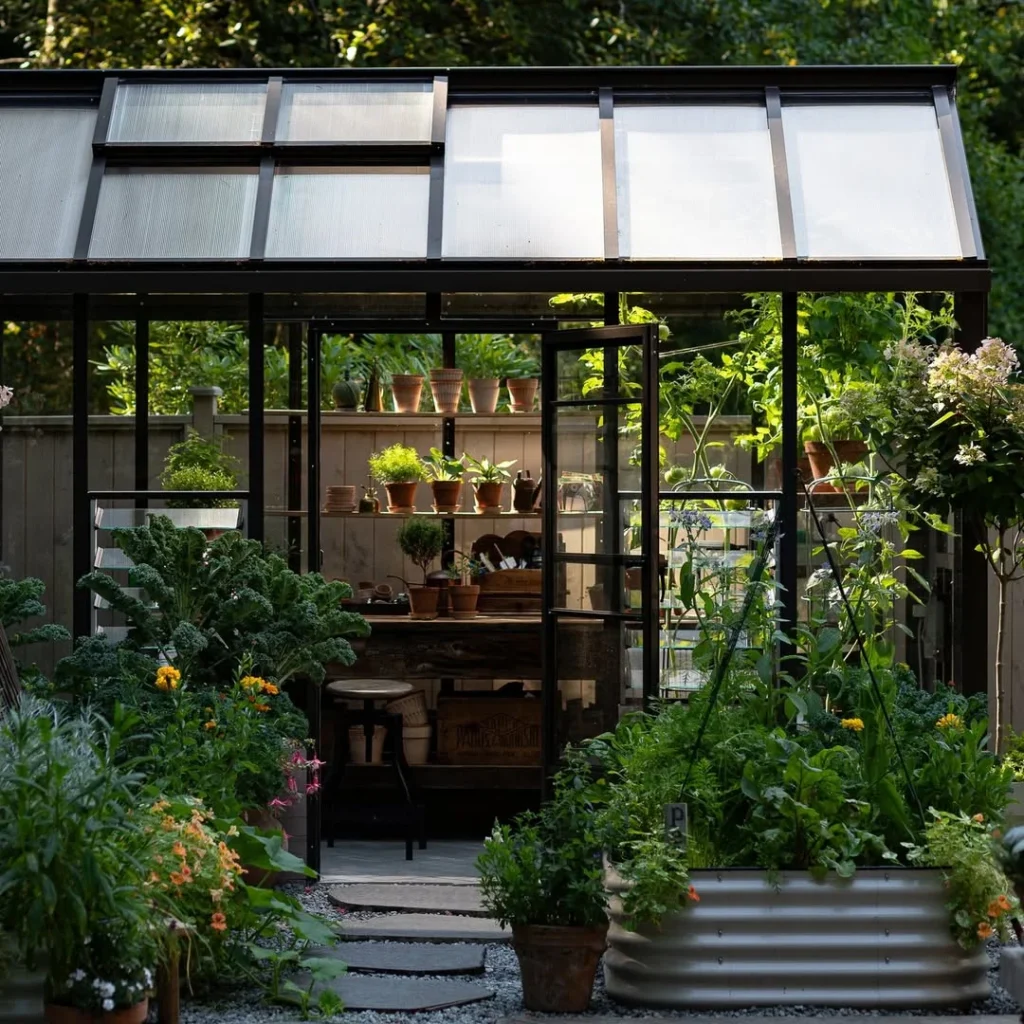
A glasshouse or polycarbonate greenhouse with a dark steel or painted timber frame is one of the few garden structures that functions as both a working growing space and a visual centrepiece in a way that enhances the surrounding planting. Terracotta pots on open shelves inside, kale and marigolds growing up around the exterior, and a gravel path leading to the open door creates a kitchen garden feel with a strong design backbone. In practice, a lean-to greenhouse is more affordable than a freestanding structure and makes better use of the warmth from a south-facing wall, which is worth knowing if budget is a consideration.
Designer Advice: Paint the interior shelving a contrasting colour, white or cream against a dark frame, so the terracotta pot display reads clearly through the glass from outside.
14. Create a Kitchen Garden with Mixed Raised Beds and Metal Arches
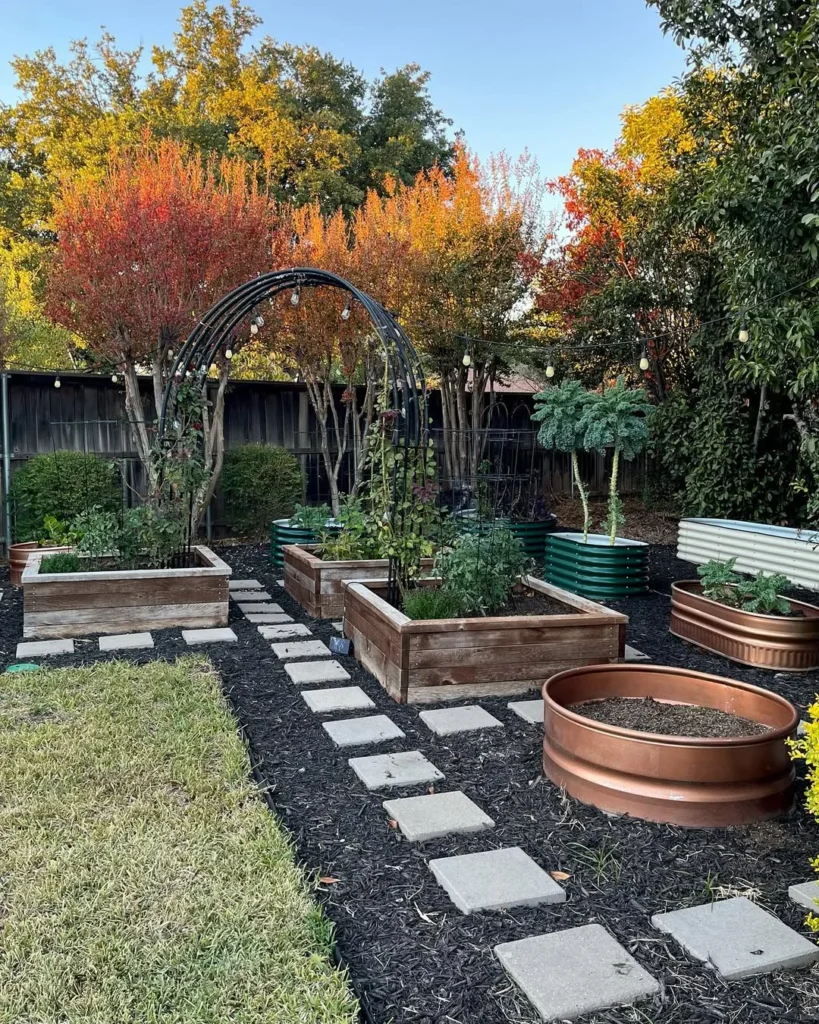
A combination of cedar raised beds, galvanised steel round containers, a painted metal arch for climbing vegetables, and dark bark mulch pathways between beds creates a kitchen garden that looks organised and considered rather than purely functional. The mix of materials, timber, metal, and stone, gives the vegetable garden a visual richness that keeps it interesting to look at even before plants fill in. From a practical standpoint, using a mulch or weed-suppressing fabric between beds makes spring maintenance much faster because it cuts down the weeding dramatically in the wetter months.
Quick Tip: Plant one ornamental row of sweet peas or nasturtiums per raised bed alongside the vegetables; they attract pollinators, look great in cut flower arrangements, and make the kitchen garden feel like a designed space rather than an allotment.
15. Use Vertical Planting to Grow Food on a Fence Wall
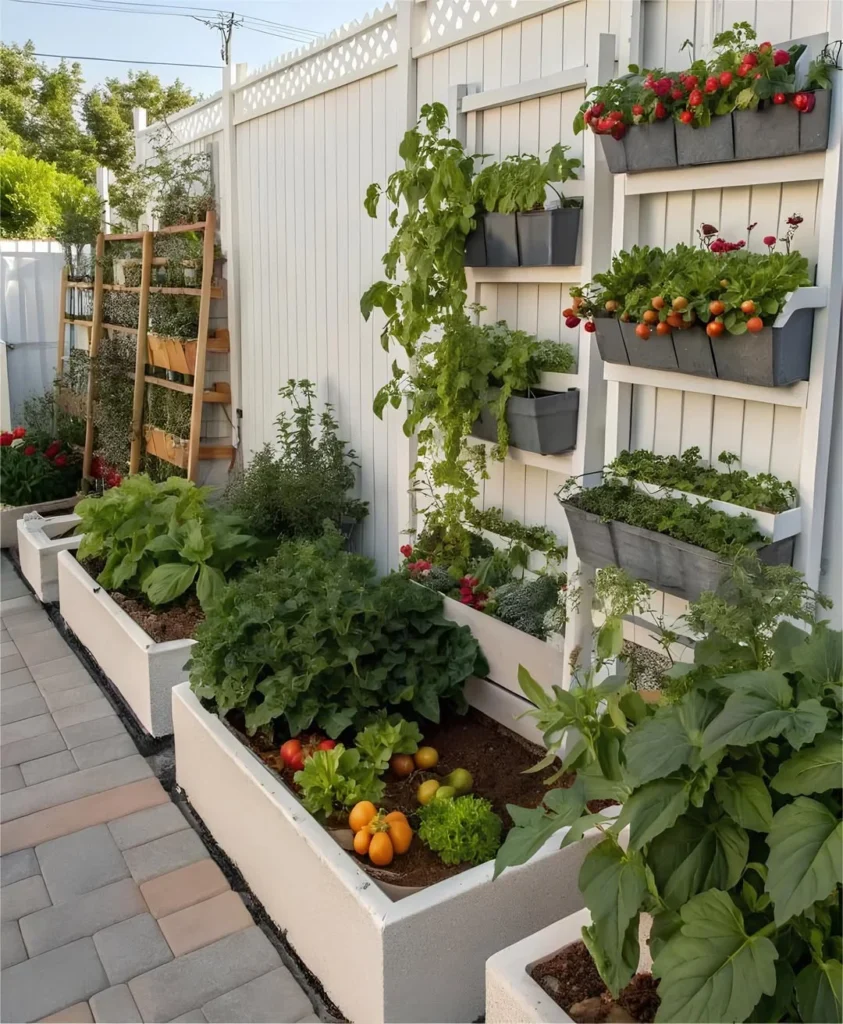
Wall-mounted pocket planters, staggered shelf brackets, and climbing trellises attached to a fence or painted wall let you grow tomatoes, strawberries, herbs, and salad leaves in a fraction of the ground space a traditional bed requires. This is genuinely useful in small backyards where every square foot of patio matters, and the visual effect of a productive food wall with trailing plants, ripe fruit, and layered green foliage is a real talking point. The main maintenance issue is watering: wall-mounted containers dry out much faster than ground beds, especially in the warmer spring days, so a drip irrigation timer is worth the $30 to $50 investment.
Heads Up: A south or west-facing wall gets more direct sun and warmth than a fence, which makes a significant difference to tomato and strawberry yields if you have a choice of which surface to plant against.
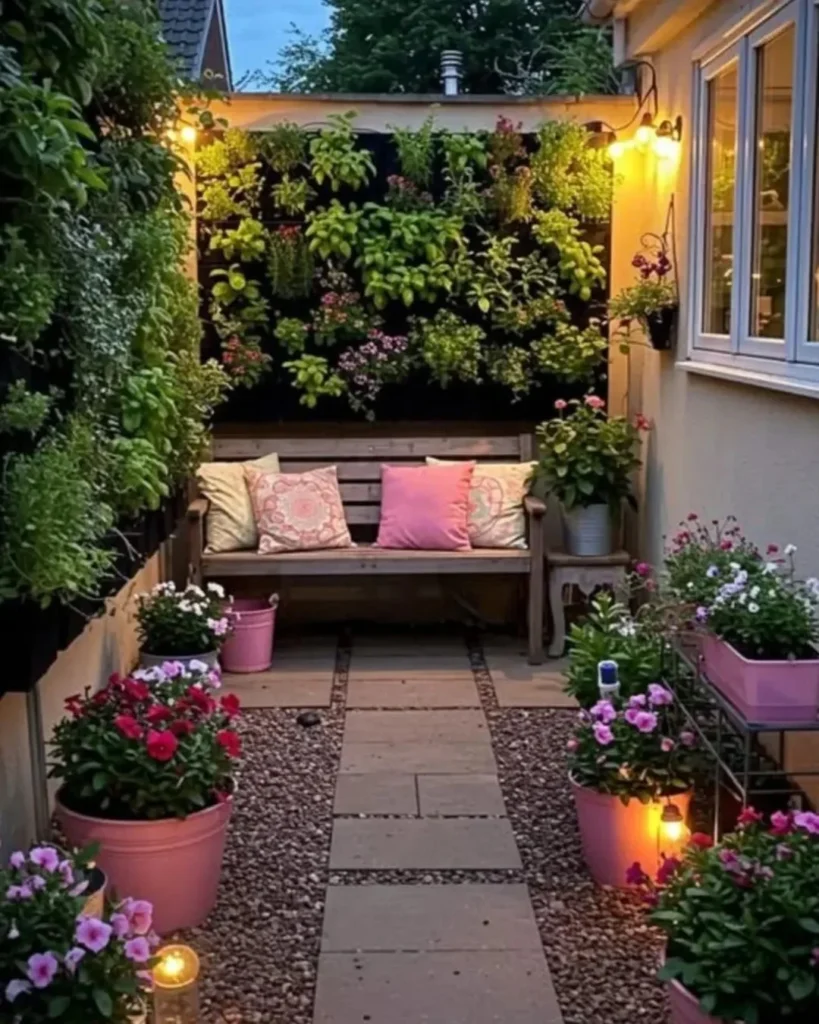
16. Turn a Side Passage into a Living Wall Garden Nook
Side passages are usually ignored or used purely for storage, but a living wall panel of mixed herbs and trailing plants, a simple timber bench with cushions, stepping stone paving with pea gravel between, and string lights strung along the fence can turn the least-used part of a garden into a genuinely comfortable spot. In practice, pink ceramic pots in multiple sizes along both sides bring warmth and softness to a narrow corridor that might otherwise feel like a service area. This is a budget-friendly idea since the main cost is the living wall panel, which you can DIY from a pallet, some fabric pockets, and seasonal herbs.
Pro Move: Plant the living wall panel with a mix of lemon thyme, golden oregano, and Vietnamese mint for fragrance, colour, and something edible in the same small space.
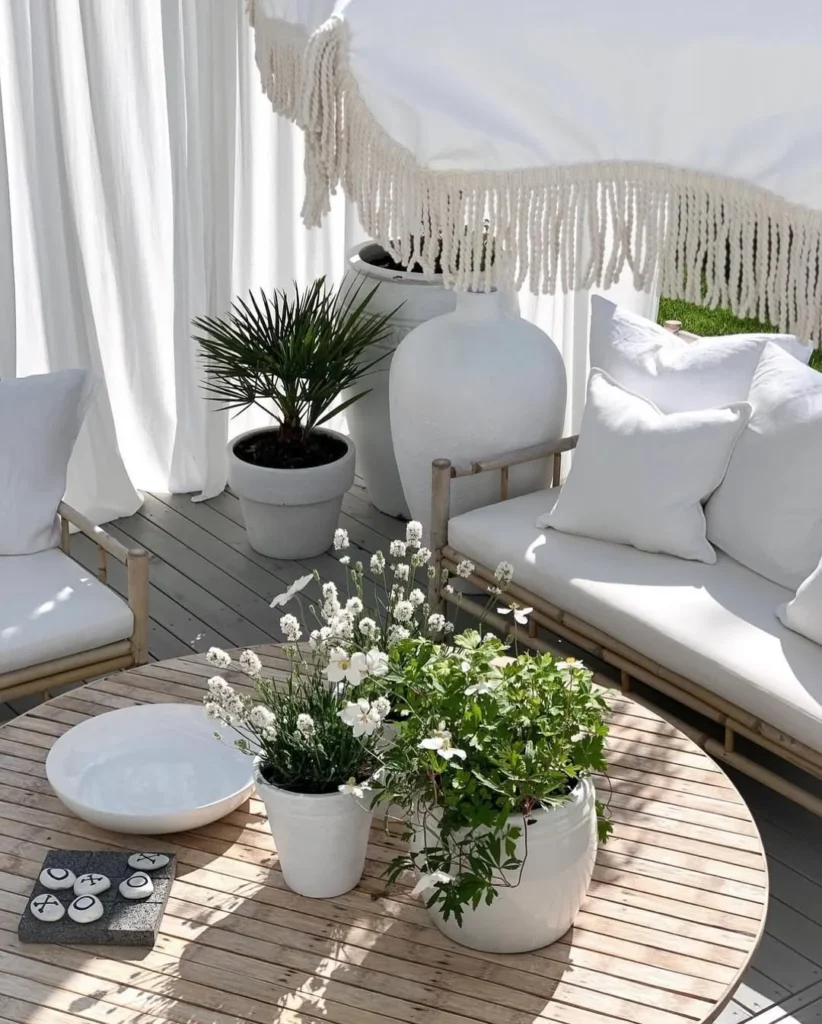
17. Set Up an All-White Boho Lounge with Drape Curtains
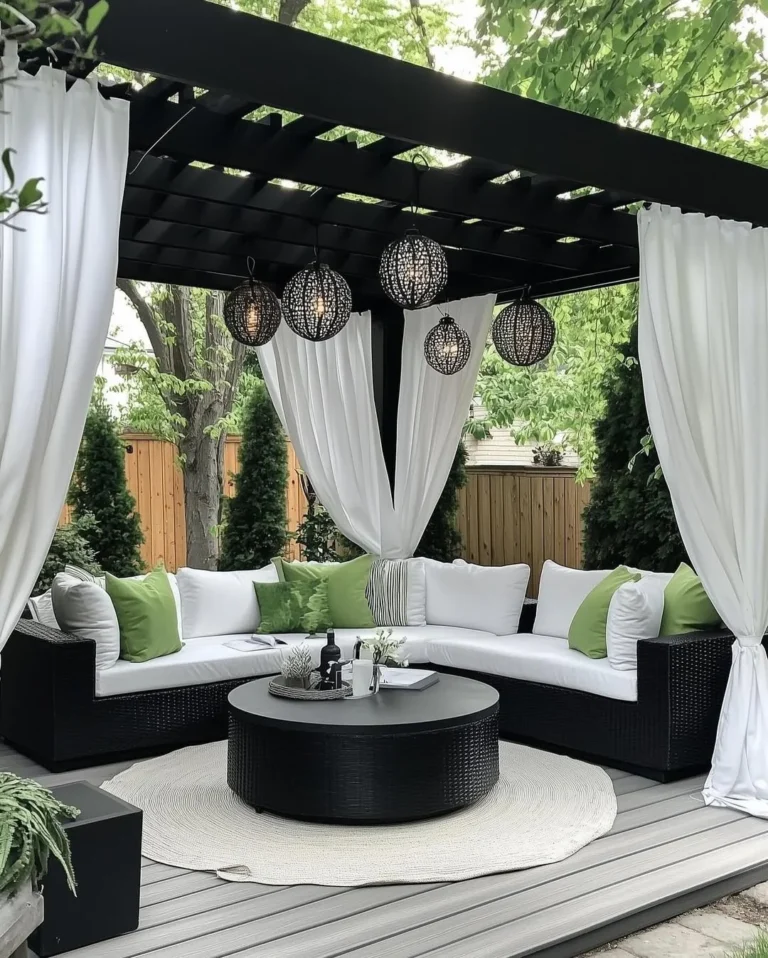
An all-white outdoor palette with linen drapes, bamboo frame sofas, white ceramic urns, and macrame wall hangings creates an outdoor space that feels like a Mykonos villa on a considerably smaller budget. The design works because the white palette makes a compact deck or patio feel expansive and airy, and the textural contrast between bamboo, linen, ceramic, and macrame is interesting enough to hold the look together without colour. The main practical note is that all-white outdoor cushion covers need to be in a fabric rated for outdoor use, specifically solution-dyed acrylic, otherwise they yellow or mildew in the first wet spring season.
Reality Check: Even high-quality white outdoor cushions need to come inside or be stored in a cover when not in use; treating them like indoor cushions is the fastest route to a grubby-looking garden.
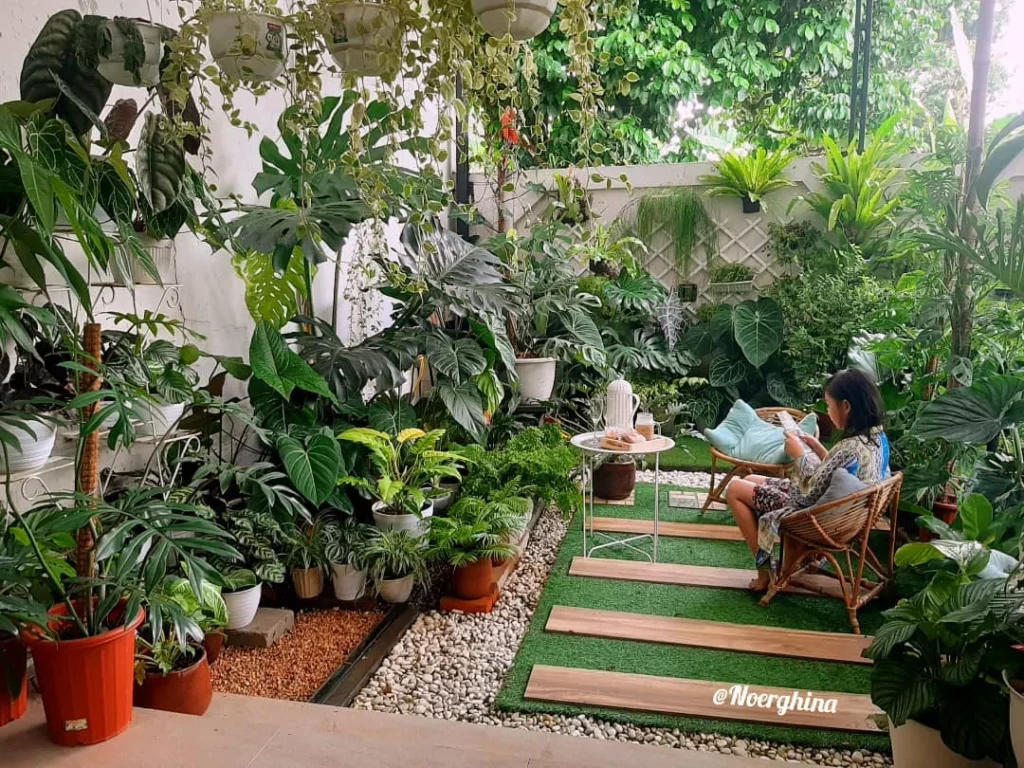
18. Grow a Tropical Courtyard with Monstera and Rattan Furniture
A dense, layered tropical courtyard using Monstera deliciosa, elephant ear (Alocasia), bird of paradise, and hanging pothos around a rattan chair and a small white side table creates a lush enclosure that feels dramatically different from most suburban backyards. The visual depth of large tropical leaves at multiple heights creates a sense of being inside a garden room even in a compact walled space. The honest caveat is that tropical plants that thrive outdoors in USDA zones 10 and above need to be treated as container plants and brought inside before the first frost in cooler climates, which makes this look more work-intensive than it appears.
Designer Advice: White pots at varied heights unify a dense tropical planting arrangement; a mix of terracotta and black containers in the same display tends to read as cluttered rather than curated.
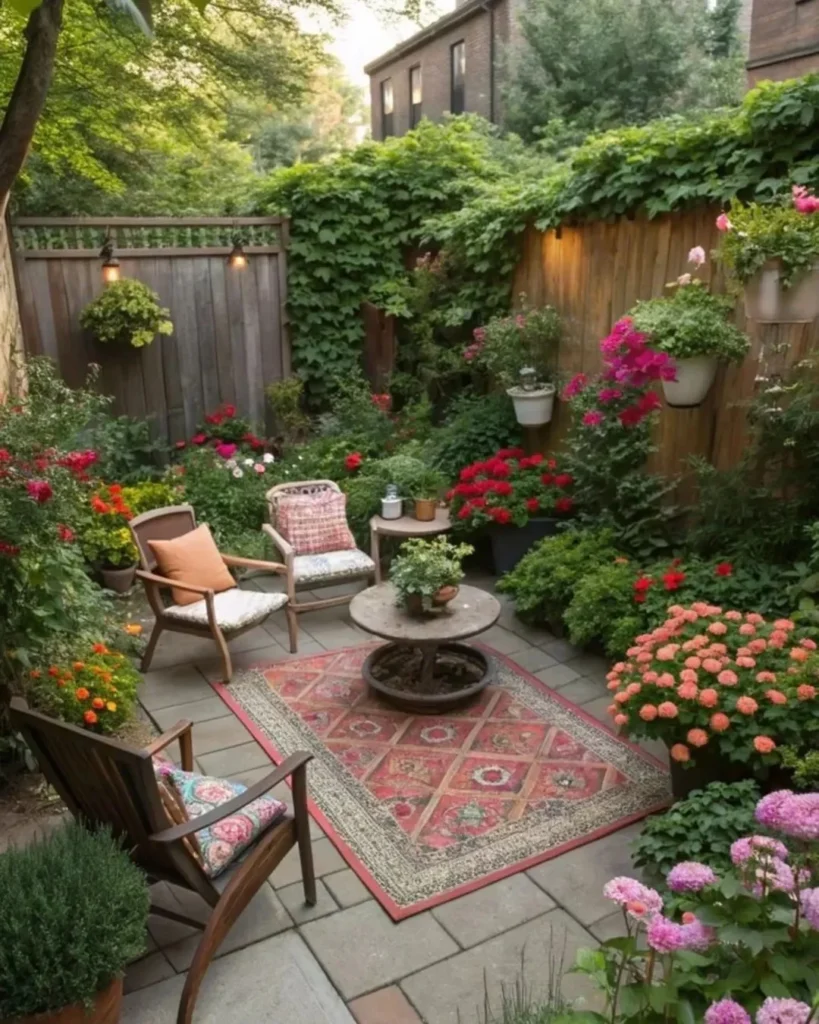
19. Lay a Persian Rug Outdoors and Mix Vintage Chairs
An outdoor-rated flat-weave rug in a traditional red medallion or Persian pattern laid on stone paving tiles, surrounded by mid-century wooden chairs with mismatched cushions and a vintage barrel table centrepiece, creates a space that feels personally collected and lived-in rather than ordered from a catalogue. This eclectic approach works because each piece has its own visual character, and the rug ties them together by giving the seating group a defined footprint. The climbing roses and hanging pot arrangements on the surrounding fence are what make the whole setting feel luxuriant, so do not skip the wall planting if you try this look.
Quick Tip: Look for kilim or dhurrie-style flat-weave rugs specifically rated for outdoor use as UV-resistant polypropylene versions that mimic the look wash easily with a hose.
20. Go Maximalist with a Stone Fireplace and Layered Topiary
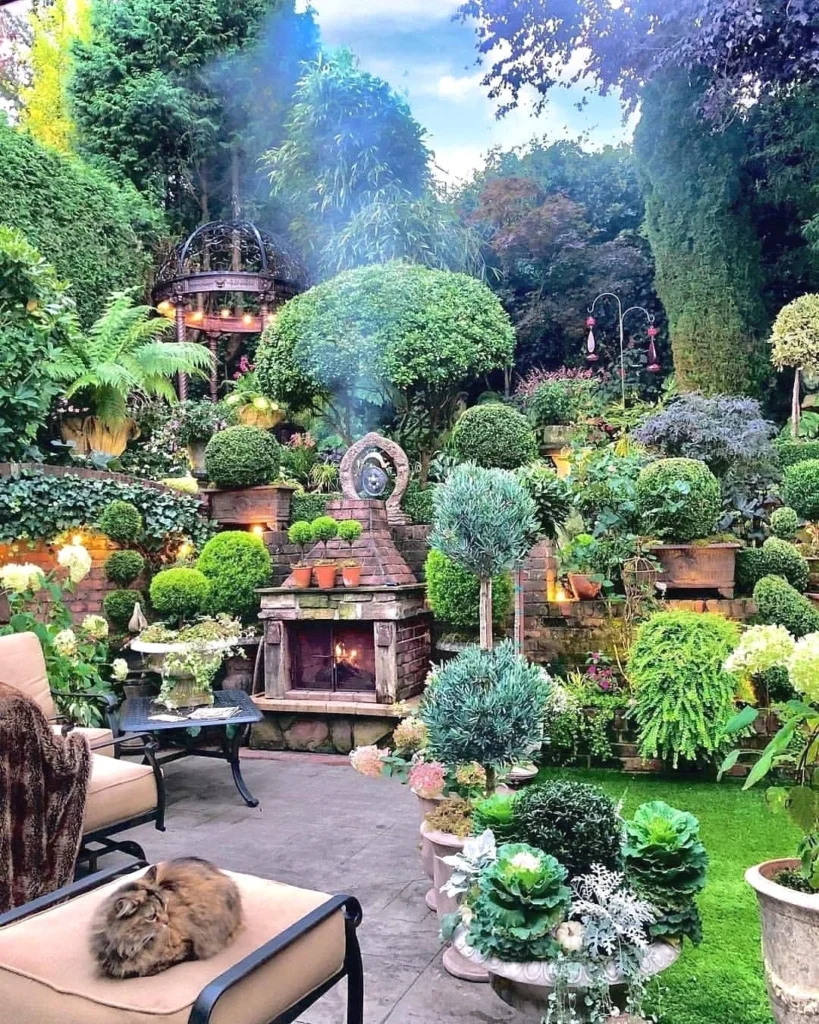
A brick or stone outdoor fireplace as the centrepiece of a maximalist garden, surrounded by clipped box topiary spheres, standard bay or olive trees, ivy-covered walls, and a densely planted tiered garden behind creates a backyard that looks like a secret European walled garden rather than a domestic plot. This style, sometimes described as ‘English garden baroque’, works because the structural topiary elements provide year-round visual interest while the looser perennial and annual planting fills in around them seasonally. The key principle is that every surface should have something growing on it or near it, which requires commitment but produces a space that improves every single year as plants mature.
Reality Check: Box blight (Cylindrocladium buxicola) has become widespread in many regions; if it is a problem in your area, replace box topiary with evergreen alternatives like Ilex crenata or Buxus microphylla var. japonica which have better resistance.
21. Fit an Ornate Moon Gate for a Fairy-Tale Entrance
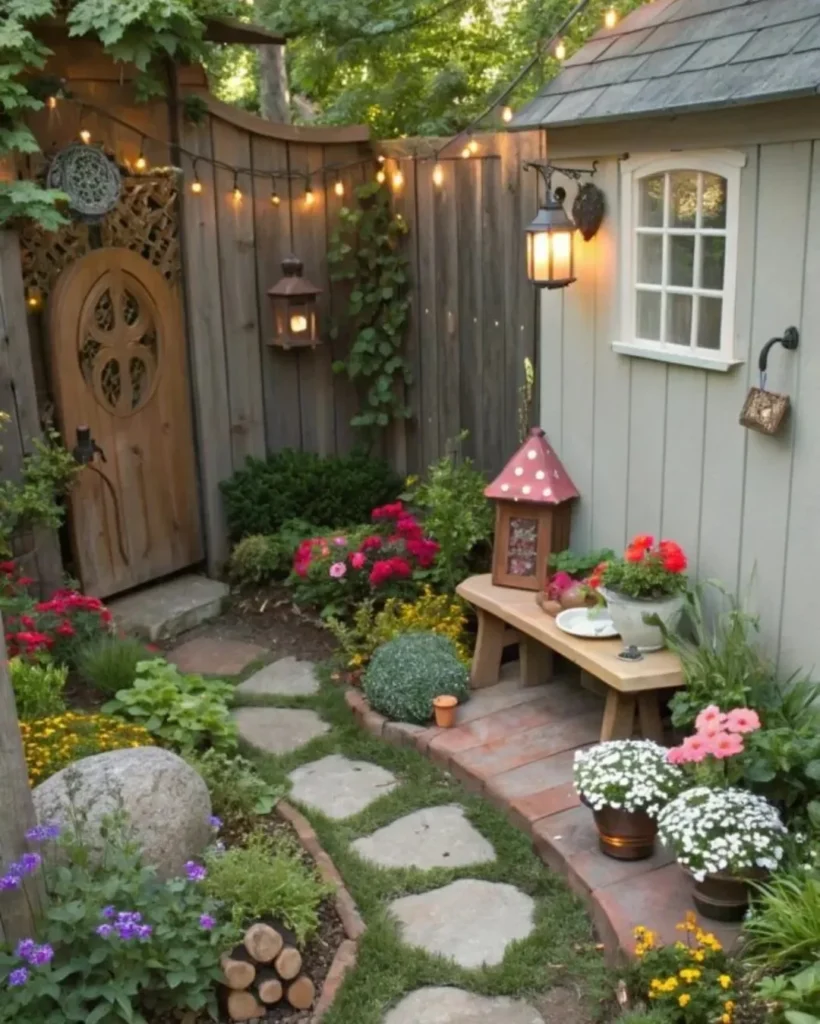
A circular carved timber moon gate, whether purchased or DIY from treated lumber, creates an instant focal point that organises the whole garden around a single architectural feature. Hung string lights across the fence, lanterns on either side, stepping stones leading through it, and flowering geraniums in terracotta pots around its base make the gate feel like a portal between two distinct garden zones. Moon gates work particularly well in gardens with a shed or summerhouse in the background because the gate frames the view and gives the eye somewhere purposeful to travel.
Pro Move: Train a star jasmine or climbing rose around the gate arch so that by its second year the frame is partially covered in foliage and blossom rather than standing as bare timber.
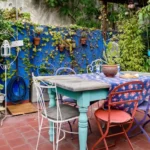
22. Tile a Courtyard with Colourful Mosaic Planters and Floors
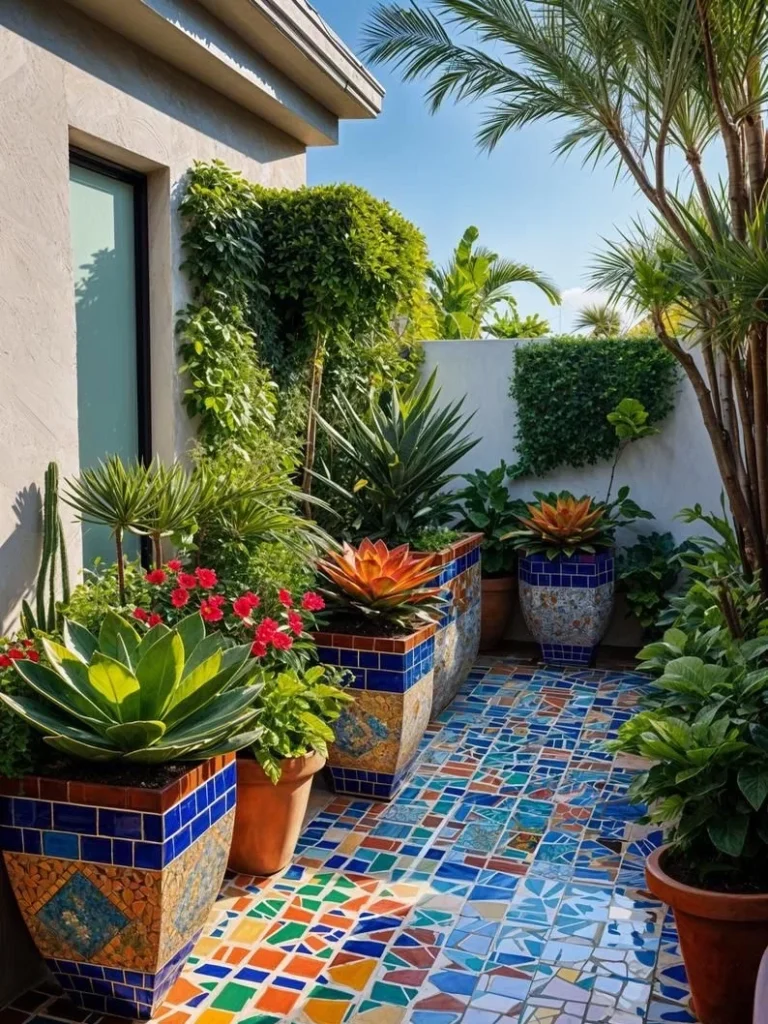
Hand-set mosaic tile floors and planters in bold blues, oranges, and greens alongside succulents, agave, and tropical plants create a maximalist courtyard look that draws heavily from Mexican, Moroccan, and Mediterranean craft traditions. The texture and colour in the tiling does the decorating work so you do not need many additional accessories, and the low-maintenance nature of succulent and drought-tolerant planting makes this a practical choice for a sunny enclosed courtyard. Be aware that mosaic tile work on a floor is a commitment because uneven hand-set tiles can be a trip hazard if laid by someone inexperienced; the planters are a safer and more affordable place to start.
Heads Up: Seal mosaic tile grout with an outdoor-rated penetrating sealer each spring to stop moisture working into the joins and lifting tiles during freeze-thaw cycles in cooler climates.
23. Build a Formal Kitchen Garden with Long Metal Raised Beds
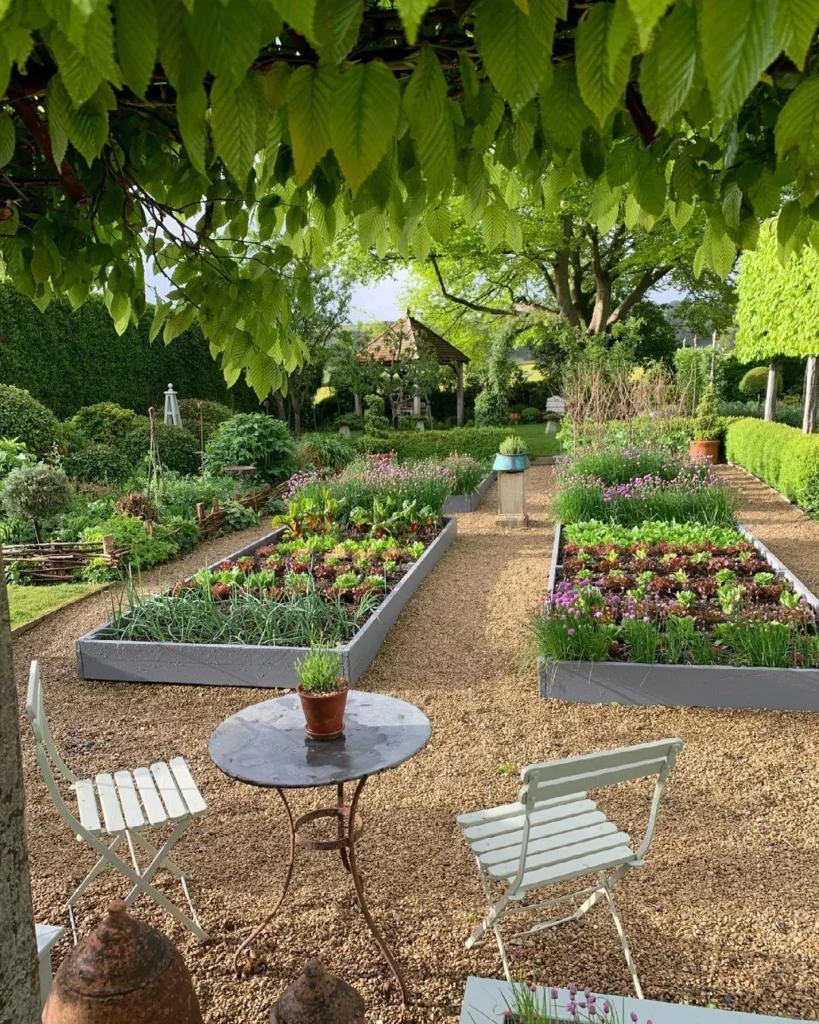
Long parallel metal raised beds in galvanised steel with a gravel surface between them, a French bistro table and folding chairs at one end, and a boxwood or pleached hedge backing creates a potager-style kitchen garden that is both highly productive and genuinely beautiful to look at. The formal grid layout is what makes a potager different from a standard vegetable garden: it imposes visual order on what would otherwise be a chaotic collection of growing plants. This style suits medium to large backyards with good sun access, and the galvanised steel beds, while more expensive than timber initially, do not rot and last for decades.
Designer Advice: Plant each bed in a colour pattern, say one bed of red lettuces and purple basil, another of green chard and white sweet peas, so the garden looks designed from above as well as from the path level.
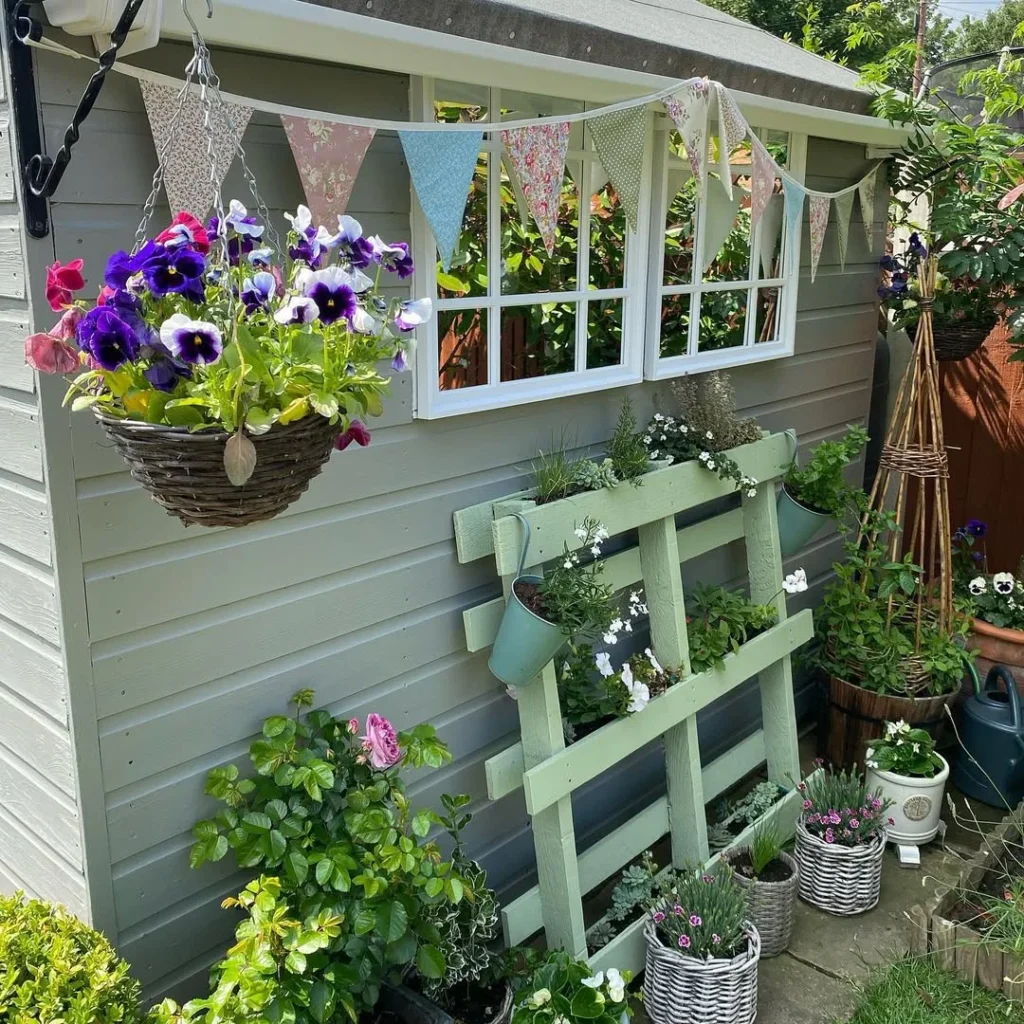
24. Paint the Shed and Hang a Pansies Basket for Instant Charm
A garden shed painted in sage green or any warm heritage colour like ‘Mizzle’ by Farrow and Ball, with a hanging basket of purple and pink pansies, fabric bunting between the posts, a ladder planter with herbs, and a few wicker baskets grouped at the base, costs very little but has an outsized effect on how the whole garden feels. The shed is often the most visible structure in a small backyard and treating it as a decorative feature rather than an eyesore to hide is one of the fastest ways to shift the character of the space. A tin of exterior wood stain costs around $30 to $60 and changes everything.
Quick Tip: Pansies and violas are some of the most cold-tolerant spring flowers, so they can go out in a hanging basket as early as late February in most temperate climates when almost nothing else is blooming yet.
A Final Word on Spring Backyards
Your backyard does not need to be finished to be enjoyable, and it definitely does not need to look like everything happened at once. The spaces that feel best to be in are usually the ones that have been added to gradually, one good decision at a time. Whether you start with a string of lights, a painted shed, or a properly placed circular seating arrangement, the most important step is making the space feel like it belongs to you. Go outside this spring and spend some time in it. That is where the best ideas come from anyway.