Most garage floors look like they have been through a war, oil stains, cracks, that dusty grey concrete that leaves a film on everything you set down. The good news is that a garage floor upgrade is one of the more satisfying home projects you can do because the change is dramatic and the space is relatively forgiving. You do not need perfection in a garage, you just need something that looks intentional and holds up to actual use.
Here are 17 garage floor ideas that range from simple coatings to bold patterns. Most of these are DIY-friendly if you are patient with the prep work, which is where most people cut corners and regret it later.
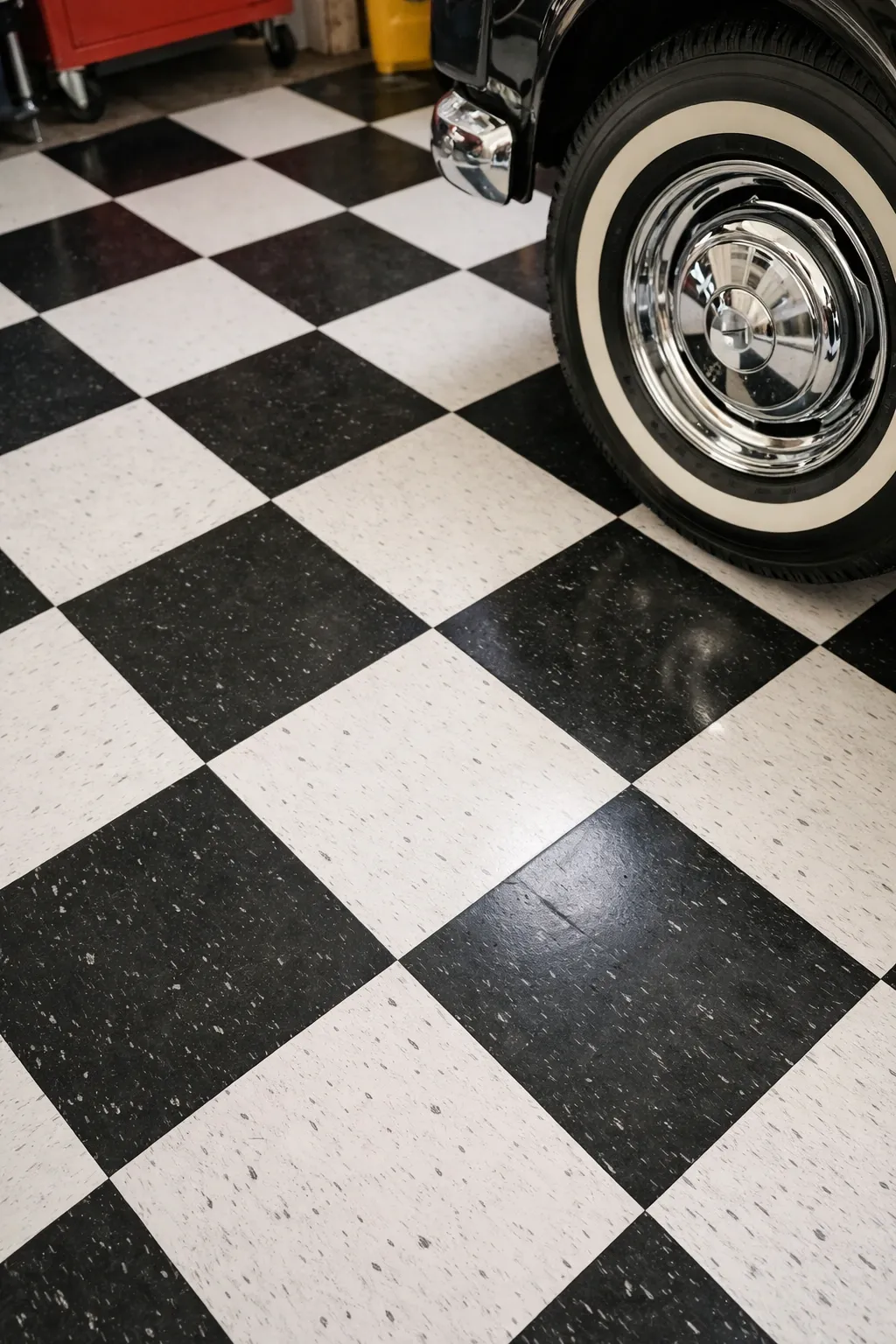
The classic checkerboard pattern is a garage floor staple for a reason. It gives the space an instant retro, showroom feel. Interlocking tiles are the easiest way to get this look because they snap together over your existing concrete without any adhesive. They are also forgiving on uneven floors and you can replace individual tiles if one gets damaged.
Designer Tip: Run the checkerboard pattern at a 45-degree angle to the garage door opening rather than straight on. The diagonal layout makes the garage feel wider and more dynamic than a standard grid.
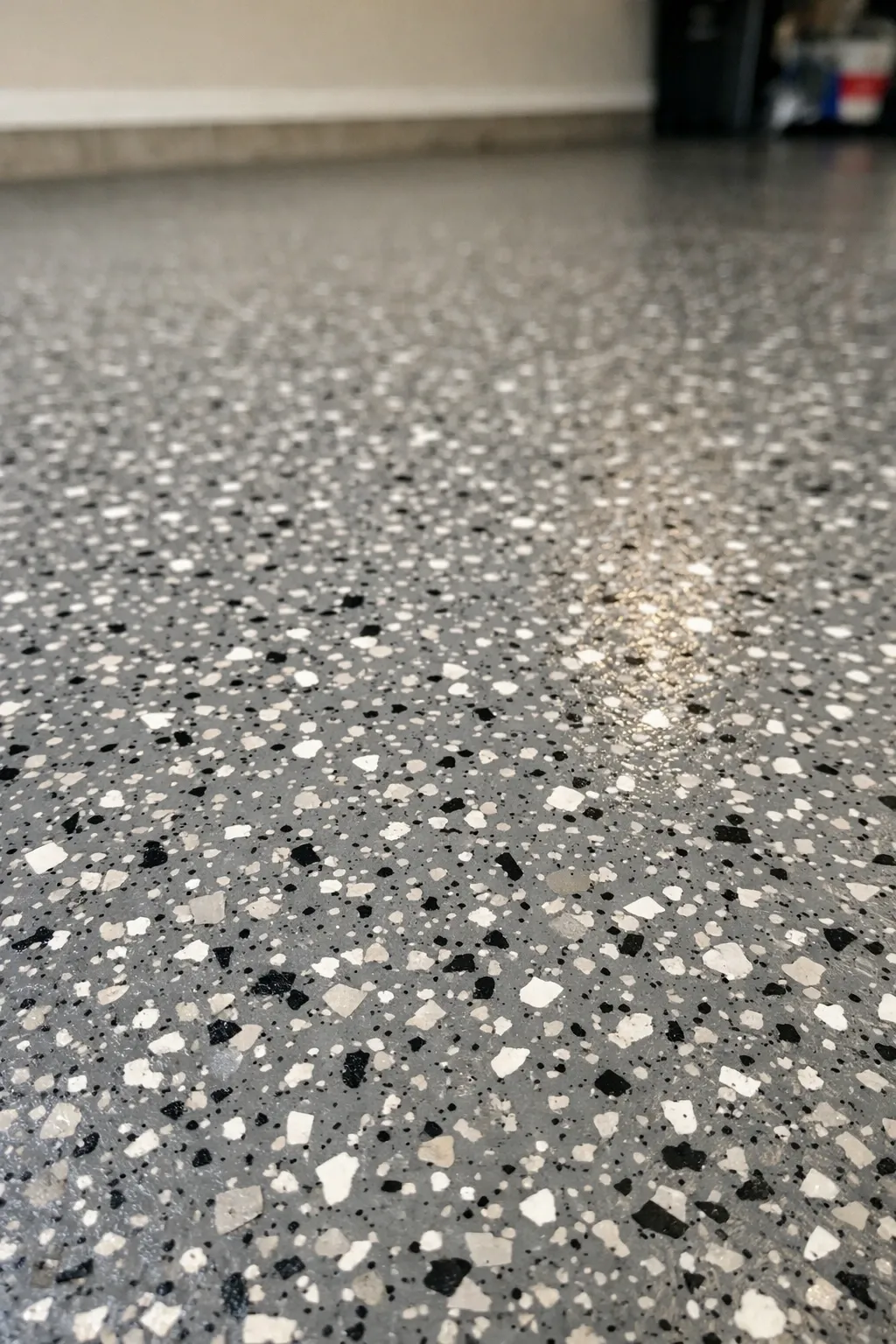
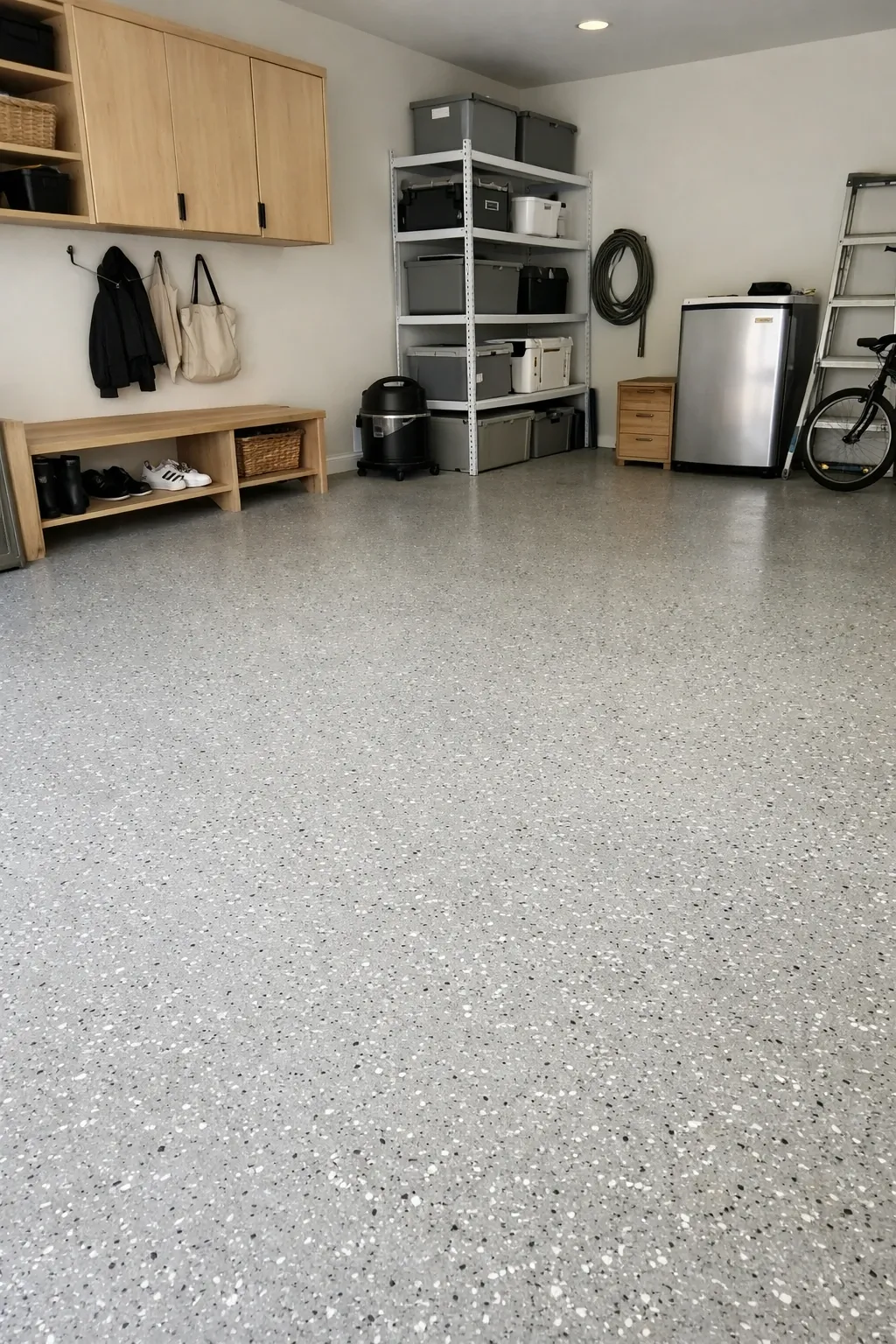
Grey epoxy with color flakes scattered into it is probably the most popular garage floor coating, and for good reason. The grey base hides dirt and dust well, and the flakes give it texture that hides small imperfections in the concrete beneath. It is also slip-resistant when the flakes are broadcast generously, which matters when you are walking on a wet garage floor in winter.
Designer Tip: Do a full broadcast of flakes rather than a sparse scatter. Full broadcast means you throw flakes until the epoxy surface is completely covered, then scrape off the excess after it cures. It looks much more professional than a light sprinkle.
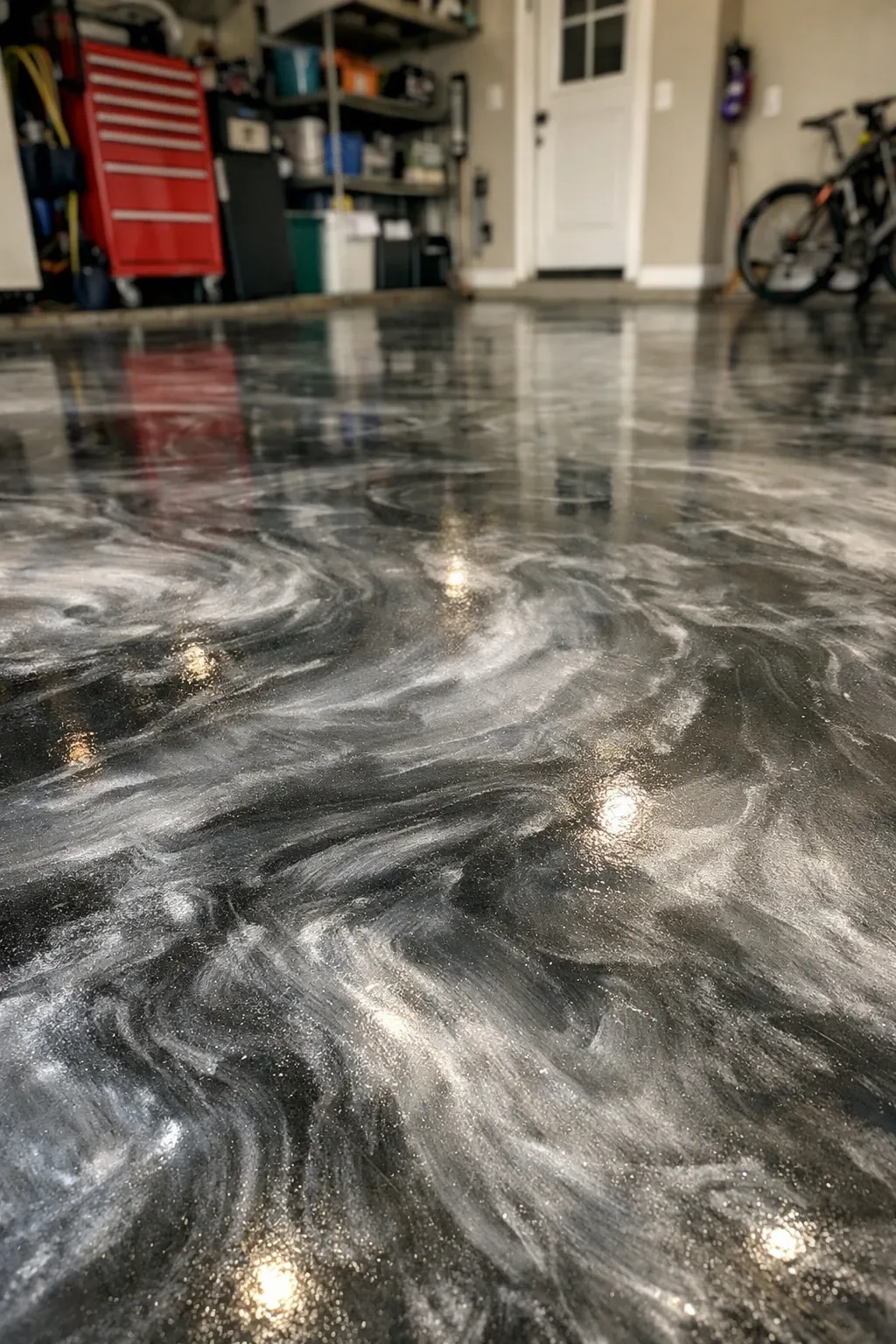
Metallic epoxy creates swirling, marble-like patterns that make a garage floor look like it belongs in a luxury car dealership. The metallic pigments move within the epoxy as it self-levels, creating unique patterns you cannot fully control, which is part of the appeal. Each floor is one of a kind. This is a more advanced application than standard epoxy, so hiring a professional is worth it if you want a clean result.
Designer Tip: Stick with one or two metallic colors max. Silver and charcoal, or pearl and champagne work well. Using three or more metallic colors at once often results in a muddy mess rather than elegant marble.
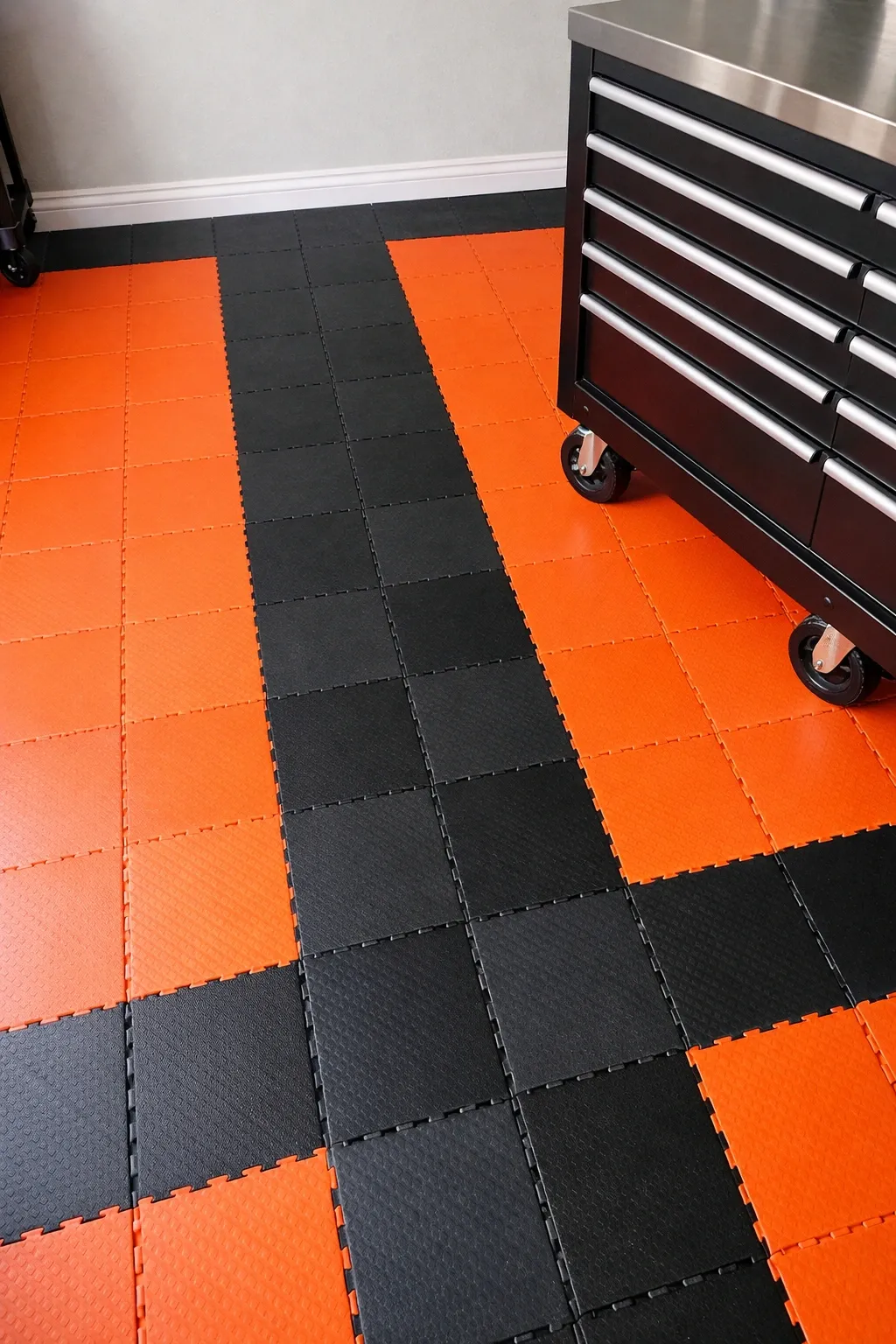
For a garage that doubles as a workshop or hobby space, bold color combinations like orange and black make the space feel energetic and purpose-built. Modular polypropylene tiles interlock without tools and can be pulled up and rearranged or taken with you if you move. The color options are wide, and the raised pattern on most tiles lets moisture drain underneath.
Designer Tip: Use a contrasting border color around the perimeter to frame the floor and define the edges of the space. Orange tiles with a black border or vice versa gives the floor a finished, intentional look.
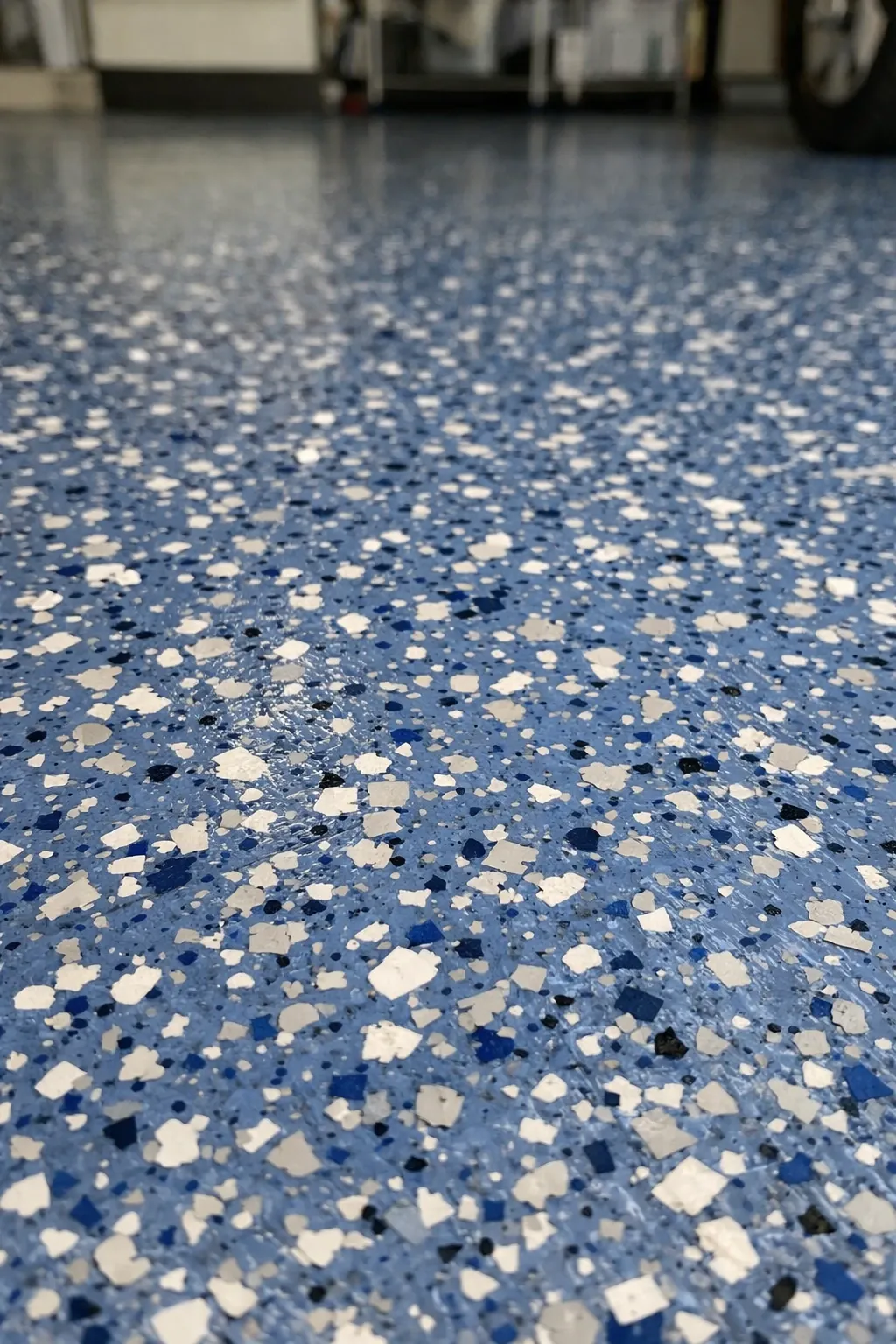
If grey is too safe for you, blue flake epoxy adds some personality while still looking clean. A medium blue base with blue, white, and grey flakes creates a floor that is eye-catching but not overwhelming. It brightens up the garage, especially if the walls and ceiling are light colored. Blue reads as cool and clean, which is a nice contrast to the usual grimy garage aesthetic.
Designer Tip: Match your garage wall color to the lightest flake color. If your floor has white flakes in the mix, paint the walls white or light grey. It ties the whole room together visually.
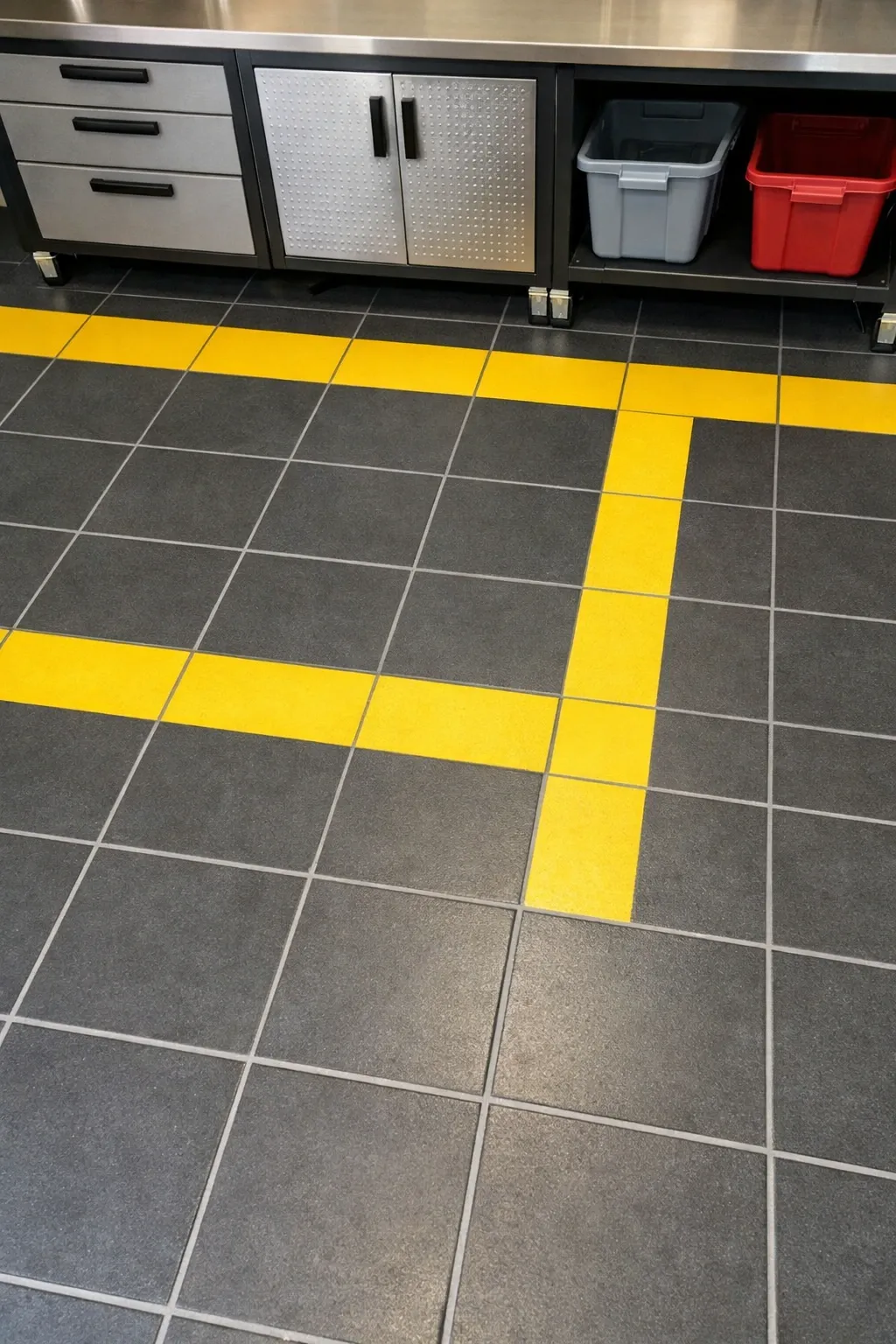
Using yellow tiles as accents within a darker tile grid creates a garage floor that has visual zones and energy. You can use yellow to outline parking spots, define a workshop area, or create a border that keeps things organized. It is a practical way to use color because the yellow serves as both decoration and a wayfinding tool in the space.
Designer Tip: Yellow accent tiles work best at about 10 to 15 percent of the total floor area. More than that and the floor starts to feel like a construction zone. Less and you might as well have left them out.
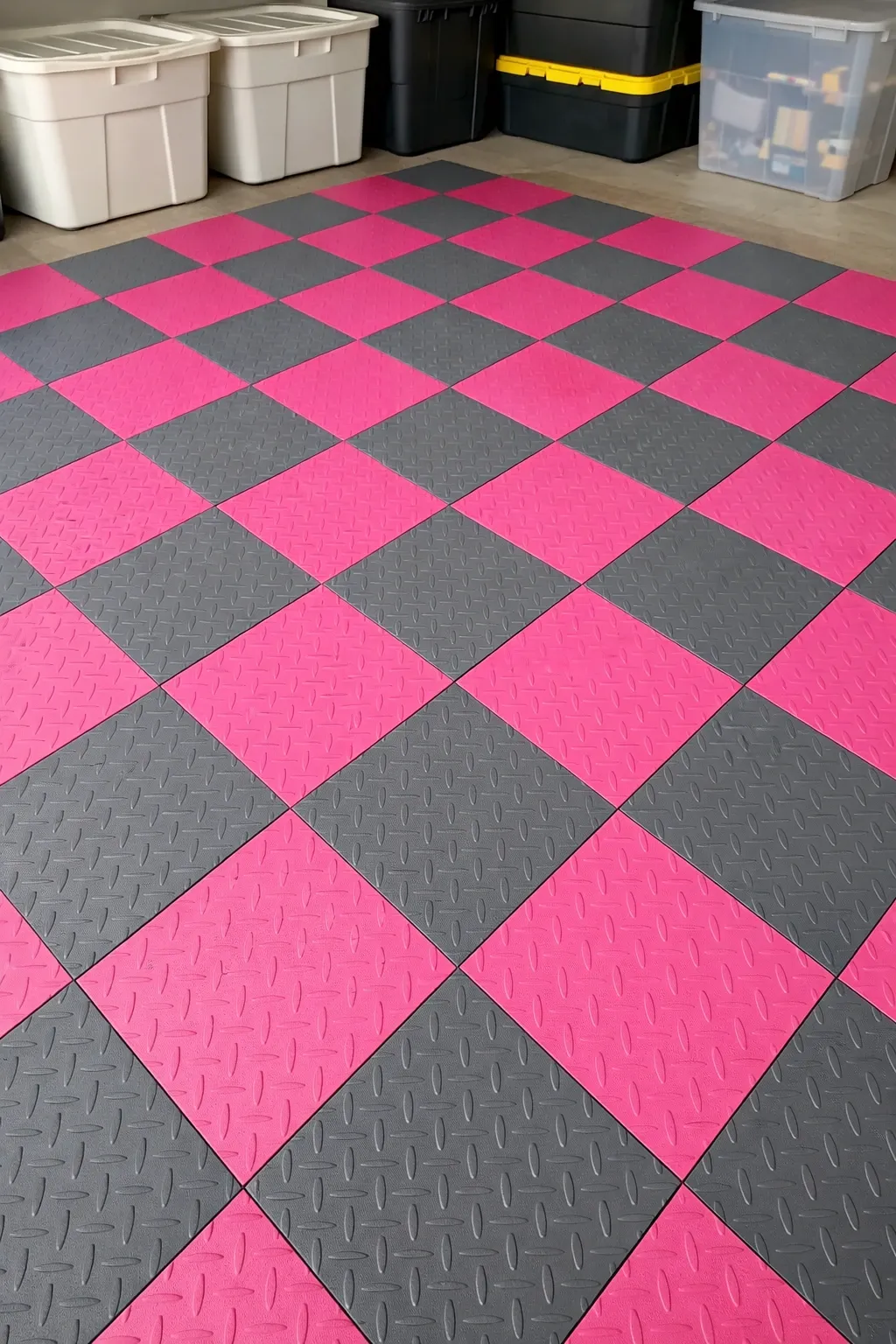
This one might surprise you, but pink and grey tiles in a grid pattern work really well in garages that are used for more than just parking cars. If your garage is also a gym, craft room, or she-shed, this color combination makes the space feel fun and personal rather than utilitarian. The grey keeps it grounded while the pink keeps it from being boring.
Designer Tip: Use a ratio of about 70 percent grey to 30 percent pink. This keeps the pink as an accent rather than the dominant color, which is important unless you want your garage to look like a bubblegum factory.
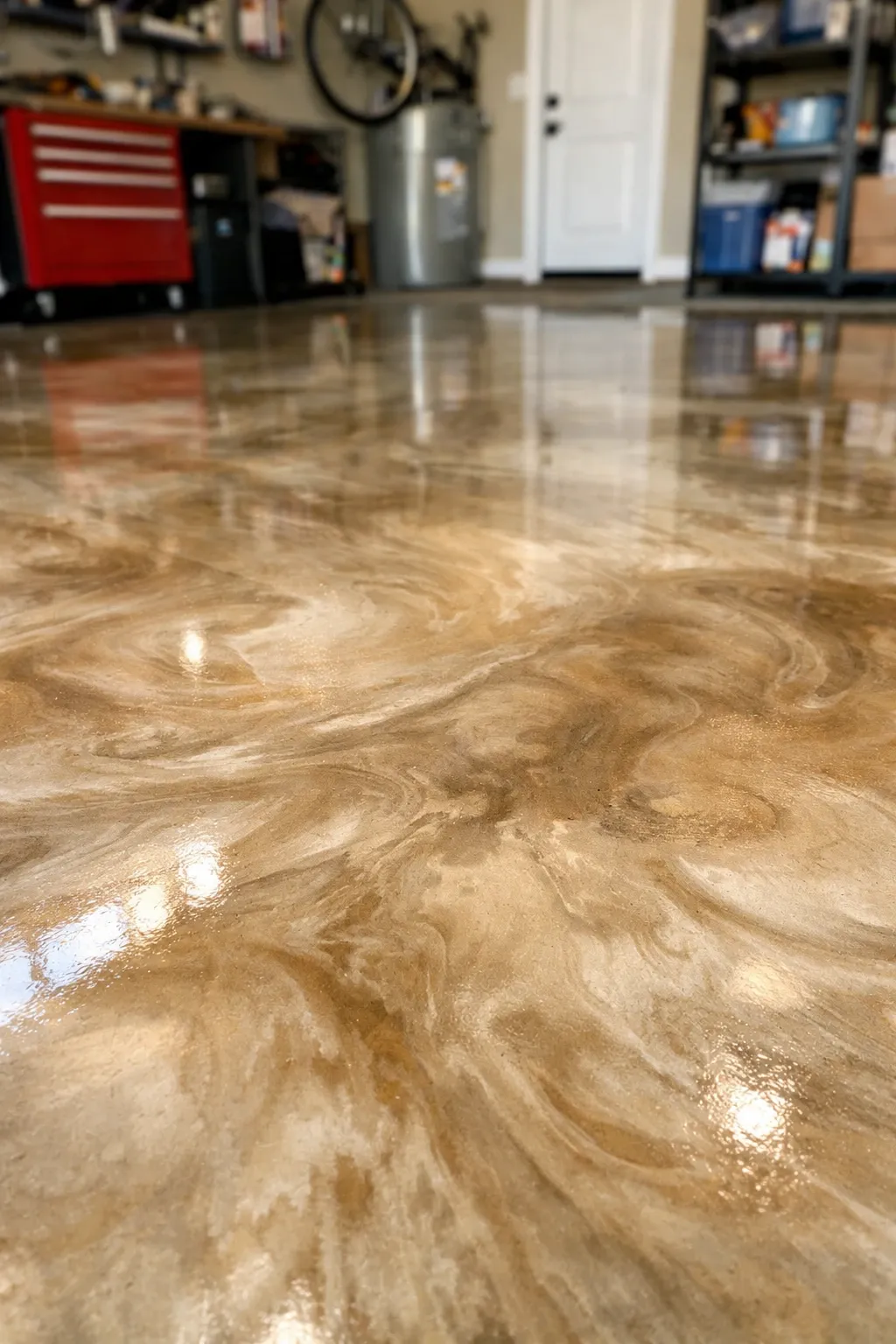
A warm metallic epoxy in beige and brown tones gives the garage floor a polished, earthy look. The swirl patterns resemble natural stone, and the warm tones feel more inviting than the typical cold grey garage. This works especially well in garages that connect directly to living spaces because the warm tones make a smoother visual transition from house to garage.
Designer Tip: Pair warm-toned epoxy floors with warm white LED shop lights rather than cool white. Cool lighting on a warm floor makes the colors look off. Warm lighting brings out the best in the metallic pigments.
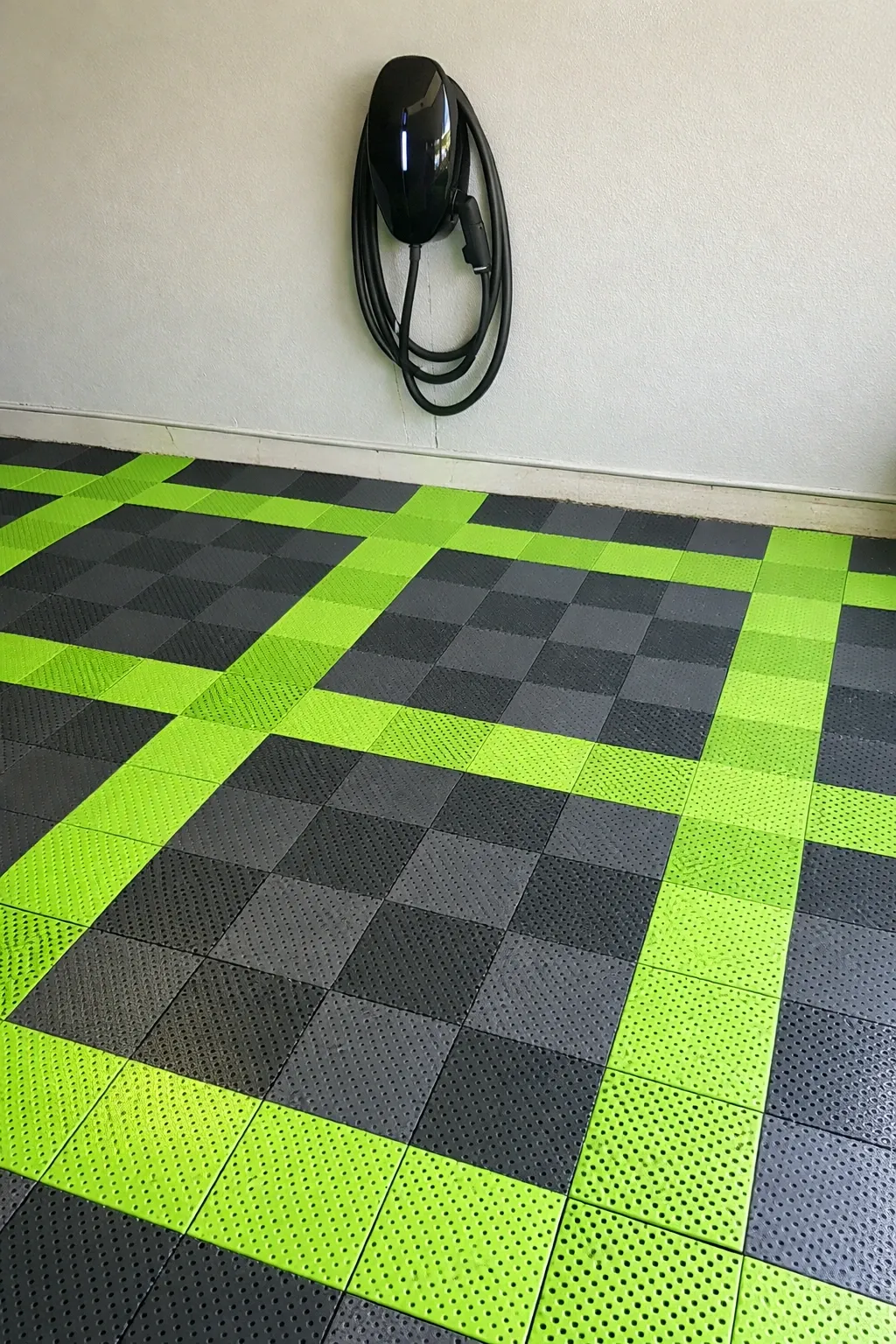
For a garage that is more workshop than parking lot, neon green grid lines or accent tiles on a grey base creates a high-tech, almost industrial look. It reads like a race pit or a tech lab, which is exactly the vibe some people are going for. The green accents can define tool zones, walkways, or work areas while keeping the overall floor dark and practical.
Designer Tip: Use the neon color only for borders, lines, or small accent areas. A full floor of neon green will give you a headache. The impact comes from the contrast against the grey, not from volume.
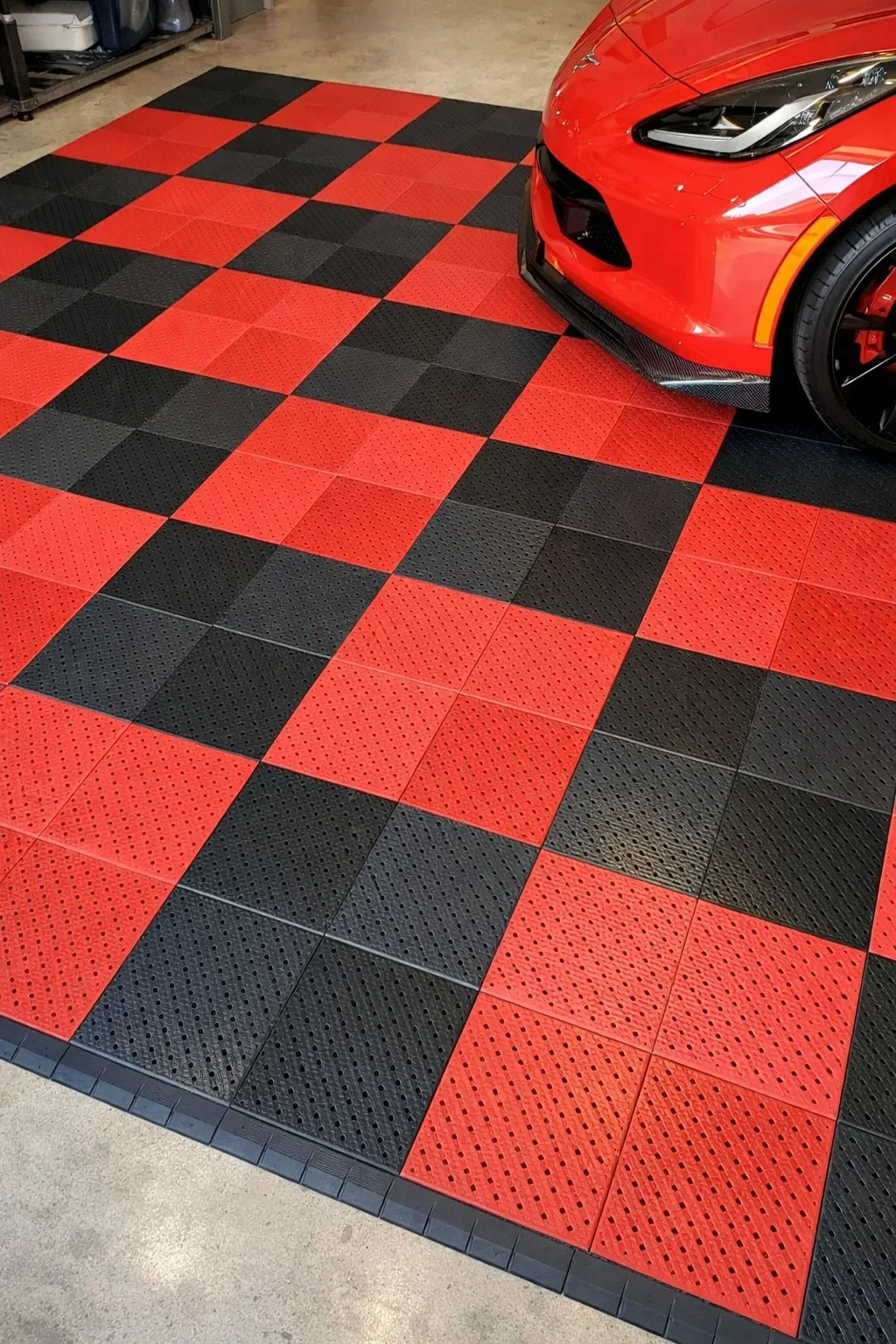
Red and black is the classic car enthusiast garage floor combination. It looks aggressive and purposeful, like a pit stop. Tiles and epoxy both work here because the colors hide dirt and oil well, and together they make the space feel exciting. If you have a nice car and want the garage to feel like a proper showroom, this is the floor to go with.
Designer Tip: If your car is red, go with a mostly black floor with red accents. If your car is dark, a mostly red floor with black accents creates contrast. The floor should complement the car, not compete with it.
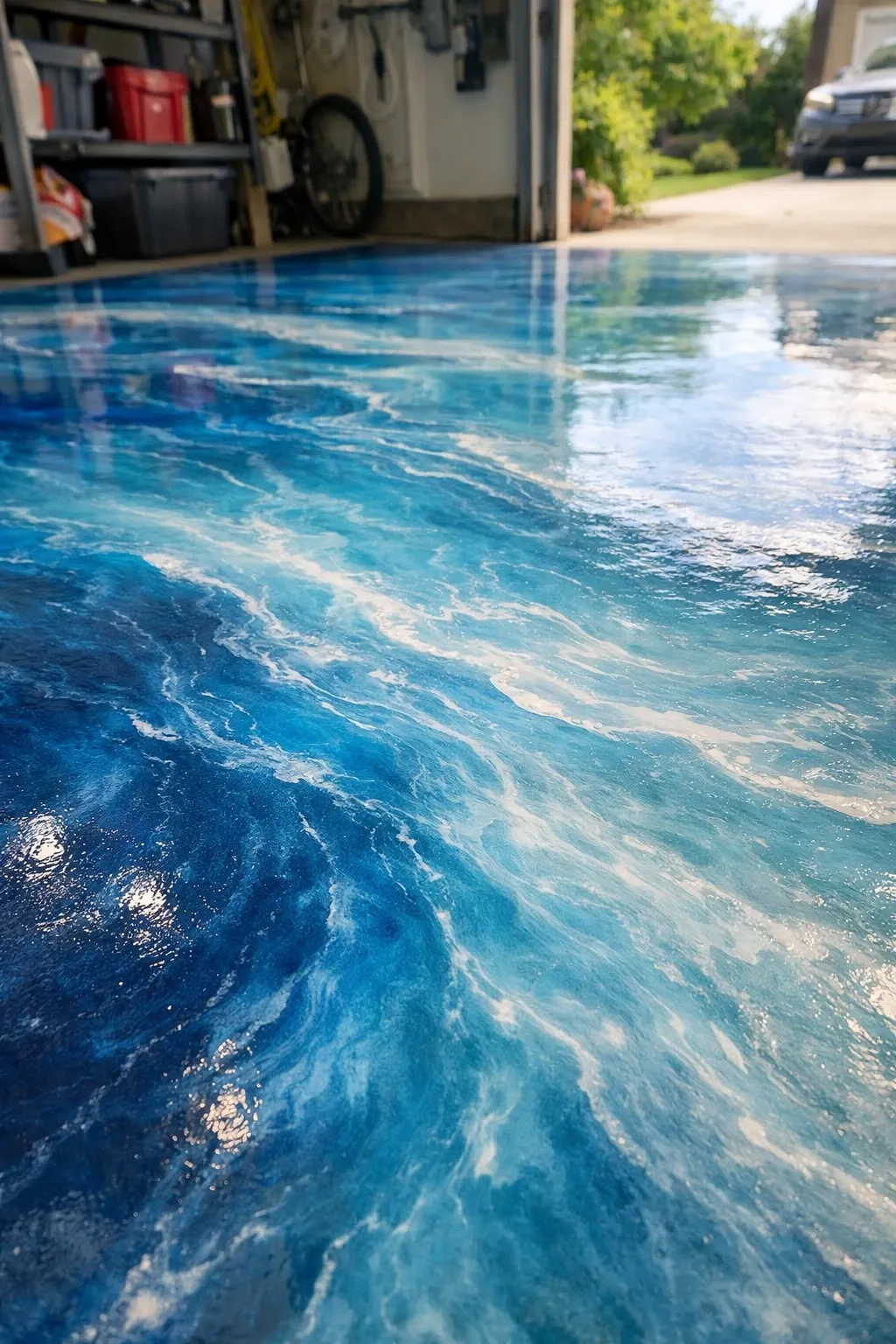
Blue metallic epoxy that mimics ocean waves or deep water is one of the more dramatic garage floor options. The depth and movement in the pattern make it look almost liquid, which is stunning when it is done well. It is a statement floor that turns the garage into a conversation piece. This works best in garages that are used as entertainment or hangout spaces.
Designer Tip: Seal blue epoxy with a high-gloss topcoat to maximize the depth effect. The gloss reflects light into the metallic pigments, which is what gives it that liquid, oceanic look. A matte finish on metallic epoxy defeats the purpose.
A glossy white epoxy floor makes a garage look bright, clean, and much bigger than it is. It reflects a lot of light, which is a big advantage in garages with limited windows. The downside is that every speck of dirt and every tire mark is visible, so this floor requires more upkeep than darker options. But if you keep a clean garage and want it to look pristine, white is hard to beat.
Designer Tip: Install bright LED panel lights overhead if you go with a white floor. The floor will reflect the light and effectively double your brightness, making the garage the best-lit room in the house.
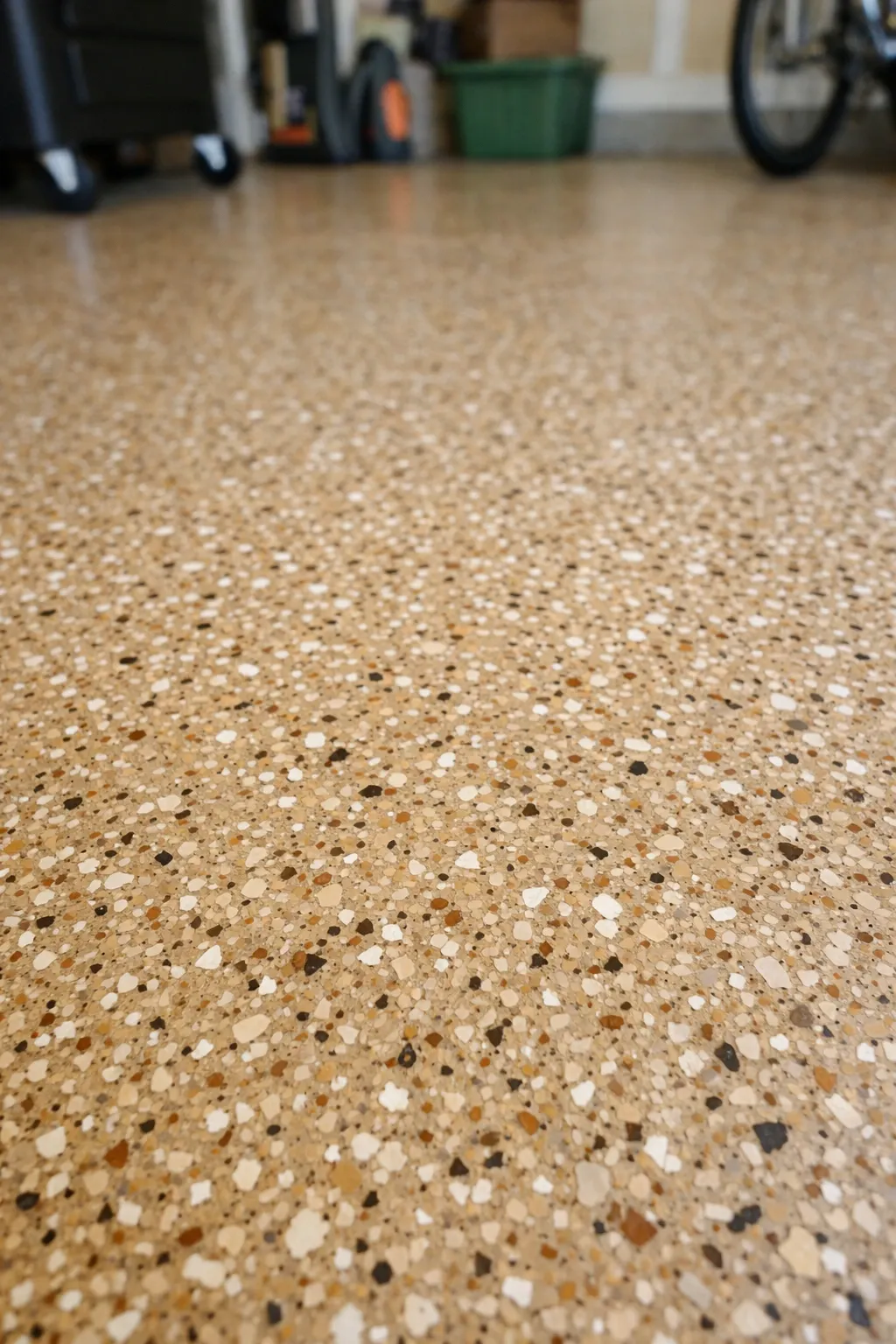
A tan or sand-colored epoxy floor gives the garage a warm, almost desert-inspired feel that pairs well with natural stone or stucco exteriors. It is a nice middle ground between boring grey and bold colors. Tan hides dust reasonably well and does not show tire tracks as prominently as lighter colors. It is a safe but good-looking choice for people who want something better than bare concrete but do not want to make a bold statement.
Designer Tip: Add tan and brown flakes to a tan base coat for depth. A single solid color always looks flatter in person than it does in photos. The flakes add visual texture that makes the floor look more substantial.
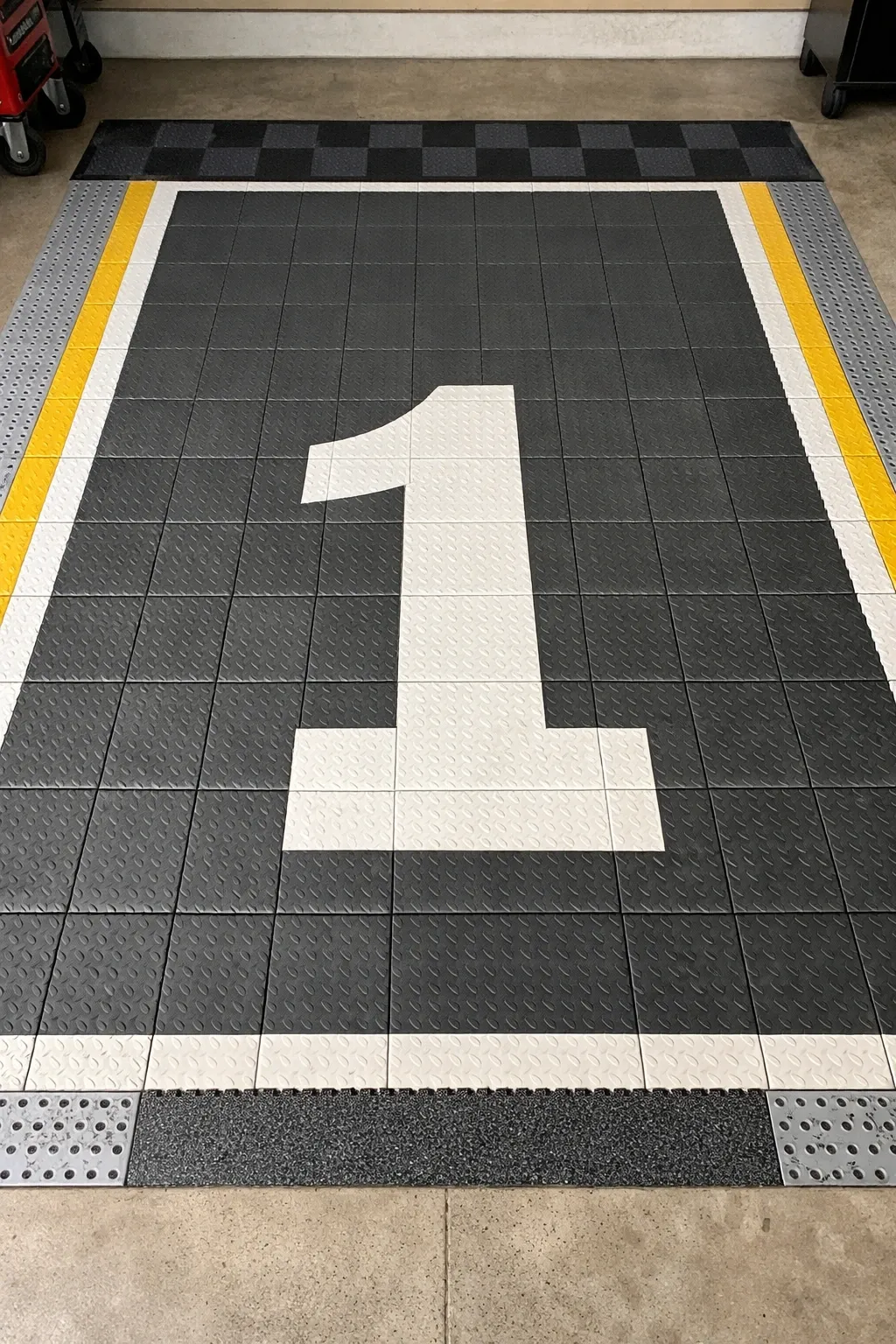
Adding numbers or zone markings to your garage floor gives it a professional, race-inspired look. You can use stencils with epoxy paint to mark parking spots, tool zones, or storage areas. It looks sharp and it actually helps keep the garage organized because everything has a designated place. This approach works especially well in two-car garages where you want clear boundaries.
Designer Tip: Use a sans-serif font for numbers and text on the floor. Serif fonts look fussy on a garage floor. Big, bold, simple characters in white or yellow on a dark background read the cleanest.
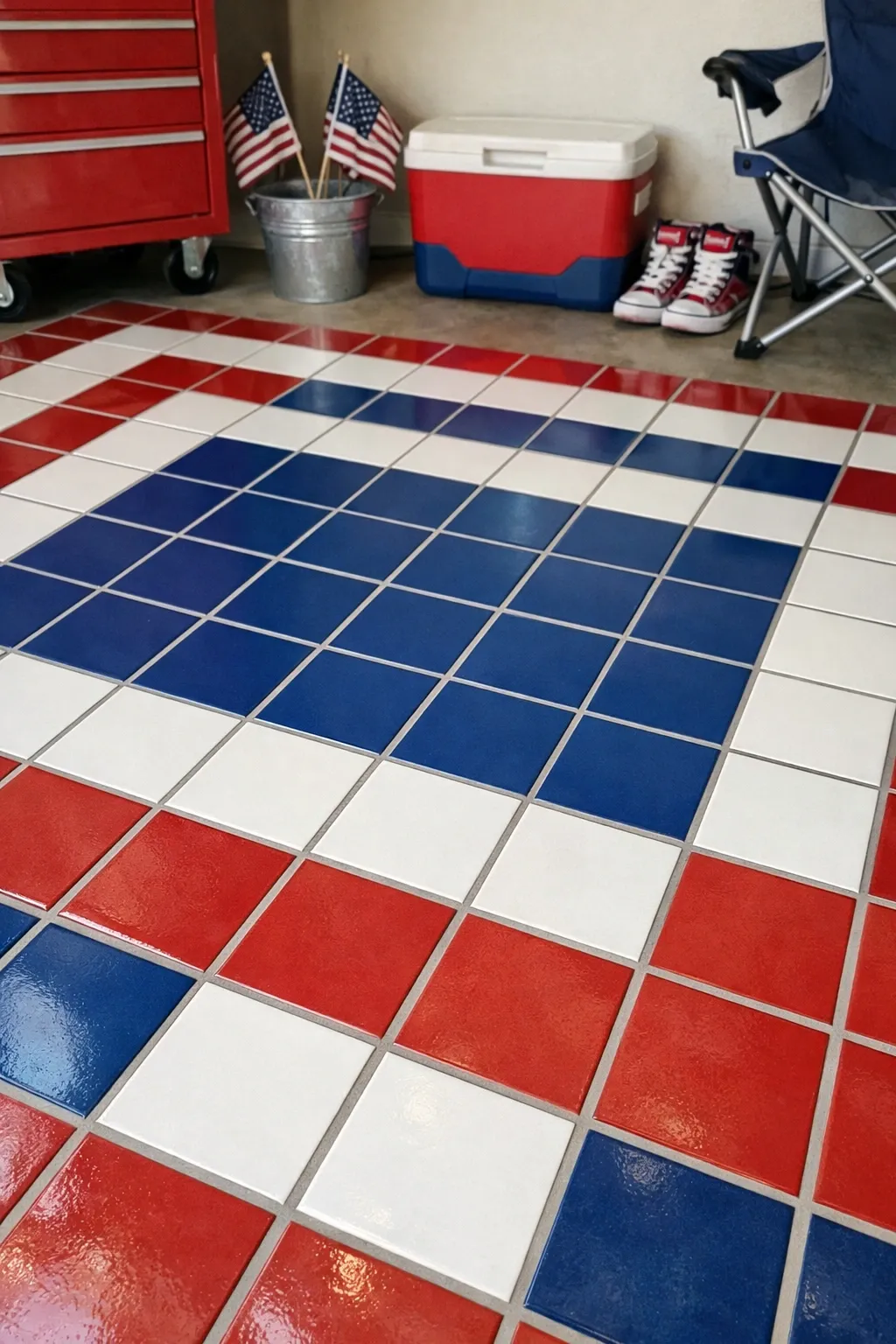
A geometric pattern in red, white, and blue is bold and patriotic without being kitschy, especially when done with clean lines and a modern tile pattern. Diamond or hexagonal tiles in these colors create a floor that looks like a vintage auto shop or a retro diner. It is a lot of personality for a garage, but if you go for it, the effect is genuinely impressive.
Designer Tip: Use navy rather than bright blue, and burgundy rather than fire-engine red. The deeper tones feel more grown-up and will not feel dated as quickly as bright primary colors.
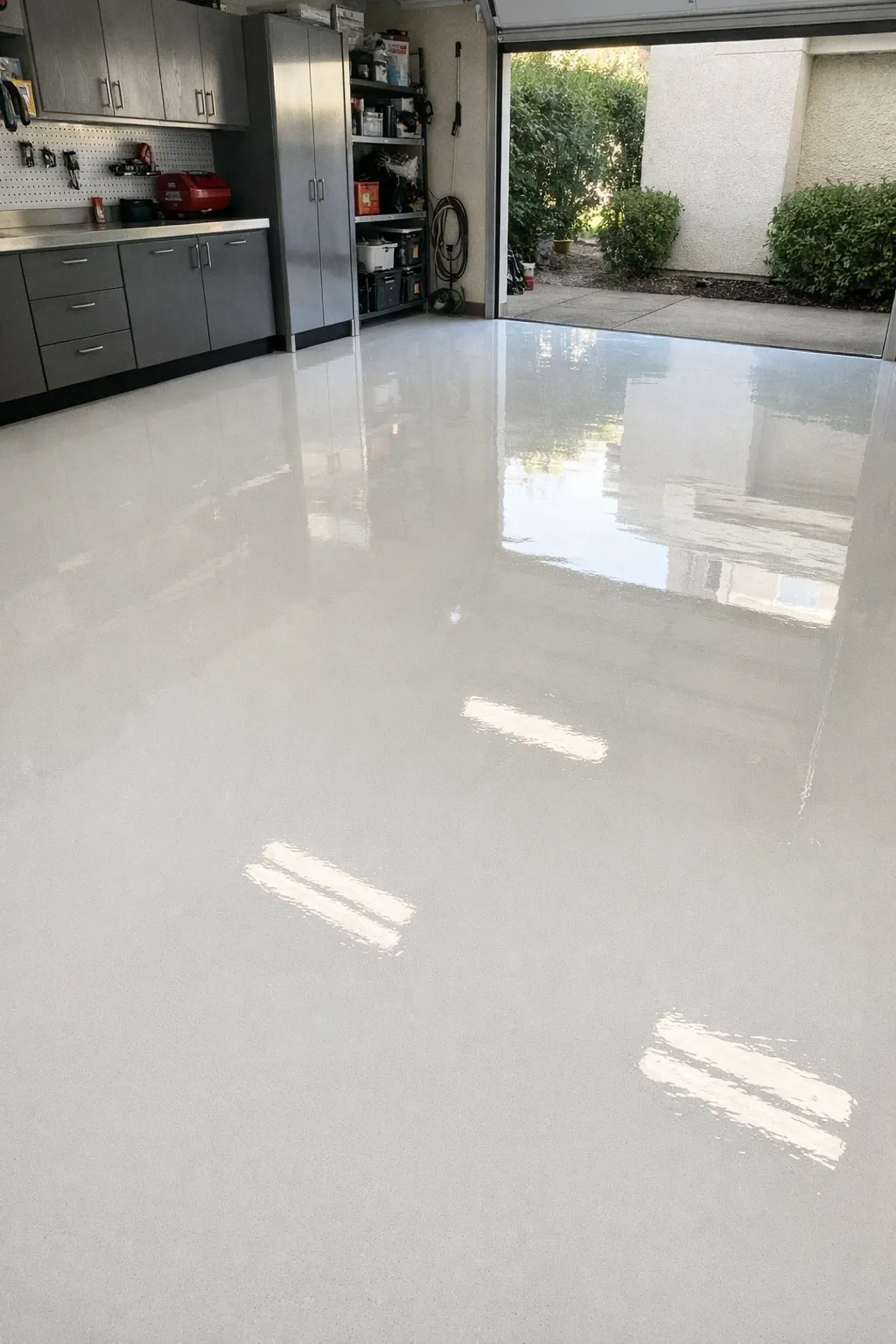
If you want the floor to look good without calling attention to itself, a clean light grey epoxy or polyaspartic coating is the way to go. No flakes, no metallic swirls, just a smooth, uniform light grey surface. It reflects light well, looks clean, and lets whatever else is in your garage, whether that is a car collection or woodworking tools, be the focus instead of the floor.
Designer Tip: A polyaspartic coating cures faster than epoxy and is more UV-stable, which matters in garages that get direct sunlight through windows or open doors. Epoxy can yellow over time in sun-exposed garages, but polyaspartic will not.
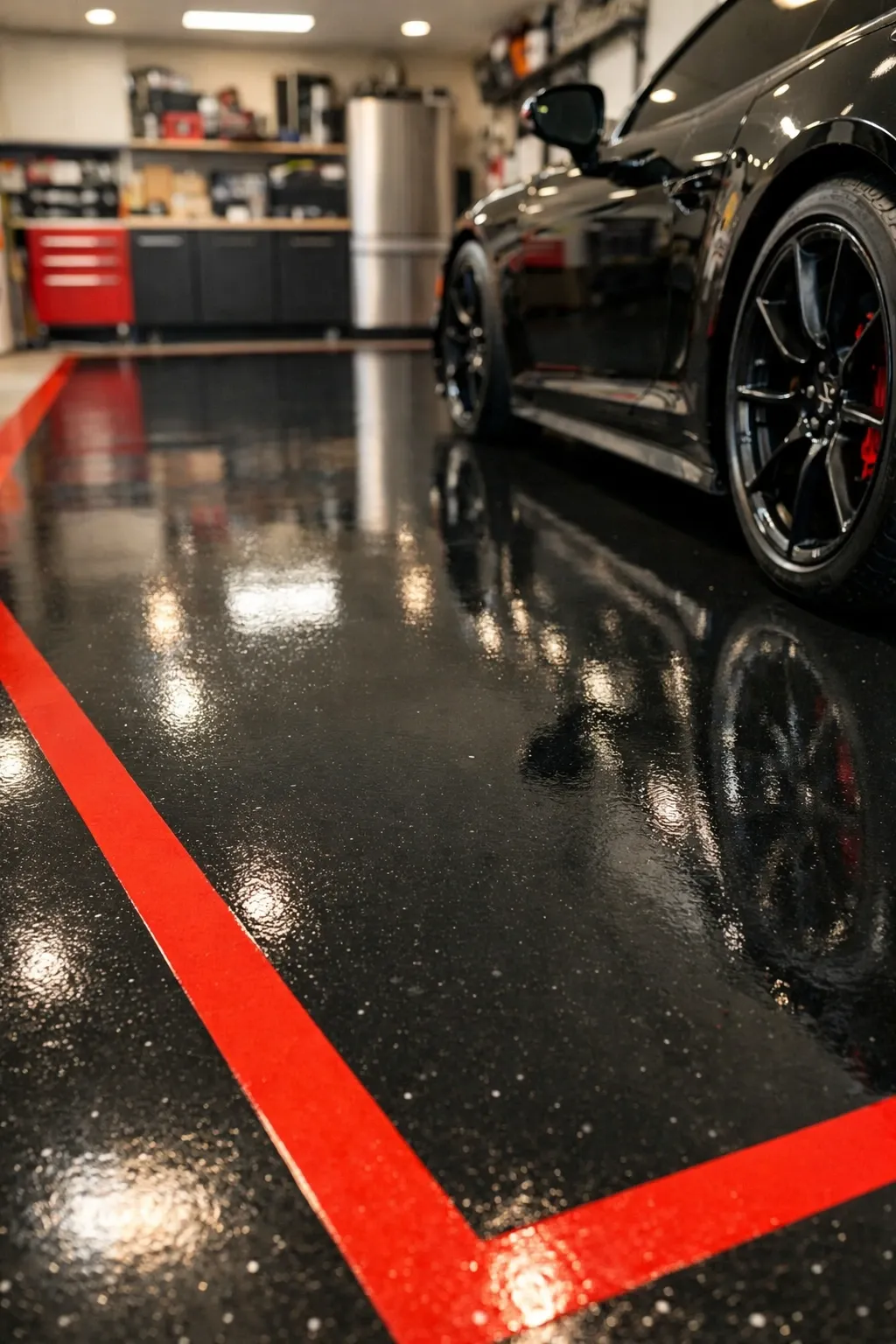
A glossy black floor with red accent lines or red border tiles creates a garage that looks like it belongs on a car show set. Black is the most dramatic base color you can choose, and the gloss finish makes it even more impactful. The red accents prevent it from looking too dark and add a sporty edge. Just be prepared to keep it clean, because every piece of dust shows up on a glossy black surface.
Designer Tip: Use red pinstripe tape or red epoxy lines to create accents rather than large red sections. Thin red lines on black look sleek and intentional. Large red patches break up the drama that the black floor creates.
A garage floor upgrade is one of those projects where the result is immediately noticeable and the investment pays off in both daily enjoyment and home value. The prep work matters more than the material you choose, so whatever direction you go, spend the time to clean, repair, and prime the concrete properly before applying anything on top. Get the prep right and the floor will look good for years.
Frequently Asked Questions
How long does epoxy garage floor coating last?
A properly applied epoxy floor coating typically lasts 10 to 20 years in a residential garage. The key factors are surface preparation, the quality of the epoxy product, and how much traffic and chemical exposure the floor gets. Cheap hardware store kits tend to peel within a few years, while professional-grade two-part epoxies hold up much longer.
Can I install garage floor tiles over cracked concrete?
Yes, interlocking garage tiles can go over minor cracks and imperfections because they float above the concrete surface. Large cracks or heaving concrete should be repaired first, but most tiles handle small cracks and surface roughness without any issues. That is one of the biggest advantages of tiles over coatings.
Is it better to DIY or hire a professional?
Interlocking tiles are very DIY-friendly since they just snap together with no adhesive. Standard epoxy with flakes is doable for a handy homeowner if you follow the prep steps carefully. Metallic epoxy is best left to professionals because the application technique directly affects the final pattern. The more artistic the finish, the more skill it requires.
Do I need to seal my garage floor before applying epoxy?
You do not seal it first, but you do need to prep it. This means grinding or acid-etching the surface so the epoxy has something to grip. If the concrete is sealed or has a smooth troweled finish, the epoxy will not bond properly and will peel. A moisture test is also a good idea since concrete that wicks water up from below will cause epoxy failure.