Dining rooms have this weird problem where the walls are usually the most visible surface in the room, but people spend all their budget on the table and chairs and then leave the walls completely blank. A bare dining room wall is hard to ignore because there is nothing else to look at while you eat except the person across from you, and sometimes you need a break from that too.
I have experimented with a lot of different approaches over the years and the best dining room walls tend to do one thing well rather than trying to do everything at once. Here are 15 ideas that actually hold up in practice.
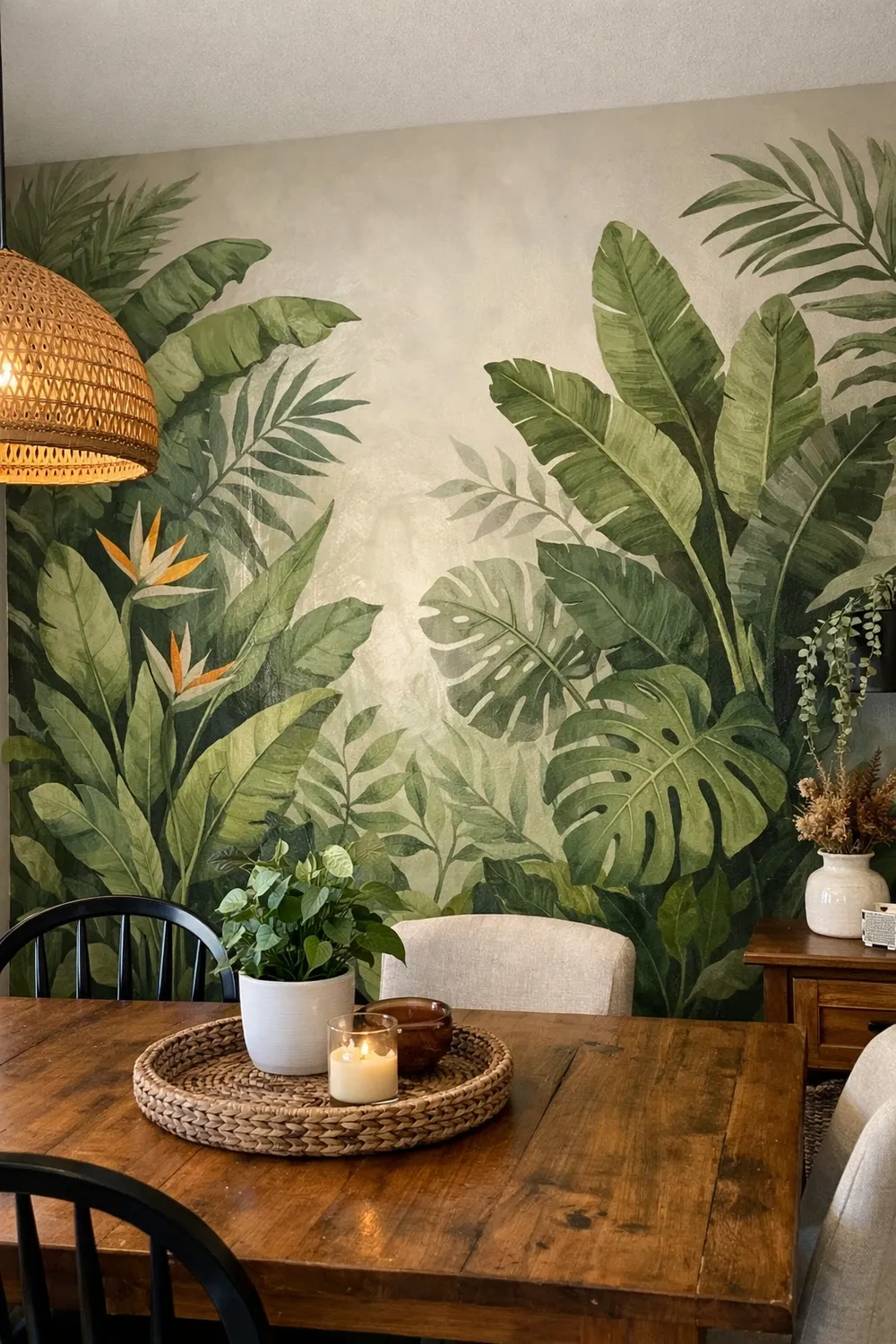
A full-wall botanical mural turns the dining room into somewhere people actually want to sit. Oversized leaves, flowering branches, or a garden scene creates a backdrop that makes even a simple weeknight dinner feel a bit more special. Peel-and-stick murals make this achievable without committing permanently, which is great if you rent or change your mind a lot.
Designer Tip: Choose a mural with a light background if your dining room does not get much natural light. Dark botanical murals can make a dim room feel like a cave, but a soft green-on-white or green-on-cream keeps things airy.
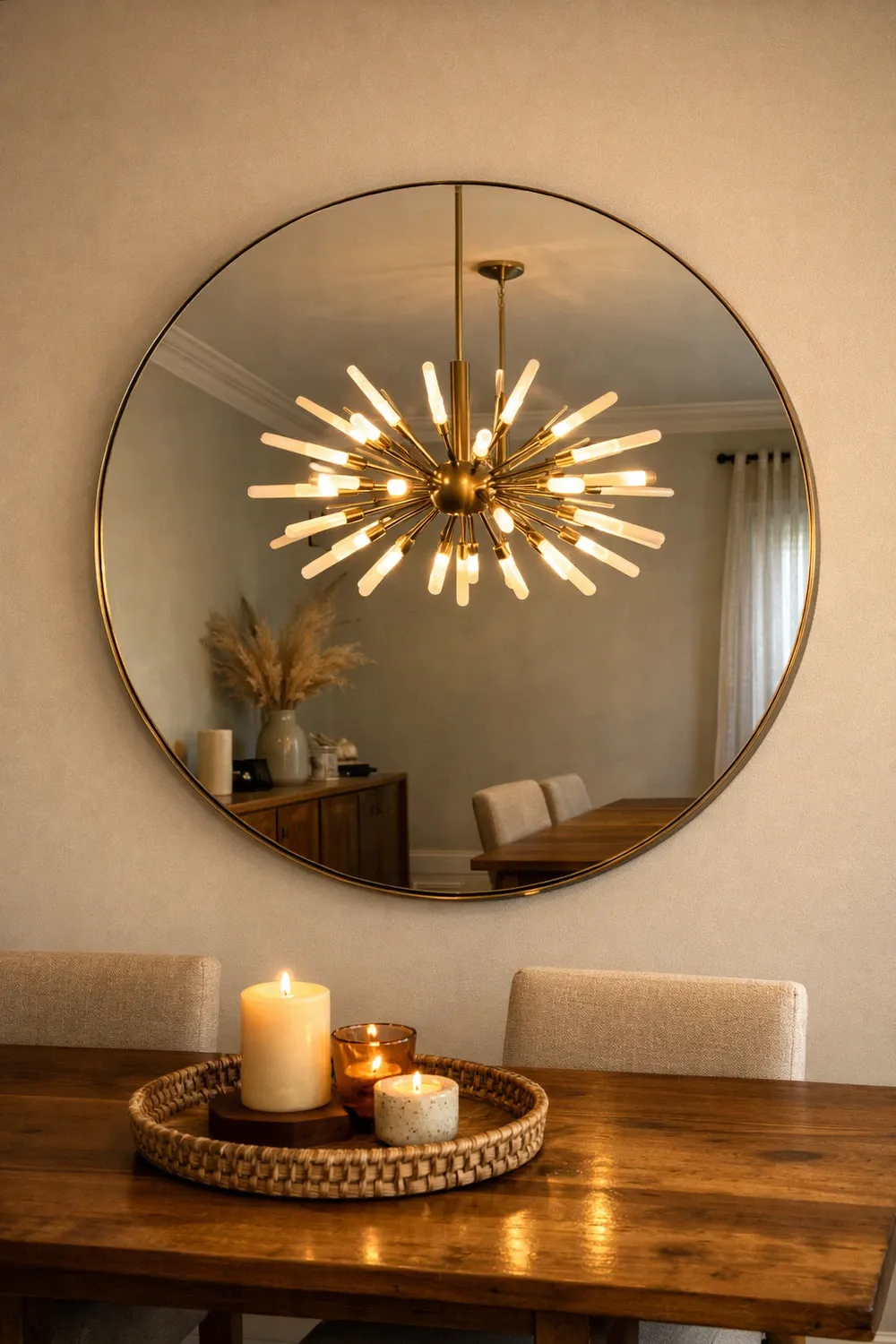
A large round mirror on the dining room wall does two things at once. It bounces light around the room, making the space feel bigger, and it gives the wall a focal point without the commitment of choosing art. The round shape is softer than a rectangle and plays well with a dining table, which is usually rectangular. Aim for a mirror that is at least 30 inches in diameter so it has real presence on the wall.
Designer Tip: Position the mirror so it reflects something worth looking at, a window, a chandelier, or a nice piece of furniture. If it reflects the hallway to the bathroom, you have missed the point.
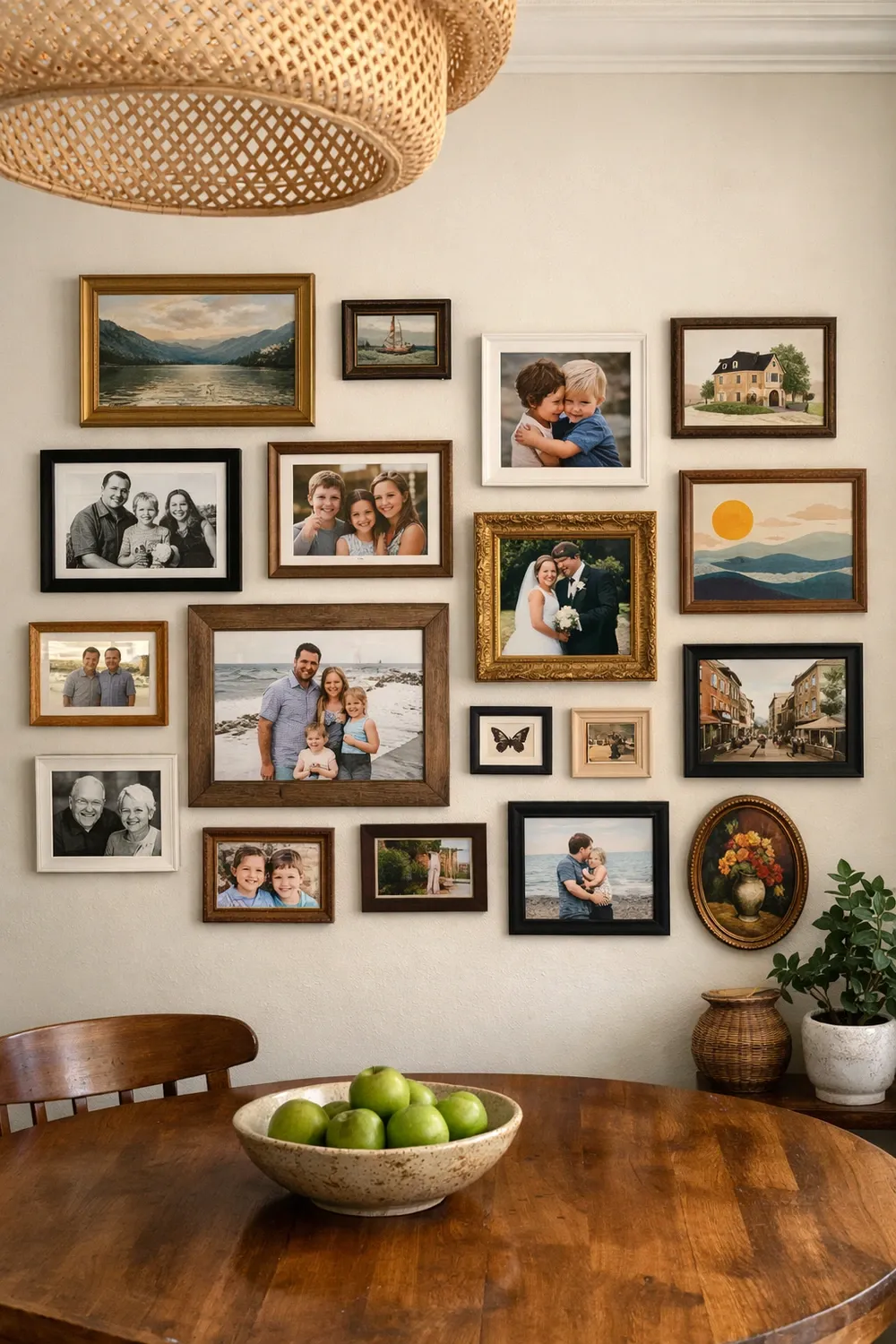
A gallery wall in the dining room is a chance to show what matters to you, family photos, travel prints, kids’ art, a small painting you picked up at a market. The dining room is where you gather, so the walls should reflect the people who eat there. Mix frame sizes and styles, but keep to a loose color palette so it does not look chaotic. Two to three inches between frames keeps things orderly.
Designer Tip: Include at least one non-photo element in your gallery wall, a small mirror, a woven piece, or a shadow box. Breaking up the photos with a different type of object keeps the eye moving and makes the whole wall more interesting.
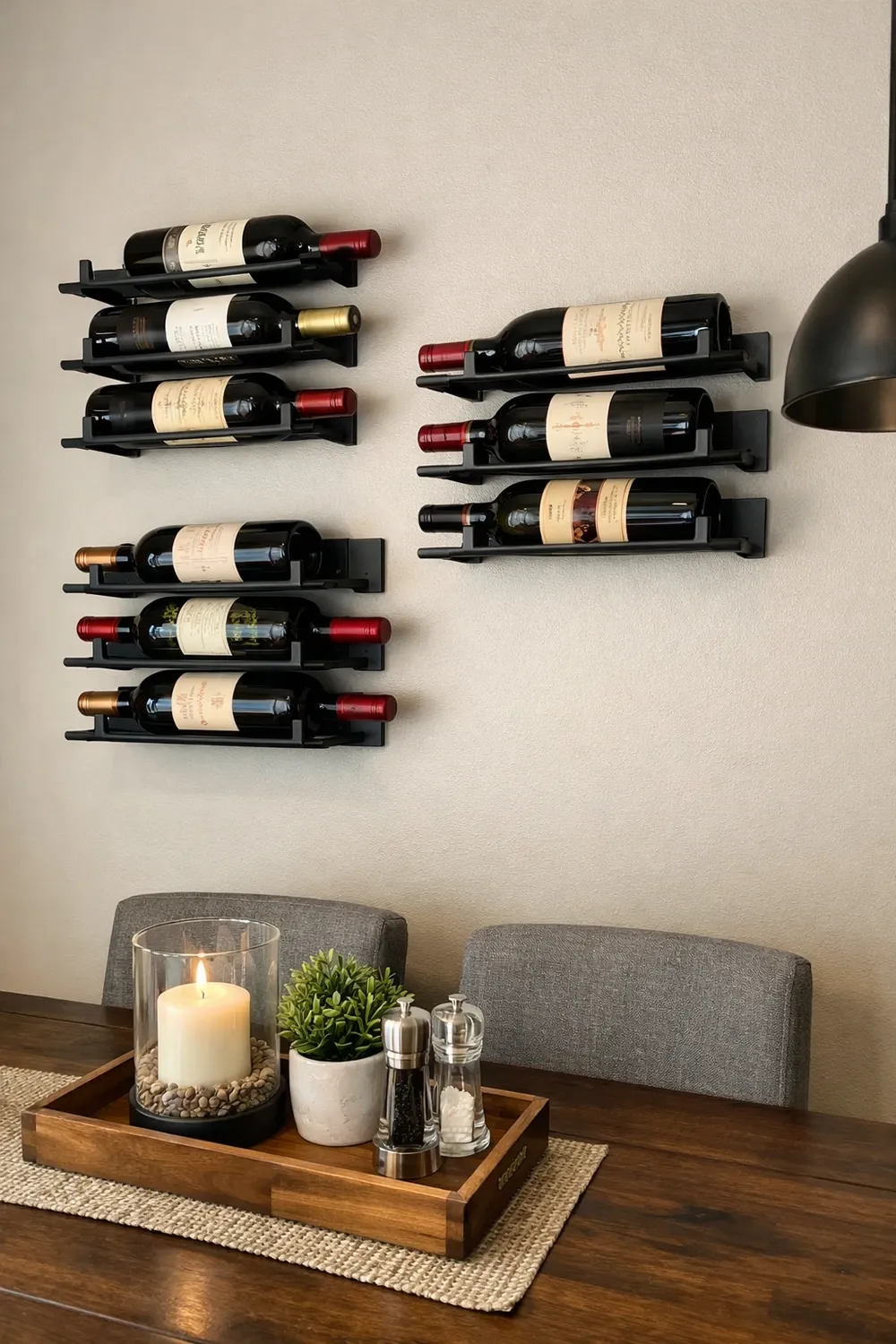
A wall-mounted wine rack in the dining room puts your bottles where they are both accessible and decorative. It makes sense, you are most likely to open a bottle right here at the table. Metal pegs that hold individual bottles look the most modern, or you can go with a wooden rack for a warmer feel. Either way, it is functional decor that actually gets used.
Designer Tip: Pair the wine rack with a small floating shelf below it for glasses and a corkscrew. Having everything together in one spot means you do not have to leave the room to pour, which keeps dinner flowing.
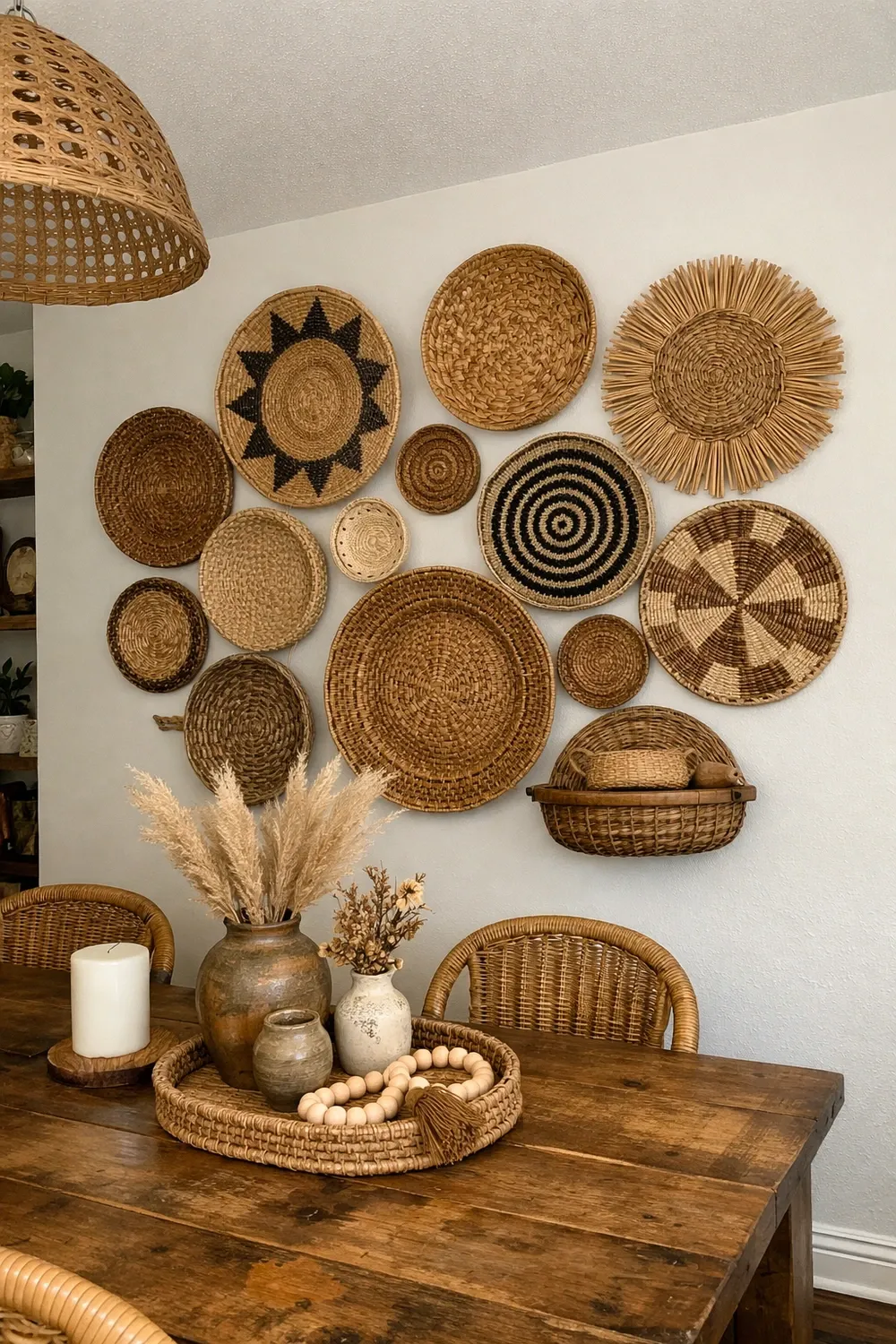
Grouping woven baskets of different sizes and patterns on the wall adds texture and warmth that flat art cannot match. The round shapes, natural fibers, and handmade patterns bring something organic to a dining room, which tends to be full of straight lines from the table and chairs. This look works in almost any style, from bohemian to coastal to modern farmhouse.
Designer Tip: Vary the sizes significantly, from dinner-plate sized to large serving-platter sized. If all the baskets are similar in size, the grouping loses its visual rhythm and just looks like a pile of baskets on the wall.
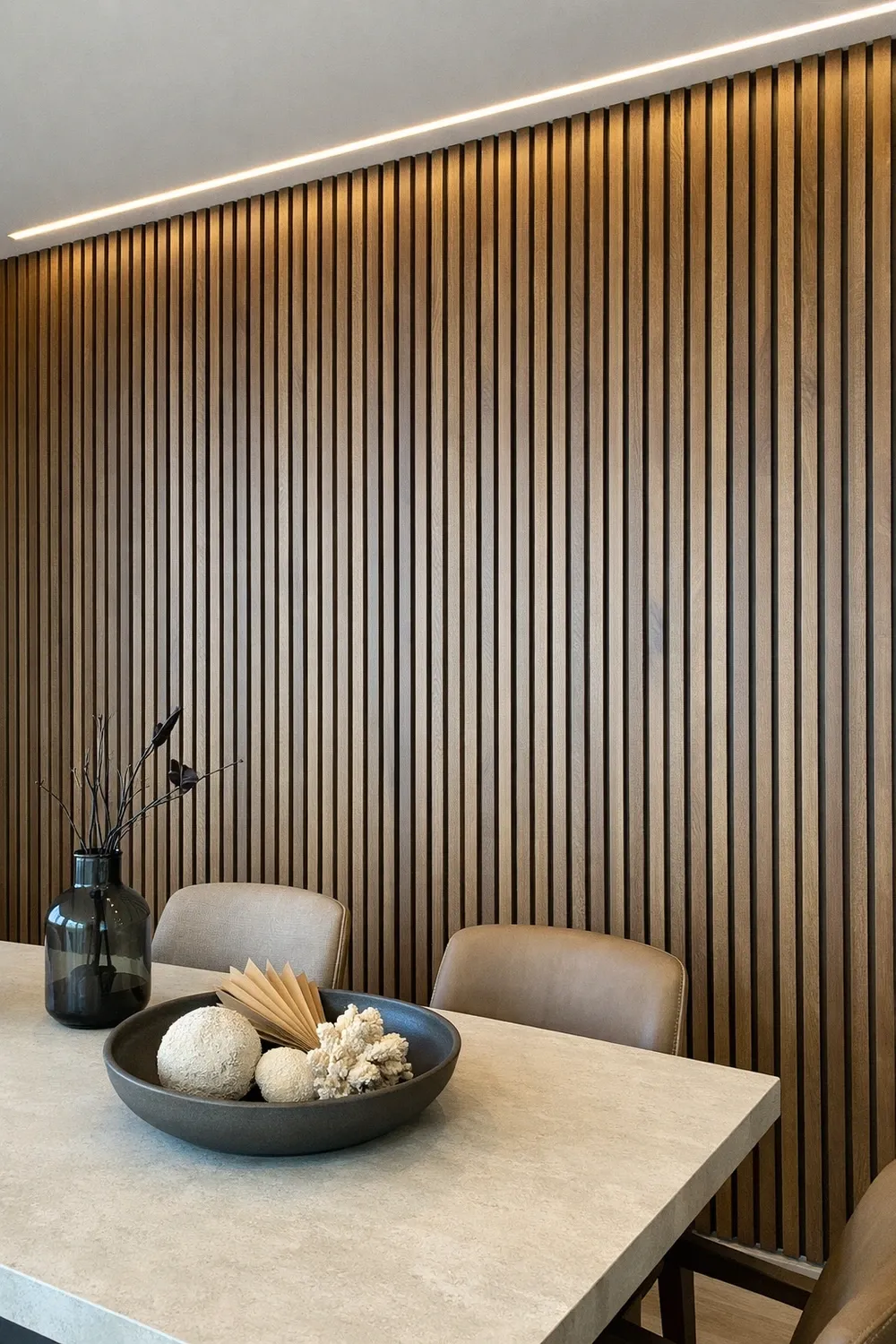
Vertical wood slats on one wall of the dining room add depth and texture that paint alone cannot give you. The repeating lines create a subtle pattern, and the natural wood brings warmth to the room. You can buy prefabricated slat panels that go up with construction adhesive, no complicated carpentry needed. Light oak slats on a white wall or dark walnut slats on a grey wall both look excellent.
Designer Tip: Space the slats with a gap of about half the slat width between each one. Too close together and you lose the visual rhythm. Too far apart and it just looks like you ran out of slats.
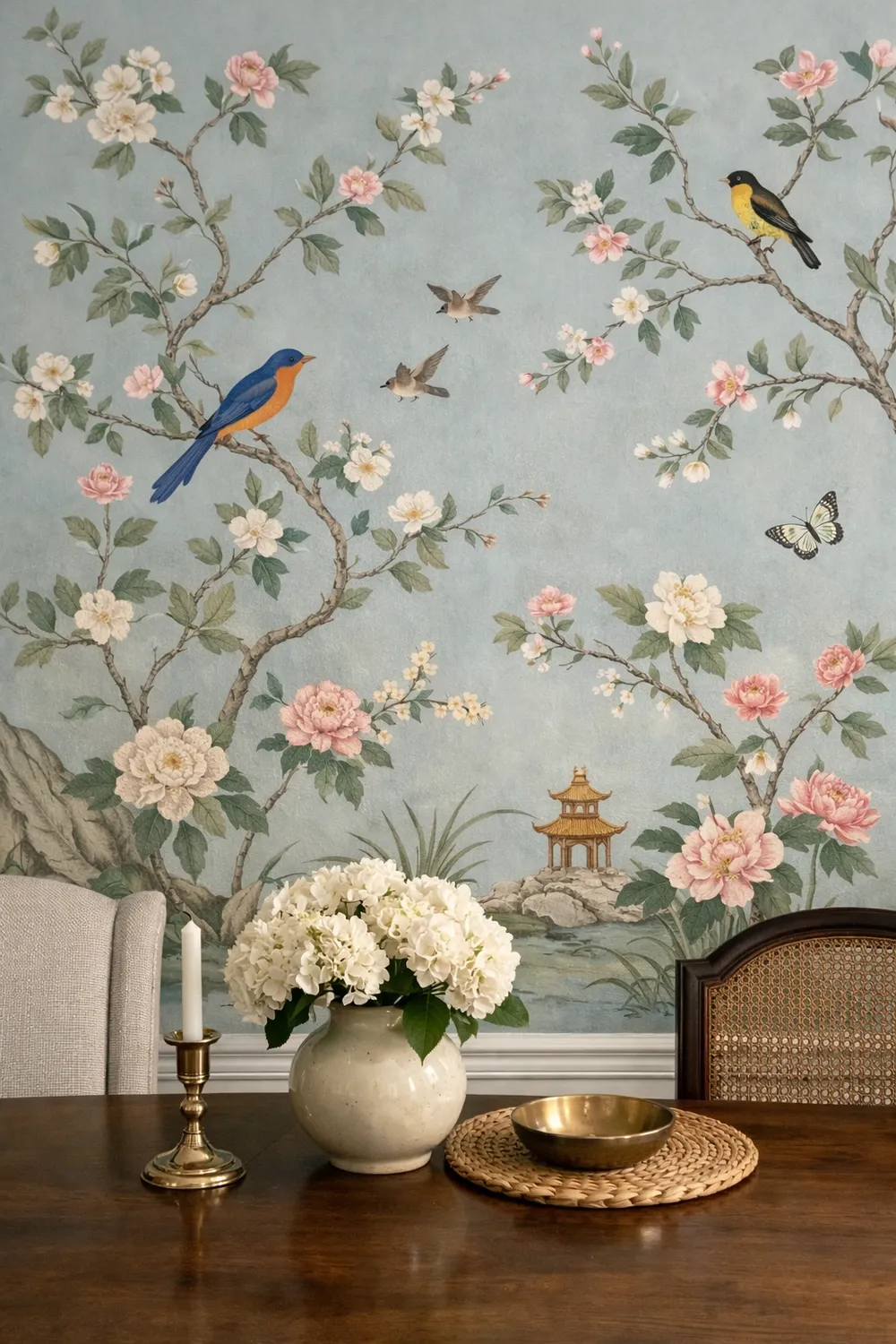
Chinoiserie wallpaper, the kind with birds, branches, and flowers on a colored background, has been a dining room classic for centuries and it still looks incredible. It is bold, it is detailed, and it gives the room a sense of occasion that is perfect for a space where you host people. You do not need to do every wall. Even one accent wall in a good chinoiserie pattern can carry the whole room.
Designer Tip: If real chinoiserie wallpaper is out of budget, which it often is, chinoiserie-inspired peel-and-stick options look surprisingly close. Some of the newer ones are hard to tell from the real thing unless you touch them.
A few well-chosen black and white photographs in simple frames give a dining room a sophisticated look without being fussy. The absence of color means the photos work with any palette, and there is something about black and white images that makes a room feel timeless. Architecture, still life, and landscape subjects all work well in a dining room setting.
Designer Tip: Print your black and white photos slightly larger than you think you need to. Oversized prints in thin frames look modern and gallery-like. Small prints in ornate frames look dated.
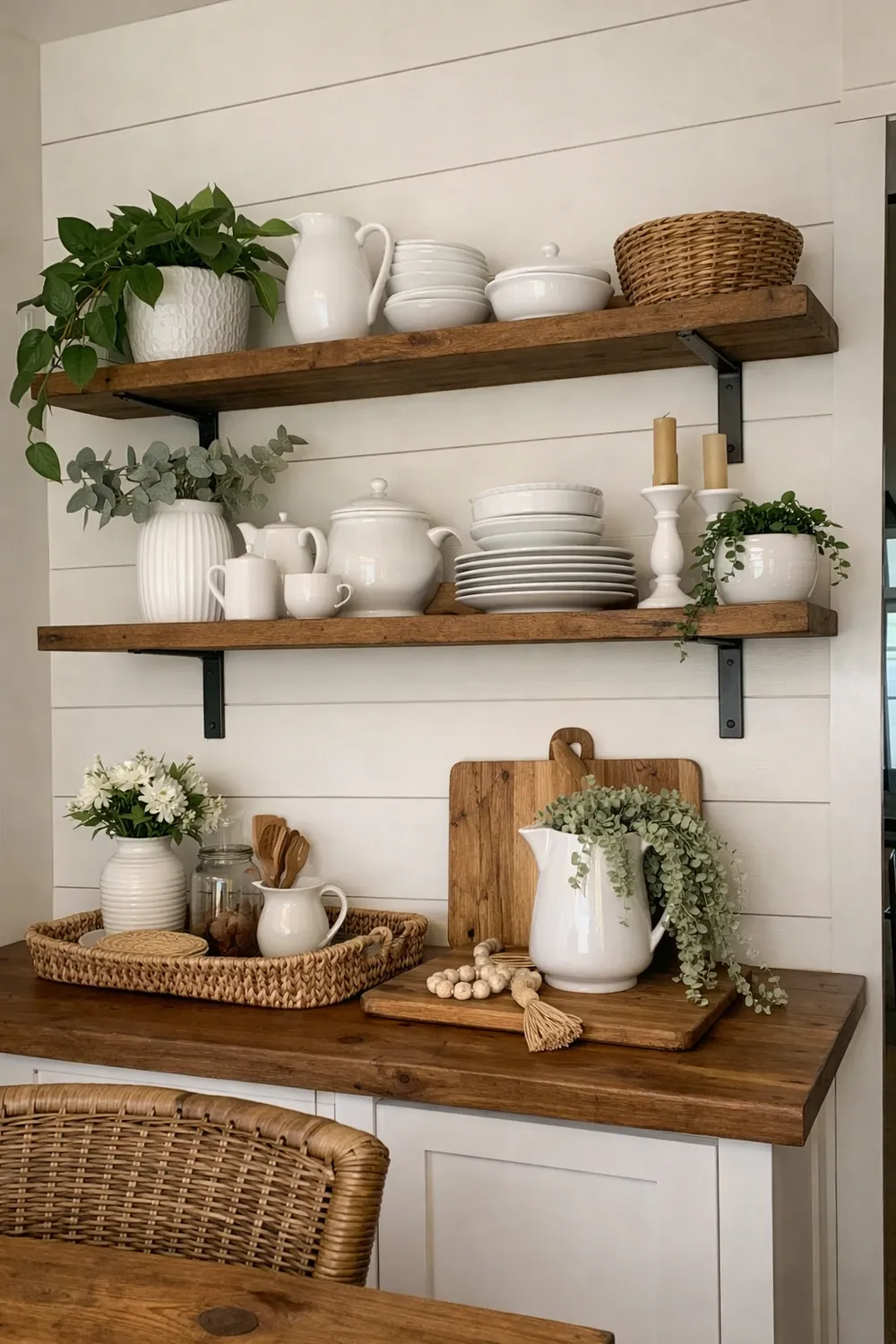
Open shelves on the dining room wall give you a place to display dishes, glasses, candles, and small decorative objects that you want within reach when entertaining. Thick wood shelves with black iron brackets have that farmhouse feel, or go with thin floating shelves for something more modern. The key is not overcrowding them. Leave some breathing room so each object gets its moment.
Designer Tip: Follow the rule of threes when styling shelves. Group objects in clusters of three at different heights, like a tall vase, a medium candle, and a small plant. This creates little vignettes along the shelf that look styled but not fussy.
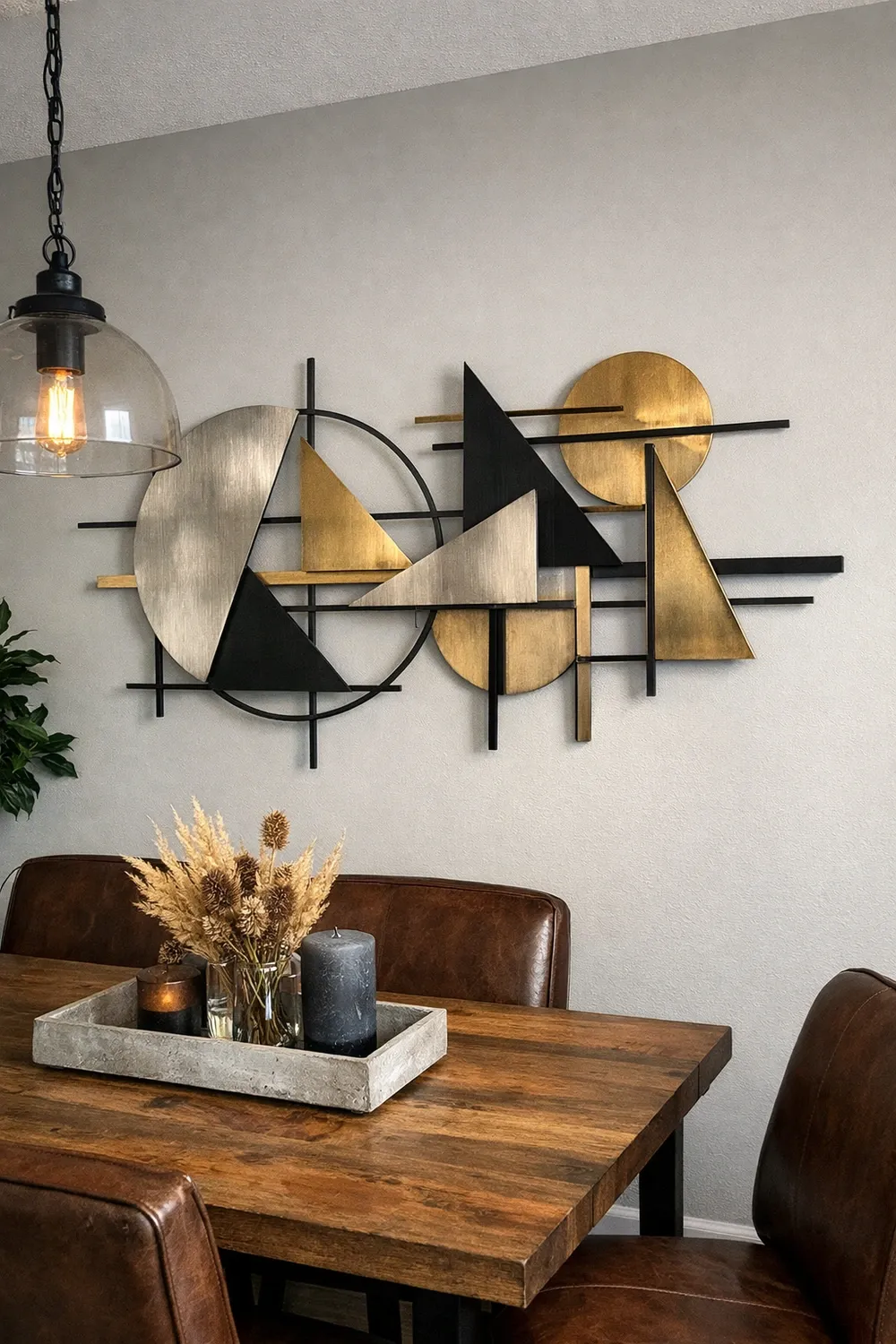
Metal wall sculptures in geometric shapes add dimension to the dining room in a way flat art cannot. The shadows they cast change throughout the day as light shifts, which gives the wall a dynamic quality. Look for pieces in gold, black, or copper that complement your existing hardware and light fixtures. One large piece above a sideboard or buffet is usually all you need.
Designer Tip: Hang metal wall art on a light-colored wall where the shadows are most visible. A black metal sculpture on a dark wall loses its shadow effect entirely, which is half of what makes it interesting.
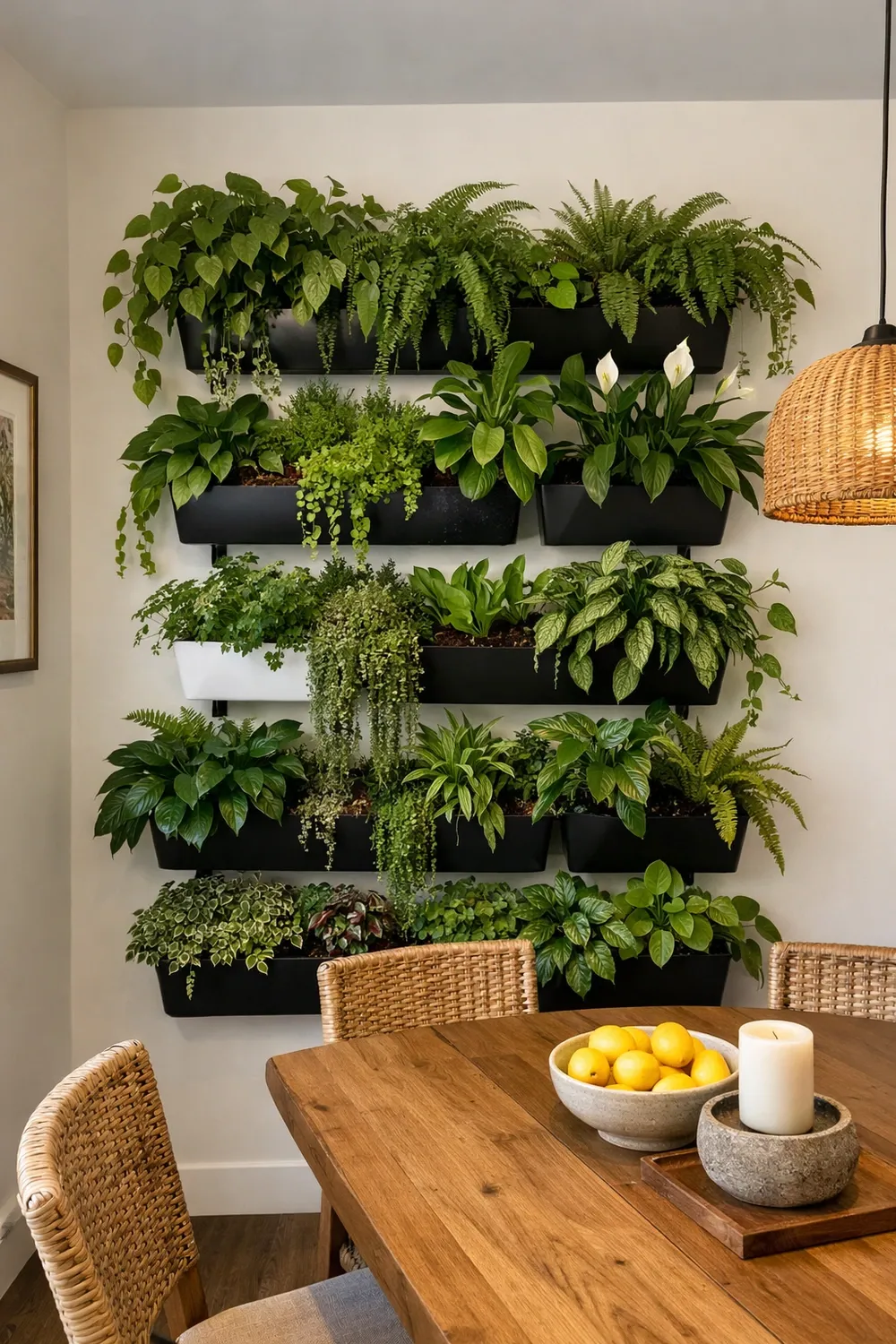
A vertical garden or living wall brings actual life into the dining room in the most literal way possible. You can go with a full living plant wall if you are committed to the upkeep, or use high-quality faux plants in wall-mounted planters for the same visual impact with no watering. Herbs in a vertical garden near the dining table also serve a practical purpose, you can snip fresh basil right onto your pasta.
Designer Tip: If you go with real plants, choose varieties that do well in indirect light since most dining rooms do not have great sun exposure. Pothos, ferns, and philodendrons are all good picks for a vertical wall garden.
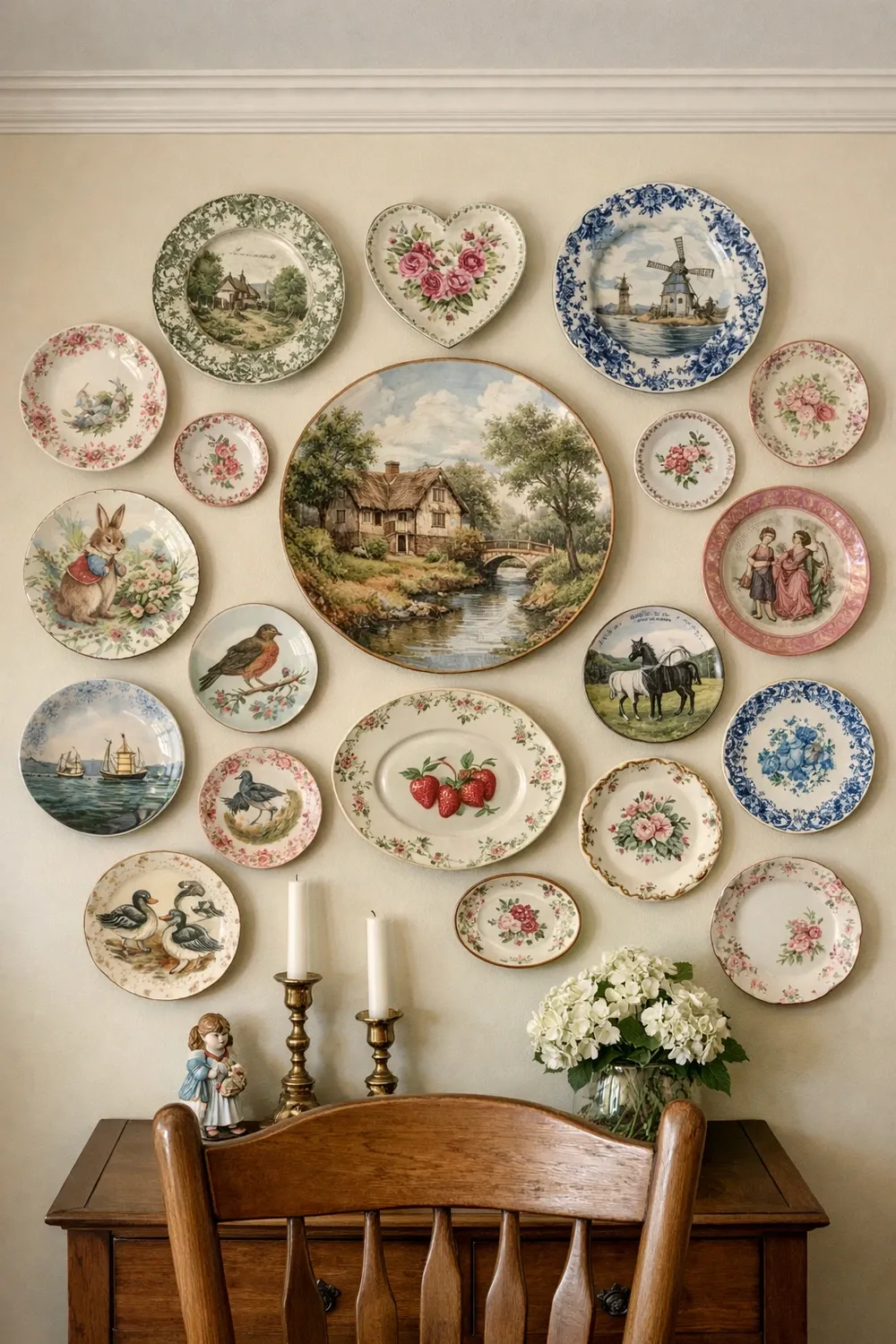
Displaying vintage plates on the dining room wall is a tradition that has come back around. Collect plates with a theme, blue and white porcelain, floral patterns, or hand-painted designs from different regions, and arrange them in a cluster or a symmetrical grid. Plate hangers are inexpensive and most antique plates are surprisingly affordable. It is a way to add color and history to the room without spending much.
Designer Tip: If your plates are all different patterns, unify them with one shared color. All blue-and-white plates in different patterns look collected and intentional. All different colors in different patterns looks random.
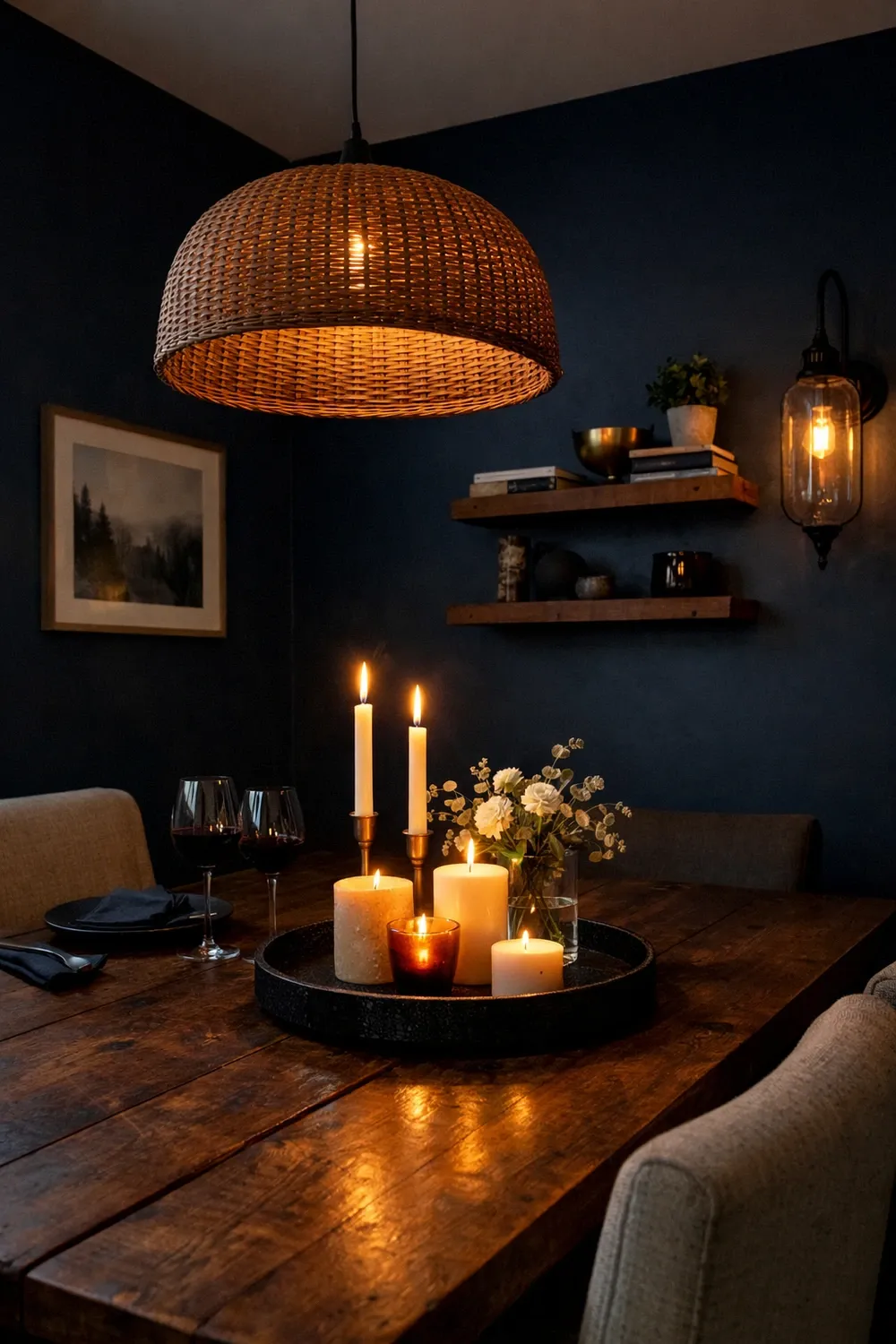
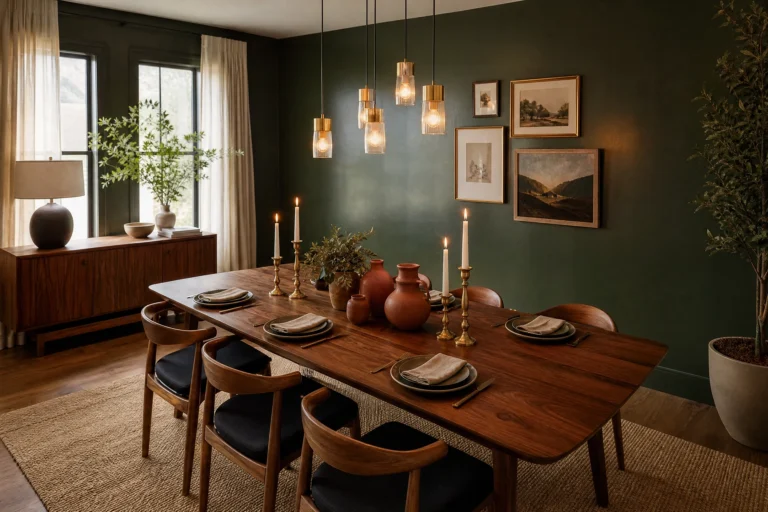
Sometimes the best wall decor is just paint. A single wall in a deep, saturated color like navy, forest green, or burgundy gives the dining room a sense of drama that is hard to get any other way. The deep color makes the table and chairs pop against it, and it sets a mood for evening meals that lighter colors simply cannot. You do not need anything else on that wall. The color is the statement.
Designer Tip: Use a matte or flat finish on your accent wall. Deep colors in high gloss show every imperfection and reflect too much light during dinner. Matte soaks up the light and creates that rich, enveloping feel.
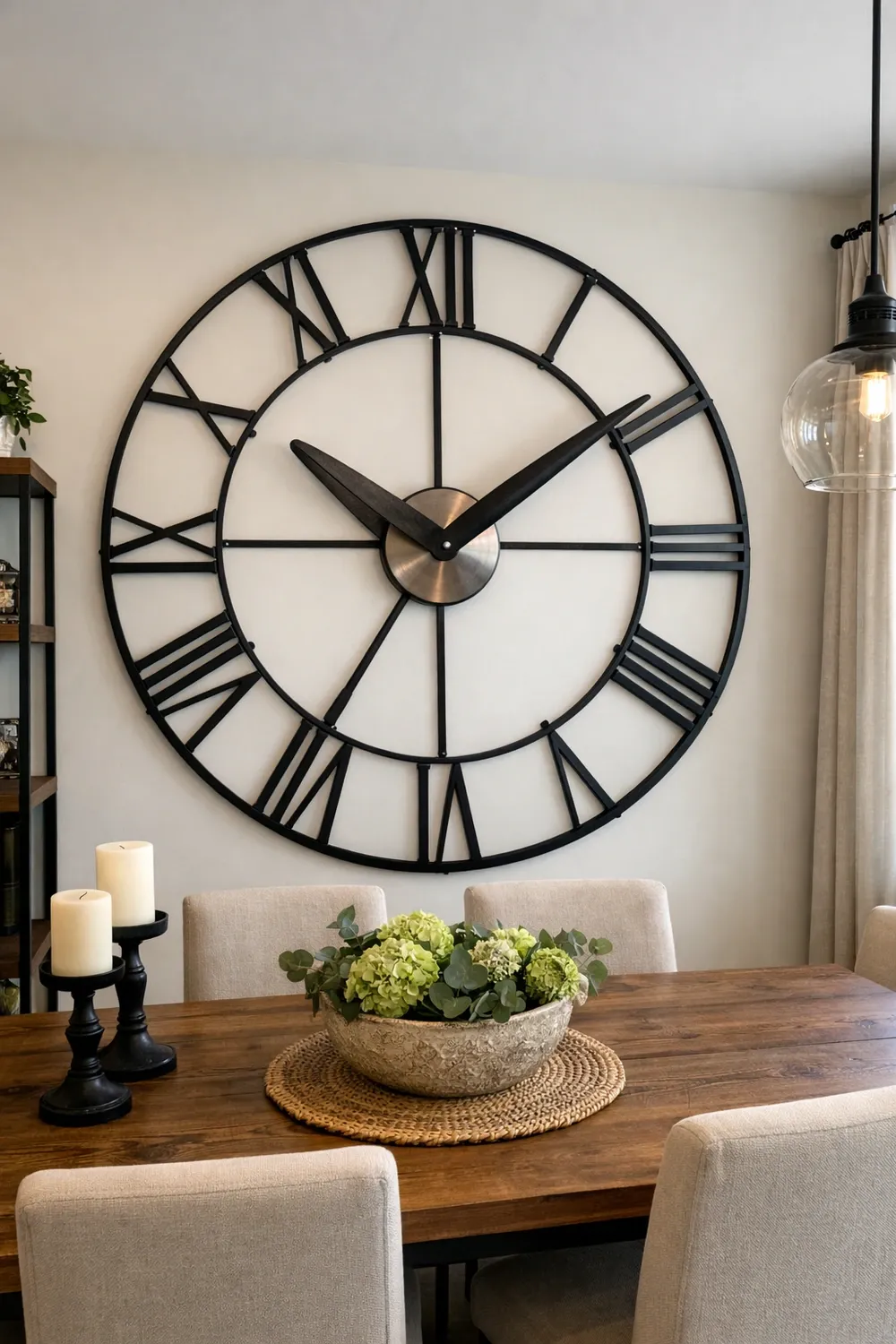
A big clock on the dining room wall is both decorative and useful, which is a rare combination in wall decor. Go for one that is at least 24 inches in diameter so it reads as a design piece rather than just a timekeeper. Distressed wood, wrought iron, or clean modern faces all work depending on your style. Mount it centered on the wall or offset above a sideboard.
Designer Tip: Roman numeral faces look more traditional and formal. Arabic numeral faces look more casual and modern. No numbers at all, just hour marks, is the most minimal option. Pick whichever matches the mood of your room.
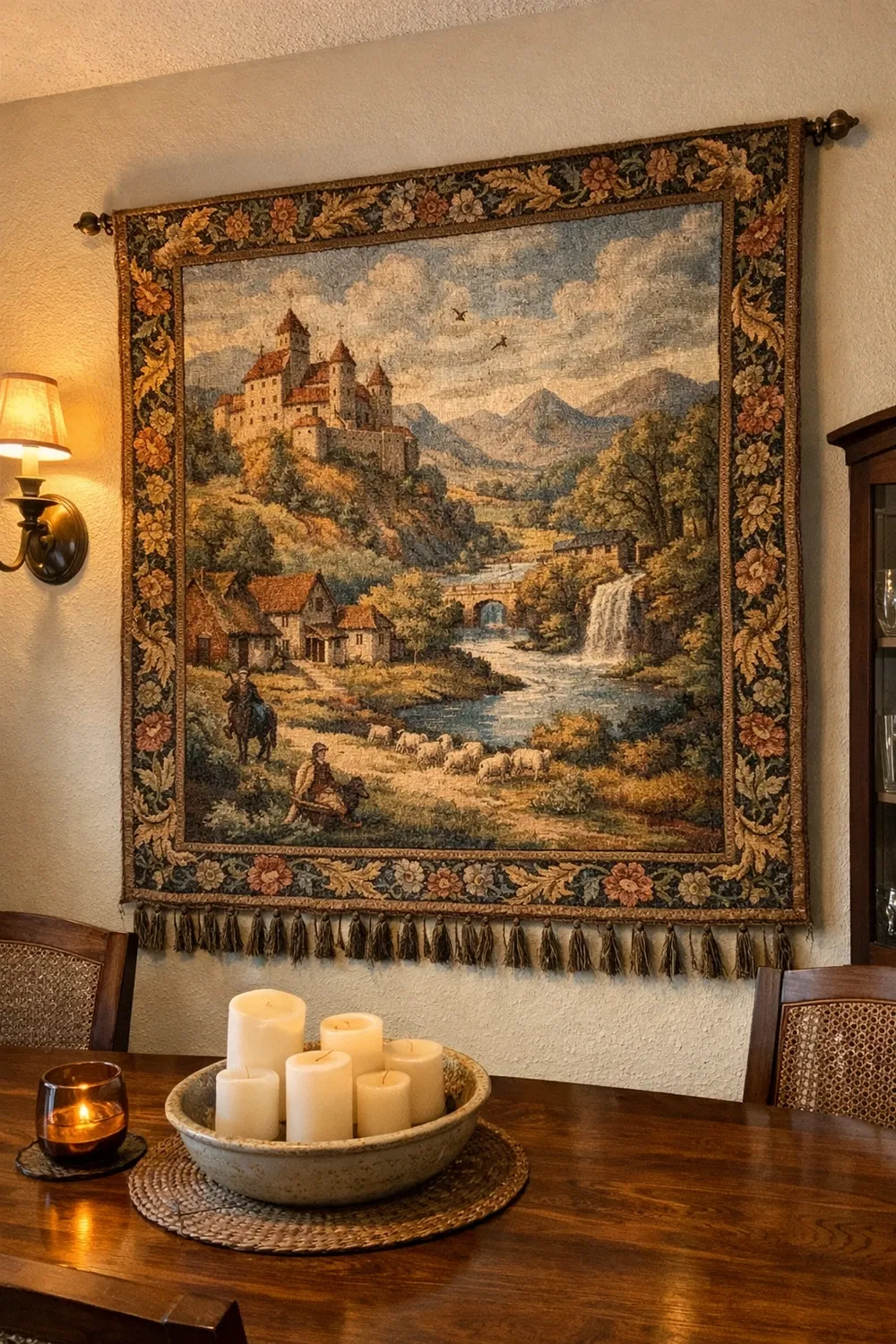
A woven mix or textile hanging adds warmth and sound absorption to the dining room, which can get echoey with hard floors and a big table. A handwoven piece with natural fibers and subtle colors works in most styles. Hang it from a simple wooden dowel or a thin brass rod for a clean look. The texture of a woven piece adds something to the wall that no print or painting can.
Designer Tip: Choose a mix that is at least two-thirds the width of the furniture below it. A tiny mix above a wide sideboard looks lost. The proportions need to relate to each other.
The dining room is one of the few rooms where wall decor really gets noticed because people sit facing the walls for extended periods. Pick something that makes you happy to look at, that fits the mood you want at mealtimes, and that you will not get tired of seeing every day. One strong choice is always better than filling every wall with something just to fill it.
Frequently Asked Questions
What size art should I put in my dining room?
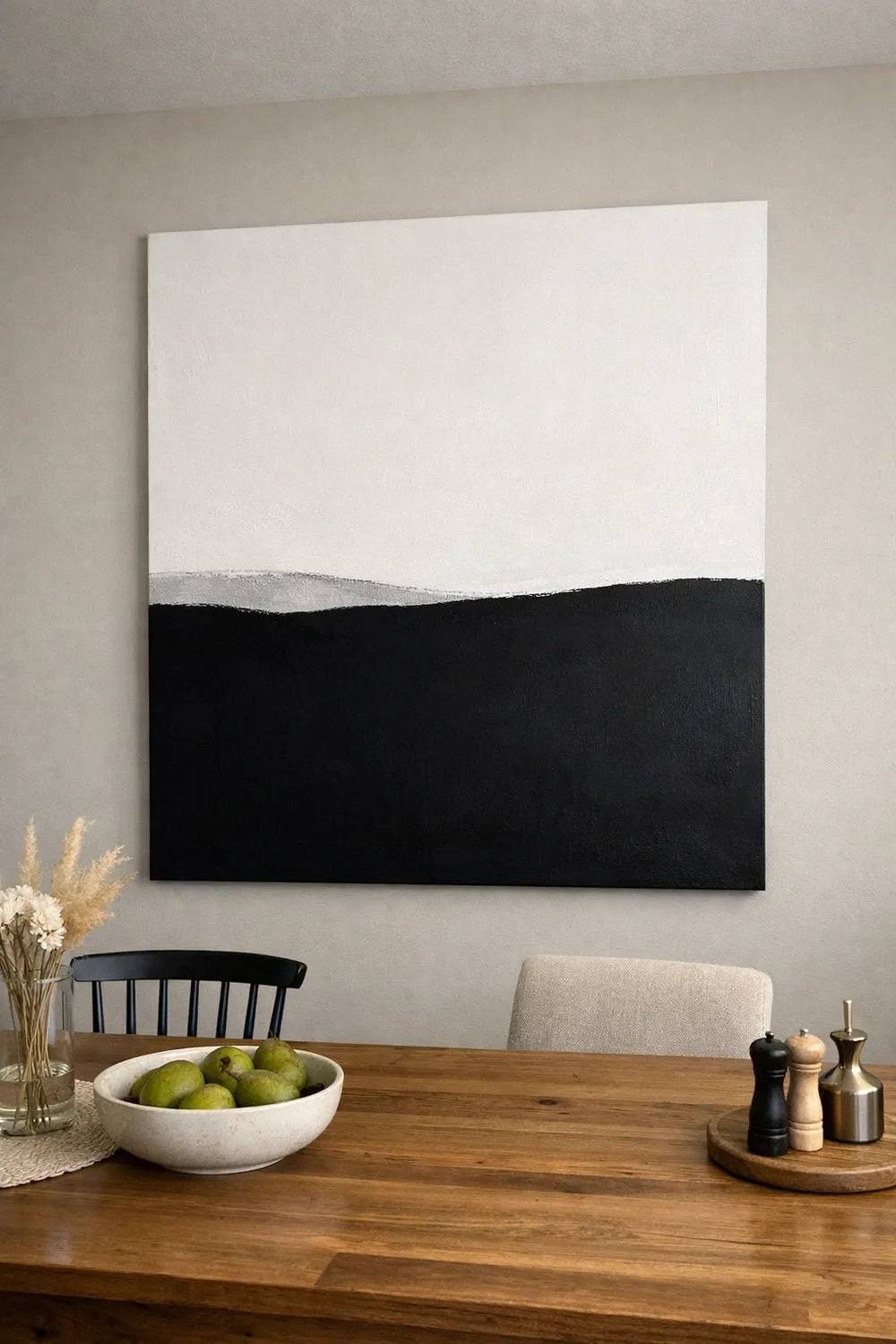
As a general rule, the art or decor should cover about two-thirds to three-quarters the width of the furniture below it. Above a sideboard that is 60 inches wide, a piece that is 40 to 45 inches wide looks proportional. Going too small is the most common mistake people make.
Should I match my dining room wall decor to my table style?
The decor does not need to match exactly but it should not clash. A rustic farmhouse table under a sleek modern art piece can actually work well because the contrast is interesting. What does not work is competing styles at the same level of intensity, like a heavily ornate table under heavily ornate wall art. One should be the star and the other should support it.
How do I light dining room wall decor?
Picture lights mounted above frames are the most traditional option. For a more subtle approach, recessed ceiling lights with adjustable heads can be aimed at the wall. Avoid overhead lights that wash the whole wall evenly because they flatten everything. Directional lighting creates highlights and shadows that make wall decor look its best, especially at night.
Can I mix different types of wall decor in one dining room?
Yes, but give each wall its own identity. One wall with a gallery of photos, another with a single large mirror, and a third with floating shelves works well because each wall has a clear purpose. Mixing multiple types on one wall, like a mirror, a shelf, and a gallery all on the same wall, usually looks cluttered rather than creative.