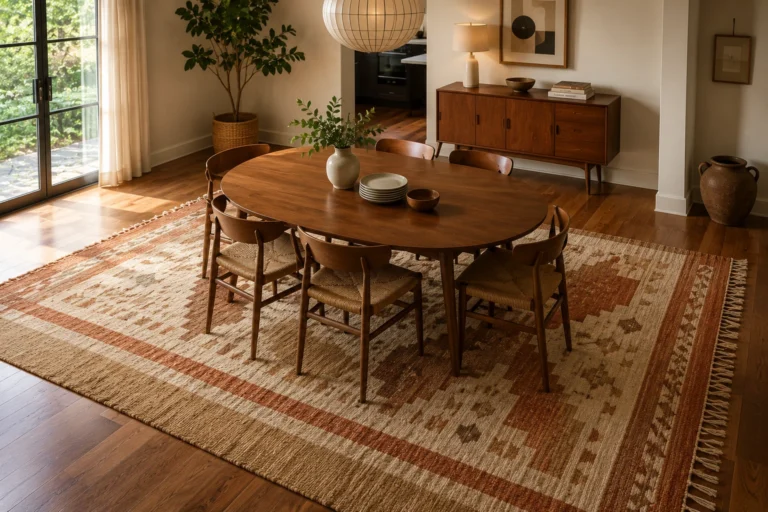
There is something about mid-century modern design that never seems to wear out its welcome. It showed up in the 1950s and 1960s with a refreshing attitude, one that said furniture should be beautiful and useful at the same time, that a room should feel open rather than crowded, and that color and wood grain belong together in the same space. Decades later, that attitude still holds up. If you are thinking about giving your dining room a proper overhaul or just want to pull a few pieces together in a way that actually makes sense, mid-century modern gives you a solid foundation to work with. It is specific enough to feel intentional but flexible enough to fit a range of homes and budgets.
The ideas below are grouped by theme so you can pick the direction that fits your space and your life. Most of these ideas work just as well as updates to an existing room as they do in a complete fresh start. Some of these ideas lean classic, others push toward something a little fresher, but all of them stay true to what makes mid-century modern worth doing in the first place: clean shapes, warm materials, honest details, and a room that feels good to sit in every single day.
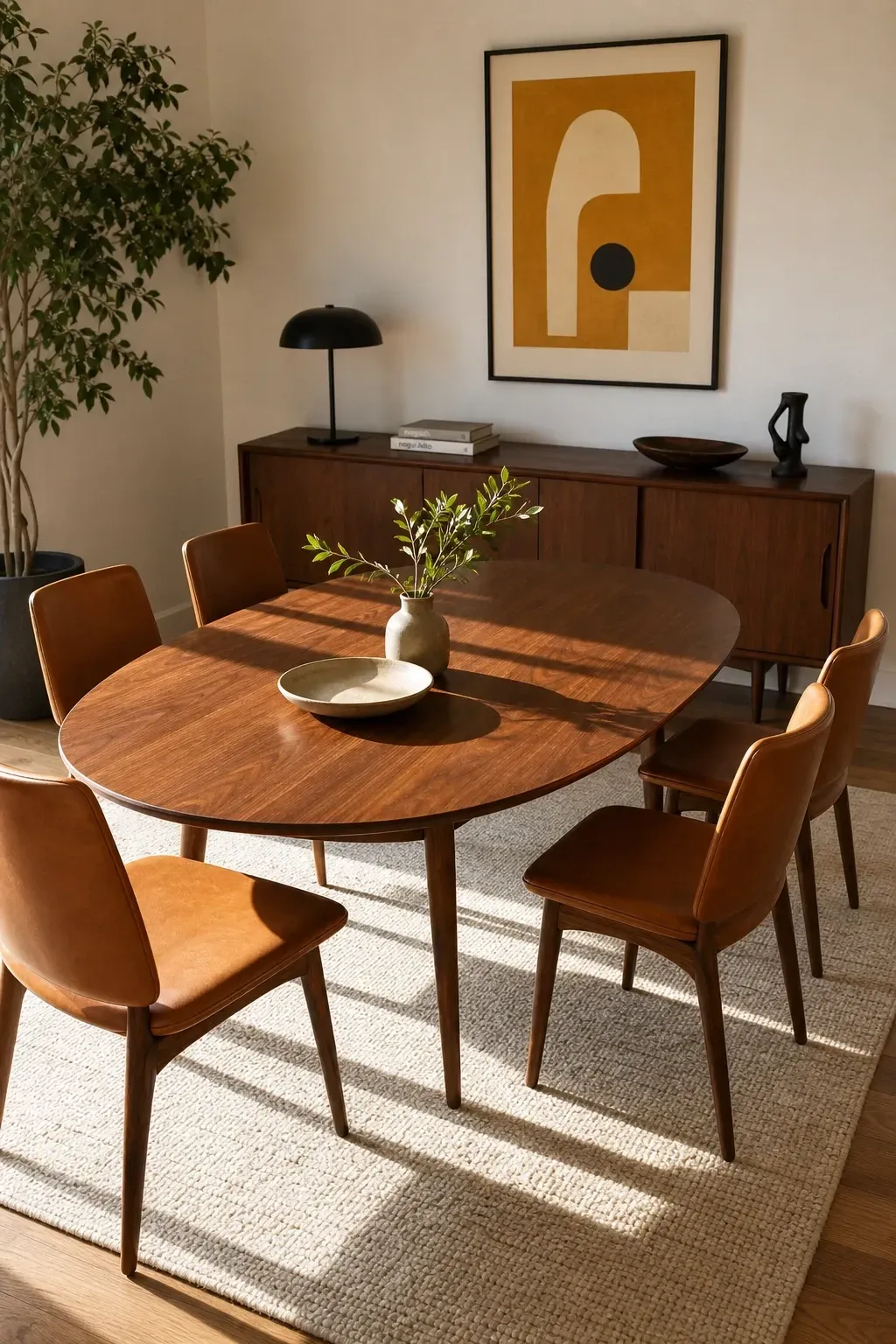
An oval walnut dining table is one of the most practical choices you can make for a mid-century modern dining room, and it also happens to be one of the most visually satisfying. The oval shape softens the room without going fully round, which means it fits better in rectangular spaces and still seats a crowd when needed. Pair it with dining chairs in a warm caramel leather or a burnt-orange boucle fabric, and keep the legs on both the table and chairs tapered and slender. The tapered leg is really the signature detail of the whole style. For the floor, medium-toned hardwood planks in a matte finish tie the wood tones together without looking too coordinated. Add a low, rectangular credenza against one wall to anchor the room and give you somewhere to stash extra tableware. Keep the wall above the credenza simple with one framed abstract print in earthy tones of ochre and warm white. The room should feel complete but not crowded.
Designer Tip: If solid walnut is out of budget, look for a walnut veneer table from brands like Article or West Elm. The look is nearly identical at a fraction of the cost.
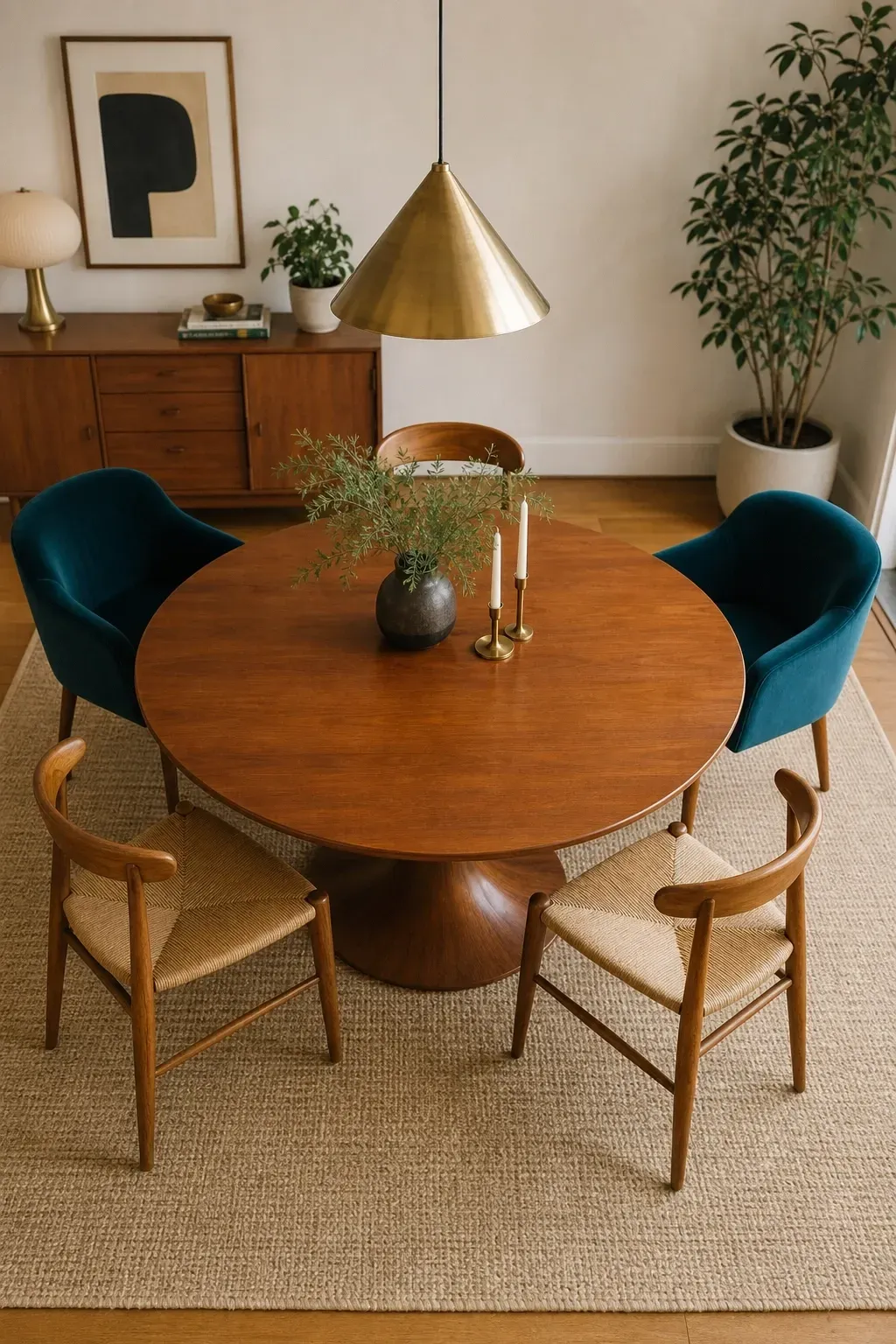
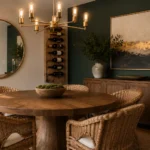
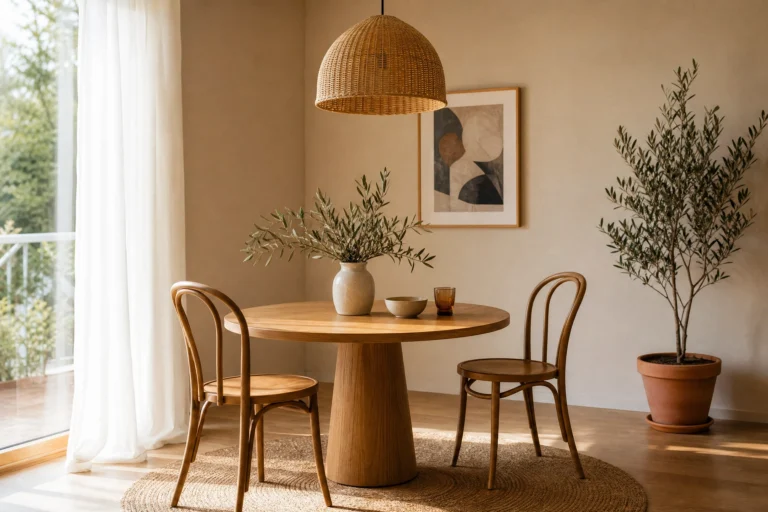
A round dining table creates a natural sense of equality at the table, everyone faces everyone, which makes it perfect for dinner parties and family meals alike. In a mid-century modern setting, choose a round table in teak or a rich honey oak with a pedestal base rather than four legs, which keeps the floor feeling clear and open. For seating, mix it up on purpose: use two upholstered armchairs at either end in a deep teal or forest green velvet, and fill the remaining seats with bentwood side chairs in a natural finish. The mix of arm and armless, upholstered and wood, is a classic mid-century move that looks collected and intentional. Hang a single low-profile pendant light directly over the table, something in brushed brass with a simple cone or globe shade. A jute or wool area rug in a warm cream or sand tone anchors the seating without competing.
Designer Tip: Keep the rug at least 24 inches wider than the table on all sides so chairs can slide back without catching on the edge. This is one of the most common sizing mistakes in dining rooms.
3. The Long Rectangular Table for Open Plan Spaces
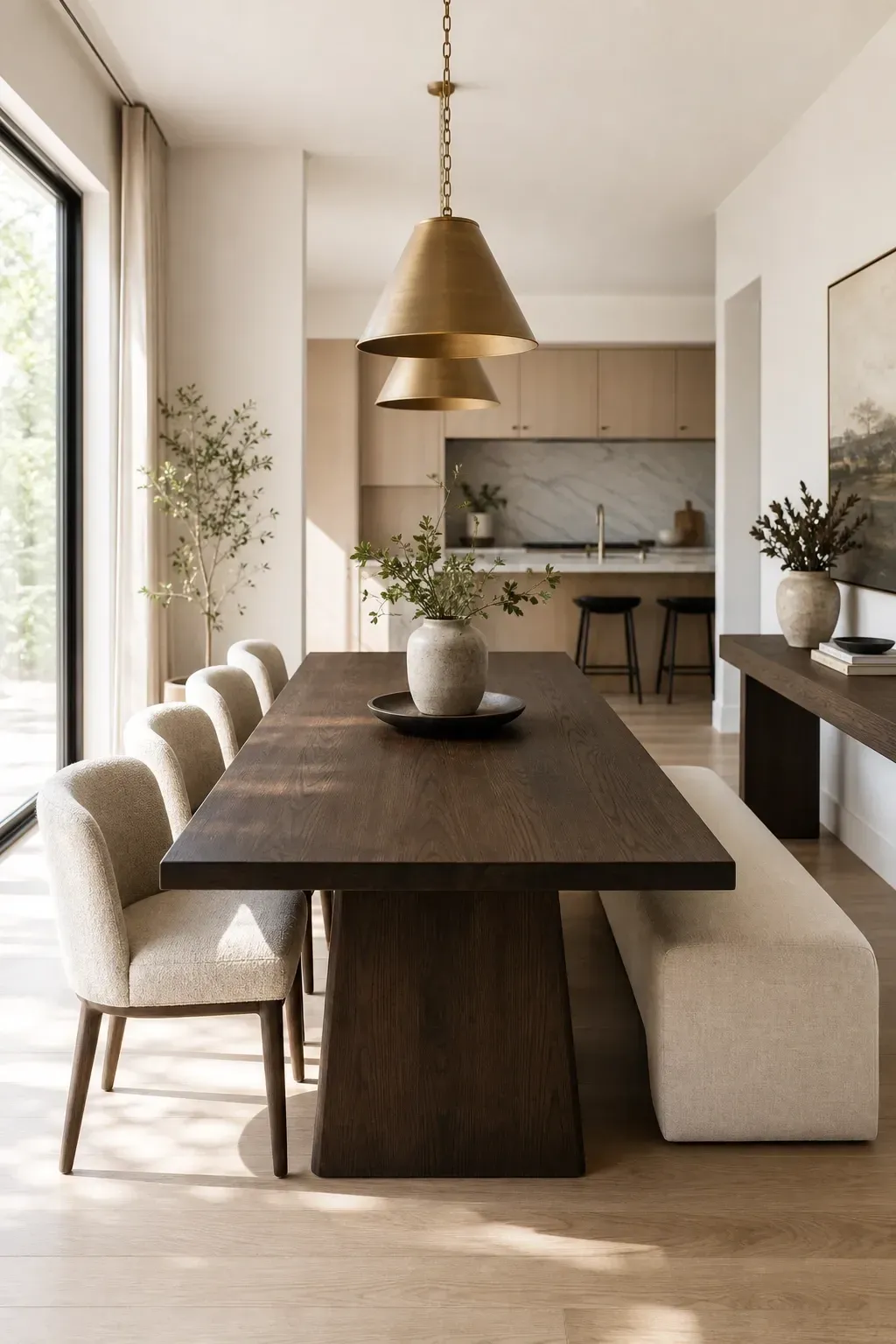
If your dining room flows into an open-plan kitchen or living space, a long rectangular table works beautifully to define the dining zone without putting up walls. Look for a table in a darker wood finish, something like smoked oak or espresso-stained ash, which gives the space a little more visual weight and helps it hold its own against the surrounding rooms. Pair it with matching chairs on one side and a low upholstered bench on the other for a relaxed, casual feel that still looks very much mid-century. Keep the bench fabric simple, a textured oatmeal weave or a warm olive linen works well. Overhead, a linear pendant or a row of two smaller pendants in matte black or aged brass defines the table from above without dropping too low. Add a thin, low-profile console table or sideboard behind the bench side to give the room a sense of depth.
Designer Tip: In open-plan spaces, use a pendant light to visually anchor the dining area. It does the work of a wall without closing off the space.
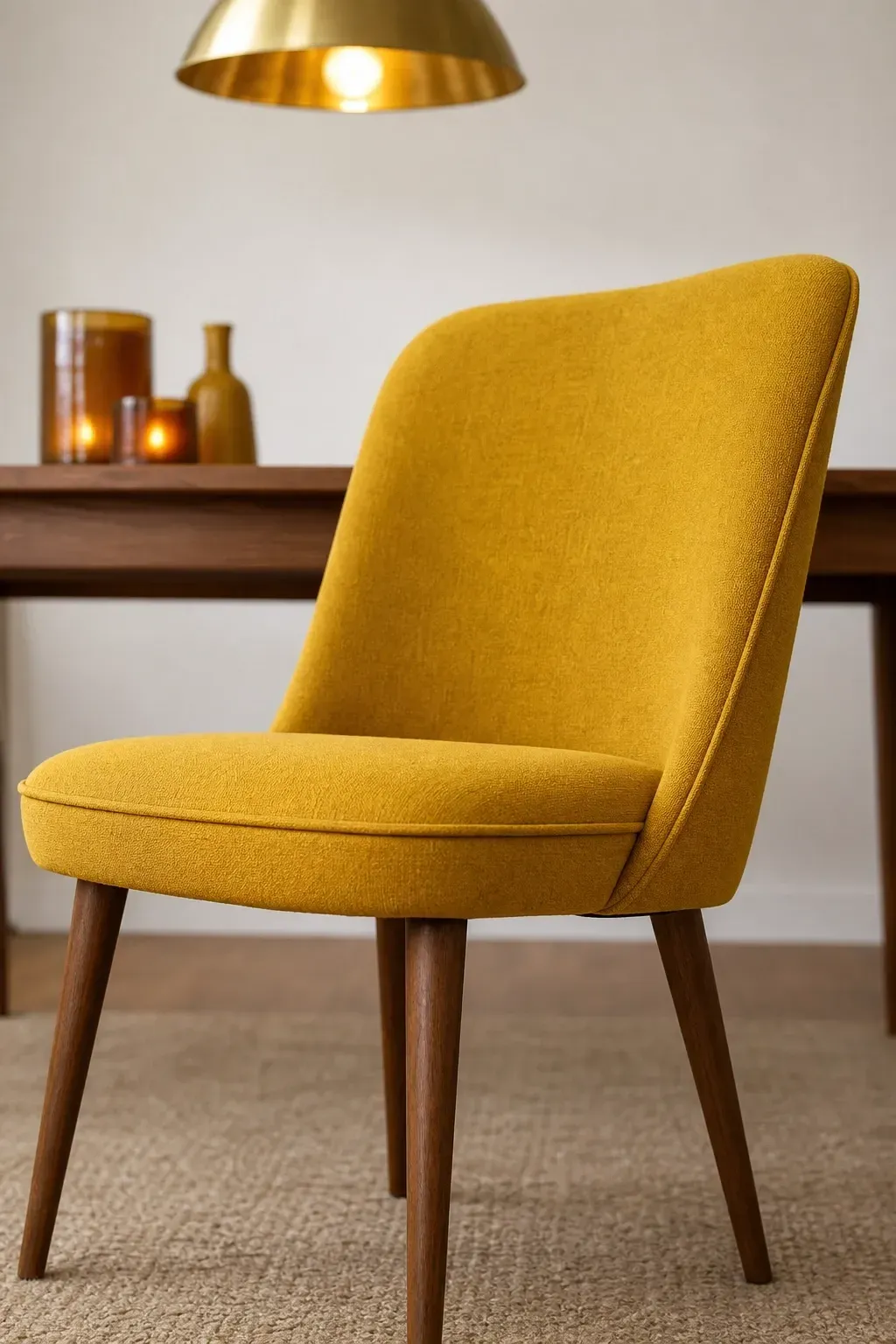
Mustard yellow is one of the most reliably good accent colors in mid-century modern design. It is warm without being orange, cheerful without being overwhelming, and it plays beautifully against wood tones and white walls. Use it in your dining chairs, either fully upholstered or just on the seat cushion, and let the rest of the room stay relatively neutral. White or warm cream walls, natural wood furniture, and concrete or terrazzo-look flooring all give mustard room to shine. If you want to carry the color a little further, add a mustard-toned ceramic vase or a set of amber glass candleholders on the table. A brass pendant light overhead pulls the yellow tones up into the ceiling plane and ties it all together. The overall effect is cheerful, grounded, and very much of its era without feeling like a costume.
Designer Tip: If you are nervous about mustard, start with just the seat cushions. You can always go bigger later, but this way you get a feel for the color in your actual space with natural and artificial light.
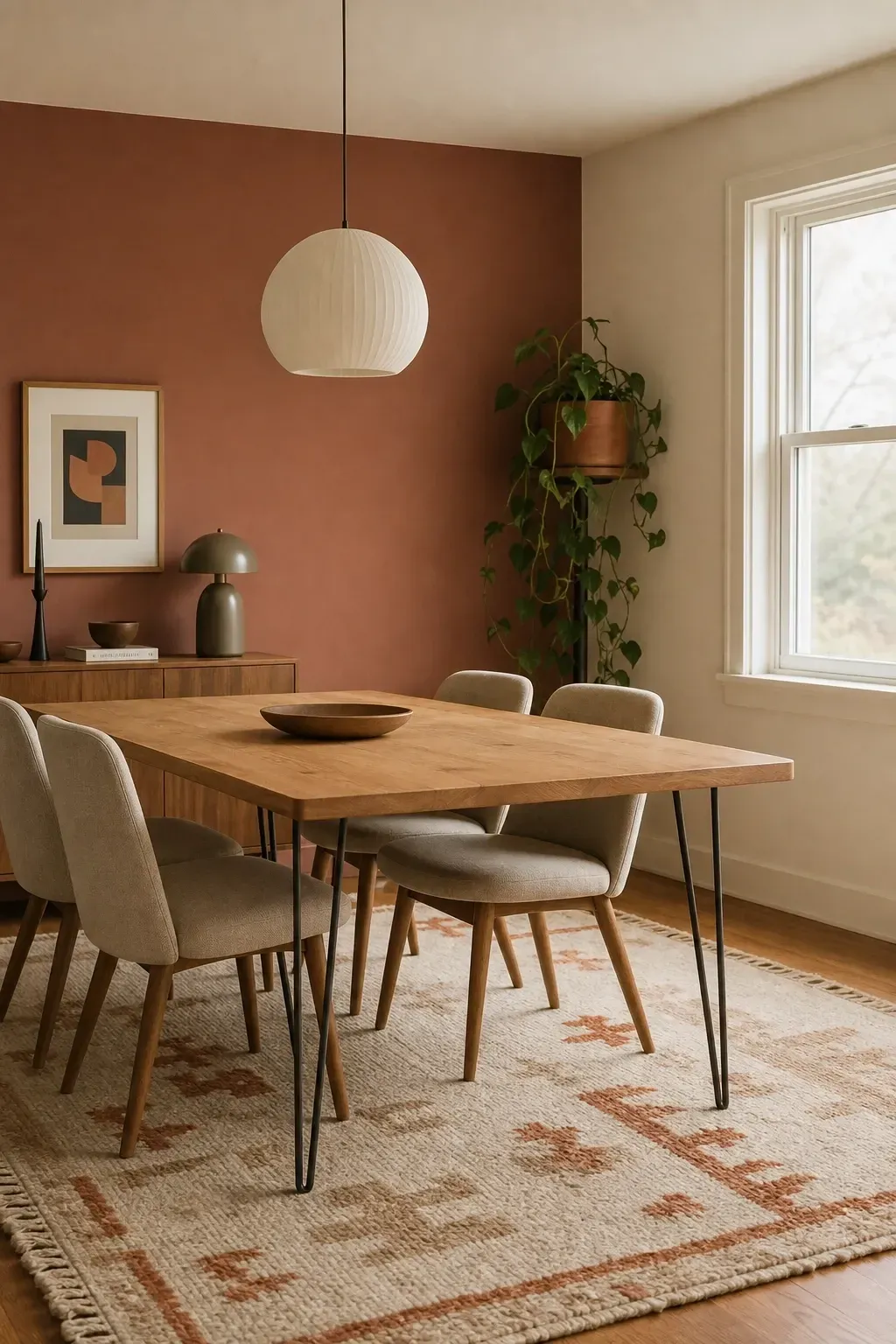
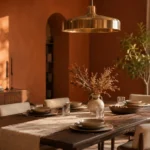
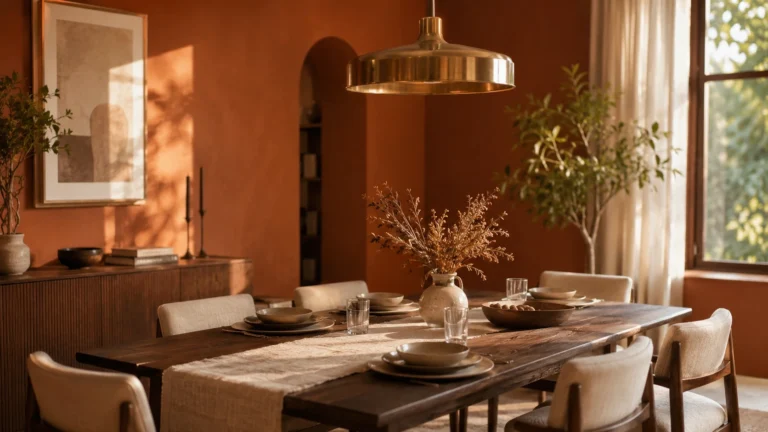
Terracotta is having a genuine moment right now, and it fits mid-century modern better than you might expect. The earthy reddish-orange tone connects directly to the organic materials and warm color palettes that defined 1950s and 1960s interiors. Paint one accent wall in a soft terracotta, something more dusty than bright, and keep the remaining walls in a warm off-white rather than a stark, cool white. Against this backdrop, a light oak or pine dining table with hairpin legs feels right at home. Use natural linen or raw cotton upholstery on the chairs to keep the palette grounded and tactile. A handwoven wool rug in ivory, rust, and sand brings more texture into the space without adding more color. On the table, a simple terracotta planter with a trailing plant or a bunch of dried grass in a ceramic vase adds a natural centerpiece that costs almost nothing.
Designer Tip: If painting a full wall feels too permanent, try a terracotta sideboard or a painted console. A single statement piece in this tone reads just as confidently as a whole wall.
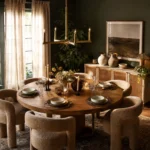
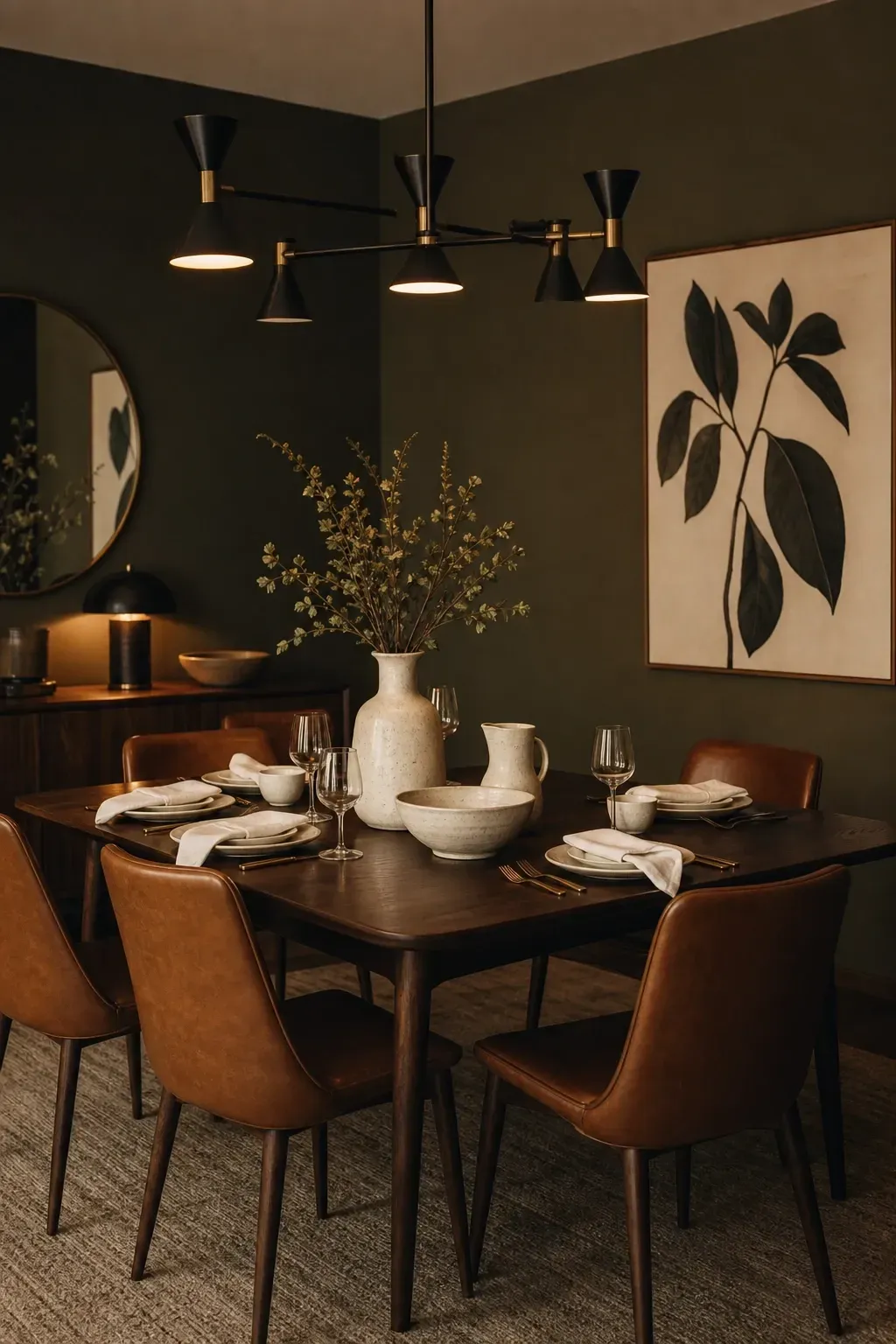
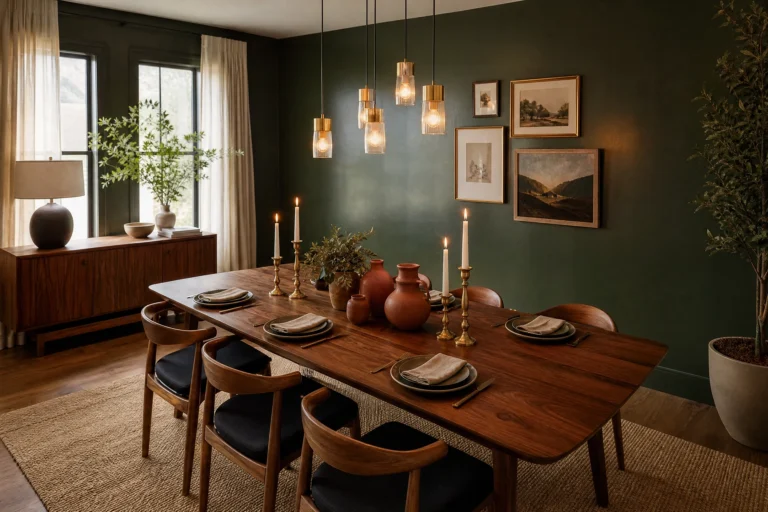
For a dining room that feels a little richer and more atmospheric, pair olive green with dark walnut or ebonized oak furniture. This combination leans into the more sophisticated side of mid-century modern, the kind you might find in a 1960s Danish design magazine. Paint the walls in a warm, desaturated olive, not army green and not limey, but something that reads almost like a neutral from a distance. Against this, a dark walnut dining table with slim tapered legs creates a strong visual anchor. Upholster the dining chairs in a cognac leather or a warm ochre fabric to keep the palette from going too dark. A sculptural chandelier in blackened brass or dark bronze overhead adds drama without clutter. On the walls, a large framed botanical print or an abstract canvas in muted greens and browns completes the look. This is a room that feels genuinely impressive at a dinner party.
Designer Tip: When working with dark walls and dark furniture, use light-toned accessories and tableware to create contrast. Cream ceramics, white linen napkins, and pale candles keep the table from disappearing into the background.
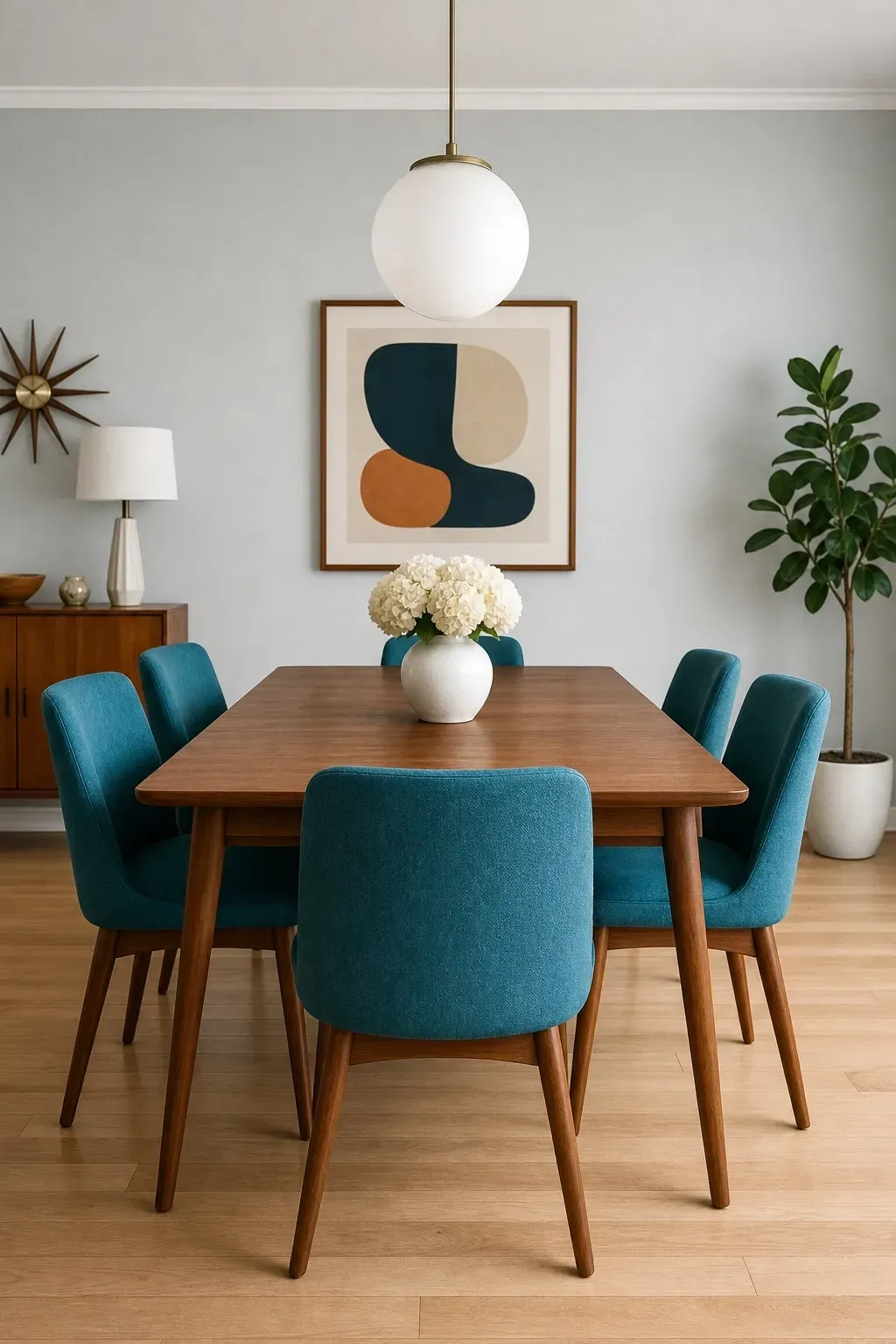
The combination of teal and walnut is practically a mid-century modern icon. It shows up in vintage Herman Miller catalogues, in Palm Springs bungalows, and in every good interior design book covering the era. There is a reason it keeps coming back: the coolness of teal against the warmth of walnut creates a balance that just works. Use teal for your dining chairs, either fully upholstered in a smooth fabric or in a matte vinyl for easy cleaning. The table should be in a medium to dark walnut finish with the signature tapered legs. White or very pale gray walls let both colors read clearly. A woven pendant shade in natural rattan or a globe-shaped light in frosted glass overhead keeps the ceiling plane warm and approachable. Add a low vase of white or cream flowers on the table and the room is essentially done.
Designer Tip: Teal fades and shifts in different lights, so always look at fabric samples in your actual dining room before committing. In rooms with warm artificial light, some teals can pull greener than expected.
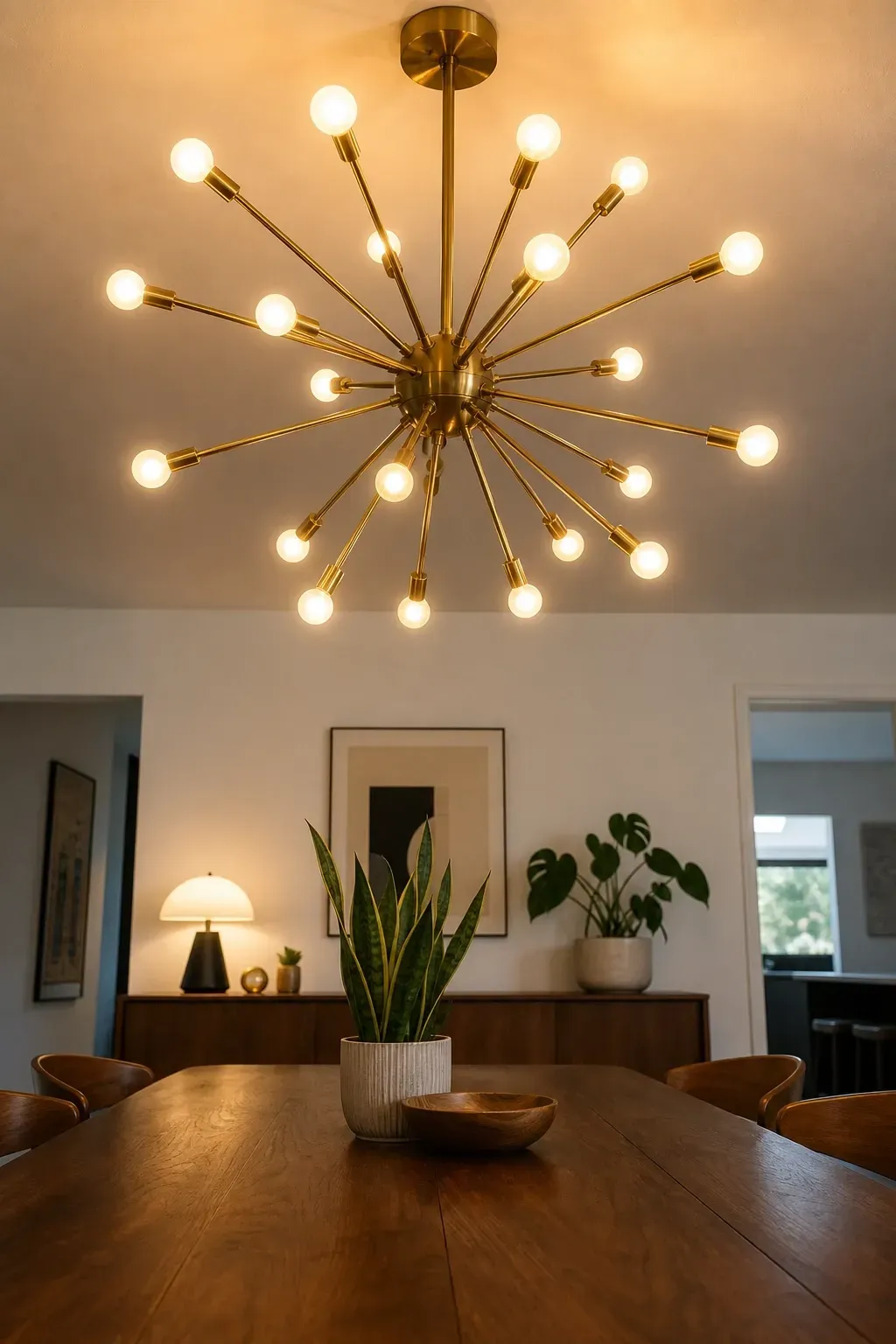
Few lighting choices read as unmistakably mid-century as the Sputnik chandelier. Named after the Soviet satellite that inspired a wave of atomic-age design, these starburst fixtures are bold, sculptural, and surprisingly easy to live with. Choose one in a brushed brass or antique gold finish for a warmer, more inviting feel. Size matters here: for a typical dining room, look for a fixture that is between 24 and 36 inches in diameter. Hang it so the bottom of the fixture sits about 30 to 36 inches above the tabletop for a proper sense of presence without blocking sightlines. The rest of the room should stay fairly simple when a Sputnik is involved. A clean-lined walnut table, white walls, and neutral chairs let the chandelier do its thing without a fight. Use warm-toned Edison bulbs or globe bulbs to soften the spread of light.
Designer Tip: Install your Sputnik chandelier on a dimmer. At full brightness it is functional and sharp; dimmed down it becomes atmospheric and cinematic. It is one fixture that earns its drama at every setting.
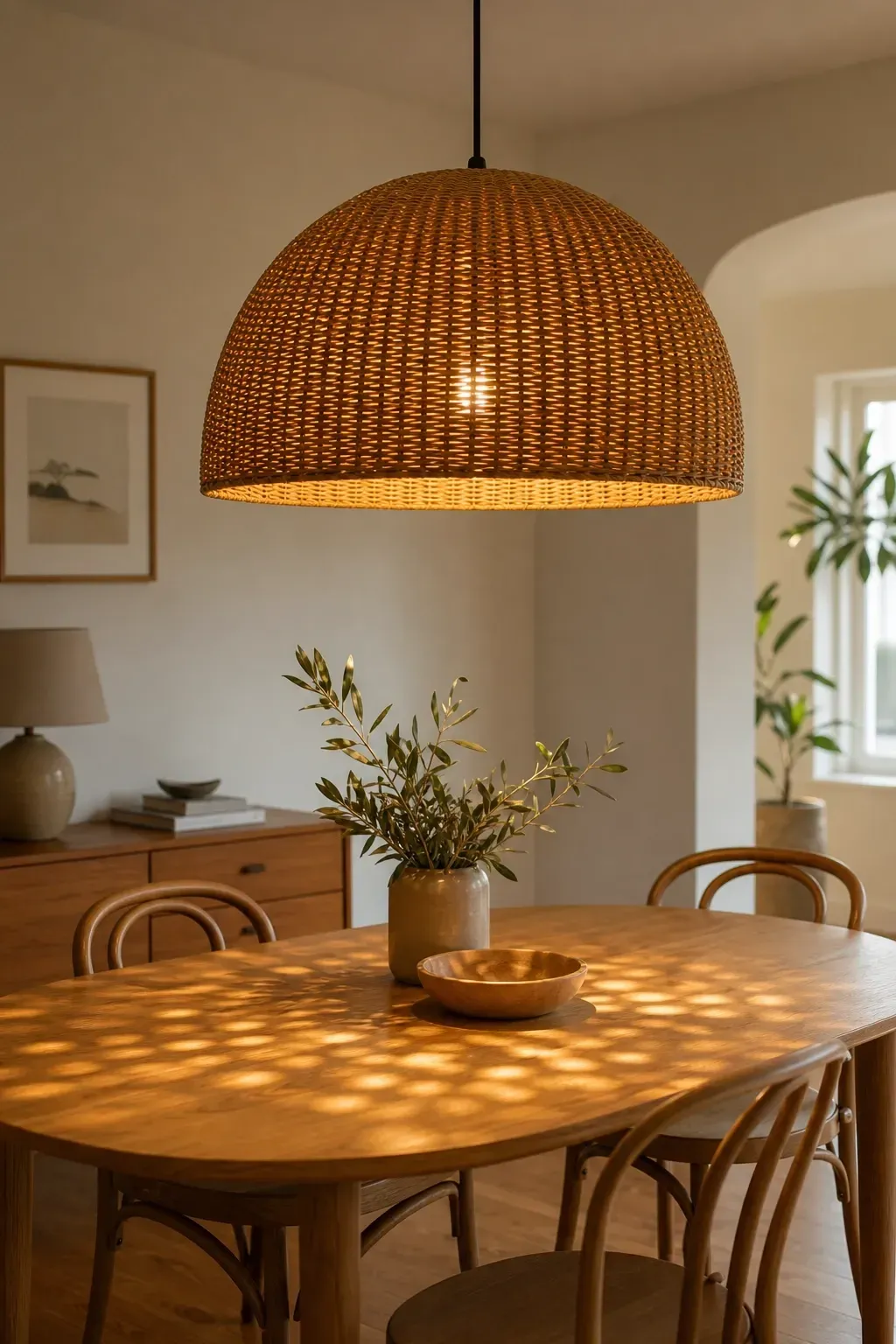
If you want lighting that adds warmth and texture rather than just light, a woven pendant shade in rattan, bamboo, or seagrass is a great choice for a mid-century modern dining room. These shades filter light in a beautifully diffused way, casting a golden, dappled glow across the table that feels very much like candlelight but with more coverage. For a dining room table, hang one large dome-shaped shade centered over the table, or use two smaller drum-shaped pendants side by side for a longer rectangular table. The natural material plays nicely with both light and dark wood furniture and adds an organic contrast to the clean, geometric lines that mid-century design is known for. A linen or jute shade in a similar neutral tone works equally well if rattan is not your style. Both keep the ceiling from feeling cold or stark.
Designer Tip: Pair a woven shade with a simple brass or matte black canopy and cord. Avoid chrome or polished silver hardware here, as it competes with the natural texture of the shade instead of complementing it.
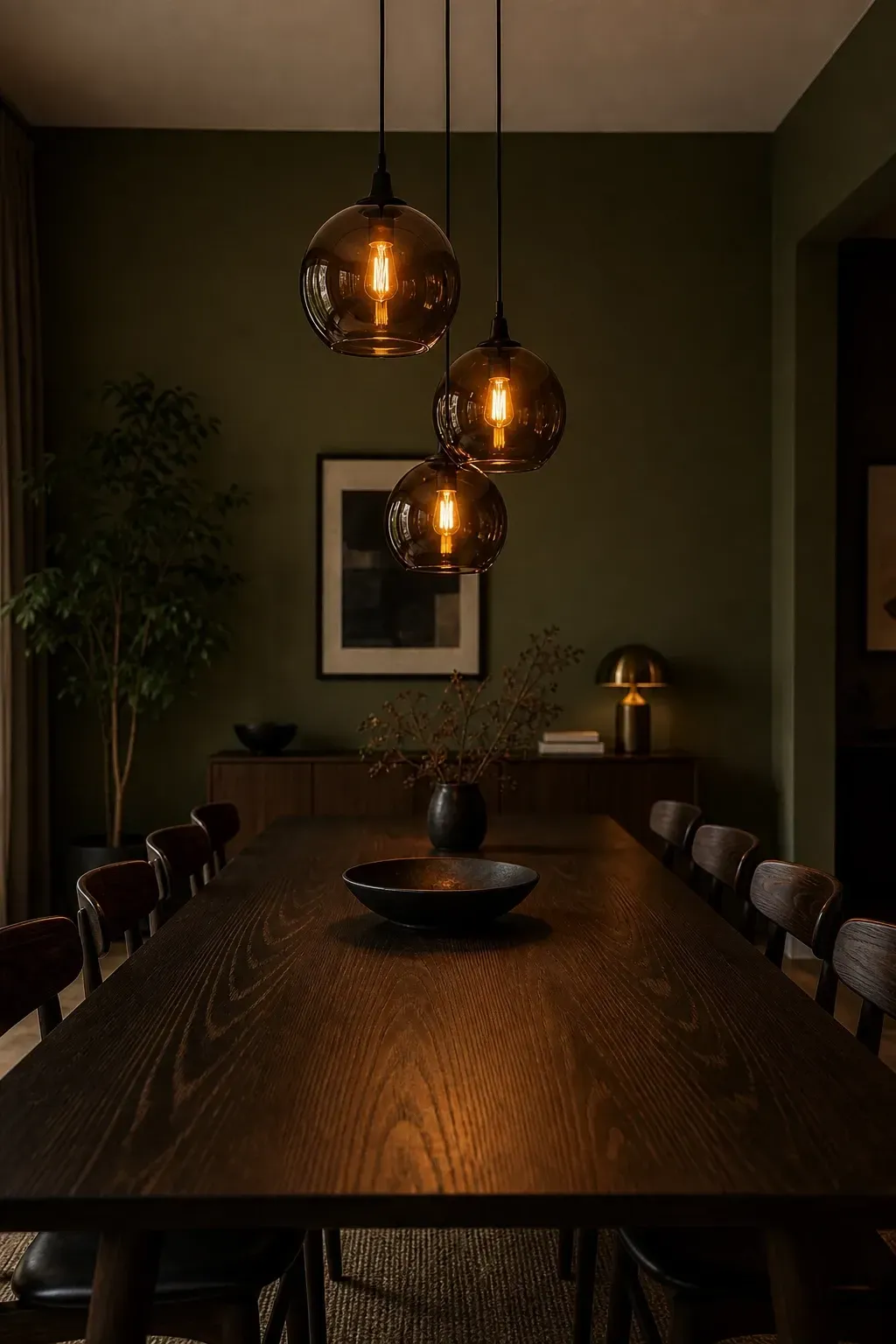
Smoked glass globe pendants hit a very specific sweet spot in mid-century modern dining rooms. They are simple in shape but rich in material, and the smoky amber or gray tone of the glass gives off a warm, amber-tinted light that makes everything and everyone at the table look better. Use a cluster of three pendants at different drop heights over a long table for a casual, layered look, or a single large globe centered over a round table for something cleaner and more formal. Pair with a matte brass fitting or a powder-coated black canopy depending on the overall warmth of the room. Smoked glass reads particularly well in rooms with dark or jewel-toned walls because the glass adds depth without blocking the color. In a white or neutral room, the dark glass creates a focal point that keeps the space from feeling too plain.
Designer Tip: Smoked glass diffuses glare better than clear glass, making it far more comfortable for long dinner gatherings where direct light can feel harsh. Always check the lumen output on the recommended bulb so you get enough light for eating.
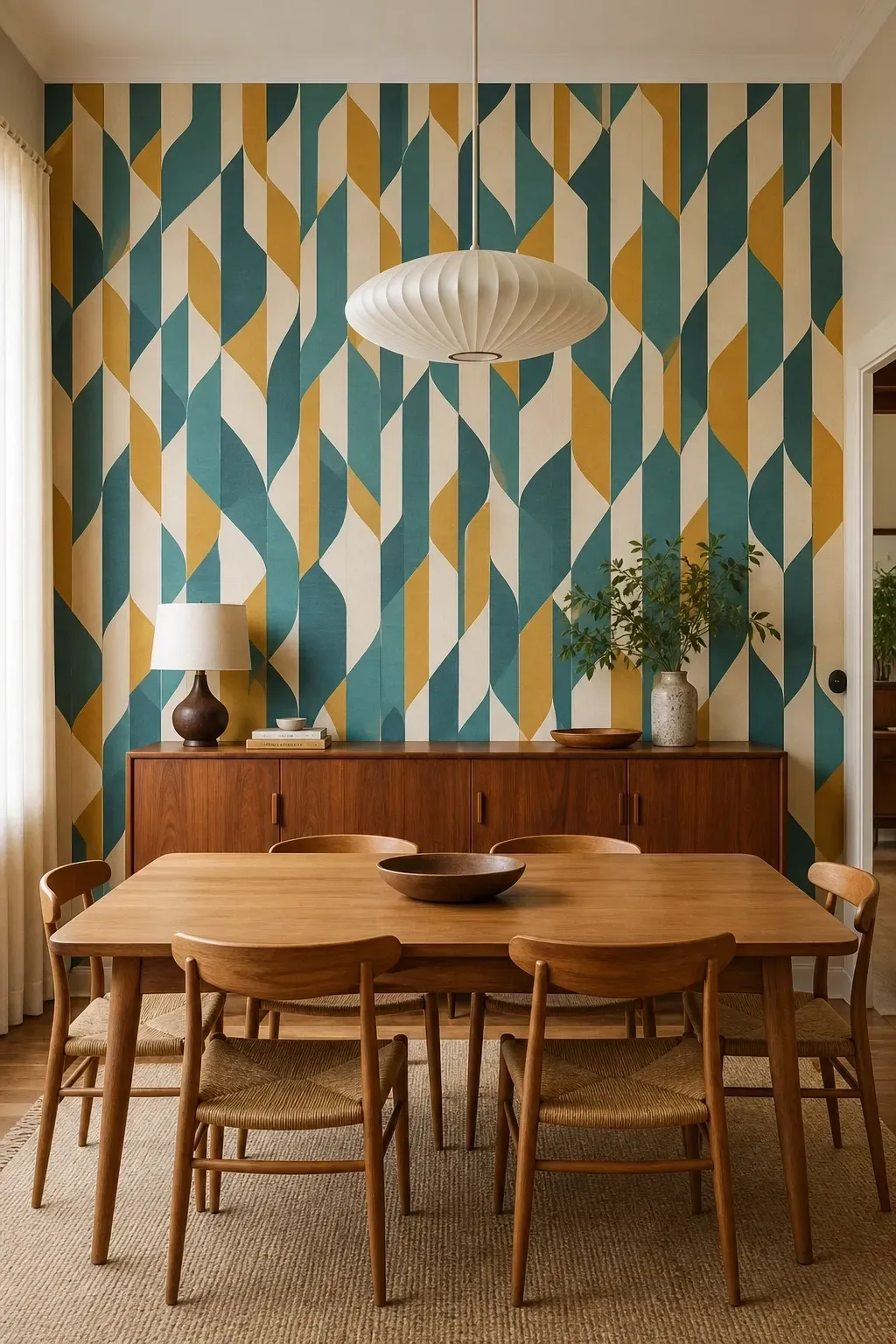
Wallpaper is one of the fastest ways to shift a room into mid-century modern territory, especially when you choose a pattern that reflects the era’s love of geometry and graphic repetition. Look for patterns with overlapping circles, diamond grids, or abstract boomerang shapes in a palette of warm neutrals, burnt orange, teal, or mustard. Apply it to the wall behind your dining table or sideboard as a focal-point feature wall rather than papering all four walls, which can feel overwhelming in a smaller room. The wallpaper wall pulls the whole room into focus and gives the eye somewhere to land. Keep the furniture in that area relatively simple so the pattern reads clearly. A sideboard in a solid wood tone and a few accessories on top are all you need. This approach works in both small dining rooms and large open spaces.
Designer Tip: Peel-and-stick wallpaper has gotten genuinely good in the last few years. Brands like Chasing Paper and Tempaper offer mid-century modern prints that go up and come down without damaging walls, which is perfect if you rent or are not ready to fully commit.
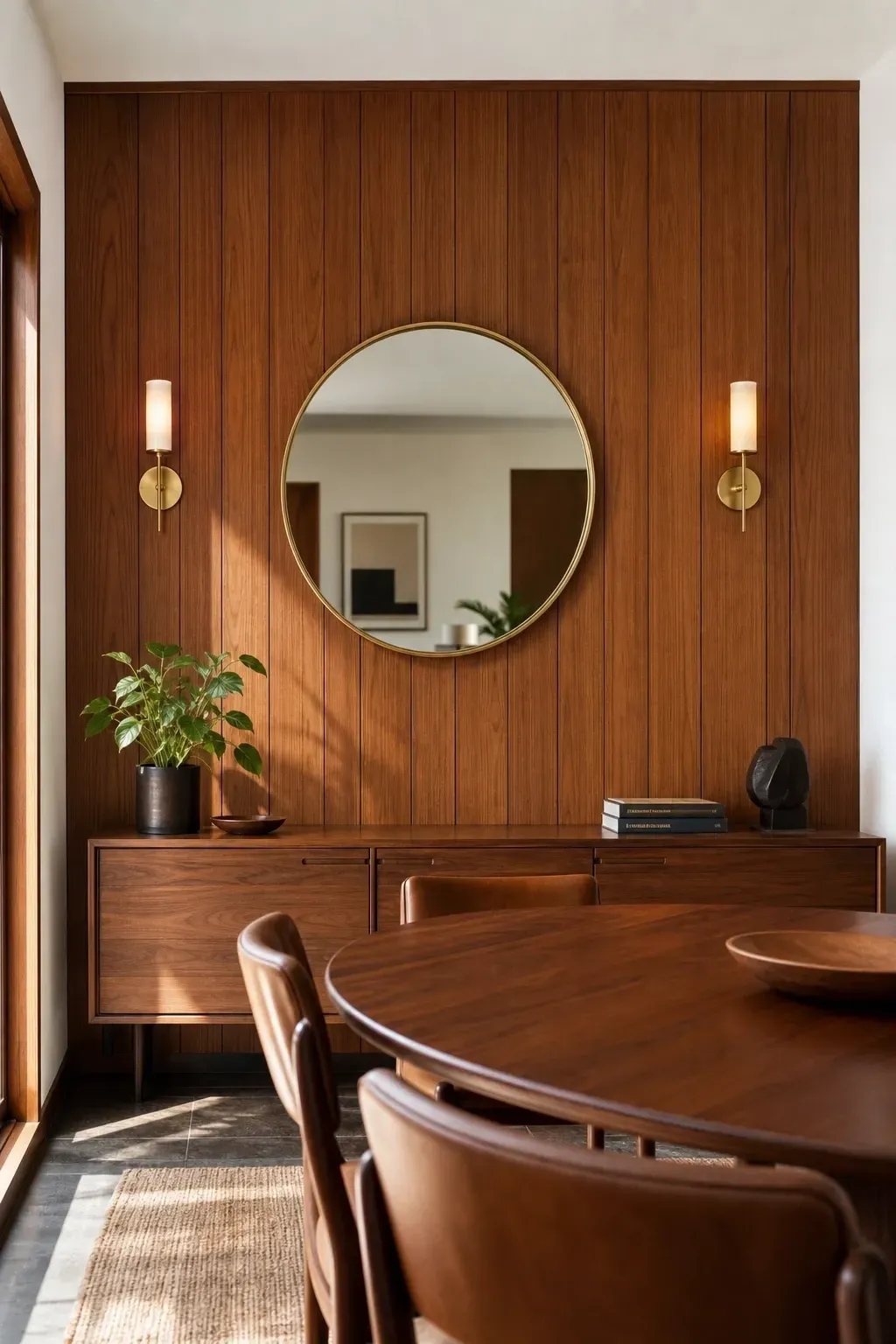
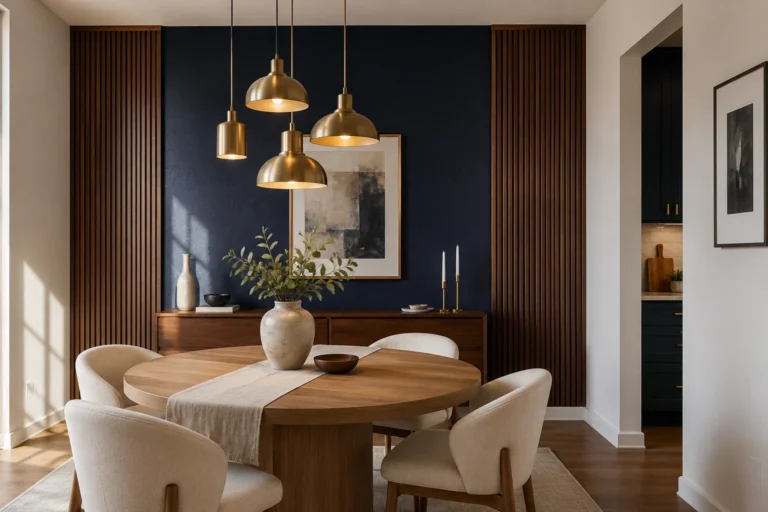
Wood paneling is deeply associated with mid-century architecture, particularly in American ranch houses and California modernist homes of the 1950s and 1960s. In a dining room, applying vertical or horizontal wood panels to one wall adds enormous warmth and textural depth. Natural teak, pine, or walnut-stained plywood strips are all period-appropriate choices. Install them floor to ceiling on the wall your dining table sits against, and let the natural grain of the wood be the decoration. Against this backdrop, a simple round mirror in a thin brass frame and a small wall sconce on either side create a composed, gallery-like arrangement. The paneling also works beautifully as a backdrop for hanging art: a large canvas in abstract shapes pops dramatically against the wood grain. The remaining walls can stay plain white or cream to let the paneling breathe.
Designer Tip: If full wall paneling feels too involved, try a half-wall treatment with paneling from the floor to about chair-rail height. It gives you the warmth and texture without committing the entire wall.
13. A Gallery Wall of Abstract and Botanical Prints
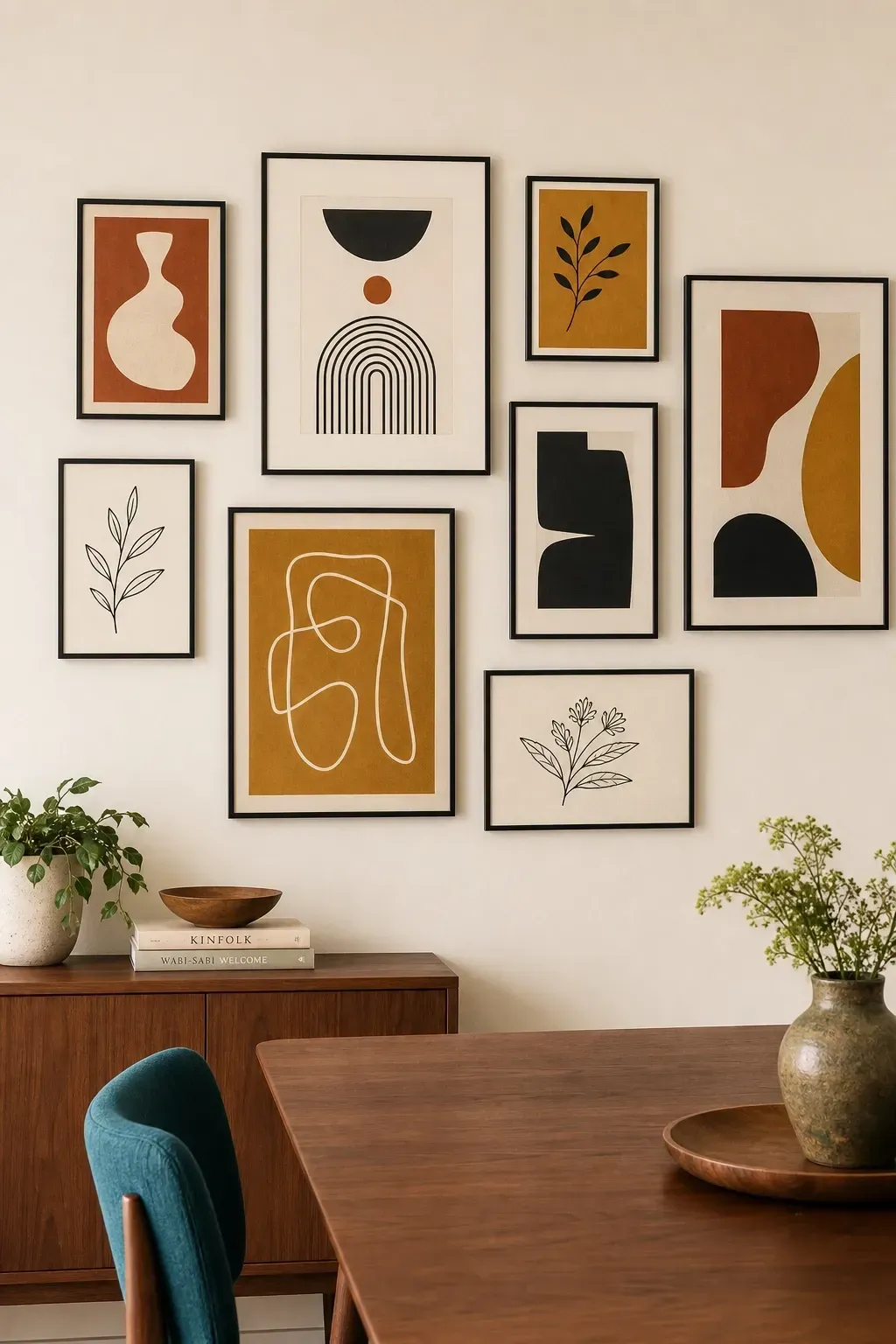
A well-put-together gallery wall can do a lot of heavy lifting in a dining room, and in a mid-century modern space it is a chance to show some personality without straying from the overall look. Mix abstract prints in the era’s signature palette of ochre, warm white, rust, and black with a few simple botanical line drawings for balance. Keep the frames consistent in finish, thin black metal or simple natural wood works best, but vary the sizes for visual rhythm. Arrange the collection in a loose grid rather than a perfect symmetrical grid for a more relaxed feel. The wall it goes on matters too: the wall opposite your seating or beside a window gets the most natural attention. Leave a little more space between frames than you think you need. Mid-century modern design is about breathing room, and that principle applies to art arrangements just as much as furniture.
Designer Tip: Lay your gallery wall arrangement out on the floor first and photograph it before committing any nails to the wall. This saves you a wall full of patch holes and lets you adjust the spacing until it looks right.
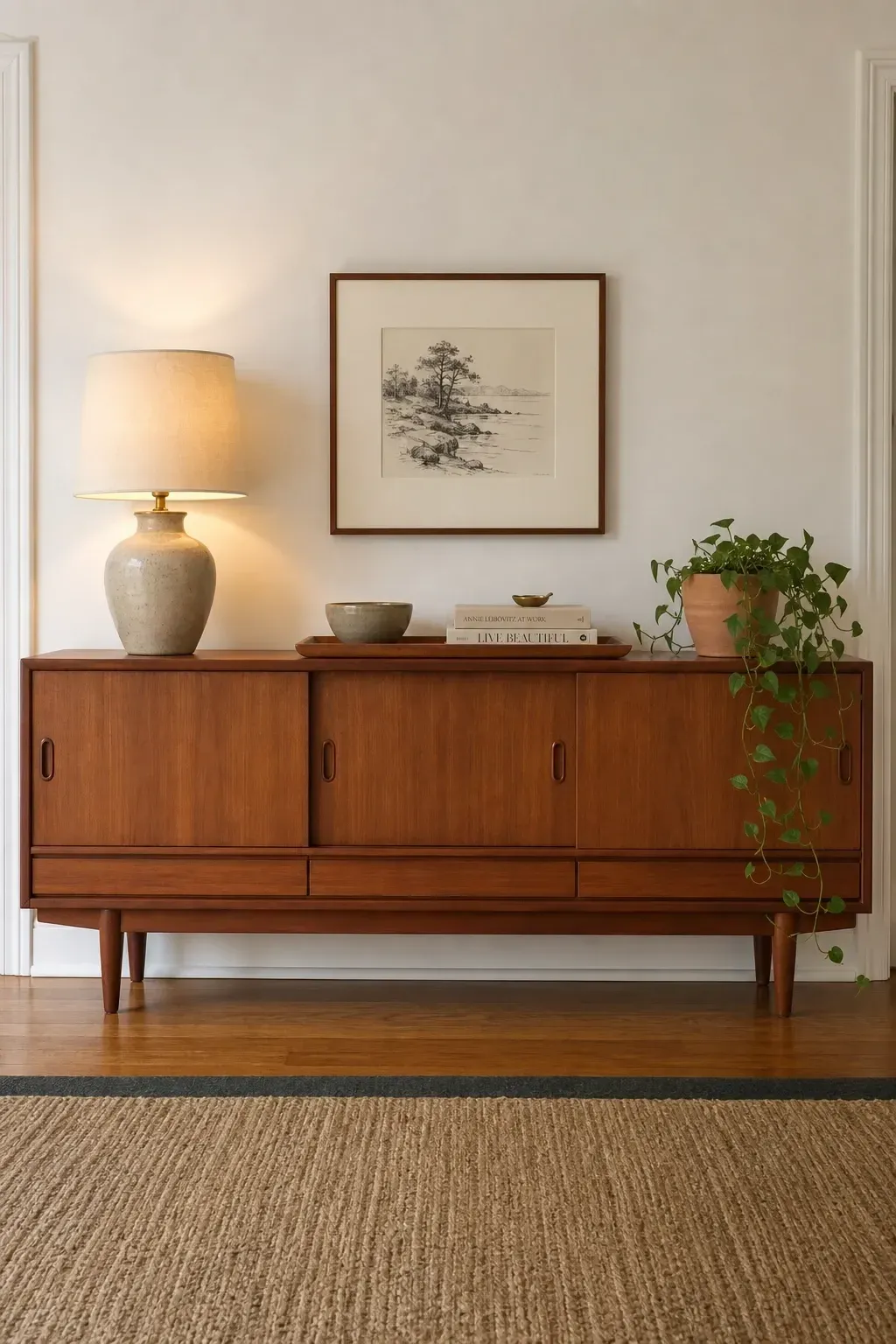
If there is one piece of furniture that belongs in every mid-century modern dining room, it is the low-profile sideboard. This is the piece that gives the room its architecture. It sits low to the ground on tapered legs, stretches wide along one wall, and provides both storage and a surface for styling. Look for one in teak, walnut, or a wood with a strong grain pattern, and choose a piece with a mix of drawers and cabinet doors behind which you can hide the less decorative things in life: extra linens, serving pieces, candles. On top of the sideboard, keep the styling simple and considered. A ceramic table lamp on one end, a small tray with a few objects, and maybe a plant or a framed print leaning against the wall. The sideboard is also a great place to introduce an unexpected color, something in a painted finish like a muted sage or a warm terracotta to break up the wood tones.
Designer Tip: A lamp on your sideboard does double duty: it provides ambient light for the room and makes the sideboard look dressed and intentional rather than like a storage unit you pushed against the wall.
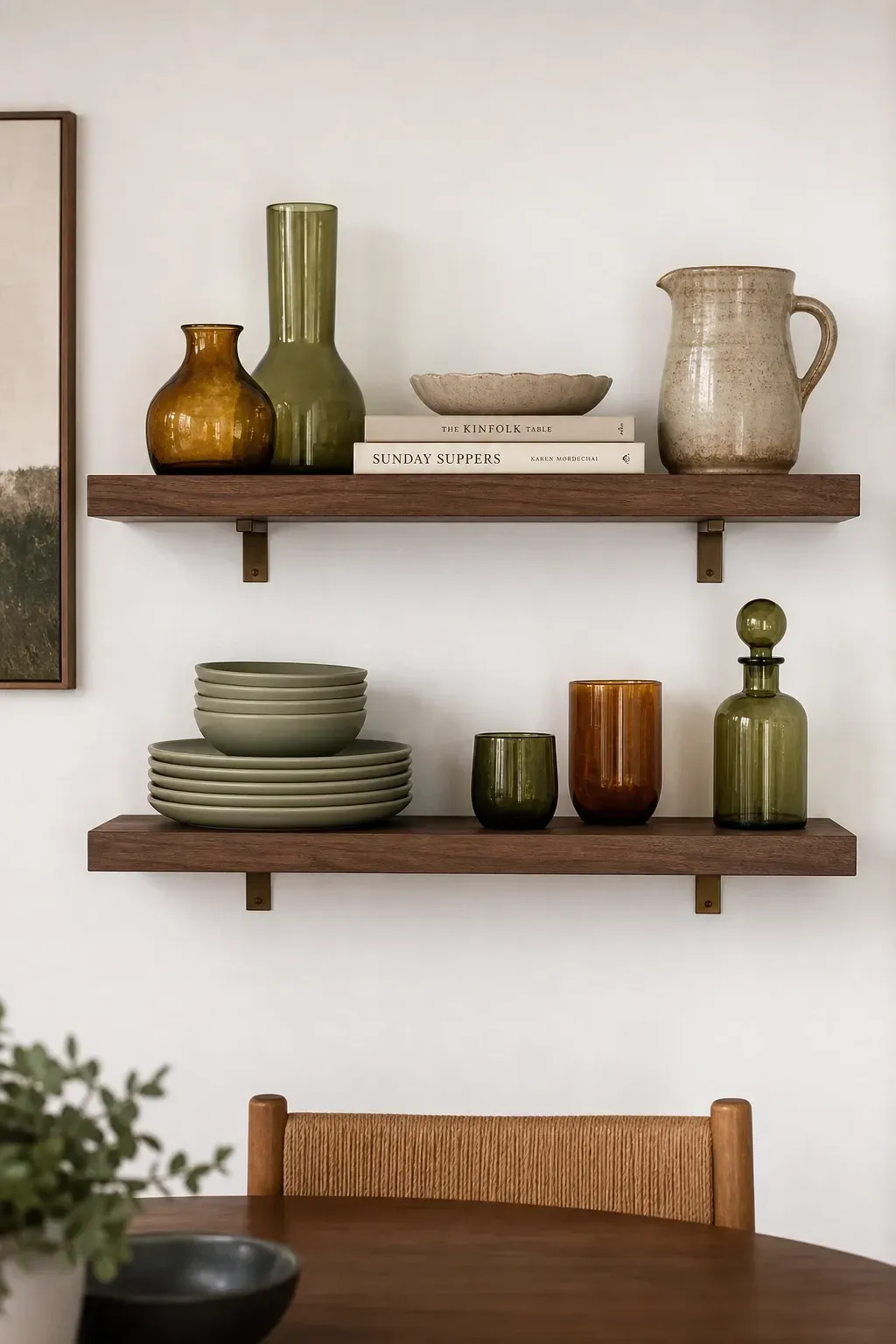
Open shelving in a dining room is a mid-century modern move that doubles as decoration. Instead of hiding everything behind cabinet doors, floating shelves in a warm wood tone give you a place to display your favorite ceramics, glassware, and a few well-chosen objects in a way that feels intentional and personal. Mount two or three shelves at varying heights on a single wall, keeping them roughly 12 inches deep so they feel proportional. Style them with a mix of practical items, stacked dinner plates in a solid earthy tone, a small collection of amber or green glass, a ceramic jug, and a few books about design or food. Avoid overcrowding: mid-century modern styling is about the space between objects as much as the objects themselves. Leave room to breathe, and resist the urge to fill every inch. The result looks intentional and casual at the same time, which is exactly the right tone for this style.
Designer Tip: Group items in odd numbers, threes and fives, and vary the heights of objects on each shelf. This keeps the display from looking flat and gives it visual movement.
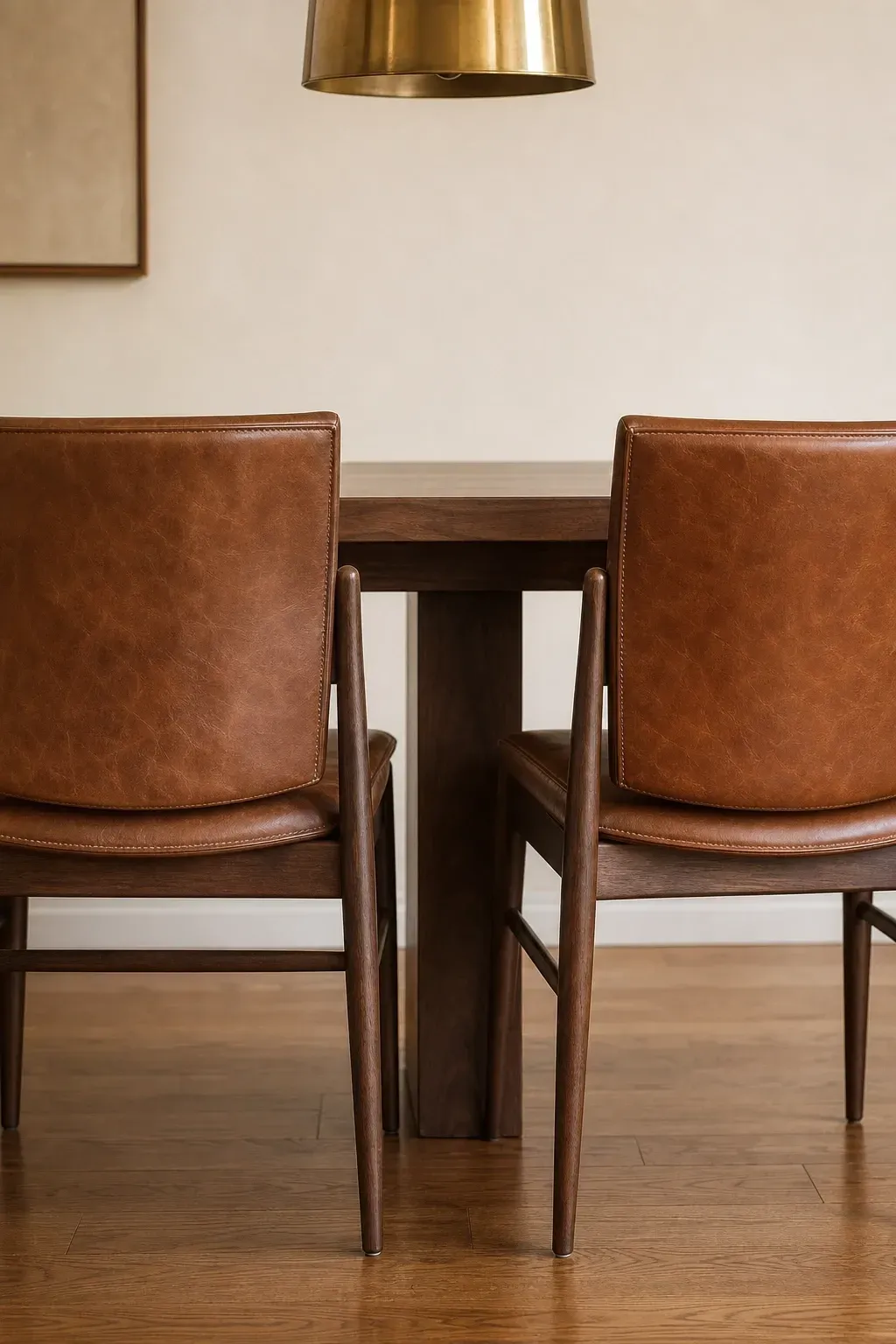
Leather dining chairs are a mid-century modern staple, and they make practical sense in a room where spills are a fact of life. Cognac, saddle brown, and caramel are the warmest and most versatile tones, aging beautifully over time in a way that only adds to the character of the room. For a classic look, choose a chair with a low, angled back and a seat that wraps slightly around the sides, similar in spirit to the original Eames dining chair. A set of four or six in a matching cognac leather around a walnut or oak table is one of those combinations that is hard to get wrong. If full leather feels too formal, look for chairs with leather seats and wood backs as a lighter alternative. The wood warms the look and brings it back toward the organic, handcrafted quality that is central to mid-century modern at its best.
Designer Tip: Genuine leather develops a patina over time that actually improves the look of the chairs. If budget is a concern, a good quality bonded leather or faux leather in a similar tone is a reasonable substitute, but avoid anything that looks plastic or overly shiny.
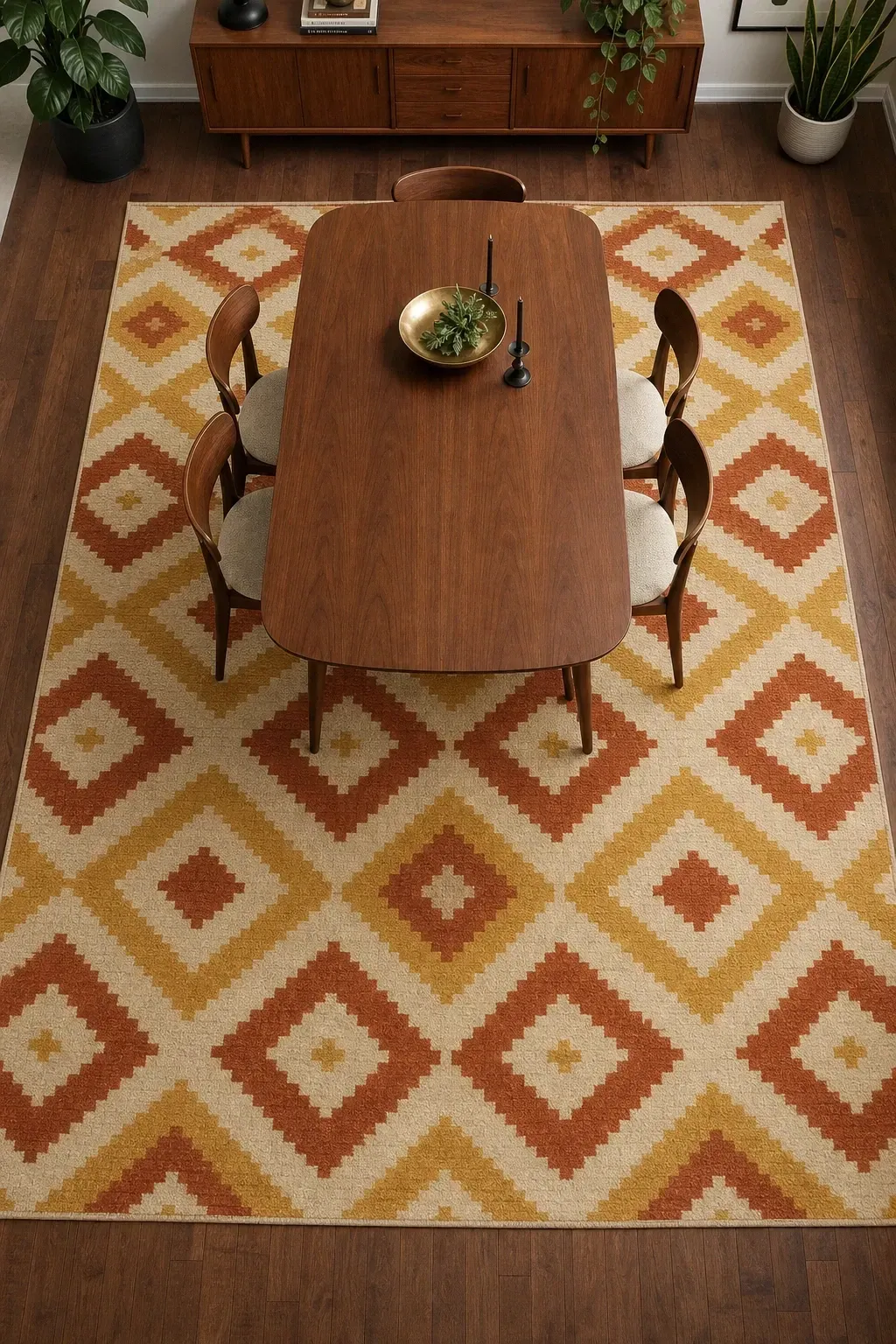
The rug is one of the most powerful tools in a dining room because it defines the space from below and sets the tone for everything above it. In a mid-century modern dining room, look for a flat-weave or low-pile rug in a graphic geometric pattern, diamonds, chevrons, or abstract shapes in a palette of warm neutrals with one or two accent colors that tie back to your chairs or accessories. A wool rug is ideal for both looks and durability, and flat-weave styles are easier to clean than deep pile options. Size up rather than down: the rug should extend at least 24 inches past the table edge on all sides. Going too small is one of the most common mistakes in dining room styling. A properly sized rug makes the table look grounded and intentional; an undersized one makes both the table and the rug look like afterthoughts.
Designer Tip: For dining rooms, a rug pad is not optional. It keeps the rug in place when chairs are pulled in and out, which extends the life of both the rug and your floor significantly.
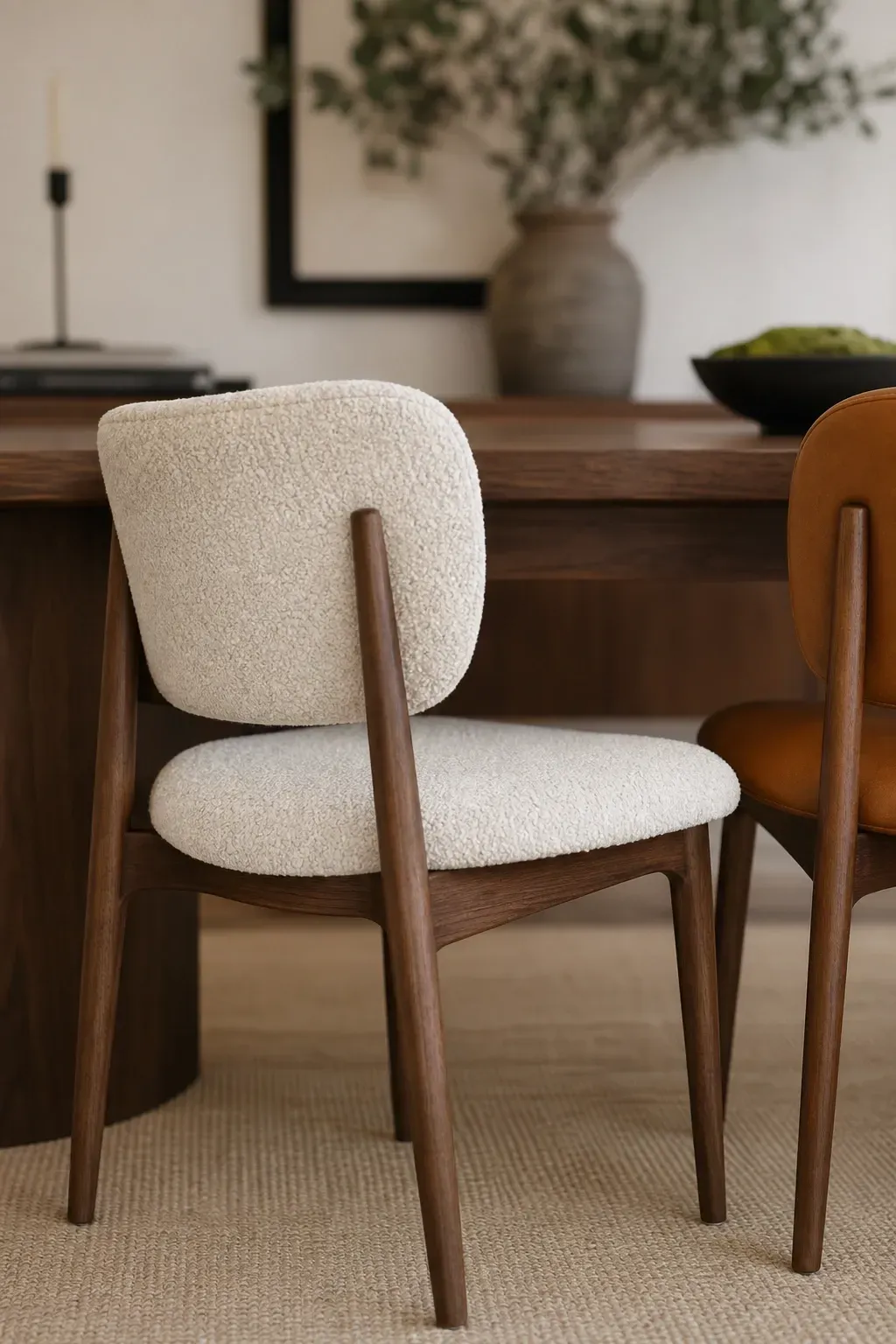
Boucle fabric has made a strong comeback in contemporary interiors, but it actually has deep roots in mid-century design. The looped, nubby texture of boucle feels warm and tactile in a way that smooth fabrics do not, and it contrasts beautifully against the clean lines and smooth surfaces of mid-century modern furniture. Use boucle for two of your dining chairs, picking seats at either end of the table or at one side, and leave the remaining chairs in a sleeker fabric or leather. This mixing of textures at the same table adds depth without chaos. Choose boucle in a warm off-white, a pale sand, or a muted warm gray for the most versatile result. The fabric is thicker than most upholstery options, so chairs may look slightly chunkier, which is perfectly fine as long as the overall frame remains slim and tapered.
Designer Tip: Boucle picks up lint and pet hair more readily than smooth fabrics. If you have pets or small children, consider a performance-grade boucle that is treated to be more stain-resistant and easier to brush clean.
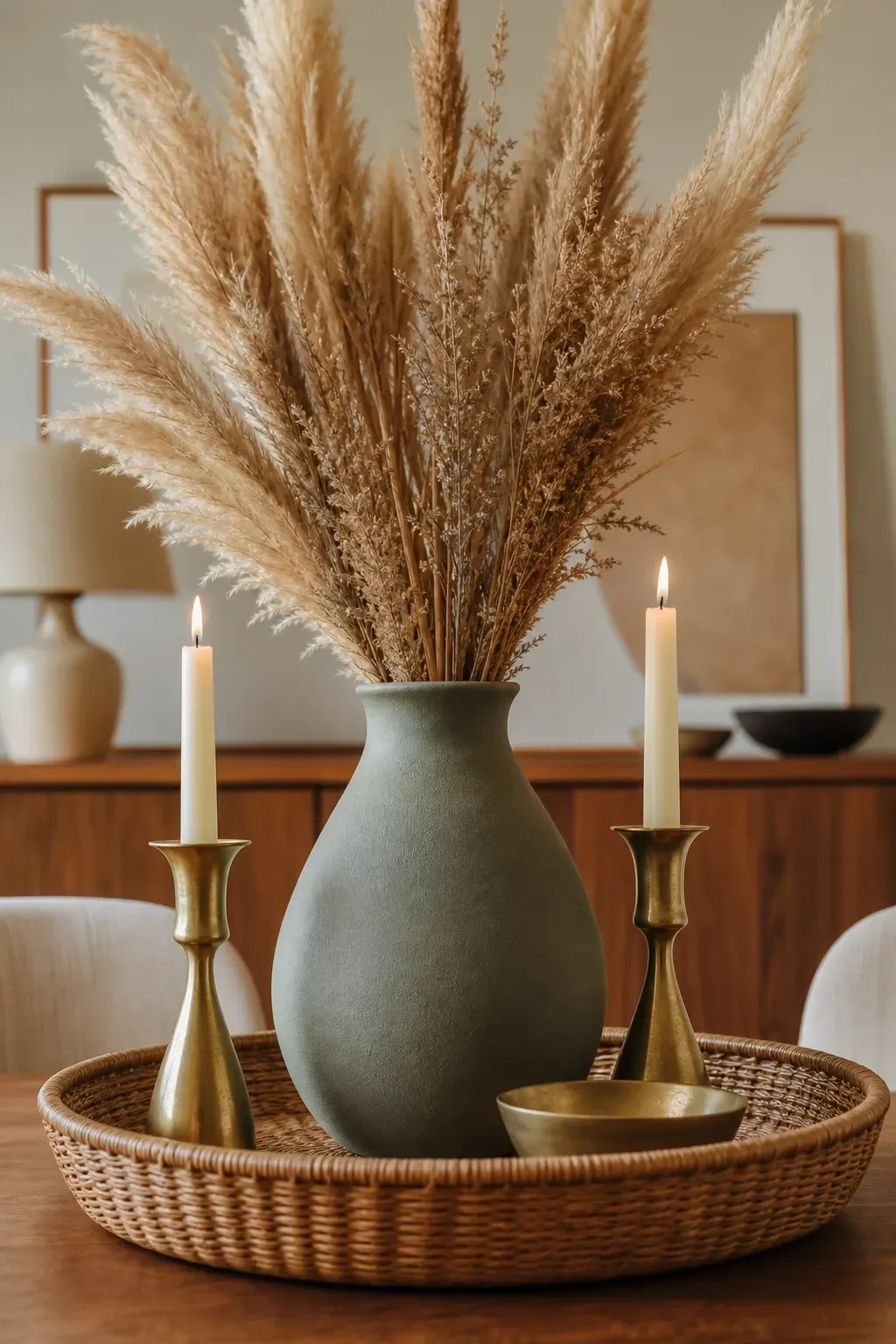
The centerpiece on a dining table sets the personality of the whole space, and in a mid-century modern room it is the perfect place for handmade ceramics. Look for a large ceramic vase or vessel in a matte glaze, something earthy in tone, perhaps a warm sand, a dusty sage, or a dark charcoal, and fill it with dried pampas grass, a few branches, or a bunch of simple fresh flowers without much packaging. A sculptural ceramic piece, something asymmetrical or with an interesting surface texture, works beautifully on its own as a purely decorative object. Around it, add a few taper candles in simple brass or ceramic holders and a small woven tray to corral the arrangement and keep it from looking scattered. The goal is a centerpiece that looks like it was gathered and placed thoughtfully rather than ordered from a catalog and placed in the obvious spot.
Designer Tip: Keep your centerpiece low enough that people can see each other across the table during a meal. A general rule is to stay under 12 inches in height for anything that sits in the center of the table.
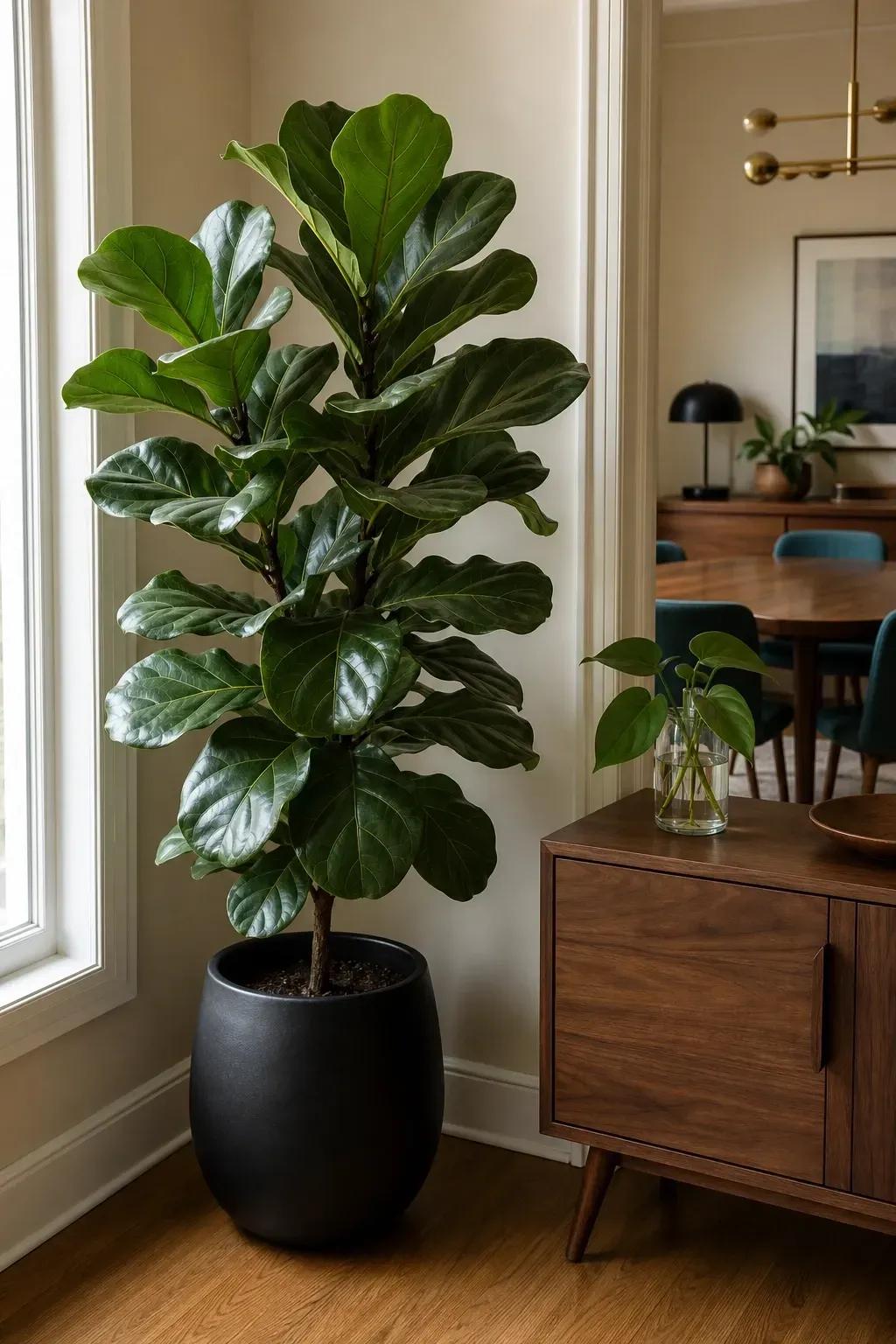
Plants belong in a mid-century modern dining room. The whole aesthetic was built on the idea of bringing nature inside, blurring the boundary between the controlled interior and the organic world outside. A large fiddle leaf fig or a rubber plant in a simple ceramic or concrete pot in the corner of the dining room adds height, color, and life without costing much. For the table itself, a small trailing pothos in a hanging ceramic pot or a row of propagation vases with water-rooted cuttings along a windowsill is a relaxed, unpretentious nod to the same idea. Avoid ornate or decorative planters that fight with the plant. The simpler the pot, the more the plant itself becomes the decoration. Matte black, terracotta, and muted concrete tones all work well in this context and let the green stand out against the warm wood tones of the furniture.
Designer Tip: If you do not have good natural light in your dining room, choose plants that tolerate low light well. Pothos, ZZ plants, snake plants, and cast iron plants all look great in mid-century planters and ask very little of you in return.
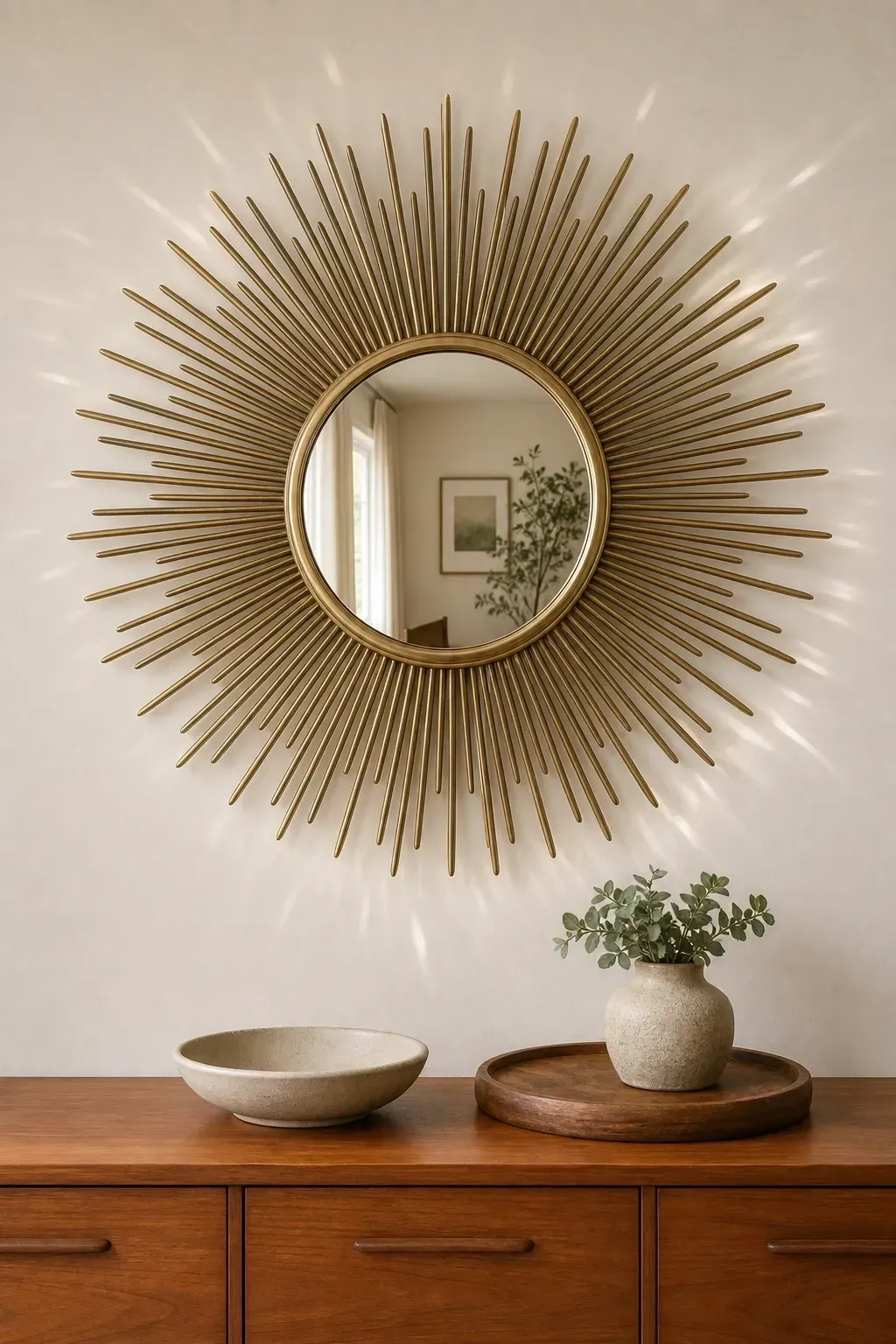
A sunburst mirror is one of the most recognizable decorative objects in mid-century modern design and for good reason: it is bold, graphic, and immediately communicates the aesthetic of the era. In a dining room, hang one on the wall opposite a window to reflect natural light and make the room feel larger. Choose a finish that works with your metal accents, brushed gold or antique brass for a warmer room, or matte black if your space leans more graphic and high-contrast. A sunburst mirror works best on its own rather than as part of a gallery wall because it is already a complete visual statement. Keep the surrounding wall clear and let it be the one thing on that surface. Below it, a narrow console table or the top of your sideboard creates a natural landing zone for a small collection of objects that echo the radiating shape of the mirror: a round bowl, a circular tray, a few spherical objects in varying sizes.
Designer Tip: Size up on the sunburst mirror. A piece that is at least 30 to 36 inches in diameter makes a proper statement; anything smaller can look tentative or unintentional on a dining room wall.
Bringing It All Together
Mid-century modern design is one of those rare styles that feels genuinely good to live with, not just to look at in photographs. It prioritizes function without sacrificing beauty, and it leans on materials and forms that age well and get better with time. A dining room built around these principles is one you will actually want to spend time in, whether it is a quiet weeknight dinner or a table full of people on a Saturday night. The ideas here are meant to be mixed, matched, and adapted to your actual space rather than followed as a strict prescription. You do not need every single element to make the style work. A walnut table with tapered legs, a pair of upholstered chairs in a warm accent color, and a Sputnik chandelier overhead can get you most of the way there on their own.
Start with the pieces that make the most practical sense for your budget and your lifestyle, and build from there. Mid-century modern rewards restraint. The rooms that look best in this style are the ones where every piece has been chosen on purpose and nothing is there just to fill space. Trust the shapes, trust the materials, and give the room a little breathing room. The result will be a dining space that feels considered, comfortable, and completely your own.
Frequently Asked Questions
What are the key features of a mid-century modern dining room?
The main features are clean, straight lines on furniture, tapered legs on tables and chairs, warm wood tones like walnut and teak, a restrained color palette with one or two bold accent colors, and a general sense of openness in the room layout. Lighting tends to be sculptural and intentional, sideboards are low and long, and the overall feeling should be functional and beautiful at the same time without excess decoration.
What colors work best in a mid-century modern dining room?
The most successful palettes build on a neutral base of white, warm cream, or light gray walls and then introduce one or two accent colors through furniture, rugs, or accessories. Classic mid-century accent colors include mustard yellow, teal blue, burnt orange, olive green, terracotta, and cognac brown. These tones pair naturally with the warm wood tones that anchor most mid-century rooms. Avoid cool-toned grays or very stark whites, as they tend to fight against the warmth that makes this style feel inviting.
Do I need to buy expensive furniture to achieve this look?
Not at all. Mid-century modern is one of the more budget-friendly aesthetics to pull off because the style is so widely replicated at different price points. Brands like IKEA, Article, Wayfair, and West Elm all carry solid mid-century inspired pieces at reasonable prices. You can also find genuine vintage pieces at thrift stores, estate sales, and online marketplaces like Facebook Marketplace or Chairish, often for less than new replicas. Focus your budget on the table and chairs since they do the most visual work, and use more affordable pieces for accessories and smaller items.
What kind of lighting works best over a mid-century dining table?
The most on-point options are Sputnik chandeliers, globe pendants in smoked or amber glass, cone-shaped pendants in spun metal, and woven rattan shades. The common thread is that the fixture should feel sculptural rather than purely functional. Hang the bottom of the pendant or chandelier about 30 to 36 inches above the tabletop for a proper sense of connection to the table without blocking sightlines. Always install on a dimmer so you can adjust the mood from bright and functional to warm and ambient.
How do I mix mid-century modern with other styles I already own?
The easiest way to blend mid-century modern with other pieces you already have is to focus on line and scale. Mid-century furniture tends to have low profiles and slim frames, so pairing it with similarly scaled pieces from other styles, Scandinavian, industrial, or even some bohemian elements, usually works well. The things to avoid are very ornate, heavy, or baroque pieces that clash in scale and spirit. If you have a piece you love that does not obviously fit, try grounding it in the same color palette as the mid-century pieces. A shared color story can make very different furniture styles feel like they belong in the same room.
What is the difference between mid-century modern and Scandinavian design?
These two styles share a lot of DNA and are often confused, but there are real differences. Mid-century modern, particularly the American version, tends to be bolder in color, more willing to use vinyl and plastic alongside natural materials, and more interested in futuristic or atomic-age shapes. Scandinavian design, often called Scandi, leans more minimal, more neutral in palette, and more focused on craftsmanship and functionality in a pared-back way. Both use warm wood tones and clean lines, which is why they mix so well, but if you want that unmistakably retro American dining room feel, lean into the bolder colors and the more graphic lighting choices that set mid-century modern apart.