Planning a rustic walk-in shower is easy to get wrong: too much stone and it feels like a cave, too many competing textures and it looks like a showroom accident. These 32 ideas are built around real decisions, real materials, and honest trade-offs so you can build something that actually works.
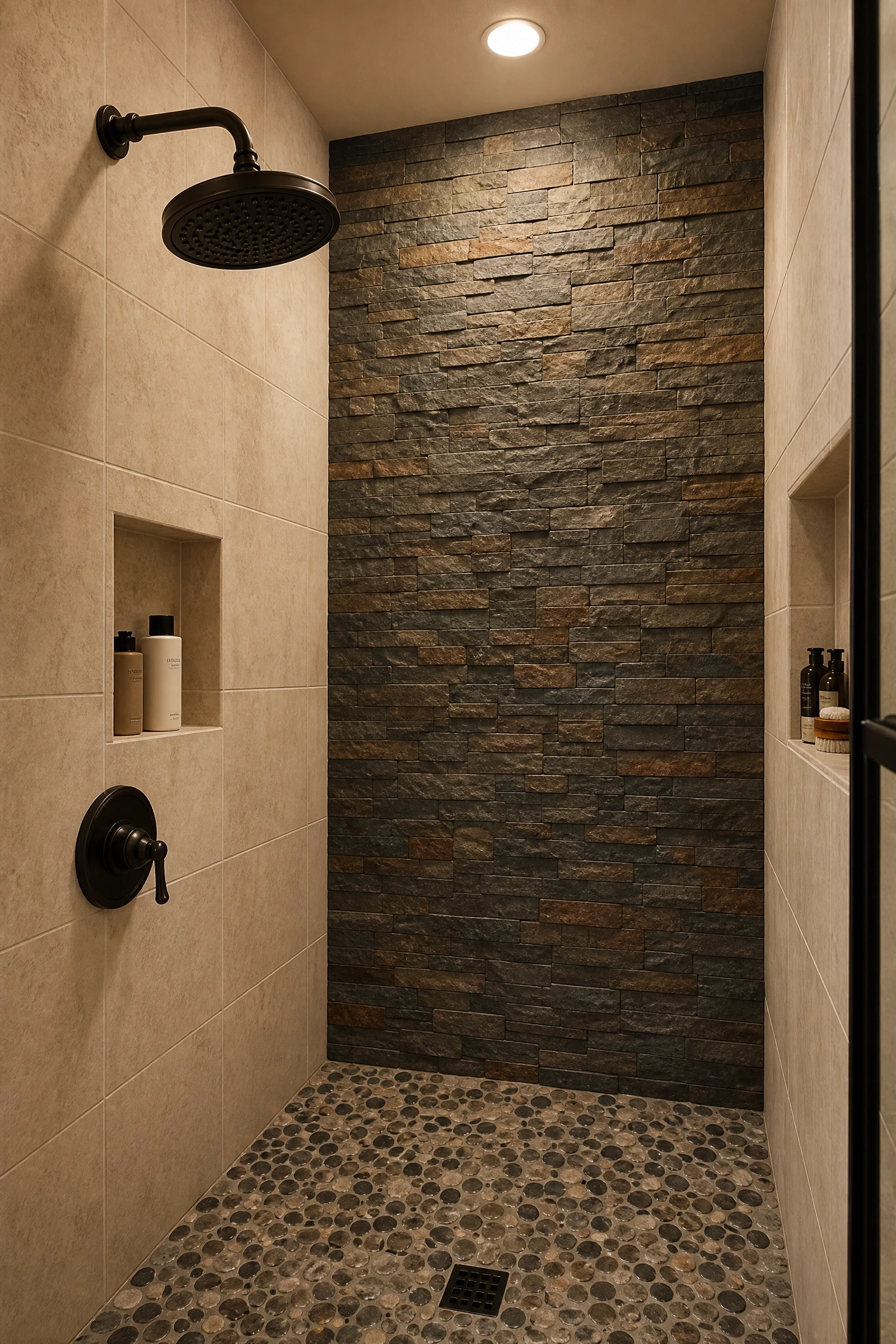
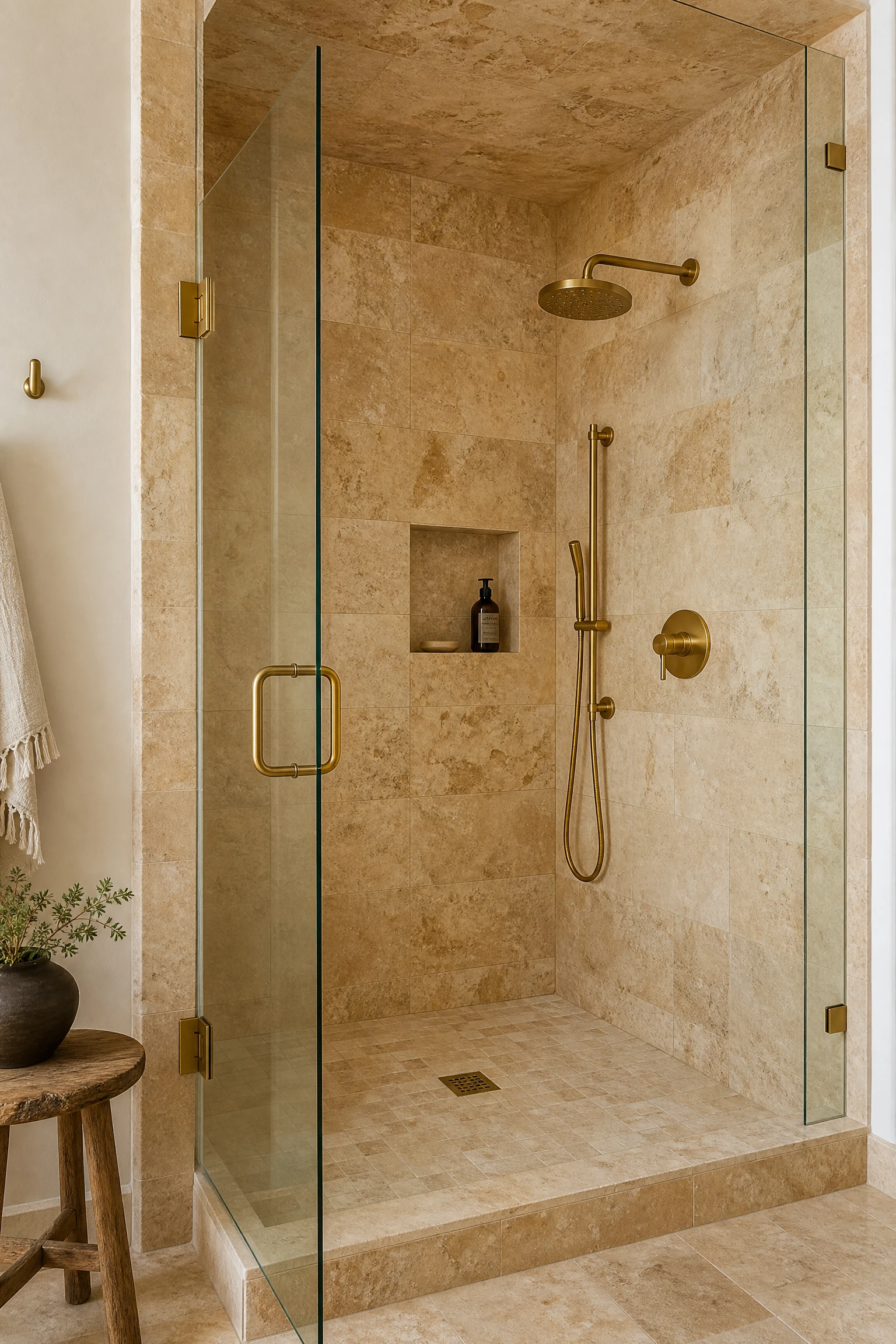
1. Use a Single Stone Accent Wall Instead of Going All In
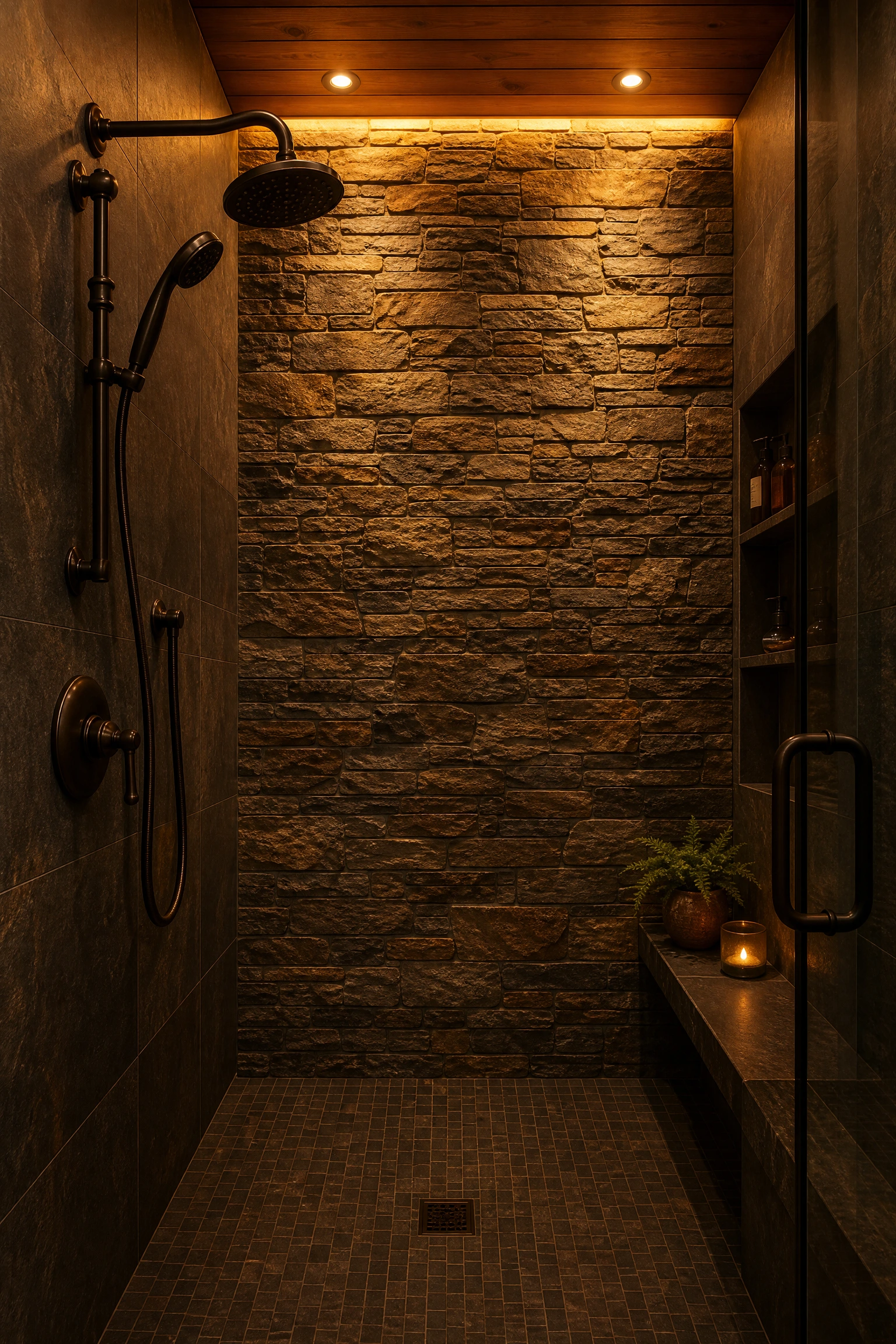
One slate or travertine feature wall behind the showerhead gives you the rustic look without the visual weight of a full stone enclosure. Pair it with warm white or putty-toned tile on the remaining walls so the stone reads as a focal point, not a burden.
Reality Check: A full stone enclosure in a shower under 5×5 feet will feel dark no matter how good the lighting is. One wall is always enough.
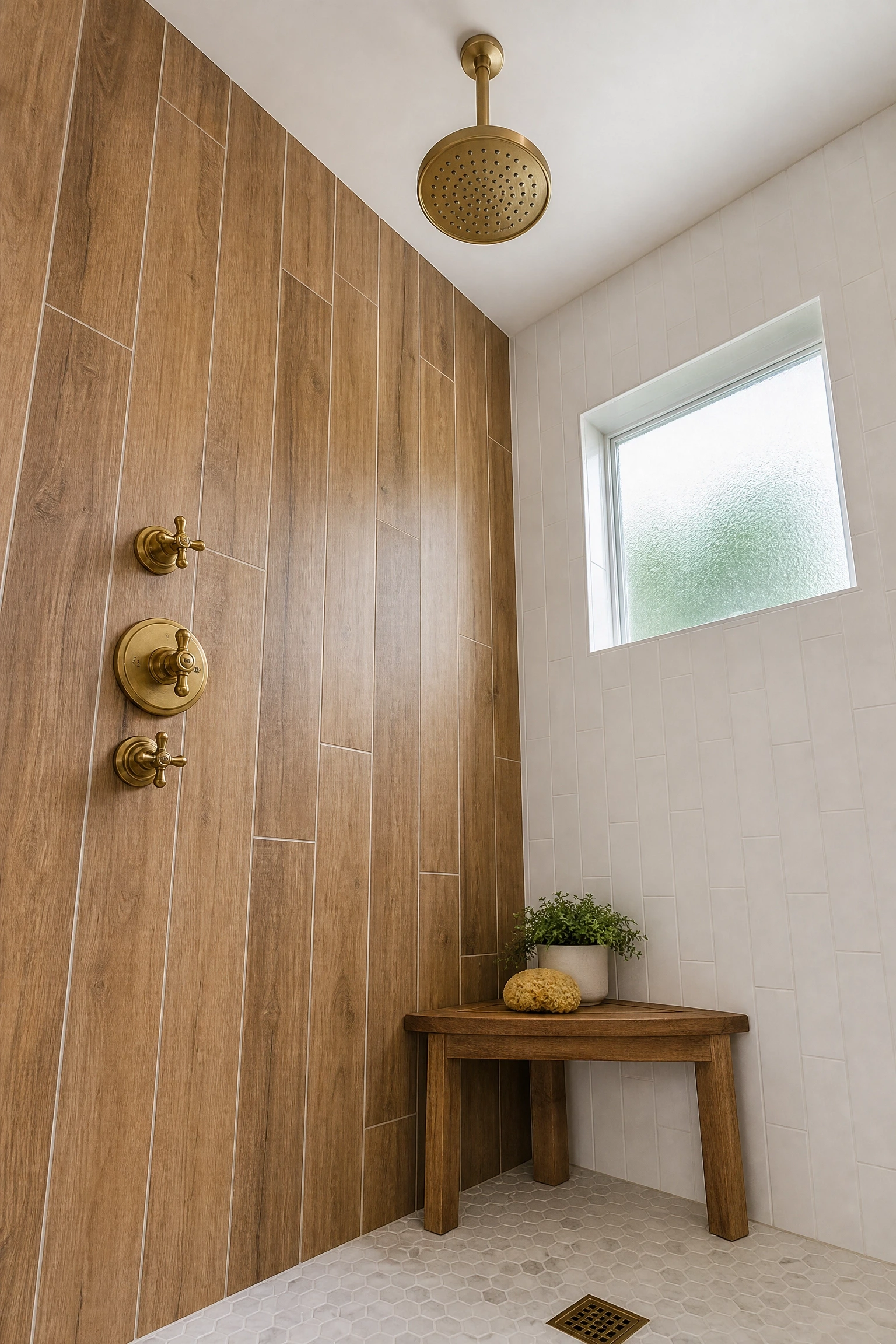
Wood-look porcelain tile mimics the grain and warmth of reclaimed timber convincingly while holding up to daily steam with zero warping or mold risk. Install it vertically on one wall for a barn-board effect and keep the grout color as close to the tile tone as possible so the seams disappear.
Designer Advice: Pair vertical wood-look tile with oil-rubbed bronze or unlacquered brass fixtures for a finish that ages warmly alongside the material.
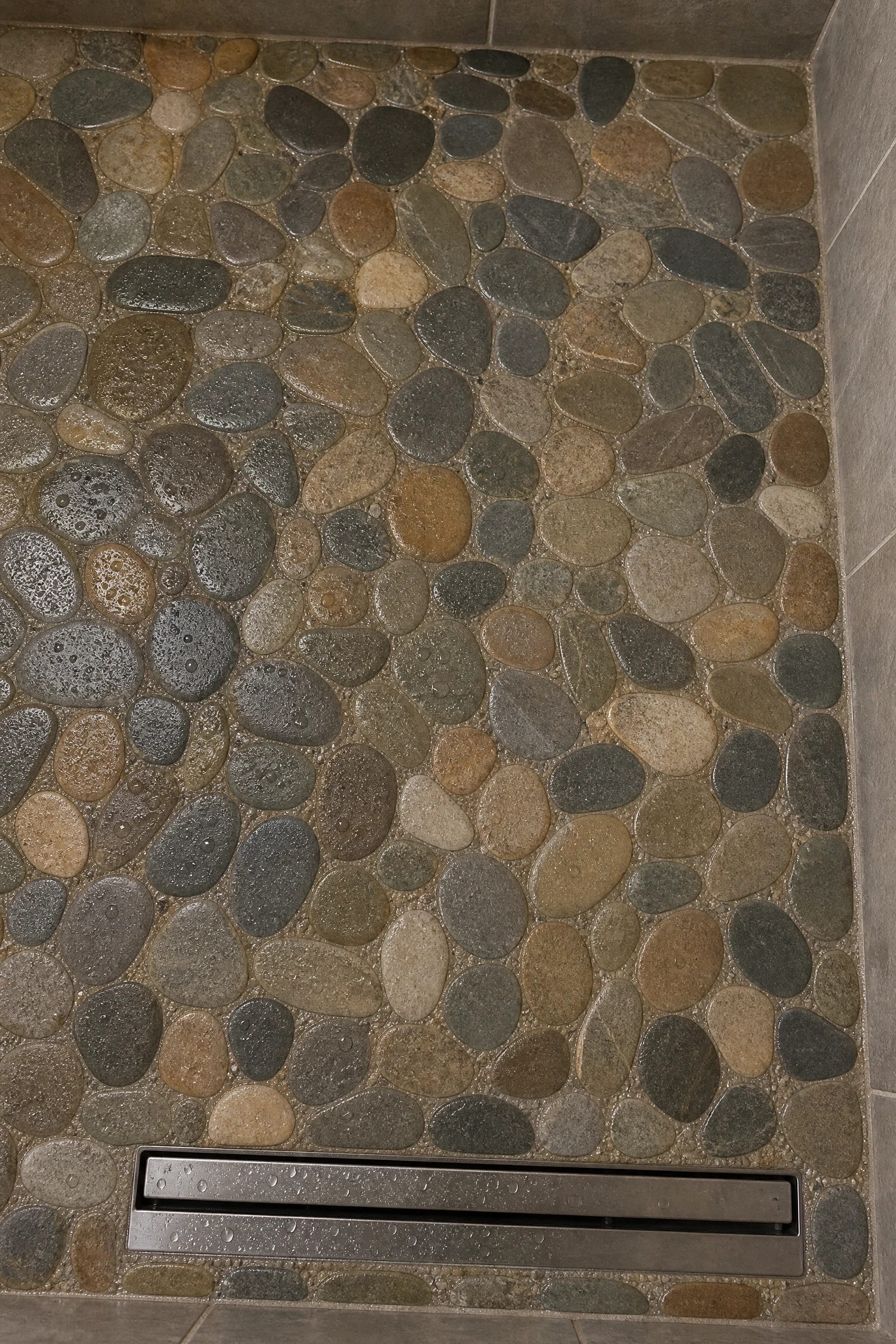
3. Go Flat with Pebble Tile Instead of Rounded River Rock
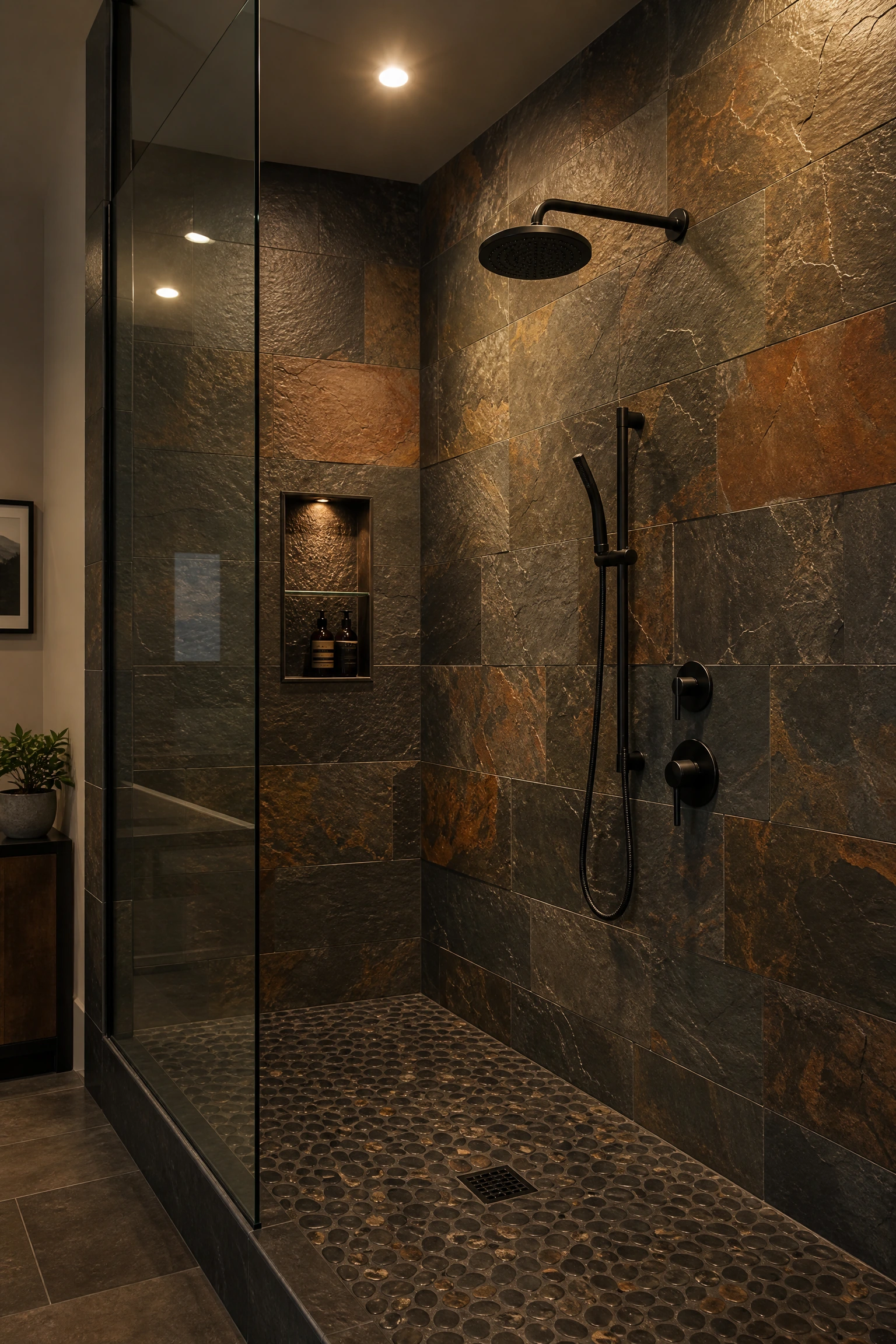
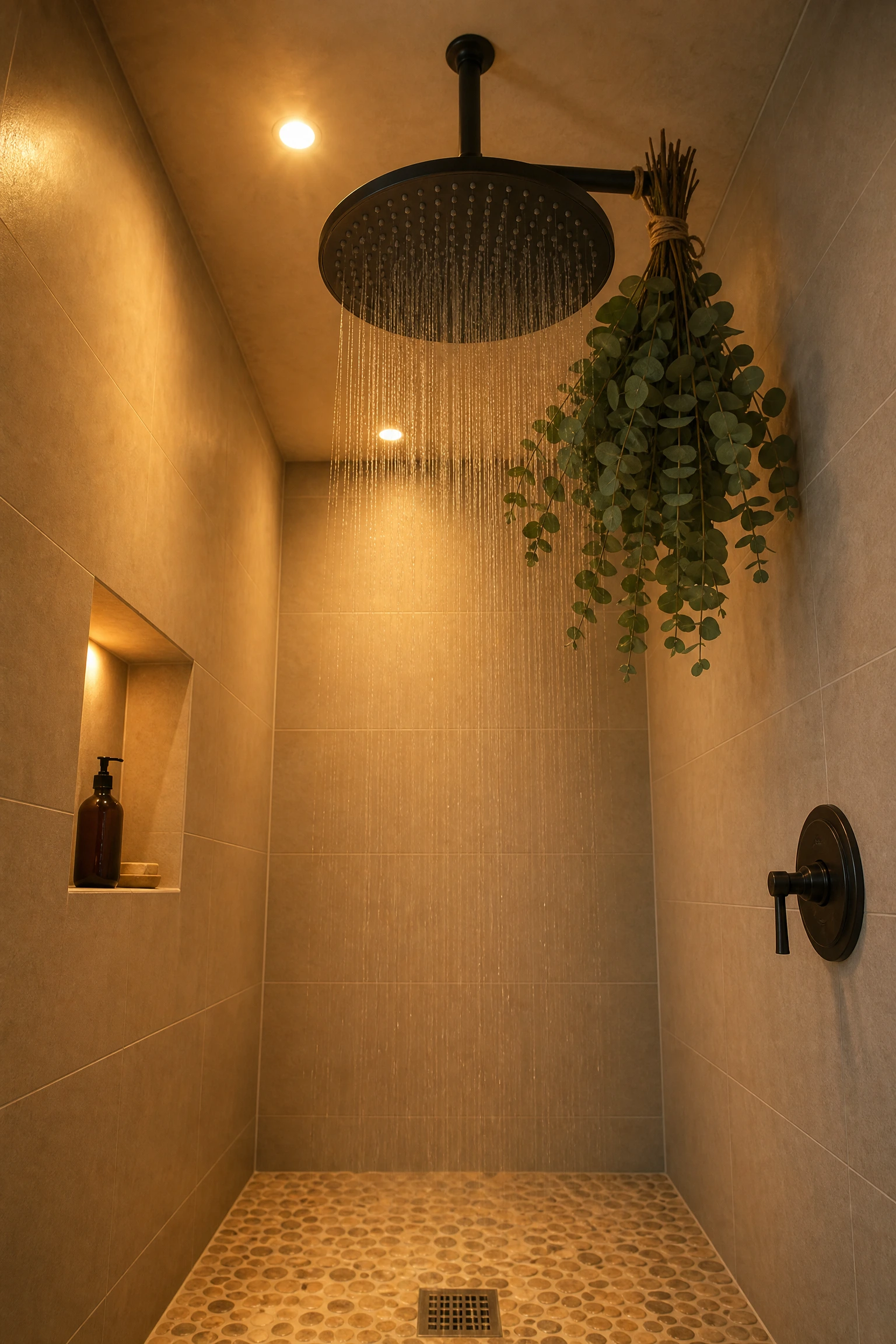
Flat pebble mosaic gives you the natural stone floor look with far less grout surface than traditional rounded river rock, making it significantly easier to clean and less likely to trap soap residue. Choose a flatter profile and keep the rest of the shower calm so the floor can be the single design moment.
Heads Up: Seal pebble floor grout every 12 months without exception. Unsealed grout on a textured floor is the fastest route to staining and mildew in any rustic shower.
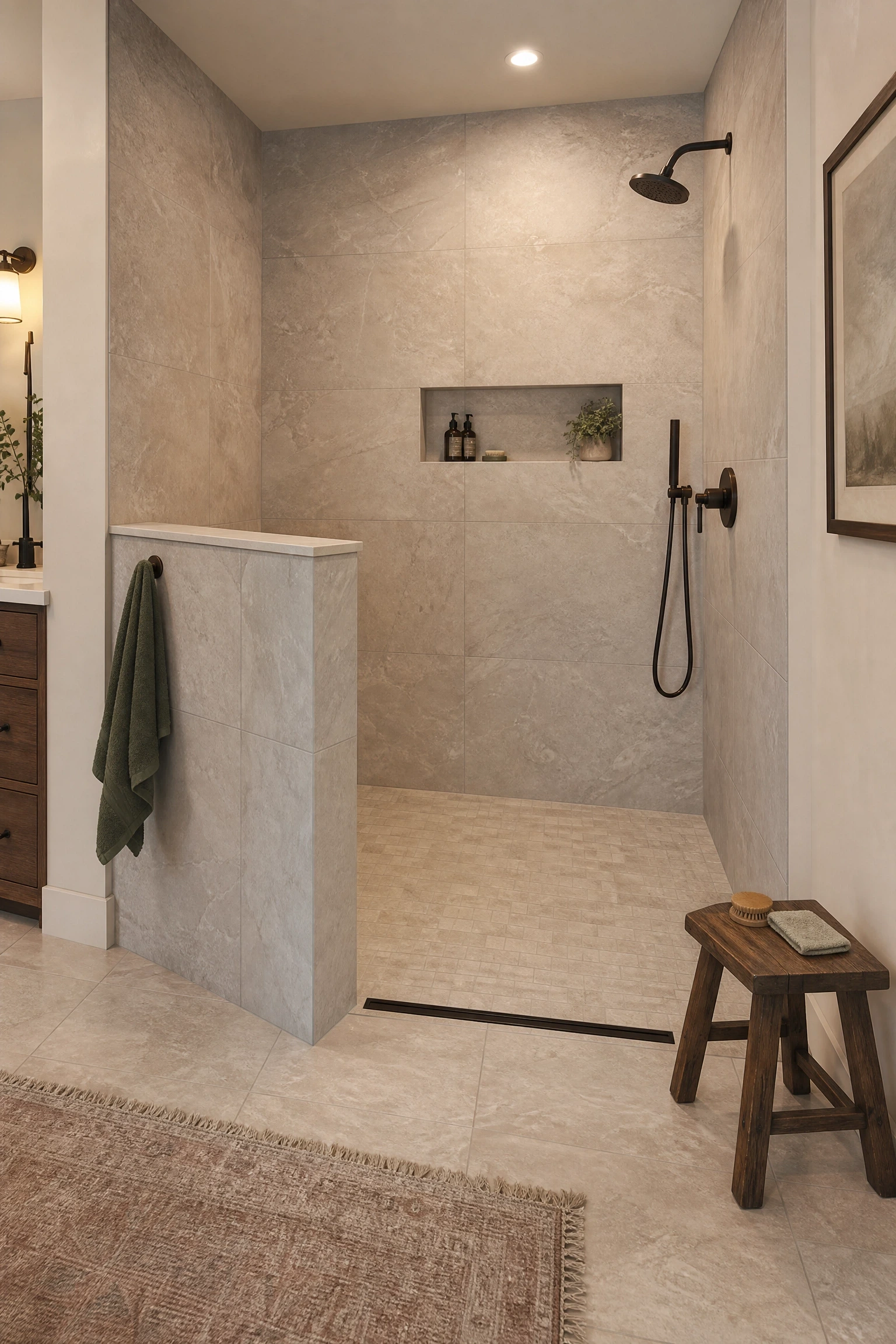
4. Add the Cabin Feeling Through Fixtures, Not Just Tile
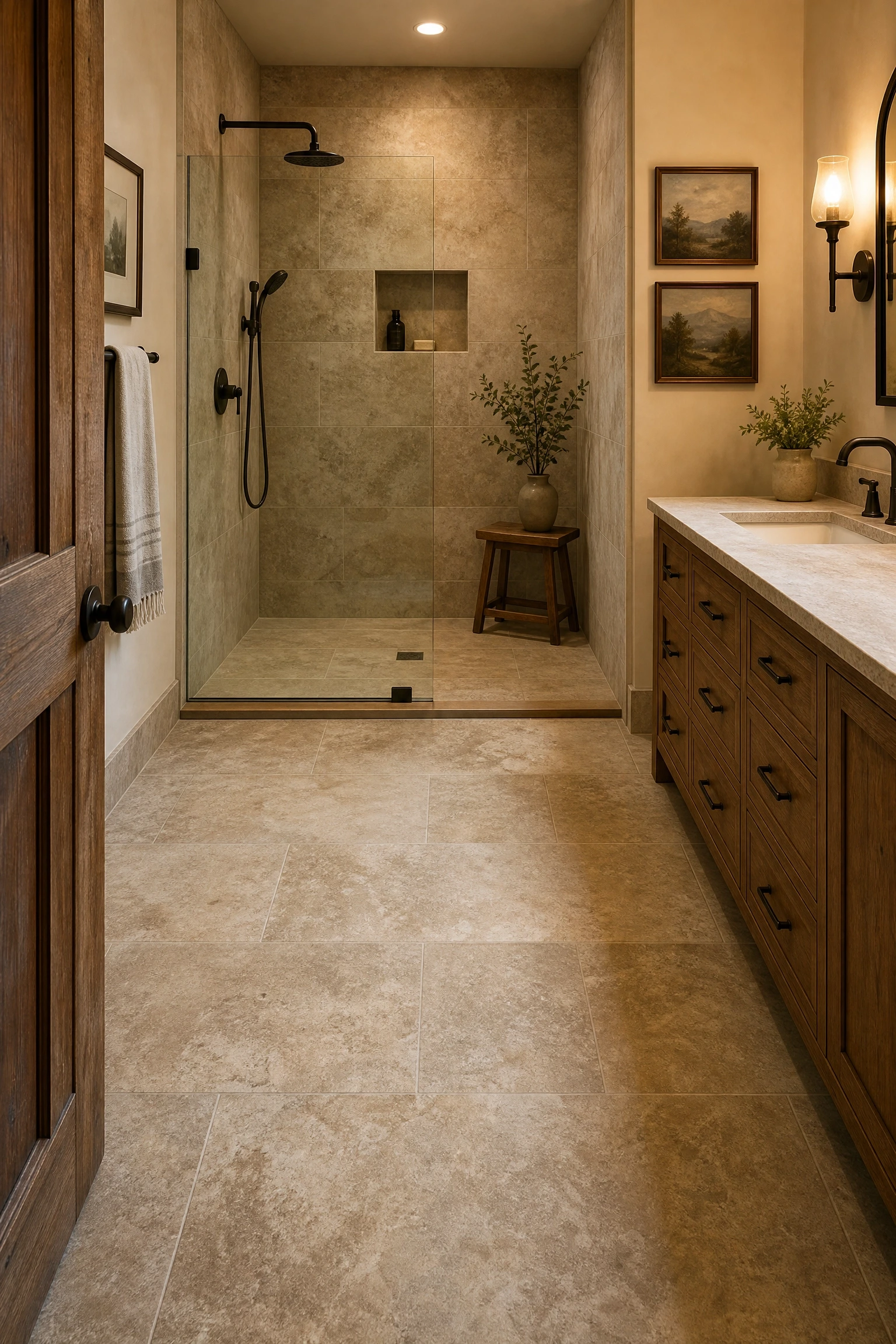
Warm beige large-format tile paired with matte bronze fixtures gets you the cozy earthy feeling of a mountain cabin without covering every surface in heavy stone or dark wood. The fixture finish carries more rustic mood than most people expect, and swapping to bronze or antique brass is one of the most affordable changes you can make.
Pro Move: Change your fixture finish before committing to a full retile. The right hardware in the wrong tile room still transforms the feeling of the space.
5. Build a Teak Bench That Looks Intentional, Not Functional
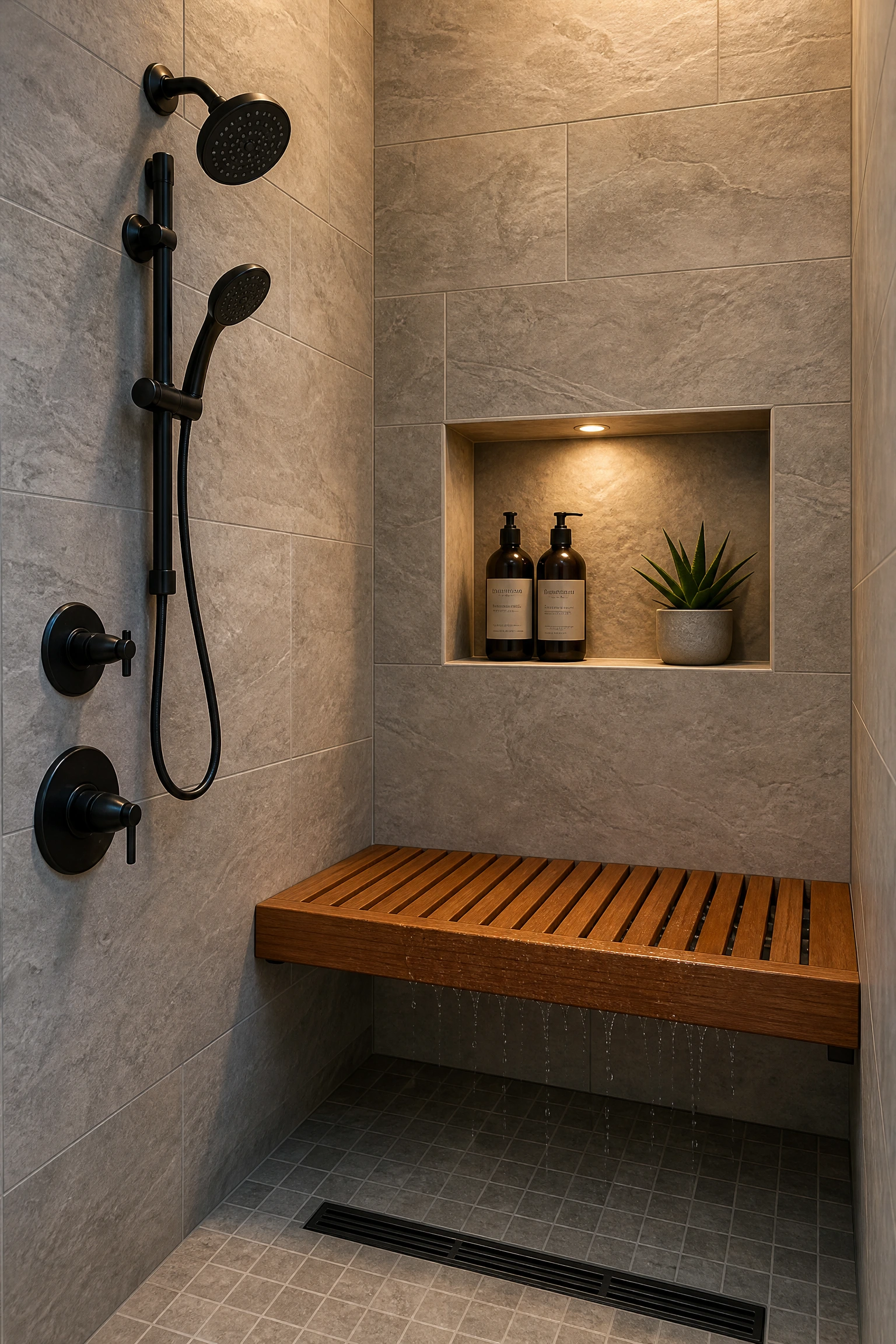
A built-in teak slatted bench in the corner of the shower feels deliberate and spa-like rather than just practical because teak is the one wood that genuinely handles moisture, and the slats let water drain through rather than pool. Keep it at least 17 inches deep and 18 inches off the floor so it reads as a proper seat, not a ledge.
Designer Advice: Add a small recessed niche directly above the bench so it becomes a natural product and plant ledge, turning the whole corner into a considered design detail.
6. Layer Warm Lighting to Make Stone and Texture Glow
Recessed shower-rated lighting at 2700K to 2900K makes dark stone and textured tile look warm and intentional rather than muddy and heavy, which is the exact problem most rustic showers run into when the lighting is overlooked. Add a dimmer so the same shower can feel bright and functional in the morning and deeply atmospheric at night.
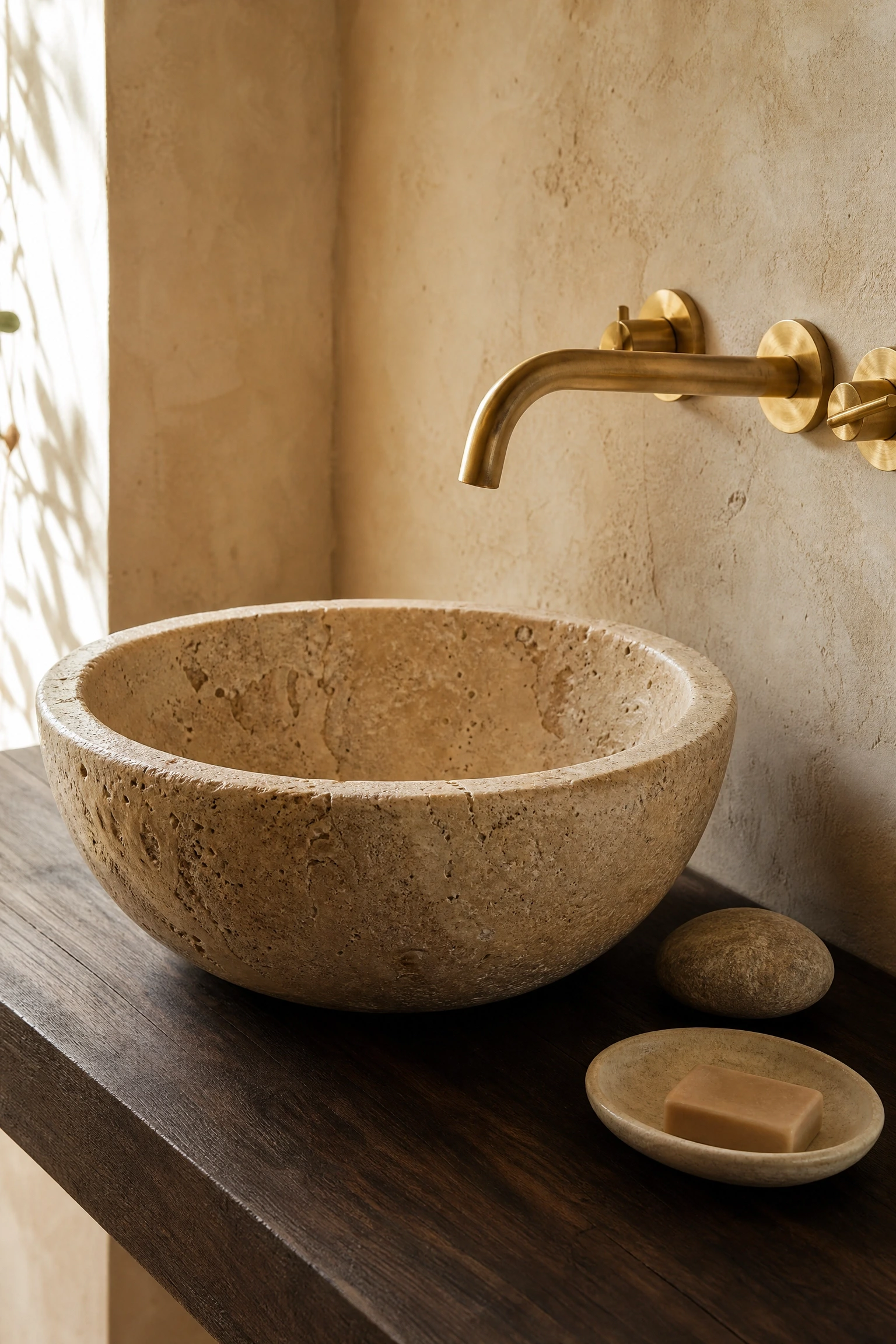
Filled and honed travertine is the version that actually works in a shower because the filling closes the natural voids that would otherwise trap water and soap, and the honed finish is more slip-resistant than polished. Seal it with a penetrating stone sealer before grouting and reseal once a year to keep it performing well.
Heads Up: Travertine etches with acidic cleaners. Use a pH-neutral product only and keep anything with vinegar or citrus completely out of a travertine shower.
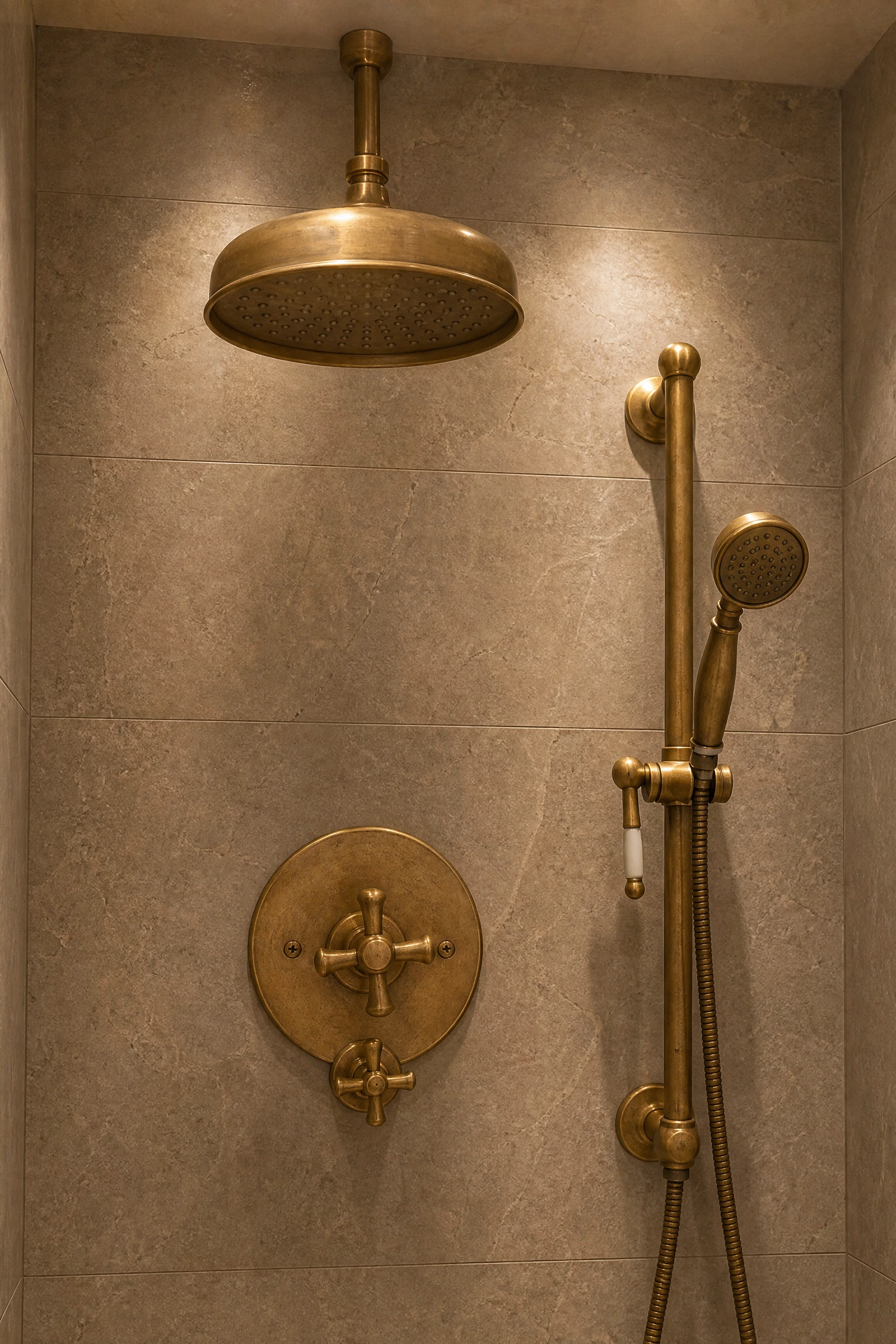
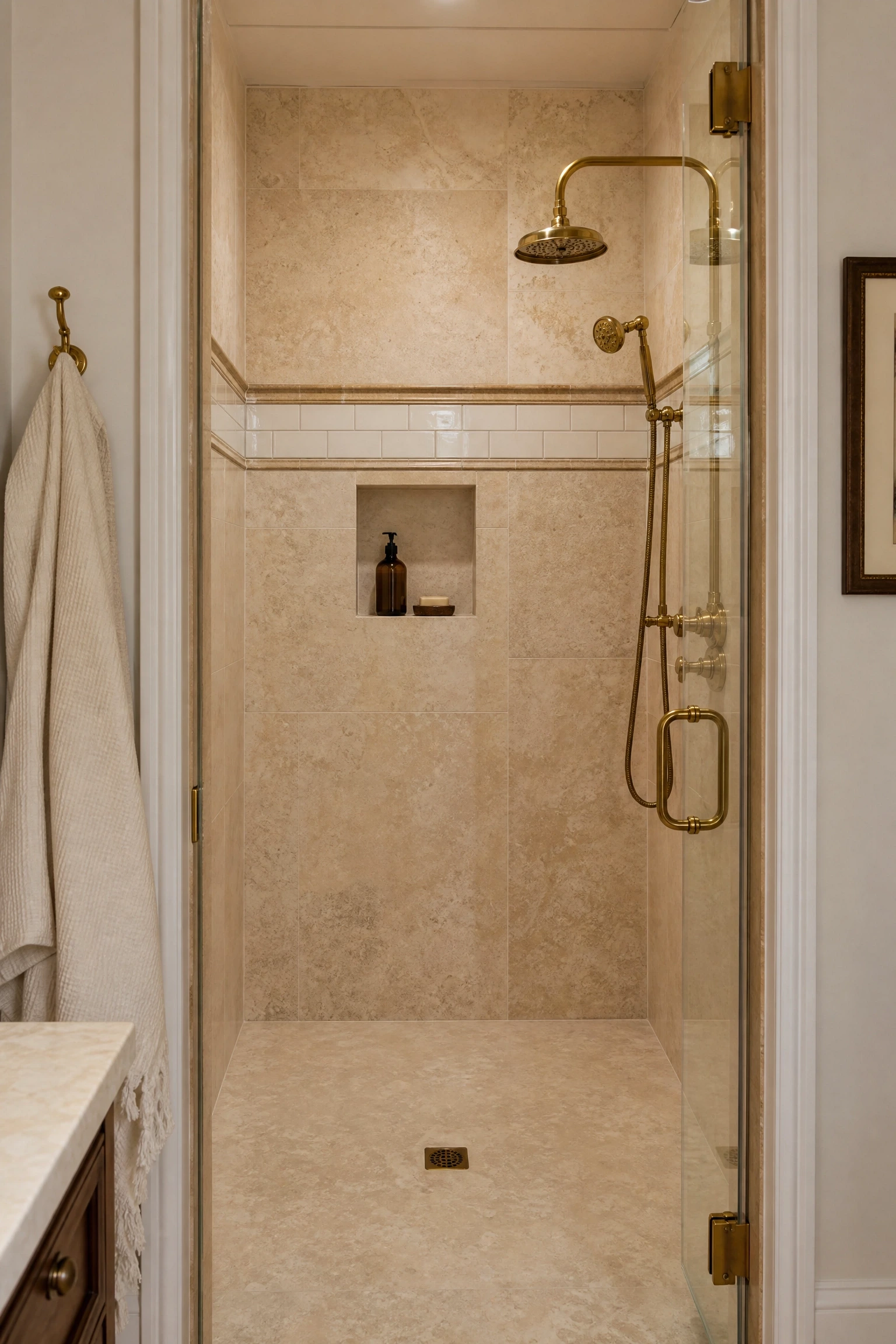
8. Use Unlacquered Brass for Fixtures That Age With the Room
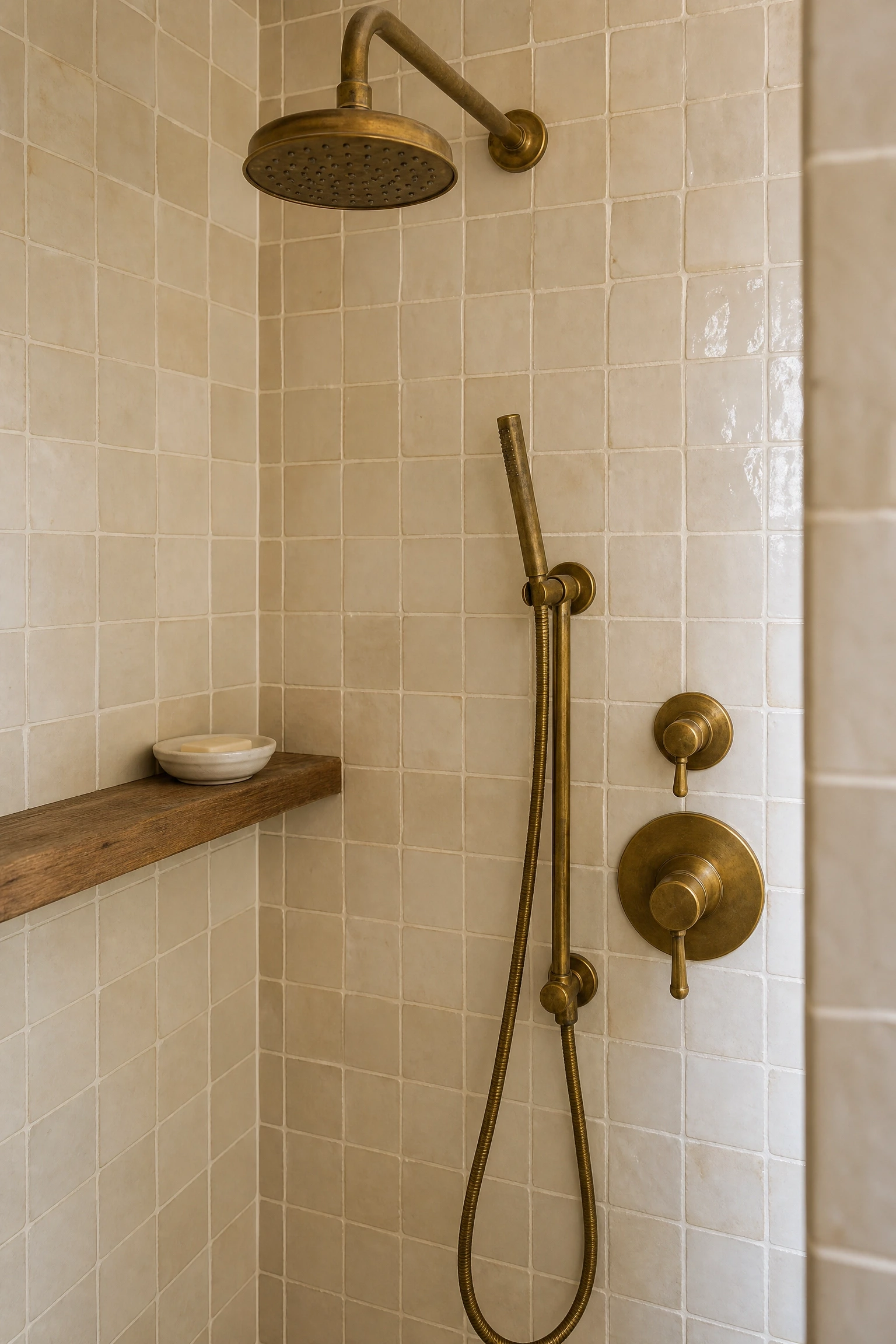
Unlacquered brass develops a natural patina over time and is one of the most authentic-looking fixture choices for a rustic shower, aging into a warm muted tone that looks like it has always been part of the house. Pair it with a simple cross-handle faucet and a round ceiling-mount showerhead for a look that references early farmhouse plumbing without feeling costumey.
Reality Check: Unlacquered brass ages unevenly depending on water minerals and cleaning habits. Some people love the organic variation; others find it unpredictable. Know which you are before you commit.
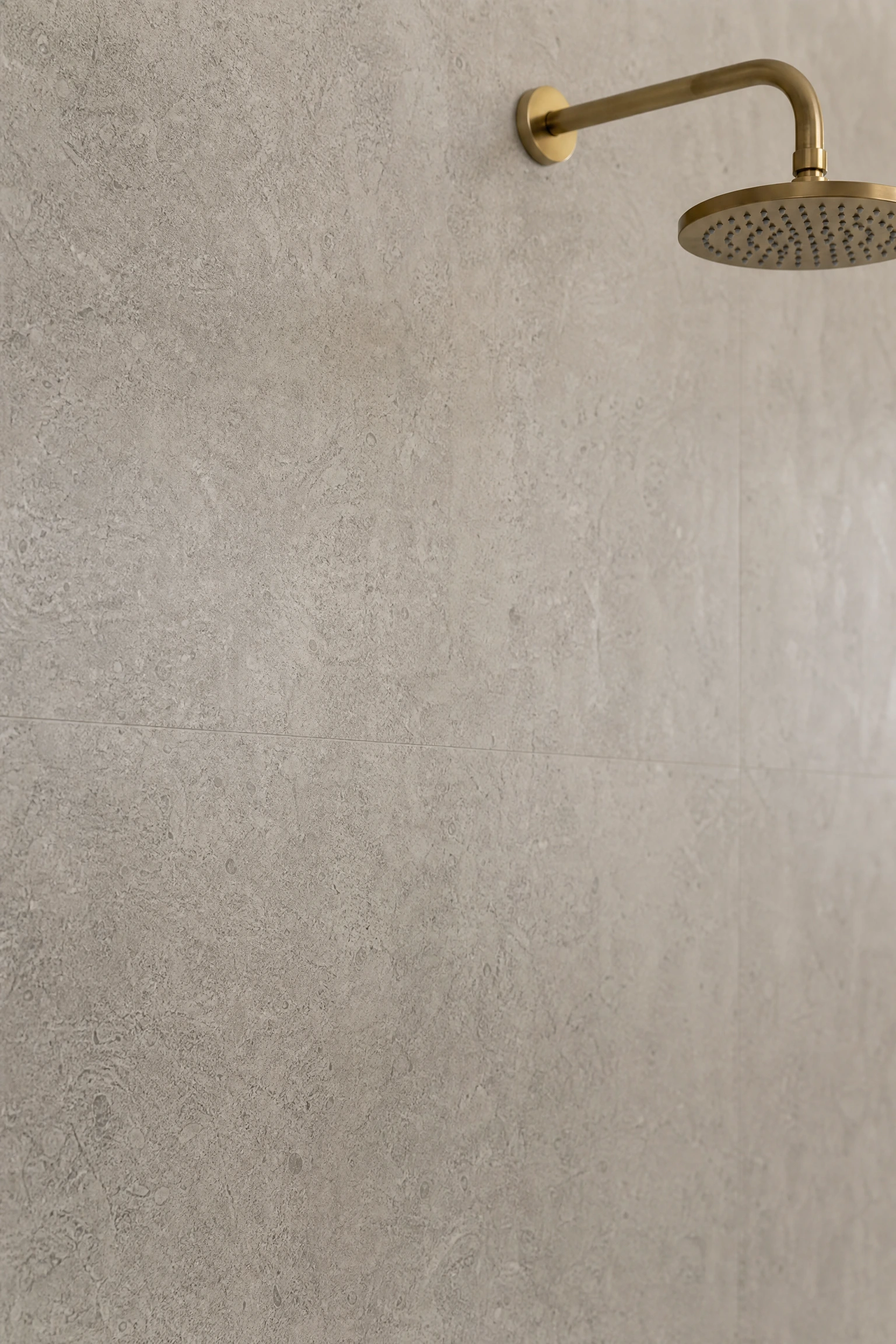
9. Minimize Grout Lines with Large-Format Rectified Tile
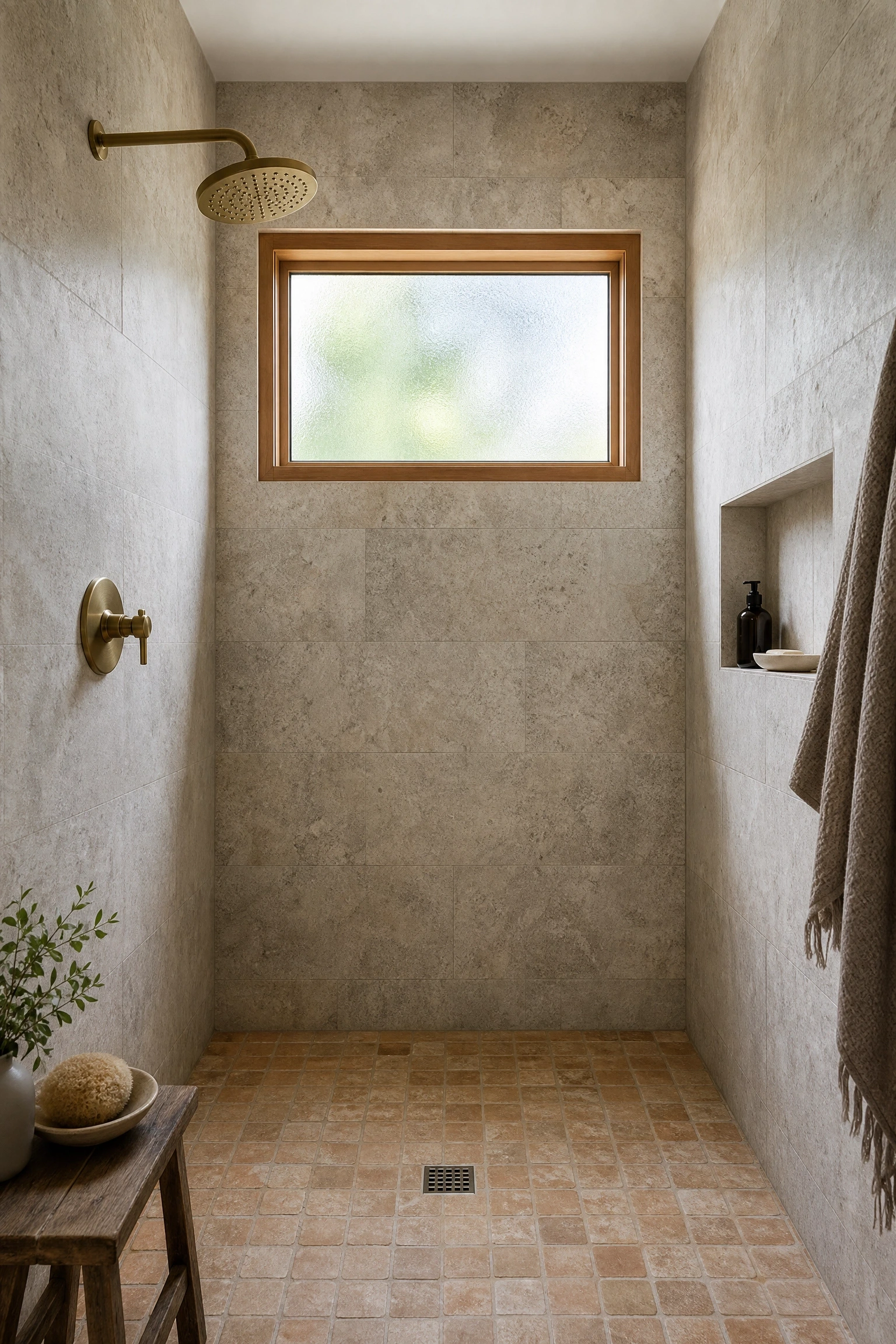
Rectified large-format tile installed with a minimal 1/16-inch grout joint and a grout color matched to the tile practically eliminates the grid effect that makes a shower look manufactured rather than natural. Use a stone-look porcelain in a warm grey, beige, or terracotta and the result reads much closer to an actual stone slab installation.
Pro Move: Use unsanded grout for joints under 1/8 inch. Sanded grout in a tight joint will scratch the tile surface during application, especially on matte or soft-finish porcelain.
10. Make a Doorless Shower Work Without Water Going Everywhere
A curbless doorless walk-in works without water escaping if the shower is at least 36 inches wide, the showerhead is angled toward the back wall, and a partial stone or tile half wall is added on the open side to catch spray. In a rustic shower that half wall becomes a design feature rather than a compromise, giving you a surface for a shelf, a soap dish, or a recessed niche.
Designer Advice: Use a linear drain running the full width of the shower entry. It handles overflow far better than a single point drain and keeps the floor visually clean.
11. Use Zellige Tile for a Handmade Look That Earns Its Price
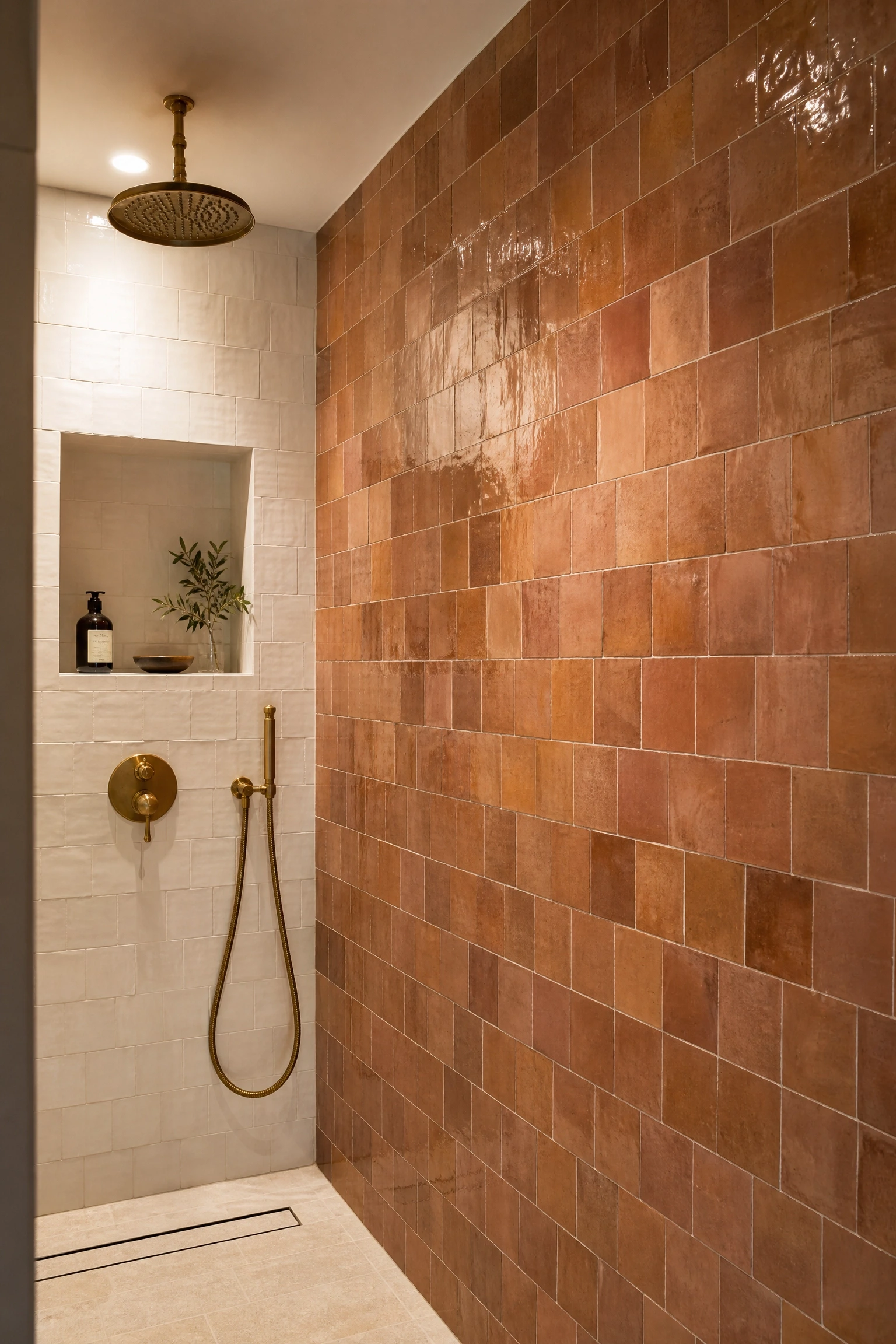
Zellige in a warm terracotta, dusty olive, or clay white reads as artisanal and handmade without triggering the overused farmhouse aesthetic, and the irregular glaze surface catches light differently throughout the day in a way no manufactured tile can replicate. Limit it to one feature wall and keep the rest of the shower simple so the material gets the attention it deserves.
Heads Up: Zellige is porous and must be sealed before grouting and again after installation. Use unsanded grout because the surface variation means you cannot scrub aggressively without damaging the glaze.
12. Line the Niche Interior with a Different Material
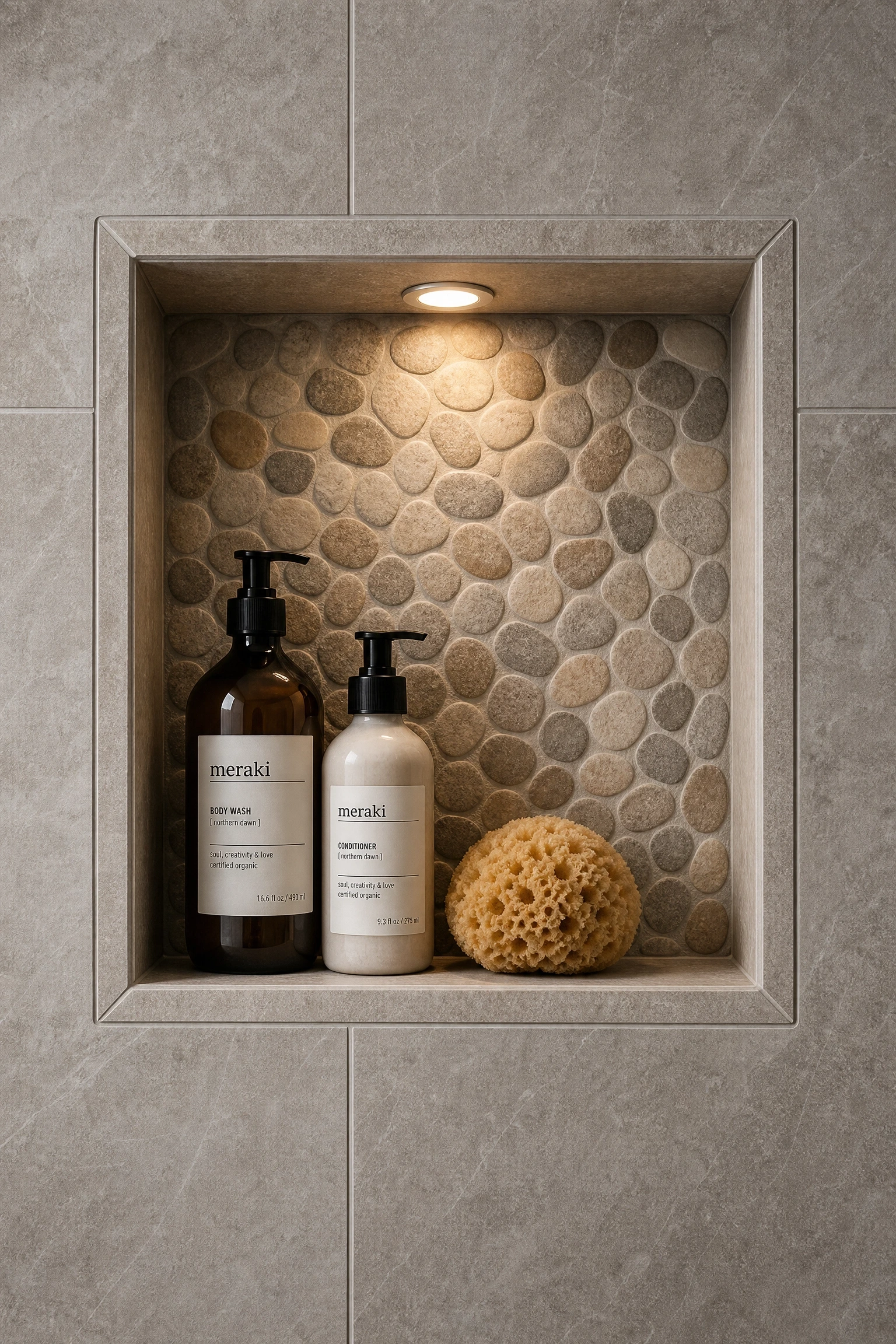
A recessed shower niche lined with pebble mosaic, small-format stone tile, or a contrasting zellige creates a contained jewel-box moment that makes the whole shower feel more considered without requiring expensive tile across every surface. Keep the surrounding wall simple so the niche detail reads clearly.
Pro Move: Add a small recessed waterproof LED puck light inside the niche. The glow highlights texture and makes stored products look intentional rather than cluttered.
13. Mount the Showerhead from Exposed Pipe for an Outdoor Shower Feel
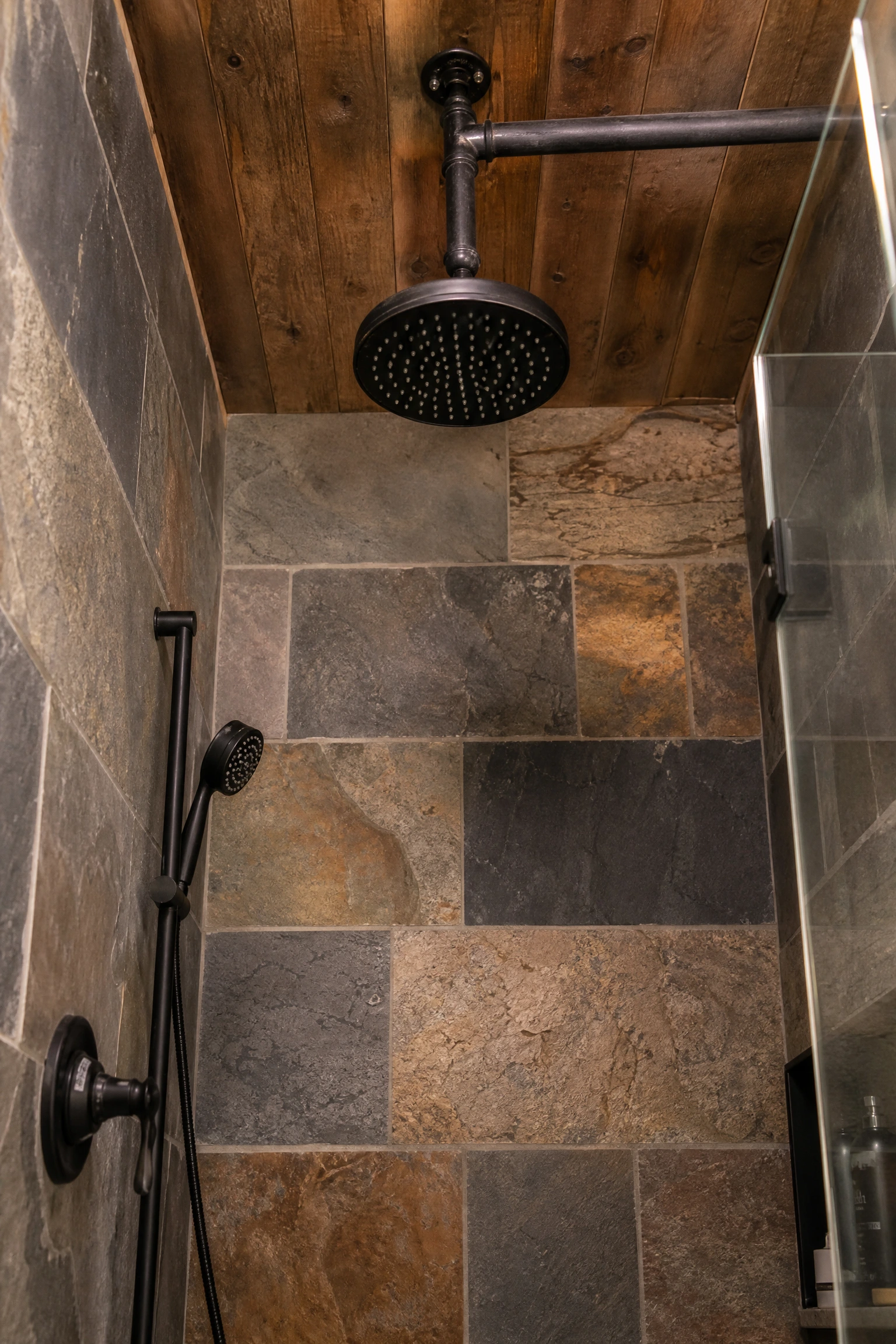
Running the showerhead from a length of exposed black iron pipe across the ceiling rather than from a standard wall arm creates an indoor outdoor shower effect that pairs beautifully with stone tile and matte metal fixtures. The pipe becomes a design element that reinforces an industrial rustic palette in a way no wall-mount arm can match.
Reality Check: Exposed supply lines in a shower need proper insulation from a plumber who is comfortable with the approach. Do not treat this as a DIY installation decision.
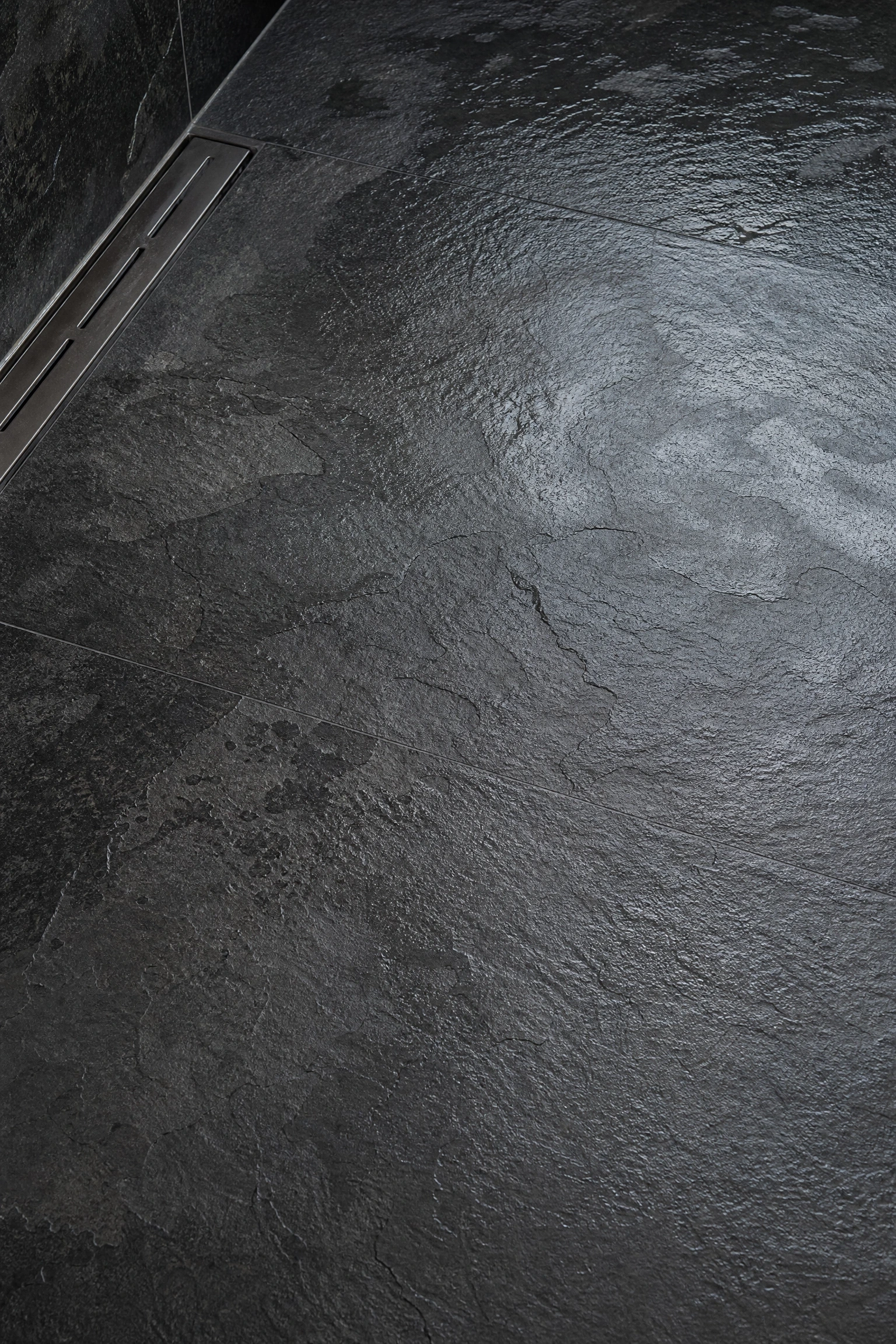
14. Know the Difference Between Slate and Travertine Before You Choose
Slate reads darker and more graphic with natural cleft texture and deep charcoal, green, or rust tones, while travertine reads warmer and softer with a Mediterranean spa quality that suits cream and honey palettes. If your bathroom leans warm with wood tones and bronze fixtures, travertine belongs there; if it leans toward contrast and drama, slate is the better fit.
Designer Advice: Do not mix the two in the same shower. They belong to different aesthetic worlds and compete rather than complement when used together.
A rainfall showerhead, a flat pebble floor, and warm recessed lighting at 2700K create a genuine spa atmosphere together for far less than most people assume, because the atmosphere comes from the combination of elements rather than any single expensive piece. Budget ceiling-mount rain showerheads from Moen or Delta start around 80 to 150 dollars and perform comparably to fixtures costing five times more.
Pro Move: Tie a fresh eucalyptus bundle to the showerhead arm. The steam releases the oils, fills the shower with scent, and lasts about a week for almost no cost.
16. Limit Rustic Texture in a Small Bathroom to One Element
In a bathroom under 50 square feet, using rustic texture on only the shower floor or one wall rather than wrapping every surface keeps the space from feeling oppressive, because stone and dark tile absorb light and make walls feel closer in a way that is genuinely uncomfortable. One strategic textured element surrounded by large-format light tile gives you the rustic look without the claustrophobia.
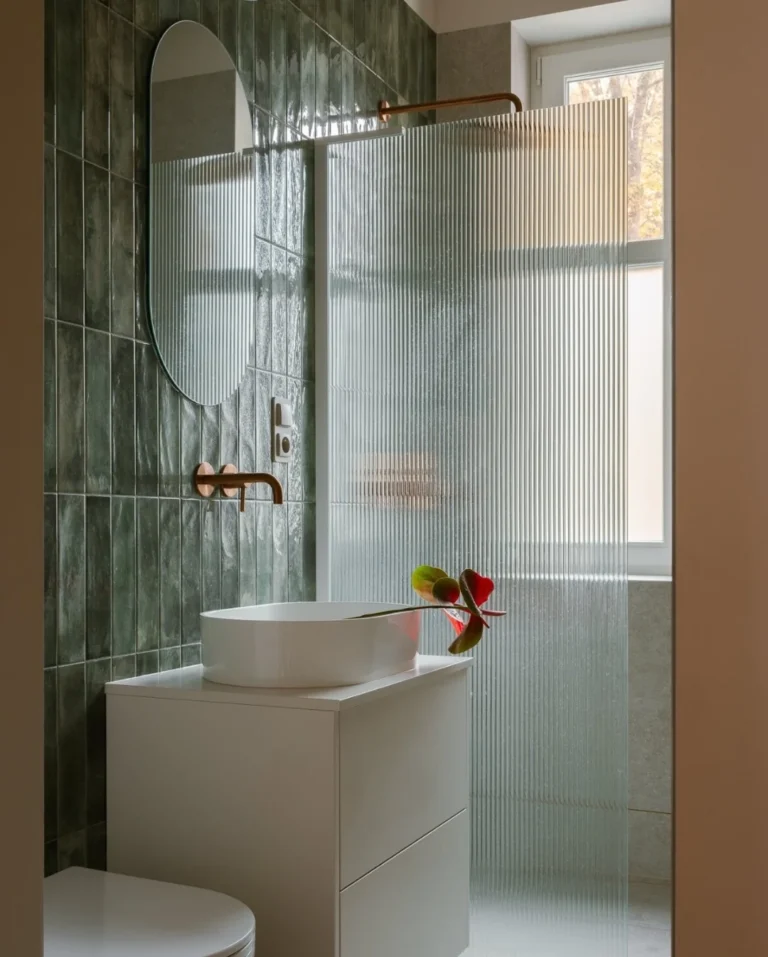
Heads Up: Frameless glass panels are worth the extra cost in a small rustic bathroom. They let the tile be visible without any visual barrier, making the whole room feel larger.
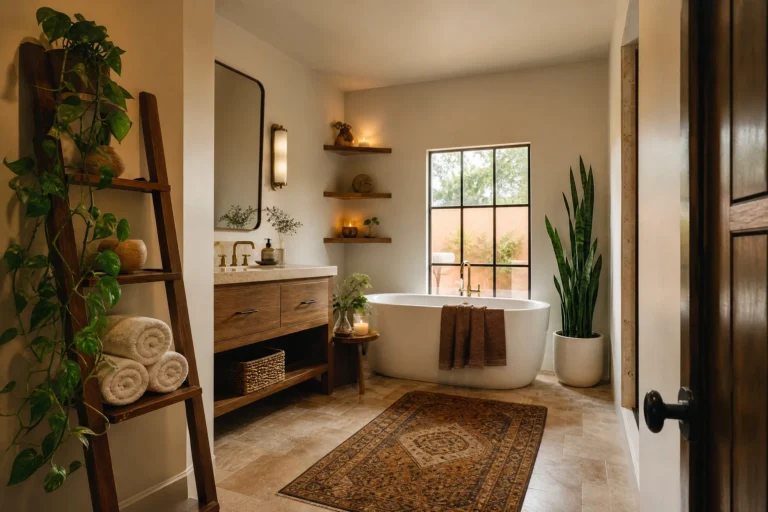
A small snake plant or trailing pothos on a teak shelf just outside the wet zone adds a living organic layer that no tile or fixture can replicate, and both plants tolerate high humidity and low direct light without complaint. Keep the planter in terracotta, woven seagrass, or unglazed ceramic because plastic pots undercut the rustic palette no matter how beautiful the plant is.
Designer Advice: Inside the wet zone, a hanging eucalyptus bundle on the showerhead arm is the only greenery that reliably holds up to daily steam and spray.
18. Choose Frameless Glass Over Framed Every Time in a Rustic Shower
Frameless glass lets the stone, tile, and texture be the story of the shower rather than drawing attention to the enclosure itself, and the cost difference of 500 to 1500 dollars over a semi-frameless unit is worth it for that reason alone. If budget is tight, a single frameless glass panel on the open side rather than a full enclosure is a strong middle ground that still reads as considered.
Reality Check: Frameless glass needs a water-repellent coating reapplied every few months in hard water areas. Without it, even the best glass goes hazy fast.
19. Use Earthy Color in the Grout Before Committing to a Bold Tile
A dusty sage, warm taupe, or terracotta grout with warm white tile gives the whole shower an earthy rustic warmth without the risk and cost of a bold tile decision across every wall. Test the grout color in the actual bathroom lighting before ordering because showroom lighting and bathroom lighting produce completely different results with earthy tones.
Pro Move: Order a grout sample card and hold it against your tile in the actual room at different times of day before finalizing the color.
20. Fix Low Water Pressure Before Installing a Rainfall Showerhead
A high-pressure rainfall showerhead designed for low-flow conditions, such as models from Speakman or American Standard rated at 1.8 GPM, delivers the rainfall experience without requiring the water pressure of a larger home by forcing water through smaller concentrated nozzles. Try a pressure-compensating showerhead before committing to a pump system, which requires professional installation and adds ongoing maintenance.
Heads Up: Measure your home water pressure before buying any rainfall showerhead. Most perform well at 45 to 80 PSI, but below 30 PSI you will need a booster pump regardless of the model.
Real brick is not waterproof and deteriorates in a wet shower environment regardless of sealing, but brick-look tile is available in convincing warm red, charcoal, and antique white finishes that install with standard waterproofing and give the same raw industrial rustic effect. Use a running bond pattern and choose a grout color slightly darker than the tile face, the way real mortar reads against real brick.
Designer Advice: One brick-look feature wall opposite the showerhead gives you the texture and drama without the space feeling like a kitchen backsplash gone wrong.
22. Size Your Exhaust Fan Correctly to Protect Natural Materials
Most exhaust fans installed in bathrooms are rated for a room half the actual size, and in a rustic shower with porous materials like natural stone or unsealed grout, an undersized fan is the primary cause of mustiness and surface deterioration over time. As a general guideline you need at least 1 CFM of extraction per square foot of bathroom floor area, and you should run it for 20 minutes after every shower, not just during it.
Reality Check: A bathroom that is 80 square feet needs at minimum an 80 CFM fan. Check the rating of your current fan before assuming it is adequate for the space.
23. Design a Double Shower Around a Single Continuous Material
A double walk-in shower with a shared central rain showerhead and individual handheld units on opposing walls only feels cohesive if a single continuous floor and wall material runs the full length without a transition strip, making the space read as one unified room rather than two units pushed together. A single centrally located linear drain running the full width handles water from both sides cleanly without competing floor slopes.
Pro Move: Add a built-in teak bench on each side for symmetry. It turns a double shower into something that genuinely looks designed rather than just large.
24. Mix Metal Finishes with One Primary and One Accent
Mixing matte black with oil-rubbed bronze or unlacquered brass with aged nickel works in a rustic shower because warm metals and dark metals share the same earthy palette, but mixing warm and cool finishes like polished chrome alongside antique brass looks like an accident rather than a choice. Anchor one finish on all plumbing fixtures and bring the second finish in only on hooks, towel bars, and shelf brackets.
Designer Advice: Swap the showerhead and handles first if you want to warm up an existing chrome shower. Those two pieces are the most visible and do the most work on the overall feeling.
A frosted glass casement or awning window placed high on the shower wall above eye level brings in daylight without any privacy concerns and reads like a traditional farmhouse window when framed in wood with divided panes. Any window inside the wet zone must be built with full waterproofing membrane coverage on the sill, frame, and surrounding wall assembly, not just a painted surface.
Heads Up: A skylight above the shower is the single most impactful natural light addition you can make in a rustic bathroom. Even a small one transforms the space completely.
26. Make a Farmhouse Shower Feel Authentic Rather Than Generic
The shiplap, white tile, and black fixture combination has become so common it no longer reads as farmhouse so much as it reads as a design shortcut, and the fix is imperfection: handmade-look ceramic with glaze variation, unlacquered brass that has already started to patina, and grout that is slightly off-white rather than perfectly bright. Swap standard subway tile for a thicker handmade ceramic in warm off-white and the authenticity is immediate.
Reality Check: Avoid anything that comes in a perfectly uniform glossy finish if genuine farmhouse character is the goal. The imperfection is exactly the point.
27. Use Reclaimed Wood on the Ceiling, Not in the Wet Zone
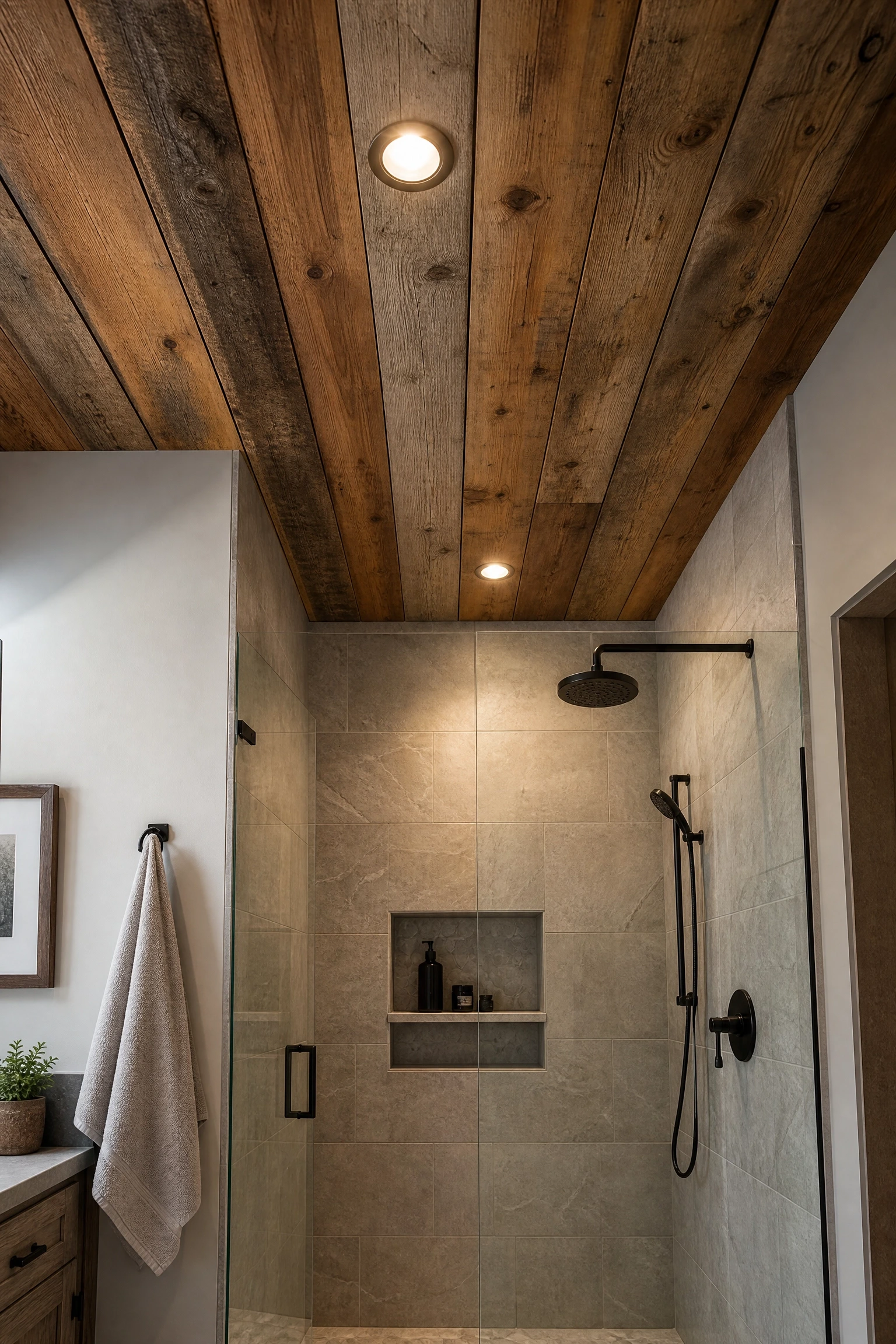
Reclaimed barn wood or shiplap on the bathroom ceiling above a well-ventilated shower adds incredible warmth and history without the moisture risk that makes real wood inside the wet zone a maintenance problem within a few years. Seal it with a water-resistant matte finish and make sure the exhaust fan is correctly sized, and it holds up reliably over time.
Pro Move: If you want the look of reclaimed wood inside the shower itself, a wood-look porcelain with a matte finish and varied surface texture is now genuinely difficult to distinguish from real timber in most showrooms.
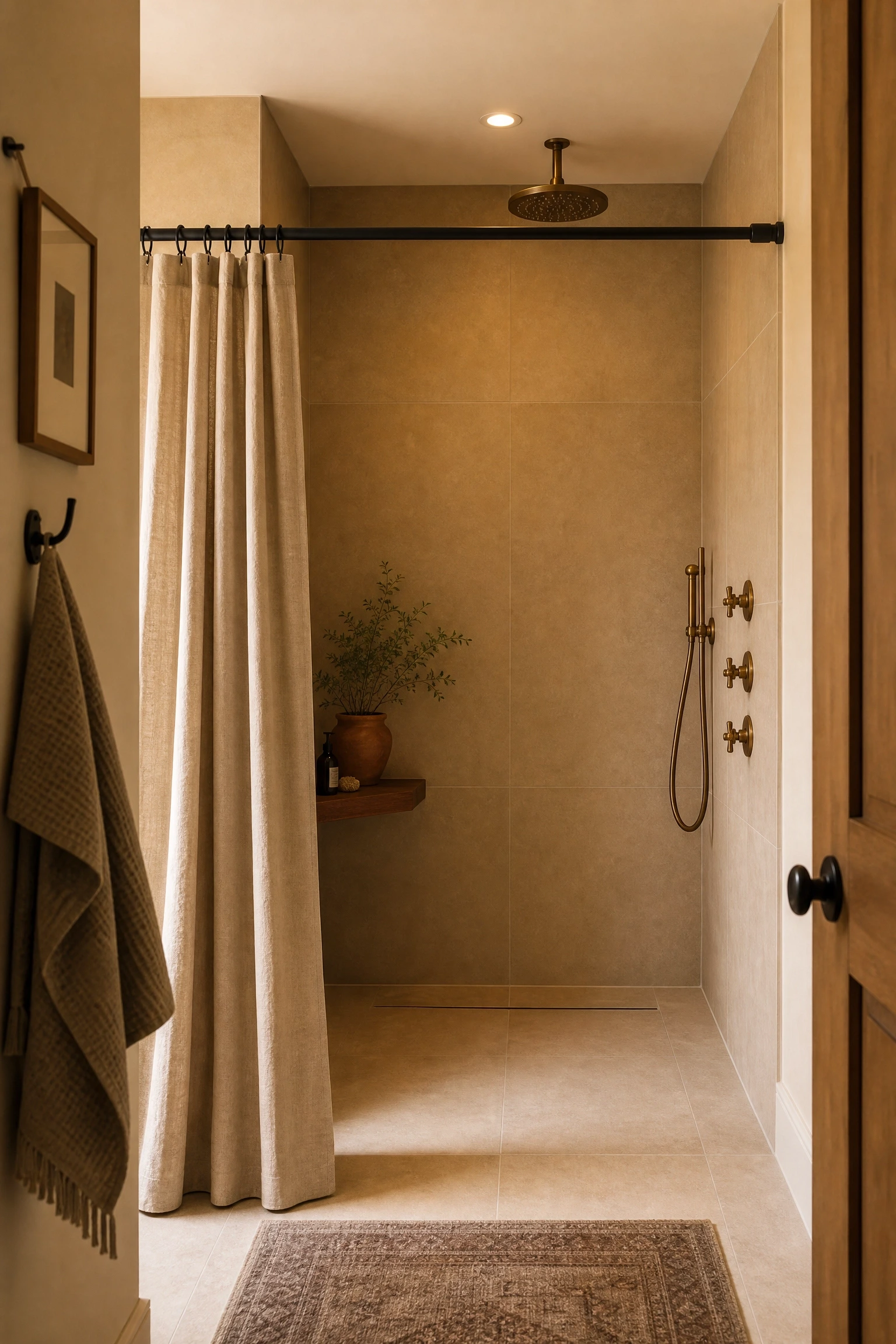
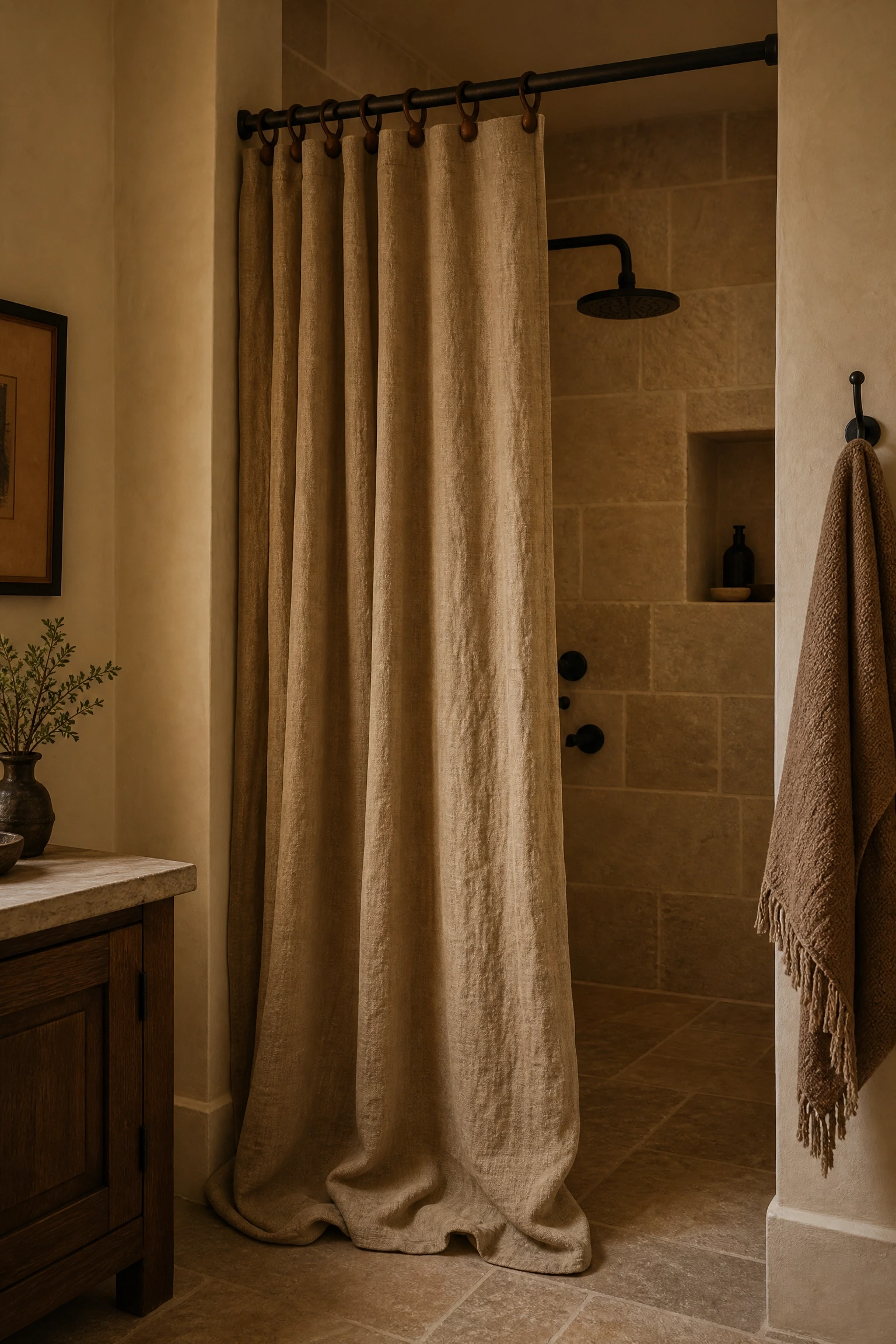
28. Choose the Right Shower Curtain for a Rustic Opening
A heavy linen or textured cotton curtain in off-white, sand, or warm grey does far more design work in a rustic walk-in shower than any printed or patterned fabric because the natural texture reinforces the material story the tile and stone are already telling. Hang it from a blackened iron or wood rod with wooden clip rings, and size it so it puddles slightly on the floor for a detail borrowed from interior design rather than bathroom styling.
Designer Advice: A puddle hem on a linen curtain is one of the cheapest ways to make a simple bathroom fixture look high-end and intentional.
29. Prioritize Slip Resistance on Any Natural Stone Floor
Honed or brushed stone finishes are significantly more slip-resistant than polished surfaces, and any stone used on a shower floor should always be honed with a Coefficient of Friction rating of 0.6 or higher for wet areas. Anti-slip topical sealers are available for stone floors already installed and work by chemically etching the surface at a microscopic level to increase grip without changing the appearance.
Heads Up: Never use polished stone on a shower floor regardless of how beautiful it looks in the showroom. The slip risk in a wet environment is not worth the aesthetic.
30. Use Materials with a Long Design History to Make a Shower Feel Original
Travertine, slate, terracotta, unlacquered brass, and handmade ceramic are all materials with decades of design history, and combining them in a simple layout without complicated angles or trend-driven features creates a shower that could have been designed at any point in the last 50 years without looking dated. A classic off-white subway tile with a pencil liner border at niche height is one architectural detail borrowed from early 20th century bath design that immediately makes a shower feel like it has history.
Pro Move: Avoid anything that is clearly of-the-moment. The goal is a shower that belongs to the house, not one that announces when it was renovated.
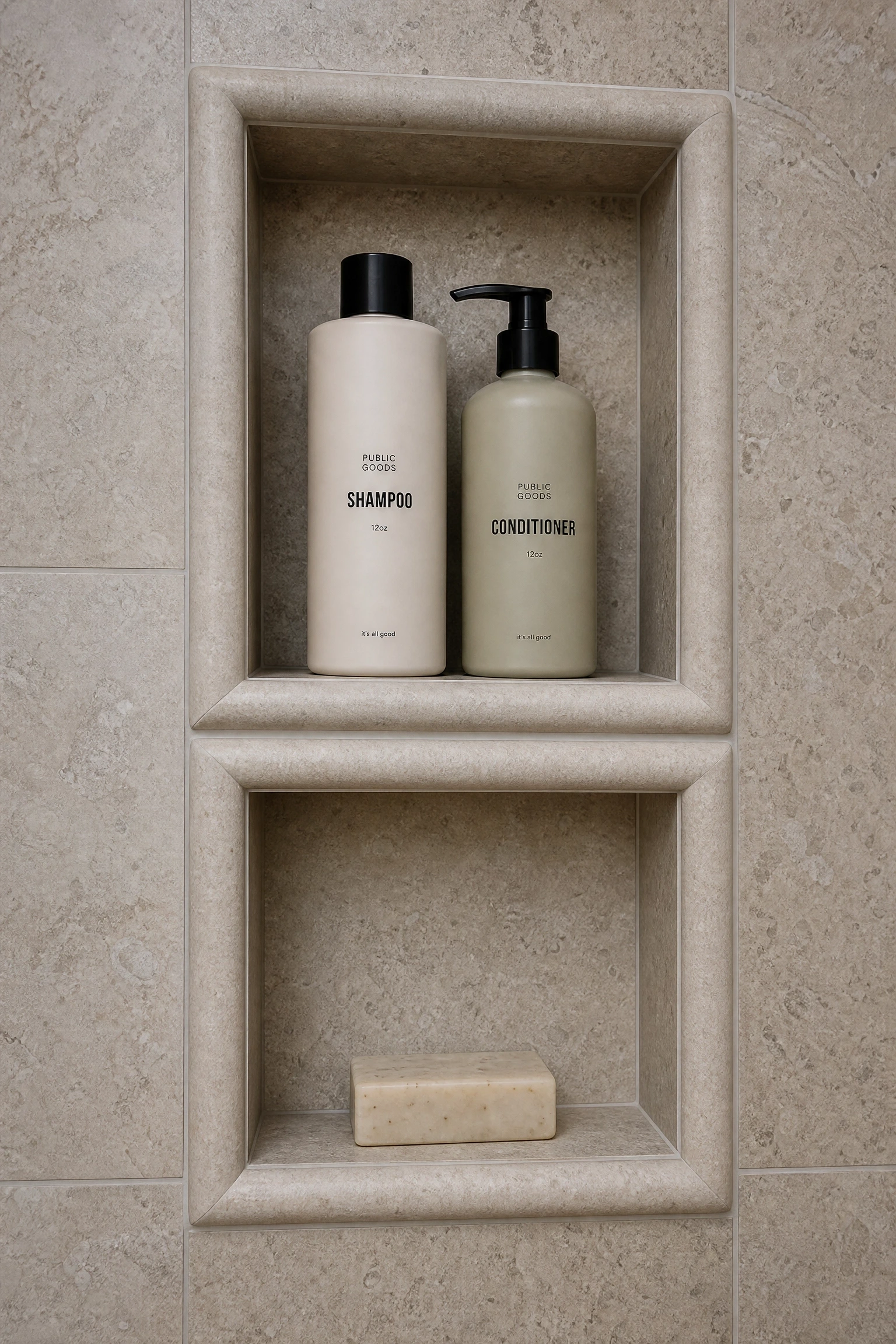
31. Build Storage Into the Wall So It Belongs There
A built-in stone or tile shelf recessed into the shower wall at least 12 inches wide and 5 inches deep reads as part of the original architecture rather than an added accessory, especially when finished with a bull-nose stone edge in the same tone as the surrounding tile. Tilt the shelf surface very slightly downward toward the shower so water drains off rather than pooling around the products stored there.
Designer Advice: Two stacked recessed niches with a small gap between them is the detail professional designers use in high-end shower builds. It looks intentional and provides genuinely useful storage without cluttering the wall.
32. Extend the Shower Floor Tile Into the Bathroom to Tie the Room Together
Running the shower floor tile out into the main bathroom floor using the same material, or at minimum a closely related tone and texture, makes the walk-in shower feel designed as part of the room rather than inserted into it, and is the single move that most transforms how integrated and intentional the whole bathroom feels. If the shower tile is not rated for dry floor use, transition to a complementary dry-rated tile in the same color family with a bronze or brass threshold strip that matches your fixture finish.
Reality Check: This is the move most homeowners skip because it costs a little more tile. It is also the move that makes the biggest difference to how the finished room feels.