There’s a particular kind of tired that only a really good bath can fix. You know the one. The kind where you shuffle into the bathroom, flip on a harsh overhead light, and stare at a cluttered counter before deciding you just want to collapse into bed instead. Most of us have that bathroom, and most of us have accepted it as the default. But it doesn’t have to be that way. The line between a standard bathroom and a spa-like one is thinner than you’d think, and you don’t need a full gut renovation to cross it.
What makes a spa feel so different from your average bathroom isn’t necessarily the budget or the size. It’s the decisions: the lighting temperature, the materials underfoot, the way everything is edited down to only what belongs. These 24 ideas cover everything from small affordable swaps to more considered upgrades, and you can pick up any one of them and start there. Mix and match what fits your space, your style, and your budget. The goal isn’t perfection. It’s a bathroom you actually want to spend time in.
You walk in after a long day and the bathroom light hits you like a spotlight. Suddenly relaxation feels impossible.
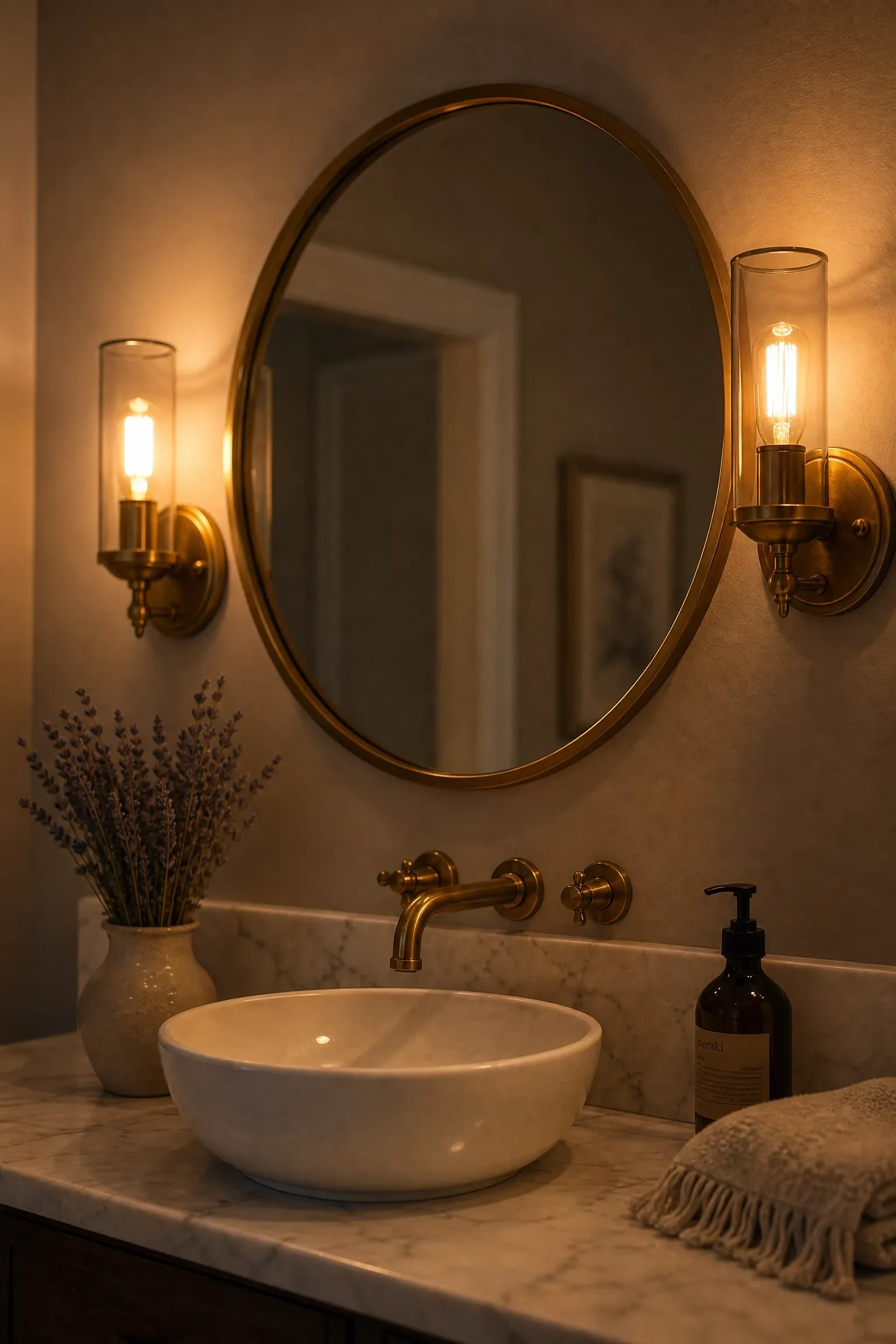
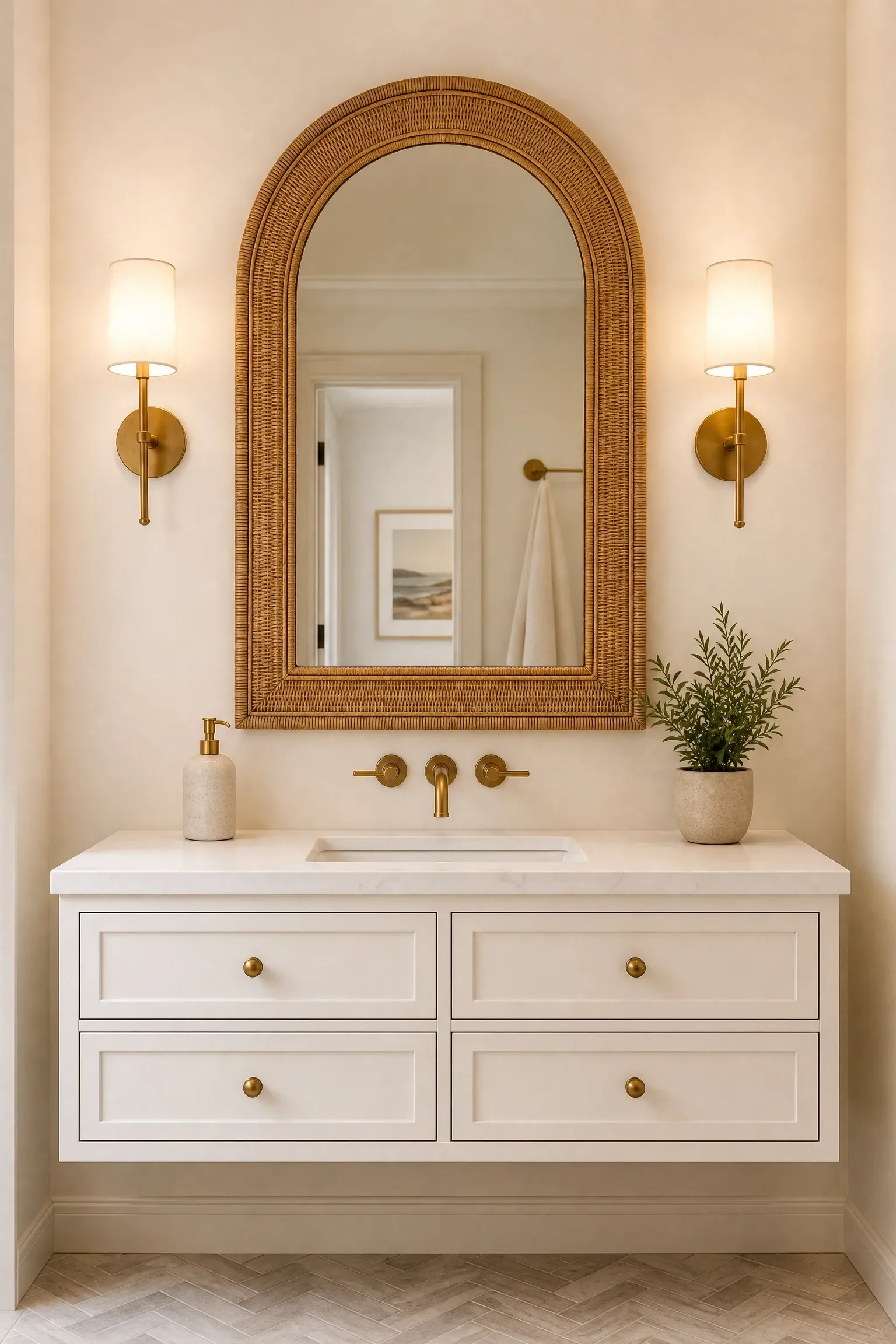
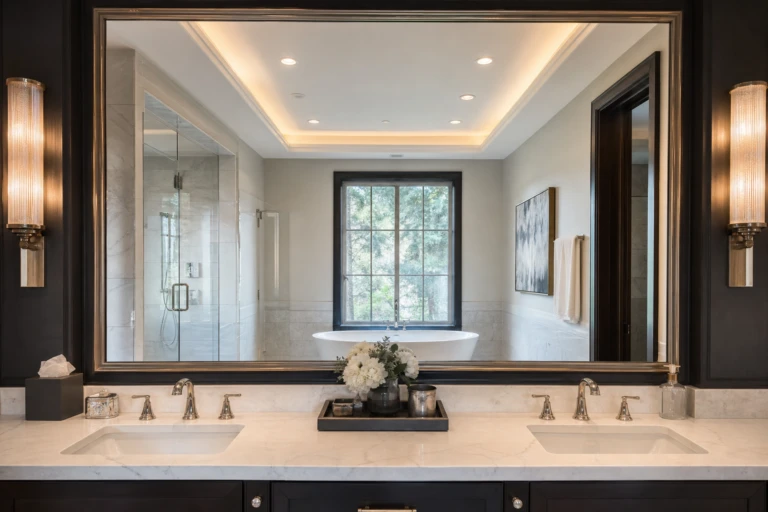
Overhead lighting with a cool or bright white color temperature (anything above 4000K) works fine for getting ready in the morning, but it’s the enemy of winding down at night. Replacing your existing fixture or adding a dimmer switch to warm-toned bulbs in the 2700K to 3000K range changes the entire mood of the room. Wall sconces flanking the mirror are a professional designer’s go-to because they provide flattering, even light without that harsh downward glare. If you can layer in a secondary light source, even a simple plug-in sconce or a battery-operated wall light near the tub, you’ll have the flexibility to shift between task lighting and ambient lighting depending on what you need. This is one of the highest-impact changes you can make for under $100, and in practice, it’s one of the first things clients notice once it’s done.
Designer Note: Look for bulbs labeled “warm white” or “soft white” at 2700K. Avoid anything marked “daylight” or “bright white” in a space meant for relaxation.
You’ve scrolled past enough hotel bathroom photos to know exactly what’s missing from yours.
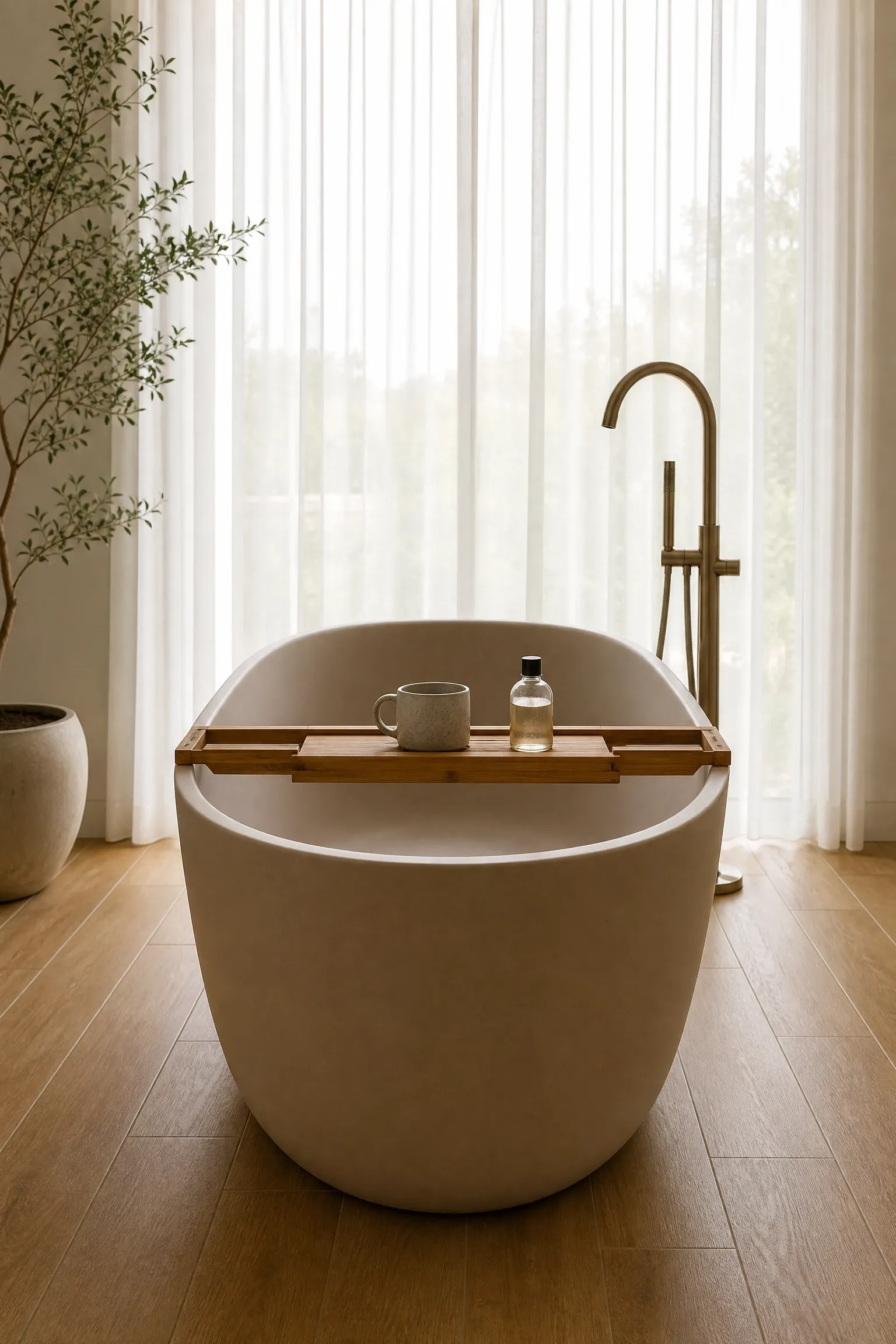
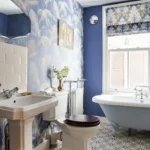
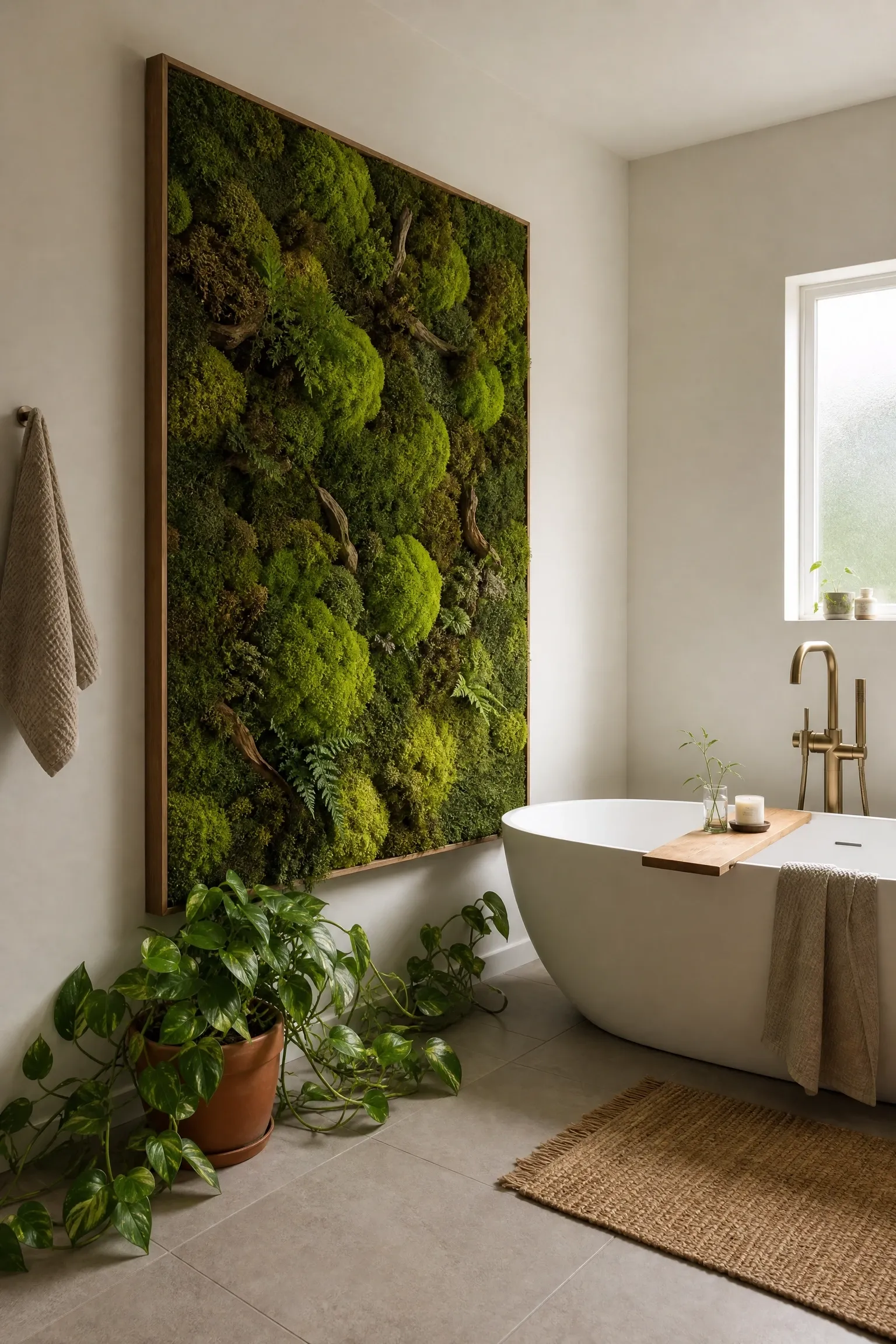
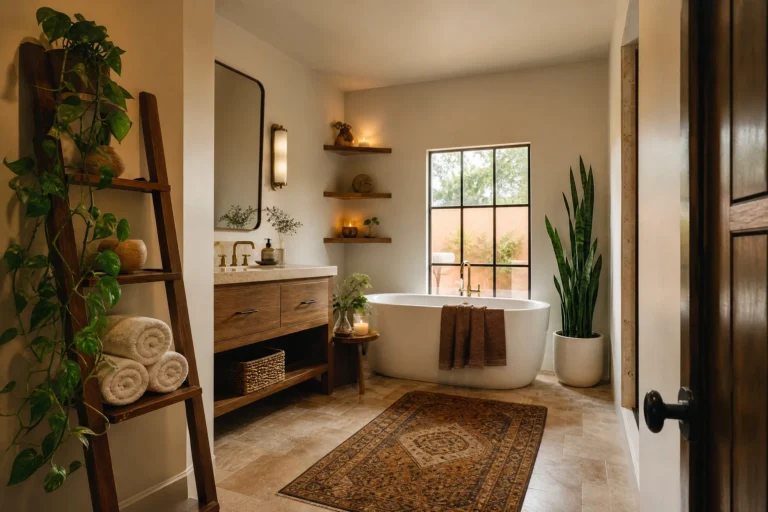
A freestanding tub is the single piece of furniture most associated with a spa aesthetic, and for good reason: it reads as sculptural, intentional, and indulgent in a way that an alcove tub simply can’t replicate. The most popular styles right now are slipper tubs (with one raised end for reclining), Japanese soaking tubs (deeper, narrower, great for smaller footprints), and oval freestanding tubs in matte finishes like white, clay, or even black. The color temperature of a freestanding tub matters too: matte finishes absorb light and feel softer and more organic than glossy acrylic, which can look inexpensive even in a nice space. Honest caveat: plumbing for a freestanding tub is more complex than for a built-in, and floor-mounted faucets add cost. This is an investment-level upgrade, but if you’re planning a renovation anyway, it’s worth prioritizing above almost anything else.
Designer Note: Position the tub where it can be seen from the doorway for maximum visual impact. Even a small freestanding tub facing a window turns a basic bathroom into something that feels considered.
Your current showerhead has two settings: light mist and jet stream, and neither one feels particularly luxurious.
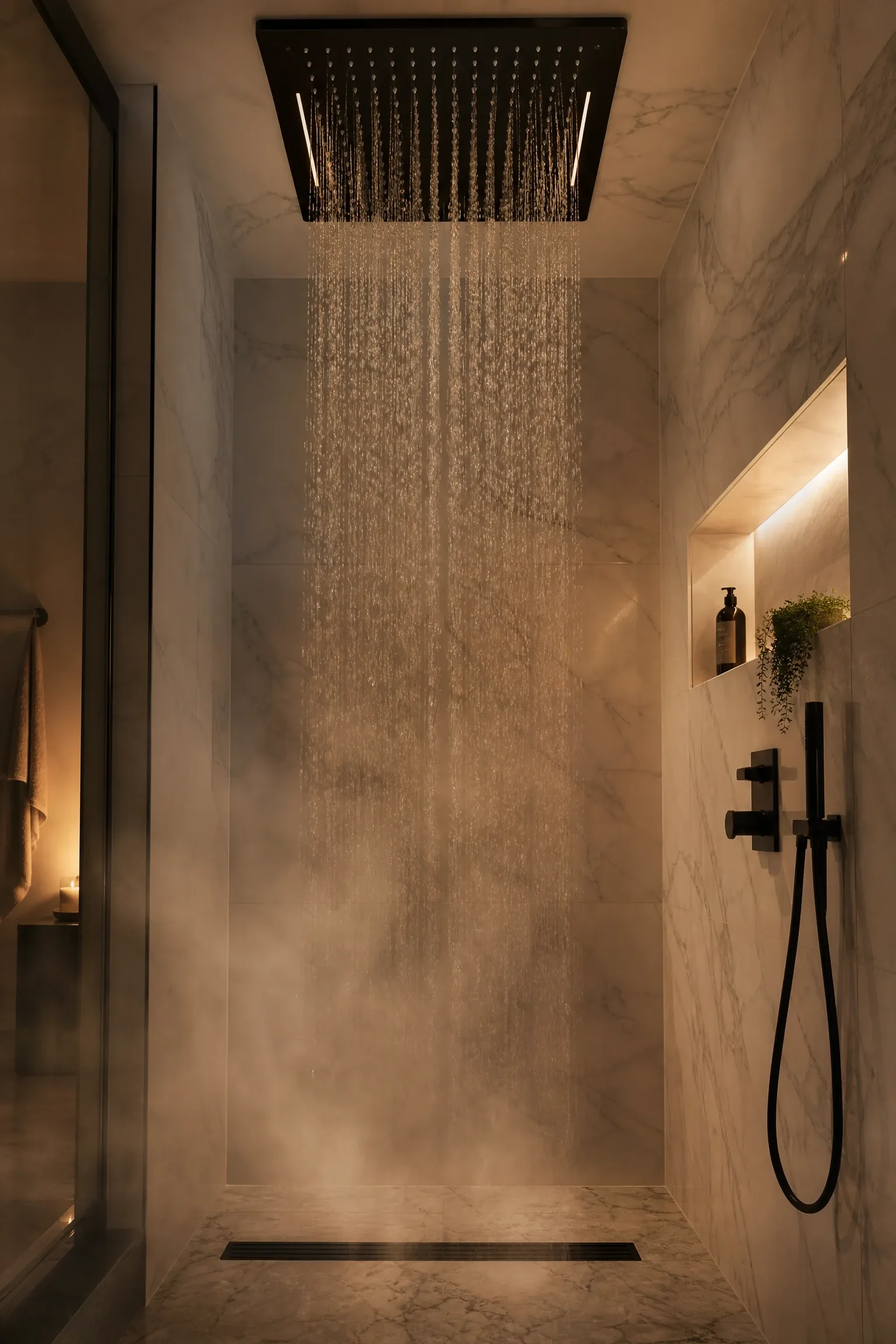
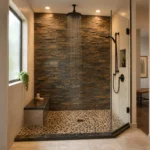
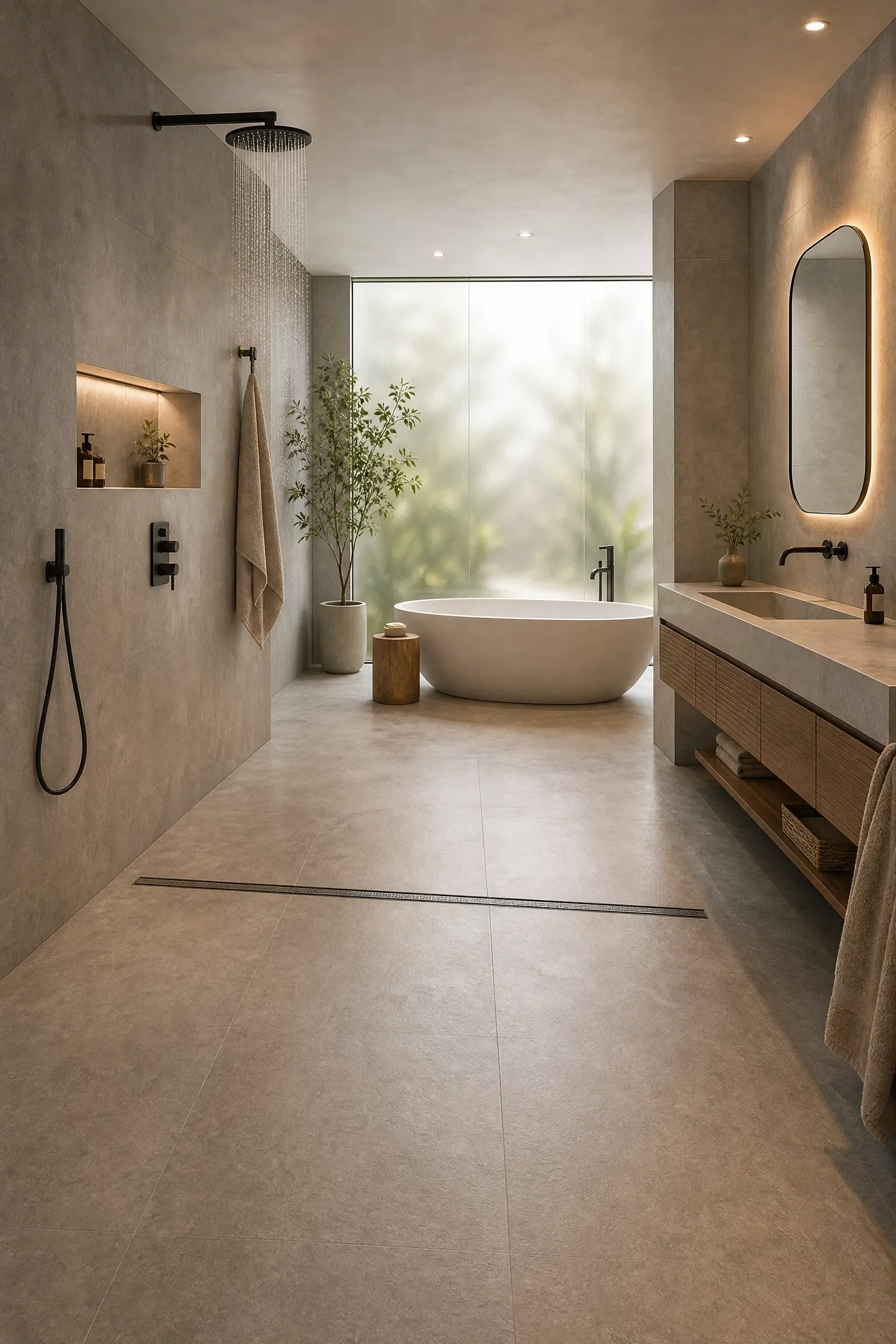
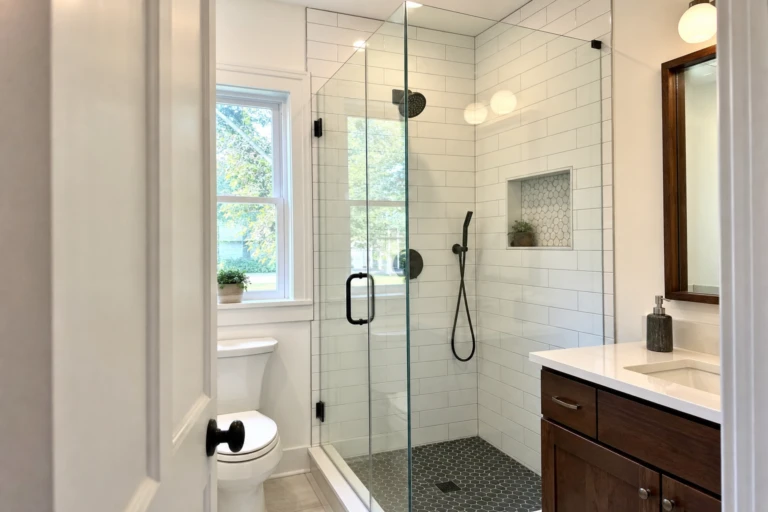
A rainfall showerhead is one of the more affordable upgrades with a genuinely spa-like payoff. The wide, flat head disperses water over a larger surface area, which creates the sensation of standing in warm rain rather than a pressurized stream. Ceiling-mounted versions look the most architectural and work especially well in bathrooms with higher ceilings, but wall-mounted rainfall heads on adjustable arms are more accessible and often easier to install without hiring a plumber. Matte black and brushed nickel are the most popular finishes right now, and both hold up well against water spots and daily use. If you pair a rainfall head with a handheld attachment on a slide bar, you get the best of both worlds: the immersive experience and the practical function. Look for heads with at least 8 inches of diameter; anything smaller defeats the purpose.
Designer Note: If you have low water pressure, check the flow rate on any rainfall head before buying. Some wide-head models require good pressure to feel as good as advertised.
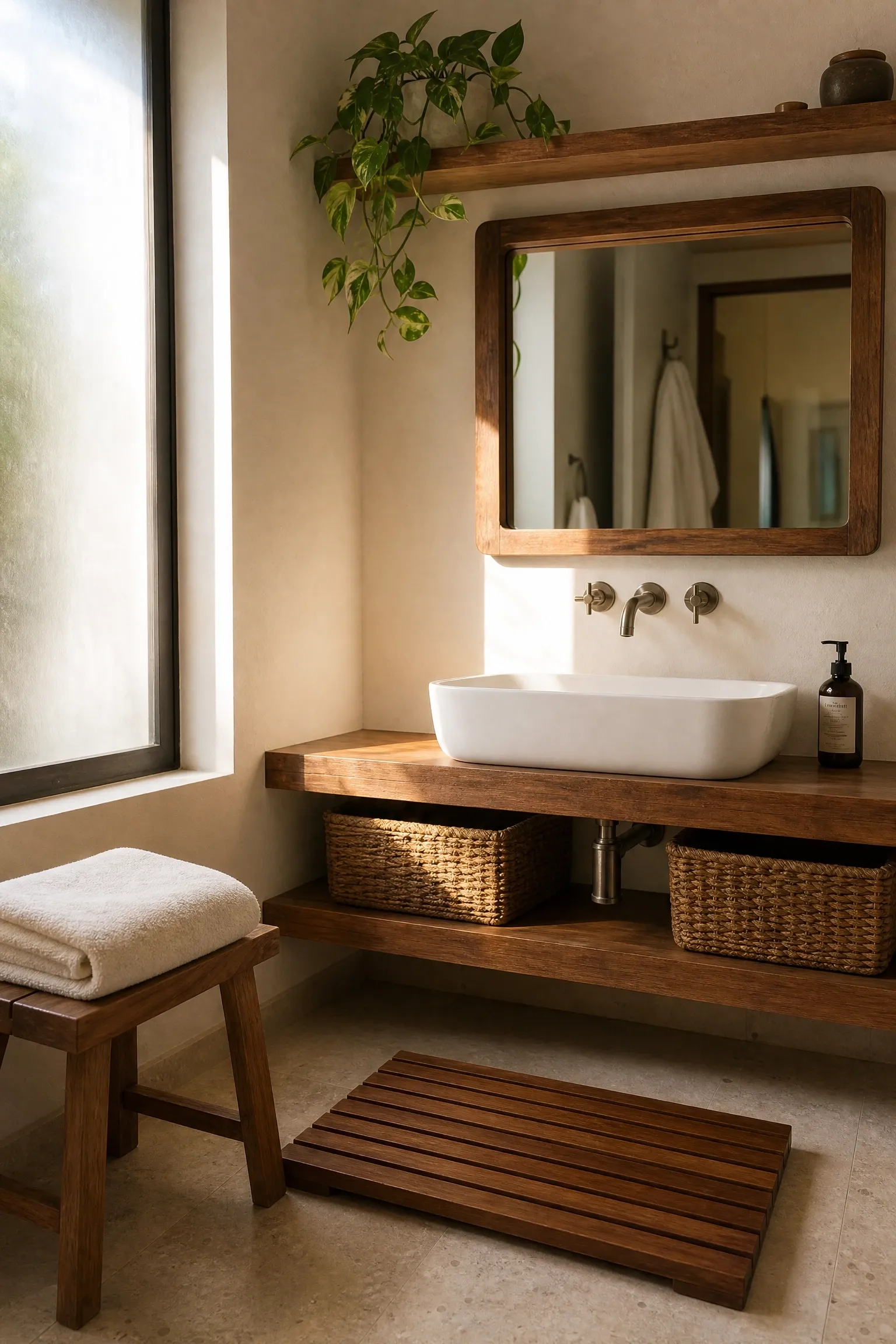
Wood is the material that bridges the gap between a sterile bathroom and one that actually feels warm. You don’t need a full wood vanity to get the effect. A teak bath mat, a wood-framed mirror, a small slatted shelf above the toilet, or even a wooden stool next to the tub all introduce that organic texture that spas lean into heavily. Teak is the most practical choice for wet environments because of its natural oils, which make it genuinely water-resistant without much maintenance. Bamboo is a more affordable alternative with a similar feel. From a design standpoint, wood introduces visual weight and warmth that balances the cool tones of tile, stone, and chrome, which is exactly why Japandi-style bathrooms (the Japanese-Scandinavian aesthetic that’s been dominating design publications for a few years now) rely on it so consistently. Keep wood accents away from direct water spray unless they’re explicitly treated or naturally water-resistant.
Designer Note: A teak shower mat runs $40 to $80 and is one of the easiest, lowest-risk ways to introduce natural material into the bathroom without any installation.
Your bathroom is painted a color that made sense in a different era of your life, and it’s working against every calming instinct you have.
Color psychology is well-documented in interior design: cool neutrals, warm greiges, soft sages, and earthy taupes consistently register as calming in ways that bright whites, bold blues, or stark grays simply don’t. The palette at most high-end spas leans toward warm off-whites, putty tones, terracotta, clay, and muted greens, and there’s a reason for that. These colors mimic the natural world and signal the brain to slow down. If you’re painting, consider shades like Farrow and Ball’s String, Benjamin Moore’s Pale Oak, or Sherwin-Williams’ Accessible Beige as starting points. Pair wall color with stone or travertine-look tiles in similar tones for a layered, tonal effect that feels intentional rather than matchy. One thing that doesn’t work in practice: going too dark in a small bathroom without a plan for lighting. A very deep greige can feel beautiful in a large primary bath and oppressive in a small one.
Designer Note: Sample your paint color at multiple times of day before committing. Bathroom lighting, especially artificial evening light, will read very differently from natural morning light.
You’ve used a steam room at the gym and spent the whole time thinking about how to get this in your own home.
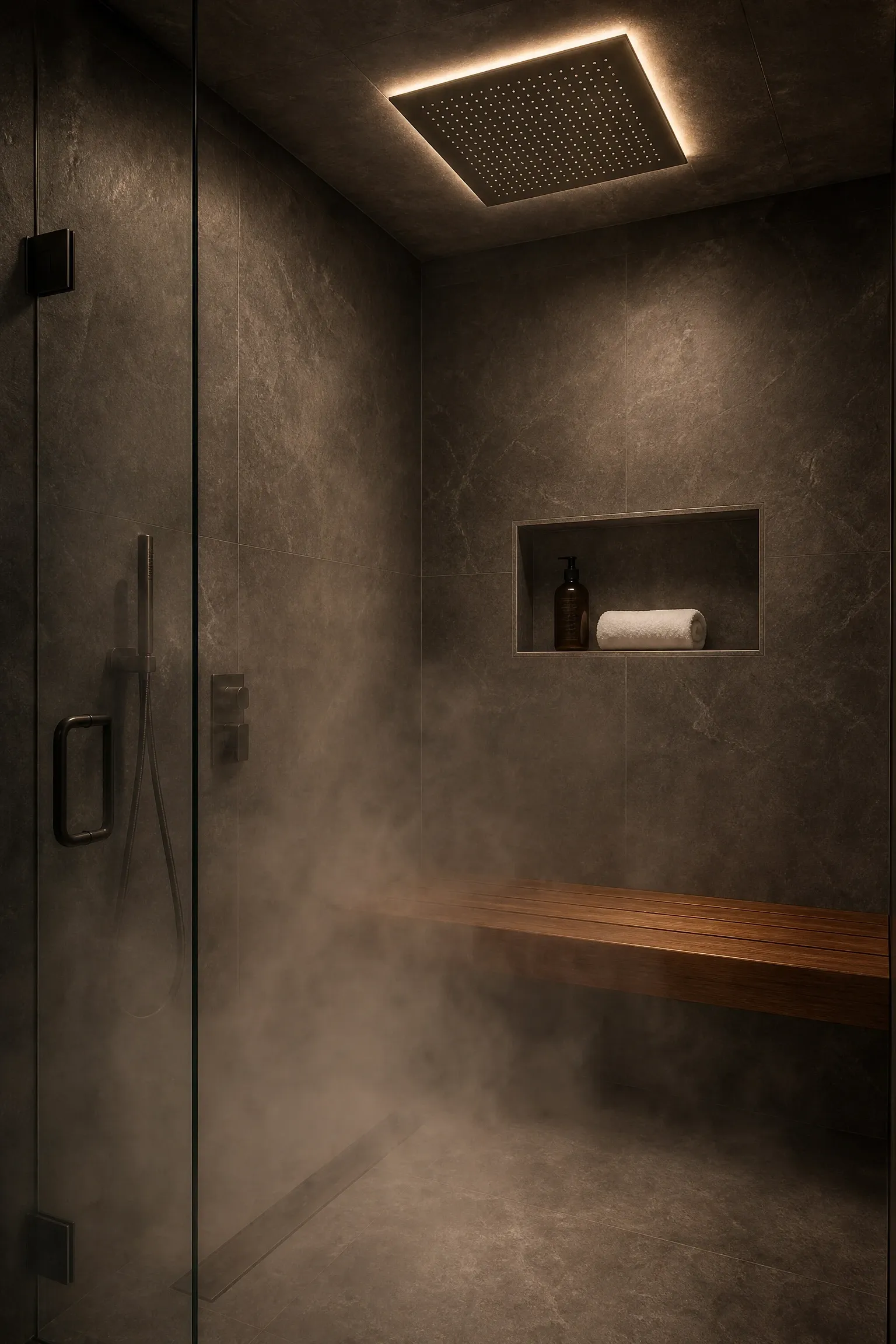
A steam shower is one of the more serious upgrades on this list, but it’s become more accessible over the past few years as steam generator units have come down in price. The basic setup involves a sealed shower enclosure (usually with a glass door that closes fully), a steam generator unit that’s typically installed in a nearby cabinet or closet, and a steam head inside the shower. The health benefits are real: steam opens pores, relaxes muscles, and has a measurable effect on respiratory function. From a design perspective, a steam shower works best with large-format porcelain or natural stone tiles that can handle humidity, and built-in niches for products rather than a caddy that traps moisture and mold. Entry-level steam generator kits start around $500 for installation-ready units, though professional installation adds to the cost. This is mid-range to investment-level depending on the complexity of your shower enclosure.
Designer Note: Add a built-in teak bench inside the steam shower. It’s both functional and beautiful, and it completes the experience in a way that standing alone in steam simply doesn’t.
Every surface in your bathroom is covered with things, and no amount of candles can overcome the visual noise of 12 different bottles lined up on the edge of the tub.
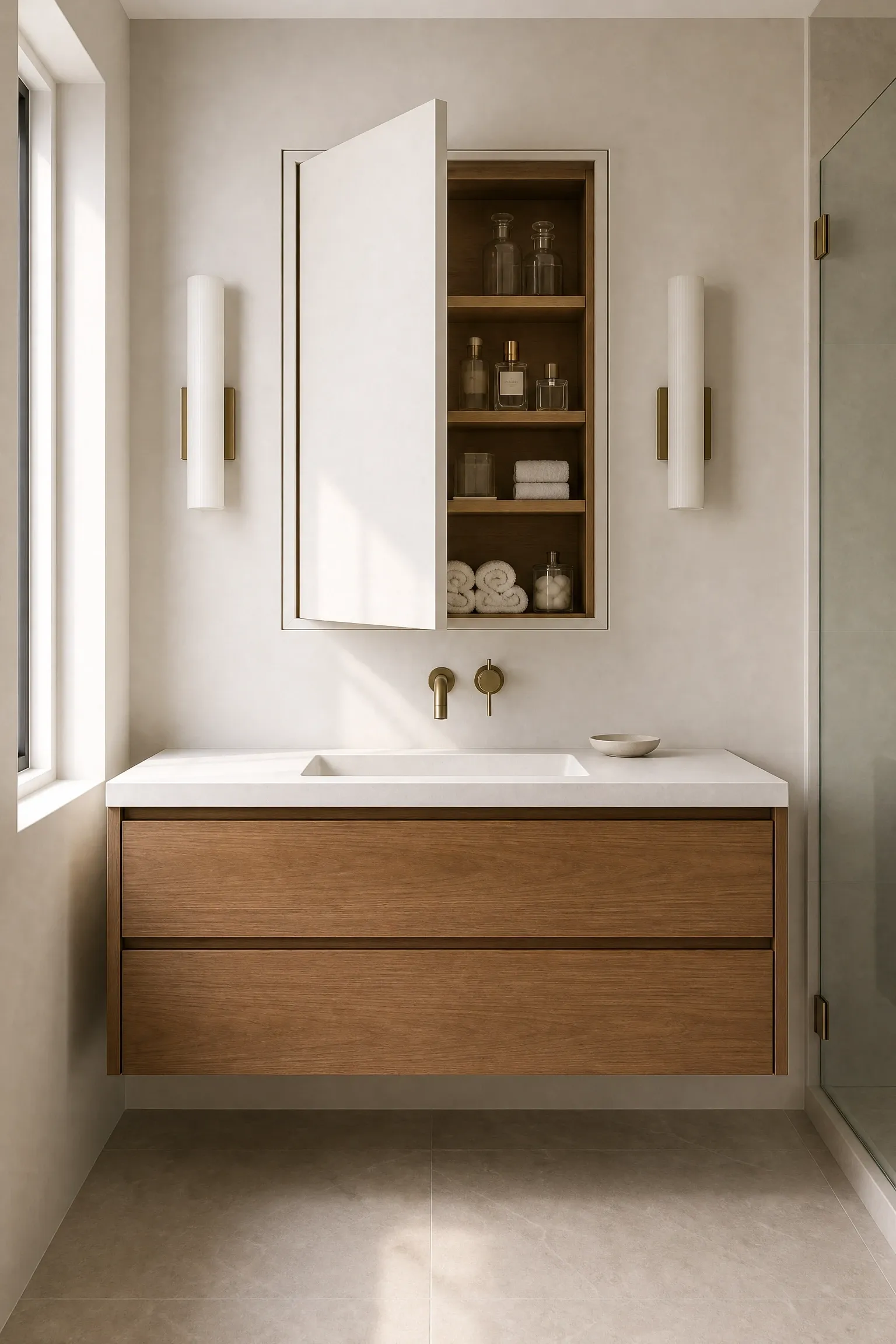
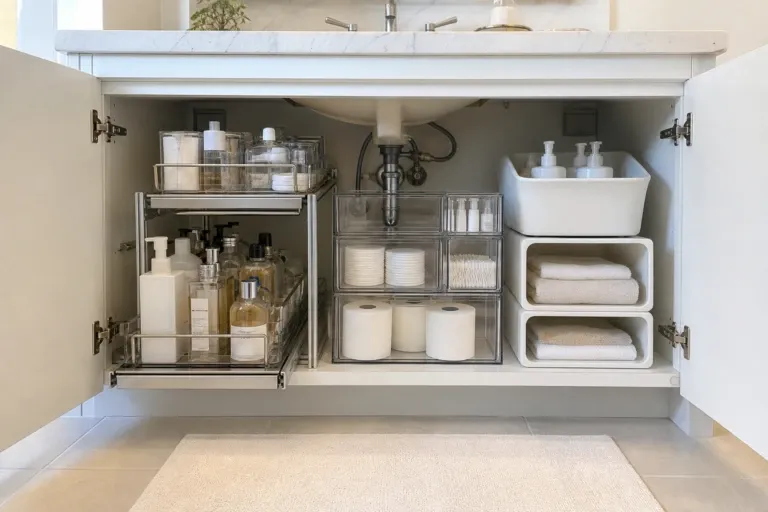
One of the most underrated aspects of spa design is what you don’t see. Professional designers talk a lot about negative space, and in the bathroom specifically, clearing surfaces of visual clutter is often the most impactful thing you can do before spending a single dollar on decor. Recessed medicine cabinets take zero floor space and hide a surprising amount. Built-in shower niches replace product caddies and keep surfaces clean. Floating vanities with drawer organizers keep toiletries out of sight while making the floor visible, which creates the illusion of more space. If you’re renting or can’t do built-ins, decanted products in matching apothecary glass bottles keep shelves looking intentional rather than chaotic. This is a very budget-friendly area to work on first, because the payoff is immediate and doesn’t require purchasing anything new.
Designer Note: The three-item rule works well on open bathroom shelves: limit each surface to three intentional objects maximum. Anything beyond that starts reading as clutter regardless of how nice the individual pieces are.
You’ve been meaning to replace those towels since the last time you actually moved. That was four years ago.
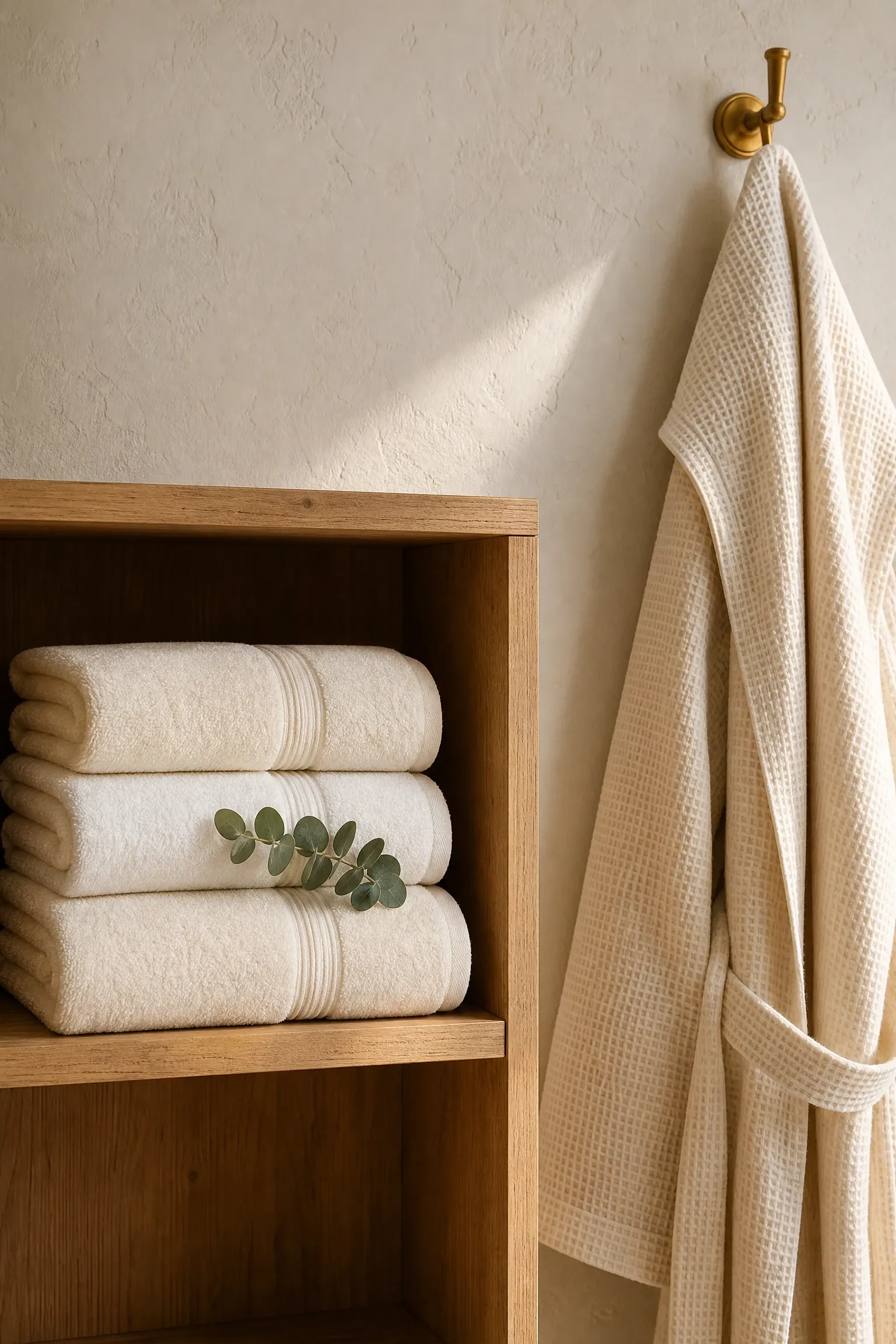
Towels are one of those things people chronically underspend on and then wonder why their bathroom doesn’t feel luxurious. Egyptian cotton towels with a GSM (grams per square meter) of 600 to 800 are the standard at high-end spas for a reason: they’re dense, absorbent, and maintain their softness through dozens of washes. Waffle-weave towels are a great alternative for people who prefer something lighter and quicker-drying while still looking upscale. Color matters too: sticking to one or two neutral tones (white, ivory, warm gray, or a muted sage) and folding them consistently creates that hotel-linen effect that reads as intentional and calm. A floor-length robe hung on a hook behind the door finishes the experience. Budget note: you don’t need to replace every towel at once. Even replacing just two matching bath towels in a quality fabric makes a noticeable difference.
Designer Note: Wash new cotton towels without fabric softener for the first few washes. Fabric softener coats the fibers and actually reduces absorbency, which defeats the whole purpose.
The moment you step out of a warm shower onto a cold tile floor in the morning, any relaxation you just achieved evaporates instantly.
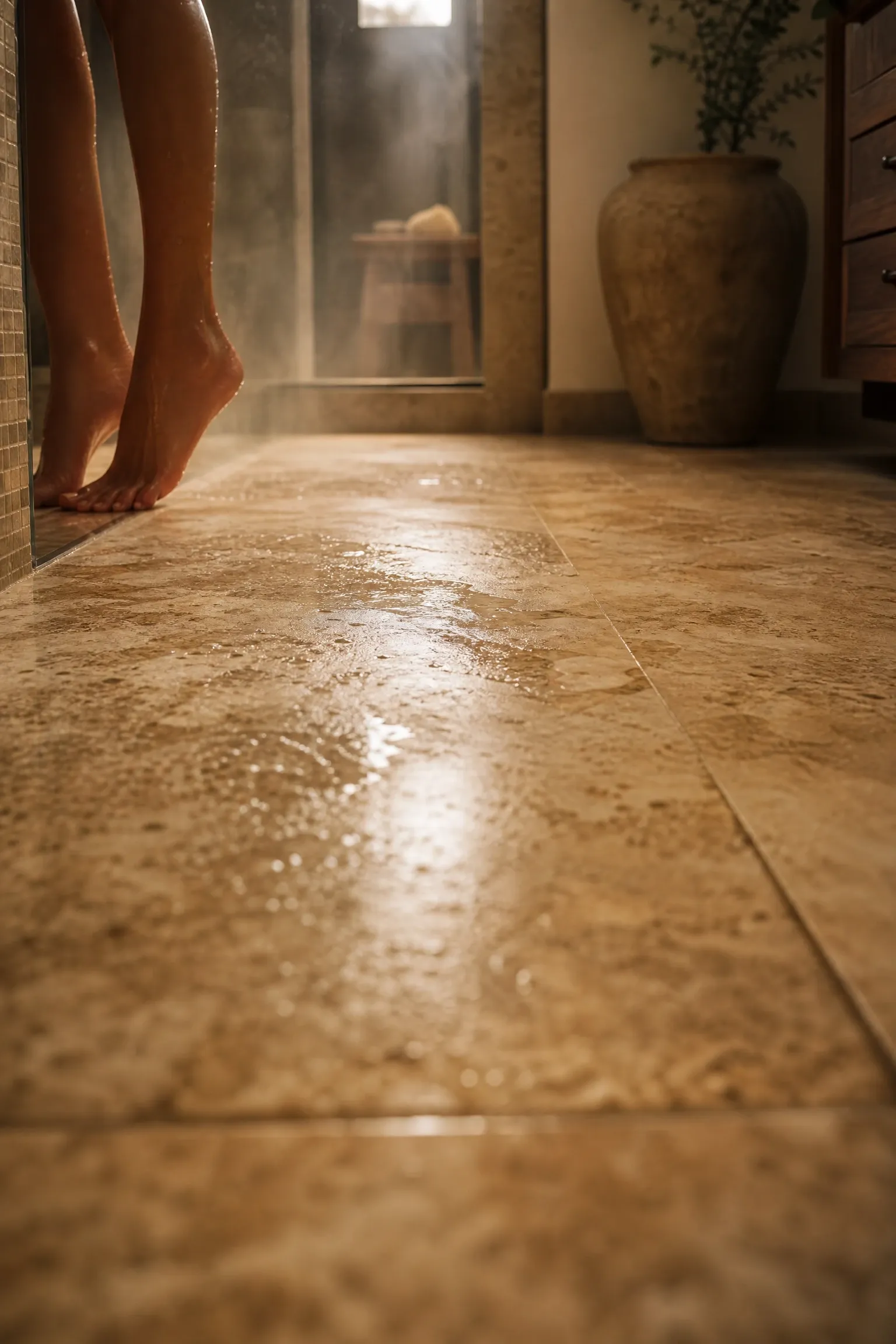
Heated floors are consistently rated as one of the upgrades homeowners are most glad they did, and the reason is simple: the sensory contrast of warmth underfoot changes how the entire room feels. Hydronic heated floors (which use hot water pipes) are the more complex and expensive option typically installed during full renovations. Electric mat systems, on the other hand, can be installed under tile during a bathroom floor replacement and are much more accessible in terms of cost and installation complexity. Many modern systems connect to a smart thermostat so the floor is warm before you even get out of bed. This works particularly well under natural stone like marble or travertine, which conducts heat beautifully and takes on a slightly different appearance when warm. Honest caveat: this is a renovation project, not a weekend upgrade, and the ROI in comfort is significant but the upfront cost is real.
Designer Note: Program your heated floor to turn on 30 minutes before your typical wake time. Coming into a warm bathroom in the morning resets the entire tone of your day.
10. Create a Scent Layer with Diffusers and Eucalyptus
Every spa you’ve ever visited smelled a particular way, and you’ve never been able to pin down exactly how to recreate it at home.
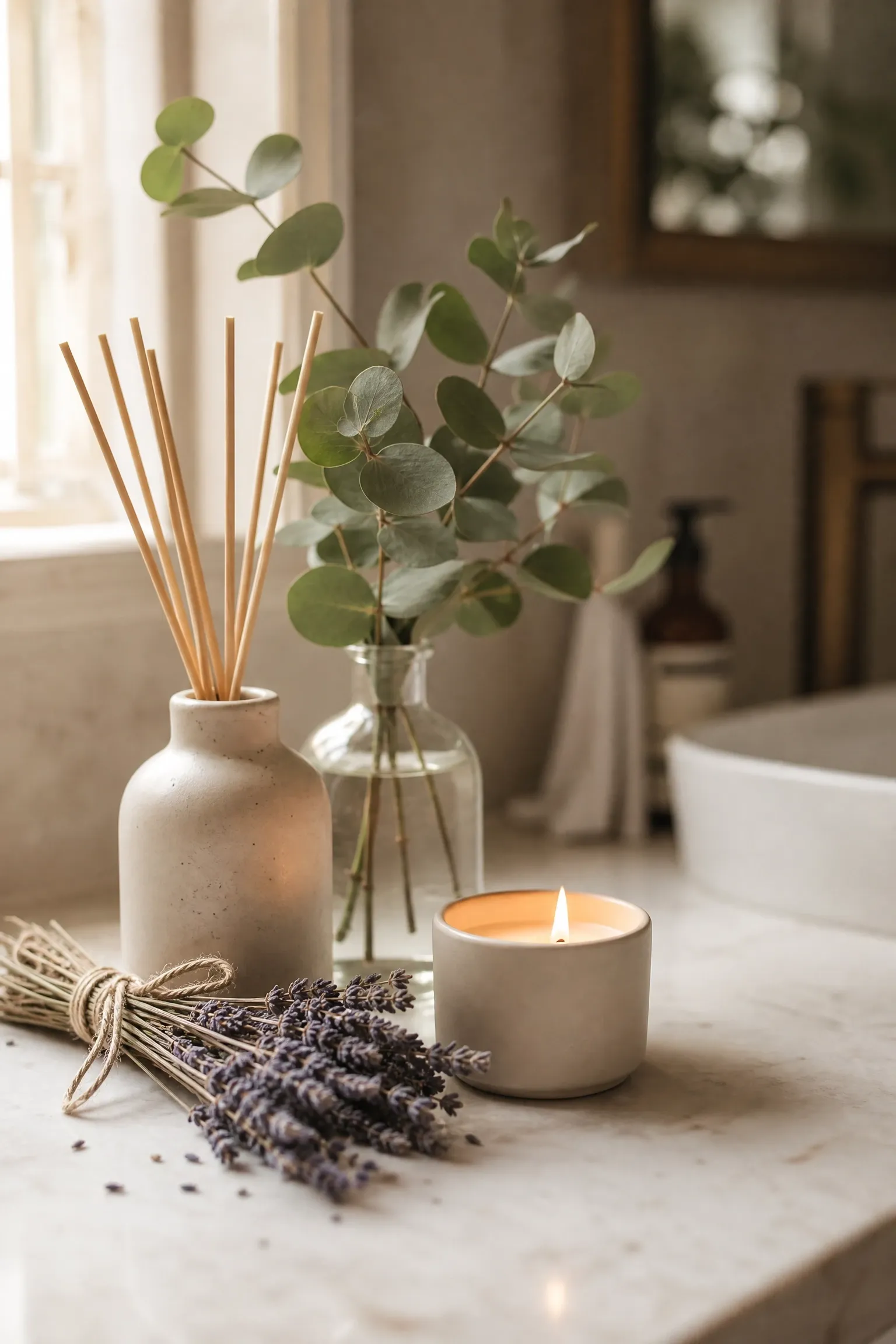
Scent is the most direct pathway to the nervous system, and it’s one of the most overlooked elements in home bathroom design. At professional spas, the scent is usually a combination of eucalyptus (which has a mild decongestant and anti-inflammatory effect), lavender (associated with lowering cortisol), and sometimes hinoki wood or cedar for a grounded, forest-like quality. A reed diffuser near the sink is an easy, low-maintenance option because it disperses scent passively without needing attention. Fresh eucalyptus branches tied to the showerhead with a rubber band is a widely shared trick for a reason: the steam releases the oils from the leaves and genuinely fills the shower with that signature spa scent. Dried lavender bundles in a ceramic vessel on the counter, a hinoki wood soap dish, and an essential oil diffuser on a shelf together create a multi-layered scent experience that’s more interesting and more authentic than a single candle.
Designer Note: Replace eucalyptus bundles every two to three weeks. They lose their scent release as they dry out, and old bundles look messy rather than intentional.
That basic builder-grade mirror has been there since the house was built, and it’s making the entire vanity wall look unfinished.
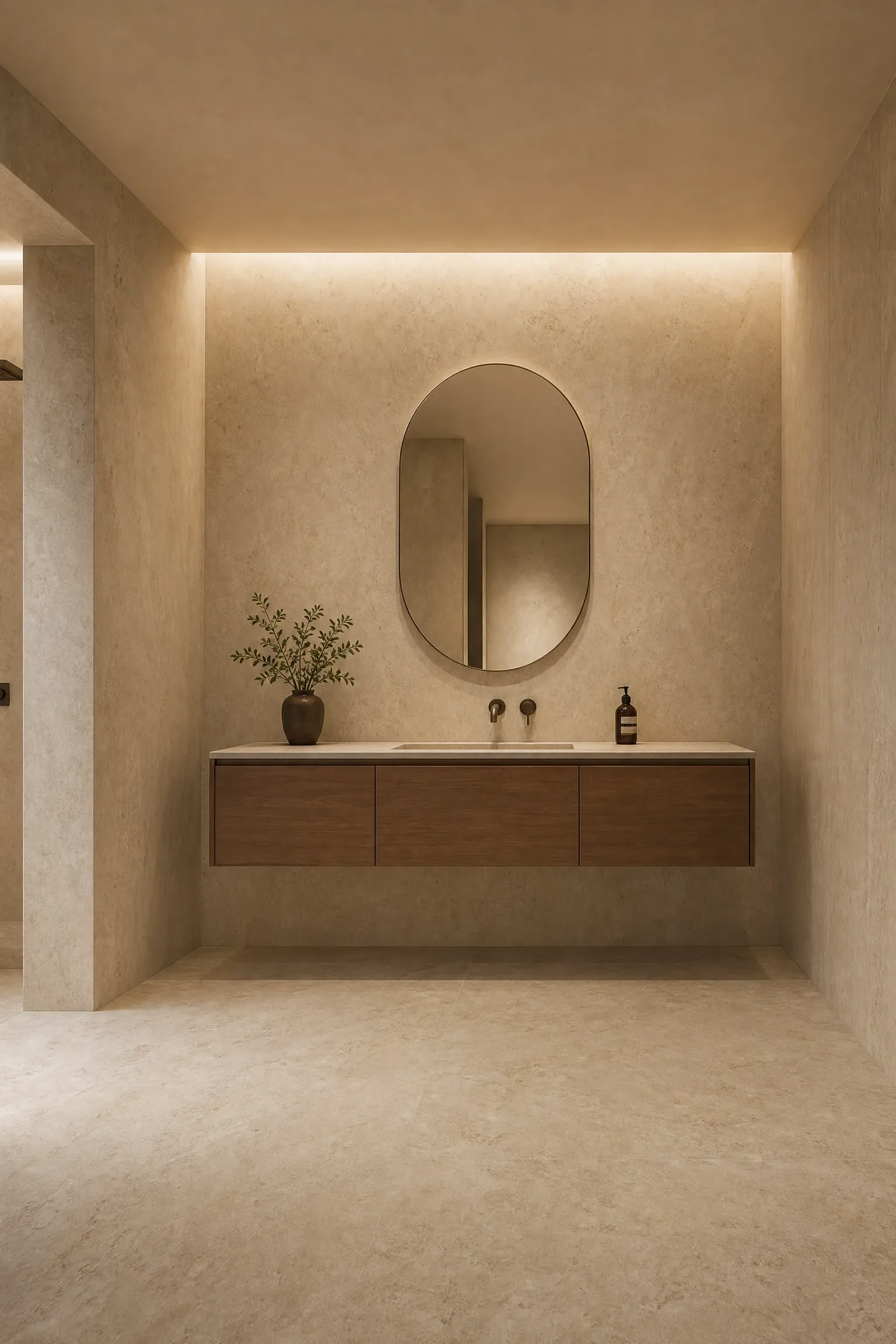
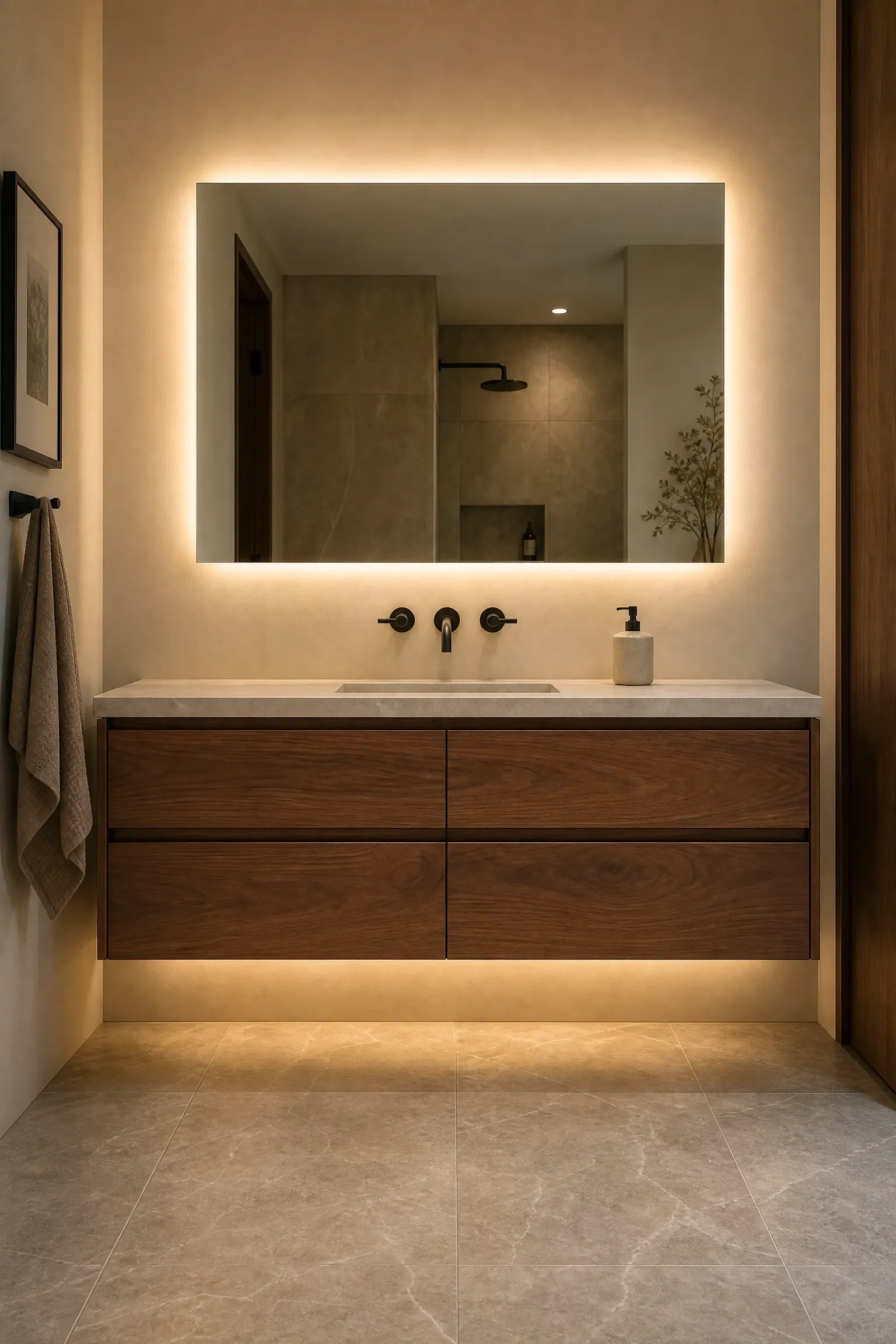
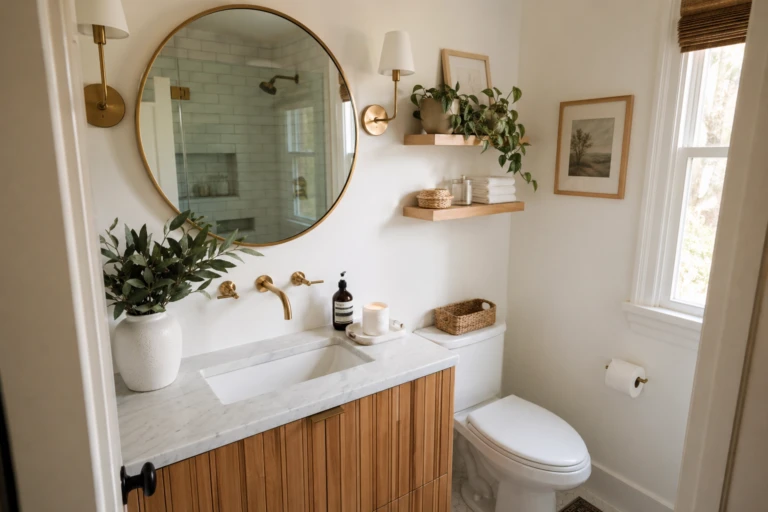
An unframed rectangular mirror is the most common bathroom feature and the easiest one to overlook, but replacing or framing it is one of the highest-return cosmetic upgrades you can make. A framed mirror in rattan, warm wood, brushed brass, or matte black adds a clear design intention to the vanity wall and makes the whole space read as finished rather than default. For a more dramatic effect, a single large arched mirror has been popular in design-forward spaces for the past two years, and it works particularly well above a floating vanity because the curve softens what might otherwise be a very horizontal, linear wall. Alternatively, a backlit LED mirror serves double duty as a light source and a style piece, providing that halo effect that reads as both modern and spa-like. Budget-friendly framing kits are available for standard mirror sizes and require no more than a drill and an afternoon.
Designer Note: Size your mirror to align with the width of your vanity, or go slightly wider. A mirror that’s too narrow for the vanity it sits above looks accidental rather than chosen.
12. Introduce a Living Plant Wall or Statement Greenery
You’ve tried keeping plants in the bathroom before and they always died. You’ve given up, and the room is suffering for it.
Biophilic design, which is the practice of integrating natural elements into interiors to improve wellbeing, is consistently cited in interior design research as having measurable effects on stress and mood. In the bathroom specifically, the humidity creates a favorable environment for certain plants that might struggle elsewhere in the home. Pothos, snake plants, peace lilies, ferns, and orchids all thrive in the typical bathroom conditions of low light and high humidity. A large trailing pothos in a ceramic pot on top of a shelf, or a mounted air plant display on the wall, brings in organic color and softness that no amount of tile or hardware can replicate. A small living wall panel (pre-planted moss or succulent panels are available ready-to-hang) creates a striking focal point that looks like something from a luxury resort. If you’ve killed plants before, an air plant requires only a weekly misting and no soil at all.
Designer Note: Group plants in odd numbers and vary the heights. One tall plant, one medium, one trailing creates a much more natural and intentional look than three identical pots in a row.
Your vanity itself is fine, but the hardware looks like it came with the house and was never given a second thought.
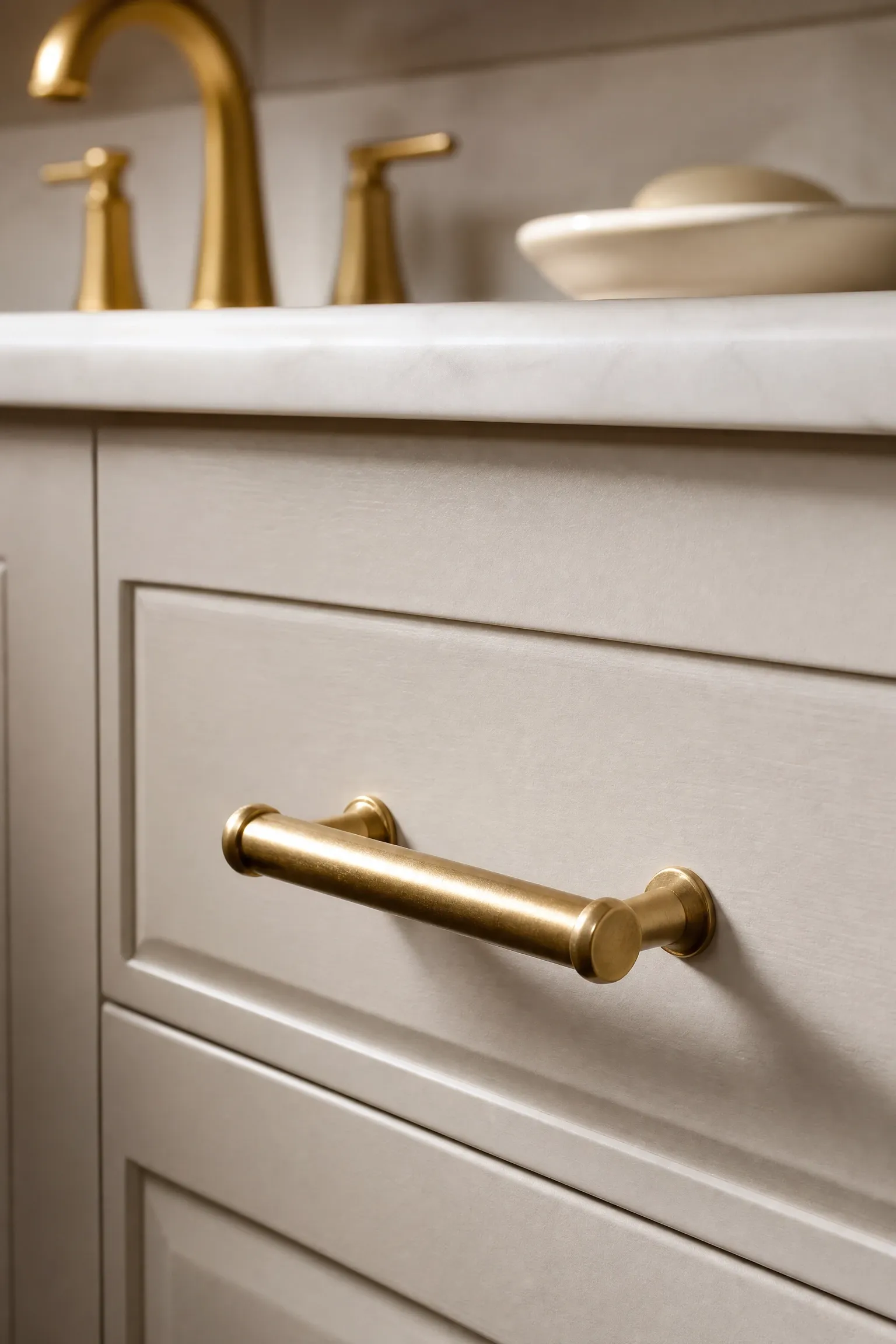
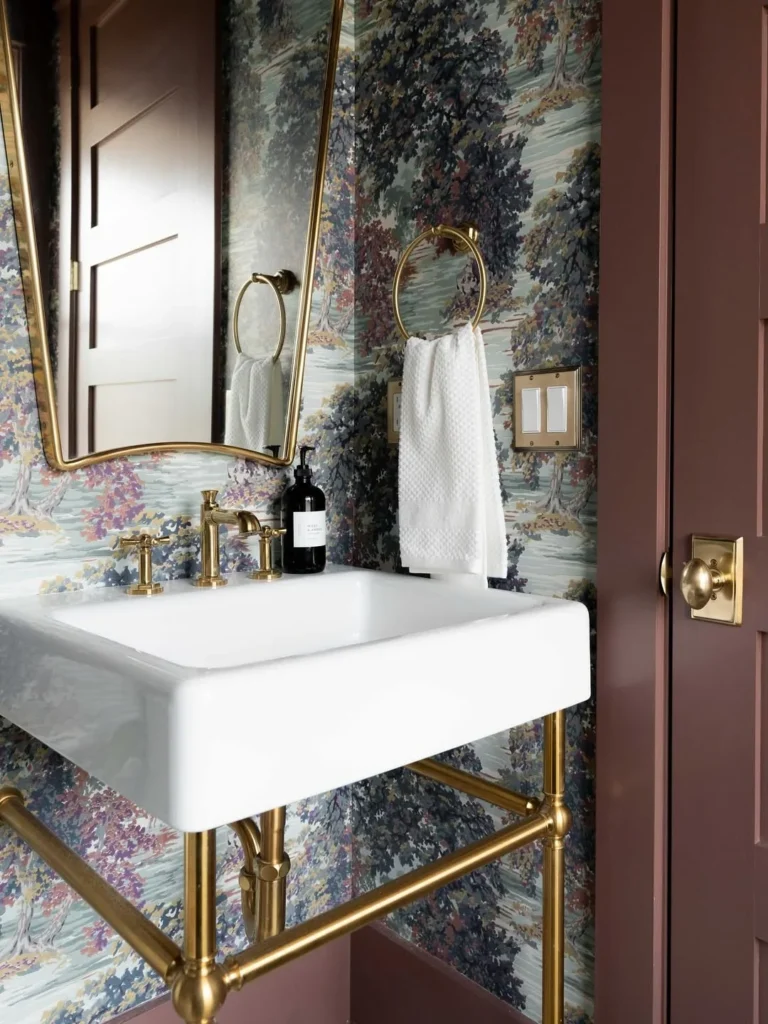
Cabinet pulls, knobs, and faucet handles are among the most cost-effective ways to update the look of a bathroom without touching a single tile. Brushed brass and unlacquered brass have been the dominant hardware finishes in high-end bathroom design for a few years, and they work particularly well against white cabinetry or warm wood tones. Matte black is still strong as a choice, especially in more minimal or industrial-adjacent spaces. The finish of your hardware should ideally connect to at least one other metal in the room, whether that’s your faucet, your towel bar, or your light fixture, to create what designers call a cohesive metal story. Replacing pulls on a six-drawer vanity typically costs $50 to $150 depending on the hardware you choose, and it takes about 20 minutes. It’s one of the most genuinely underrated bathroom upgrades for the ratio of effort to visual impact.
Designer Note: You don’t have to match all your metals exactly. Mixing brushed brass drawer pulls with a matte black faucet, for example, creates a layered, designer look that feels less sterile than a perfectly matched set.
There is genuinely nothing better than wrapping yourself in a warm towel. You know this because you experienced it once at a hotel and have been thinking about it ever since.
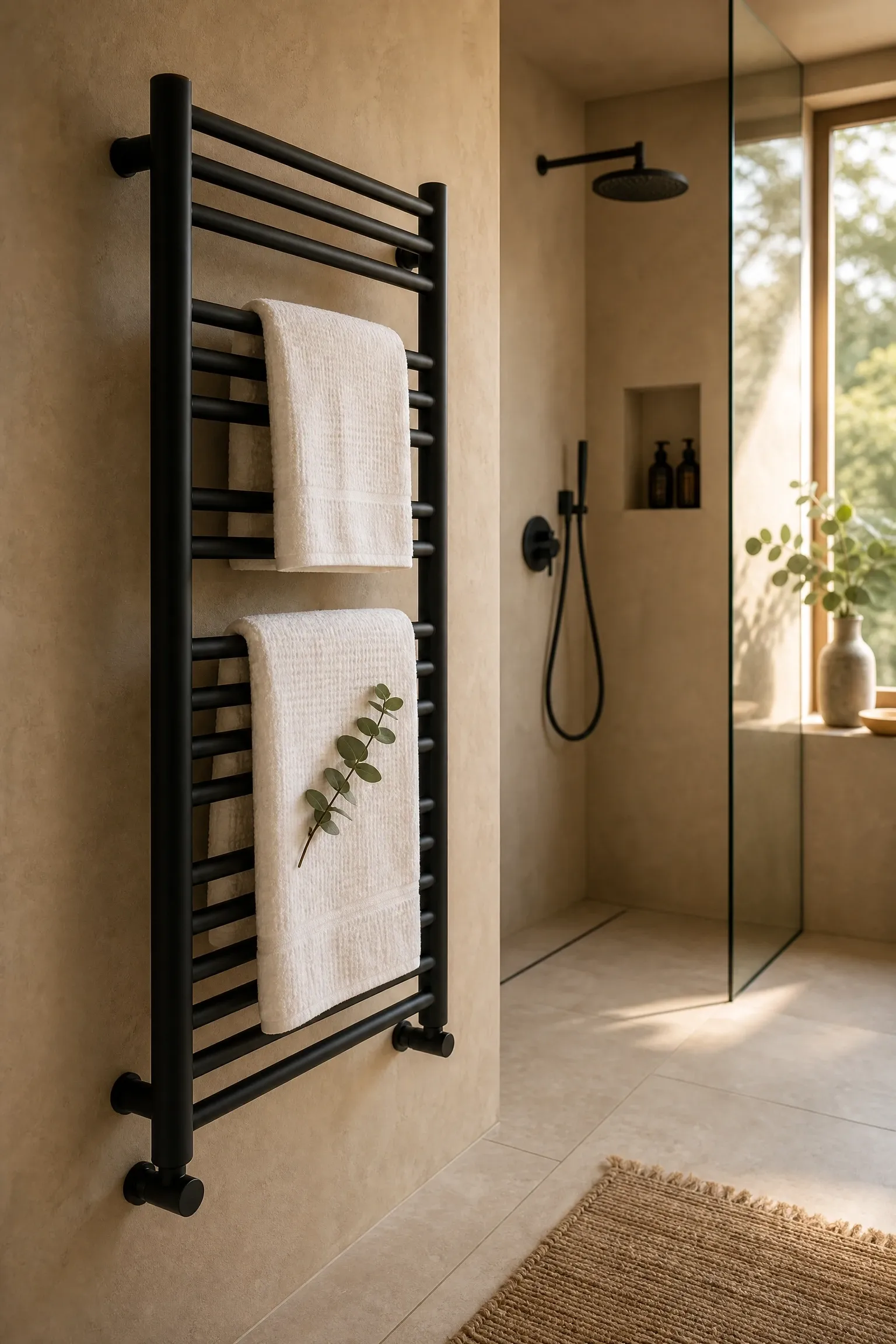
Heated towel rails are more common in European bathrooms and significantly less so in American ones, which means they still read as a luxury upgrade here rather than a standard fixture. Electric plug-in towel warmers are the most accessible version: they require no plumbing or hardwiring, simply plug into a standard outlet, and typically reach working temperature in about 15 to 20 minutes. Hardwired versions look more integrated and permanent but require an electrician. Wall-mounted heated rails in brushed nickel, matte black, or gold finishes do double duty as towel storage and a heat source, and they add a significant amount of visual sophistication to the wall they’re on. For a bathroom that’s not going through a full renovation, a ladder-style plug-in heated towel rail is a weekend project that delivers a meaningful quality-of-life improvement from the first day you use it.
Designer Note: Pre-warm towels for about 10 to 15 minutes before you need them. Draping them neatly folded over the rail rather than bunched also extends the heat more evenly through the fabric.
Your bathroom floor is covered in small mosaic tiles with grout lines everywhere, and it reads as busy no matter what else you do with the space.
Tile size has a significant psychological effect on how spacious and calm a room feels. Small tiles, especially classic 1-inch or 2-inch mosaics, create a pattern-heavy visual field that can feel dated and cluttered. Large-format tiles in the 24×24, 24×48, or even 36×36 inch range dramatically reduce the number of grout lines visible in the room, which creates an almost smooth surface that reads as clean and considered. Right now, large-format porcelain tiles that mimic travertine, limestone, or Calacatta marble are particularly popular, and they’re far more practical in a high-humidity space than actual stone. A continuous floor-to-wall tile installation in the same material with matched grout color gives the impression of a space carved from a single surface, which is a technique used consistently in high-end spa design. Honest note: this is a renovation project, not a quick fix, but if your floor is already on the list, size up.
Designer Note: Match your grout color closely to your tile color for the most clean look. Contrasting grout highlights every joint and works against the calm, continuous surface you’re going for.
You have a beautiful tub but everything you need for a proper bath is scattered across three different shelves and the back of the toilet.
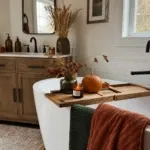
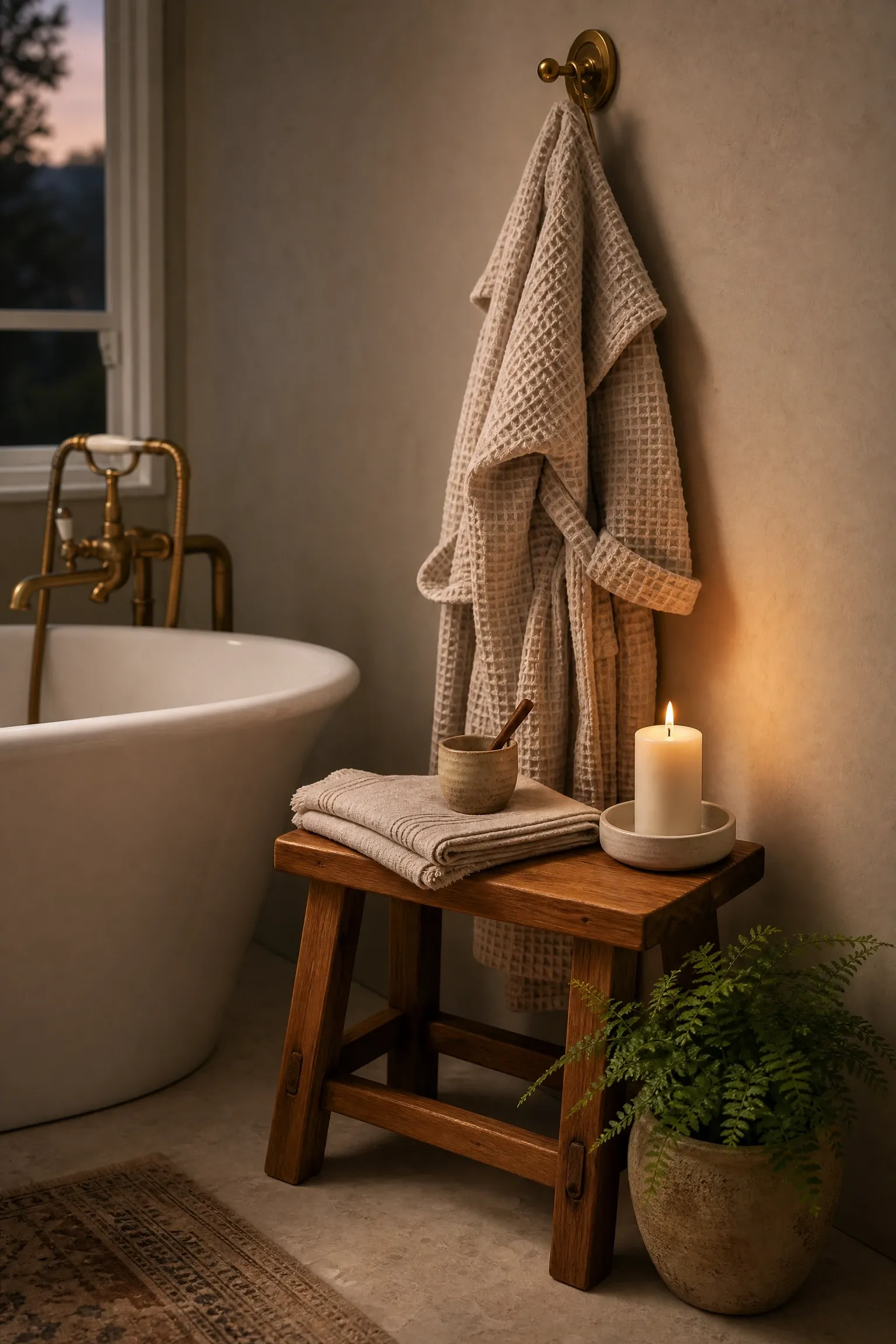
A bathing ritual corner is a concept borrowed directly from traditional Japanese bathhouses and high-end European spas: it’s a small, intentionally designed area where everything for the bathing experience lives together and is ready to use. A low wooden tray or a bath caddy across the tub holds current bath salts, a book, a candle, and a glass. A small side table or step stool beside the tub holds a folded towel, a robe hook above it, and maybe a small diffuser or a plant. The key is that everything in this corner has been chosen and placed intentionally, which creates a sense of ritual that changes how the bathing experience actually feels before the water even runs. It shifts the bathroom from a functional space you pass through into a destination you arrive at. This is almost entirely free to do if you already have the components; it’s purely an exercise in editing and intention.
Designer Note: Keep the bathing ritual corner limited to five or six items maximum. The moment it starts accumulating clutter, it loses the calm, intentional quality that makes it work.
Your bathroom walls are completely bare, and it reads as unfinished rather than minimalist.
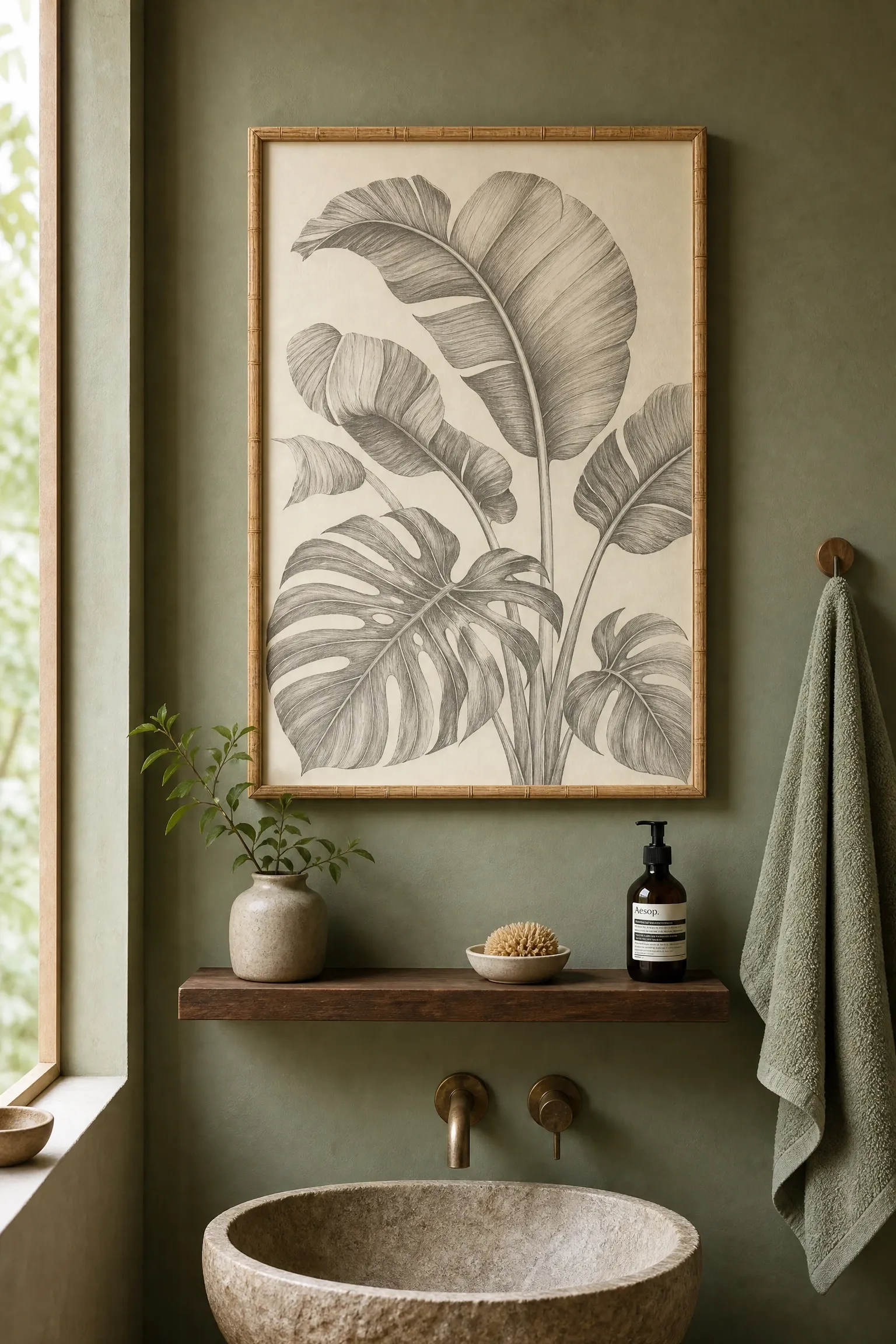
Artwork in the bathroom is one of those design moves that surprises people with how much of a difference it makes. The right piece on the wall shifts the space from purely functional to genuinely inhabitable. For a spa-like feel, look for art that features organic shapes, botanical illustrations, abstract forms in earthy tones, or abstract photography of water or natural landscapes. The frame matters as much as the art: rattan, warm wood, or thin brass frames all read as more relaxed and organic than heavy ornate frames or standard black metal. Positioning matters too: art hung at eye level when you’re in the bath feels different from art hung at standard standing height, and if you have a freestanding tub or a soaking area, art oriented toward that spot makes the experience feel deliberately designed. Prints are a very budget-friendly option here; the Etsy market for bathroom-appropriate botanical and abstract prints is enormous.
Designer Note: Use waterproof or moisture-resistant frames in high-humidity bathrooms, or hang art on the wall opposite the shower rather than adjacent to it, to protect the piece from steam exposure.
You’ve seen wet rooms in design magazines and thought they were only for ultra-modern homes with huge budgets. They’re not.
A wet room is a fully waterproofed bathroom where the shower area is open to the rest of the space rather than enclosed in a screen or cubicle. The floor slopes subtly toward a drain, and there’s no shower tray or glass barrier to interrupt the visual flow. What makes this feel so spa-like is the spatial openness: the shower, the bathtub if you have one, and the vanity area all exist in a single continuous space that feels both more generous and more considered. Wet room design is currently one of the most actively discussed trends in high-end residential design, with interior designers noting that it creates a sense of escape that a traditional enclosed shower simply can’t replicate. From a practical standpoint, it does require proper waterproofing across the entire room, which is a significant renovation. But the result is a bathroom that genuinely cannot be distinguished from a boutique hotel spa.
Designer Note: A wet room works best with a radiant heated floor, which keeps the open floor area comfortable and eliminates the chill of a wet surface underfoot after showering.
Your pedestal sink or floor-mounted vanity is making the bathroom feel smaller and harder to clean than it needs to be.
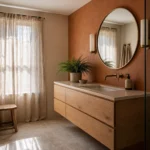
A floating vanity, one that is wall-mounted with no legs or base touching the floor, does several things simultaneously: it makes the floor area visible, which creates the illusion of more space; it eliminates the visual clutter of cabinetry that goes all the way to the floor; and it allows light from a nearby window or sconce to travel further under and across the room. In design terms, the visible floor space below a floating vanity reduces visual weight in the lower half of the room, which makes the entire space feel lighter and more airy. Pair it with under-cabinet LED strip lighting and the floor glows softly beneath it, which is a detail that photographs beautifully and looks even better in person. Warm wood-faced floating vanities with integrated sinks are particularly popular right now, as they bring in natural material while keeping the silhouette clean and minimal. This is a mid-range upgrade that typically requires a plumber and sometimes wall reinforcement for mounting.
Designer Note: Set your floating vanity at a height that works for the tallest person in the household. Standard bathroom vanity height (32 to 36 inches) often feels too low for taller adults and slightly raises the whole experience.
You can hear everything happening in the rest of the house from the bathroom, and it makes unwinding nearly impossible.
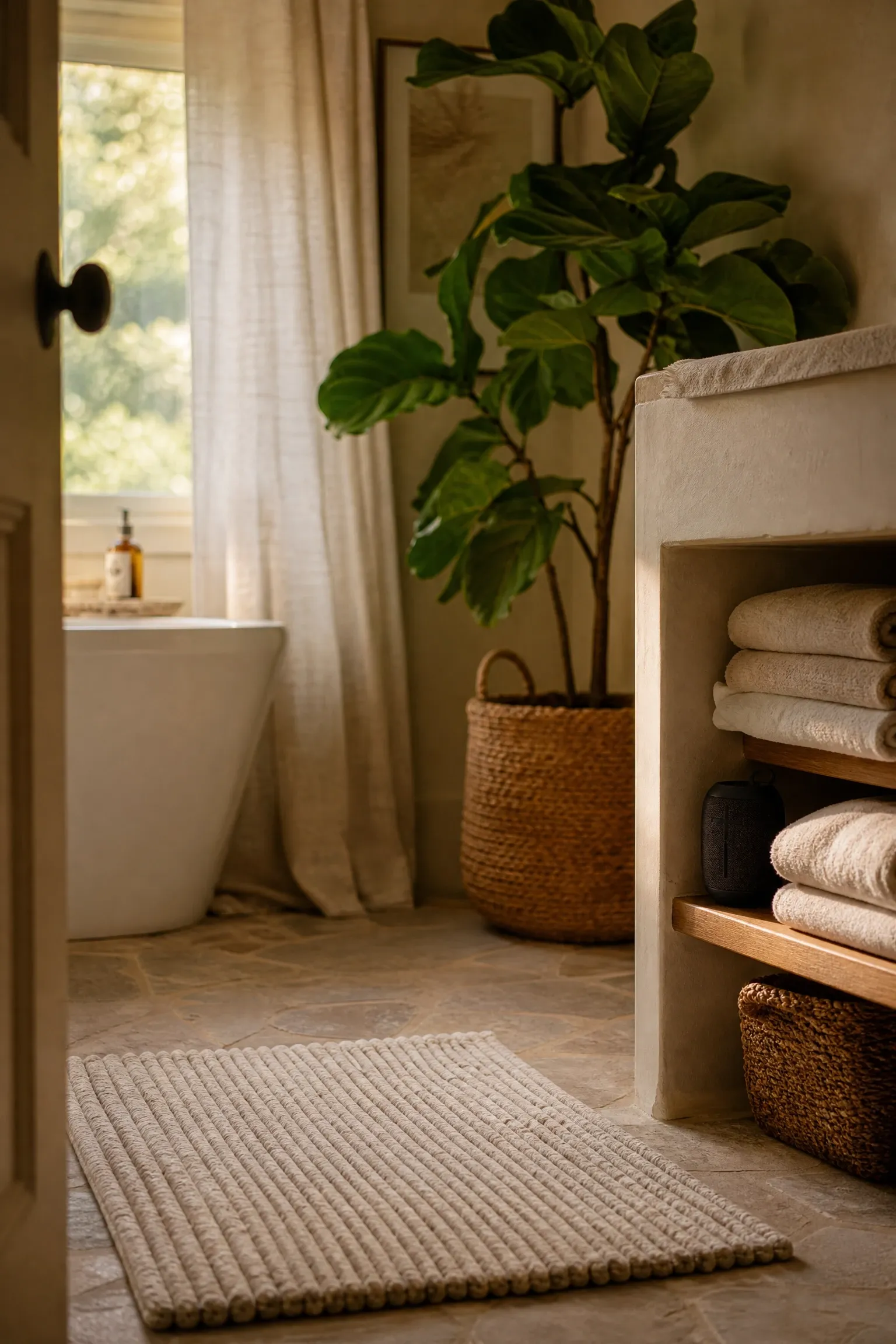
Sound is the most underconsidered element in bathroom design, and it’s one of the things that separates a truly immersive spa experience from a bathroom that just looks nice. Hard tile surfaces reflect sound rather than absorbing it, which means conversation, footsteps, and outside noise bounce around the room freely. Introducing softer materials absorbs some of that reflected sound and makes the space feel quieter and more contained. A thick bath mat, a woven storage basket, a linen curtain over a window or across a storage niche, and plants with broad leaves all introduce material that absorbs rather than bounces sound. A small Bluetooth speaker that plays ambient nature sounds or low-frequency music while you bathe also changes the acoustic experience completely, and a waterproof speaker model designed for bathroom use is typically $40 to $80. For something more significant, acoustic ceiling tiles designed for wet environments are available and can be a real option in a bathroom that’s particularly echo-prone.
Designer Note: A heavy shower curtain made from linen or a dense fabric (rather than a thin plastic liner) reduces shower sound significantly and looks far more considered than standard plastic.
You want your bathroom to feel handcrafted and individual rather than like it came from a standard showroom package.
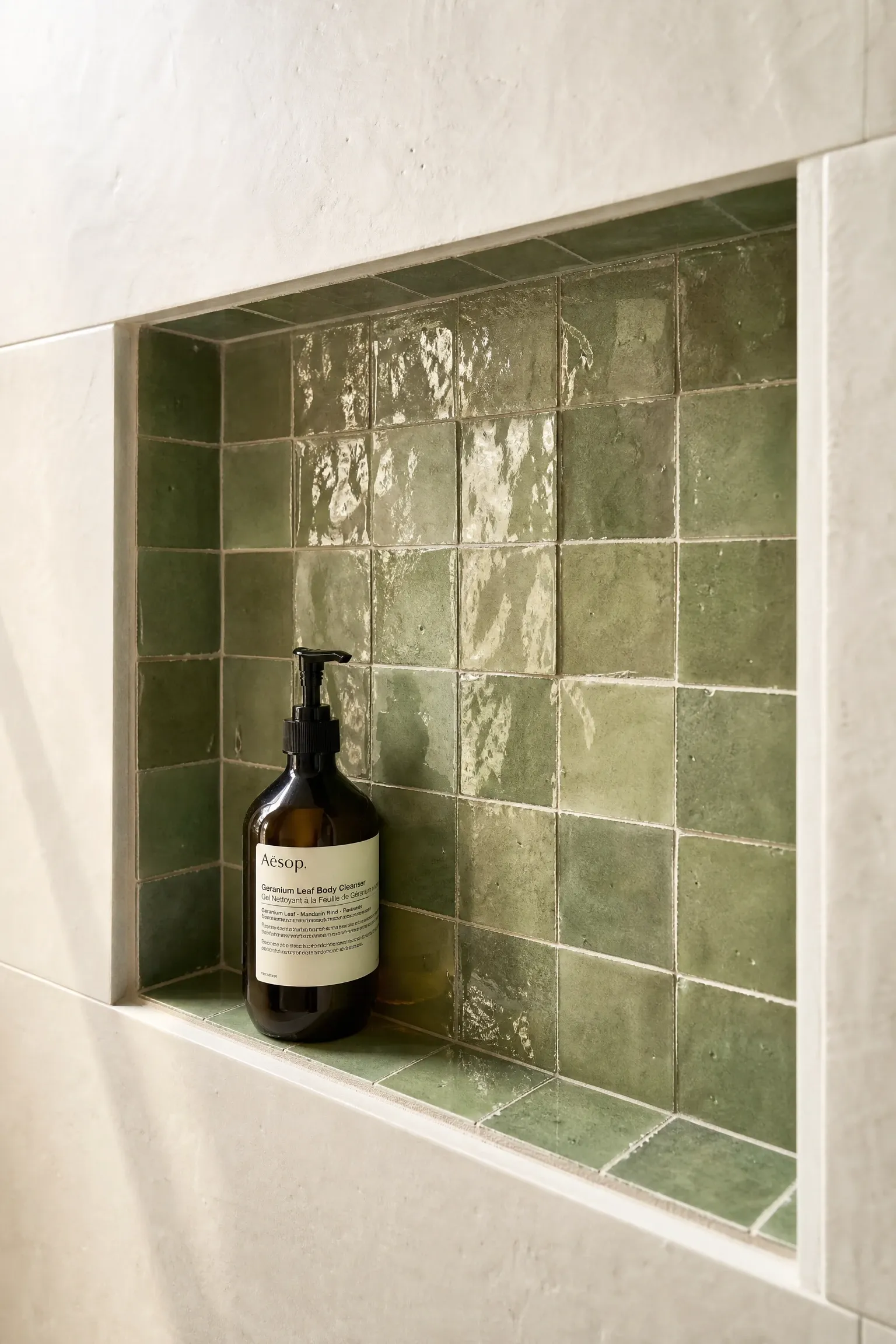
Zellige tiles, which are handmade glazed terracotta tiles originating from Morocco, have moved from boutique design spaces into mainstream interior design over the past few years, and they bring something machine-made tile genuinely cannot: imperfection. Each tile varies slightly in color, gloss, and texture, which means a zellige wall reflects light in a constantly shifting, organic way that feels completely different from the flat uniformity of standard ceramic. They’re particularly beautiful as a shower accent wall, a backsplash behind the vanity, or a niche interior. The irregular surface catches light at different angles throughout the day, and the depth of color, especially in terracotta, sage, cream, and deep teal, reads as rich without being loud. Budget note: zellige tiles are more expensive than standard ceramic (typically $15 to $40 per square foot), so using them as a targeted accent rather than throughout the entire room is both a practical and a stylistically elegant choice.
Designer Note: Use a grout color that closely matches the dominant tone of your zellige tiles. The handmade variation already provides enough visual interest; a contrasting grout fights against it.
You own candles. They’re in a drawer somewhere. You never actually light them.
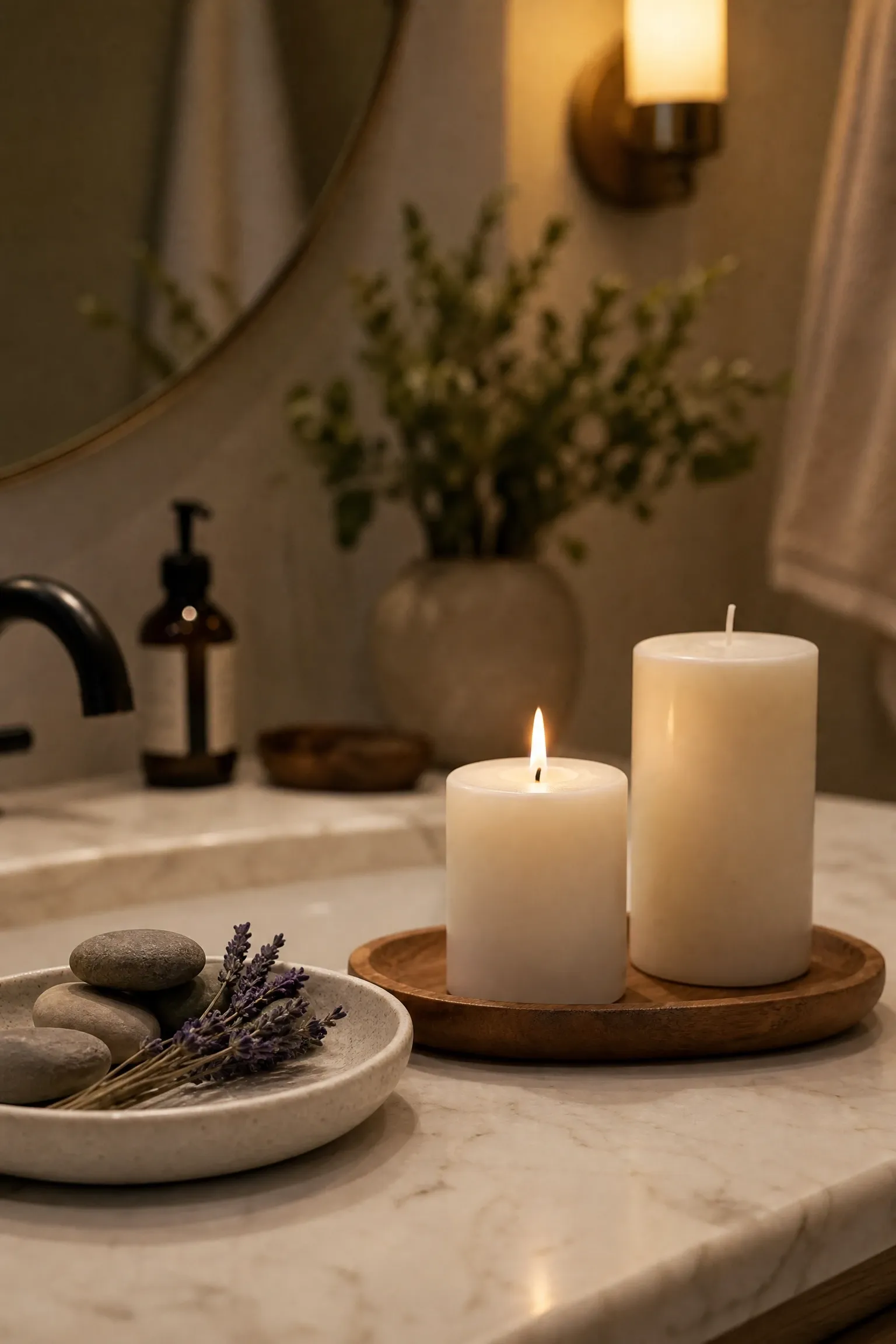
Making candles a functional, accessible part of your daily bathroom routine rather than a decorative afterthought changes the experience in a way that’s genuinely surprising. One or two candles at the vanity, placed where you can light them easily as you start the shower or fill the bath, shift the bathroom from a task space to a sensory environment. For scent, soy or beeswax candles in wood wick styles burn more cleanly and slowly than paraffin candles, and wood wicks have a subtle crackling sound that adds an acoustic dimension to the experience. For a visual effect, taper candles in brass holders or chunky pillar candles on a ceramic tray both look organic and warm rather than decorative or precious. The ritual of lighting a candle is also, in itself, a signal to the nervous system that a transition is happening, which is something that behavioral designers and psychologists have noted as a meaningful cue for stress reduction.
Designer Note: Never leave a candle burning unattended in a bathroom with soft furnishings nearby, and keep candles away from any curtains, paper products, or towels that could catch if the flame wavered.
You have open shelving in the bathroom that currently holds a jumble of things, and it looks worse than no shelving at all.
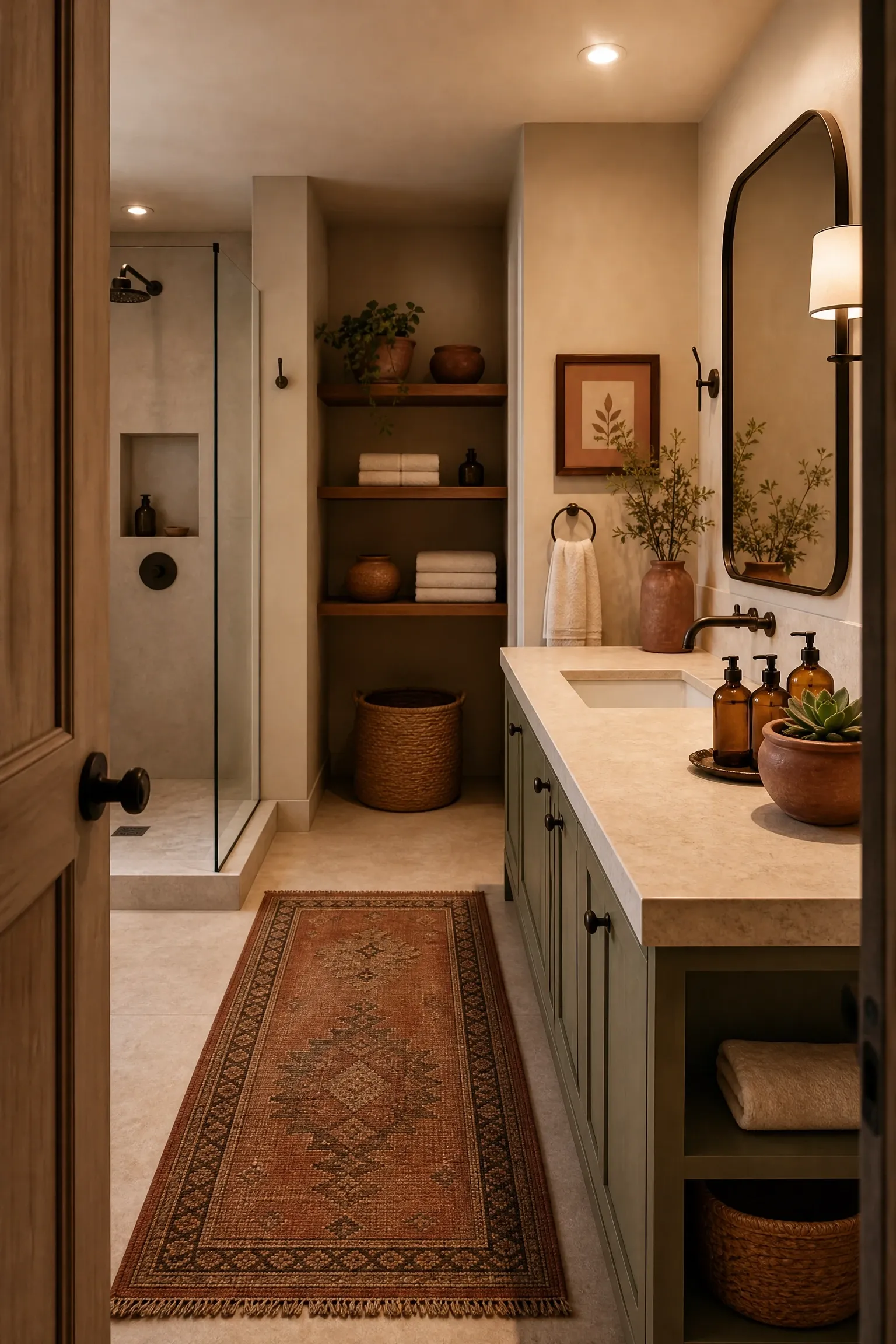
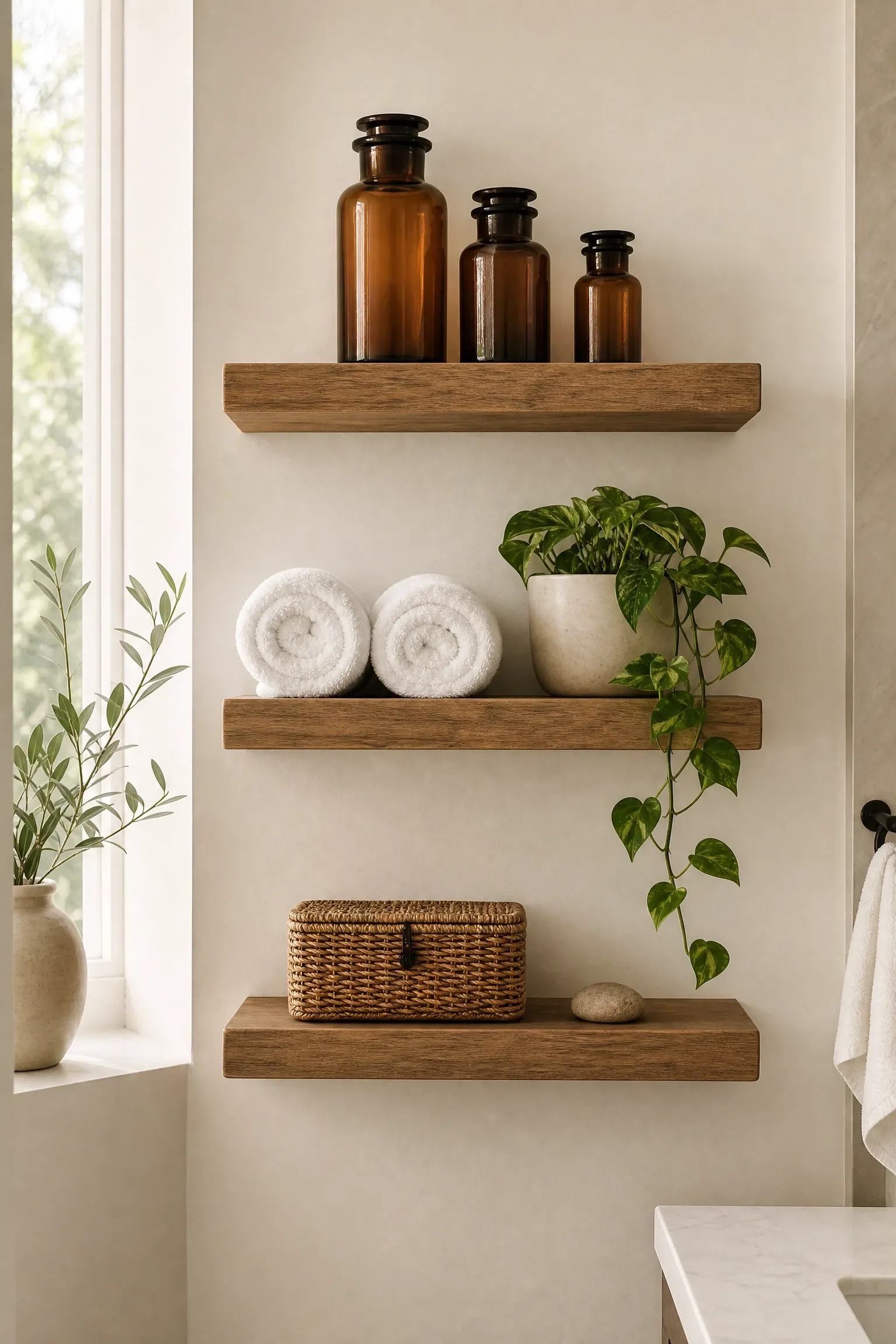
Open shelving in the bathroom is a design opportunity that most people turn into a storage problem. The difference between bathroom shelving that looks like a spa and shelving that looks like a drugstore is almost entirely about intentional editing. Decant shampoo, conditioner, and soap into matching dispenser bottles in amber glass or matte ceramic. Keep only what you use regularly on open shelves and move everything else into closed storage. Fold your towels and stack them neatly as part of the display rather than stuffing them in. Add one or two objects that aren’t functional at all: a small piece of driftwood, a ceramic sculpture, a river stone. This is where the three-item rule helps again: group objects in threes, vary the heights, and leave breathing room between groups rather than filling every inch. This approach costs nothing if you already have the shelving; it’s a matter of curation.
Designer Note: Matching dispenser bottles make one of the most noticeable single improvements to how a bathroom shelf looks. A set of three amber glass dispensers runs $20 to $35 and immediately reads as deliberate rather than default.
Your sink works perfectly fine, but it has all the personality of a standard white ceramic bowl, which is to say, none.
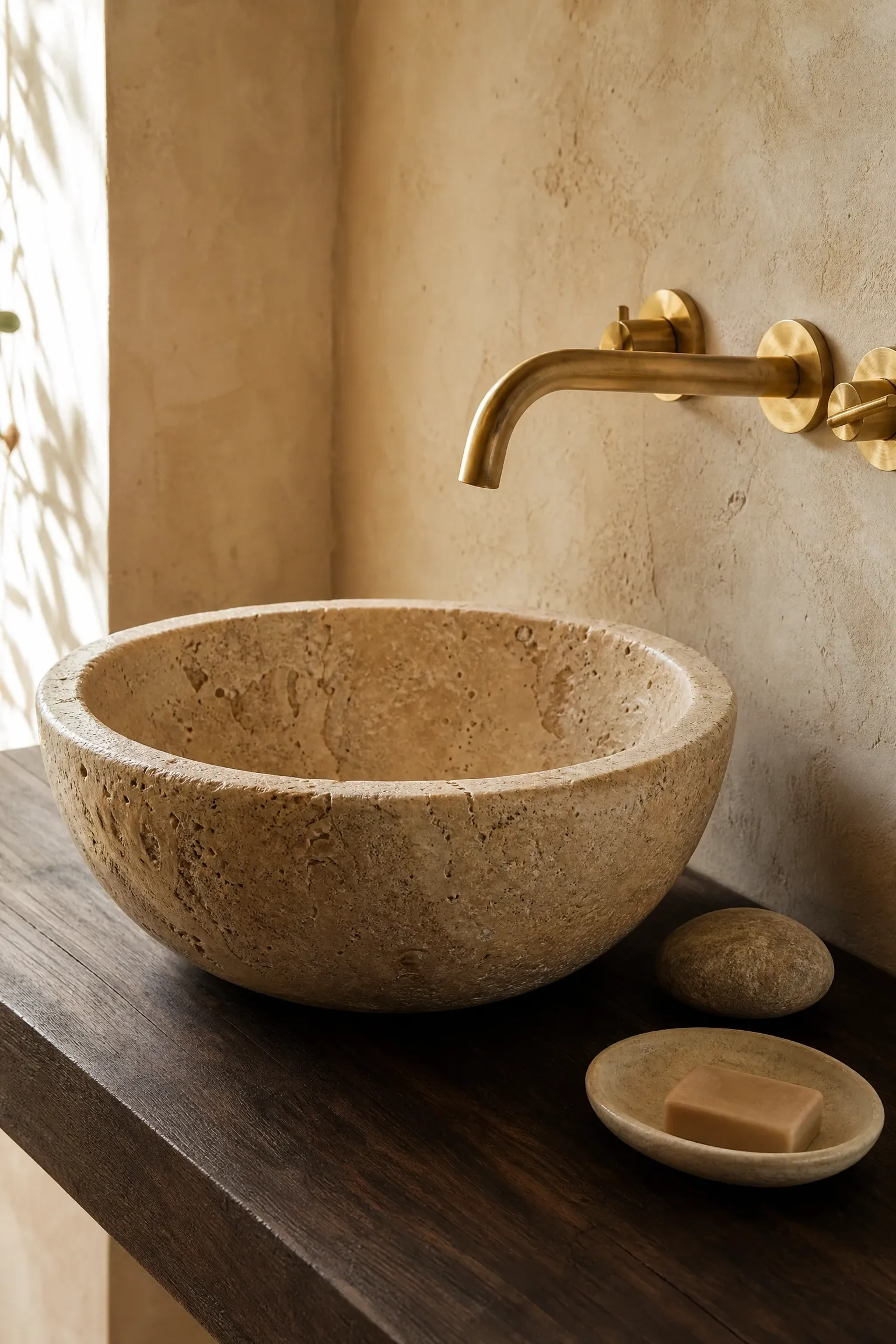
The sink is the most-used fixture in the bathroom and one that most people never think to treat as a design object. A vessel sink in natural stone, whether marble, travertine, or rough-hewn granite, turns the vanity surface into something that genuinely looks like it belongs in a high-end spa. Concrete vessel sinks and concrete countertop sinks have a more industrial, wabi-sabi quality (the Japanese design philosophy that embraces natural imperfection) and work particularly well in bathrooms leaning toward Japandi or modern organic aesthetics. From a practical standpoint, natural stone sinks require sealing to prevent staining and are not ideal for households with very hard water, which can leave mineral deposits that are difficult to remove from porous surfaces. Concrete is slightly more forgiving. Both materials are best paired with wall-mounted or deck-mounted faucets in a warm metal finish that connects with the organic quality of the material.
Designer Note: A stone sink in a small bathroom often works better than in a large one. In a compact space, the sink becomes a true focal point rather than one of many elements competing for attention.
Bringing It All Together
The thing about spa bathrooms is that they’re not really about the budget. The most expensive renovation in the world won’t turn a cluttered, harshly lit space into one that feels calm, and some of the most genuinely relaxing bathrooms belong to people who’ve spent almost nothing. What they’ve done instead is made deliberate choices: a warmer bulb here, a matching set of towels there, a candle on the counter that actually gets lit. They’ve paid attention to how the space feels, not just how it looks in a photo.
Start with whatever is most achievable right now. Maybe that’s swapping your lightbulbs or ordering a teak bath mat. Maybe it’s clearing the counter of everything that doesn’t need to be there and seeing how the room changes with just that one move. These 24 ideas are meant to be picked up individually, not tackled all at once. The goal is a bathroom you actually want to spend time in, and the path to that is almost always smaller and more manageable than it first appears. Give yourself one change this week and see where it takes you.
Frequently Asked Questions
How do I make a small bathroom feel like a spa without renovating?
The highest-impact changes in a small bathroom don’t require any construction at all. Start with lighting: replacing a cool-white overhead bulb with a warm 2700K equivalent immediately changes the mood. Then declutter every surface and move anything that doesn’t belong to closed storage. Add a few matching accessories like a wood tray, a matching dispenser set, and one small plant, and the room will read completely differently. Scent is also a tool that costs almost nothing: a reed diffuser or fresh eucalyptus in the shower works in any size space.
What colors make a bathroom feel most like a spa?
Warm neutrals, soft earthy tones, and muted greens consistently test well as calming bathroom colors. Think warm off-whites, putty, clay, sage, and greige rather than stark white, cool gray, or bold color. These tones reference the natural world and signal rest in a way that more saturated or cool-toned colors don’t. If you want to add depth, a slightly darker tone on one accent wall, or a warm terra-cotta tile against an otherwise neutral room, adds interest without disrupting the calm baseline.
What are the most worthwhile investment upgrades for a spa-like bathroom?
If budget is not a constraint, the three upgrades that professionals consistently point to are radiant heated floors, a freestanding soaking tub, and a quality rainfall showerhead with proper plumbing. These three things together cover warmth underfoot, immersive bathing, and a genuinely luxurious shower experience, which accounts for almost everything you’d experience at an actual spa. After those, a steam shower feature is a meaningful quality-of-life addition if the shower enclosure is compatible.
Can I create a spa bathroom on a tight budget?
Yes, and in some cases the constraint makes the result better because it forces genuine curation rather than acquisition. The free or near-free moves include decluttering, switching to warm lightbulbs, folding towels neatly, creating a bathing ritual corner with what you already own, and making candle-lighting a consistent habit. Under $100, you can add a teak bath mat, a new set of matching towels, matching soap dispensers, and a reed diffuser. These changes are visible immediately and don’t require any installation.
What plants work best in a bathroom spa setup?
The best bathroom plants thrive in humidity and low to medium light. Pothos is the most forgiving and fastest growing, and it trails beautifully from a shelf or a hanging planter. Snake plants tolerate low light and inconsistent watering better than almost any other plant. Peace lilies actively prefer humid conditions and produce elegant white flowers. Air plants (tillandsia) require no soil at all and only need a weekly misting, making them ideal for mounting on a wall or displaying in a glass vessel on the counter.
How important is scent in a spa bathroom, and what scents work best?
Scent is arguably the most direct route to the relaxation response in any sensory environment. Research in environmental psychology has consistently found that scent affects mood, anxiety levels, and perceived comfort more quickly than visual or tactile input. In the bathroom specifically, eucalyptus, lavender, hinoki wood, and bergamot are the most commonly used spa scents because they have documented calming or clarifying effects. Layering scents, for example, a eucalyptus shower bundle plus a lavender reed diffuser plus a cedar candle, creates a more complex and convincing atmosphere than a single source.