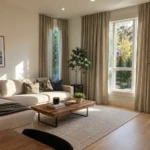
A well-placed mirror can do more for a living room than almost any other single piece of decor. I figured this out by accident when I leaned a floor mirror against the wall next to our window and the whole room suddenly felt twice as bright. Mirrors bounce light, create the illusion of more space, and serve as decorative focal points. Here are the mirror ideas that actually make a difference in a living room.
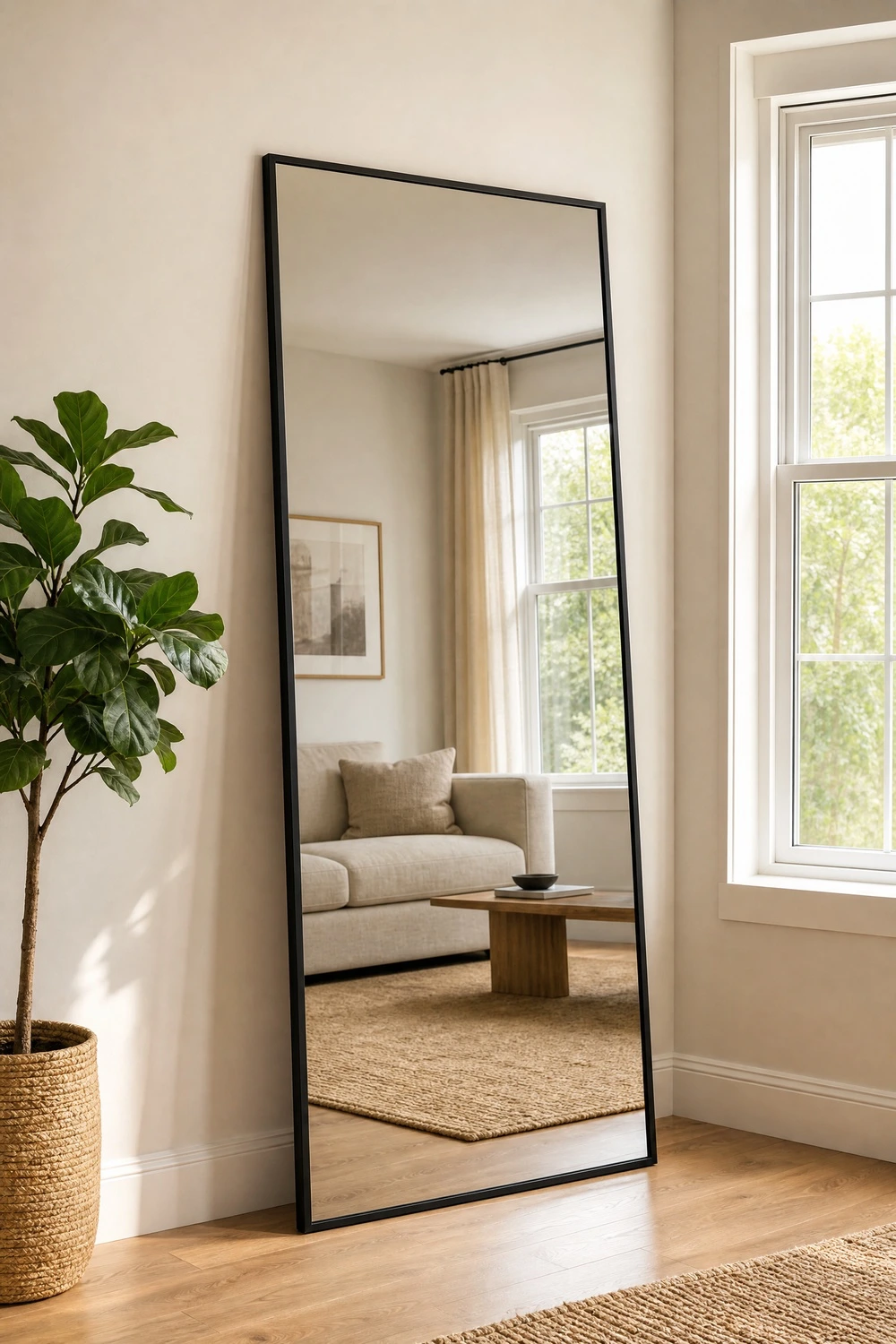
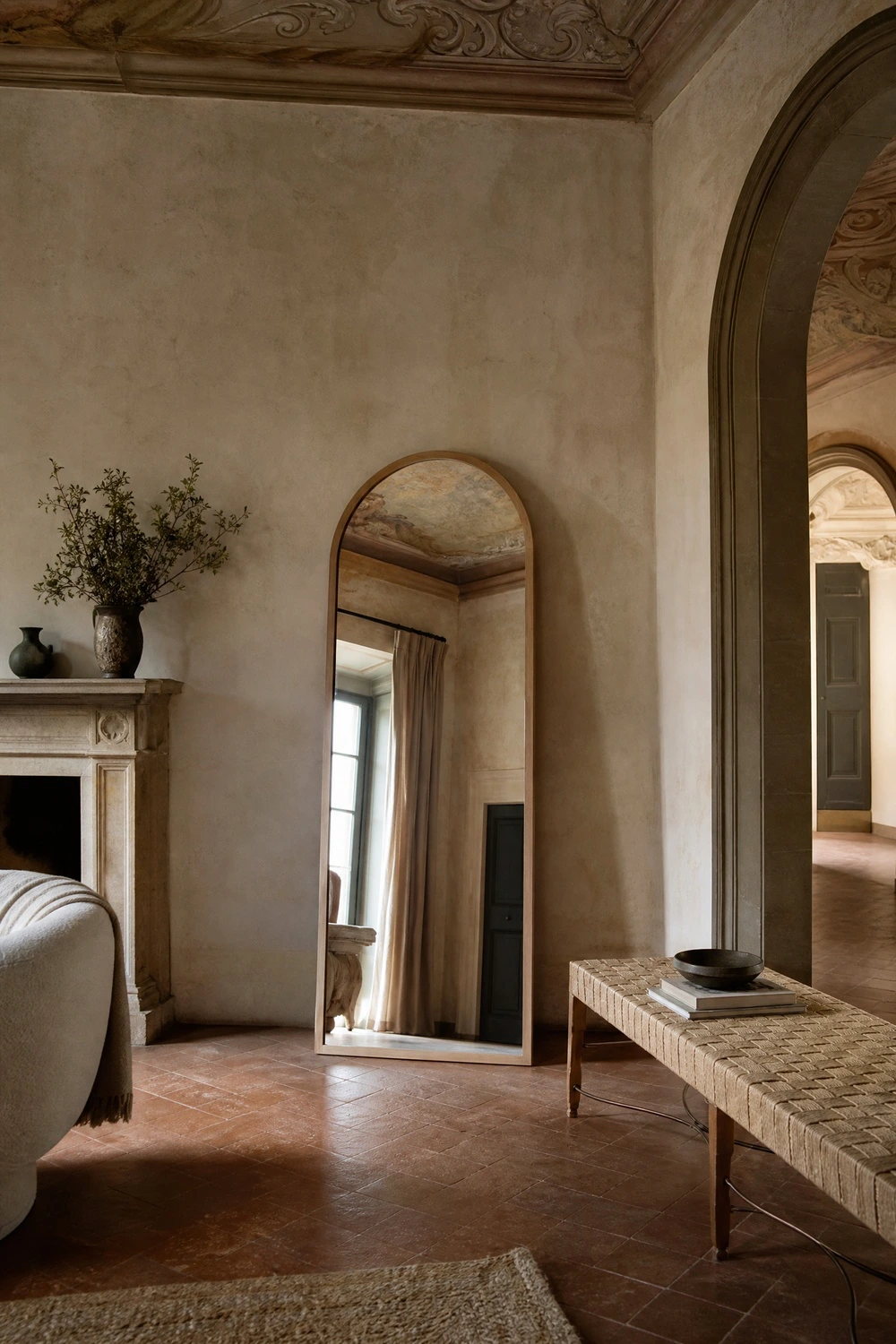
A tall floor mirror leaned against the wall is one of the easiest and most impactful additions to any living room. It instantly makes the room look larger and brighter by reflecting light and the opposite wall. A mirror 5 to 6 feet tall with a simple frame works in nearly any style room. Place it in a corner, beside a window, or behind a side table for maximum effect.
Designer Tip: Secure leaning mirrors to the wall with a safety strap even if they feel stable. A bump from a pet or a child can topple a heavy floor mirror, and the consequences are serious.
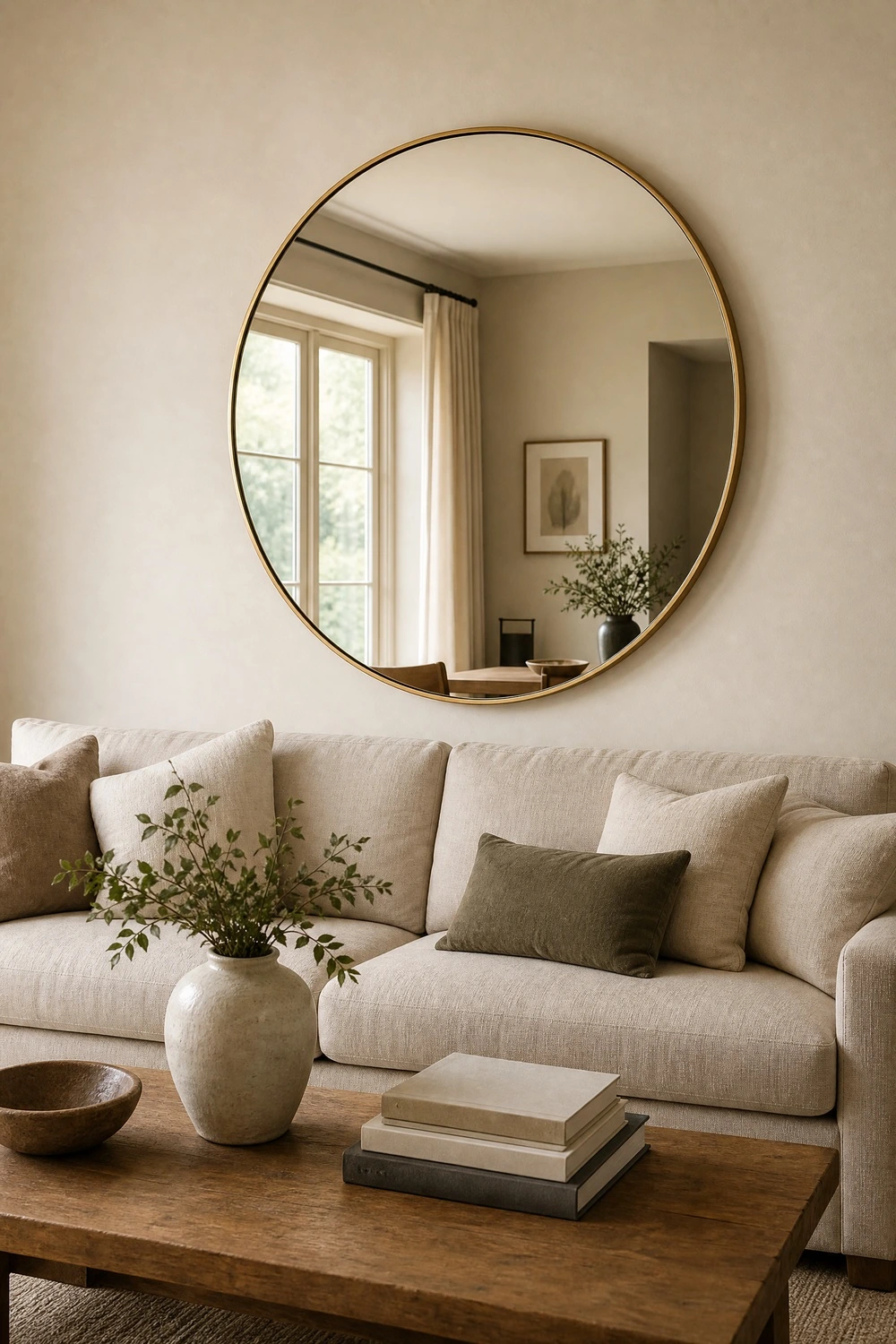
A large round mirror centered above the sofa softens the rectangular lines of furniture and walls. The circular shape draws the eye and acts like a piece of art. A thin gold or brass frame adds warmth, while a black frame keeps things modern and graphic. Choose a diameter that is about half the width of your sofa for the best proportions.
Designer Tip: Hang the mirror so its center is 6 to 10 inches above the sofa back. This height creates a visual connection between the mirror and the furniture rather than making it look like it is floating on the wall.
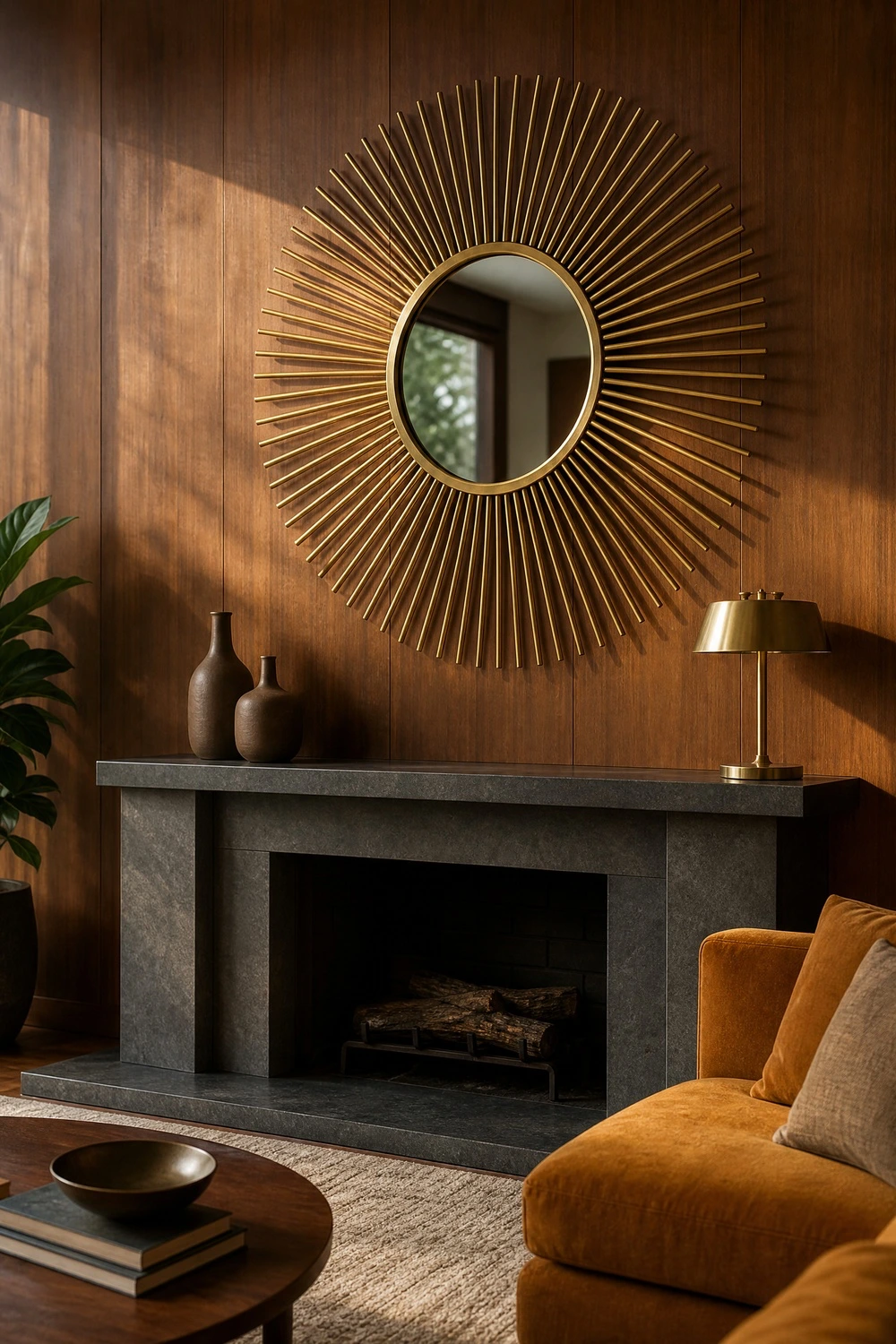
A sunburst mirror is a classic decorative piece that works as both a mirror and a wall sculpture. The radiating spokes add drama and visual interest that a plain round mirror does not. Gold or brass sunbursts suit mid-century modern and glam rooms, while wood or rattan versions fit boho and coastal spaces. Hang it above the fireplace, the sofa, or on any blank wall that needs a focal point.
Designer Tip: Sunburst mirrors are usually more decorative than functional since the mirror portion is relatively small. Treat them as art pieces rather than functional mirrors.
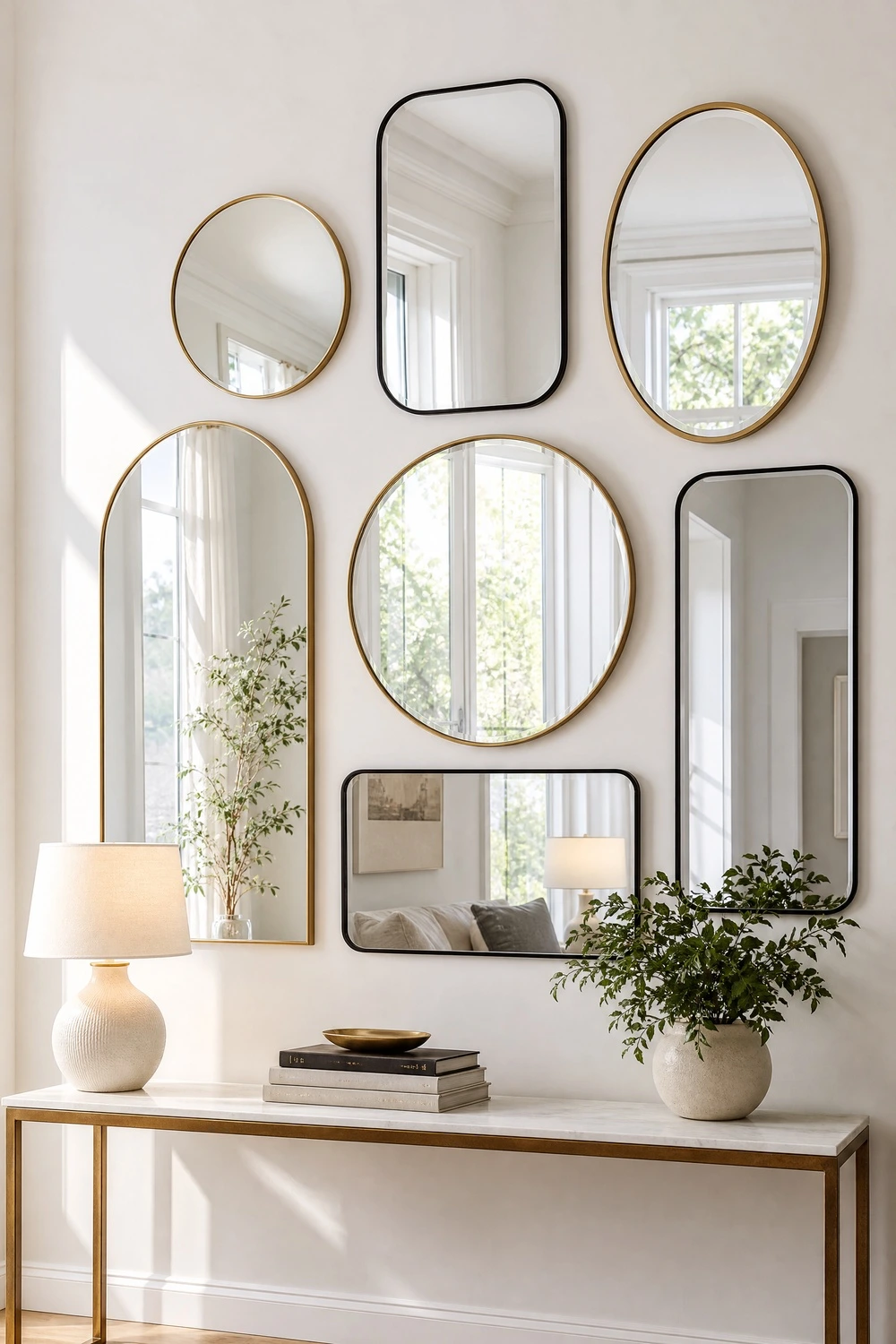
A collection of mirrors in different shapes and sizes arranged as a gallery wall creates a stunning, light-filled display. The reflections from multiple angles brighten the room and add visual depth. Mix round, oval, rectangular, and arched mirrors for variety. Keep the frames within a similar color family so the arrangement looks intentional rather than random.
Designer Tip: Lay all the mirrors on the floor and arrange them before putting any holes in the wall. Take a photo of the layout as a reference when you start hanging.
An arched mirror adds architectural elegance to a living room. The curved top softens the straight lines of walls and furniture while adding a European, old-world quality. Floor-length arched mirrors work great leaned against a wall, while wall-mounted versions look beautiful above a console table or fireplace. The arch shape is distinctive enough to stand on its own as a statement piece.
Designer Tip: Arched mirrors look best when they echo an architectural detail already in the room, like a window shape or a doorway arch. This creates a subtle visual connection that makes the mirror feel like it belongs.
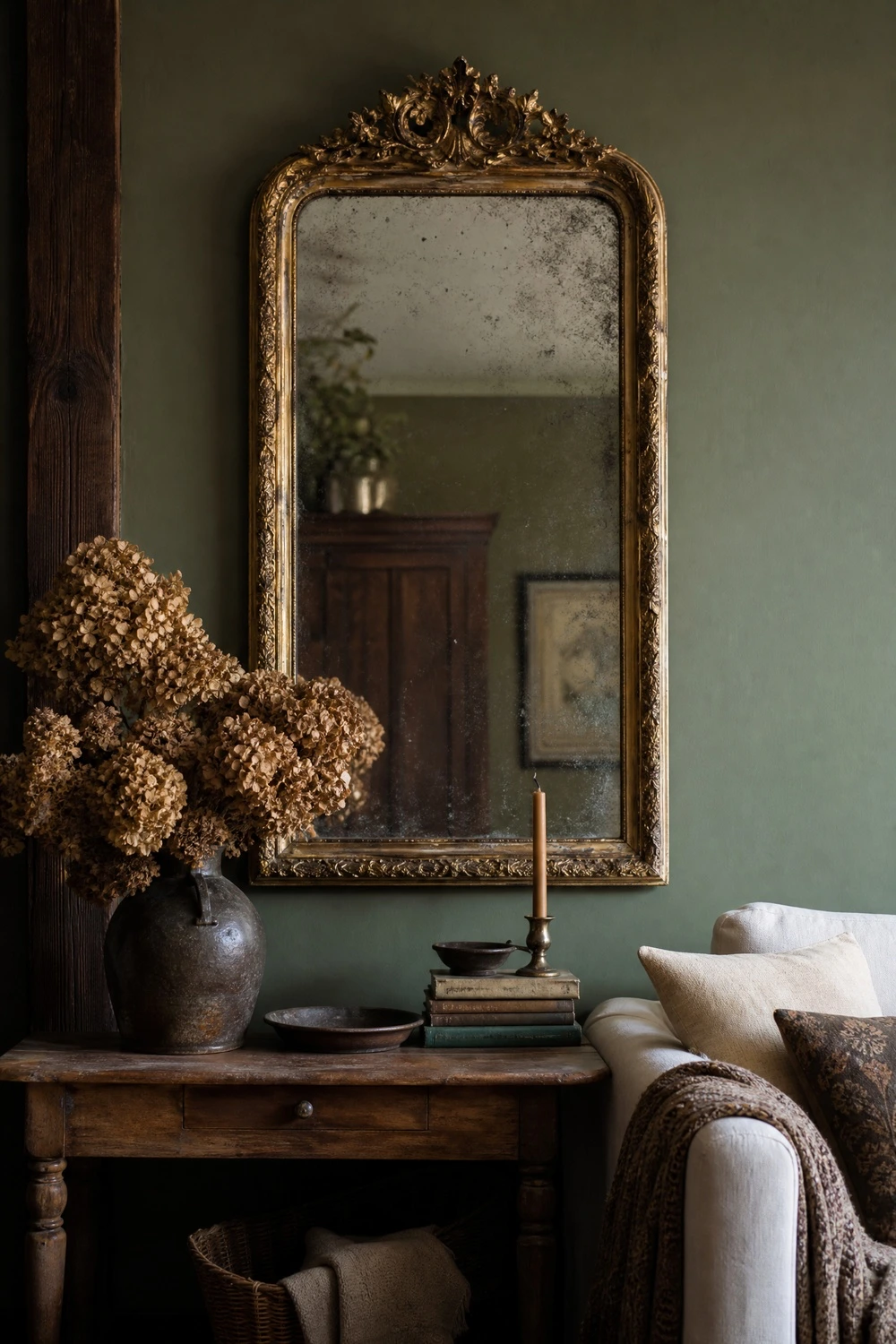
An antiqued mirror with slightly cloudy, spotted, or foxed glass adds character and a vintage feel that a perfect mirror does not. The imperfections give it an aged quality that works in traditional, farmhouse, and eclectic rooms. You can buy mirrors that come pre-aged or create the effect yourself with a chemical treatment on plain mirror glass. These mirrors are decorative first and functional second.
Designer Tip: Place an antiqued mirror where it catches but softens light rather than across from a window where you would want a clear reflection. The clouded surface is the feature, not a flaw.
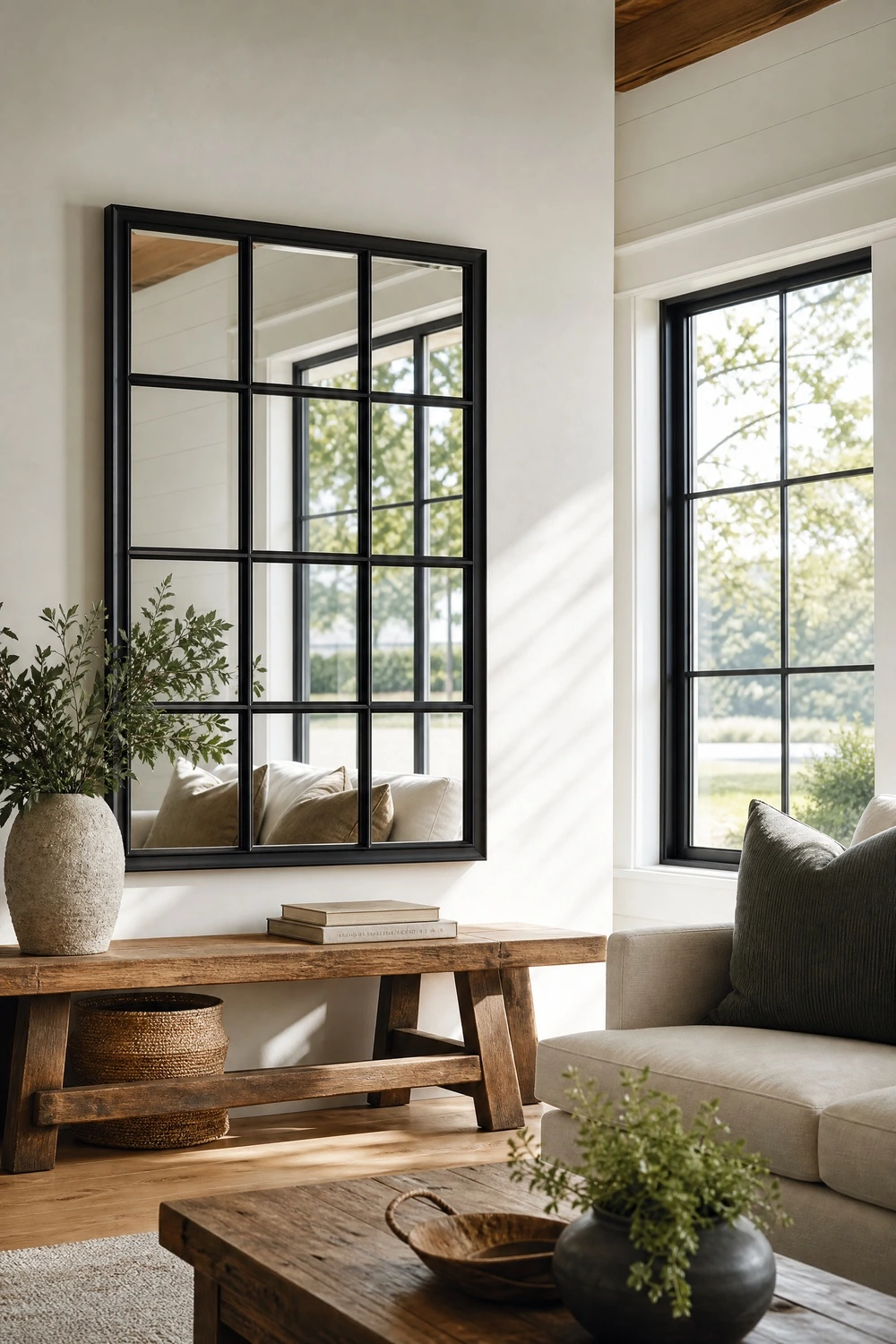
A mirror designed to look like an old window frame with multiple panes adds depth and an architectural detail to any wall. The divided glass creates the illusion of looking through a window into another space. Black or distressed white frames are the most popular finishes. Hang it on a wall opposite an actual window to amplify both the light and the sense of space.
Designer Tip: Choose a window pane mirror with real glass dividers rather than surface-applied mullions. Raised dividers create real shadow and depth that adds to the window illusion.
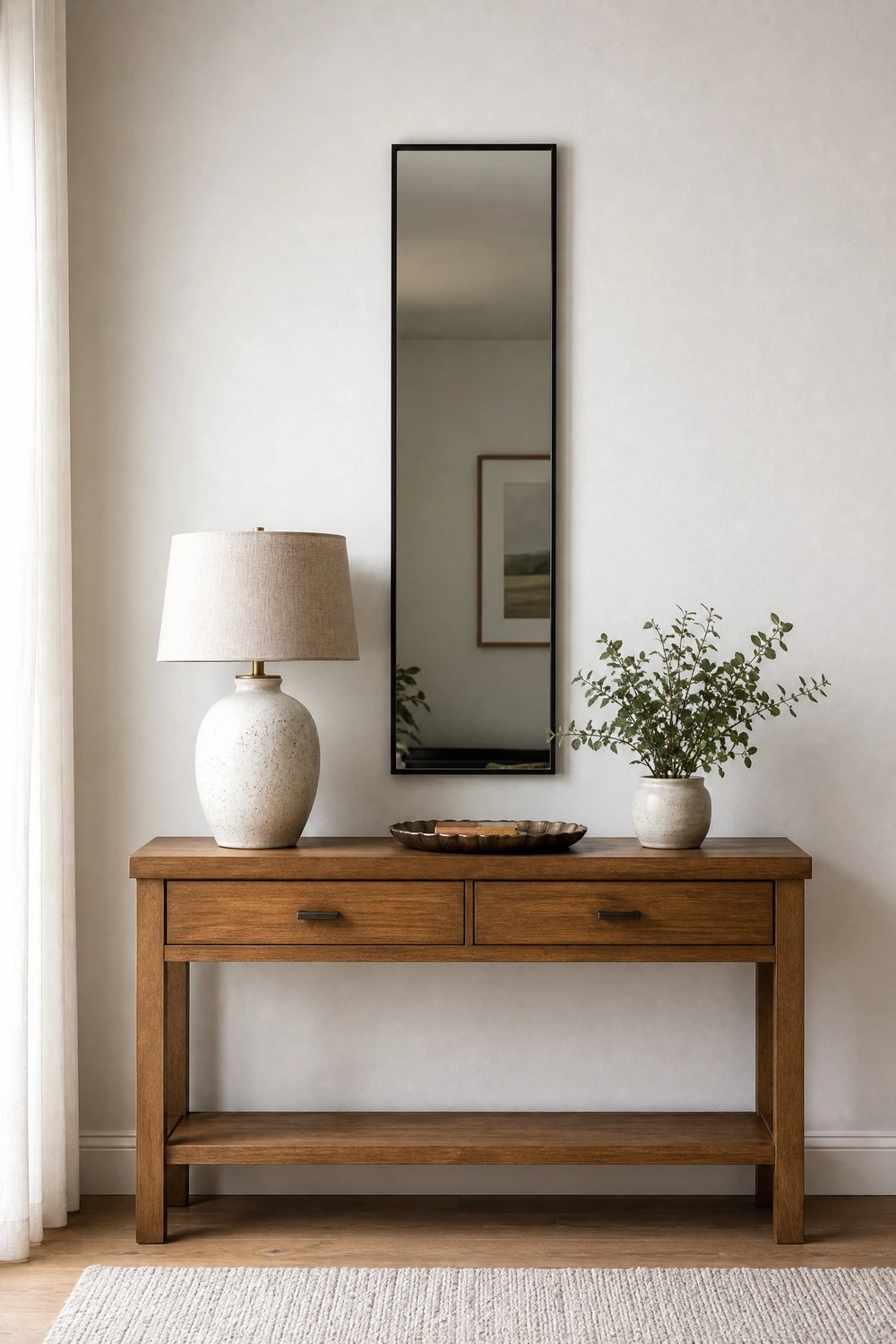
Pairing a mirror with a console table creates a complete vignette that anchors a wall. The mirror adds height and light behind the table while reflecting whatever you style on the surface. A lamp, a small plant, and a decorative tray on the console with a mirror behind it is a tried-and-true combination that works in every living room style.
Designer Tip: The mirror should be narrower than the console table rather than wider. A mirror that extends past the table edges looks top-heavy and ungrounded.
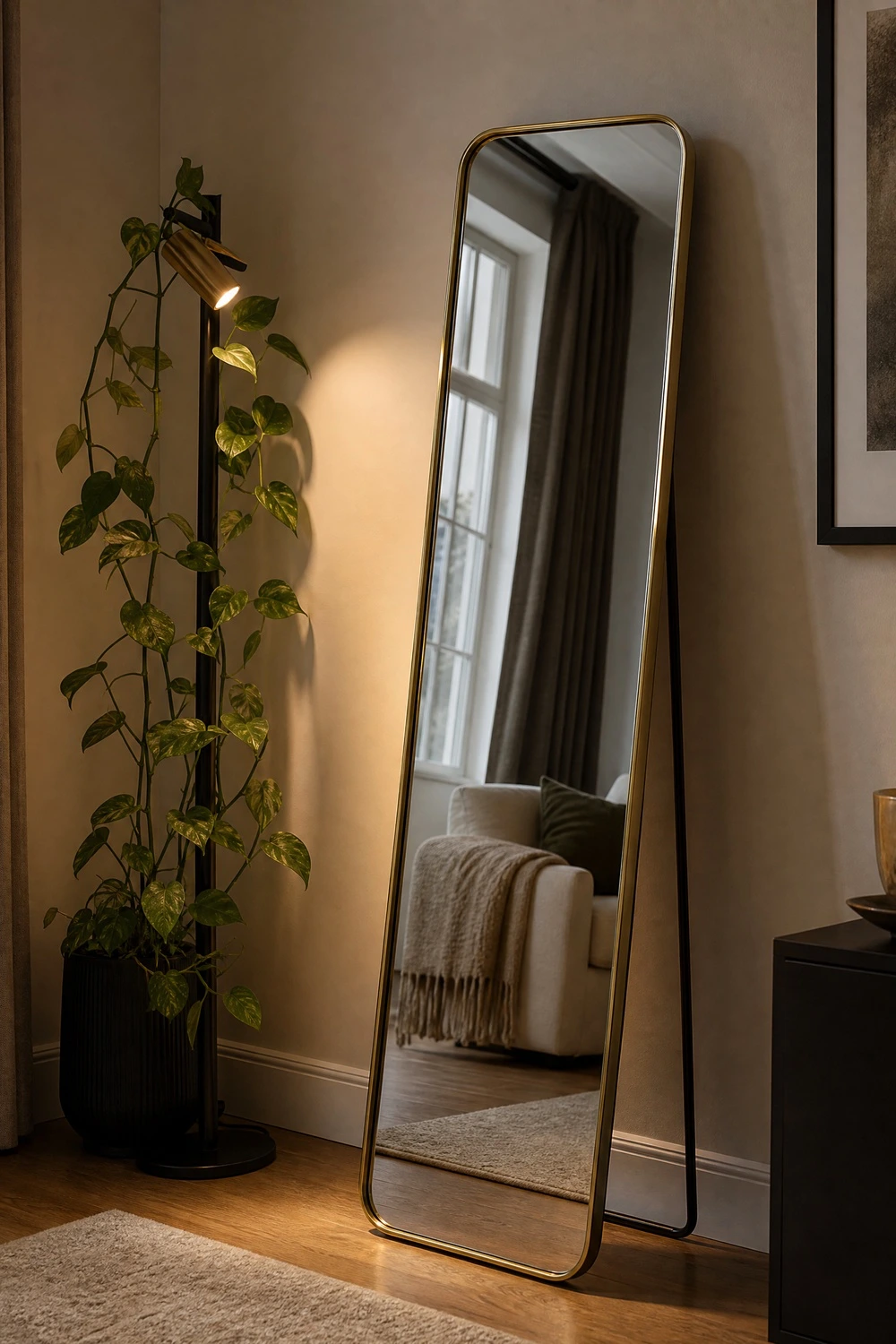
A full-length mirror standing in a living room corner is both functional and decorative. You can use it to check your outfit on the way out the door while it doubles as a decor piece that opens up the corner. A slim wood or metal frame keeps it from looking like a bedroom mirror in the wrong room. Angle it slightly inward to reflect more of the room back into the space.
Designer Tip: Place a small plant or a floor lamp next to a corner mirror. The reflected greenery or light creates a doubled effect that makes the corner feel fuller and more finished.
Hanging a mirror above the fireplace mantel is a classic choice that works in almost every room. The mirror draws the eye upward, reflects the room, and gives the fireplace wall a finished, polished look. An ornate frame suits traditional rooms, while a clean-lined frame works for modern spaces. The mirror should be narrower than the mantel so it feels like it belongs on that wall.
Designer Tip: If your fireplace is the focal point of the room, tilt the mirror slightly forward at the top. This angles the reflection downward so people sitting across the room see the room reflected rather than just the ceiling.
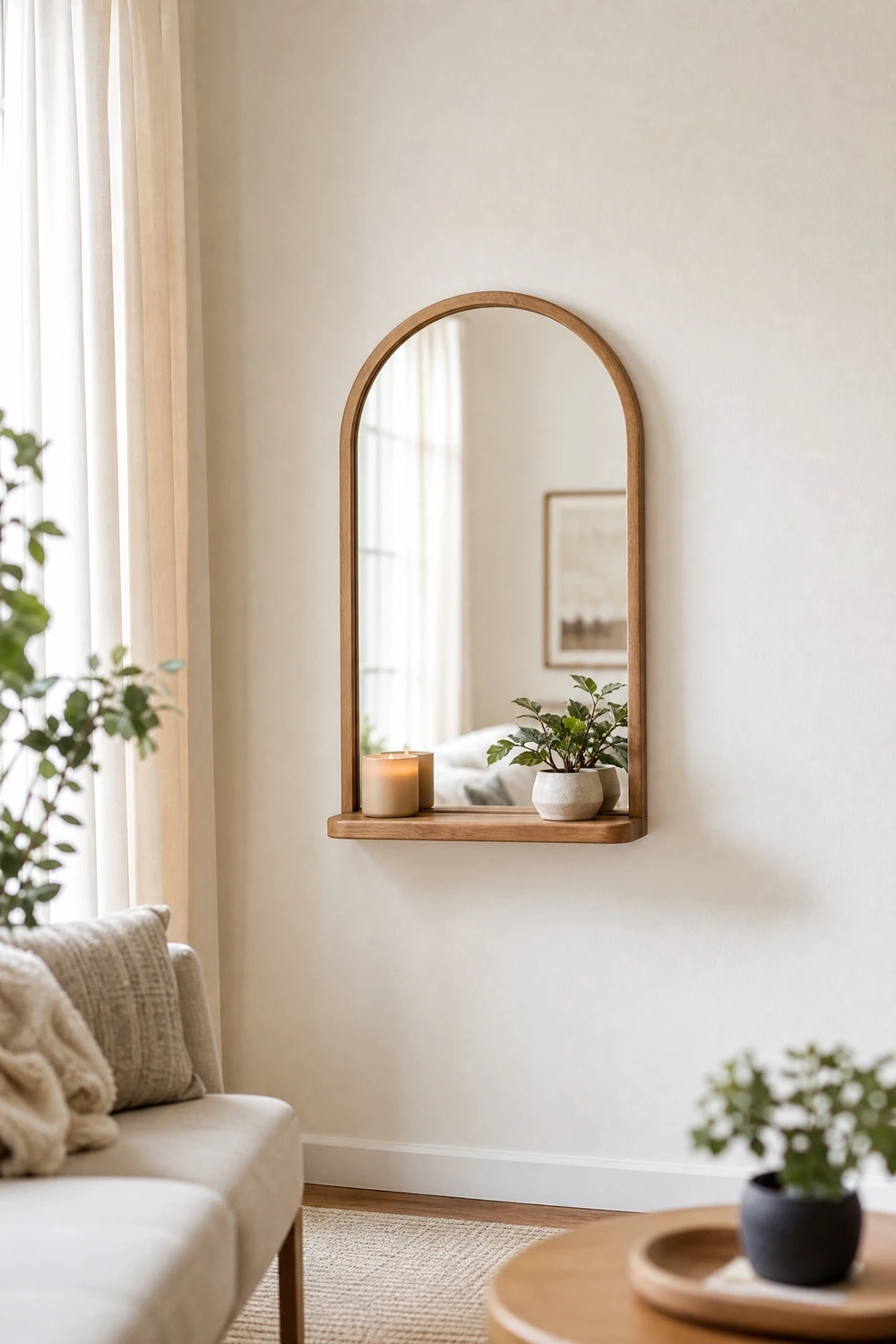
A mirror with a small built-in shelf gives you display space and a reflective surface in one piece. Place a few small items on the shelf like a candle, a tiny plant, or a decorative object. This type of mirror works well in smaller living rooms where wall space is limited and you need each piece to pull double duty. The shelf adds dimension and breaks up a flat wall nicely.
Designer Tip: Keep the shelf minimally styled with just two or three small items. Overcrowding the shelf defeats the purpose and blocks the mirror reflection below.
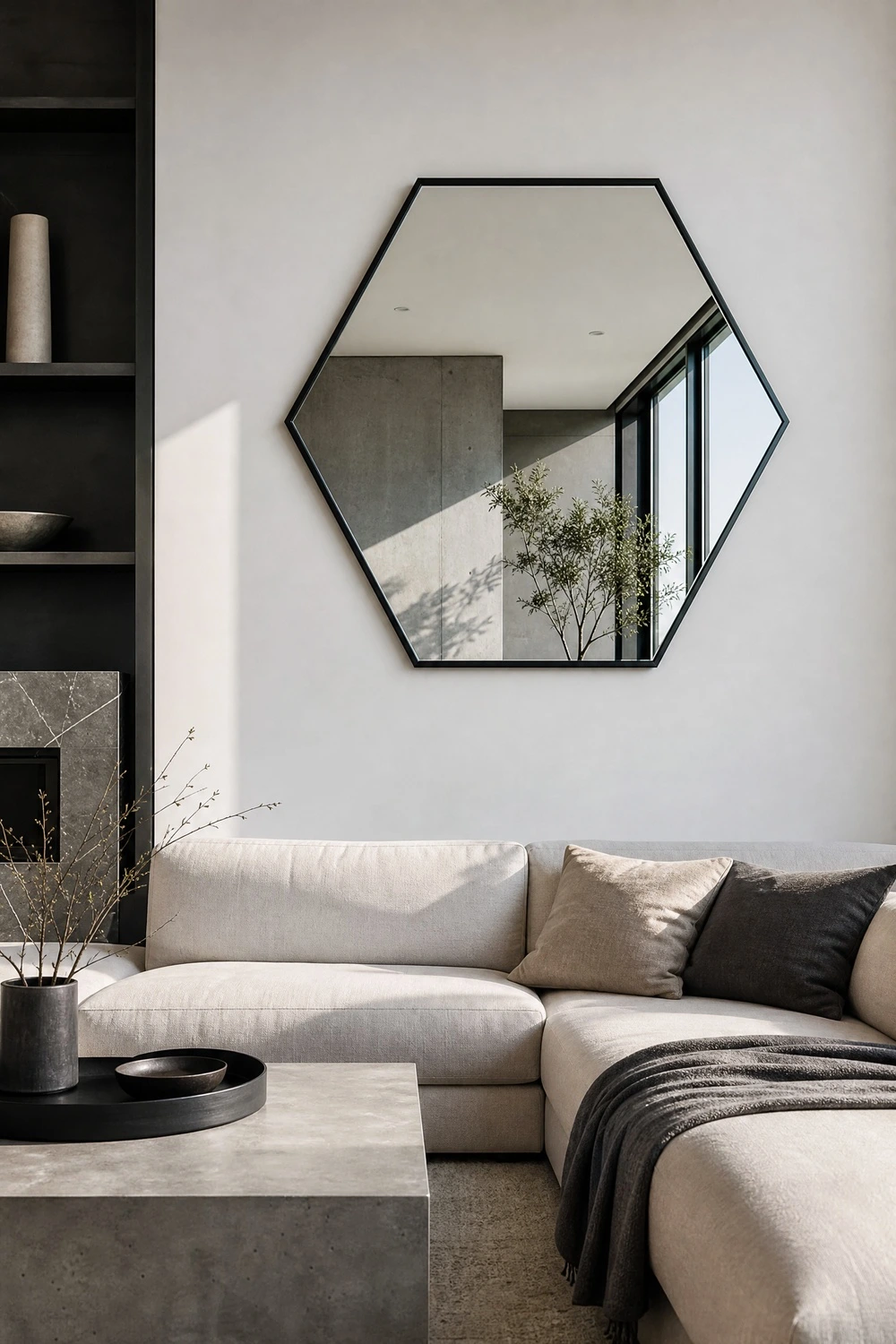
Hexagonal, octagonal, or irregular geometric mirrors add a modern, sculptural element to a living room wall. The unusual shape turns the mirror itself into a piece of art. A single large geometric mirror works as a focal point, or group several smaller geometric mirrors together for a dynamic, contemporary display. These mirrors suit modern, mid-century, and minimalist rooms especially well.
Designer Tip: If grouping geometric mirrors, keep them the same shape but vary the size. Mixed shapes in a grouping can look disjointed unless they share a very strong visual theme.
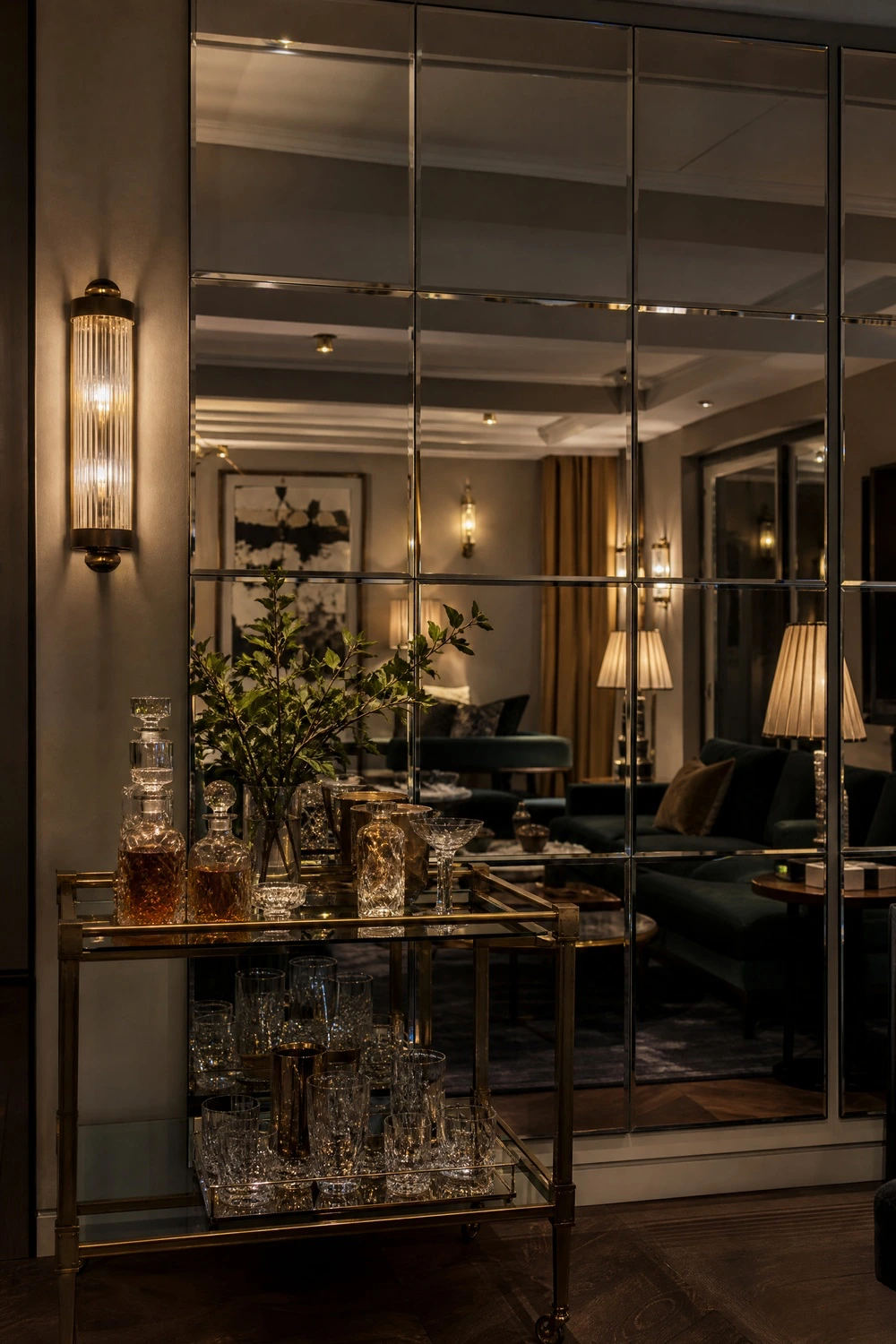
A section of wall covered with mirrored panels or tiles creates a dramatic, light-multiplying feature. This works well on a narrow wall, behind a bar cart, or flanking a fireplace. Beveled mirror tiles add sparkle and texture at the seams. A full mirrored panel gives a seamless, glamorous look. Either option makes a small room feel significantly larger and brighter.
Designer Tip: Clean mirrored wall panels regularly because fingerprints, dust, and smudges are very visible on large mirror surfaces. A squeegee and glass cleaner keep them looking sharp.
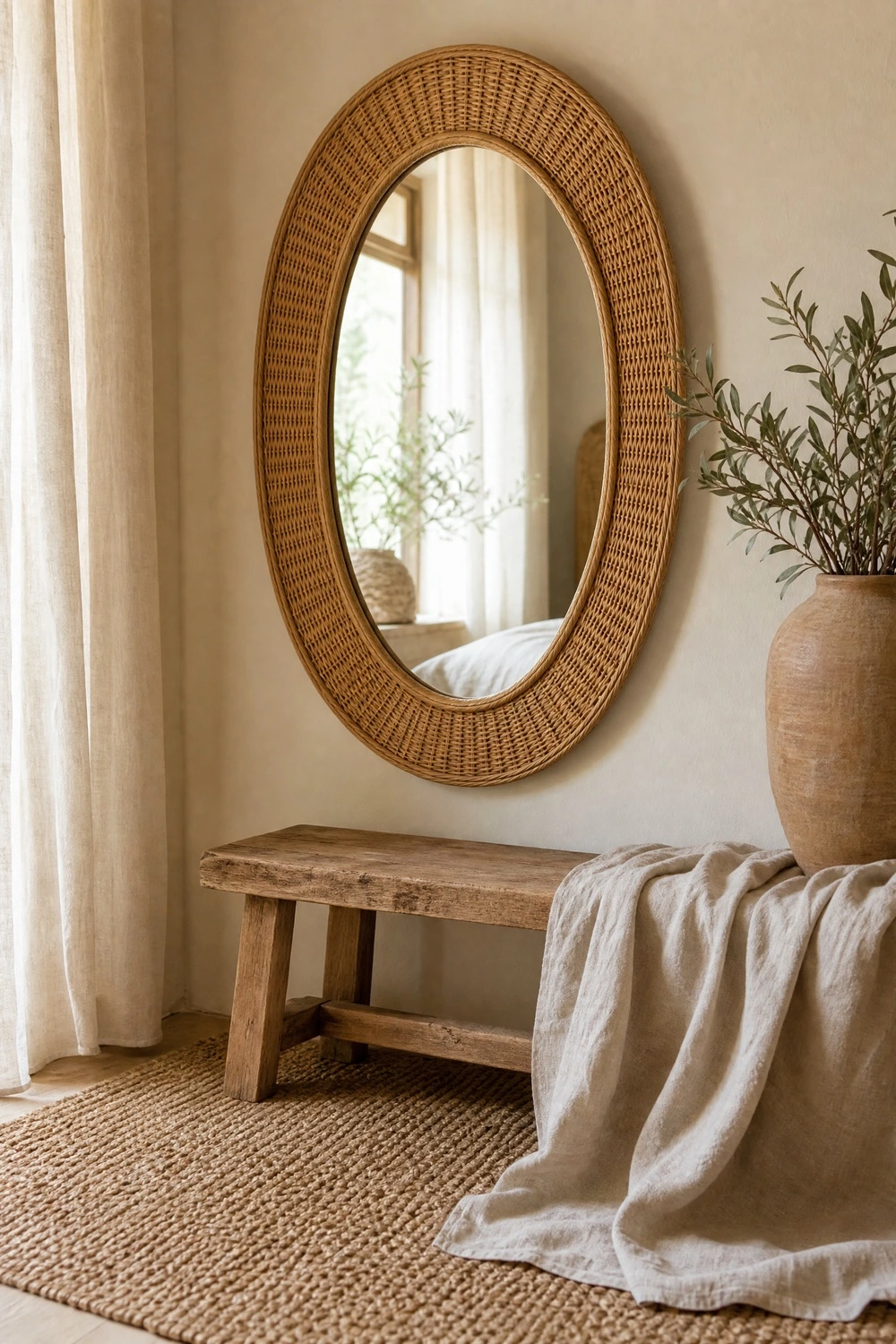
A mirror with a natural rattan or wicker frame adds organic texture and warmth. The woven frame softens the reflective surface and gives the mirror a relaxed, beachy or boho quality. These frames come in round, oval, and rectangular shapes and range from tightly woven to open, airy patterns. A rattan mirror pairs naturally with other natural materials like wood, linen, and jute in the living room.
Designer Tip: Wicker frames can fade and dry out in direct sunlight. Hang rattan mirrors on walls that get indirect light, or treat the frame with a UV-protective spray if it will be in a sunny spot.
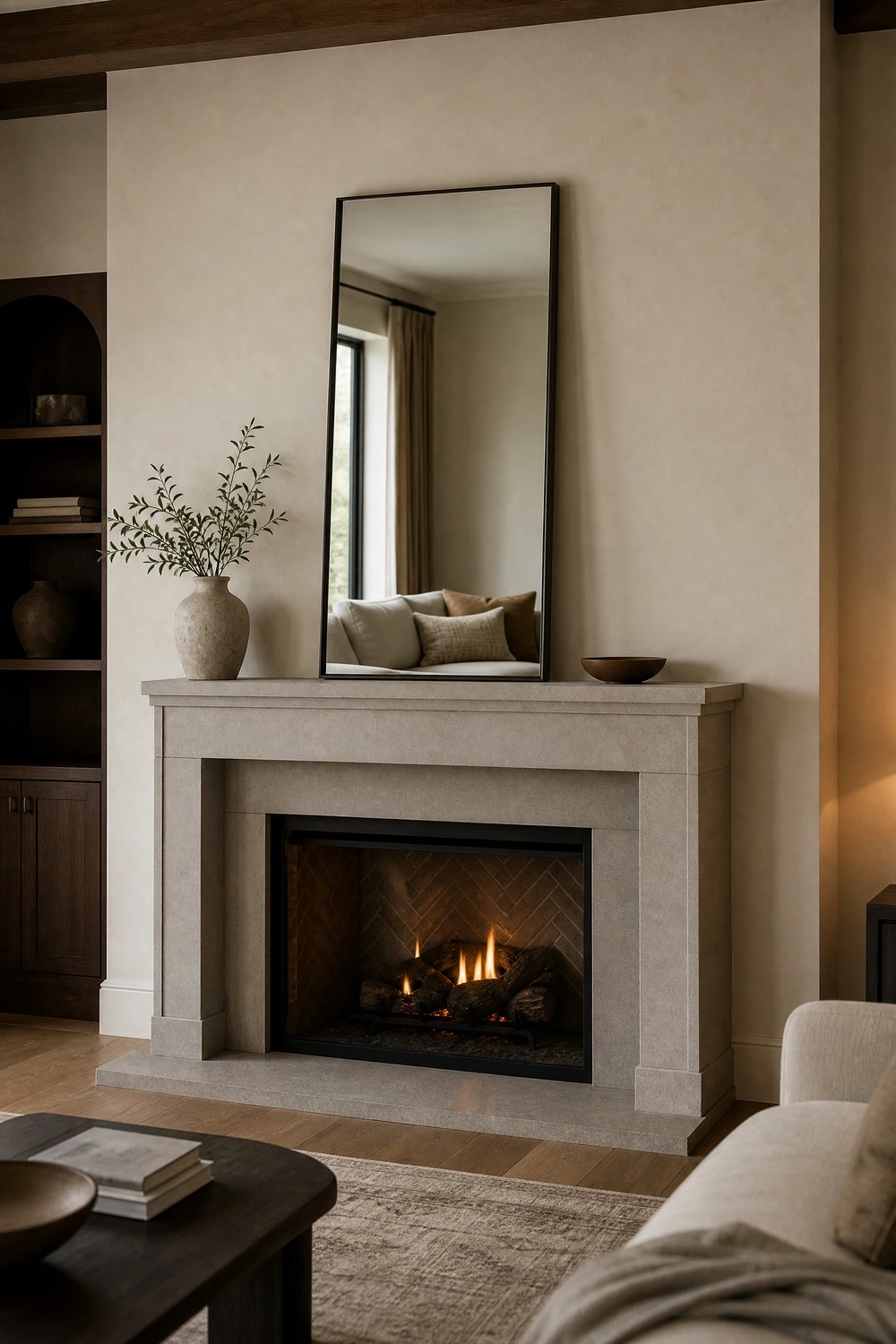
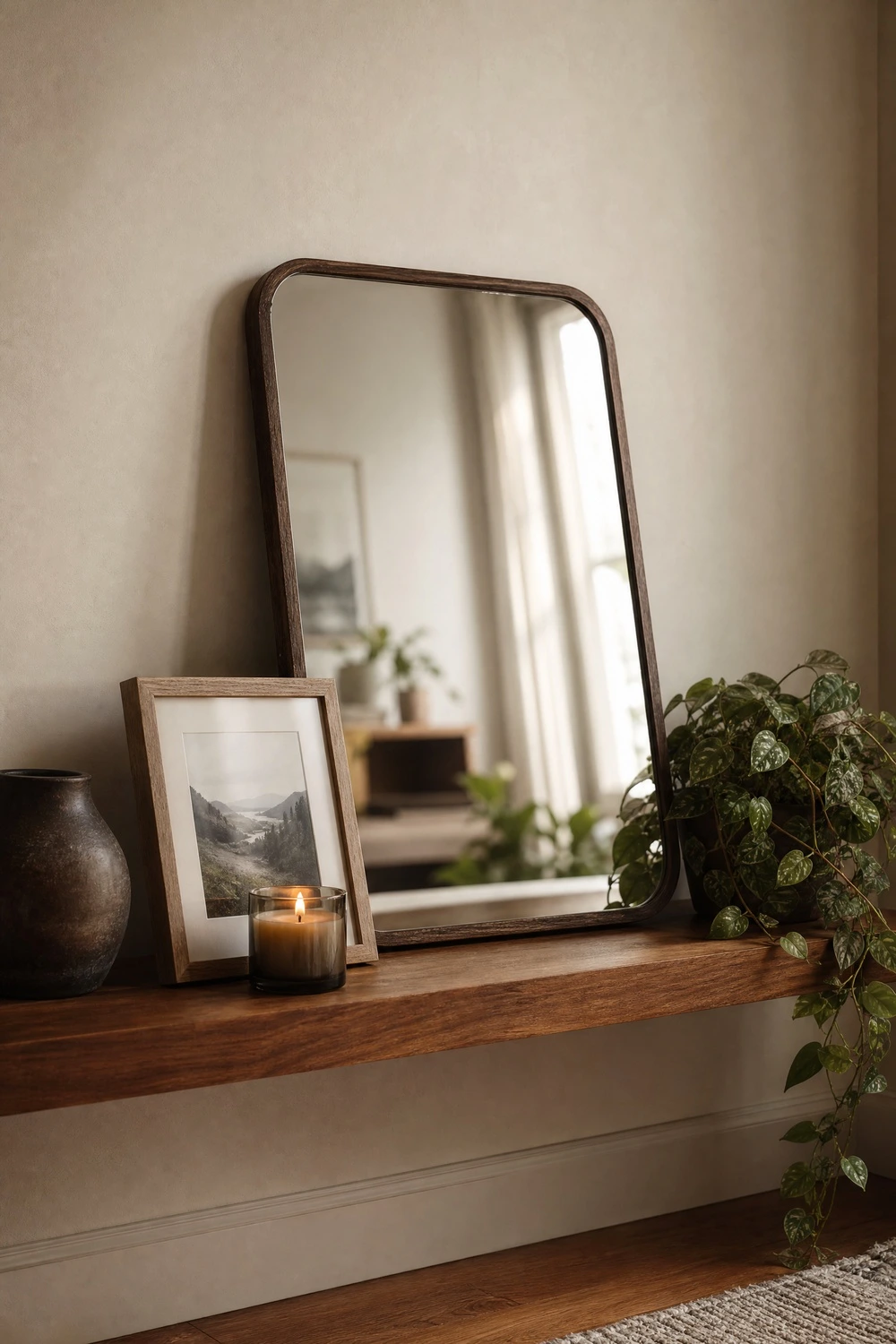
Leaning a mirror on a mantel shelf rather than hanging it on the wall gives a casual, collected look. It feels like the mirror was placed there naturally rather than installed with precision. This approach works on actual fireplace mantels, floating shelves, and console table tops. Layer a few small items in front of the mirror like candles, a small plant, or a framed photo for a styled vignette.
Designer Tip: Secure the base of a leaned mirror with museum putty or a small wedge so it does not slide forward. A mirror that slowly tips over the course of a few days is a common and preventable issue.
Mirrors are one of the most practical and versatile pieces of living room decor you can invest in. They make rooms brighter, bigger, and more interesting with very little effort. Start with one well-placed mirror and build from there if you like the effect. Most rooms benefit from at least one mirror, and many look best with two or three at different scales.
Frequently Asked Questions
Where is the best place to hang a mirror in a living room?
Across from or adjacent to a window is the best spot because the mirror will reflect natural light and make the room brighter. Above the sofa, above the fireplace, and behind a console table are the most common placements. Avoid placing mirrors where they reflect clutter or an unattractive view.
Can a mirror be too big for a living room?
Rarely, but it depends on the wall. A mirror should not extend past the edges of the furniture below it. On an empty wall, a large mirror is usually welcome because it opens up the space. If the mirror dominates the room to the point where it is all you notice, it might be too much, but that is a rare problem in most homes.
Do mirrors really make a room look bigger?
Yes. Mirrors create the illusion of depth by reflecting the room back at you. A large mirror on one wall can make a small living room feel nearly double its actual size. The effect is strongest when the mirror reflects an open part of the room or a window with natural light.
Should all mirrors in a living room match?
Not necessarily. Matching mirrors create a formal, symmetrical look. Mismatched mirrors with a shared element like frame color or finish look collected and eclectic. If you are grouping mirrors on one wall, keeping the frames in the same finish family ties them together even if the shapes and sizes differ.