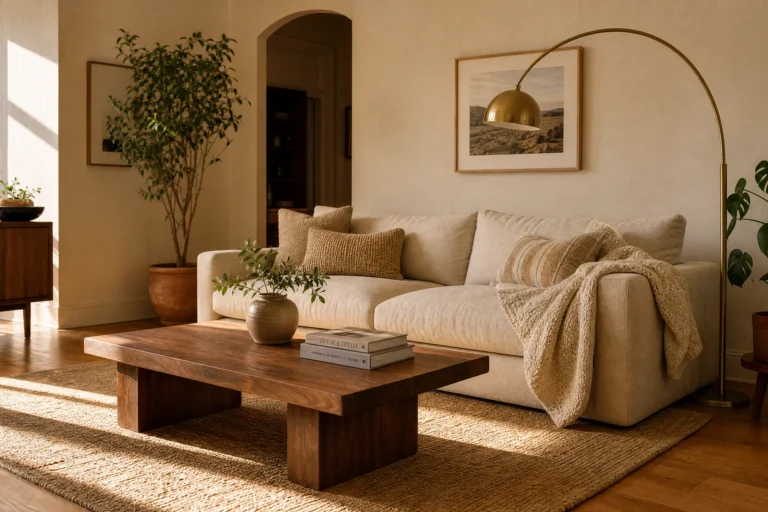
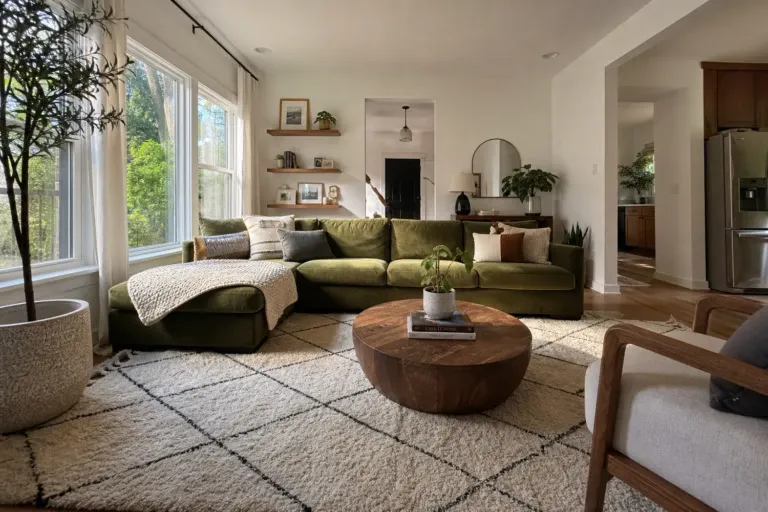
The Ultimate Guide to Boho Living Room Decor

The concept of bohemian design is much more than just a passing trend in the world of home styling. It represents a profound way of life that celebrates individual freedom, boundless creativity, and the inherent beauty found in imperfection. For those who feel constrained by the rigid rules of modern minimalism or the often cold and sterile nature of industrial aesthetics, the boho style offers a much needed breath of fresh air. It is a design philosophy that encourages you to mix and match different eras, to display the treasures from your travels on your walls, and to prioritize physical and emotional comfort above all else.

In this comprehensive guide, we will delve deep into the historical roots of this movement and provide you with fifteen practical and inspiring ways to bring this soulful energy into your own living room. Whether you are starting from a blank canvas or just looking to add a few eclectic touches to your existing space, these ideas will help you build an environment that feels truly like home. We will explore everything from the psychological impact of color to the tactile importance of natural fibers, ensuring that your space is not just beautiful to look at, but also a joy to inhabit.

The Deep Roots of the Bohemian Spirit

To truly master the art of decorating in the boho style, one must first understand its fascinating history. The term “Bohemian” originally referred to marginalized groups of people in France during the early nineteenth century. These individuals, who were primarily artists, writers, musicians, and actors, chose to lead unconventional lives. They often prioritized their creative pursuits over the accumulation of material wealth or the pursuit of social status. Because they lived on the fringes of society, they frequently moved between temporary lodgings, filling their spaces with whatever furniture and decor they could find or carry with them.

This necessity birthed a unique aesthetic. Their homes became a layered and lived-in tapestry of found objects, mismatched fabrics, and artistic clutter. This look, which was born out of a rejection of the bourgeois standards of the time, eventually became a symbol of intellectual and creative freedom. As these artists gained more recognition, their style began to influence the broader culture, eventually evolving into the “Boho Chic” we recognize today.

The movement saw a massive resurgence during the 1960s and 1970s. During this era, the bohemian spirit aligned perfectly with the counterculture movements that emphasized peace, love, and a return to nature. This period introduced the heavy use of indoor plants, macrame, and global patterns sourced from across the world. It was a time of exploration, both geographically and spiritually, and the homes of this era reflected that curiosity. Today, the style has become a global phenomenon that is remarkably adaptable. It can be tailored to suit various cultural backgrounds and personal tastes, yet its core remains unchanged: a firm rejection of the “cookie-cutter” home in favor of something that is deeply unique and intensely personal.

Why Boho is the Perfect Choice for Modern Living Rooms

The living room is arguably the most important space in any home. It serves as the heart of the household, a place where we unwind after a long day of work and where we gather with friends and family to share stories and laughter. The boho style is particularly well-suited for this room because it is inherently welcoming and non-judgmental. In a boho space, there is no fear of “messing up” the decor. The style actually thrives on a bit of organized chaos. A stack of books left on the floor or a slightly wrinkled throw blanket draped over the back of a chair does not detract from the room; instead, it adds to the overall charm and lived-in feel.

In our current age, where so much of our lives is spent in digital spaces that can often feel artificial and disconnected, the boho style grounds us in the physical world. It emphasizes the use of natural materials that have a tangible presence. When you touch a solid wood table, a soft wool rug, or a cool linen pillow, you are connecting with the natural world. Furthermore, the abundance of plants that characterizes this style helps to purify the air and creates a calming, biophilic environment. Most importantly, the bohemian approach allows your personality to shine through every corner of the room. Your living room becomes a rich reflection of your personal history, your travels, and your passions, rather than a sterile showroom for a mass-market furniture store.

1. Using Bold and Patterned Pillows to Add Life and Energy

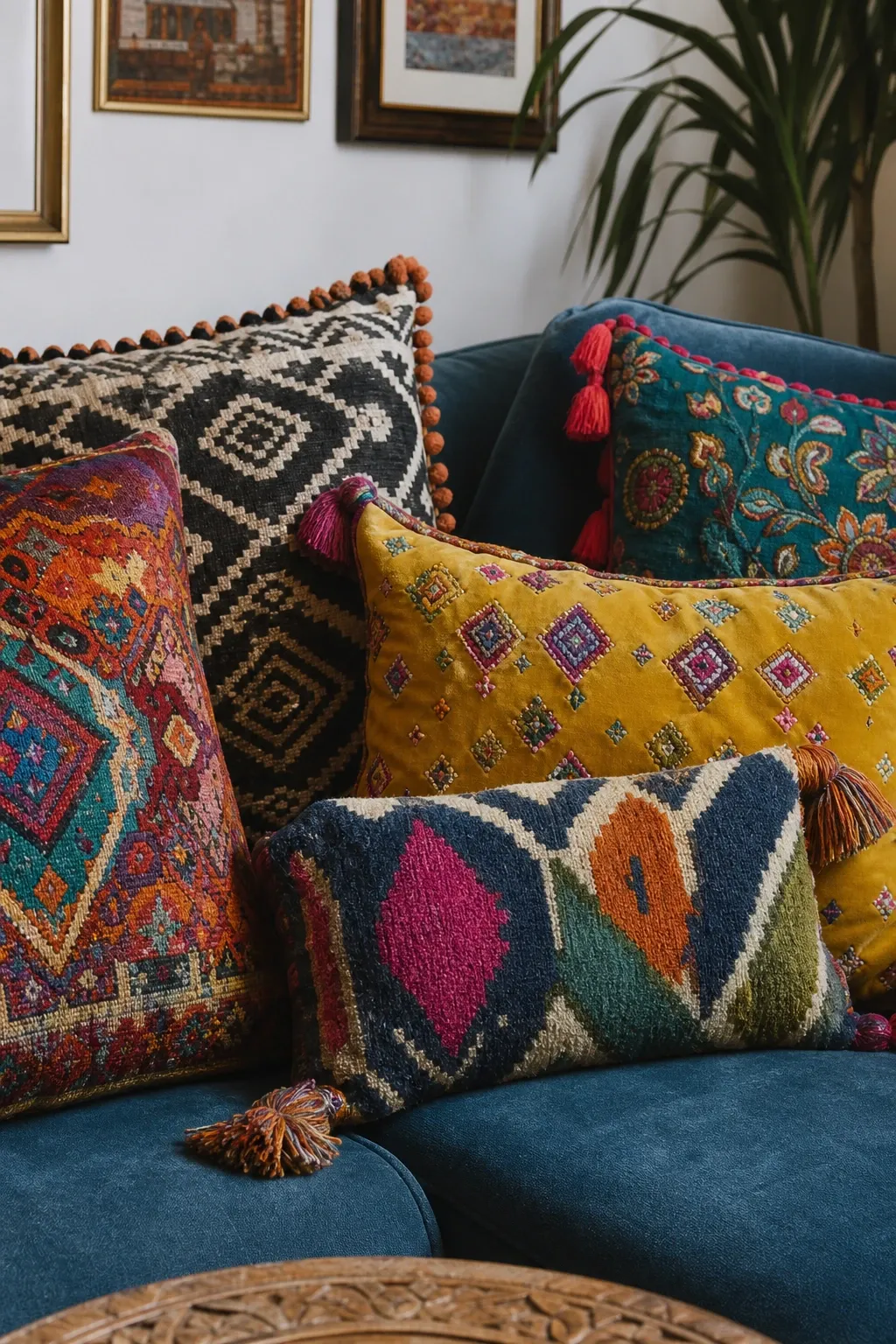
One of the most effective and accessible ways to begin your journey into bohemian decor is through the clever use of textiles. Throw pillows are perhaps your greatest allies in this endeavor. In a traditional design setting, you might feel pressured to ensure that every pillow matches the sofa or coordinates perfectly with the curtains. However, in a boho space, those rules are thrown out the window. In fact, the more variety you have, the better the final result will be.

When selecting pillows, look for patterns that tell a story or evoke a sense of place. You might choose Moroccan tile designs with their intricate geometric shapes, Indian block prints that showcase traditional craftsmanship, or South American weaves that feature bold and vibrant colors. The key to making this work is to play with both scale and texture. You could pair a large, chunky knit pillow that provides a lot of physical depth with a smaller, silk-embroidered one that adds a touch of delicate detail. Mixing geometric shapes with organic floral motifs creates a visual tension that is very characteristic of the boho look. These additions provide an instant burst of energy to any seating area, making it feel much more inviting and comfortable for long conversations or quiet evenings with a book.

2. Balancing Warm Earthy Tones with Rich Natural Textures

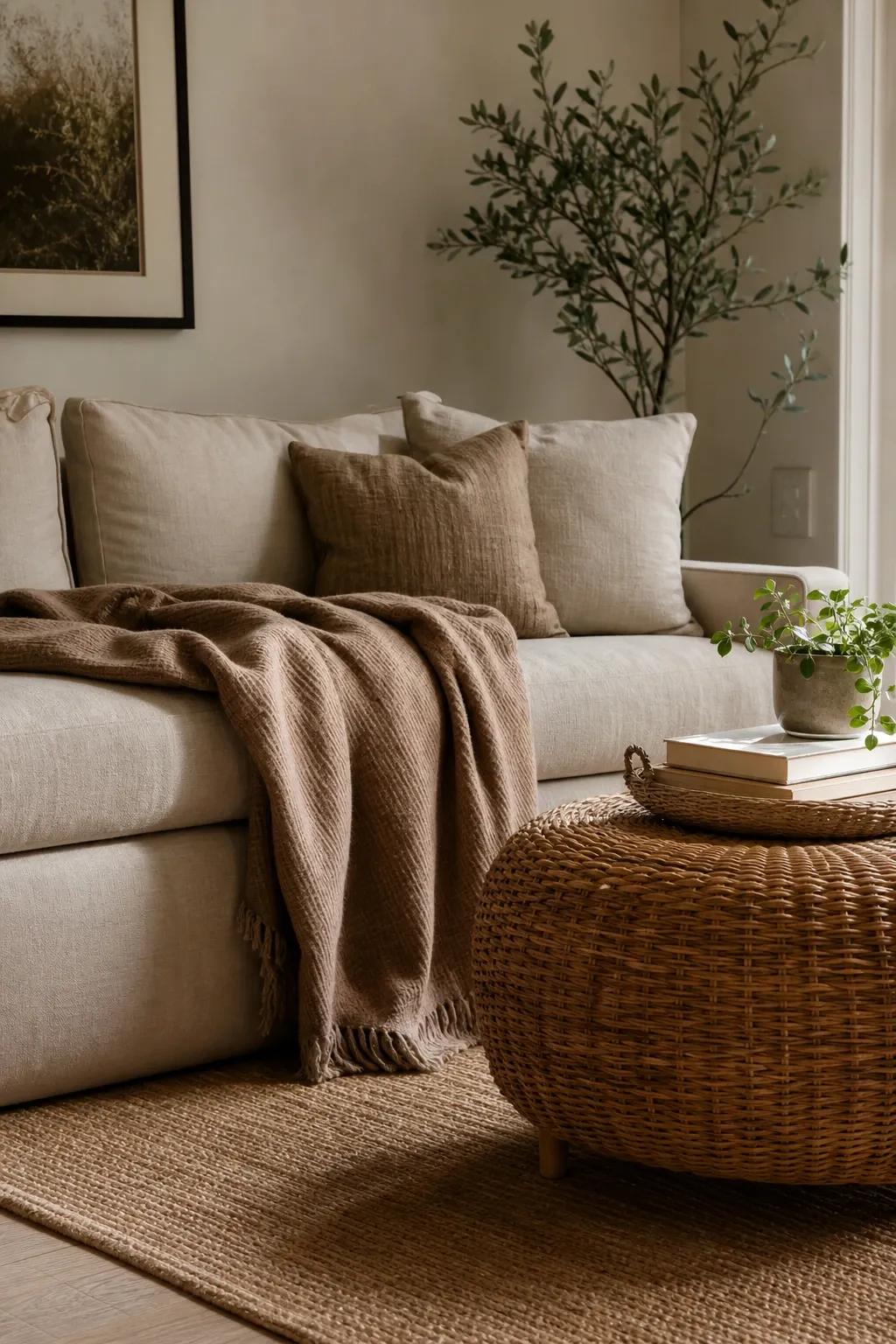
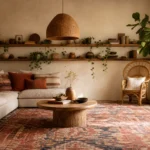
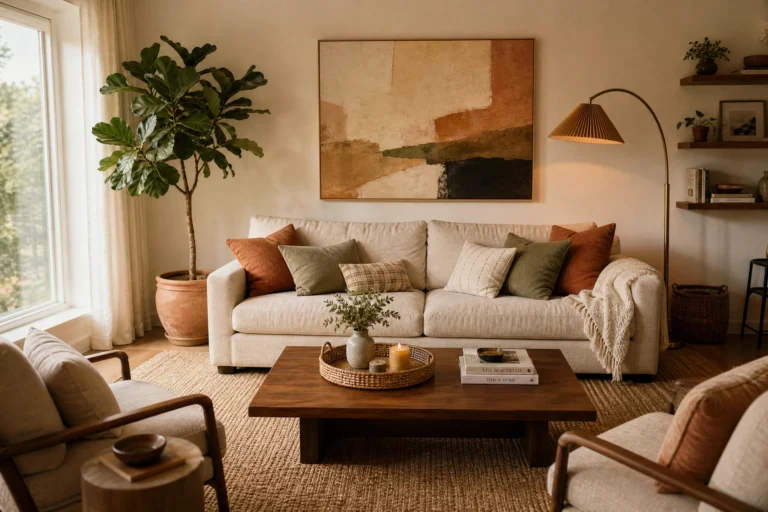
While the bohemian style can certainly be very colorful and even maximalist, it often relies on a foundational palette of warm, earthy tones. These colors are inspired by the natural world and include shades like terracotta, ochre, burnt sienna, and deep sand. These hues are grounding and create an immediate sense of stability and warmth within a room. They make a space feel cozy and protected, which is exactly what you want in a living room.

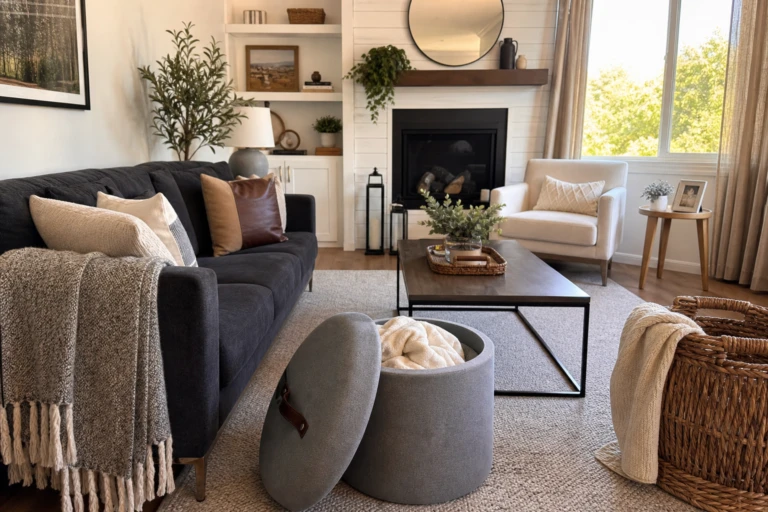
To prevent these warm colors from making the room feel too heavy or dark, it is essential to pair them with a wide variety of natural textures. A jute or sisal rug is a classic and highly practical choice for a boho living room. These materials provide a rough, organic feel underfoot that contrasts beautifully with the softness of a velvet sofa or a plush armchair. You can also incorporate woven baskets made of seagrass, wicker, or rattan to hold extra blankets, magazines, or even large indoor plants. By layering these different materials throughout the room, you create a rich and multi-dimensional visual experience. The space ends up feeling both sophisticated and grounded, a perfect balance for a modern home.

3. The Vital Role of Hanging Plants and Woven Wall Art

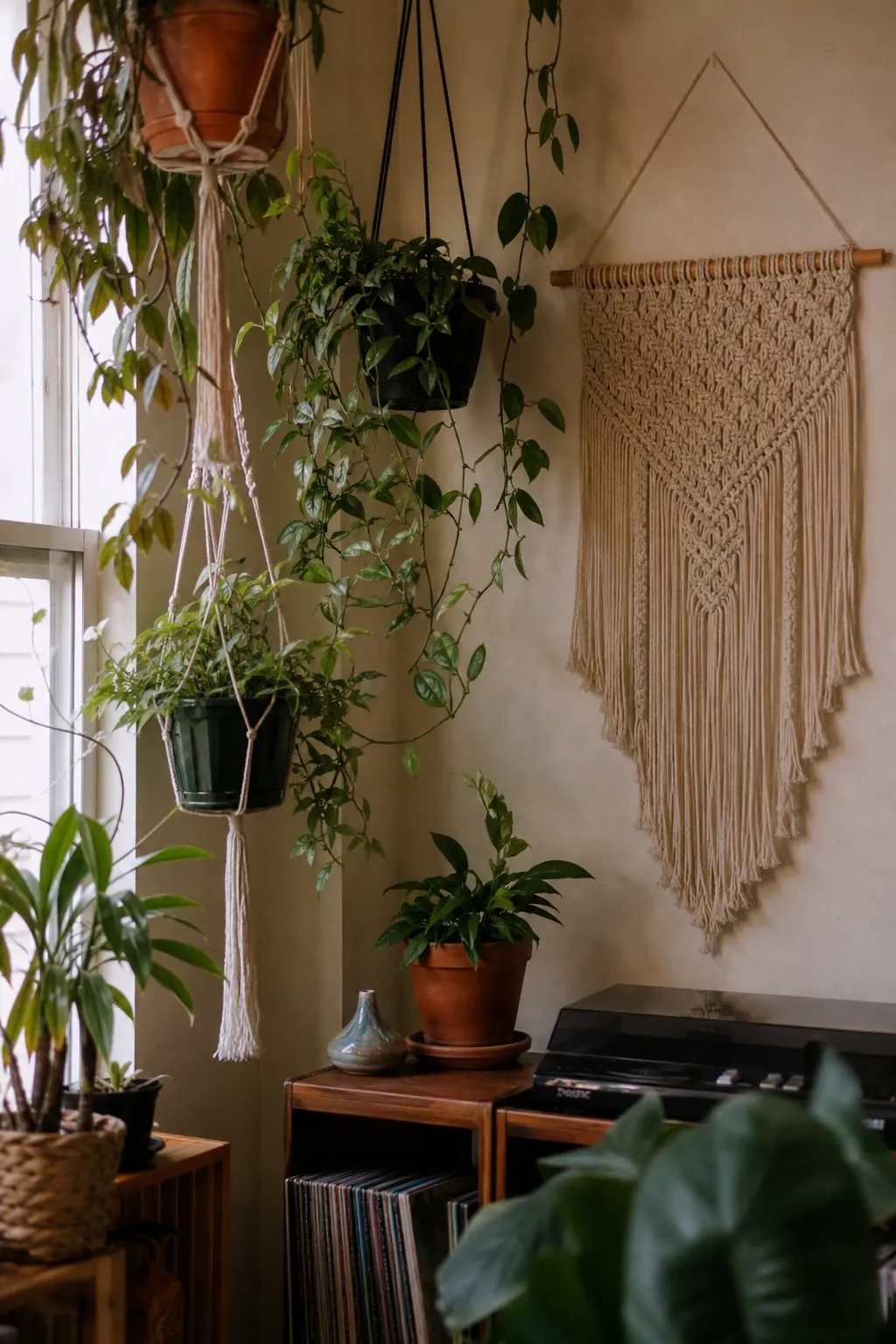
Greenery is an absolute necessity in any successful bohemian space. Plants bring a sense of life, growth, and constant movement that inanimate objects simply cannot replicate. They soften the hard lines of furniture and architecture, making a room feel more organic and relaxed. If you find that you are short on floor space, hanging plants offer a perfect and stylish solution. Varieties like pothos, spider plants, and the elegant string of pearls are all excellent choices. They will trail down from your ceiling or high shelves, creating a lush, jungle-like atmosphere that draws the eye upward and makes the room feel larger.

To complement the natural beauty of your plants, consider adding pieces of woven wall art. Macrame wall hangings, which were a staple of the 1970s boho look, have made a massive and well-deserved comeback in recent years. These pieces add a soft, tactile element to your walls that feels much warmer and more personal than a standard framed print. The combination of vibrant green leaves and the off-white or cream-colored cotton cord of a macrame piece is a timeless boho pairing. This combination instantly relaxes the atmosphere of the room and creates a focal point that feels both artistic and approachable.

4. Making a Bold Statement with a Unique Hanging Chair

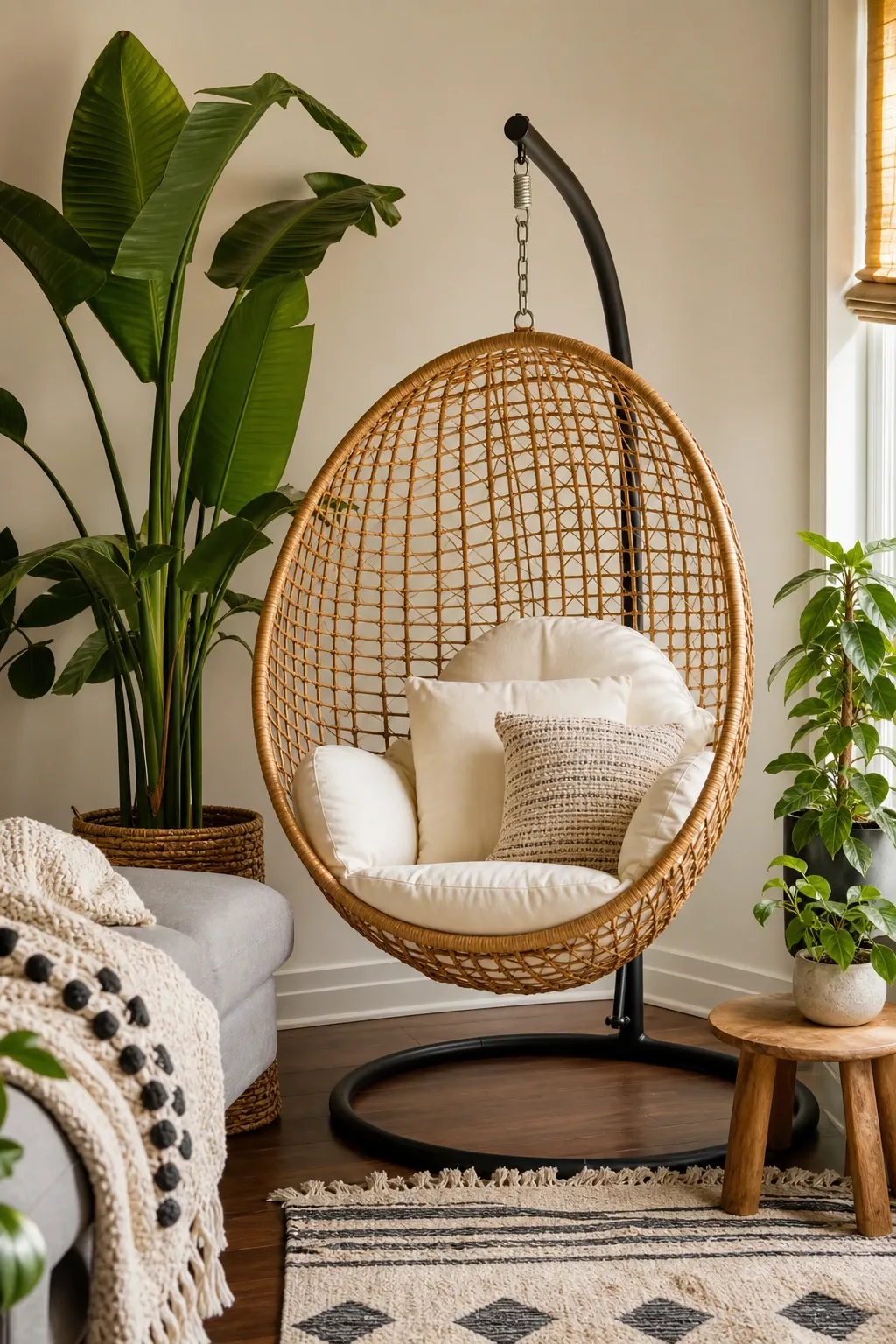
If you are looking to add a touch of whimsy and playfulness to your living room, a hanging chair is an excellent investment. Whether you choose a structured rattan egg chair or a simple, soft fabric hammock, this piece of furniture will immediately become the focal point of the entire room. It serves as a clear signal that this is a place designed for relaxation, daydreaming, and play. It breaks the traditional layout of a living room and introduces an element of the unexpected.

Beyond its undeniable visual appeal, a hanging chair offers a truly unique and soothing seating experience. There is something deeply comforting about the gentle, rhythmic swaying motion that these chairs provide. It is the ideal spot to curl up with a heavy blanket and a hot cup of tea on a rainy afternoon. To make the most of this feature, ensure that it is securely anchored to a solid ceiling beam or a very sturdy dedicated stand. You can surround the chair with a small, soft rug and a low side table to create a dedicated reading nook within your larger living space. This creates a “room within a room” feel that is very common in well-designed bohemian homes.

5. The Harmony of Rustic Wood and Soft Textile Accents

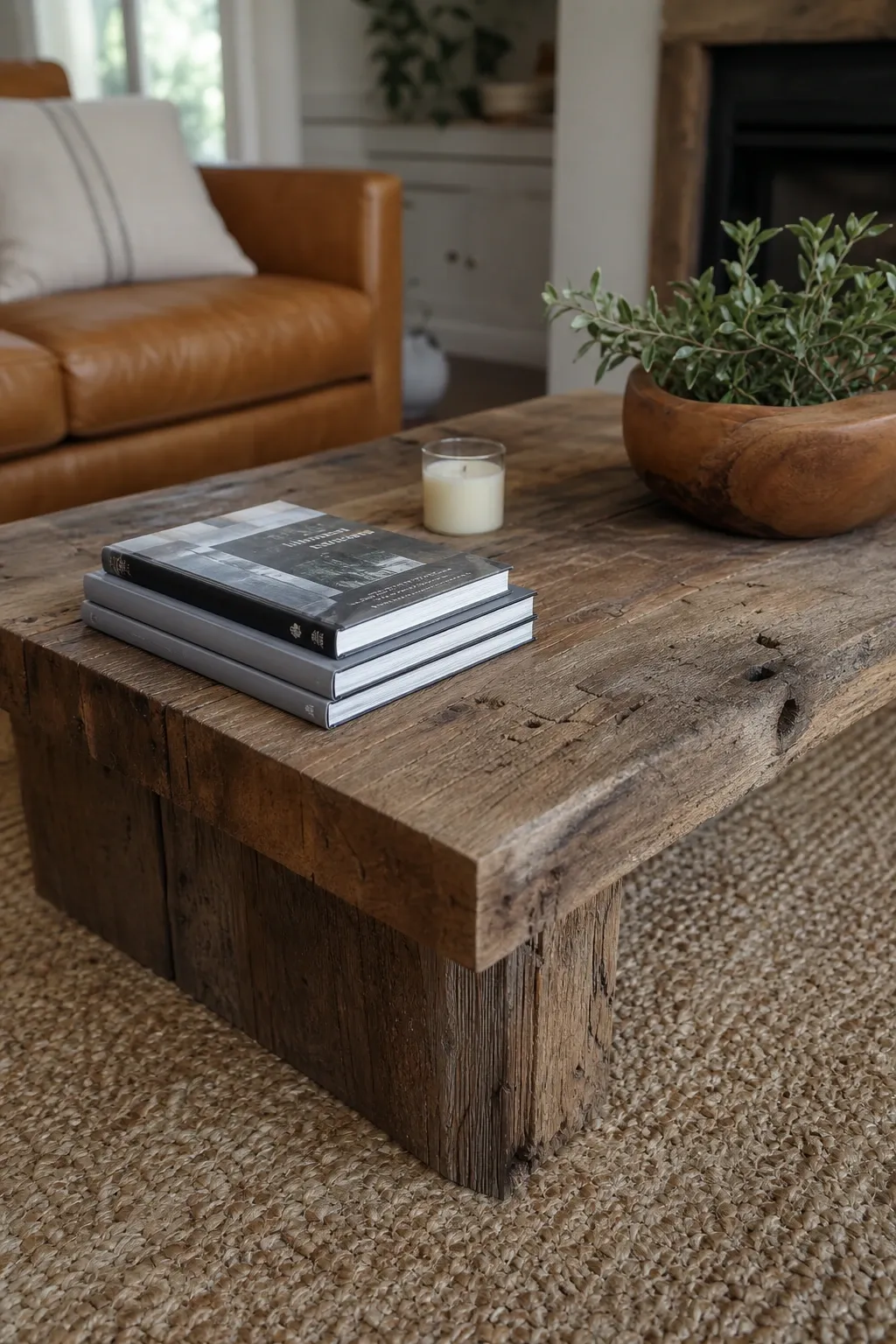
The bohemian style is famous for its ability to bridge the gap between different eras and styles. Rustic wood elements are a key part of this. A reclaimed timber coffee table, a set of rough-hewn wooden shelves, or even a vintage wooden chest can add a much-needed sense of history and sturdiness to the room. In a boho space, the natural grain, knots, and imperfections in the wood are not something to be hidden or sanded away; instead, they are celebrated as marks of character and authenticity.

However, to prevent the room from feeling too much like a rustic cabin or a workshop, you must carefully balance these hard, solid surfaces with plenty of soft textile accents. You might drape a genuine sheepskin rug over a wooden bench or place a thick, heavily tasseled throw blanket on a rustic armchair. This constant interplay between the rough, unyielding nature of the wood and the soft, inviting feel of the fabric is what creates that signature bohemian comfort. It makes the space feel like it has been lived in and cherished for many years, giving it a soul that brand-new furniture often lacks.

6. Curating an Eclectic Gallery Wall That Tells Your Story

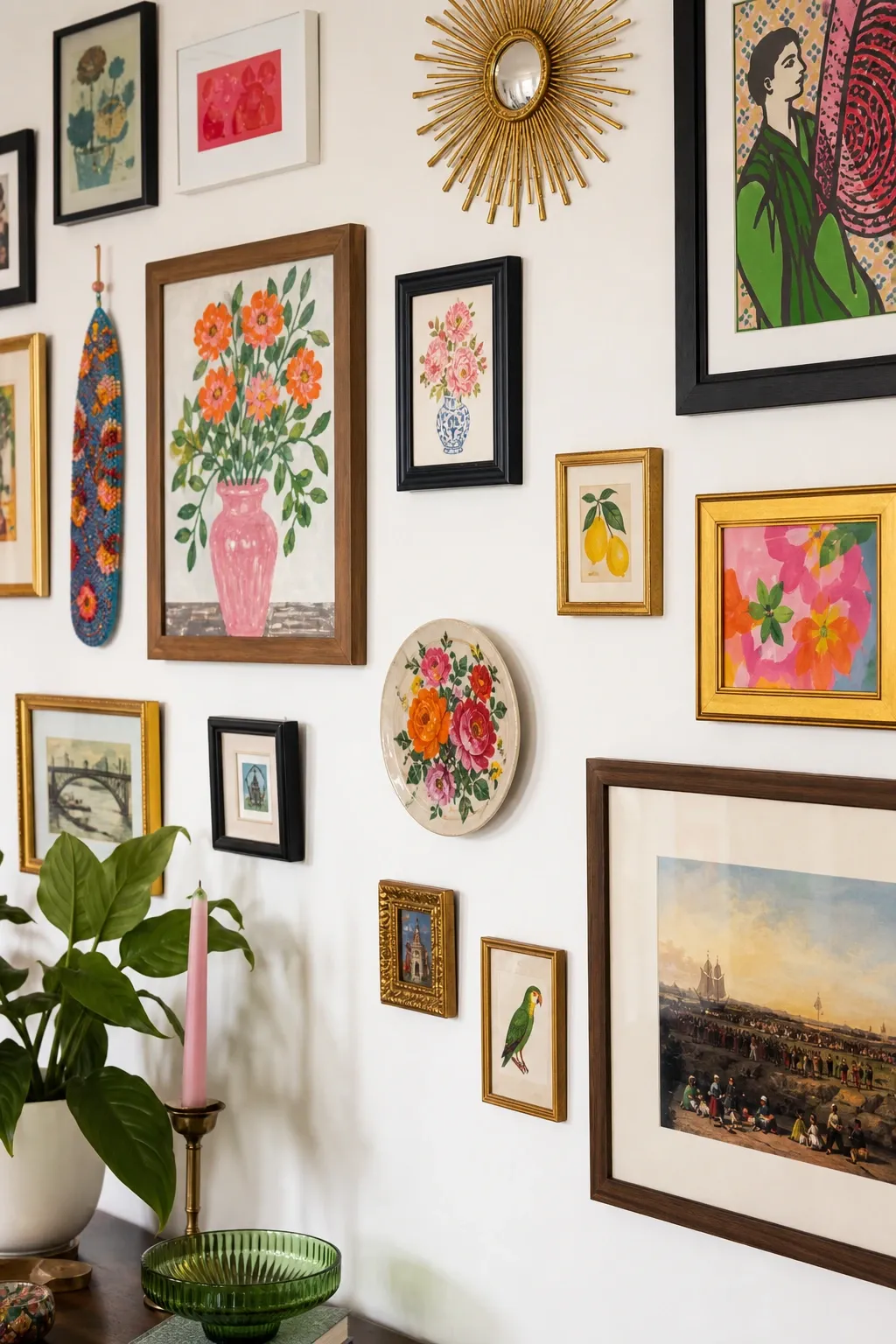
In a bohemian living room, your walls should serve as a visual narrative of your life and interests. A gallery wall is the perfect medium for this kind of storytelling. Instead of going to a store and buying a pre-packaged set of matching prints, you should aim to collect pieces over time from various sources. Your wall might include vintage oil paintings found at a flea market, modern sketches by local artists, photographs from your most memorable travels, and even three-dimensional objects like small carved masks or interesting pieces of driftwood.

You should not worry about the frames matching each other perfectly. In fact, a mix of ornate gold frames, simple black ones, and natural wood frames can look absolutely fantastic if they are arranged with a bit of thought. A good strategy is to start with your largest or most important piece slightly off-center and then build the rest of the collection outwards from there. The goal is not to achieve perfect symmetry, but rather to create a visual feast that keeps the eye moving and exploring. Every time you or a guest looks at the wall, there should be something new and interesting to discover, sparking memories and conversations.

7. Inviting Warmth and Joy with Golden Hues and Greenery

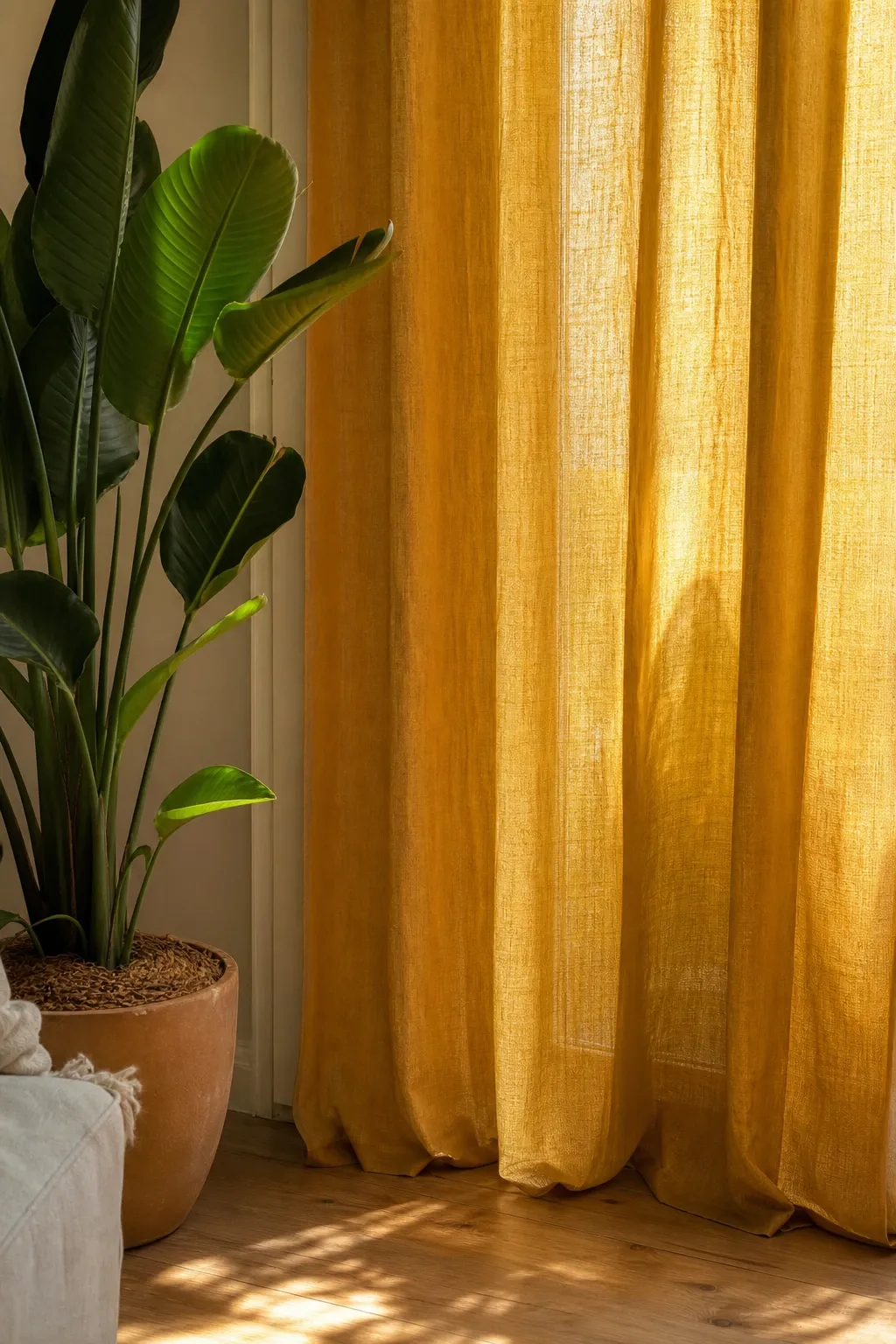
The colors we choose for our homes have a profound and well-documented impact on our psychological well-being. Golden shades, such as mustard yellow, deep amber, or warm honey, have the ability to make a living room feel as though it is constantly bathed in natural sunlight, even on the gloomiest of days. These colors are inherently energetic and cheerful, yet they also possess a certain coziness that makes them perfect for a communal space. They pair exceptionally well with the deep, rich greens of indoor plants, creating a palette that feels vibrant and alive.

You might consider using mustard-colored linen curtains to frame your windows. When the sun shines through them, they will cast a warm, golden glow across the entire room, instantly lifting the mood. To ground this bright look, you can place several large, architectural potted plants nearby. A fiddle leaf fig with its large, waxy leaves or a monstera with its iconic Swiss-cheese patterns are both great options. The contrast between the warm, glowing yellow and the cool, refreshing green creates a balanced and inviting environment that feels like a permanent summer retreat within your own home.

8. Layering Floor Cushions for a Relaxed and Informal Vibe

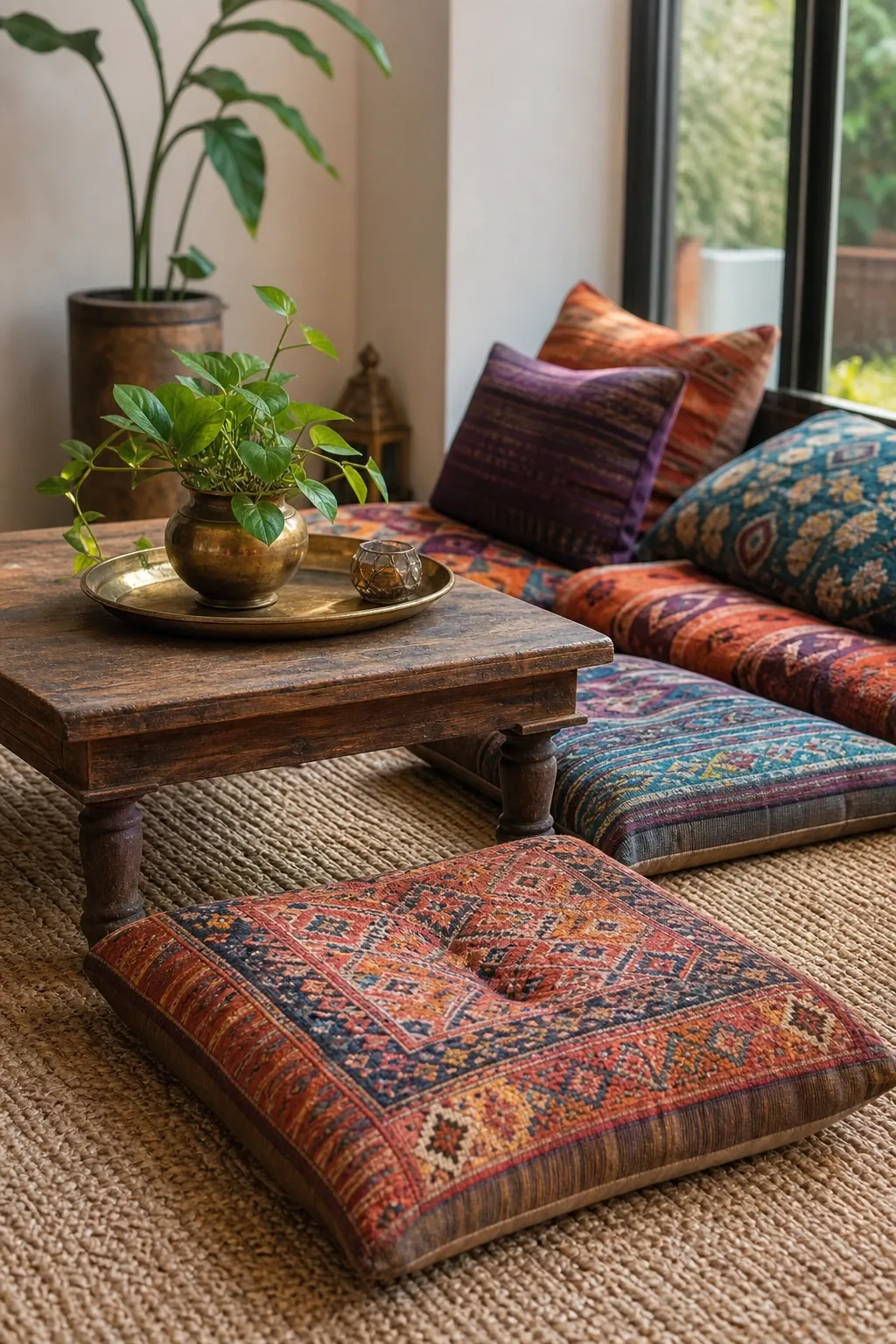
One of the most recognizable hallmarks of bohemian design is its relaxed and often unconventional attitude toward formal furniture. Floor cushions and oversized poufs are a fantastic way to add extra seating to your living room without the need for bulky, expensive chairs. They encourage a more casual and grounded way of interacting with your guests, breaking down the formal barriers that traditional seating can sometimes create.

When choosing cushions, look for a variety of sizes, shapes, and patterns. Large, firm floor pillows can serve as primary seats, while smaller, softer ones can be used for back support or simply as decorative accents. This setup is particularly useful for those living in smaller apartments where flexibility is key. You can easily move the cushions around to accommodate different groups or activities. Furthermore, sitting lower to the ground creates a cozy, “gathering around the fire” vibe that fosters closer personal connections and leads to more relaxed and open conversations. It is a simple way to make your home feel more like a community space.

9. Embracing the Serenity of Nature with Wood and Neutral Baskets

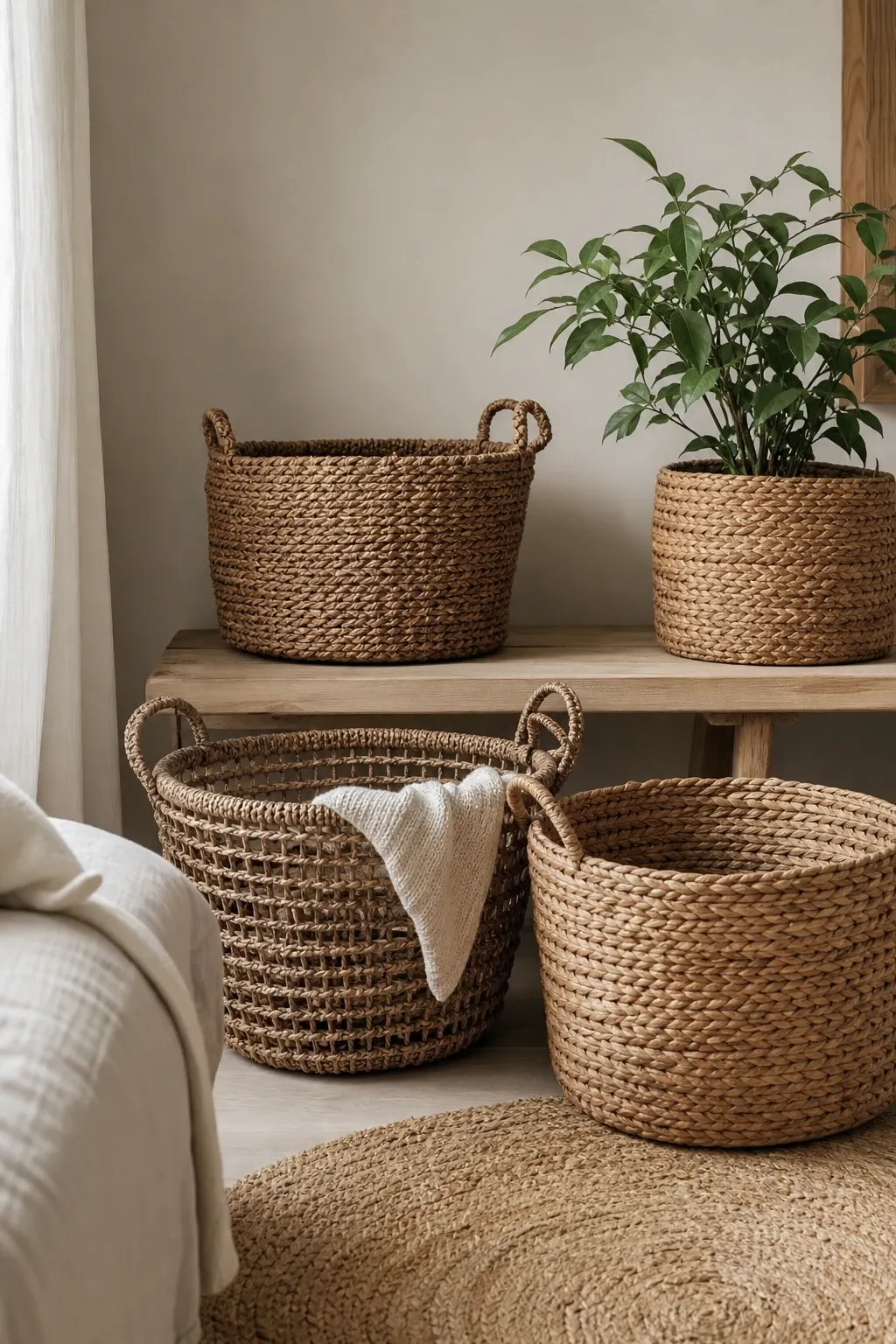
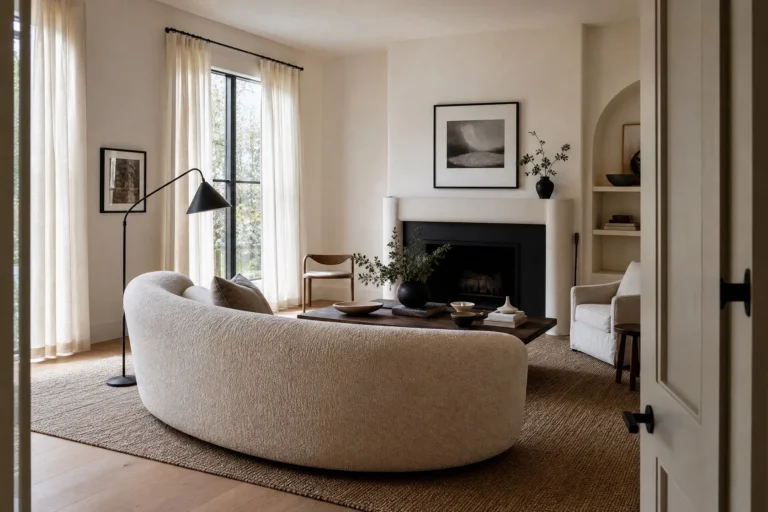
For those who find the more colorful and eclectic versions of boho a bit overwhelming, there is a more subdued approach that focuses heavily on natural wood and neutral tones. This style, often referred to as “modern boho” or “minimalist boho,” is incredibly popular because it feels clean, organized, and sophisticated while still retaining all the warmth and texture of the bohemian spirit. The key is to use light-colored woods like oak, birch, or maple for your larger pieces of furniture, such as the sofa frame or the entertainment center.

In this version of the style, woven baskets become even more important. They are not just functional storage solutions; they are essential design elements. A large, deep basket can be used to hold a tall indoor tree, while a collection of smaller, flat baskets can be arranged on a wall to create a unique and organic art installation. By sticking to a refined palette of creams, beiges, soft greys, and light browns, you create a serene and peaceful space. It feels like a calm oasis away from the noise and chaos of the outside world, providing a perfect environment for meditation, reading, or quiet reflection.

10. The Art of Mixing Vintage Treasures with Modern Design

A truly successful bohemian room should never look like it was designed by a professional stager or bought all at once from a single furniture catalog. Instead, it should feel like a curated collection that has grown and evolved organically over many years. The most effective way to achieve this authentic look is by boldly mixing vintage or antique finds with more modern, contemporary pieces. For example, a sleek, mid-century modern sofa with clean lines can look absolutely incredible when it is paired with an ornate, hand-knotted vintage Persian rug that shows a bit of its history through its wear.

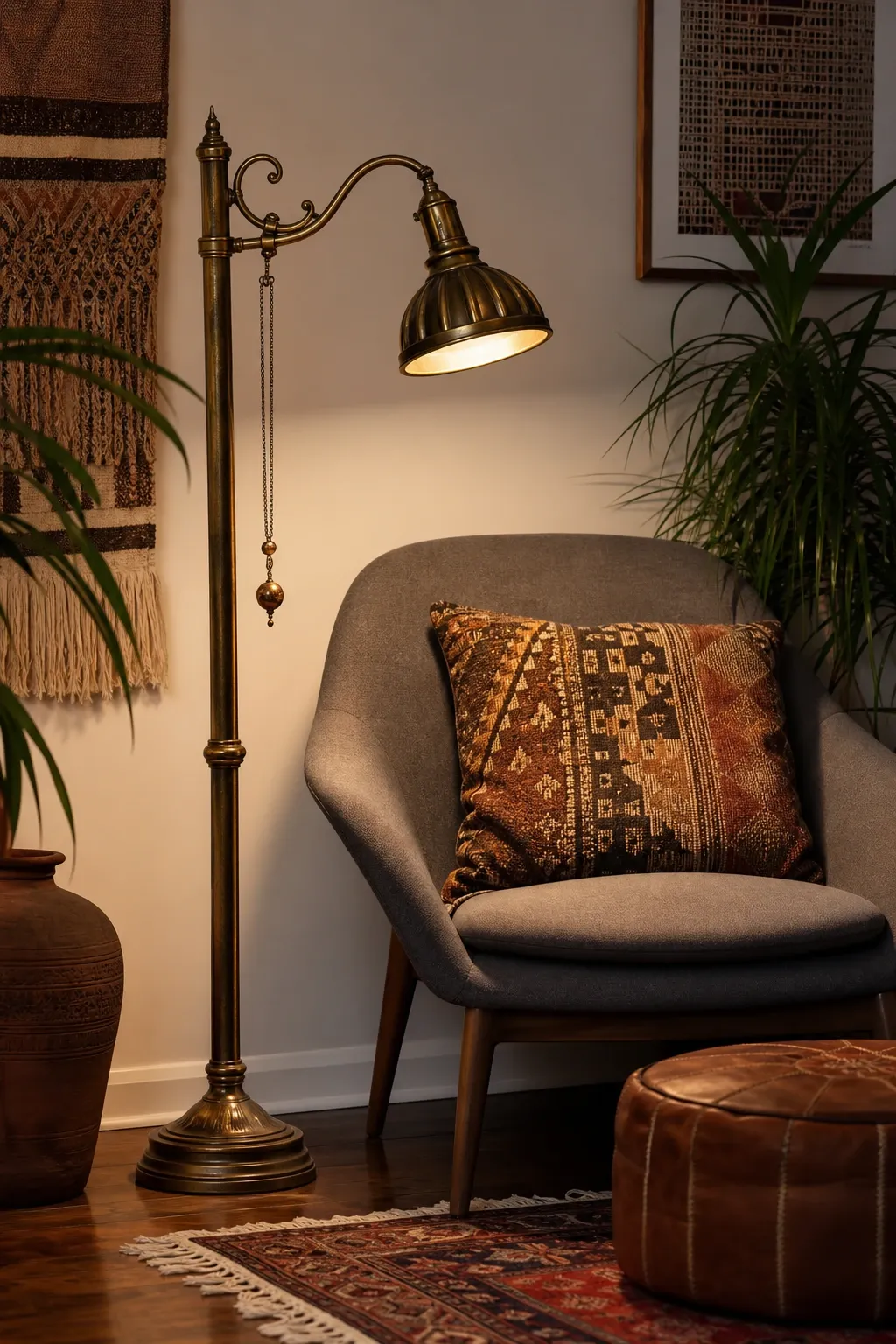
The process of shopping for a boho home is an adventure in itself. Visiting thrift stores, exploring local flea markets, and browsing through antique shops are all part of the experience. You should look for items that have “good bones” and a clear sense of character. Perhaps it is a brass floor lamp with a beautiful aged patina, an old wooden trunk that can be repurposed as a unique coffee table, or a set of vintage glass vases in interesting shapes and colors. These pieces add a layer of authenticity, history, and soul to your living room that mass-produced, brand-new items simply cannot provide. They make your home feel like a one-of-a-kind space that truly belongs to you.

11. Setting the Perfect Mood with Layered and Warm Lighting

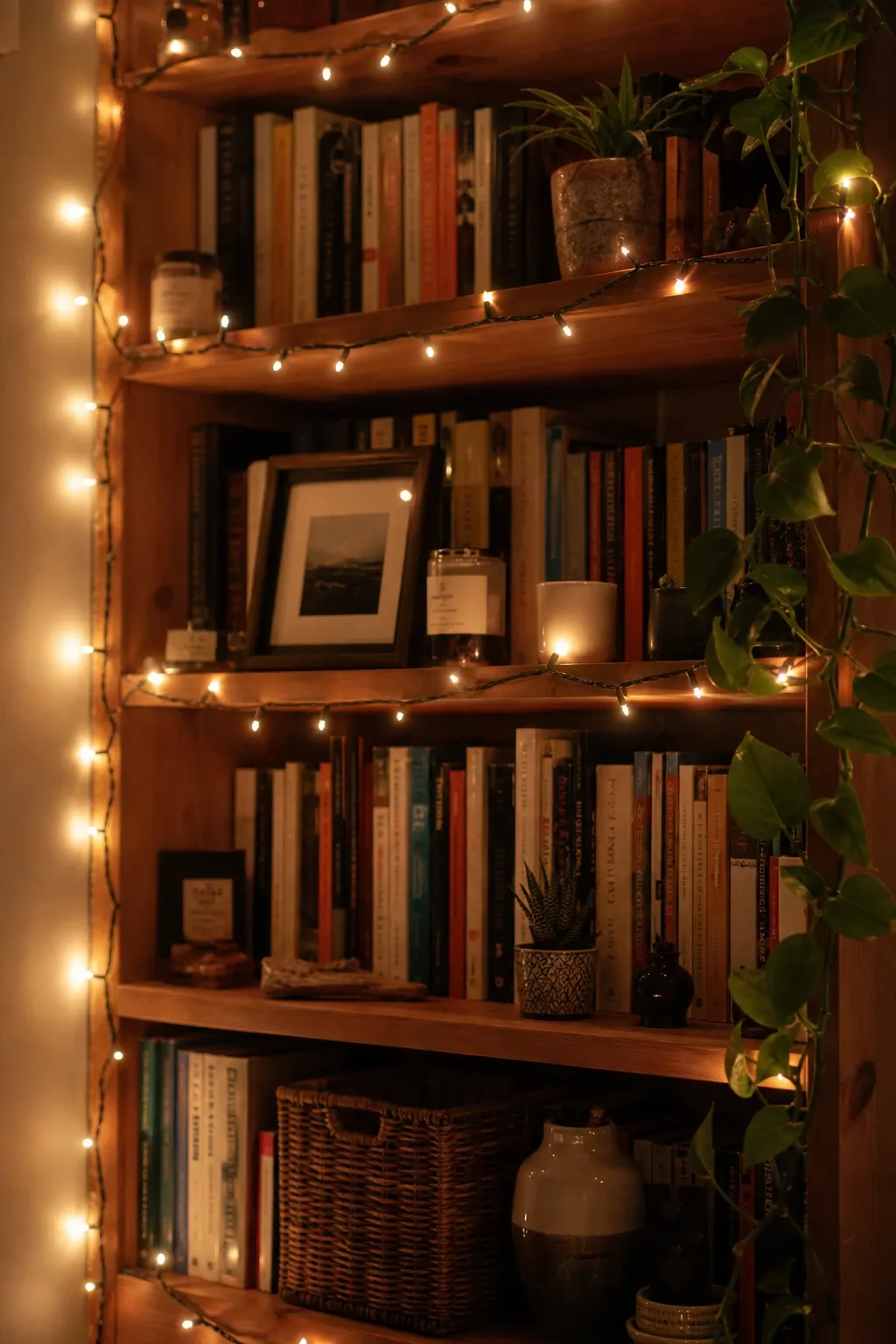
Lighting is a design element that is often overlooked, yet in a bohemian living room, it is absolutely crucial for creating the right mood and atmosphere. You should avoid using harsh, bright overhead lights whenever possible, as they can make a space feel cold and clinical. Instead, the goal is to layer your lighting using a variety of different sources, such as floor lamps, table lamps, string lights, and even candles.

When choosing lamps, look for shades made from natural materials that will diffuse the light beautifully. Rattan, linen, or even handmade paper shades can create soft, warm light and cast interesting patterns on the walls and ceiling. String lights are another boho staple; draping them over a tall bookshelf or around a large window can add a magical, starry quality to the room as evening falls. Finally, never underestimate the power of candlelight. Placing candles in colored glass holders or traditional lanterns provides a flickering, natural light that is incredibly soothing and romantic. This layered approach to lighting allows you to adjust the mood of the room to suit any occasion, from a lively party to a quiet night in.

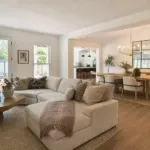
12. Refreshing Your Space with Bright Whites and Vibrant Accents

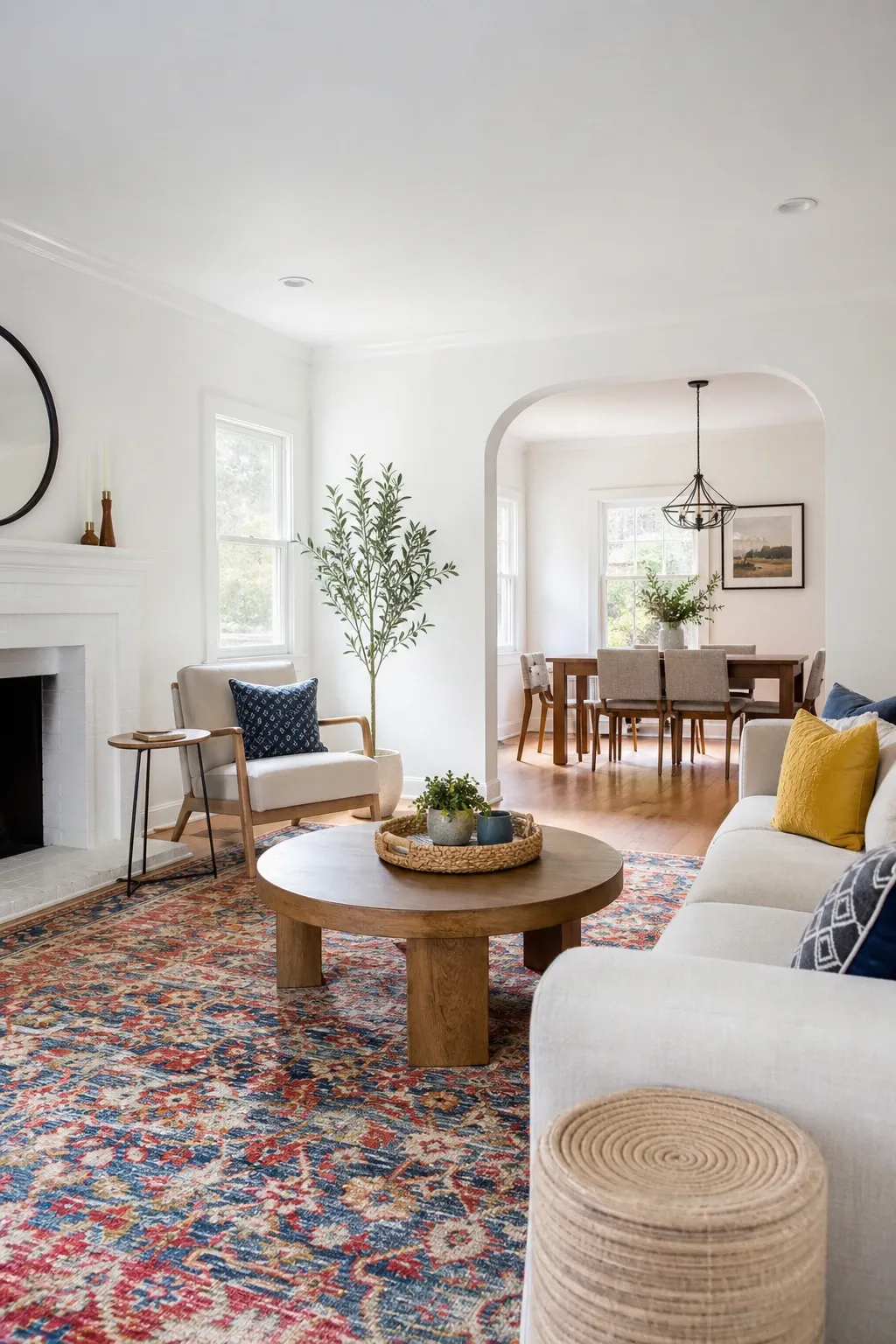
If you are worried that a bohemian style might make your living room feel too dark or cluttered, you can use a base of bright, crisp white to keep things feeling open and airy. White walls and a white or light-colored sofa provide a clean, neutral canvas that allows every other element in the room to truly stand out. This approach gives you the freedom to be even bolder with your choices of accent colors and patterns.

You can add a few bright yellow throw pillows, a multi-colored woven rug, or a large piece of vibrant, abstract art. Because the background is so neutral and bright, these pops of color will really sing and draw the eye. This specific sub-style is often called “Scandi-boho” because it beautifully combines the light-filled, functional simplicity of Scandinavian design with the eclectic and soulful heart of the bohemian aesthetic. It is a fantastic way to ensure that your living room feels fresh, modern, and full of life, regardless of its size or the amount of natural light it receives.

13. Adding a Sophisticated Touch with Elegant Metallic Accents

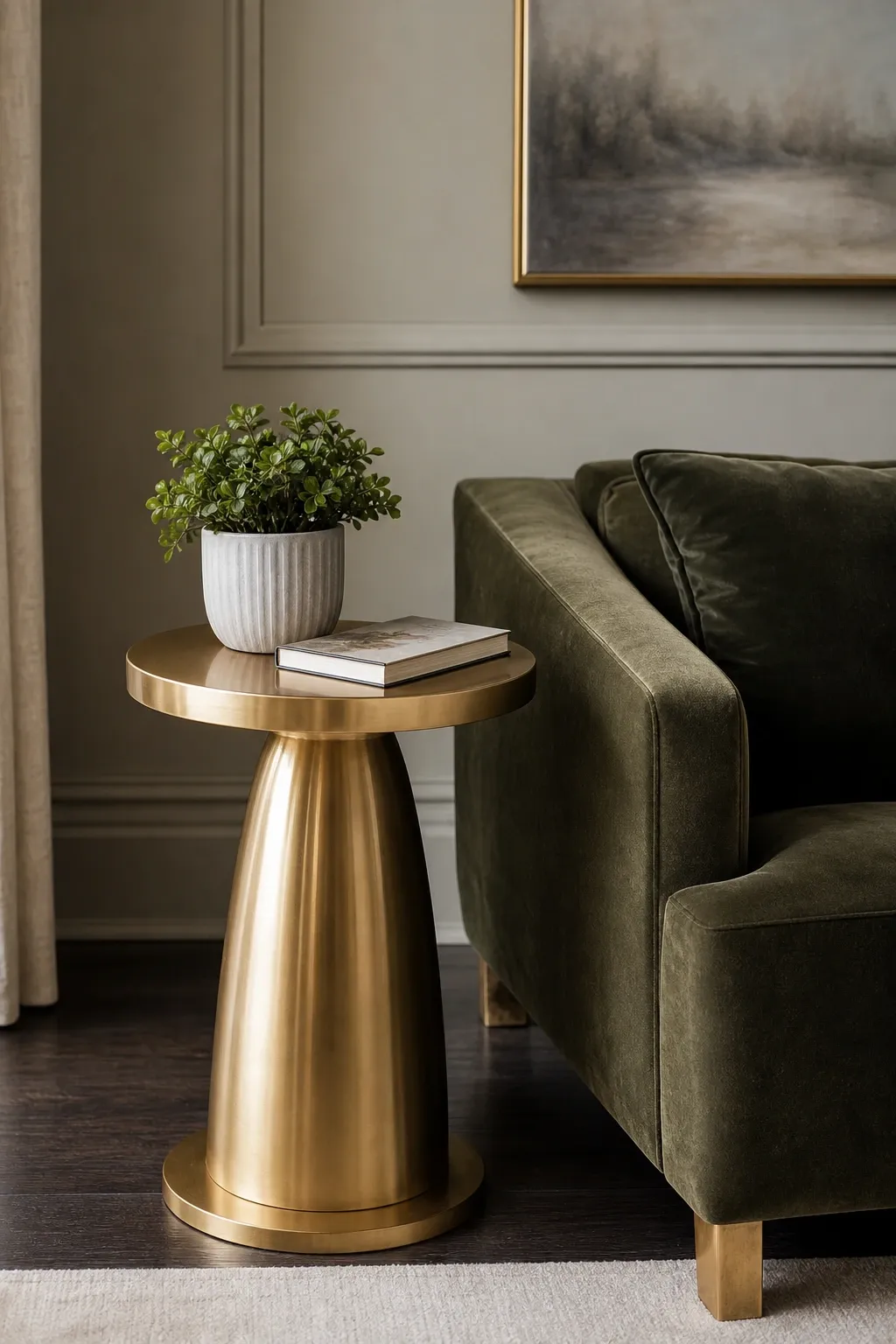
While the bohemian style is often associated with rustic and natural materials, it does not always have to be humble. You can easily create a more “luxe” or sophisticated version of the look by thoughtfully incorporating metallic accents. Metals like gold, silver, brass, and copper can all find a very happy home within a bohemian space. The key is to use them with a light hand so that they enhance the room rather than overwhelming it.

A small metallic side table, a set of brass picture frames on your gallery wall, or even a few copper planters can add a much-needed touch of sparkle and refinement. These shiny surfaces catch and reflect the light, adding a different kind of visual texture to the room that contrasts beautifully with soft fabrics and rough woods. When you pair these metallic elements with rich, luxurious fabrics like deep velvet or shimmering silk, you create a space that feels both bohemian and high-end. It is a wonderful way to elevate the style for a more formal living area or to add a bit of glamour to your daily life.

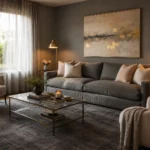
14. Grounding Your Room with Deep Earthy Tones and Leather

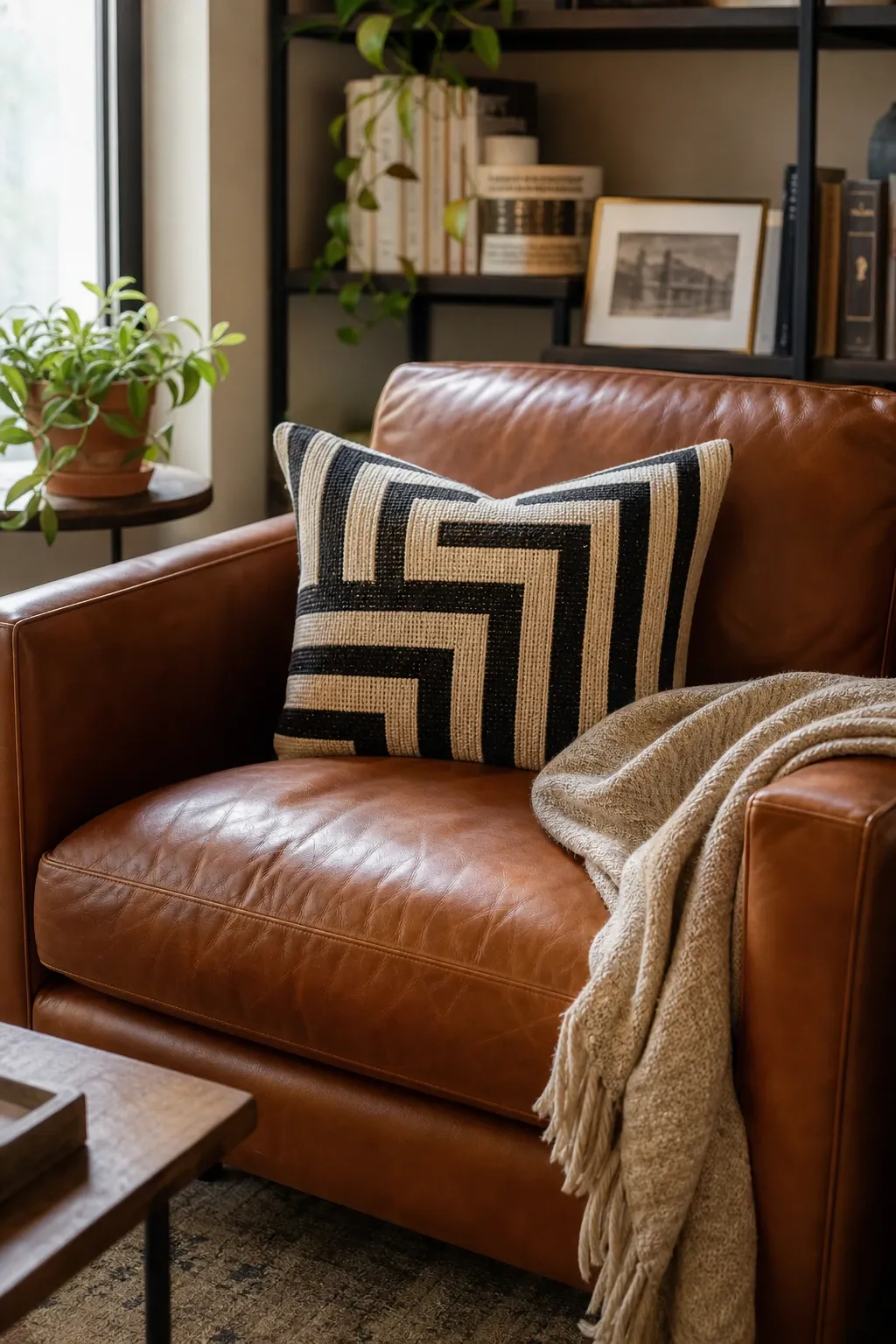
Leather is an exceptionally versatile and durable material that works perfectly in a bohemian living room. A cognac-colored or deep brown leather sofa or armchair adds a rich, grounded, and slightly more masculine element to the space. This helps to balance out the softer and more traditionally feminine aspects of the boho style, such as delicate lace, intricate macrame, or floral patterns. One of the best things about leather is that it ages beautifully, developing a unique patina over time that only adds more character and history to the room.

To create a cohesive look, you can pair your leather furniture with other deep, earthy tones like forest green, burnt orange, and chocolate brown. Incorporating geometric patterns on your throw pillows or area rugs can help to break up the solid blocks of color and add a sense of modern energy. This specific combination of materials and colors is often referred to as “desert boho,” as it is strongly reminiscent of the landscapes and traditional crafts of the American Southwest. It is a sturdy, comfortable, and timeless look that is perfectly suited for a busy family home where furniture needs to be both beautiful and resilient.

15. Tying the Entire Room Together with Woven Accents and Rugs

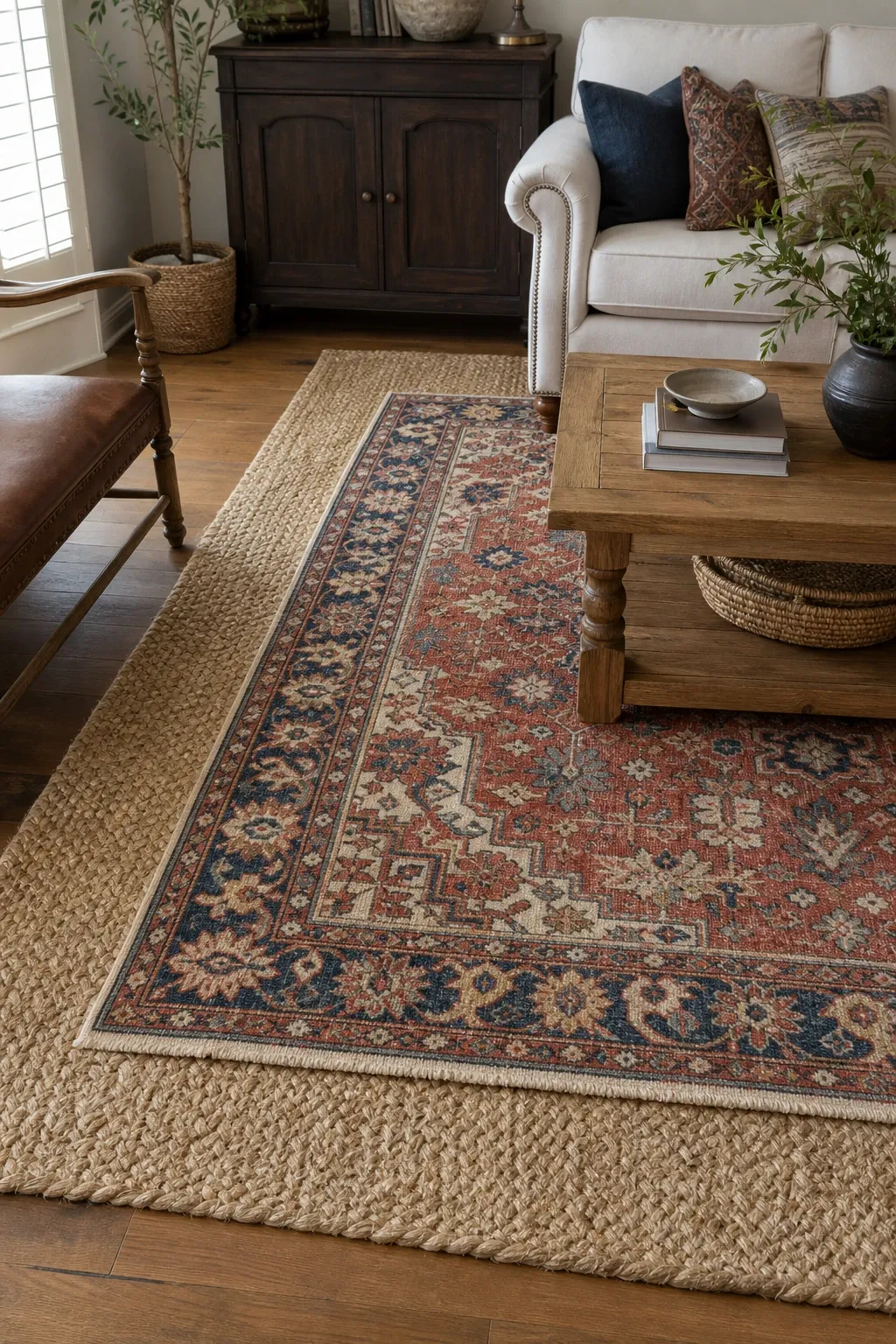
Finally, the rug is often the single most important piece that ties all the disparate elements of a bohemian living room together. In a truly boho space, you do not have to stop at just one rug. A very popular and effective technique is to layer your rugs. You might start with a large, neutral rug made of jute or sisal as your base and then place a smaller, more colorful and intricately patterned rug on top of it. This not only adds an extra layer of physical comfort but also creates a more complex and interesting visual foundation for the room.

Woven accents should be thoughtfully scattered throughout the entire space to reinforce the theme of natural, handmade beauty. This could include small things like woven coasters on the coffee table, a set of placemats on a side table, or even a large woven tray used to organize remotes and magazines. These small details might seem insignificant on their own, but when they are repeated throughout the room, they create a sense of harmony and intentionality. When all of these elements (the lush plants, the soft pillows, the rustic wood, the warm lighting, and the layered rugs) finally come together, you have created something truly special. Your living room is no longer just a room; it is a personal sanctuary that supports your creativity, reflects your journey, and enhances your overall well-being.

Final Thoughts on Embracing the Bohemian Lifestyle at Home

As we have explored throughout this guide, creating a bohemian living room is much more about a process of discovery than it is about following a strict set of design rules. It is a journey that allows you to change your mind, to experiment with new ideas, and to let your home grow and evolve alongside you. You should never be afraid to take risks or to include something simply because it makes you happy, even if it doesn’t seem to “fit” in a traditional sense.

The most important and liberating rule of bohemian design is that there are no rules. It is fundamentally about creating a space where you feel completely and authentically yourself. By thoughtfully applying these fifteen ideas, you can begin to build a living room that is warm, welcoming, and entirely unique to you. We hope you enjoy the rewarding process of finding your own bohemian spirit and turning your house into a true and soulful home.

Similar Posts

Leave a Reply

Your email address will not be published. Required fields are marked *