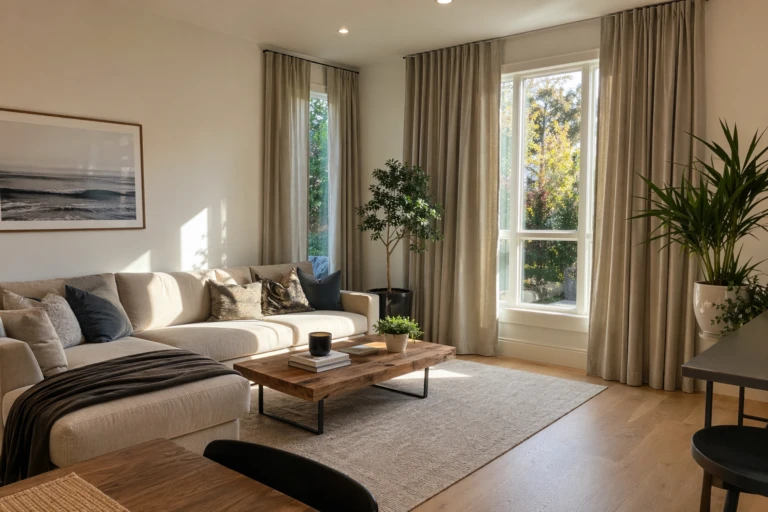
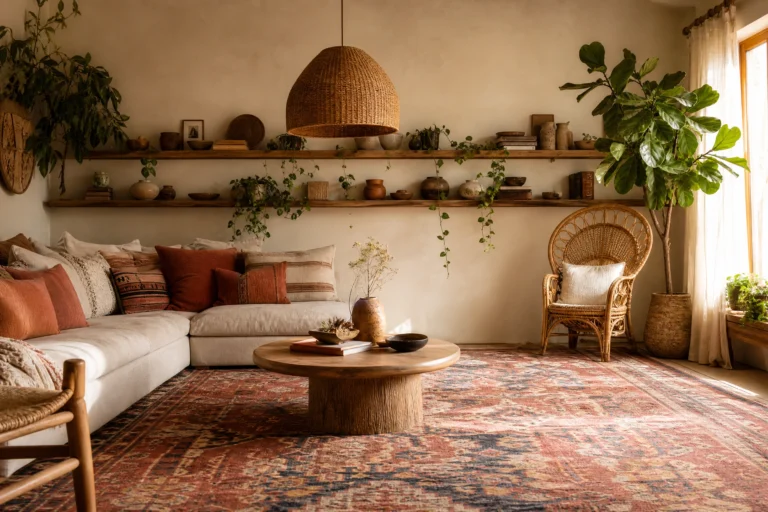
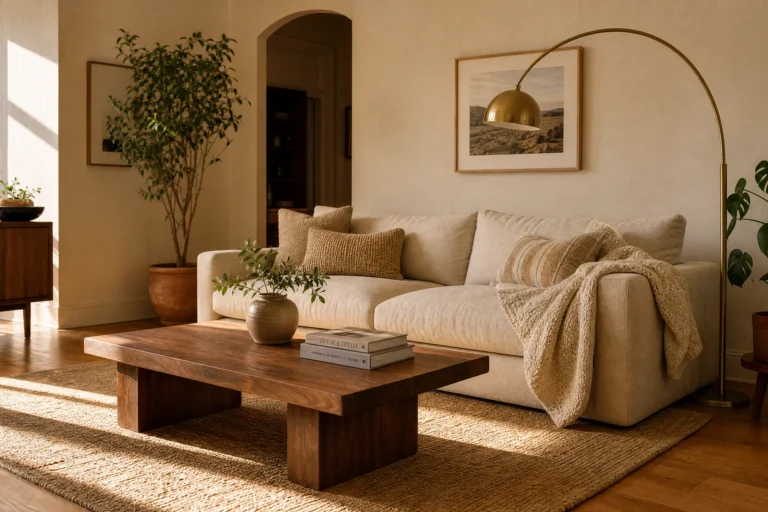
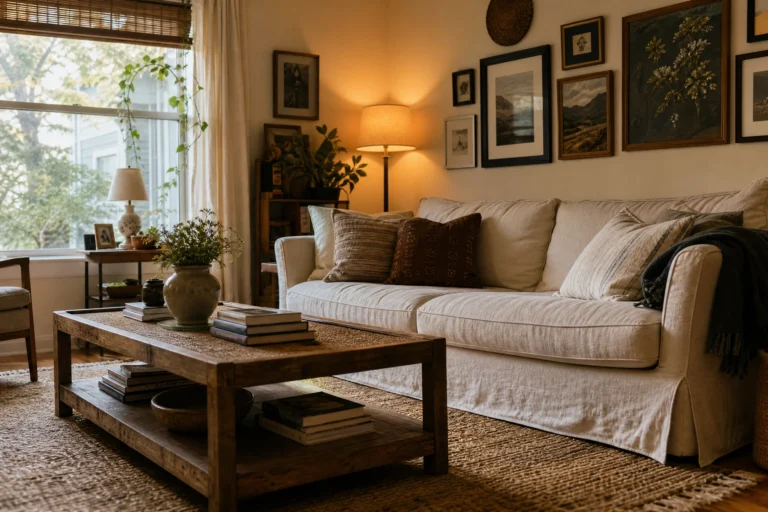
If you have kids, you know the feeling of stepping on a tiny plastic brick at 11pm in the dark. Our living room used to look like a toy store exploded in it every single evening. Getting the toy situation under control took some trial and error, but it is possible to have a living room that works for adults and kids at the same time. Here are the storage ideas that actually keep the chaos contained.
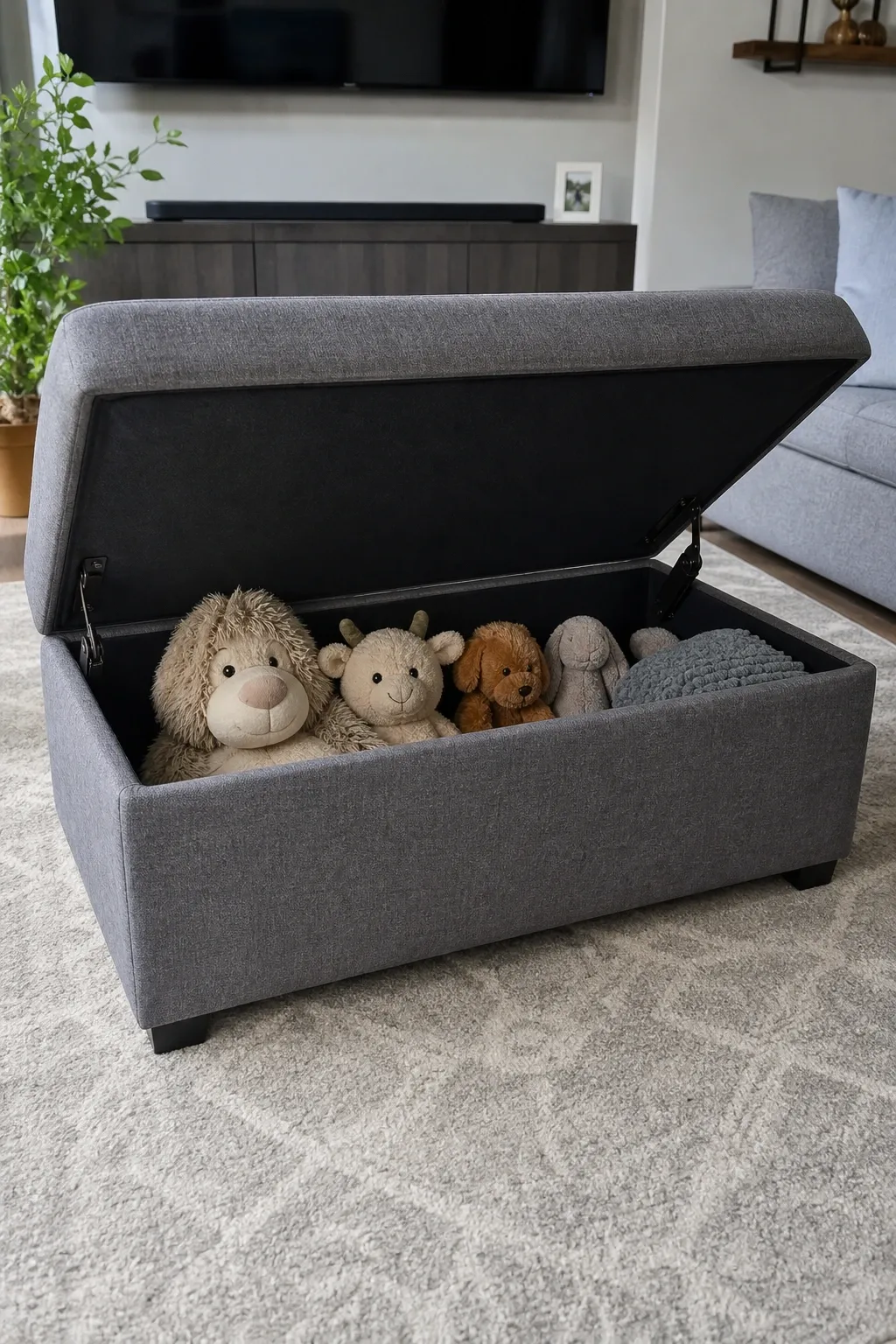
A storage ottoman doubles as seating and a hidden toy bin. Lift the lid, toss the toys in, close it, and the living room looks like adults live here again. Upholstered ottomans in neutral fabrics blend right in with the rest of the furniture. A storage bench along a wall works the same way and gives you a spot to sit while putting on shoes. Choose one with a soft-close hinge if little fingers are involved.
Designer Tip: Line the inside of a storage ottoman with a washable fabric insert or a removable bin. This protects the upholstery from sticky hands and makes cleaning out the crumbs much easier.
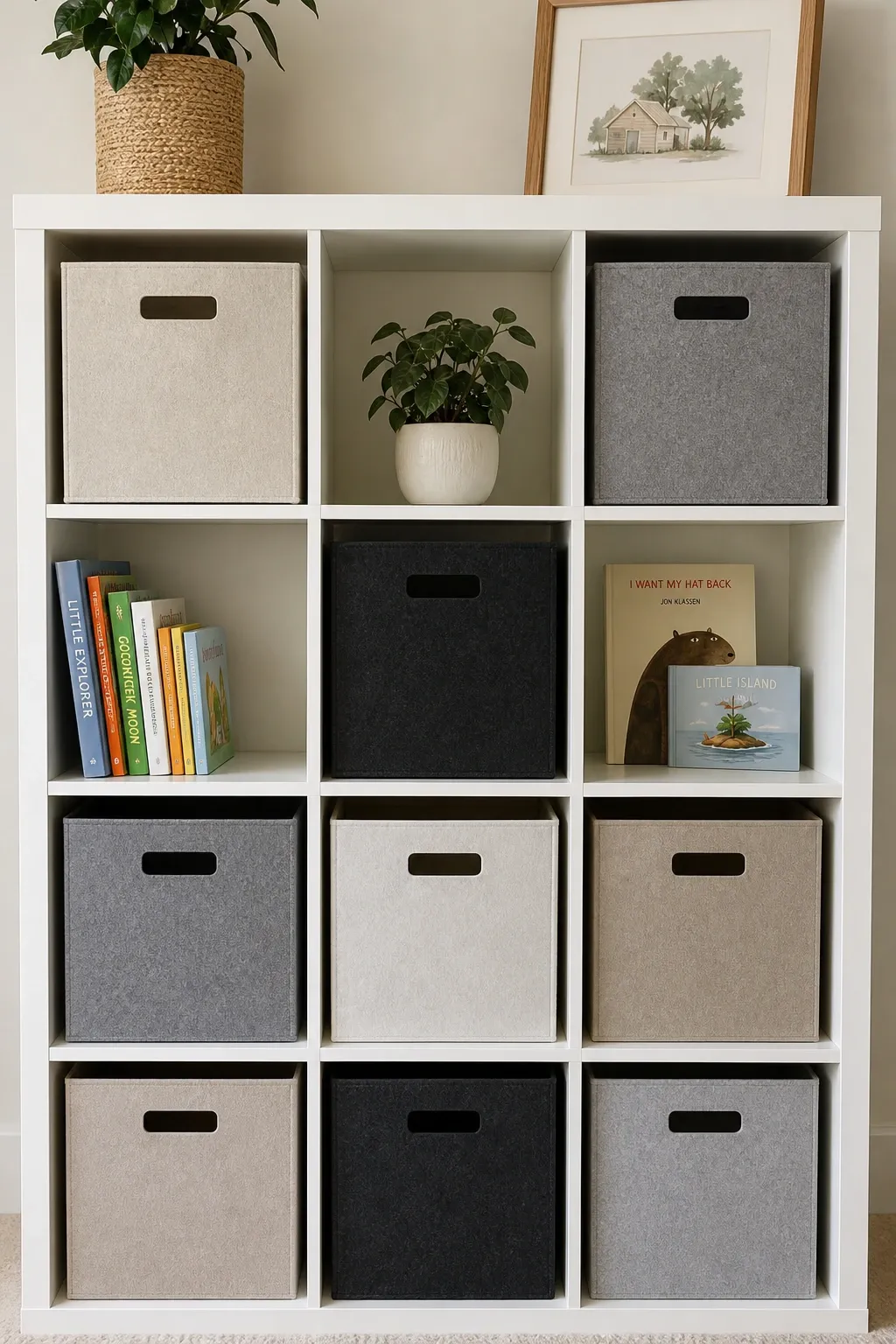
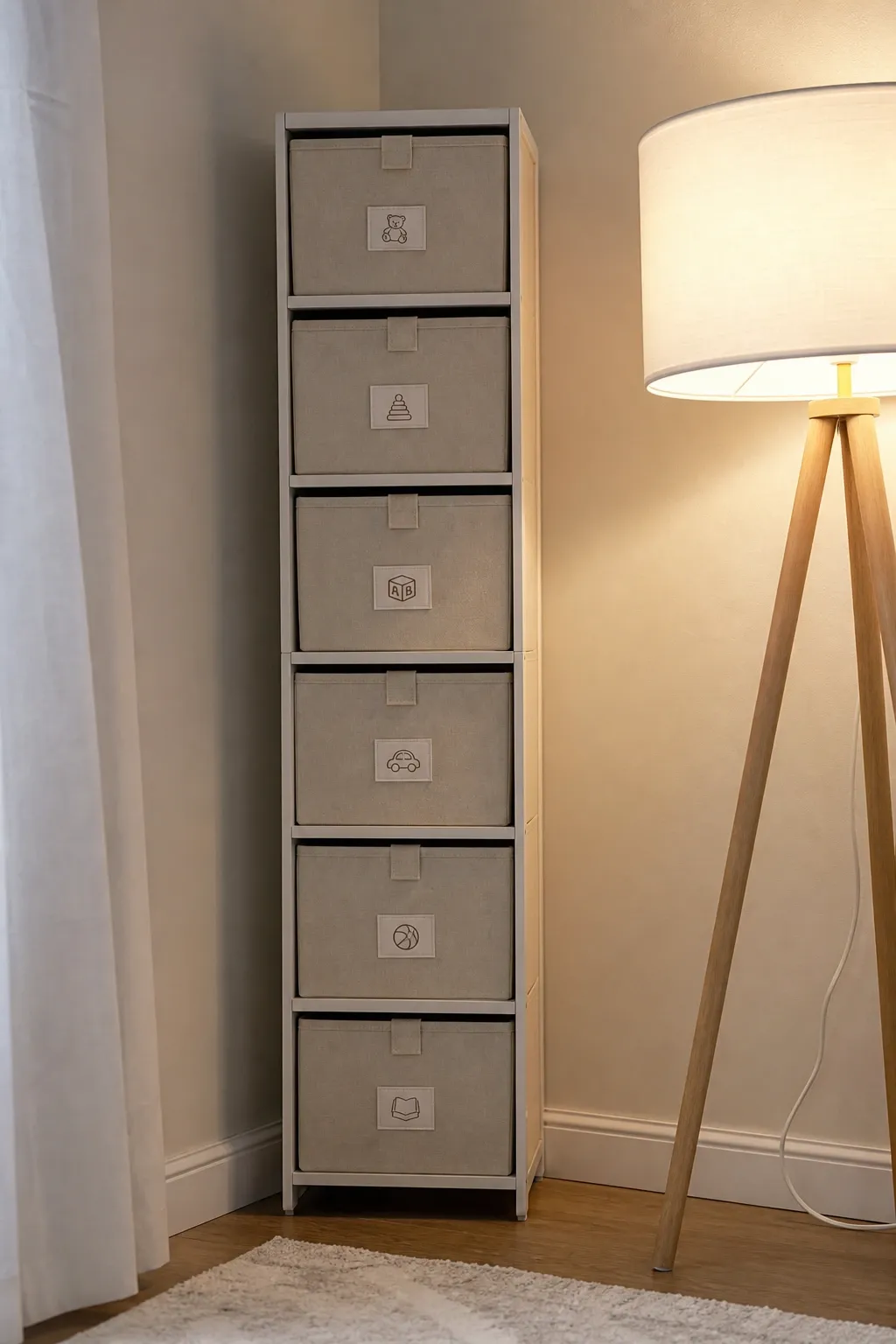
Cube shelving units with woven baskets are the go-to toy storage solution for good reason. The baskets hide the mess while the shelf structure keeps everything organized by category. Label each basket with pictures or words so kids know where things go. Natural woven baskets in a white or wood-tone shelf unit look like intentional decor rather than kids storage. IKEA Kallax and similar cube shelves are the most popular and affordable option.
Designer Tip: Use the top of the cube shelf as a display surface for adult decor like a lamp, plant, or framed photo. This visually separates the adult zone above from the kid zone below.
A narrow console table behind the sofa with bins or baskets underneath provides hidden toy storage that is completely invisible from the front of the room. Use the console top for lamps and decor while the lower shelf holds labeled bins full of toys. This works especially well in open-plan rooms where the sofa floats in the middle of the space. Kids can access their toys easily and clean up is straightforward.
Designer Tip: Choose bins that are the same color or material as other accessories in the room. Matching baskets make the storage look planned rather than improvised.
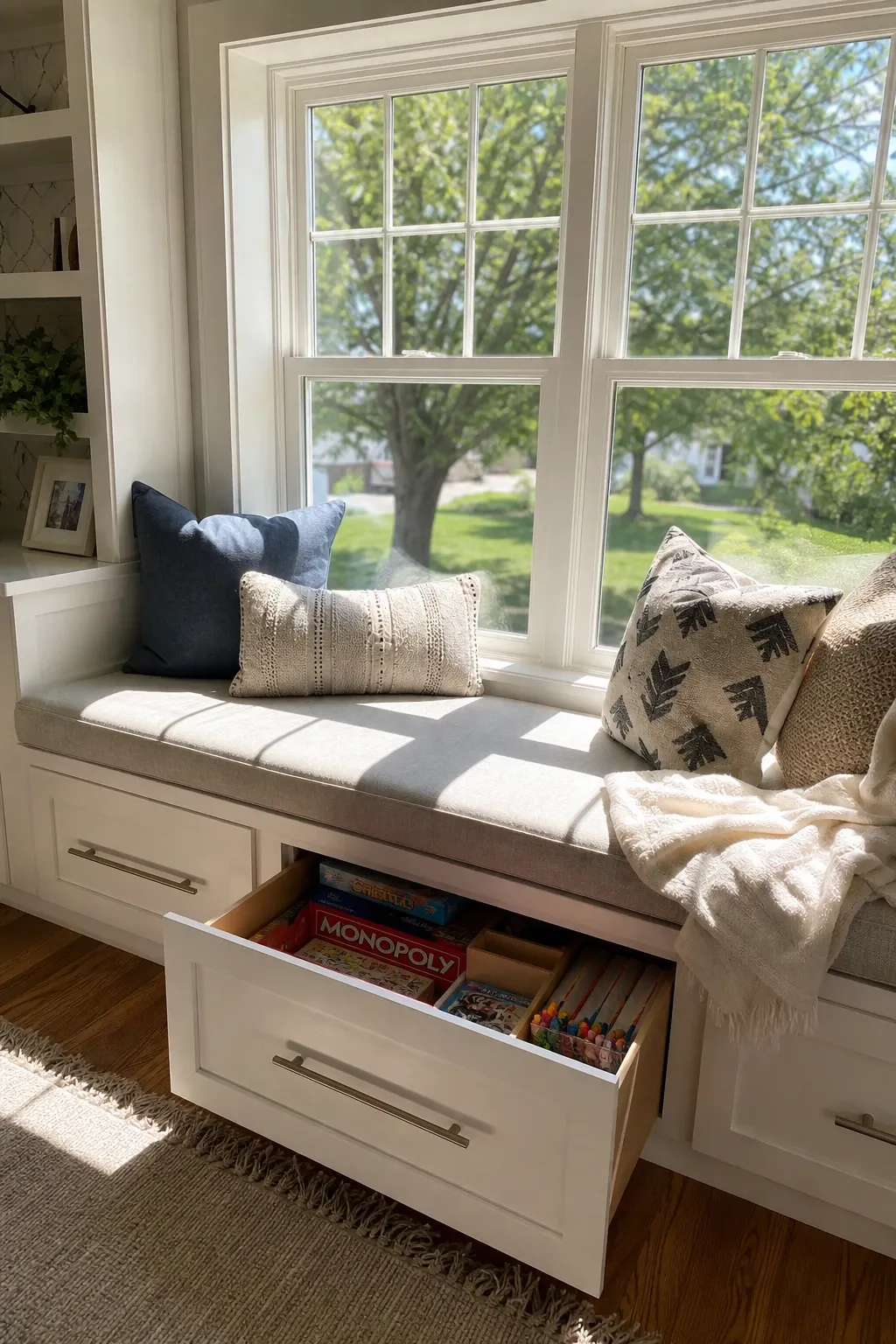
A window seat with hinged storage underneath is one of the most efficient toy storage solutions because it serves three purposes at once: seating, toy storage, and a cozy reading nook. The bench top lifts to reveal a deep cavity that holds a surprising amount of toys, board games, and art supplies. Add cushions and pillows on top and it becomes a favorite spot in the room for both kids and adults.
Designer Tip: Add a pneumatic lid support so the seat stays open on its own while kids are digging for toys. Unsupported lids fall on little heads, and you will hear about it every time.
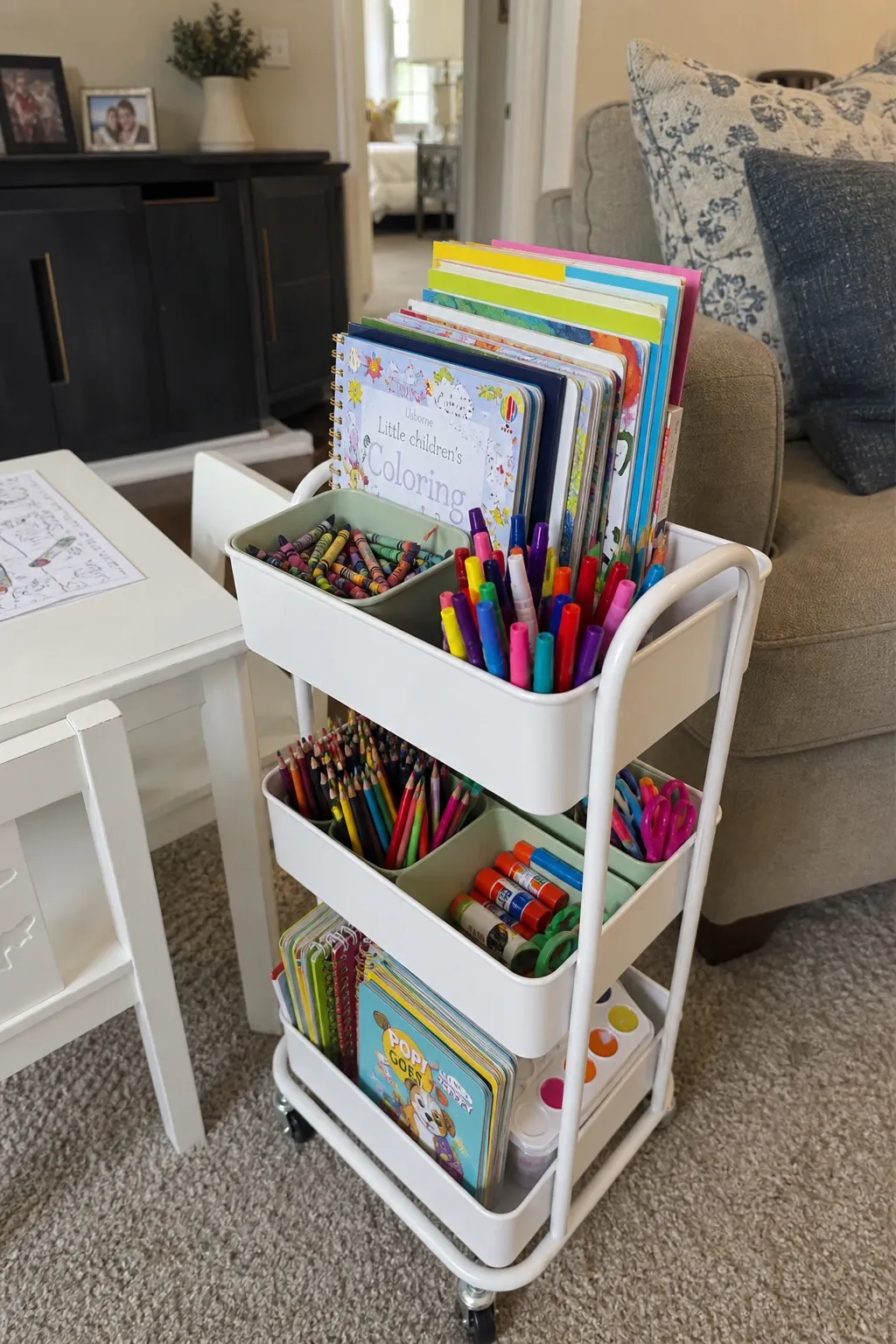
A three-tier rolling cart gives you portable toy storage that you can wheel in and out of the living room as needed. Keep it in a closet or another room when you want the living room clear, and roll it out when the kids are playing. Each tier can hold a different category of toys. Metal or wood carts in white, black, or natural tones look good enough to leave out when needed.
Designer Tip: Choose a cart with locking wheels so it stays put during play. A cart that rolls away every time a kid grabs something from it creates more frustration than convenience.
A cabinet with solid doors is the ultimate hide-everything solution. When the doors are closed, nobody knows there is a pile of toys inside. An armoire, a media cabinet repurposed for toys, or a buffet-style sideboard with lower cabinets all work. Inside, use bins or dividers to keep things sorted. This is the best option if you want the living room to look completely adult when guests come over.
Designer Tip: Install magnetic door catches or child-proof latches if you want to keep the doors closed during play. Toddlers treat open cabinet doors like jungle gym equipment.
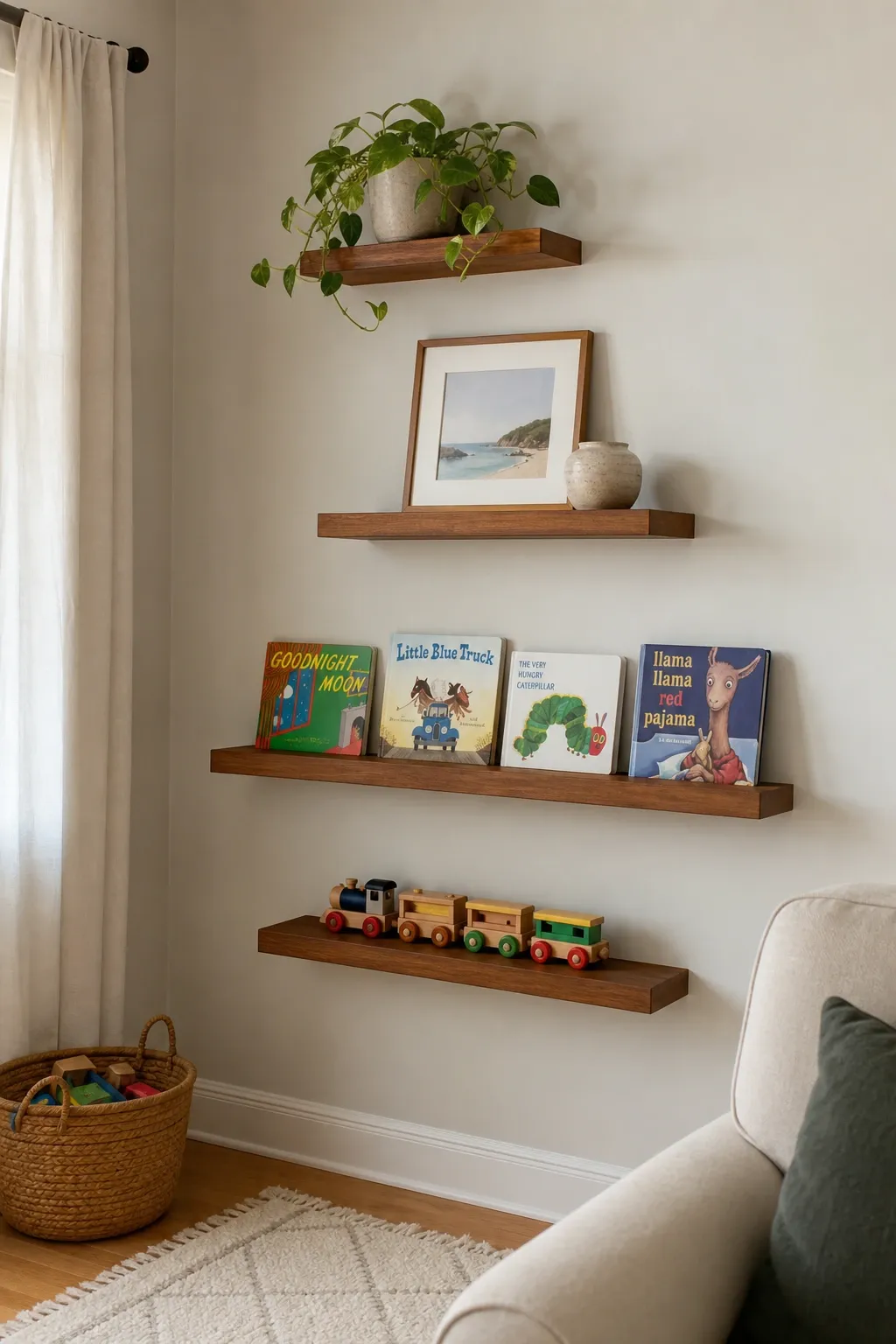
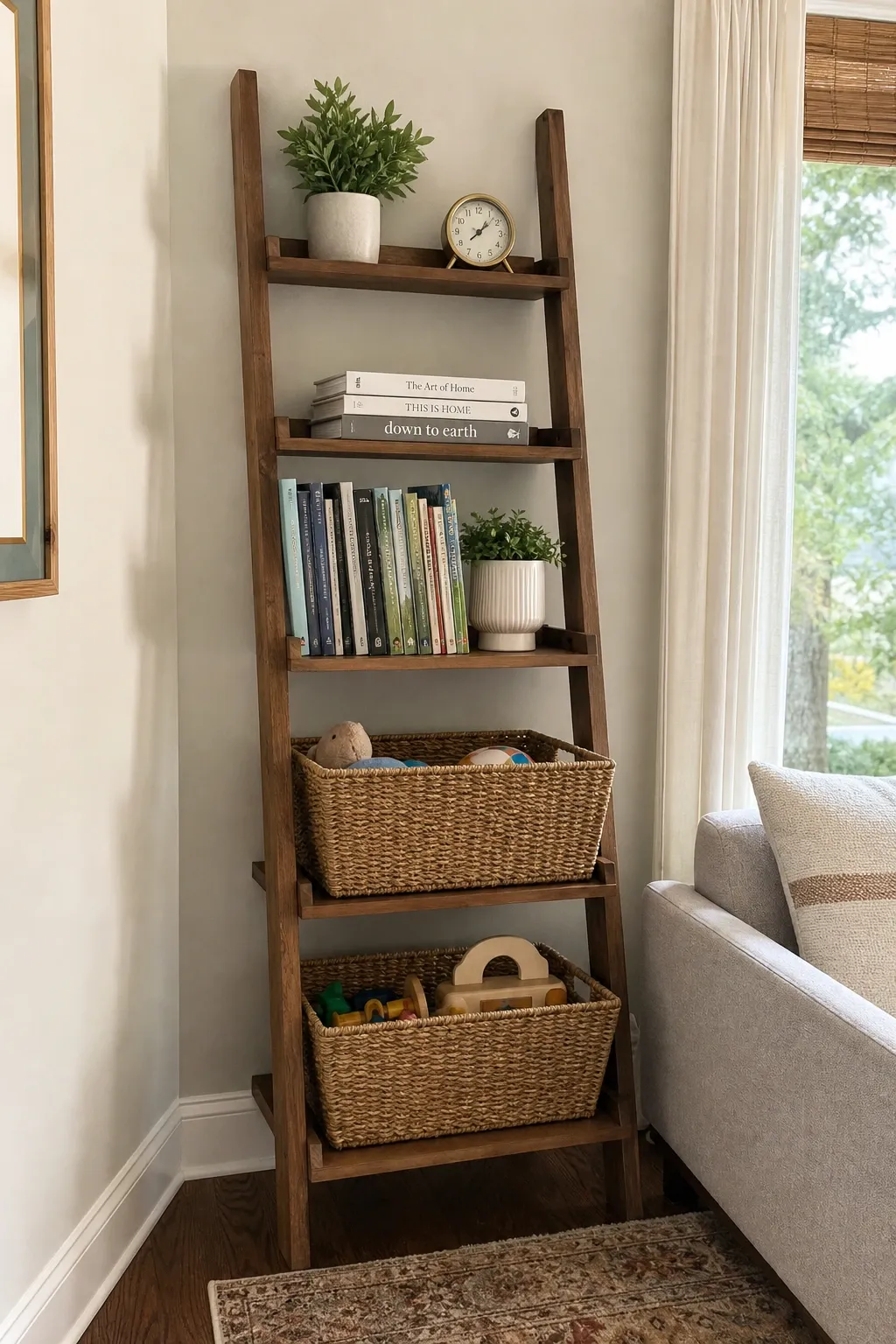
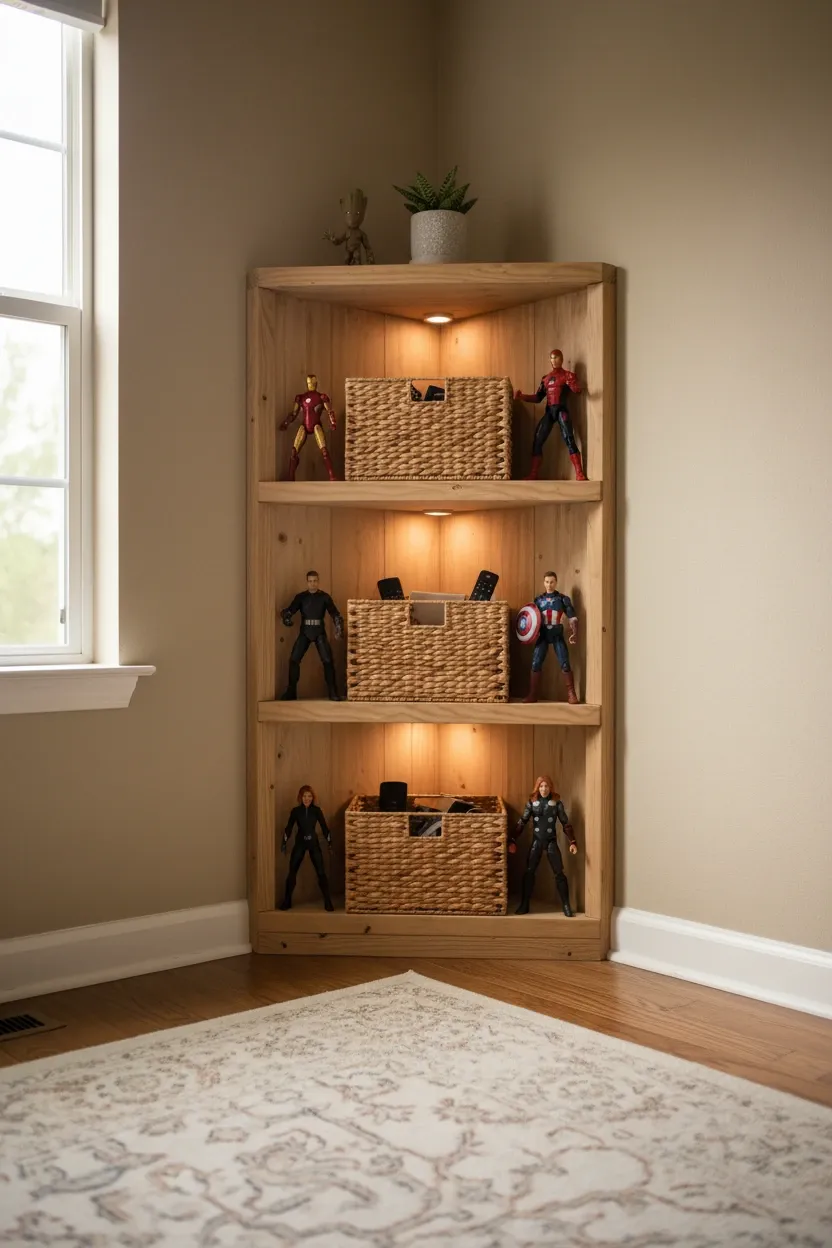
A tall bookshelf with adult books and decor on the upper shelves and toys on the lower shelves integrates kid stuff into the room without it taking over. Use the bottom two shelves for baskets of toys and keep books, framed photos, and plants up top where little hands cannot reach. This approach makes the living room work for the whole family without looking like a playroom.
Designer Tip: Anchor the bookshelf to the wall, no exceptions. A loaded bookshelf can tip if a child tries to climb it, and the consequences are too serious to skip this step.
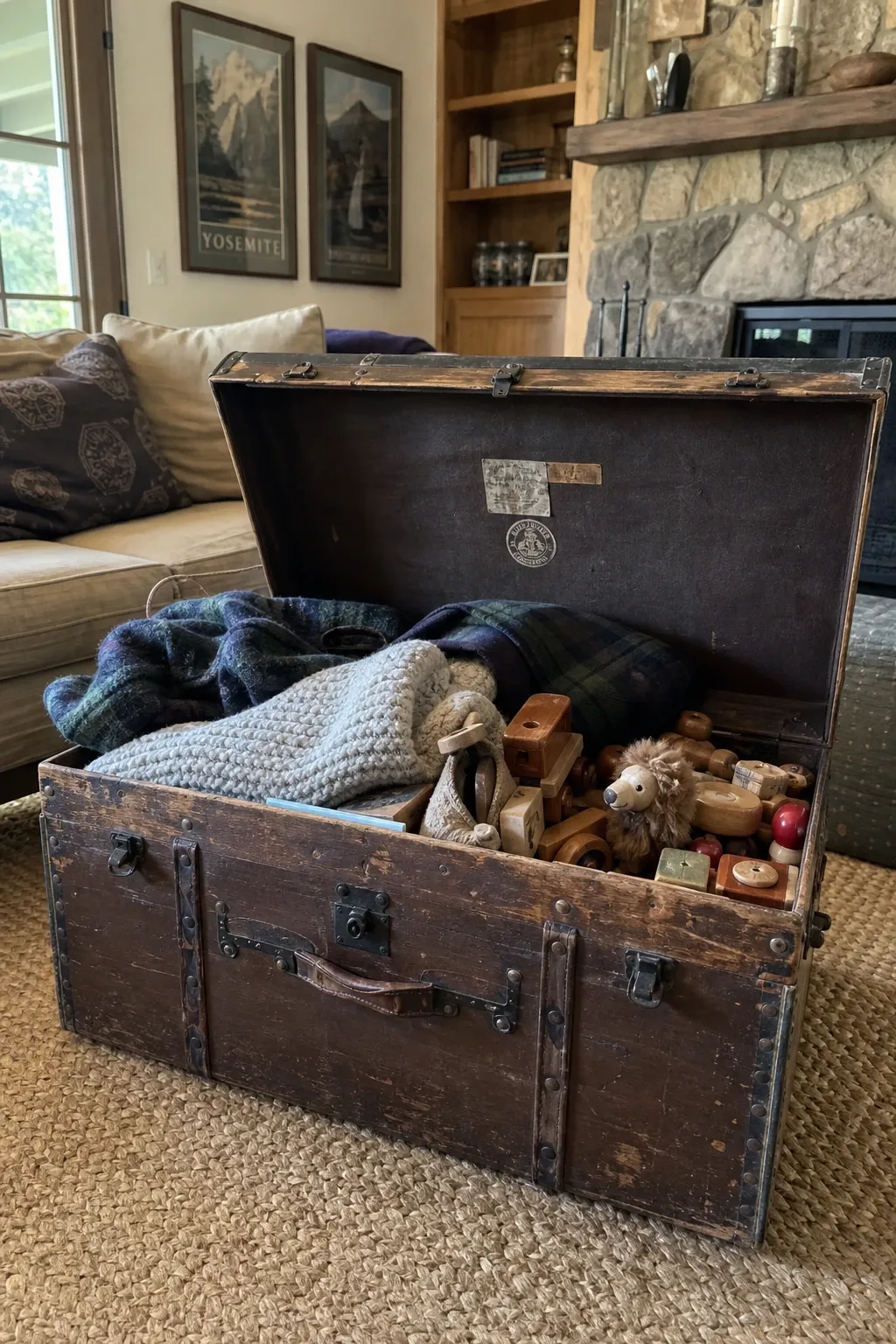
A large trunk or wooden chest works as both a coffee table and a toy bin. At the end of the day, everything goes in the trunk, the lid closes, and you have your living room back. Vintage trunks, wicker chests, and upholstered storage boxes all work for this. Place it in front of the sofa where a coffee table would go, and use the flat top surface for drinks, books, and candles during adult time.
Designer Tip: Choose a trunk with a flat top rather than a domed lid if you plan to use it as a coffee table. A flat surface is functional; a domed one is just storage that happens to sit in the middle of the room.
Wall-mounted storage systems like pegboards, wall pockets, or hanging fabric organizers keep toys off the floor and within reach. Mount them at kid height on one section of wall and fill the pockets with art supplies, small toys, and books. This uses vertical space that would otherwise go unused and keeps the floor clear. It also teaches kids where things belong since everything has a visible home.
Designer Tip: Choose a wall organizer in colors that match the room. A bright primary-colored organizer screams playroom, but a neutral canvas or wood version blends into adult decor.
Wooden or plastic stackable crates are flexible, affordable, and easy to rearrange as your storage needs change. Stack two or three high in a corner and use each crate for a different toy category. You can add or remove crates as kids grow and their toys change. Painted or stained wood crates look much better than plastic bins and fit a farmhouse or rustic living room without clashing.
Designer Tip: Sand and finish any rough wood crates before kids handle them. Raw wood gives splinters, and a quick coat of paint or stain makes them look intentional and finished.
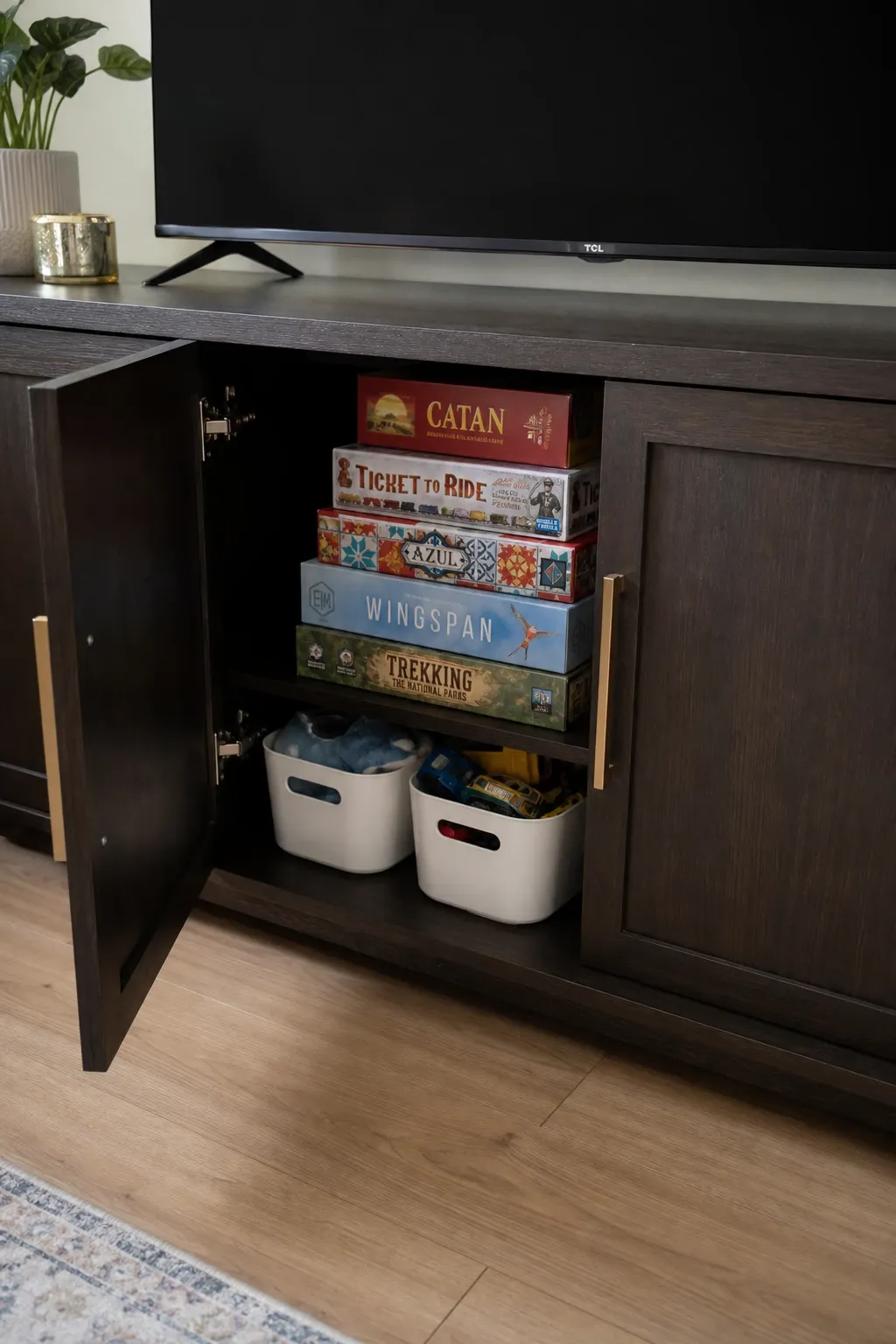
A TV stand or media console with closed lower cabinets gives you built-in toy storage right in the center of the room. Kids naturally play near the TV anyway, so having their toys stored right there makes sense. The closed doors keep the mess hidden and the console does what it was designed to do. Just make sure the doors are sturdy enough for daily opening and closing by small hands.
Designer Tip: Use soft-close hinges on TV stand doors if your model did not come with them. The constant slamming of cabinet doors is loud and eventually damages the hinges and frame.
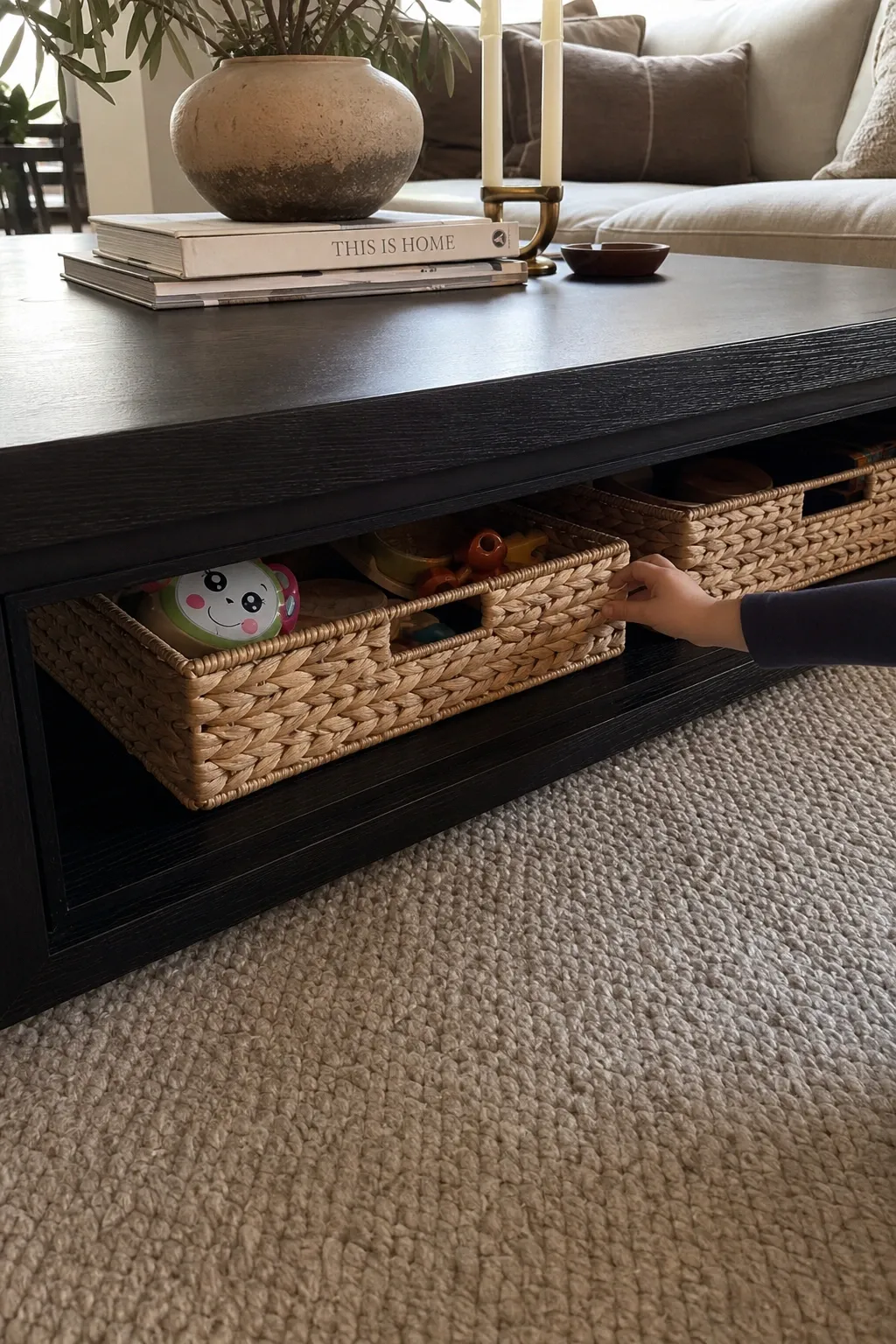
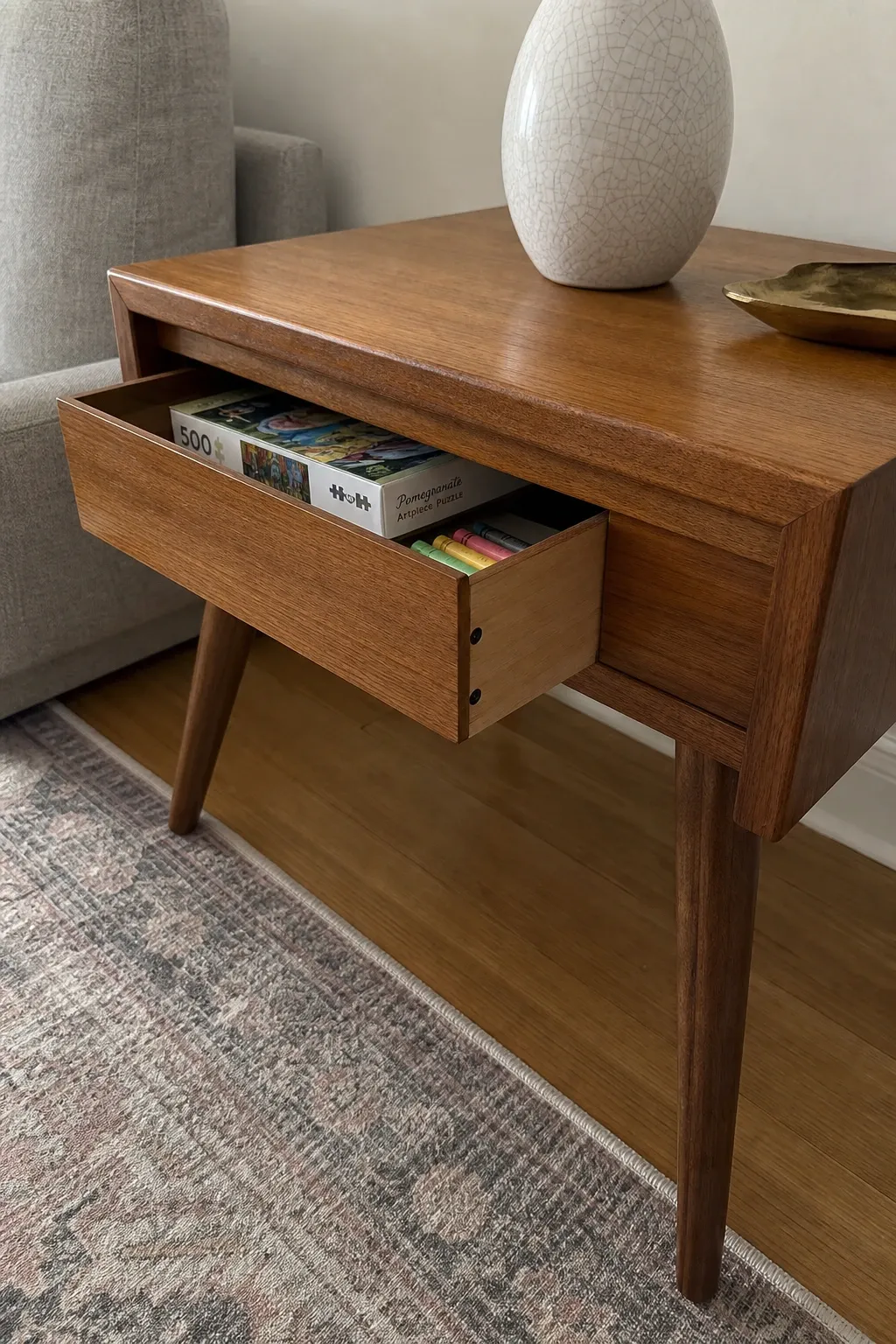
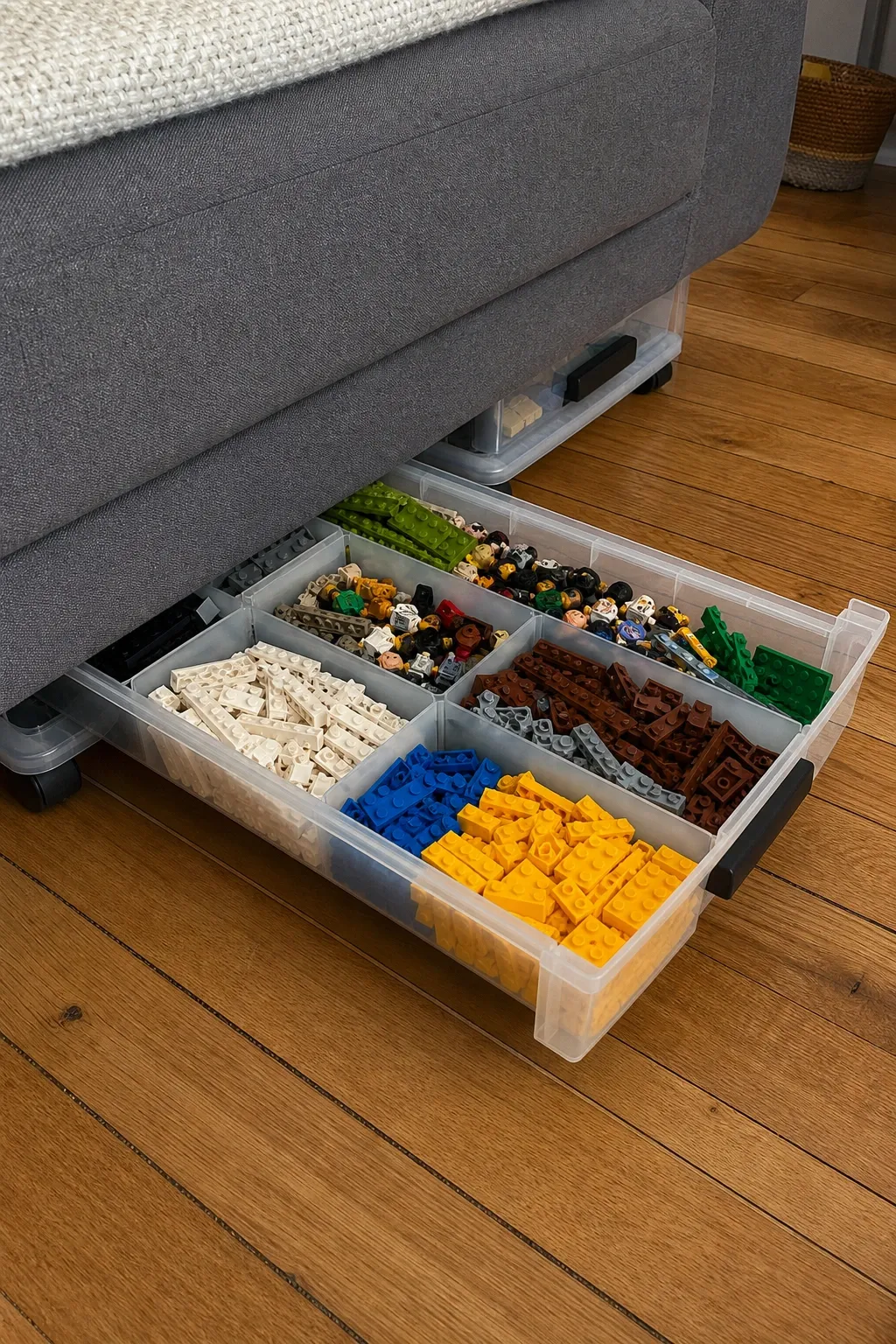
The space under end tables and side tables is often wasted. Slide a decorative bin or basket underneath to create instant, hidden toy storage. The table hides the bin from direct view, and kids can easily pull it out when they want to play. When playtime is over, everything goes back in the bin and slides back under the table. This is one of the simplest solutions that requires zero installation or new furniture.
Designer Tip: Measure the clearance under your side table before buying bins. A bin that does not slide in all the way looks awkward sticking out and defeats the purpose of hidden storage.
This is more of a strategy than a piece of furniture, but it makes every other storage idea work better. Keep only a portion of your kids toys out at a time and store the rest in a closet or another room. Rotate the selection every week or two. Kids play more with fewer choices, the living room stays cleaner, and the toys feel new again when they come back into rotation. You need far less visible storage when only a fraction of the toys are out at any time.
Designer Tip: Use clear labeled bins in a closet for the rotated-out toys so you can see what is in each bin without opening it. This makes the rotation quick and prevents the stored toys from becoming a forgotten mess.
Dedicating one corner of the living room as the official play zone keeps toys contained to a specific area. Define the space with a small rug, a low bookshelf, and a couple of bins. Everything within the nook is fair game for kids, and everything outside it stays tidy. This gives kids their own space in the living room without the toys spreading to every surface and corner of the room.
Designer Tip: Use a rug with a washable cover to define the play nook. Spills, crumbs, and art projects are inevitable, and being able to throw the rug cover in the washing machine is a sanity saver.
Living with toys in the living room does not mean living in a constant mess. The trick is having a system where everything has a home and cleanup takes five minutes, not thirty. Pick two or three of these ideas that fit your room and your family, and commit to a quick nightly reset. Your living room can be a space that works for everyone.
Frequently Asked Questions
How do I keep the living room looking nice with kids toys everywhere?
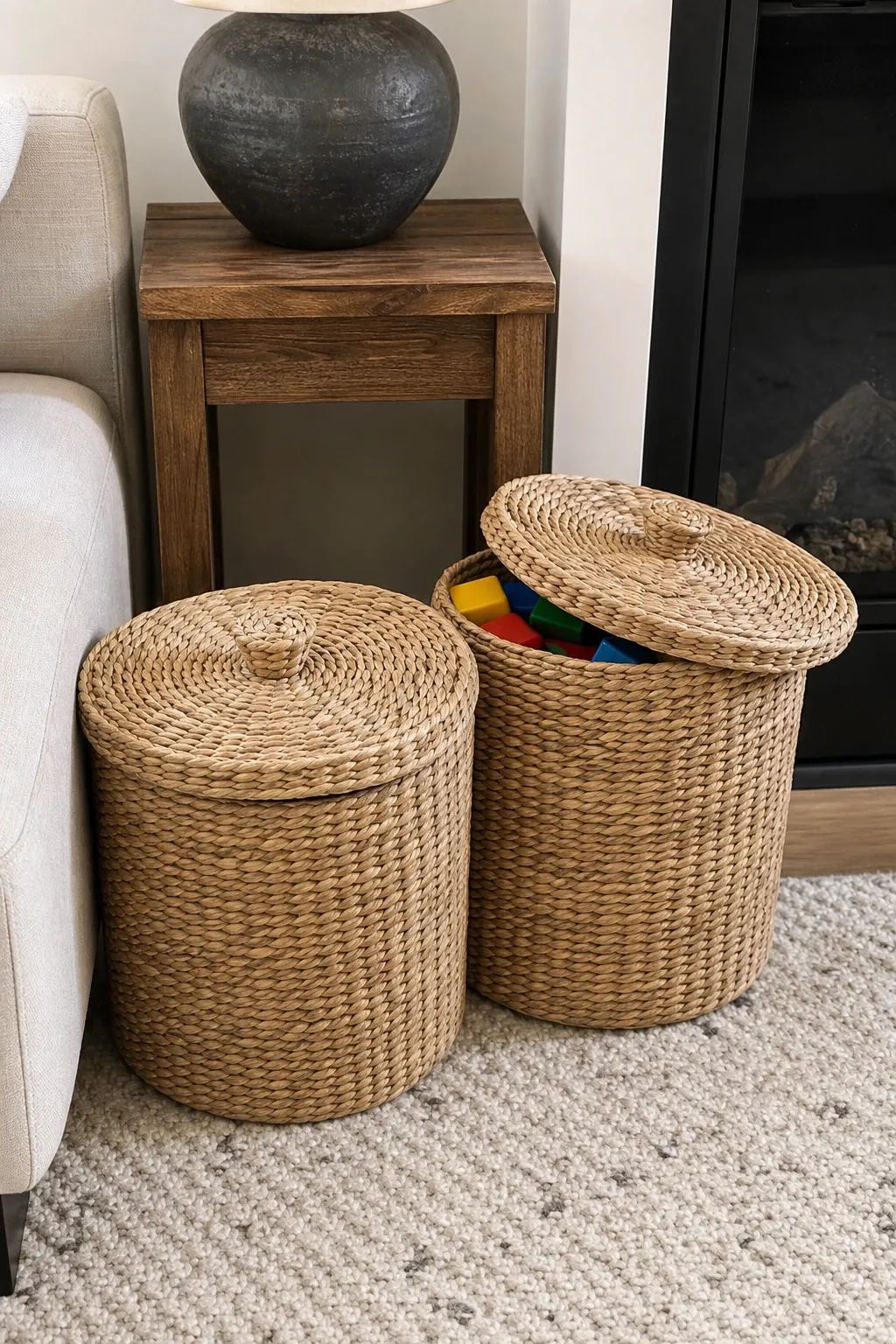
Use closed storage like cabinets, ottomans, and lidded bins that hide toys when they are not in use. Stick to neutral-colored storage that matches your decor. A five-minute nightly cleanup where kids help put everything back in its bin makes the biggest difference.
At what age can kids help with toy cleanup?
Kids as young as two can start putting toys in a bin with guidance. By three or four, most kids can handle simple categorized cleanup with labeled bins that have pictures. Making cleanup part of the daily routine from an early age turns it into a habit rather than a battle.
How many toys should be out at once?
Enough to keep kids engaged but few enough to fit in your storage system when cleaned up. A good rule is 10 to 15 toys or toy sets at a time. Rotating toys every week or two keeps things fresh and manageable. Kids tend to play more creatively with fewer options available.
What is the best toy storage for a small living room?
A storage ottoman, bins under side tables, and a rolling cart that can be stored in a closet are the best options for small spaces. Anything that doubles as furniture or fits into existing dead space keeps the room functional without adding more stuff to an already tight layout.