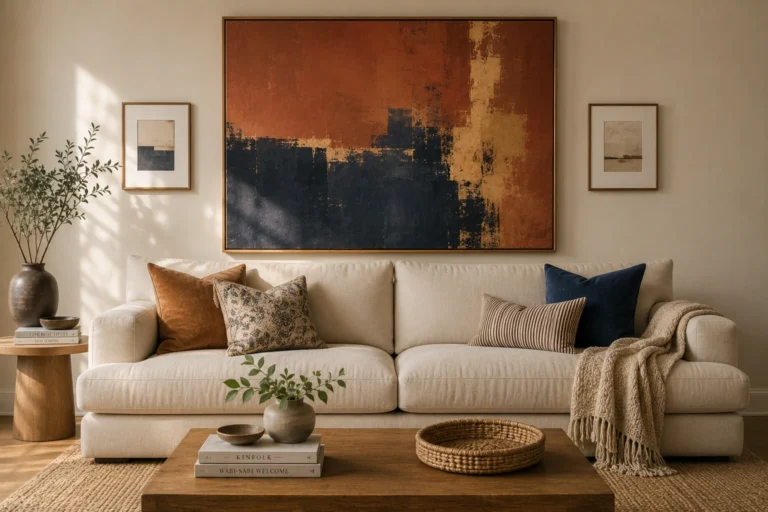
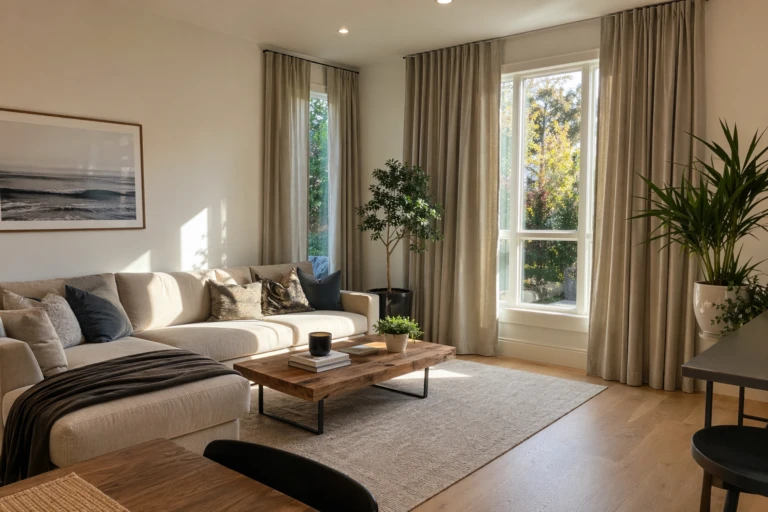
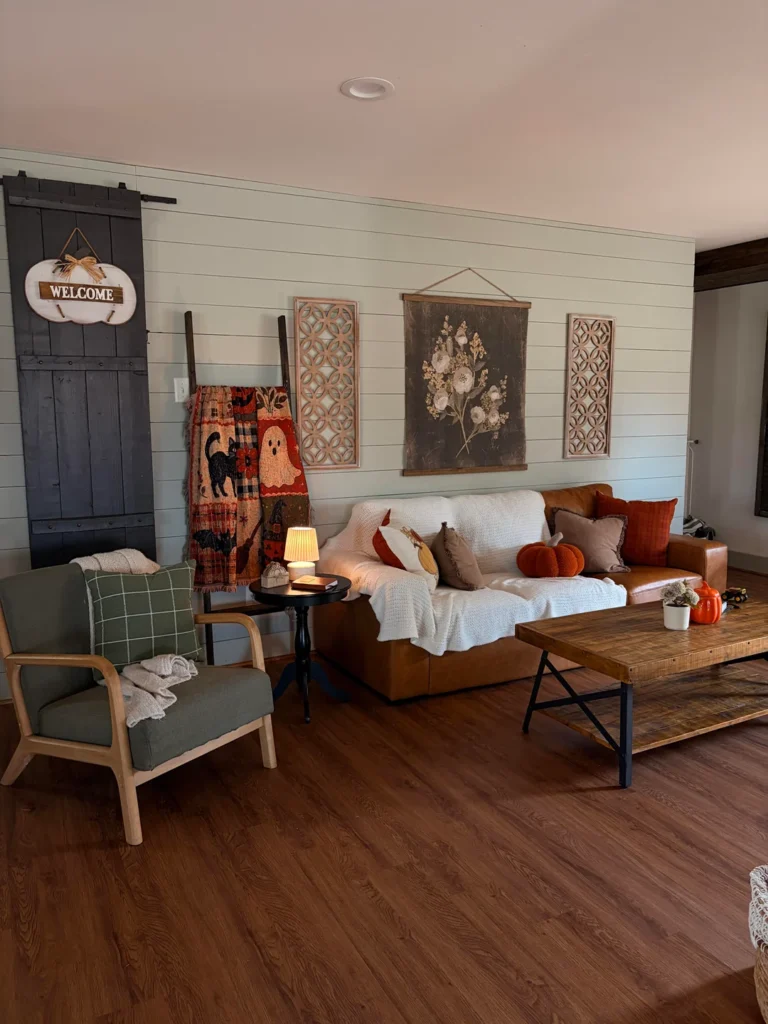
The gap between a boho living room that looks genuinely beautiful and one that looks like a charity shop threw up is almost entirely a question of intention. Bohemian style is not about owning more things or layering more textures; it is about understanding the principles that make the collected, relaxed, global-influenced look feel cohesive rather than chaotic. These ideas move through the room from the ground up, starting with the decisions that set the whole tone and working toward the smaller layers that bring the look to life.
Start With the Foundation
1. Anchor the Whole Room in an Earthy Neutral Base
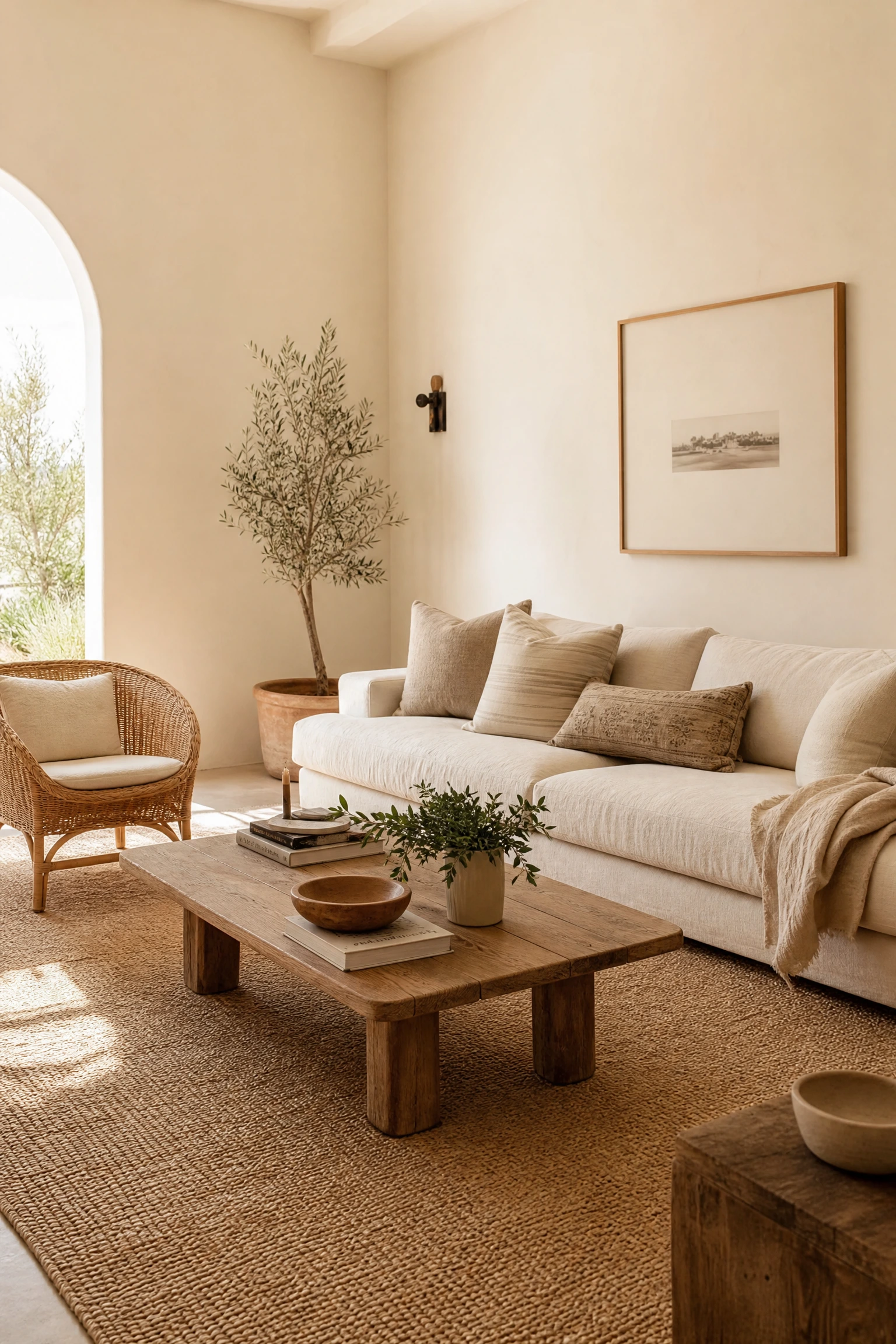
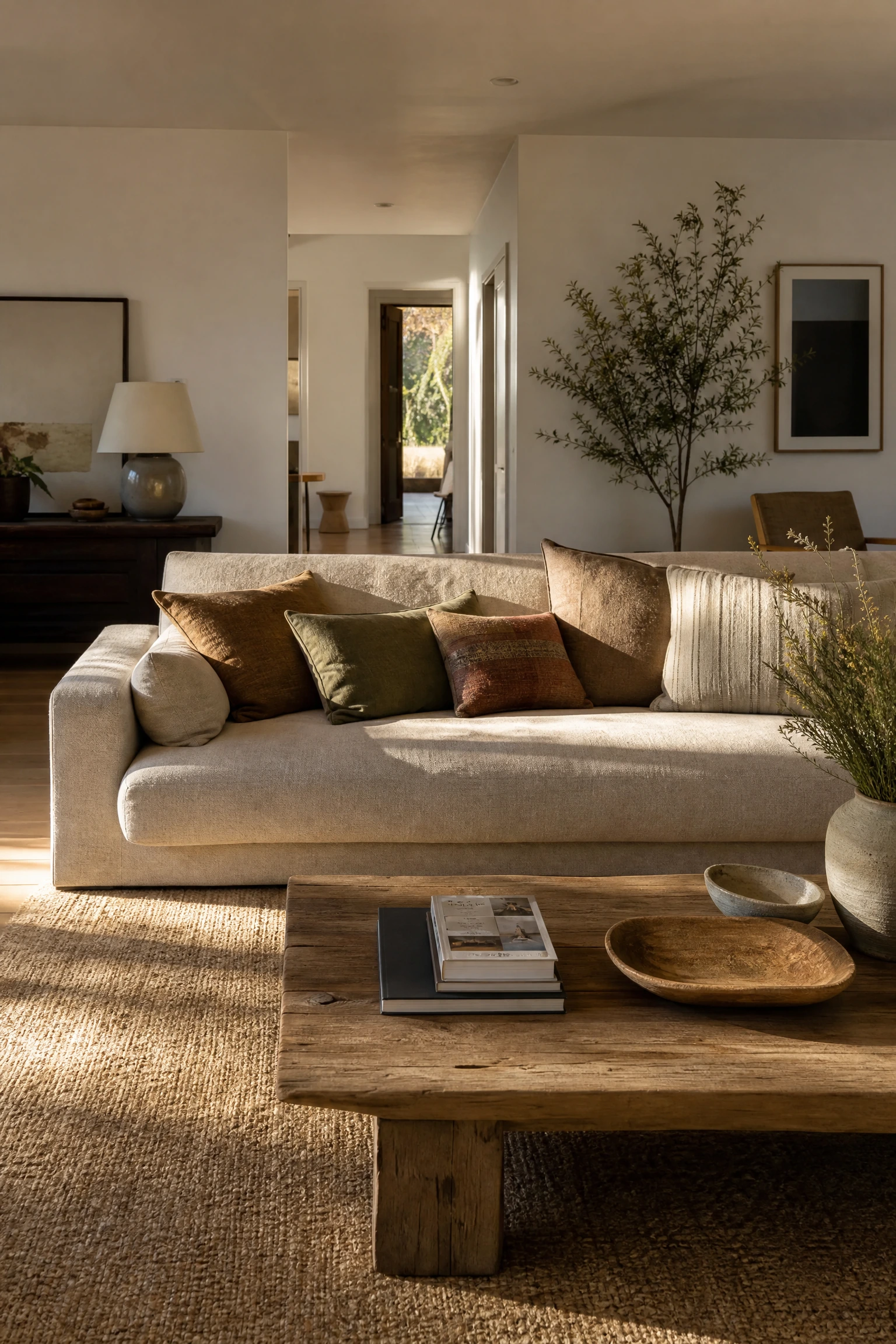
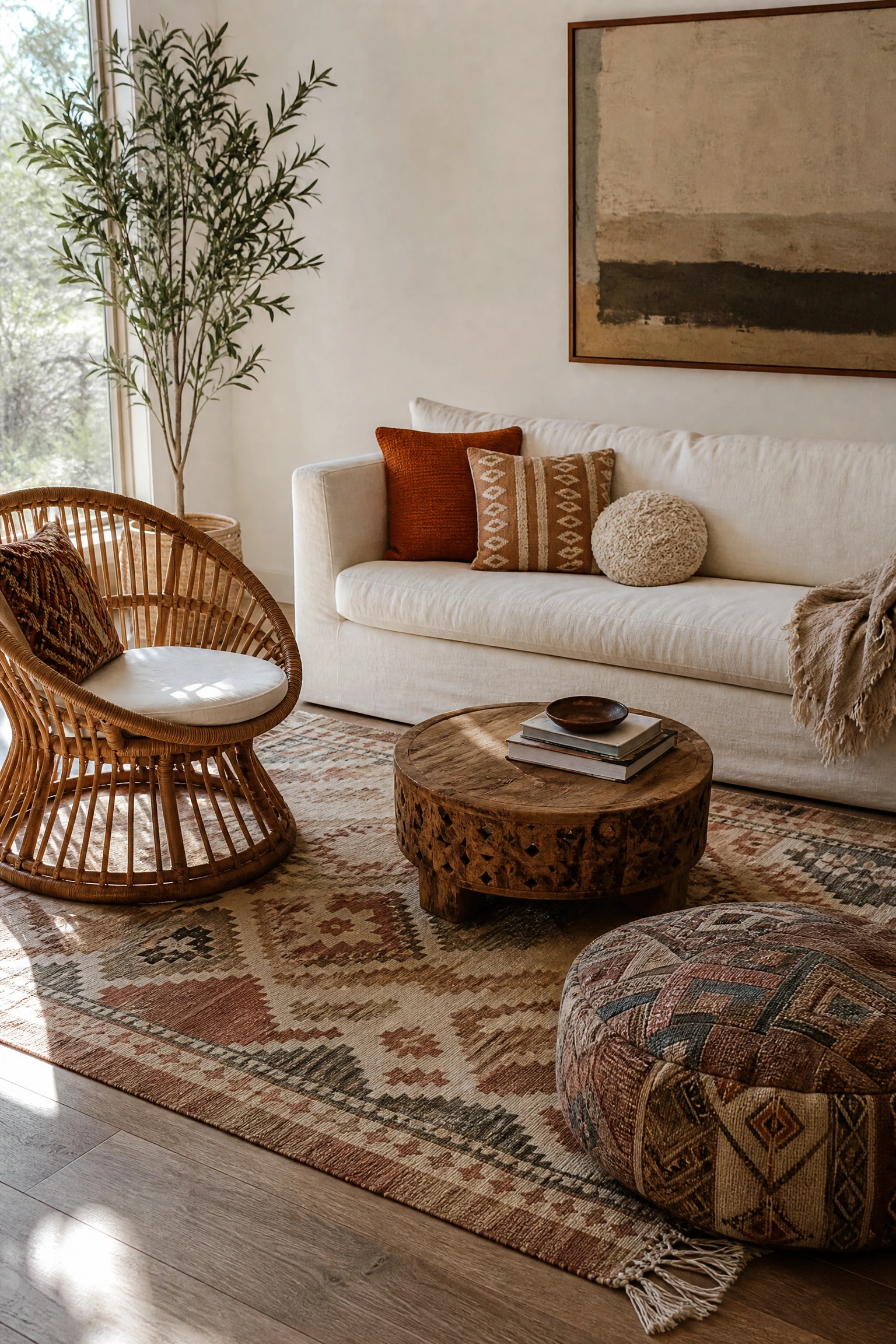
Every boho living room that reads as sophisticated rather than busy starts with a warm neutral base: cream, sand, warm white, soft terracotta or muted ochre on the walls, and a sofa in a natural tone like oatmeal linen, undyed cotton or warm taupe. The earthy neutral palette is not boring in a boho room because everything layered on top of it adds the personality; the base simply ensures all those layers read as a considered collection rather than a pile.
Pro Move: Warm white with a yellow or pink undertone, like Farrow and Ball Pointing or Benjamin Moore White Dove, works far better in a boho room than cool or blue-toned whites, which fight with earthy materials and make terracotta and rattan look orange rather than warm.
2. Choose One Dominant Earthy Accent Colour and Repeat It Throughout
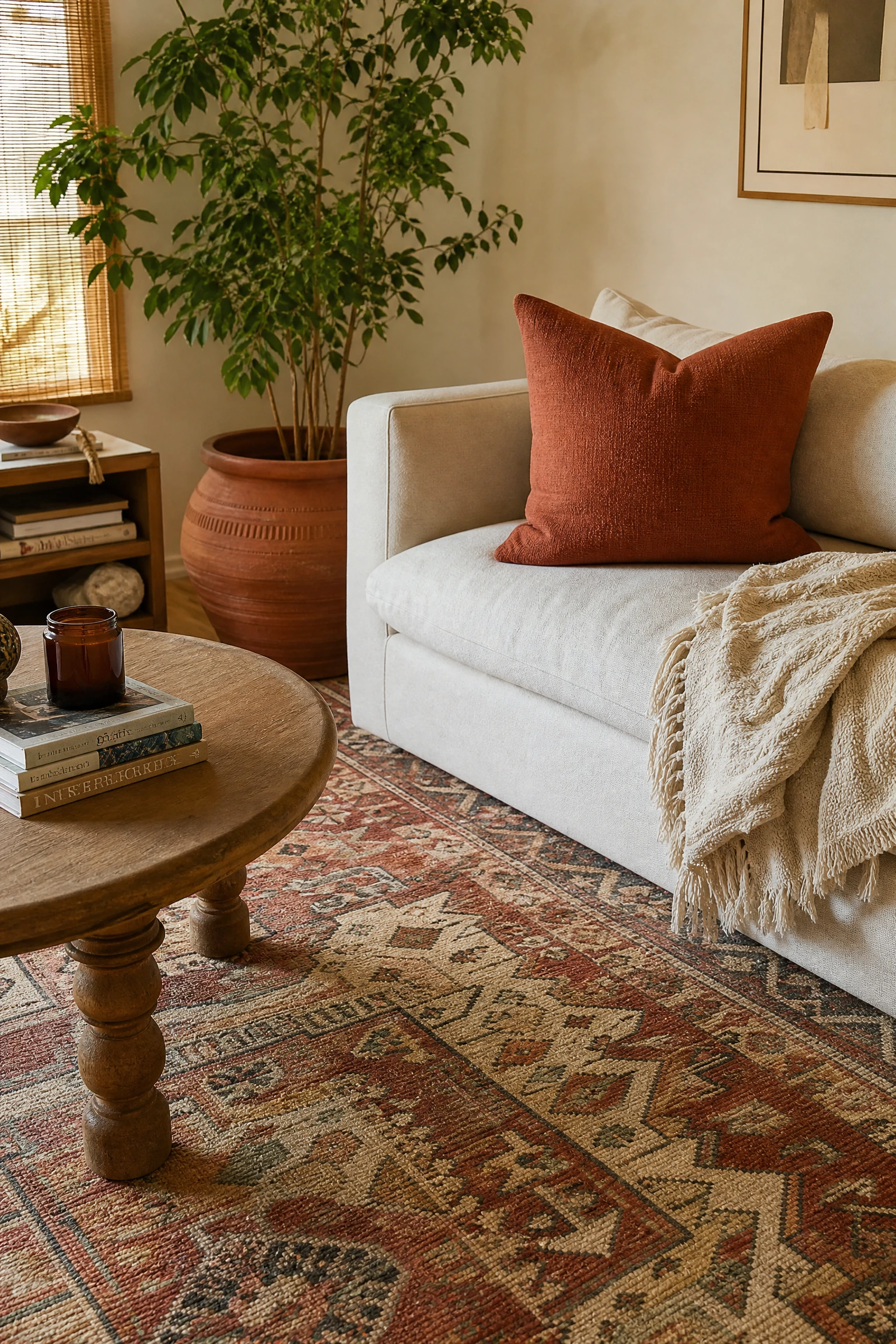
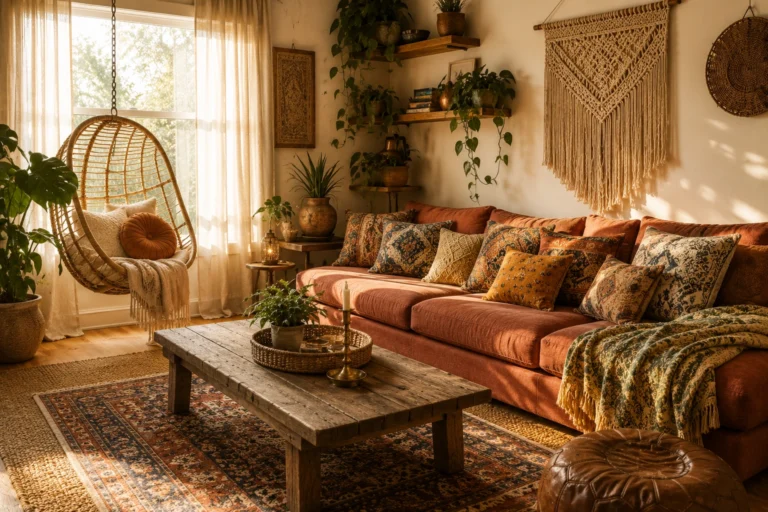
The most cohesive boho living rooms are not colourful in a random sense; they carry one dominant earthy accent, usually terracotta, rust, sage green, burnt sienna or dusty rose, and repeat that tone across at least three different objects or surfaces in the room. A terracotta throw pillow, a clay pot and a woven rug with terracotta threads all read as intentional when they carry the same tone; one isolated terracotta cushion just looks like something that was left on the sofa.
Designer Advice: Pick your accent colour before buying anything and hold it to every purchase decision in the room; this single discipline is what separates a boho room that looks designed from one that looks assembled from whatever was on sale.
3. Use Limewash, Textured Paint or Warm Plaster on at Least One Wall
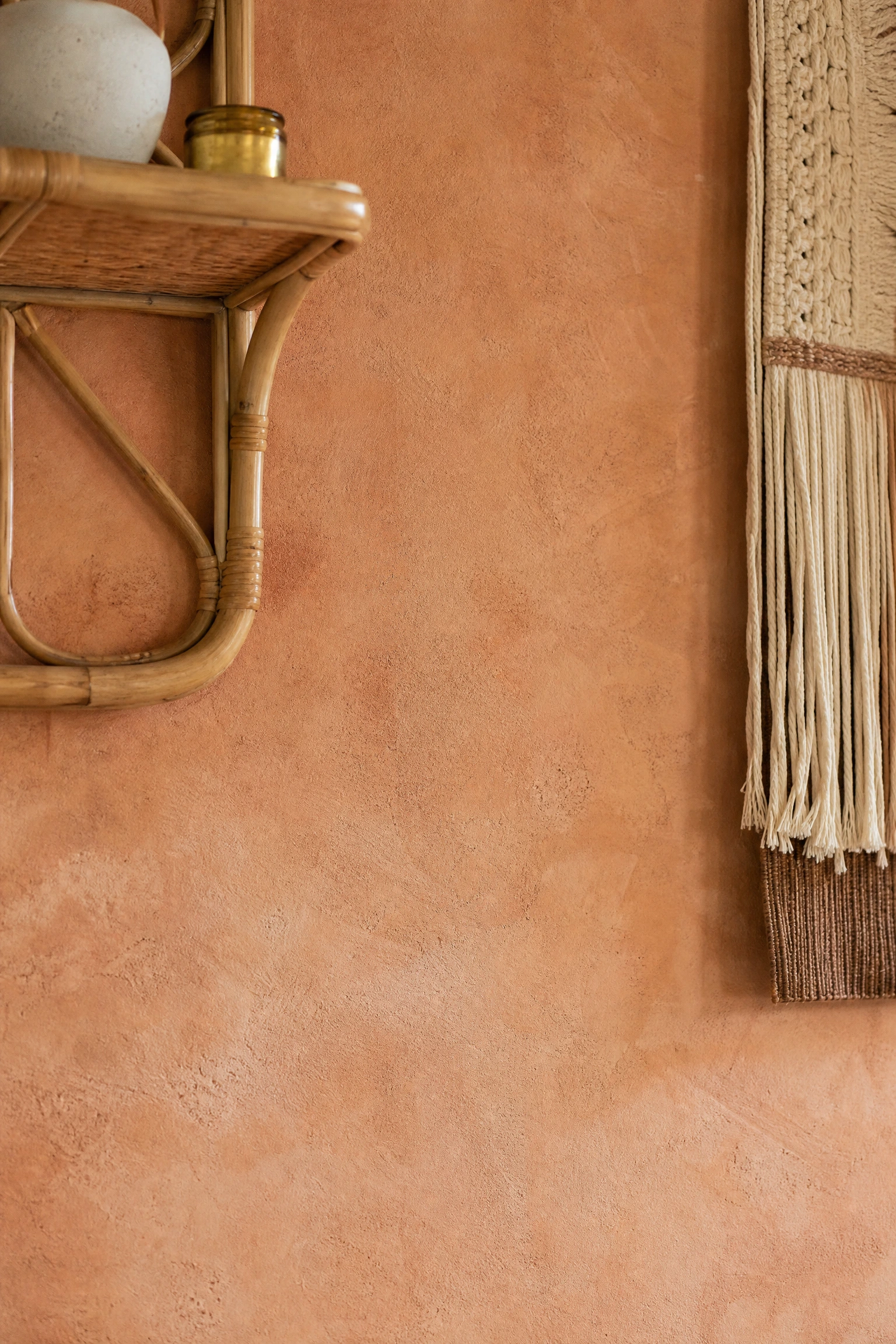
Plain flat paint on all four walls works against the boho aesthetic because the style is fundamentally about organic texture and human imperfection. A limewash finish, a warm Venetian plaster or even a DIY colour wash on the main wall behind the sofa introduces the kind of layered, living surface quality that makes natural materials and eclectic objects feel right at home against it, rather than floating on a hard, manufactured plane.
Quick Tip: Limewash in a warm terracotta or clay tone is the single most affordable wall treatment that delivers the most dramatic boost to a boho room; a small bedroom-sized wall can be limewashed in a half-day with no professional help.
Design Note
Bohemian style has its roots in 19th-century European artist communities where painters, writers and musicians deliberately rejected bourgeois interiors in favour of global objects, rich colour and layered textiles collected from travels. Today’s modern boho retains that spirit of personal expression and global reference but filters it through a calmer, earthier palette and a stronger emphasis on natural materials over bright colour.
4. Lay the Largest Rug You Can Fit and Make It the Pattern Hero
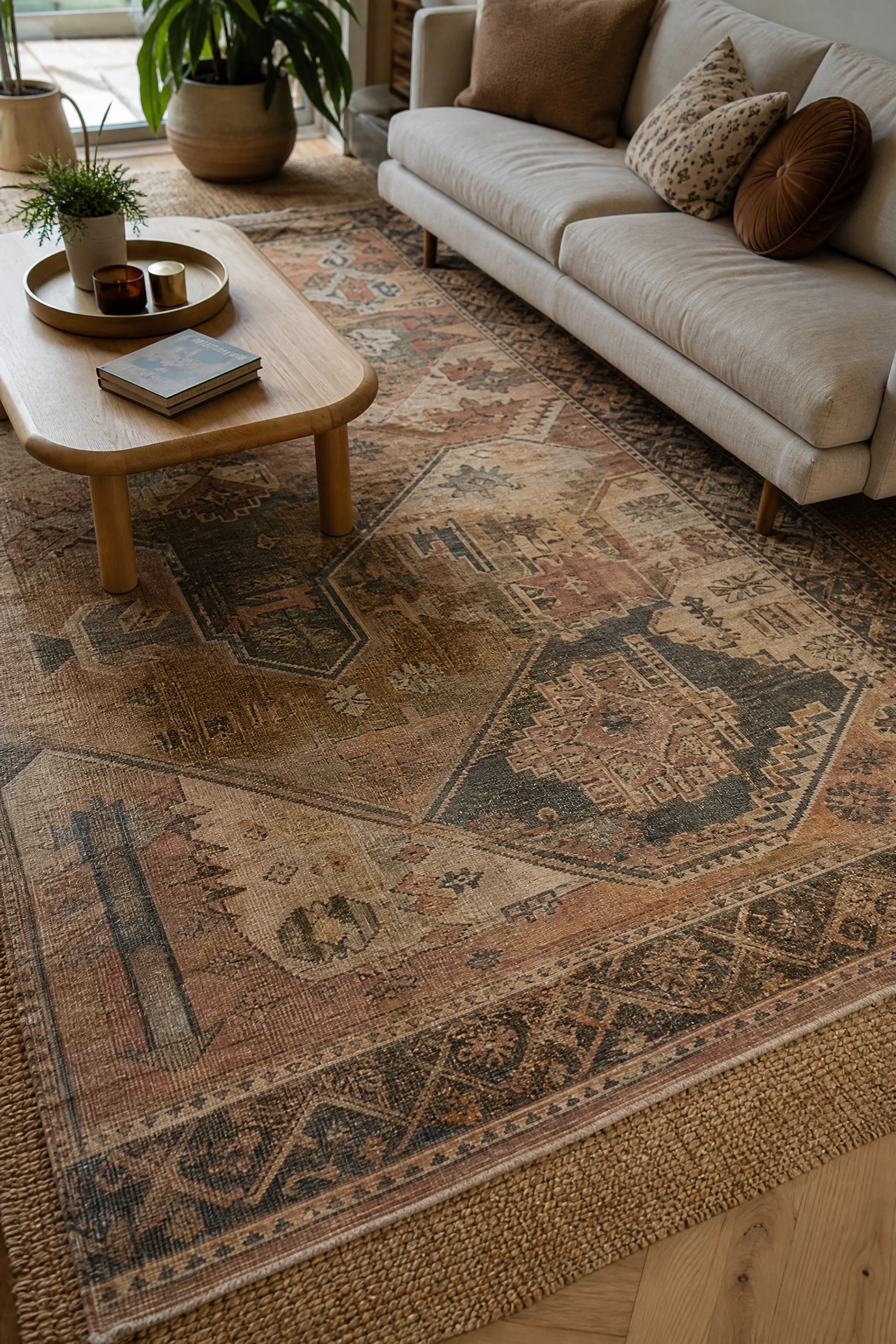
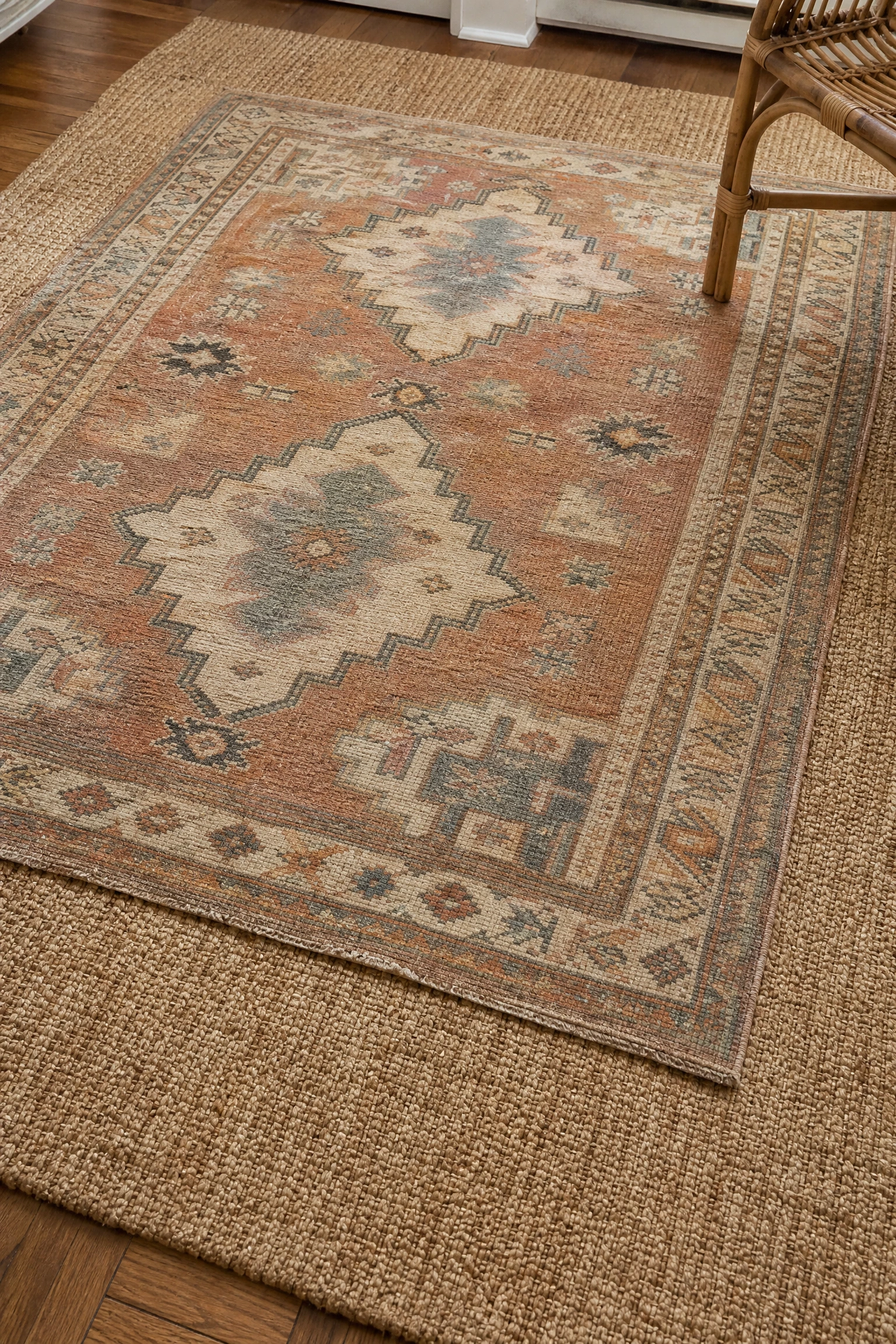
In a boho living room the rug is almost always the pattern hero, the piece that sets the colour story and the decorative confidence of the whole room. A Moroccan Beni Ourain, a Turkish kilim, a faded Persian or a bold Aztec-style flatweave should be large enough that the front legs of every sofa and chair rest on it; an undersized rug in a boho room reads as indecisive and undermines everything layered on top of it.
Reality Check: A vintage or vintage-look rug with fading and variation reads as more authentically boho than a crisp new patterned rug; the aged quality suggests the room has been collected over time rather than bought in one afternoon.
5. Choose a Low-Profile Sofa With Clean Lines as Your Anchor Piece
A low-slung sofa in a neutral linen, cotton canvas or soft velvet with relatively clean lines gives the boho room a quiet, grounded anchor that lets the surrounding layers breathe. Overly ornate, heavily carved or tufted sofas compete with the eclectic objects and textiles around them; a simpler sofa form is actually the bolder design choice in a boho context because it holds everything together without demanding attention for itself.
Heads Up: Avoid all-white sofas in a boho living room; they photograph well but read as clinical against earthy textures and require significantly more maintenance than any other fabric choice.
Boho living rooms resist the matched set; instead of a sofa with two identical armchairs, combine a sofa with a rattan accent chair, a vintage pouf or floor cushion and a low carved timber stool. The variety of seating shapes creates the impression that the room has been put together across different periods and from different places, which is exactly the impression the style is reaching for.
Designer Advice: Use one rule to keep mixed seating cohesive: all upholstered pieces should share a similar tonal family, whether all warm neutrals or all earthy tones, even if they vary in texture and shape.
7. Bring In a Rattan or Cane Accent Chair as the Natural Material Moment
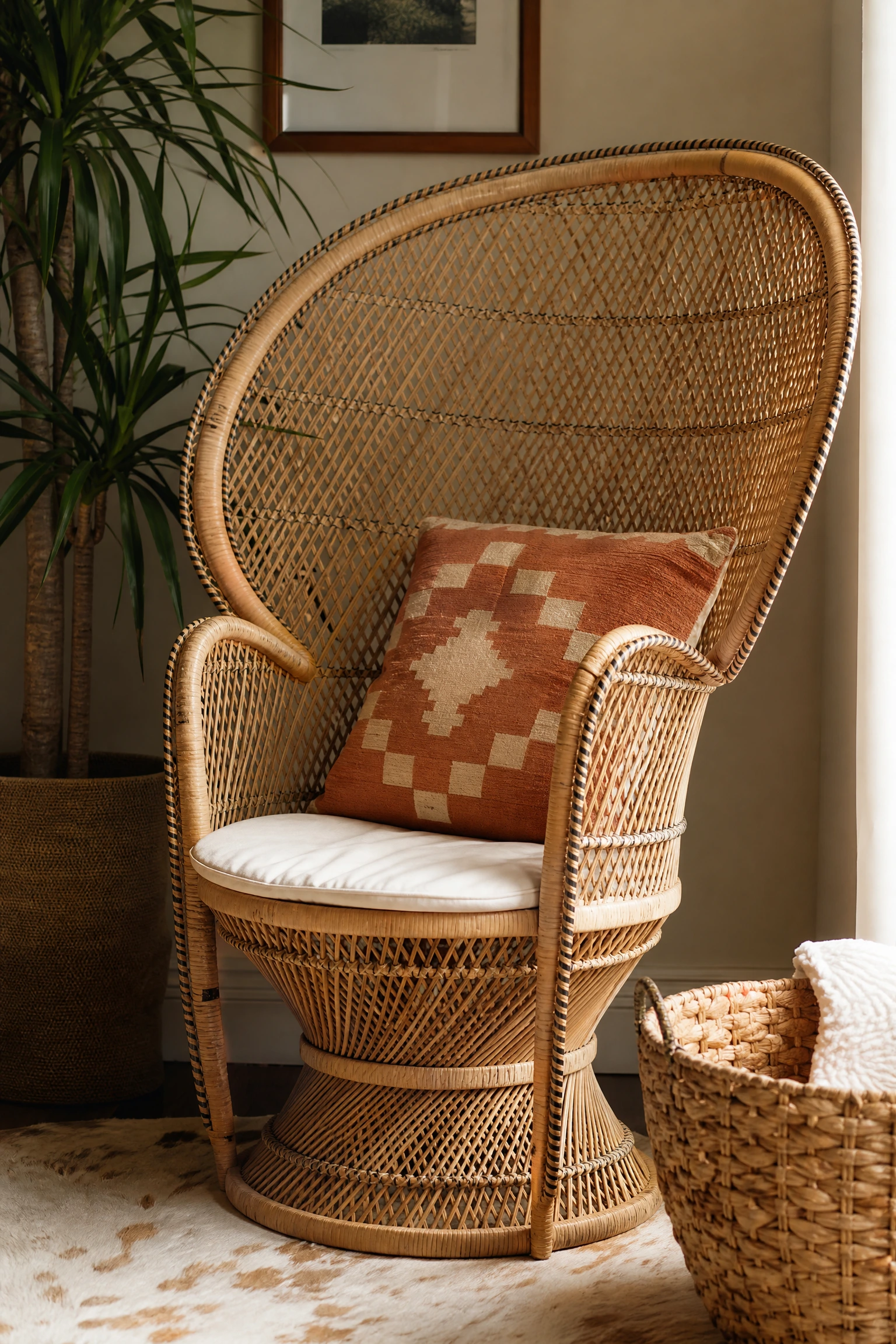
A rattan peacock chair, a cane-backed accent chair or a woven bucket chair is probably the most recognisable boho living room furniture piece, and for good reason; it introduces natural material, an interesting silhouette and a warm honeyed tone that earthy rooms consistently need. One rattan chair is an elegant statement, but three in the same room starts to feel like a garden centre, so use it as the single natural-material seating piece rather than a repeating element.
Quick Tip: Dress the rattan chair with one contrasting cushion in a pattern that picks up the room’s accent colour; a plain cushion in a pattern-heavy room or a patterned cushion in a quieter room, whichever the chair needs to connect to the rest of the space.
8. Use a Raw Wood, Reclaimed Timber or Live-Edge Coffee Table
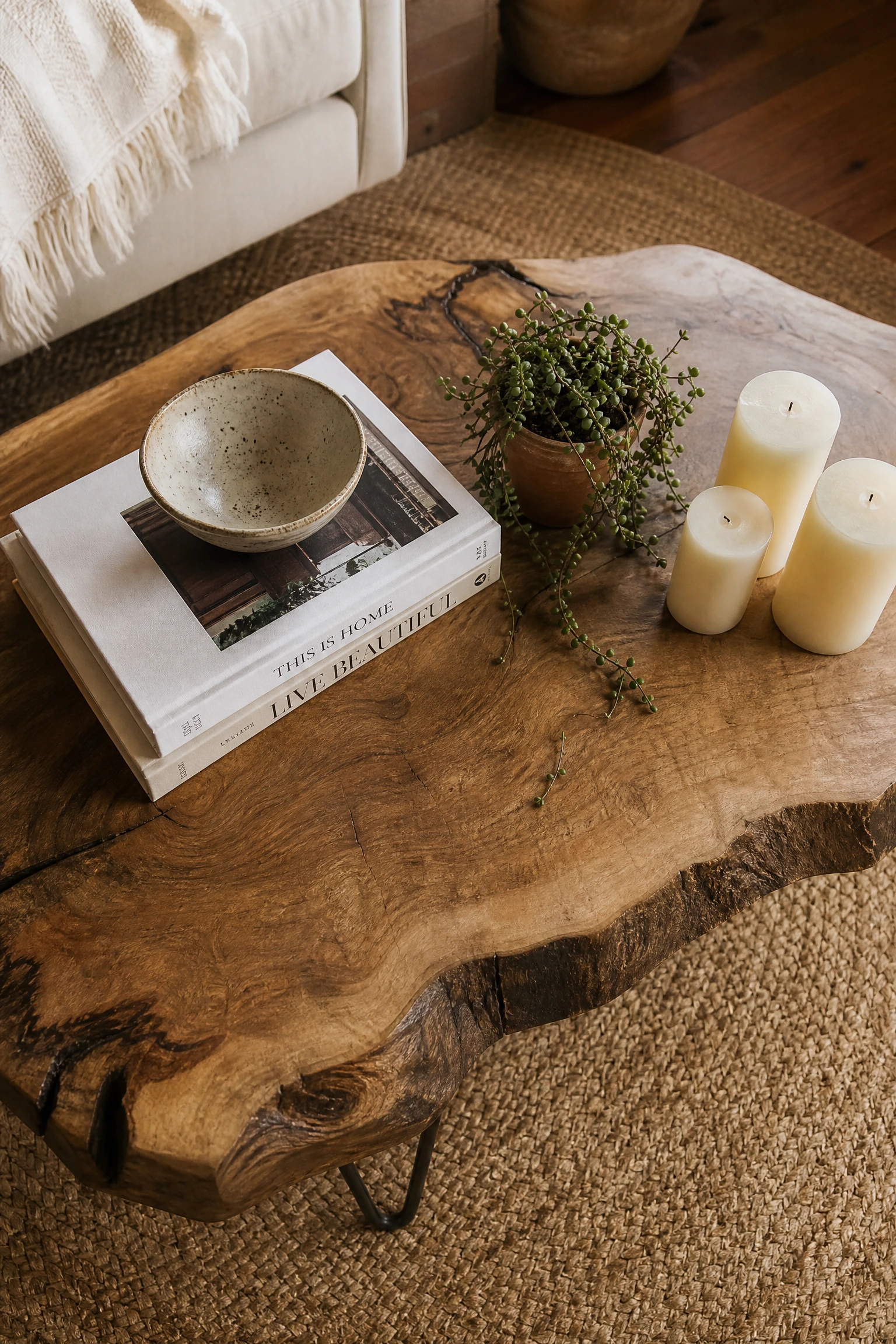
The coffee table in a boho living room is one of the most important surface choices because it sits at the centre of the seating arrangement and receives the most visual attention. A raw wood slab, a live-edge piece, a carved mango wood table or a cluster of varying-height rattan or timber stools used as a table all deliver the organic, imperfect quality that manufactured glass or lacquered tables actively work against in a boho context.
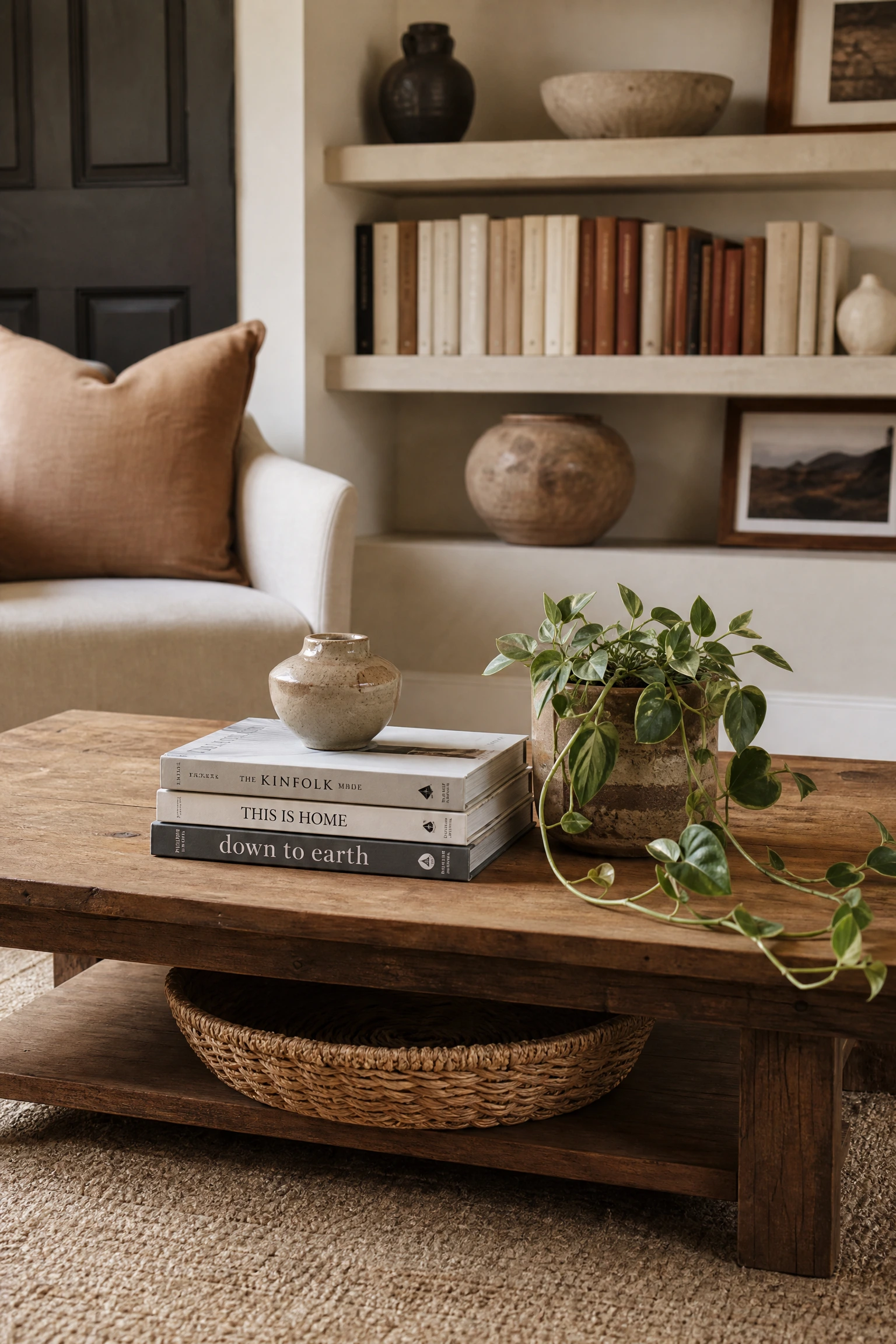
Pro Move: Style the coffee table with a mix of heights and categories: one stack of books, one ceramic object, one small plant and one candle. Four different categories at varied heights look deliberately styled rather than randomly placed.
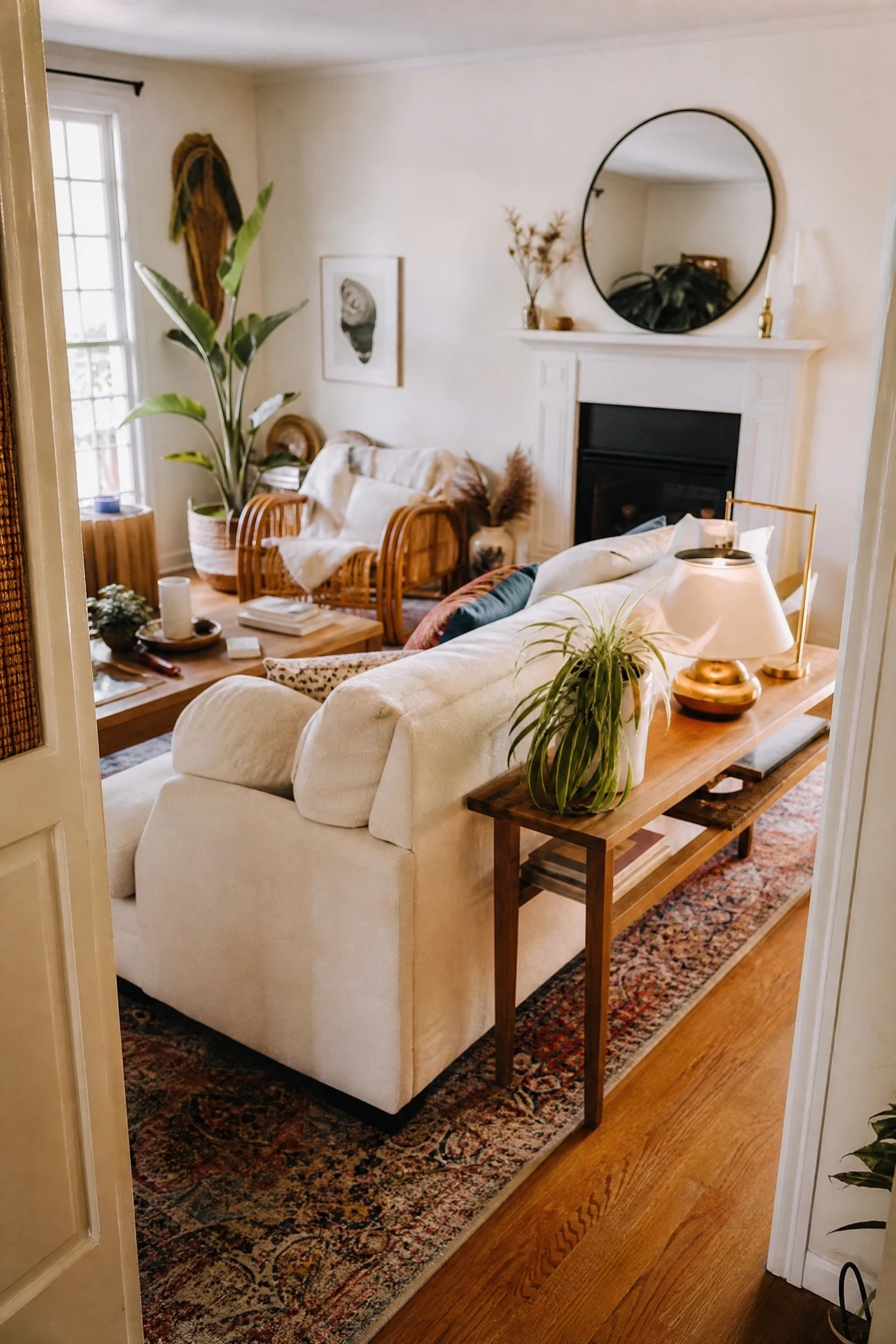
One of the most common mistakes in boho living rooms is pushing all the furniture against the walls, which creates a ring of objects around an empty centre and makes the room look larger but feel colder and less intimate. Pulling the sofa at least 12 inches from the wall and arranging chairs inward around the coffee table creates a gathered, conversational arrangement that is essential to the warmth and invitation that boho rooms are supposed to deliver.
Reality Check: Floating furniture in a small room feels counterintuitive but consistently makes the space feel more intentional and lived-in; the empty space behind the sofa can be filled with a console table, a floor lamp or a tall plant rather than left blank.
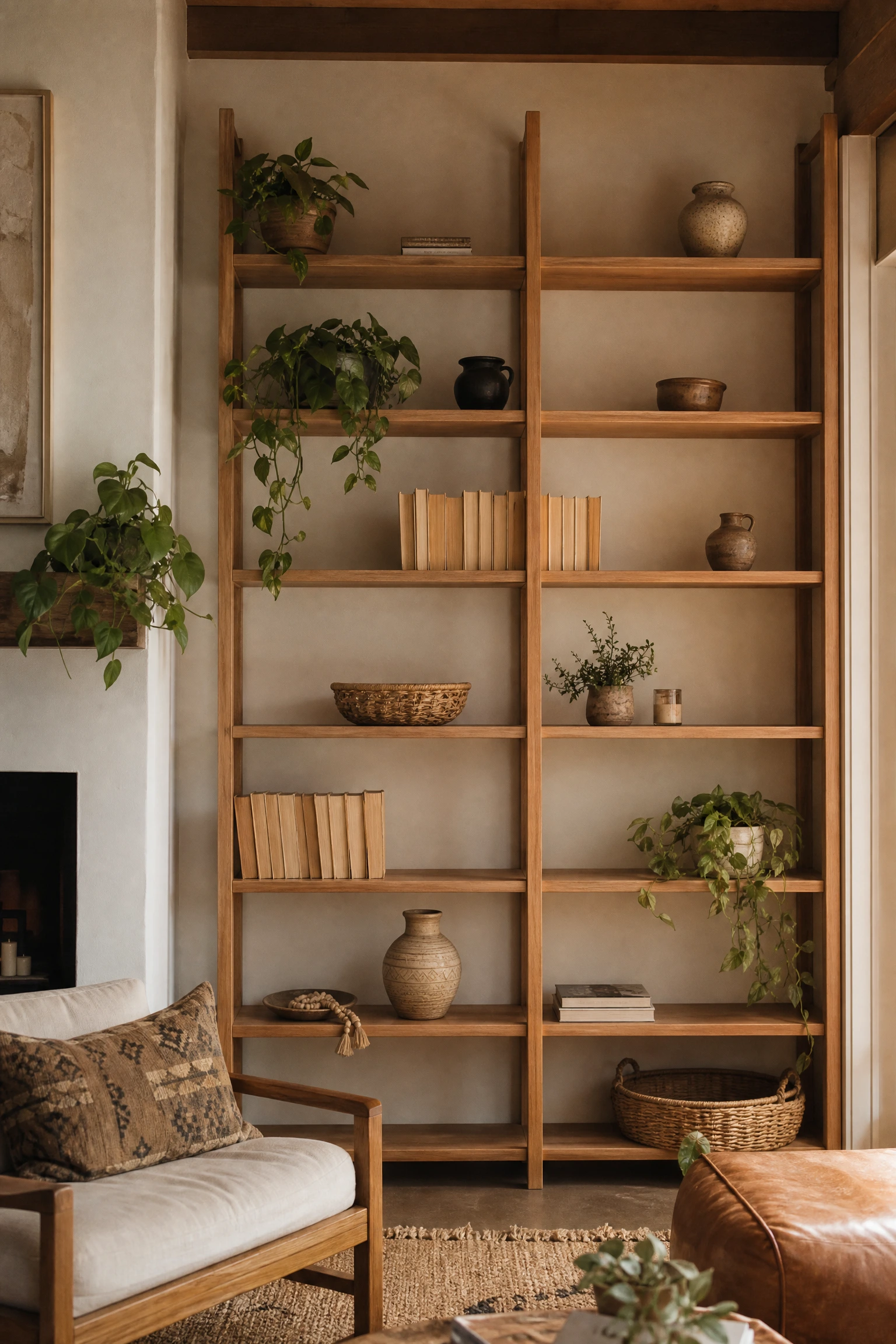
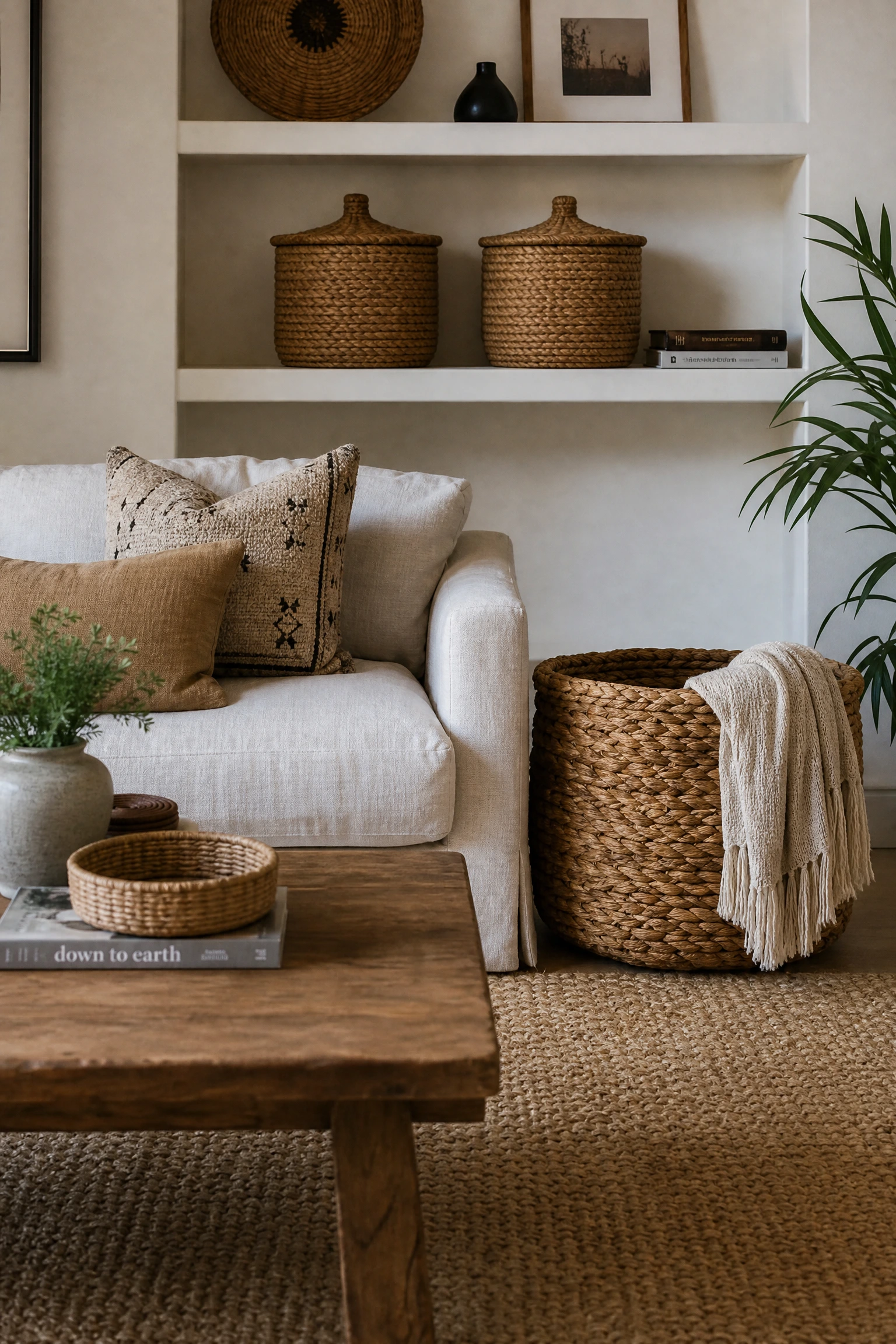
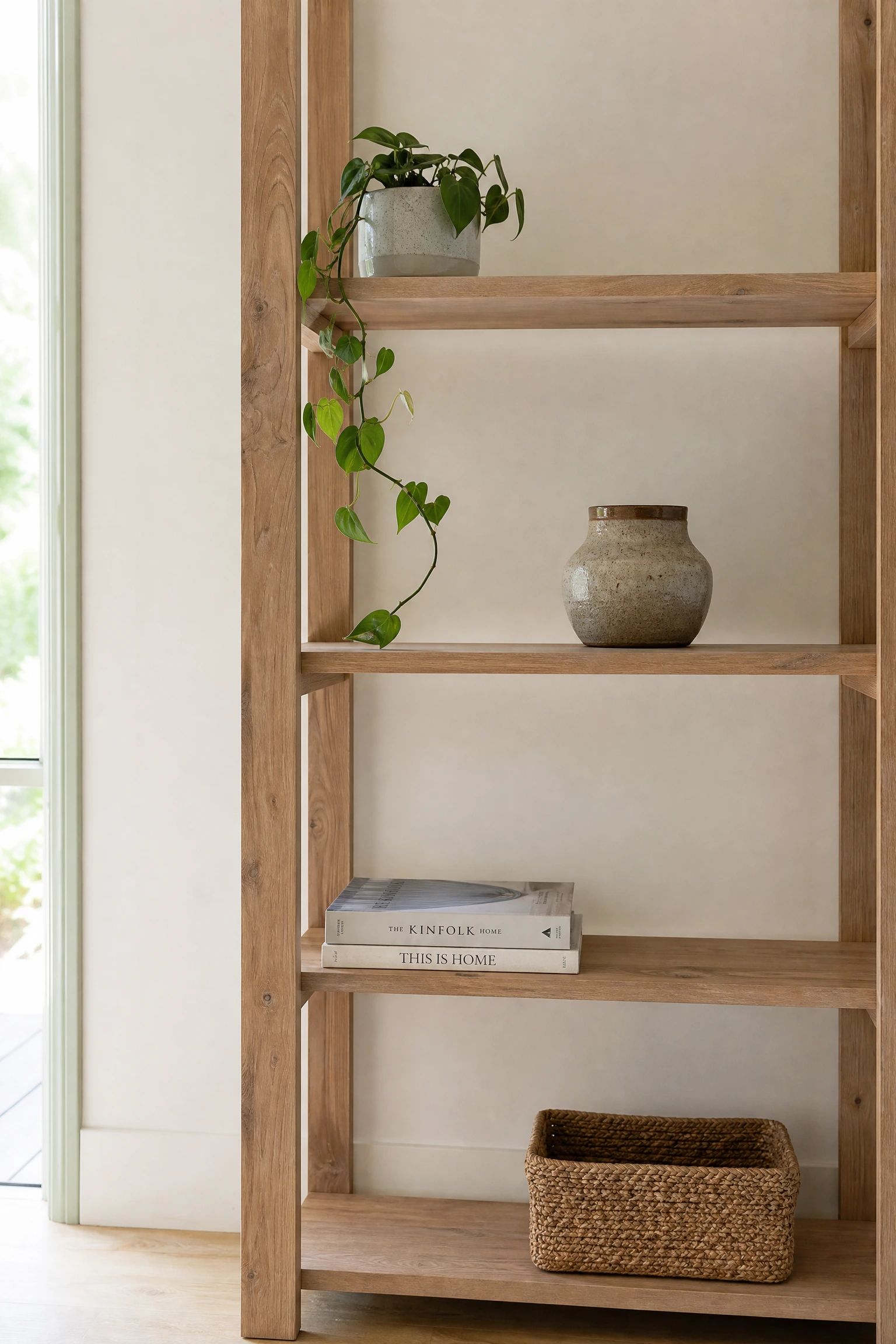
Open timber shelving on one wall, whether a single floating shelf or a full-height unit, gives a boho living room the display surface it needs for the ceramics, books, baskets, plants and objects that define the style. The key is restraint: leave roughly 40 percent of every shelf empty so the objects that are displayed have room to breathe and read as curated rather than stored.
Designer Advice: Group objects by material family rather than colour on open shelves; all the ceramic pieces together, all the timber pieces together, all the woven pieces together. This creates visual order without making the shelf look colour-coded or formal.
Layering a smaller textured or patterned rug over a larger plain jute or sisal base rug is one of the most effective boho styling techniques available because it adds depth to the floor plane without requiring a single large expensive rug to do all the decorative work. The base rug provides a warm, natural foundation and the upper rug delivers pattern, colour or texture; together they read as far more interesting than either alone.
Quick Tip: The upper rug should be no more than half the size of the base rug and positioned so the base shows clearly around all four edges; if the proportions are wrong the layering reads as accidental rather than considered.
Textile Type
Best Role in a Boho Room
What to Avoid
Kilim or flatweave rug
Pattern hero on the floor
Using more than one heavily patterned rug at once
Macrame wall hanging
Single texture statement on one wall
Covering every wall with macrame
Linen or cotton throw
Soft layer draped over sofa or chair
Acrylic or synthetic fabrics that read as cheap
Velvet cushion
Luxe contrast against natural textures
Matching velvet cushions in identical colours
Jute or sisal
Neutral base rug or basket weave
Using jute alone without a layered softer rug
Embroidered fabric
Accent cushion or wall textile
Mixing too many embroidered pieces at once
12. Pile the Sofa With Cushions in Varied Sizes, Textures and One Pattern
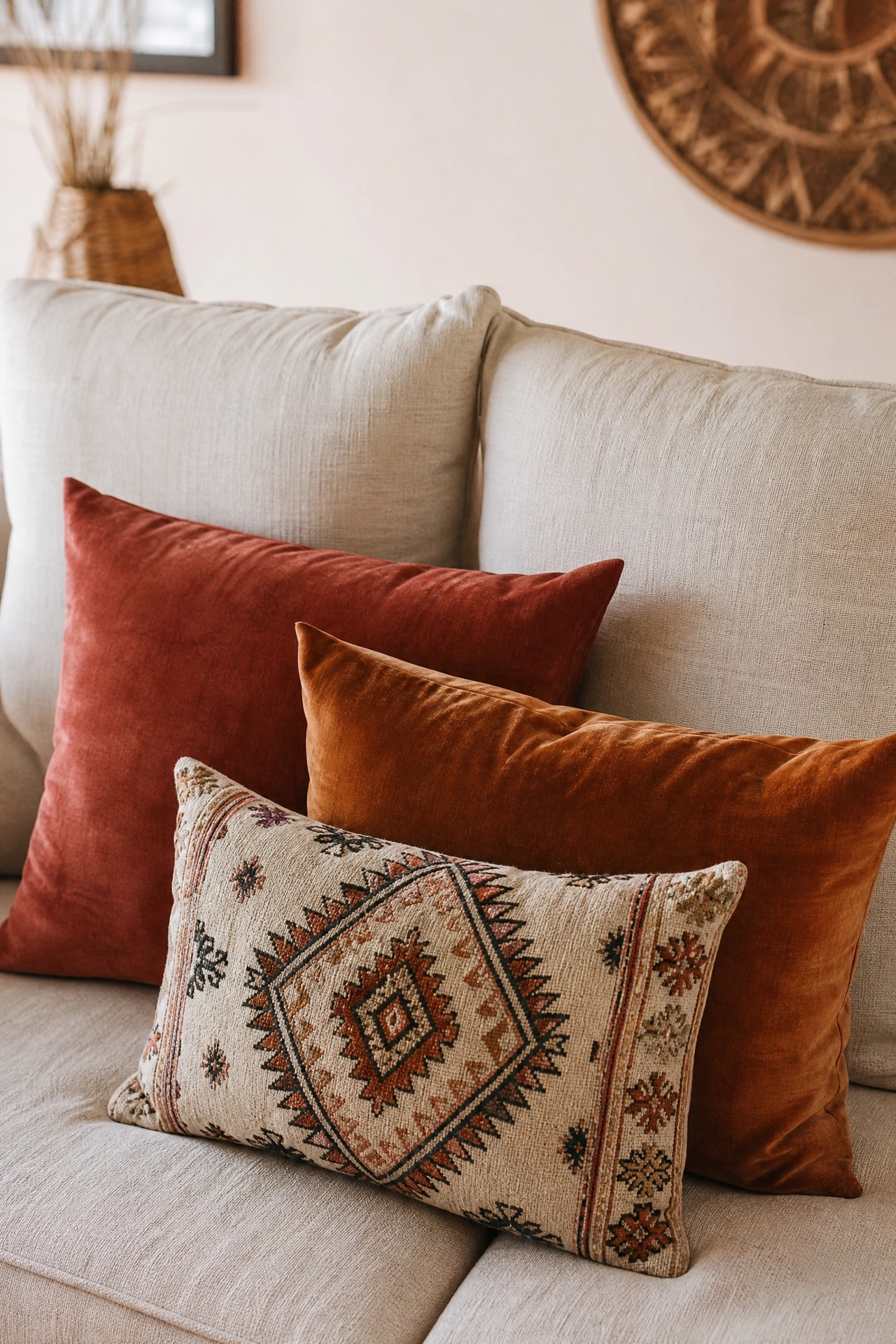
A boho sofa cushion arrangement works when it follows a loose but consistent rule: one or two large plain cushions at the back in neutral linen or cotton, two mid-size cushions in varied earthy textures like velvet or boucle, and one or two smaller cushions in a pattern that carries the room’s accent colour. The pattern cushion is the element that ties the sofa to the rug and the other objects in the room, so it needs to contain at least one tone that appears elsewhere.
Heads Up: Buying a full matching cushion set defeats the purpose of boho layering; choose each cushion individually so the arrangement looks genuinely collected rather than purchased as a bundle.
13. Drape a Vintage Quilt or Hand-Woven Throw Over the Sofa
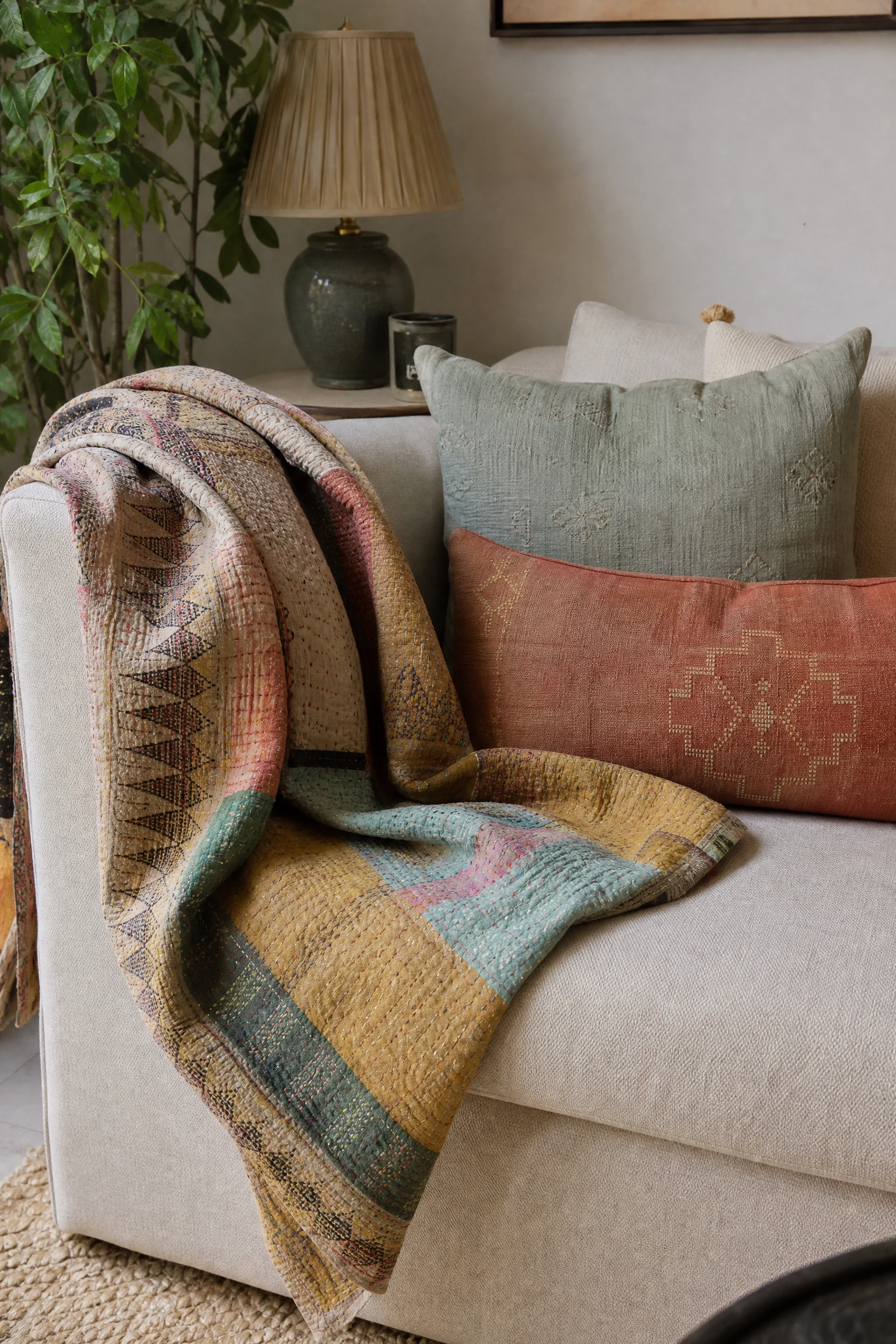
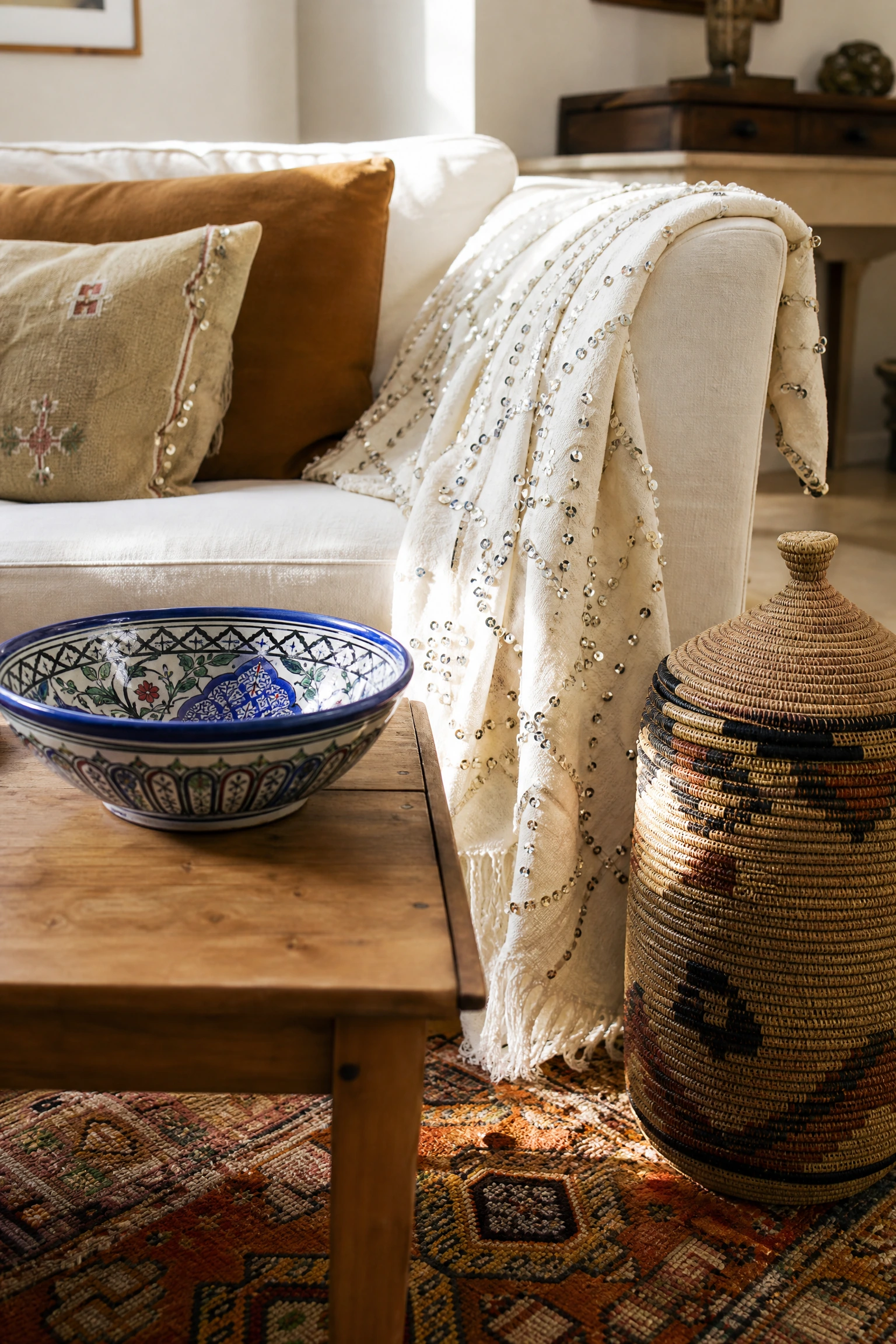
A vintage sari quilt, a hand-woven cotton throw or an antique kantha blanket draped loosely over the arm or back of the sofa introduces a textile with genuine history and visual complexity that no new product can replicate. The slightly faded colours, irregular weave and soft drape of a genuinely old or artisan-made textile is what gives a boho room its sense of accumulated time rather than assembled decoration.
Pro Move: Etsy, local vintage markets and antique textile dealers are consistently the best sources for genuine kantha quilts, Turkish peshtemal throws and vintage Indian block-print fabrics at reasonable prices; mass-produced versions from high-street homewares stores almost always read as imitations.
14. Hang Floor-to-Ceiling Linen or Cotton Curtains in a Warm Natural Tone
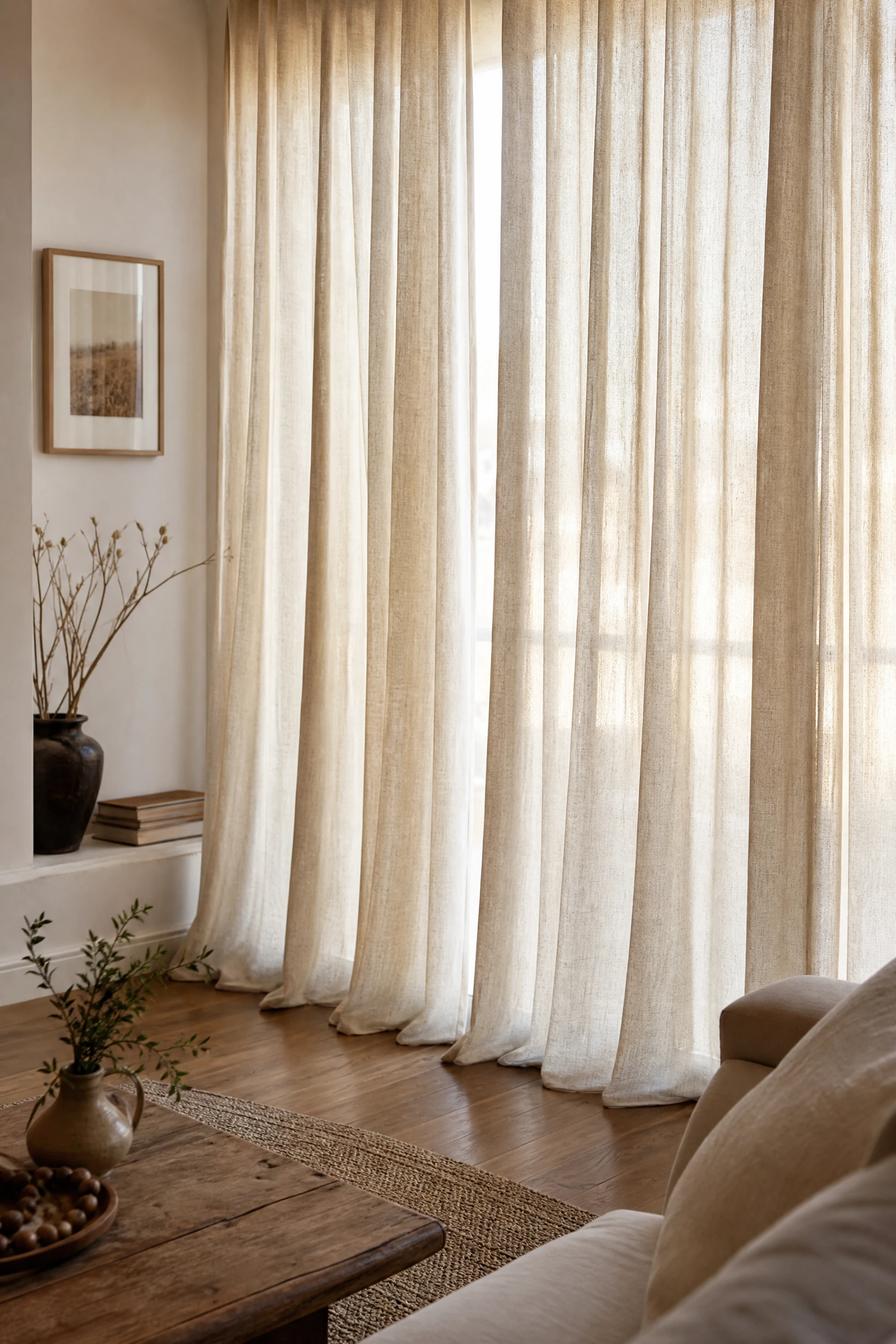
Floor-to-ceiling curtains in unbleached linen, warm white cotton or a soft earthy tone hung from ceiling height dramatically change the proportions and warmth of a boho living room. Heavy curtains pool slightly on the floor and give the room a gathered, generous quality that is completely consistent with the boho philosophy of more texture, more warmth and more softness at every layer.
Designer Advice: Mount the curtain rod as close to the ceiling cornice as possible and choose curtains at least 1.5 times the width of the window so they have enough fabric to drape and gather properly rather than hanging flat and mean.
Walls and Display
15. Create a Gallery Wall That Mixes Art Types, Not Just Frames
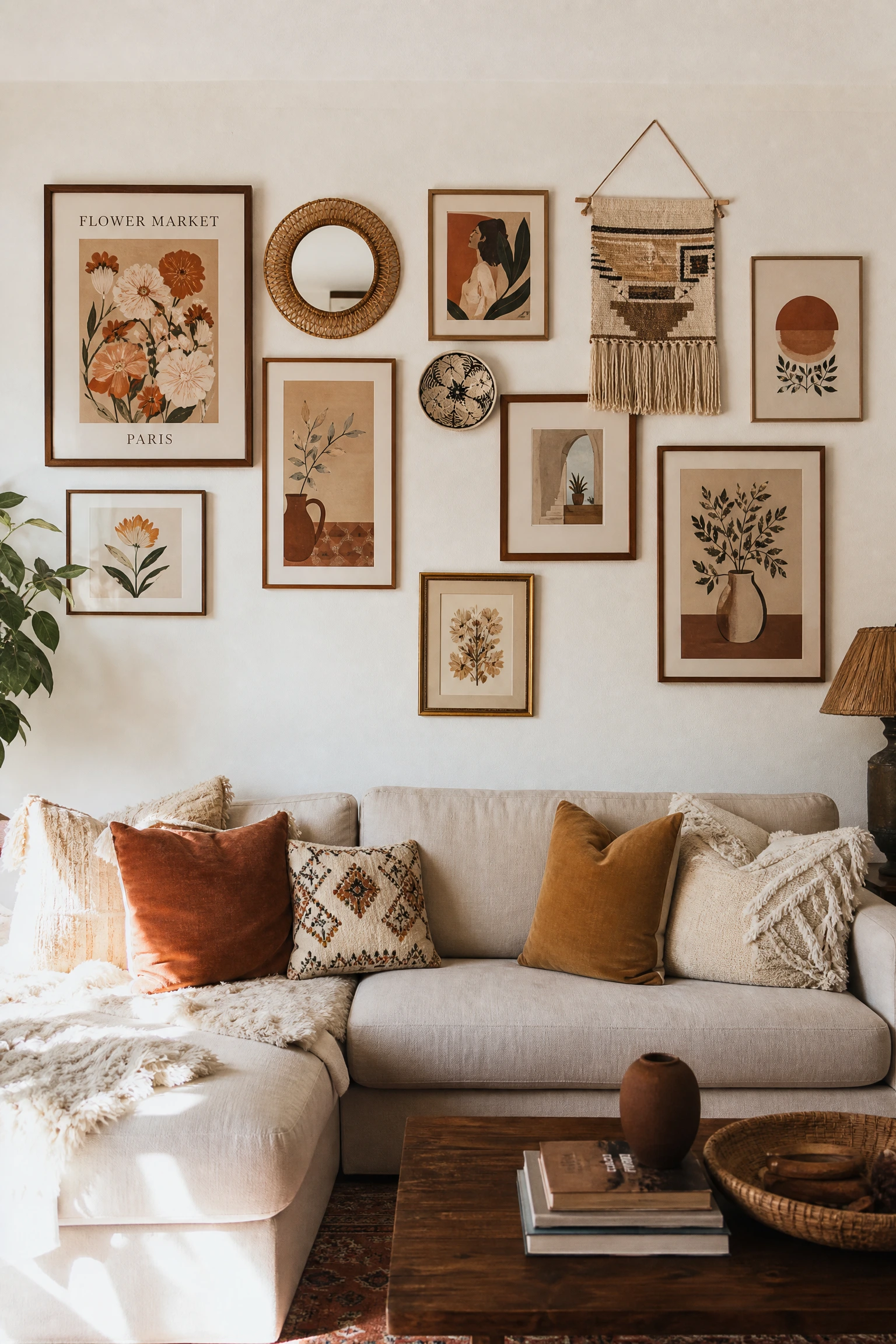
A boho gallery wall includes more than framed prints; it layers woven wall hangings, small mirrors, a ceramic piece mounted flat, a vintage botanical plate, a piece of driftwood and framed artwork in a composition that looks as though it has accumulated over many years and many journeys. The frames can vary in material and colour as long as they share a tonal family, and the arrangement works best when it extends above the sofa and becomes the most visually complex element in the room.
Quick Tip: Lay the gallery arrangement out on the floor before putting anything on the wall, photograph it from above, and refer to the photo while hanging; the composition almost always needs adjusting once you see it as a flat plan.
16. Hang One Large Macrame Wall Piece as a Textural Statement
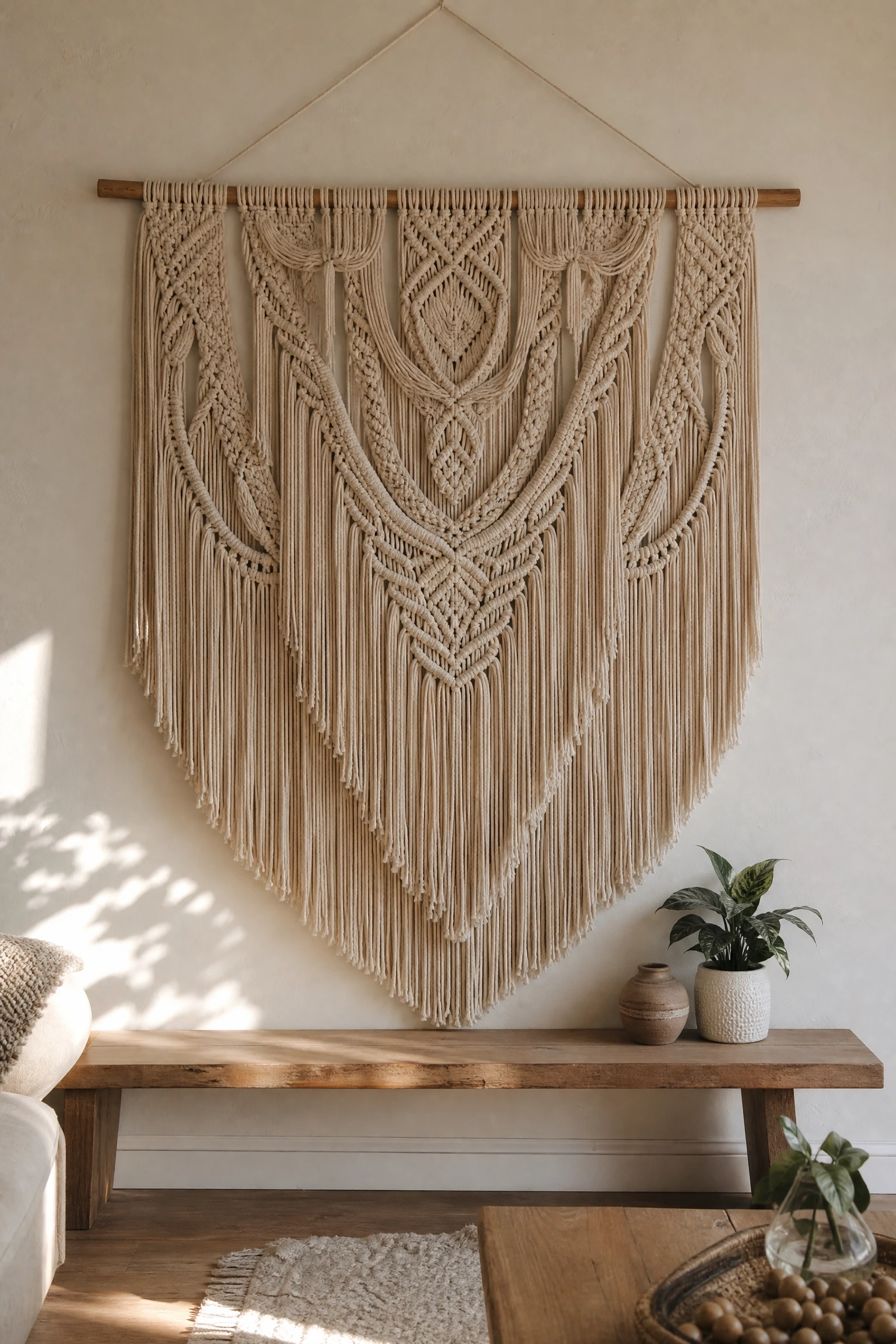
One large, well-made macrame wall hanging in a natural cotton or jute cord is a genuine boho classic that earns its place when it is the single textile wall piece rather than one of many. The issue with macrame in most boho rooms is not that it is there but that there is too much of it; one oversized piece above a sideboard or beside the gallery wall reads as an intentional material statement, while small macrame pieces scattered on every wall read as a student bedroom from 2018.
Reality Check: A handmade macrame piece from an independent maker looks entirely different from a mass-produced version; the irregularity of handmade knotting is the detail that makes it read as craft rather than decor.
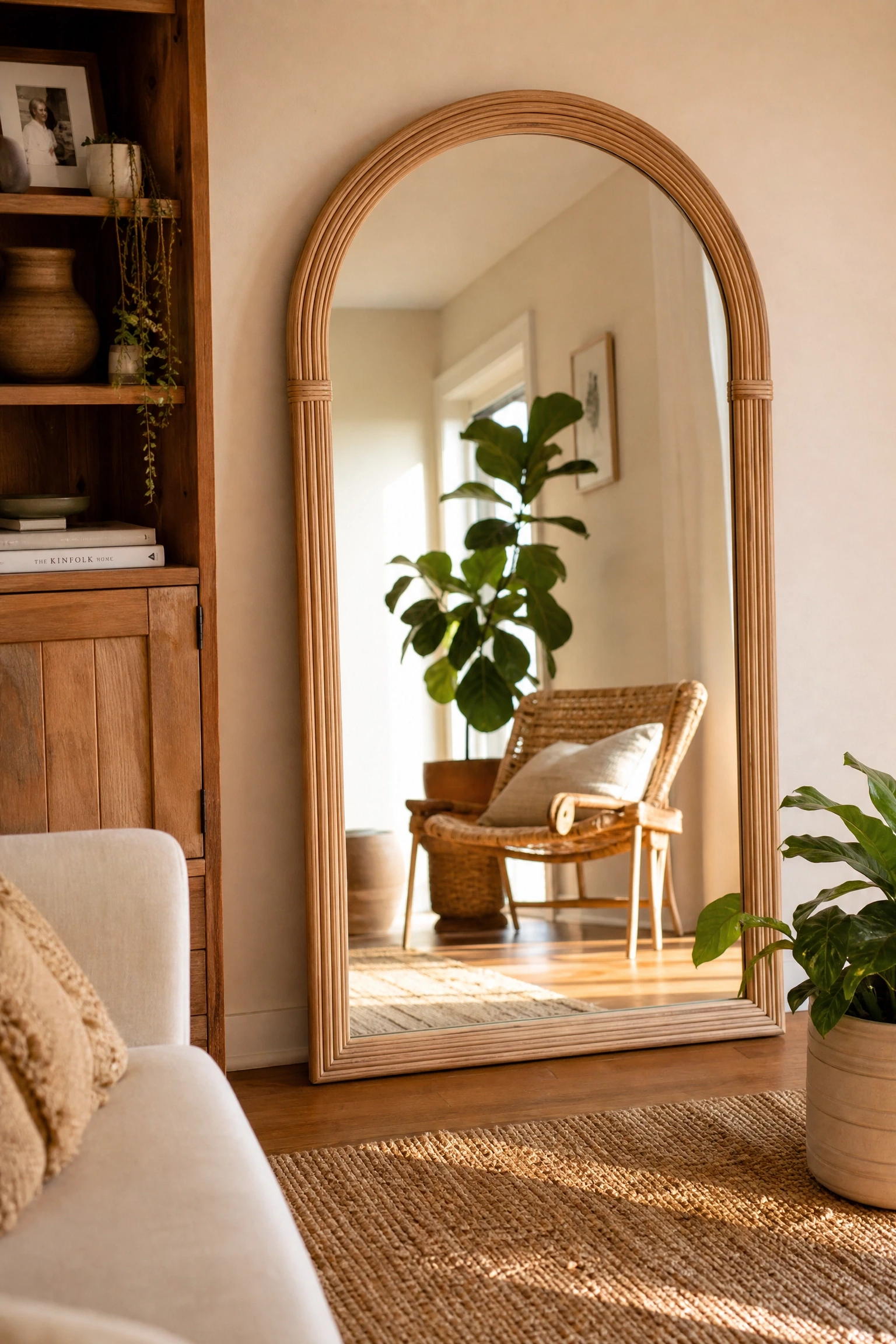
Arched or sun-burst shaped mirrors in rattan, carved wood or aged brass frames introduce an organic silhouette that fits the boho aesthetic far better than rectangular mirrors, which read as too conventional and architectural. A large arched mirror leaned against the wall rather than hung also adds an intentionally relaxed, editorial quality that is very consistent with modern boho styling.
Pro Move: Position an arched mirror to reflect the most interesting part of the room, whether a gallery wall, a plant cluster or a well-lit corner, so it doubles the visual content of that area and makes the room feel larger and more layered simultaneously.
18. Install Floating Wood Shelves and Style Them With Negative Space
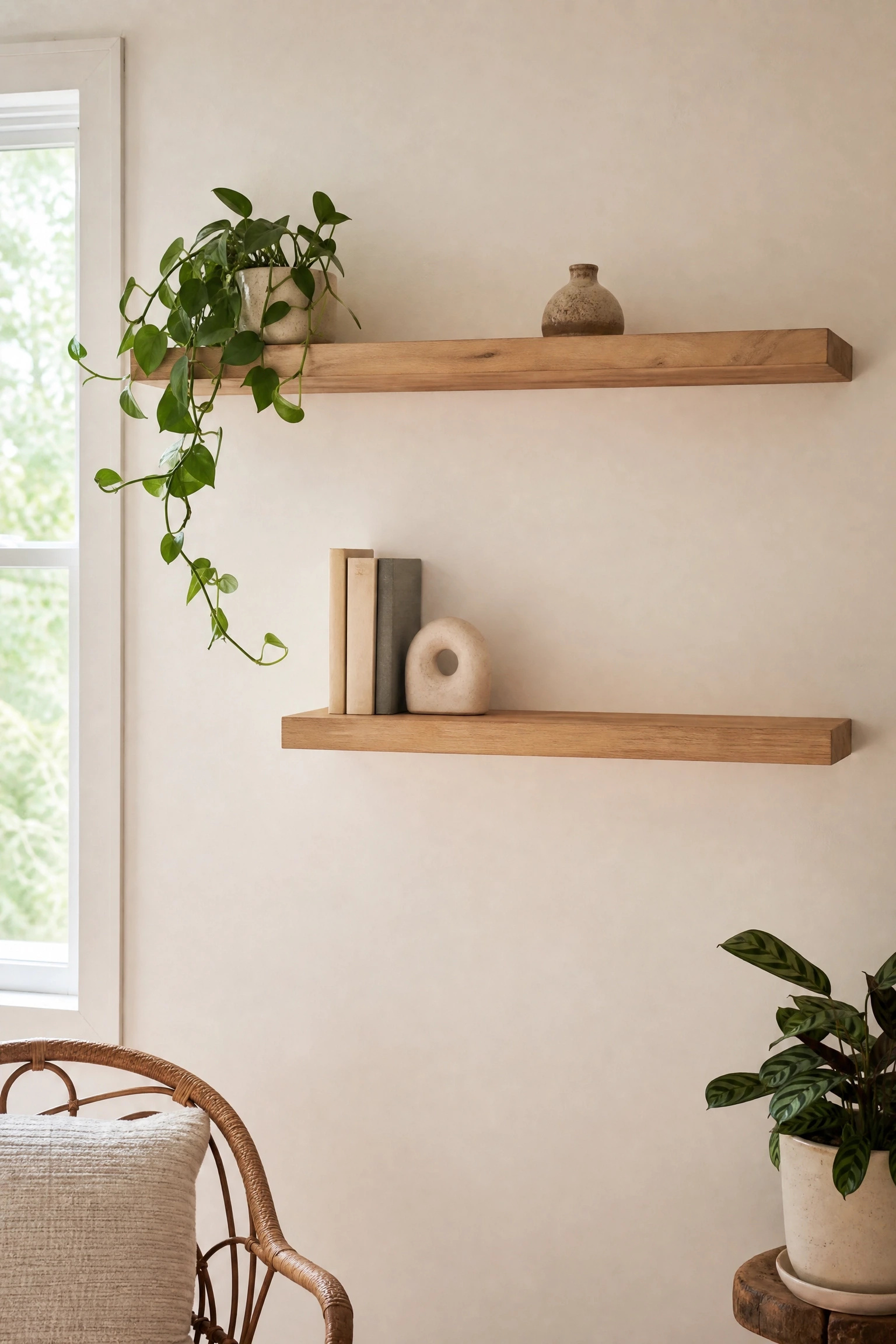
A set of staggered floating timber shelves on one wall styled with ceramics, trailing plants, books turned spine-in and small sculptural objects can serve as the entire decorative scheme for that wall without requiring any other art or hanging. The key principle is negative space: a shelf that is half empty looks styled; a shelf that is completely full looks like storage.
Designer Advice: Turn some books spine-inward so only the white or cream page edges show; this creates a clean visual pause between objects and prevents the shelf from looking like a bookshop rather than a curated display.
Plants and Natural Elements
19. Use Plants as Architecture, Not Just as Accessories
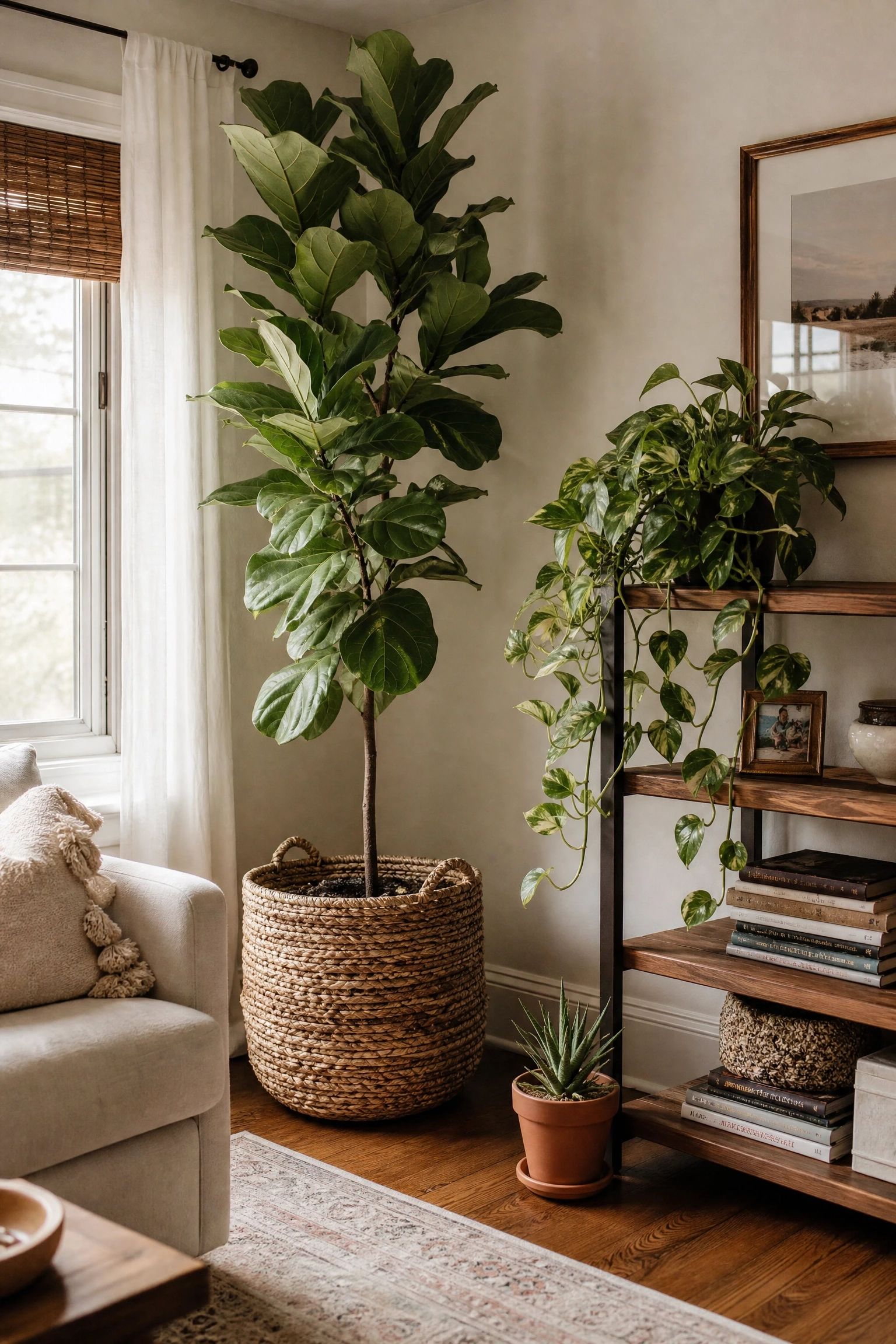
In a boho living room, plants are doing structural design work, not just adding greenery. A tall fiddle-leaf fig or olive tree in one corner anchors the room vertically the way a floor lamp or tall bookcase might in another style. A trailing pothos or string of hearts cascading from a shelf adds a soft downward line that contrasts with the horizontal layering below it. Think about what shape each plant contributes to the room rather than just choosing whichever plant is easiest to find.
Quick Tip: Three plants of dramatically different heights, one tall, one mid and one trailing or table-level, create more visual interest than six plants of similar height clustered together, and they are easier to maintain as individual specimens.
20. Choose Pots That Match the Room’s Material Story
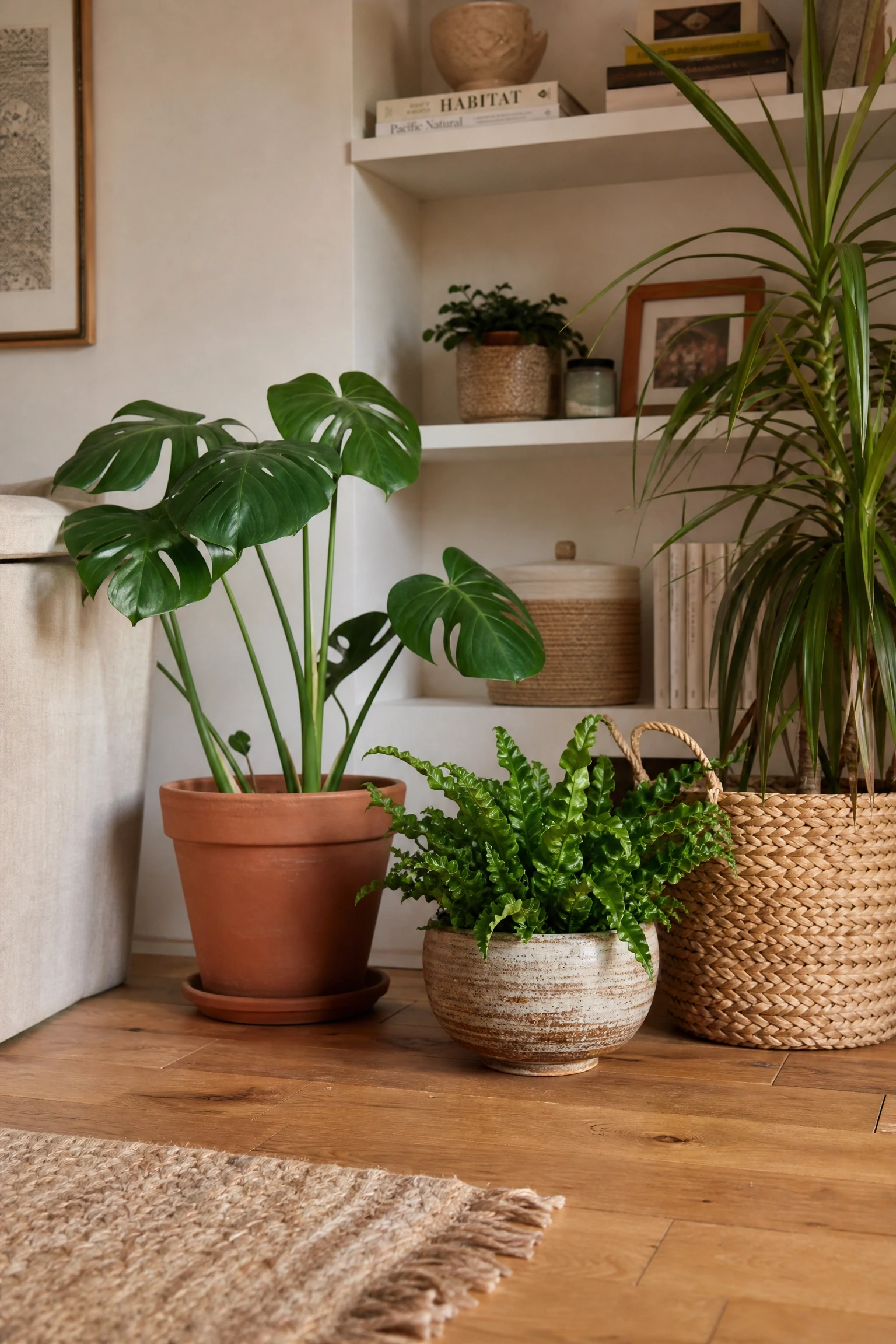
Terracotta pots, hand-thrown ceramic vessels, woven seagrass baskets and raw concrete planters all belong in a boho room because they are made from natural or handcrafted materials that are consistent with the style’s values. Plastic nursery pots left visible, shiny ceramic pots in primary colours or modern geometric metal planters all work against the aesthetic because they introduce a manufactured or contemporary quality that breaks the organic material language of the room.
Heads Up: Terracotta pots are the single most affordable and most effective plant vessel in a boho room; a simple terracotta pot in the right size reads better than an expensive designer planter that does not suit the material story.
21. Cluster Plants in a Corner to Create a Living Focal Point
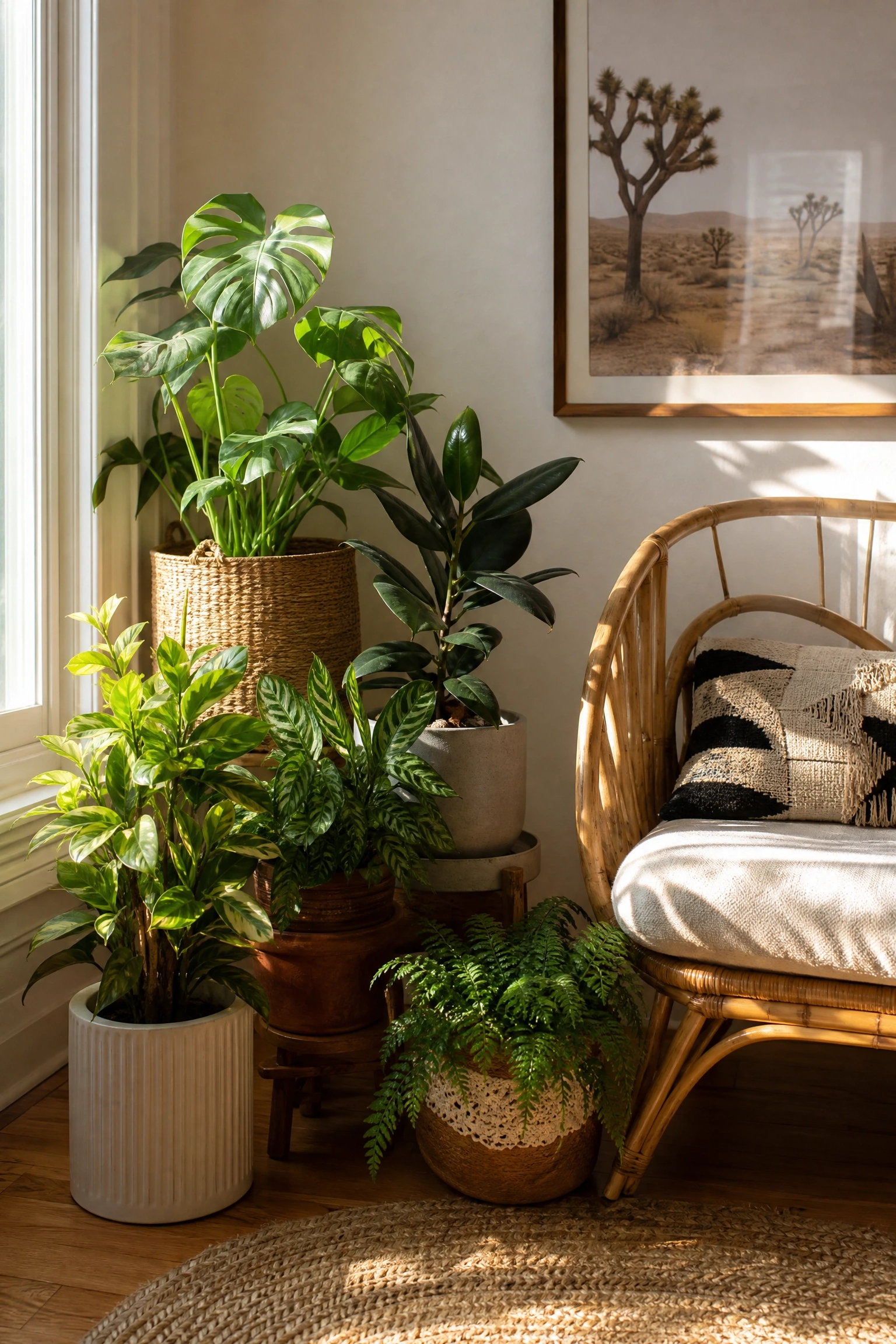
A deliberate cluster of four to six plants in varying heights and pot styles gathered in one corner of the living room creates what interior stylists call a living focal point, a part of the room that is genuinely dynamic because it changes over time as the plants grow. This approach works better than scattering individual plants around the room because the cluster has enough visual mass to hold its own against the furniture and the layered textiles.
Reality Check: A corner plant cluster requires adequate natural light for all the plants you place there; choose plant species that genuinely tolerate the light level of that specific corner rather than positioning the cluster for style and hoping the plants survive.
Before and After: What the Plant Layer Does to a Boho Room
Before: A boho living room with all the right rugs, cushions, rattan furniture and wall hangings but no plants reads as a beautifully decorated but slightly static space. The objects are all present but the room has no life, no movement and no sense that it is inhabited by something that breathes.
After: The same room with a tall plant in the corner, a trailing plant on a shelf and two terracotta pots with smaller plants on the coffee table and floor immediately feels inhabited and genuinely alive. The greenery adds the one dimension that manufactured objects cannot provide: organic imperfection and the reassurance that something in the room is growing.
Lighting
22. Layer Your Lighting Across Three Different Heights
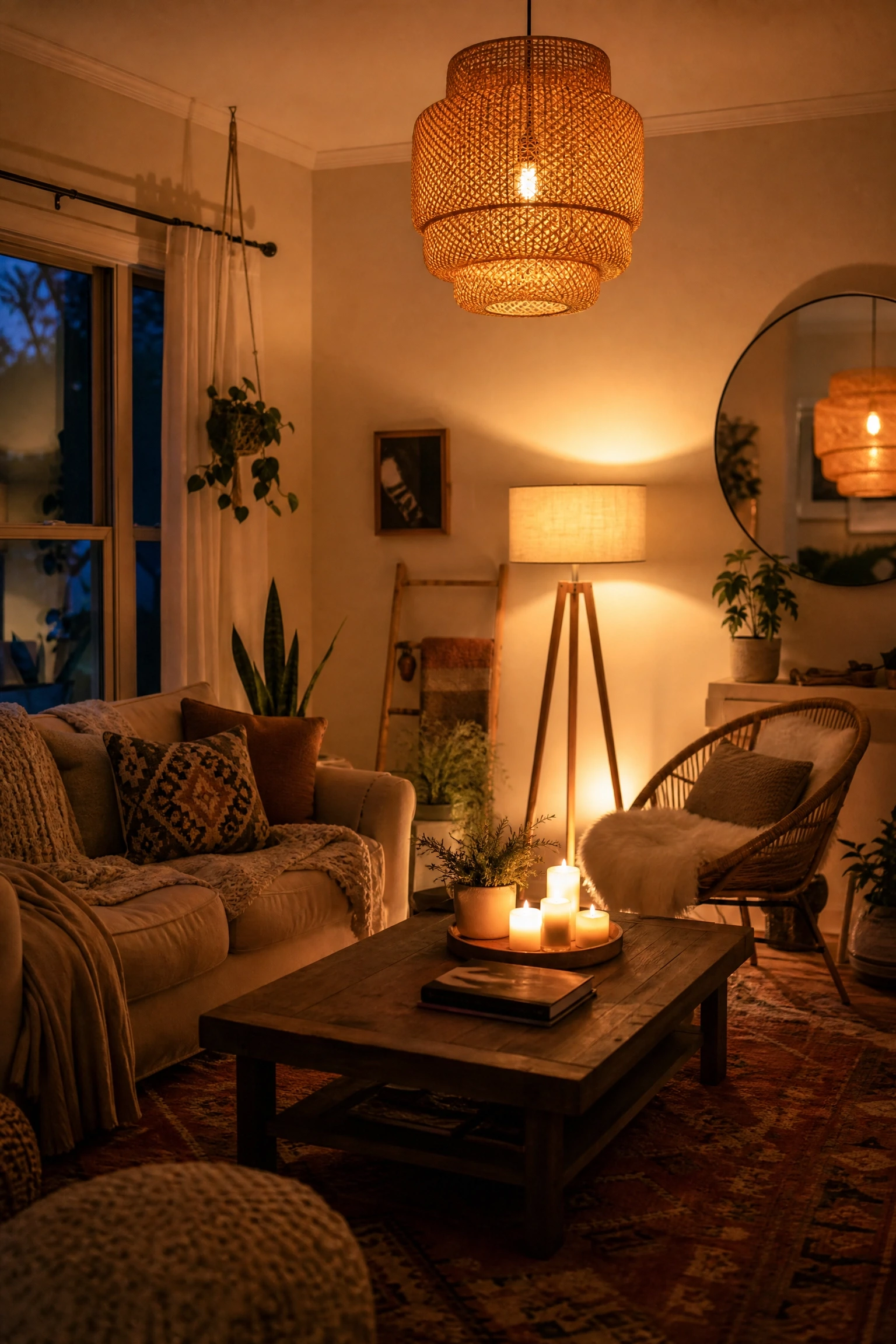
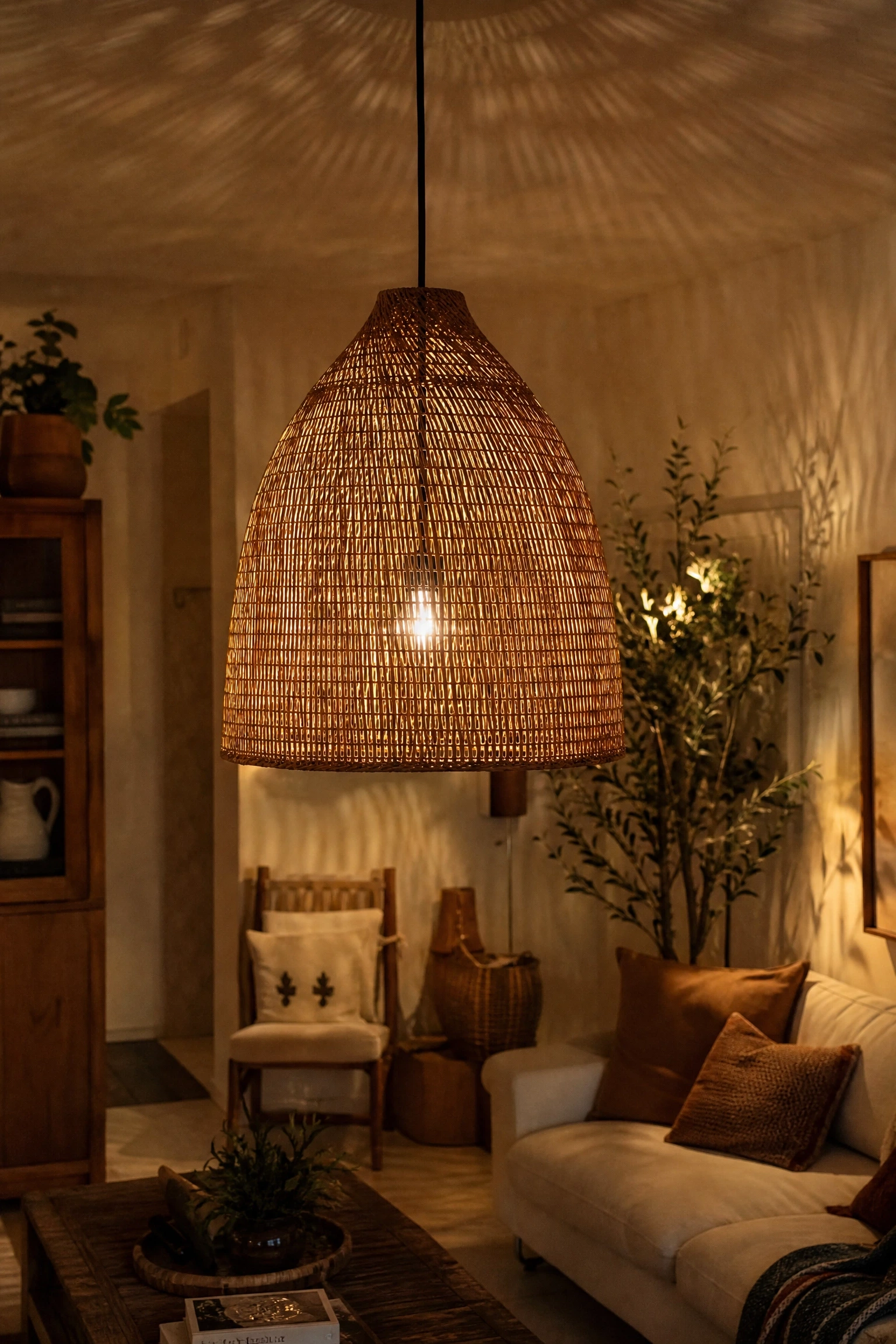
Boho living rooms should never rely on a single overhead light source because top-down artificial light kills the warm, amber-toned atmosphere that makes the style feel genuinely inviting. Plan for a woven or rattan pendant light that provides ambient warmth from above, floor lamps with fabric shades that create pools of warm light at sitting height, and candles or small table lamps at surface level that add the flickering, alive quality that no electric bulb quite replaces.
Pro Move: Every bulb in a boho living room should be a warm white at 2700K maximum; cooler or daylight-spectrum bulbs make earthy tones look muddy and grey and strip the room of all its warmth in the evening when the style looks its best.
23. Hang a Woven Rattan, Beaded or Fabric Pendant Light
A woven rattan pendant, a beaded chandelier, a Moroccan lantern or a handmade fabric shade hanging centrally from the ceiling is the lighting moment that signals boho intent from the moment anyone enters the room. It is the piece that most clearly communicates the style’s preference for handmade, natural and globally influenced over sleek and manufactured, and it casts a warm, dappled light through its material texture that a standard metal or glass shade simply cannot replicate.
Designer Advice: Hang the pendant lower than standard; a shade that drops to around 60 inches from the floor feels intimate and deliberate rather than merely functional, and it keeps the warm light pooled within the seating area rather than diffused upward.
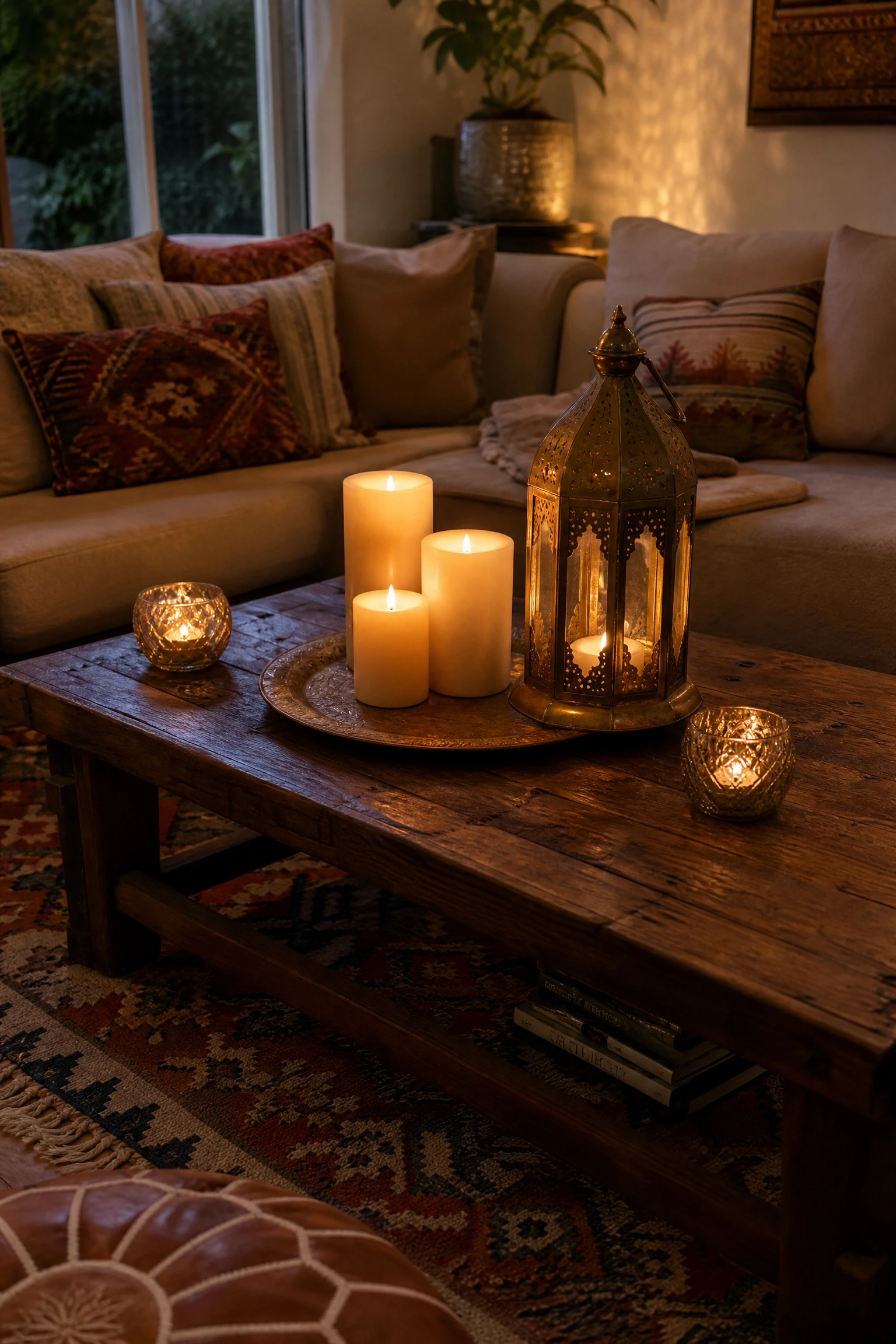
A cluster of varying-height pillar candles on the coffee table, Moroccan lanterns on the floor beside the sofa or a row of glass tea-light holders on the mantelpiece or shelf adds a flickering warmth to a boho living room that is impossible to achieve with electric light alone. The light from candles also interacts with woven textures, metallic objects and glassware in ways that create constantly shifting shadow and reflection, which makes the room feel genuinely alive rather than photographically static.
Quick Tip: LED flame-effect candles in genuine wax candle vessels are an increasingly convincing alternative for anyone who prefers not to manage open flames in a room full of textiles and plants.
Objects and Accessories
25. Collect Ceramics That Show the Hand That Made Them
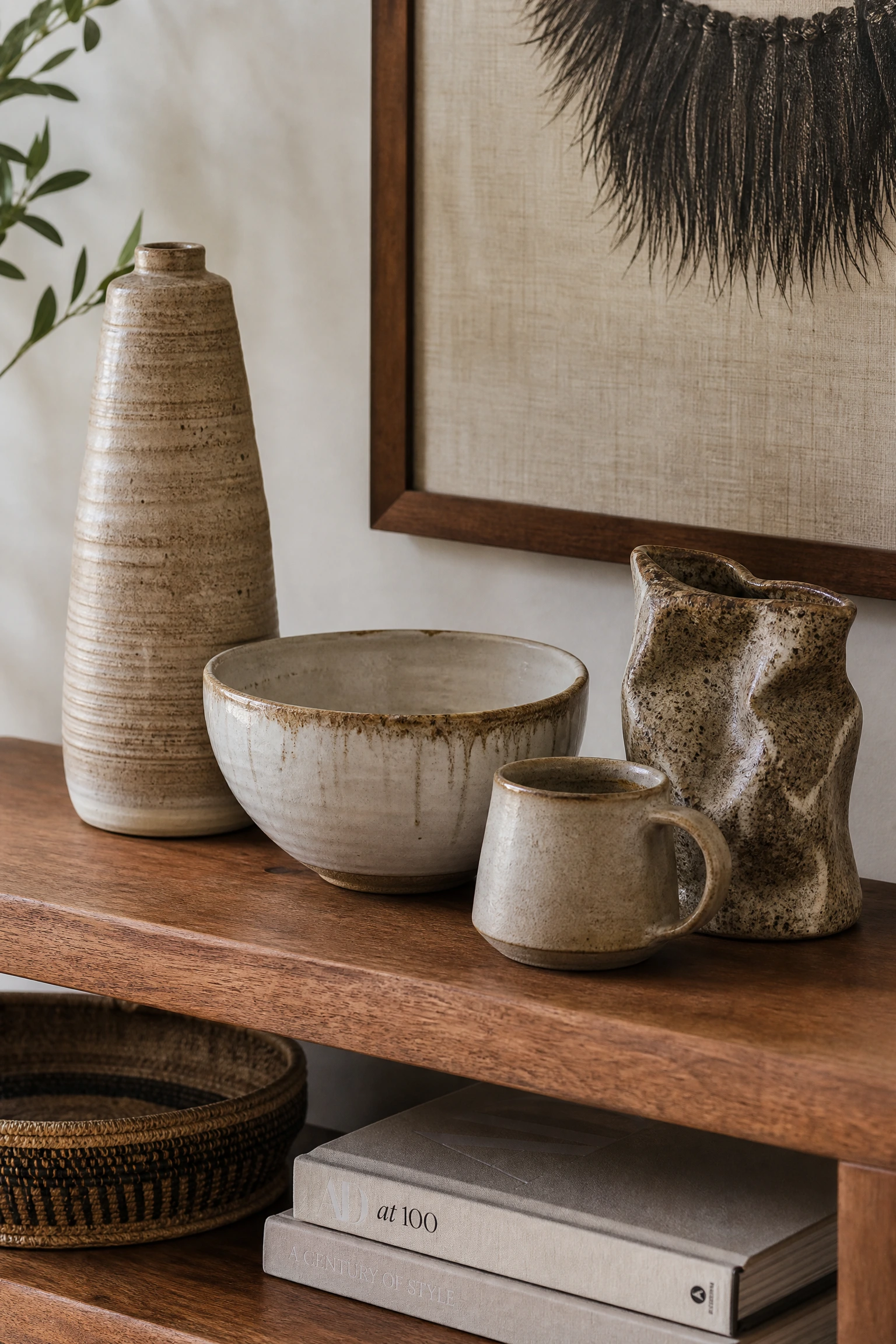
Hand-thrown ceramics with visible throwing lines, irregular rims, dripped glazes and imperfect forms are the right type of ceramic for a boho living room because they carry the evidence of human making rather than factory consistency. A collection of three to five pieces in related earthy tones grouped on a shelf, a coffee table or a console immediately reads as curated and collected rather than purchased as a set, which is exactly the quality that defines the boho approach to objects.
Pro Move: Local pottery markets, small ceramic studios and platforms like Etsy consistently offer hand-thrown pieces at accessible prices; the difference between a handmade ceramic and a mass-produced imitation is visible at a glance once you know what the throwing lines look like.
26. Incorporate Global Textiles and Objects With Real Cultural Provenance
The original spirit of bohemian style was built on genuine curiosity about other cultures and a real desire to bring objects from those cultures into the home with respect and knowledge rather than as costume or trend. A Moroccan wedding blanket, a Turkish ceramic bowl, an Indian block-print cushion or a West African woven basket brought back from travel or purchased directly from an artisan carries a story and an energy that a mass-produced replica cannot; the provenance is part of what makes the object right for the room.
Heads Up: When sourcing global objects locally, look for retailers who work directly with artisan communities and pay fair prices; the ethical dimension of sourcing is increasingly important and aligns naturally with the values the boho aesthetic is supposed to represent.
27. Add Woven Baskets at Multiple Scales for Texture and Storage
Woven seagrass, rattan, jute or hyacinth baskets in a range of sizes do double duty in a boho living room: they deliver natural material texture at every level from the floor to the shelf, and they solve the practical storage challenge of keeping the room from tipping from curated into genuinely cluttered. Large floor baskets hold throws and magazines, medium baskets on shelves group small objects, and small baskets on the coffee table or console contain remote controls, candles and the kind of daily objects that would otherwise break the room’s visual calm.
Reality Check: Baskets only read as styling rather than storage when they have lids or when what is inside them is not visible; an open basket full of cables and phone chargers is just a messy basket regardless of how beautifully it is woven.
28. Display Books With Their Spines Showing as Colour and Texture
A stack of books on the coffee table, a row of spines in warm earthy tones on the open shelf or a small pile beside a plant cluster all contribute colour, texture and intellectual character to a boho room in a way that purely decorative objects cannot. Boho spaces are supposed to feel inhabited by people with interests and curiosity, and a few genuinely read books displayed casually communicate that quality more honestly than any styled decor piece.
Quick Tip: Group books by spine colour in earthy tones, cream, brown, terracotta and warm green, so they contribute to the room’s colour story even when they are casually stacked rather than formally arranged.
29. Use a Vintage Side Table or Carved Wood Accent as a Conversation Piece
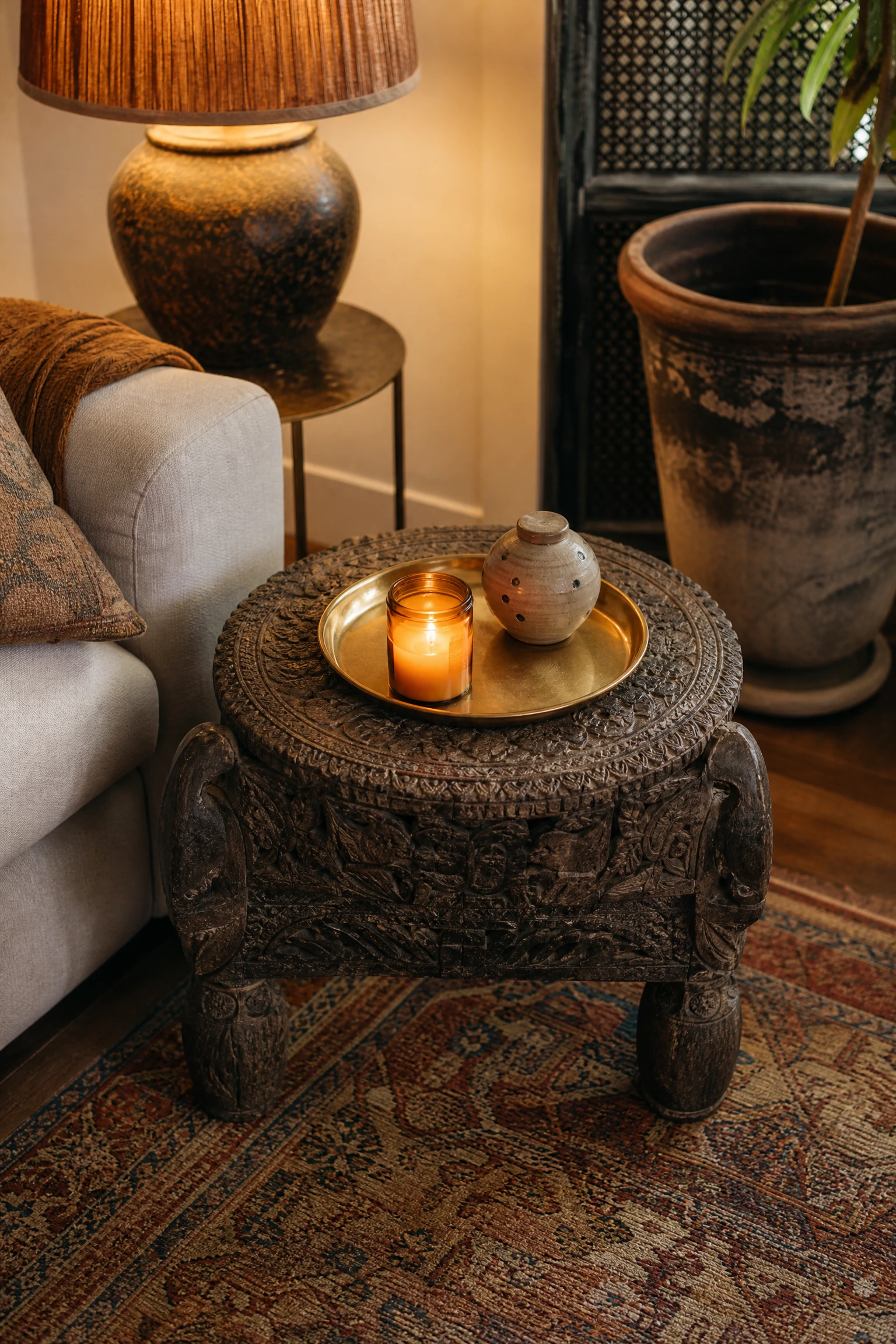
One genuinely old or visually distinctive piece of furniture or object, whether a carved Indian side table, a vintage Moroccan tea tray on a low stand, an antique brass tray or a mid-century wood stool, anchors the room’s boho credentials in a way that new purchases cannot replicate. This is the piece that someone always asks about, and its story, where it came from and why you have it, is exactly the kind of personal history the style is meant to celebrate.
Designer Advice: Limit yourself to one or two genuinely old or truly distinctive pieces per room rather than filling the space with vintage; too many statement pieces compete for attention and the room loses the calm backdrop it needs to show them off.
30. Hang Dried Botanicals, Pampas Grass or Eucalyptus for Living Texture
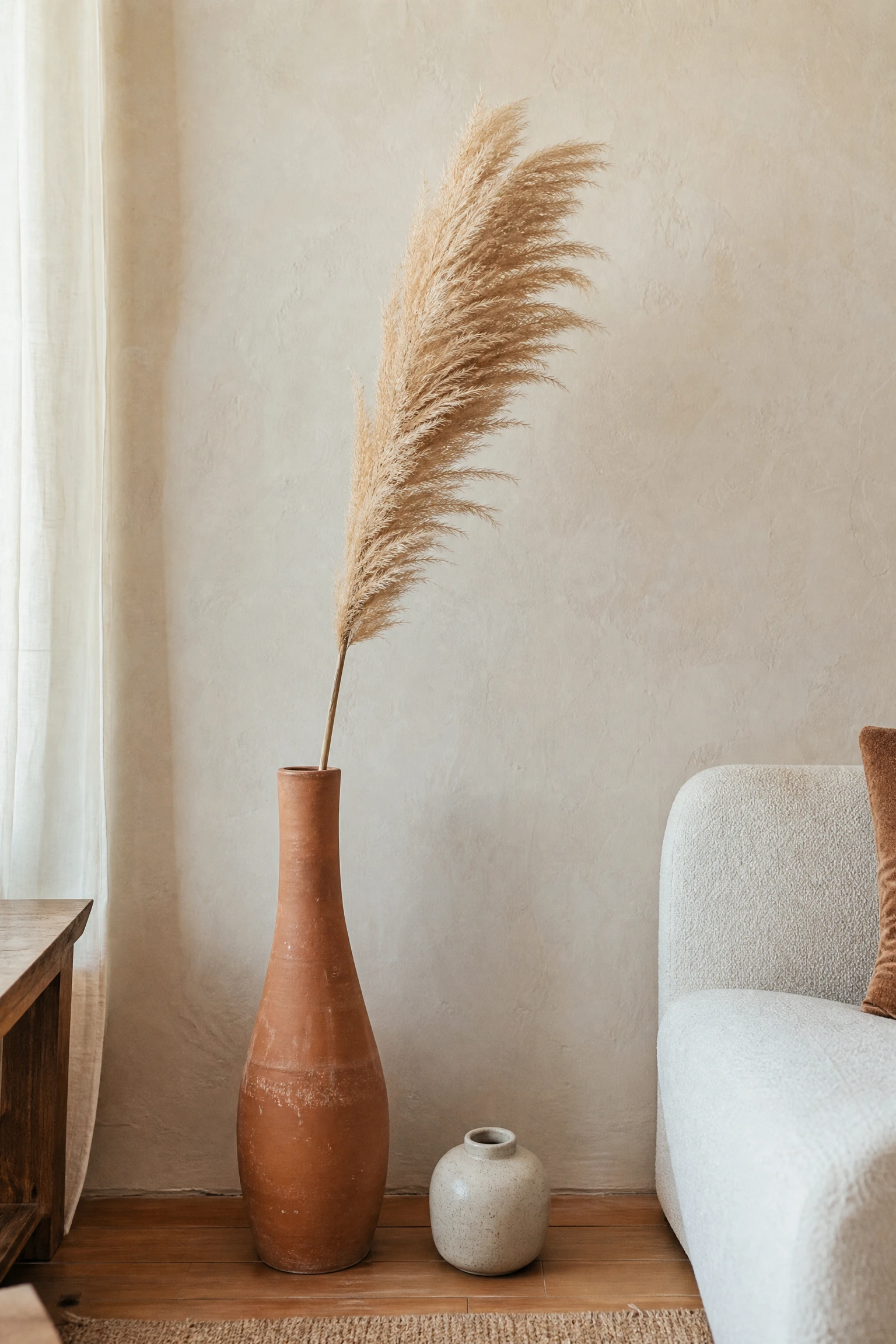
Dried botanicals, pampas grass, dried lavender bunches, preserved eucalyptus or a bundle of dried grasses in a tall ceramic vase introduce soft, organic movement and a warm straw-like colour that complements earthy boho palettes beautifully. Unlike fresh flowers, dried botanicals last months or years without maintenance, and their slightly faded, preserved quality has an honesty and an impermanence that is very consistent with the boho philosophy of natural beauty over perfection.
Quick Tip: A single stem of pampas grass in a tall narrow vase reads as more elegant and considered than a full bouquet; the current overcrowded pampas arrangement has become a cliche and the edited single-stem version looks fresher and more intentional.
31. Know When to Stop: The Half-Empty Shelf Rule Applied to the Whole Room
The most important idea in any boho living room is also the least instinctive one: stop before you think you are finished. The rooms that consistently photograph and live the best are the ones where every surface has some breathing room, where there are pockets of empty space between the objects, and where the eye is given somewhere calm to rest amid all the richness. In practice this means editing as often as you add; for every new object that comes in, consider whether an existing one should come out.
Reality Check: If you stand in your boho living room and feel slightly overwhelmed rather than deeply at ease, the room has too much in it; remove objects one by one until the space feels generous rather than full, and the look will immediately feel more considered.
The One Thing Every Good Boho Room Has in Common
Every boho living room that genuinely works, regardless of its specific colour palette, furniture choices or mix of global objects, has one quality in common: it feels like it was built by a real person over real time rather than assembled from a single shopping session. That quality cannot be purchased directly but it can be created deliberately, by choosing objects with genuine stories, by editing as carefully as you collect, by allowing some imperfection and by resisting the urge to fill every surface and every wall. The ideas in this article are a starting point rather than a shopping list; the room that results from following them should ultimately look less like any of the inspiration images and more like you, which is exactly what the boho philosophy has always been about.