A blue couch is one of the most versatile furniture pieces you can own. I have had a navy sofa for three years and it has worked through two apartment moves and three complete room redecorations. Blue works with warm tones, cool tones, neutrals, and bolds. Here are the living room ideas that make a blue couch look its best.
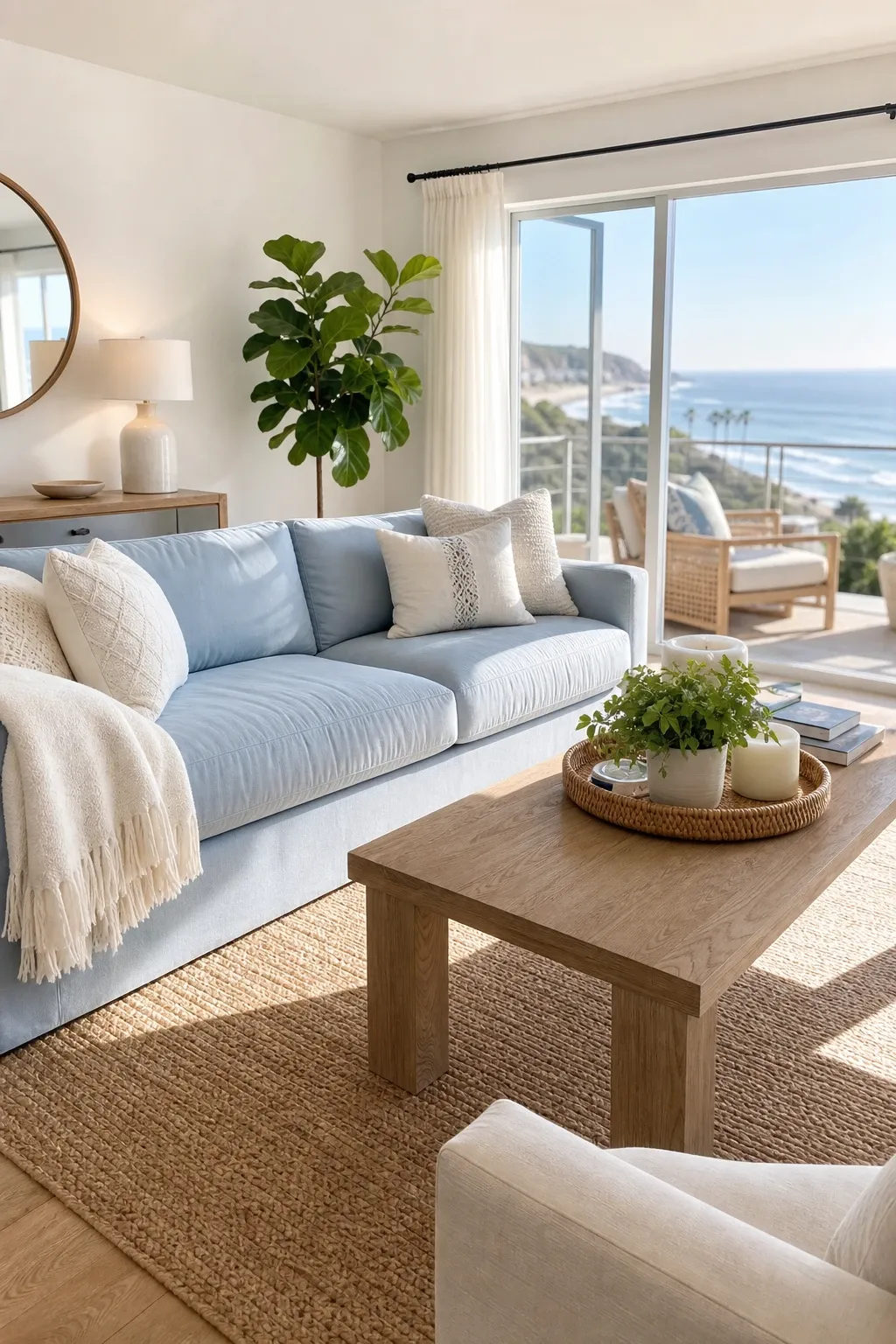
A blue couch with white walls, white curtains, and light wood furniture creates an easy coastal look. Add a jute rug, woven baskets, and a few sea-themed accessories and the room feels like a beach house. The blue and white palette is the most natural fit for a blue couch because it feels clean, bright, and classic. This combination works in any home, not just ones near the coast.
Designer Tip: Use at least three different textures in a blue and white room to prevent it from feeling flat. Linen curtains, a chunky knit throw, and a woven rug all in white add visual interest without adding more colors. Texture is what keeps a two-color room from looking boring.
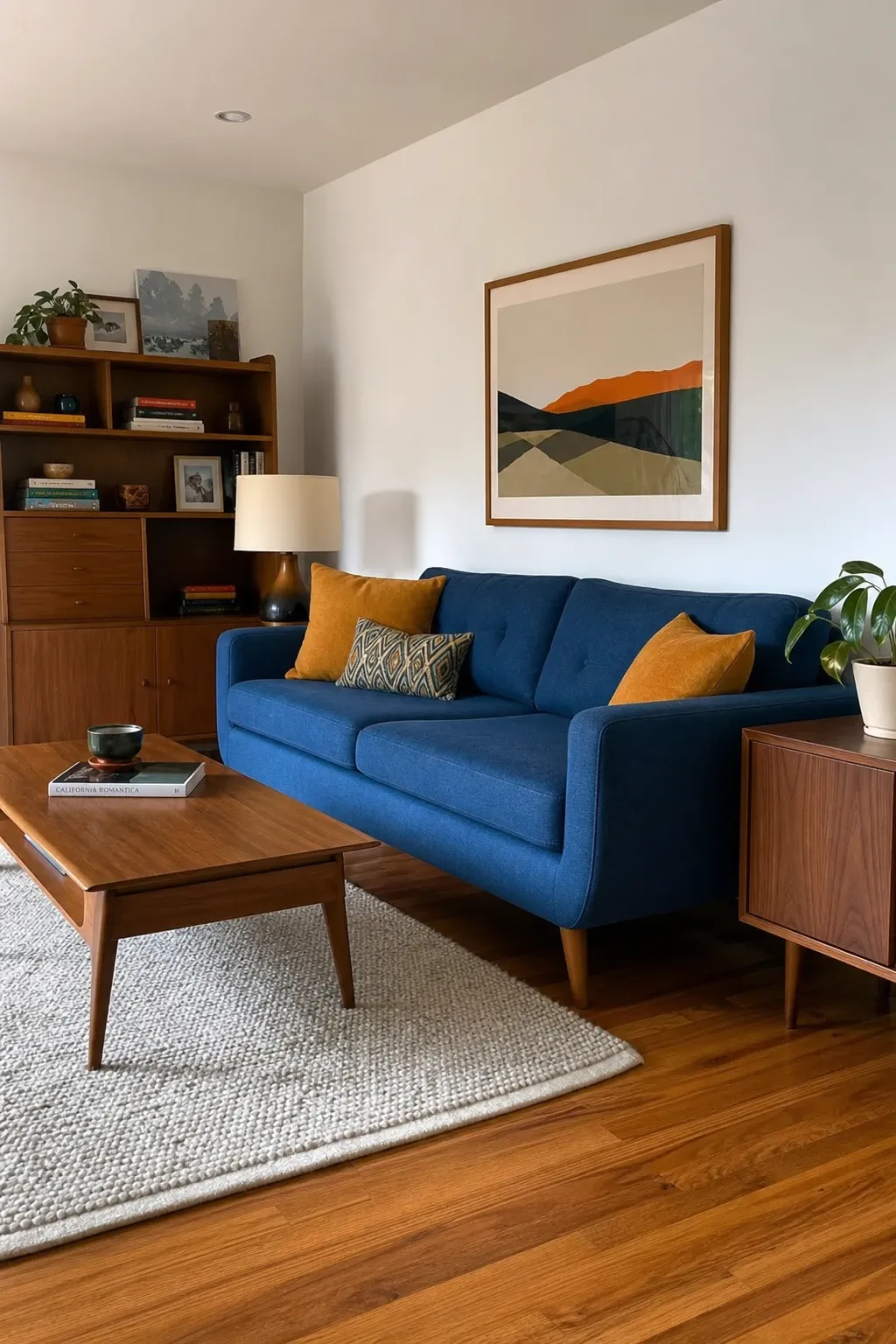
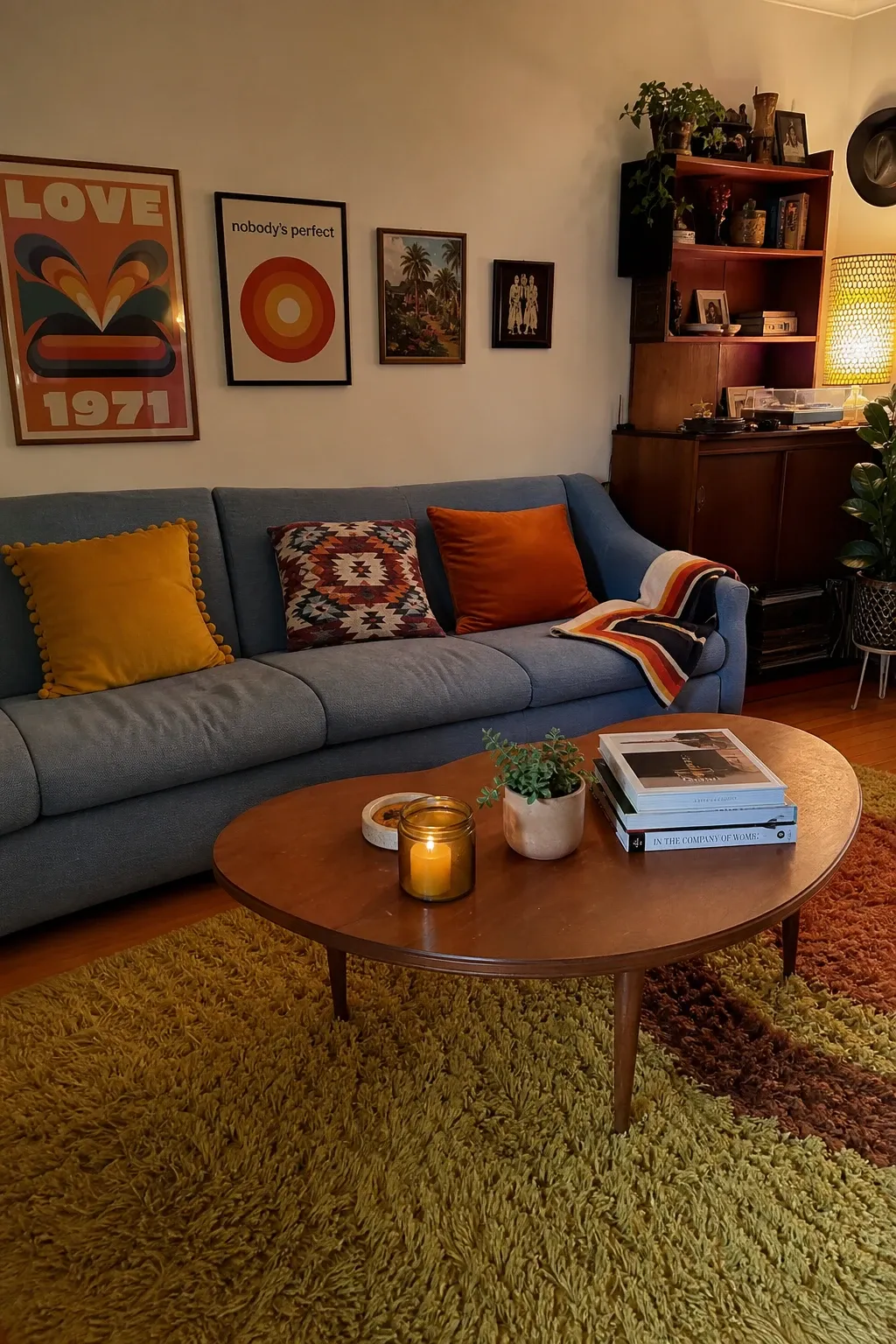
Mustard yellow pillows, a yellow throw blanket, or a golden yellow rug paired with a blue couch creates a warm, energetic contrast. Blue and yellow are complementary colors that make each other look more vivid. The yellow warms up the cool blue and adds a cheerful pop that brightens the whole room. This combination works with navy, royal blue, and denim blue couches.
Designer Tip: Use mustard or golden yellow rather than bright lemon yellow. Bright yellows clash with blue and create a jarring contrast. Mustard has enough warmth and depth to complement blue without overwhelming it. The muted yellow feels sophisticated where bright yellow feels juvenile.
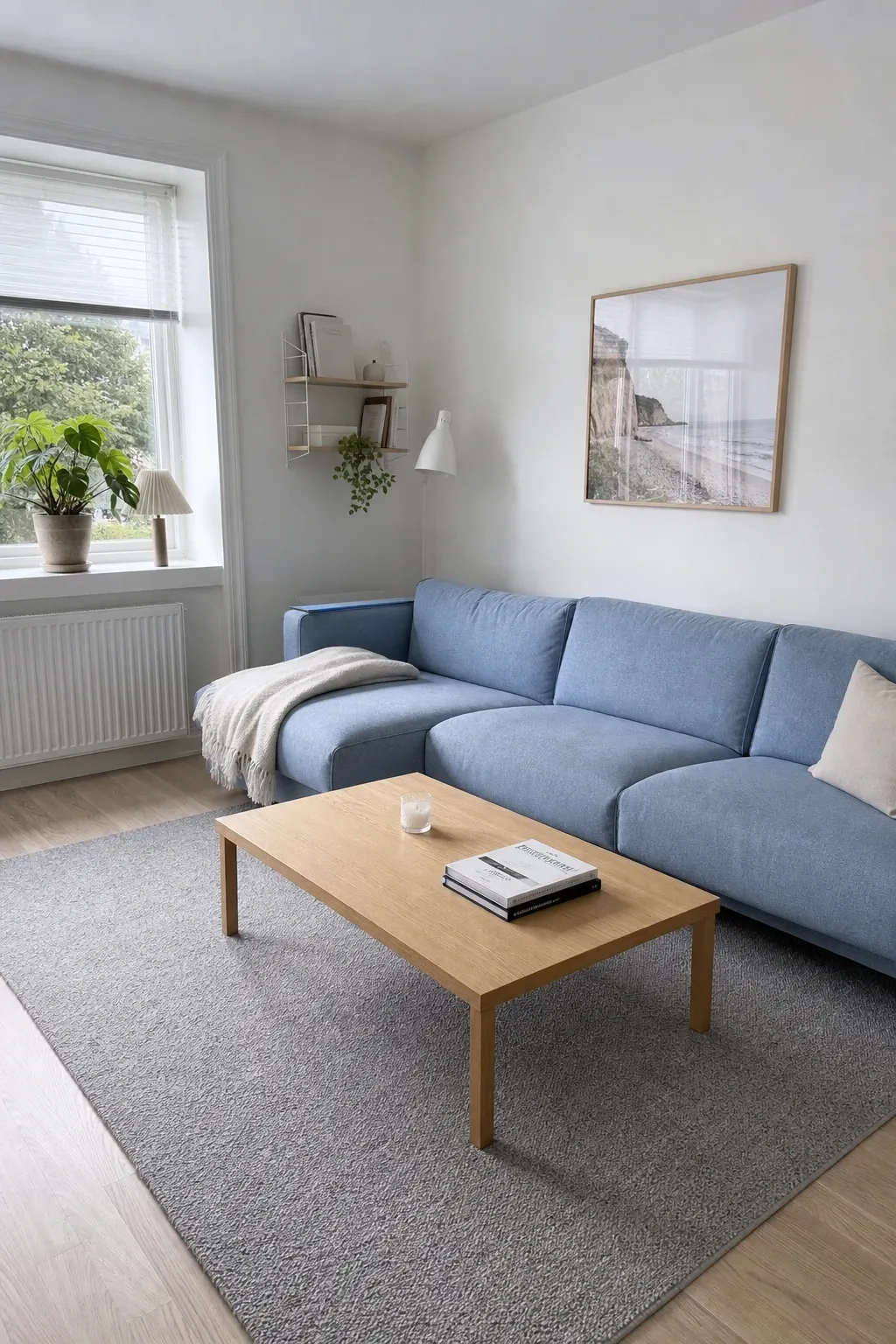
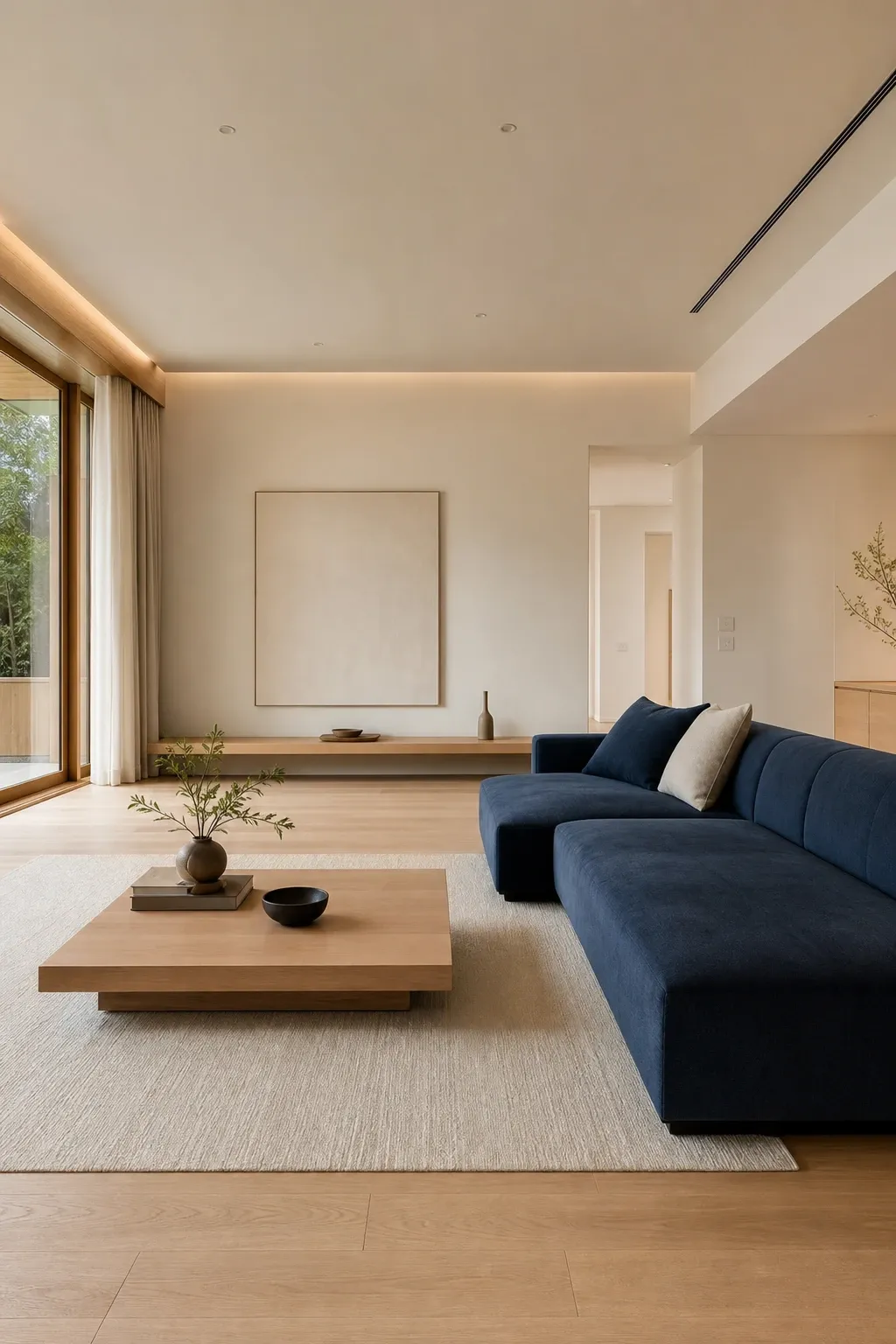
A blue couch in a minimal room with clean lines, few accessories, and a neutral backdrop makes the sofa the single statement piece. White or light gray walls, a simple coffee table, and one floor lamp let the blue couch carry the room. In a minimalist space, the quality and shape of the couch matters more because there is nothing else to distract from it. A well-designed blue couch in a spare room is all you need.
Designer Tip: Choose a blue couch with clean lines and slim arms for a minimalist room. Bulky, overstuffed couches look out of place in minimalist spaces. A streamlined silhouette with tight cushions and tapered legs fits the aesthetic better.
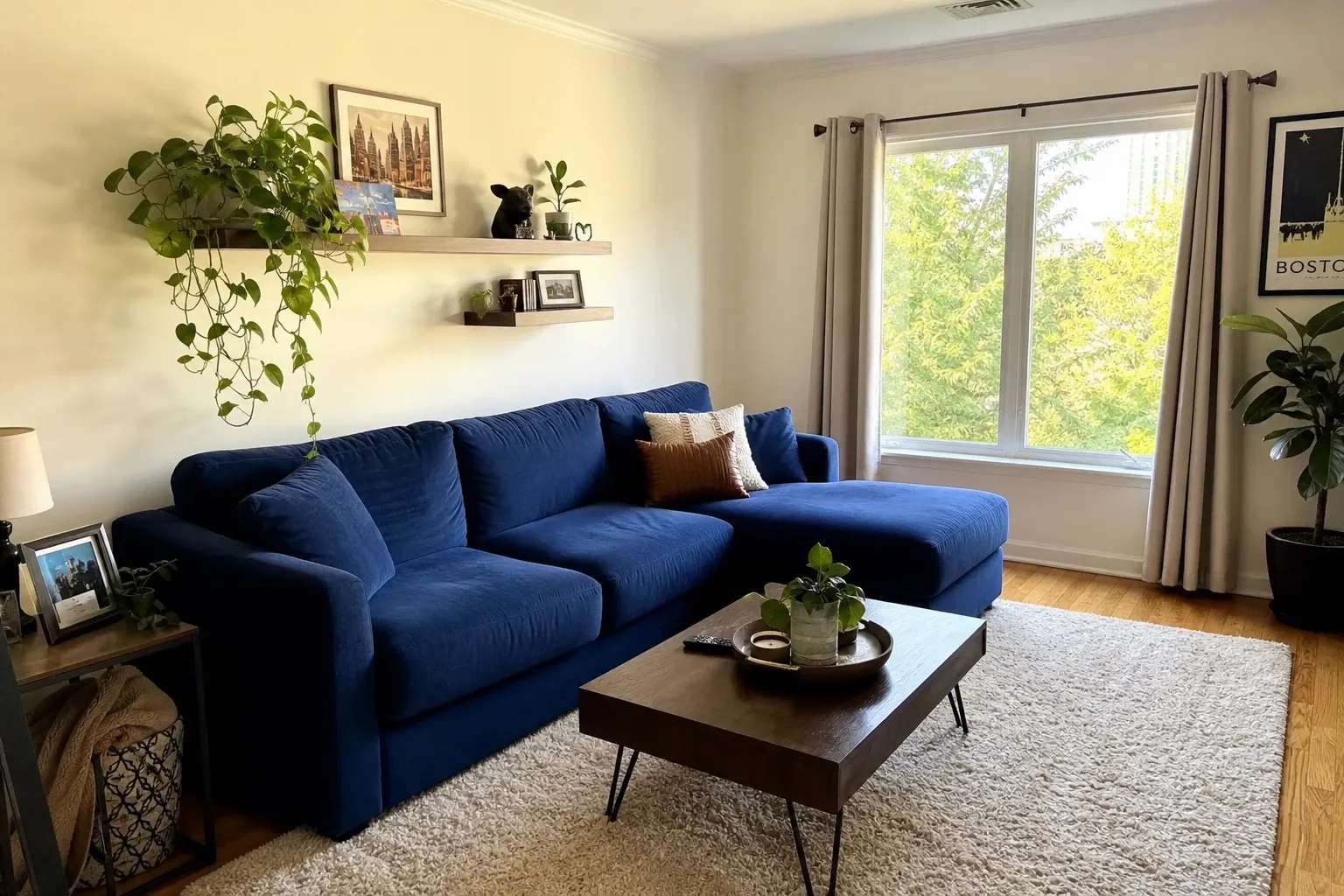
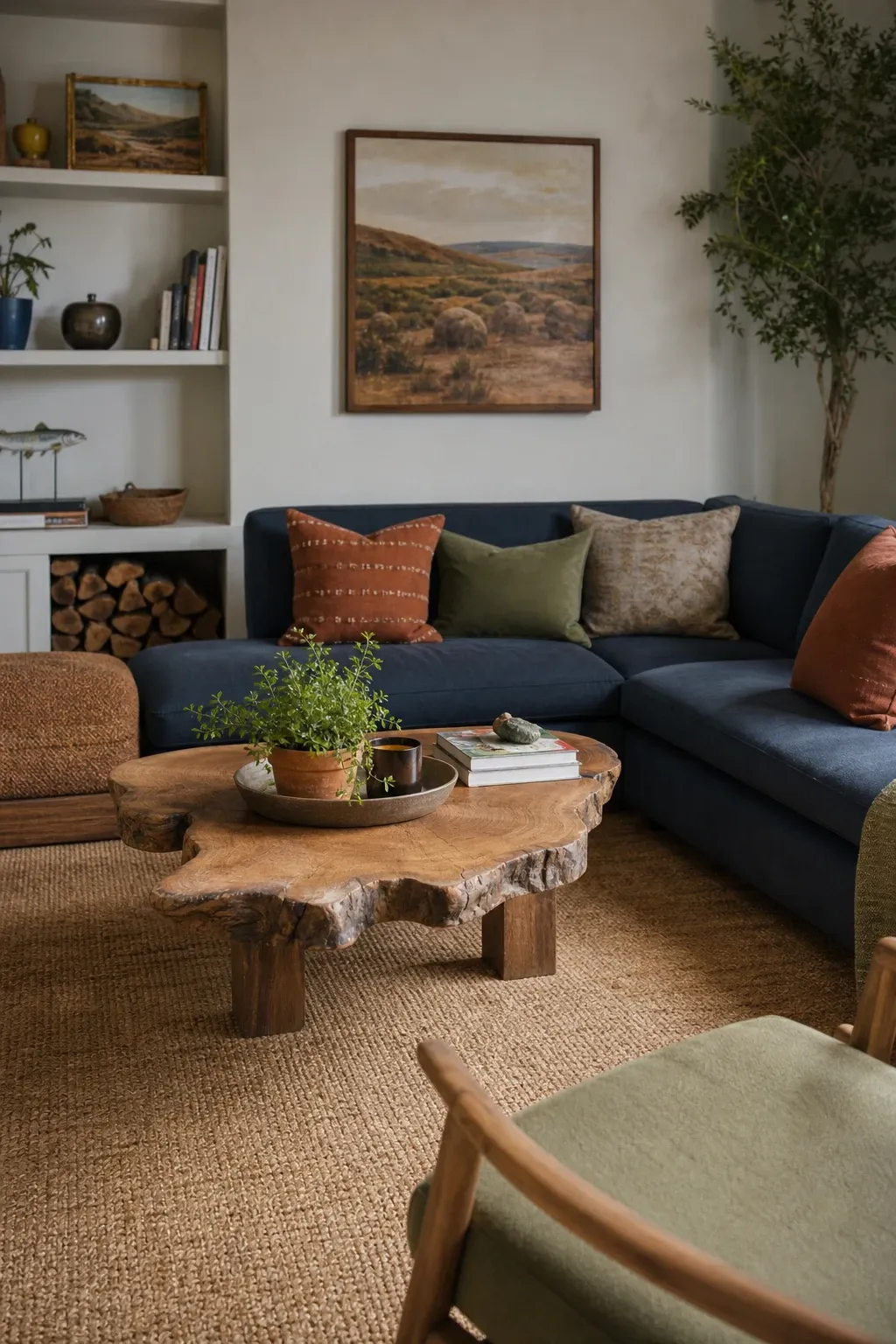
Warm wood furniture in walnut, oak, or teak paired with a blue couch creates a balanced room that feels both cool and warm at the same time. The wood adds warmth that prevents the blue from feeling cold. A walnut coffee table, wood-framed armchair, and floating wood shelves complement a navy or medium blue couch perfectly. This combination works in mid-century, Scandinavian, and transitional style rooms.
Designer Tip: Keep the wood finish consistent throughout the room. Matching wood tones on the coffee table, side tables, and media console creates a cohesive look. Mixing oak with walnut with pine in the same room creates visual clutter, especially when paired with a bold blue couch.
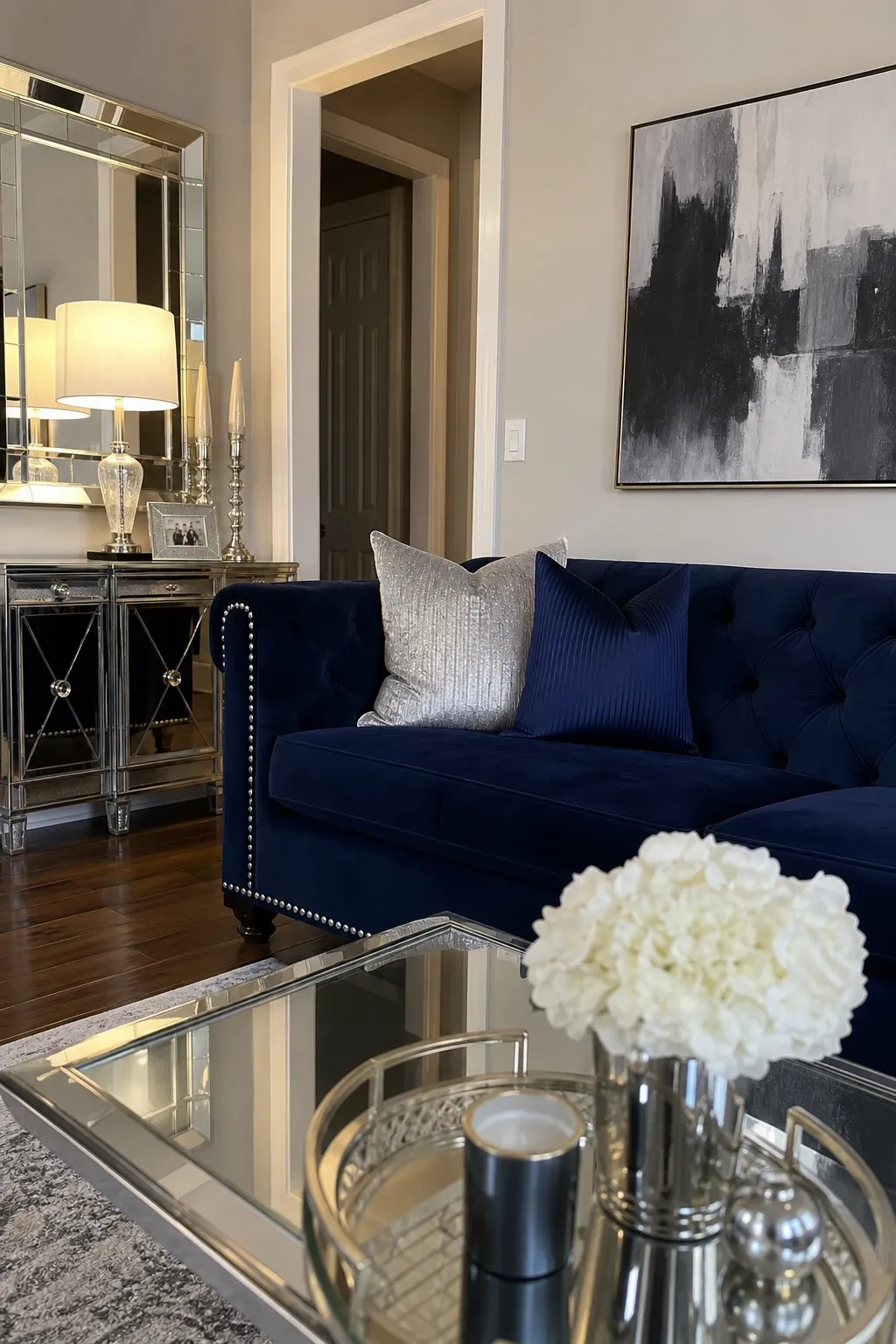
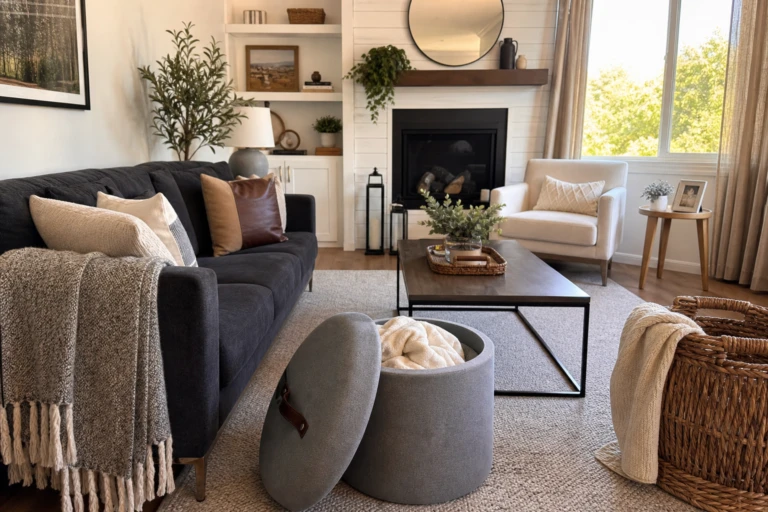
A blue couch with gray walls, a gray rug, and gray throw pillows creates a cool, sophisticated palette. The tones are close enough to feel unified but different enough to have contrast. This is one of the easiest color combinations to get right because blue and gray share a cool undertone. Add a few warm accents in brass, gold, or natural wood to keep the room from feeling too cold.
Designer Tip: Make sure the gray and blue tones have the same undertone. A warm gray with a cool blue looks wrong. A cool gray with a cool blue looks intentional. Hold fabric swatches next to each other in natural light to check that they share the same temperature.
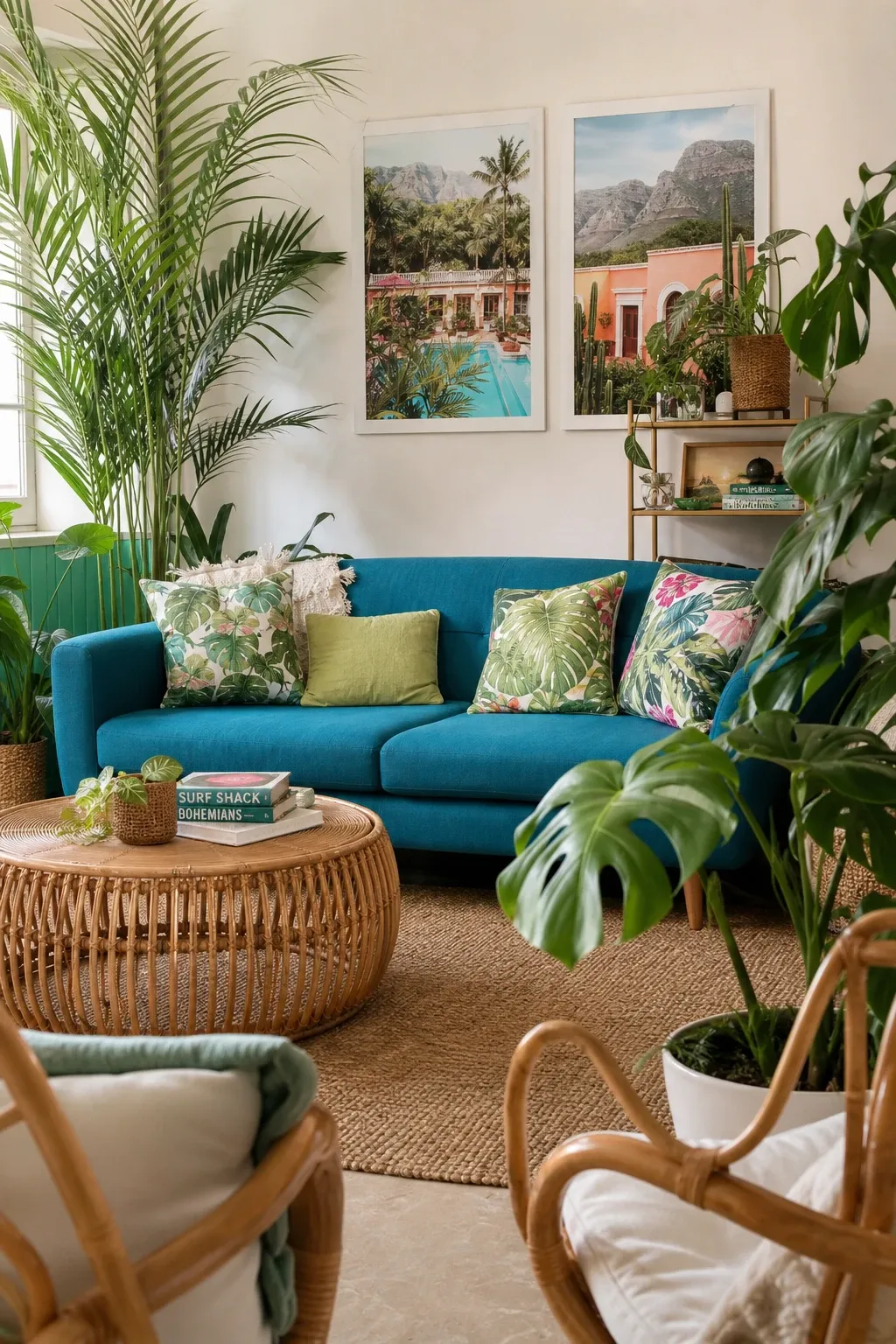
A blue couch surrounded by multiple bold colors creates a vibrant, eclectic living room. Mix in orange, green, pink, and yellow through pillows, art, and accessories. The blue couch grounds the room while the other colors provide energy and personality. This approach works best when one or two colors appear in the rug, tying the whole palette together. The room should feel like a collected collection, not a random assortment.
Designer Tip: Let the blue couch be the largest color block in the room. Accent colors should appear in smaller doses on pillows, art, and accessories. If another color takes up as much visual space as the blue, the room loses its anchor and feels chaotic.
A blue fabric couch paired with a brown leather armchair, leather ottoman, or leather-detailed accessories creates a room that feels layered and masculine. The contrast between soft blue fabric and rich brown leather is classic and works in dens, home offices, and traditional living rooms. Cognac and caramel leather tones are the best matches for navy blue. The leather adds warmth and a lived-in quality.
Designer Tip: Let the leather develop its natural patina rather than buying distressed leather. New leather that ages naturally alongside the blue couch develops character over time and the two pieces will look like they have been paired together for years.
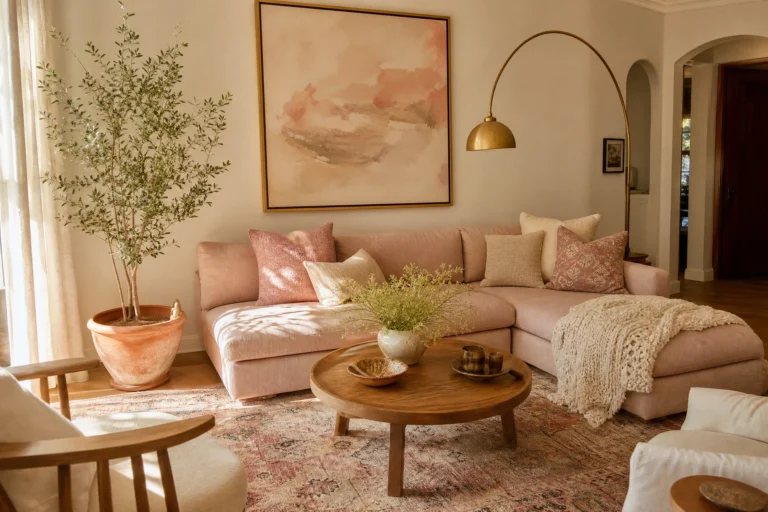
Blush pink accents soften a blue couch and add warmth without competing for attention. Pink pillows, a pink throw, or pink-toned artwork against a blue sofa creates a pairing that feels fresh and modern. The pink balances the coolness of the blue and adds a gentle, approachable quality. This combination is especially popular in living rooms that aim for a soft, contemporary look.
Designer Tip: Use blush or dusty rose rather than hot pink. Strong pinks overpower the blue and shift the room energy from calm to energetic. Soft pinks complement the blue and maintain the relaxed atmosphere that a living room needs.
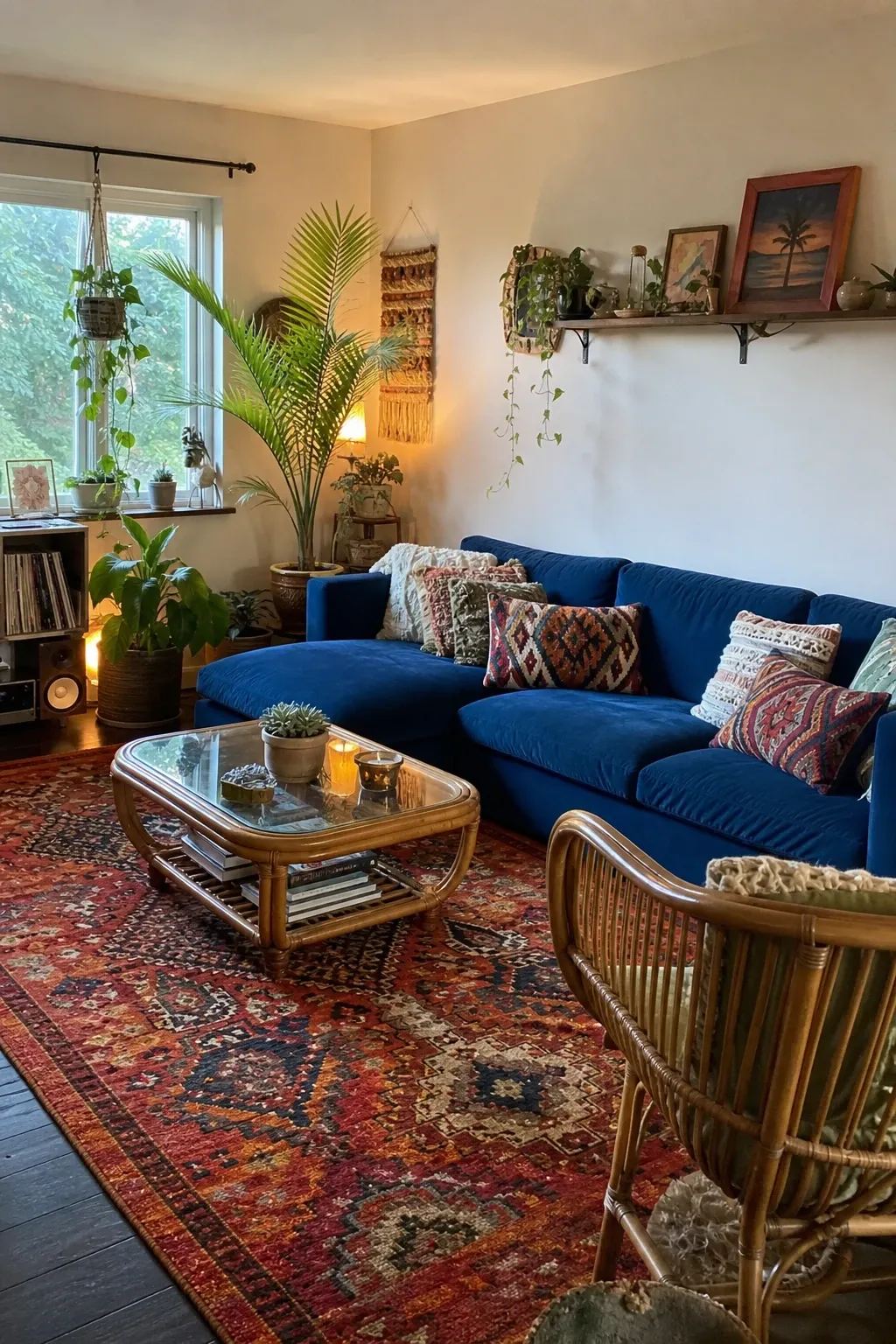
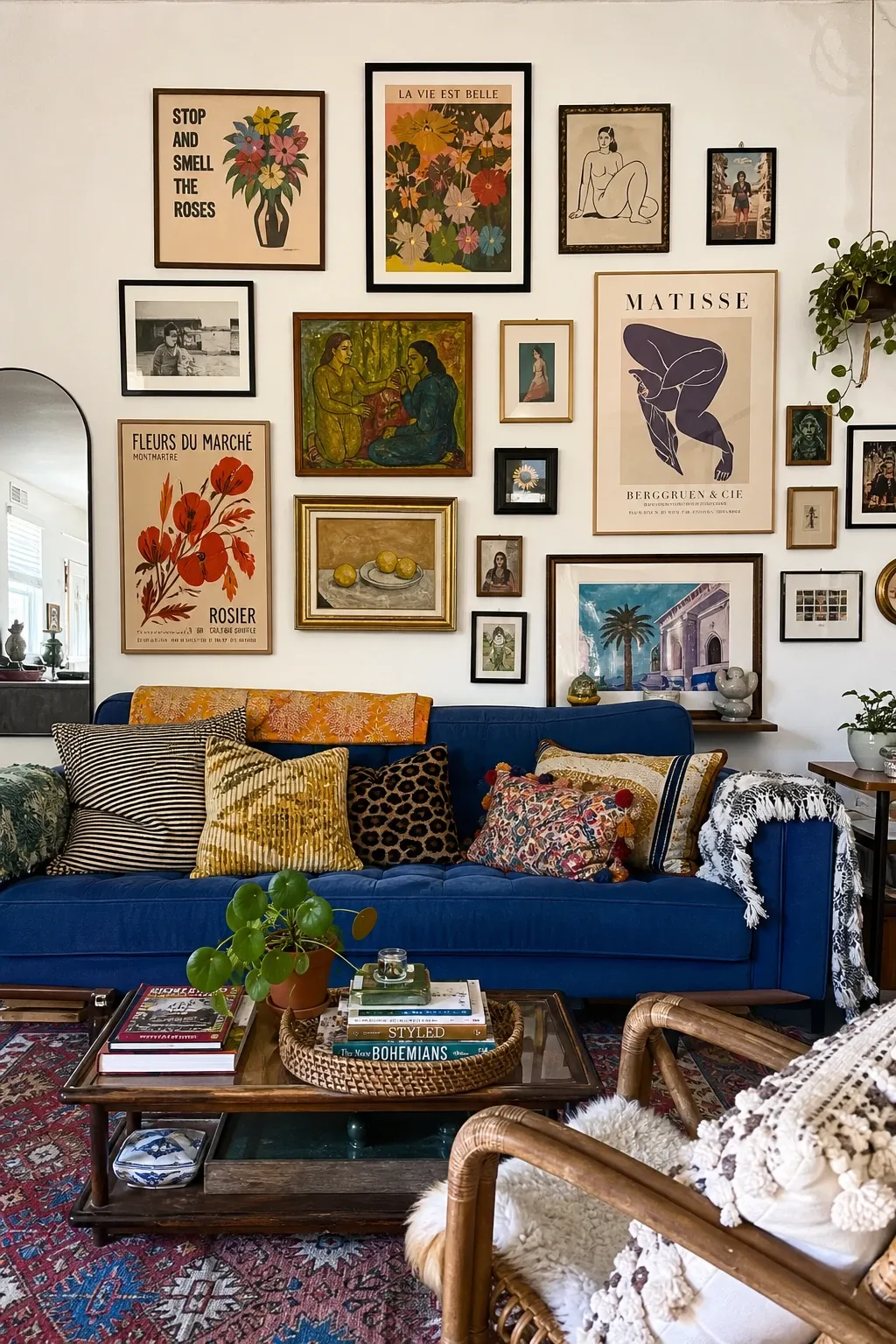
A blue couch draped with patterned textiles, surrounded by layered rugs, floor cushions, and plants creates a relaxed boho living room. The blue serves as a calm base that the busier patterns and textures can build on. Kilim pillows, a Moroccan rug, and macrame wall hangings all work with blue. The key to boho with a blue couch is mixing patterns that share at least one color with the sofa.
Designer Tip: Layer at least two rugs for an authentic boho look. A large neutral rug as a base with a smaller patterned rug on top creates the layered, collected feel that defines boho style. The rugs anchor the blue couch and define the seating area.
Blue and green together mimic nature and create a room that feels organic and rich. An emerald green armchair, green velvet pillows, or a collection of green plants paired with a blue couch gives the room a jewel-toned depth. The two colors share a cool undertone and blend naturally. This pairing feels sophisticated and works in both modern and traditional spaces.
Designer Tip: Add a warm metallic like brass or gold to prevent a blue-and-green room from feeling too cool. A brass floor lamp, gold picture frames, or a brass coffee table adds warmth that balances the cool tones and keeps the room feeling inviting.
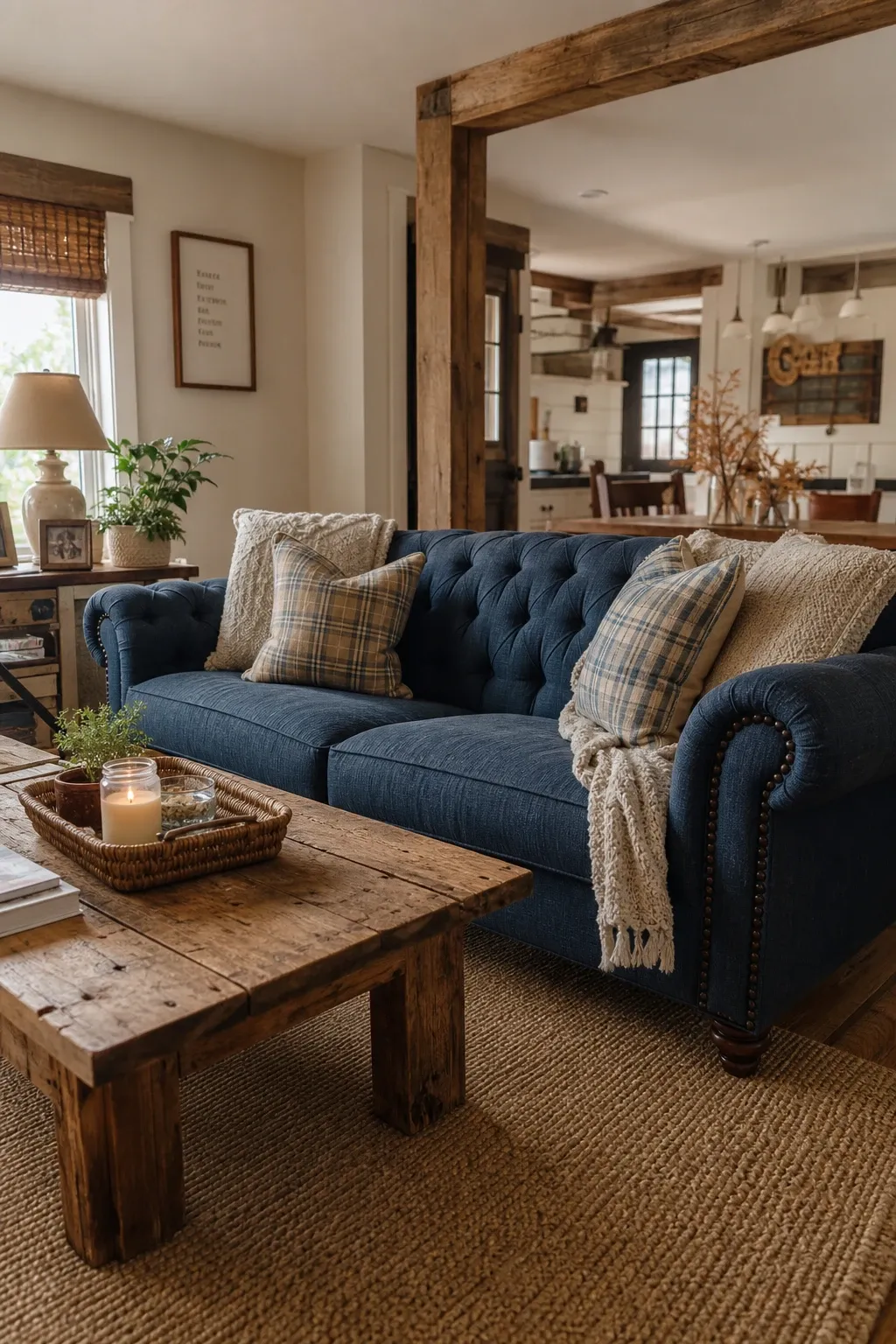
A light blue or denim blue couch in a farmhouse living room with white shiplap walls, distressed wood furniture, and linen textiles feels relaxed and welcoming. Blue is a natural fit for farmhouse style because it echoes old indigo fabrics and blue-painted furniture found in traditional country homes. Pair with cream, white, and natural wood for the most authentic look.
Designer Tip: Choose a durable, washable fabric for a farmhouse blue couch. Performance fabrics in cotton or linen look work perfectly for the casual farmhouse vibe while handling the wear and tear of a well-used family room. Velvet feels too formal for farmhouse style.
A navy couch in a crisp white room with white molding, white bookshelves, and white curtains creates a high-contrast look that feels preppy and polished. The navy is dark enough to anchor the room while the white keeps everything bright. Add striped pillows in navy and white to play up the nautical feel, or use solid cream pillows for a calmer version. This contrast works in any climate and any home style.
Designer Tip: Use warm white rather than bright white in a room with a navy couch. Bright white against navy can feel stark and cold. A warm white with a cream undertone softens the contrast and makes the room feel more welcoming.
Rust orange pillows, a terracotta vase, or a burnt orange throw on a blue couch creates a warm-cool contrast that feels balanced and inviting. Rust and blue are across from each other on the color wheel, which makes them natural complements. The warm orange tones prevent the blue from feeling chilly. This combination works particularly well in fall and winter but looks good year-round.
Designer Tip: Use rust orange in two or three places around the room, not just on the couch. A rust lamp shade, an orange book on the shelf, and rust pillows on the couch create a rhythm that makes the color choice feel intentional rather than accidental.
A gallery wall above a blue couch turns the sofa into the base of a larger design moment. The art and frames create visual interest above while the blue couch provides a solid block of color below. Mix frame sizes and art styles for an eclectic gallery, or use matching frames for a more formal grid layout. The gallery wall draws the eye up and makes the room feel taller.
Designer Tip: Start the gallery wall about 6 to 8 inches above the back of the couch. Too high and the art floats disconnected from the furniture. Too low and people bump the frames when they lean back. That small gap connects the gallery to the couch visually without physical contact.
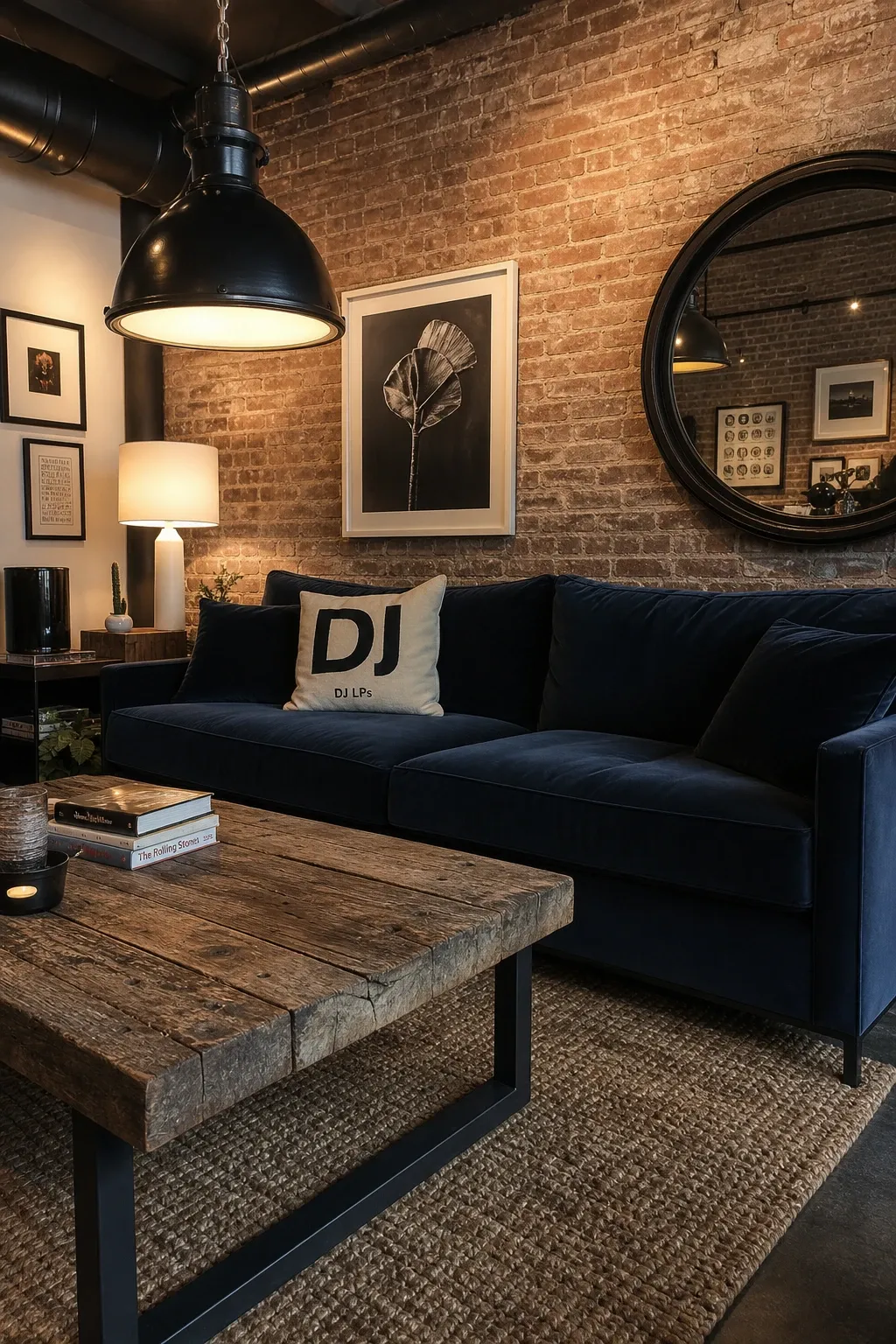
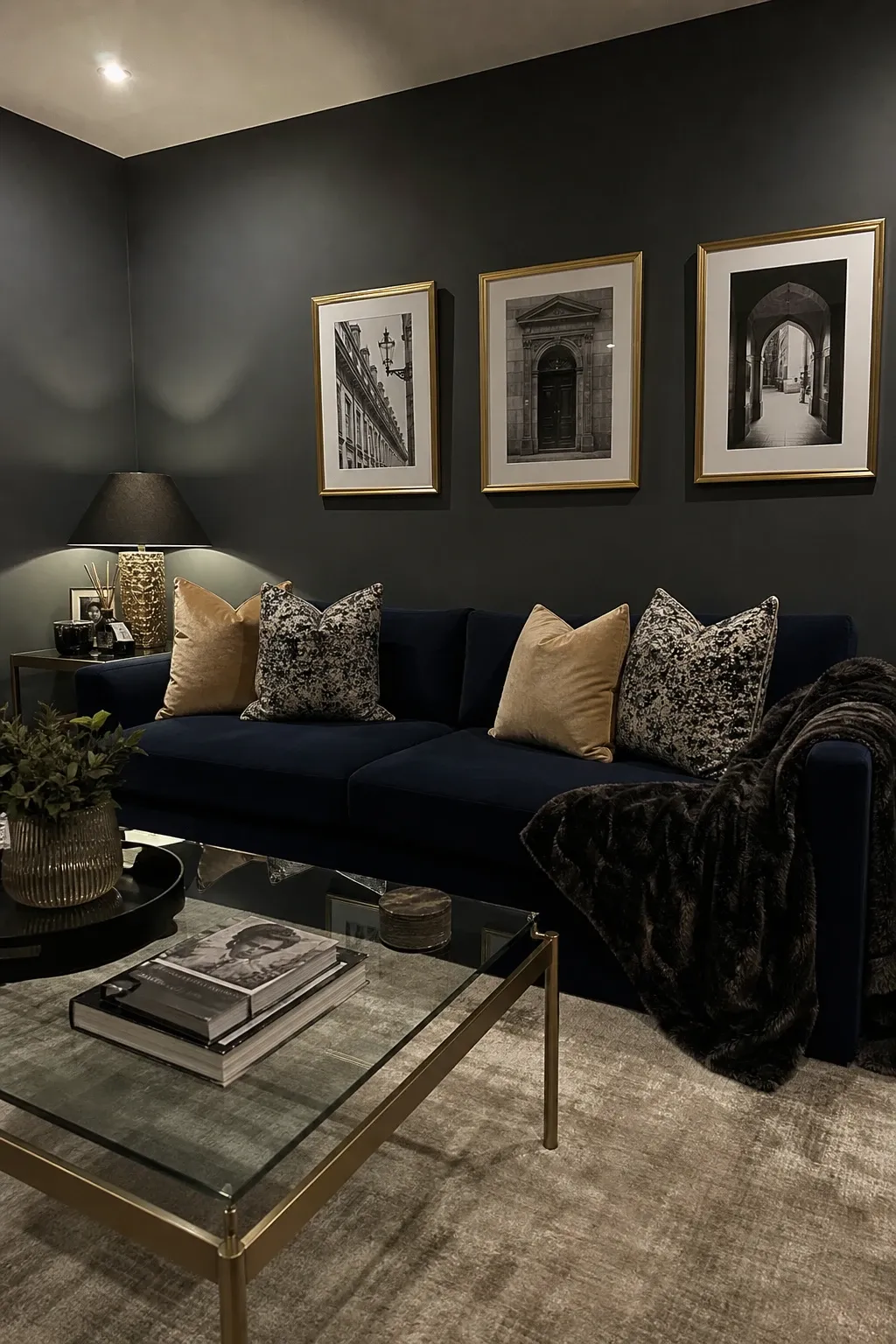
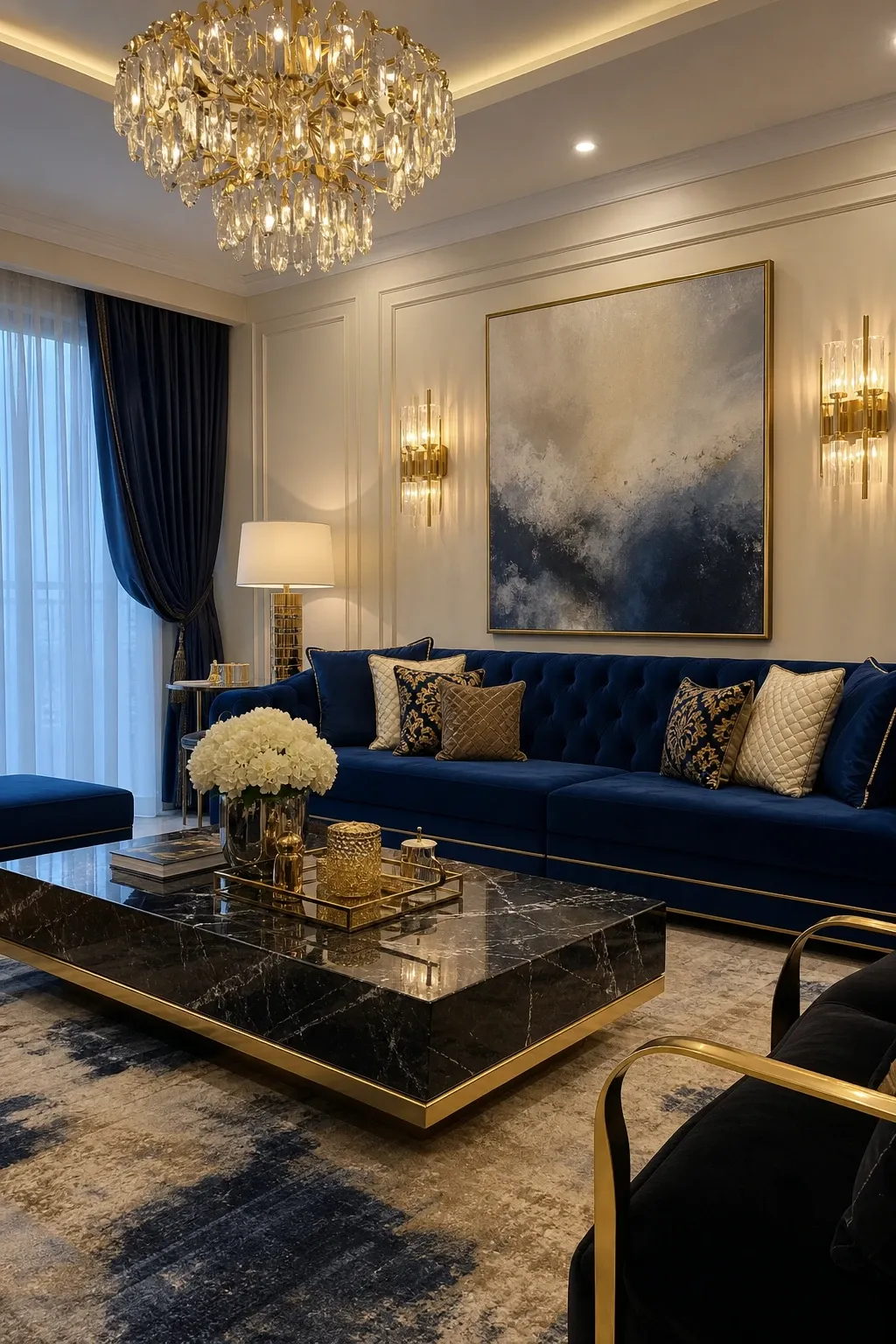
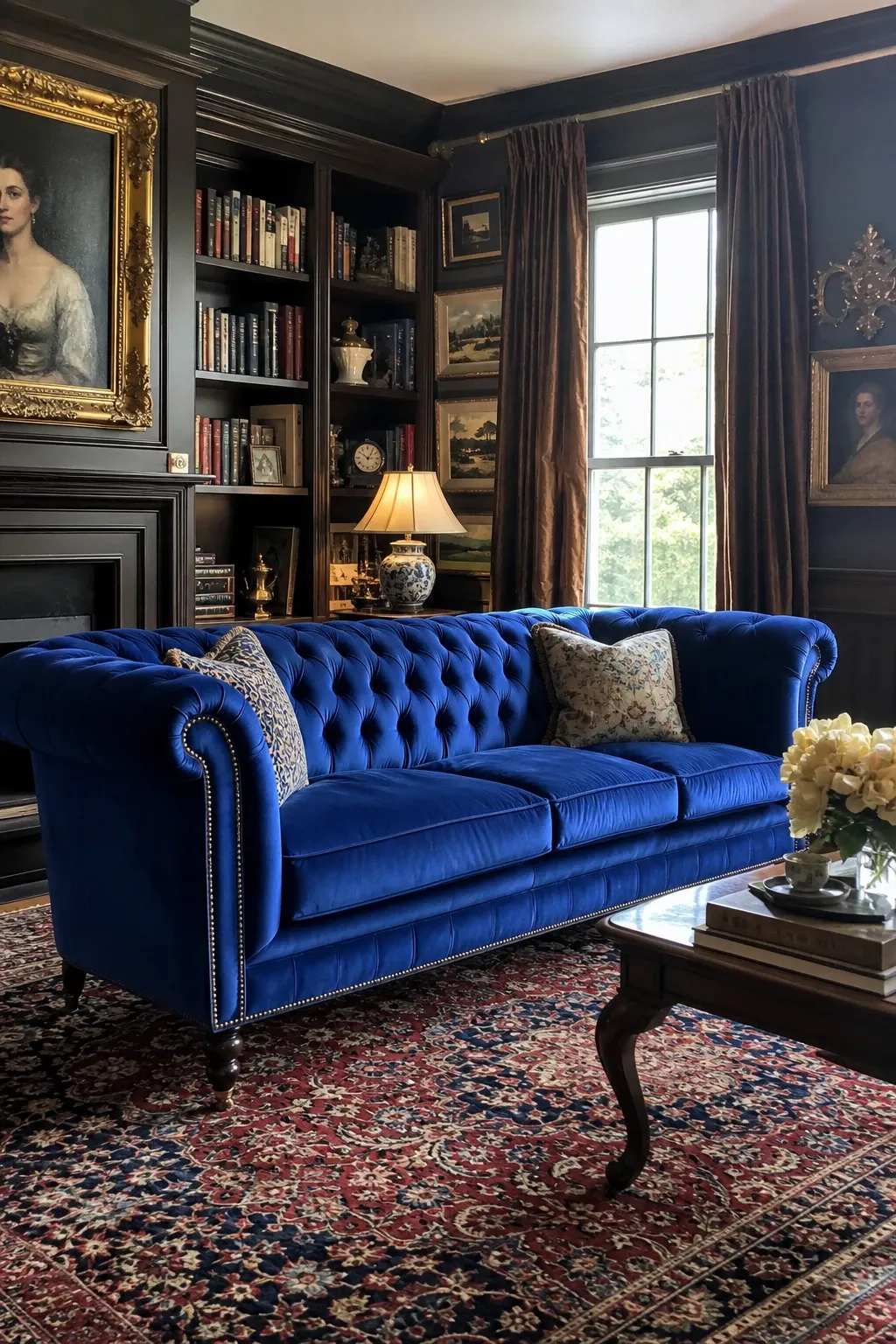
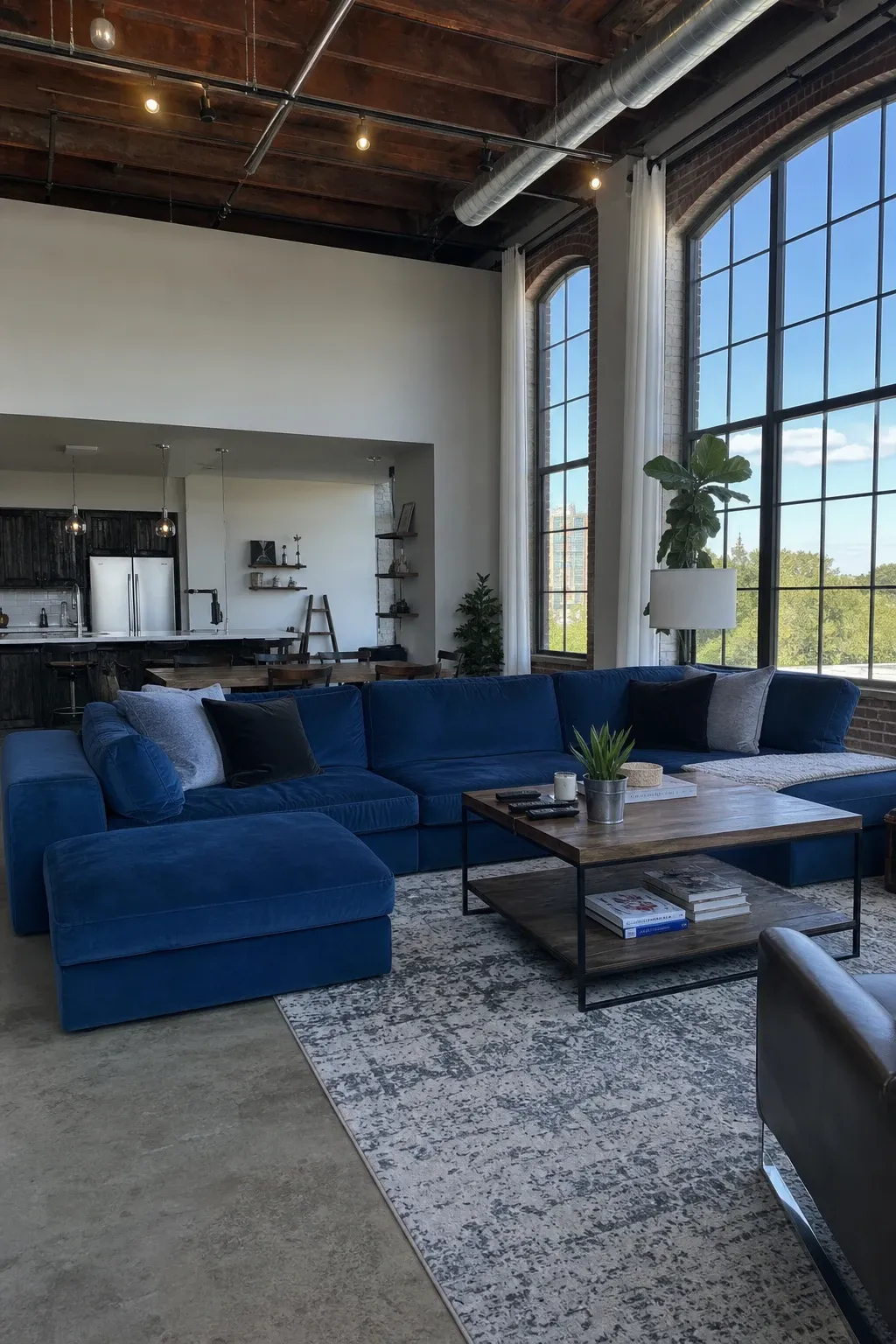
A blue velvet couch is one of the most popular furniture choices in recent years and for good reason. Velvet catches light and creates depth in the color that flat fabrics cannot. The texture makes even a simple room feel luxurious. Navy velvet is the most common but sapphire blue and teal velvet are equally striking. Pair with gold or brass accents and the room looks like it belongs in a design magazine.
Designer Tip: Vacuum velvet regularly with an upholstery attachment to prevent dust from settling into the pile. Crushed spots from sitting can be refreshed by steaming the fabric gently from a few inches away. Daily maintenance keeps velvet looking rich rather than worn.
A blue couch against dark walls in charcoal, deep green, or even black creates a moody, cocooning living room. The blue reads as rich and saturated against the dark backdrop rather than standing out as a pop of color. This approach works in rooms used primarily at night for watching movies, reading, or entertaining. The dark walls absorb light and the blue couch provides a comfortable, jewel-toned centerpiece.
Designer Tip: Use plenty of warm lighting in a dark room with a blue couch. Table lamps, floor lamps, and candles in warm white tones prevent the room from feeling like a cave. The warm light brings out the richness in both the dark walls and the blue fabric.
A blue couch works in virtually any living room because blue is one of the most flexible furniture colors. Navy is the most versatile shade, light blue is the most casual, and jewel tones like sapphire and teal are the most dramatic. Pick the shade that matches the mood you want and build the room around it. Start simple with neutrals and add accent colors one at a time until the room feels balanced.
Frequently Asked Questions
What is the most versatile shade of blue for a couch?
Navy blue is the most versatile because it works with warm and cool palettes, casual and formal styles, and light and dark rooms. It functions almost like a neutral and pairs with nearly every color. If you are unsure which blue to choose, navy is the safest bet.
Does a blue couch make a room feel cold?
It can if you pair it with only cool tones. Adding warm elements like wood furniture, warm-toned pillows, brass accents, and warm white lighting balances the cool blue and keeps the room feeling inviting. The warmth of the surrounding decor determines whether the room feels cold or cozy.
What fabric is best for a blue couch?
Velvet is the most popular for a statement look. Performance fabric is best for families with kids and pets. Linen is ideal for casual, coastal, and farmhouse styles. Each fabric changes the personality of the blue. Velvet feels formal, linen feels casual, and performance fabric feels practical.
What color rug goes with a blue couch?
A neutral rug in cream, beige, or gray is the easiest match. For more contrast, a patterned rug with blue plus warm accent colors like gold, rust, or blush ties the couch to the floor. Avoid a solid blue rug under a blue couch unless the tones are very different, as matching blues flatten the room.