A beige couch is one of the most practical pieces of furniture you can own, and somehow it still manages to stress people out. It sits there looking perfectly fine in the store and then lands in your living room and suddenly the whole space feels flat, washed out, or like it is missing something you cannot quite name. The problem is almost never the couch. It is the room around it, and specifically that people treat beige as a done deal rather than a starting point. A beige sofa is a foundation, and foundations only work when what you build on top of them has structure, contrast, and intention.
This article is organized around real problems. Each idea names a specific visual issue that comes up when you have a beige couch, and then walks you through the fix and what you can expect the room to look and feel like once you apply it. Figure out what is bothering you most about the room right now – too cold, too flat, too cluttered – and fix that one thing first. These are not abstract mood-board ideas. They are practical, room-tested approaches that work across different budgets, room sizes, and personal styles.
1. The Room Feels Washed Out: Bring In One Dark Anchor
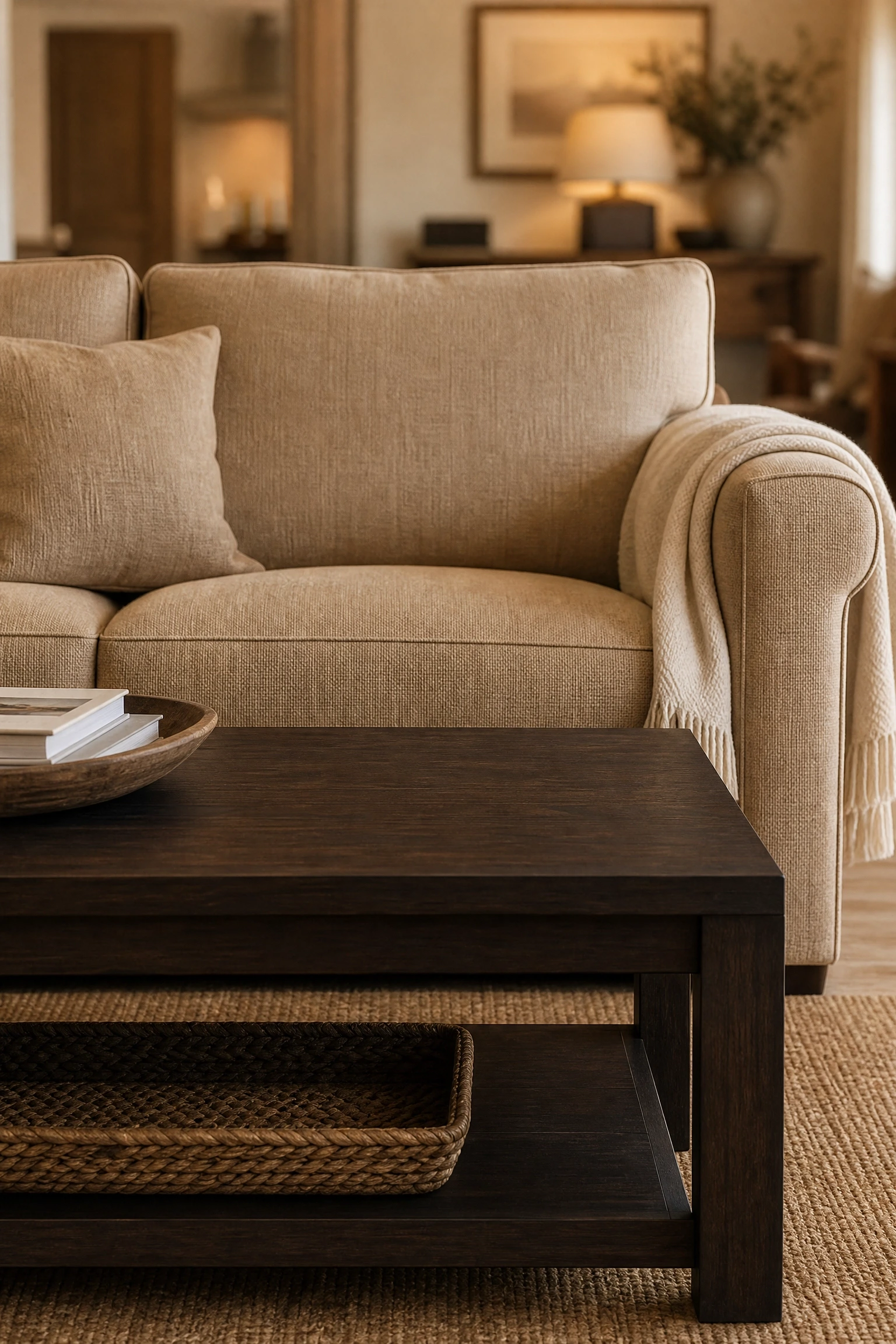
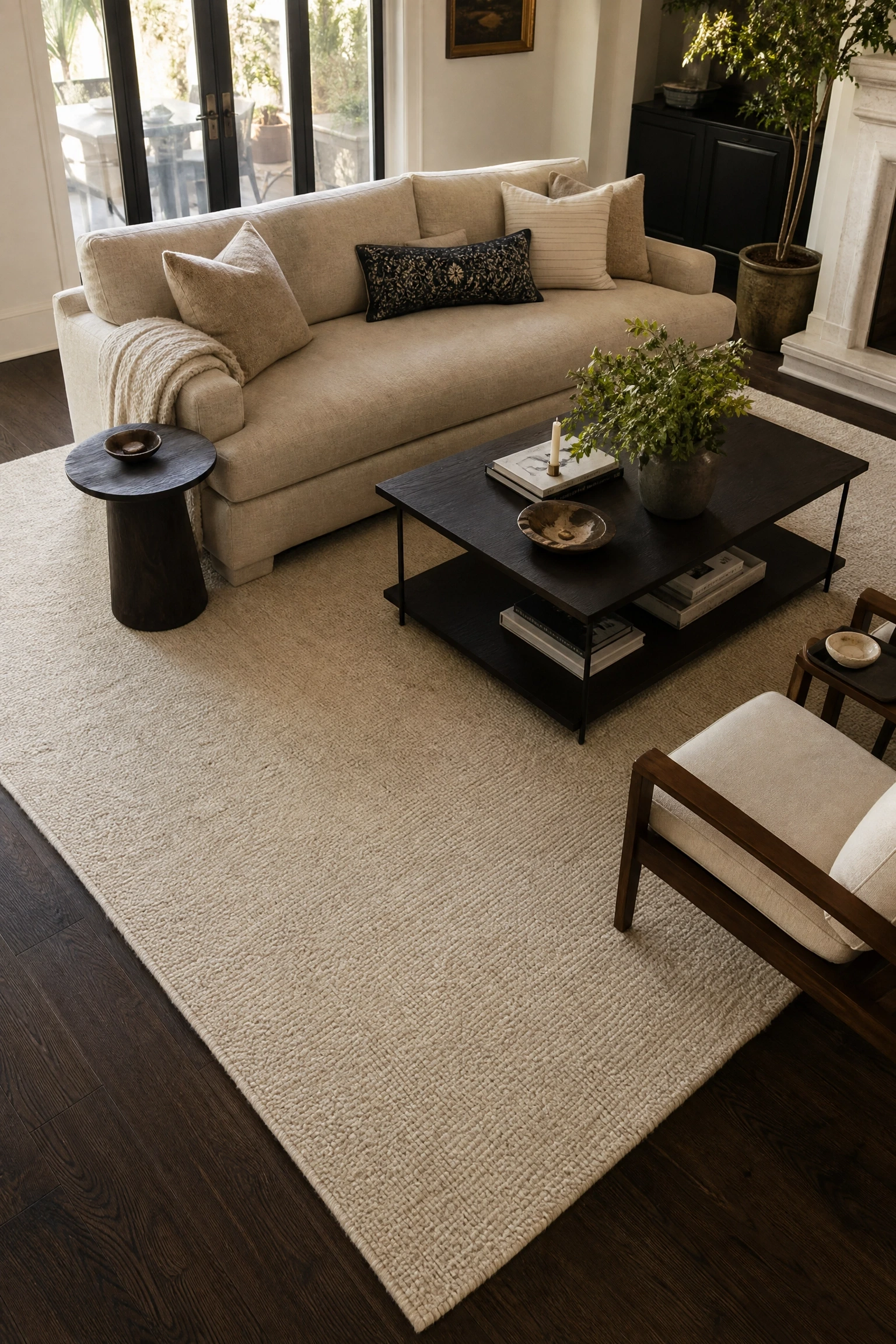
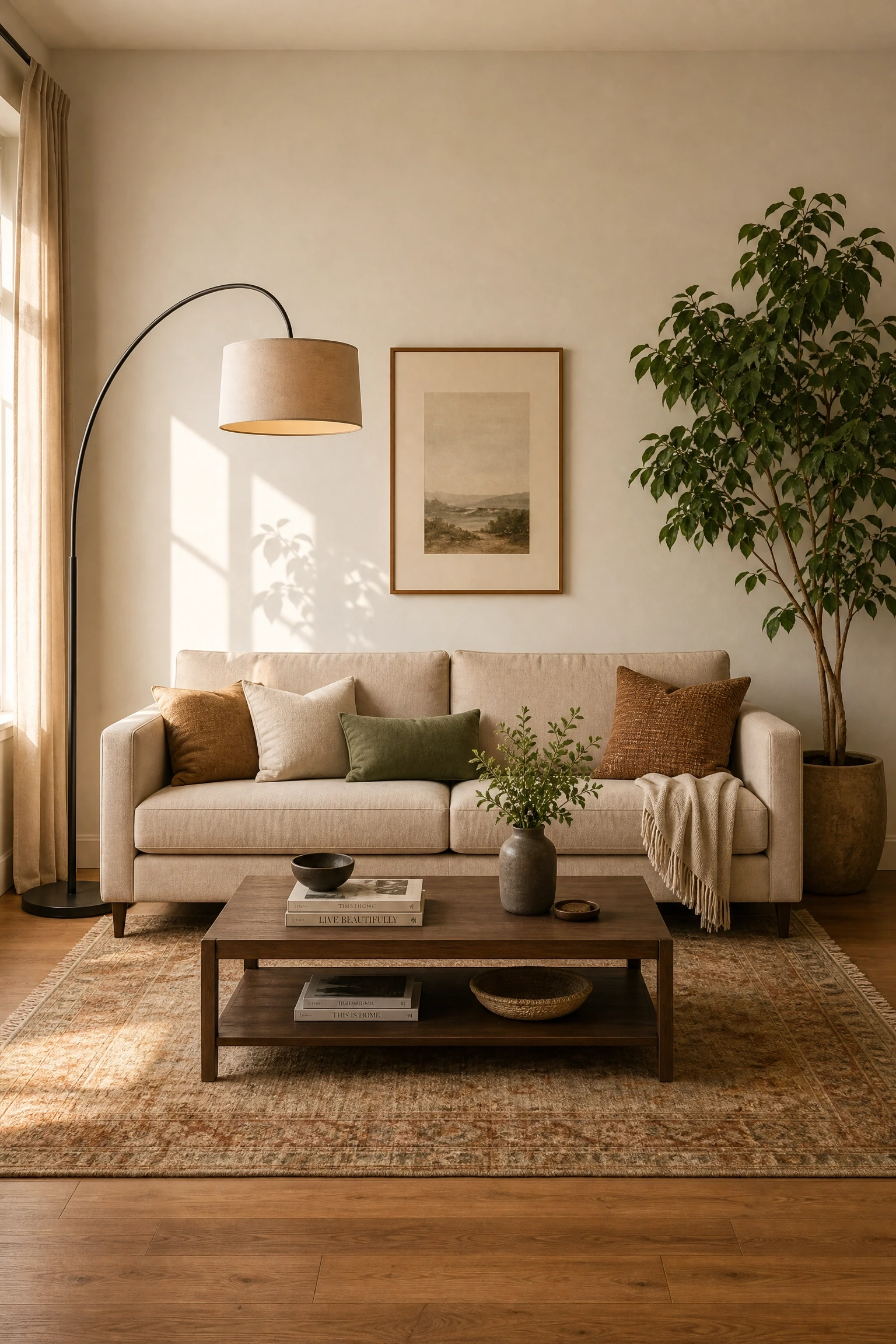
This is the number one complaint from people with beige couches, and it almost always comes down to the same mistake: the sofa, the rug, the walls, and the curtains are all within a few shades of each other, and there is nothing for the eye to land on. The fix is not dramatic, but it is non-negotiable. You need one dark anchor in the room, and it should sit close to or in front of the couch. A walnut or espresso-stained coffee table is the easiest and most effective solution. If budget is a concern, a black or dark-brown metal floor lamp placed beside the couch does the same job for under $80. The result is immediate: the beige suddenly reads as intentional and warm rather than accidental and pale, because now there is contrast telling your eye where the furniture begins and ends.
Pro Move: Go dark on the coffee table first. It is the single fastest fix for a washed-out beige room and it works in every style from modern to farmhouse.
2. The Couch Disappears Into Beige Walls: Create a Focal Point Behind It
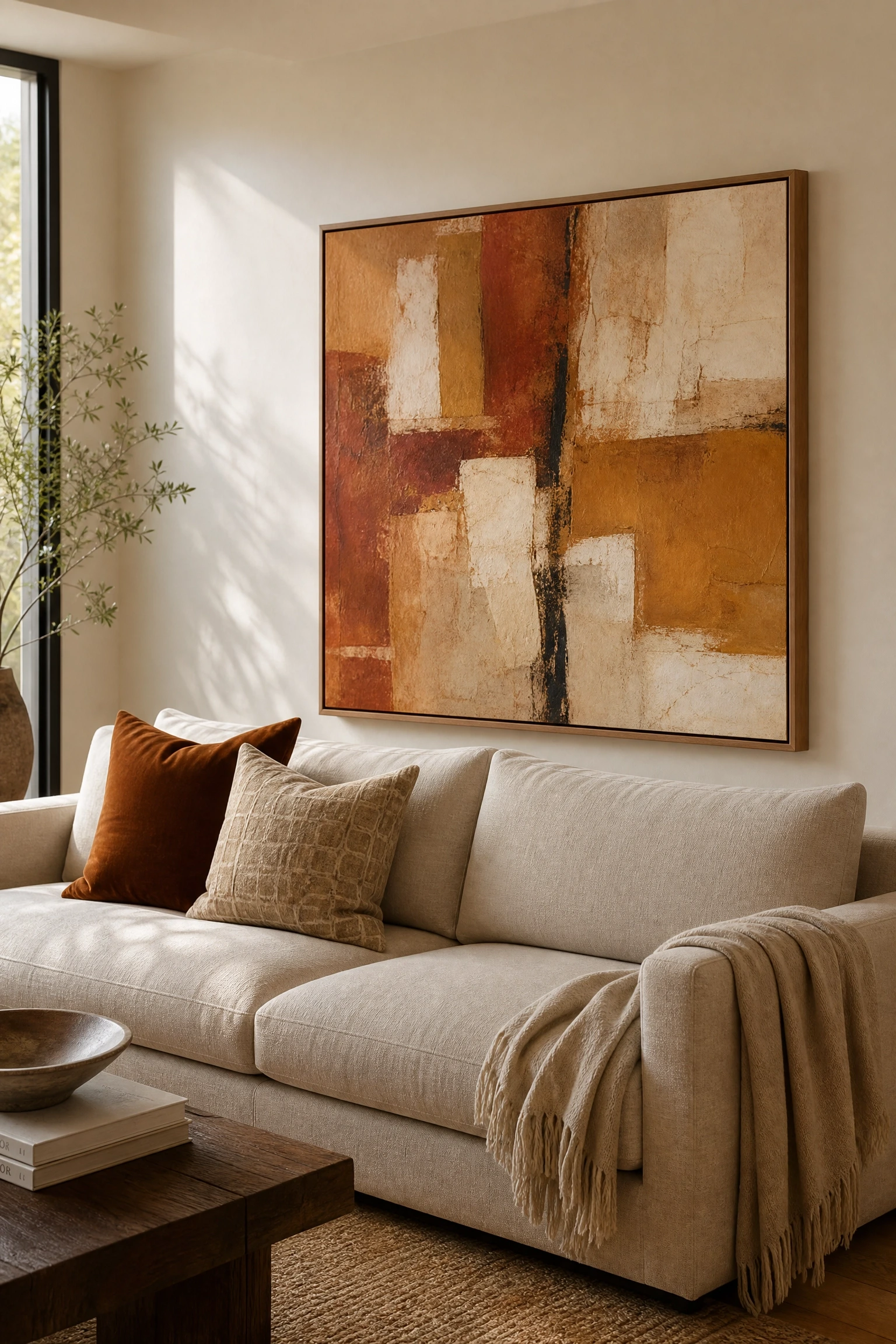
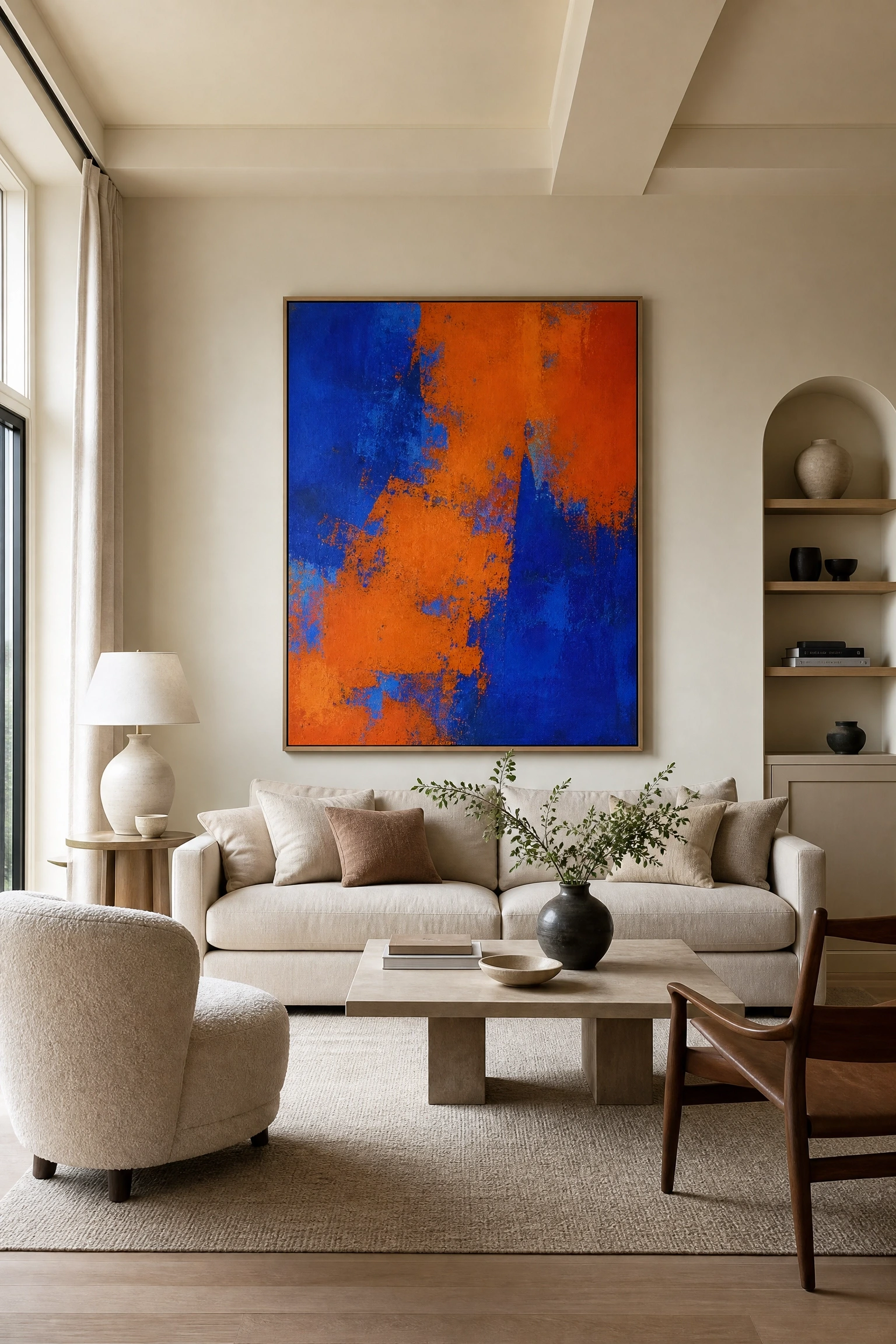
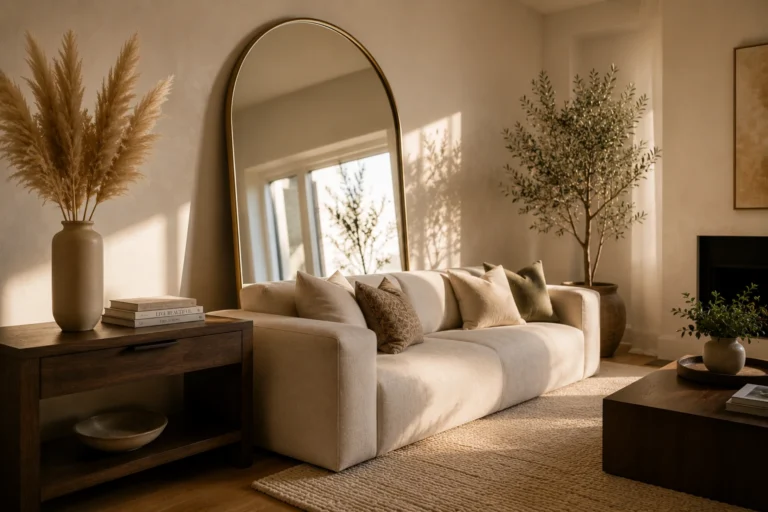
When your walls are cream, warm white, or a similar neutral to your couch, the sofa visually merges with the background and the room feels like it has no center. The solution is to give the wall behind the couch something that breaks that sameness. A large piece of artwork, at least 36 inches wide, hung about 8 to 10 inches above the back of the sofa creates the separation your eye needs. The artwork does not need to be colorful, though color helps. Even a large-scale black-and-white abstract print or a dark-framed landscape creates enough contrast to make the couch pop forward as its own distinct element. If wall art is not your thing, a leaning floor mirror, a floating shelf arrangement, or even a dramatic wallpaper panel in just that zone will do the same work. In practice, this one change is often what makes a living room look finished rather than still-in-progress.
Designer Advice: Hang art lower than you think you need to. It should feel connected to the couch, not floating near the ceiling.
Wall Treatment Options Behind a Beige Couch
3. The Space Feels Cold and Gray: Fix the Lighting First
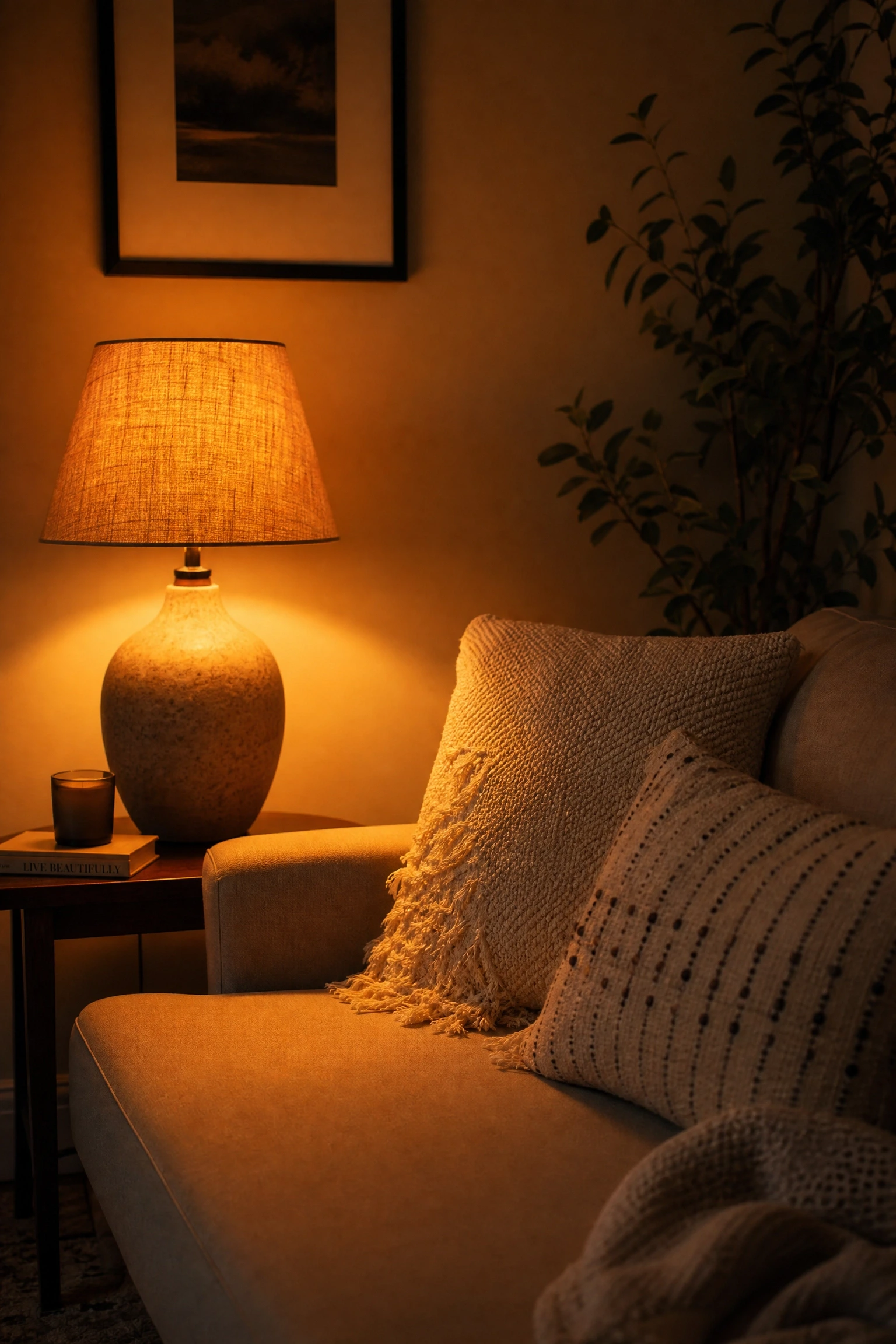
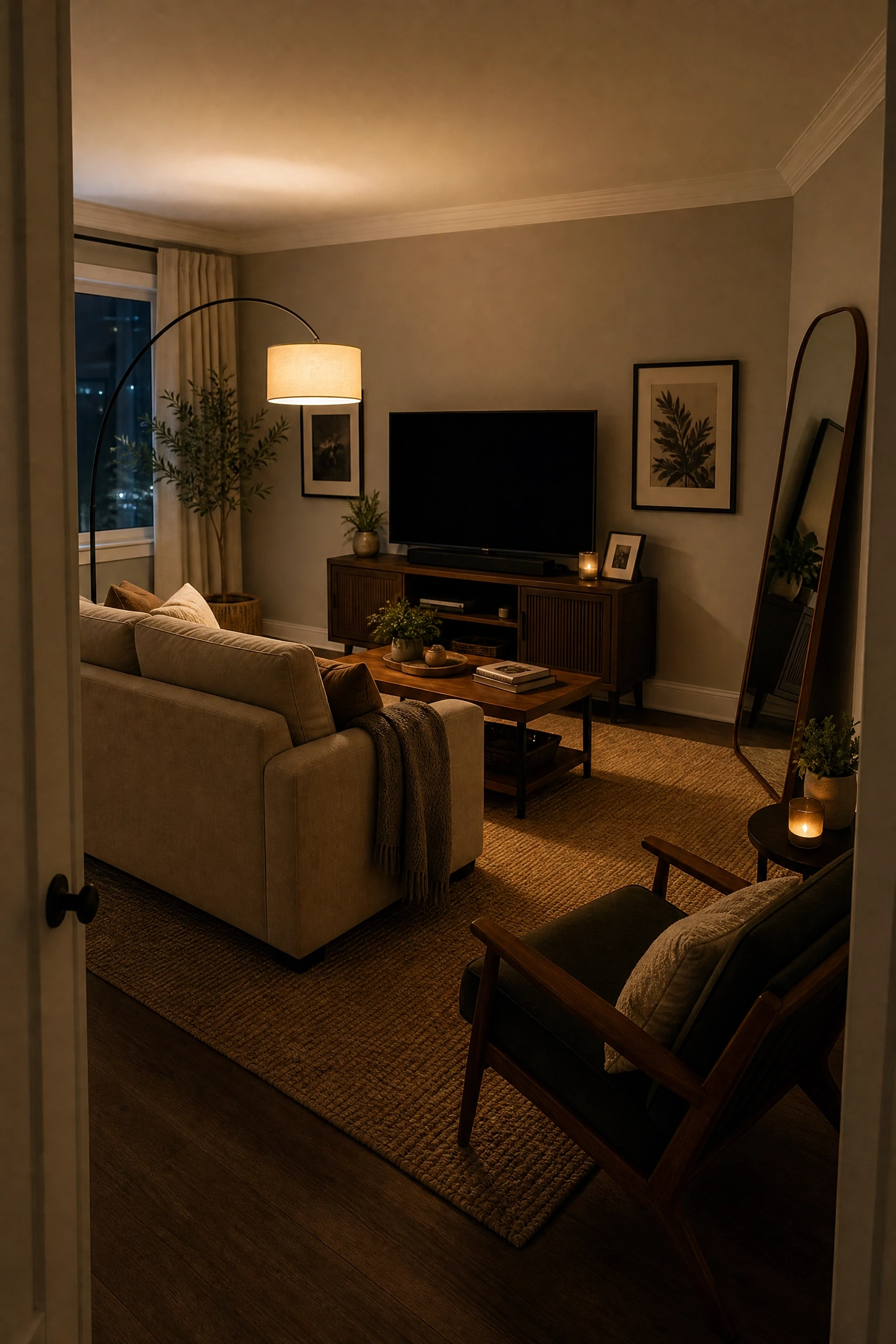
A lot of people blame their beige couch when the real culprit is cool-toned bulbs. Cool white LED lighting, usually in the 4000K to 6500K range, strips the warmth out of beige completely and makes it read as a flat, slightly gray tone. If your room feels clinical or cold and you have not changed the bulbs, that is where to start before you buy a single throw pillow. Switch to warm white bulbs in the 2700K to 3000K range throughout the room, and add at least one lamp beside or near the couch rather than relying only on overhead lighting. A shaded floor lamp or a table lamp with a fabric shade creates the kind of warm, diffused glow that makes beige feel soft and inviting rather than washed and institutional. This matters even more in rooms with minimal natural light or gray flooring, where the cool tones amplify each other quickly.
Heads Up: Check your bulb color temperature before redecorating. A $10 bulb swap can make a bigger difference than $200 in new pillows.
4. The Room Looks Boring But You Do Not Want Bold Color: Layer Texture Instead
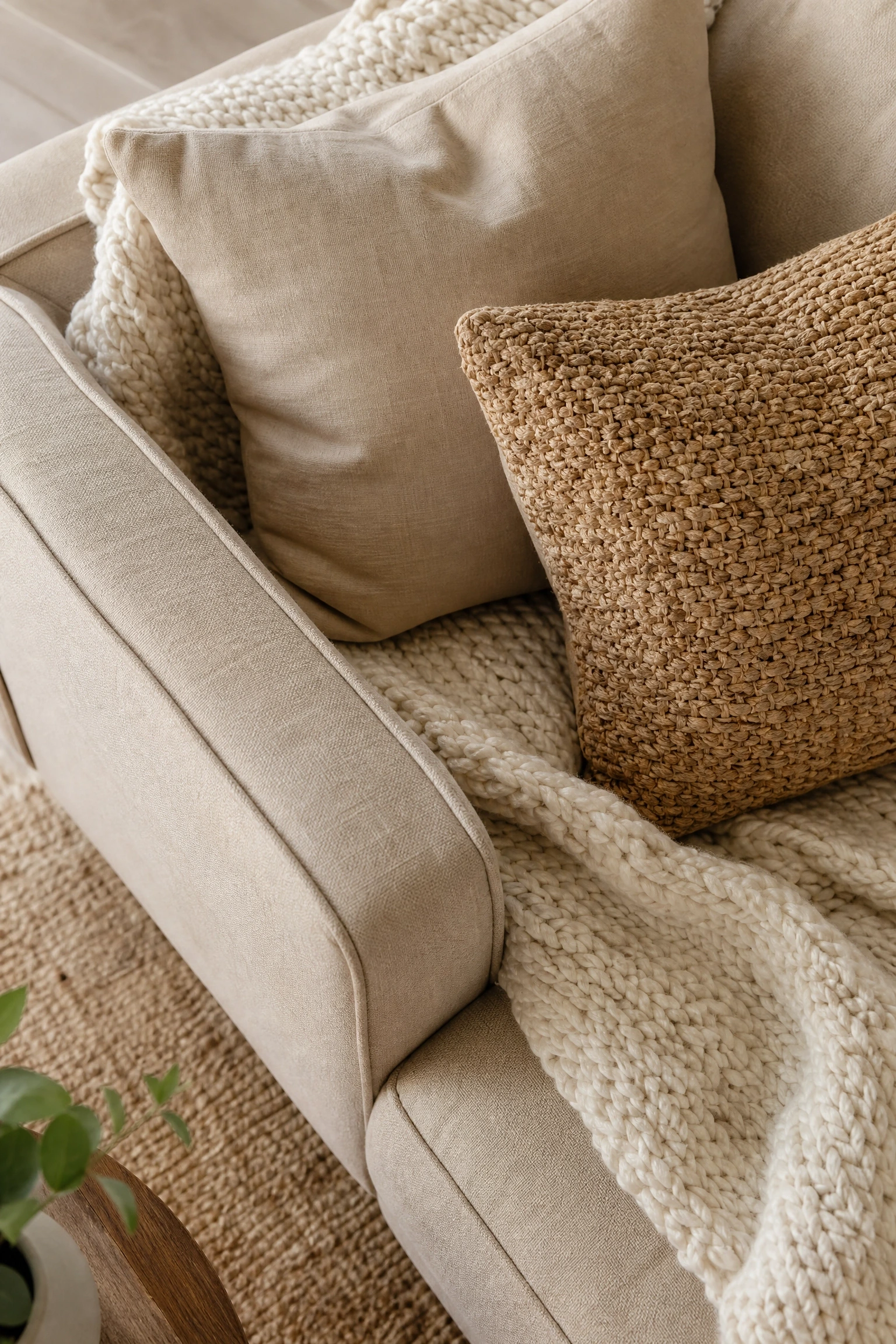
Not everyone wants a jewel-toned accent wall or rust-colored throw pillows, and that is completely valid. If your instinct is to keep things neutral but the room still feels flat, the answer is texture, not color. Layering different materials in the same neutral family creates visual depth without introducing contrast you are not comfortable with. Think a chunky-knit cream throw folded over one arm of the couch, a woven jute rug underneath, linen curtains with a slight slub, and a rattan or cane side table nearby. Each material catches light differently, which is what gives the room movement and life. Interior designers refer to this as tonal layering, and it is the reason why a room done entirely in neutrals can feel either luxuriously intentional or painfully boring, the difference is always texture.
Quick Tip: Mix at least three different materials in your neutral palette: one smooth, one woven, and one with natural grain or pattern.
5. The Couch Is Too Casual for the Room: improve With a Sculptural Coffee Table
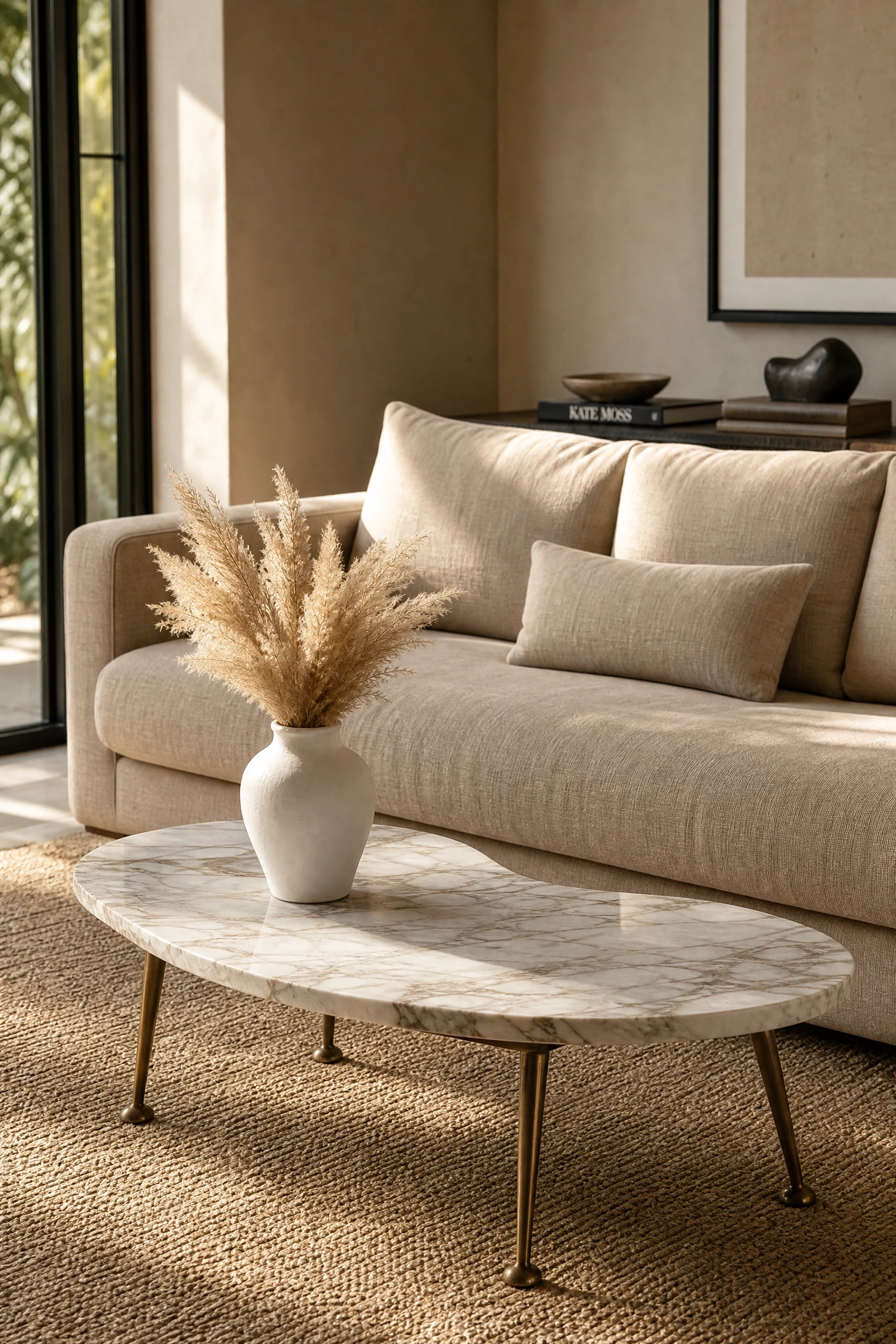
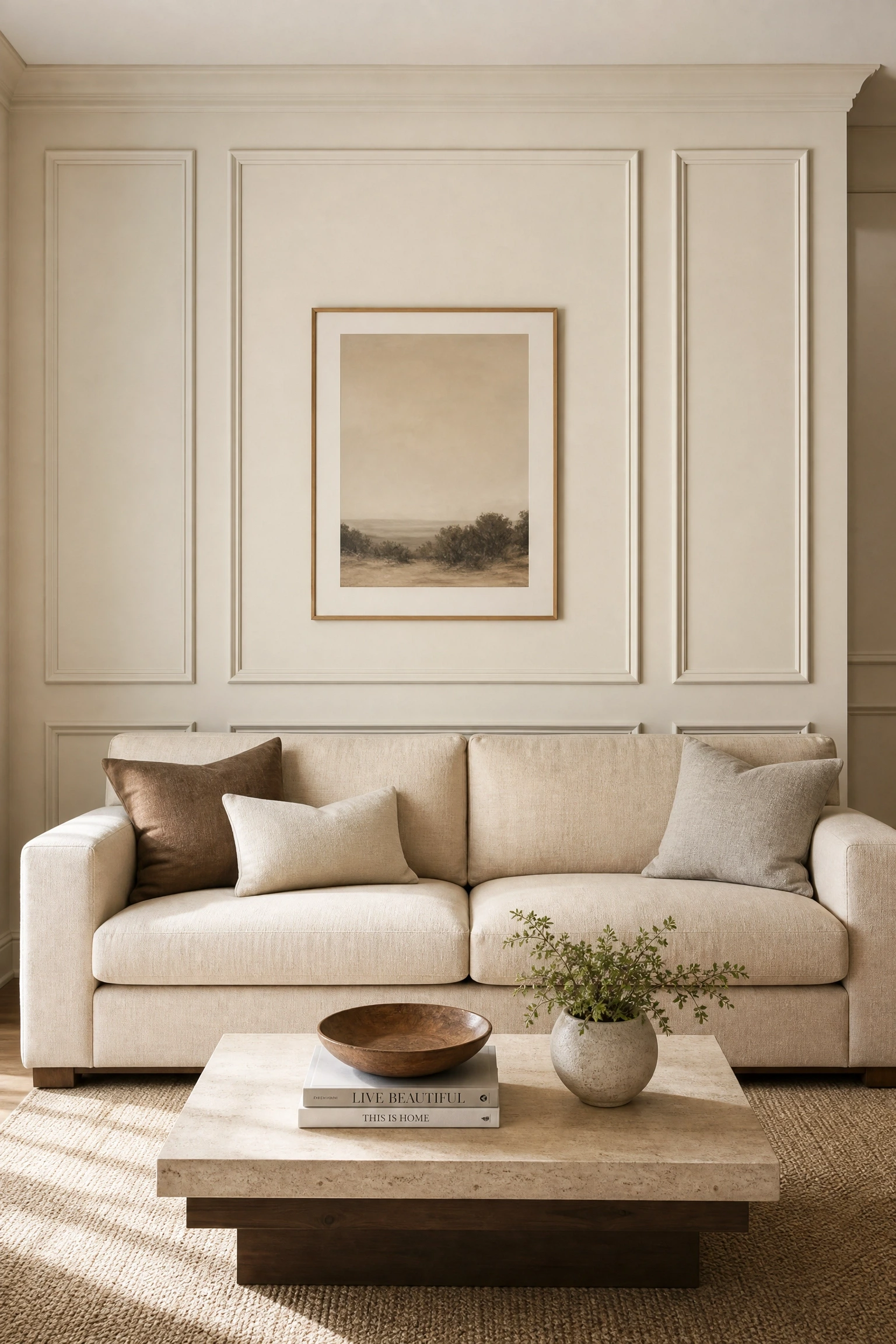
Beige linen or cotton couches often read as relaxed and casual by default, which is great for some rooms but can feel mismatched in a space where the rest of the furniture has more structure or polish. If your couch feels too slouchy relative to everything else, the coffee table is where you reset the tone. A sculptural table with architectural legs, a marble or travertine top, or an asymmetrical shape introduces a sense of considered design that lifts the whole room’s register. A stone-topped table on tapered brass legs, for example, paired with a beige linen sofa, instantly bridges casual and refined without making the room feel stiff. In practice, this works particularly well when the room has high ceilings or clean-lined shelving, where there is already visual architecture for the table to respond to.
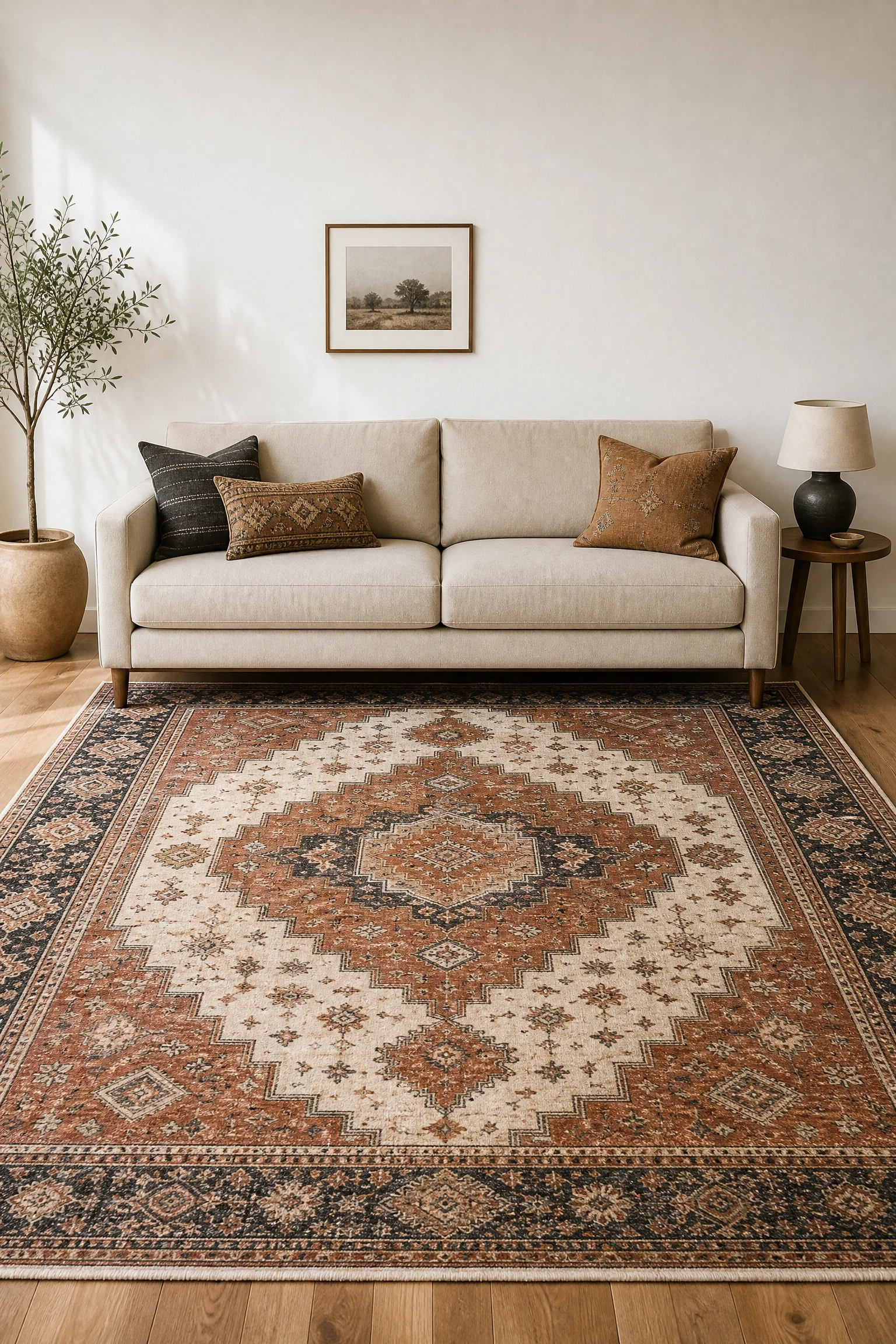
A beige couch on a plain neutral rug in a beige-walled room is the interior design equivalent of wearing all grey. The rug is the fastest way to add personality without committing to a permanent change, and with a beige couch you have enormous freedom because the sofa will not fight with almost any pattern or color you choose. In practice, the rugs that work best are the ones where you pull one or two colors from the pattern and repeat them somewhere else in the room, usually through a pillow or a piece of art. A Moroccan-style rug with rust, ivory, and black reads beautifully under a beige couch when there is a rust-colored pillow and a black picture frame somewhere in the room making the connection. Patterned rugs in the $150 to $400 range from brands like Ruggable, Loloi, or H&M Home have made this look very achievable without a design budget.
Reality Check: Size matters more than pattern. A rug that is too small makes the room look disjointed. Aim for a rug where at least the front legs of the couch sit on it.
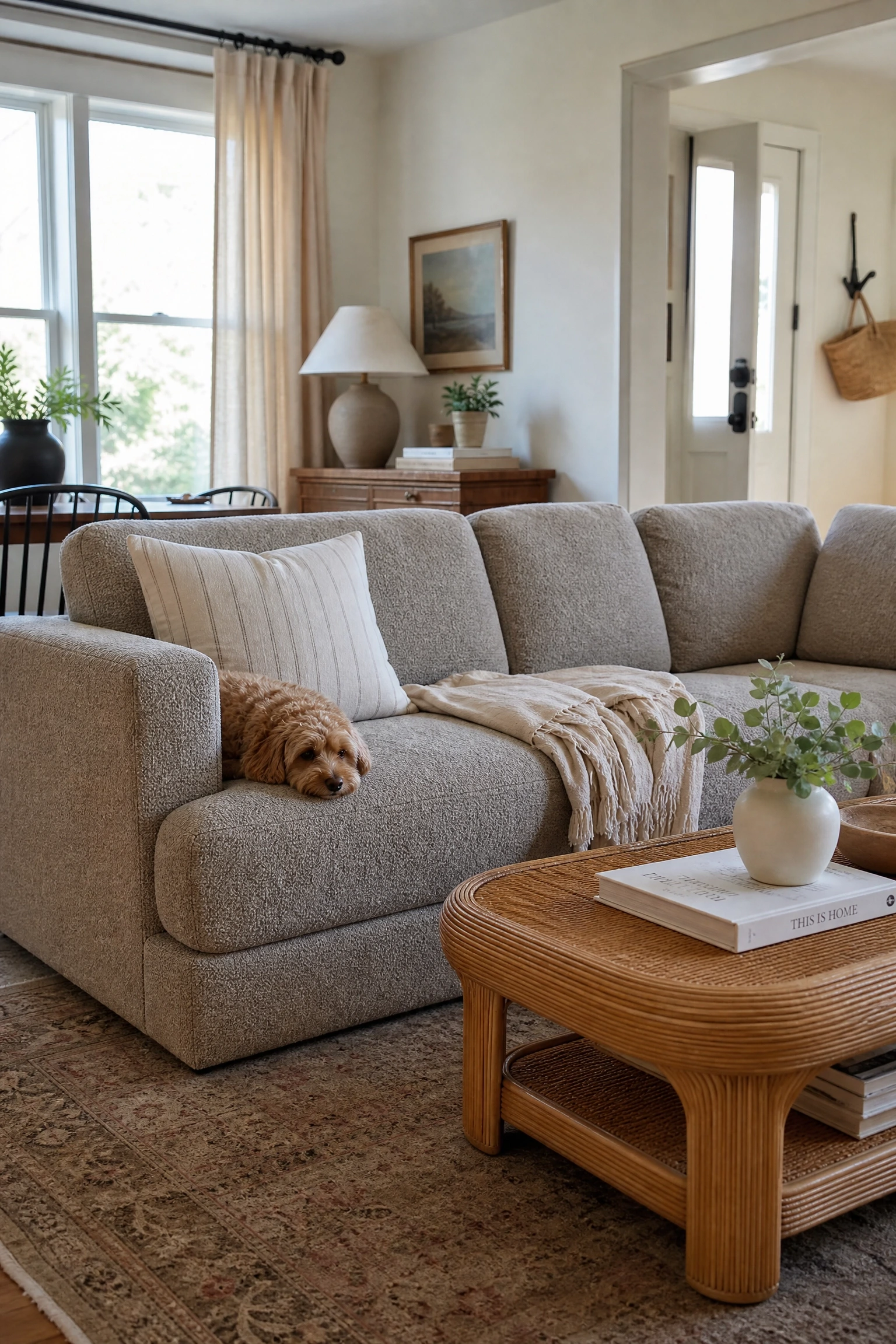
7. You Have Pets or Kids and Pale Beige Is Not Working: Go Greige or Textured
Very pale cream or sand-tone couches are beautiful in a showroom and genuinely difficult in a house with real life happening in it. If you are choosing a beige couch or thinking about replacing one because the current shade shows every mark, the better choice for daily use is a greige (gray-beige), mushroom, or warm taupe tone. These slightly deeper, more complex beige shades hide friction marks, pet hair, and daily wear significantly better than pale ivory. Textured upholstery helps even more: a performance boucle, a heavy linen weave, or a brushed microfiber in a warm beige tone hides surface imperfections that a flat, smooth fabric would show clearly. Several brands now offer performance fabrics in beautiful beige tones, including Parachute, Albany Park, and Article. If you already have the pale couch, a quality slipcover in mushroom or warm flax is a fraction of the cost of replacing the sofa.
Heads Up: Test any fabric with a damp cloth and a dry cloth before buying. Performance beige fabrics should release moisture without leaving a ring.
Beige Shade Guide: What Works Where
8. The Room Feels Cluttered Around the Couch: Edit Down to a Tight Color Story
A beige couch has a quiet personality, which means it cannot anchor a chaotic room the way a deep velvet sofa might. When there are too many competing colors, mismatched side tables, and random pillow combinations, the beige reads as weak rather than neutral. The fix is editing. Choose two accent colors maximum and use them consistently: in the pillows, in one piece of art, and in a small decorative object or plant pot. Three colors in the whole room including beige is a complete palette. Four colors starts to feel random. Interior designers call this color discipline, and it is the difference between a room that feels intentional and one that looks like furniture was added piece by piece without a plan. You do not need to buy new things for this, often you just need to remove a few things and redistribute what remains.
Designer Advice: Pull one color from your rug or artwork and repeat it in exactly two other places in the room. That is your accent color. Everything else should be beige, white, wood, or black.
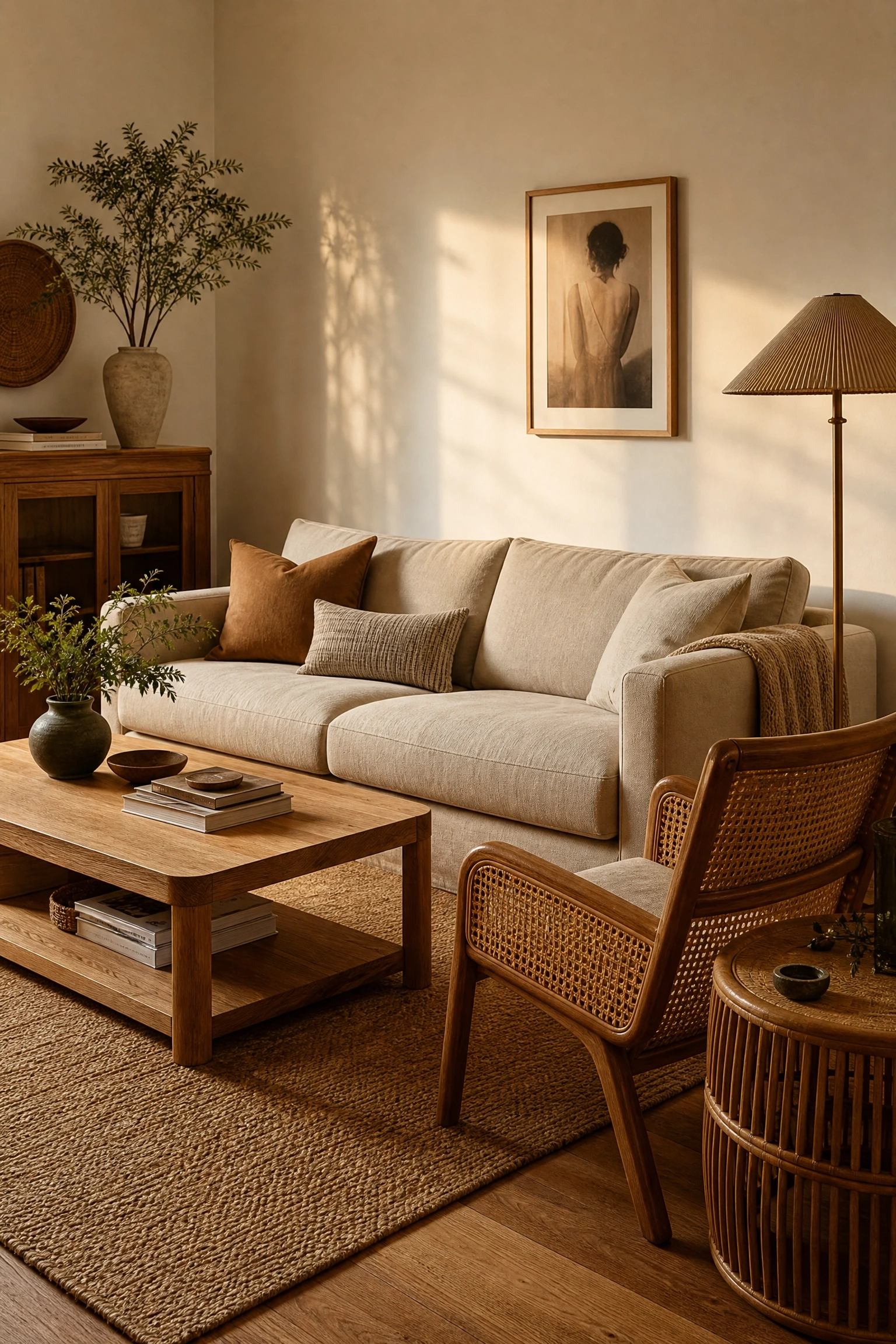
9. The Room Needs Warmth But Feels Heavy: Bring in Natural Wood Tones
Wood is the single most reliable partner for a beige couch, and the reason is simple: the natural grain and warm amber tones of wood respond to beige the same way they respond to everything else in a room, they ground it without overpowering it. A coffee table in light oak, walnut, or mango wood, combined with a wooden side table and maybe a rattan or cane accent chair, creates a layered warmth that feels organic and intentional. In practice, you do not need to match wood tones exactly, mixing light oak with a darker walnut actually adds more depth than using the same finish throughout. The only thing to avoid is going too dark with the wood in a room that already has dark flooring, since that combination can swallow the warmth of the beige and make the room feel heavier than it should. Mid-tone woods are the sweet spot in most cases.
Quick Tip: You do not need to match wood tones. Mixing two different wood finishes in the same room adds character as long as they are in the same warm family.
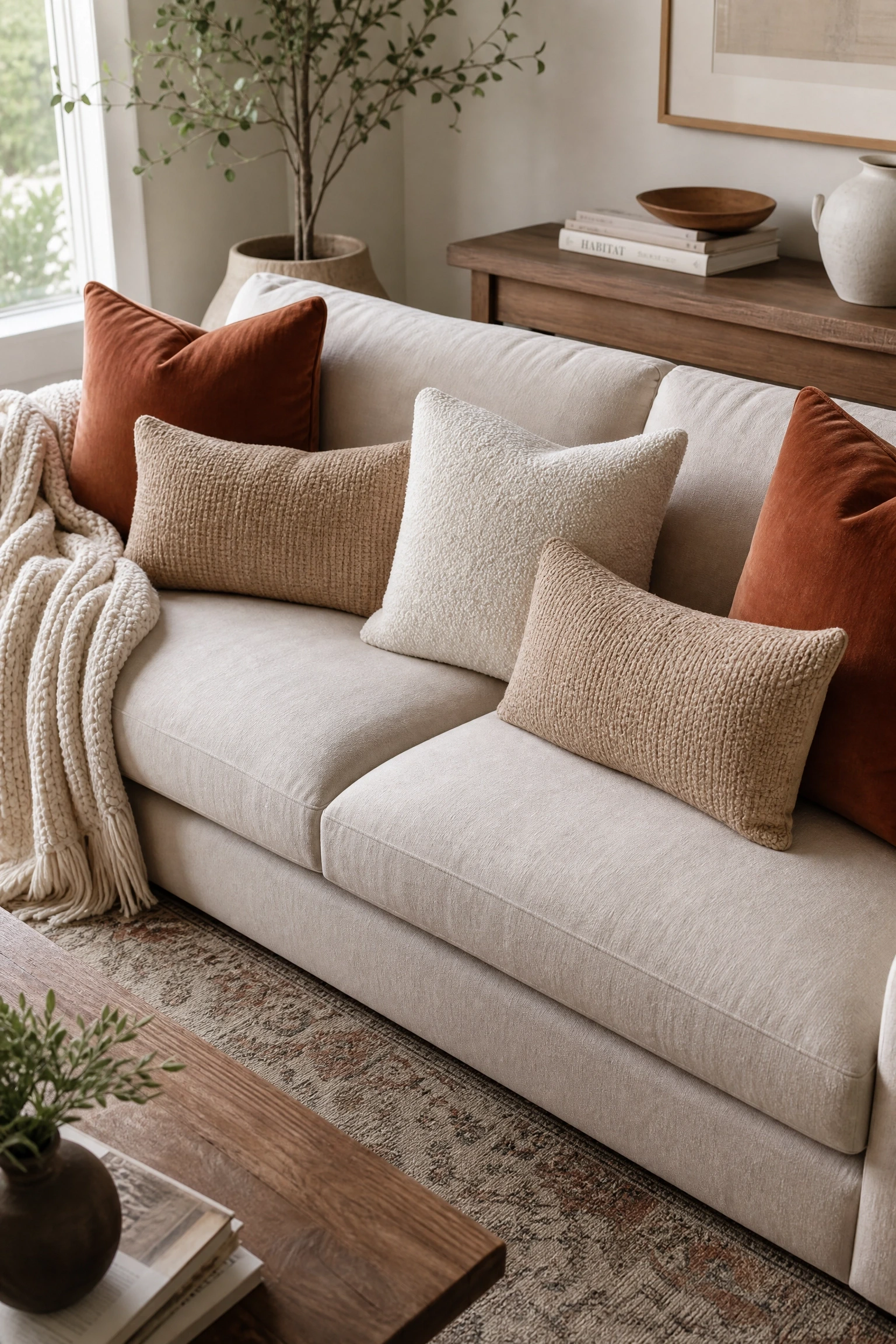
10. The Living Room Looks Too Minimalist: Add a Layered Throw and Pillow Moment
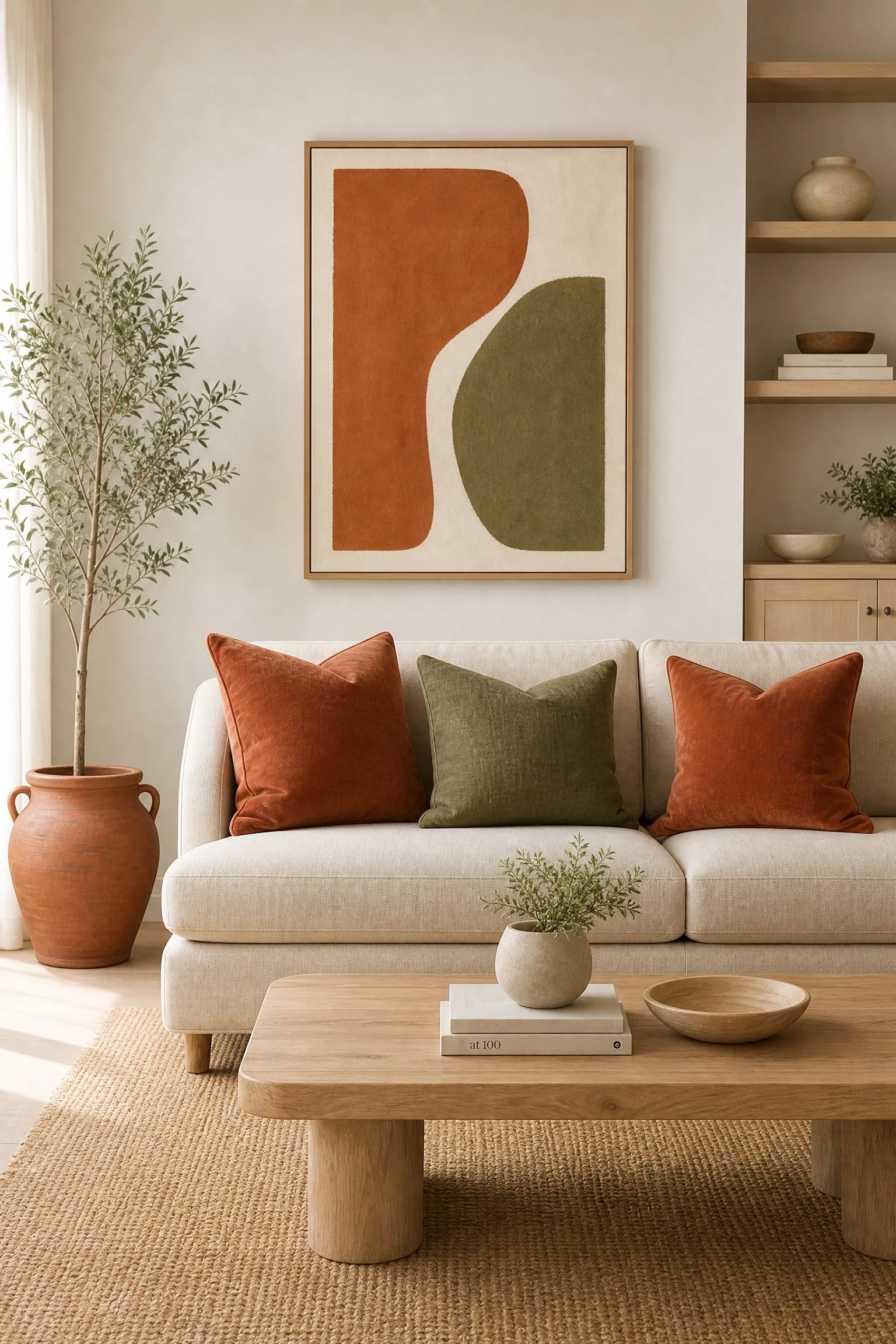
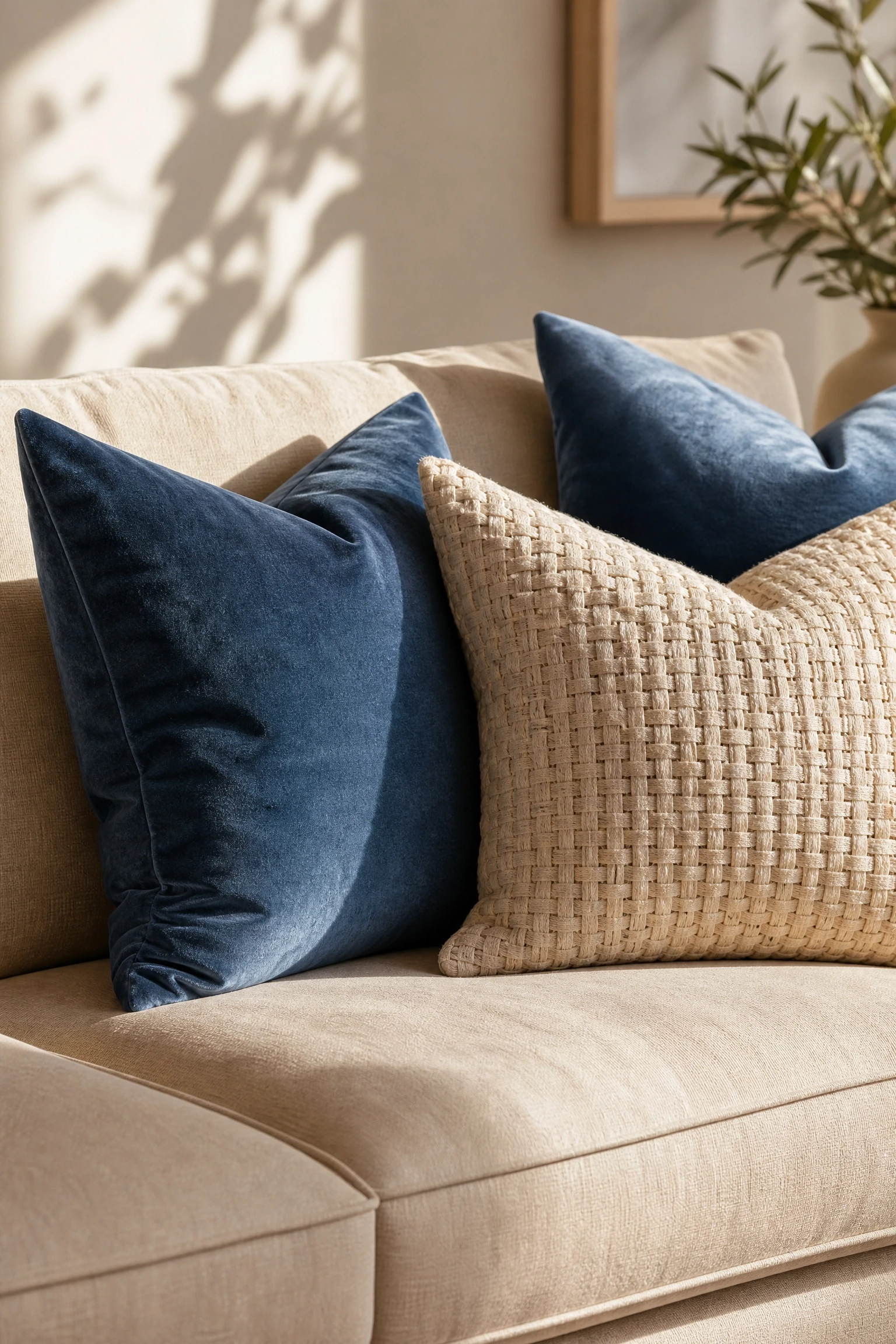
There is a version of the beige couch room that is too tidy, where the sofa sits there bare and the whole space reads as empty rather than calm. This is where a well-considered pillow and throw arrangement does real work, not as an afterthought, but as the layer that signals the room is lived in and comfortable. The formula that works consistently is: two larger square pillows (22-inch) in a slightly different texture than the couch fabric, two smaller lumbar or 18-inch pillows in a complementary tone or subtle pattern, and a throw folded in thirds and draped casually over one arm rather than folded neatly over the back. This asymmetry is what makes the arrangement look natural rather than staged. For a beige couch, pillows in warm terracotta, olive, dusty blue, or deep rust add the warmth the sofa itself cannot provide.
Pro Move: Odd numbers of pillows look more natural than even numbers. Three or five pillows on a standard sofa almost always reads better than four or six.
11. The Room Feels Genric: Lean Into a Specific Design Style
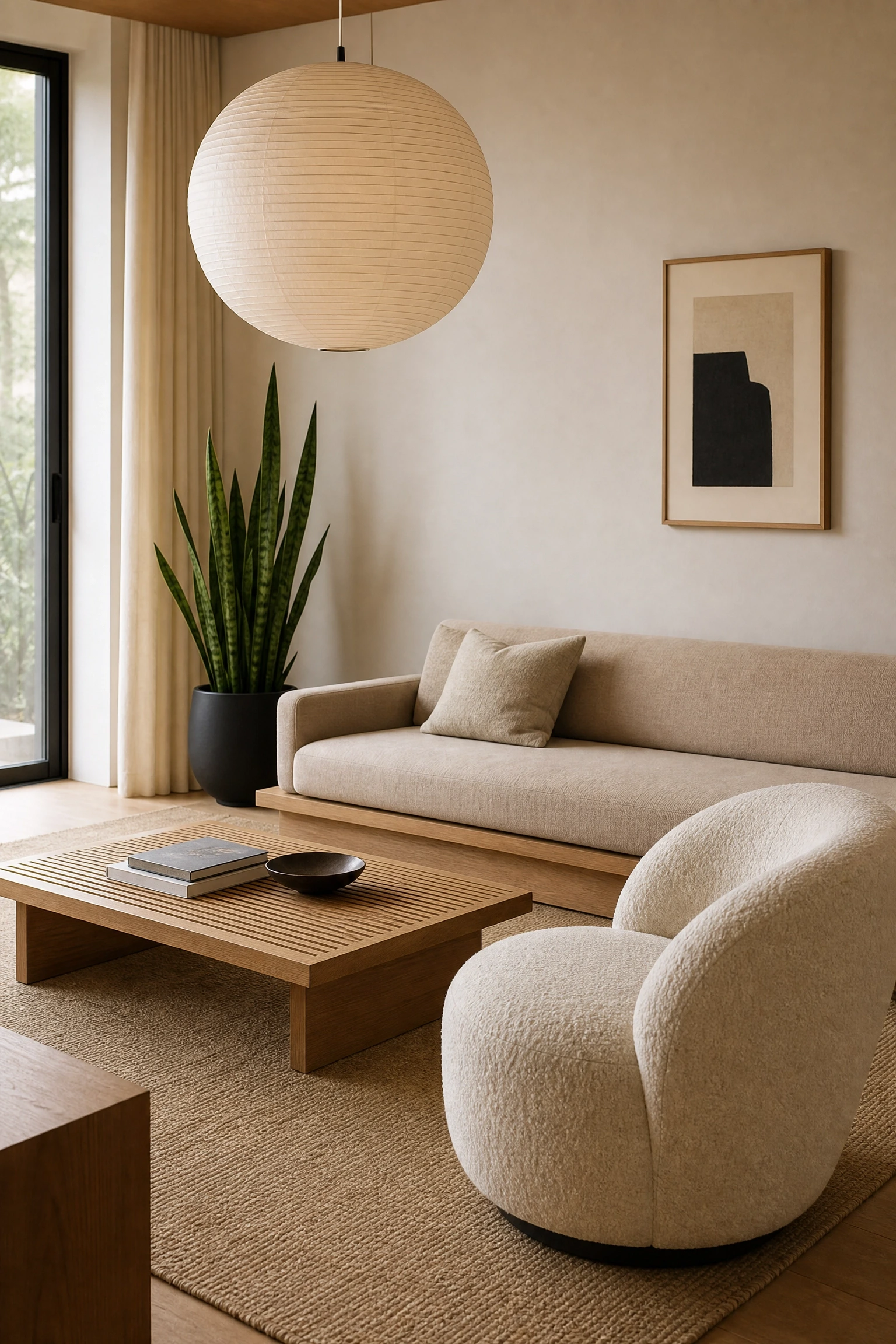
One of the reasons beige couch rooms end up looking anonymous is that the couch is so neutral it does not push the room in any particular design direction, and so everything around it ends up being a little bit of everything. The fix is committing to a specific aesthetic and letting it shape every other choice in the room. A beige linen sofa with jute rugs, terra cotta pots, linen curtains, and baskets reads clearly as organic coastal or Californian casual. The same couch with dark metal accents, concrete planters, a geometric rug, and low-profile furniture reads as modern industrial. With warm oak, a curved boucle chair, and arched floor lamps, it becomes Japandi or soft modern. The couch itself does not change. What changes is the design vocabulary around it, and that vocabulary is what gives the room an identity.
Reality Check: Pick one aesthetic before you buy a single accessory. Even a rough Pinterest board with 10 images you love will tell you whether you lean warm organic, modern minimal, or something in between.
Style at a Glance: Beige Couch in Different Design Languages
12. The Room Has Dark Floors and the Couch Looks Lost: Float It on a Light Rug
Dark hardwood or near-black laminate flooring creates a heavy visual base that can swallow a beige couch if there is no transition between them. The solution is a light to medium-toned rug that acts as a visual platform for the sofa and seating area. A warm ivory, oatmeal, or natural sisal rug lifts the seating zone off the dark floor and makes the beige couch readable as its own element rather than something sinking into the background. The rug size matters enormously here: it should be large enough for the front legs of the couch and all accent chairs to sit on it, which in most living rooms means at least an 8×10 or 9×12. A rug that is too small with dark flooring makes the room feel like furniture islands floating in dark water, and no amount of pillow styling will fix that.
Heads Up: When in doubt, go one rug size larger than you think you need. An 8×10 rug in a medium room almost always looks better than a 6×9.
13. The Space Feels Flat on the Walls: Add Architectural Interest With Molding or Paneling
When your beige couch sits in front of a plain beige or white wall, the whole room can feel like it was decorated in one afternoon and never finished. Adding architectural elements to the wall is one of those ideas that feels expensive but can be done affordably with MDF or paintable beadboard panels. A simple paneled wall treatment behind the sofa, painted in the same color as the wall or in a contrasting shade like a warm off-white or dark sage, adds structure and depth that the room cannot get from decor alone. This works particularly well in older homes or rooms with high ceilings where the scale of the wall demands more than a single piece of art. Picture-frame molding, shiplap, or wainscoting all create the same effect: a room that looks designed from the start, not assembled piece by piece.
Pro Move: Paint wall paneling in a color slightly deeper than the wall color for a subtle, layered look that does not require bold commitment to a statement shade.
14. The Room Is Small and the Couch Feels Too Heavy: Choose Leg Visibility
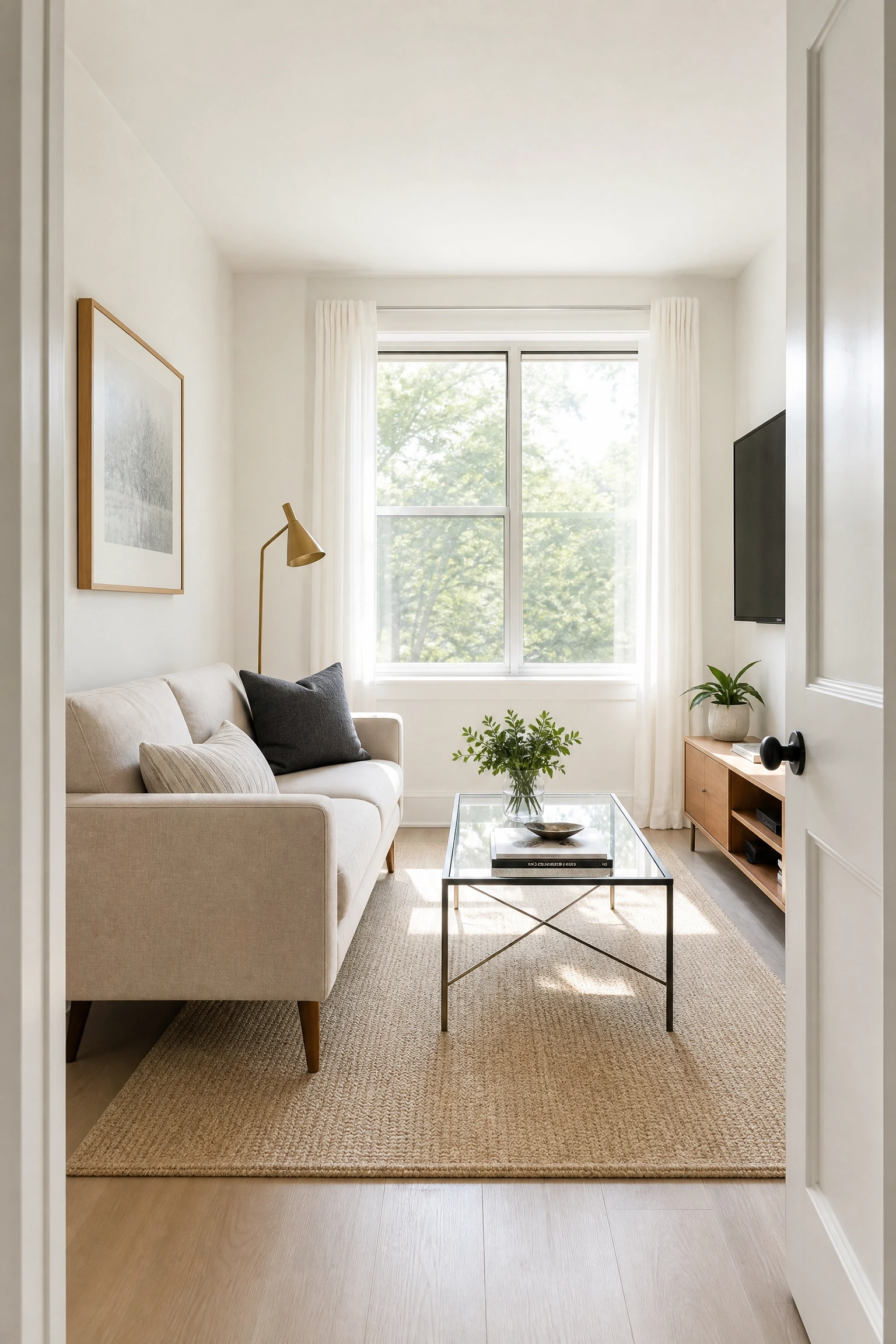
In a compact living room, a beige couch with a skirted or floor-level base sits on the floor like a block of furniture and makes the space feel smaller than it is. The visual trick that interior designers use consistently in small spaces is choosing sofas with visible legs, ideally tapered wooden or slender metal legs, because they allow light to pass underneath the couch and the eye to perceive the floor as continuous rather than interrupted. This negative space under the sofa is what makes a small room breathe. If you already have a low or skirted sofa and cannot change it, compensating with a light-colored rug, leggy side tables, and a glass or lucite coffee table achieves a similar effect. The goal is keeping the visual floor as clear and open as possible.
Quick Tip: In small rooms, furniture with legs nearly always looks better than furniture that sits on the floor. This applies to sofas, side tables, and accent chairs.
15. The Pillows Keep Looking Wrong: Match Texture to Couch Fabric
One of the most common mistakes with beige couch pillow styling is buying pillows that are too similar in texture to the couch itself. If your sofa is a flat woven linen, putting smooth linen pillows on it creates a monotone surface where everything blurs together. The pillow fabrics need to be meaningfully different from the couch fabric to read properly. On a flat linen couch, velvet pillows create a beautiful contrast. On a boucle couch, smooth cotton or silk-look pillows give the eye something different to land on. On a performance fabric sofa, chunky knit or woven texture adds the dimension the couch itself cannot provide. The color of the pillow matters, but the texture contrast is what makes the arrangement look intentional rather than like the pillows came with the couch.
Designer Advice: When choosing throw pillows, flip them over and feel the back. If the back fabric feels the same as your couch, keep looking for something with more contrast.
16. The Room Has No Greenery and Feels Lifeless: Add Plants With Intention
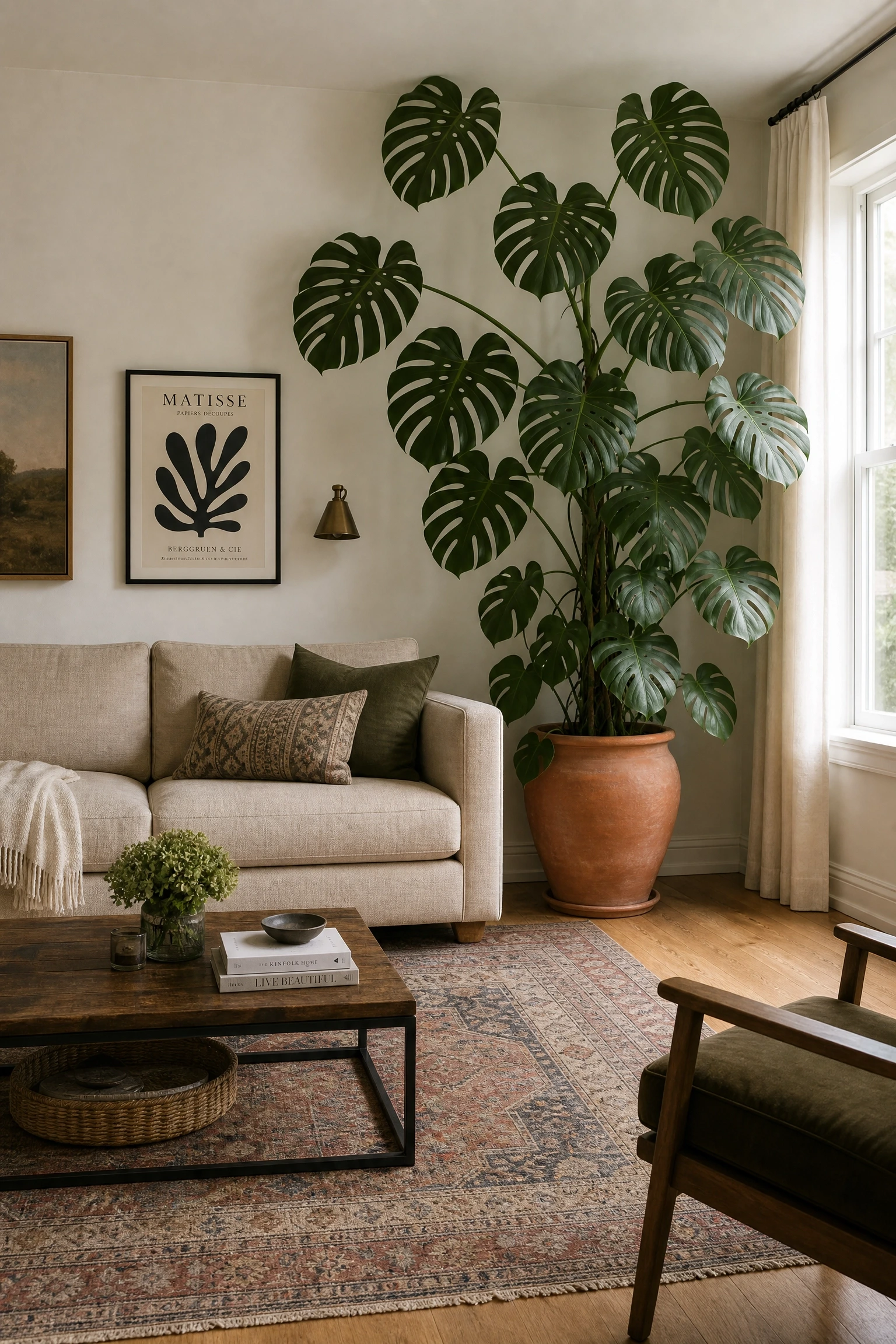
A beige couch in a room without any living elements can feel like a furniture showroom rather than a home, and the simplest fix is adding at least one plant at a significant scale. A tall fiddle-leaf fig, a large monstera, or a dramatic snake plant in a warm-toned terracotta or matte black pot placed in a corner near the sofa introduces color, organic shape, and a sense of life that no decorative object can replicate quite the same way. The key word here is intention: one large plant placed deliberately makes more of an impact than five small succulents scattered around the room. In practice, the plant should be tall enough to have its foliage above the back of the couch when viewed from across the room, which creates a layering effect between the furniture and the greenery that professional designers use constantly.
Reality Check: If you cannot keep plants alive, a high-quality large artificial plant in a real pot is far better than no plant at all. The silhouette is what the room needs, not necessarily the biology.
17. The Room Has a TV Wall Opposite the Couch and Looks Like a Box: Break the Grid
The classic living room setup, beige couch facing TV on the opposite wall, is functional but visually it creates a room that looks like a rectangle of furniture with nothing interesting happening. Breaking the grid does not mean moving the TV. It means adding elements that interrupt the straight-line reading of the room. An angled accent chair in the seating area, a floor lamp that arcs over the couch, a side table that extends beyond the line of the sofa arm, a plant that breaks into the empty corner, and art hung at an unexpected height all work together to make the room feel designed rather than arranged. In practice, the arc floor lamp is one of the most powerful tools here because it creates a vertical element and a curve in a space that is otherwise all right angles.
Pro Move: An arc floor lamp behind the corner of a beige couch is one of the best purchases you can make for under $150. It adds height, warmth, and breaks the boxy TV-room feeling immediately.
18. The Room Needs Color But You Are Afraid to Commit: Start With Terracotta
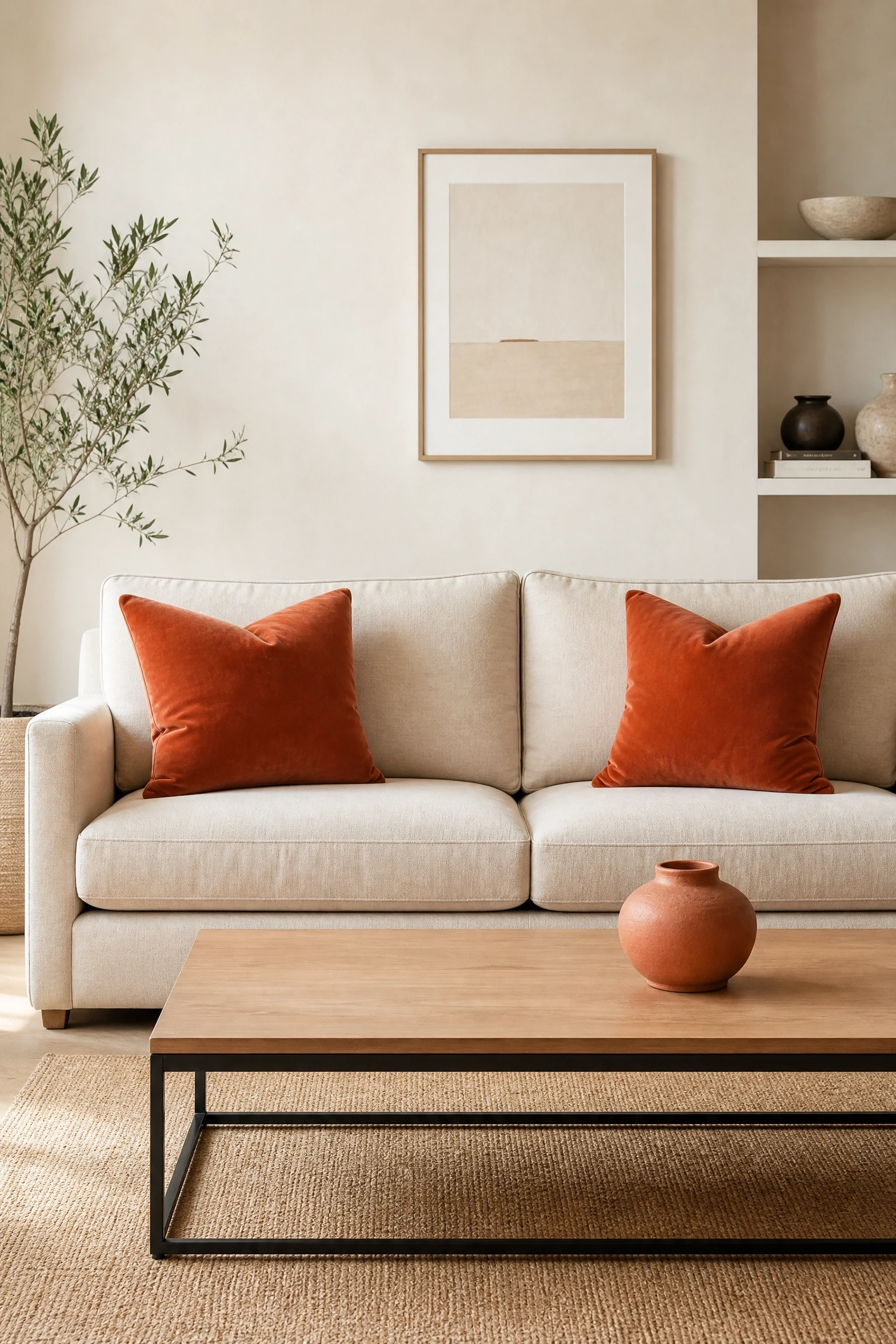
If you have been circling the idea of adding color to your beige couch room but keep pulling back because nothing feels safe enough, start with terracotta. Terracotta is one of the most forgiving accent colors in interior design precisely because it sits in the warm, earthy family that beige already belongs to. It reads as bold next to beige without actually being a cold or jarring contrast. Two terracotta throw pillows and a terracotta ceramic pot on the coffee table is genuinely all you need to feel the difference. From there, you can decide whether to layer in a second accent color like olive or dusty blue, or keep the whole room in that warm earthy direction. Terracotta has been a consistent favorite in interior design circles for the past several years and holds up well as a long-term color choice rather than a trend that will feel dated in two seasons.
Quick Tip: Terracotta works best in matte or slightly textured finishes, whether in fabric, ceramic, or paint. Glossy terracotta can veer into orange territory quickly.
19. The Curtains Are Wrong and You Cannot Figure Out Why: Go Longer and Lighter
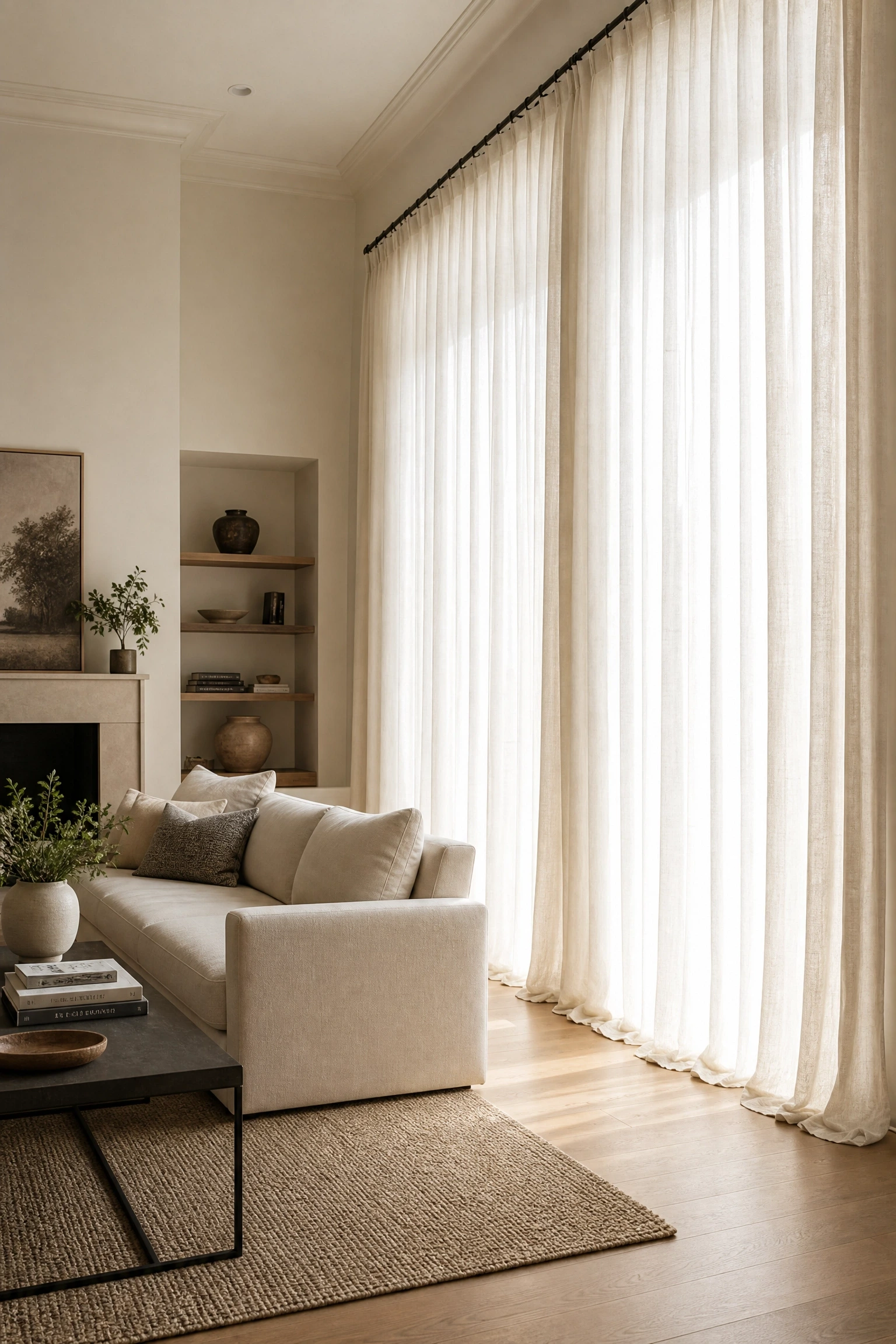
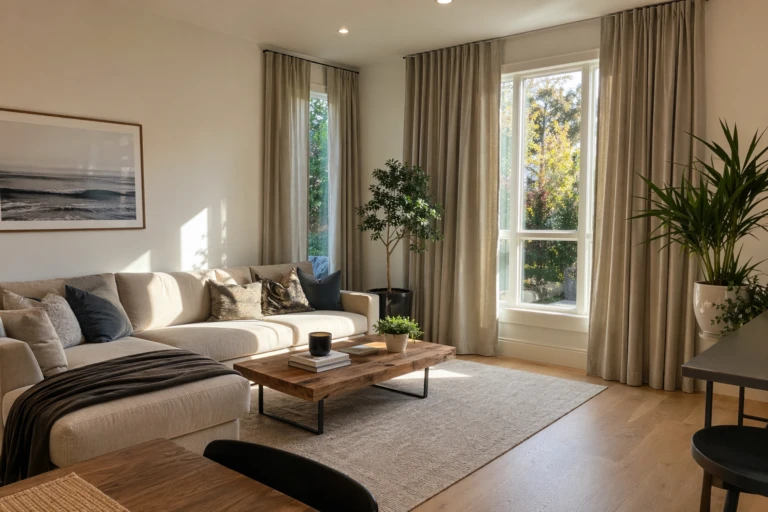
Curtains are one of the most underestimated elements in a beige couch room, and the two mistakes people make most often are hanging them too short and choosing a fabric that is too heavy. Short curtains that hang just below the window frame chop the room’s height and make the walls feel truncated. Heavy drapes in a room with a beige couch and neutral walls add visual mass that the room often does not need. The right curtain for most beige couch living rooms is a floor-length linen or linen-look panel hung high, at least 4 to 6 inches above the window frame, ideally right at the ceiling or crown molding. This draws the eye upward, makes the ceiling feel higher, and floods the room with diffused light in a way that makes beige feel its warmest and most inviting. In terms of color, white, warm ivory, soft sand, or a very light sage all work beautifully.
Heads Up: Hang curtain rods wide, extending 6 to 10 inches beyond the window frame on each side. This makes windows look larger and lets more light in when the curtains are open.
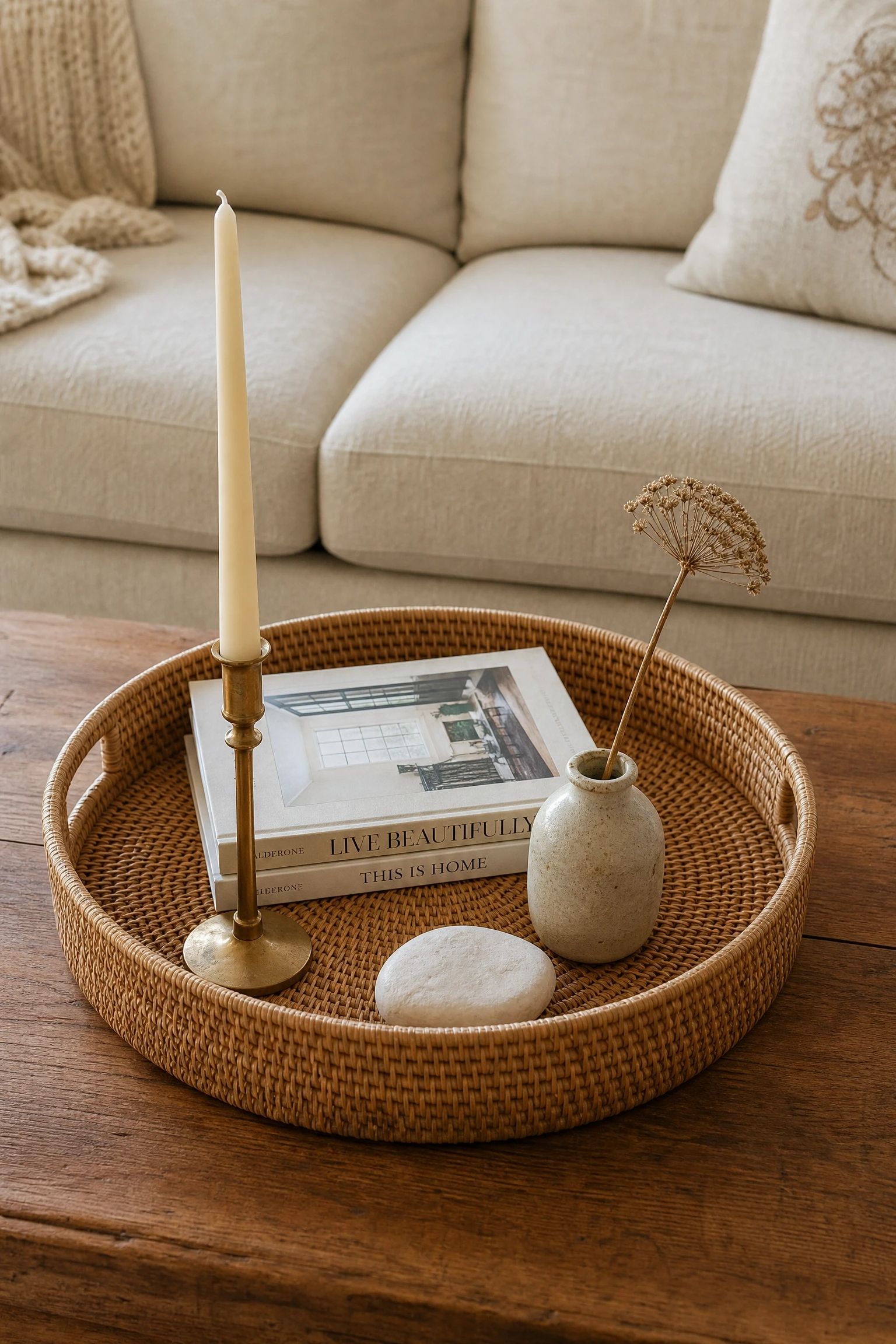
20. The Coffee Table Styling Always Looks Off: Use the Tray Method
A coffee table in front of a beige couch that is either completely empty or filled with random objects is one of the most common unfinished-room problems. The tray method is the interior design shortcut that solves this reliably: place a tray on the table, and then style the tray as a contained unit with three to five objects of varying heights. Think a short candle, a small stack of design books, a single bud vase, and one organic object like a piece of driftwood, a smooth stone, or a small plant. The tray creates a defined visual boundary that makes the arrangement look intentional rather than random, and it also makes it practical since you can lift the tray off when you need the table surface. For a beige couch room, trays in rattan, raw wood, or matte black all work well depending on the overall direction of the room.
Designer Advice: Height variation on a coffee table is non-negotiable. If everything sits at the same height, the arrangement reads as flat. Aim for at least two clearly different height levels in your tray styling.
21. The Room Has No Ceiling Interest and Feels Flat From Above: Add a Statement Light
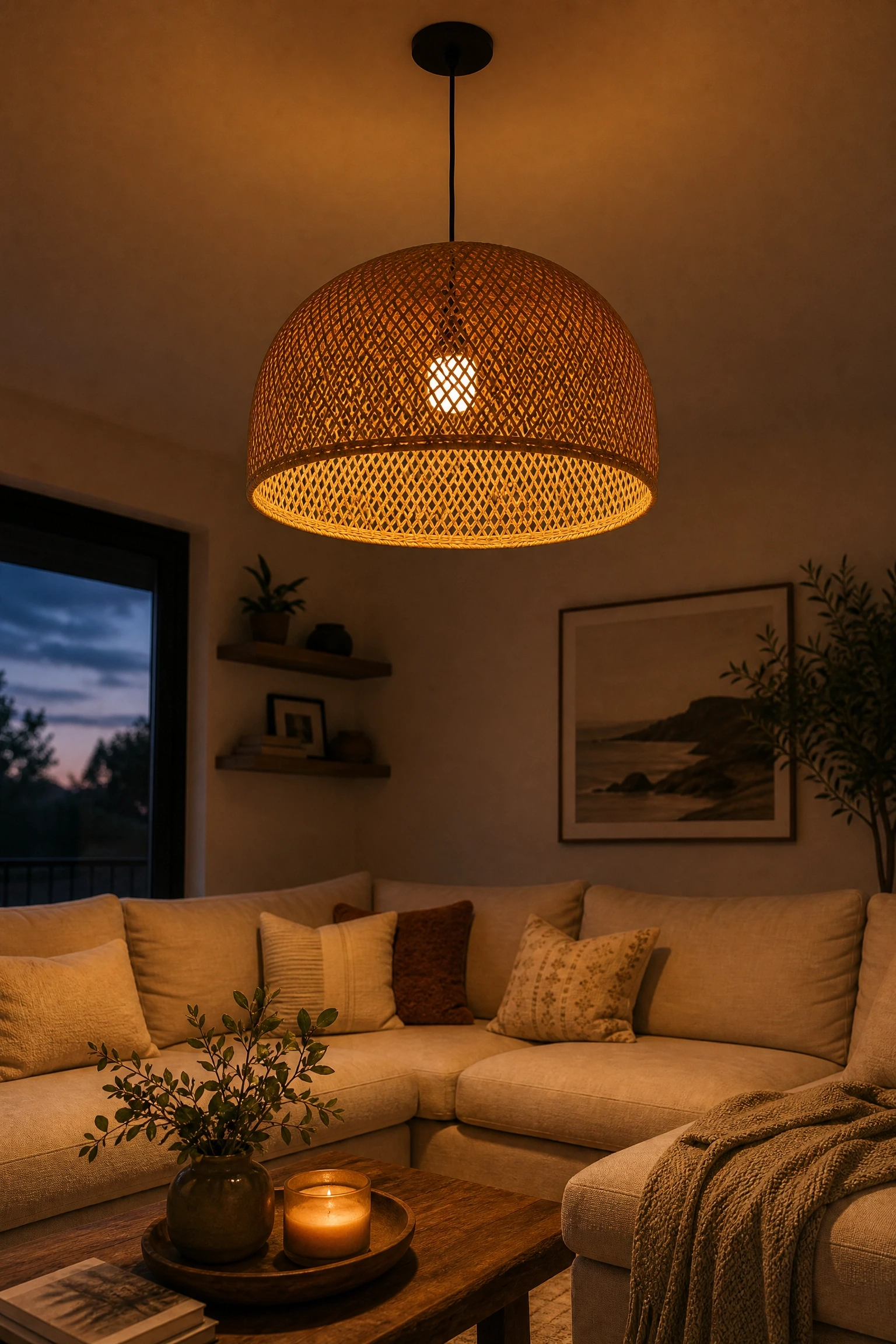
Most living rooms are styled from the floor up and completely ignore what is happening at the ceiling, which means the top third of the room is doing nothing. When you have a beige couch as your anchor piece, adding a statement pendant light or chandelier above the seating area pulls the eye upward and gives the room a sense of vertical completeness. A rattan pendant, a sculptural woven shade, a globe chandelier in warm brass, or a large paper lantern all work depending on the style of the room. The key is scale: the fixture should be large enough to register from across the room, which in practice means most people need to go at least one size up from what they initially choose. Pendant lights in the $80 to $250 range from brands like Lamps Plus, West Elm, or Target’s threshold line make this very achievable.
Reality Check: A ceiling light that is too small for the room is almost worse than no light at all. When in doubt, go bigger. A 16 to 20-inch pendant reads well in most average-sized living rooms.
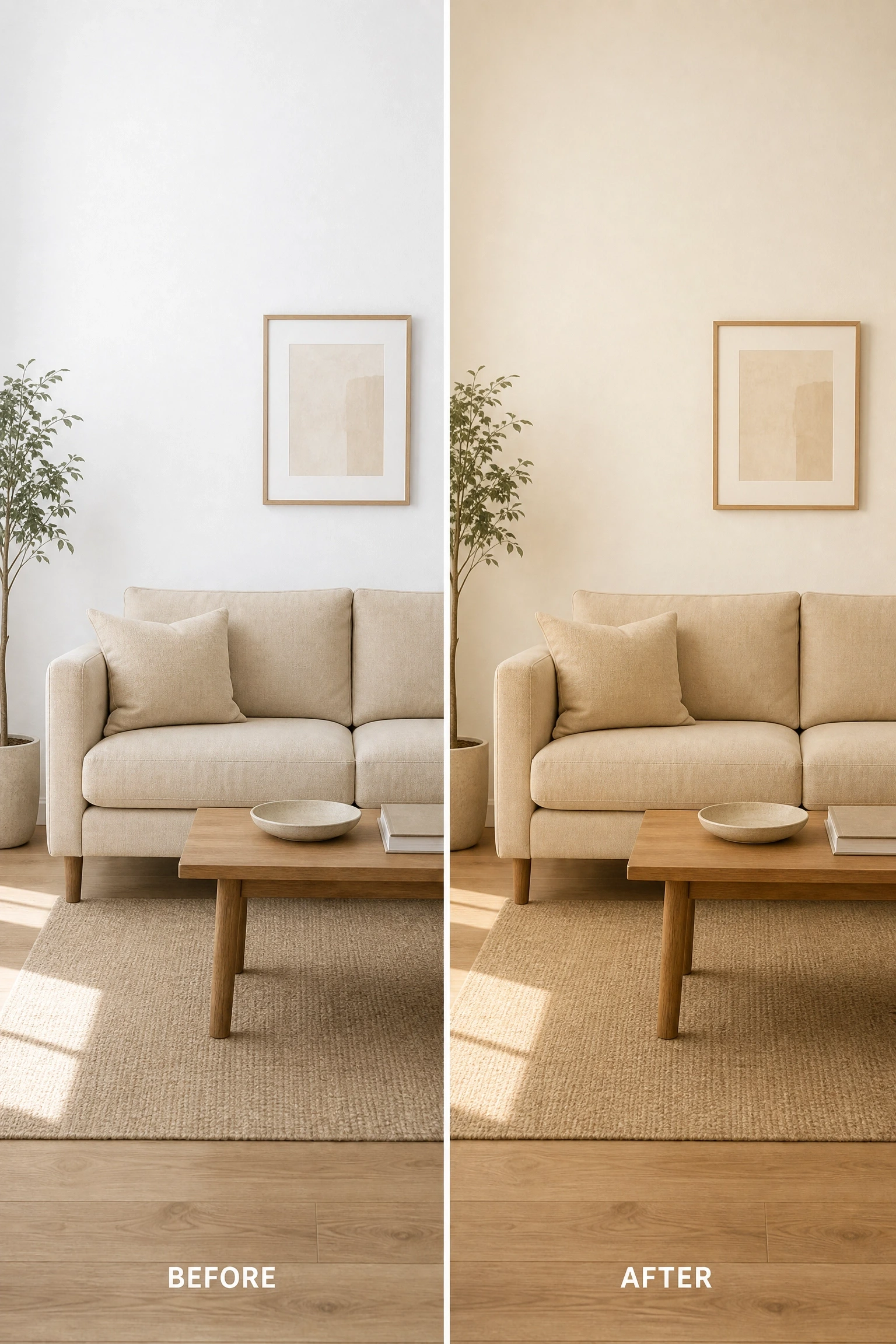
22. The Room Has White Walls and the Couch Looks Clinical: Warm Up the Backdrop
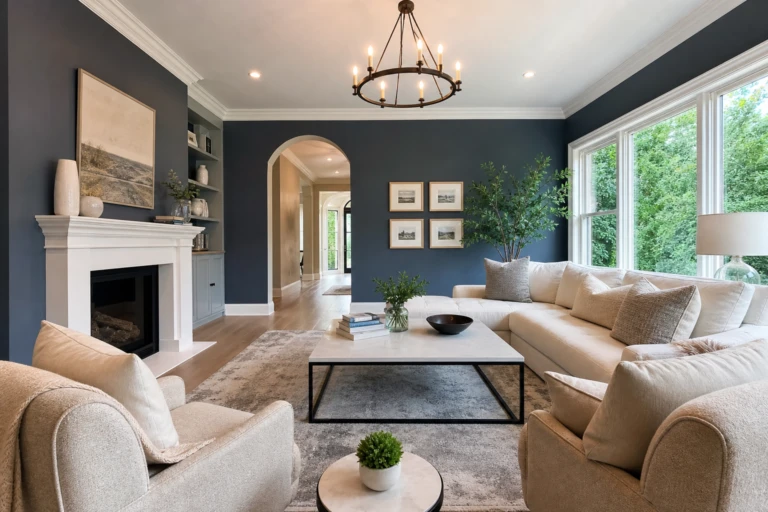
Bright white walls and a beige couch can feel stark rather than clean, particularly in rooms with limited natural light or a north-facing orientation. The issue is that cool white reflects blue light, which strips the warmth from beige and makes the whole room feel hospital-adjacent. Switching to a warm white, a soft off-white like Benjamin Moore’s White Dove or Sherwin-Williams’ Alabaster, or a very light warm greige instantly changes how the beige couch reads. You do not need to go dark or commit to a bold wall color. Even moving just slightly from cool white to warm white on the walls makes a visible difference because the warm wall color bounces amber-toned light back into the room rather than cool blue light. In rooms where repainting is not currently an option, adding warm-toned art, wood frames, and warm-bulb lamps achieves a similar shift.
Quick Tip: Hold your paint chip next to the couch fabric in the actual room light before committing. The same white can read completely differently depending on your flooring, natural light, and existing furniture.
23. The Room Feels Unbalanced: Think About Visual Weight on Both Sides
A common issue in beige couch living rooms is that the furniture arrangement feels heavier on one side than the other, often because all the decorative elements, the lamp, the plant, the side table, accumulated on the same side over time. Visual weight is not about symmetry exactly, it is about balance: the eye should not feel pulled to one corner of the room and left with nothing on the other side. If your sofa has a lamp and a full side table on the left with nothing on the right, adding even a single floor plant or a leaning mirror on the right side restores the sense of equilibrium. Professional designers think about visual weight in terms of scale, darkness, and complexity: a large dark plant pot carries the same visual weight as a small cluster of bright accessories, and understanding that lets you balance a room without making it look perfectly mirrored.
Pro Move: Stand in the doorway of your room and squint slightly. If your eye goes straight to one side, the room needs something on the opposite side to pull it back to center.
24. The Room Is Finished But Still Does Not Feel Like You: Add One Unexpected Element
Once everything is in place and the room checks every design box, it still can feel like it could belong to anyone. This is the point where most design articles give you generic advice about personal touches, but what actually works is adding one unexpected element that does not follow the logic of the rest of the room. A vintage ceramic lamp that clashes slightly with the modern furniture, a bold abstract painting in a color that appears nowhere else in the room, a Moroccan pouf in a pattern that is more complex than everything else, a sculptural object that has no function but is genuinely interesting to look at. This is the layer that makes the room feel inhabited by a specific person rather than assembled from a style guide. The beige couch handles all the practicality and calm. The unexpected element is where your actual personality enters the room.
Reality Check: The unexpected element should be something you genuinely love and would not return, not something you think you are supposed to like. Rooms that feel personal are rooms where the owner made at least one decision that surprised people.
A beige couch is one of the most versatile starting points in home decor, not because it goes with everything automatically, but because it gives you the freedom to go in almost any direction once you understand how to use it. The rooms that work are not the ones where everything matches and nothing stands out. They are the ones where someone made deliberate choices about contrast, texture, warmth, and scale. They added one dark anchor and one statement piece. They got the lighting right before buying more stuff. They picked a direction and followed it.
The ideas in this article are built around the problems that come up most often, not the abstract inspiration that looks good in a mood board but falls apart in a real home. If the room feels off, name the one thing that bothers you most and fix that first. The rest usually falls into place. Start with one change, see how it shifts the room, and build from there. Beige does not have to mean boring. It just has to be handled with a little more thought than people usually give it.
Which of these ideas would actually fix the biggest problem in your beige couch room right now? Drop it in the comments below, I would love to hear what you are working with.
Frequently Asked Questions
What colors go best with a beige couch?
The colors that work most reliably with a beige couch are warm earthy tones like terracotta, rust, and olive, as well as deeper contrasting shades like forest green, navy, and charcoal. These all provide the contrast that a beige couch needs without fighting with its warmth. If you prefer cooler accents, dusty blue and soft sage also pair well as long as you balance them with warm lighting and wood tones.
What type of rug should I put under a beige couch?
The rug choice depends on what the room needs. If the room feels flat or personality-free, a patterned rug with one or two accent colors pulled from your pillow scheme is the fastest fix. If the room already has pattern elsewhere, a solid textured rug in jute, wool, or boucle adds warmth without visual competition. Size-wise, aim for a rug large enough for the front legs of the sofa to rest on it, which in most rooms means at least 8×10 feet.
How do I make a beige couch look more expensive?
The details that make a beige couch look more expensive are almost never the couch itself. The biggest impact comes from a sculptural or natural-material coffee table, high-quality throw pillows with texture contrast, a large piece of art hung at the right height, and warm lighting from a floor or table lamp rather than just overhead. Getting the scale right, meaning no rug that is too small, no art that floats too high, and no pillows that are too flat, makes an enormous difference.
Should I get a beige couch if I have pets or kids?
A pale cream or ivory couch is genuinely not ideal for high-traffic households with pets or children. The better options in the beige family are greige, mushroom, warm taupe, or any textured upholstery like boucle or heavy linen weave, which all hide day-to-day marks significantly better. If you love the pale look, a quality performance fabric in a warm beige tone offers the aesthetic without the anxiety. Brands like Crypton and Sunbrella make performance-grade fabrics in beautiful neutral tones.
How many throw pillows should I put on a beige couch?
For a standard three-seat sofa, three to five pillows is the sweet spot. Two larger 22-inch pillows at each end, two smaller 18-inch or lumbar pillows in front of those, and an optional center pillow or none at all. Odd numbers tend to read more naturally than even numbers. The key is varying the size, shape, and texture rather than lining up identical pillows of the same dimension. A folded throw over one arm completes the arrangement without adding more pillows.
What wall color looks best with a beige couch?
Warm whites and soft off-whites like Sherwin-Williams Alabaster, Benjamin Moore White Dove, or any warm greige work extremely well because they bounce warm light and make the beige read as soft and inviting rather than flat. Cool whites can make beige look slightly gray or clinical, especially in rooms without strong natural light. If you want to go bolder, a deep sage, a dusty navy, or a warm terracotta wall behind the sofa creates a beautiful backdrop that makes the beige couch stand out rather than disappear.