Shoes pile up fast in a bedroom. A couple of pairs by the bed, a few more by the closet, and suddenly the floor looks like a shoe store clearance bin. The problem is not that you own too many shoes. The problem is they do not have a proper place to go. Here are 14 bedroom shoe storage ideas that keep the mess hidden and your floor clear.
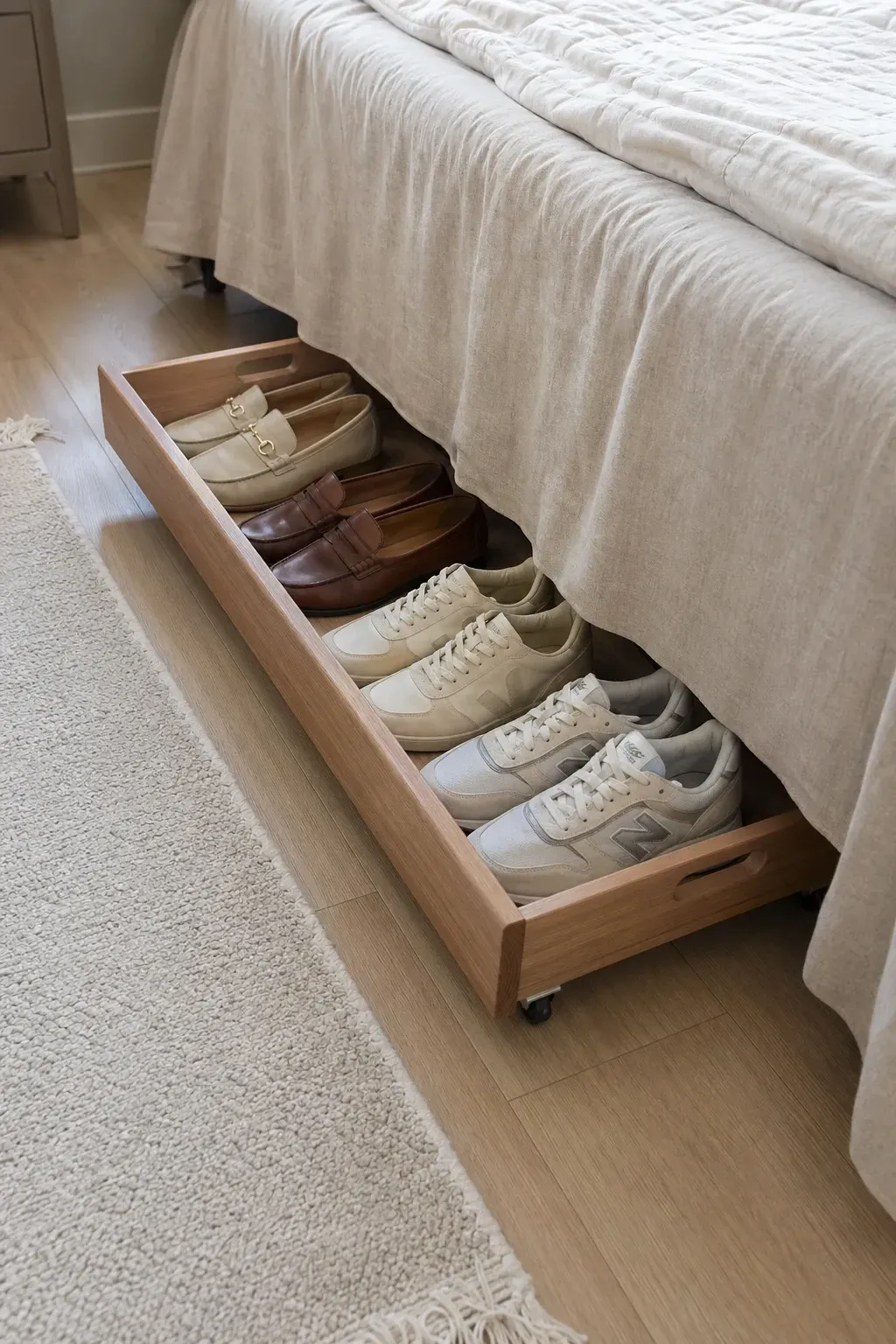
Flat rolling bins or canvas bags that slide under the bed use space that is otherwise completely wasted. You can fit a surprising number of pairs in the gap between the floor and the bed frame. Pull the bin out, grab your shoes, and slide it back in. The shoes stay dust-free and out of sight. This is the easiest win for bedrooms with limited closet space because you are not adding any furniture to the room.
Designer Tip: Measure the clearance under your bed before buying bins. Too tall and they will not slide in. Too shallow and they waste vertical space. Bins with wheels roll more smoothly on carpet than flat-bottomed ones.
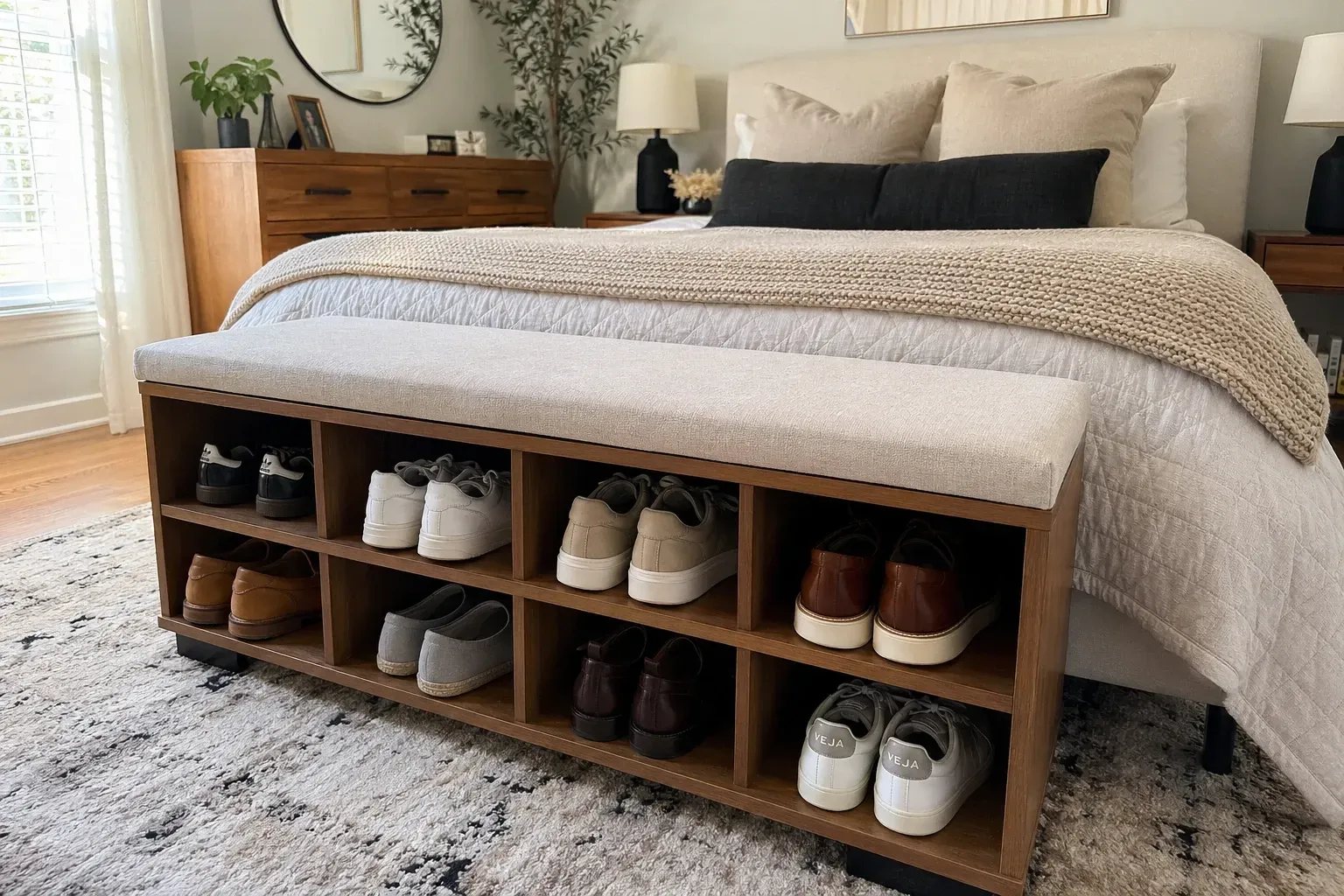
A bench at the foot of the bed or along a wall with shoe storage underneath gives you a place to sit while putting on shoes and a hidden compartment for the collection. Some benches have cubbies, others have a lift-top lid. Either way, the shoes are out of sight behind a piece of furniture that looks like it belongs in the room. It is functional without looking like a storage solution.
Designer Tip: Match the bench style to your bed frame. A tufted upholstered bench pairs with a traditional bed. A slatted wood bench works with mid-century or Scandinavian styles. The bench should look like part of the bedroom furniture set, not something you added out of desperation.
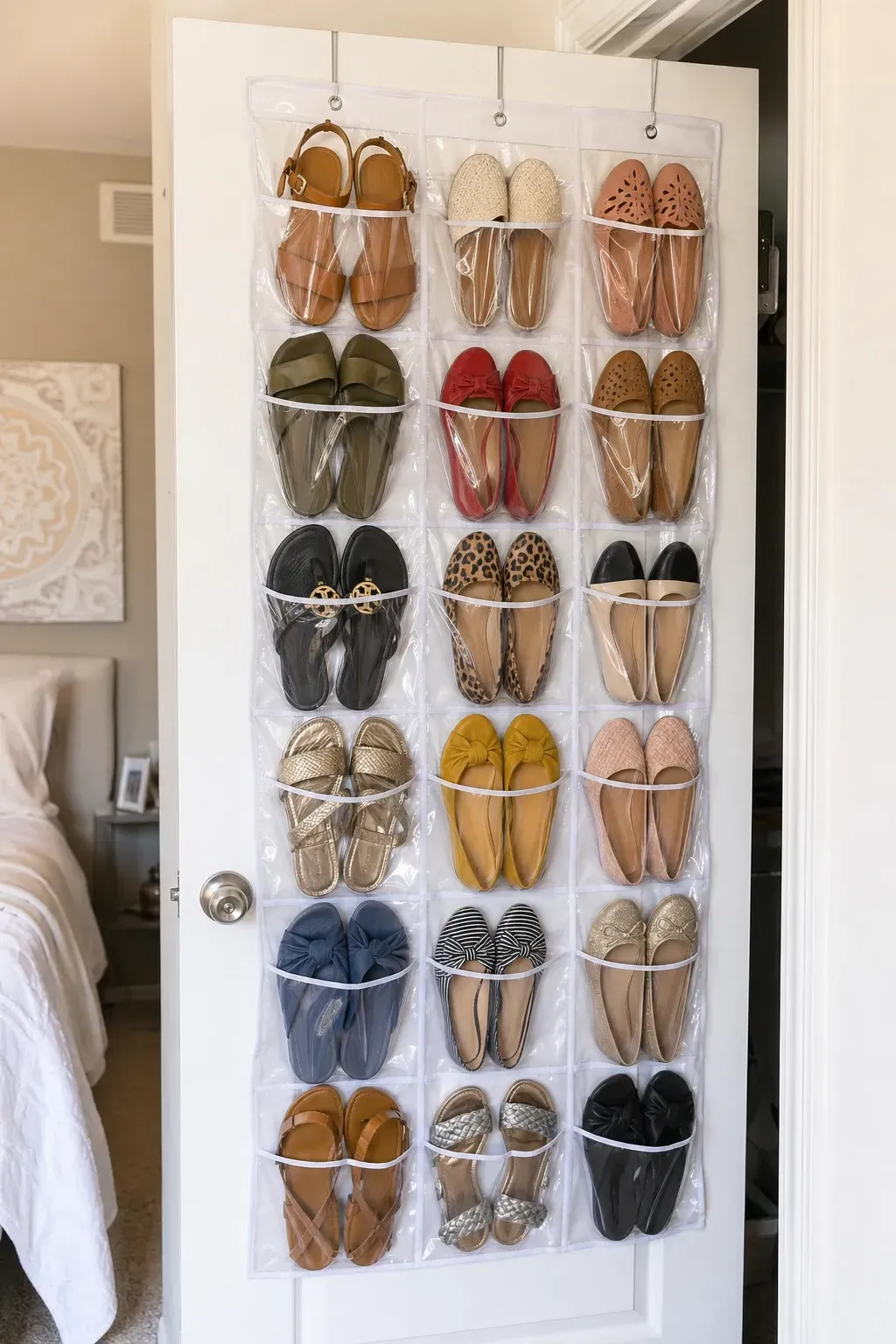
An over-the-door organizer hangs on the back of the bedroom or closet door and holds pairs in individual clear pockets. You see every pair at a glance, which speeds up your morning routine. When the door is closed, all the shoes are hidden behind it. This is one of the best options for renters because it requires no drilling, no mounting, and no modifications to the room.
Designer Tip: Place heavier shoes like boots in the bottom pockets and lighter shoes like flats and sandals at the top. Heavy shoes in upper pockets make the organizer sag and pull away from the door.
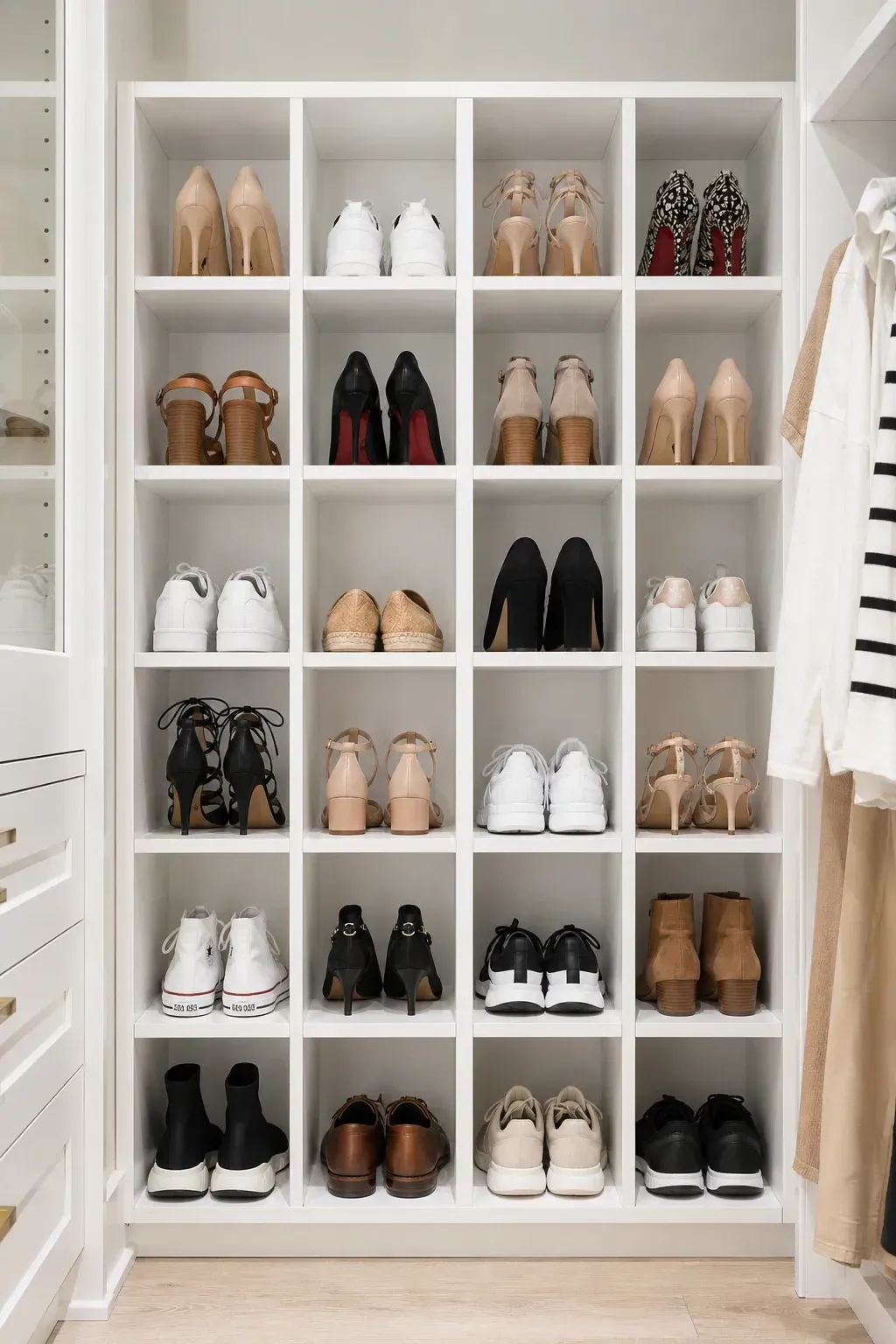
A cubby-style shoe rack inside the closet or along a bedroom wall gives each pair its own compartment. Cubbies keep shoes separated, upright, and easy to find. You do not have to dig through a pile or move five pairs to reach the one you want. A 12-cubby unit handles the daily rotation, and you can stack a second unit beside it if you need more space.
Designer Tip: Keep one pair per cubby for the cleanest look. Cramming two pairs into one slot defeats the purpose and makes the whole rack look cluttered. If you run out of cubbies, it is time for a bigger rack or a shoe edit.
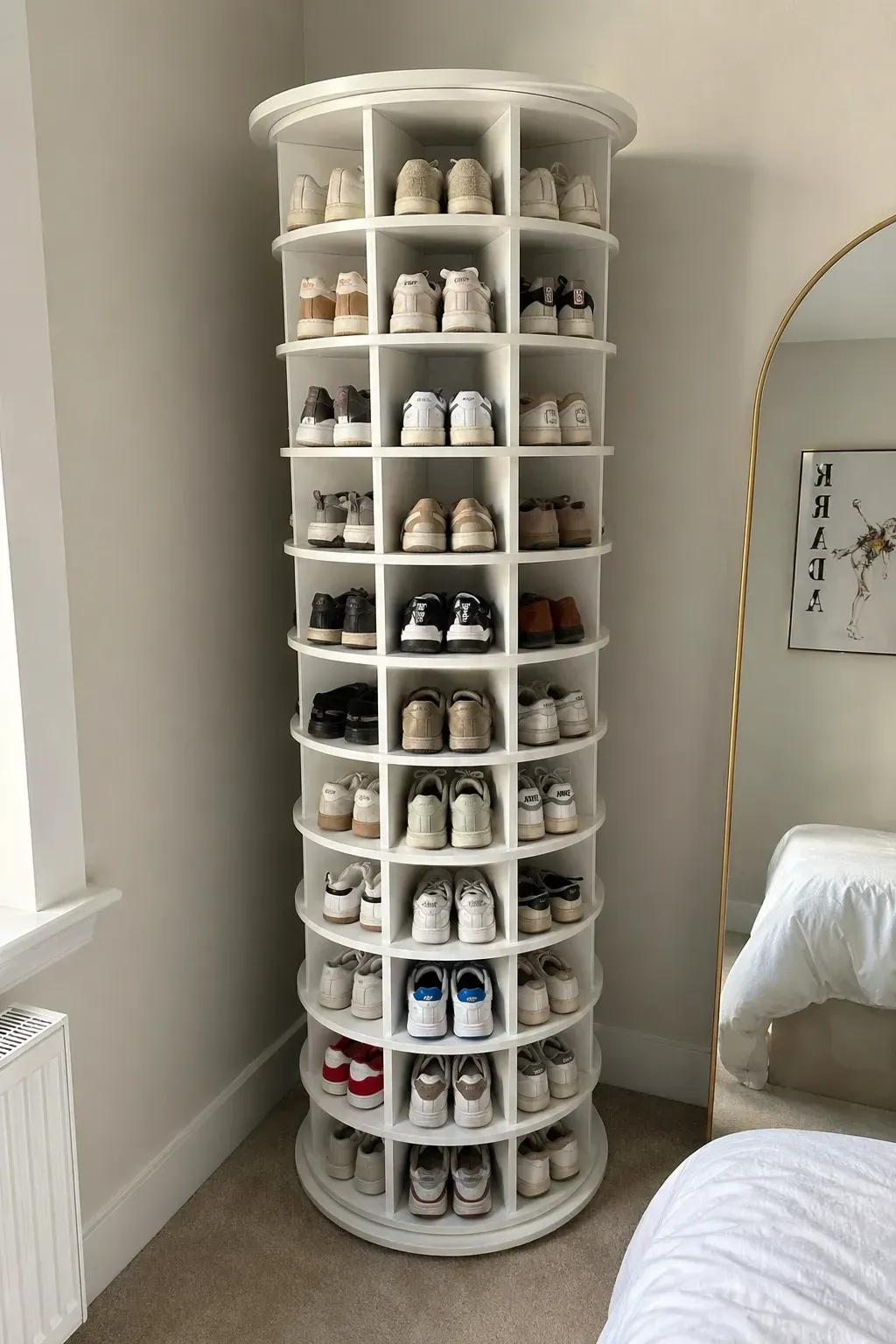
A rotating carousel-style shoe rack fits in a closet corner or a small floor space and spins so you can access shoes on all sides. This is a smart pick for people with large collections in small bedrooms because it uses vertical space and the spinning action means nothing gets hidden in the back. You spin the rack and your shoes come to you instead of you reaching and digging.
Designer Tip: Place the rotating rack on a hard surface if possible. On thick carpet, the spinning base can catch and wobble. A thin board or mat under the base gives it a stable surface to rotate on smoothly.
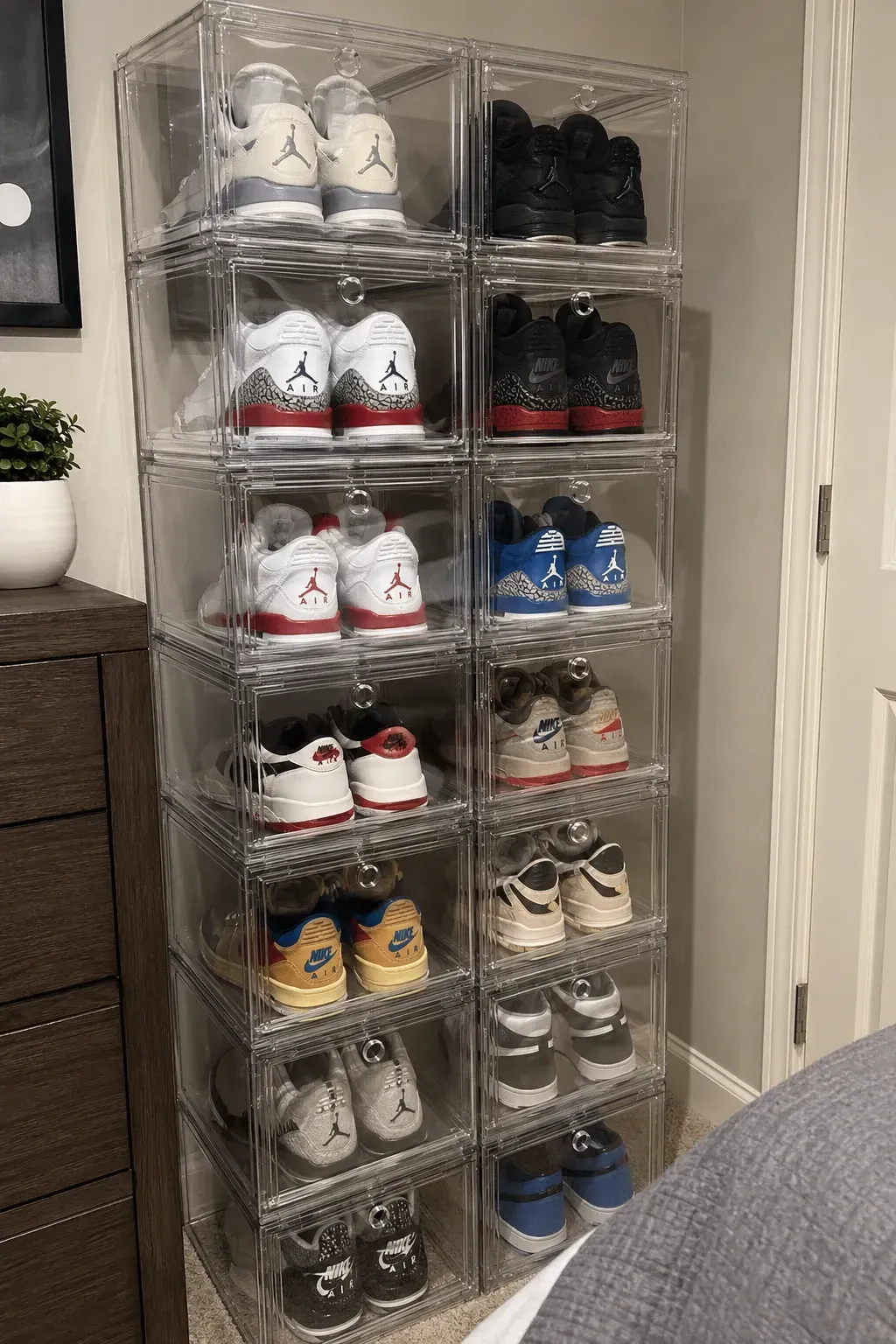
Stackable clear plastic boxes that each hold one pair give you visible, dust-free shoe storage that can go on a closet shelf, under the bed, or stacked in a corner. You see every pair through the clear lid without opening anything. They stack neatly and uniformly, which makes even a big collection look organized. This is the most popular solution on social media for a reason: it looks good and it works.
Designer Tip: Get boxes that are all the same brand and size for a uniform stack. Mixing different box sizes and shapes creates an uneven tower that tips over and looks messy. Uniform boxes stack perfectly and create a clean grid.
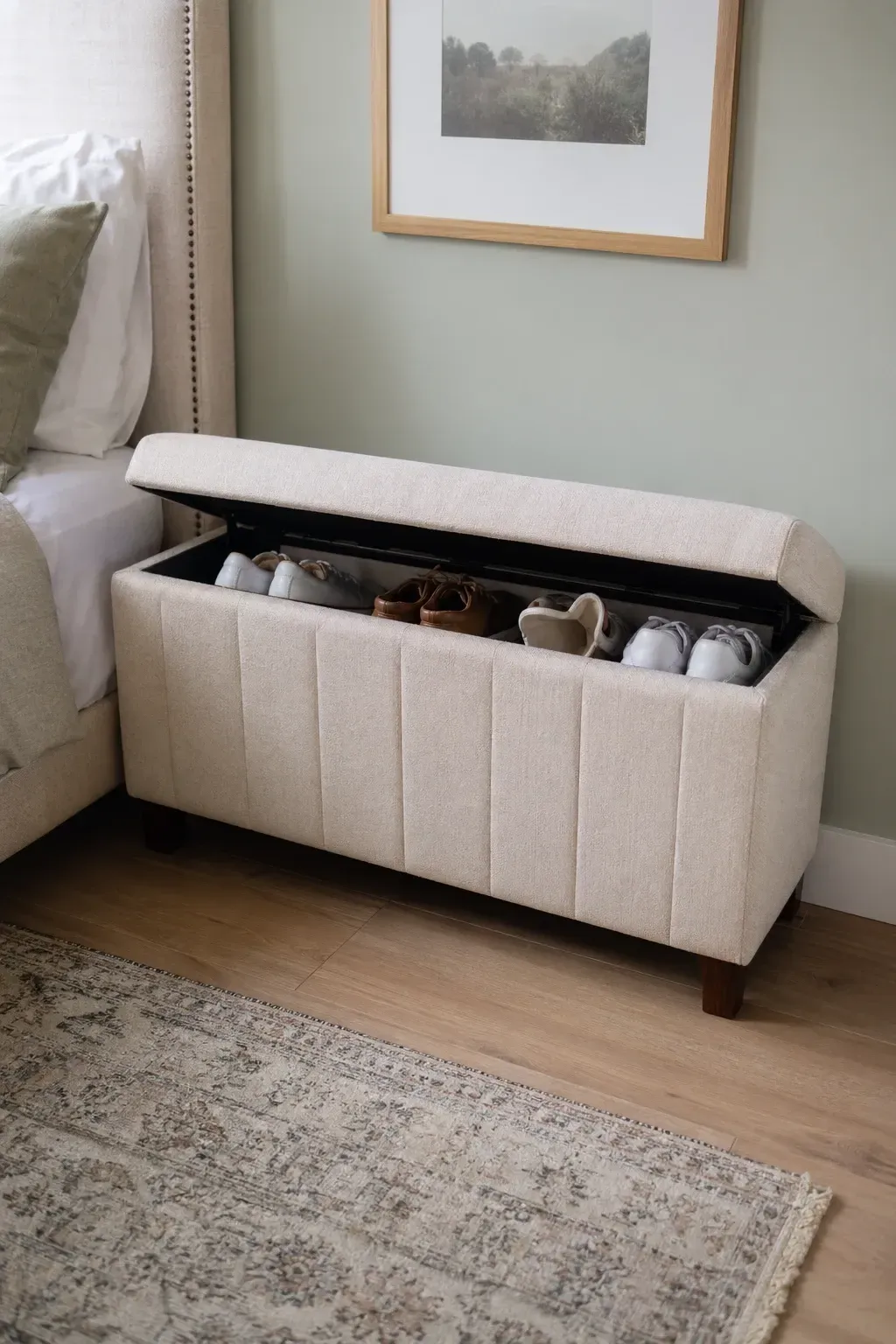
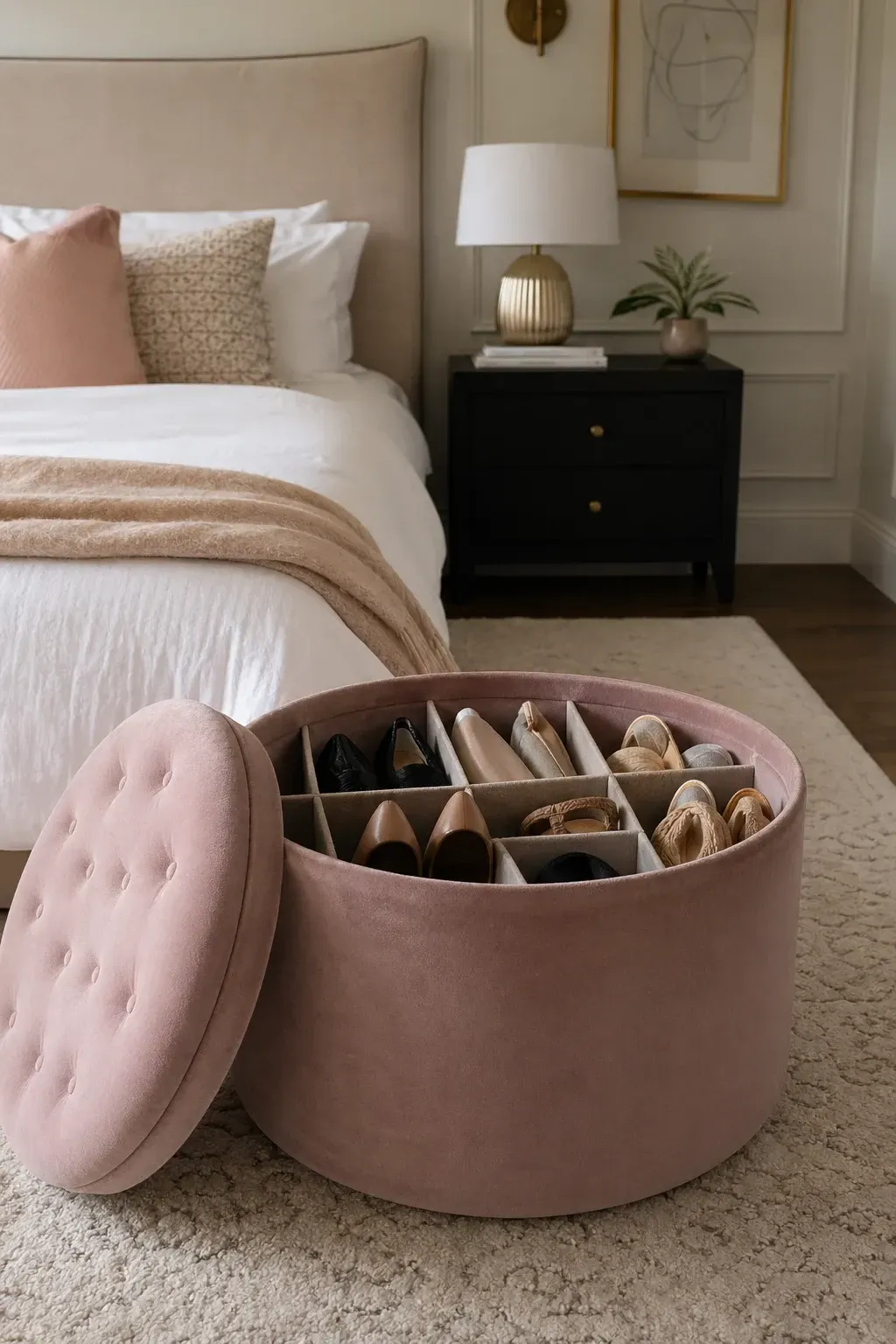
An ottoman with a hollow interior or pull-out drawers stores shoes inside what looks like a regular piece of bedroom furniture. You can use it as a footrest, extra seating, or a place to set a tray. Meanwhile, shoes are tucked away inside where nobody sees them. This is a great option for bedrooms where you do not want any visible evidence of shoe storage at all.
Designer Tip: Choose an ottoman with a flat, sturdy top if you plan to use it as seating. Some shoe storage ottomans have padded tops that feel comfortable to sit on. Others have thin lids that flex under weight. Test before you buy.
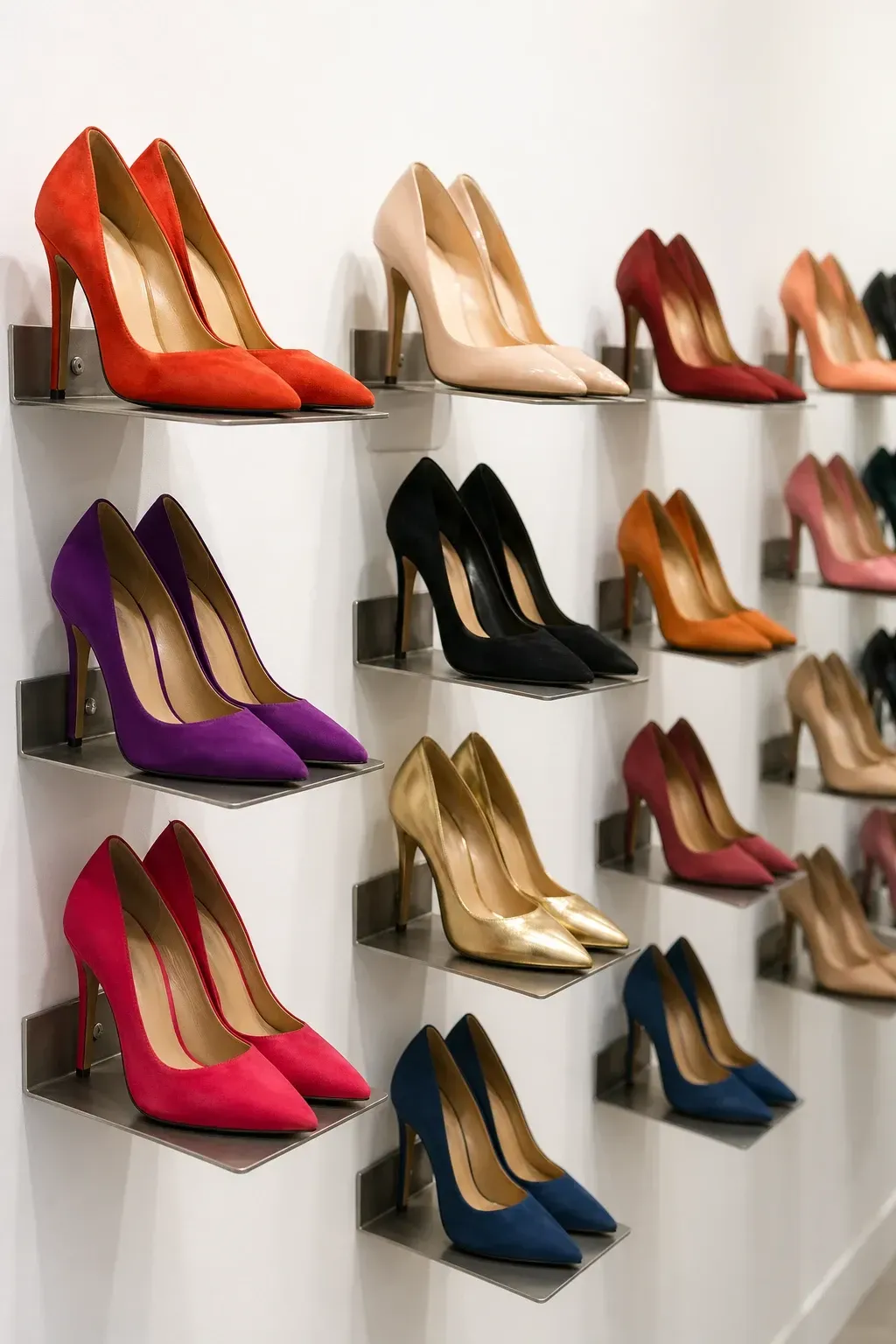
A rack mounted on the wall holds shoes off the floor entirely. The shoes sit on slim ledges or hang from rails, keeping the floor below completely clear for vacuuming and cleaning. This is a strong choice for small bedrooms because wall-mounted storage does not eat up any floor space. Inside a closet, a wall-mounted rack turns an empty wall into functional shoe storage.
Designer Tip: Mount the rack at a height where you can easily reach the top row. Shoes on a rack that is too high become decoration rather than something you actually wear. Keep frequently worn pairs at eye level.
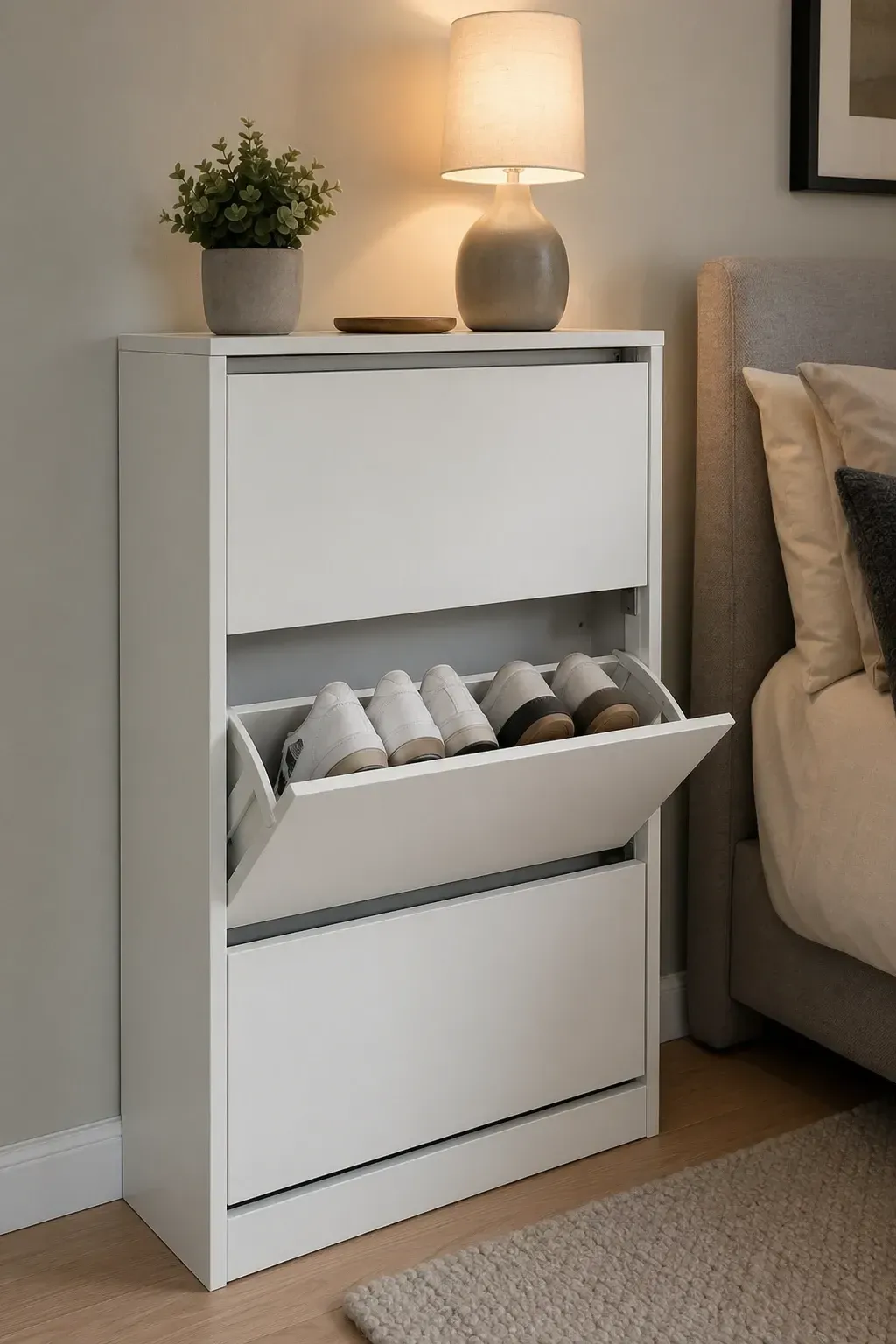
A slim shoe cabinet with flip-down drawers holds many pairs in a piece of furniture that is only about 7 to 9 inches deep. It fits against a wall without sticking out into the room and the doors hide the shoes completely when closed. From the outside it looks like a regular narrow cabinet or console table. These are popular in apartments and small bedrooms where every inch of floor space counts.
Designer Tip: Place the shoe cabinet near the bedroom door so you can grab shoes on the way out without walking across the room. A cabinet tucked in a far corner becomes inconvenient and you will stop using it.
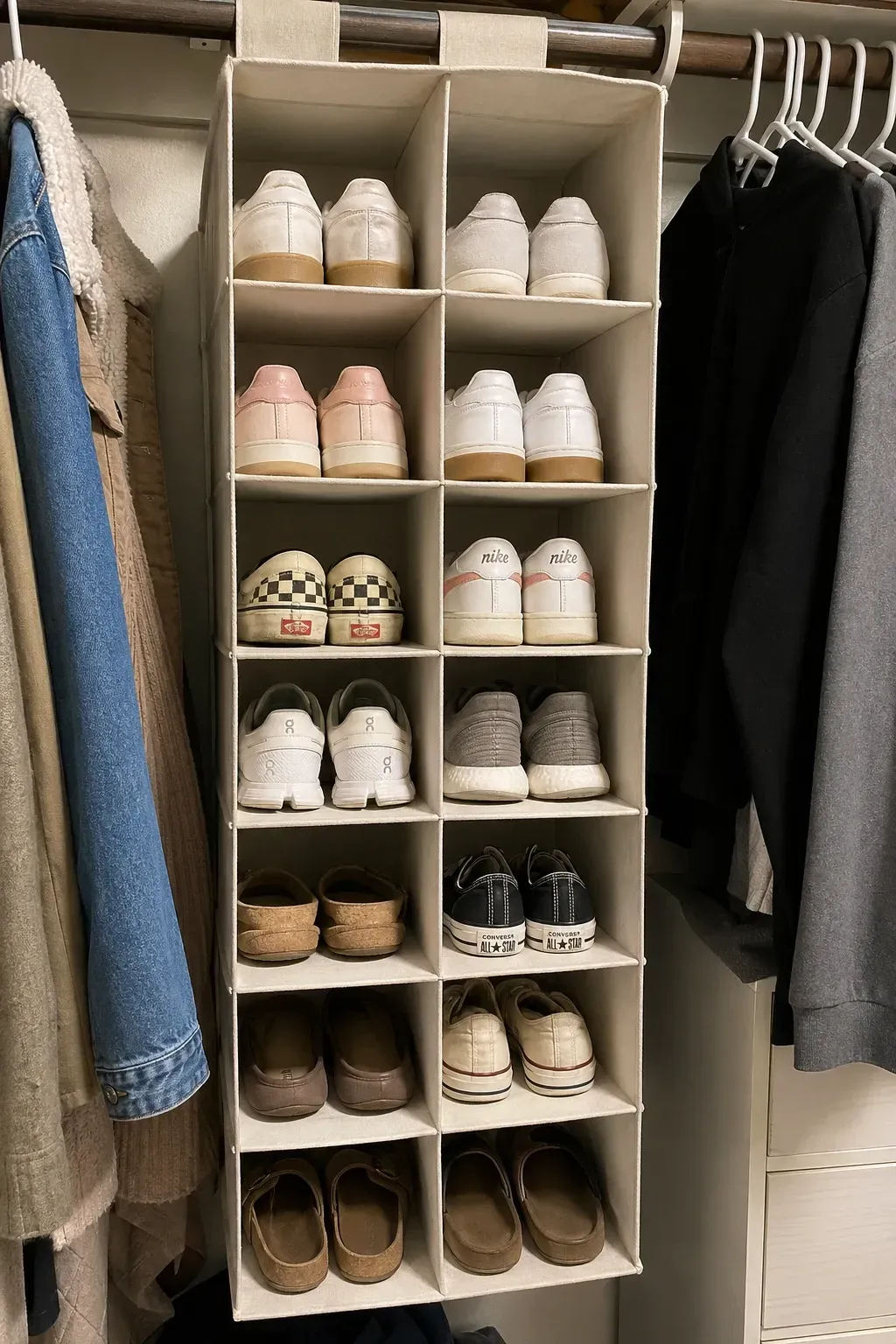
A fabric hanging organizer with shelves that hooks over the closet rod stores shoes vertically in the closet without taking up floor space. Each shelf holds one or two pairs. The organizer hangs next to your clothes so you can coordinate outfits and shoes in one spot. This is a good option for closets where the floor is already full of other storage items.
Designer Tip: Get a hanging organizer with reinforced shelves. Cheap ones with floppy fabric shelves sag under the weight of shoes and the pairs slide into each other. Stiff shelves keep shoes separated and the organizer looking neat.
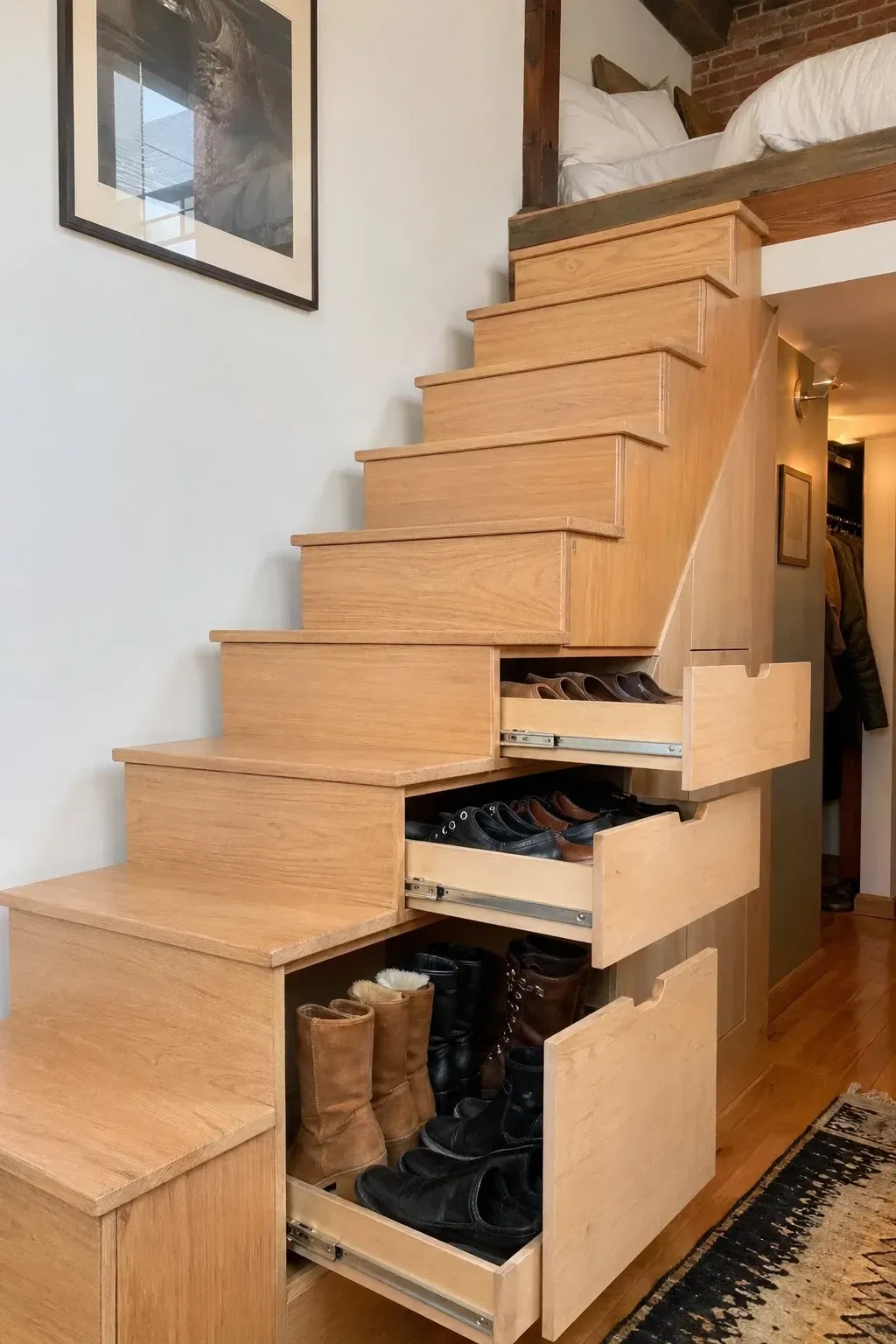
If your bedroom has a loft area with stairs, the space under those stairs is perfect for pull-out shoe drawers or built-in cubbies. This dead space usually gets ignored or stuffed with random items. Converting it to shoe storage is smart because it uses space that was otherwise wasted and keeps shoes tucked away in a spot that does not compete with the rest of the bedroom layout.
Designer Tip: Use the tallest sections near the top of the staircase for boots and the shortest sections near the bottom for flats and sandals. Matching the shoe height to the available clearance maximizes every inch.
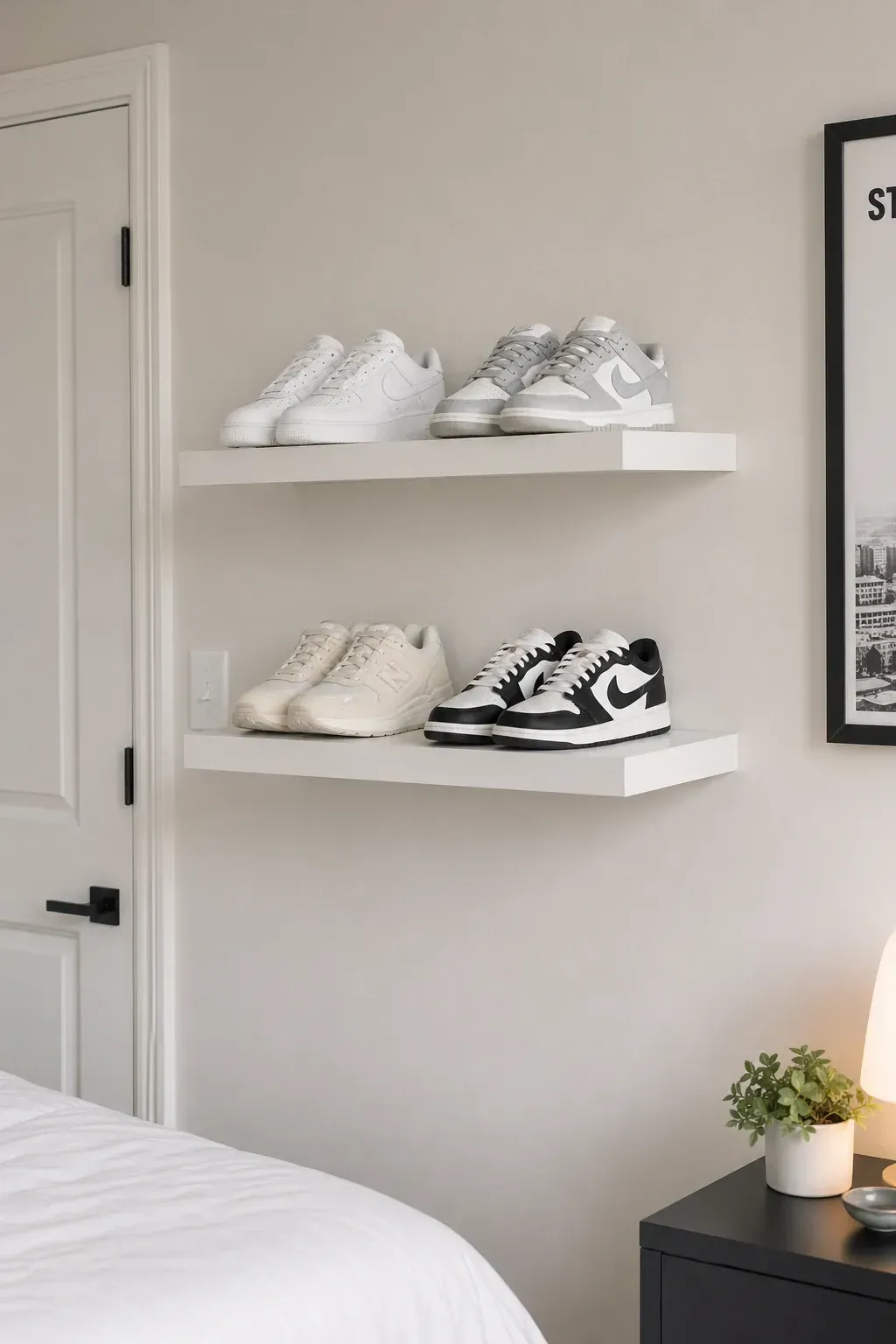
Floating shelves mounted in a column on the wall turn your shoe collection into a display. This works best for people who own shoes they are proud of and want to show off. Line up sneakers, heels, or designer shoes on individual shelves like a retail store display. It makes the bedroom wall look like a collected gallery while keeping shoes off the floor and easy to access.
Designer Tip: Space shelves evenly and keep them at the same width for visual consistency. Stagger different shelf lengths and spacing and the wall looks chaotic. A uniform grid of shelves creates the clean retail display effect.
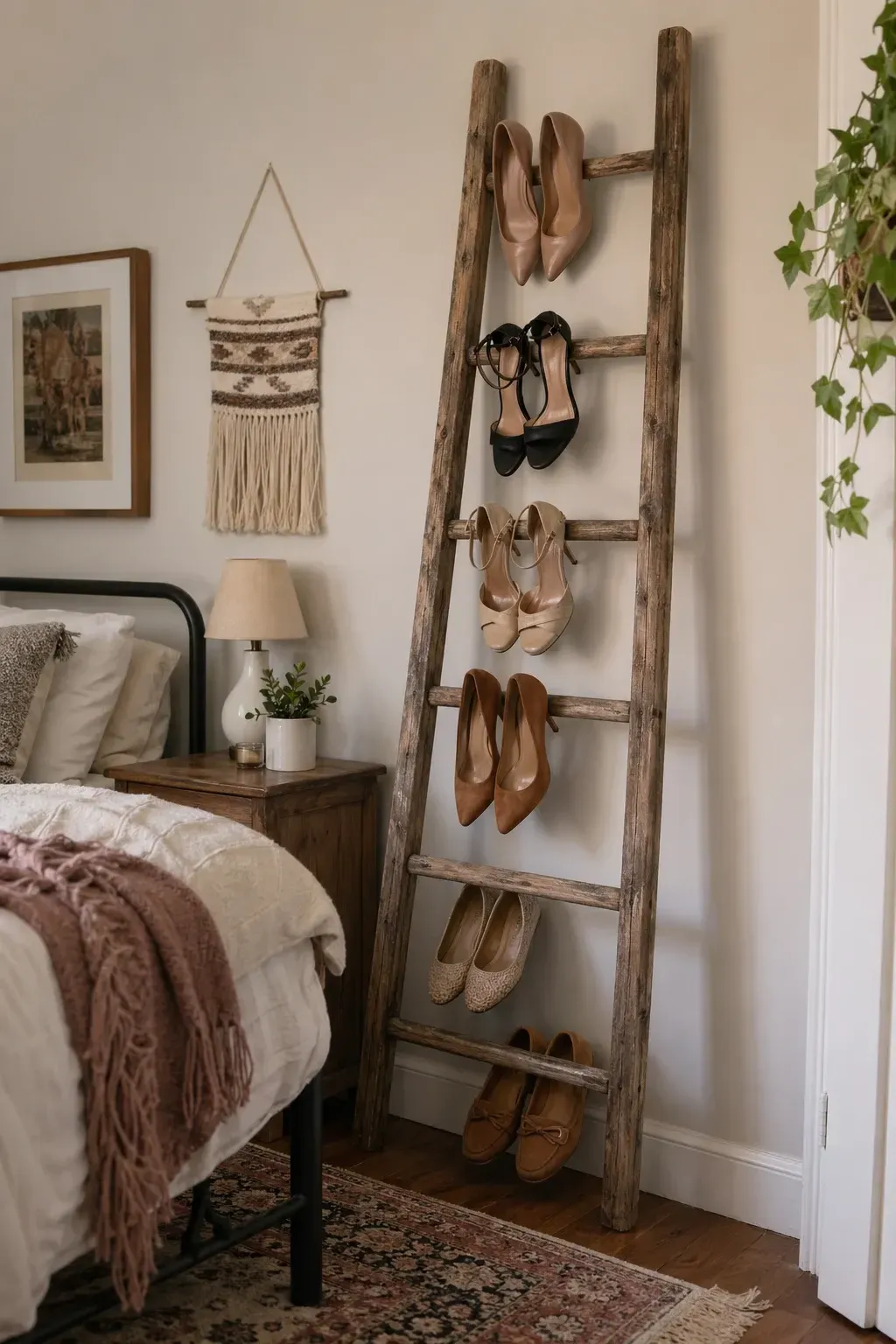
A leaning ladder rack with angled shelves leans against the wall and holds shoes on each rung or tier. It has a slim profile that does not take up much floor space and the angled design adds architectural interest to the room. Ladder racks come in wood and metal finishes and work in a closet or out in the open bedroom. The open design lets air circulate around the shoes, which helps prevent odor buildup.
Designer Tip: Anchor the top of the ladder to the wall with a small bracket. Leaning racks can slide or tip if bumped, especially on hardwood or tile floors. A hidden bracket prevents accidents and keeps the rack stable.
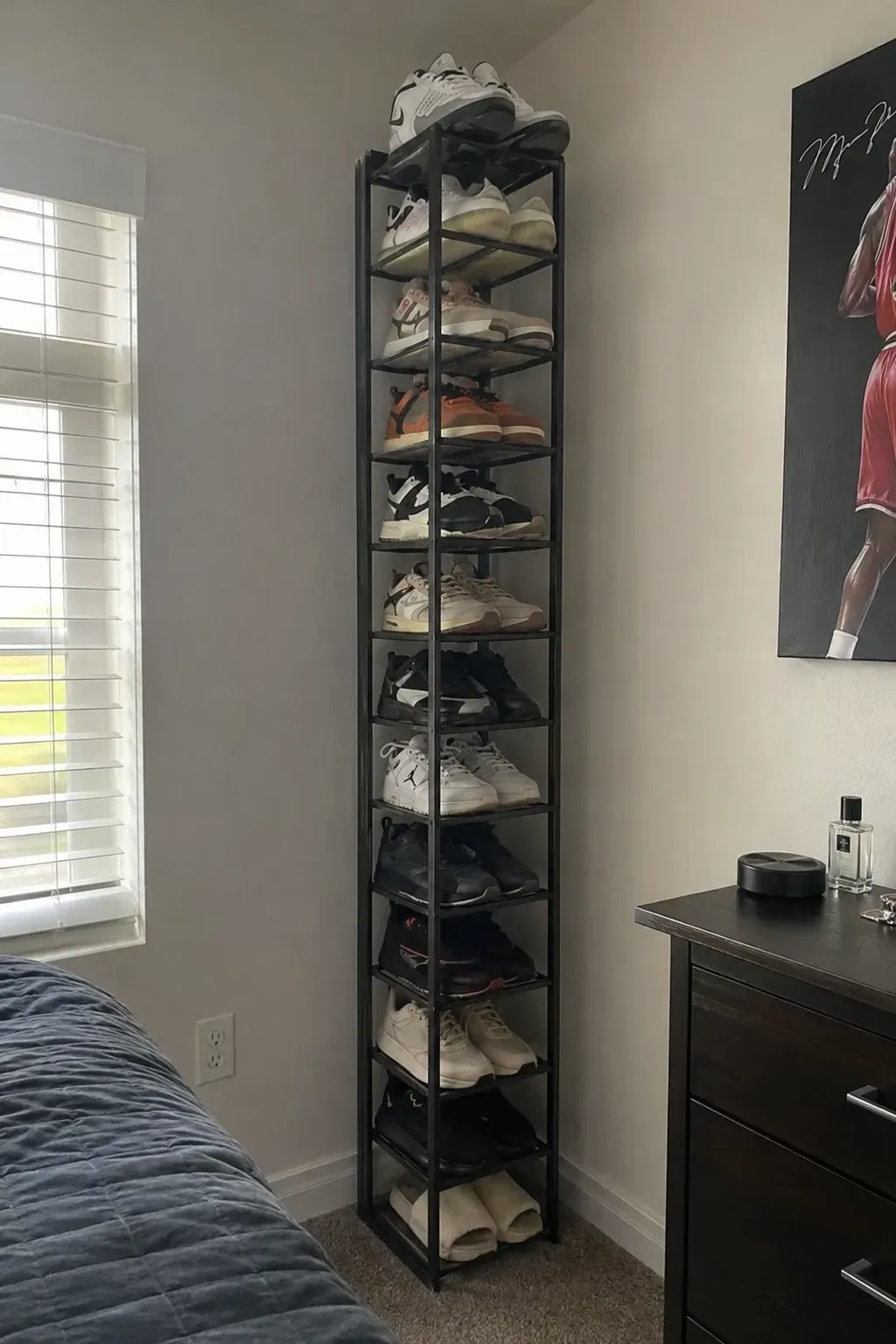
A tall narrow shoe tower with multiple tiers stacks shoes vertically in a footprint no bigger than a single pair of shoes on the floor. Towers are great for corners, the back of a closet, or a narrow gap between furniture. Some tower designs rotate, giving you access to all sides. Others have pull-out trays. The key advantage is vertical storage: lots of pairs in very little floor space.
Designer Tip: Place heavier shoes on the bottom tiers and lighter ones up top to keep the tower stable. A top-heavy shoe tower is a tipping hazard, especially on carpet where the base can shift.
The best shoe storage setup is the one you actually use every day. If you are not the type to fold shoes into boxes, go with an open rack or a bench with cubbies. If you want shoes completely hidden, a cabinet or ottoman does the job. Pick one idea, commit to it, and enjoy having a bedroom floor you can actually see again.
Frequently Asked Questions
How many pairs of shoes should I keep in my bedroom?
Keep only the shoes you wear regularly in the bedroom, usually 10 to 15 pairs for daily rotation. Seasonal shoes, formal shoes, and rarely worn pairs can go in a hall closet, entryway, or longer-term storage. Keeping the bedroom collection to your active rotation prevents overcrowding and makes your storage system work better.
How do I stop shoes from smelling in storage?
Let shoes air out before putting them in enclosed storage. A few hours of drying time after wearing prevents moisture buildup. Toss a cedar shoe insert or a small sachet of baking soda in each pair for odor absorption. For closed containers or boxes, crack the lid slightly or choose containers with ventilation holes.
What is the best shoe storage for small bedrooms?
Under-bed bins, over-the-door organizers, and slim shoe cabinets are the top picks for small bedrooms because they use space that is already available without adding bulky furniture. Wall-mounted racks are another strong option since they keep the floor completely clear. Combine two of these methods to handle a larger collection without crowding the room.
Should I store shoes in boxes or out in the open?
Boxes protect shoes from dust and light, which is better for expensive or delicate pairs. Open storage like racks and shelves give you faster access and a visual overview of your collection. For daily shoes you wear constantly, open storage saves time. For nicer shoes you wear occasionally, boxes keep them in better condition longer.