Most apartment bathrooms hand you the exact same starting point: beige tiles, a builder-grade mirror, and a vague sense of disappointment. The good news is that the bathroom is actually one of the easiest rooms in any home to completely change the feeling of, without gutting it, without a huge budget, and sometimes without touching a single permanent fixture.
These ideas move from the boldest visual moves, walls, tiles, and wallpaper, down through lighting, fixtures, and accessories, so you can pick your entry point and build from there.
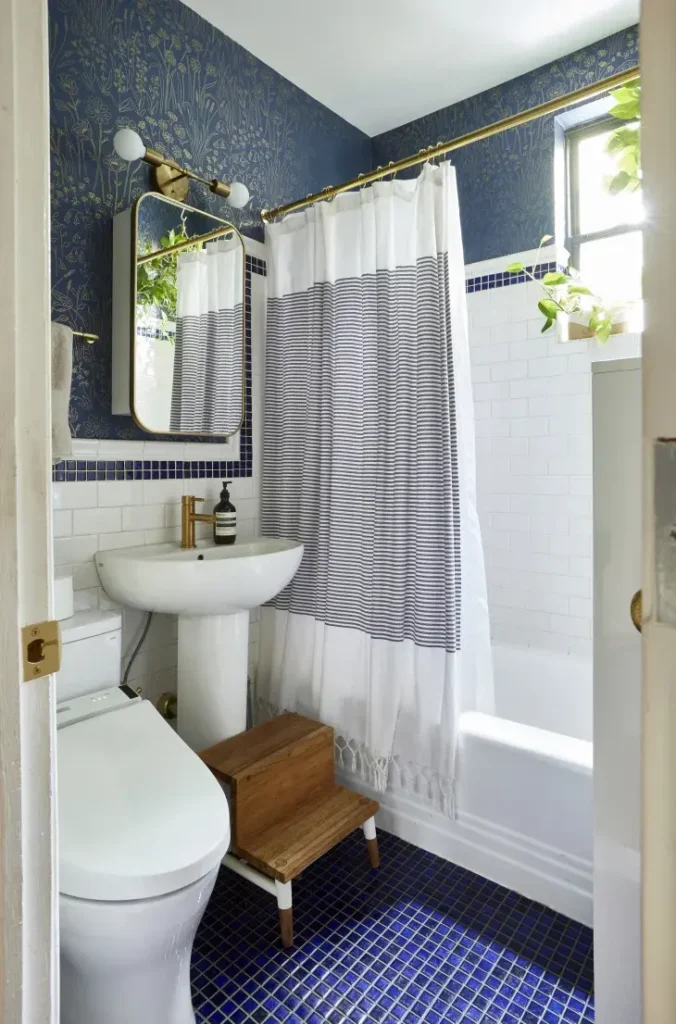
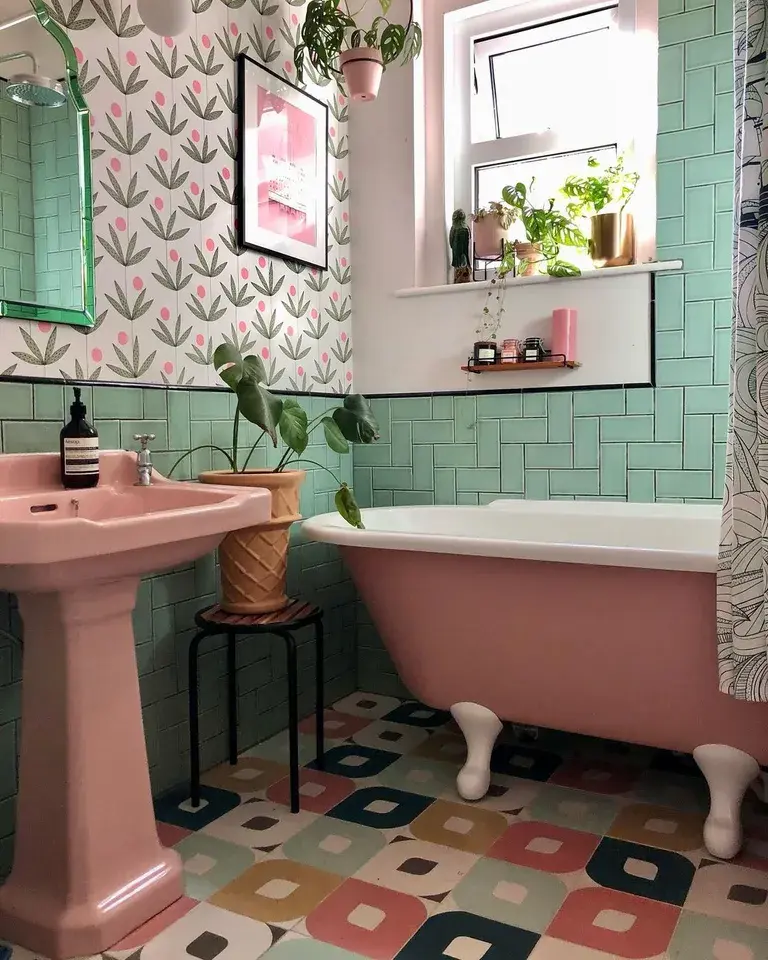
In most apartment bathrooms, tiles only run halfway up the wall, which leaves a stretch of flat, boring wall just waiting for something interesting. Peel-and-stick wallpaper in a bold botanical or geometric print applied above the tile line is one of the quickest ways to make a rental bathroom feel genuinely designed, and it comes down cleanly when you move. The key is to pick a wallpaper color that pulls directly from something already in the room, whether that’s the tile, your towels, or your floor, so the two halves of the wall read as one intentional decision rather than two separate things happening at once.
Designer Advice: Measure the height between the top of your tiles and the ceiling before ordering wallpaper, as this gap varies a lot between apartments and affects how much pattern will actually show.
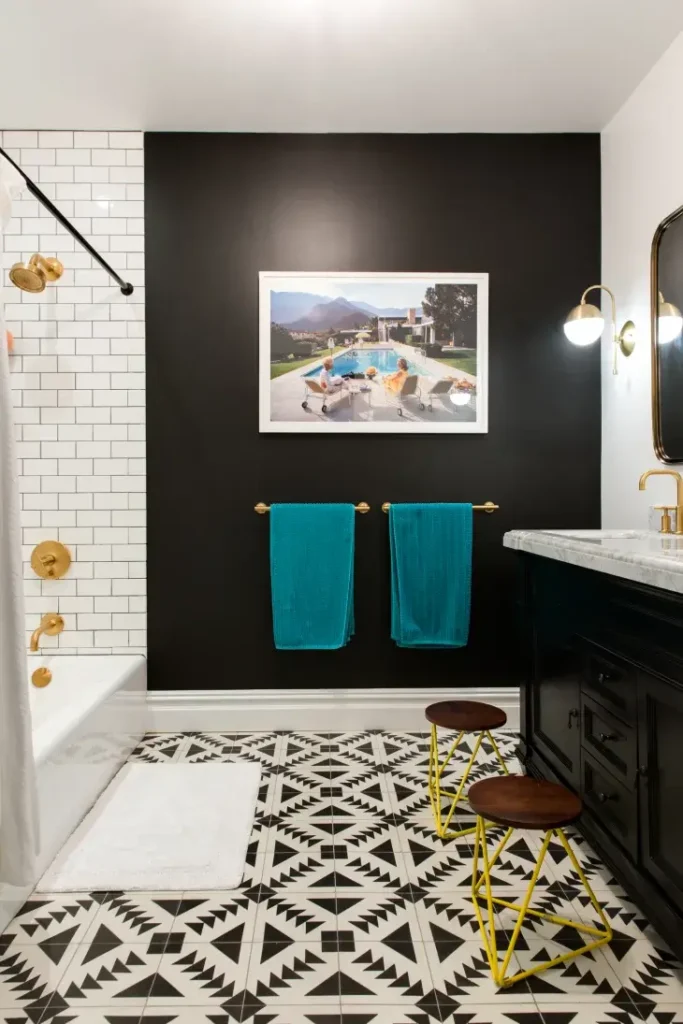
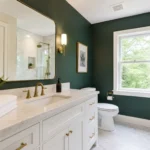
A single black accent wall in a bathroom sounds risky but works because the room is small enough that it creates genuine drama without swallowing the space, especially when you balance it with white or light tile on the adjacent walls. Interior designers often recommend a matte or eggshell finish for this, as gloss can amplify any wall imperfections, and pairing the dark wall with brass or gold hardware is what stops the look from tipping into cold or industrial. This works best in bathrooms that get natural light, since the window provides visual relief and stops the dark wall from making the room feel boxed in.
Pro Move: Use the dark wall as your art wall and hang one large, lightly framed piece directly on it for a gallery-quality focal point that costs almost nothing.
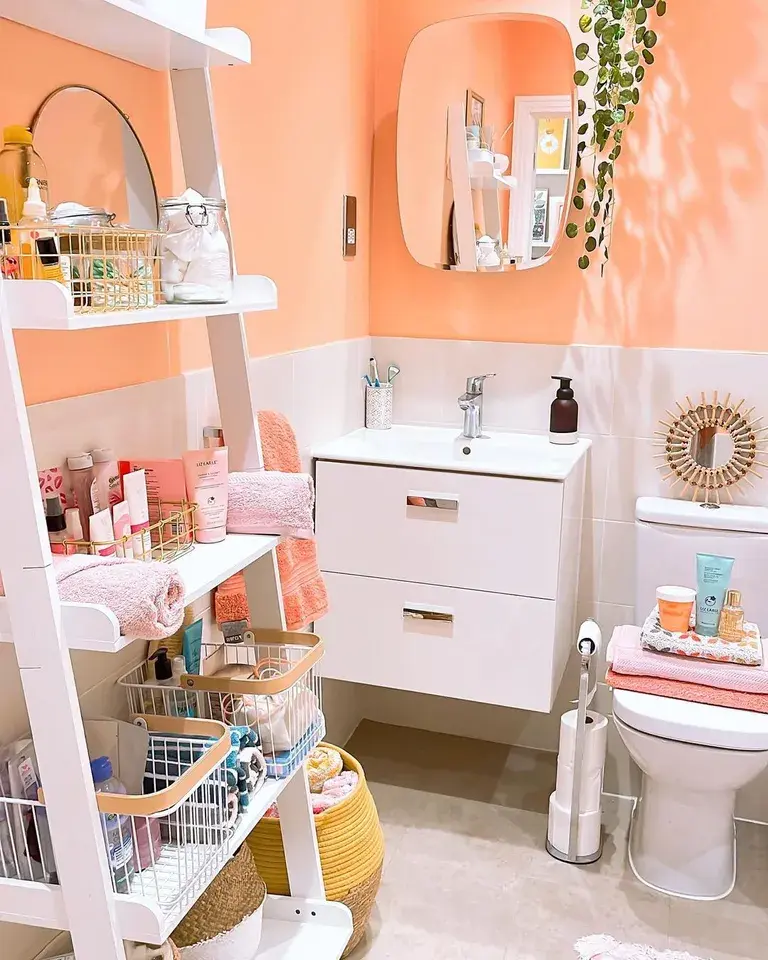
Warm tones, think peach, terracotta, dusty rose, or amber, are having a real moment in bathrooms right now because they make the room feel cozy rather than clinical, which is exactly what most apartment bathrooms are missing. In practice, this works because the color temperature of warm paint plays well with natural skin tones in the mirror, which means the room looks and feels flattering in a way cooler or grey-toned bathrooms often do not. Keep the rest of the room light, white vanity, neutral tiles, and warm metal hardware, and the painted walls become the entire personality without needing a single other decorating decision.
Quick Tip: Pair a warm wall color with towels in the same family, soft coral, blush, or mustard, rather than contrasting colors, to make the whole room read as effortlessly pulled together.
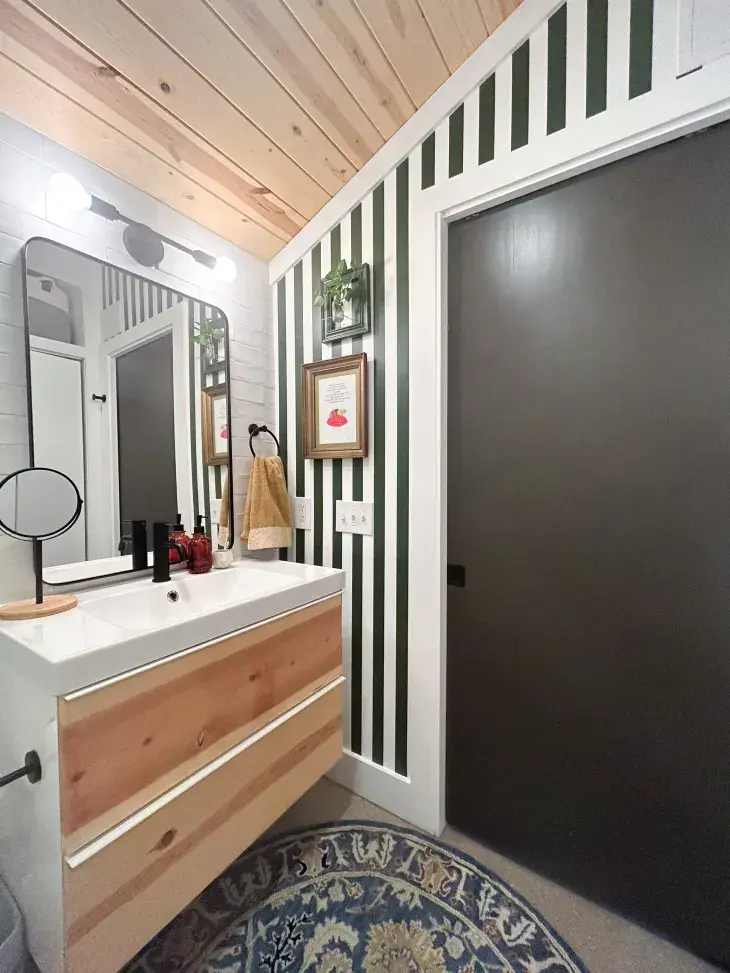
Vertical stripes painted directly on the wall are one of the oldest design tricks for making a low-ceilinged room feel taller, and in a bathroom the effect is genuinely striking because the room is narrow enough that the eye really does travel upward. Forest green and white is a combination that’s appearing everywhere in current interior design, and it reads as both fresh and classic at the same time. If you’re renting, check with your landlord first since this is a painted wall rather than wallpaper, but many landlords will agree if you offer to paint it back, and the result is worth the conversation.
Heads Up: Use a level and painter’s tape for every single stripe, as even a few millimeters of drift will be visible in a small room where the eye has nowhere else to go.
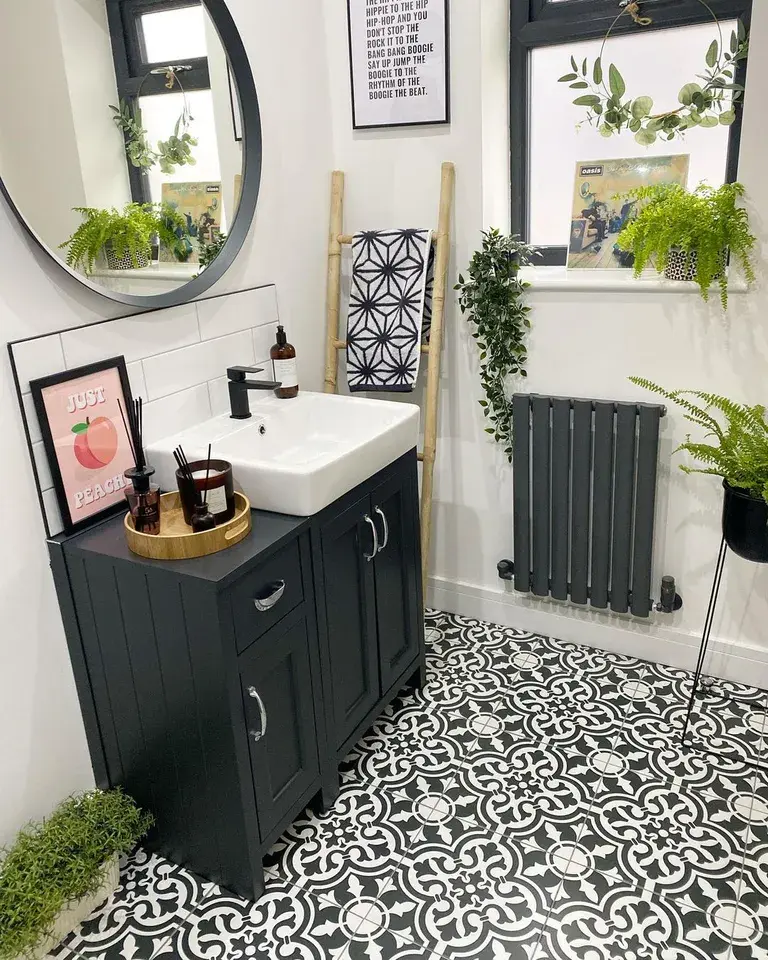
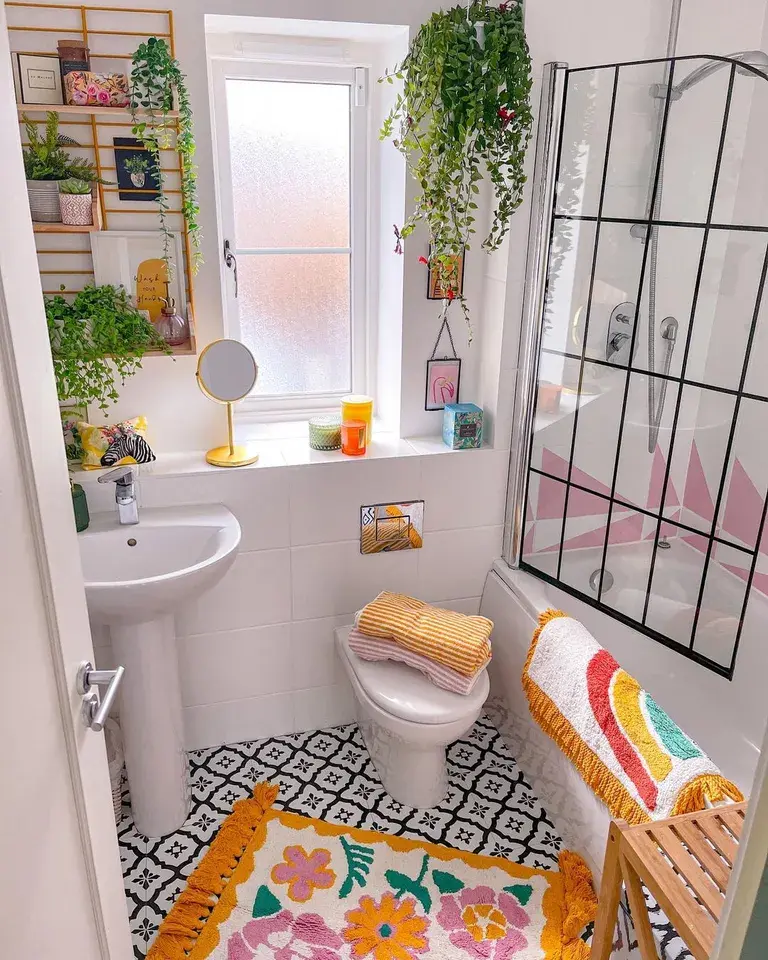
A bold patterned floor, whether it’s a classic black and white encaustic print or something more graphic and geometric, does the heavy lifting in a bathroom so you don’t have to fill every other surface with things. The visual weight of the pattern anchors the room and makes even basic white walls and simple fixtures look considered and intentional. This works especially well in apartment bathrooms where you own the floor tiles, or where a landlord allows tile changes, since it’s an investment that photographs beautifully and actually adds value to the space.
Reality Check: If the floor tile is bold, pull back everywhere else: one plain bath mat, clean white walls, and simple hardware so the pattern has room to breathe.
6. Tile the Shower in Iridescent or Handmade Zellige
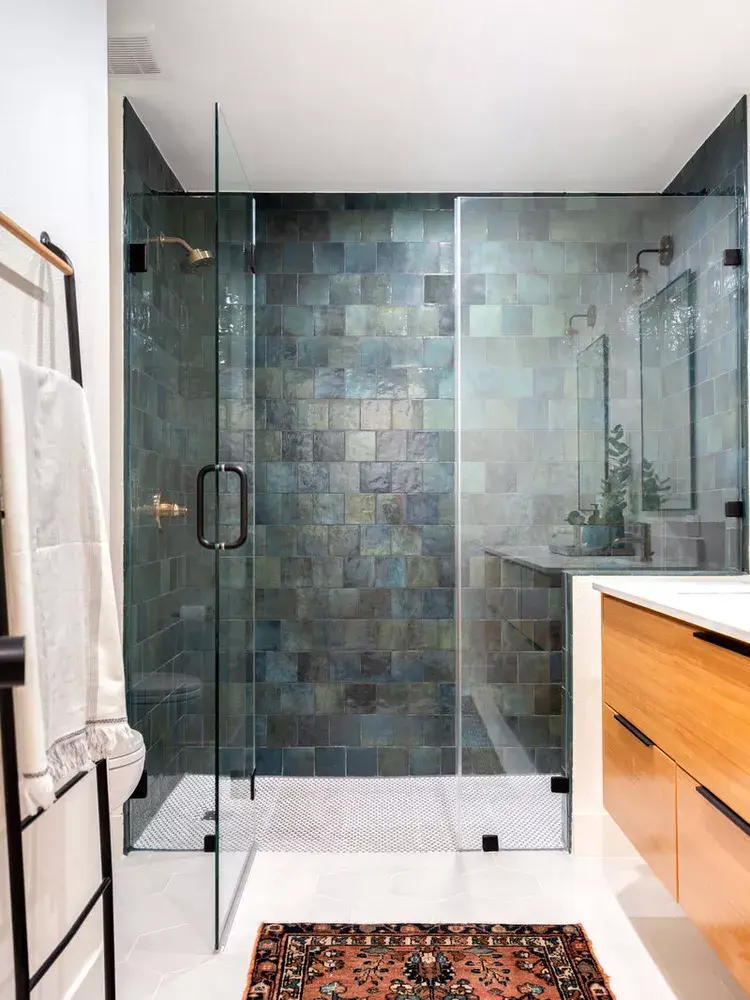
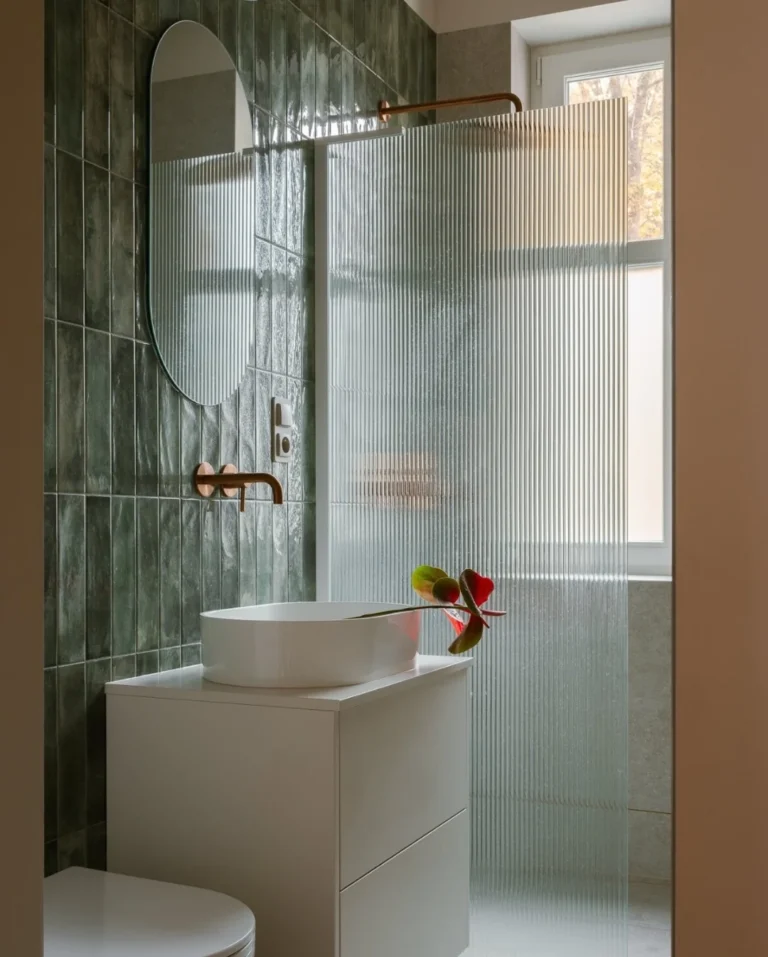
Zellige tiles, the handmade Moroccan clay tiles with slightly irregular glazed surfaces, create a shimmering, almost living quality on a shower wall that no factory-made tile can replicate. Each tile catches light at a slightly different angle, which means the color shifts from teal to blue to grey depending on where you stand, and that constant visual movement makes even a small shower enclosure feel like a genuine destination rather than just a functional box. These tiles sit at a higher price point than standard options, typically starting around $20 to $30 per square foot installed, but in a small shower the total area is limited and the impact is dramatic enough to justify treating it as a long-term investment.
Designer Advice: Pair zellige tiles with matte black hardware rather than chrome, since the flat finish reads as more intentional against the handmade texture of the tile.
7. Keep It Simple With Encaustic Floor Tiles and Light Wood
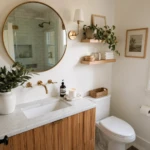
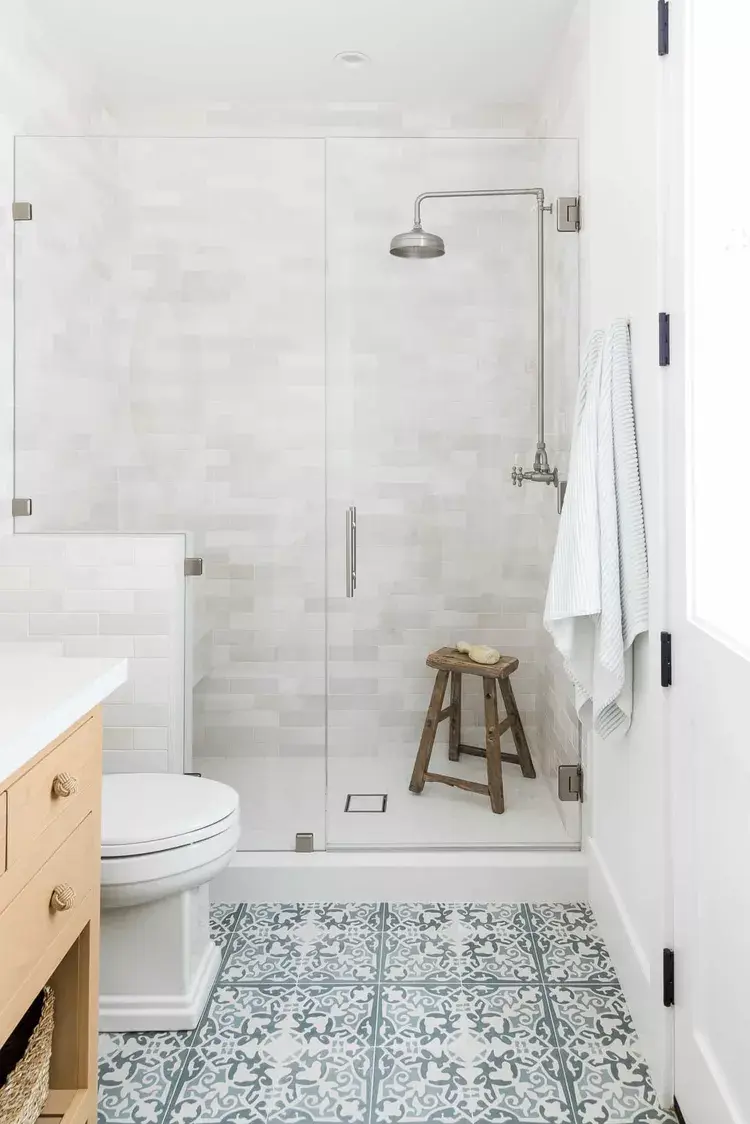
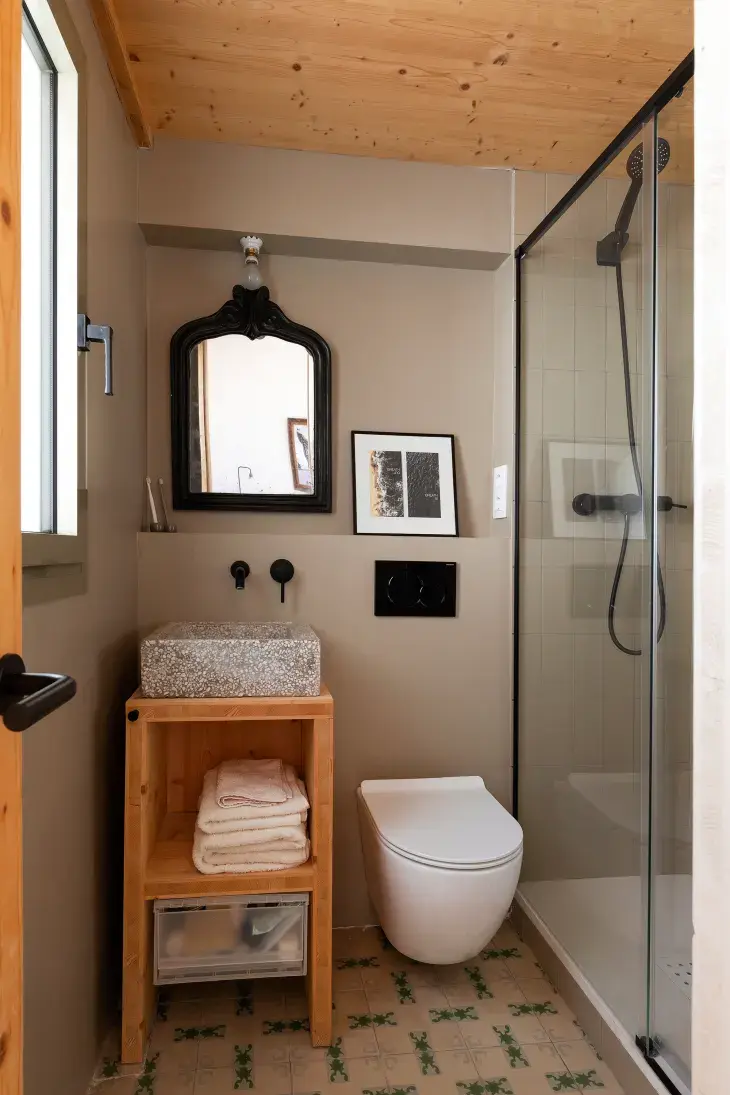
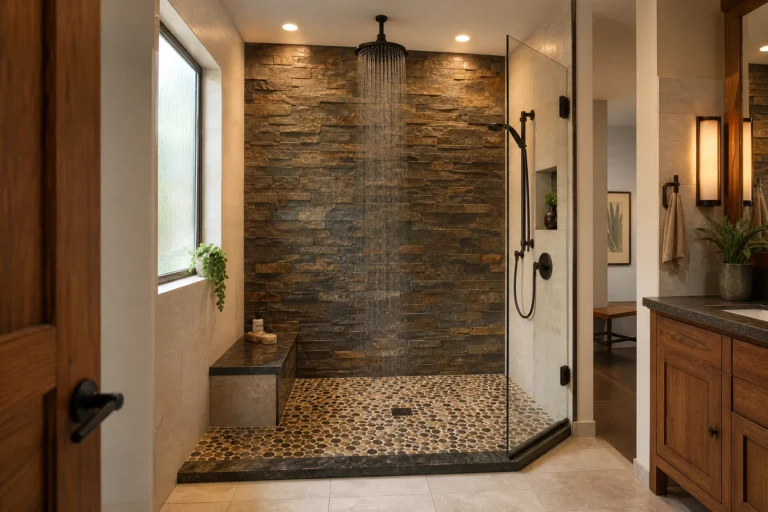
Not every apartment bathroom needs drama, and the combination of soft encaustic or cement-look floor tiles with a light natural wood vanity is one that designers return to again and again precisely because it works in almost any space, any lighting condition, and with almost any fixture set. The pattern on the floor provides enough visual interest that the walls can stay completely plain, which is a practical win in apartments where you may not want to touch the walls at all. Adding a frameless glass shower enclosure keeps the space feeling open rather than divided, and a vintage-style rain shower head brings in that extra layer of character without requiring any structural changes.
Pro Move: Put a small wooden stool or a teak bath mat inside the shower for an instant boutique hotel look that costs under $50.
Bathroom Tile Cheat Sheet: Which Type Works Where
Tile Type
Best Used For
Budget Level
Encaustic / cement
Floors, entryways, statement moments
Mid to high
Zellige / handmade
Shower walls, feature walls
High (worth it)
Penny tile
Floors, shower floors
Affordable to mid
Geometric porcelain
Floors, feature walls
Affordable to mid
Subway (plain)
Shower surrounds, full walls
Budget friendly
Vintage / retro
Existing tiles to keep and style around
Free (already there)
8. Lean Into Your Vintage Tiles Instead of Fighting Them
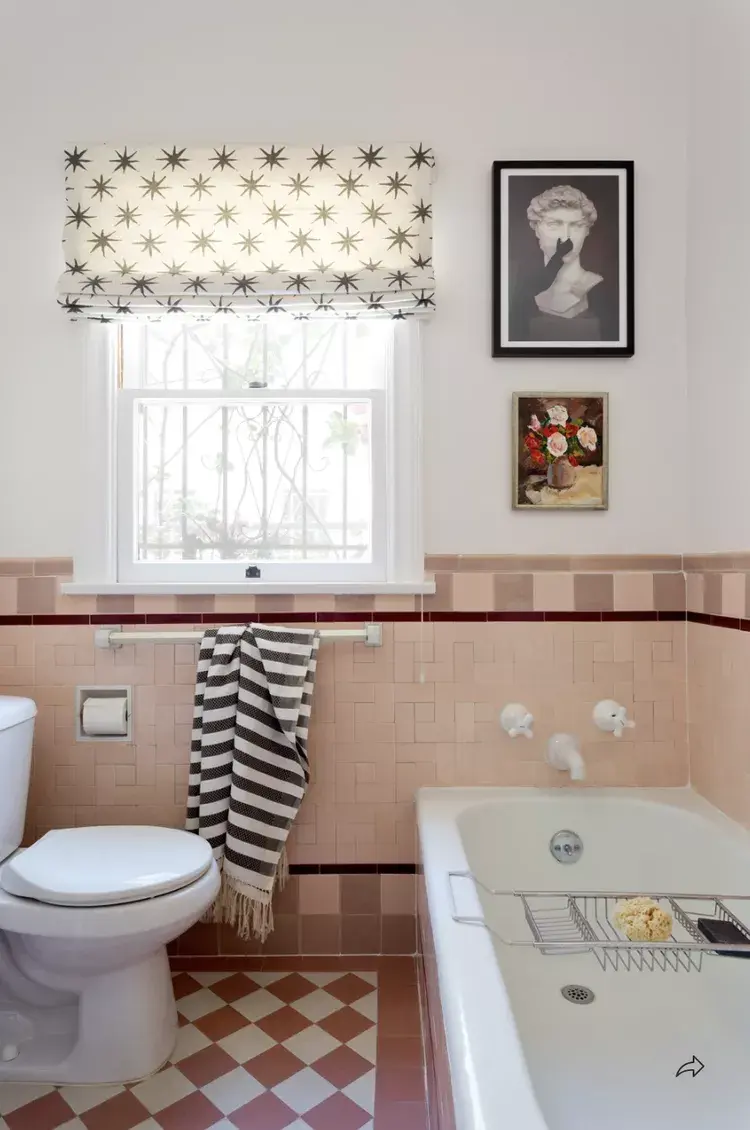
Pink, avocado, or baby blue tiles from the 1950s, 60s, or 70s are genuinely hard to remove in an apartment and frequently worth keeping anyway, because that kind of original character is almost impossible to replicate with new materials. The way to make vintage tiles feel intentional rather than dated is to commit to them rather than fight them: match your wall color to the tile’s undertone, bring in fabrics and window treatments in the same palette, and treat them the way a set designer would treat a period room. A star-print roman blind, a striped Turkish towel, and a couple of framed prints chosen to complement the tile color will make the whole room feel like a curated aesthetic decision rather than a landlord’s leftover.
Reality Check: If the grout is stained, a grout pen in white or grey is a $10 fix that can completely change how clean and fresh the tile reads.
9. Clad the Walls in Dark Tongue-and-Groove Paneling
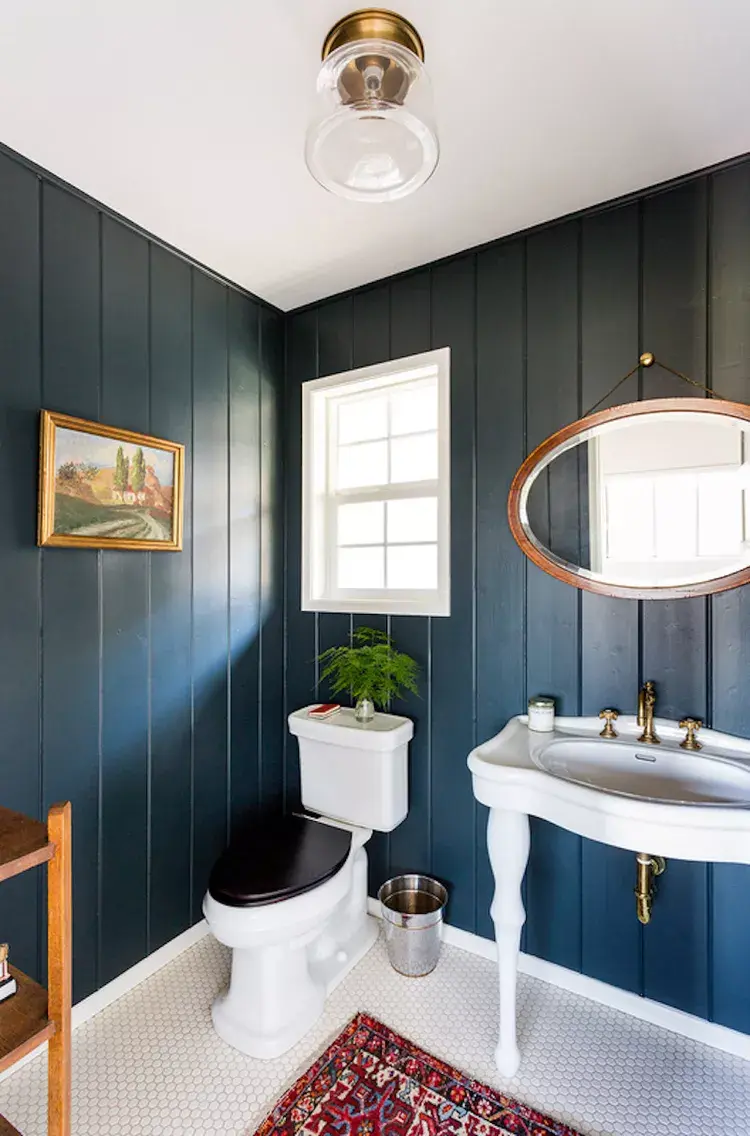
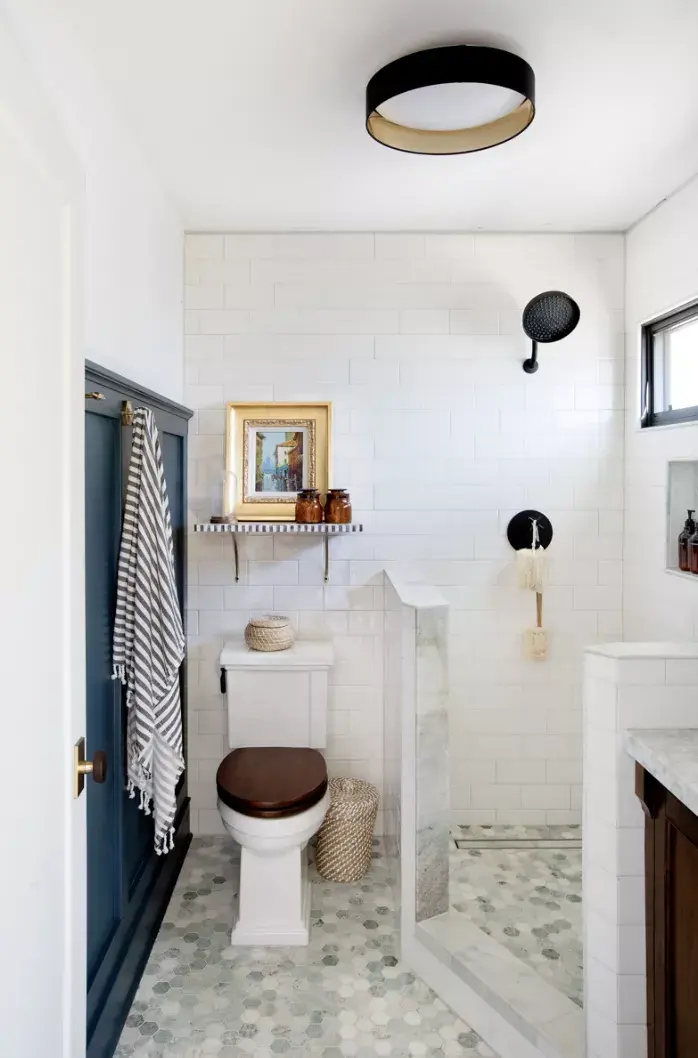
Tongue-and-groove wall paneling painted in a deep navy, forest green, or charcoal gives an apartment bathroom a richness that paint alone cannot deliver, because the vertical lines add dimension and the paint sits into the grooves to create genuine depth. This is a bigger commitment than wallpaper and generally not suitable for renters unless you own the apartment, but in a small bathroom the amount of material required is manageable and the labor relatively straightforward as a DIY project. The key pairing is to keep the ceiling white and the floor light, whether that is white penny tile or pale stone, so the dark walls feel cocooning and dramatic rather than oppressive.
Heads Up: Tongue-and-groove paneling needs to be properly primed and sealed before painting in a bathroom, since moisture will cause untreated wood to warp within a year.
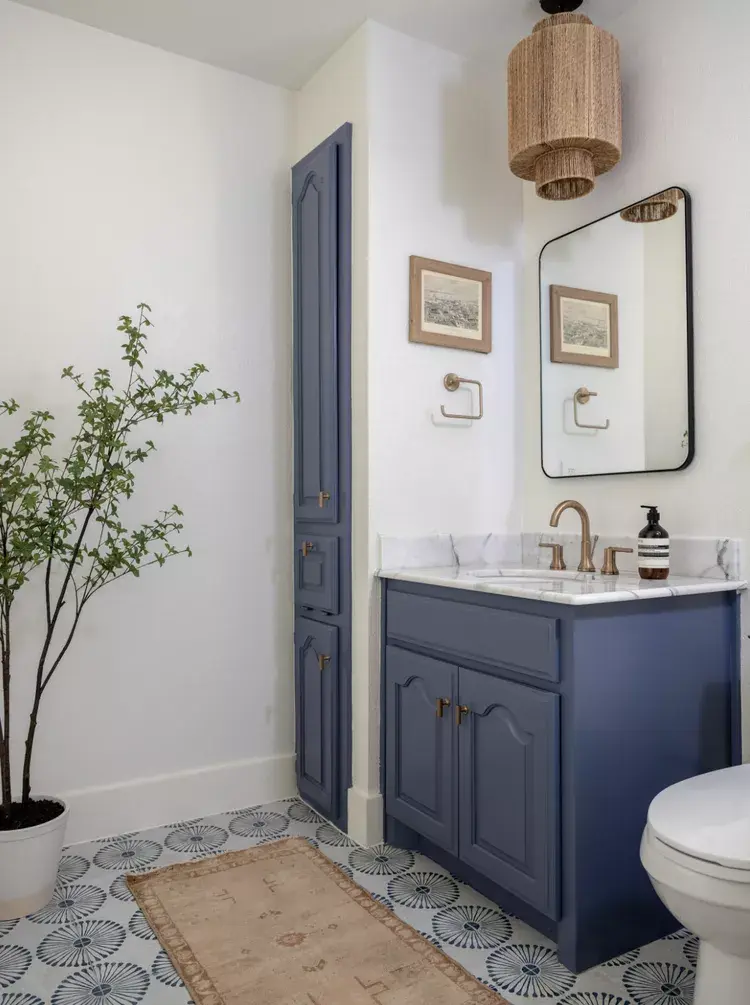
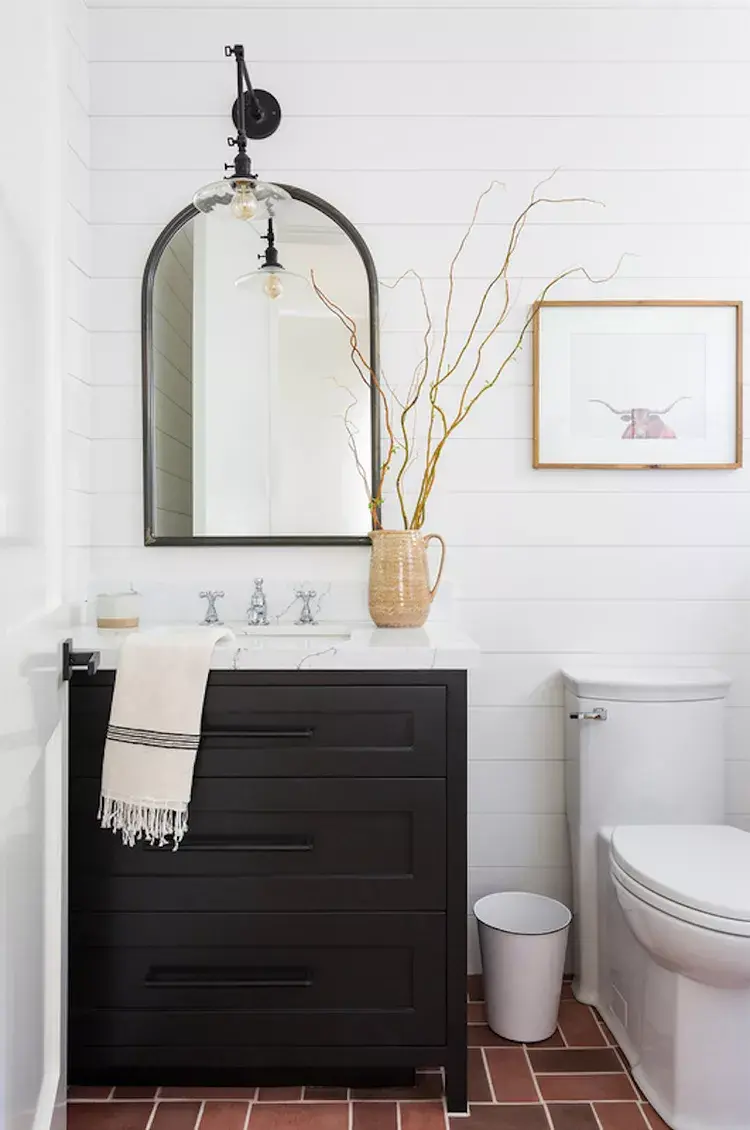
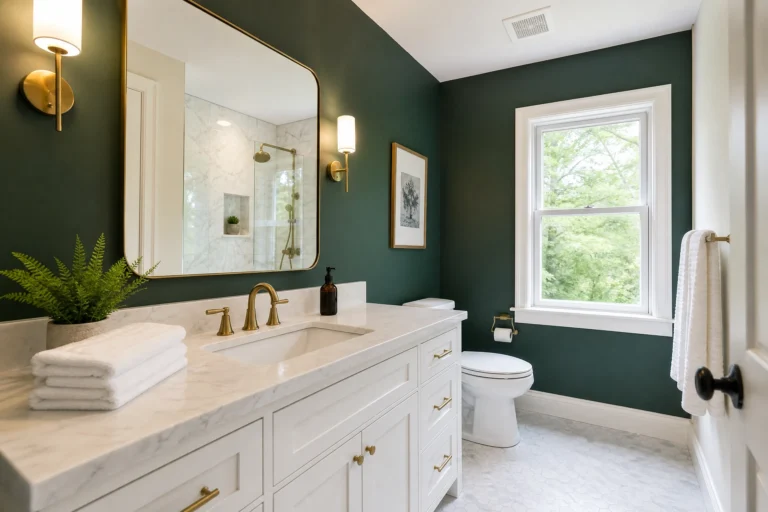
If you own your apartment or have a landlord who is flexible, painting the bathroom vanity a strong color, navy, forest green, dusty sage, or even terracotta, is one of the highest-impact changes you can make for the lowest cost, typically under $50 in materials. The vanity is the room’s largest piece of furniture, so changing its color immediately changes the entire mood of the space, and a marble or stone countertop on top of a colored base is a combination that regularly appears in professionally designed bathrooms costing ten times more. This works best with a warm metal finish on the hardware, brushed brass or unlacquered brass rather than chrome, since the warmth of the metal stops the colored vanity from reading as cold or corporate.
Quick Tip: Use a furniture-specific primer before painting your vanity, as skipping this step is the number one reason painted vanities chip within the first few months.
A vessel sink, one that sits on top of the vanity surface rather than dropping into it, is one of the most dramatic fixture swaps you can make in a bathroom and is often a one-afternoon installation project. Stone vessel sinks in particular, whether concrete, travertine, or speckled granite, bring a sculptural quality to the room that immediately signals this is a bathroom someone has thought about rather than simply accepted. In practice, vessel sinks work best on taller vanities, since the sink’s height adds several inches to the total countertop height, and pairing them with a wall-mounted faucet is both more functional and more intentional-looking than a standard deck-mount tap.
Designer Advice: Choose a vessel sink with a matte or honed finish rather than polished, since matte stone hides water marks and everyday splashes much more forgivingly.
12. Swap the Mirror for an Arched One With a Wall Sconce
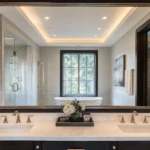
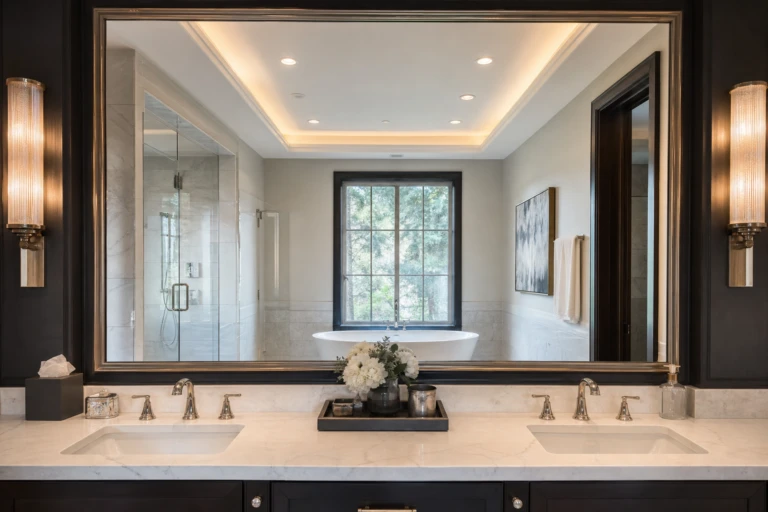
The builder-grade rectangular mirror in most apartment bathrooms is one of the easiest things to swap and one of the things that makes the biggest difference, because the mirror is literally at eye level and is the first thing you see every single time you walk into the room. An arched mirror with a dark or warm-toned metal frame introduces a strong architectural shape that works with almost any style, from farmhouse to Art Deco to contemporary, and the arch specifically draws the eye upward in a way that makes the room feel taller than it is. Pair it with a single wall sconce mounted at eye level beside it rather than an overhead light, and you eliminate the unflattering top-down lighting that makes most bathroom mirrors deeply unwelcoming.
Pro Move: Keep your original mirror safely stored to reinstall when you move, and hold the replacement in place with mirror clips or a proper picture rail rather than drilling into tiles.
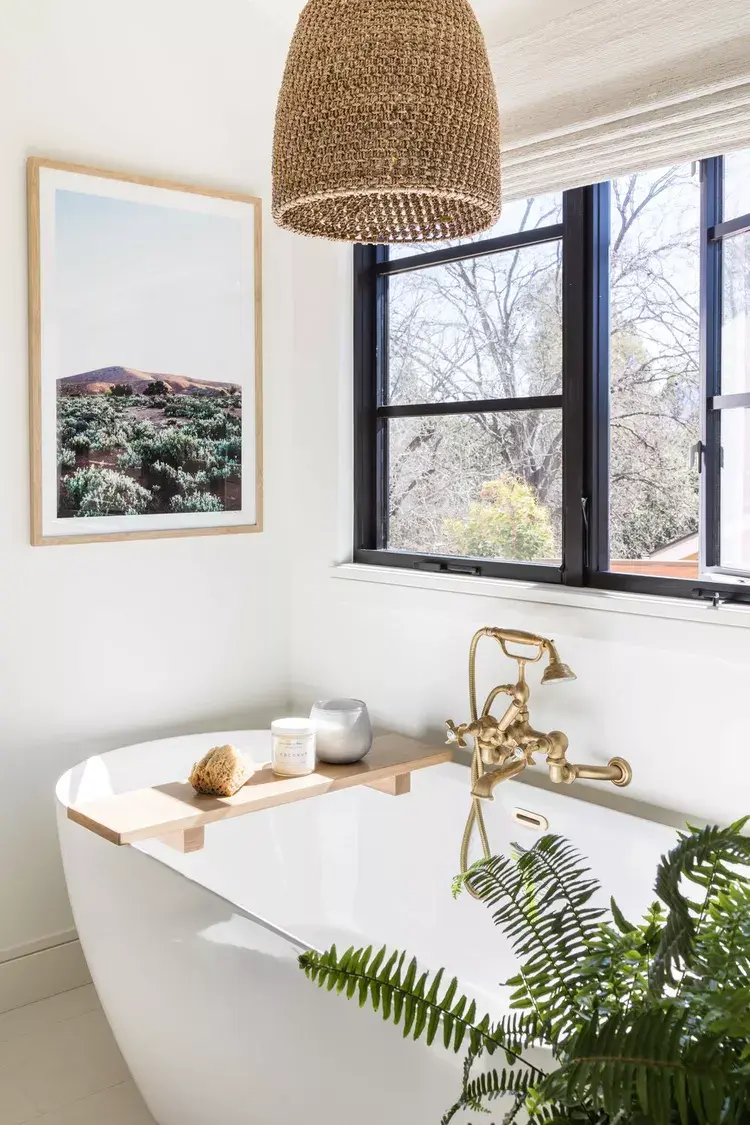
Most apartment bathroom lighting is a single overhead fixture that produces flat, unflattering light and zero atmosphere, and replacing it with a woven rattan or seagrass pendant immediately changes the quality of the light, the texture of the room, and the overall feeling from functional to intentional. Woven pendants filter light rather than broadcasting it, creating a softer, warmer glow that makes the bathroom feel closer in mood to a high-end boutique hotel than to a standard rental. This is a relatively easy swap to make if you are comfortable with basic electrical work, or affordable to hire out for an hour, and the pendant itself can often be found at a reasonable price at import stores or second-hand.
Heads Up: Check that any pendant you install in a bathroom is rated for damp locations, as a light rated for dry locations only can be a genuine safety issue near shower steam.
Painting the interior of the bathroom door a contrasting color, deep navy, forest green, dusty mauve, or even matte black, is a small move that punches above its weight because the door is a vertical surface that frames the entire room every time it opens. In apartments where you cannot change the tiles or touch the walls, the door is often the one large surface that a landlord will agree to have painted back at move-out, which makes it one of the smartest low-commitment, high-impact options available. Painting the back of the door a different color from the front also creates a pleasant reveal every time you step inside, the kind of considered detail that makes a space feel genuinely designed.
Reality Check: Use a satin or semi-gloss finish on the door rather than matte, since the door takes significantly more handling than walls and a wipeable finish will hold up far better over time.
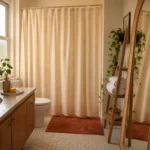
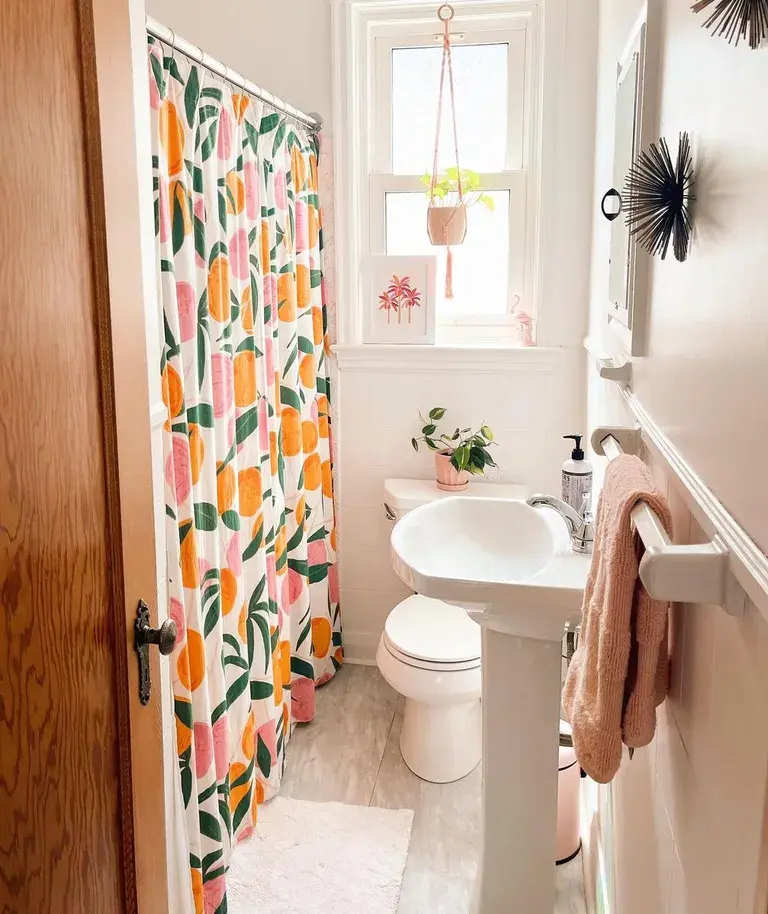
In any bathroom with a tub-shower combination, the shower curtain is the largest piece of fabric in the room and therefore one of the most powerful decorating tools available, yet most people treat it as an afterthought and buy whatever is neutral. A curtain with a bold print, citrus fruit, graphic botanicals, wide stripes, or a rich solid color acts as a piece of art that also happens to be functional, and in a small bathroom it can almost single-handedly set the visual tone for the entire space. The practical trick designers use here is to hang the curtain rod as close to the ceiling as possible rather than just above the tub, since the extra length of fabric makes the room feel significantly taller and more considered.
Quick Tip: Add a plain white liner behind a patterned curtain rather than a clear one, since the white backing makes the print colors pop much more vividly and keeps the inside of the shower looking clean.
16. Paint Thrifted Frames in Bold Colors for a Gallery Wall
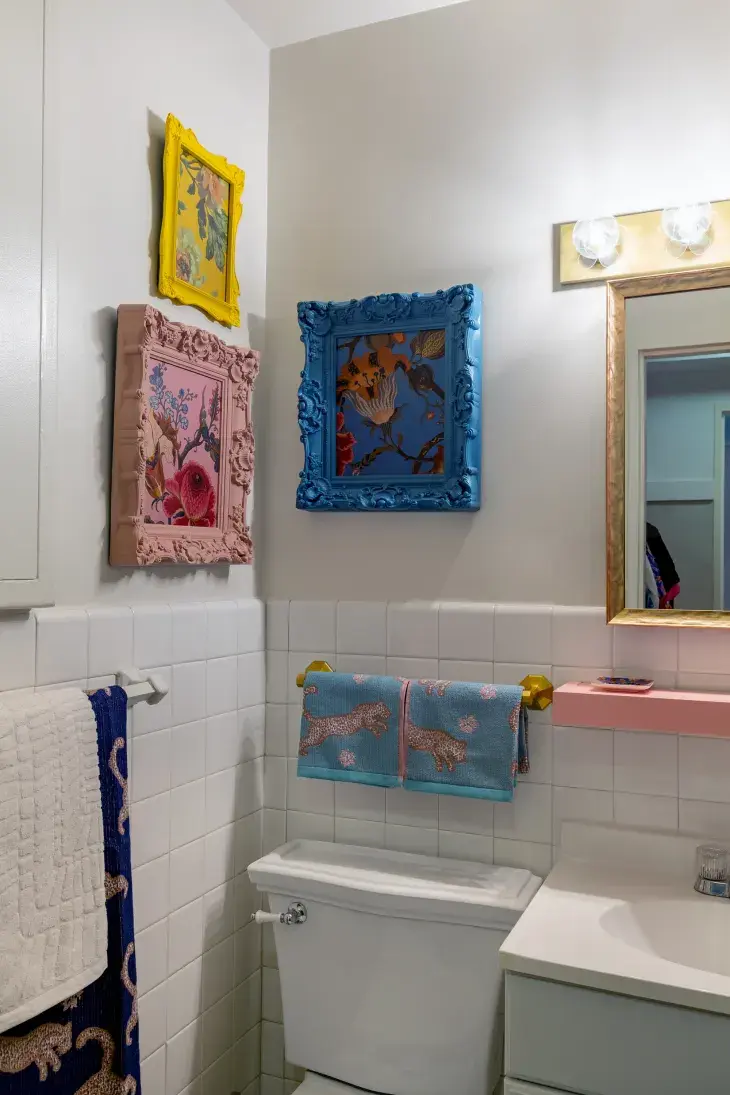
One of the most affordable ways to add genuine personality to an apartment bathroom is to raid a thrift store for ornate or interesting frames, spray paint them in two or three bold coordinating colors, and use them to display prints, fabric swatches, or even patterned wallpaper samples as art. The ornate gold frames that fill every second-hand store for a dollar or two look completely different when painted cobalt blue, vivid pink, or mustard yellow, and the contrast between the fussy frame shape and the flat paint color is what creates the visual interest. Keep the art inside the frames loose and easy to swap out so the gallery wall can evolve as your taste does, which also means it costs almost nothing to change completely.
Designer Advice: Use spray paint in a satin finish rather than gloss for the frames, since gloss tends to show every fingerprint in a bathroom environment and satin reads as more intentional.
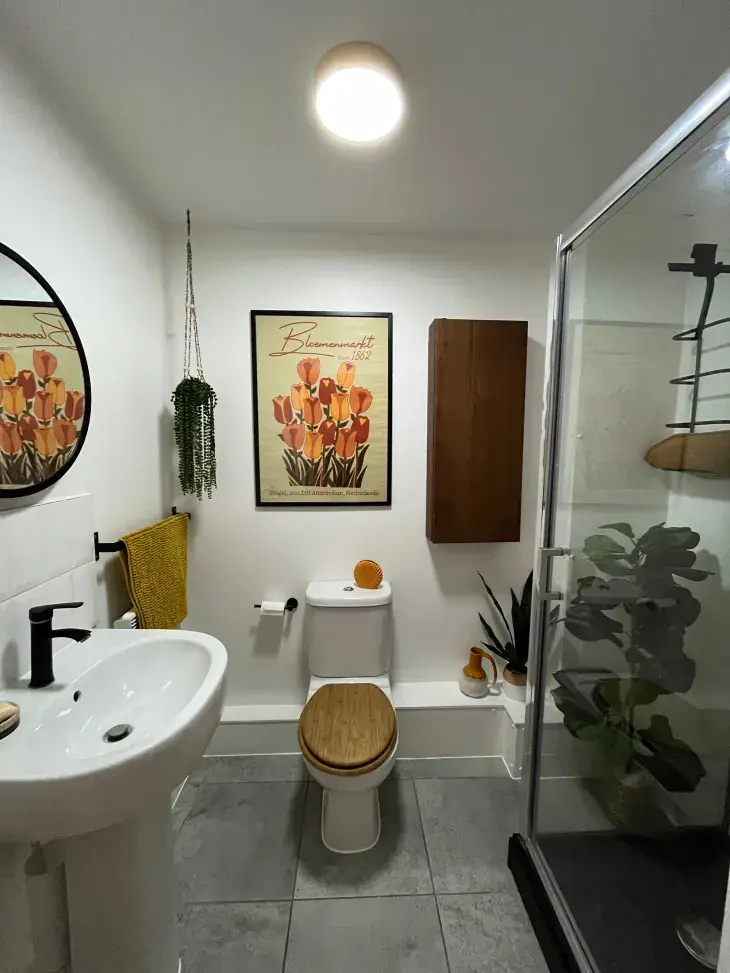
A single large-format vintage poster or art print, 50 by 70 centimeters or bigger, hung on the main wall of the bathroom creates an immediate focal point that also communicates a strong sense of personal taste without requiring any additional decorating decisions around it. Vintage travel posters, botanical prints, retro flower market prints, or classic film and exhibition posters all work particularly well in bathrooms because they reference a world outside the room and give the eye something genuinely interesting to rest on. Keep the frame simple, a thin black or natural wood edge, so the print itself does all the talking, and choose a print whose color palette contains at least one tone that appears elsewhere in the room.
Heads Up: Bathrooms are humid environments, and art printed on uncoated paper will eventually warp or mould unless you frame it behind glass with a small gap between the paper and the glass surface.
18. Go Maximalist With Fish-Scale or Scallop Wallpaper
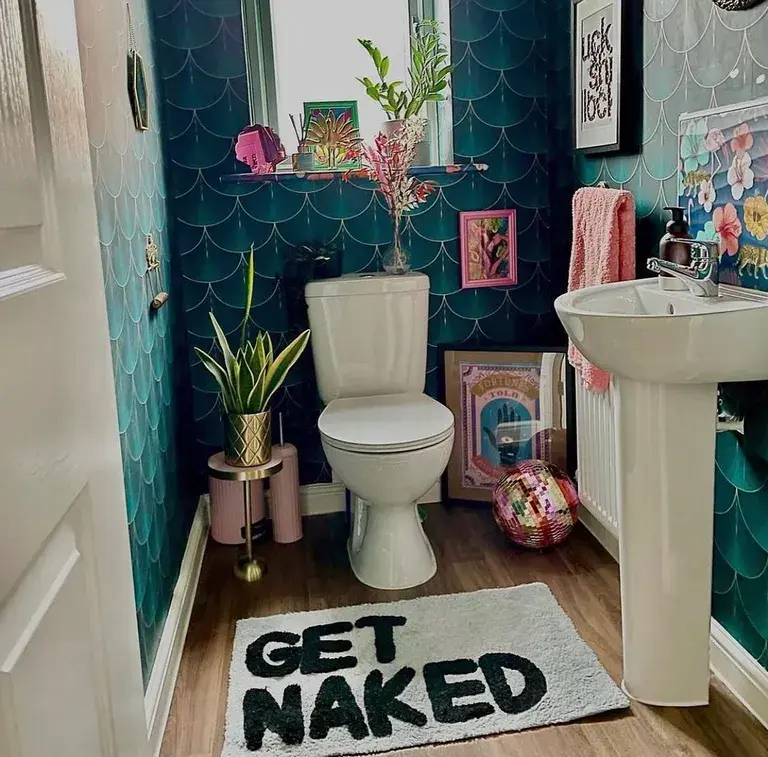
Fish-scale and scallop wallpapers have a genuinely addictive quality in a small bathroom because the repeated curved pattern creates depth and movement on a flat wall in a way that almost no other wallpaper print can match. The key to pulling off a maximalist bathroom without it feeling chaotic is the same principle that works in every other design context: keep the color palette tight. Choose one dominant color for the wallpaper, then repeat that exact color in two or three accessories, a towel, a plant pot, a bath mat, and let the rest of the room stay neutral. In a room this small, three well-chosen items in the right color will make the whole space feel designed rather than cluttered.
Pro Move: Peel-and-stick versions of scallop wallpaper are widely available now and work extremely well in small bathrooms since the total square footage is manageable and the pattern is bold enough to look great even without wallpaper paste.
A bathroom packed with plants in every available corner, on the windowsill, hanging from the ceiling, trailing from a shelf, tucked beside the toilet, looks designed in a way that is almost impossible to achieve with any other single decorating move. The reason it works so well is that plants add color, texture, organic shapes, and scale all at once, and in a bathroom the humidity from showers genuinely helps many varieties thrive, which means the space takes care of its own decor. Trailing pothos, devil’s ivy, ferns, peace lilies, and spider plants are all excellent choices for bathrooms with low to moderate light, while string-of-pearls and other succulents need a brighter spot near the window.
Quick Tip: Use hanging planters at different heights rather than all shelf-based plants to create visual layers that draw the eye upward and make the ceiling feel higher.
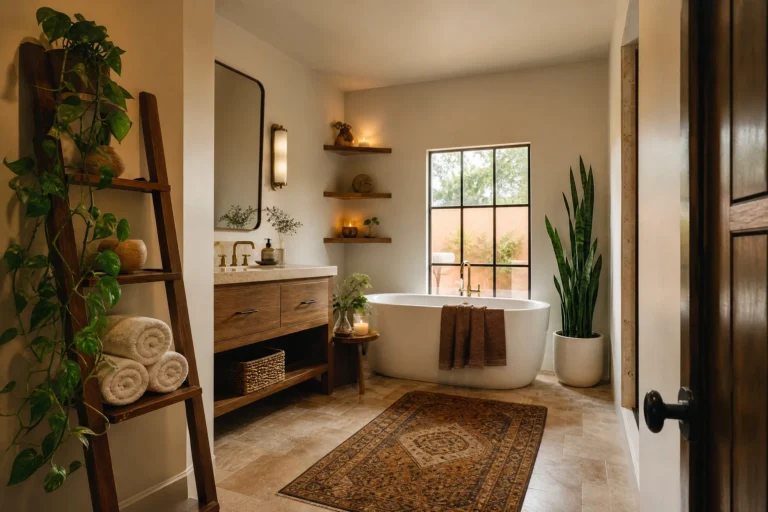
If your apartment bathroom has a freestanding or clawfoot tub, the way you style the area around it determines whether the room feels like a design moment or just a tub in a corner. A wooden bath caddy across the tub with a candle, a small plant, and a bar of good soap, combined with a pendant light positioned above and a large fern placed beside the tub, creates the layered quality that makes spa and boutique hotel bathrooms feel so different from residential ones. Consider painting the exterior of a clawfoot tub a color that picks up from the room’s palette, as this is a relatively inexpensive DIY project using tub-and-tile epoxy paint and the result is transformative.
Designer Advice: Position a full-length or large mirror opposite or beside the tub rather than directly above the sink if your space allows, since reflecting the tub creates a sense of depth that doubles the perceived size of the room.
Conclusion
Your apartment bathroom does not have to feel like a waiting room with plumbing. Whether you go bold with a full wall of scallop wallpaper and bold painted vanity, or keep things subtle with an arched mirror, a woven pendant, and a trailing pothos, the core idea is the same: every deliberate choice you make, no matter how small, moves the room from generic to genuinely yours. Start with one idea that genuinely excites you rather than trying to do everything at once, because a single strong move, a black accent wall, a statement shower curtain hung from ceiling height, a pair of painted thrift-store frames, will do more for the room than ten hesitant ones. Apartment bathrooms are small enough that they respond quickly, and honestly, that’s one of the best things about them.