The space under the bathroom sink is a black hole. Things go in and never come out, or they come out covered in a mysterious sticky residue from a bottle that leaked three months ago. The pipes make the space awkward, the cabinet is dark, and nothing stays where you put it. Here are 13 under-sink organization ideas that actually hold up over time.
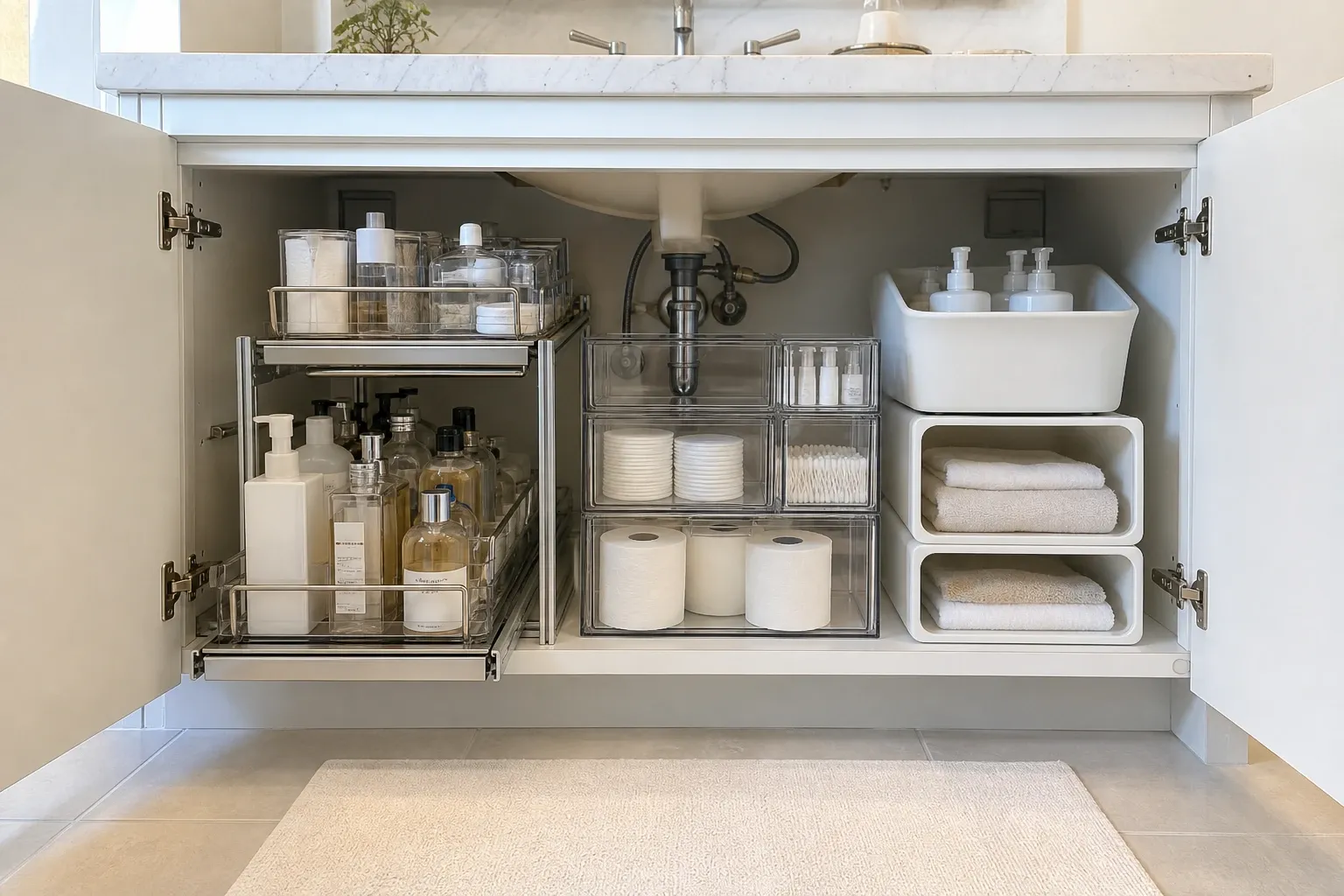
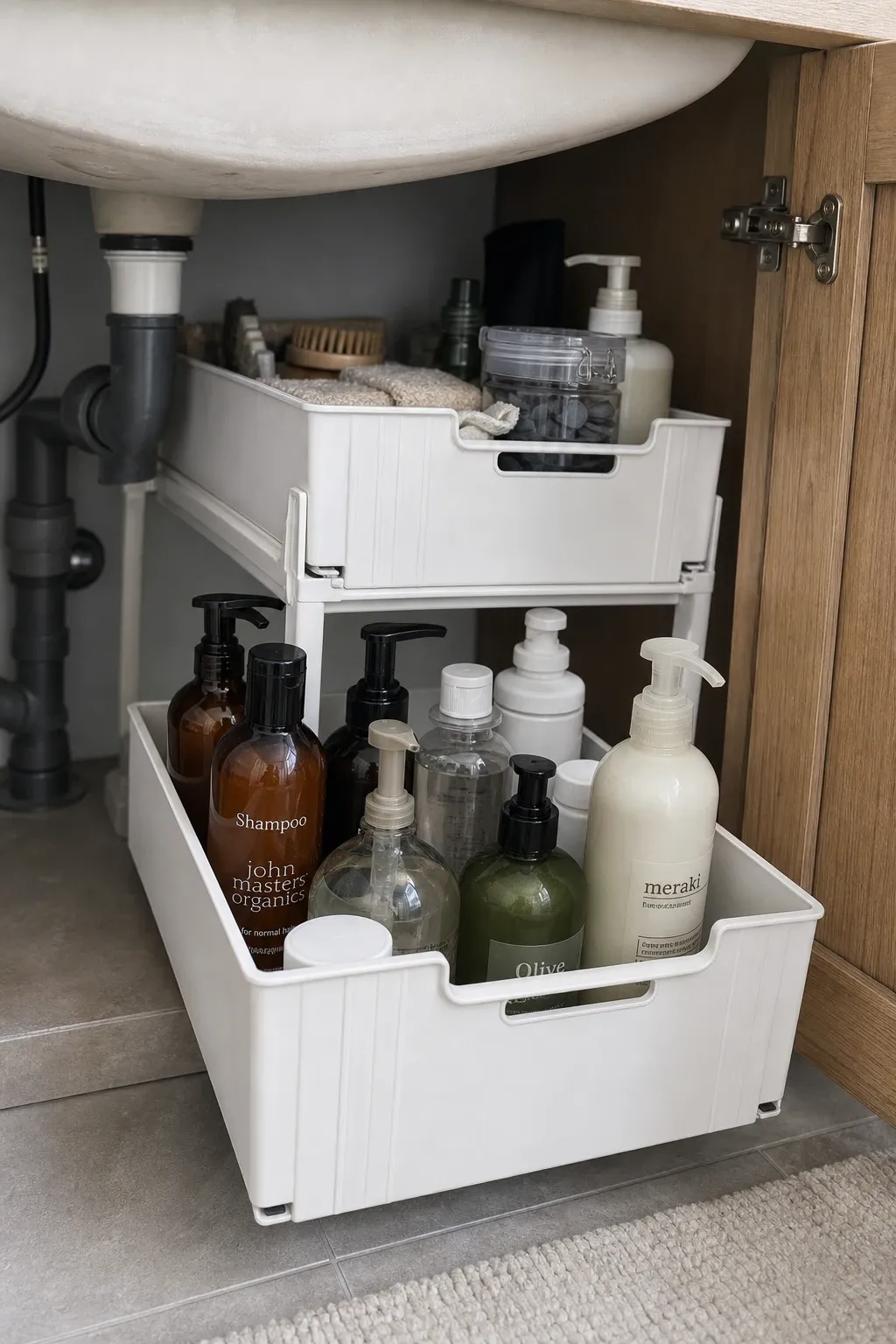
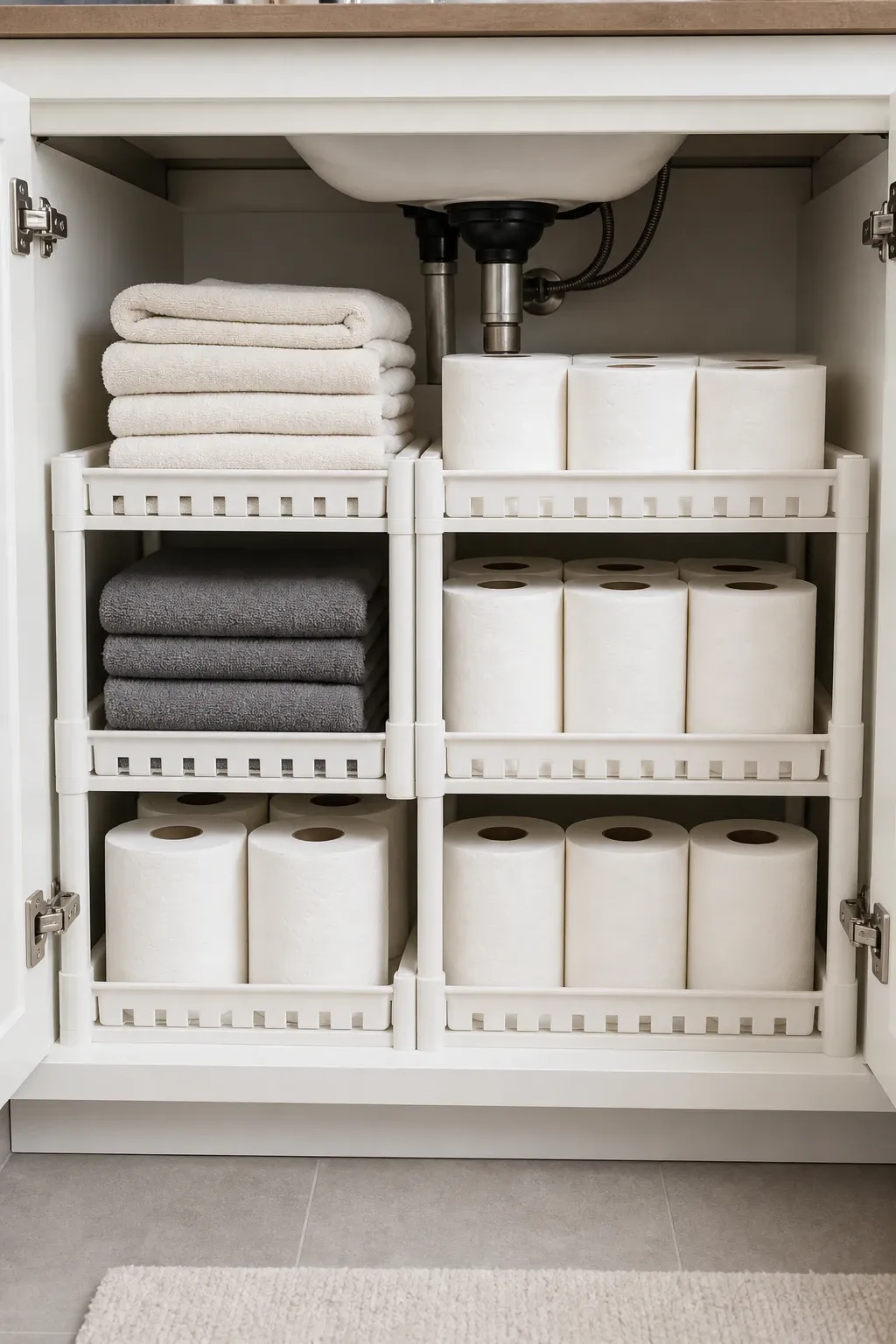
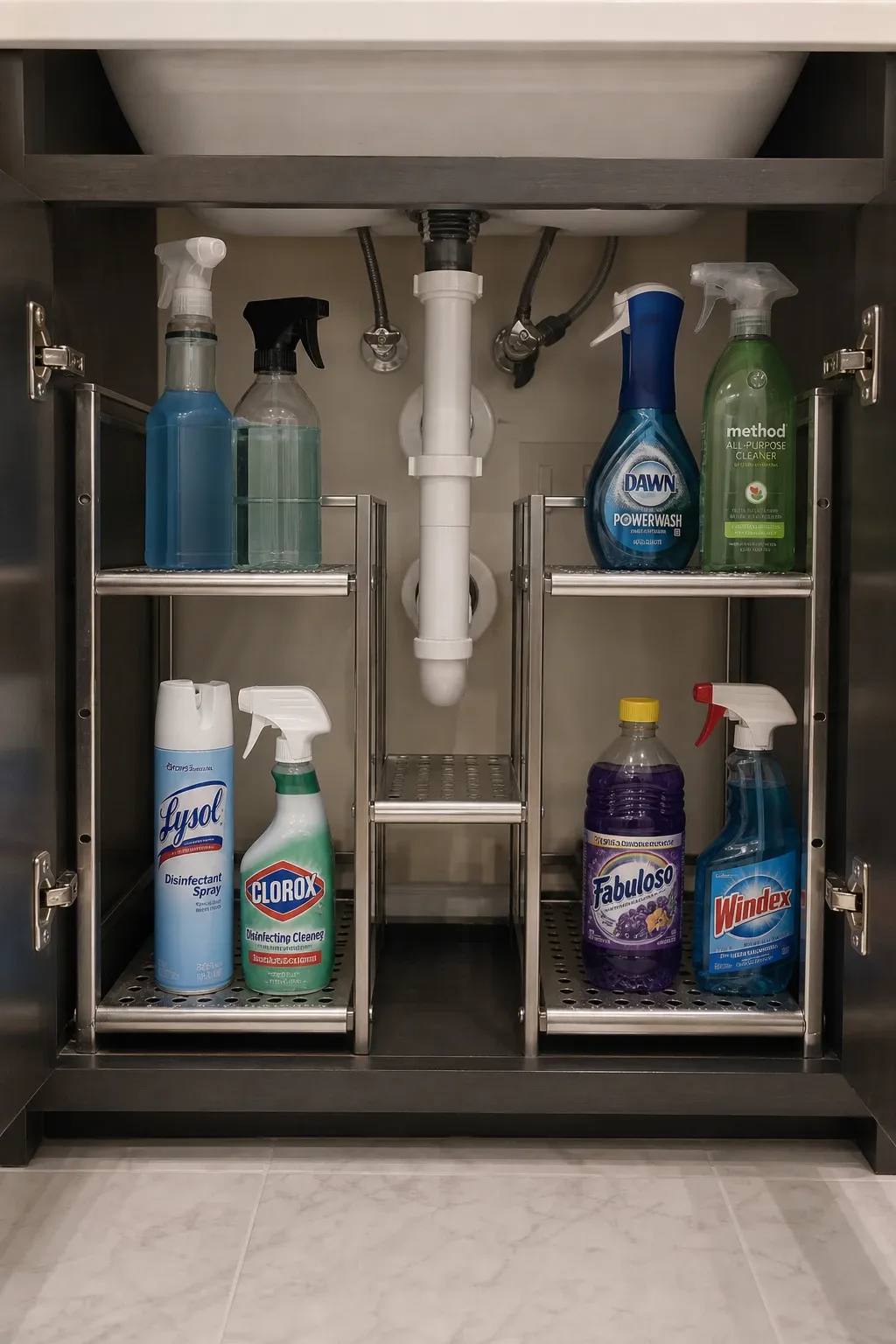
An expandable shelf that adjusts width and fits around the pipes creates two levels of storage where there was one. The upper shelf holds items behind the pipes and the lower level holds items in front. This doubles the usable space immediately. Most expandable shelves have adjustable panels that slide to accommodate different pipe configurations, so they fit most bathroom vanities without modification.
Designer Tip: Choose a shelf with a waterproof or water-resistant surface. Under-sink areas get damp from condensation and occasional drips. A shelf that absorbs water warps and grows mold. Plastic or coated metal shelves handle the moisture.
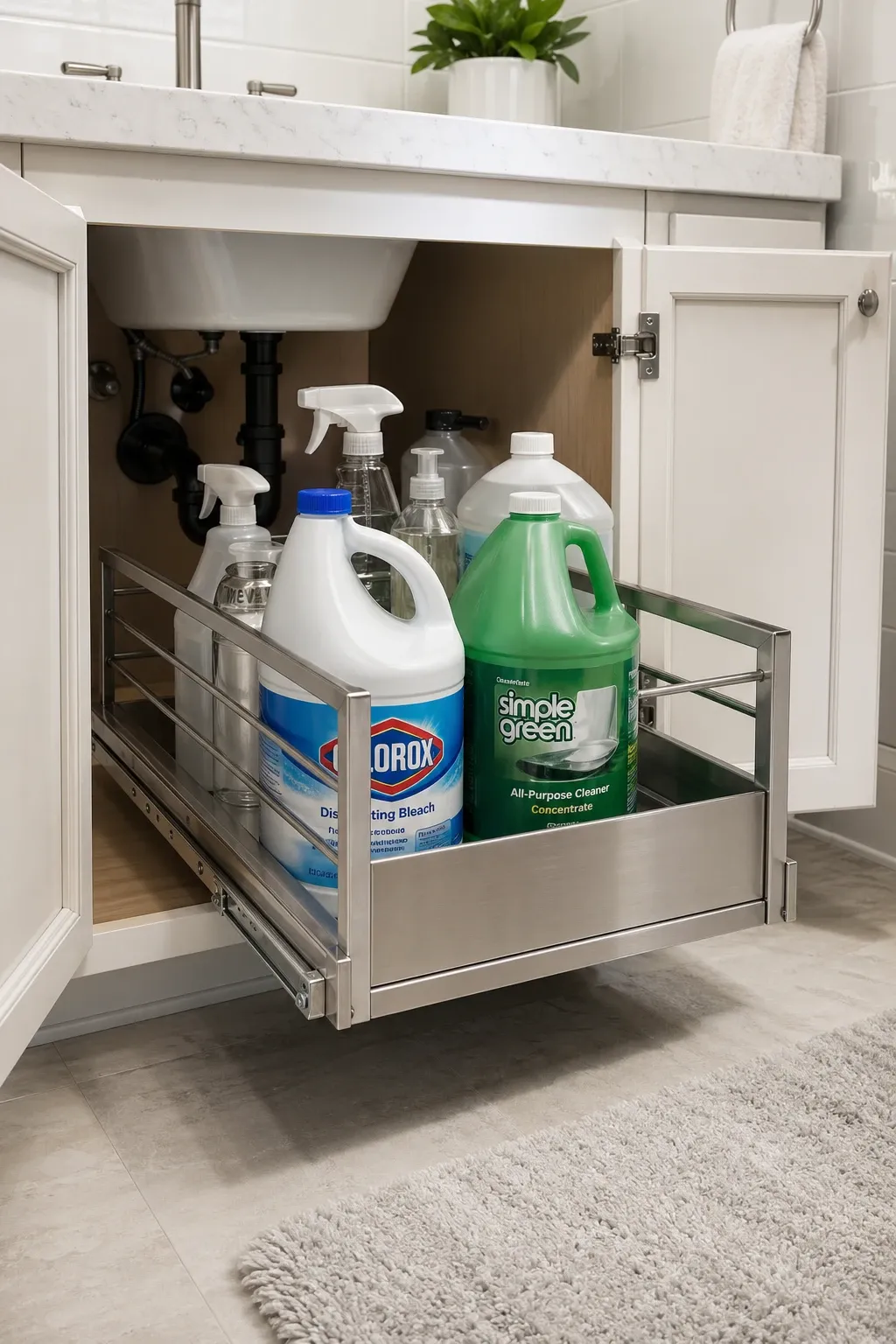
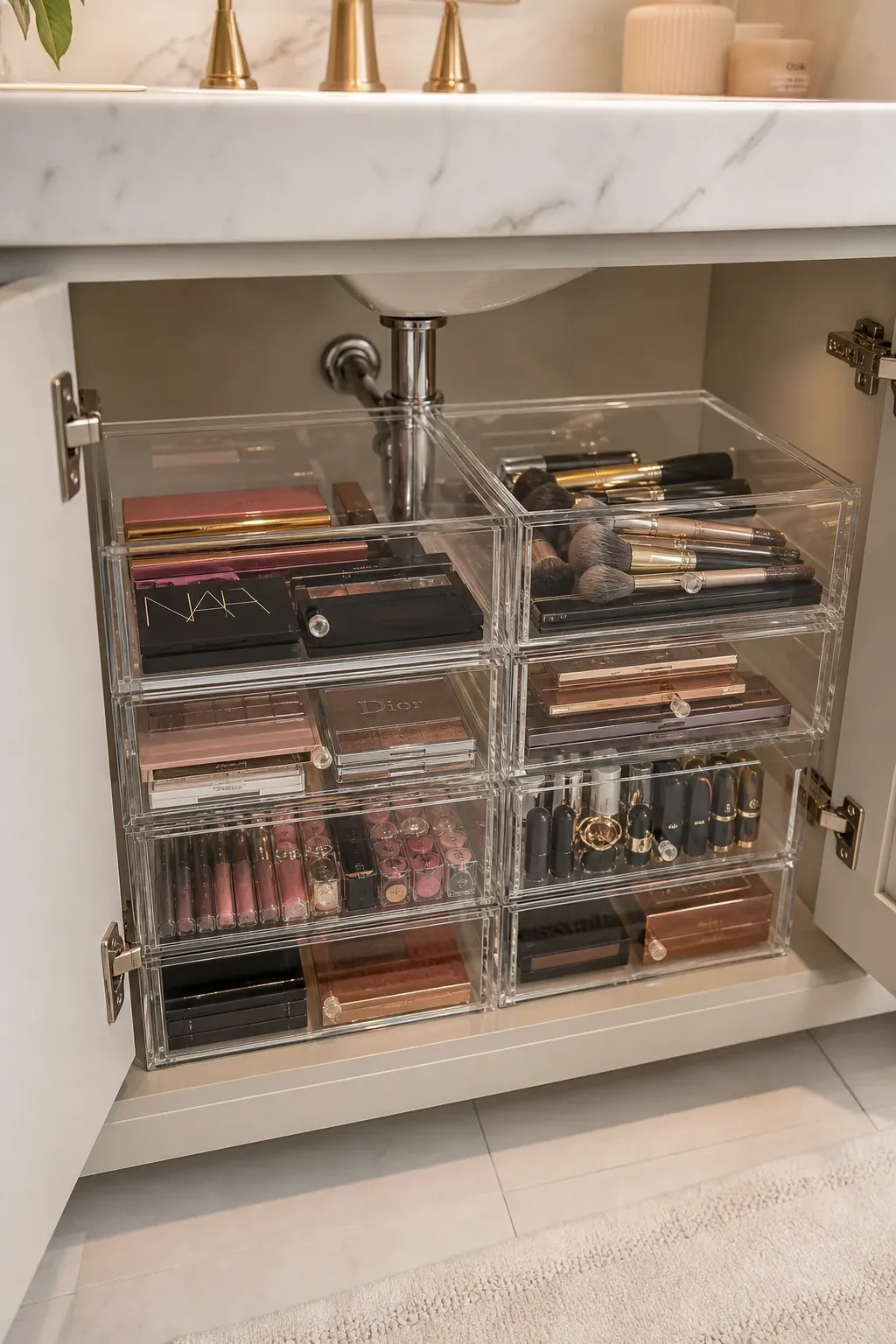
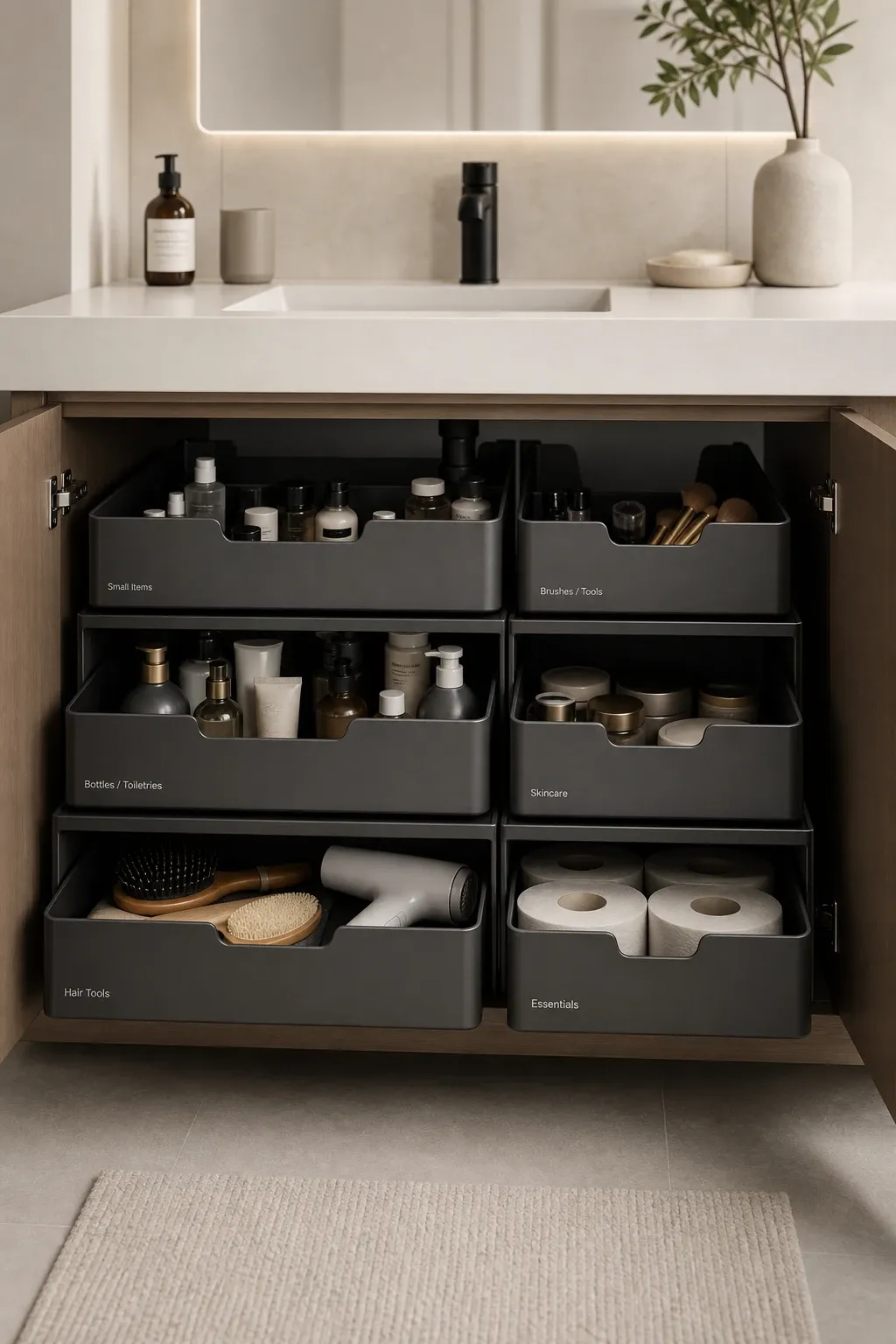
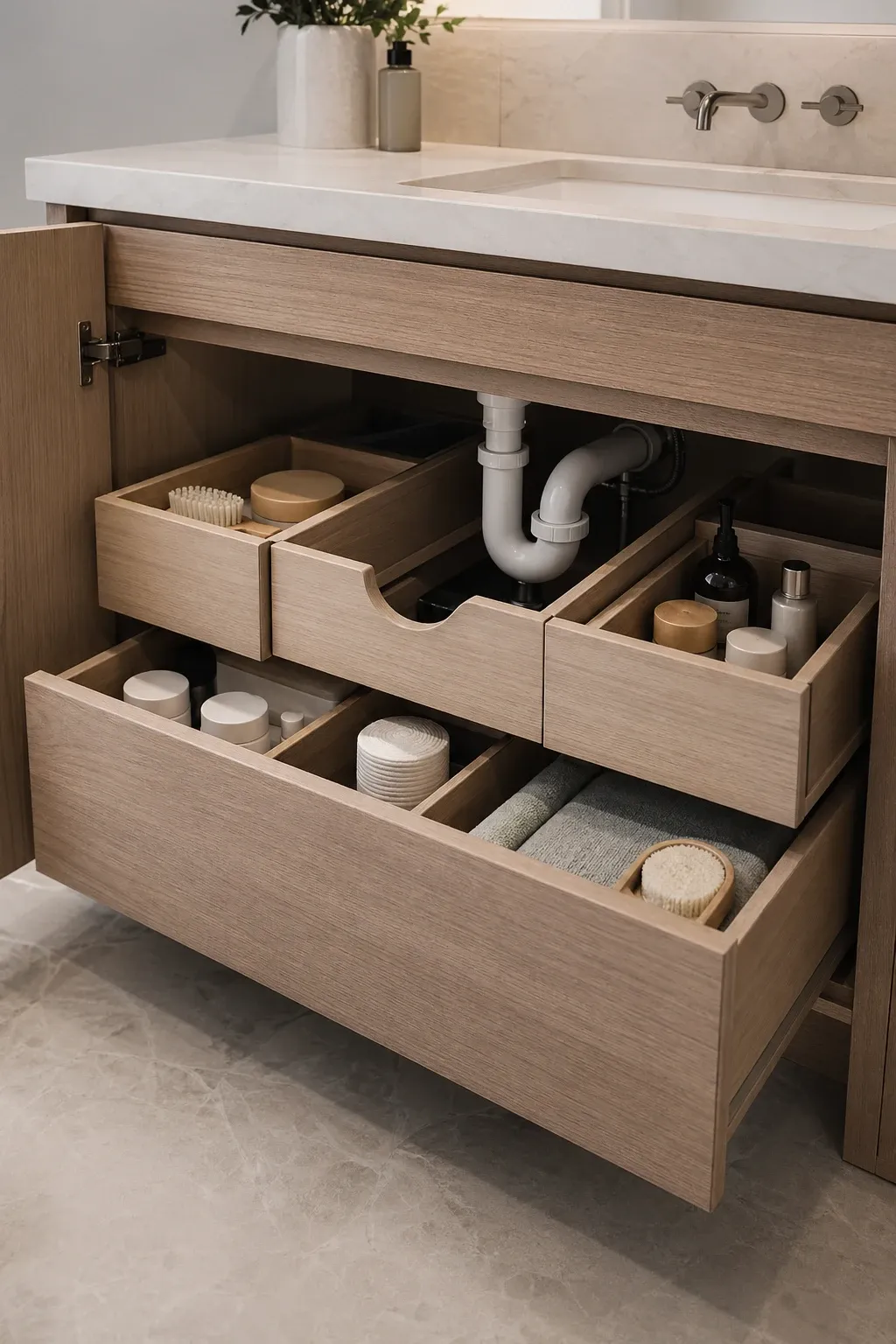
Sliding drawers installed under the sink bring items at the back to the front. No more reaching past pipes in the dark. Pull the drawer out and everything is visible and accessible. Stackable pull-out drawers give you multiple tiers that each slide independently. This is one of the most functional upgrades because it turns deep, dark cabinet space into organized, easy-to-use storage.
Designer Tip: Measure around the pipes carefully before buying pull-out drawers. The U-shaped or notched drawers designed for under-sink use accommodate the pipes. Standard rectangular drawers will not fit in most under-sink spaces.
Small stackable bins fit around the pipes and create multiple storage levels in the odd-shaped spaces beside and behind the plumbing. Each bin holds a category: cleaning supplies in one, hair products in another, backup toiletries in a third. Stacking uses vertical space that would otherwise be dead air. Clear bins let you see contents without unstacking, or use labeled bins for a cleaner look.
Designer Tip: Use bins with flat, stable tops so they stack securely. Rounded or domed lids wobble when stacked and the tower collapses when you pull a bin from the middle. Flat tops lock the stack in place.
Adjustable dividers placed on the cabinet floor create custom sections for different items. Move the dividers to fit tall bottles in one section and short containers in another. The dividers keep items from sliding around every time you open or close the cabinet door. They work well in cabinets that are too shallow for bins or shelves but still need some order.
Designer Tip: Use tension rod dividers that press against the cabinet sides for a secure fit. Freestanding dividers slide out of position over time. Tension rods stay put because the pressure holds them in place.
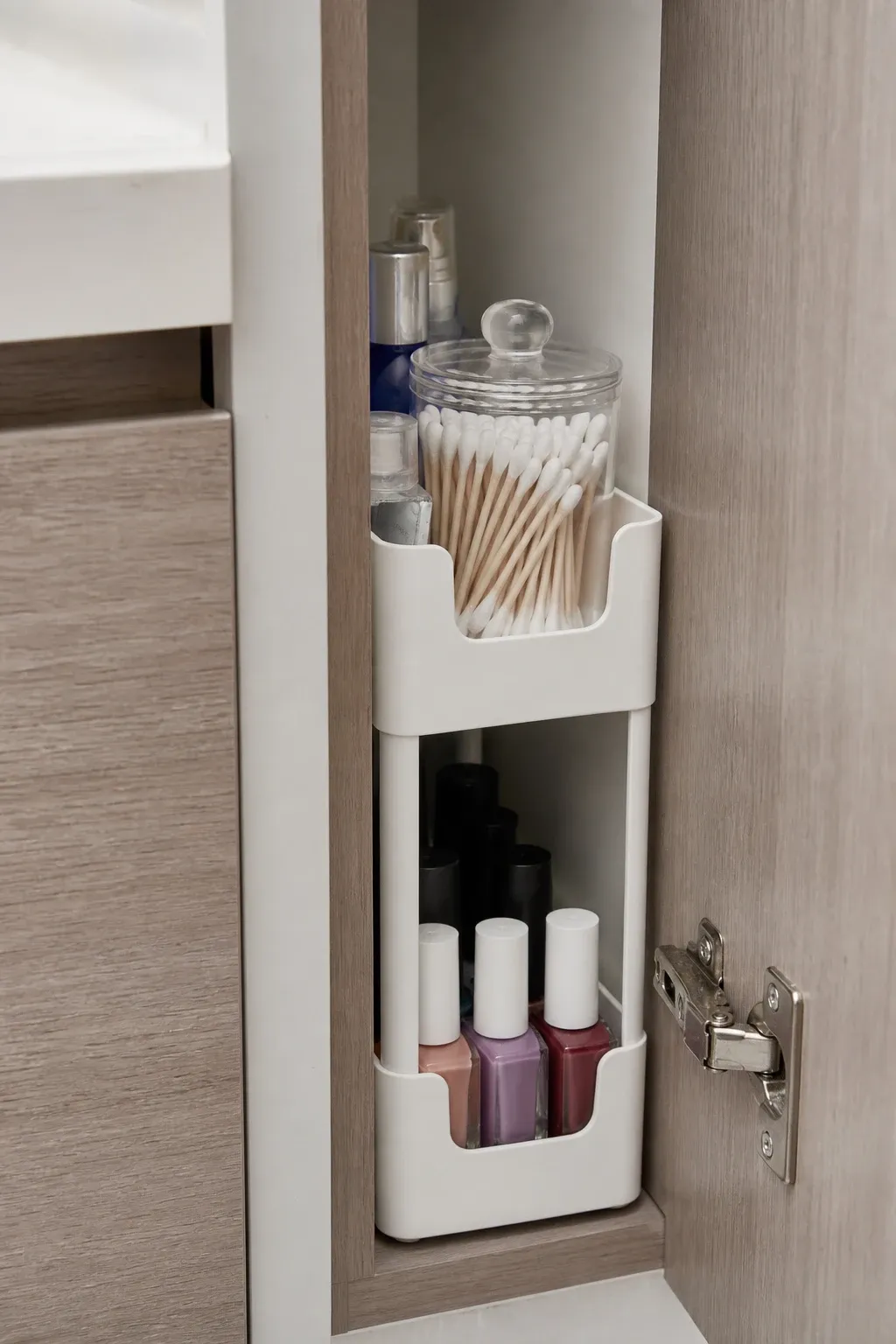
A tiered rack with two or three levels fits on one side of the under-sink space and holds items at different heights. The stepped design means you can see items on every level without moving things around. Use the top tier for daily items and lower tiers for less frequently used products. Tiered racks come in wire and plastic versions that both handle bathroom humidity well.
Designer Tip: Place the tiered rack on the side of the cabinet away from the pipes so it sits flat and stable. The pipe side of the cabinet usually has an uneven floor due to plumbing connections. The flat side gives the rack a solid base.
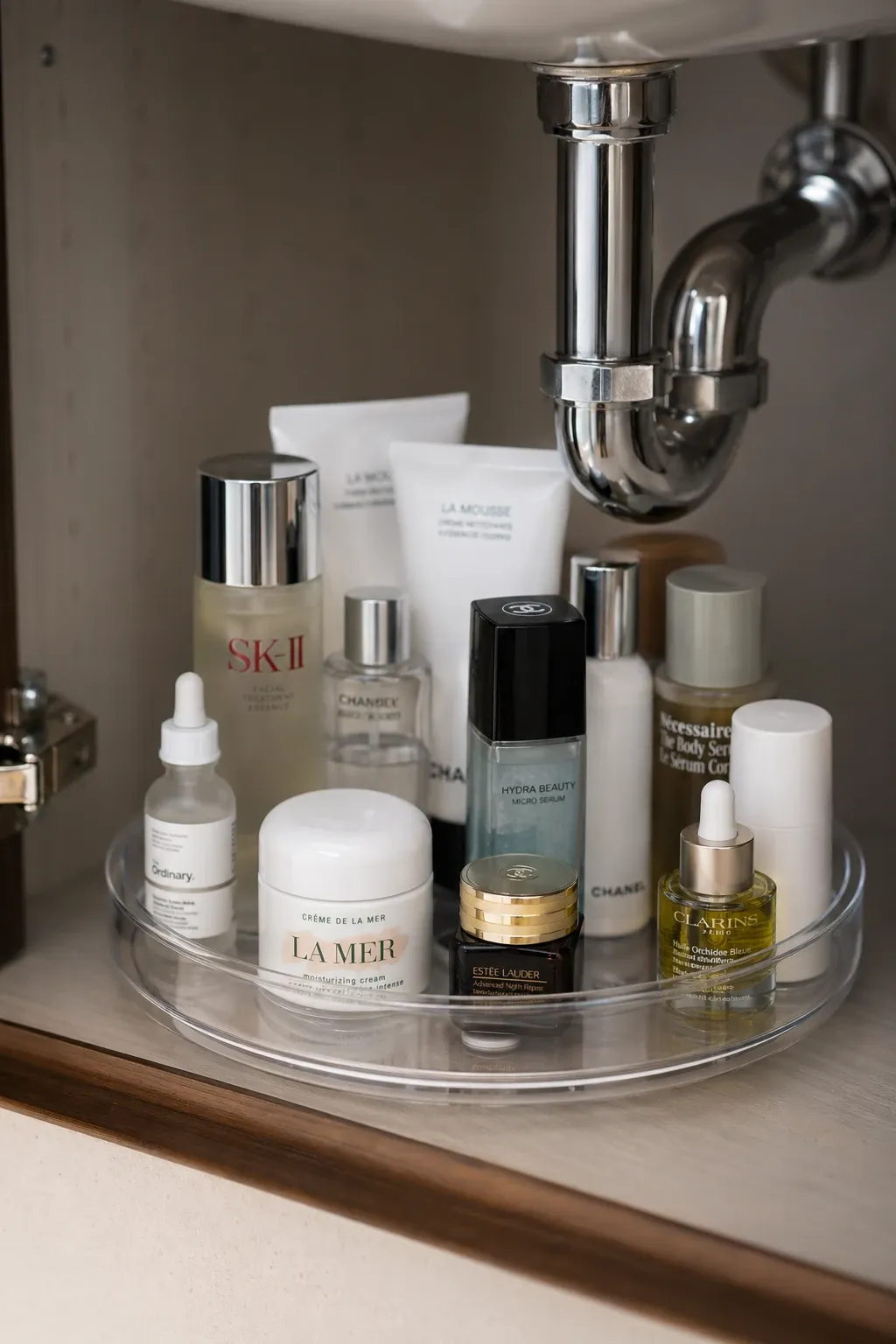
A small turntable in the under-sink cabinet brings back-row products to the front with a spin. Cleaning sprays, hair products, and lotions that normally crowd together become individually accessible. The turntable uses the depth of the cabinet efficiently and eliminates the need to pull everything out to find one item. This is a quick fix that costs a few dollars and makes a noticeable difference immediately.
Designer Tip: Use a turntable with a lip or edge to keep bottles from sliding off during rotation. Under-sink cabinets are often not perfectly level, and bottles slide off flat turntables on a slight tilt.
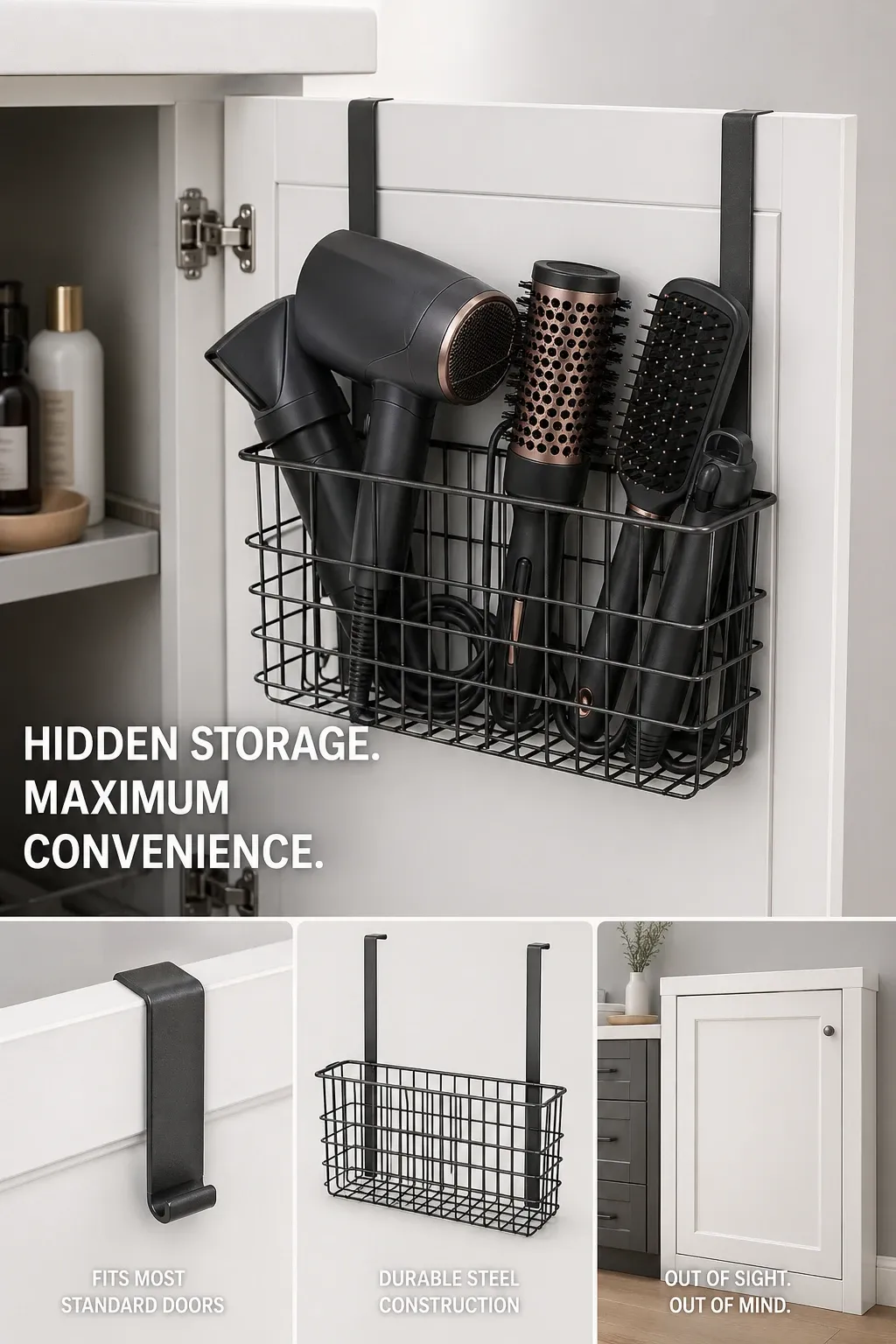
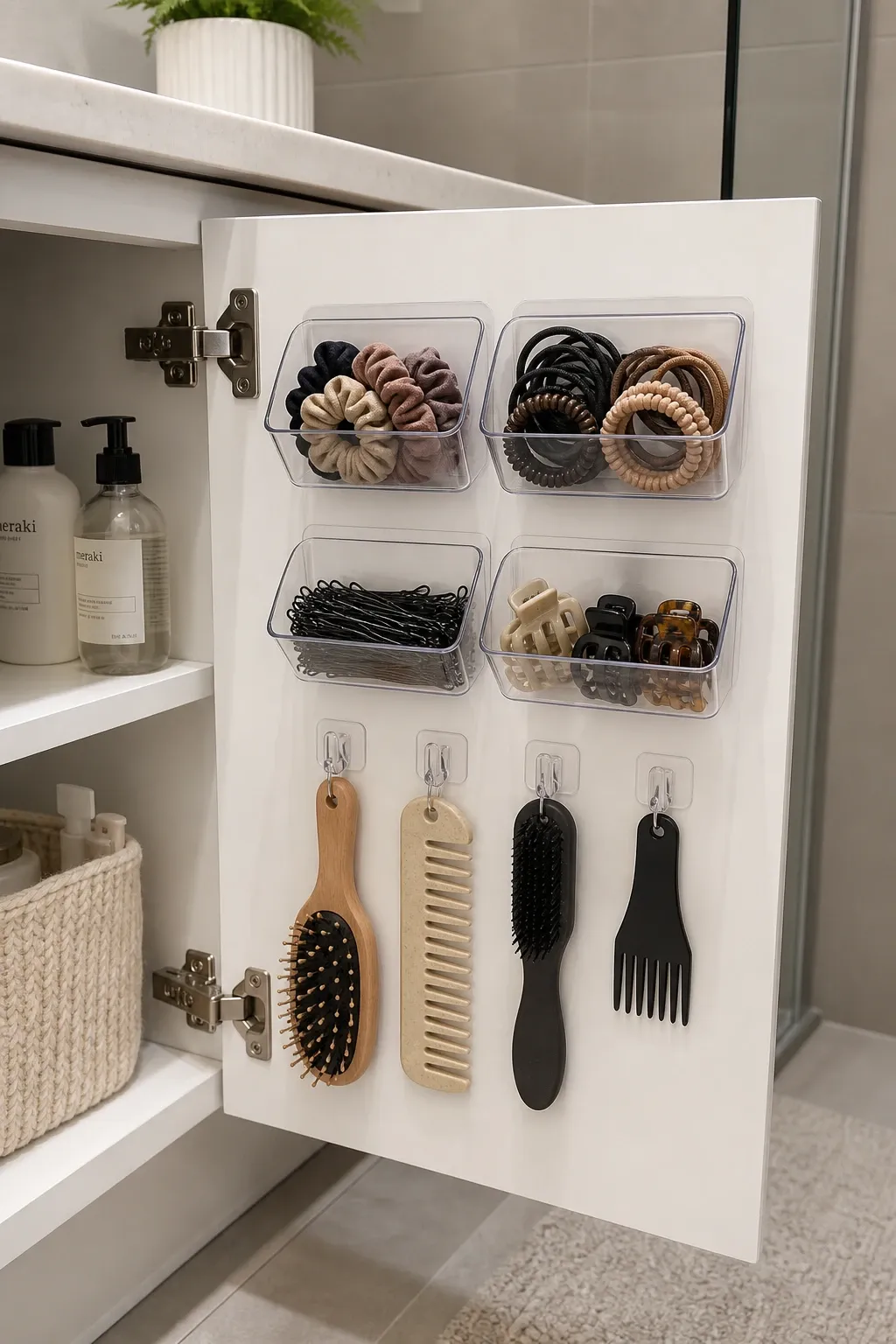
A small rack or pocket organizer mounted on the inside of the cabinet door holds flat items like sponges, cleaning cloths, gloves, and small spray bottles. This uses the door surface that is normally blank and adds a layer of storage without taking up any cabinet floor space. Wire racks screw into the door in minutes and hold up well to daily opening and closing.
Designer Tip: Check that items on the door rack clear the pipes and other items inside the cabinet when the door closes. Door-mounted racks that hit the plumbing prevent the door from closing fully and can damage pipes over time.
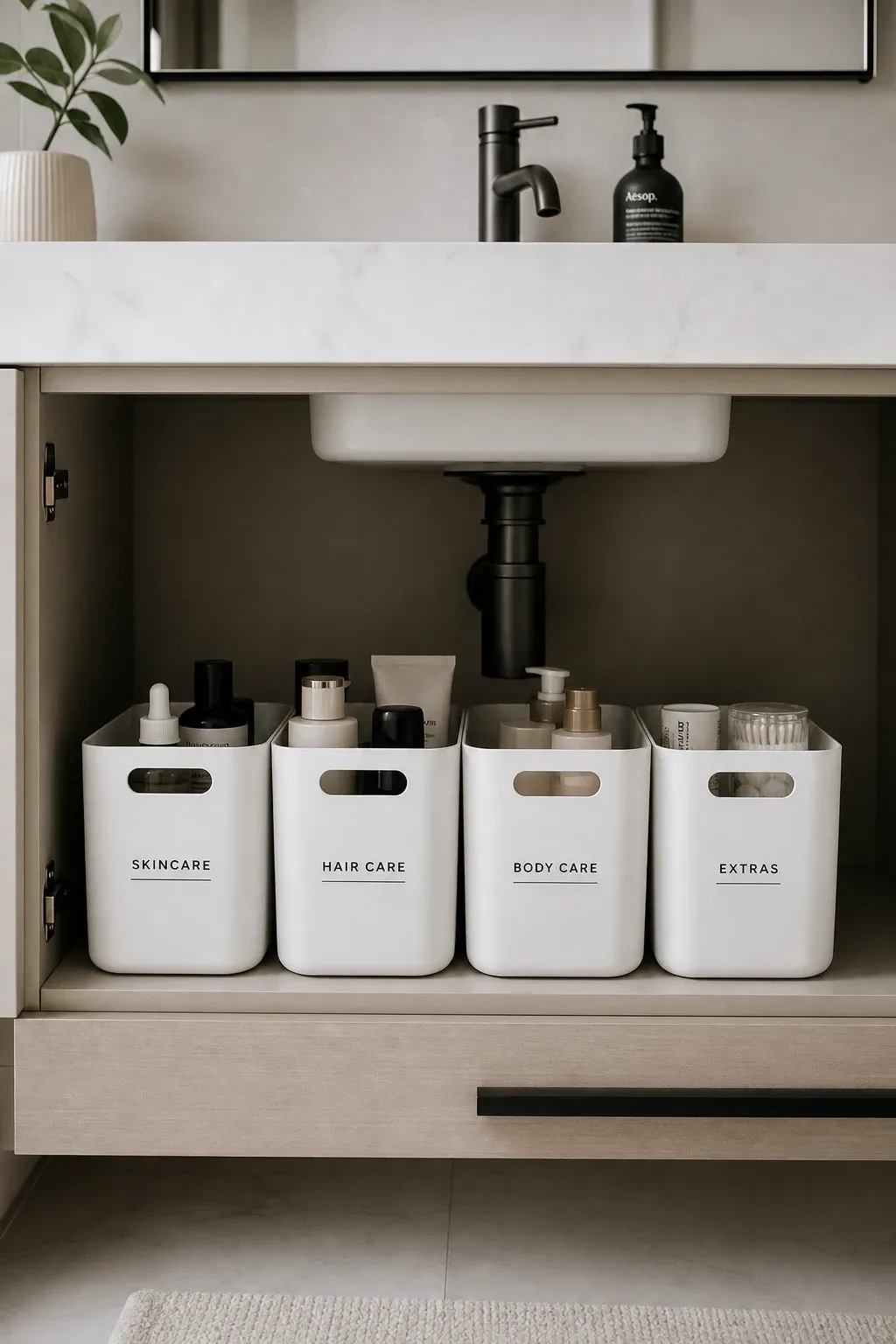
Clear containers with labels group similar items together and make everything visible and identifiable. One container for hair products, one for dental supplies, one for first aid. The labels make it easy for anyone in the household to find what they need and put it back. Clear walls mean you can spot what is running low without opening the container. This system works because it is easy to use and easy to maintain.
Designer Tip: Use waterproof labels or a label maker with laminated tape. Regular paper labels peel off in the humid under-sink environment. Waterproof labels stay put and remain readable even in damp conditions.
A shelf with a cutout or notch that wraps around the pipes uses the space directly behind the plumbing that most people cannot access. Standard flat shelves cannot fit there because the pipes are in the way. A notched shelf fits right up against the pipes and turns that wasted back area into usable storage. You can buy U-shaped under-sink shelves or cut a notch in a standard shelf yourself.
Designer Tip: Leave at least an inch of clearance around the pipes when cutting a notch. Pipes expand slightly with hot water and a shelf pressed tightly against a pipe can cause noise, stress on joints, or prevent access when you need to do plumbing work.
Modular stacking units that connect together let you build a custom shelving system that fits around the pipes. Add or remove modules as needed. Start with a few pieces and expand as you figure out what works in your specific cabinet. The modular approach is flexible because no two under-sink spaces are exactly the same. What fits perfectly in one bathroom might not work in another.
Designer Tip: Start with the corner pieces and build outward. Filling the corners first maximizes the usable space and prevents dead zones where items get shoved and forgotten.
A tension rod installed across the inside of the cabinet near the top holds spray bottles by their triggers. The bottles hang from the rod and the cabinet floor below stays open for bins and other items. This uses vertical space that is normally empty above the short items on the cabinet floor. Spray bottles hanging in a row are also easier to grab than bottles standing in a crowd on the floor.
Designer Tip: Install the tension rod high enough that hanging bottles clear the items below. Too low and the hanging bottles rest on top of the items underneath, which defeats the purpose. Test the height with your tallest spray bottle before tightening the rod.
A coordinated set of containers in the same style makes the under-sink area look organized even when it is full. Matching containers line up neatly, stack evenly, and create a visual consistency that makes the space feel calm rather than chaotic. The uniform look also makes it obvious when something is out of place, which helps everyone maintain the system.
Designer Tip: Buy a few extra containers from the same set at the time of purchase. If you need to add storage later and the set is discontinued, you will be glad you have matching extras. Finding the exact same container months later is often impossible.
A waterproof mat or liner on the cabinet floor protects the cabinet from water damage, leaks, and spills. Under-sink areas are prone to drips from pipes and spills from bottles. A mat catches these before they damage the cabinet floor. Some mats have raised edges that contain spills within the mat. This is not a glamorous organization hack but it protects your investment in all the other organization tools above it.
Designer Tip: Choose a mat that is easy to remove and clean. A mat that is hard to pull out will never get cleaned and will eventually become the source of the very mold and smell it was meant to prevent. Flexible mats that roll up for cleaning are the best choice.
Under-sink organization is about working around the pipes, using vertical space, and keeping everything visible and accessible. The best systems use a combination of shelves for structure, bins for grouping, and labels for identification. Start by emptying everything out, tossing what is expired or unused, and then build the system around what is left. A clean start makes every organization idea work better.
Frequently Asked Questions
How do I deal with pipes when organizing under the sink?
Use U-shaped shelves, expandable organizers with pipe cutouts, or stackable bins that fit in the spaces around the pipes. Work with the pipes rather than fighting them. The areas beside and behind the pipes are usable if you choose organizers designed for under-sink spaces.
What should I store under the bathroom sink?
Cleaning supplies, extra toiletries, hair tools, and backup products work well under the sink. Avoid storing anything that would be damaged by a water leak, like important papers or electronics. Keep items you use daily in the most accessible spots and backups or rarely used items toward the back.
How do I prevent mold under the bathroom sink?
Use a waterproof liner on the cabinet floor, fix any dripping pipes immediately, and open the cabinet doors occasionally to let air circulate. Wipe down the interior every month or two. A small moisture absorber packet inside the cabinet also helps in humid bathrooms.
How often should I reorganize under the bathroom sink?
A quick check every month to toss empties and expired products keeps things manageable. A deeper reorganization every three to six months handles anything that has drifted out of place. The monthly check takes five minutes and prevents the slow slide back into chaos that happens when the space goes unchecked.