Bathrooms That Feel Like a Deep Breath, Not a Showroom
There is a specific kind of bathroom that makes you want to linger a little longer, not because it is loud or dressed up, but because it feels grounded. You walk in, the light is warm, the materials feel real under your hand, and nothing is fighting for attention. That is the whole idea behind an earthy, minimalist bathroom. It borrows from Japandi and wabi-sabi thinking, where imperfection is part of the beauty, and it strips away the extra stuff so the wood grain, the stone, and the light can actually be noticed. This is not about buying a matching set of accessories from a big box store. It is about choosing fewer things, but choosing them with more intention.
The good news is that this look does not require a full renovation to pull off, and it does not require a huge budget either. A lot of it comes down to color choices, a handful of natural materials, and being willing to leave some visual space alone instead of filling it. Below are ten ideas broken into five groups, covering color, materials, layout, lighting, and the small living touches that make a bathroom feel less like a fixture showroom and more like a room you actually want to be in. Some of these are weekend projects. A few are bigger commitments. I have tried to be honest about which is which so you can pick what actually fits your space and your budget.
Warm Neutral Color Foundations
Clay and Terracotta on One Wall
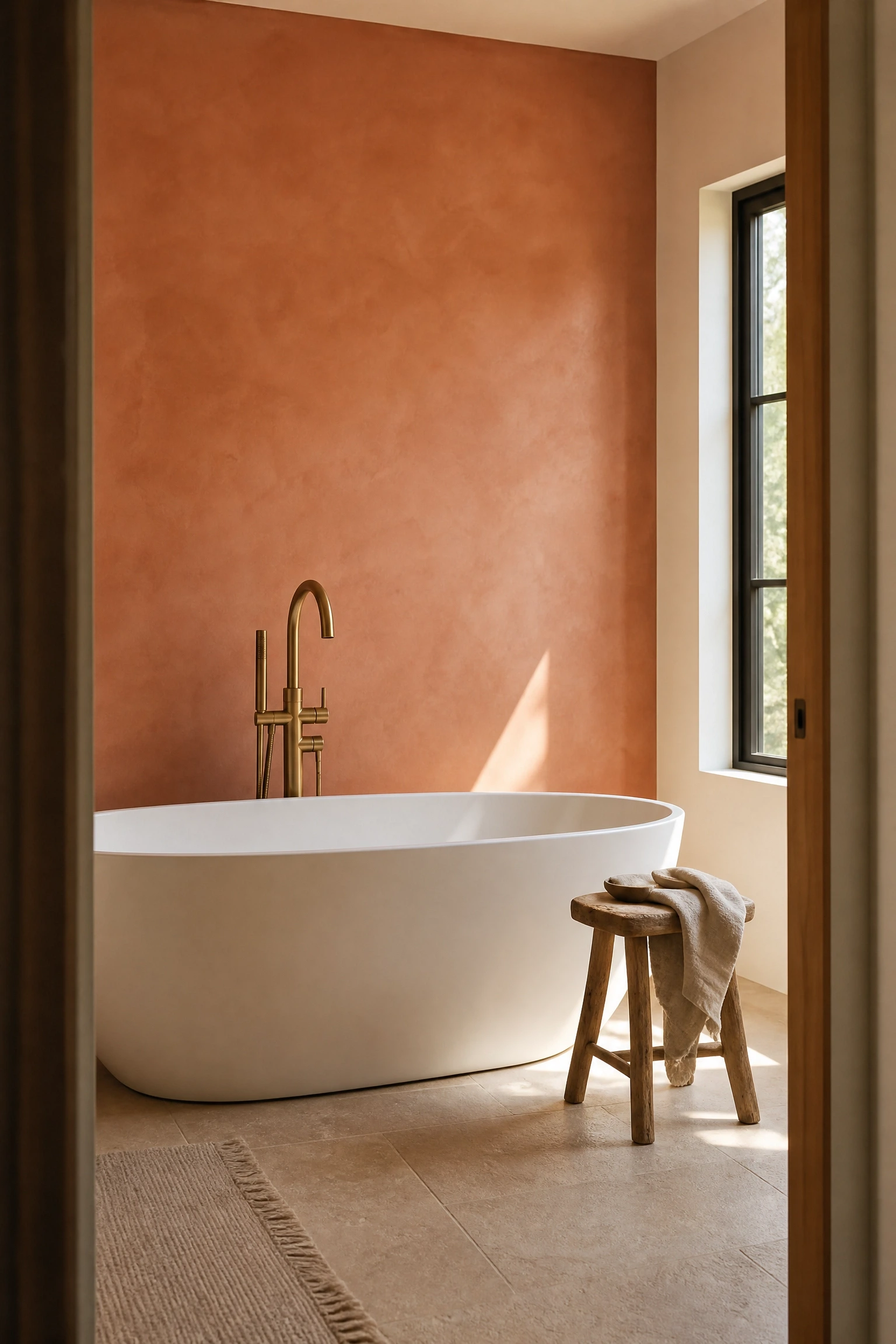
A full room of terracotta can start to feel heavy in a small bathroom, so the smarter move is picking one wall, usually the one behind the vanity or the tub, and using a warm clay or terracotta paint or limewash there while keeping the rest of the walls a soft white or bone color. This creates what designers call a focal wall without turning the whole room into a single loud statement. In practice, this look comes together best when you pair the clay tone with brass or unlacquered fixtures, since cool chrome tends to fight with warm pigments and can make the color read as muddy instead of rich. A limewash finish, rather than flat paint, adds subtle texture and depth because it catches light differently depending on the time of day, which is part of why it has become a favorite among interior designers doing Mediterranean and Mexican-influenced bathrooms. One honest caveat, limewash and clay paint are more porous than standard bathroom paint, so they need a breathable sealer if they are anywhere near direct water spray. Budget wise, this is one of the more affordable updates on this list since a gallon of specialty paint runs somewhere between forty and ninety dollars depending on the brand. Designer Advice: test your clay color on a poster board and move it around the room at different times of day before committing, because the same shade can look pink at 8 a.m. and orange by 4 p.m.
Taupe Walls with Warm Wood Trim
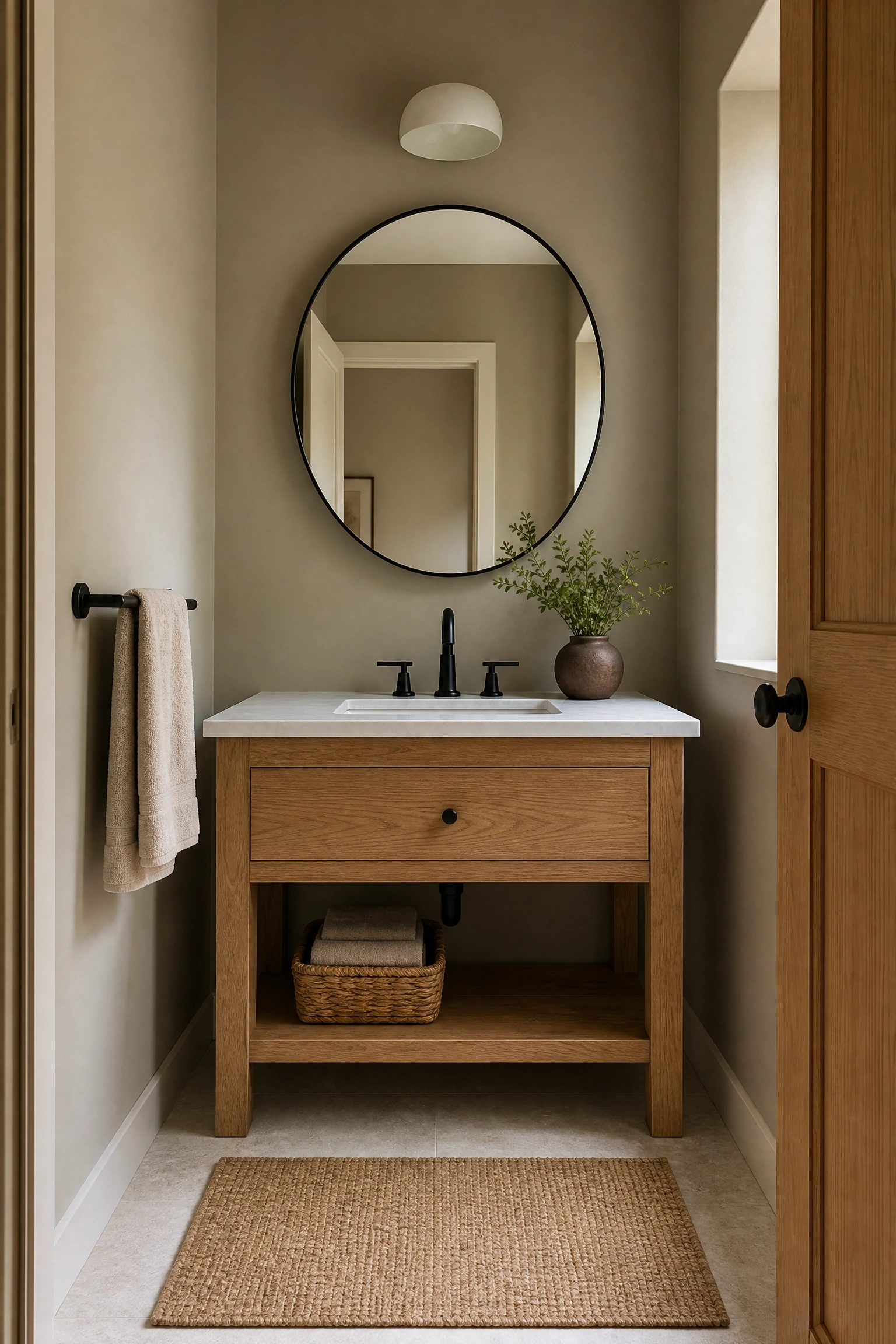
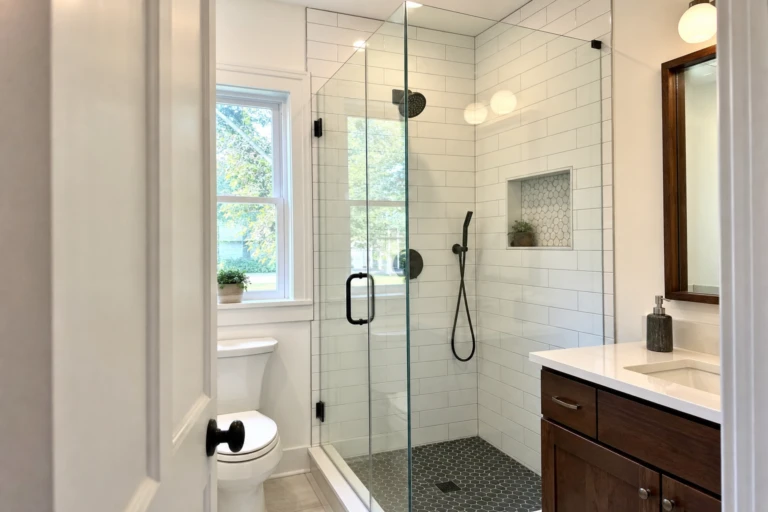
If straight terracotta feels too bold, taupe is the quieter cousin that still reads as earthy rather than cold. A soft greige or warm taupe on the walls, paired with a wood vanity in oak or walnut, creates a color temperature that feels neither sterile nor overly rustic, which is why this combination shows up so often in Scandinavian and organic modern bathrooms. The trick that a lot of people miss is undertone matching, taupe with a pink or violet undertone will clash with yellow-toned oak, so it is worth holding the paint chip directly against a sample of the wood before buying either. For furniture, a simple floating vanity with a single drawer keeps the look minimal, and a woven jute bath mat adds texture without introducing a second competing color. Metal fixtures in matte black or aged bronze ground the palette so it does not drift into beige-on-beige blandness. This is a solidly mid-range project, mostly because good paint and a decent wood vanity add up, but it is far cheaper than full stone or tile work. Designer Advice: keep your grout and caulk in a warm white rather than stark white, since bright white grout lines can visually cut the room into segments and undercut the calm effect you are going for.
Natural Materials That Do the Heavy Lifting
A Raw or Live Edge Wood Vanity
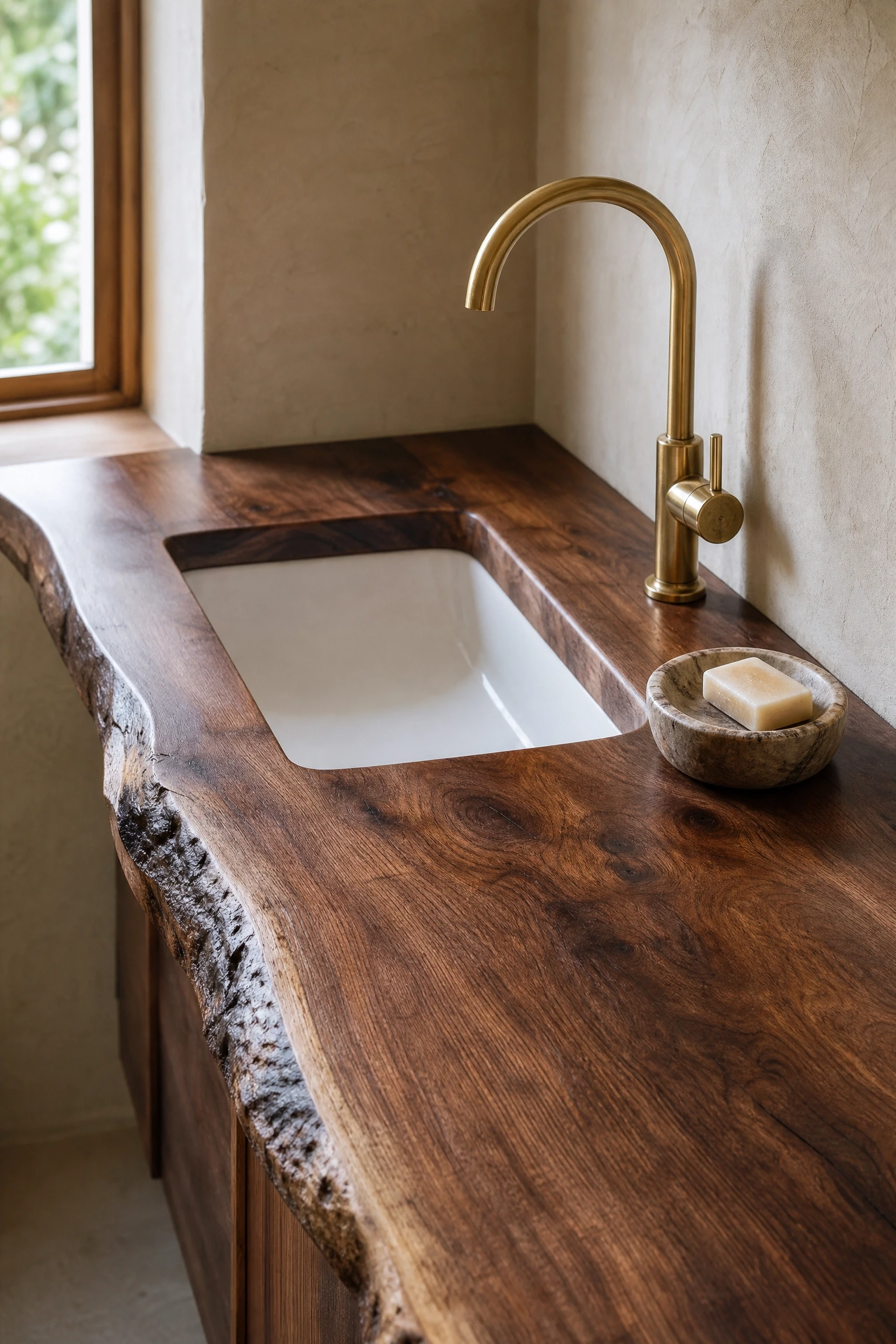
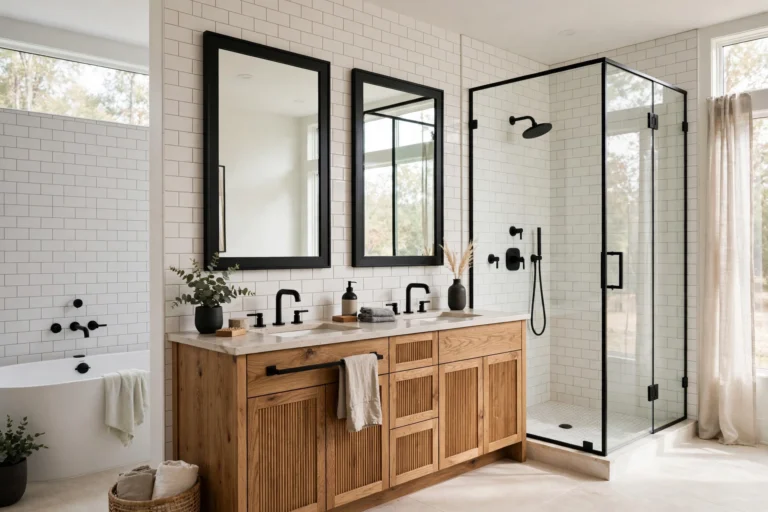
Nothing signals earthy minimalism faster than a vanity that still shows the character of the wood it came from, whether that is a live edge slab, a reclaimed barn wood top, or simply oak with visible grain and knots left unsanded and unstained beyond a protective oil finish. This works because it introduces what designers call visual weight at counter height, giving the eye something substantial to rest on while everything above it, mirror, shelving, walls, stays quiet and pared back. In real bathrooms, this looks best paired with an undermount stone or ceramic sink rather than a vessel sink, since a vessel sink on a raw wood top can tip the whole look toward rustic farmhouse instead of the more refined organic modern feel most people are after. A hardwax oil finish, reapplied every year or two, is what keeps the wood from warping near sinks and faucets, and this is the maintenance trade-off worth knowing upfront, raw or lightly finished wood in a bathroom needs more upkeep than laminate or quartz ever will. On the budget side, reclaimed wood vanities can range widely, some salvage yards sell slabs for two hundred dollars while custom-built ones from a furniture maker can run well over a thousand. Designer Advice: always ask whether the wood has been kiln dried before it goes anywhere near a bathroom, since green or improperly dried wood will crack and warp within months of humidity exposure.
Pebble or Slate Shower Flooring
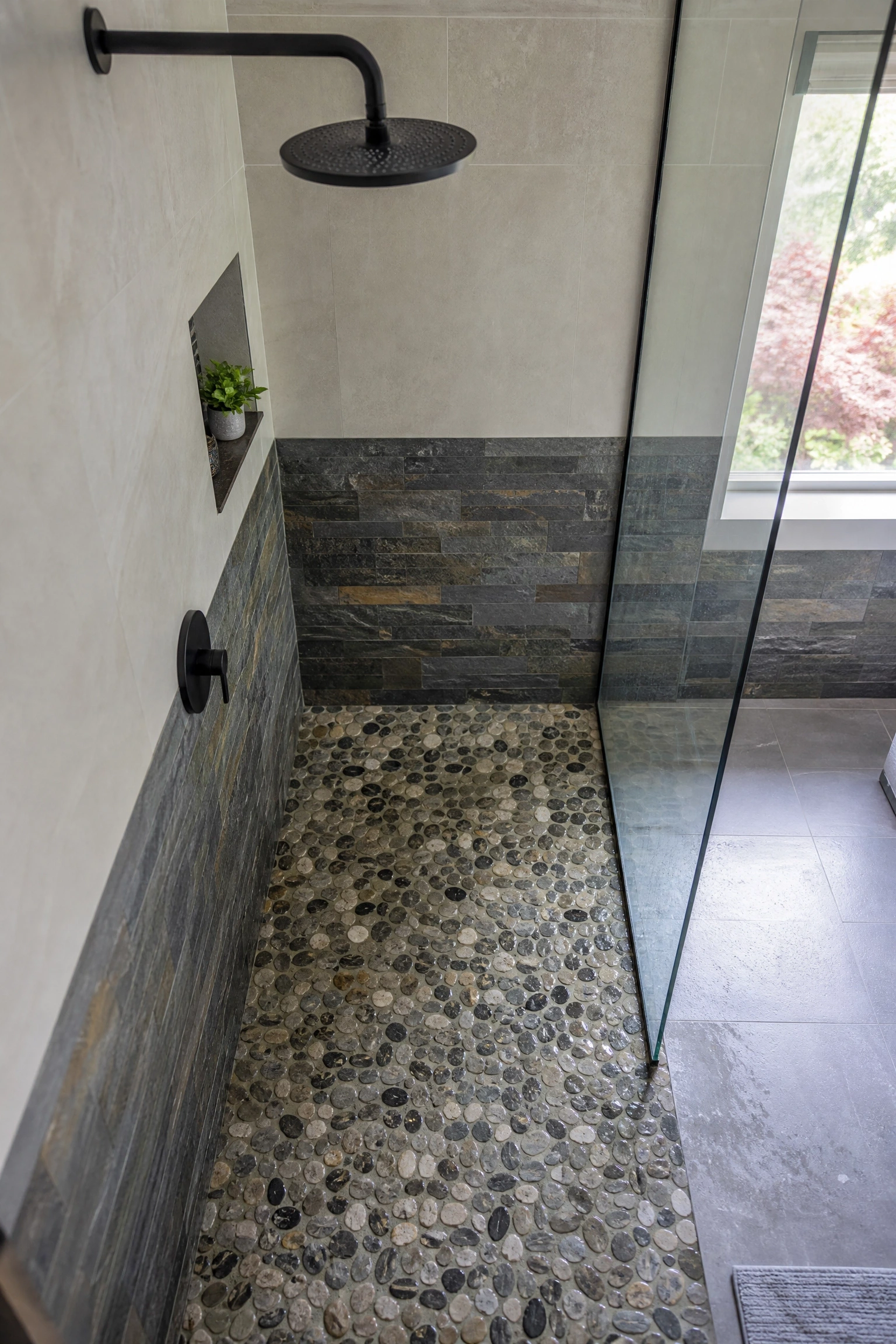
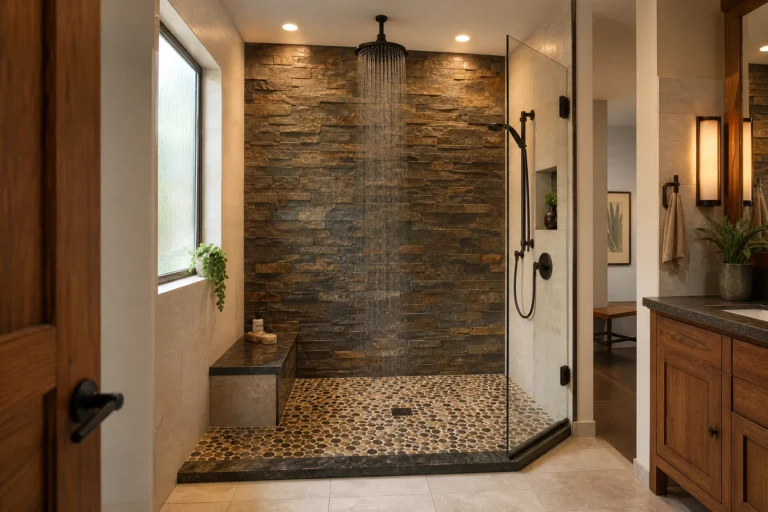
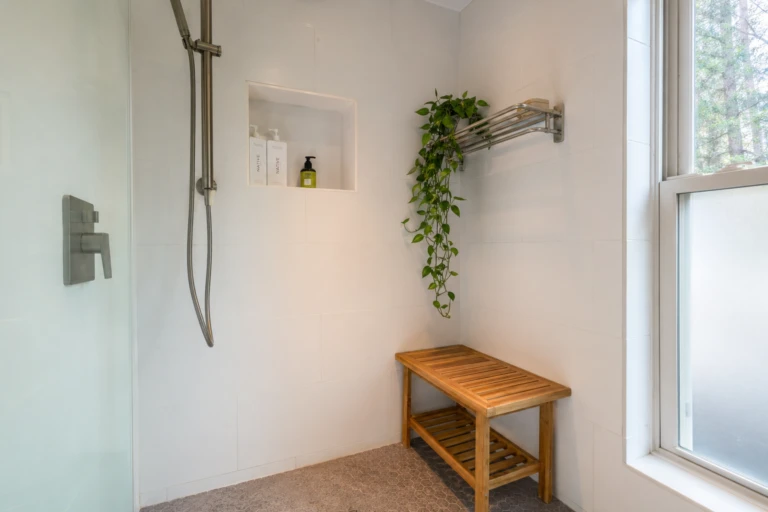
Swapping standard tile for pebble stone or slate in the shower is one of the more noticeable texture changes you can make, because it brings an almost outdoor, riverbed quality underfoot that no flat tile can replicate. Slate in particular carries natural color variation from tile to tile, so no two pieces read exactly the same, which adds a kind of organic randomness that reads as intentional rather than messy. In terms of function, pebble floors actually drain quite well because of the gaps between stones, and the texture gives a light foot massage that a lot of people genuinely enjoy once they get used to it. That said, I want to be straightforward about the downside, pebble grout lines require more scrubbing than flat tile because grime collects in the low points between stones, so this is not the lowest maintenance option if you are someone who wants to clean the bathroom once a month and forget about it. Slate also needs periodic resealing, usually once a year, to keep it from staining. This sits in the mid to upper budget range depending on square footage and whether you hire a professional installer, which is recommended here since pebble floors need a specific mortar bed to sit properly. Designer Advice: stick to stones in the gray, brown, and cream family rather than mixed bright colors, since a tighter color range is what makes the floor look put-together instead of like a craft project.
Layout and Storage the Minimalist Way
Open Shelving Instead of Closed Cabinets
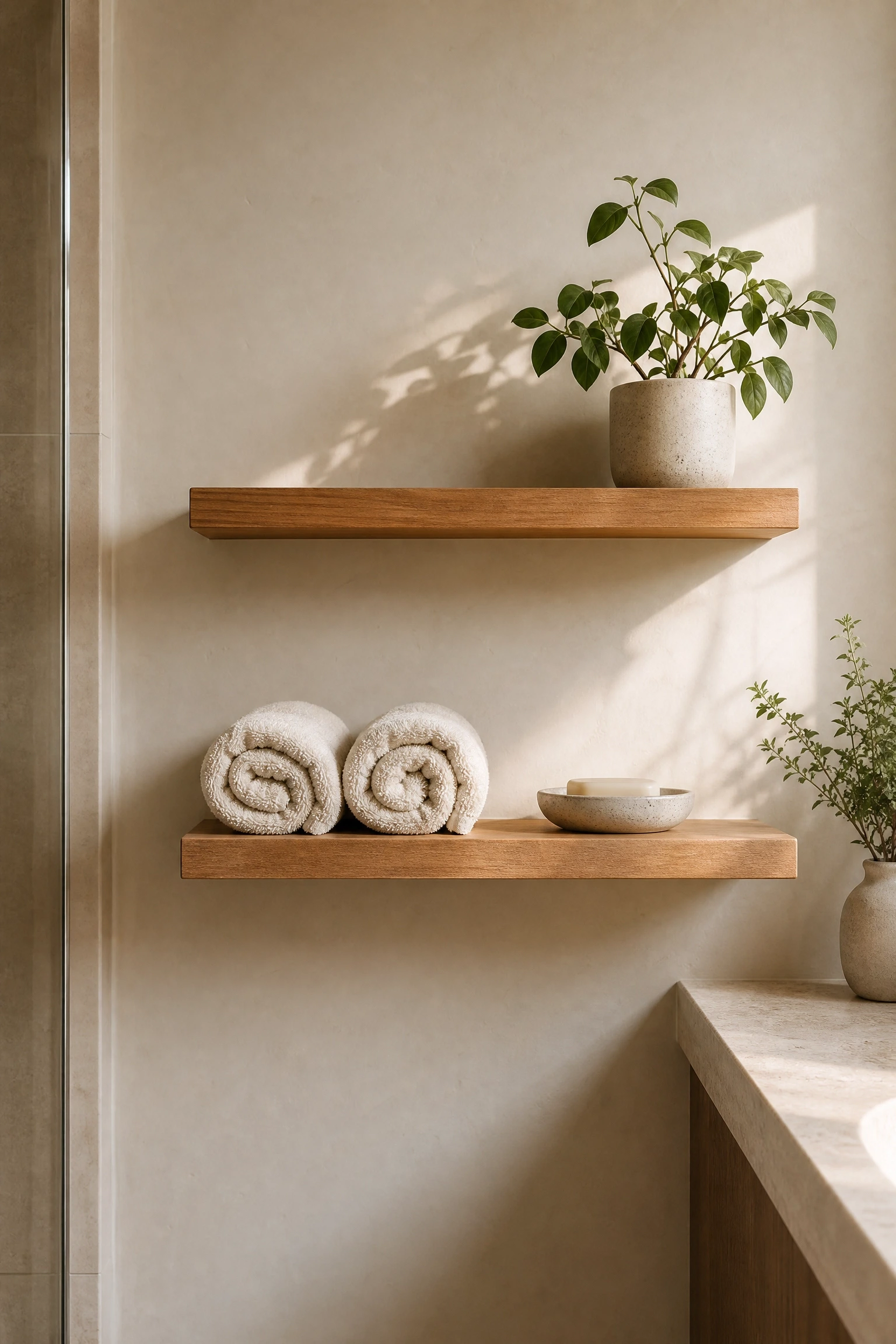
One of the fastest ways to make a small bathroom feel more open is replacing a chunk of your closed cabinetry with open wood shelves, then being disciplined about what actually sits on them. This is where minimalism really earns its name, because open shelving only works if you edit constantly, a shelf with twelve products crammed on it looks cluttered no matter how nice the shelf is. Two or three rolled towels, a ceramic soap dish, a small potted plant, and maybe one interesting object like a stone bowl is usually the right density, leaving visible negative space between items so each one gets a moment of attention. Floating shelves in a light-stained or raw wood, mounted with hidden brackets, tend to look the most smooth against a plaster or painted wall. The honest trade-off here is that open shelving means your everyday clutter, extra toilet paper, cleaning supplies, spare toothbrushes, needs somewhere else to live, usually a closed cabinet elsewhere or a woven basket tucked underneath. This is a very low-cost update, often achievable for under a hundred dollars if you already have a wall that can support a bracket. Designer Advice: hang shelves at slightly uneven heights rather than perfectly stacked, it reads as more natural and less like a display case.
A Floating Vanity to Open Up the Floor
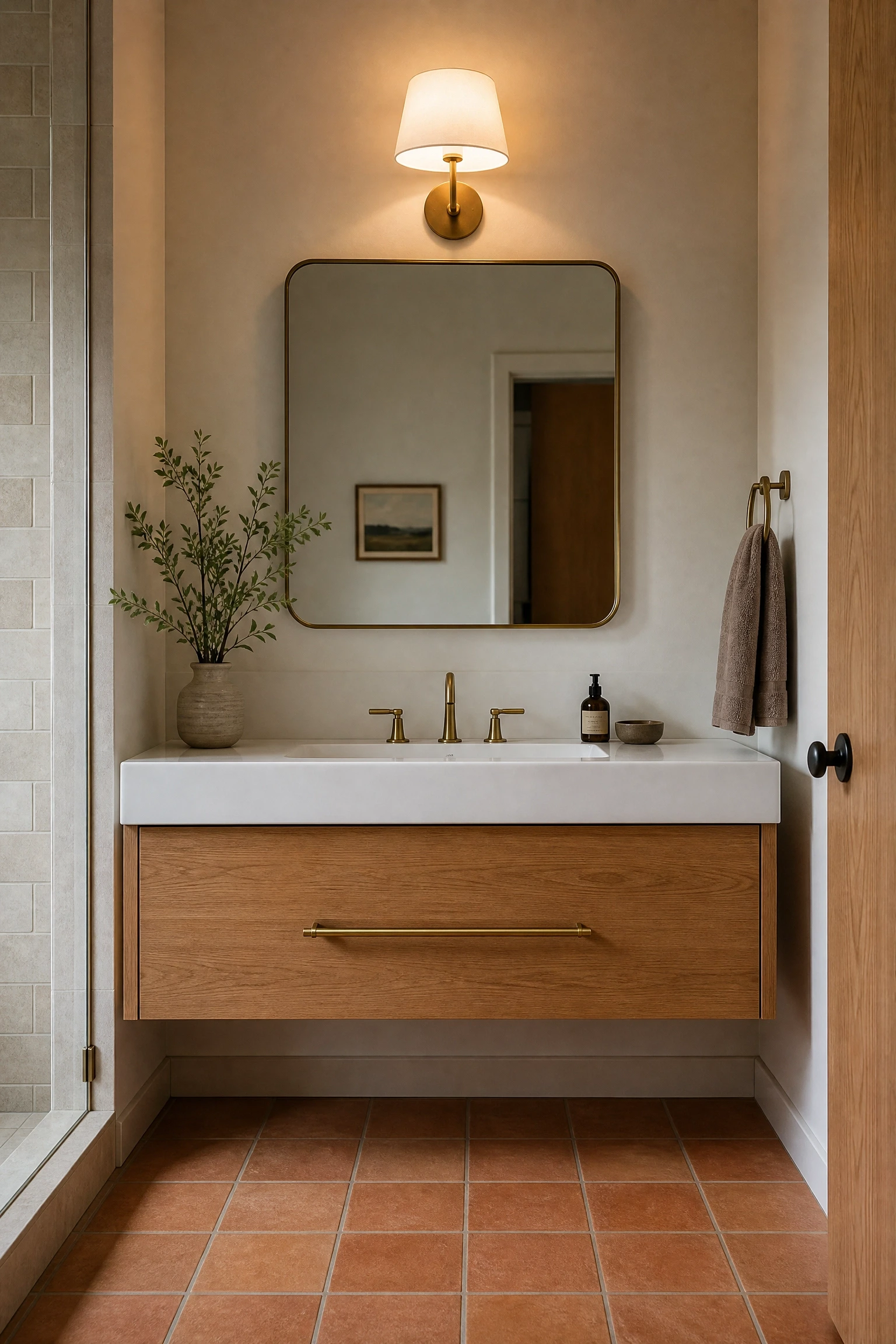
Swapping a floor-standing vanity for a wall-mounted floating one is a layout change more than a decor change, but it has an outsized effect on how earthy minimalist bathrooms feel, because it exposes floor space and lets whatever flooring material you have, whether that is warm terracotta tile or light oak-look vinyl, read as a continuous plane rather than being chopped up by cabinet legs. This is a technique architects use constantly in small footprint bathrooms because visible floor space genuinely tricks the eye into perceiving a bigger room, it is not just a marketing phrase. Pair a floating vanity with a single wide basin and one long integrated pull for hardware, since multiple small knobs start to look busy against the pared-back look you are aiming for. One practical note worth mentioning, floating vanities need to be anchored into wall studs or with proper wall anchors rated for the weight, this is not a install-it-yourself-on-drywall-alone situation if you want it to hold up over years of use. Cost-wise this sits in the mid-range, and it is worth budgeting a bit extra for professional installation given the structural requirement. Designer Advice: leave at least a six-inch gap between the bottom of the vanity and the floor, that gap is what actually creates the floating illusion, too little clearance and it just looks like a regular cabinet that is missing its base.
Lighting That Sets the Mood
Warm-Toned Layered Lighting
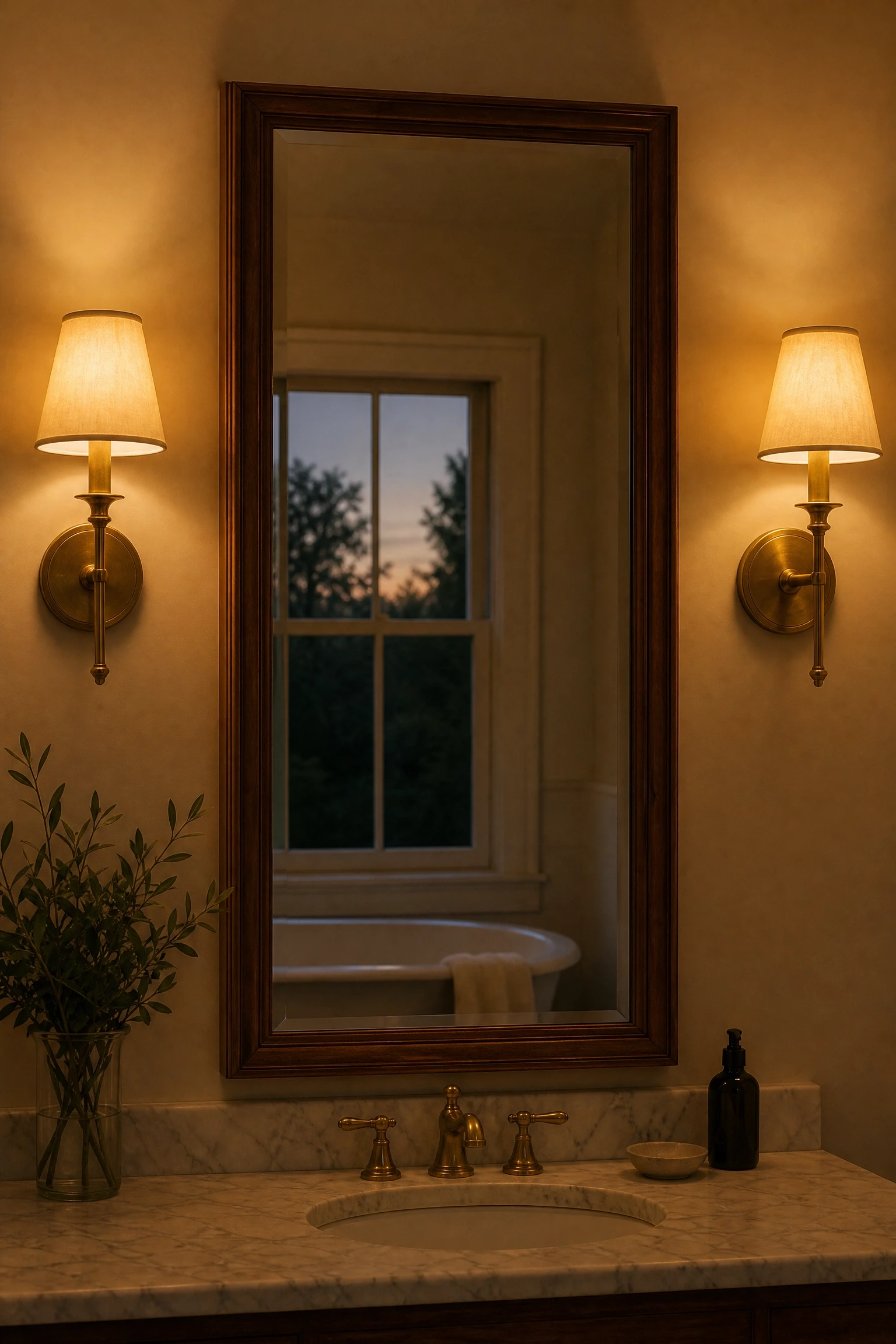
Cold, single-source overhead lighting is probably the single biggest reason an otherwise well-decorated bathroom still feels sterile instead of earthy, so switching to warm-toned bulbs, generally in the 2700K to 3000K range, and adding at least two light sources instead of one is one of the highest-impact, lowest-cost changes on this entire list. Layered lighting, meaning a mix of a vanity fixture at eye level, an overhead source, and maybe a small accent light or candle, is a principle professional lighting designers rely on constantly because no single fixture can do everything well, task lighting for shaving or makeup needs to be different from ambient lighting for a relaxing bath. Sconces mounted at eye level on either side of the mirror actually flatter your face better than an overhead-only setup, which tends to cast unflattering shadows under the eyes and chin. Dimmer switches, where local electrical code allows, let you shift from bright task lighting in the morning to a softer glow for an evening soak, and this single addition does more for atmosphere than almost any decor object could. This is genuinely one of the more budget-friendly upgrades here, a pair of LED sconces can often be found for under a hundred dollars total, though hiring an electrician for new wiring will add to the cost if you do not already have wall wiring in place. Designer Advice: avoid pure white LED bulbs entirely in this style of bathroom, even a good color palette and nice materials will look flat and clinical under a cool white light.
Maximizing Whatever Natural Light You Have
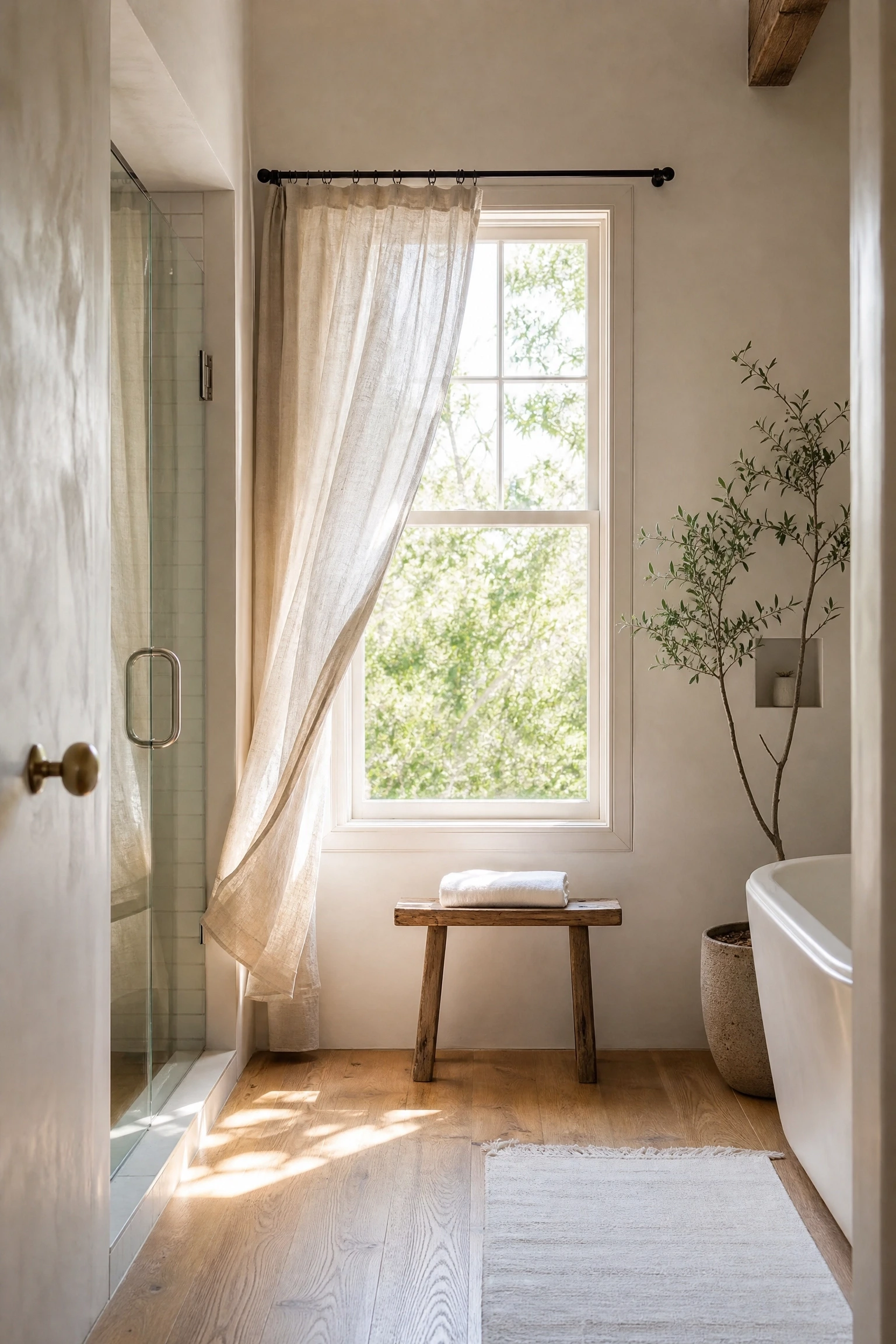
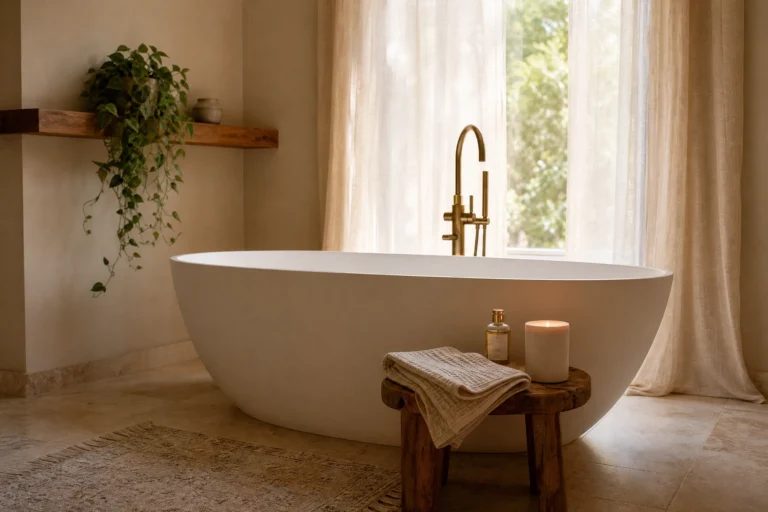
Before adding any new fixtures, it is worth doing an honest audit of the natural light you already have, because sheer linen curtains instead of blackout blinds, a lighter paint choice near the window, and removing anything that blocks the window sill can make a real difference without spending a dollar on new lighting. Natural light shifts color temperature throughout the day in a way electric light cannot replicate, and that shifting quality is part of what gives a lot of these organic modern bathrooms their almost meditative feel in photos, morning light hits differently than afternoon light, and a well-lit earthy bathroom takes advantage of that instead of fighting it with heavy window coverings. If privacy is a concern, frosted or reeded glass film applied directly to an existing window pane lets diffused light in while still blocking direct sightlines, and it is a genuinely underused trick for interior bathrooms that share a wall with a neighbor or a street-facing window. For bathrooms with no natural light at all, this idea will not apply, and that is worth saying plainly rather than pretending every space can achieve this effect, in those cases layered artificial lighting becomes even more important to compensate. This is close to a no-cost idea if you already have decent window placement, and a low-cost one if you are just adding window film or swapping curtains. Designer Advice: hang curtain rods a few inches wider than the window frame itself, it lets more actual daylight into the room when curtains are pulled fully open rather than bunching fabric over the glass.
Bringing the Outdoors In
Eucalyptus, Potted Plants, and Living Texture
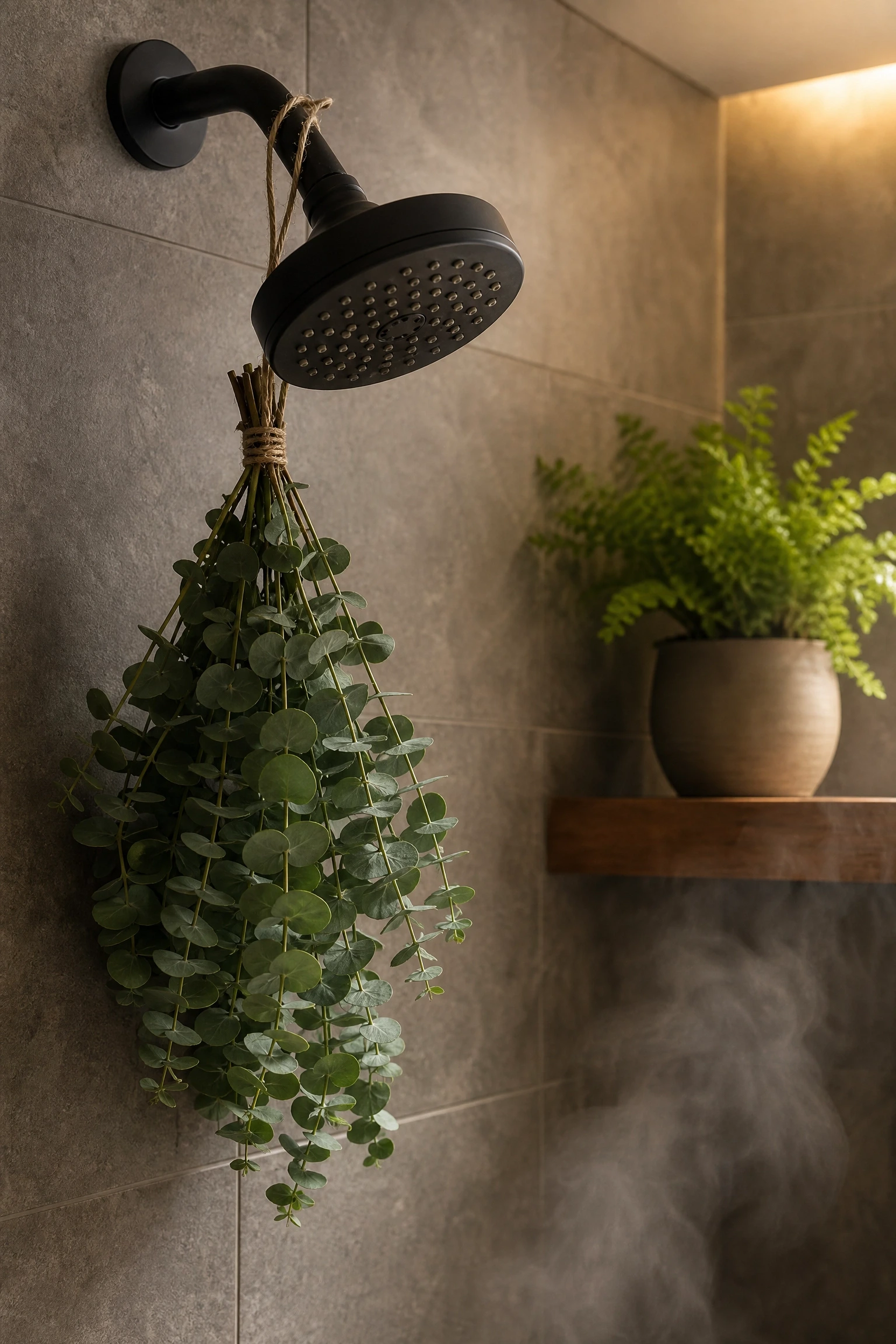
A bundle of fresh eucalyptus hung from the showerhead is a small, almost too-simple idea, but it does something a decor object cannot, it fills the room with scent every time hot water hits it, and it is one of those details that guests notice without quite knowing why the bathroom feels different. Beyond scent, potted plants that genuinely tolerate bathroom humidity, snake plants, pothos, and ferns being reliable choices, add a layer of living texture and soft color that no dried arrangement or artificial plant can match, and they double as functional air purifiers in a room that tends to trap moisture. The honest reality here is that not every bathroom has enough light for live plants to thrive, a windowless interior bathroom is genuinely a tough environment even for low-light species, so if that describes your space, a well-made faux fern is a reasonable substitute rather than a compromise to feel guilty about. Rotate the eucalyptus bundle every two to three weeks since it does dry out and lose its scent, and a dried bundle actually looks intentional too if you want to skip the maintenance of fresh stems. This is one of the cheapest ideas in the whole list, a bundle of eucalyptus from a grocery store or florist typically costs under fifteen dollars. Designer Advice: cluster plants in odd numbers, three small pots rather than two or four, it is a basic design principle that makes groupings look more natural and less arranged.
Linen, Jute, and Woven Textiles
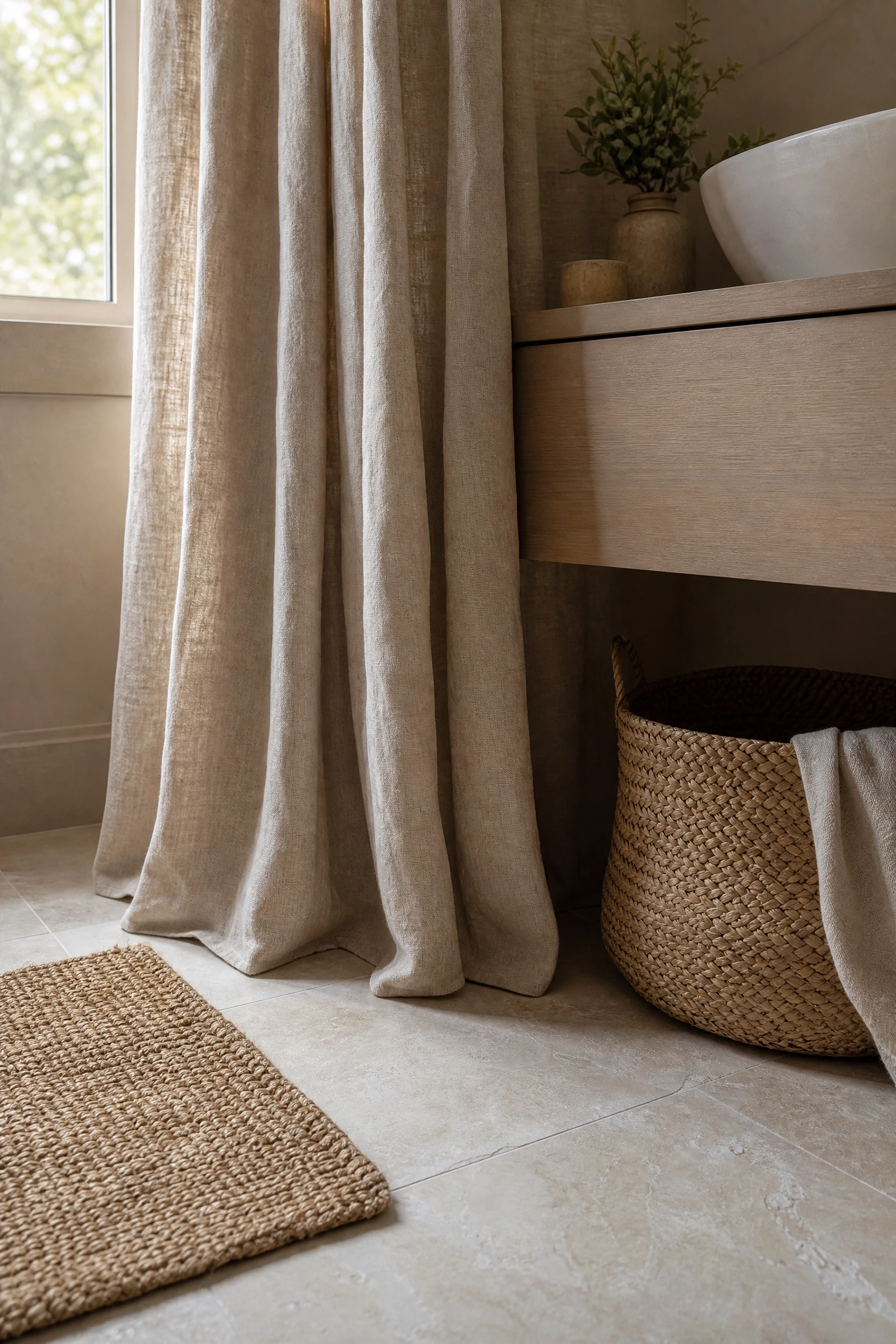
Swapping a plastic or vinyl shower curtain for one in linen or heavy cotton, and trading synthetic bath mats for jute or seagrass weaves, changes the tactile experience of the room in a way that photographs undersell, linen especially has a slight looseness in its weave that catches light and shadow differently than synthetic fabric, giving it a softness that reads as expensive even at a modest price point. Jute, being a coarser and more durable fiber, works well underfoot as a bath mat since it holds up to repeated moisture better than delicate natural fibers like sisal, though it does need to be hung to dry fully between uses rather than left bunched on a wet floor, otherwise mildew becomes a real issue over time. A woven storage basket for extra towels or toiletries, placed under an open shelf or floating vanity, ties the whole natural material story together and gives you a place to hide the less photogenic bathroom items without resorting to plastic bins. This is a low commitment way to test the earthy look before spending on anything structural, and it is easy to swap out later if your taste shifts. Budget wise this is one of the more accessible entries here, a good linen shower curtain typically runs thirty to seventy dollars and a jute mat often less than that. Designer Advice: wash linen curtains in cool water and skip the dryer, high heat is what causes linen to shrink and lose the relaxed drape that makes it look good in the first place.
More Looks You'll Want to Steal:
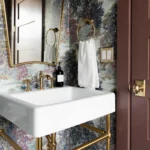
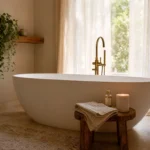
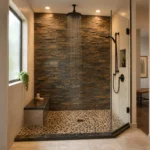
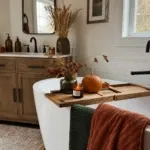
Building an earthy, minimalist bathroom really comes down to restraint paired with material quality. You do not need every idea on this list, in fact trying all ten at once in one small room would probably undercut the calm, uncluttered feeling that makes the style work in the first place. Pick one or two changes that fit your actual budget and the amount of natural light your bathroom gets, and build from there. A taupe wall and warm sconces might be plenty for a rental where you cannot touch the flooring. A full pebble shower floor and a live edge vanity make more sense if you are already mid-renovation and have the budget for it.
What ties all of these ideas together is honesty about materials, wood that looks like wood, stone that looks like stone, light that feels like actual daylight rather than a fluorescent stand-in. That honesty is really what separates an earthy minimalist bathroom from one that just has a few plants and a beige towel. It takes a bit more thought than picking items off a matching bath set, but the result holds up in a way trend-driven decor usually does not, and that is worth the extra bit of planning it takes to get there.
Frequently Asked Questions
Is an earthy minimalist bathroom expensive to achieve?
Not necessarily. Several of the ideas here, like switching bulb temperature, adding linen textiles, or hanging eucalyptus, cost under fifty dollars total. The pricier changes, like a stone shower floor or a custom wood vanity, are optional additions you can phase in over time rather than a required starting point.
What paint colors work best for this style?
Warm neutrals do the heavy lifting, think clay, terracotta, taupe, sand, and soft greige. Steer away from cool grays or stark white, which tend to read as clinical rather than warm, and always test a sample against your actual wood tones before committing to a full wall.
Can I get this look in a rental where I cannot paint or renovate?
Yes, and this is actually where lighting, textiles, and plants matter most. Warm bulbs, linen curtains, a jute mat, and open storage using removable hooks or freestanding shelving units can shift the whole feel of a rental bathroom without touching a single wall.
Is wood safe to use in a bathroom long term?
Properly sealed and maintained wood does fine in bathrooms, it is common in Japandi and Scandinavian design specifically because these regions deal with humidity too. The key is a quality hardwax oil or marine-grade sealant reapplied every year or two, and keeping standing water wiped up rather than left pooling on the surface.
Does this style work in a small bathroom, or does it need space?
It actually tends to work especially well in small bathrooms, since the pared-back approach and lighter color palette prevent a small room from feeling cramped the way a busier, pattern-heavy design might. Floating vanities and open shelving specifically help small bathrooms feel more open.
How do I keep an earthy bathroom from feeling too rustic or farmhouse?
Balance is the key word. Pair rough textures like raw wood or slate with cleaner lines elsewhere, a simple undermount sink instead of a rustic vessel bowl, minimal hardware, and a restrained color palette. The organic modern look leans on clean geometry alongside natural materials rather than leaning fully rustic in every element.