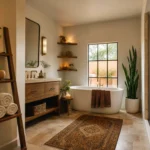
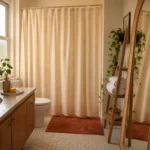
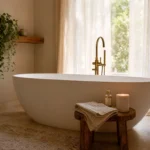
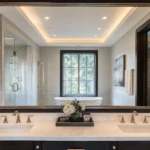
There is a specific kind of relief that comes from walking into a green bathroom after a long day. It is not just a color choice, it is a mood shift, the same feeling you get standing under a tree canopy or looking out over a hillside. Green does something in a small, tiled room that almost no other color can do this well, it makes the space feel calmer and less like a bathroom and more like a private escape you built for yourself.
What follows are twenty three different ways to bring that feeling into your own bathroom, whether you have a full primary suite or a powder room the size of a closet. Some of these lean bold, others are quiet and easy to live with day to day. Each one covers the details you actually need, from finish to hardware, plus the one honest tradeoff worth knowing before you commit.
When the Kids Track in Mud and You Still Want Calm
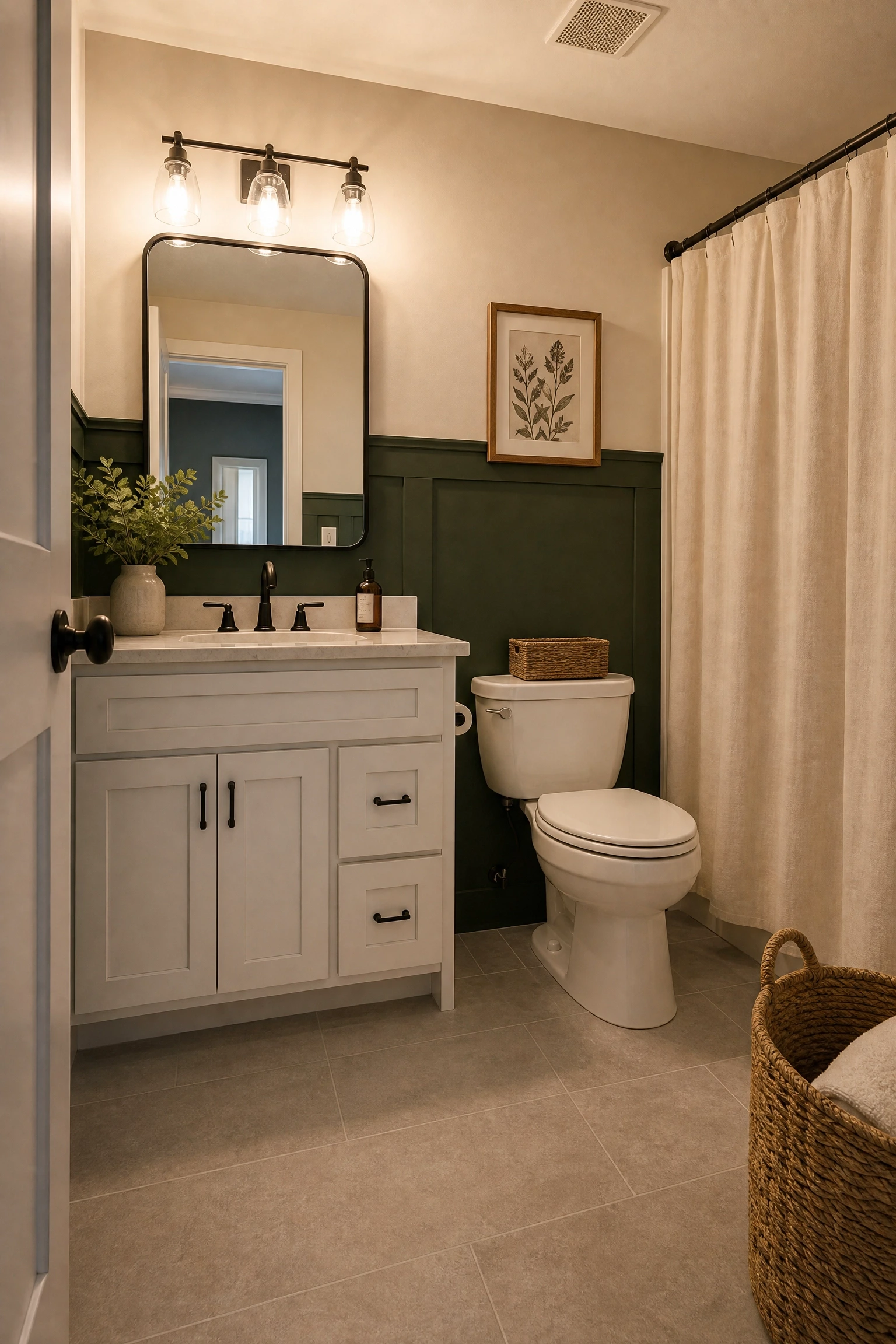
A friend of mine has two kids under ten and a golden retriever, and she swore her bathroom would never feel calm again until she painted it a deep, mossy hunter green in satin finish, which hides small handprints far better than flat paint. She kept the vanity white and the floor a warm gray porcelain, since porcelain resists staining better than stone in a heavily used room. A vanity light with a warm 3000K bulb keeps the space bright without the harsh glare that makes everyone look tired. The one catch is that dark green on lower walls needs a strong exhaust fan running through every shower, or moisture shows on the paint sooner than you would like.
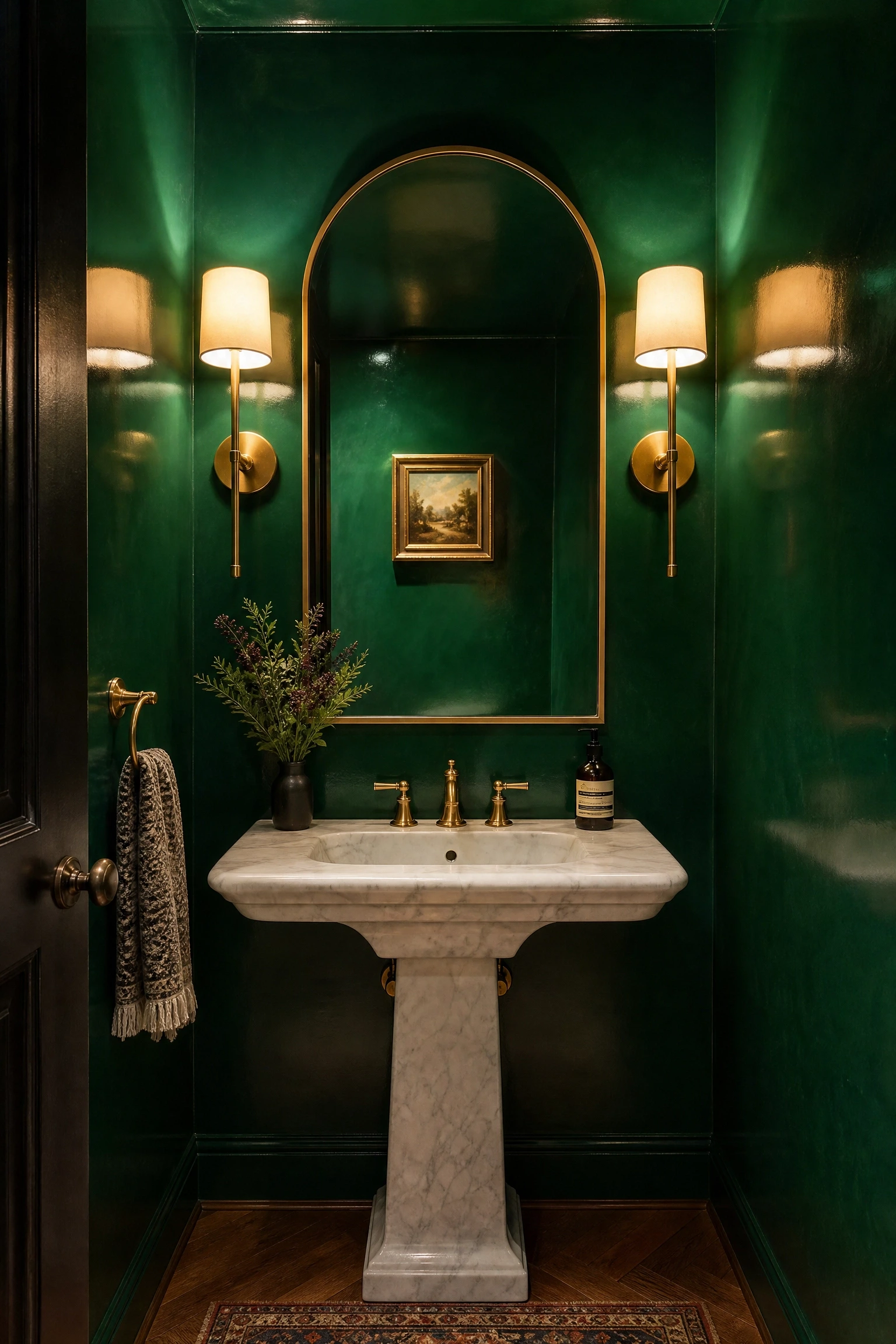
Small windowless powder rooms are exactly where a bold, saturated green earns its keep, since there is no natural light to wash it out. Try a high-gloss emerald on all four walls and the ceiling, a technique designers call cocooning, paired with a white marble pedestal sink and unlacquered brass hardware to warm up the cool tone. Skip overhead lighting and use two brass sconces flanking the mirror instead, since that flattering setup avoids the shadows overhead lights cast on faces. This look is low maintenance since there is no shower to fight moisture in, though high-gloss paint shows every roller mark, so it is worth hiring a professional painter here.
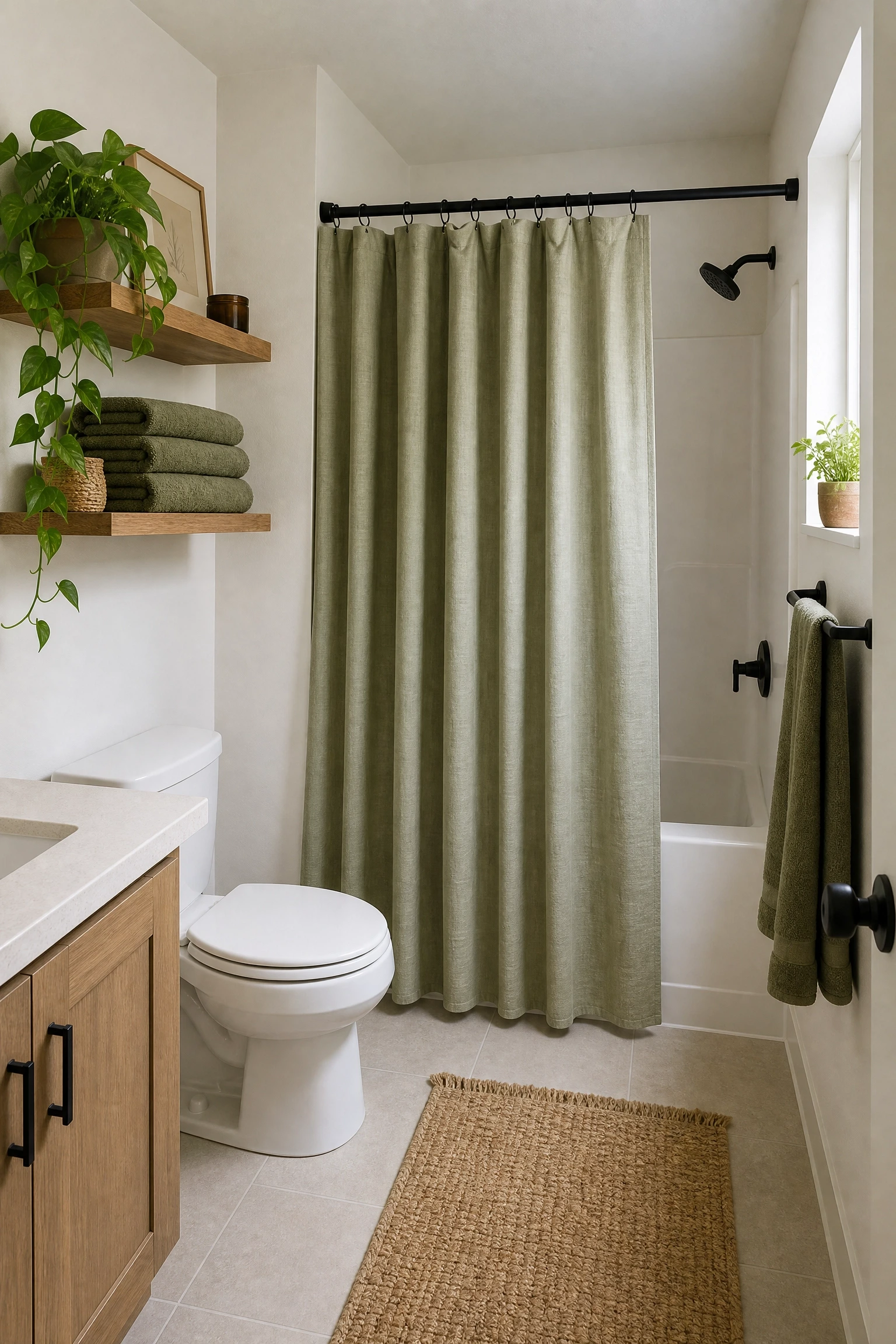
If painting is off the table, green can still show up everywhere except the walls. Layer a sage shower curtain, a darker forest bath mat, and olive towels so the greens vary instead of matching exactly, which avoids a flat look. Add humidity-tolerant plants like pothos or a Boston fern on a removable floating shelf, and swap shower curtain rings for matte black or brushed nickel, a fifty dollar change that reads far more expensive. The one thing to watch is that fabric curtains hold moisture longer than vinyl, so plan to wash them monthly before odor becomes a problem.
The Marble and Emerald Combination Everyone Is Copying
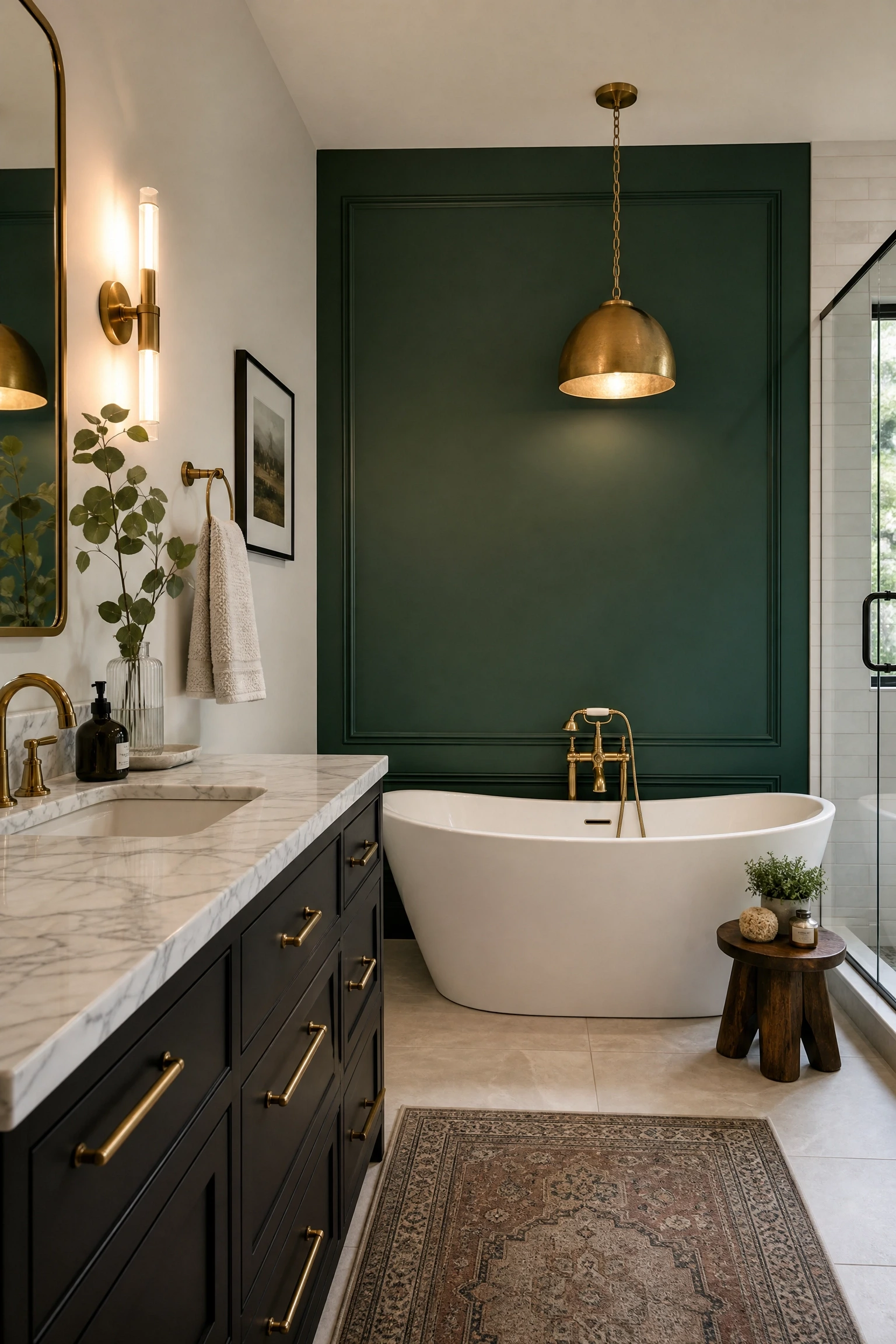
Emerald green paired with white marble has become one of the most requested combinations in bathroom renovations, since the cool green plays off the marble’s warm veining instead of fighting it. Use emerald as an accent wall behind the tub, keep marble on the countertop and backsplash, and let the rest of the room stay a soft warm white. A brushed gold faucet ties the materials together, and a single statement pendant over the tub beats a row of can lights for a boutique hotel feeling. This combination photographs beautifully but sits in the investment category, so a marble-look porcelain slab is a smart substitute if the budget is tighter.
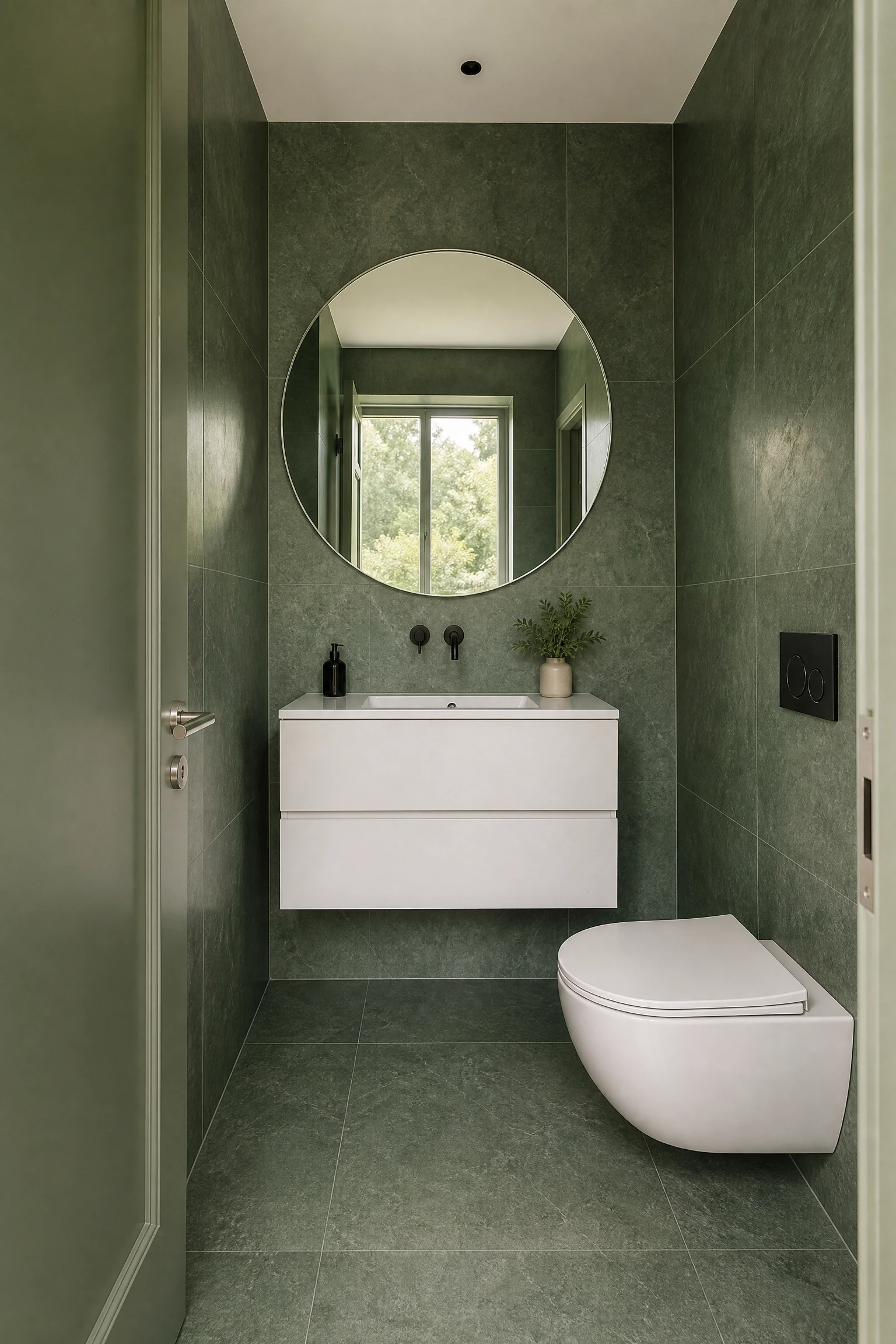
The old advice to keep small bathrooms white has mostly flipped, with designers wrapping tiny bathrooms in one saturated green floor to ceiling to remove visual breaks entirely. A mid-tone forest or pine shade in large-format tile, with a floating vanity to expose more visible floor, keeps the eye from measuring the room’s actual size. A mirror slightly larger than feels safe bounces light back into the color so the room does not read as a box. This genuinely works best under fifty square feet, and can backfire in a mid-size bathroom where the lack of contrast just looks unfinished.
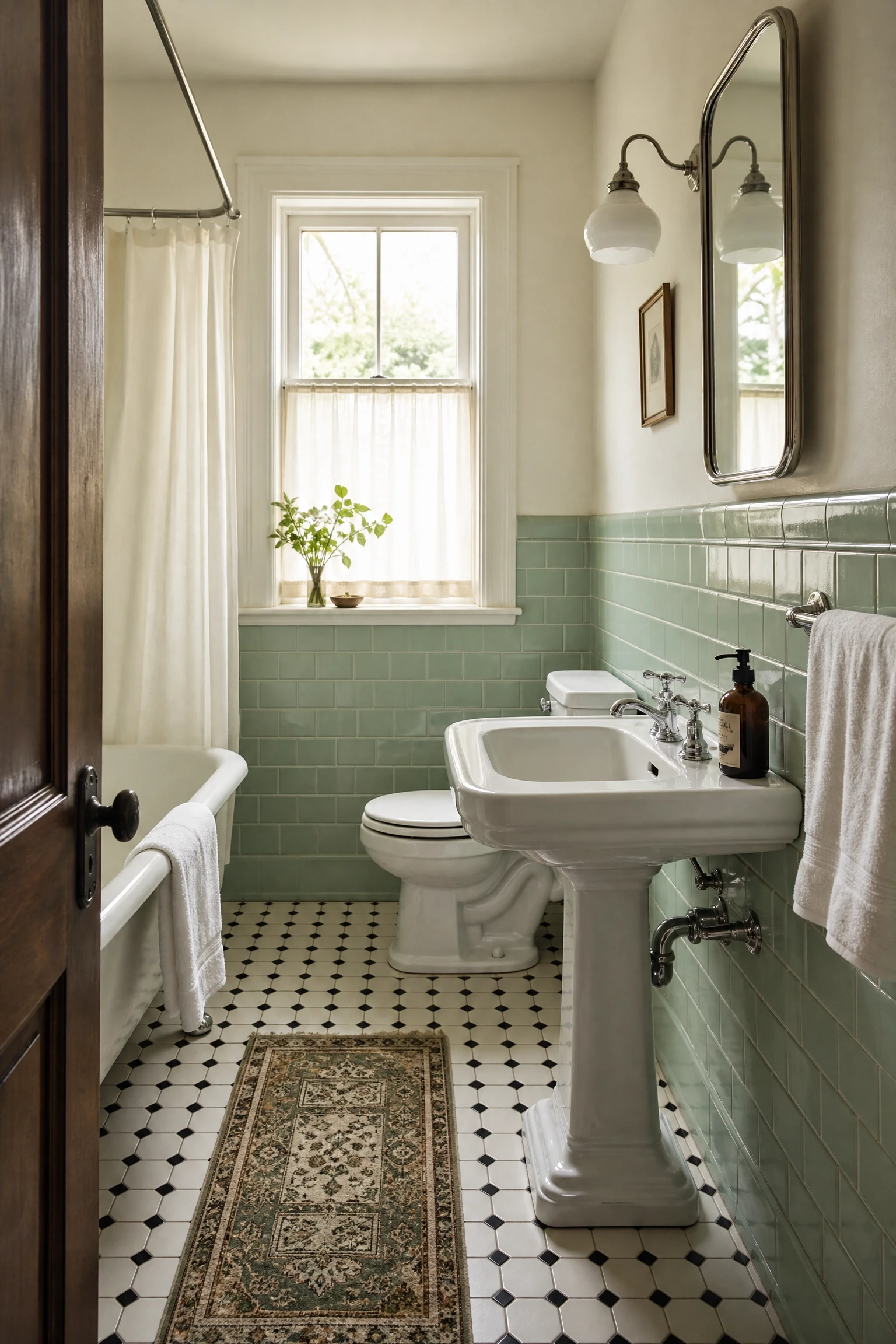
Reclaimed and reproduction green tile, especially 1920s mint, seafoam, and jadeite shades, has come back for people renovating older homes who want the bathroom to feel period-correct. Tile a subway wainscot to about four feet in one of those softer greens, finish the upper wall in warm white plaster, and pair it with black and white hexagon flooring and chrome fixtures, since chrome is what those bathrooms actually had. A wall-mounted sconce with a milk glass shade finishes the look better than a modern vanity bar. The tradeoff is this shade can read as dated rather than vintage if the accessories are not styled with real intention.
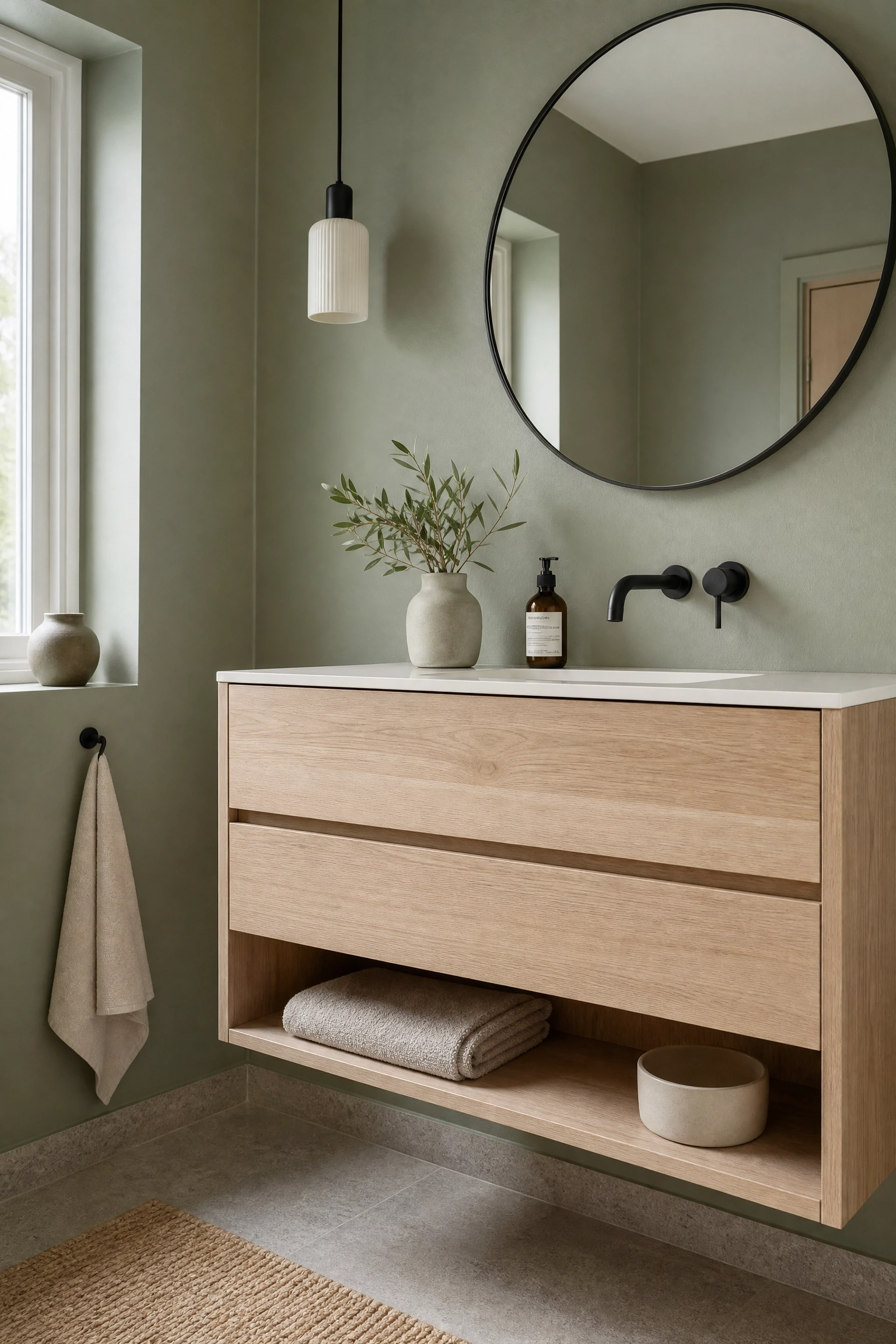
Sage green has become the unofficial signature color of Scandinavian and Japandi design because it is soft enough to feel neutral while still reading as a deliberate choice. Paint walls a chalky sage in eggshell, keep the vanity in pale unfinished-looking oak, and choose matte black fixtures to keep the metal tones cool. Layer in linen towels and keep decor to one ceramic vessel and a plant, since restraint is the whole point of this style. It is forgiving to live with long term since the muted tone hides dust well, though it can feel cold in a north-facing room without a warmer bulb to compensate.
The Jungle Bathroom for People Who Actually Garden
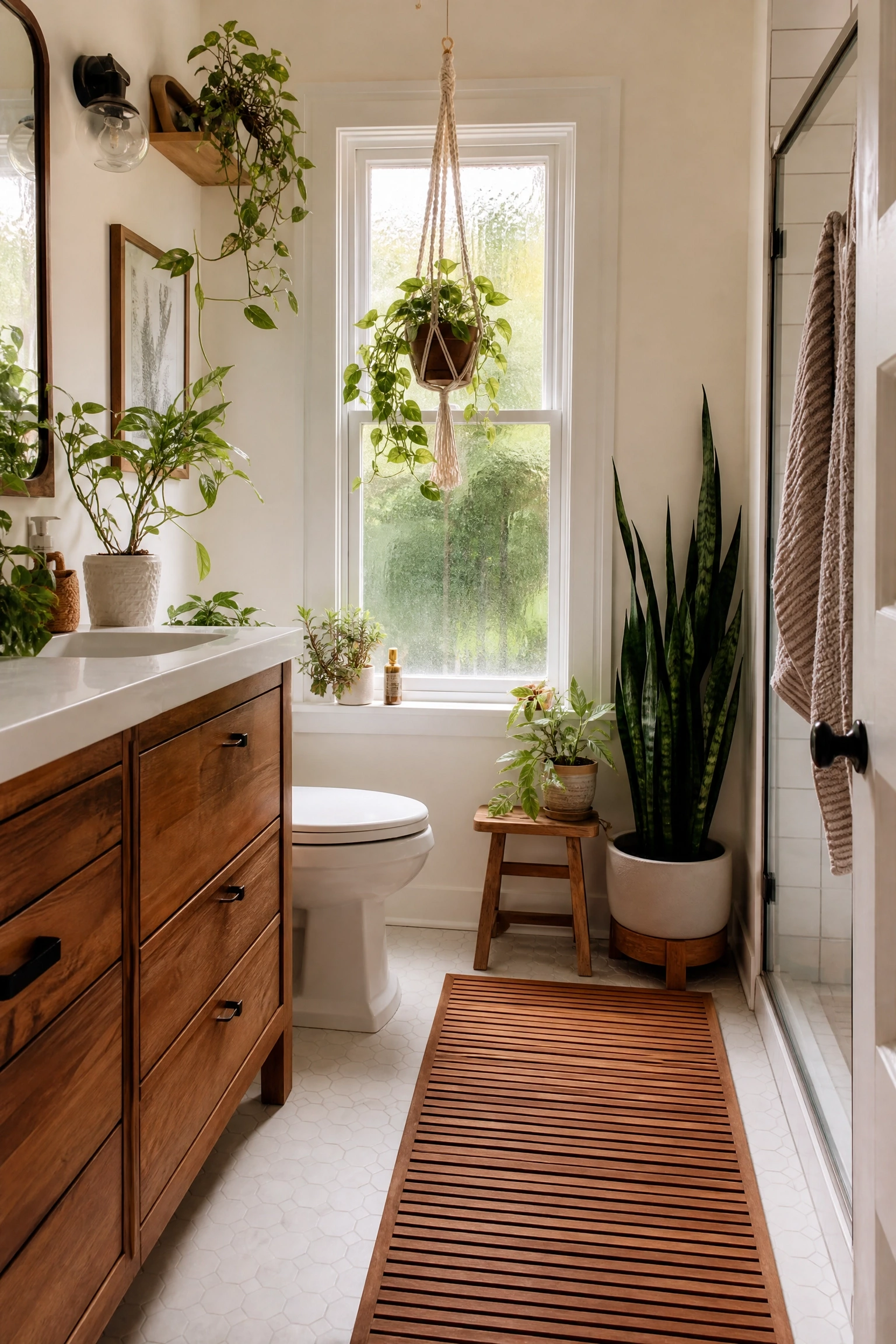
If you already keep plants alive elsewhere, a bathroom built around real greenery is worth trying, since bathrooms are naturally humid and many tropical plants prefer exactly that. Choose low-light, steam-tolerant plants like pothos, snake plants, and Boston ferns, and give them real placement, a hanging macrame planter near the window and a floor plant in the corner opposite the tub. Keep walls a quiet warm white so the plants provide the color story, and add natural wood accents like a teak bath mat. Be honest about maintenance, since a dying plant in a humid corner looks worse than no plant at all.
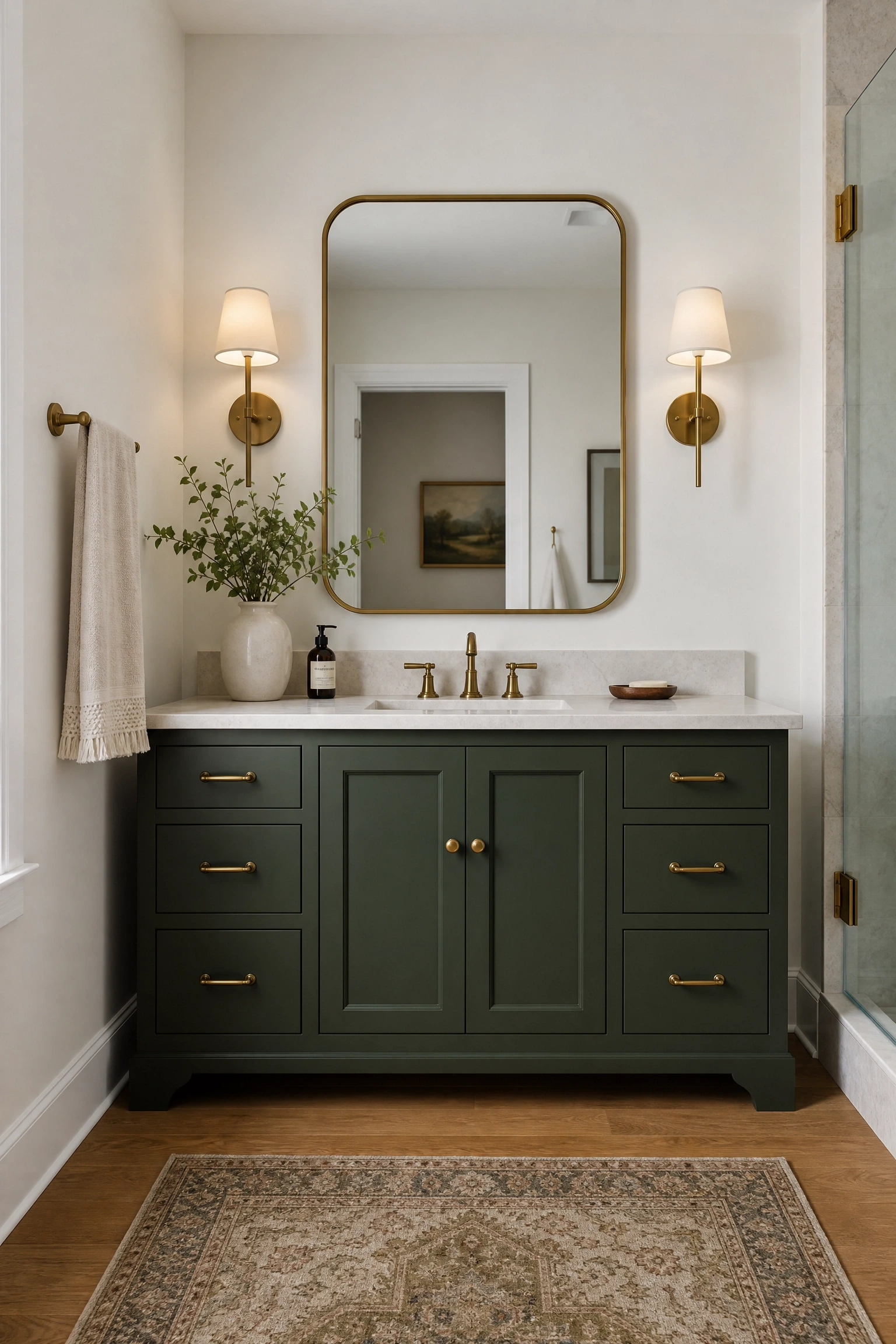
Instead of painting the walls, this approach puts green on the vanity itself, giving you flexibility to change wall color later without touching the pricier cabinetry. Choose a rich hunter green for a custom vanity, paired with aged brass hardware and a light stone countertop to balance the visual weight. Warm engineered wood flooring, which handles humidity better than solid hardwood, grounds the room while walls stay soft white. This is smart for anyone who suspects they will want to repaint in a few years, though a fully custom painted vanity sits at the higher end of the budget scale.
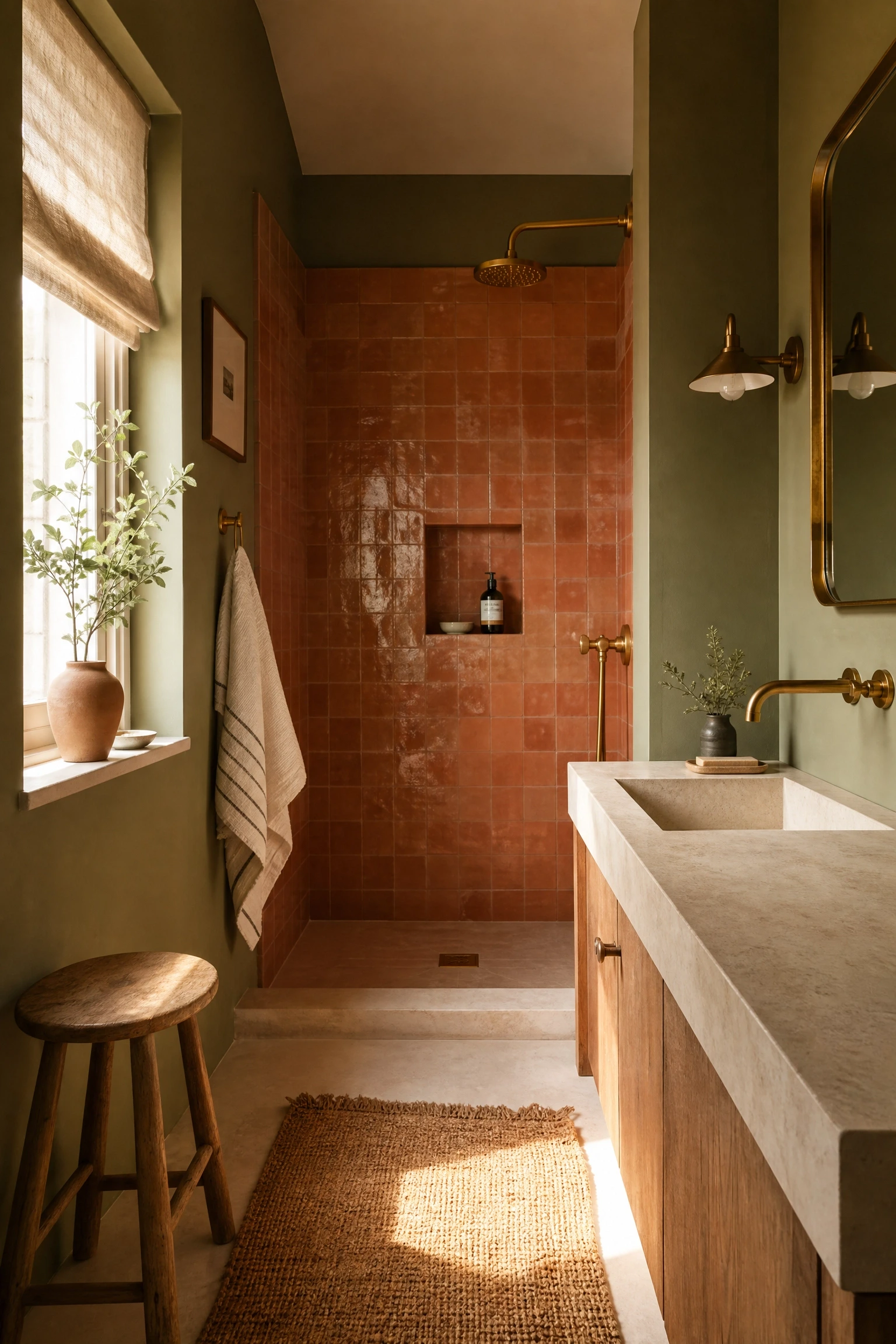
Olive green paired with terracotta has been showing up constantly in Mediterranean and organic modern renovations, since both colors share the same earthy, sun-baked family. Tile the shower in a terracotta-toned zellige, paint remaining walls a grounded olive, and bring in a jute bath mat and wooden stool. Unlacquered brass fixtures develop a patina that only deepens the warm feeling, so resist the urge to keep them polished. The honest caution is that handmade zellige has natural variation some homeowners love and others find frustrating, so look at physical samples before ordering.
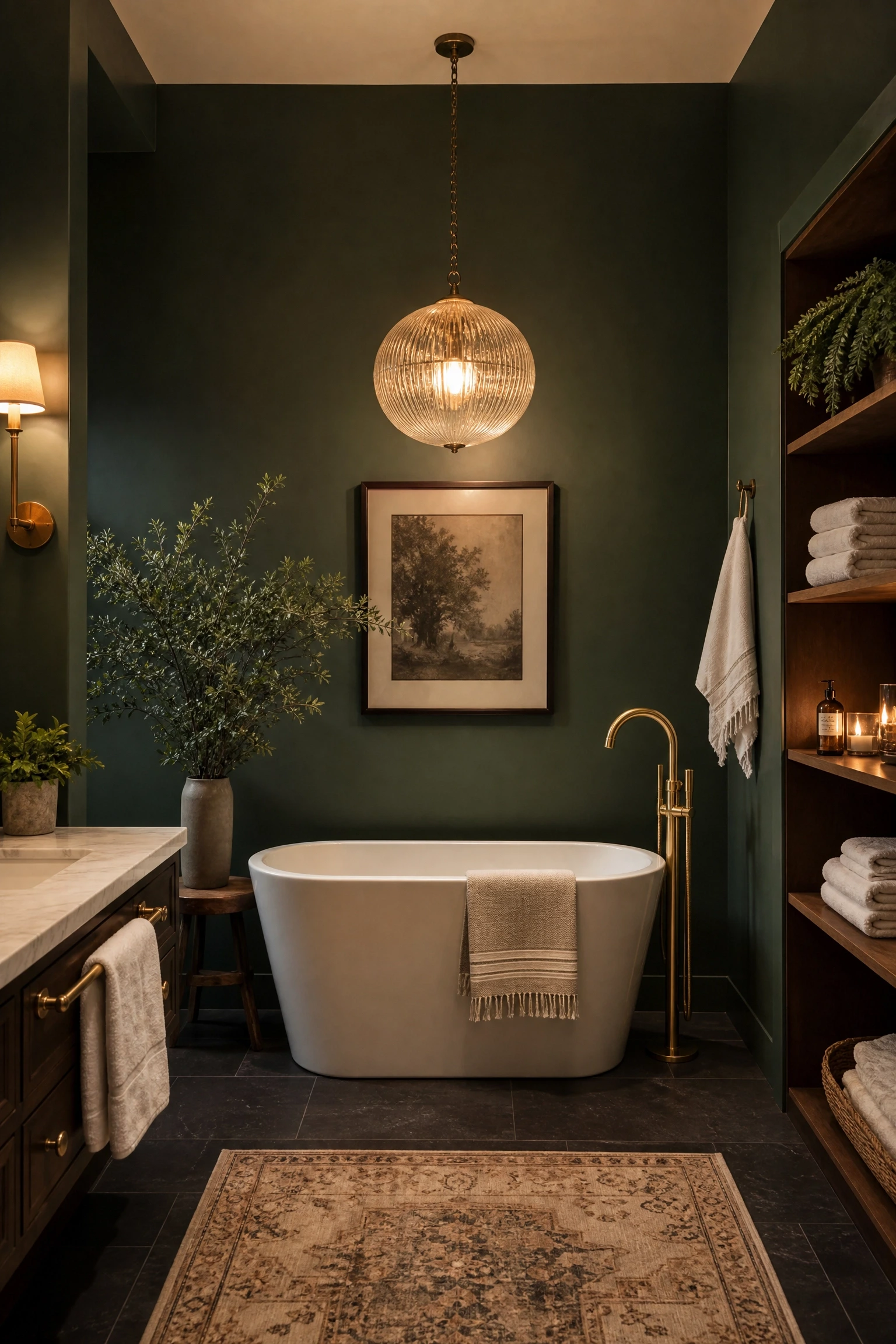
Boutique hotel bathrooms lean on a specific formula, a deep green, a freestanding tub, warm brass, and layered lighting that never relies on one overhead source. Recreate it with a low-sheen forest green, a freestanding tub, and a floor-mounted brass tub filler, which reads more luxurious than a wall-mounted one. Layer at least three light sources, a pendant over the tub, wall sconces, and recessed lighting, since that layering is what makes hotel bathrooms feel considered. This is realistically investment-level given the tub and filler alone, so the paint and brass alone will get you most of the feeling if the full version is out of reach.
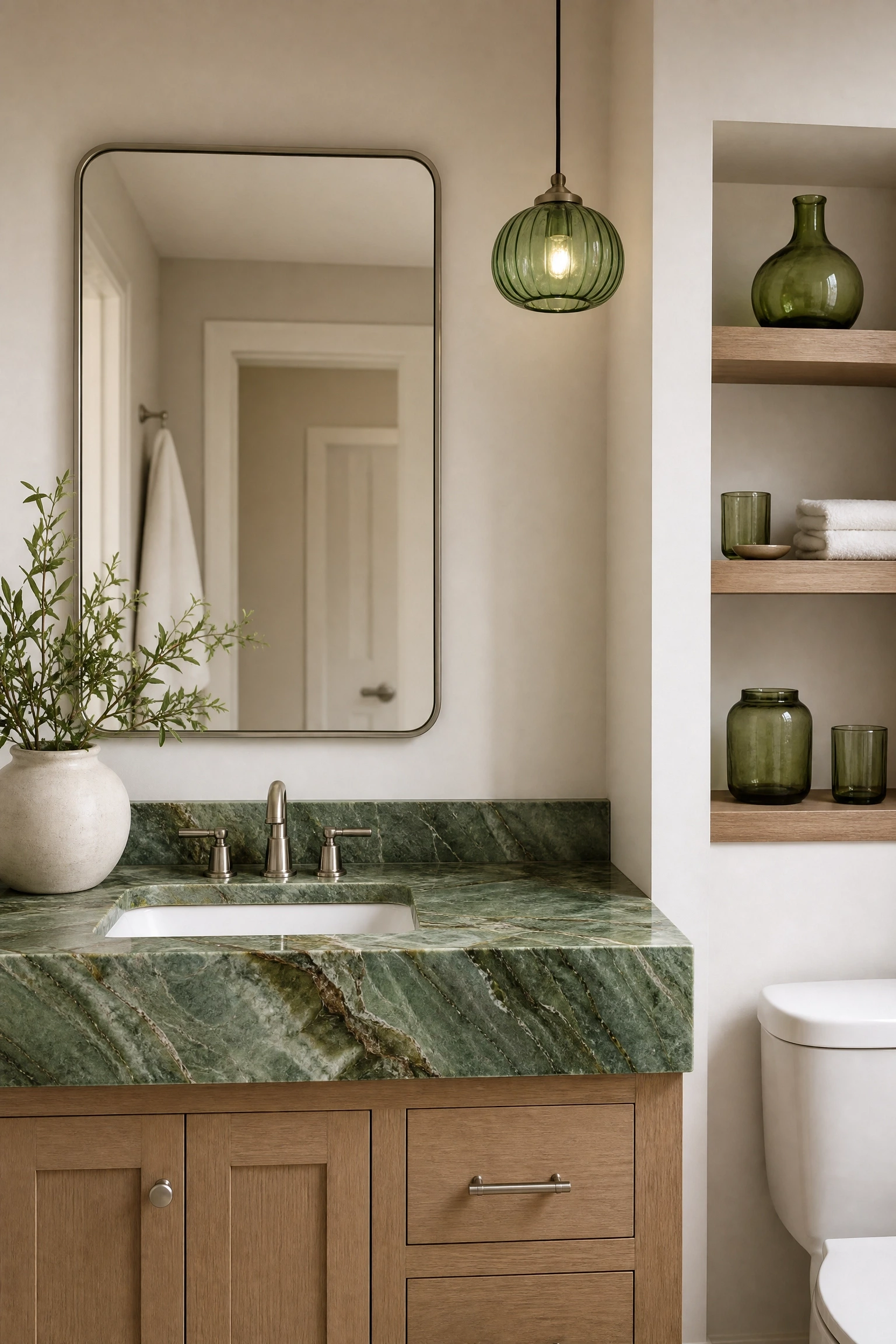
You do not need green on the walls to build a green bathroom. Keep walls warm white, then bring green in through a green quartzite countertop, green glass pendant lights, and a few green glass vessels on open shelving. This lets you change the mood seasonally by swapping accessories, since the permanent, expensive elements stay neutral, and a brushed nickel faucet keeps the metal tone quiet so the stone or glass stays the star. It suits anyone who likes the idea of green but worries about committing to a color they might tire of, though real green stone sits at the higher end of material costs, making a green glass tile backsplash a solid budget substitute.
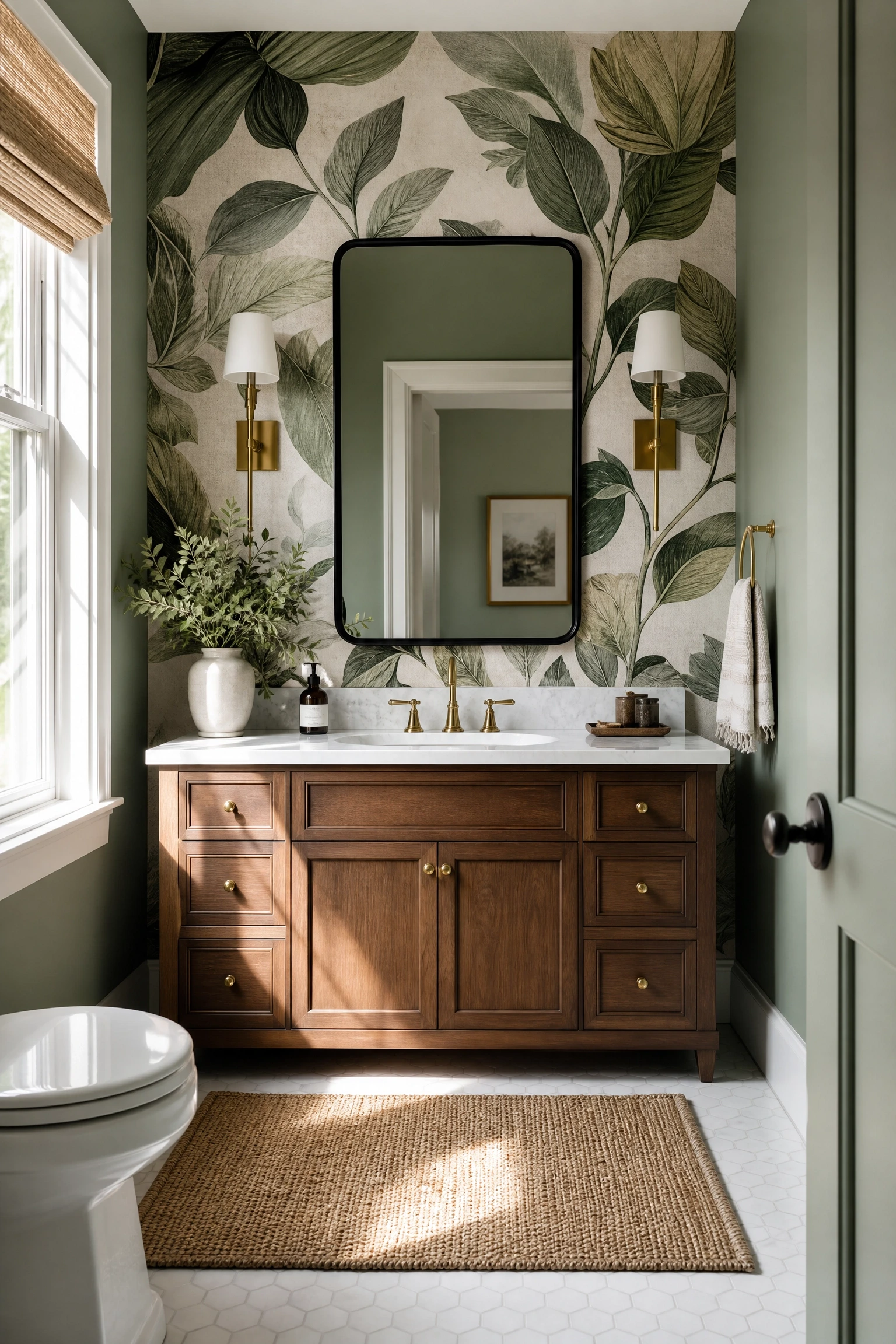
A large-scale botanical wallpaper adds depth solid paint cannot, a sense of an actual garden rather than a flat color field. Apply it to one accent wall, usually behind the vanity, and keep remaining walls a plain complementary green so the pattern has somewhere quiet to rest. Choose a wallpaper rated for high humidity, since standard paper will bubble in a bathroom with regular hot showers, and pair it with simple black or brass fixtures. The genuine tradeoff is that humidity-rated paper costs more and professional installation is worth paying for, since a poorly hung seam becomes a moisture entry point over time.
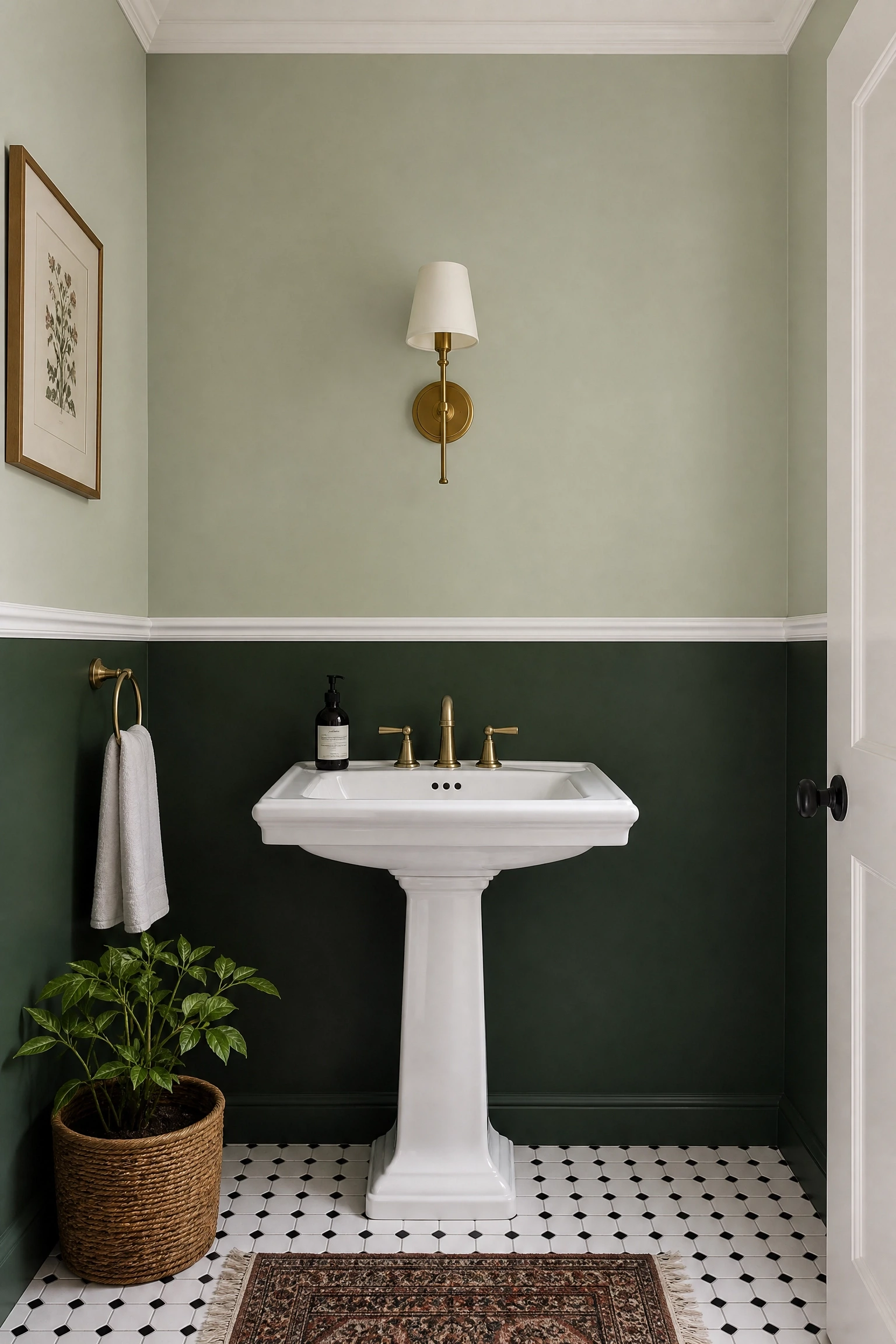
Instead of one green everywhere, this approach layers two, a darker shade below a chair rail and a paler one above it, or on the ceiling. Try deep forest to waist height and pale sage above, which creates the tonal depth designers call visual layering, keeping a small room from feeling flat. White trim at the transition line keeps the two greens from blurring together, and either brass or nickel fixtures work depending on whether the room leans warm or cool. This two-tone approach is more forgiving than a single bold color, since repainting just the lighter portion later is a much smaller project than redoing the whole room.
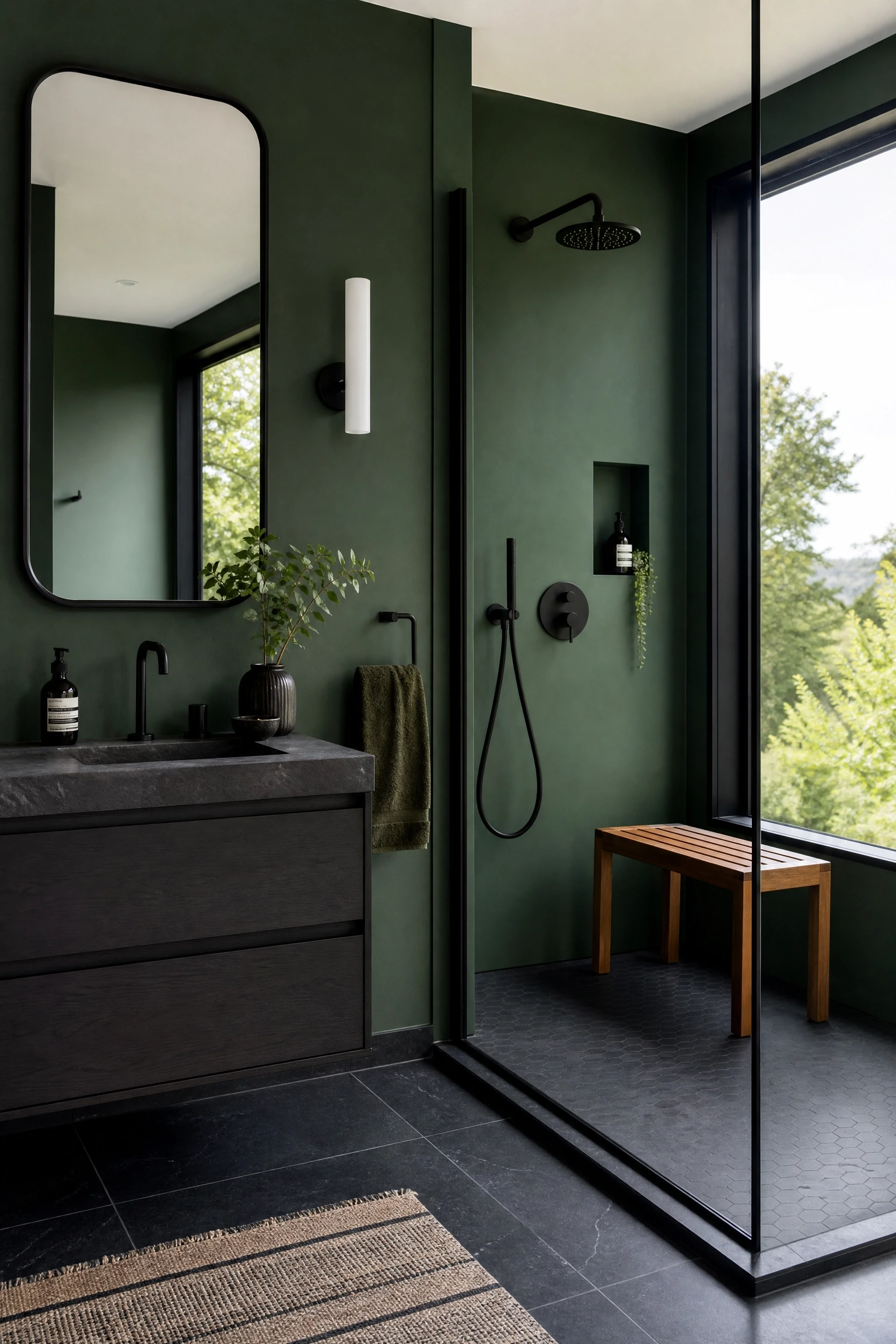
Green and black sounds like it should feel heavy, but in practice it reads as sharp and modern, especially with good natural light to balance the darker tones. Pair a deep bottle green wall with matte black fixtures, a black-framed mirror, and a dark porcelain floor, sticking strictly to black and chrome so brass does not fight for attention. One warm wood accent, like a teak shower bench, keeps the combination from feeling overly severe. This pairing genuinely needs decent natural light to avoid feeling like a cave, so it suits a bathroom with a window better than a fully interior room.
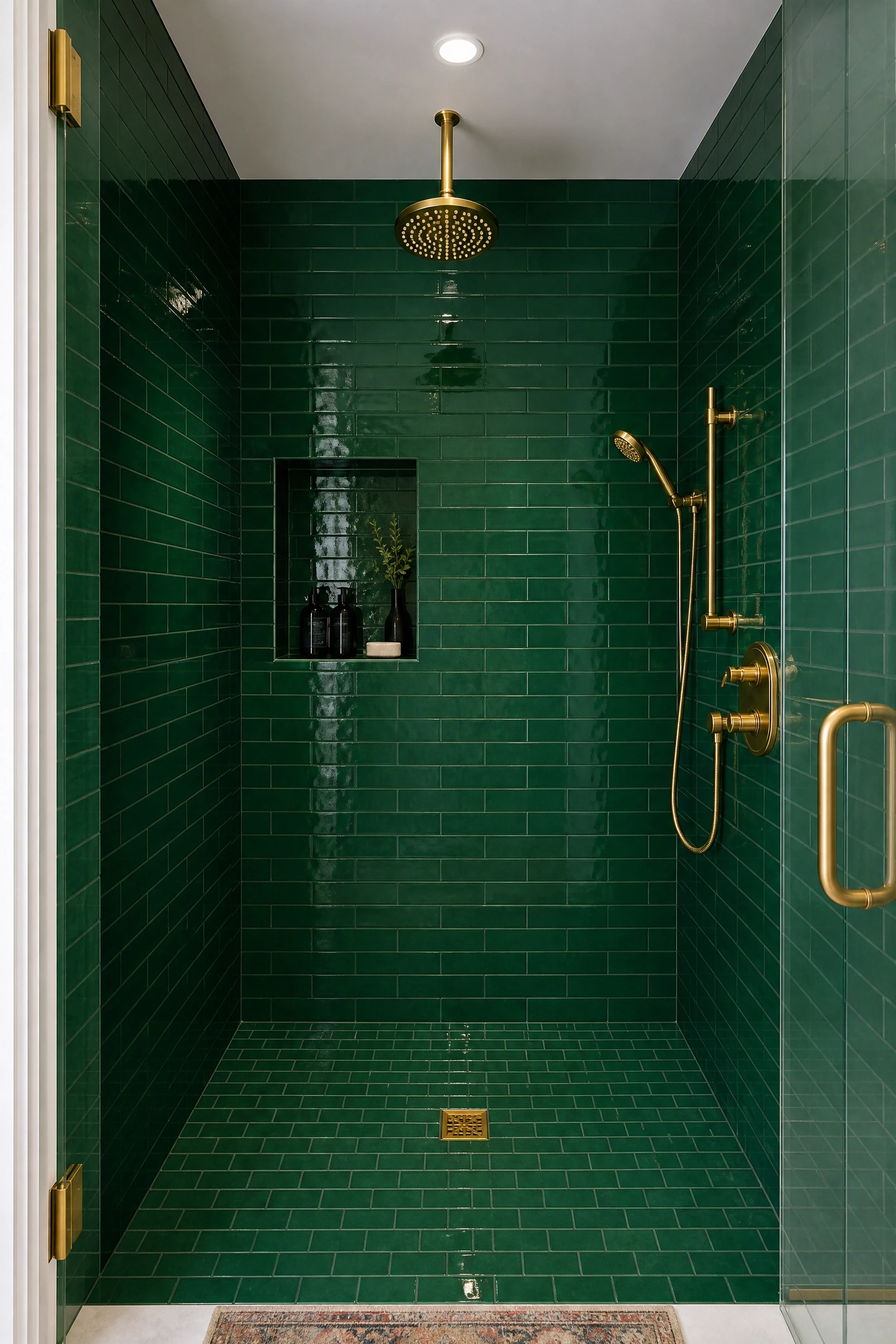
Rather than a half-height wainscot, taking rich green tile all the way to the ceiling creates an immersive, cohesive feeling that half-measures do not achieve. Choose a glossy subway tile in deep emerald and match the grout closely to the tile itself, since matched grout reads as one continuous surface rather than a grid. A white vanity and ceiling give the eye somewhere to land, and brass fixtures against the tile create real contrast without needing another accent color. Full-height tile is one of the pricier choices here due to material and labor, so tiling just the shower fully and painting the rest a matching green gets a similar feeling for less money.
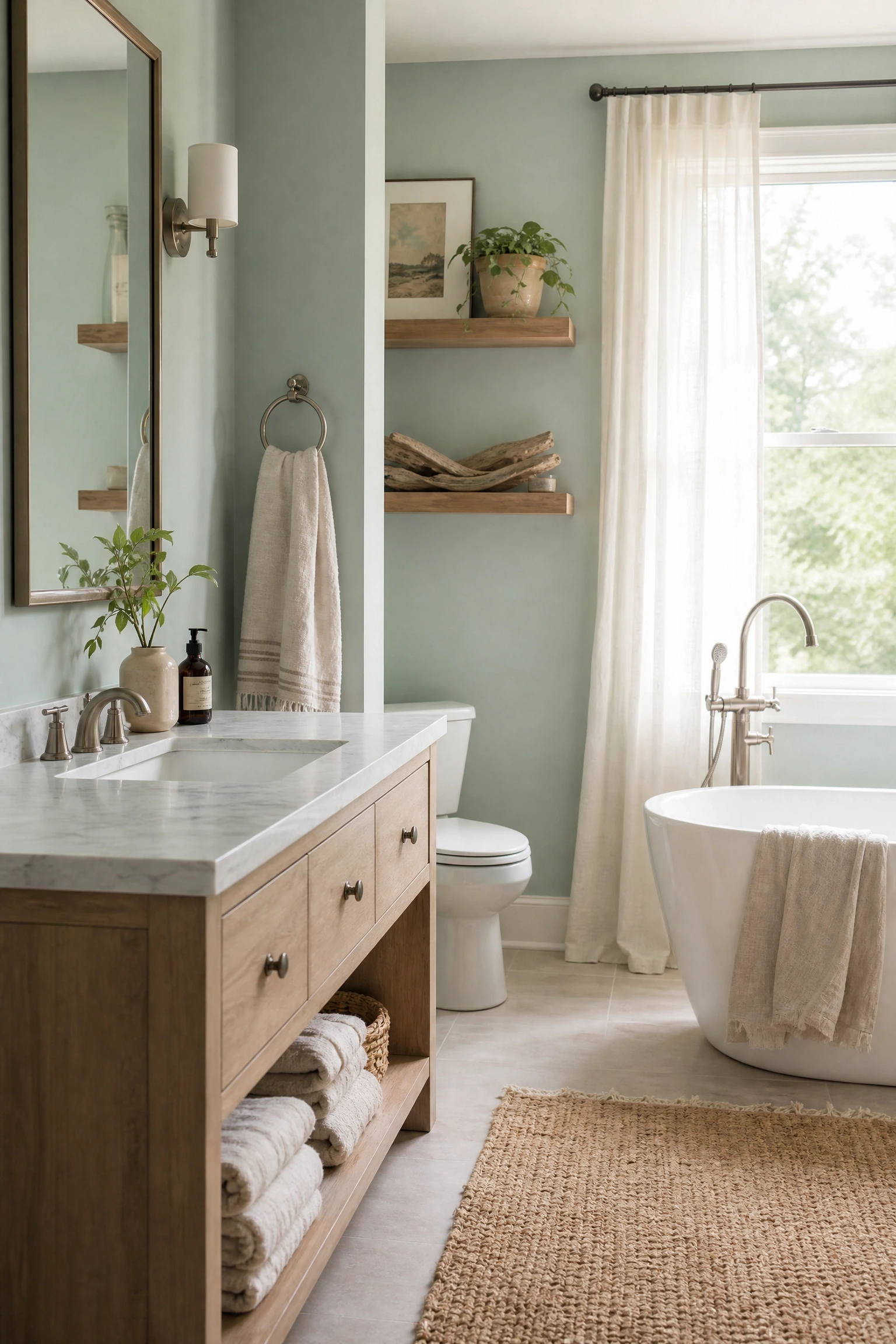
Sea glass and seafoam greens let you build a coastal feeling without the rope-mirror cliche coastal design often gets stuck in. Paint walls a pale, slightly gray-green, bring in a jute rug, and choose brushed nickel or unlacquered brass depending on the warmth you want overall. Natural materials do the real work, a wood stool, linen towels, and a piece of driftwood on open shelving communicate coastal without literal beach decor. This look holds up well over time since the muted tone will not feel dated the way an overtly nautical theme eventually does, and it works in any climate, not just homes near water.
Green Paired With Unexpected Warm Terracotta Accents
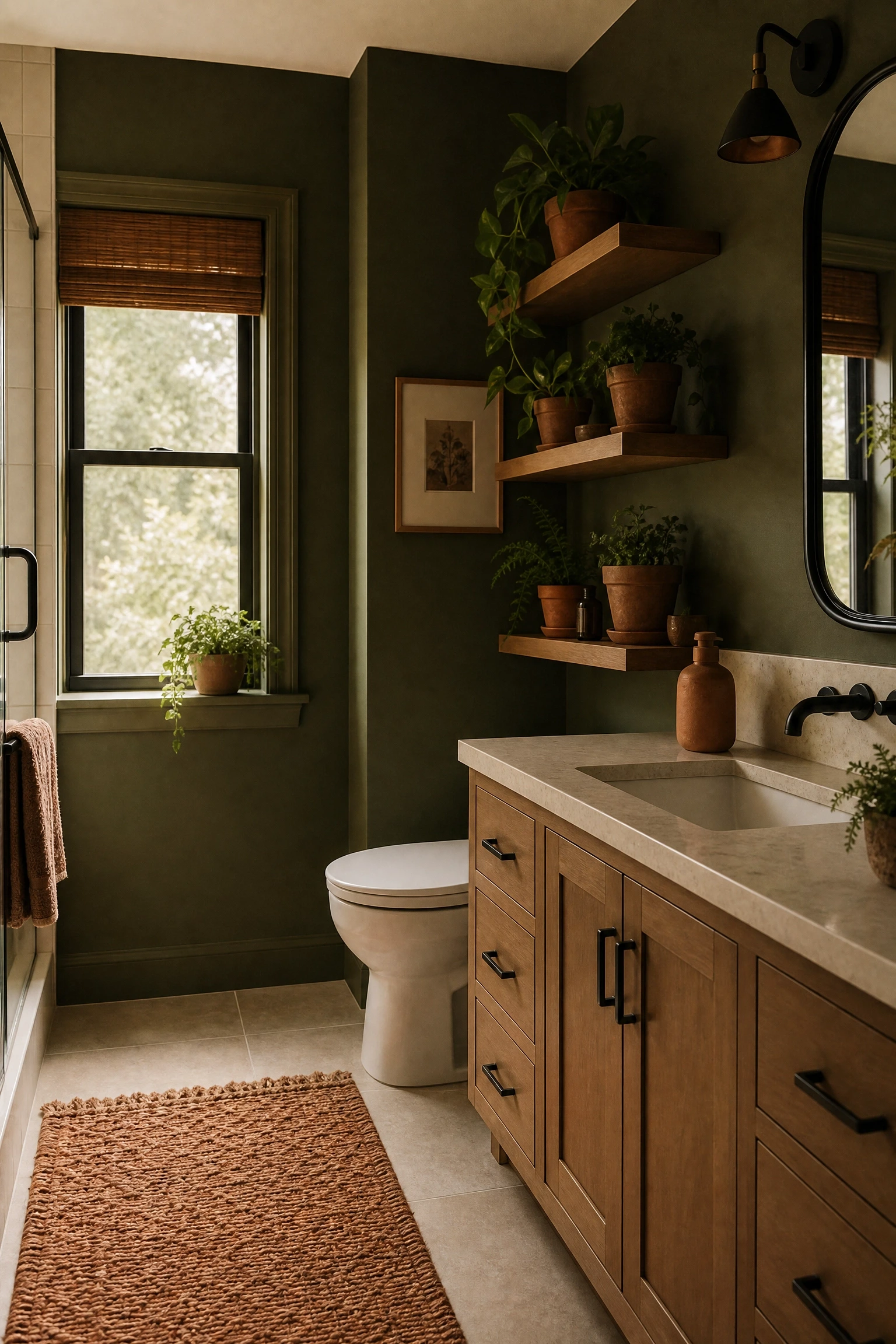
Most green bathrooms lean on brass or black hardware, but pairing deep green with terracotta accessories creates a warmer, more unusual palette that still photographs beautifully. Paint or tile in a deep olive, then bring in terracotta plant pots, a clay-toned soap dispenser, and a similarly toned woven basket for towels. Keep the actual plumbing fixtures in simple matte black so a third competing metal tone does not overcomplicate things, and a warm clay rug ties the floor into the story. This combination is genuinely budget-friendly to build gradually, since terracotta accessories are inexpensive compared to fixed elements like tile, making it a smart way to test the look before committing to anything permanent.
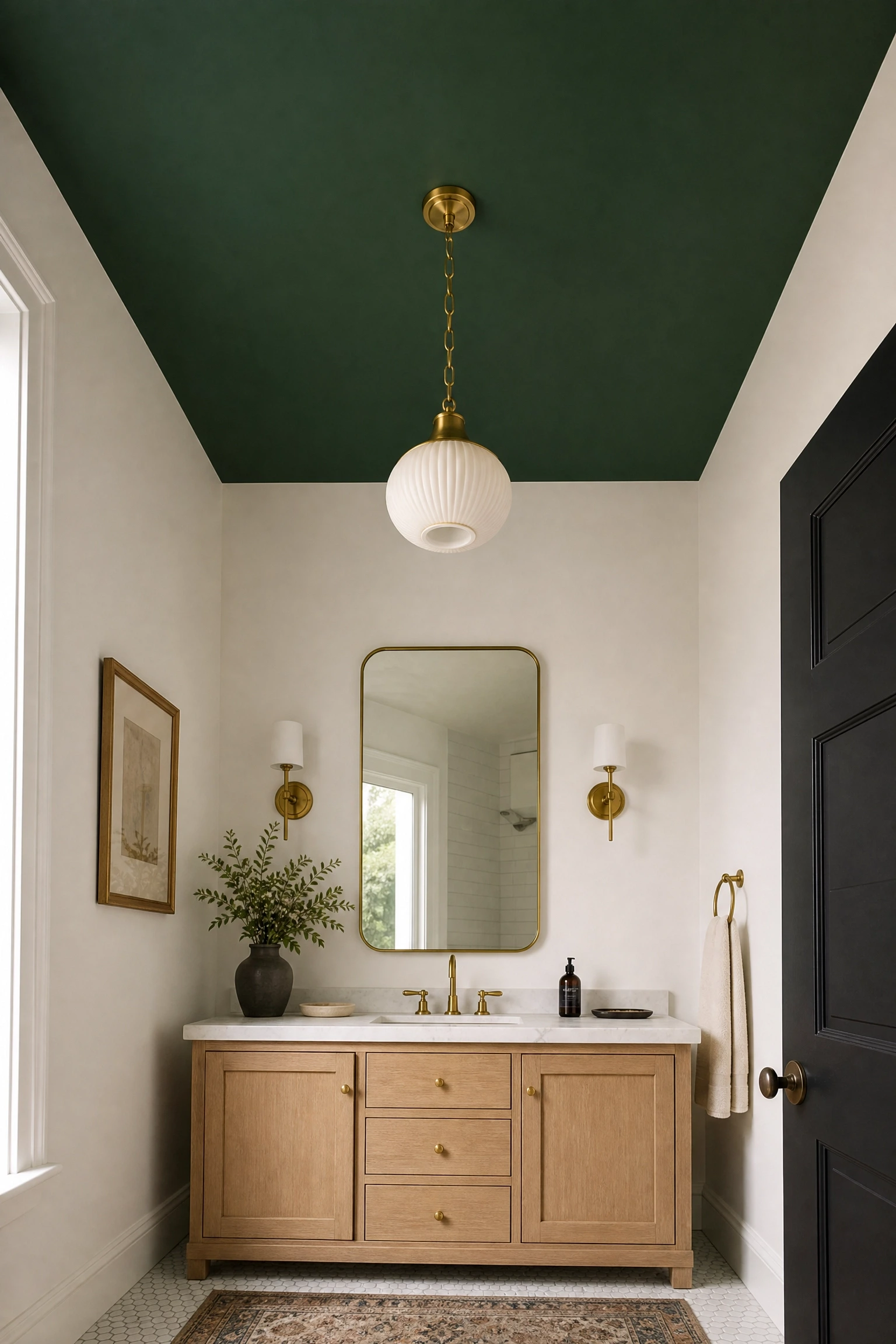
Painting the ceiling a rich green while leaving walls white is a trick designers use constantly but homeowners rarely think to try, since we are conditioned to assume ceilings stay white. A deep emerald ceiling in flat finish adds real drama and a sense of intimacy, almost like a canopy, without the commitment of covering every wall. Keep walls soft white and the vanity light so the ceiling has clear contrast, and a statement pendant hanging from that dark ceiling creates real depth. This is one of the more affordable ways to add drama, since a ceiling needs far less paint than four walls, though flat finish in a high-moisture room needs more frequent cleaning attention than satin would.
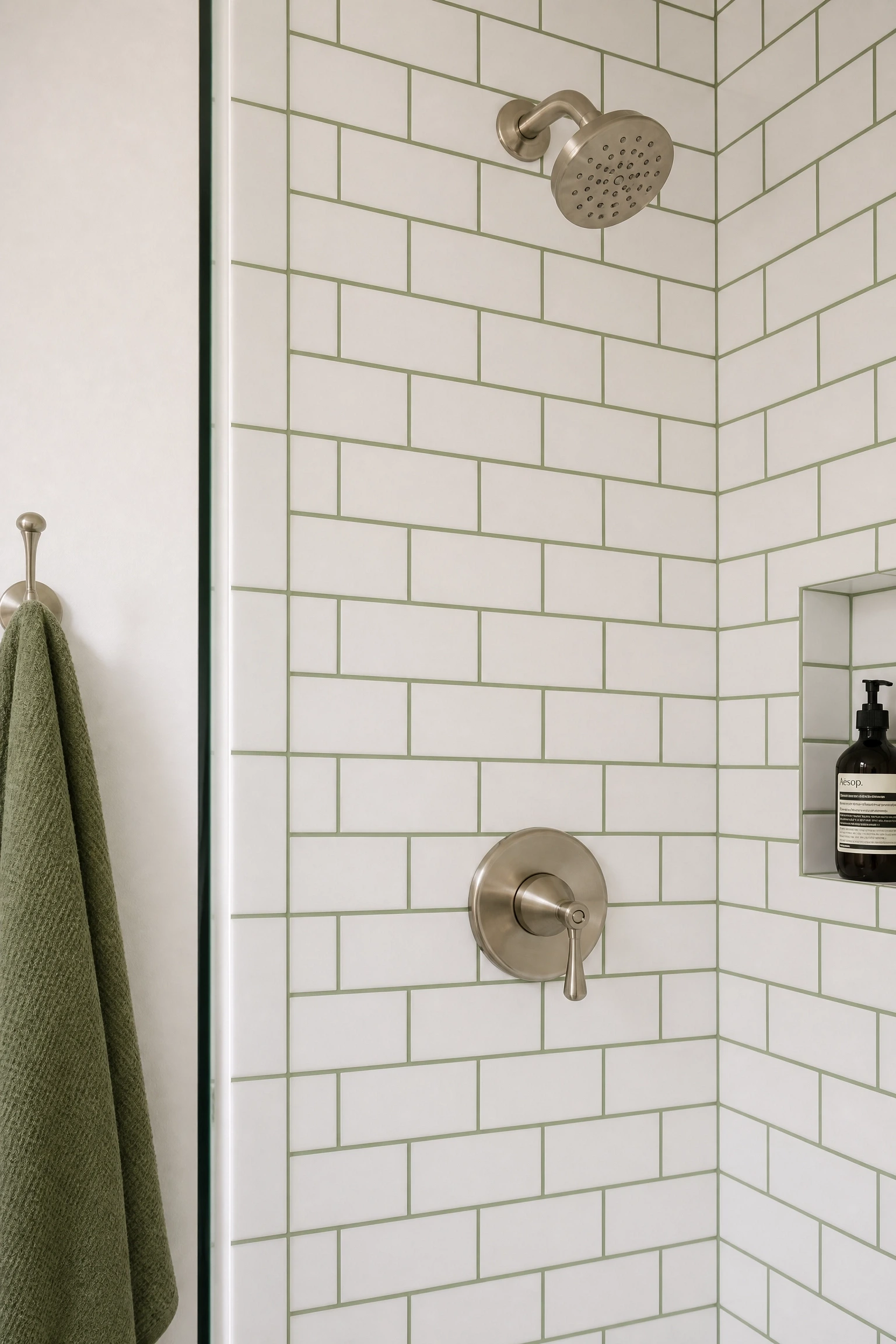
If a full green tile installation feels like too much of a leap, colored grout on plain white subway tile is a genuinely underused way to bring green in, in a smaller, more controllable dose. Choose sage or olive grout on classic white three by six tile, which creates a subtle grid of color rather than an overwhelming wash of it. Keep the vanity and fixtures simple, brushed nickel or chrome, so the grout stays the clear focal detail. This costs barely more than a standard white tile job and is low commitment, since if you tire of it, only the grout would need replacing, a far smaller project than retiling.
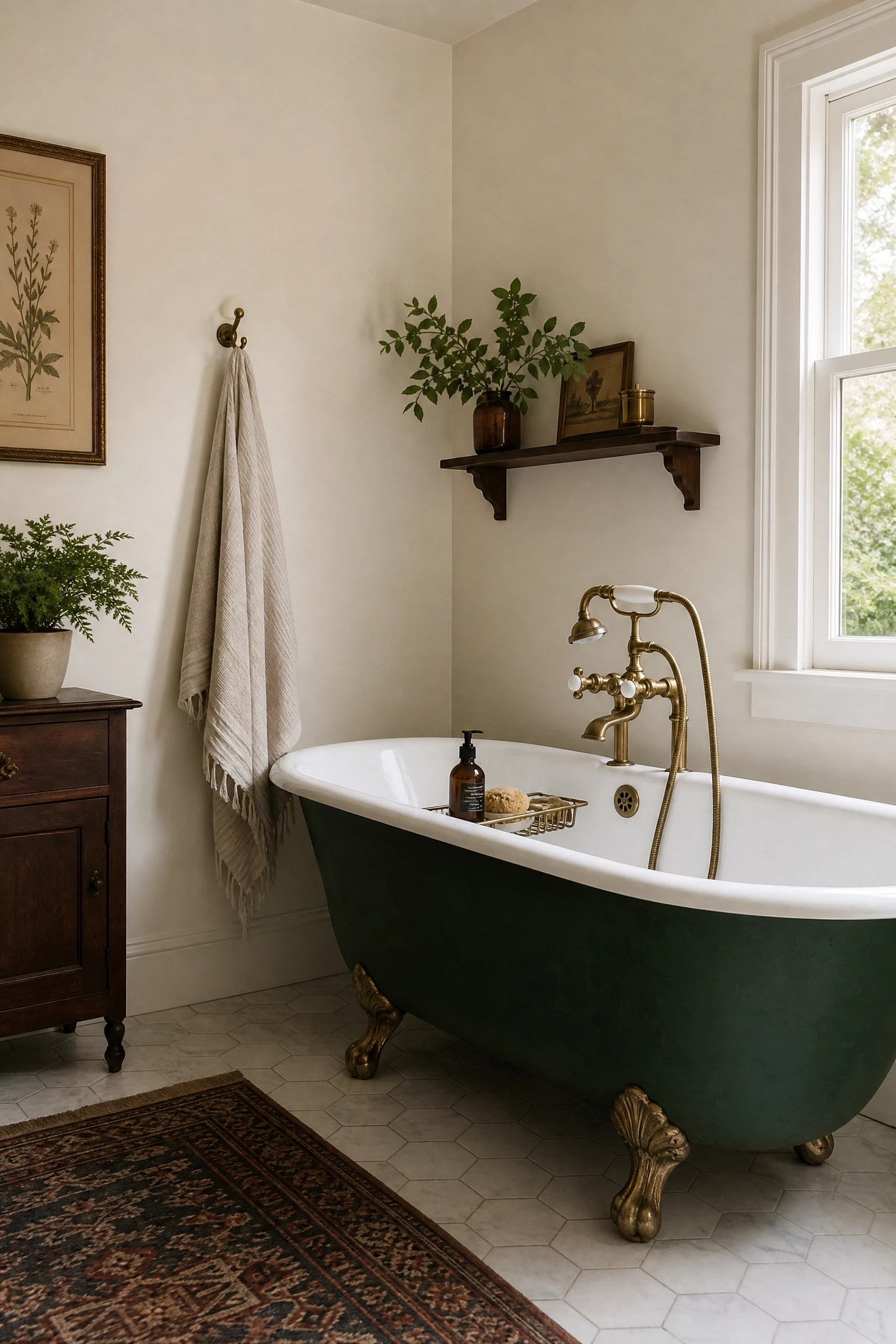
Painting the exterior of a clawfoot tub a deep green, rather than leaving it standard white, turns the tub into the room’s main event instead of just another fixture. Use a specialty tub-rated enamel in a forest shade, since regular wall paint will not hold up to daily water contact, and keep surrounding walls a plain warm white so the tub reads as the clear focal point. Aged brass tub feet and fixtures warm up the look considerably compared to the standard chrome most clawfoot tubs ship with. This is a striking, relatively affordable move for a bathroom that already has a freestanding tub, though tub-rated enamel needs occasional touch-up over the years as a small ongoing maintenance commitment.
The Monochrome Green Bathroom for Confident Homeowners
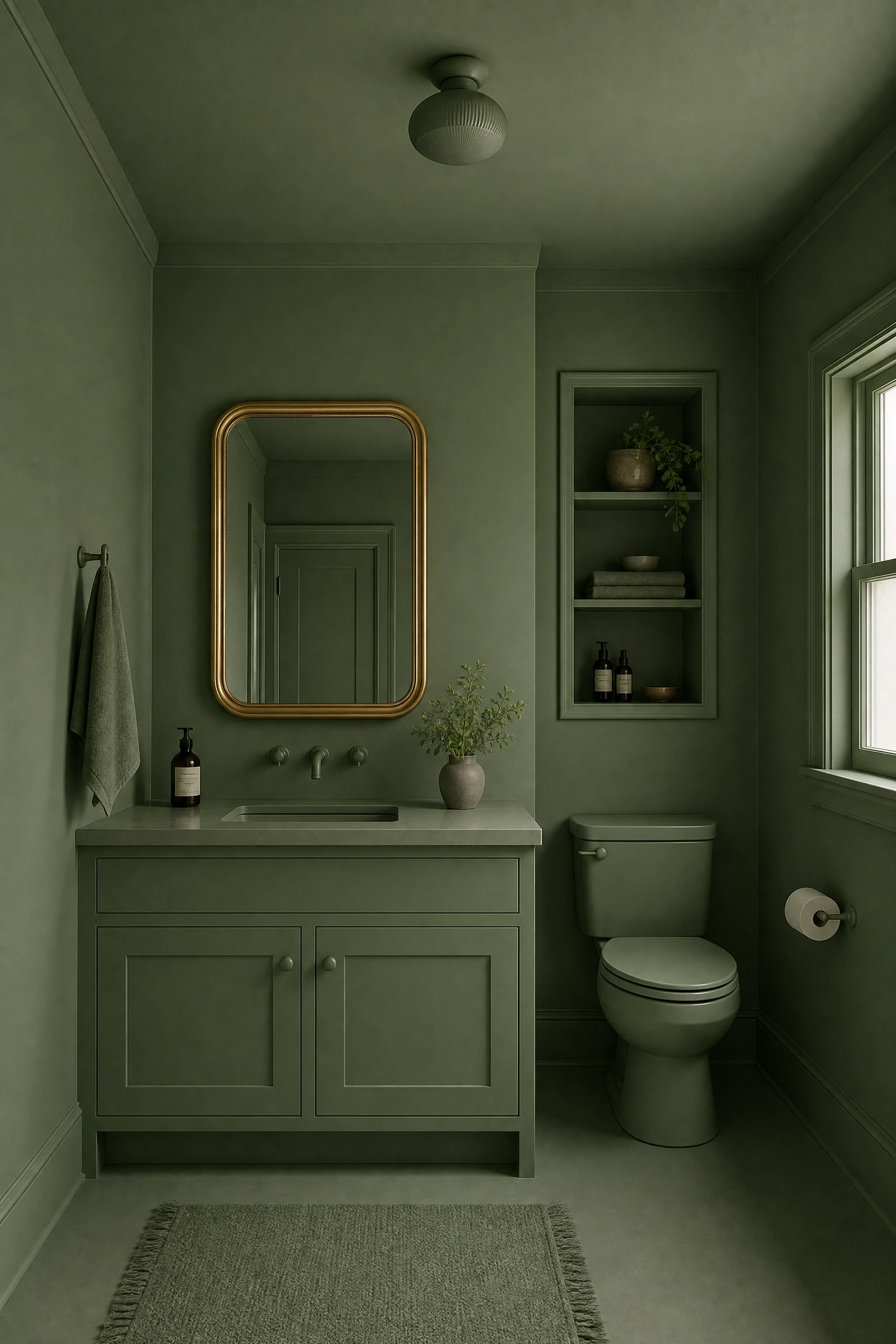
Applying a single green to walls, ceiling, trim, and vanity in a close, matching tone is one of the boldest moves on this list, and it is not for everyone, but it produces a genuinely striking result when done well. Pick a mid-tone green, since the middle range holds up best across a fully monochrome application, and use the same sheen throughout for consistency. A single white or brass detail, maybe just the mirror frame, keeps the room from feeling flat by giving the eye one point of contrast. This suits confident homeowners more than cautious ones, and it is worth testing with a large paint sample on an actual wall for a few days first, since monochrome rooms shift noticeably with different light throughout the day.
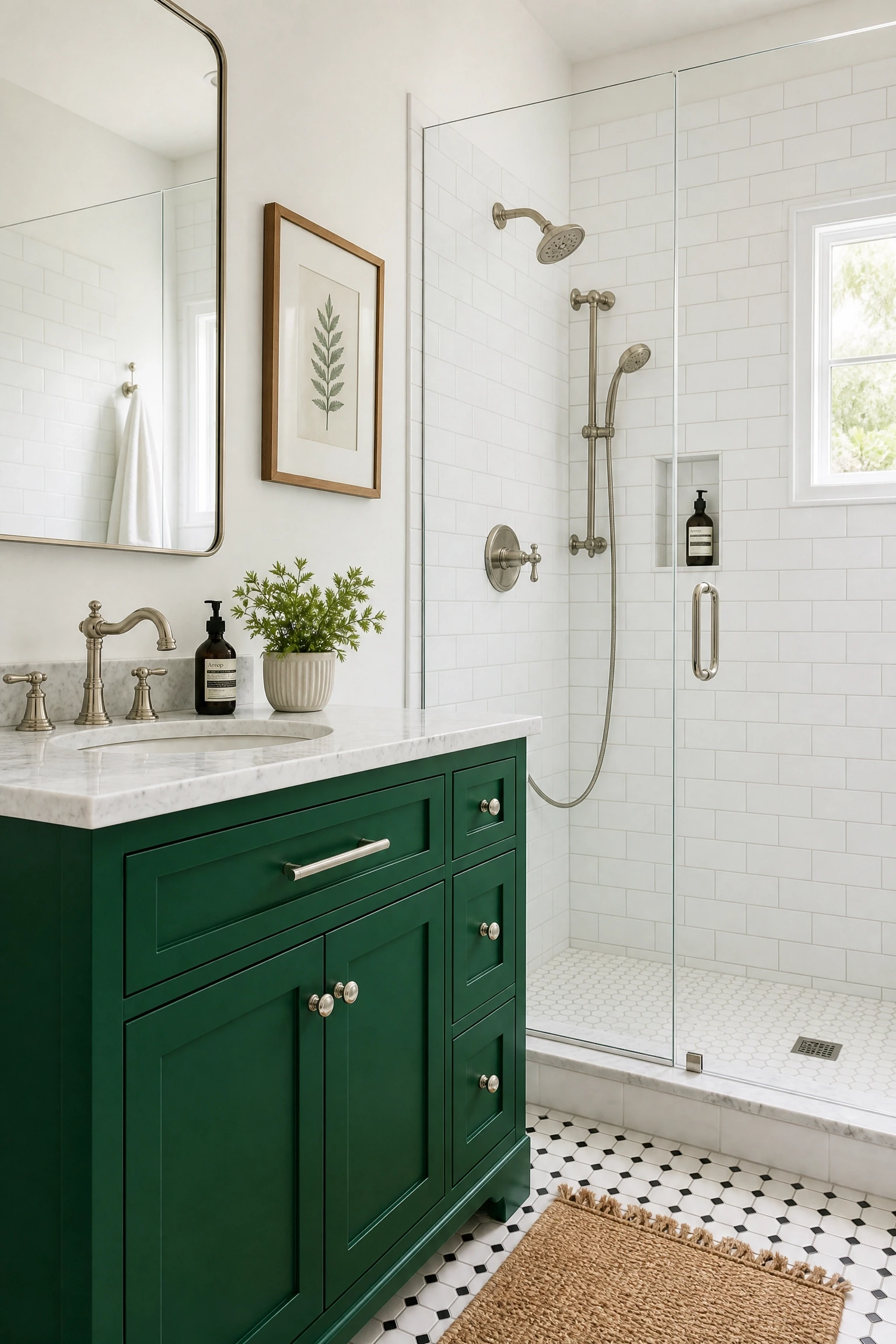
Rather than choosing between a bold cabinet color or classic white tile, this approach uses both, letting a saturated green vanity sit against a completely classic white subway shower. Choose a rich emerald or deep sage for the cabinetry, and keep the shower in plain white three by six tile with white grout for a clean, classic backdrop. Nickel fixtures keep the metal tone quiet and let the cabinetry color do the visual work, while one or two green accessories tie the two zones together. This is genuinely practical for resale-minded homeowners, since the classic white tile will not feel dated to a future buyer even if their taste in cabinet color differs, and repainting a vanity is a far smaller project than retiling a shower.
Conclusion
Green earns its place as one of the most versatile colors you can bring into a bathroom because it works in almost every register, from a whisper-soft sage that barely reads as color to a full lacquered emerald that turns a small powder room into a conversation piece. What matters most is being honest about your space, your lighting, and how much upkeep you actually want, since a monochrome green room and a simple sage shower curtain solve very different problems for very different people. Notice how many of these ideas lean on the same supporting choices, warm brass or grounded matte black hardware, natural materials like wood and linen, and a willingness to let green show up somewhere unexpected, like a ceiling or a line of grout, rather than only on the walls. If you take nothing else from this list, take this, green rarely needs to be the loudest thing in the room to still be the reason the room works. Start small if you are unsure, a shower curtain or a painted vanity tells you a lot about whether you are ready for the wall color, and you can build from there once you know the shade you actually want to live with every morning.
Frequently Asked Questions
Does green make a small bathroom feel even smaller?
Not necessarily, and often the opposite is true. A single saturated green applied to every surface removes the visual breaks that usually make a small room feel choppy, so your eye stops measuring corners. The mistake people make is pairing a pale green with white trim in a tiny bathroom, since that contrast actually draws attention to how small the room is.
What is the most durable type of green for heavy daily use?
Tile is the most durable long-term option since it shrugs off moisture and cleaning products better than paint. If you prefer paint, a satin or semi-gloss finish in a mid to dark tone hides water spots and fingerprints far better than a flat finish or a very pale shade.
Should I choose brass or black fixtures with a green bathroom?
Both work, and the choice comes down to warmth. Unlacquered brass warms up green tones and pairs beautifully with earthier shades like olive, while matte black creates a sharper, more modern contrast that suits deeper bottle or hunter greens.
Is a dark green bathroom a bad idea without a window?
It can work, but it needs help. Windowless bathrooms in dark green rely on layered artificial lighting, so plan for at least two sources, ideally sconces near the mirror in addition to overhead lighting, and choose a warm bulb temperature to avoid a cave-like feeling.
How do I bring green into a rental bathroom without painting?
Layer it through soft goods, a shower curtain, bath mat, and towels in slightly different green tones, real plants that tolerate humidity, and swapped hardware finishes on things like curtain rings or a removable shelf. None of it requires painting or drilling, and all of it comes with you when you move.
What is one green bathroom trend that might not age well?
Extremely literal, single-note themes tend to feel dated fastest, the same way an overly nautical coastal bathroom can start to feel tied to a particular year. Softer, layered approaches, like sage paired with natural wood and linen, or a two-tone wall treatment, tend to hold up better over time than one saturated statement applied everywhere at once.