Farmhouse kitchens are everywhere, but the best ones feel warm and lived-in rather than staged for a photo. The difference between a farmhouse kitchen that works and one that feels like a costume is restraint. Real farmhouse style is about natural materials, practical objects, and a kitchen that looks like people actually cook in it. I have helped friends dial back the shiplap-and-mason-jar overload and land on something that feels genuine. Here are 15 farmhouse kitchen decor ideas that add warmth without going overboard.
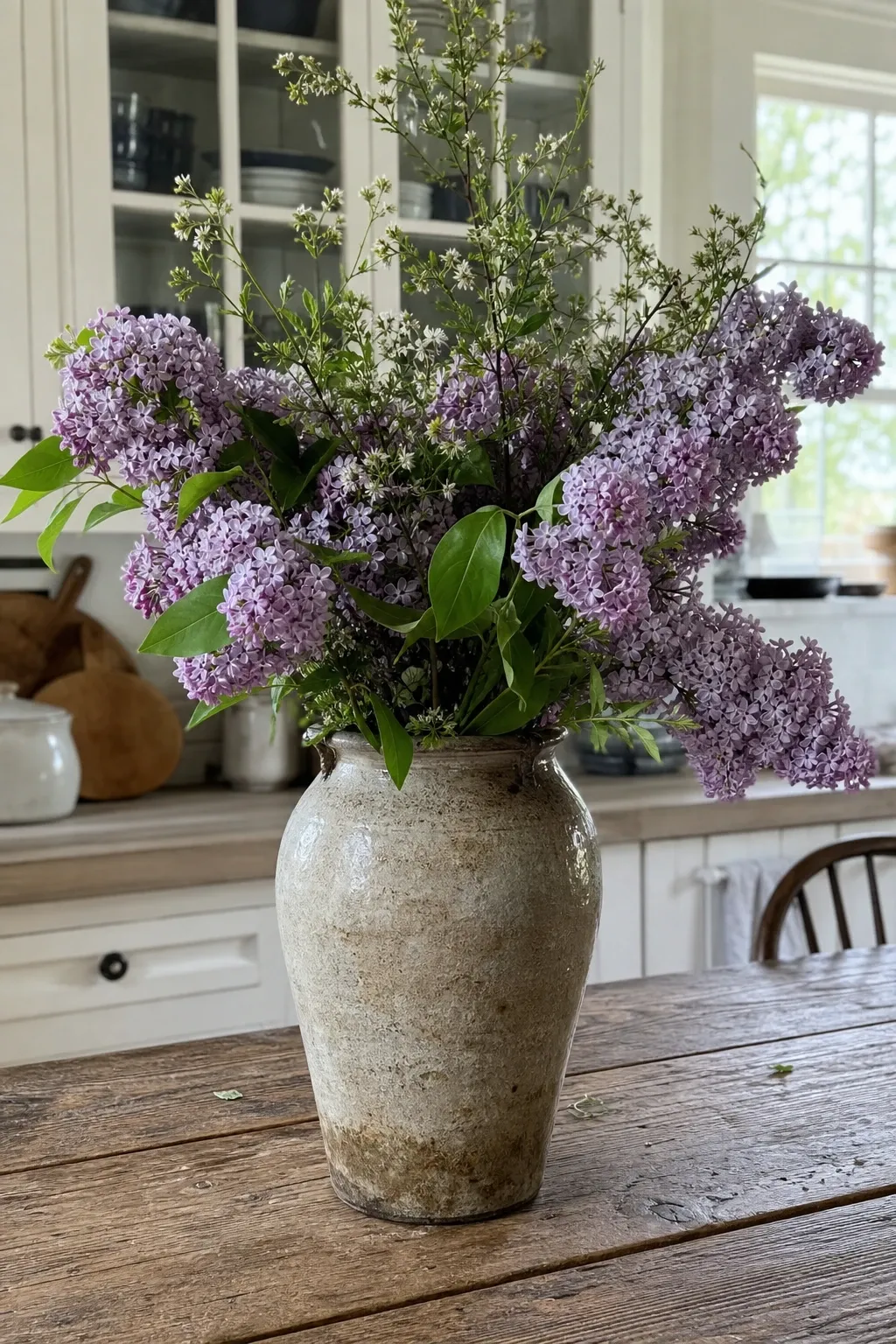
Fresh or dried flowers in a stoneware pitcher, a mason jar, or a galvanized bucket on the counter or kitchen table add softness to the hard surfaces of a kitchen. The casual arrangement matters more than the flowers themselves. Wildflowers, grocery store bouquets, or dried lavender all work. The point is something living and natural sitting on the counter to break up the tile and stone.
Designer Tip: Use seasonal flowers to keep the display fresh and connected to the time of year. Sunflowers in summer, mums in fall, evergreen branches in winter. Rotating with the seasons keeps the arrangement from becoming background noise that you stop noticing.
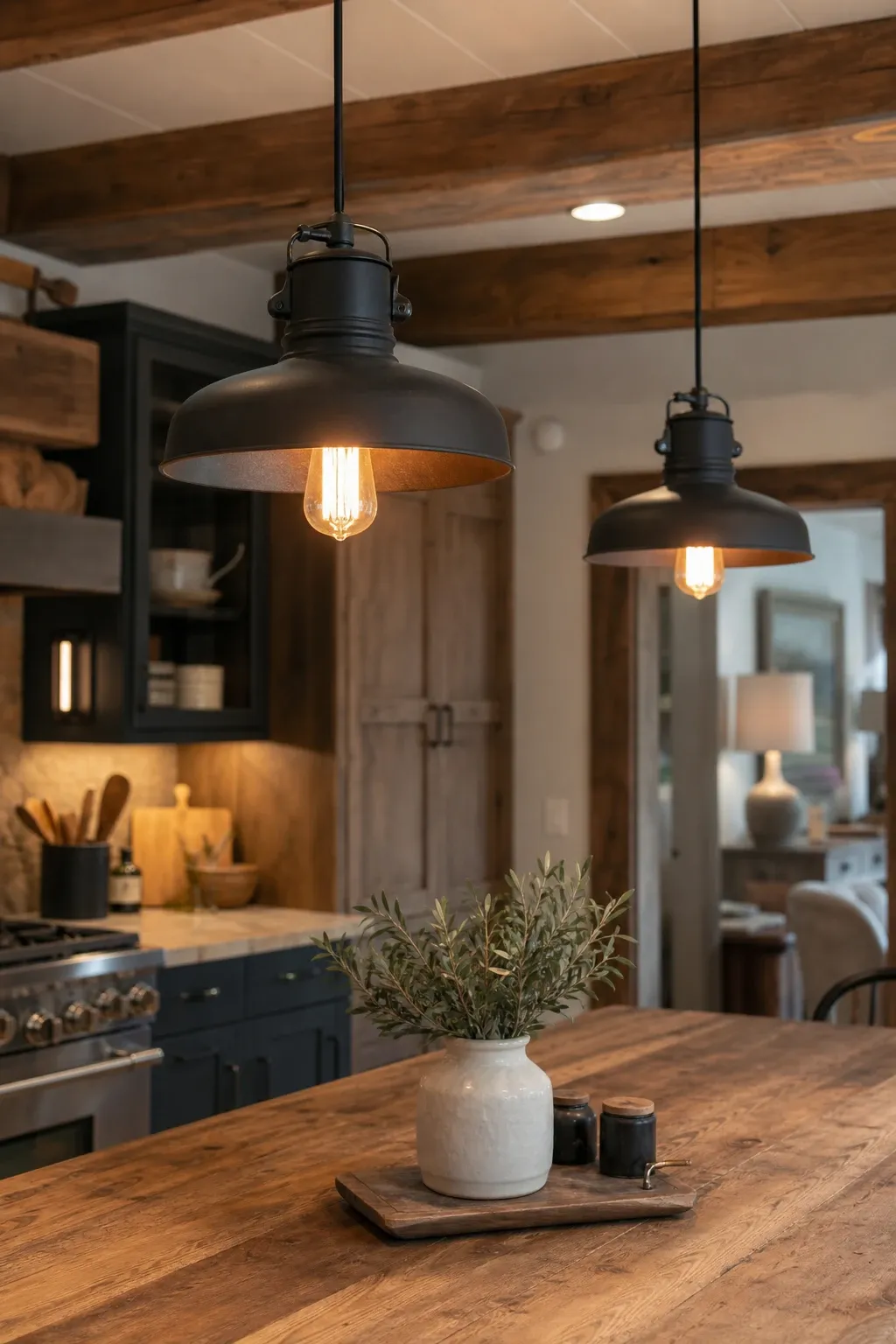
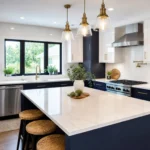
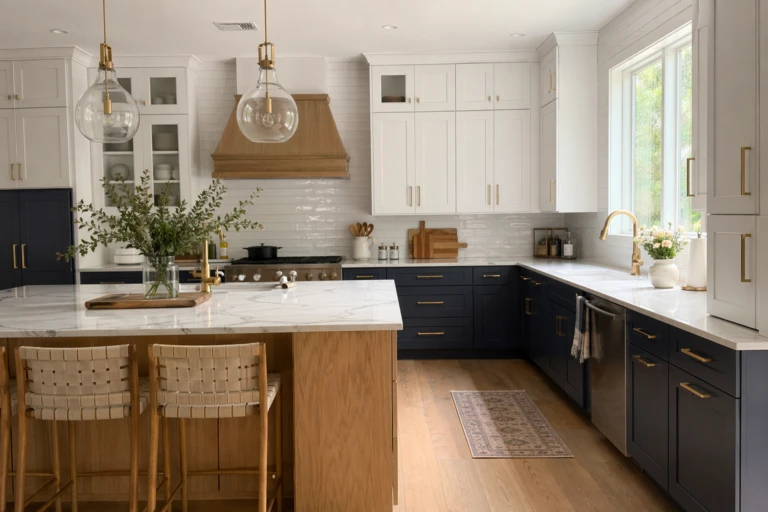
Black metal pendant lights, cage-style fixtures, or barn-style shades over the island or sink add an industrial edge that keeps the farmhouse kitchen from feeling too sweet. The dark hardware contrasts with white cabinets and light countertops. Industrial lighting is practical because the focused downlight illuminates work surfaces well. The fixtures become a visual anchor that grounds the room.
Designer Tip: Hang pendant lights 30 to 36 inches above the island countertop. Too low and they block sightlines. Too high and they lose their impact. Three pendants in a row over a long island is the classic farmhouse layout.
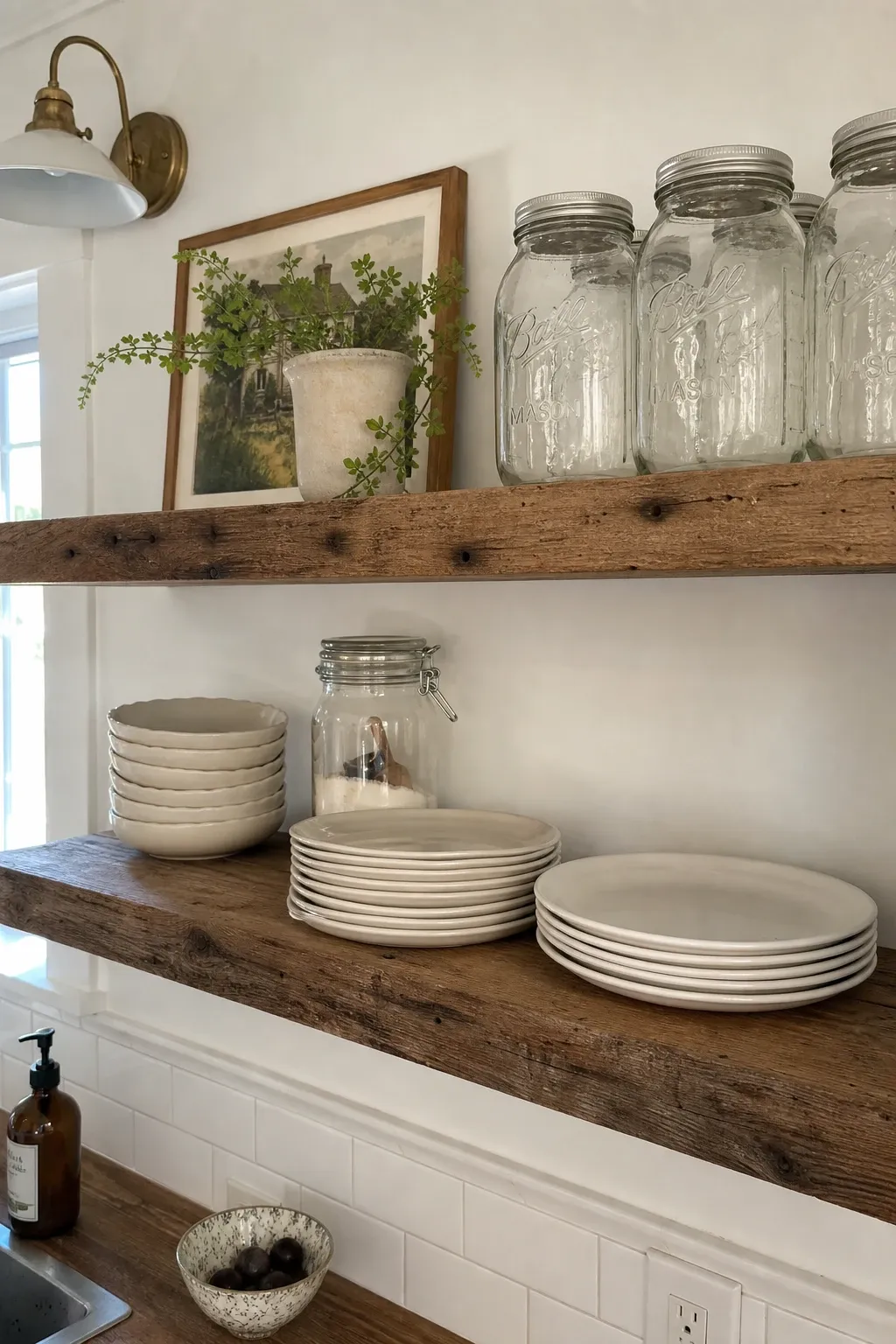
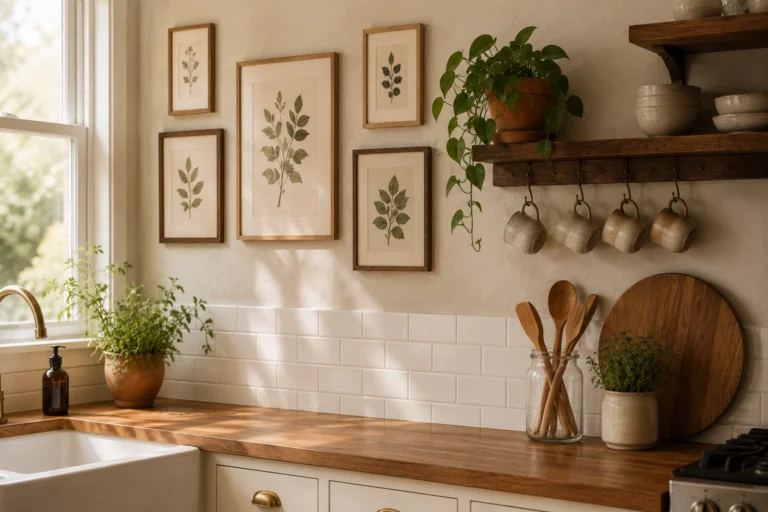
Replacing one or two upper cabinets with open wood shelves instantly opens up the kitchen and gives you a place to display everyday dishes, mugs, and cookbooks. Open shelving shows off your things and makes the kitchen feel less closed-in. It also forces you to keep the shelves tidy and collected, which ends up making the kitchen look better overall. Use wood brackets and thick wood planks for the most authentic farmhouse look.
Designer Tip: Only put things you actually use on open shelves. Decorative items that never move collect dust and make the shelves feel staged rather than functional. Daily-use plates, mugs, glasses, and your favorite cookbook keep the shelves looking natural and lived-in.
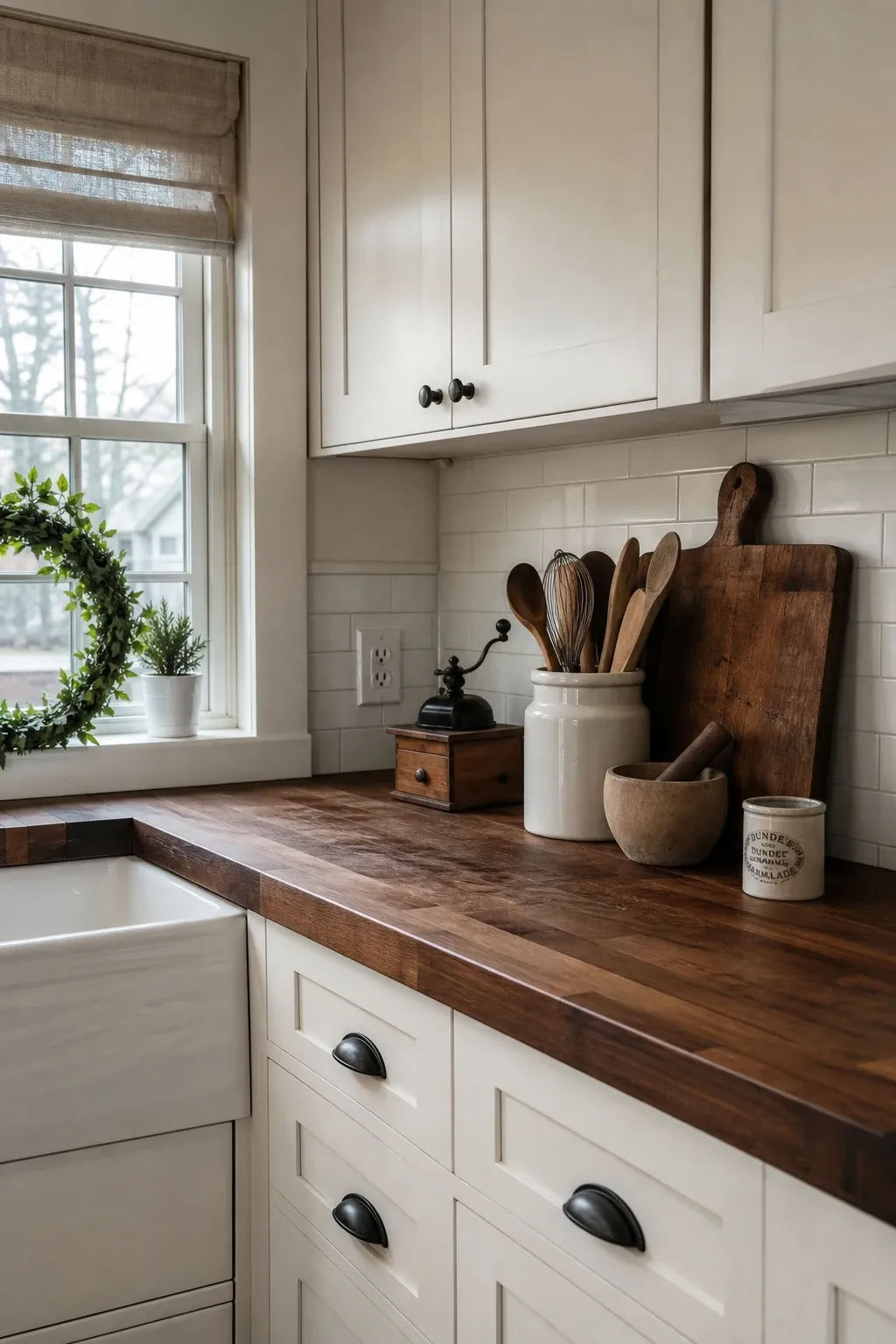
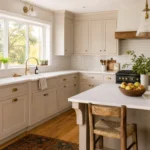
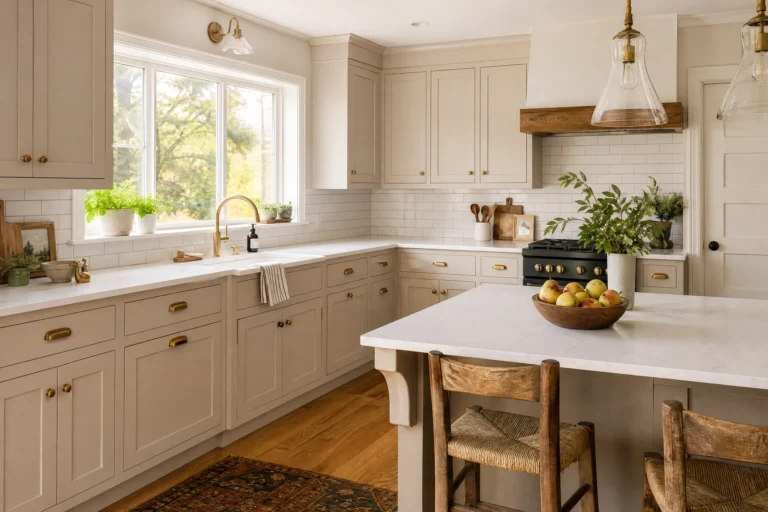
White cabinets, white walls, and natural wood on the island, countertop, shelves, or cutting boards is the foundational farmhouse color combination. The white keeps the kitchen bright and the wood keeps it warm. This pairing works every time because the contrast is clean without being cold. You can layer any accent color on top of this base and the kitchen will still feel farmhouse.
Designer Tip: Use the same wood tone throughout the kitchen for cohesion. Matching the floating shelves to the island wood to the cutting boards creates a thread of warm color that ties the room together. Mixing five different wood tones in one kitchen looks uncoordinated.
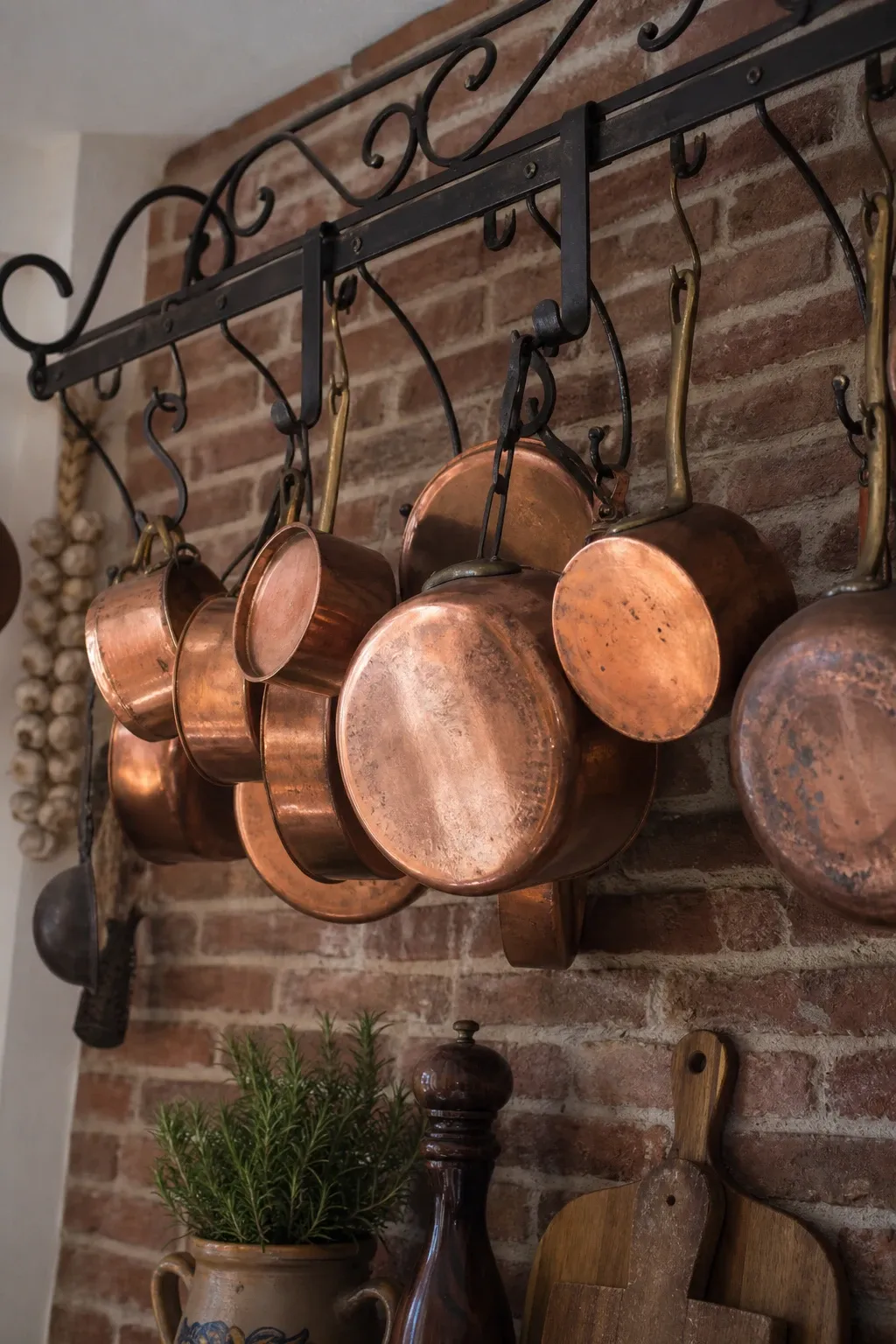
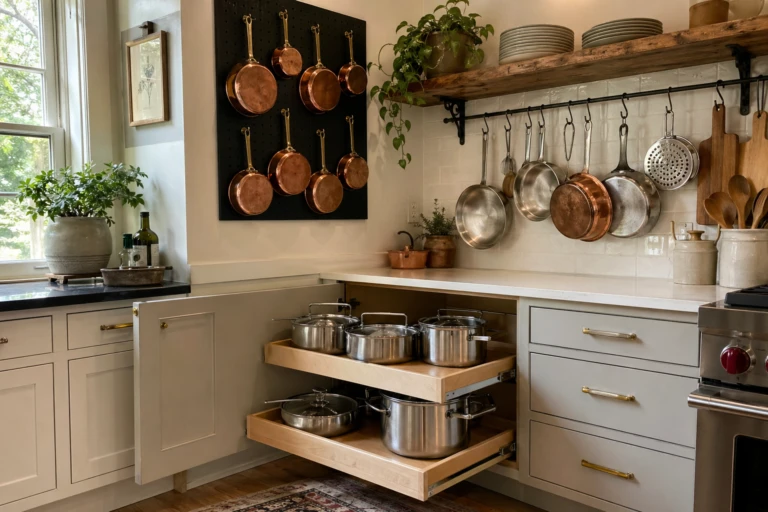
Copper pots, a copper kettle, copper measuring cups, or a copper light fixture add a warm metallic glow that pairs naturally with farmhouse style. Copper develops a patina over time that only makes it look better. Hang copper pots from a pot rack or display them on open shelves where the warm color catches light. Copper is the farmhouse metal that never looks out of place.
Designer Tip: You do not need to polish copper to a mirror shine. The developing patina is part of the farmhouse character. If you want some pieces polished and some patinated, that mix looks natural and collected. Avoid copper-look spray paint on other metals because the color is always slightly off.
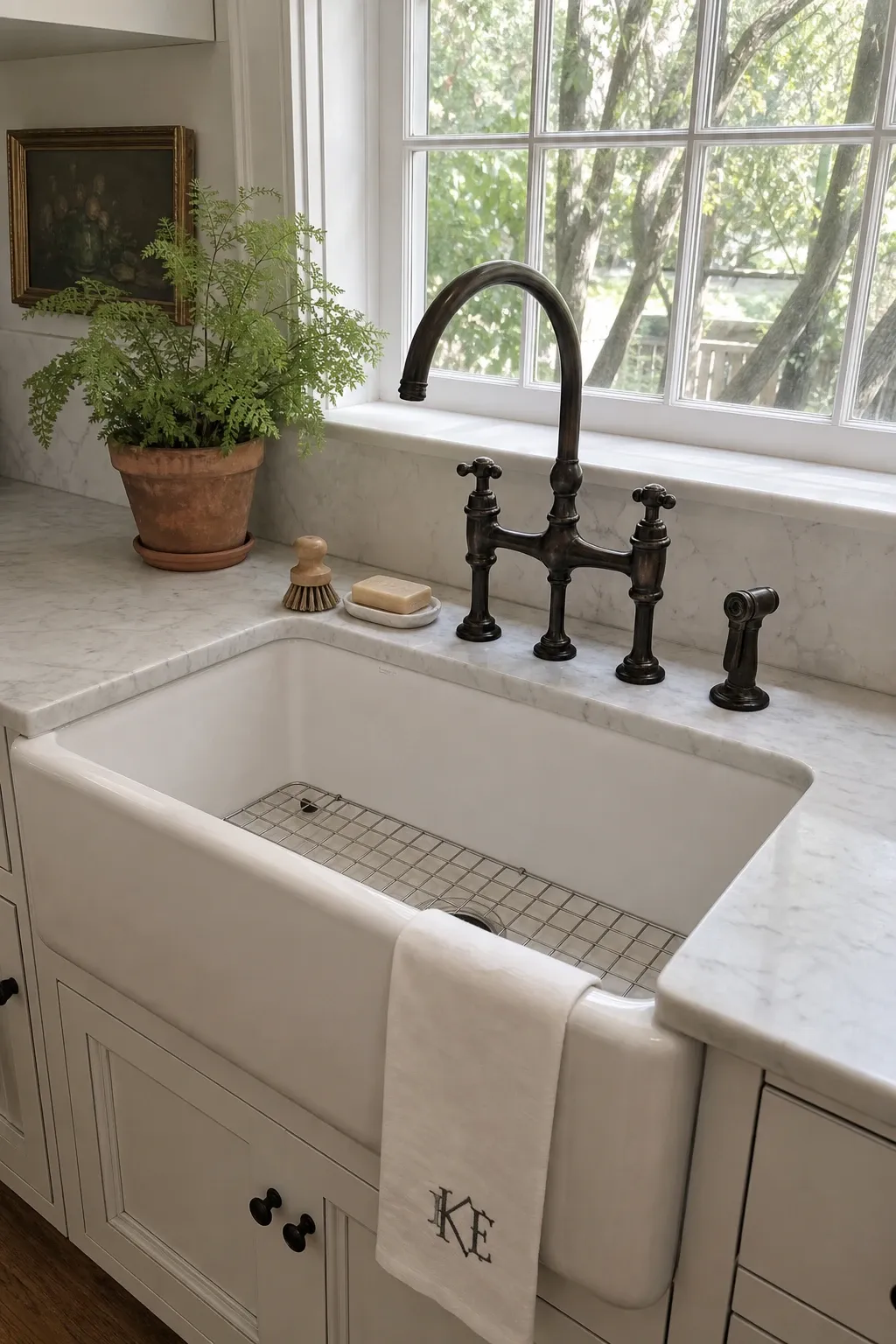
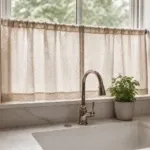
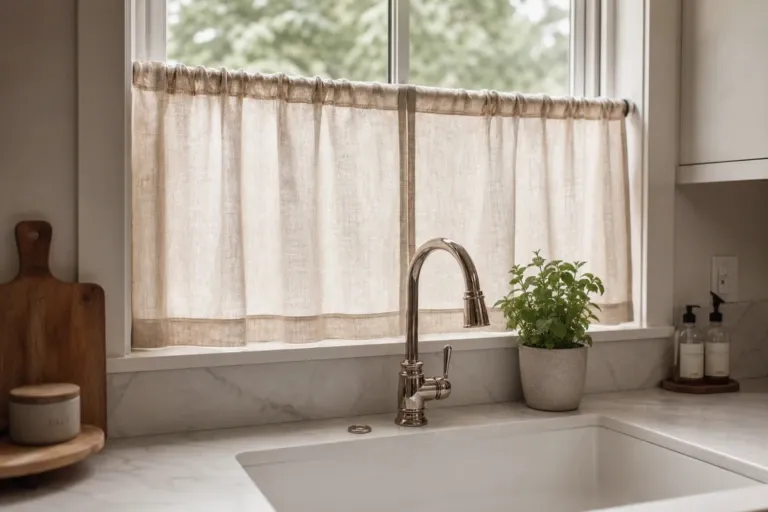
A deep apron-front sink is the defining feature of a farmhouse kitchen. The exposed front panel and large basin are both beautiful and practical. The deep bowl handles large pots, sheet pans, and even bathing a baby. White fireclay is the classic material, but stainless steel and copper versions work too. If you can only do one farmhouse upgrade in the kitchen, this is the one that makes the biggest impact.
Designer Tip: Make sure your cabinet base is built or modified to support the weight of a fireclay farmhouse sink. They are heavy, and standard sink cabinets may need reinforcement. Check the sink weight and cabinet specifications before ordering.
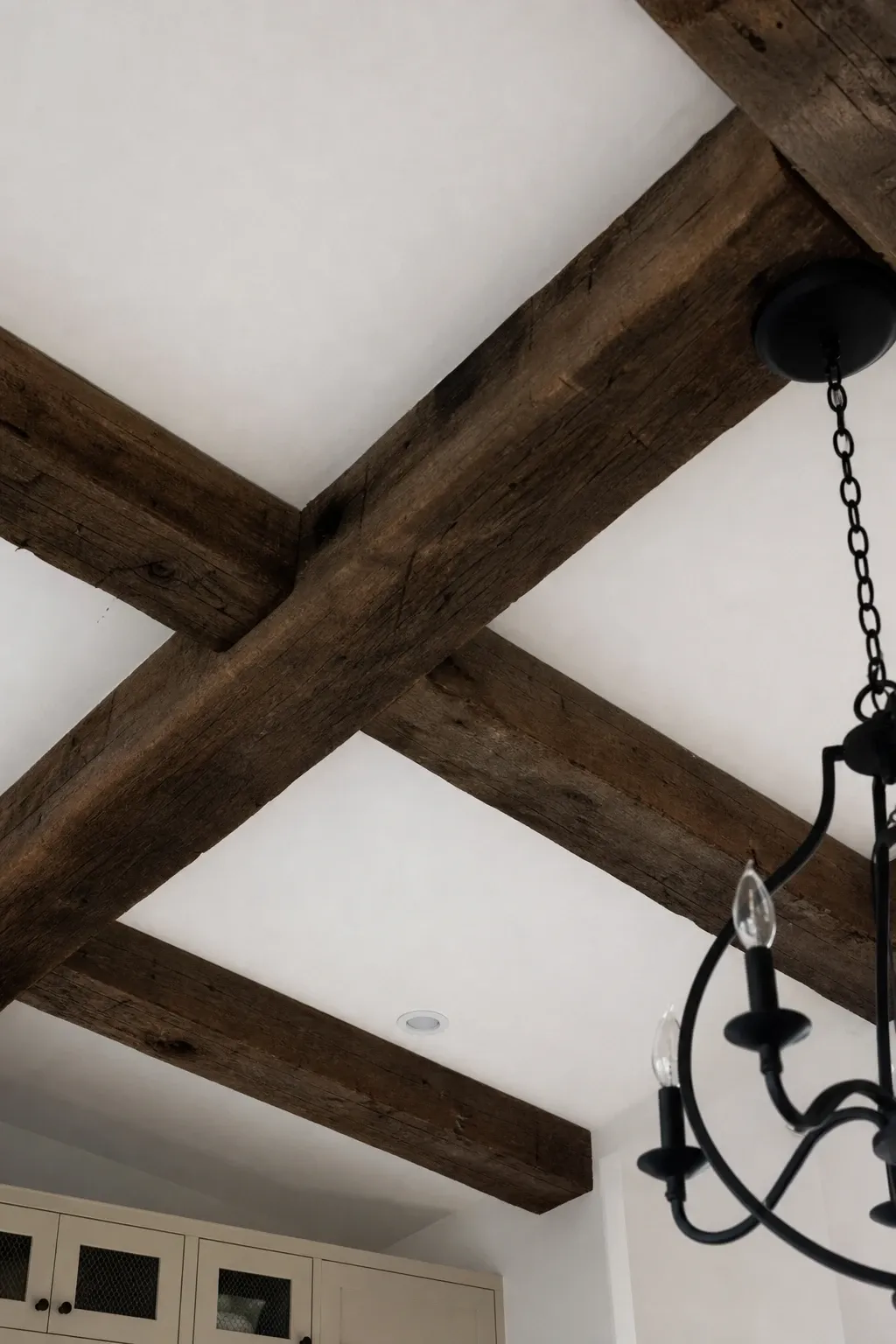
Exposed ceiling beams add architectural warmth and character to the kitchen. Real structural beams are ideal, but faux beams made from lightweight hollow wood or foam are a practical alternative that looks convincing. The warm wood on the ceiling draws the eye up and makes the kitchen feel larger and more interesting. Beams work in kitchens with vaulted ceilings, flat ceilings, or anywhere you want to add overhead detail.
Designer Tip: Stain the beams to match your kitchen wood tones. A dark walnut stain on beams above a kitchen with light oak shelves creates a disconnect. Matching the stain ties the ceiling to the rest of the room and makes the beams feel original to the house.
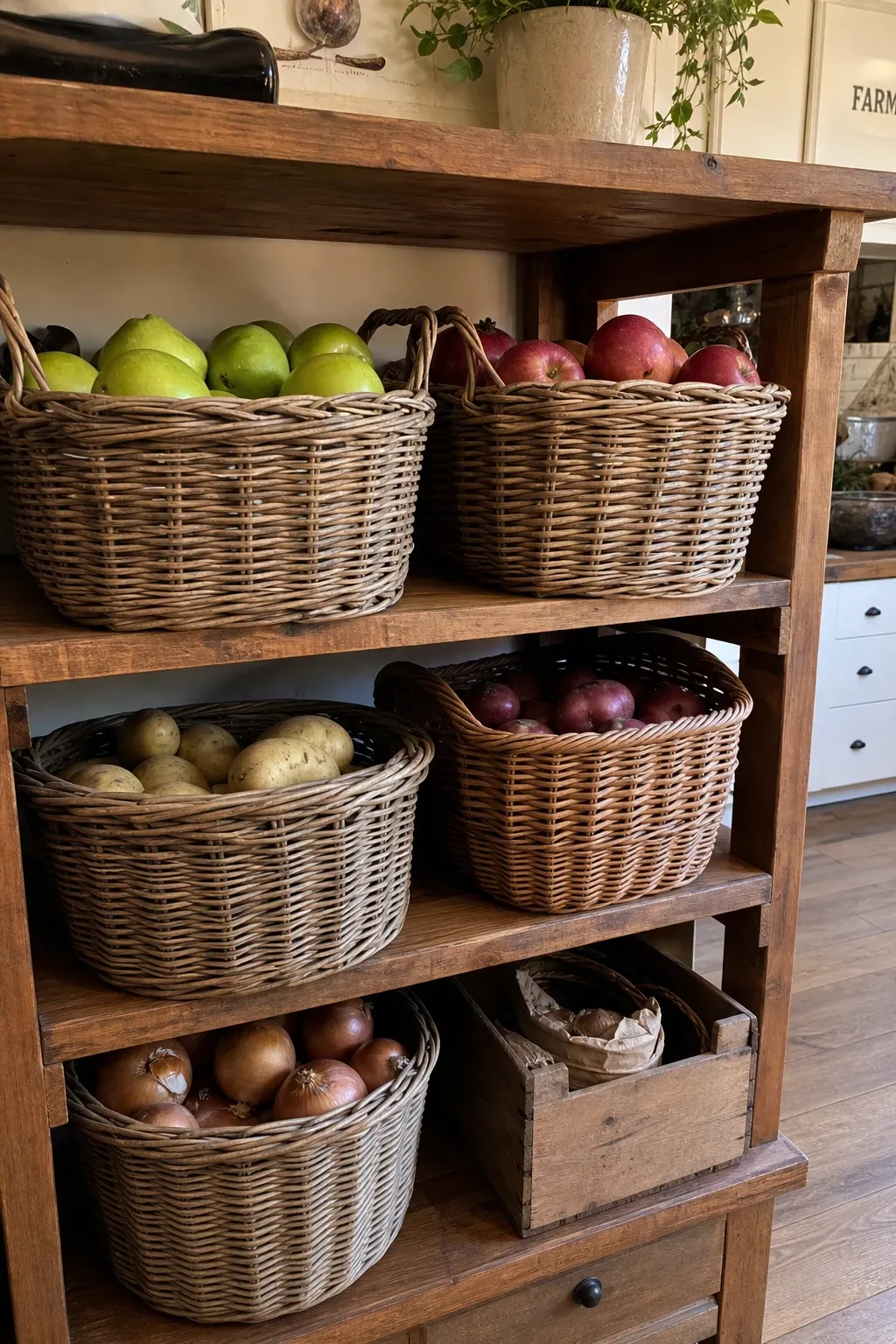
Wicker and woven baskets on top of cabinets, on open shelves, or under the island add texture and hidden storage. They hold linens, produce, bread, or anything you want to keep within reach but out of sight. The natural weave adds a layer of organic warmth that plastic bins and metal containers cannot match. Baskets are inexpensive and easy to swap out when you want a change.
Designer Tip: Use baskets in groups of odd numbers for the most natural look. Three baskets of different sizes on a shelf looks better than two or four. Odd numbers create visual movement and prevent the arrangement from looking too symmetrical and staged.
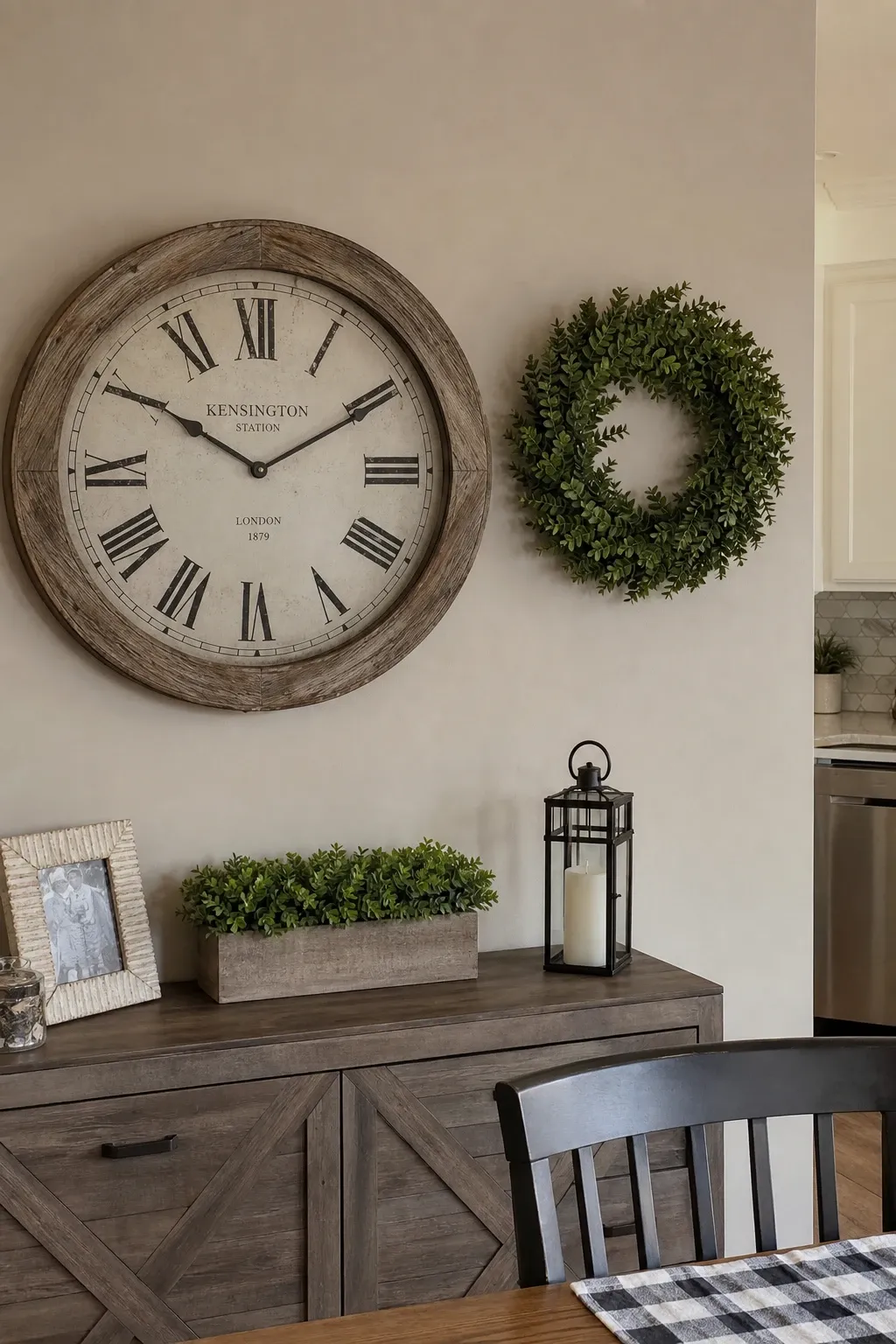
An oversized rustic wall clock or a simple wreath on a blank kitchen wall adds character without taking up counter space. A distressed wood clock face or a Roman numeral clock brings a vintage feel. A cotton, eucalyptus, or dried flower wreath adds a seasonal touch. These wall pieces fill the large blank walls that kitchens often have above windows or between cabinets.
Designer Tip: Scale the wall decor to the wall size. A small wreath on a large blank wall looks lost. An oversized clock on a narrow wall between cabinets looks crammed. Measure the available wall space and choose a piece that fills about two-thirds of it for balanced proportions.
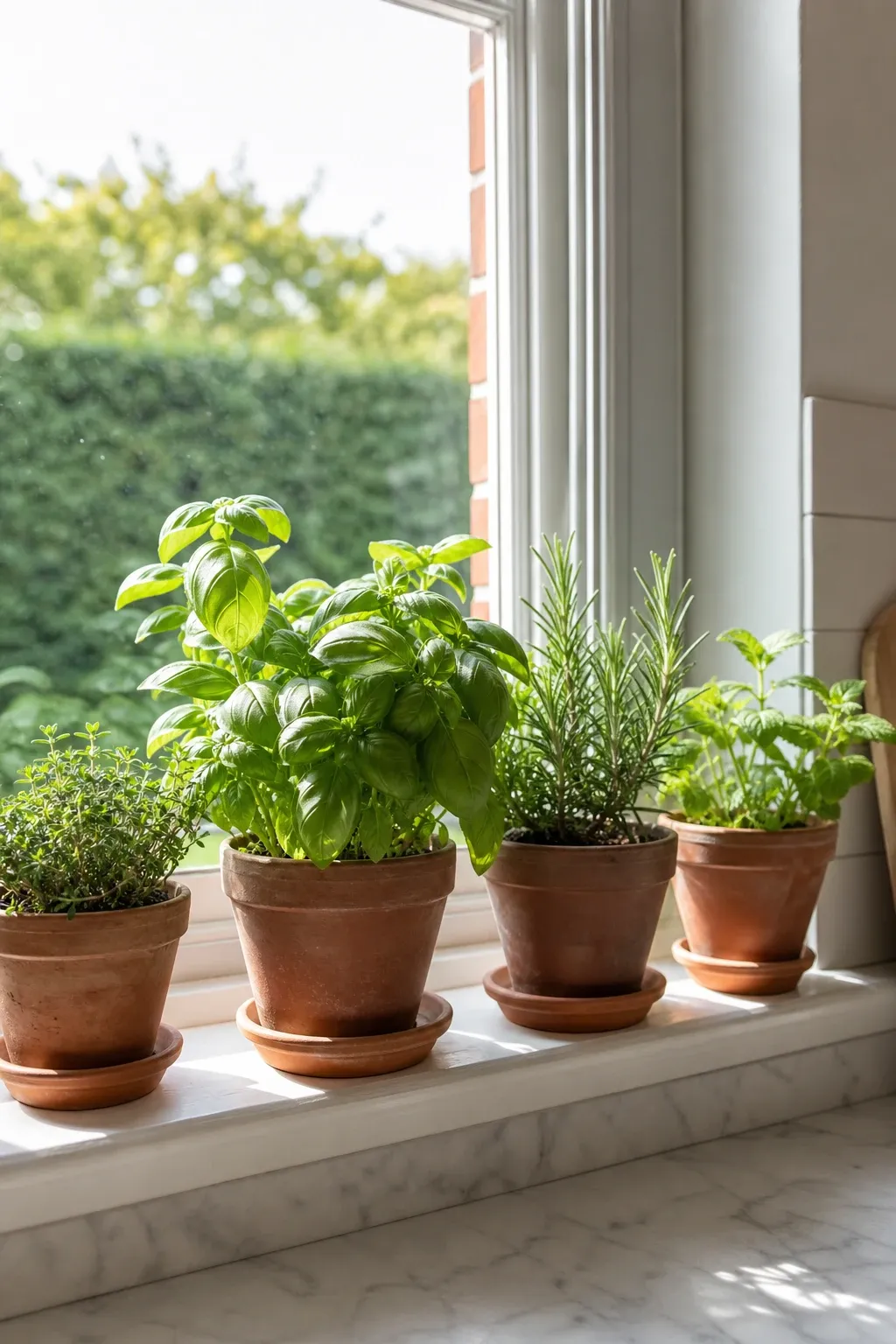
Fresh herbs in small pots on the windowsill or a bowl of lemons on the counter bring life, color, and even fragrance to the farmhouse kitchen. Basil, rosemary, and thyme are practical choices because you can cook with them. A small lemon or olive tree in a corner adds Mediterranean warmth. Living plants in the kitchen make it feel like a place where real food is made.
Designer Tip: Plant herbs in matching terra cotta or white ceramic pots for a tidy, cohesive look. Herbs in their original plastic nursery pots look temporary and messy. A set of matching pots turns a few grocery store herbs into a proper kitchen garden display.
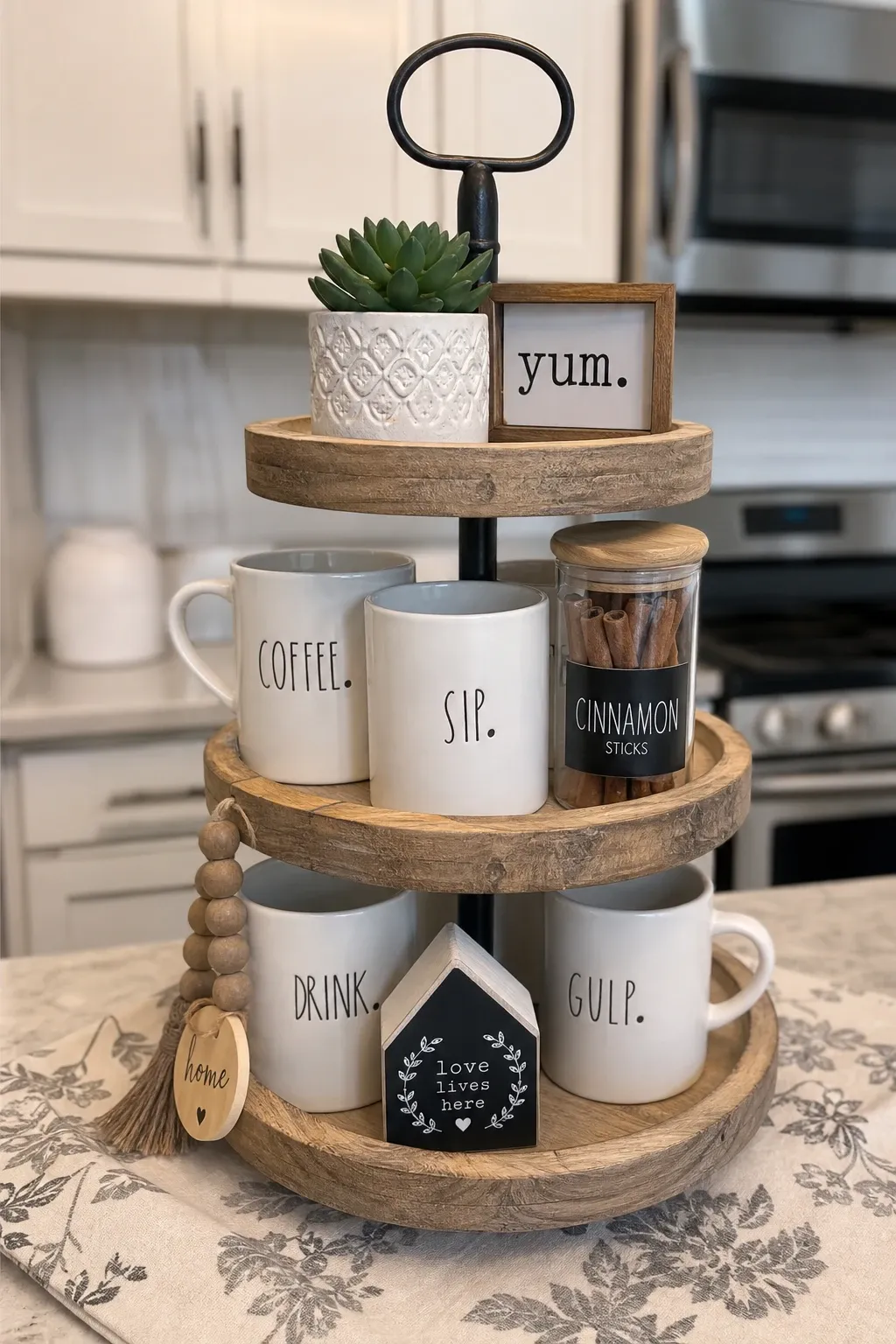
A two or three-tiered tray on the counter or island organizes small items while adding farmhouse style. Use it for salt and pepper, olive oil, a small plant, napkins, or seasonal decorations. The tiered tray takes up a small footprint but provides vertical storage that keeps everyday items accessible and organized. It is one of those small details that makes the kitchen feel thoughtfully arranged.
Designer Tip: Change out a few items on the tiered tray each season to keep the display feeling fresh. A small pumpkin in fall, a pine sprig in winter, or fresh flowers in spring. The base items like salt and oil stay year-round while the accent items rotate.
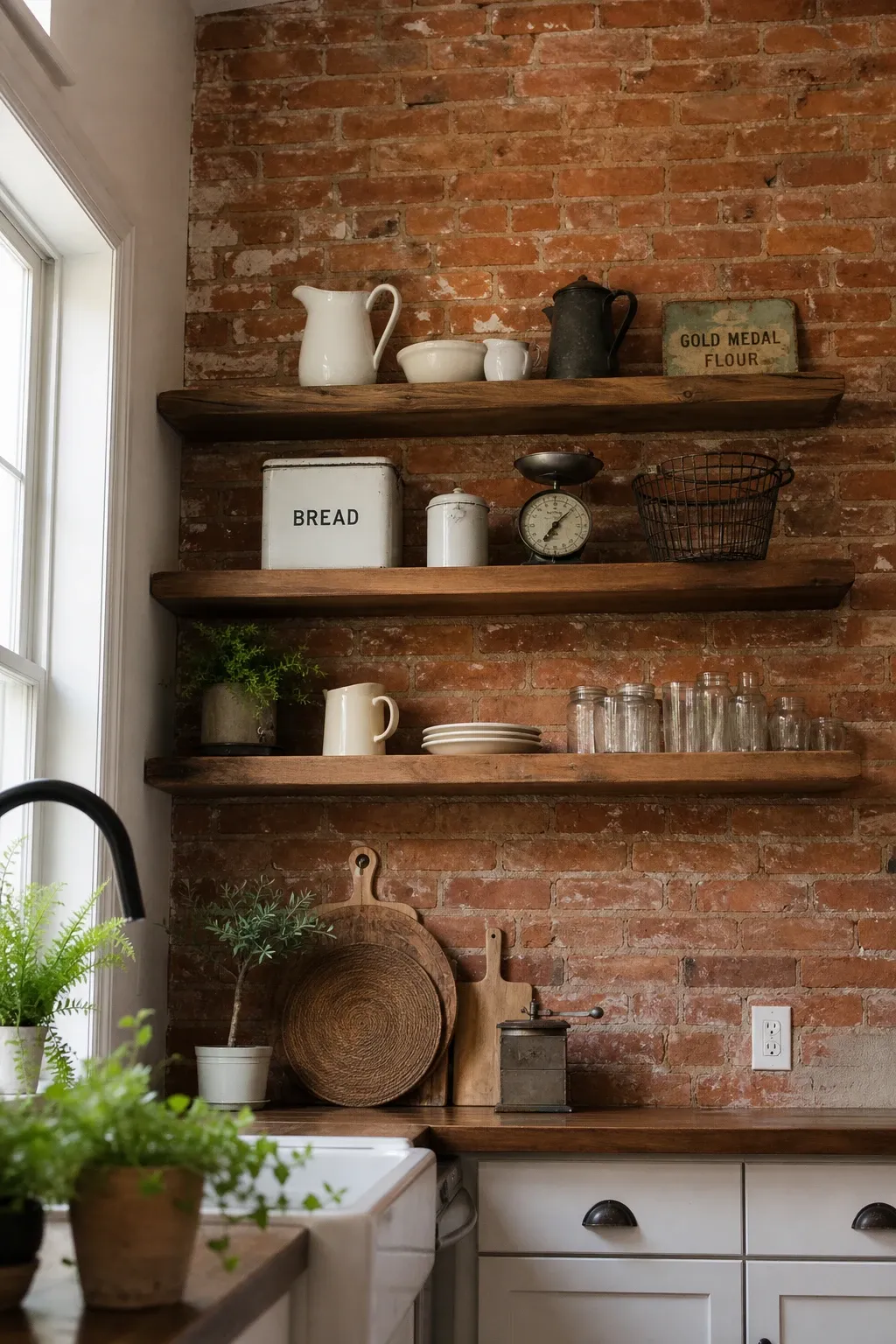
An exposed brick wall or brick backsplash brings warmth, texture, and history to the farmhouse kitchen. Real brick is ideal, but thin brick veneer installed over drywall achieves the same look at a fraction of the cost and effort. The rough texture and warm red-brown tones of brick pair naturally with white cabinets and wood accents. Brick makes the kitchen feel like it has been there for a hundred years.
Designer Tip: Seal brick used as a backsplash with a food-safe masonry sealer to prevent grease and food stains from soaking into the porous surface. Unsealed brick behind a stove collects cooking splatter that is nearly impossible to remove. Seal it and it wipes clean.
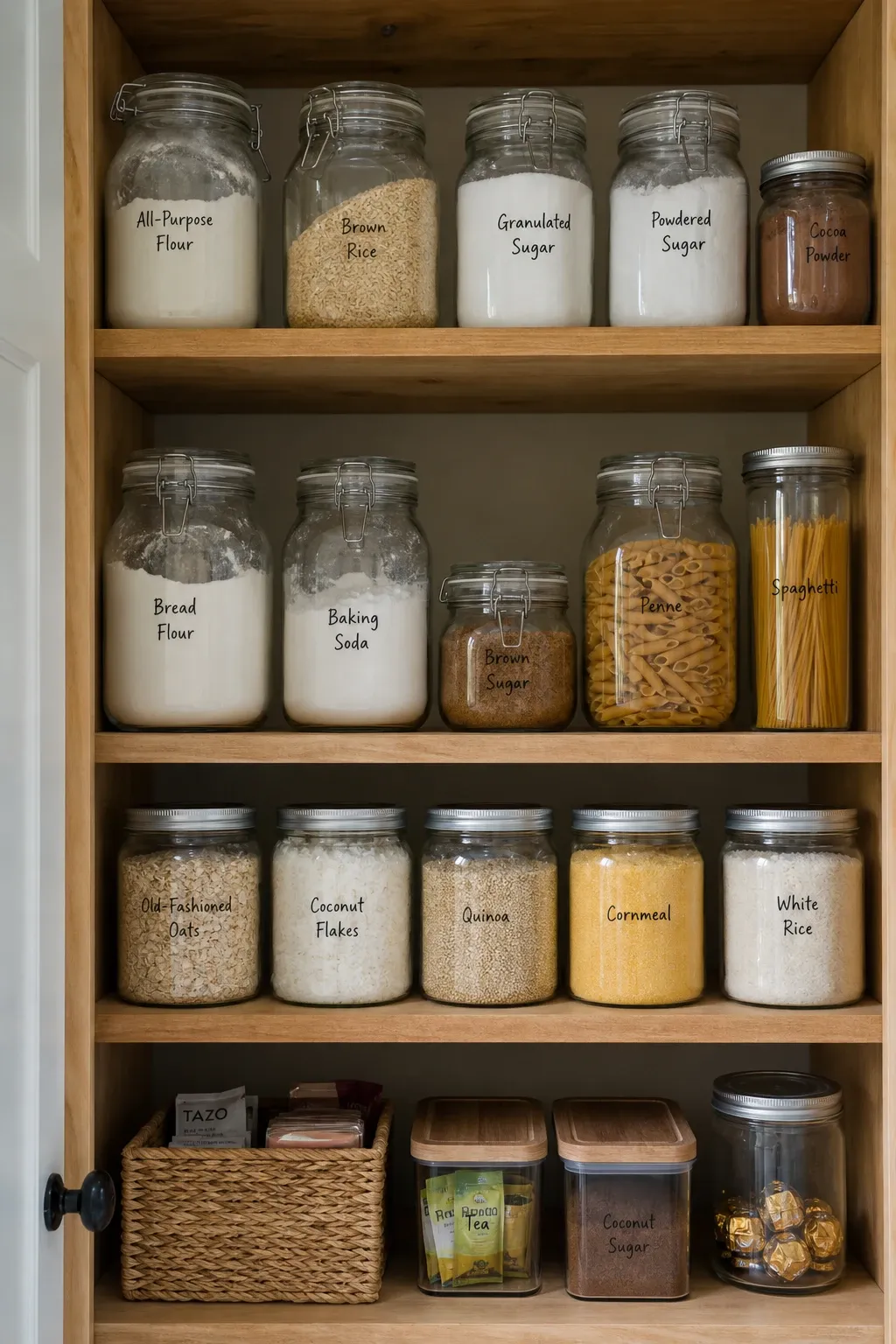
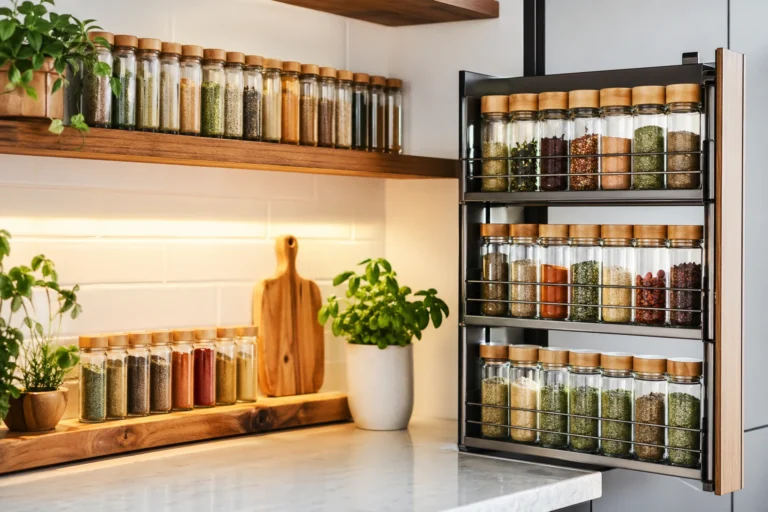
Glass jars, ceramic canisters, and labeled containers arranged on pantry shelves or open kitchen shelving give the farmhouse kitchen an old-world, general-store feel. Decanting dry goods like flour, sugar, pasta, and rice into matching containers looks tidy and makes the pantry functional. The visible contents and handwritten labels add charm while keeping everything easy to find and use.
Designer Tip: Use airtight glass jars with clamp lids for dry goods storage. They keep food fresh, show how much is left at a glance, and look beautiful on a shelf. Label them with chalk markers or printed labels so everyone in the house can find what they need.
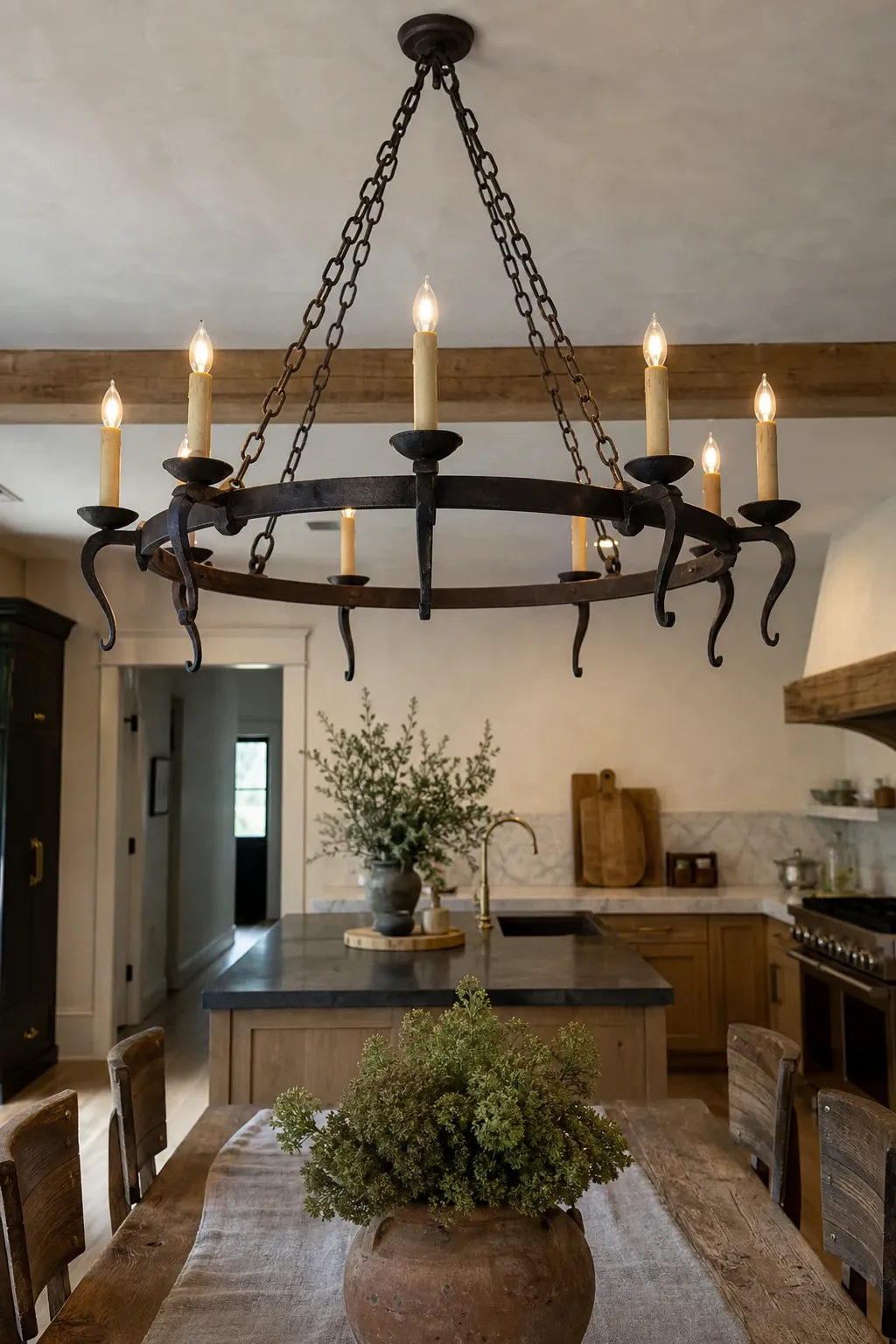
A wrought iron chandelier over the kitchen table or island adds a dramatic focal point that anchors the farmhouse style. The dark metal provides weight and presence that lighter fixtures lack. Candle-style bulbs on a wrought iron frame give the kitchen a rustic, old-world atmosphere. This is the statement piece that makes the kitchen feel finished and intentional rather than just decorated.
Designer Tip: Use dimmable warm white bulbs in the chandelier and install a dimmer switch. A wrought iron chandelier at full brightness can feel harsh. Dimmed down, it creates a warm, ambient glow that sets the mood for evening cooking and dinner.
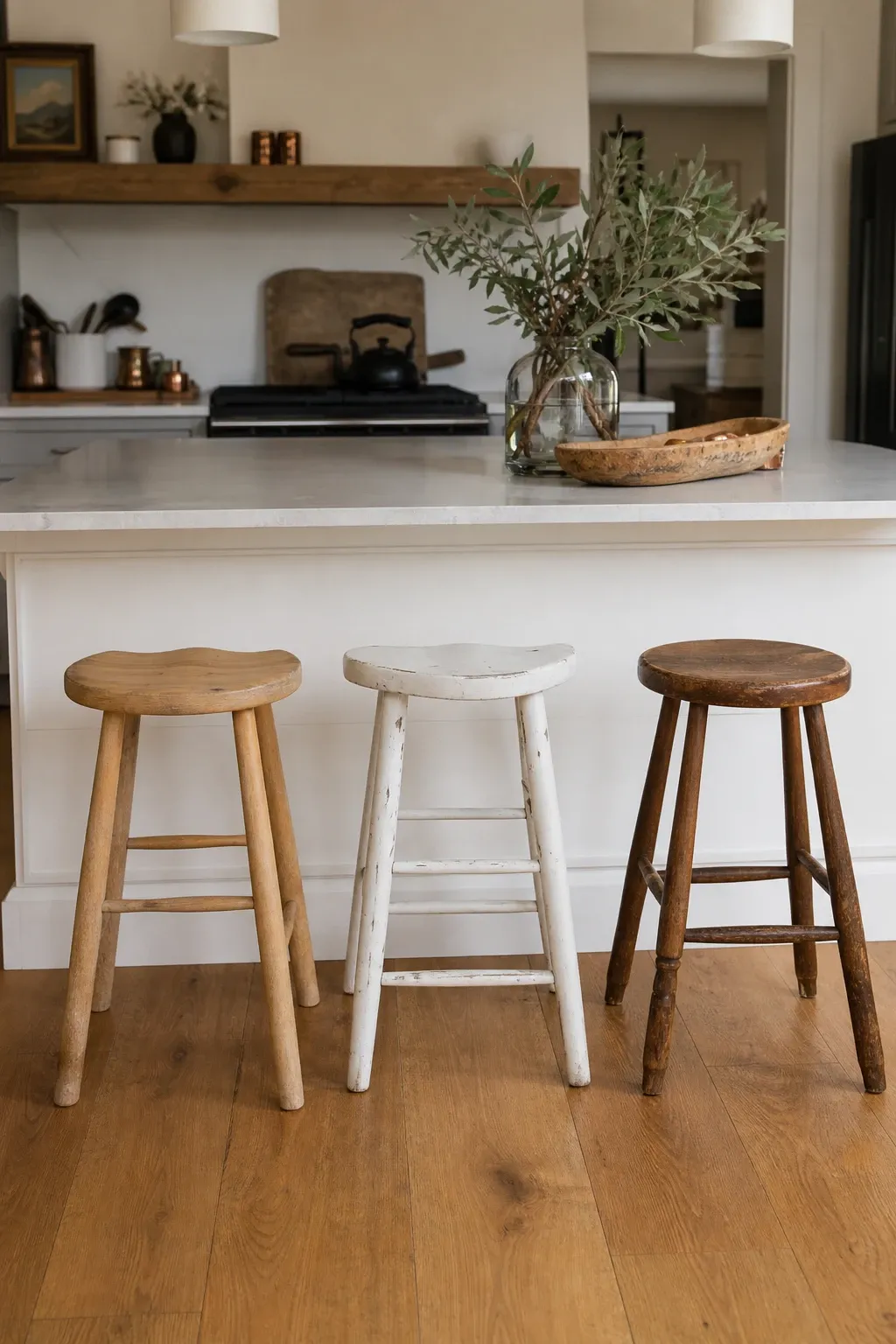
Different styles of bar stools or kitchen chairs around the island or table give the kitchen a collected, casual feel. Mixing a metal stool, a wood stool, and an upholstered stool looks like furniture gathered over time rather than bought as a set. This intentional mismatch is a hallmark of farmhouse style. Each seat has its own character, and the variety adds visual interest to the seating area.
Designer Tip: Keep mismatched seating at the same height so the seat tops line up at the counter. Different heights look like a mistake rather than a style choice. As long as the seats are level, everything else can vary freely. Paint them all the same color for unity, or leave them all different for maximum farmhouse character.
Farmhouse kitchen style works best when it looks like it happened naturally. Pick a few ideas from this list that fit your kitchen and add them one at a time. The best farmhouse kitchens are not decorated in one shopping trip. They are built over months and years as you find pieces that feel right. That slow, collected approach is what makes the style feel genuine.
Frequently Asked Questions
Is farmhouse kitchen style outdated?
The extreme version with shiplap on every wall and mason jars everywhere has peaked, but the core of farmhouse style, natural materials, warm neutrals, and practical decor, is timeless. A restrained farmhouse kitchen that focuses on wood, white, and a few vintage touches looks current and will age well.
How do I do farmhouse style on a budget?
Focus on accessories and small changes rather than full renovations. Add open shelves, swap light fixtures, display copper or ironware you already own, and shop thrift stores for vintage pieces. A few well-chosen items like a farmhouse sink, new hardware, or a rustic chandelier go a long way without a full remodel budget.
Can farmhouse decor work in a modern kitchen?
Yes. Mixing farmhouse elements with modern ones creates a style often called modern farmhouse. Clean-lined cabinets with a wood open shelf, a farmhouse sink with a modern faucet, or industrial pendants over a sleek island blend both styles. The key is using farmhouse touches selectively rather than going all-in on either style.
What are the best farmhouse kitchen colors?
White, cream, soft sage green, warm gray, and muted blue are the classic farmhouse kitchen colors. White cabinets with warm wood accents are the most popular combination. Black and dark green are also used for islands and accent cabinets. The overall palette should feel warm and natural rather than cool and stark.