Transform Your Bathroom: 15 Innovative Small Walk-In Shower Ideas for 2025
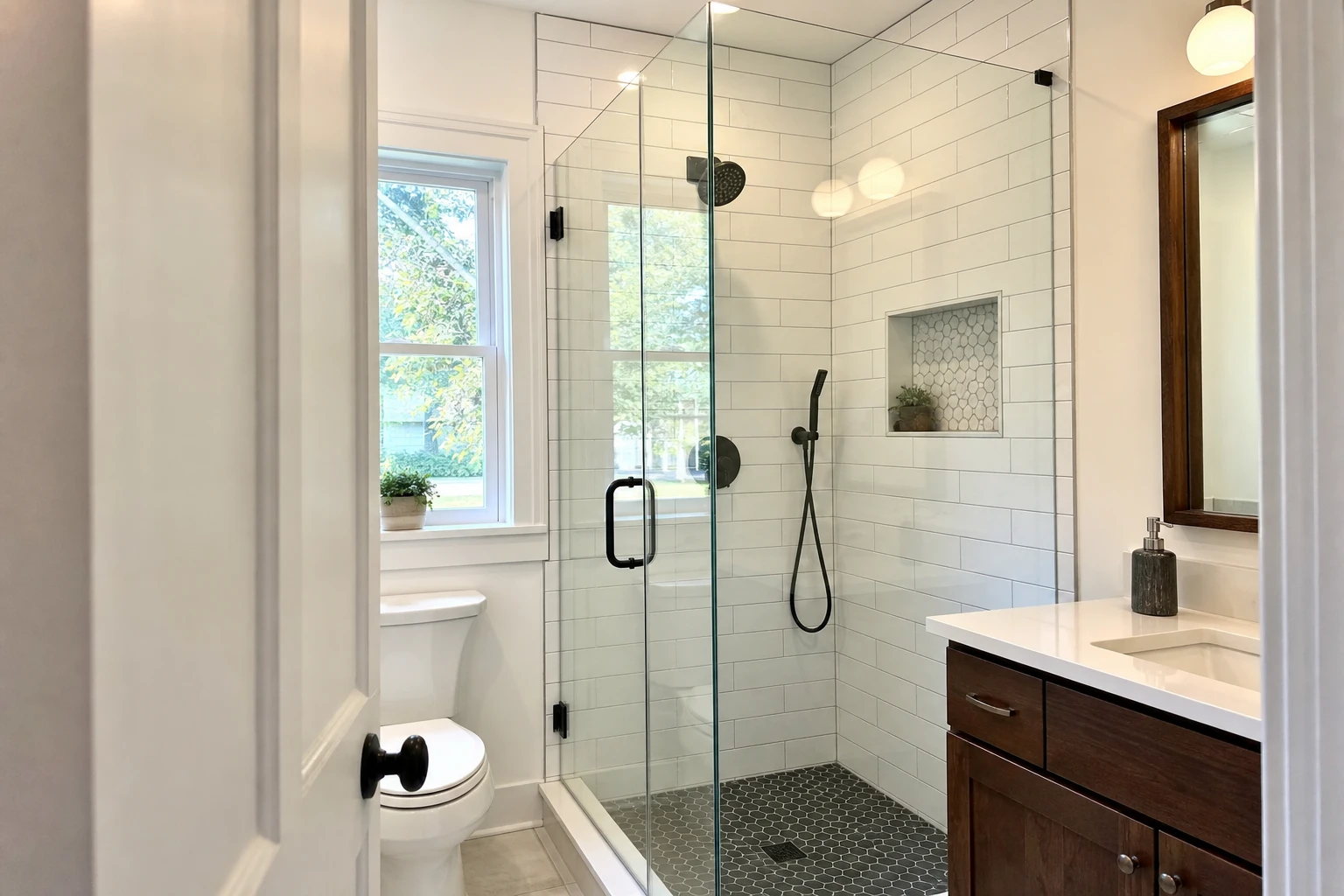
Featured Image: Modern Small Walk-In Shower
Transform Your Bathroom: 15 Innovative Small Walk-In Shower Ideas for 2025
Creating a functional and beautiful bathroom in a limited space is one of the most common challenges in modern home design. Many homeowners feel restricted by small square footage, thinking they have to sacrifice style for utility. However, the rise of the walk-in shower has completely changed this perspective. A well-designed walk-in shower can make even the smallest bathroom feel like a high-end spa while maximizing every inch of available space.
In this comprehensive guide, we will explore fifteen unique small walk-in shower ideas that blend aesthetics with practical solutions. Whether you are planning a full renovation or just looking for ways to refresh your current setup, these concepts will provide the inspiration you need to turn a cramped corner into a stunning focal point.
Why Choose a Walk-In Shower for Small Spaces?
Before we dive into the specific ideas, it is important to understand why walk-in showers are the superior choice for small bathrooms. Traditional tub-and-shower combos often feel bulky and cut the room in half visually. A walk-in shower, especially one with glass enclosures, allows the eye to travel through the entire space, creating an illusion of openness.
Beyond the visual benefits, walk-in showers offer better accessibility. They eliminate the need to climb over a high tub wall, making them safer for people of all ages. They also allow for more customization in terms of layout, as they can be fitted into odd-shaped corners or narrow alcoves where a standard tub simply would not fit.
1. Seamless Glass Partitions for an Airy Feel
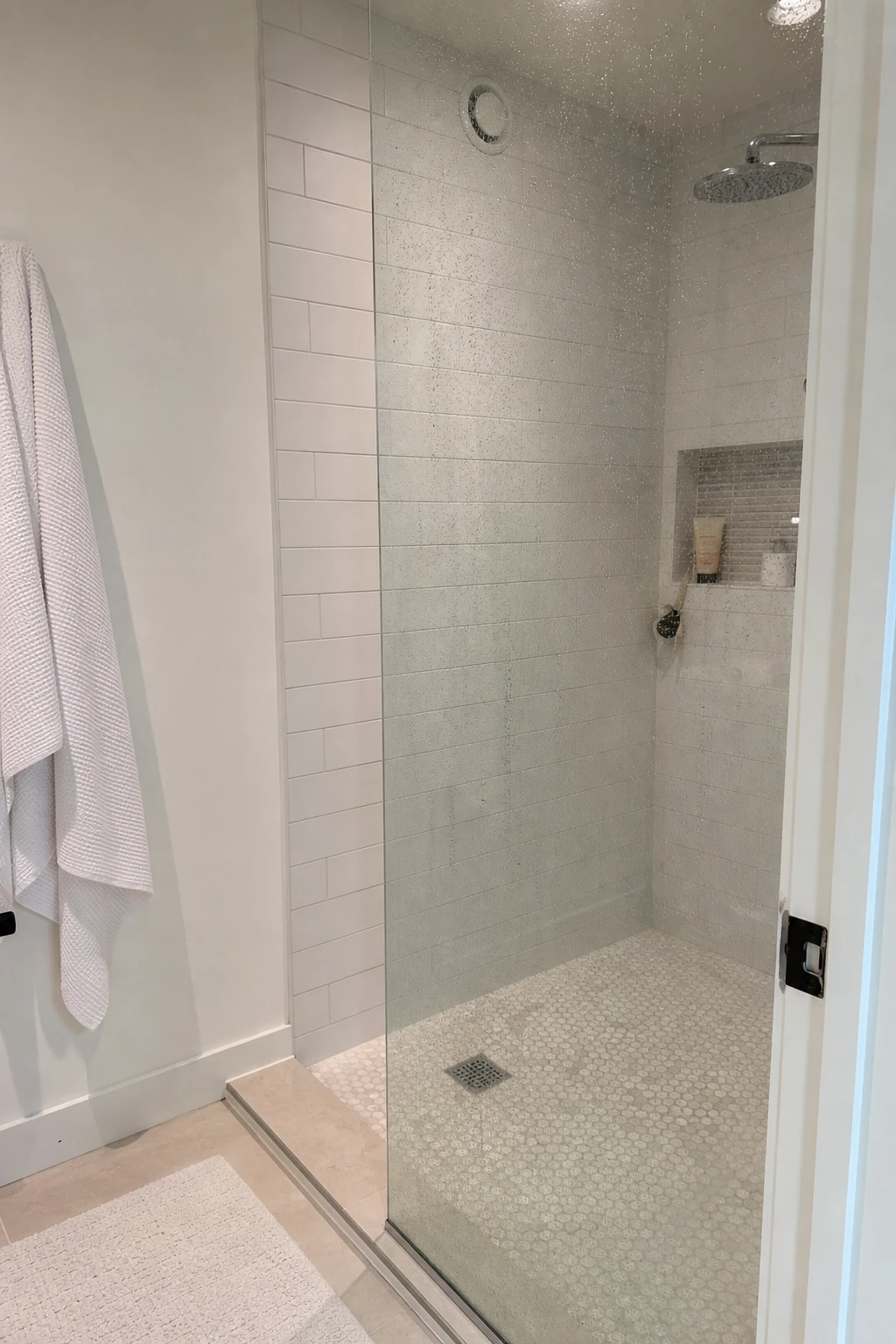
One of the most effective ways to make a small shower feel larger is to use seamless glass partitions. Instead of a traditional door that requires clearance to swing open, a fixed glass panel keeps the space open and airy. This design is often referred to as a “walk-in” or “wet room” style because it lacks a formal entrance barrier.
The transparency of the glass ensures that the back wall of the shower is visible from the rest of the bathroom. This prevents the shower from feeling like a separate, closed-off box. To maintain this look, many designers recommend using low-iron glass, which lacks the green tint often found in standard tempered glass, providing a crystal-clear view.
2. Deep Charcoal and Slate Accents for Added Depth
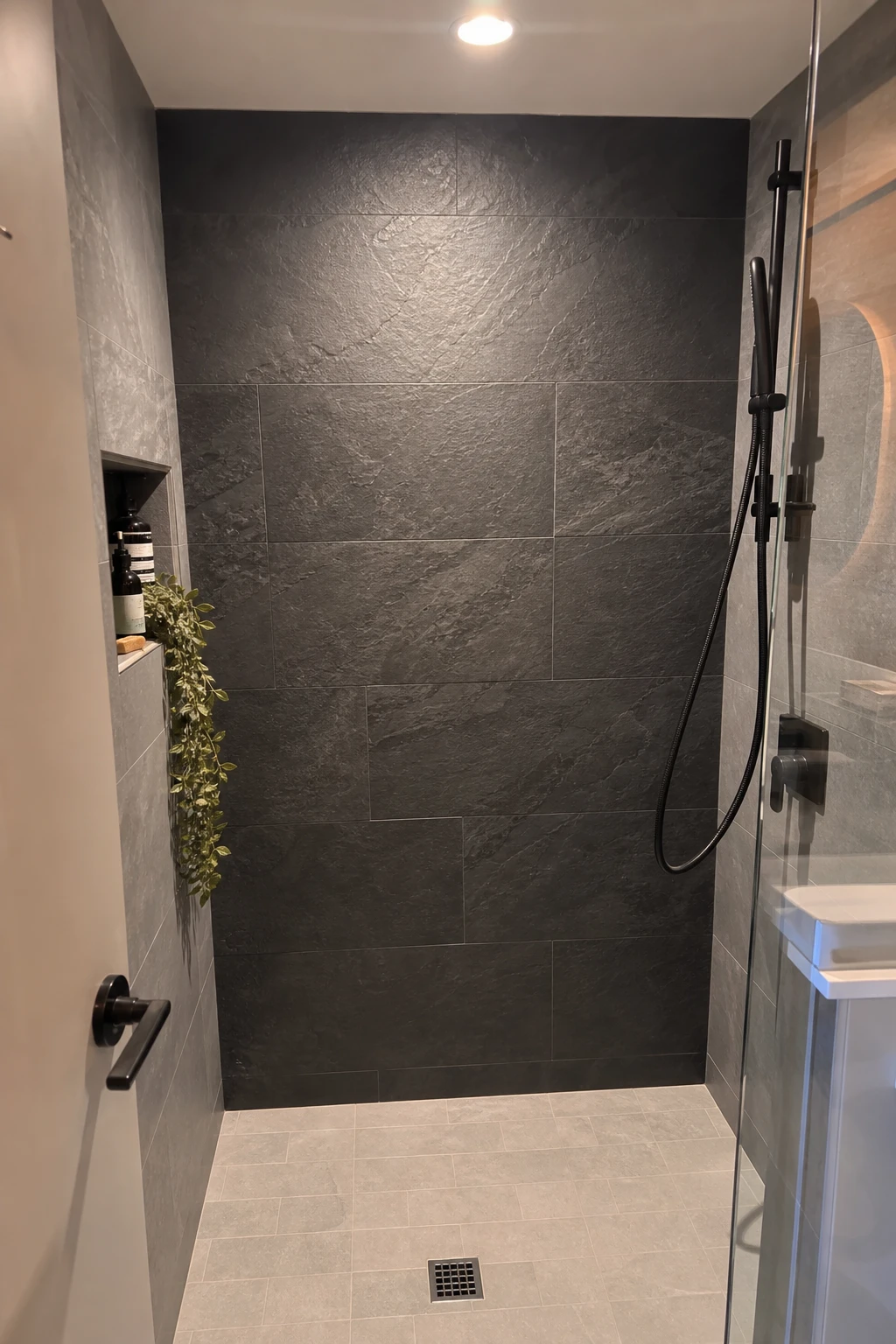
While many people stick to white for small spaces, using dark colors strategically can actually add significant depth. Charcoal grey or slate tiles on the back wall of a small shower can create a “recessed” effect, making the wall appear further away than it actually is.
When using dark tiles, it is crucial to balance them with lighter elements elsewhere in the room. For example, pairing dark slate walls with a light grey floor and bright white ceiling keeps the space from feeling cave-like. High-quality lighting is also essential here to highlight the texture of the dark stone and ensure the area remains functional.
3. Carrara Marble with Integrated Seating
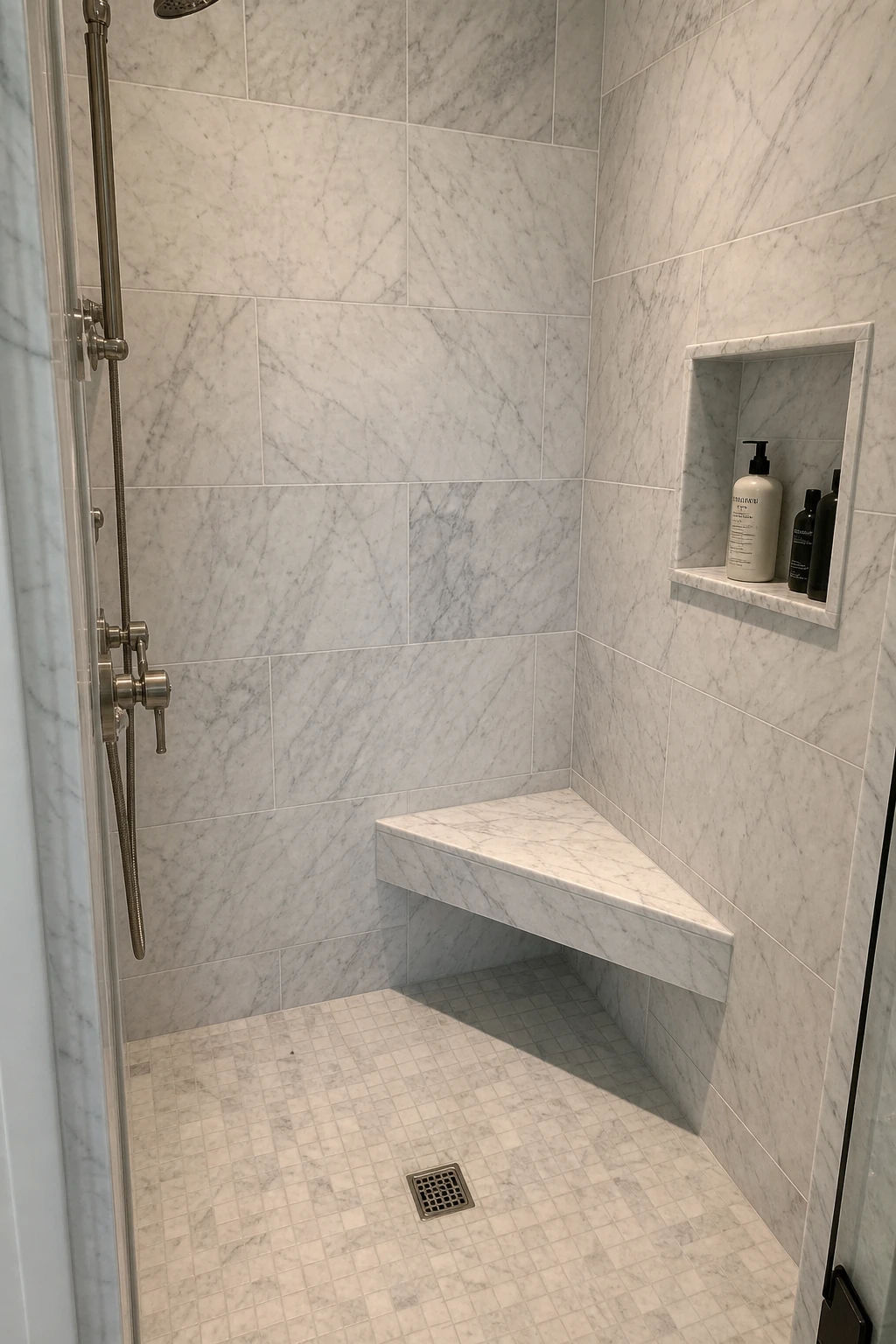
Marble has long been associated with luxury, and bringing it into a small shower can elevate the entire room. Carrara marble, with its soft white background and delicate grey veining, is a classic choice that reflects light beautifully. In a small walk-in shower, extending the marble from the walls to a built-in bench creates a cohesive and high-end look.
A built-in bench is not just a luxury; it is a practical addition for a small space. It provides a place to sit, a spot to rest your feet while shaving, or extra surface area for toiletries. By using the same marble for the bench as the walls, the feature blends seamlessly into the design without adding visual clutter.
4. Frameless Pivot Doors for Minimalist Style
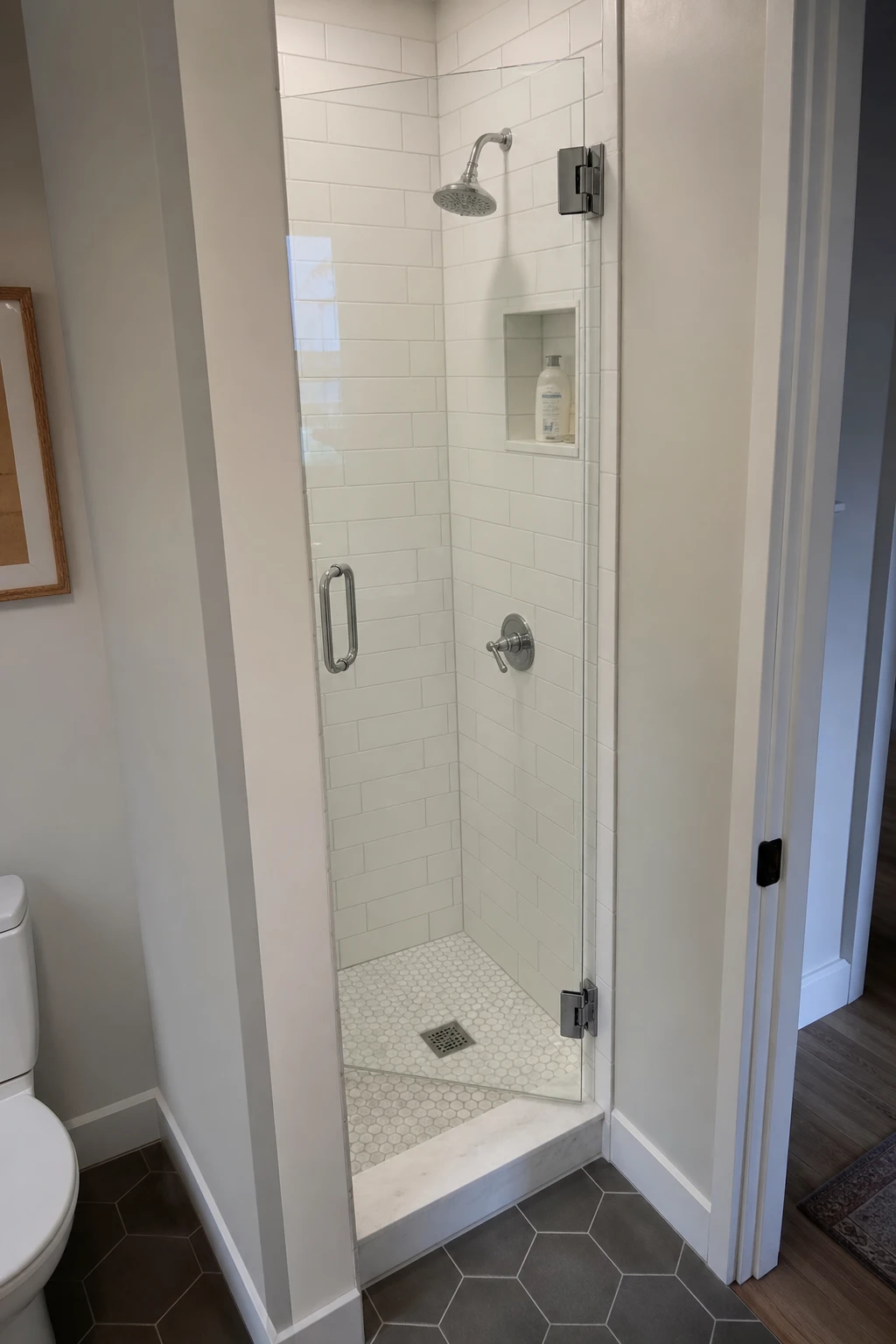
If you prefer a fully enclosed shower to keep steam and water contained, a frameless pivot door is an excellent minimalist option. Unlike traditional framed doors, these use heavy-duty hinges attached directly to the glass, eliminating bulky metal frames that can make a small shower feel restricted.
Pivot doors are particularly useful in small bathrooms because they can be designed to swing both inward and outward. This flexibility is a lifesaver in tight layouts where a door swinging outward might hit a toilet or vanity. The clean lines of the frameless glass maintain the open feel while providing the functionality of a closed enclosure.
5. Bohemian Patterned Cement Tiles for Character
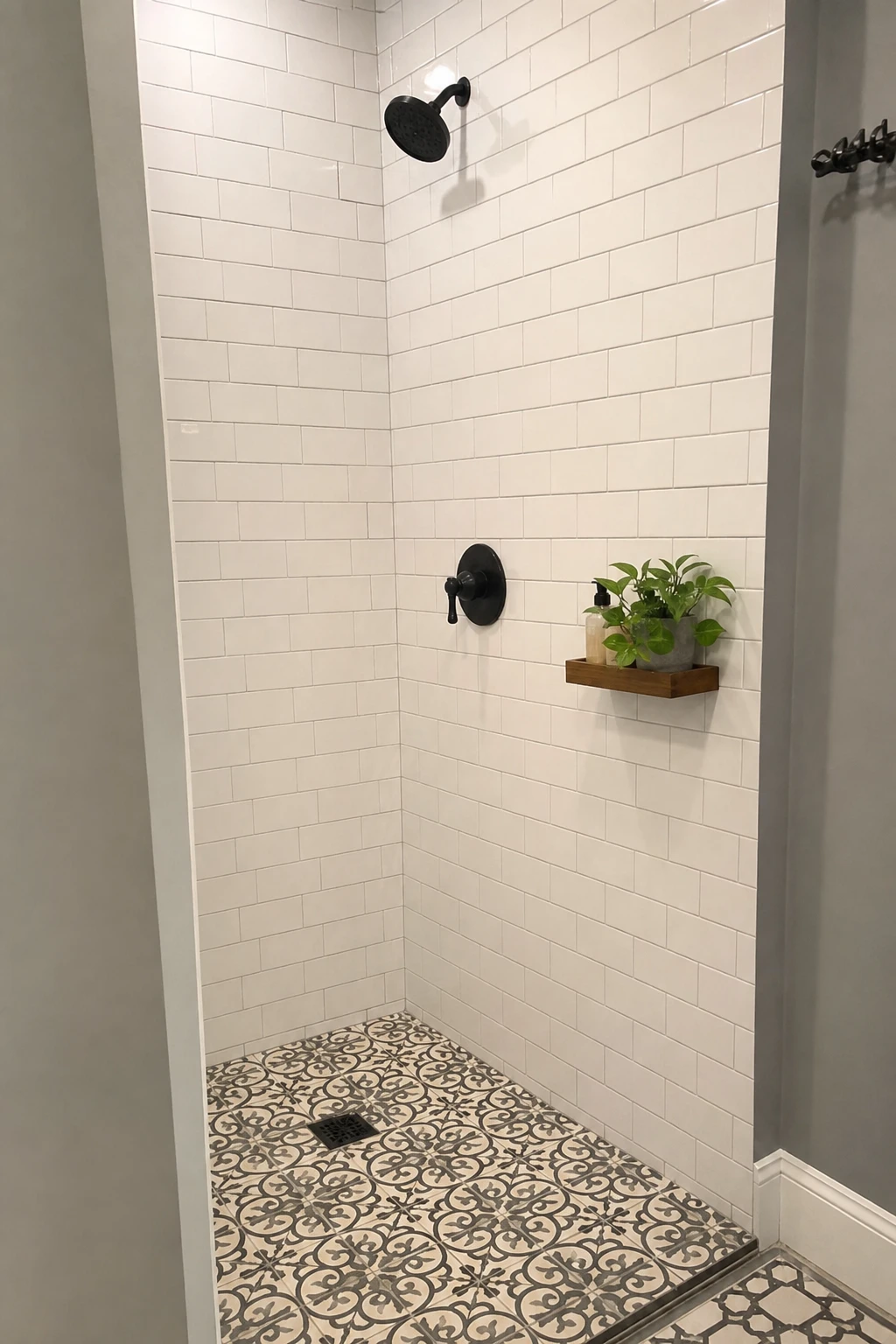
For those who want to inject personality into their bathroom, patterned cement tiles are a fantastic choice. A small walk-in shower is the perfect place to experiment with bold patterns without overwhelming the entire room. Using these tiles on the floor or as a feature wall adds a touch of bohemian charm and artistic flair.
Patterned tiles work best when the rest of the shower remains simple. Pair a busy floor pattern with large-format white subway tiles on the walls to create a balanced look. The contrast between the intricate floor and the clean walls draws the eye downward, making the floor area feel like a deliberate design choice rather than a cramped necessity.
6. Dynamic Herringbone Wall Layouts
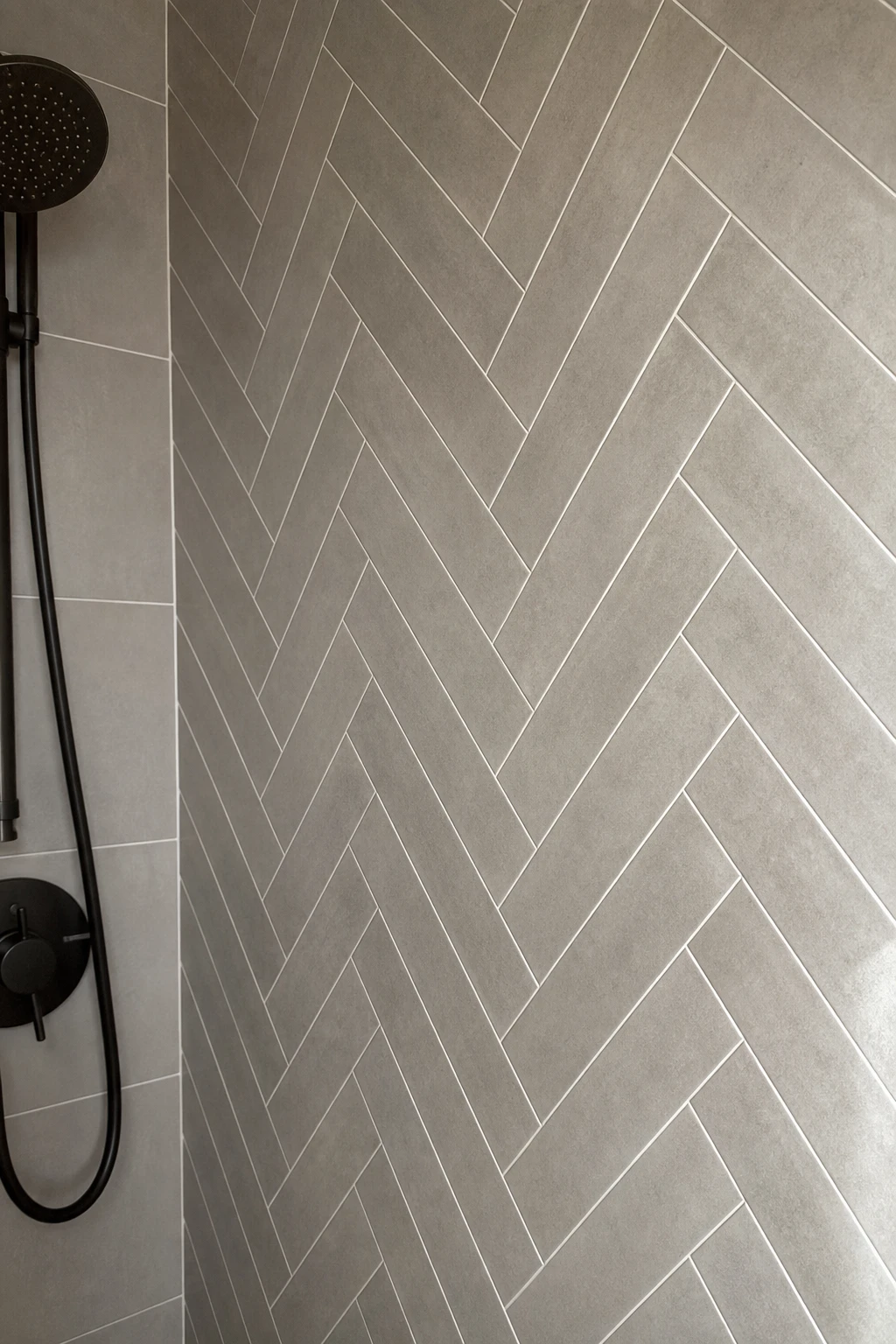
The way you lay your tiles can be just as important as the tiles themselves. A herringbone pattern, where rectangular tiles are laid at a 45-degree angle to create a “V” shape, adds a sense of movement and sophistication to a small shower. This pattern is particularly effective at drawing the eye upward, which can make a shower with a low ceiling feel taller.
You can achieve a subtle look by using white tiles with matching grout, or a more dramatic effect by using contrasting grout colors. Herringbone patterns work beautifully with standard subway tiles, turning an affordable material into a high-end design feature. It is a timeless look that fits both modern and traditional bathroom styles.
7. Organic River Stone Flooring
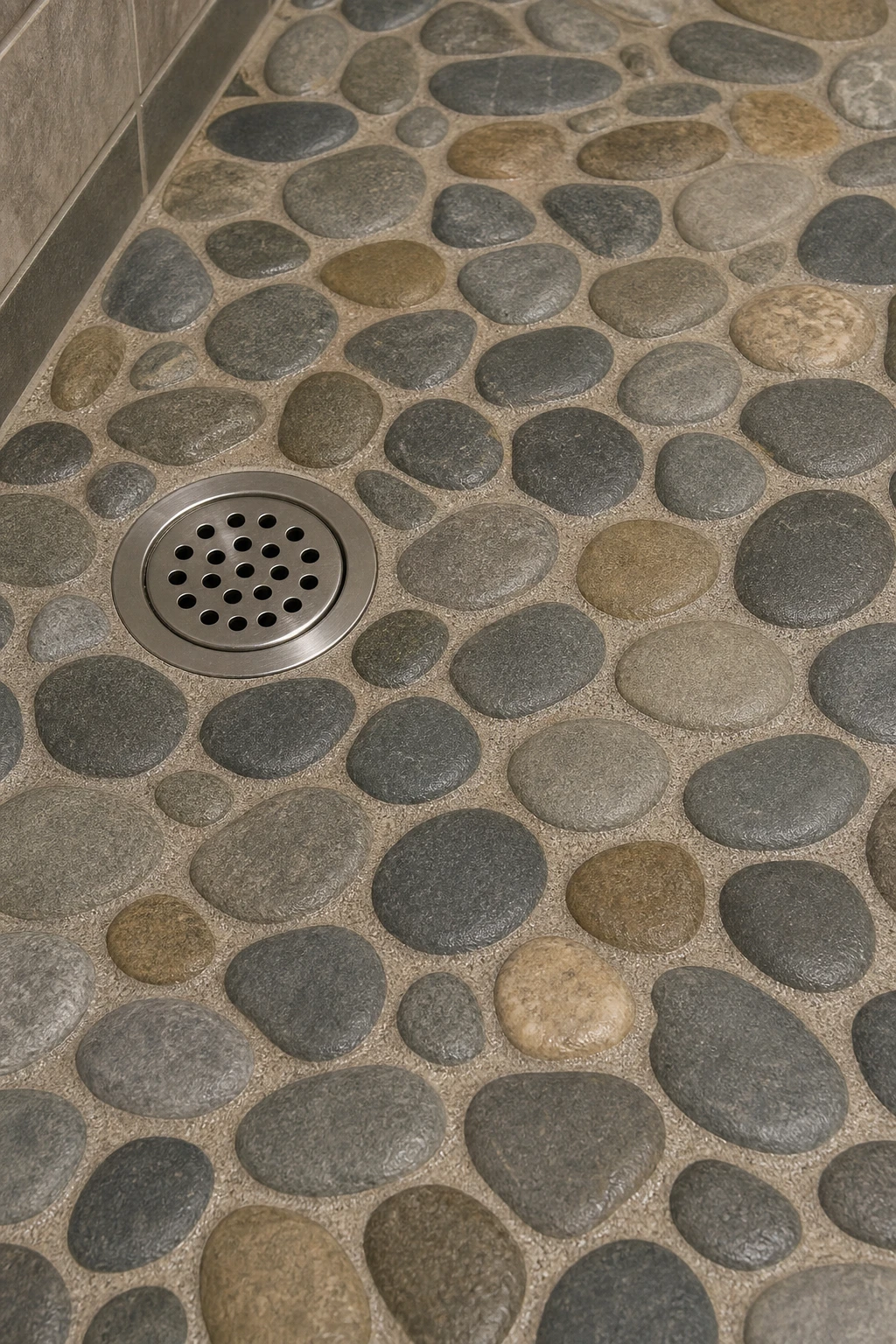
Bringing natural elements into the bathroom can create a calming, spa-like atmosphere. River stone or pebble flooring is a popular choice for walk-in showers because of its organic texture and the gentle massage-like feel it provides underfoot. In a small shower, the varied shapes and colors of the stones add visual interest without the rigidity of square tiles.
Beyond aesthetics, pebble floors provide excellent slip resistance, which is a vital safety consideration in wet areas. They also allow for easier drainage in curbless or uniquely shaped showers, as the grout lines between the stones can accommodate the slope of the floor more naturally than large tiles.
8. Botanical Green Subway Tiles for a Refreshing Vibe
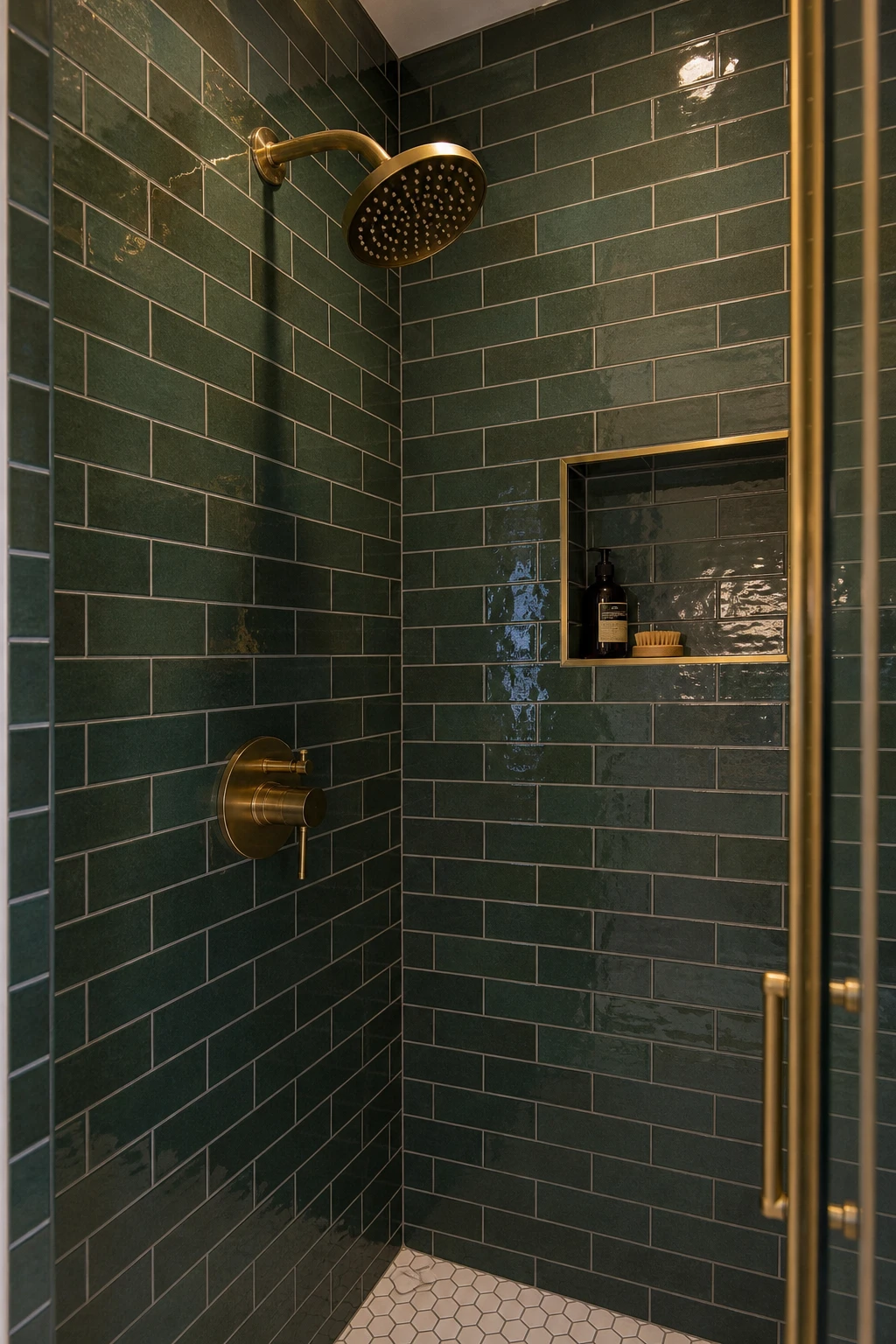
Green is becoming a dominant color in bathroom design for 2025, as it evokes a sense of nature and tranquility. Using botanical green subway tiles in a small walk-in shower can make the space feel fresh and invigorating. Whether you choose a soft sage or a deep forest green, this color choice stands out against standard neutral palettes.
To keep the small space from feeling too dark, consider using a vertical stack bond for the tiles. This layout emphasizes the height of the walls. Pairing green tiles with gold or brass fixtures adds a touch of warmth and luxury, creating a sophisticated look that feels both modern and classic.
9. Urban Industrial Concrete and Matte Black
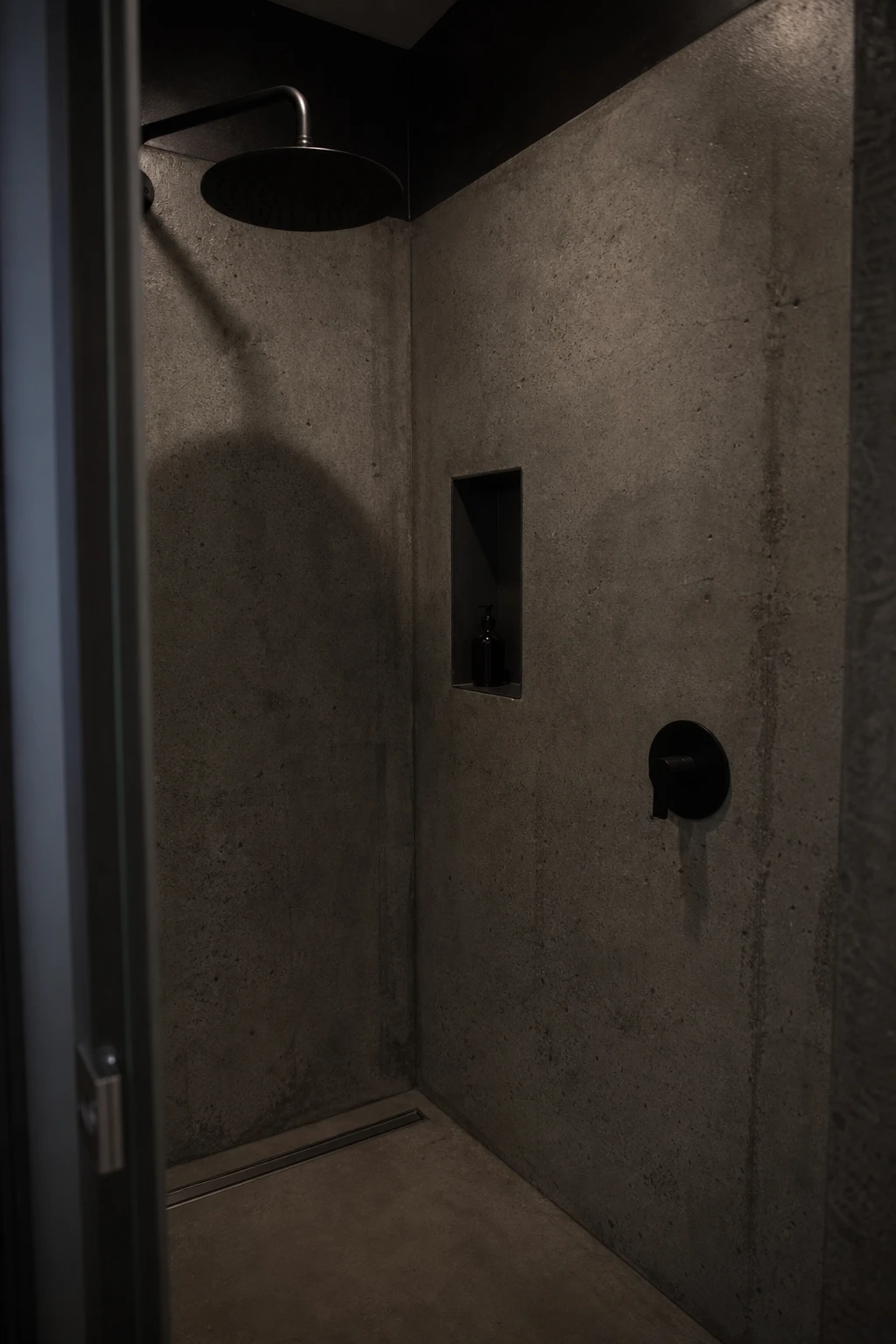
The industrial look remains a favorite for modern homes, and it translates perfectly to small walk-in showers. Using large-format porcelain tiles that mimic the look of poured concrete creates a seamless, urban aesthetic. This style is characterized by its “raw” feel and minimalist approach to decoration.
To complete the industrial look, incorporate matte black fixtures. A black rain showerhead, matching handles, and a black-framed glass partition (often called “Crittall style”) provide sharp contrast against the grey concrete-look walls. This combination is bold and masculine, making a strong design statement even in the smallest of bathrooms.
10. Floating Teak Benches and Recessed LEDs
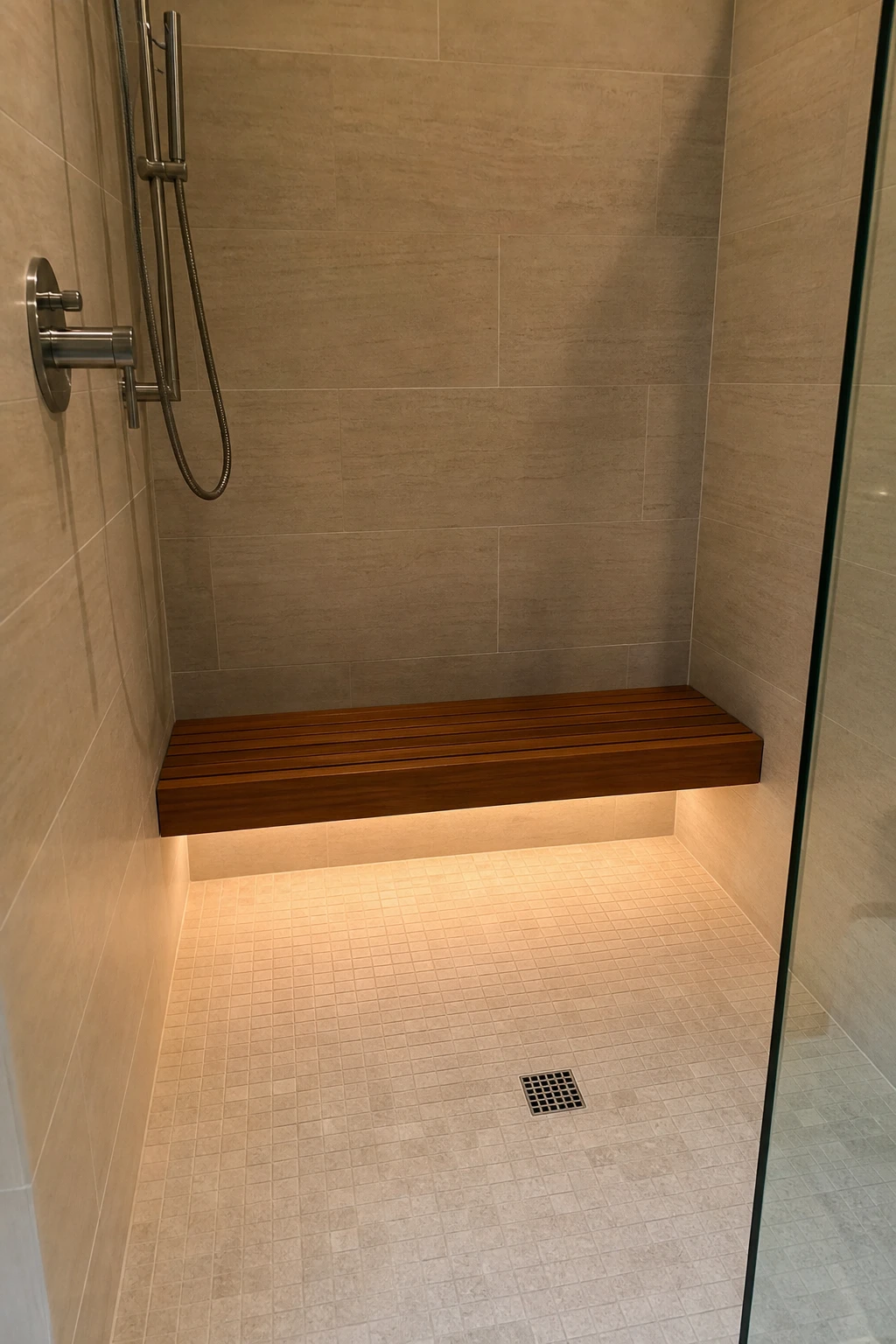
In very small showers where a built-in stone bench might feel too heavy, a floating teak bench is a perfect alternative. Teak is naturally water-resistant and brings a warm, organic element to the space. Because it is “floating” (attached to the wall without legs), it leaves the floor area visible, which helps maintain the illusion of more space.
To enhance the modern feel, incorporate recessed LED strip lighting under the bench or in a wall niche. Lighting is a powerful tool in small bathroom design. Soft, indirect light can eliminate shadows that make a space feel cramped, instead creating a warm glow that makes the shower feel inviting and high-tech.
11. Neo-Classical Arched Thresholds
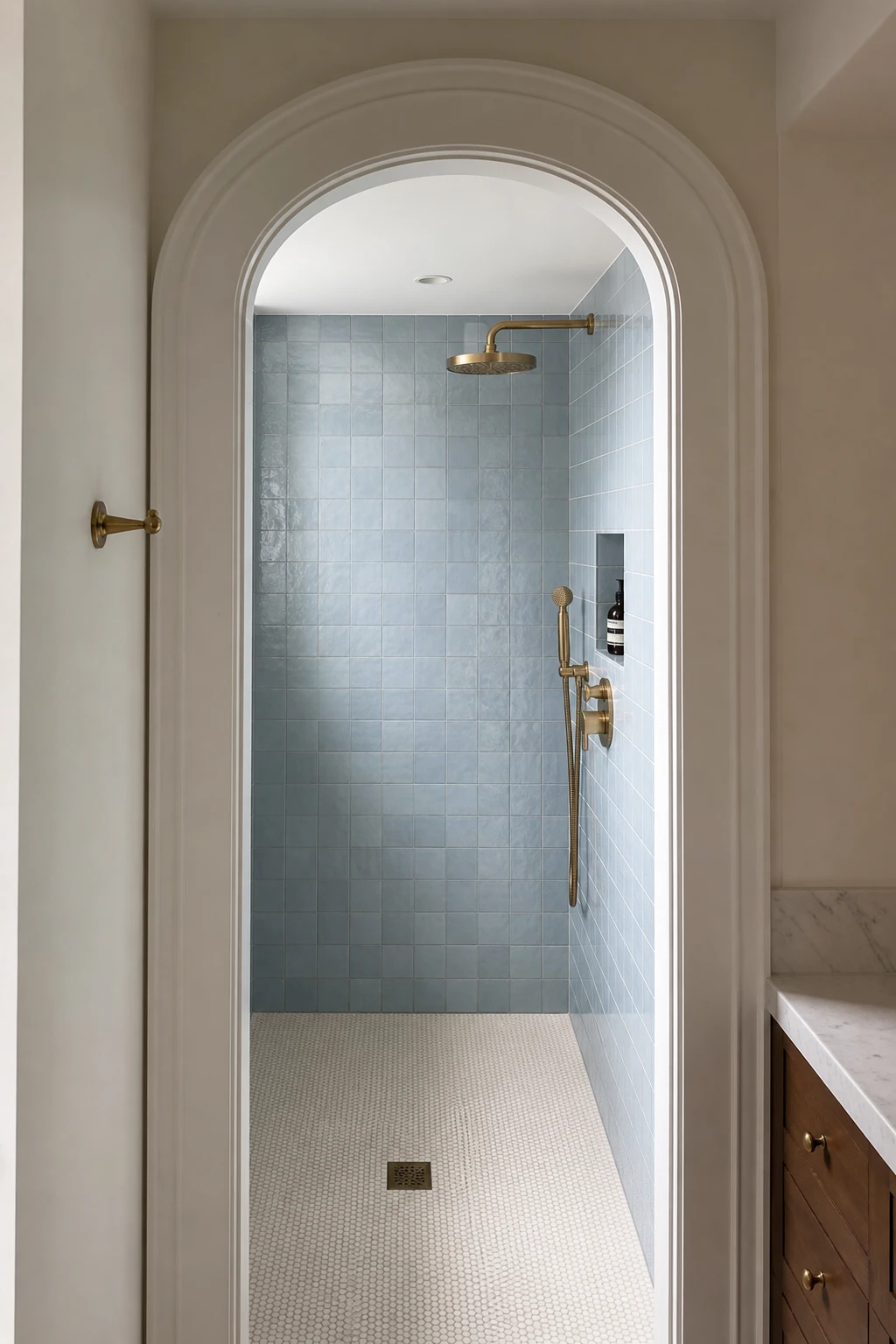
Architecture can be used to define a small walk-in shower in a unique way. Instead of a standard rectangular opening, consider an arched threshold. This neo-classical touch adds a sense of height and elegance, turning the shower entrance into a beautiful architectural feature.
An arched entrance works particularly well in bathrooms with high ceilings. It can be left open for a wet-room feel or fitted with a custom curved glass door. This design choice moves away from the purely functional and treats the shower as a piece of the home’s architecture, adding significant character to a small room.
12. Scandinavian Wood-Effect Porcelain
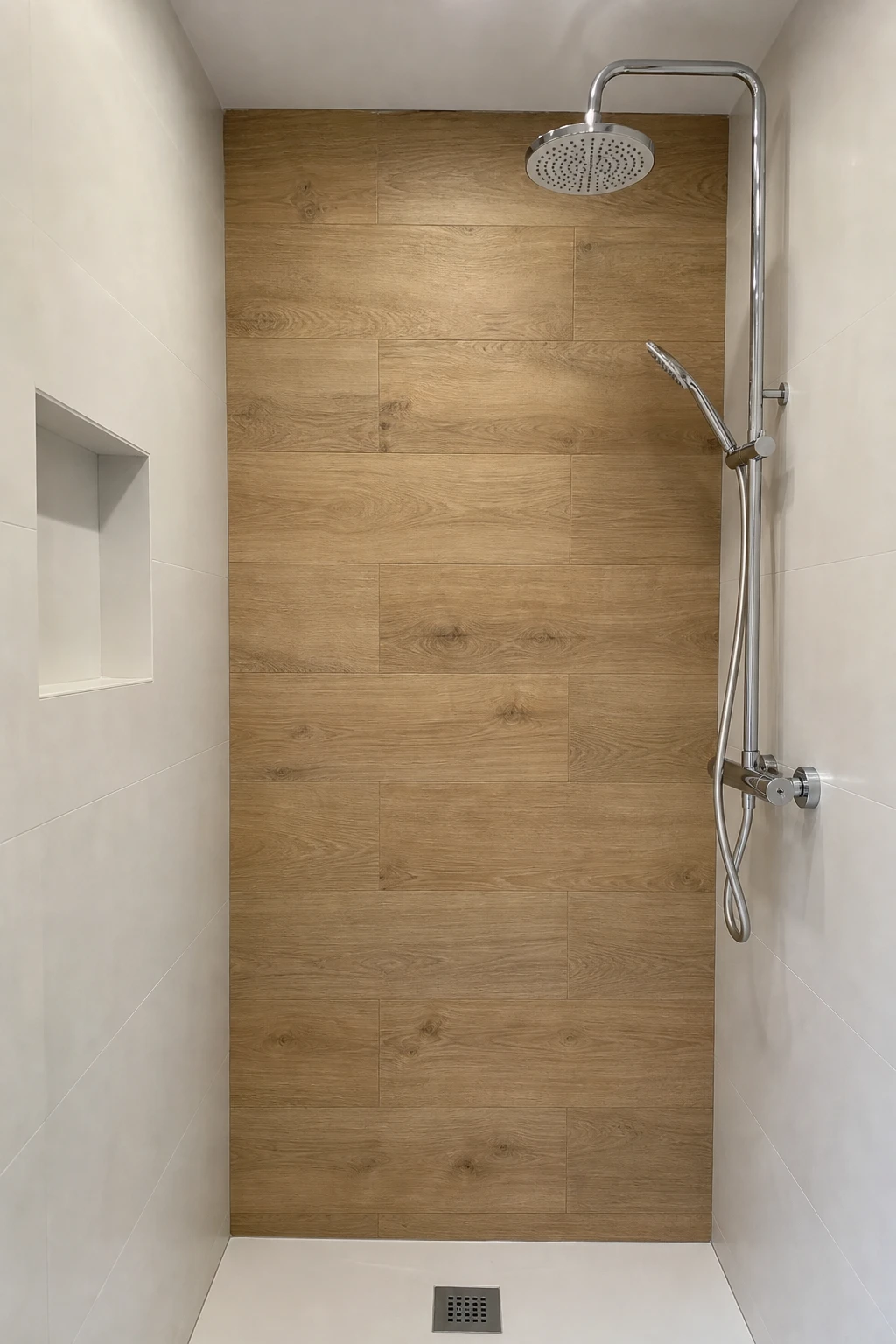
The warmth of wood is often missing from bathrooms due to moisture concerns. However, wood-effect porcelain tiles allow you to bring that Scandinavian “hygge” vibe into your walk-in shower without the risk of rot or warping. These tiles come in long planks and feature realistic grain patterns that are nearly indistinguishable from real timber.
Using wood-effect tiles on one wall or the floor of a small shower creates a cozy, sauna-like atmosphere. It pairs beautifully with white walls and minimalist fixtures. This look is all about simplicity and natural beauty, making it an ideal choice for a small, tranquil retreat.
13. Iridescent Mosaic Accent Strips
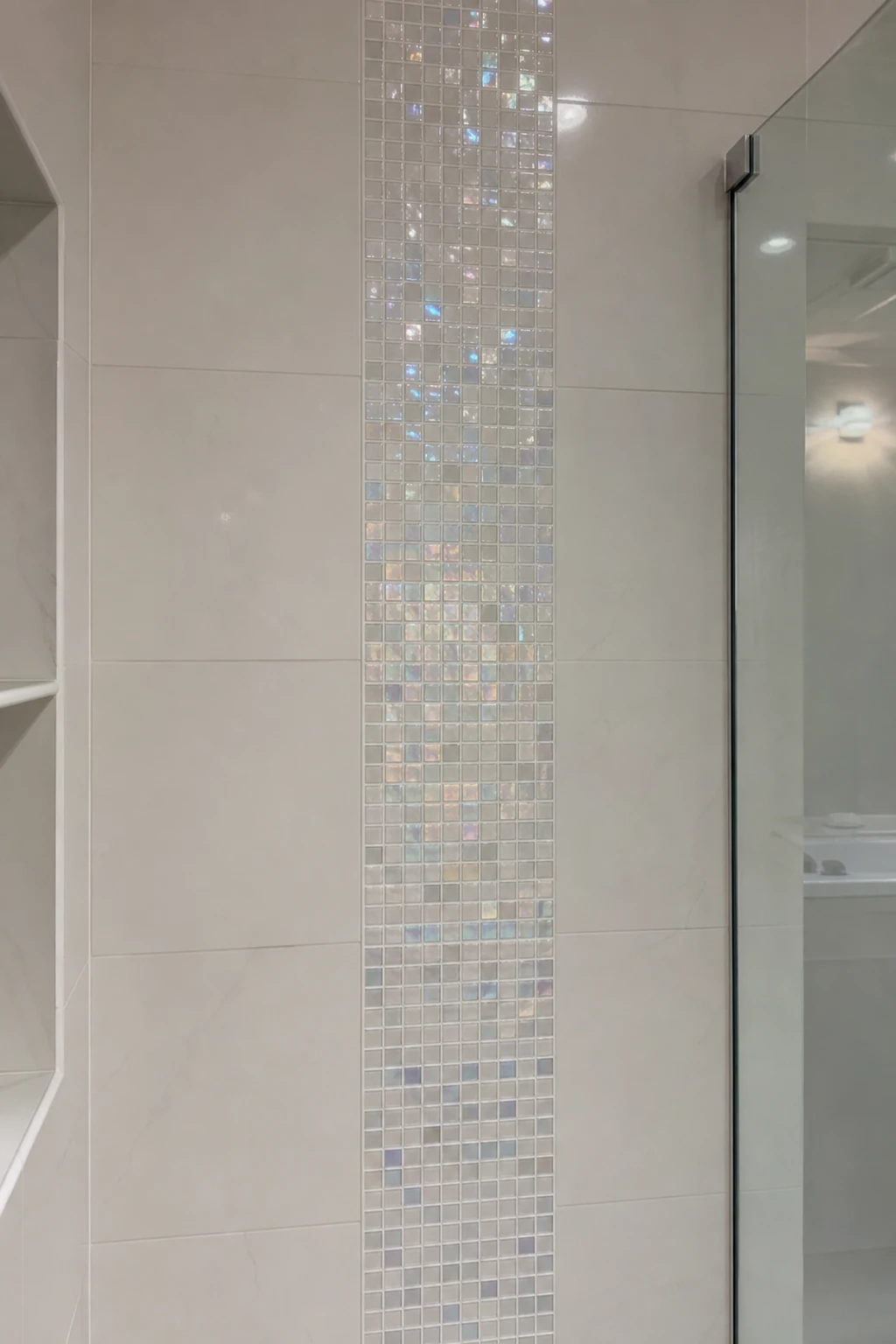
If you love a bit of shimmer, iridescent mosaic tiles can be used to create a stunning accent strip in a small shower. These tiles reflect light in a variety of colors, adding a sense of luxury and movement. Because they are small, they are perfect for adding a “pop” of interest without taking up any physical space.
A vertical or horizontal strip of mosaic tiles can also serve a functional purpose by visually dividing different areas of the shower or highlighting a built-in niche. When the light hits these tiles, they sparkle and change, giving the small shower a dynamic quality that feels much larger than its actual dimensions.
14. Space-Efficient Neo-Angle Enclosures
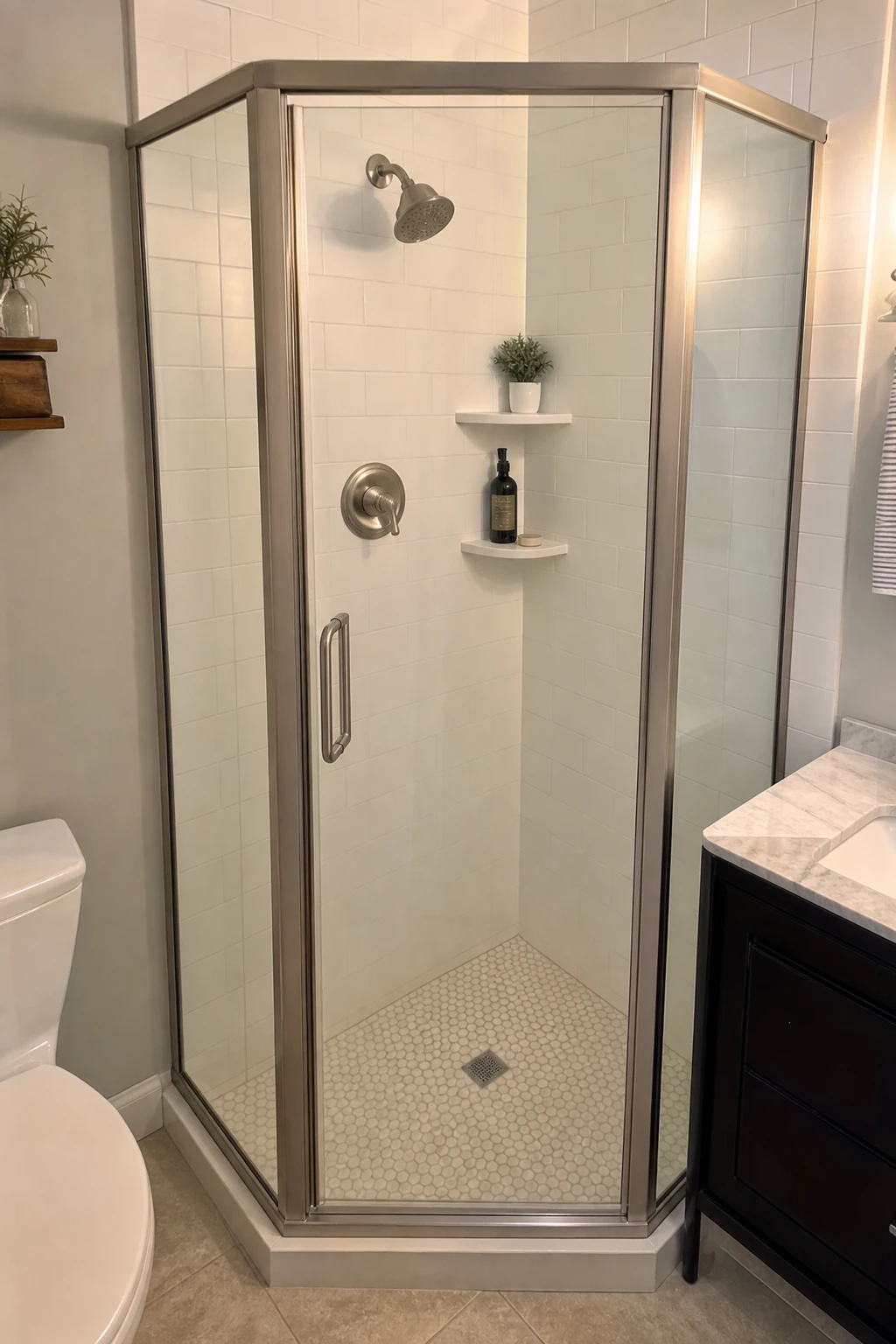
When a bathroom layout is particularly tricky, a neo-angle shower enclosure can be a lifesaver. This design “cuts the corner” of a standard square shower, creating a diamond-shaped footprint. This saves valuable floor space in the rest of the bathroom, allowing for better flow around the toilet or vanity.
Neo-angle showers usually feature three glass panels and a door in the center. While the interior might feel slightly different than a standard square, the exterior benefit of more floor space is often worth it in tiny bathrooms. Using clear glass for all panels ensures that the “cut” corner doesn’t feel like a visual obstruction.
15. Curbless Wet Rooms with Linear Drains
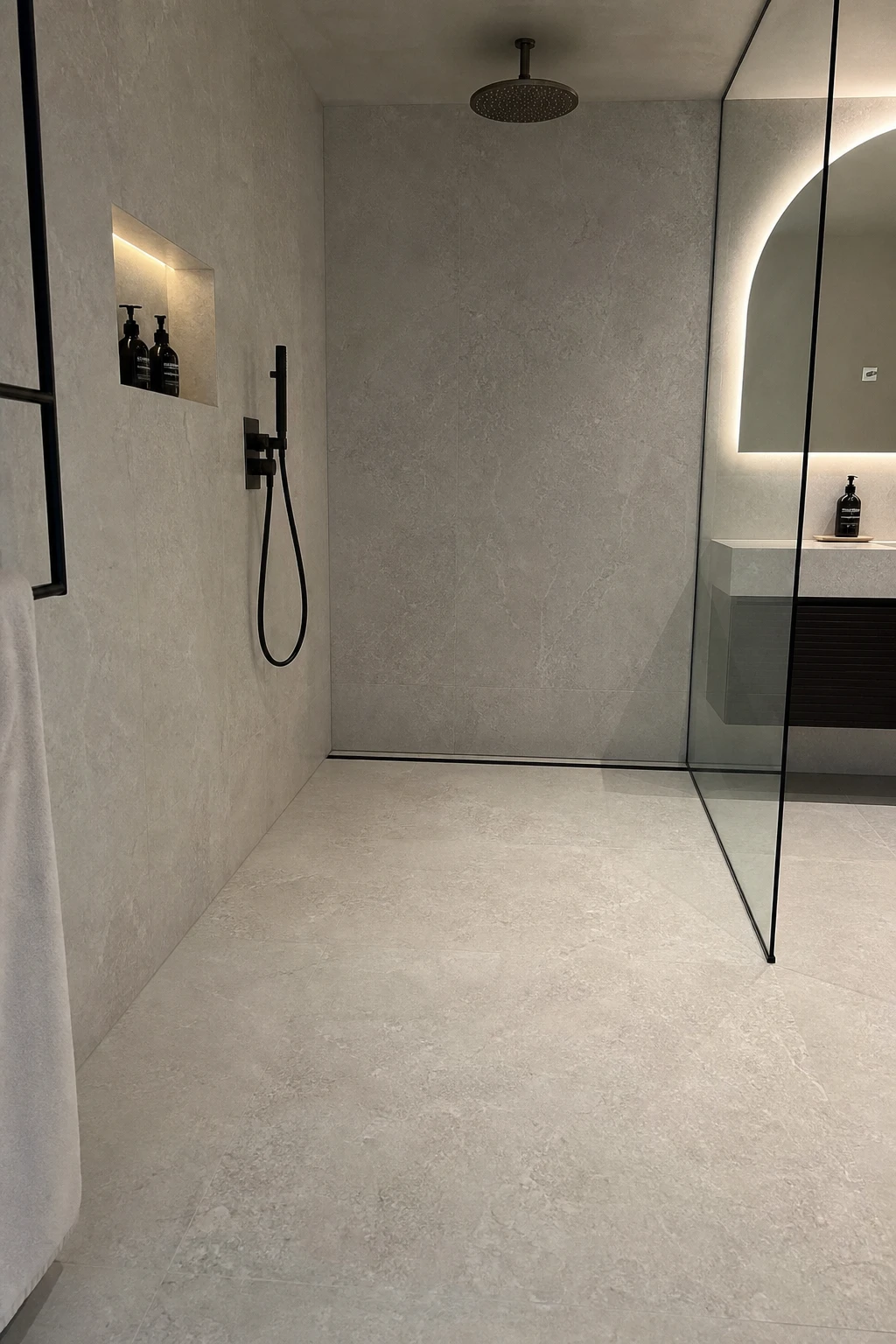
The ultimate modern solution for a small bathroom is the curbless wet room. By eliminating the “curb” or step-up into the shower, the bathroom floor remains completely flat and continuous. This is the most effective way to maximize visual space, as there is no physical or visual break between the shower and the rest of the room.
To make a curbless shower work, a linear drain is often used. These long, slim drains are placed along one wall or at the entrance, allowing the floor to be sloped in a single direction. Linear drains are not only functional but also look incredibly sleek and modern, fitting perfectly into a high-end, minimalist design.
Key Design Considerations for Small Showers
While choosing a style is the fun part, there are several technical aspects you must consider to ensure your small walk-in shower is as functional as it is beautiful.
Lighting Strategies
In a small space, lighting can make or break the design. Avoid having a single, harsh overhead light. Instead, use a combination of sources. Recessed waterproof lights in the ceiling provide general illumination, while LED strips in niches or under benches add depth and mood. If your bathroom has a window, try to position the shower to take advantage of natural light, using clear glass to let it flood the entire space.
Smart Storage Solutions
Clutter is the enemy of a small bathroom. Instead of hanging plastic caddies over the showerhead, incorporate built-in wall niches. These are recessed into the wall between the studs, providing storage for shampoos and soaps without taking up any interior shower space. For a high-end look, use a contrasting tile inside the niche to make it a design feature.
Choosing the Right Drainage
As mentioned, linear drains are excellent for curbless designs, but even in traditional showers, the drain choice matters. Square or round designer drains in finishes that match your faucets (like matte black or brushed gold) can turn a purely functional element into a stylish detail. Ensure the floor is properly sloped toward the drain to prevent pooling, which is a common issue in small, flat-bottomed showers.
Ventilation and Steam Control
Small bathrooms are prone to moisture buildup, which can lead to mold and mildew. A powerful, quiet exhaust fan is a non-negotiable requirement. If you have a fully enclosed glass shower, consider a “transom” window at the top of the glass that can be tilted open to let steam escape while you are still in the shower.
Materials and Finishes: Making the Right Choice
The materials you choose will determine the longevity and ease of maintenance for your shower.
Glass Types and Treatments
For a small shower, clear glass is almost always the best choice to maintain openness. However, if privacy is a concern, frosted or fluted glass can be used. Fluted glass is particularly trendy right now, as it provides privacy while still allowing light to pass through and adding a beautiful texture to the room. Always look for glass treated with an anti-spot coating to make cleaning easier.
Tile Selection for Small Spaces
Large-format tiles are often recommended for small bathrooms because they have fewer grout lines, which creates a cleaner, less busy look. However, small tiles like mosaics or pennies are great for shower floors because they provide better grip. When choosing tiles, consider the “slip rating” to ensure safety. Porcelain is generally preferred over ceramic for showers as it is denser and less porous.
Hardware and Fixture Finishes
The finish of your showerhead, handles, and hinges should be consistent throughout the bathroom. Chrome is classic and affordable, but brushed nickel is better at hiding water spots. For a modern look, matte black or brushed gold are popular choices. Ensure that your fixtures are “pressure-balanced” to prevent sudden changes in water temperature when someone else in the house turns on a tap.
Maintaining Your Small Walk-In Shower
A beautiful shower only stays beautiful if it is well-maintained. In a small space, soap scum and hard water stains become visible very quickly.
**Daily Squeegee:** This is the most important habit. Spending thirty seconds after each shower to squeegee the glass will prevent most buildup.
**Weekly Cleaning:** Use a mild, non-abrasive cleaner to wipe down tiles and fixtures. Avoid harsh chemicals that can damage the finish of your hardware or the grout between tiles.
**Grout Sealing:** If you use cement-based grout, it should be sealed once a year to prevent it from absorbing water and staining. Alternatively, use epoxy grout, which is waterproof and stain-resistant by nature.
Conclusion
Transforming a small bathroom with a walk-in shower is one of the most rewarding home improvement projects you can undertake. By choosing the right layout, materials, and design elements, you can create a space that feels significantly larger and more luxurious than its footprint suggests.
Whether you opt for the timeless elegance of marble, the bold statement of industrial concrete, or the refreshing vibe of botanical green tiles, the key is to prioritize light, openness, and functionality. With these fifteen ideas as your starting point, you are well on your way to creating a small walk-in shower that is a true sanctuary in your home.
Budgeting for Your Small Walk-In Shower Renovation
Understanding the financial commitment is essential for any homeowner. A small walk-in shower can range significantly in price depending on the materials and labor involved. Generally, you can expect to spend anywhere from $2,000 for a basic DIY refresh to over $10,000 for a high-end, professionally installed marble wet room.
Labor is often the largest expense, especially for curbless designs that require significant floor modification. Plumbers, tilers, and glass installers each bring specialized skills that are necessary for a leak-free and beautiful result. When budgeting, always include a 10-15% contingency fund for unexpected issues, such as discovering water damage behind old tiles or needing to relocate existing plumbing lines.
Saving Money Without Sacrificing Style
If you are on a tight budget, there are several ways to achieve a high-end look for less. Using standard white subway tiles for the majority of the walls and saving expensive mosaic or stone tiles for a small accent area can drastically reduce material costs. Additionally, choosing a standard-sized glass panel rather than a custom-cut one can save hundreds of dollars.
Another tip is to keep your plumbing in its original location. Moving a drain or showerhead can add thousands to your labor costs. Instead, focus your budget on visible elements like high-quality fixtures and beautiful tile patterns that will have the biggest impact on the room’s overall aesthetic.
Expert Installation Tips for a Lasting Result
A walk-in shower is only as good as its waterproofing. In a small bathroom, where water is more likely to splash onto surrounding surfaces, proper sealing is paramount. Many modern installers use waterproof membrane systems, which are applied over the backer board before tiling. This creates a completely watertight “envelope” that prevents moisture from reaching the wooden structure of your home.
When it comes to tiling, ensure your installer uses the correct thin-set and grout for the specific material you’ve chosen. Natural stone like marble or slate requires a different approach than porcelain or ceramic. Furthermore, the slope of the shower floor must be precise—usually a 1/4-inch drop per foot—to ensure water flows efficiently toward the drain without pooling in corners.
The Importance of Professional Glass Measurement
Never order your glass panels until the tiling is completely finished. Even the most skilled tilers can’t guarantee a perfectly plumb wall to the millimeter. Professional glass installers will take precise measurements after the tiles are set, ensuring that your frameless door or partition fits perfectly. This is especially important for pivot doors, where even a tiny misalignment can cause the door to rub or fail to seal properly.
Final Thoughts on Small Bathroom Innovation
The journey to a perfect small walk-in shower is one of creativity and precision. By focusing on the 15 ideas presented here—from the airy feel of seamless glass to the grounding presence of river stone—you can overcome the limitations of a small footprint. Remember that every choice, from the color of your grout to the finish of your showerhead, contributes to the final atmosphere.
Your bathroom is one of the most personal spaces in your home. It is where you start your day and where you unwind at night. Investing in a well-designed, high-quality walk-in shower is not just about increasing your home’s value; it is about improving your daily quality of life. We hope this guide has inspired you to see the potential in your small space and to create a shower that you will love for years to come.