Dining room lighting is the one design element that can completely change how a room feels. Too bright and dinner feels like a cafeteria. Too dim and everyone is squinting at their plate. The right fixture at the right height with the right bulb makes food look better, people look better, and the room itself feels more inviting. It is probably the single most impactful upgrade you can make in a dining room.
Here are 14 dining room lighting ideas ranging from classic chandeliers to modern tech-forward options.
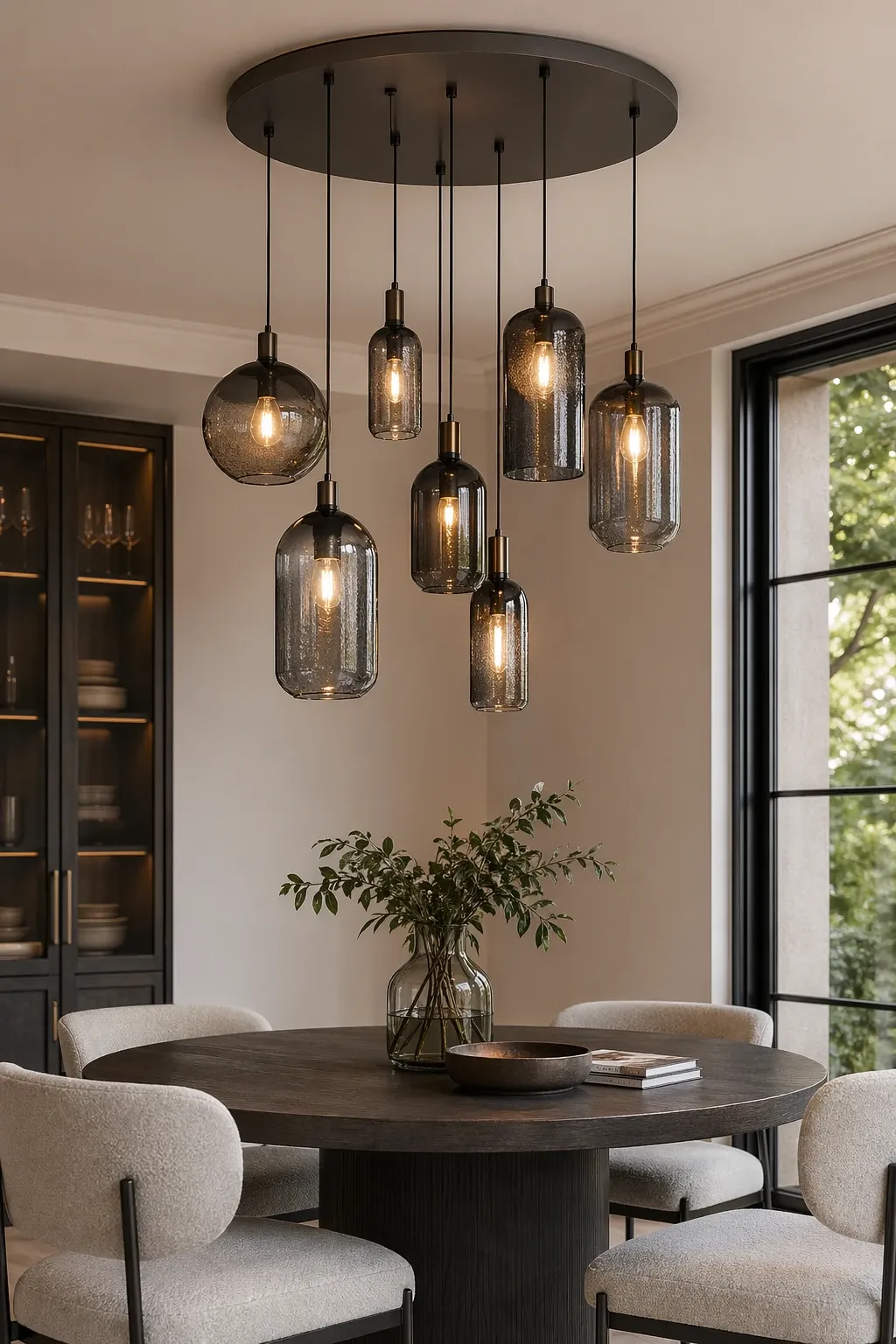
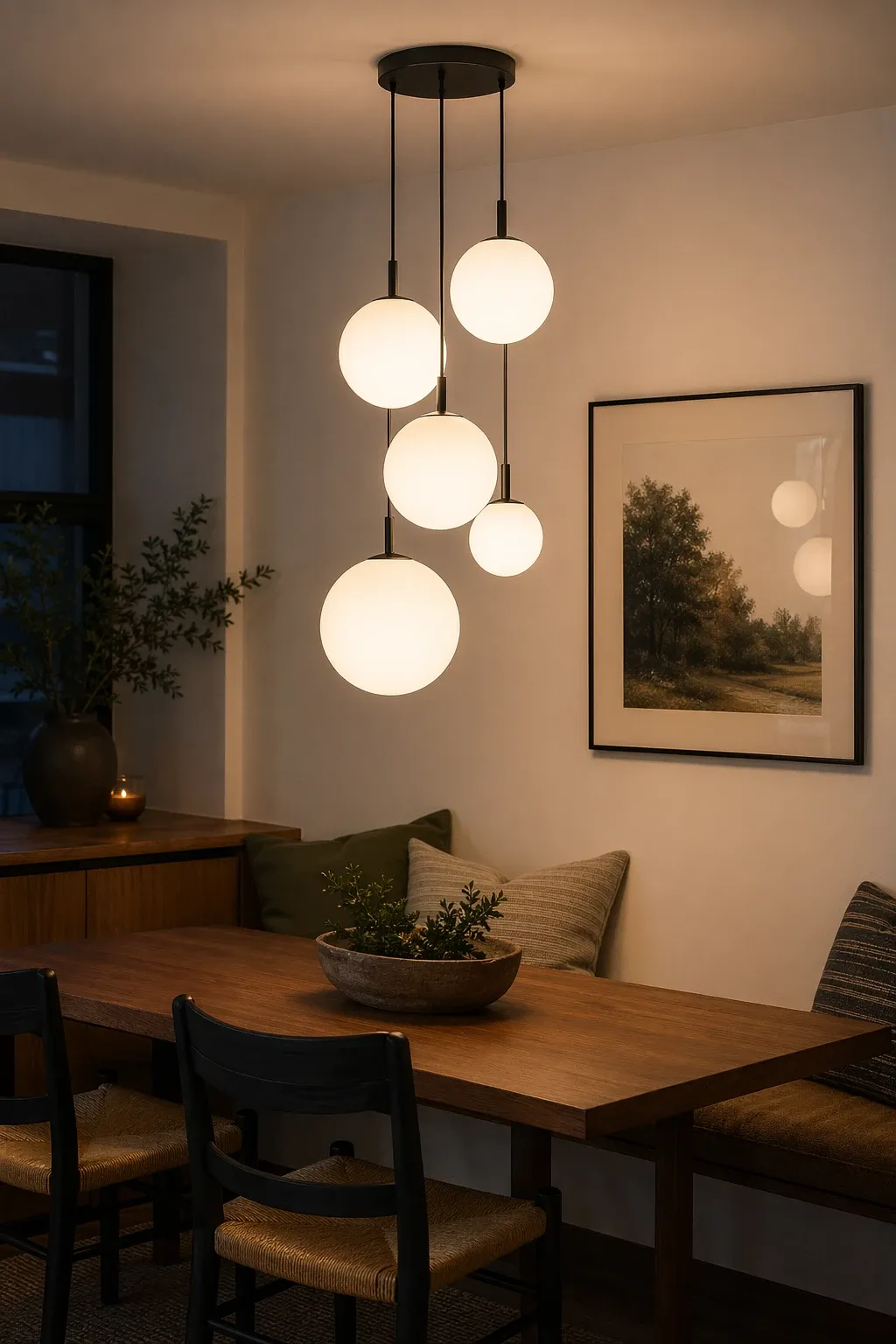
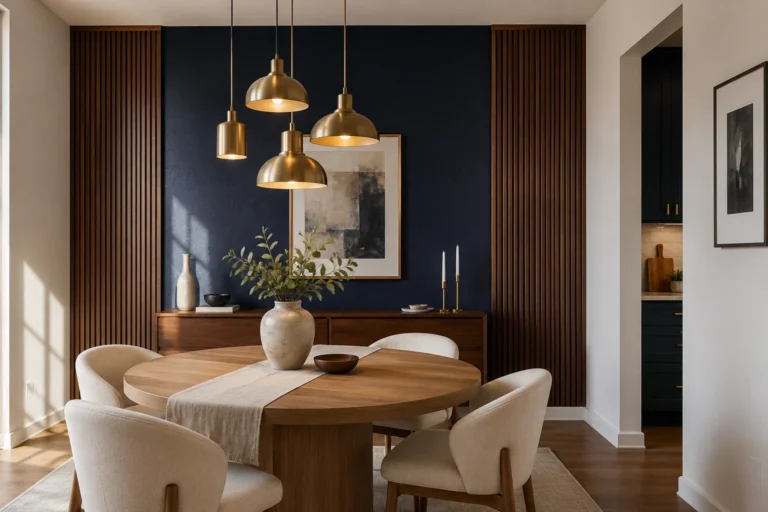
A cluster of pendant lights hung at staggered heights over the dining table creates a modern, sculptural look that a single fixture cannot match. Three to five pendants in the same style but at different drop lengths gives you visual interest and more even light distribution across the table. Glass or metal pendants work best for this look.
Designer Tip: Hang the lowest pendant about 30 inches above the table and stagger the others 2 to 4 inches apart in height. If they are all at the same height, you lose the cascading effect that makes clusters look good.
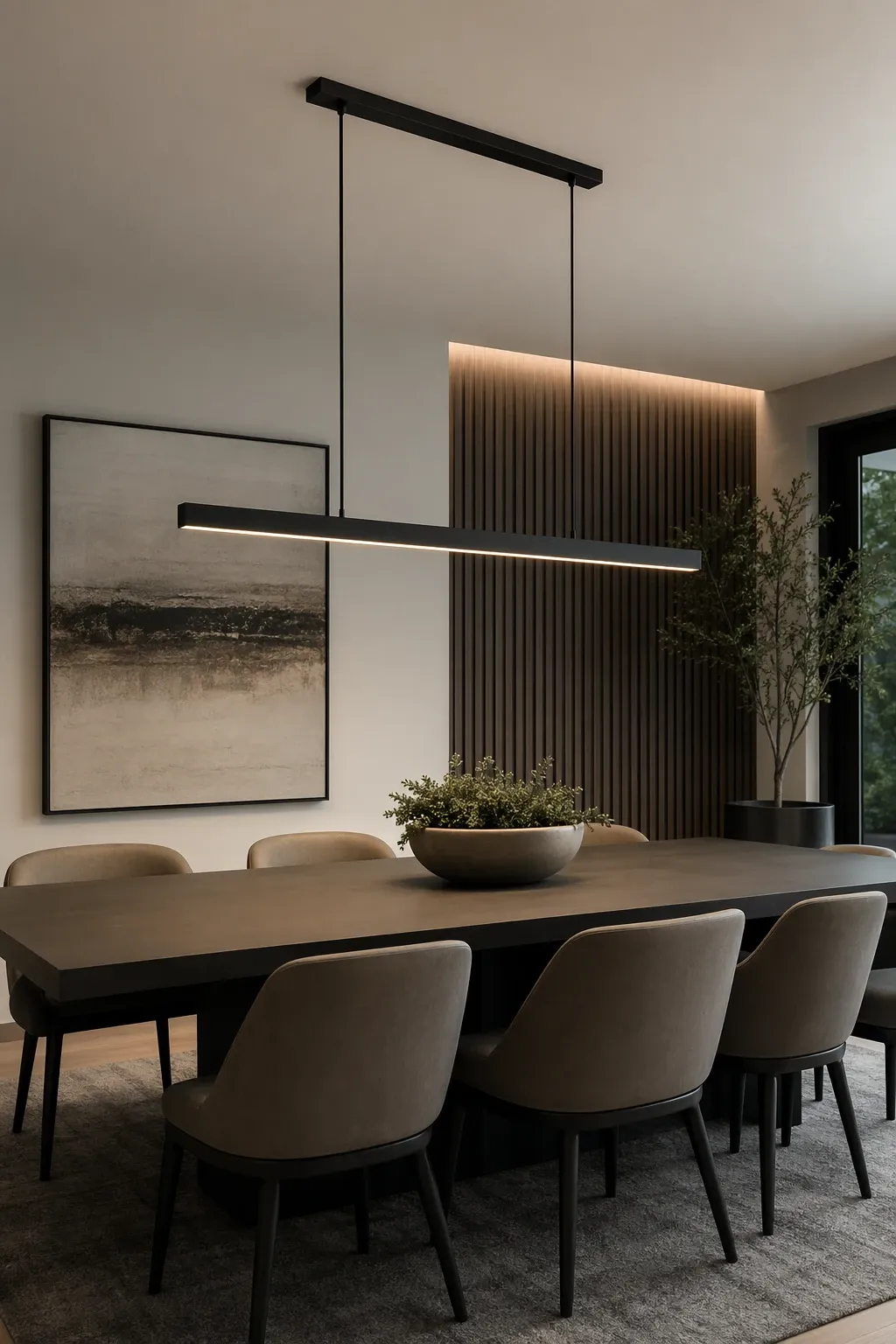
A long, horizontal pendant that runs the length of the dining table is one of the best options for rectangular tables. It provides even light across the whole surface and acts as a strong visual anchor. Modern linear pendants come in everything from sleek metal bars to dramatic multi-light designs. They fill the space above the table in a way that a single round fixture cannot.
Designer Tip: The linear pendant should be about two-thirds the length of your table. Longer than that and it overflows the table edges. Shorter and it looks like it belongs to a smaller table.
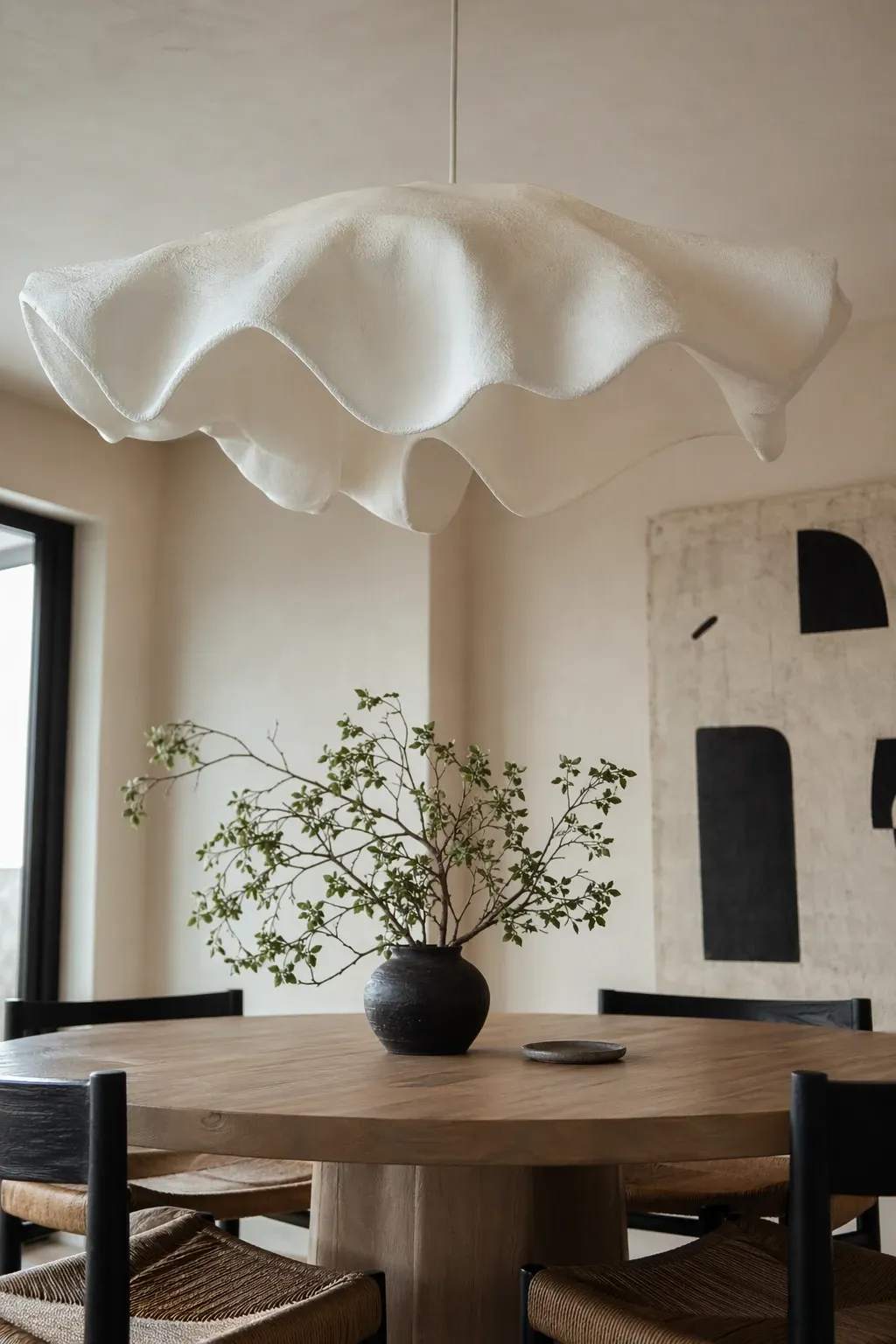
Light fixtures that mimic natural forms, branches, coral, clouds, or abstract organic shapes, bring a sense of art into the dining room. These are the fixtures people notice and talk about. They work as sculptural pieces even when the lights are off, and when they are on, the irregular shapes cast interesting shadow patterns on the walls and ceiling. These tend to be pricier, but they are the kind of piece that defines a room.
Designer Tip: Let a sculptural fixture be the only statement in the room. If the fixture is dramatic, keep everything else simple. A busy fixture above a busy table with busy walls creates visual chaos. Give the light the spotlight it deserves.
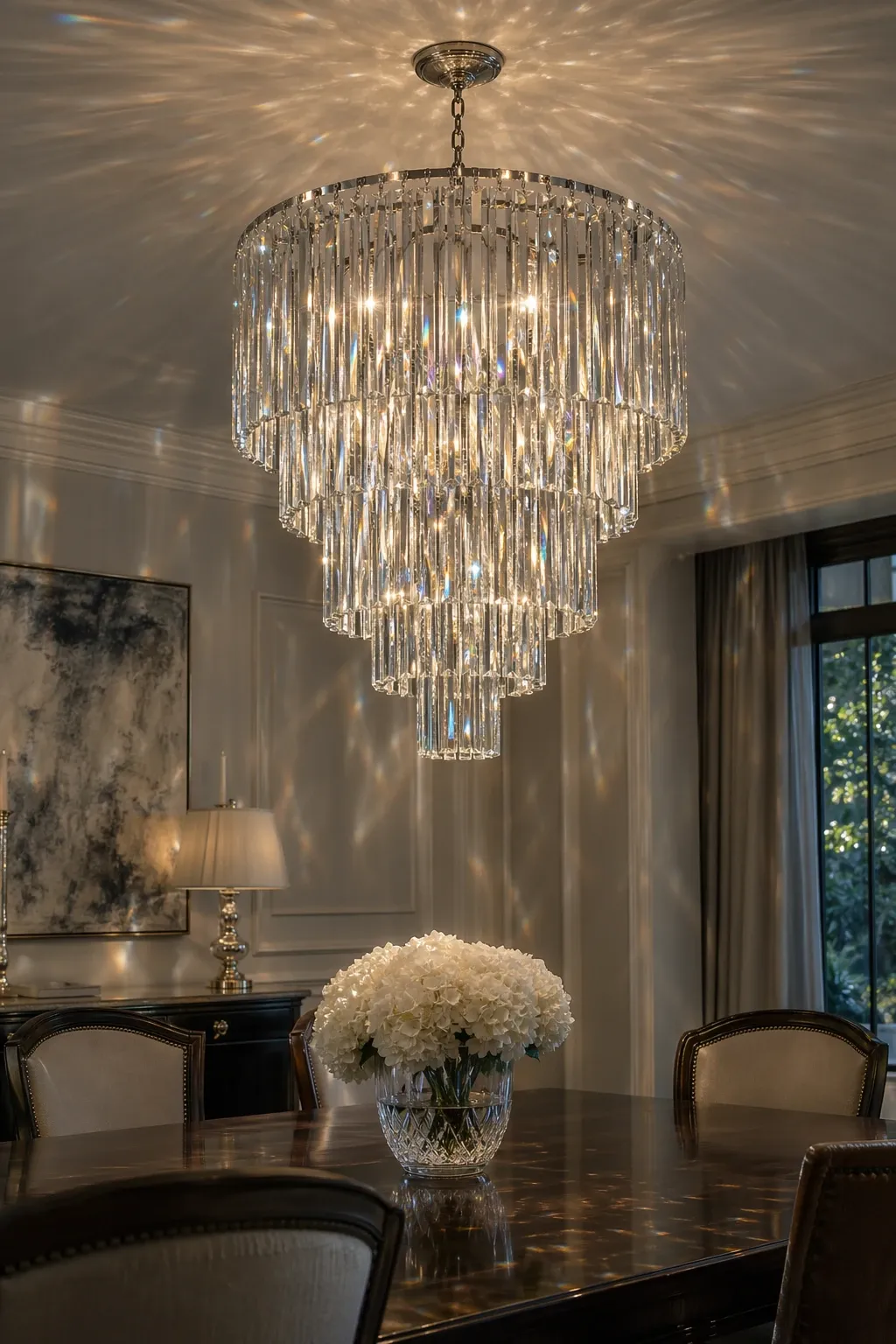
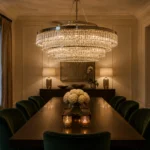
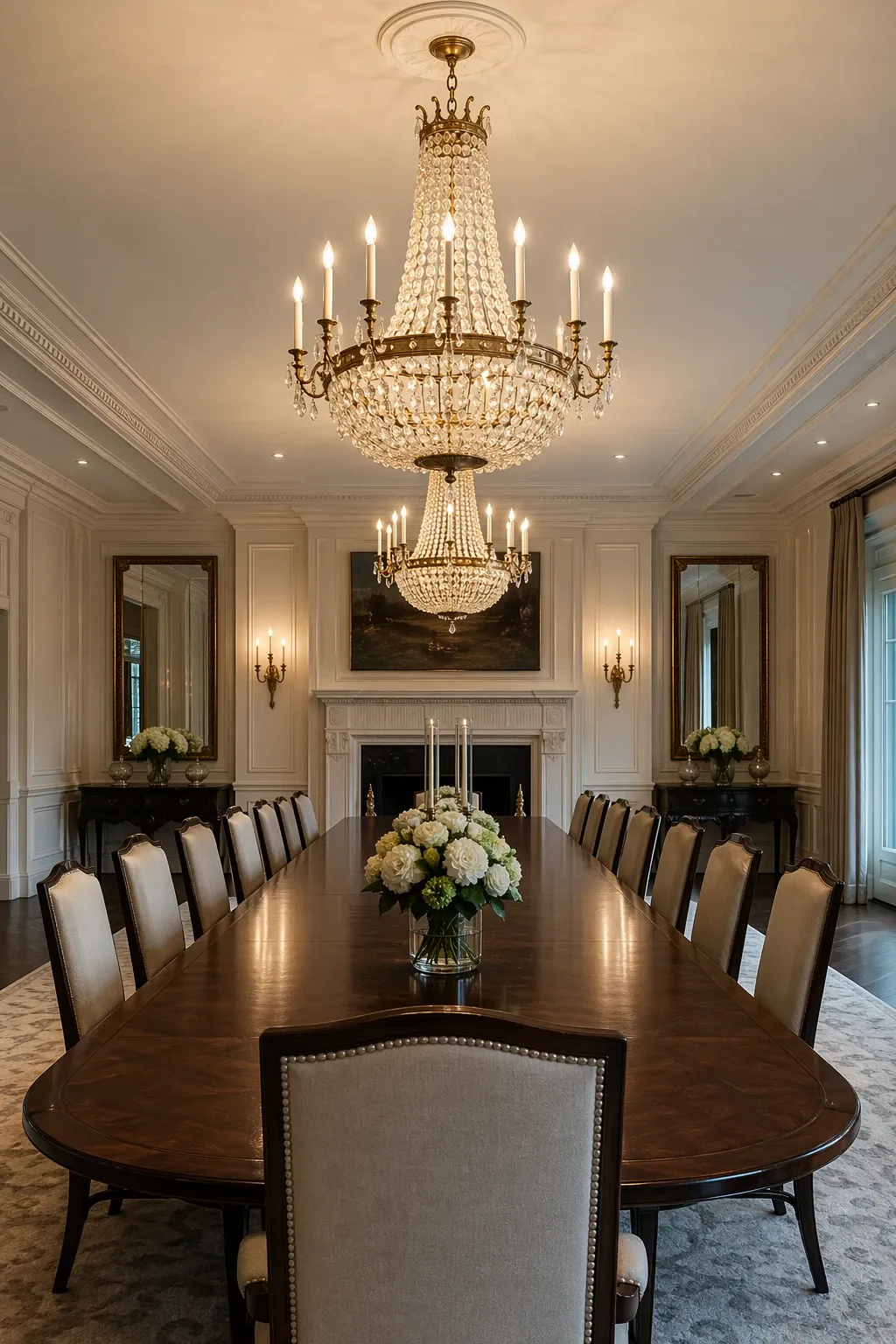
There is a reason crystal chandeliers have been hanging over dining tables for centuries. The way crystal refracts light creates a sparkling warmth that no other material can replicate. A traditional crystal chandelier works best in rooms with some formality and higher ceilings, but smaller, more modern crystal fixtures can work in casual spaces too. The crystal catches candlelight beautifully, which makes these especially good for dinner parties.
Designer Tip: Use warm white bulbs, around 2700K, in a crystal chandelier. Cool white bulbs make the crystal look icy and sterile. Warm light brings out the amber and gold tones in the crystal that make it glow.
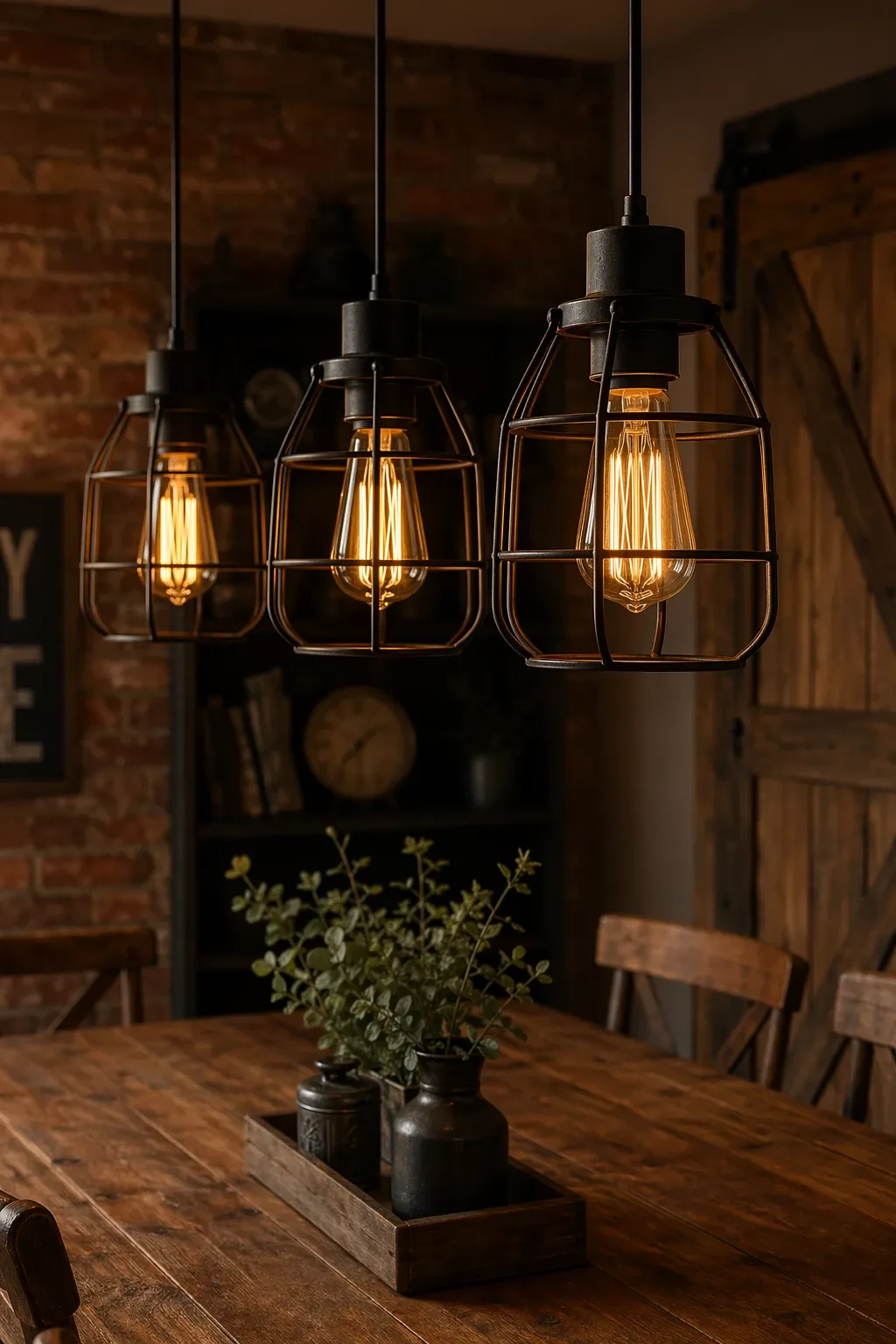
Metal cage pendants with exposed bulbs have that industrial, warehouse-converted feel that works in modern and rustic dining rooms alike. The open cage design means the light is not diffused at all, so the bulb you choose matters a lot. Edison-style filament bulbs are the classic choice because they throw a warm, amber glow that softens the hard metal lines of the cage.
Designer Tip: If the exposed bulb is too harsh, choose a frosted Edison bulb instead of a clear one. You still get the vintage look and warm glow, but the light is softer on the eyes. Nobody wants to stare at a bare filament while they eat.
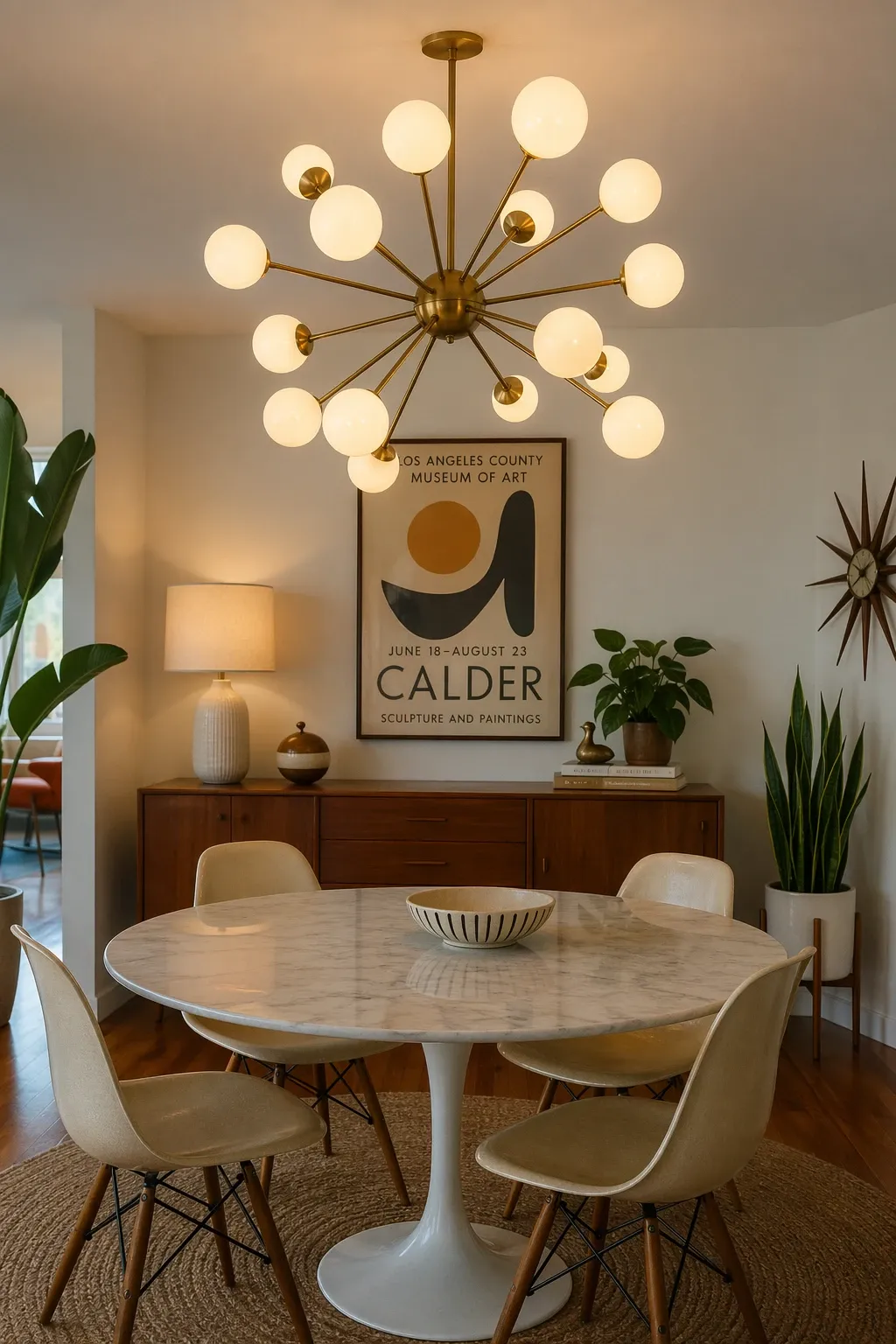
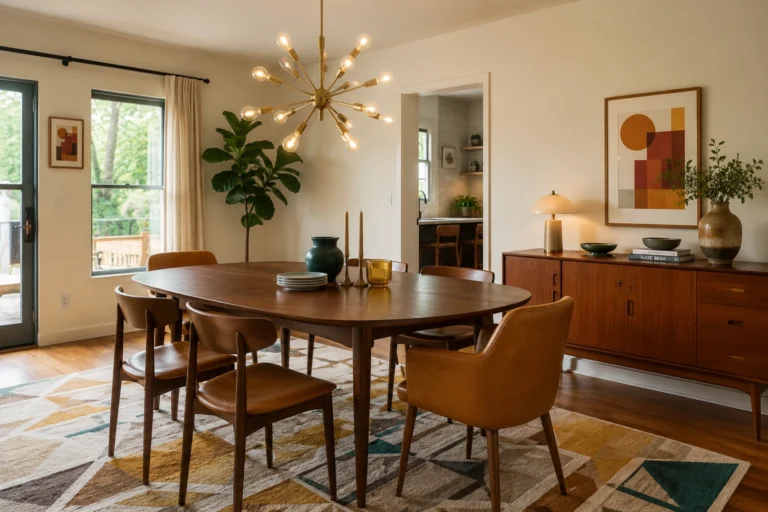
Sputnik-style chandeliers with arms radiating out from a central globe look like something from a 1960s space movie, and they still work today because the design is so graphic and clean. Brass or gold versions are the most popular, but matte black and chrome are available too. The multiple bulbs spread light evenly and the starburst shape looks dramatic without blocking sight lines across the table.
Designer Tip: Use small globe or candelabra bulbs rather than standard-size bulbs on a sputnik fixture. The smaller bulbs keep the fixture feeling delicate and airy. Full-size bulbs make it look clunky and overpower the arms.
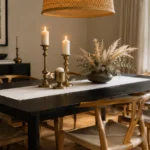
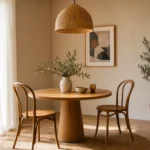
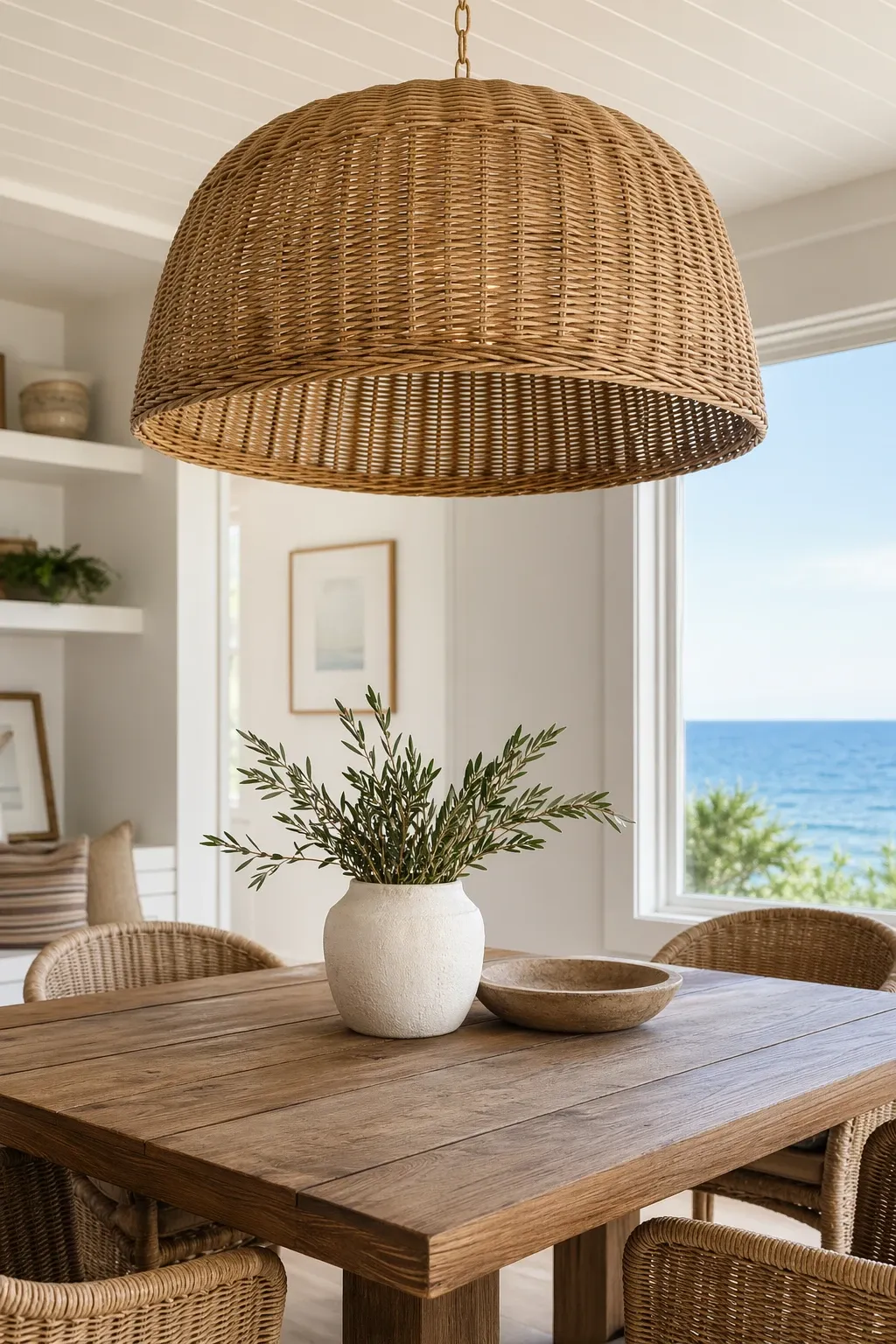
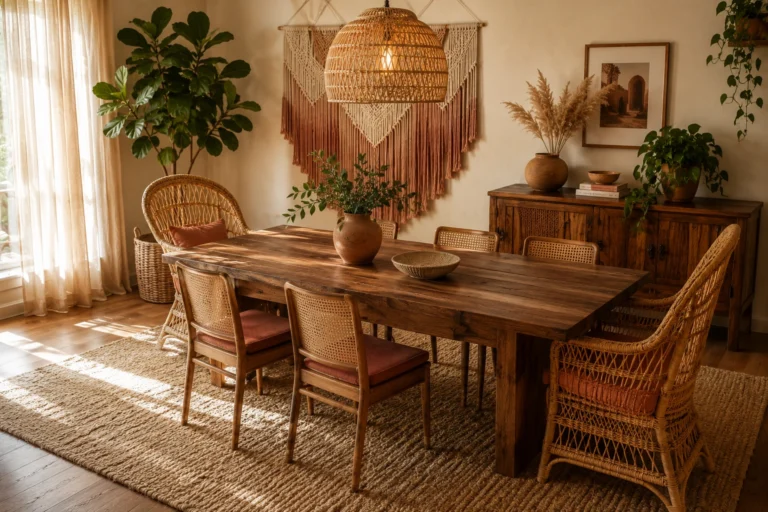
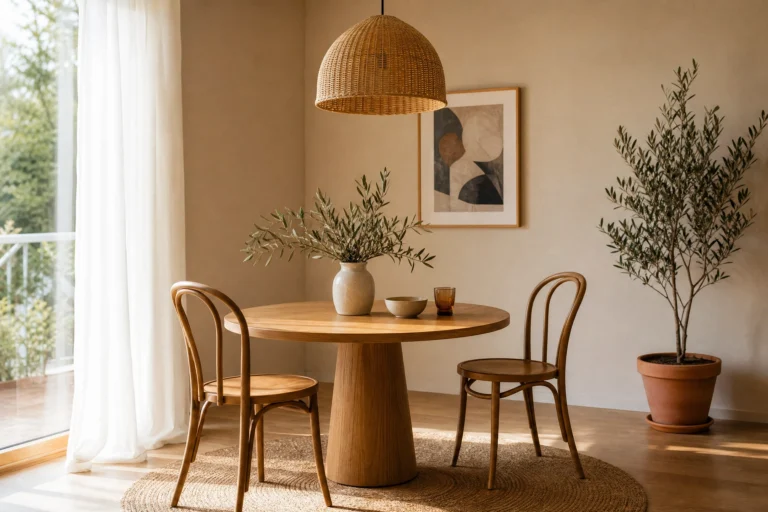
A large woven pendant made from rattan, bamboo, or seagrass adds texture and warmth that metal and glass cannot. The woven material filters light through its gaps, creating a gentle, dappled pattern on the walls and ceiling. This is a great fit for dining rooms with a coastal, bohemian, or organic modern style. One oversized woven pendant over a round table is a particularly strong combination.
Designer Tip: Woven pendants work best with a single bulb inside rather than multiple bulbs. The shade is designed to filter and diffuse, and too much light inside can create harsh spots. One warm LED bulb is usually plenty.
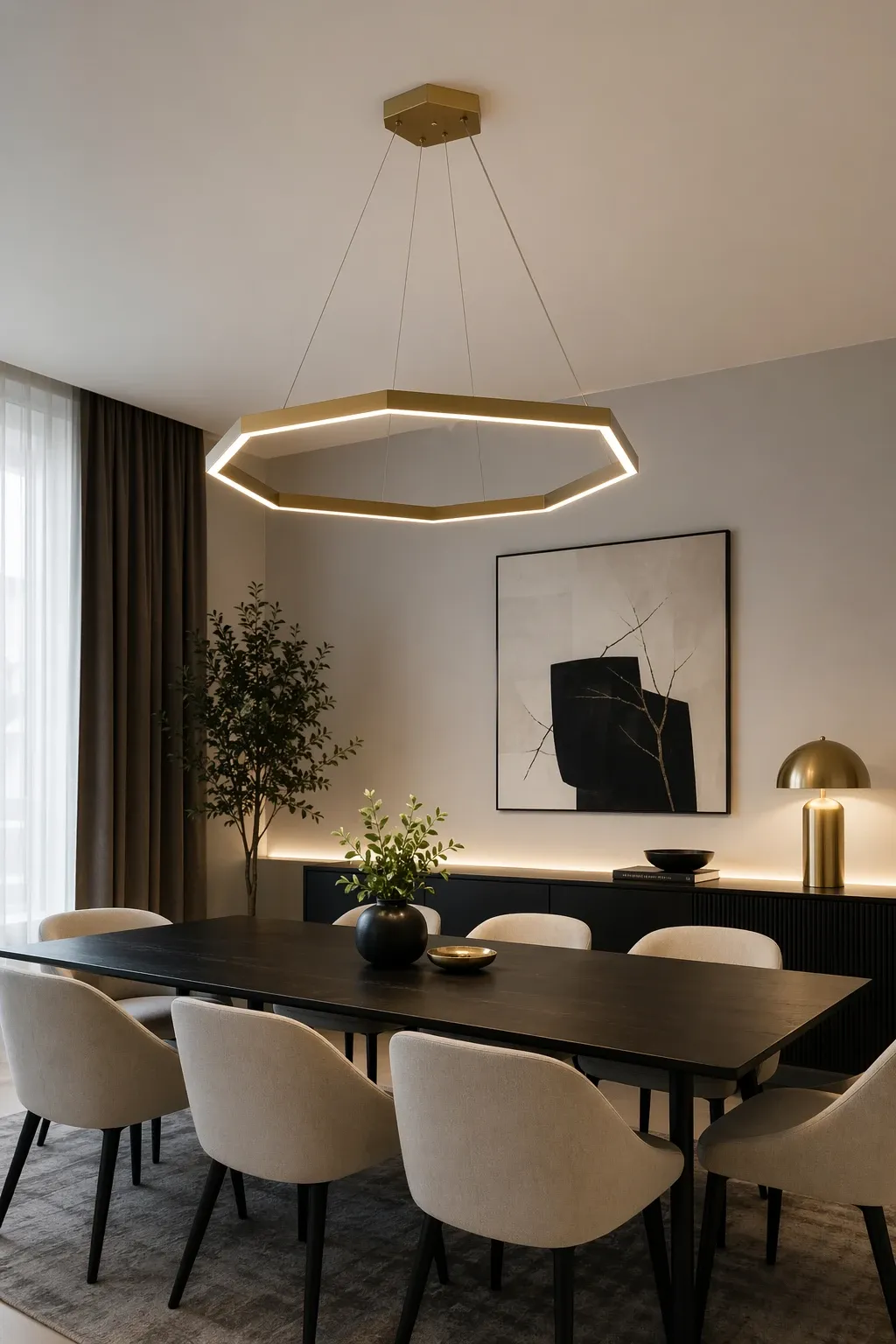
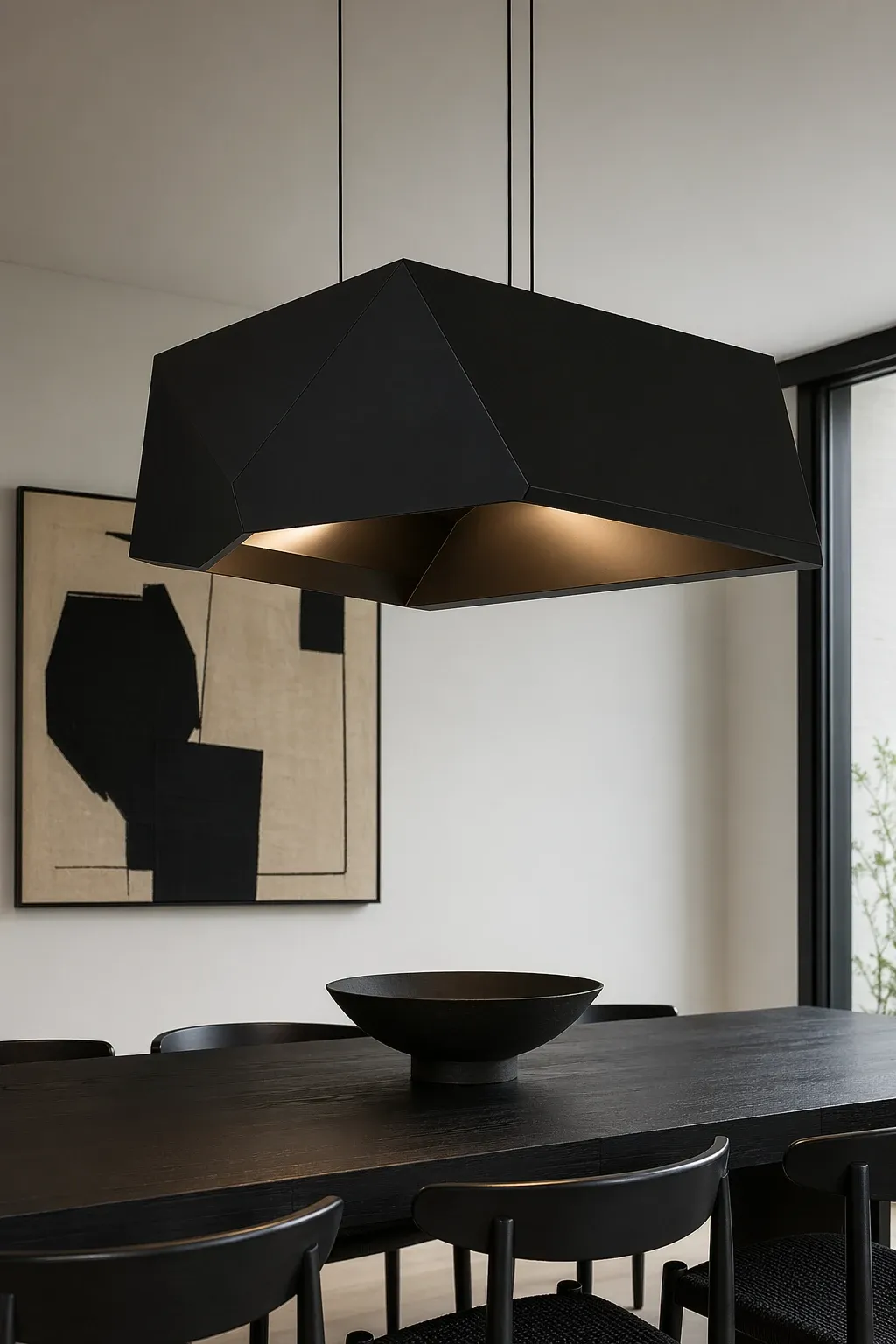
Geometric light fixtures, hexagons, cubes, diamonds, or polyhedrons in thin metal frames, are clean and architectural without being boring. The geometric shape gives the eye something to follow and the open frame design means the fixture does not block light or views. These work well in contemporary and transitional dining rooms where you want something interesting but not over the top.
Designer Tip: Choose a geometric fixture with a matte finish rather than polished. Matte black, brass, or copper frames look more refined and cast better shadows than highly reflective surfaces.
Hanging two identical chandeliers or pendants over a long dining table creates a balanced, symmetrical look that fills the space above the table better than a single fixture. This approach works best over tables that are eight feet or longer. The two fixtures provide even light distribution and the matching pair creates a sense of order and intention that looks polished.
Designer Tip: Space the two fixtures evenly along the table with equal distance from each end. If the fixtures are not centered properly, the asymmetry is very noticeable and makes the whole room feel off balance.
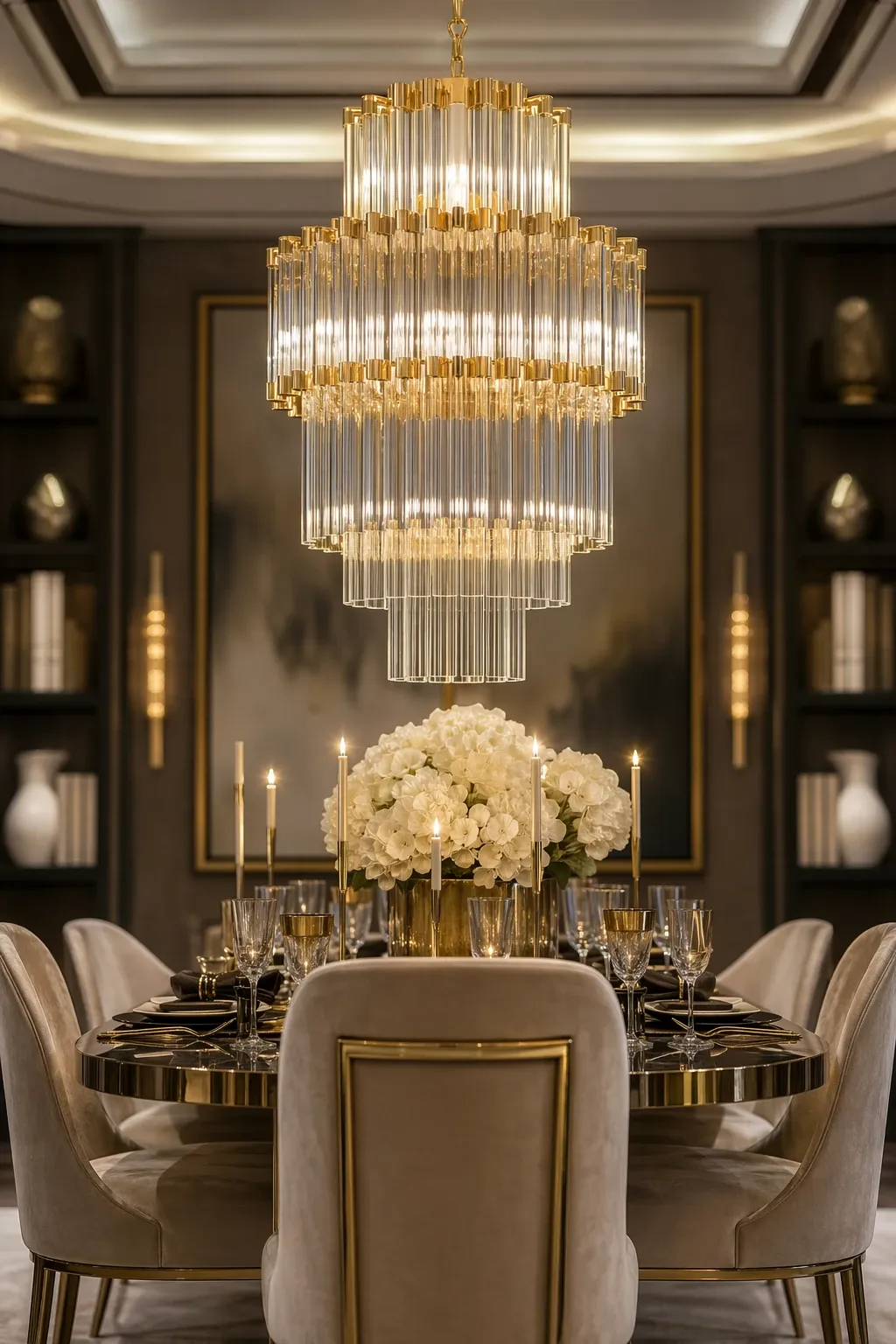
Art Deco light fixtures with their stepped shapes, frosted glass, and brass or chrome finishes bring a 1920s glamour to the dining room. They are ornate without being fussy and they pair well with both traditional and modern furniture. A good Art Deco fixture feels timeless because the style itself was designed to blend craftsmanship with modern geometry.
Designer Tip: Pair Art Deco lighting with velvet dining chairs or a mirrored sideboard to play up the era. The fixture sets the tone, but the surrounding pieces need to support it. Art Deco lighting above rustic farmhouse furniture creates a confusing room.
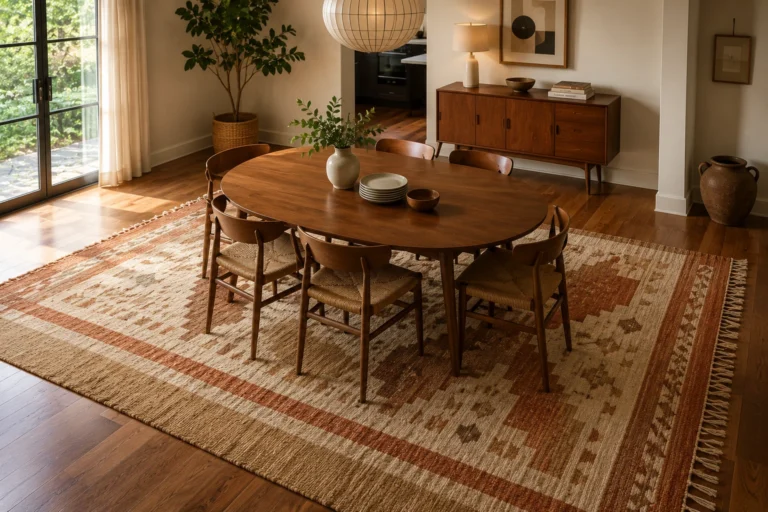
Frosted glass globe pendants give the softest, most diffused light of any fixture type. They glow rather than glare, which makes them excellent for dining rooms where you want atmosphere without harsh shadows. A single large globe or a cluster of smaller ones both work well. The round shape is gentle and calming, and the frosted glass hides the bulb so you never see a bright spot.
Designer Tip: Pair globe lights with a dimmer switch so you can adjust the glow from bright enough for homework to soft enough for a late dinner. Globe lights on a dimmer are one of the most versatile dining room lighting setups you can have.
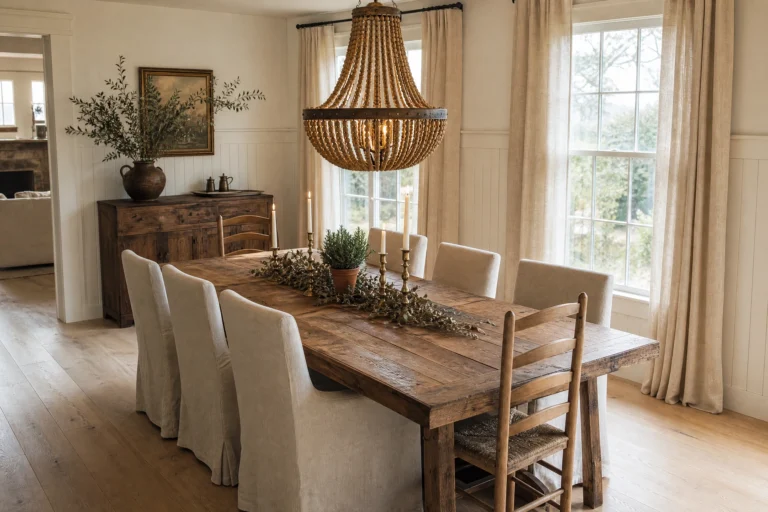
A large black fixture makes a strong statement in any dining room, especially against light walls where the contrast is most dramatic. Black iron rings, black metal frames, or a matte black chandelier all have a modern, graphic quality that anchors the room. Black fixtures work in everything from farmhouse to industrial to contemporary spaces because black is inherently versatile.
Designer Tip: Scale the fixture up slightly larger than you think you need. Black fixtures recede visually because of their dark color, so a fixture that looks right in the store can look small once it is hung against a light ceiling. Go bigger than your instinct says.
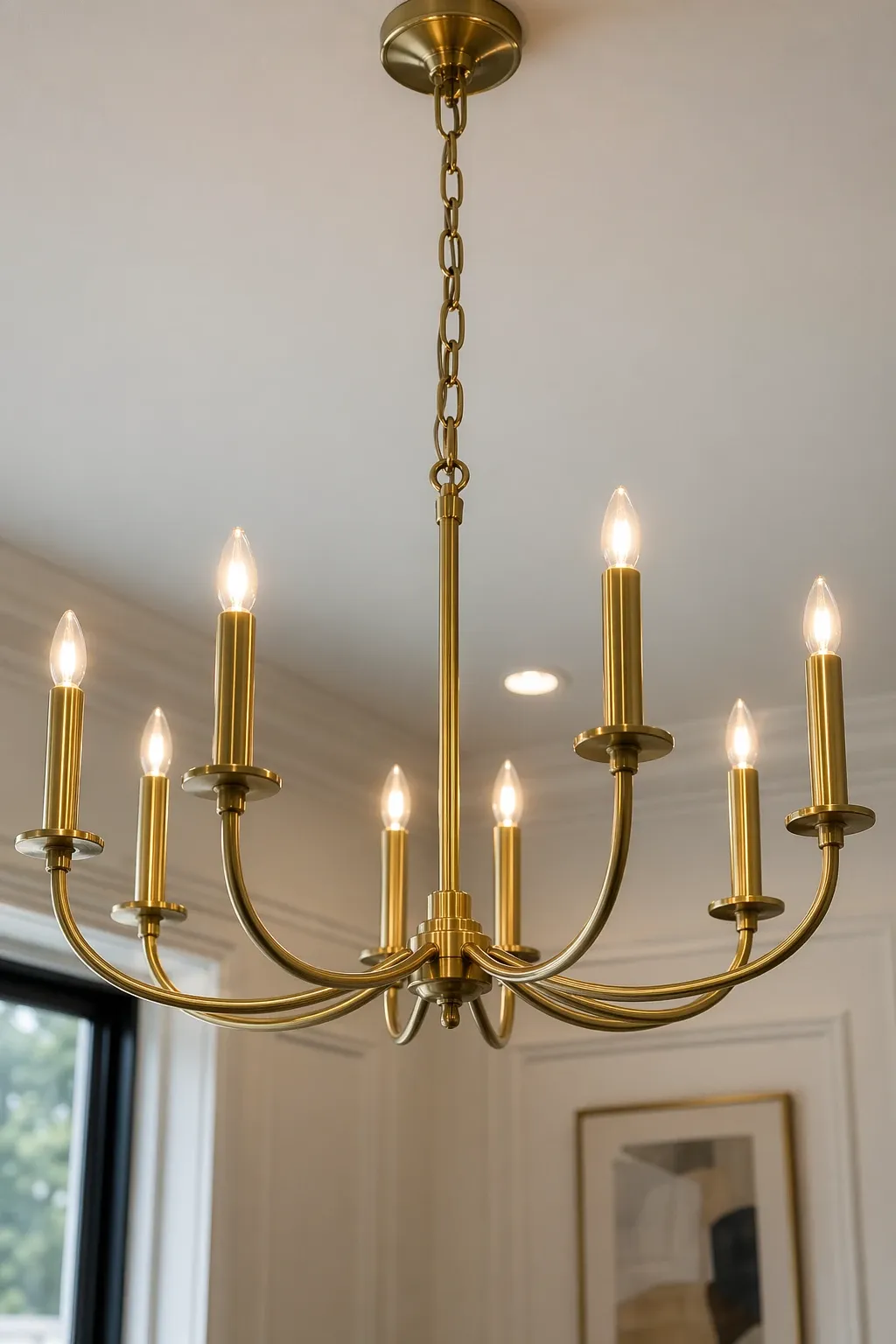
Candle-style chandeliers are the original dining room light, and the modern versions strip away the fussiness of traditional crystal while keeping the elegant silhouette. Clean lines, exposed candelabra bulbs, and simple iron or brass arms create a fixture that feels both classic and current. They look especially good in rooms with higher ceilings where the vertical form has room to breathe.
Designer Tip: Use flame-tip LED bulbs in candle-style chandeliers. They mimic the look of a candle flame and use a fraction of the energy. Avoid round bulbs in candle-style fixtures because they break the illusion of the candle form.
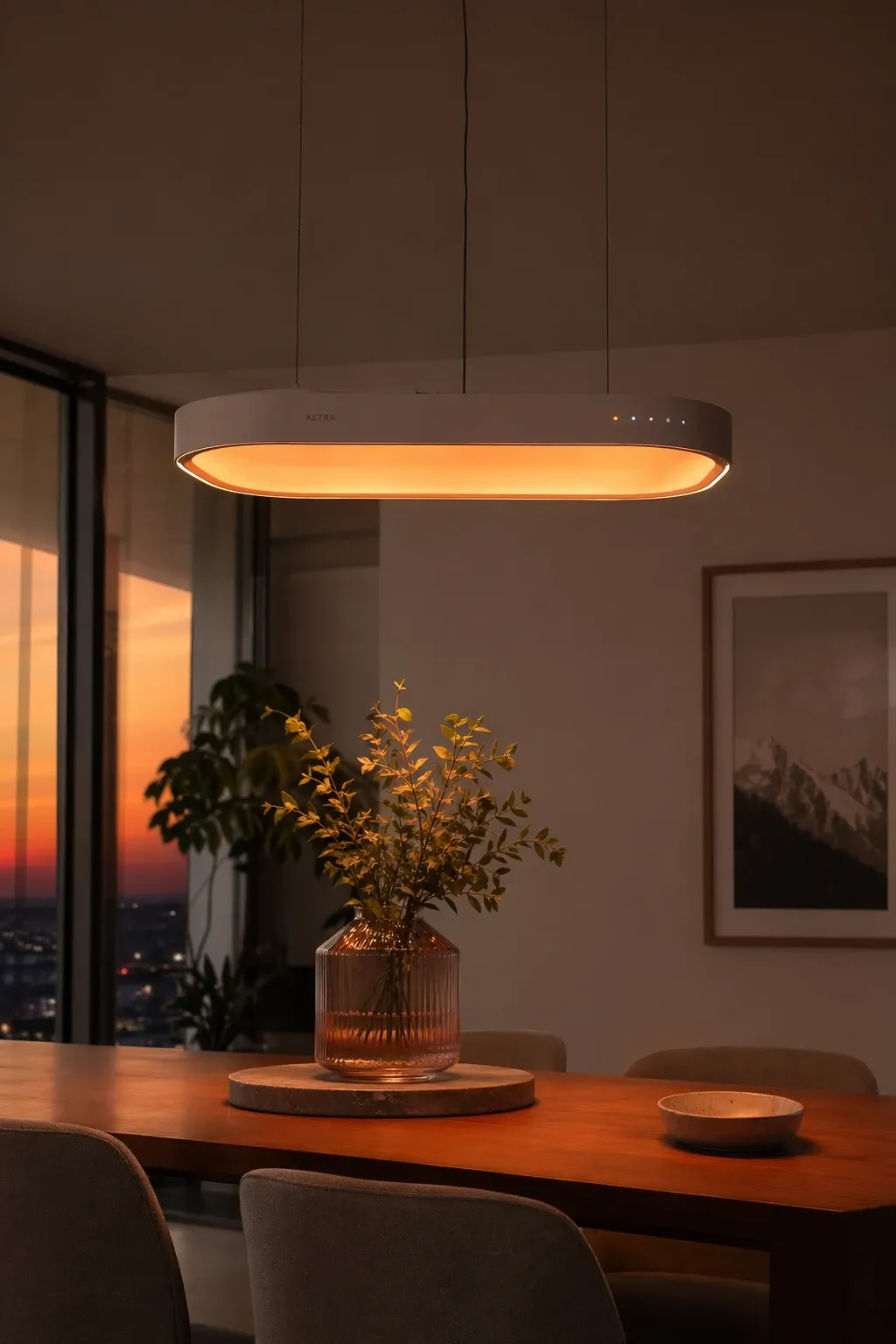
Smart bulbs and tunable fixtures let you change the color temperature and brightness with your phone or a voice command. Cool, bright light for morning breakfast and warm, dim light for dinner. The ability to adjust the light to the meal and the mood is something a traditional fixture with a standard bulb simply cannot do. Once you experience tunable dining room lighting, fixed-temperature bulbs feel like a limitation.
Designer Tip: Set up scenes or presets on your smart lighting app. A “dinner” scene at 2200K and 40 percent brightness, a “breakfast” scene at 3500K and 100 percent, and a “party” scene somewhere in between. Having presets means you actually use the tunable feature instead of just leaving it on one setting.
The fixture you choose sets the style, but the bulbs and dimmers determine the mood. Even the most beautiful chandelier will fall flat with the wrong bulb color or too much brightness. Whatever fixture you land on, put it on a dimmer and use warm-toned bulbs. That combination gives you the flexibility to make every meal feel right.
Frequently Asked Questions
How low should a dining room light hang?
The bottom of the fixture should be 30 to 36 inches above the table surface. If you have very high ceilings, lean toward the 36-inch end. In rooms with standard 8-foot ceilings, 30 to 32 inches works best. The light should illuminate the table without anyone hitting their head when they stand up.
How big should a dining room light fixture be?
A common guideline is to add the room dimensions in feet and convert that to inches for the fixture diameter. A 12 by 14 foot room would call for about a 26-inch fixture. Over a table, the fixture should be about one-half to two-thirds the width of the table. For a 40-inch wide table, a 20 to 27-inch fixture fits well.
Do I need a dimmer for dining room lights?
A dimmer is the single best investment you can make in dining room lighting. It lets the same fixture serve breakfast at full brightness and a dinner party at low glow. Even inexpensive dimmer switches make a significant difference. Just make sure your bulbs are dimmer-compatible, as not all LED bulbs work with all dimmers.
Can I use multiple light sources in a dining room?
Absolutely, and you should. The main fixture over the table provides task and ambient light, but adding wall sconces, a floor lamp in the corner, or candles on the table creates layers that make the room feel warmer and more dimensional. A single overhead light is functional but flat. Multiple sources give you depth.