A balcony without shade is a balcony you never use. Concrete floors and glass doors turn direct sun into a furnace, and most renters assume they cannot fix it without drilling holes they are not allowed to make. They are wrong. There is a shade solution for every hour of the day and every level of landlord strictness. The trick is matching the fix to the moment the sun bothers you most. Find your worst hour below, steal the ideas, and take your balcony back from the heat.
Morning Coffee Shade
East-facing balconies get gentle morning sun that turns harsh by ten. You want filters, not blackouts: soft shade that takes the edge off while you drink your coffee.
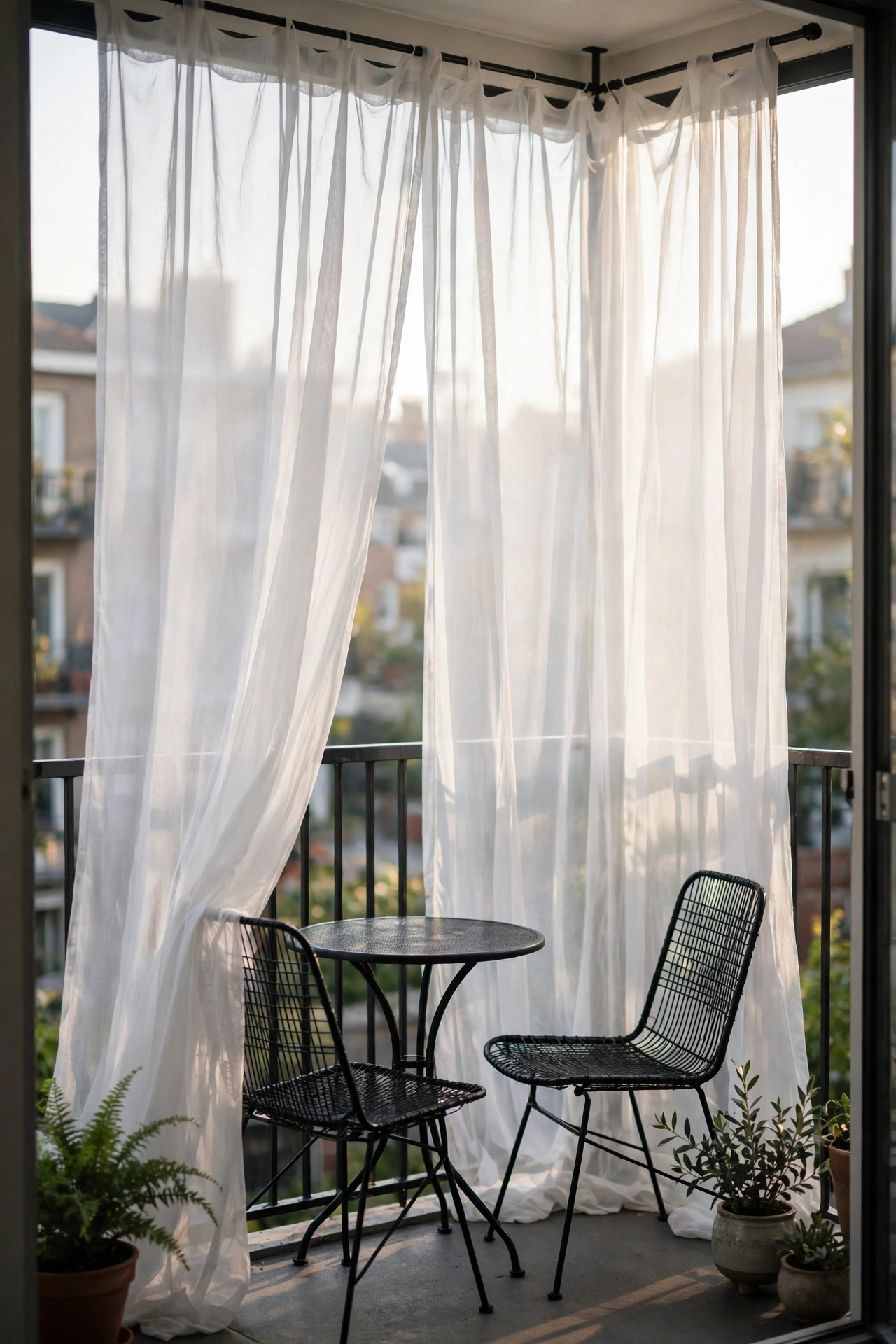
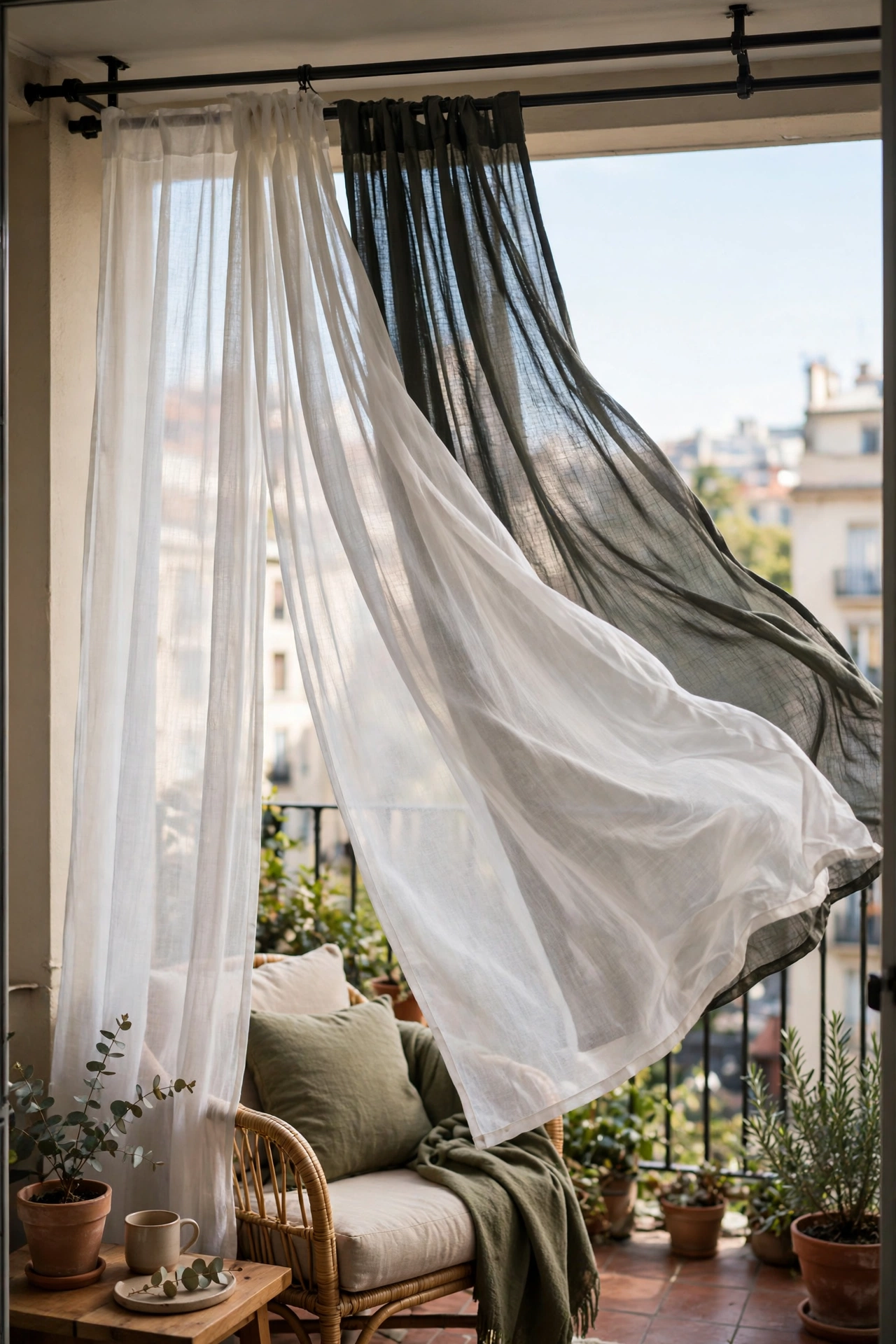
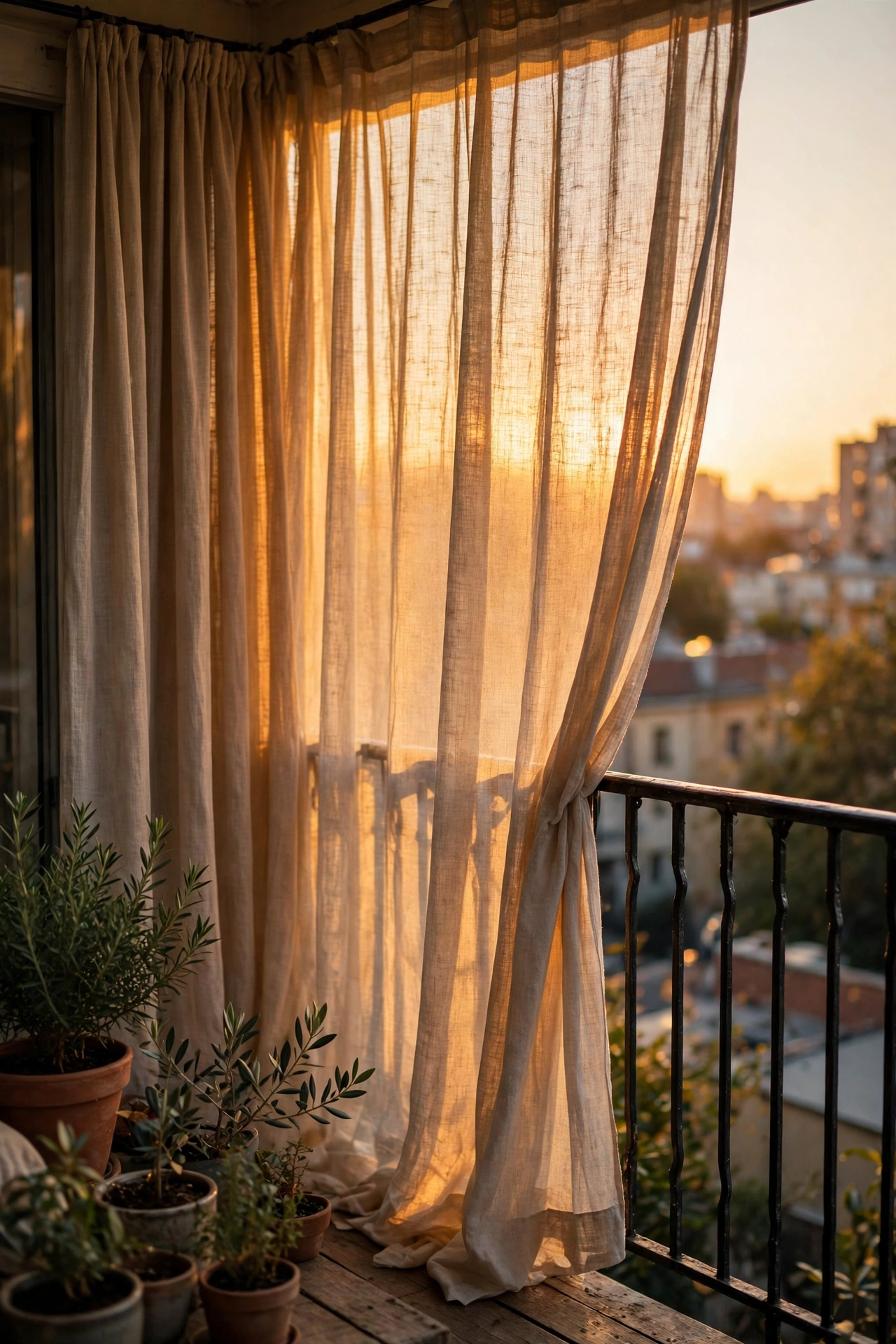
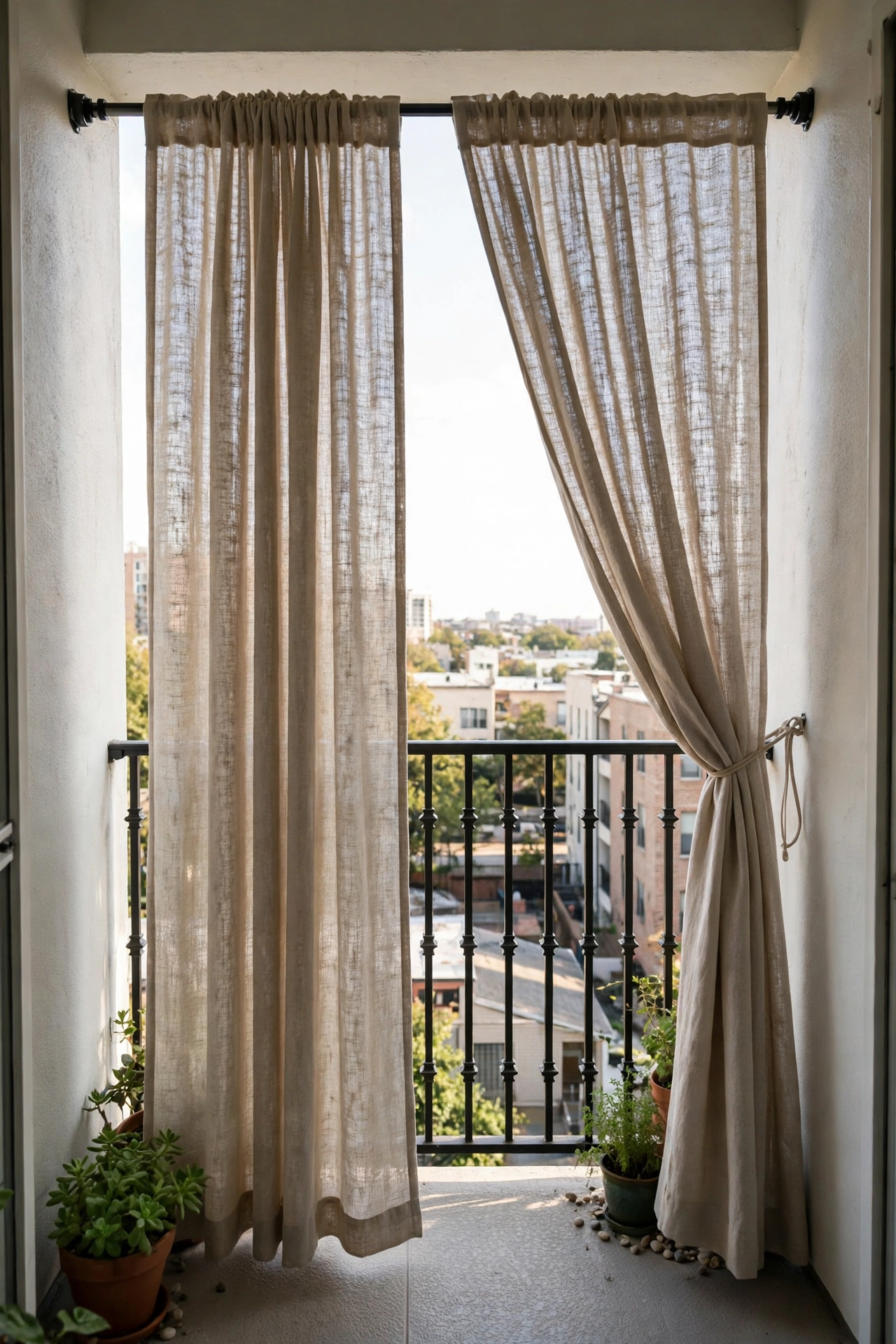
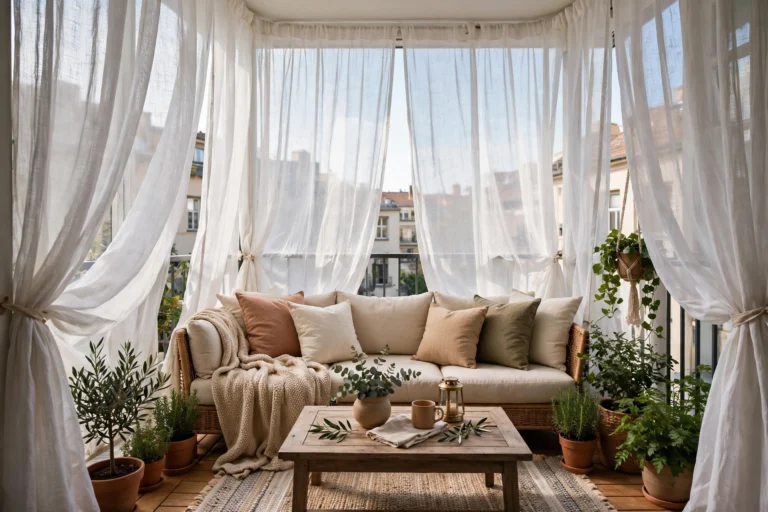
Sheer weatherproof curtains on a tension rod give morning light a soft, diffused quality without blocking the breeze. They take the glare off your coffee table and make the balcony feel like a room instead of a ledge. Choose solution-dyed acrylic fabric, because cheap sheers shred in UV within one season. Slide them open when you want full sun; the whole setup costs less than a week of cafe coffees. This is the easiest first move in the entire article.
Quick Tip: Weigh the hems with washers sewn into pockets so morning breezes do not tangle the panels.
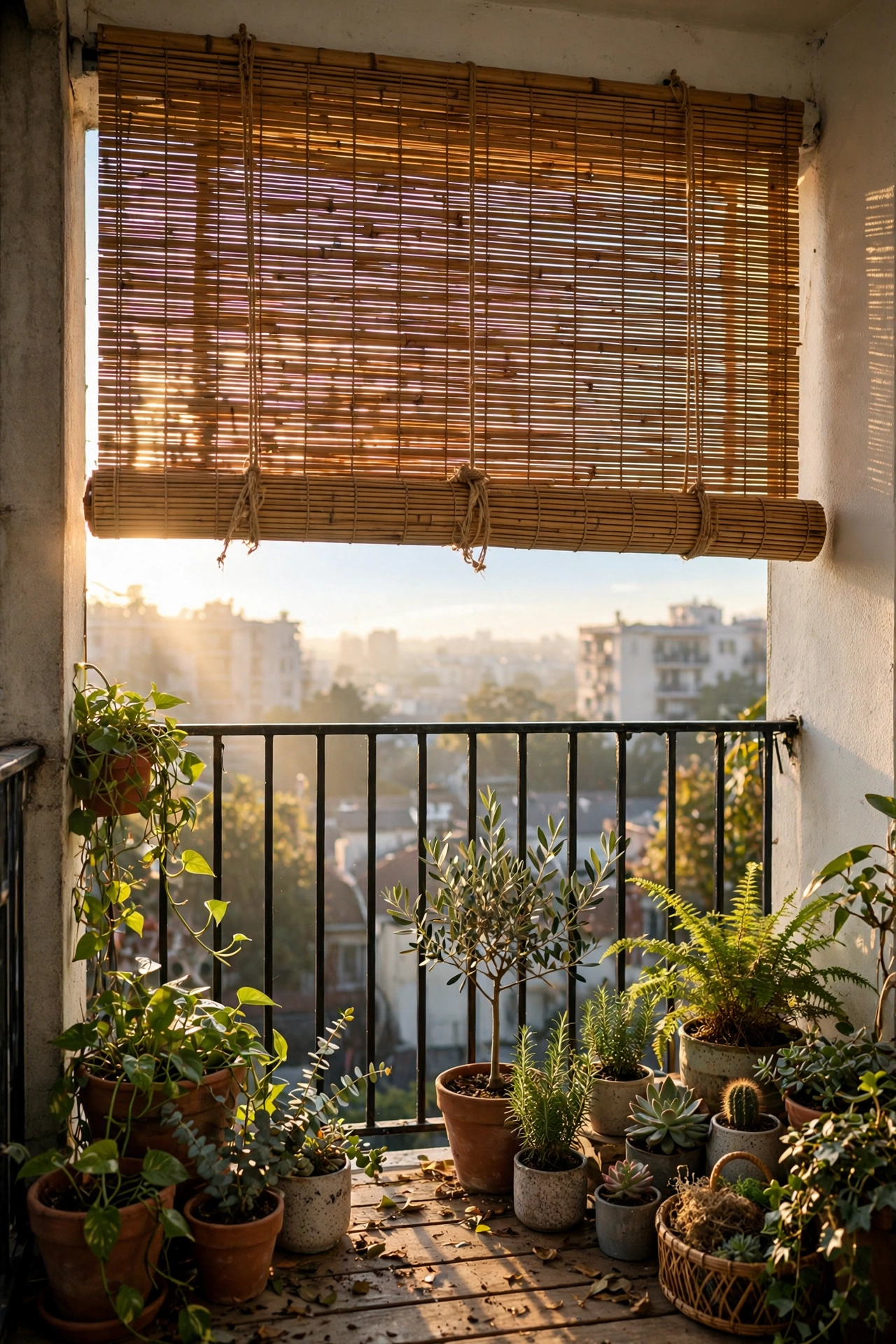
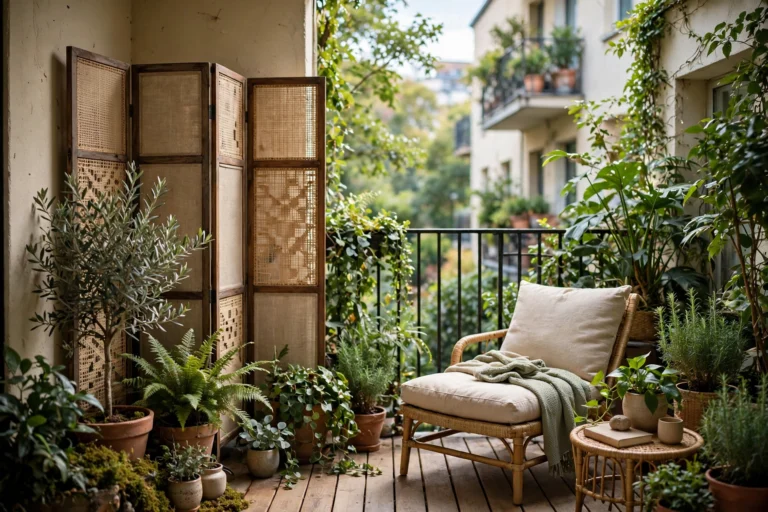
Bamboo roll-up shades are made for this exact job. Lowered halfway, they cut the low eastern sun while leaving the top open to the sky, so the balcony never feels boxed in. The natural texture warms up concrete walls instantly. Roll them fully up on overcast days; the mechanism takes seconds. One honest limitation: bamboo hates standing water, so roll them up before heavy rain or the cords will mildew.
Designer Advice: Mount the shade a few inches wider than the opening on each side to kill the light leaking around the edges.
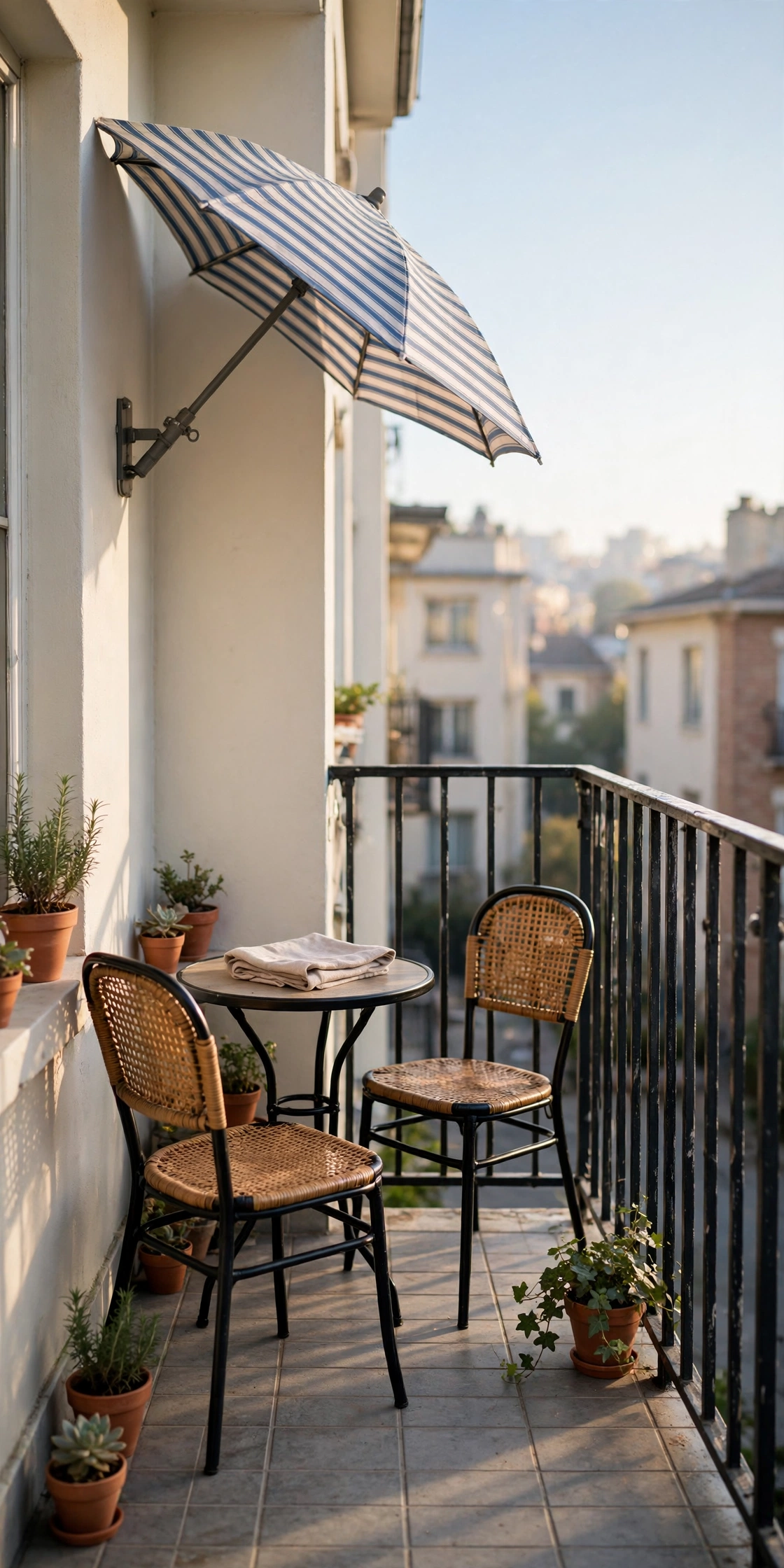
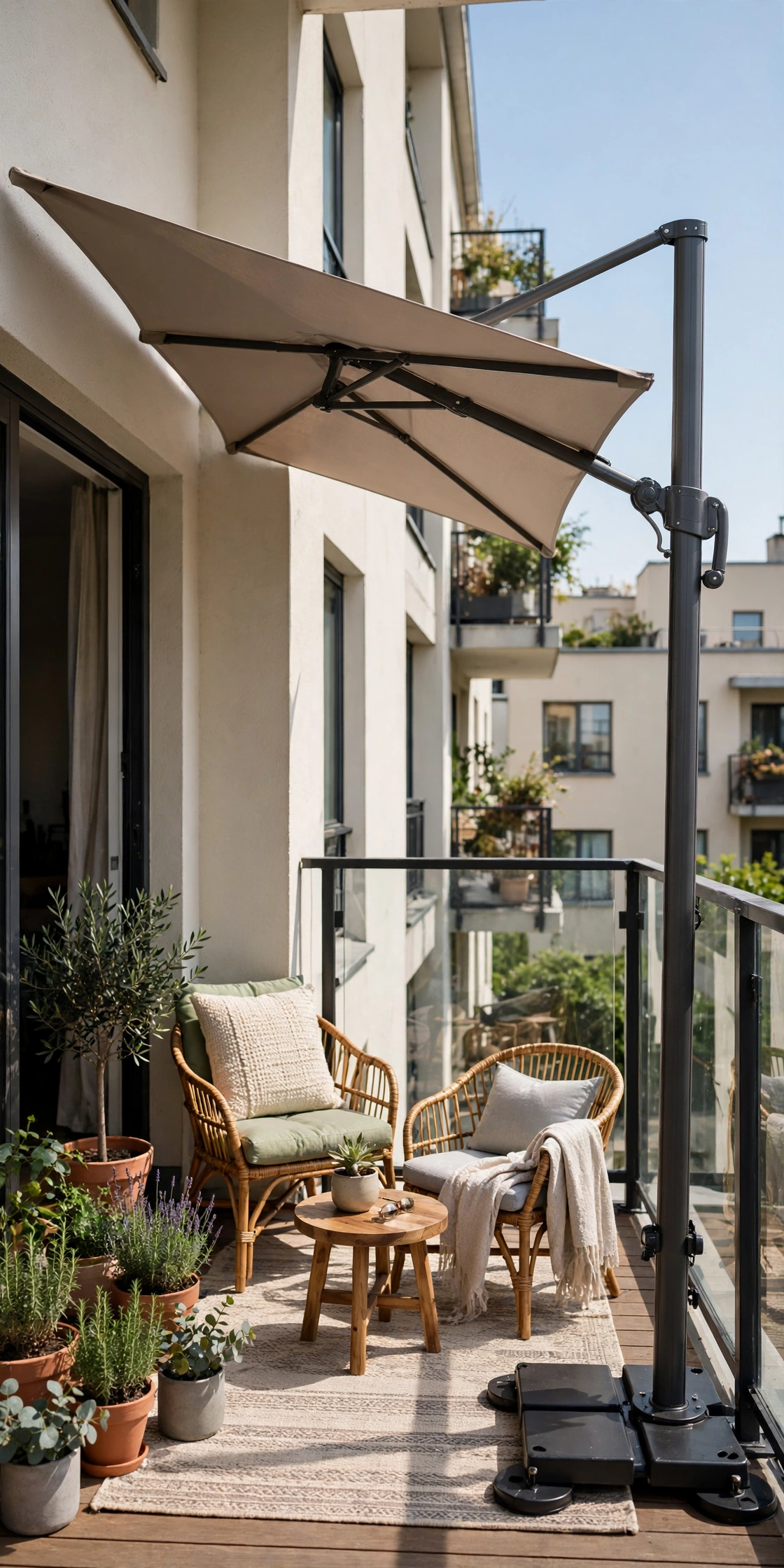
A small tilt umbrella in one corner covers a bistro set perfectly for morning use. The tilt function matters more than the size, because it lets you chase the shade as the sun climbs without moving the furniture. Get a weighted base rated for your umbrella size; a toppling umbrella is how balcony railings get dented. Fold it down at night and it disappears. For the smallest balconies, a half umbrella designed to hug the wall wastes zero floor space.
Good to Know: Crank-lift umbrellas last longer than push-up ones. The mechanism just holds up better.
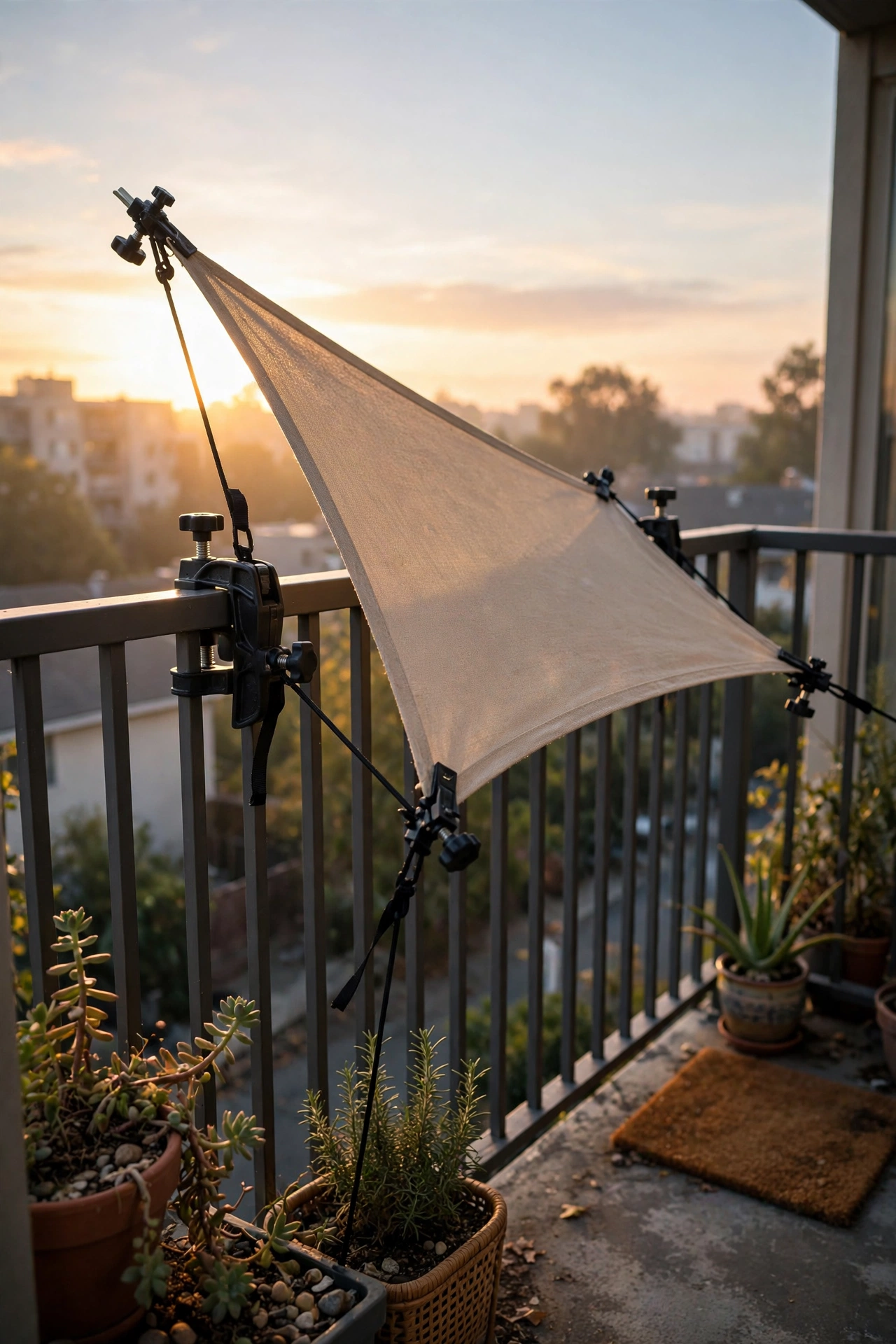
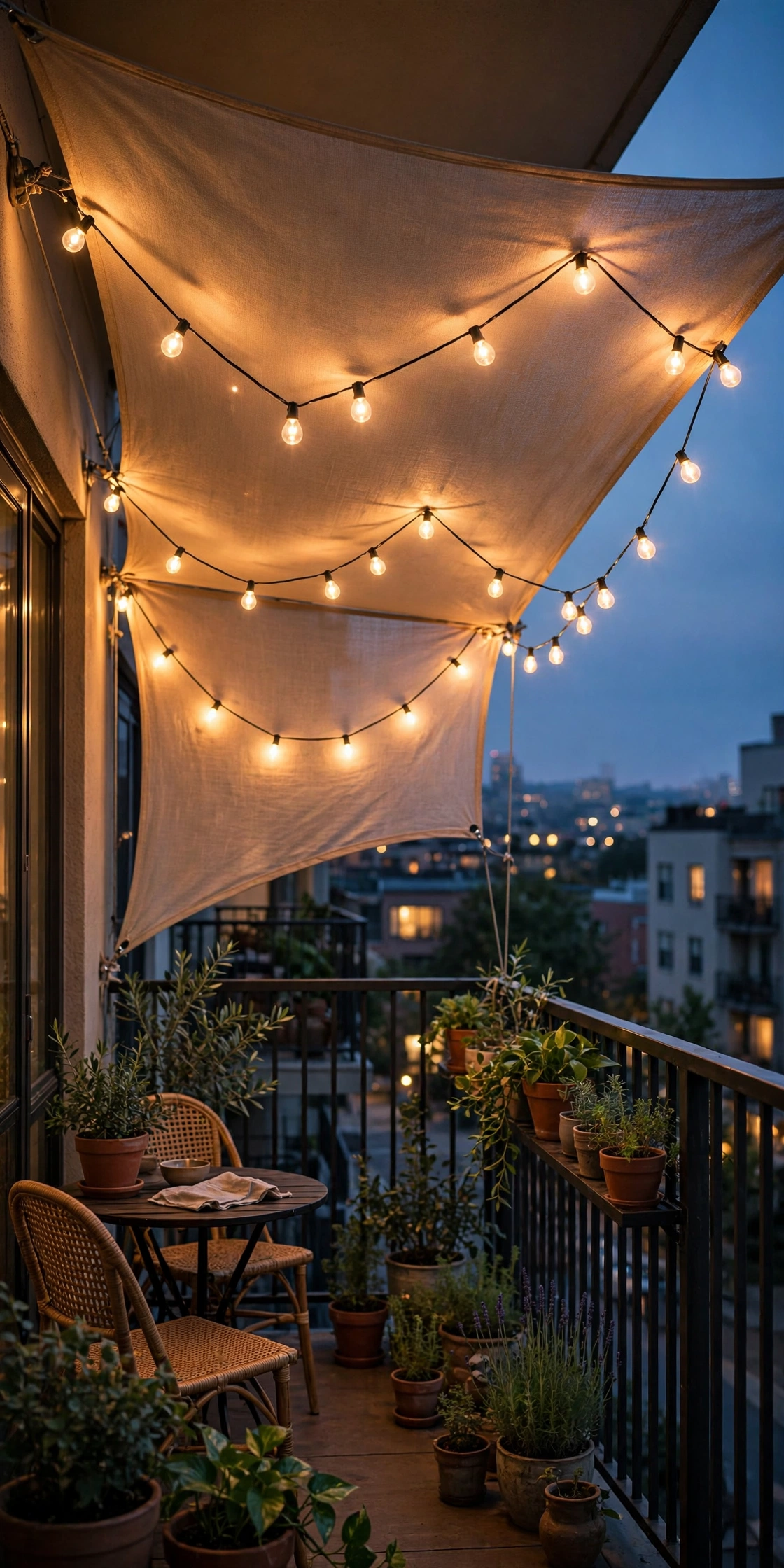
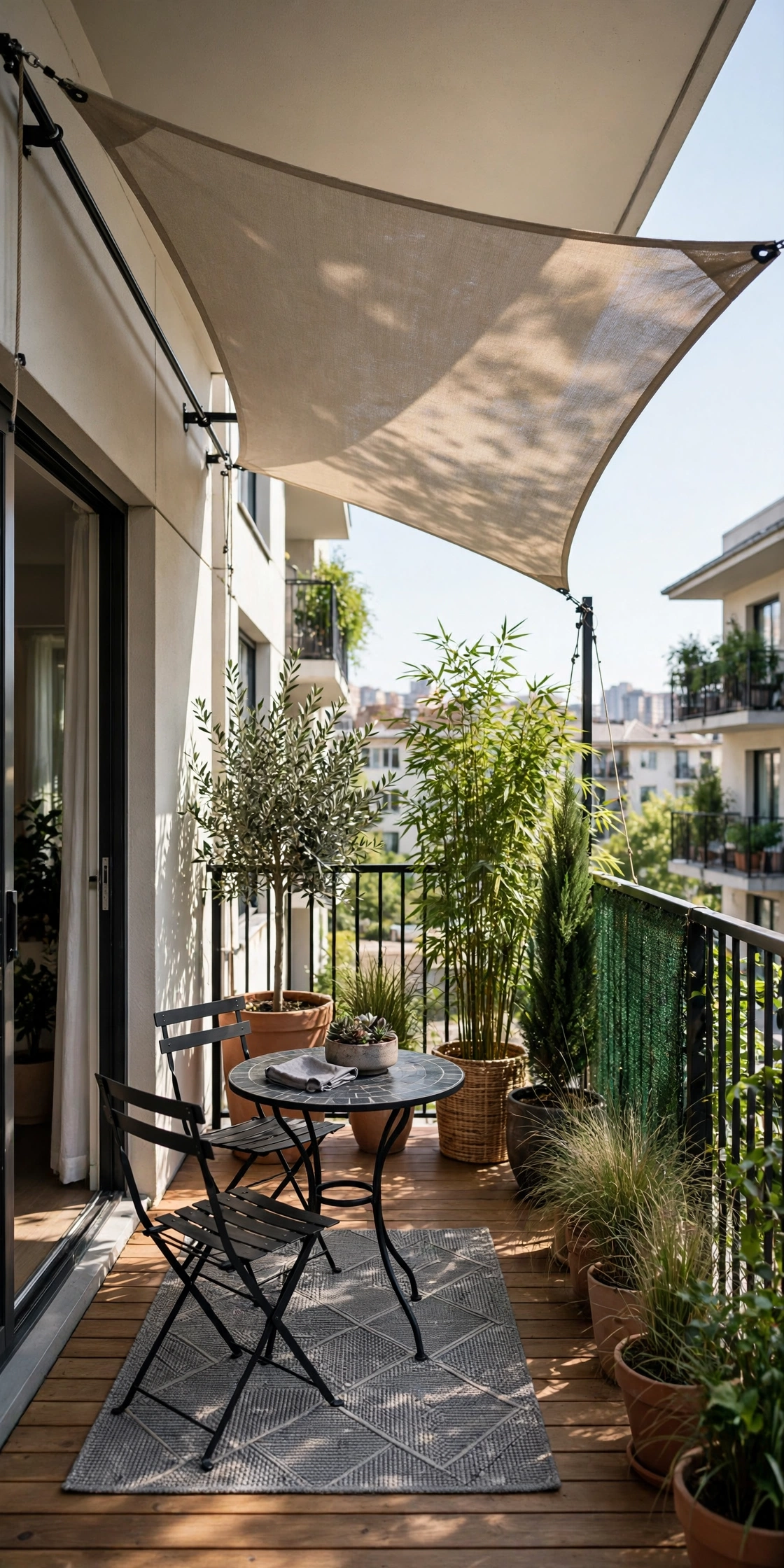
A triangular shade sail angled toward the sunrise blocks the low morning rays while leaving the rest of the sky open. The slight slope also sheds overnight dew instead of pooling it. Clip-on versions hook to railings with no drilling, which keeps landlords happy. Choose a light sand or stone color; dark sails absorb heat and radiate it back down at you. This is architecture on a budget, and it looks far more deliberate than it costs.
Reality Check: Sails need three solid anchor points. Test each one by hanging your full weight before trusting it overhead.
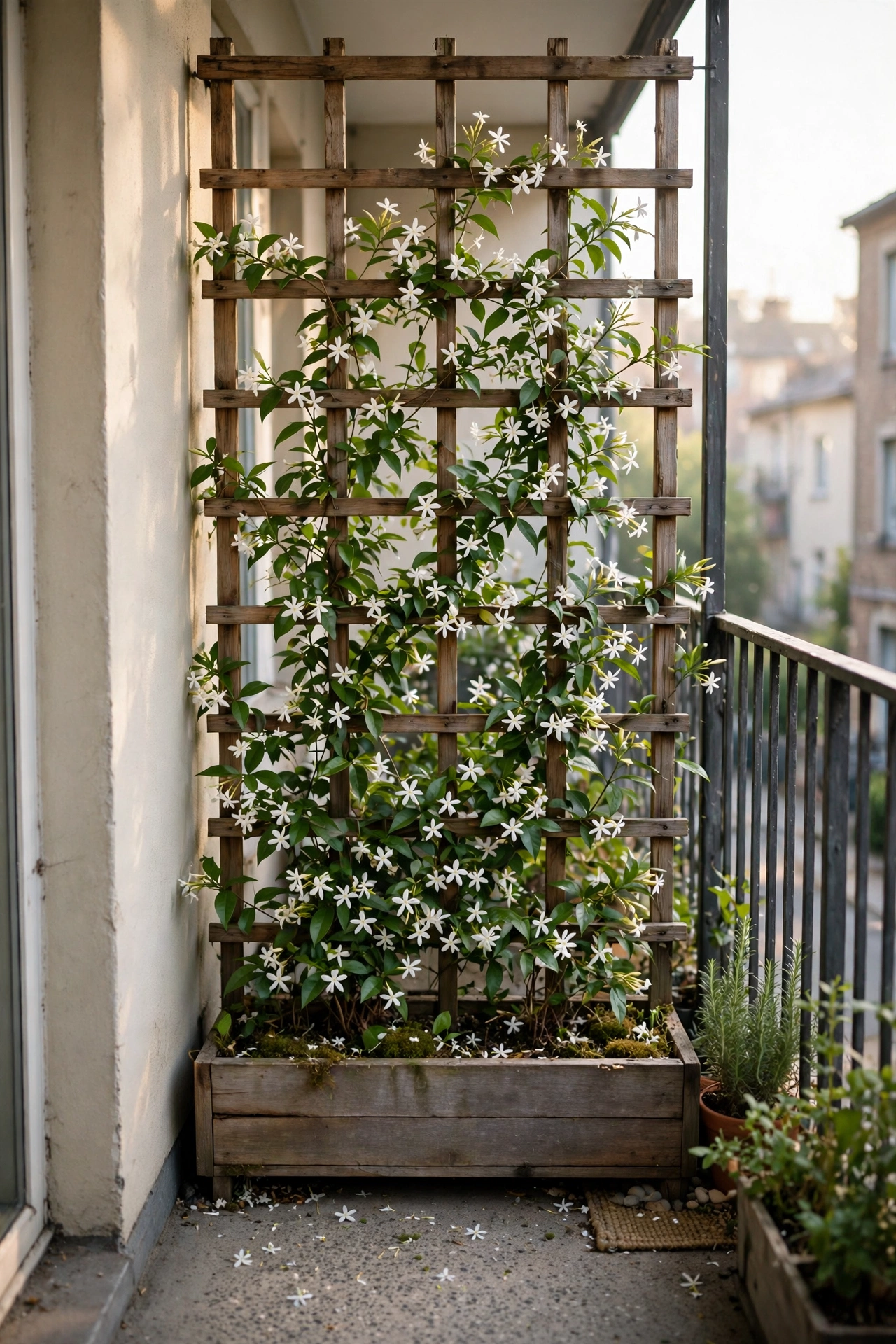
A narrow trellis with star jasmine gives living morning shade that smells incredible in spring. The foliage filters light rather than blocking it, which is exactly right for gentle eastern sun. A rectangular planter with a trellis back fits even the skinniest balcony. It takes a season to fill in, so this is a plan-ahead idea, not an instant fix. Once established, it also muffles street noise, which no fabric shade can do.
Heads Up: Jasmine needs regular water in pots. Self-watering planters save the whole project in hot climates.
Overhead sun is the enemy of concrete balconies. The floor stores heat and radiates it back for hours, so midday shade has to go overhead and cover generously.
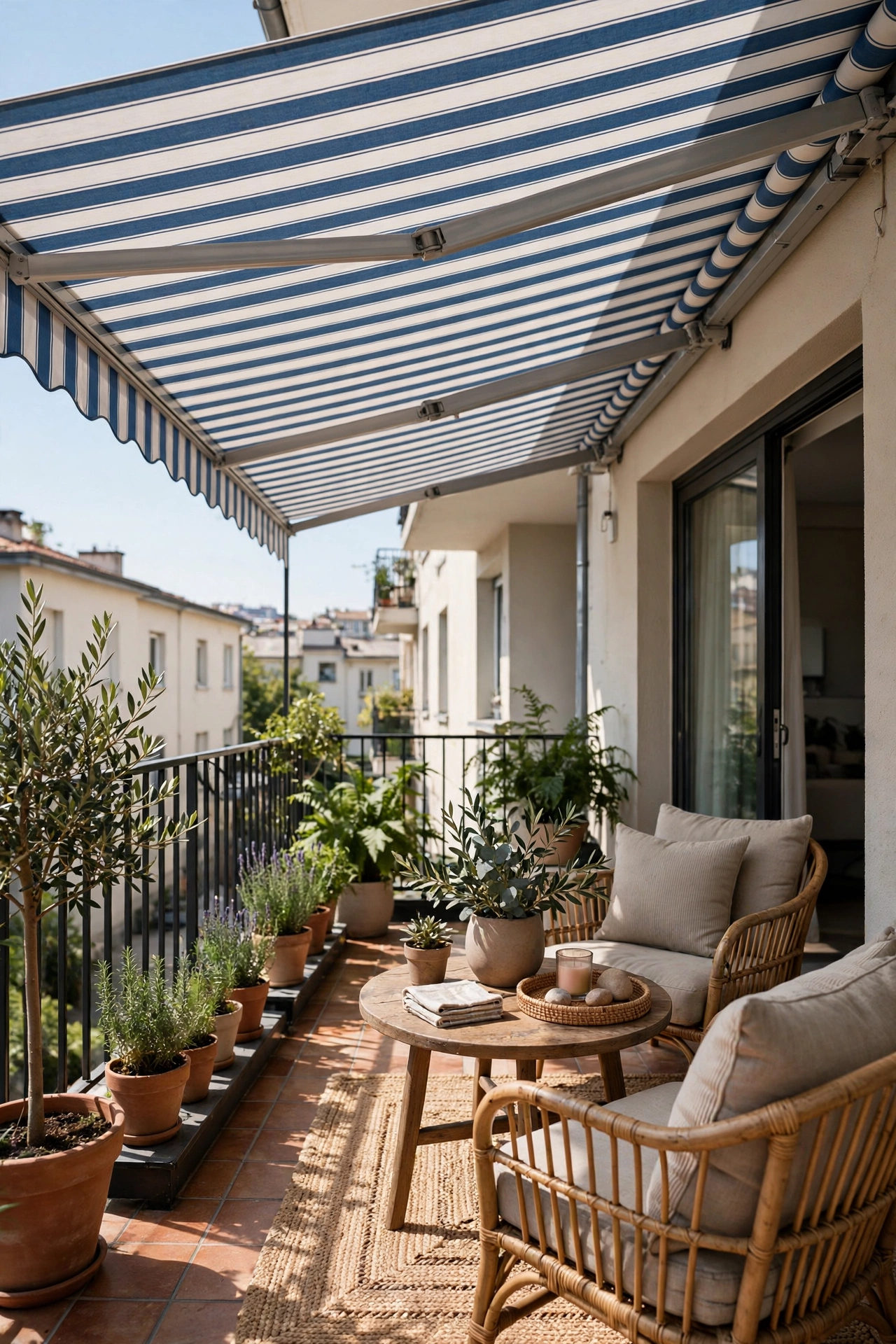
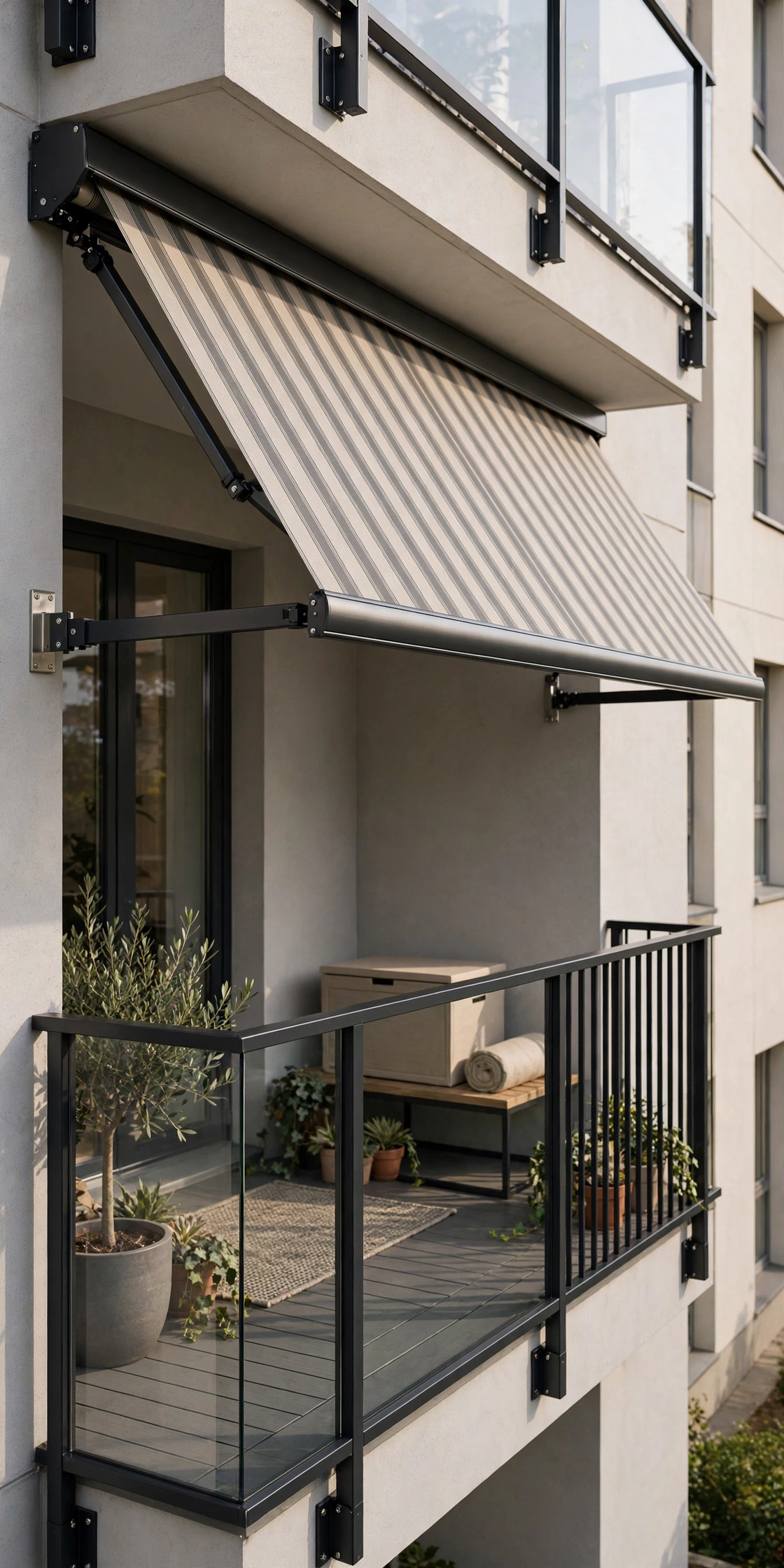
A retractable awning is the most flexible overhead shade you can buy. Crank it out for the midday blast, retract it for evening stars. Modern cassette models protect the fabric when closed, which doubles its lifespan. Many clamp or ceiling-mount without touching shared walls, making them renter-possible with permission. This is the biggest investment in the article, but it is also the one that genuinely extends your balcony season by months.
Pro Move: Choose acrylic over vinyl fabric. It breathes, resists mildew, and fades far more slowly.
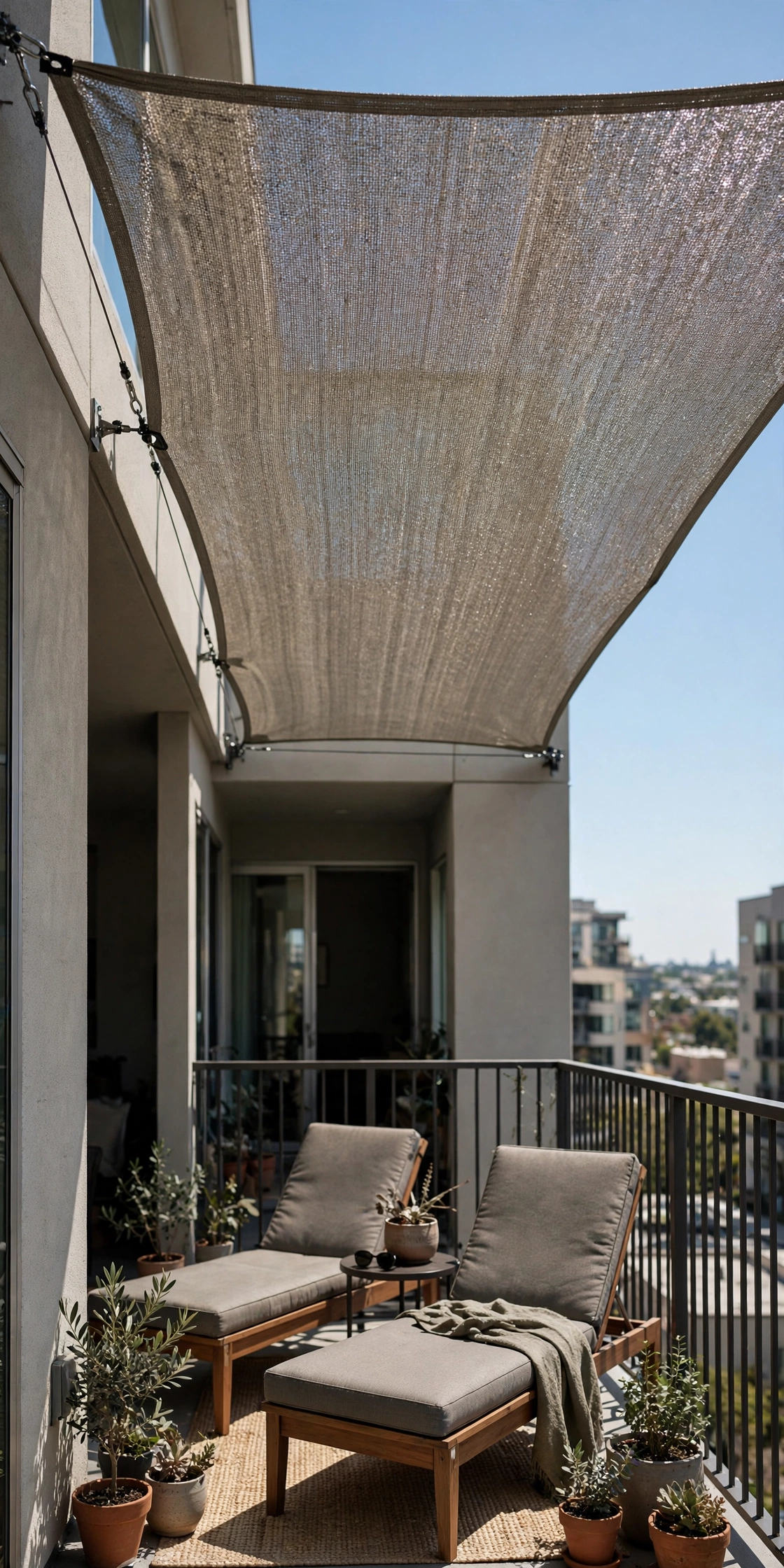
High-density polyethylene sails block up to ninety percent of UV while letting hot air escape through the weave. That breathability is the whole game: solid covers trap heat underneath, sails let it rise. A rectangle sail over the seating zone covers the area you actually use. Install with a slight tilt for rain runoff. For the price of a nice dinner, you get the coolest seat in the building.
Try This: Overlap two smaller sails at different heights instead of one big one. It looks designed and handles wind better.
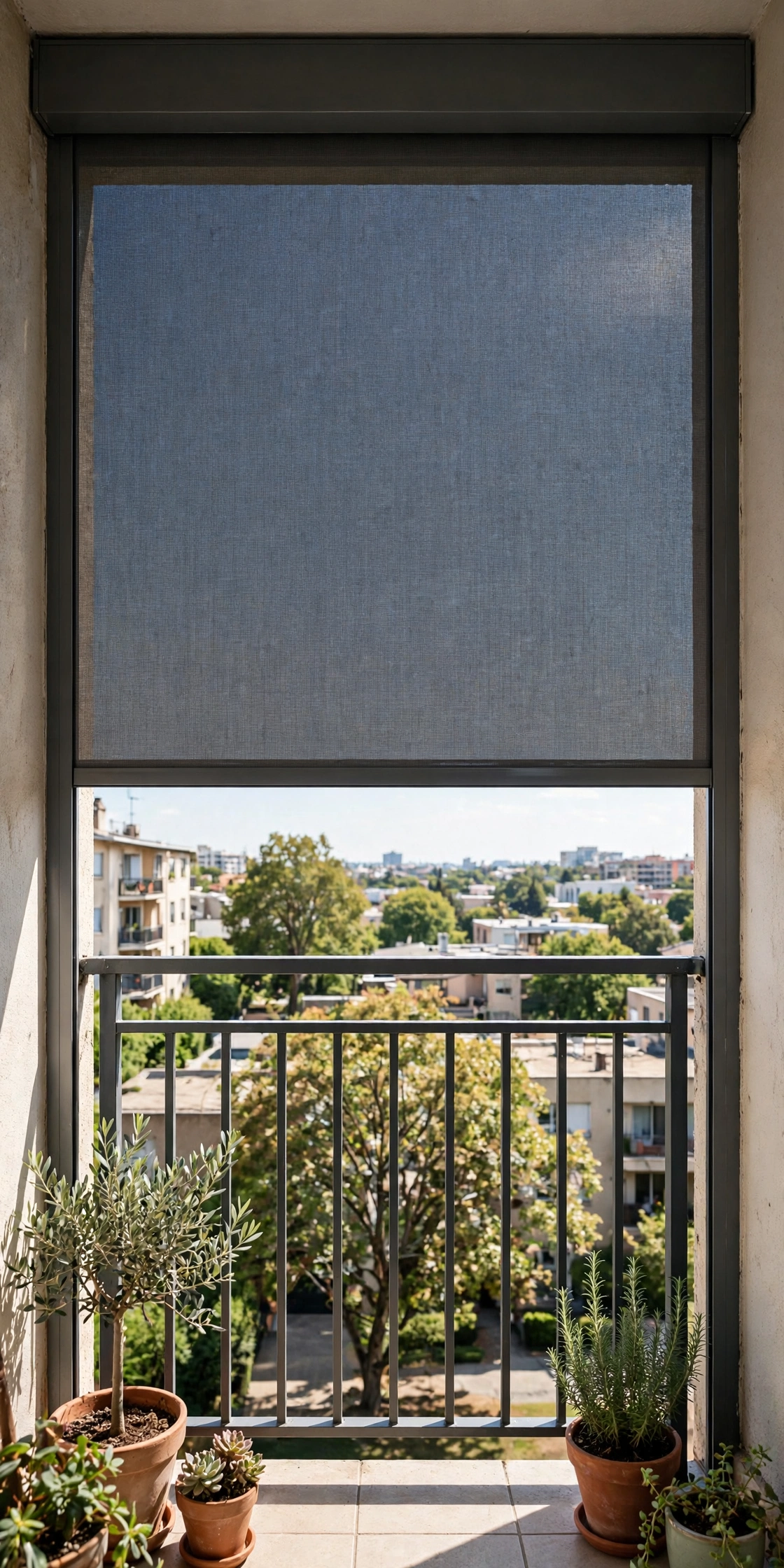
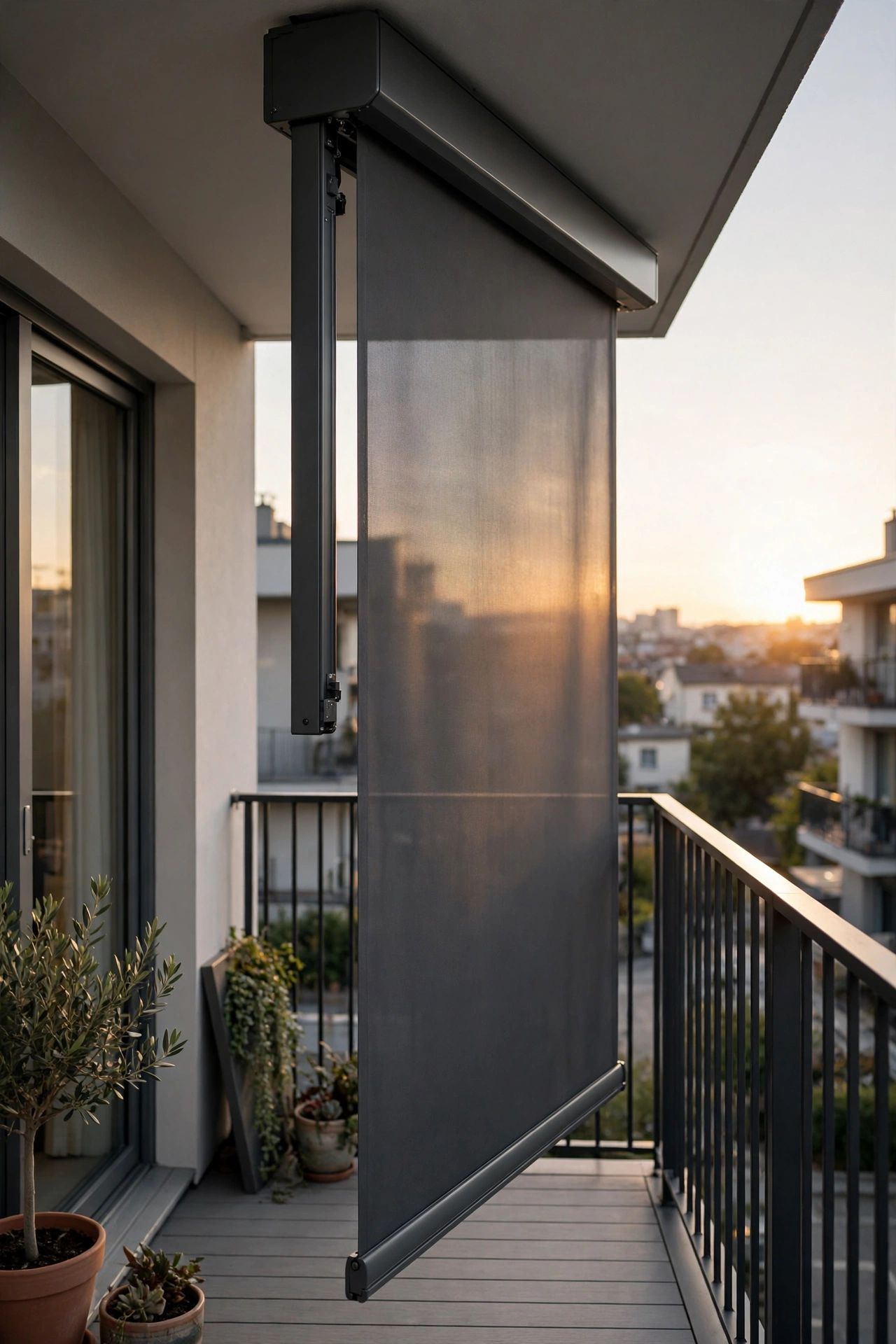
Outdoor roller blinds mount to the balcony ceiling or beam and roll down exactly where the sun hits. Screen mesh fabrics cut glare while preserving the view; blockout fabrics give full shade and privacy together. Lock them at any height, which means you can shade just the seating zone and leave the plants in sun. They also cut wind, which makes shoulder seasons far more usable. This is the neatest-looking option here, all clean lines when rolled up.
Worth Knowing: Mesh density is rated by openness percentage. Five percent openness is the sweet spot for shade plus view.
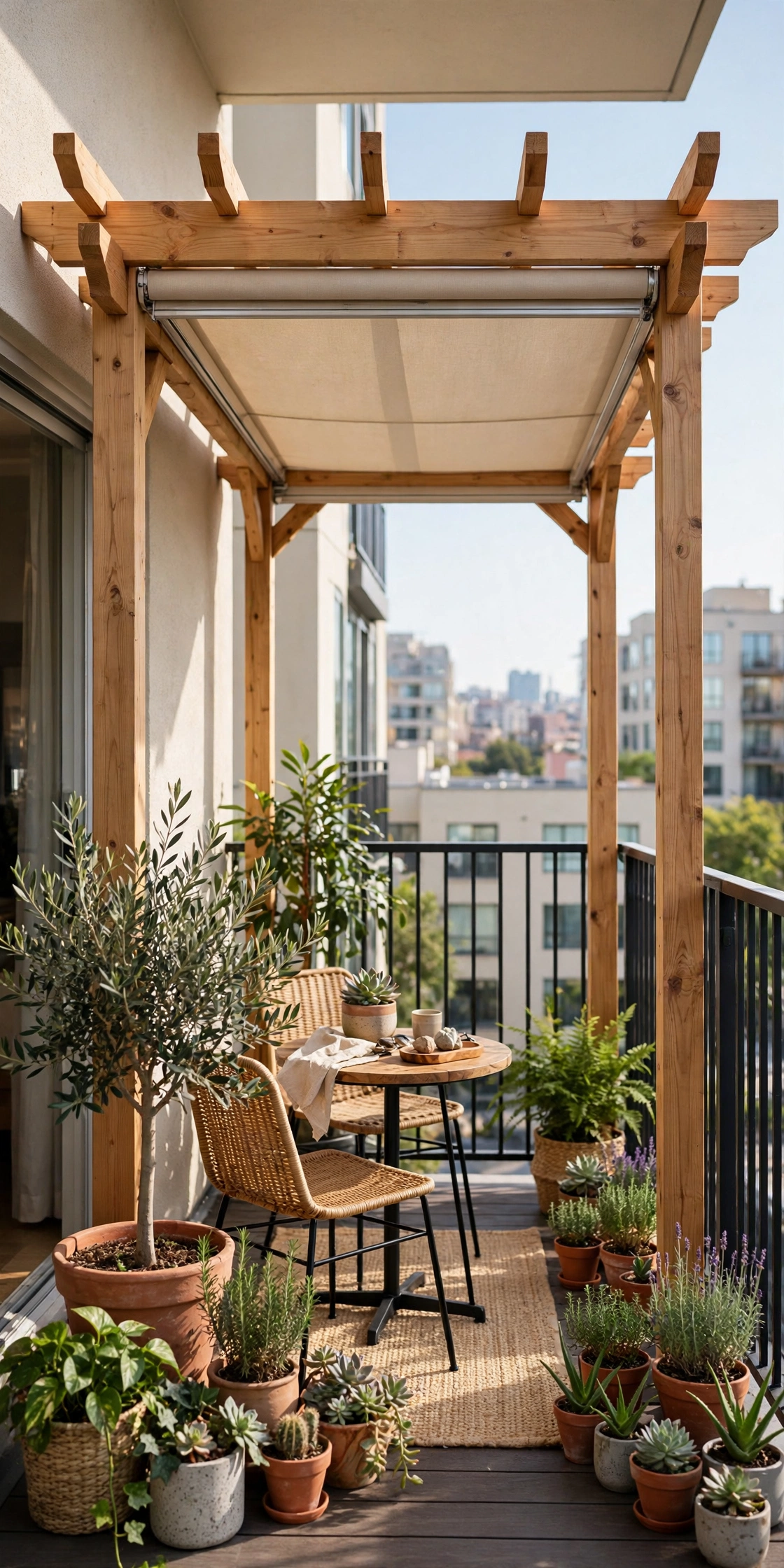
A freestanding pergola frame with a retractable fabric top turns a balcony into a genuine outdoor room. No wall attachment needed, so it suits renters and strict HOAs. The frame defines the space the way walls do, which makes even a plain concrete balcony feel designed. Add a polycarbonate panel section if you want rain protection too. It is the bulkiest option in this group, so measure carefully; it needs to earn its footprint.
Designer Advice: Keep the pergola footprint to the seating zone only. A frame that crowds the door swing ruins the flow.
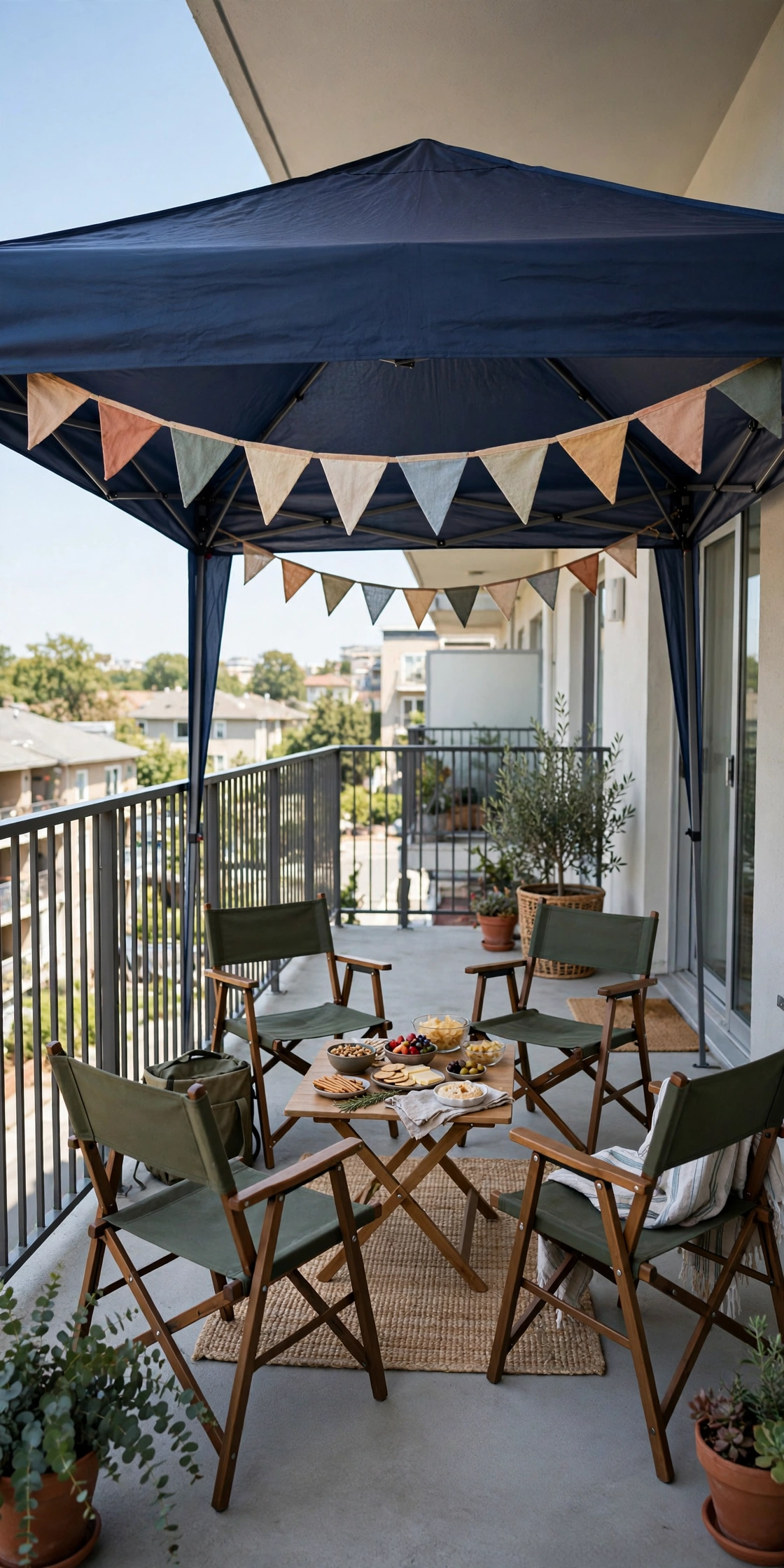
For larger balconies, a pop-up canopy tent gives instant party shade with zero installation. Modern ones go up in under a minute and handle wind far better than the flimsy ones from a decade ago. It will not win design awards, but for a summer gathering it is unbeatable value. Take it down after; permanent tents collect grime and annoy neighbors. Think of it as event equipment, not decor.
Budget Note: A decent pop-up costs less than one restaurant dinner for four and lasts for years of parties.
Shade Options at a Glance
Option
Best for
No-drill?
Cost band
Shade sail
Overhead heat
Yes, clip-on
Low
Retractable awning
Adjustable cover
Sometimes
High
Bamboo roll-up
Low sun, texture
Yes
Low
Outdoor curtains
Glare, softness
Yes, tension rod
Low
Roller blinds
Glare plus privacy
Needs fixing point
Medium
Living plants
Filtered shade
Yes
Low to medium
Afternoon Glare Killers
West-facing balconies get the worst light of the day: low, hot, straight in the eyes. Overhead shade barely helps because the sun comes in sideways. You need vertical defenses.
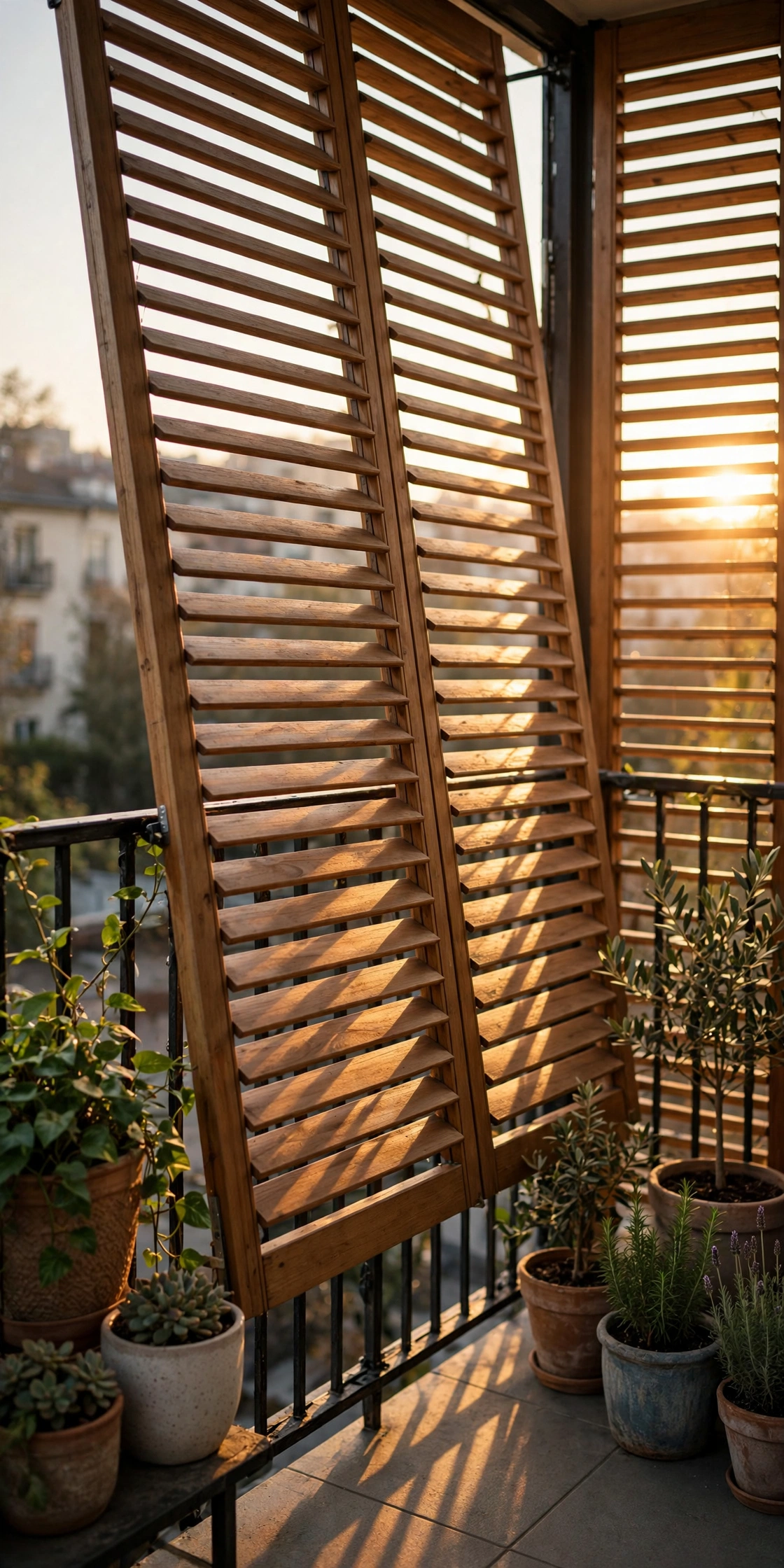
Louvered panels tilted at 45 degrees block low afternoon sun while letting air and some view through. The angle matters more than the coverage; a tilted panel intercepts the sun’s path without building a wall. Mount them at the railing line so the sky stays open above. Freestanding louvered screens need no mounting at all. This is the most effective single fix for west-facing glare, and it looks sharp doing it.
Quick Tip: Adjust the louver angle seasonally. The sun sits lower in winter and the same panel needs a steeper tilt.
Two curtain tiers on separate rods give you a dimmer switch for sunlight. Pull just the sheer for glare control with the view intact; pull the blackout tier when the afternoon blast is unbearable. This layering looks intentional and high-end, far beyond a single sad panel. Outdoor-rated fabrics in both tiers, since indoor blackout curtains rot outdoors in one summer. The double rod is the only hardware you need.
Pro Move: Put the sheer on the outside rod and the blackout inside. It reads correctly from both sides.
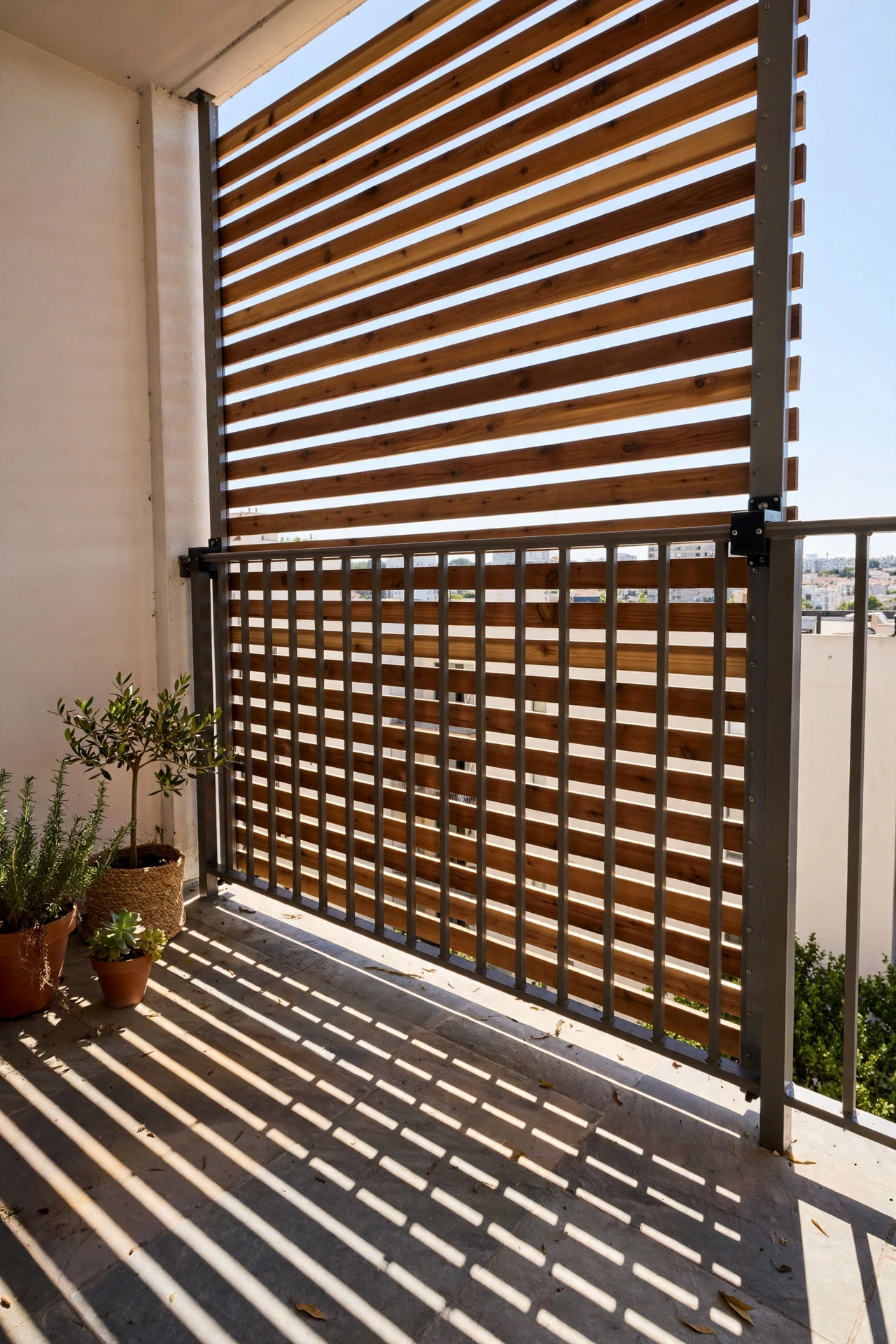
A horizontal slat screen fixed to the sun-facing railing blocks eye-level glare while leaving the upper view completely open. Cedar or composite slats with small gaps filter light into stripes that feel designed, not improvised. It doubles as a windbreak, which west-facing balconies desperately need. This is a weekend build with basic tools, or buy ready-made panels and clamp them on. Either way, it is the best-looking vertical shade here.
Heads Up: Check building rules before fixing anything to railings. Some HOAs only allow freestanding screens.
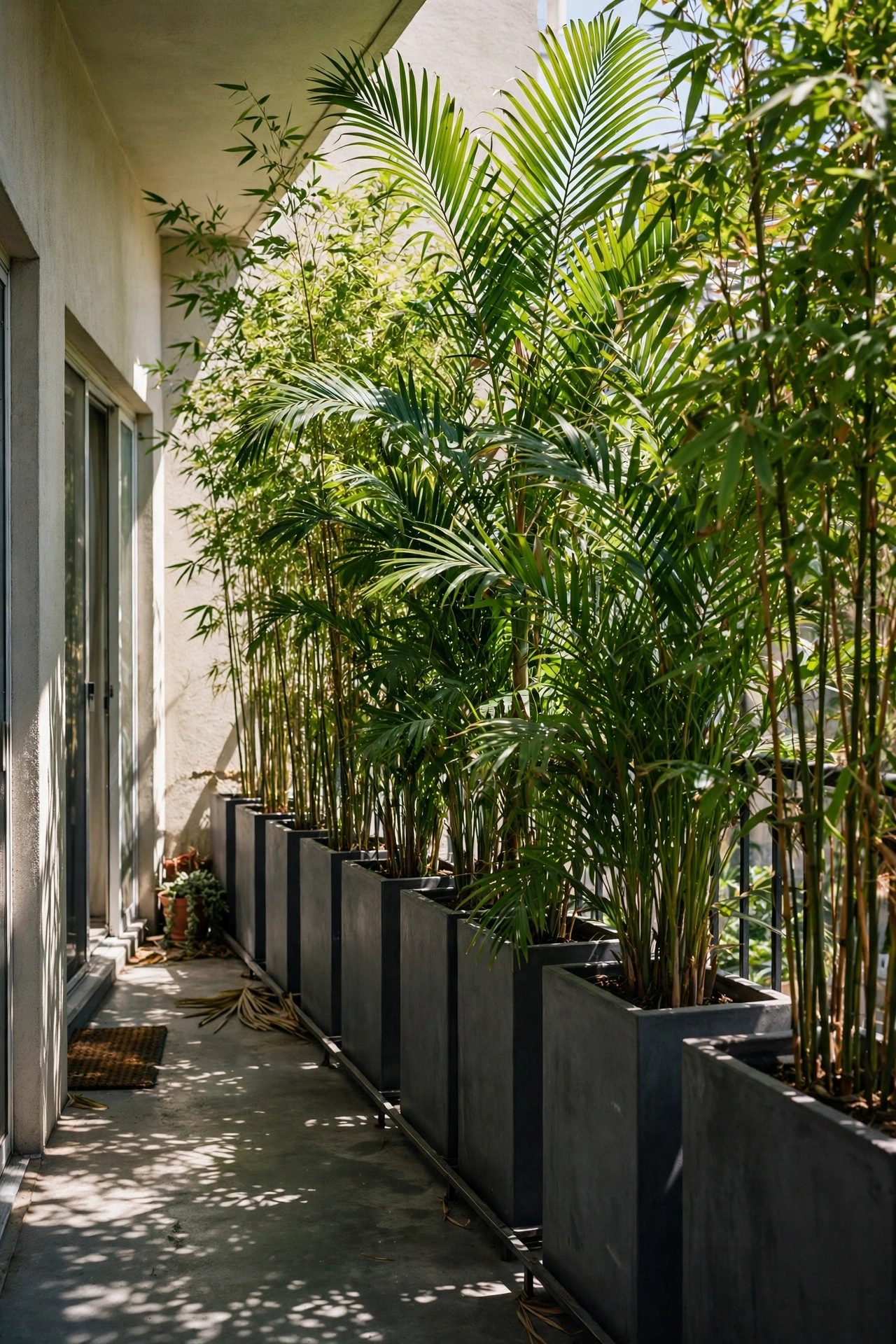
A row of tall planters with bamboo, palms, or canna lilies makes a living wall that eats afternoon sun. Plants cool the air as well as blocking light, something no fabric can do. Clumping bamboo in particular grows fast and dense in pots. Arrange the tallest plants where the sun hits hardest, usually the western corner. This takes one growing season to reach full power, so start in spring for summer shade.
Good to Know: Big plants drink a lot. A drip irrigation kit on a timer pays for itself in saved weekends.
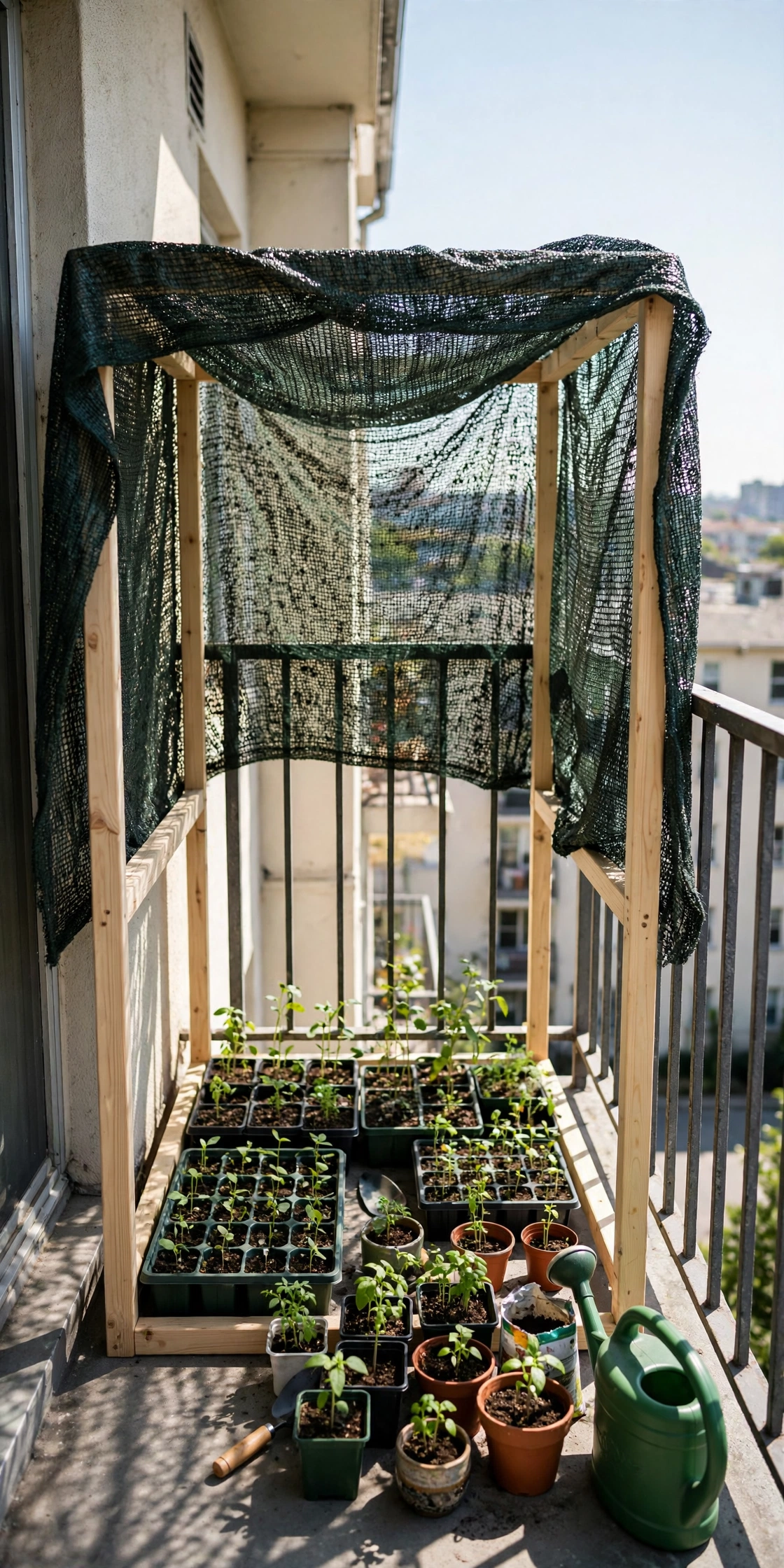
Knitted shade cloth, the stuff nurseries use, comes in 30 to 80 percent densities and costs very little per square foot. Drape a 50 percent cloth over a simple PVC or conduit frame on the sun side for instant, effective glare control. It is not beautiful up close, so keep it to the side you look past, not the side you look at. For plant lovers, 30 to 40 percent cloth protects herbs from scorching while letting enough light through for growth.
Budget Note: A full sun-side cover costs less than a single outdoor cushion. Replace every two to three seasons.
The No-Drill Renter Checklist
Clip-on shade sails that hook to railings, no screws
Tension rods wedged between walls for curtains
Freestanding umbrellas with weighted bases
Freestanding louvered or lattice screens
Bamboo roll-ups hung with rope ties or heavy-duty hooks
Planters and trellises for living shade, zero mounting
Photograph everything before install in case of deposit disputes
Evening Ambience Shade
Evening shade is not about heat. It is about privacy and glow: softening the space as the sun drops so the balcony feels like a hideaway, not a fishbowl.
As the sun lowers, draw those outdoor curtains three-quarters closed. The low light filters through the fabric and turns the whole balcony amber. This is the hour curtains earn their keep, turning harsh sideways light into something cinematic. Leave a gap to watch the sunset; full closure feels like hiding. Pair with a couple of lanterns and the balcony becomes the best room in the apartment.
Small Detail: Tie-backs at two heights let you sculpt the opening instead of just shoving fabric aside.
Side awnings, the vertical cousins of overhead ones, crank out to block low evening sun from the side. They retract into a slim cassette when not needed. This is the polished solution for balconies where the evening sun hits the seating directly. They cost more than curtains but look built-in and last for years. If your balcony faces west-southwest, this single product solves your worst two hours daily.
Worth Knowing: Side awnings also block the neighbor’s view, so they double as privacy screens.
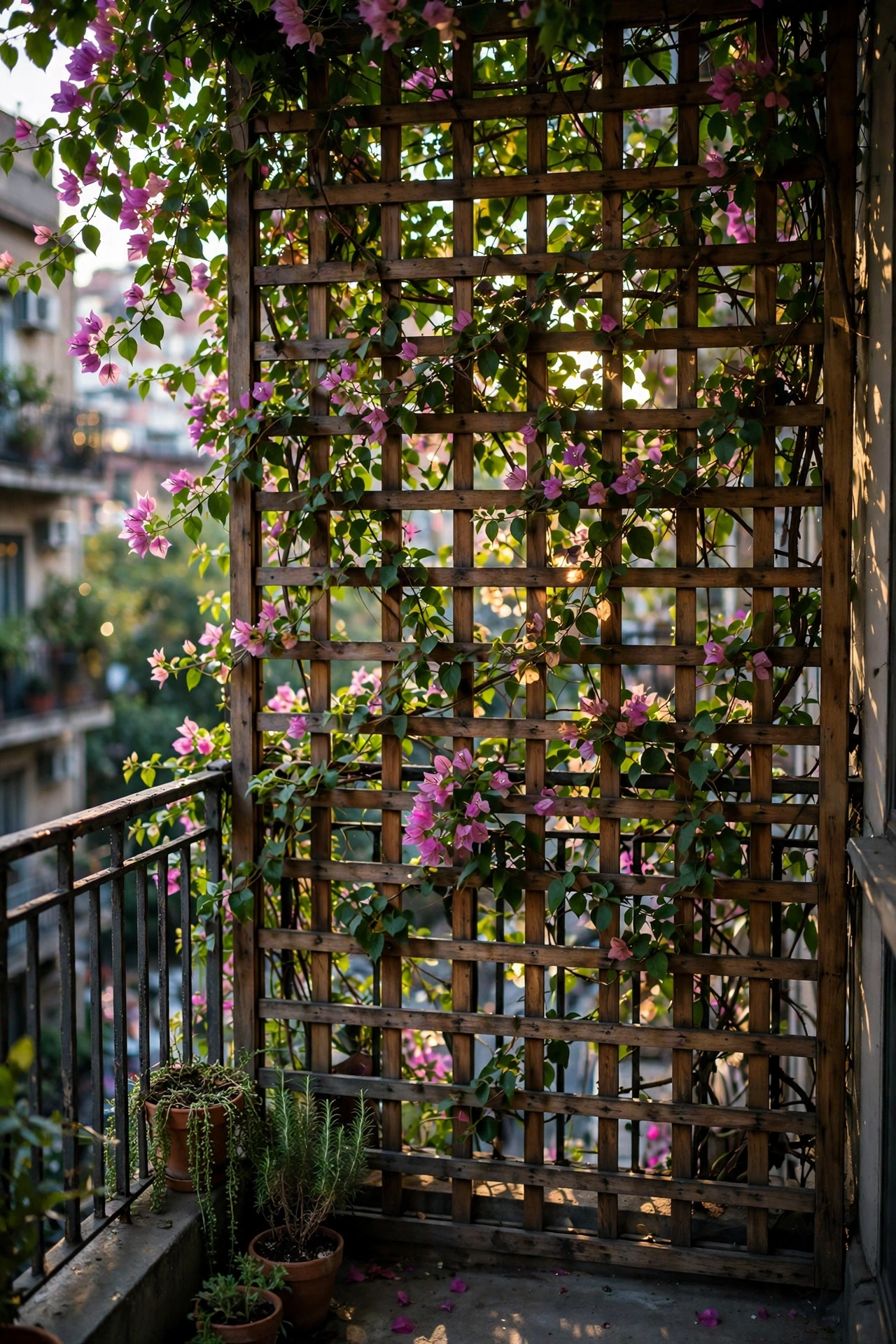
A lattice panel with established vines gives dappled evening shade that no manufactured product quite matches. The leaves break the low sun into moving patterns across the floor. Morning glory, clematis, or jasmine all work in pots with a lattice backing. This is a slow-burn idea; year one looks sparse, year two looks magical. Water consistently and feed monthly in the growing season.
Honest Take: Vines drop leaves and need pruning. If you want zero maintenance, this is not your idea.
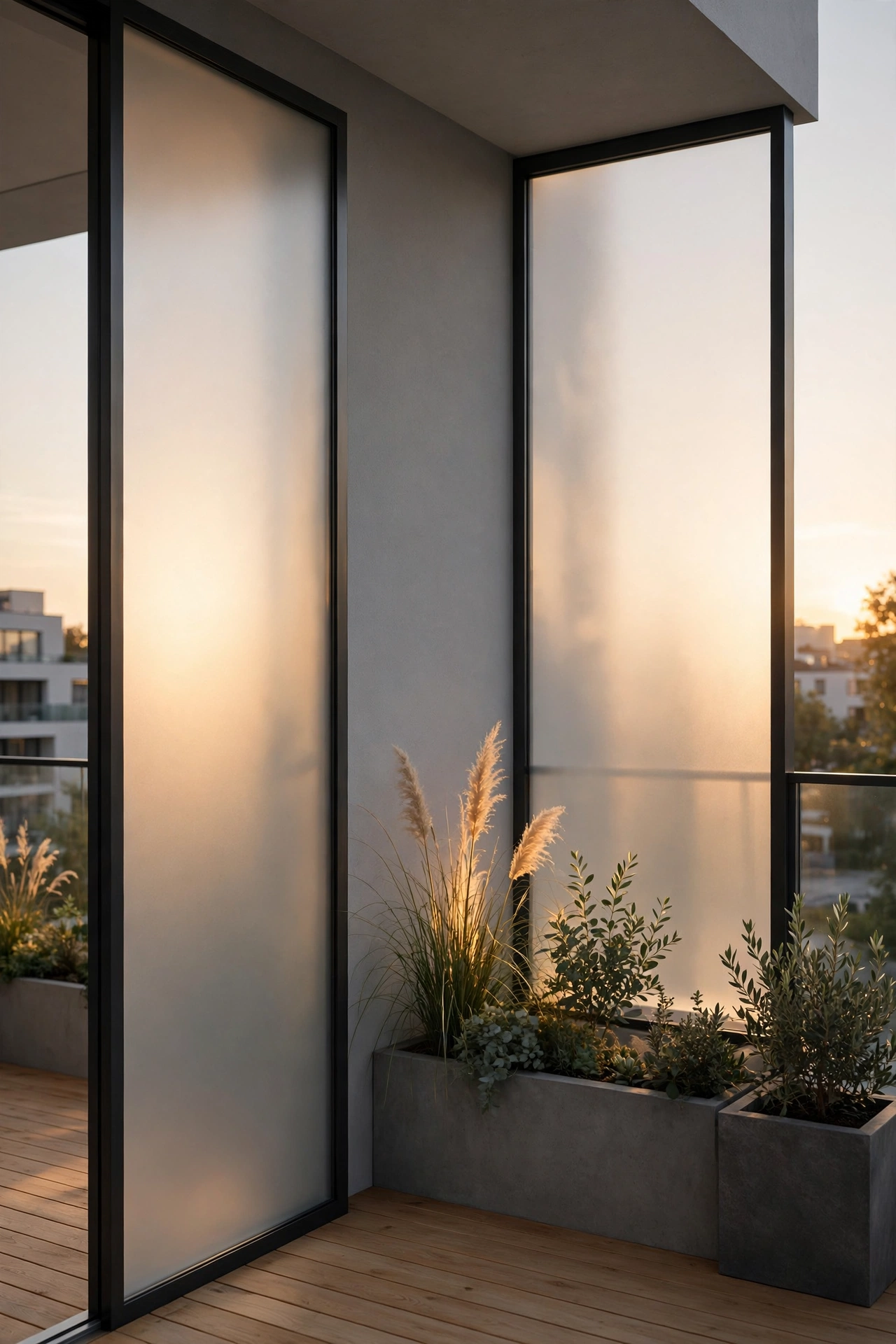
Frosted acrylic panels on the windward side diffuse evening sun into a soft glow while blocking the view in both directions. They read modern and clean, especially in white or bronze tints. Unlike fabric, they need zero seasonal maintenance beyond a wipe-down. Clamp-mounted versions exist for renters. They do block the breeze, so keep them to one side only and leave the rest open.
Heads Up: Acrylic scratches. Clean with a soft cloth and mild soap, never abrasive pads.
Once the sun drops, your shade structure becomes a light structure. String warm festoon lights under the shade sail or pergola for instant evening magic. The sail diffuses the light softly downward instead of letting it glare. Solar strings work fine in sunny spots; plug-in ones are more reliable in shade. This is the cheapest evening upgrade in the article and the one guests always comment on.
Try This: Drape lights in a loose zigzag rather than straight lines. It looks abundant instead of installed.
Why Outside Shade Beats Inside Blinds
Sunlight turns to heat the moment it hits glass. Interior blinds trap that heat inside, which is why rooms stay warm even with the blinds closed. Exterior shade stops the sun before it reaches the glass, cutting heat gain dramatically. Energy studies back this up: outside shade can reduce cooling loads far more than any interior treatment. Aim to cover 60 to 80 percent of the balcony while keeping airflow open, and the adjacent room will feel the difference too.
All-Day Workhorses
Some solutions do not care what time it is. These are the set-and-forget options for balconies that bake from sunrise to sunset.
A cantilever umbrella hangs its canopy from a side pole, so the base sits out of the way in the corner while the shade floats over the seating. No center pole blocking the table, and you can rotate and tilt it through the day. This is the most flexible single purchase for an all-day sun balcony. Get the largest canopy your space allows; small umbrellas just move the problem around. Close it in high wind, always.
Quick Tip: Fillable bases are convenient but sand is heavier and cheaper. Use sand.
A heavy-duty tension rod wedged between the balcony side walls carries full-length outdoor curtains with zero hardware. Open them wide for morning, draw them for afternoon, arrange them however the day demands. This is the ultimate renter shade: total flexibility, zero holes, takes ten minutes to install. Buy rods rated well above your curtain weight; cheap rods bow and slip. Two rods, front and side, give full wraparound control.
Reality Check: Tension rods need opposing flat surfaces. Deeply textured walls may not grip reliably.
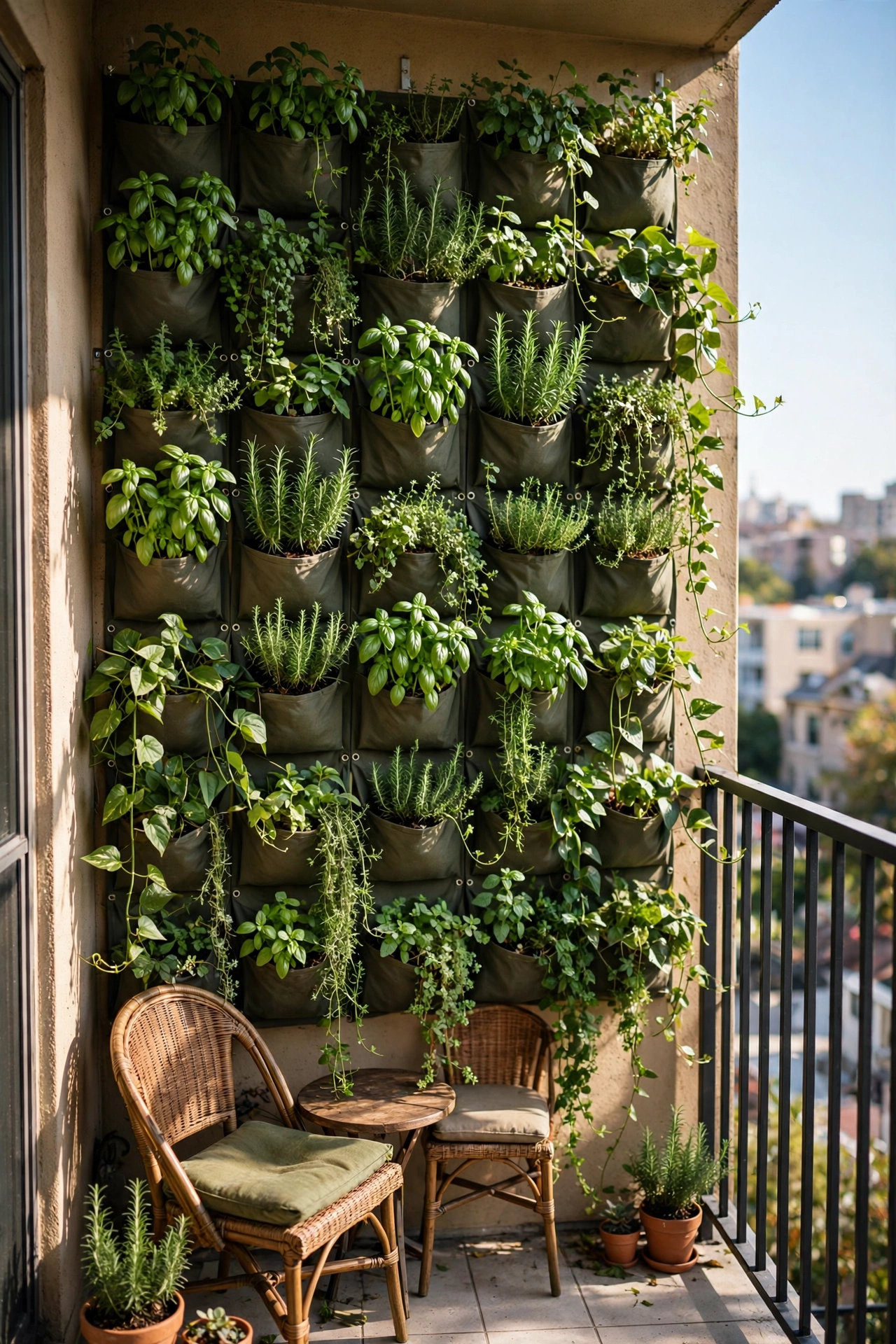
A vertical garden on the sunniest wall gives all-day filtered shade plus evaporative cooling from the plants themselves. Pocket planters or a slatted frame with pots both work; the plants do the shading, the structure just holds them. Herbs and trailing plants thrive here and give you a kitchen garden as a bonus. It needs daily water in summer, so put it on a drip line from the start. This is the prettiest all-day solution and the most alive.
Good to Know: Start with tough plants like pothos, ferns, and herbs. Save the fussy ones for year two.
The single best all-day setup is a shade sail overhead plus tall plants on the sun side. The sail handles the top, the plants handle the angle, and together they cover every hour without any moving parts. This combination also looks the most designed, because the softness of plants balances the geometry of the sail. It is two weekend projects instead of one, but the result is a genuine outdoor room. Start with the sail for instant relief, add plants over the season.
Designer Advice: Keep the plant palette to two or three species. Restraint reads as design; variety reads as clutter.
Some balconies defeat every DIY fix: extreme wind, odd angles, strict building codes. A professional awning company measures, engineers, and installs a custom solution that actually lasts. It costs real money, but so does replacing three failed DIY attempts. Get three quotes and ask each one about wind ratings and retract mechanisms. For owners rather than renters, this is often the cheapest option in the long run because it is the last one you buy.
Honest Take: There is no shame in the professional route. Some problems are just engineering problems.
Shade Is a Daily Rhythm
The balcony you avoid at noon and love at seven does not need one perfect product. It needs a rhythm: sheer filters for the morning, real cover for the midday blast, vertical defenses for the western glare, and soft enclosure for the evening. Start with your worst hour and fix that first. One good shade solution used daily beats five clever ones still in their packaging. Track the sun for a week, spend a weekend on the fix, and the balcony stops being the hottest room in the apartment. It becomes the one everyone fights over.